
Full coverage used to mean one standard bridal pattern. Now I’m mixing Indian detail with Arabic flow, Gulf spacing, Moroccan geometry, portraits, jaali grids and modern negative space on the same pair of hands. Which mix suits you depends on the occasion, your outfit, your hand shape and how dark you want the finished stain to look. Brides tend to go dense to the forearm; festive hands are often airier. The full-hand styles below are the ones I’m asked for most, with what each involves, so you can describe exactly what you want to your artist.
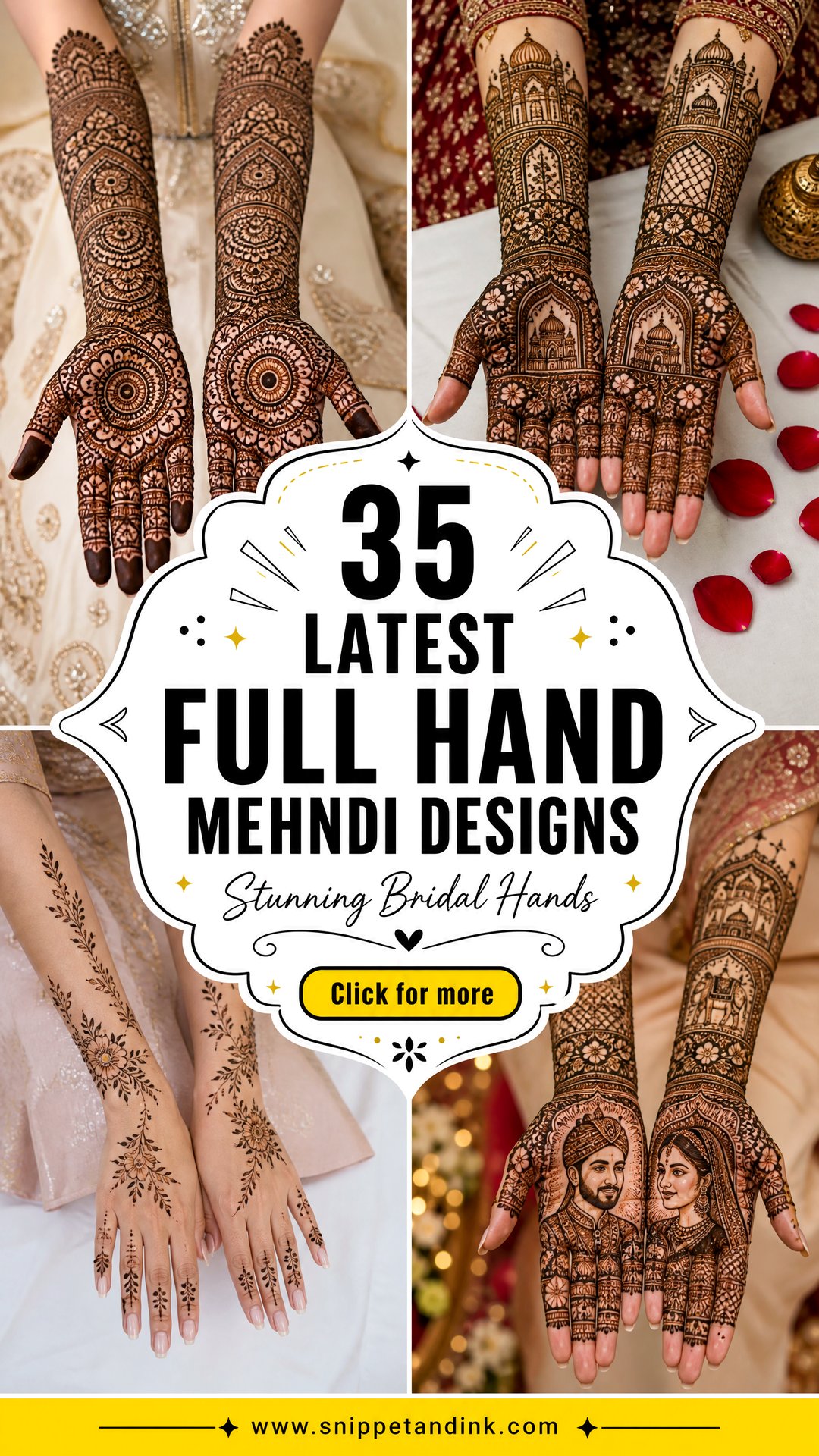
Where on the Forearm Should Full Coverage End?
“Full hand” means different things to different people, so it’s the first thing I pin down. Some mean fingertips to wrist bone; others mean halfway up the forearm or all the way to the elbow. Each step up adds real time to the sitting.
I decide the stopping point by the sleeve and by proportion. A design that ends a few fingers’ width above the wrist bone looks finished on most arms and stays visible under three-quarter sleeves. On a long forearm, stopping mid-way can look abrupt, so I either finish with a deliberate border or carry it higher. The inner forearm also stains lighter than the palm, so I use bolder outlines up there. Whatever the height, the design should end in a clean edge: a cuff, an arch or a scalloped border, never a vine that just trails off.
1. Full Hand Bridal Mehndi Design
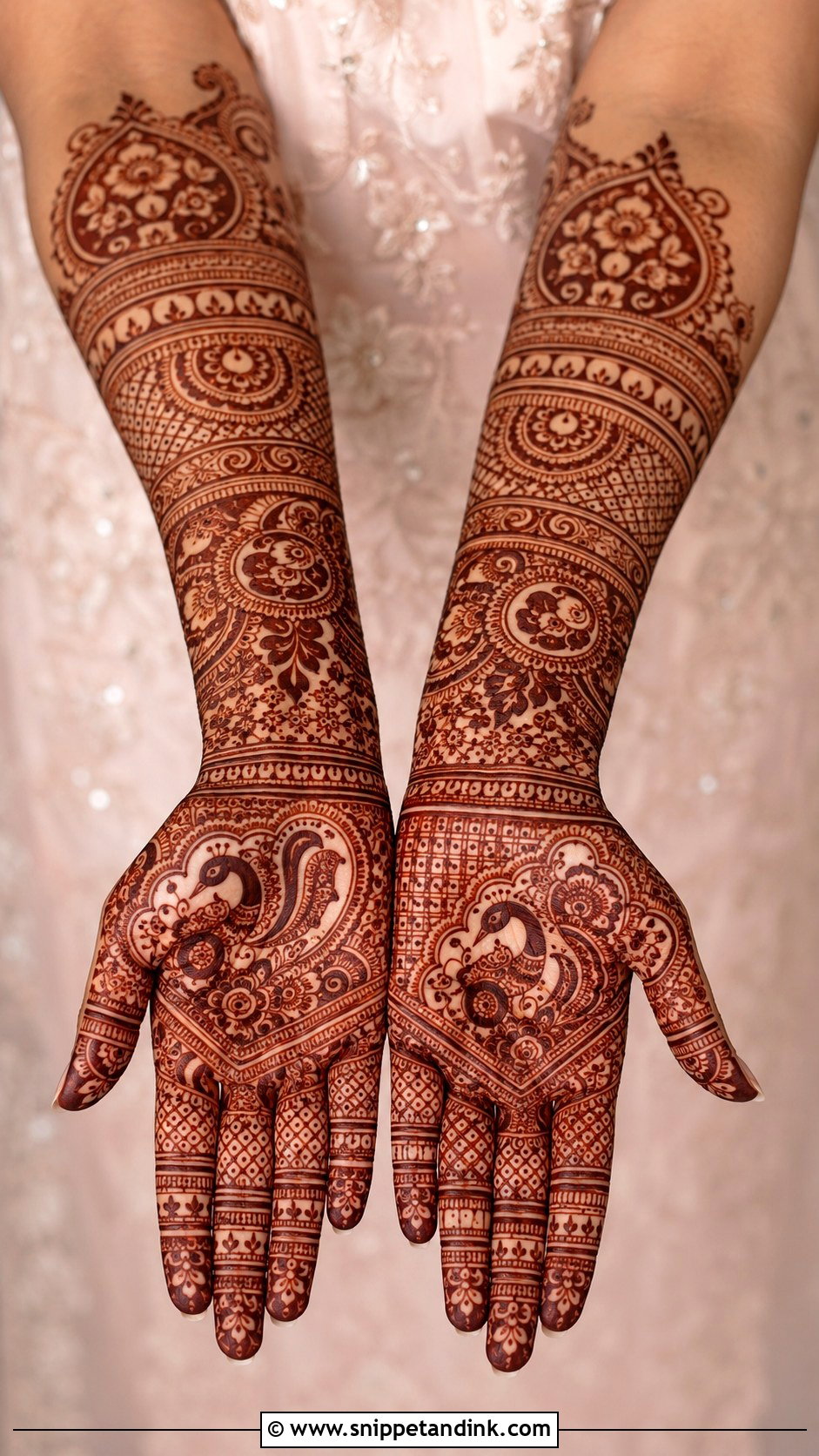
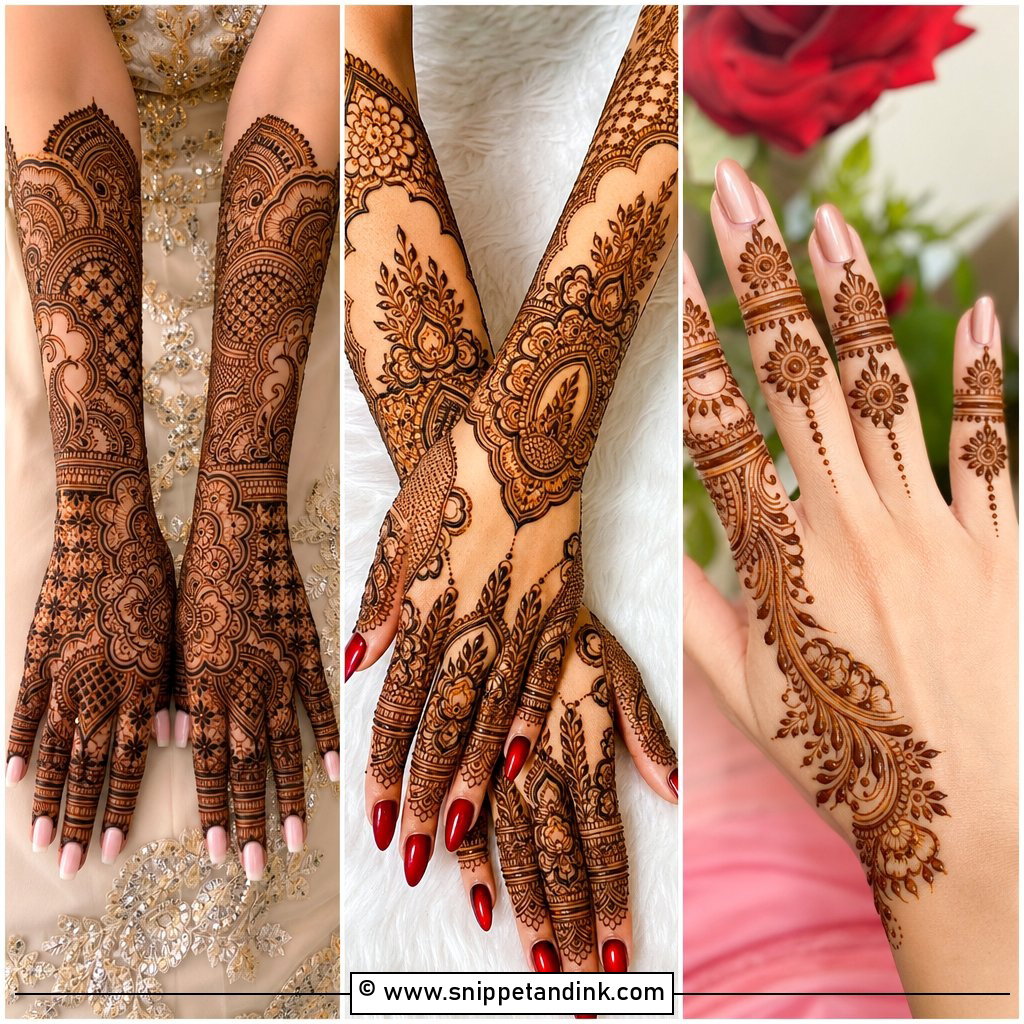
The classic bridal full hand runs from fingertips to forearm with paisleys, florals, mandalas, peacocks, jaali and filler, so the hand looks complete from every angle. Larger motifs sit on the palm, and the wrists and forearms carry bracelet bands or story panels. Dense work gives a deep, rich stain, but it’s also where crowding happens. I separate each zone with a border and a sliver of bare skin, so the photos show a design rather than a dark sleeve.
2. Arabic Full Hand Mehndi Design
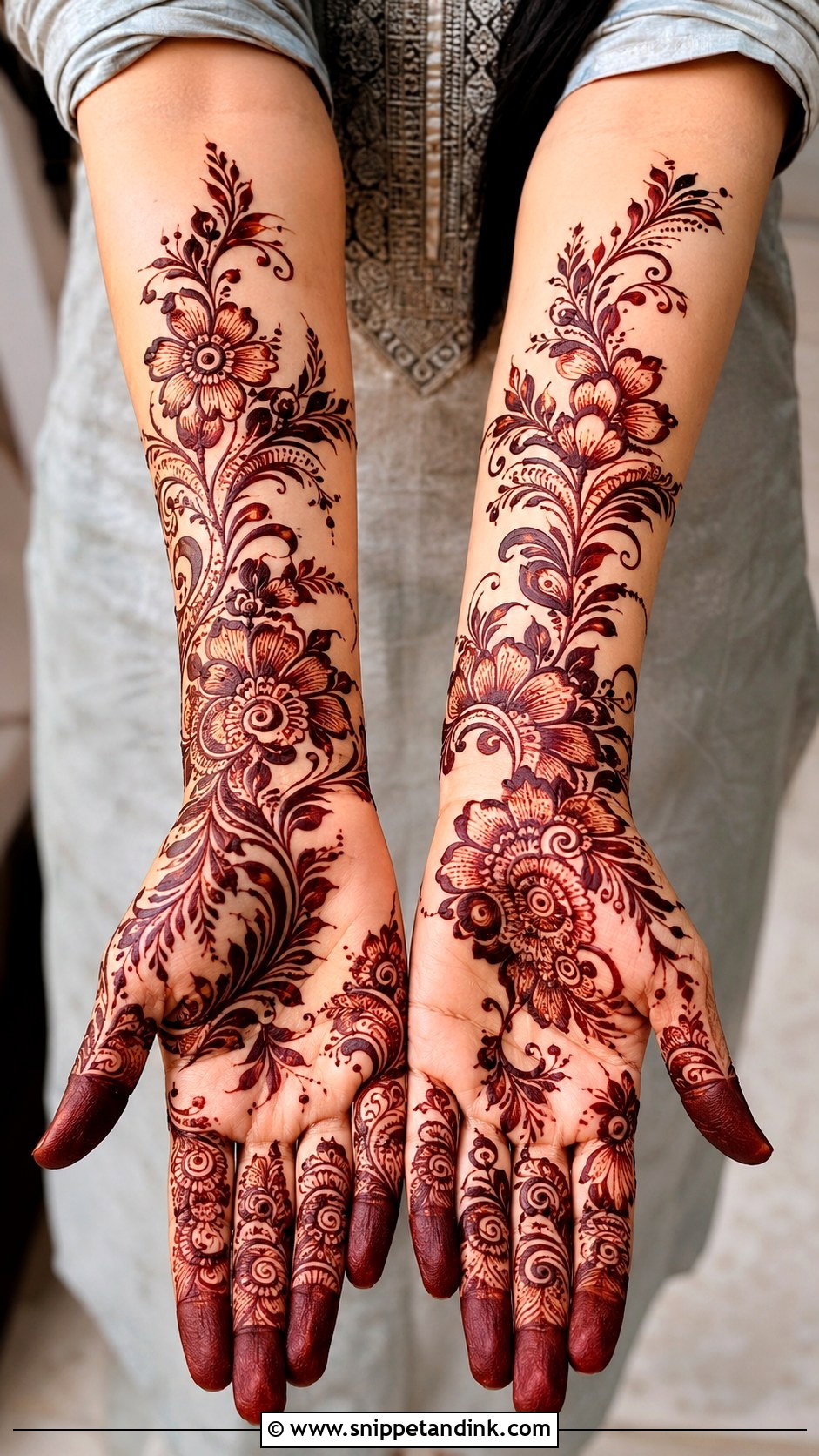
Arabic full-hand work flows diagonally across the palm and back hand with bold flowers, leaves, vines and curved strokes, using bare skin instead of filler. It’s faster and lighter to wear, which suits Eid, engagements and bridesmaids. Fingers get leafy chains or shaded tips and the wrist a soft cuff. The trail should keep moving in one direction; when it doubles back on itself, it loses the flow that makes Arabic work look graceful.
3. Indian Full Hand Mehndi Design
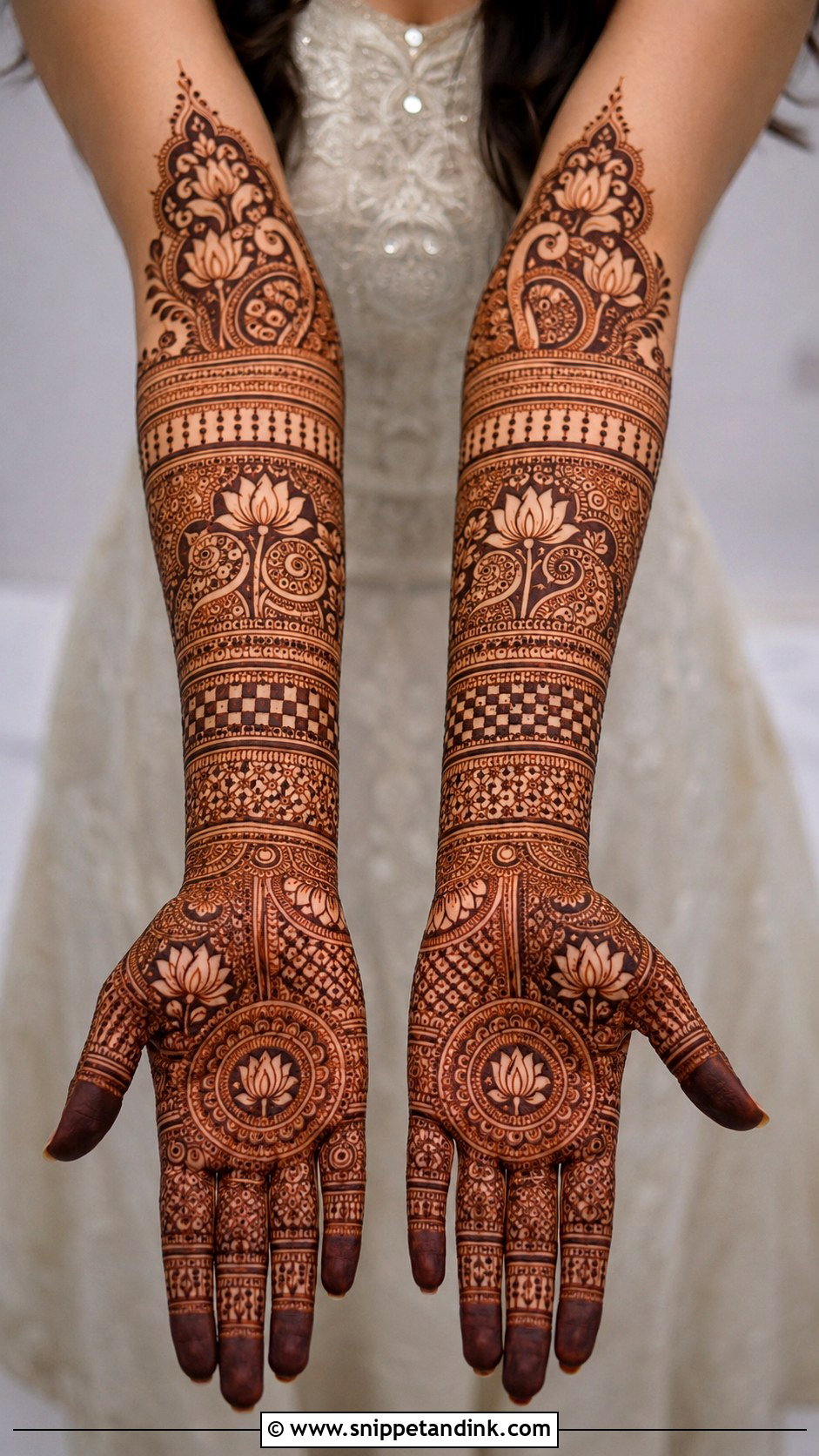
Indian full hands are close-filled and symbolic: paisleys, lotus, mango shapes, peacocks, mandalas and lace-fine lines covering palm, fingers, wrist and forearm with little empty space. They’re the traditional choice for weddings, Karwa Chauth and Teej. I outline the main motifs boldly and use tiny checks, dots or curves for the fill, then adjust motif size to the hand, larger on a broad palm, smaller and fewer on a narrow one.
4. Indo Arabic Full Hand Mehndi Design
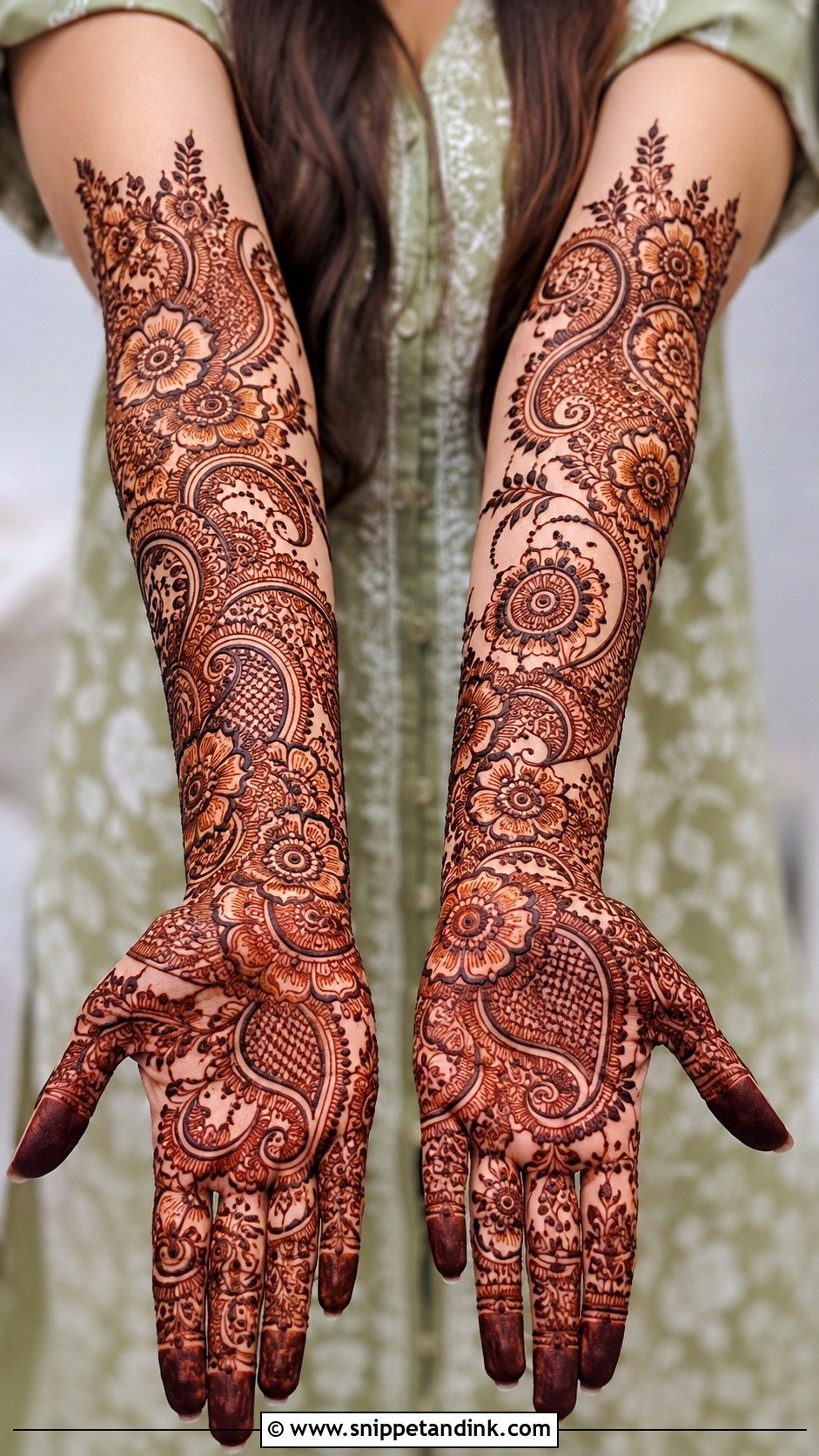
Indo-Arabic full hands combine Arabic flow with Indian fill: large flowers, paisley trails, vines, mandalas and fine inner detail. I usually give the fingers Indian-style lines and dots and run an Arabic diagonal trail across the palm, with small pockets of negative space around the big motifs. It’s detailed but doesn’t feel heavy, which is why it’s become the default for many modern brides and festive bookings.
5. Simple Full Hand Mehndi Design
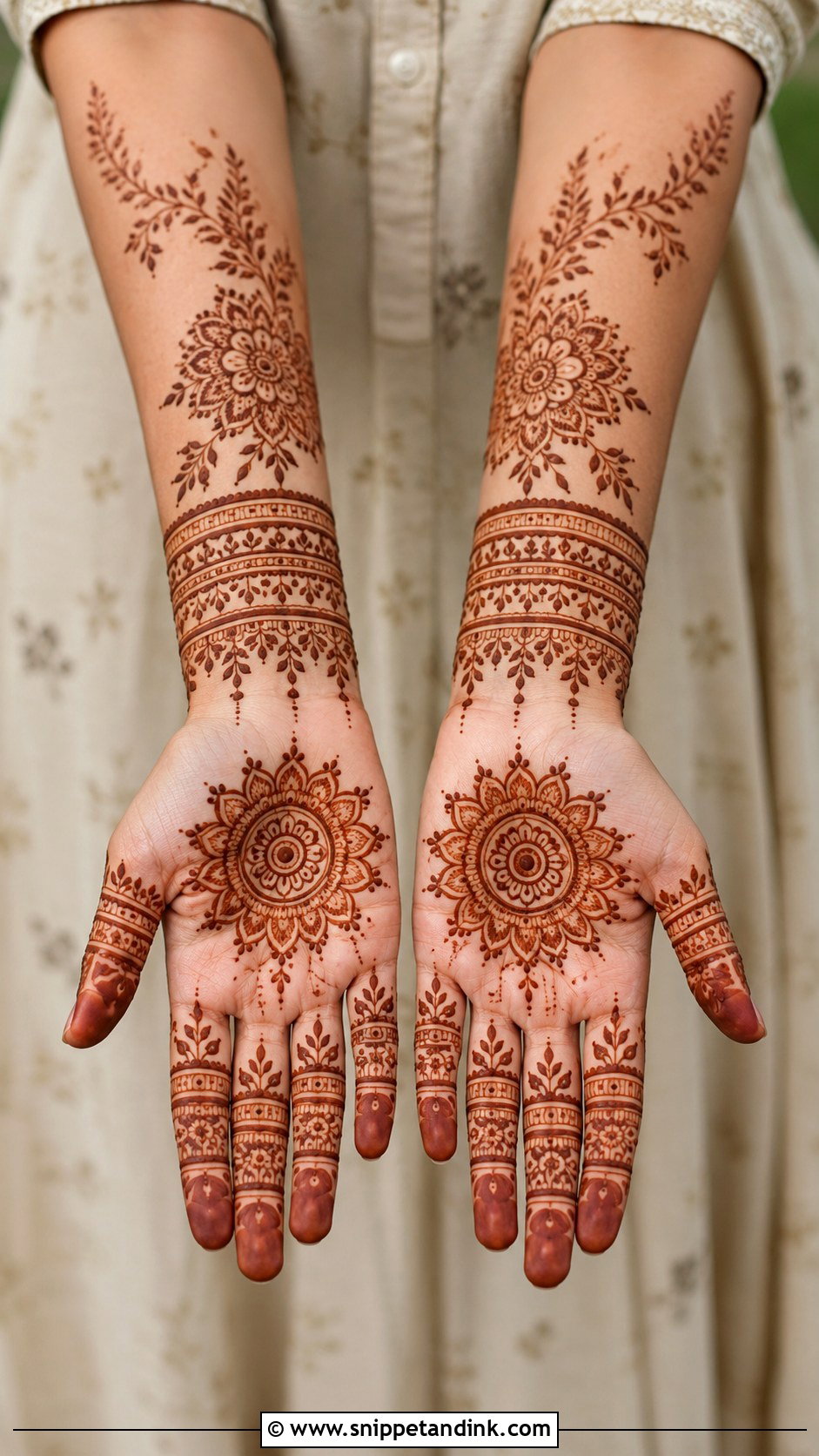
A simple full hand uses larger motifs, open spacing, neat borders and easy fillers to cover palm, fingers, wrist and forearm: round mandalas, leafy lines, small flowers, bracelet bands and simple paisleys. It’s quick, and it’s the version I teach beginners. Clean structure is its strength. The one thing I don’t skimp on is the fingers; a simple palm with plain fingers looks half-done, so I always give them some detail.
6. Back Full Hand Mehndi Design
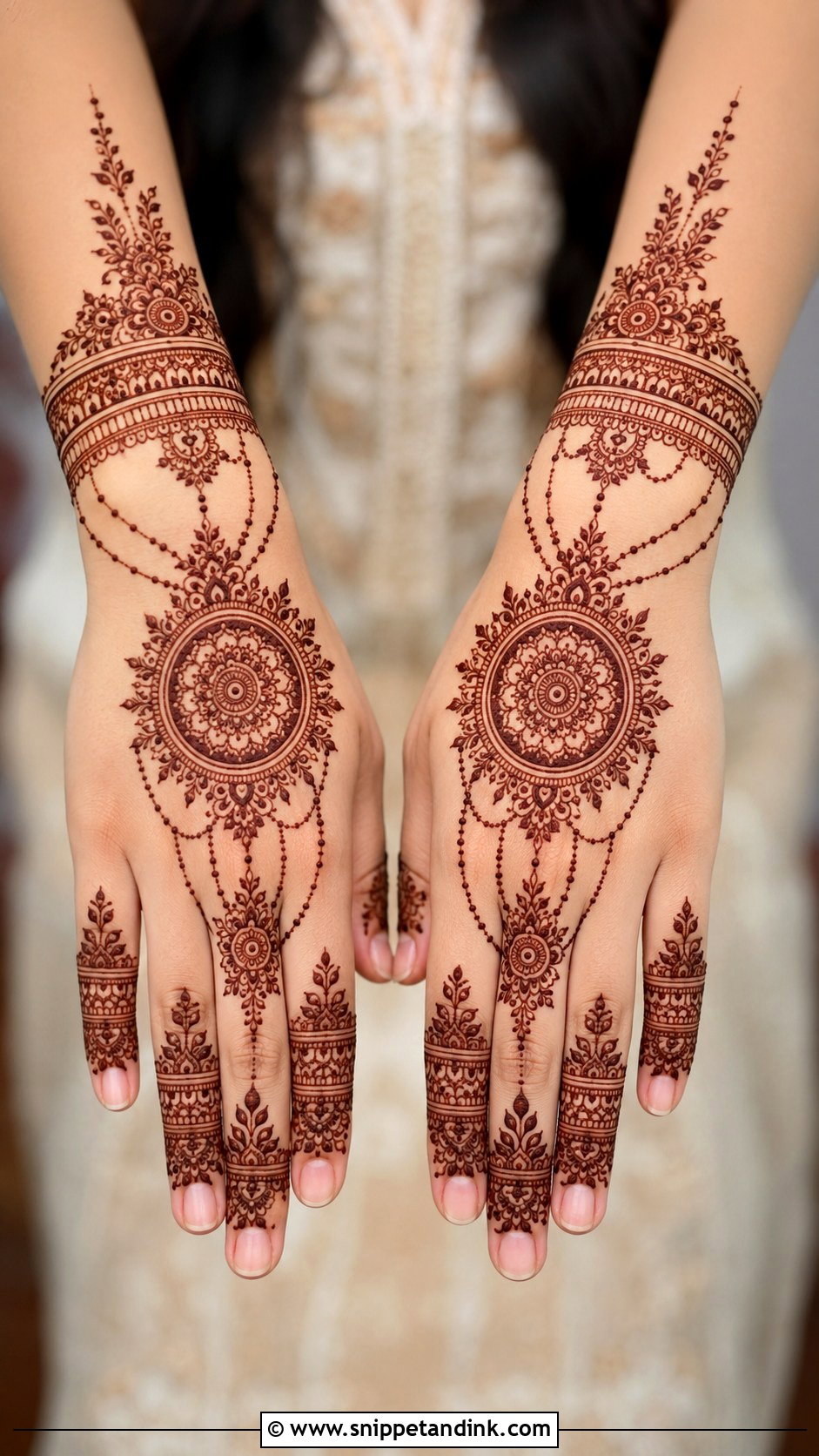
The back of the hand is the side people see in ring ceremonies and portraits, so it needs one clear focal point: a central mandala, floral cluster or jewelry-style pattern. Fingers can take rings, leafy trails, checks or bands, and the design can continue up the wrist and forearm in cuffs or vines. The back stains a shade lighter than the palm, so I draw slightly bolder lines here to keep the color even across the hand.
7. Front Full Hand Mehndi Design
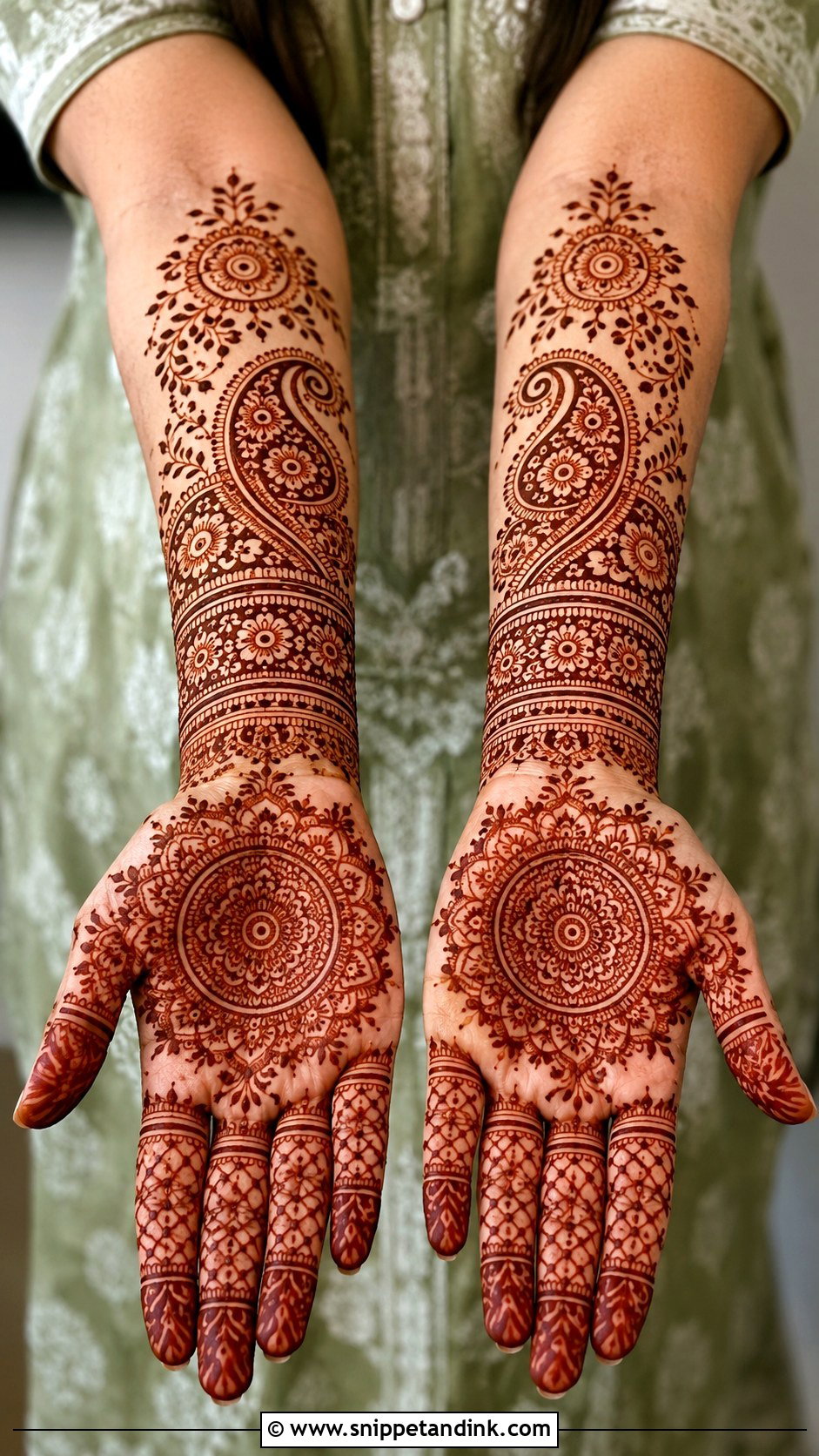
Palms show during rituals, blessings and close-ups, and they stain darker than almost anywhere else, so they carry the strongest motif: a mandala, a paisley pair, bride-groom art or a floral circle. Fingers get lines, dots, mesh or small leaves for balance, and the wrist and forearm get bands, arches or trails. Bold outlines matter here because the main shapes need to read once the paste is scraped and the stain deepens over the following day.
8. Full Hand Mandala Mehndi Design
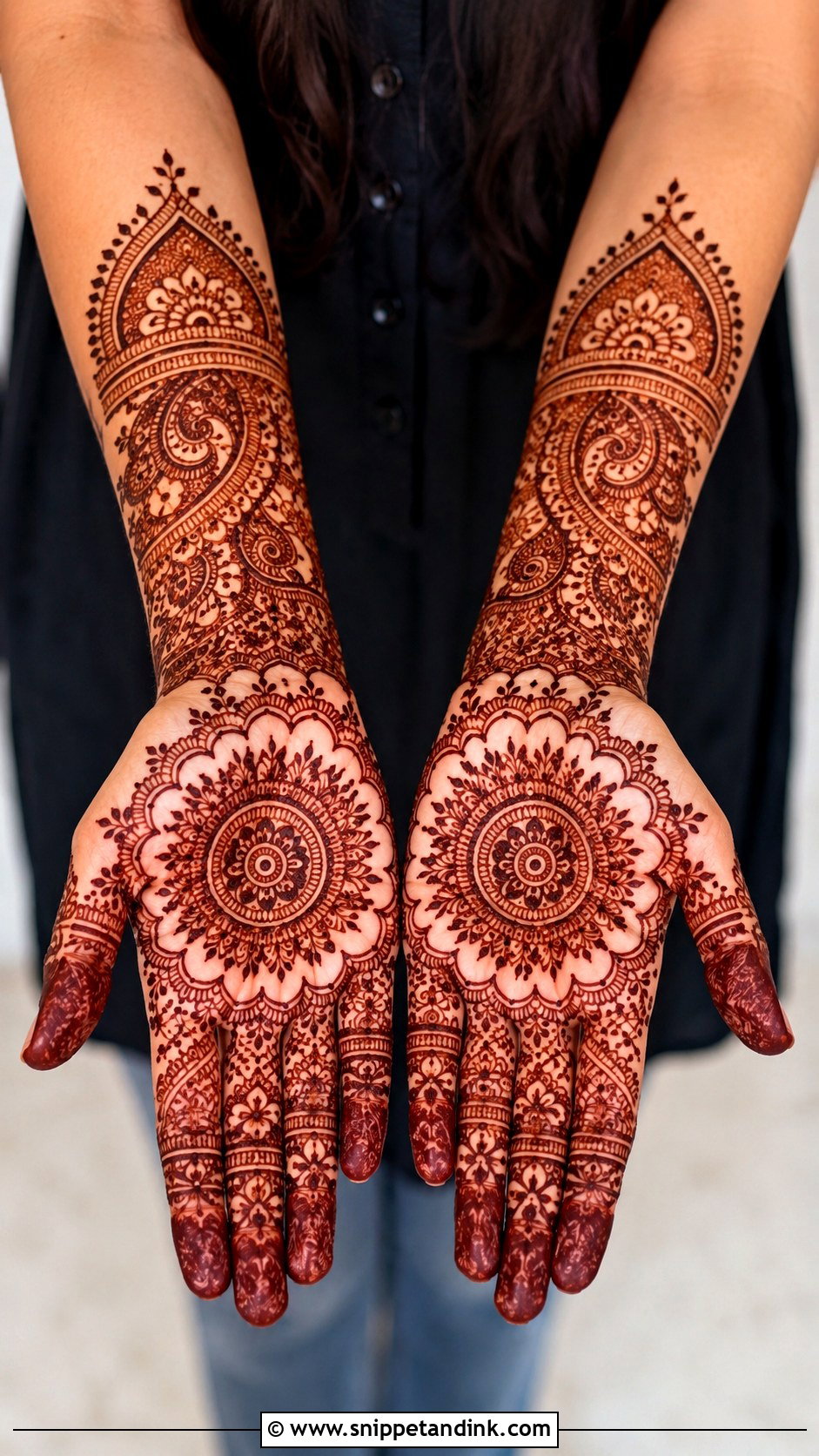
A mandala in the center of the palm or back hand, with rings of petals, dots, curves and lines expanding outward, gives a calm, symmetrical full hand. I extend it with finger patterns, wrist bands, paisley side panels and a forearm extension. It suits smaller hands because the circle gives the layout a natural structure. I draw the center first and make it bold, since everything else is spaced from it.
9. Full Hand Floral Mehndi Design
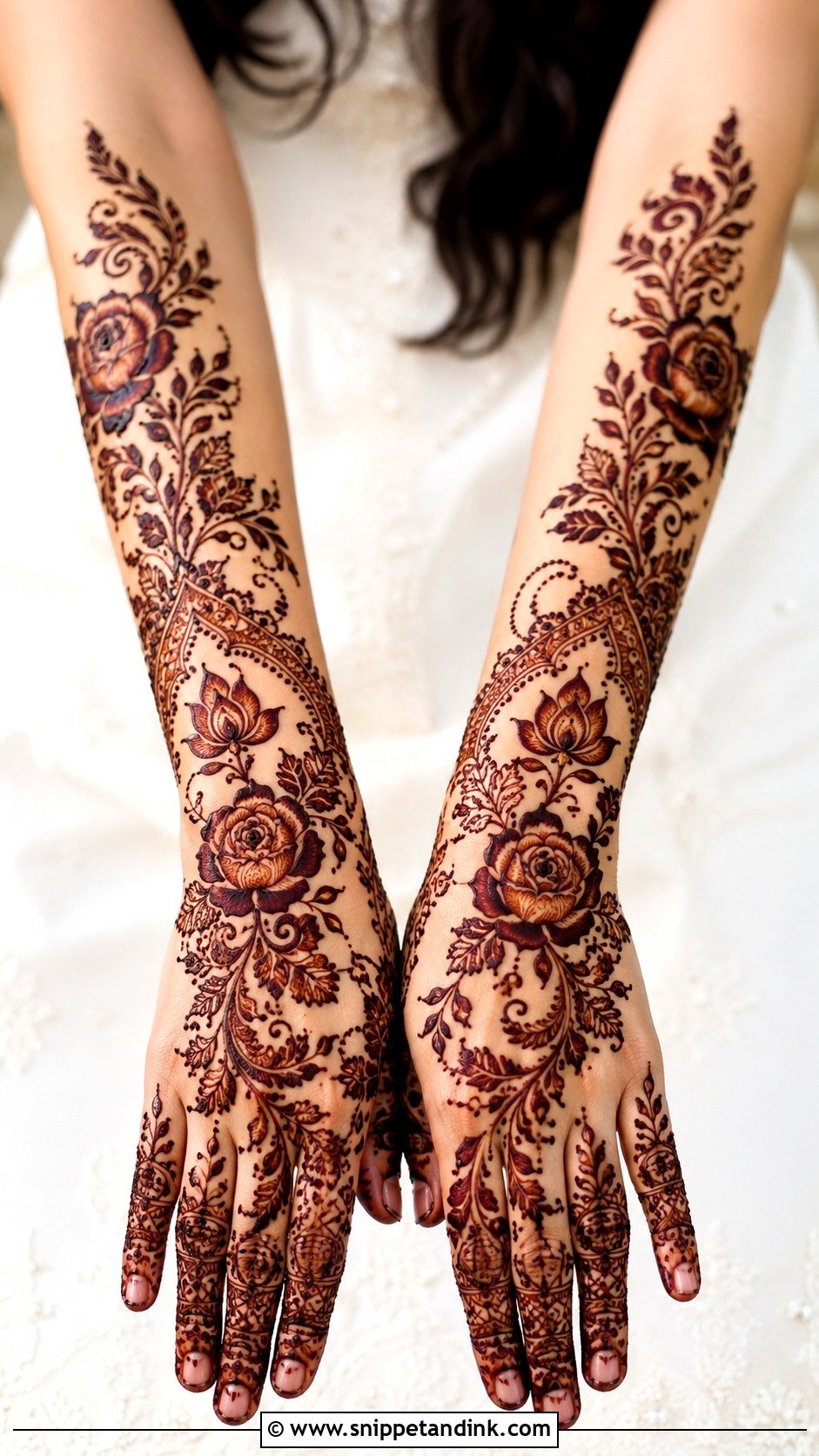
Flowers can carry a whole hand on their own: Arabic roses, Indian lotus, tiny blossoms or shaded petals across palm, fingers, wrist and forearm, linked by leaves and vines. It suits engagements, Eid, Diwali, baby showers and guests. For a modern feel, I leave small gaps around each flower and put fine lines inside the petals. For a heavier version, I add jaali, paisley borders and dense fingers.
10. Full Hand Paisley Mehndi Design
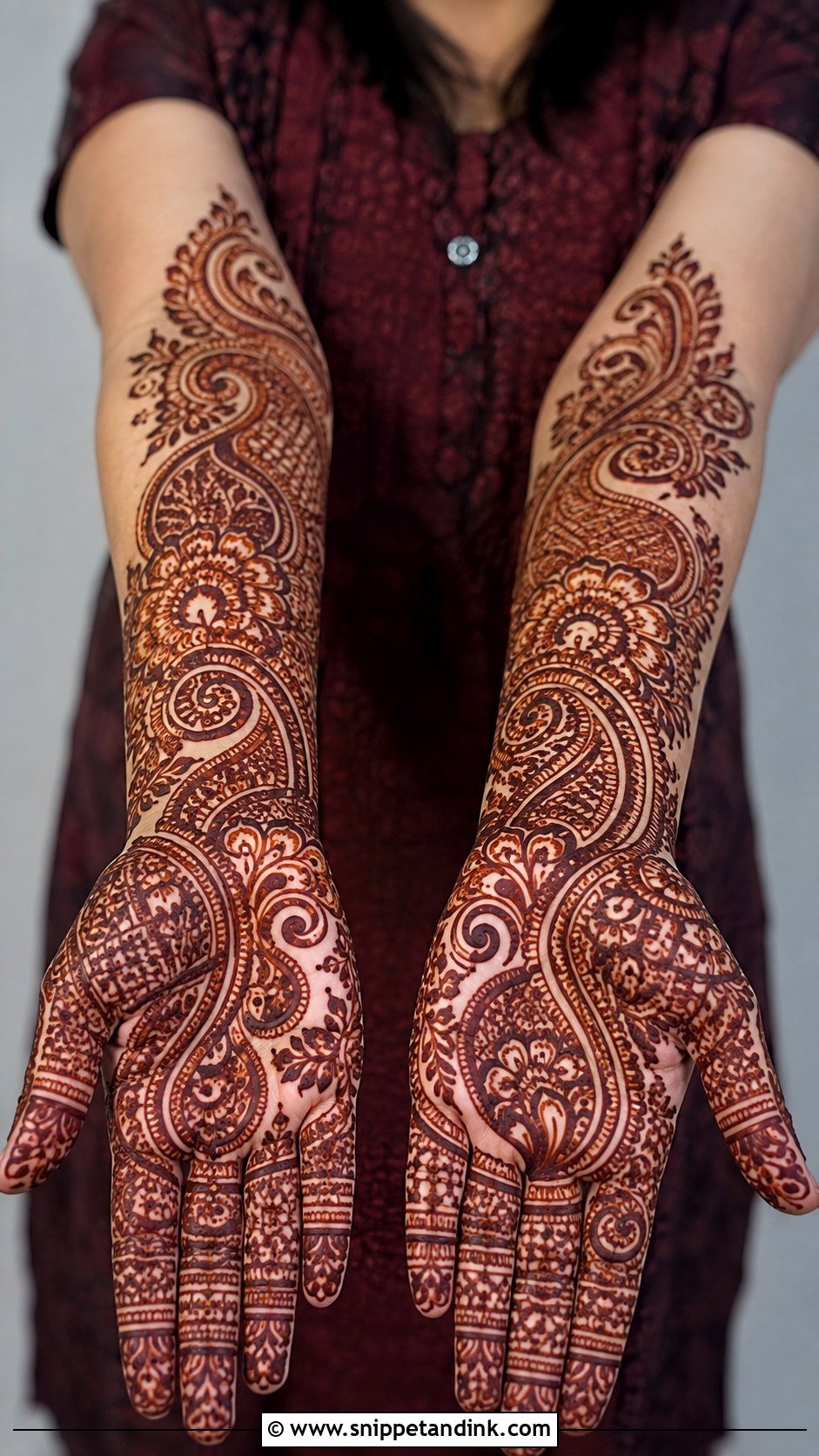
Paisleys bend to fit any part of the hand, which makes them dependable for full coverage: large ones on the palm and forearm, smaller ones along the wrist and finger sides, filled with floral centers, leafy edges, dots, swirls and fine lines. They suit long hands especially, because the curves create movement. I use at least three sizes; one repeated size makes the hand look stamped.
11. Full Hand Peacock Mehndi Design
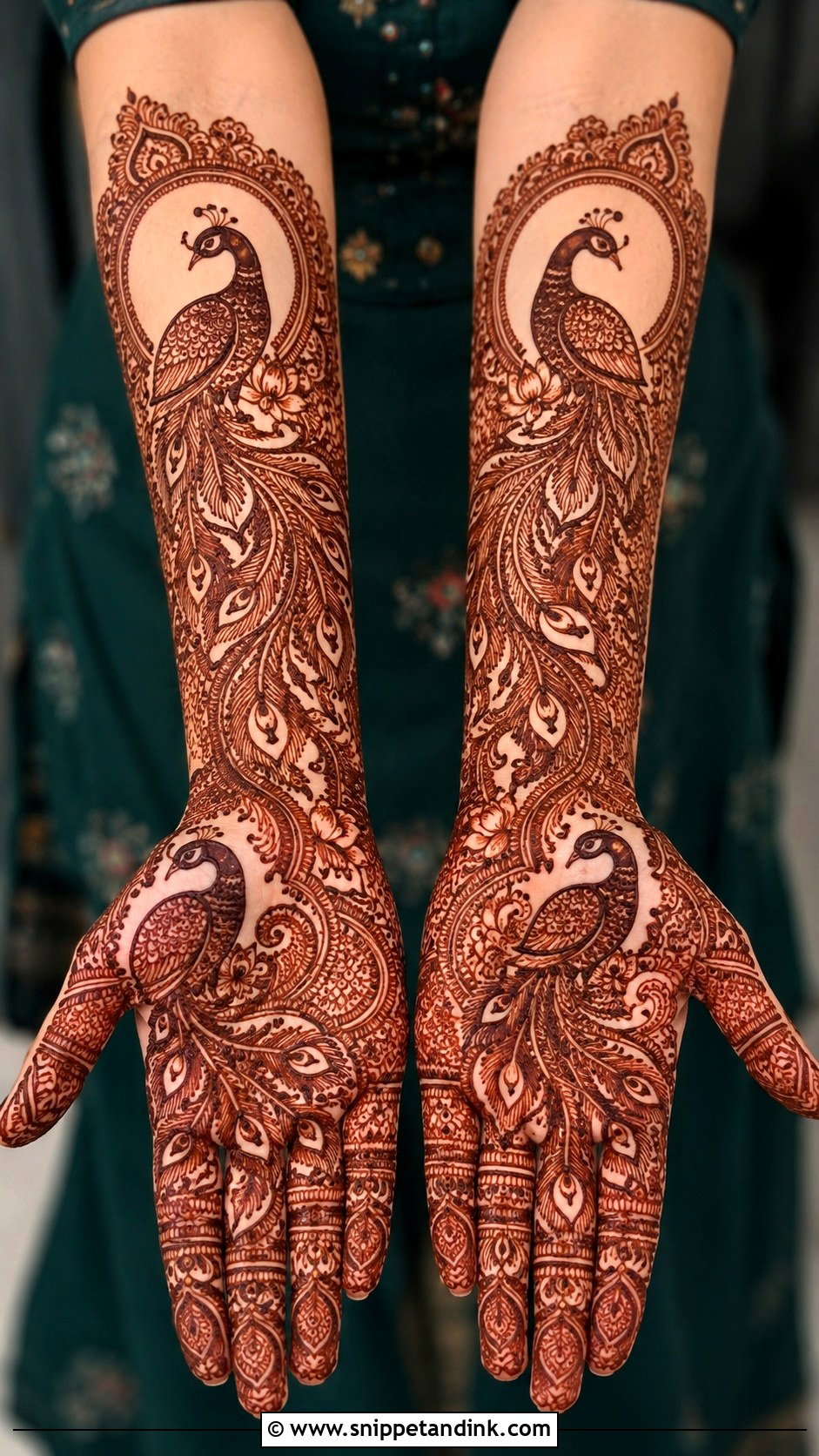
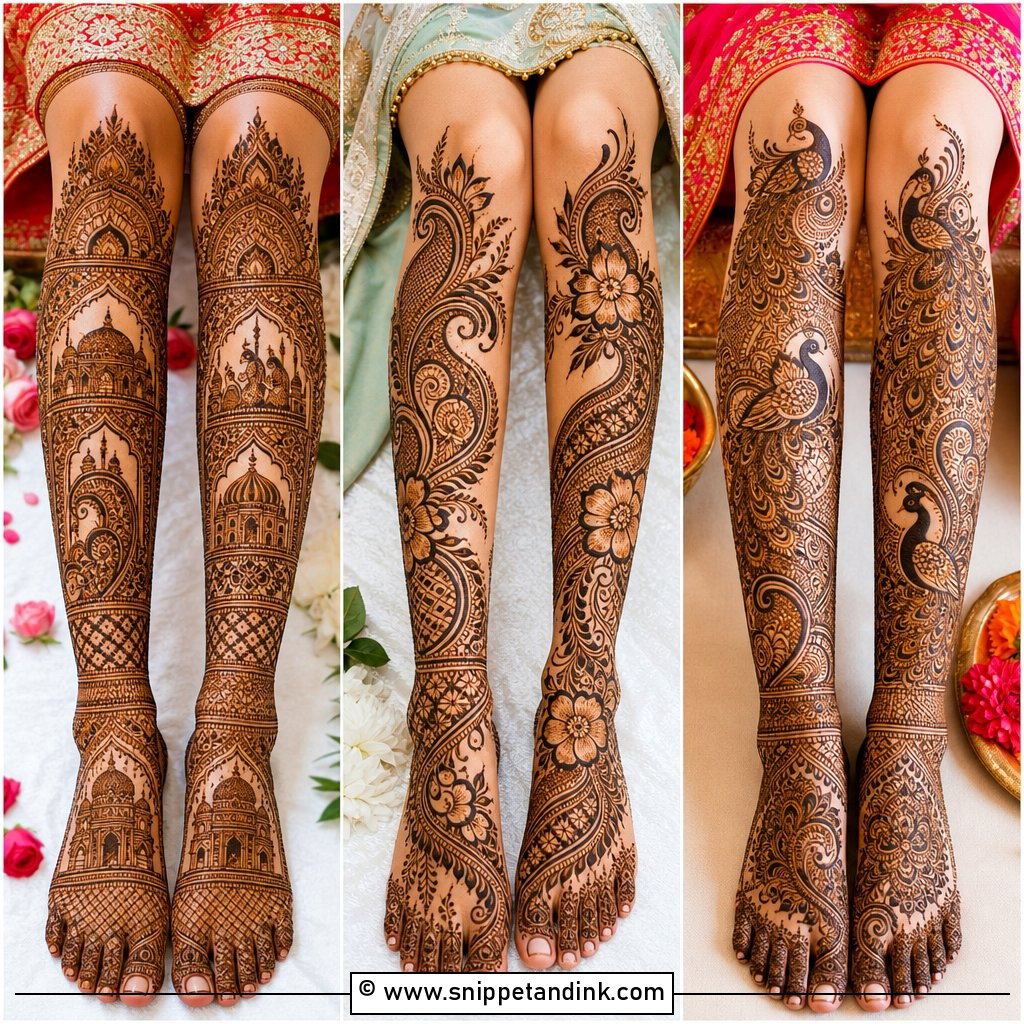
A peacock can sit on the palm, back hand, wrist or forearm, its feathers flowing into paisleys, florals and bands. For a full hand, I use one large peacock as the focus and echo it with small feather details on the fingers and wrist rather than adding a second bird. Fine lines inside each feather give depth, but I keep space between the feathers so the shape doesn’t blur when the stain develops.
12. Full Hand Jaali Mehndi Design
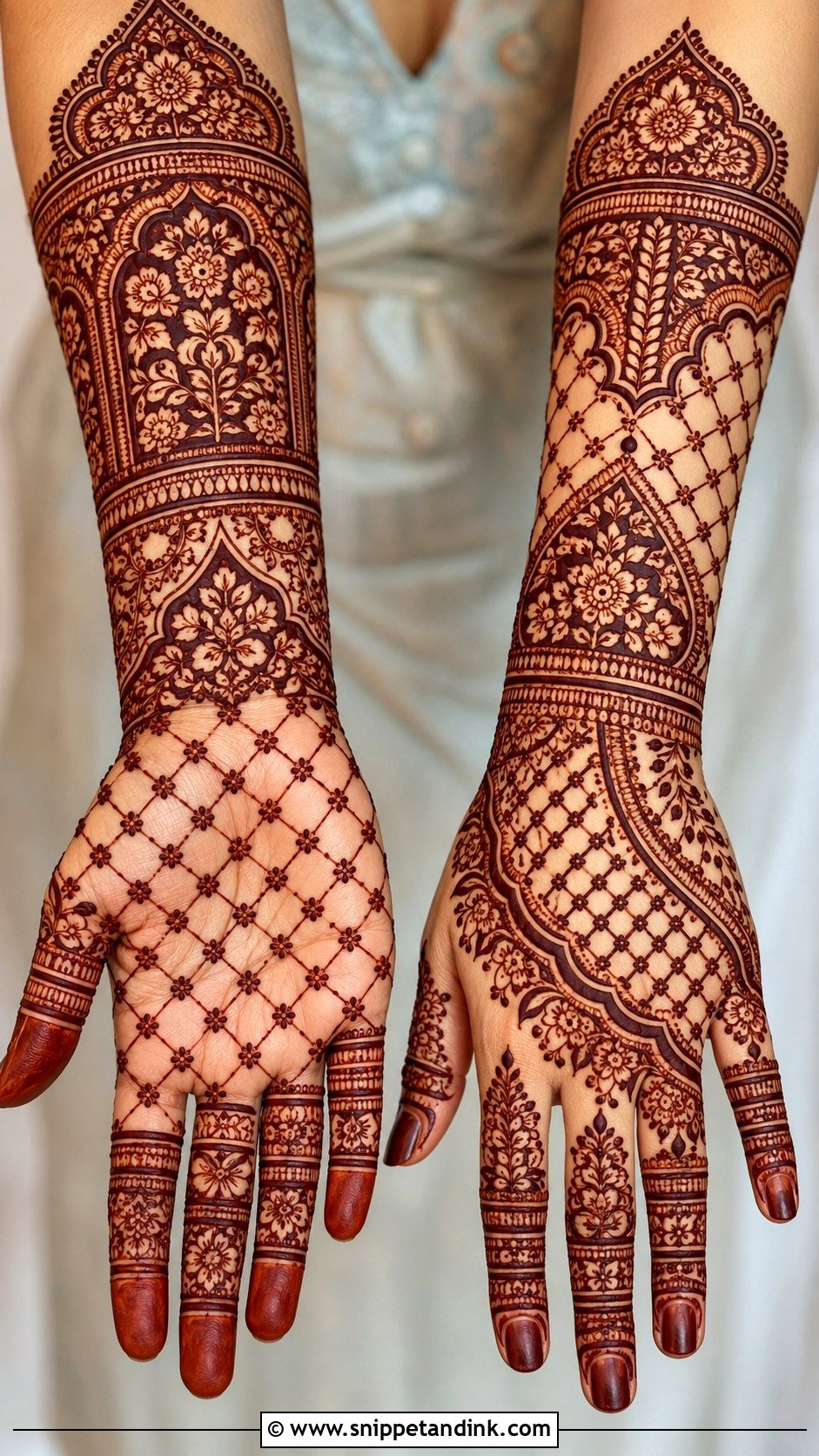
Jaali fills large areas with a lace effect on the palm, back hand, fingers, wrist or forearm, usually alongside flowers, paisleys and mandalas. Dots at the intersections refine it. It adds texture without making the hand look dark, which suits modern bridal and Indo-Arabic hands. I pair each jaali section with a bold motif beside it; a whole hand of mesh looks flat and loses contrast.
13. Full Hand Rajasthani Mehndi Design
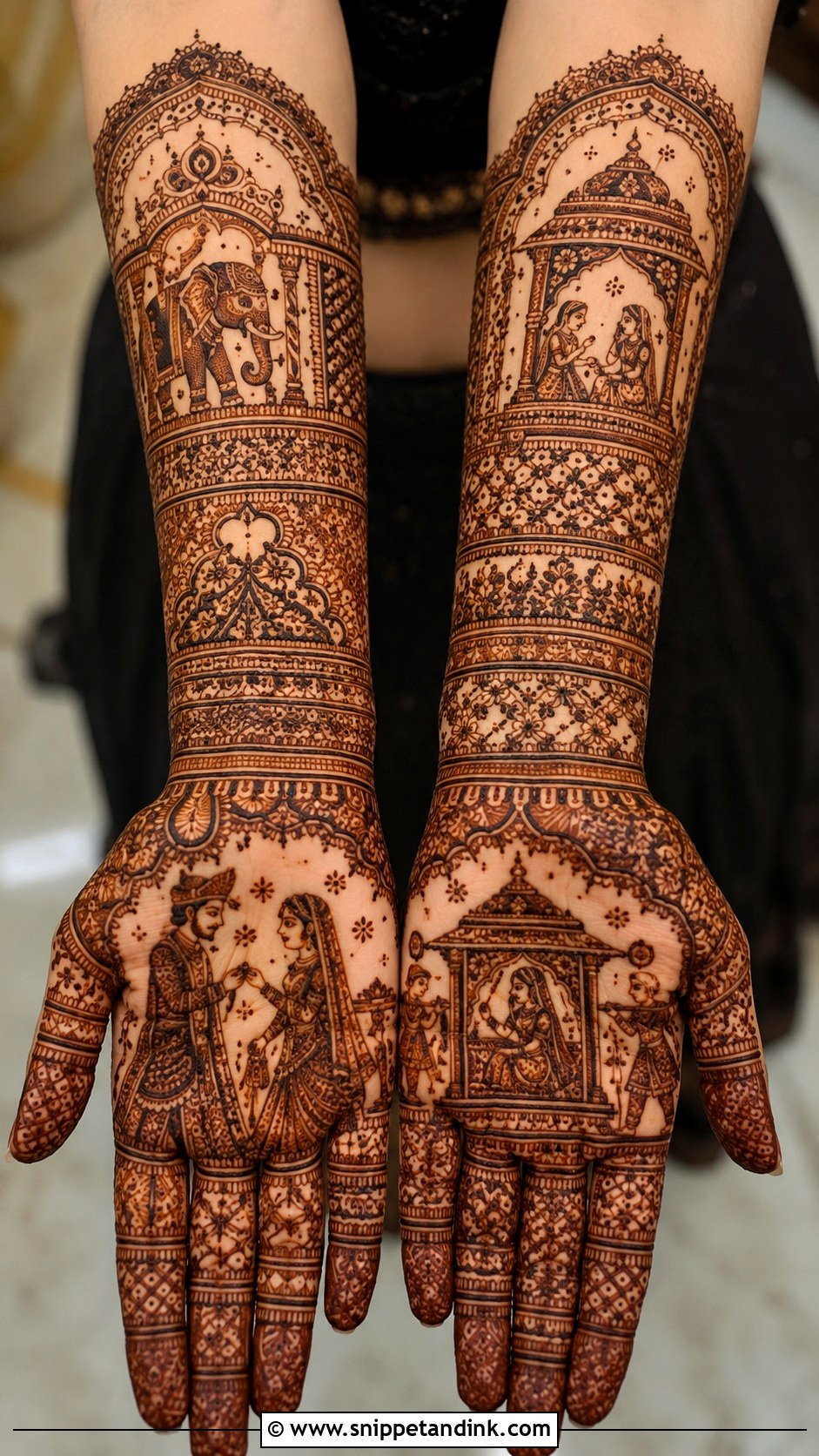
Rajasthani full hands are storytelling at full density: bride and groom figures, elephants, palanquins, peacocks, royal arches, paisleys and fillers from fingertips to forearms with almost no empty space. Palms show wedding scenes and forearms carry bands, domes and symmetrical panels. It needs an experienced artist and a long sitting. Plan for it the day before the wedding, not the morning of.
14. Full Hand Mughlai Mehndi Design
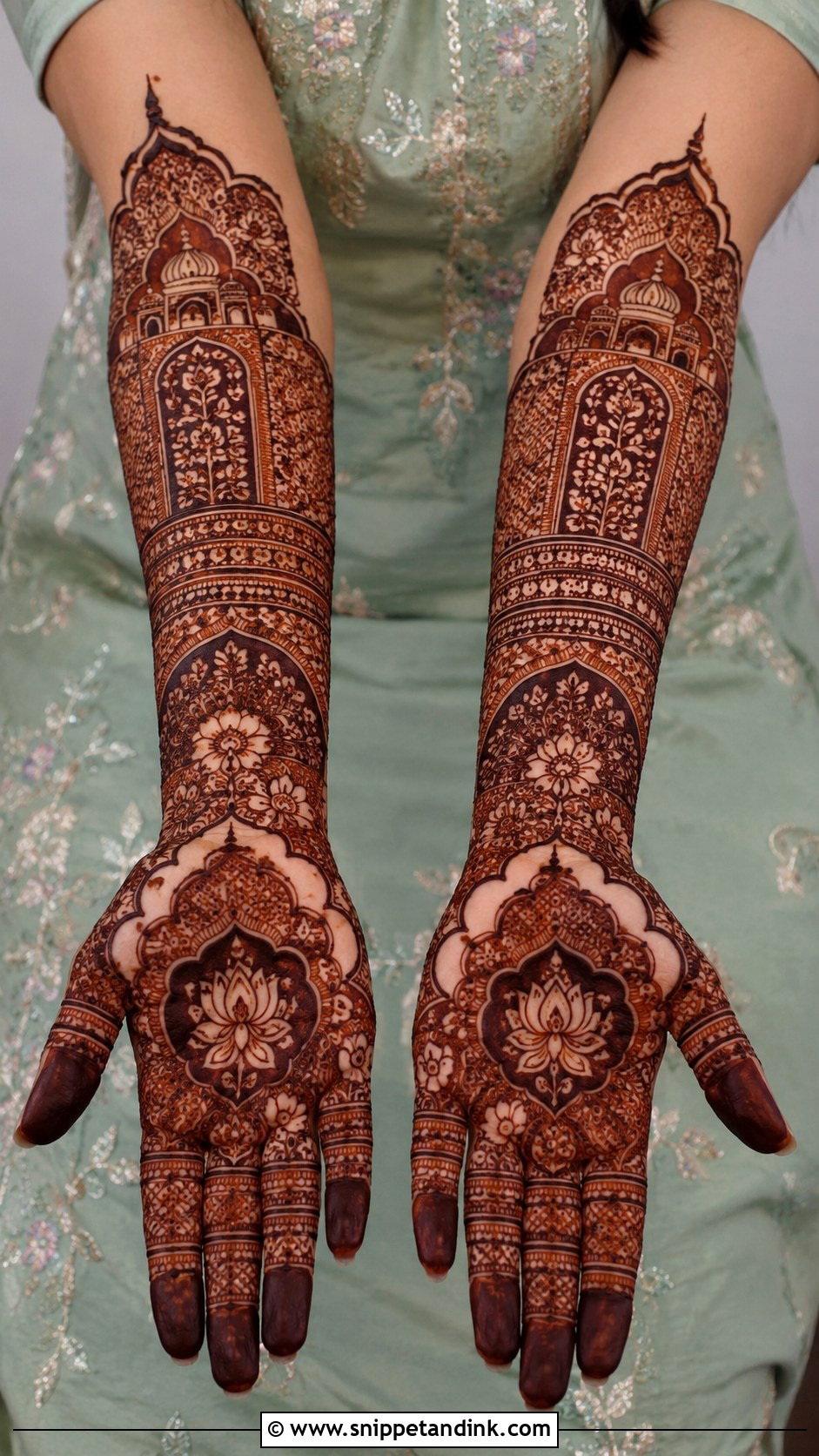
Mughlai designs borrow from architecture: arches, domes, curved windows, lotus, vines, paisley panels and ornamental borders, arranged symmetrically from palm to forearm. Because motifs sit inside framed sections, full coverage still looks organized. It suits brides, Eid and formal events. The arches are the hard part; I draw the outer curve of each arch first and check both sides match before filling.

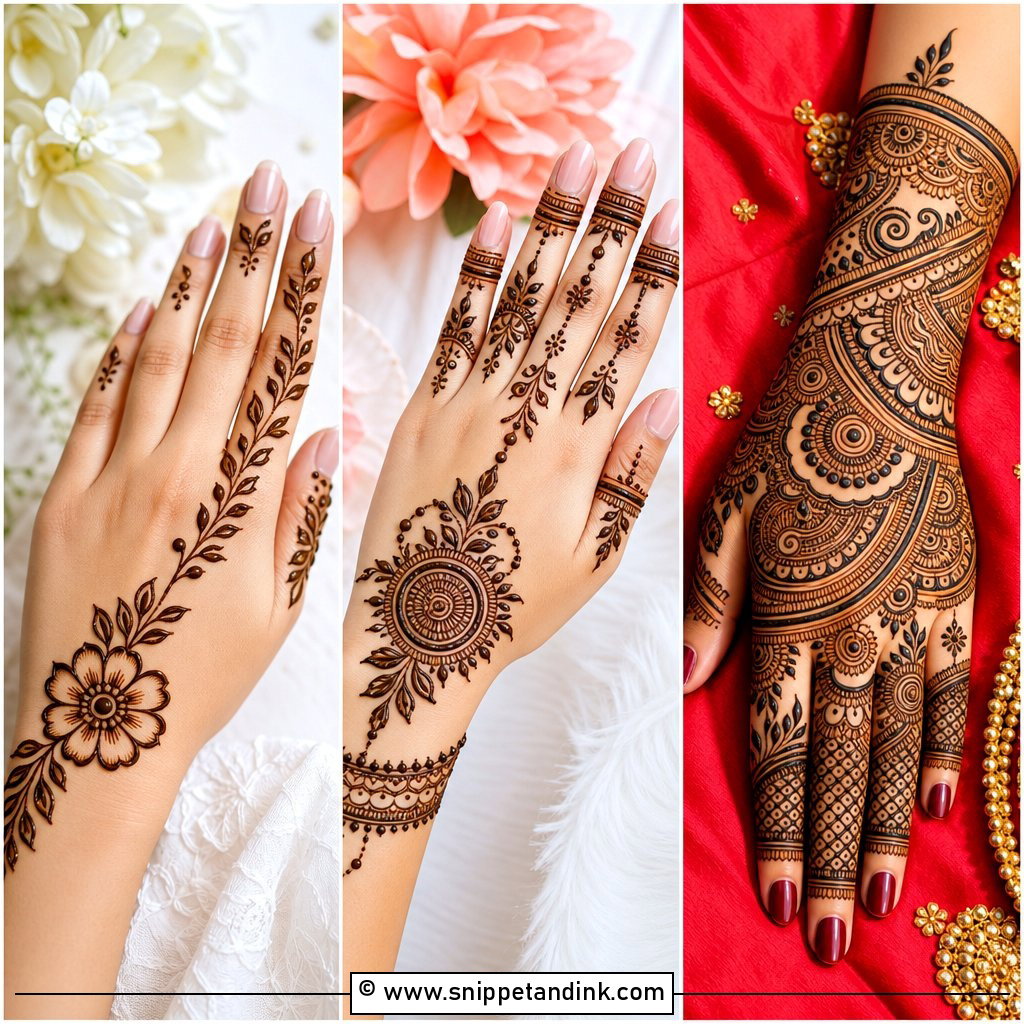

15. Full Hand Moroccan Mehndi Design
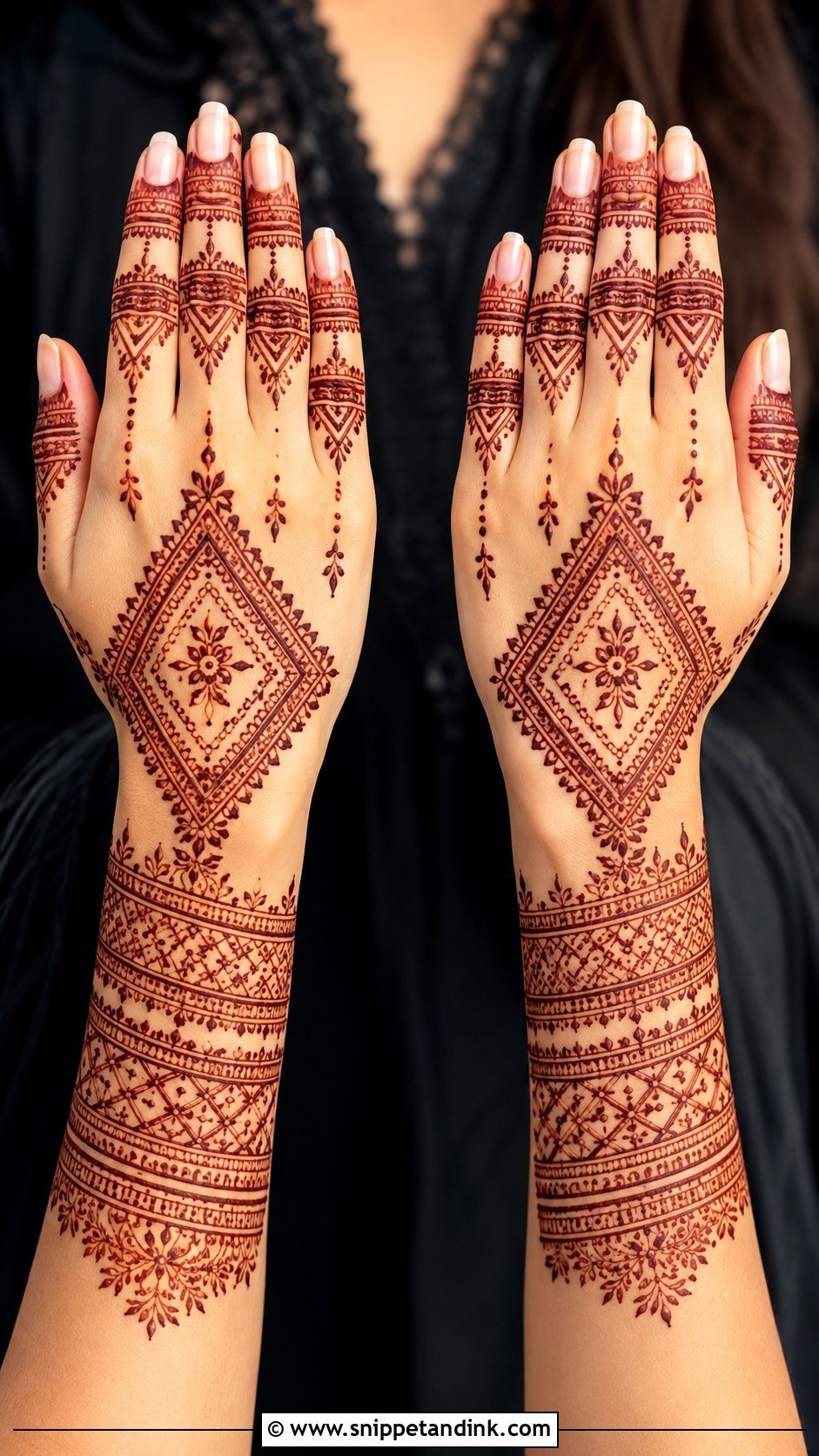
Moroccan full hands swap florals for diamonds, triangles, squares, zigzags, grids and sharp bands, often dividing the hand into sections with a different geometric texture in each. It’s bold and neat in photos and a fresh direction if florals feel too familiar to you. Straight lines on skin need a flat, supported hand. A few small flowers or dots between the lines soften it. It reads best on the back of the hand and forearm.
16. Full Hand Gulf Mehndi Design
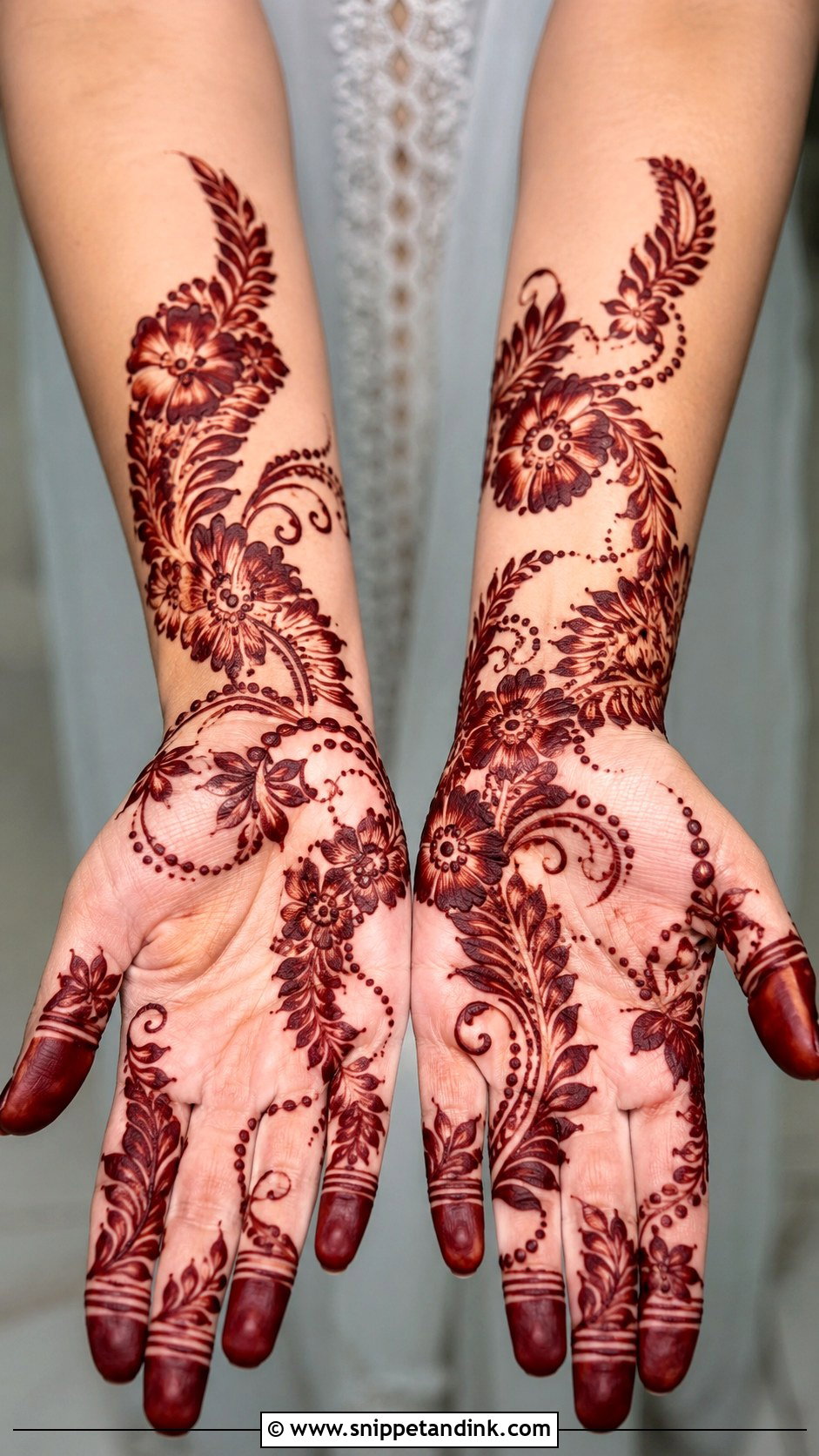
Gulf-style full hands sit between simple Arabic and packed Indian: bold florals, leafy curves and confident spacing, with large flowers across the palm and wrist and leafy tips, bands or dotted trails on the fingers. The open skin lets each motif stand out. I shade the petals with a thin layer of paste and keep the outlines thick, which gives the dimensional finish this style is known for.
17. Full Hand Engagement Mehndi Design
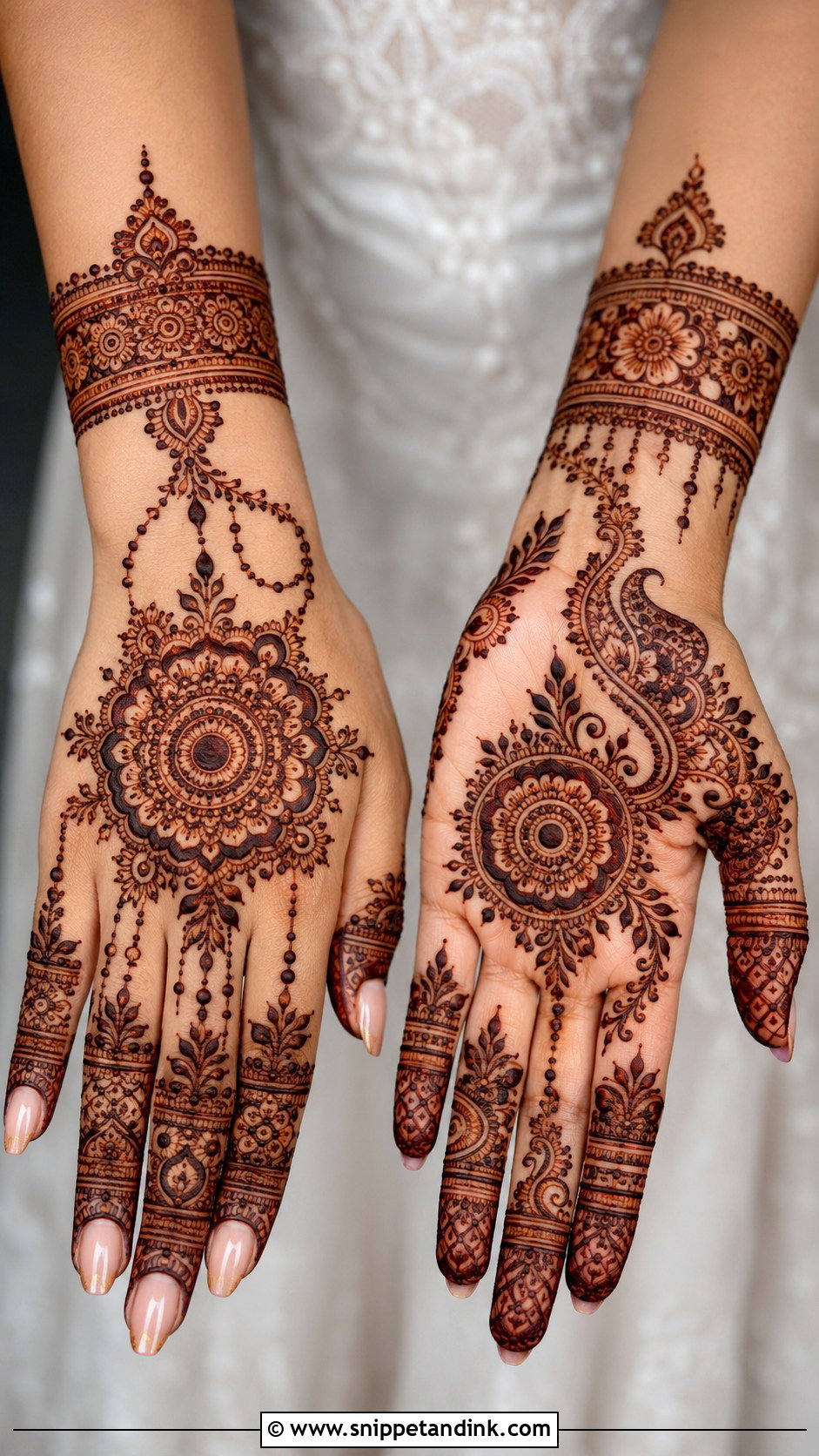
Engagement hands should feel special without matching the coverage you’ll want at the wedding. Florals, mandalas, ring-inspired details and wrist bands work well, with jewelry chains on the back of the hand leading to the ring finger and a soft floral or paisley design on the palm. Keep the forearm medium-detailed. I leave the ring finger’s base clear so the ring sits on clean skin in close-ups.
18. Full Hand Wedding Mehndi Design
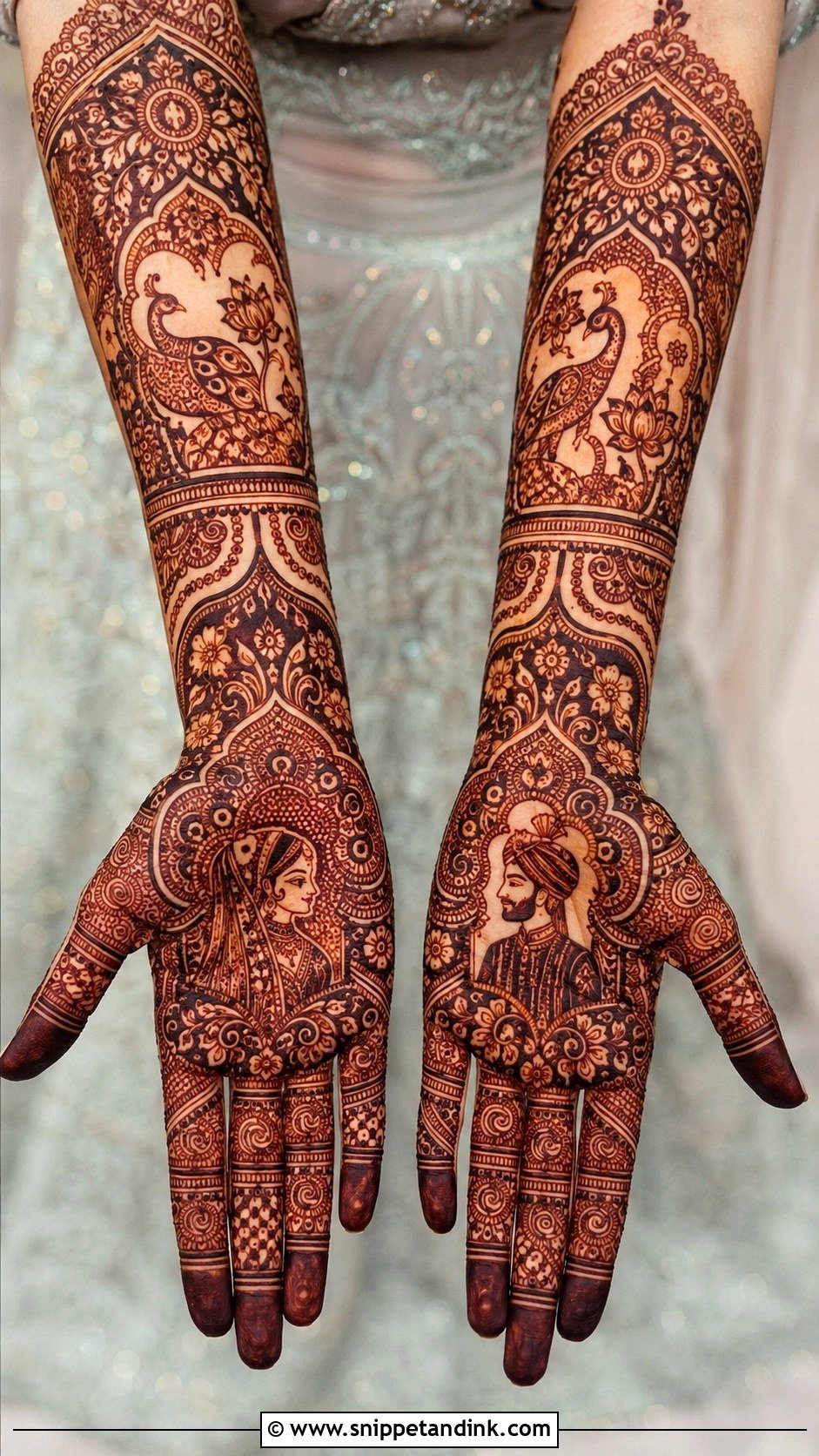
Wedding full hands combine dense palms, detailed fingers, wrist cuffs and forearm work, matched to the bridal outfit, with mandalas, paisleys, flowers, peacocks, couple art and borders. Hidden initials or symbols personalize it. I divide the hand into sections before starting rather than filling as I go, which keeps it readable in photos. Give it the time it needs; rushed bridal work shows in uneven spacing.
19. Full Hand Eid Mehndi Design
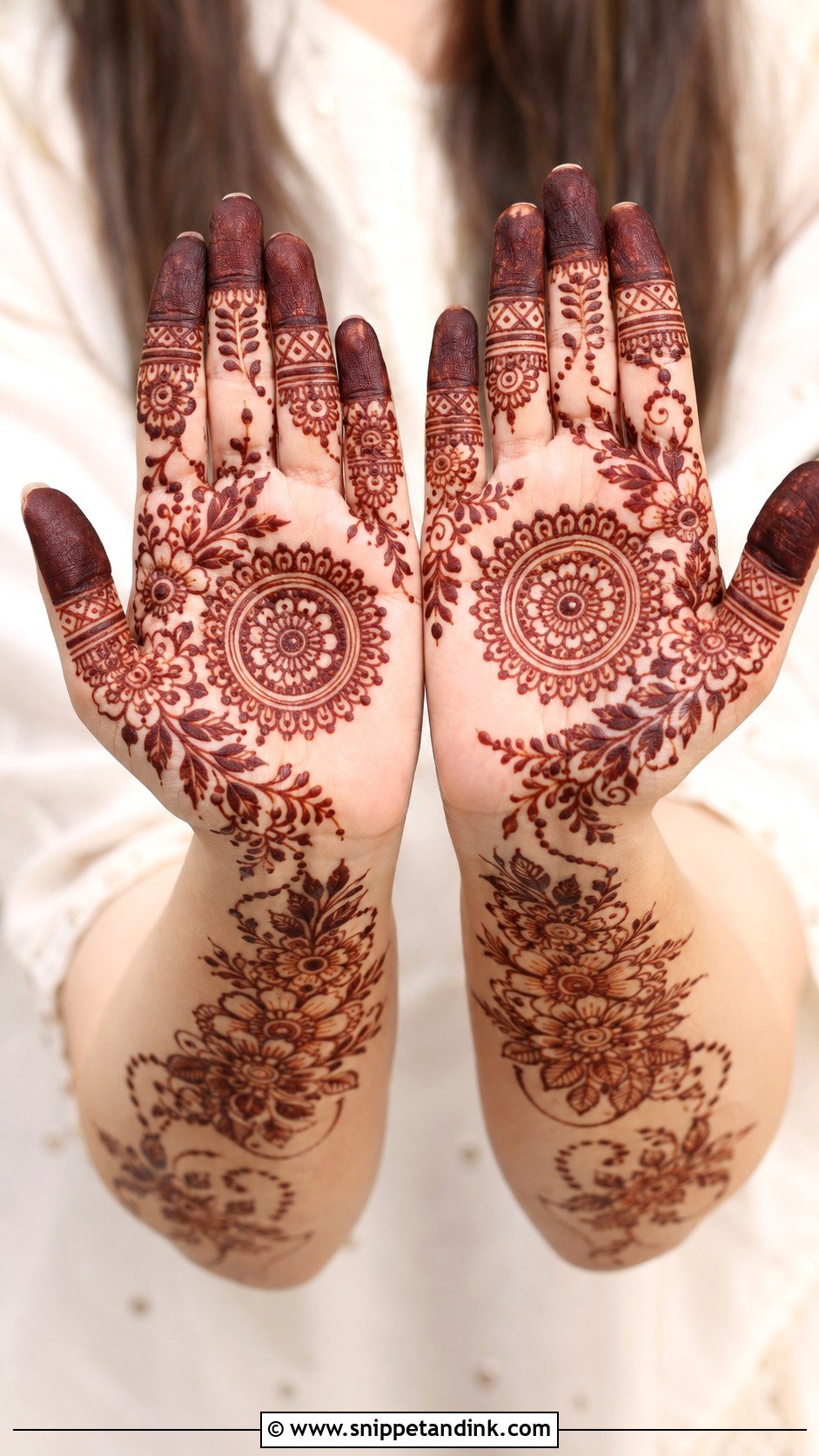
Eid full hands are usually lighter than bridal: Arabic florals, Indo-Arabic trails, mandalas, vines and bold fingers, covering the hand while leaving open space. Speed matters on Chand Raat. A diagonal floral trail from fingers to wrist is the classic; a mandala with decorated fingers is more balanced. Applied the evening before, the stain will be orange at morning prayers and deepen through the day.
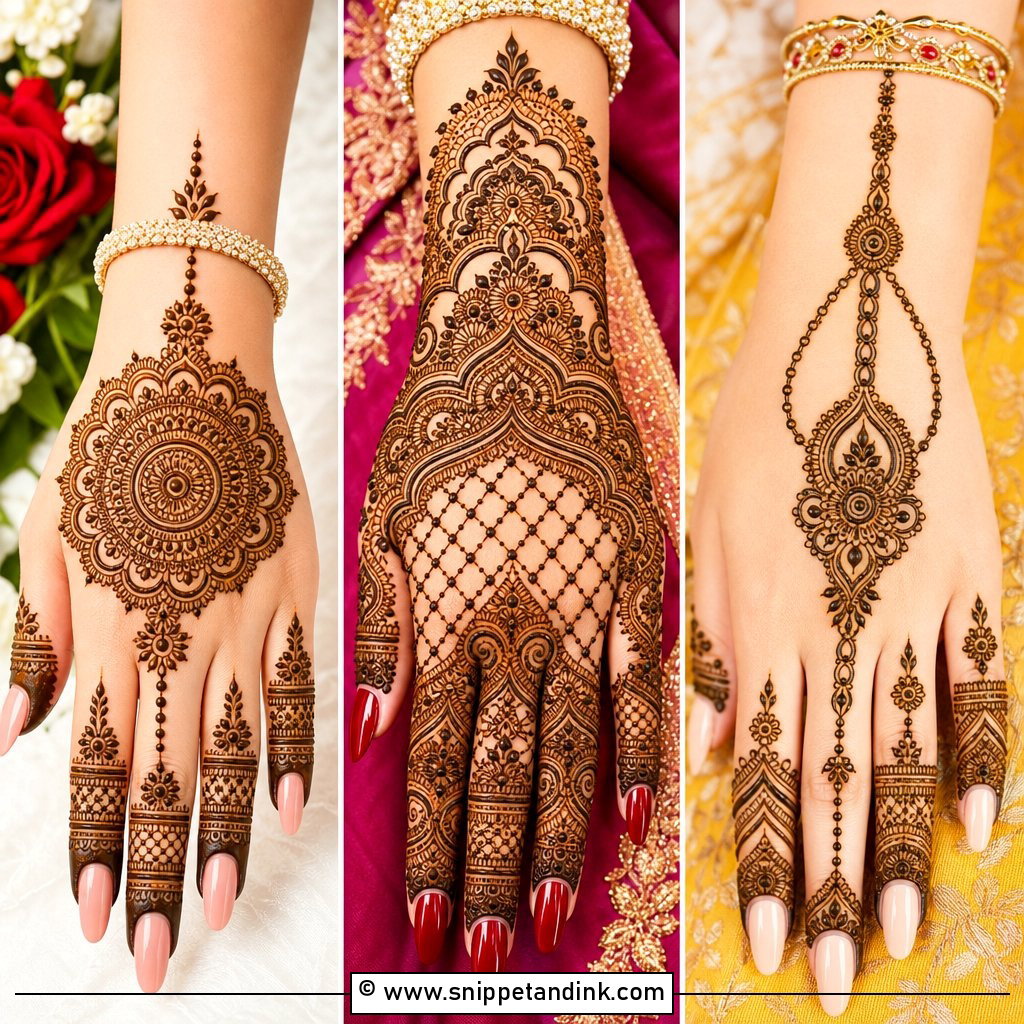



20. Full Hand Diwali Mehndi Design
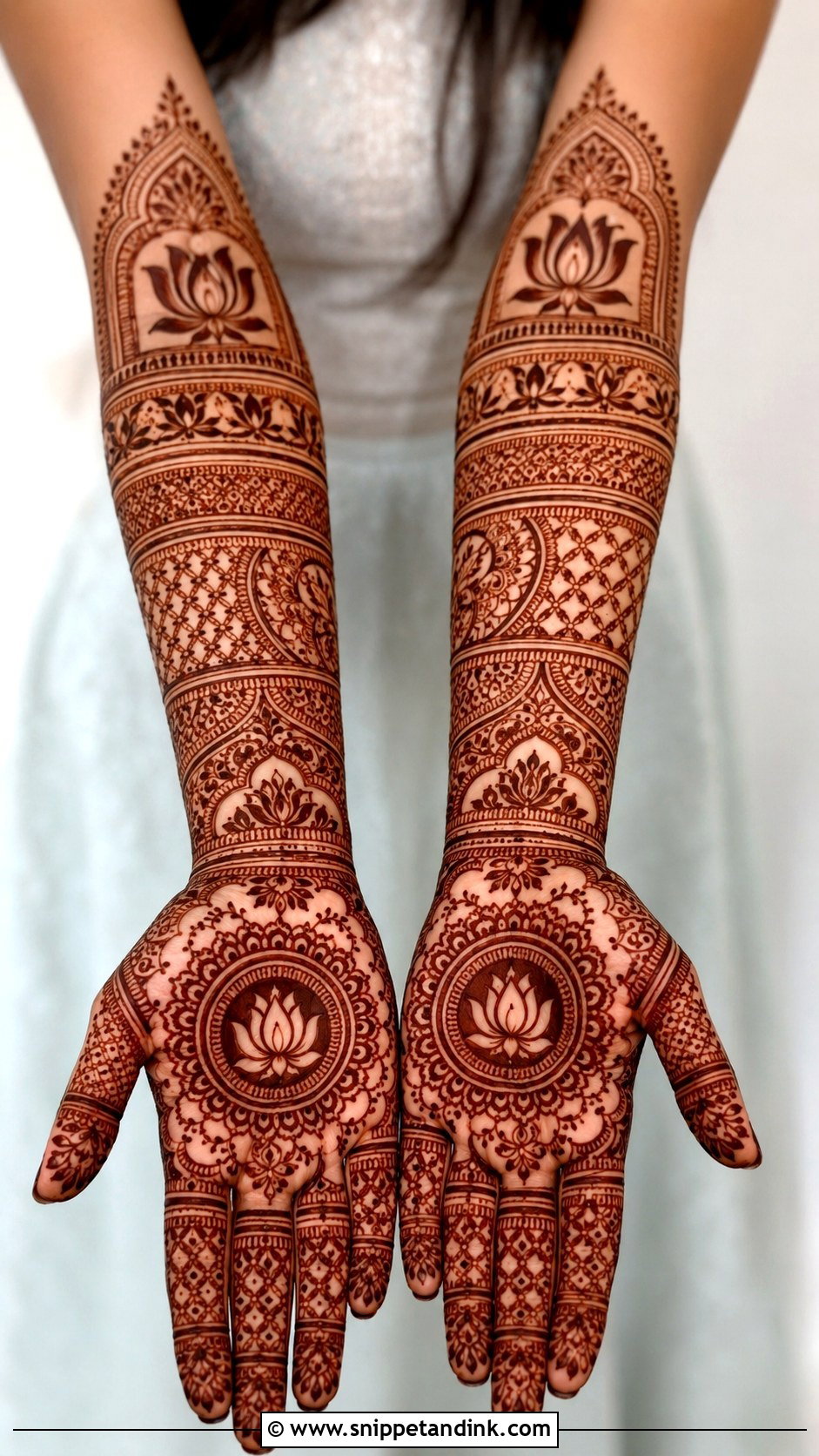
Diwali outfits are colorful and jewelry-heavy, so I keep festive full hands clear rather than cluttered: floral mandalas, paisley bands, lotus and bracelet-style wrists, often with mirrored palms. Fingers get enough detail to look complete in photos. It stays lighter than bridal so it feels comfortable through a long evening of cooking, lamps and visits. Crisp lines give a clean stain.
21. Full Hand Karwa Chauth Mehndi Design
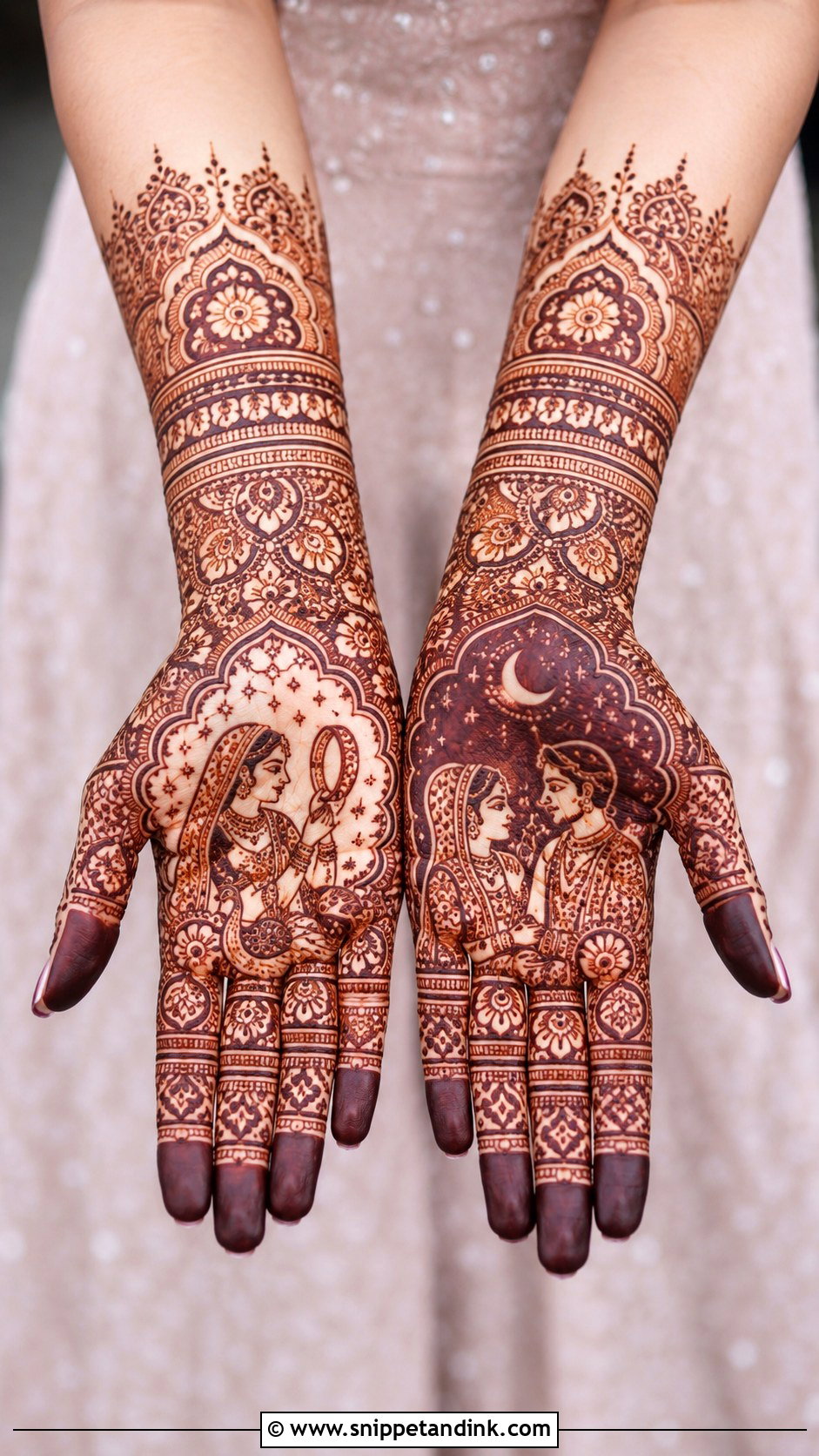
Karwa Chauth hands are traditional and detailed: mandalas, paisleys, florals, bangle motifs and small symbols, with a bold circle on the palm and bracelet bands up the wrist. Peacocks or couple art make it more bridal; an open back hand with a floral trail and heavily decorated fingers keeps it simpler. Since you’ll be holding a sieve and thali in photos, I make sure the palms read well from the front.
22. Full Hand Teej Mehndi Design
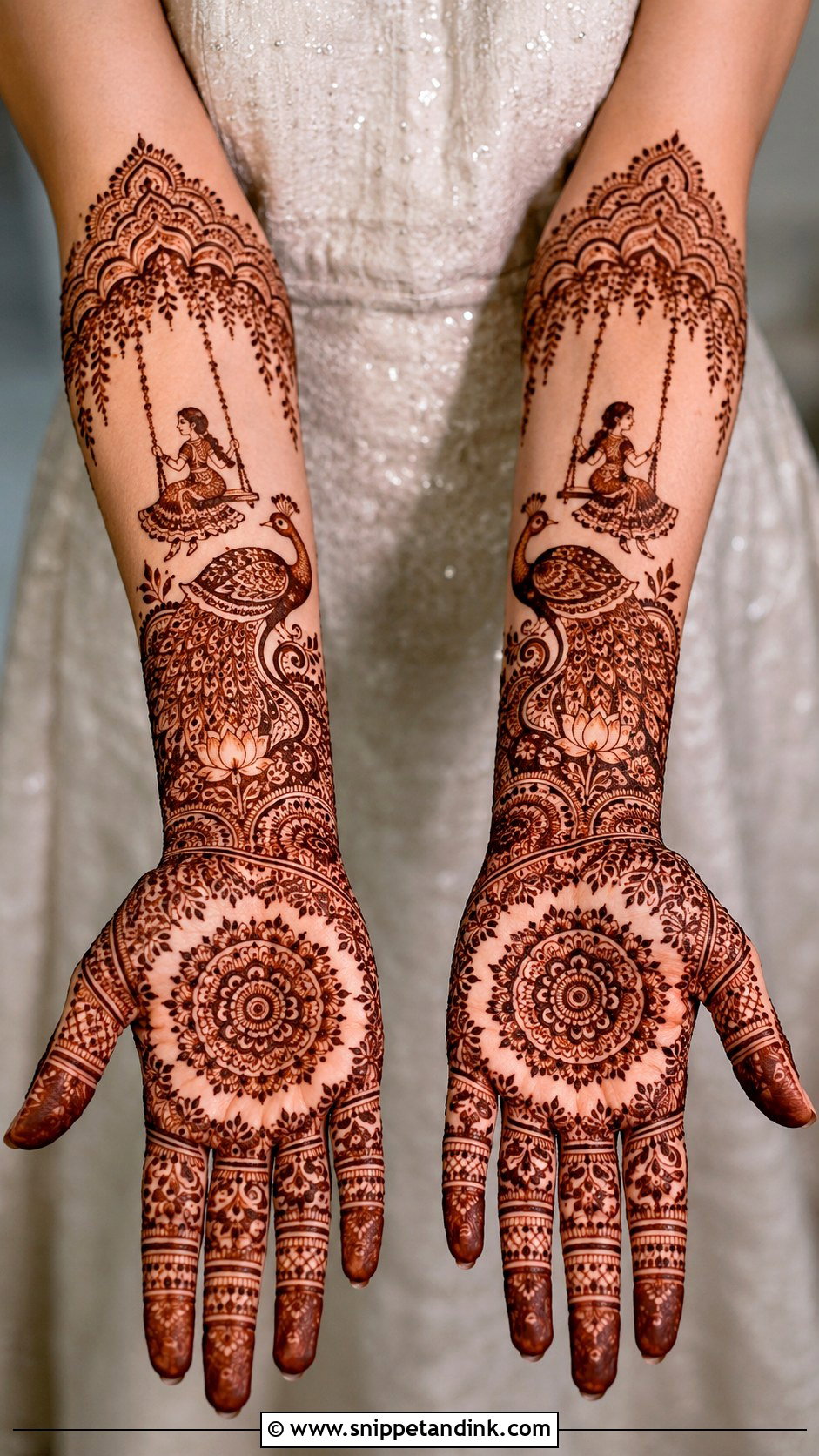
Teej hands are joyful and traditional, with swings, flowers, paisleys, peacocks, lotus and dense fingers. I usually keep the palm heavier and the forearm lighter so it’s comfortable to wear through the festivities. A classic Indian layout matches sarees and festive bangles, and a mandala center with paisley borders is a dependable option. An Indo-Arabic trail with detailed fingers is the more current alternative.
23. Full Hand Rakhi Mehndi Design
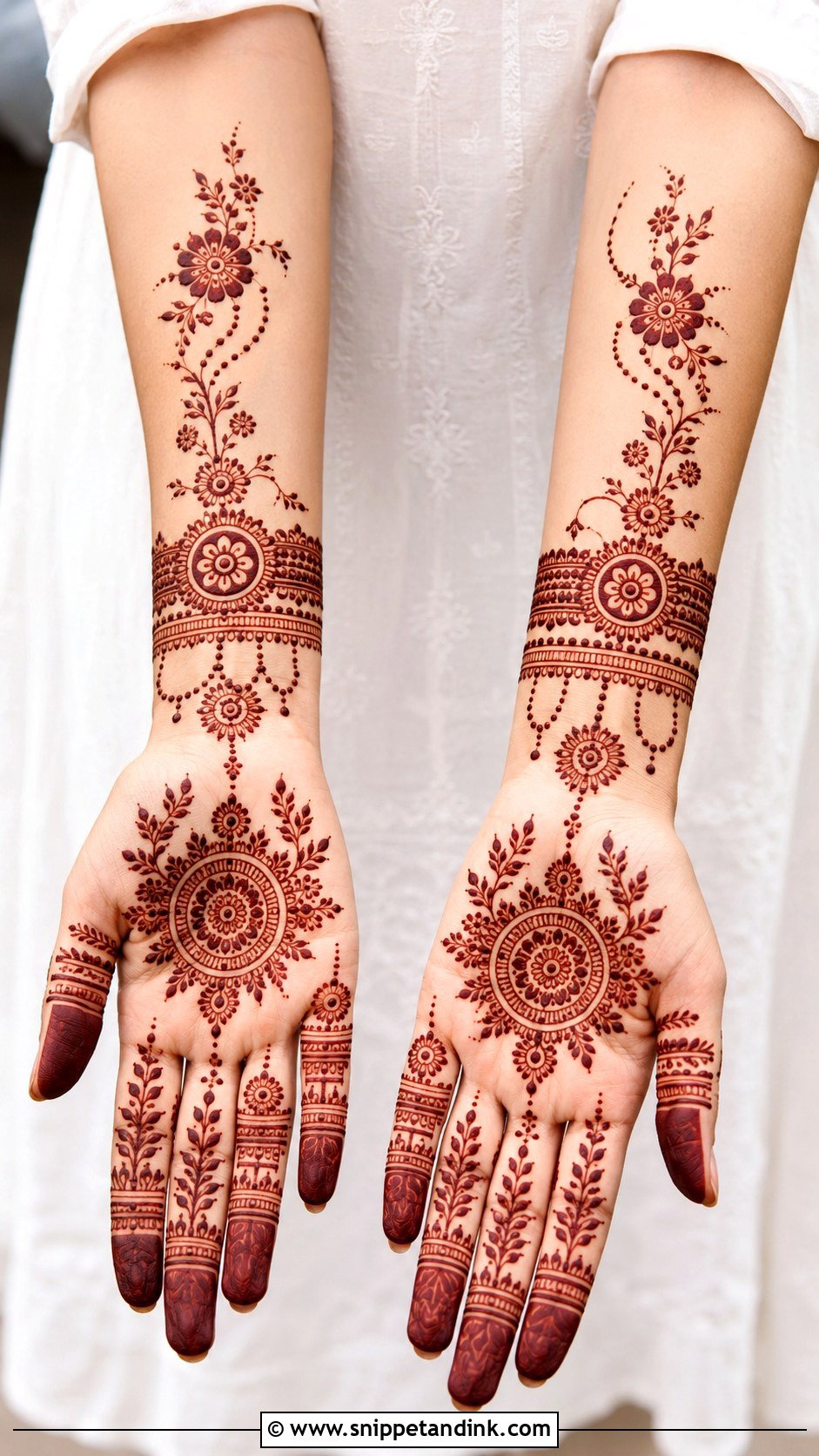
Rakhi hands don’t need bridal density, but they should still look complete: floral trails, mandala palms, bracelet cuffs, leafy fingers and simple forearm bands. A rakhi-like band at the wrist, with tiny dots and curved borders, ties the design to the day. Keep the palm clear and the fingers decorative. Sisters often book together, so I keep these designs quick enough to do several hands in one sitting.
24. Full Hand Modern Mehndi Design
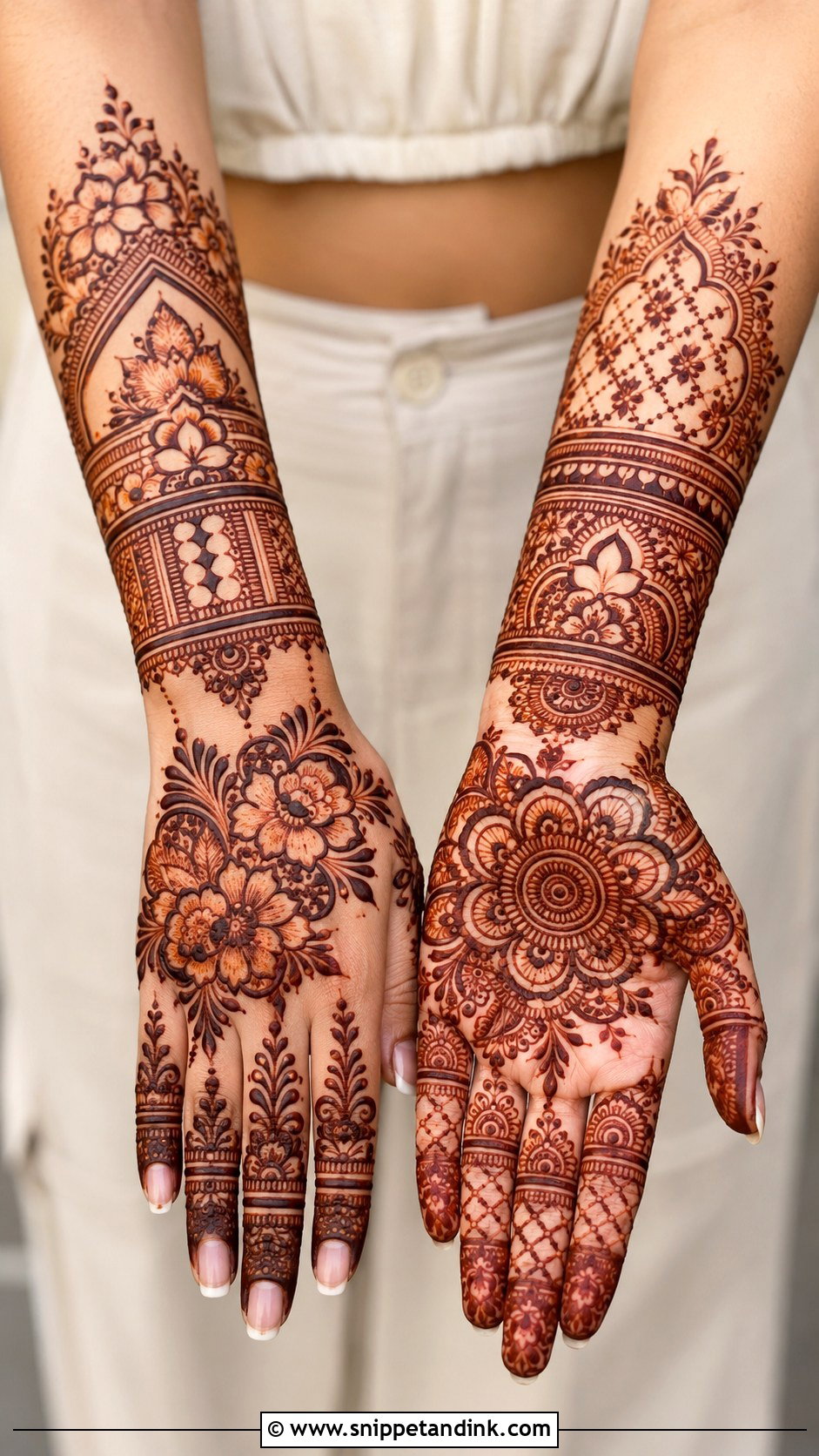
Modern full hands mix florals, geometry, negative space, bold outlines and fine detail, placing motifs deliberately rather than filling everything. A statement floral or mandala on the back of the hand and spaced bands or geometric panels on the forearm is a layout I use often. It suits engagements, parties and bridesmaids. Intentional is different from empty; every gap should frame something.




25. Full Hand Minimal Mehndi Design
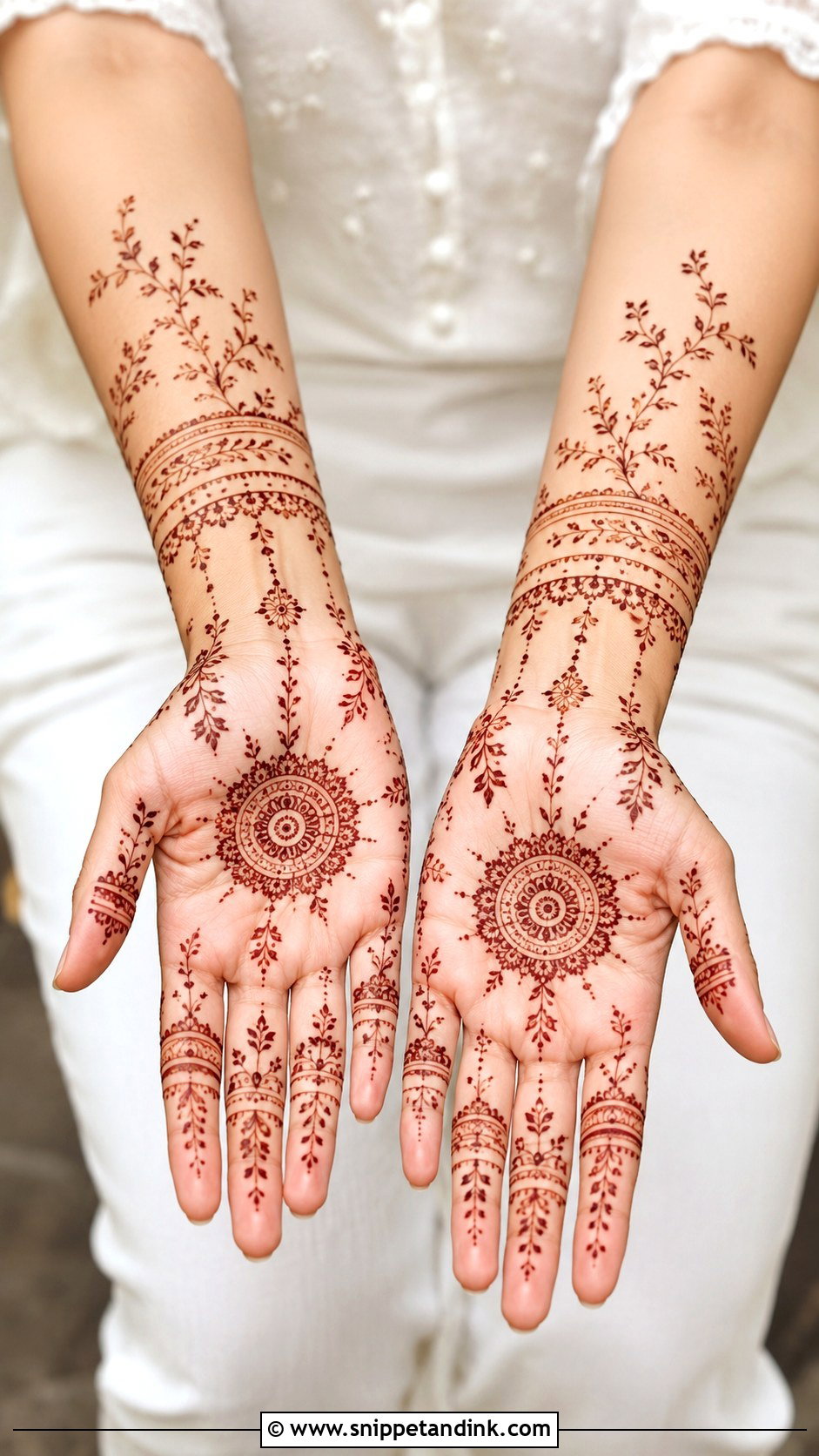
Minimal full hands cover the hand visually without dense fill: thin vines, small florals, simple mandalas, delicate finger lines and spaced wrist bands. They suit bridesmaids, office-friendly celebrations and college functions. Negative space keeps it fresh, and fine, repeated details hold it together. I use a smaller cone tip for this style so the lines stay delicate.
26. Full Hand Heavy Mehndi Design
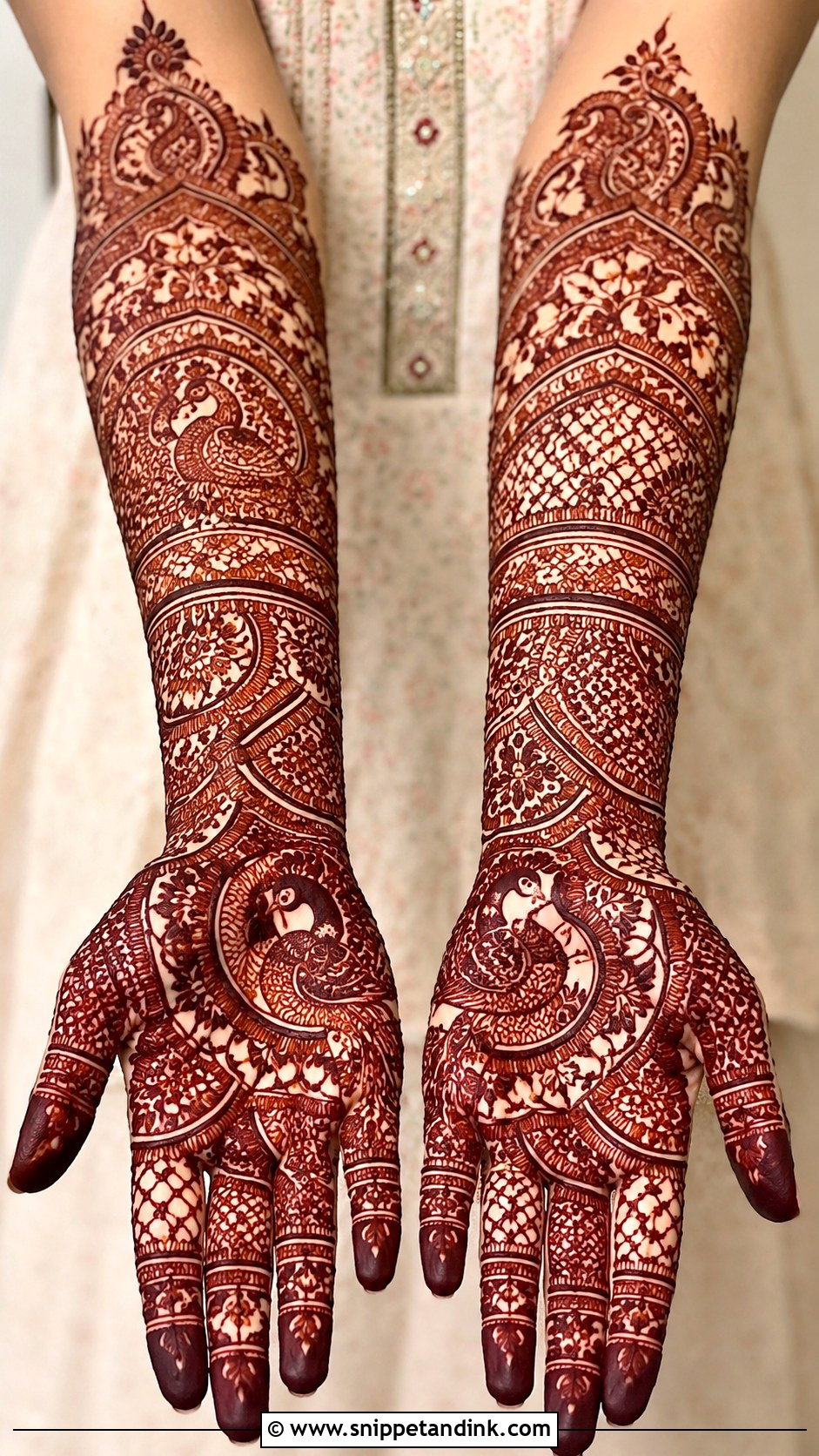
Heavy full hands leave very little skin showing: paisleys, peacocks, mandalas, jaali, florals, shading and traditional fillers over palm, fingers, wrist and forearm. They’re for brides and major family functions. The more coverage, the more the main motifs need clear outlines, so I mix fine detail with bold borders for contrast. It takes longer than any other style here, and that time shows in the final result.
27. Full Hand Shaded Mehndi Design
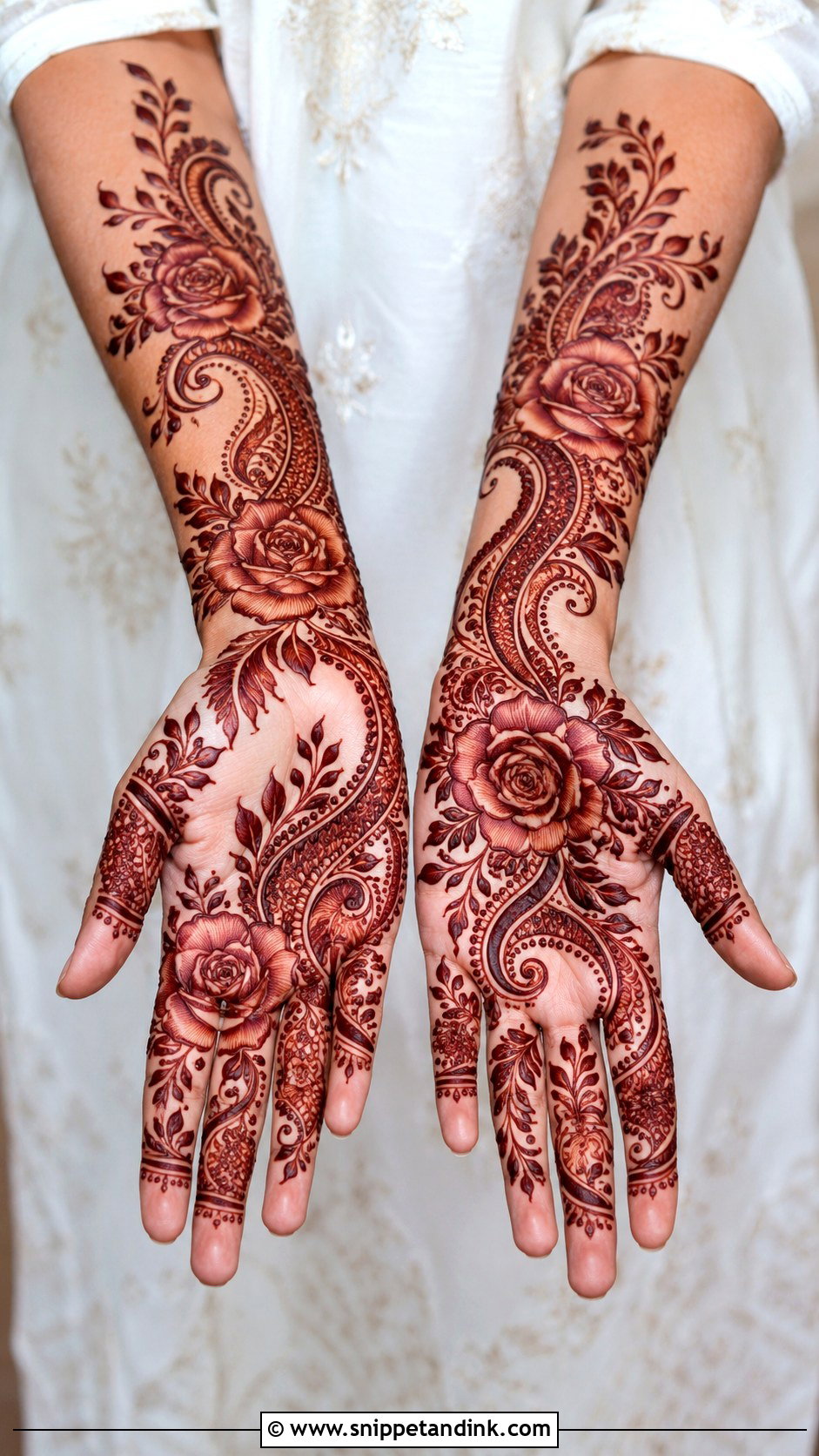
Shading fills flowers, leaves, paisleys and borders with a thin film of paste, so they stain lighter than their outlines and look fuller without tiny detail everywhere. It’s common in Arabic, Gulf and Indo-Arabic hands. For a full hand, large shaded clusters go on the palm, with shaded bands or vines on the fingers and wrist. It’s quicker than dense bridal work. The shading must stay smooth and light, or the outlines vanish into it.
28. Full Hand Jewelry Mehndi Design
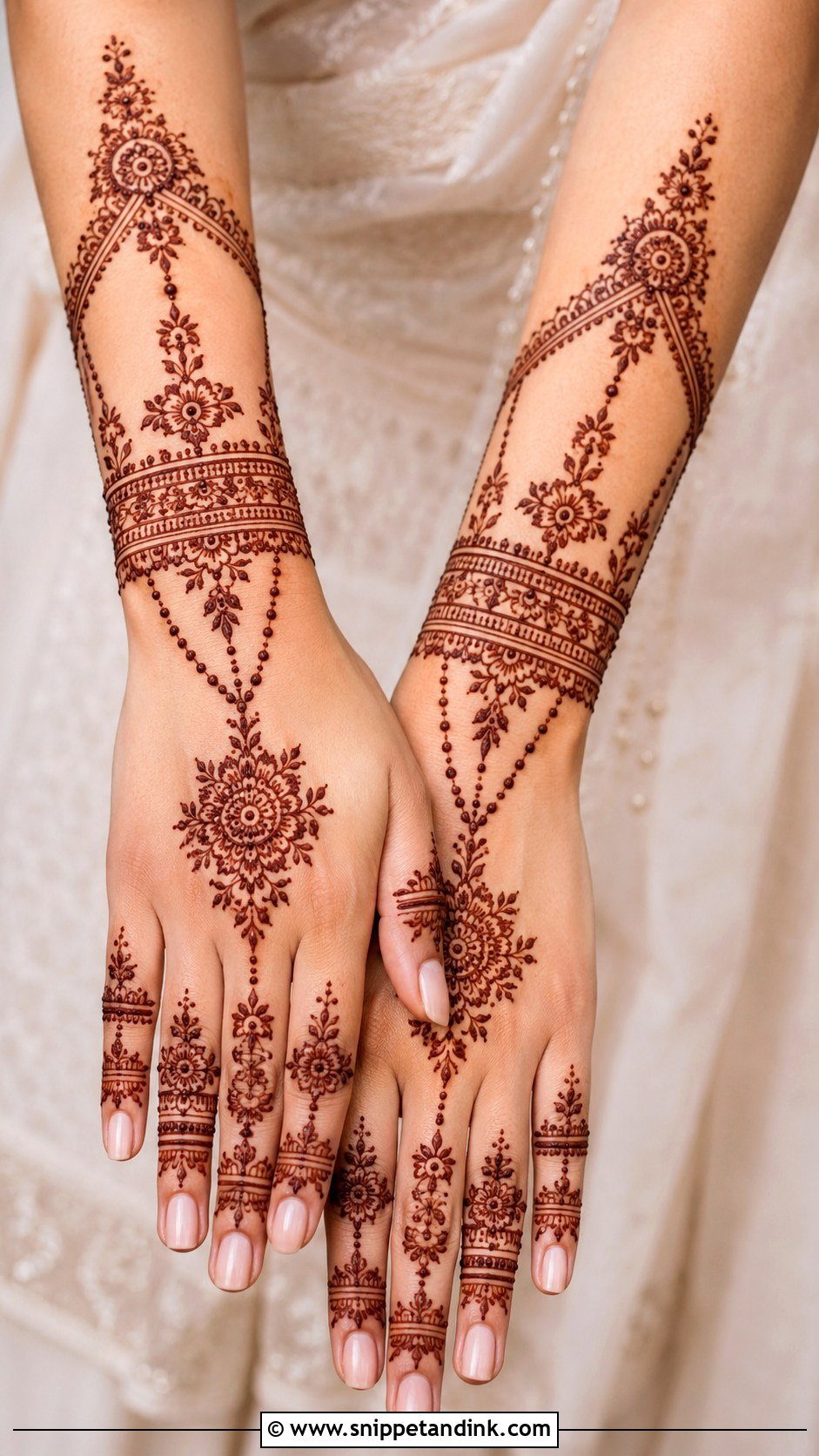
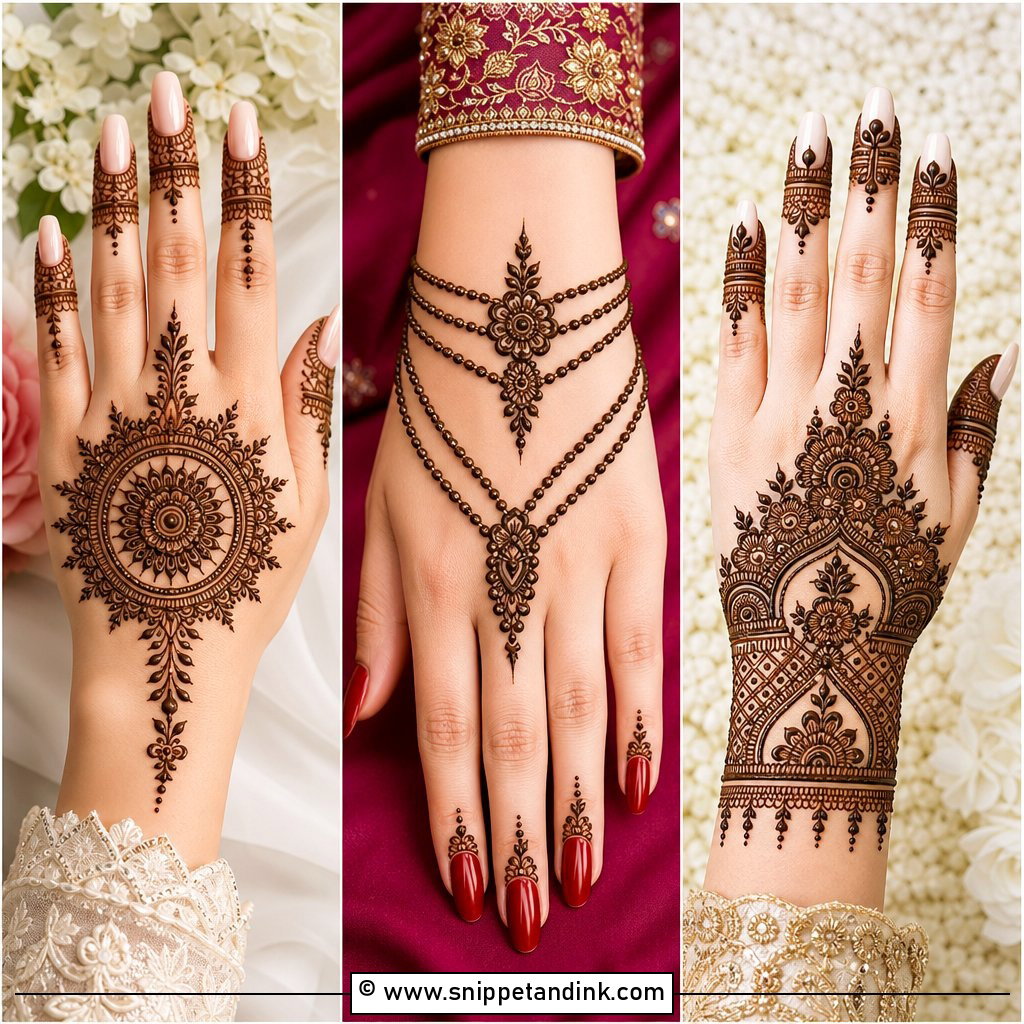
Jewelry mehndi draws rings, bracelets, chains, hand harnesses and bangles in henna, and it follows the natural lines of the fingers and wrist on the back of the hand: a ring on each finger, chains across the hand, a cuff at the wrist. For full coverage, the palm gets a matching mandala or floral layout. It suits engagements, bridesmaids and parties. The chains must be fine and symmetrical, or it reads as random lines.
29. Full Hand Bracelet Mehndi Design
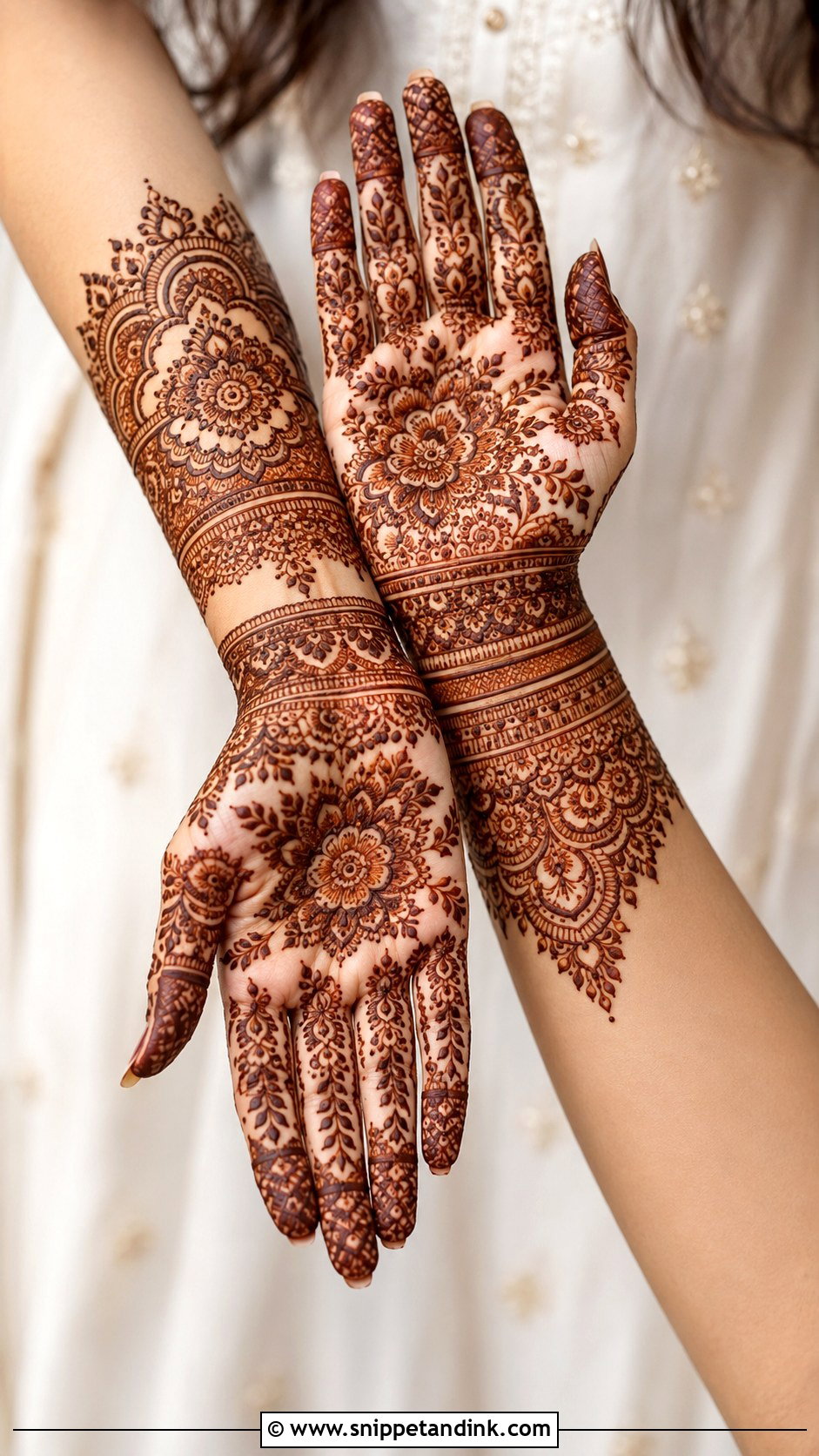
Here the wrist and forearm bands lead: bangle shapes, cuffs, lace borders or stacked ornamental bands, with a mandala, floral trail or paisley on the palm and coordinated finger patterns. It works for festivals, engagement functions and bridal side events. I leave a thin line of skin between each band so every layer reads as its own bracelet, otherwise they merge into one wide stripe once stained.
30. Full Hand Finger Mehndi Design
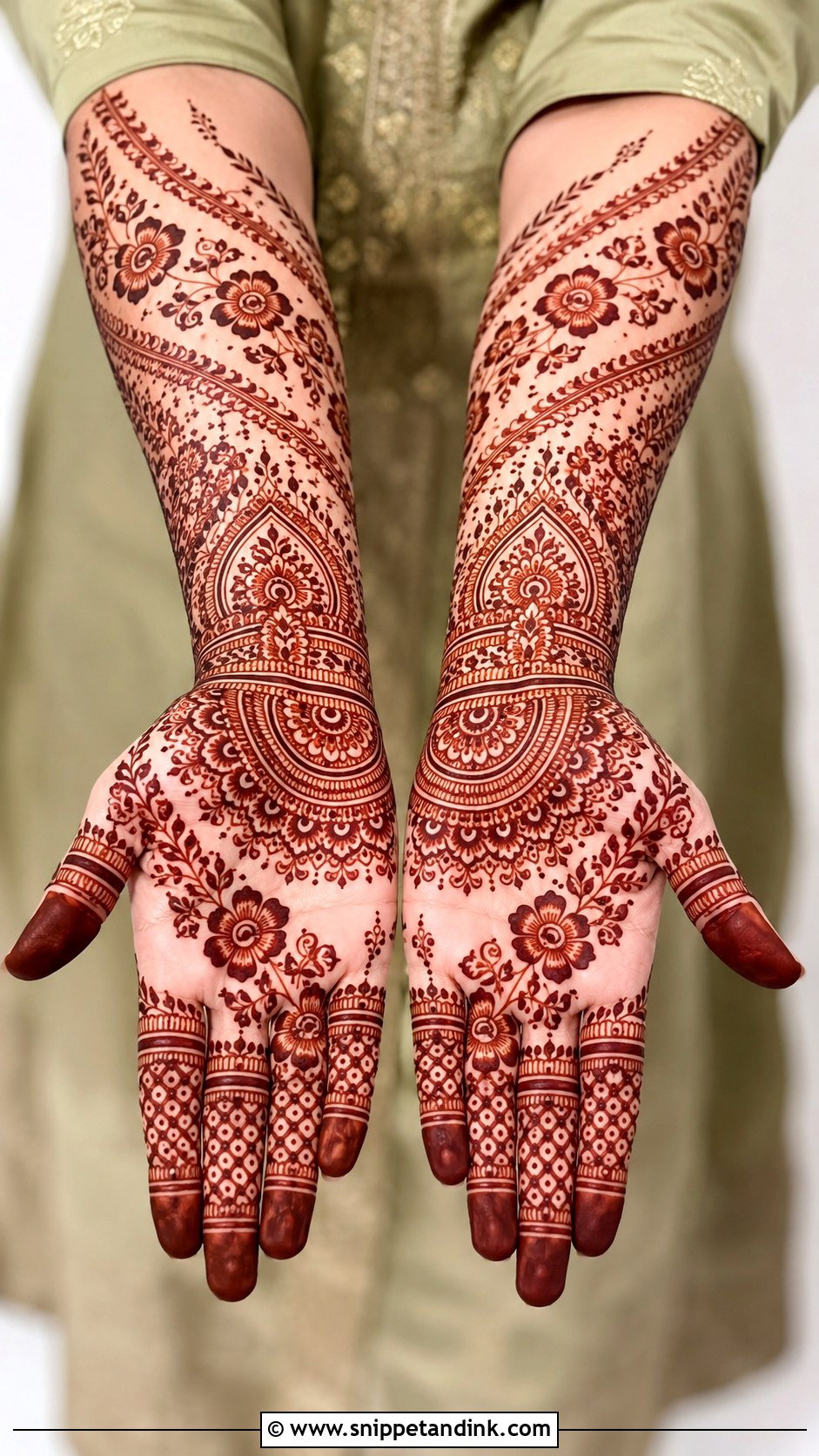
This layout gives the fingers the most attention while still covering the palm, wrist and forearm. Fingers carry leafy lines, ring bands, checks, dots, shaded tips or geometric strips, and the palm stays a little simpler, with a mandala, floral corner or diagonal trail as the base. It’s made for close-ups of hands holding jewelry or bouquets. Fingertips also take the darkest stain, so the detail shows strongly.
31. Full Hand Lotus Mehndi Design
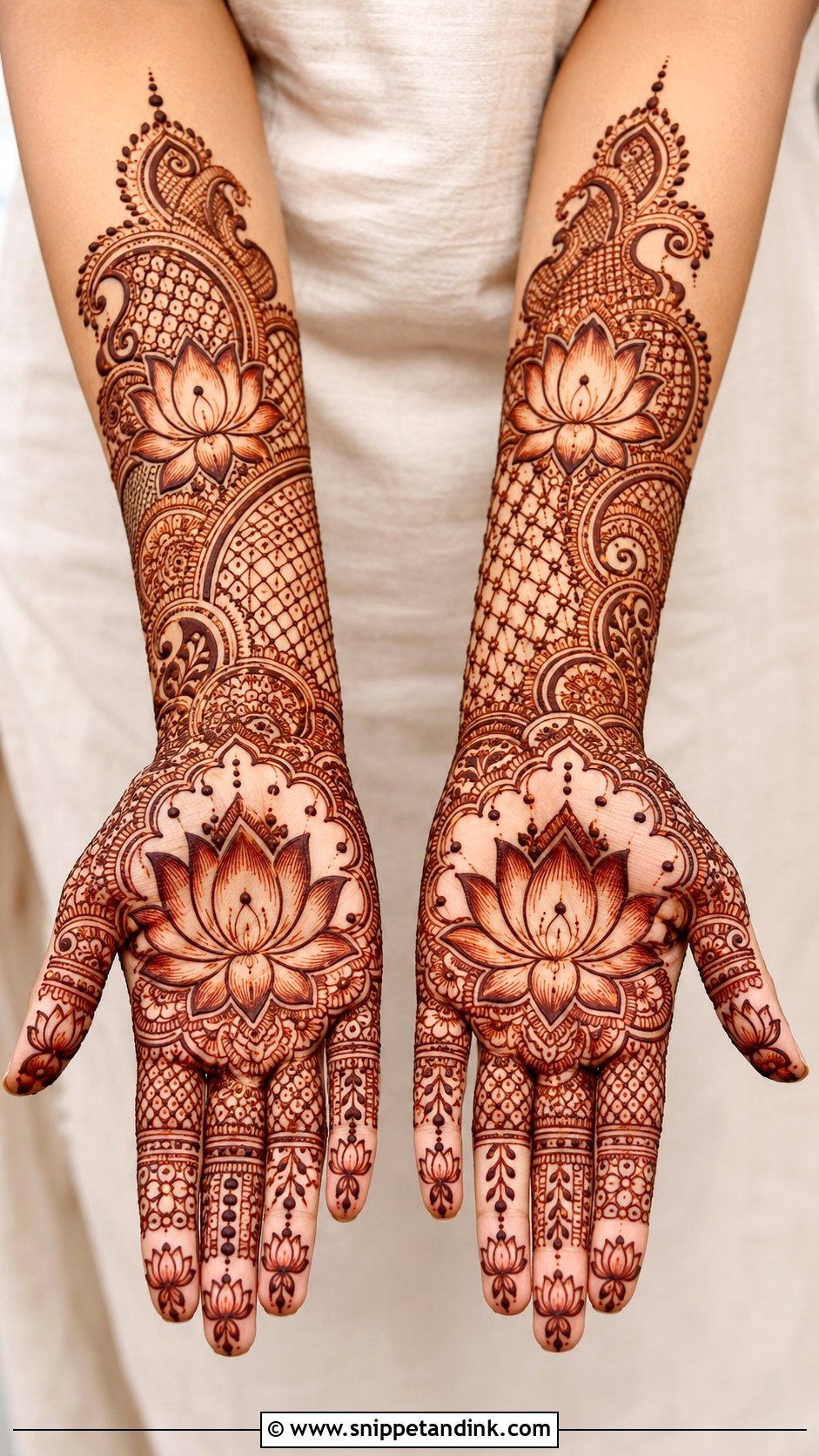
Full hand lotus mehndi design places the lotus in the center of the palm, near the wrist or repeating along the forearm, paired with mandalas, jaali, paisleys, leafy borders and fine dots. It suits bridal mehndi, puja celebrations and Diwali. A bold palm lotus anchors the hand, and smaller lotus motifs decorate the fingers and wrist. I space the petals and shade them lightly, leaving a hairline gap between layers so they don’t merge.
32. Full Hand Rose Mehndi Design
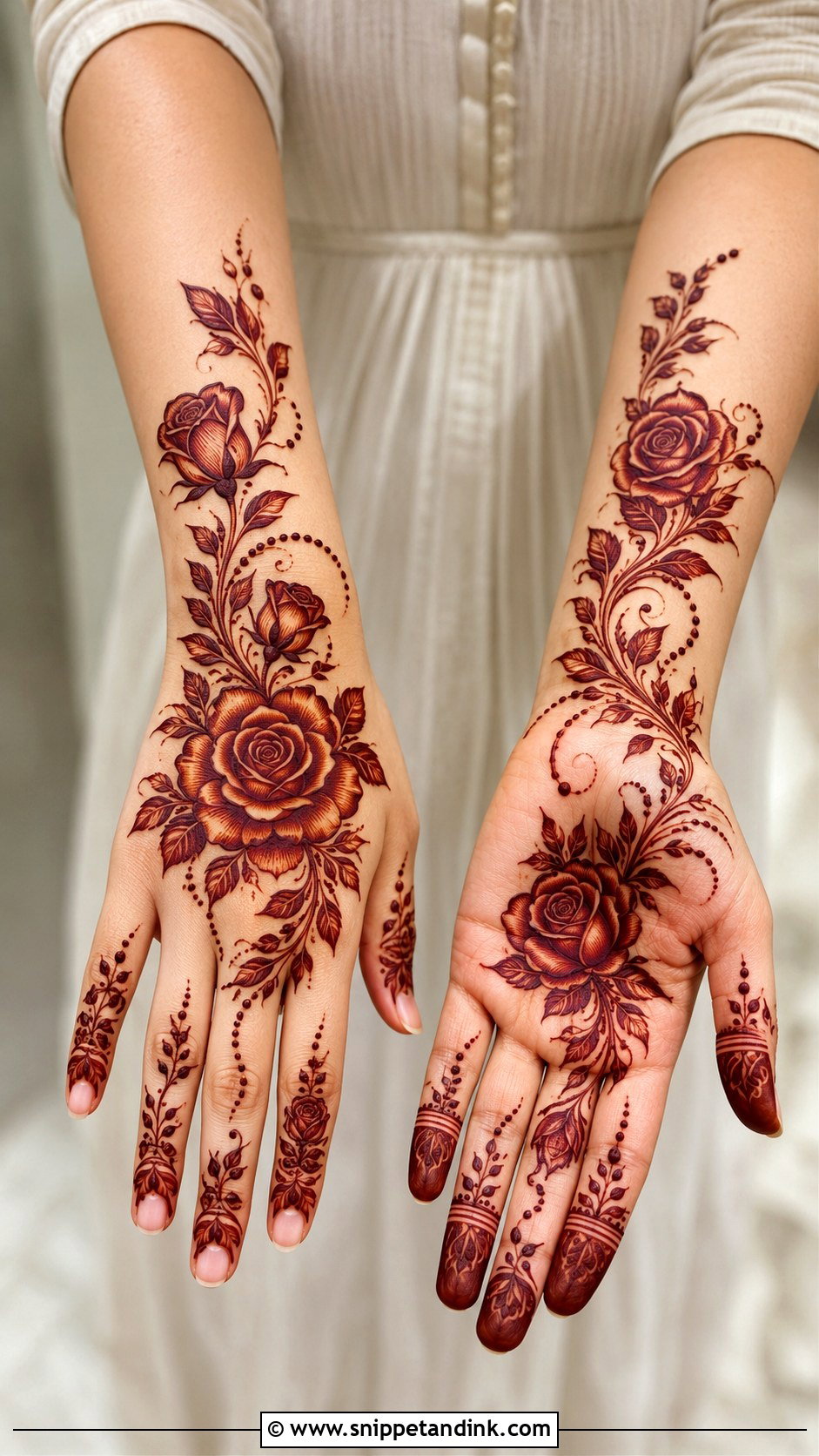
Roses are a favorite in Arabic and Indo-Arabic hands: large blooms flowing from fingers to wrist with smaller buds on the palm and forearm, and shaded petals for a layered look. They suit engagements, bridesmaids, Eid and modern bridal events. For full coverage, I combine them with leafy vines, dotted borders and bracelet cuffs. The roses need to stay bold with room around them, or they read as indistinct blobs.
33. Full Hand Geometric Mehndi Design
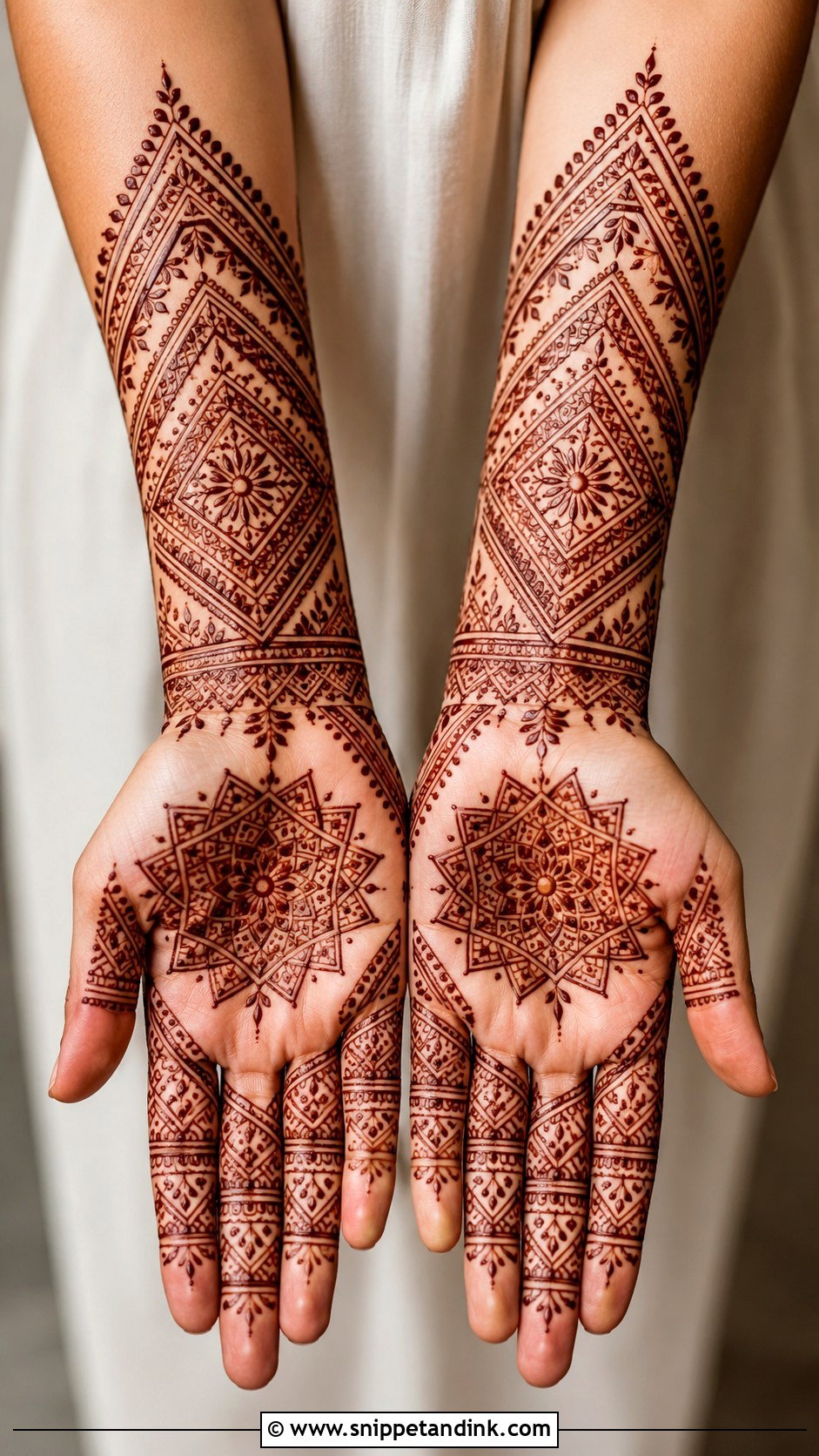
Geometric full hands use diamonds, grids, triangles, squares, chevrons and linear bands: a geometric mandala on the palm, matching strips or mesh on the fingers, and neat panels on the wrist and forearm. It suits Moroccan-inspired and fusion looks and anyone who prefers symmetry. A few dots or tiny leaves soften it. I work outward from a center line so the spacing stays even across the hand.
34. Full Hand Portrait Mehndi Design
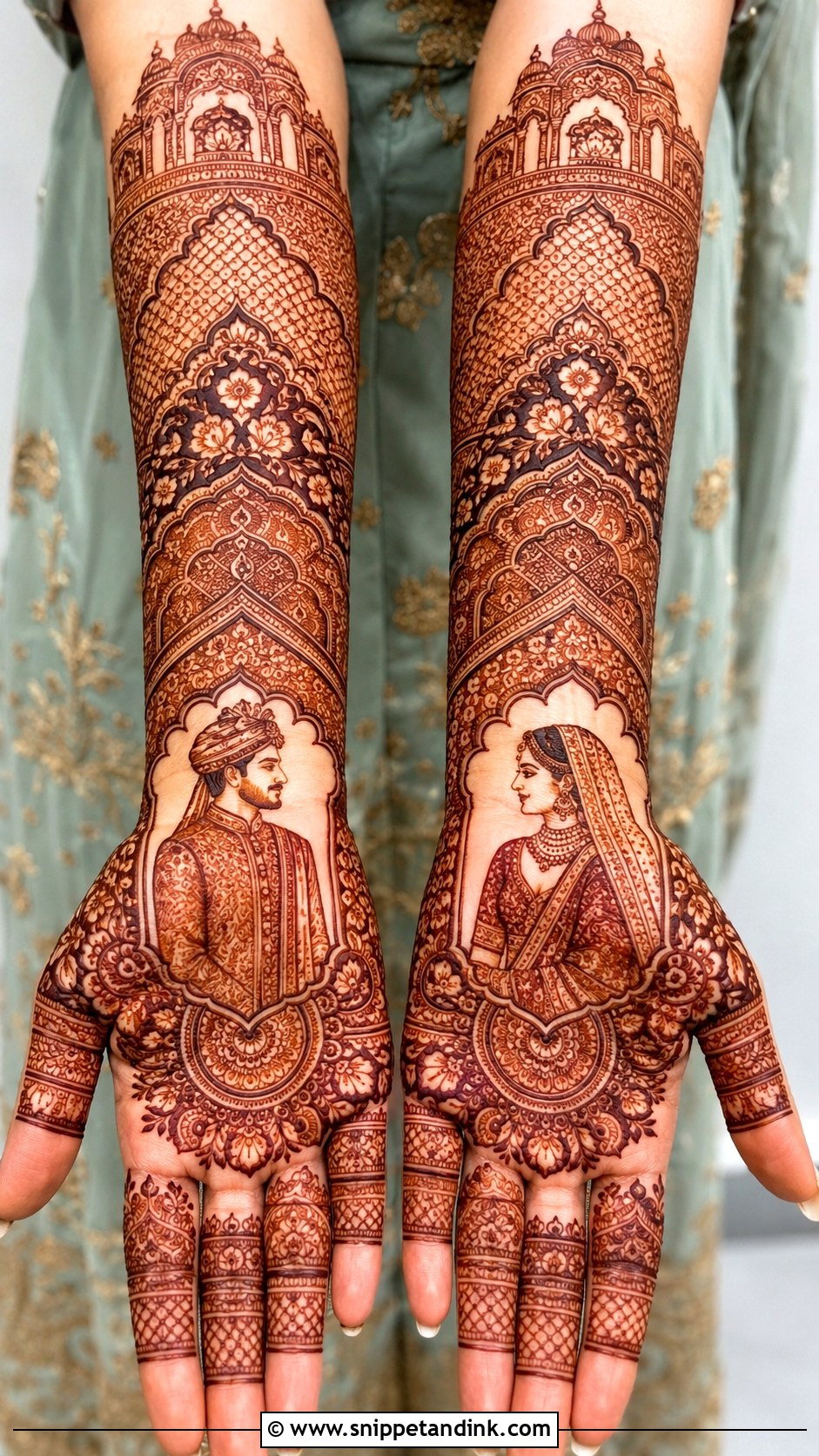
Portrait hands put faces, couple figures or wedding scenes on the palms or forearms, where there’s room for clear artwork, surrounded by florals, paisleys, arches, jaali, mandalas and fillers. It’s highly personal and highly skill-dependent. Choose an artist whose earlier portraits you’ve seen and send clear reference photos ahead. The rest of the hand should support the portrait, so I keep the fill around faces lighter.
35. Full Hand Negative Space Mehndi Design
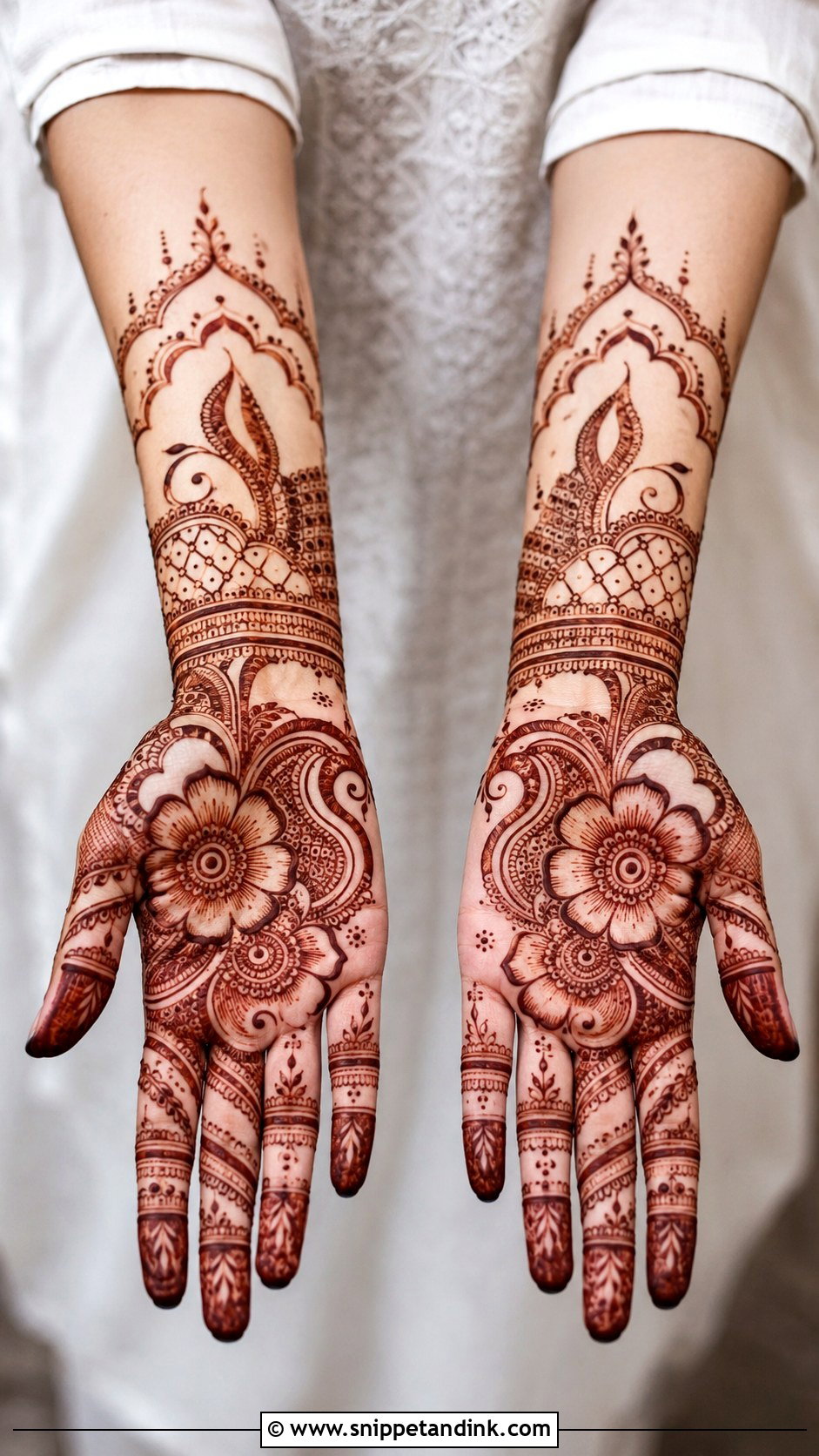
Negative-space full hands use open skin as part of the pattern: bold florals, paisleys, mandalas or geometric shapes framed by deliberate gaps, with detailed fingers to balance the open palm and wrist. It’s full coverage that still breathes, for people who dislike density. Each motif stands out clearly in photos. The gaps must look planned and roughly symmetrical; a stray filler dot in an empty area makes it look accidental.
Why Your Two Hands Will Never Match Perfectly
Brides sometimes worry when the left and right hands look slightly different, and some difference is normal. One hand is always done first, so its paste stays on longer and can stain a touch deeper. Each hand has its own creases and size. My working angle also changes between hands, which is why I sketch the main outlines on both hands before filling either. That way, the motifs land in matching places even if the filler isn’t identical line for line.
Fixing a Smudge While the Paste Is Still Wet
With full coverage, a smudge is likely at some point. You’ll brush a sleeve, scratch your nose or lean on a cushion. Speed matters, because henna starts staining as soon as it touches skin.
- Don’t rub it. Lift the smudged paste straight off with a damp cotton bud or the corner of a tissue.
- Call your artist over before it dries; a faint mark can usually be hidden inside a new leaf, dot or petal.
- If it has already stained, it can’t be erased. A good artist will turn the mark into part of the design rather than leave it on its own.
- Rest your hands palm-up on a clean surface, and keep loose sleeves rolled well above the elbow until the paste has set.
Coverage, Comfort and the Look You Want in Photos
Full-hand mehndi comes down to the occasion, your outfit, your comfort and your own taste. Brides often prefer heavy Indian, Rajasthani, portrait or wedding layouts, while festive hands can be lighter with Arabic, Gulf, floral, mandala or negative-space patterns. Full coverage no longer has to feel crowded; bold motifs with clean spacing cover just as much skin. Save a few references, decide how far up the forearm you want to go, and give yourself enough time in the chair to let the artist do it properly.
You'll Like These Ideas:










Leave a Reply