
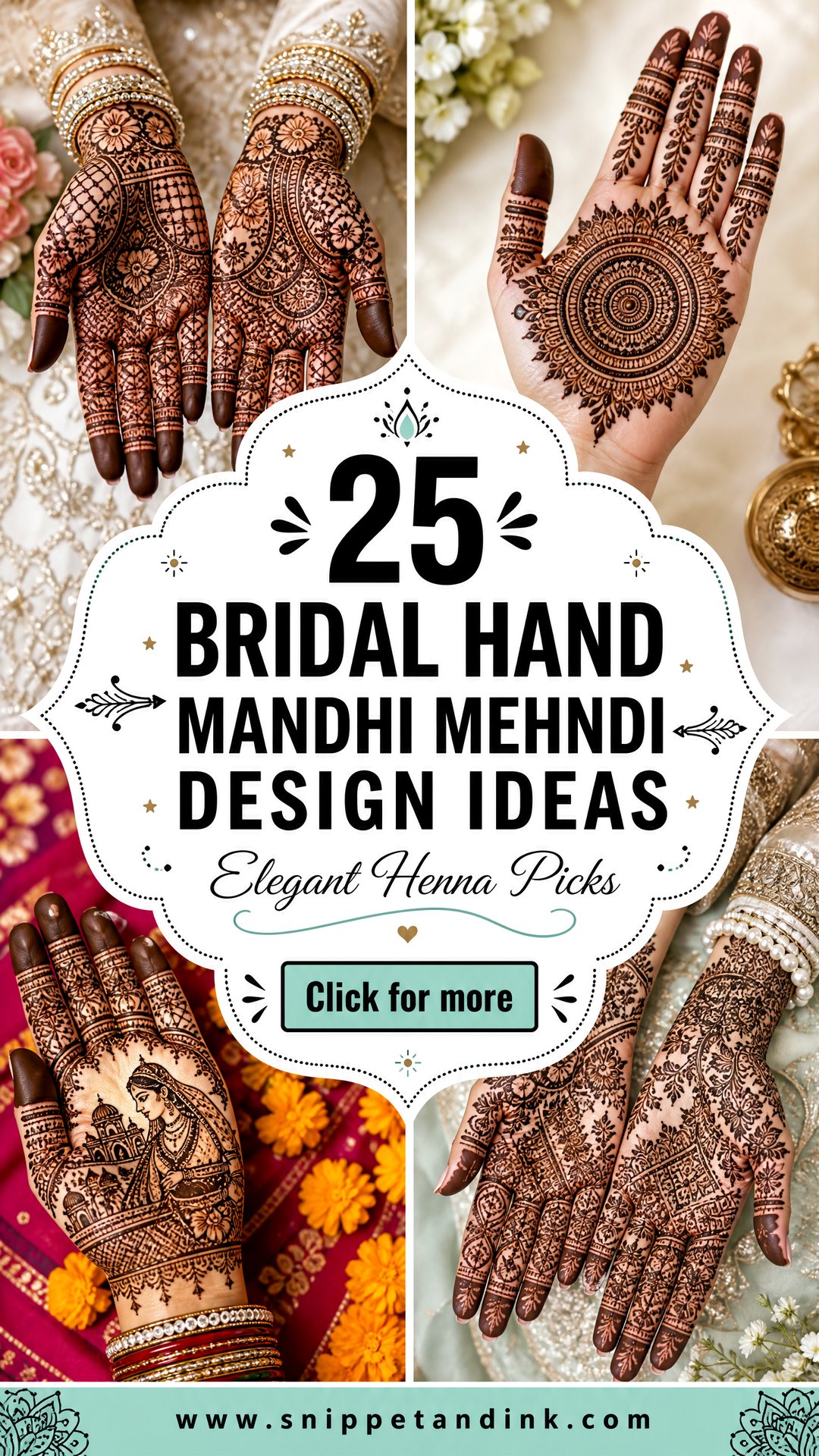
Bridal hands end up in more close-ups than almost anything else you wear: ring shots, the moment your hands are joined, the shot of you holding your dupatta. That’s why the layout matters as much as the motifs. Today’s brides ask me for everything from dense Indian full-hand work to airy Arabic trails, portrait palms, mandalas, jaali back hands and bracelet layouts. Some are royal and slow to apply, others are lighter and easier to sit through on a busy week. Coverage, outfit and jewellery should guide the choice. The 25 designs below are the ones I’d show a bride at her consultation, with notes on how each one stains, how long it takes and where it can go wrong.
Sleeves, Bangles and the Line Where Your Design Stops
Before I sketch anything, I ask what you’re wearing on your arms. A three-quarter sleeve hides most forearm work, so there’s little point paying for hours of detail that will sit under fabric all day. A sleeveless blouse or a short cap sleeve makes the elbow the natural end point. Heavy bangles or a chooda cover the wrist, so I lift the wrist band above or below where they’ll rest.
Bring a photo of the outfit and, if you can, the bangles themselves. Two minutes of holding them against your arm at the consultation saves a design that looks cut off in every photo.
Roughly how long you’ll sit
- Half hand, both sides: around one to two hours.
- Full hand to the wrist with detailed palms: two to four hours.
- Heavy work to the elbow, with portraits or Rajasthani detail: often five hours or more, before feet are even started.
- Times vary a lot between artists, so ask for an estimate based on your chosen design, not a general one.
1. Full Hand Bridal Mehndi Design
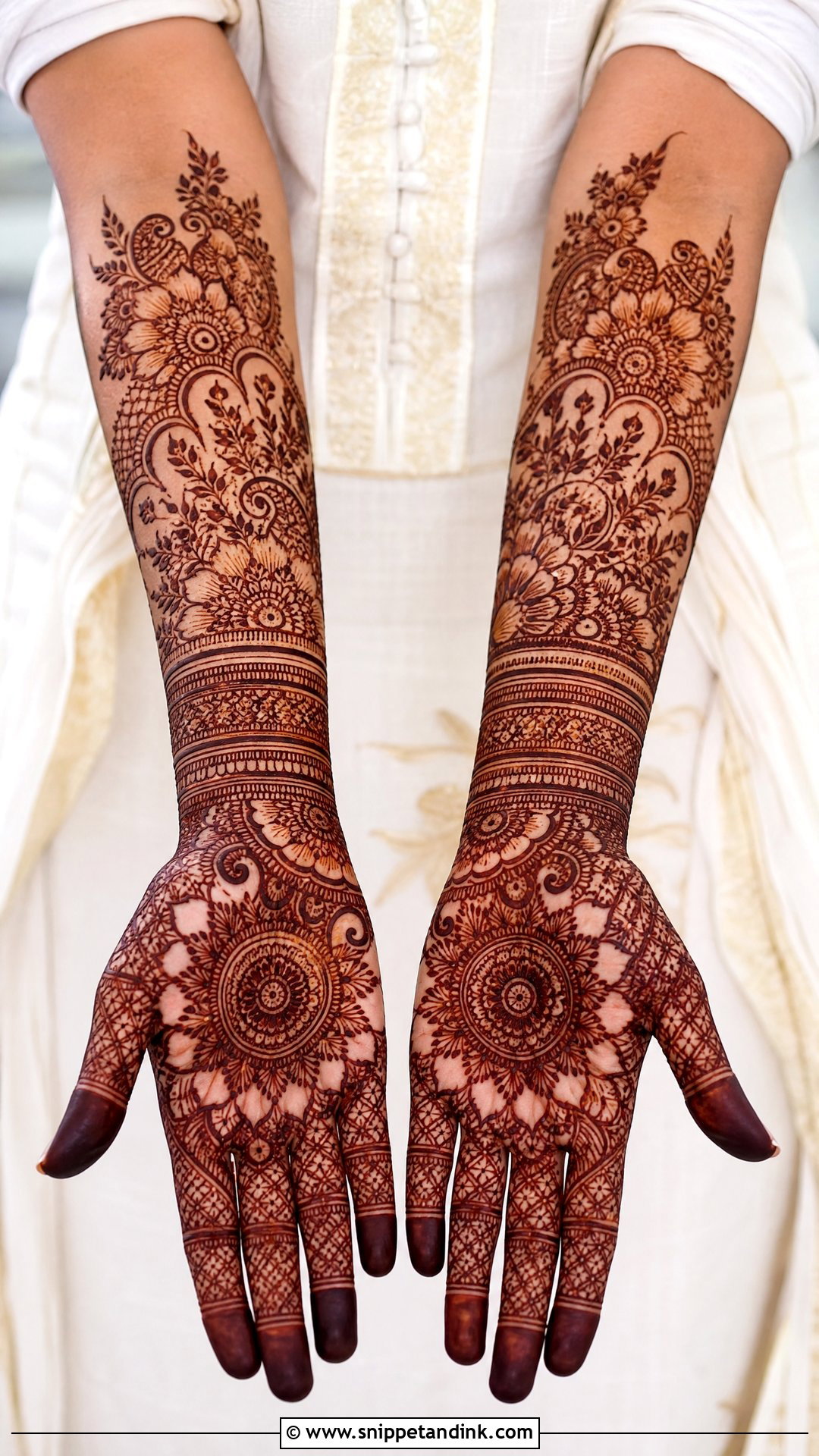
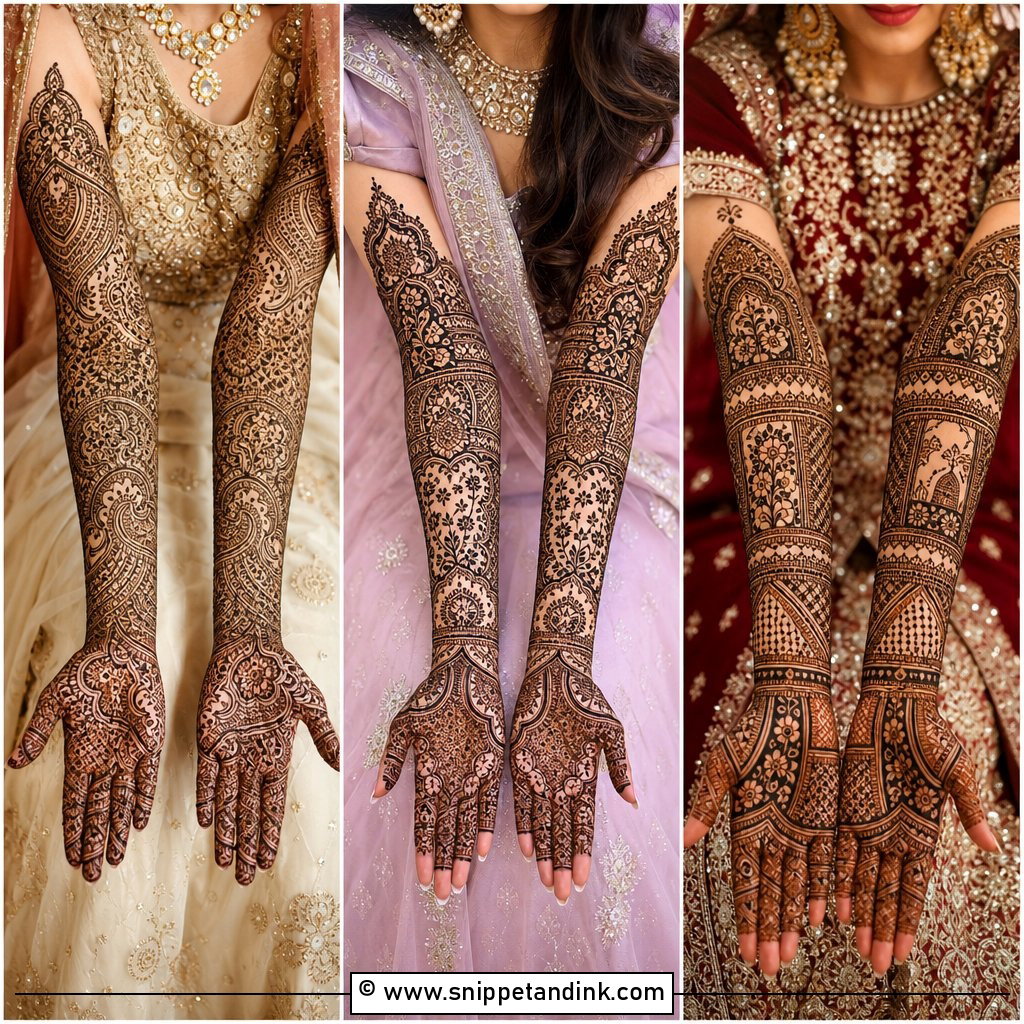
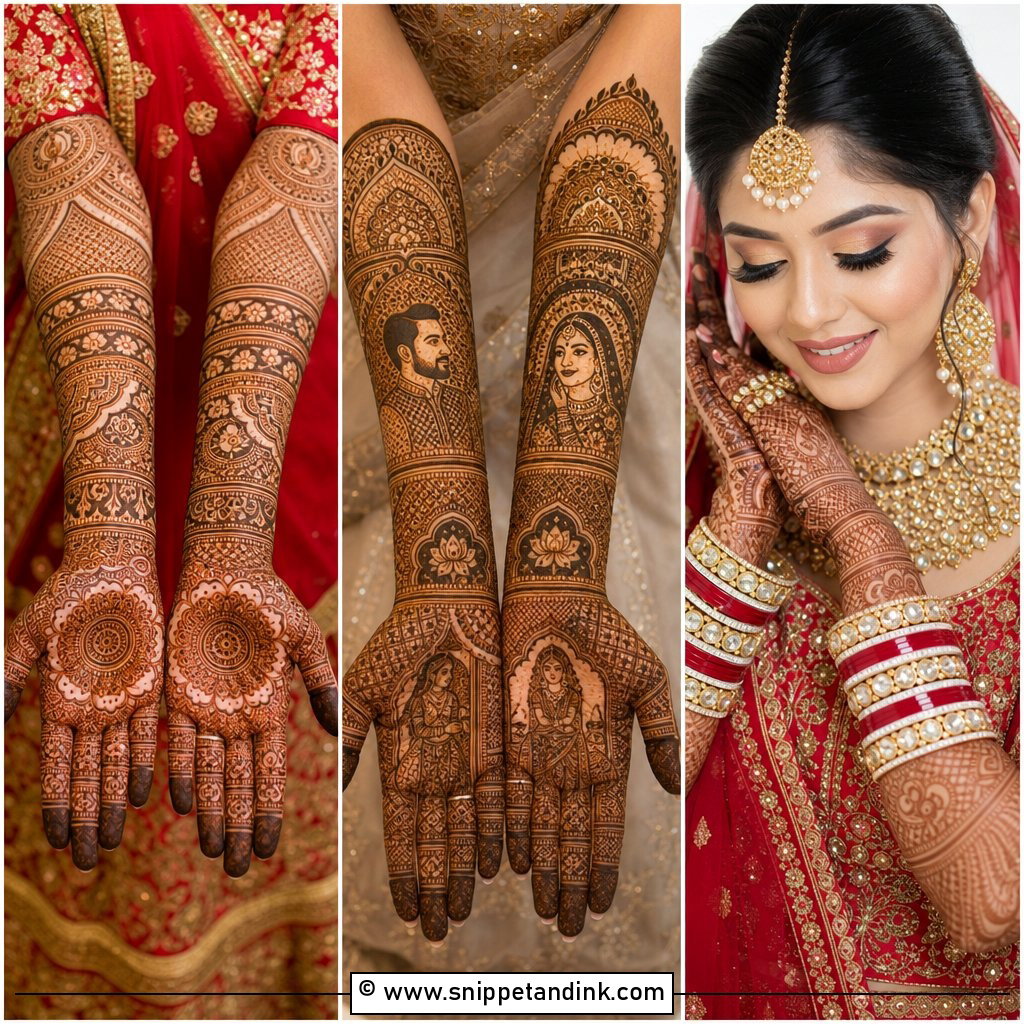
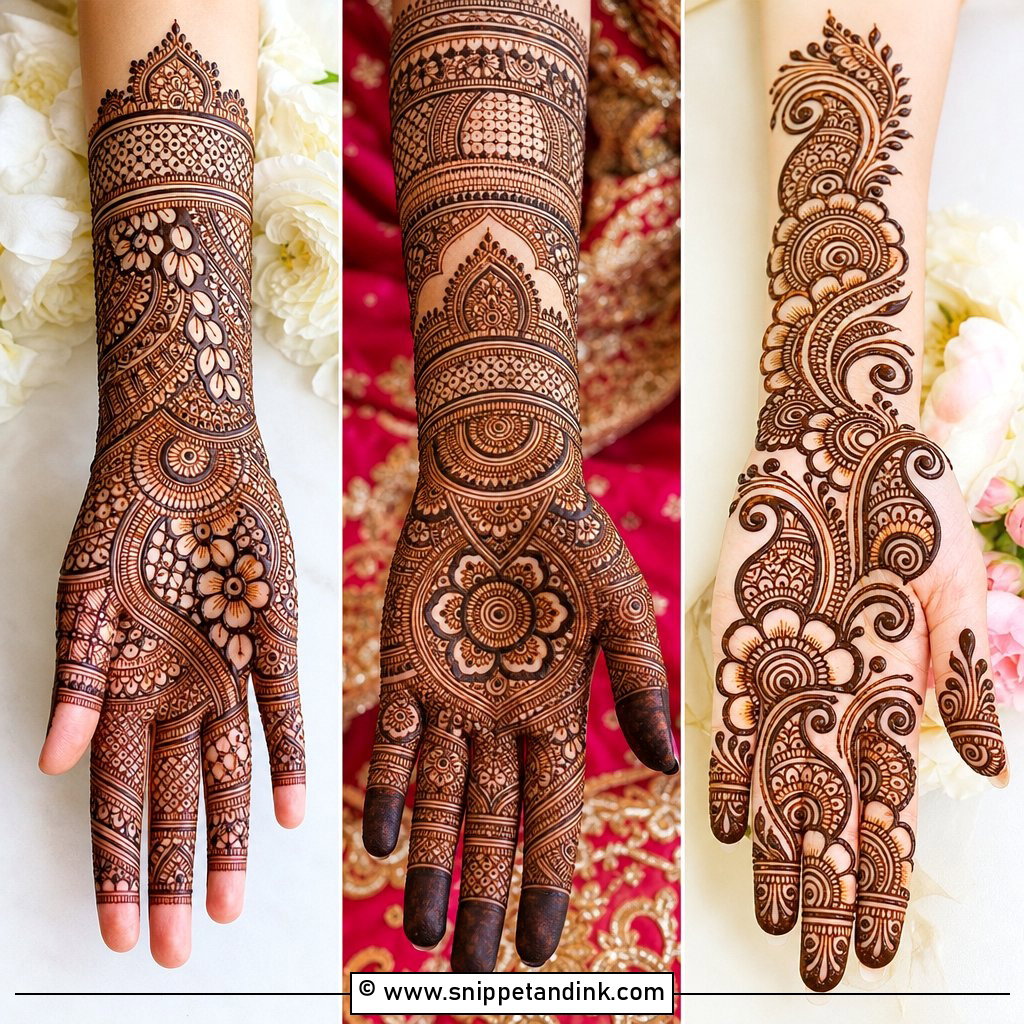
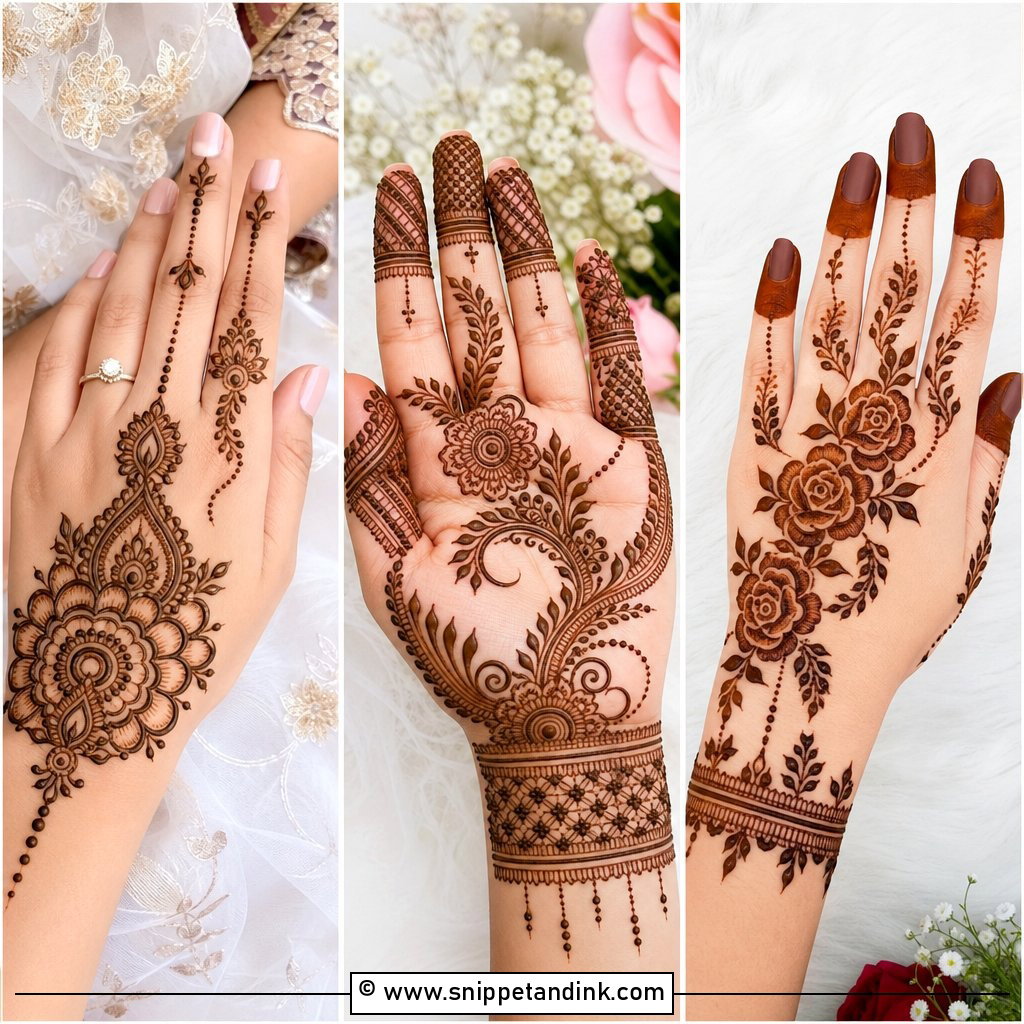
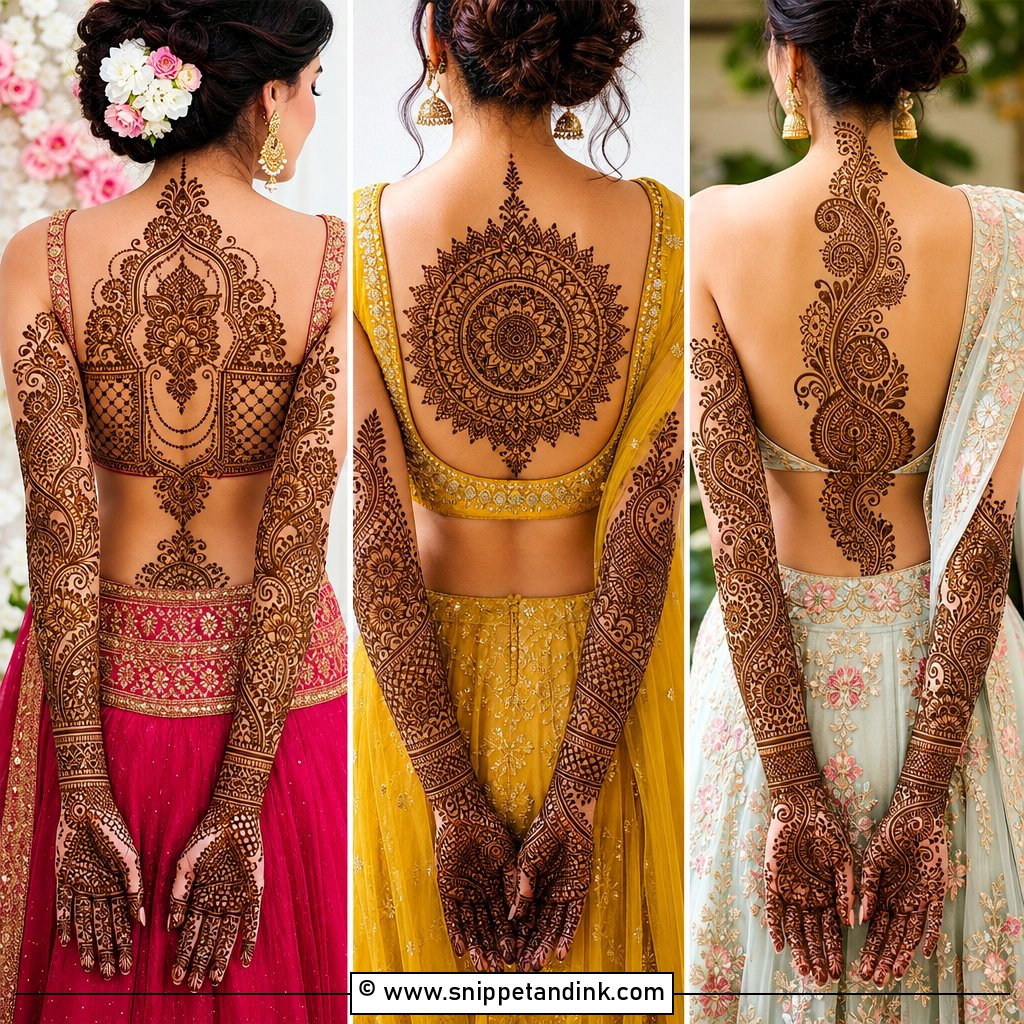
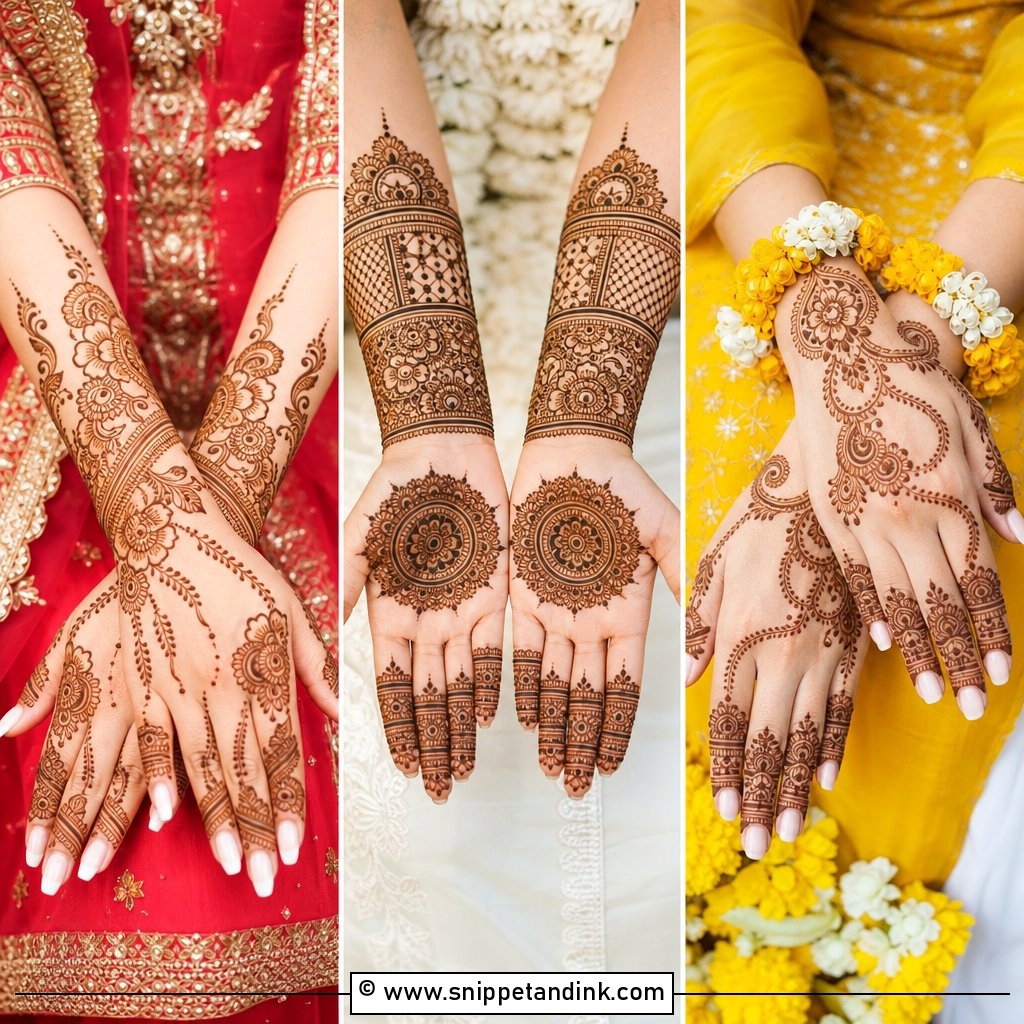
Full hand bridal mehndi runs from the fingertips to the forearm and fills the palm, the back of the hand, the fingers and the wrist with connected motifs. Paisleys, florals, vines and mandalas sit together with fine filler lines between them. When I plan one, I fix two or three large anchor motifs first, usually in the palm centre and at the wrist, and only then fill around them, because a design built only from small filler looks like texture from a distance and loses its shape in photos. It matches heavy lehengas, sarees and shararas, where lighter work would look underdressed next to the embroidery.
2. Indian Bridal Mehndi Design
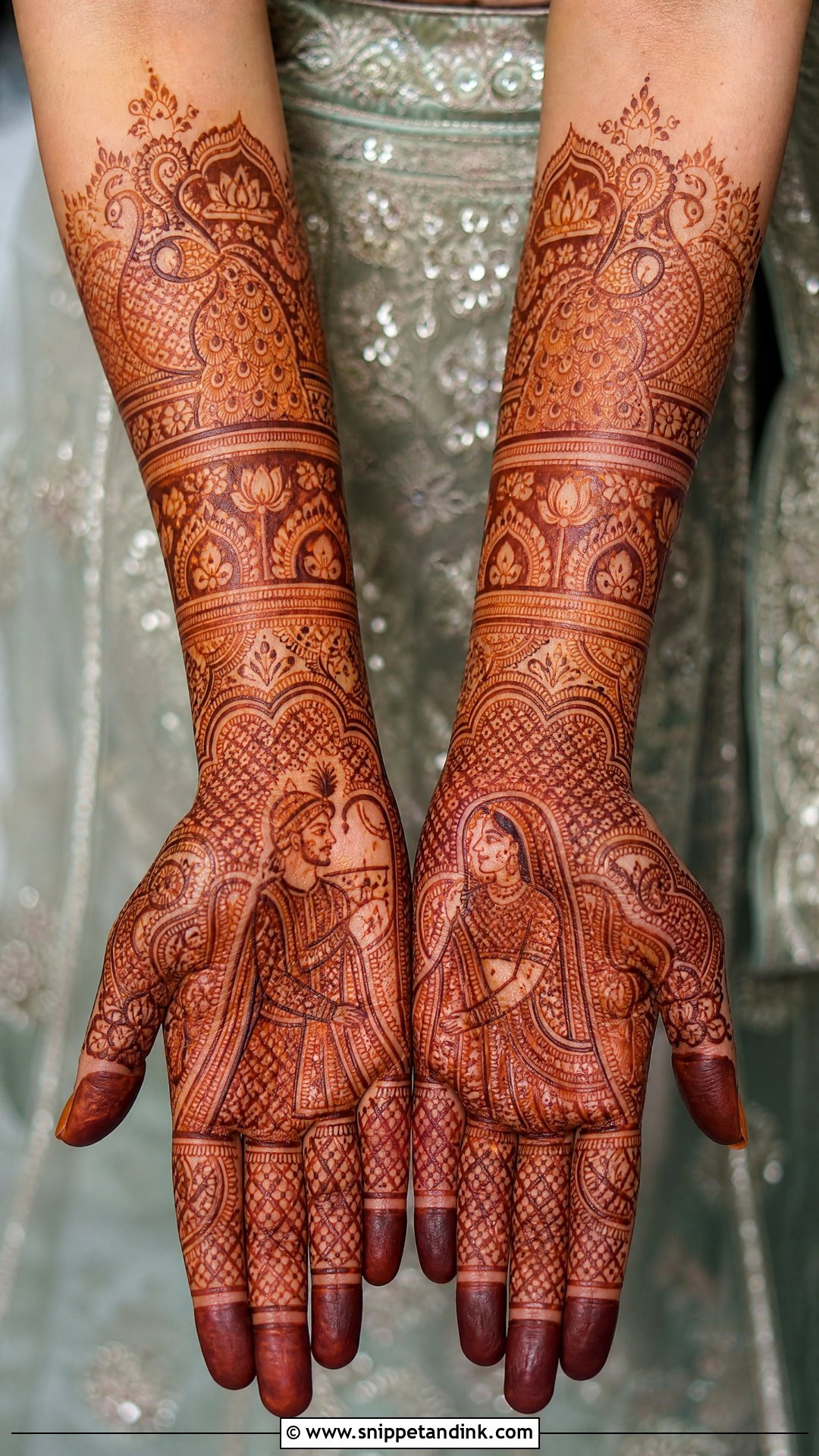
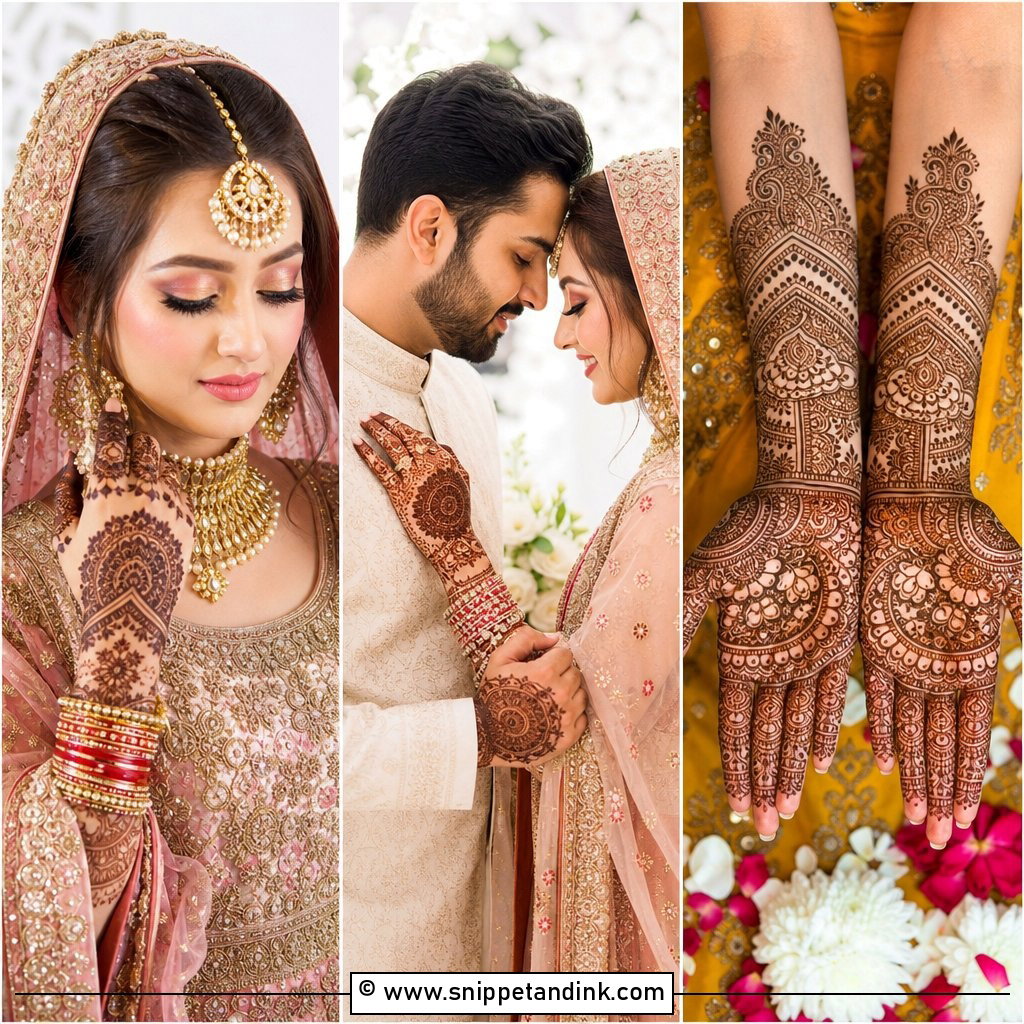
Indian bridal mehndi is built on symmetry and story. Both hands are usually covered heavily with peacocks, paisleys, lotus flowers, bride and groom figures and doli scenes, while the wrists and forearms carry bands, arches and borders. Palms packed this tightly need a fine cone tip and a steady sitting, so I book these as a long appointment with breaks for water and stretching. Ask me to echo a motif from your outfit’s embroidery and the two will read as a set. Expect the deepest maroon on the palms and fingertips; the forearm always stains a shade lighter.
3. Arabic Bridal Mehndi Design
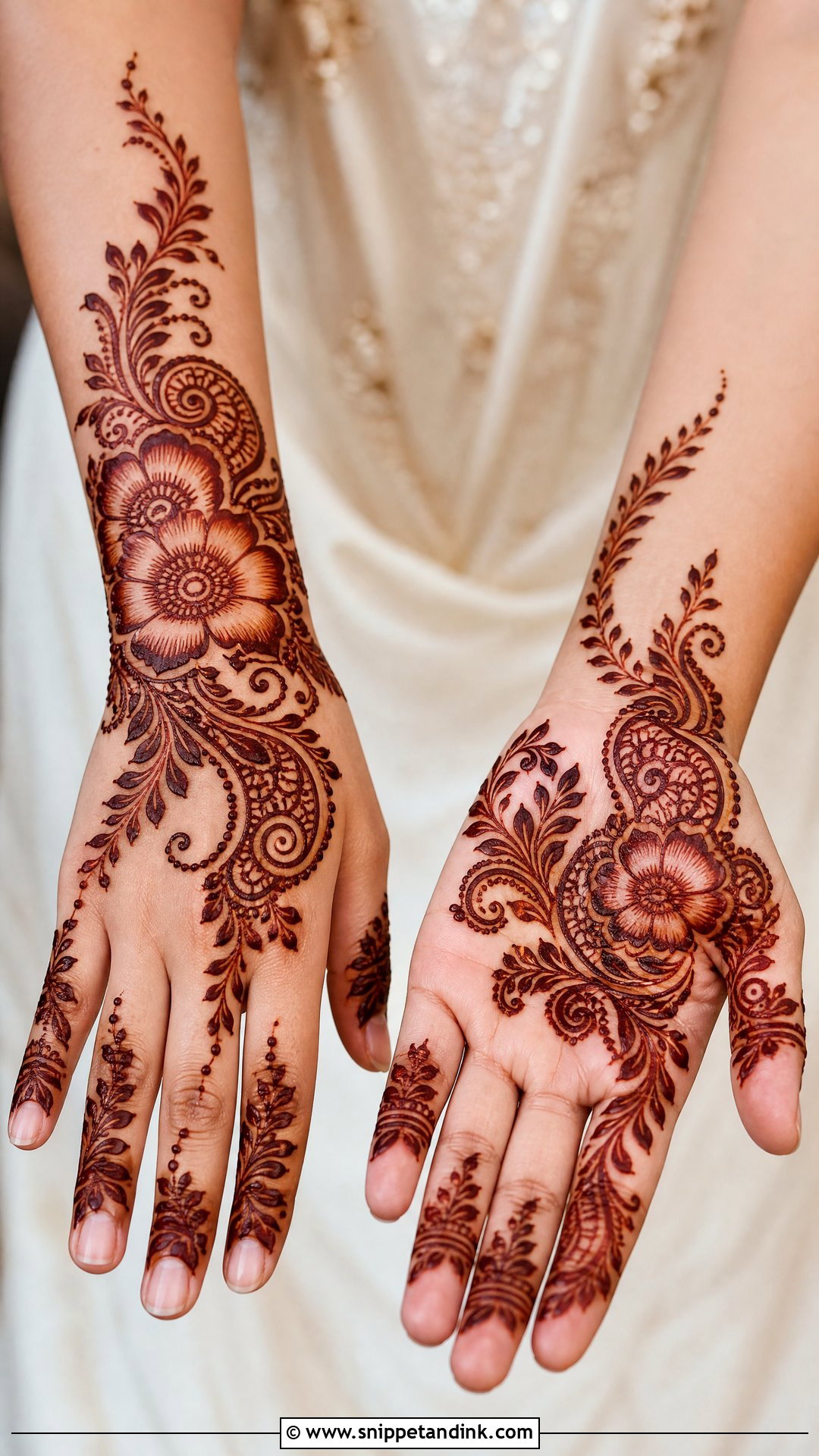
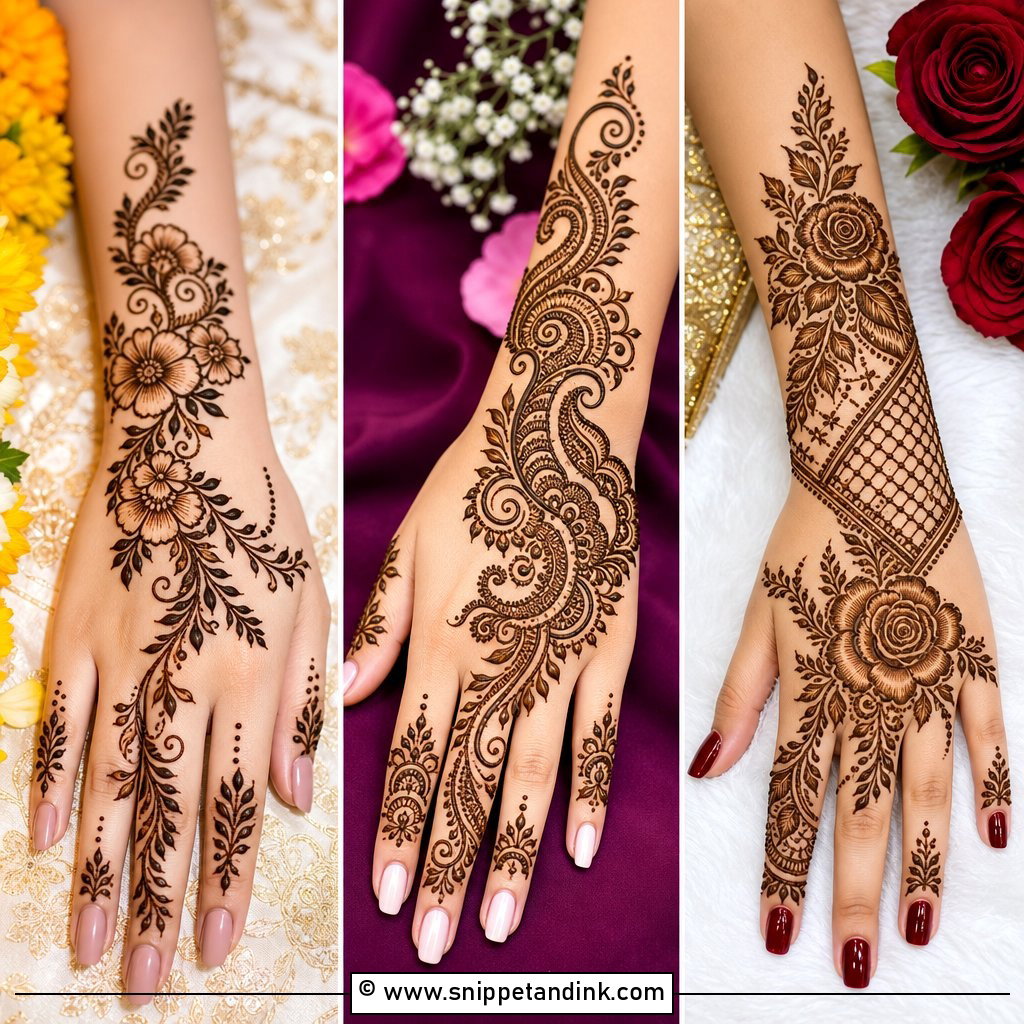
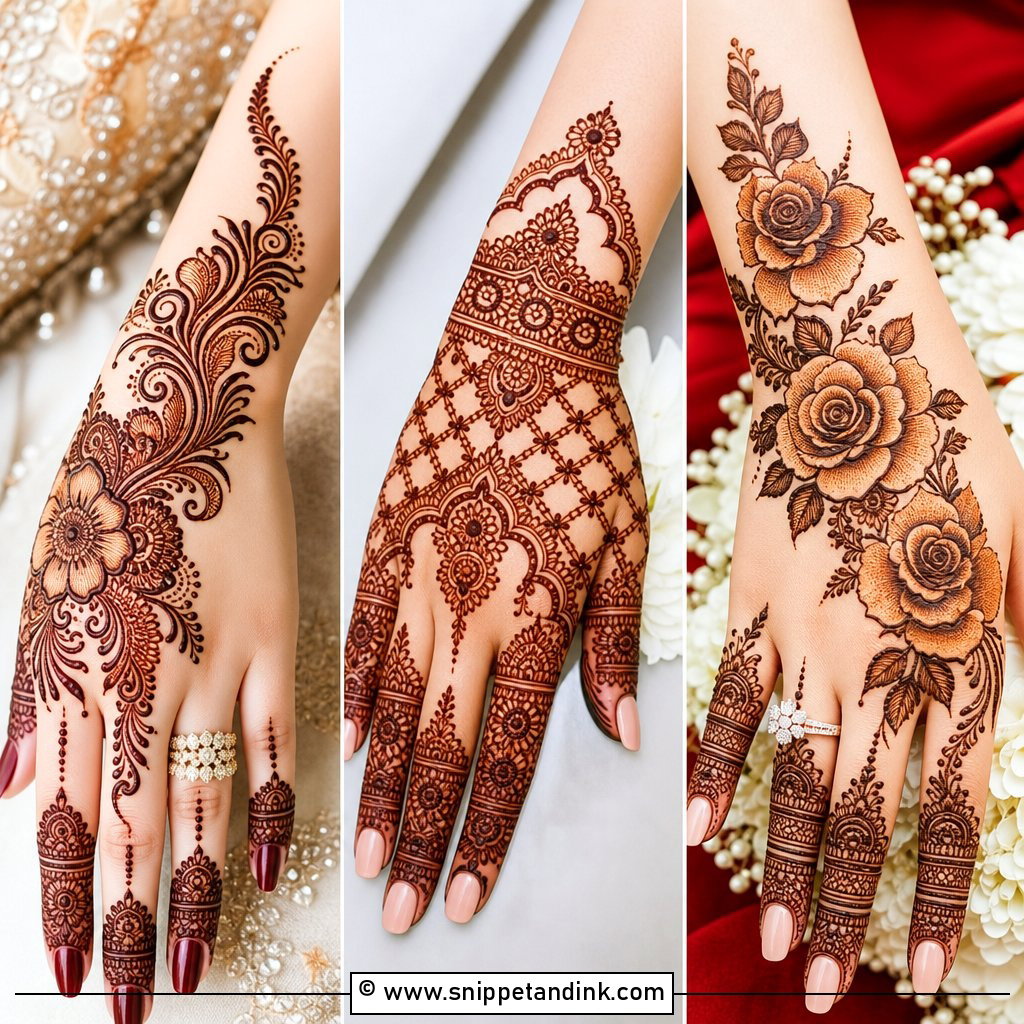
Arabic bridal mehndi flows rather than fills. A bold floral trail moves diagonally across the palm or back of the hand and carries on toward the wrist, with large flowers, leafy vines, curved paisleys and shaded petals and plenty of bare skin between them. Shading is done by thinning the line pressure, not by colouring in, which is why it looks soft once it stains. Those open gaps are what make each motif legible in photos. I’d suggest it for an engagement, nikah or reception look, or for a bride who wants something bridal that she can sit for in under two hours, with statement rings and bangles finishing it.
4. Indo Arabic Bridal Mehndi Design
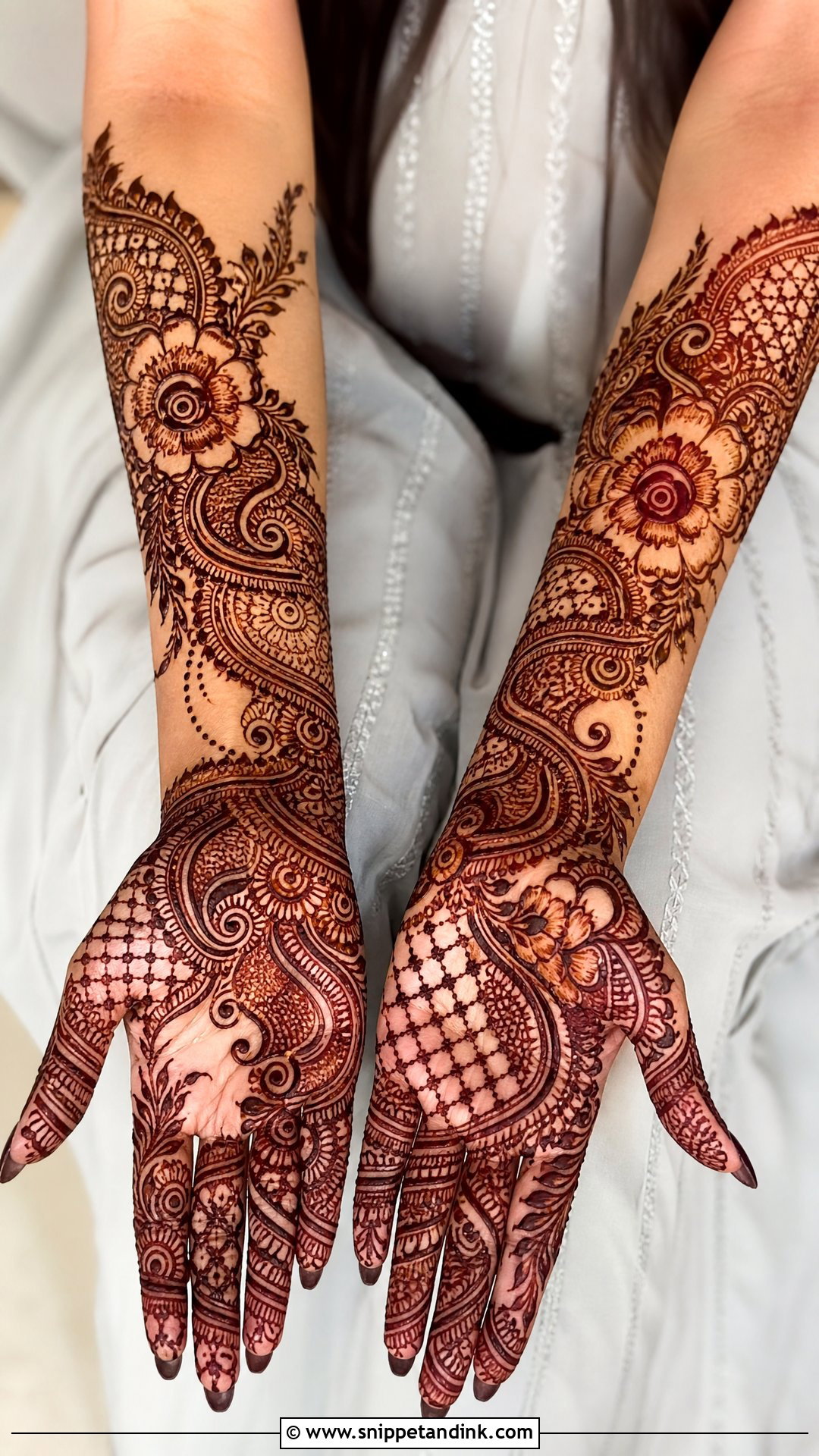
Indo Arabic bridal mehndi design mixes the bold movement of Arabic work with the dense filling of Indian work. Large flowers and vines take one side of the hand while fine jaali, dots, paisleys and mandala fillers sit around them. The finish feels full without being solid. Running the main trail diagonally makes fingers and wrists look longer, which is why I reach for this layout often with shorter, broader hands. Pastel outfits and darker wedding colours both suit it.
5. Back Hand Bridal Mehndi Design
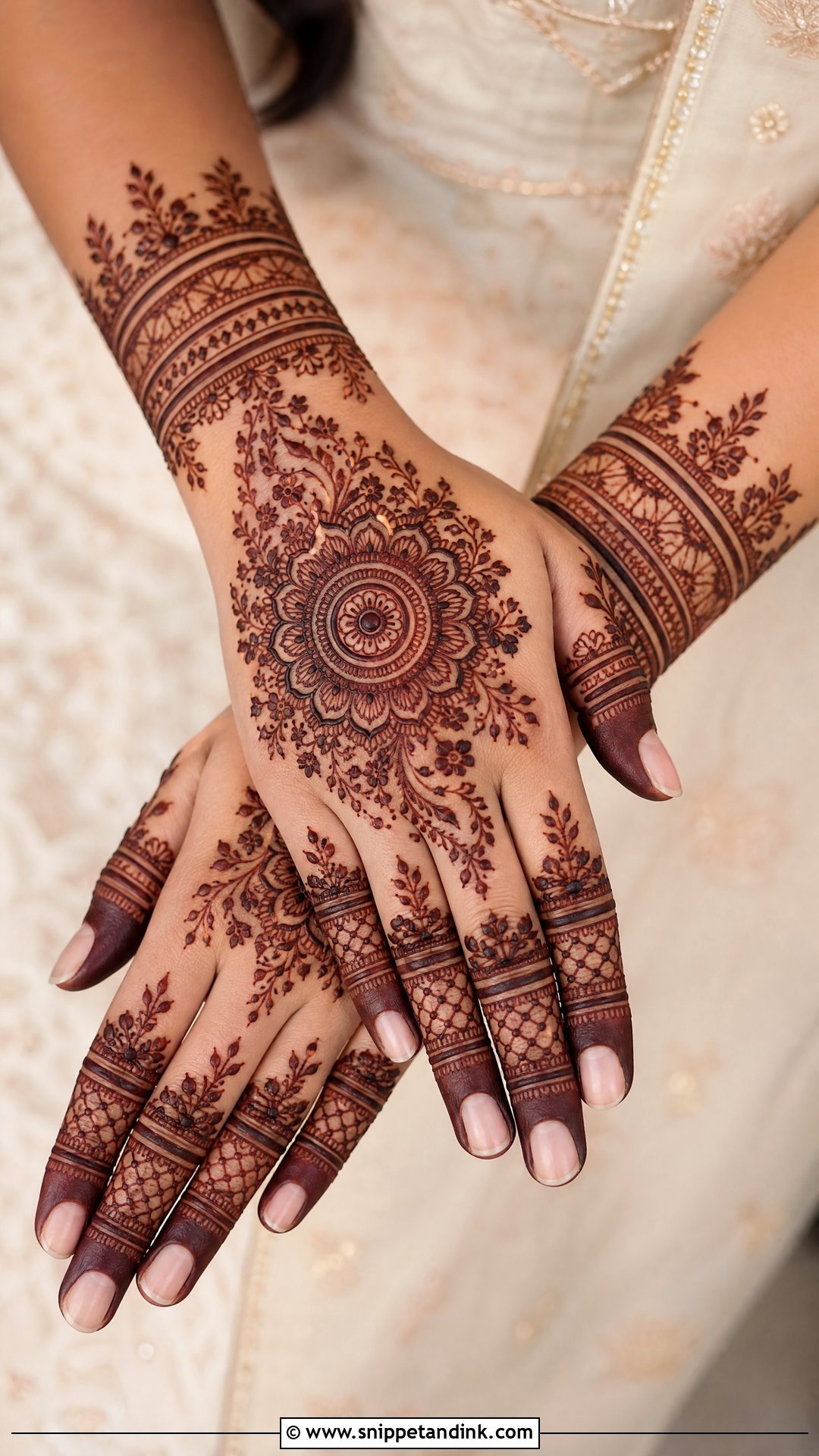
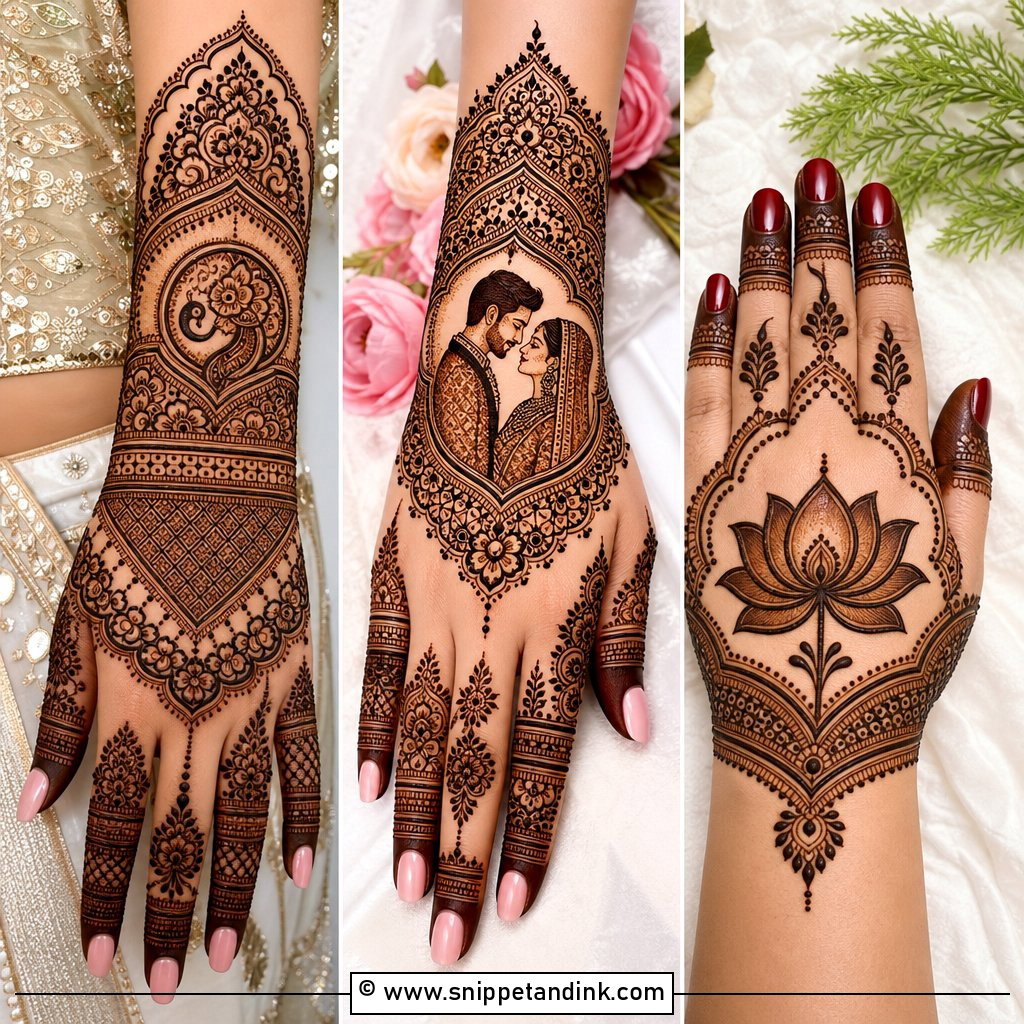
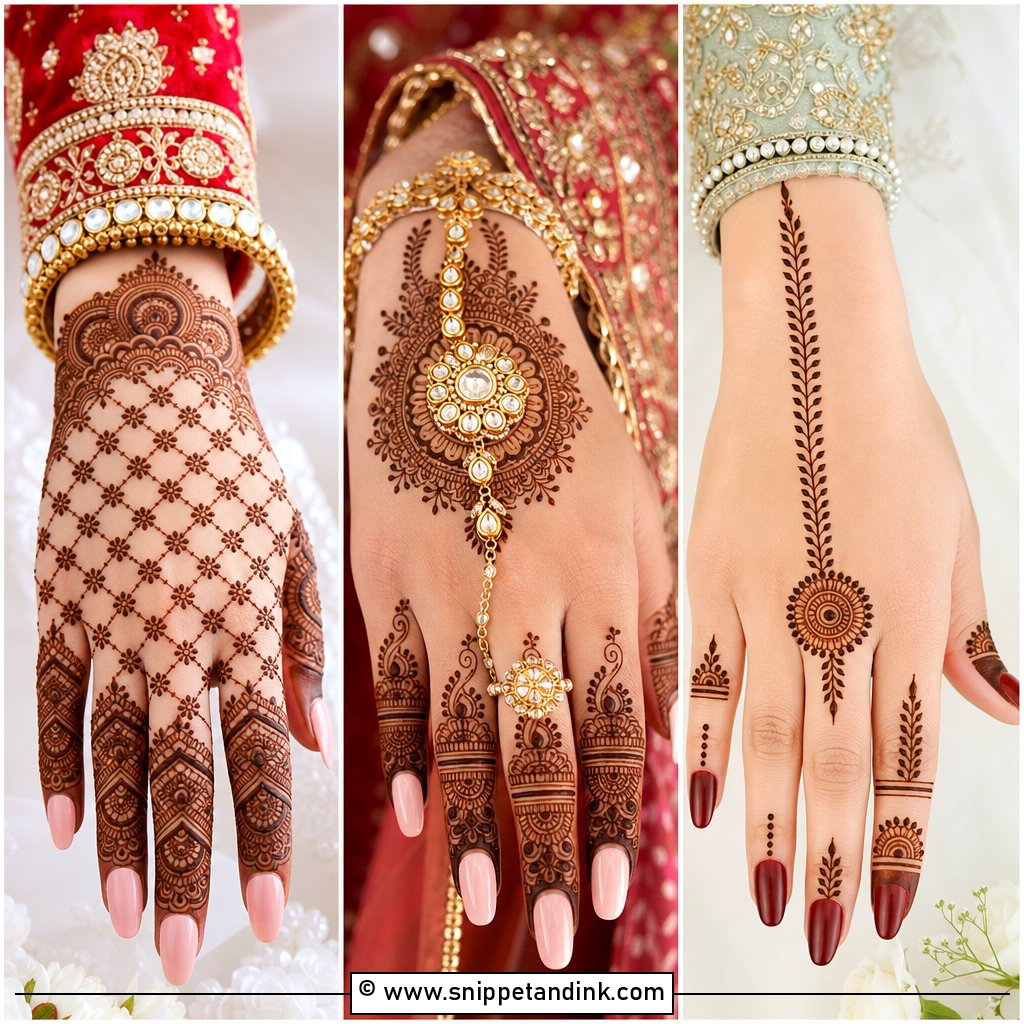
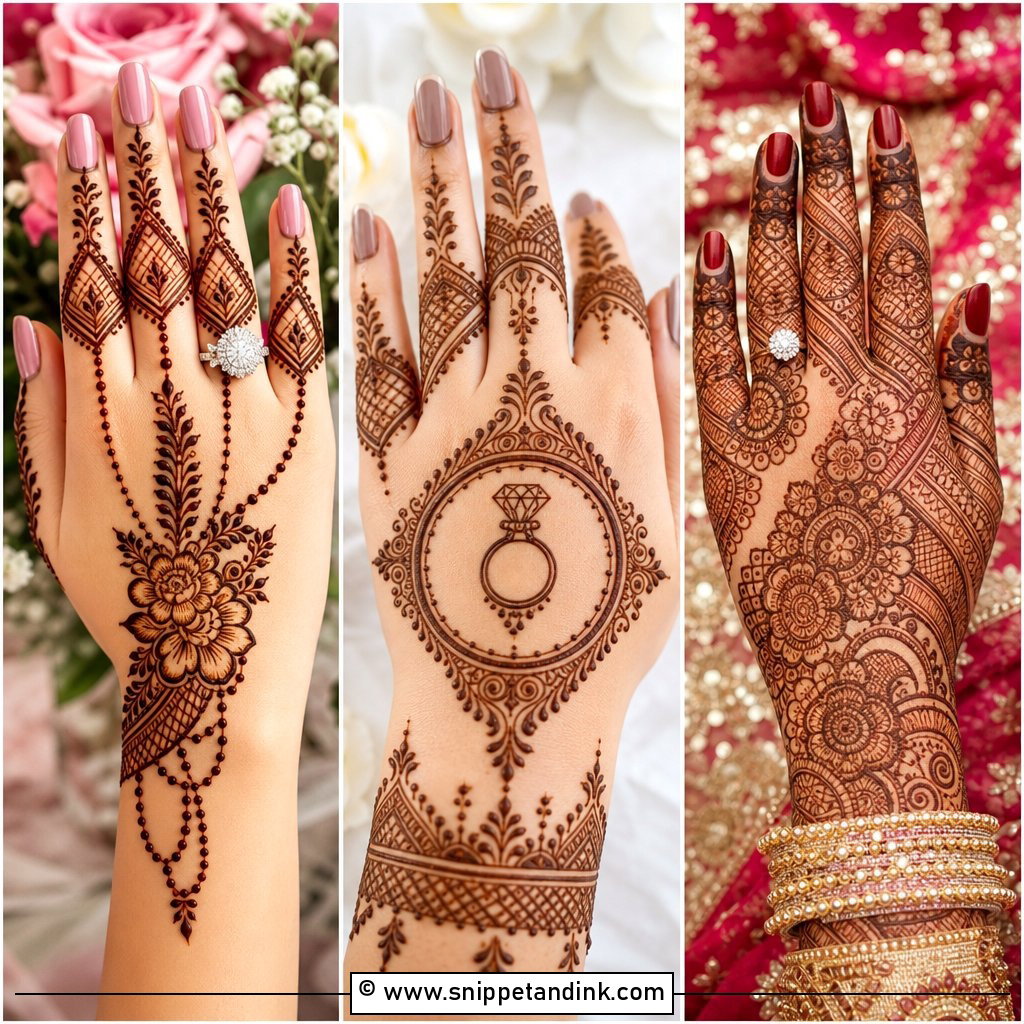
The back of the hand is what everyone sees when you hold a bouquet, adjust your jewellery or rest your hand on his during the ceremony. A complete back hand starts with decorated fingertips, moves into a central mandala or floral motif and finishes with bracelet bands at the wrist. Density is a choice: some brides want it packed, others prefer Arabic spacing. If you’re wearing a hathphool, show me the piece first. I’ll leave a cleaner channel where the chains sit so the jewellery doesn’t land on top of fine work and hide it. One more honest point: back-of-hand skin stains lighter than the palm, so expect a softer brown there.
6. Front Hand Bridal Mehndi Design
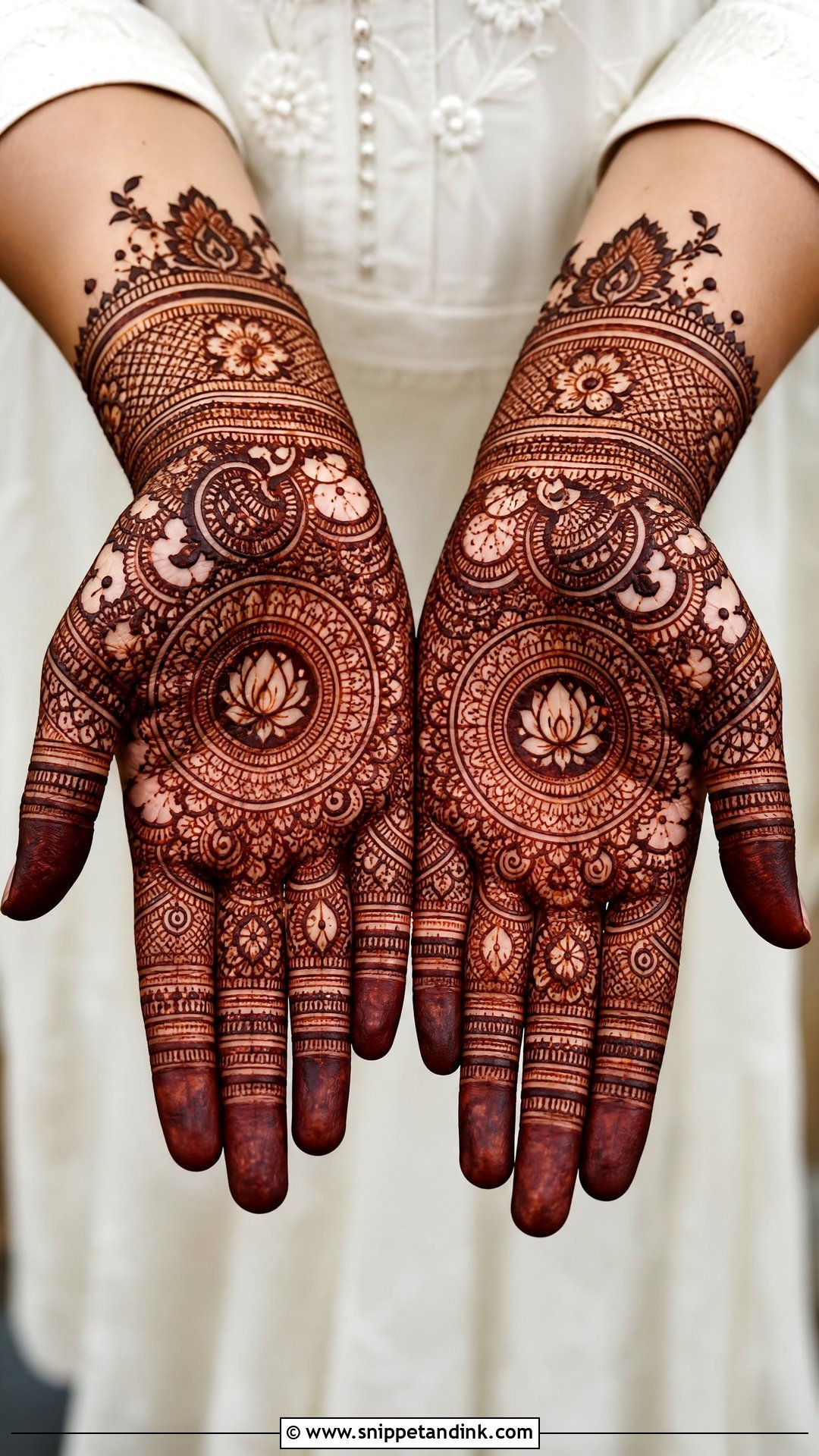
The palm, fingers and inner wrist take the darkest stain on the whole body, because the skin there is thicker and holds the dye longer. That’s why I save the most intricate work for the front of the hand: mandalas, lotus centres, bride and groom portraits, paisley clusters or a fine floral grid, with banded fingers and lace-like detail. A good front-hand design reads as one picture when both palms are held side by side, so I draw across both with that join in mind. Many brides hide initials or a small symbol in the palm, which is easy to place if I know about it before I start.
7. Simple Bridal Mehndi Design
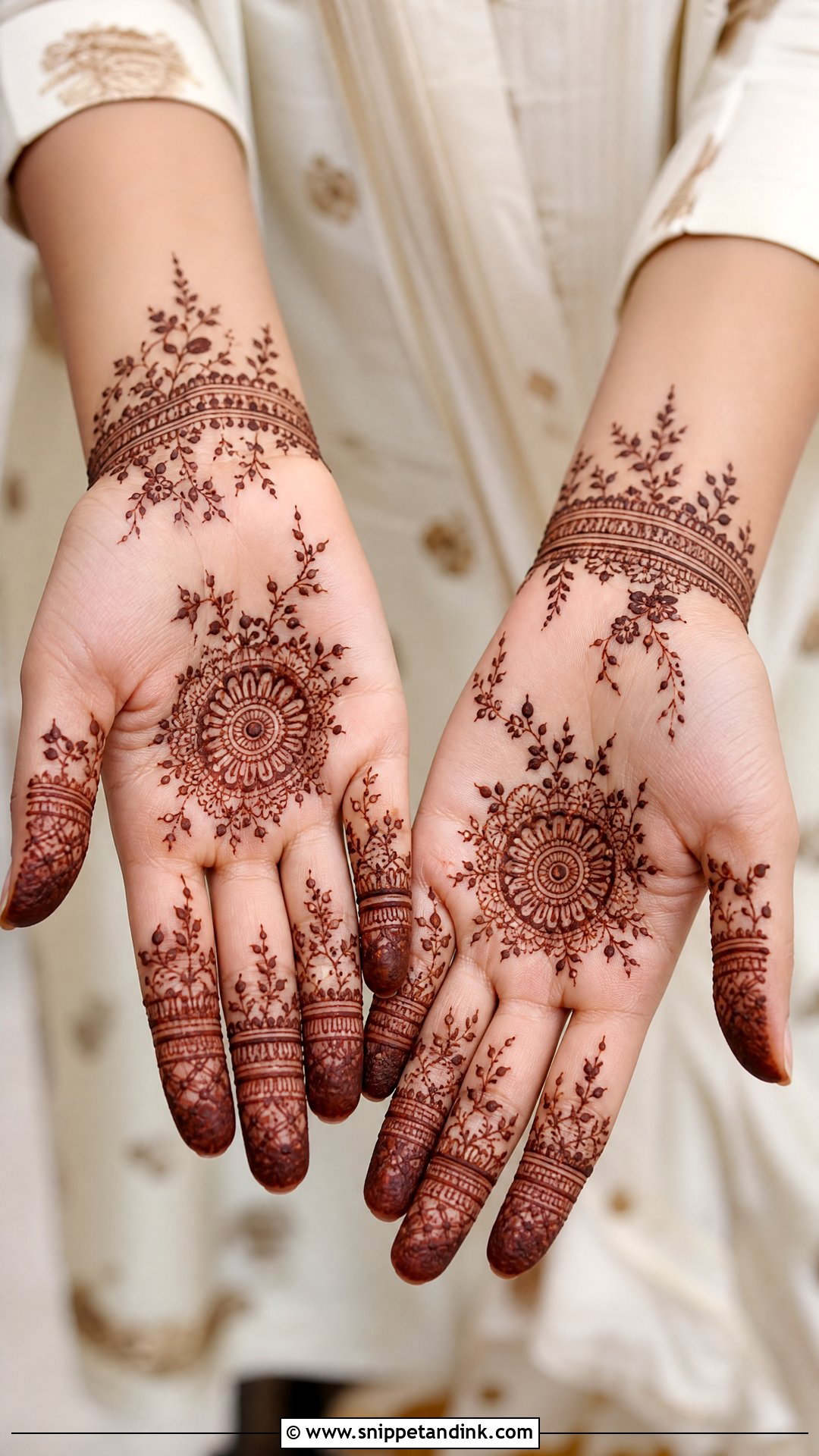
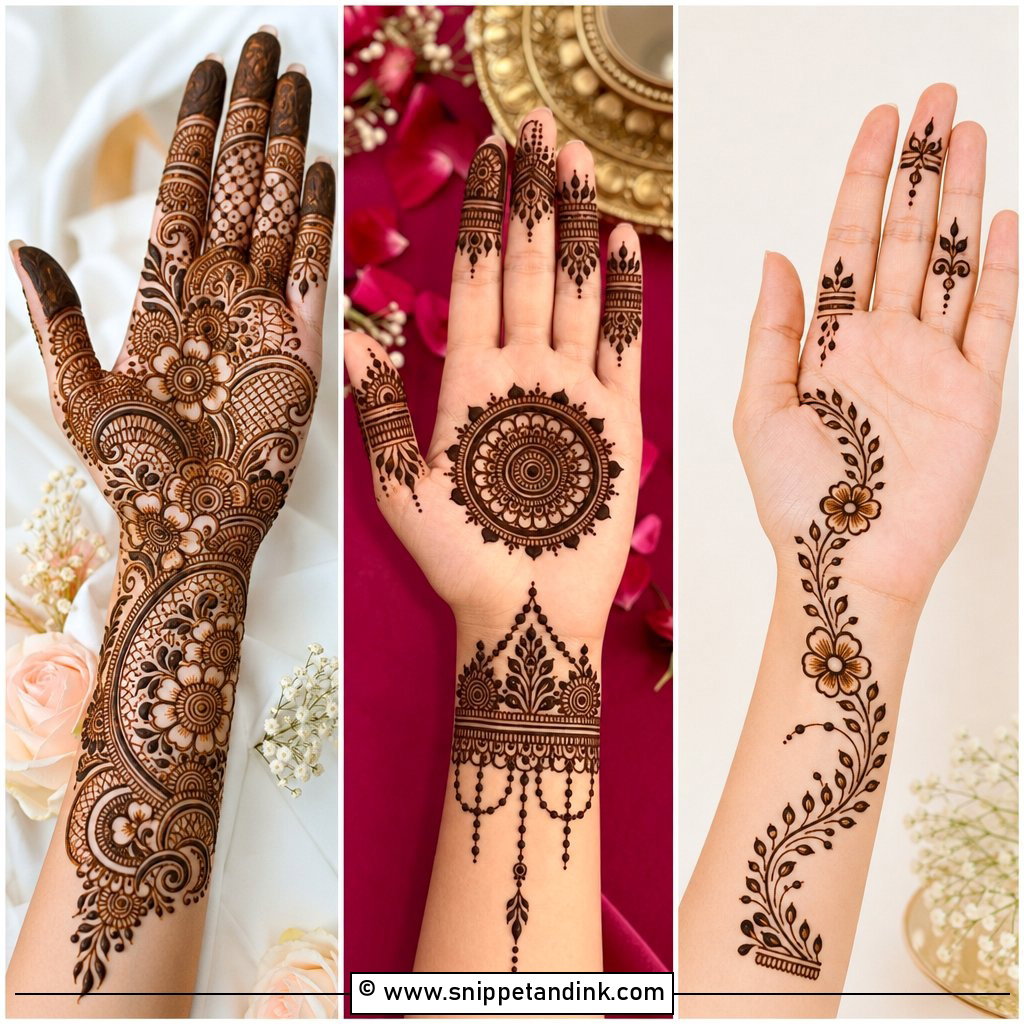
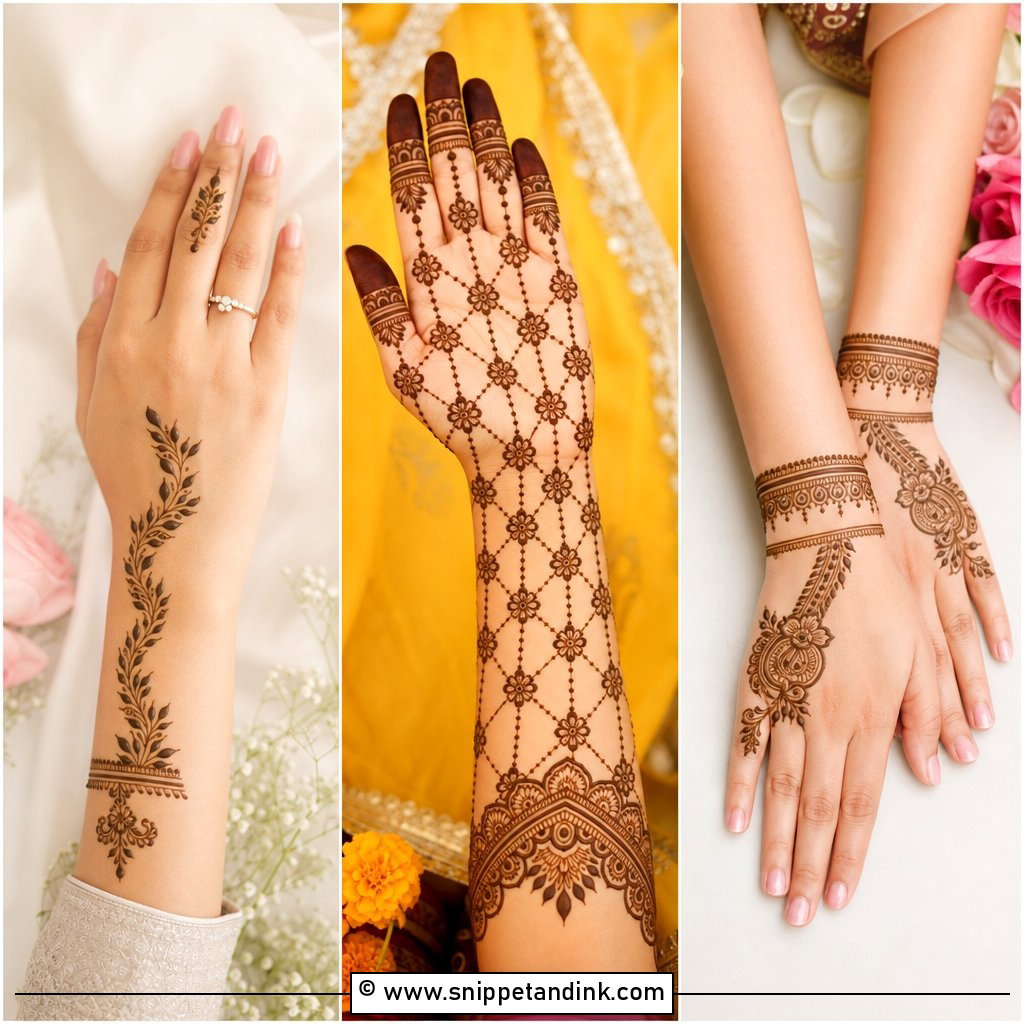
Simple bridal mehndi still needs to look finished, and that comes from spacing and one clear focal point rather than how much paste goes on. A mandala palm, a floral wrist cuff, leafy trails up the fingers and a few fine fillers is a full bridal look. It’s quicker to sit through, which helps in a tight wedding week. Where it goes wrong is when too much is left out and the hand looks half done. I always connect the main motif to the fingers with a vine or band so the eye travels the whole hand.
8. Minimal Bridal Mehndi Design
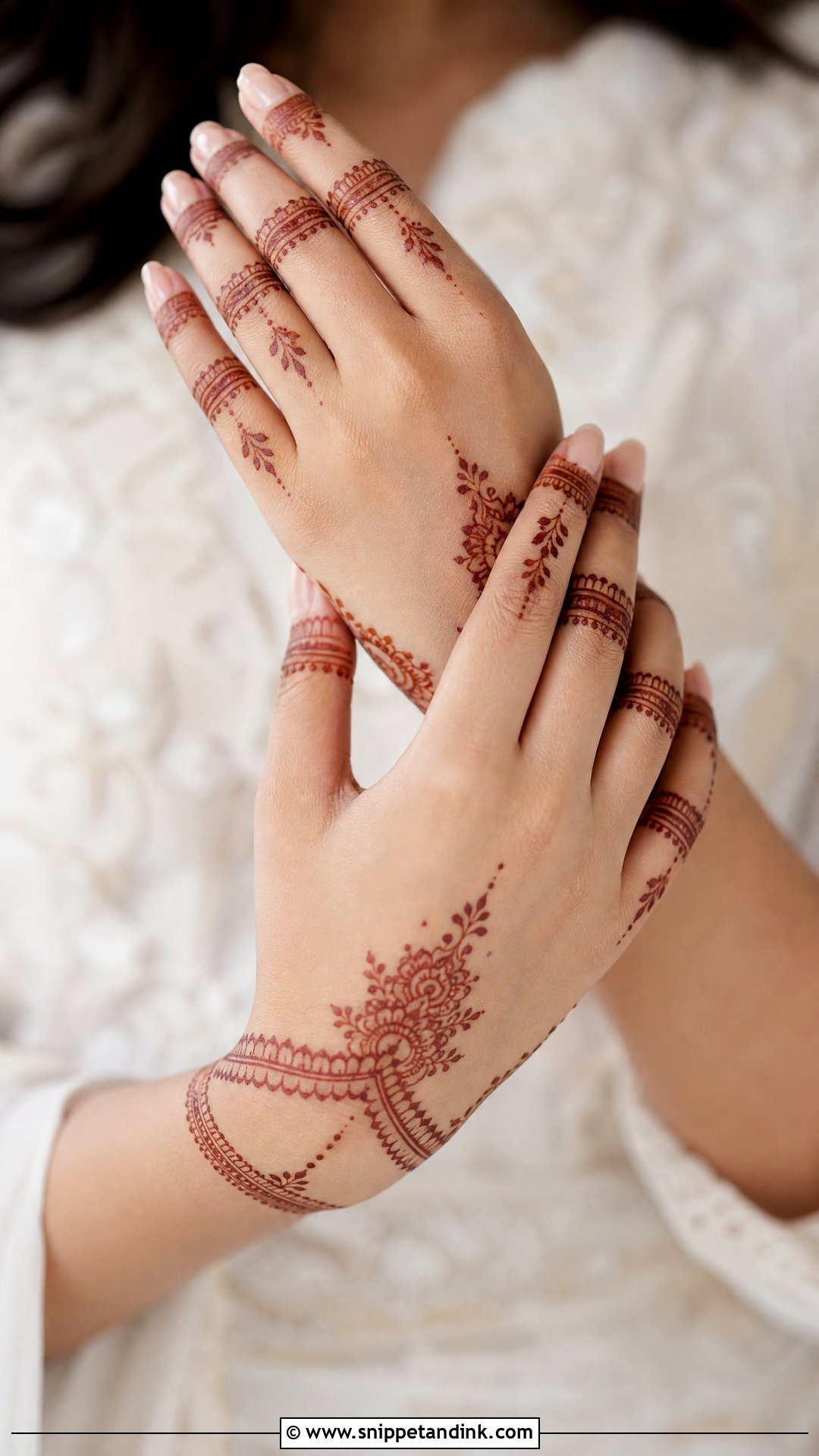
Minimal bridal mehndi uses negative space on purpose, so every line has to earn its place. A minimal hand might carry slim finger patterns, a delicate wrist bracelet, a small palm mandala and a fine floral trail, and nothing else. I like it for civil ceremonies, intimate and destination weddings, and sleek outfits, and it lets rings and nail colour stand out. Scattered small motifs make it look unfinished. I plan it as one layout across both hands, flowing from fingertip to wrist, so the restraint looks deliberate.
9. Heavy Bridal Mehndi Design
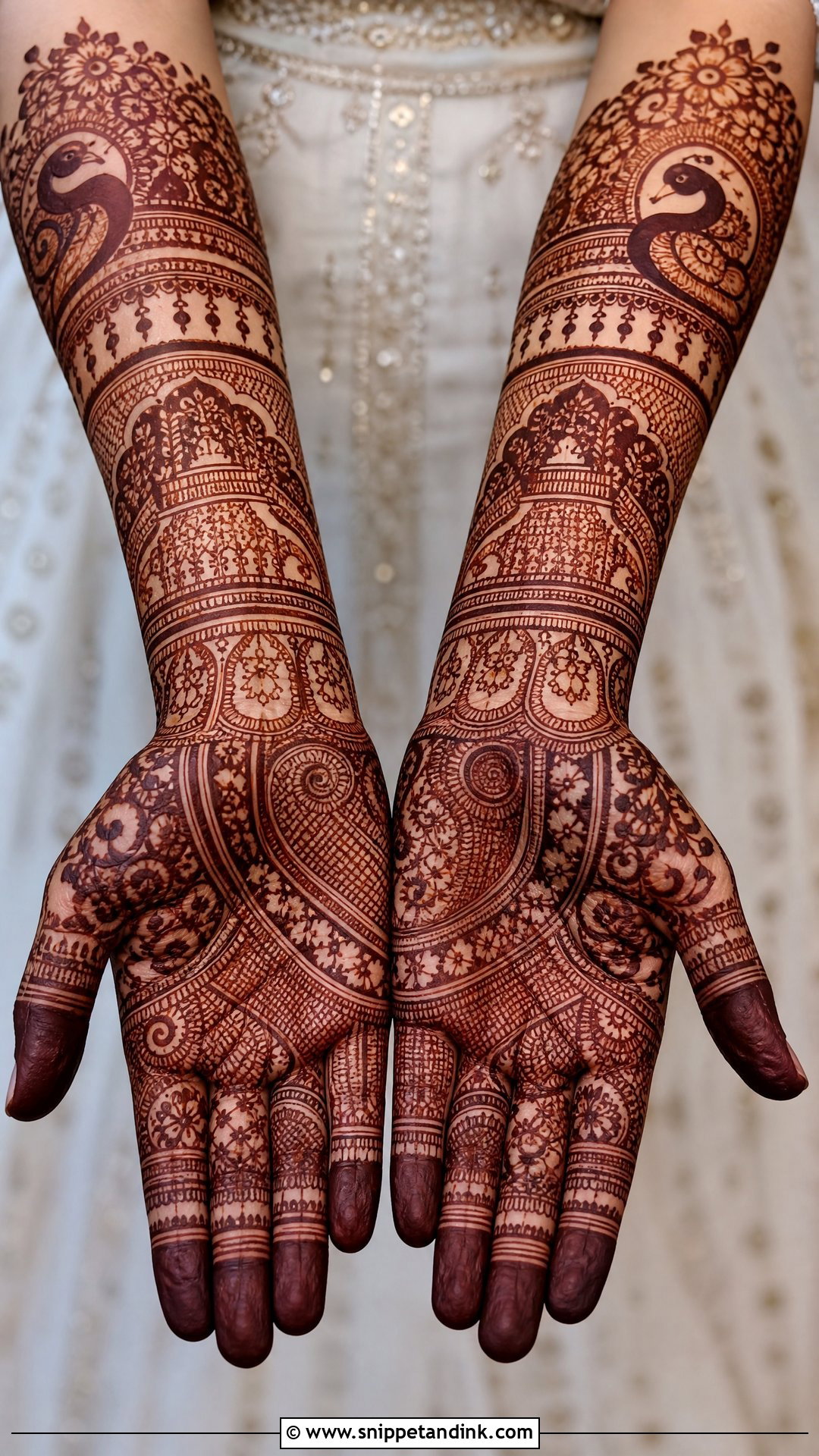
Heavy bridal mehndi leaves very little bare skin. Hand and forearm are filled with paisley layers, jaali panels, flower chains, peacocks, fine checks, shaded leaves and borders. Without structure it turns into a dark blur, so I divide the hand into sections with clear bands, borders or central motifs before filling anything. That’s what keeps it readable in photos. It belongs with traditional ceremonies and richly embroidered outfits, and the dense paste pays off with a deep, even stain if you leave it on long enough.
10. Royal Bridal Mehndi Design
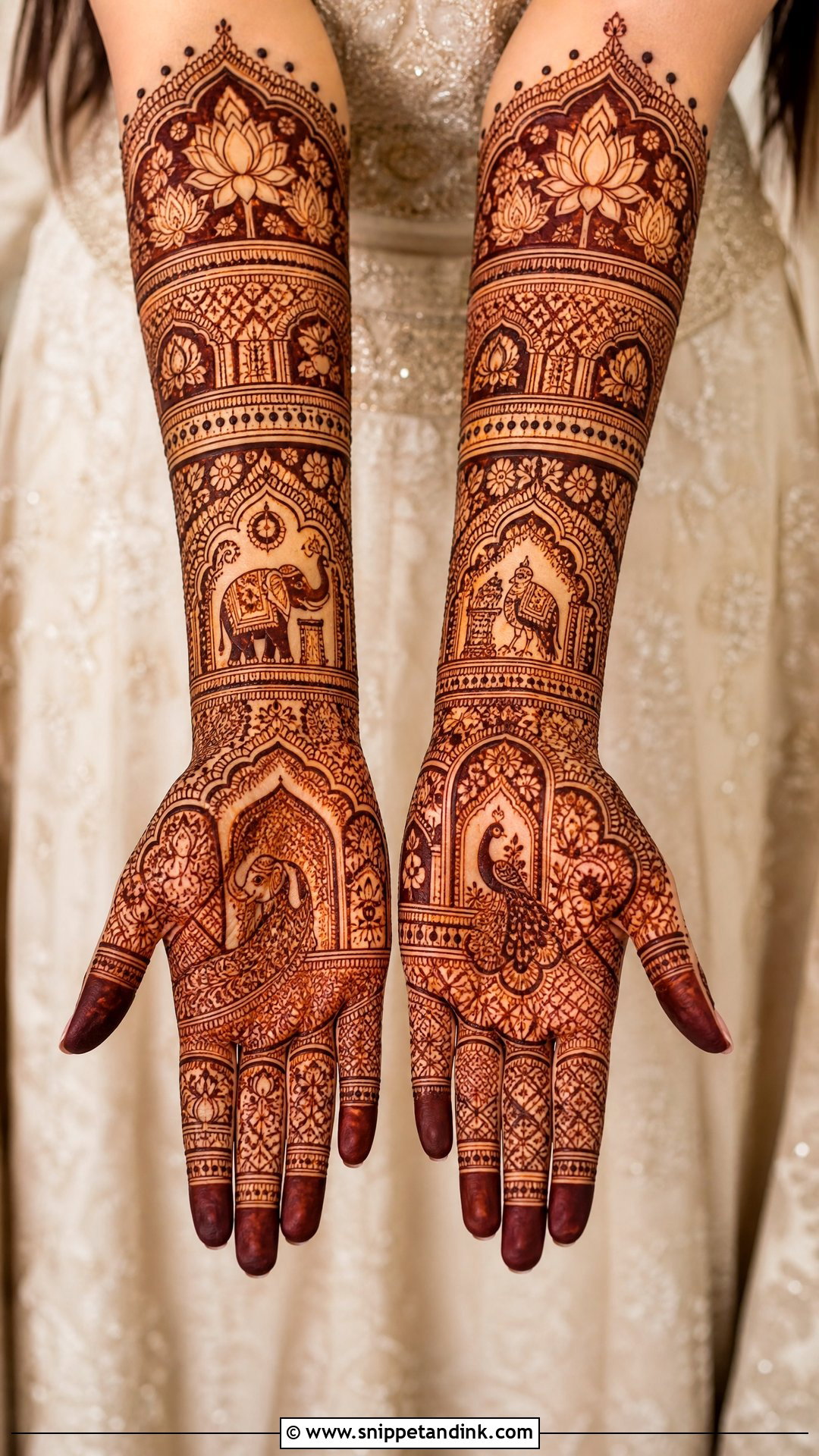
Royal bridal mehndi design is about grandeur and balance: palace arches, peacocks, lotus blooms, elephants, bride and groom figures and jewellery-inspired bands, running fingers to forearm with both hands mirroring each other. It sits naturally with red, maroon, emerald, ivory or gold outfits. I fill the fingertips solid for contrast, since they stain the darkest of all. Initials or the wedding date can be tucked inside a border to make the layout yours, as long as you tell me before the first line goes down.
11. Peacock Bridal Mehndi Design
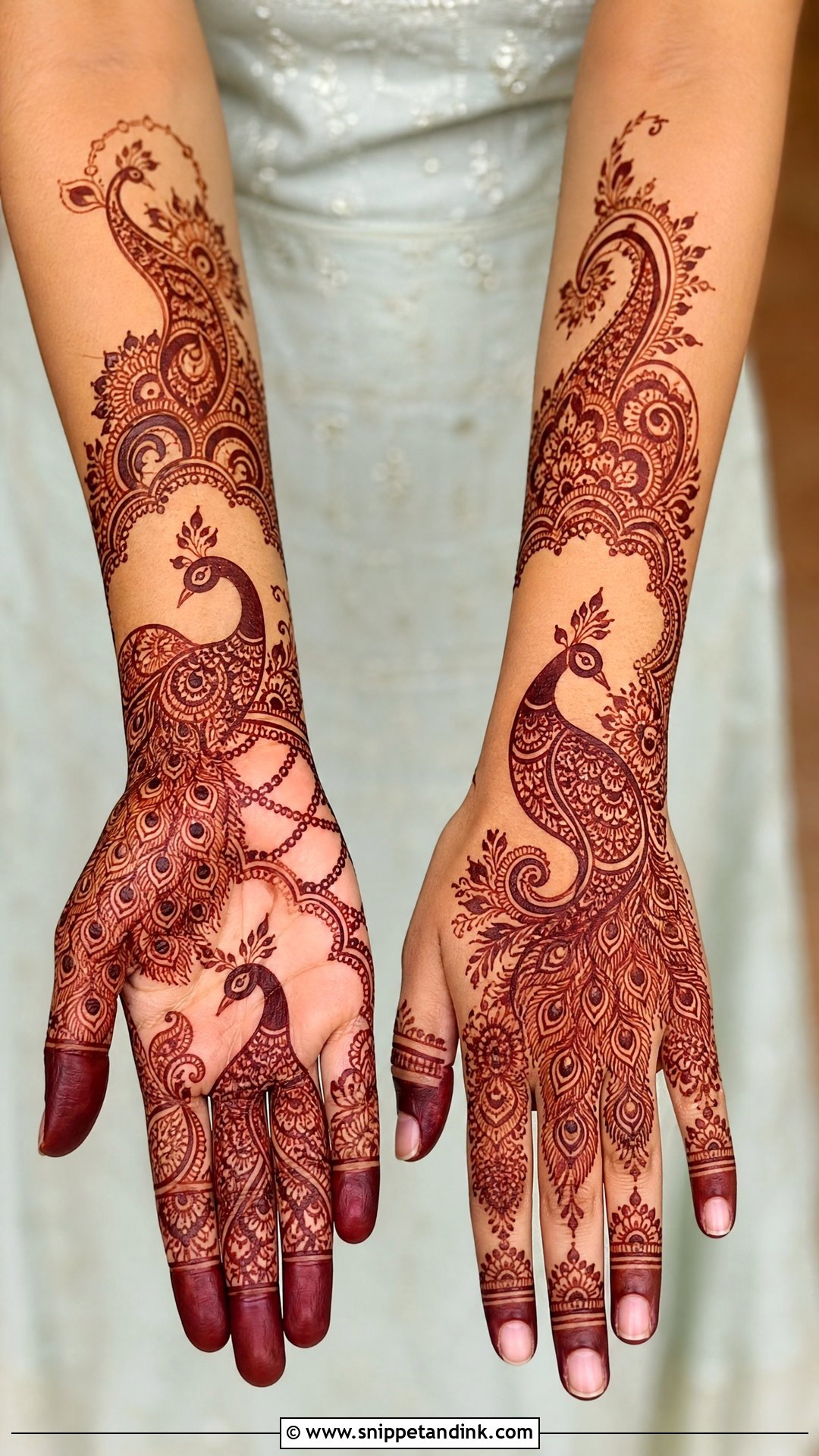
A peacock’s body curves just like the palm and wrist, which is why it has stayed a favourite for generations. The feathers give room for fine lines, dots and shading without breaking the flow. A full peacock look might place one large bird on the palm with a feather trail across the back of the hand or up the forearm. Keep the body bold and solid and let the feathers carry the detail. If the body is drawn too thin, it gets lost once the paste comes off and the whole bird reads as a scribble.
12. Dulha Dulhan Bridal Mehndi Design
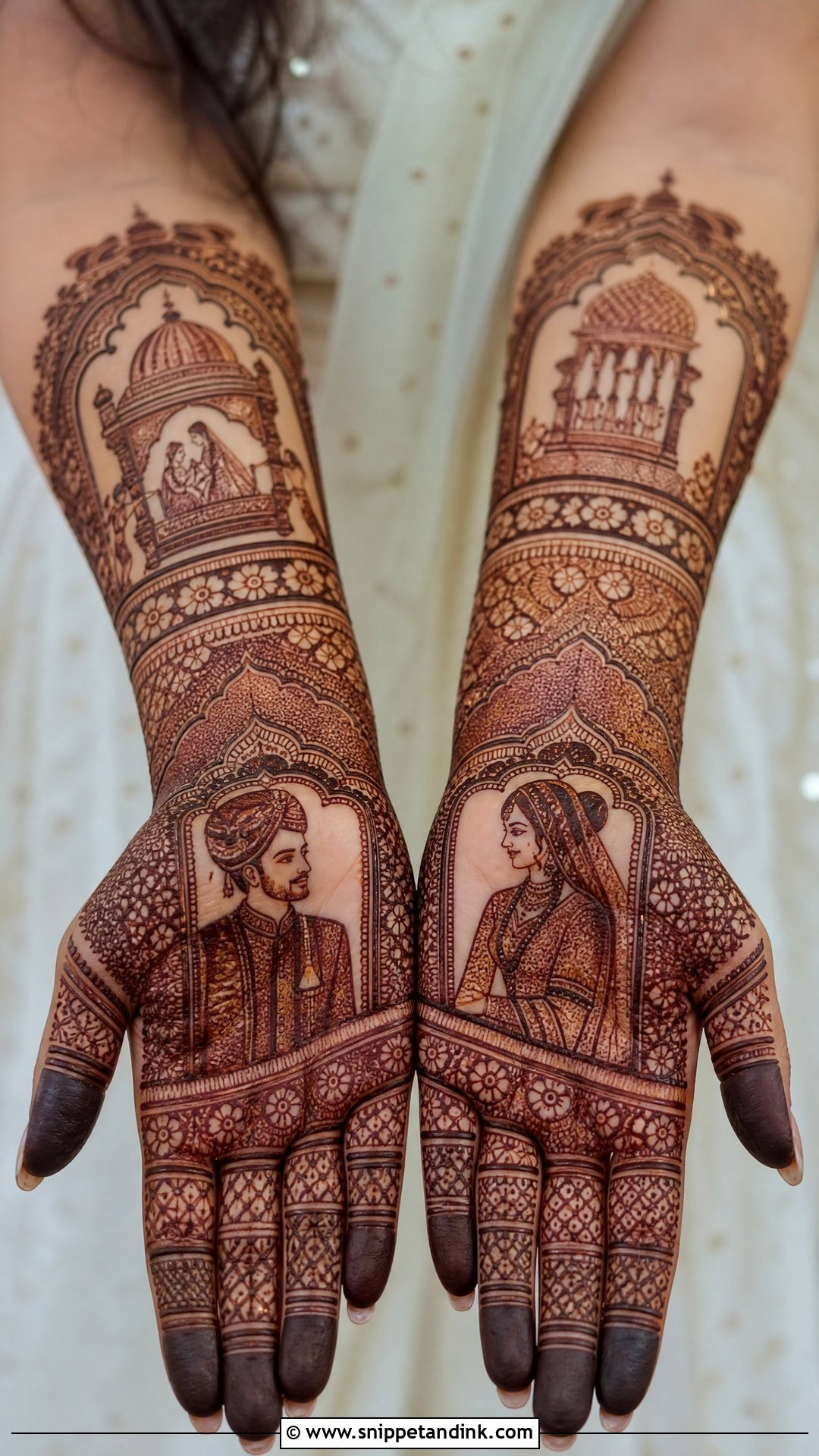
Dulha dulhan mehndi tells your story on your hands, with the bride and groom drawn on opposite palms or inside ornate frames. Mandap arches, florals, paisleys, doli details and bells fill the space around them. Faces are the hardest thing in mehndi to get right, because a slightly off line on a nose or eye changes the expression, so look at an artist’s close-up portrait work before you book. I keep the patterns around the figures calmer so the faces stay visible. Bring both palms together for the photo and the scene completes itself.
13. Mandala Bridal Mehndi Design
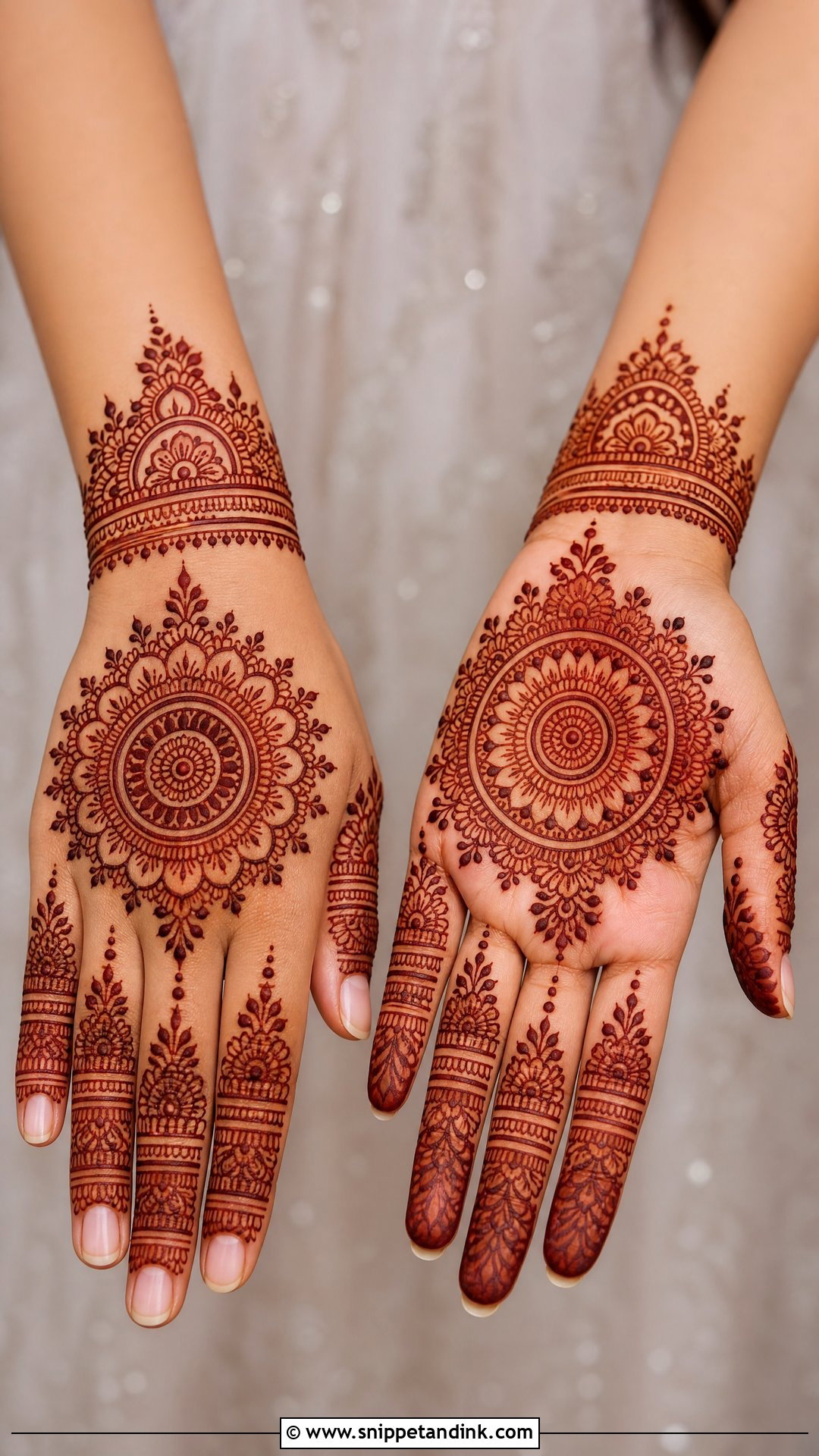
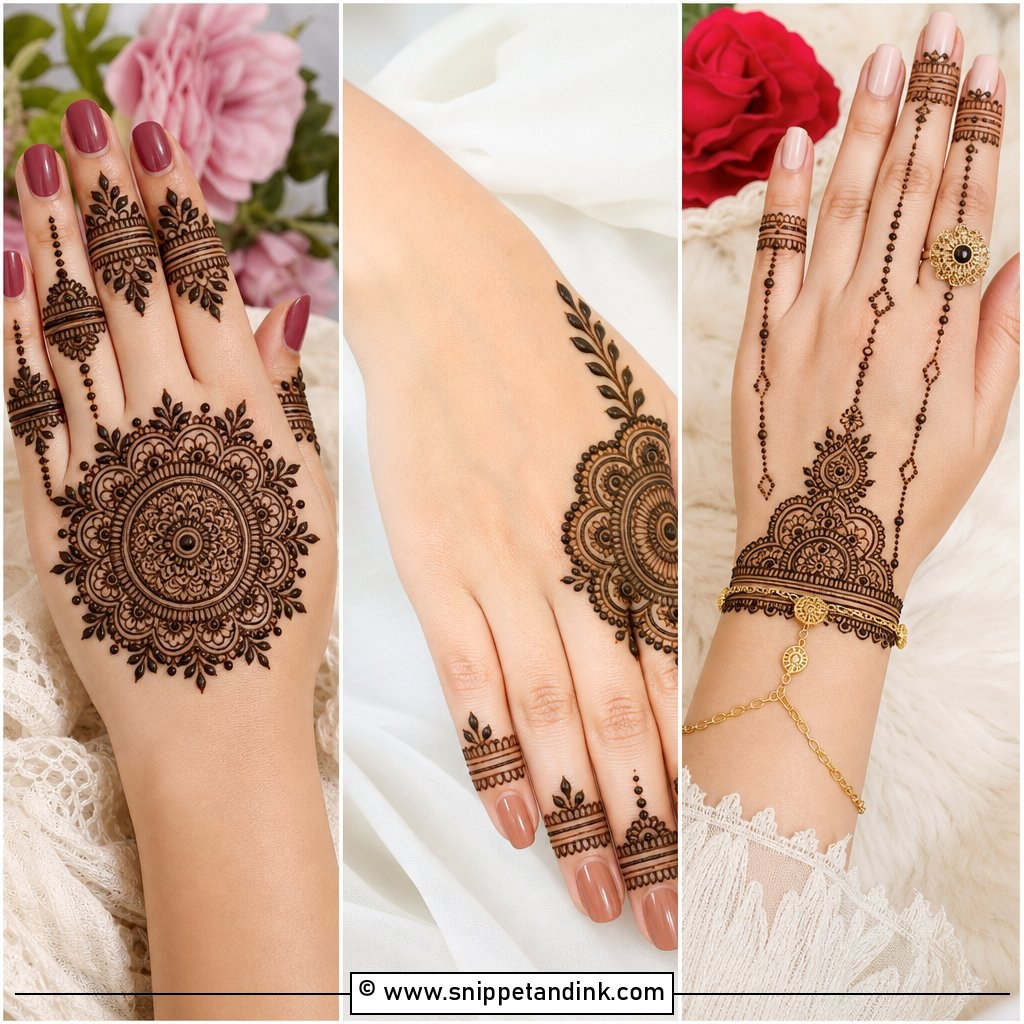
A mandala gives the hand a centred, balanced focus. The circle sits in the middle of the palm or back of the hand, with petals, dots, rings and borders spreading outward. For a bridal version it must connect to decorated fingers, wrist cuffs and forearm work, or it reads as a stamp. It works with light and heavy coverage alike. I draw the circle freehand from the centre outward rather than tracing it, checking it against the hand’s own curve, since a perfect circle on a cupped palm looks oval when the hand flattens.
14. Floral Bridal Mehndi Design
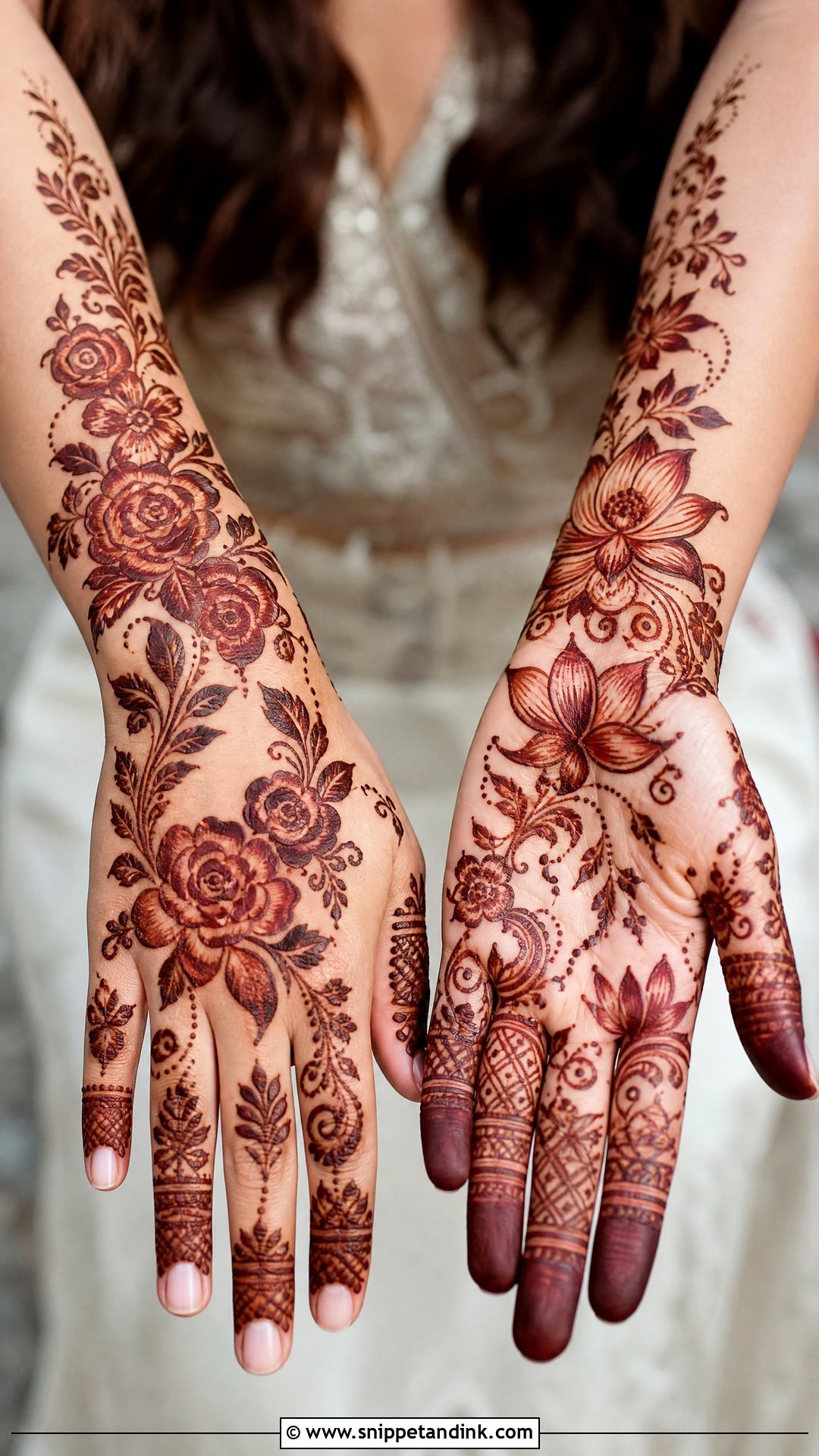
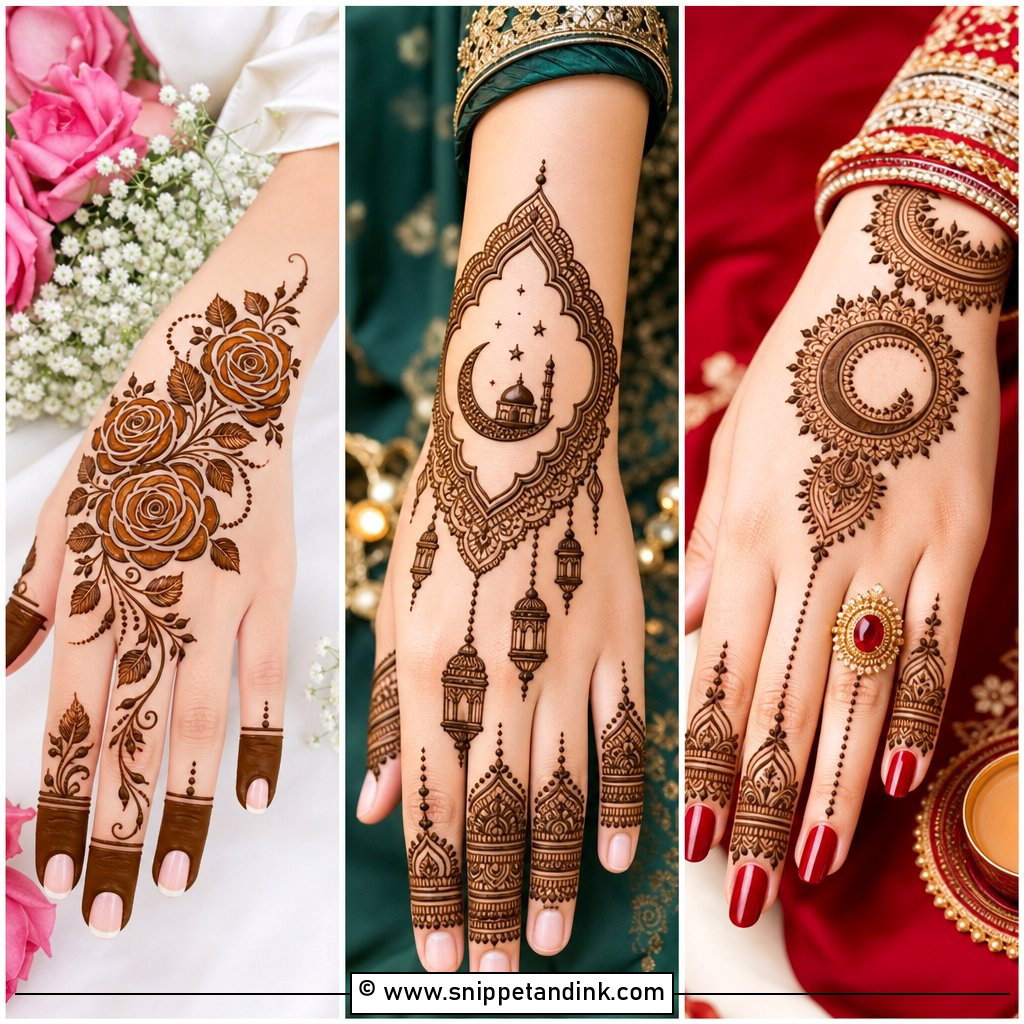
Floral mehndi is the easiest style to customise. Large roses, lotus flowers, small blossoms, vines and shaded petals can be spread across the palm, back of the hand and wrist, with bold blooms as the focal points and fine lines between them. Brides in pastel, ivory, pink or peach outfits, or anything with floral embroidery, tend to love it. Flowers are recognisable from across a room, which helps in wide shots. Mixing in paisleys, a jaali panel and finger bands adds depth so the hand doesn’t look like one repeated flower.

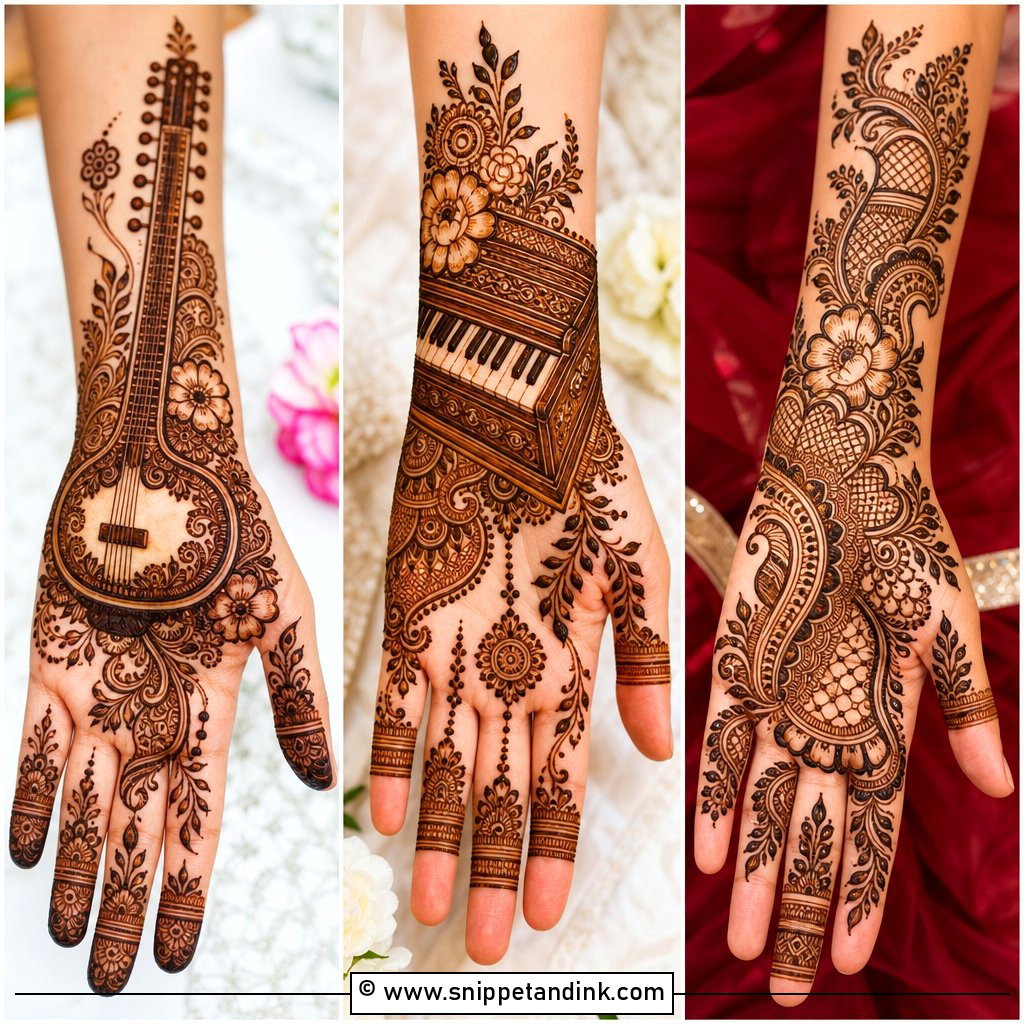
15. Paisley Bridal Mehndi Design
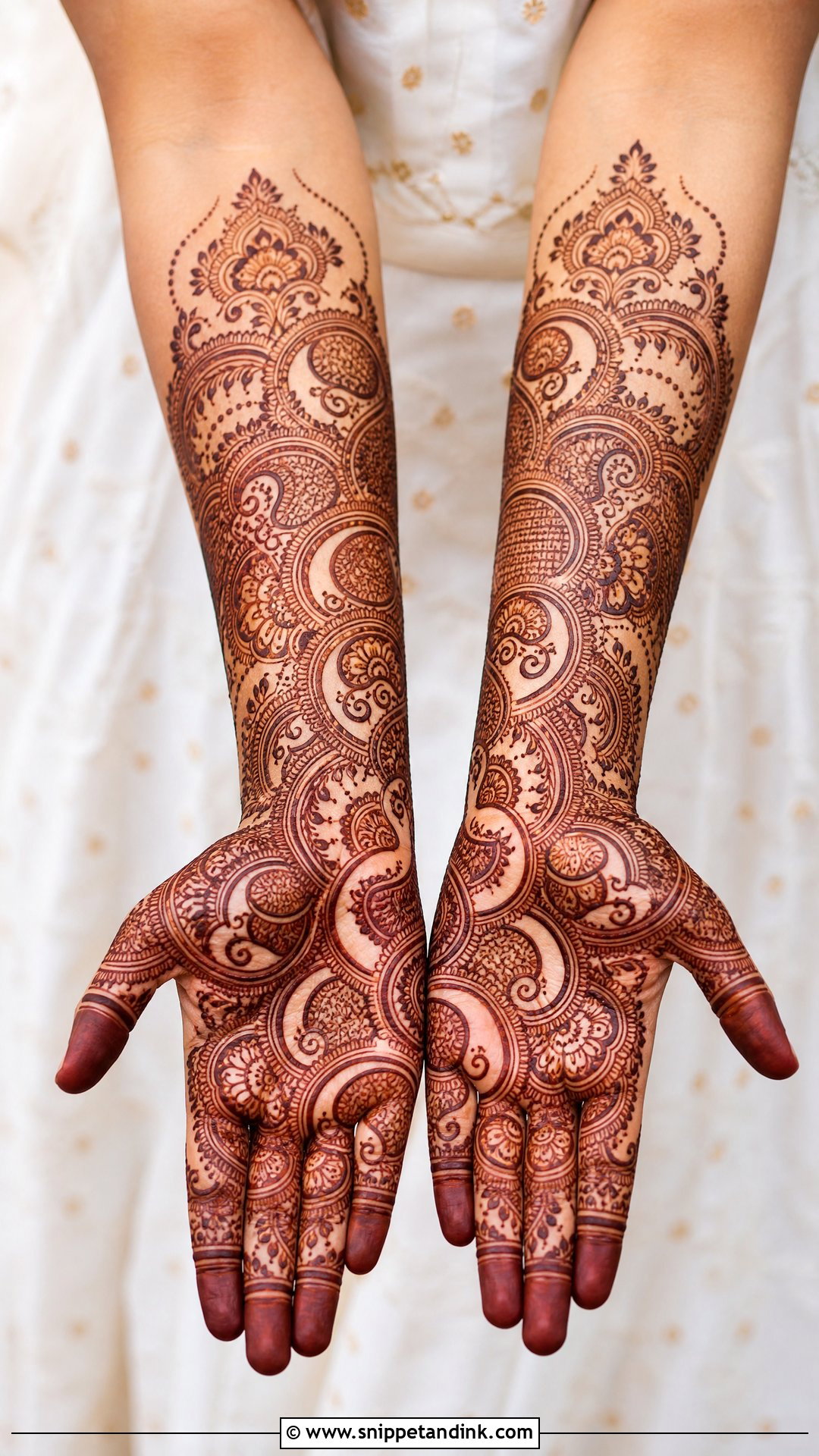
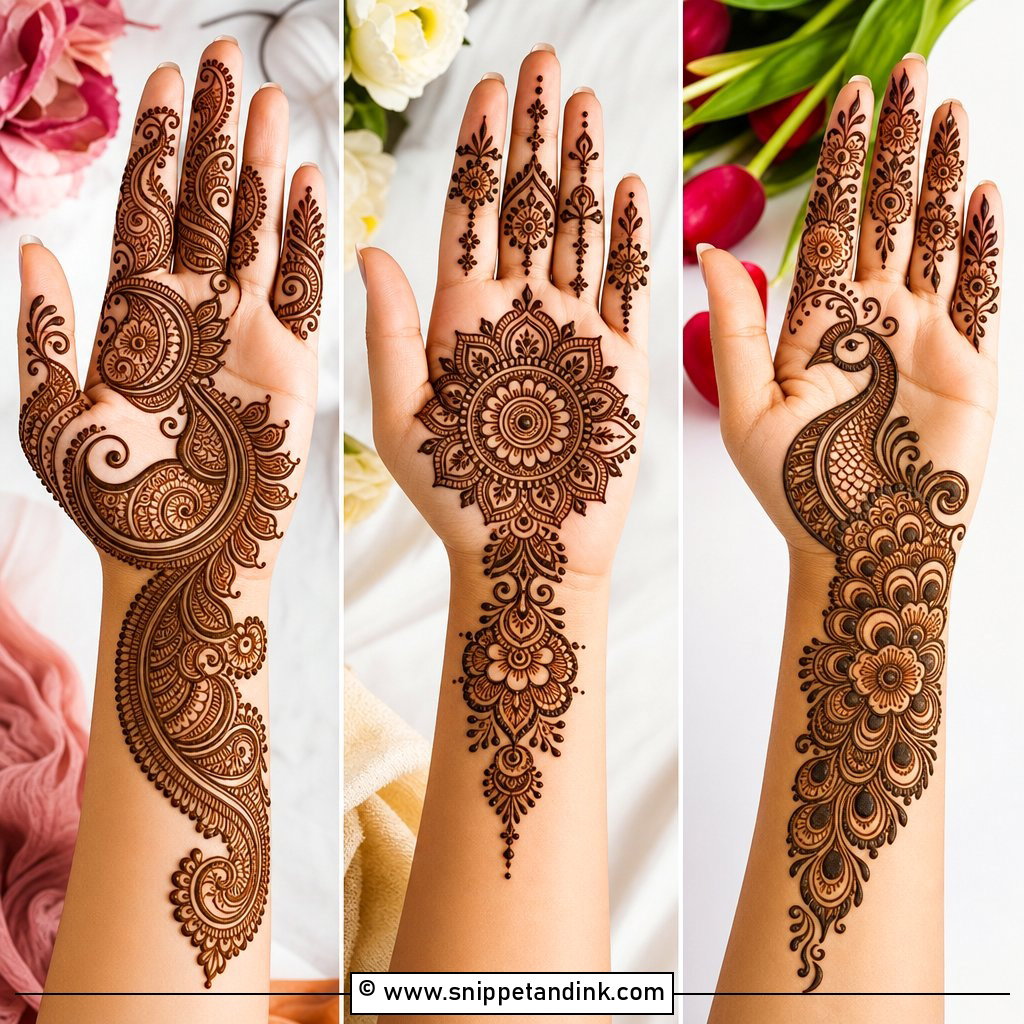
Paisleys are the most useful shape I have for full coverage. They can be large or tiny, layered, tilted or joined into trails, so they fit palms, fingers, wrists and forearms equally well. A bridal paisley layout usually includes floral filling, small checks, curved leaves, dots and scalloped borders. It looks traditional without feeling dated. The curve of a paisley follows how the hand bends, so the design still flows when you’re holding something. I place the largest paisleys near the palm and wrist and shrink them as I move toward the fingertips.
16. Jaali Bridal Mehndi Design
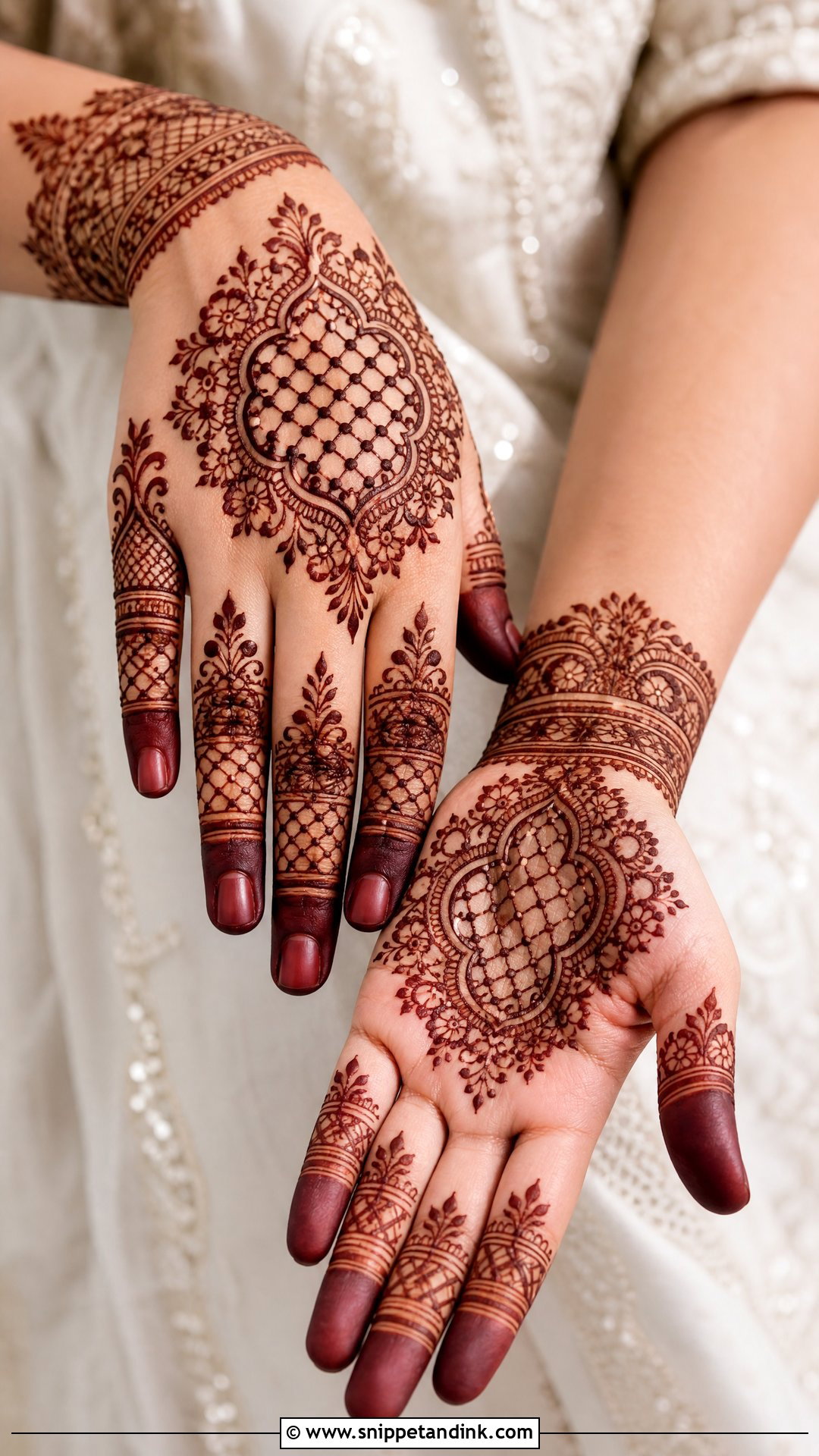
Jaali is a mesh pattern that looks like fine lace. It can sit on the back of the hand, the palm, the wrist or the forearm, framed by flowers, paisleys or bracelet bands. One or two mesh panels with bold motifs around them gives heavy detail that still looks organised. On the back of the hand it can pass for jewellery. Jaali is where an artist’s control shows: uneven spacing or wobbly lines look rushed immediately. I draw all the lines in one direction first, then cross them, which keeps the grid even.
17. Bracelet Bridal Mehndi Design
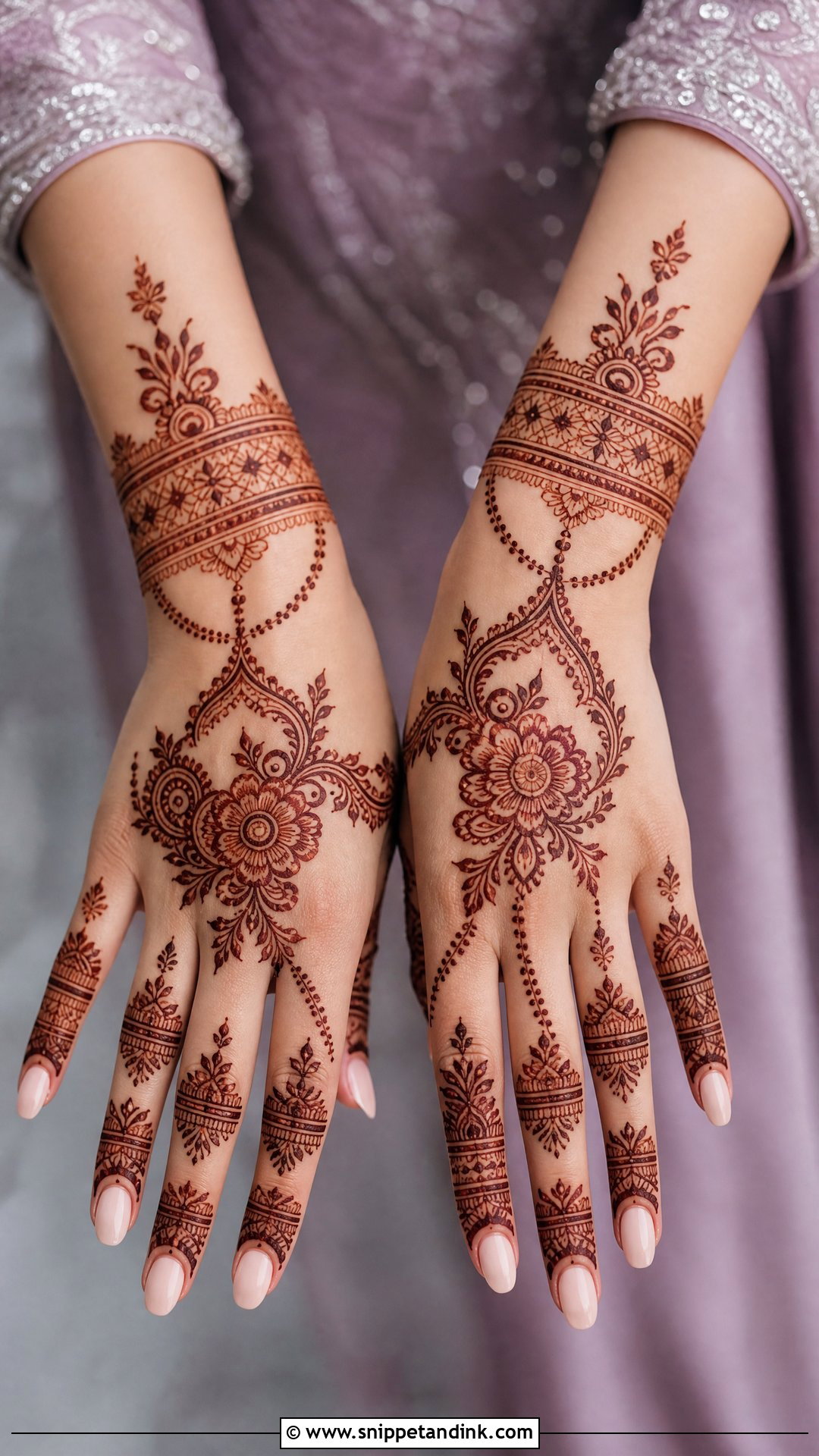
Bracelet mehndi turns the henna itself into jewellery: wrist cuffs, chain lines, ring-style finger work and trails linking them across the back of the hand. It gives the hathphool effect without a single piece of metal. It can be light or detailed and suits engagements, receptions and modern wedding looks. The common mistake is making the wrist band too fine, so it vanishes under a stack of bangles. I draw that band at least a finger width deep and keep the central floral or mandala motif bold enough to hold its own.
18. Finger Bridal Mehndi Design
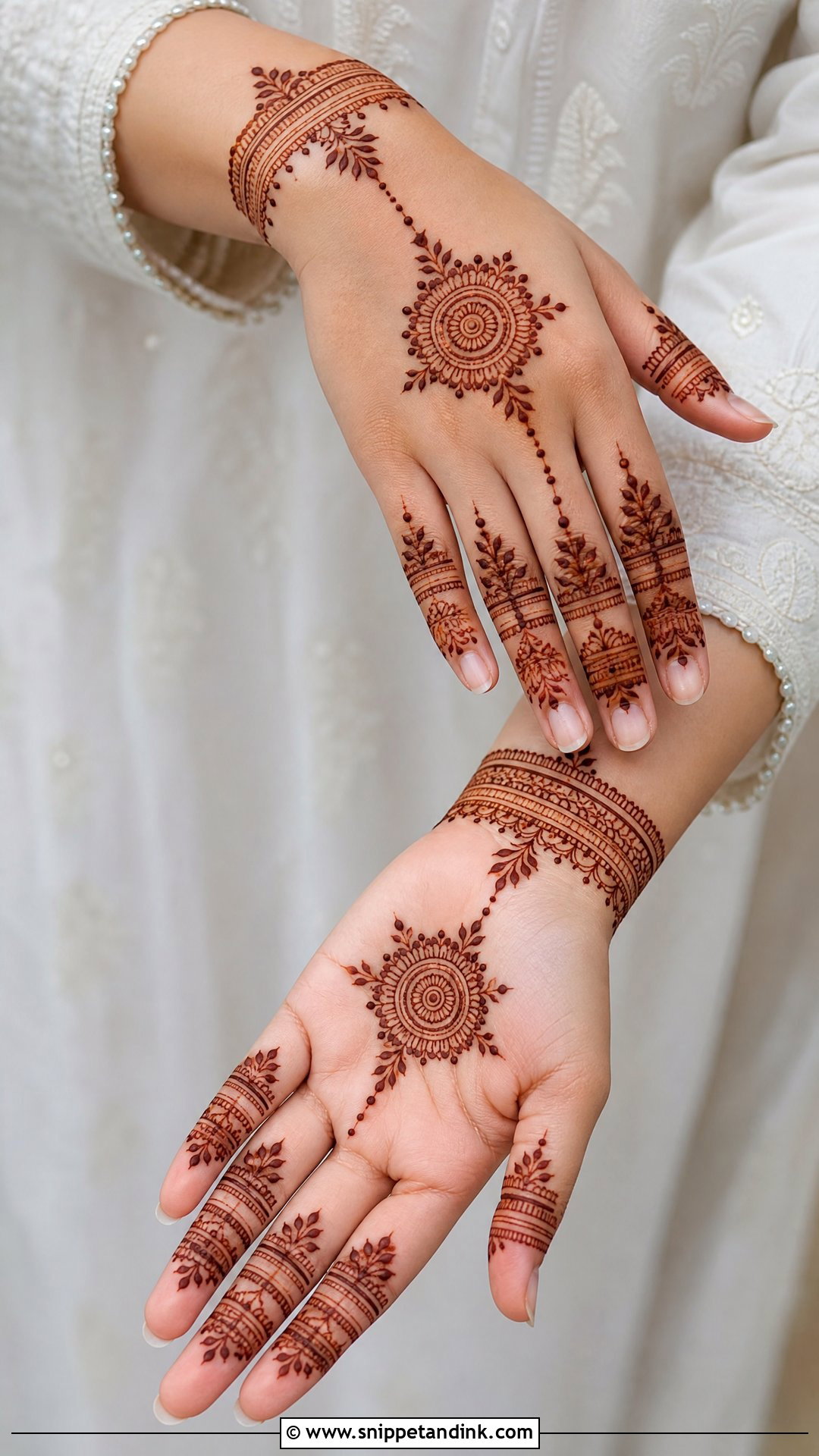
Finger-focused mehndi keeps the palm or back of the hand cleaner and puts the detail on the fingers: bands, leaves, dots, tiny flowers and fine lines on all ten. It needs a link to a small mandala, wrist cuff or diagonal vine, otherwise the hand looks unfinished. It’s a good fit if your rings and nail colour are a big part of the look, or for lighter ceremonies and modern outfits. Symmetry matters more here than anywhere, since fingers sit side by side in every ring shot. Dark solid fingertips add the classic bridal touch.
19. Modern Bridal Mehndi Design
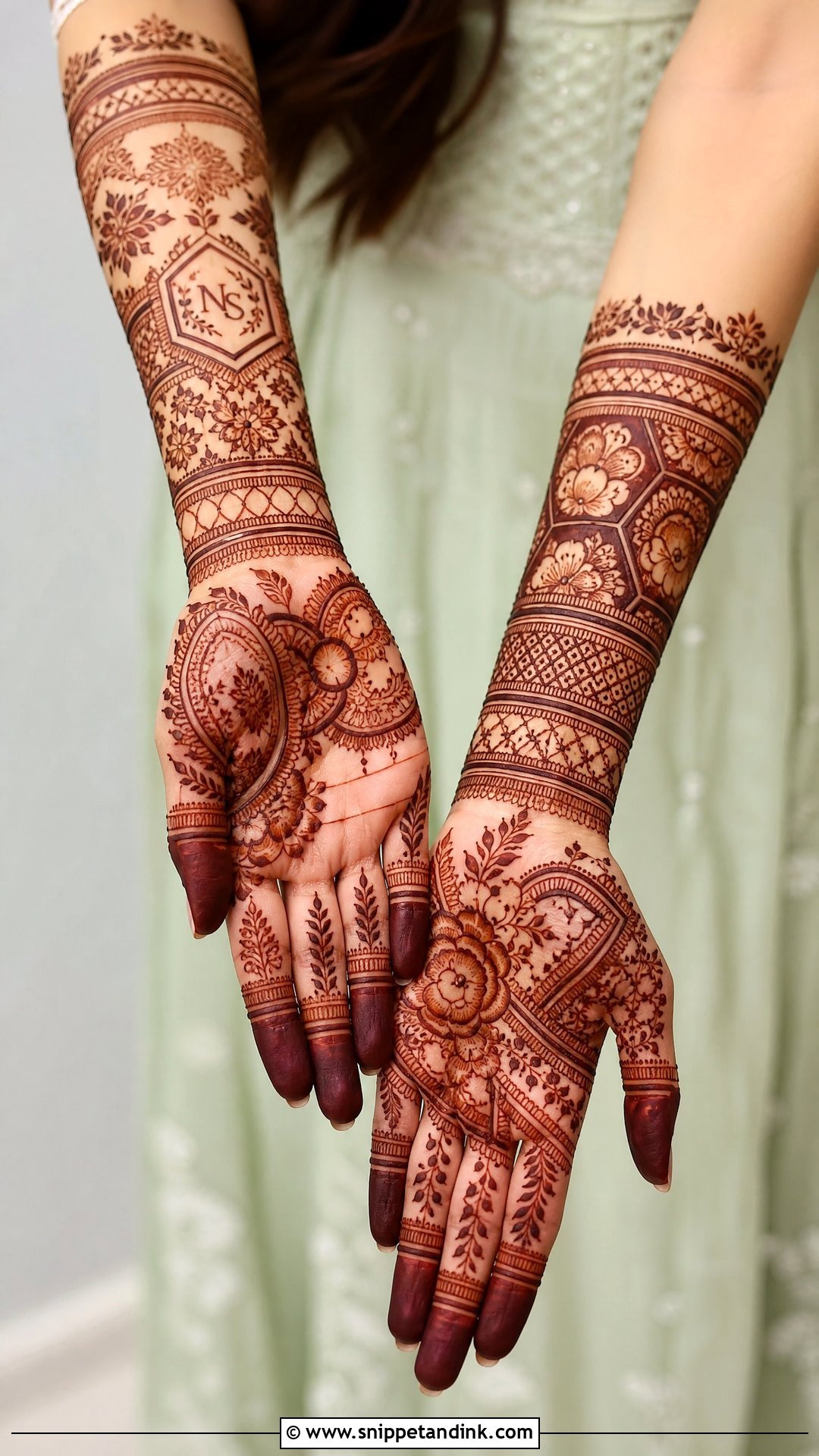
Modern bridal mehndi uses cleaner layouts and more breathing room. You’ll see geometric panels, negative space, slim wrist cuffs, initials, tiny symbols and bold floral sections. The risk is a hand that looks empty rather than planned. I usually anchor a modern layout with one traditional element, a mandala or a paisley, and build the clean lines and gaps around it. It looks right with sleek nails, diamond rings and minimal hand jewellery.
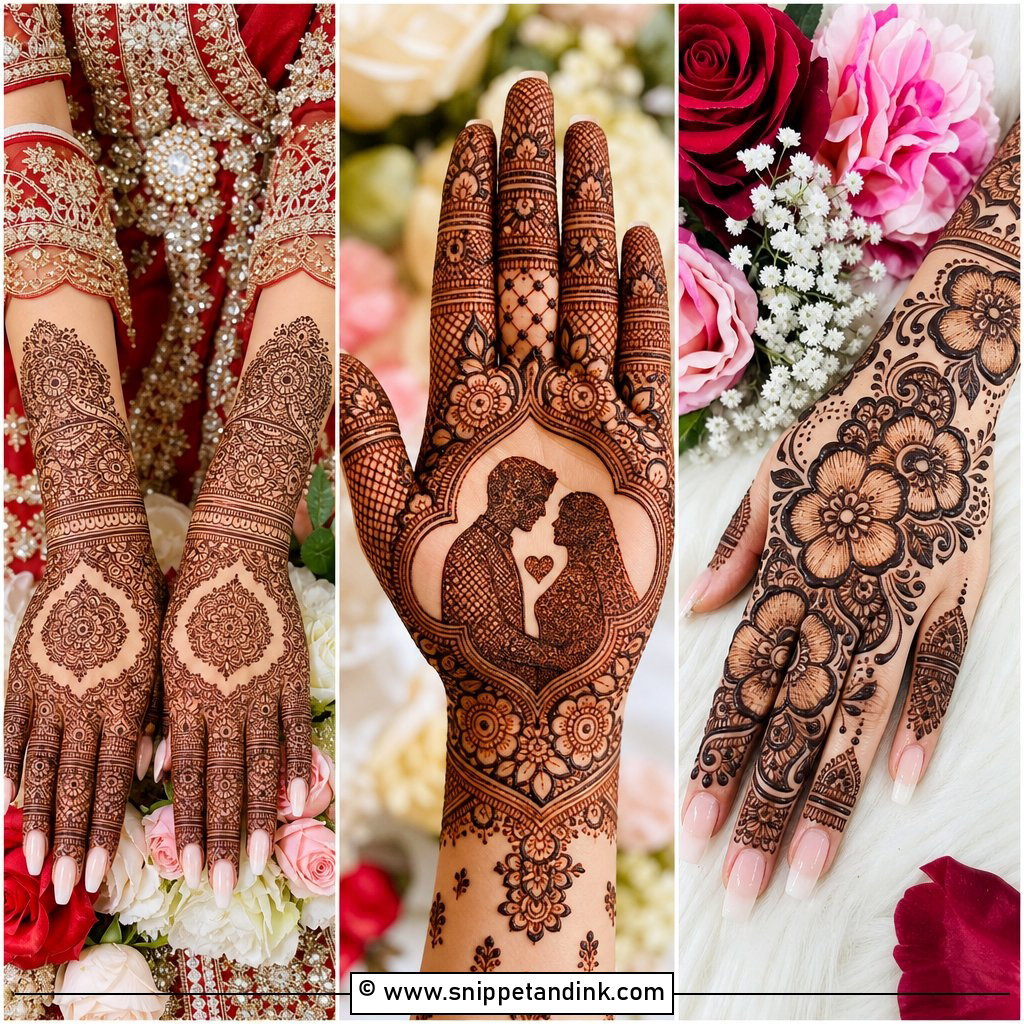
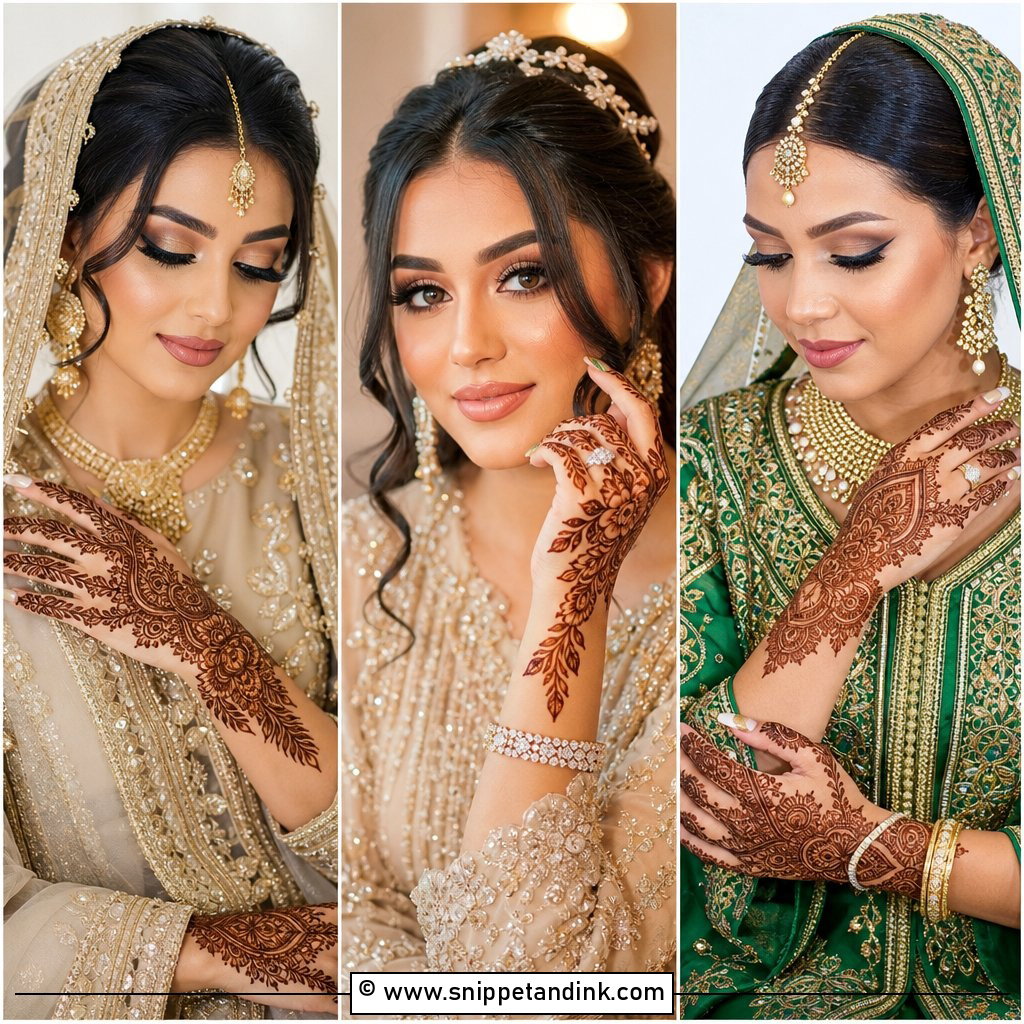

20. Personalized Bridal Mehndi Design
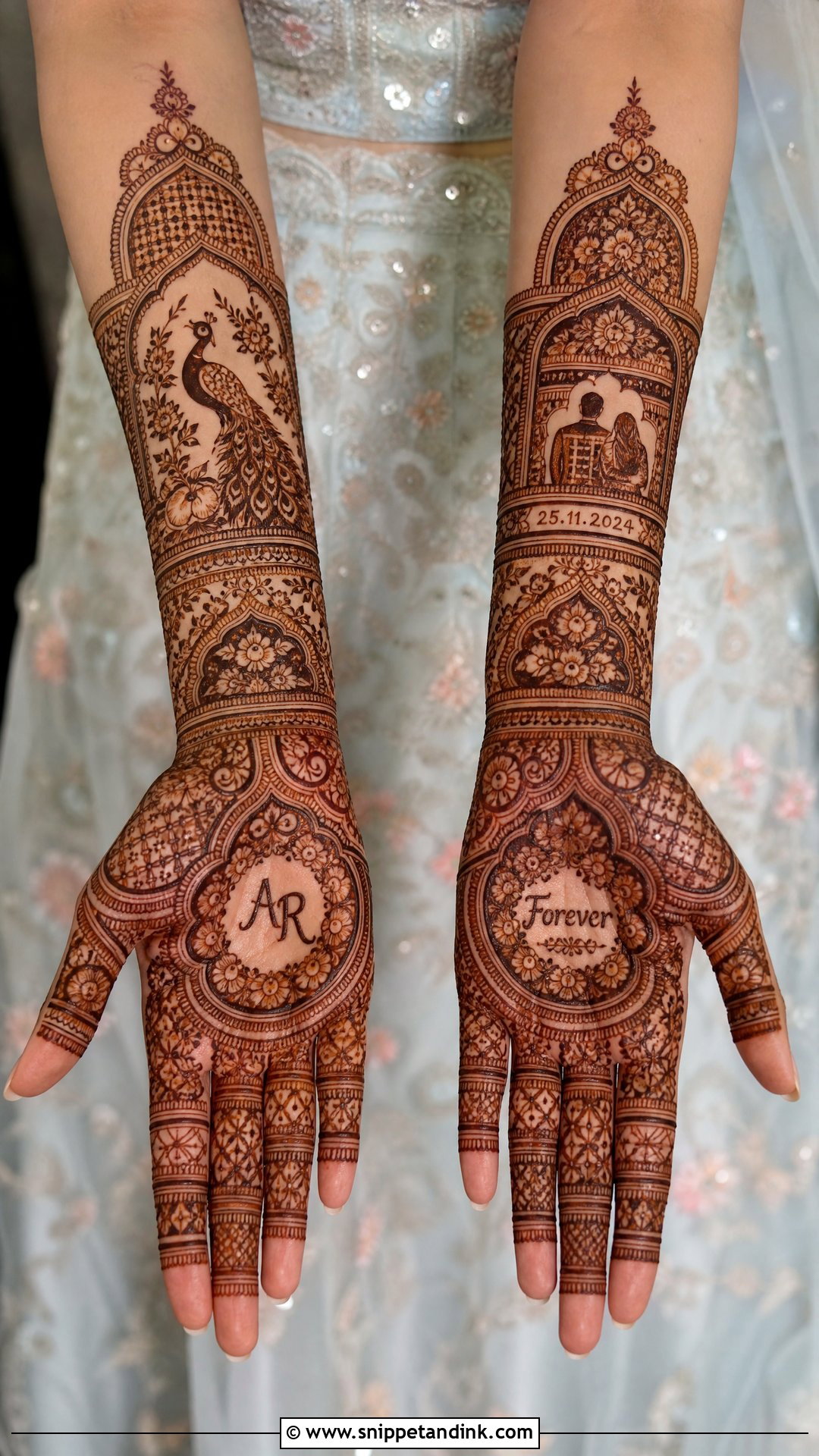
Personal details turn a bridal design into your design. Initials, the wedding date, a symbol from the proposal, a landmark from the city where you met, a pet’s outline or a hobby can all hide inside paisleys, jaali panels, vines or wrist bands. It still has to read as bridal mehndi first, so the details should blend in rather than float. Send me your list before the appointment, not while I’m halfway up your arm, so I can plan where each one goes. Guests love hunting for the hidden pieces during the mehndi night.
21. Rajasthani Bridal Mehndi Design
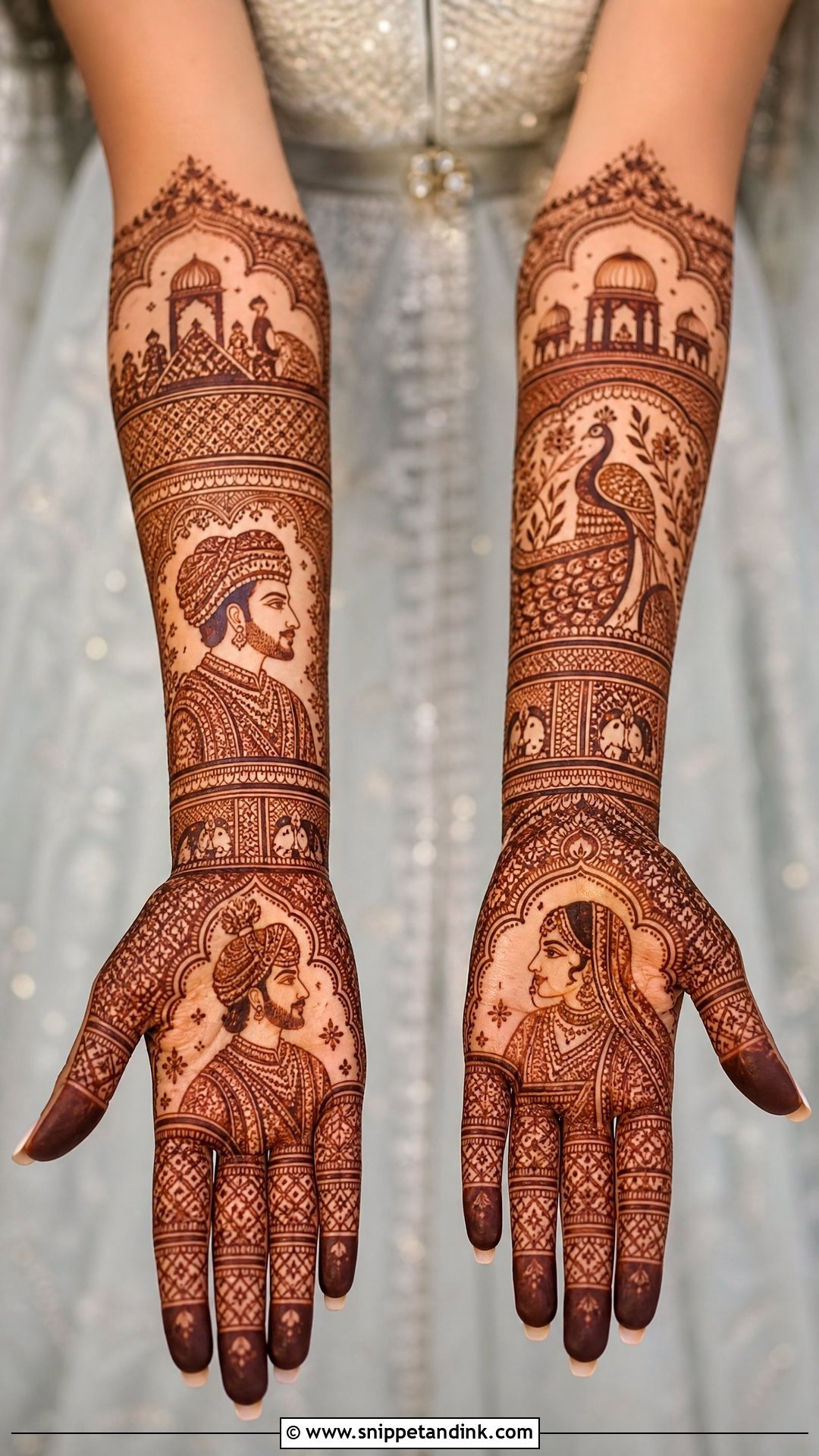
Rajasthani bridal mehndi is dense and full of heritage motifs: bride and groom faces, elephants, palanquins, peacocks, mirror patterns and fine ornamental filling. The two hands often tell one story, with one palm picking up where the other leaves off. The linework is very fine, so it takes a skilled hand and a long sitting. Don’t choose it if you can’t spare most of a day. With a traditional lehenga, a borla maang tikka, heavy bangles and bold colours, it makes perfect sense.
22. Pakistani Bridal Mehndi Design
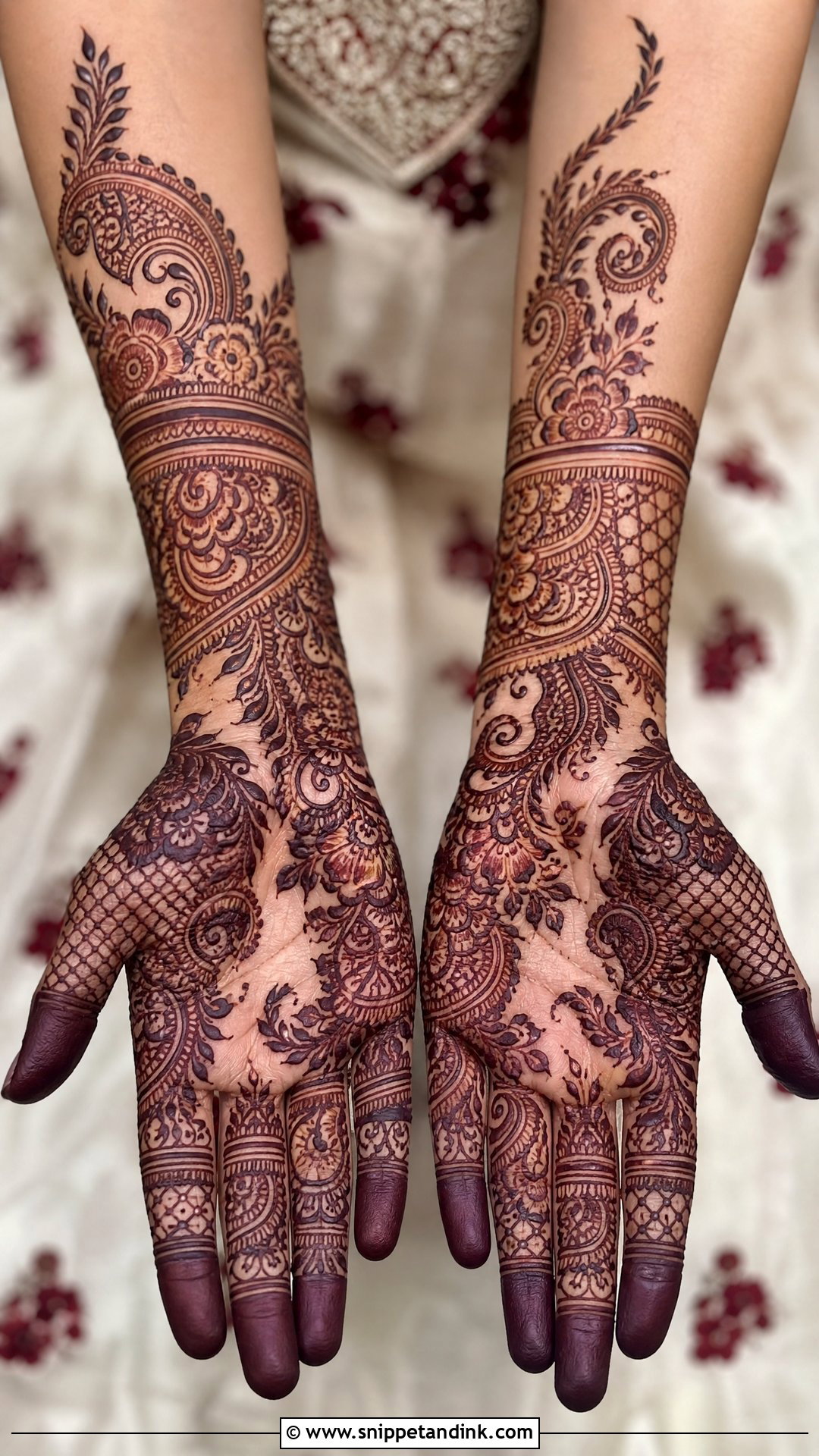
Pakistani bridal mehndi combines Indian intricacy with Arabic flow. A complete Pakistani bridal hand might carry floral vines, paisleys, shaded leaves, jaali sections, filled fingertips and a graceful extension from wrist to forearm. Some brides want it dense, others leave open spaces. It suits nikah, walima, baraat and other South Asian events, and works well for a bride who wants richness without heavy portrait work. Bold wrist bands and detailed fingers keep it bridal.
23. Moroccan Bridal Mehndi Design
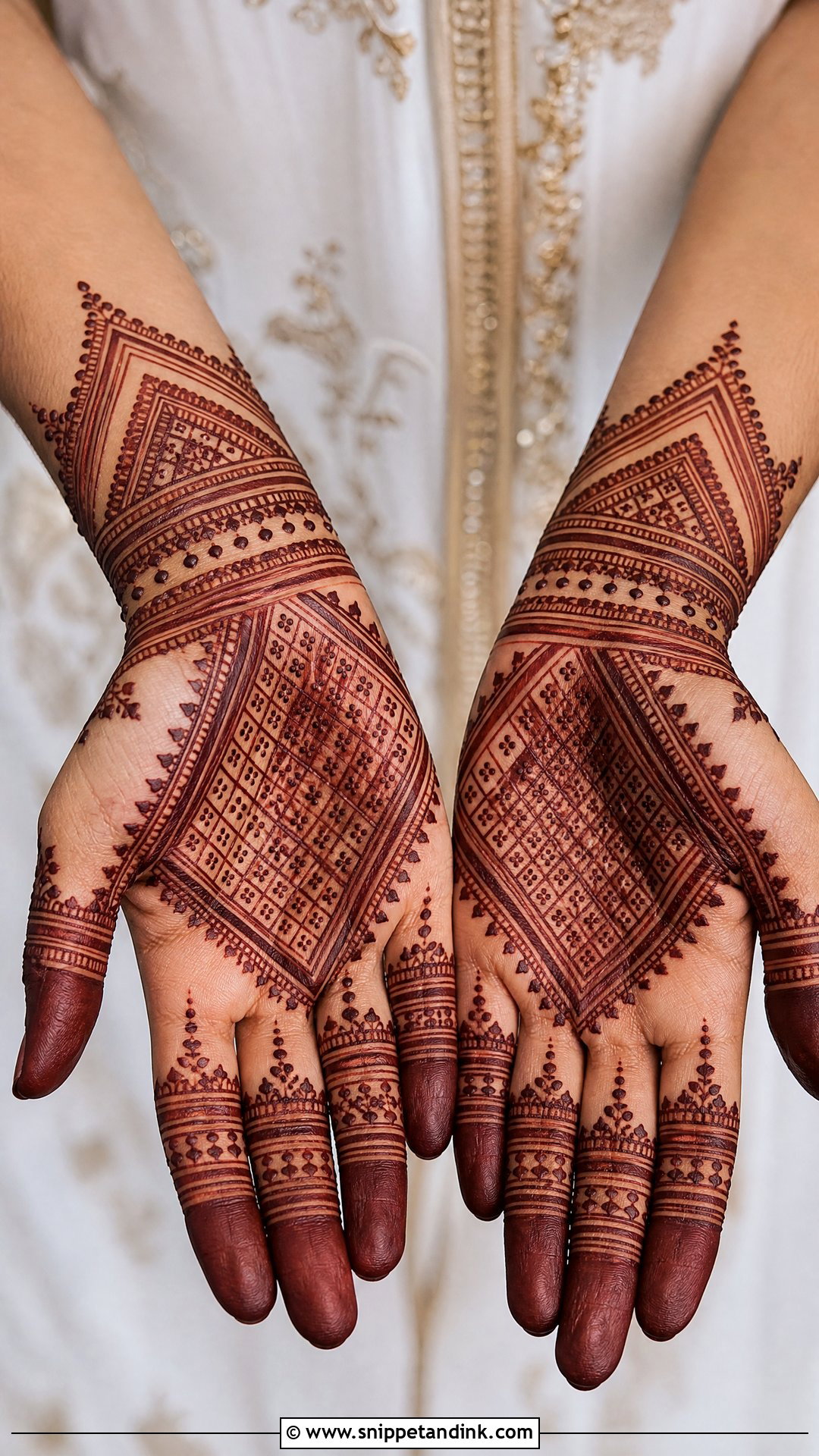
Moroccan mehndi swaps florals for geometry: diamonds, grids, triangles, chevrons, lines and structured bands across the palm, fingers and wrist, softened with a few dots or small flowers. It looks crisp and different from most bridal work. Geometric lines are unforgiving, because a slight wobble on a straight line is obvious in a way it never is in a flower. I use a finer cone tip and keep the hand flat on a cushion for this one. Deep maroon stain makes the sharp edges stand out.
24. Gulf Bridal Mehndi Design
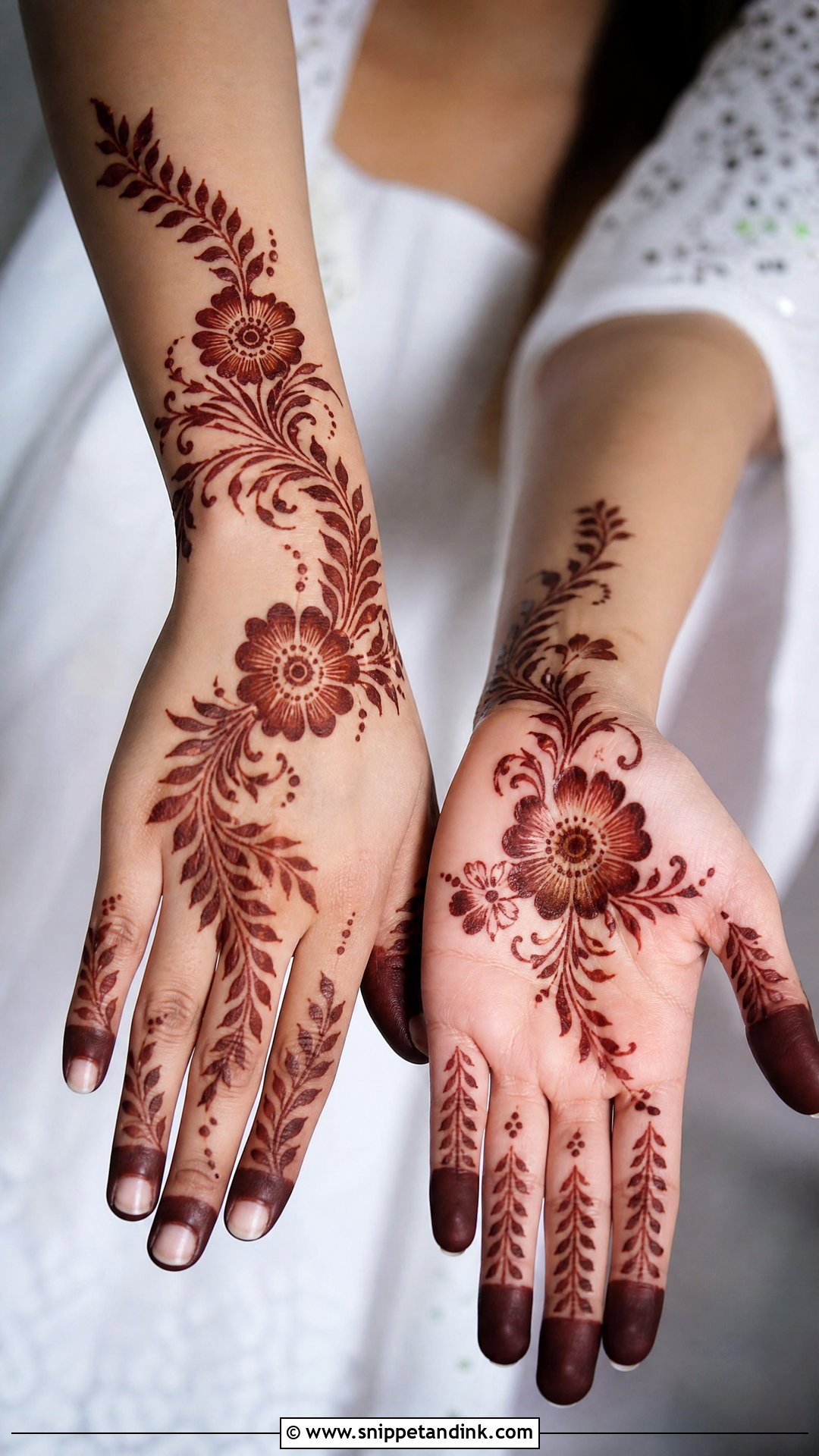
Gulf bridal mehndi, sometimes called Khaleeji style, uses bigger florals, sweeping vines, leafy trails and plenty of open space. The motifs are larger than in Indian work, so the hand looks dramatic but airy. A full Gulf hand might cover the fingers, one side of the palm, the back of the hand and the wrist with sweeping movement. It’s a good pick if you want patterns guests can see clearly without tiny filling. It sits well with gowns, shararas, kaftans and heavily embellished outfits. I finish it with solid fingertips and a long, graceful wrist trail.

25. Half Hand Bridal Mehndi Design
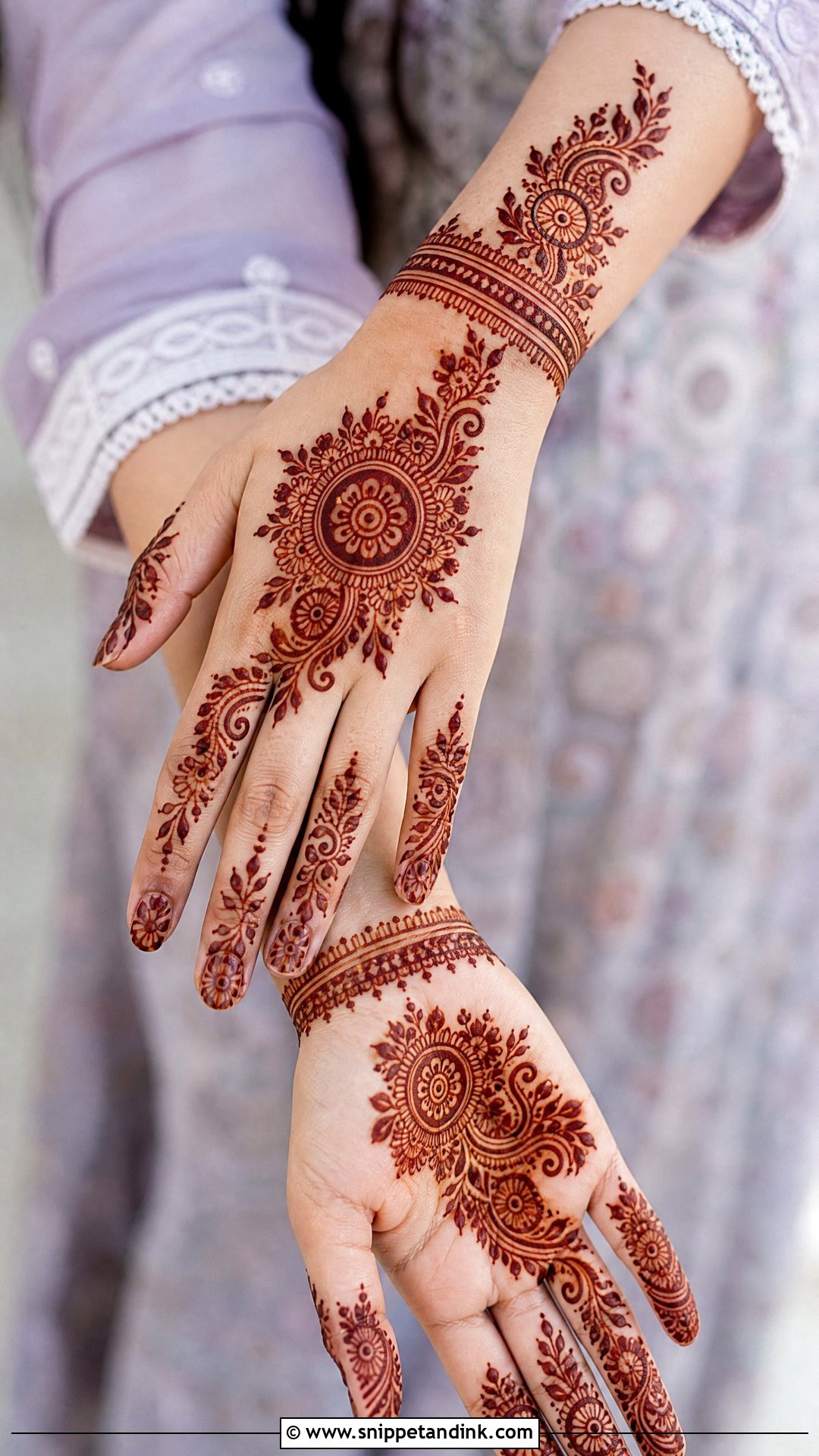
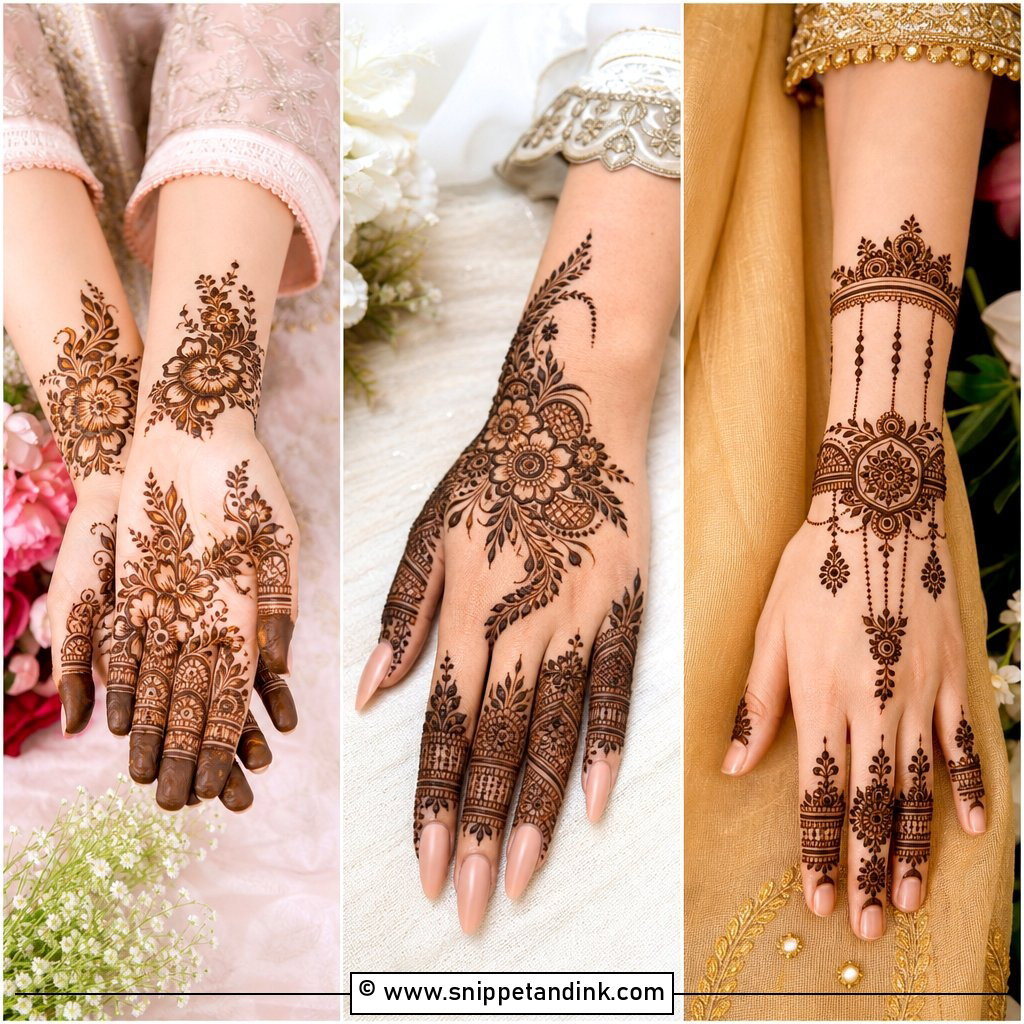
Half hand bridal mehndi design covers the fingers, palm and wrist and stops before the forearm. It can be done in any style: Indian, Arabic, Indo-Arabic, floral, mandala or bracelet. It’s quicker to apply and more comfortable during a packed week of pre-wedding events. A strong focal point on the palm or back of the hand plus detailed finger work keeps it bridal. If you plan to wear a lot of bangles, this is a practical choice, since the wrist area stays clean and nothing gets buried.
The First 48 Hours After the Paste Comes Off
Fresh natural henna comes off a bright orange, and that surprises a lot of brides. It darkens over the next one to two days as the dye oxidises, which is why I schedule bridal mehndi one or two days before the wedding, never on the morning itself.
- Keep the paste on as long as you can, ideally six hours or overnight. A dab of lemon and sugar mix keeps it stuck to the skin.
- Scrape the dried paste off with a blunt edge or your fingernail. Don’t wash it off.
- Avoid water on your hands for the first twelve hours or so. Before a shower, rub a little balm or coconut oil over the design to protect it.
- Keep your hands warm. Stain develops better on warm skin, so a cold, air-conditioned room slows it down.
- Skip scrubs, hand sanitiser and harsh soap until after the wedding; they fade the stain faster.
Black Henna and Other Things I Won’t Put on a Bride
Real henna never stains black. Pastes sold as black henna or instant dark henna usually contain a chemical dye that can cause blistering, burns and lasting allergic reactions. If a paste gives a black result within an hour, don’t let it near your skin.
Fresh natural cones are made with henna powder, lemon or water, sugar and an essential oil to help the dye release. Some skin reacts to particular oils, so if you’re sensitive ask your artist which oil she uses and do a small patch test a week or two before the wedding.
Which Hands Do You Want in the Ring Photos?
Start with the outfit and the jewellery, then decide how much coverage you want, how long you can sit and how traditional or modern your hands should look. Full hand, Indian, Rajasthani and dulha dulhan designs feel ceremonial. Arabic, Gulf, bracelet and minimal designs are lighter. Mandala, floral, paisley, jaali and personalised layouts sit in between. Bring your saved references to the consultation, agree on coverage early, and leave enough time for the paste to stay on overnight. A design is only as good as its stain, and that part depends on what you do in the hours after I leave.
You'll Like These Ideas:



Leave a Reply