
Ask any wedding photographer which mehndi they shoot most and it’s the back of the hand: resting on the lehenga, holding the ring box, stacked under the kaleere. A design that looks rich at arm’s length can still turn muddy in a close-up, so when I plan a bride’s back hand I’m thinking about both distances at once. The ideas below range from full hand jaali work to a single clean mandala, with Indian, Arabic, Indo-Arabic, Moroccan and Gulf styles in between, and I’ve noted what each one needs from you and from your artist.
Short Fingers, Wide Hands and Other Shapes I Design Around
The same design can look completely different on two brides because hands aren’t the same shape. Before I pick motifs, I look at your fingers, the width of the back of your hand and how far your wrist bone sticks out. Then I adjust the layout to suit what’s there.
- Short or wide fingers: vertical patterns, slim bands and a diagonal trail across the hand make them look longer. Thick horizontal rings on every finger do the opposite.
- Long, slim fingers: these can take bold horizontal bands and heavy fingertip fills without looking stubby.
- Small hands: fewer, larger motifs. Ten tiny motifs on a small hand look crowded at arm’s length.
- Prominent veins or knuckles: I avoid placing fine jaali directly over them, because raised skin distorts a grid.
Skin tone affects the result too, though not in the way most people fear. Henna stains every skin tone. On deeper skin the contrast is lower, so I favour bolder outlines and more open space between motifs so the pattern still reads. On fair skin, very dense designs can look heavy, and open layouts tend to photograph more cleanly.
1. Full Back Hand Bridal Mehndi Design
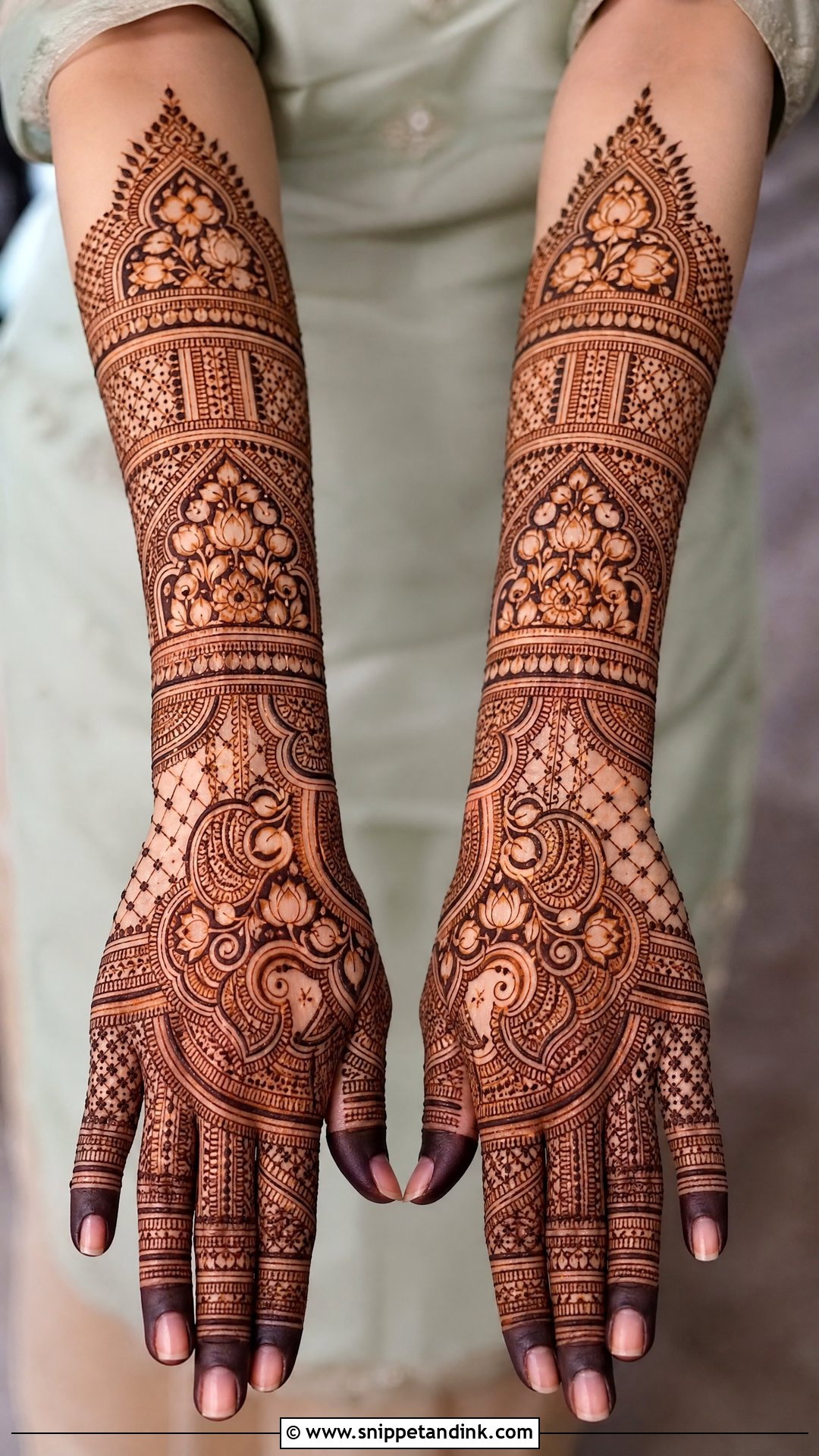
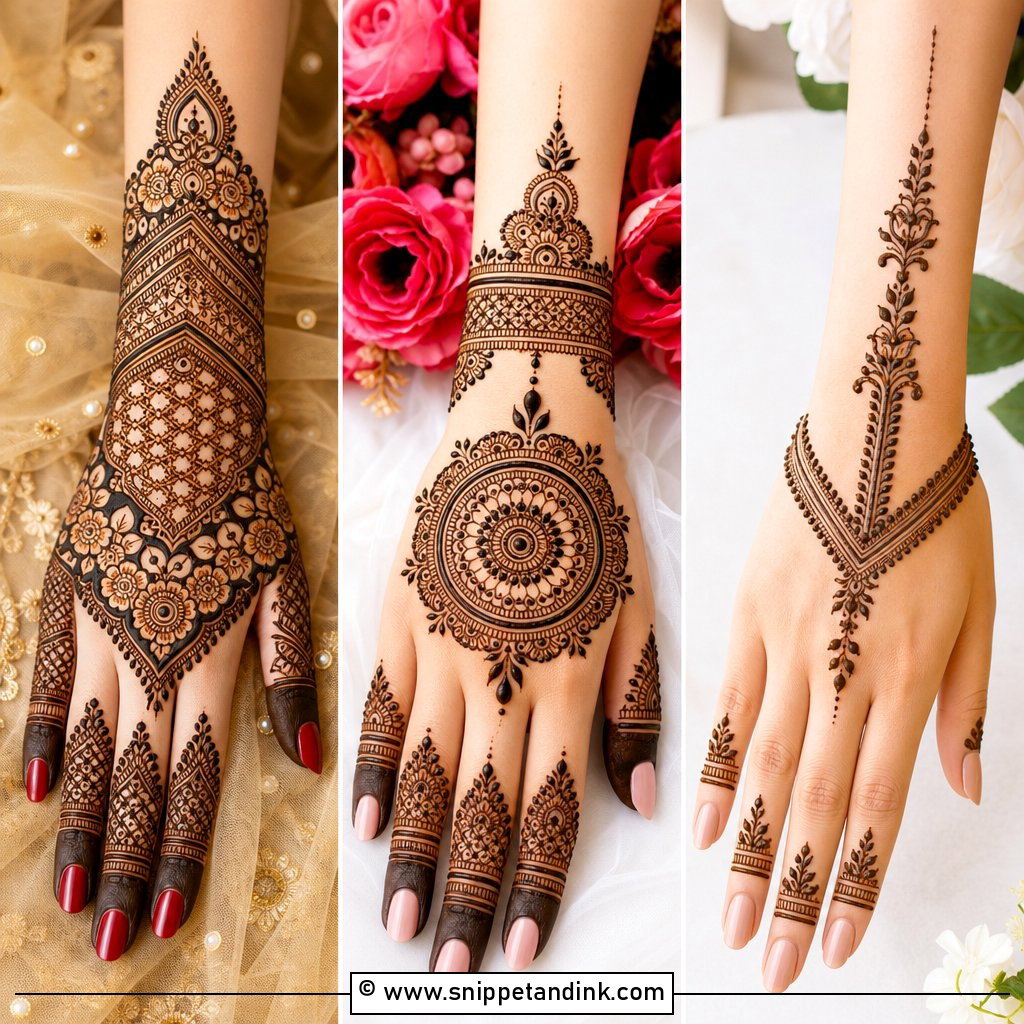
Full coverage runs over the fingers, knuckles, back of the hand and wrist, often edging onto the forearm. I keep the centre a little more open, usually a mandala or paisley cluster, and build the denser borders around it, because a hand that’s busy everywhere has nowhere for the eye to rest. Finger work needs the steadiest lines of all, since it sits right next to your rings in every close-up. Pair it with a heavy lehenga or saree and matching hands.
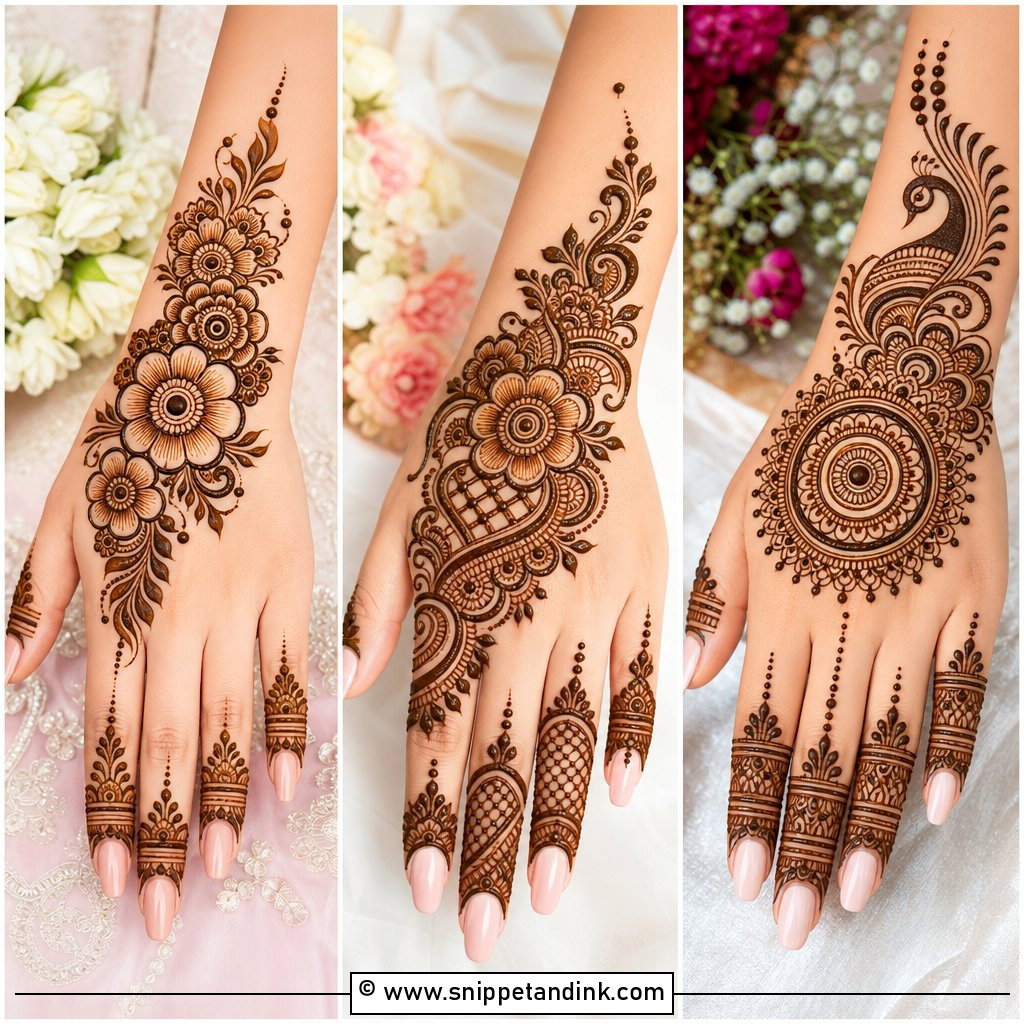
2. Arabic Bridal Back Hand Mehndi Design
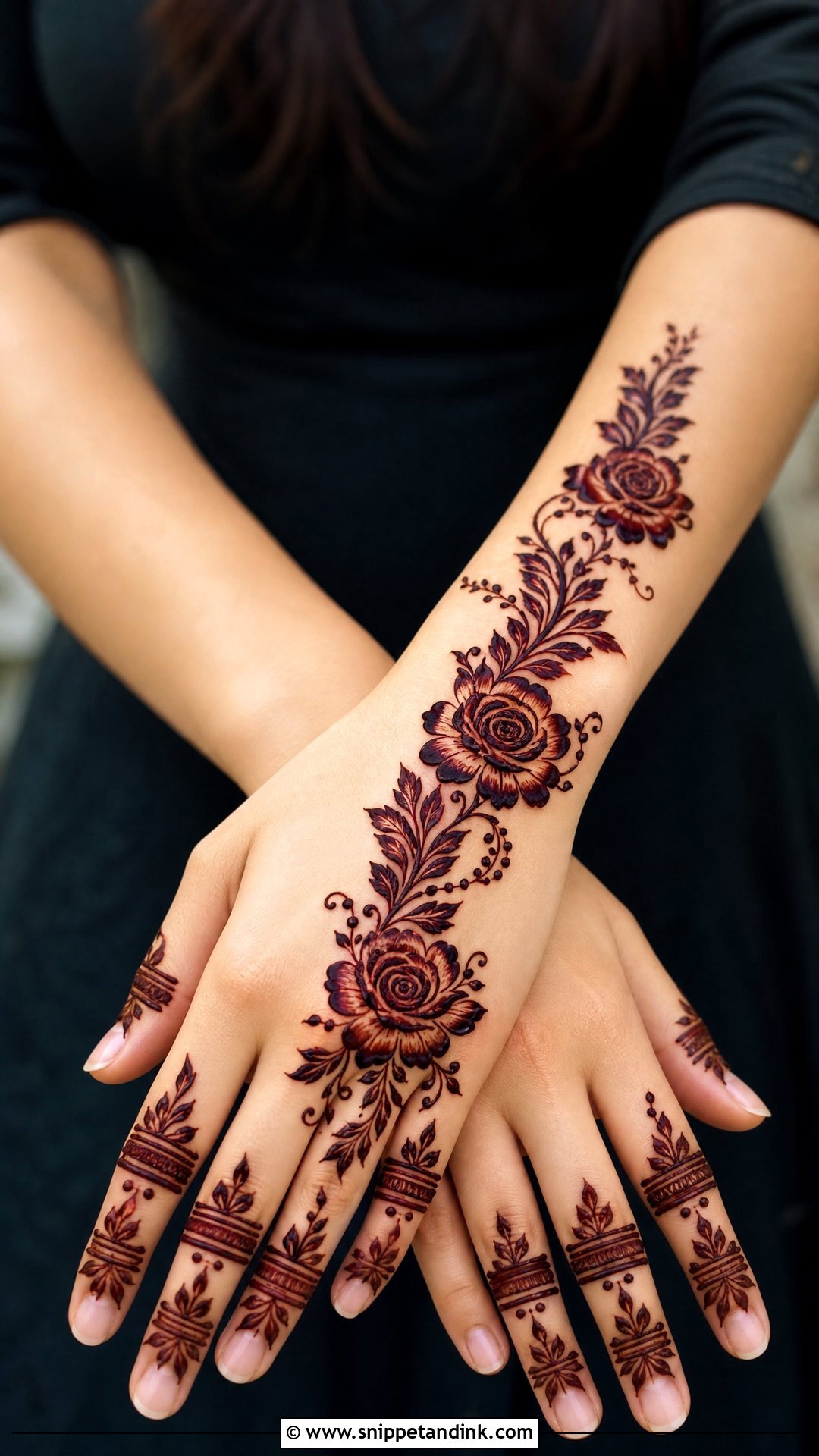
Arabic mehndi moves diagonally from the wrist to the fingers in big flowers, leafy vines and curved strokes, with plenty of skin showing in between. It reads clearly in photos and it’s quicker to apply, so I often suggest it for the engagement, nikah or reception rather than the main ceremony. The fingers take slim bands and small petals to balance the open space. My caution: the diagonal has to start and stop with purpose. A trail that just fades out mid-hand looks unfinished.
3. Indian Bridal Back Hand Mehndi Design
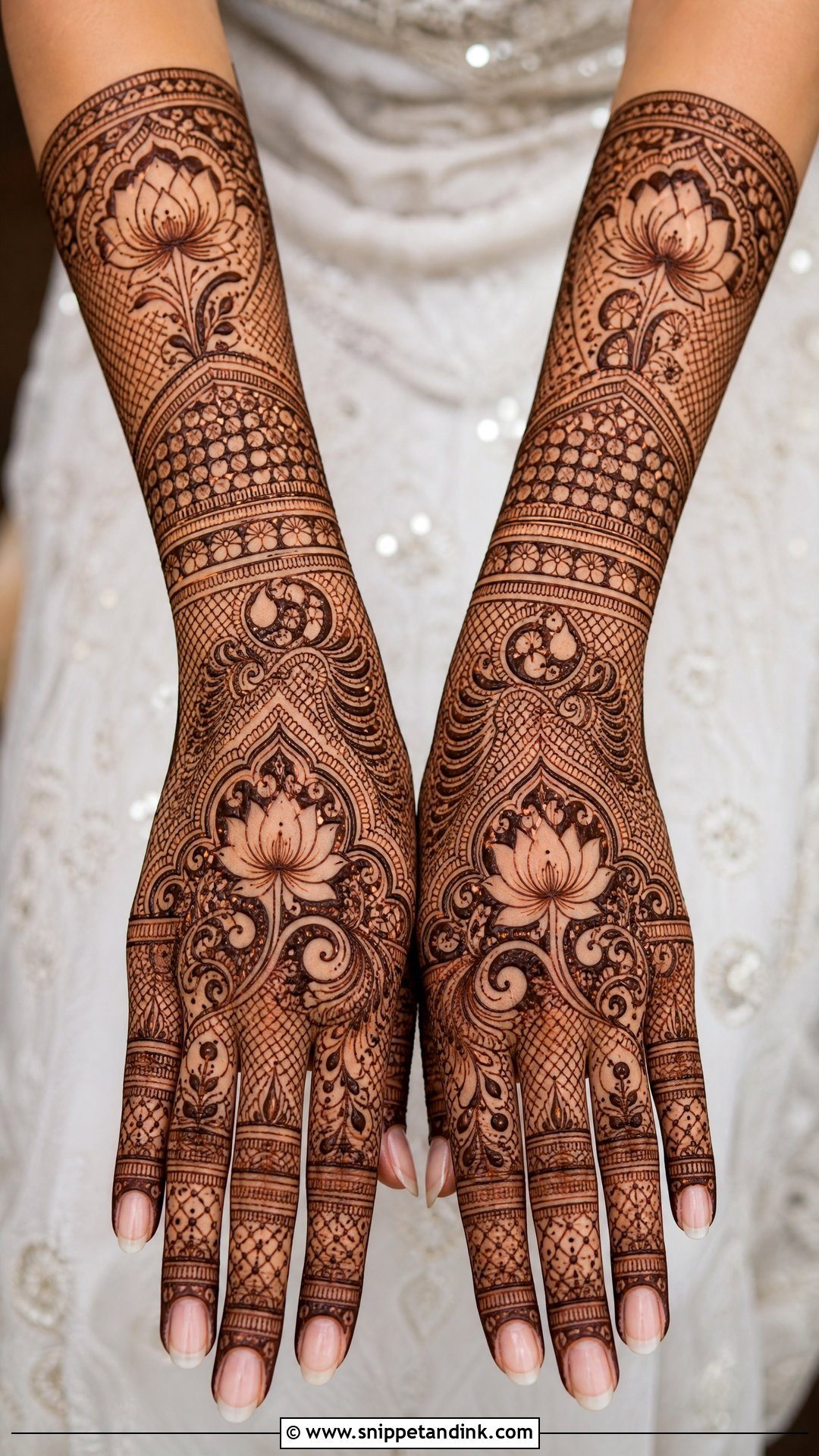
Traditional Indian back hand work is symmetrical and full of story: paisleys, lotus, peacocks, vines, jaali and layered borders. I usually start at the wrist with a detailed cuff and build upward into a central mandala or a bride and groom motif, then fill the fingers with tiny leaves, checks and dots. It sits well with red, maroon, gold or pastel outfits. The thing I watch is spacing between the main motifs; without it, the details melt together once the stain peaks on day two.
4. Indo Arabic Bridal Back Hand Mehndi Design
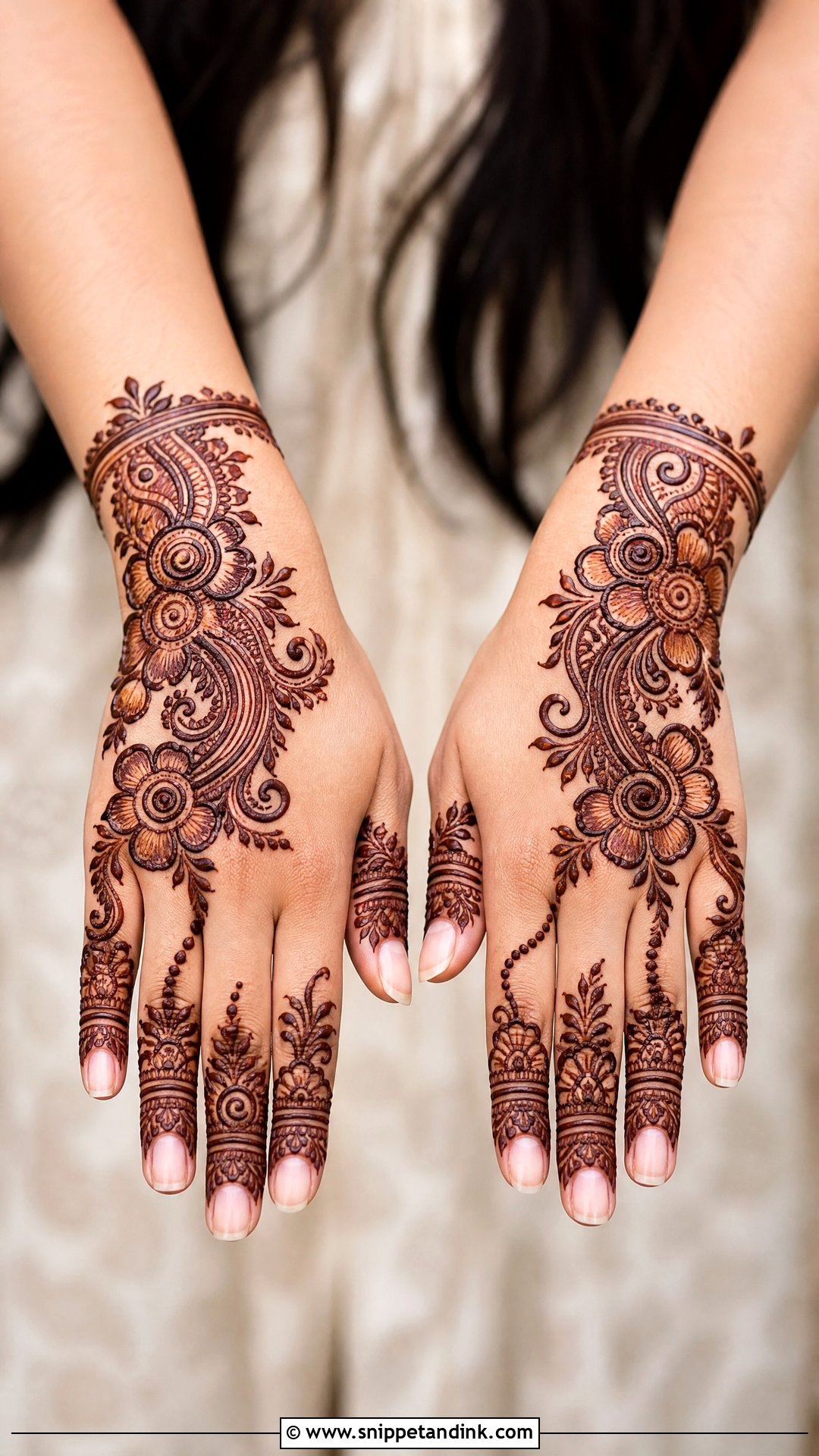
Indo Arabic is my answer when a bride wants richness without a fully packed hand. Big floral trails and paisley curves carry the Arabic flow, while thin jaali sections, shaded petals and full fingers bring in the Indian detail. The open skin makes the hand look longer, and the larger motifs still stand out in group photos taken from a few metres back. It’s a natural match for a fusion lehenga or a contemporary saree.
5. Mandala Bridal Back Hand Mehndi Design
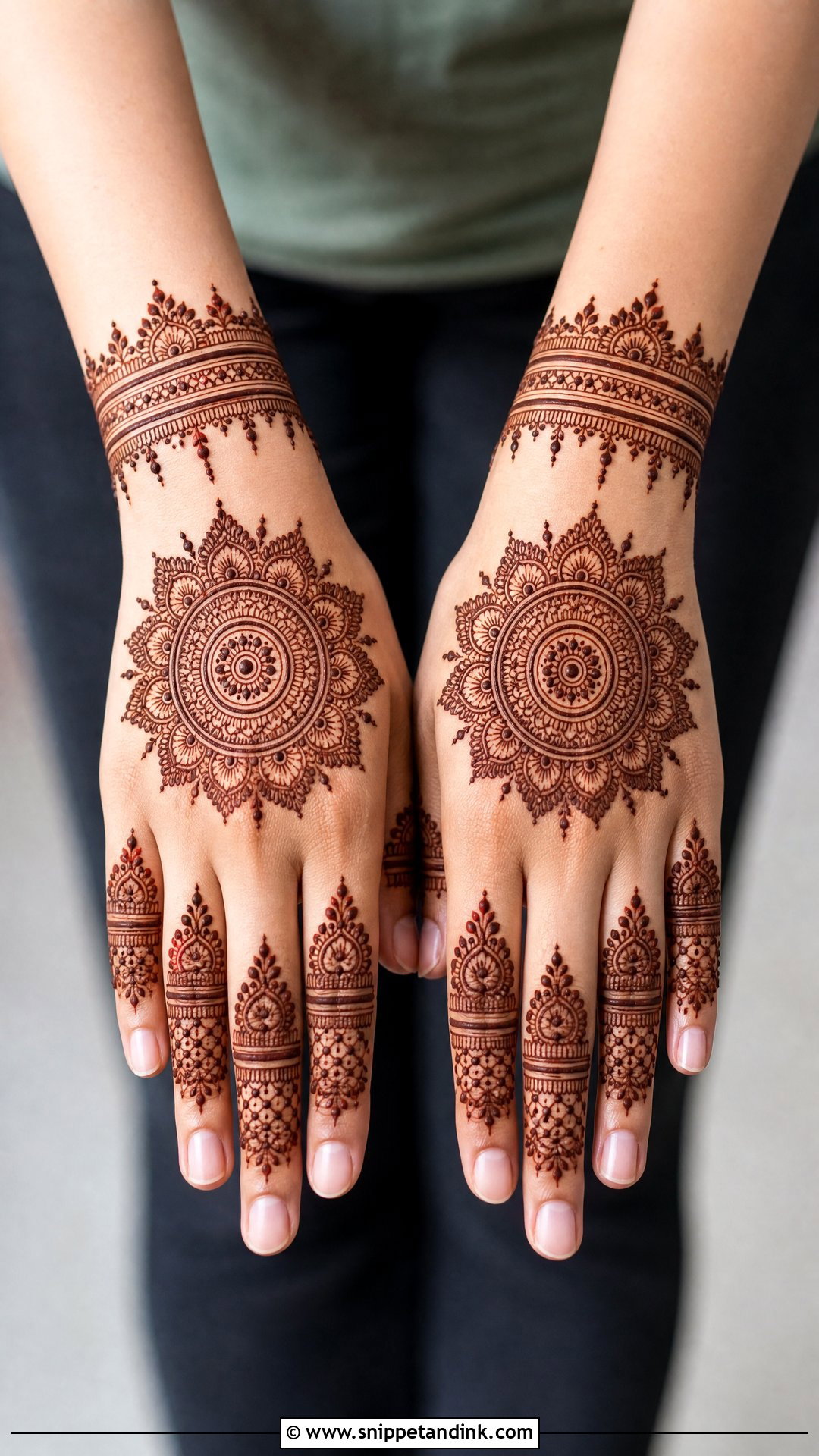
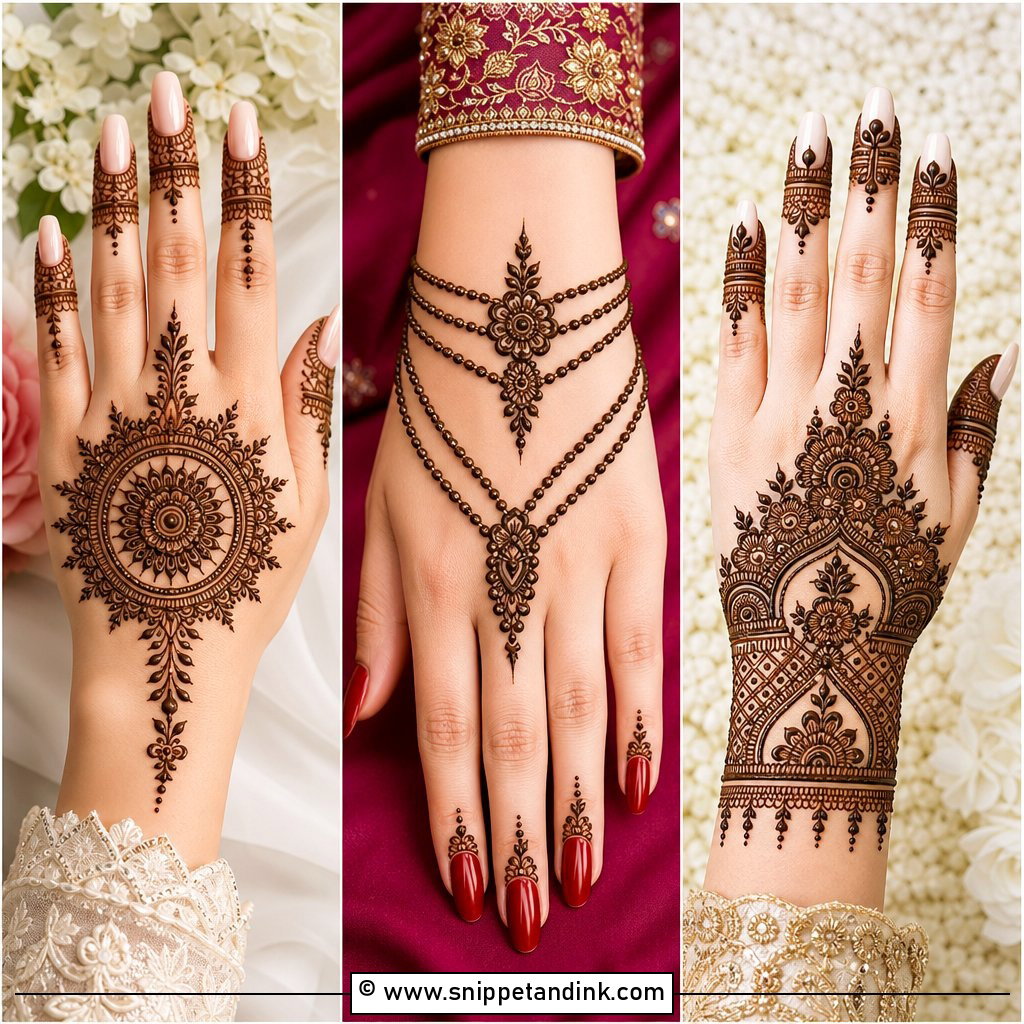
One round motif in the middle, fine petals and leafy arcs around it, and small ring details linking to the fingers. A mandala layout is calm and easy to match on both hands, which is exactly why I like it for brides nervous about one hand looking different from the other. For the wedding itself I extend it to the wrist with a bracelet band and fill the fingertips. Before I place the circle, I check where your knuckles fall when you hold a bouquet or a glass, because that’s the angle most candid photos catch.
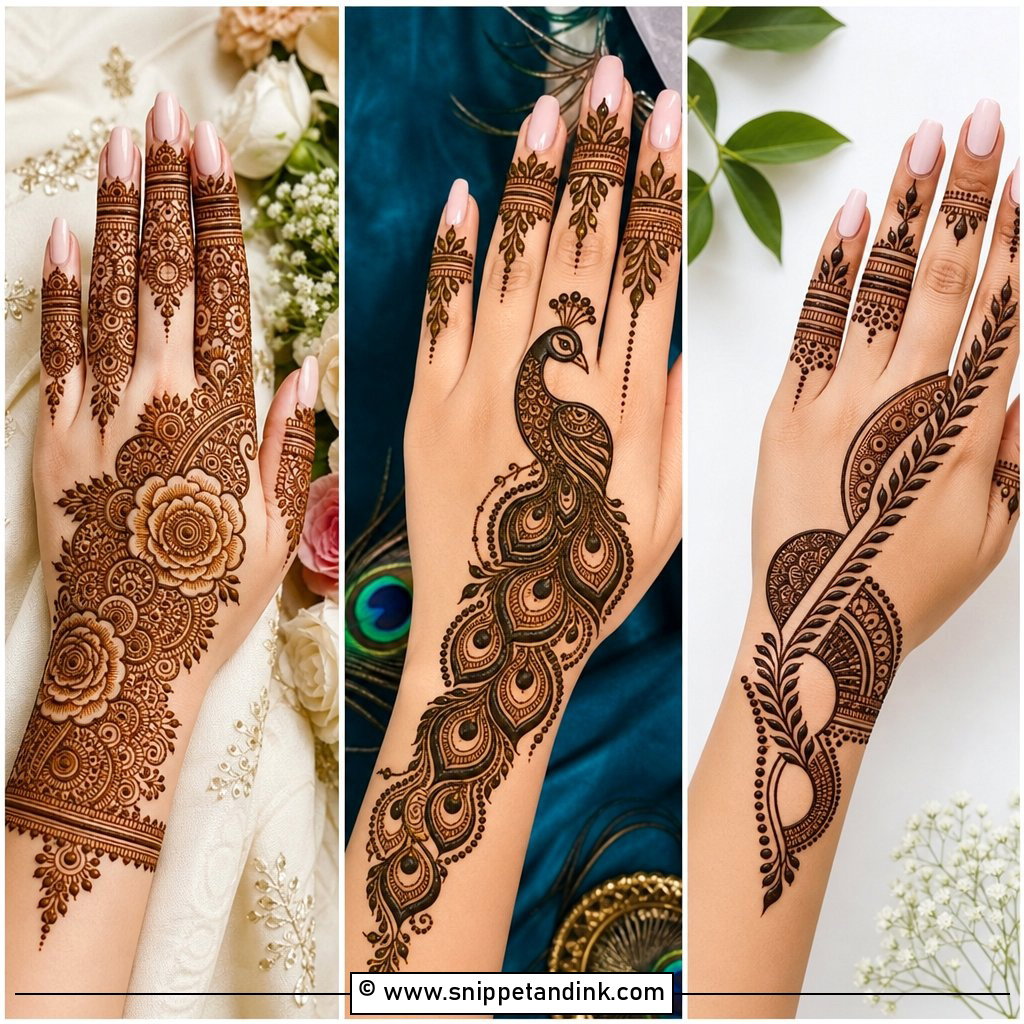
6. Peacock Bridal Back Hand Mehndi Design
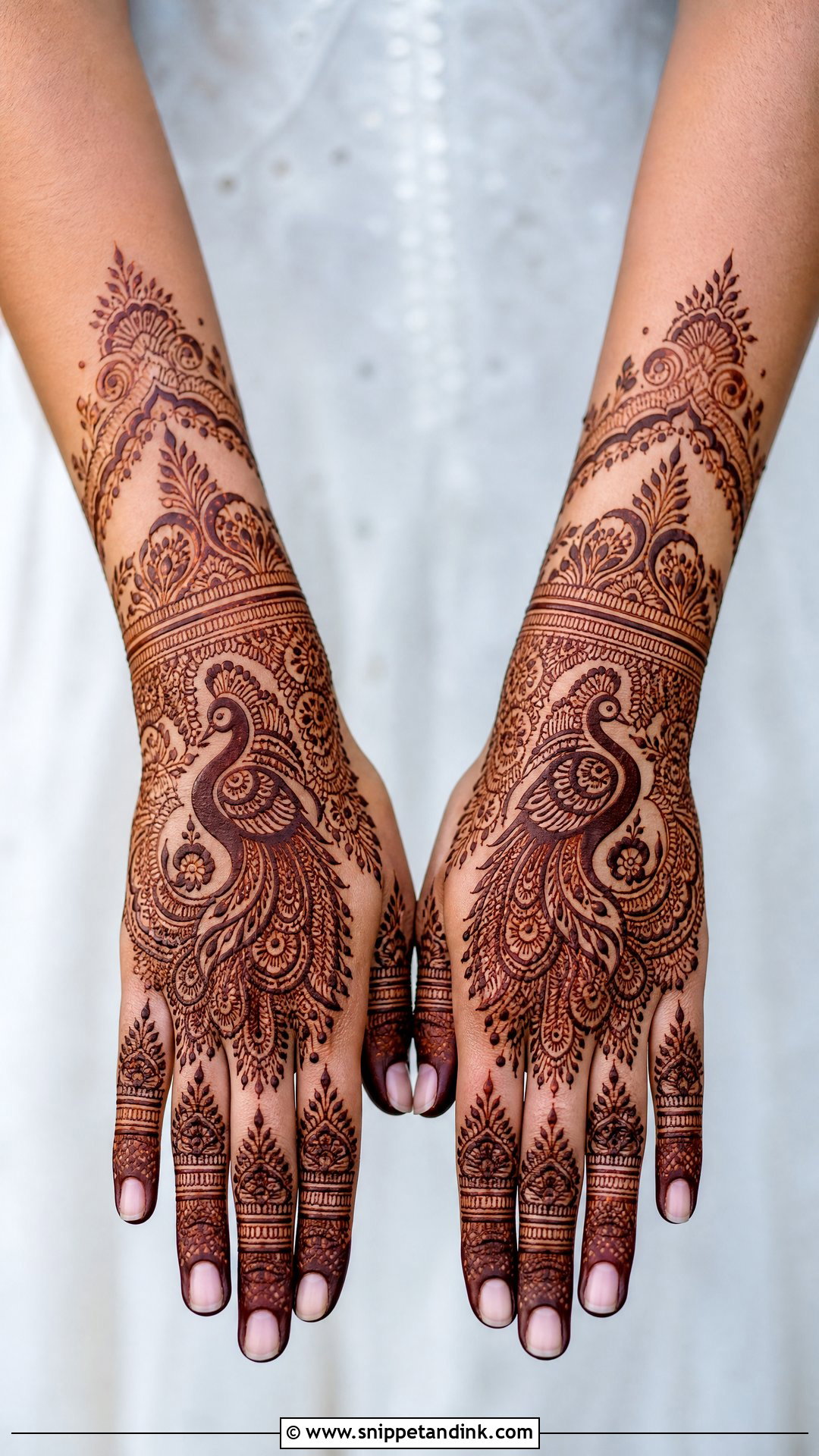
A peacock gives the hand a royal, festive feel, and it can sit at the wrist, in the middle of the hand or as a facing pair across both hands. The body has to be bold enough to read; I fill the feathers with paisleys, petals and fine curved lines but keep the outline strong. I’d skip this one if your hands are small and you want a lot of other detail too, because the bird will end up cramped. With temple jewelry or a heavily embroidered lehenga, it’s right at home.
7. Lotus Bridal Back Hand Mehndi Design
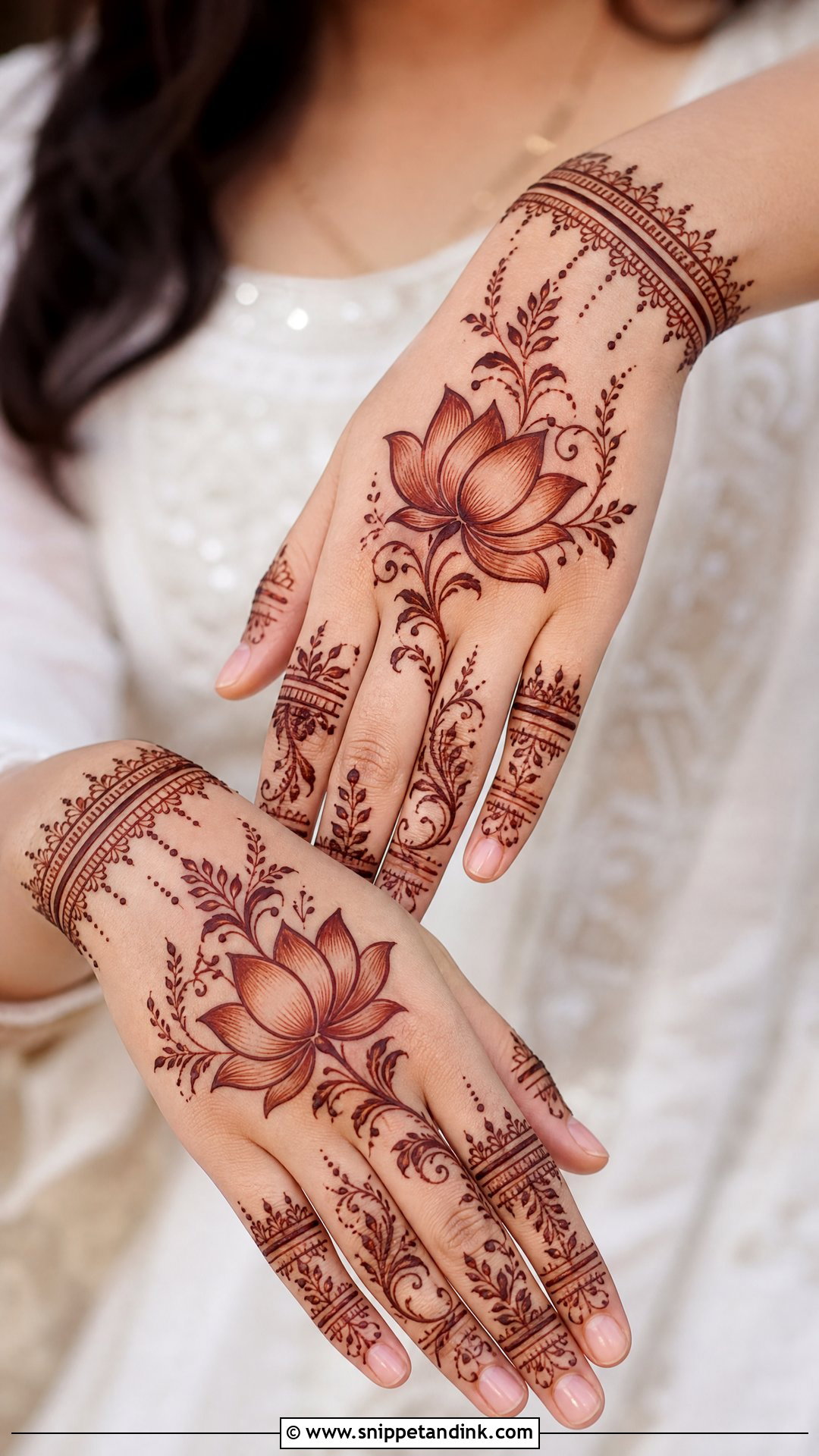
Lotus motifs suit a bride who wants a traditional symbol in a lighter layout. I set one in the centre or near the wrist, or repeat a few along a diagonal trail, and pair them with fine vines and shaded leaves. They look especially good next to ivory or pastel outfits and floral jewelry. Keep the petals noticeably larger than the filler around them. Fillers darken just as much as the motif does, and if they’re the same size, the lotus disappears into the background.
8. Jaali Bridal Back Hand Mehndi Design
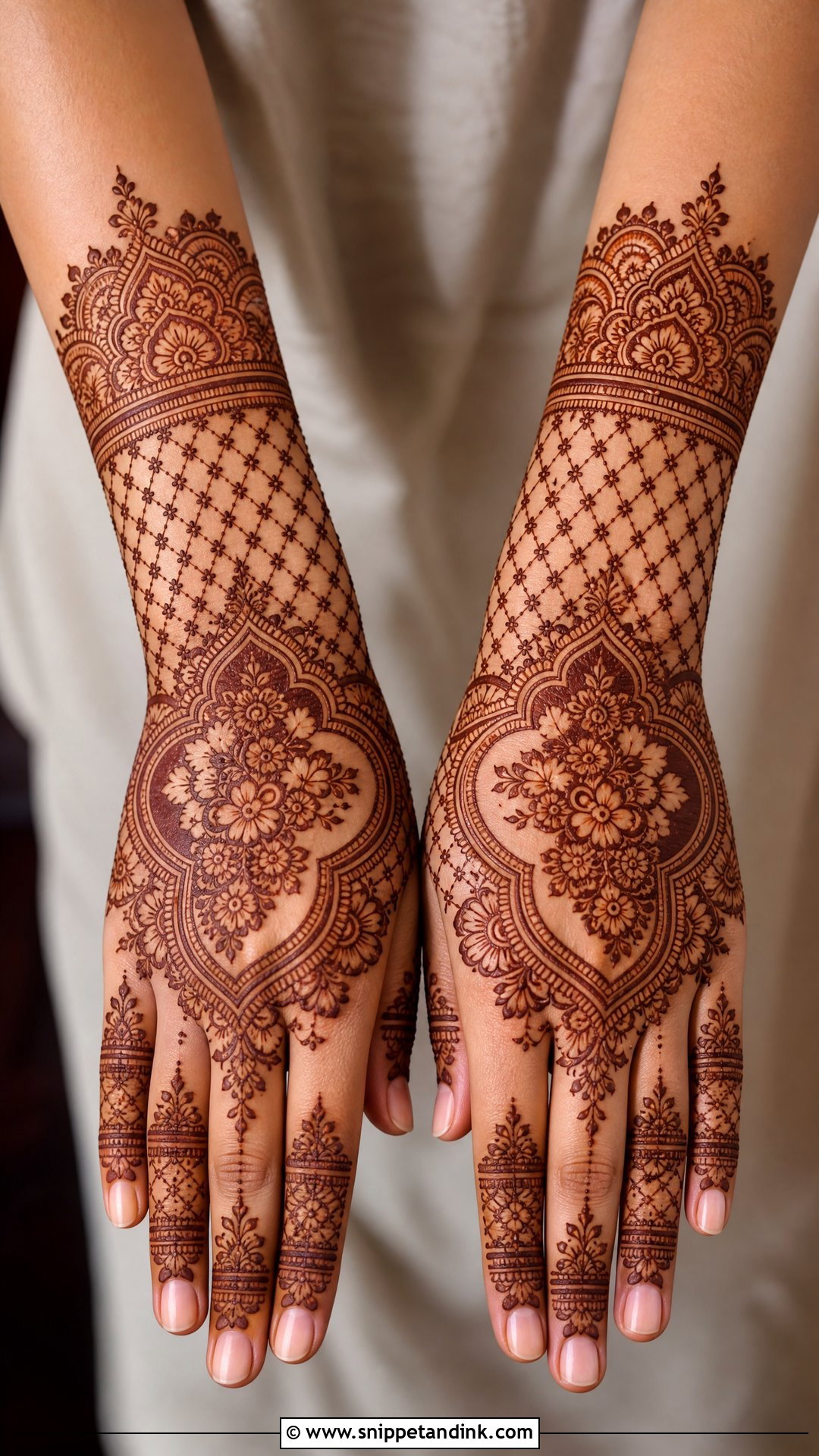
Jaali bridal back hand designs give that fine lace effect, and they look most expensive when the mesh is used in panels rather than across the whole hand. I divide the back of the hand into sections, net some, leave others open, and fill the rest with mandala detail or shaded florals so there’s depth. Matching jaali bands on the fingers tie it together. A good mesh line is thin and even, which takes a fine cone tip and a well-strained paste; lumpy paste is the usual reason jaali looks smudged.
9. Jewelry Bridal Back Hand Mehndi Design
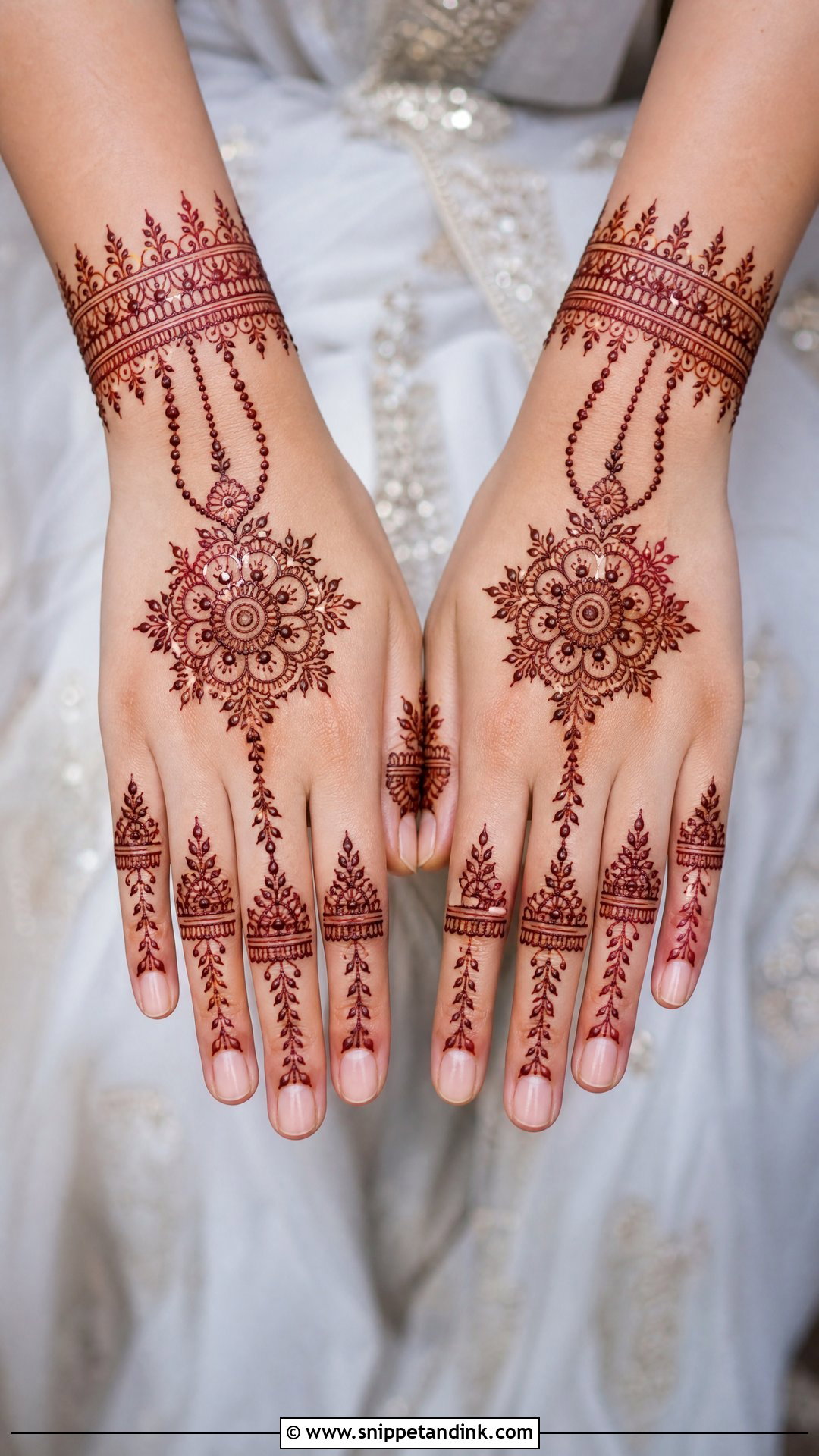
This style draws a haath phool in henna: a central flower or mandala joined to wrist bands and finger rings by dotted chains and leafy strings. I like it because it works with real jewelry instead of competing with it. Tell me what you’ll actually wear on your hands. If you have a real haath phool, I design the henna chain to sit slightly offset so the two don’t stack and blur in photos. For the main day I add filled fingertips and a fuller wrist cuff.
10. Rose Bridal Back Hand Mehndi Design
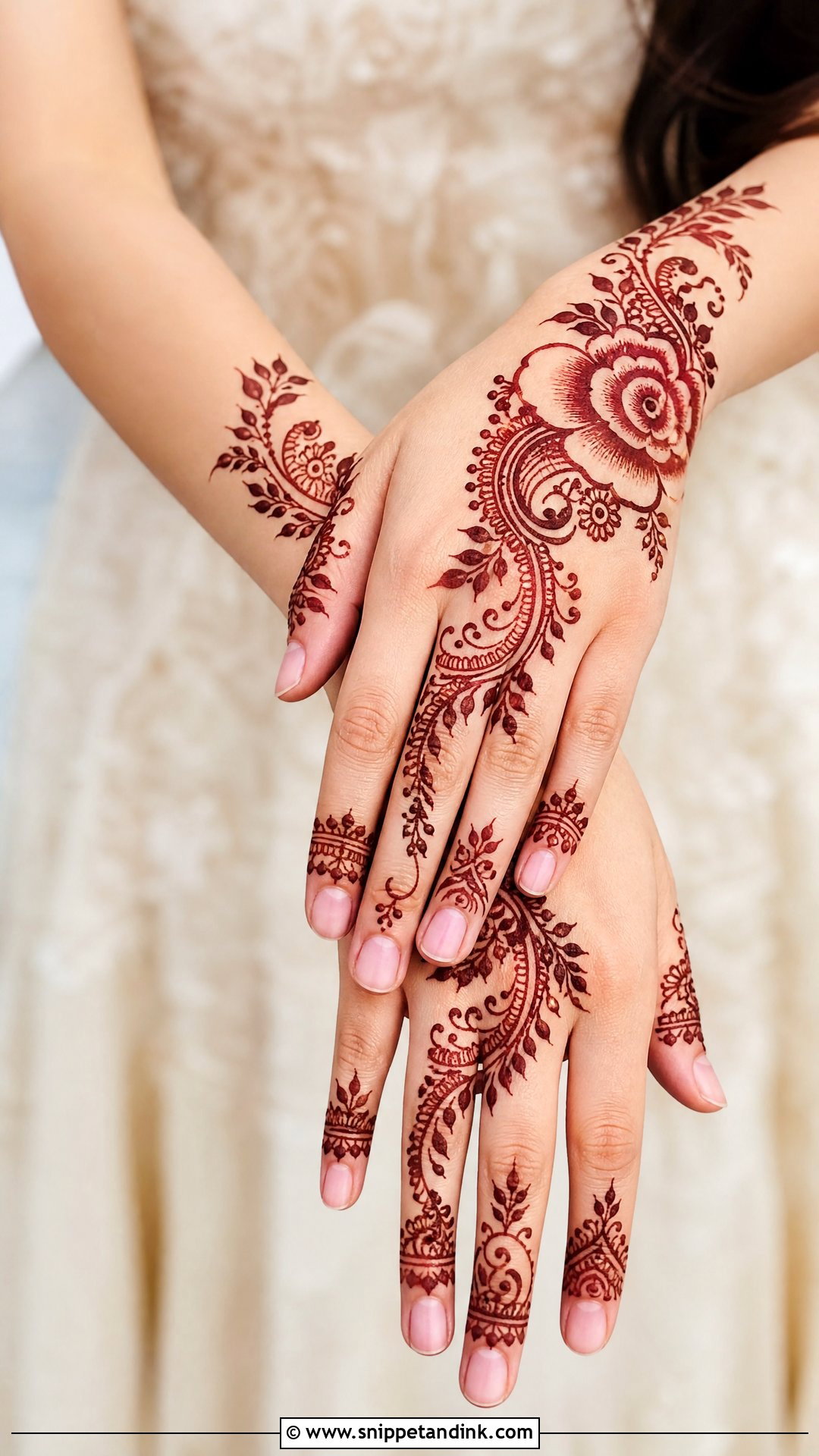
Roses are softer than lotus and more defined than scattered little blossoms. I place a few large ones diagonally across the back of the hand, with vines running toward the fingers and wrist. The petals need careful shading, which is done with lighter strokes inside the outline, so they look layered rather than flat. Keep the background around them clean. Crowd the roses with filler and they lose the shape that made you choose them.
11. Minimal Bridal Back Hand Mehndi Design
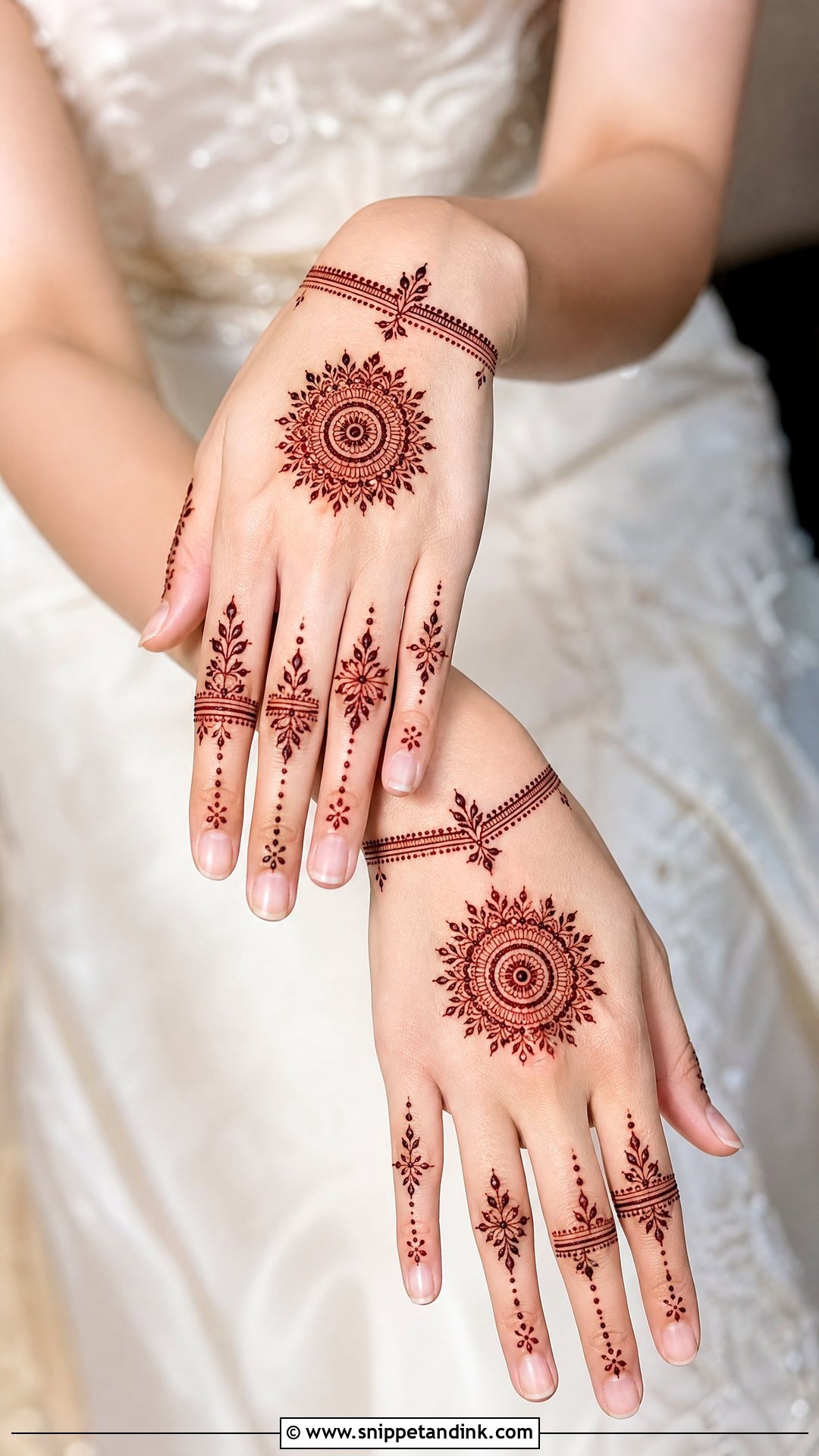
Not every bride wants heavy coverage, and that’s fine. A centred mandala, a thin wrist bracelet, neat finger detail and a few leafy accents can still look bridal when the lines are smooth and the spacing is deliberate. Minimal designs dry faster and you’ll be free to move sooner, which matters if the mehndi is the same day as other events. A tiny hidden initial or ring-style finger bands keep it from looking plain.
12. Heavy Bridal Back Hand Mehndi Design
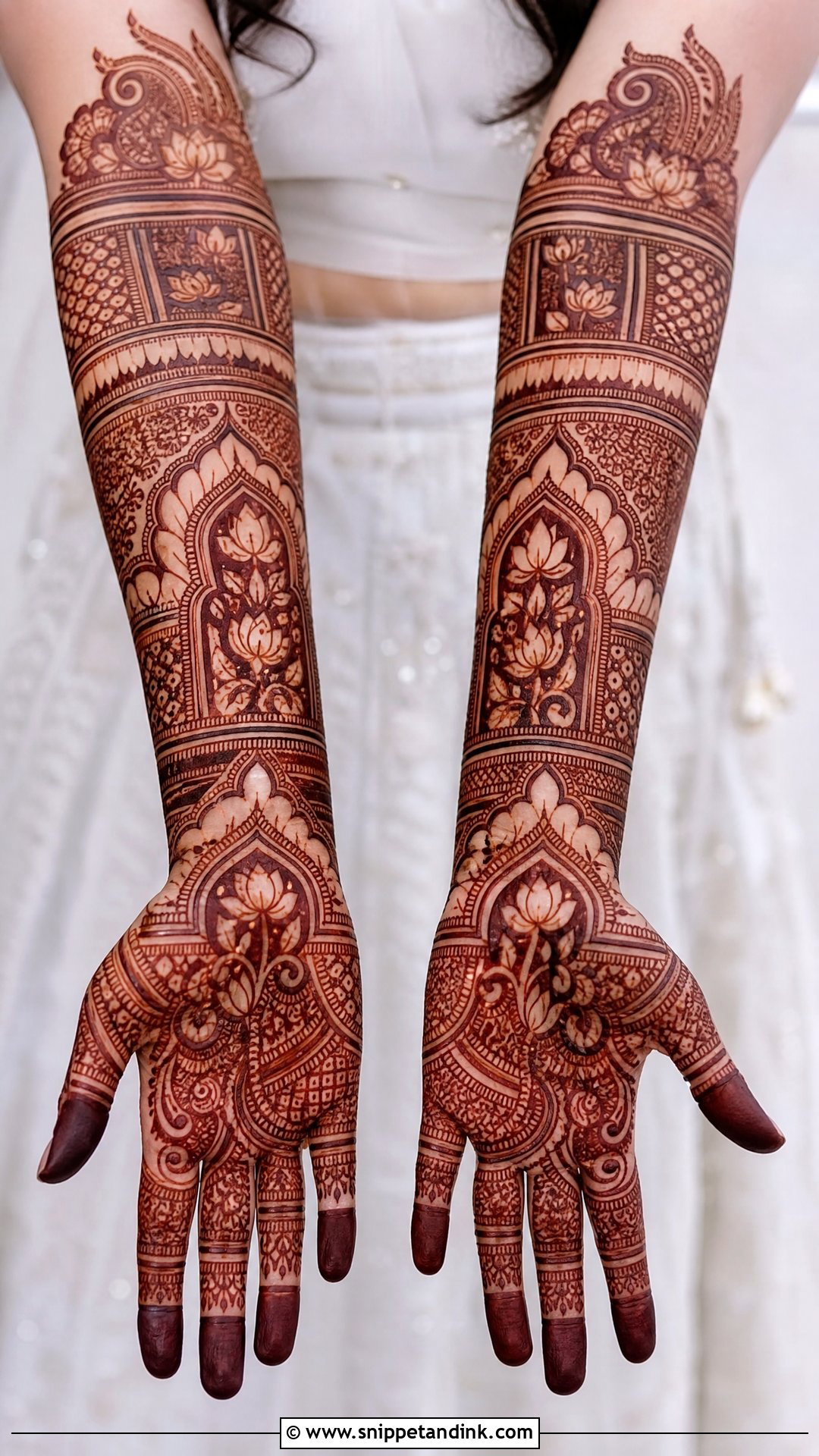
Maximum detail means layered motifs, full fingers, wrist cuffs, paisleys, florals, jaali and fine filler, all on one back hand. The structure is everything. I draw the larger motifs first and only then fill around them, so the hand still has a clear shape after the stain darkens. Heavy work makes most sense when your palms and arms are also being done, so the whole look is consistent for the main ceremony and formal portraits. Set aside a long sitting for it.
13. Simple Bridal Back Hand Mehndi Design
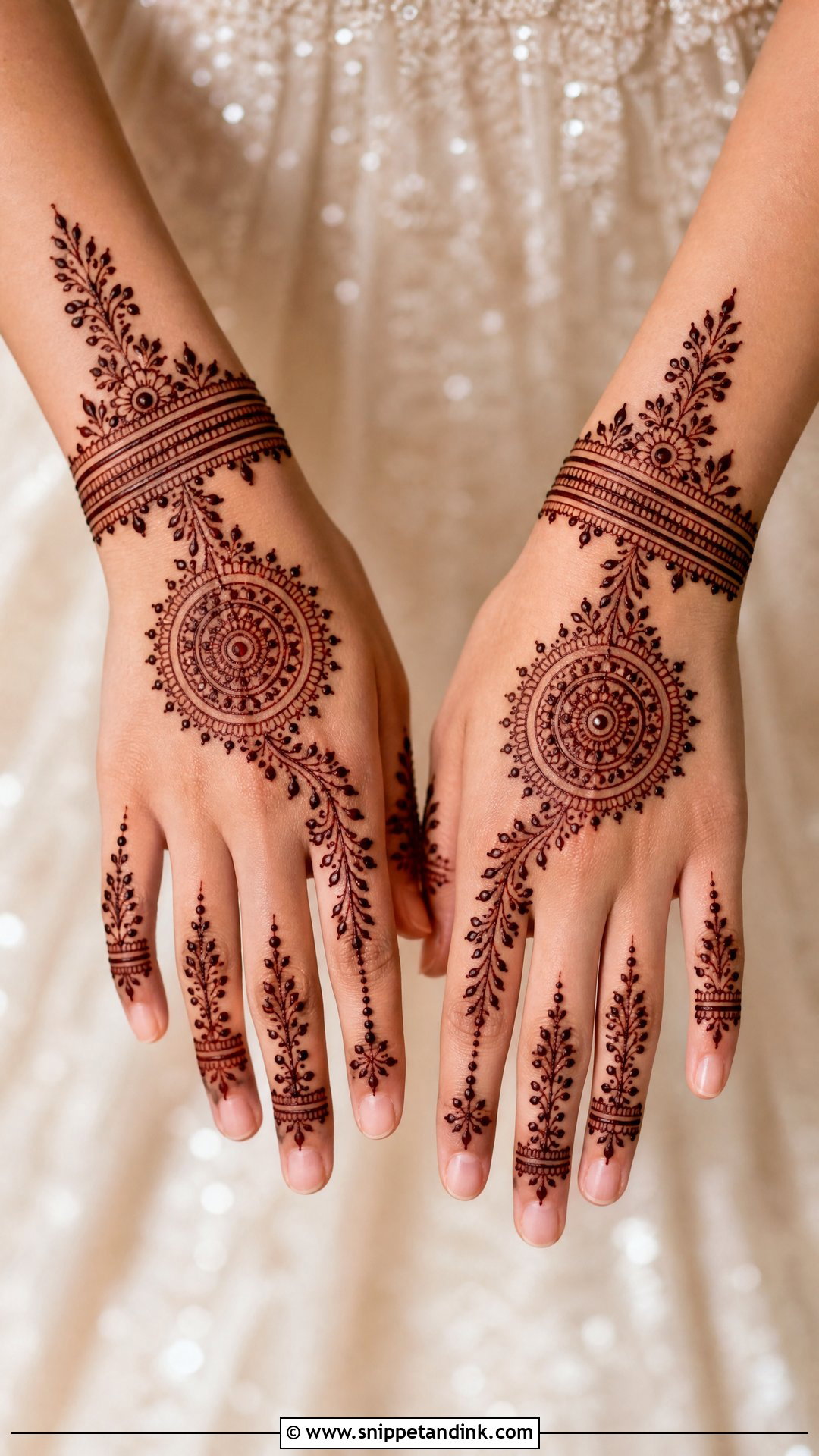
If time is short, a simple design is the honest choice: a floral trail, a small mandala, a bracelet-style wrist band and neat finger patterns. It still has to look bridal, so the lines must be clean and every motif should connect to the next. I wouldn’t leave the fingers bare unless that’s the look you want. Intimate weddings, court weddings and engagements suit this best, and you can add shaded petals or a heavier wrist cuff without turning it into a full hand.
14. Rajasthani Bridal Back Hand Mehndi Design
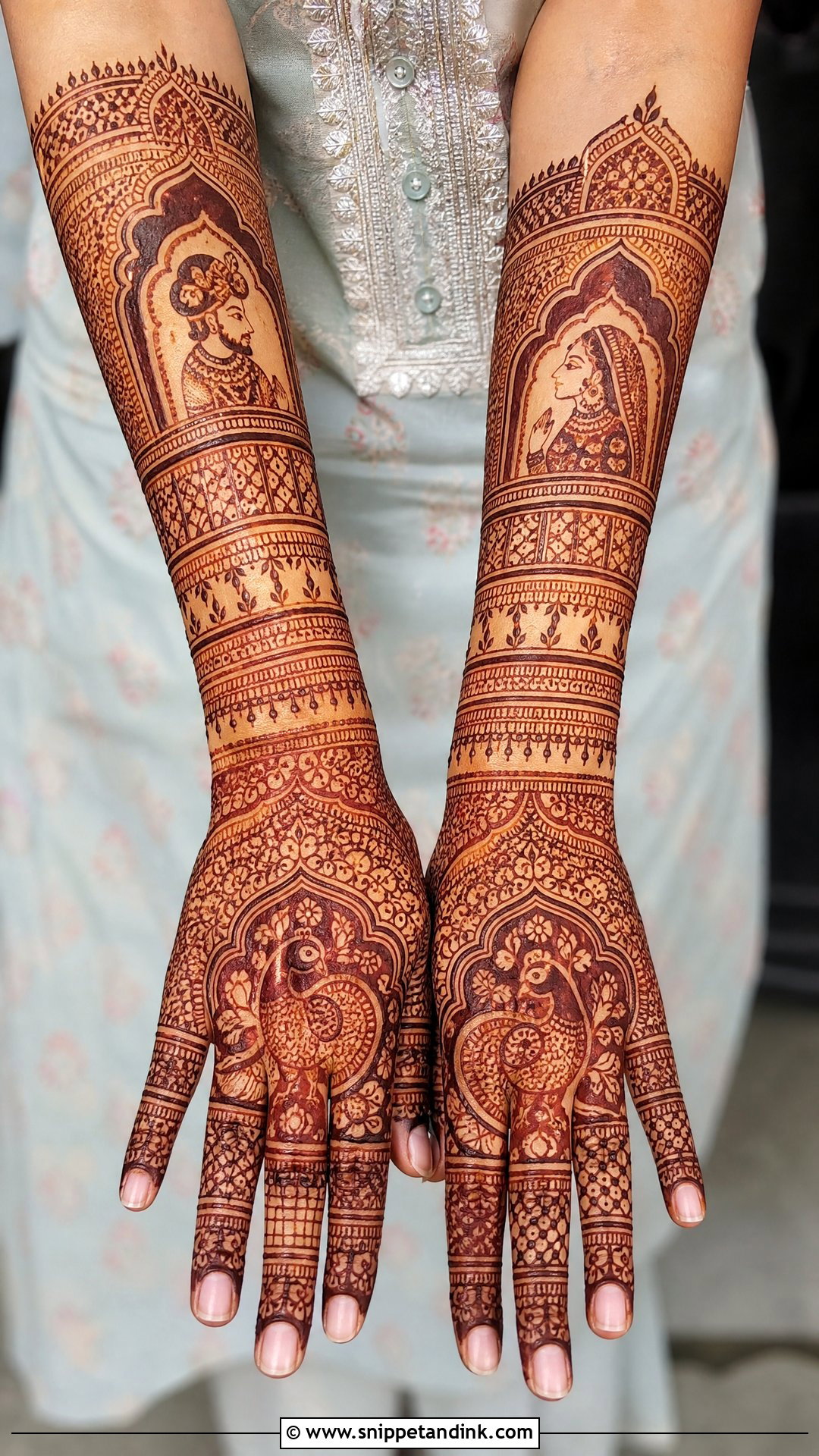
Rajasthani bridal back hand work is packed with heritage: peacocks, bride and groom figures, royal arches, paisleys and dense filling, arranged in symmetrical panels from wrist to fingers. It goes naturally with bandhani, gota patti and royal jewelry. Fine, controlled lines are what make it work; a thick cone tip turns the figures into blobs. I can tuck initials or a wedding date into the borders if you want it personal without losing the traditional feel.
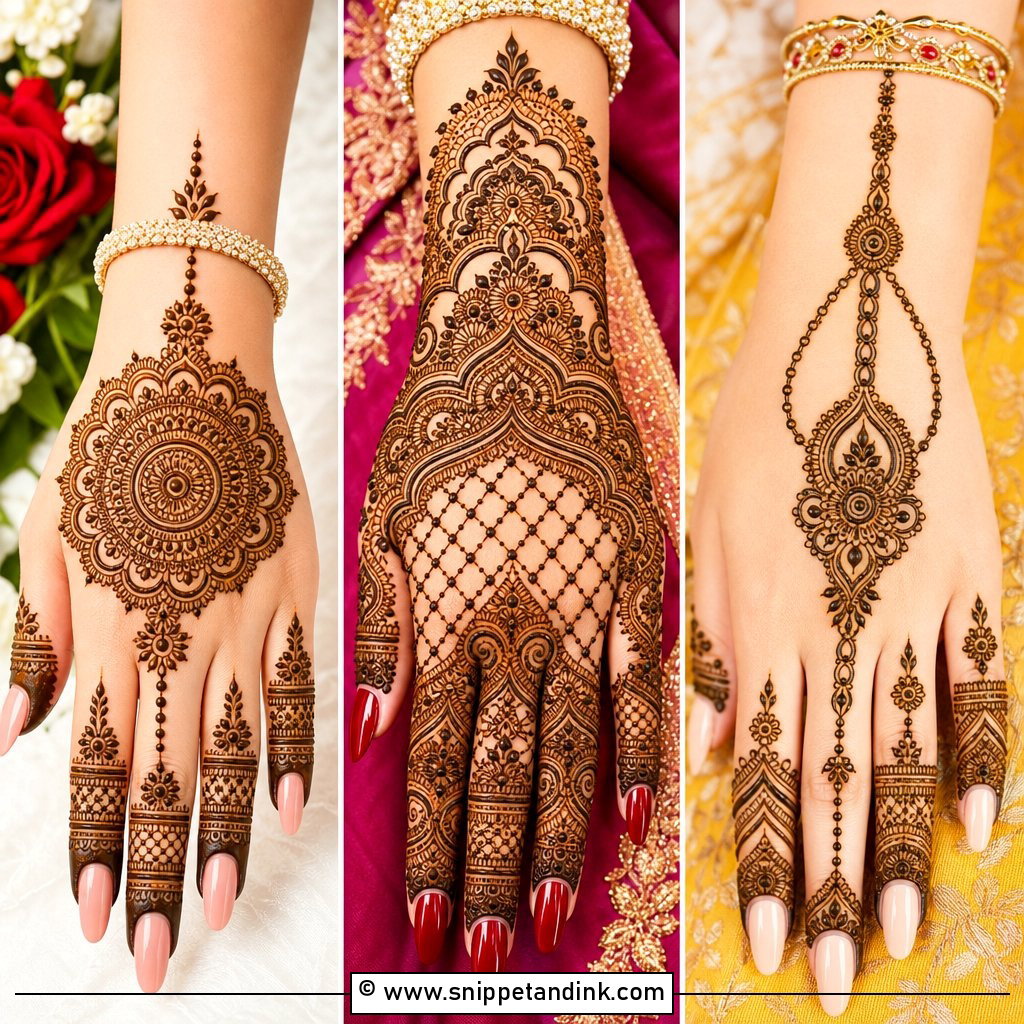
15. Moroccan Bridal Back Hand Mehndi Design
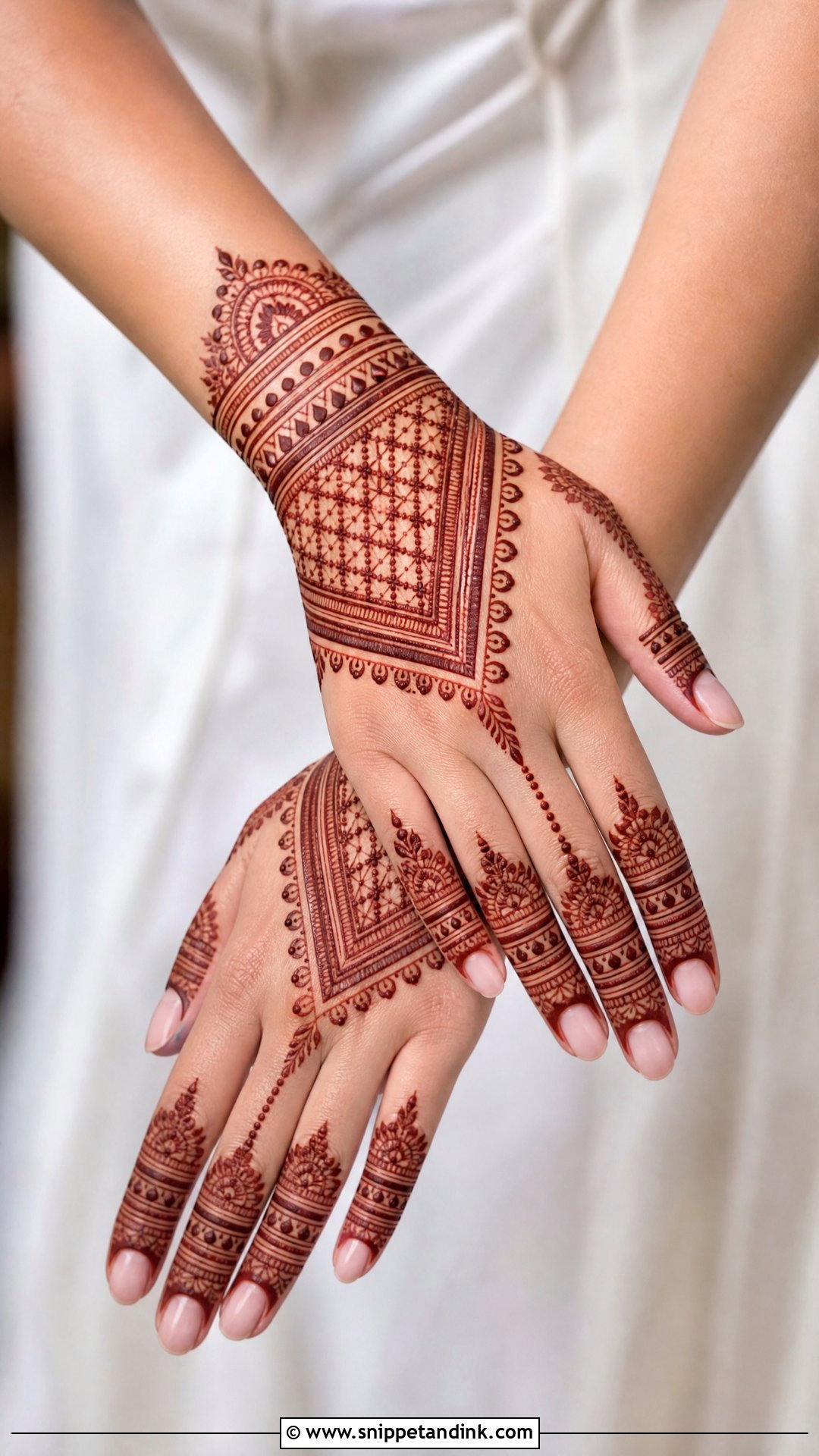
Moroccan geometry swaps florals for diamonds, triangles, chevrons and grids. On the back of the hand it can follow the line of the fingers and knuckles nicely, and a few small flowers at the wrist stop it from feeling too rigid. Precision is the whole point. I mark key alignment points with tiny dots before drawing straight lines, because an uneven chevron is obvious from across the room. It pairs well with structured lehengas and minimal jewelry.
16. Gulf Bridal Back Hand Mehndi Design
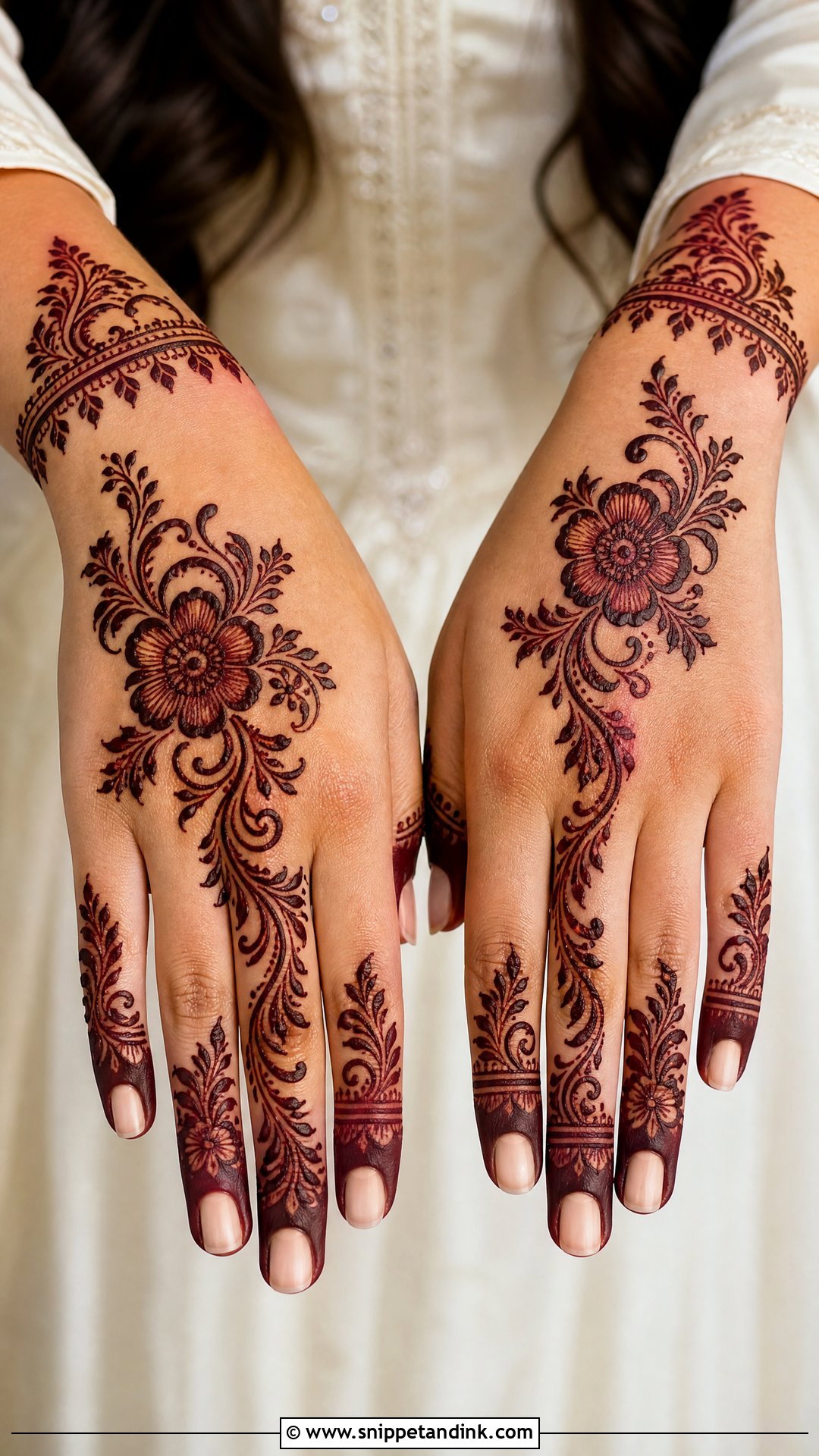
Gulf work uses large florals, flowing vines and strong outlines with a lot of open skin, often starting with a floral cluster at the wrist and sweeping toward the index or middle finger. It gives drama without full coverage. The bold lines need a good, dark stain to look their best, so natural henna and proper aftercare matter even more here than with dense designs, where a lighter stain is partly hidden by the detail.
17. Finger Full Bridal Back Hand Mehndi Design
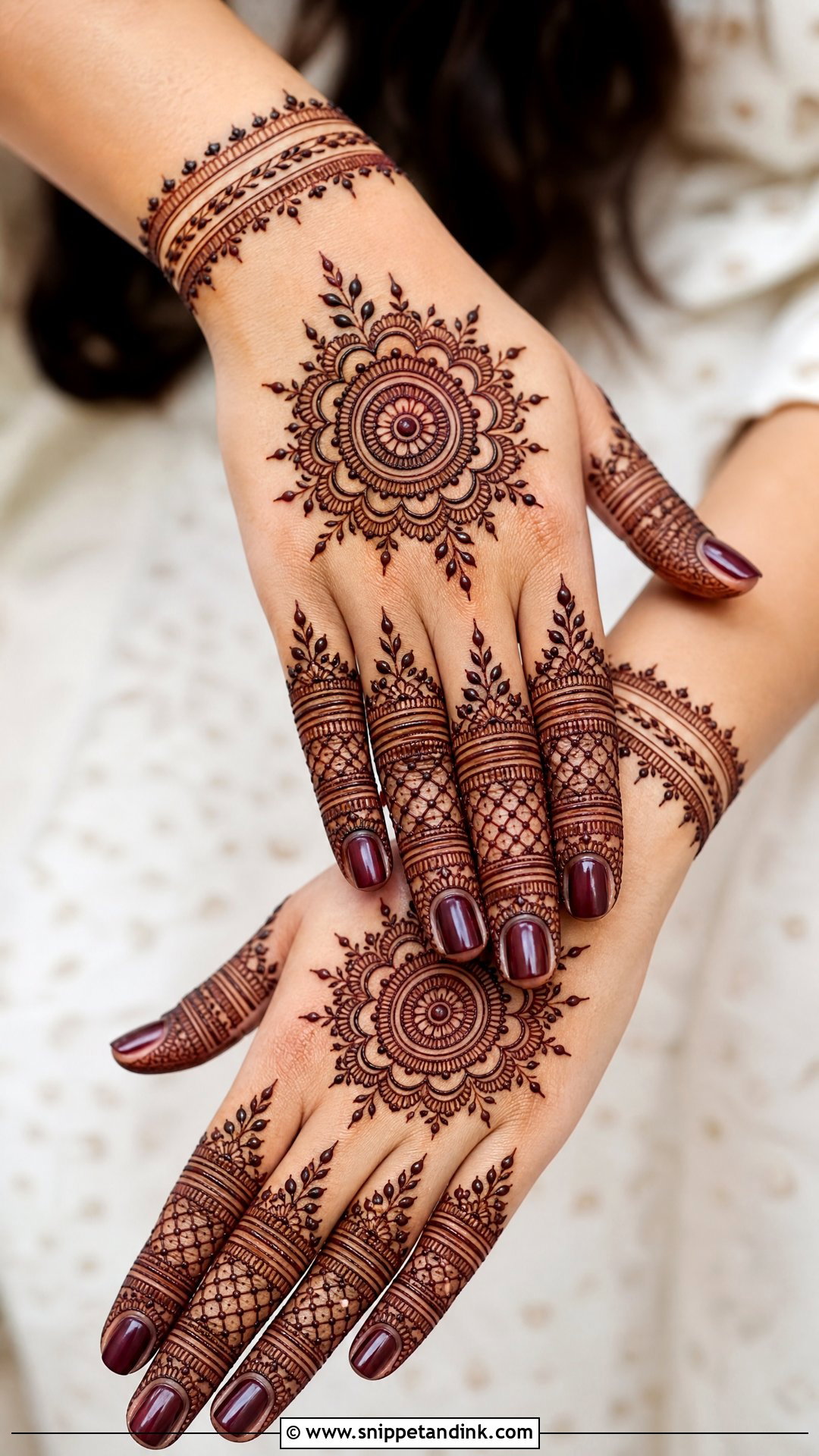
Here the fingers carry most of the detail: checks, leafy lines, dots, tiny flowers and shaded bands, each finger slightly different. The back of the hand gets a mandala, floral trail or bracelet link so the fingers don’t look cut off. I keep the finger patterns slim and vertical, which makes hands look longer in ring shots. It’s a smart compromise if you want a heavy-looking result without the sitting time of full coverage.
18. Wrist Cuff Bridal Back Hand Mehndi Design
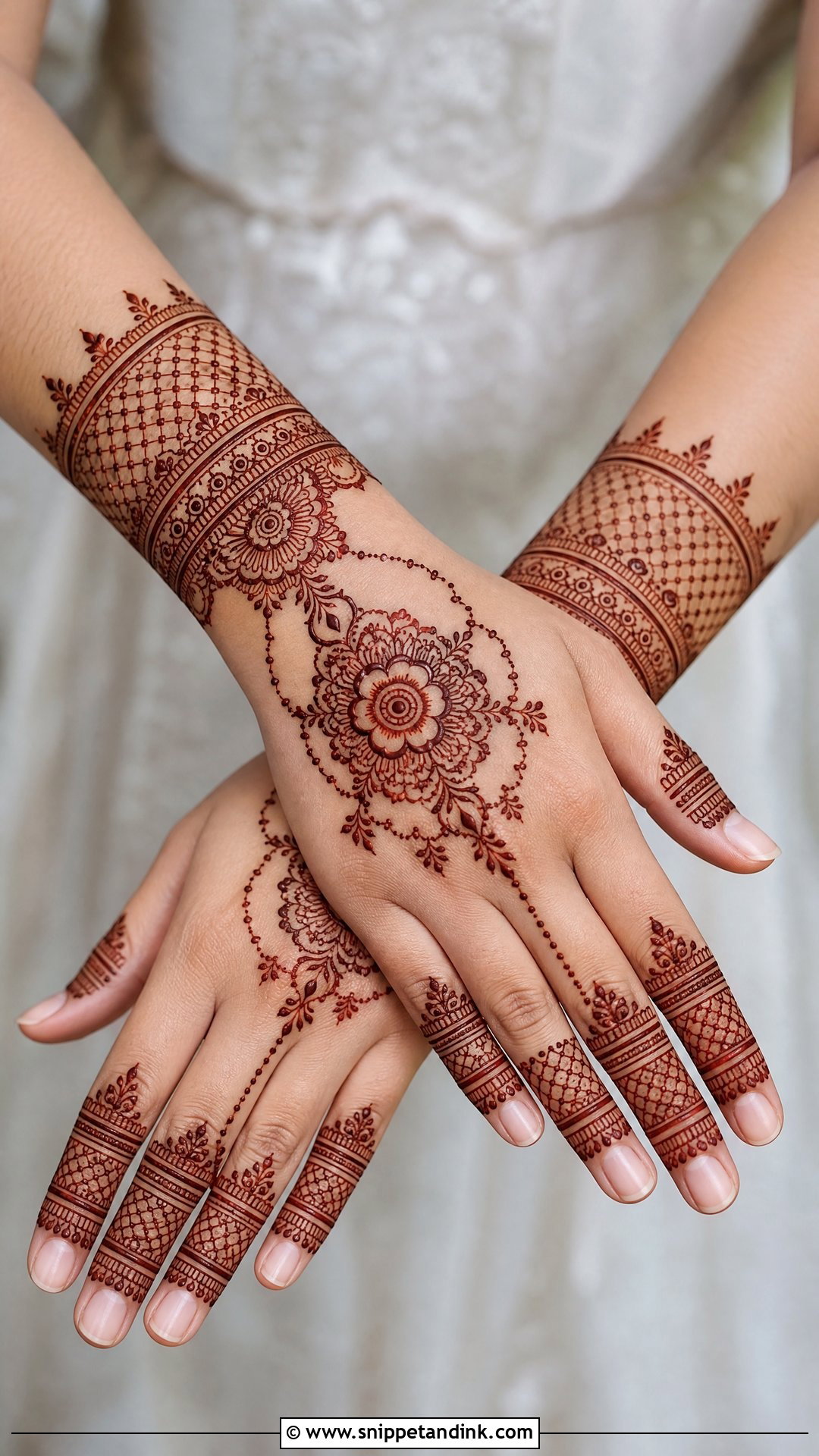
A wide cuff at the wrist, filled with lace borders, jaali, florals and paisleys, with chains or vines rising to a motif on the back of the hand. The cuff is where most brides’ bangles sit, so I ask you to slide your bangles on before I start and mark where they rest. Then I place the cuff just above or below that line, never under it. The edge of the cuff has to be crisp; a wobbly border is the first thing people notice.
19. Bridal Back Hand Mehndi With Name
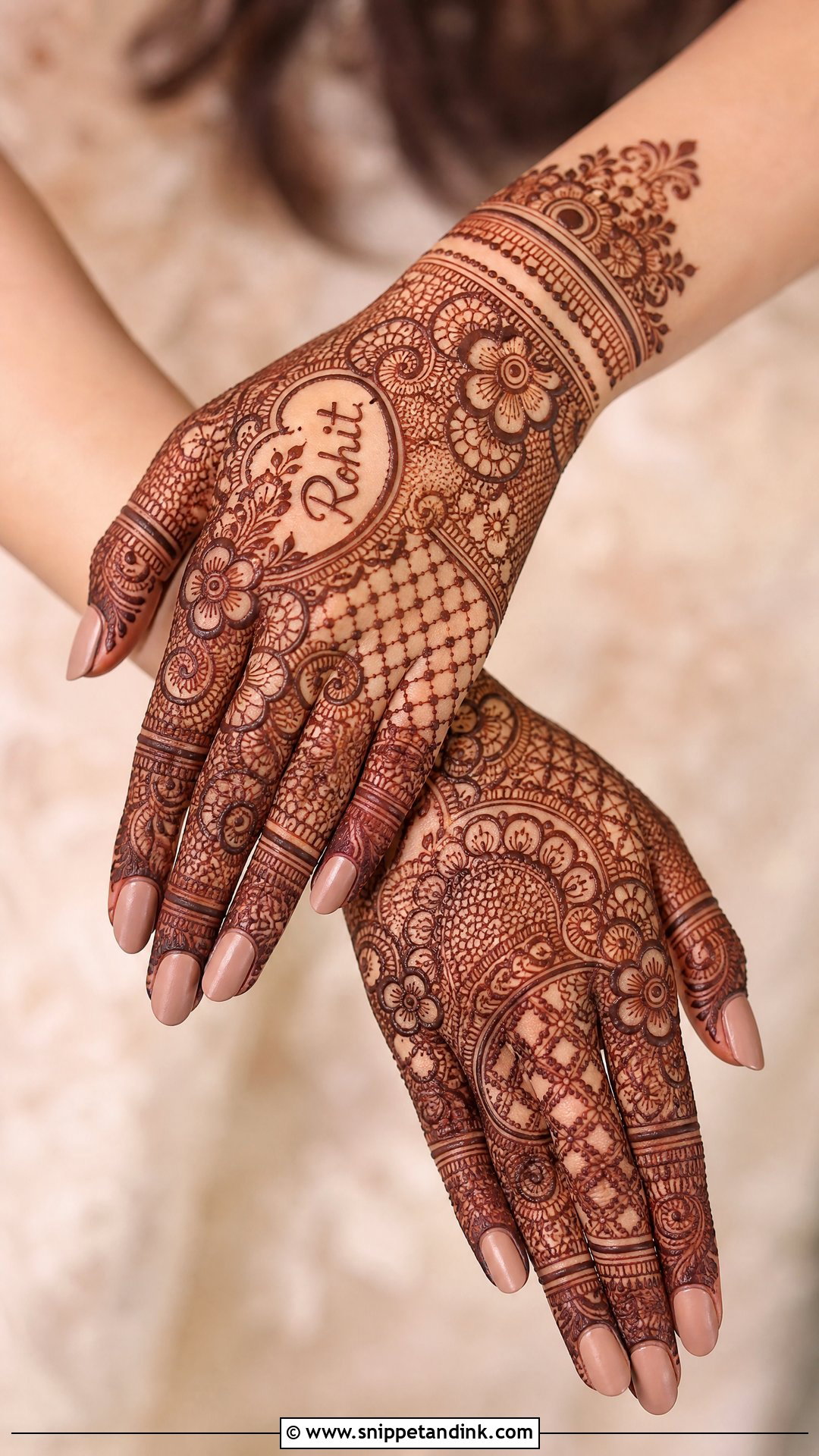
Hiding the groom’s name, initials or the date inside the design is a small tradition many brides love. I tuck it into a paisley, a jaali panel, a flower centre or the wrist border. The best spot blends in but can still be found when someone looks closely. It can be done in any style, from dense Indian to open Arabic, and it’s a natural part of personalized art for a bride. I test the letter size on paper first, because very small script fills in as the stain darkens.



20. Portrait Bridal Back Hand Mehndi Design
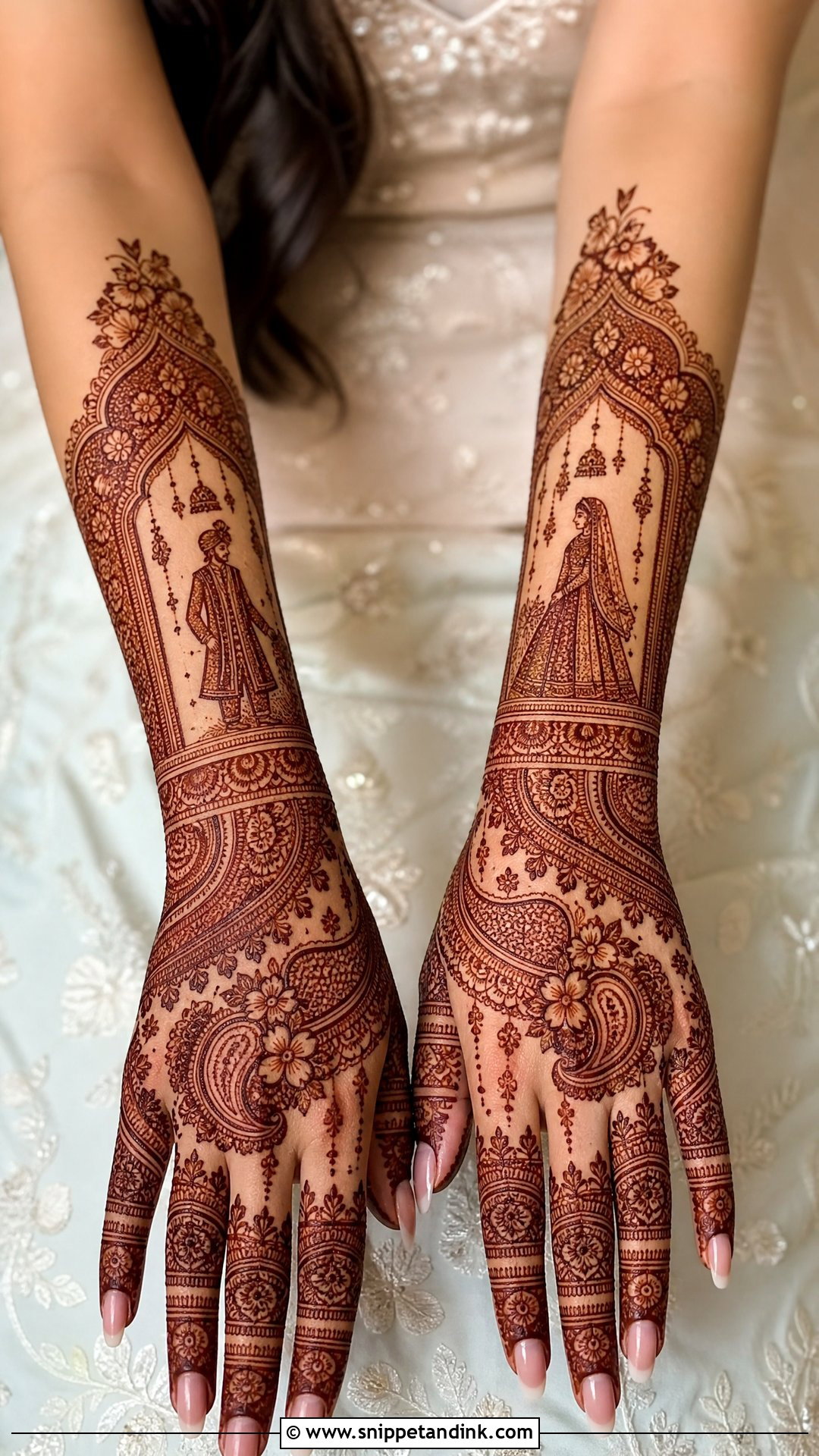
Portraits are more common on palms and forearms, where there’s flat space. On the back of the hand, the skin curves over the bones and tendons, so I keep figures small and simple: bride and groom silhouettes, a doli, or a domed doorway framed by florals and paisley borders. Detailed faces don’t survive well there. Choose an artist who can show you portrait work they’ve already done; this is not the place for someone’s first attempt.
21. Floral Bridal Back Hand Mehndi Design
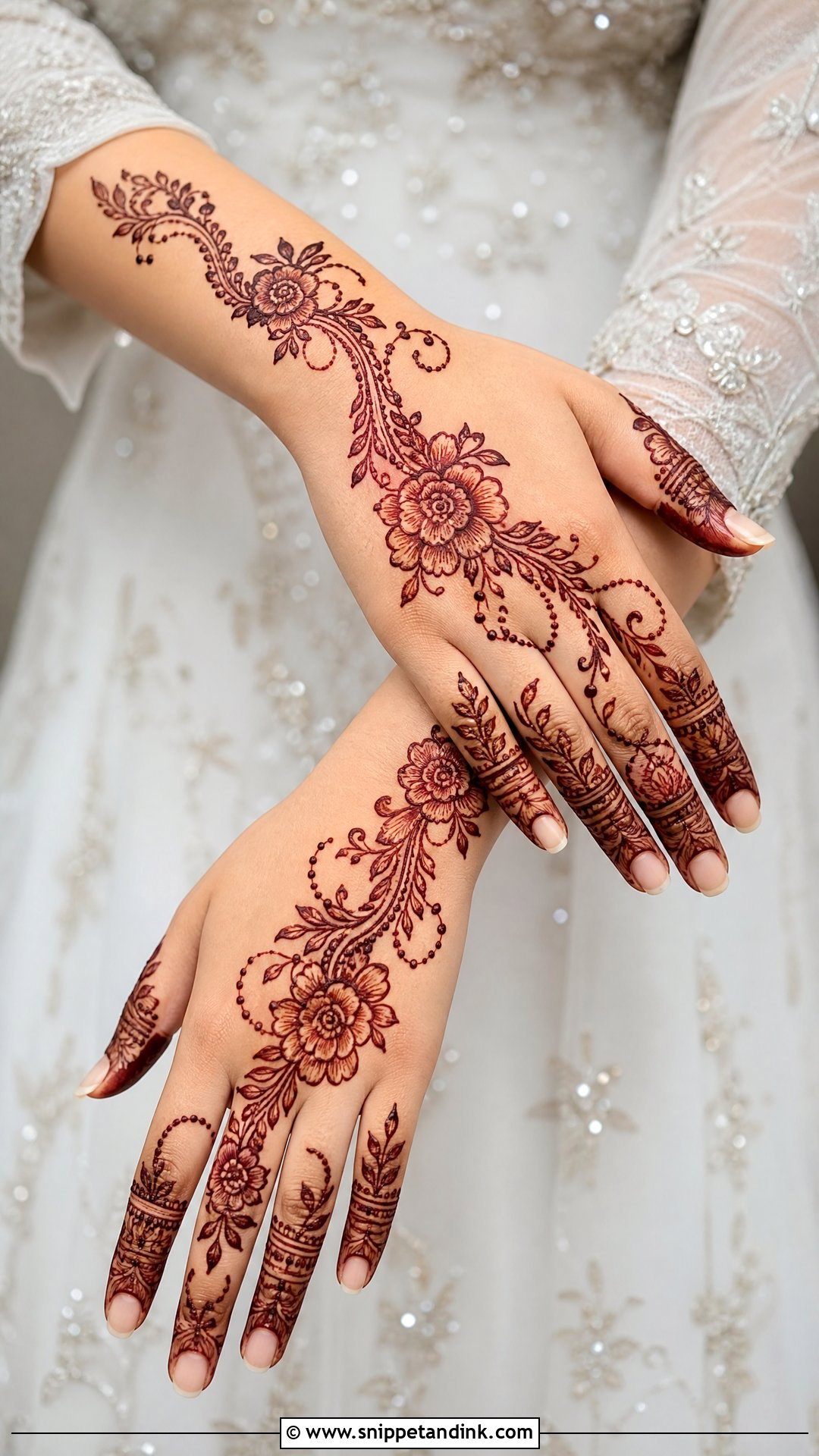
Florals stay popular for good reason: roses, lotus, small blossoms and leafy trails suit almost every outfit and skin tone, and natural henna stains curves well. For a modern take I use one large flower as the focus and keep the rest smaller. For a heavier result I fill the hand with layered floral panels and full fingers. A wrist border or bracelet chain finishes it. If you’re torn between styles, a floral back hand is the safest place to start.
22. Paisley Bridal Back Hand Mehndi Design
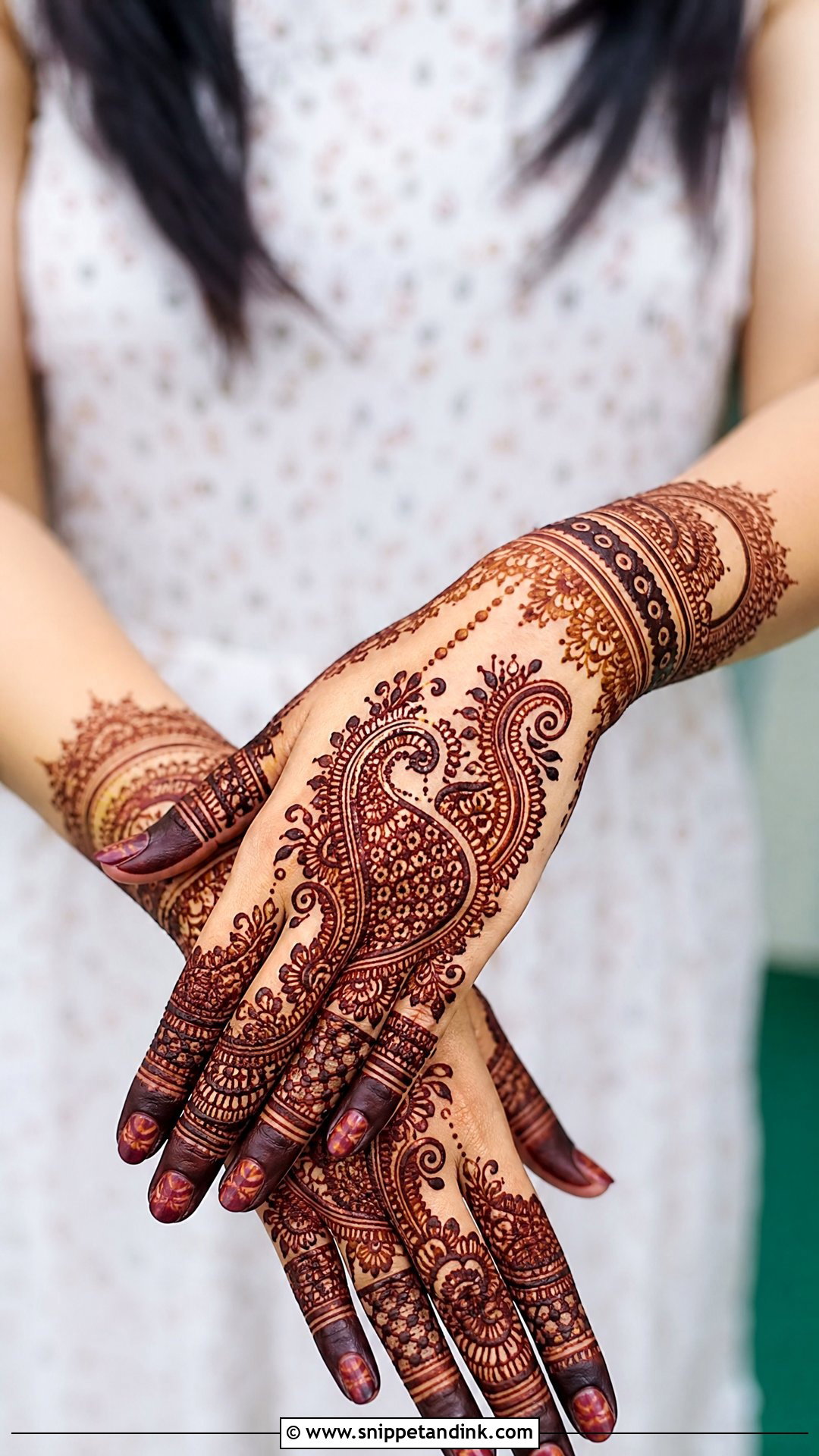
Paisley bridal back hand designs can run as a diagonal trail, a circular frame or a full layout. I fill each paisley with tiny flowers, dots, checks and curved lines, and mix large paisleys with small ones so the hand doesn’t look flat. They suit Indian, Pakistani and Indo-Arabic weddings equally. Bold paisley outlines also hold up well over the days after the wedding, when finer filler starts to fade first.
23. Shaded Bridal Back Hand Mehndi Design
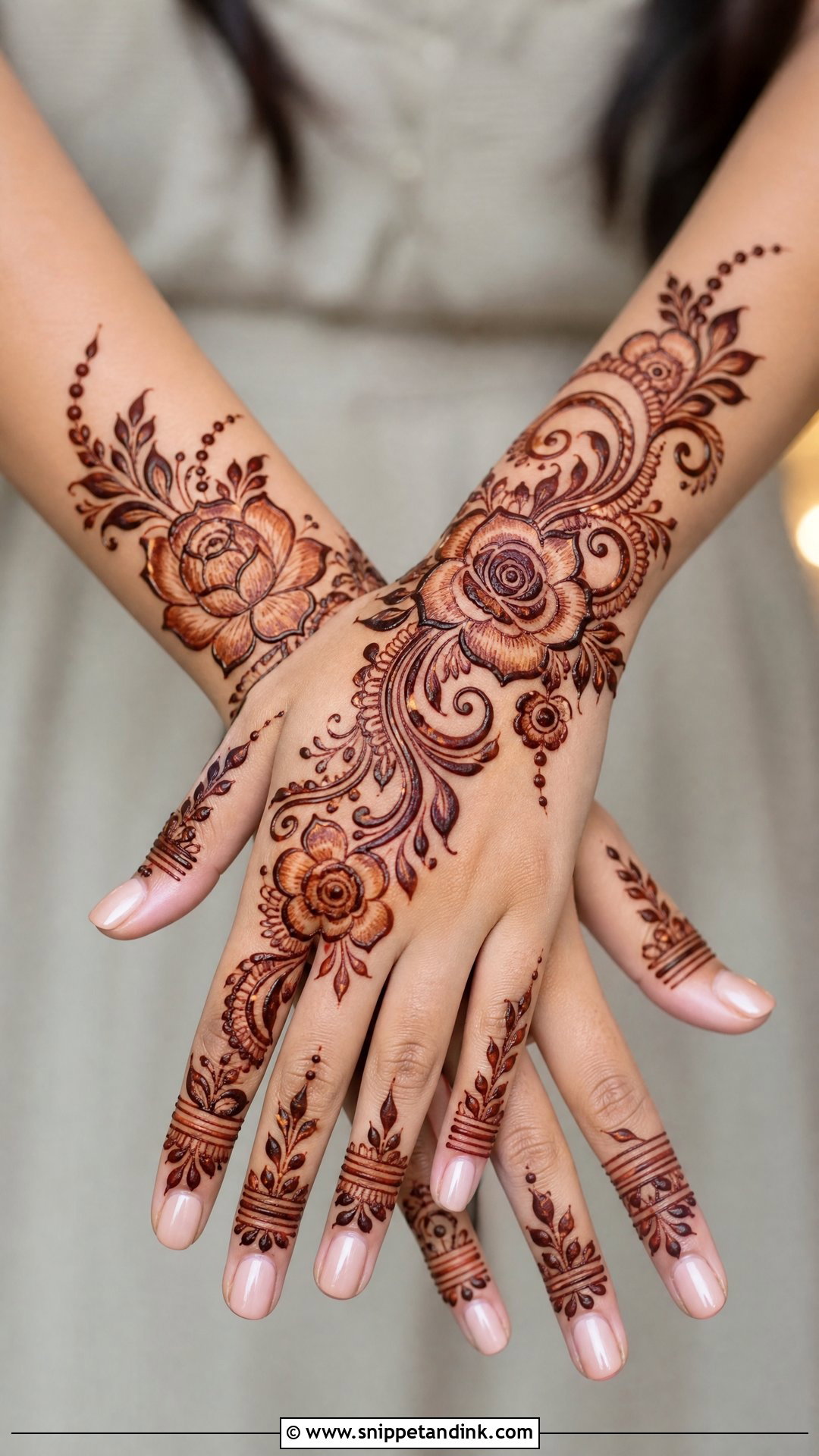
Shading adds depth without adding weight. I use fine lines and a lighter fill inside petals, paisleys, leaves and borders, so part of each motif stains darker than the rest. It looks good fresh and even better once the colour deepens. Shading suits roses, lotus, Arabic florals and Indo-Arabic trails. Keep the fingers detailed and the centre a little open so the shaded work has room. It pairs nicely with delicate embroidery and soft-coloured outfits.
24. Modern Bridal Back Hand Mehndi Design
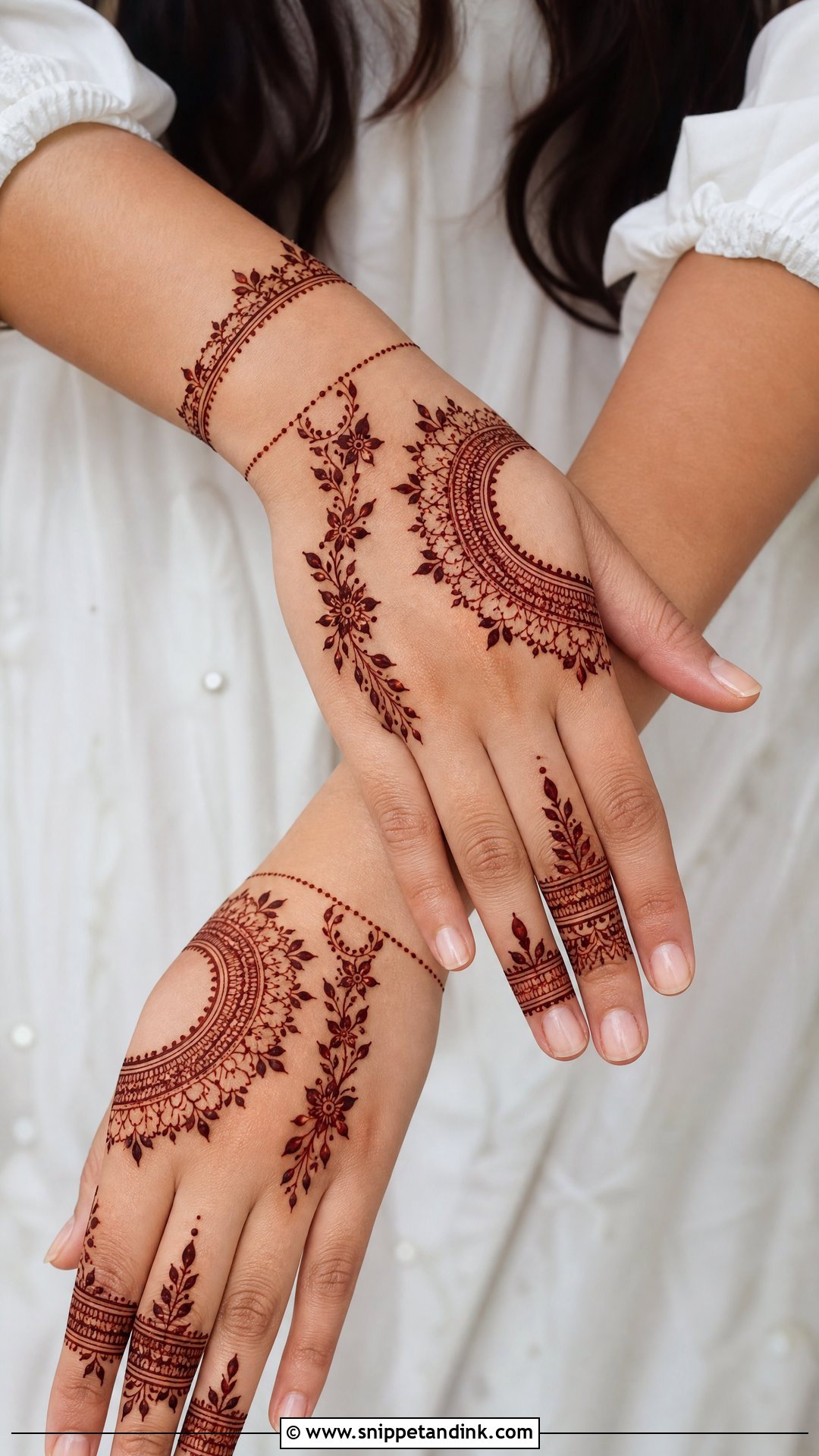
Modern layouts rely on precision rather than coverage: half mandalas, slim floral trails, geometric bands, leafy chains and deliberate negative space. They work with contemporary lehengas, gowns, fusion sarees and minimal jewelry. I still connect the wrist, hand and fingers so it looks finished. Initials, ring-style finger detail or a fine bracelet line can be added without crowding it.



25. Unique Bridal Back Hand Mehndi Design
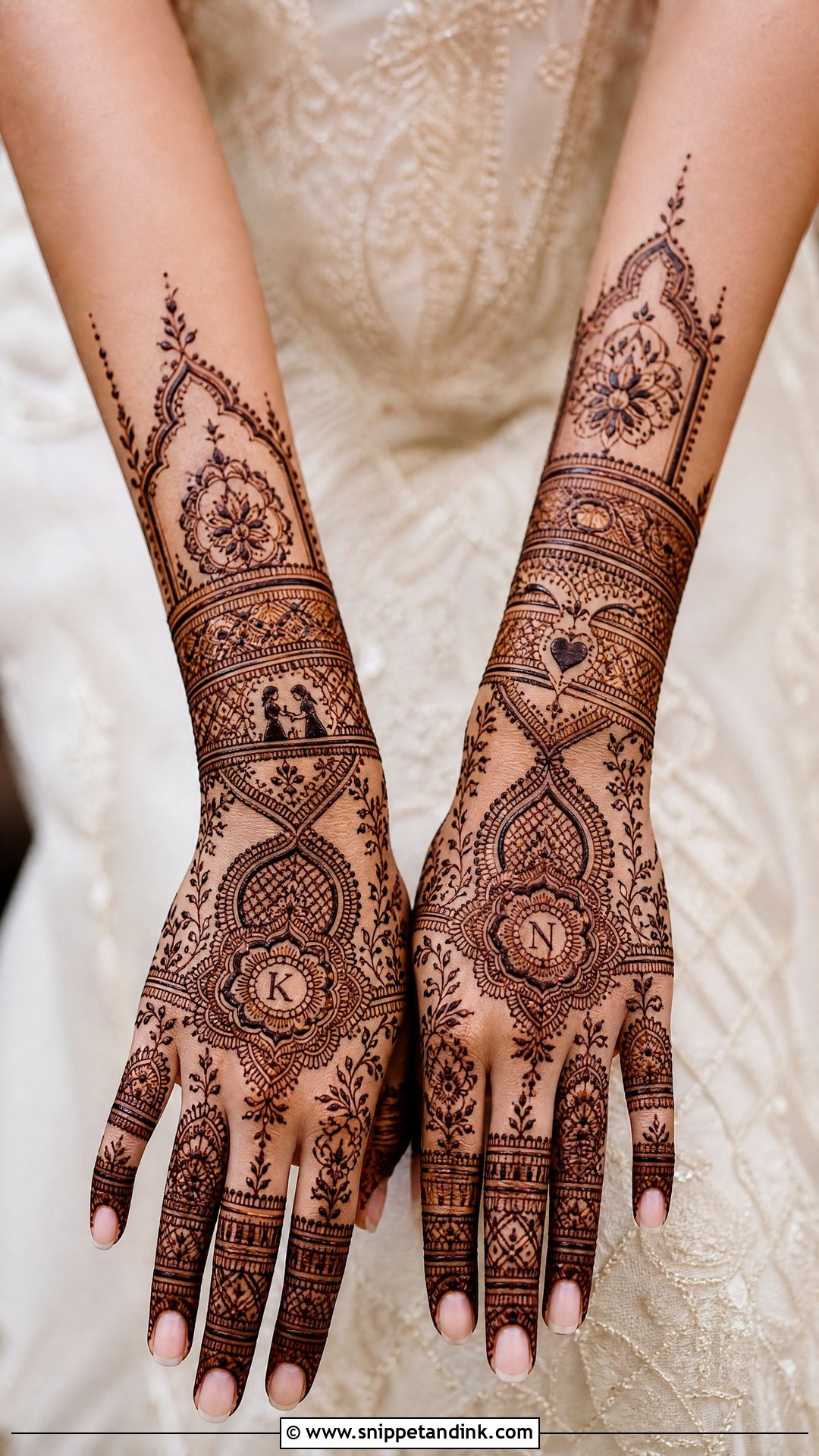
Unique doesn’t have to mean complicated. Pick one strong feature, a bold central motif or a custom symbol that means something to the two of you, and build the rest around it. Some brides do one hand in florals and the other in geometric panels; others mix Arabic spacing with Indian fillers. I need to see your outfit, jewelry and the photos you love before I can design something genuinely yours, so bring all three to the trial.
Arriving Ready for a Long Mehndi Sitting
A few small things on your side make a real difference to the stain, and to how comfortable the session feels. Here’s what I ask every bride to do before I arrive.
- Wax, shave or have your manicure a day or two before. Any of those afterwards will lift colour.
- Exfoliate gently the day before, then skip lotion and oil on the morning of the session. Henna stains clean, bare skin best.
- Wash your hands with plain soap and dry them completely just before we start.
- Eat first, use the bathroom and wear a front-opening top. You won’t have usable hands for hours.
- Keep the room warm. Cold air slows both the drying and the stain.
When you have several functions in one week
If you’re having mehndi for the engagement or nikah and again for the wedding, plan them so they don’t overlap. Fresh paste over an old fading stain gives an uneven, patchy result. A lighter Arabic design a week or more earlier will have faded enough by the main mehndi night, while the bridal design itself is best applied one to two days before the ceremony so it peaks on the day.
One Back Hand, Several Wedding Functions
The right back hand design is the one that sits well with your outfit and still reads clearly in photos. Before you finalise anything, look at your jewelry, your sleeve length, your nail colour and which function the mehndi is for. Dense styles like Indian, Rajasthani, jaali or heavy coverage reward brides who love detail. Arabic, Gulf, mandala and minimal layouts suit brides who prefer clean lines. Save a handful of the designs above, show them to your artist, and let her adjust the scale to your own hands.
You'll Like These Ideas:









Leave a Reply