
A bride’s mehndi is the one part of her look that’s drawn on her body rather than worn, and it’s photographed at every ritual from the mehndi night to the vidaai. Today’s bridal henna ranges from dense Indian full-hand work and flowing Arabic trails to portraits, mandala palms, jaali back hands and light modern layouts. When a bride sits down with me, we settle three things first: how far up the arm she wants it, how many hours she can sit still, and what her outfit and jewellery will cover. The 20 designs below are arranged with that in mind.
Sleeves, Bangles and How Long You Can Sit
Before I sketch anything, I ask to see the bridal outfit. Full sleeves hide forearm work, so there’s little point in spending hours on a design no one sees. Heavy chooda and kaleeras cover the wrist, which is why I place the strongest motifs on the palm and back of the hand where they’ll be visible.
Time is the other limit. Detailed full coverage can take several hours, and then the paste needs to stay on for many more. Plan to eat beforehand, use the bathroom, and have someone ready to help you with food and drinks afterward, since your hands will be out of action.
- Apply bridal mehndi one or two days before the wedding, so the stain peaks on the day.
- Avoid waxing, scrubbing or moisturiser on hands and arms just before; clean, dry skin takes the stain best.
- Share photos of designs you like, but expect your artist to adapt them to your hand size.
1. Full Hand Bridal Dulhan Mehndi Design
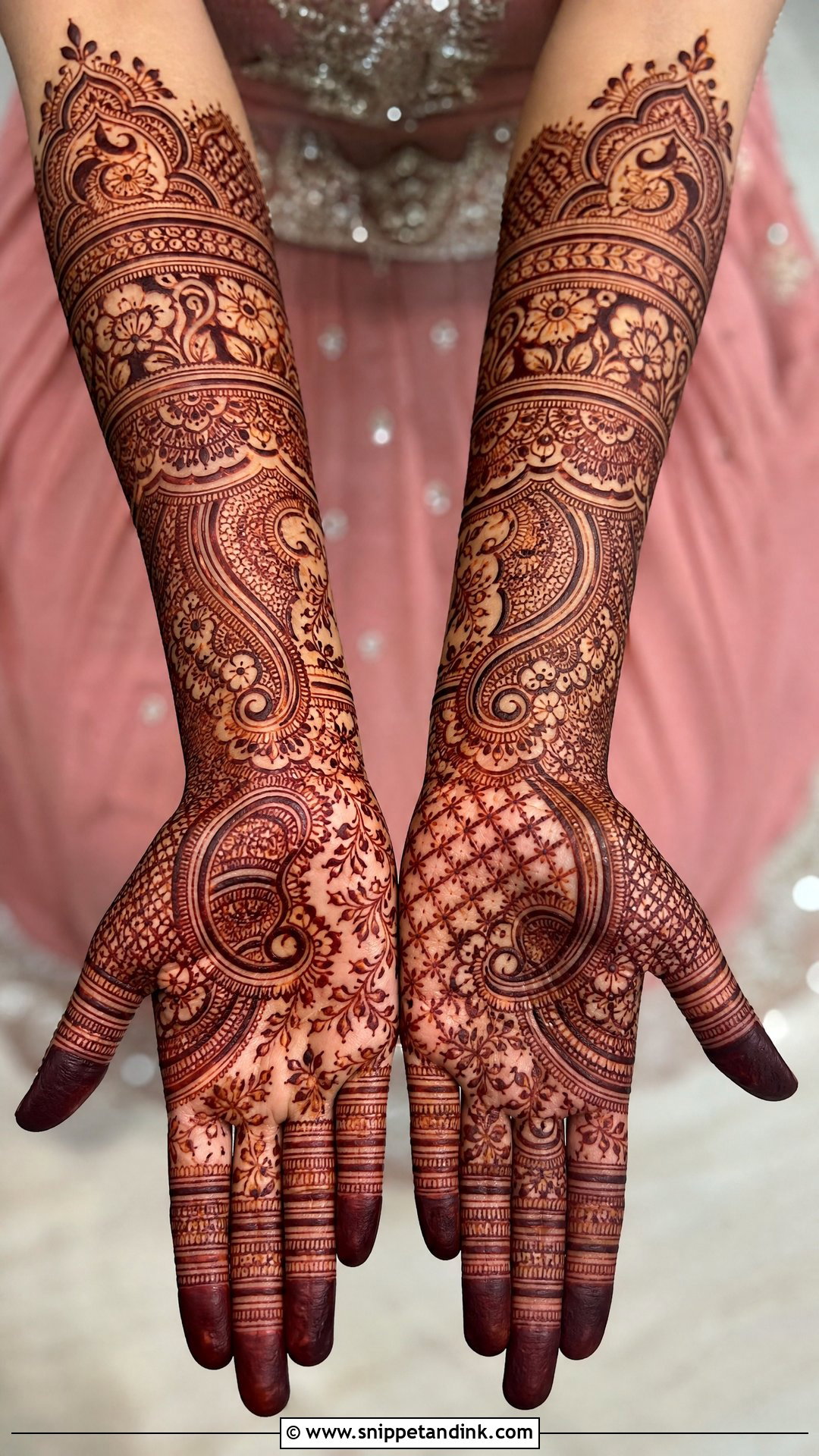
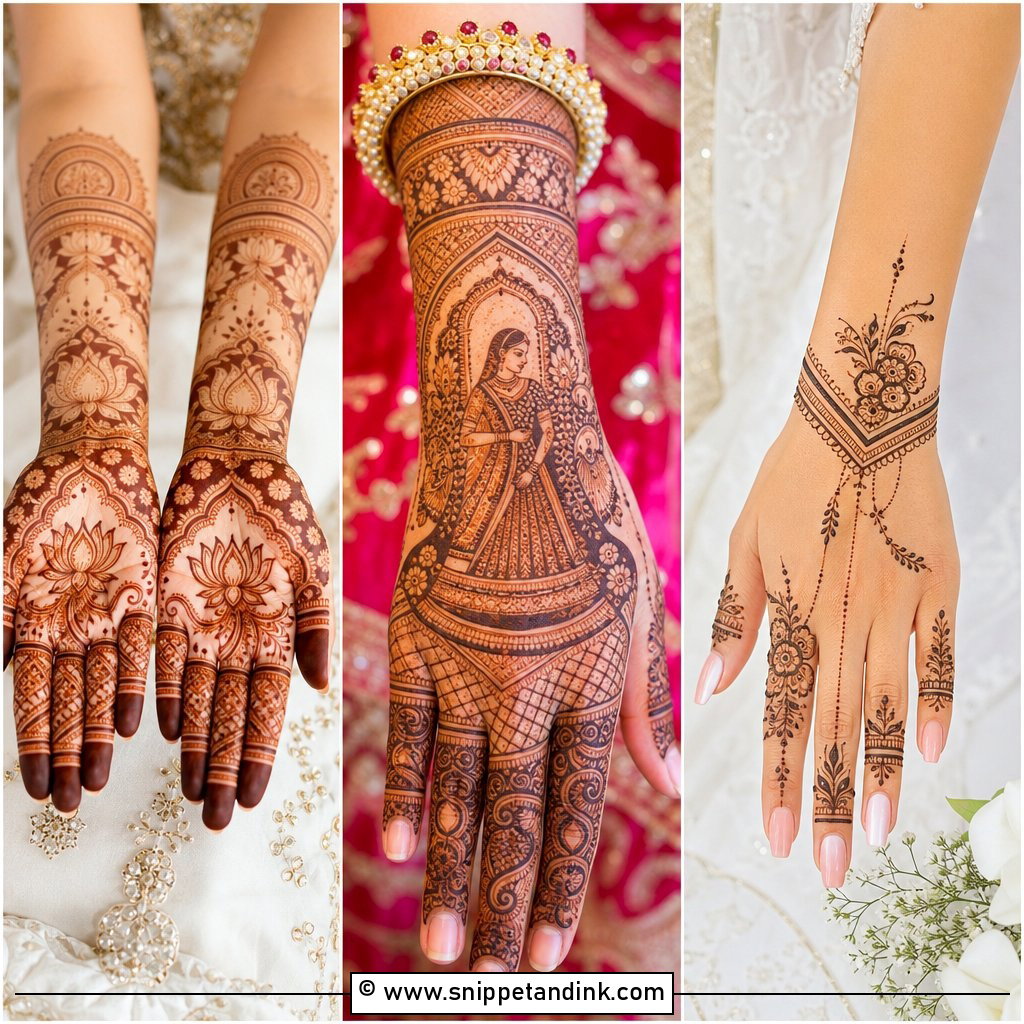
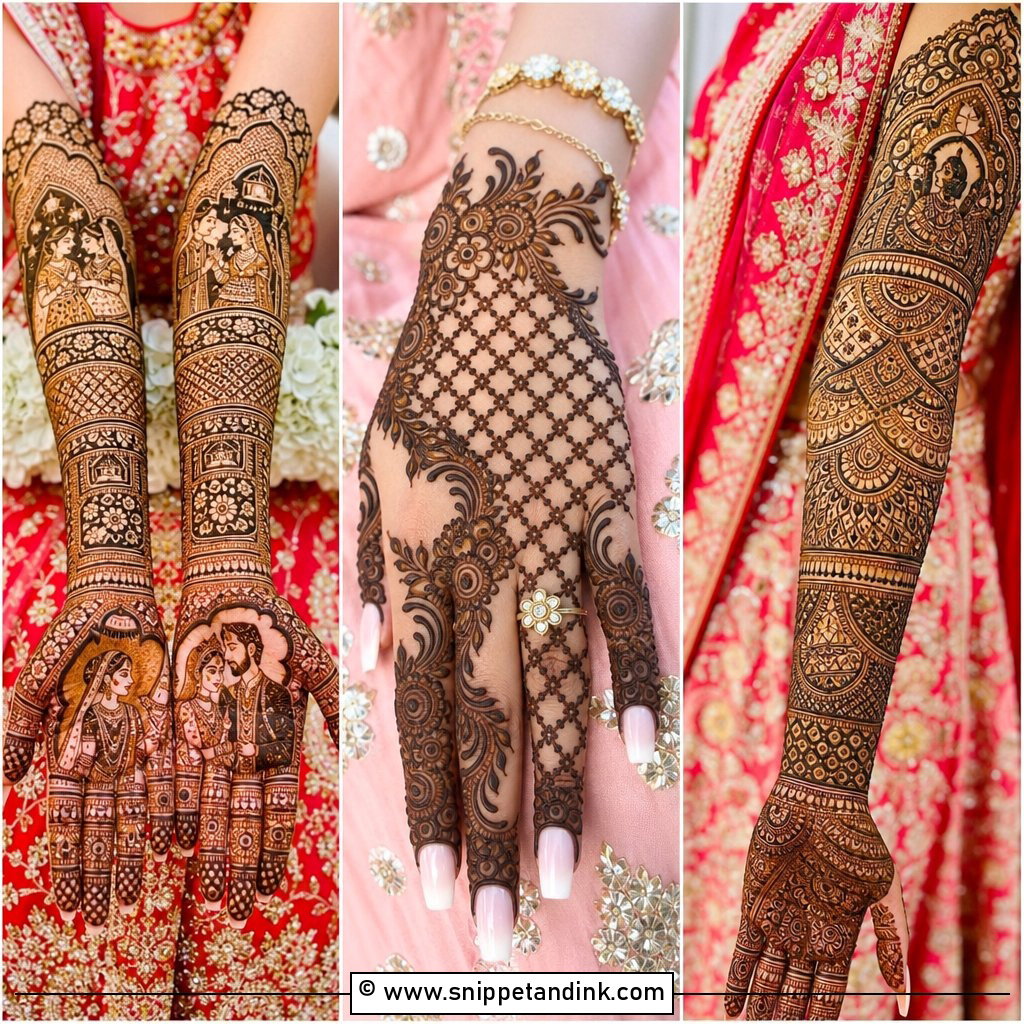
A full hand bridal dulhan mehndi design covers the palm, fingers, wrist and forearm in paisleys, flowers, vines, dots and fine filler. It’s the most traditional choice and the most time-consuming; full coverage on both hands and arms can take most of an afternoon or evening. I usually draw the main motifs first, then fill. You can keep both hands mirrored or give each palm its own centre. Under heavy bangles and kaleeras, the dense work shows only between the jewellery, so I keep the wrist band bold.
2. Indian Bridal Mehndi Design Full Hand
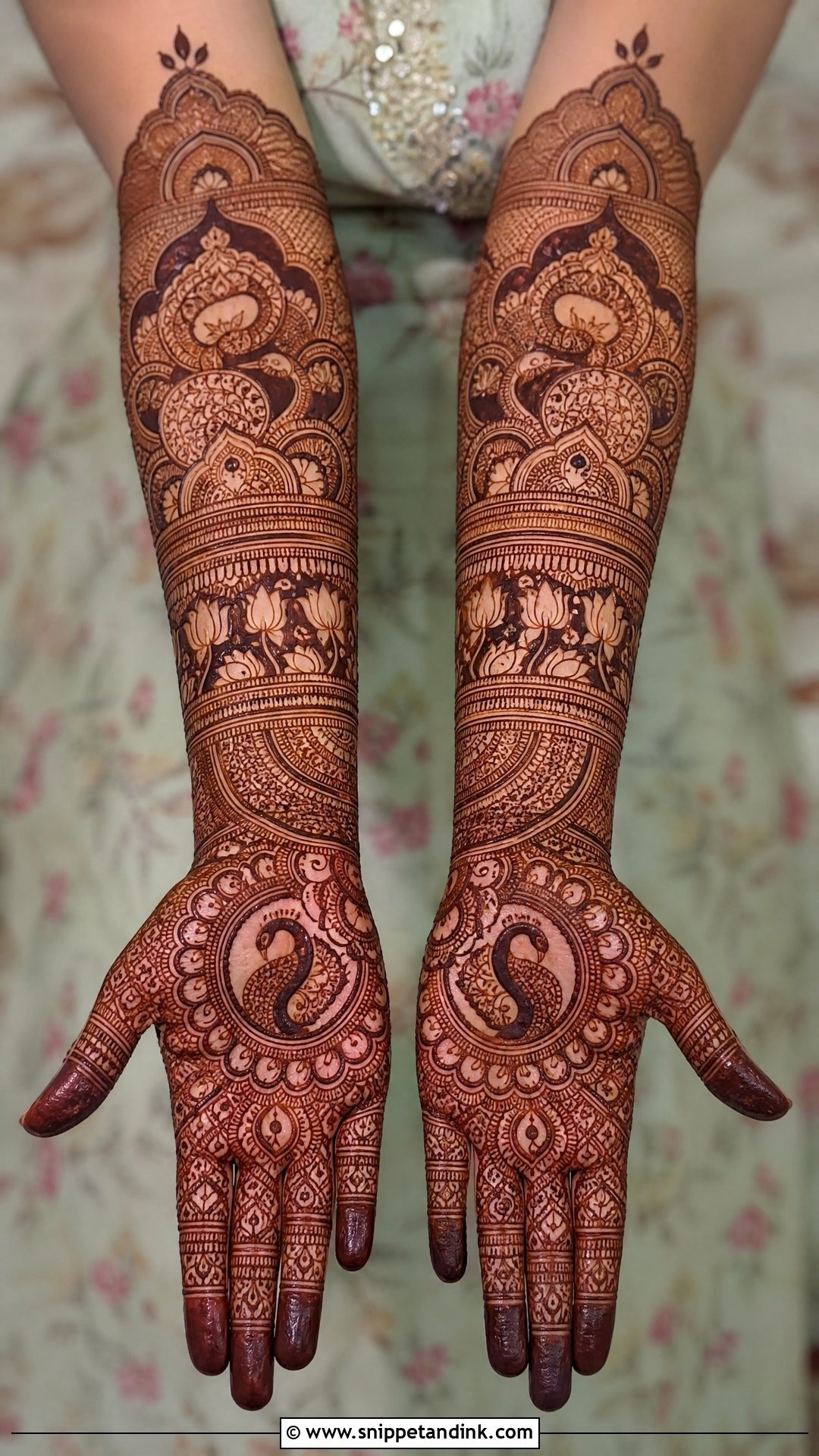
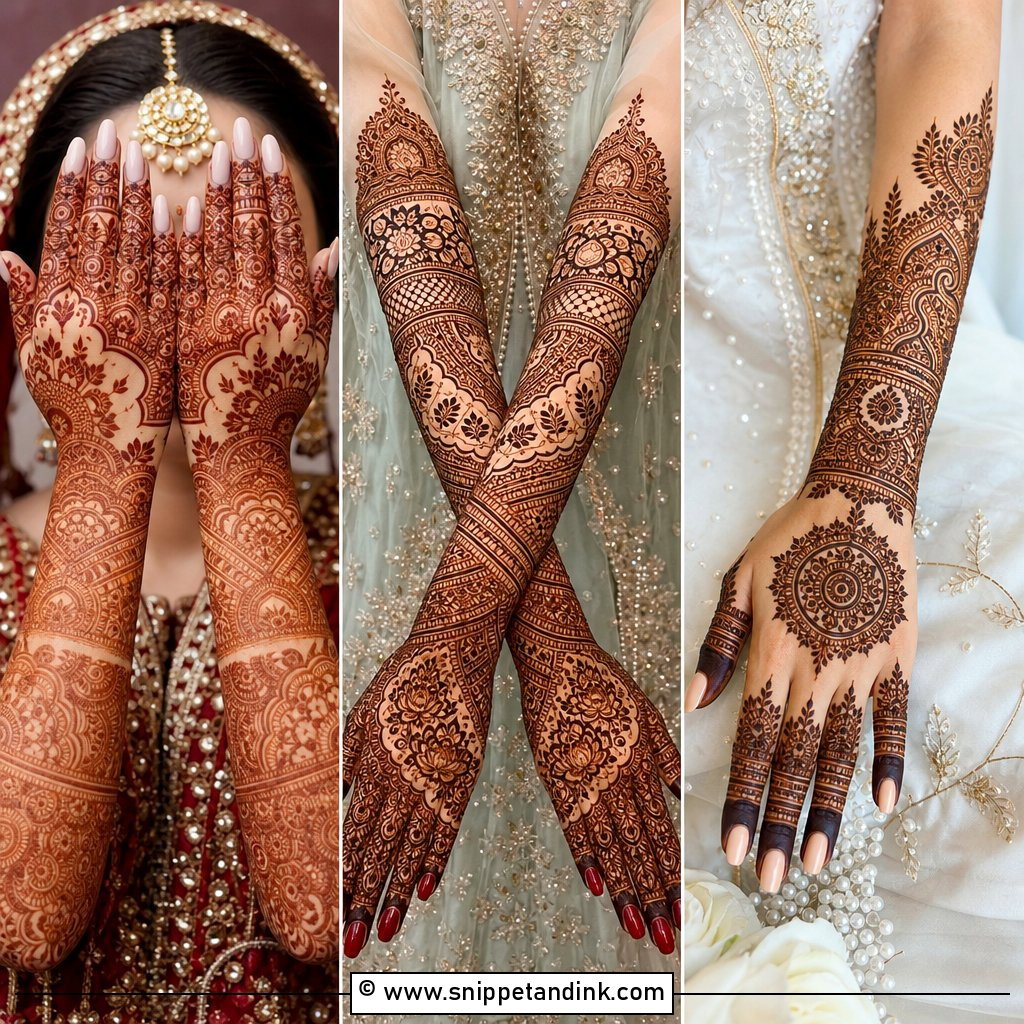
Indian full-hand patterns are the densest of all: peacocks, lotuses, paisleys, small bride and groom figures, mandalas and borders running from fingertips to forearm or close to the elbow. Very little skin is left bare, so the finished stain reads as a deep, almost solid pattern. That’s also its weakness; if the paste is applied too thick or smudged while drying, lines merge. I work in thin, even lines and let each section dry before moving on. If your outfit has heavy embroidery, this level of detail holds its own beside it.
3. Arabic Bridal Mehndi Design Full Hand
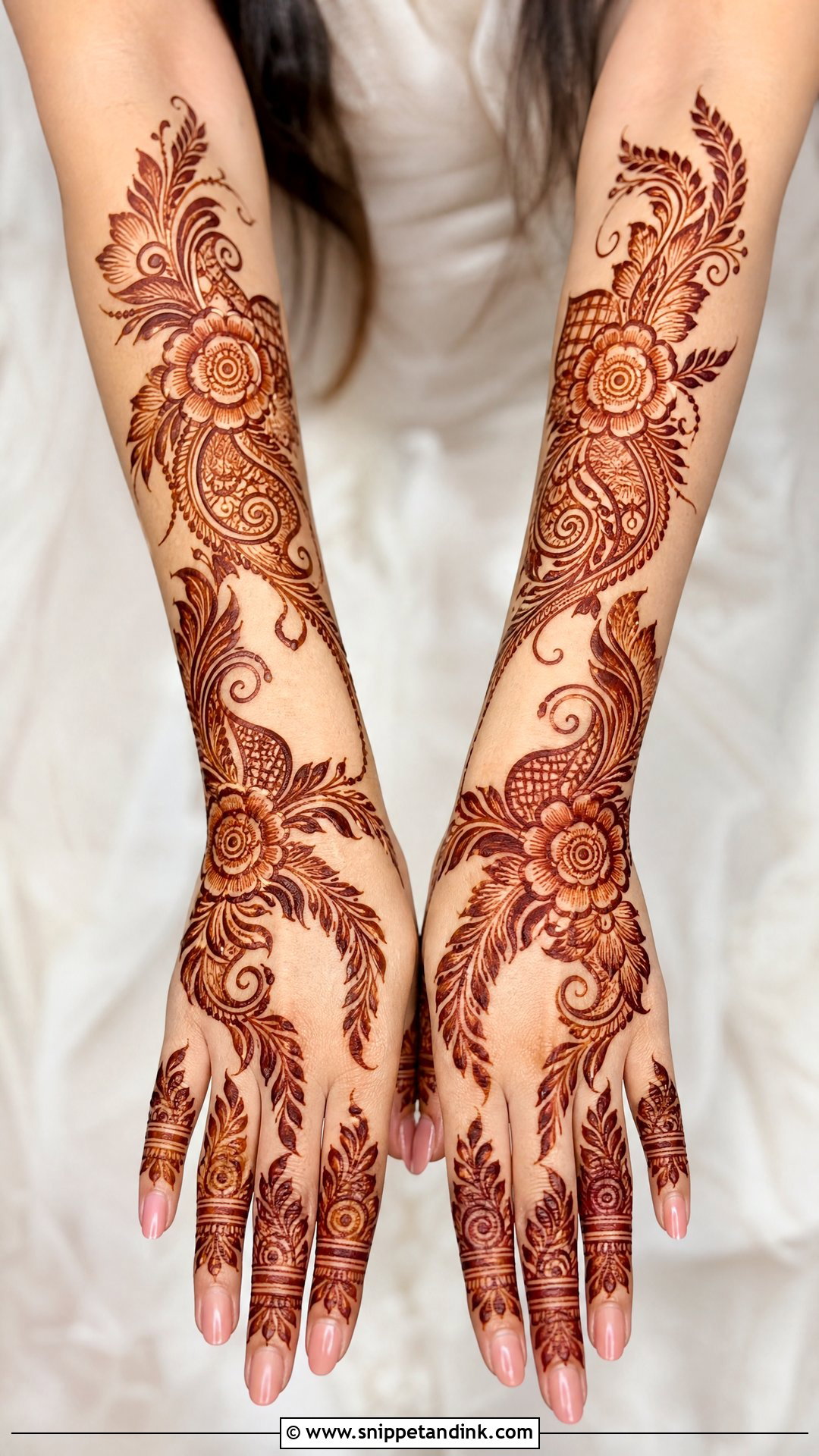
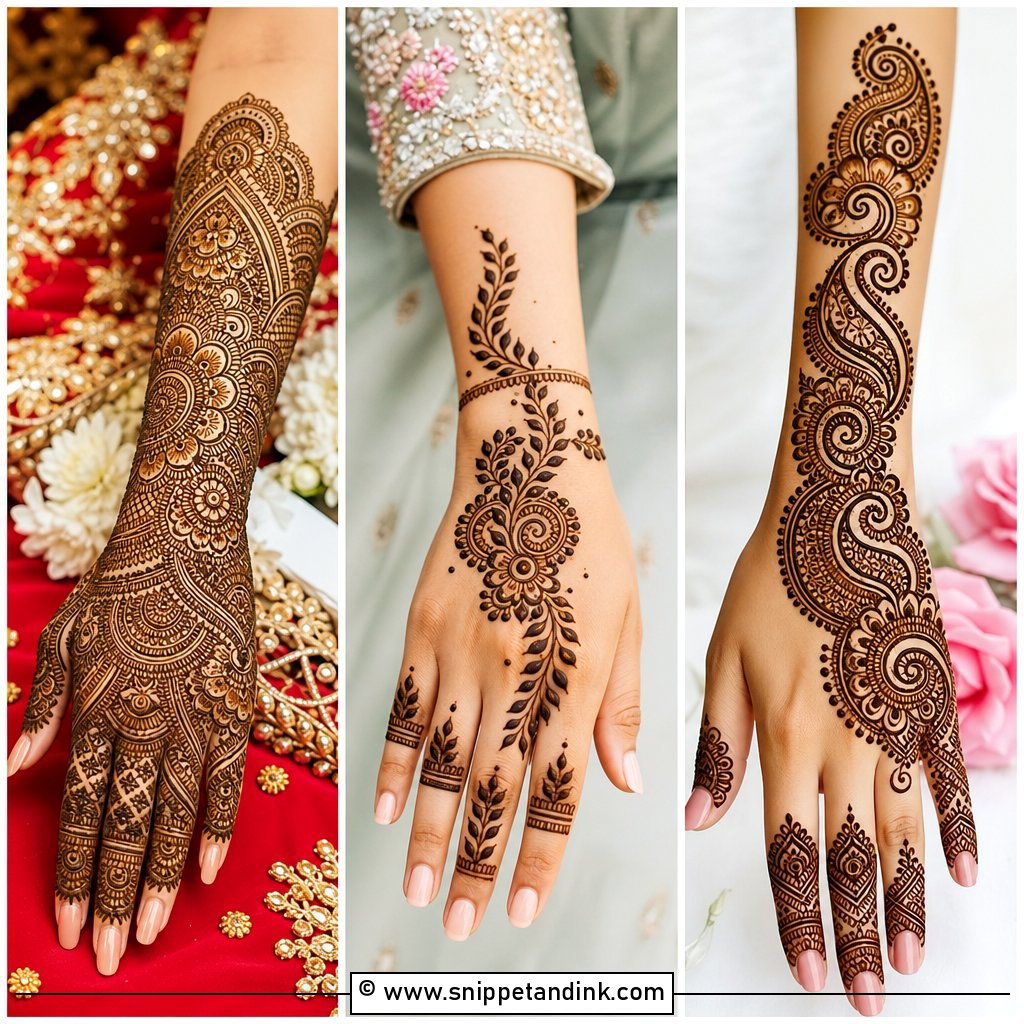
Arabic full-hand work uses bold, flowing floral trails, leafy vines, paisleys, shaded petals and curved bands, with plenty of open skin between them. Because the strokes are thicker, the stain comes out strong and easy to read even from across a room. Shading is done by thinning the paste at the edge of a petal. It’s the style I suggest when a bride wants coverage but dislikes the crowded look. Statement rings or simple bangles both suit it.
4. Indo Arabic Bridal Mehndi Design
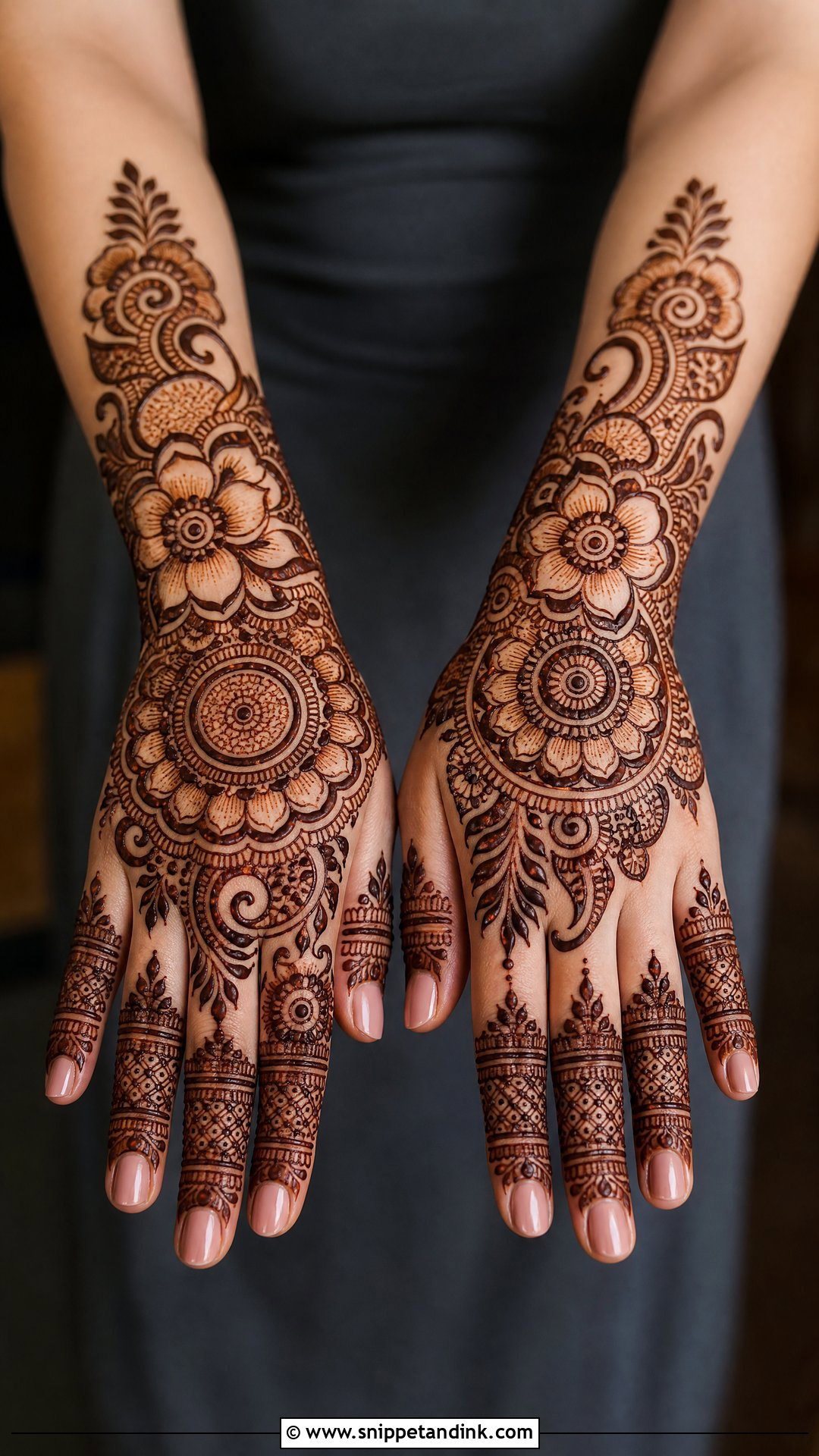
Indo Arabic bridal mehndi design pairs bold Arabic trails with fine Indian fillers, paisley bands, mandala centres and detailed fingers. A common layout is a traditional circular motif on the palm and diagonal Arabic vines across the back. The open areas give the eye a rest, so it reads detailed without feeling packed. It suits lehengas, sarees and shararas equally, and it’s quicker to apply than a full Indian design.
5. Bride And Groom Mehndi Design
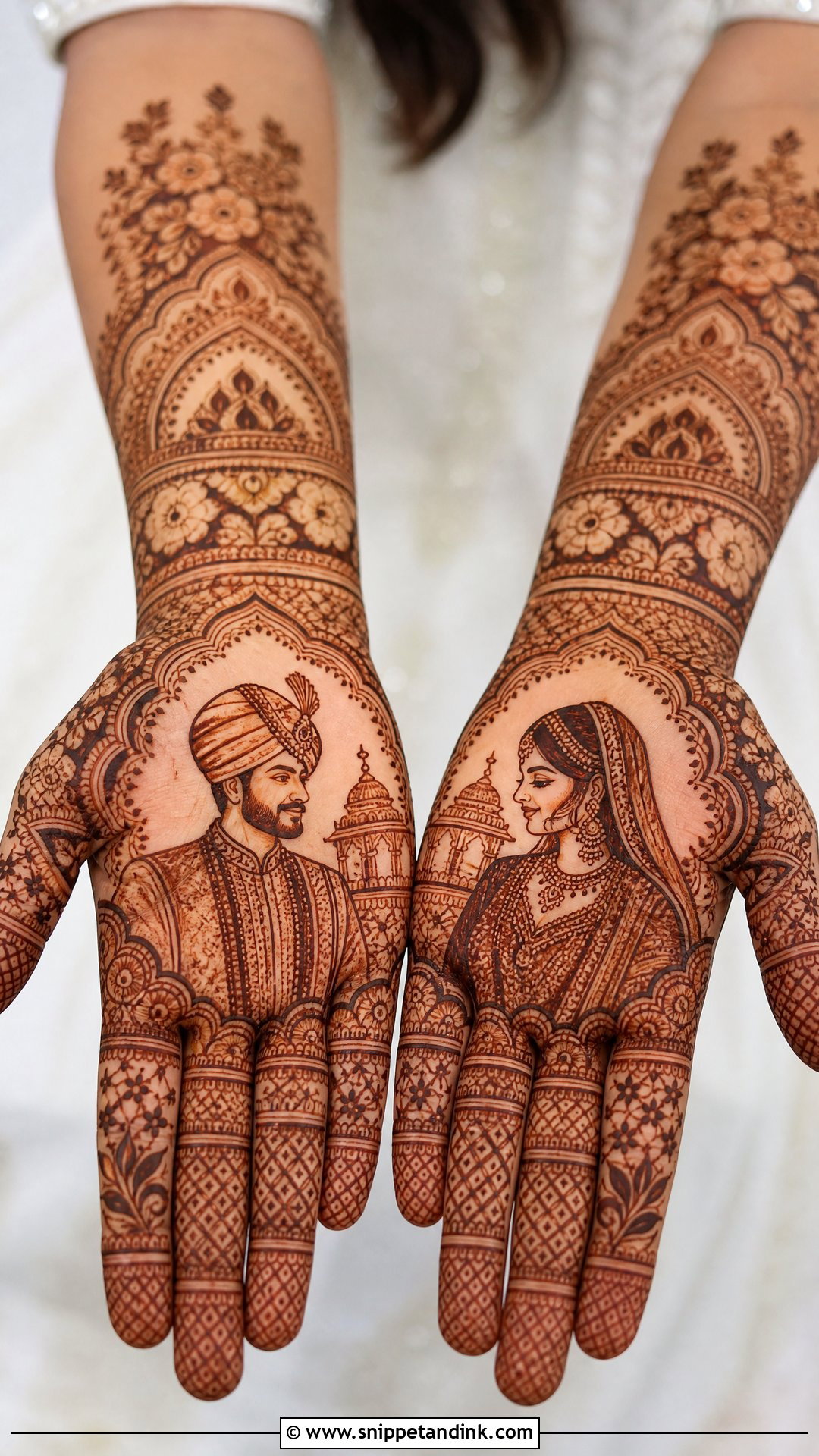
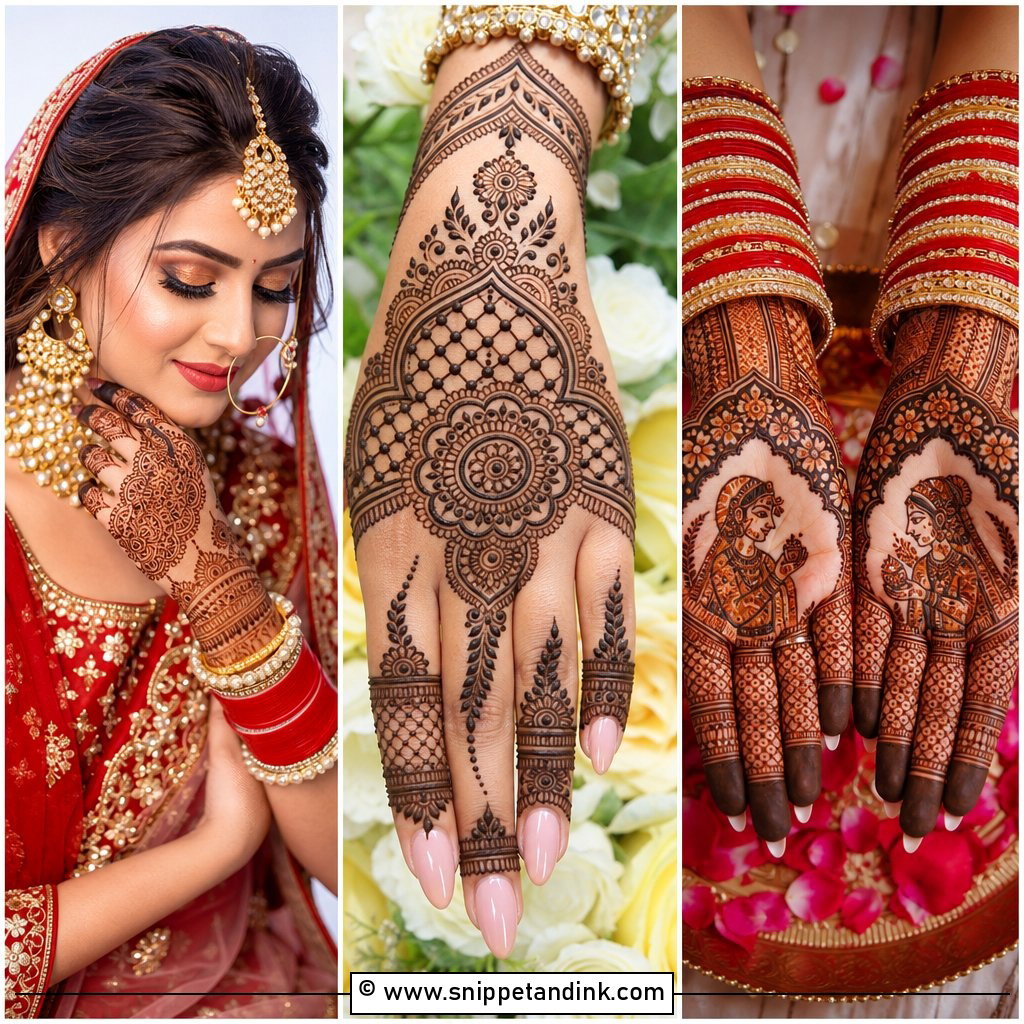
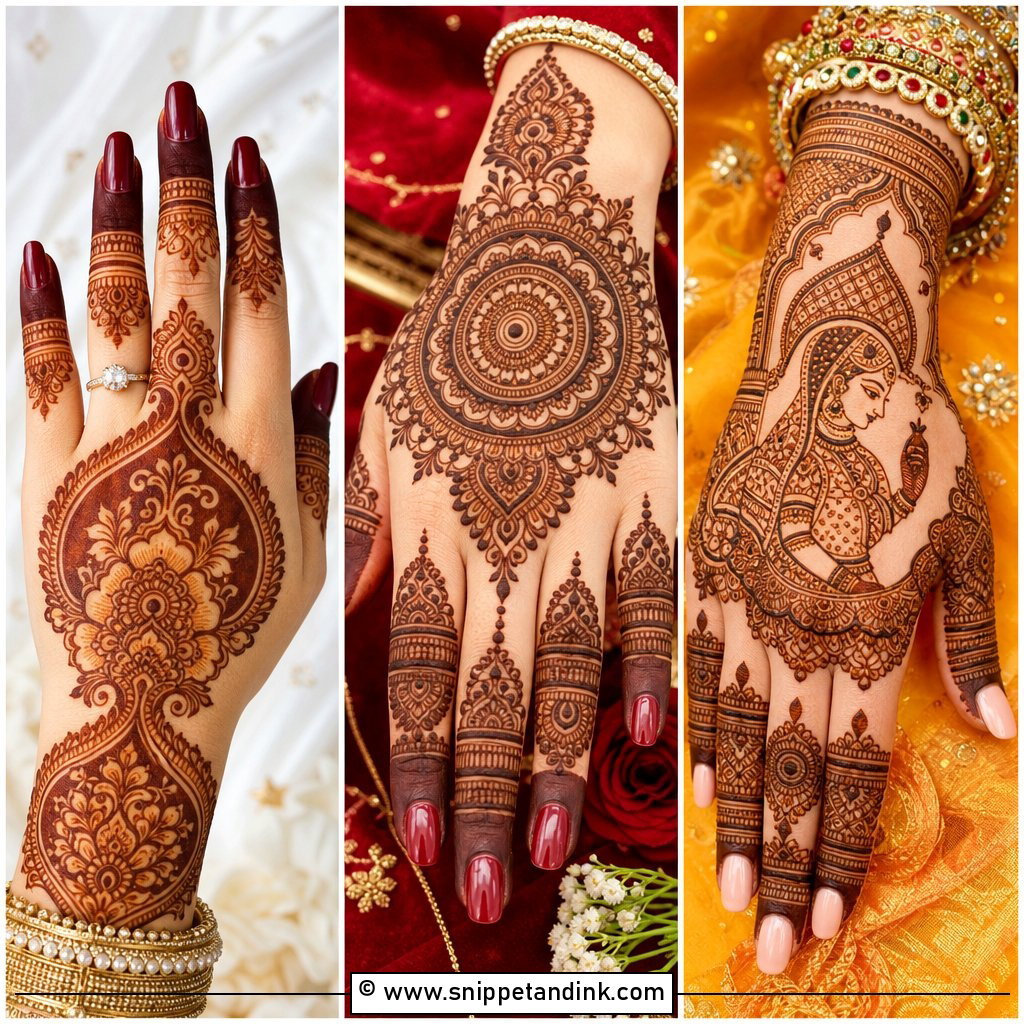
Portrait mehndi puts the bride on one palm and the groom on the other, framed by mandaps, flowers, paisleys and jaali. Faces are the hardest thing in henna; the lines are tiny and the paste spreads if the cone tip is too wide. Ask any artist you’re considering for photos of portraits they’ve already done, and look at the stain, not just the wet paste. Initials, the wedding date or a small ceremony scene can be added around the faces.
6. Peacock Bridal Mehndi Design
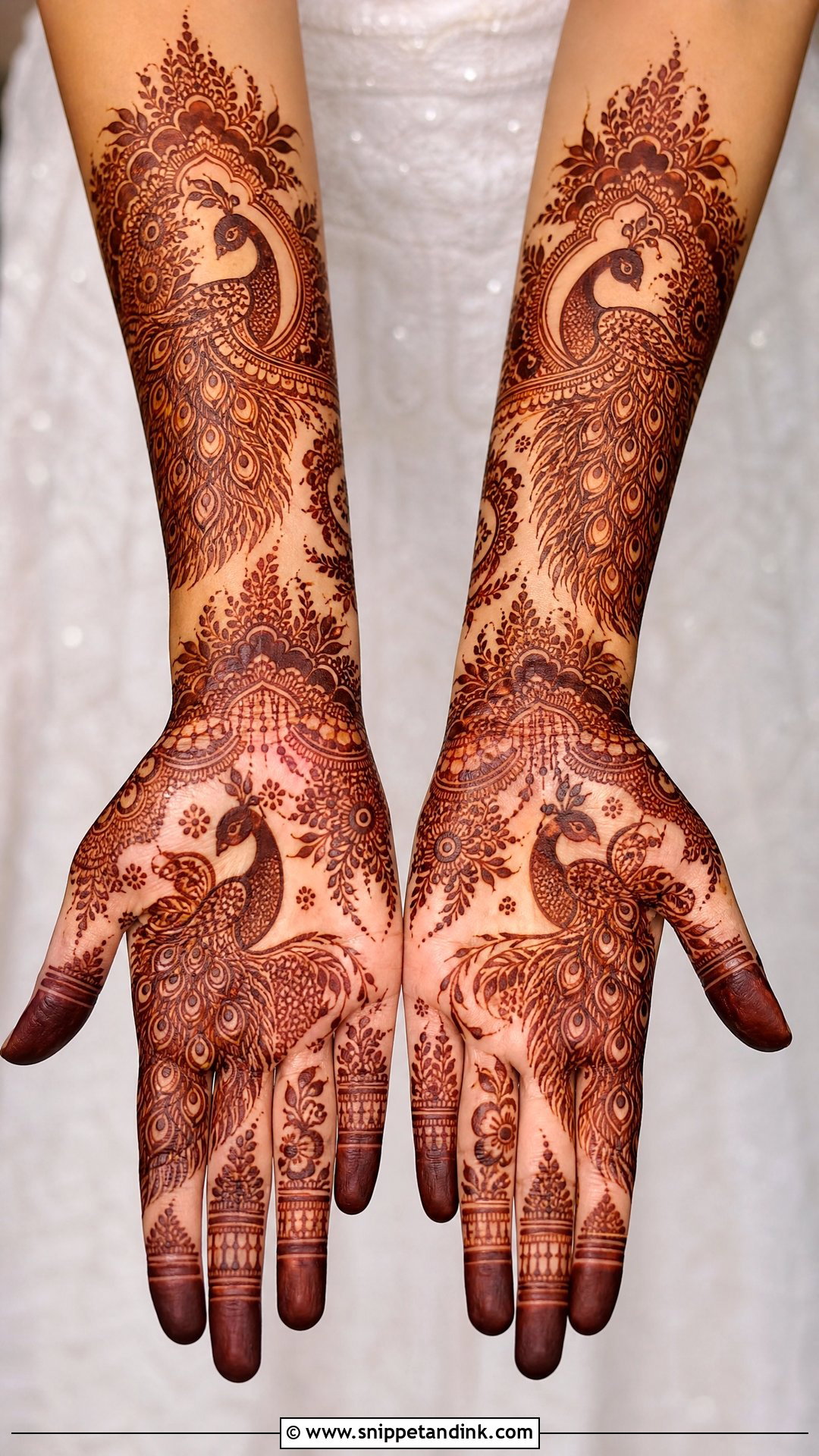
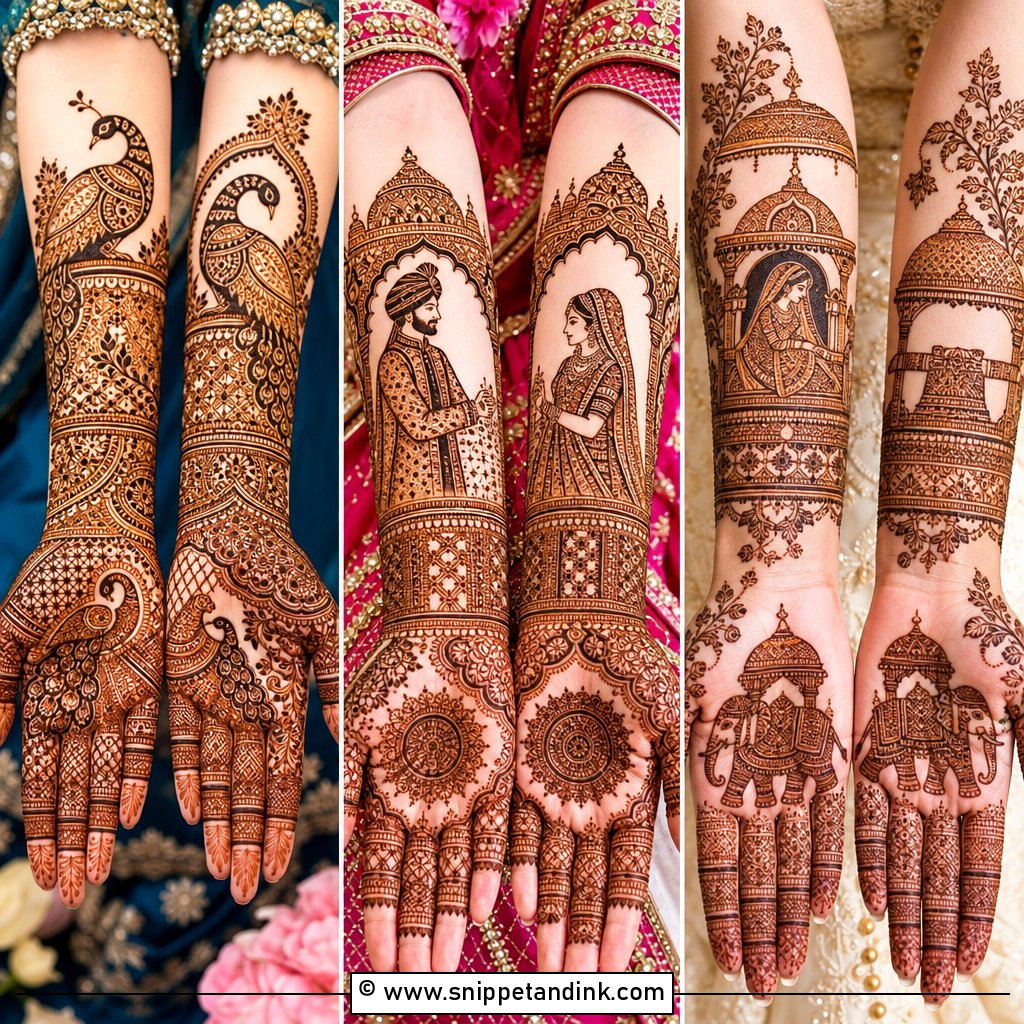
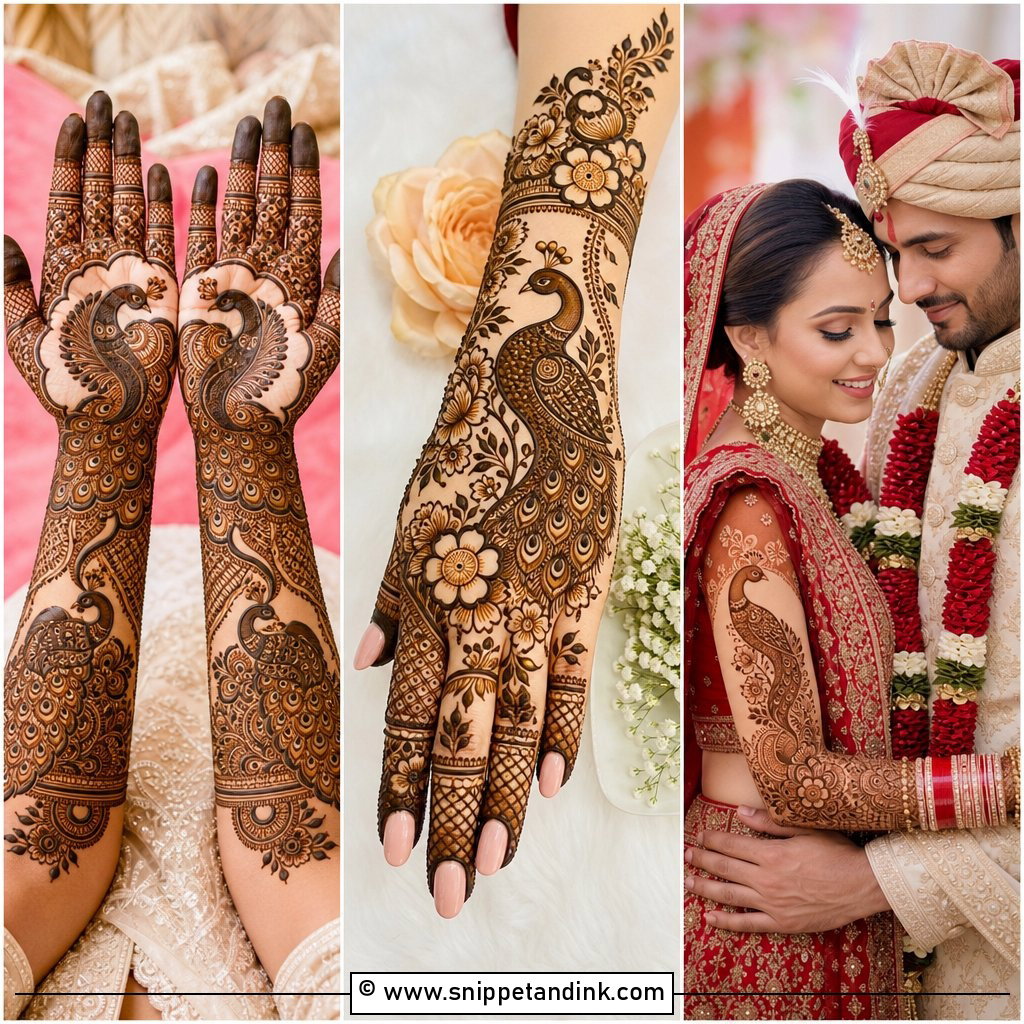
Peacocks sit naturally on the palm, wrist or forearm, with feathers sweeping into paisleys and vines. The feather tails need room to run, so this motif works best on full or near-full coverage, where the plumage can stretch up the arm. Dense fine detail inside the feathers looks rich; a more open version reads cleaner in photos. It pairs well with silk sarees, embroidered lehengas, temple jewellery and classic bangles.
7. Mandala Bridal Mehndi Design
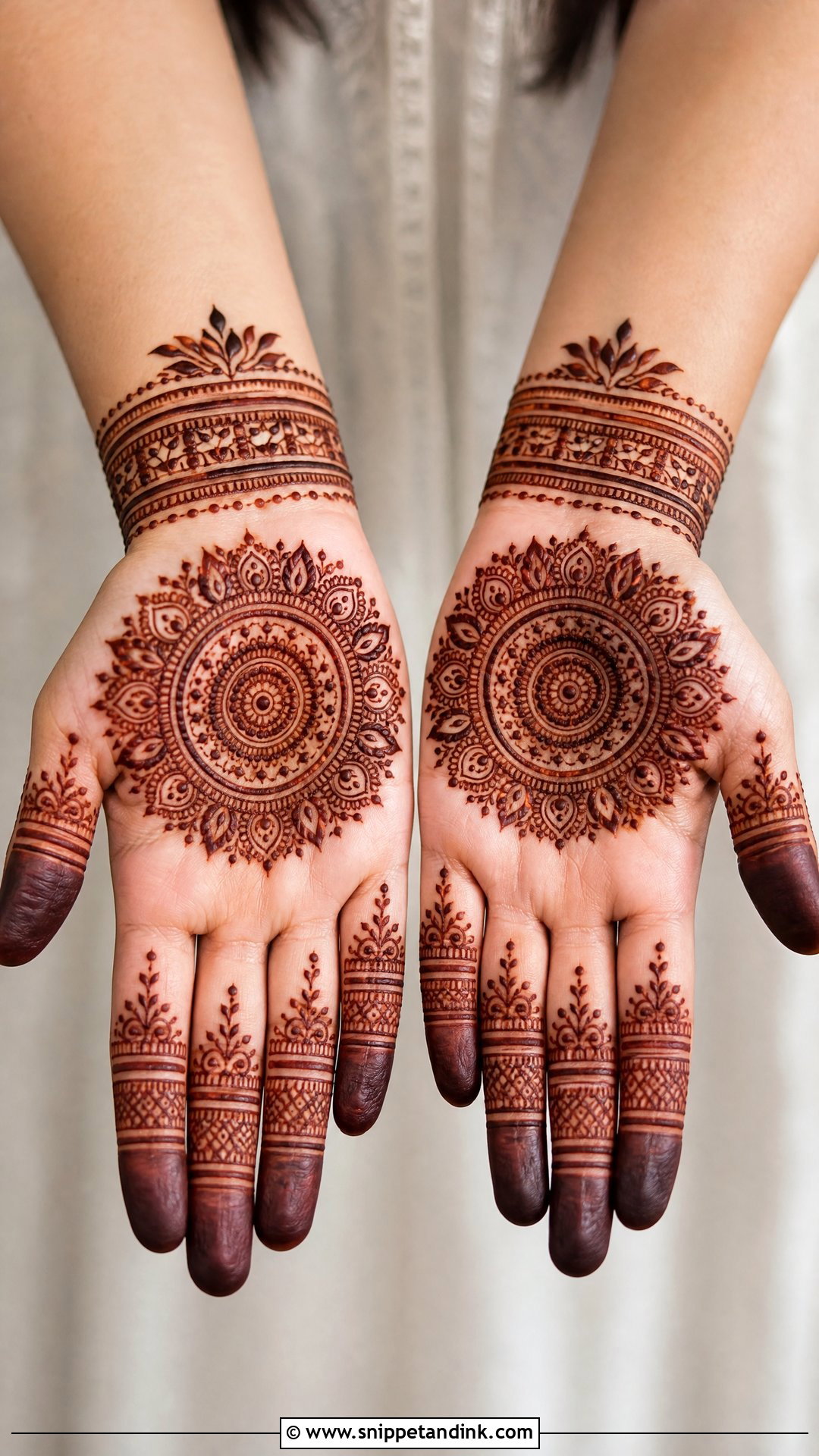
A mandala starts with a single dot in the centre of the palm, and I build outward in rings of petals, dots, curves and fine lines. Fingers are filled with matching bands or mesh. From a distance it looks clean; up close, the rings show a lot of fine work. It’s a good choice on smaller hands, where one strong central circle gives a neat focus. The only thing to watch is symmetry; a lopsided mandala shows instantly, so choose an artist with a steady hand.
8. Jaali Bridal Mehndi Design
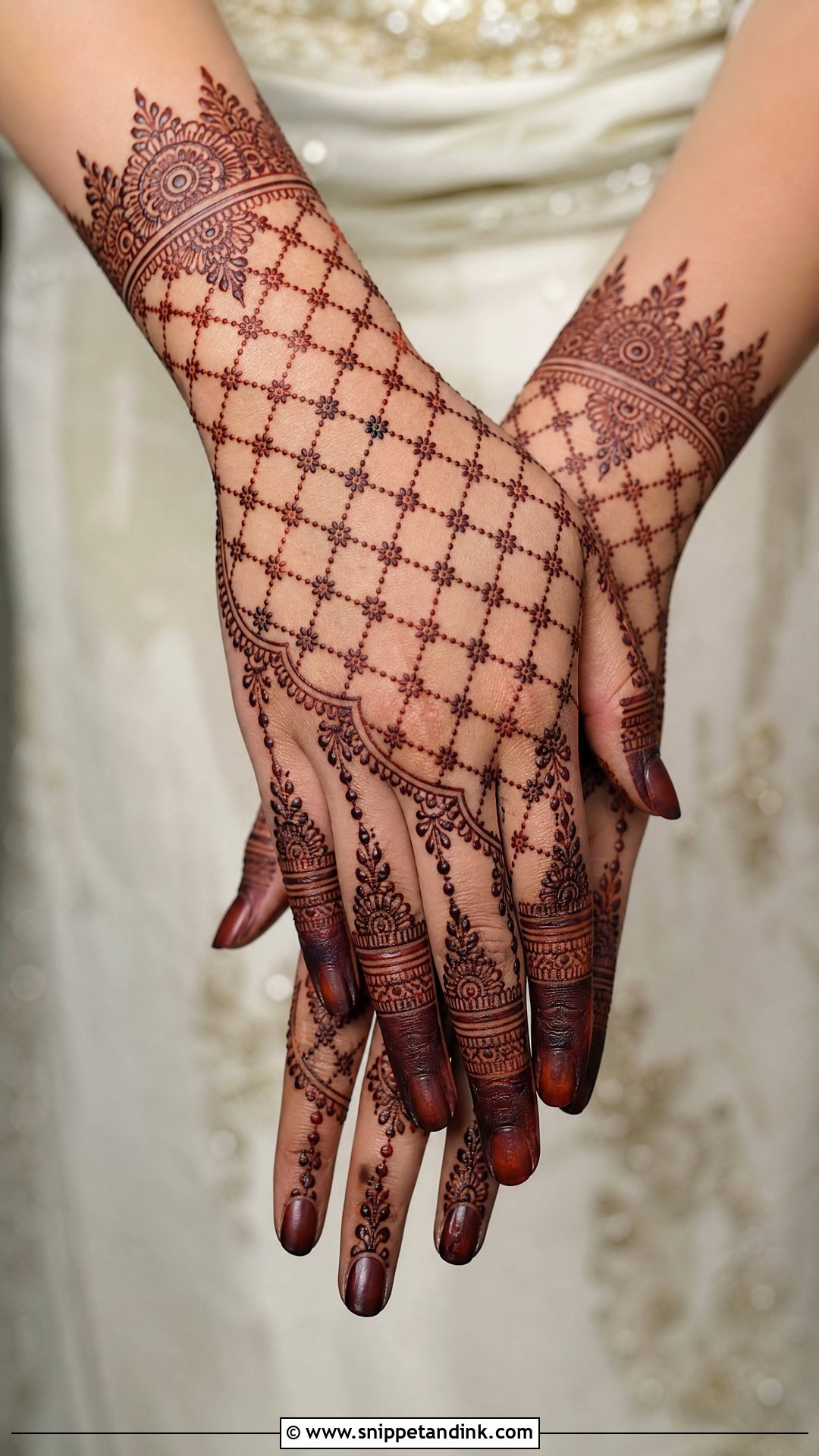
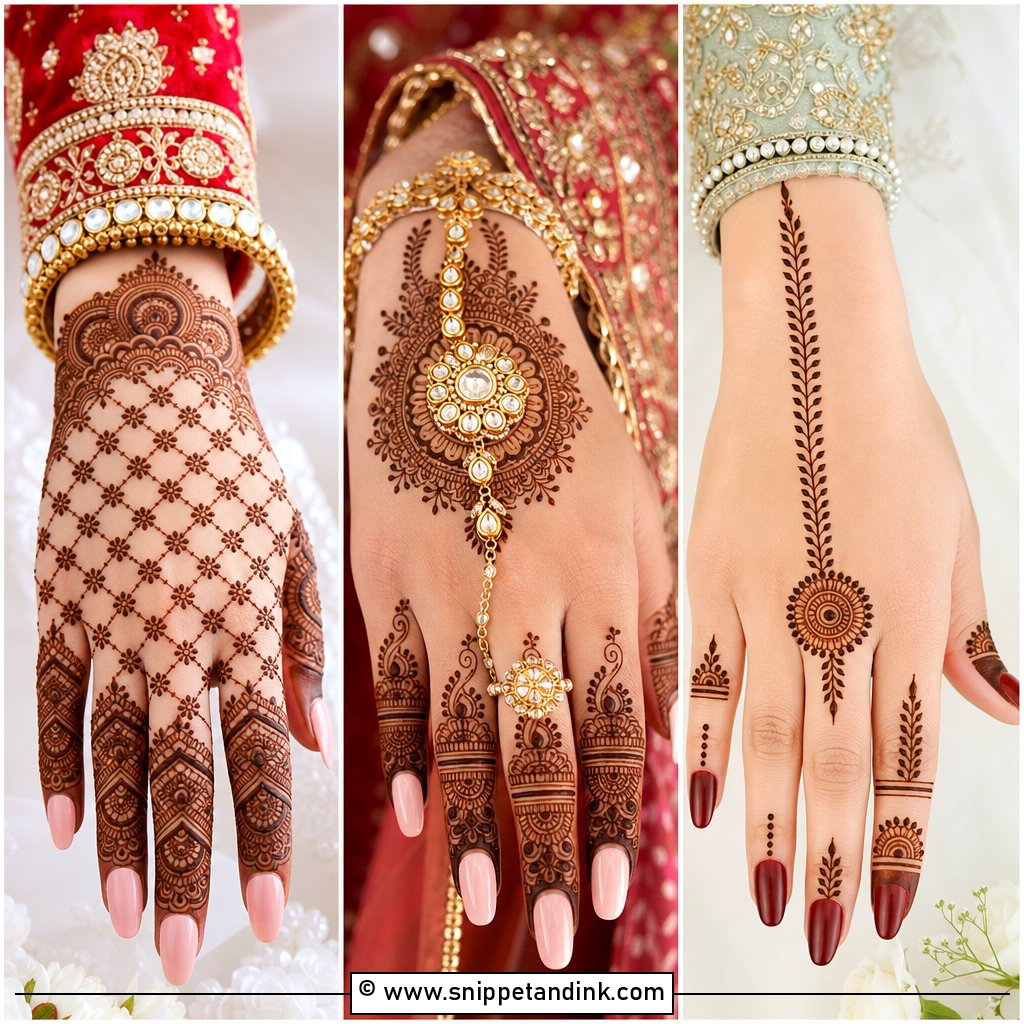
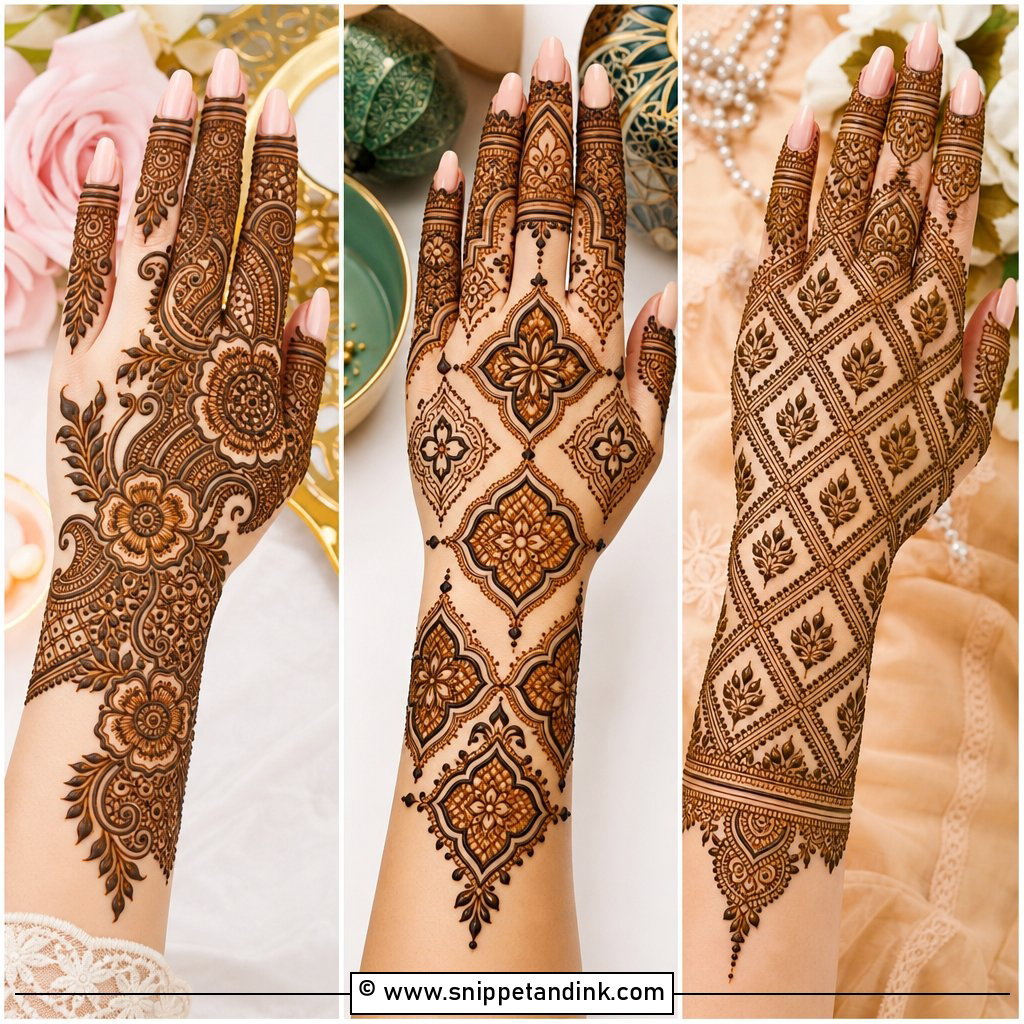
Jaali is henna lace: net patterns, crisscross lines, tiny dots and floral borders that mimic jewellery. It’s especially popular on the back of the hand, where it frames rings and nail colour. The lines are thin, so paste quality matters; I mix mine smooth and strain it so the cone doesn’t clog mid-line. A traditional palm with a jaali back gives good contrast. The open spacing keeps the pattern readable in photos.
9. Rajasthani Bridal Mehndi Design
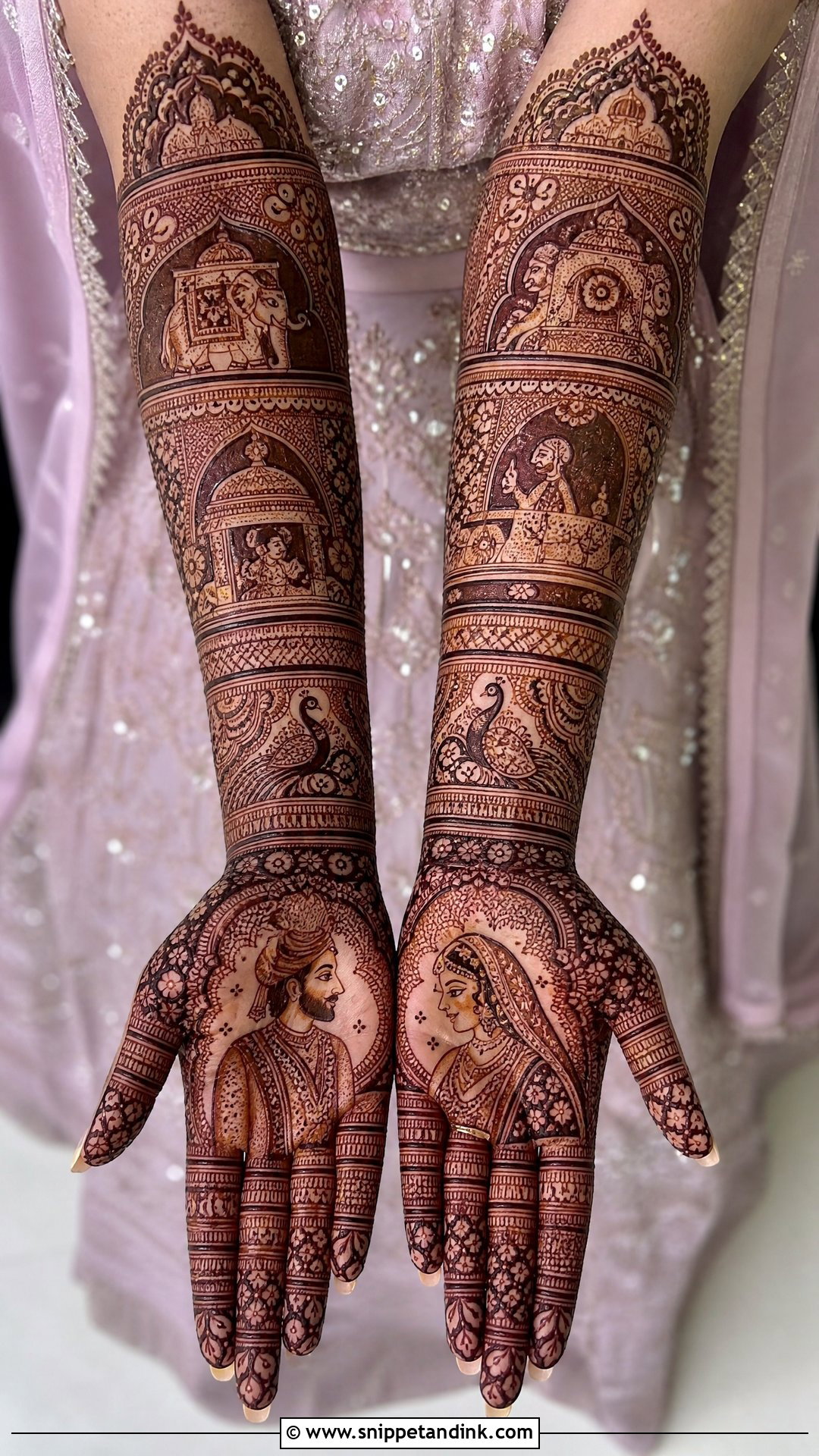
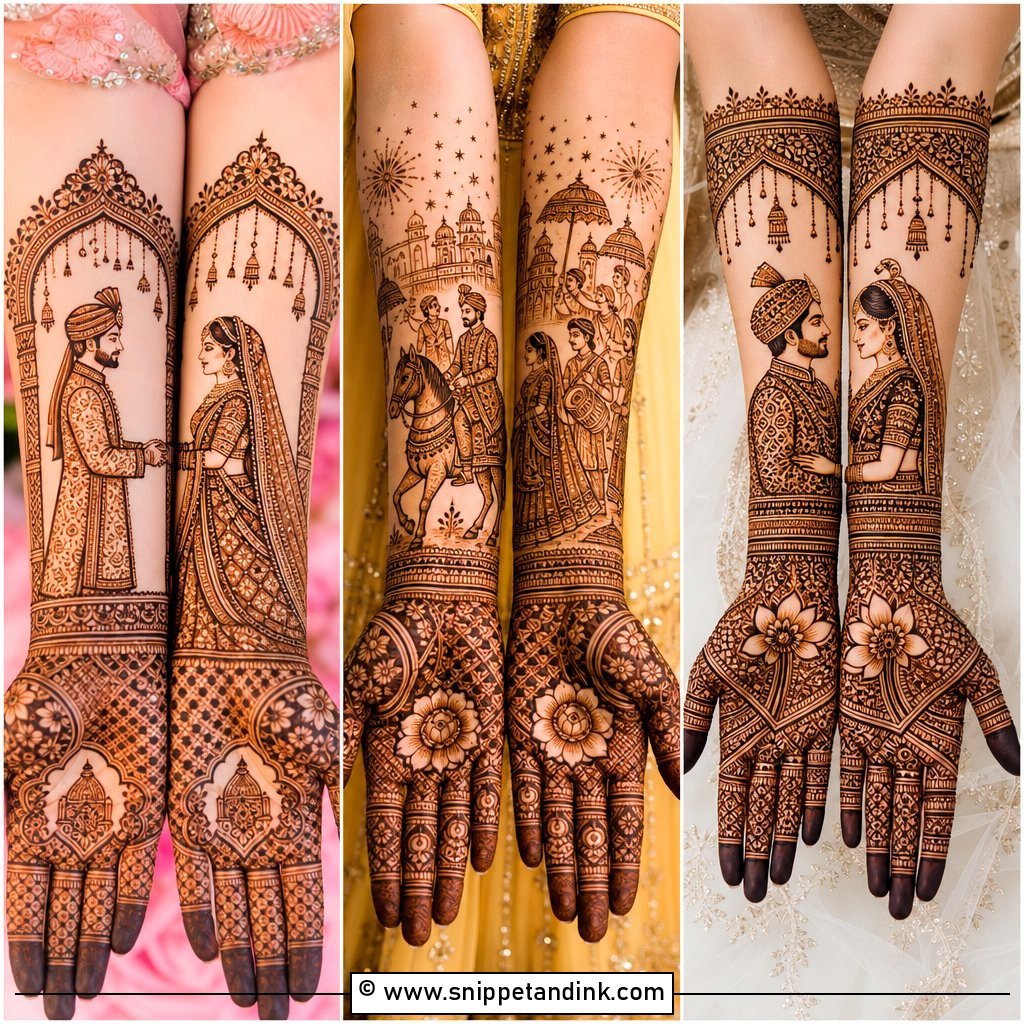
Rajasthani mehndi tells stories: bride and groom figures, elephants, palaces, peacocks, doli scenes, paisleys and dense filler, usually covering both hands and arms. Fine lines and careful symmetry make it slow work, so plan a long sitting and a comfortable chair. The result feels like a full illustration on the skin. Deep red, maroon, gold and green outfits suit it, as do traditional and royal themes.
10. Minimal Bridal Mehndi Design
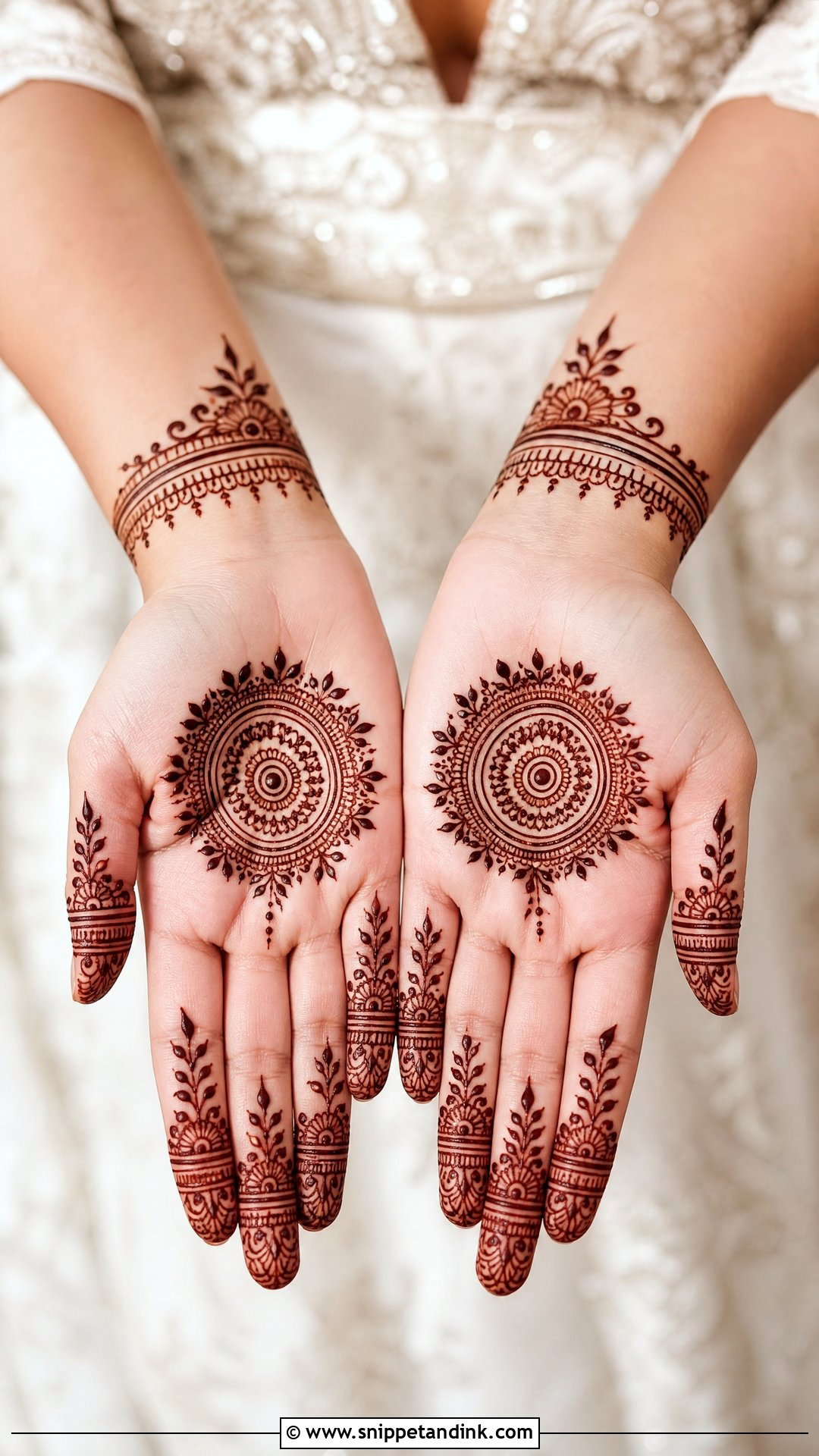
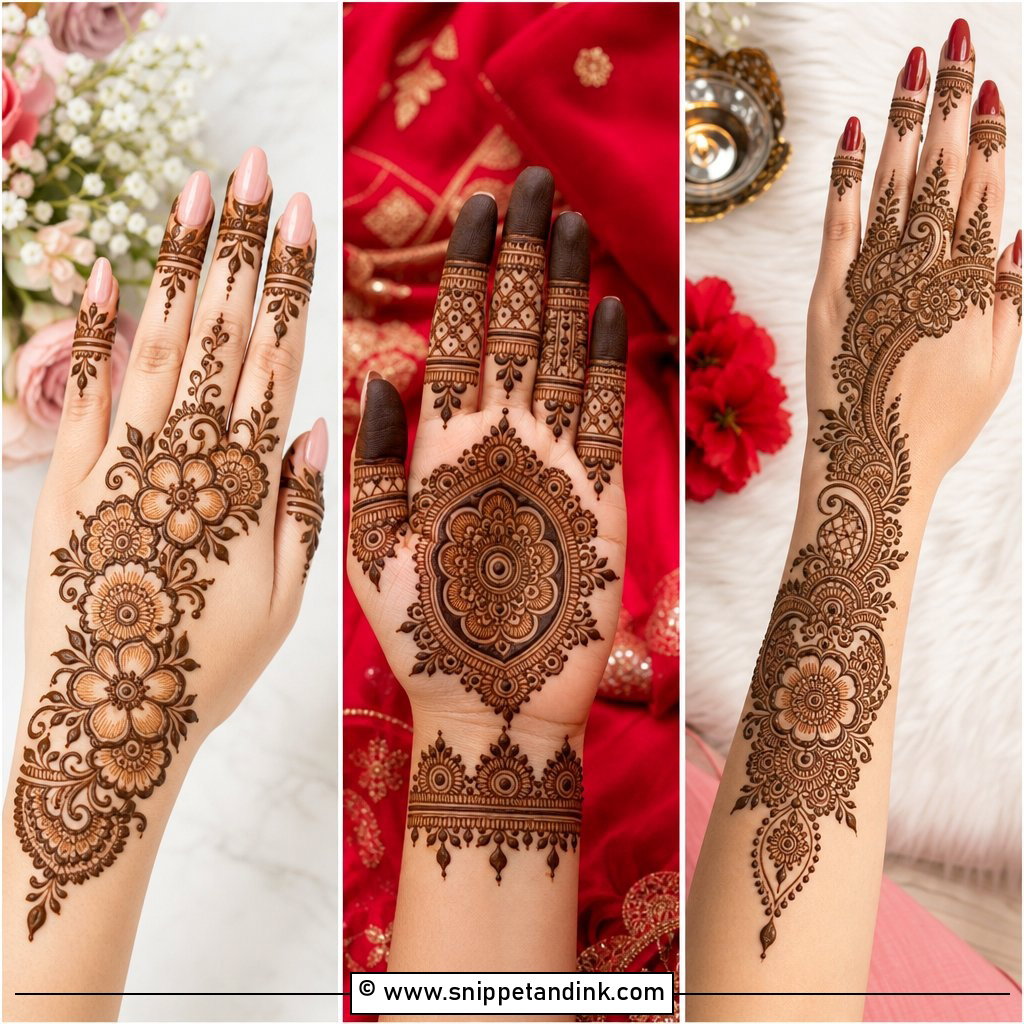
Minimal bridal mehndi might mean a mandala palm, delicate finger bands, small florals, leafy trails and a light wrist cuff, with lots of skin left bare. It suits intimate, court and destination weddings, or brides wearing bold jewellery that shouldn’t compete. It’s also kind if you can’t sit for hours. Keep the lines clean and the spacing even, since there’s less pattern to hide any wobble.
11. Front Hand Bridal Mehndi Design
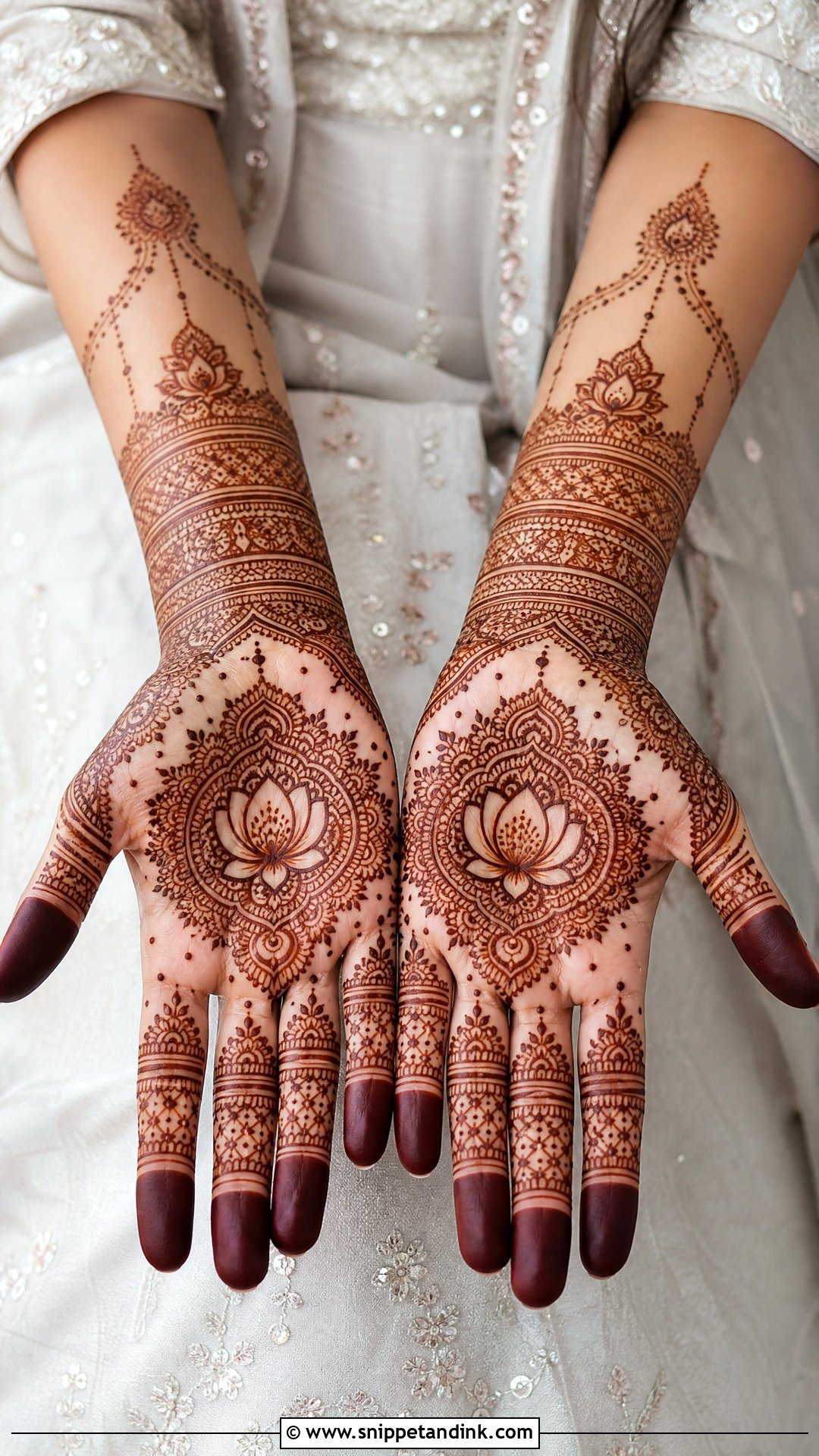
The palm stains deepest because its skin is thicker, which is why front hand designs carry so much weight. Mandalas, lotus patterns, paisleys, portraits, peacocks and dense finger work all sit well here. This side faces the camera during rituals, ring shots and blessings, so the design has to feel complete. Some brides want dense fingertips with an open centre; others want full coverage to the wrist. Either way, I make sure the fingers, palm and wrist connect so the hand reads as one design.
12. Back Hand Bridal Mehndi Design
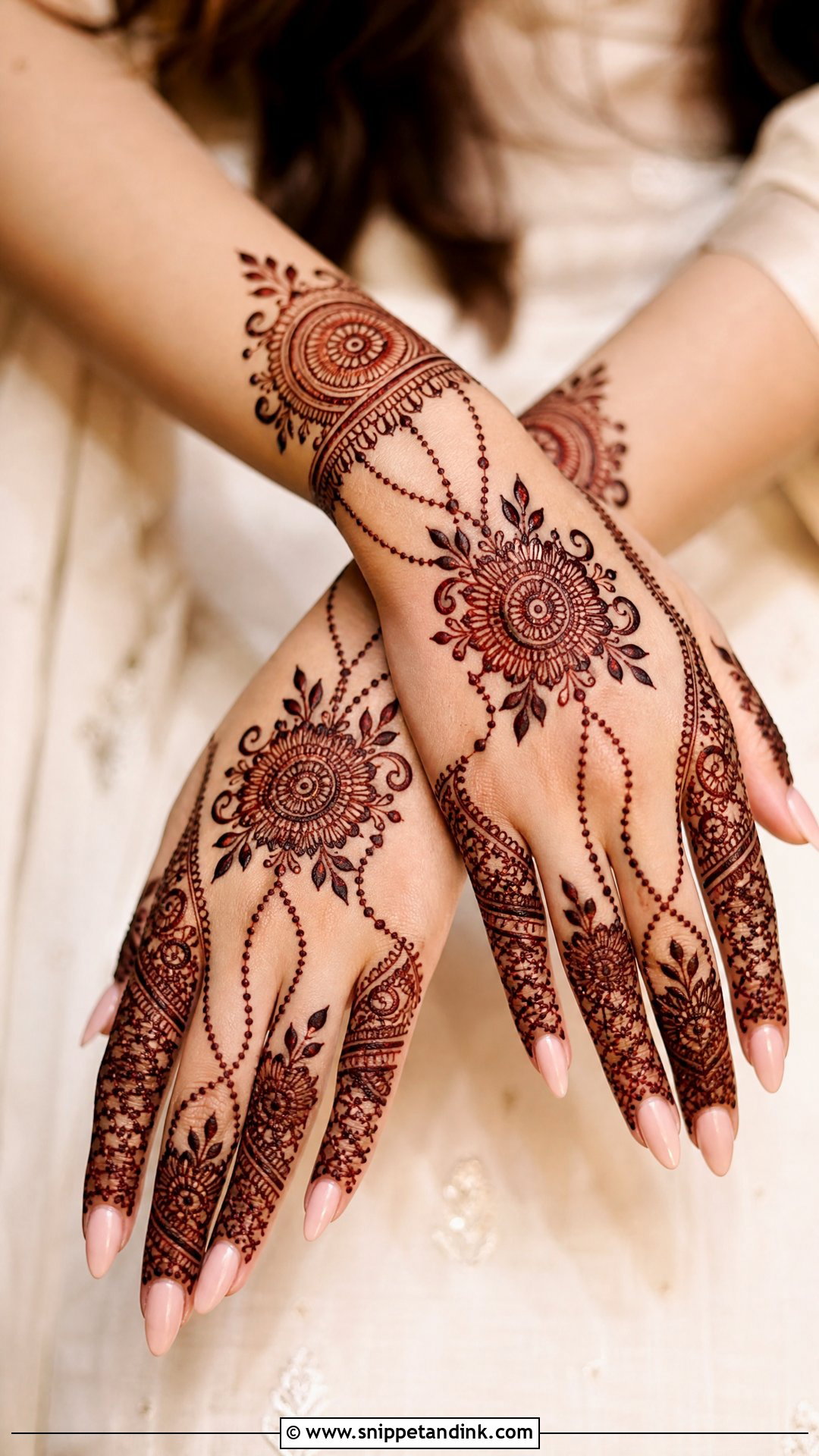
The back of the hand frames your rings, bangles and nail colour, so I often design it like a haath phool, with a central motif linked by chains to the fingers. Jaali mesh, floral chains, mandala cuffs and leafy vines all work here. The back stains lighter than the palm because the skin is thinner, so bold lines show better than very fine filler. Open Arabic trails keep it clean; full coverage adds richness.
13. Lotus Bridal Mehndi Design
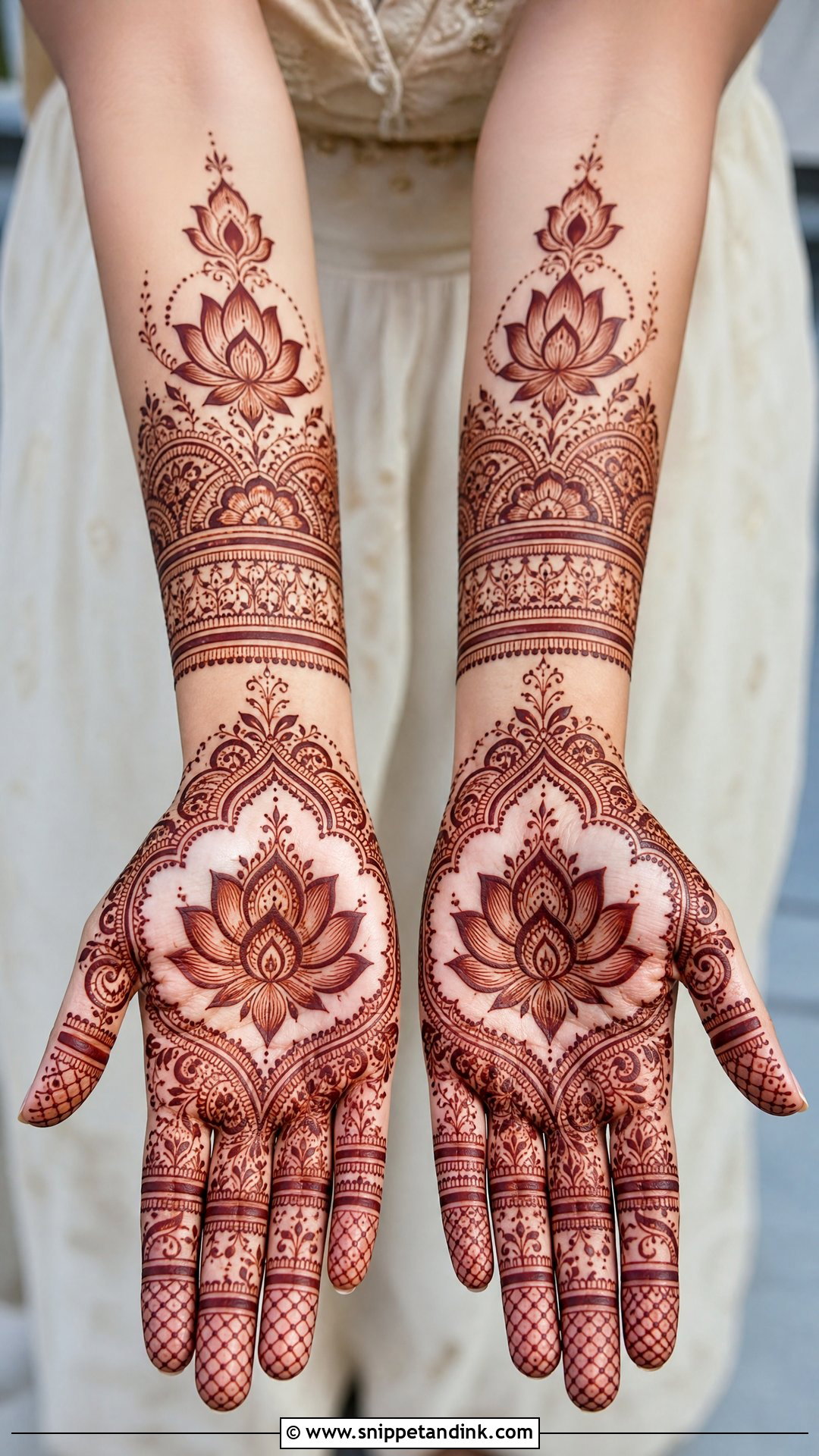
Lotus motifs can sit on the palm, wrist or forearm, surrounded by paisleys, dots, vines and fine filler. A large lotus makes a clear focal point; smaller lotus bands work around the wrist and fingers. It pairs well with temple jewellery, pastel lehengas, silk sarees and floral accessories. Lotus petals are wide, so they show the deepening of the stain clearly, which is part of the charm. Choose a dense Indian version or a lighter Indo-Arabic layout.
14. Elephant Bridal Mehndi Design
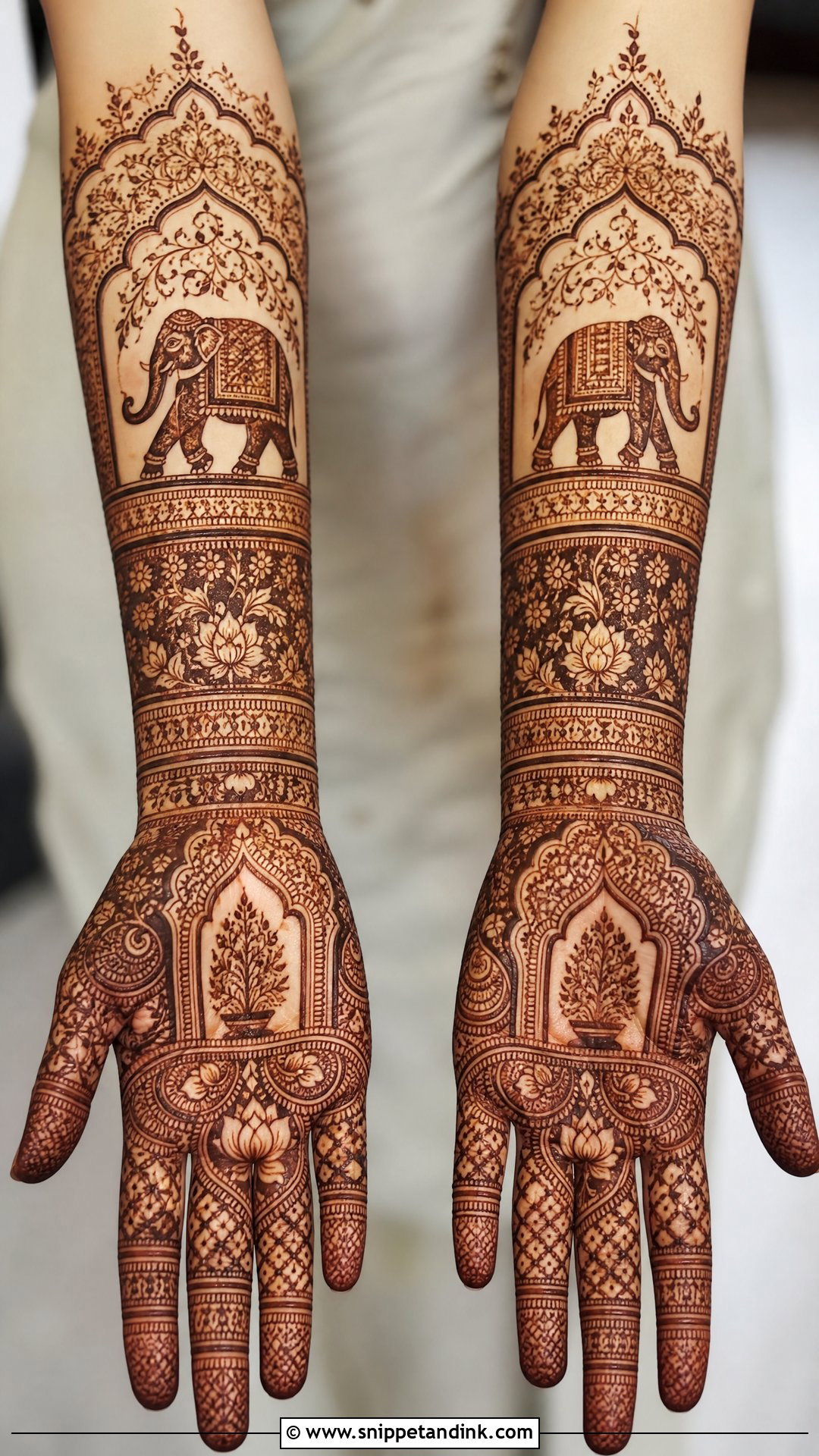
Elephant bridal mehndi design places elephants on the forearm, wrist or palm, with palace arches, floral borders and paisleys around them. It feels grand without needing portrait work. The elephant must be drawn clearly, with decorated blankets, curled trunks and small ornaments, so it needs space; I wouldn’t squeeze one onto a minimal hand. It suits royal themes, traditional outfits and the deep maroon stain of a well-cared-for design.


15. Dulha Dulhan Mehndi Design
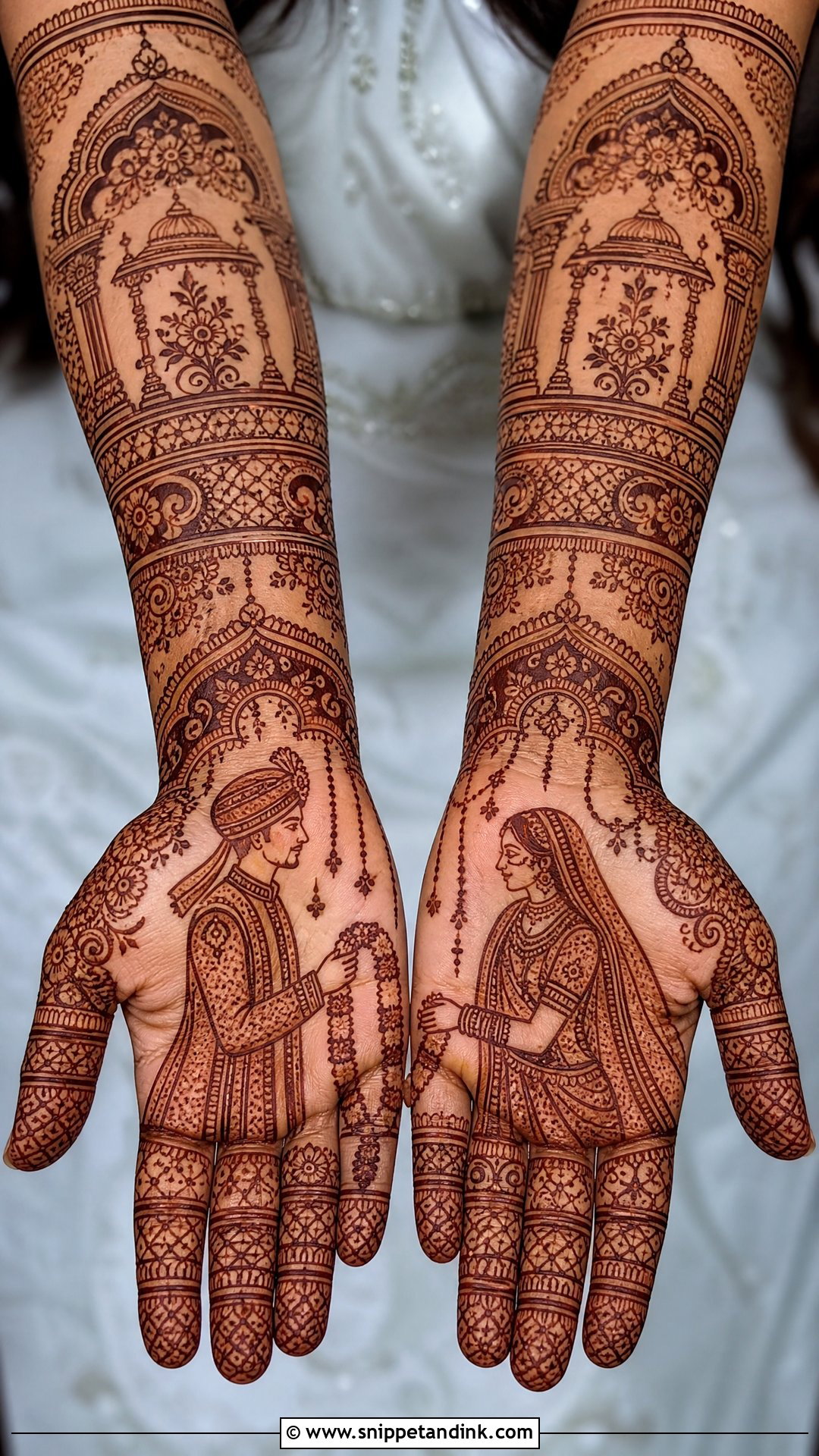
Dulha dulhan mehndi design puts the groom on one hand and the bride on the other, surrounded by varmala, doli, mandap, flowers and initials. The rest of the hand carries paisleys, mandalas, jaali and forearm borders. It’s personal and takes longer than most designs, so plan the timing. Photograph it both fresh and after the stain has darkened; it changes noticeably over two days.
16. Royal Bridal Mehndi Design
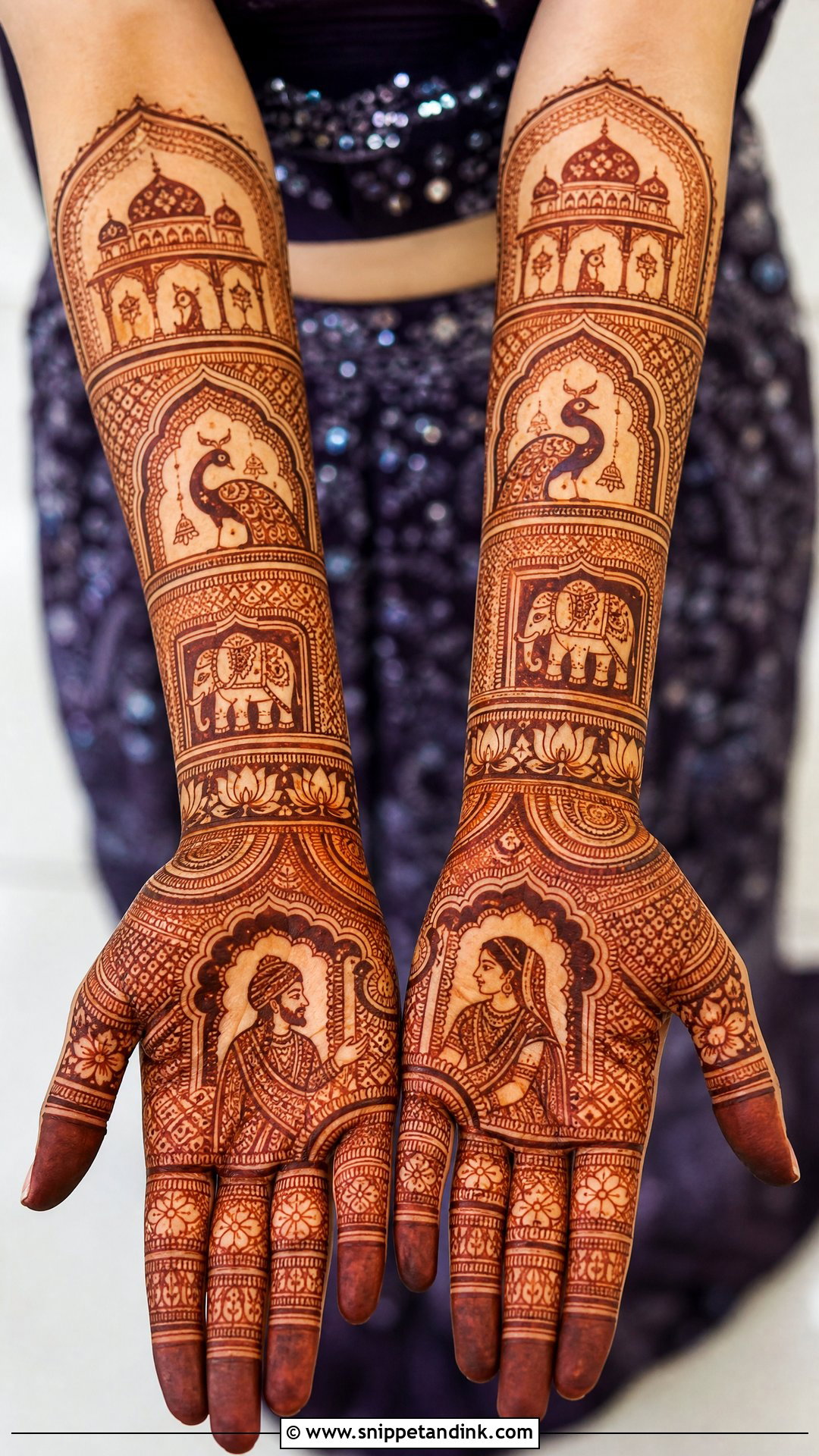
Royal mehndi combines palace arches, elephants, peacocks, lotuses, layered borders and heavy finger patterns from fingertips to forearm. The key is that the main motifs still stand out; I outline them in a slightly thicker line and keep fillers fine for contrast. It suits heavily embroidered lehengas, traditional jewellery and regal colours. Expect a long sitting and a lot of drying time.
17. Modern Bridal Mehndi Design
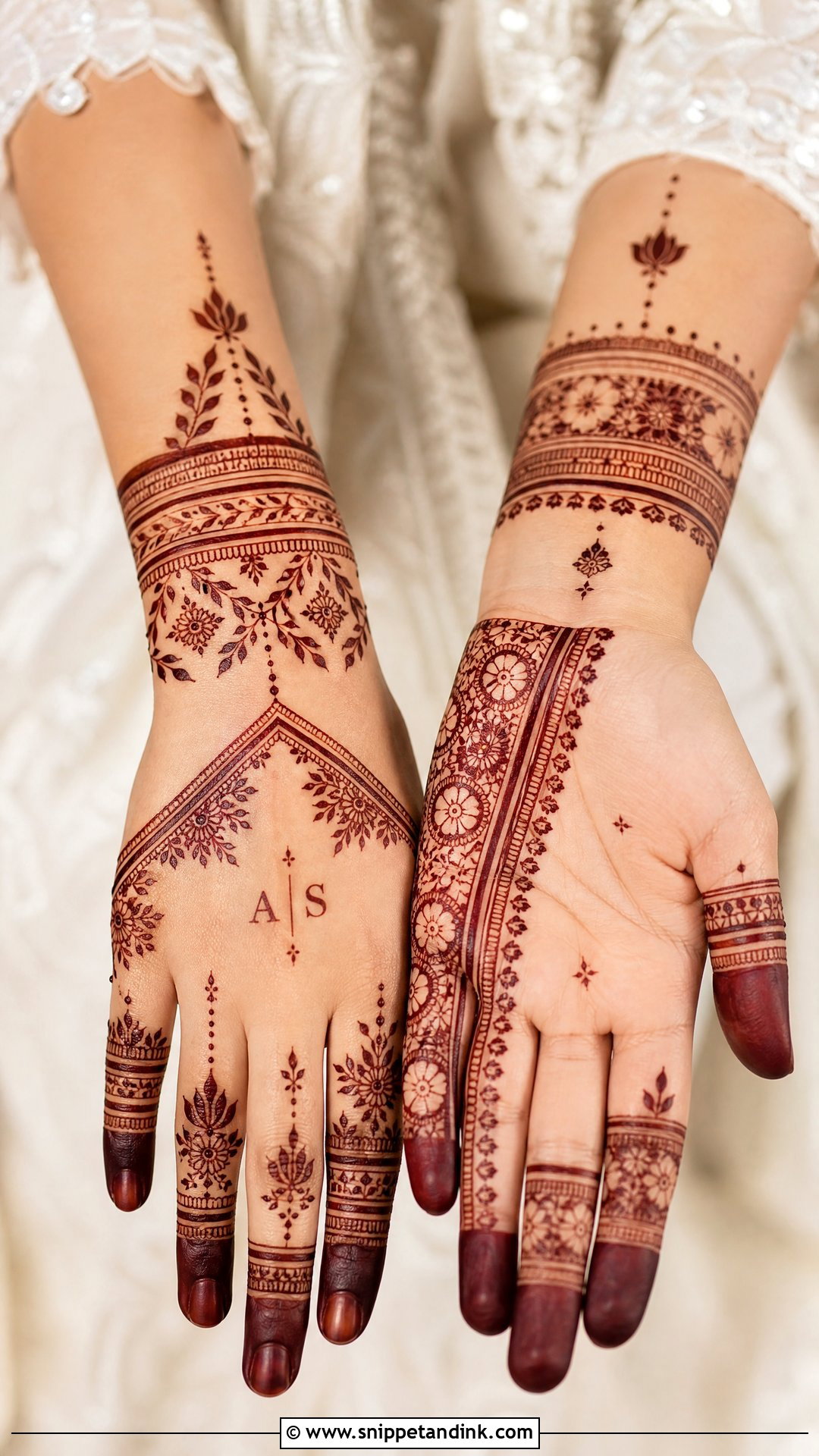
Modern mehndi still feels festive, but it’s organised: clean spacing, geometric bands, half-and-half palms, floral cuffs, negative space, initials and sleek finger patterns. Asymmetric layouts are common, with a mandala on one hand and a floral trail or personal element on the other. It suits destination weddings, fusion outfits and pastel lehengas. The danger is that open space shows any uneven line, so precision matters more here than in dense work.
18. Floral Bridal Mehndi Design
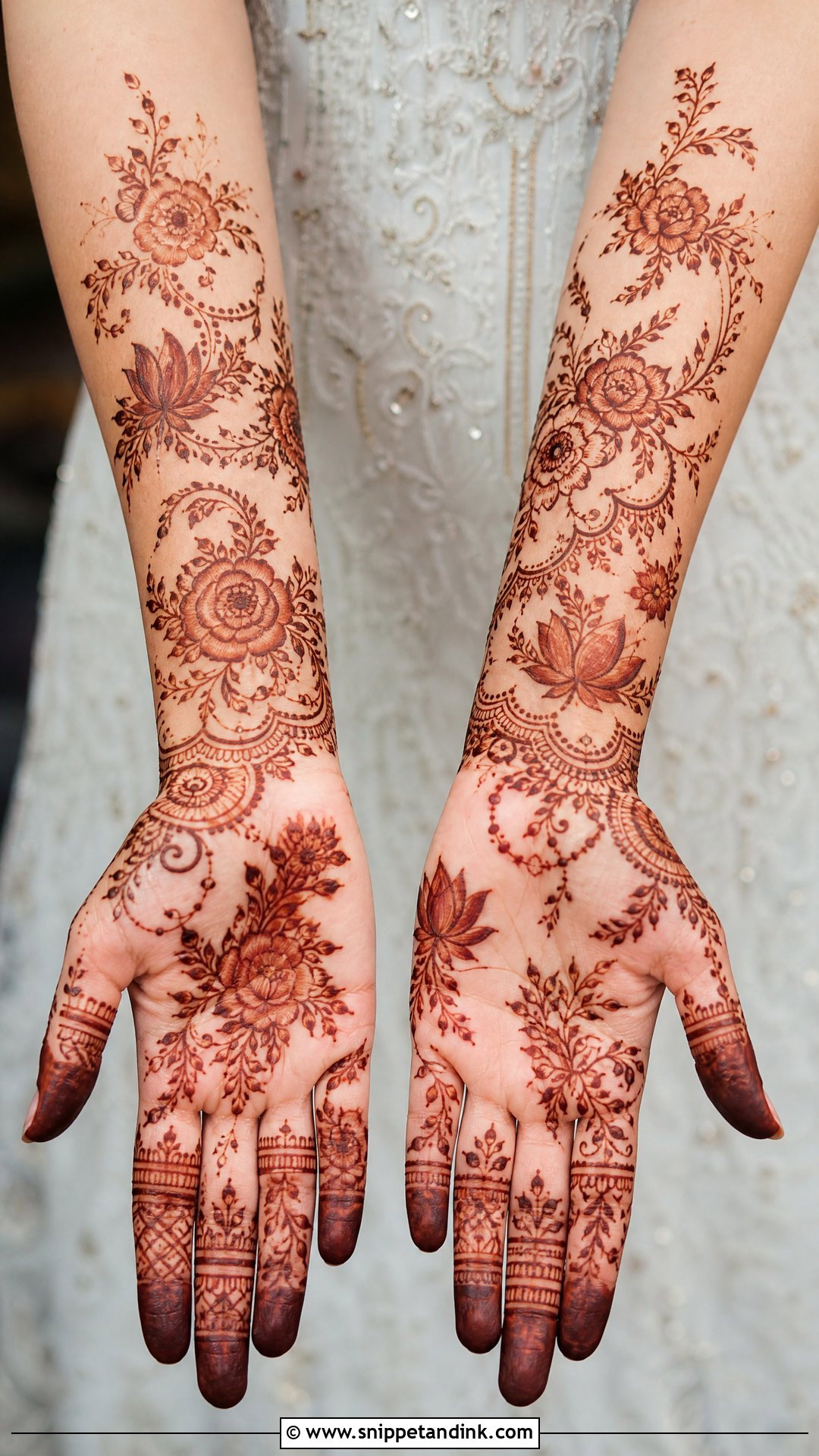
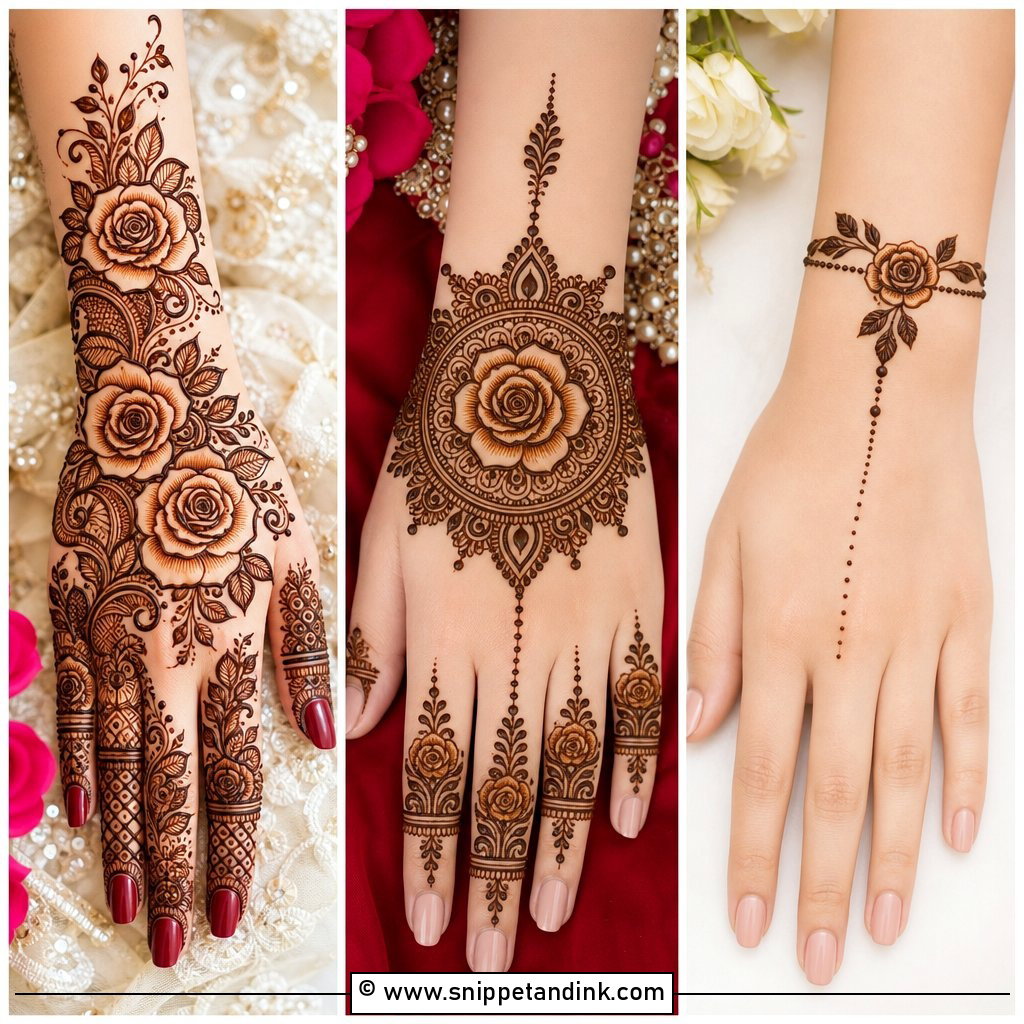
Flowers suit every hand shape: roses, lotus petals, leafy vines, shaded blossoms and floral cuffs. They can be laid out as Arabic trails, Indian full coverage or a fusion of the two. Large flowers sit well on the palm and back; tiny floral fillers suit the fingers and wrist. Florals pair with pastel outfits, fresh flower jewellery and romantic themes. They’re also forgiving for first-time brides, as petals hide small slips easily.
19. Personalized Bridal Mehndi Design
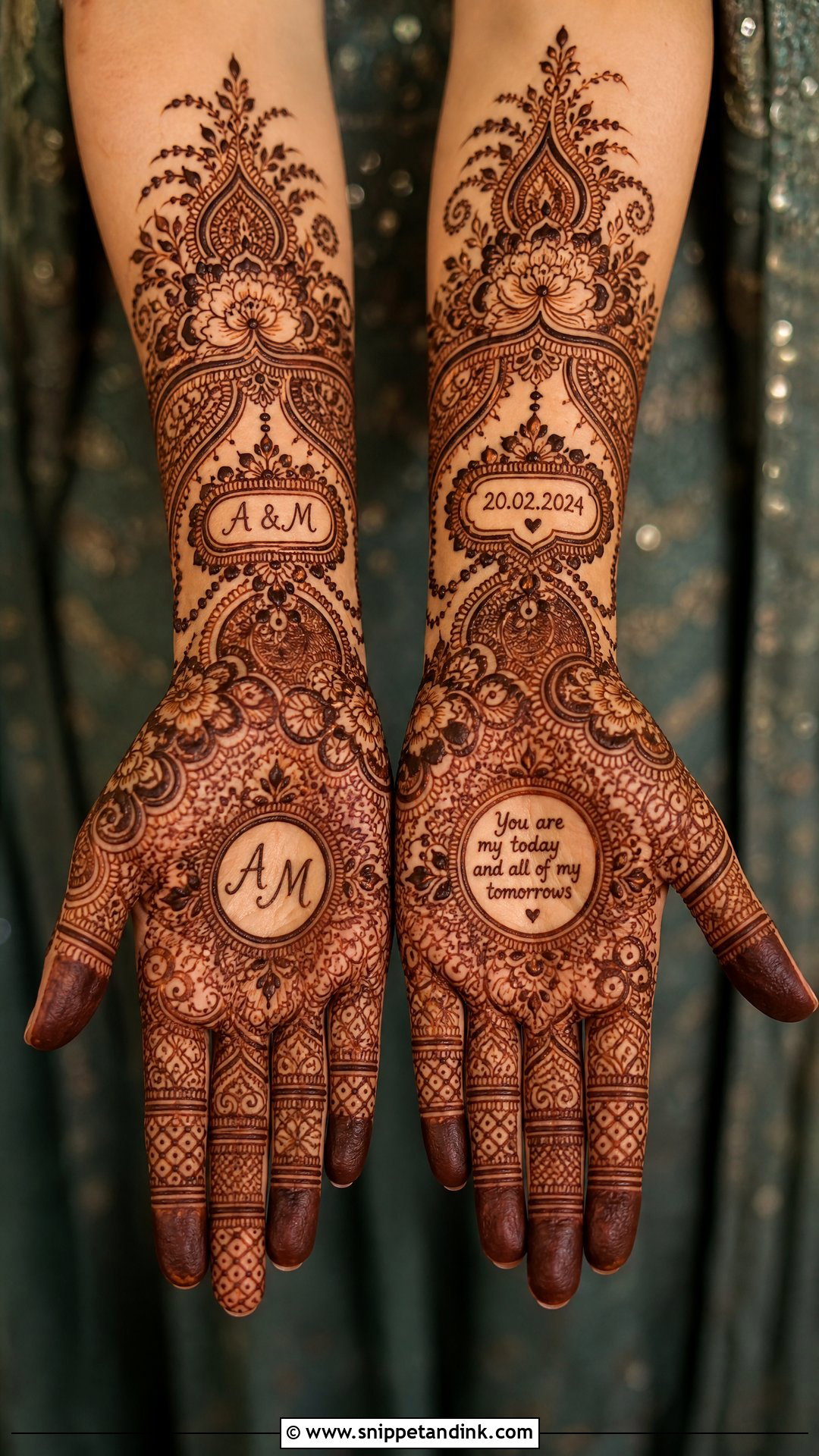
Personalized bridal mehndi design adds the groom’s name, initials, wedding date, a proposal symbol, a favourite flower, a skyline or a pet. I hide these inside paisleys, jaali or mandalas, which turns them into a small discovery. Many families keep the custom of the groom searching for his name after the wedding. The rest of the hand can stay traditional. Give your artist the details in writing ahead of time, so spellings are correct.


20. Simple Bridal Dulhan Mehndi Design
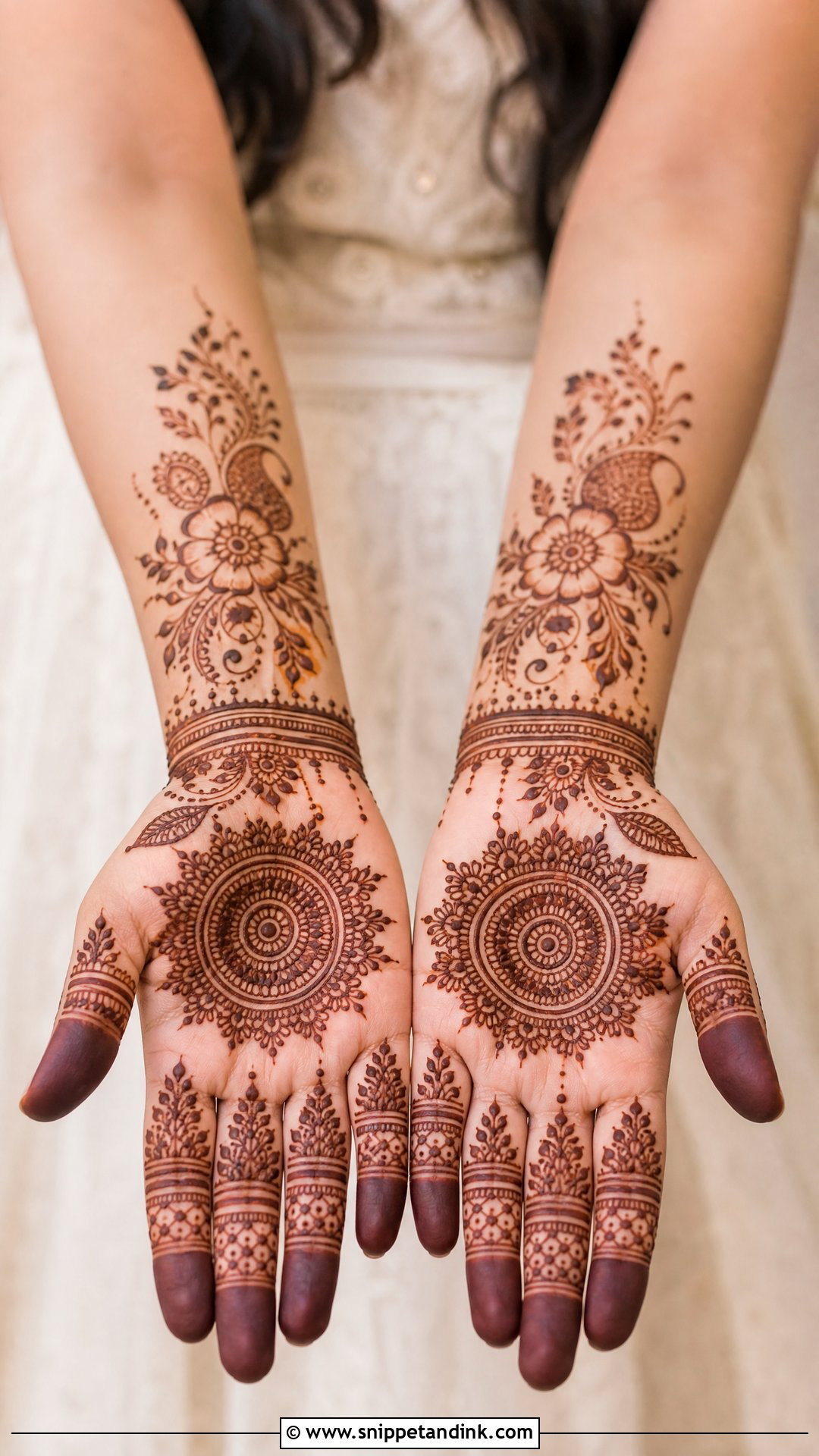
A simple dulhan design might be a central mandala, neat finger details, soft vines, wrist bands and light forearm coverage. It isn’t plain; it just avoids dense filling. Brides who dislike crowded hands, or who have a nikkah, civil ceremony or small function, often prefer it. It’s also suitable for bridesmaids who want something bridal-inspired. Bold outlines and enough finger detailing keep it festive.
Why the Stain Starts Orange
Fresh henna paste leaves a bright orange stain when it’s first removed. That’s normal. Over the next 24 to 48 hours it oxidises to a deep red, maroon or brown. So a bride who panics at the orange the morning after usually has nothing to worry about.
Care for the darkest result
- Keep the paste on as long as you can, ideally overnight.
- Dab on a lemon and sugar mixture once it’s dry to keep it stuck to the skin.
- Scrape the dried paste off with a blunt edge; don’t wash it off.
- Keep hands away from water for as long as possible, ideally until the next day.
- Warmth helps; keep hands warm rather than cold.
The stain lasts one to three weeks, fading as your skin naturally renews. Hands that are washed often fade faster, so a little balm or oil after washing helps.
A Word on Black Henna and Instant Cones
Natural henna never stains black. Pastes that promise a black colour, or a dark stain in an hour, often contain a chemical dye that can cause burns, blisters and lasting allergies. Ask your artist what’s in the paste. Fresh, natural paste smells earthy, sometimes of essential oils, and leaves an orange stain first. If you have sensitive skin, ask for a small patch test a few days before.
Your Outfit, Your Schedule, Then Your Pattern
Full Indian coverage feels grand; Arabic and Indo-Arabic patterns feel lighter and more flowing. Portraits, dulha dulhan scenes, elephants and peacocks bring storytelling. Mandala, jaali, floral and minimal work suit brides who want clean balance. Before you settle on a design, look at your outfit and jewellery, your ceremony schedule and how long you can sit comfortably. A design you can rest through will stain better than one rushed to fit a busy day.
You'll Like These Ideas:



Leave a Reply