
Bridal mehndi is rarely just decoration. In most families the paste goes on to music and teasing, with someone always asking where the groom’s name is hidden. The ideas below run from dense full-hand Indian work to airy Arabic trails, with portrait palms, jaali work, mandalas, lotus fills and wedding-story details in between. When a bride sits down with me for a consultation, I ask about her sleeve length, her jewellery and how long she can realistically sit still before we look at a single motif. Those answers narrow the choice faster than any picture.
Scheduling the Mehndi So the Colour Peaks on the Wedding Morning
Henna doesn’t come off the skin finished. When the dried paste is scraped away, the stain is bright orange, and it oxidises to its deepest shade over roughly 24 to 48 hours. That’s why I almost always book the bridal session one or two days before the wedding rather than the day before the pheras or the nikah itself.
Plan the day backwards from that, because the paste needs time on the skin as much as the artist needs time to draw:
- Elbow-length coverage on both arms is a long sitting, so agree a start time and build in breaks for food and the bathroom before the hands are done.
- Once the paste is on, you need it on for hours. Arrange for someone to feed you, hold your phone and pin your dupatta.
- Feet go last, because you won’t be able to walk once they’re covered.
- Wax, exfoliate and finish any manicure before the session. Scrubbing after application lifts the stain.
- Skip lotion and oil on your hands that morning so the paste grips clean, dry skin.
1. Full Hand Dulhan Mehndi Design
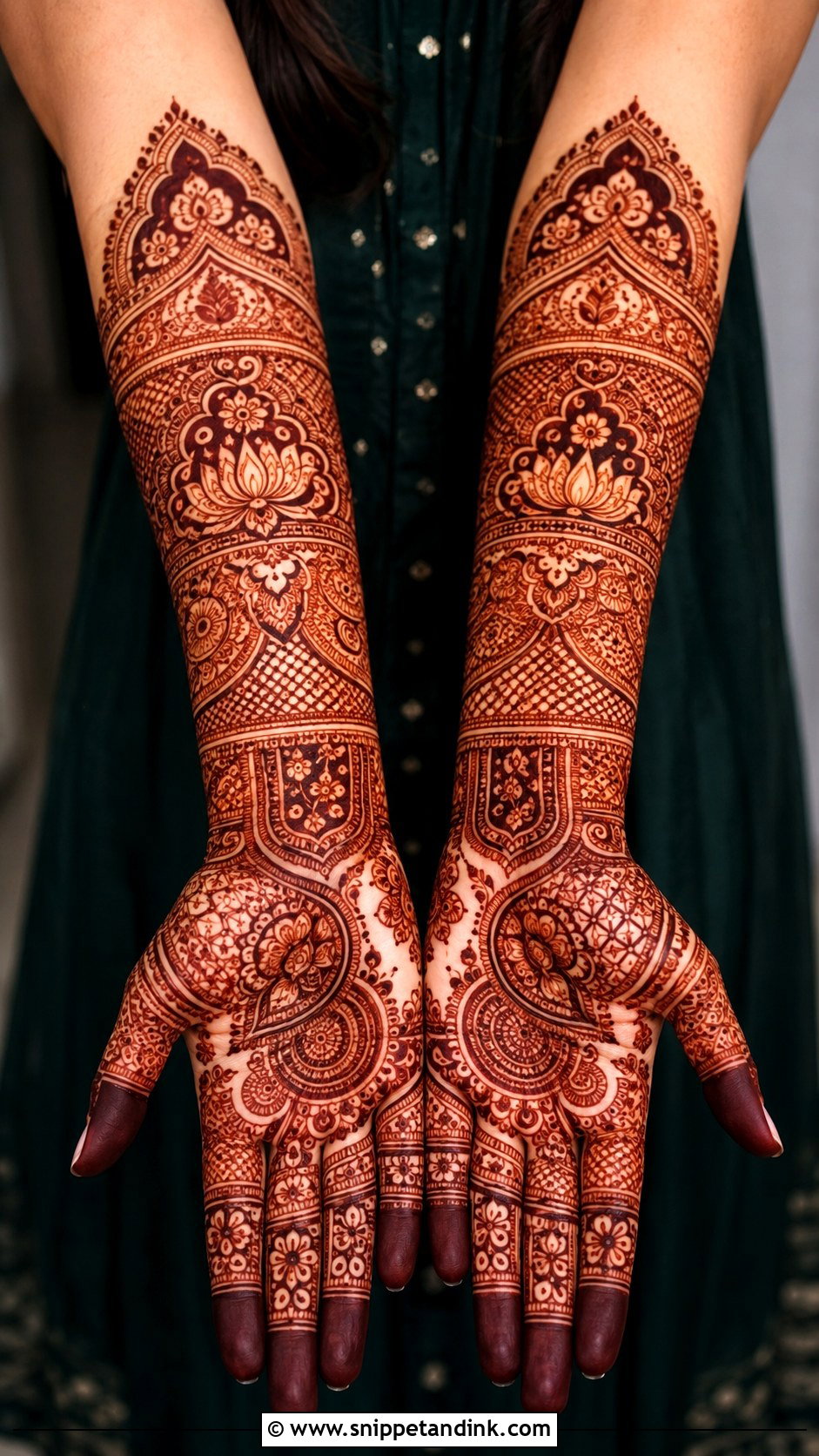
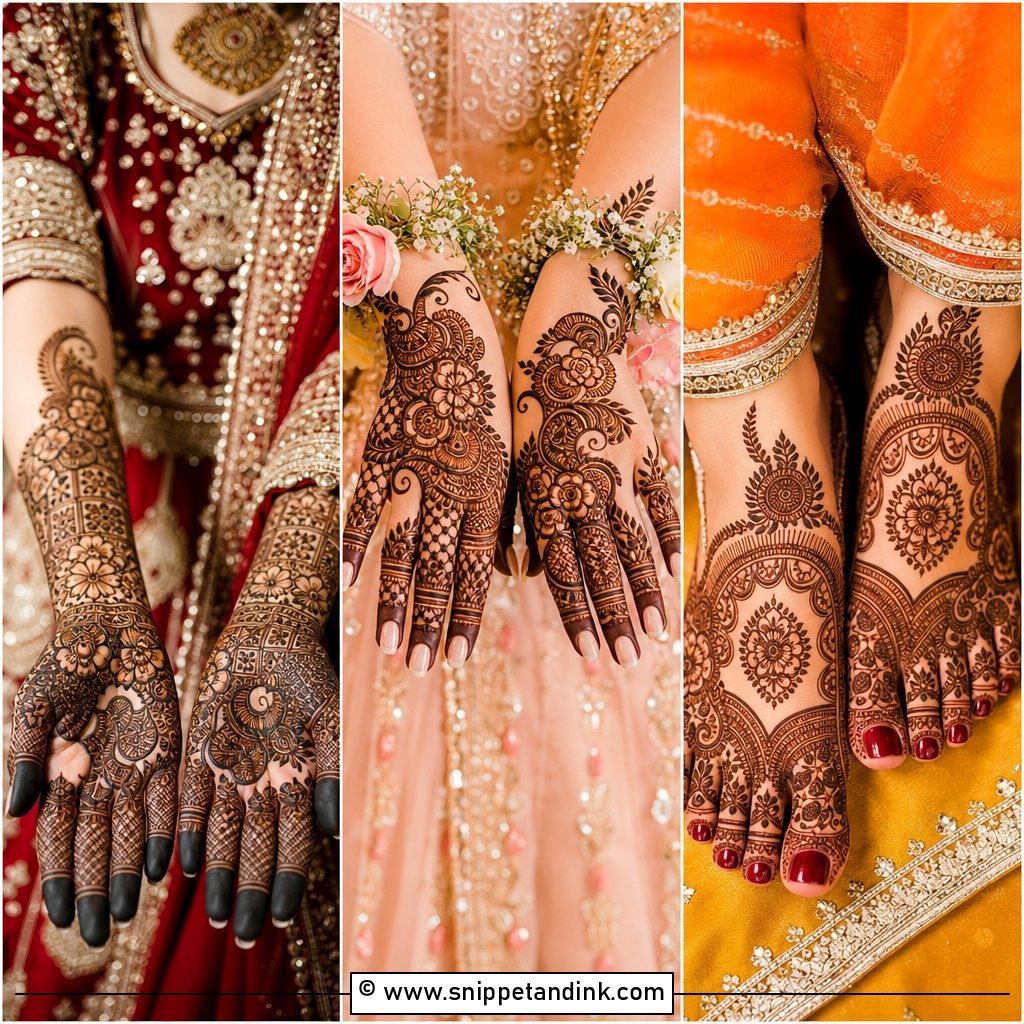
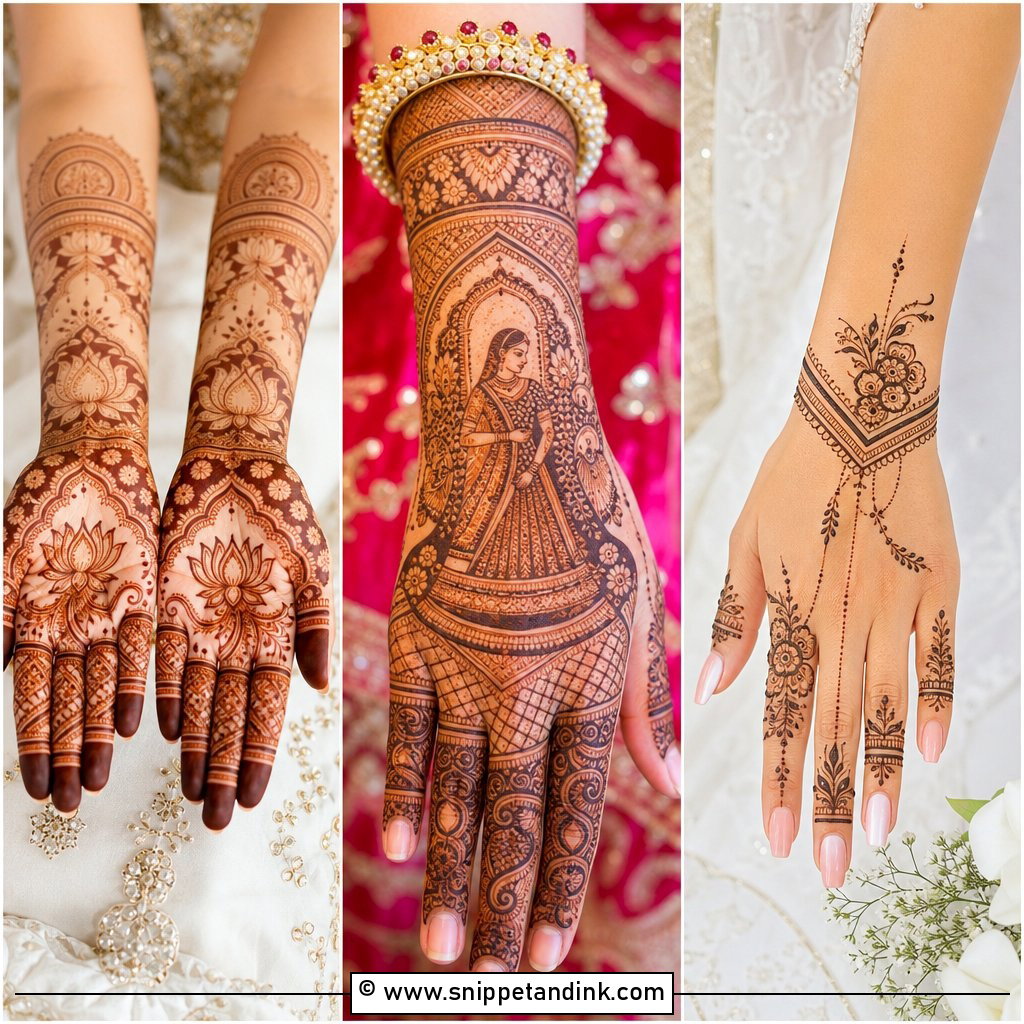
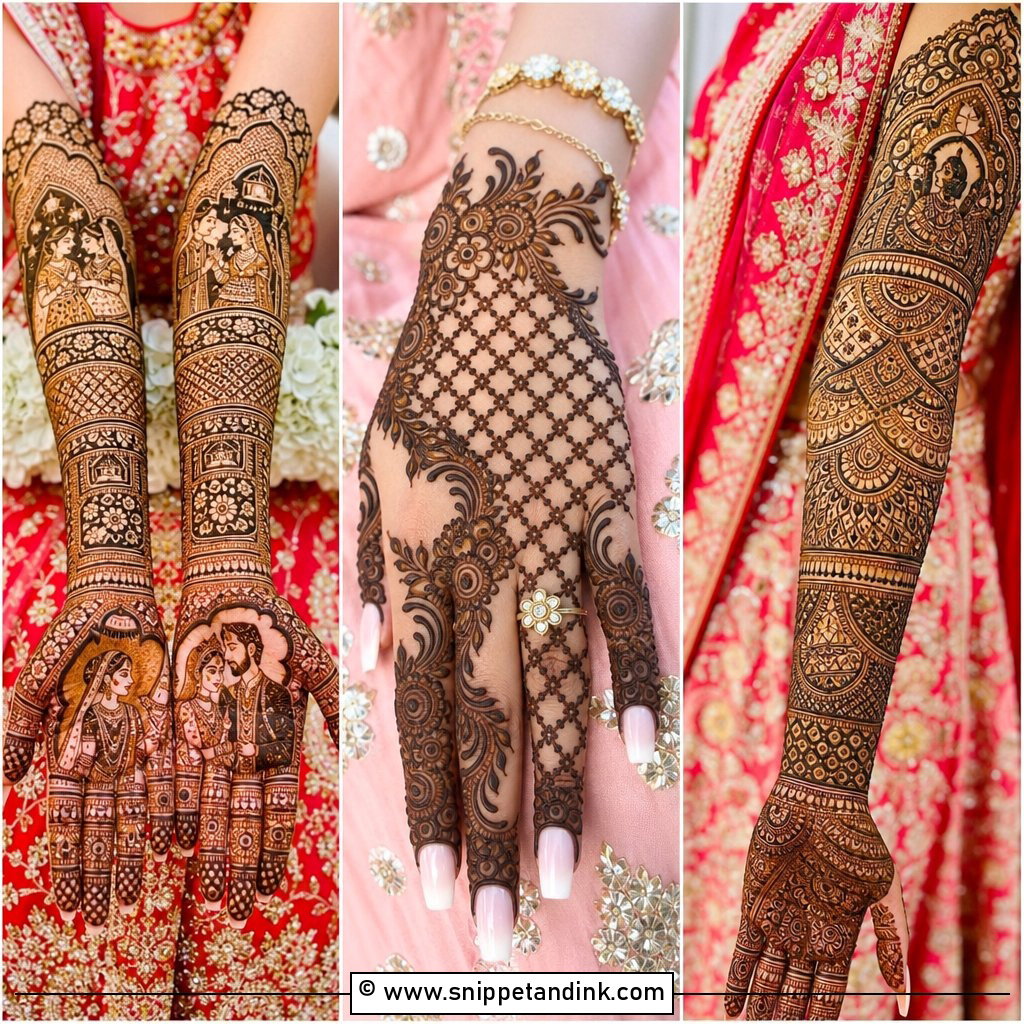
Coverage from fingertips to wrist or forearm is still what most brides picture, and it’s the layout I draw most often. Paisleys, flowers, mandalas, jaali grids, leafy borders and filled fingertips all share the same space, so crowding is the real risk. I keep the main palm motifs a size larger than looks right on paper, because once the stain develops, tiny fillers merge into one dark field in photographs. The wrist can take a bracelet band or a lotus border. This weight of design sits well with heavily embroidered lehengas and sarees; against a plain silk outfit it can overpower.
2. Indian Dulhan Mehndi Design
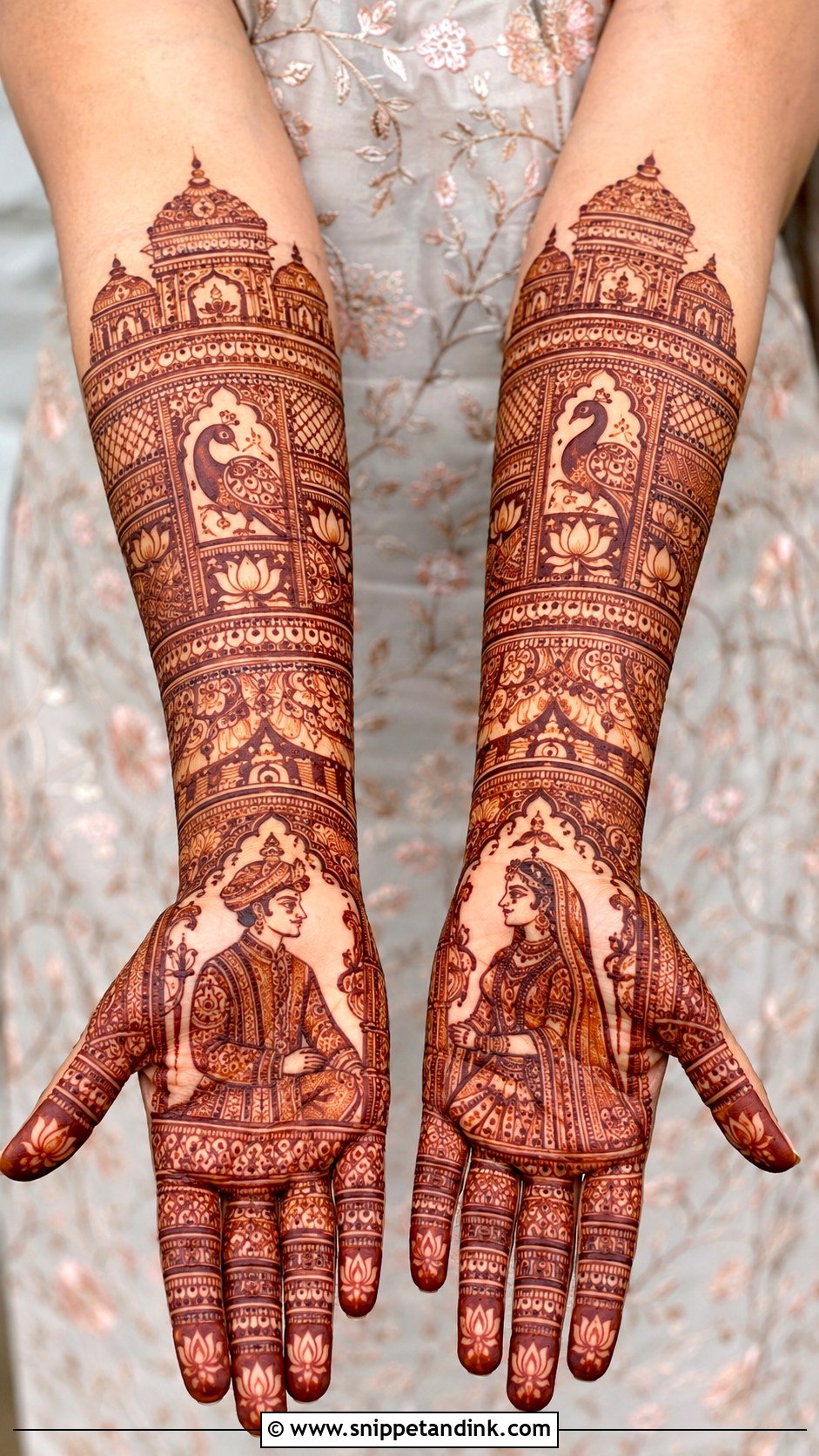
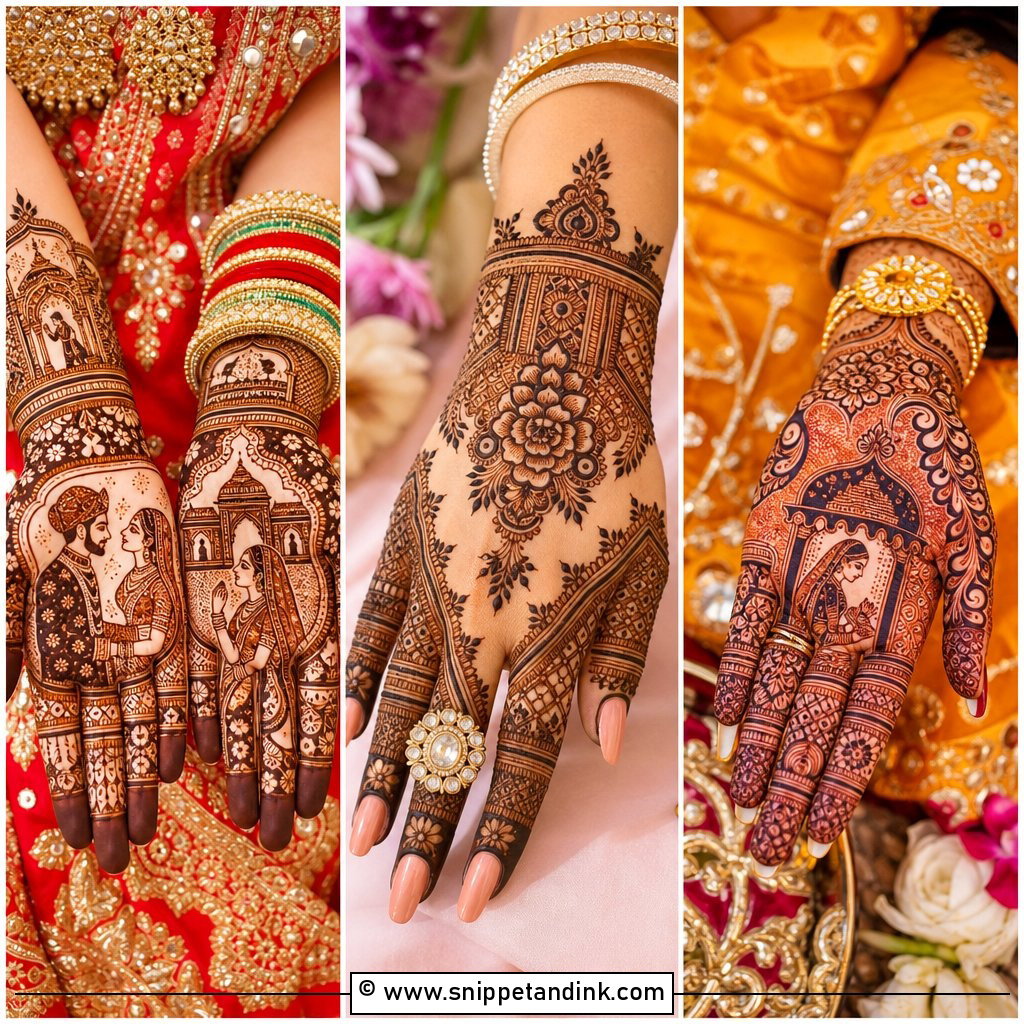
Indian bridal work is dense by nature. Peacocks, lotus flowers, paisleys, temple borders, bride and groom figures and fine fillers are stitched into one continuous surface, and every inch can carry meaning. That is exactly why it gets crowded. My rule is one or two hero motifs per hand, with everything else drawn smaller and lighter so it supports them. Up close, that hierarchy is what makes the work look intentional.
3. Arabic Dulhan Mehndi Design
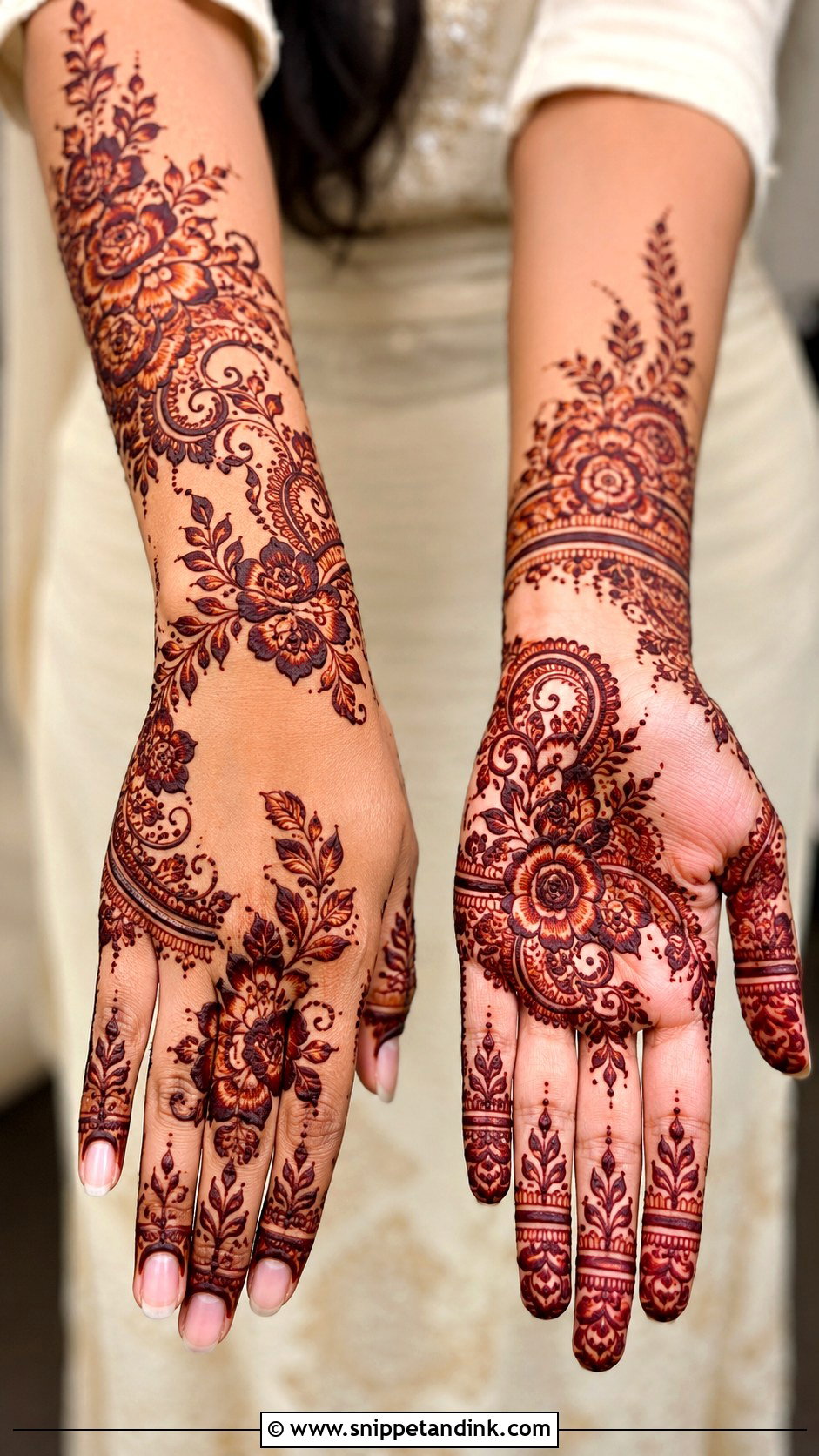
This is the style I suggest to brides who can’t sit for a full afternoon. Arabic work uses flowing vines, large florals, leafy trails and curved borders that run diagonally across the hand, leaving open skin between them. That negative space is what lets each motif read clearly once the stain darkens, and on smaller hands it keeps the fingers from looking crowded. For a wedding version I build heavier floral clusters near the wrist and match the finger detailing to the main trail, otherwise it can pass for a party design.
4. Indo Arabic Dulhan Mehndi Design
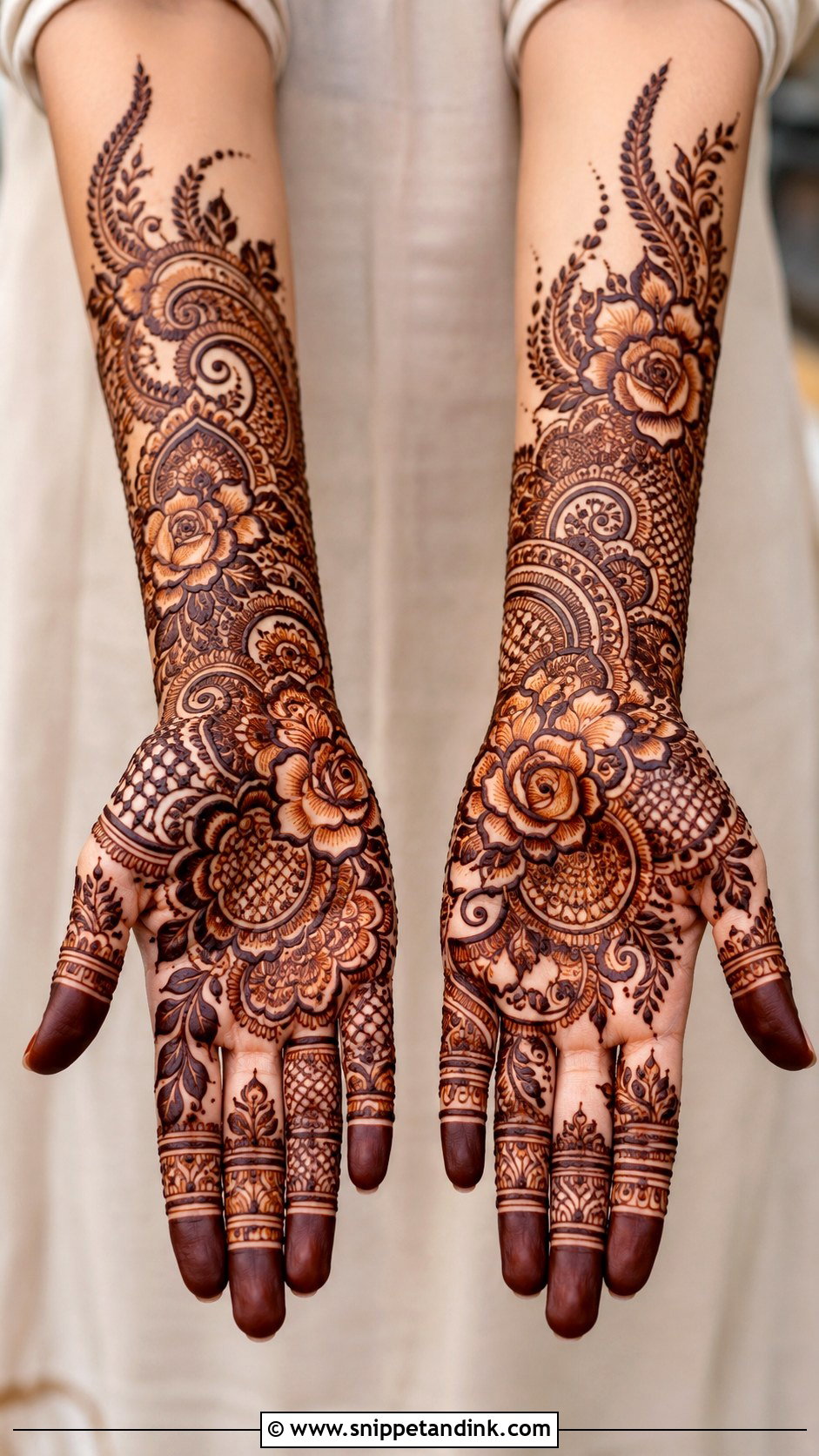
Brides torn between two traditions usually land on Indo Arabic dulhan mehndi design, which borrows the open diagonal flow of Arabic work and fills each motif with the fine lines, dots and mesh of Indian patterns. The trap is filling in the gaps as the session goes on, because every open patch starts to look like an invitation. I decide which spaces stay empty before I start. A central mandala or a paisley cluster with hidden initials gives it bridal weight for an engagement, a sangeet or a nikah.
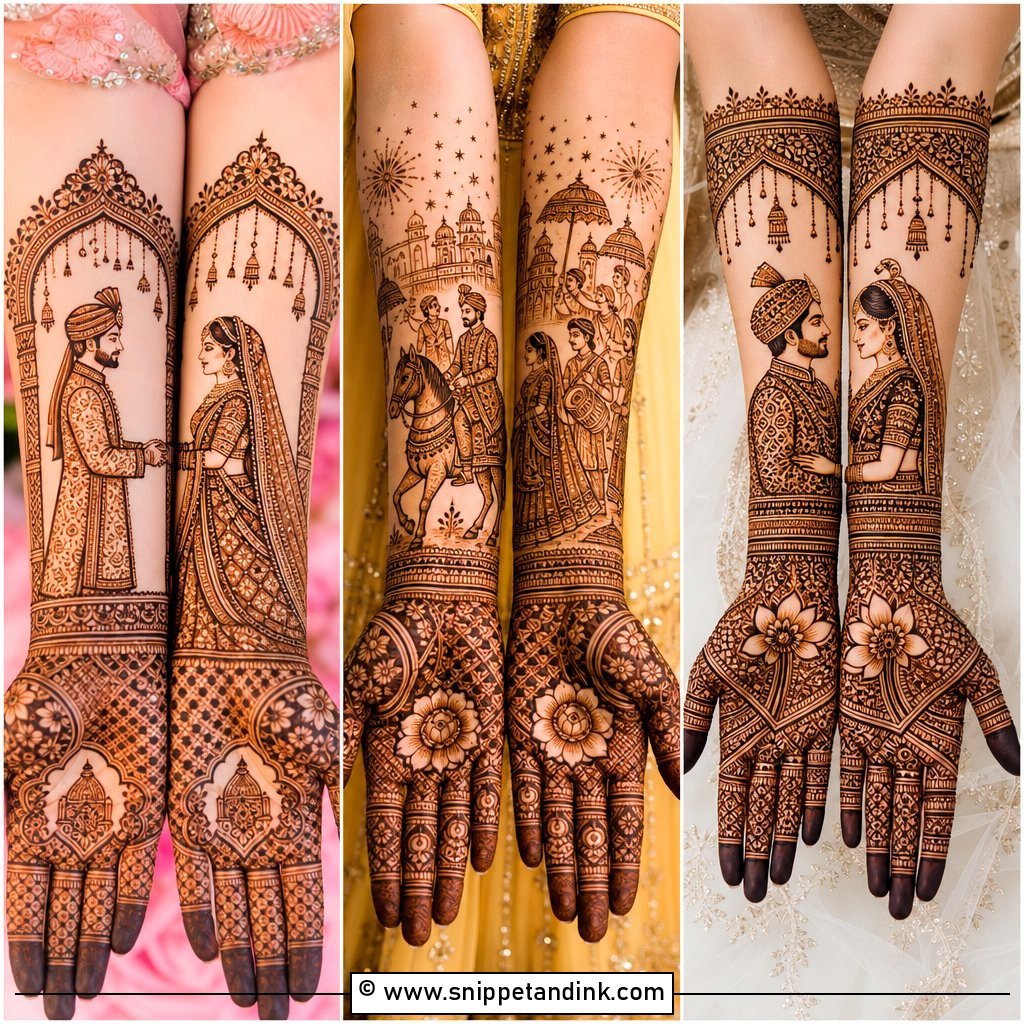
5. Rajasthani Dulhan Mehndi Design
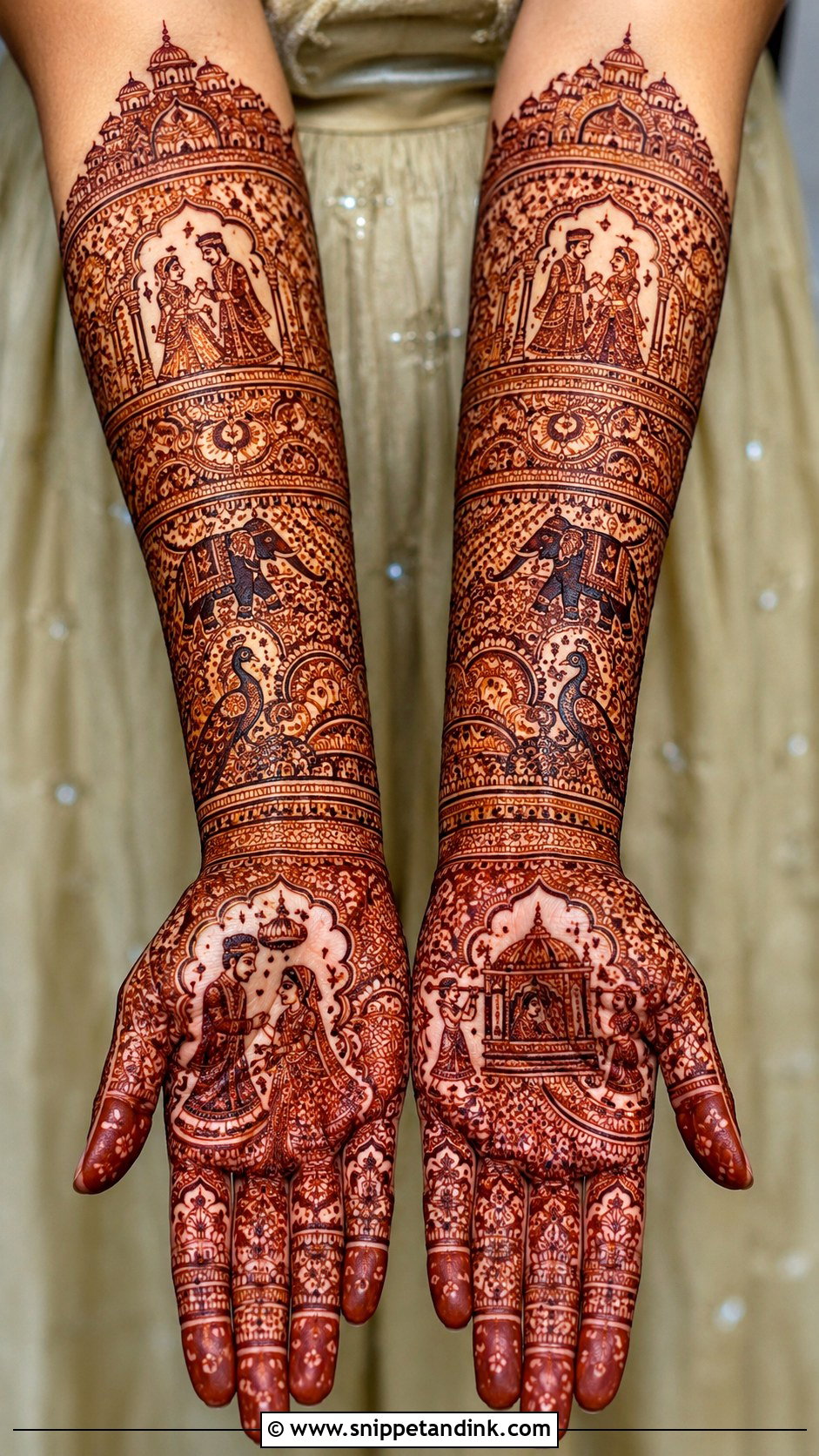
Portraits, elephants, palaces, doli scenes and peacocks are the vocabulary of Rajasthani dulhan mehndi design, and the coverage usually runs to the forearm or elbow. With that much to fit, I map the layout in light guide lines before committing to any fill: the palms get the wedding story, the arms get palace arches, elephant processions and ornamental bands. Skip the planning and the scenes collide at the wrist. Heavy traditional jewellery and a colourful lehenga carry this level of detail; a minimal outfit doesn’t.
6. Dulha Dulhan Mehndi Design
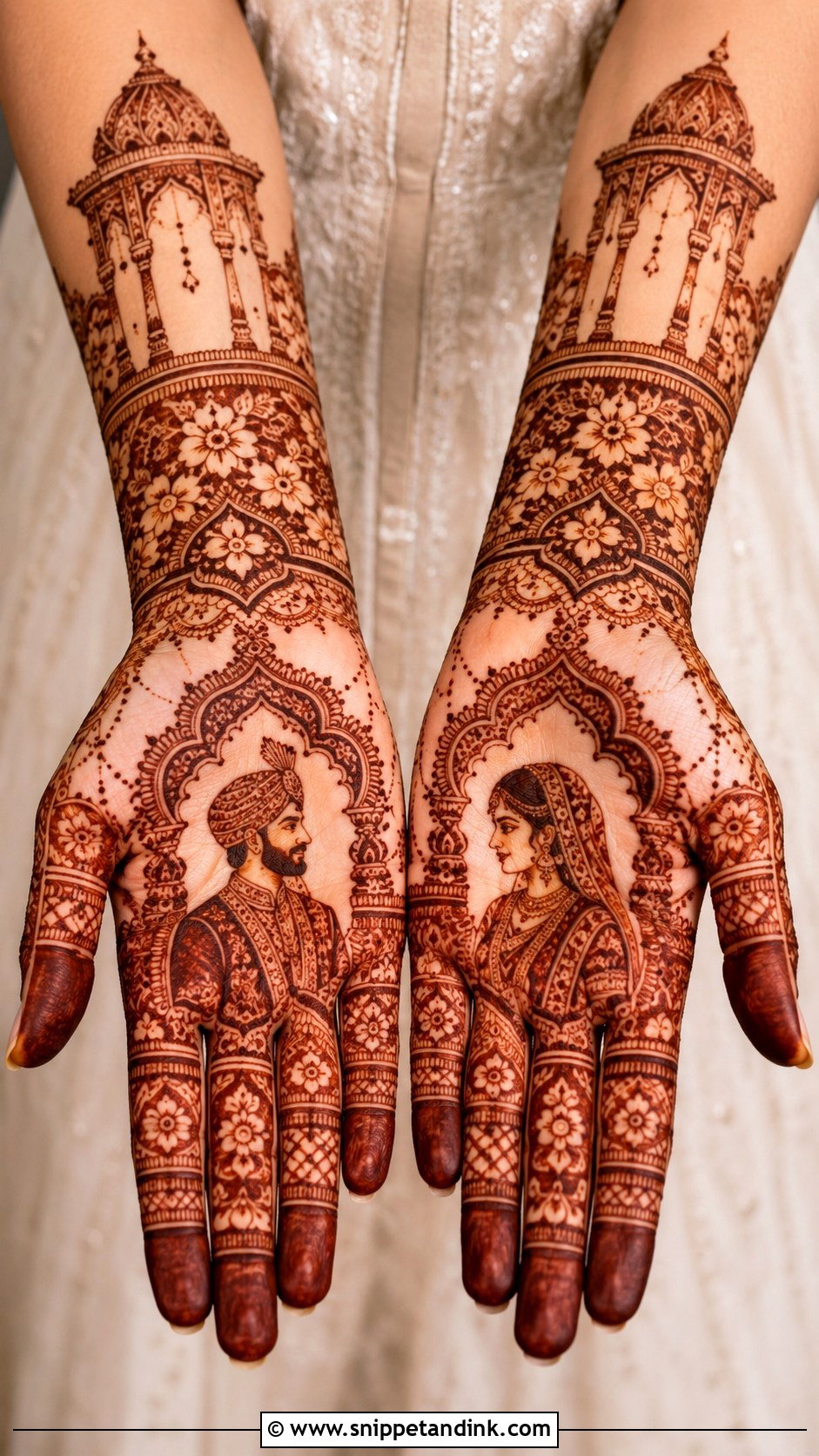
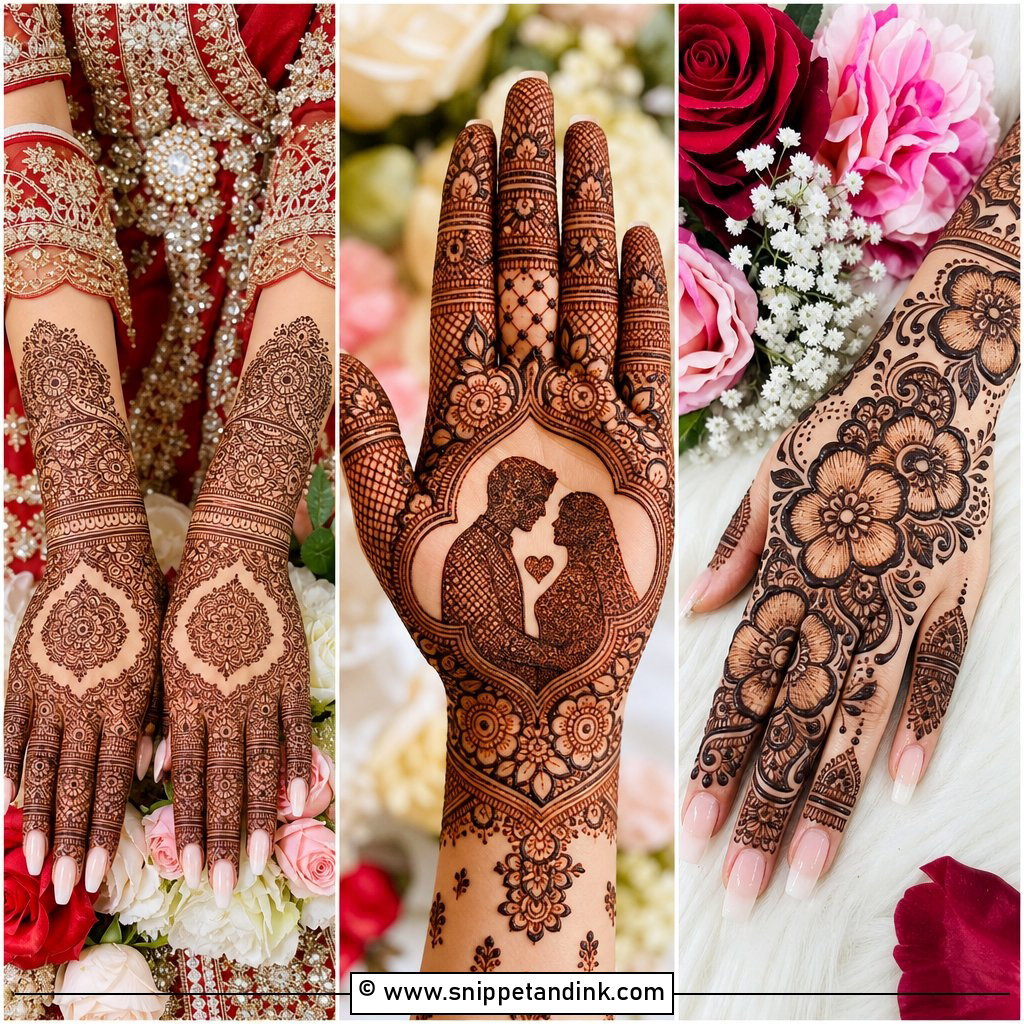
One palm holds the bride, the other the groom, and mandaps, bells and florals frame them both. Faces are where this goes wrong. Henna lines spread slightly as the paste sits, so a face drawn too small loses its eyes and smile after staining. I keep the figures medium-sized with clean outlines and stop the fillers well short of the faces. It’s the design families crowd around at the mehndi ceremony, and the close-up of both palms together is usually the photo everyone asks for.
7. Portrait Dulhan Mehndi Design
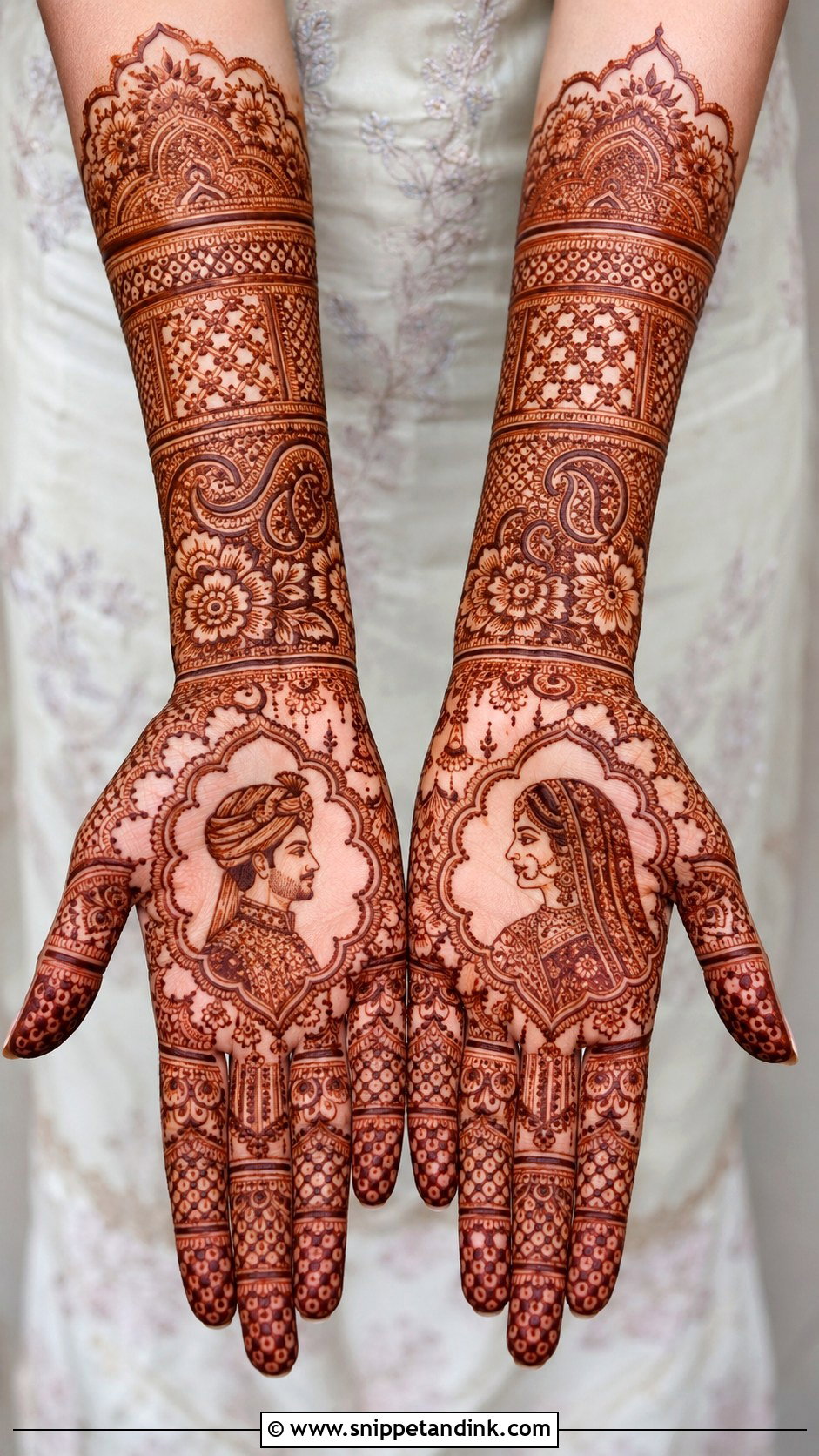
Realistic faces, side profiles and engagement scenes need flat skin, which is why I place them on the palm or inner forearm and never across the knuckles where the skin folds. This is specialist work. Ask any artist you’re considering for photos of portrait stains, not just fresh paste, because a face that looks crisp in wet paste can blur once it oxidises. The rest of the hand can stay with florals, jaali and soft borders so the portrait carries the story on its own.
8. Peacock Dulhan Mehndi Design
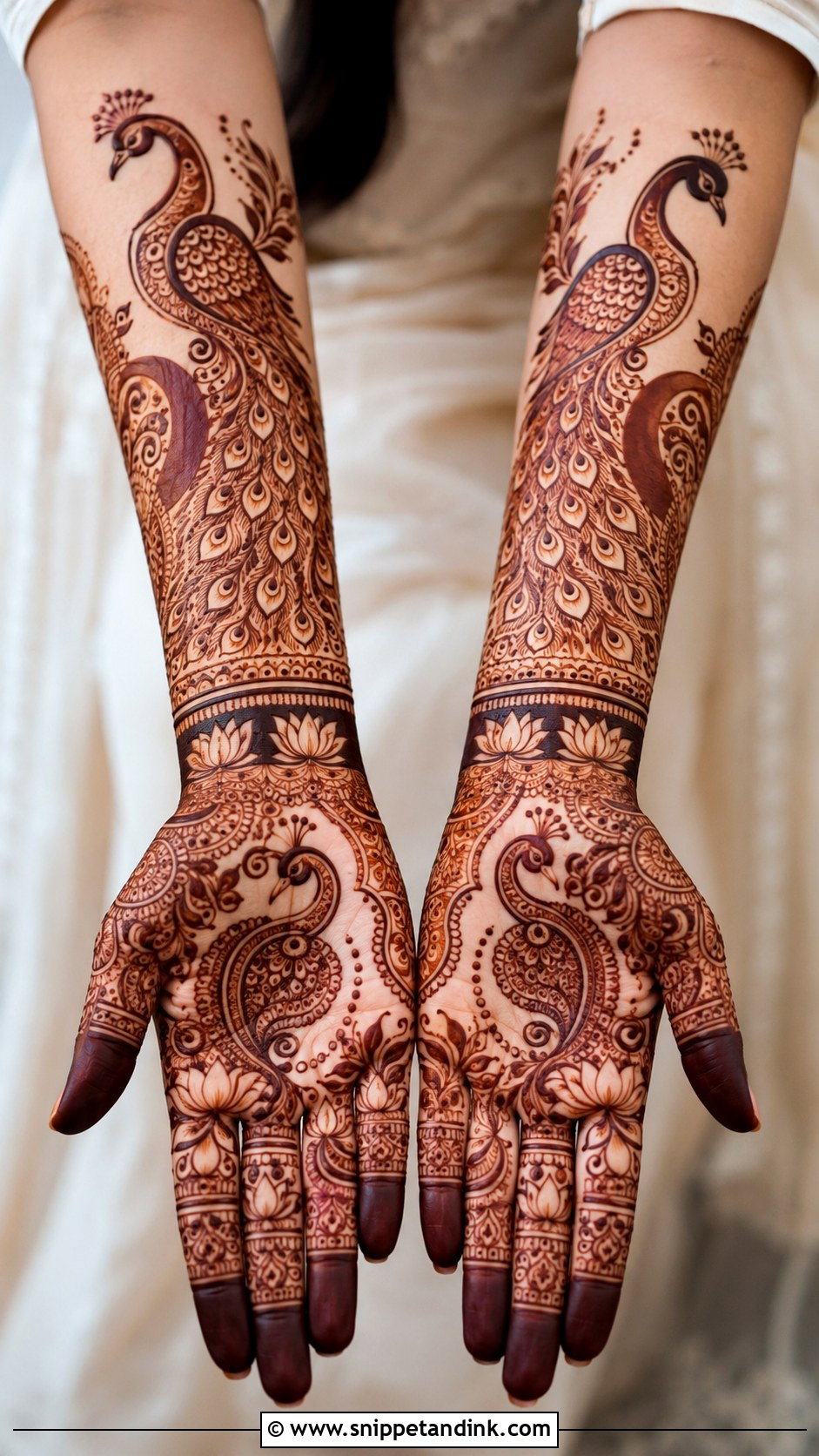
Peacocks survive every trend because the body sits neatly on a palm or wrist and the feathers can spread into paisleys and curves wherever the hand needs filling. When a bride prefers no human figures, a peacock gives her the same narrative weight. I shade the feather eyes and draw the barbs with my finest line; that contrast between filled and fine is what creates movement. A large peacock on one hand and a mirrored floral on the other balances well under bangles and kaleeras.
9. Lotus Dulhan Mehndi Design
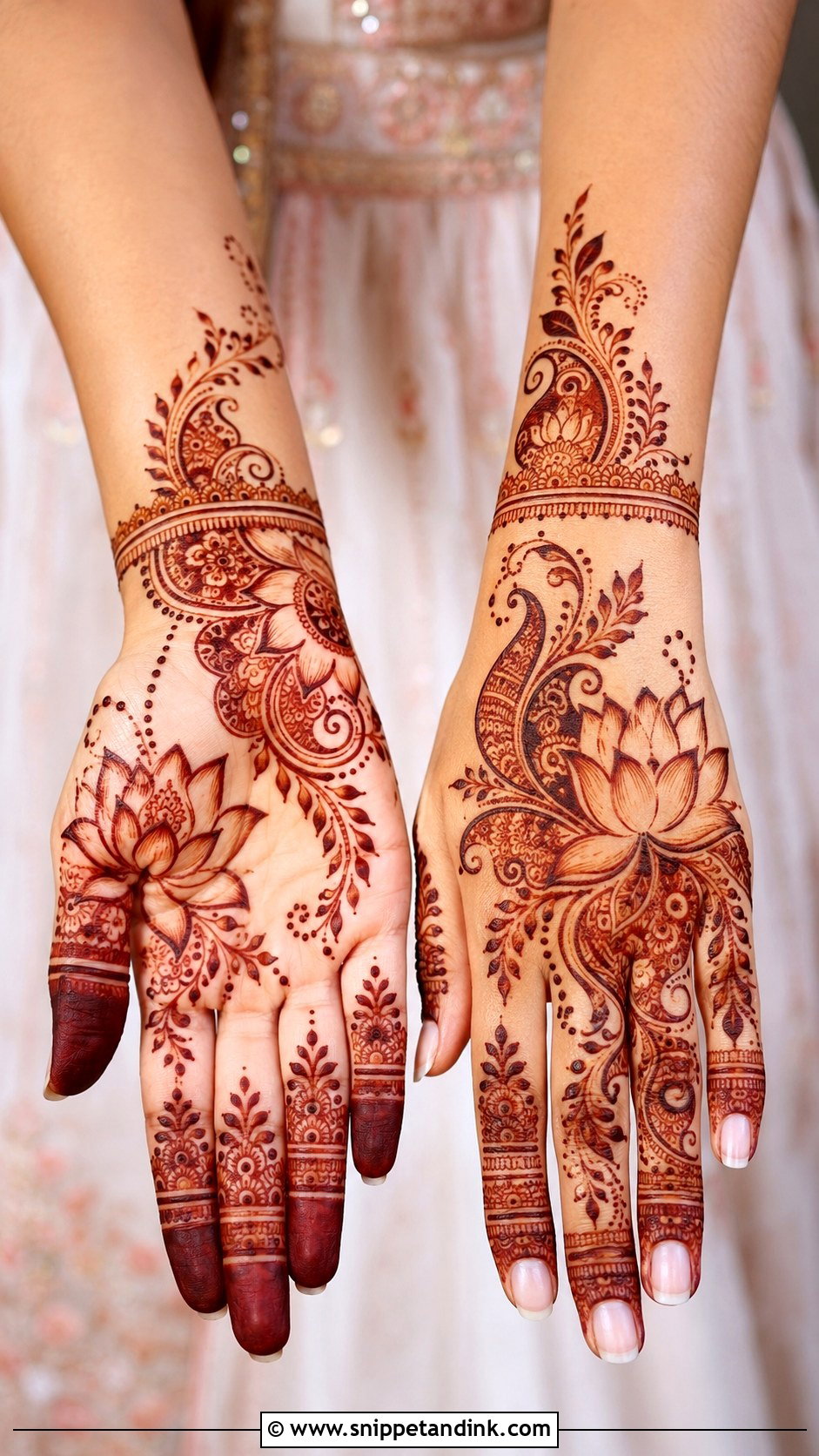
Lotus petals bring their own symmetry, so the motif works as a palm centre, a wrist border or a forearm frame. I size the flowers down as they travel toward the fingertips, larger at the wrist and smaller along the fingers, which makes the hand look longer and gives the design a direction. Paired with paisleys, vines and fine mesh, it suits a bride who wants grace over density, and it sits comfortably with a red lehenga or a pastel one.
10. Mandala Dulhan Mehndi Design
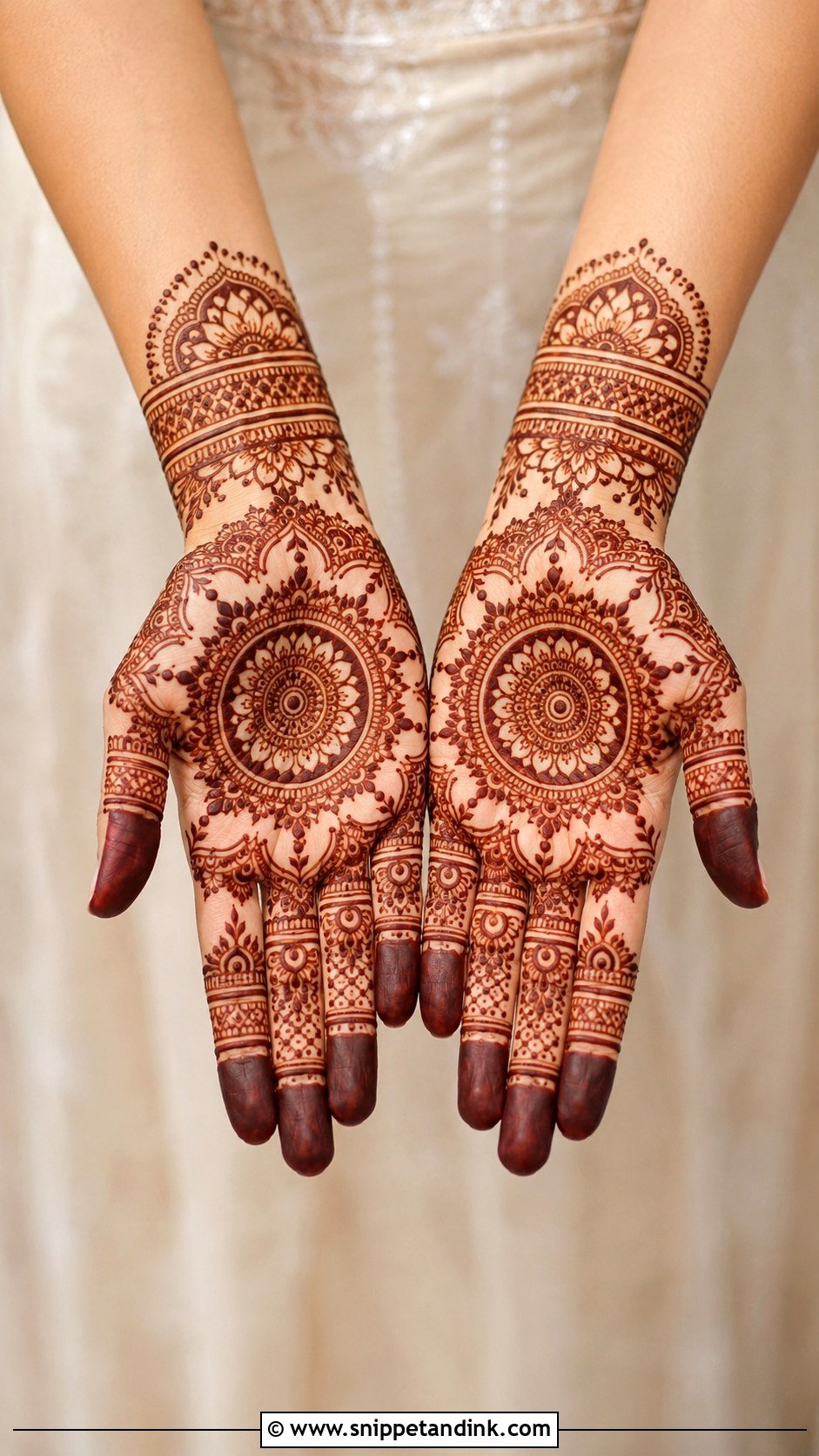
Structurally this is one of the simplest bridal layouts: a round centre on the palm, neat fingers, a wrist band. The difficulty is the circle itself. Palms aren’t flat, and a mandala drawn while the hand is stretched wide can turn oval once the bride cups her hands for photos, so I check the symmetry with her hand relaxed. Paisley outlines, lotus petals and tiny dotted rings build it up for the wedding, and repeating circles up the wrist and forearm extend it if you want more coverage.
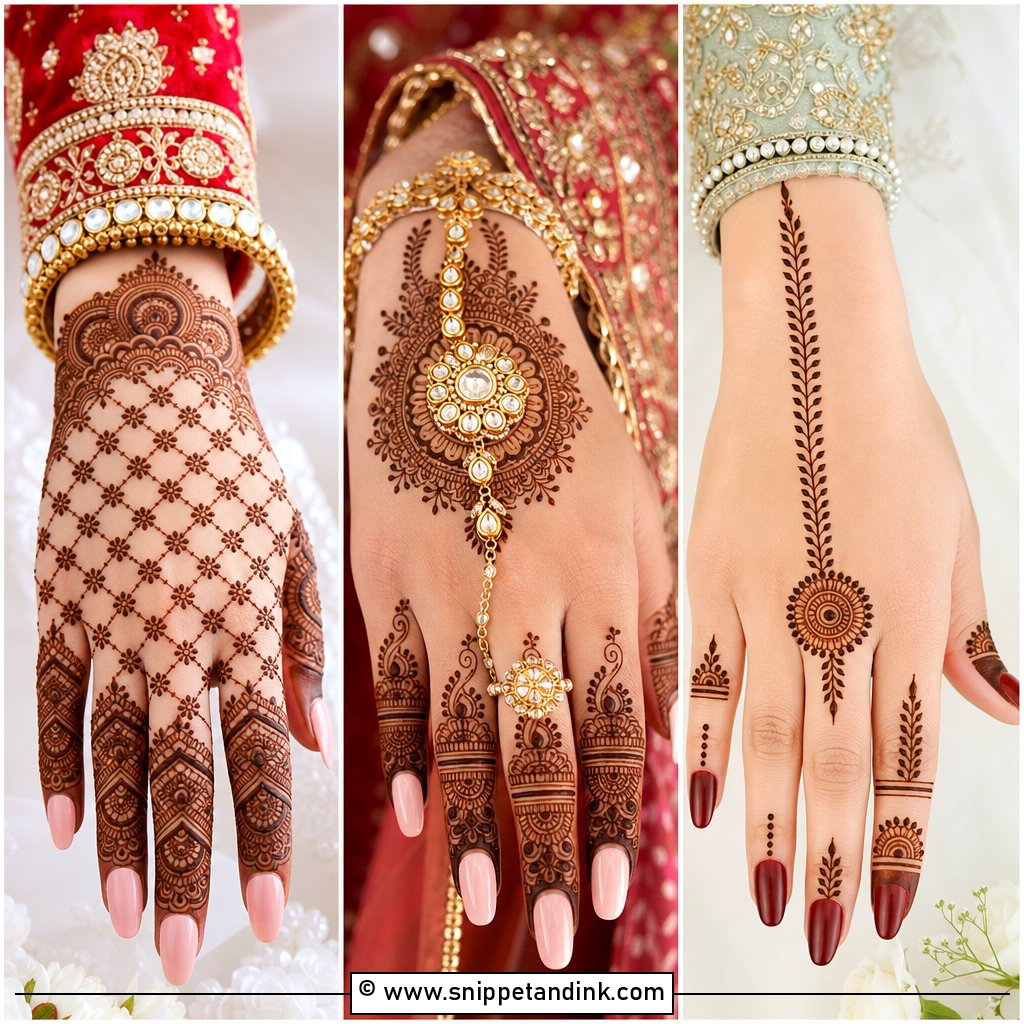
11. Jaali Dulhan Mehndi Design
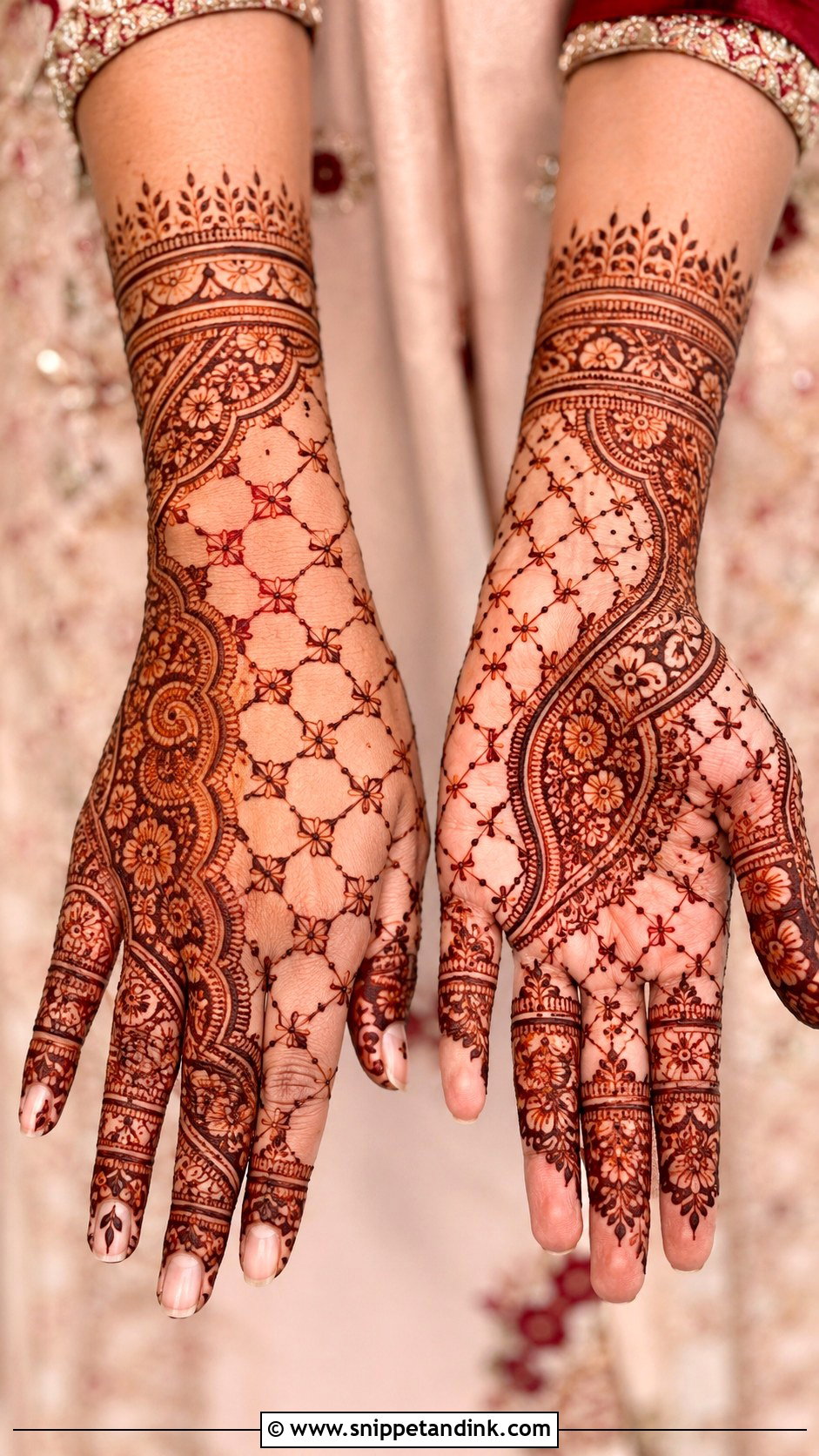
A net-like grid adds texture without looking messy, and on the back of the hand it reads like a lace glove. Spacing decides everything. A mesh drawn too tight fills in as the lines spread, and after staining it can look like a dark patch rather than a pattern. I keep the cells medium-sized and drop a dot or a tiny flower inside each one, then frame the panel with bolder floral borders so the jaali has edges to sit against.
12. Back Hand Dulhan Mehndi Design
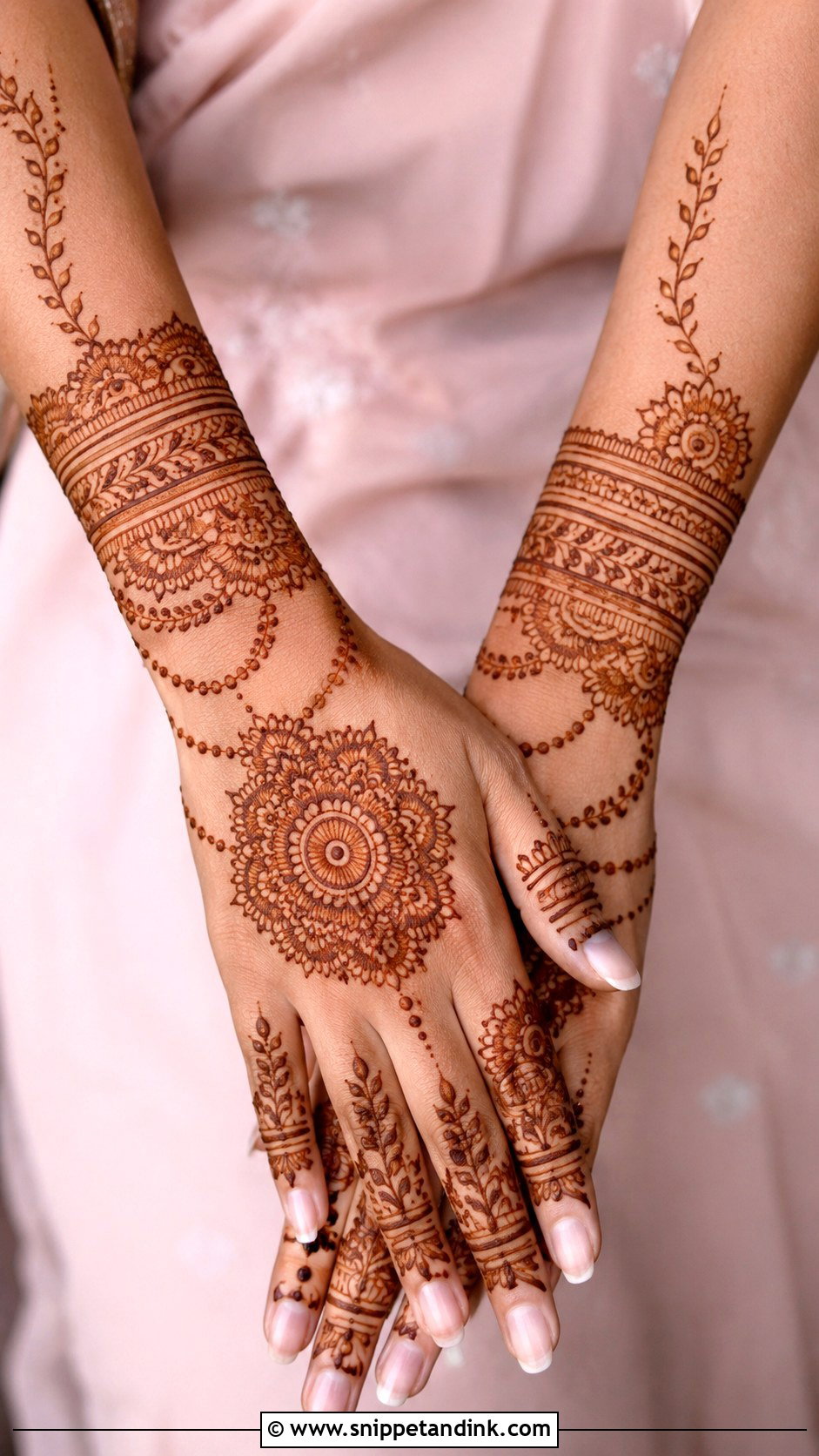
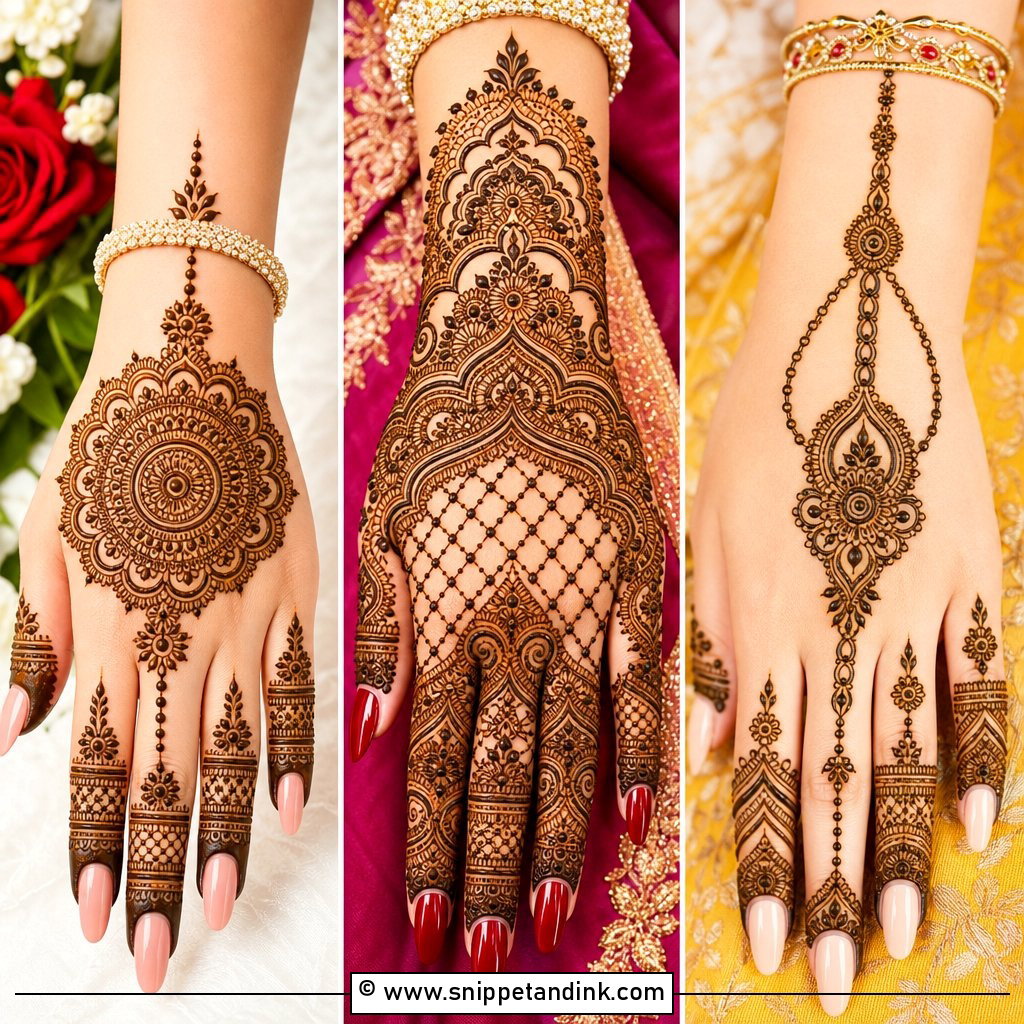
Palms close and turn away. The back of the hand is in nearly every photo: under the rings, holding the dupatta, during the rituals. So I treat it as the most visible canvas on the bride. Central mandalas, floral trails, bracelet bands and finger chains are the usual layouts. One honest caution: skin on the back of the hand stains lighter than the palm, so I draw slightly bolder motifs there. For heavy jewellery, a dense wrist band with lighter fingers keeps the rings readable, and paisleys or jaali can carry the design up toward the forearm.
13. Palm Dulhan Mehndi Design
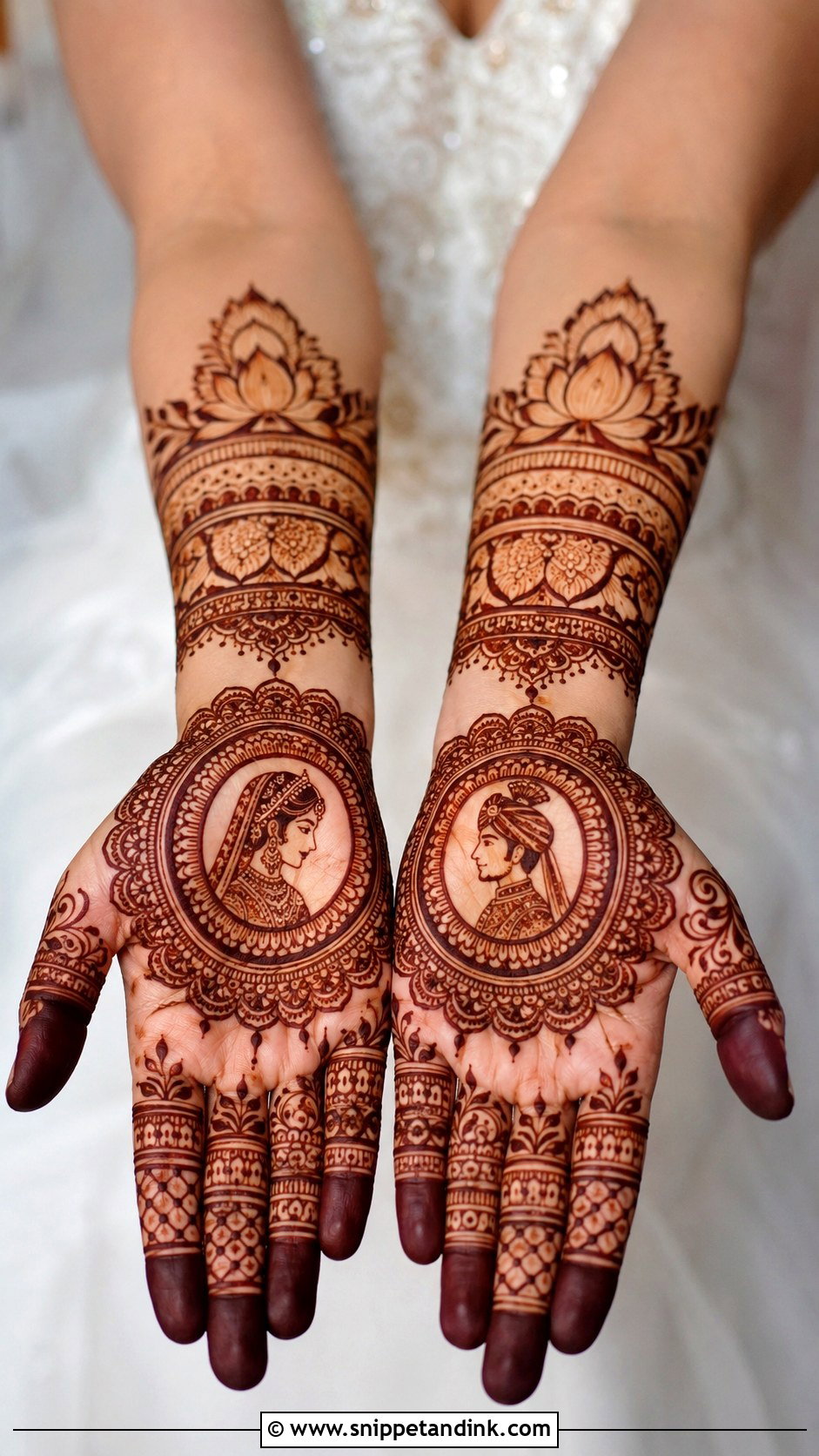
The palm stains darker than anywhere else on the hand, which makes it the home for the motif you care about most: a mandala, a dulha-dulhan portrait, a lotus, a peacock, a kalash or initials. Fingers carry matching lines, leaves, checks or shaded bands. I keep the dense fillers near the edges and leave the centre readable, because when both hands are held together in the traditional pose, the centres are what the camera picks up first.
14. Front Hand Dulhan Mehndi Design
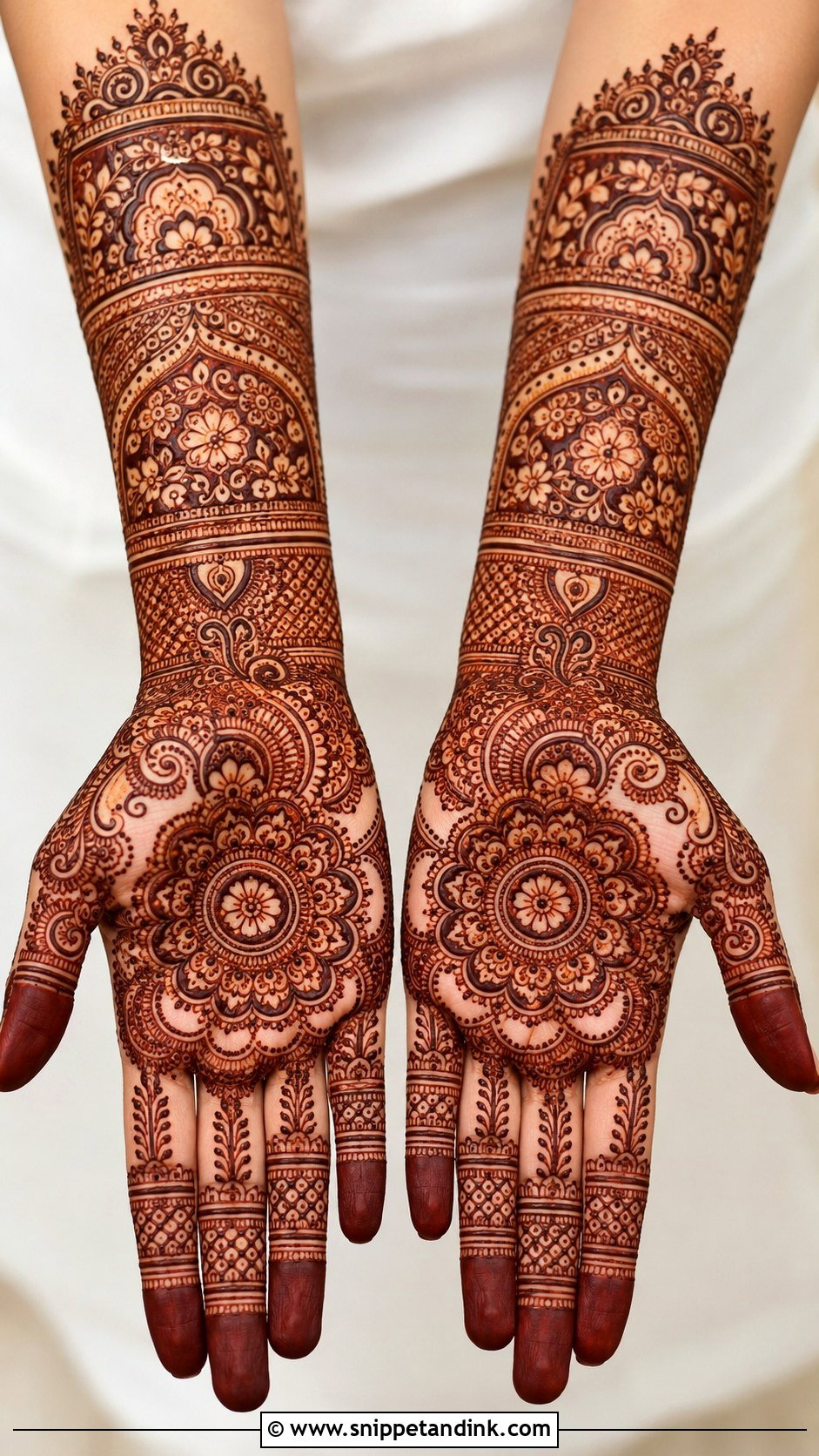
The palm side, from fingertips to wrist or forearm, is the part a bride lifts to show everyone once the paste flakes off. A strong layout has filled fingers, a clear centrepiece, side borders and a wrist extension, drawn in whichever tradition matches the outfit. Both hands should coordinate without mirroring. I often put a bride motif on one and a groom, mandap or floral frame on the other, so the pair tells one story when held side by side.

15. Simple Dulhan Mehndi Design
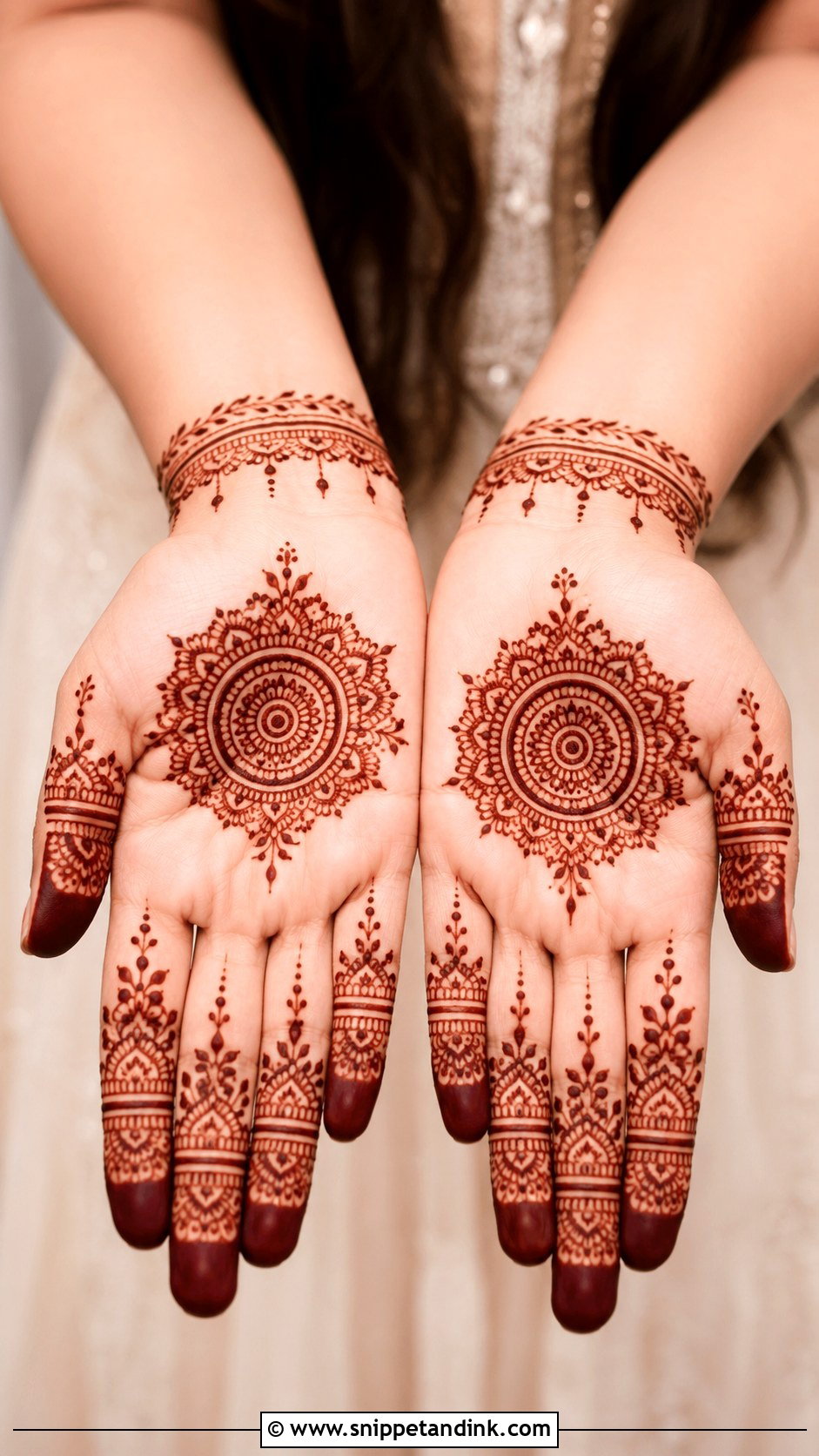
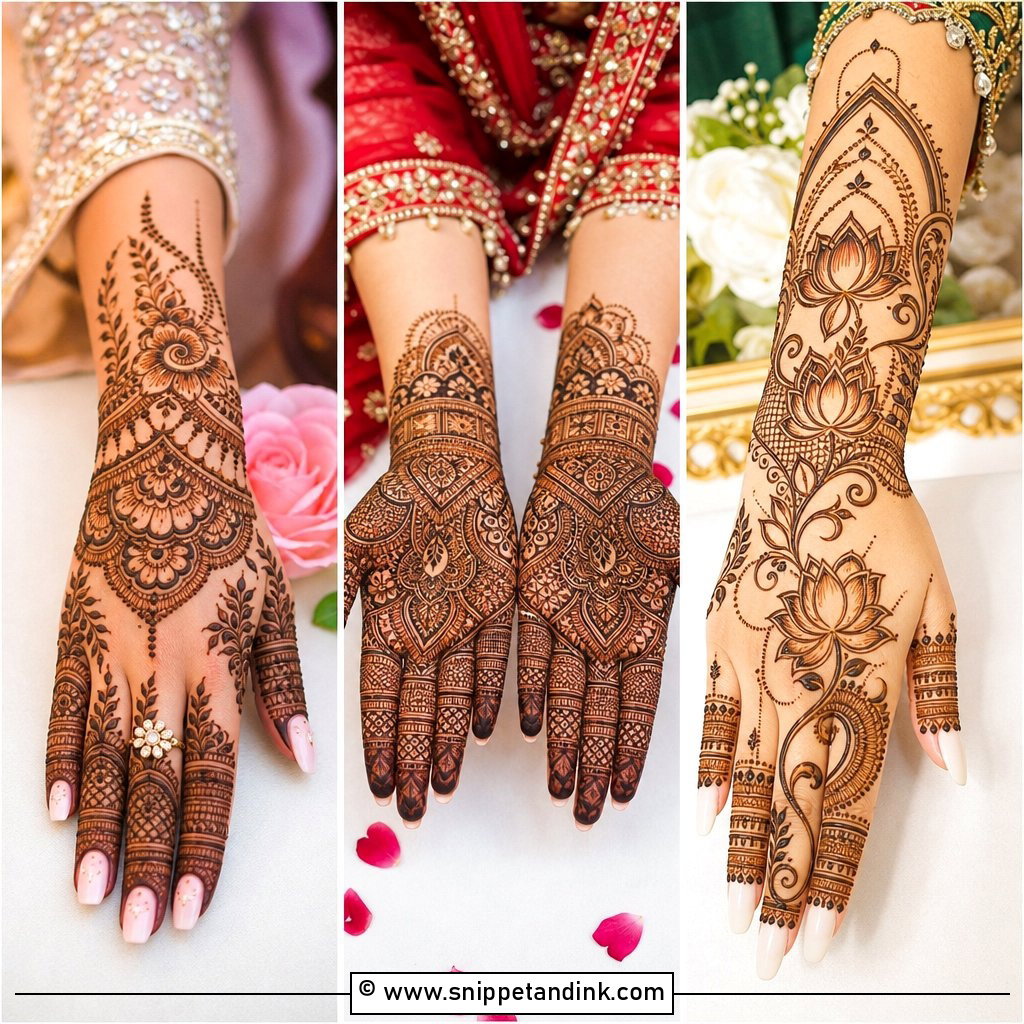
Simple doesn’t have to mean casual, and that’s the line I watch. A central mandala, soft vines, neat fingers and a bracelet band leave room around the hand’s own shape, which is realistic for a court wedding or a destination ceremony where you’re travelling light. Add one rich element, such as a shaded lotus palm or a structured wrist cuff. Without it, the design reads as a guest’s mehndi rather than a bride’s.
16. Heavy Dulhan Mehndi Design
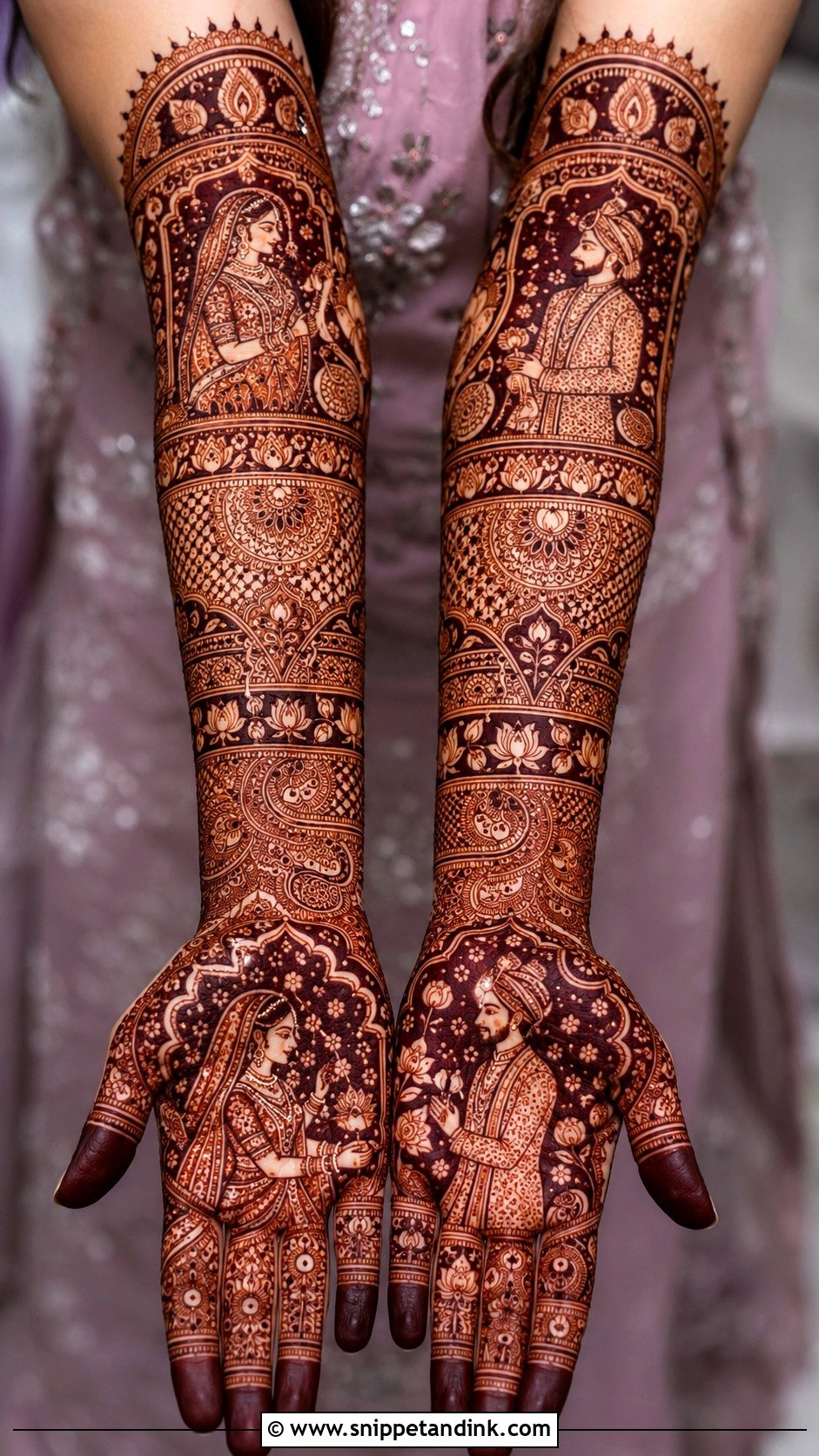
Fingertips to elbows, dense fillers, portraits, jaali, peacocks: this is the full commitment. Expect the application on both arms to take a long session, and expect your hands to be out of use for hours afterwards while the paste dries and sits. I divide each arm into clear sections before filling anything, so every motif still reads after the colour develops. Rich, not cluttered, is the aim, and it earns its place beside an elaborate outfit and stacked bangles.
17. Modern Dulhan Mehndi Design
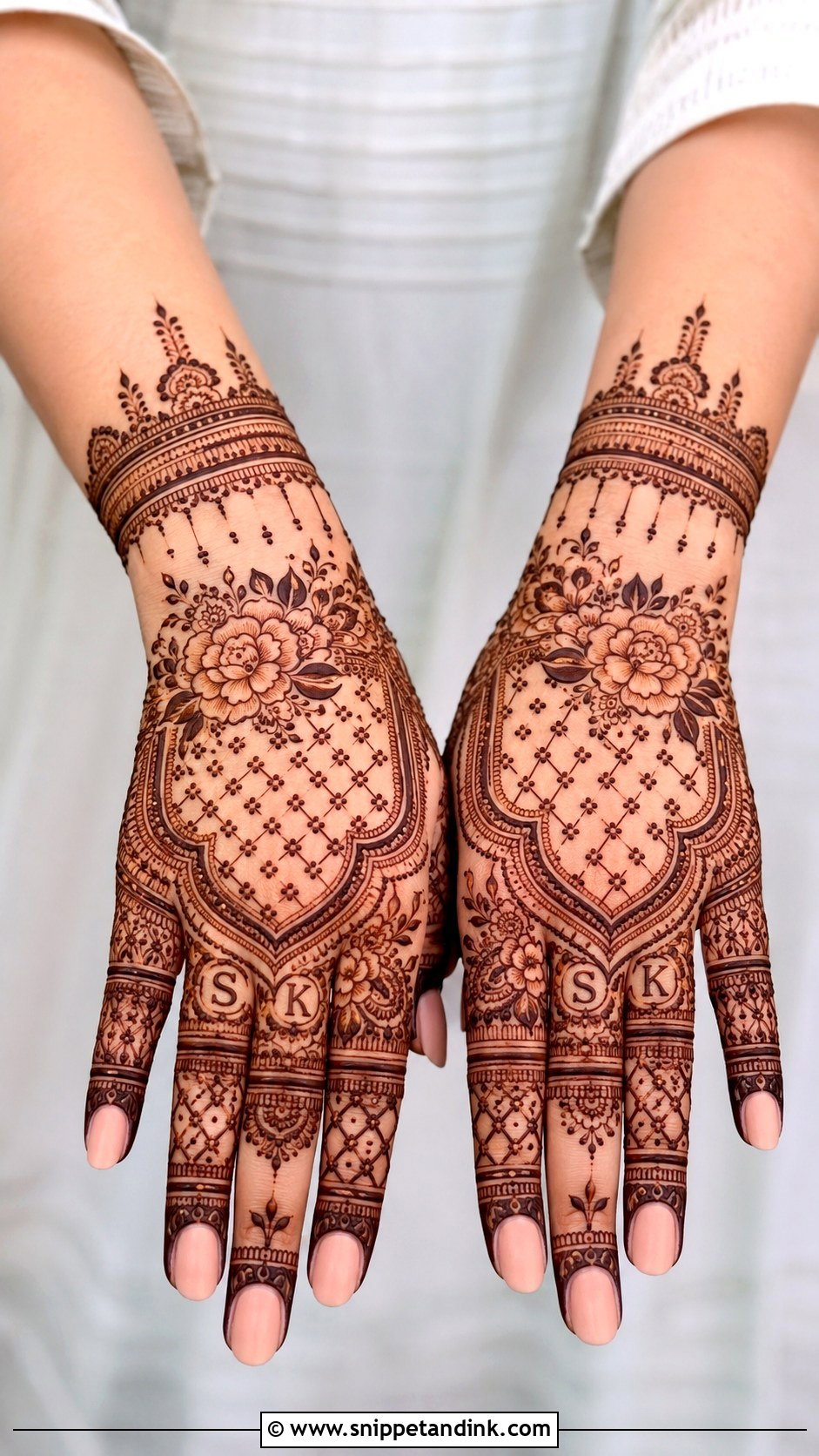
Here tradition gets edited: negative space, geometric grids, fine-line florals, initials, a date, maybe a minimal portrait. With pastel lehengas, fusion outfits and contemporary jewellery, that restraint sits better than full coverage. Balance is the whole design job, so I keep one zone detailed and another deliberately open. Personal symbols such as a tiny skyline, a pet name or the wedding hashtag only work if they’re drawn large enough to survive the line spreading as it stains.
18. Minimal Dulhan Mehndi Design
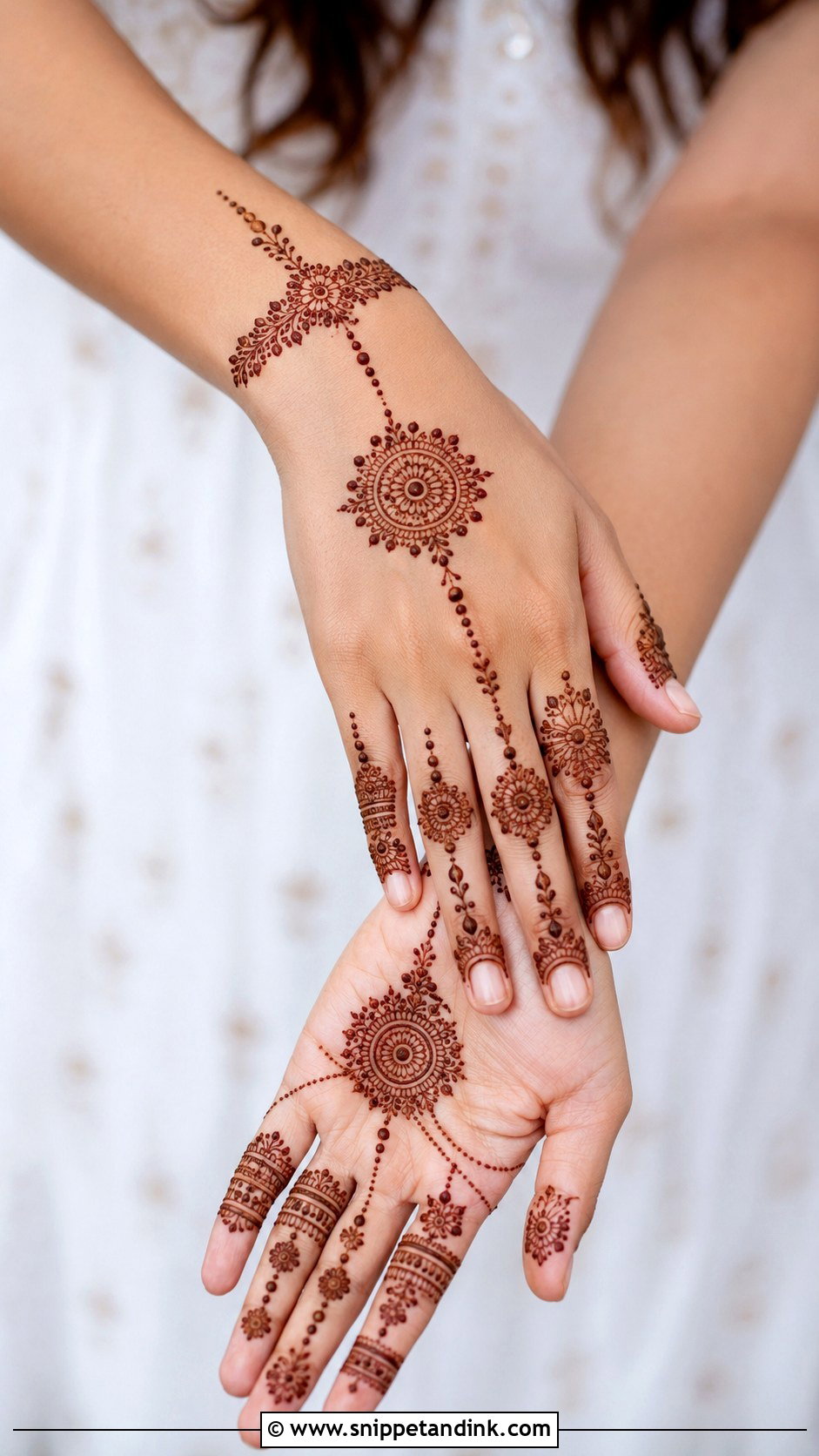
Minimal bridal mehndi picks its spots: the fingers, the wrist, the palm centre or the back of the hand. A mandala with fine finger chains, a floral bracelet or a small lotus trail can still look bridal, but only if the linework is clean, because there’s no filler to hide a wobble. That makes minimal designs less forgiving for the artist, not more. Thin borders, dotted accents and closely matched hands keep it wedding-worthy. I’d steer a bride away from it if her family expects heavy mehndi; that conversation is better had before the ceremony than during it.
19. Bridal Finger Dulhan Mehndi Design
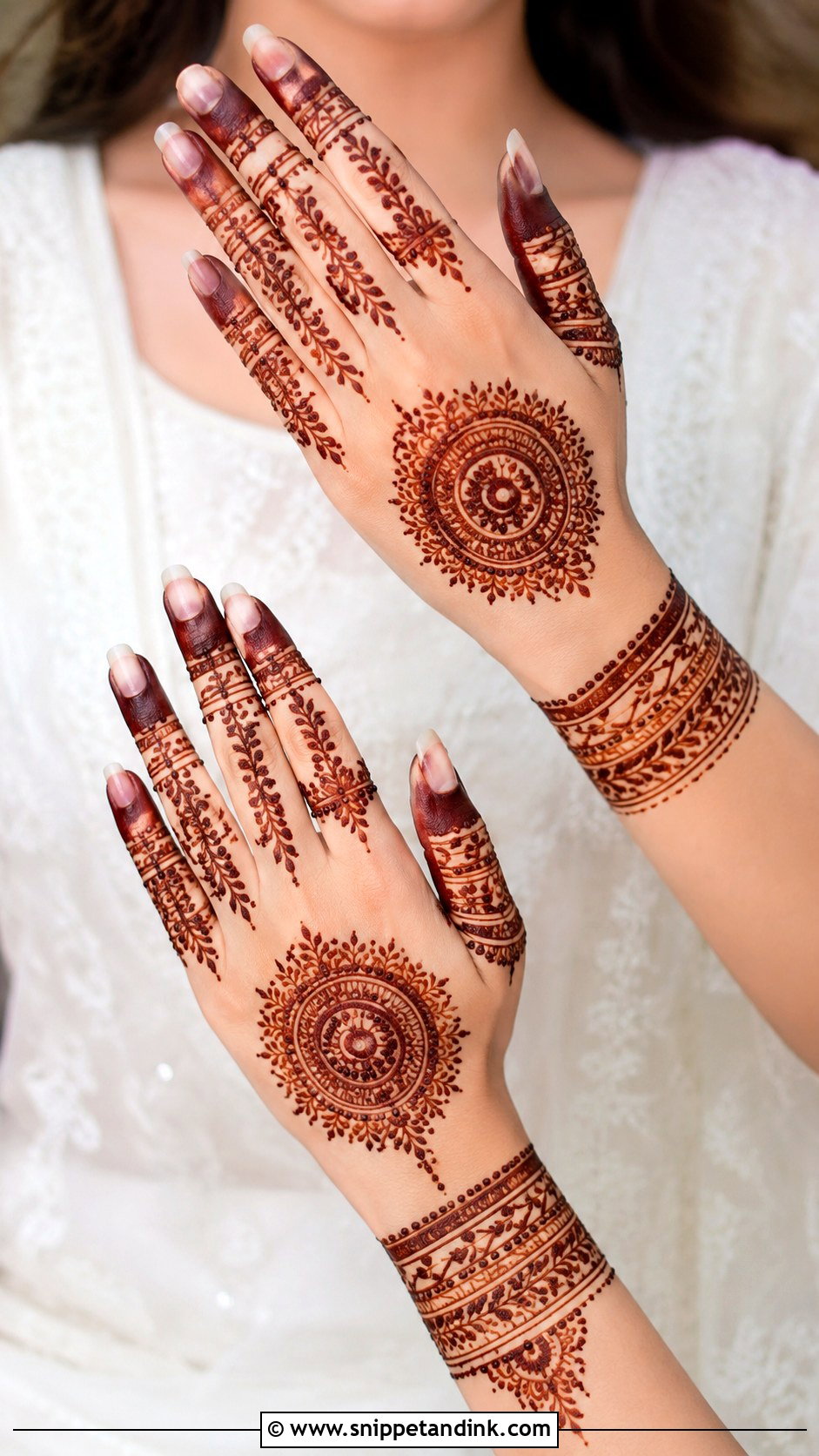
Decorated fingers make the whole hand look longer, which is why I spend more time on them than brides expect. Leafy lines, checks, ring patterns, dots and shaded tips all work, but the filled fingertip caps are where the stain comes up darkest, so they anchor the design in every ring close-up. Connect them to a palm mandala or a paisley cluster. A completely bare palm looks unfinished unless you’ve chosen a minimal style on purpose.

20. Bracelet Dulhan Mehndi Design
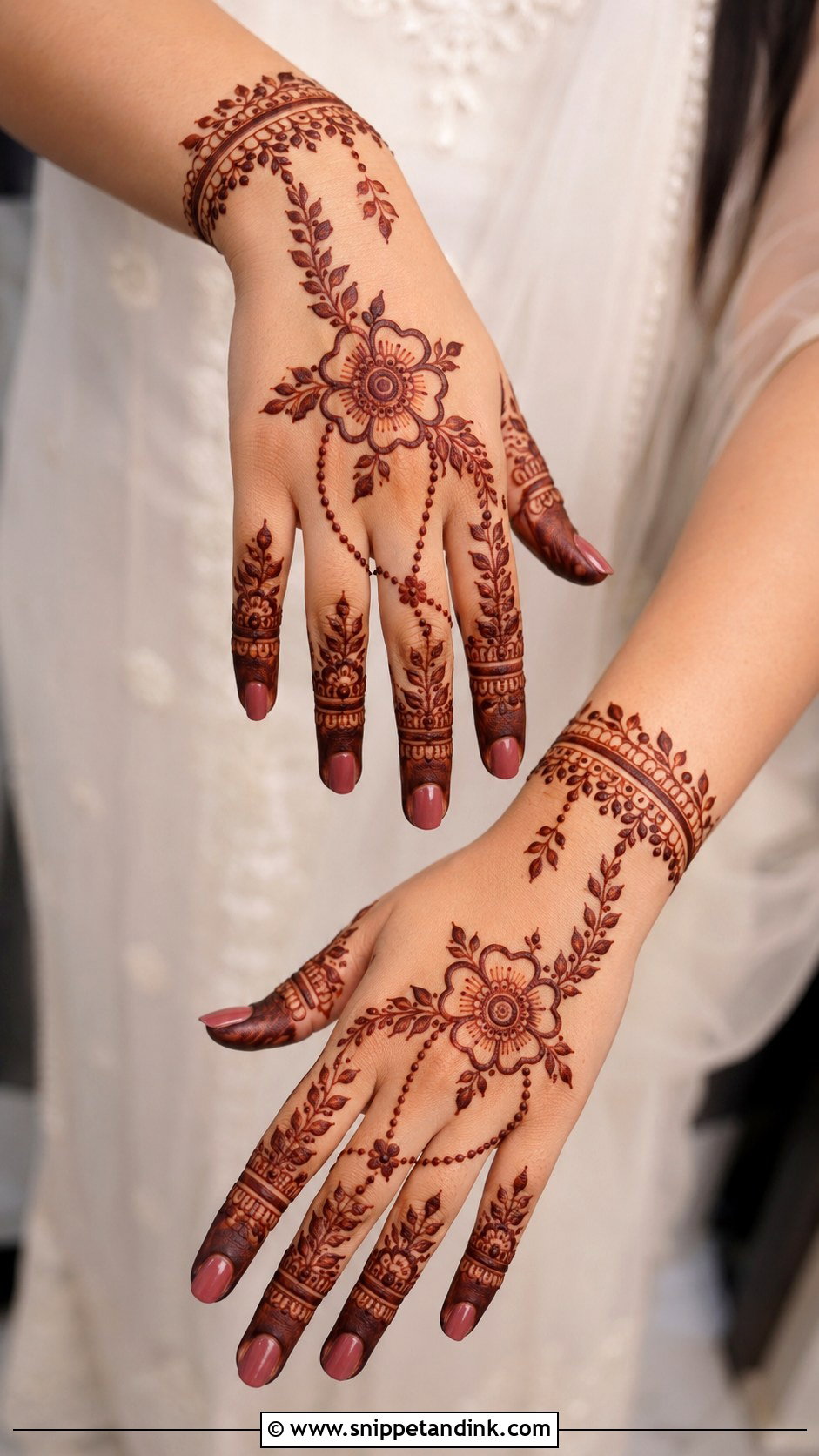
Cuff bands, hanging chains, floral links and finger rings drawn around the wrist create mehndi jewellery that complements real bangles instead of hiding under them. Before I draw the cuff, I ask the bride to put her bangle stack on so I can see where it actually sits; otherwise the densest part of the design disappears under gold. Keep the wrist dense and the fingers light, and join a back-hand mandala to the cuff with dotted strings. It carries over well to engagement and reception looks.
21. Jewelry Dulhan Mehndi Design
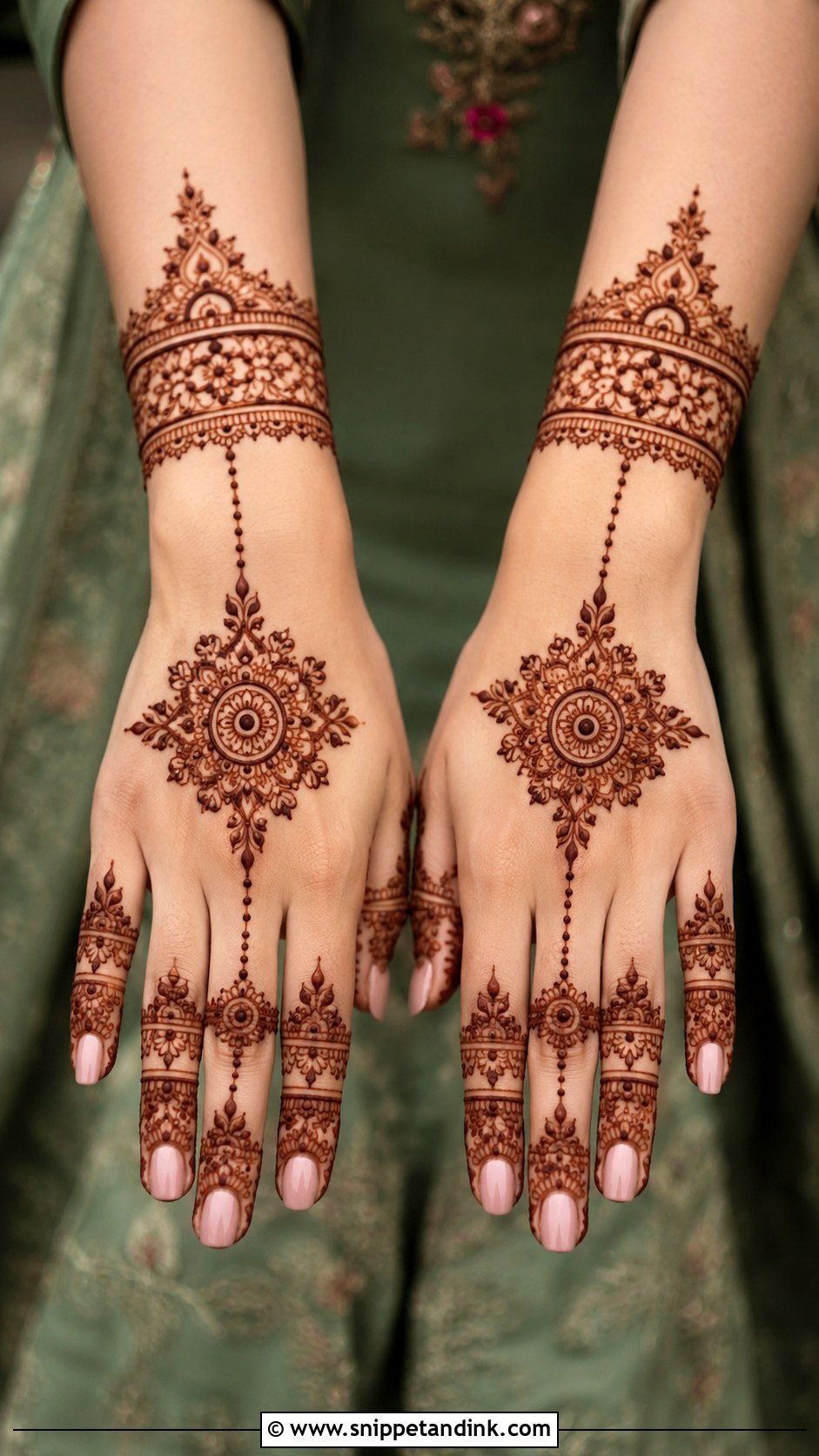
Haath phool, ring chains, wrist cuffs and finger bands, drawn mostly on the back of the hand. It works when it’s symmetrical enough to read as an ornament, so I start from a central flower or mandala standing in for the handpiece and run dotted lines out to each finger. Light palm details complete it. If you’re wearing a real haath phool on the day, tell your artist in advance; drawing a henna one directly underneath just doubles the clutter.
22. Negative Space Dulhan Mehndi Design
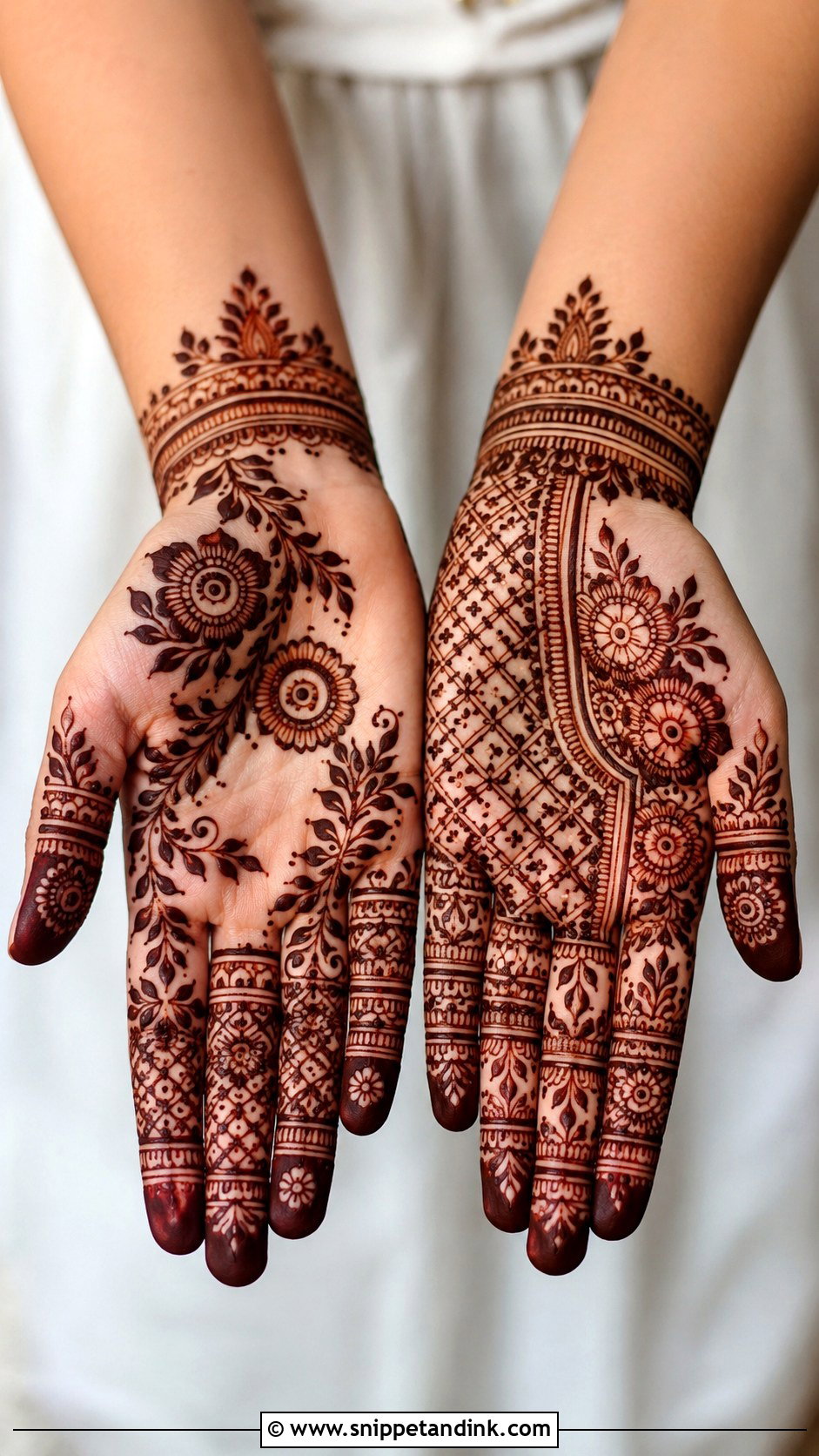
Open skin becomes part of the pattern here, contrasting with the stain. Floral trails with deliberate gaps, half-and-half palms, bold borders and geometric breaks all depend on the empty areas being planned. Random blank spots look like the artist ran out of time; shaped ones look designed. I outline the negative shapes first and fill around them. Dense fingers or a wrist cuff keep it bridal, and because nothing touches, each motif shows up sharply in pictures.
23. Rose Dulhan Mehndi Design
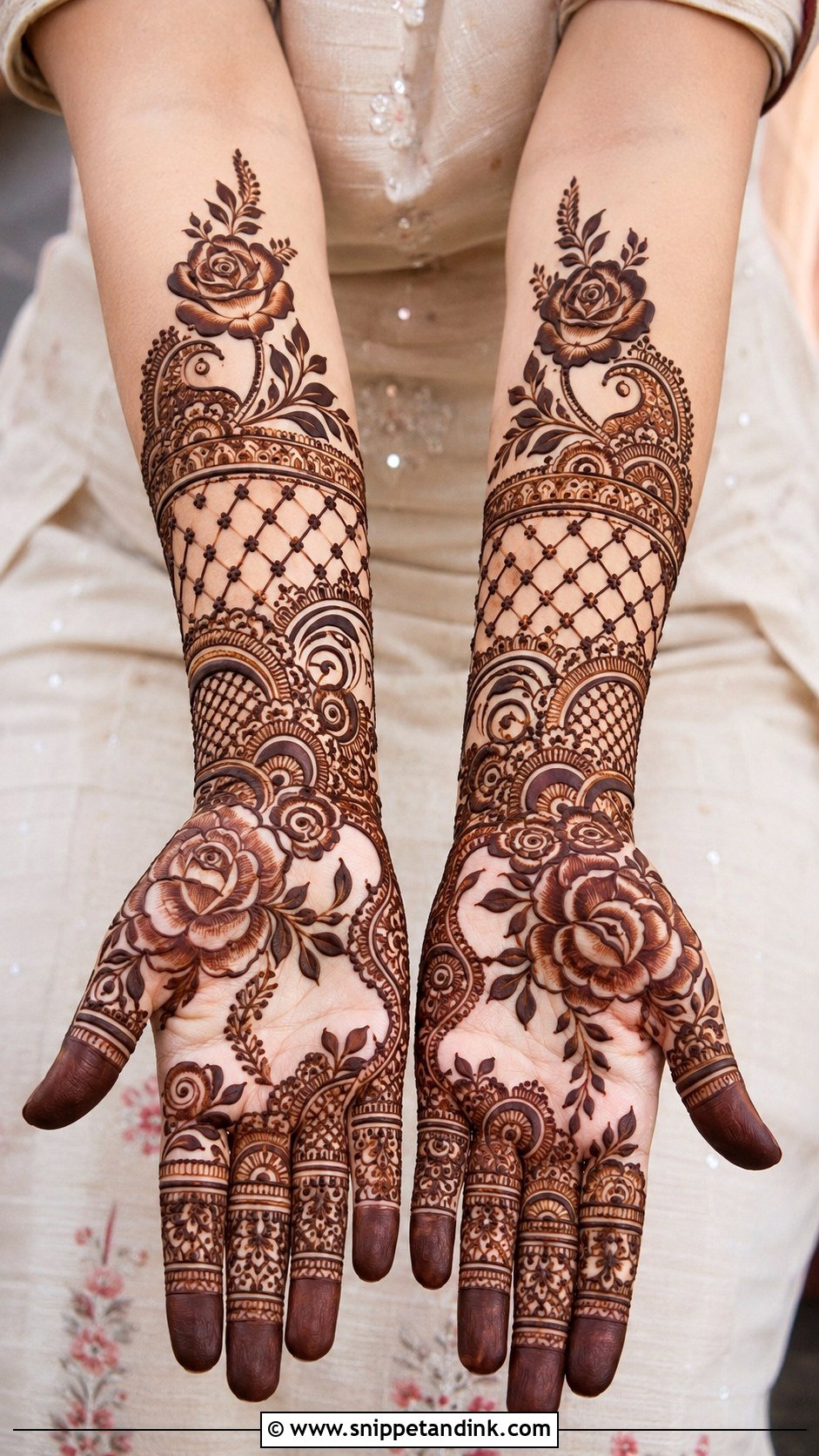
Roses need room, which is why they sit most comfortably in Arabic and Indo-Arabic layouts rather than dense Indian fills. Large blooms go on the palm, back hand, wrist or forearm with leaves and vines around them. Shaded petals give depth, and in henna that shading comes from thinning the line or stippling, so it needs a fresh, smooth-flowing cone. Jaali panels, paisley borders and detailed fingers make it bridal, and it suits a red outfit as easily as a pastel one.
24. Floral Dulhan Mehndi Design
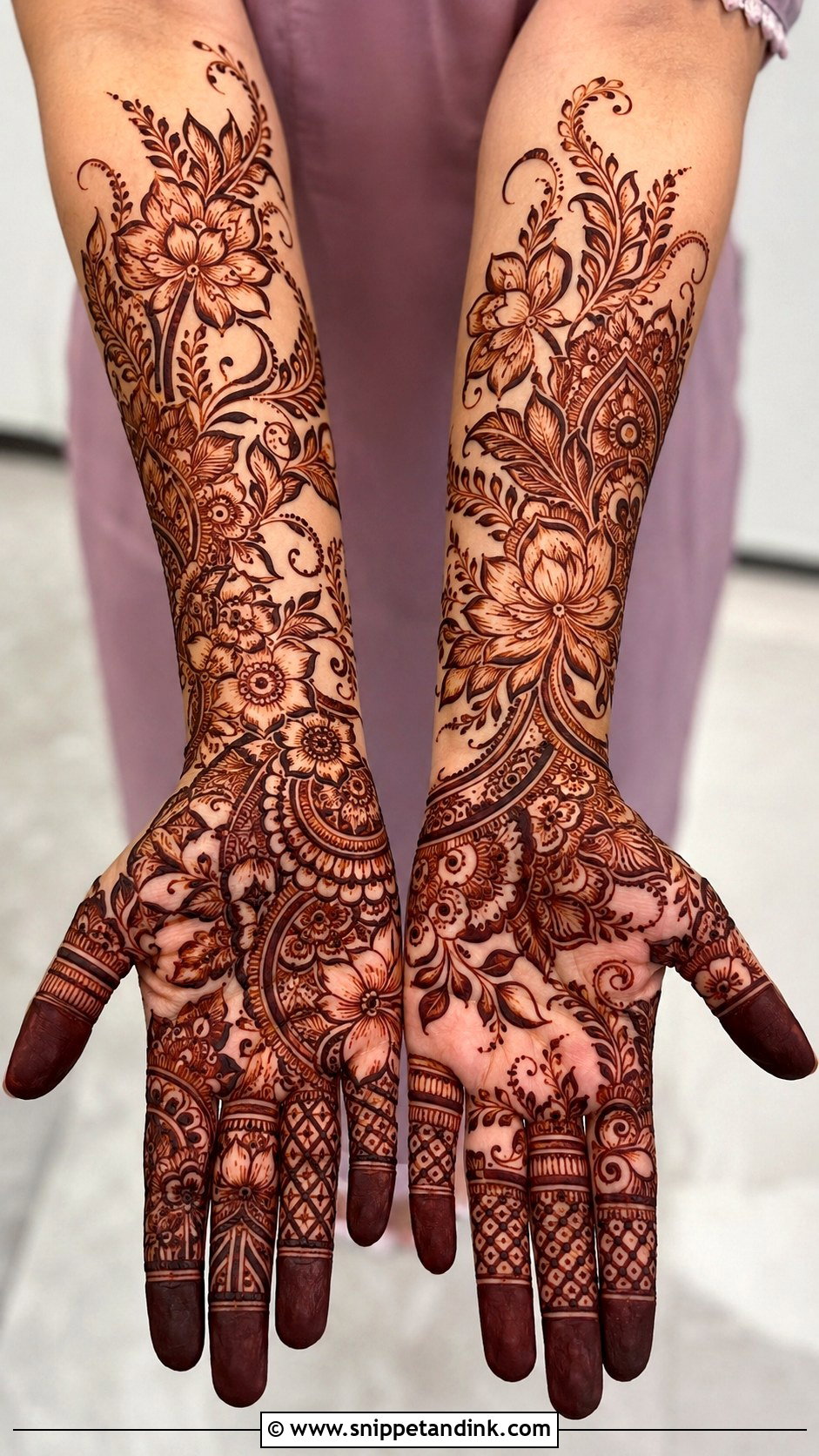
Flowers adapt to any density simply by changing size and spacing, from tight traditional clusters to open modern sprays. Lotus, roses, small blossoms and leafy buds are the staples. A bridal floral layout puts clusters on the palm, vines along the fingers and petal borders at the wrist, and it’s my default suggestion when a bride doesn’t want a theme at all. Fine fillers between the flowers, such as dots, curls and shaded leaves, are what stop it looking like everyday Eid mehndi.

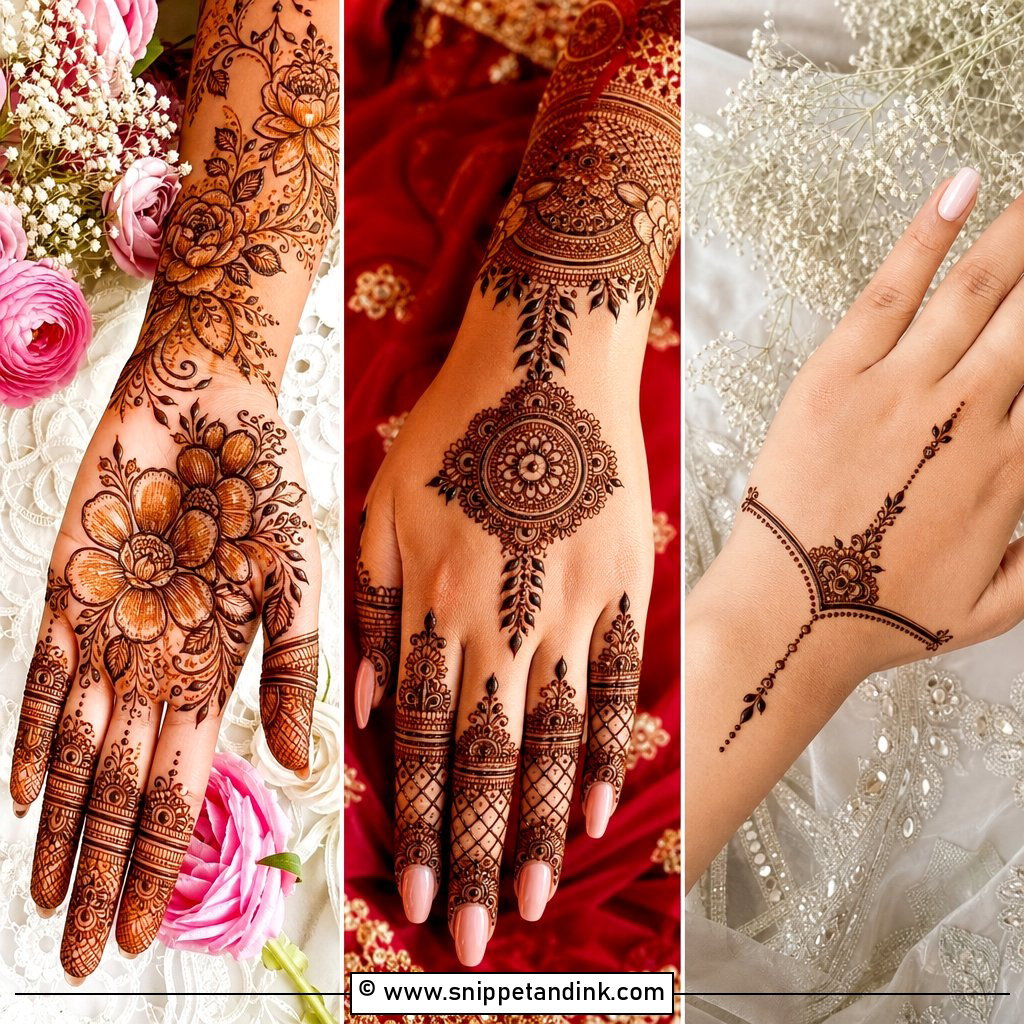
25. Paisley Dulhan Mehndi Design
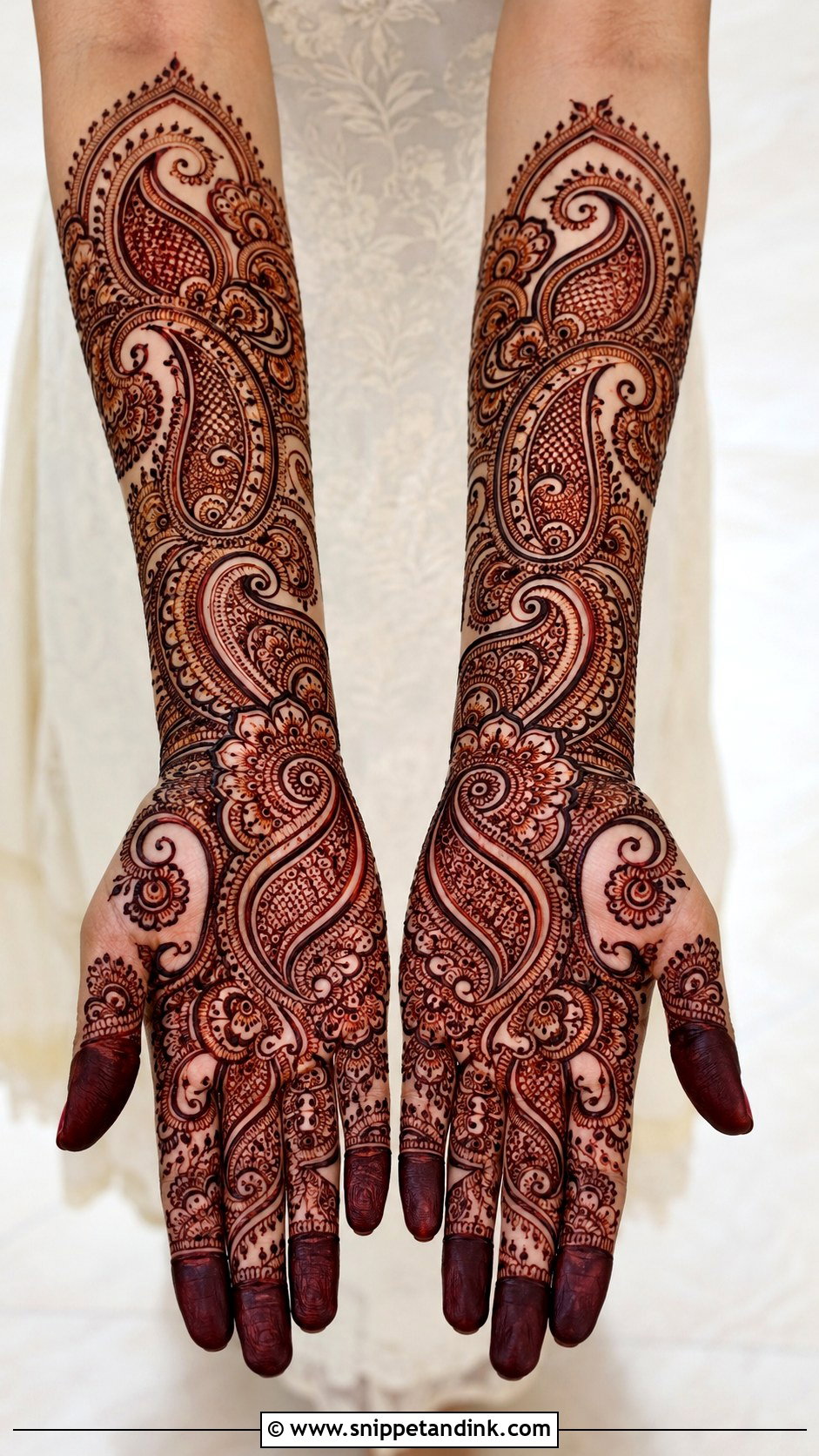
The curve of a paisley follows the curve of the hand, so it fills a palm, wraps a wrist or climbs a forearm without fighting the anatomy. A large paisley centrepiece reads as rich; many small ones build traditional texture. I vary the sizes on purpose, because a row of identical paisleys looks stamped. For full coverage without portraits, this is the most classical route in South Asian bridal art.
26. Pakistani Dulhan Mehndi Design
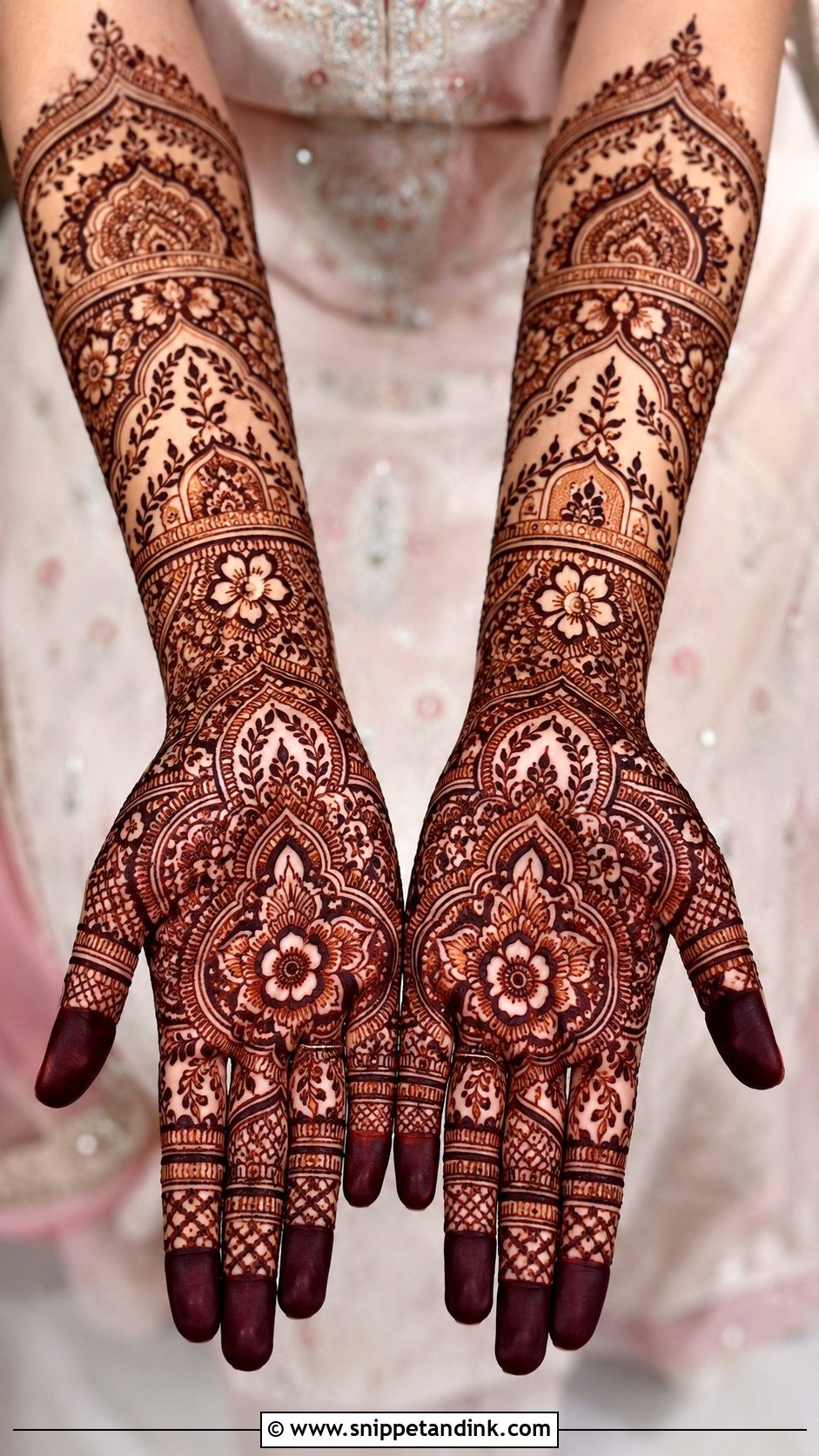
Pakistani bridal work often blends Indian detail with Arabic flow: florals, paisleys, domes, jaali, leafy trails and bold fingertip fills, usually in a symmetrical palm layout. Coverage can be heavy or medium. Since the stain from one mehndi night usually has to carry the nikkah, the baraat and the walima, I plan it to look good on day three as well as day one. Palms stay detailed and the back hands slightly more open, which also keeps them readable beside heavy walima jewellery.
27. Moroccan Dulhan Mehndi Design
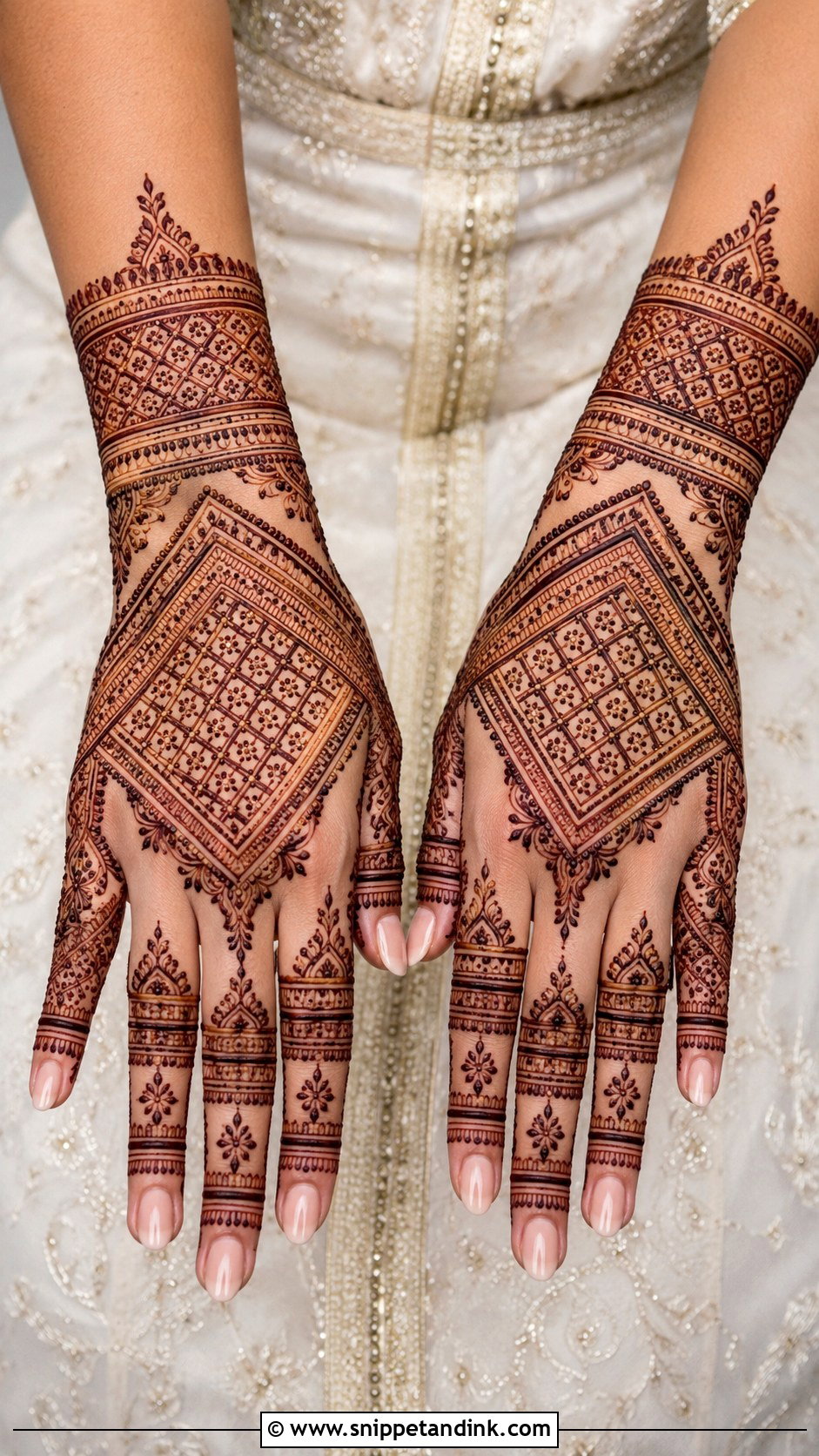
Diamonds, chevrons, dots and structured panels look nothing like floral Indian work, which is the appeal. A bridal Moroccan version repeats geometry in full palm grids, wrist cuffs, finger bands and forearm sections. Straight lines are harder to draw in henna than curves because the paste drags, so look at an artist’s geometric portfolio specifically. Small flowers or leafy accents between the borders soften it for fusion ceremonies and modern outfits, and the sharp spacing reads clearly on camera.
28. Gulf Dulhan Mehndi Design
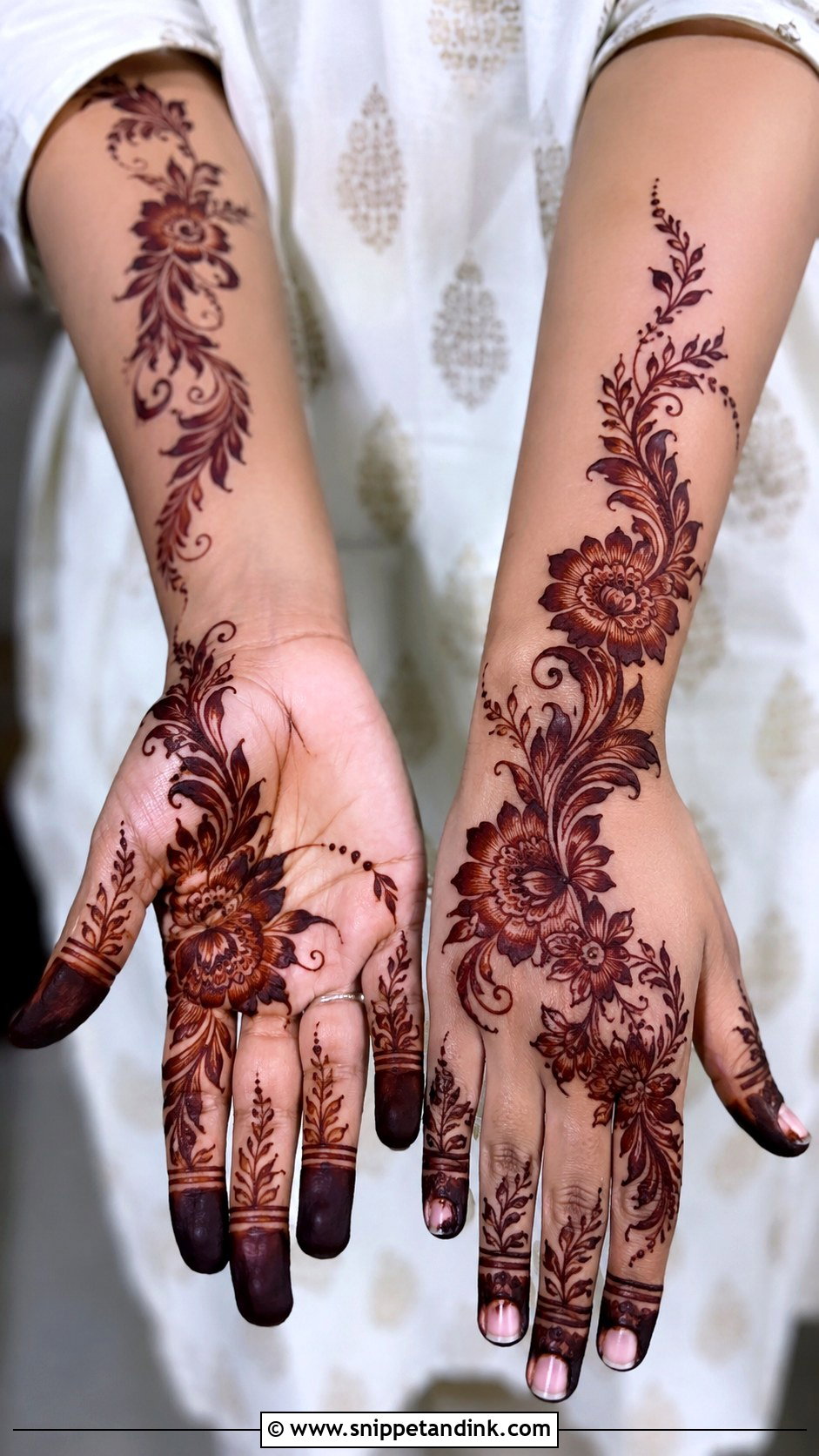
Khaleeji-inspired work, often called Gulf mehndi, uses bold florals, flowing vines and dramatic empty space, with motifs much larger than Indian fillers, so the design reads from across a room. Thick, glossy outlines are part of the look, which takes a slightly looser paste and a steady hand. It suits a bride who wants glamour without density. Detailed fingers, shaded flowers and curved wrist borders make it wedding-ready, and the design should travel from one side of the hand to the other in a single sweep.
29. Royal Dulhan Mehndi Design
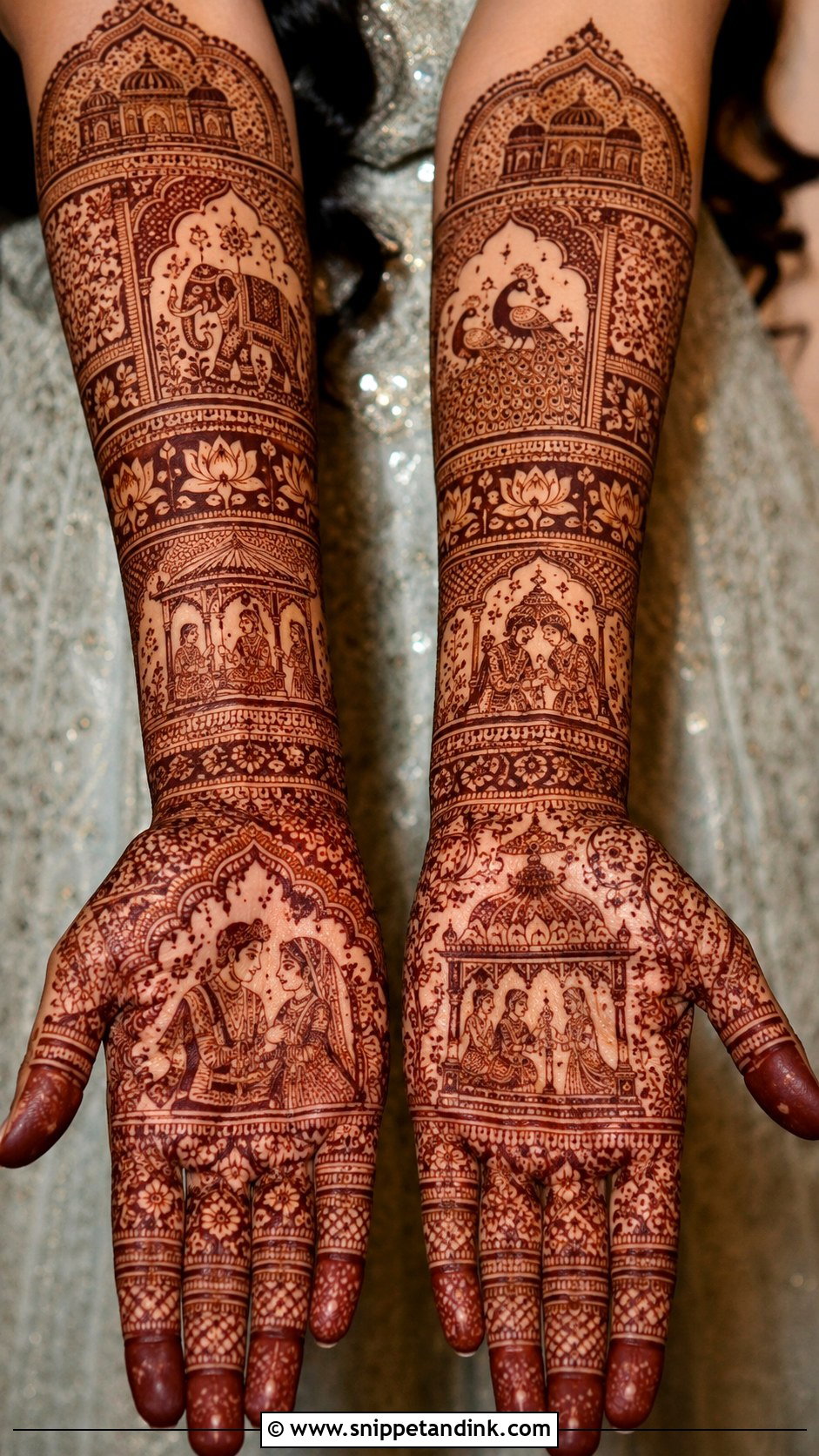
Grandeur is the brief: palace arches, elephants, peacocks, lotus borders, mandap scenes and detailed forearm panels. I split each arm into architectural sections, with the story on the palms and ornamental bands on the arms, so the large motifs stay visible and the small fillers serve them. This much detail needs a heavy lehenga and traditional jewellery around it. With a light outfit, it overwhelms.
30. Wedding Story Dulhan Mehndi Design
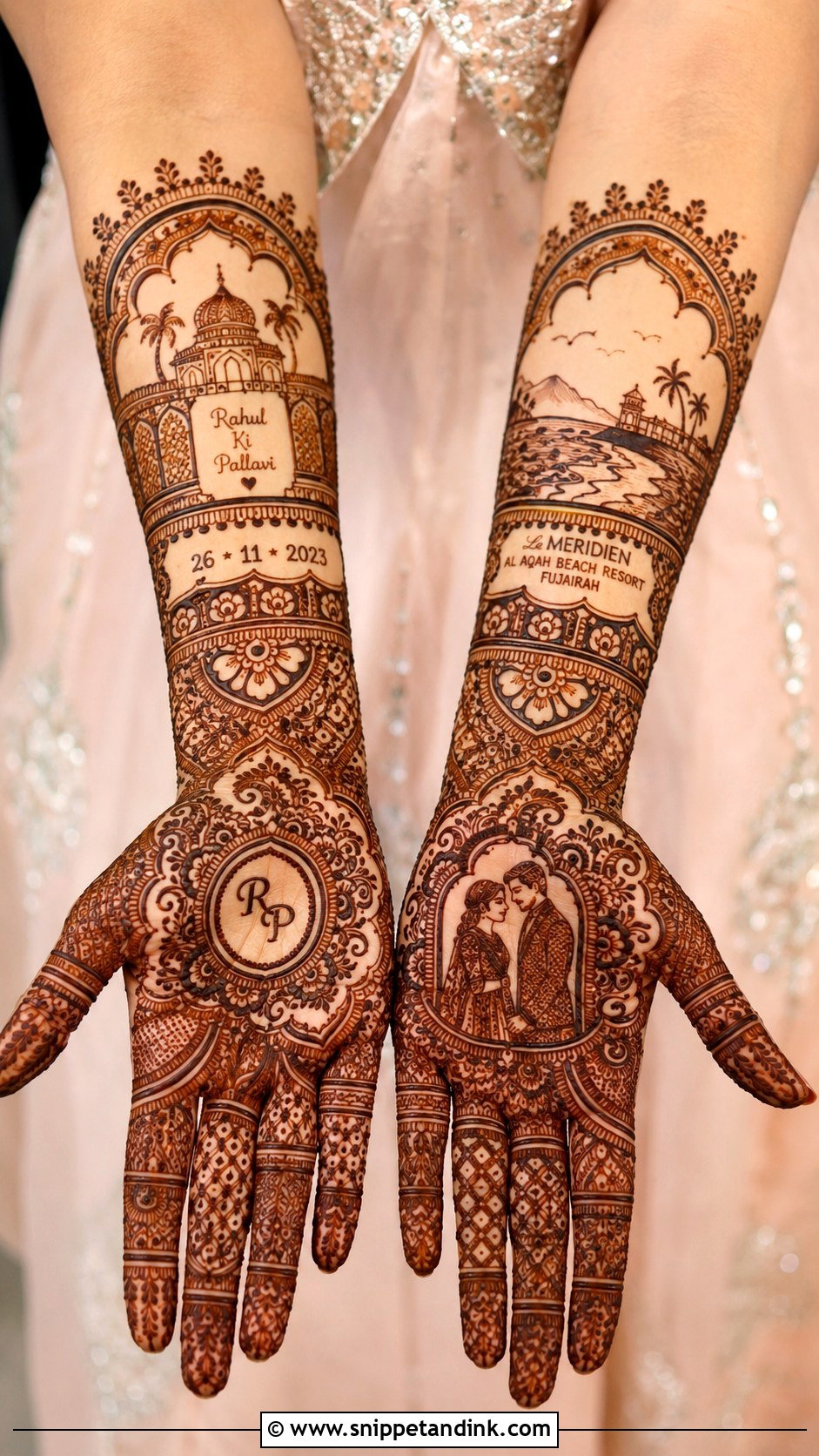
How you met, a proposal symbol, the venue, a date, a favourite city: personal stories turn the hands into a keepsake, with the story on the palms and decorative fillers on the arms. The usual mistake is asking for too many symbols. Each one has to stay recognisable after the line spreads, so I’d keep it to a handful of simple icons drawn with fewer details than you’d expect. Florals, paisleys and jaali around them keep it reading as bridal rather than as a comic strip.
31. Initials Dulhan Mehndi Design
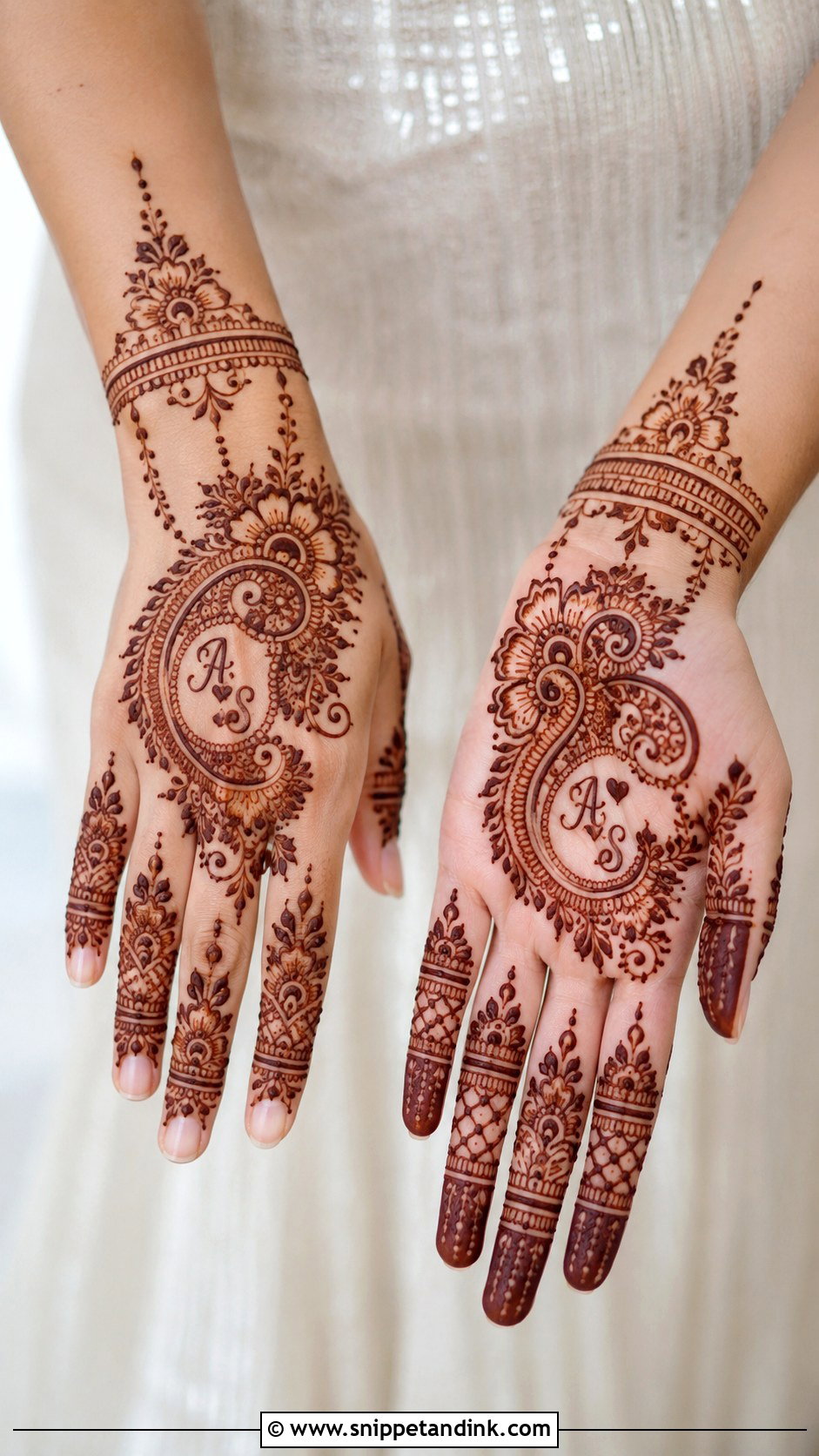
Hiding the groom’s initials in the pattern sets up the old game of making him hunt for them after the ceremony, and plenty of families still look forward to it. The letters can sit inside a paisley, flower, mandala, jaali panel or wrist border, in any style from heavy Indian to minimal Arabic. I write them in a script that matches the surrounding linework so they blend in instead of looking stamped on. Add the wedding date nearby if you like.
32. Elbow Length Dulhan Mehndi Design
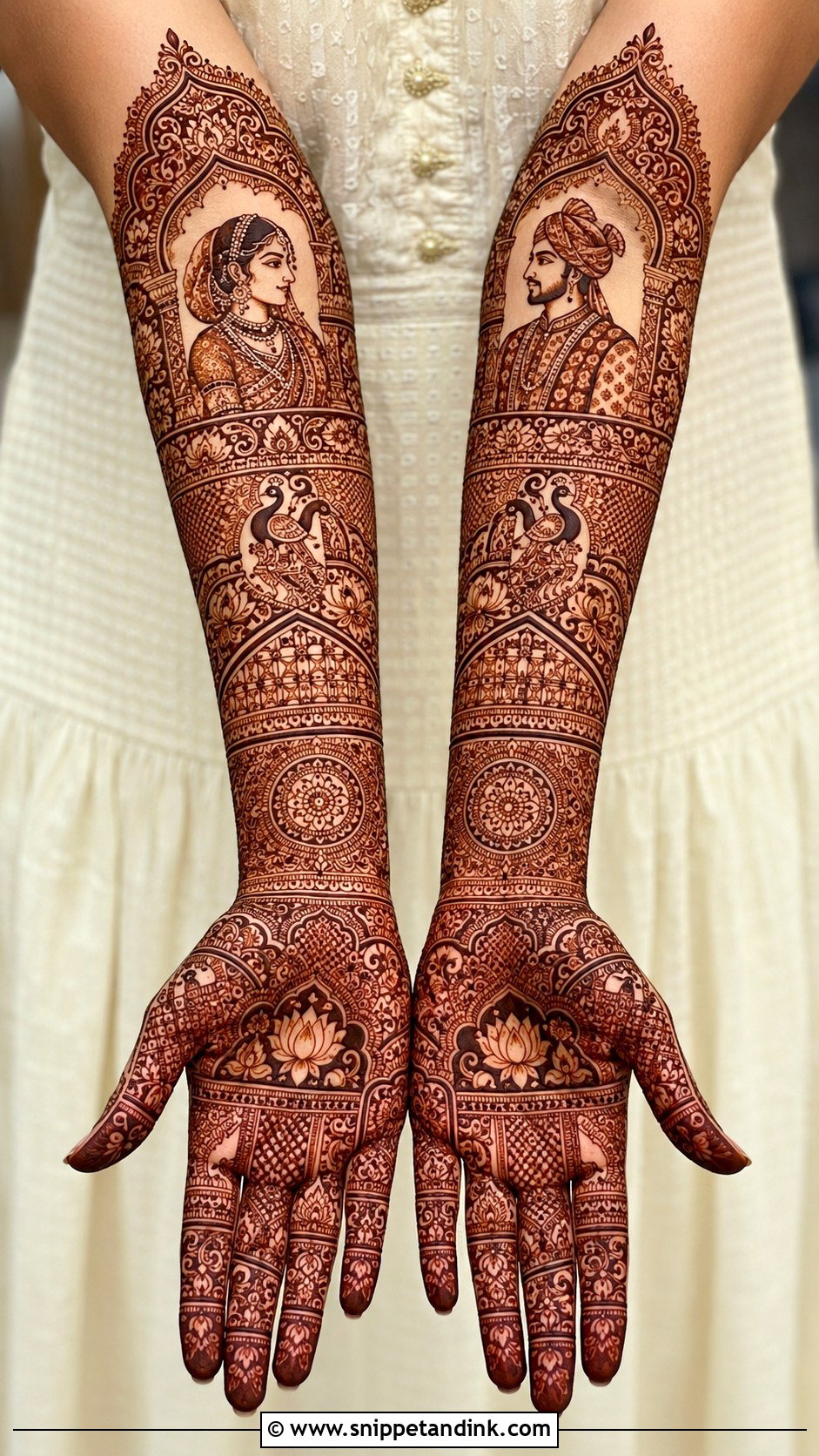
Coverage from fingertips to elbow needs its flow planned before the first line: a strong palm centrepiece, the wrist as a transition, larger patterns on the forearm. Forearm skin stains lighter than the palm, so I draw bolder motifs up there to compensate rather than repeating the fine palm fillers. It’s a long sitting and pairs naturally with short sleeves and jewellery stacks. Under full-length sleeves, most of the work stays hidden, so think about the blouse before you commit.
33. Half Hand Dulhan Mehndi Design
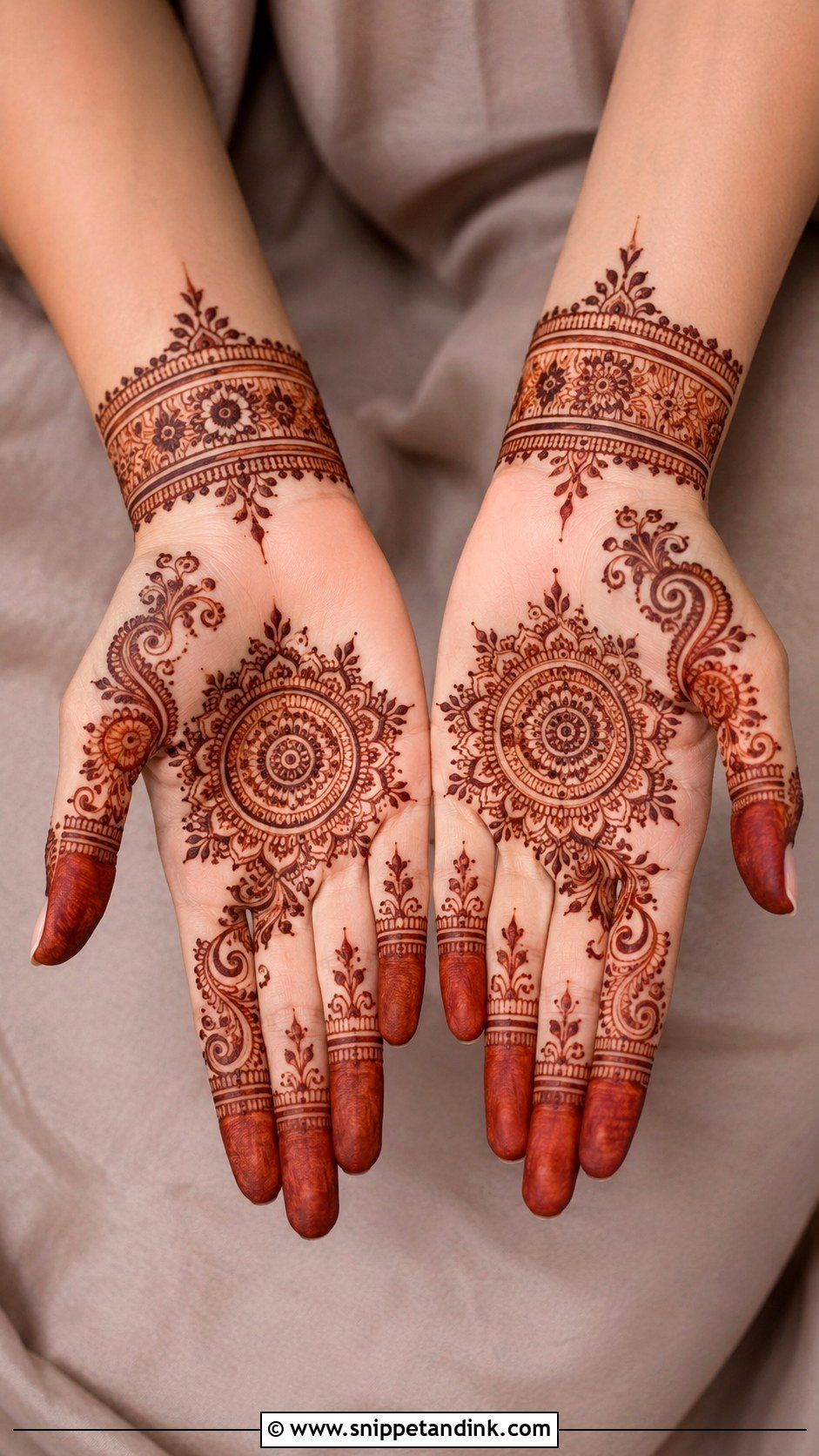
Fingers, palm and wrist, stopping before the forearm. It’s a shorter session that still looks bridal with a central mandala, a floral side trail, detailed fingers and a bracelet band. I recommend it to brides wearing full sleeves and to anyone who simply can’t face a long sitting. Keep the palm and wrist joined in one flow so the design doesn’t look cut off at the wrist.
34. Feet Dulhan Mehndi Design
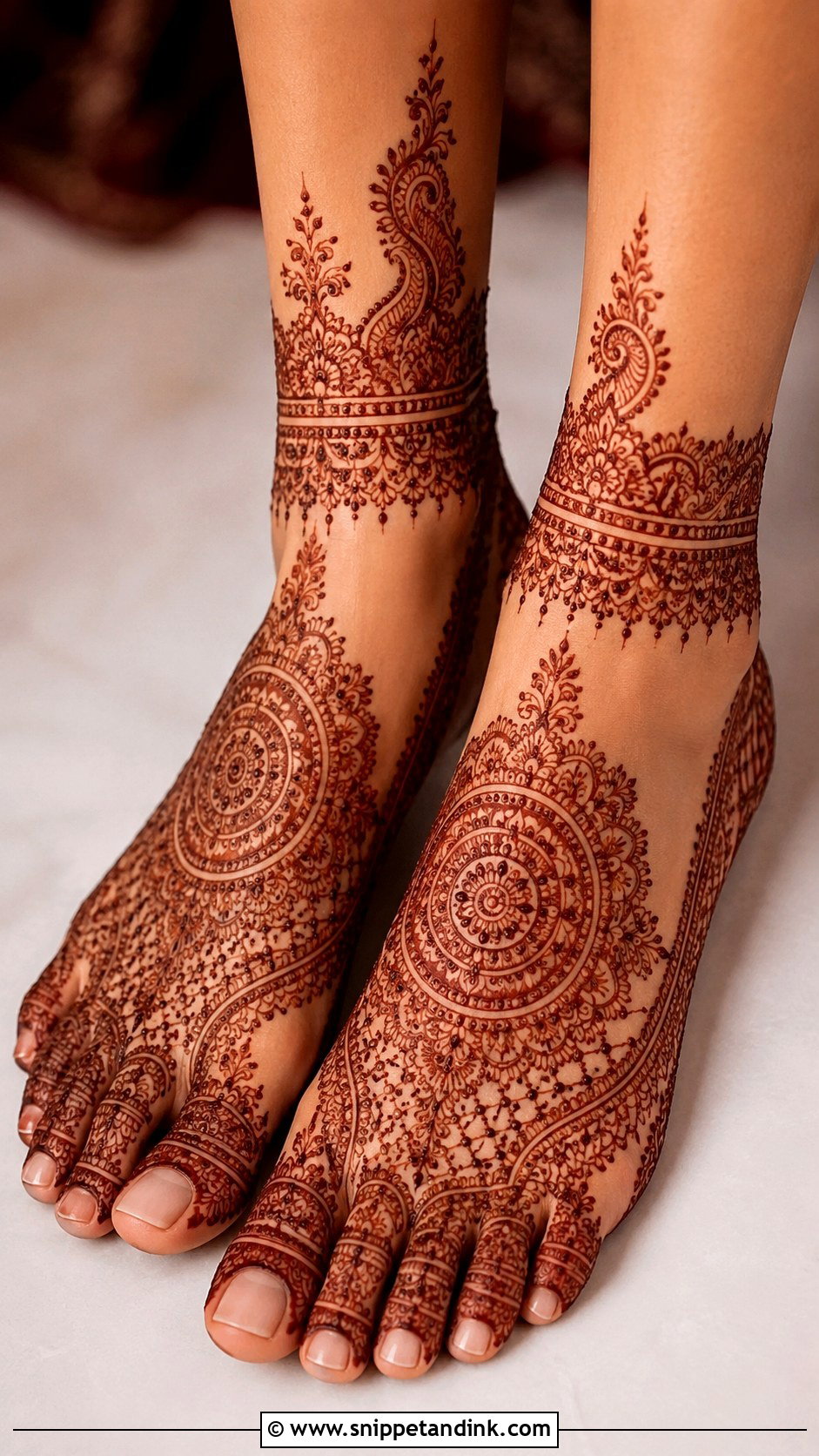
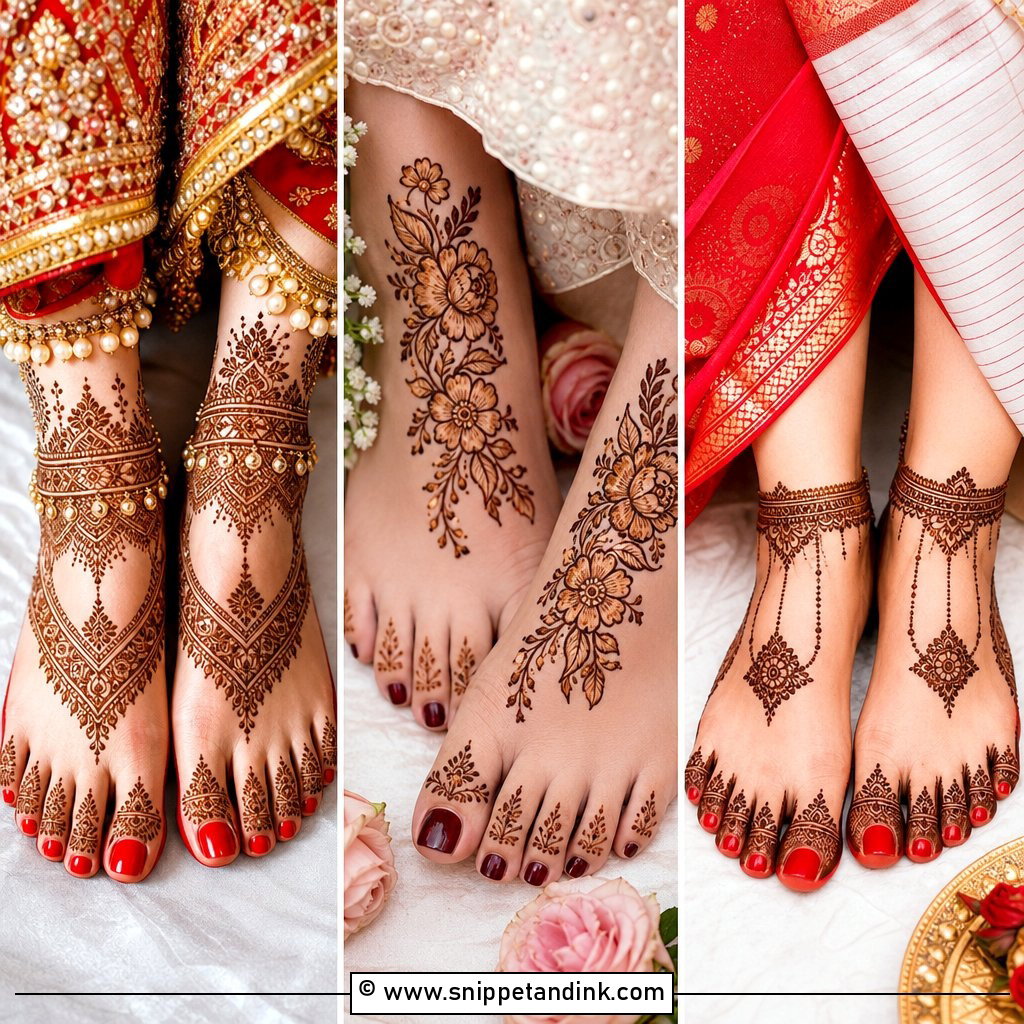
Anklets, toe rings and lehenga borders all pull the eye down to the feet. Feet dulhan mehndi design answers that with mandalas on the top of the foot, floral anklet bands, toe detailing, jaali panels and paisley trails, matched to the hands without copying them. Soles stain very dark, like palms. I always do feet last, because once they’re covered the bride can’t walk, and I keep the paste thin wherever footwear will rub. Coverage can stop at the ankle or continue up the lower leg.
35. Red Stain Dulhan Mehndi Design
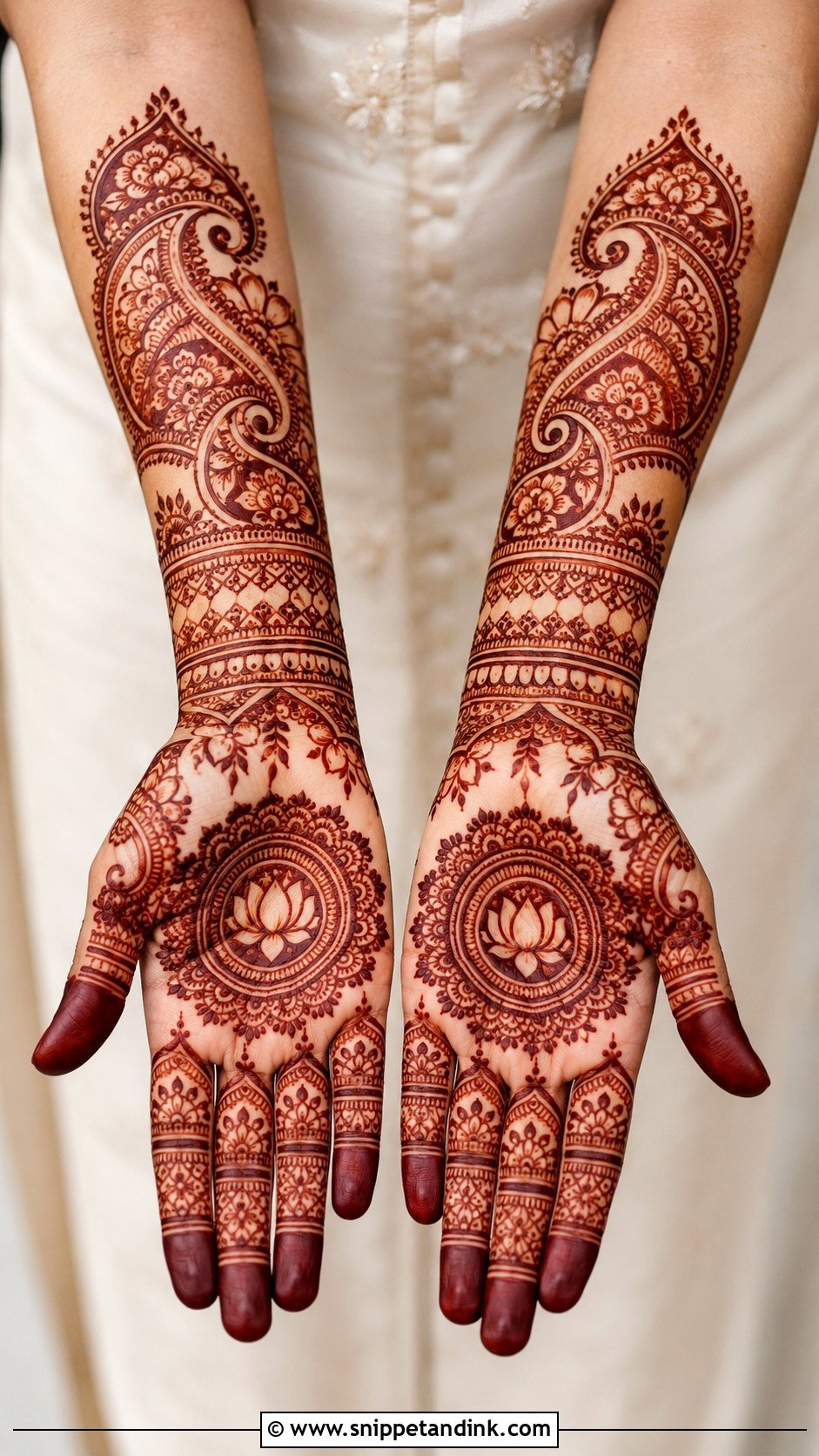
Colour is the point here: a reddish-brown to deep maroon finish. Any style can produce it, but the depth comes from fresh natural paste, clean application and patience. I ask brides to keep the paste on for at least six to eight hours, overnight if they can, and to keep water away for the first day. The stain is bright orange when the paste comes off and darkens over the next day or two. Dense fingertips, bold borders, shaded flowers and filled paisleys show it off best.
What Happens After the Paste Dries
Once the paste has set, I dab on a little lemon juice mixed with sugar. It keeps the paste stuck to the skin longer and stops it flaking off early. Don’t wash it off when you’re done. Scrape it away dry with a blunt edge, then keep your hands out of water for as long as you reasonably can, ideally the first 12 to 24 hours. Warmth helps the colour deepen, and a thin layer of natural balm before you shower protects the fresh stain.
A bridal stain usually lasts one to three weeks, fading first where you wash most. Dishwashing, chlorinated pools and constant hand sanitiser all speed that up, so if you’re heading straight to a honeymoon by the pool, expect the fingertips to fade before the palms.
Ask What Is Actually in the Cone
Natural henna only stains in shades of orange, red-brown and deep maroon. Any paste promising jet black within an hour contains additives, often PPD, which can cause severe allergic reactions and lasting scars. Ask your artist whether she mixes her own paste and which essential oils she uses. If your skin is sensitive, request a small patch test a few days before the ceremony so there are no surprises on the night.
Bring Your Outfit Photo to the Mehndi Consultation
Start from your outfit and sleeve length, then decide coverage, then motifs. Heavy Indian and Rajasthani work suits full lehengas and long sittings; Arabic, Gulf and negative-space designs read lighter and finish faster. Portraits, initials and story elements add meaning, while mandala, lotus, paisley and floral patterns never date. Show your artist the outfit and jewellery at the consultation, and the design you leave with will stay comfortable through every ritual and still look like yours in the album.
You'll Like These Ideas:







Leave a Reply