
A heart is one of the few mehndi motifs that people ask for by feeling rather than by tradition. It can sit inside a mandala, frame a couple’s initials, hide inside an Arabic vine or anchor a whole palm, and it scales from a five minute guest design to a full bridal set. What decides whether it looks sweet or grown-up is the drawing around it. The designs below cover palms, backs, fingers and wrists, with my notes on where each heart sits best and what tends to go wrong.
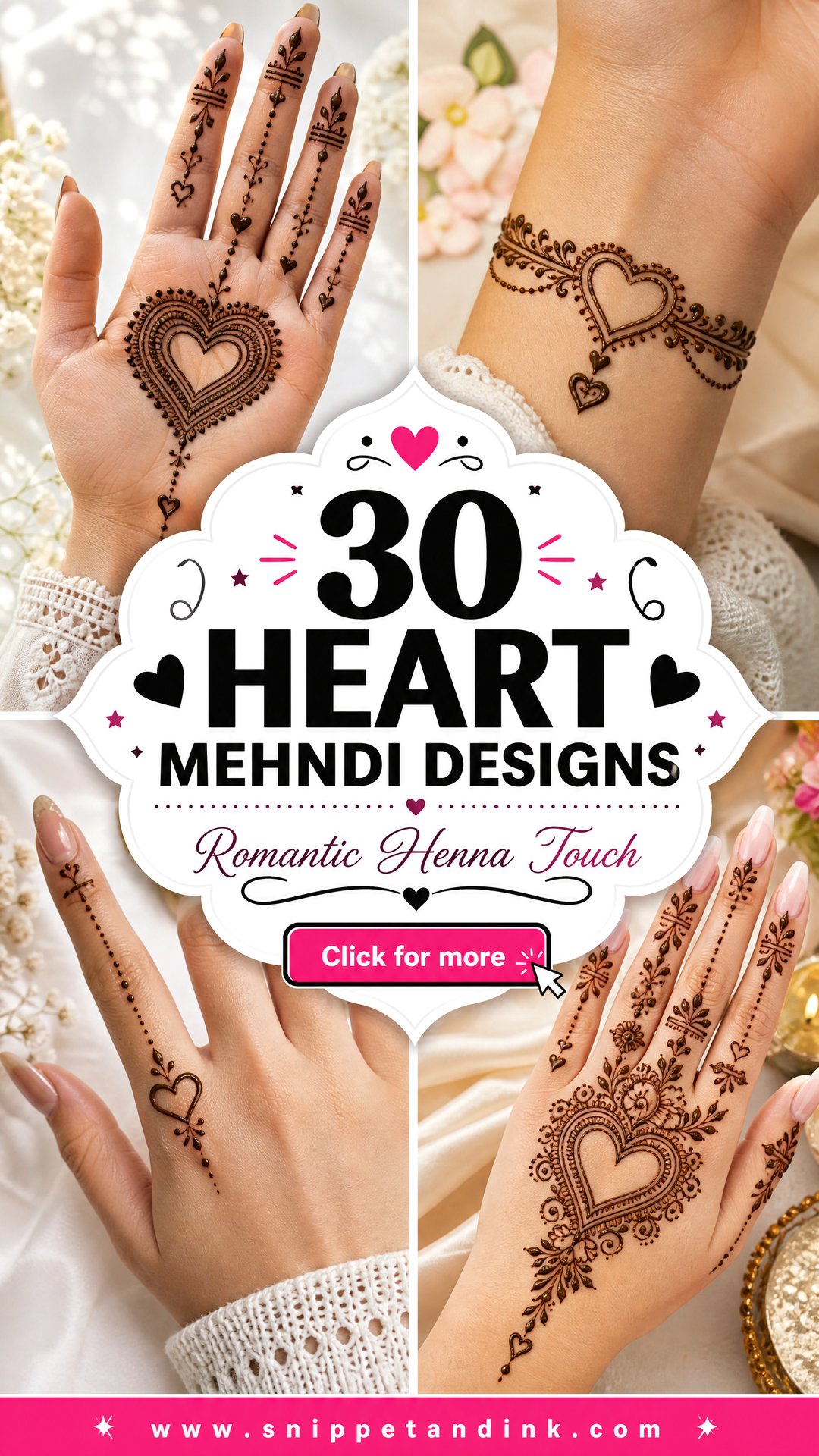
A Heart Is Harder to Draw Than It Looks
Paisleys and flowers hide small mistakes. A heart doesn’t, because everyone knows exactly what one should look like. If one lobe is fuller than the other or the point drifts sideways, it’s the first thing people notice. When I draw one, I put a tiny dot where the point will land and another at the dip, then draw each side as a single stroke toward the point.
Shape matters too. A round, plump heart reads as playful and works for guests and kids. A longer heart with a sharper point looks more grown-up and sits better in bridal and Indo-Arabic layouts. Bring a reference of the heart shape itself, not only the whole hand, and your artist will know which one you mean.
Sort these out before the appointment
- Which hand gets the main heart, and whether the palm or the back will show in most photos
- Exact spelling of any initials or names, written down, plus block or script letters
- How large the heart should be compared with your palm, roughly coin-sized or half the palm
- Whether real rings or bangles will cover any part of the design
1. Simple Heart Mehndi Design
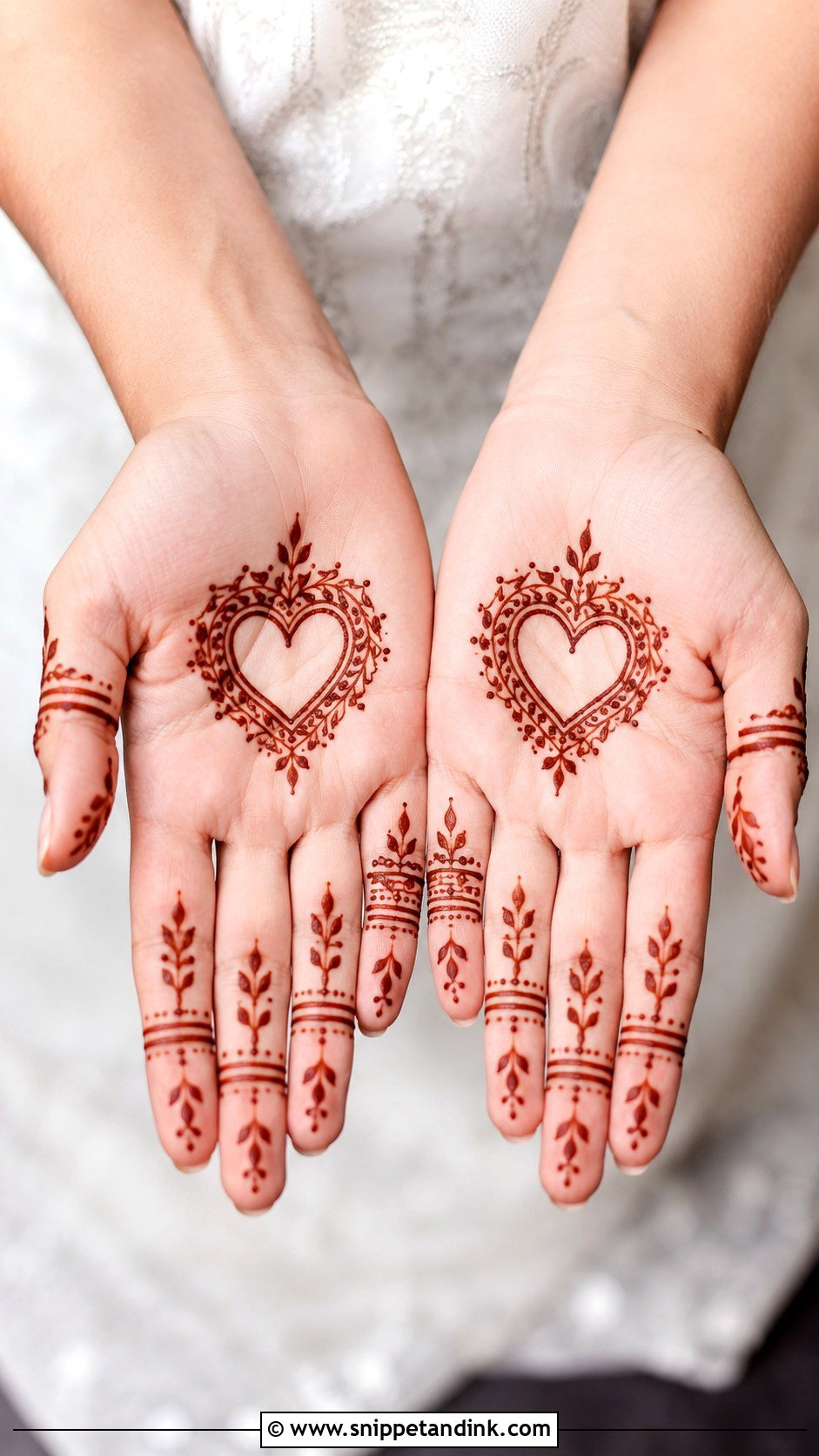
One neat heart in the centre of the palm or back hand, built out with small dots, leaves and a few curved lines, with light bands on the fingers. That’s all this needs. I draw the heart first and size everything else to it, because if the fingers get busier than the centre, the heart stops being the point. Open spacing keeps the reddish-brown stain looking fresh rather than heavy.
2. Front Hand Heart Mehndi Design
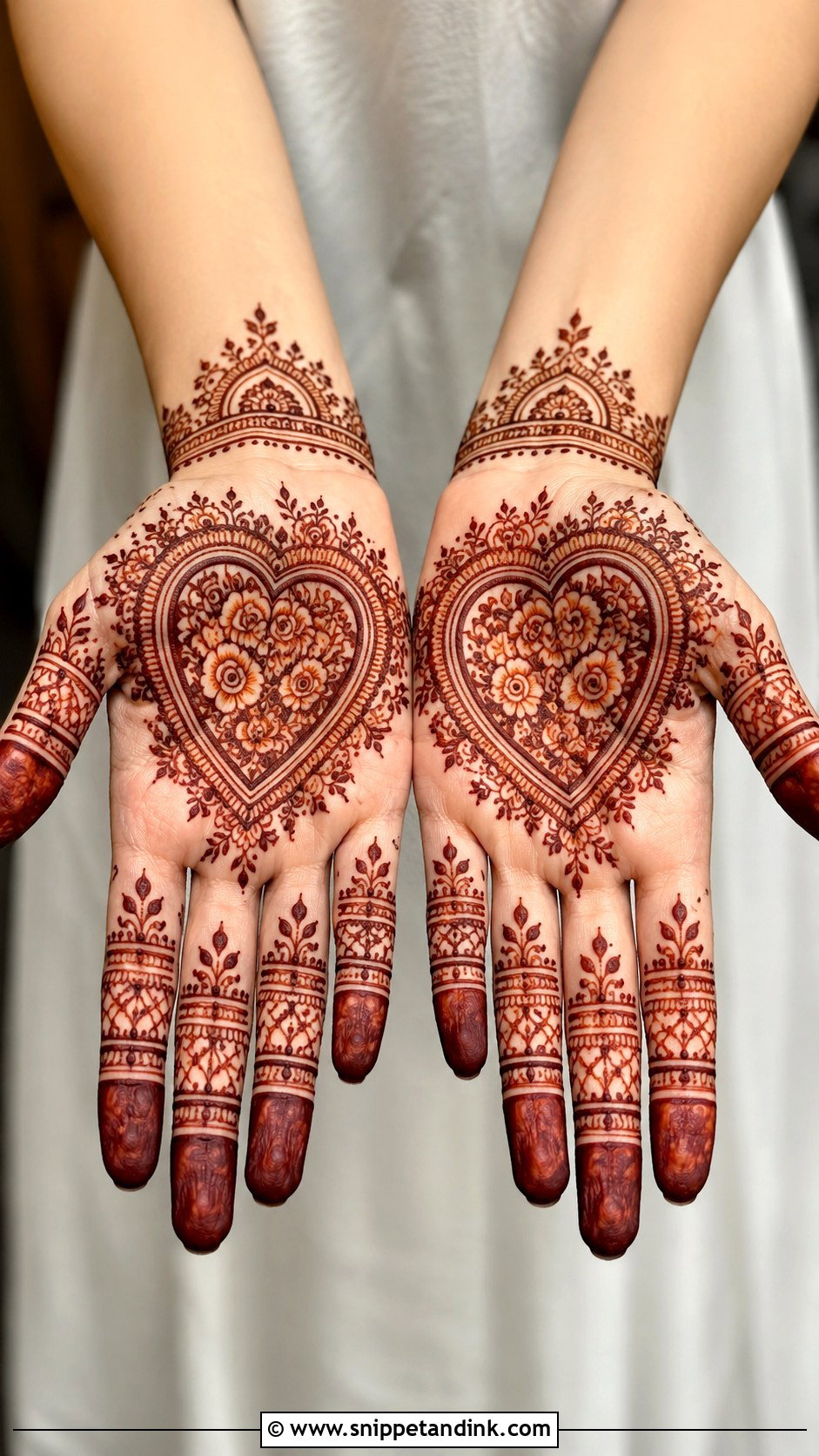
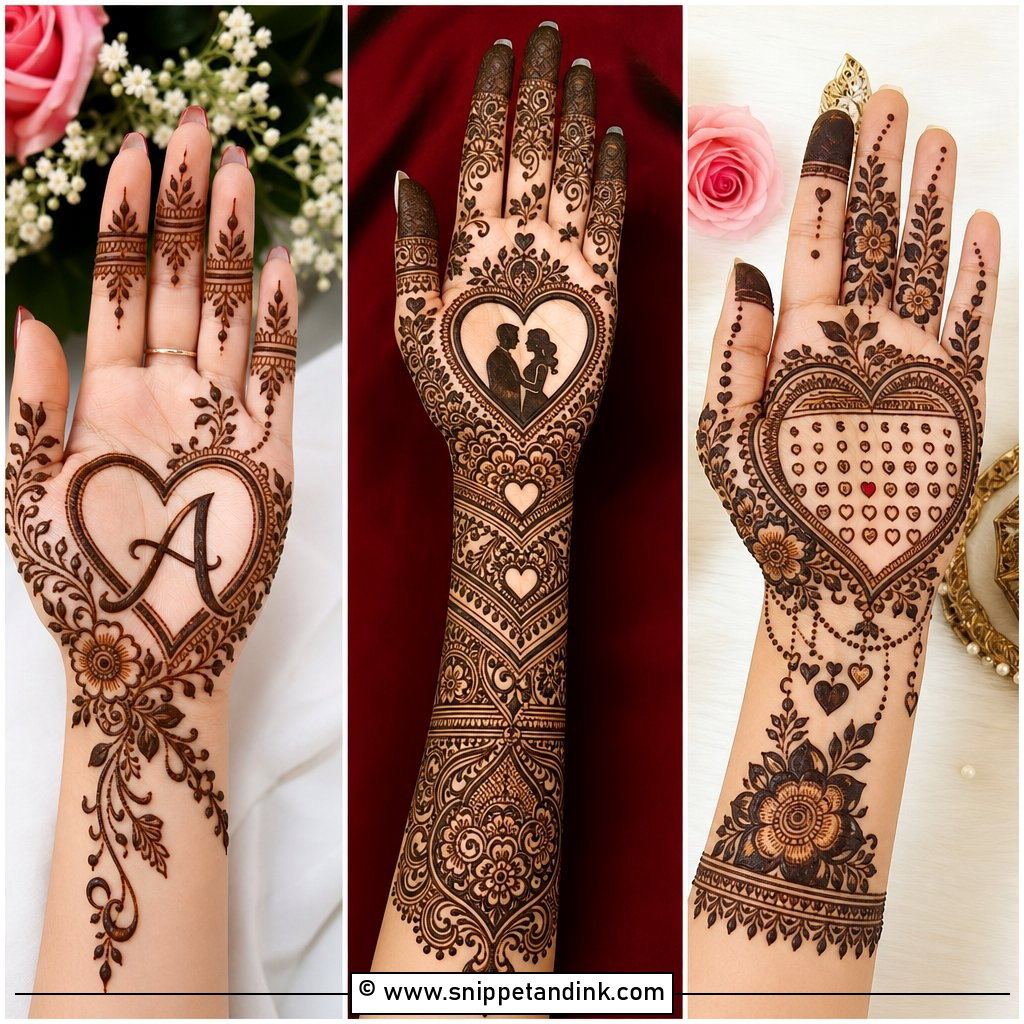
The palm gives a heart room to be filled properly: tiny florals, checks or fine curved strokes inside, with paisleys, leaf trails and a small mandala border around it. I centre it on the hollow of the palm, not the geometric middle, because that’s where it looks centred when the hand is cupped. On a small hand I cut the fillers back. On a long hand I let the pattern run on toward the wrist.
3. Back Hand Heart Mehndi Design
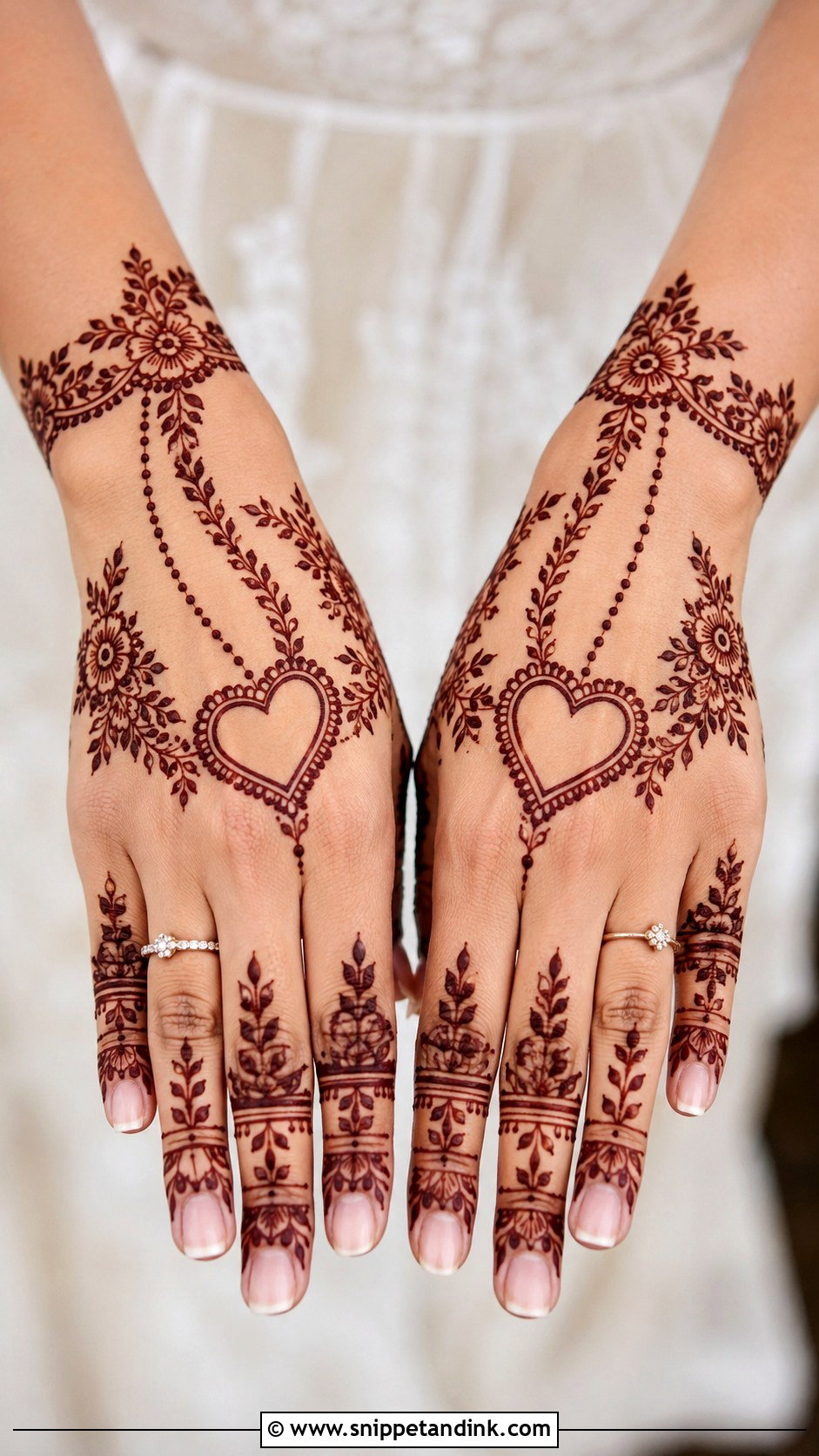
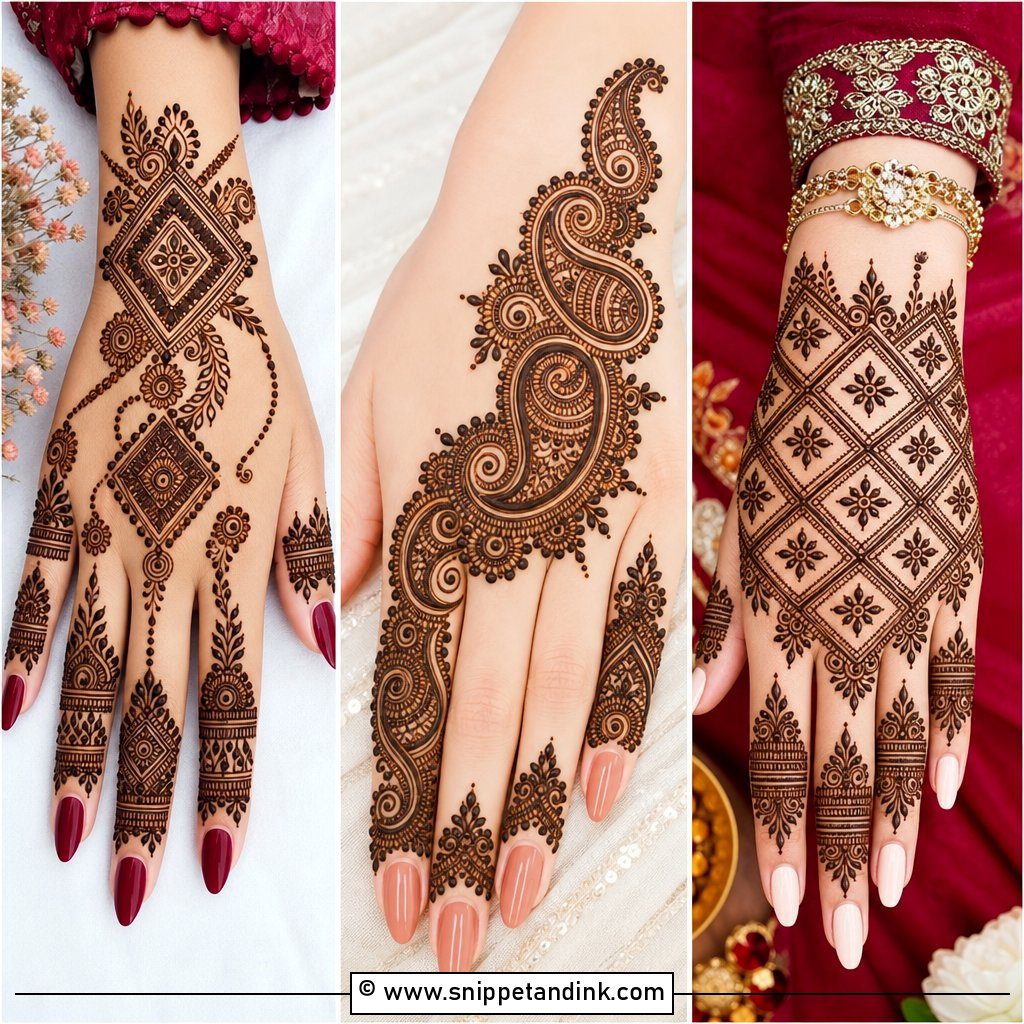
Relaxed hands show their backs, so a heart here gets seen all evening. I usually place it just below the knuckles and link it to the wrist with bracelet-style chains or a floral vine, with leafy tips and ring shapes on the fingers. Draw the heart outline bold and the details inside lighter. The back of the hand stains paler than the palm, and a thin outline can fade into the filler by day three.
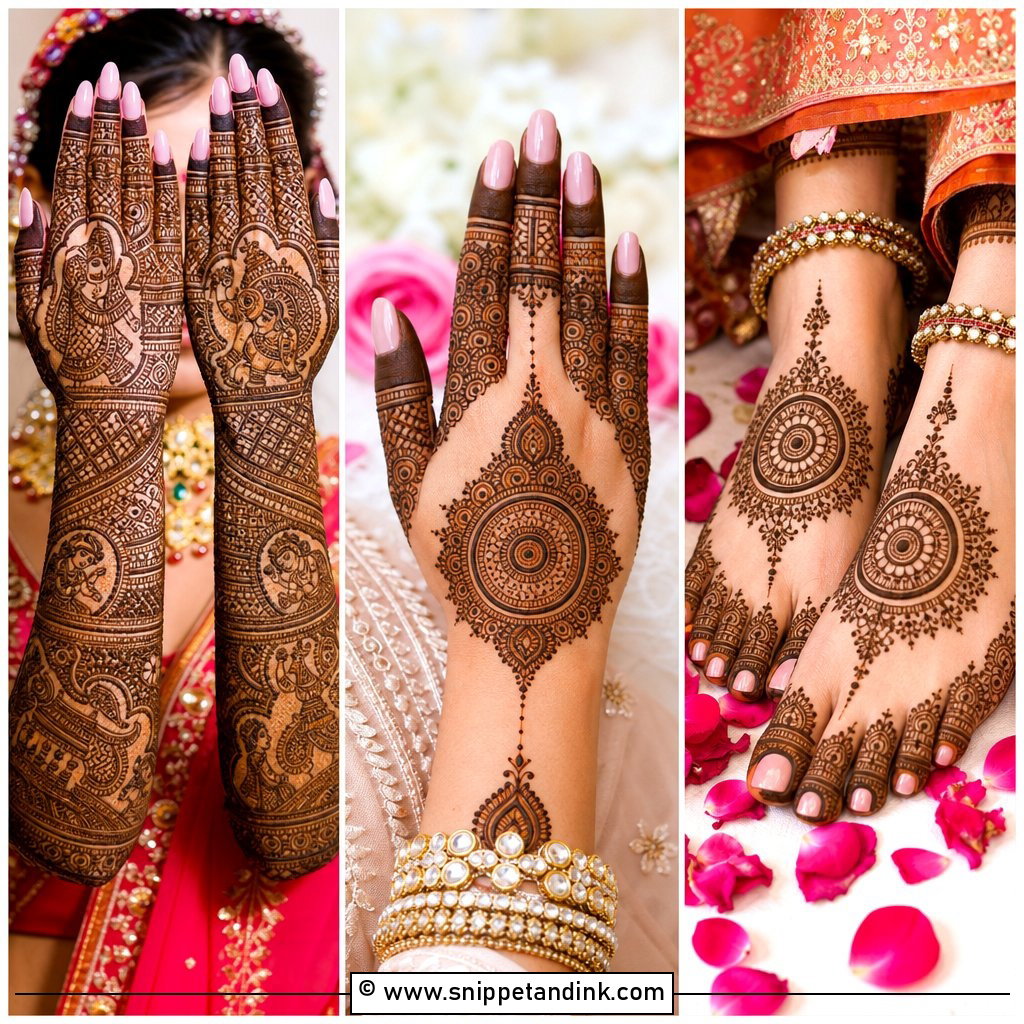
4. Bridal Heart Mehndi Design
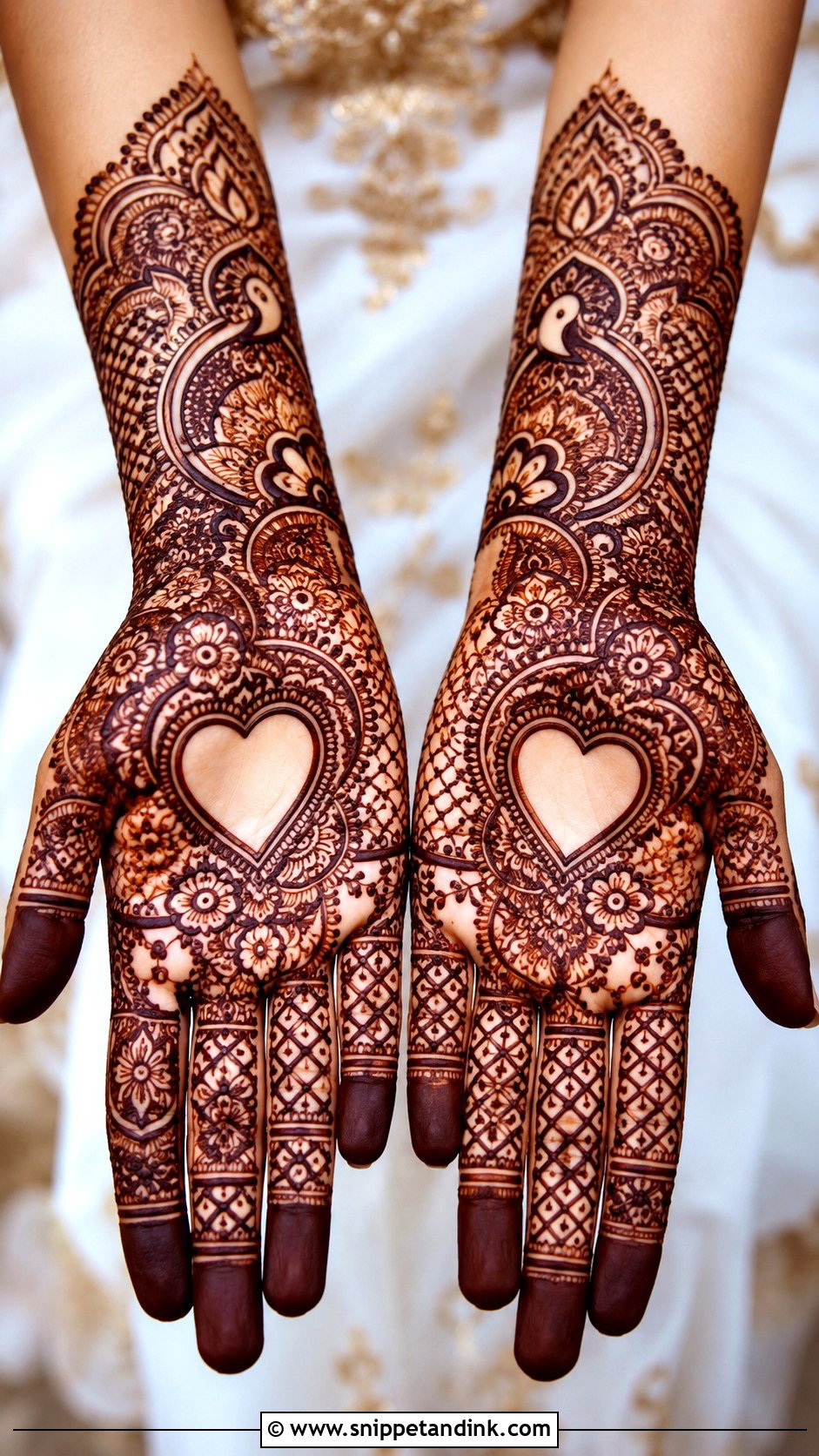
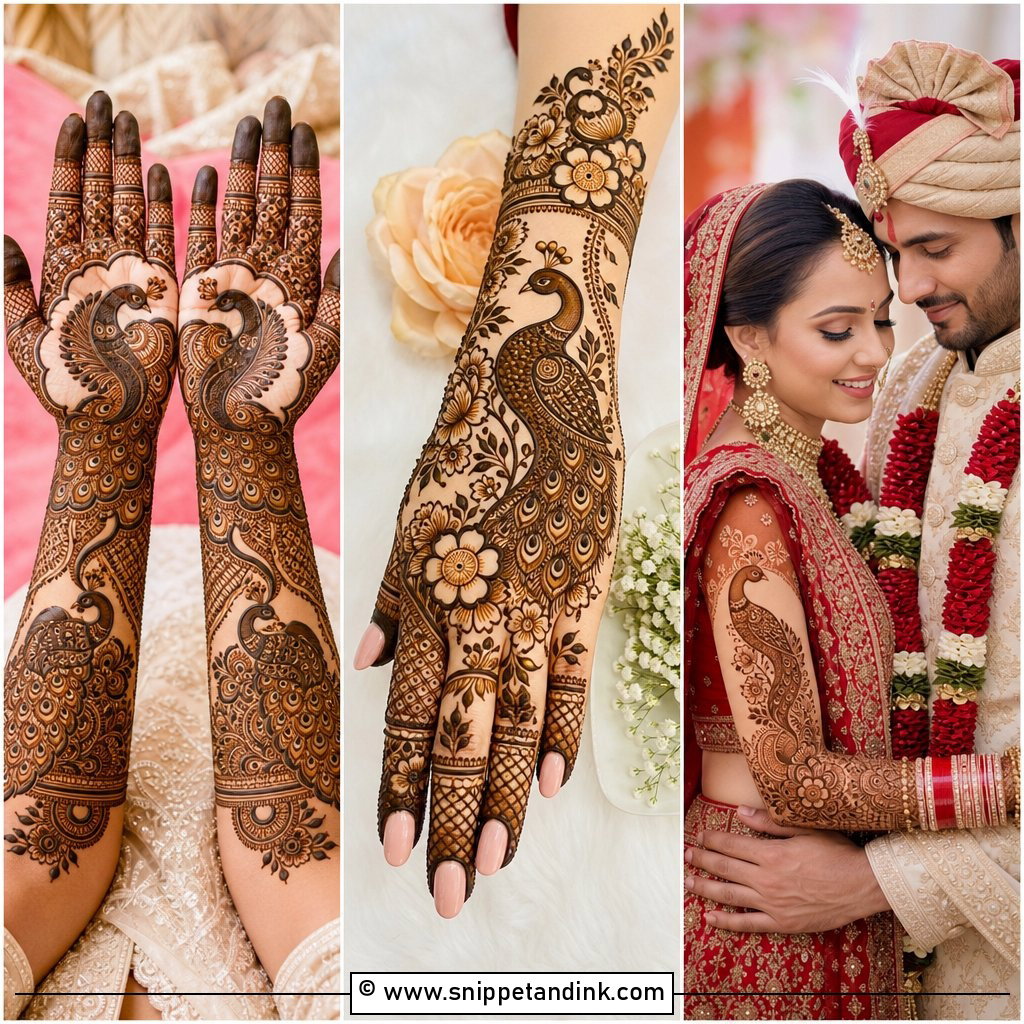
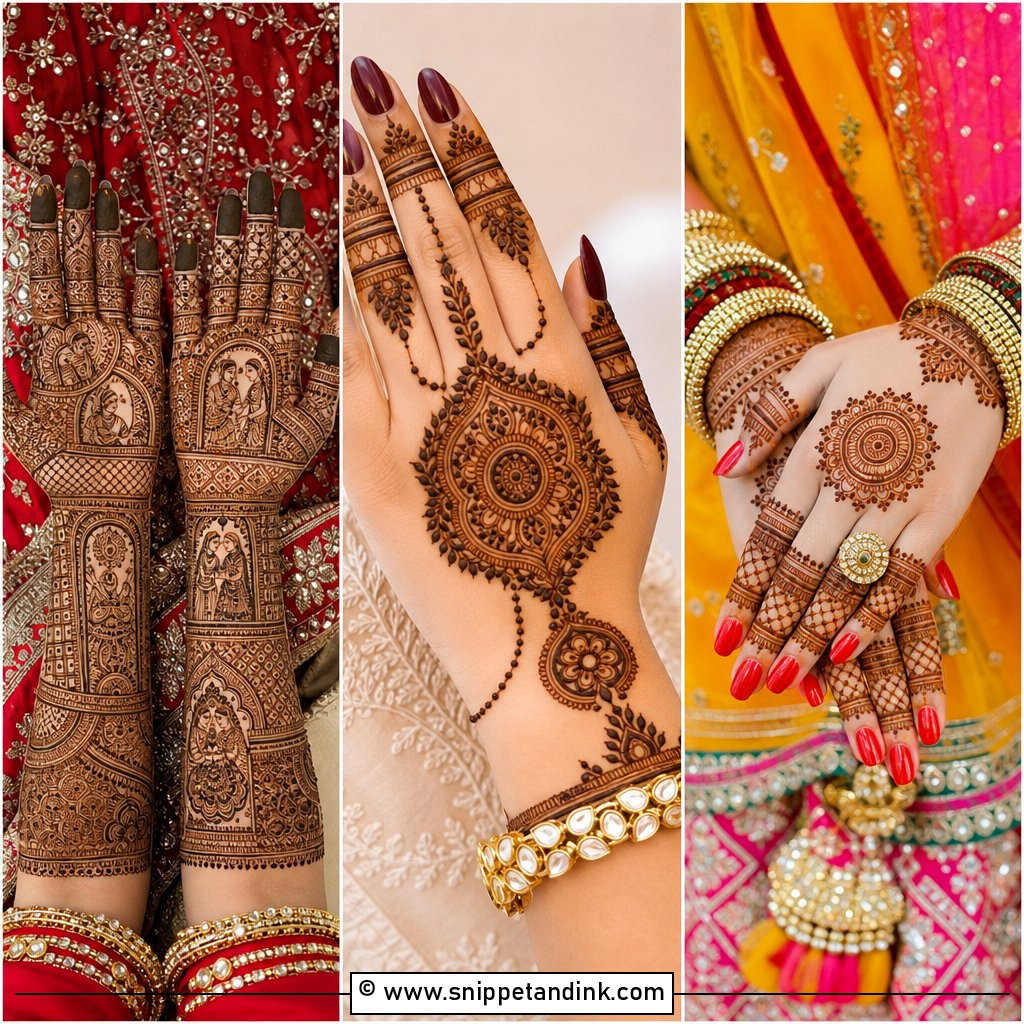
In a bridal set the heart becomes the quiet centre of a very busy hand, sometimes holding initials, a date or small couple symbols, with paisleys, peacocks, florals and jaali covering palm, fingers, wrist and forearm. The risk is losing it. I give the heart a clear border, often a double line with a ring of dots, so it reads as a frame rather than one more filler shape. Matching both hands takes longer but makes the bridal photos look deliberate.
5. Arabic Heart Mehndi Design
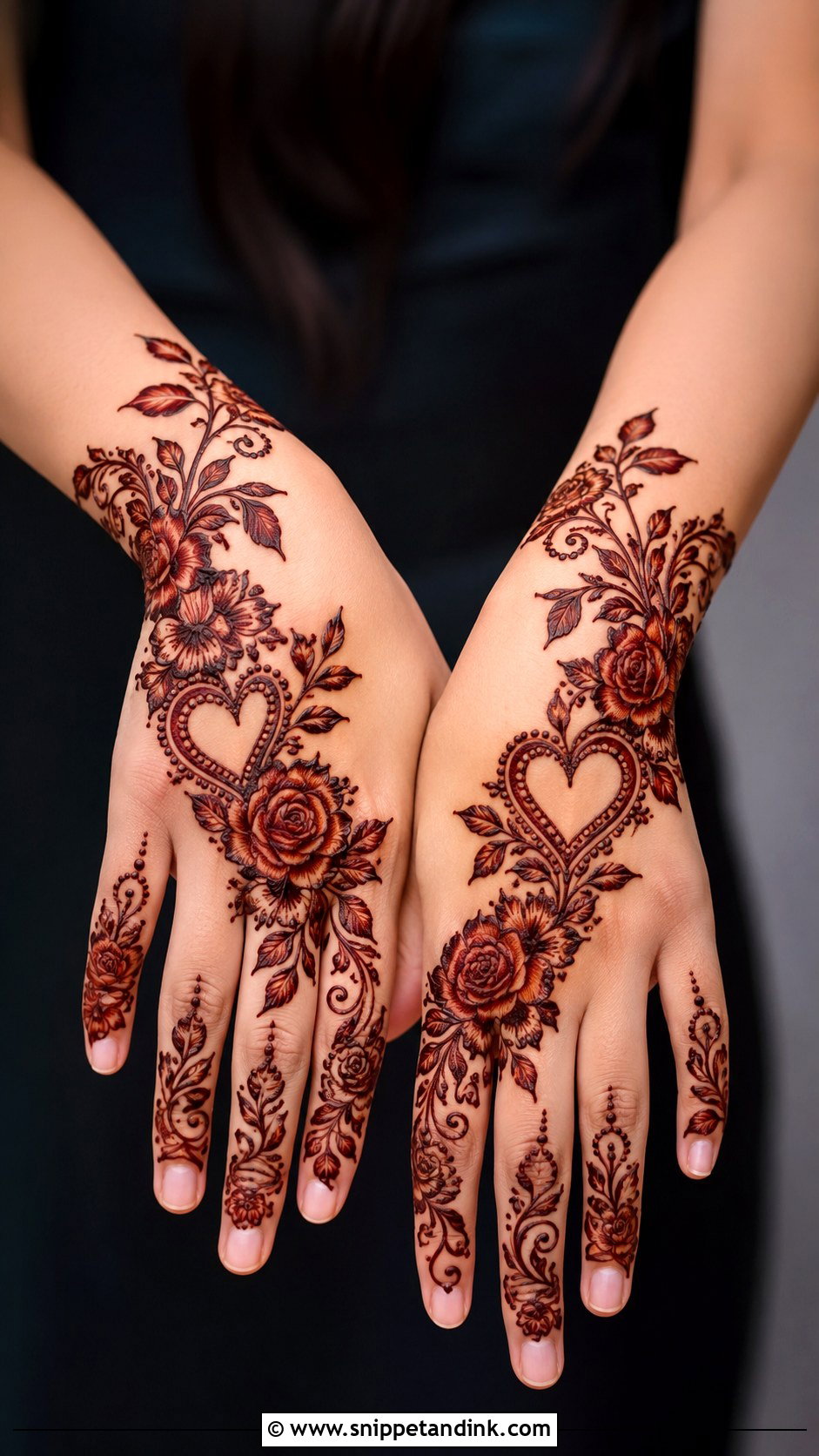
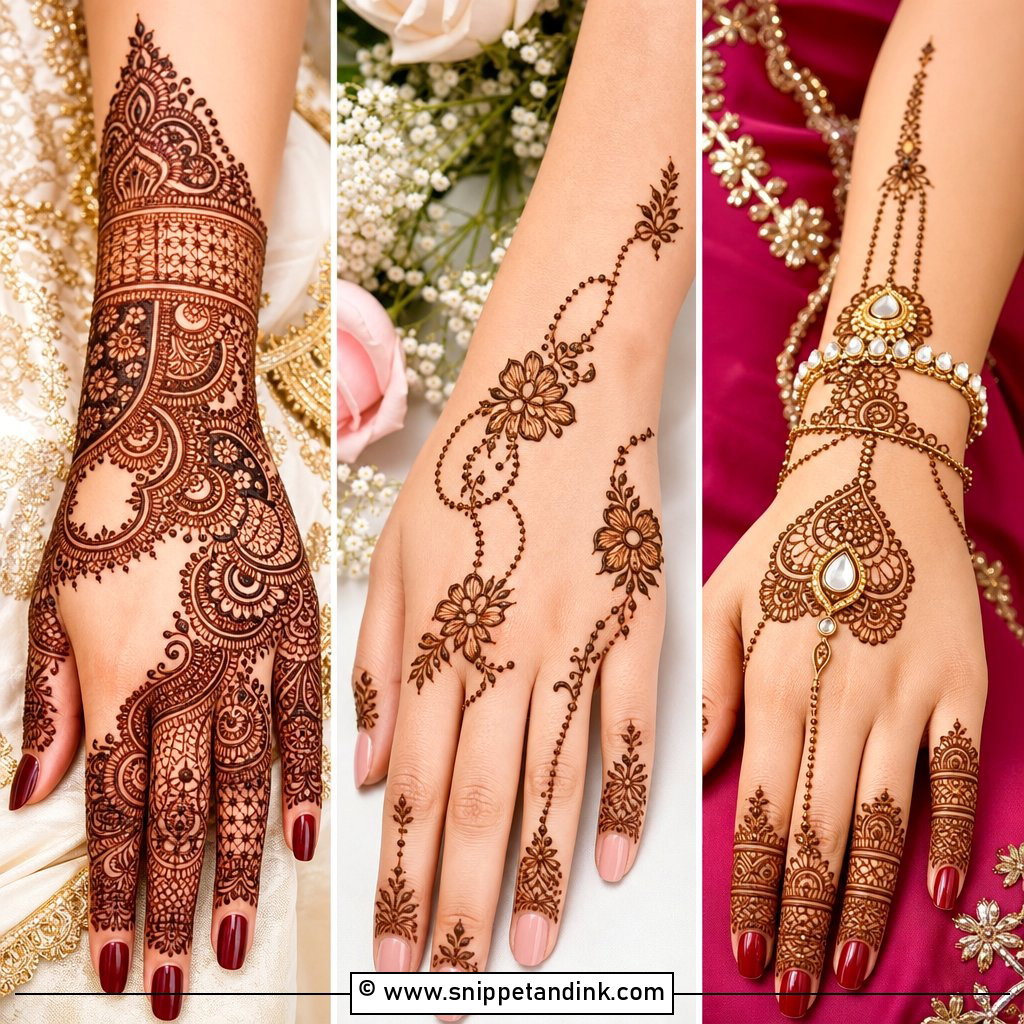
Arabic layouts suit hearts because the open skin does the framing for you. The trail runs diagonally from the wrist toward the fingers, with the heart tucked into the main stem among roses, leaves and shaded petals. It’s quicker than dense Indian work, and I find it the easiest heart design to wear to Eid gatherings or a wedding party. Keep the fingertips bold so the trail has a clear ending.
6. Indian Heart Mehndi Design
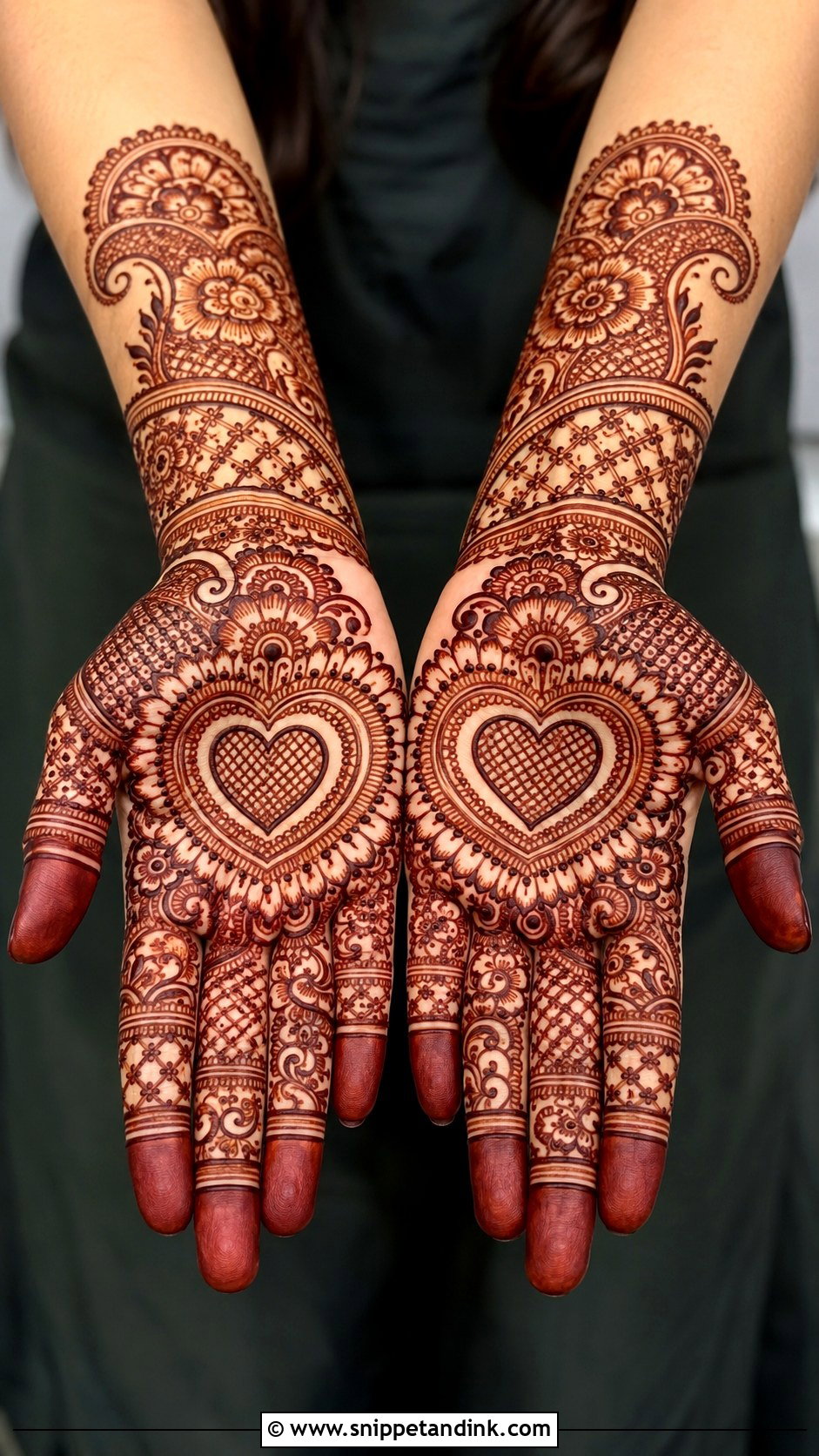
Full Indian coverage with a heart in the palm, surrounded by mandalas, paisleys, curved vines, tiny flowers and fine net work. The fingers fill with bands and miniature motifs and the wrist gets a cuff. My one firm rule for this style: the heart outline must be thicker than anything near it. In paste everything looks crisp, but once the dense filler stains, a fine heart outline simply vanishes into it.
7. Indo Arabic Heart Mehndi Design
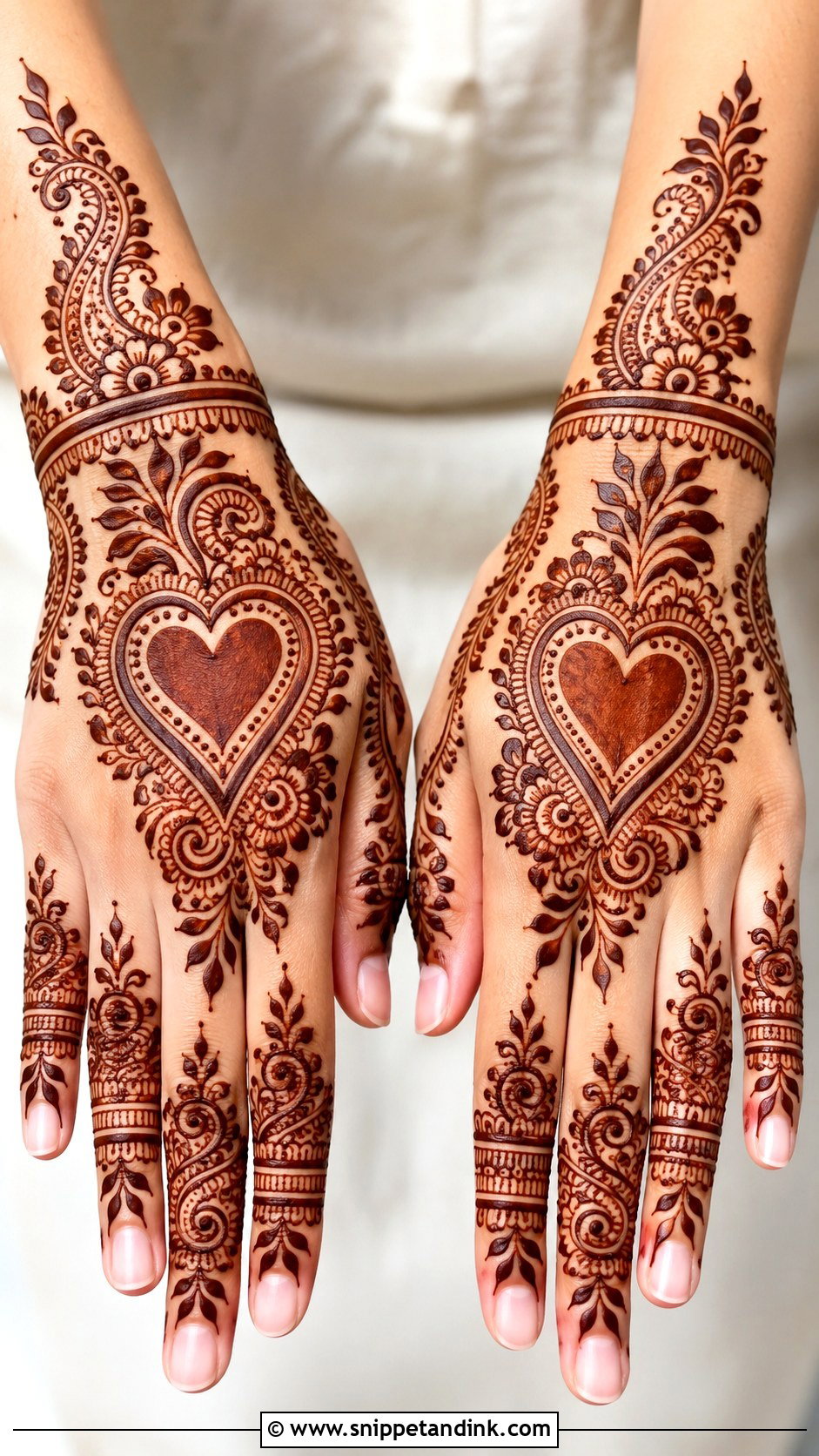
Indo-Arabic mixes the bold Arabic flow with Indian fine detail, so the heart sits on the palm or back hand and connects to floral trails, paisleys, shaded leaves and finger bands. It reads full without being packed. That’s why I suggest it for bridesmaids and sisters of the bride, who need to look dressed up in group photos but don’t want to sit for hours before the big day.
8. Heart Mandala Mehndi Design
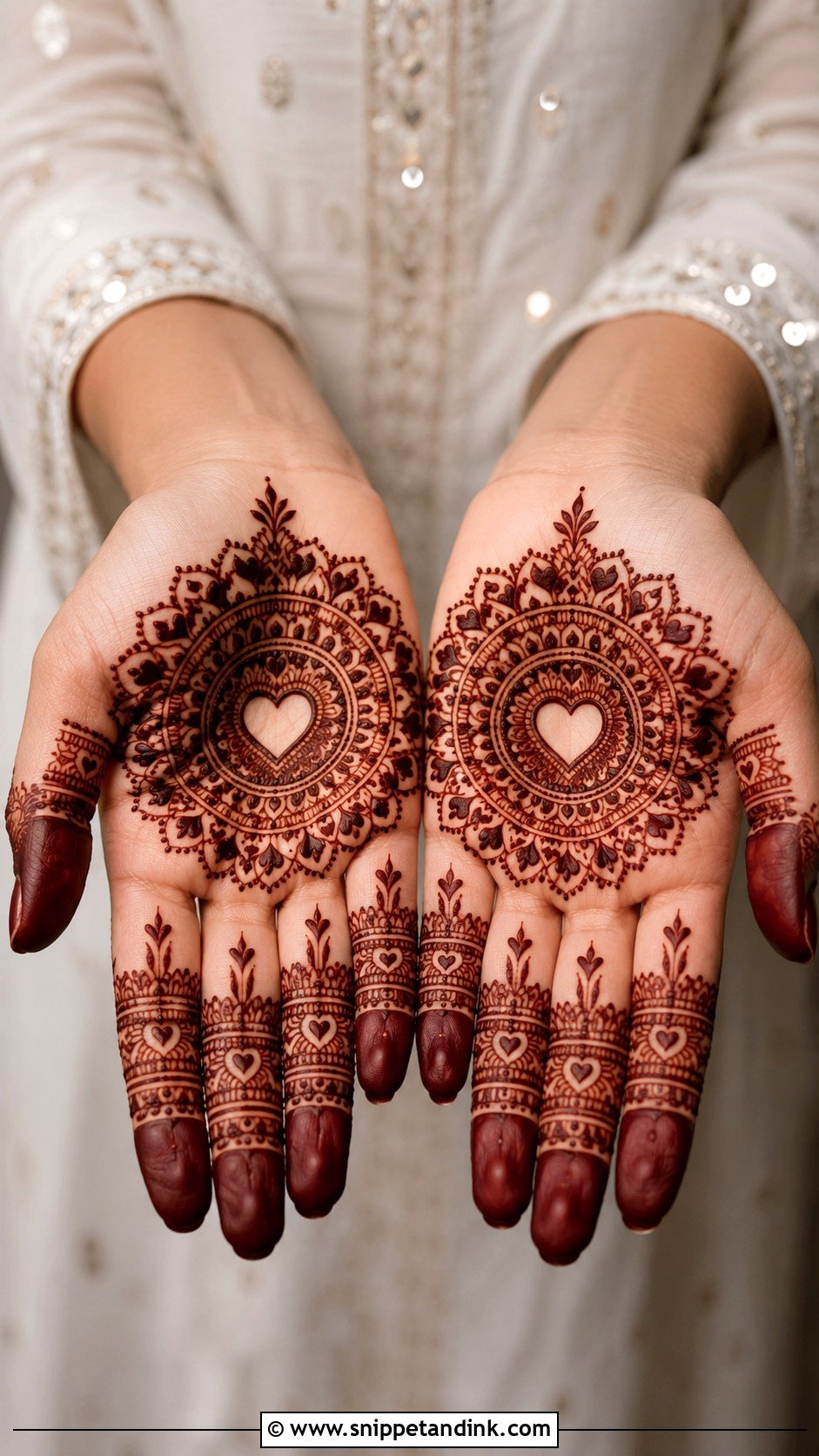
Two ways to do it: a heart inside a round mandala, or a mandala whose outer ring is made of small hearts. Both work best on the palm, which naturally suits circular patterns. The second version is harder than it looks. Getting eight or ten little hearts the same size around a curve takes practice, and I lightly mark their points with dots before drawing so the spacing comes out even.
9. Heart Flower Mehndi Design
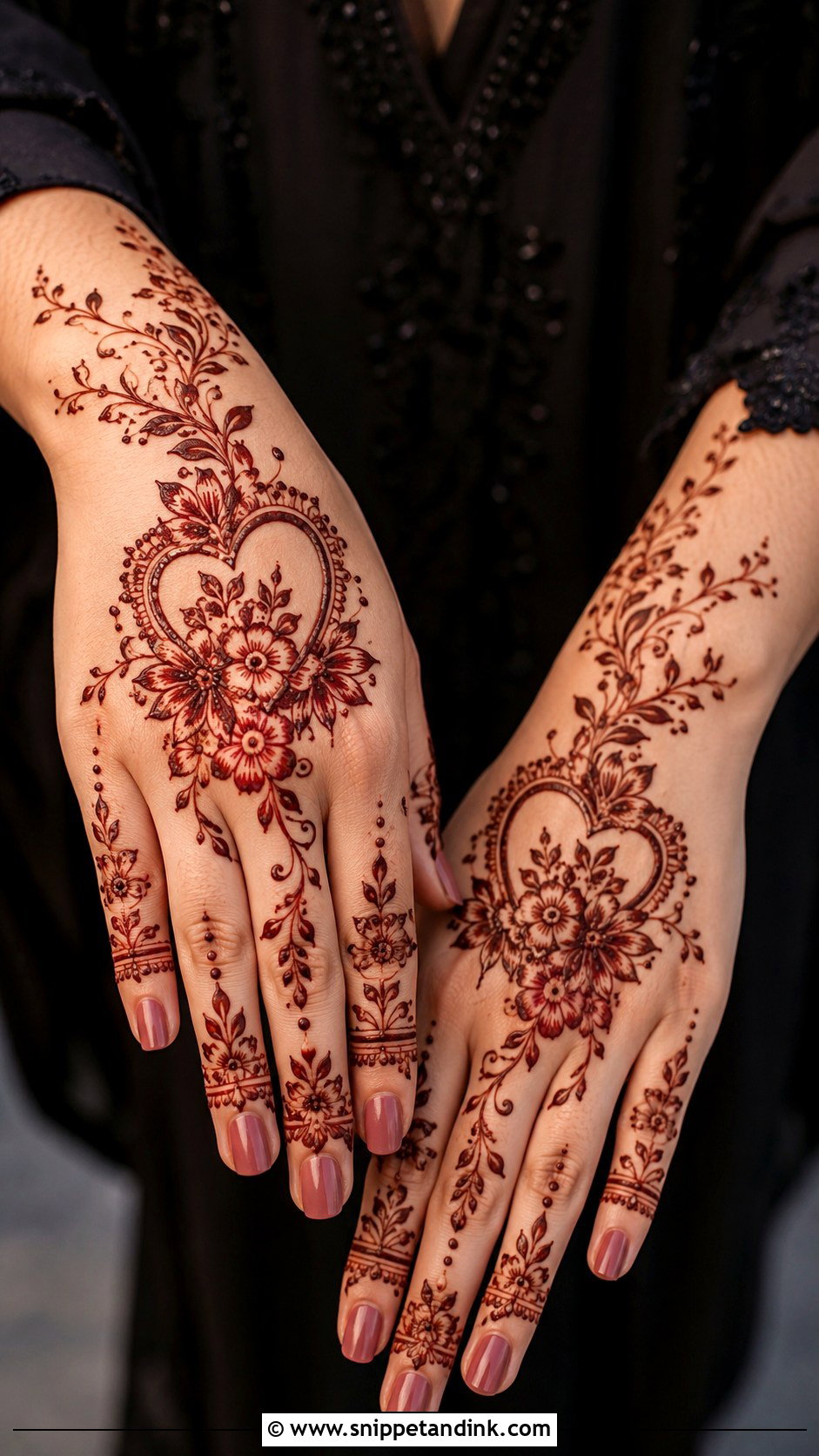
Hearts and flowers soften each other. The heart might be outlined in petals, filled with tiny blossoms or set at the root of a floral trail across the palm or back hand. Petal size is the dial. Thin, spaced petals give a delicate result; larger roses with shaded leaves give a bolder one. It suits nearly any hand shape because I can adjust the flowers without touching the heart.
10. Heart Paisley Mehndi Design
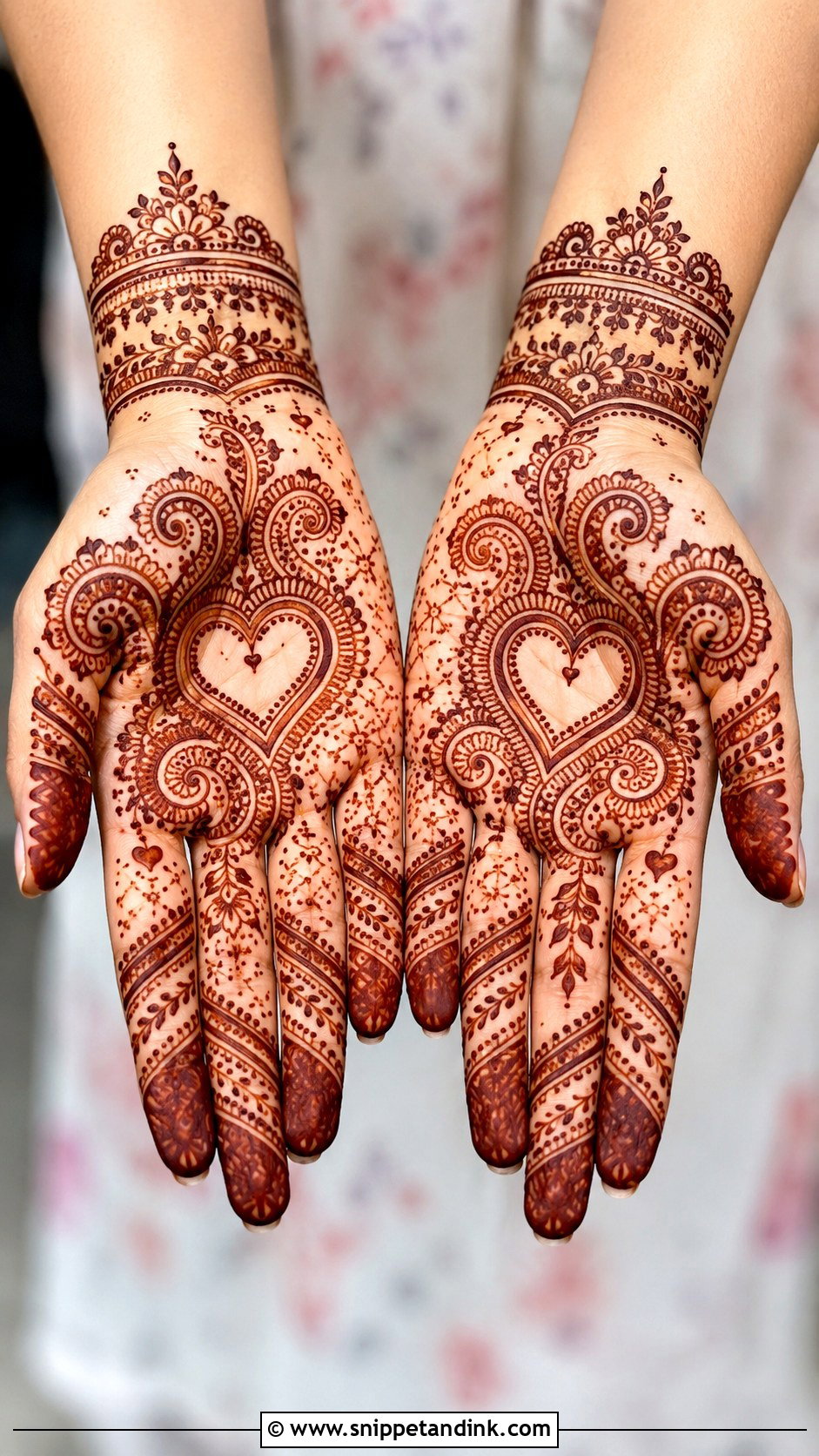
Paisleys curve naturally around a heart, which makes this combination look smooth and connected. I start with the heart in the palm, then set a paisley on each side with tiny flowers, dots and leafy fillers, and repeat the curve in diagonal finger bands. It’s a natural fit for Indian and Indo-Arabic mehndi, where paisley is already a core element. Let the paisleys support and keep the heart itself clean.
11. Heart Peacock Mehndi Design
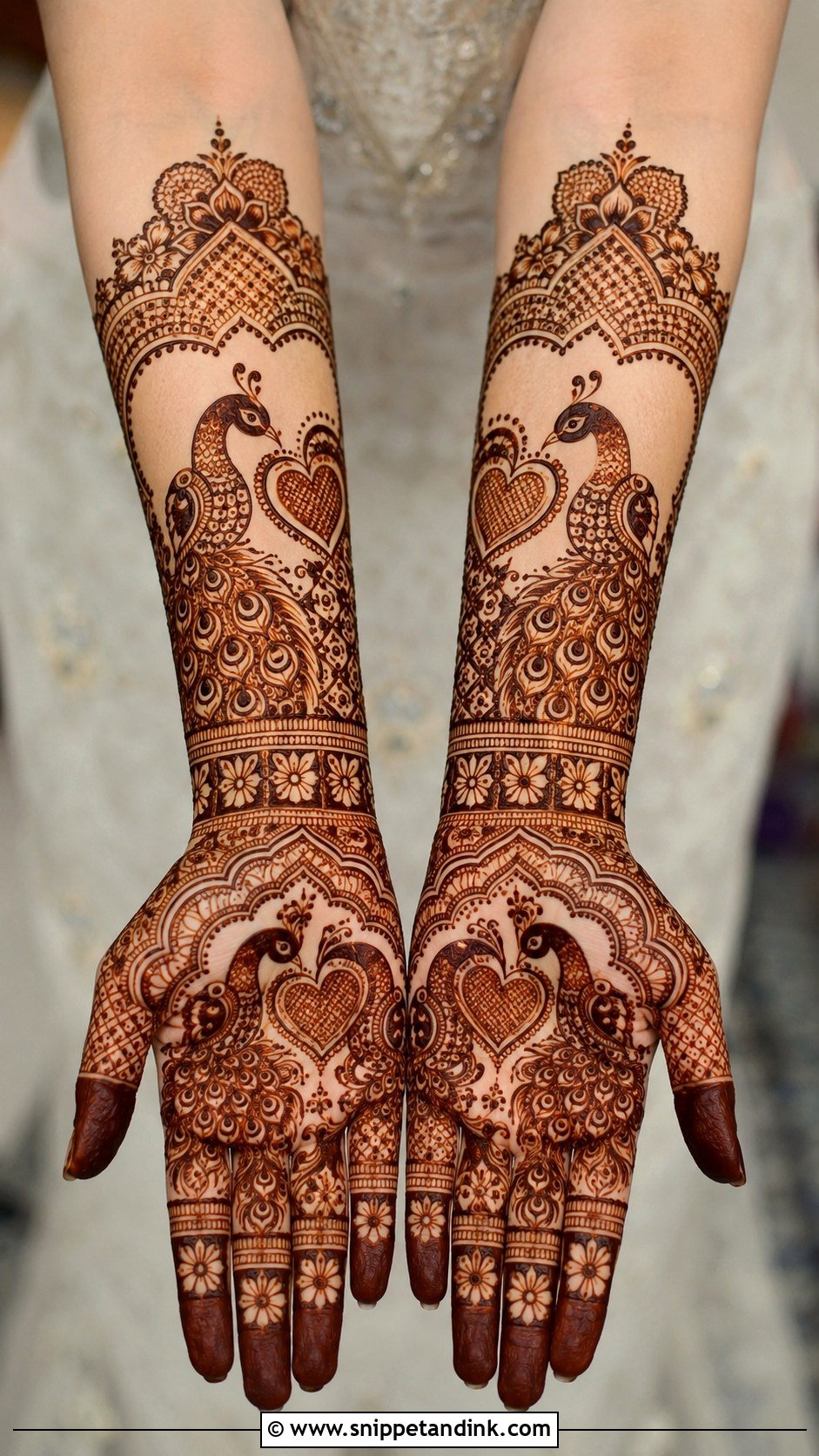
Peacocks need room, so I only pair them with a heart on medium to full coverage. Two birds facing a central heart on the palm is the classic layout. On the back hand, a single sweeping peacock trail with the heart at its base works better. Small hearts tucked into the feathers tie the two motifs together, provided the feather lines stay fine and the main heart outline stays bold.
12. Heart Jaali Mehndi Design
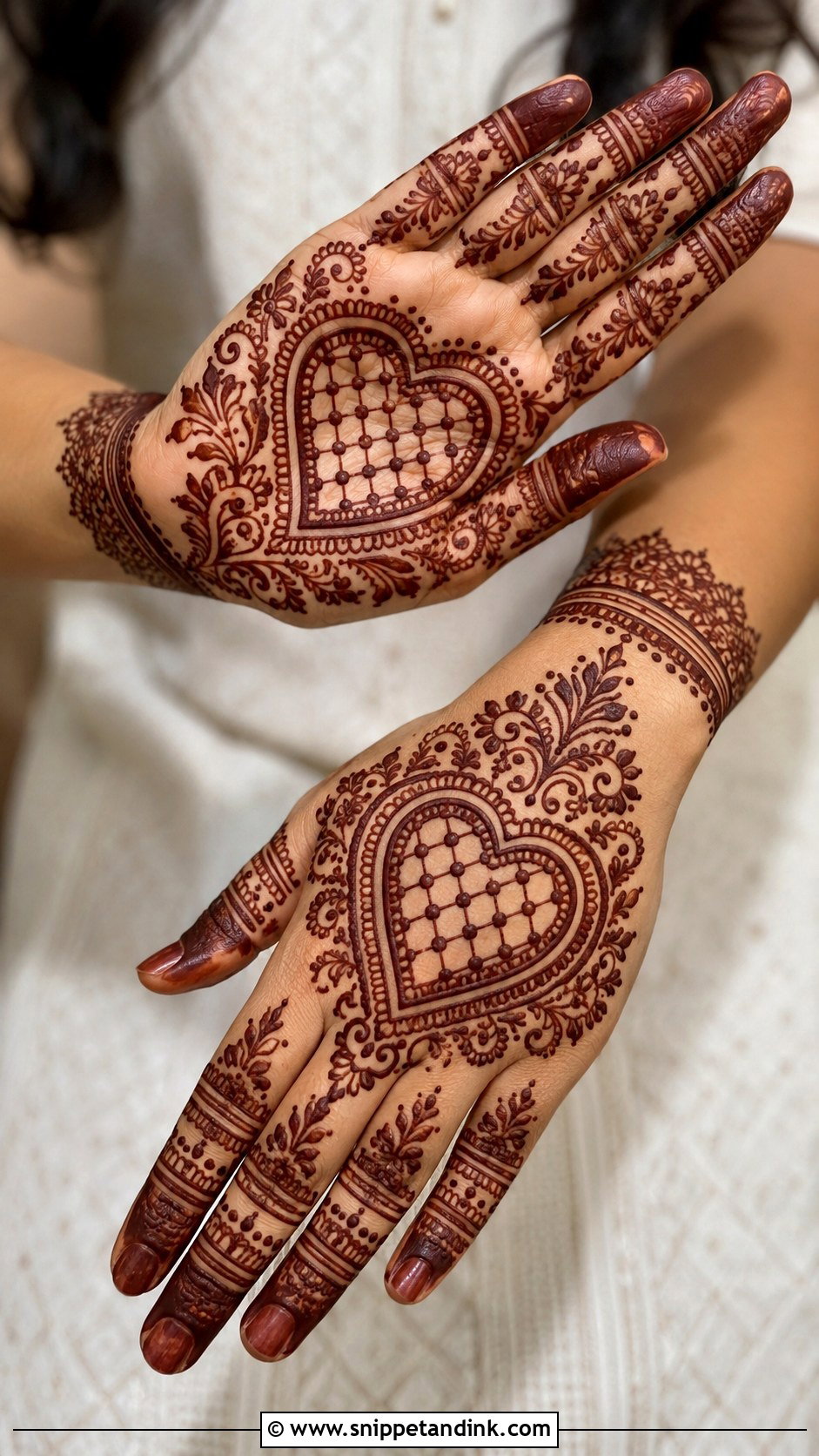
A heart filled with small diamond jaali has structure that plain hearts lack. The alternative is a large heart outline surrounded by jaali panels on the palm or back hand. Mesh punishes uneven lines, so I draw the grid with steady pressure and stop before the boxes get too small to stain open. Done cleanly, it’s detailed enough for bridesmaids and guests without the weight of bridal coverage.
13. Heart Bracelet Mehndi Design
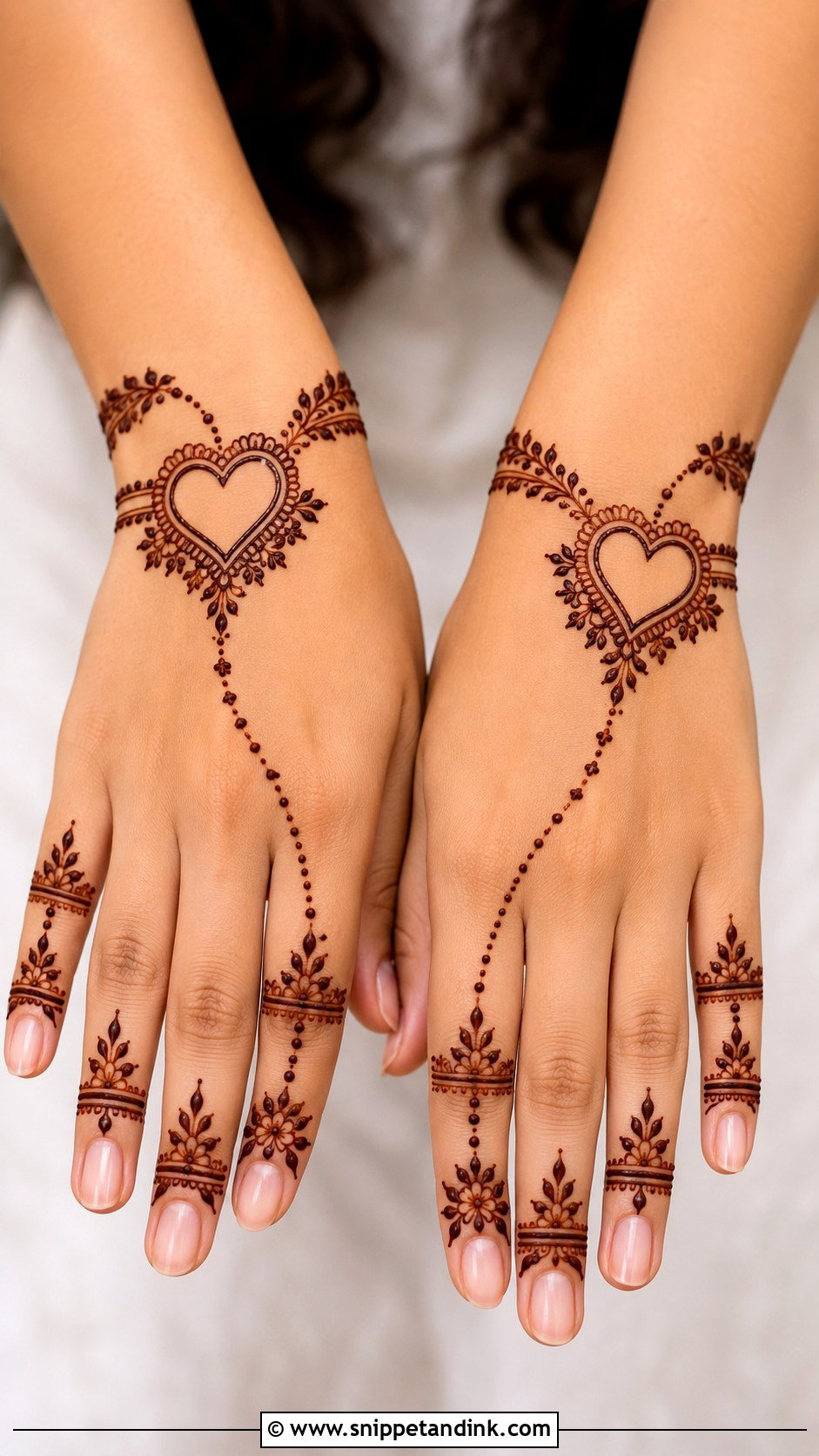
This one lives on the back hand and wrist: a heart near the centre of the hand, linked by chains, dots or tiny floral links to a band around the wrist, with ring details on the fingers. It’s a light design, finished in well under an hour on most hands. Make the heart a little larger than any link in the chain. If they’re the same size, the eye can’t find the centre.
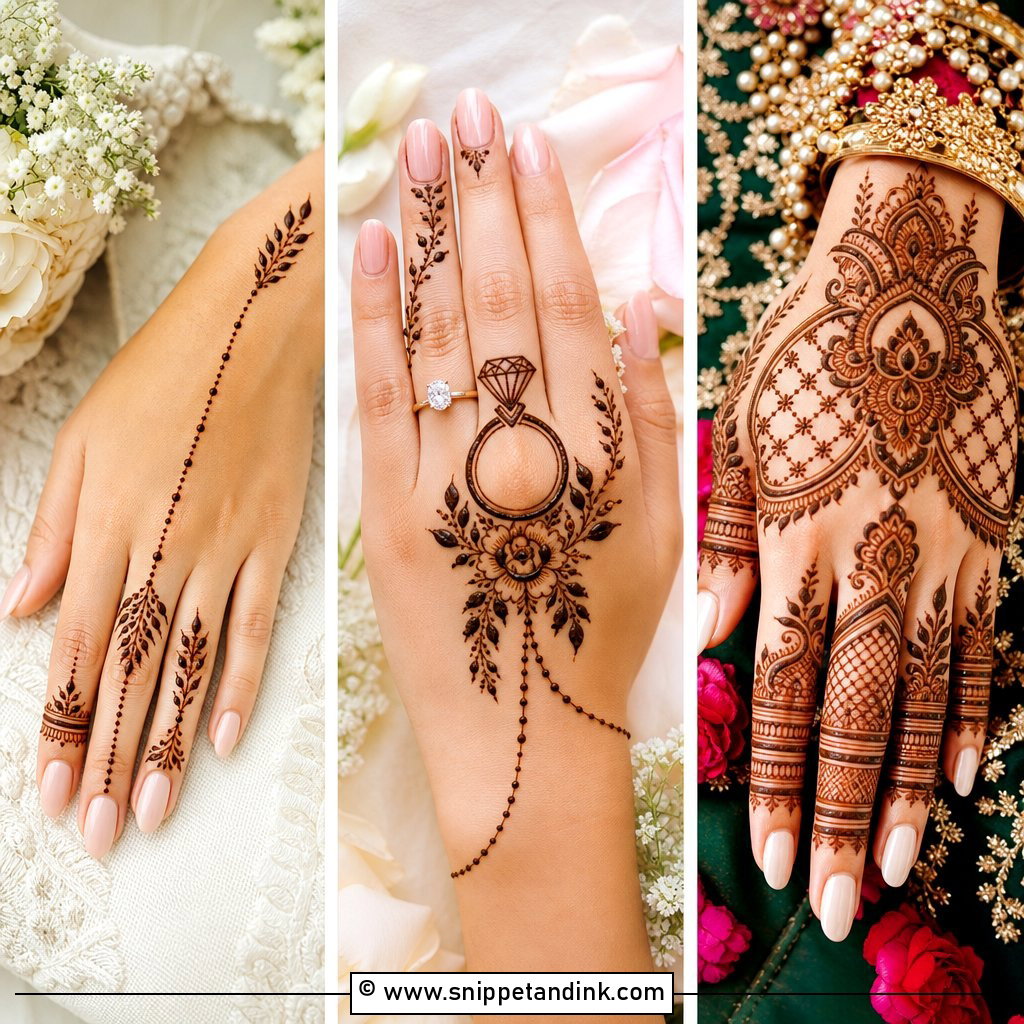
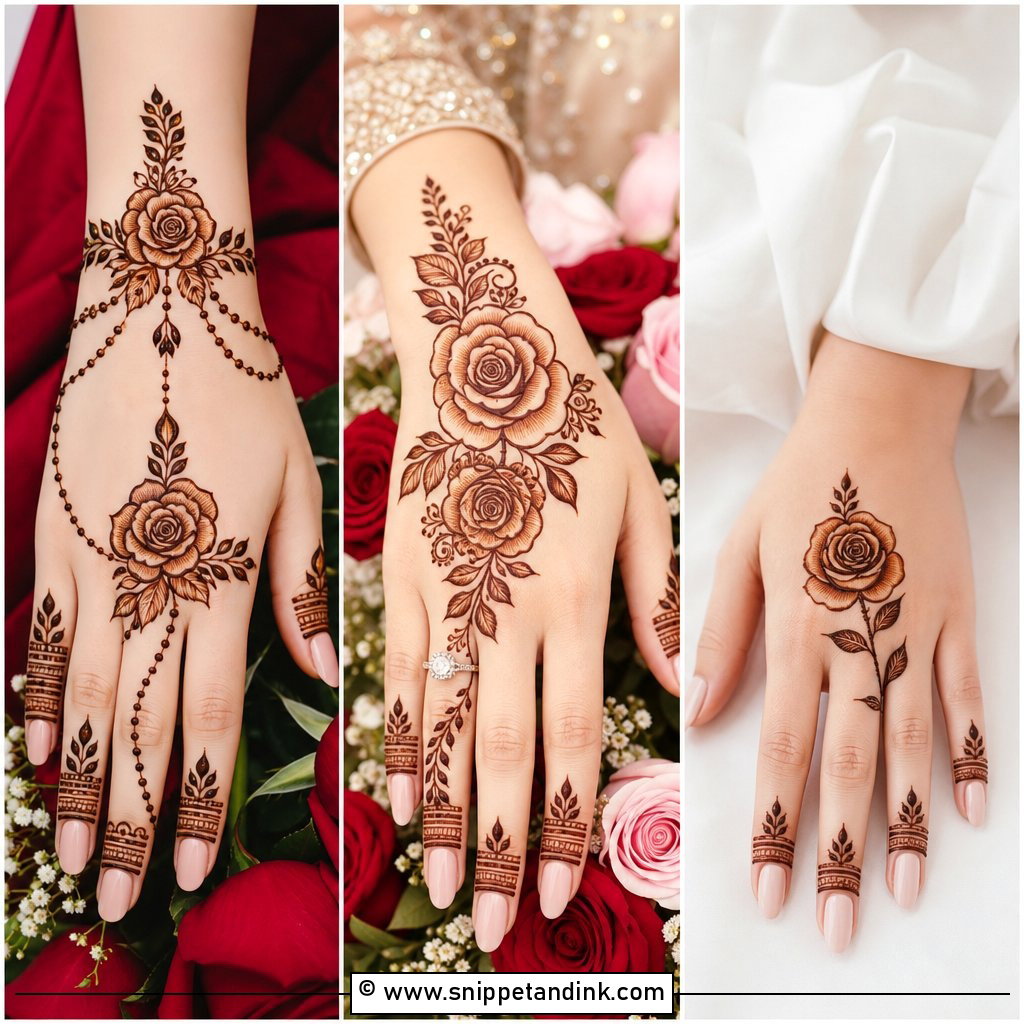
14. Heart Finger Mehndi Design
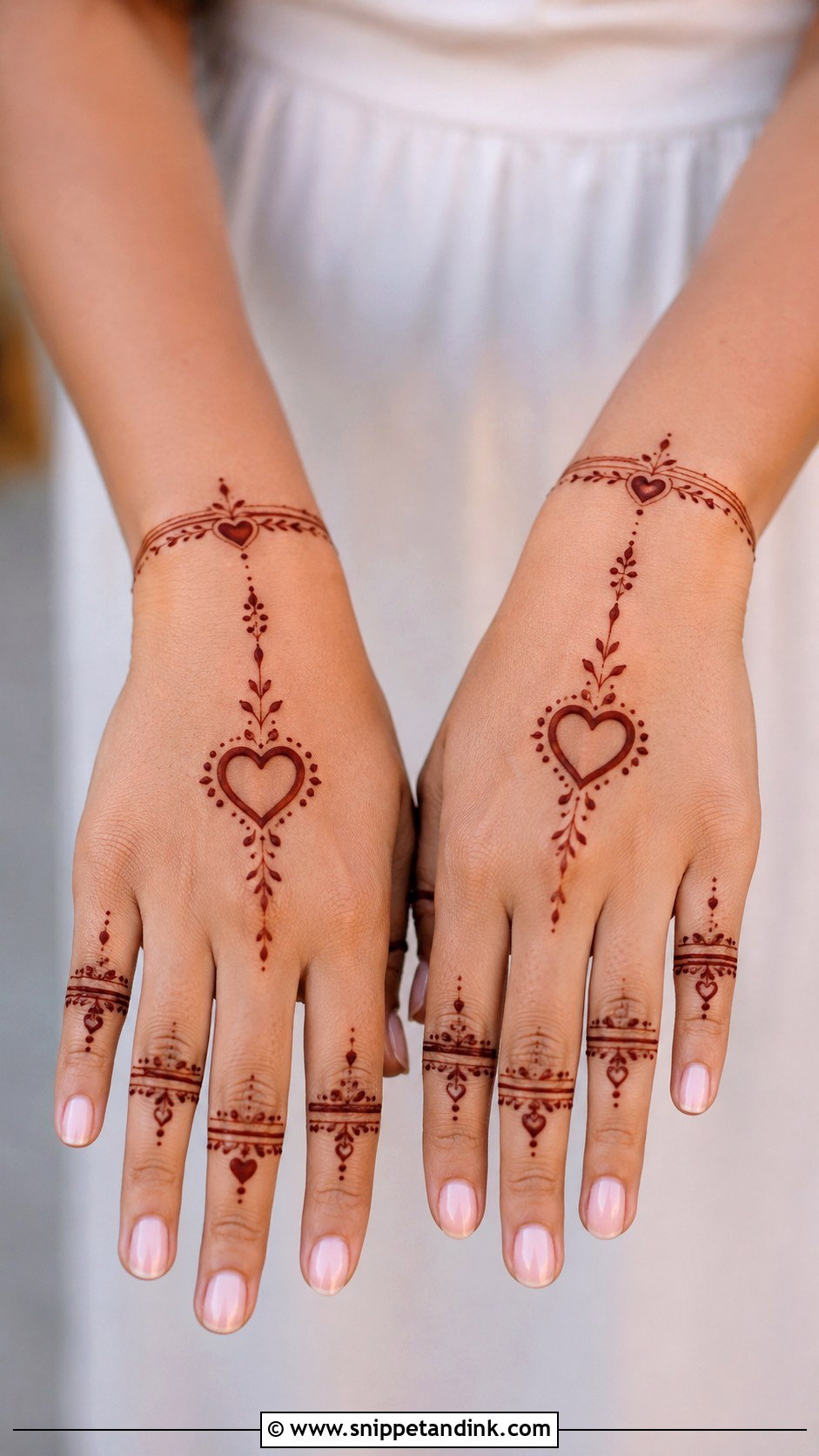
Decorated fingers, mostly open hand. Small hearts become part of the finger bands and knuckle details, with a slim trail to the wrist and maybe one central heart or a little floral heart cluster at the base of the fingers. Fingertips stain dark, so I keep the lines fine there or the hearts swell into blobs. It’s a practical choice for anyone who has to go back to work the next day.
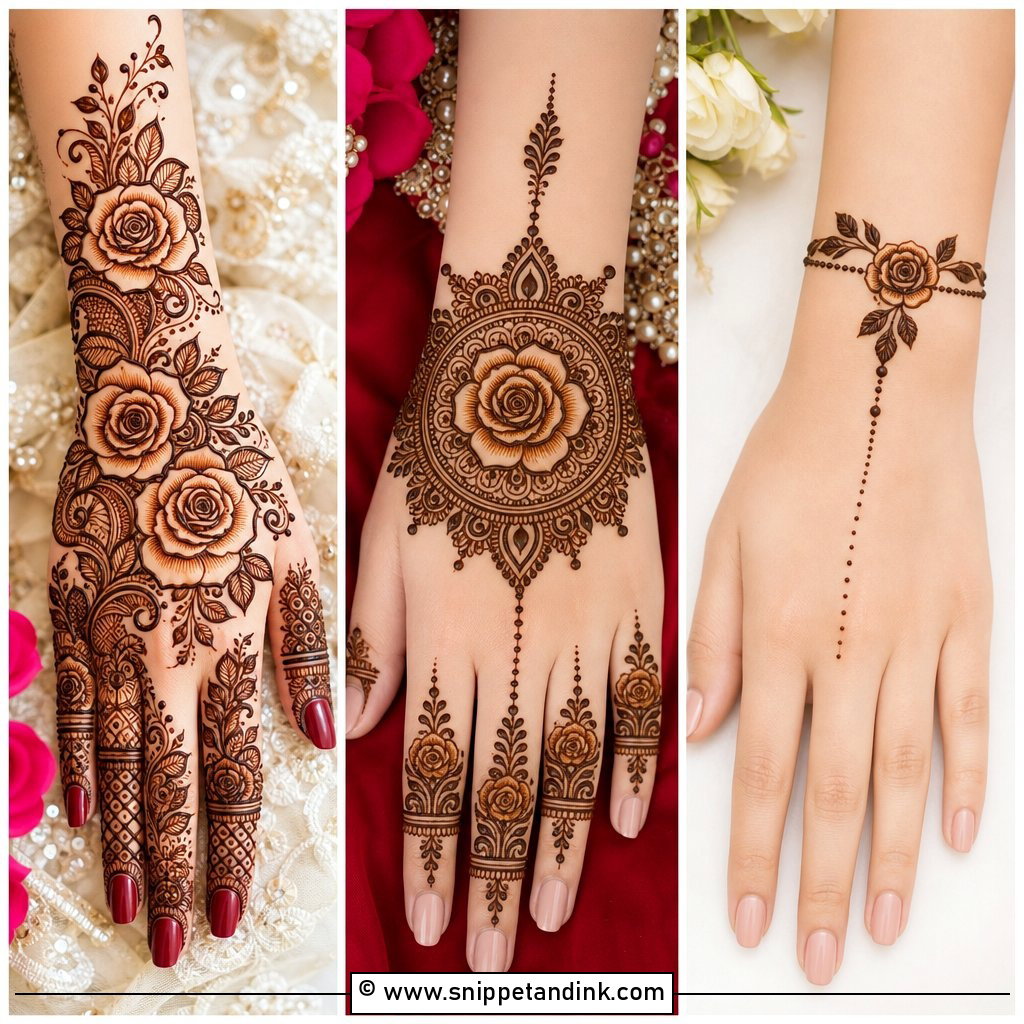
15. Heart Wrist Mehndi Design
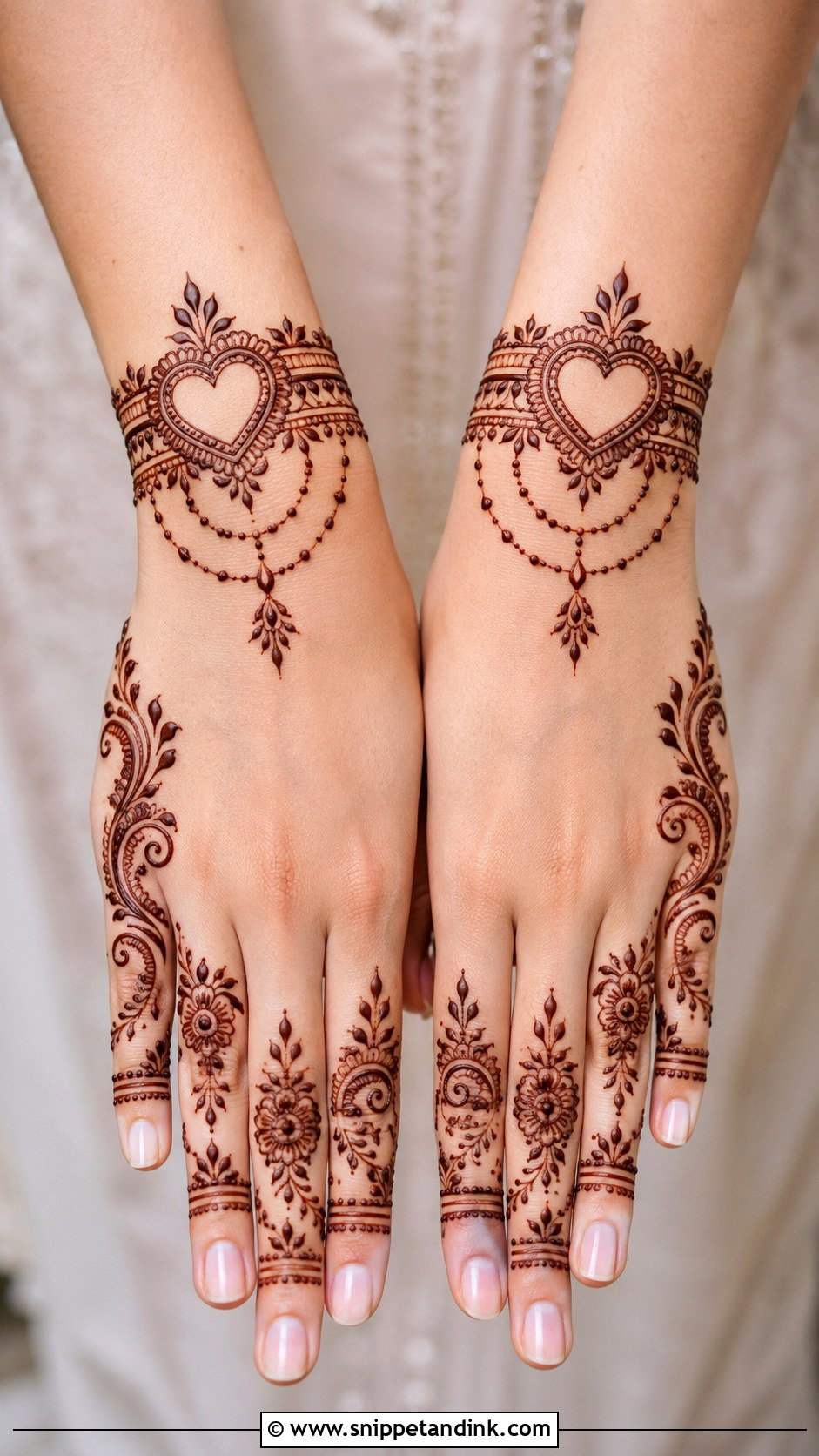
A wrist cuff with a heart at its centre, framed by bracelet bands, dots, leaves and small hanging chains, sometimes spilling slightly onto the back hand or forearm. I make the band wide enough to read as a cuff from a distance, but leave open skin around the heart so it isn’t swallowed. The wrist stains reasonably well on most people, and a deep maroon cuff shows up clearly on every skin tone.
16. Full Hand Heart Mehndi Design
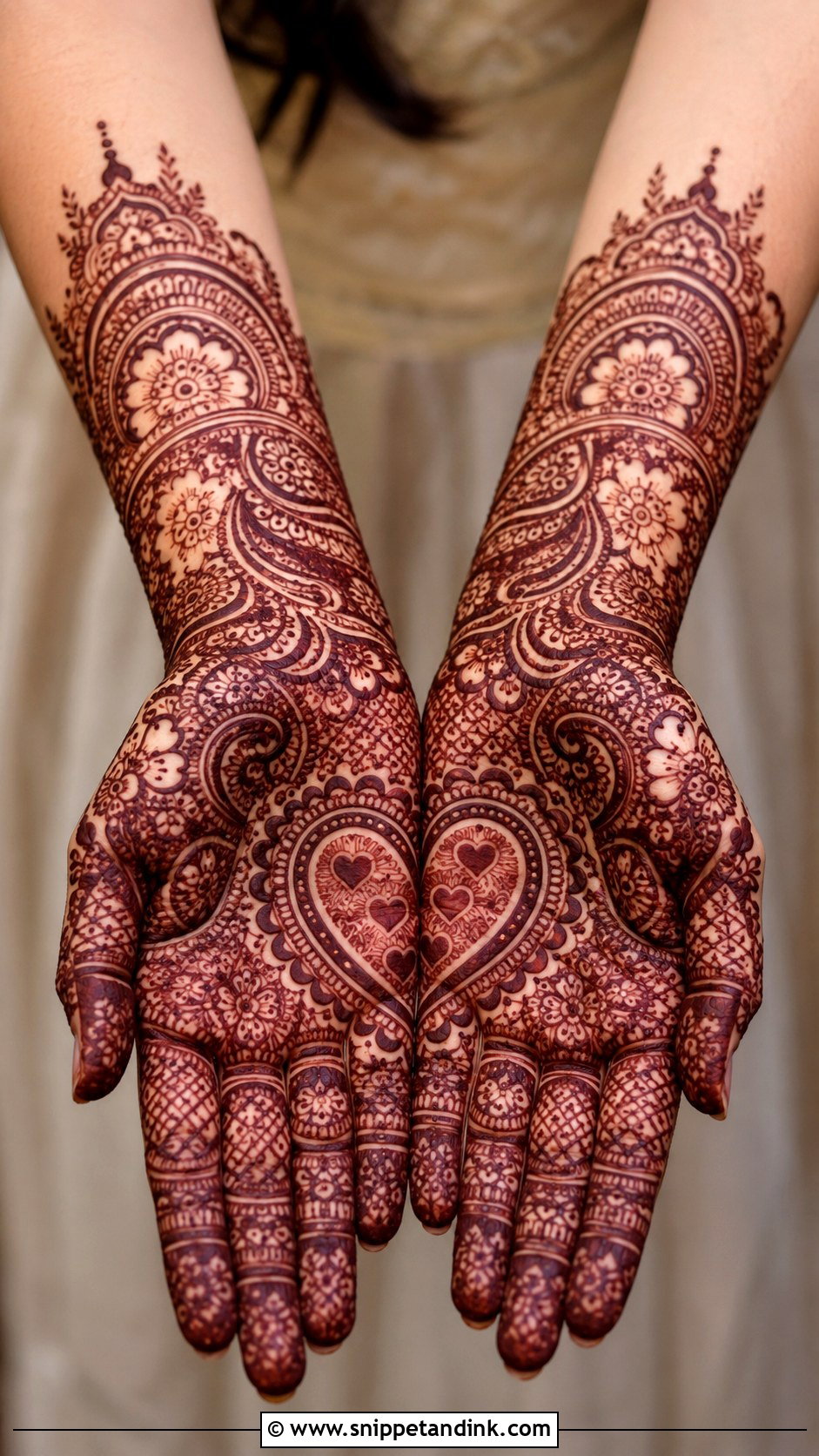
Full-hand coverage for a big celebration: a heart in the palm, near the wrist or repeated across both hands, built up with paisley panels, floral borders, mandalas and fine fillers, plus dense finger bands and a cuff or trail onto the forearm. My advice is to repeat the heart in smaller sizes rather than adding unrelated shapes. It gives the eye a thread to follow from fingertip to forearm. Budget a long sitting for this one.
17. Half Hand Heart Mehndi Design
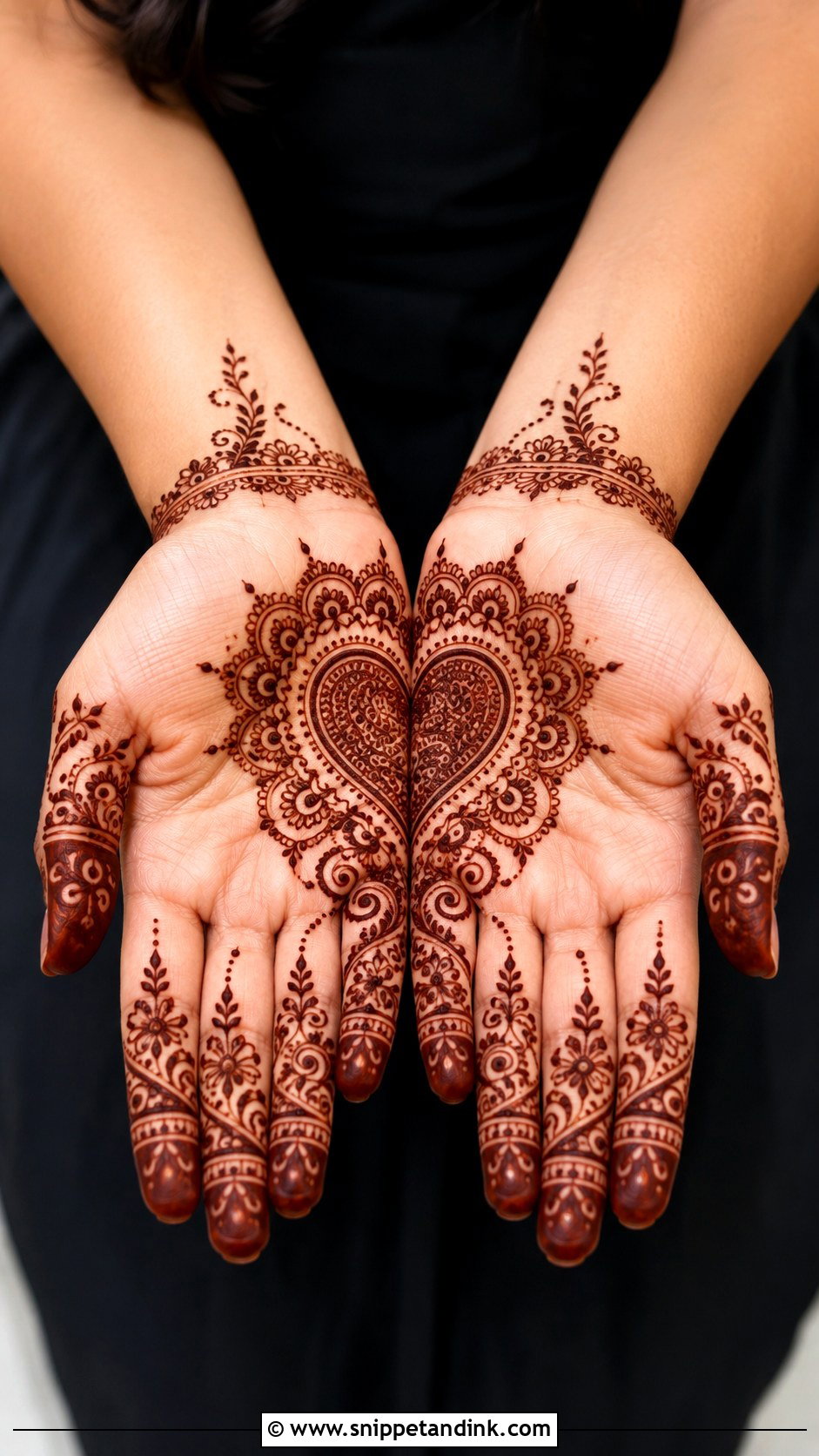
Half-hand designs fill the palm or back hand and stop near the wrist, leaving the forearm bare. A heart in the centre with florals, paisleys and slim borders, and fingers as busy or as light as the event calls for. It suits guests and younger wearers who don’t have time for a full application. Finish the bottom edge with a deliberate border so the stopping point looks planned.
18. Minimal Heart Mehndi Design
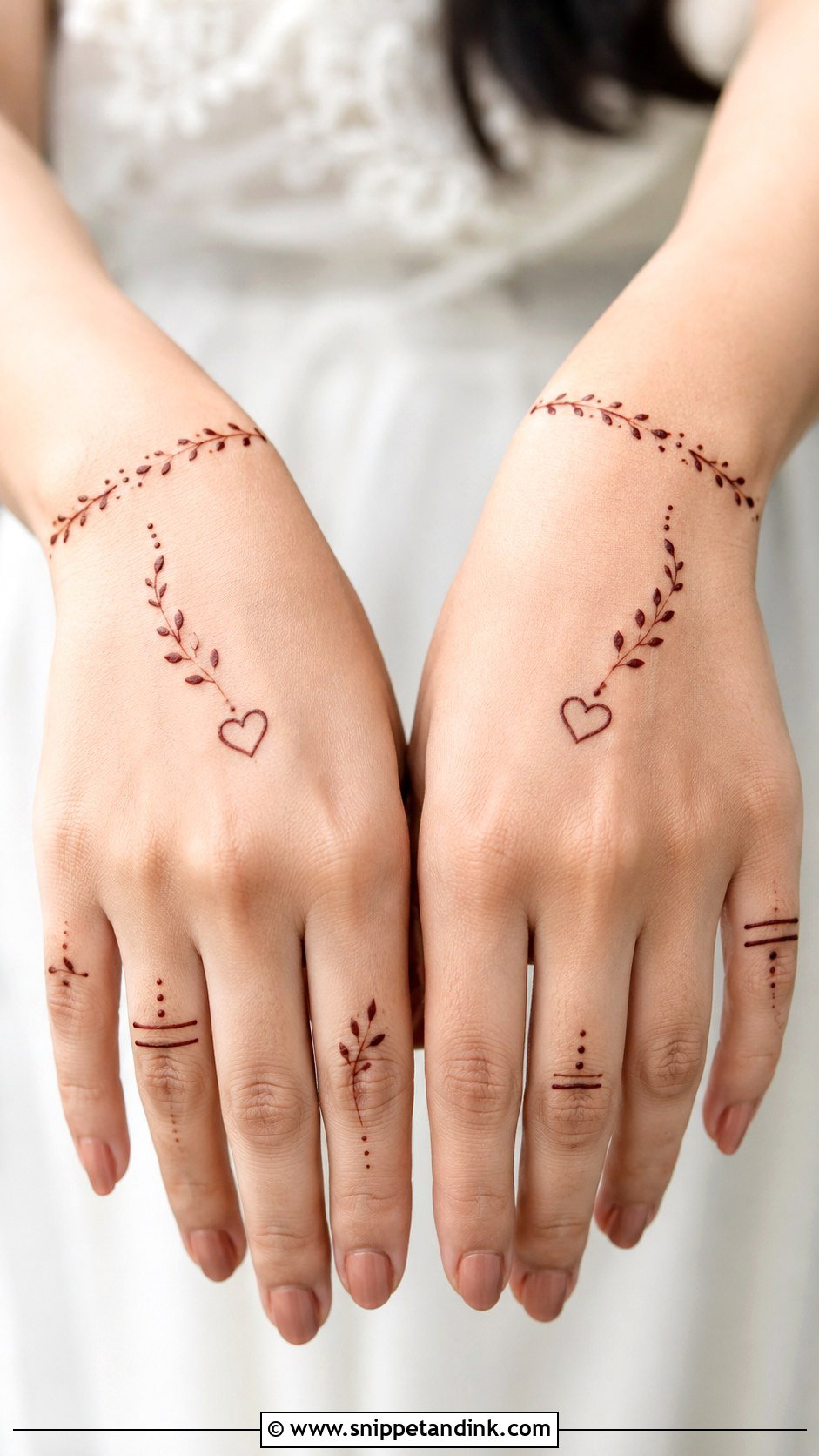
One outlined heart on the back hand, a slim vine toward the wrist, a few small details on the fingers, and a lot of open skin. Minimal designs live or die on the confidence of the line. I draw the heart in two strokes, one per side, meeting at the point, because going back over a wobbly curve thickens it unevenly. Add a few dots or tiny leaves and it looks complete, not unfinished.
19. Cute Heart Mehndi Design
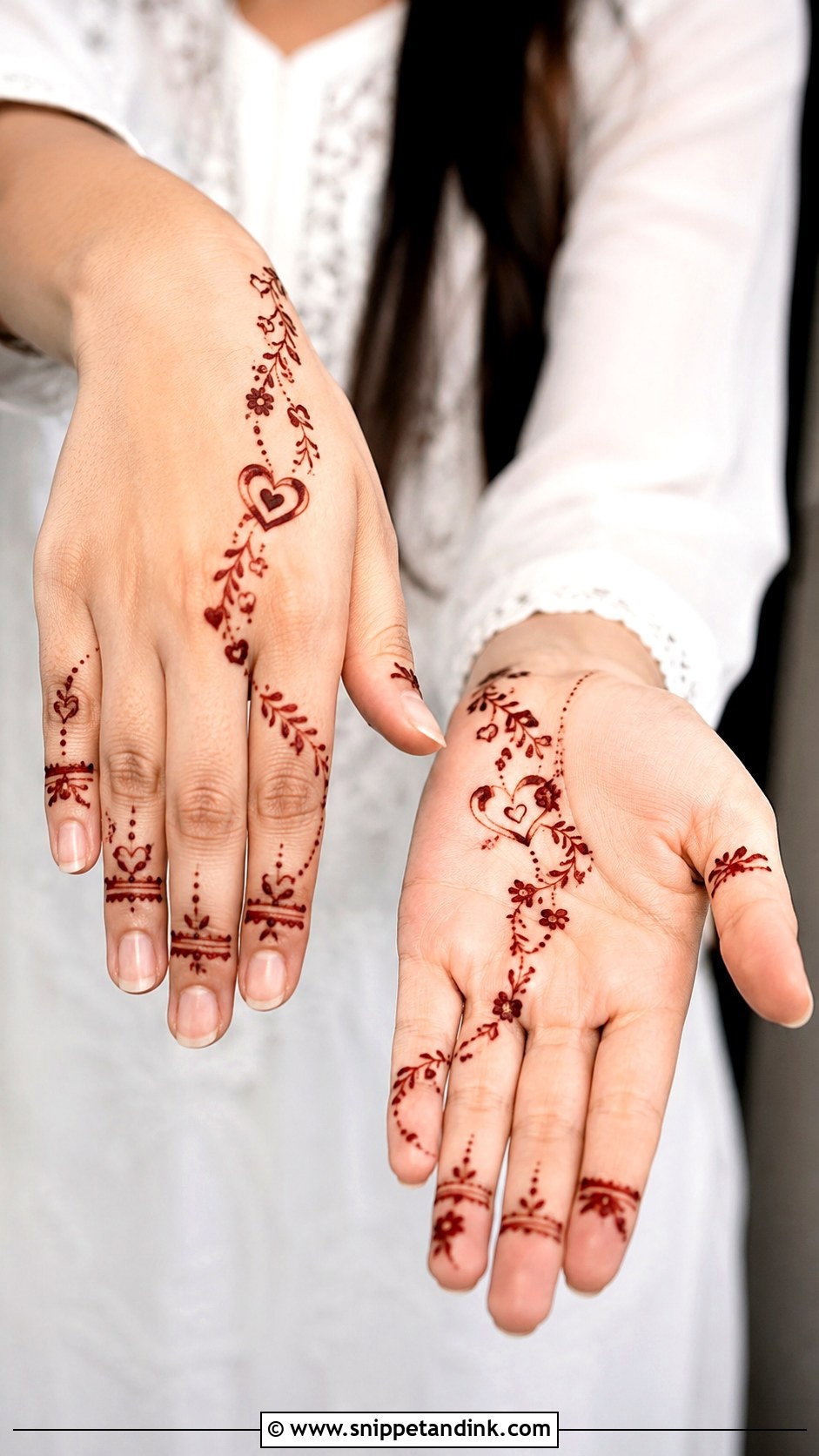
Small hearts scattered around a central one, joined by tiny flowers, dots and curved vines, mostly on the back hand or palm with light fingers. The charm is in its simplicity, so I’d steer away from filling every gap. It’s the design I’d hand a beginner, since rounded hearts and clean dot work forgive small wobbles that bridal detailing would not. Keep the spacing relaxed.
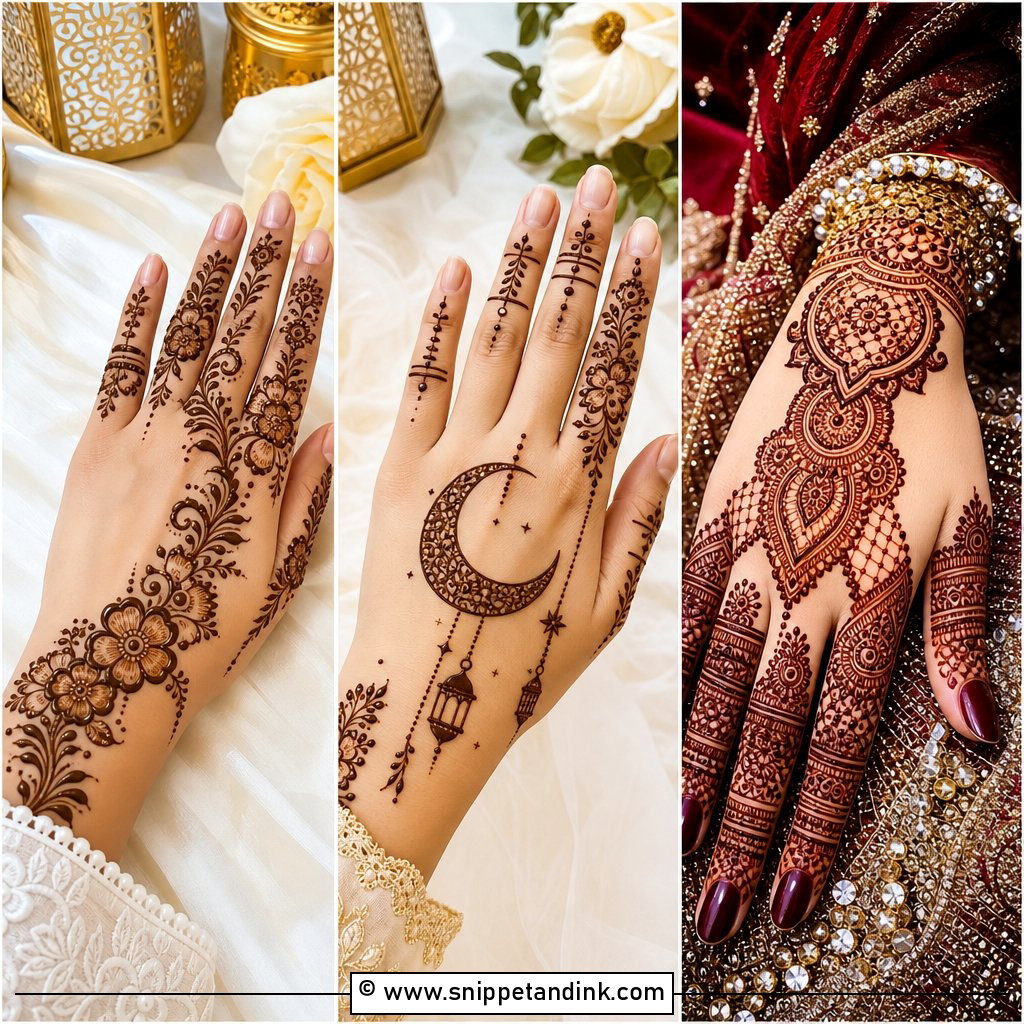


20. Stylish Heart Mehndi Design
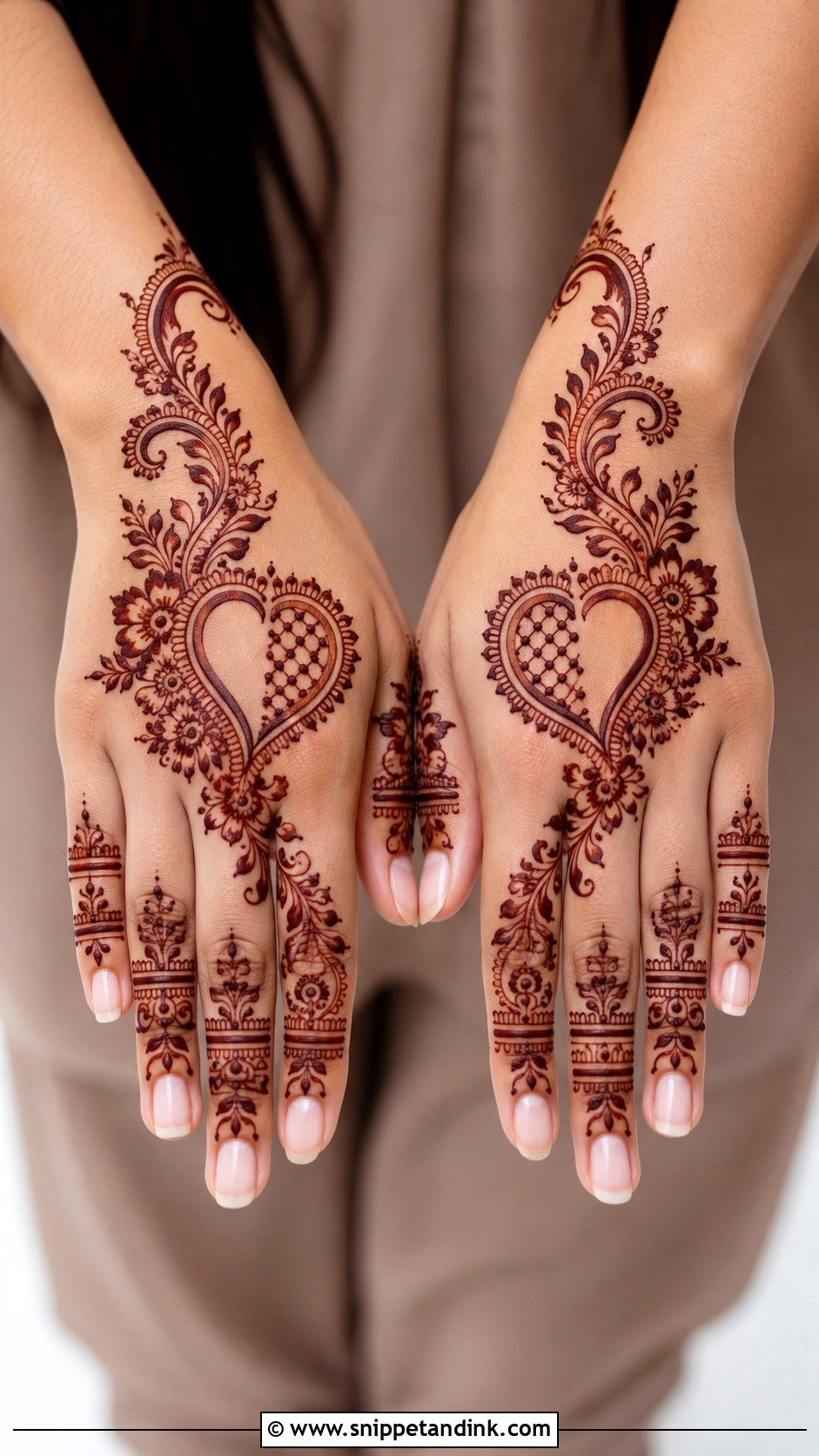
Trendier layouts rely on placement more than filling: a heart on the back hand, diagonal Arabic flow, negative space and modern finger bands. One version I enjoy drawing splits the heart down the middle, florals on one side and jaali on the other. It needs a sharp outline and very few small fillers, or the split stops reading. Bridesmaids in contemporary outfits tend to like it.
21. Rose Heart Mehndi Design
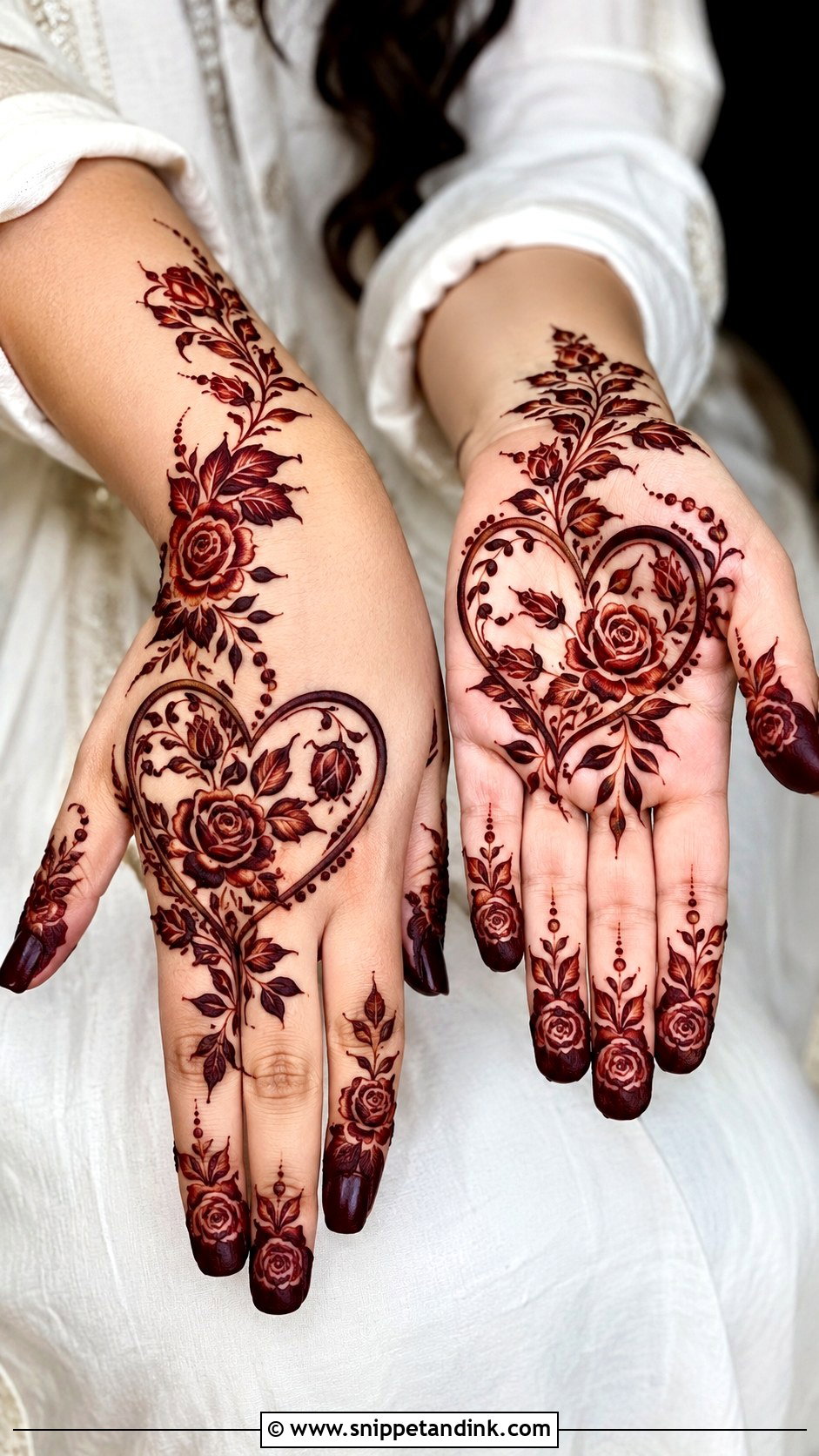
Roses and hearts together are about as romantic as mehndi gets. The heart can be framed in rose petals, or a rose vine can wrap around it across the palm or back hand, finished with leaves, dots, slim wrist details and rosebud fingertips. Shading the roses while keeping the heart outline plain is the balance I aim for. It suits an engagement or family event where you want warmth without heavy coverage.
22. Heart Initial Mehndi Design
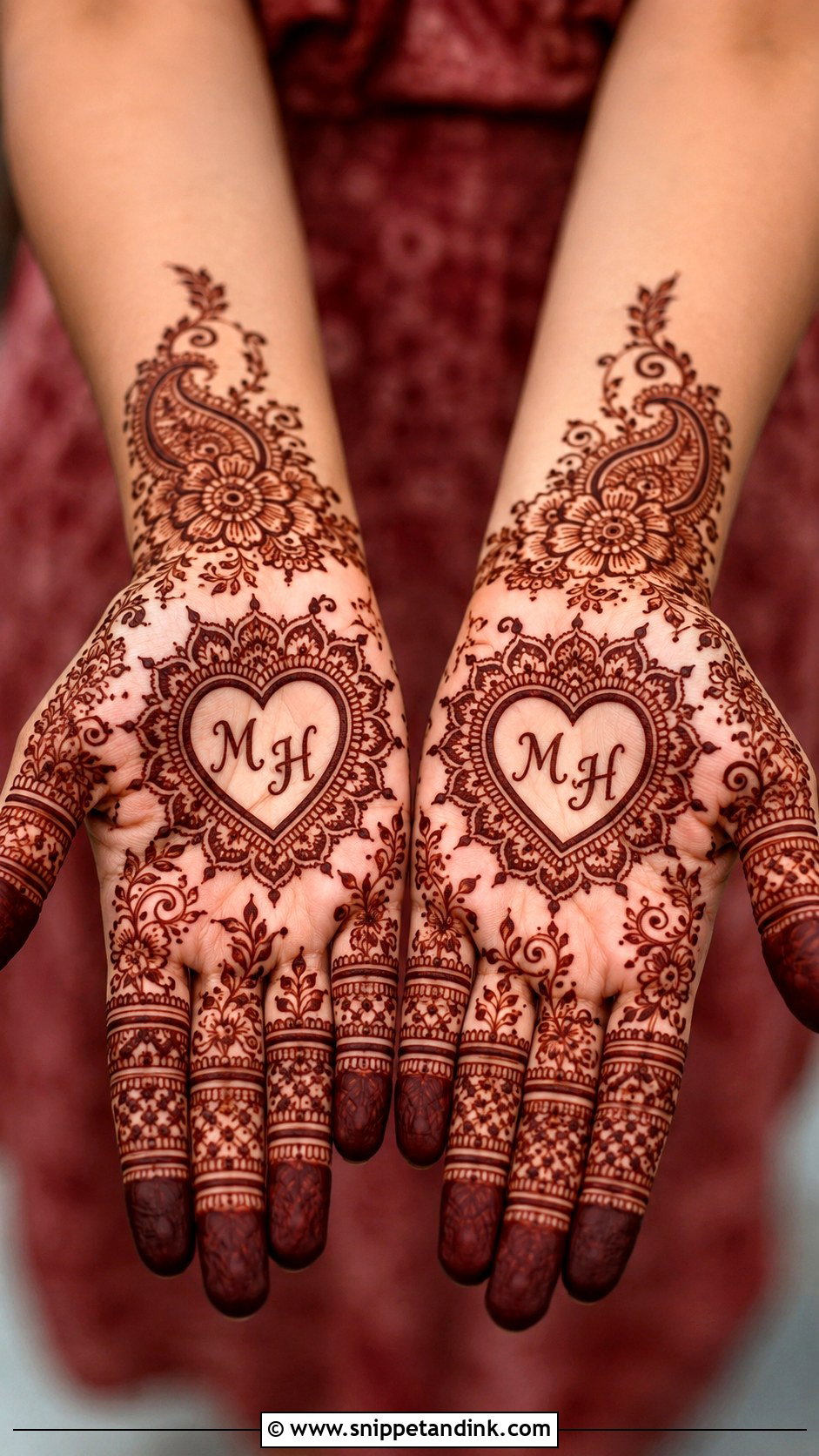
Initials inside a heart are the most requested personal detail I draw. One letter, two letters or a short monogram fits in the centre of the palm, framed by mandala borders, floral trails and paisleys. Readability is everything. Henna lines spread slightly as they stain, so I leave a clear gap around each letter and avoid serifs and tight loops that close up. For bridal work the initials can hide inside the fillers instead.
23. Heart Name Mehndi Design
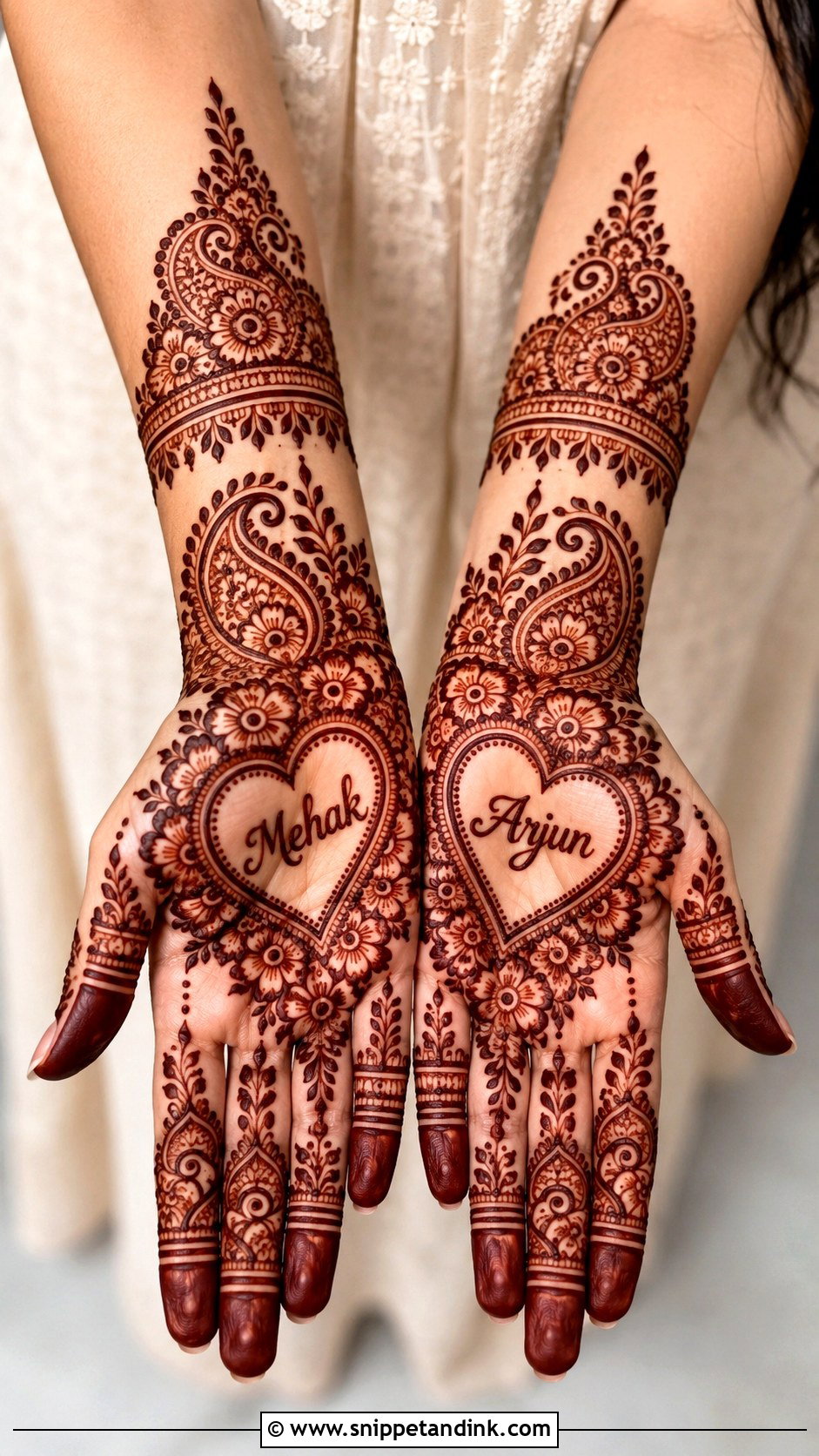
A full name takes more space than people expect, which is why I nearly always put it on the palm. It can sit inside a heart, follow the heart’s curve or hide in the surrounding vines, with floral borders, paisley corners and finger bands finishing the hand. Very small lettering turns into a smudge once stained. If the name is long, I’d shorten it to initials or wrap it across a wrist band instead.
24. Heart Engagement Mehndi Design
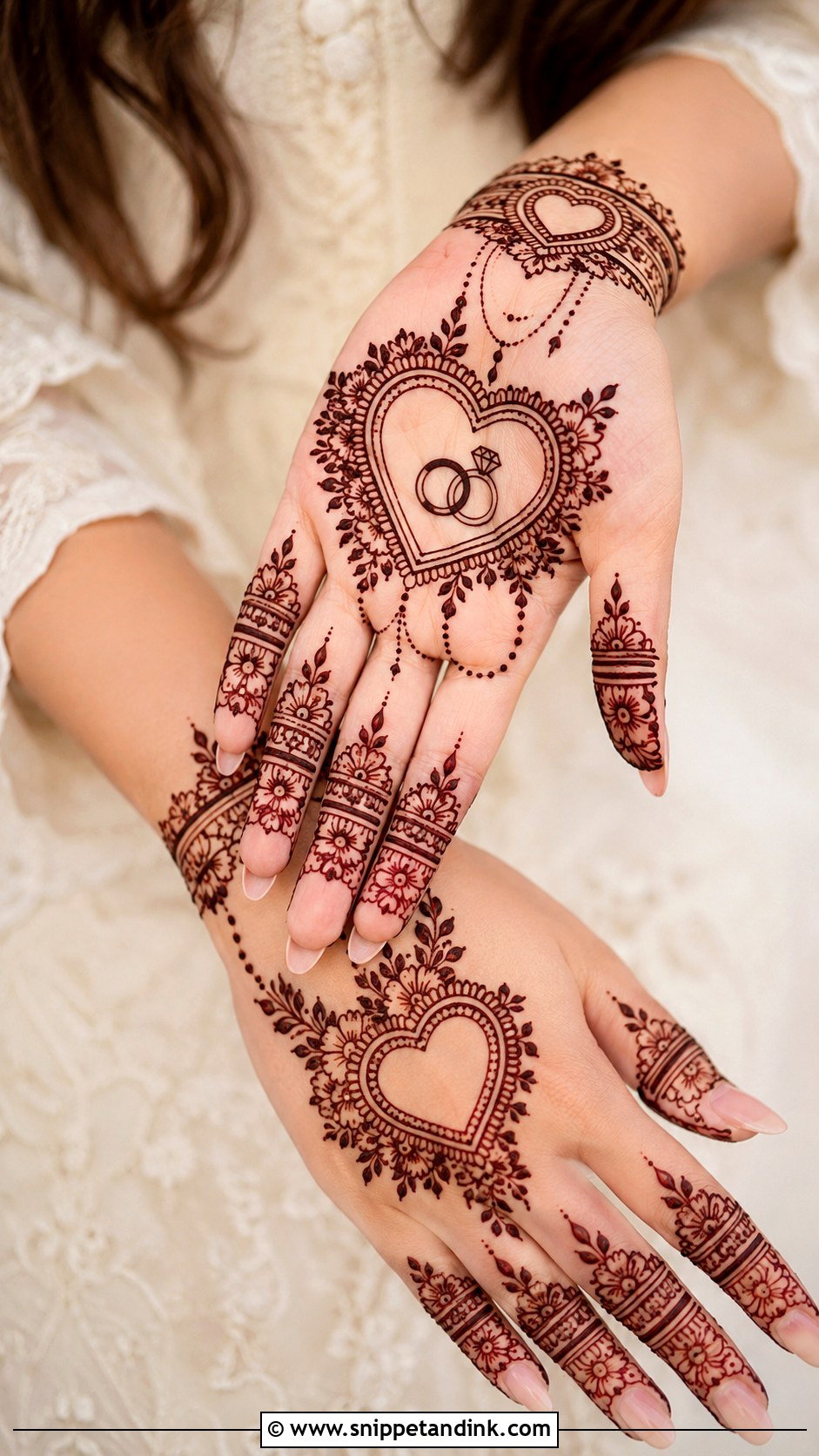
Heart engagement mehndi design sits between guest henna and bridal: a heart on the palm with ring-inspired circles, floral borders and soft bracelet details at the wrist, plus jewelry-like finger bands. The heart can carry initials or a small date. Your hands will be photographed constantly at a roka or engagement, so I keep generous open space around the heart and leave the ring finger lighter so the actual ring stands out.
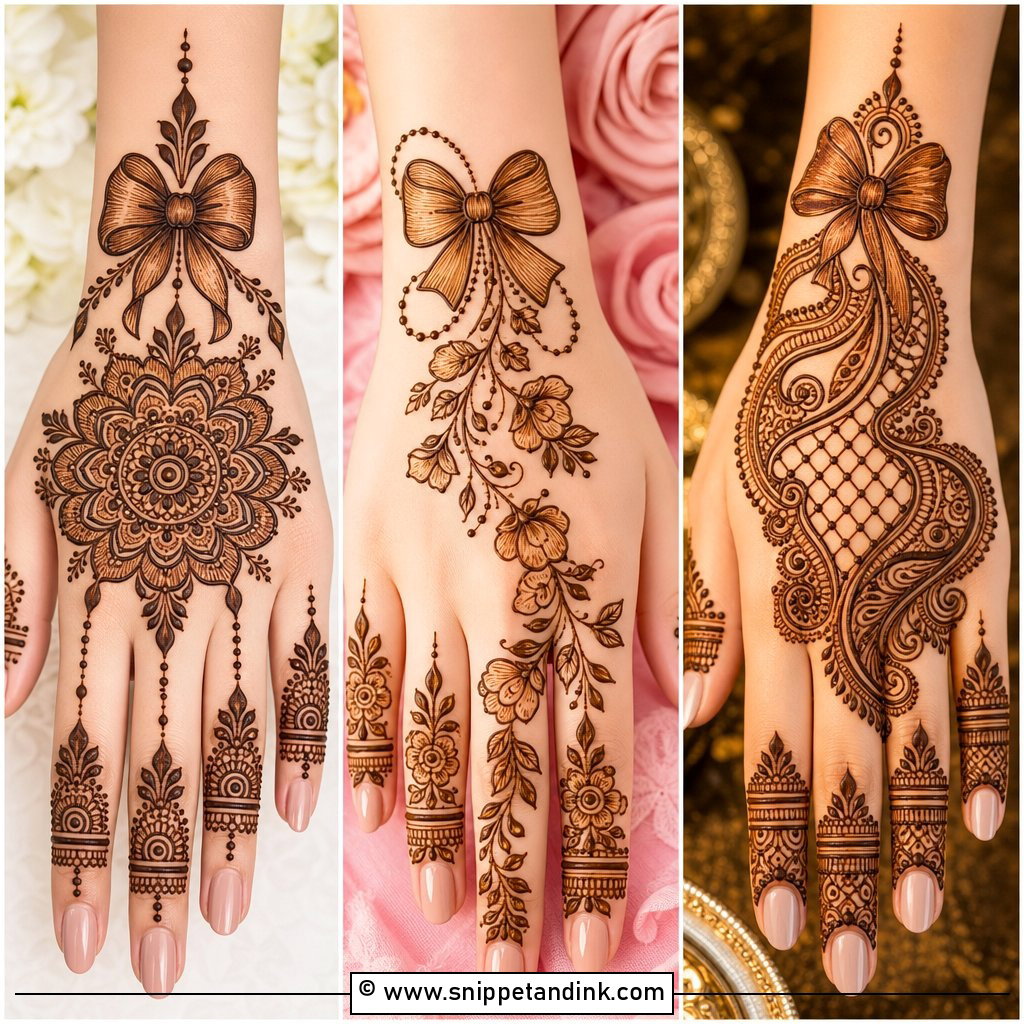

25. Heart Bridal Back Hand Mehndi Design
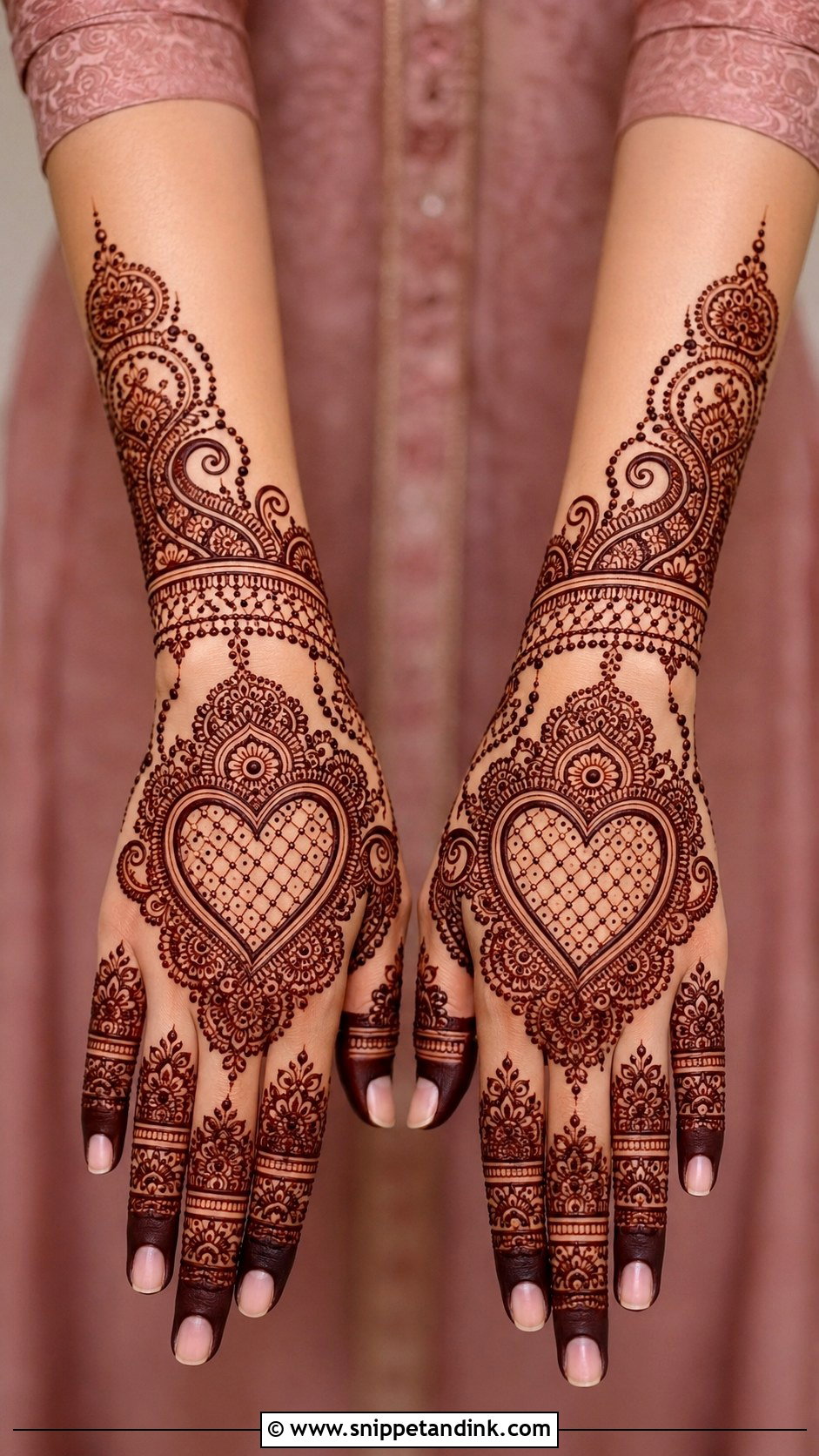
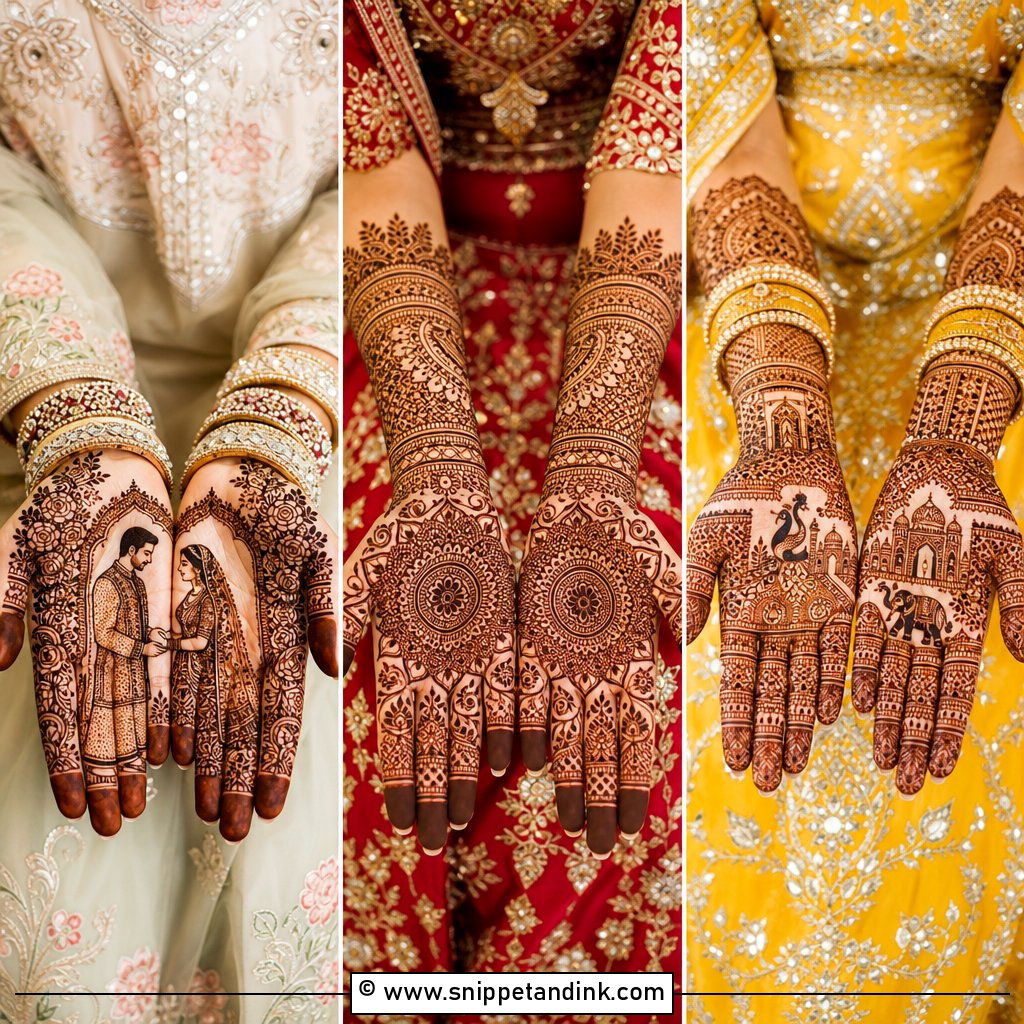
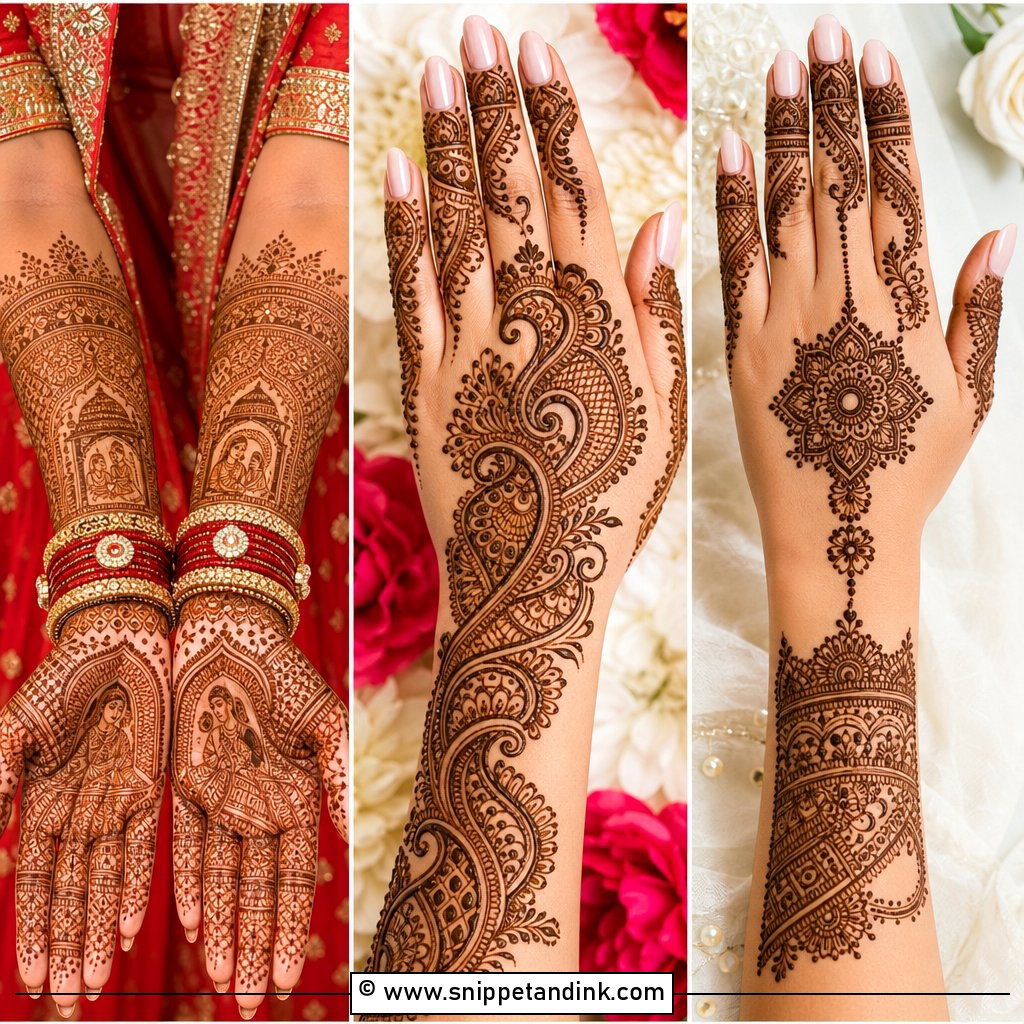
Heart bridal back hand mehndi design brings the outer hand up to the same level of detail as the palm. A large central heart is surrounded by floral jaali, peacock curves, paisley borders and bracelet chains, with fully filled fingers. I draw both hands symmetrically for a traditional look. If you’d like something more modern, keep matching hearts but vary the surrounding pattern on each hand.
26. Heart Palm Mehndi Design
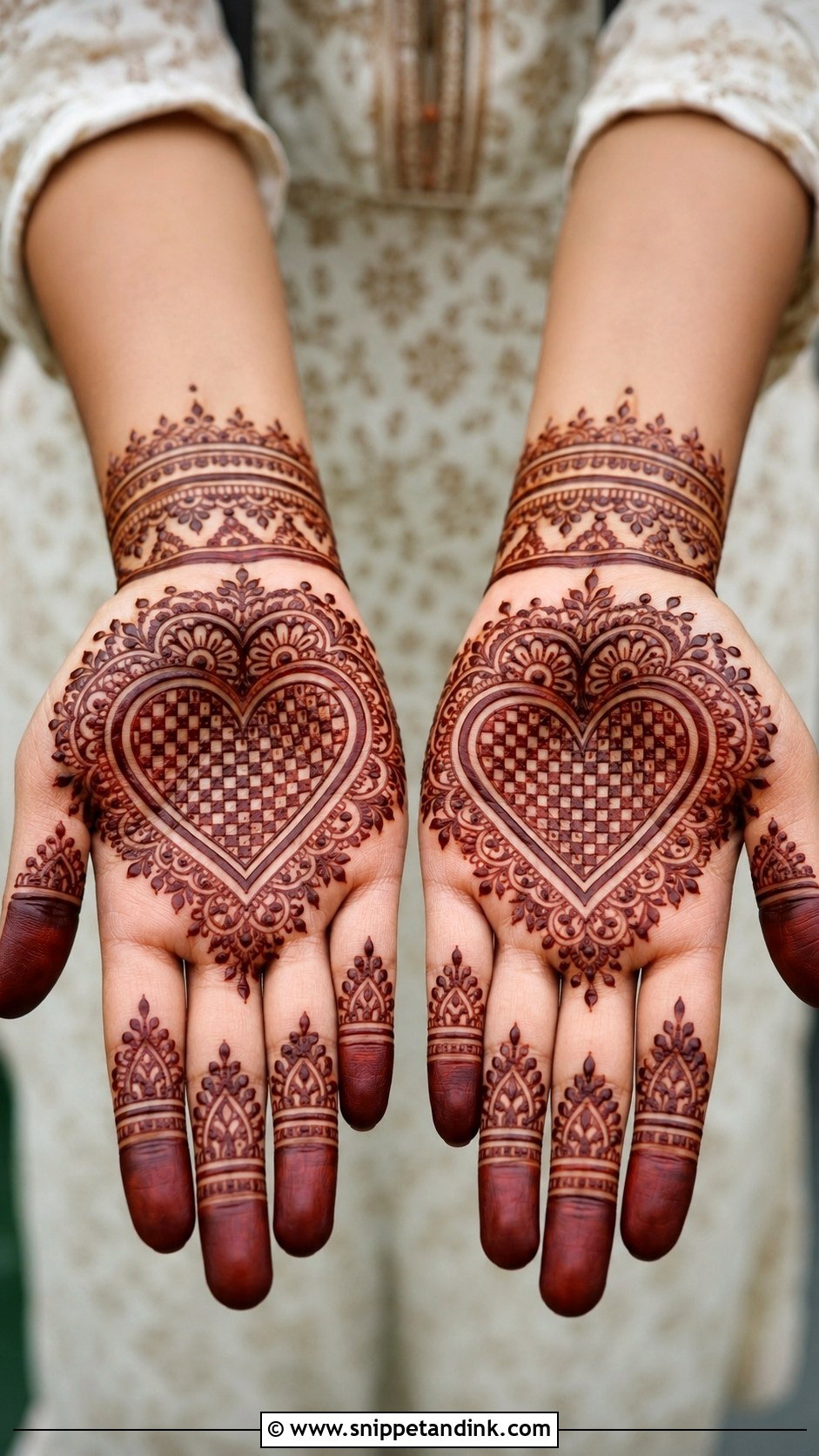
Everything happens inside the palm here, which makes it easy to show and simple to photograph. A large heart sits in the centre, filled with florals, dots, mandala lines or tiny checks, with curved borders following the palm’s shape and matching finger bands. Watch the thumb crease. A heart placed too close to it distorts every time the thumb moves, so I keep it a finger’s width away.
27. Heart Chain Mehndi Design
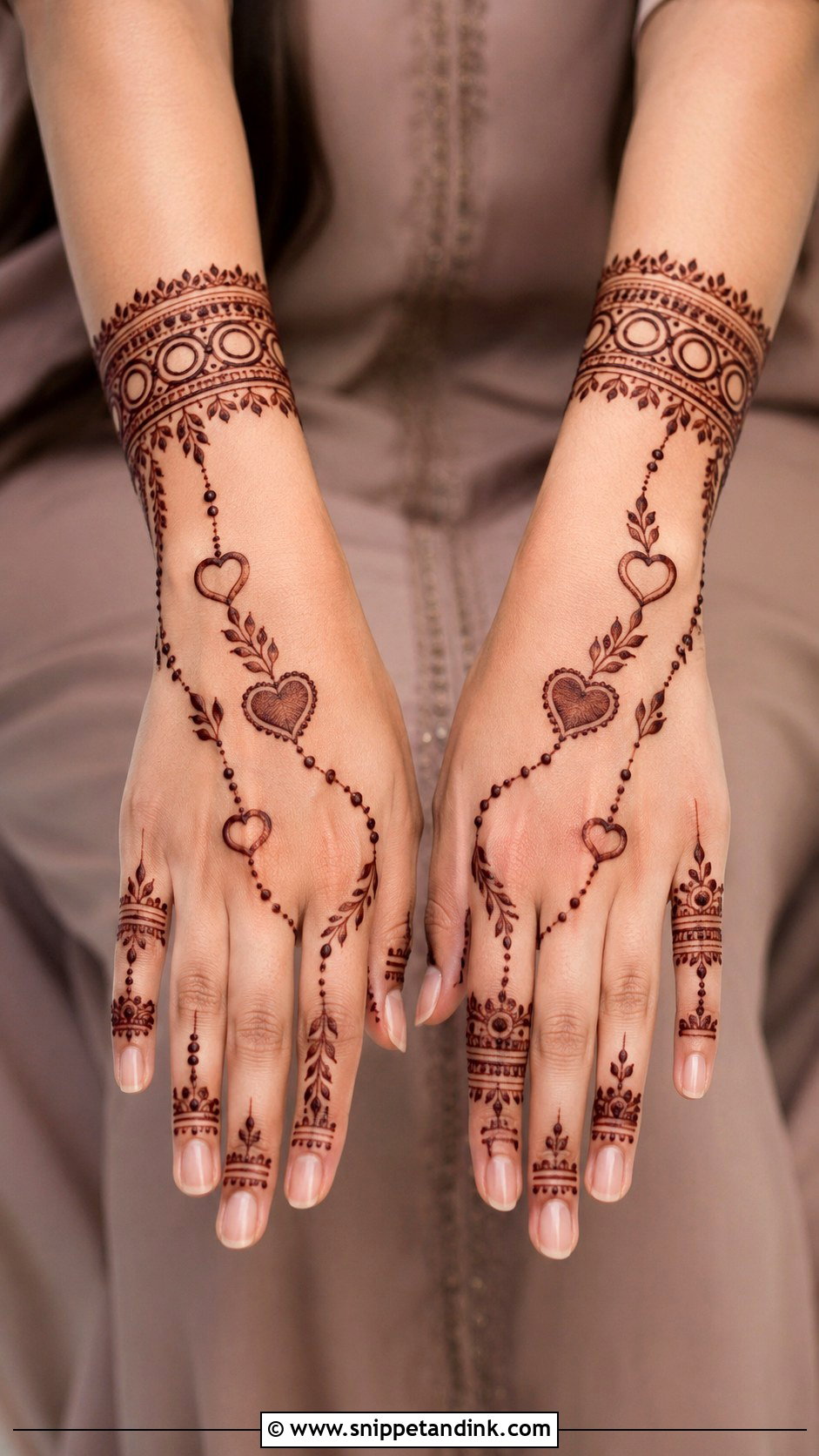
Heart chain mehndi design starts with a heart near the wrist and runs to the fingers in dotted chains, leafy strands and small ring shapes. Another version reverses it, with the heart on the hand and chains falling toward a bracelet cuff. Contrast makes it work: thin, even chain lines against a slightly bolder heart. It covers little skin, so it suits minimal and Indo-Arabic tastes.
28. Double Heart Mehndi Design
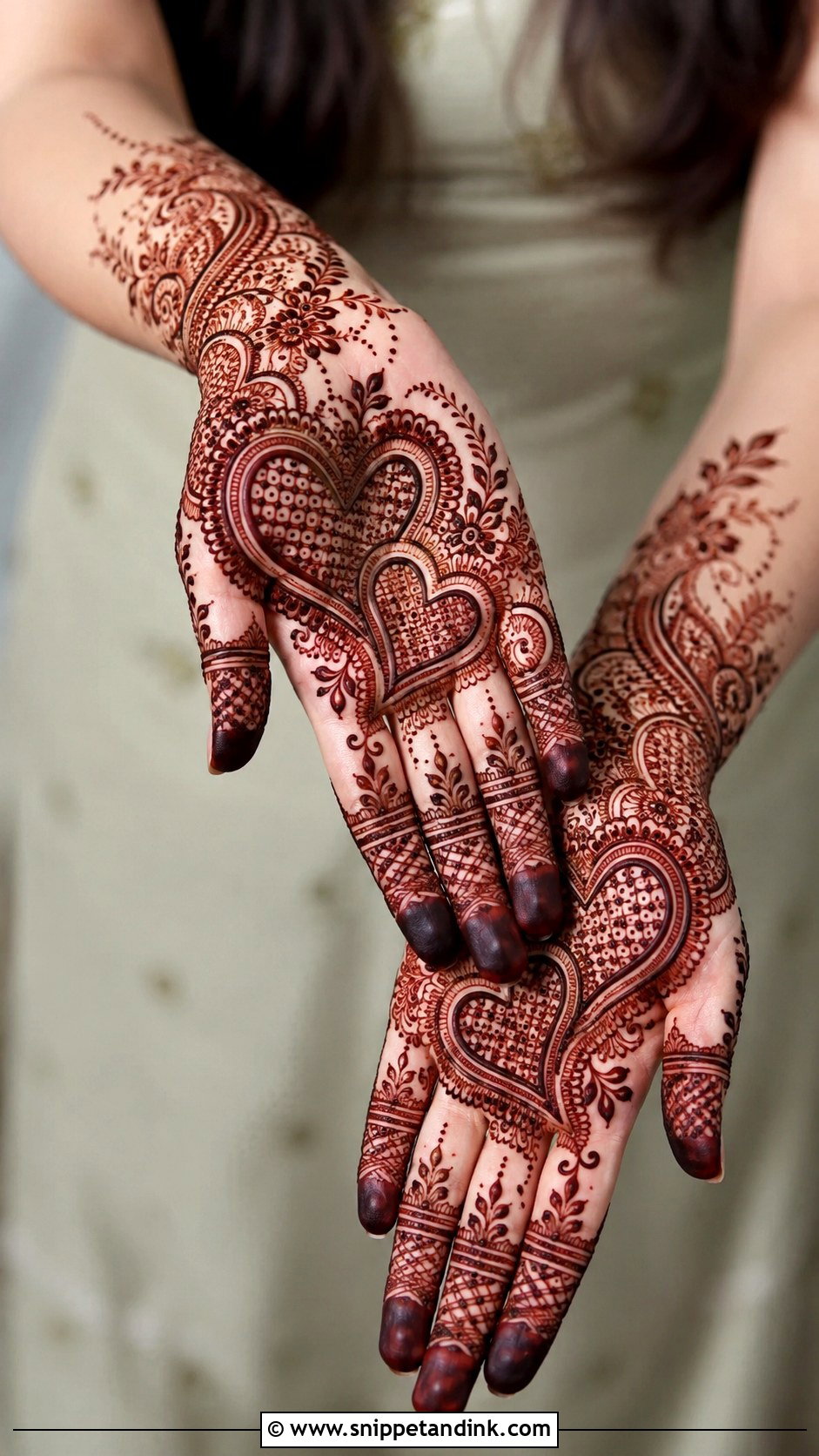
Two hearts can face each other on the palm, sit side by side on the back hand or appear one on each hand so they meet when the palms come together. Couples often use them for paired initials. Done carelessly, double hearts can look childish. I counter that with grown-up surroundings, jaali filling or paisley edges, and by building the hearts into a balanced full-hand layout rather than leaving them floating.
29. Heart Khafif Mehndi Design
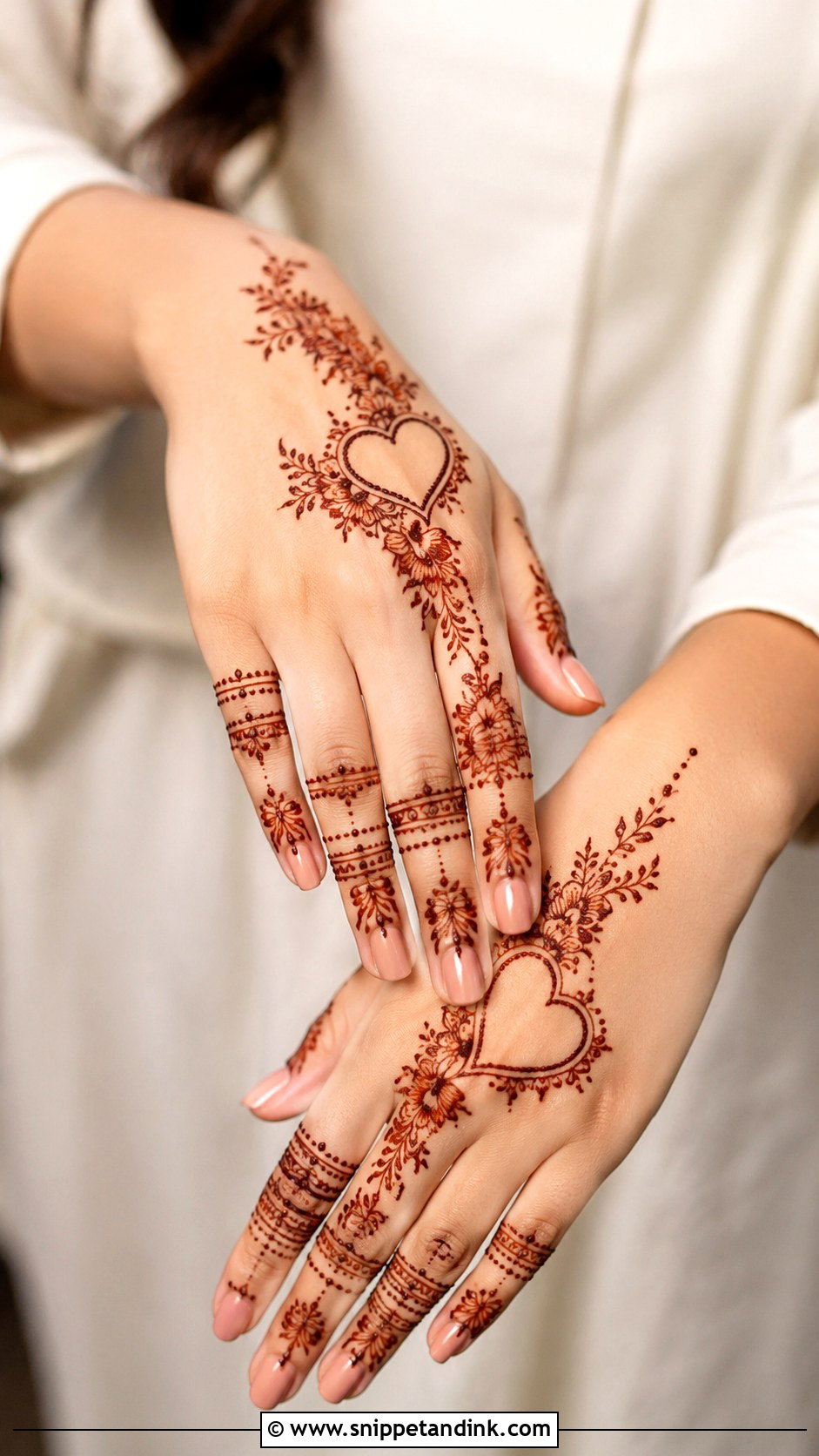
Khafif work is fine lines, soft shading, delicate florals and lots of open space, with the heart set into a floral trail among tiny leaves and lace-like curves. It shows best on the back of the hand, where the bare skin frames the detail. This style needs a very fine cone tip and a steady hand. The appeal is precision, not density, so one shaky line is more visible here than anywhere else.
30. Modern Heart Mehndi Design
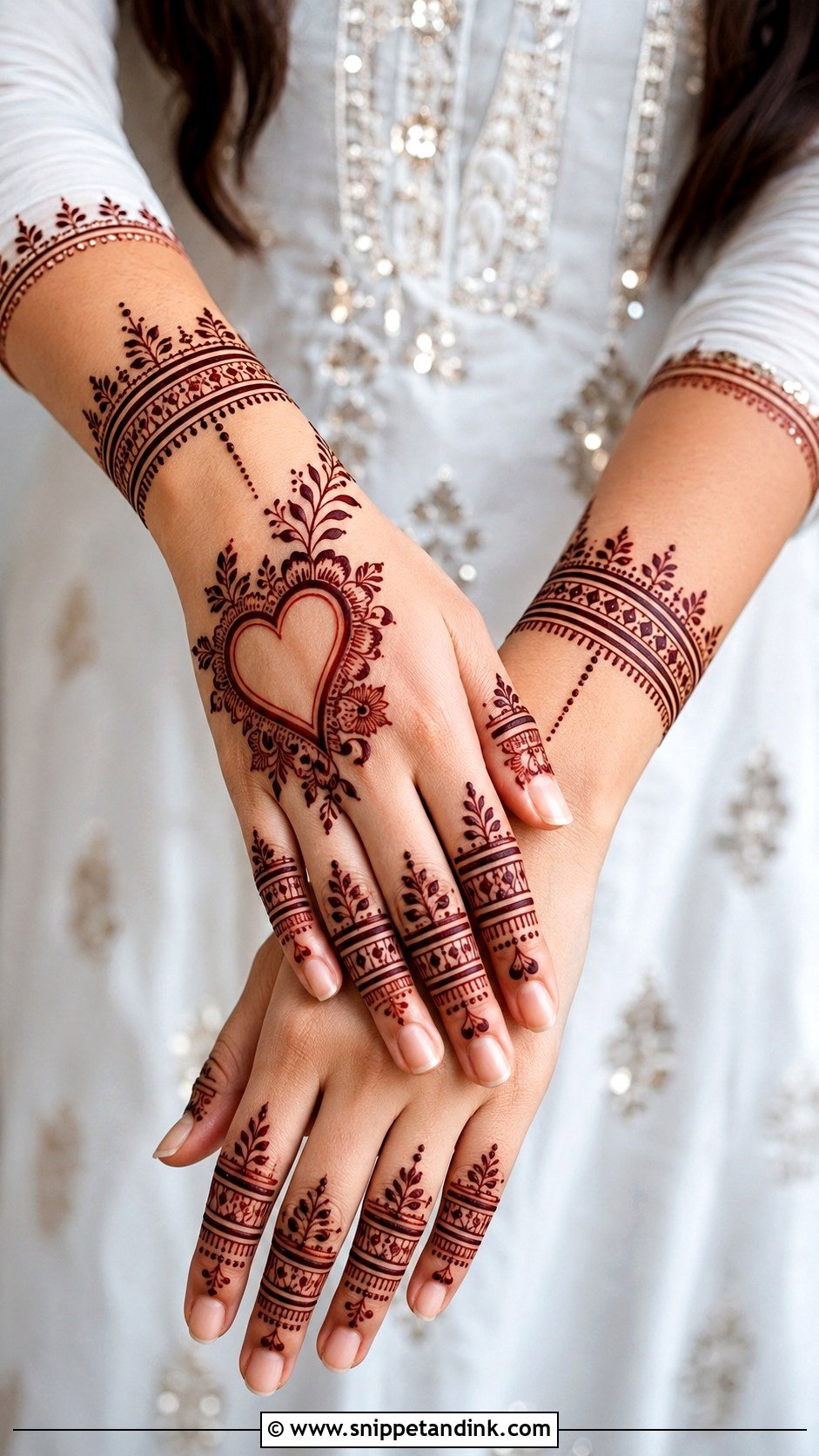
Modern heart designs play with the layout: asymmetry, negative space, split hearts, geometric borders or a clean wrist-to-finger line. The heart often sits off-centre on the back hand with fine florals and crisp bands. I keep it to one main heart, one supporting pattern and simple fingers. Mixing more motifs than that is the quickest way to make a modern design look confused.
Hiding a Name for the Groom to Find
In many South Asian weddings the artist hides the groom’s name or initials inside the bride’s mehndi, and he has to find it, sometimes with family teasing him while he searches. Hearts are a natural hiding place. I tuck the letters into the shading of a heart, the curl of a paisley beside it or a fine vine running off its point, so they look like part of the pattern at a glance.
Hide it too well and nobody, including the photographer, will ever see it. I usually tell the bride where it is and draw it slightly larger than the surrounding filler, so the game takes a minute rather than twenty. If you’d rather everyone sees the initials straight away, ask for them inside an open heart instead.
Lettering That Holds Up for a Week
Words are the first thing to go blurry. Henna lines spread a little as they stain, and the palm sheds skin quickly, so tiny letters lose their edges within a few days. Keep letters at least as tall as a fingernail is wide, avoid tight loops like a closed lowercase e, and leave bare skin around the word. If a date or name has to be read in close-up photos a week later, put it on the palm where the stain is darkest, and keep it away from the creases.
Where the Heart Sits Changes Everything
Placement, coverage and the occasion narrow these options down faster than any picture will. A simple heart covers quick festive wear, while bridal heart mehndi can hold initials, names, peacocks, paisleys and jaali. Arabic and Indo-Arabic layouts give you flow and open skin, and Indian full-hand designs give you rich traditional coverage. For a lighter modern hand, bracelet hearts, chains, minimal hearts or khafif details all work. Whichever you pick, ask your artist to keep the heart clear and framed, because that one shape is what people’s eyes go to first.
You'll Like These Ideas:



Leave a Reply