
The bridal hands I remember drawing are rarely the ones copied from a screenshot. They’re the ones where the bride told me something: the city where they met, her grandmother’s favorite flower, the color of the dupatta. Bridal henna has moved well past one standard full-hand layout, and brides now mix portraits, Arabic negative space, Rajasthani storytelling and minimal back-hand work. A unique bridal mehndi design still has to stain well and read clearly in photos. Here are 20 directions I’d offer a bride who wants her hands to feel like hers, with honest notes on time, skill and what each needs to work.
Hiding a Name in the Henna, and Other Personal Touches
In many South Asian weddings the groom’s name or initials are tucked somewhere in the bride’s design, and he’s teased until he finds them. It’s one of the oldest ways to make bridal mehndi personal, and it still works best when the letters are woven into a vine or petal rather than written plainly.
Beyond names, I ask brides a few questions before I sketch anything: where did you meet, what does your family always do at weddings, which flowers will be in your bouquet? The answers become small motifs, and the rest of the design is built to frame them.
Keeping personal motifs readable
- Choose two or three symbols, not ten.
- Give each one enough space: tiny details smudge together as the stain darkens.
- Send your artist reference images of any building, animal or object a few days ahead so she can practice it.
- Decide which hand carries the hidden name before the session, so it doesn’t end up somewhere it’ll be covered by a bangle.
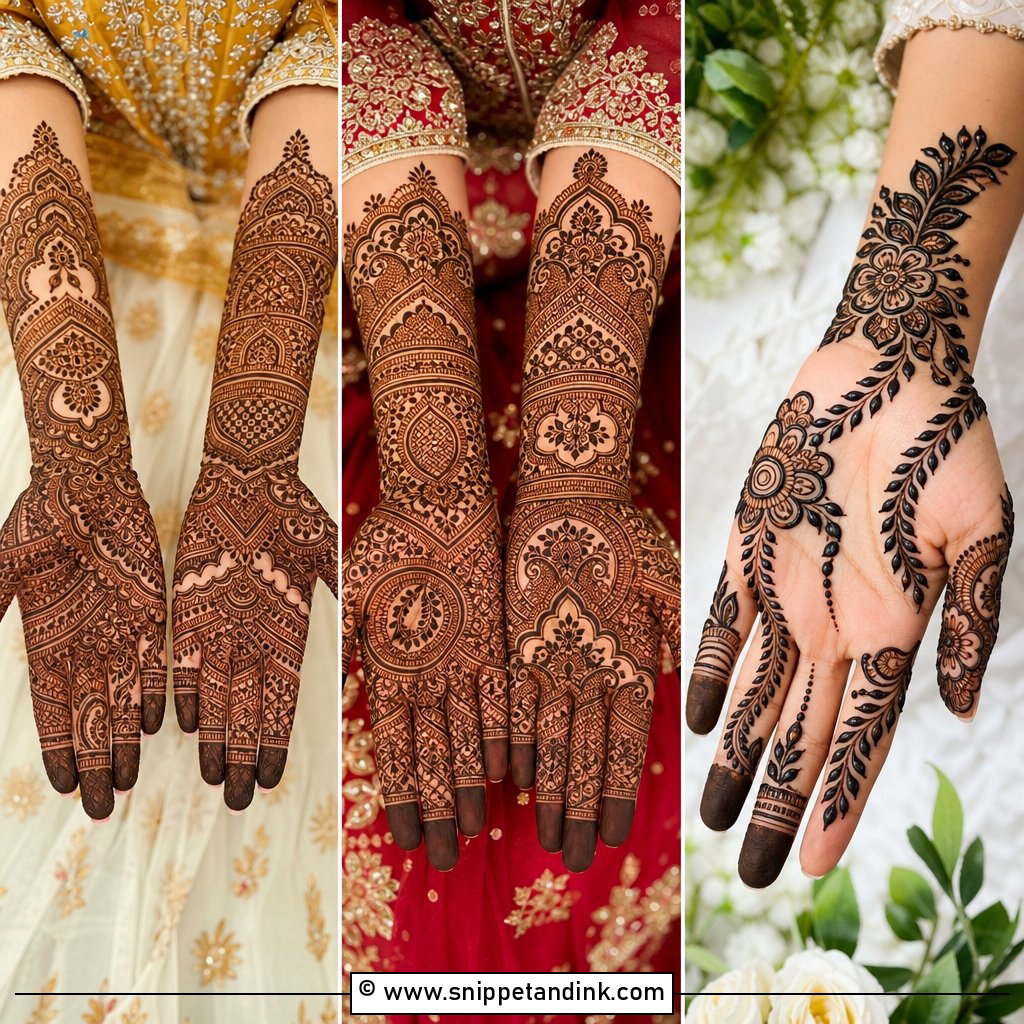
1. Full Hand Indian Bridal Mehndi Design
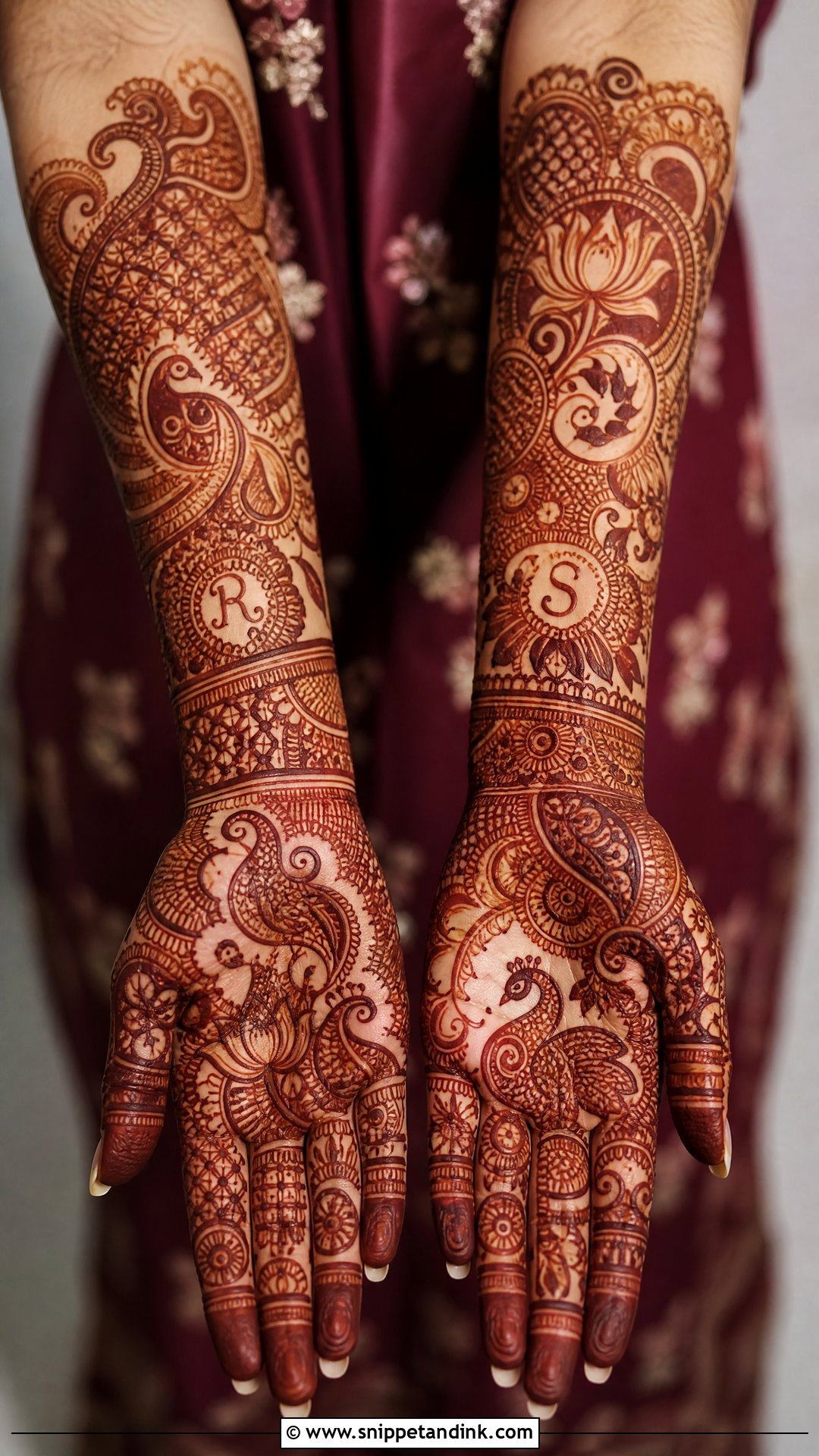
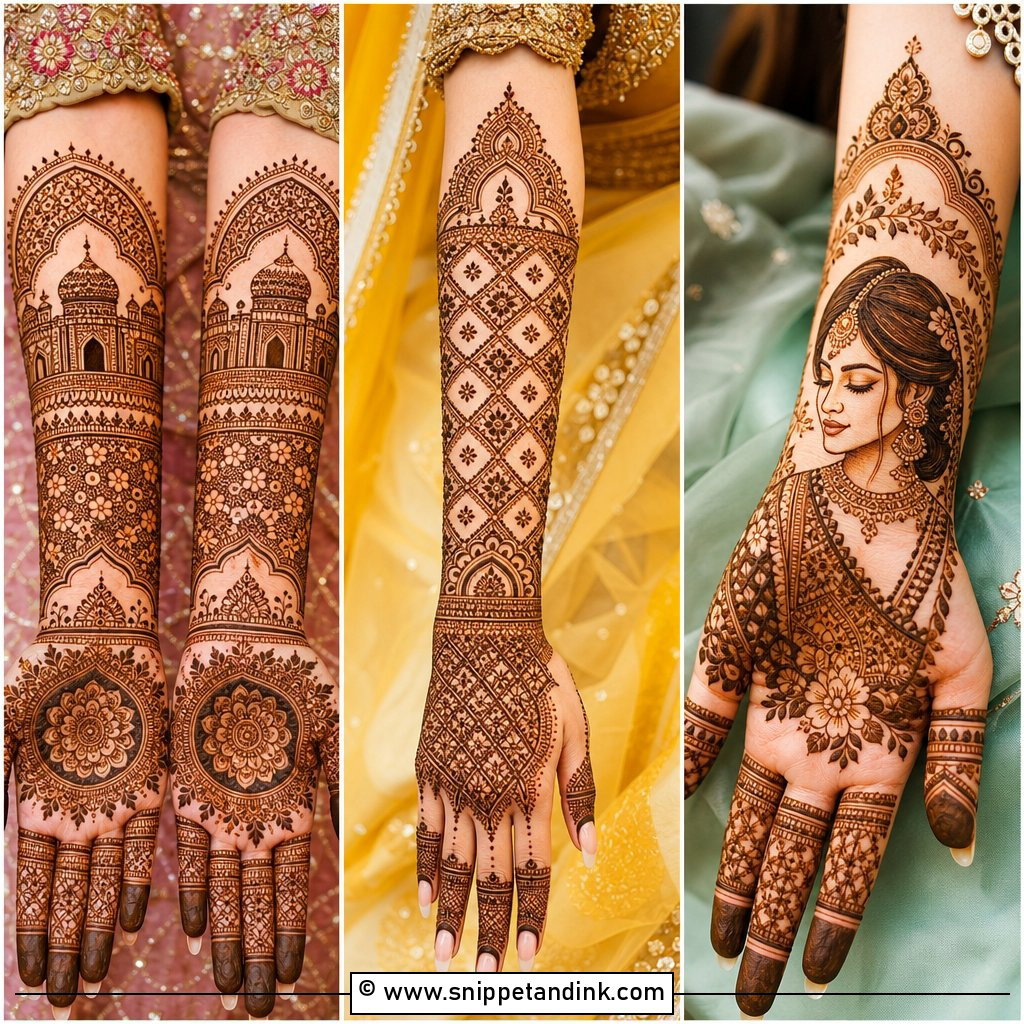
Fingertips to forearm, both sides, every gap filled: full Indian coverage is the most traditional bridal choice and still the most requested. Paisleys, florals, peacocks, lotus motifs and fine fillers build density, and symmetry holds it all together. I like slipping in something small and personal, a kalash, wedding bells or hidden initials, because the density gives them somewhere to hide. Keep the main palm motifs bold. Dense work with no focal point looks like texture rather than design once it stains.
2. Arabic Bridal Mehndi Design
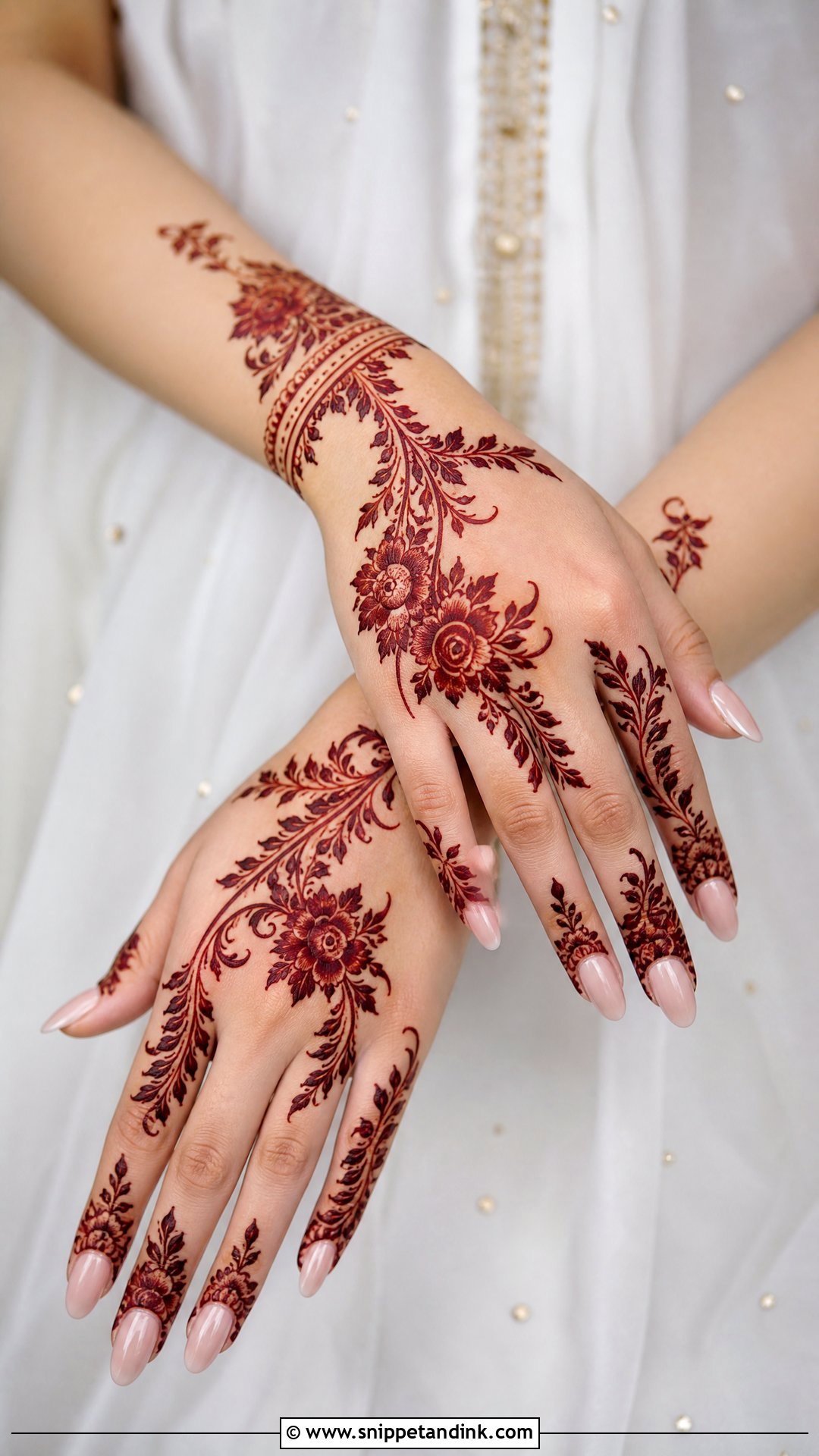
Arabic placement runs diagonally across the hand in flowing vines, large flowers and leafy trails, with bare skin between them. That openness is why it suits brides who’d feel smothered by full coverage. Bigger motifs mean bigger areas of paste, and those hold dye well, so Arabic designs often look darker than fine Indian filler from a distance. For a bridal version I carry the trail from the fingertips to the wrist and finish with bracelet bands. It sits naturally beside soft glam makeup and lighter outfits.
3. Indo Arabic Bridal Mehndi Design
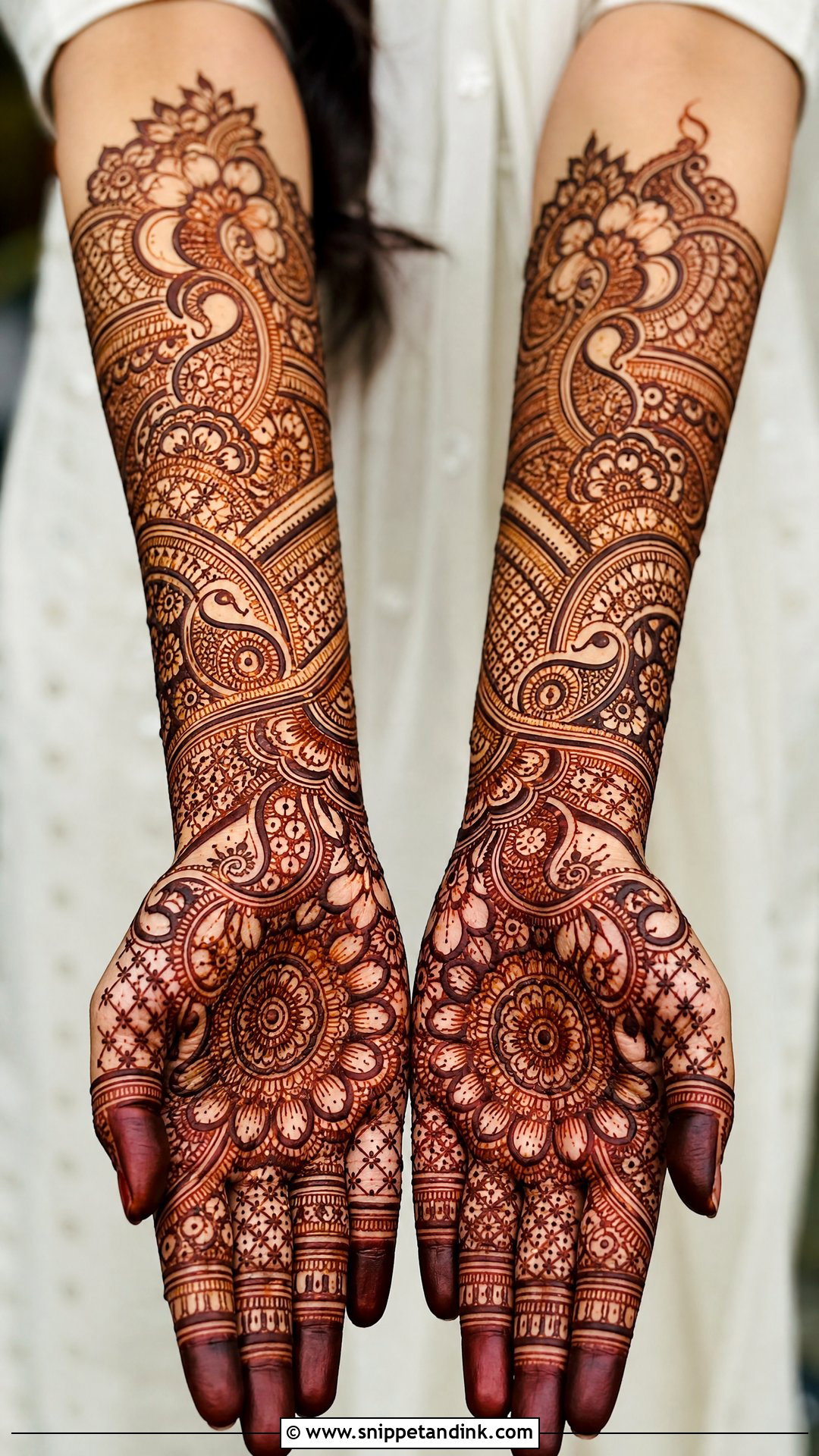
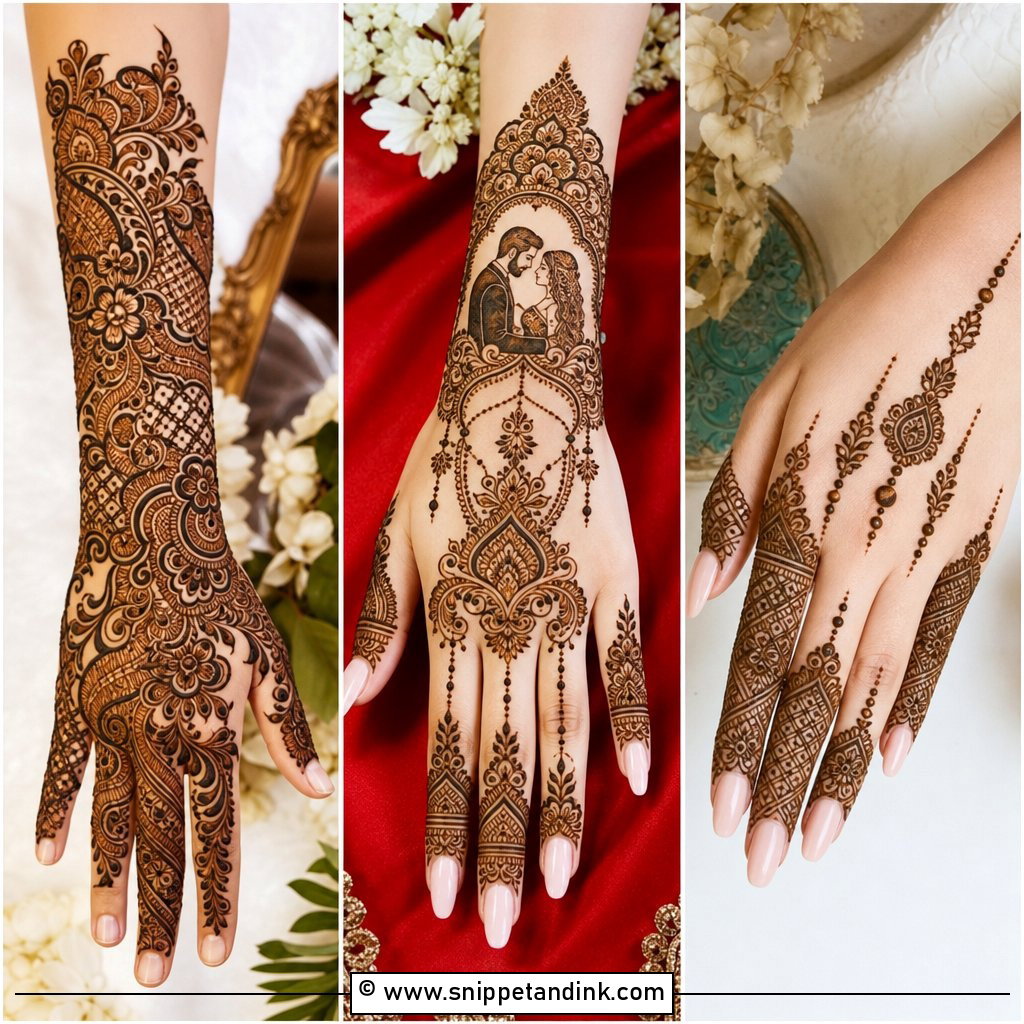
Indo-Arabic is what I suggest when a bride shows me two folders of reference photos that don’t agree with each other. It takes the bold floral flow of Arabic henna and fills it with fine lines, jaali grids and paisleys from Indian work. Placement is the trick: a mandala or paisley on the palm, then a diagonal floral trail around it, so the detail is concentrated and the edges breathe. It holds up in close-ups and still reads clean from across a room. Matching wrist cuffs tie both hands together.
4. Rajasthani Bridal Mehndi Design
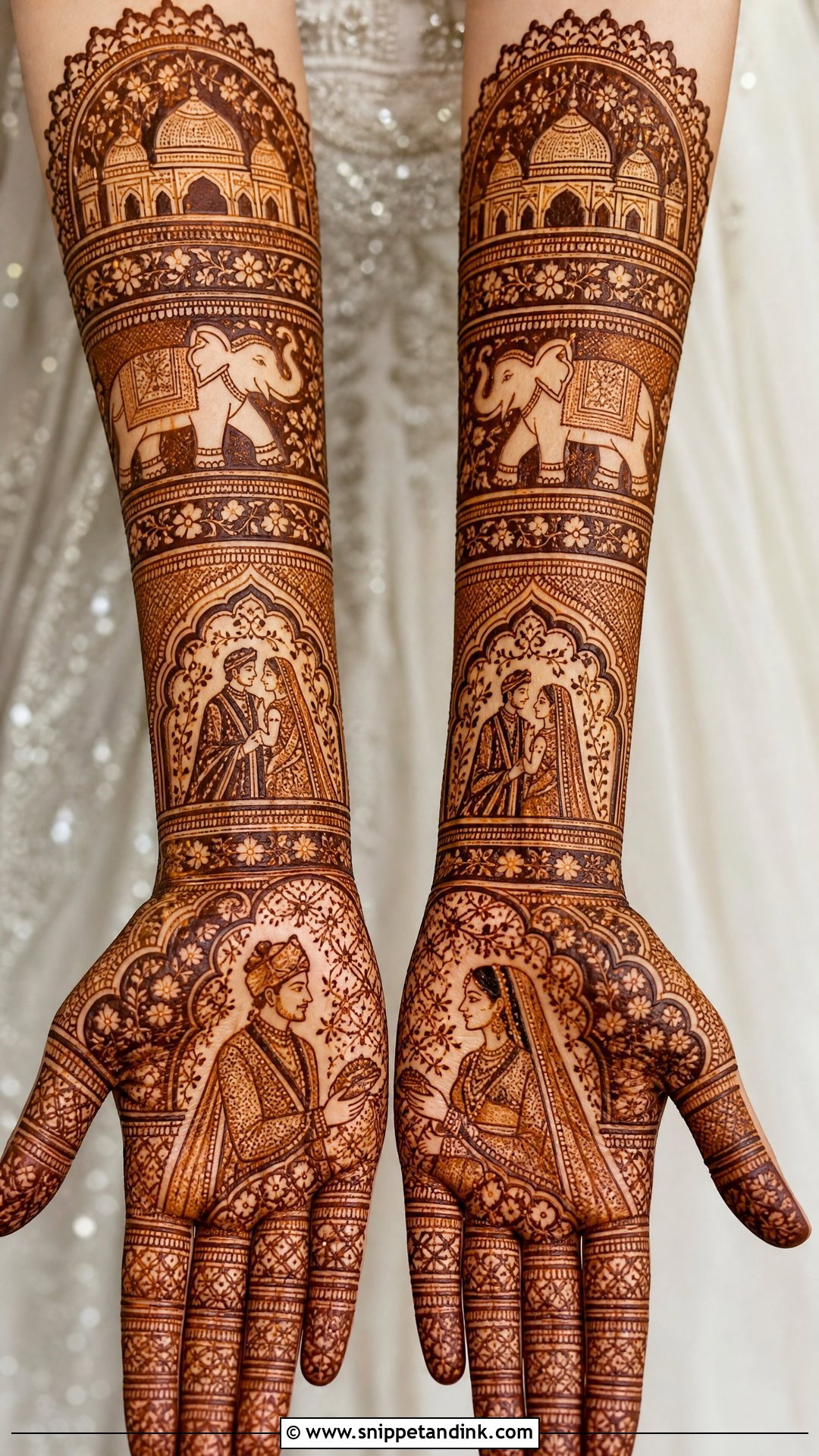
Rajasthani work tells a story. Bride and groom portraits, elephants, palaces, doli scenes and peacocks sit inside borders that echo traditional miniature painting. It’s a full-hand style, often reaching the elbow, and it suits brides who want their mehndi to carry cultural meaning. The challenge is legibility. I divide the arm into panels with clear borders before drawing any figure, so the portraits, florals and filler don’t merge into each other once the stain darkens.
5. Personalized Bridal Mehndi Design
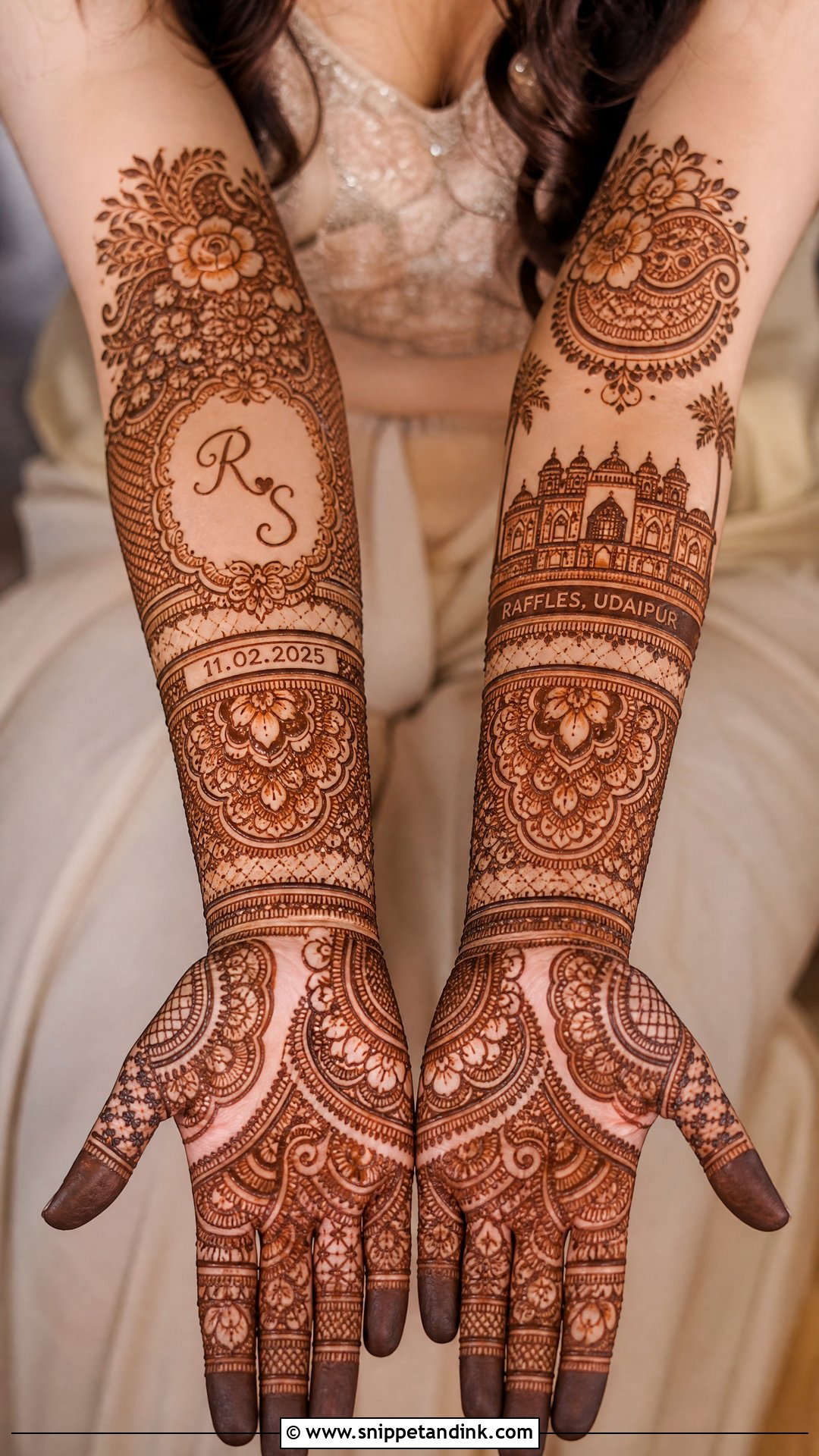
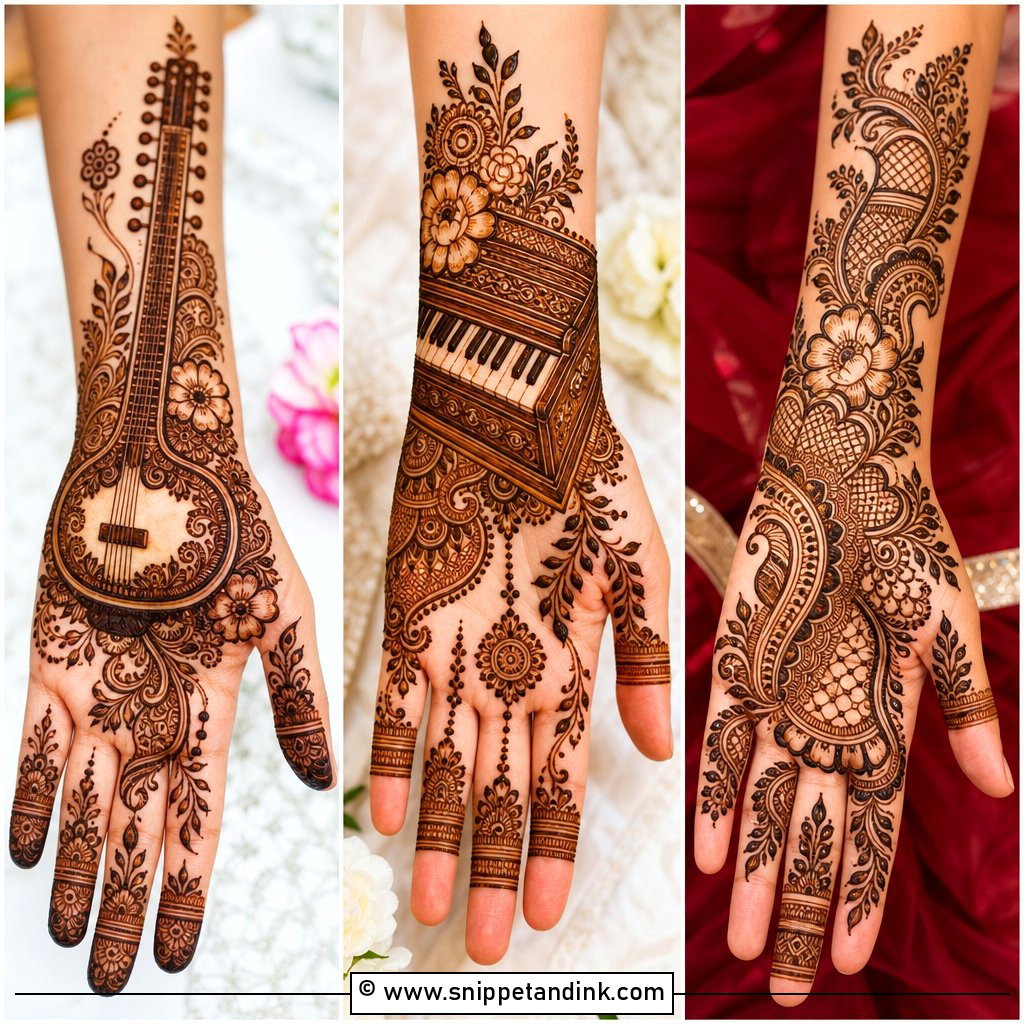
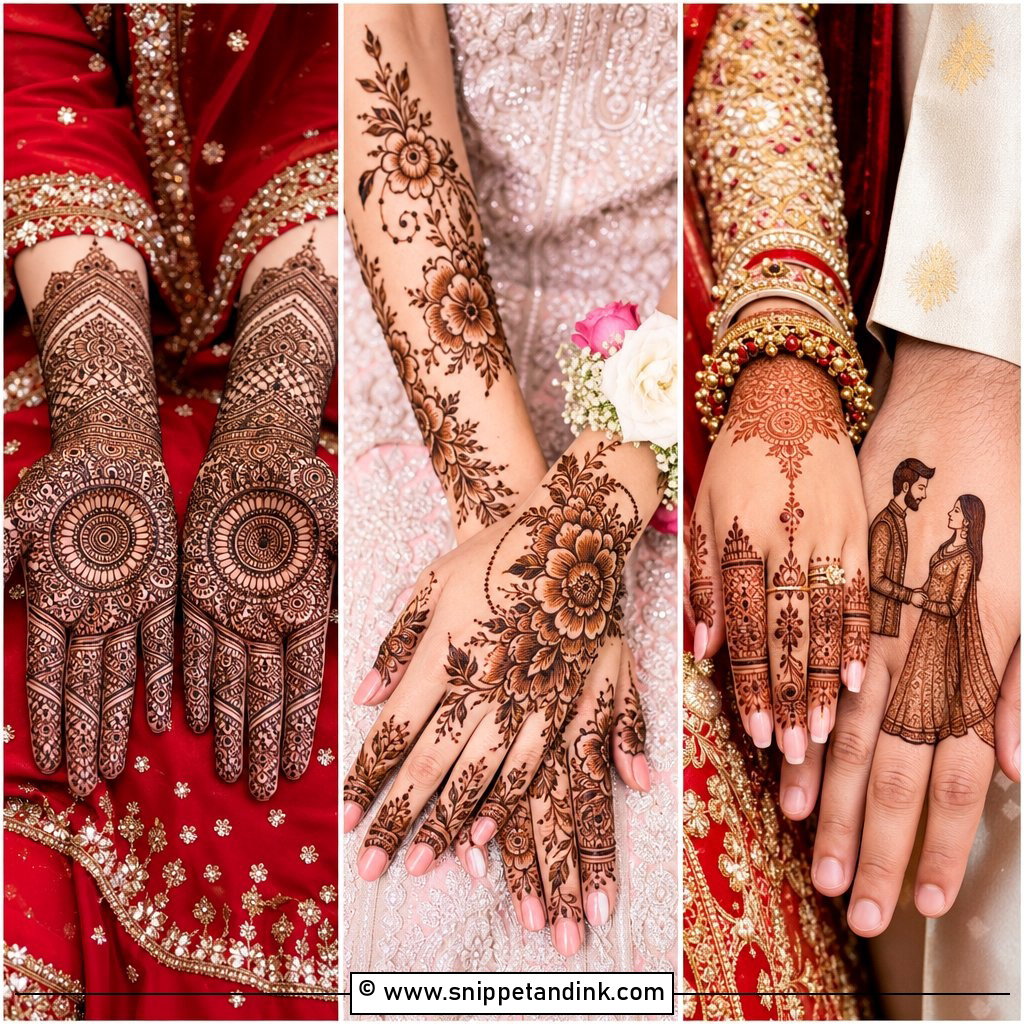
Personal details are where a design becomes yours: your partner’s initials, the wedding date, a symbol from the proposal, a favorite travel spot, a pet or a small sketch of the venue. They still need a solid bridal base of paisleys, flowers and wrist bands around them, or they read like a sticker collection. I keep each custom element small but drawn with a slightly thicker line than the filler. Too many personal motifs on one hand is the most common mistake; two or three meaningful ones land better than ten.
6. Portrait Bridal Mehndi Design
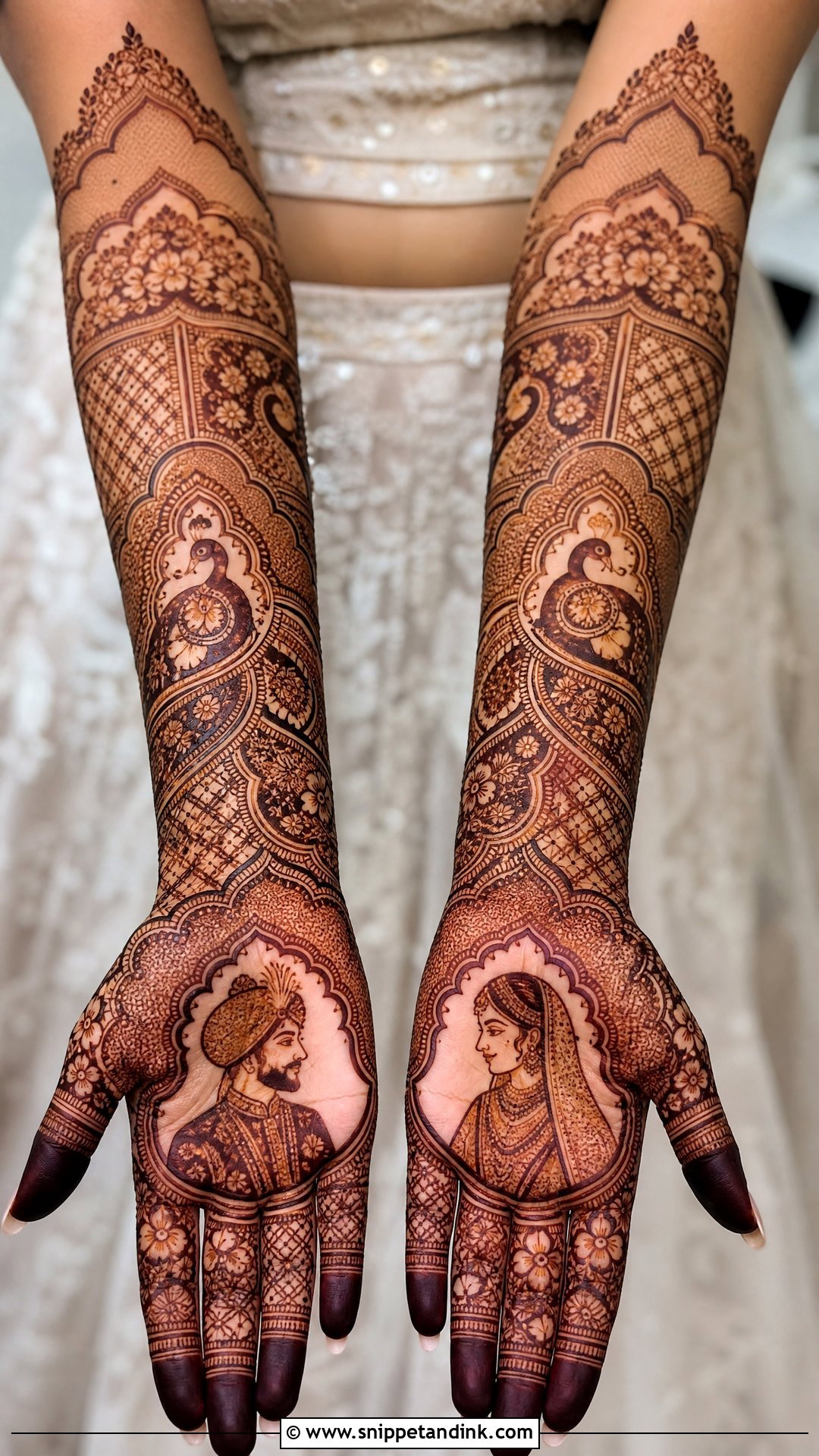
Portrait mehndi puts tiny bride and groom faces or figures on the palms, usually within full Indian or Rajasthani coverage. It’s emotional and dramatic, and it’s also the style where an artist’s skill shows most, so look at real photos of portraits they’ve drawn, not just finished hands. Faces need to be noticeably larger than the filler motifs, or they blur into suggestion once stained. Placing one figure on each palm lets them face each other when you hold your hands together for photos.
7. Mandala Bridal Mehndi Design
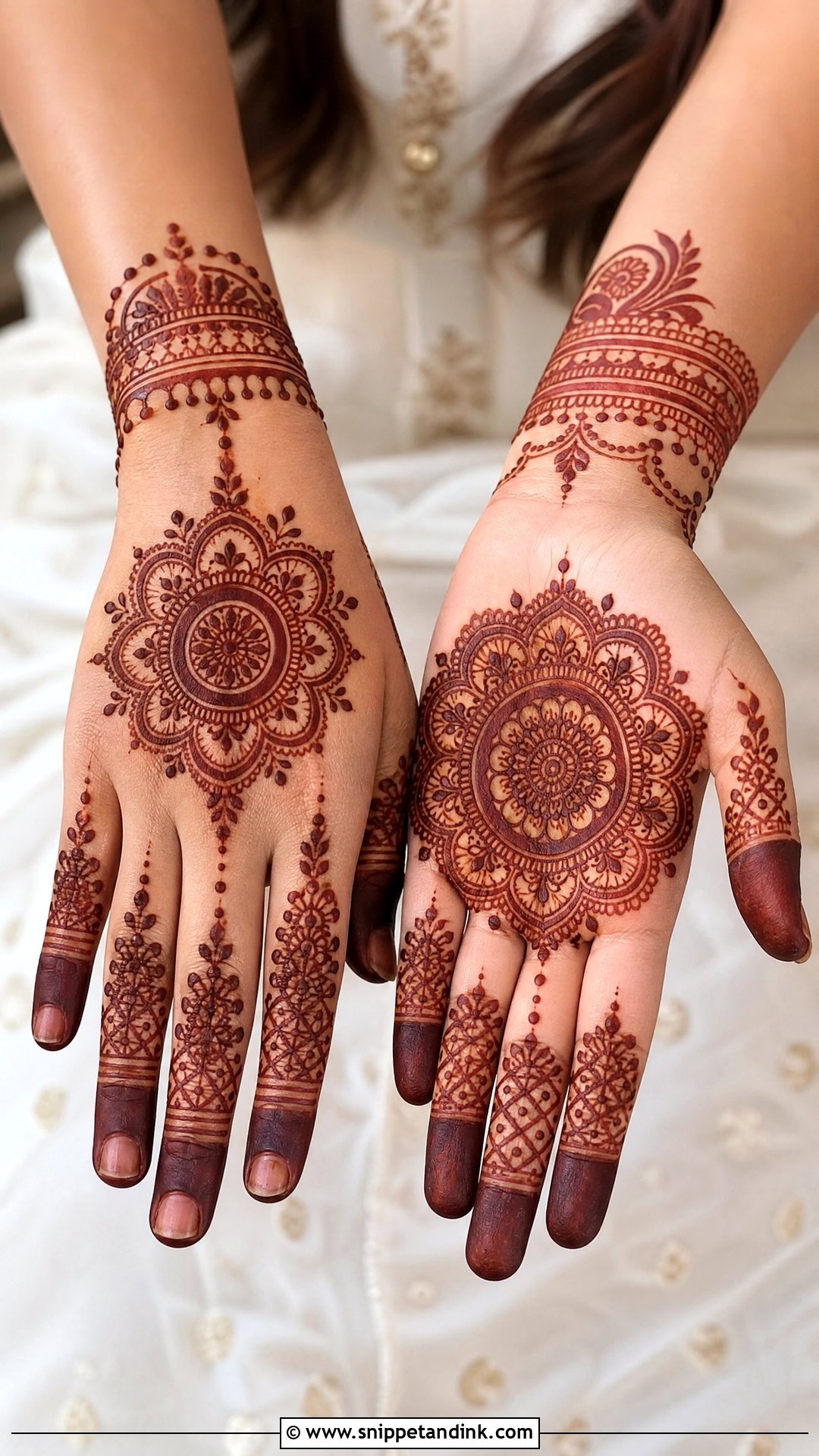
A single circle in the middle of the palm or back hand, expanding outward in rings of dots, petals and paisleys, is about as classic as bridal mehndi gets. On its own it can feel like a guest design, so I connect it to decorated fingers, wrist cuffs and forearm bands. Mandalas suit most hand shapes because the round center draws the eye regardless of finger length. A ring of fine jaali around the outer edge adds richness without crowding the center.
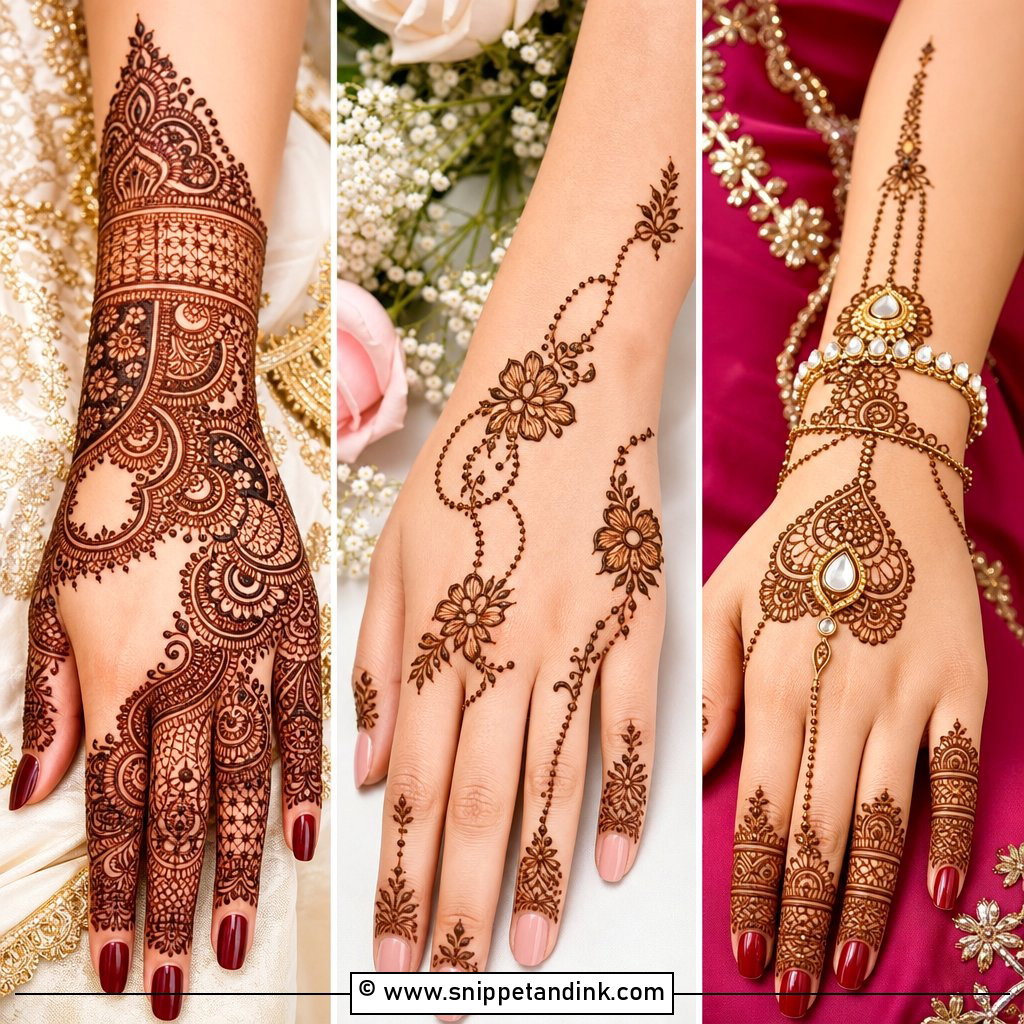
8. Back Hand Bridal Mehndi Design
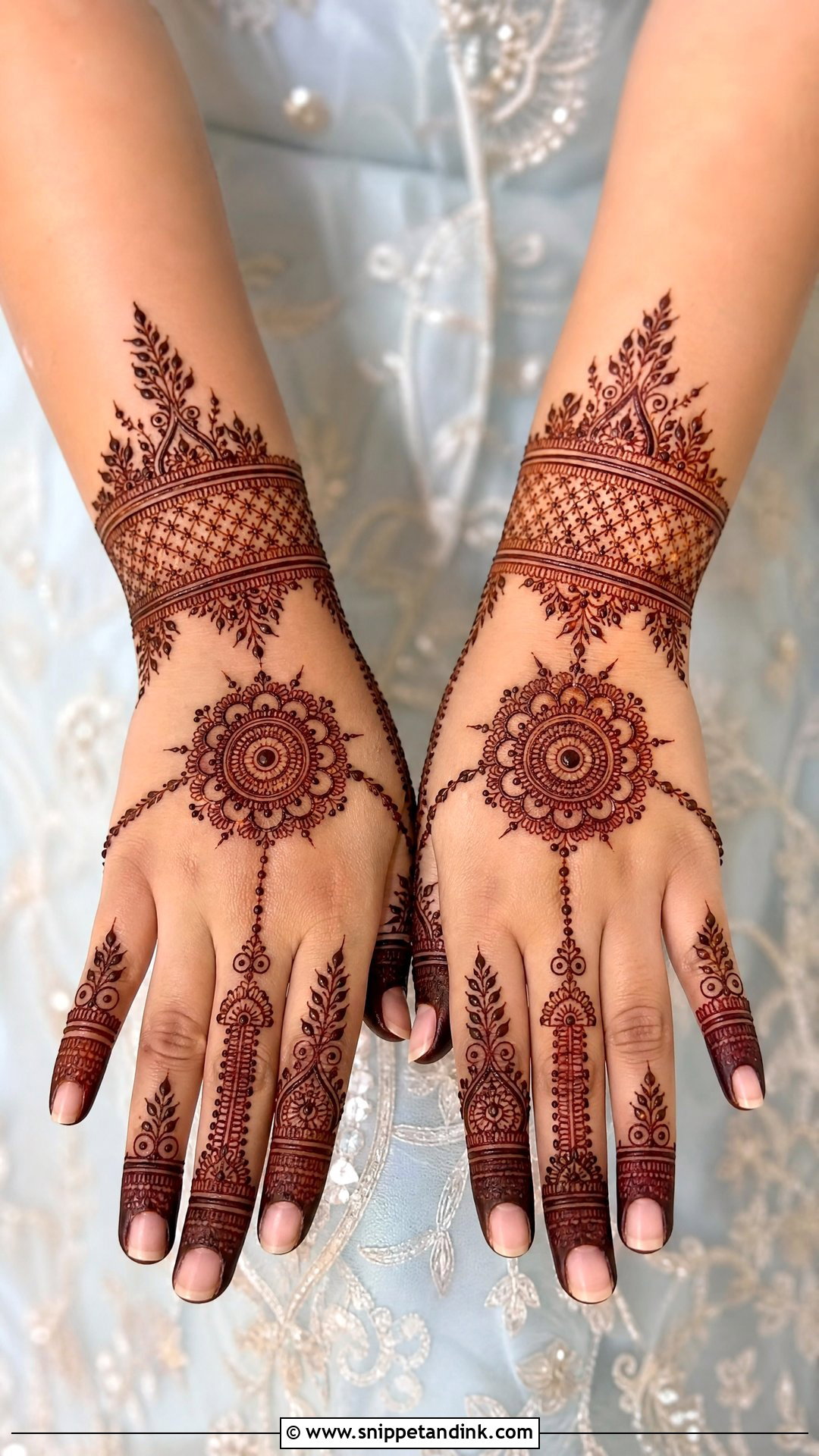
The back of your hand is what everyone sees in ring photos and when you’re holding a bouquet. A back hand bridal mehndi design usually combines a central mandala, floral mesh, bracelet patterns and decorated fingers. I like linking the fingers to the wrist so it reads like hand jewelry, with chain-style lines framing the knuckles. Uneven fingers are the giveaway of a rushed job: I check that each finger band starts at the same knuckle height before moving on.
9. Front Hand Bridal Mehndi Design
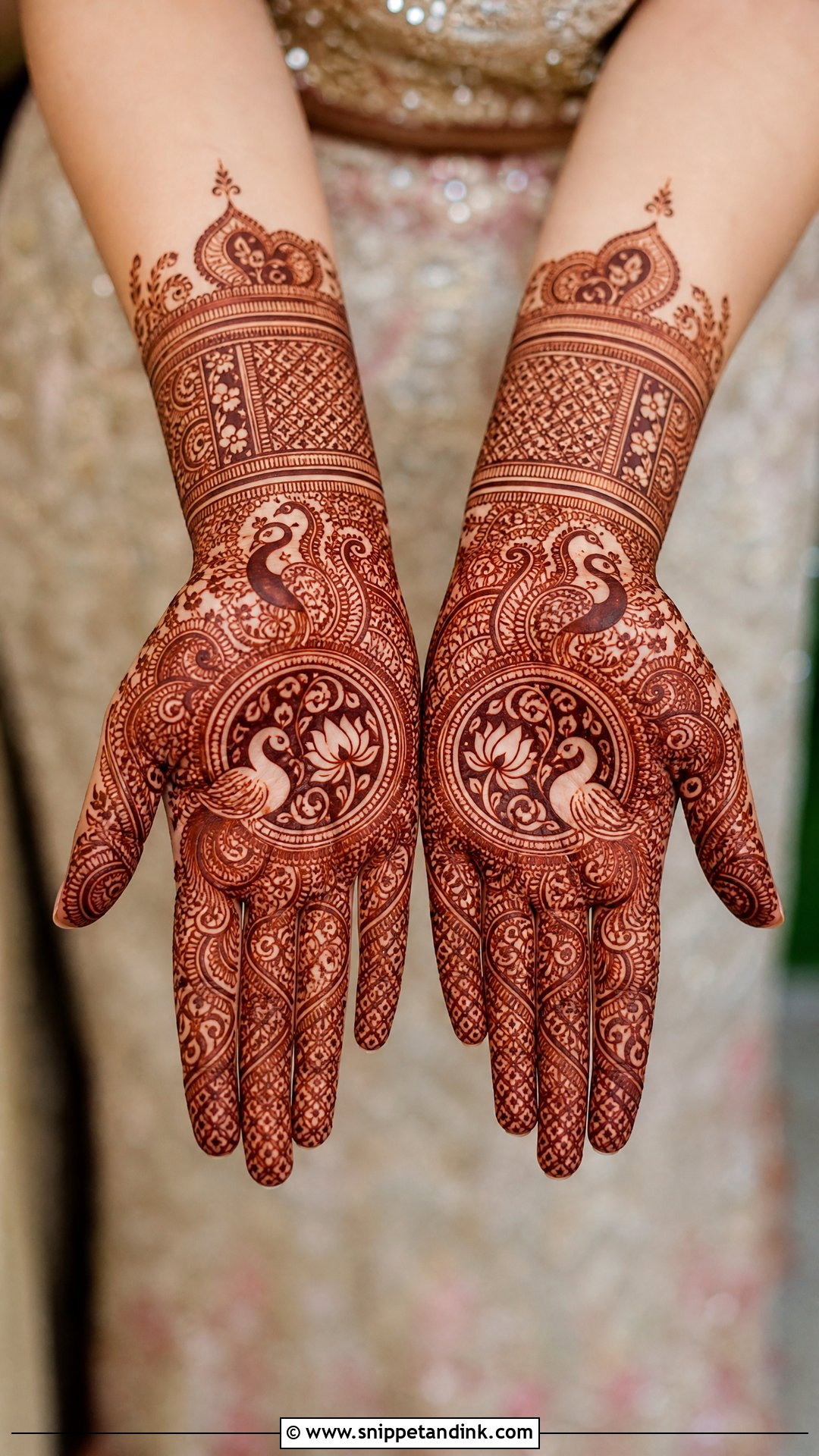
Palms are the heart of traditional mehndi, and the deepest stain usually appears there because the skin is thick and warm. A front hand bridal mehndi design can carry matching mandalas, peacock pairs, lotus circles or bride and groom elements. I leave a thin open border around each key motif. Without it, a dense palm loses its main artwork. Palms show in blessing moments and in the classic hands-together mehndi photo, so this is where I spend the most time.
10. Minimal Bridal Mehndi Design
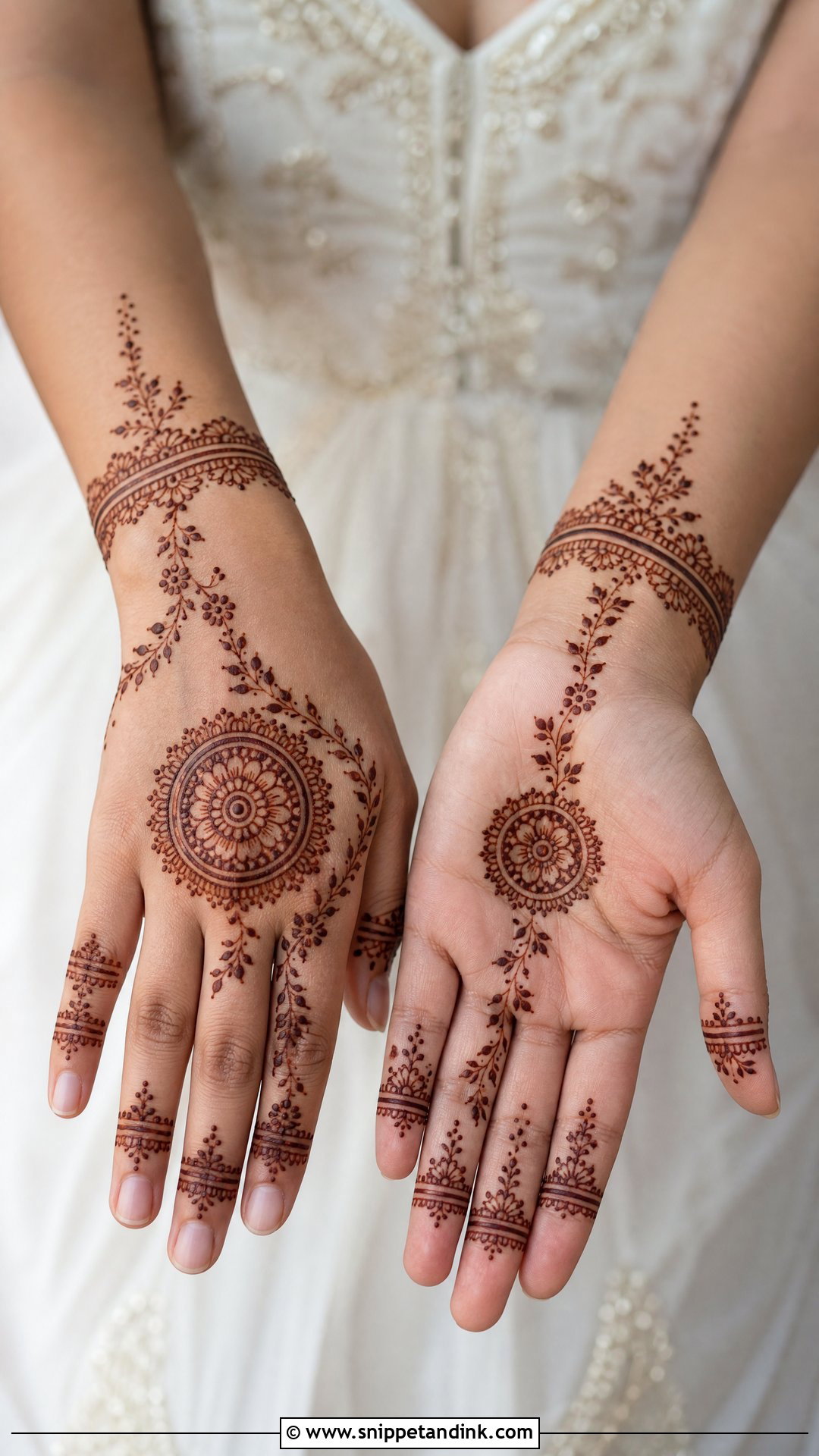
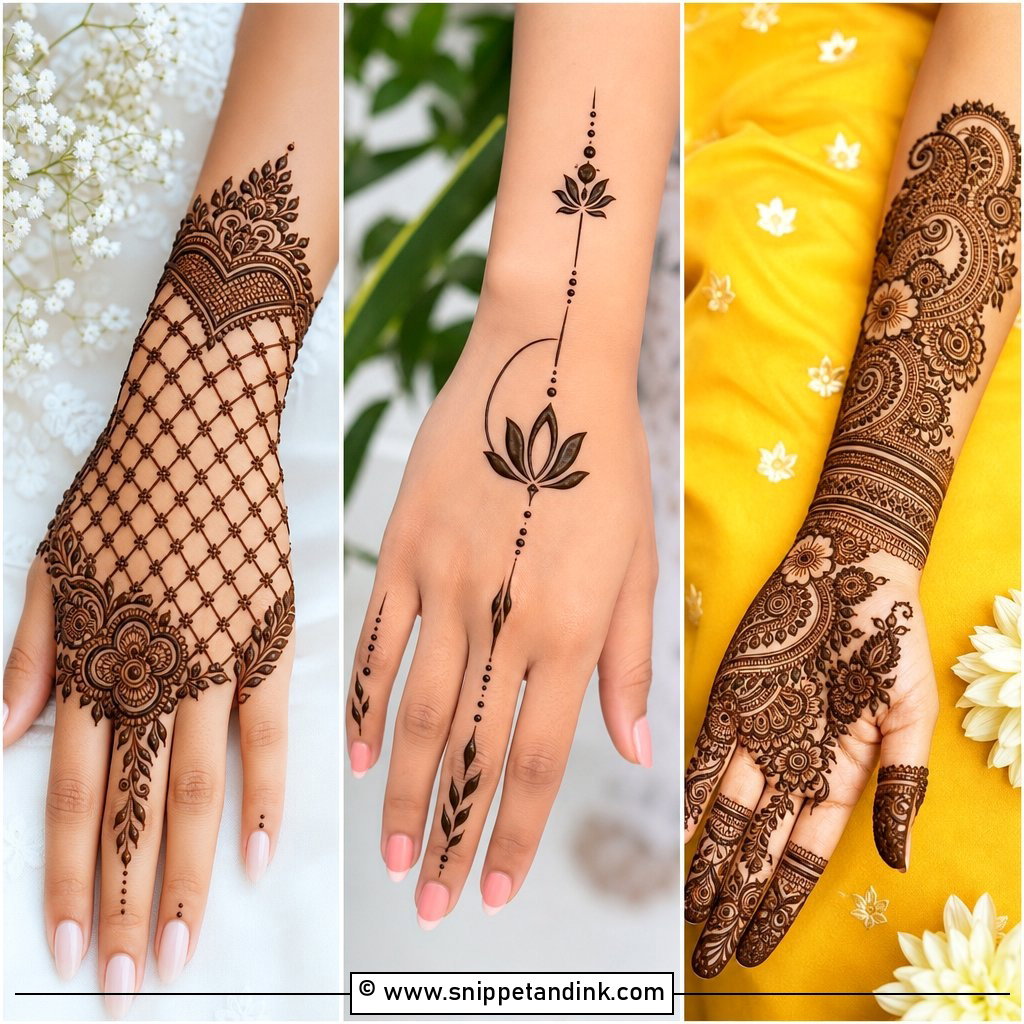
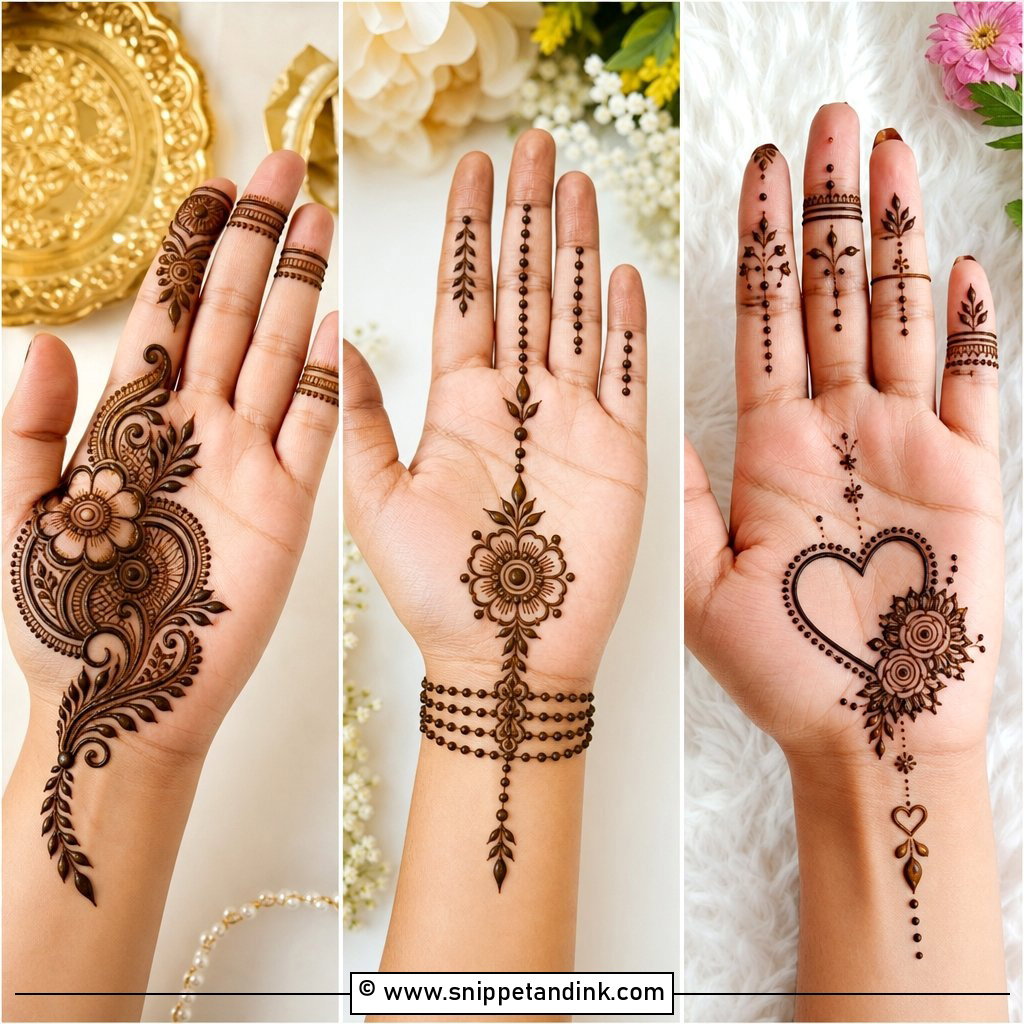
Minimal doesn’t have to mean casual. Slim floral vines, delicate finger patterns, a small mandala and a bracelet band can read as bridal when both hands are coordinated and the design extends slightly toward the wrist. It suits pastel lehengas, civil ceremonies and brides who wear little jewelry. Application time is much shorter, which helps on a crowded wedding week. The fingertips are what make or break a minimal set; bare fingers look unfinished next to a decorated palm.
11. Royal Peacock Bridal Mehndi Design
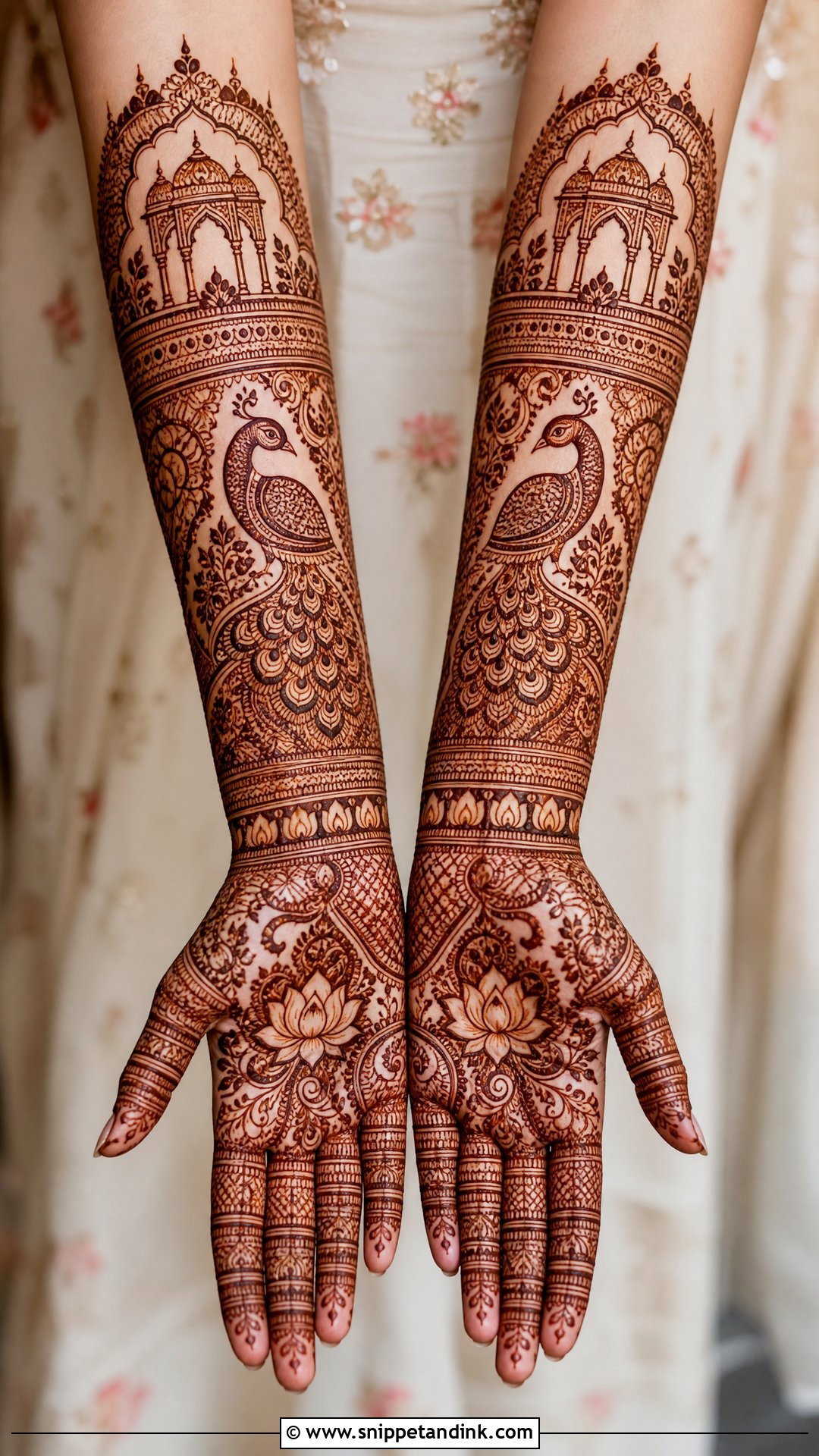
Peacocks give an artist room for movement: curved necks, sweeping feathers and fine shading. In a royal peacock bridal mehndi design, the birds can sit on the palms, wrists or forearms among paisleys, lotus flowers and jaali. I mirror them on both hands so they face each other when the hands are joined. Shading the feathers rather than filling them solid keeps them light. Pairing peacocks with palace borders adds a regal touch.
12. Floral Bridal Mehndi Design
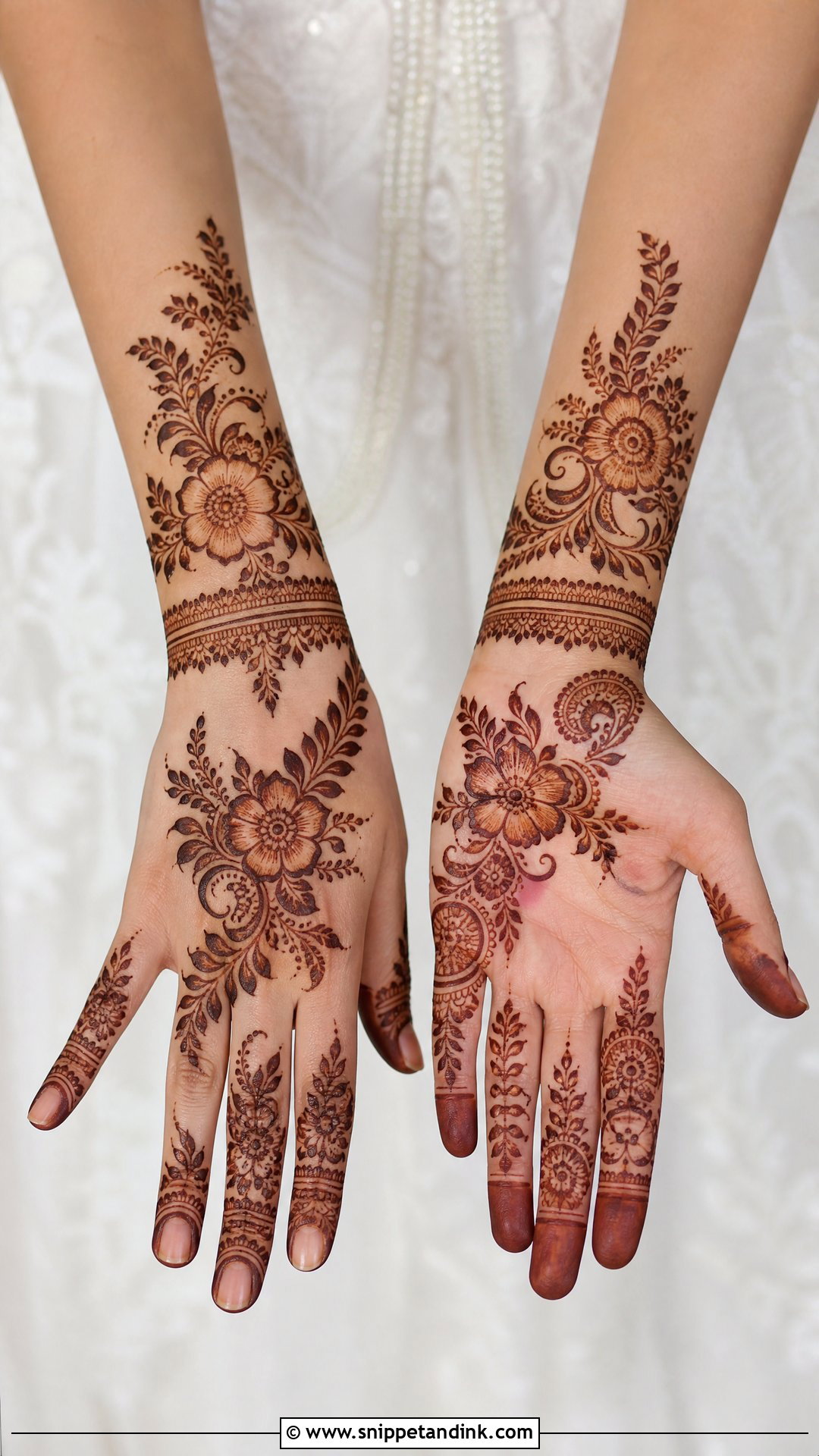
Flowers are the most flexible motif in mehndi. Large blooms lean Arabic; tiny clustered florals lean Indian. For full bridal coverage I combine them with paisleys, mandalas and wrist cuffs, and I make sure the design flows from palm to wrist rather than sitting in separate patches. Flowers stay recognizable after staining on every skin tone, which isn’t true of very fine abstract filler. They’re a natural match for spring and garden weddings.
13. Jaali Bridal Mehndi Design
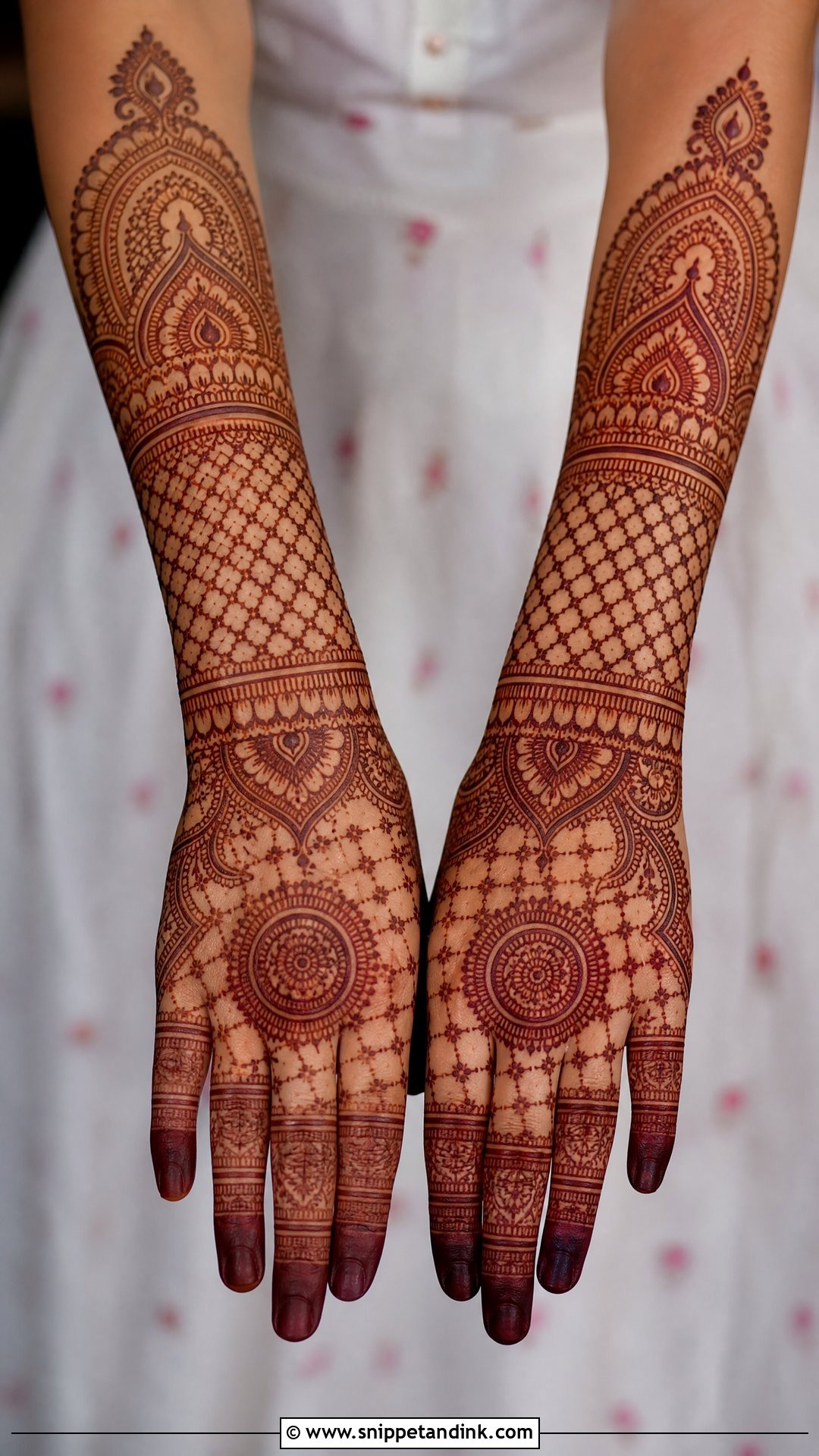
Jaali is a net pattern, and on the back hand and wrist it looks remarkably like lace gloves. A jaali bridal mehndi design works best when the mesh is framed by solid areas: floral borders, paisley corners and filled fingertips. That contrast is what makes the grid visible. Clean, evenly spaced lines need a fine cone tip and smooth paste. If the paste has lumps, the lines wobble, and uneven jaali is very obvious in close-up photos.
14. Lotus Bridal Mehndi Design
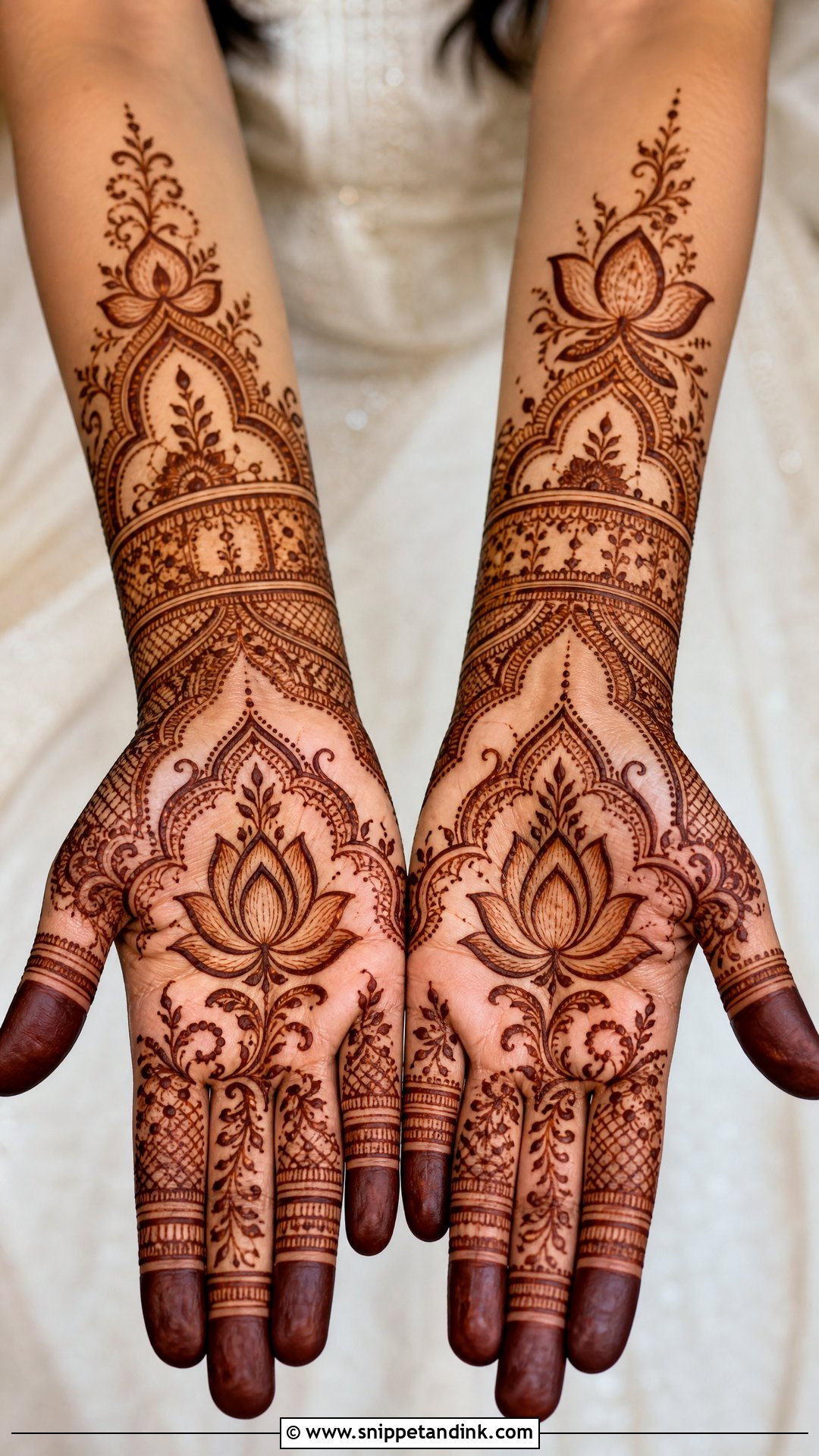
The lotus carries meaning in many South Asian traditions, and its layered petals suit a palm centerpiece, a wrist border or a repeating forearm motif. I draw a lotus mandala in the palm and surround it with paisleys, dots, vines and fine mesh. Petals must be outlined boldly, because thin petal edges fade into each other as the stain deepens. It pairs well with temple jewelry, silk sarees and lehengas with floral embroidery.

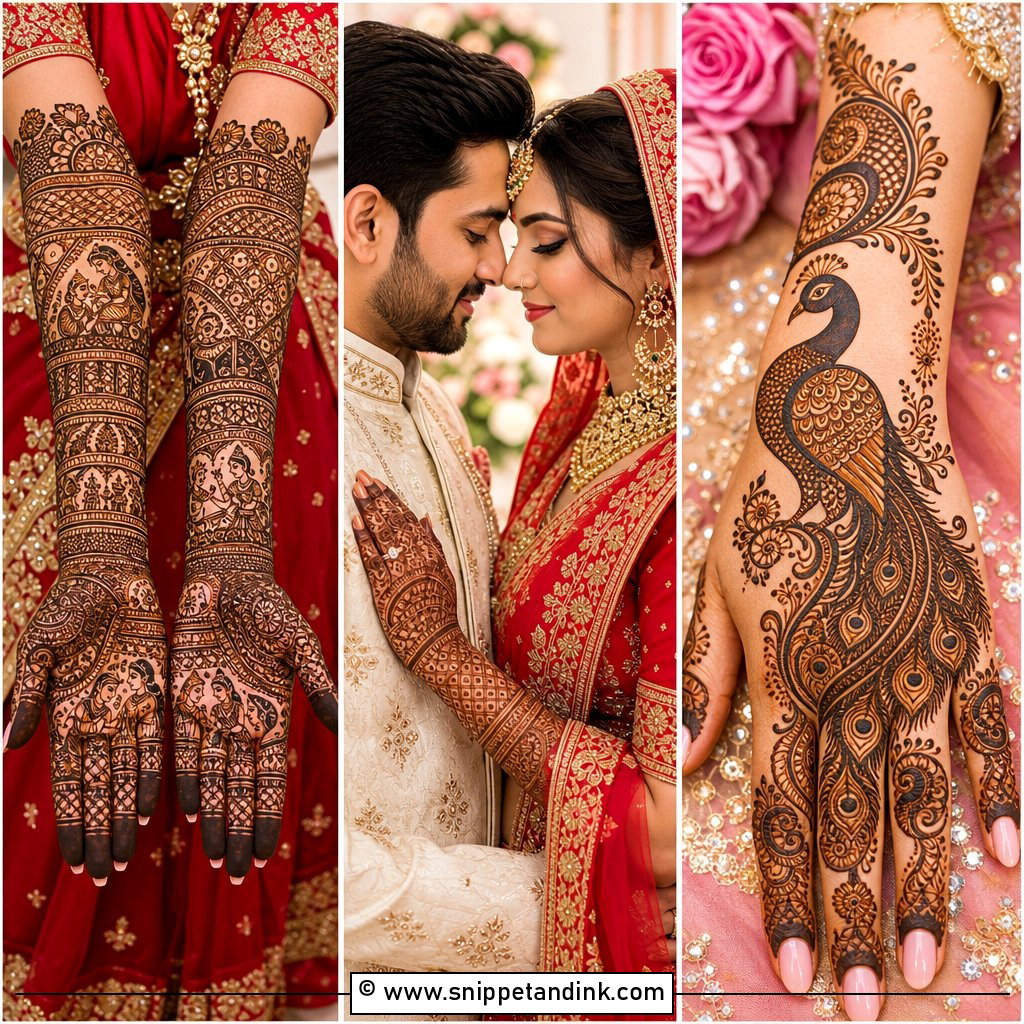
15. Moroccan Bridal Mehndi Design
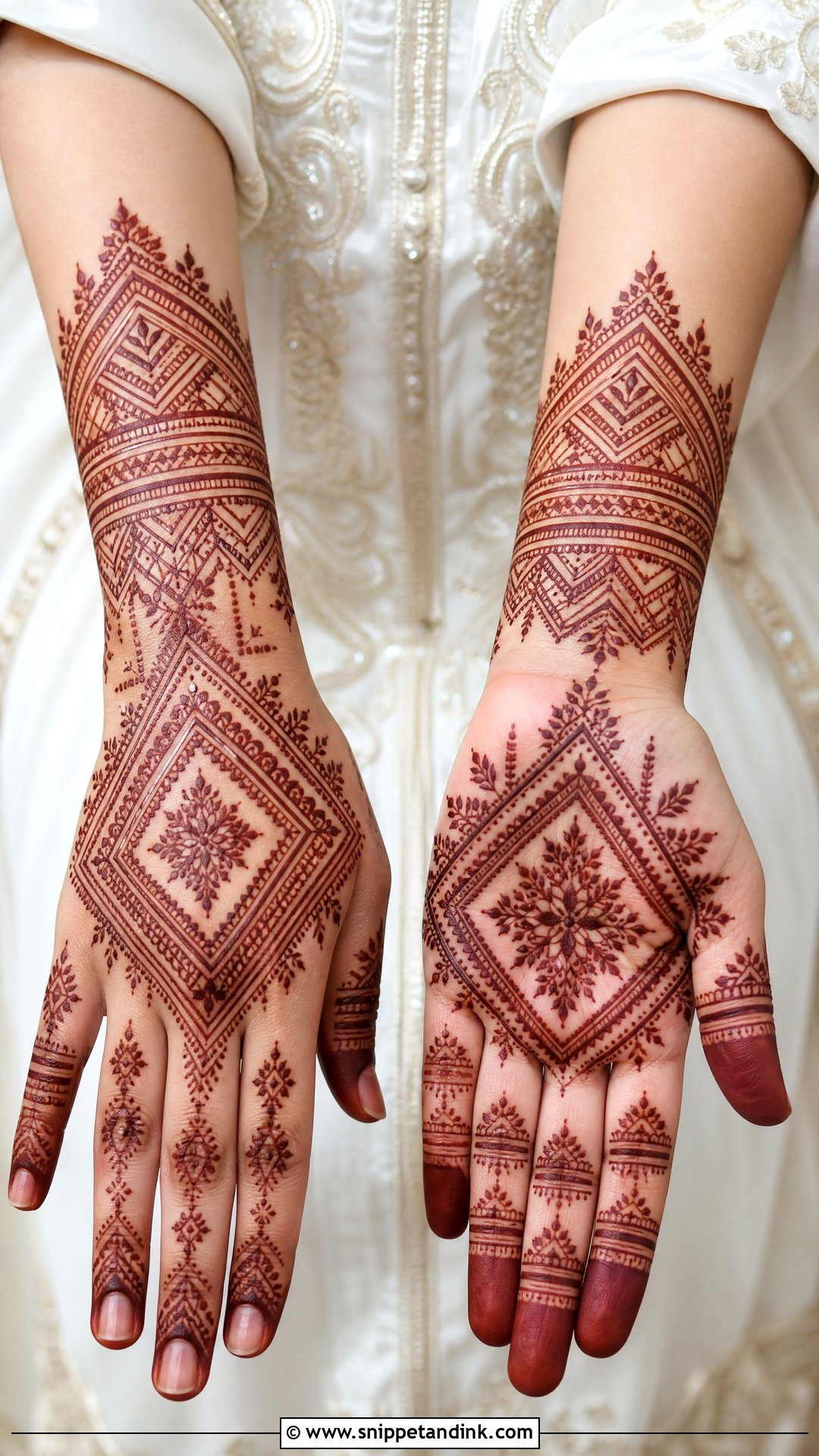
Geometry changes the whole mood of bridal henna. Moroccan-inspired work uses diamonds, grids, stars and chevrons in structured bands, and it looks especially sharp on long fingers and the back hand. To keep it bridal, I add wrist cuffs, finger detail and a few softer dots or florals. Straight lines are harder to draw than curves, so look at your artist’s geometric work specifically. Keep both hands balanced without making every section identical; small variations keep it looking hand-drawn.
16. Gulf Bridal Mehndi Design
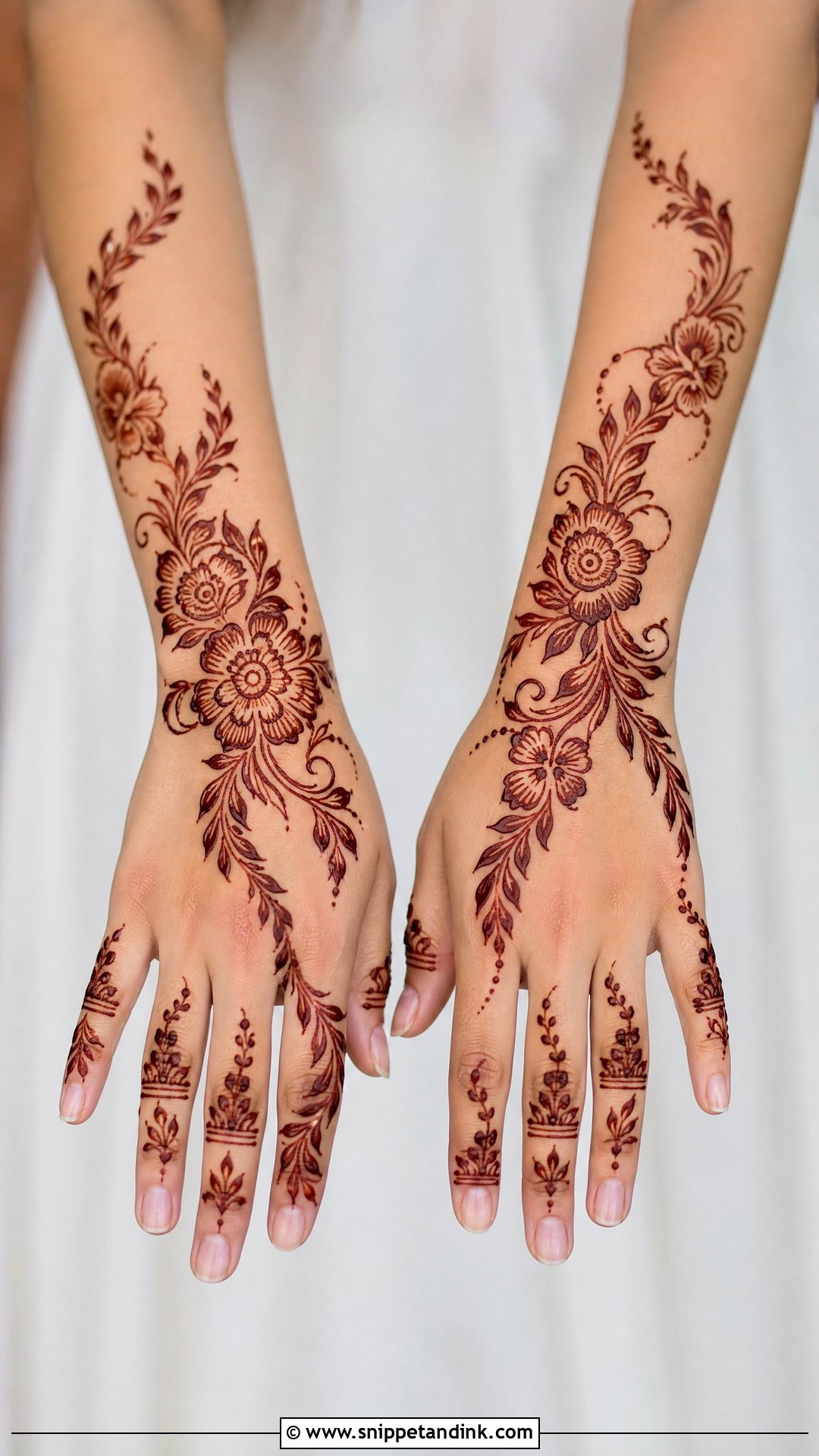
Gulf or Khaleeji henna uses bold florals, leafy strokes and lots of open skin, usually across the back of the hand and wrist. Lines are drawn thicker than in Indian work, so the motifs stay clear from a distance. For a bride I extend the florals toward the forearm and add fine fingertip detail and small leaf chains. Bold outlines need a strong, dark stain; with weak paste this style looks faded quickly.
17. Bracelet Bridal Mehndi Design
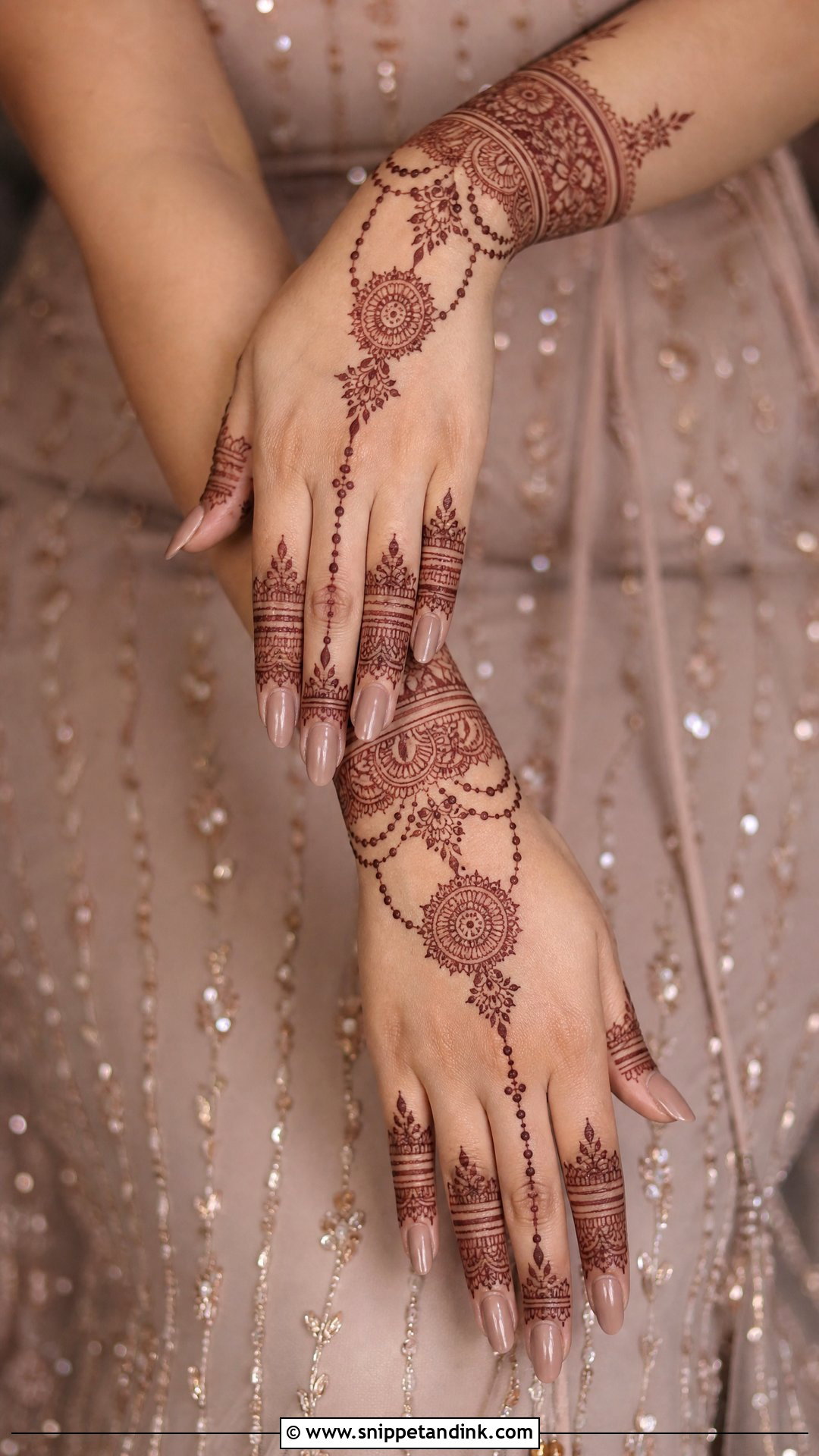
Henna jewelry works by echoing what real jewelry does: wrist cuffs, ring chains and finger bands linked across the back of the hand. A bracelet bridal mehndi design needs some fuller work, such as mandalas, florals or jaali, so it doesn’t look too sparse for a bride. I draw the chain lines fine and the wrist bands slightly heavier, the same contrast a real piece of jewelry has. It’s a favorite for engagement ceremonies and receptions.
18. Glitter Bridal Mehndi Design
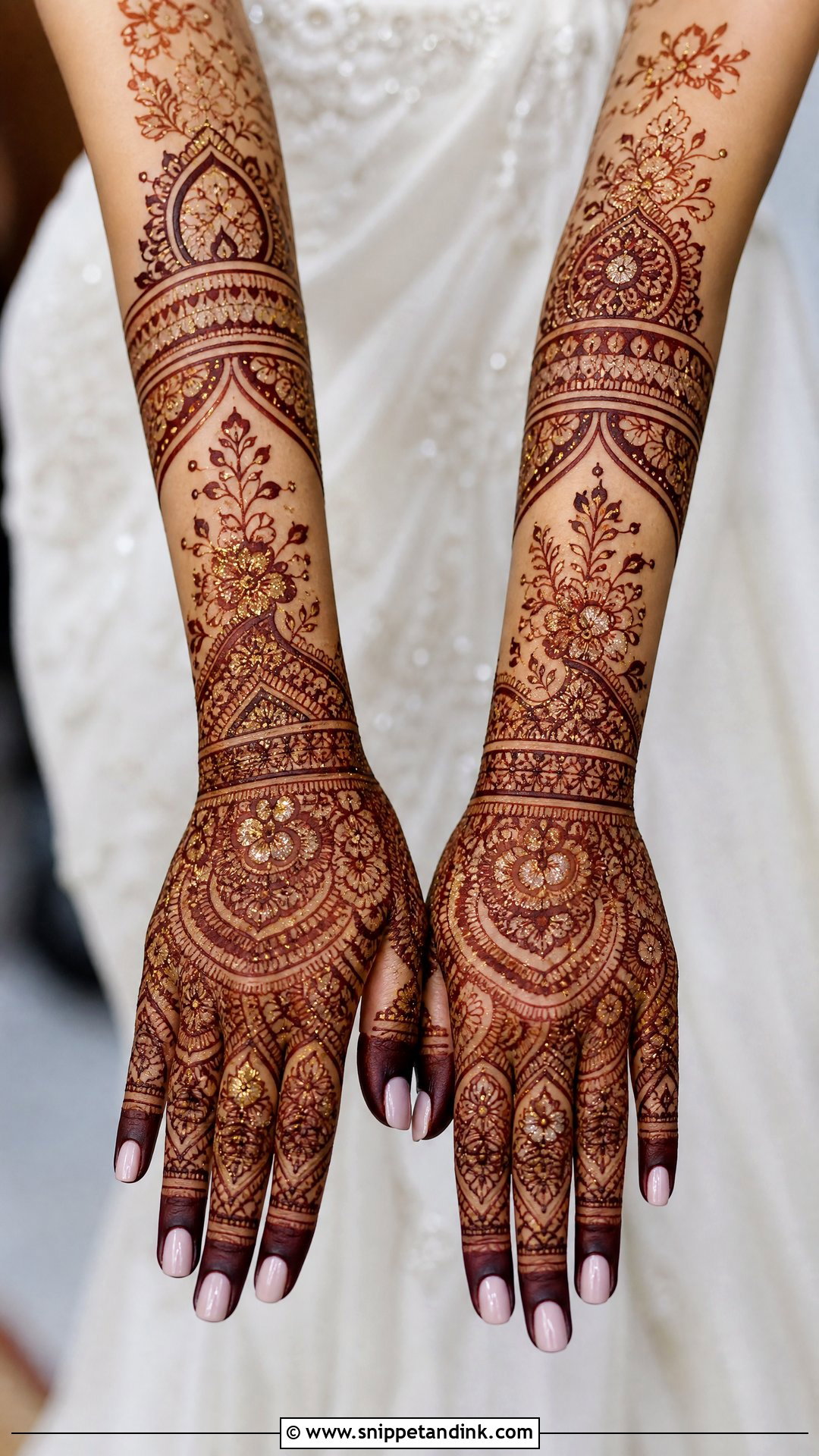
Glitter belongs on top of a henna design, never in place of one. I apply cosmetic-grade glitter with skin-safe adhesive after the paste has come off, highlighting flower centers, cuff borders or small negative-space accents. Gold, bronze and champagne sit best with bridal colors. Covering everything in sparkle hides the fine work underneath. Glitter flakes off within a day, so I save it for mehndi night, sangeet or reception photos and let the natural stain carry the wedding itself.
19. White Bridal Mehndi Design
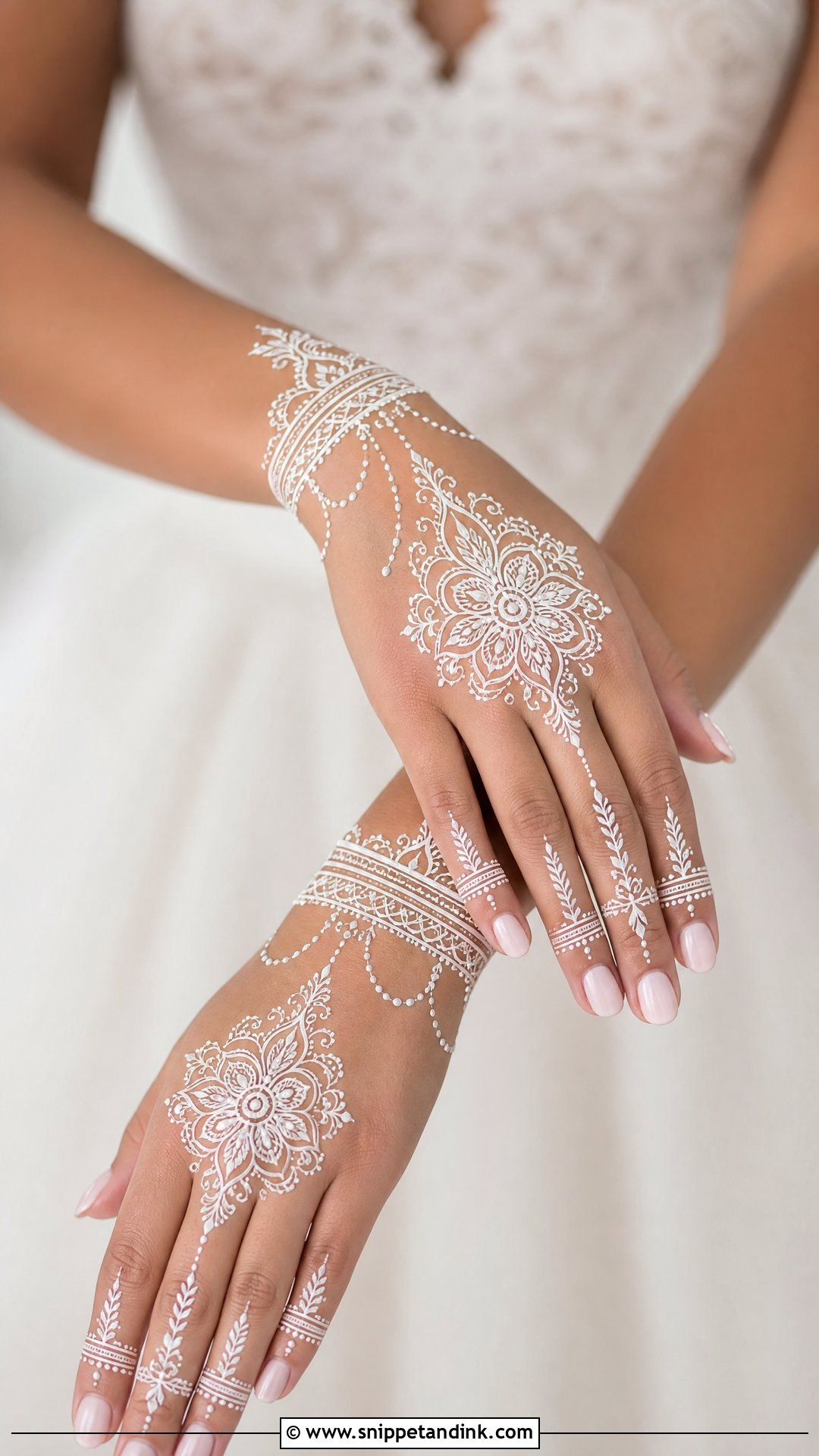
White mehndi isn’t henna at all; it’s a cosmetic body paint or adhesive that sits on top of the skin and leaves no stain. It suits pre-wedding shoots, beach weddings and brides in ivory, silver or pastel. Lace-like florals, mandalas and finger bands look like hand jewelry, especially on the back hands. It lasts a short time and rubs off with handling. Ask for a patch test if you have sensitive skin, since the adhesive can irritate some people.

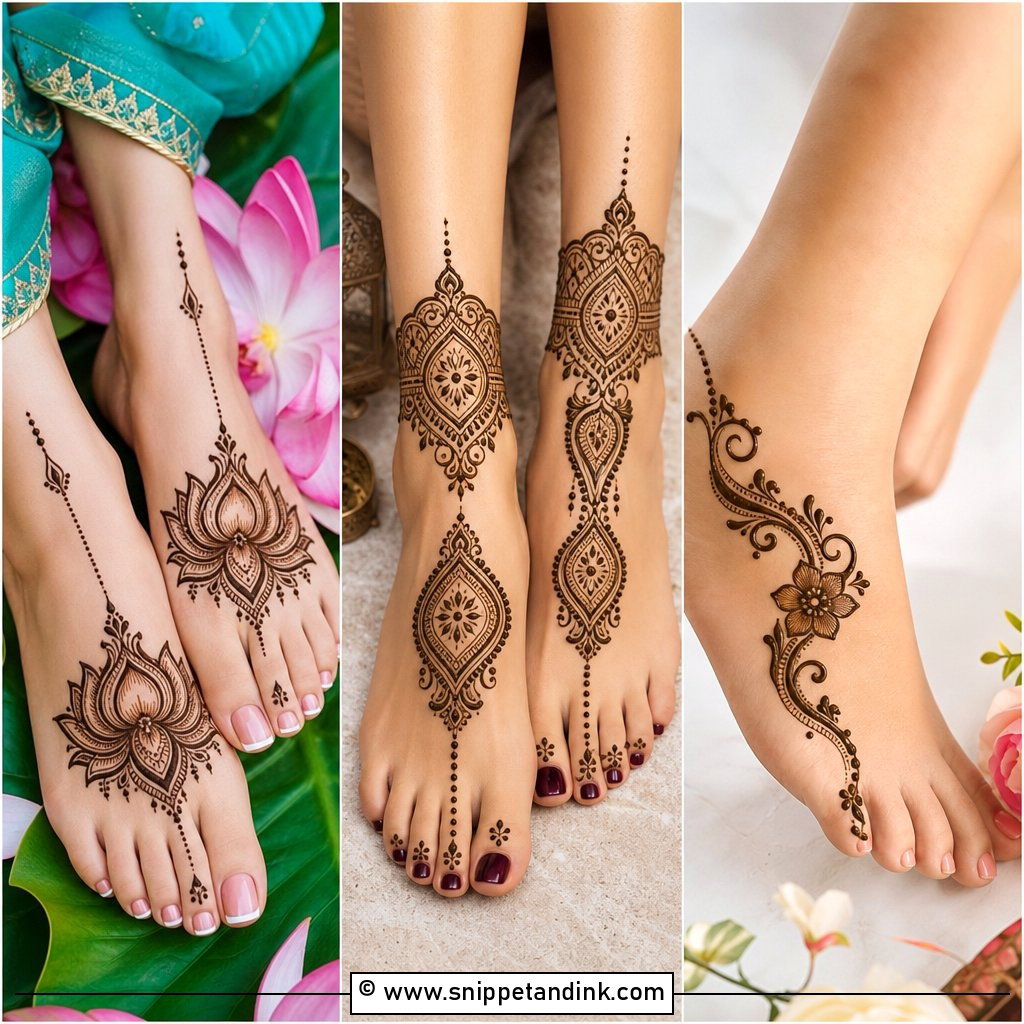
20. Feet Bridal Mehndi Design
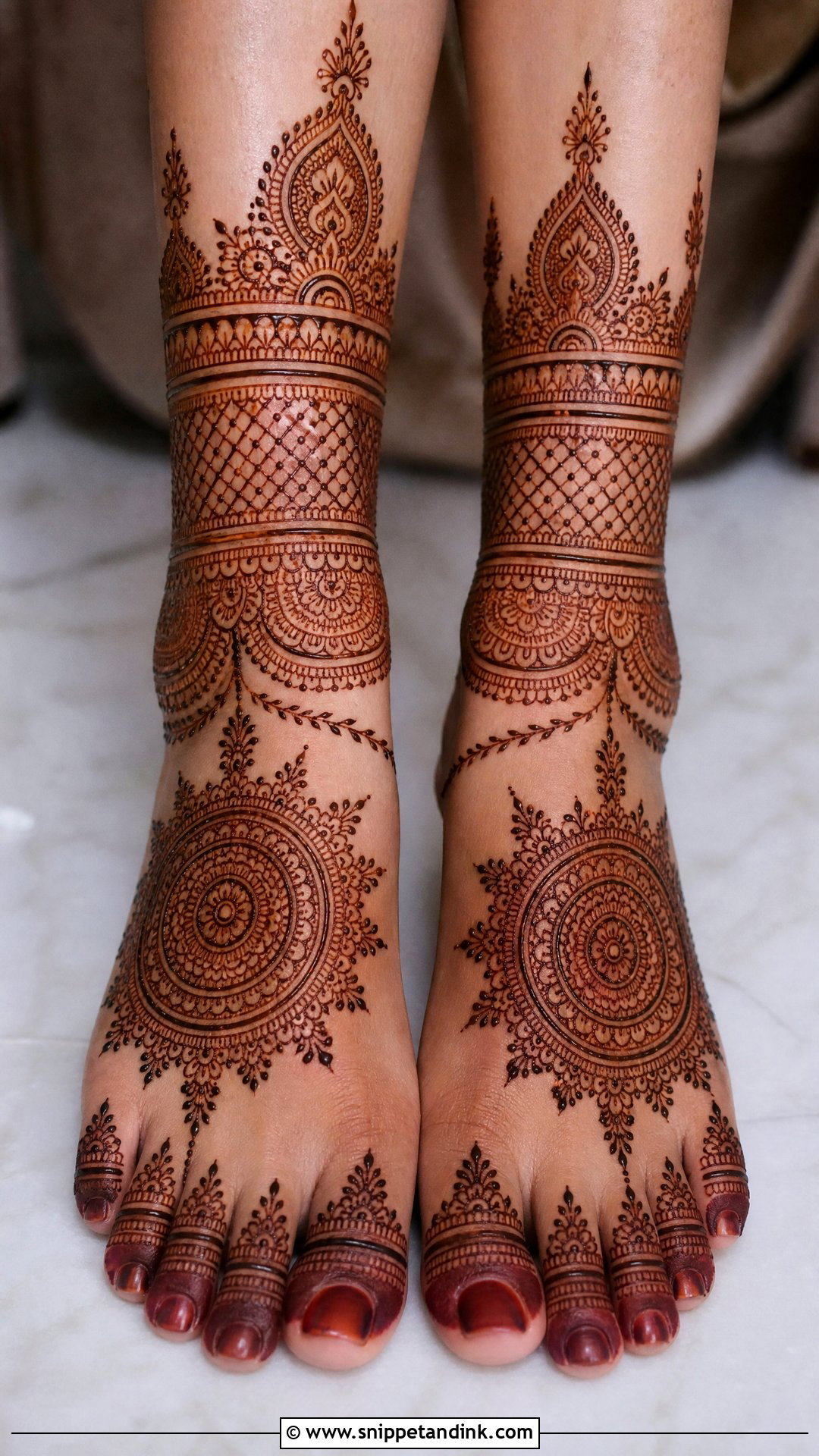
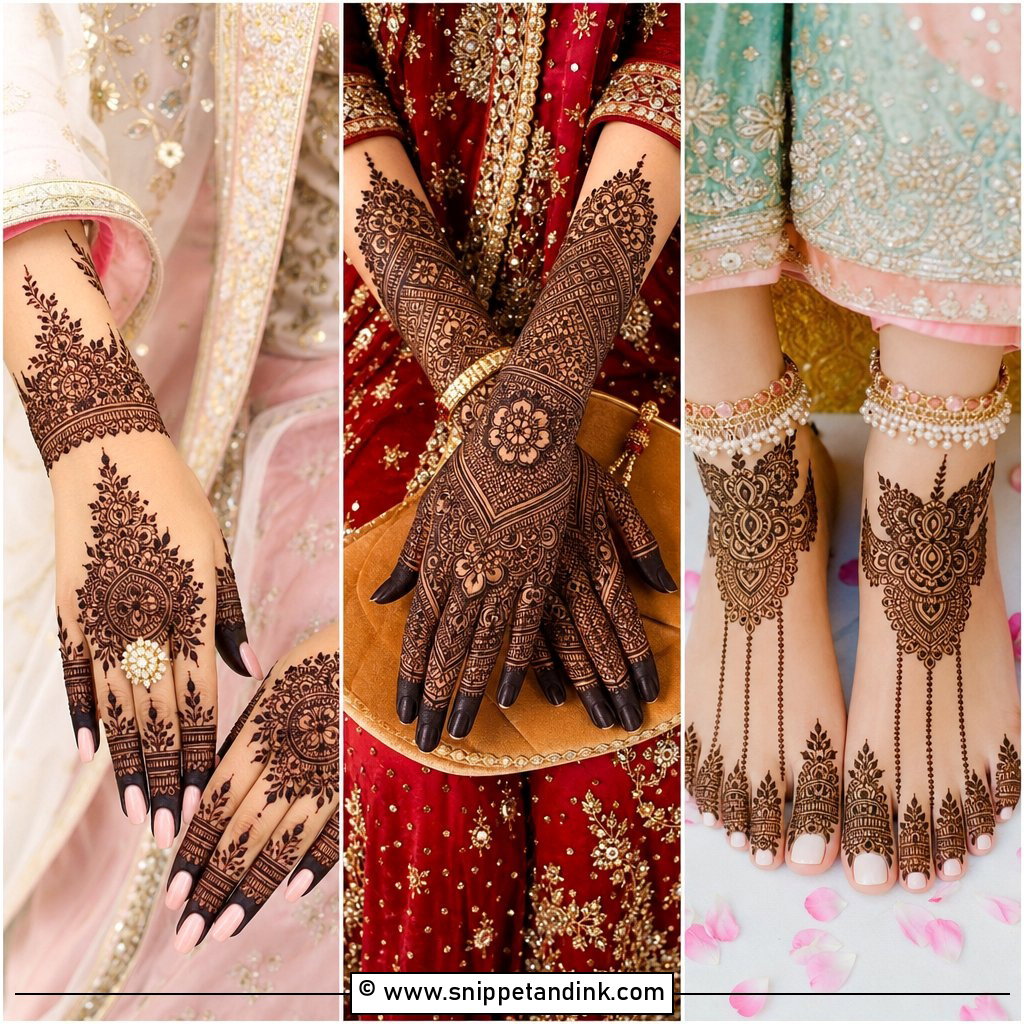
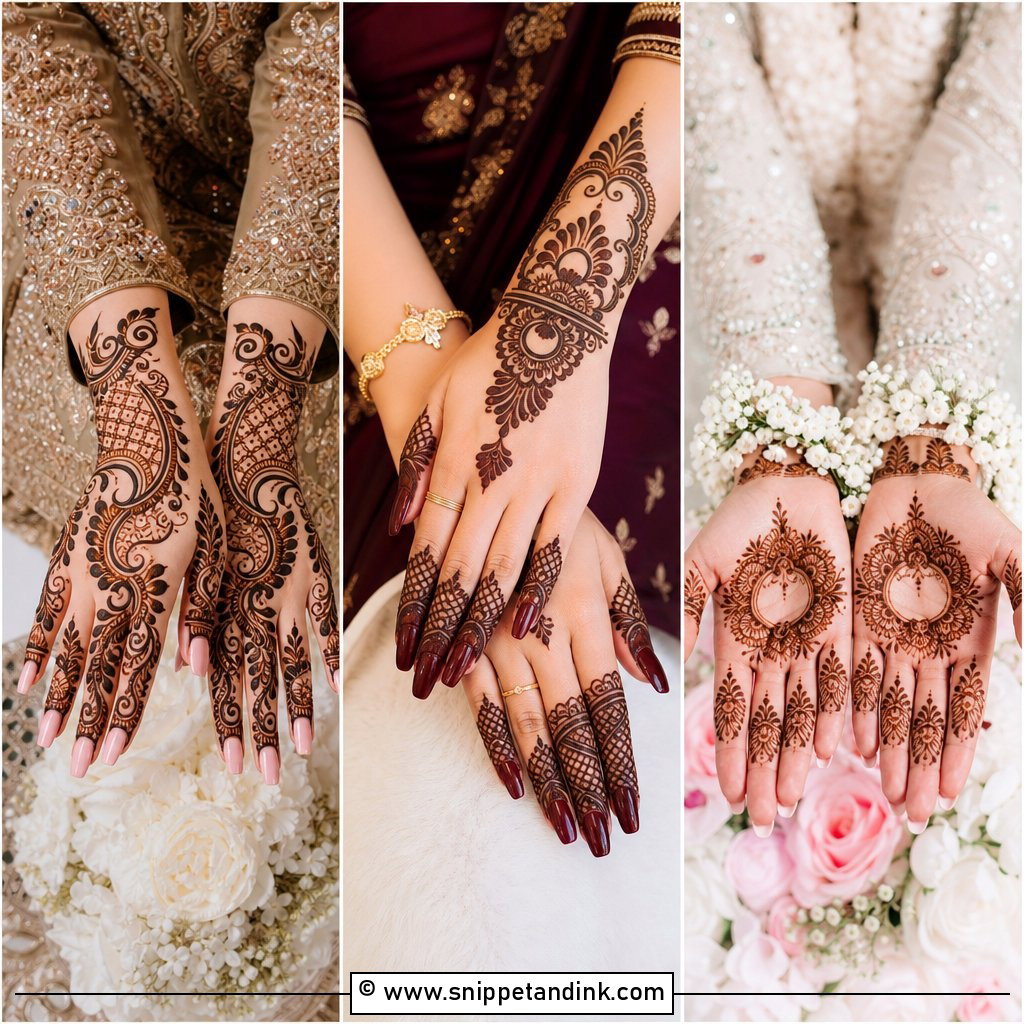
Feet complete the bridal set, especially with open sandals, anklets or traditional footwear. Designs can cover toes, the tops of the feet, ankles and lower legs. I match the density to the hands: heavy Indian hands with detailed feet, minimal hands with lighter floral trails and ankle cuffs. Toe patterns need care because they show in every footwear and getting-ready shot. Soles stain very dark, while the tops of the feet usually come out somewhat lighter than palms.
Preparing for a Long Session in the Artist’s Chair
Full bridal hands and feet can take most of a day, and once the paste is on you can’t use your hands. Brides who plan for this have a much easier time, and their designs come out cleaner because they aren’t fidgeting.
The morning of your appointment
- Wash your hands and feet with plain soap, and skip lotion or oil so the paste can reach the skin.
- Have any waxing, manicure or pedicure done before, not after.
- Eat a proper meal and use the bathroom right before the artist starts.
- Wear a loose top with wide sleeves that roll up easily.
During and after
Have someone stay with you to hold your phone, give you water through a straw and feed you snacks. Keep your hands still and flat while the paste sets; bumping it before it dries is how smudges happen. Feet are usually done after the hands or in a separate sitting, since you can’t walk until they dry. If you’re keeping the paste on overnight, wrap your hands loosely in tissue and soft cloth, and sleep with a towel under them.
Glitter, white mehndi and any stick-on gems come last, ideally the day of the event, so they don’t flake off before the photos.
Mixing Two Styles on the Same Pair of Hands
Your henna has to make sense with everything else you’re wearing. Full Indian detail, Arabic spacing, Moroccan geometry, minimal vines and white accents can all be bridal, and many of my favorite sets combine two: a mandala palm with Arabic florals, or a jaali back hand with personal initials. Think about your sleeve length, how much jewelry covers the wrists and how many events you’ll wear it for. Then bring your artist your references and your story, and let her adapt them to the shape of your hands.
You'll Like These Ideas:





Leave a Reply