
A bride’s hands end up in more close-ups than almost anything else she wears: the ring exchange, the mehndi night, the varmala, the farewell. The designs I’m asked for now range from heavy Indian coverage and Arabic floral trails to portrait work, jewelry-style hathphool layouts and minimal negative space. The shift I notice most is toward cleaner layouts, with fewer fillers, more deliberate bare skin, and initials worked into fine-line detail. Below are twenty current bridal styles, with notes on how each behaves on skin, how long it takes, and who it doesn’t suit.
Judging a Mehndi Artist by Her Day-Two Stain Photos
Fresh paste always looks crisp. What you’ll actually wear is the stain two days later, and that’s where artists differ. When a bride asks me how to compare artists, this is what I tell her to check.
- Photos of stains, ideally taken a day or two after removal. Fresh paste shows line work but says nothing about color.
- What’s in the paste. A natural bridal mix is henna powder, an acidic liquid such as lemon juice, a little sugar and an essential oil known to help staining. Anything promising a black or instant result is a warning sign.
- How long a full set takes, and whether a second artist will do your feet so you aren’t sitting twice as long.
- A small test patch a couple of weeks ahead. Your skin, not the portfolio, decides how dark the color goes.
Good bridal artists fill their calendars early in wedding season, so reach out as soon as your date is fixed rather than once the outfit is sorted.
1. Full Hand Bridal Mehndi Design
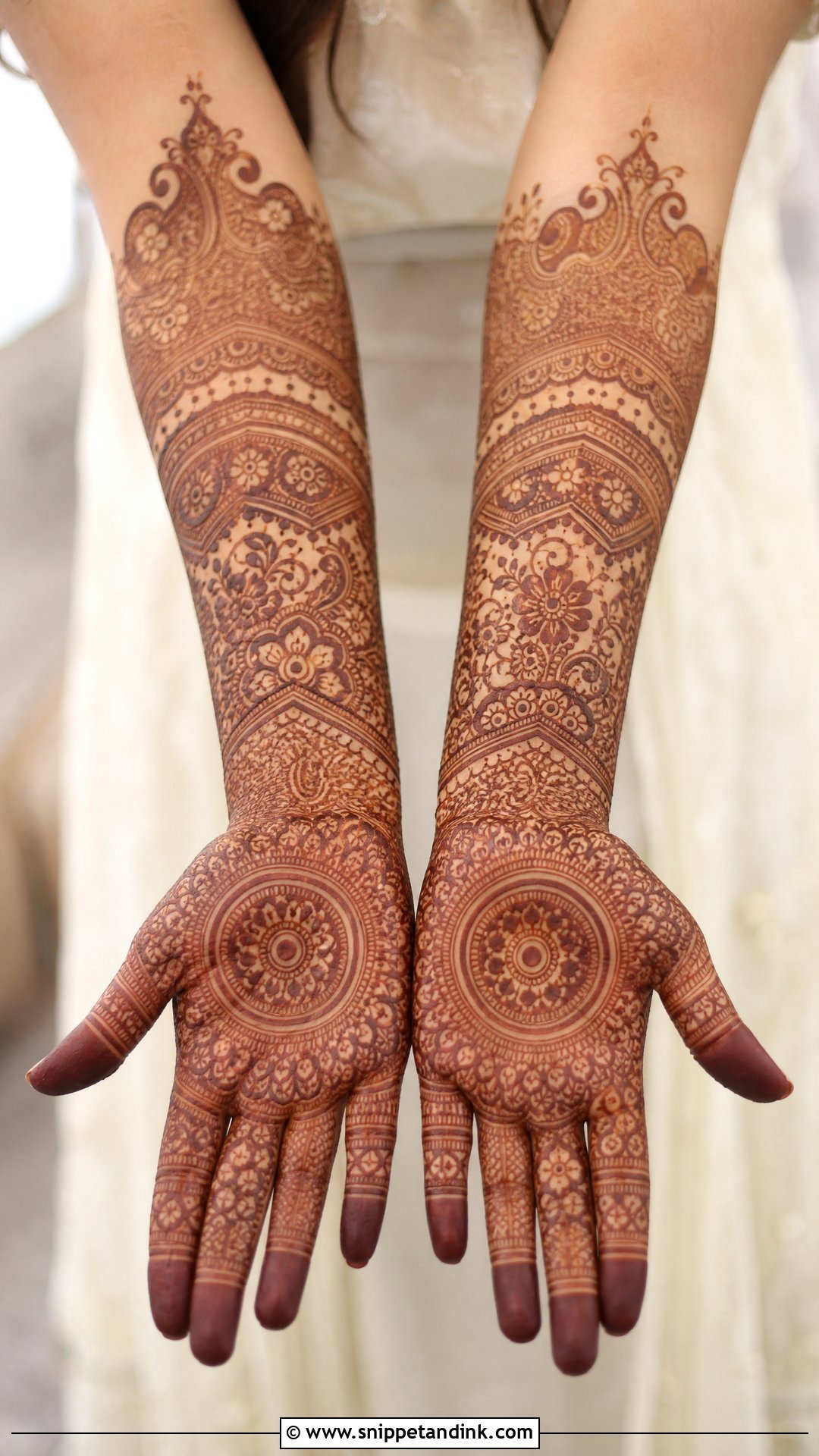
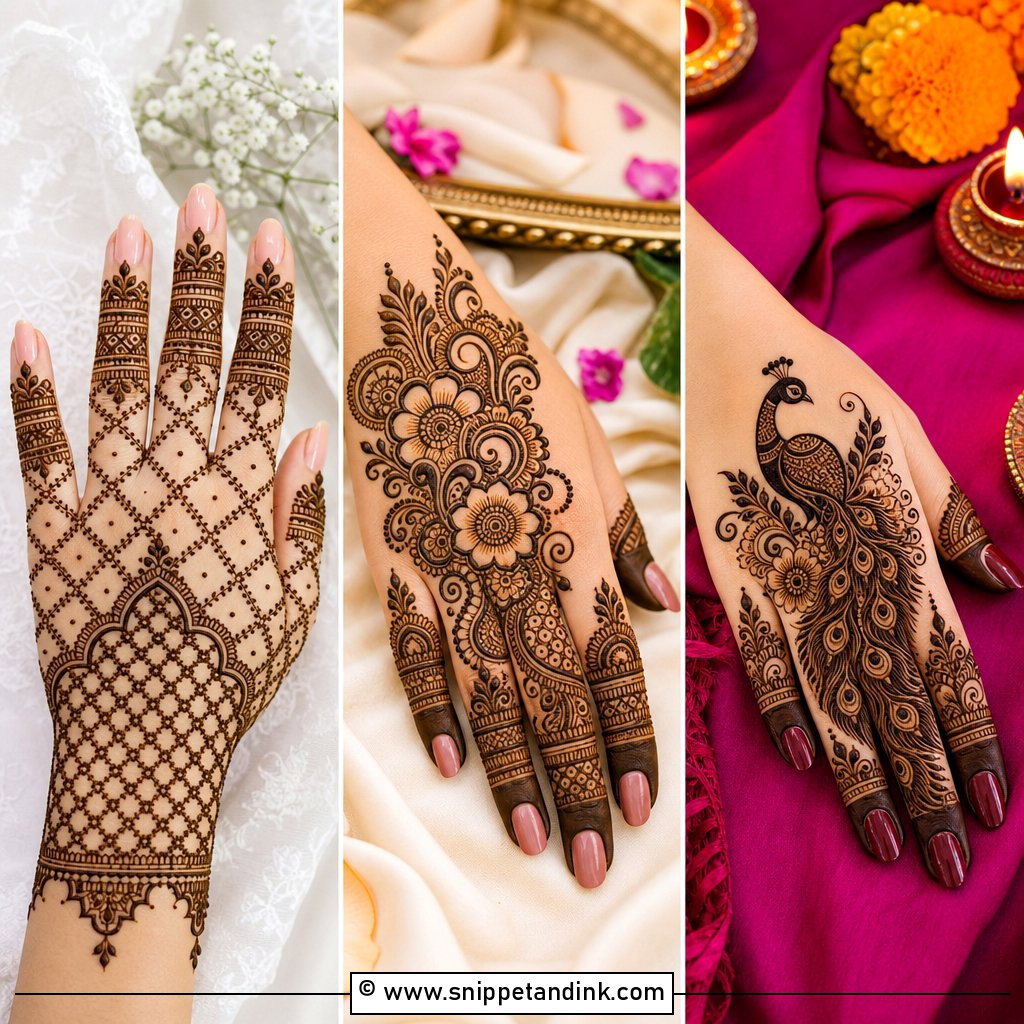
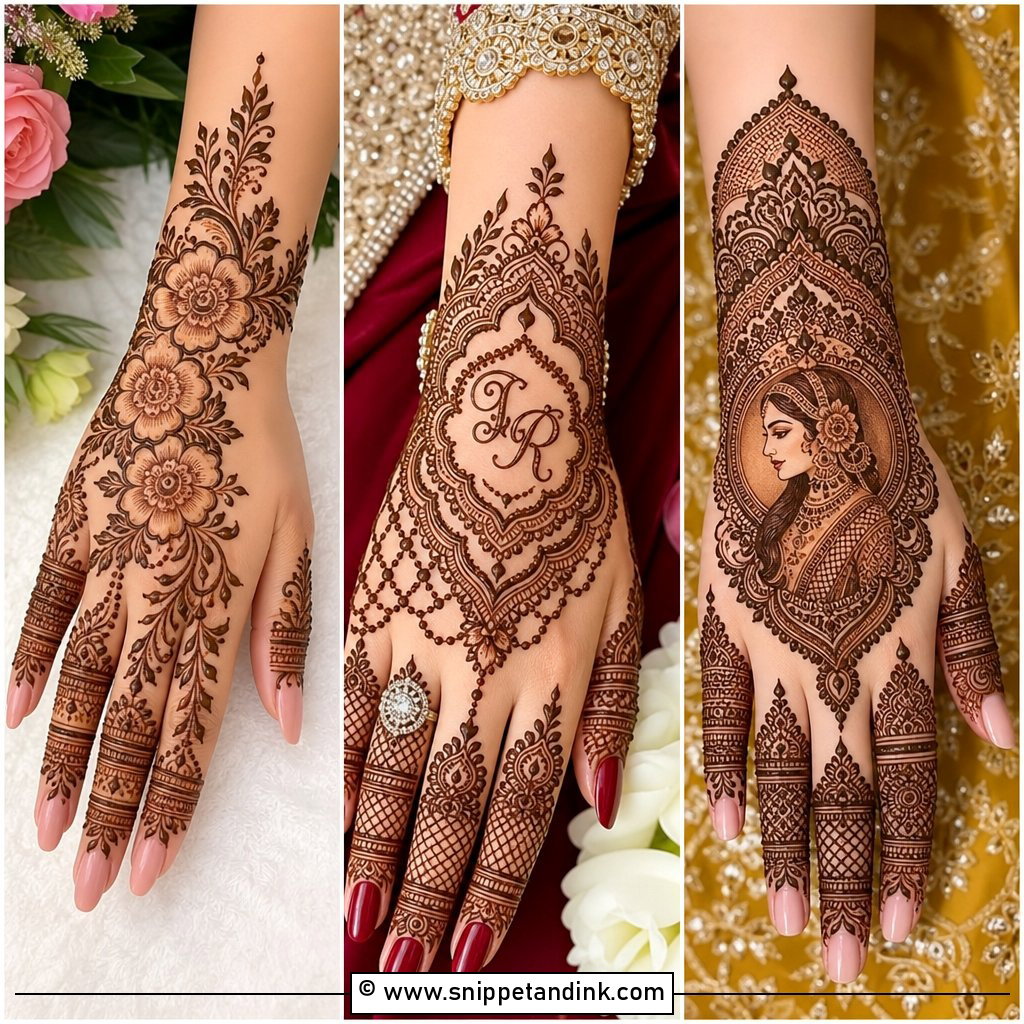
Full coverage runs from fingertips to forearms, blending paisleys, florals, vines, mandalas and solid fingertips into one pattern. Where it goes wrong is the palm center. If every motif gets the same weight, the eye has nowhere to land and the hand reads as a dark blur in photos. I pick one dominant motif per palm and scale everything else down around it. A hidden name or date fits neatly inside a paisley or the wrist band. It looks rich against red, maroon or gold, and works on ivory and pastels too, though the contrast there is sharper.
2. Indian Bridal Mehndi Design
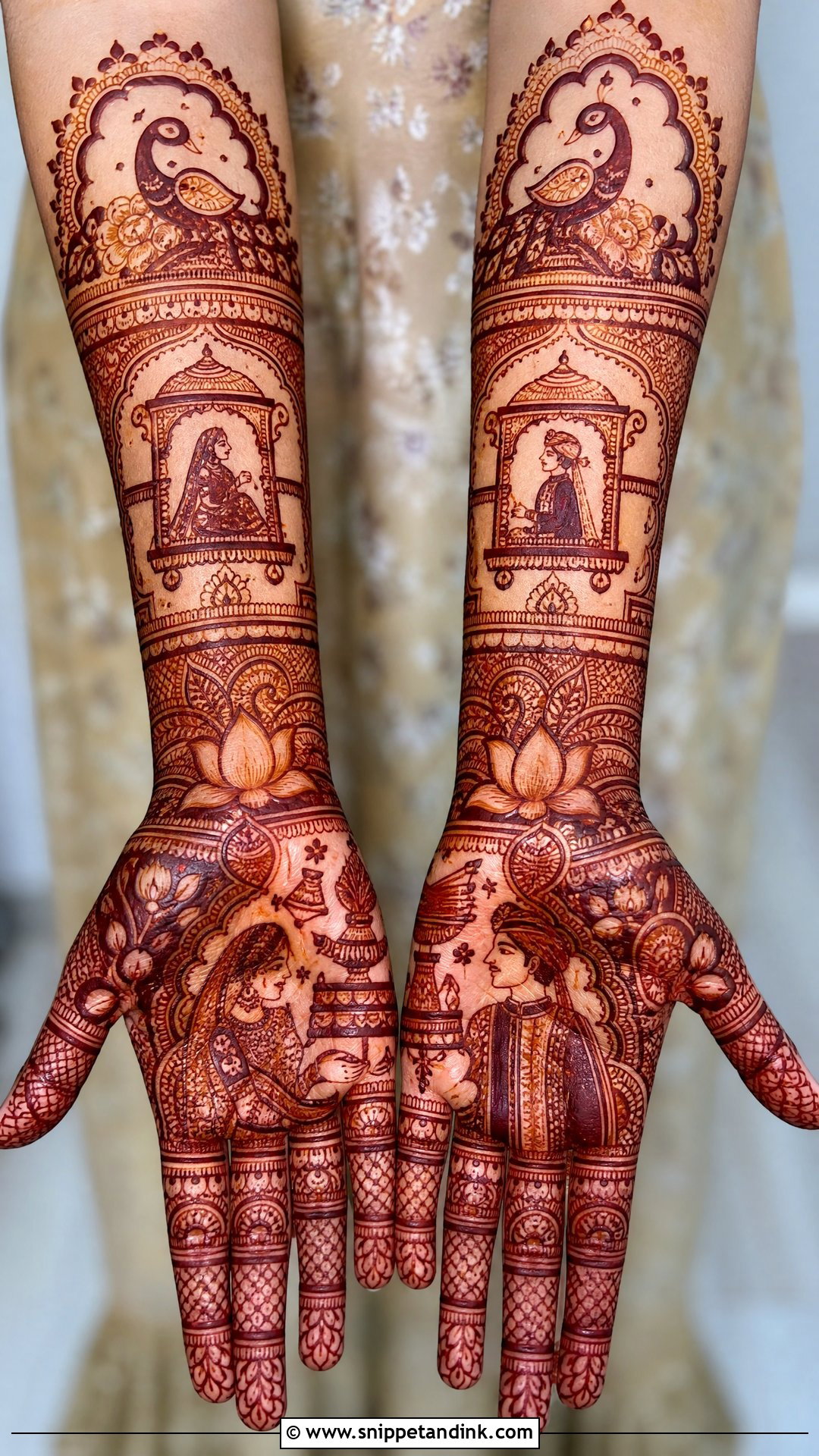
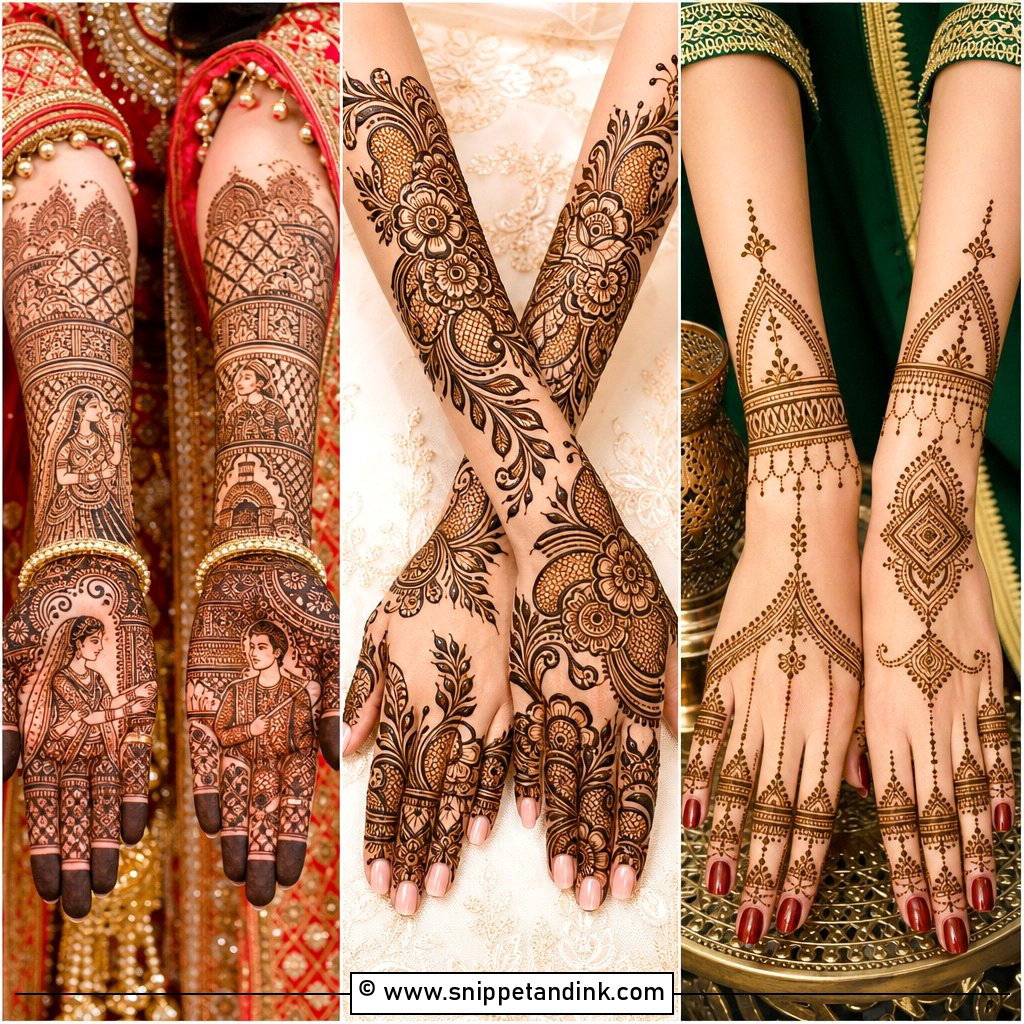
Traditional Indian bridal work is symbolic: peacocks, lotus flowers, kalash motifs, bride and groom figures, doli scenes. Tiny fillers join every part of the hand, and that density takes time, so plan for a long session. For a cleaner result, I suggest one story per palm instead of five crammed together. I also like echoing your lehenga border or the shape of your bangles in the wrist cuff. It belongs naturally in Hindu, Sikh and wider South Asian ceremonies.
3. Arabic Bridal Mehndi Design
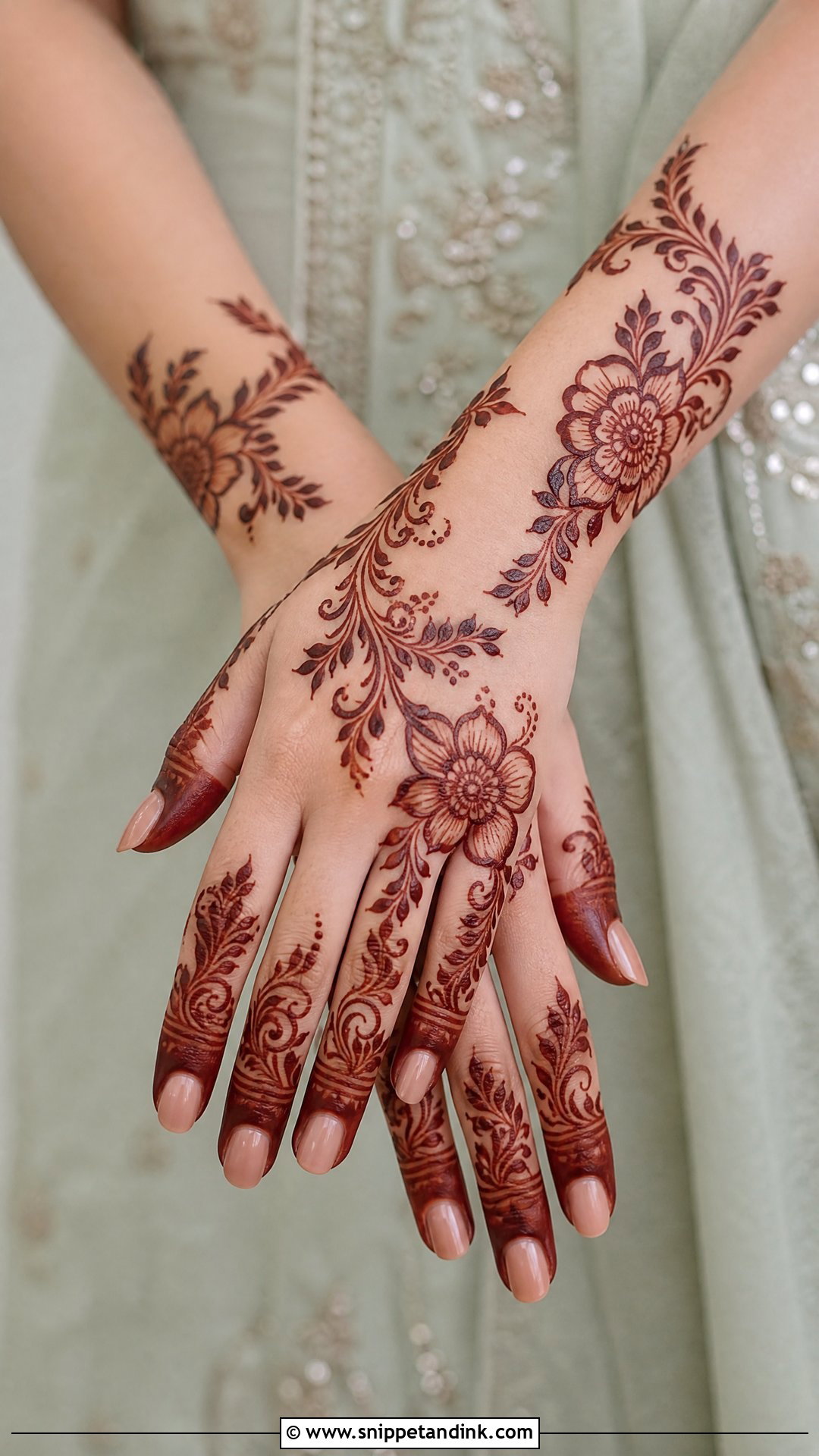
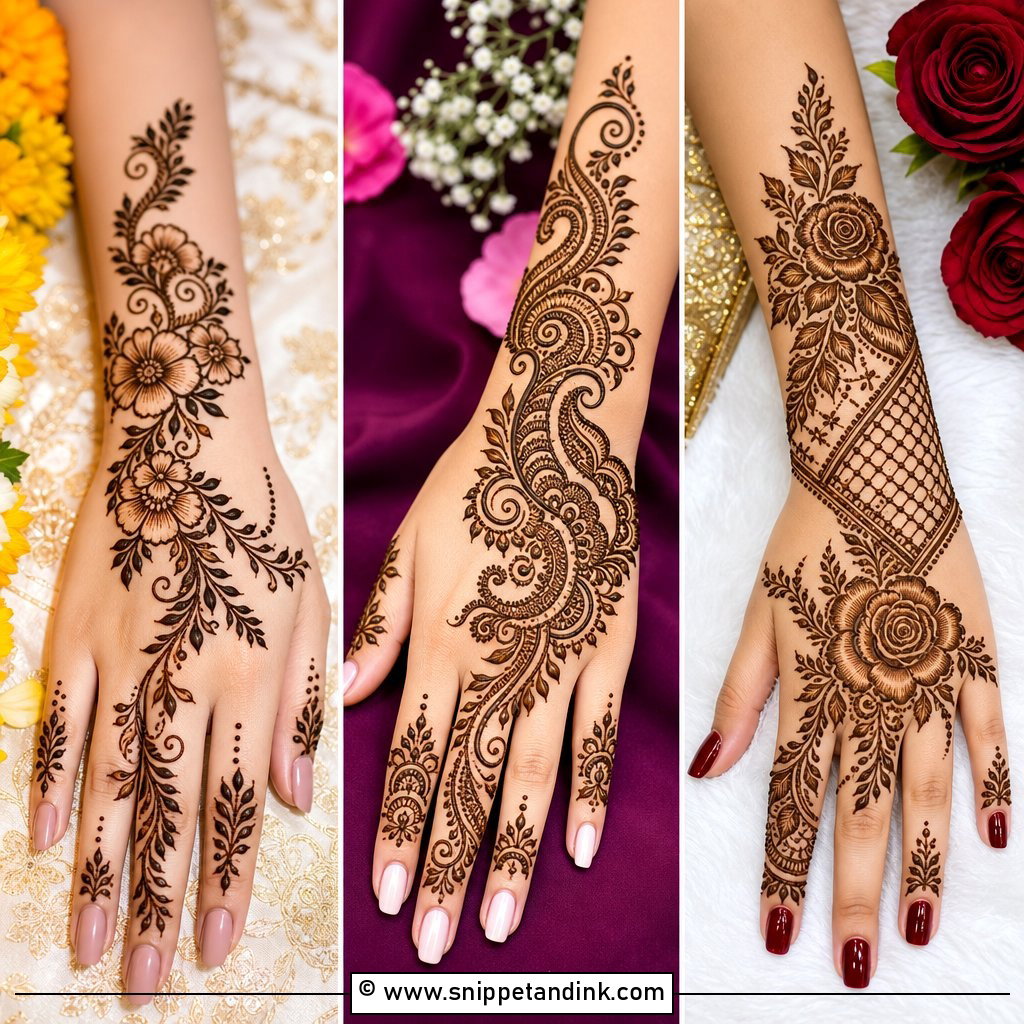
Arabic bridal mehndi design means bold flowers, leafy trails and open space, moving diagonally across the palm and back of the hand toward the wrist. The thick outlines are the signature. I cut a slightly wider cone tip for them, and they stain darker than fine lines because more paste sits on the skin. It also takes a fraction of the time of Indian coverage. For the wedding version, add fine dots, bracelet bands and detailed fingertips. Gowns, shararas, sarees and reception outfits all suit it.
4. Indo Arabic Bridal Mehndi Design
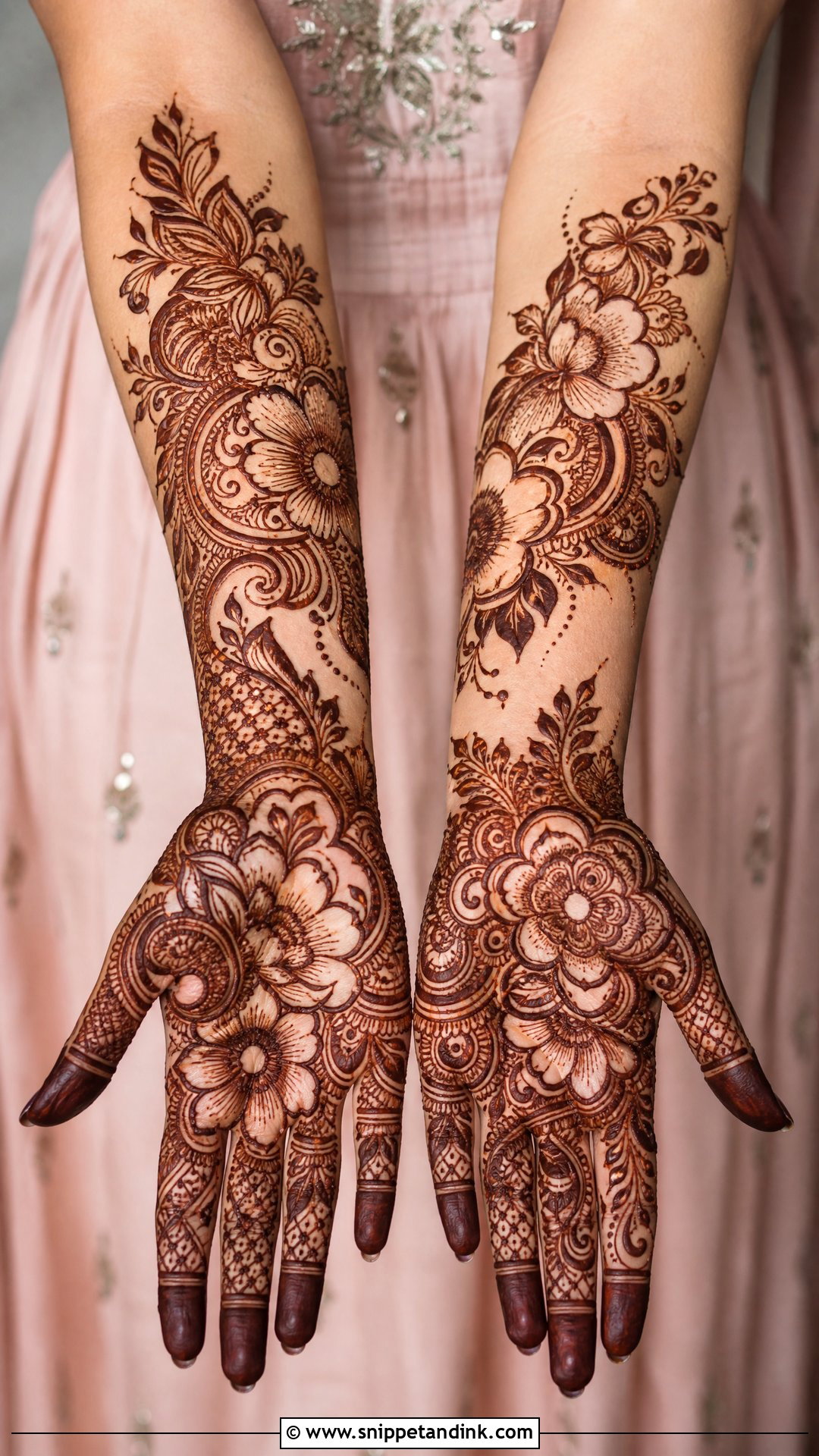
Indo-Arabic sits between the two traditions. Large floral trails and shaded leaves give the shape; paisleys, mandala centers and fine inner detail add depth. My usual split is a busier palm and a back hand with more breathing room, since the back stains lighter anyway and dense detail there can look washed out beside the palm. The big motifs carry across a room while the fillers reward a closer look. Matching wrist cuffs and clean finger sections tie both sides together.
5. Simple Bridal Mehndi Design
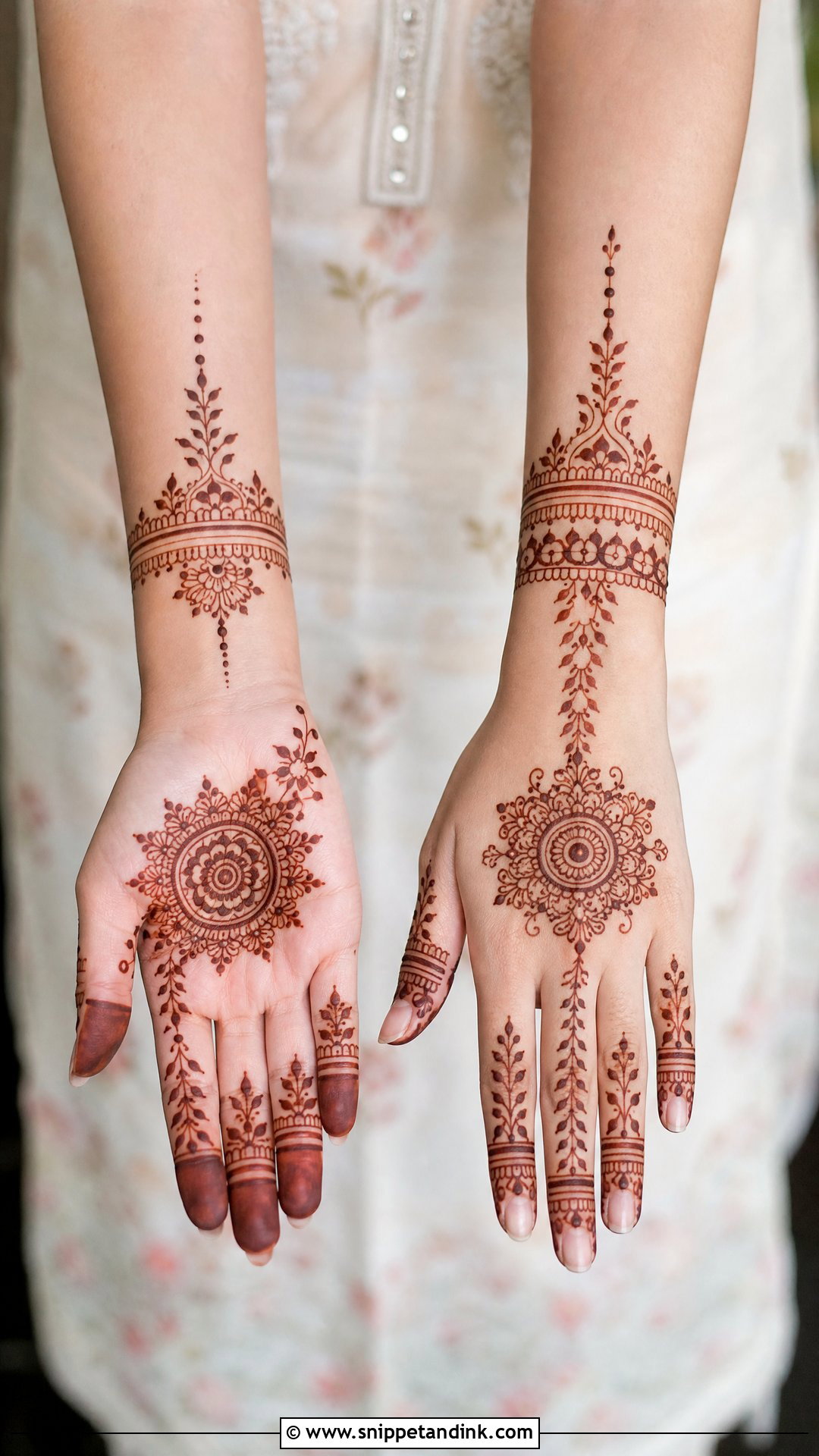
A simple bridal design can still look complete when the layout is thought through. A central mandala, clean finger work, a few small florals and a delicate wrist band are enough. The trap is empty space that looks forgotten rather than planned, so every gap should border something. This suits intimate and courthouse weddings, destination trips, and brides who can’t give up a whole afternoon. Initials near the wrist add a personal note.
6. Minimal Bridal Mehndi Design
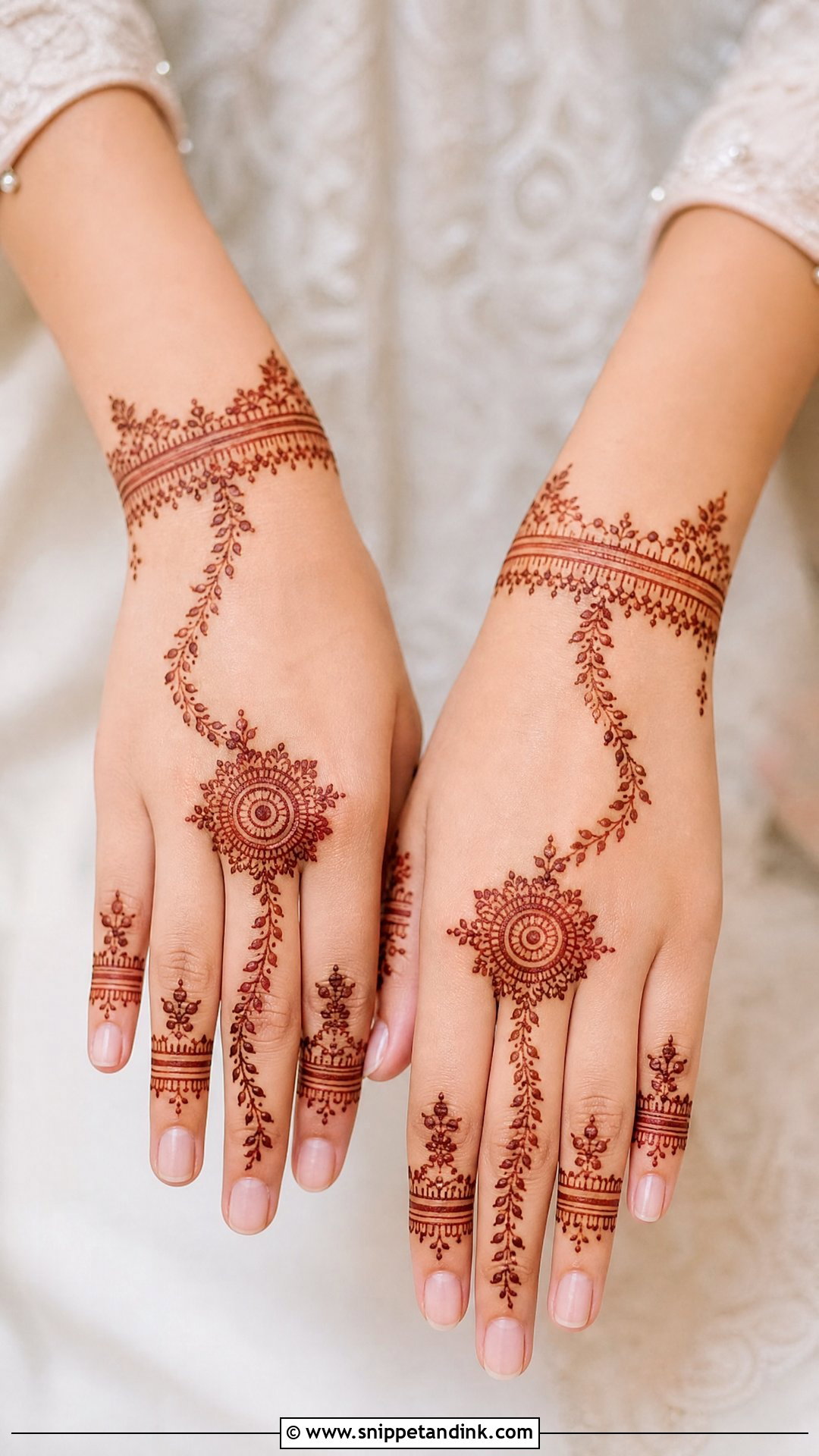
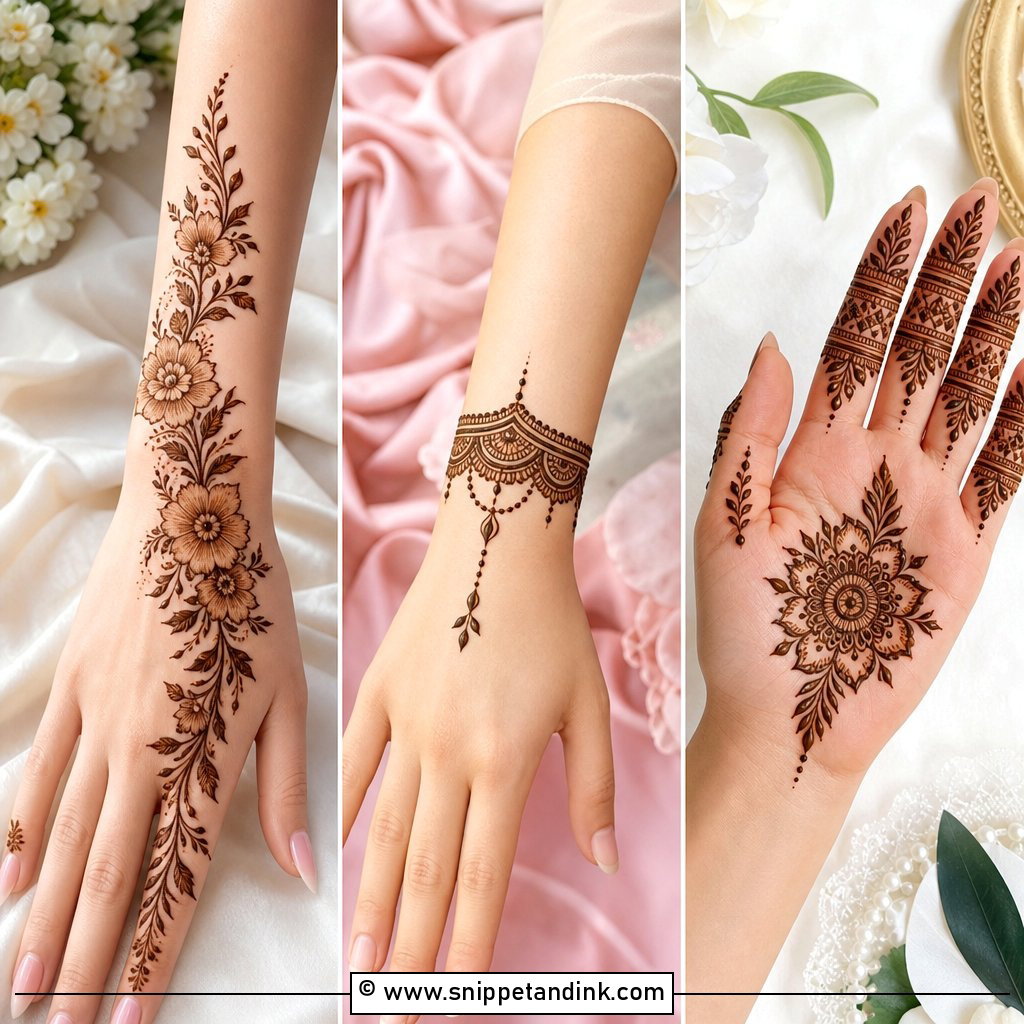
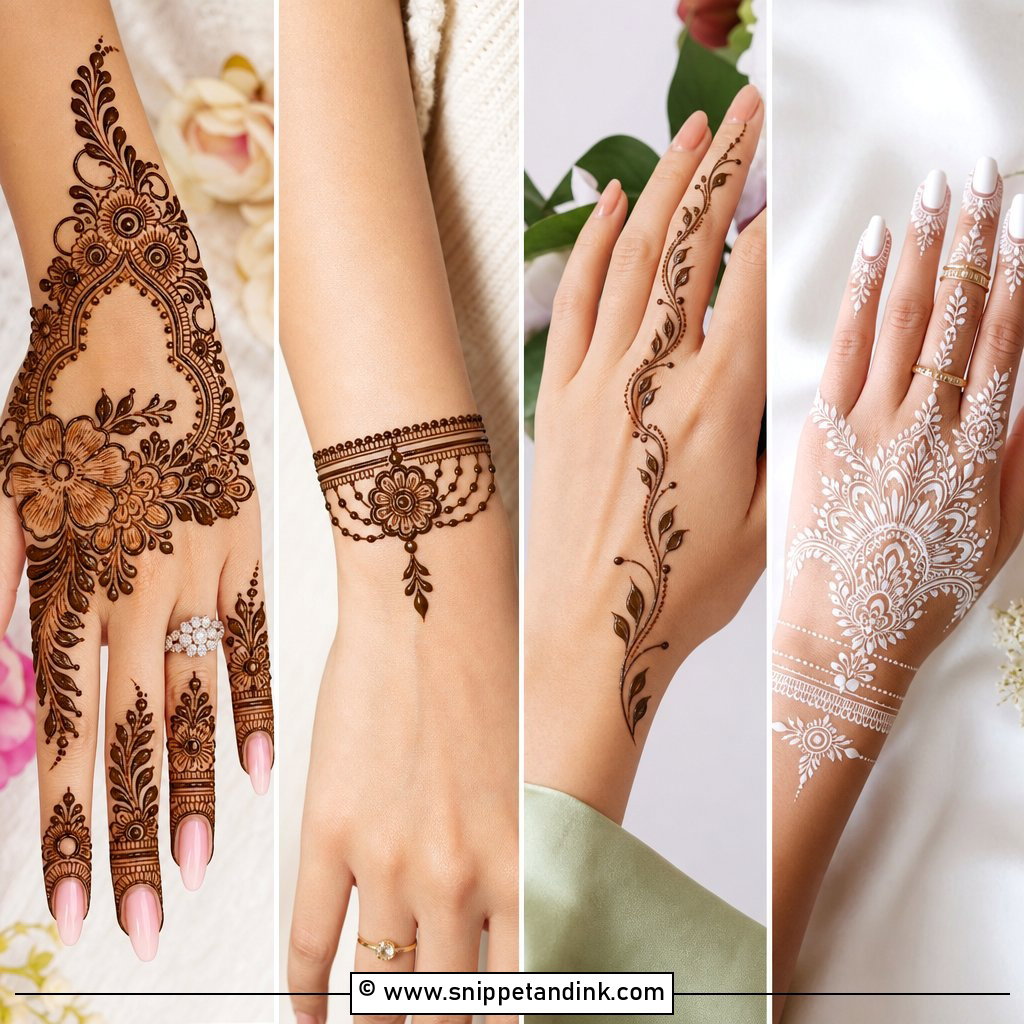
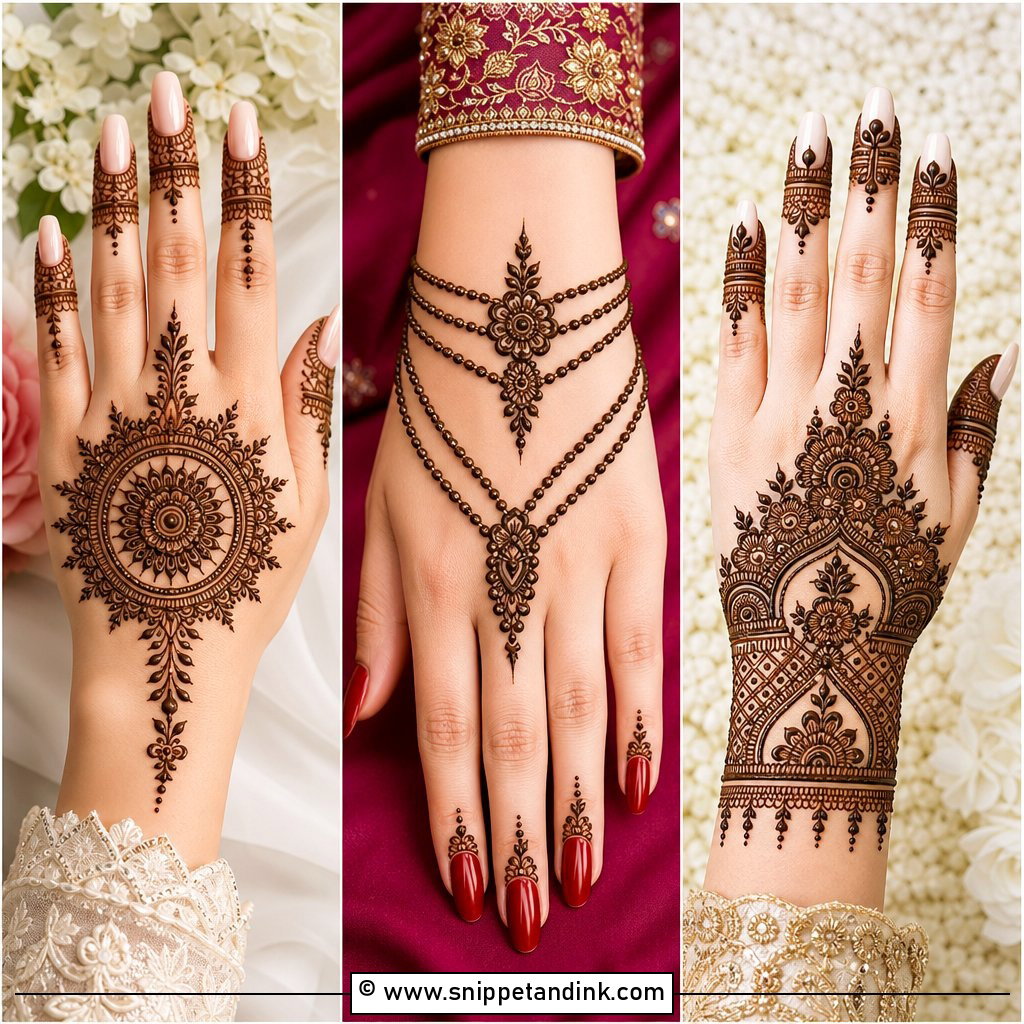
Minimal designs don’t cover the whole hand. They use selected motifs with clean spacing: small mandalas, slim vines, ring-style finger bands, bracelet lines. Nails and jewelry stay visible, which is the main reason brides ask for it. The design still needs a path, though. If the pieces don’t connect from fingers to wrist along a deliberate line, it reads as unfinished. A deep stain matters more here than anywhere, because with so few lines each one has to hold its color.
7. Bridal Mehndi Design Front Hand
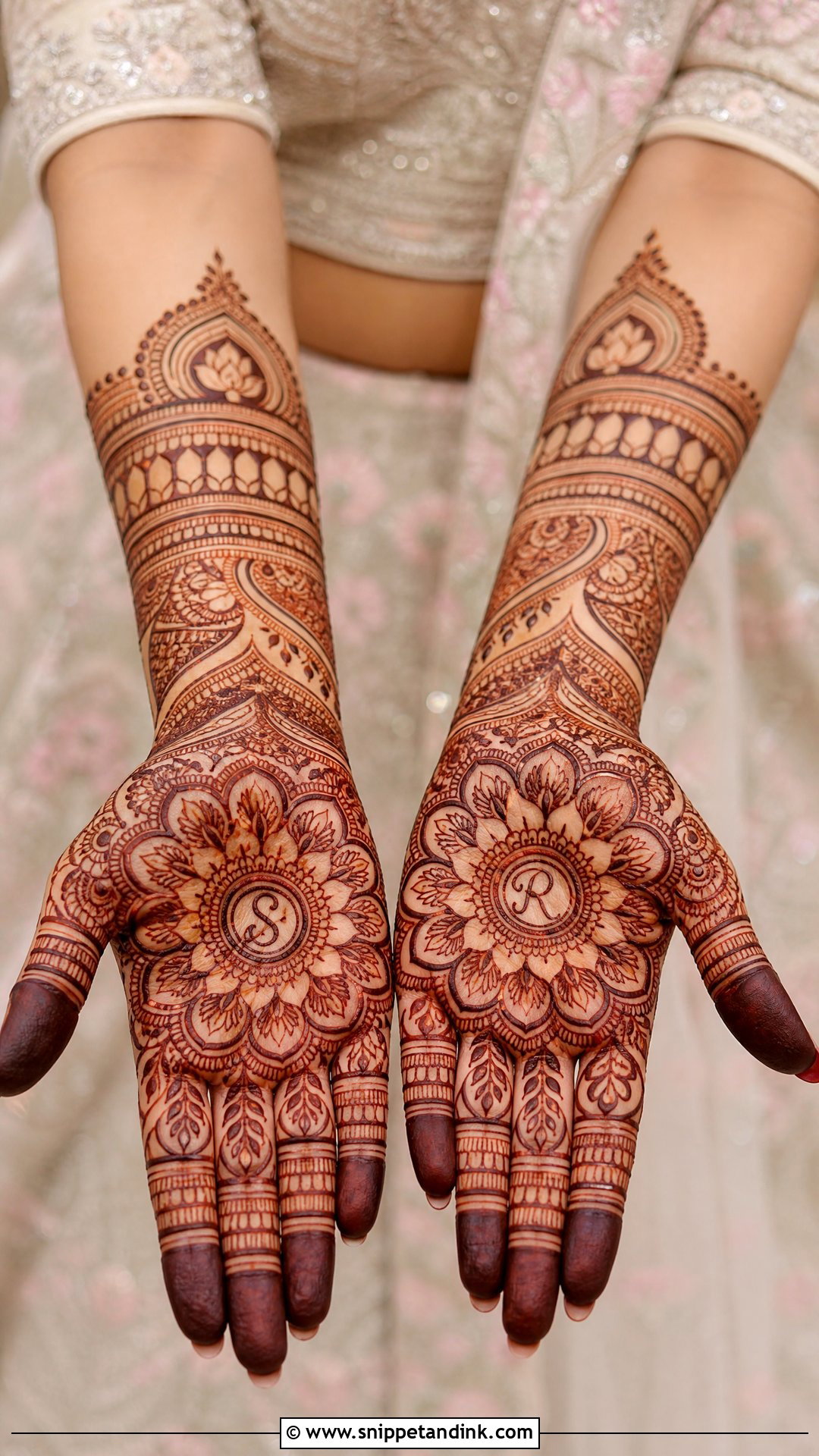
Palms take the deepest stain on the body, so front-hand work is where the meaningful details belong: initials, couple symbols, mandalas, lotus motifs. Palms are also held together in several rituals, so I design them as a pair. Mirrored mandalas or two halves of a heart only make sense once both hands meet. Fill the fingers enough to balance a heavy palm, and if the palm is busy, keep the wrist to neat bands rather than adding more motifs.
8. Bridal Mehndi Design Back Hand
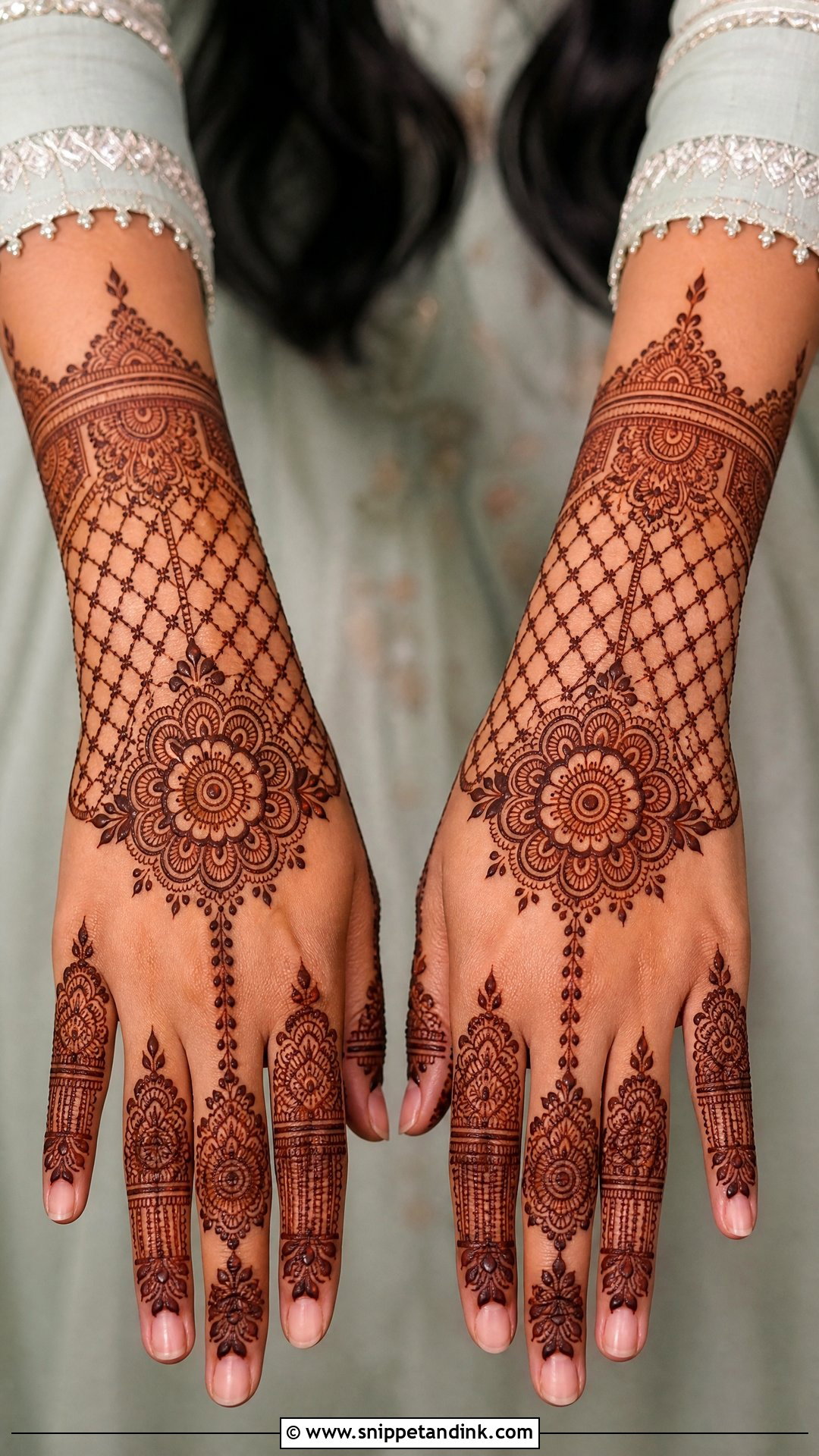
Back hand bridal mehndi design appears in every ring shot and bangle photo, so I give it as much thought as the palm even though it carries less detail. Hathphool chains, floral trails, bracelet cuffs, jaali mesh and finger caps are the usual building blocks. It doesn’t need to match the front in weight. Skin on the back of the hand stains a few shades lighter, so bolder shapes read better there than fine fill. A mandala at the center with lace detail around it sits well beside kaleere and bridal nails.
9. Bridal Mehndi Design With Name
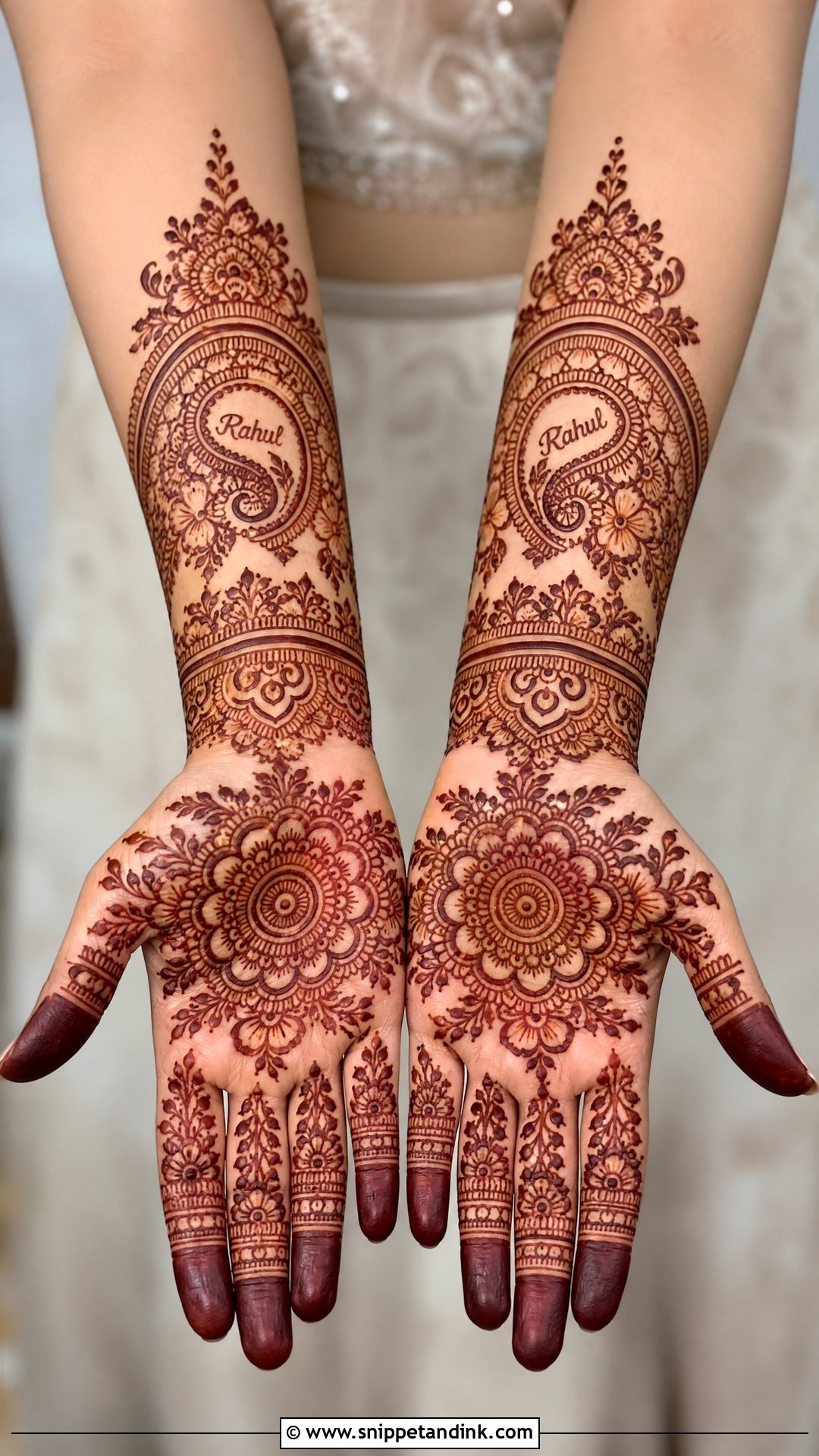
Bridal mehndi design with name brings back the old game where the groom has to find his name in your henna. It can hide in a paisley, flower, mandala, jharokha frame or wrist cuff. Initials are tidier than full names, and letters disguise more easily than you’d think, since the curve of an S or a J folds straight into a vine. Hide it well enough that the search is fun without burying it for good. A date or a small symbol works the same way in Indian, Arabic and Indo-Arabic layouts.
10. Bridal Portrait Mehndi Design
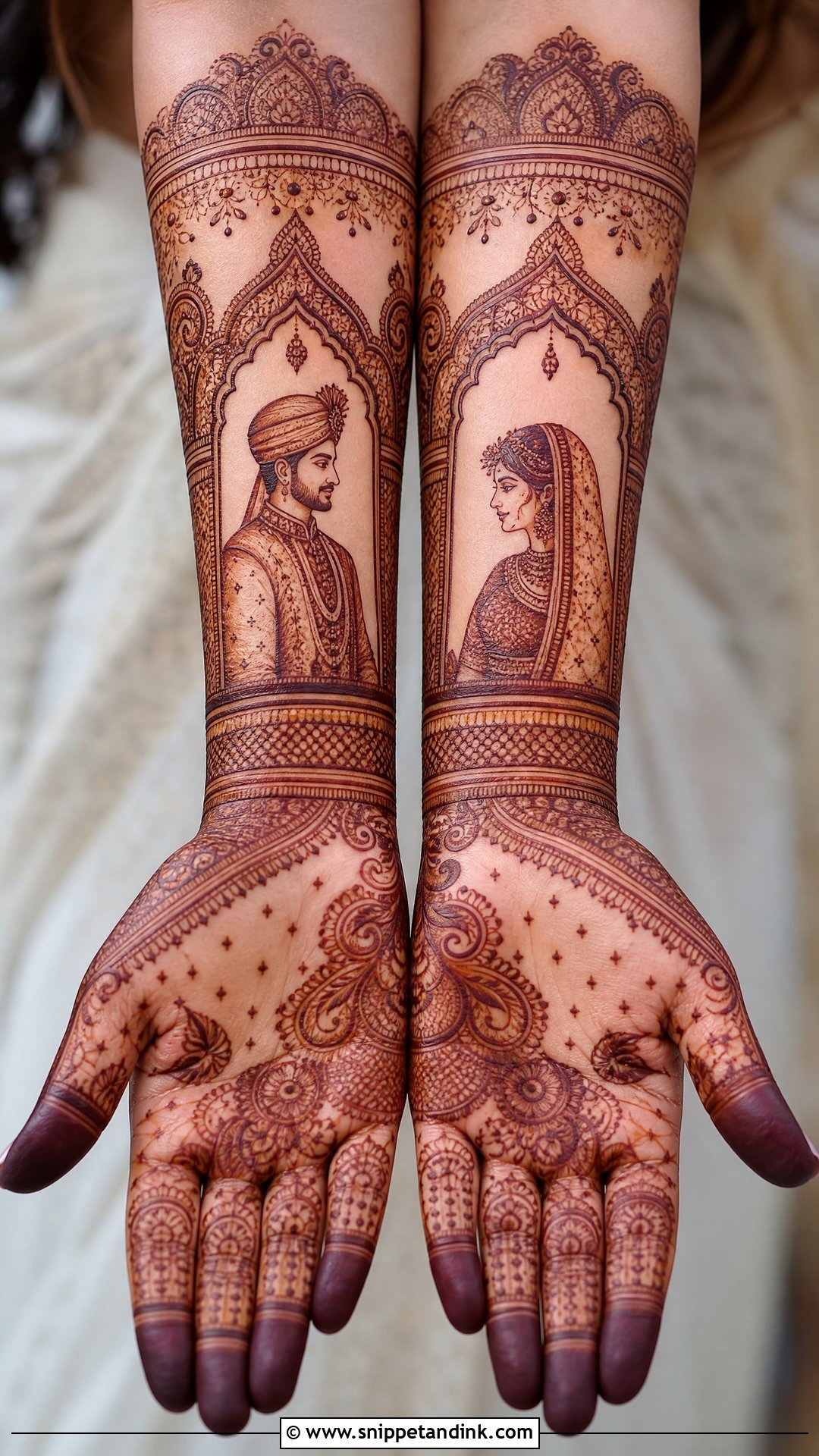
Portrait mehndi turns your hands into a wedding scene: tiny bride and groom faces, a varmala moment, a doli, couple silhouettes. Ask to see an artist’s stained portraits before booking, because one wobbly line on a face makes it look like someone else entirely. The palm or forearm gives the space it needs. Keep the surrounding fillers quiet, with fine florals, arches and dotted borders, so the faces stay the focus. It’s the slowest option here, and the one I’d never let anyone rush.
11. Peacock Bridal Mehndi Design
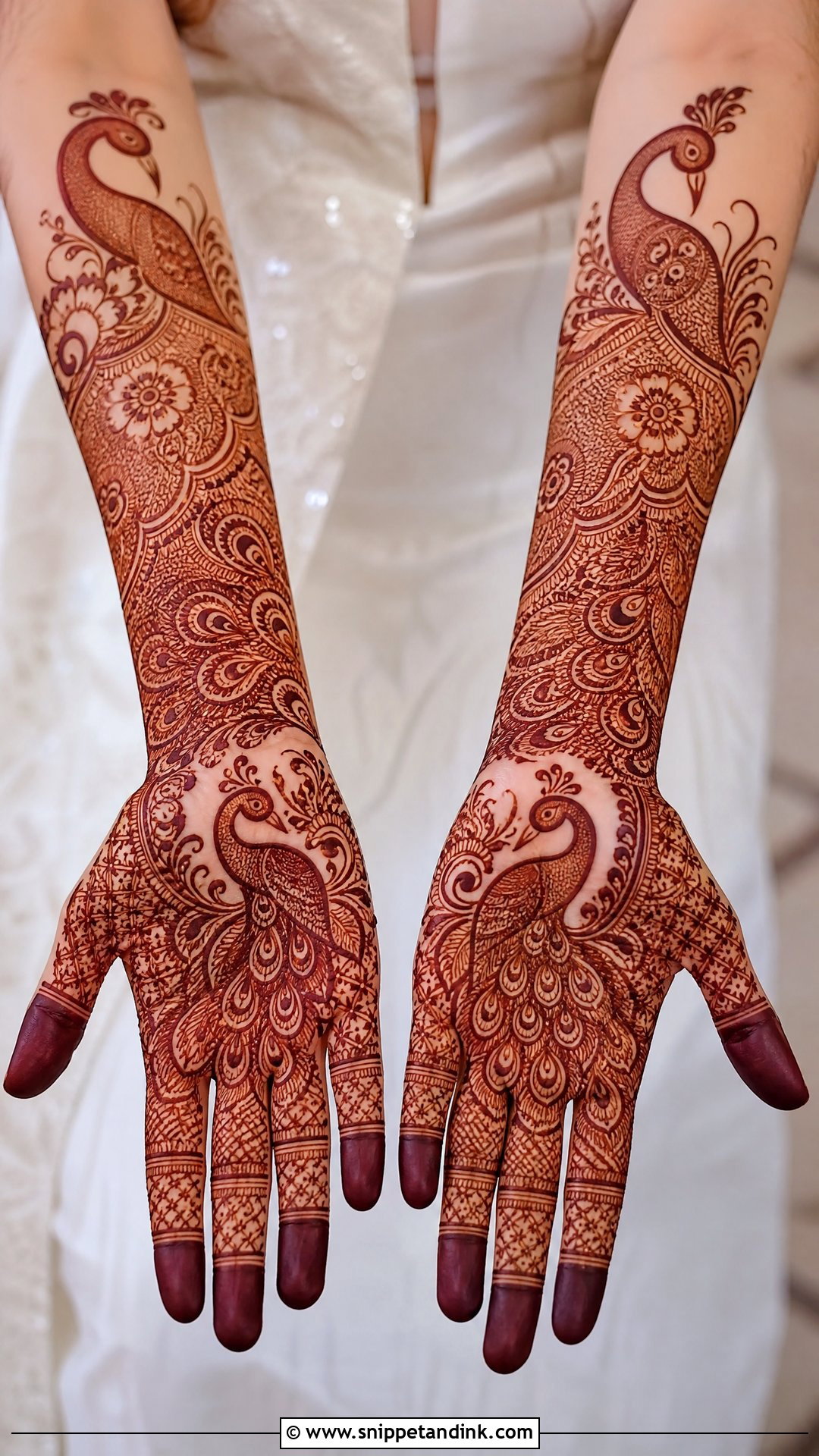
A peacock on the palm, wrist or forearm, its feathers trailing into paisleys and vines, is about as traditional as bridal henna gets. The detail that makes or breaks it is space around the neck. Crowd fillers against that long curve and the bird loses its shape. For a modern take, I draw one bold peacock per hand and balance it with lighter jaali or lotus work. Solid dark fingertips frame it, and it sits comfortably beside silk sarees and temple jewelry.
12. Mandala Bridal Mehndi Design
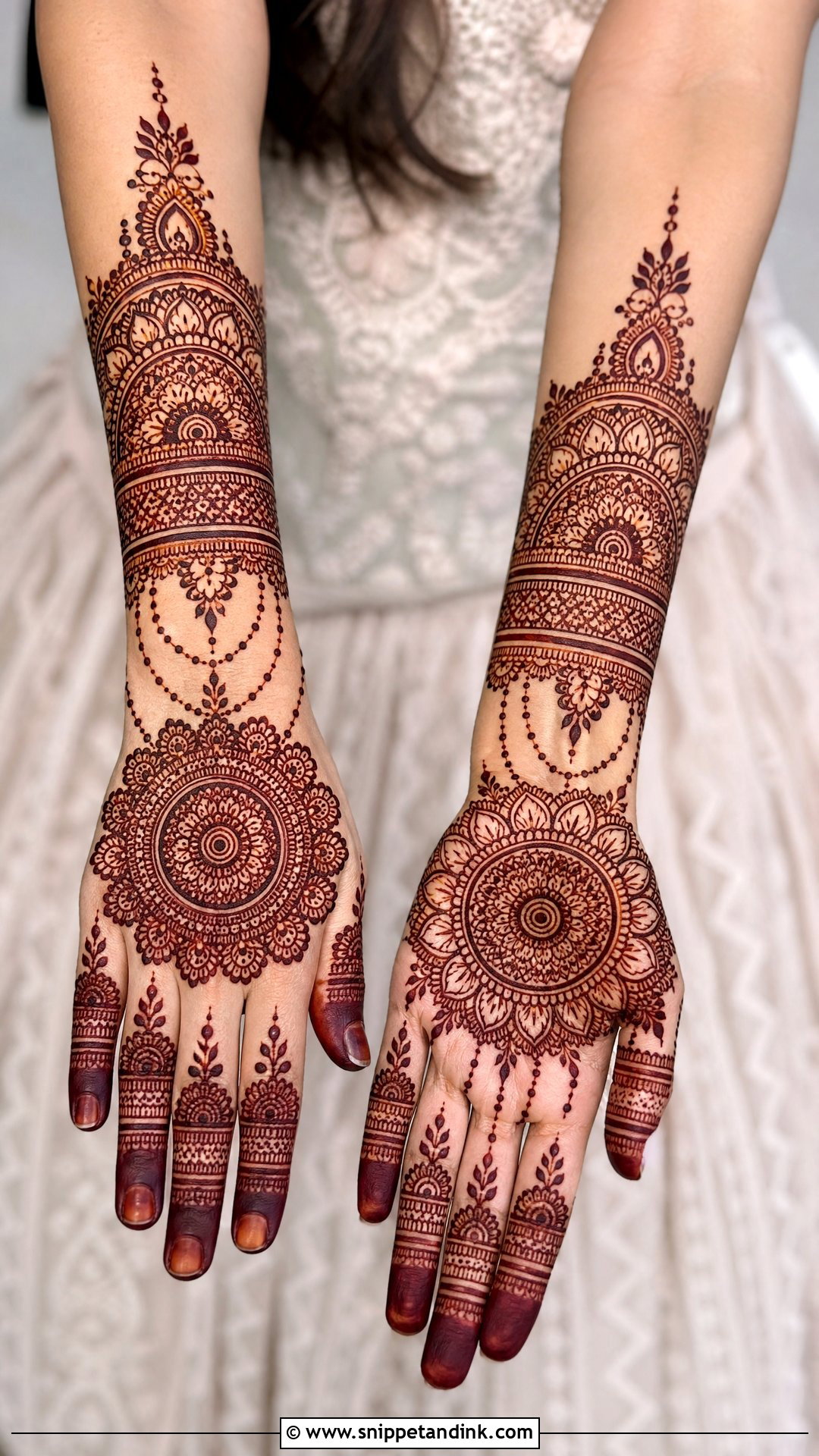
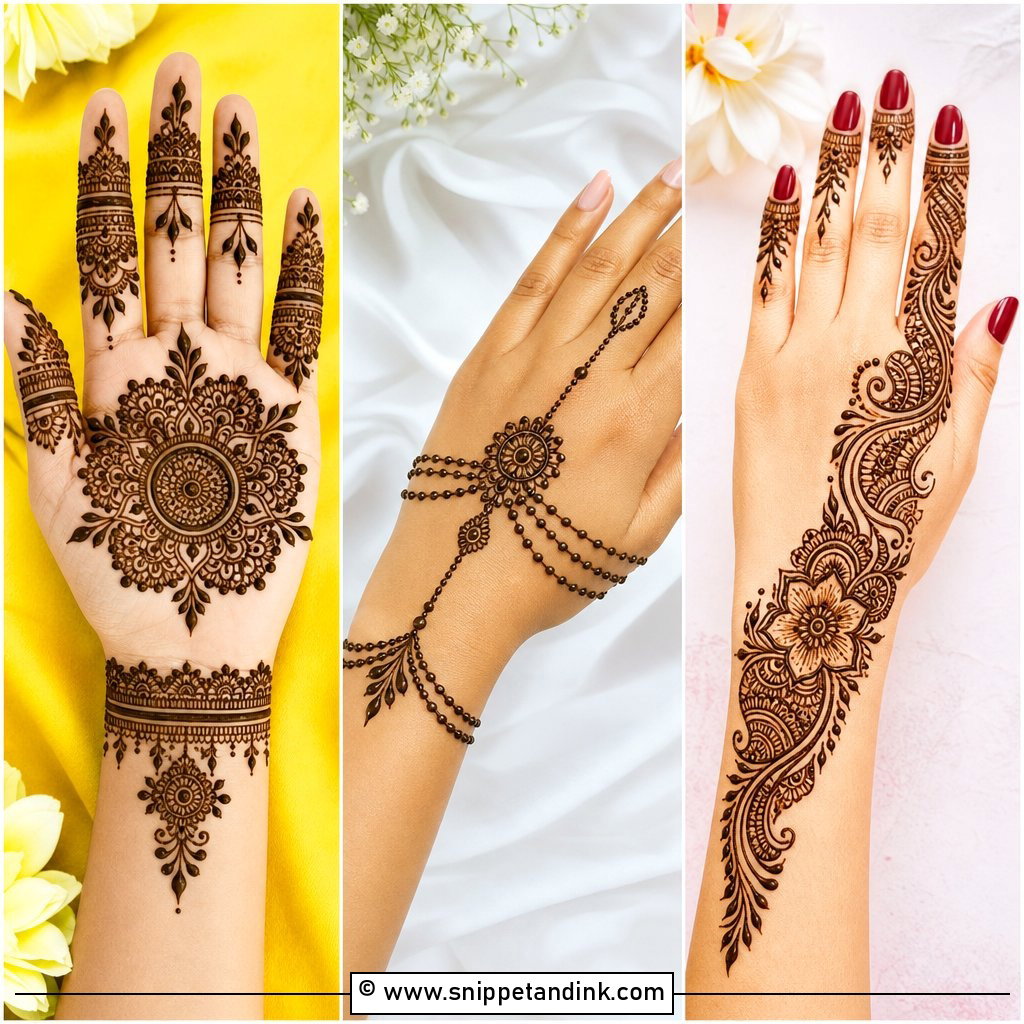
A round mandala gives the hand a clear focal point without clutter, on the palm or the back of the hand, plain or ringed with florals. For a bridal version, I extend it toward the fingers with leafy lines, dotted chains and filled tips, then close it with a wrist cuff. Mandalas suit smaller hands especially. The circle keeps everything centered instead of stretching motifs that don’t fit. Lotus petals, fine netting or tiny initials can sit inside the rings.
13. Floral Bridal Mehndi Design
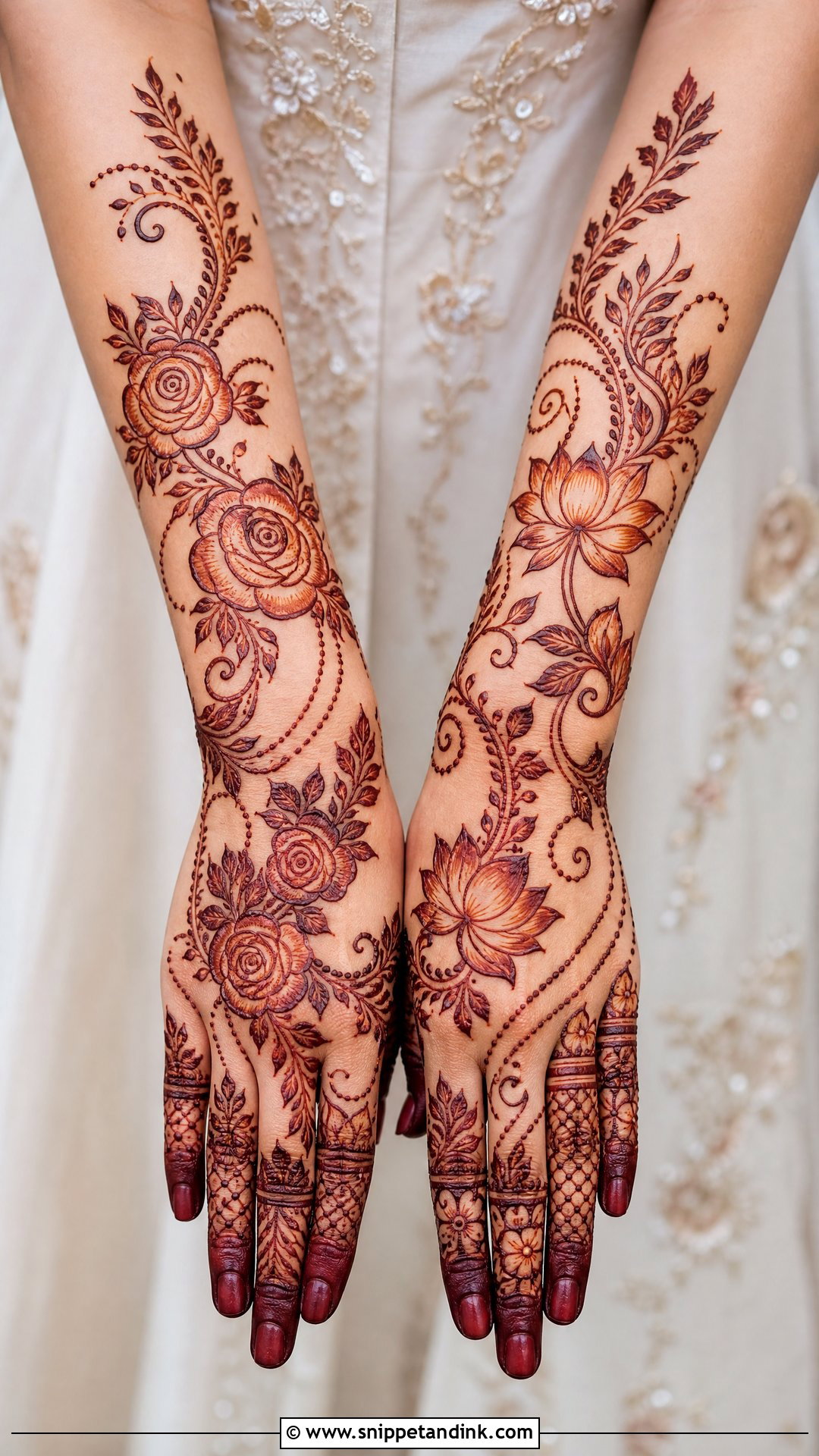
Florals can be bold like Arabic roses or fine like Indian lace. Roses, lotus blooms, leafy vines and shaded petals are the usual vocabulary. For a wedding design, the flowers need to link across the hand; separate blooms dotted around look like guest henna. A trail from fingers to wrist is lighter, while a full floral palm is richer. Brides in blush, peach, mint or ivory often go this way, with tiny dots and leaf fillers finishing the edges.
14. Paisley Bridal Mehndi Design
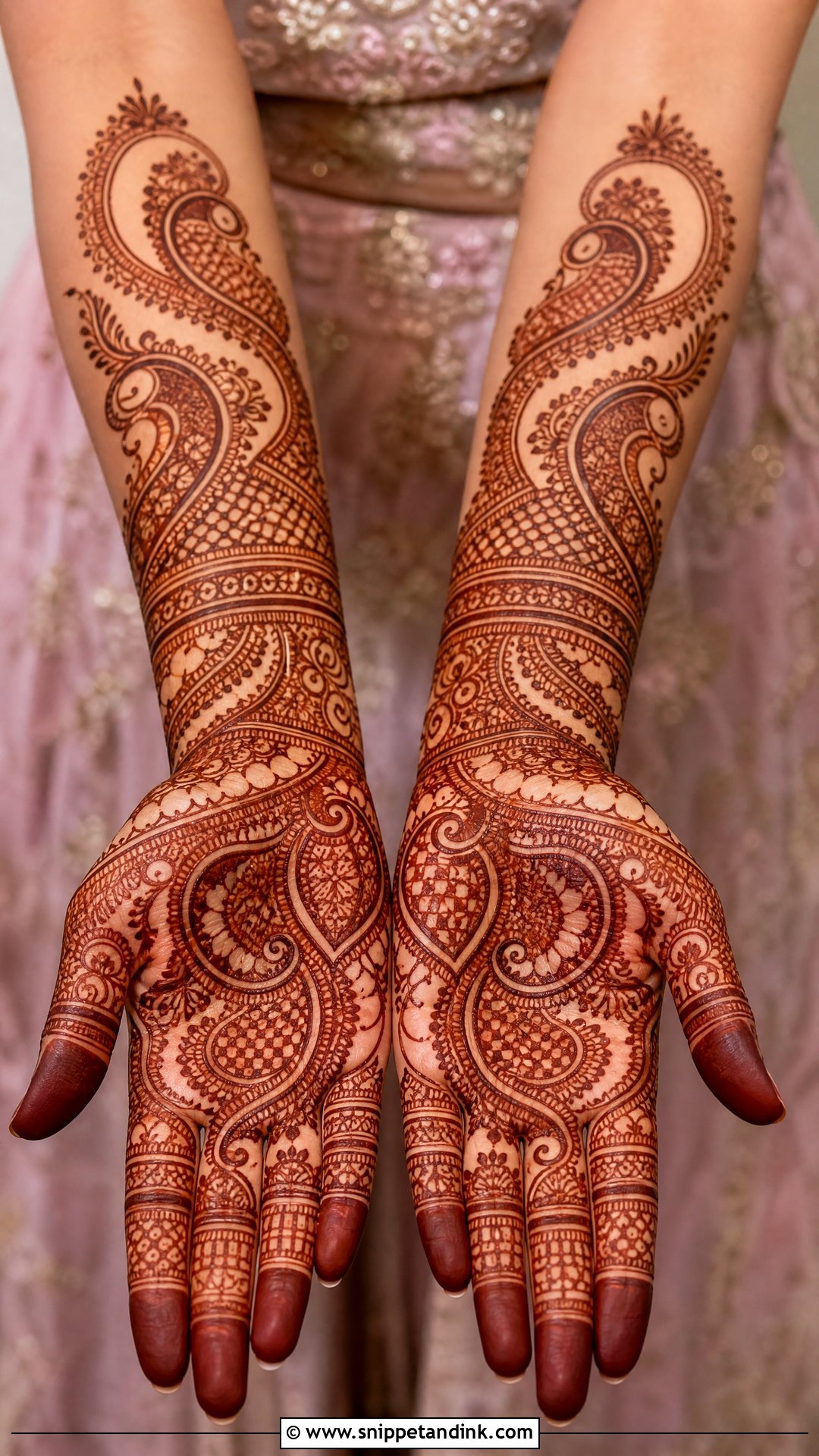
Paisleys bend to fit the curve of a palm, the line of a wrist and the taper of a forearm, which is why I rely on them whatever the hand shape. Each one can be filled with tiny florals, checks, dots or lace. Large ones on the palm with smaller ones toward the wrist give depth without portraits or storytelling. To modernize it, pair them with open negative space or Arabic-style shading instead of dense fill.
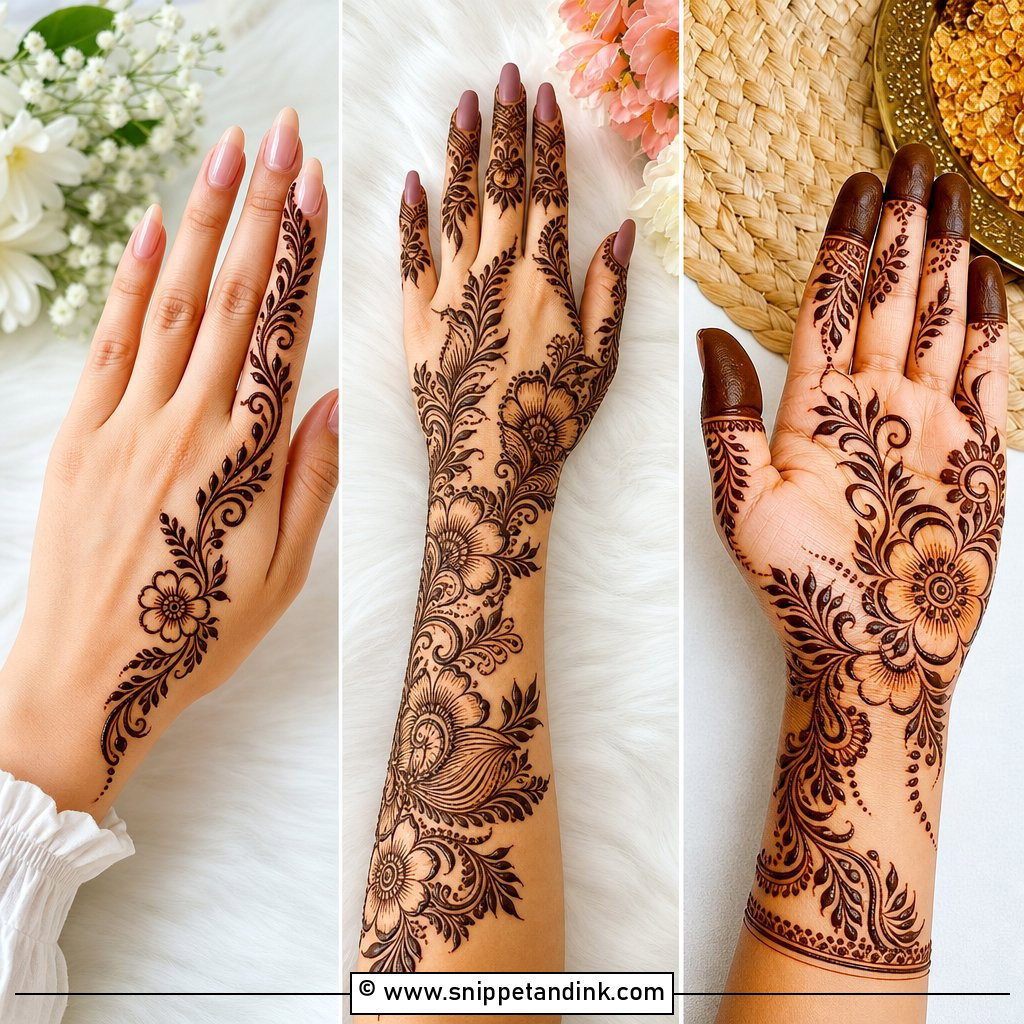


15. Jaal Bridal Mehndi Design
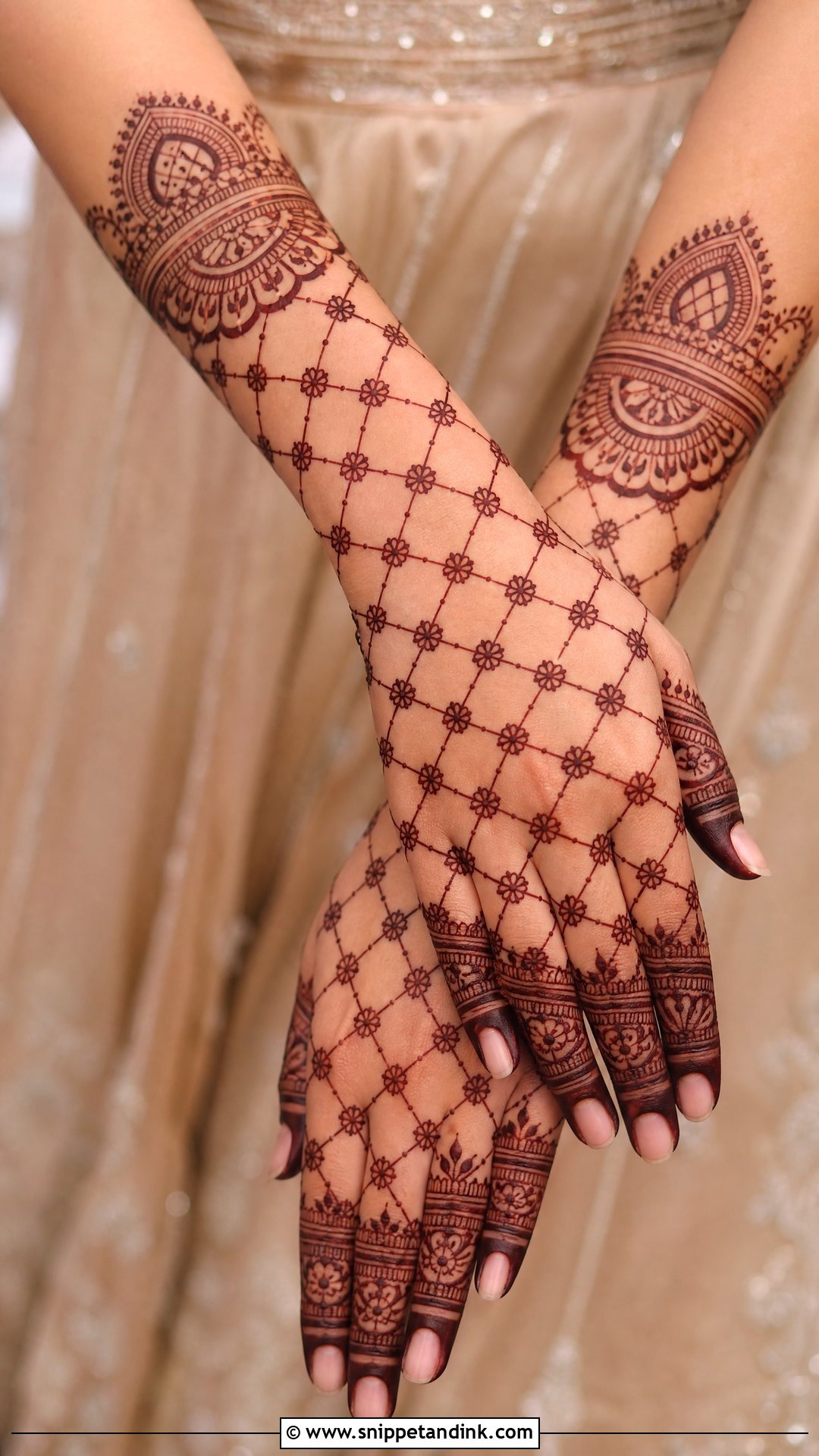
Jaal is a net of fine lines, from simple diamonds to floral grids or lace-style mesh, usually on the back of the hand, the fingers or the forearm. Left alone, a big mesh panel looks flat. I always frame it with a bold border, a mandala or a floral cuff so open netting plays against filled shapes. In ring photos the mesh frames the hand without hiding the jewelry. Even spacing is everything, because one wide gap in a grid is all anyone sees.
16. Hathphool Bridal Mehndi Design
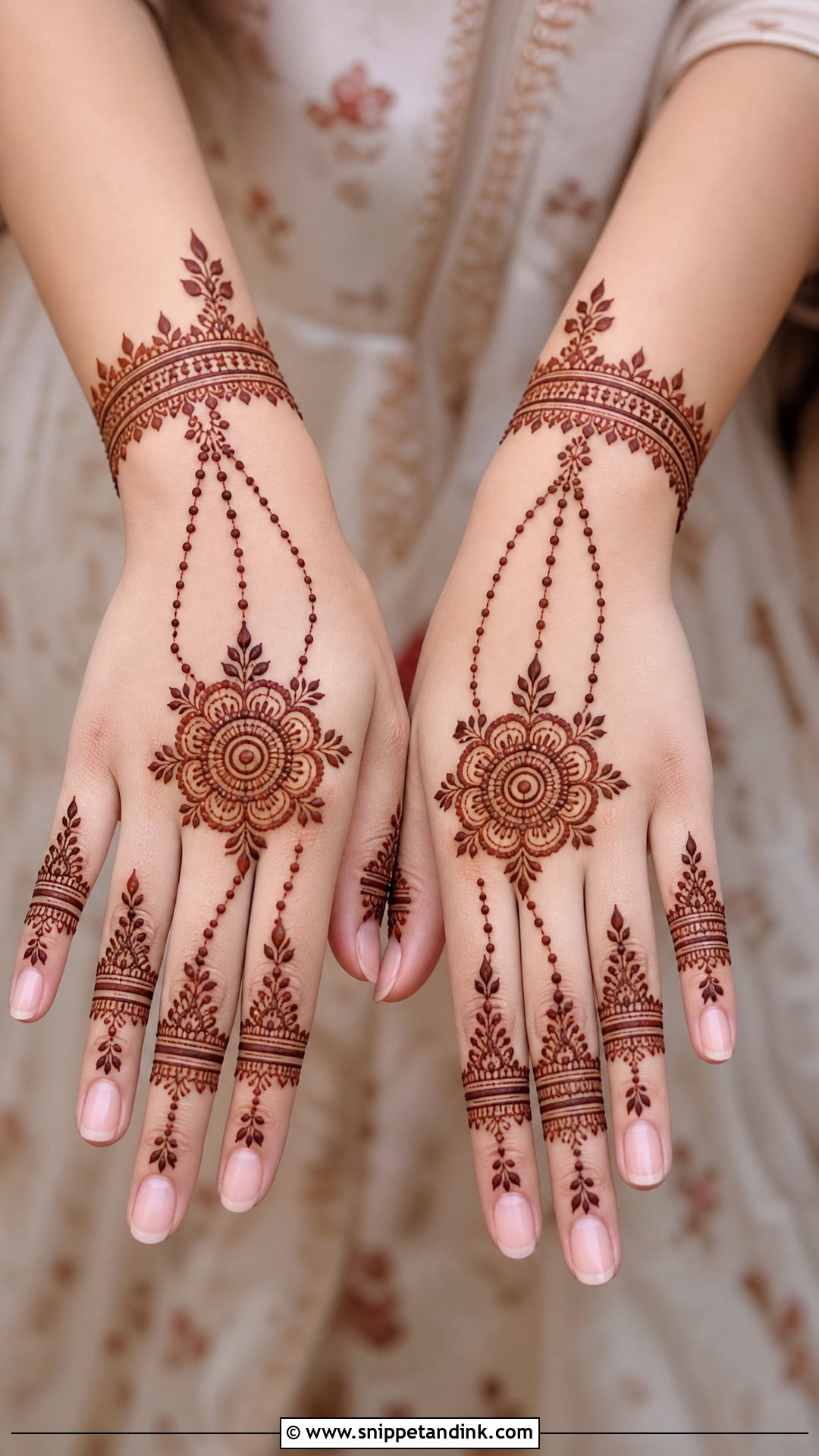
Hathphool henna copies hand jewelry: a central motif tied to the fingers and wrist by thin chains, dots and leafy strands. It’s mostly drawn on the back of the hand, where it sits with rings, bangles and kaleere, and the center can be a mandala, a flower or a jewel shape. On its own it’s light; for a fuller bridal version, add detailed fingertips and a bracelet cuff. I draw the chains with the hand flat and fingers slightly spread, otherwise they kink when you relax.
17. Royal Bridal Mehndi Design
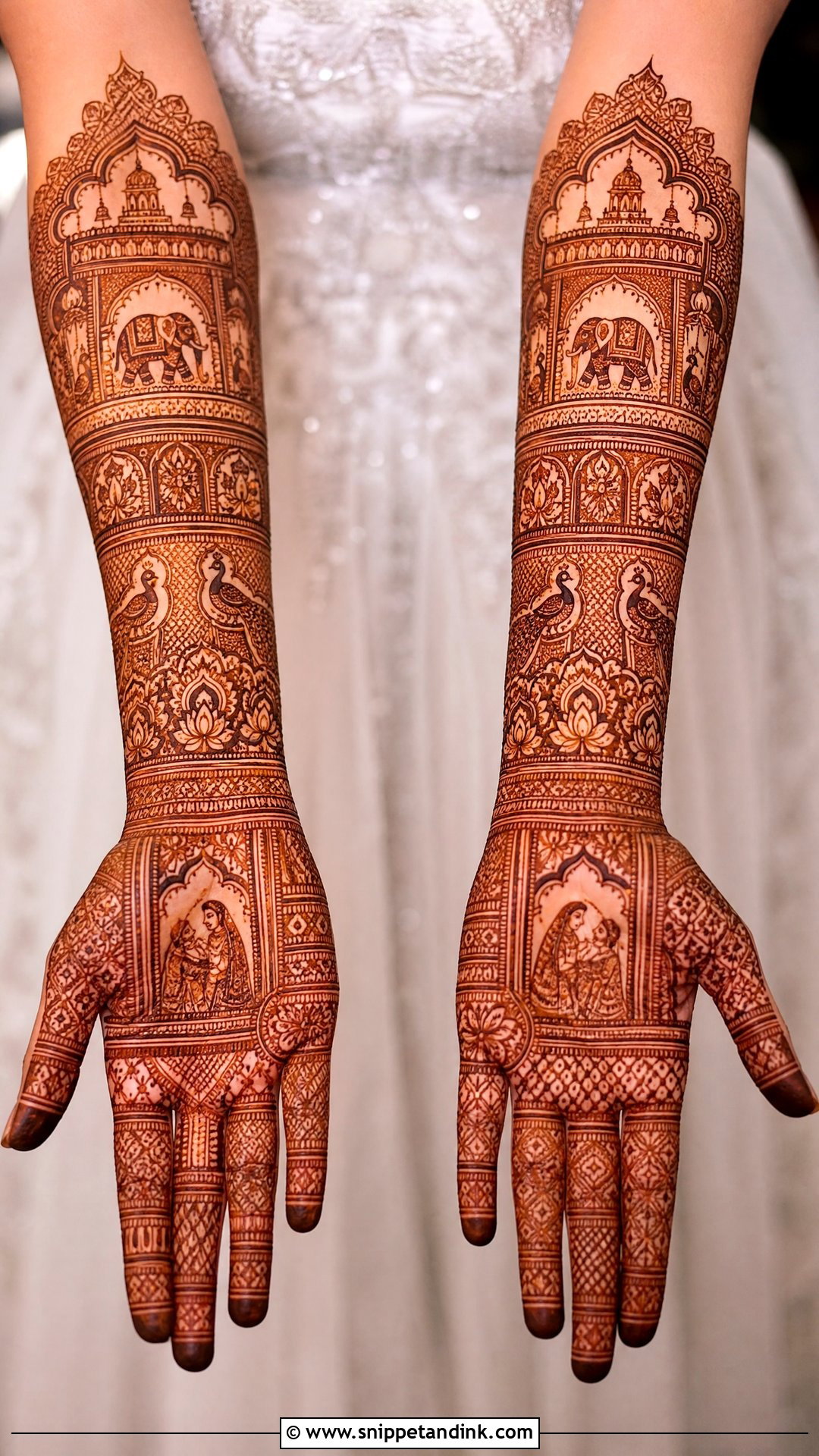
Palace arches, jharokha windows, elephants, peacocks and lotus borders stacked in layered cuffs make royal designs the grandest work on this list. They need organizing. I place the largest motifs on the palm or forearm first, then fill smaller elements around them, checking symmetry between hands as I go. Heavy lehengas and traditional jewelry match its scale. The architecture only gets its depth from a deep maroon stain, so this is not a design to cut corners on aftercare.
18. Modern Bridal Mehndi Design
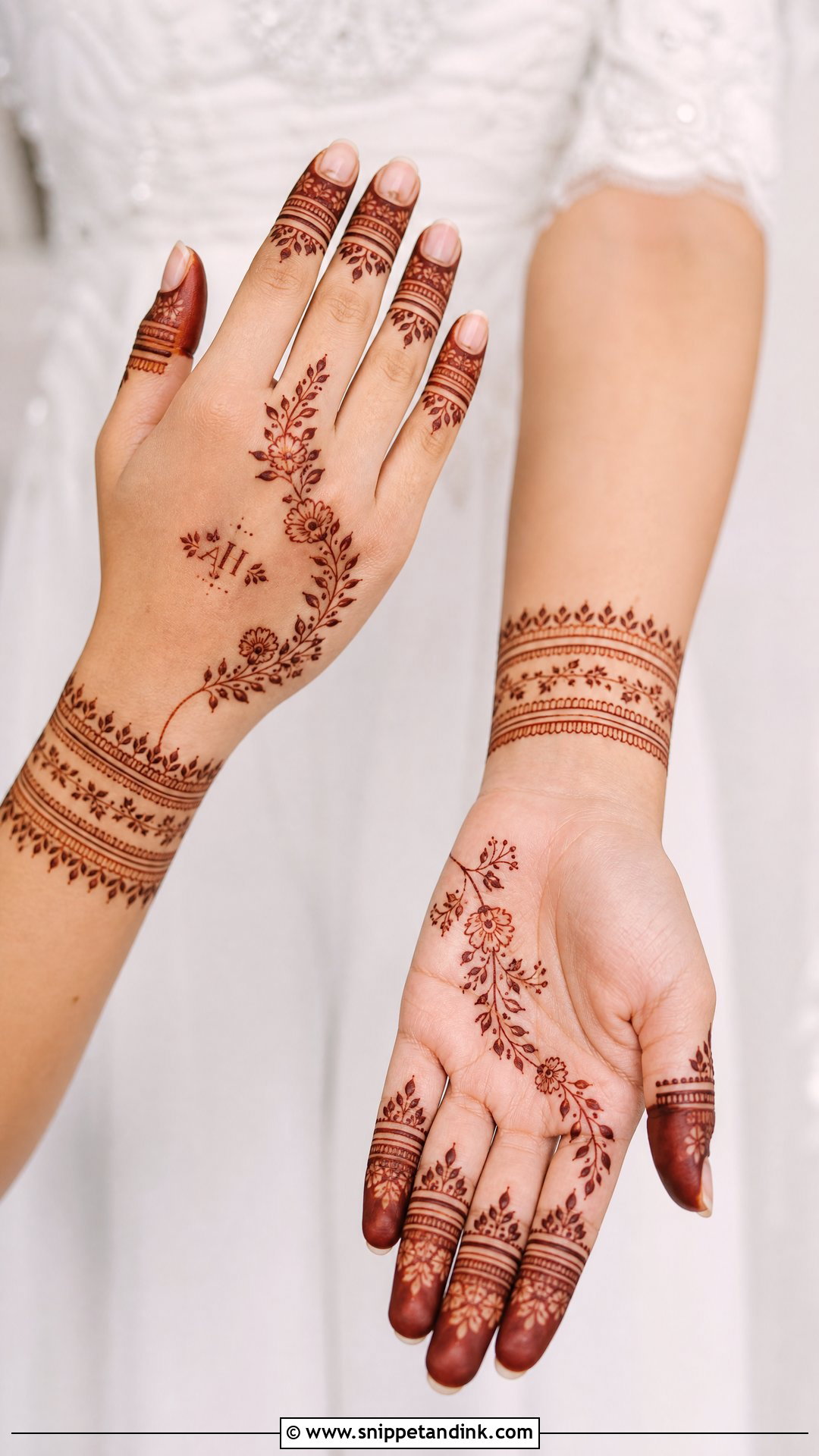
Modern designs mix clean spacing, fine lines and geometric shapes with personal details like bracelet bands, initials or abstract floral sections. Dense filling is out; structure is in. Pick one theme and repeat it lightly across both hands rather than mixing five ideas. It suits contemporary lehengas, gowns, fusion sarees and reception outfits. Because the motifs are clear and spaced, they hold up in wide shots, where heavy fill tends to turn into a dark smudge.
19. Pakistani Bridal Mehndi Design
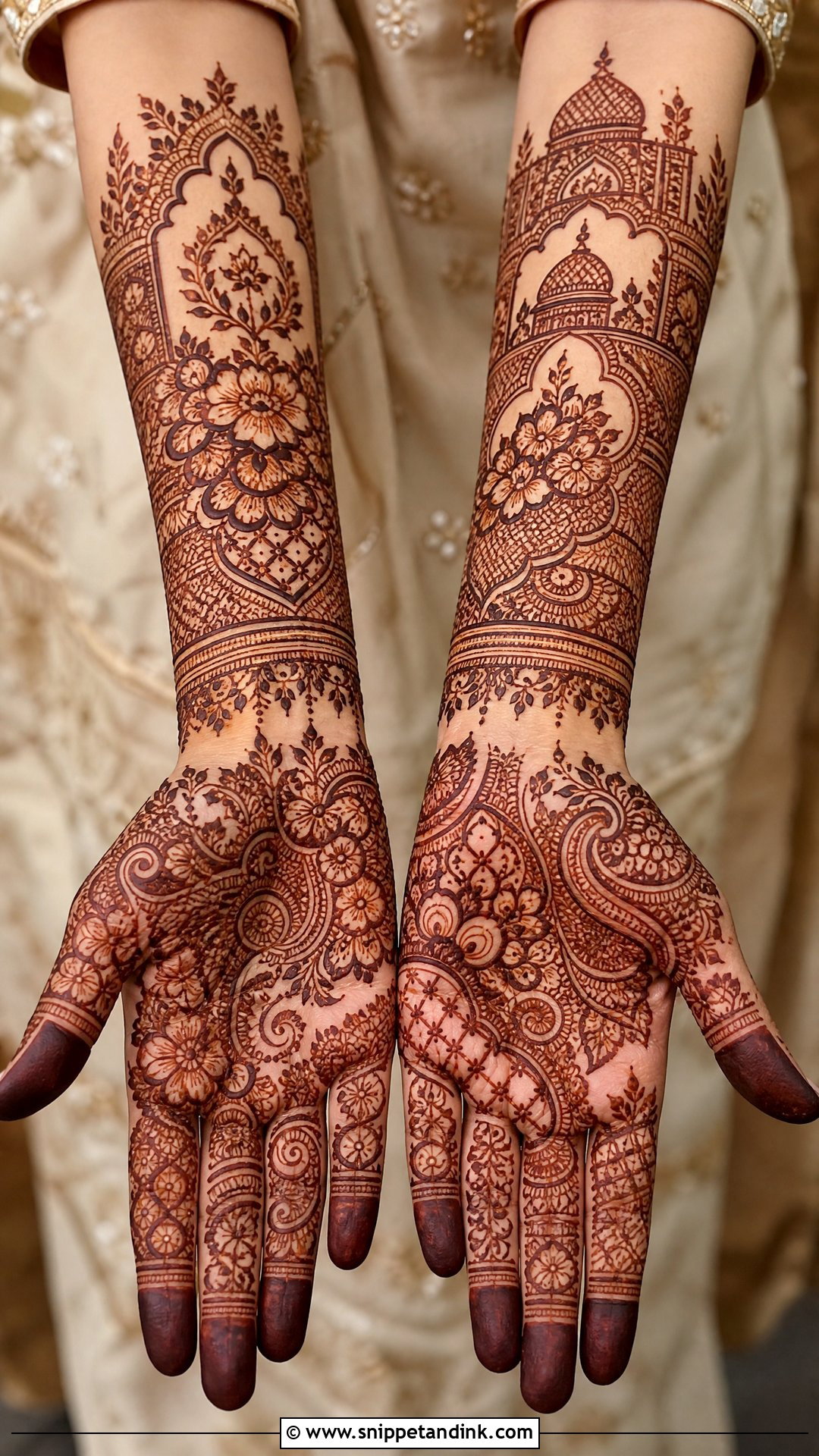
Pakistani bridal work blends bold florals, fine filling, paisleys, domes, leafy vines and wrist-to-forearm coverage, usually with more Arabic flow than Indian designs. Back hands may carry wide floral trails while palms hold mandalas, paisleys or initials, and fingertips are filled solid for contrast. With shararas, ghararas and lehengas it looks completely at home. For a cleaner version, enlarge the main motifs and let the fine fillers support them instead of covering every space.


20. Bridal Foot Mehndi Design
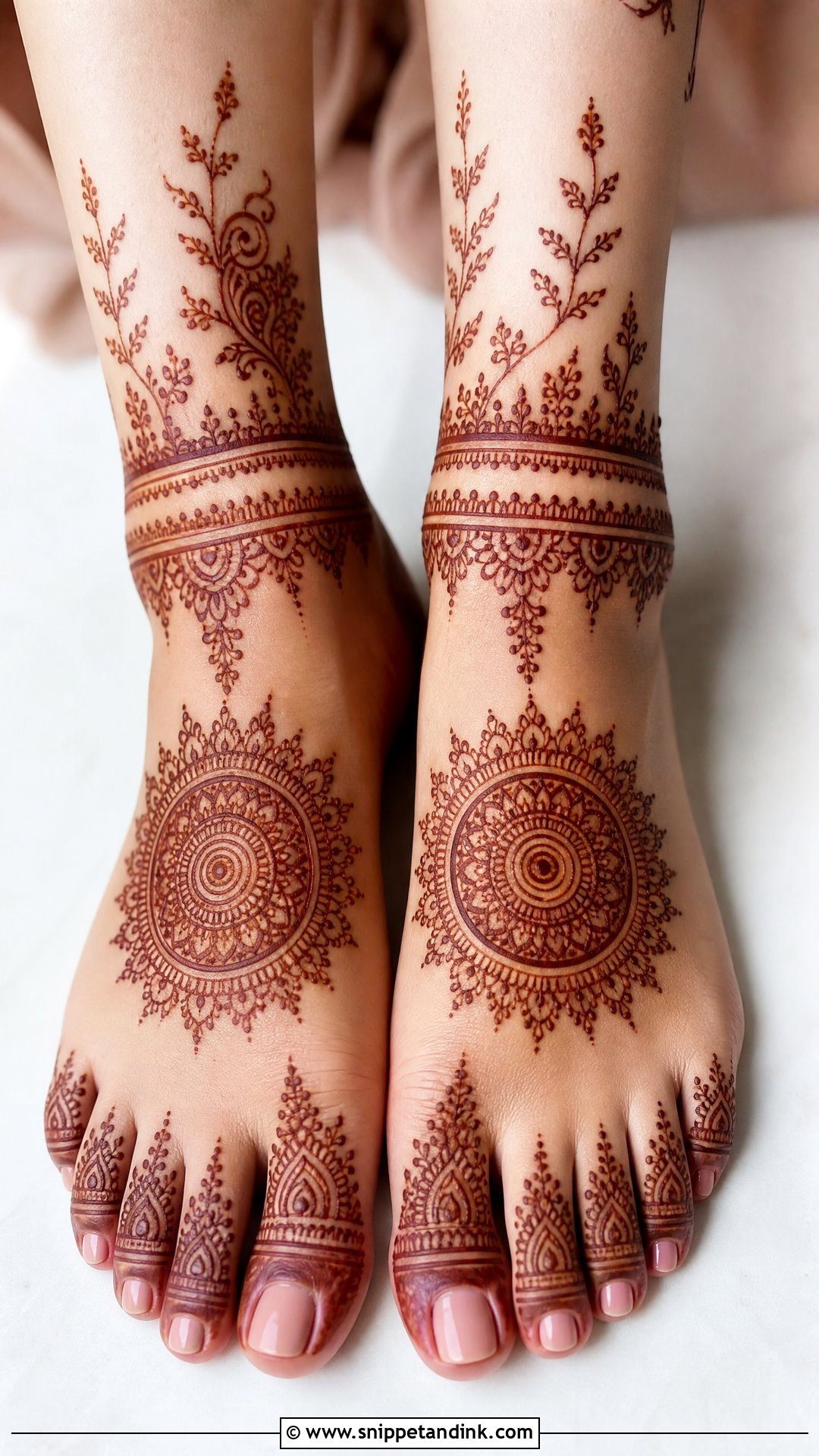
Foot mehndi completes the look for brides in sandals, anklets or outfits that show the feet. Mandalas on the top of the foot, anklet bands, floral vines, paisleys and toe detail are the usual choices. The soles stain very dark, much like palms, while the top of the foot stays lighter. I match the foot pattern to the hands without copying it, and if your hands are heavy, medium coverage on the feet keeps the whole look balanced. Traditional ceremonies call for the design to run just above the ankle; minimal brides can keep it around the toes and the center of the foot.
Sequencing the Sitting Around Waxing, Nails and Feet
Henna dyes only the outer layer of skin, and anything that removes that layer takes the stain with it. That changes the order of your other beauty appointments more than most brides expect.
Wax and scrub first
Book waxing, body scrubs and polishing a day or two before the mehndi, never after. Exfoliating a fresh stain fades it in patches. On the day, arrive with clean, dry skin and no lotion, because oil on the surface blocks the dye from taking.
Decide about your nails
Henna stains bare nails and cuticles orange, and it doesn’t wash off; it grows out. If you want clean nail color in photos, get a gel manicure before the mehndi so the gel acts as a barrier. If you like the traditional tinted nail, leave them bare.
Feet and hands together
With both hands covered you can’t do much, and with your feet done you can’t walk. I prefer to do the feet first, or alongside the hands with a second artist, and then settle the bride somewhere she can stay for the hours the paste needs. Eat, drink and use the bathroom before the final section goes on, and have someone ready to feed you.
Settling on Coverage, Placement and Stain
Start with the outfit, the jewelry and how much coverage you really want. Heavy Indian and royal work suits a traditional ceremony, while Arabic, minimal and hathphool designs are lighter and quicker. Names, portraits and dates make it personal; mandalas, florals, paisleys and jaal keep it classic. Book a skilled artist early, agree on placement before the day, and leave enough time for the stain to deepen. If you still want more to browse, there are further Bridal Mehndi Latest Design Ideas worth saving alongside these.
You'll Like These Ideas:








Leave a Reply