
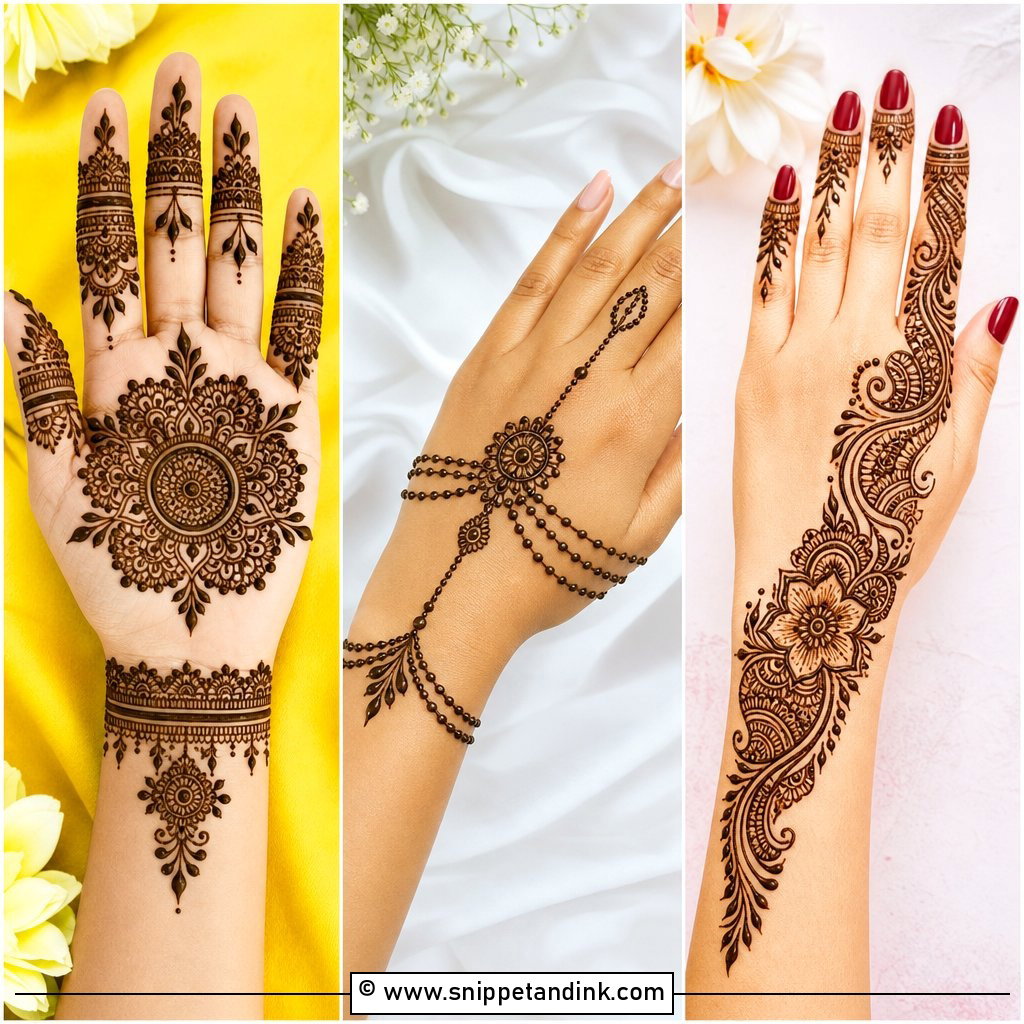
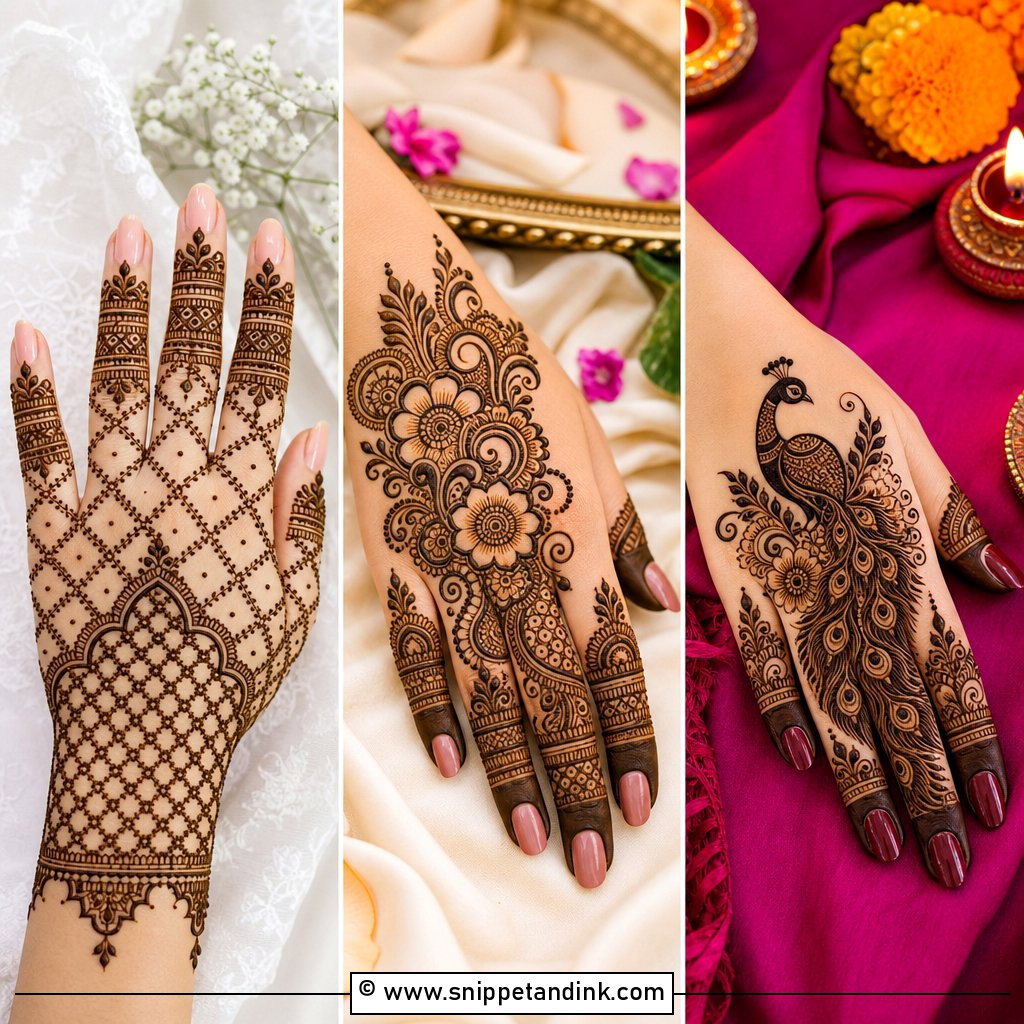
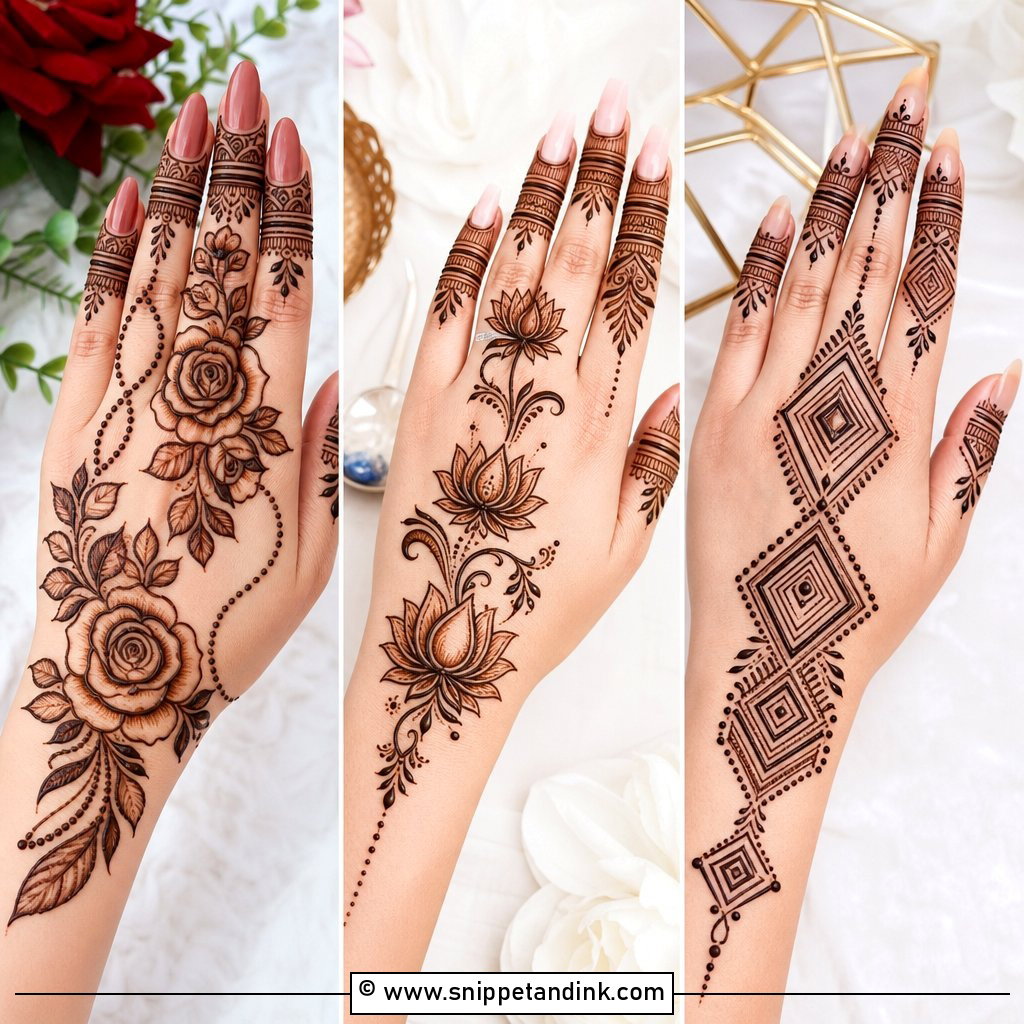
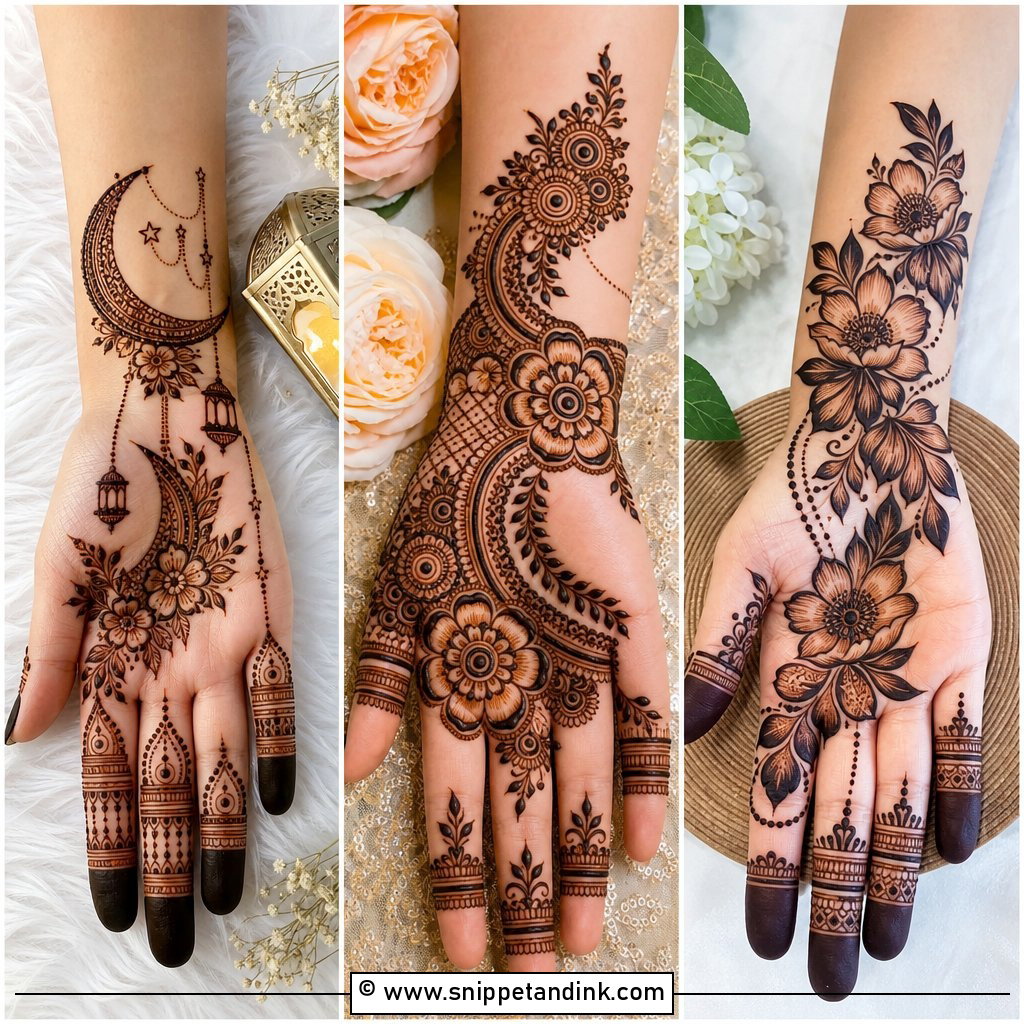
When clients show me a screenshot and call it aesthetic, they almost always mean the same thing: henna with room to breathe. Clean spacing, one clear focal point, lines that look deliberate rather than packed in. That can be a single vine on two fingers or a full bridal hand, as long as the layout is organised. Below are thirty five hand designs, from Arabic trails and Moroccan geometry to peacocks, palm mandalas and finger-only work, for weddings, Eid, Diwali, engagements or a quiet henna evening at home. With each one I’ve written what I’d watch for when applying it, and which hands and occasions it suits best.
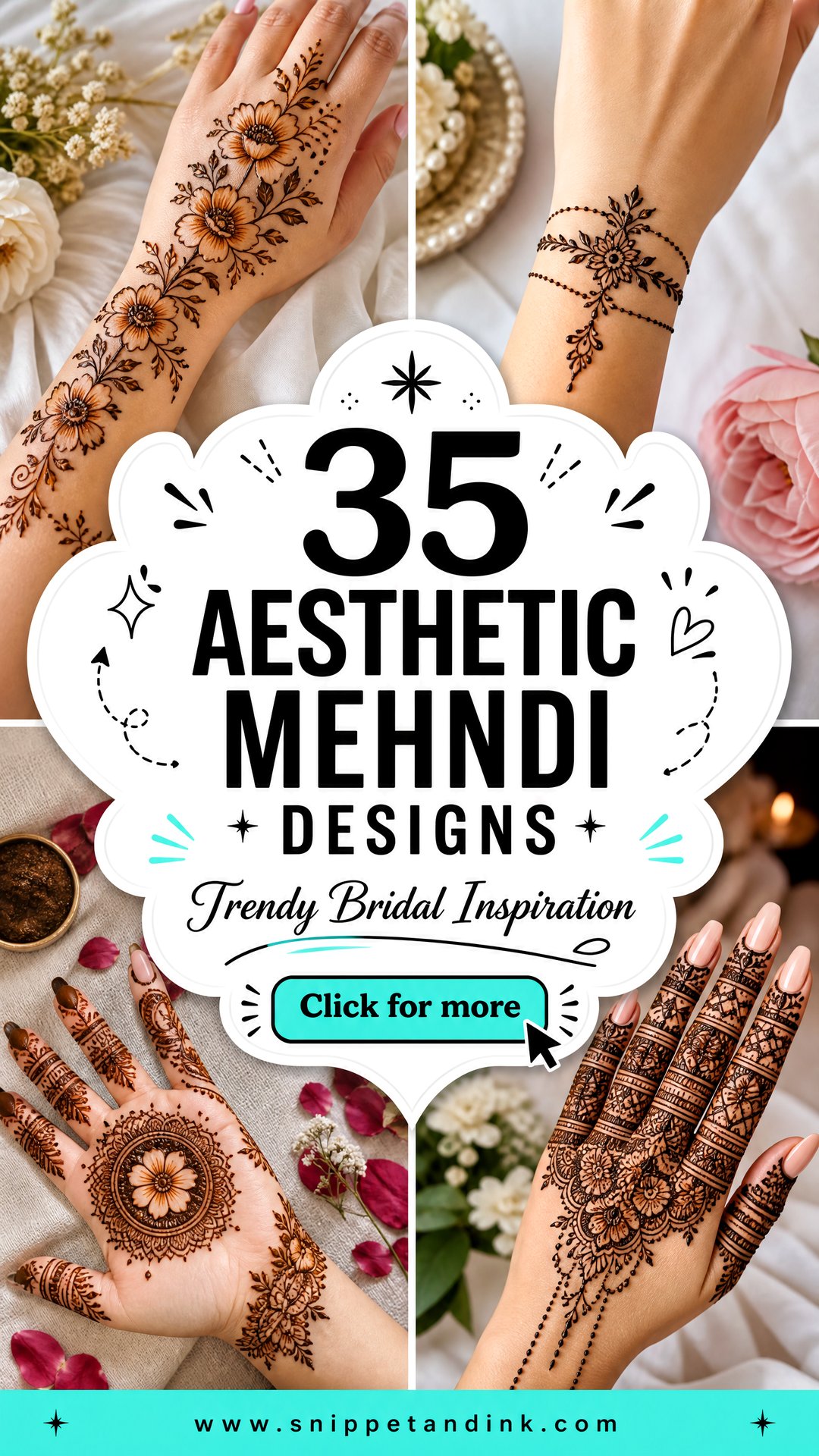
Short Fingers or a Wide Palm Change Which Layout Works
The same design looks very different on different hands. Before I start, I look at finger length, palm width and wrist size, and I adjust the layout rather than the motif.
Shorter fingers or a small hand
Diagonal Arabic trails and finger-to-wrist vines draw the eye along the hand and make it look longer. Avoid heavy horizontal bands across every finger, which chop the length up. Use fewer, larger motifs rather than lots of tiny ones.
Wide palm or broad hand
A vertical layout works better than a big round mandala dead centre, which can make a wide palm look wider. Try a mandala placed slightly off centre with a trail running toward the fingers, or a side design down one edge.
Long, slim fingers
These can carry full finger designs, stacked bands and dense fingertip filling without looking crowded. Most finger-focused designs in this list were made for hands like these.
1. Simple Aesthetic Mehndi Design
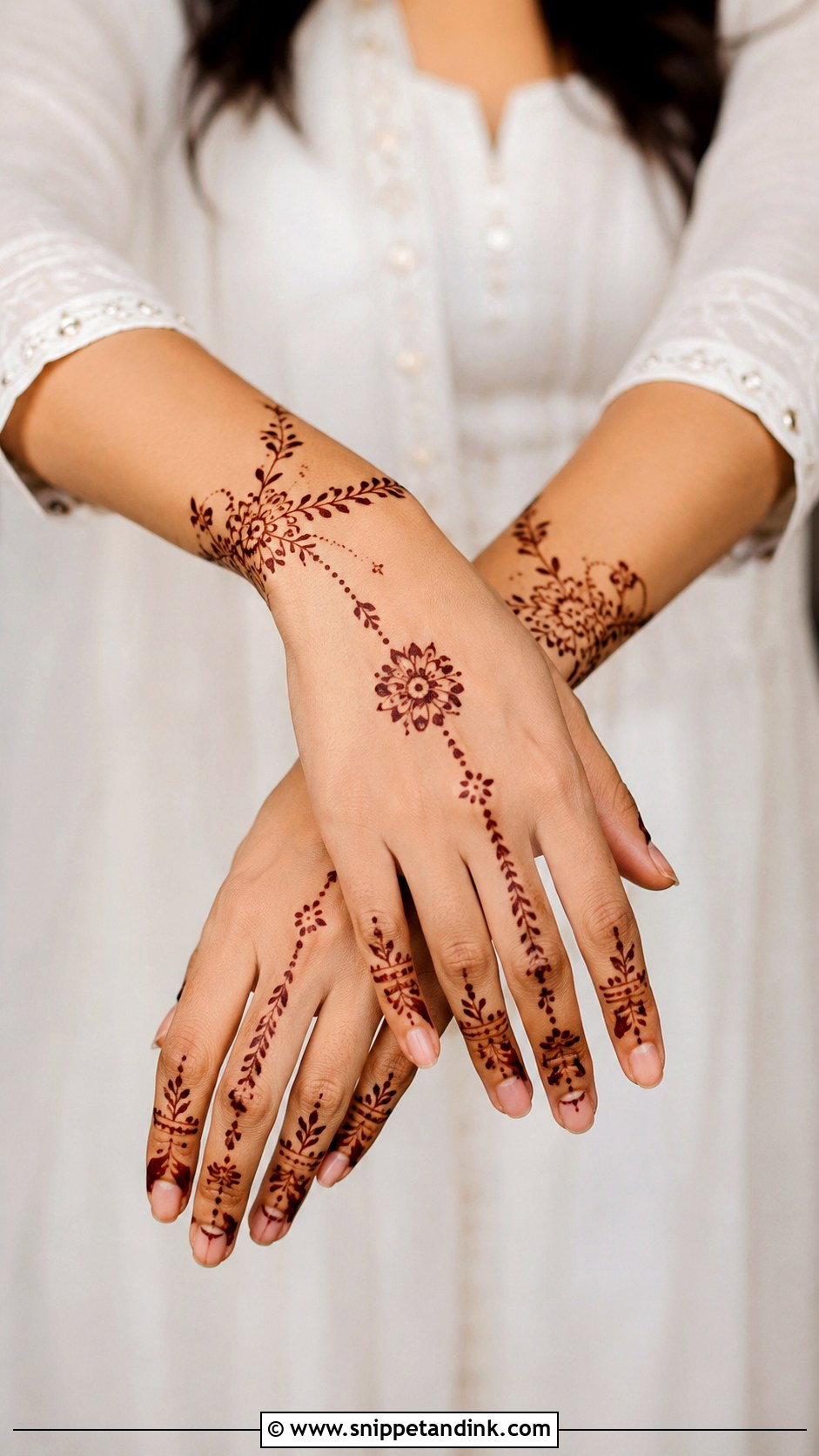
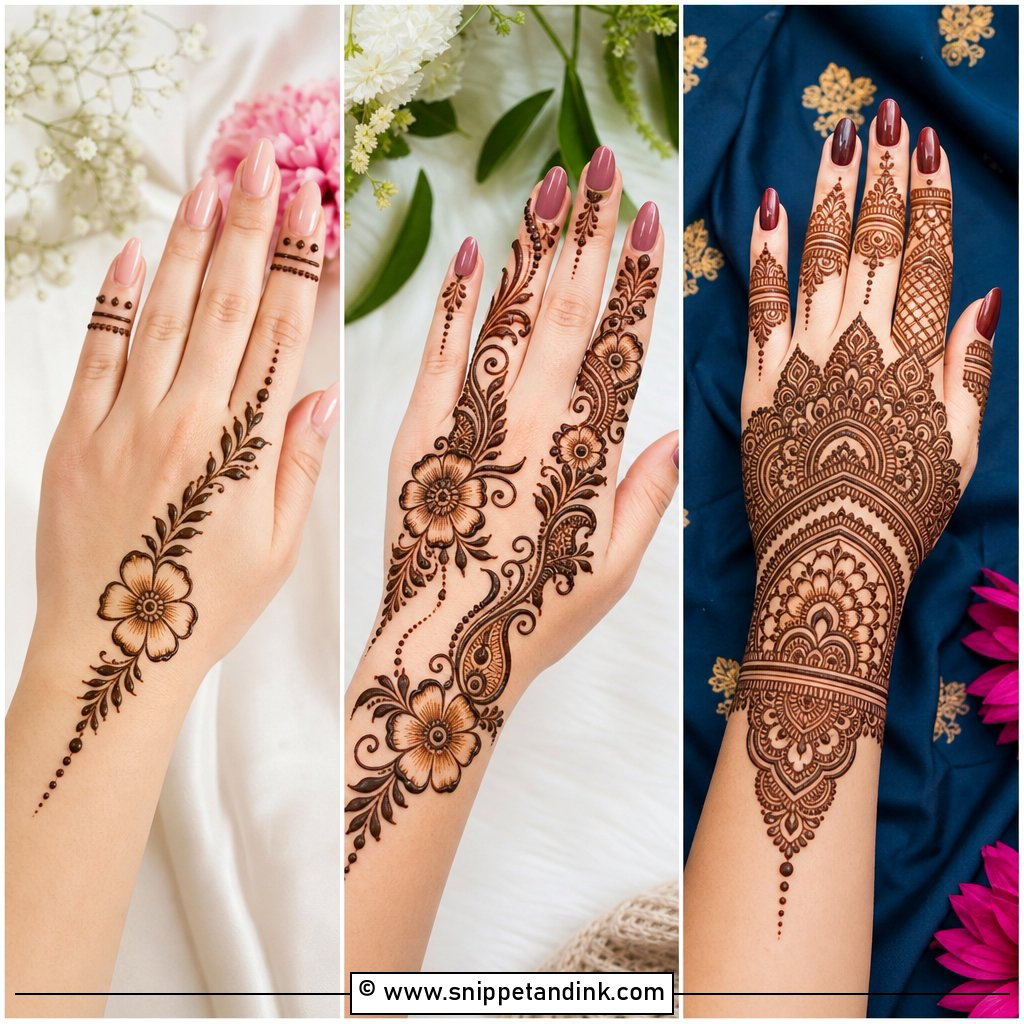
The simplest version is a small flower on the back of the hand, a couple of slim leafy curves and light work on the fingers. Spacing does all the work here, so I place the centre flower first, slightly toward the thumb side, and build outward. A thin bracelet line at the wrist is optional. It is quick to apply and suits college events and small family functions, and a beginner can manage it with a fine cone and a bit of patience.
2. Arabic Aesthetic Mehndi Design
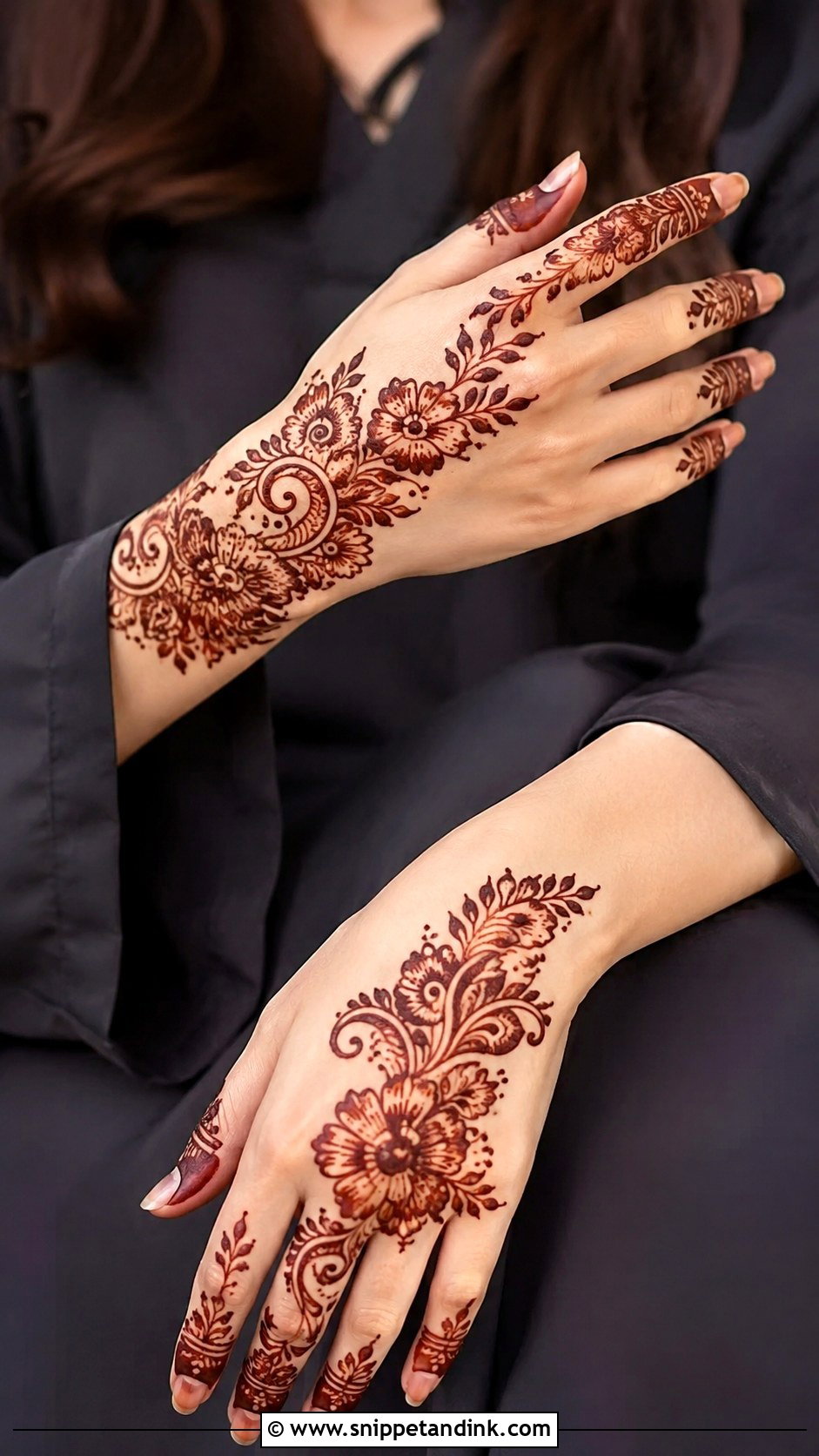
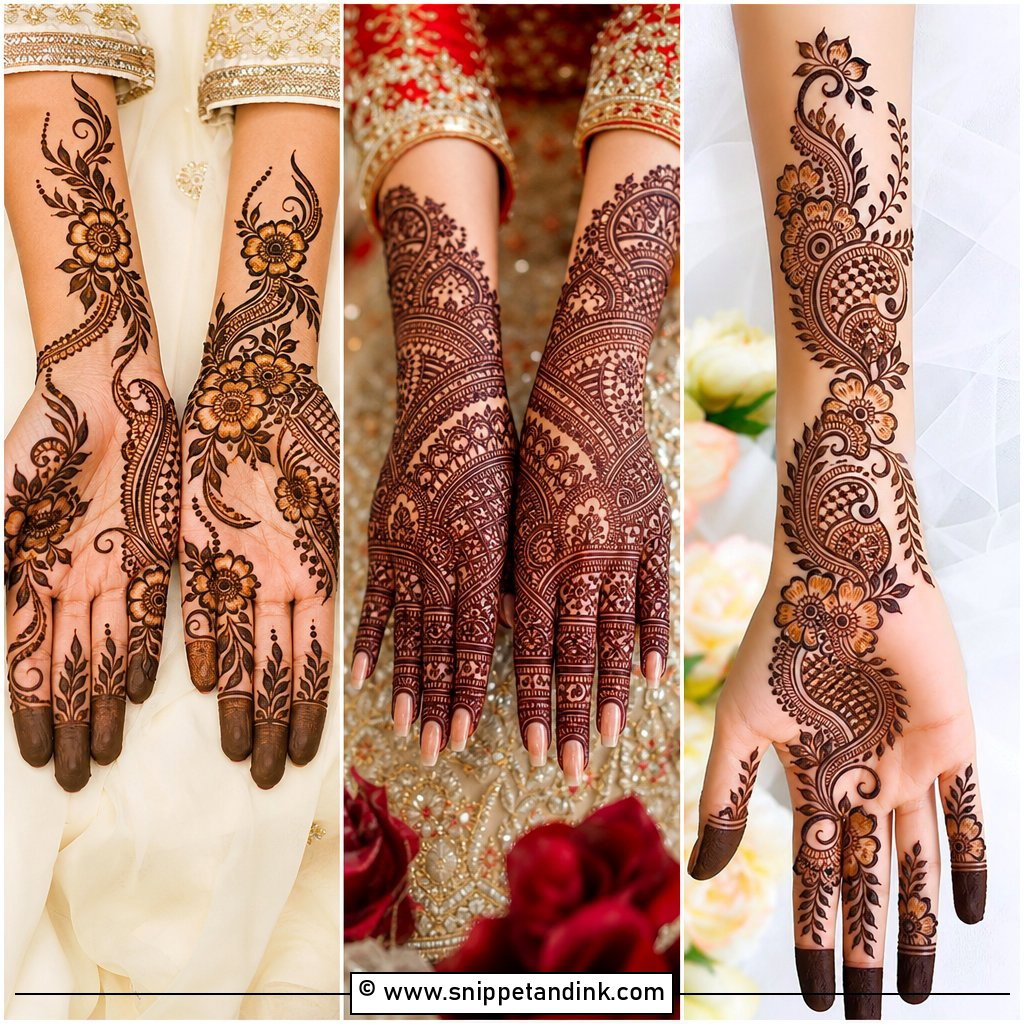
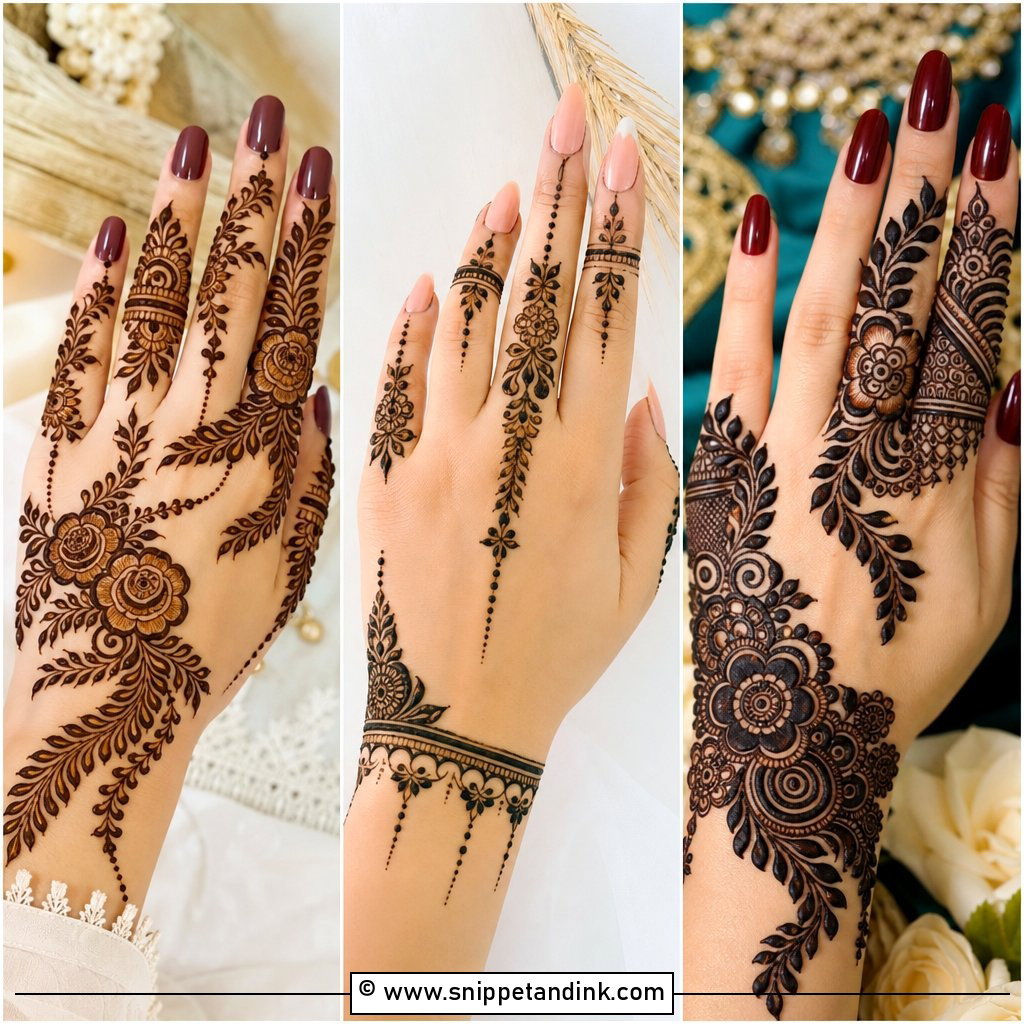
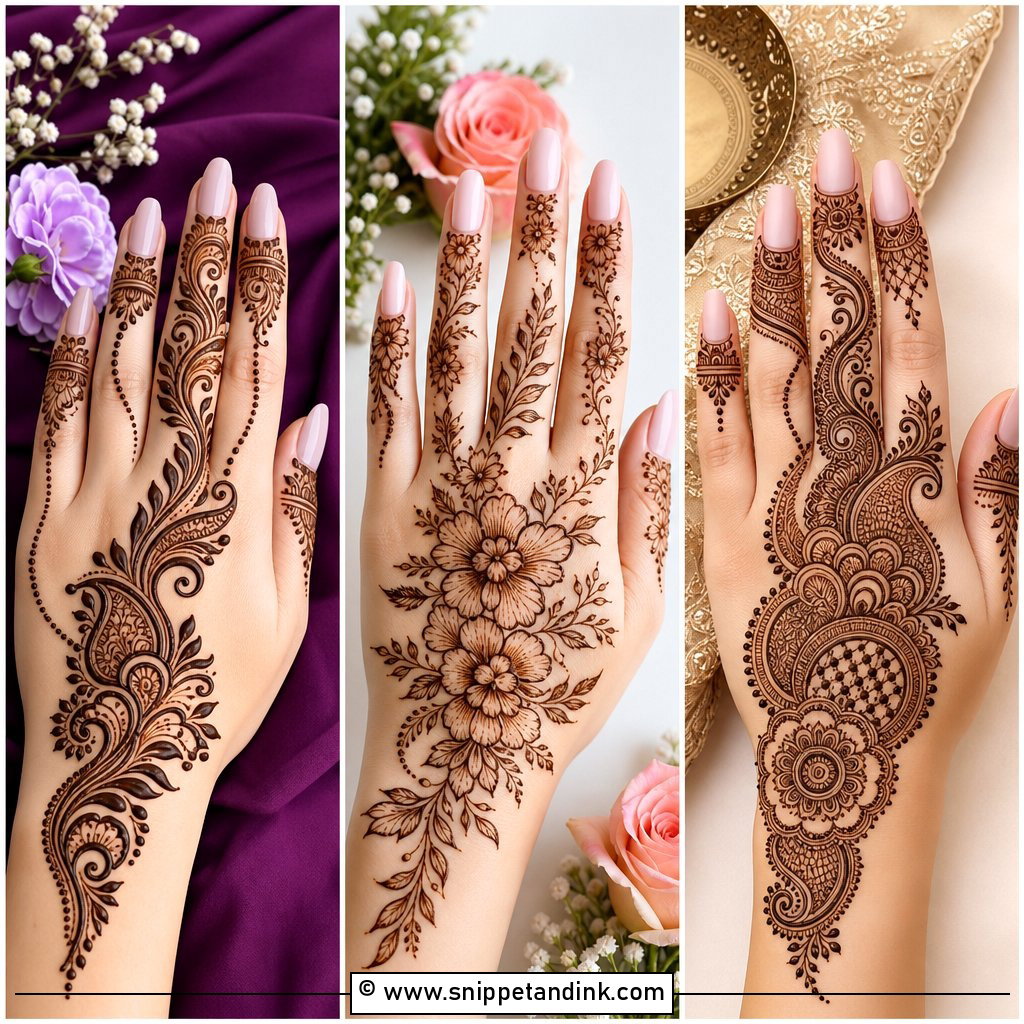
Arabic layouts start at one side of the wrist and travel diagonally across the hand toward the index finger, with big flowers, paisleys, shaded leaves and wide gaps. The gaps are why it looks so rich: bold outlines carry a thick line of paste, and thick paste stains darker than fine filling. Keep the fingertips lightly filled or trail a vine up them. The colour deepens into a warm reddish brown over a day or two, and that contrast with bare skin is the whole effect.
3. Front Hand Aesthetic Mehndi Design
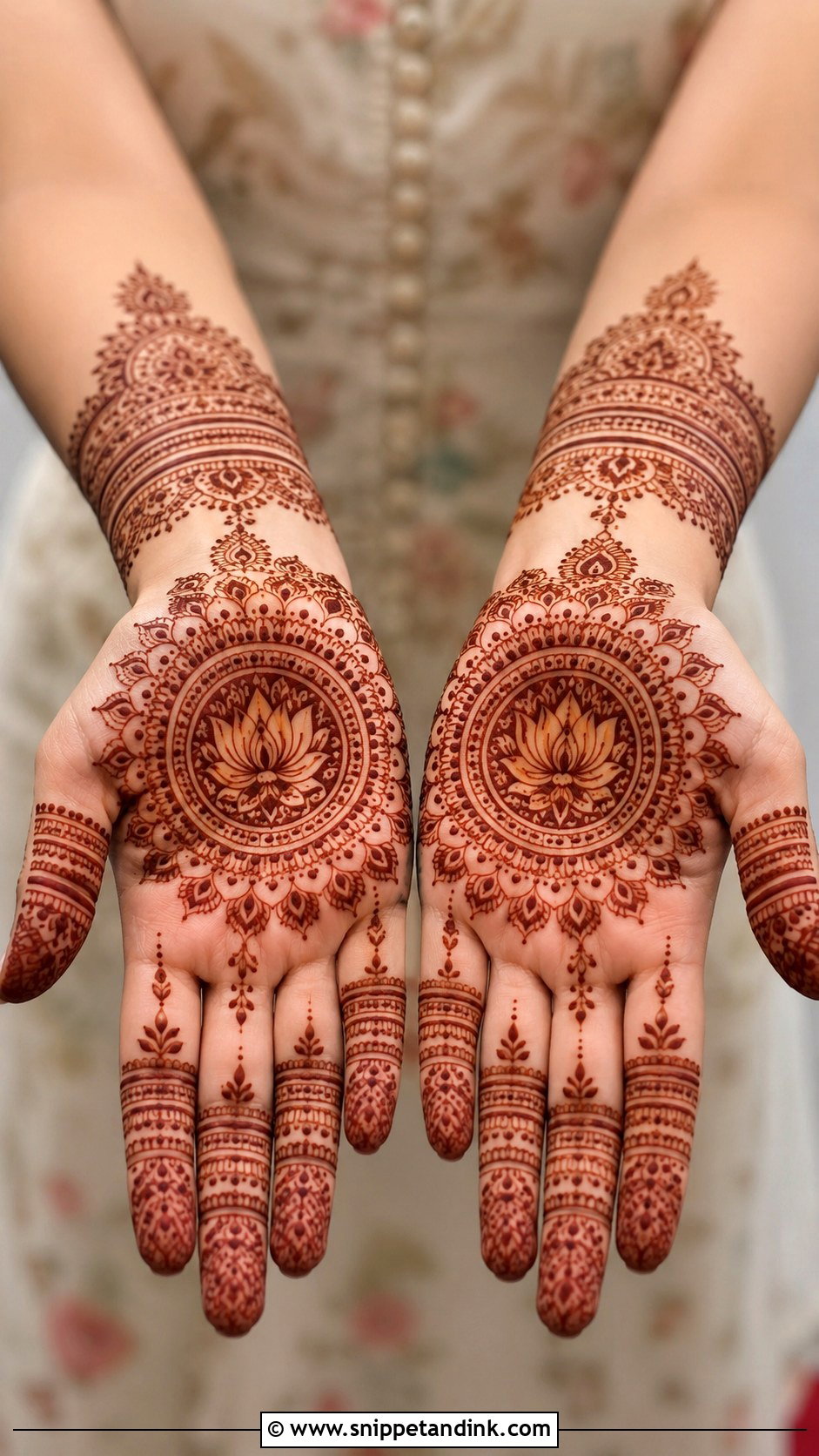
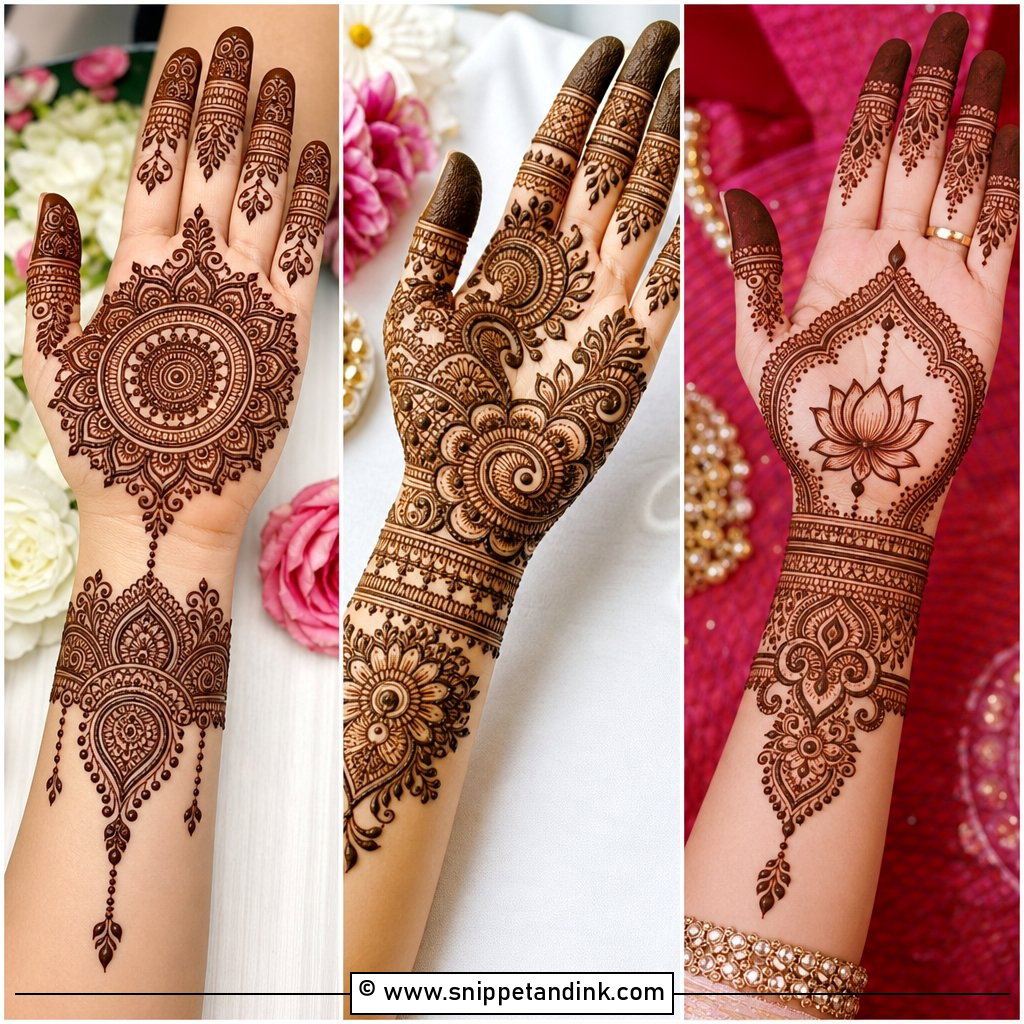
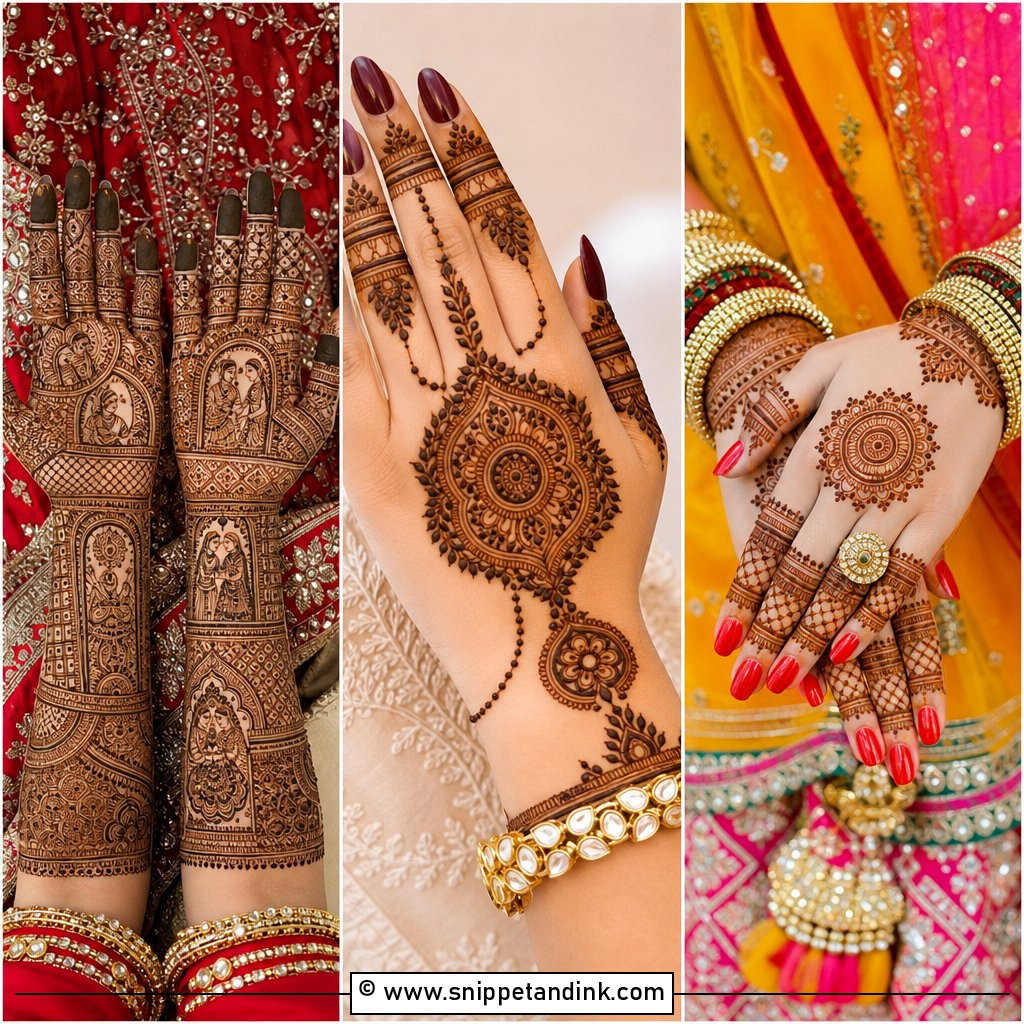
On the palm, I’d always build around one strong centre: a round mandala, a lotus or a floral medallion. Dots, tiny leaves, curved borders and small paisleys fill the space around it, and the fingers get repeated mini patterns. Palms stain the darkest of any part of the hand, so a palm design reads boldly even when it is fairly simple. Keep the fingers less crowded than the centre.
4. Back Hand Aesthetic Mehndi Design
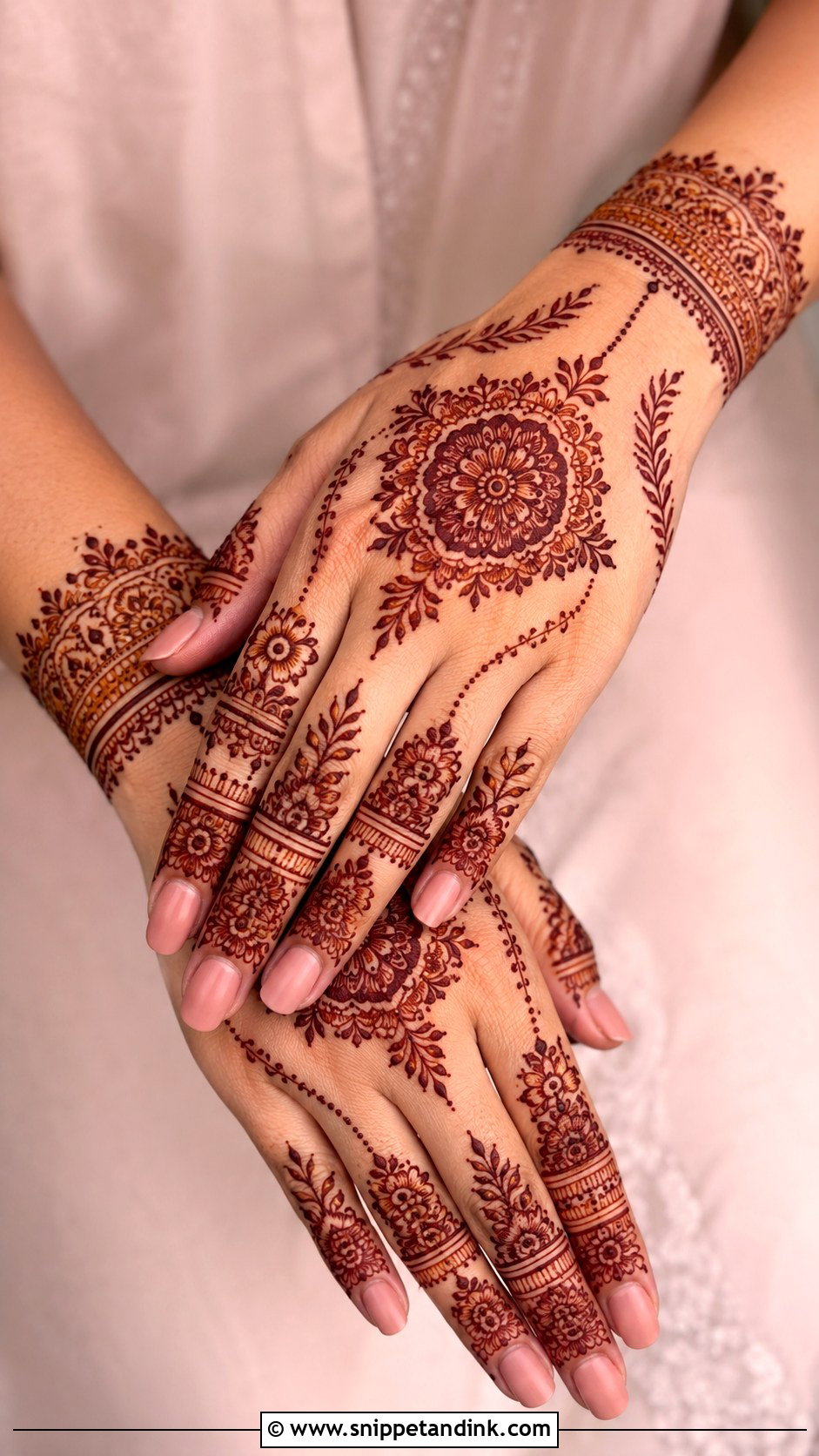
The back of the hand is where most people see your henna, so it gets photographed most. A back hand aesthetic mehndi design often has a bracelet band at the wrist, a central flower or mandala, and fingers joined by slim chains or dotted lines, like jewellery. Remember that this side stains lighter than the palm, so I keep outlines a little bolder here. Leave small gaps between the wrist, centre and fingers so each part reads separately.
5. Full Hand Aesthetic Mehndi Design
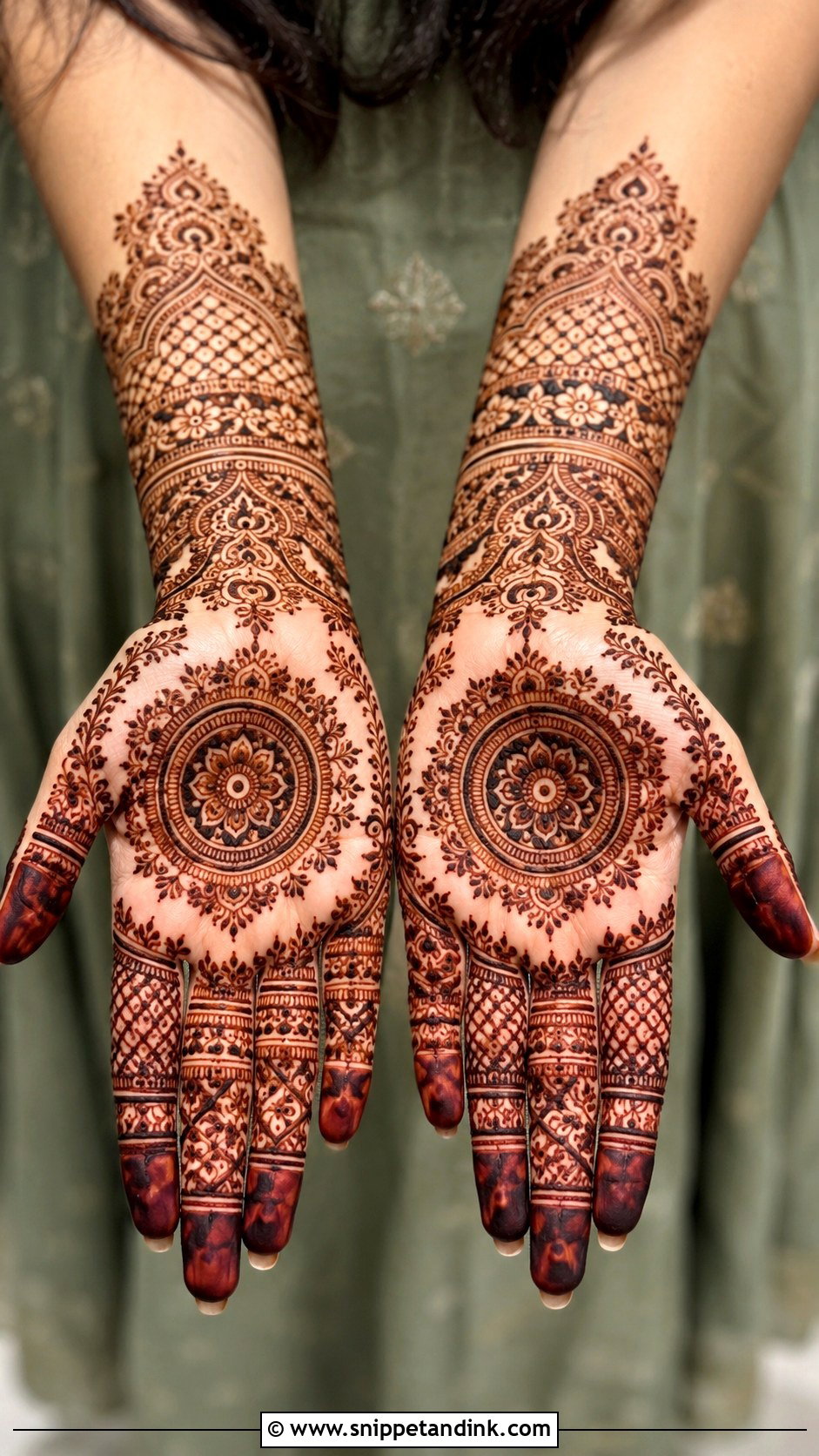
Full coverage runs over the palm, fingers, wrist and sometimes forearm. A full hand aesthetic mehndi design stays neat because it is planned in zones: a mandala on the palm, paisleys near the wrist, a jaali band, detailed fingertips. Heavy zones sit next to lighter ones. If every zone is equally dense, the stain merges into one dark mass and the detail disappears. It suits bridesmaids and close family at weddings.
6. Minimal Aesthetic Mehndi Design
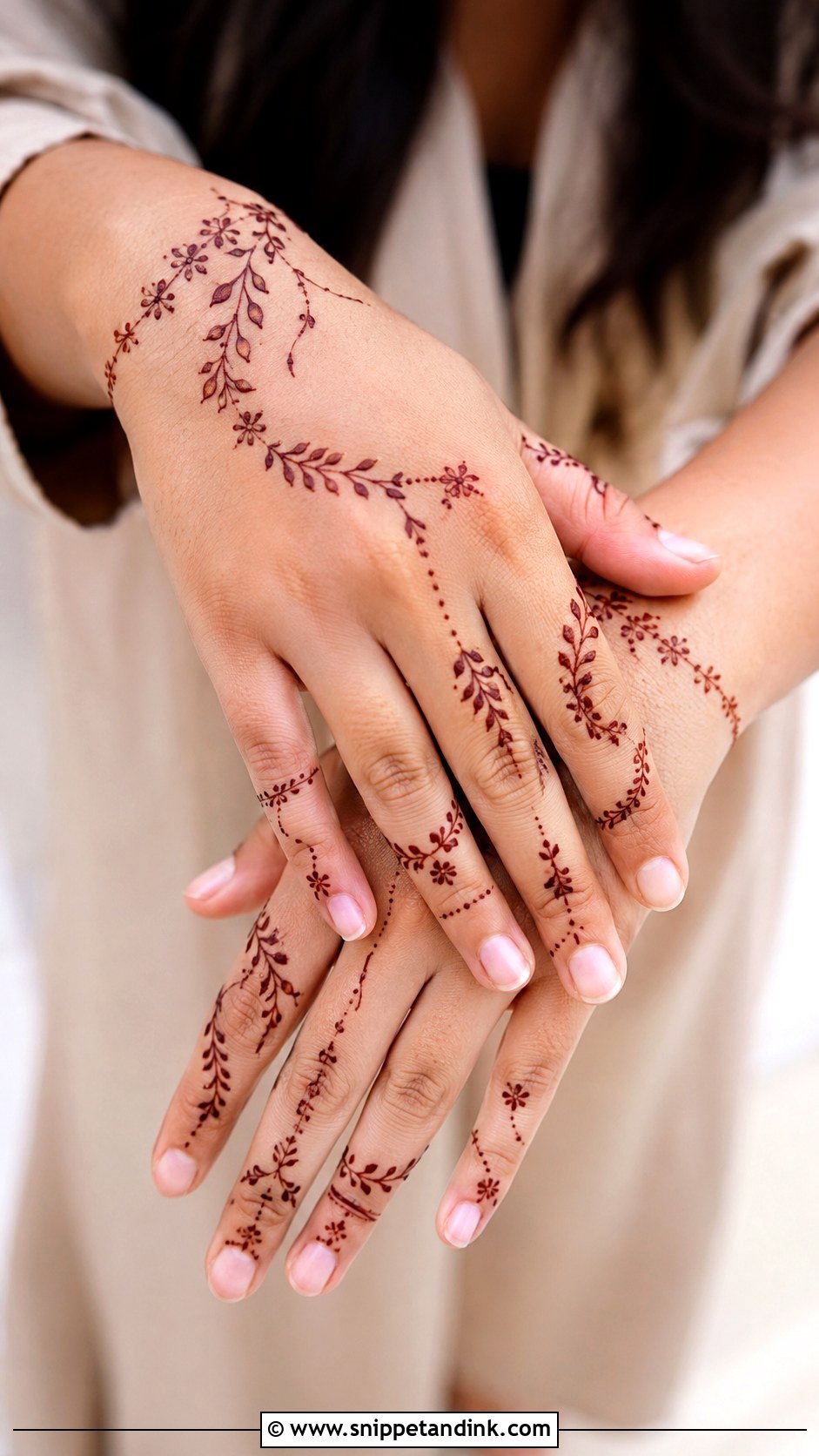
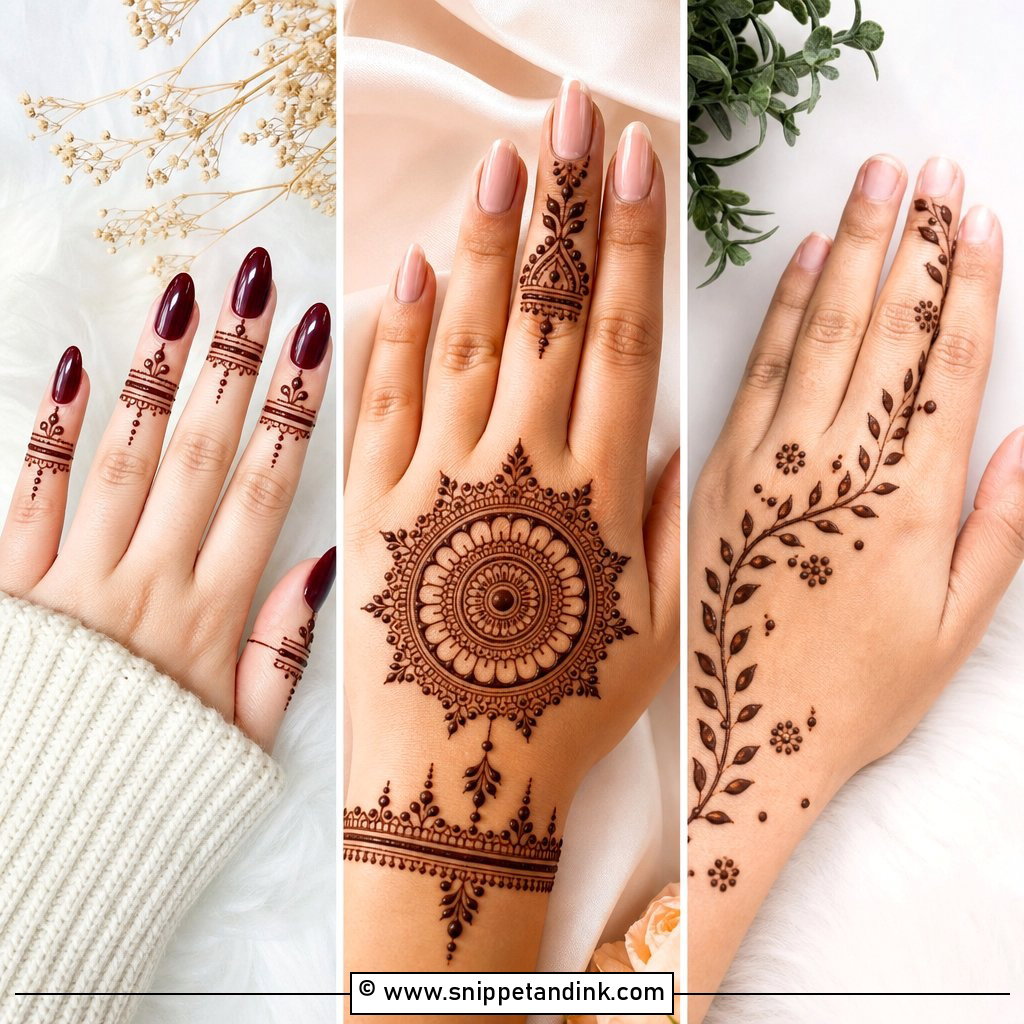
Minimal henna covers just the fingers, one side of the hand or a small patch at the wrist with thin vines, tiny flowers and dots. It should look like fine jewellery. I use the finest tip I have and keep the paste a touch thicker so lines don’t spread. It’s the design I recommend for anyone who has to go back to work the next day, and it adapts to any hand size.
7. Bridal Aesthetic Mehndi Design
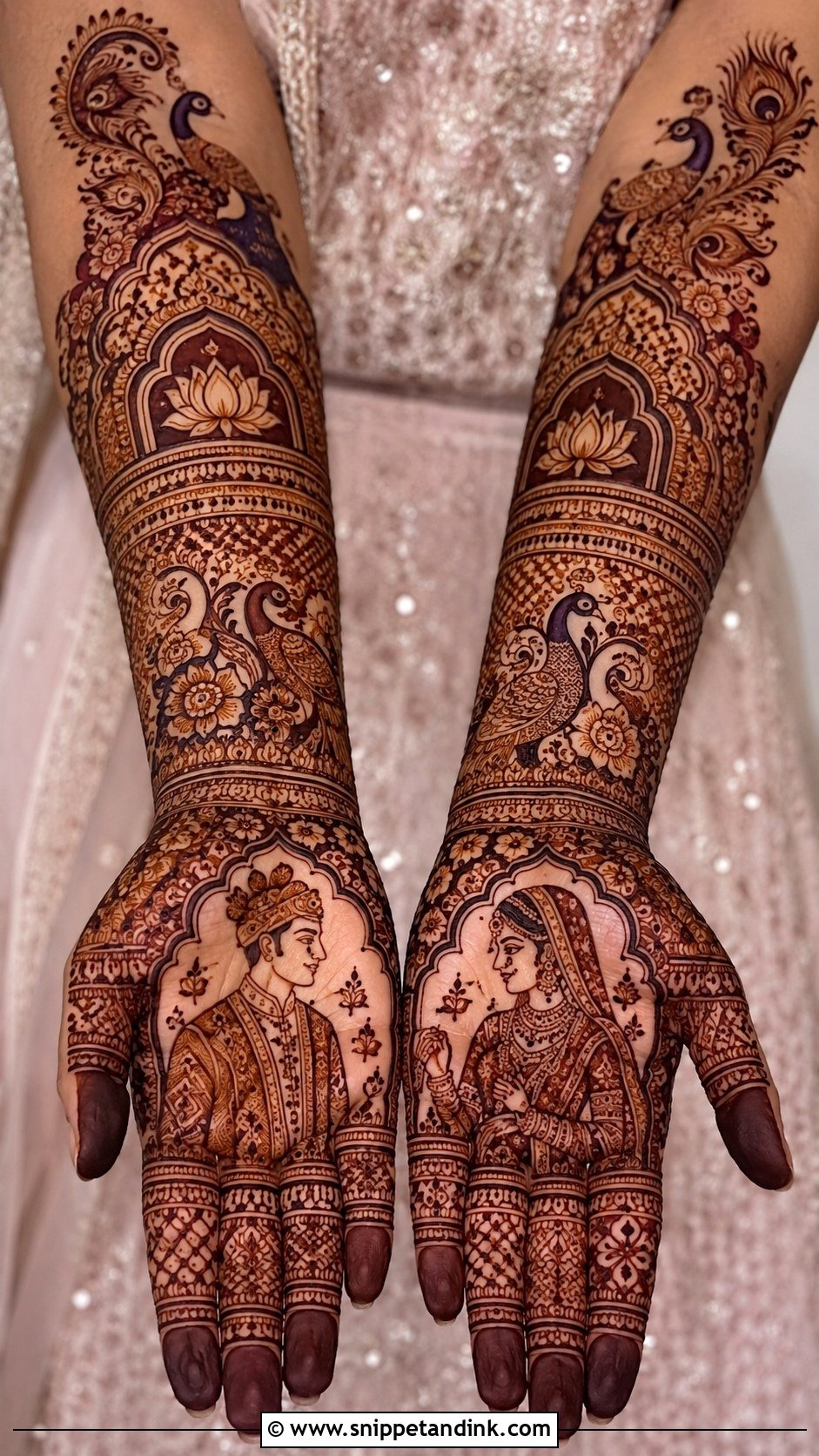
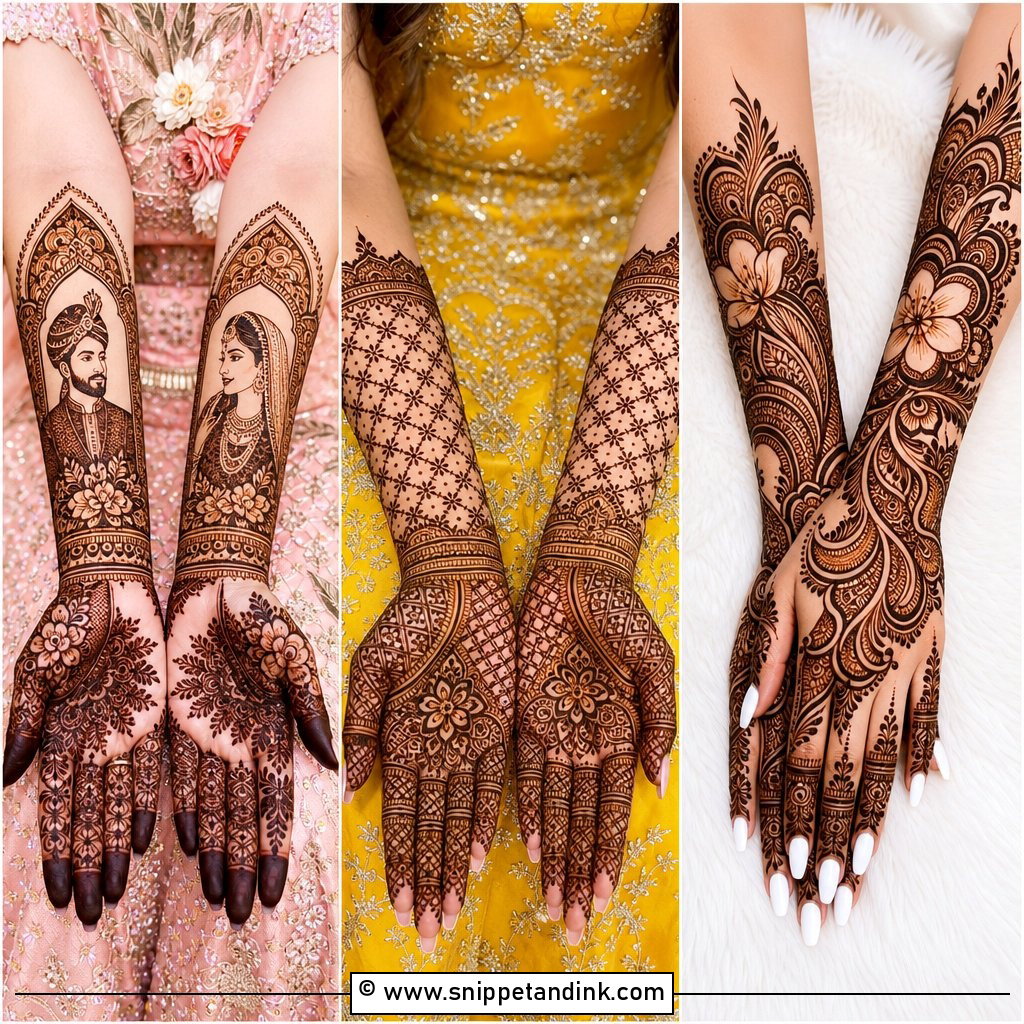
Bridal work combines heavy tradition with clear structure: peacocks, lotus, dulha-dulhan figures, paisleys, mandalas and fine filler, running from fingertips to forearms. Many brides now want dense sections broken up by open space so the hands look clear in close-ups. Initials or small wedding symbols can be hidden inside the pattern, which guests love searching for. A full bridal design takes hours, and the stain needs two days to reach its darkest, so it is applied a day or two before the wedding.
8. Modern Aesthetic Mehndi Design
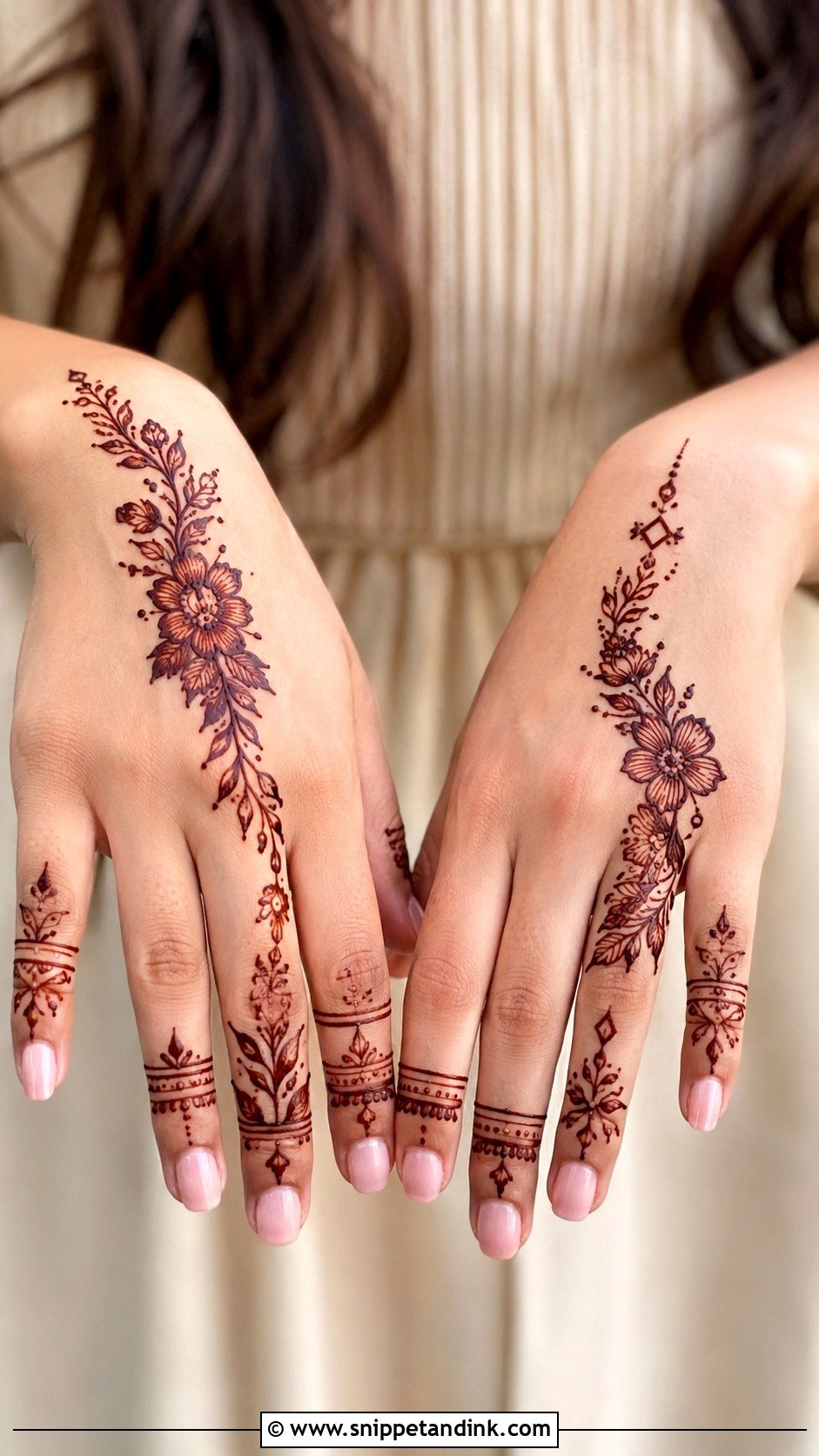
Modern layouts break the traditional symmetry: asymmetric placement, finger-heavy detail, half-hand coverage or a single bold trail on one side. A geometric line from wrist to finger also fits. I still use classic motifs, just arranged with more space around them. Sharp outlines matter more here than anywhere, because there is no filling to hide a wobble. It pairs well with simple outfits that need one striking detail.
9. Mandala Aesthetic Mehndi Design
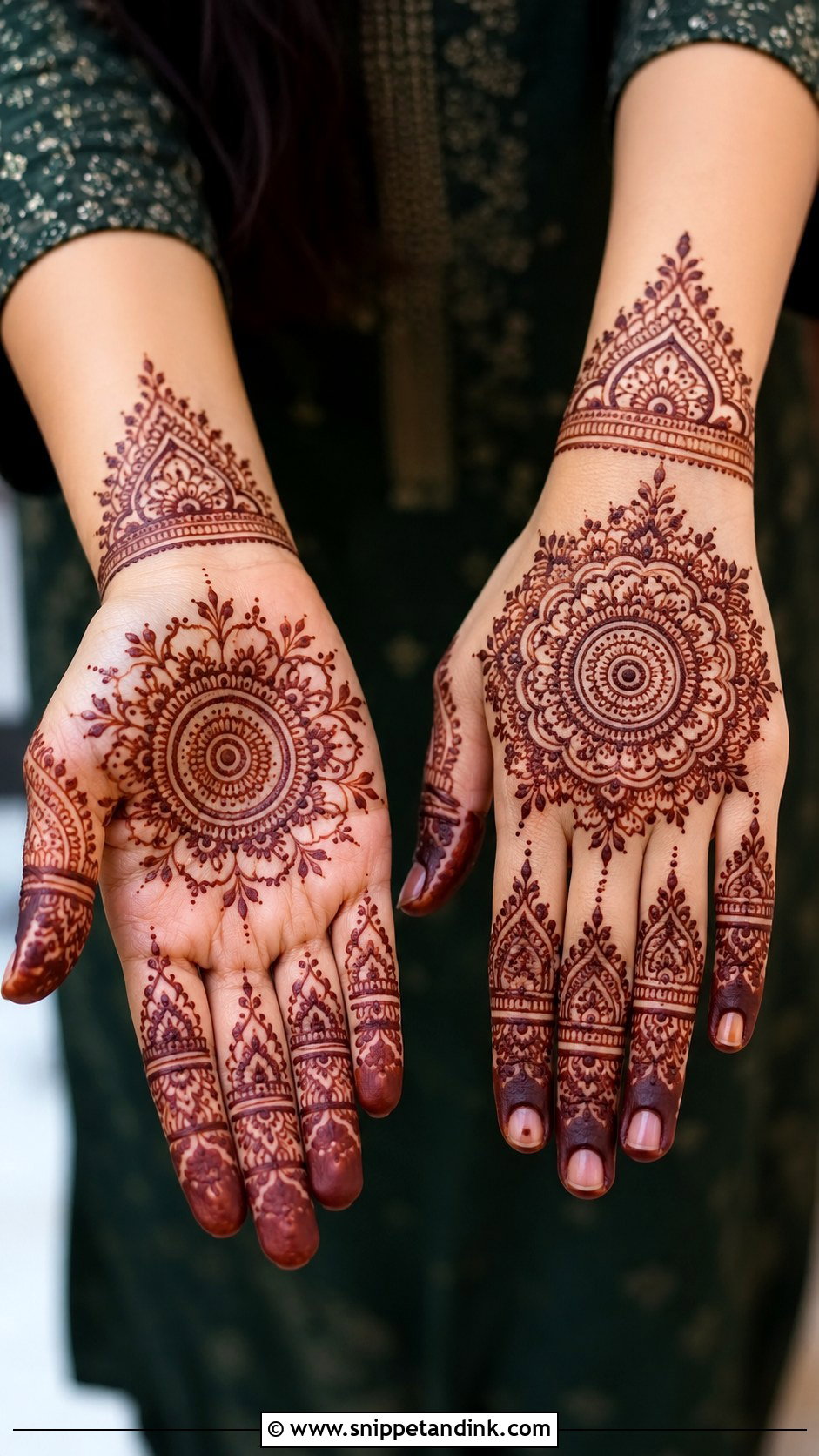
A mandala gives instant symmetry, in the centre of the palm or on the back of the hand, with matching bands, dots and petals on the fingers. It can be one ring or many. On small hands a single clean mandala looks far better than a full pattern, because it gives focus without crowding. I start from the centre dot and work outward ring by ring, turning the hand rather than my wrist, so the circle stays even.
10. Floral Aesthetic Mehndi Design
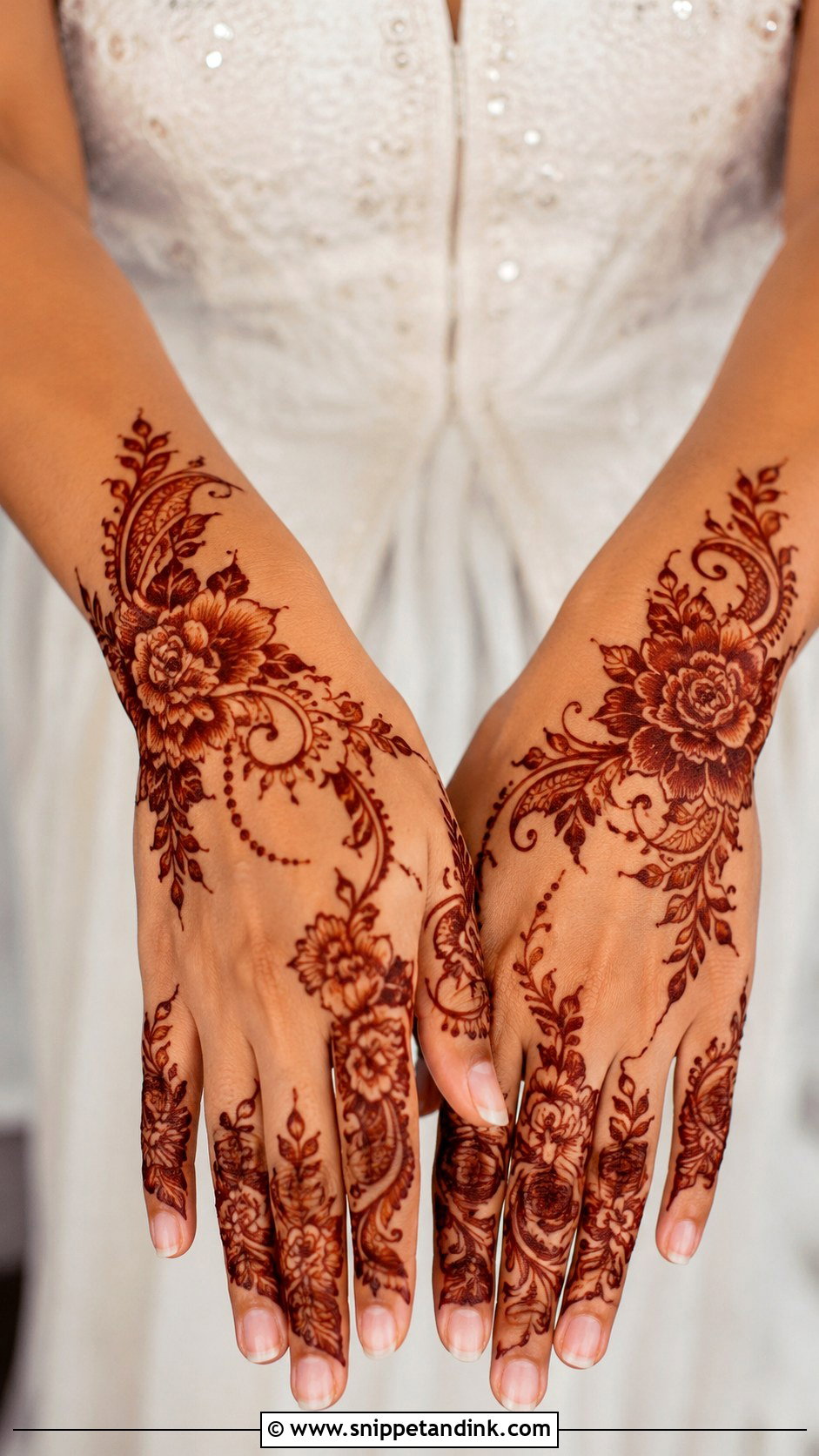
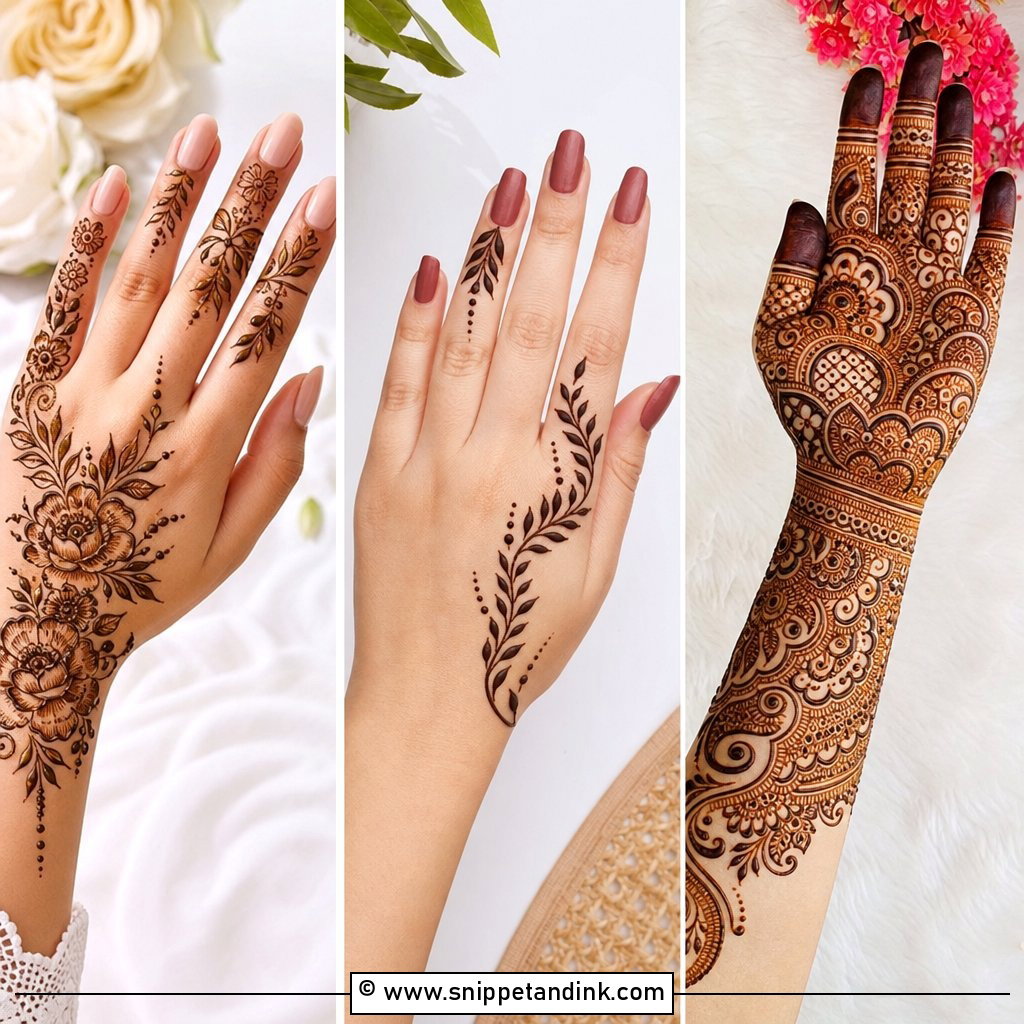
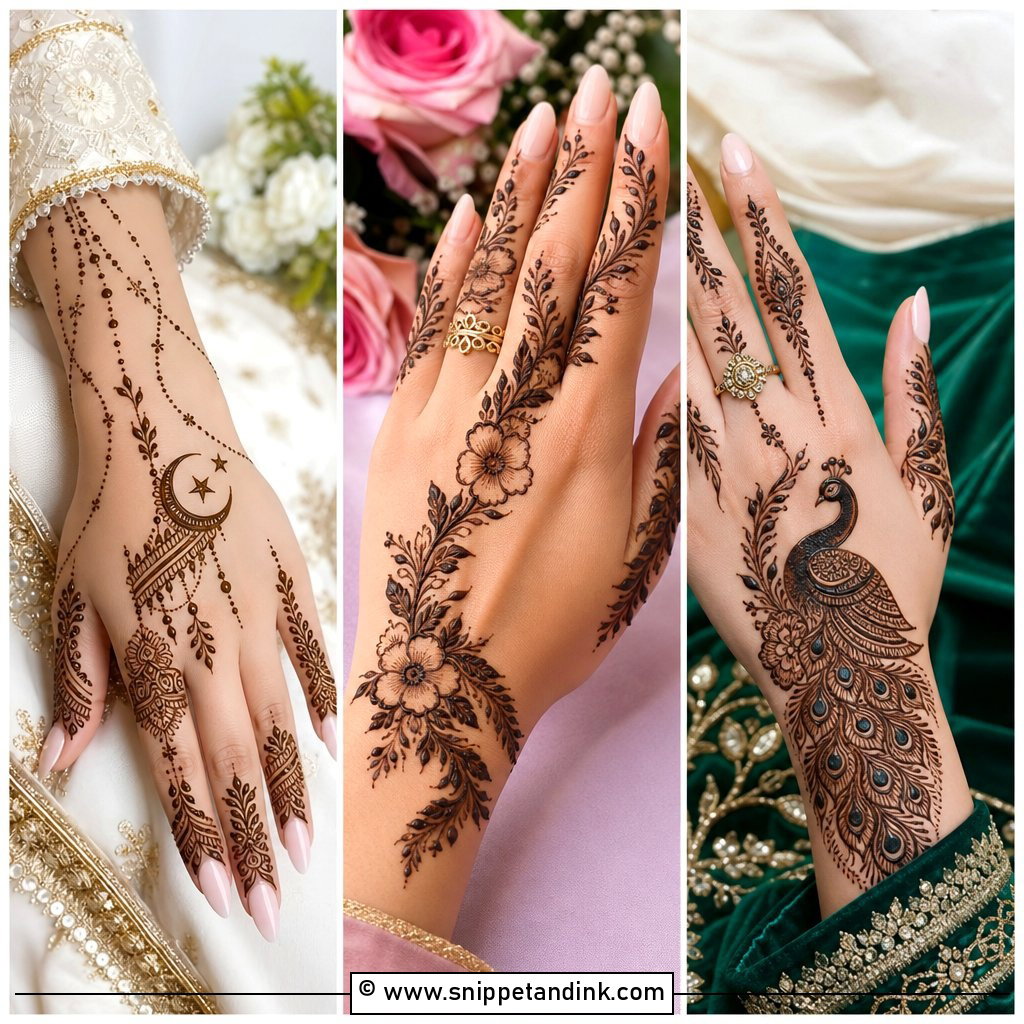
Floral designs are the most adaptable: a diagonal trail across the back, a centred palm bloom or a wrist-to-finger vine. Large flowers lean Arabic; small clusters feel more Indian. Shaded leaves and dotted trails fill it out without weight. My one suggestion for a calmer look is to repeat a single flower shape across the hand rather than drawing five different blooms.
11. Rose Aesthetic Mehndi Design
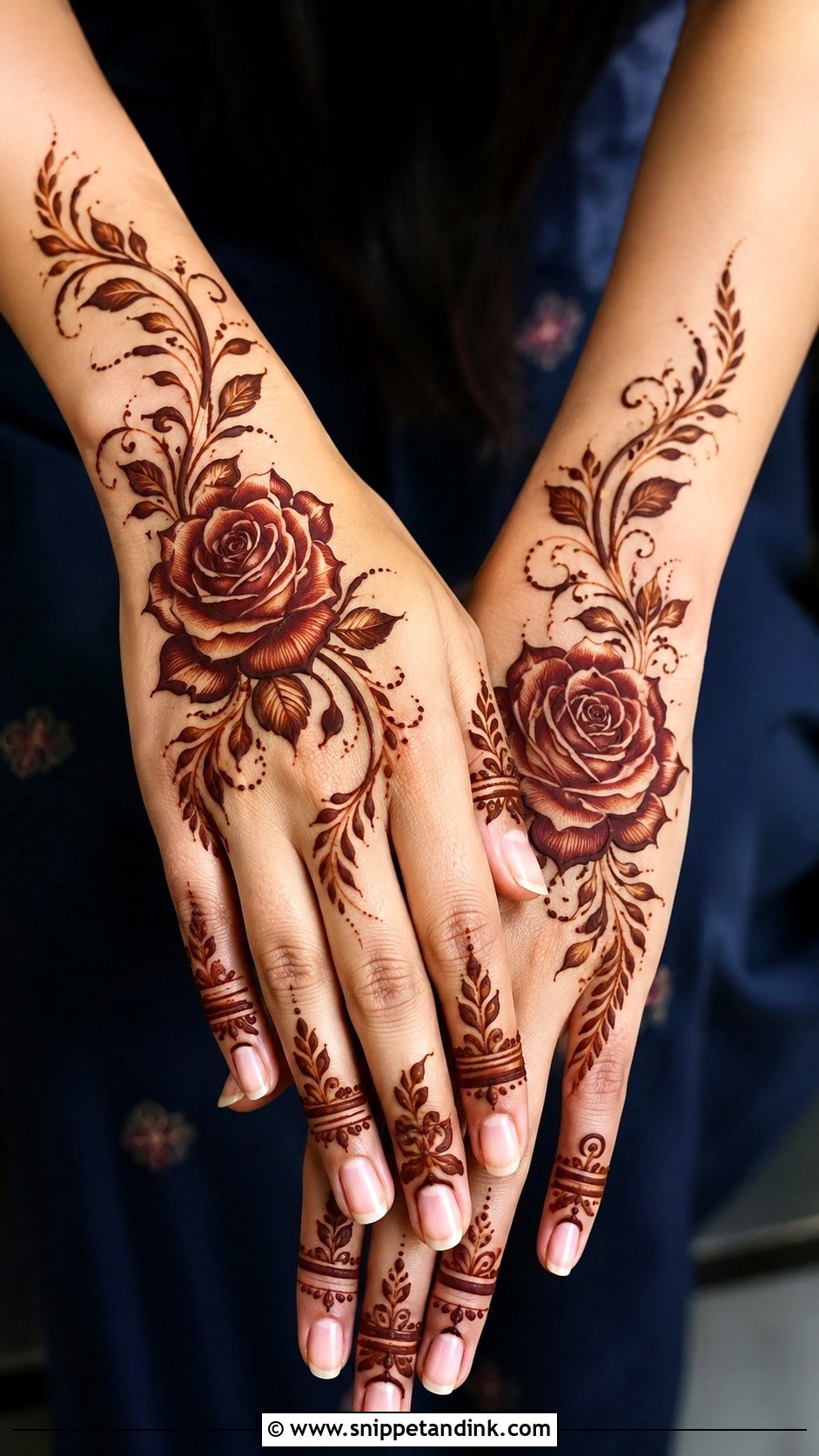
Roses are the hardest flower to draw convincingly in henna, because the petals spiral and the cone has to change pressure as it turns. One or two large blooms with curved leaves on the back of the hand is the classic layout. Light line shading inside the petals gives depth. Keep the rest of the hand simple, otherwise the rose gets lost among other motifs.
12. Lotus Aesthetic Mehndi Design
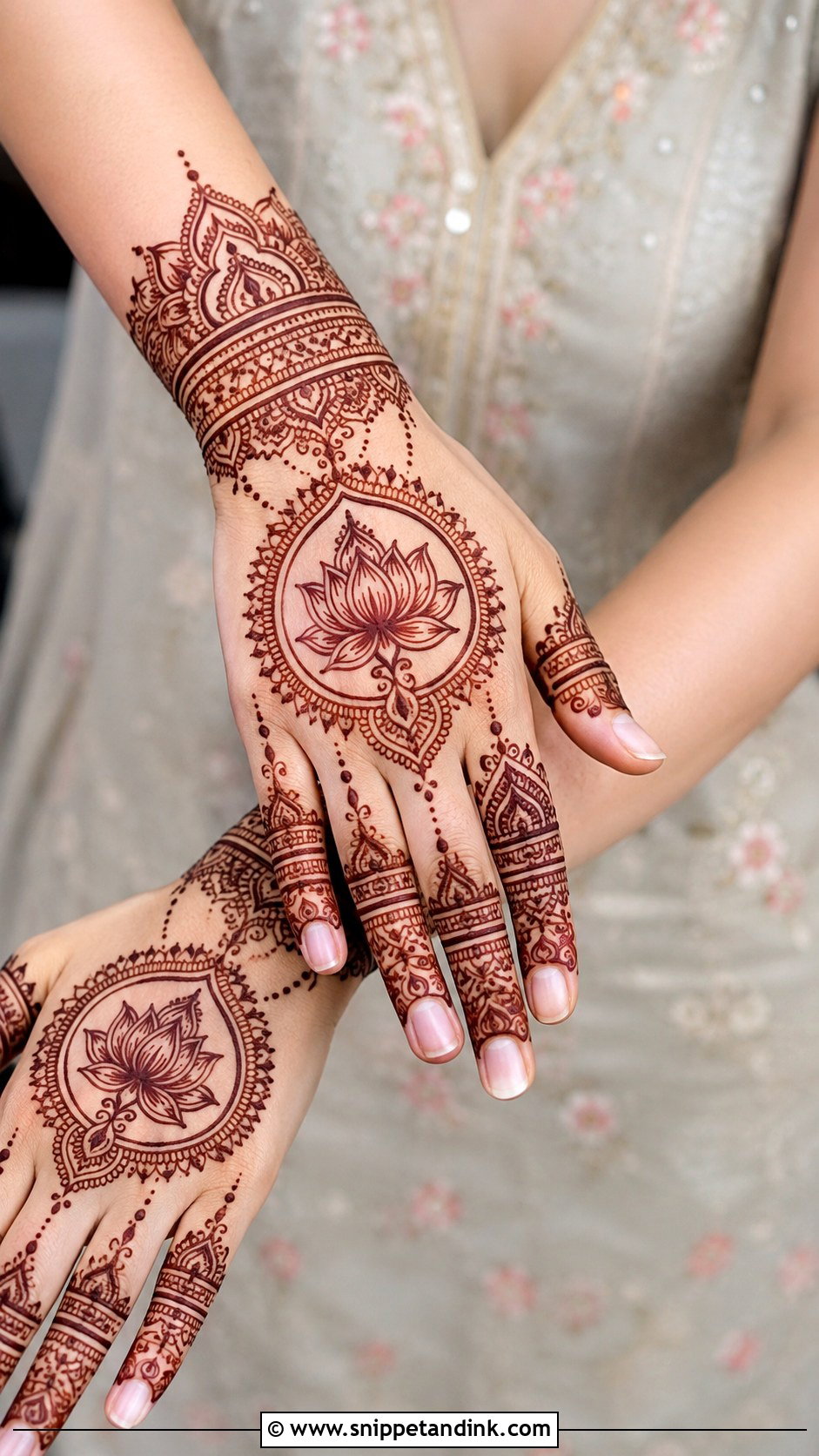
Lotus motifs suit palm centres, wrists or a back-hand trail, and they carry a ceremonial feel that fits pujas and bridal events. The layered petals sit easily beside dots, mandalas and fine borders. One lotus with slim finger details is enough for a quiet look; add paisleys and jaali for more. I always keep the petals equal in width, because an uneven lotus stands out more than almost any other motif.
13. Paisley Aesthetic Mehndi Design
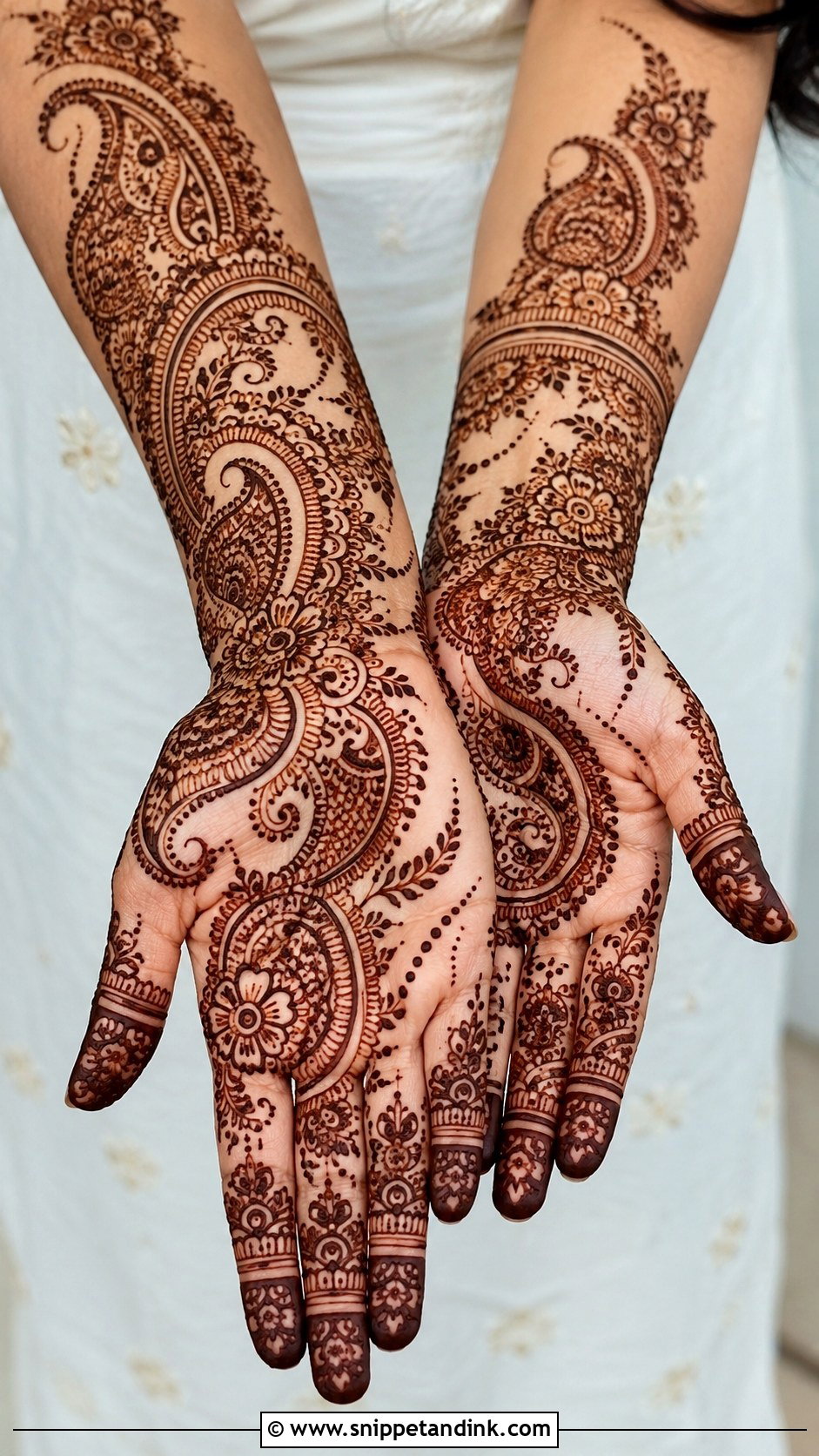
Paisley is the classic Indian shape, and it follows the curve of the hand naturally, which is why it works in diagonal trails, full palms and wrist-to-forearm layouts alike. Fill each one with tiny flowers, curved lines, dots or mesh. Two or three large paisleys are enough for a simple look. Mix sizes, and join them with leaves or dotted chains so the hand reads as one design rather than separate stamps.
14. Jaali Aesthetic Mehndi Design
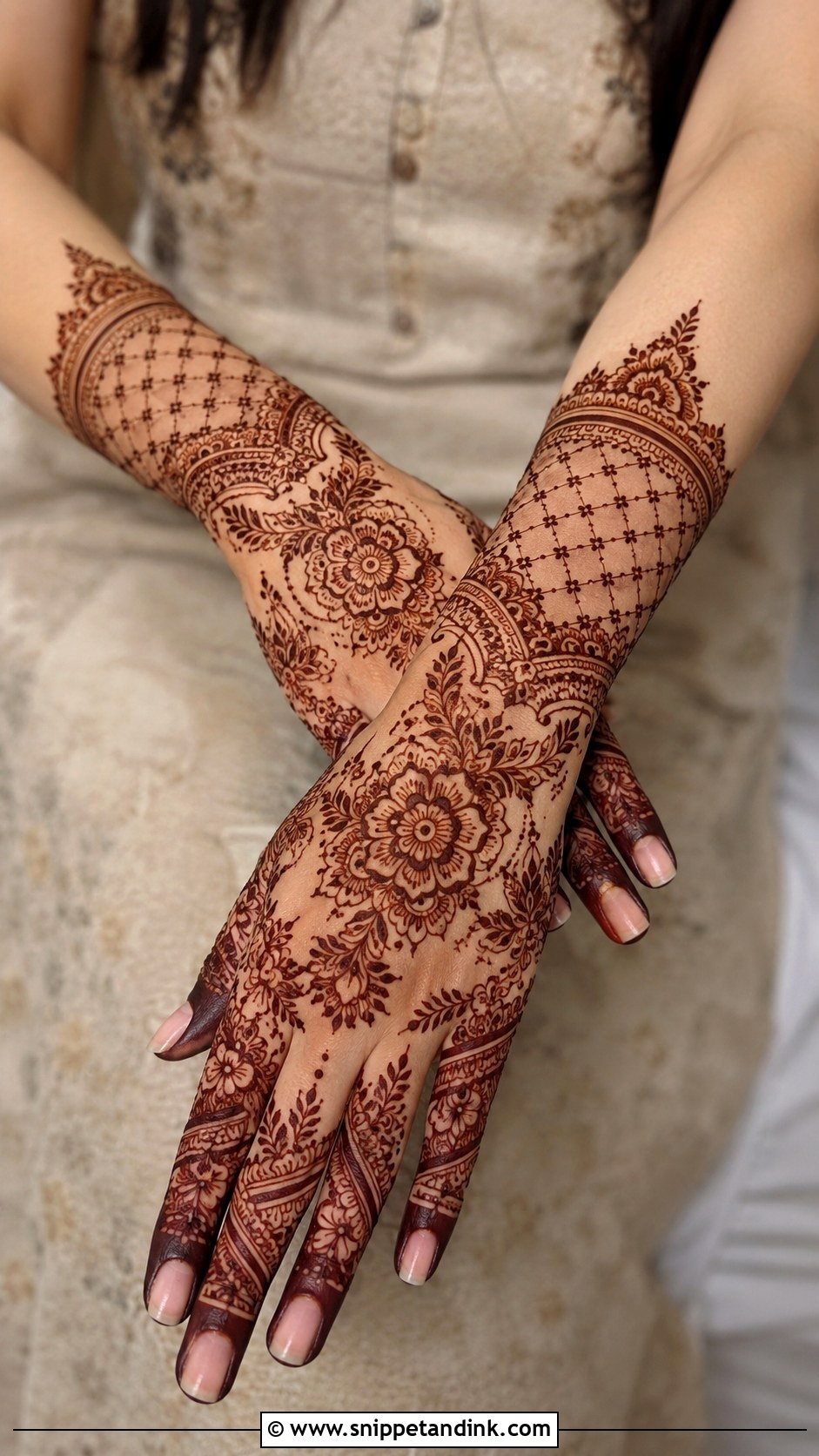
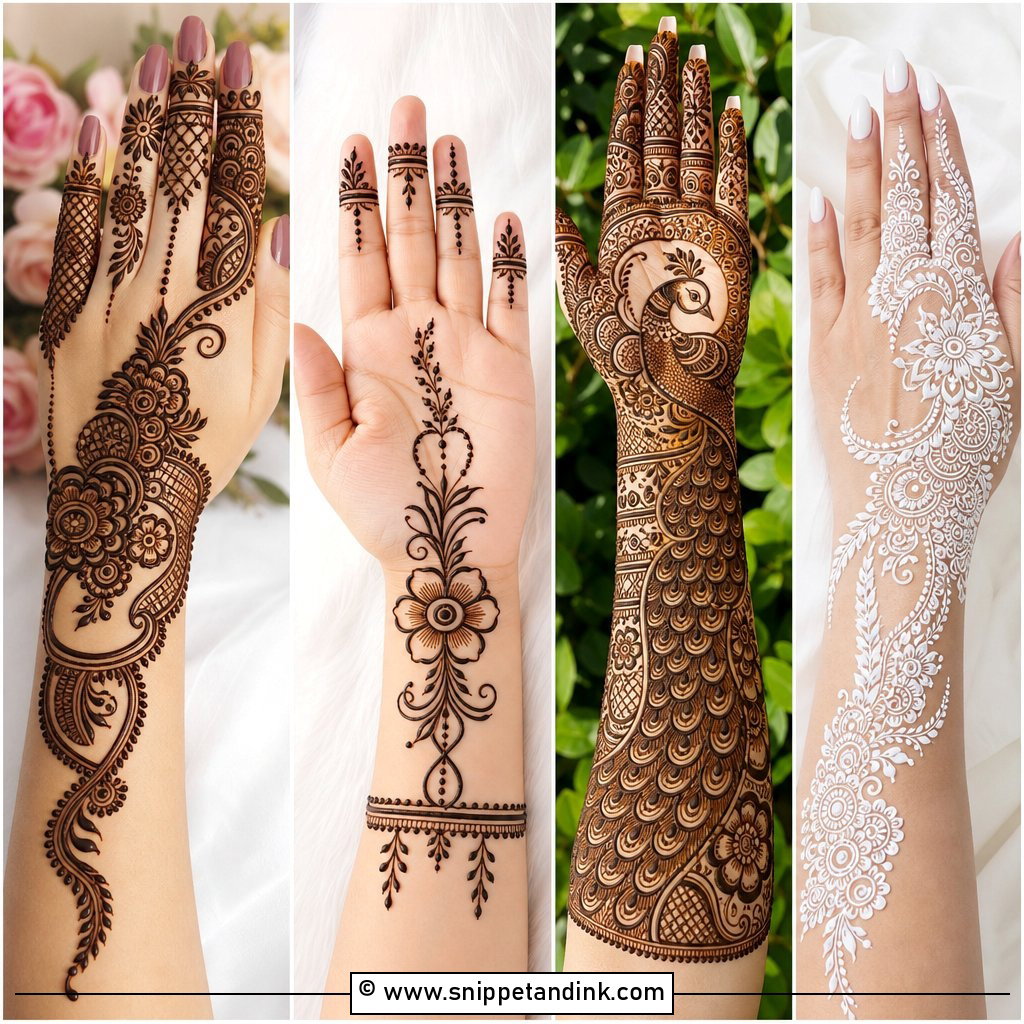
Jaali is a mesh of fine lines, sometimes diamonds, sometimes a floral net, that looks like lace on the skin. It sits best on the back of the hand, the fingers or the wrist, framing a mandala or flower. The common mistake is drawing the grid too tight. Henna lines spread slightly as they dry, and a tight mesh fills in, so I leave more space than looks necessary when the paste is wet.
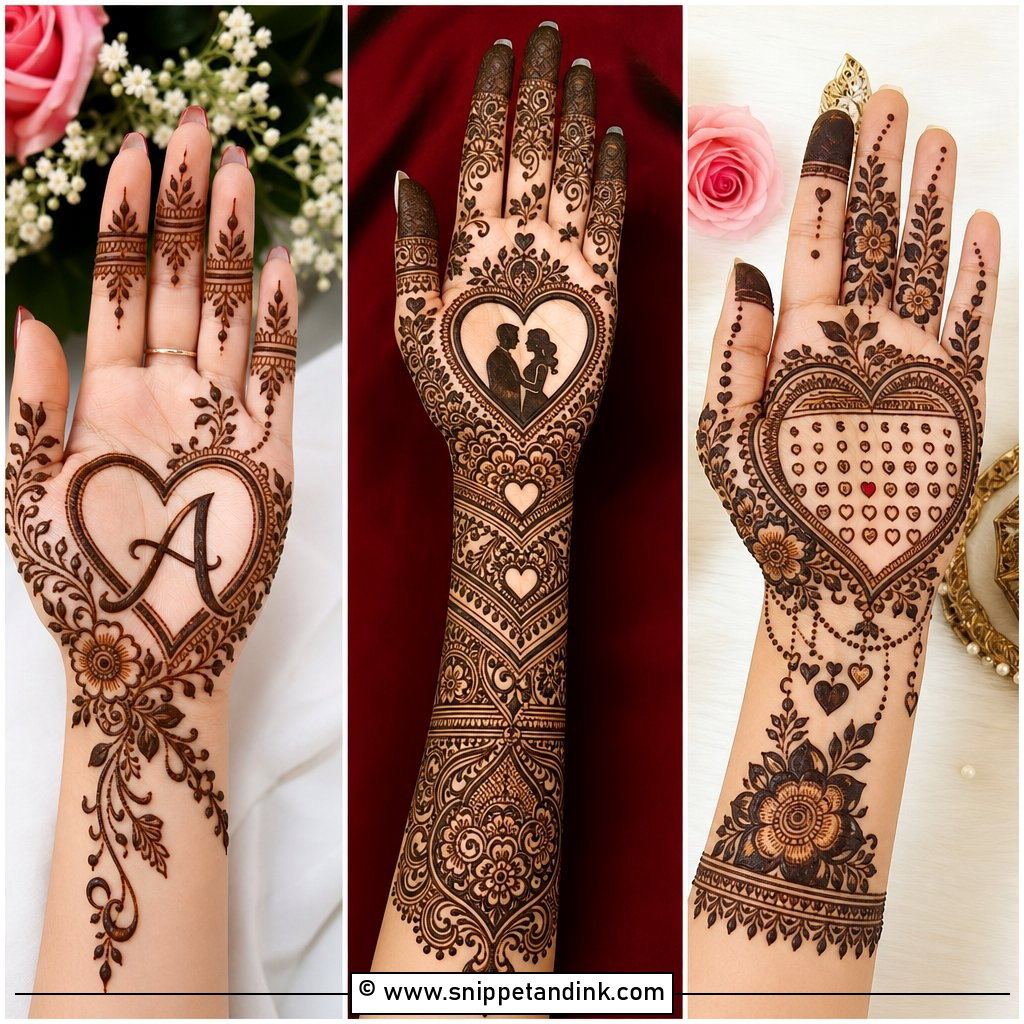
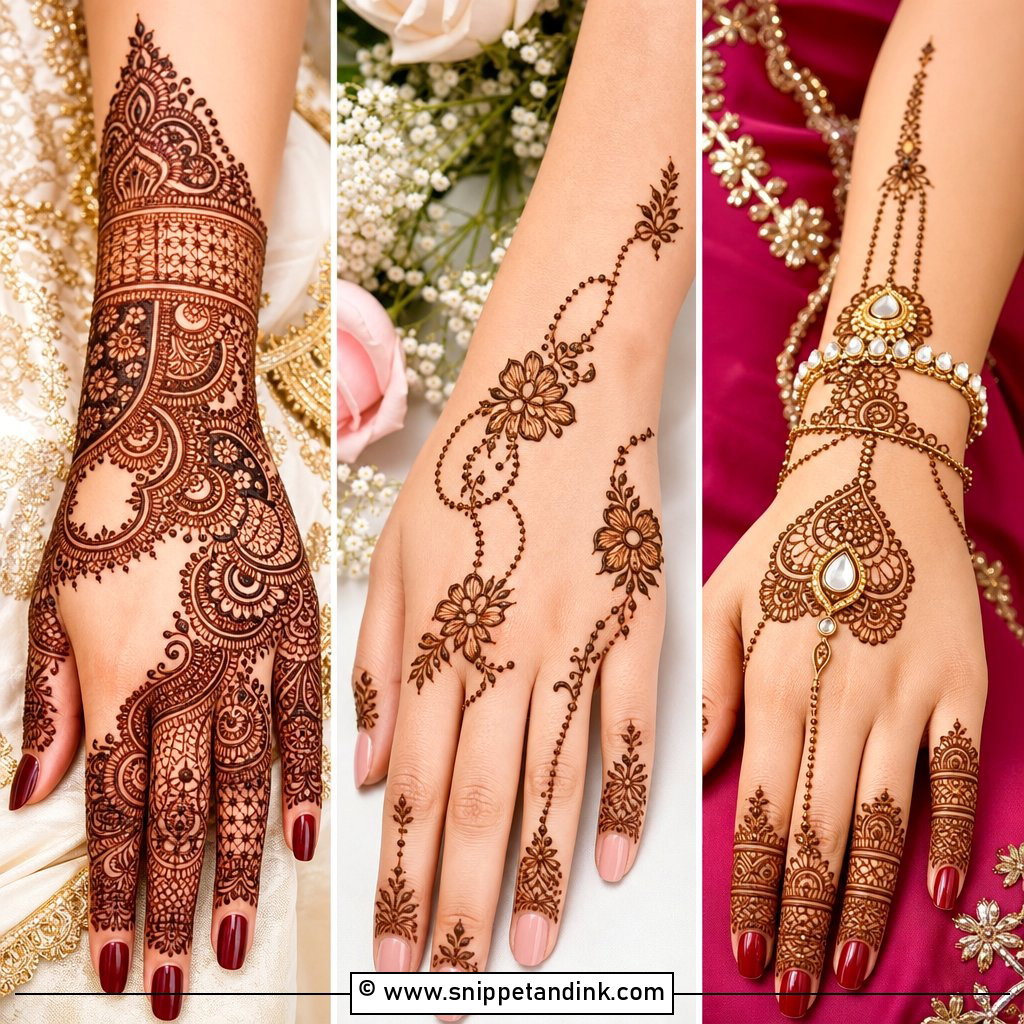
15. Finger Aesthetic Mehndi Design
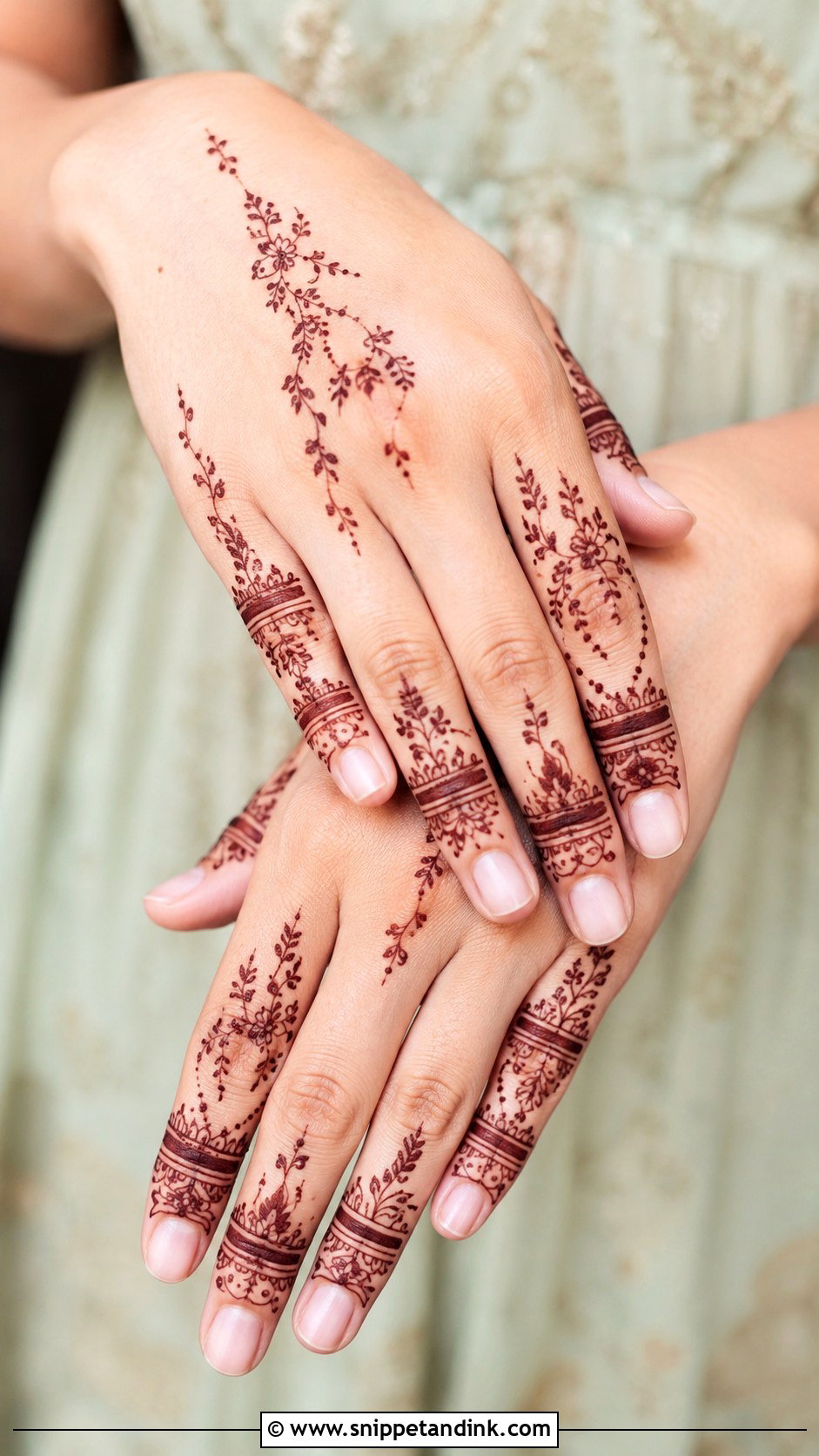
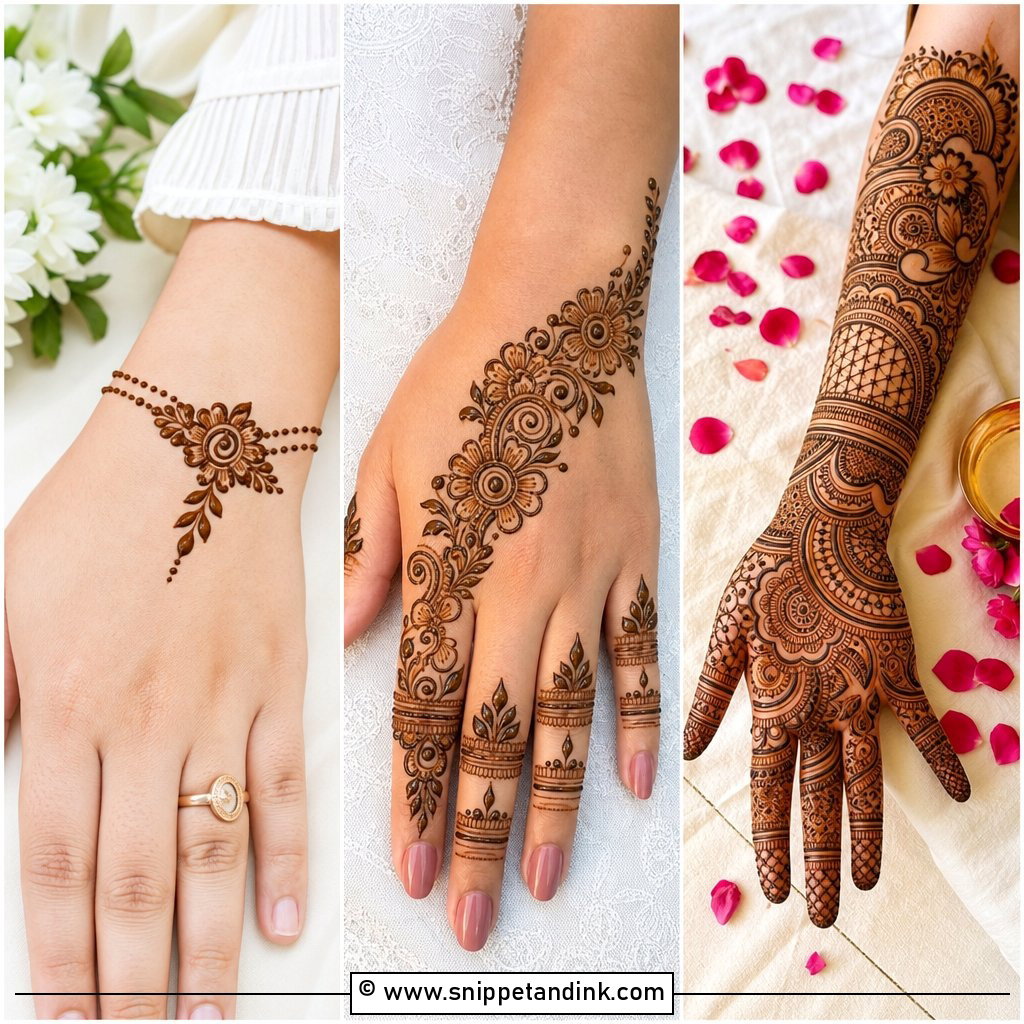
Here the fingers carry the design and the hand stays light: bands, small florals, vines, dots and fine geometric lines on each finger. A small bracelet or centre motif can tie it together. It’s quick, suits office weeks and makes rings and nail colour stand out. Keep the band spacing consistent from finger to finger, or the hand looks unfinished.
16. Bracelet Aesthetic Mehndi Design
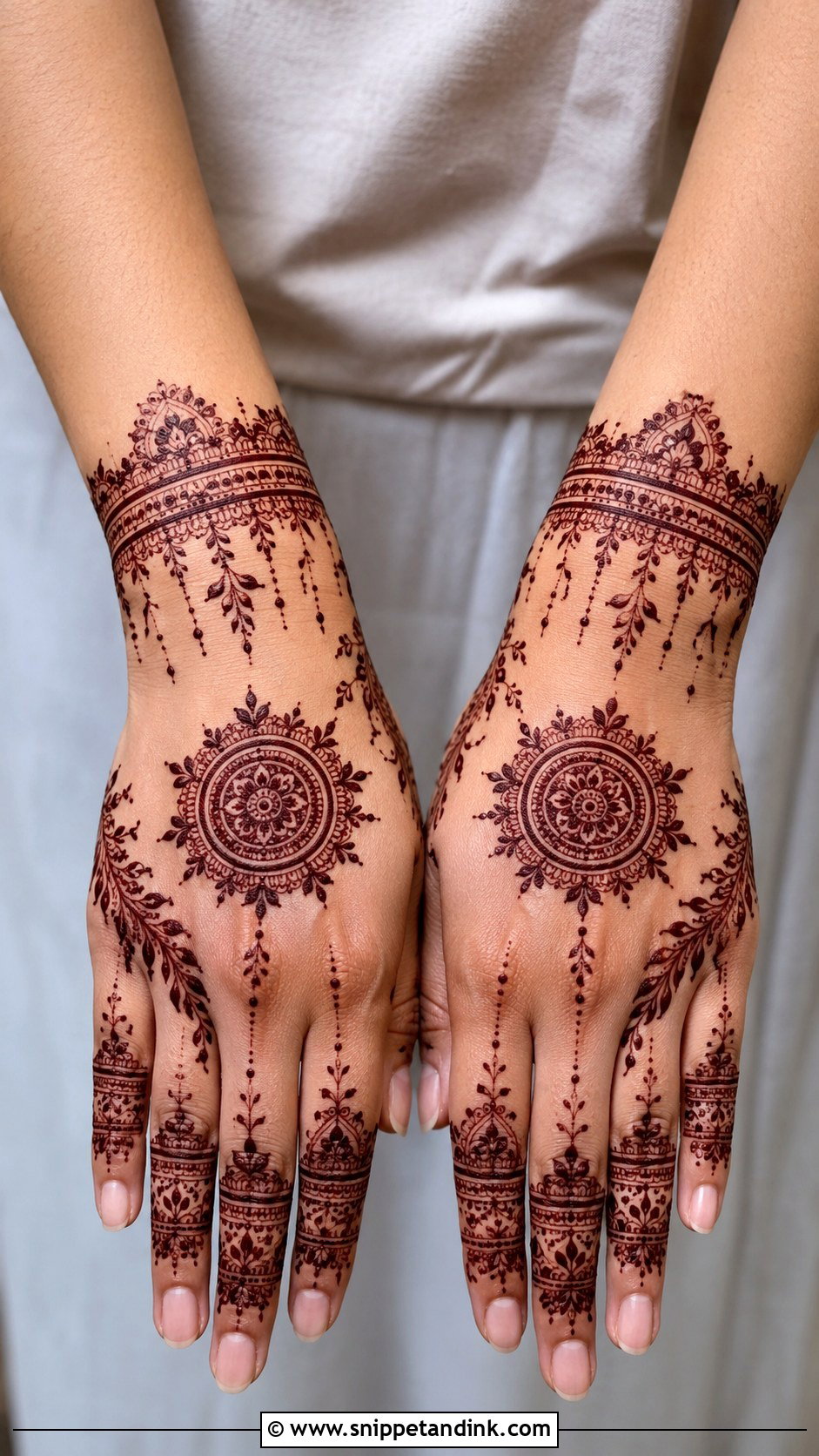
A bracelet design wraps the wrist like a cuff, chain or bangle and reaches only lightly toward the fingers, with perhaps a small mandala or hanging chain on the back of the hand. It’s ideal with a plain outfit, where the wrist detail becomes the focal point. A clean, even band is the priority. Slim finger details keep the whole thing easy to wear for days.
17. Indo Arabic Aesthetic Mehndi Design
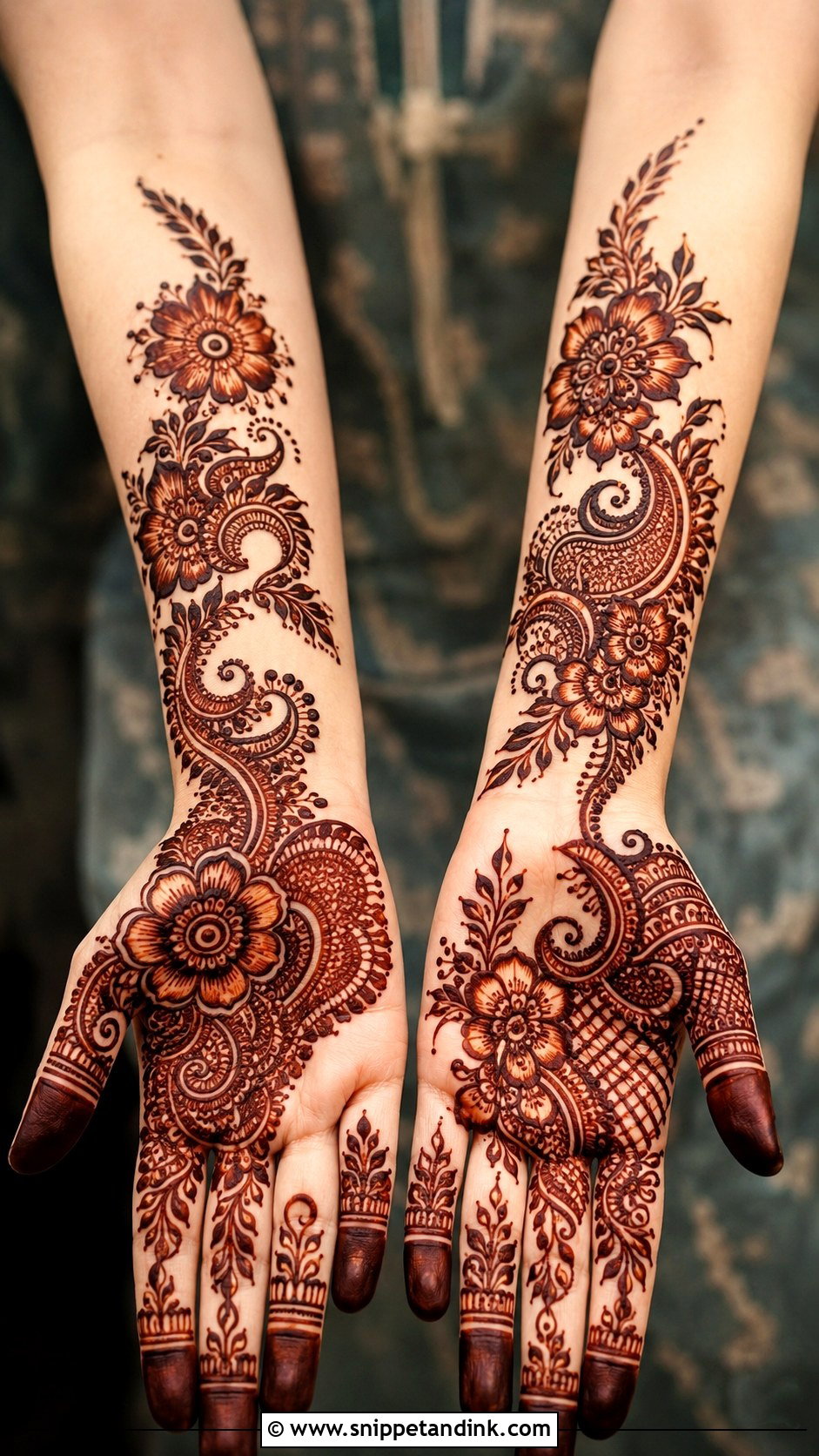
Indo-Arabic combines bold Arabic shapes with fine Indian filling inside them: large flowers, paisleys and leafy trails, with delicate lines and dots tucked into the larger motifs. It looks rich without becoming dense. I decide which three or four motifs get filled before I start, so the detail lands in planned spots. Leave one side of the hand open for a modern feel or cover more for tradition.
18. Moroccan Aesthetic Mehndi Design
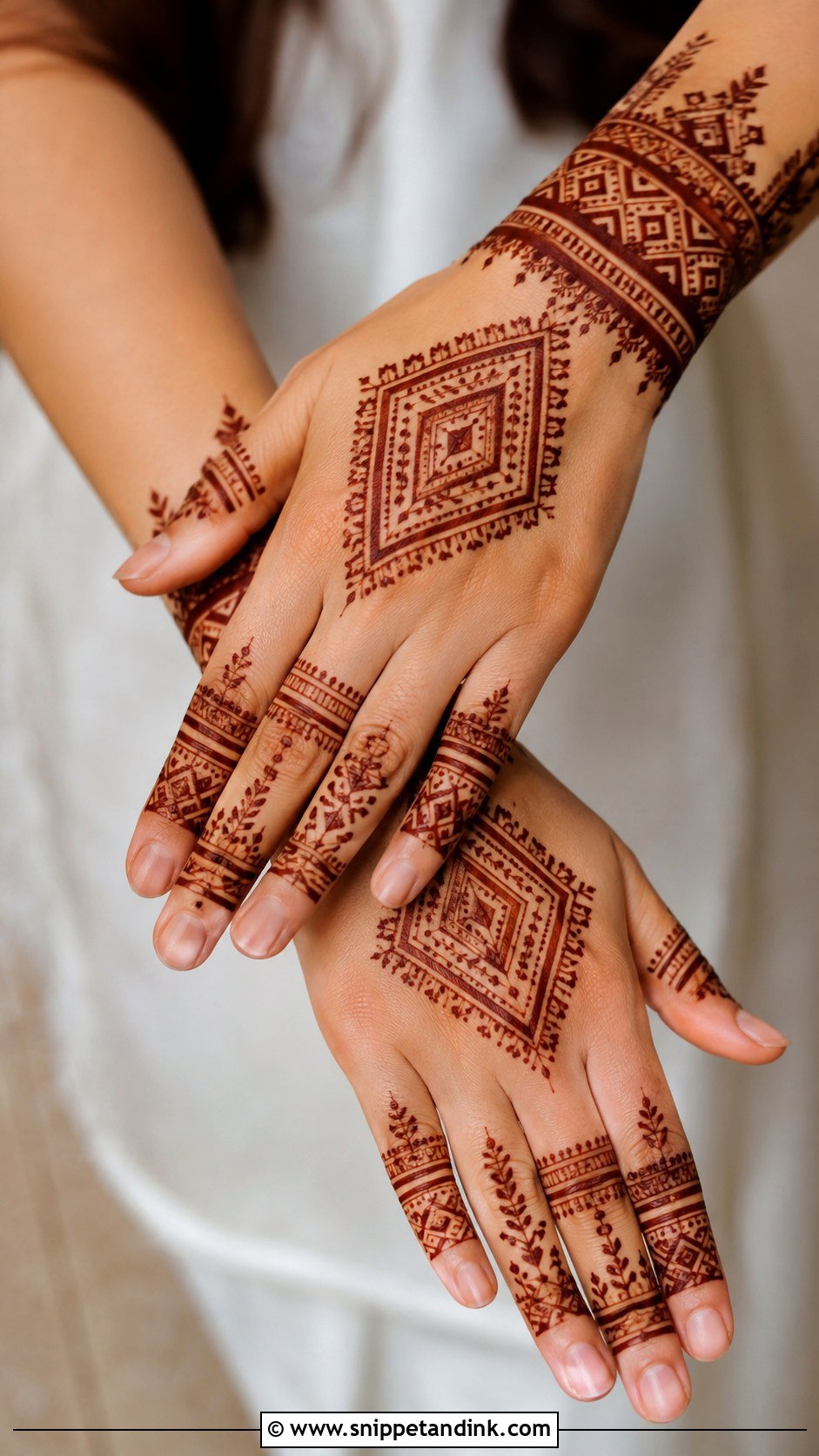
Moroccan henna replaces curves with diamonds, triangles, grids, straight lines and bold borders. It’s structured and less ornamental, which makes it a good choice for men too. Straight lines are surprisingly hard to pipe, so this style really shows an artist’s control. Avoid mixing in florals if you want the true effect. A wrist-to-finger geometric layout looks particularly sharp.
19. Gulf Aesthetic Mehndi Design
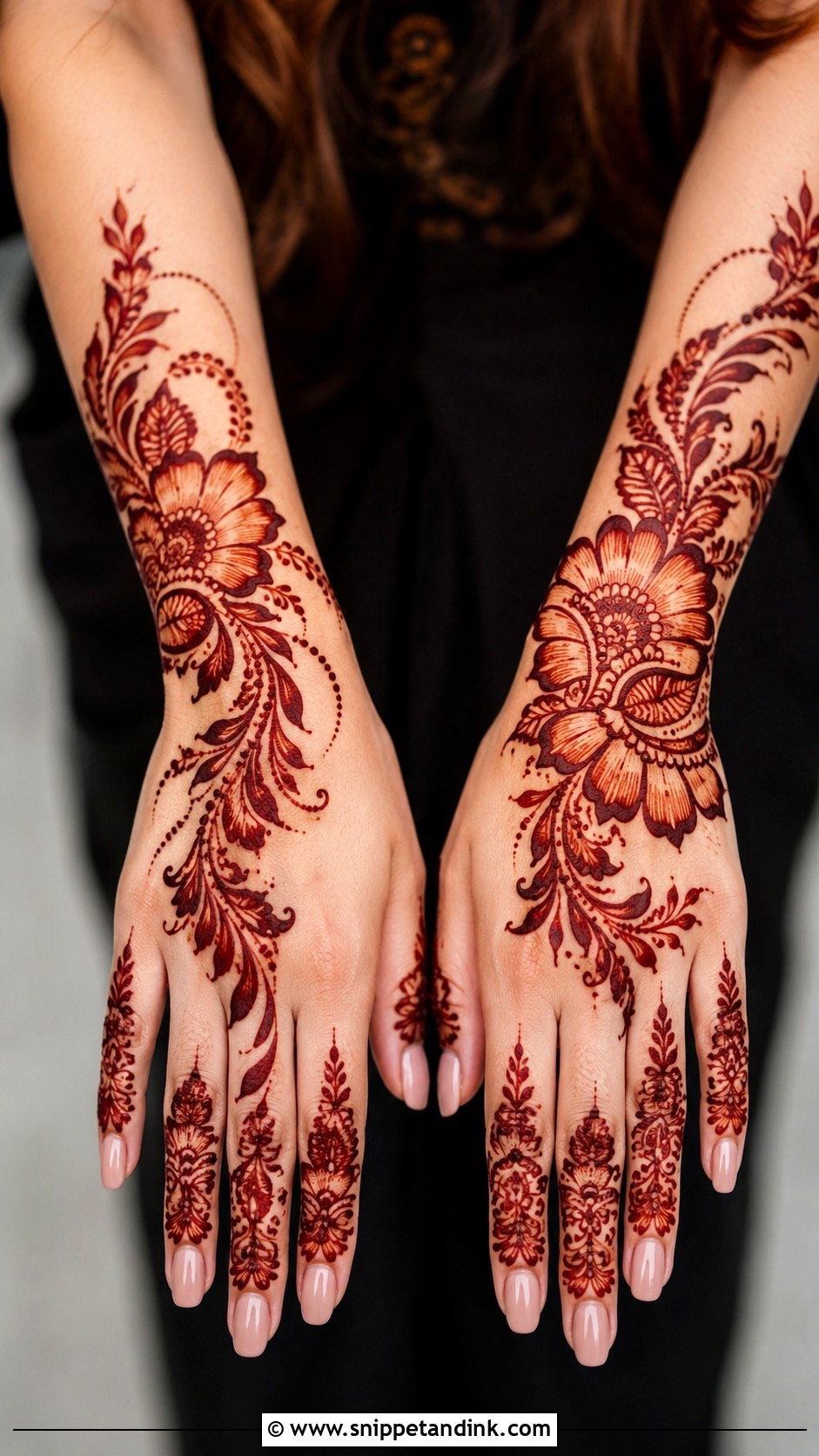
Gulf style uses large flowers, curved leaves, thick outlines and a lot of empty skin, often flowing diagonally across the back of the hand. Thick outlines mean more paste on the skin, so this style tends to give a deep, clear stain even on the back of the hand. It’s festive without being packed, which is why it is so popular for Eid and family functions. Shaded petals and clean vines soften the boldness.
20. Indian Aesthetic Mehndi Design
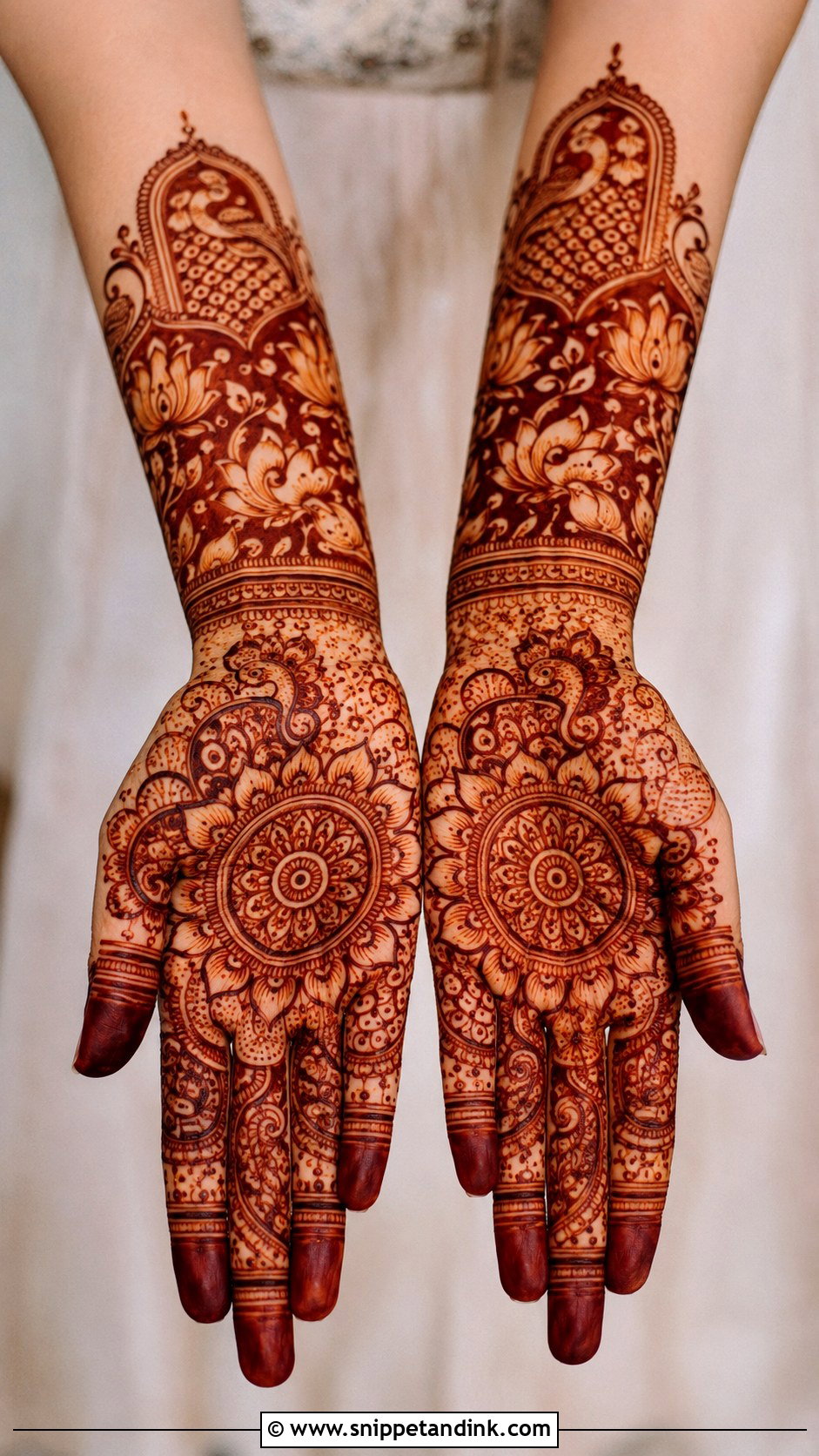
Indian designs are built on detail and symbolism: paisleys, peacocks, lotus, mandalas, leafy bands and fine filler. The aesthetic version organises them into sections instead of filling the hand at random. Palm mandala or paisley cluster, neat repeated finger patterns, a cuff or floral band at the wrist. Clean outlines and spacing keep it polished. Fresh natural paste gives the deep colour these designs need.
21. Peacock Aesthetic Mehndi Design
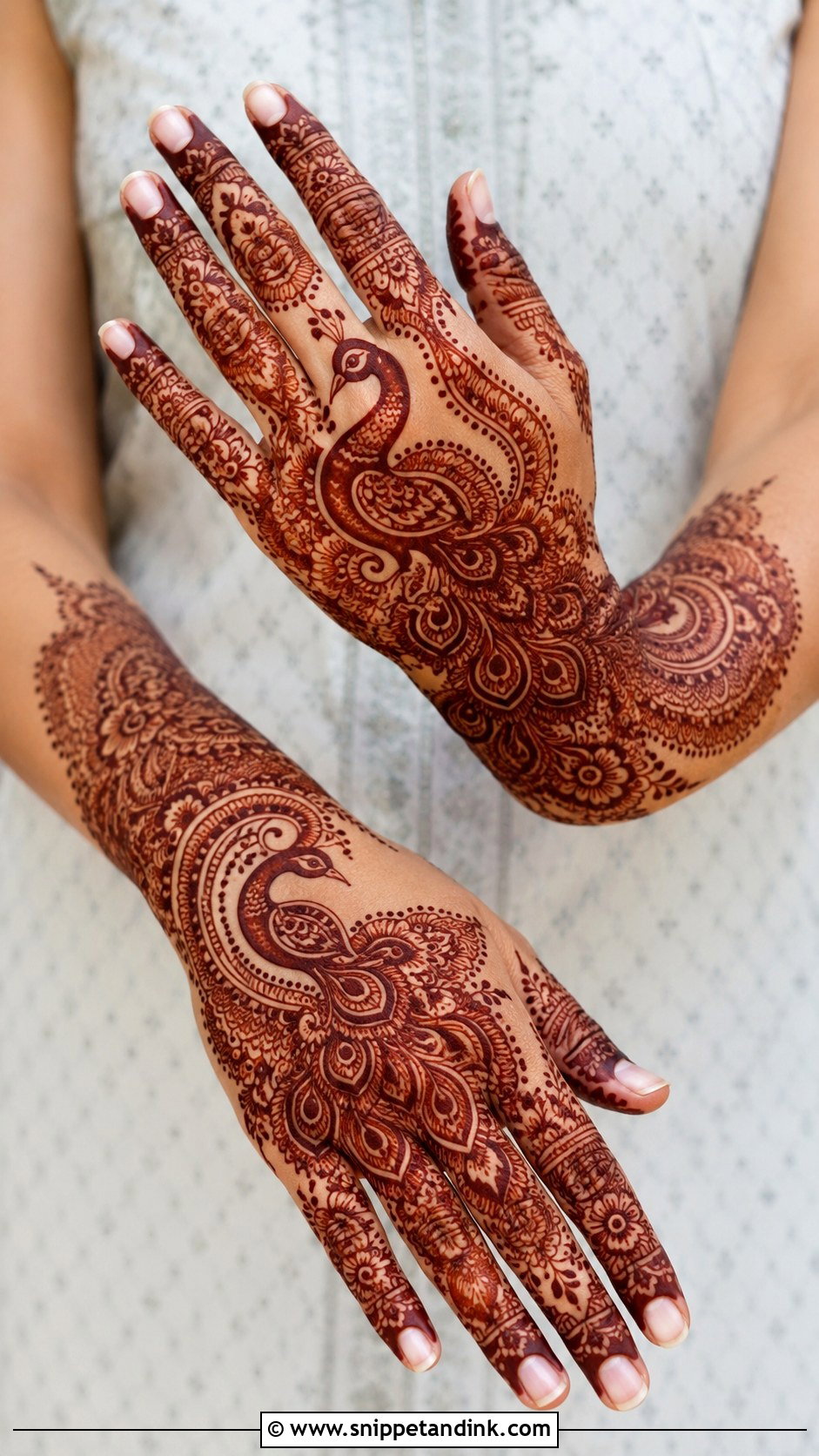
The peacock gives the hand a regal centrepiece, on the palm, wrist or back, with feathers spreading into paisleys, leaves and fine lines. It can be light or fully bridal. The bird needs space; crowd it with other large motifs and it becomes hard to read. I draw the neck curve first because if that line is wrong, nothing else will look right.
22. Negative Space Aesthetic Mehndi Design
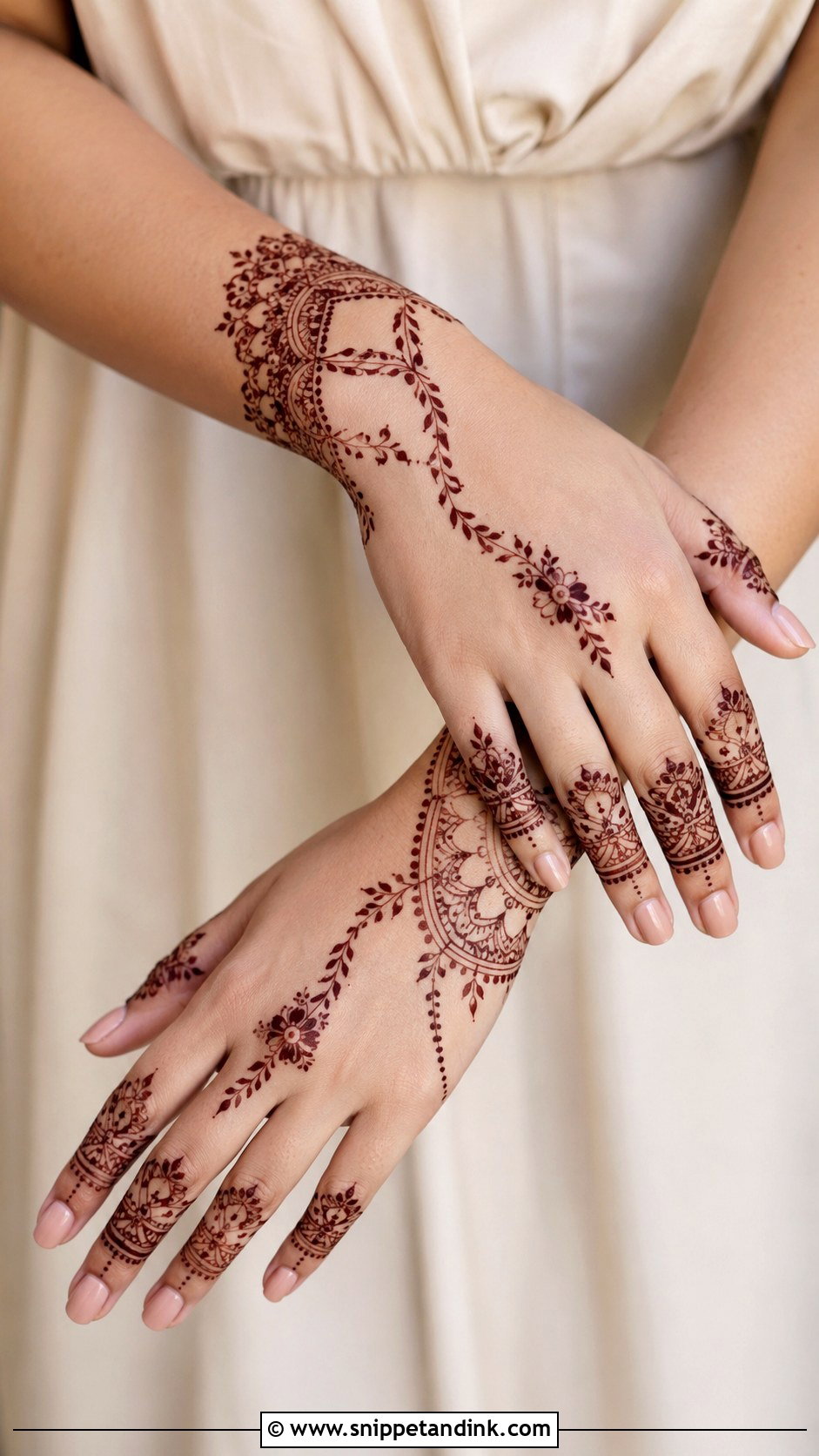
Negative space designs treat bare skin as part of the artwork, with clear gaps between flowers, vines, bands and geometric blocks. The back of the hand is the best canvas for this. A diagonal trail, a half mandala or spaced finger bands all work. The gaps must look planned, so I sketch the layout lightly with the cone tip before committing. Light coverage, but nothing about it looks unfinished.
23. Half Hand Aesthetic Mehndi Design
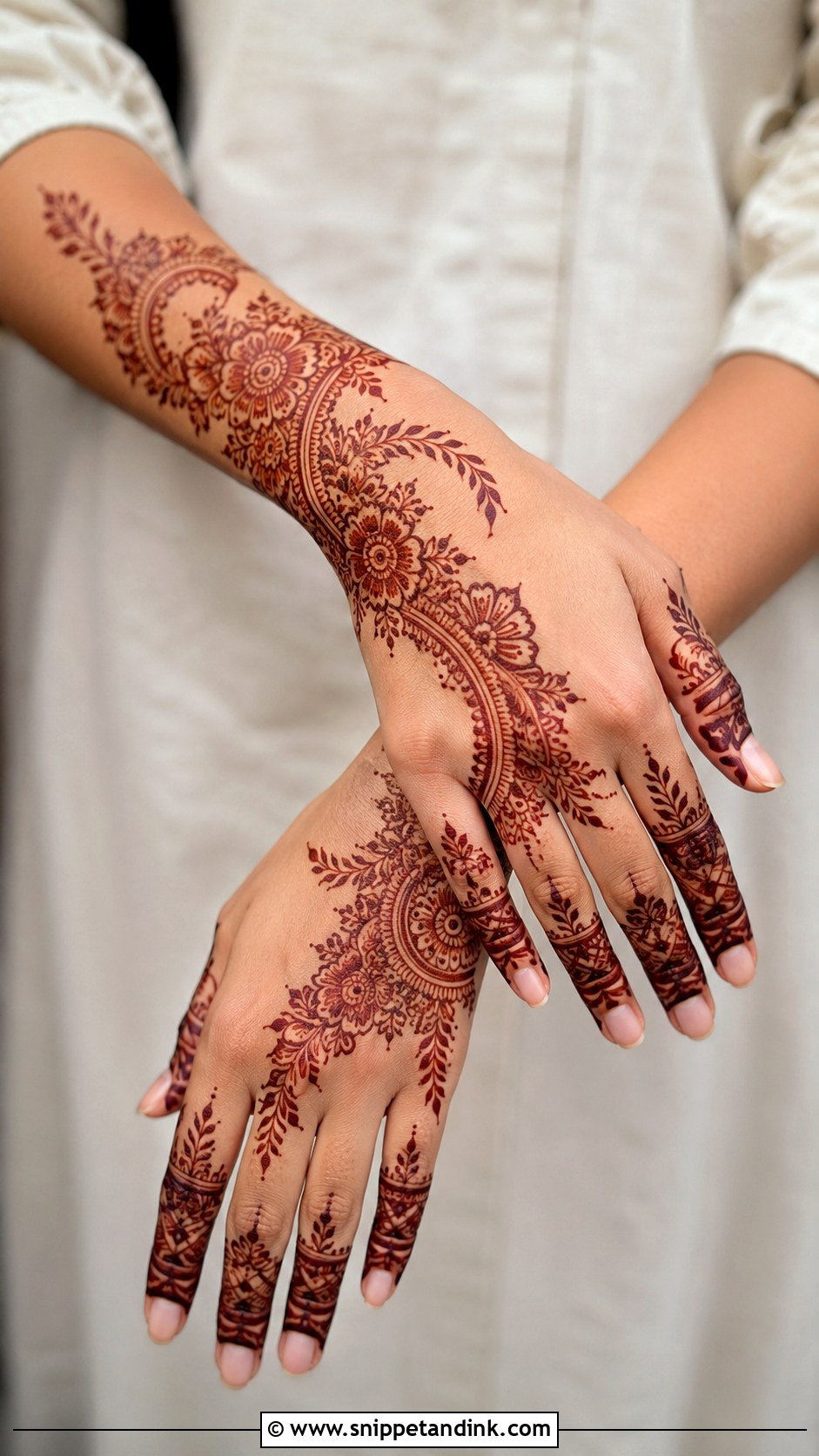
Half-hand work covers one side of the palm, the lower half of the back or the strip from wrist to middle finger. It is fast and practical, with enough detail for a festive outfit. Florals, paisleys, mandalas or geometric borders all fit. The one thing that matters is the finishing edge: a ragged stopping line makes it look as if the artist ran out of time. A clean border makes it look like a choice.
24. Side Hand Aesthetic Mehndi Design
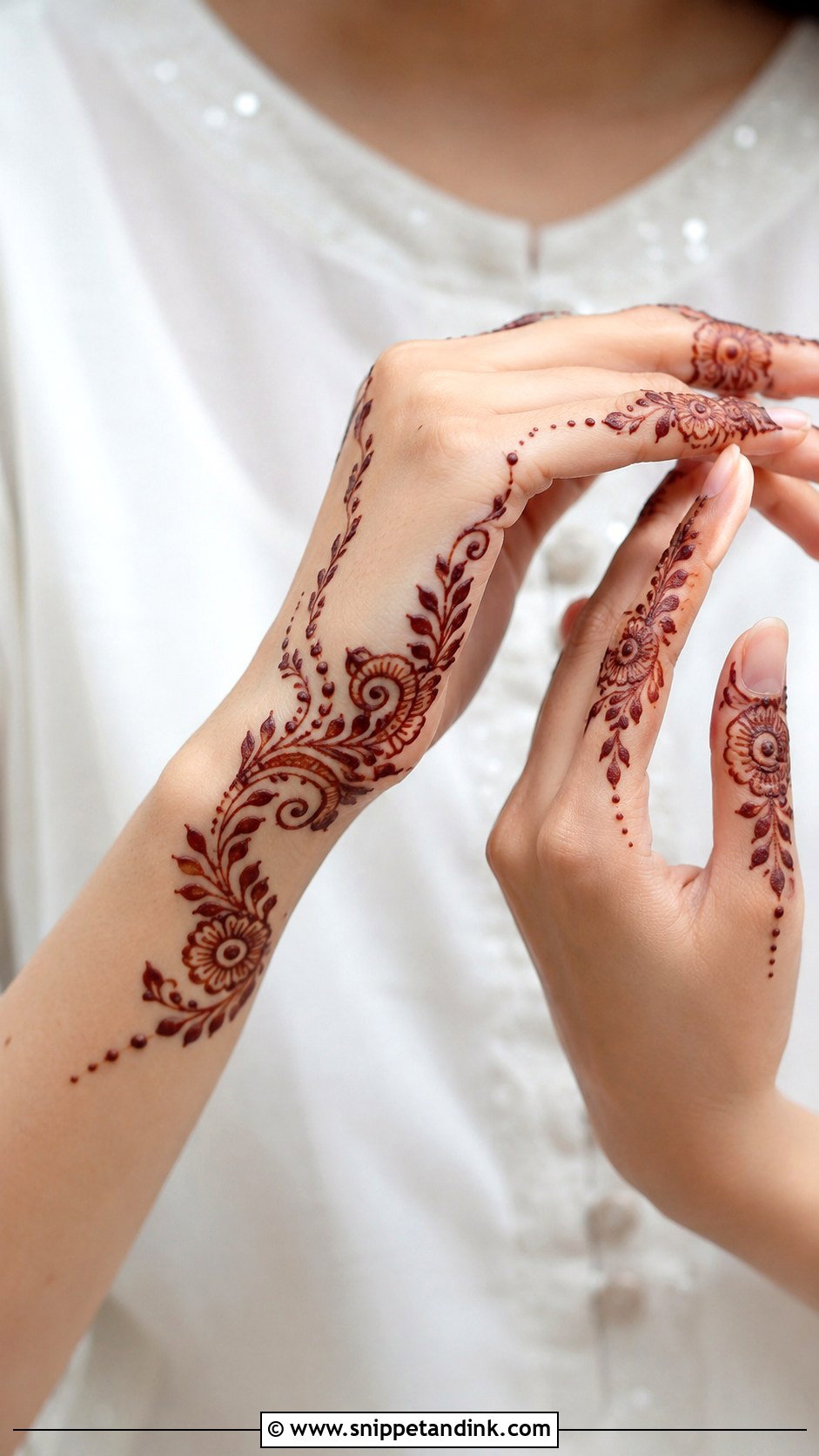
A side design follows one edge of the hand, from the wrist along the thumb side or the little finger side. Floral vines, paisleys, leaves and dotted trails follow the curve naturally. The rest of the hand stays open. Thumb-side trails show more when your hands are folded in your lap, little-finger-side ones when you hold a glass, so think about which side people will actually see.
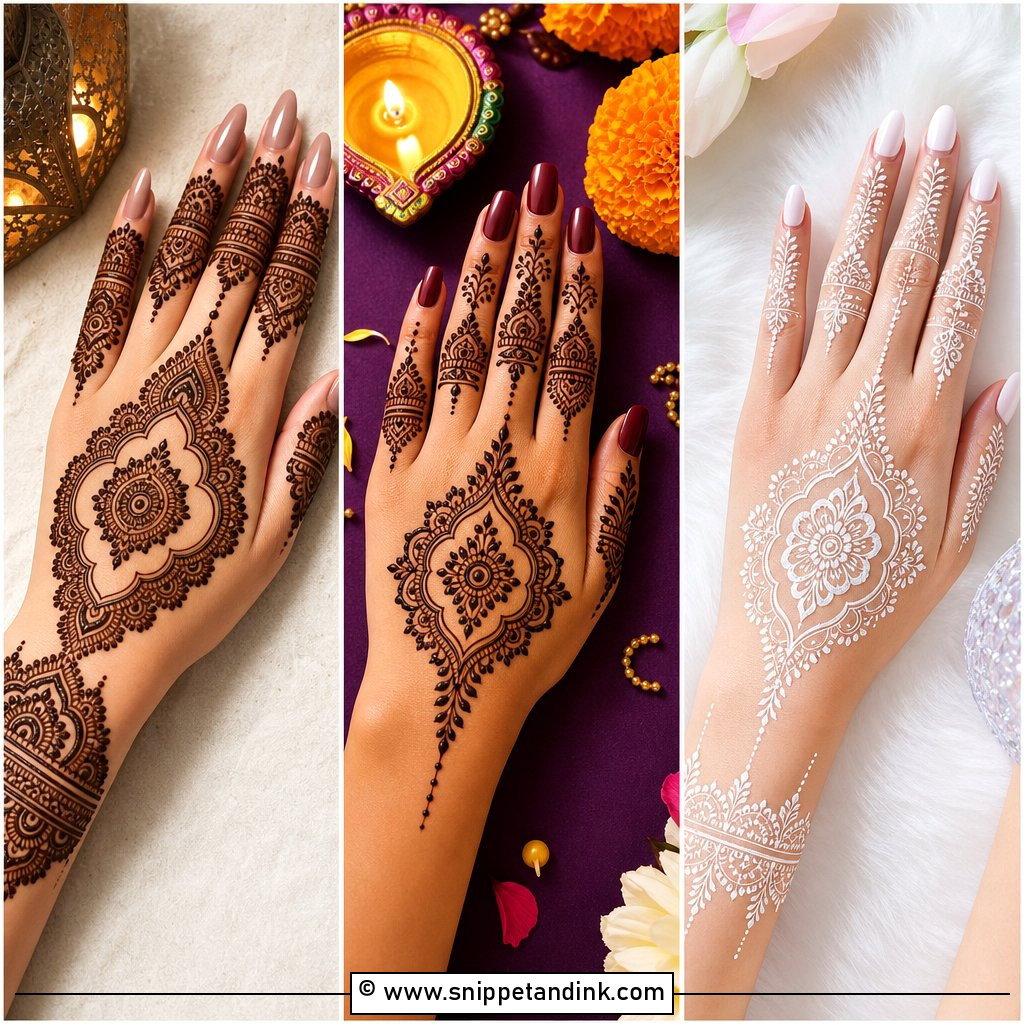
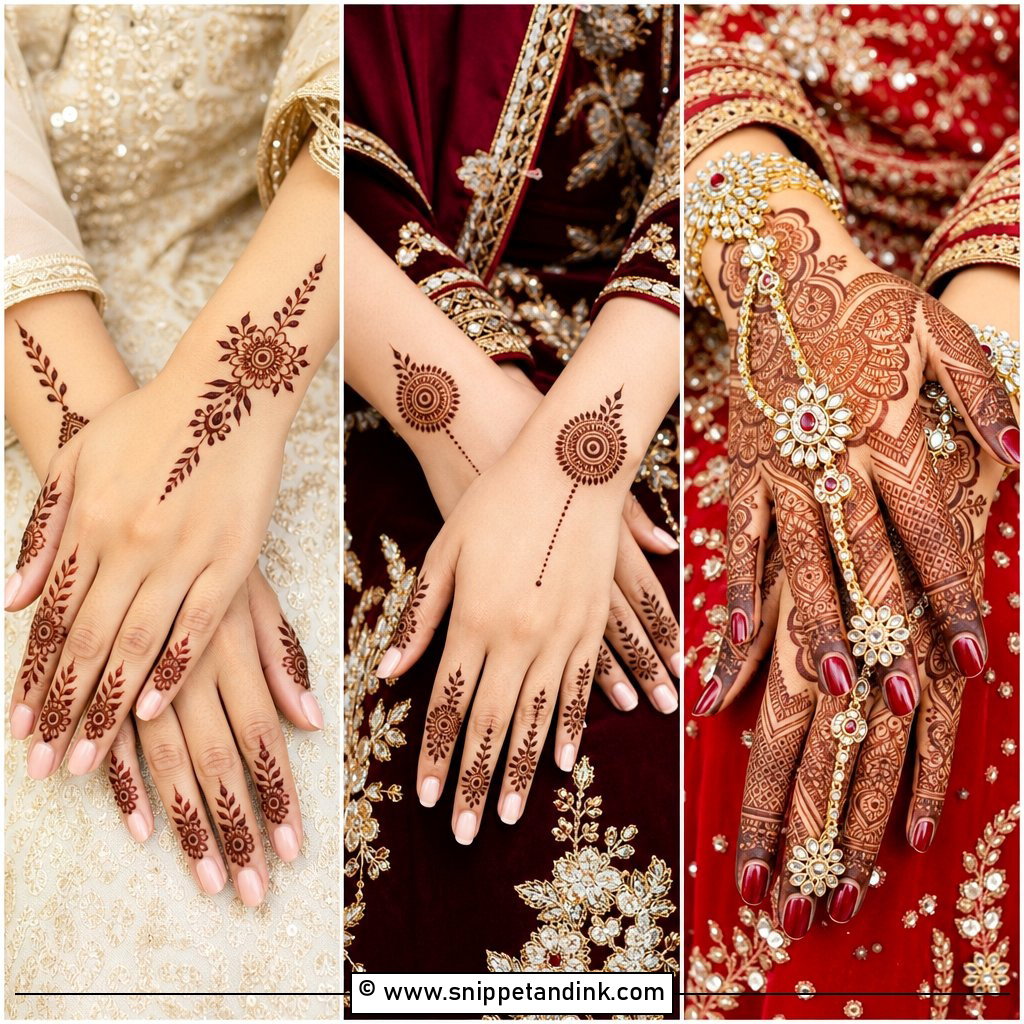
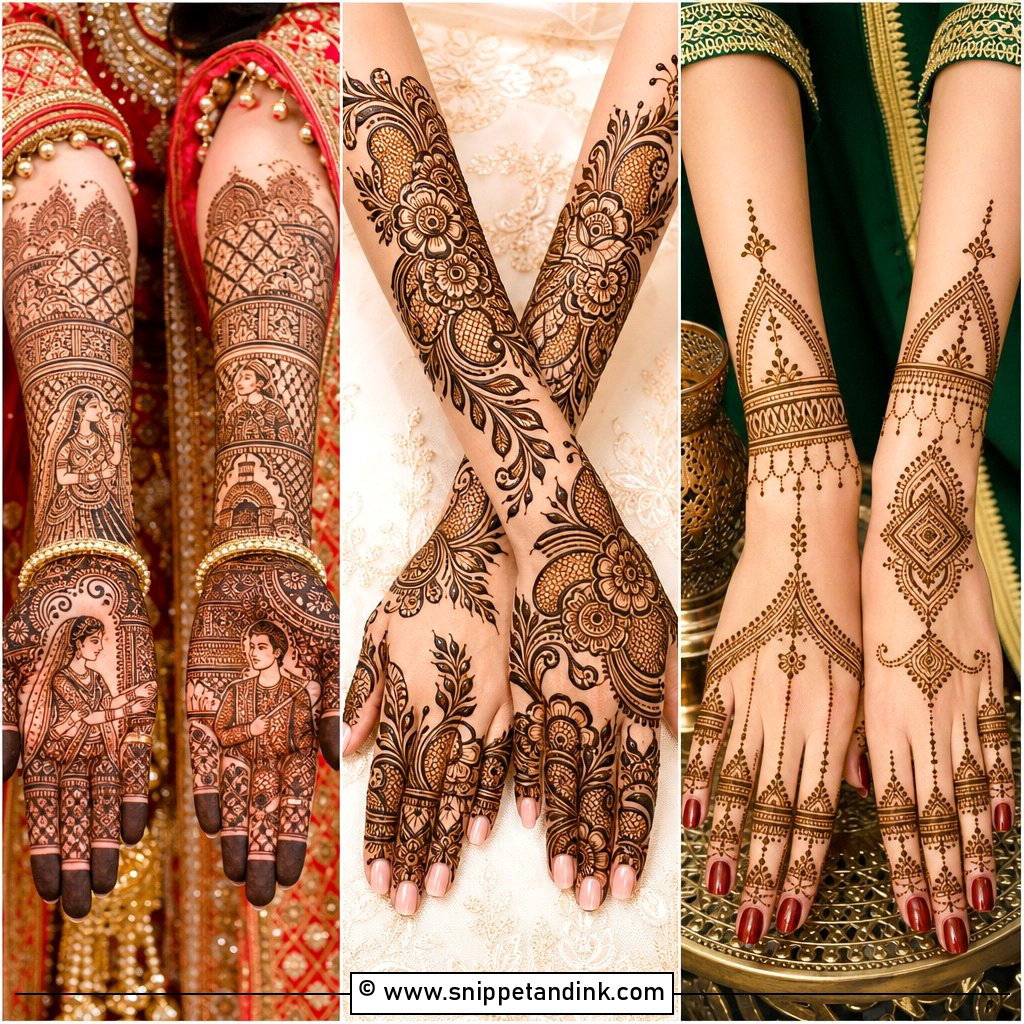
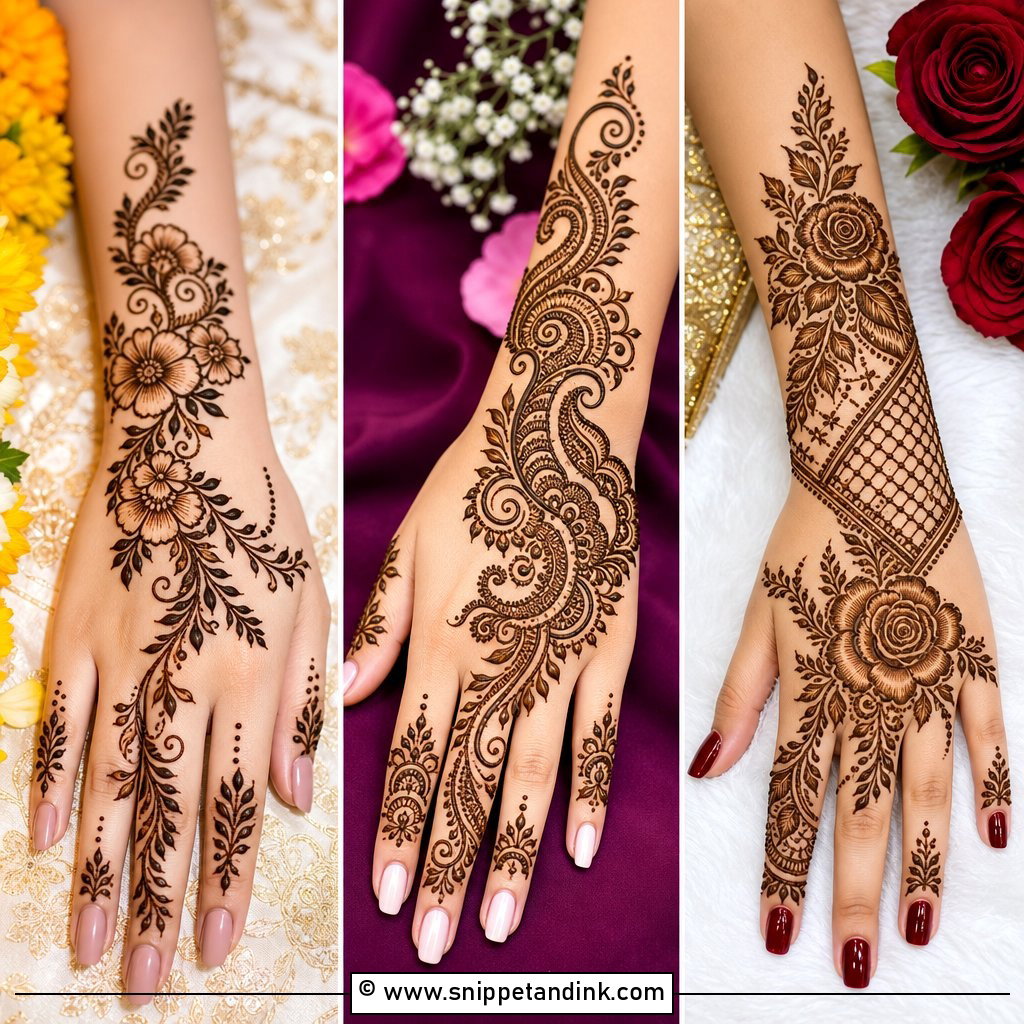
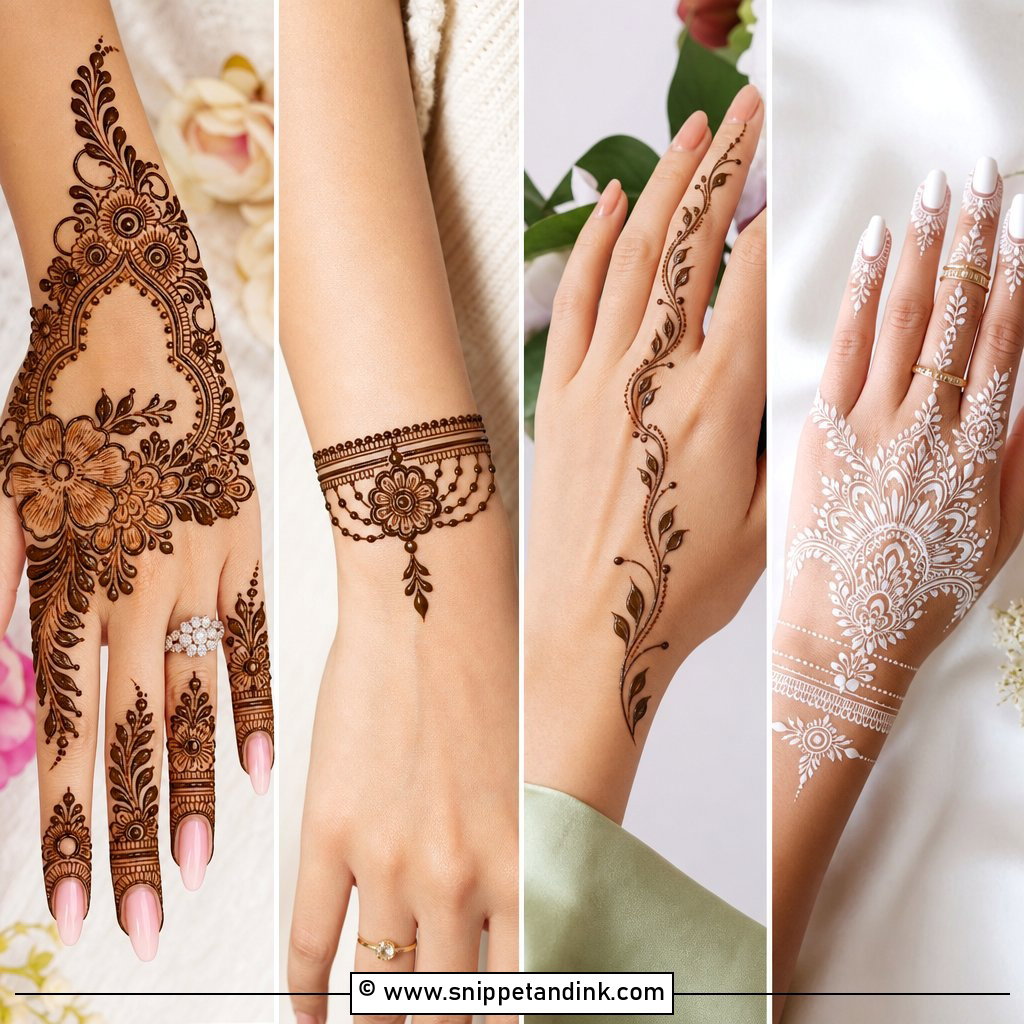
25. Palm Aesthetic Mehndi Design
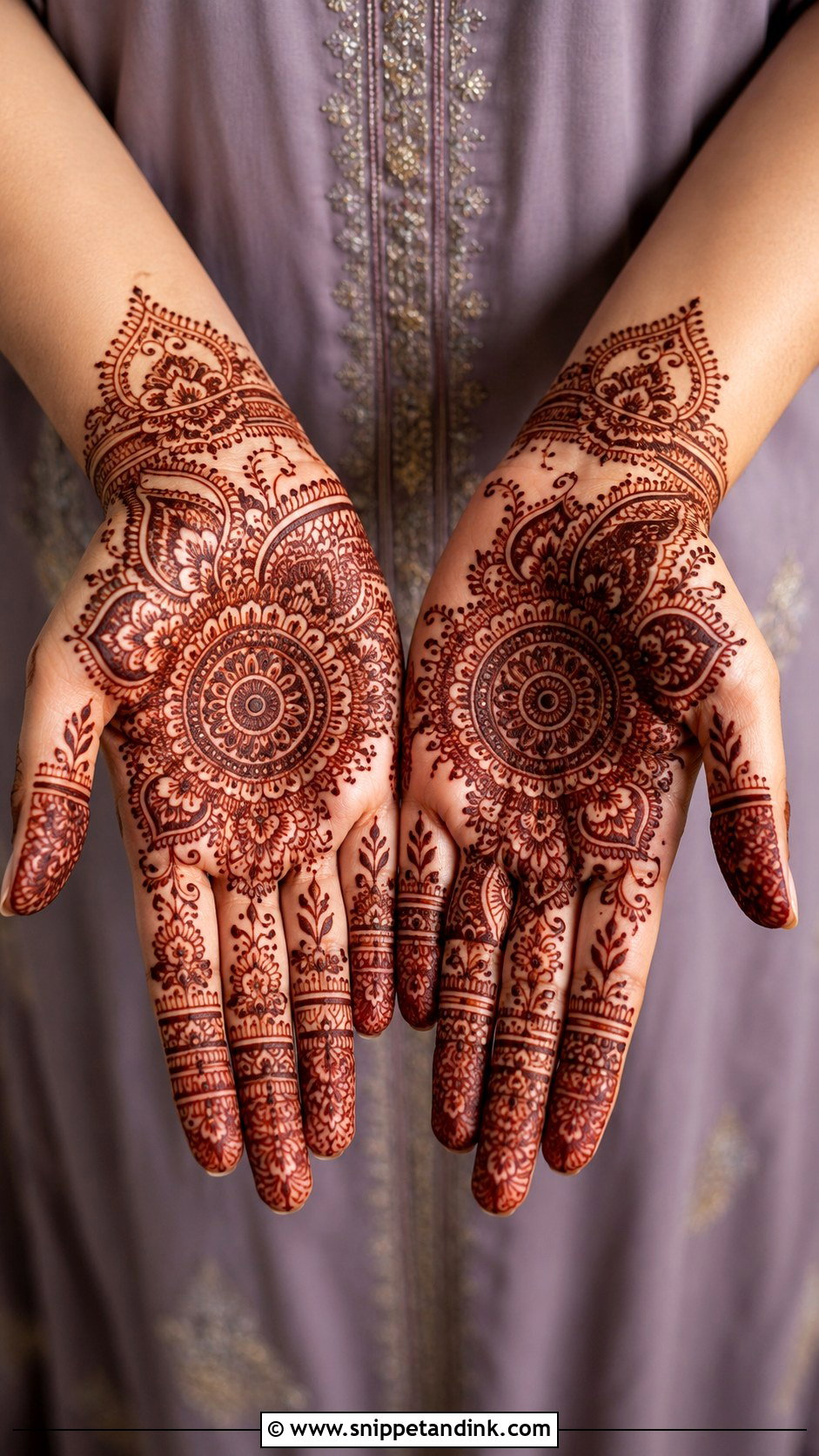
The palm is where henna stains darkest, so palm designs give the richest colour for the least effort. A central mandala, lotus circle, paisley cluster or traditional full-palm pattern all work, with matching bands and dots on the fingers. Because the space is compact, plan one strong centre and organised borders. Unrelated motifs scattered around look messy once the colour comes up. It suits rituals, festivals and classic henna photos.
26. Wrist To Forearm Aesthetic Mehndi Design
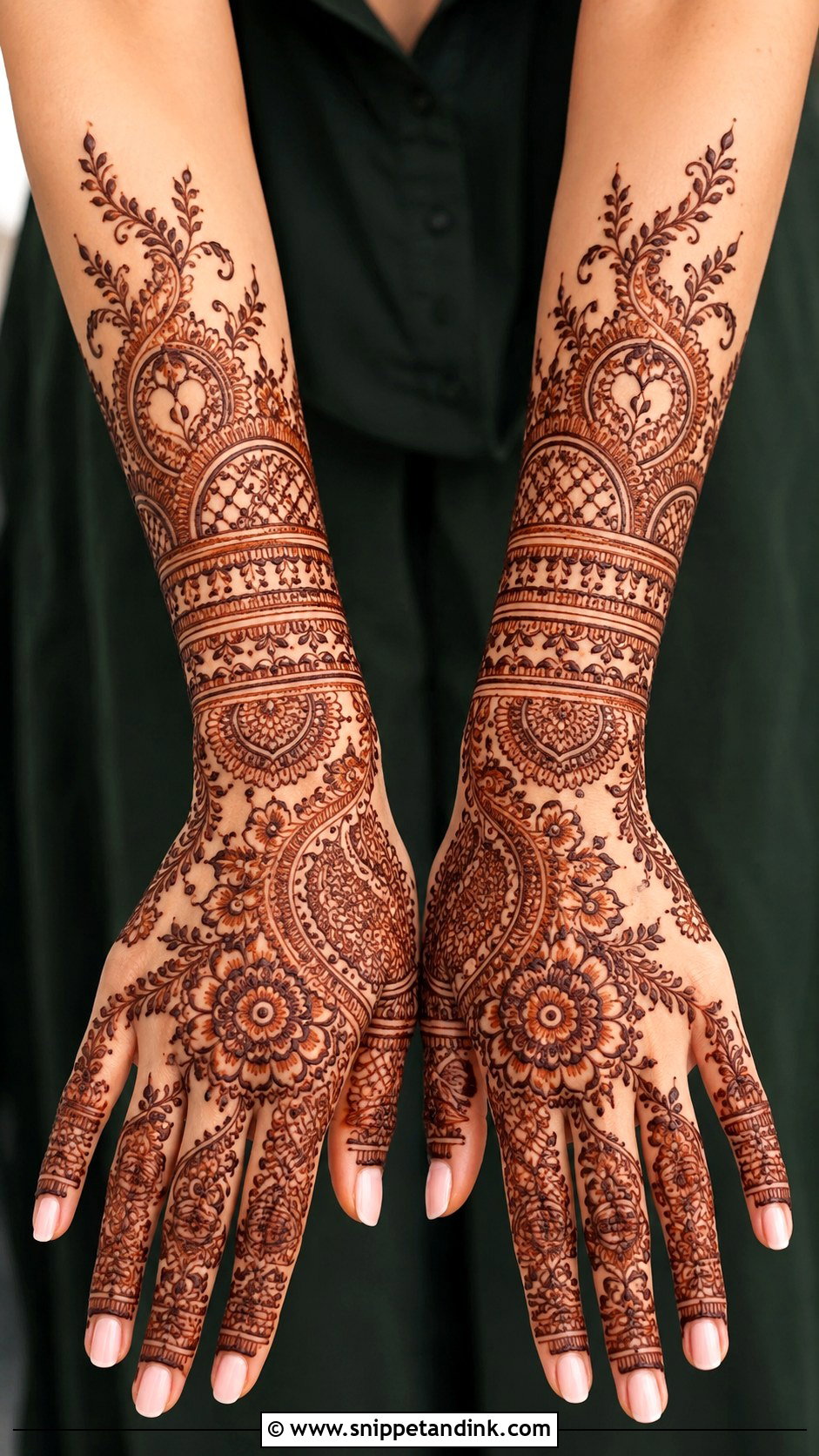
Extending up the arm makes the hand look longer. A wrist to forearm aesthetic mehndi design usually begins with a bracelet, floral band or paisley border and climbs with vines, mandalas, jaali or leafy trails. Forearm skin stains lighter than the hand, so I keep the forearm pattern slightly lighter in density and bolder in outline. Smooth joins between wrist and arm are what separate a professional finish from a home one.
27. Engagement Aesthetic Mehndi Design
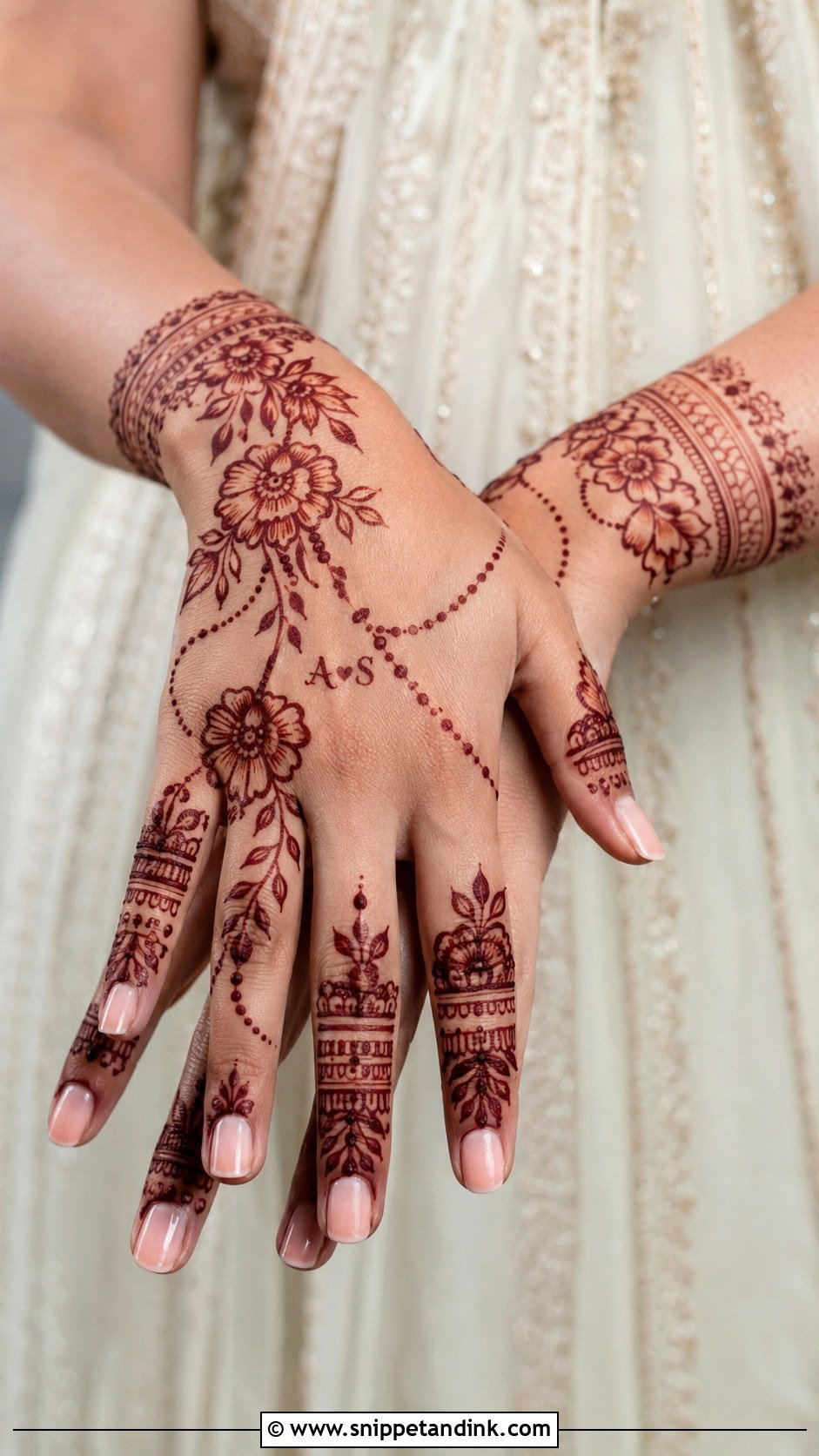
Engagement henna should feel special without the weight of bridal work. An engagement aesthetic mehndi design often uses floral vines on the back of the hand, ring-style finger details and a bracelet band, sometimes with a hidden initial or a heart curve. The ring finger matters most, because it will be photographed up close. I leave clear skin around the base of that finger so the ring sits on a clean background.
28. Eid Aesthetic Mehndi Design
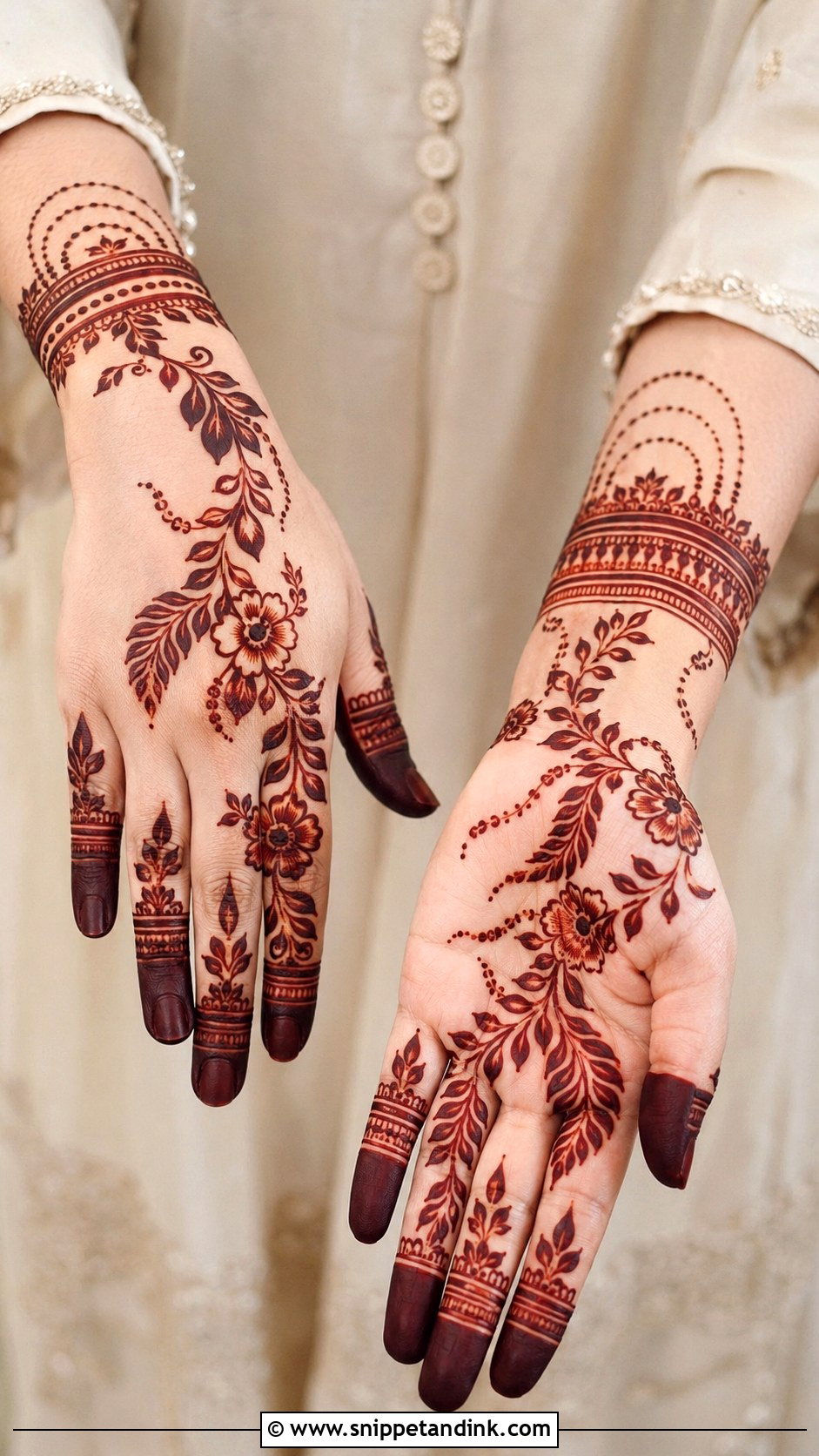
Eid henna is usually applied late on Chand Raat, often at home, so it needs to be quick and festive: Arabic florals, bold leaves, finger bands and a bracelet. The back of the hand is the favourite placement, with a little detail on the palm. Darker filled fingertips look traditional; lighter patterned tips look modern. Leave the paste on overnight for the best colour by morning.
29. Diwali Aesthetic Mehndi Design
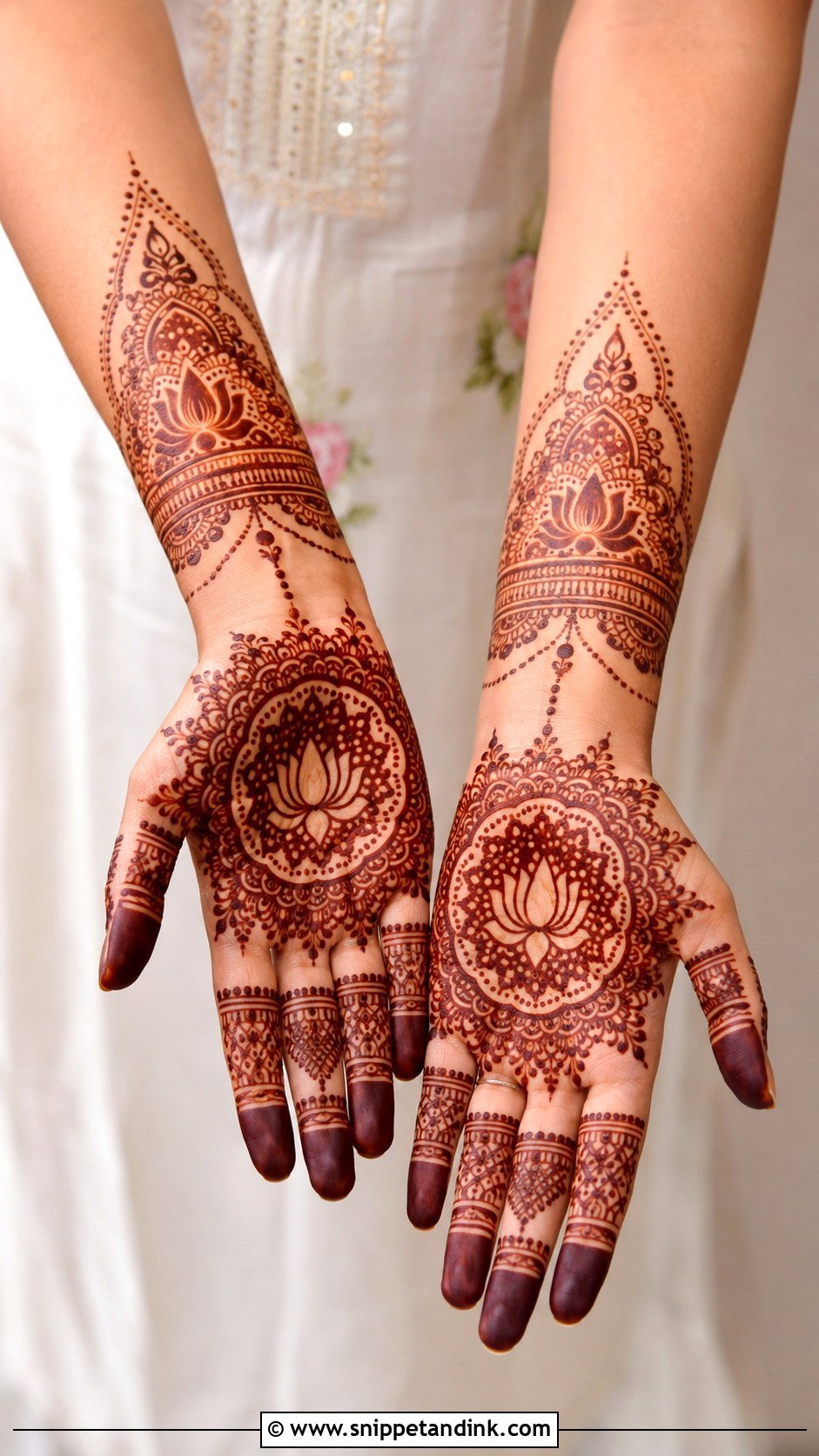
Diwali henna suits mandalas, lotus motifs, paisleys and decorative wrist bands. A Diwali aesthetic mehndi design can be a palm-centred mandala for a classic look or a floral bracelet on the back for something lighter. Small diya shapes or dotted rays add the festival touch, though a few go a long way. Symmetrical finger patterns keep it tidy with bangles and traditional outfits.
30. Karwa Chauth Aesthetic Mehndi Design
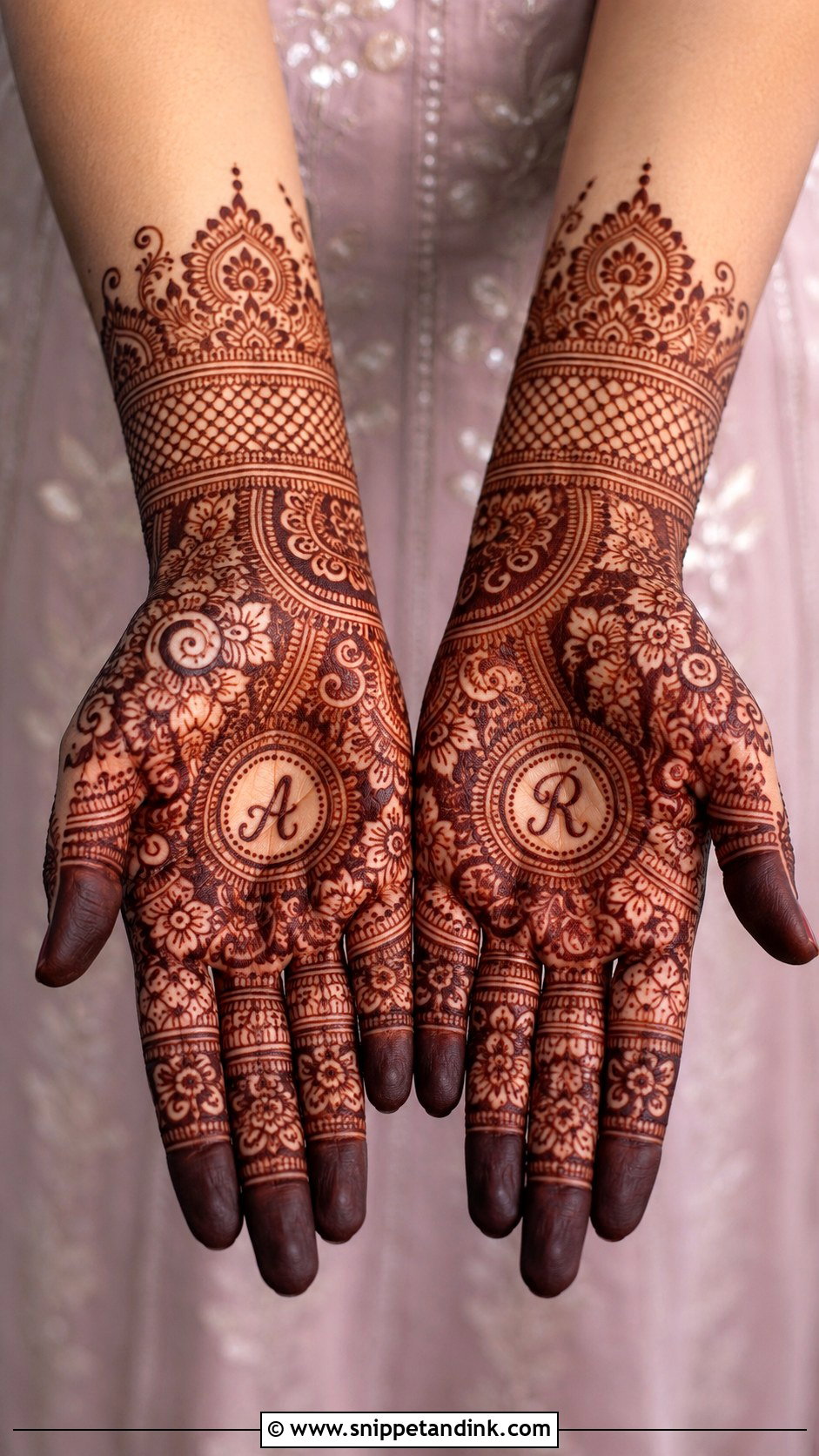
Karwa Chauth henna is usually traditional and detailed, covering palm and back with paisleys, mandalas, florals and fine wrist work. Many women apply it a day ahead so the stain is dark for the fast. Small initials or symbols can be woven in. Because hands are often held together during the rituals, I make the two palms mirror each other. A half-hand version works if time is short.
31. Bridesmaid Aesthetic Mehndi Design
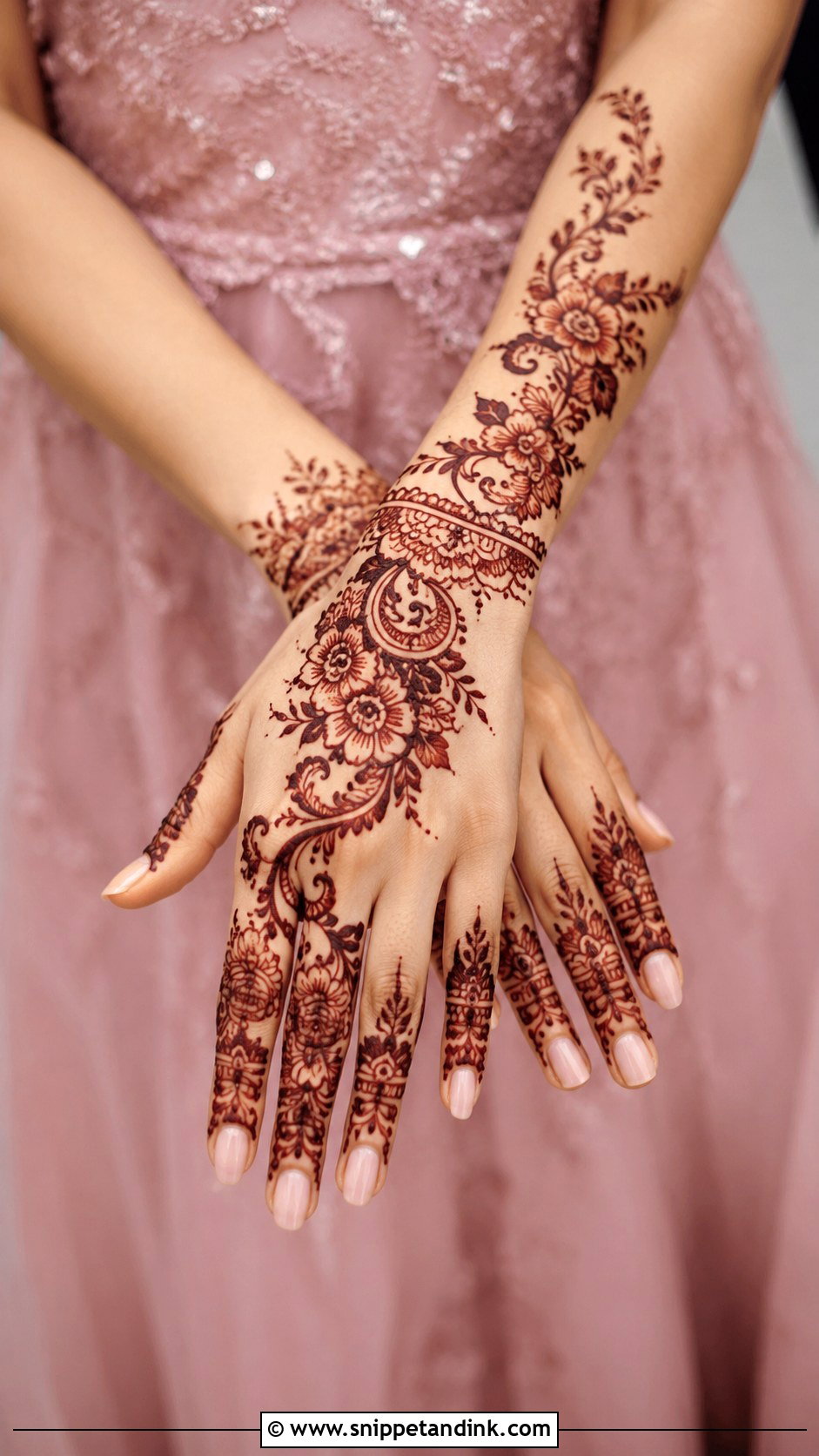
Bridesmaids should look festive while leaving the heaviest detail to the bride. A floral trail on the back of the hand with a wrist bracelet and decorated fingers is my usual suggestion, or Indo-Arabic patterns with paisleys and open space for a little more. Skip dense forearm coverage unless the bride wants everyone matching. Medium coverage also keeps the queue moving when several bridesmaids share one artist.
32. Beginner Aesthetic Mehndi Design
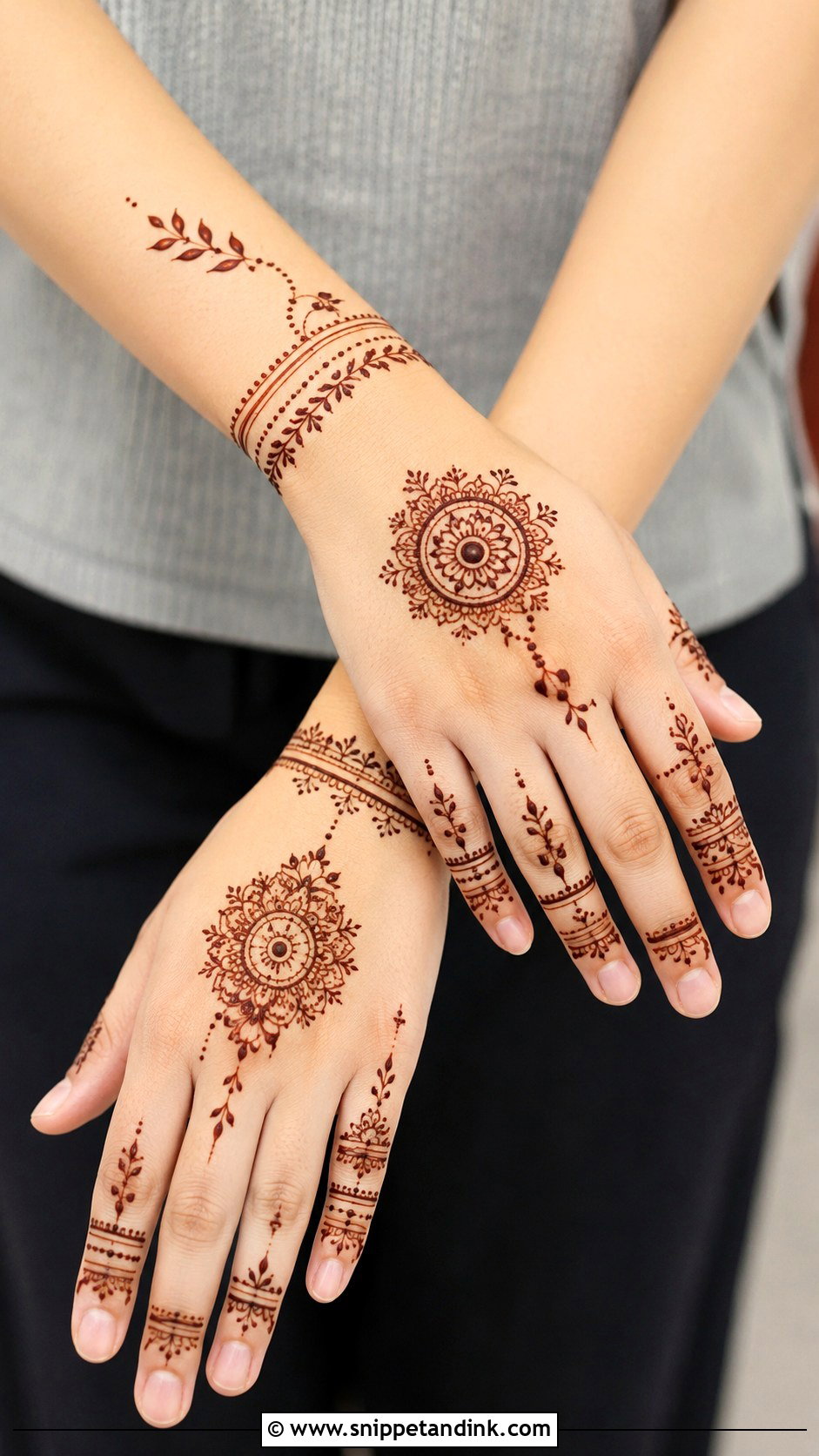
For a first attempt, put a small mandala or flower on the back of the hand, run a leafy vine toward the middle finger and add a light bracelet at the wrist. Easy bands, dots and short curves go on the fingers. This layout doesn’t need perfect symmetry, so it forgives small mistakes. Practise lines on paper first and skip the tiny fillers until your cone pressure is steady.
33. Cute Aesthetic Mehndi Design
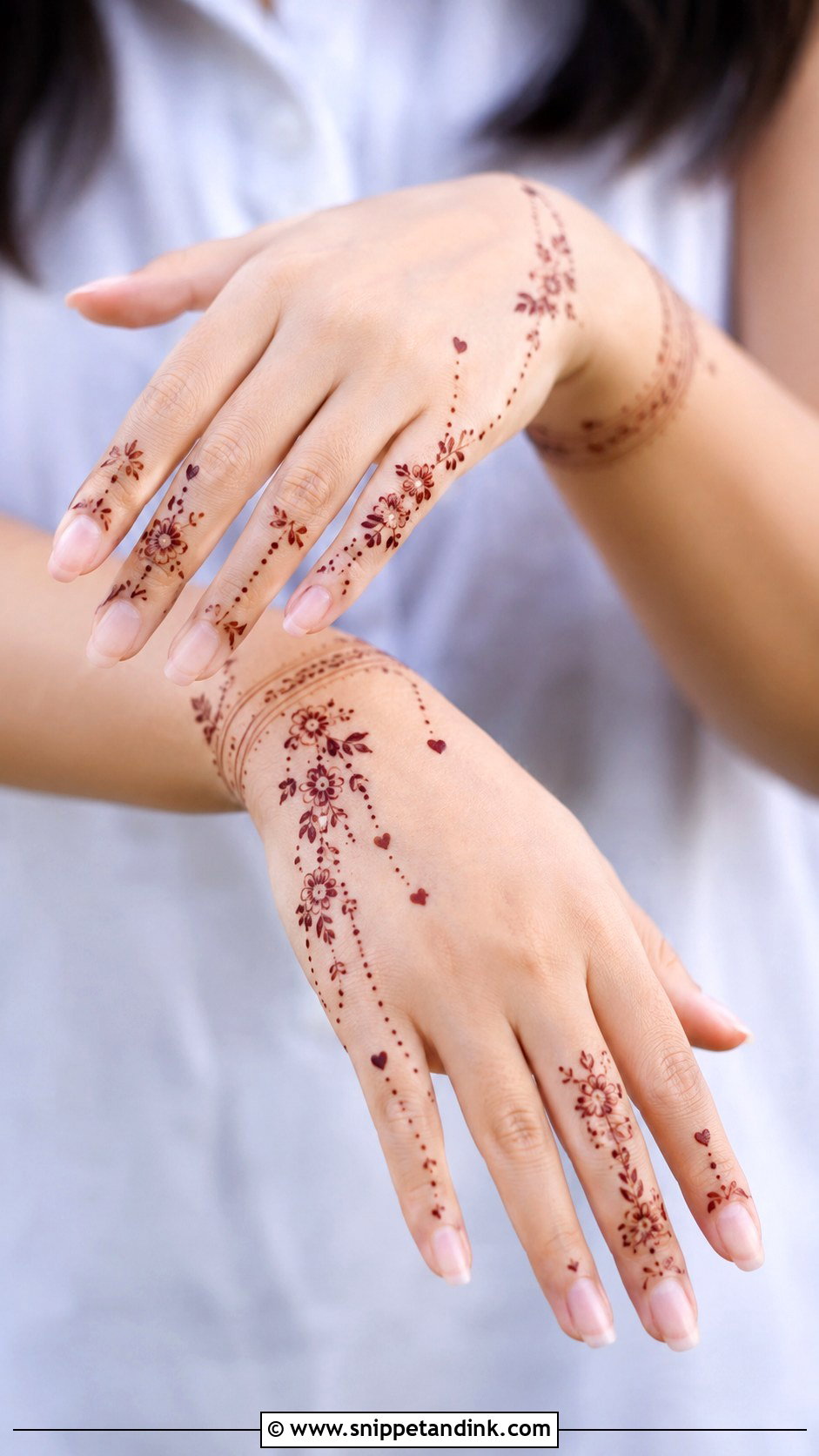
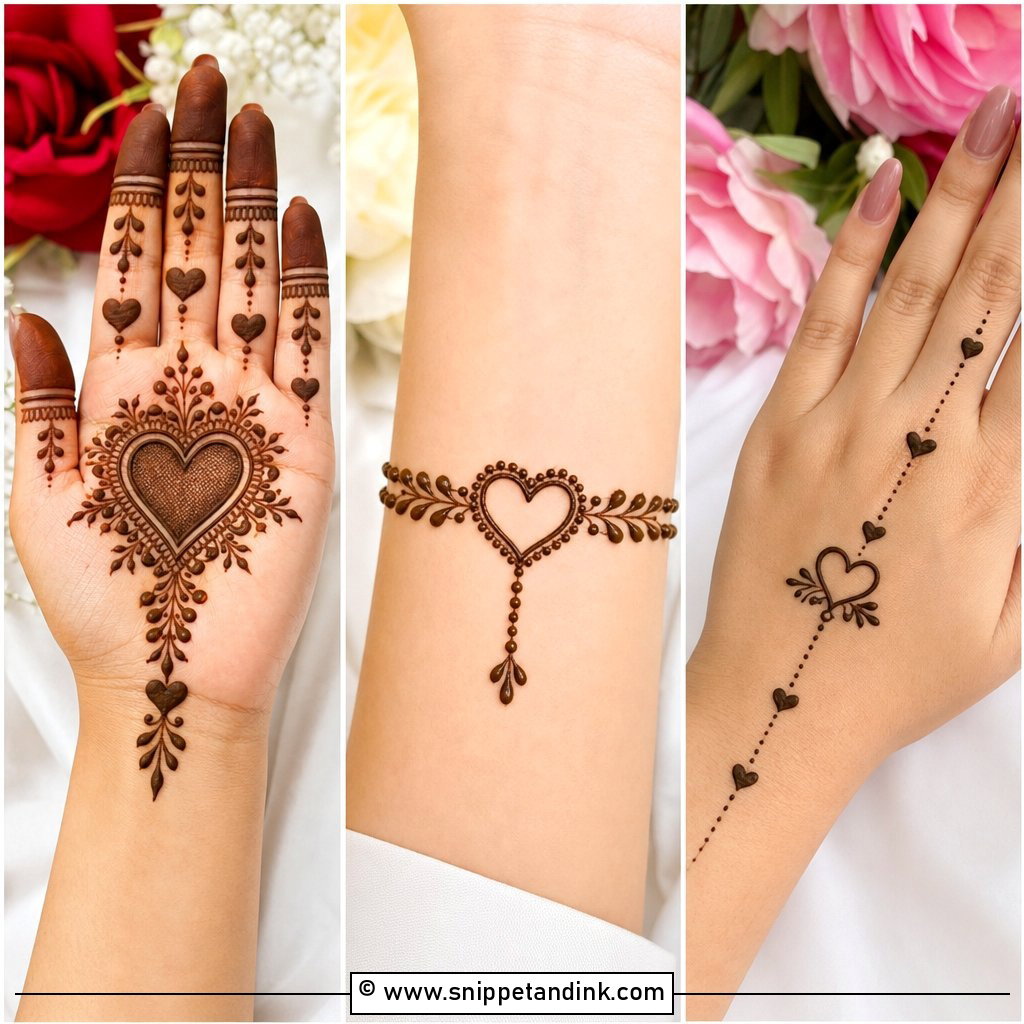
Cute henna uses small flowers, tiny hearts, dotted chains, mini leaves and light finger work, on the back of the hand or one side of the palm. Heavy filling ruins it. Repeating the same mini motif makes it look intentional rather than random. It is popular with teens and for casual gatherings, and it takes very little time to apply.
34. Classy Aesthetic Mehndi Design
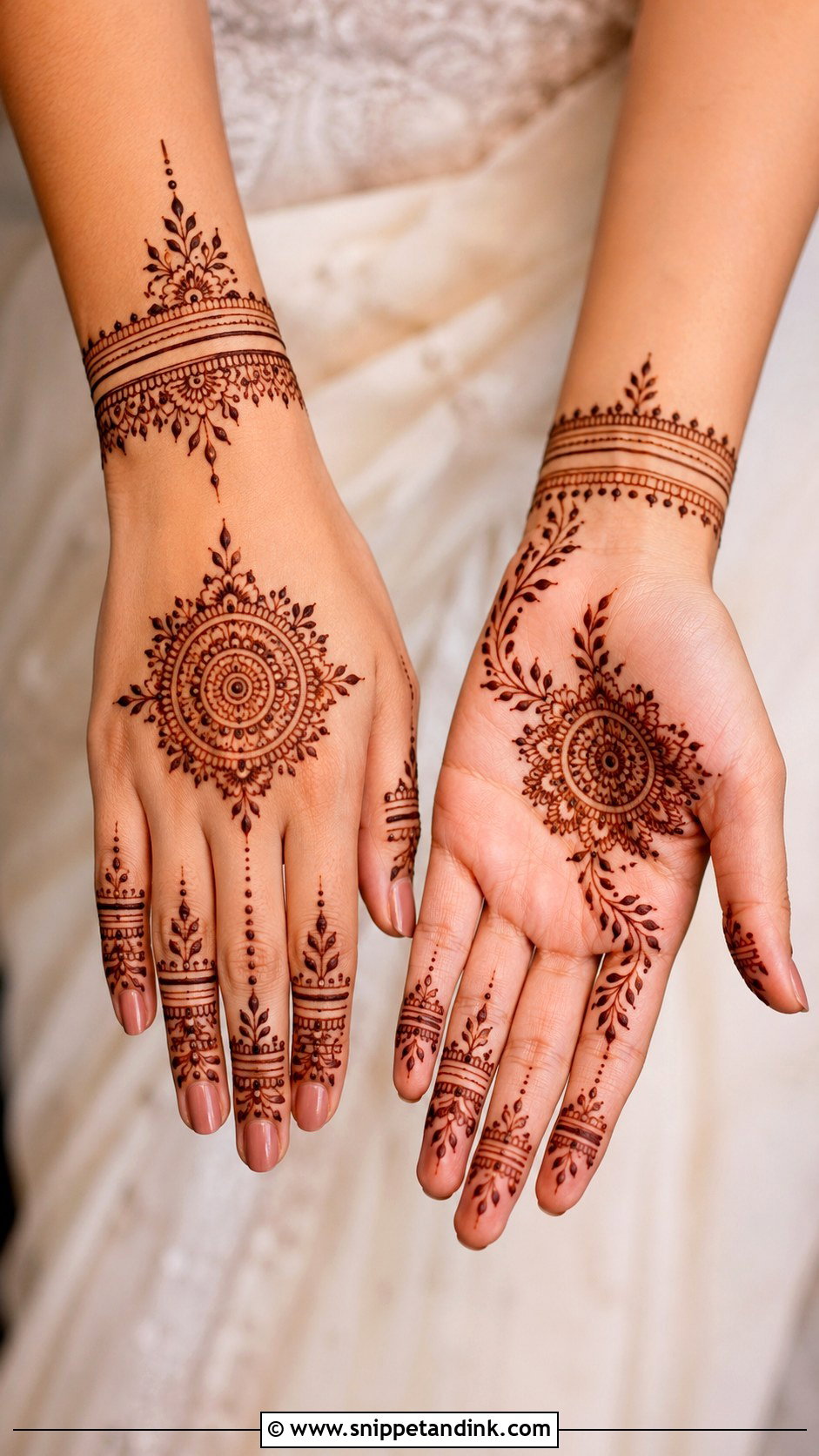
Classy designs depend on restraint: a slim back-hand mandala with bracelet lines, fine finger patterns and a few leafy trails, or a palm with one centre motif and neat borders. The aim is polished, not decorated. What makes it look expensive is cone control. Even line weight, smooth curves and balanced gaps. It suits formal events and engagements.
35. Full Finger Aesthetic Mehndi Design
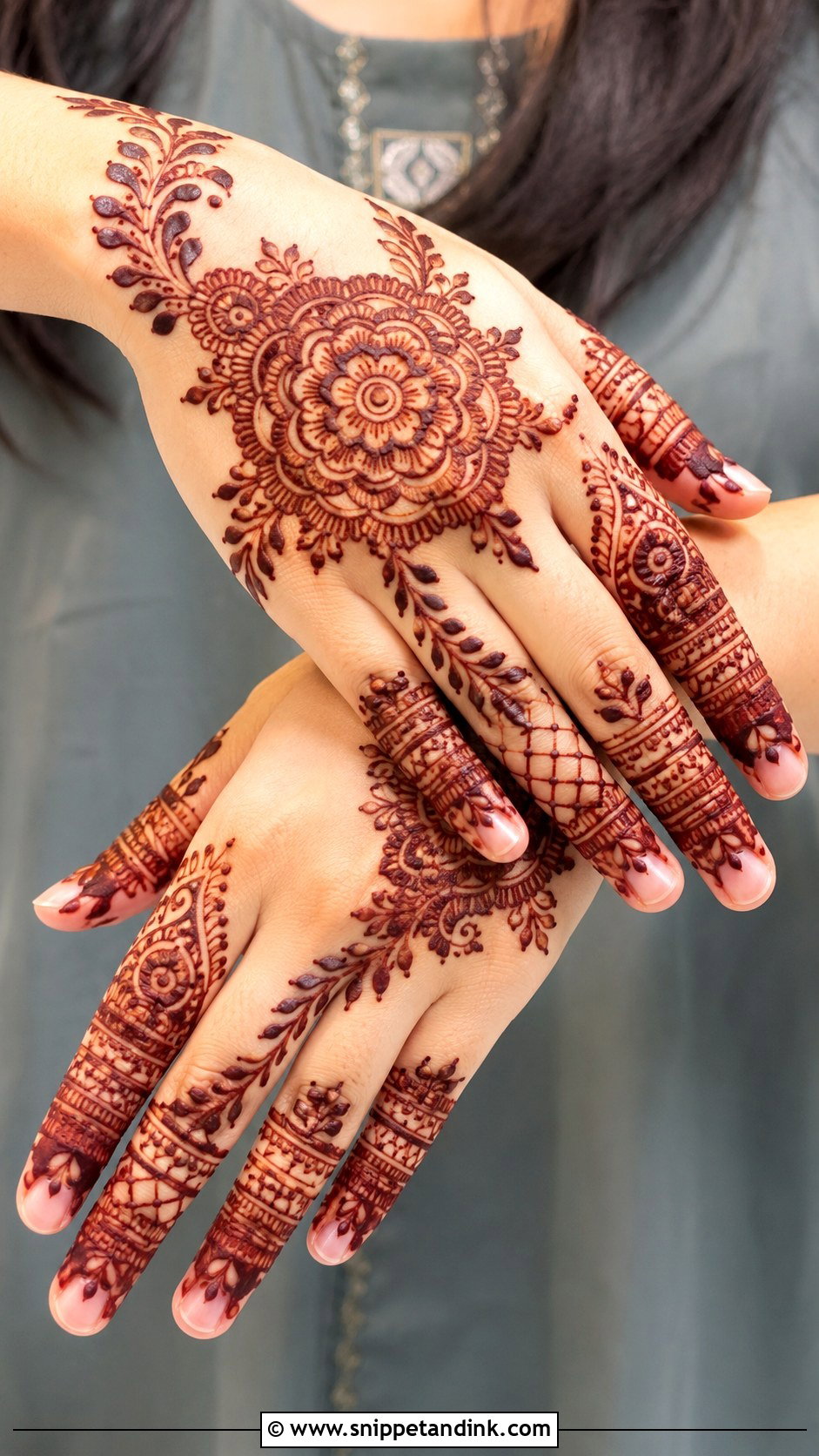
Full finger designs pack the detail onto all five fingers and keep the hand light, with perhaps a single mandala or bracelet linked by a slim chain. Bands, leaves, dots, mesh and tiny flowers mix across the fingers. Finger skin stains well, and the design looks great with rings and a manicure. Keep the five fingers related in style even if each is a little different, so the hand reads as one set.
How Long You’ll Sit, and What to Bring to the Appointment
Clients are often surprised by how long henna takes and how helpless you are afterwards. Timings vary with the artist and the design, but a rough idea helps you plan your day.
- Minimal, finger or bracelet designs: usually well under half an hour per hand.
- Half hand, Arabic or side designs: often around half an hour to an hour for both hands.
- Full hand front and back: a couple of hours or more.
- Bridal to the forearms or elbows: often most of a day, especially with feet as well.
Wear a short sleeved or loose top that buttons at the front, so you can change without smudging. Eat beforehand, use the bathroom before the first line goes on, and bring someone who can hold your phone and a drink with a straw. After application the paste needs to dry and then stay on for several hours, so plan an evening of sitting still.
Ask your artist what is in the paste. Natural henna is brown or greenish, smells earthy or of essential oils, and stains orange first before darkening. A cone that is jet black or promises a black stain within an hour is not natural henna, and I’d never put it on skin.
Start With the Occasion, Then Fit the Design to Your Hands
What makes henna look aesthetic is never the motif alone; it is the planning around it. Start with the occasion and how much coverage you want. Minimal, bracelet, side and finger designs suit light days. Arabic, Indo-Arabic, floral, paisley and mandala patterns are reliable for festivals. Bridal, full hand, peacock and forearm layouts belong to weddings. Then match the layout to your hand shape, and give the stain its full two days. Clean lines, balanced spacing and fresh natural paste matter more than any single design here.
You'll Like These Ideas:


Leave a Reply