
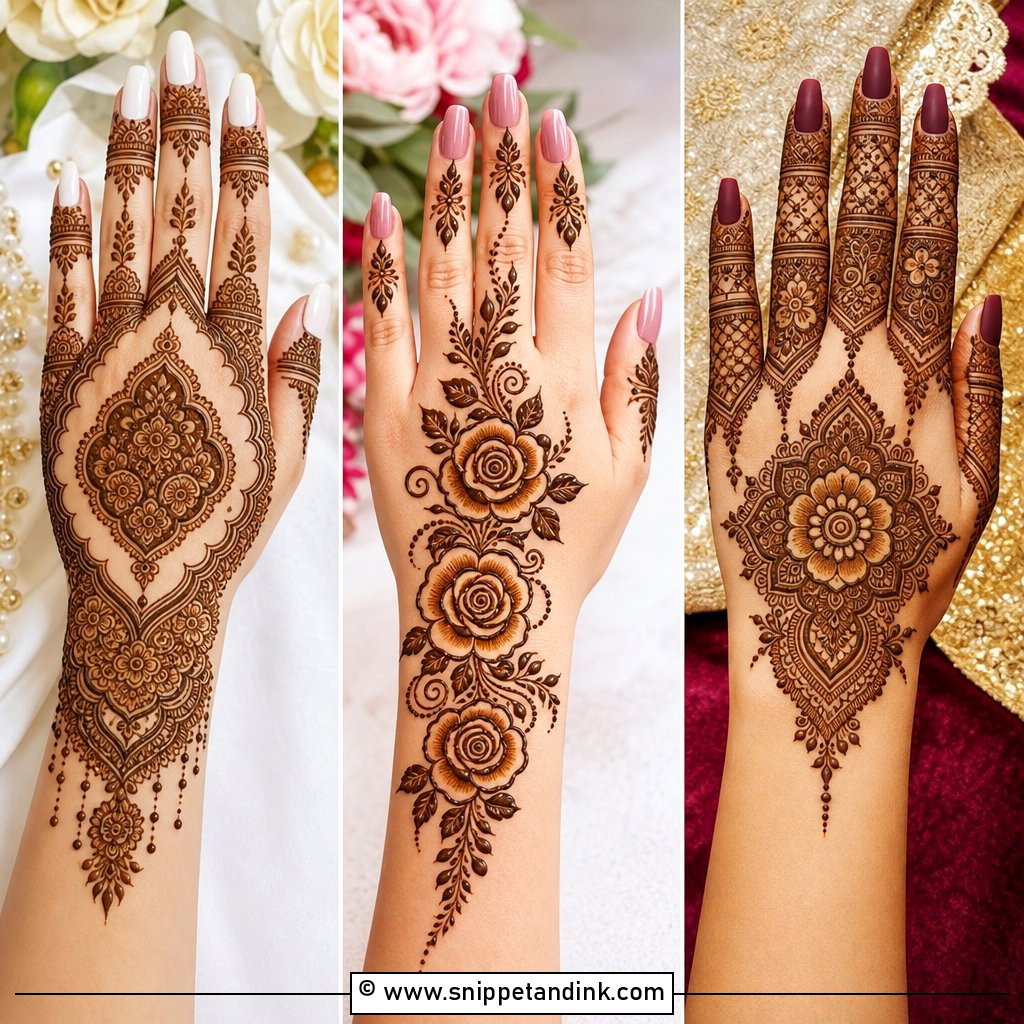
A half-hand bridal design covers the palm, fingers, back of the hand and wrist, and stops there. Brides often ask me for it because they want something that is clearly bridal but easier to sit with: less time in the chair, less paste drying on the forearm, and a stain that is quicker to protect. The challenge for me as the artist is density. With less skin to work on, every motif has to be placed with more thought, or the hand ends up crowded or half-finished. Below are twenty half-hand layouts, from dense Indian work to open Arabic trails, with notes on how each one behaves once the paste comes off.
Palm or Back of Hand: Which Side Carries the Colour
Before I sketch anything, I look at where a bride’s stain will come out darkest. Henna stains thicker, warmer skin more deeply, so the centre of the palm and the inner fingers usually turn the richest maroon, while the back of the hand and the wrist land a shade or two lighter. On a half-hand design, that difference shows more because there is less coverage to balance it.
- If deep colour is the priority, I put the main motif on the palm and keep the back of the hand lighter and lacier.
- If the back of the hand matters more, for ring photos or because you’ll keep your palms turned down, I use bolder lines there so the lighter stain still reads clearly.
- Very fine work stains best on the fingertips and palm; on dry skin at the wrist, I draw it a little thicker.
- Tell me where the cuff should end before I start. Stopping above the wrist bone looks neater with bangles than stopping on it.
1. Indian Bridal Mehndi Half Hand
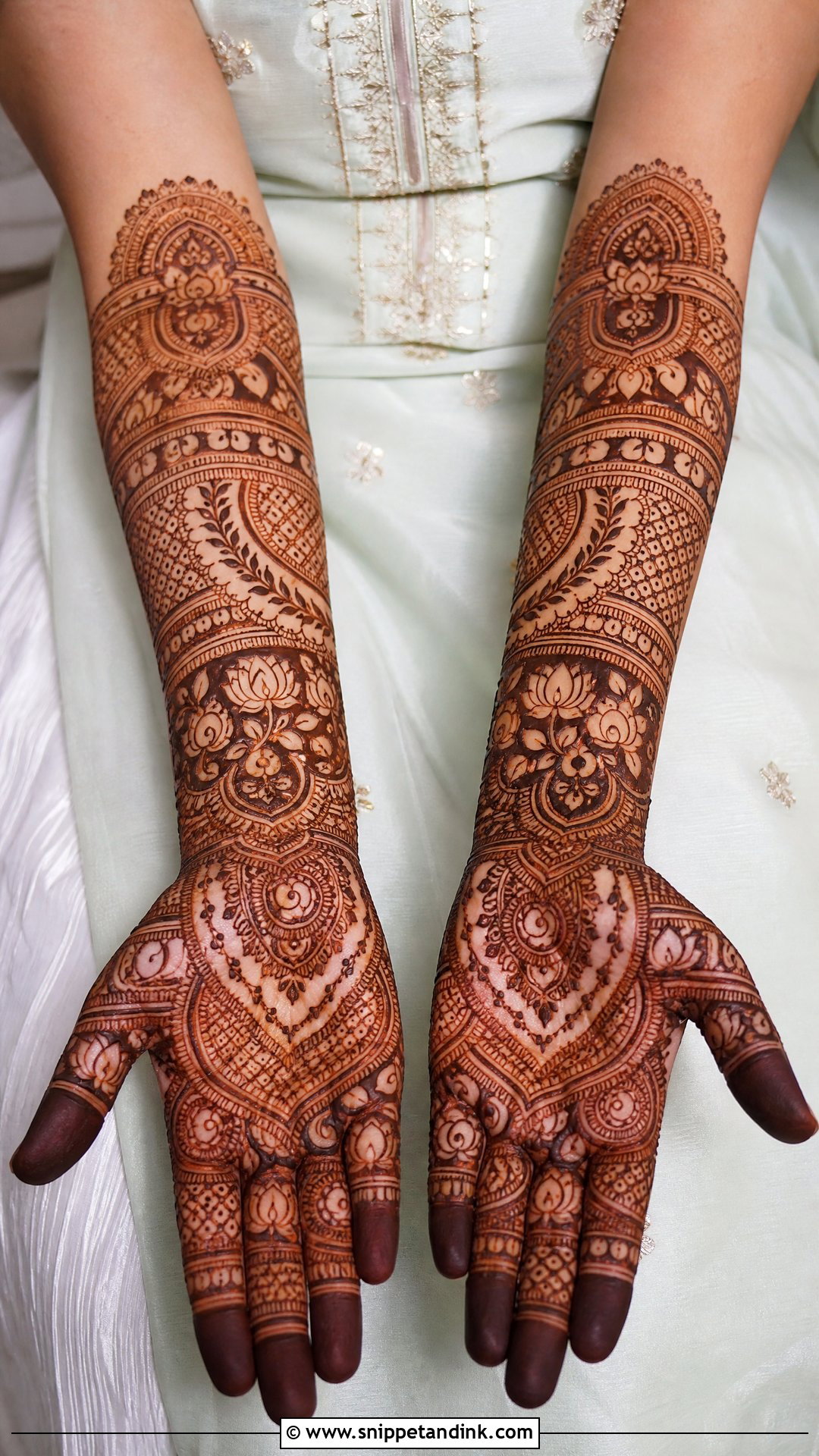
Traditional Indian half-hand work usually starts at the fingertips: filled tips, detailed finger bands, then a central palm panel of paisleys, lotus petals, small leaves and fine jaali, finished with a neat wrist cuff. It sits naturally with a lehenga, a saree or a heavily embroidered outfit. When I draw it, I keep the main shapes bold and the filler fine. Fine filler lines that sit too close together merge into one brown patch as the stain darkens, and the pattern loses its definition in photos.
2. Arabic Bridal Mehndi Half Hand
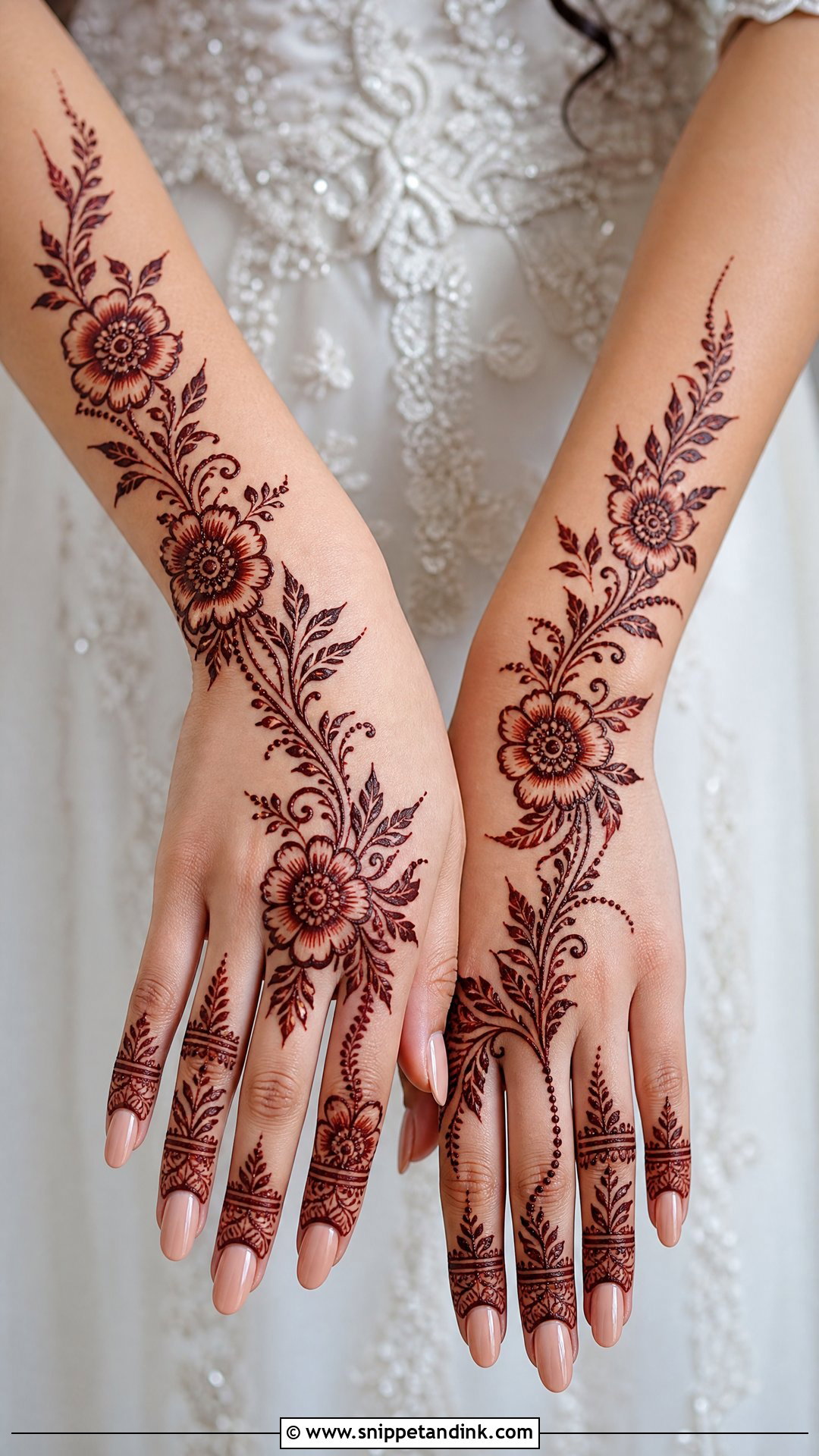
Arabic layouts run diagonally across the palm or the back of the hand with flowers, leaves, vines and shaded petals, leaving open skin between them. Leafy finger bands and small floral tips finish it. Because the style relies on negative space, it reads lighter while still feeling festive, which makes it popular for a nikah, an engagement or a reception. To make it read as bridal rather than party henna, I add a wrist bracelet or a bold floral cuff. It’s also one of the quickest designs to apply, often well under an hour per hand.
3. Indo Arabic Bridal Mehndi Half Hand
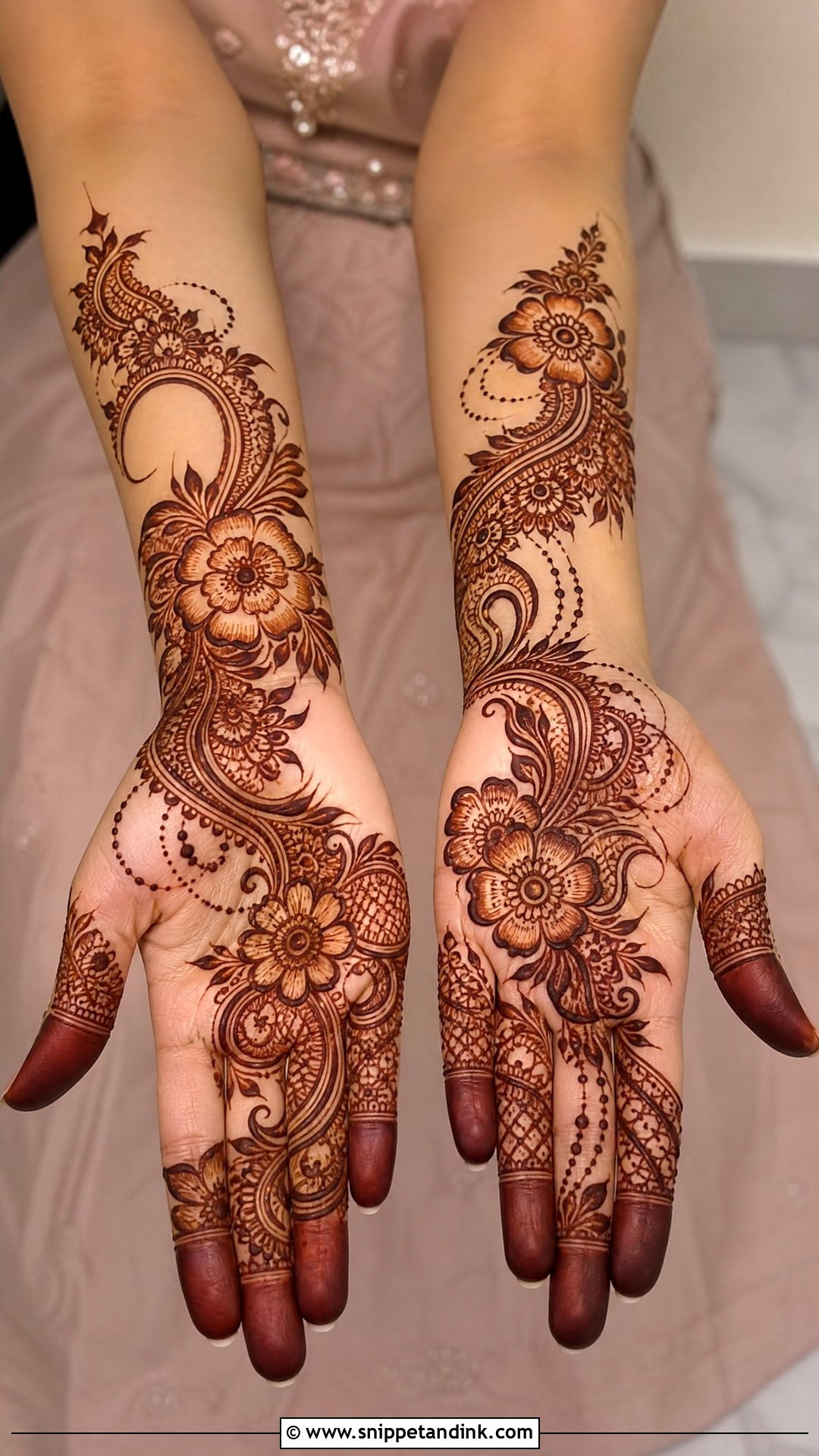
Indo-Arabic combines the flowing florals of Arabic work with the fine filling of Indian mehndi. A typical layout puts a large flower or paisley on one side of the palm, then vines, dotted chains, shaded leaves and thin Indian borders, with tiny grids and petals on the fingers. The empty spaces are what keep it from feeling packed, so I resist filling them when a bride asks for “a bit more”. It suits red, pastel, ivory or jewel-toned outfits equally.
4. Simple Bridal Mehndi Half Hand
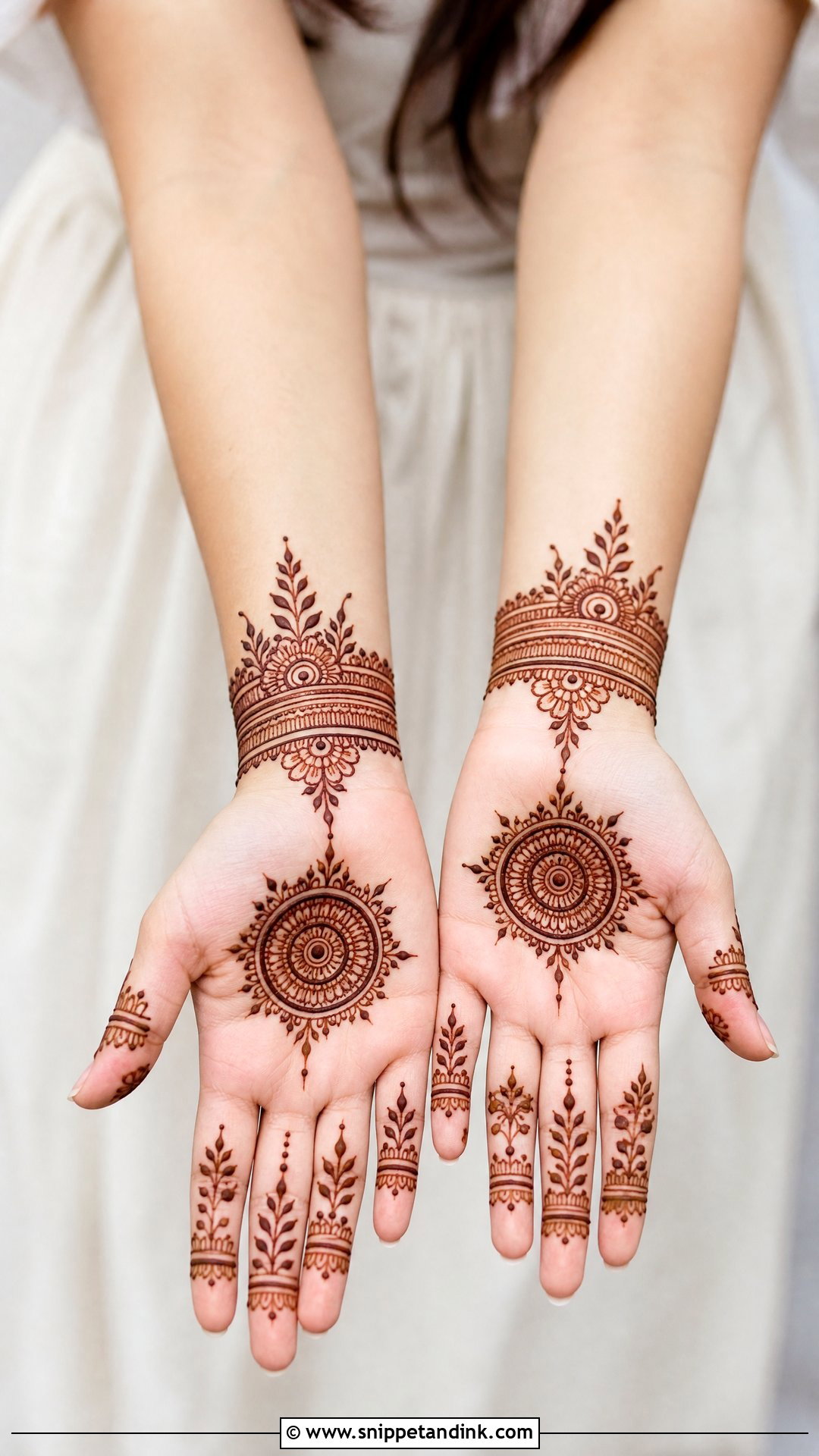
A simple bridal hand is harder to get right than it looks, because there’s nowhere to hide an uneven line. I usually draw a small palm mandala, floral fingers and a slim wrist band, and I always fill or pattern the fingertips; bare fingertips make even a neat hand look unfinished. This one suits intimate weddings, courthouse ceremonies and destination trips, and it dries faster. Keep the outlines bold and the filler minimal, since thin, sparse lines can look faint once the stain settles.
5. Front Hand Bridal Mehndi Half Hand
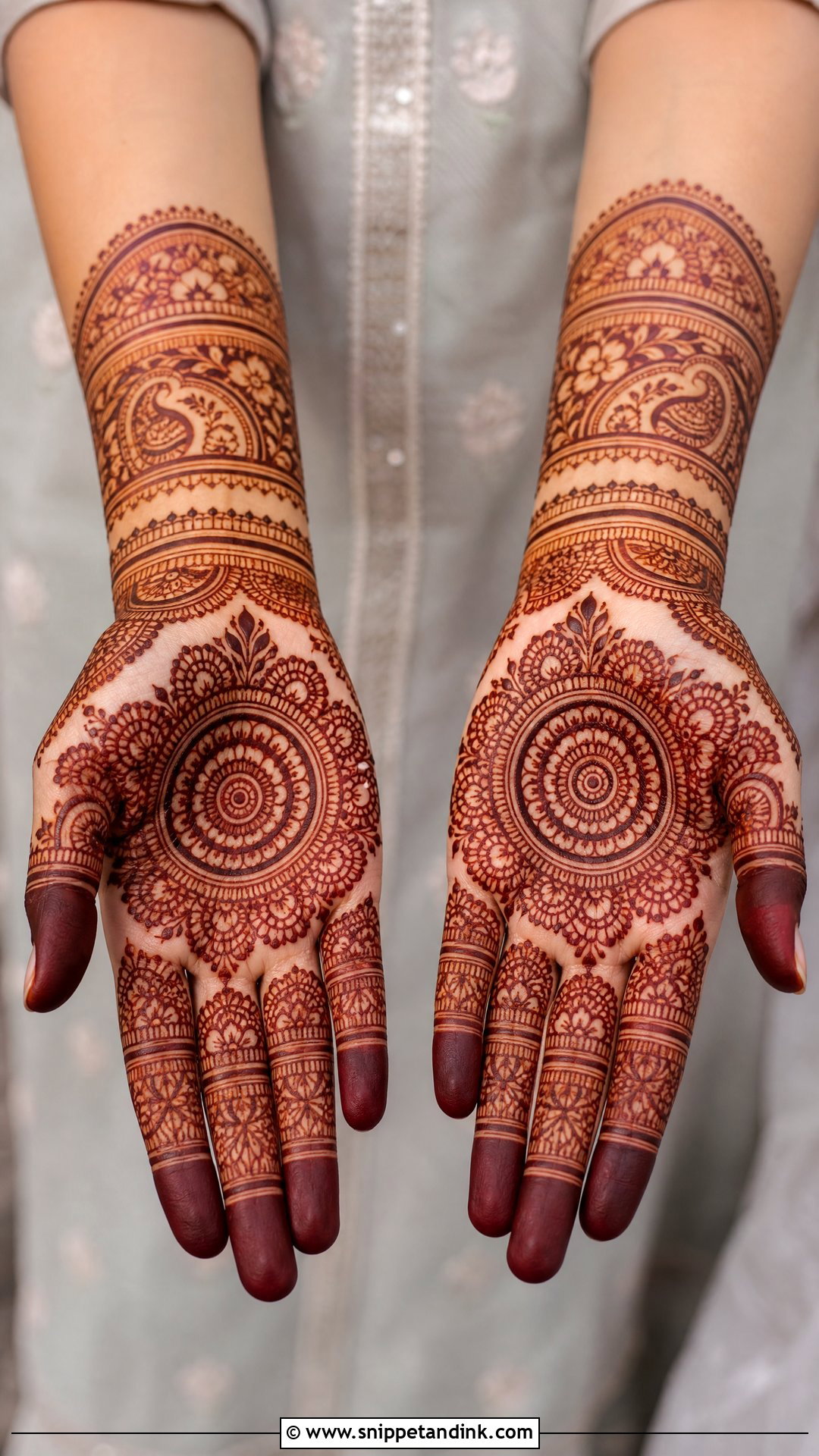
The palm is the side that gets photographed most, during rituals, ring shots and close-up portraits, so I plan a front-hand layout around how the hand is actually held. A centre mandala, paisley borders, floral corners and decorated fingertips form the base, with a bangle-like cuff at the wrist. The part brides forget is the thumb and the outer edge of the palm. When the hand turns slightly for a ring photo, those are the areas the camera sees, so I never leave them blank.
6. Back Hand Bridal Mehndi Half Hand
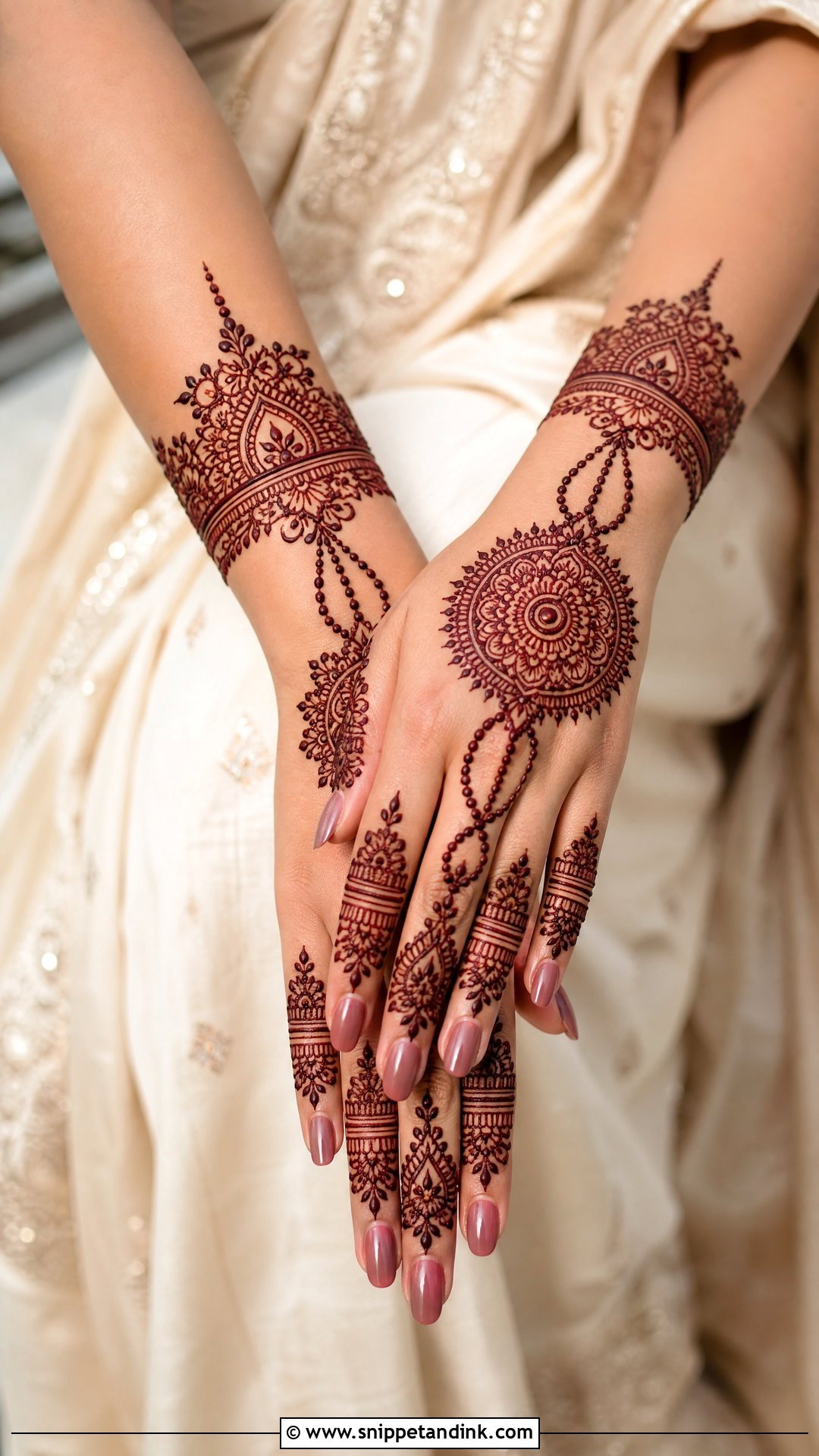
Back hand bridal mehndi half hand works like jewellery drawn in henna: a central mandala, finger chains, a bracelet cuff and floral wrist details, much like a haath phool. The fingers need coordinated patterns rather than random lines, and I tie everything together with dots, leaves and lace borders. One honest note: skin on the back of the hand is thinner and drier than the palm, so the stain there comes out lighter, usually a warm mid-brown rather than deep maroon. Plan the darkest focal points for the palm if colour matters most to you.
7. Royal Bridal Mehndi Half Hand
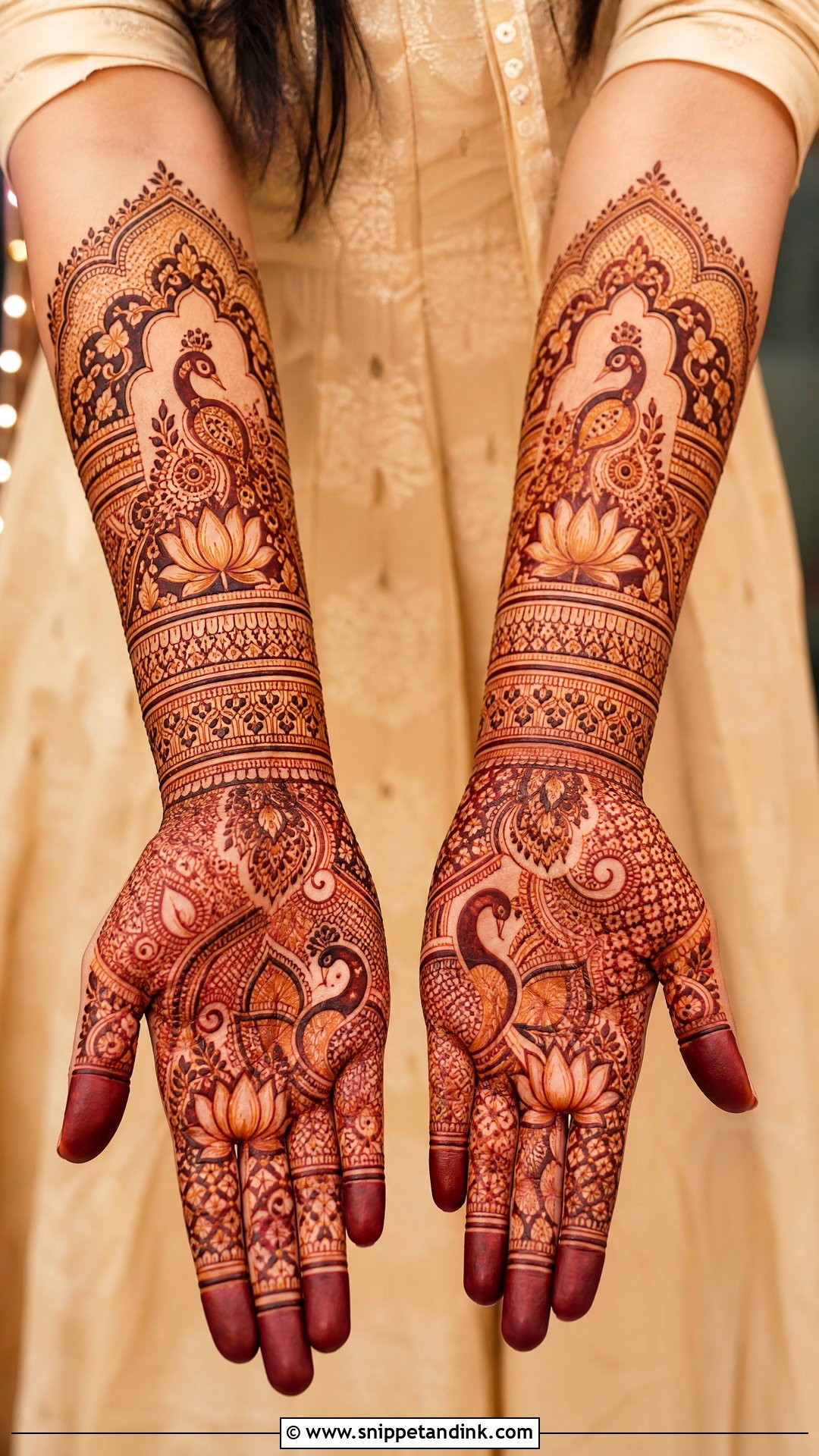
A royal layout feels grand because it is built on structure: peacocks, lotus flowers, paisleys, domes and ornamental cuffs, set inside bold borders. Even on a half hand it looks rich when the spacing is planned. I place one large central motif on the palm, then repeating bands and fine lace on the fingers, and close it with a thick wrist border. The usual mistake is giving every motif equal weight. Pick one hero motif and let the smaller fillers support it, or the hand turns into a crowd.
8. Floral Bridal Mehndi Half Hand
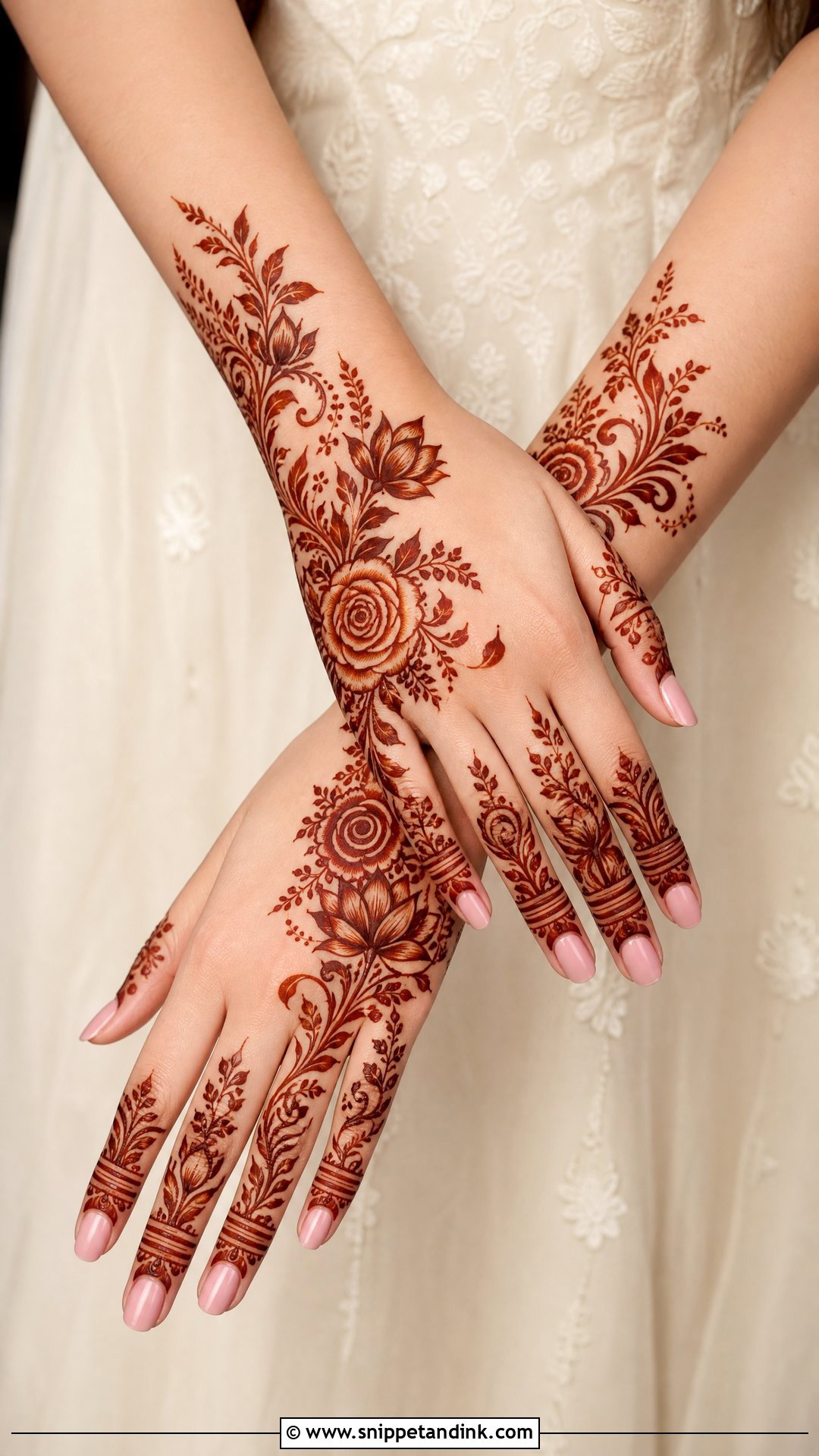
Florals are the easiest design to personalise: roses, lotus blooms, buds, leafy trails and shaded petals across the palm or back hand. A bridal floral needs to be fuller than a casual one, so I add finger detailing, dotted vines and a wrist border. It pairs naturally with pastel lehengas, floral embroidery and daytime ceremonies. Large flowers feel bold; clustered small ones feel delicate. Whichever you pick, the trail needs a clear direction, usually from the index finger toward the opposite side of the wrist, or the flowers look scattered.
9. Mandala Bridal Mehndi Half Hand
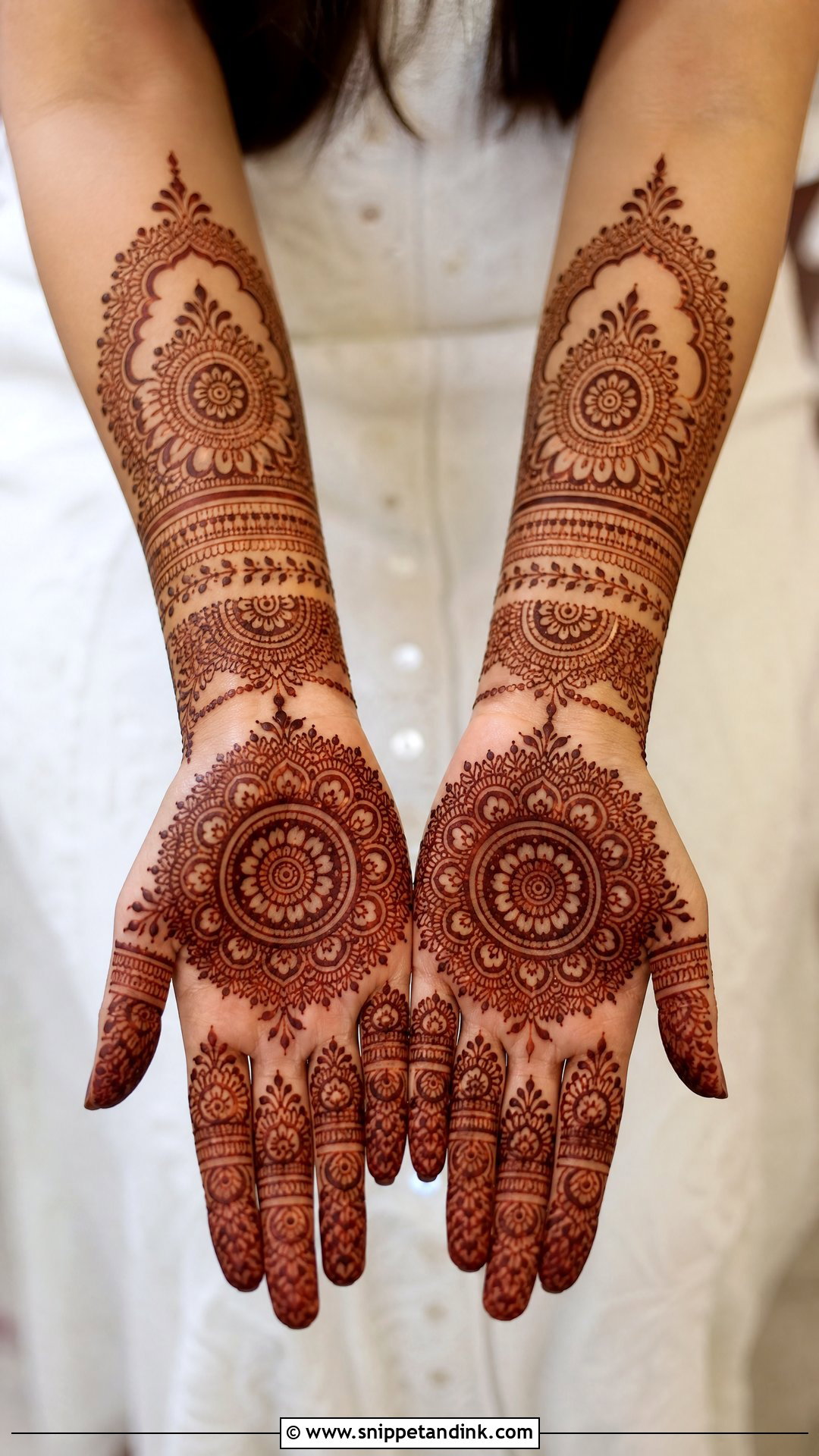
A mandala gives the hand a strong centre, and its symmetry draws the eye straight to the palm or the back of the hand. Around it I add petals, dots, curved vines, finger bands and a wrist cuff. For bridal work I build the mandala in several layered rings with fine detail rather than one plain circle, and I size it to the hand: on a small palm, a large mandala swallows everything else. Matching mini mandalas on the fingertips or wrist tie the layout together.
10. Peacock Bridal Mehndi Half Hand
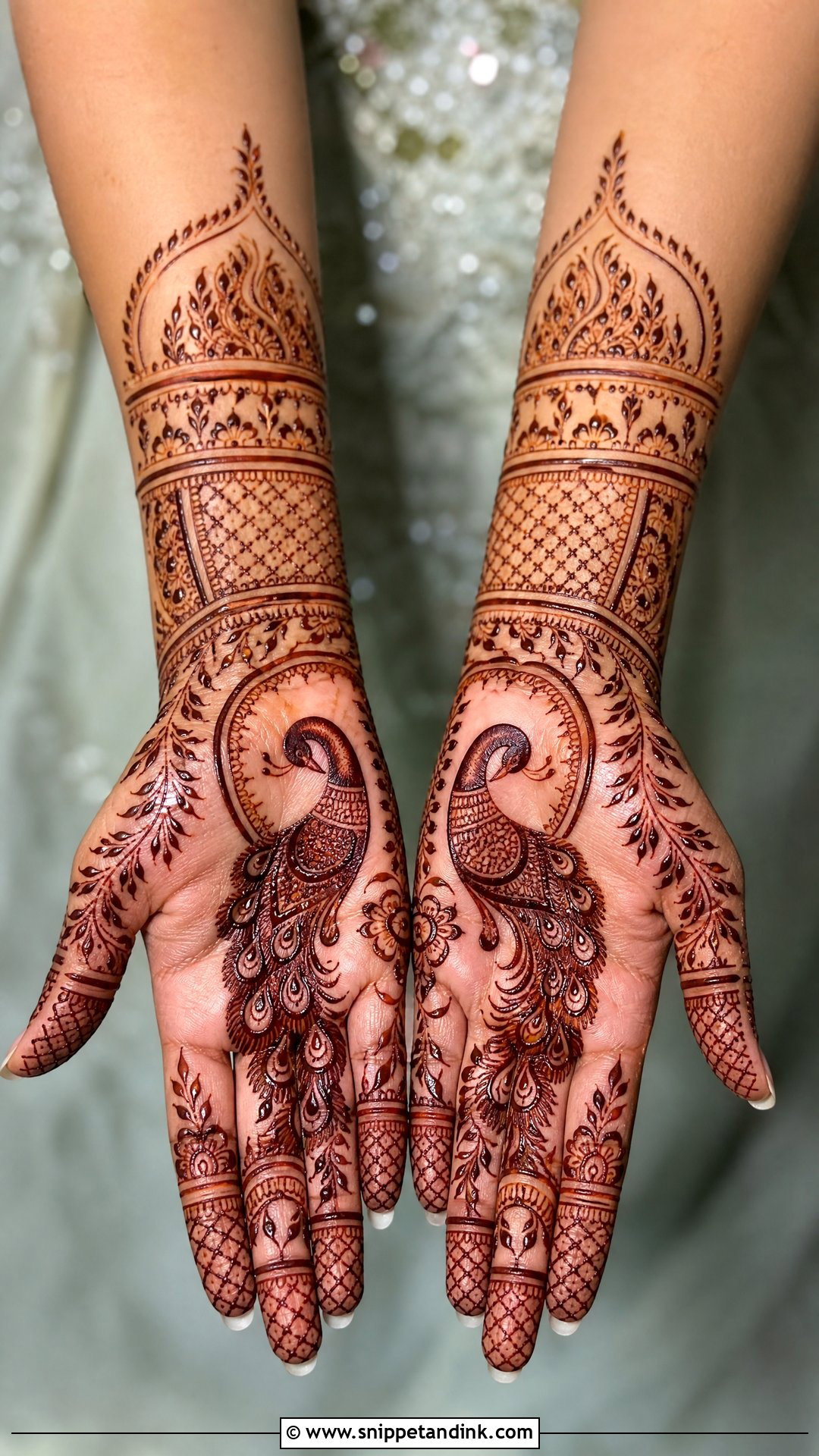
The peacock has a long connection with bridal mehndi in India, and it still feels festive. On a half hand I place one clear peacock on the palm, the side of the hand or near the wrist, with its feathers flowing into paisleys and vines. Several small peacocks on a half hand just look busy. Feather-like strokes and leafy bands carry the theme onto the fingers. I draw the outline crisply and fill the feathers in detail, so the bird is still recognisable after the stain darkens and the fine lines thicken slightly.
11. Paisley Bridal Mehndi Half Hand
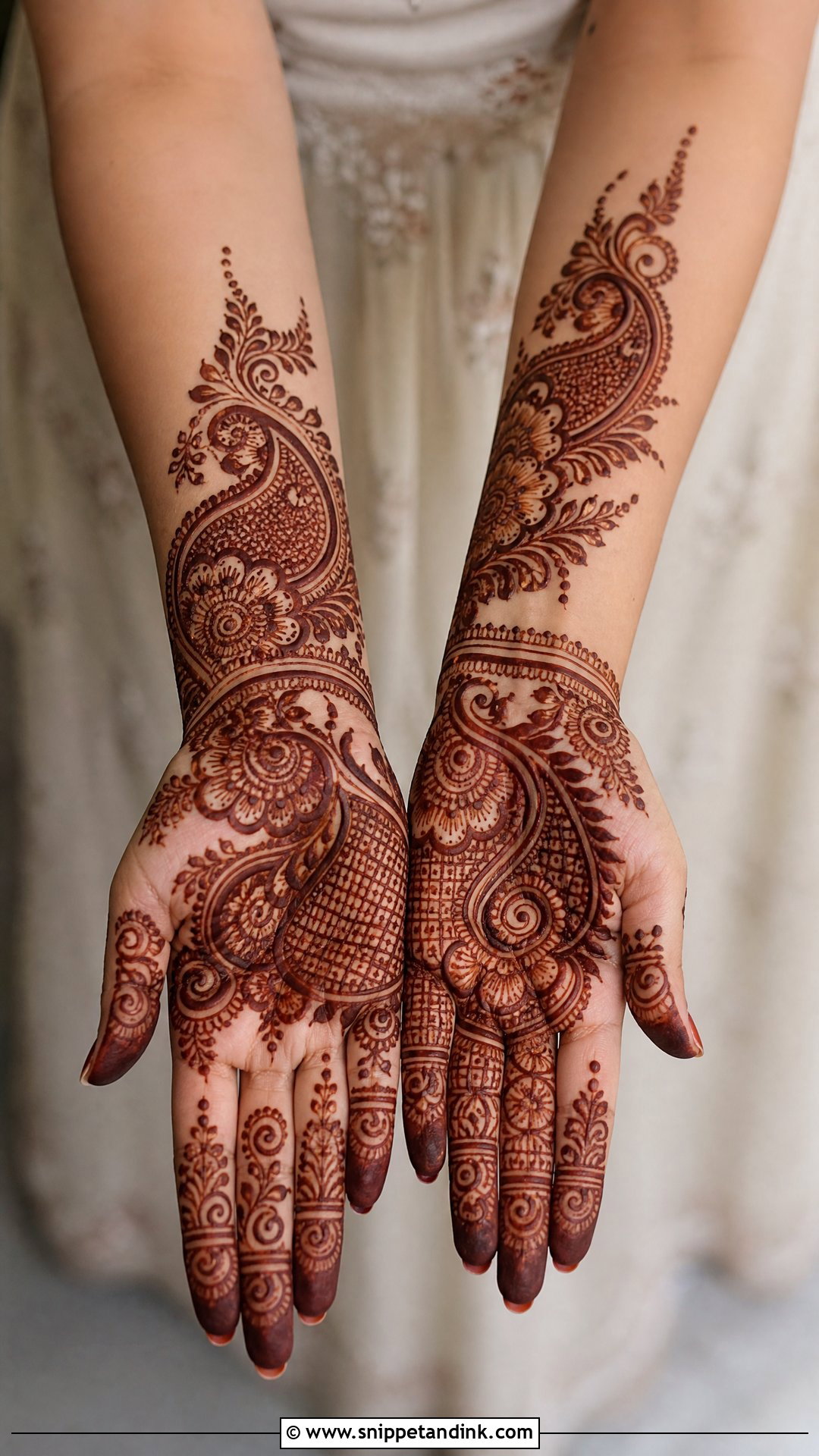
Paisley is the most versatile shape I work with, because it can be drawn small, large, filled, shaded or layered. A half-hand bridal version might carry a large paisley on the palm, smaller ones near the wrist and patterned fingers, with floral fillers, dots and fine mesh for depth. It works on the front and the back, and sits well with red, maroon, green and gold outfits. The trick that makes it look polished is repeating the same curve in different sizes, so the eye reads one family of shapes.
12. Jewellery Bridal Mehndi Half Hand
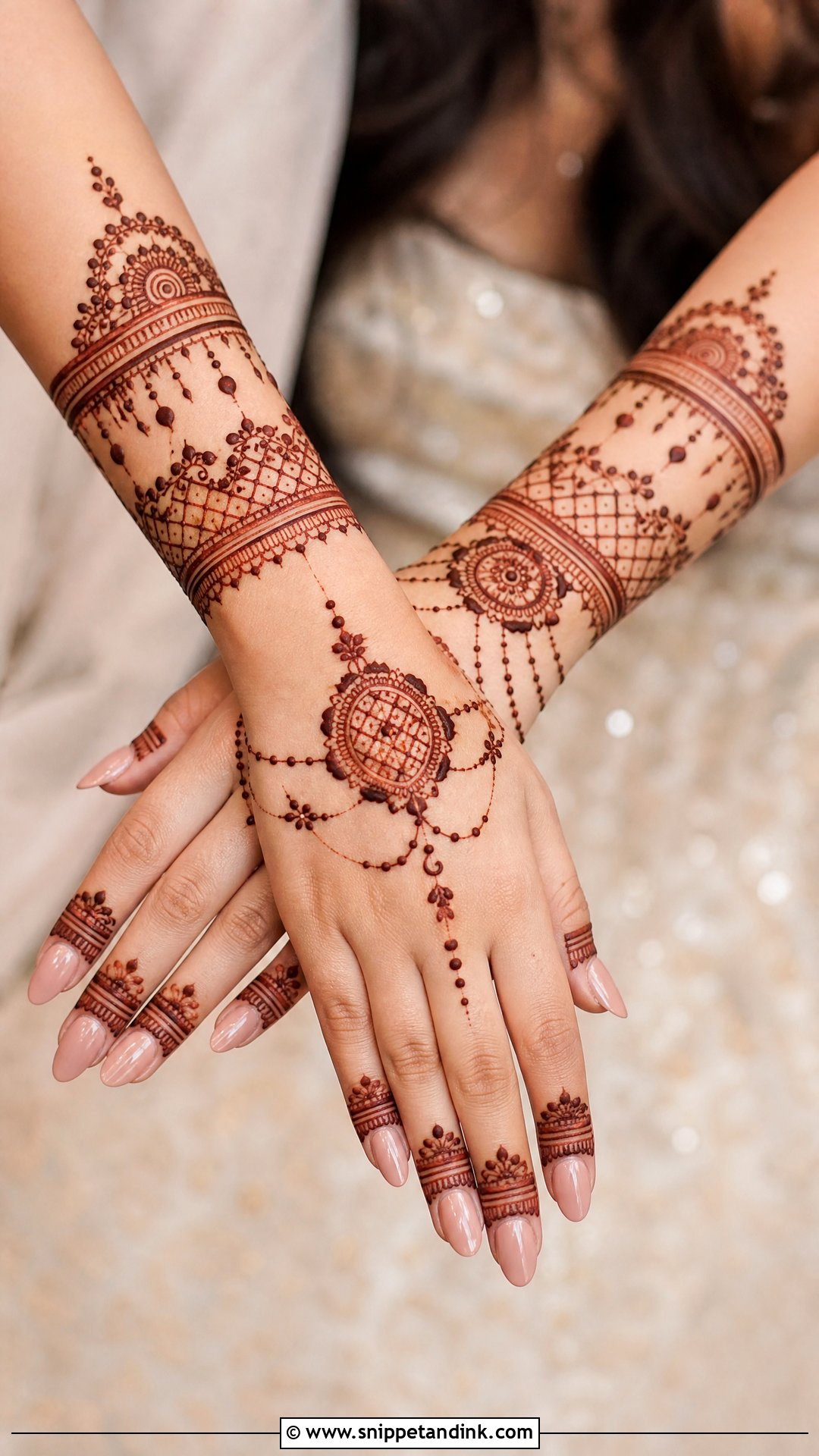
Some brides want their henna to read as ornaments: ring patterns, chain links, bracelet cuffs and fine finger bands. On the back of the hand it can copy the look of haath phool, a central flower linked to finger rings and a wrist bracelet. On the palm, a bangle-style border with hanging bead shapes works well. I keep these lines thin and clean, because the jewellery effect depends on looking precise. If you’ll wear statement rings, tell me which fingers, so I don’t draw a henna ring that sits under real metal.
13. Minimal Bridal Mehndi Half Hand
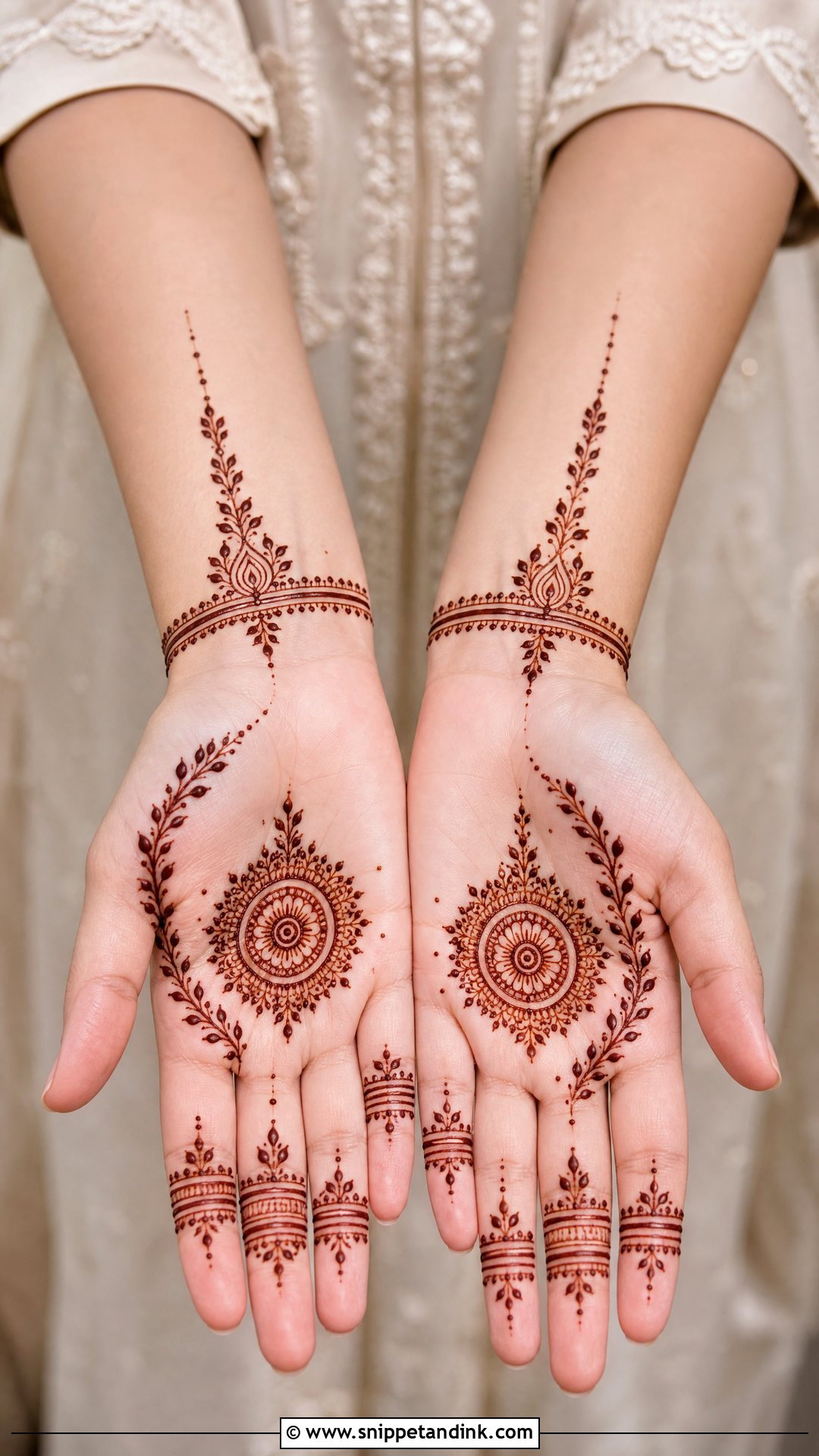
Minimal bridal mehndi uses fewer motifs placed carefully: a small mandala, slim finger patterns, leafy trails and a neat wrist band. The clean spacing lets rings, nails and outfit details stand out, which suits civil ceremonies, beach weddings and brides who simply prefer less. The risk is that it reads as guest henna. I keep it bridal with symmetrical fingers and one well-finished focal motif, rather than a scatter of small unrelated elements.
14. Modern Bridal Mehndi Half Hand
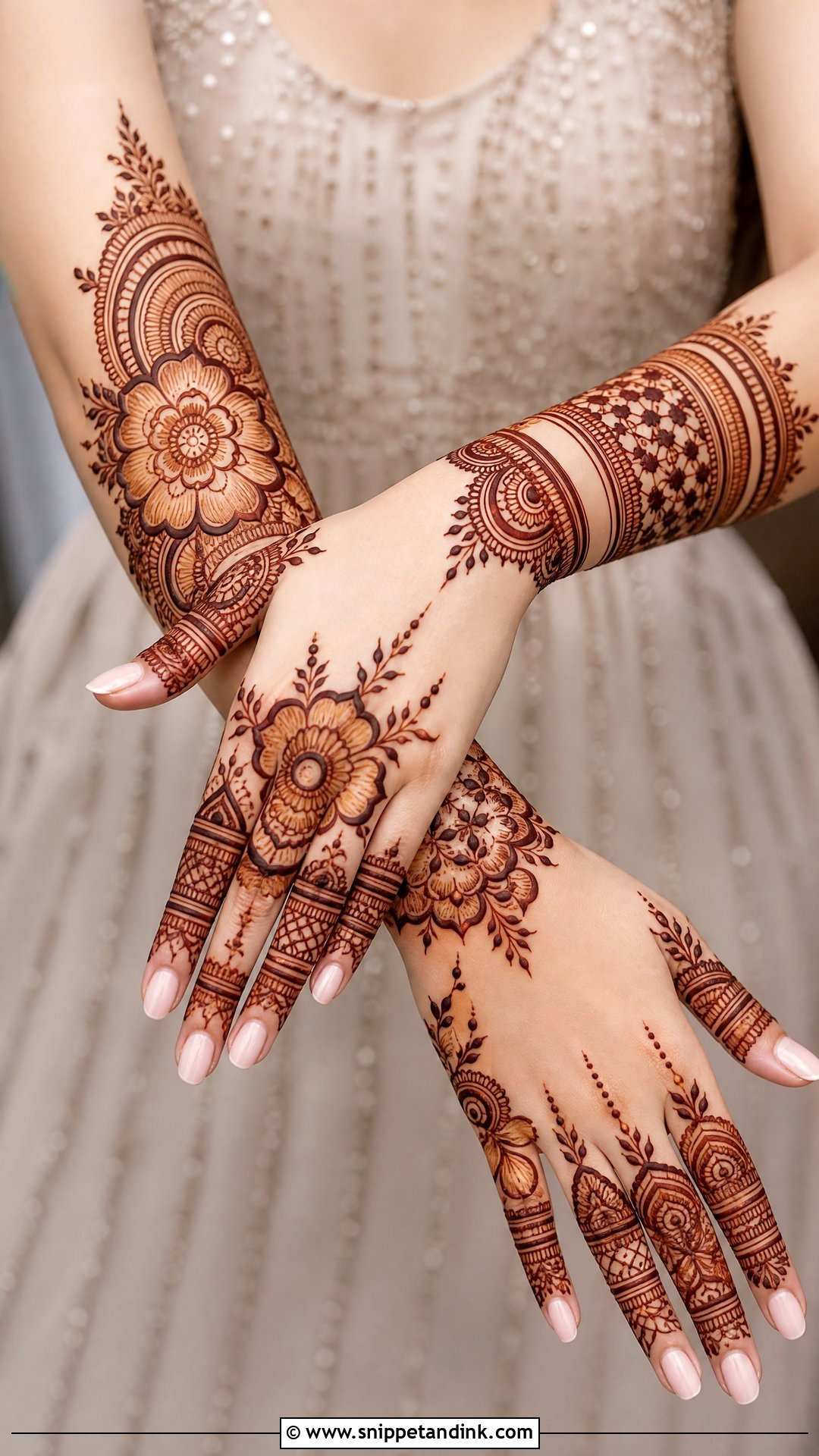
Modern layouts use clean structure, bold spacing and updated motifs: geometric lines, open florals, half mandalas, bracelet cuffs and negative-space bands. They suit contemporary lehengas, gowns and fusion outfits. I’ll often do a structured panel on the palm and a delicate jewellery-like pattern on the back. Contrast is what makes it work in close-ups, so I mix bold outlines with tiny detail in a few chosen areas instead of spreading detail evenly.
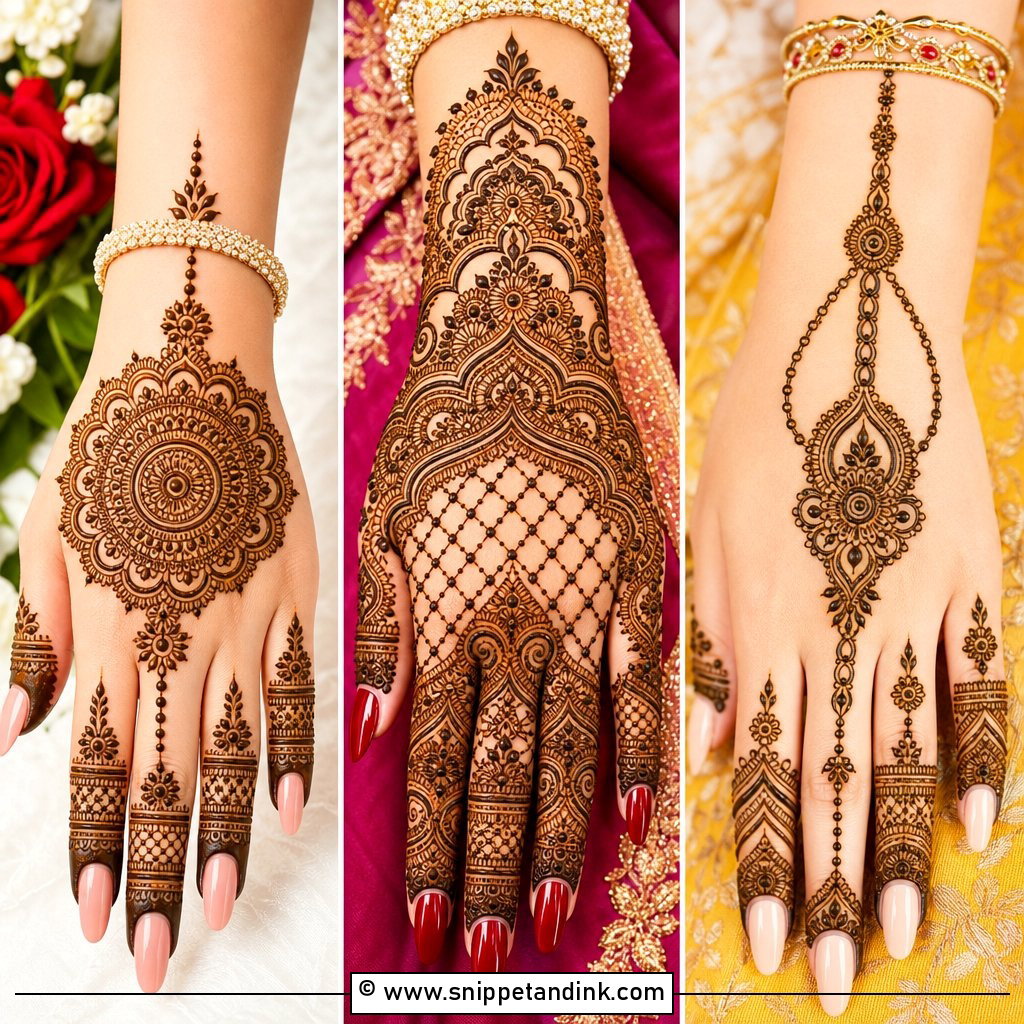
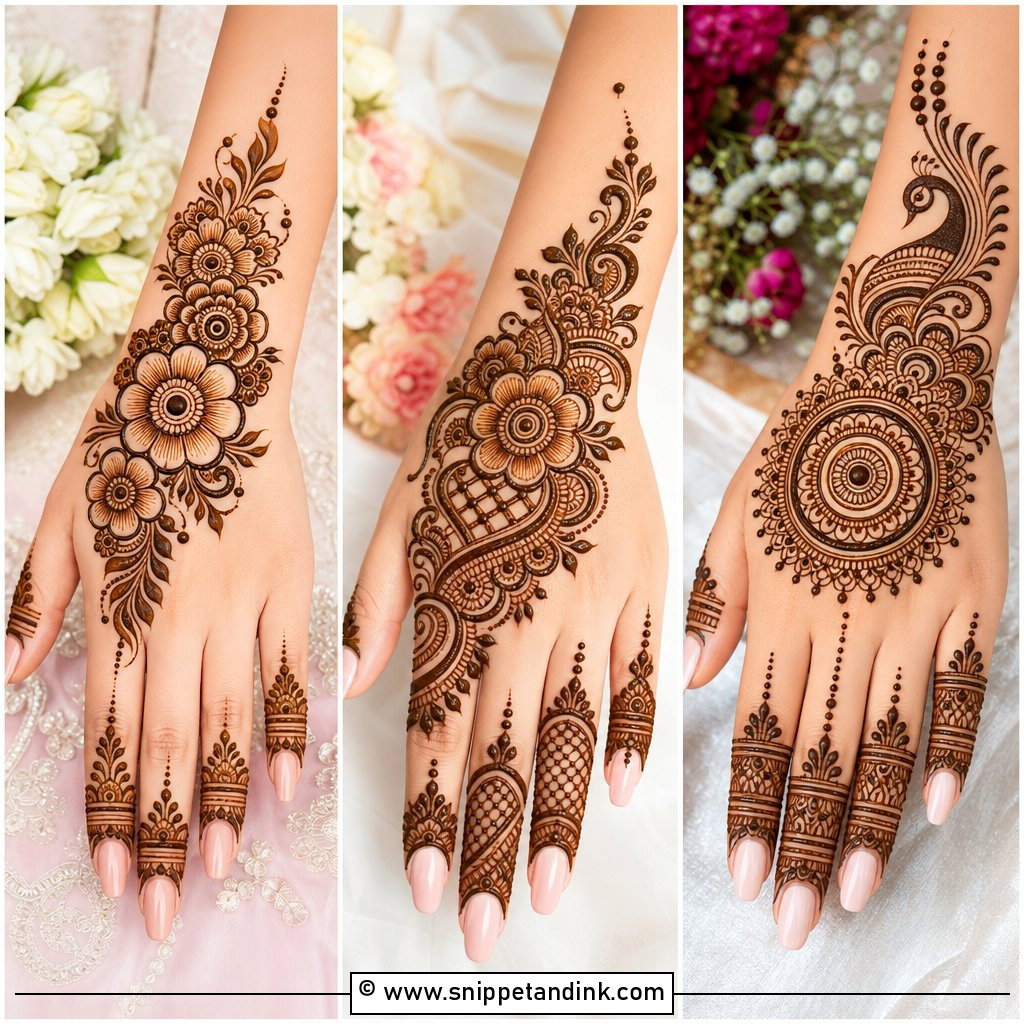

15. Shaded Bridal Mehndi Half Hand
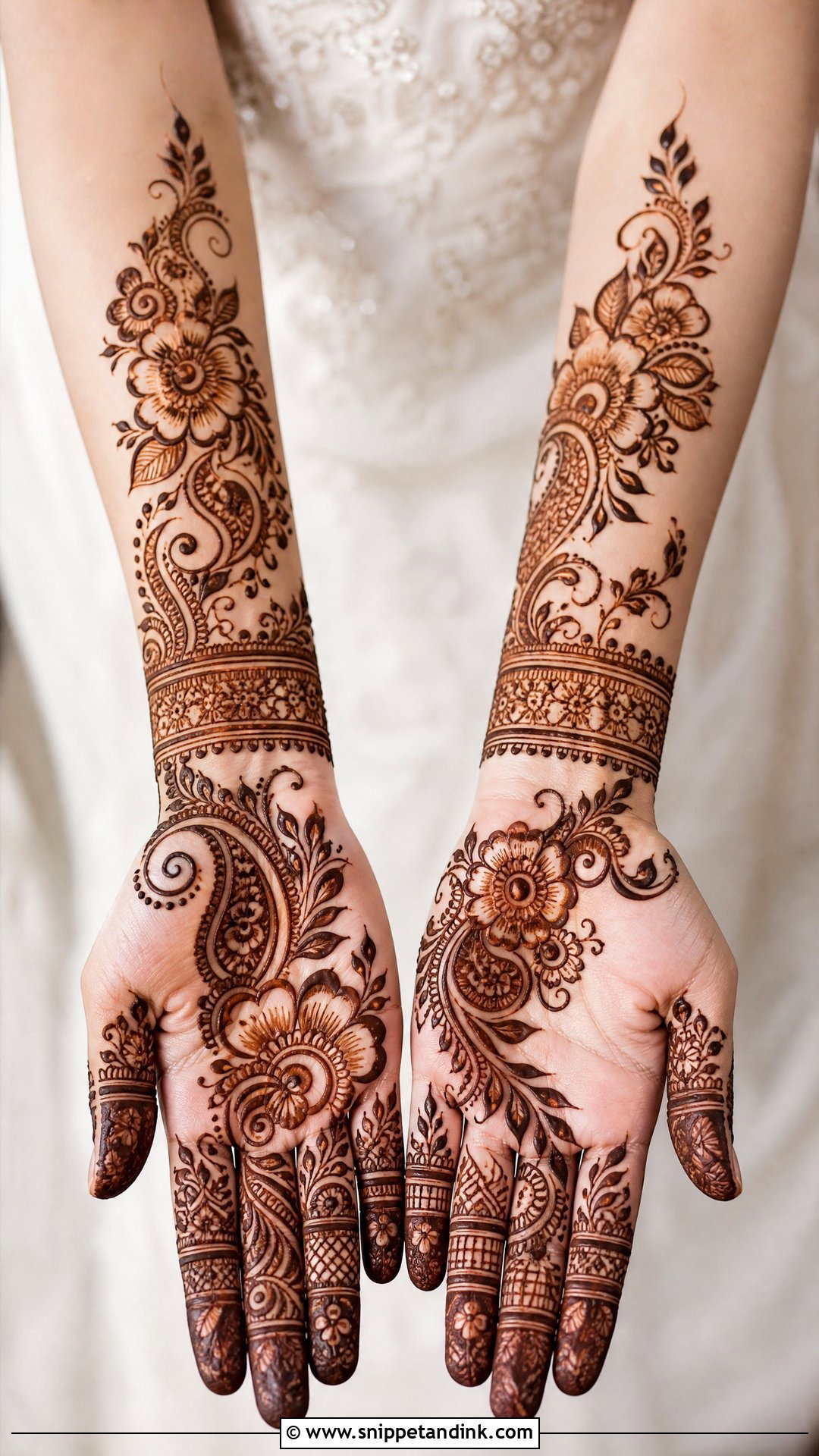
Shading gives petals, leaves and paisleys a soft, dimensional look and makes the design feel full without crowding it with tiny fillers. It’s created by laying a thinner, lighter layer of paste inside a shape. Arabic and Indo-Arabic layouts use it well, because the open skin lets the shaded areas stand out. Shading too much is a common error: thin paste dries and flakes faster, so heavily shaded areas can stain unevenly. I keep a mix of light and bold areas and pair the shaded flowers with detailed fingers and a cuff.
16. Jaali Bridal Mehndi Half Hand
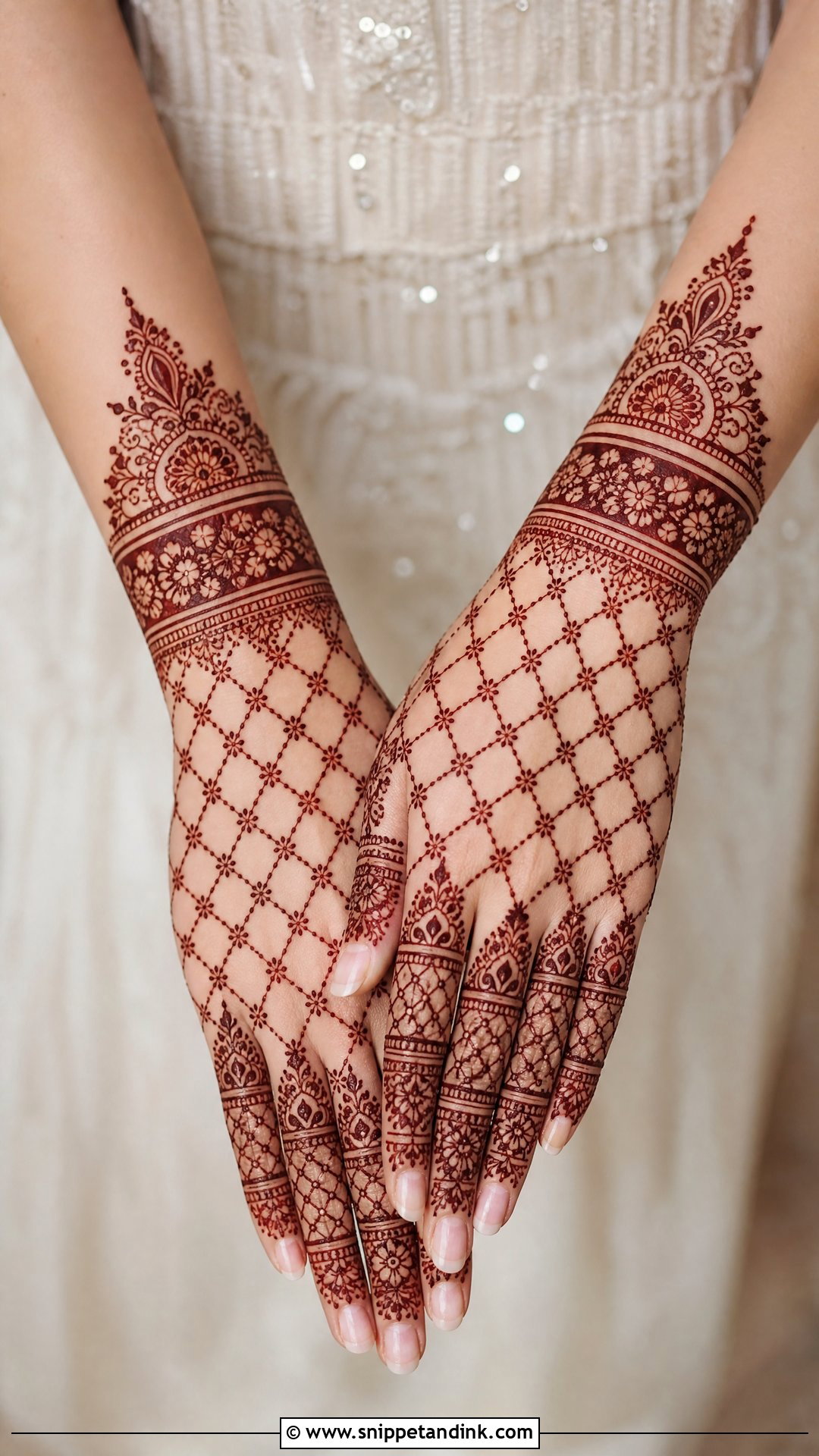
Jaali bridal mehndi half hand gives a lace or net effect on the palm, the back of the hand, the fingers or the cuff, and it’s usually framed by flowers, paisleys or a mandala. It is one of the most demanding patterns to draw, because the mesh has to be evenly spaced. If the lines drift closer together, they bleed into each other as the stain develops. On the back of the hand it can look like fine bridal gloves. I add dots at the intersections to soften it.
17. Lotus Bridal Mehndi Half Hand
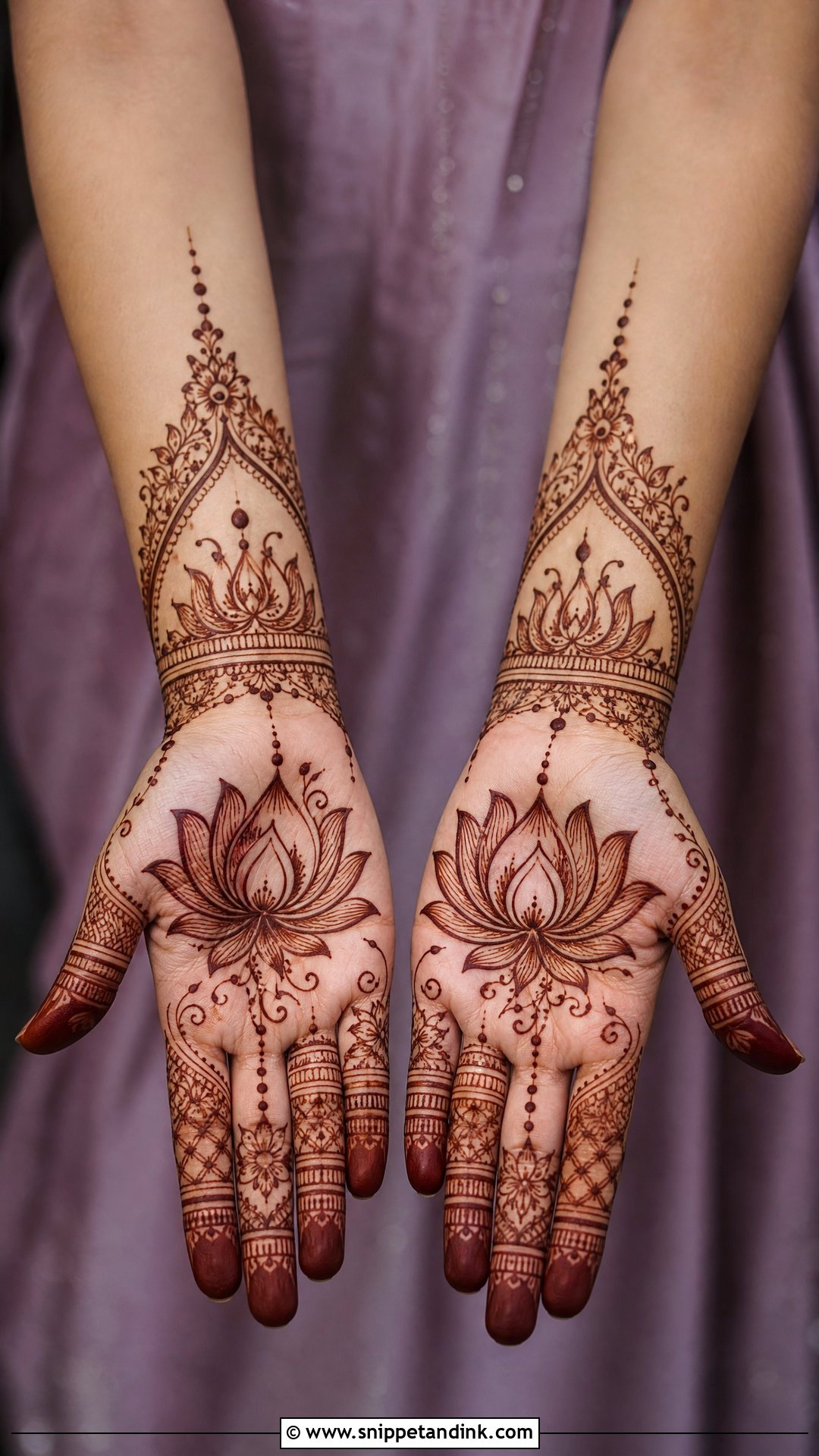
The lotus is a symbolic motif in many traditions, and it suits a half hand because its layered petals create natural spacing. I place it at the centre of the palm, near the wrist or as the main back-hand motif, then add thin vines, paisley borders, dotted chains and decorated fingertips. It goes well with temple jewellery and silk sarees. Crisp petal tips matter most here; rounded, blurry tips make a lotus look like any other flower.
18. Mughal Bridal Mehndi Half Hand
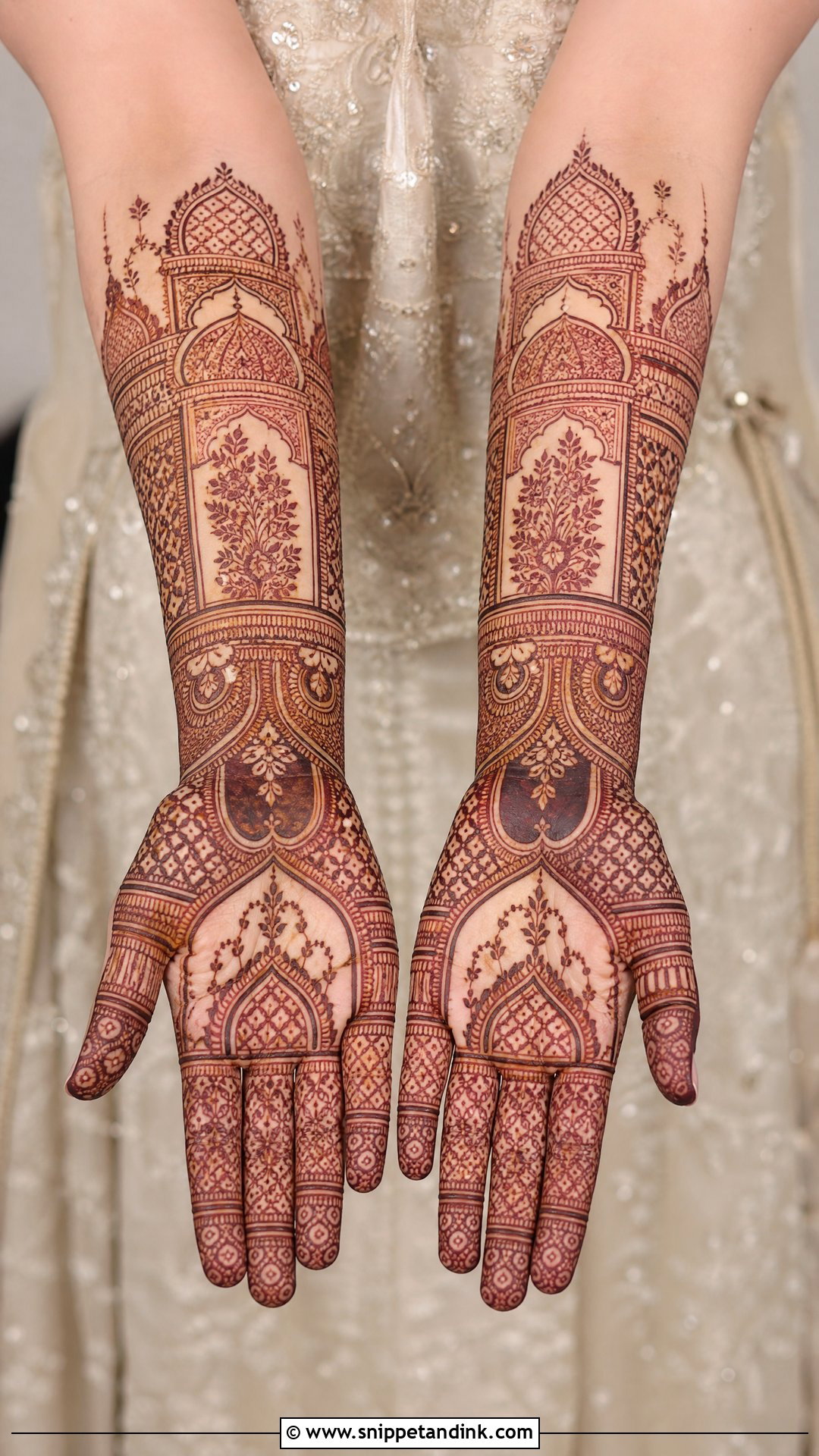
Mughal bridal mehndi half hand takes its shapes from arches, domes, floral panels and ornamental symmetry. A half-hand version might hold an arched palm design, jaali sections and a bracelet border, with small repeating bands on the fingers echoing the architecture. It only works when it’s centred and balanced, so I measure the palm visually before starting the arch. Some brides like a tiny bride-and-groom figure or initials hidden inside; keep the main shapes bold so those fine details don’t blur.
19. Gulf Bridal Mehndi Half Hand
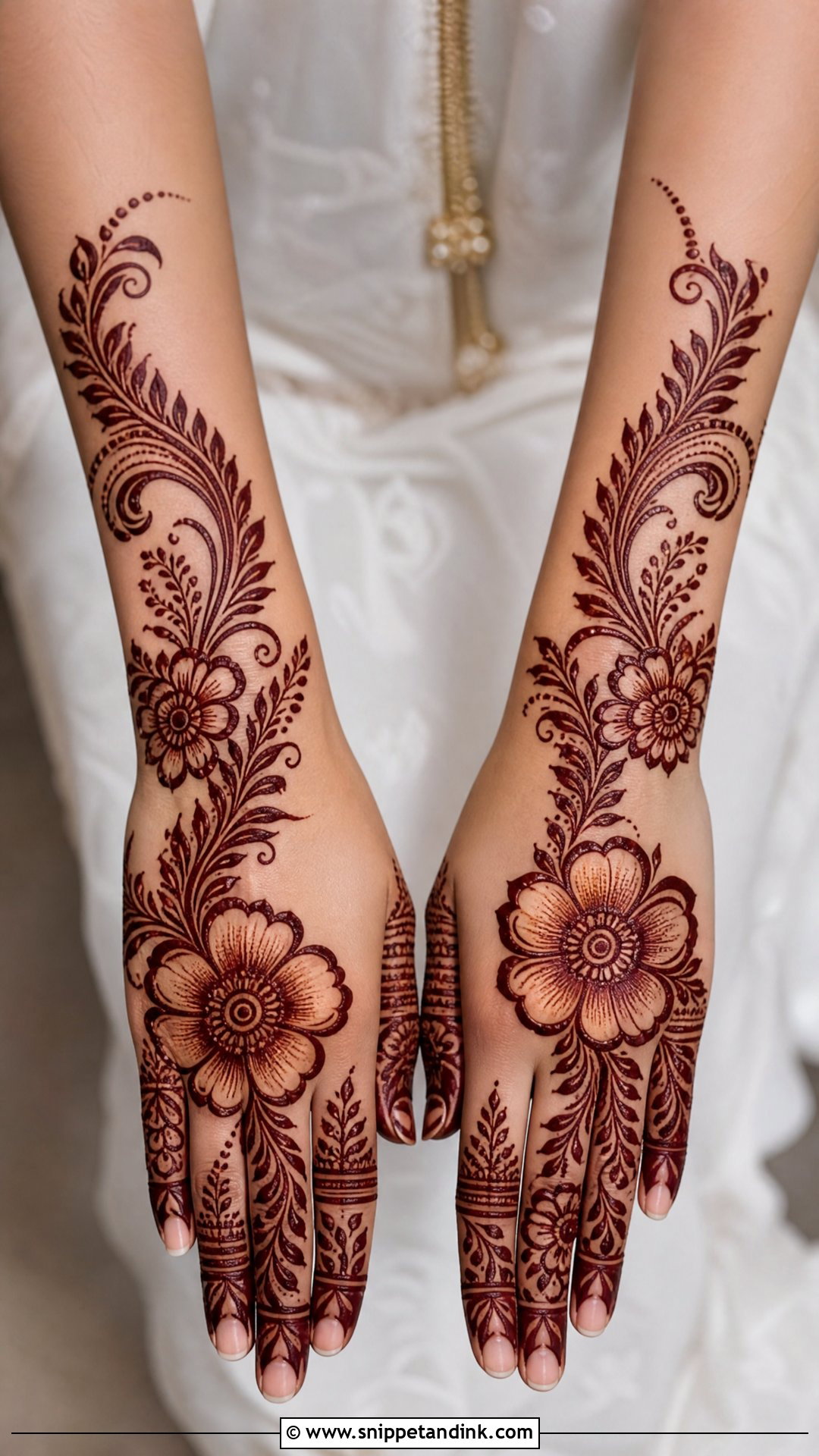
Gulf or Khaleeji-inspired mehndi uses bold florals and leafy trails flowing along one side of the hand, leaving a lot of skin visible. It looks dramatic without dense coverage. On the back hand I draw large flowers and finger vines; on the palm, bold petals and curved leaves. This style traditionally uses thick outlines filled with fine inner detail, and the thick lines hold a lot of paste, so they stain dark and photograph well even from a distance. It suits abayas, shararas, lehengas and modern outfits.
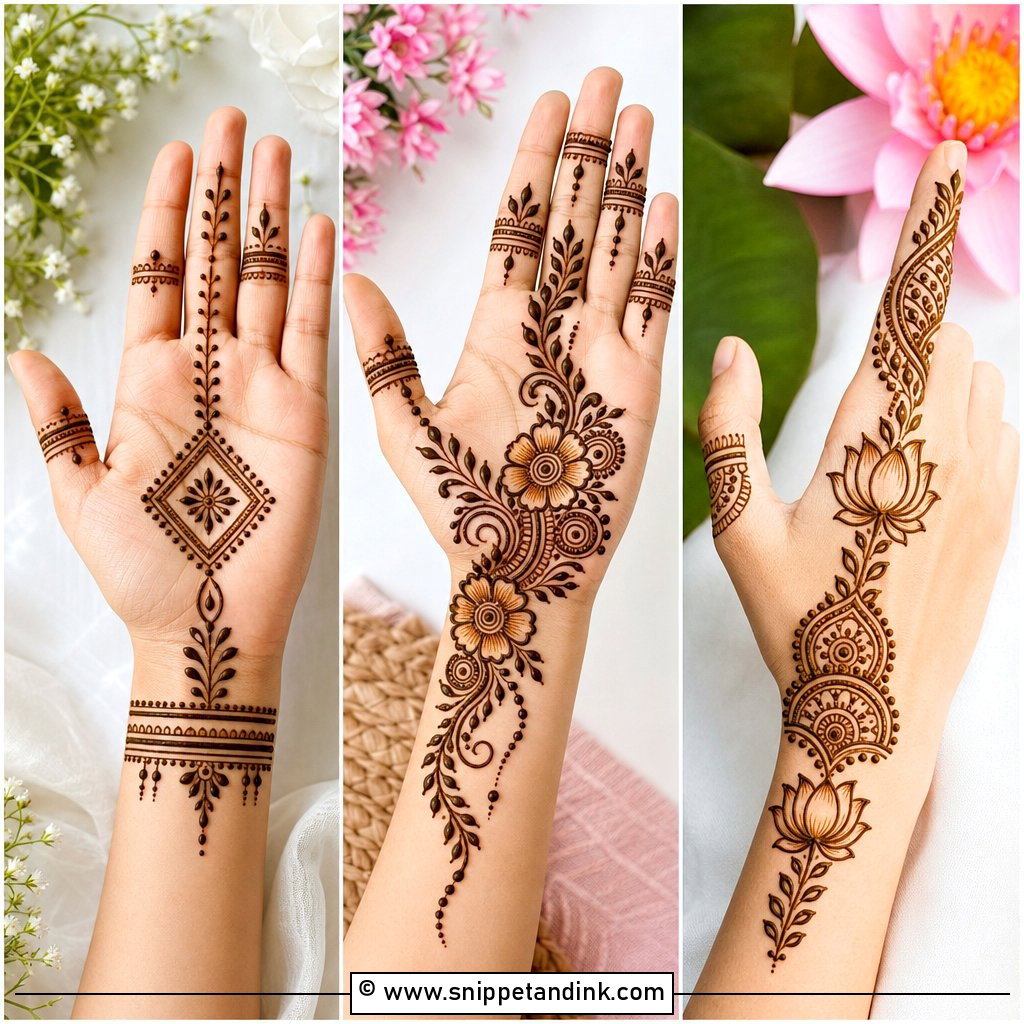
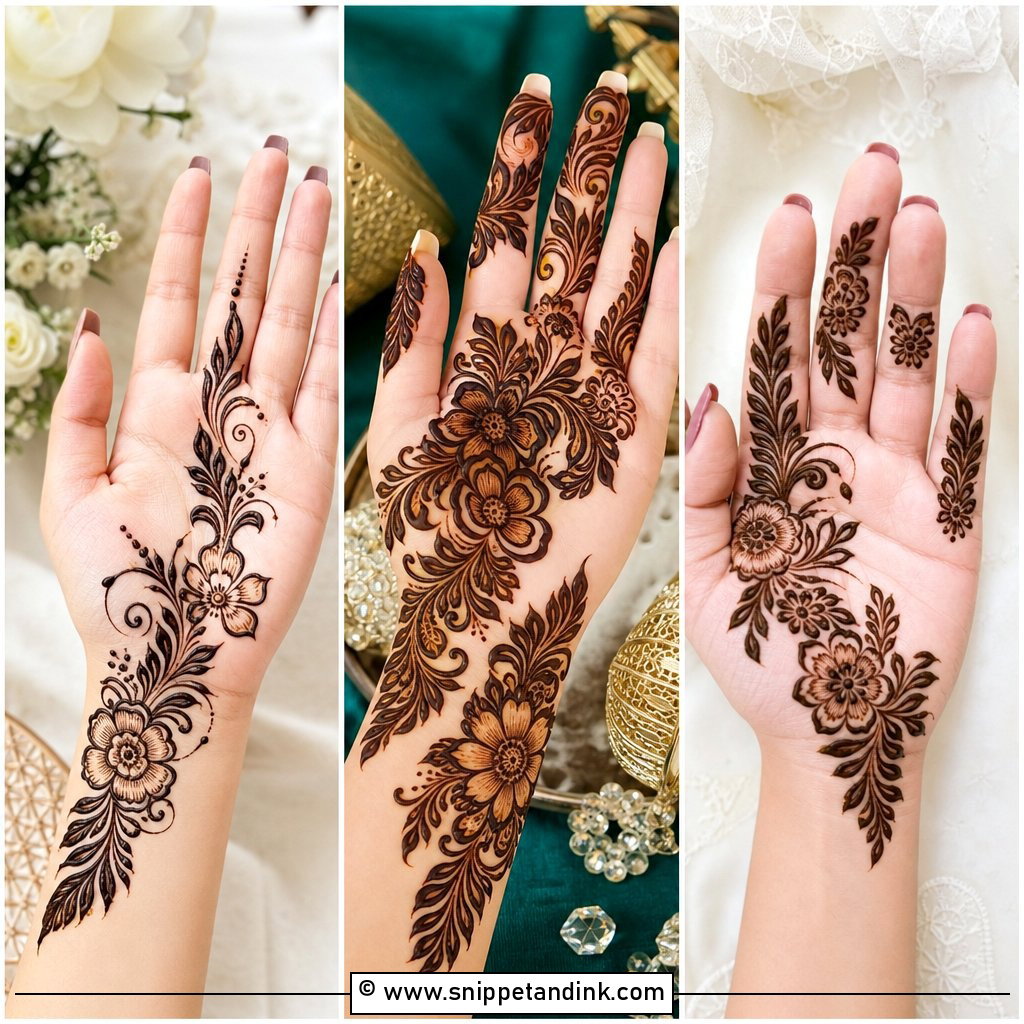
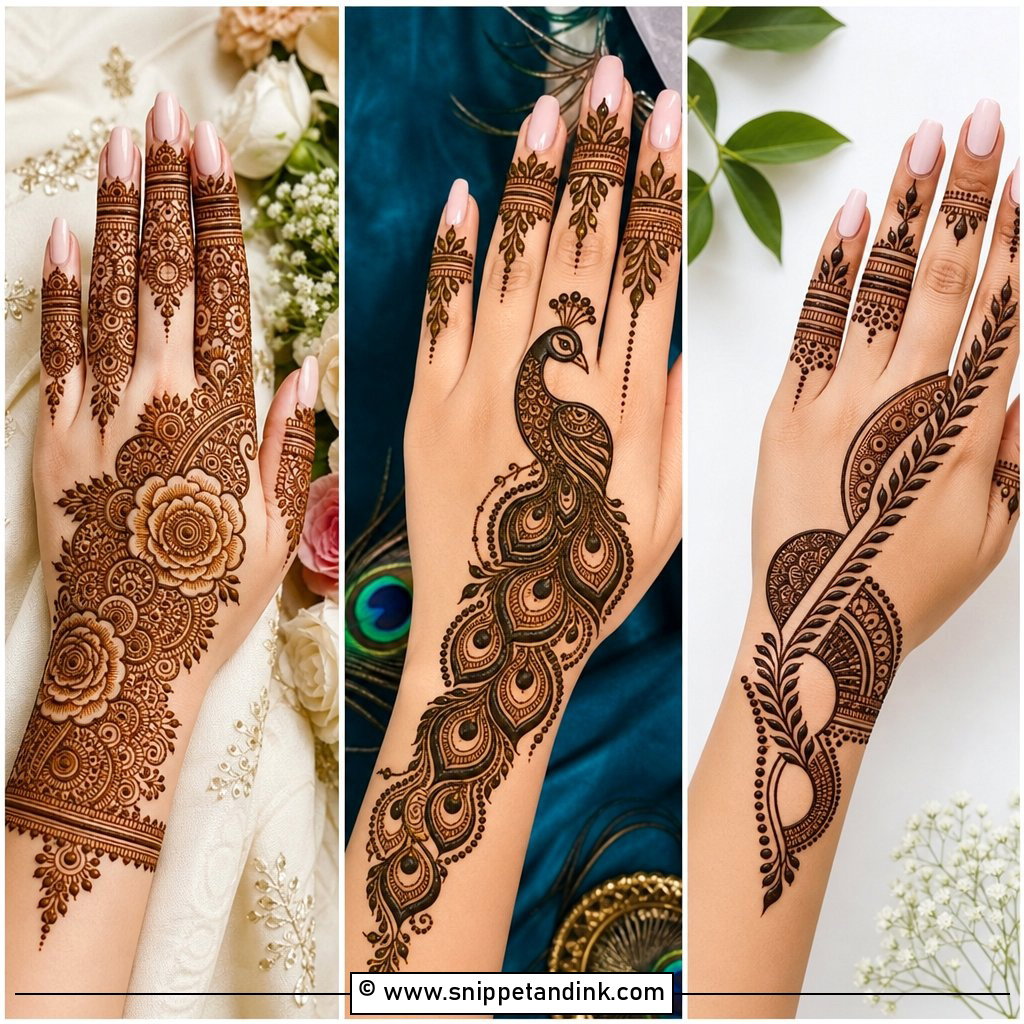

20. Moroccan Bridal Mehndi Half Hand
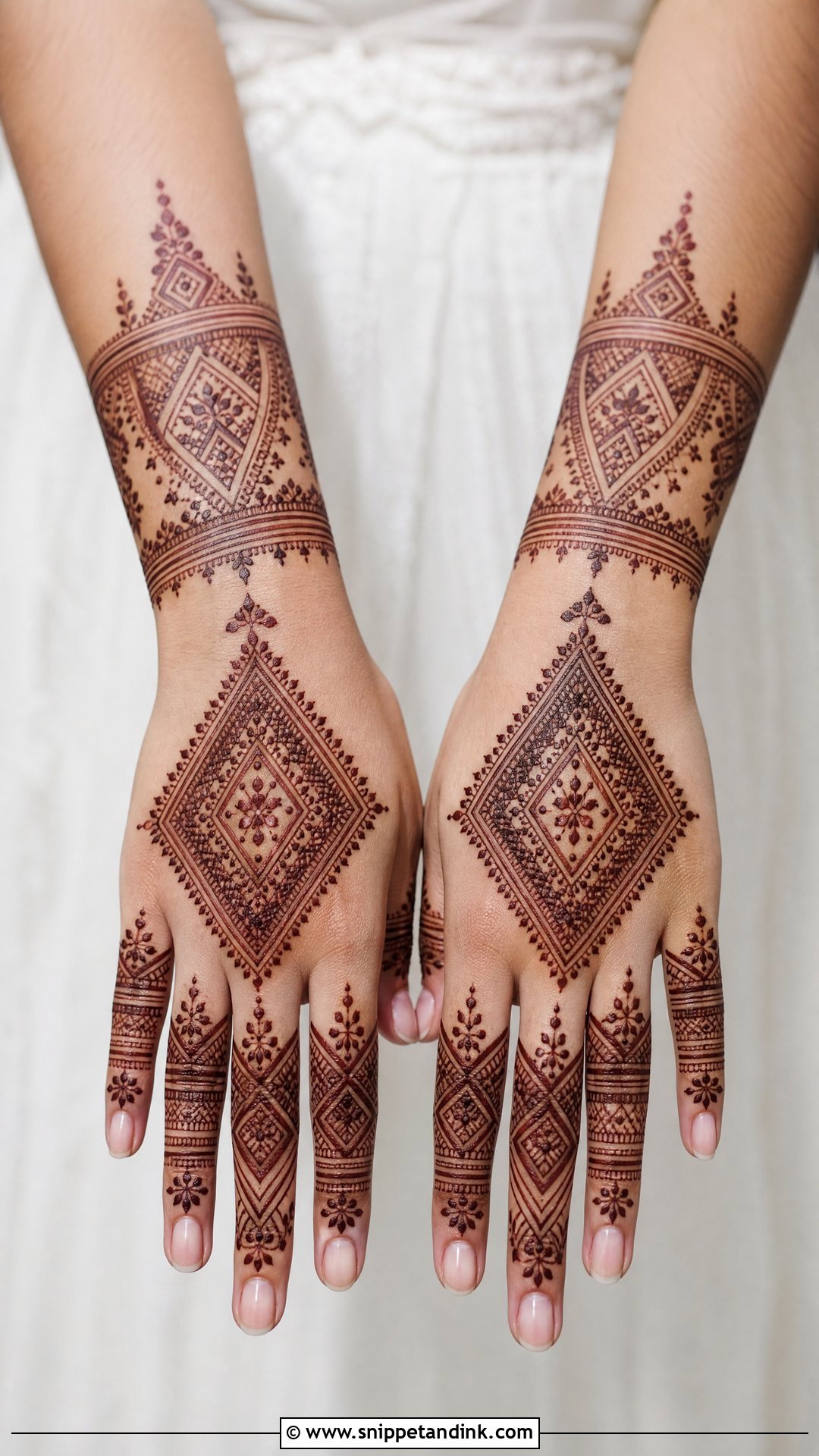
Moroccan-inspired work swaps soft florals for diamonds, lines, grids, triangles and dots arranged in strict symmetry. A bridal version can carry a geometric palm panel, patterned fingers and a clean wrist cuff, and it looks quite different from floral-heavy designs. Precision is everything: a wobbly straight line is far more visible than a wobbly petal. I’d only suggest it if your artist is confident with geometry. Tiny leaves around the panels soften it if it feels too hard.
Natural Paste Versus Chemical Black Cones
Real henna paste is made from crushed henna leaves, lemon juice or water, sugar and essential oils. It goes on brown-green, stains orange when it comes off, and darkens over the next day or two. Anything that leaves a black stain within an hour is not plain henna. Black cones often contain a hair-dye chemical (PPD) that can cause burns and lasting scarring on skin.
Ask your artist what’s in her paste, and if she mixes it herself, ask which oils she uses. If you have sensitive skin or allergies, or are pregnant, ask for a patch test on the inside of the elbow at least a day before the bridal session. Natural paste rarely causes trouble, but a test removes the guesswork.
The Hours After the Cone Comes Off
Most of the final colour is decided after I’ve packed up. Henna keeps darkening for up to 48 hours, so I like bridal application one or two days before the wedding, never the morning of.
- Once the paste is dry to the touch, I dab on a light lemon-and-sugar mix so it stays stuck to the skin.
- Leave the paste on for at least six hours. Overnight is better; wrap your hands loosely in tissue or cotton gloves.
- Scrape it off with a blunt edge or rub it off. Don’t wash it off with water.
- Avoid water on the design for as long as you can that first day, then rub in a balm or a little mustard oil.
- Warmth helps. Keep your hands warm, and skip hand sanitiser and chlorine pools until after the wedding.
Don’t panic if it looks bright orange at first. That is normal, and by the wedding day it should have deepened to a warm brown or maroon.
A Half Hand Can Still Look Fully Bridal
A half hand gives you a decorated, meaningful bridal look that stays comfortable through long ceremonies. Peacocks, paisleys, Arabic florals, mandalas, jaali and jewellery layouts can all be adjusted to your outfit and the size of your hand. Dense fingers and a strong wrist cuff push it toward a fuller result; more open skin keeps it lighter. Bring a few of the ideas above to your artist and decide together which side of the hand carries the main motif.
You'll Like These Ideas:











Leave a Reply