
The back of the hand is where people see your mehndi most: when you pass a plate, hold a phone or rest your hand on a table. It’s also the side that needs the least henna to look finished, because the knuckles, finger joints and wrist bone already give the design a frame. What makes a back-hand design work is planning it as one piece from fingertip to wrist rather than scattering small motifs. Below you’ll find floral trails, mandalas, bracelet work, Arabic vines, jaali panels and minimal layouts, with notes on how each one sits on the hand and who it suits.
How Knuckles and the Wrist Bone Bend a Design
A design drawn on a flat, stretched hand looks different when the hand relaxes or makes a fist. The skin over the knuckles folds, and anything piped across them squeezes together and opens up again as you move. I always draw with the hand resting naturally, slightly curved, on a cushion, not pressed flat on a table.
- Put the main motif between the knuckles and the wrist, where the skin moves least.
- Use bands or small gaps at the finger joints, rather than continuous lines that cross the creases.
- Keep the wrist design just above or below the wrist bone, not right on it, so a watch or bangle doesn’t rub it.
- Check the design from directly above and from the side before you add finishing dots.
Hand size changes the plan as well. On a small or narrow hand I cut the number of motifs rather than shrinking them, because tiny motifs fill in as the stain spreads. On a broad hand, a diagonal trail or a design pushed toward one side looks better than one central motif, which can seem lost in the middle of a wide space.
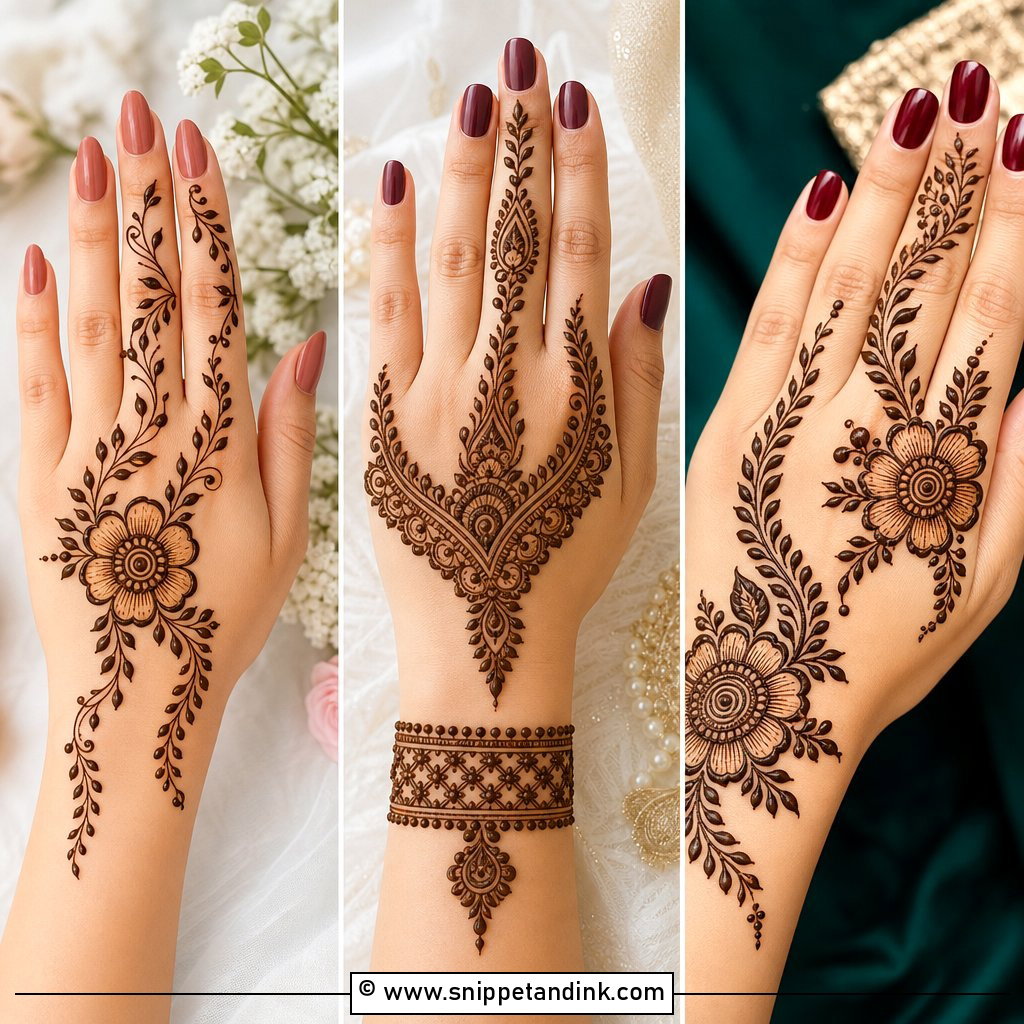
1. Simple Floral Back Hand Mehndi Design
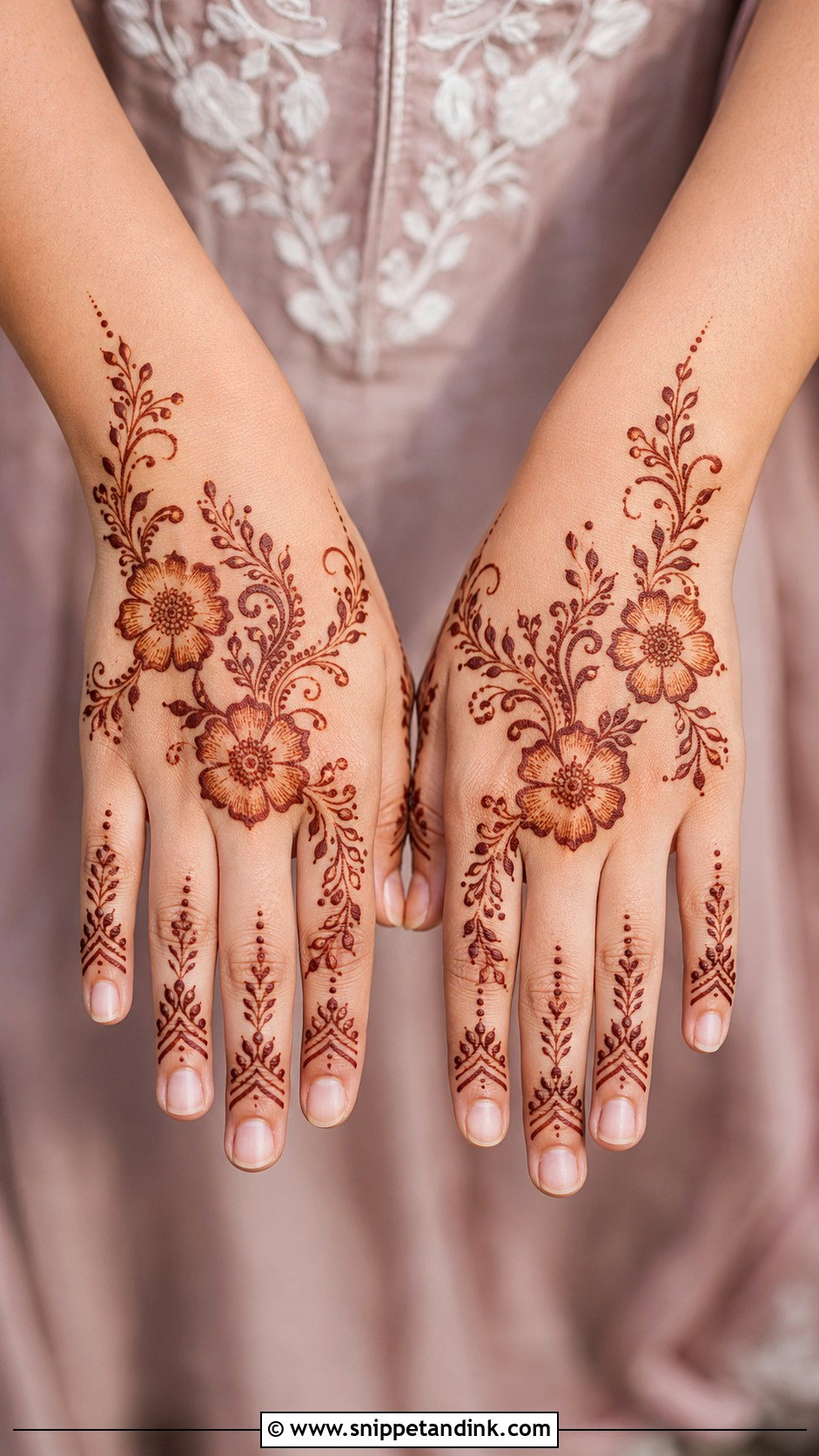
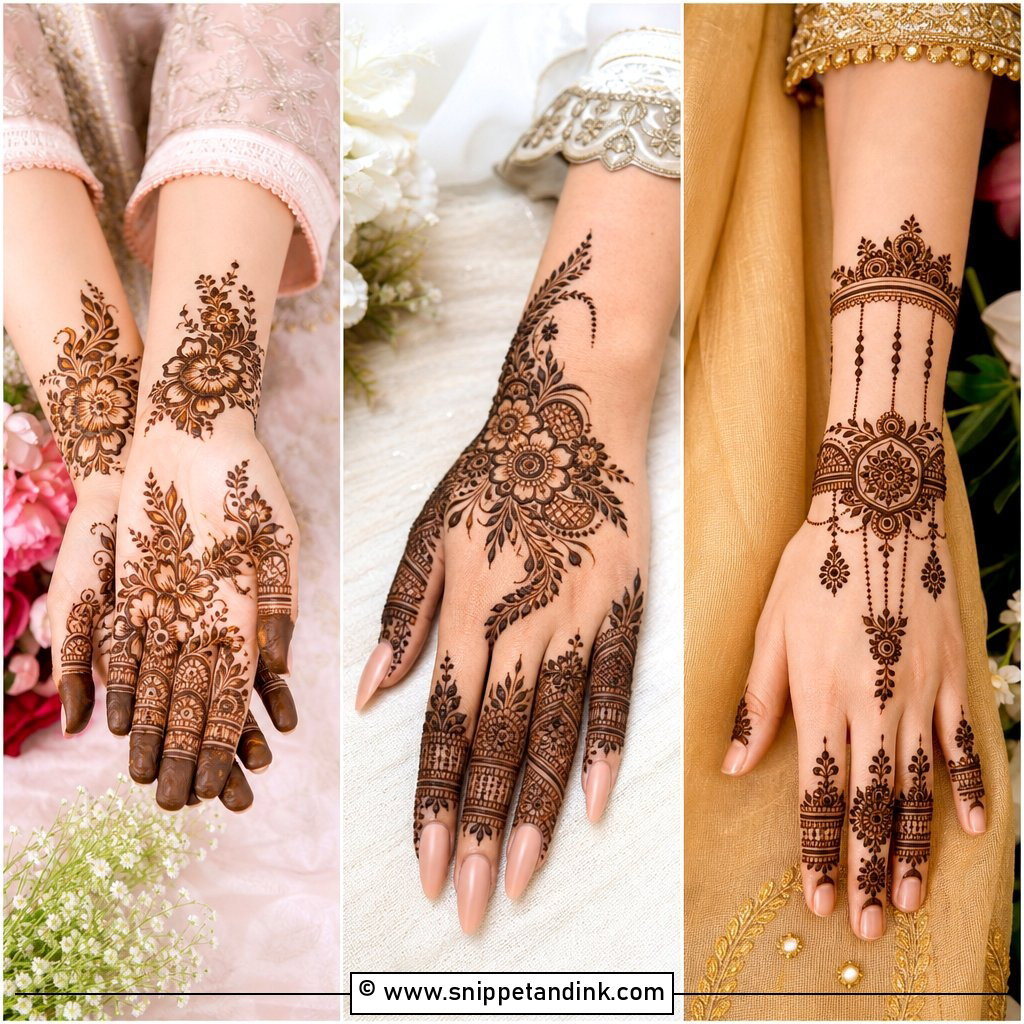
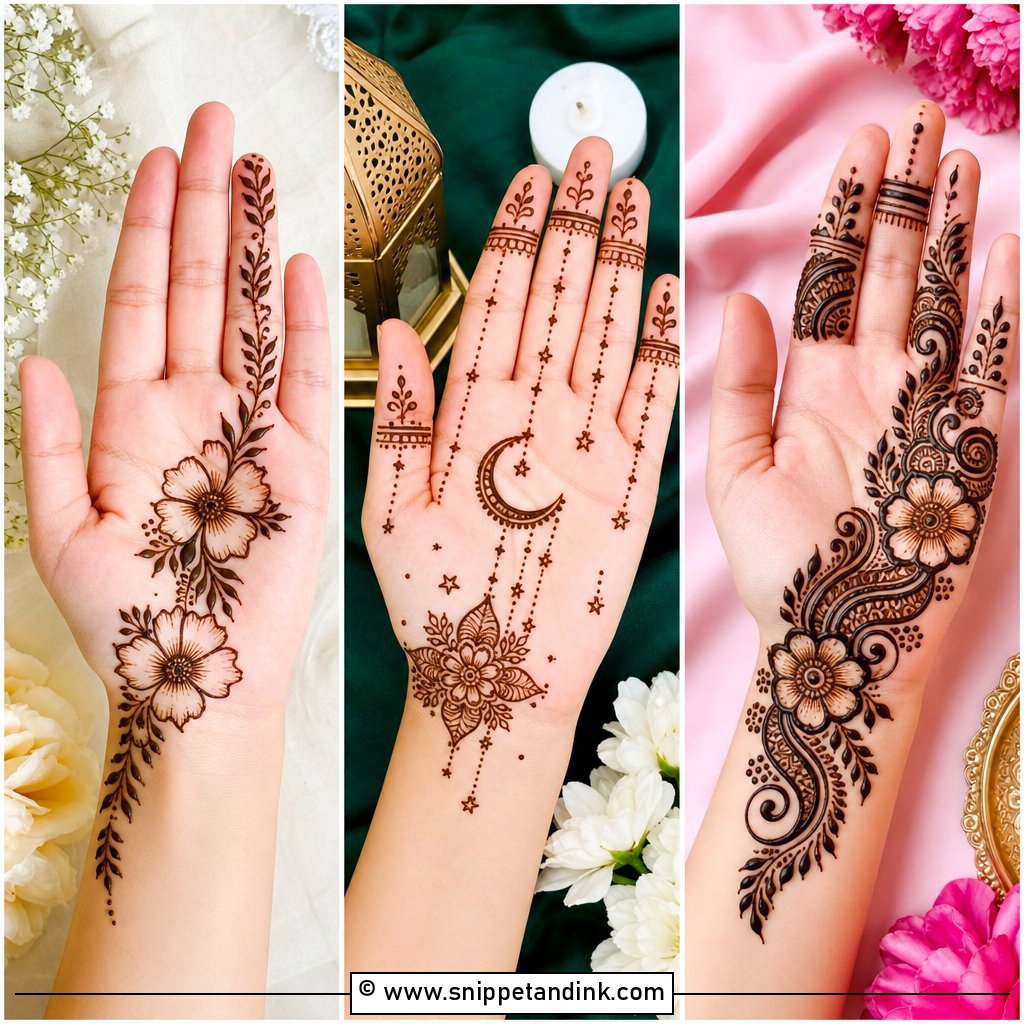
One medium flower sits near the center or slightly to the side, and leaves and small buds trail from it toward the wrist. The fingers stay light, with thin lines, dots and tiny petals. I place the flower just below the knuckles rather than dead center, because that’s where the hand stays flattest when it moves. Leave a ring of bare skin around each motif; that gap is what keeps the design from turning into a smudge once the stain darkens.
2. Arabic Back Hand Mehndi Design Simple
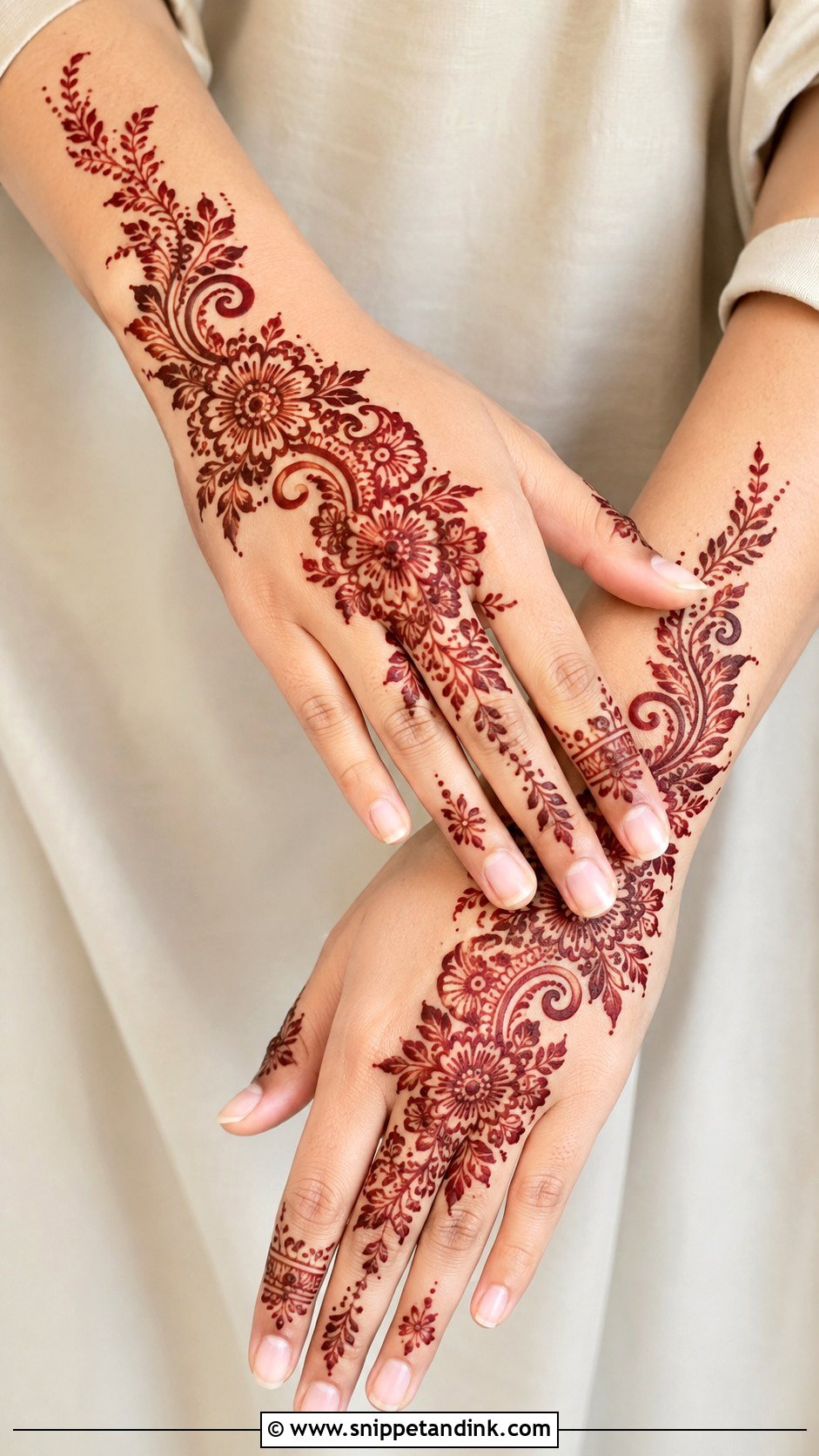
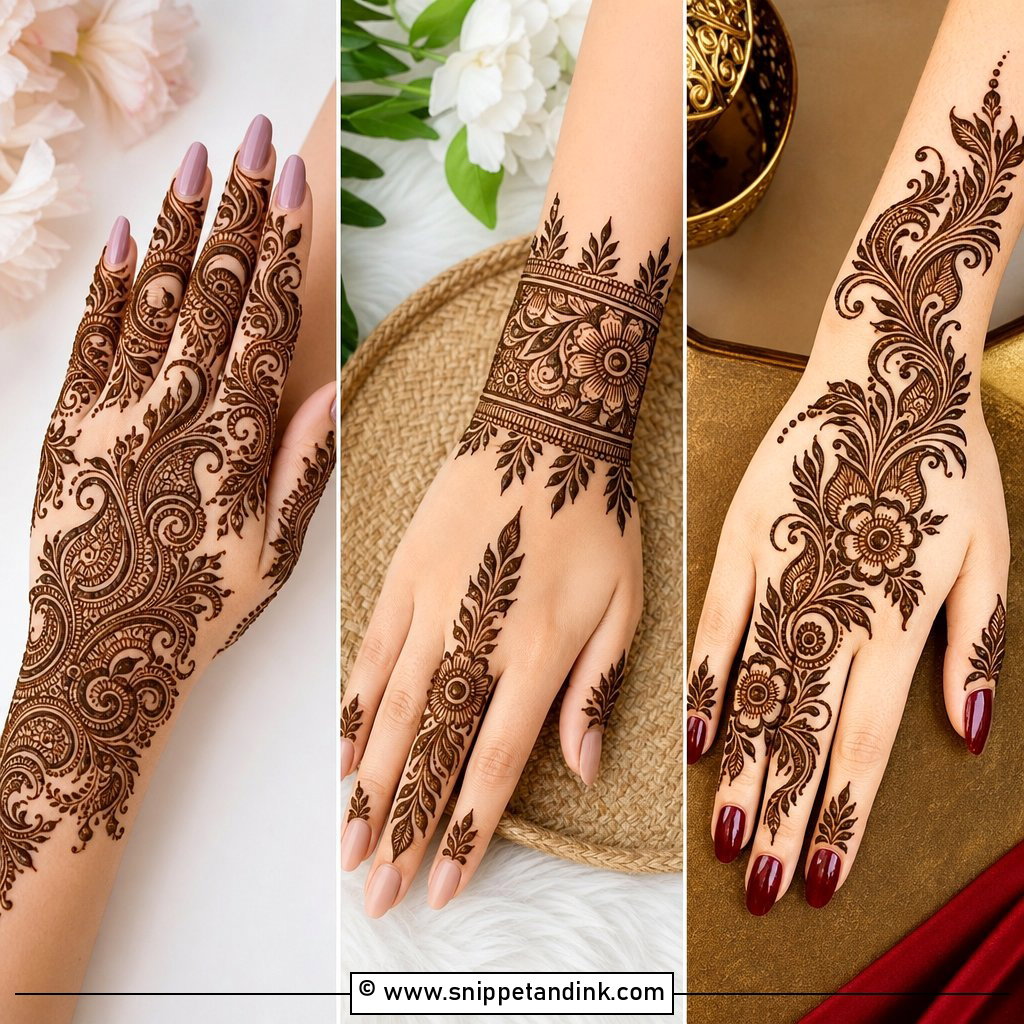
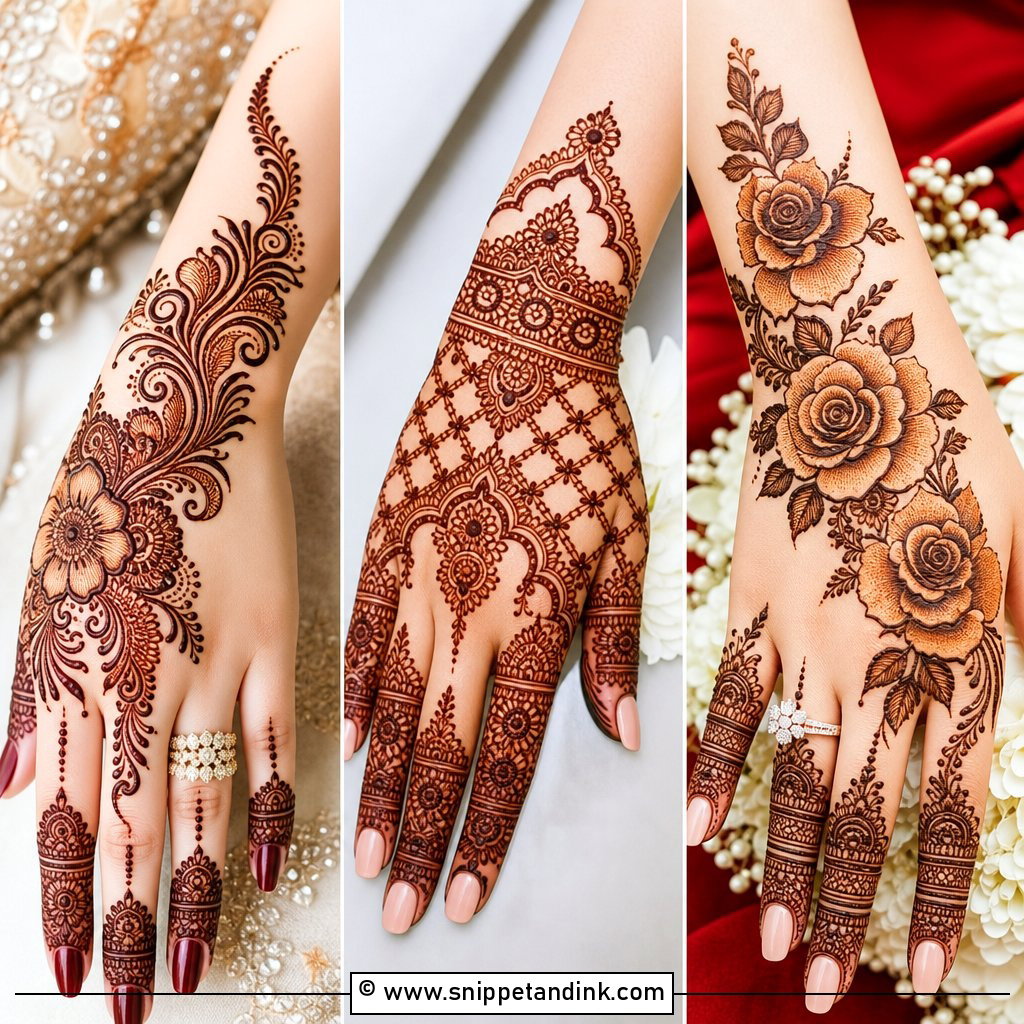
Arabic work runs diagonally from one finger toward the wrist, with flowers, paisleys, leaves and curved vines along a single line. The opposite side of the hand stays almost empty, which lets the trail stand out. I use a thicker outline on the flowers and light shading inside the petals to give depth. It’s fast to apply, so it’s a common choice for bridesmaids who have to be ready alongside the bride.
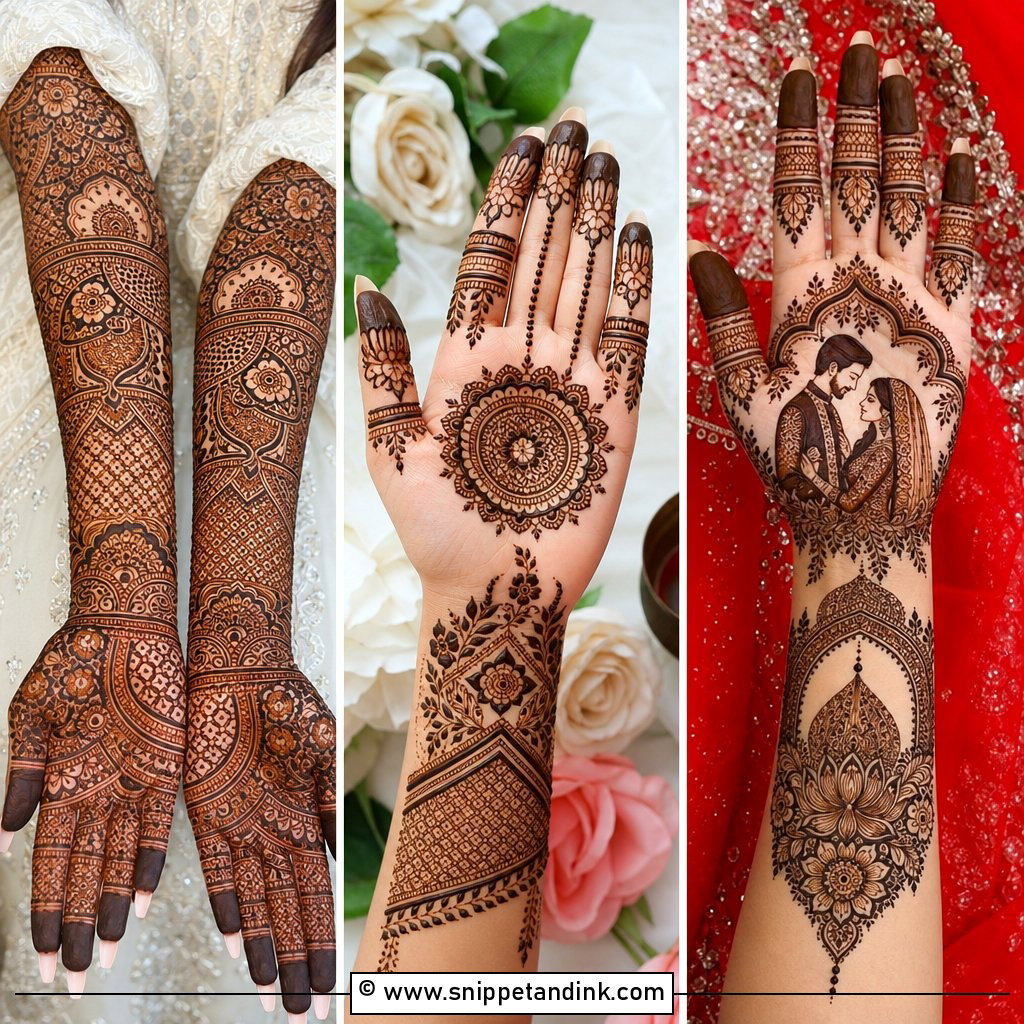
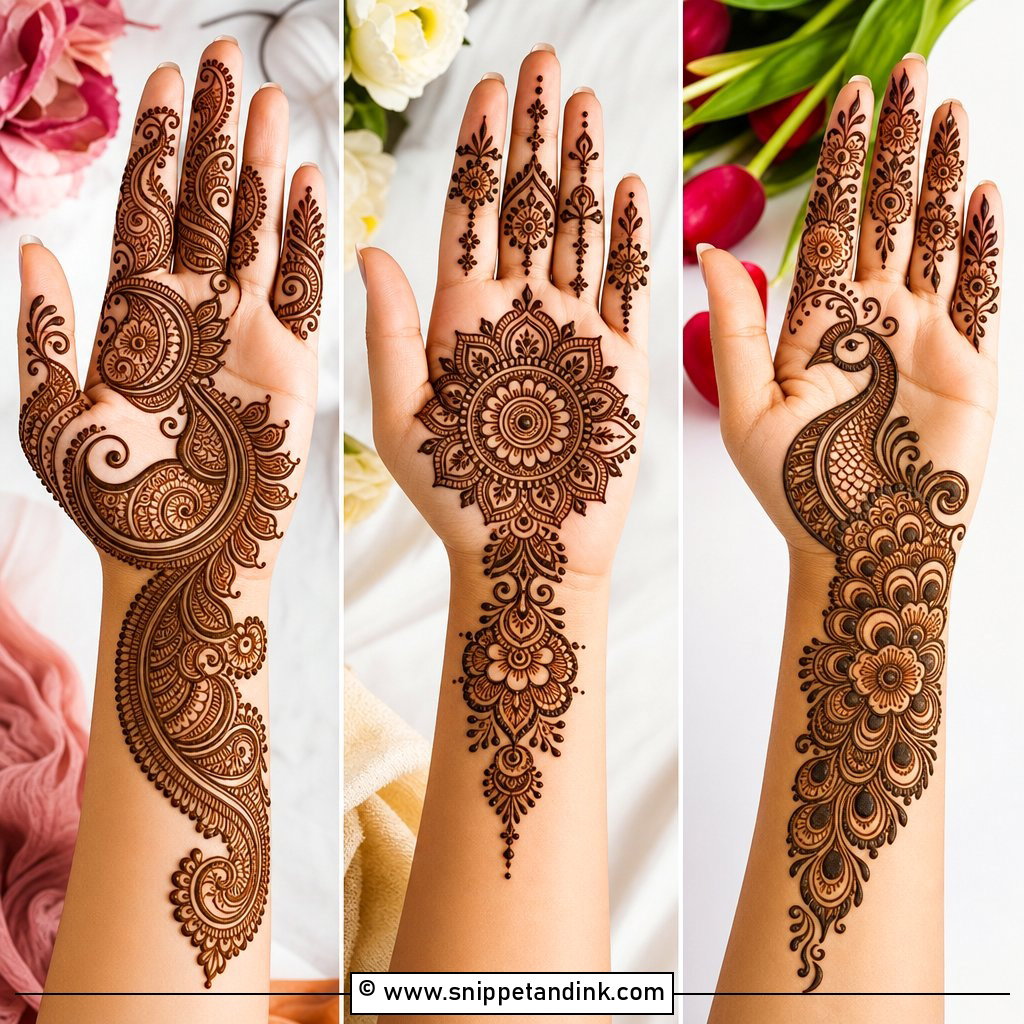
3. Mandala Back Hand Mehndi Design
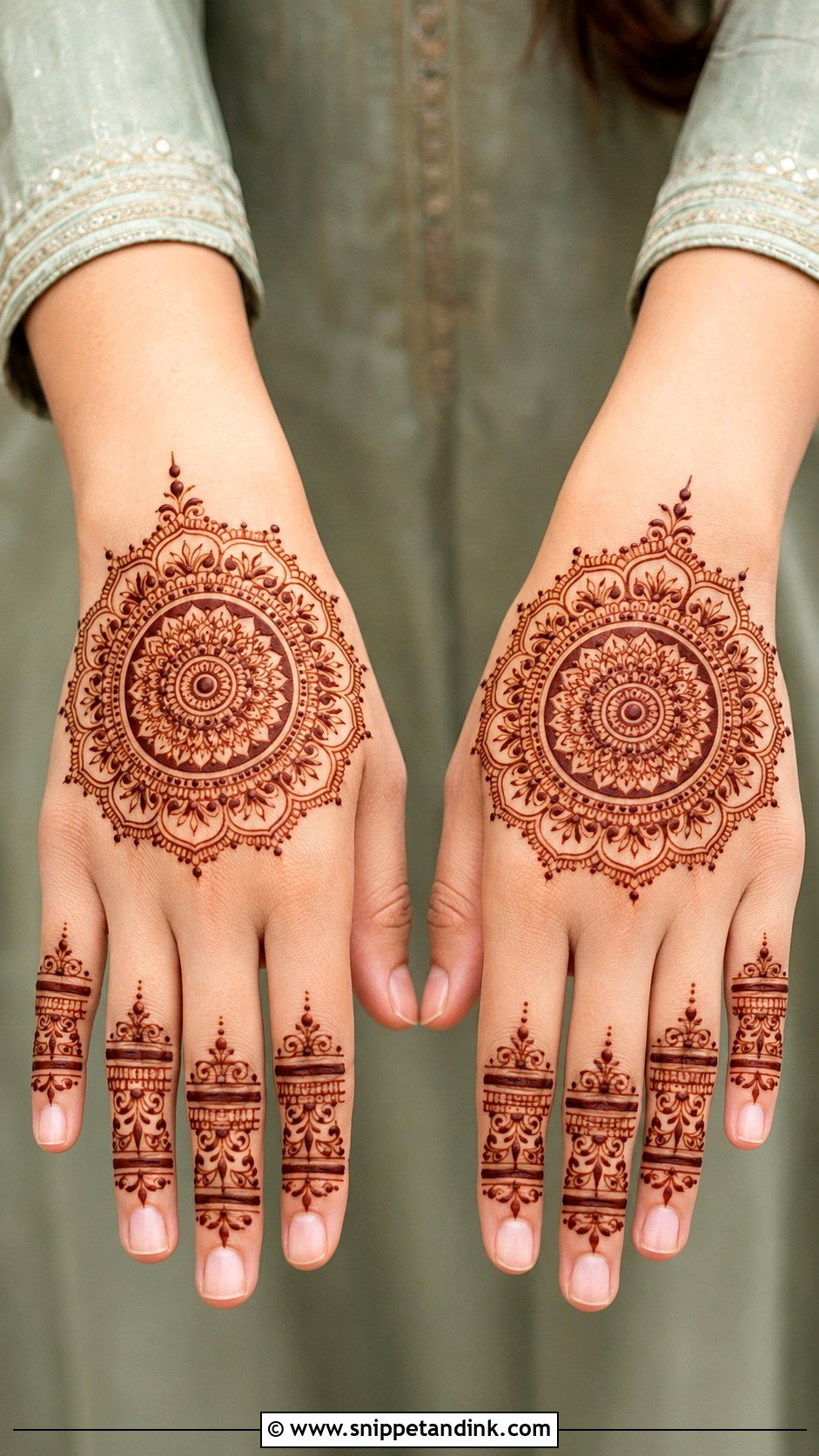
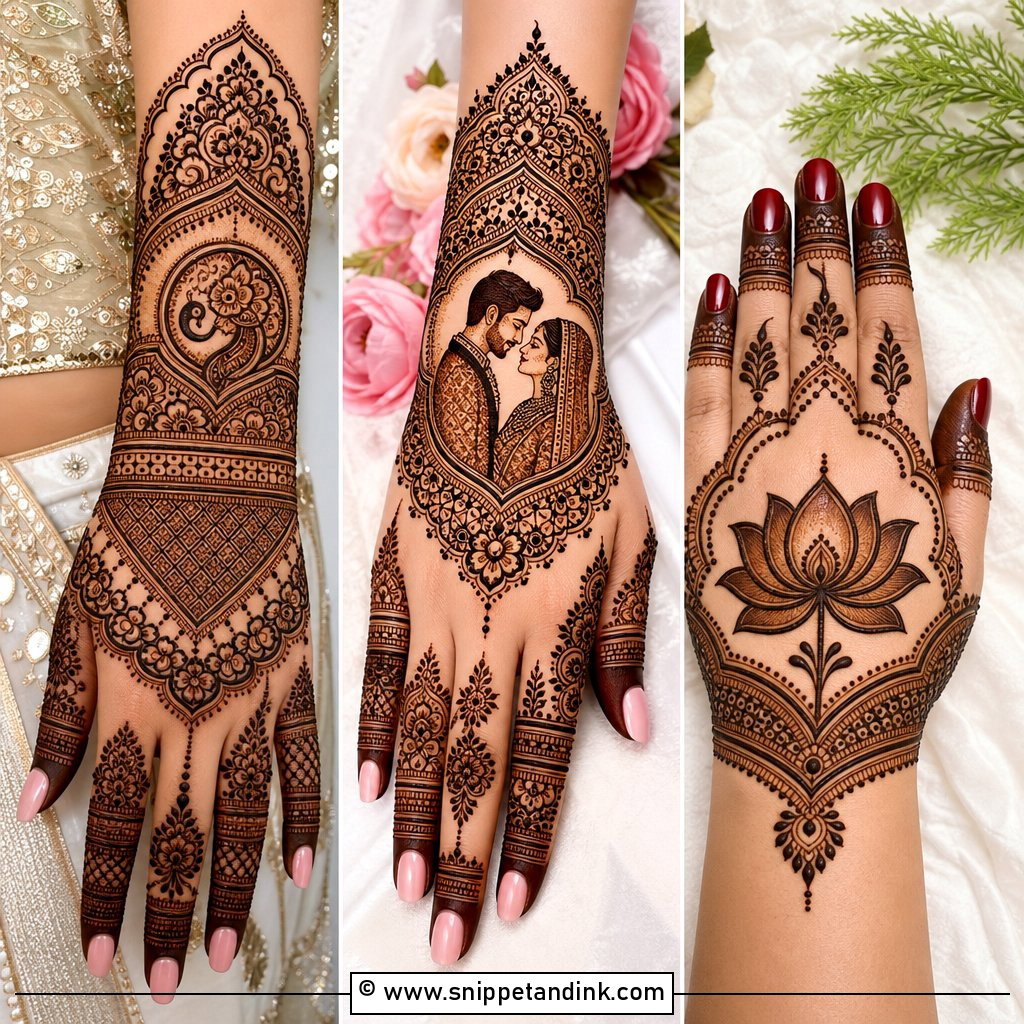
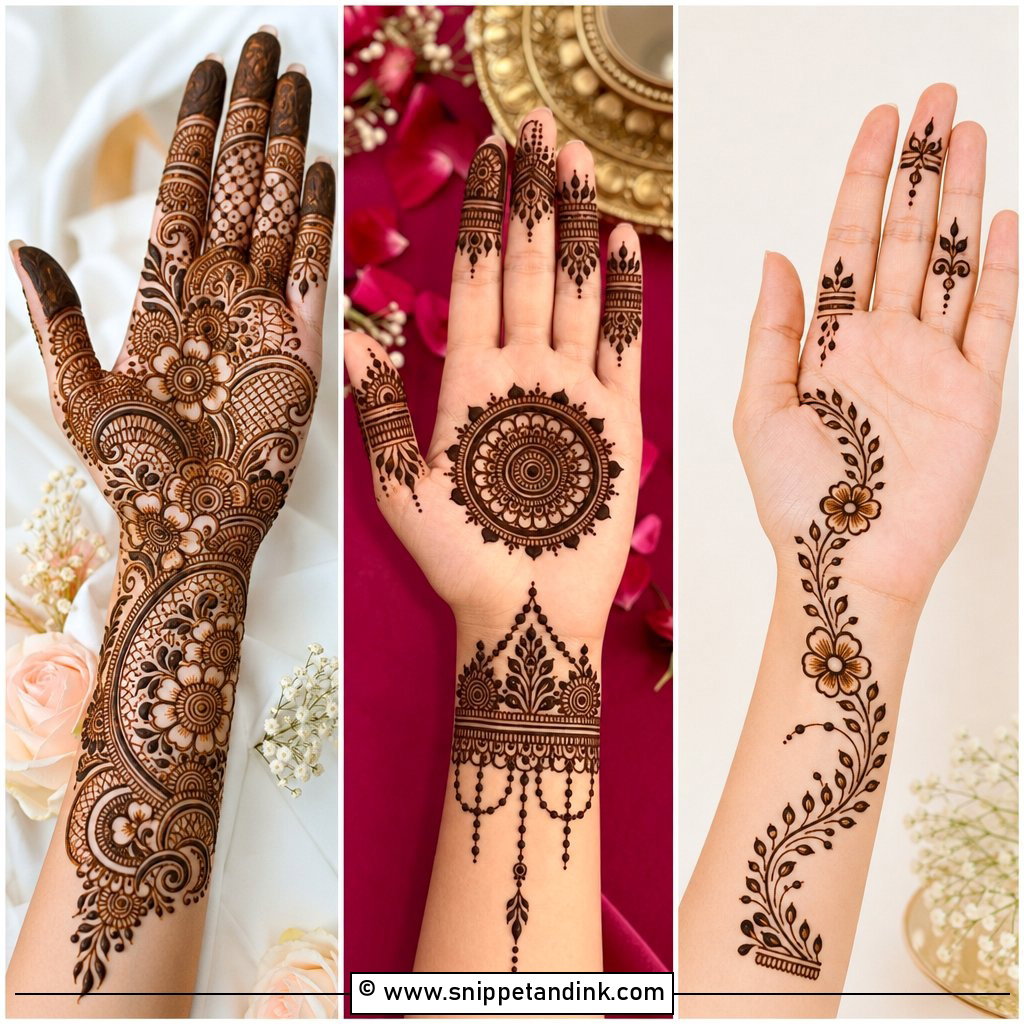
A round mandala in the middle of the back of the hand, built ring by ring from petals, dots and thin circular borders, needs very little else. Small bands, leafy tips or dotted lines on the fingers echo the center, and the wrist can take a single curved line. Because the back of the hand curves, I keep a mandala smaller here than I would on a palm; a large one wraps around the sides and looks oval from straight on.
4. Bracelet Back Hand Mehndi Design
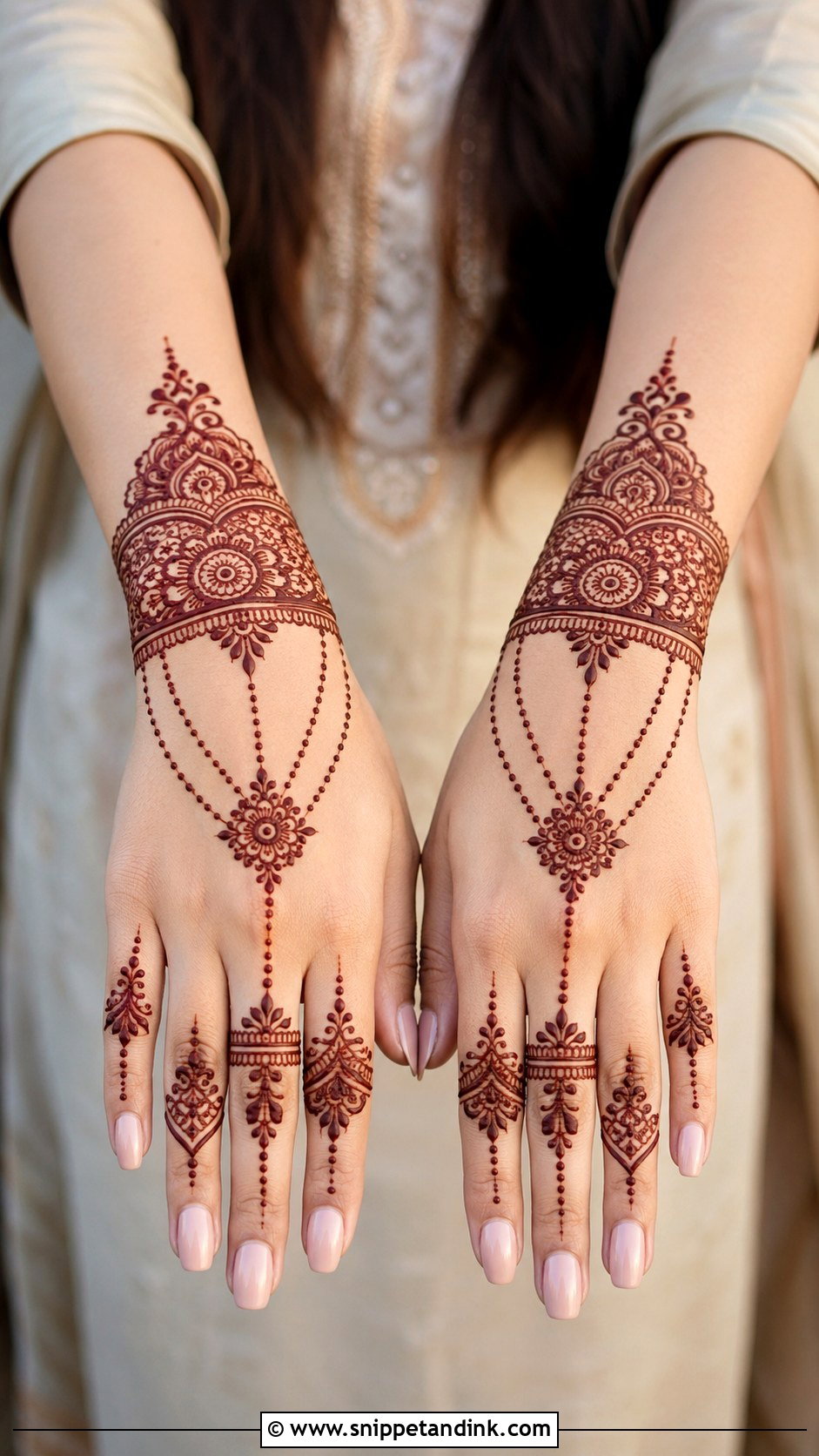
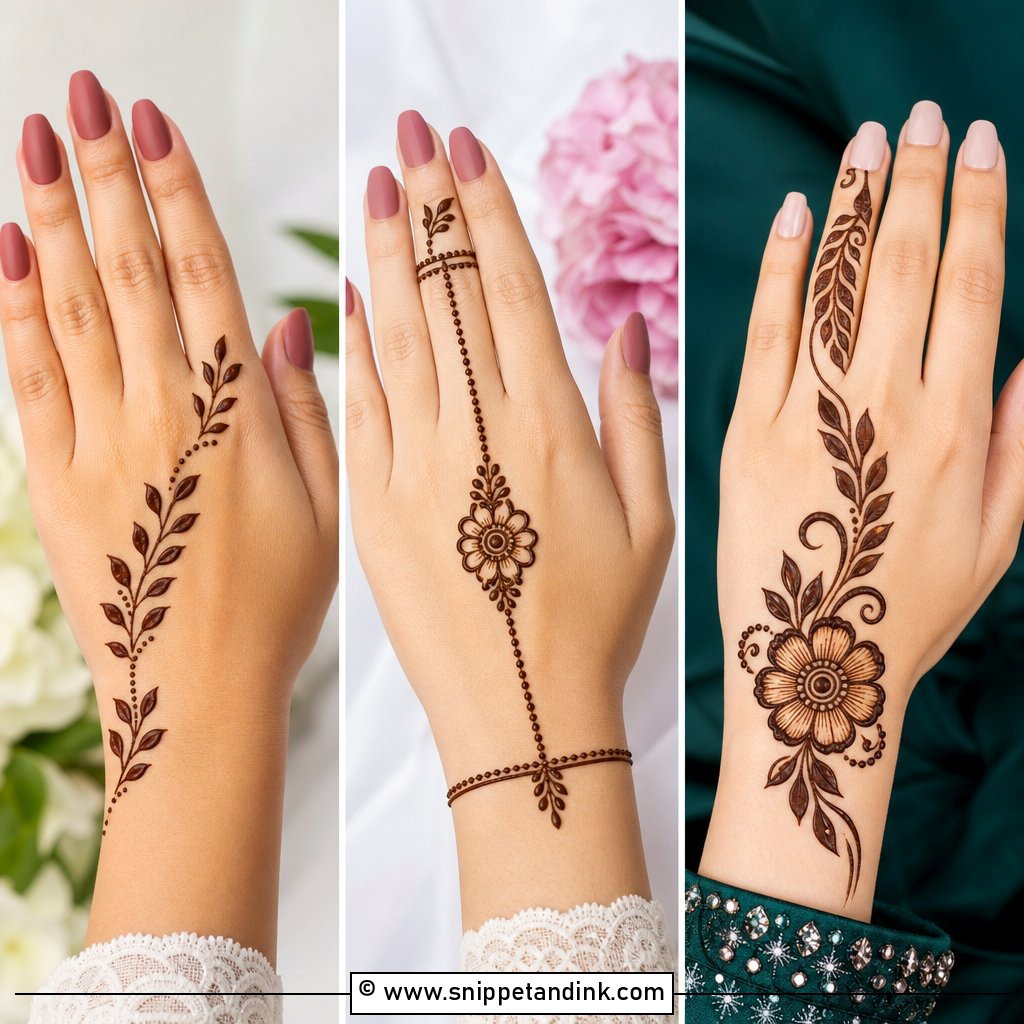
This one reads as jewelry. A band goes around the wrist, then dotted chains or thin curved lines link it to a small motif in the middle of the hand, finishing with a ring on one finger. The wrist band can be plain, floral or geometric. What I check is symmetry in the chains; if the two sides of the drop are uneven, the eye catches it instantly. Neat, evenly spaced dots do most of the work here.
5. Minimal Back Hand Mehndi Design
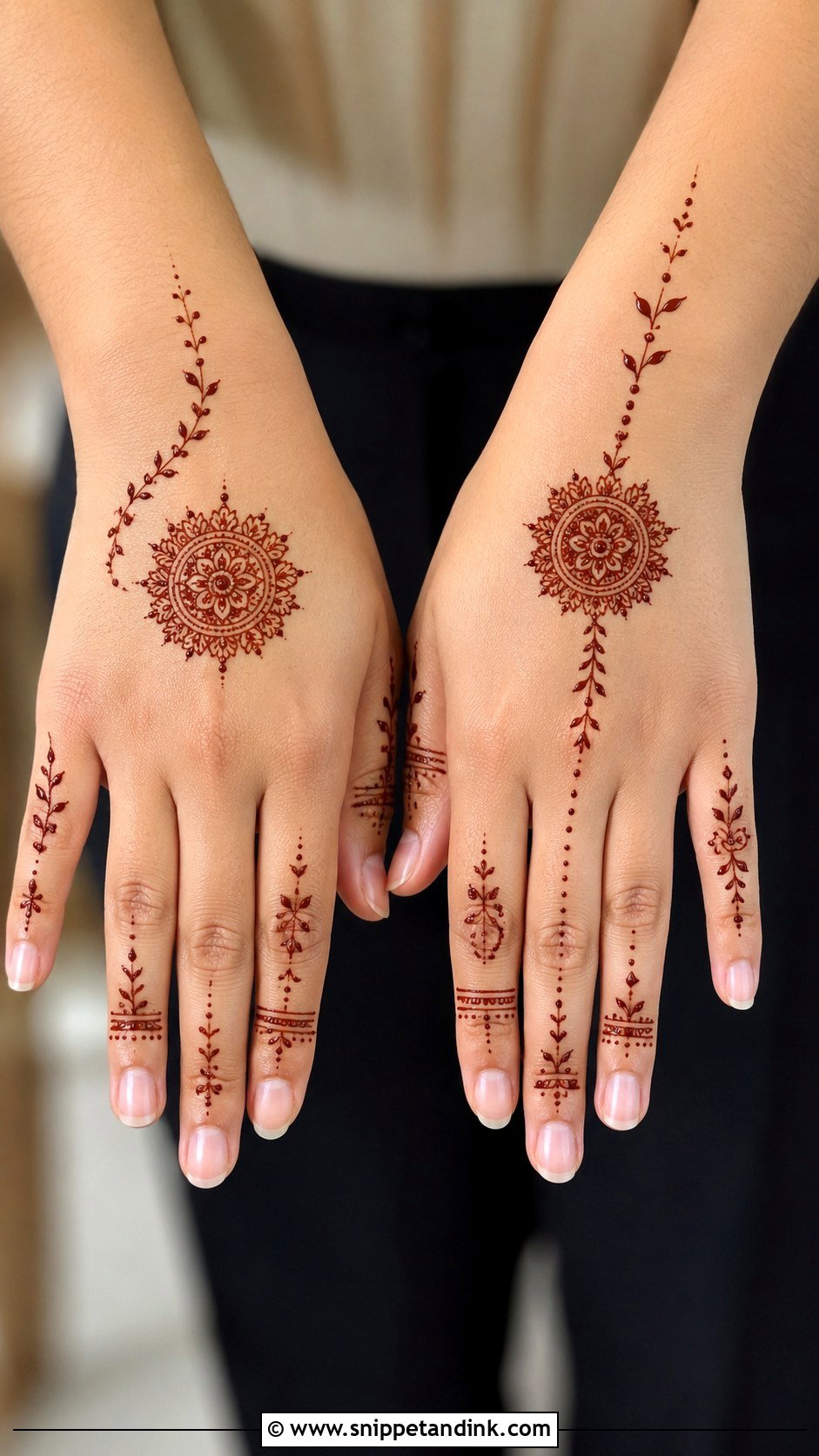
Minimal back-hand work is one clean motif, a slim vine or a small mandala with a few delicate finger lines, and lots of open skin. It’s discreet enough for an office event. The spacing should be wide and the strokes thin, with a few dots near the knuckles or a tiny cuff at the wrist for balance. Every line shows in a minimal design, so I’d only suggest it once your cone pressure is steady, or when someone experienced is applying it.
6. Full Back Hand Mehndi Design Simple
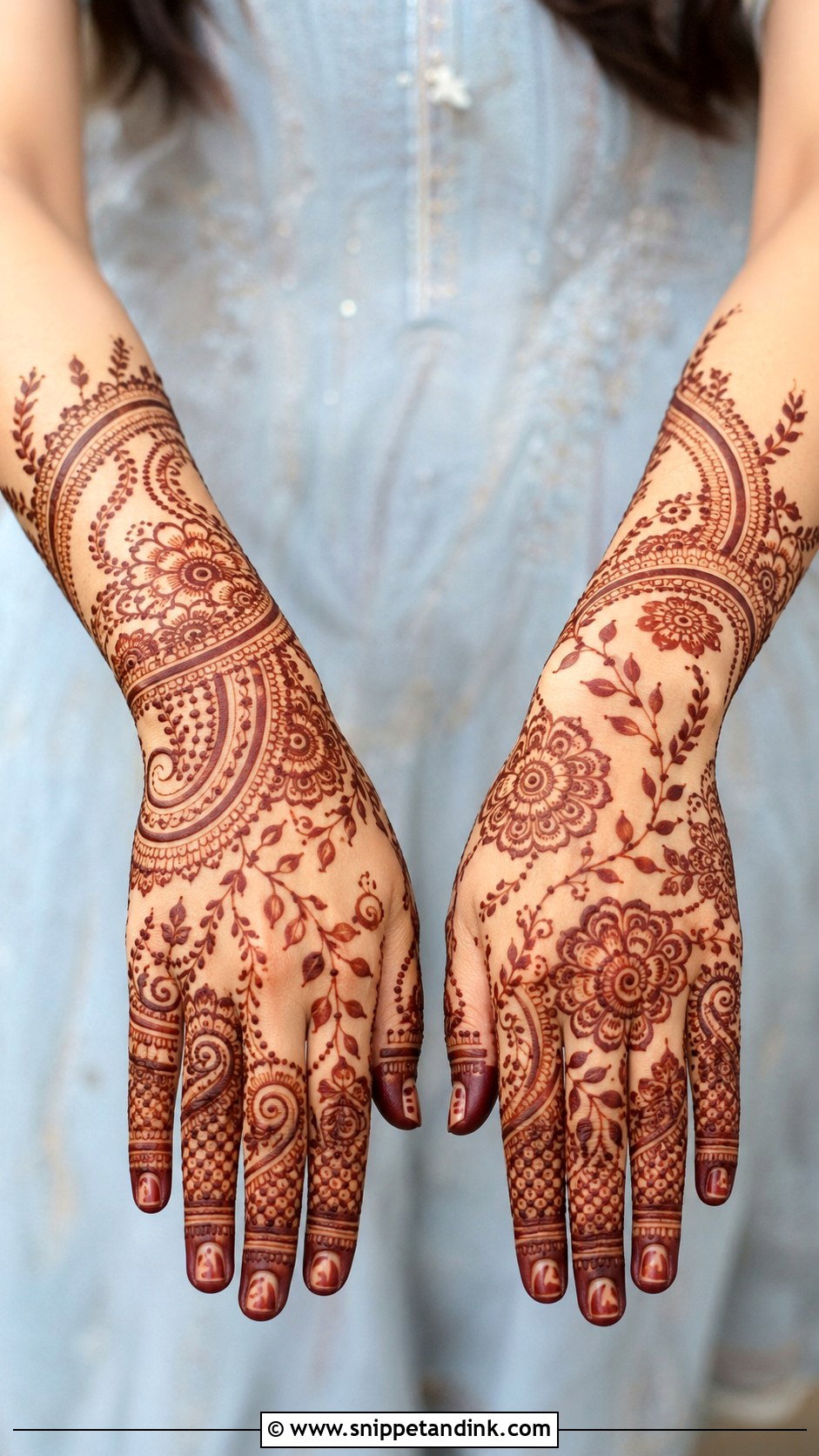
Full coverage on the back of the hand can still look light if it’s built from simple repeated shapes: leaves, small flowers, dots and curved lines spreading out from a central design. Matching finger patterns tie it together. I keep the filling loose so the skin shows through, and I stop the design at a clear line on the wrist rather than letting it fade out. It suits Eid, weddings and family events where you want more coverage without heavy bridal work.
7. Finger Back Hand Mehndi Design
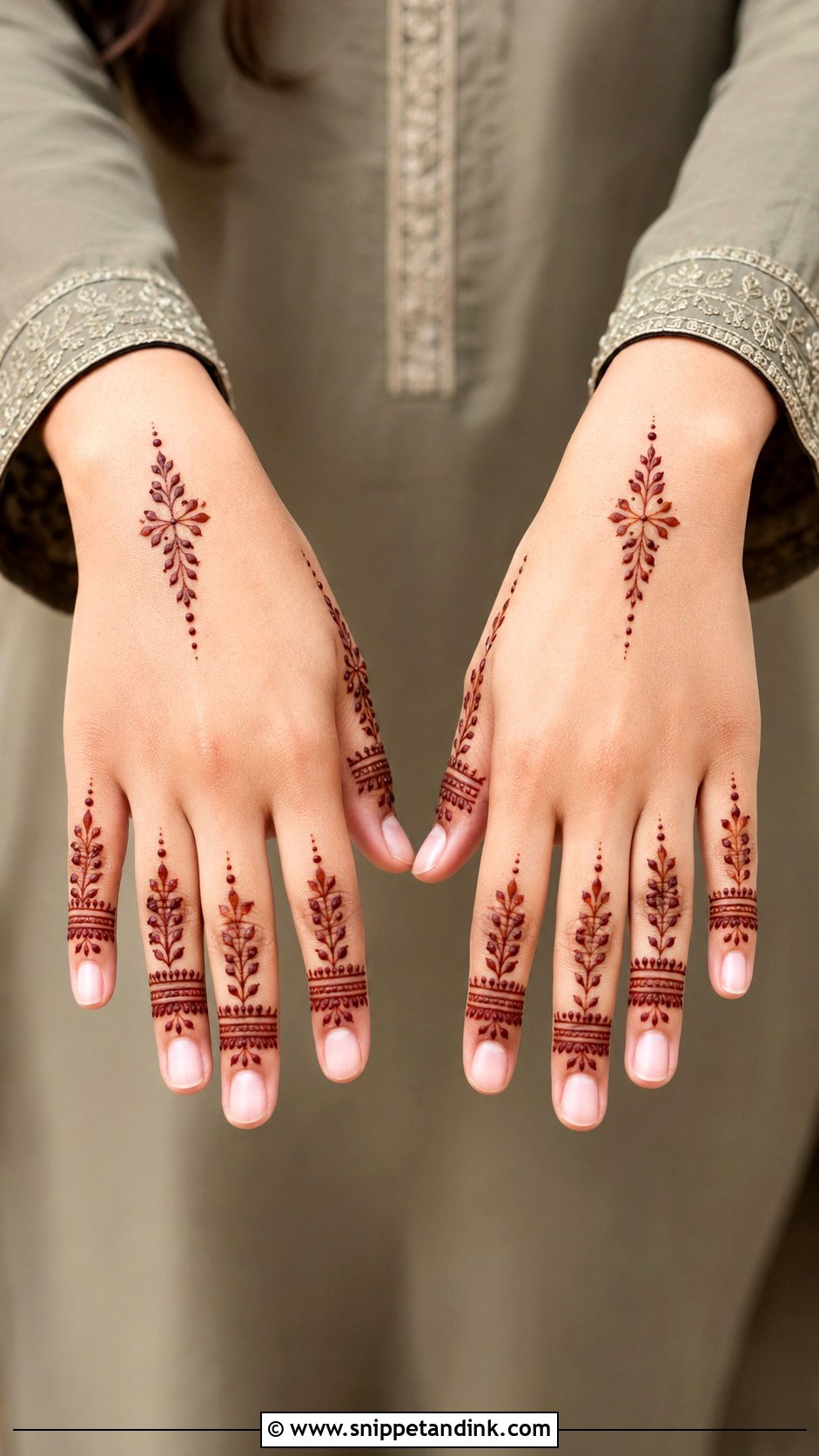
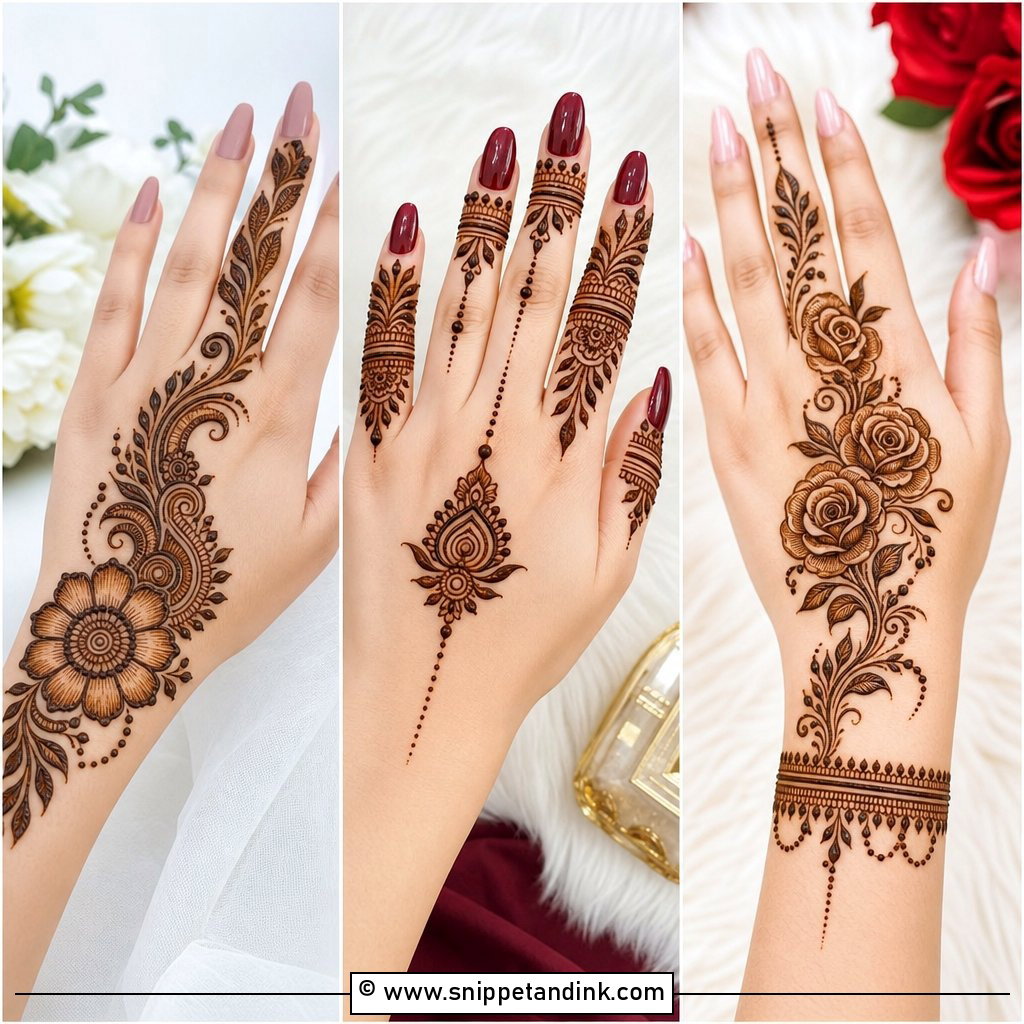
The fingers carry this design, while the back of the hand stays mostly open. Each finger takes bands, dots, leafy lines or a little flower, and a tiny central motif or a light wrist border links them. I vary the motif slightly from finger to finger but keep the line thickness and spacing identical, which is what makes it read as one design. It’s quick to apply and suits rings well.
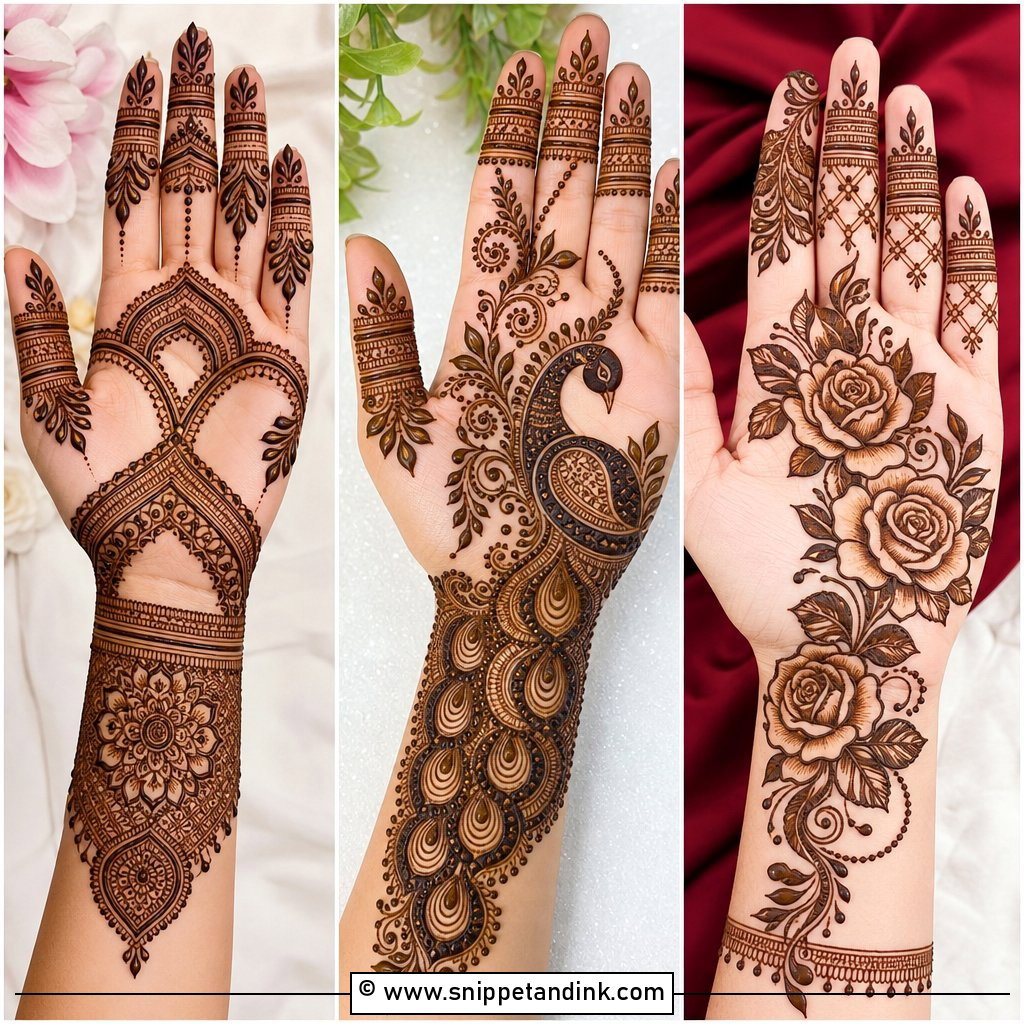
8. Rose Back Hand Mehndi Design
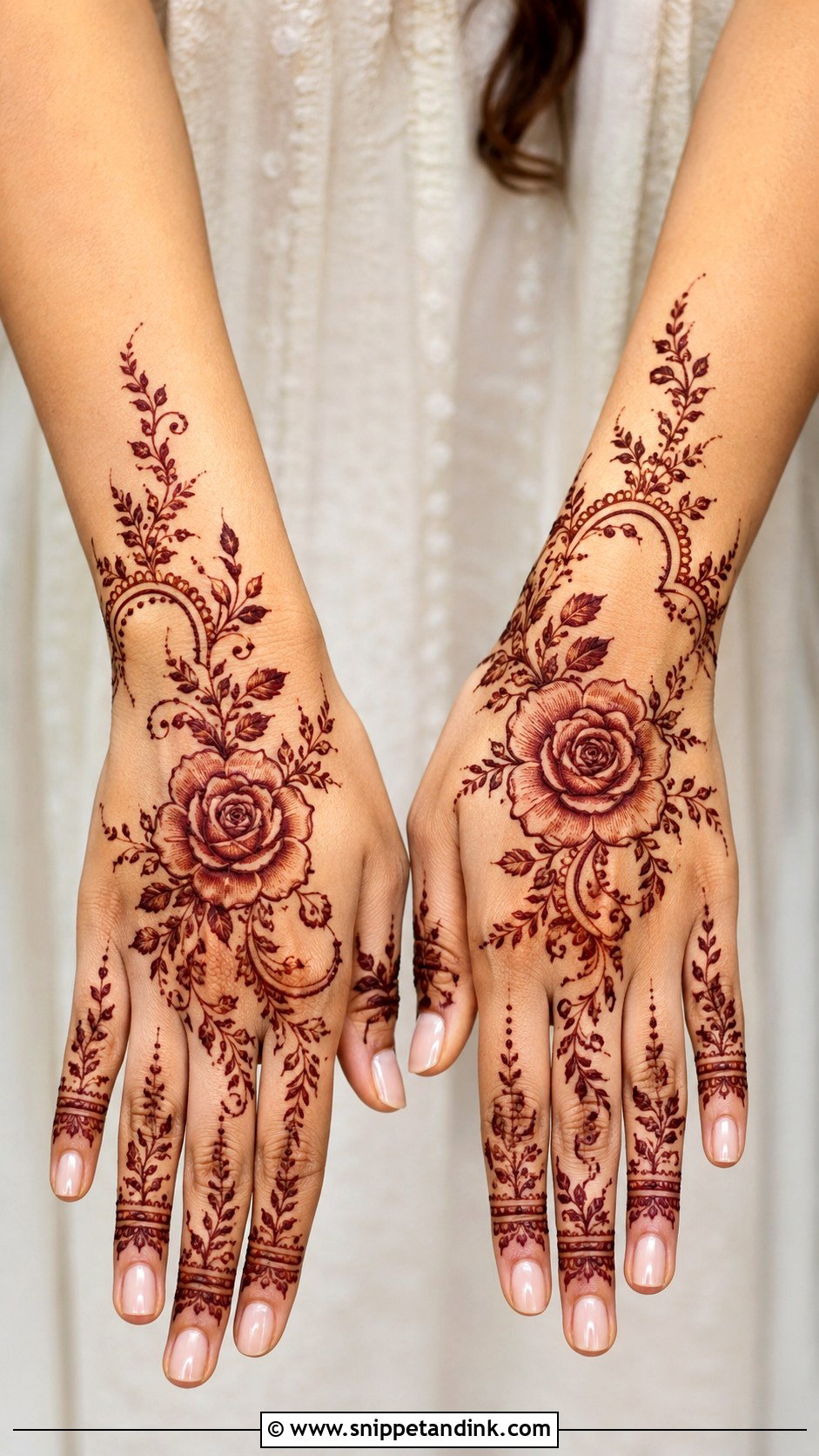
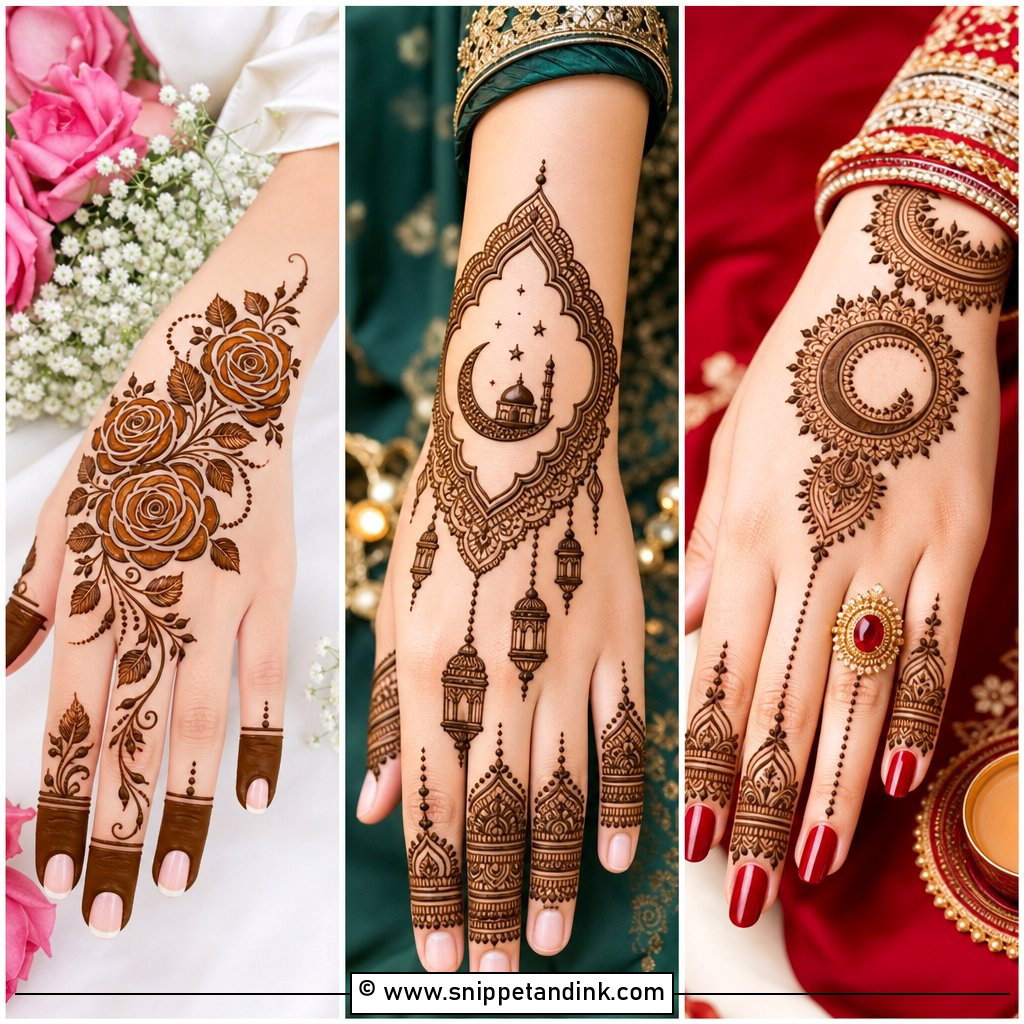
A single rose near the side or center of the hand, surrounded by leaves, curved stems and small buds, makes a soft, recognisable centerpiece. Keep the petals open with clear outlines; the spiral of a rose fills in fast once the stain spreads, and tight petals end up as one dark patch. Small vines or ring bands on the fingers continue the floral theme. It also works as a half-hand design if you’d rather keep it light.
9. Leaf Trail Back Hand Mehndi Design
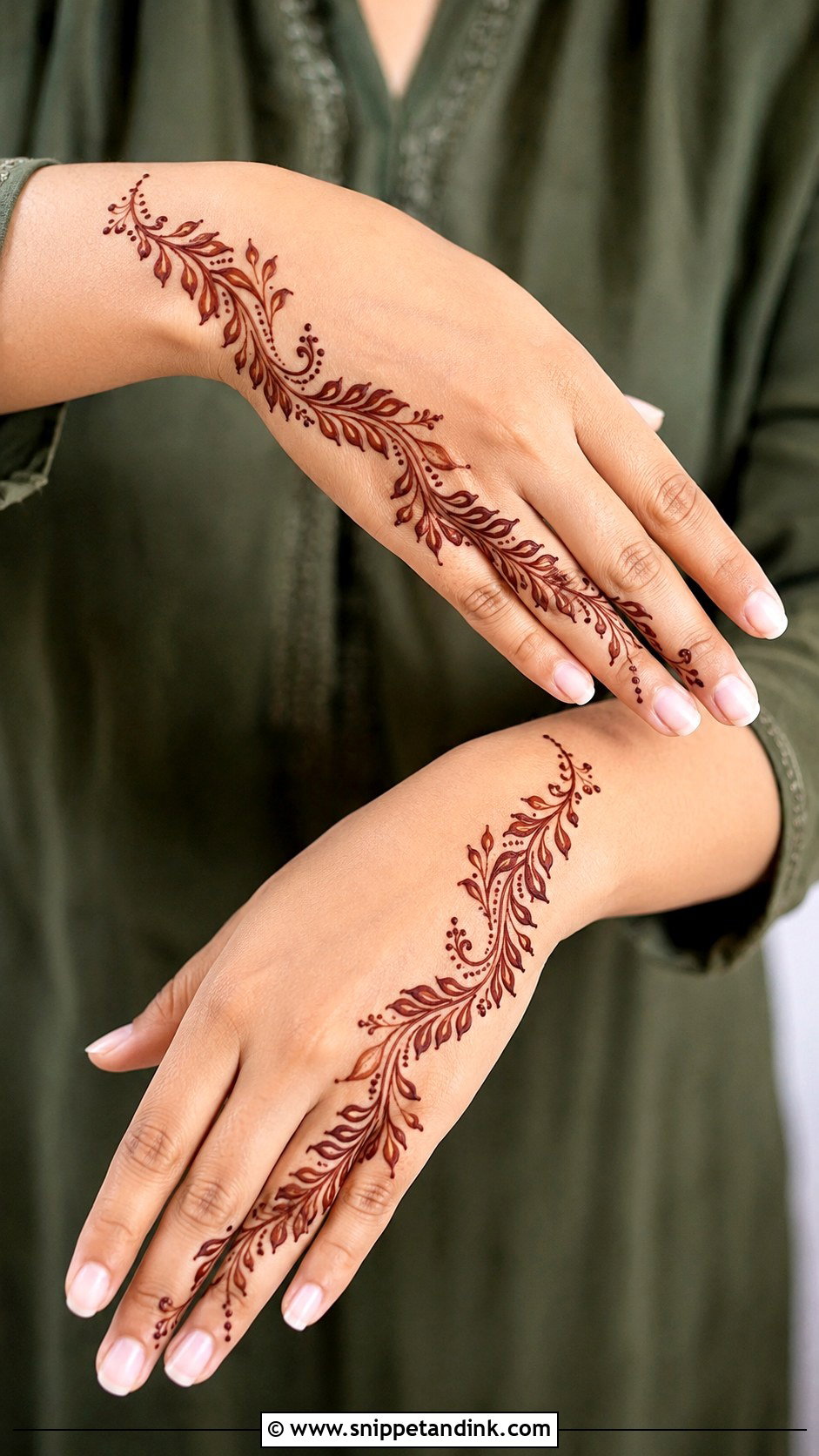
A curved stem runs from the wrist toward one finger with leaves on both sides, and tiny dots, buds or small flowers tucked between them. It needs no symmetry, which makes it a forgiving first design. Because the trail follows the hand’s length, it makes the fingers look longer and the wrist slimmer. I draw the stem in one continuous stroke where I can, since joins show clearly in the final stain.
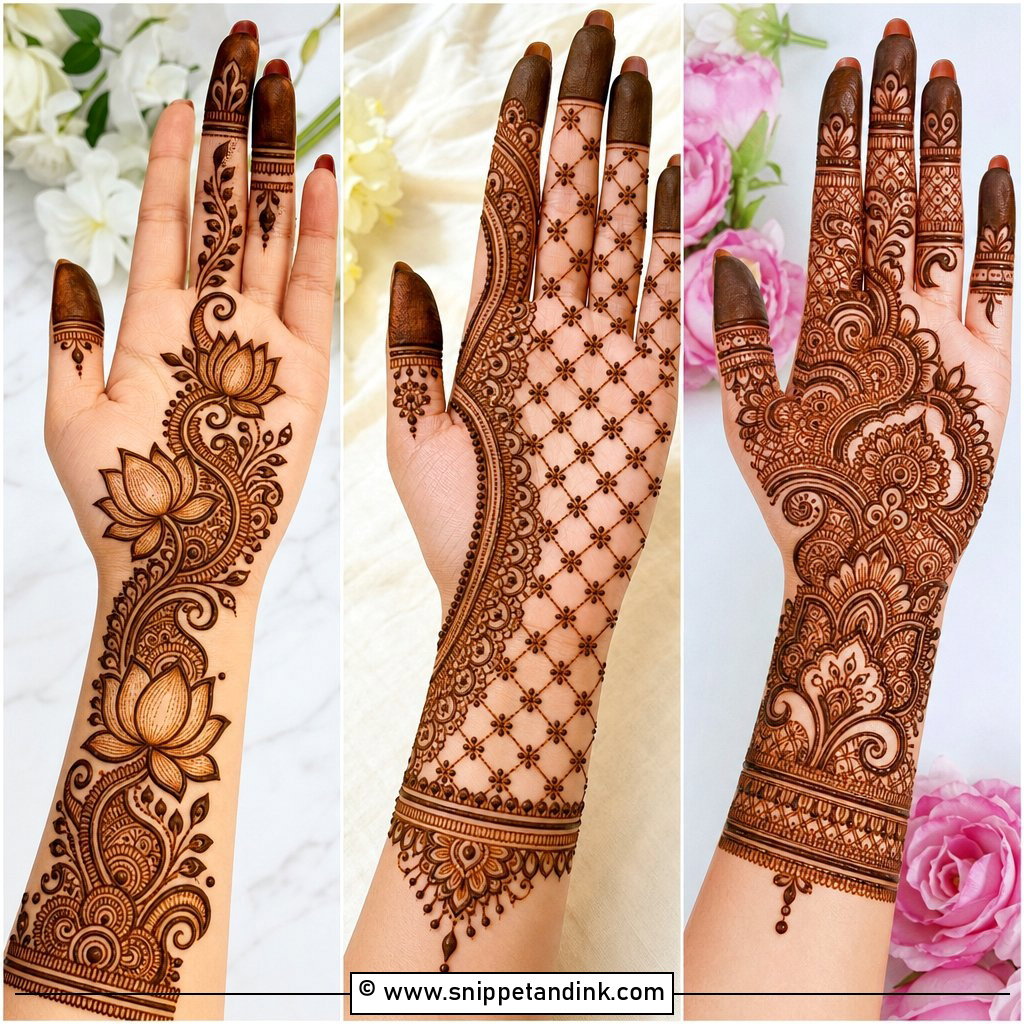
10. Jaali Back Hand Mehndi Design Simple
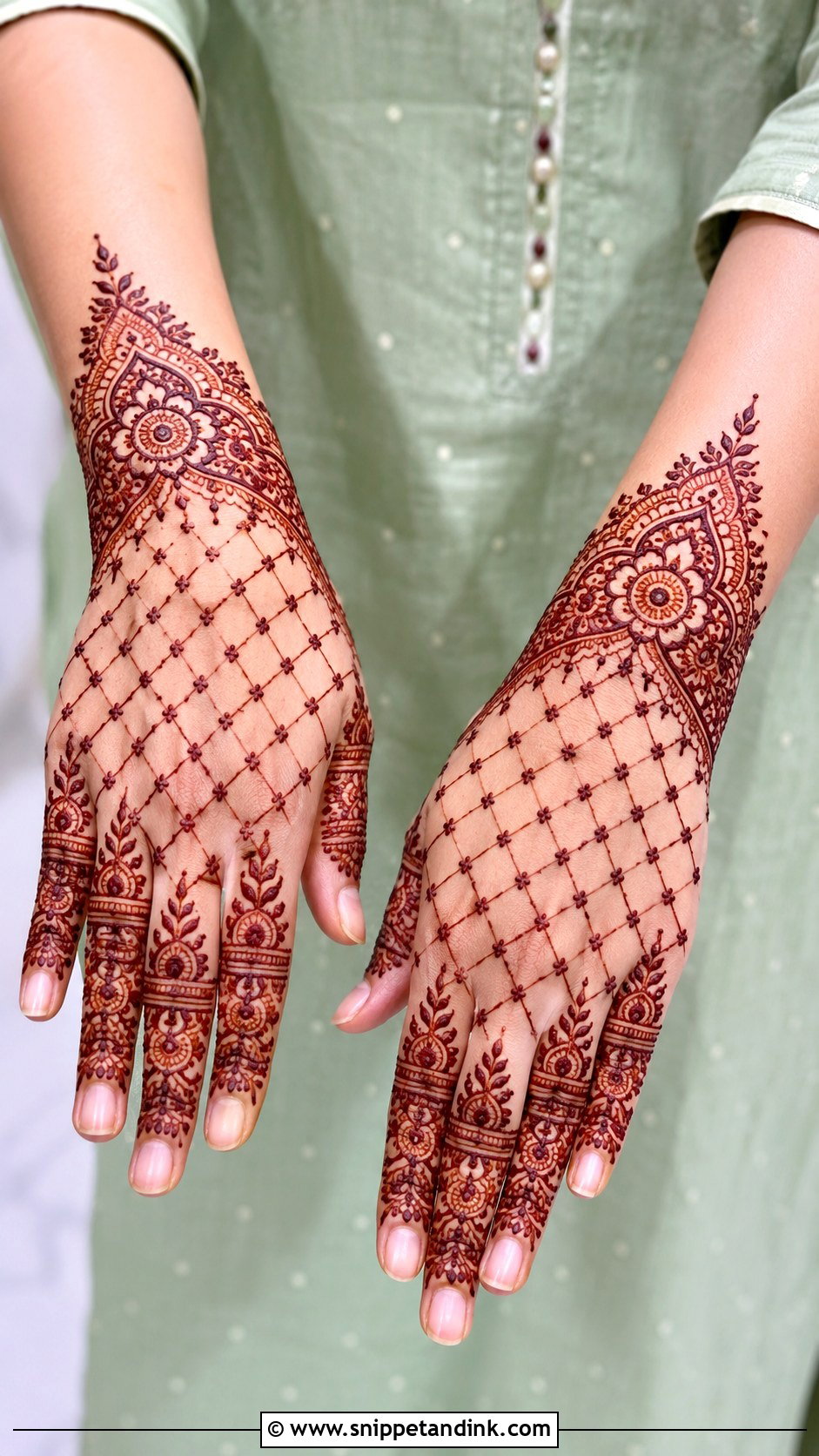
Jaali is a net of crossing lines, and on the back of the hand it can sit on one side, inside a bracelet band or around a central mandala. I keep the grid open and set a tiny dot at each crossing. A jaali panel looks busy if it’s surrounded by more detail, so I balance it with plain skin and simple fingers. Clean, evenly spaced lines are everything here; a wobbly grid is more noticeable than a wobbly flower.
11. Peacock Back Hand Mehndi Design Simple
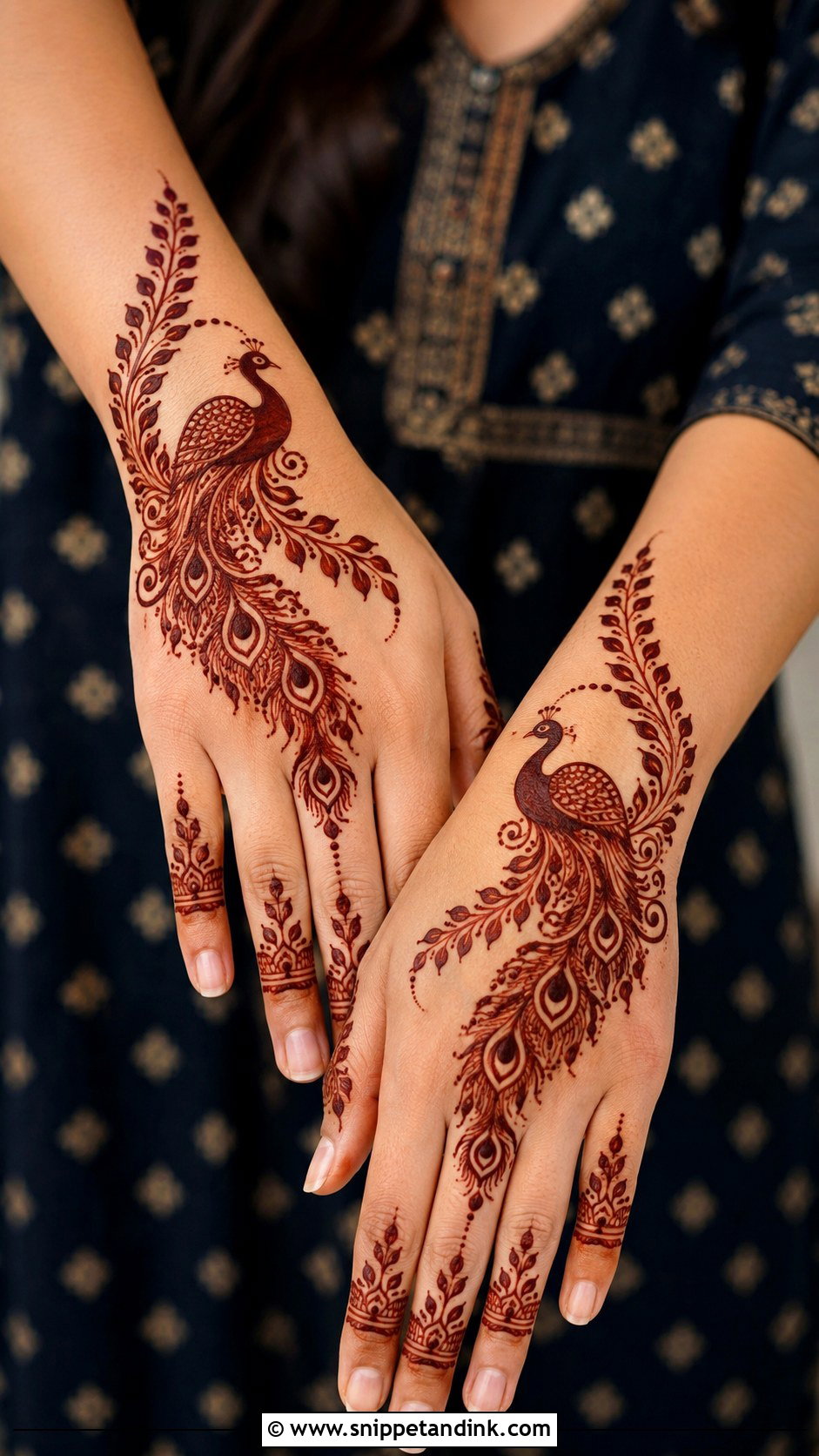
A small peacock near the wrist or the side of the hand brings a traditional note without heavy work. Its feathers stretch out into curved lines, paisleys and leaves, and the fingers can take feather-like strokes or dotted bands. I keep the body clean and easy to recognise, with a bold outline and very little filling inside. Getting the neck curve right is the hardest part, so I draw that line first before adding anything else.
12. Paisley Back Hand Mehndi Design
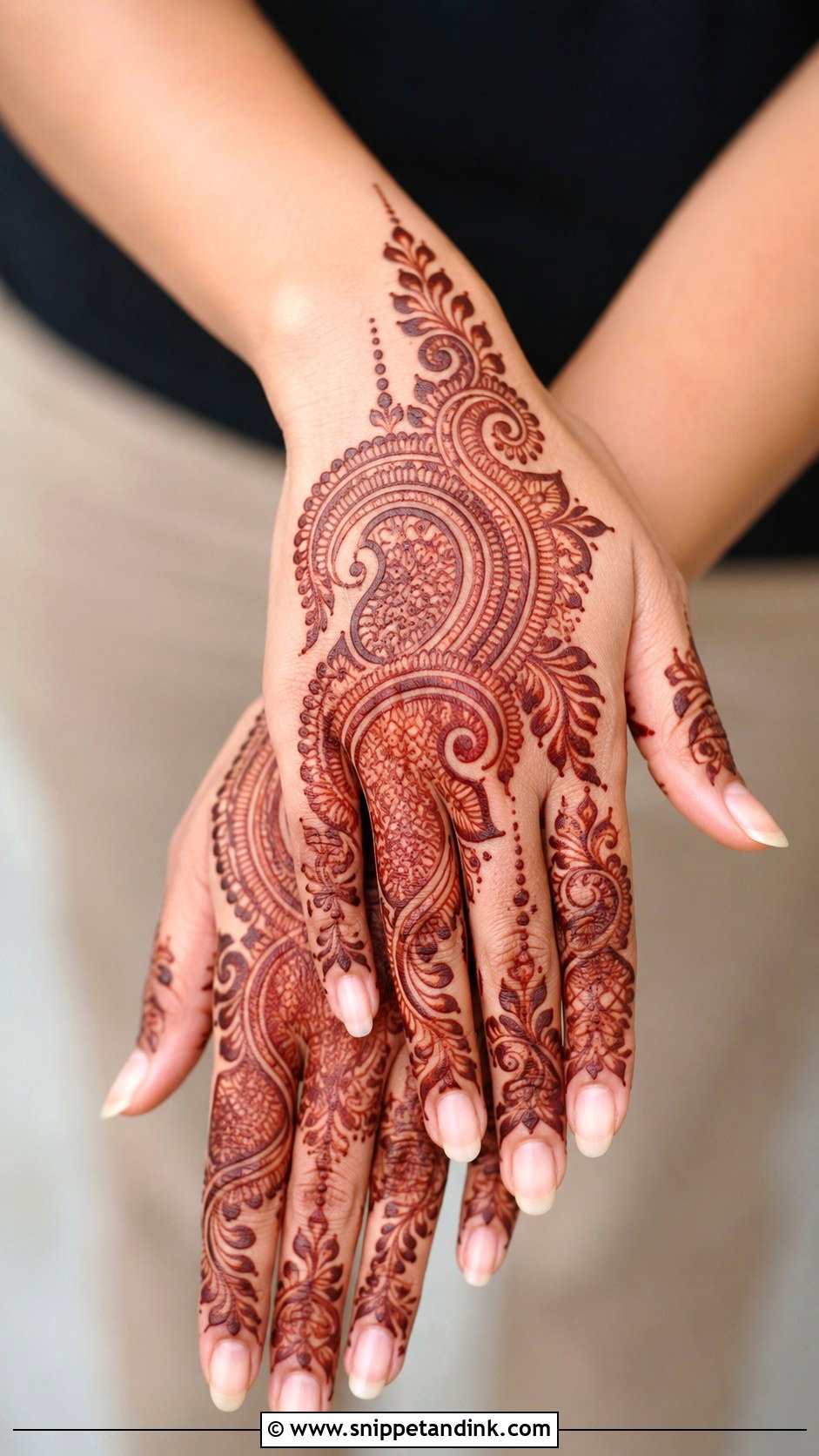
Start with one large paisley on the back of the hand and add smaller paisleys, leaves and dots around it. Set diagonally, it feels Arabic; set in the center, it feels Indian. The curve fits naturally against the hand’s own shape. I keep the filling simple, a few lines, tiny petals and light shading, so the outline stays the strongest element. It suits all ages.
13. Indo Arabic Back Hand Mehndi Design
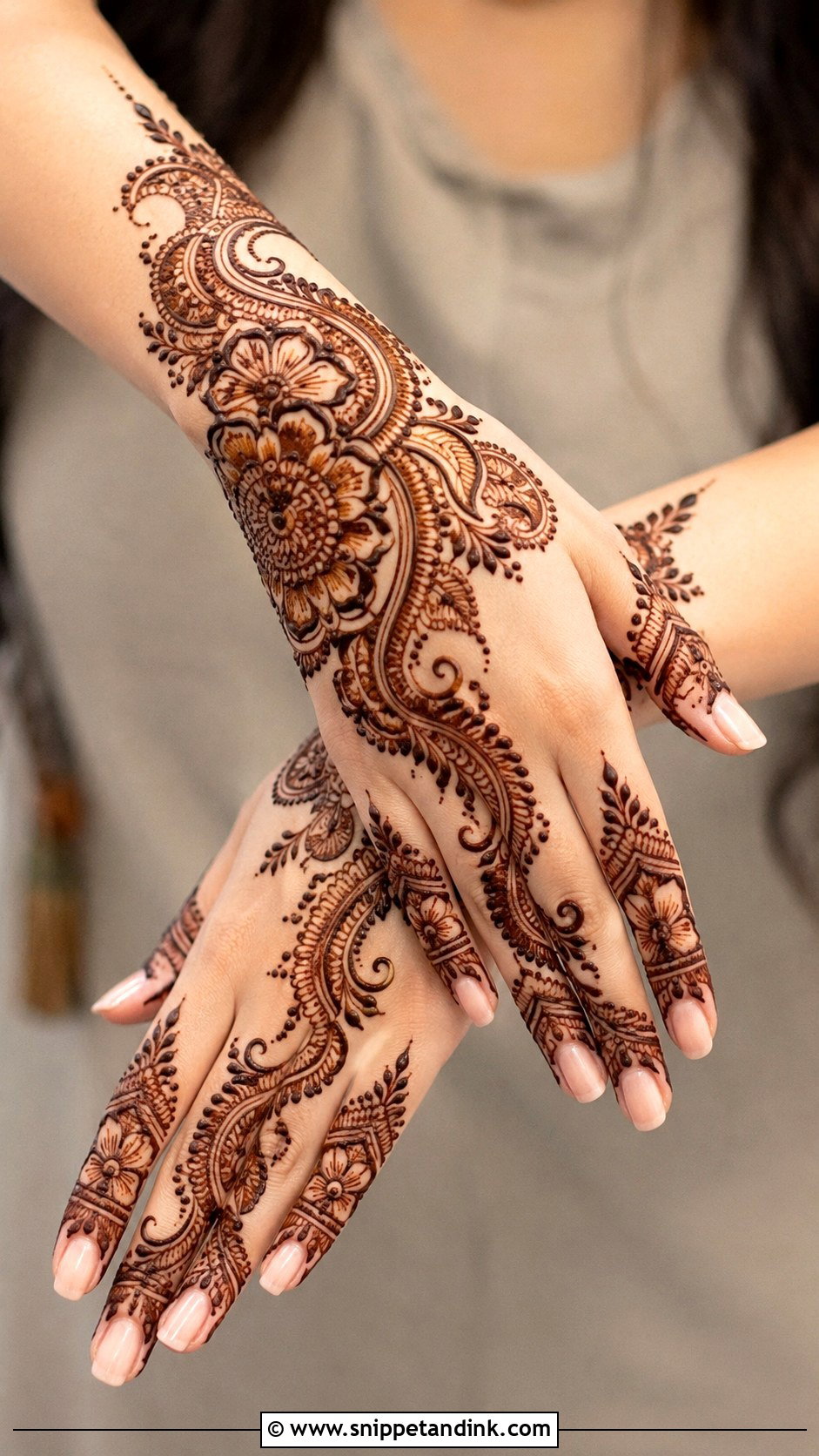
An Indo Arabic back hand mehndi design takes the bold diagonal flow of Arabic work and adds Indian detail: small mandalas, paisleys and dotted fillers. I start with a bold flower near the wrist or center, move up the hand with leaves and curved vines, then add fine dots and small Indian-style borders once the main trail is in place. Keeping the coverage open is what stops it from becoming heavy. It can be scaled up or down for the occasion.
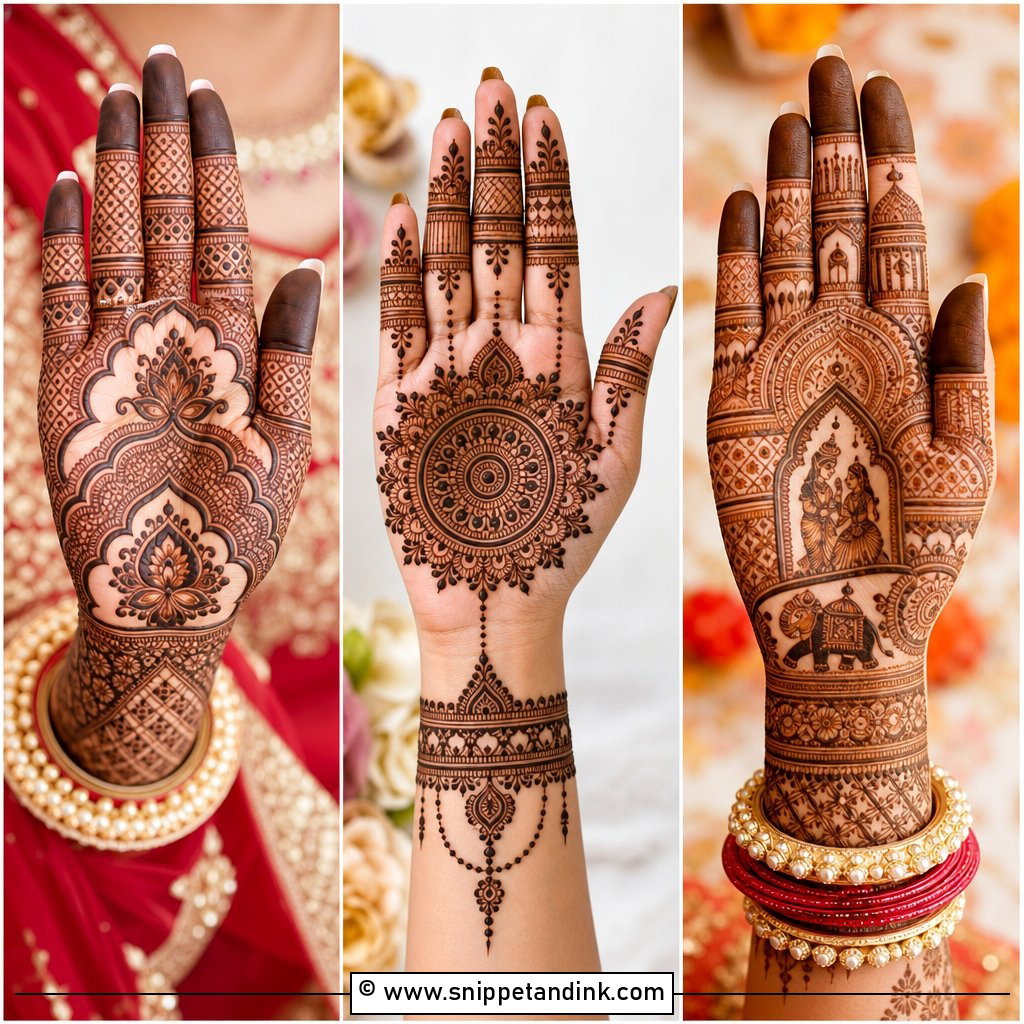
14. Round Tikki Back Hand Mehndi Design
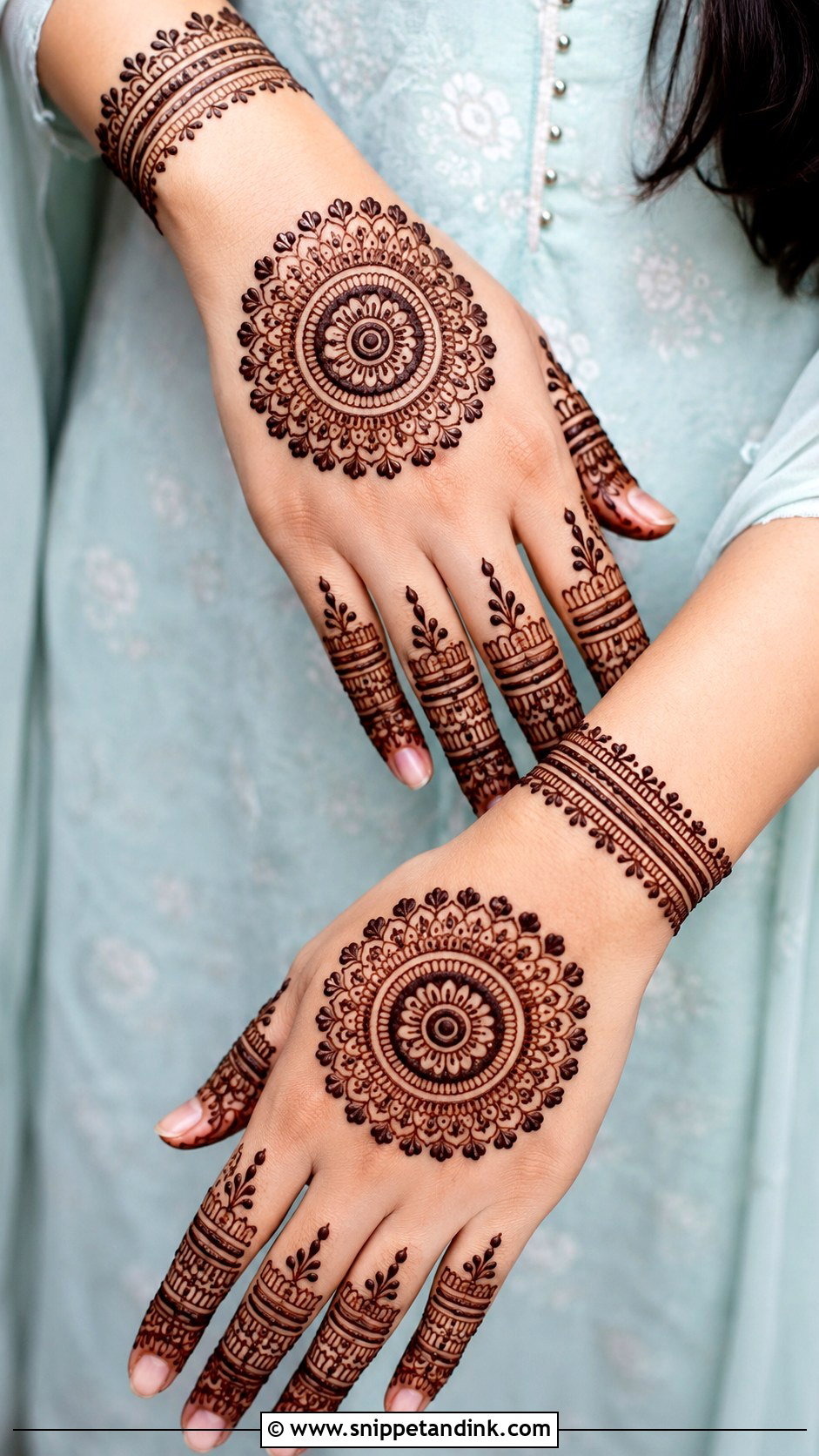
A bold circular tikki in the center of the back of the hand, decorated with petals, dots and small ring borders, is about as traditional as mehndi gets. Light patterns on the fingers, straight lines, small flowers or shaded tips, keep it balanced, and the wrist can stay bare or take a thin bracelet line. The only real difficulty is centering the circle. I find the midpoint between the knuckles and the wrist with the hand relaxed, not stretched flat, before I start.
15. Half Back Hand Mehndi Design
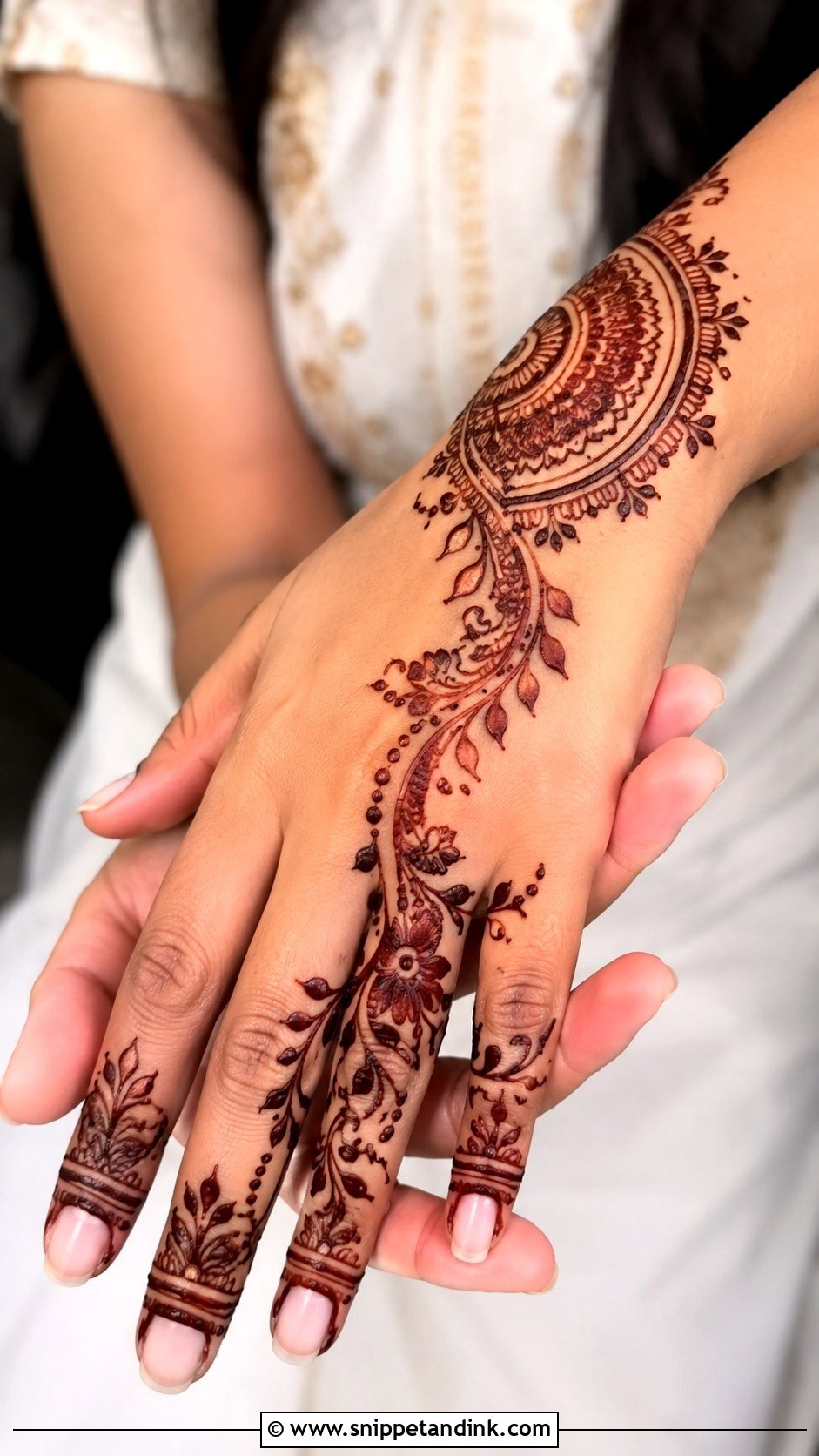
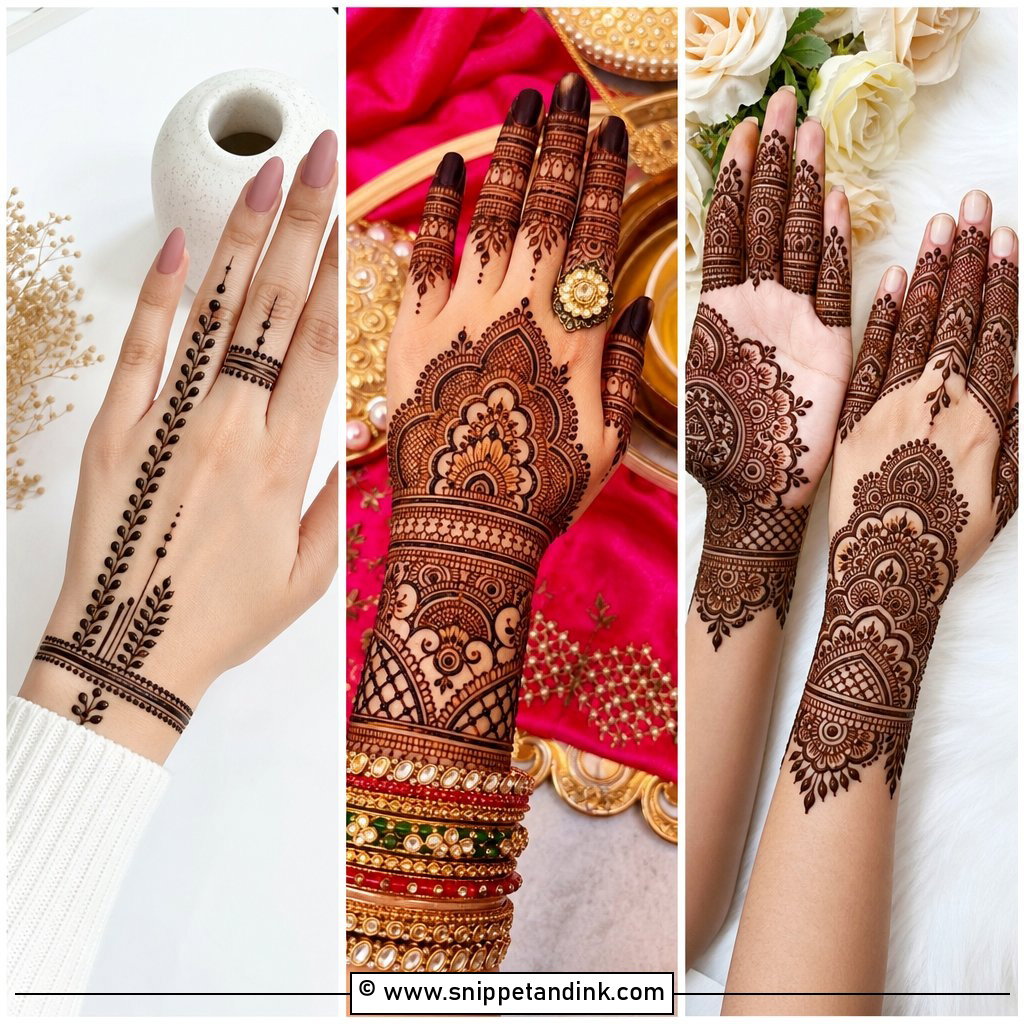
Half coverage can come from one side, from the wrist or from the fingers. A floral side trail, a half mandala or a diagonal Arabic pattern all suit it. I add the finger details on the same side as the main design, so the composition leans one way on purpose rather than looking unfinished. It’s quick to apply and suits casual events and festive mornings.
16. Vine Back Hand Mehndi Design
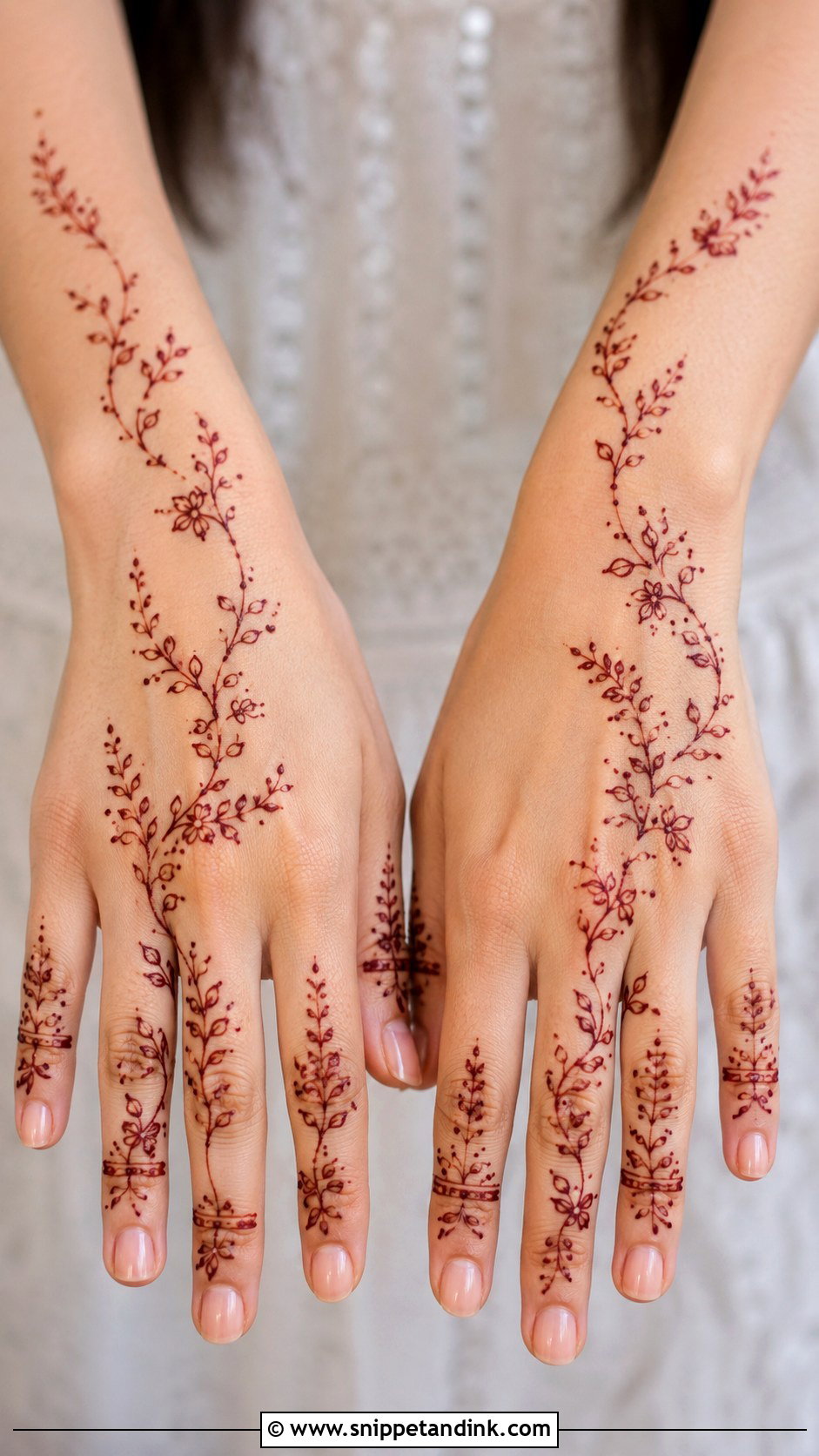
A curved vine starts near the wrist and wraps toward the index or middle finger, collecting leaves, tiny flowers and dots along the way. It should look as if it’s growing across the hand. Small uneven parts blend into the natural look, which makes it forgiving for beginners. Fingers stay simple with leafy bands or dotted tips. It suits younger girls and anyone who prefers delicate work.
17. Lotus Back Hand Mehndi Design
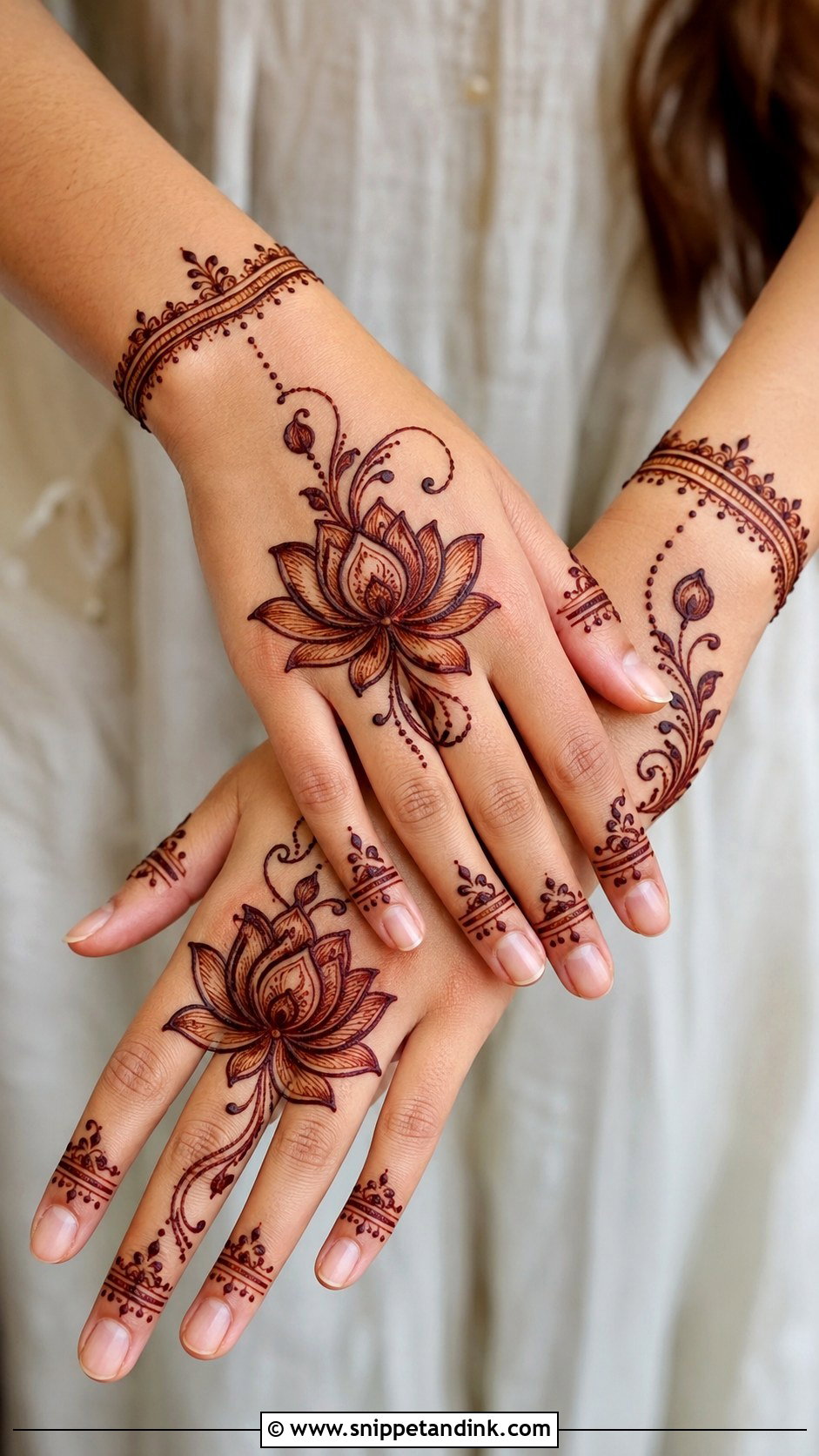
A lotus in the center or near the wrist, with soft leaves and curved lines around it, gives a calm, traditional feel that suits festivals and pujas. The petals need to stay open and lightly detailed inside, since lotus petals are long and close together and they merge easily if filled. I use one main lotus rather than several small ones. Dotted trails on the fingers or a simple wrist cuff finish it.
18. Modern Back Hand Mehndi Design Simple
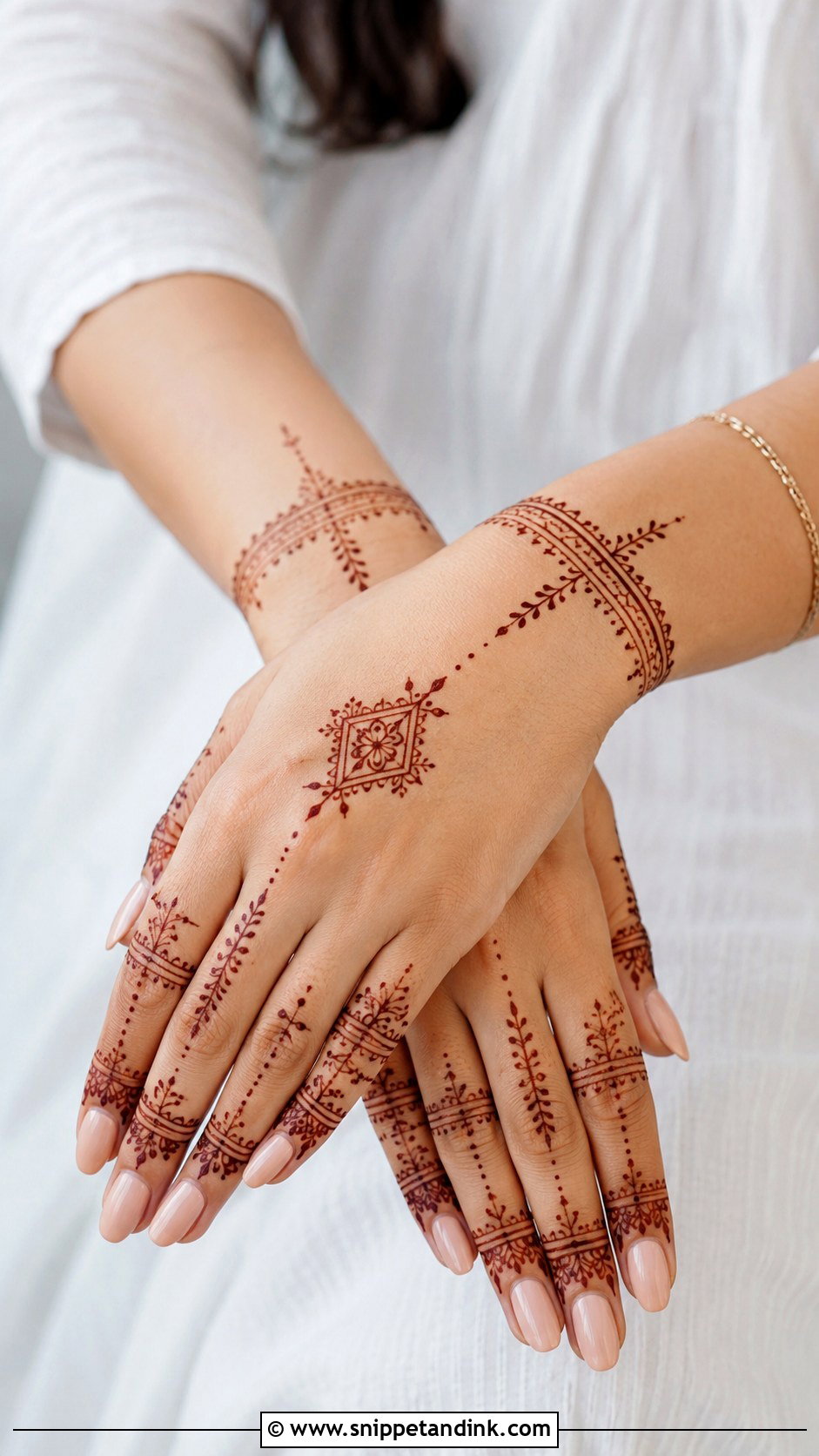
Modern designs rely on placement: a thin bracelet, a small central motif and sleek finger bands, with geometric lines, dots or a single floral trail for softness. The design should feel light, not empty, and the way I achieve that is by linking every element through a chain, a line or a repeated dot pattern. Without that link, a sparse design looks like several unfinished pieces.
19. Moroccan Back Hand Mehndi Design Simple
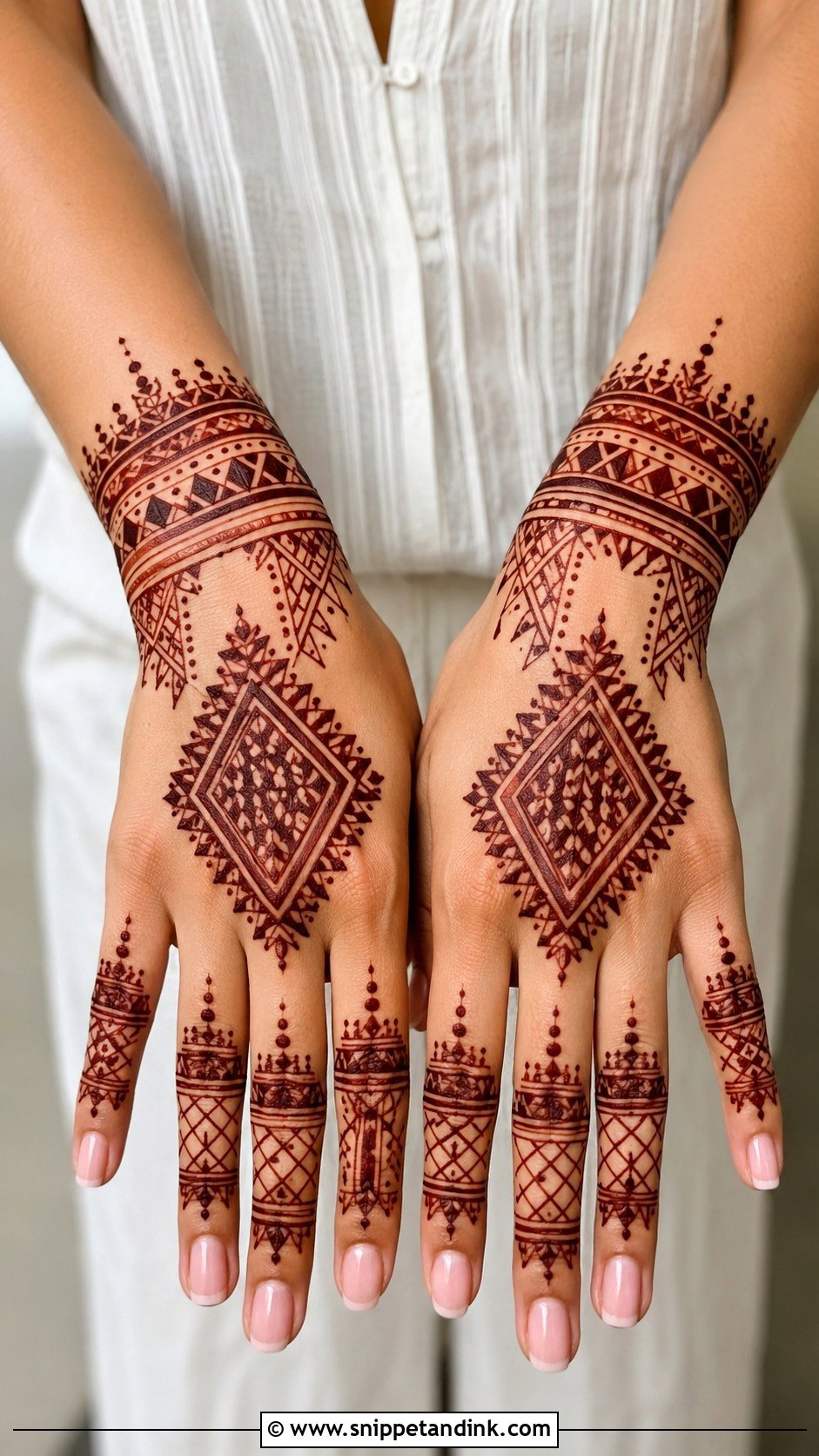
Moroccan-style work replaces flowers with diamonds, triangles, grids and strong borders. A central geometric motif extends toward the wrist and fingers in lines, and a light wrist band completes it. Even spacing is crucial, so I pipe the long lines first and fill between them afterwards. Dots soften the hard shapes. It’s a strong choice for anyone who wants something different from floral mehndi.
20. Gulf Back Hand Mehndi Design Simple
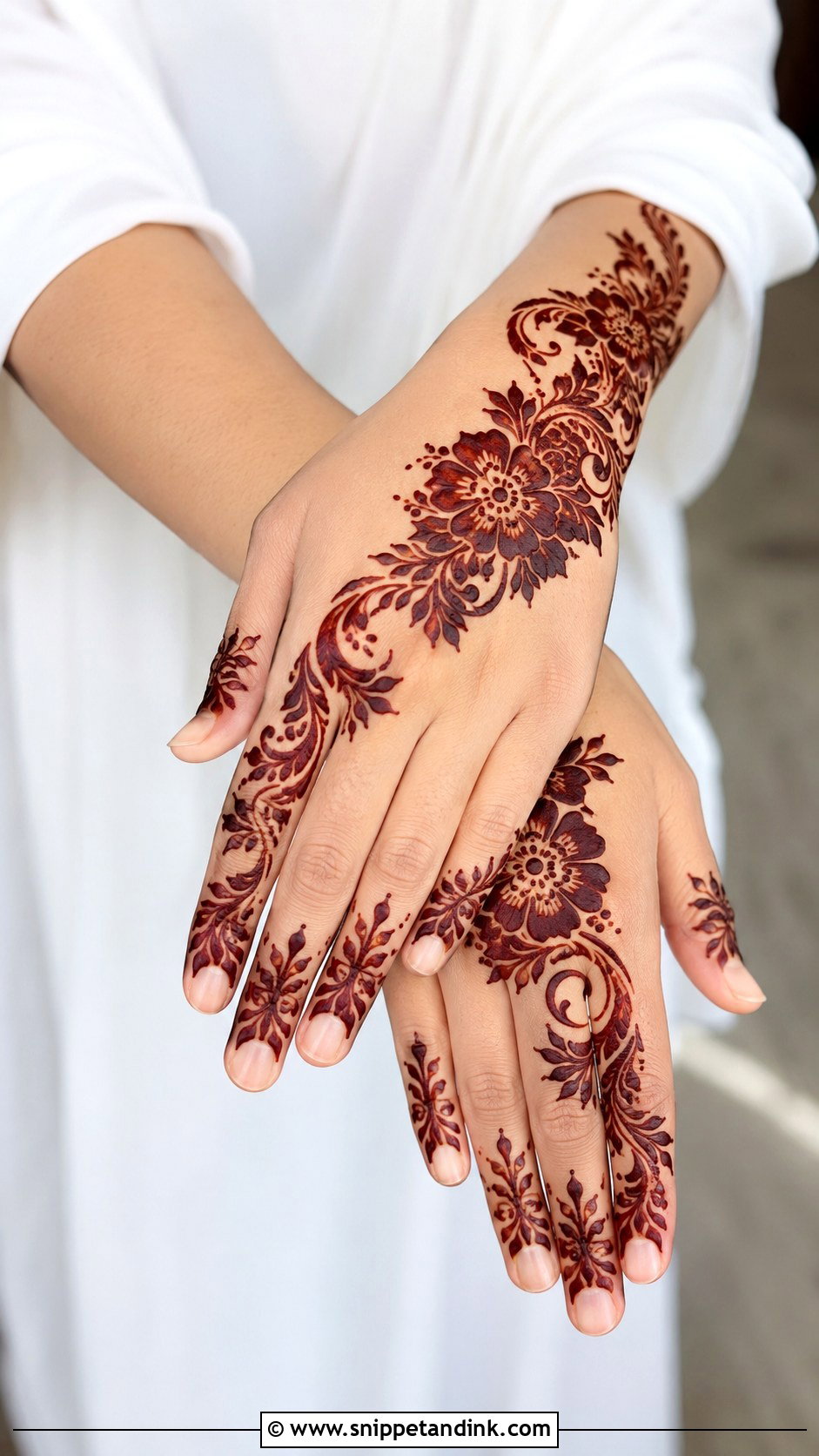
Gulf-style work uses large floral motifs and leafy curves with open space that lets the stain stand out. A wide flower or paisley on one side of the hand extends toward the wrist and fingers, with thick outlines and light inner detail. The bold strokes need room, so I leave generous gaps between motifs, more than feels natural at first. It reads clearly across a room at an Eid gathering or a wedding.
21. Back Hand Mehndi Design For Beginners
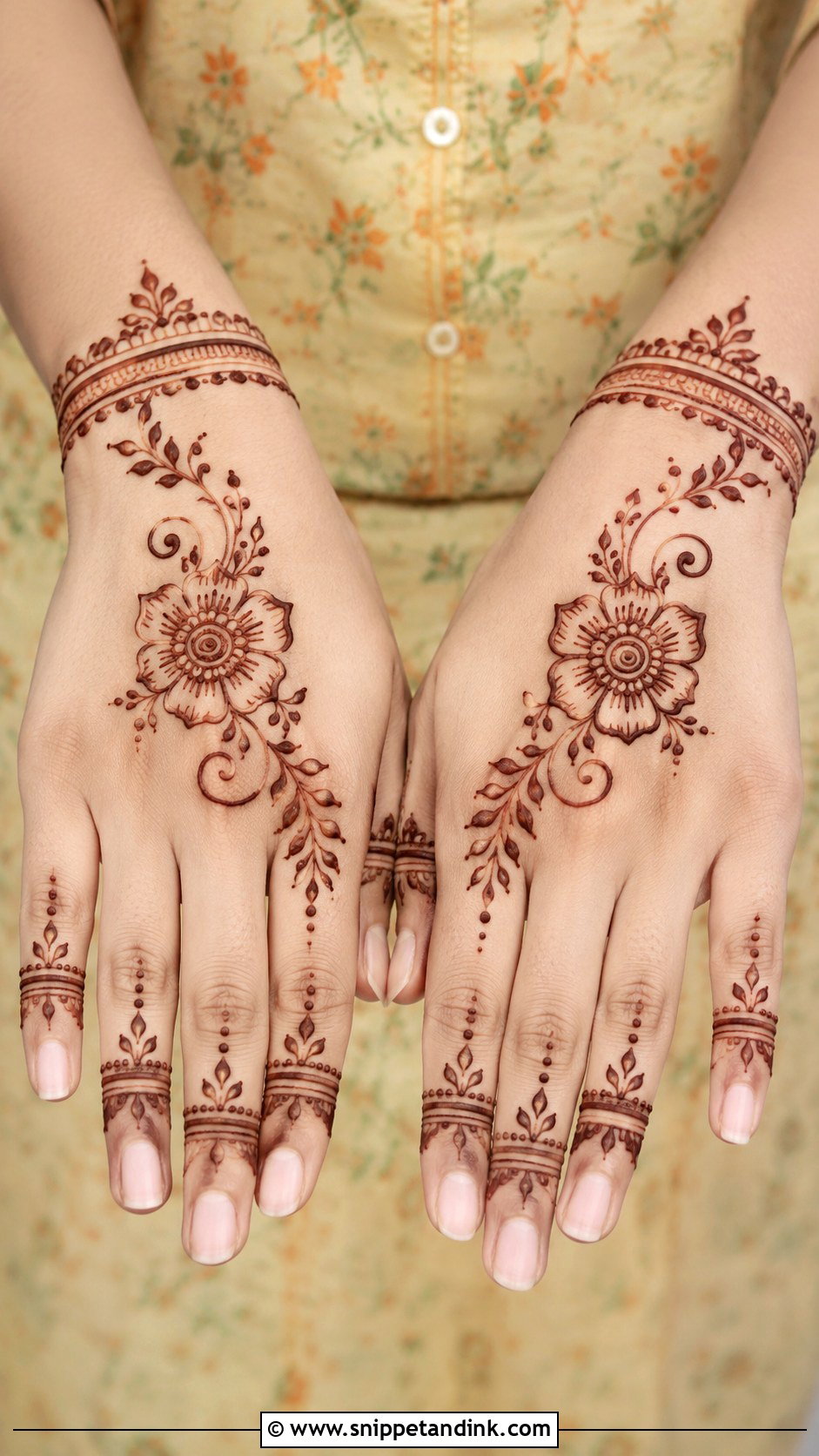
A first back-hand design should break down into parts you can manage: a center flower or mandala, a curved vine, simple finger lines and dots. Skip tiny filling at first. Larger motifs are easier to control and less likely to look messy, and repeating the same shapes across the hand makes the design look deliberate. It also dries quickly, which helps when you’re practicing on yourself.
22. Back Hand Mehndi Design For Kids
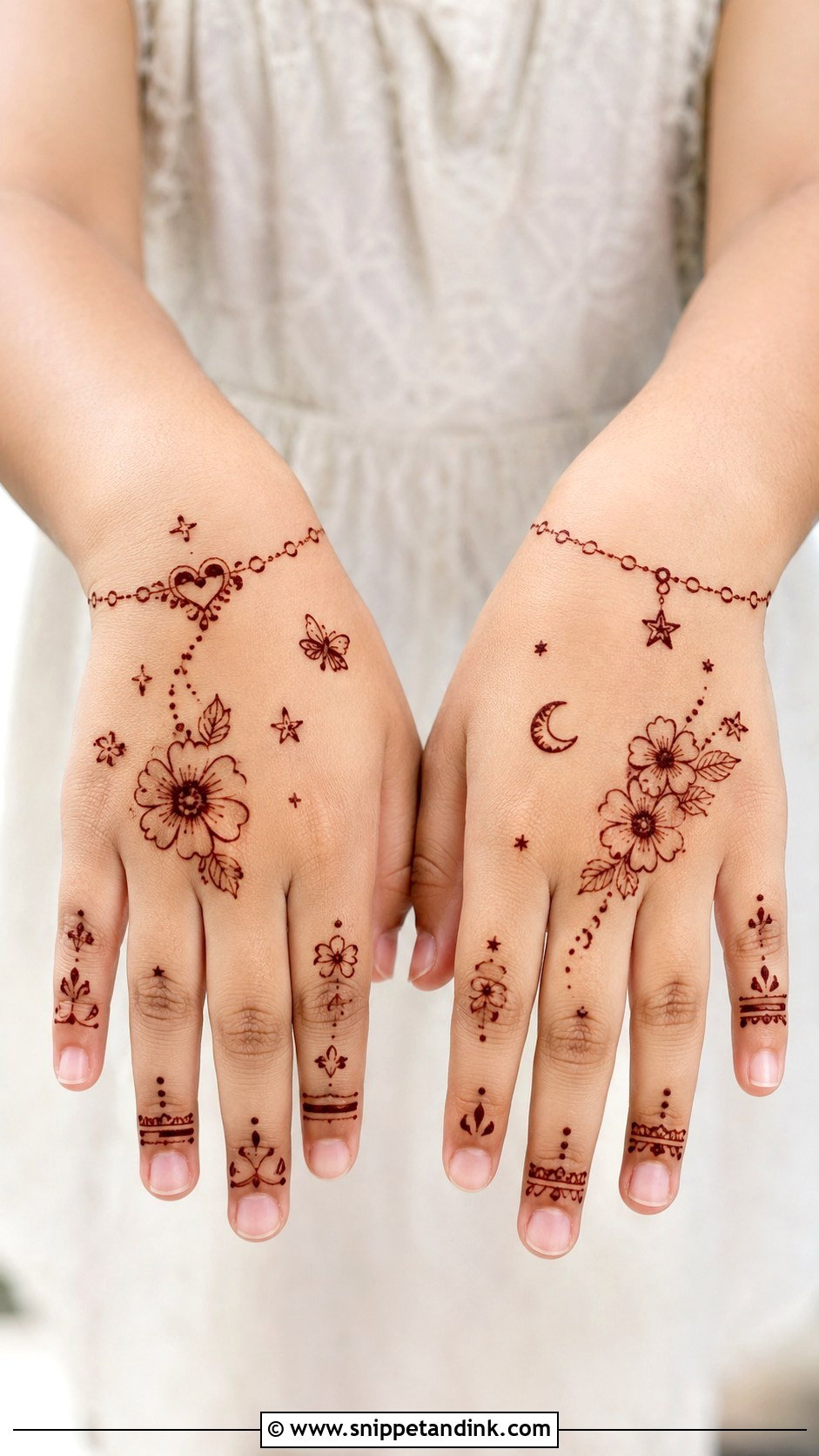
A back hand mehndi design for kids should be small and fast. Simple flowers, hearts, stars, dots or a tiny mandala with easy finger details are enough. A small bracelet with a flower chain toward one finger works well, or a mini floral trail down one side. I avoid heavy filling because children move before the paste dries, and I only ever use natural henna on young skin. Clear, rounded shapes survive the wriggling best.
23. Eid Back Hand Mehndi Design Simple
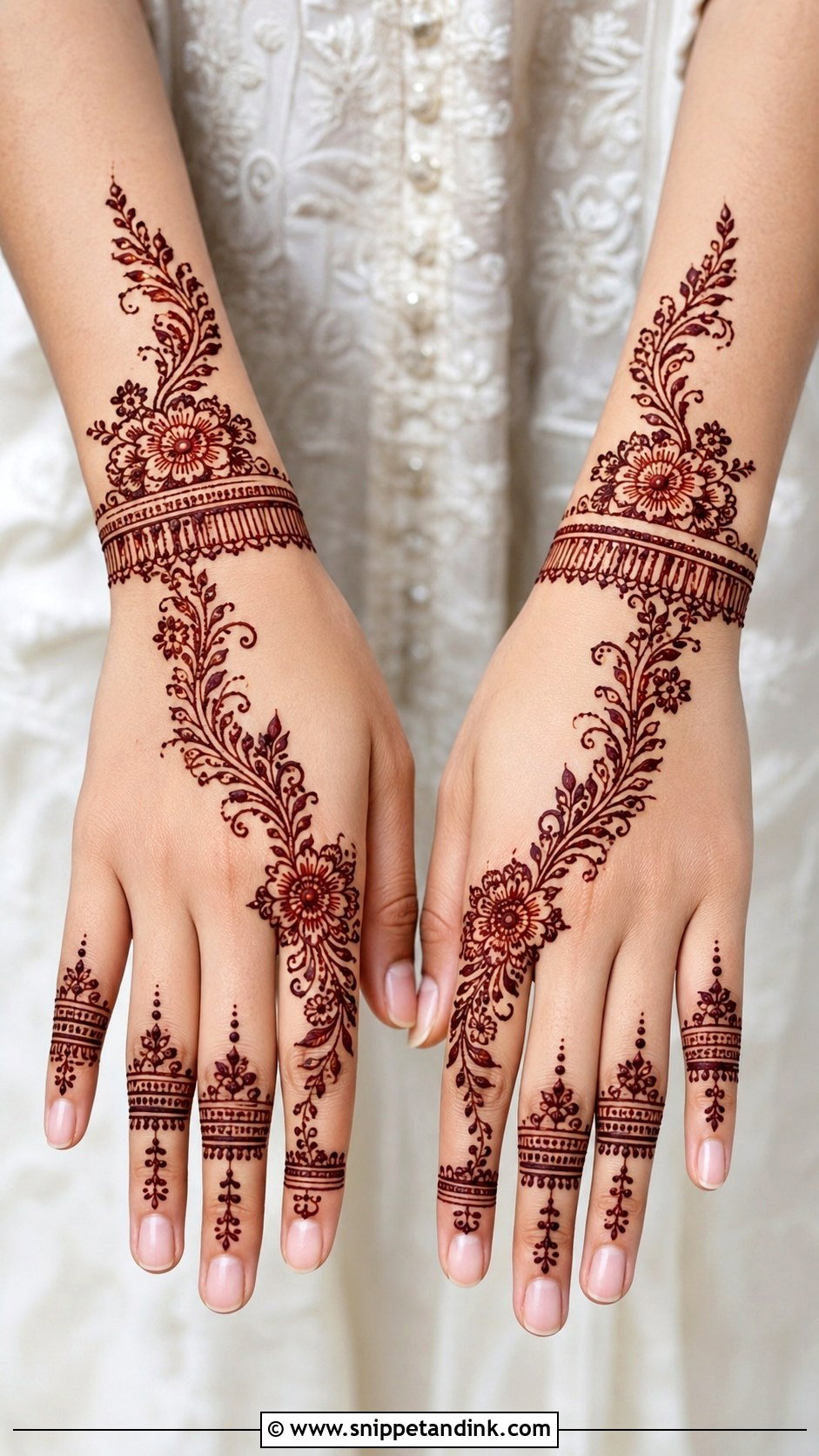
For Eid, Arabic floral trails, bracelet patterns, mandalas and leafy vines all suit the back of the hand. I decorate the fingers with neat bands and dots and keep the main design open, sometimes adding a small wrist cuff. Avoid very dense filling if you want a softer, modern look. Applying it the night before gives the stain time to deepen by Eid morning.
24. Bridal Back Hand Mehndi Design Simple
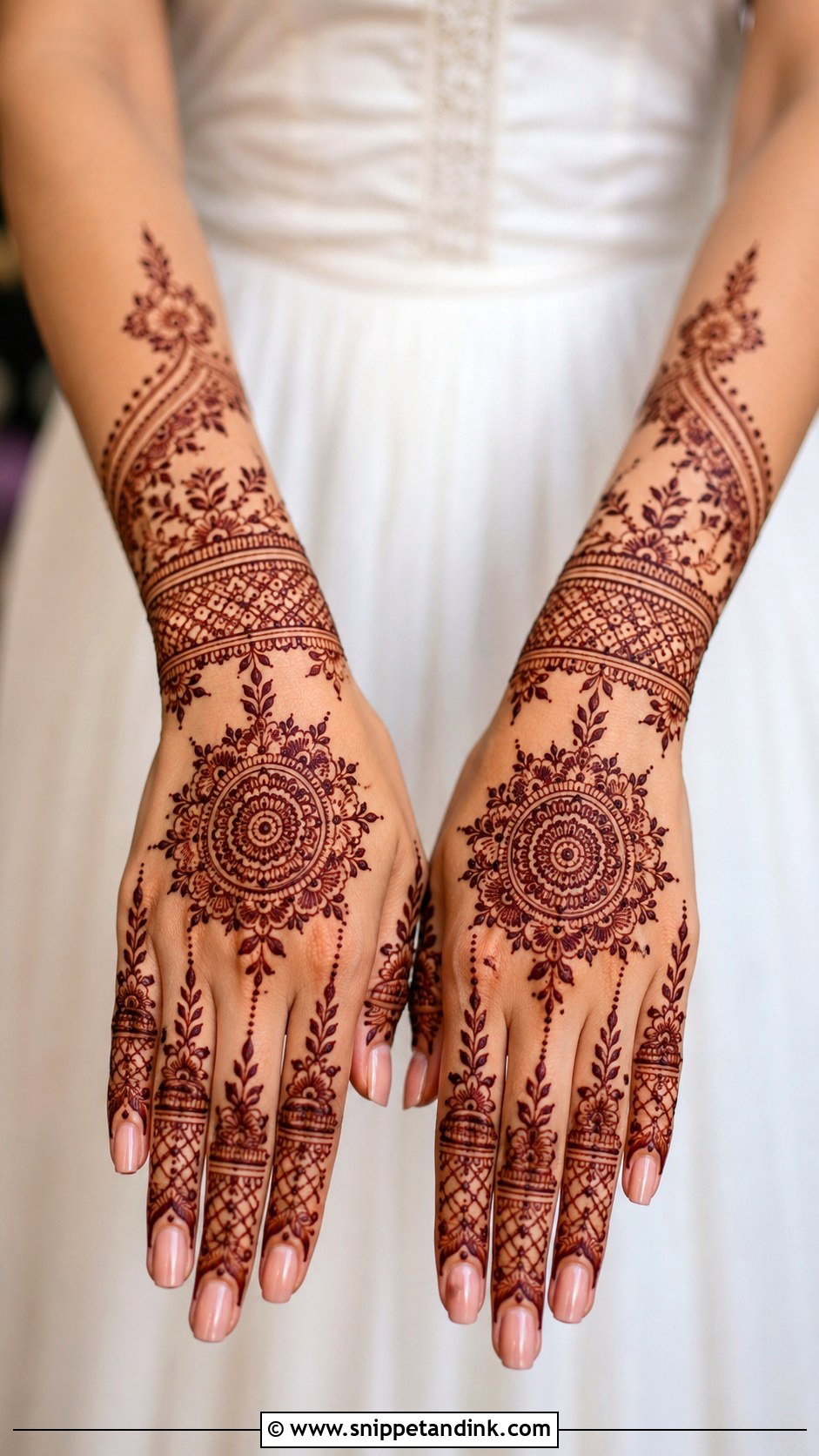
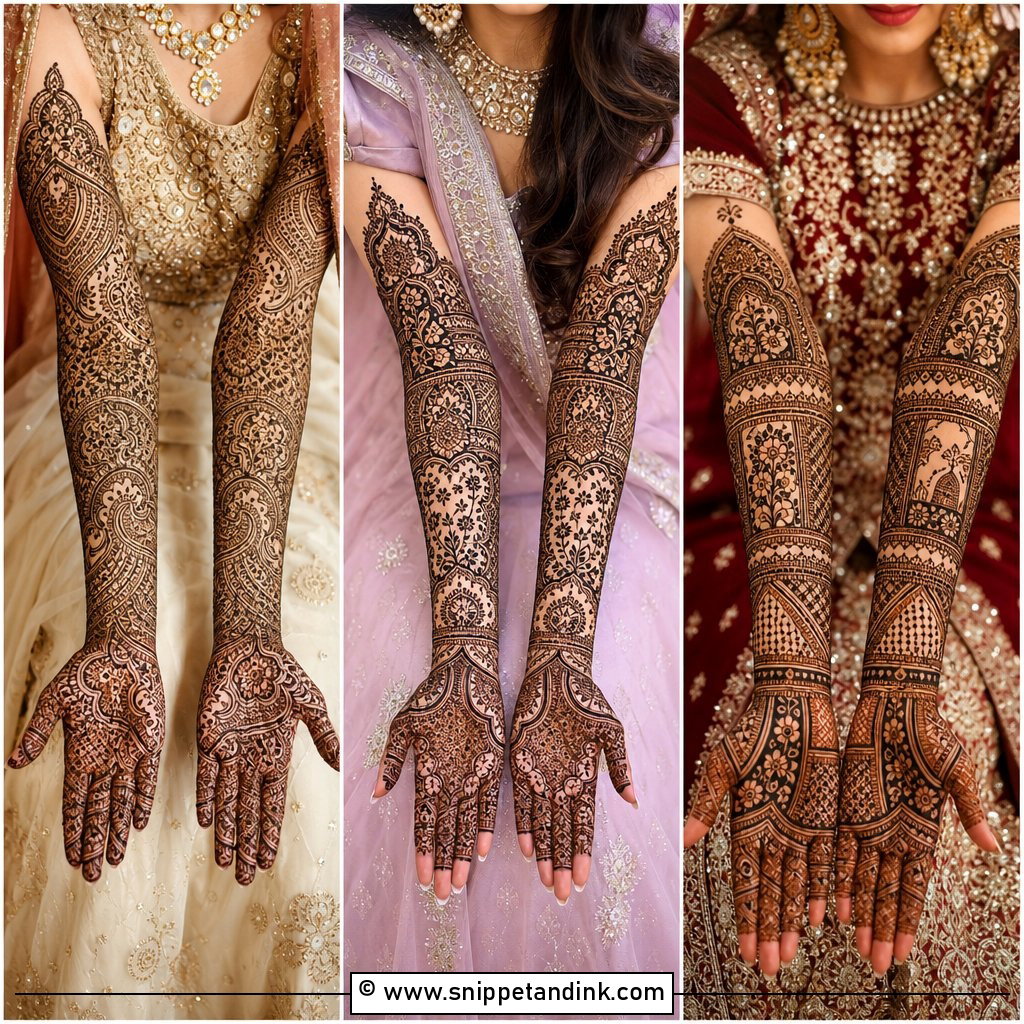
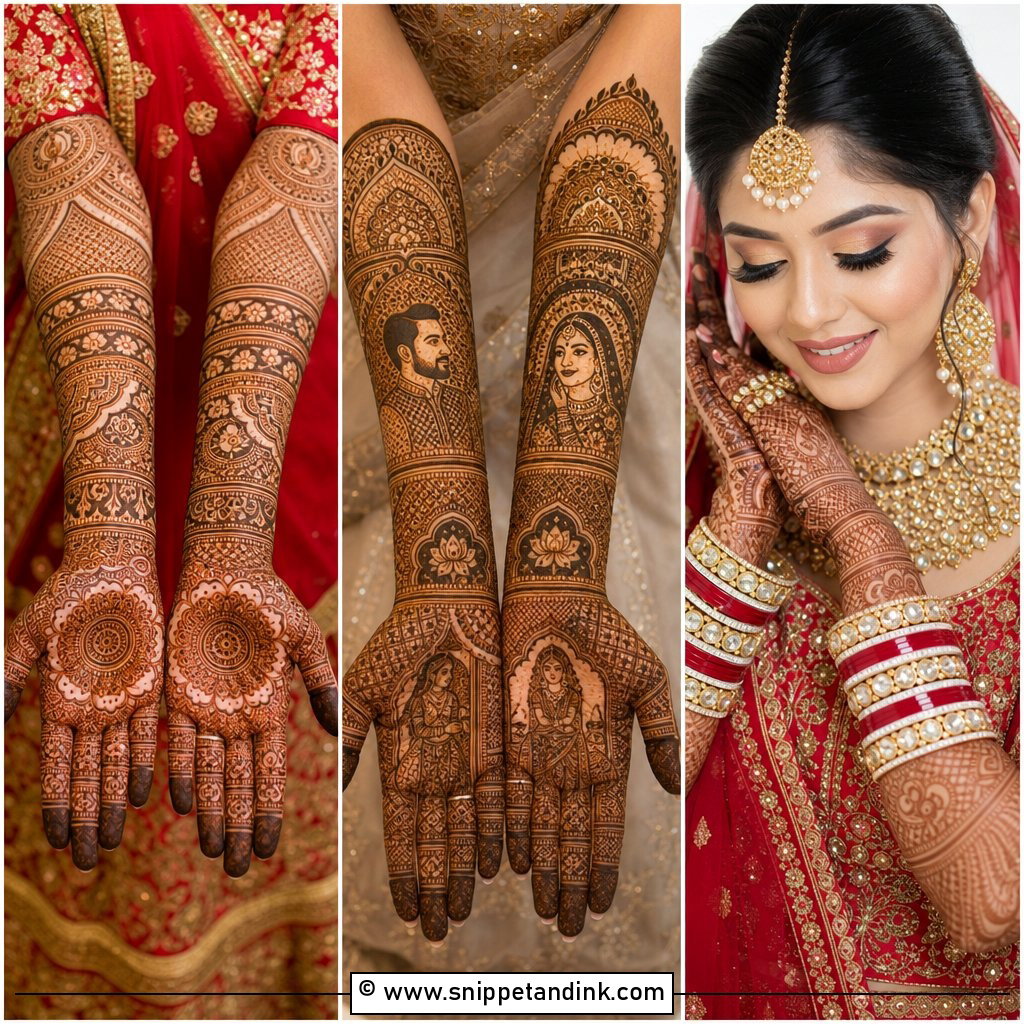
A lighter bridal back-hand design uses a central mandala, a floral trail or a paisley pattern, with detailed fingers and a neat extension past the wrist. Small bridal touches, tiny jaali sections, leafy borders or dotted chains, add richness without crowding. It suits an engagement, nikkah, roka or bridal shower. Both hands should feel like a pair, even if the patterns aren’t identical. A simple bridal back hand design leaves enough open skin that the main motifs read clearly against a deep stain.

25. Wedding Guest Back Hand Mehndi Design
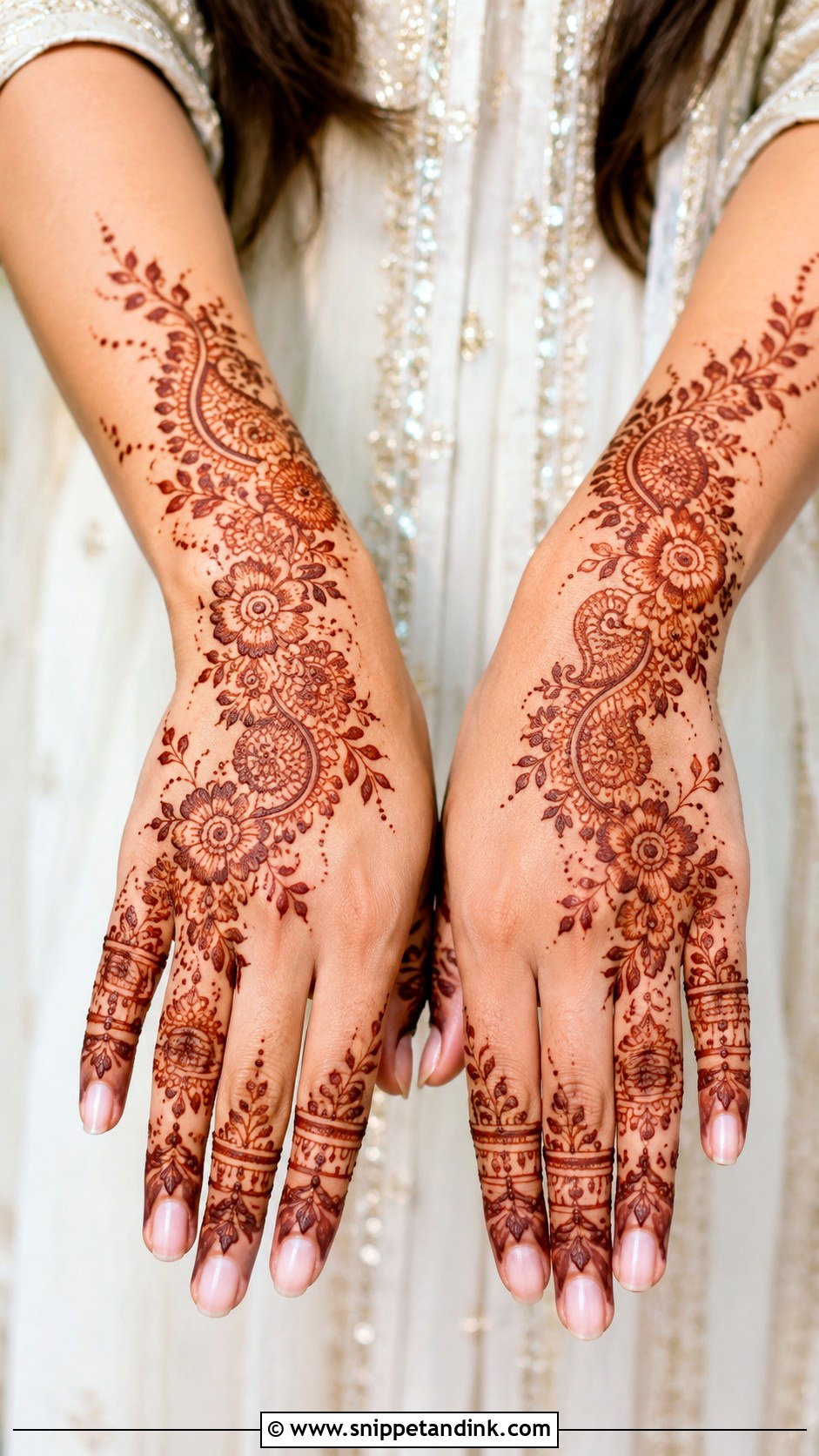
A guest’s back-hand design should look festive without looking bridal. A diagonal Arabic trail, a floral bracelet or a half-hand mandala all work. I decorate the fingers but don’t fill them completely, so the design stays light. A few bold flowers and neat leaves give enough richness for a sangeet or reception, with dots and small borders closing the gaps. It’s comfortable to wear through a long evening.
26. Back Hand Mehndi Design With Dots
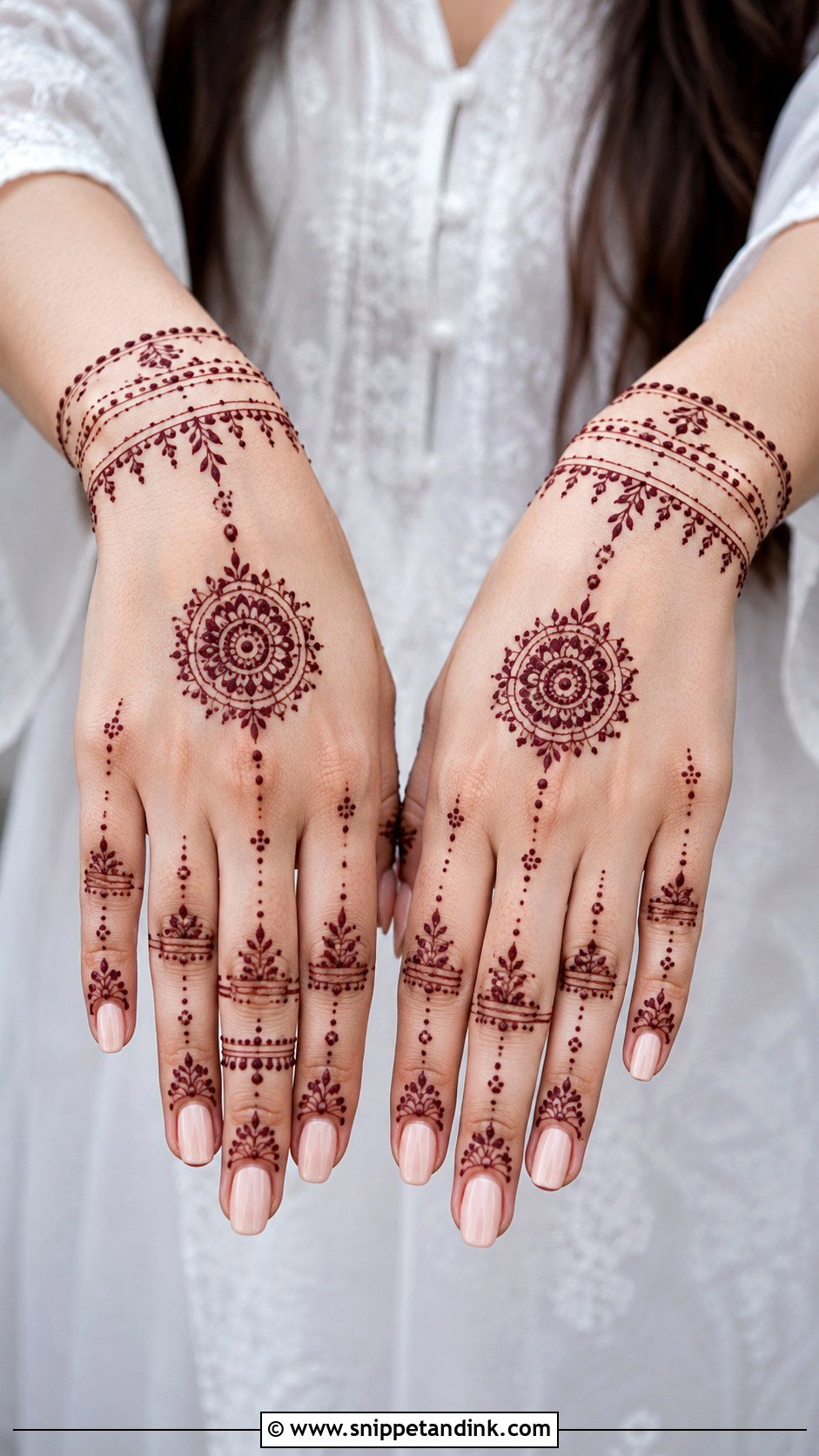
Dots can do almost everything in mehndi: connect flowers, form chains, fill borders and decorate empty space. A small mandala or flower in the center sends dotted lines toward the fingers and wrist, with light finger bands in dots and thin strokes. The dots must be even in size, so I use the same light squeeze and lift for every one. Let the dotted chains carry the design and keep the rest of the hand open.
27. Back Hand Mehndi Design With Lines
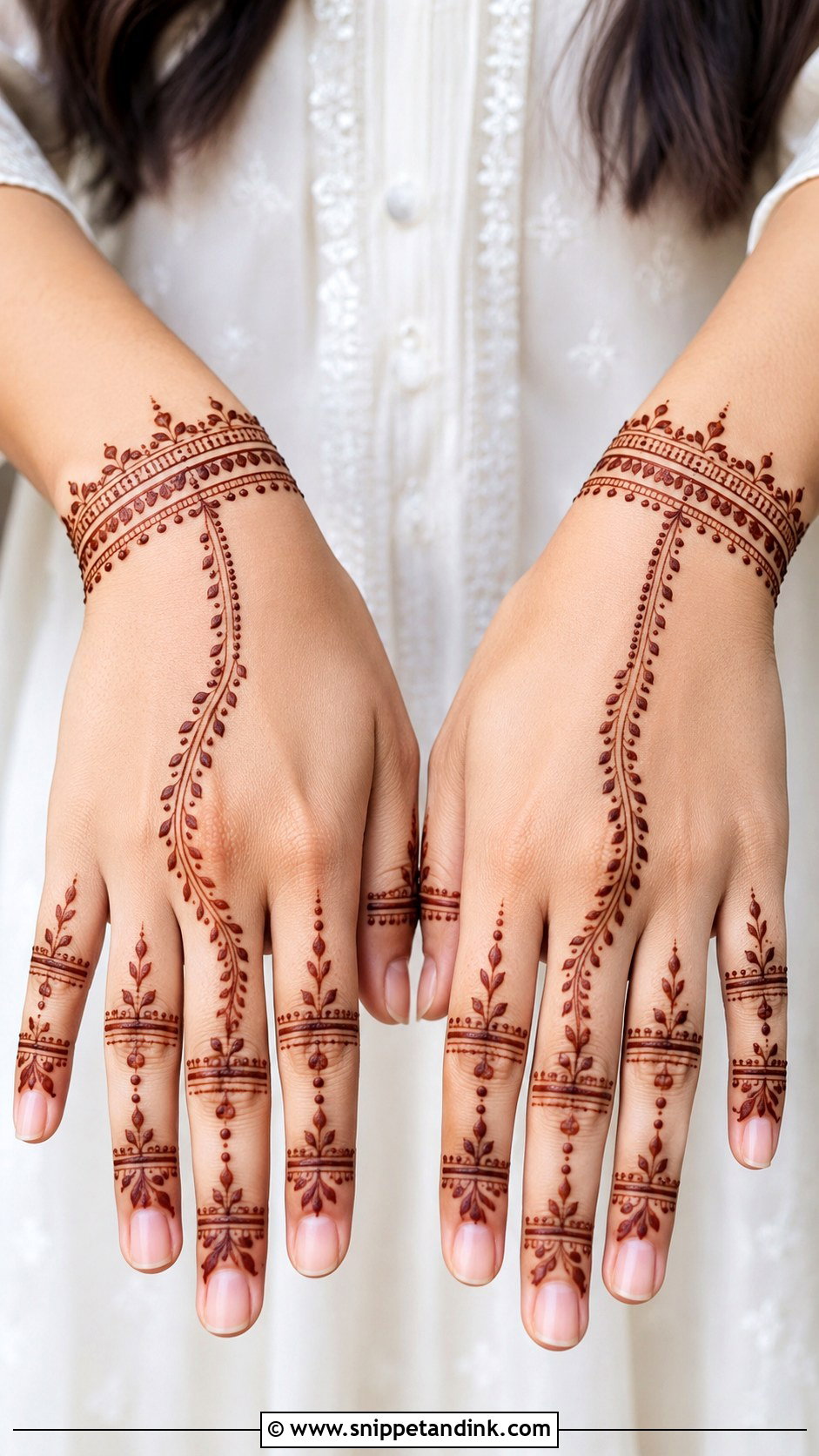
Straight lines, curved lines and parallel bands build this design: a wrist cuff, finger bands and a simple center motif joined by thin lines, softened with a few dots or leaves. It suits anyone who wants something structured rather than floral. Even spacing between lines is the whole effect, so I steady my wrist on a cushion and pipe each line in one smooth pull.
28. Back Hand Mehndi Design With Shading
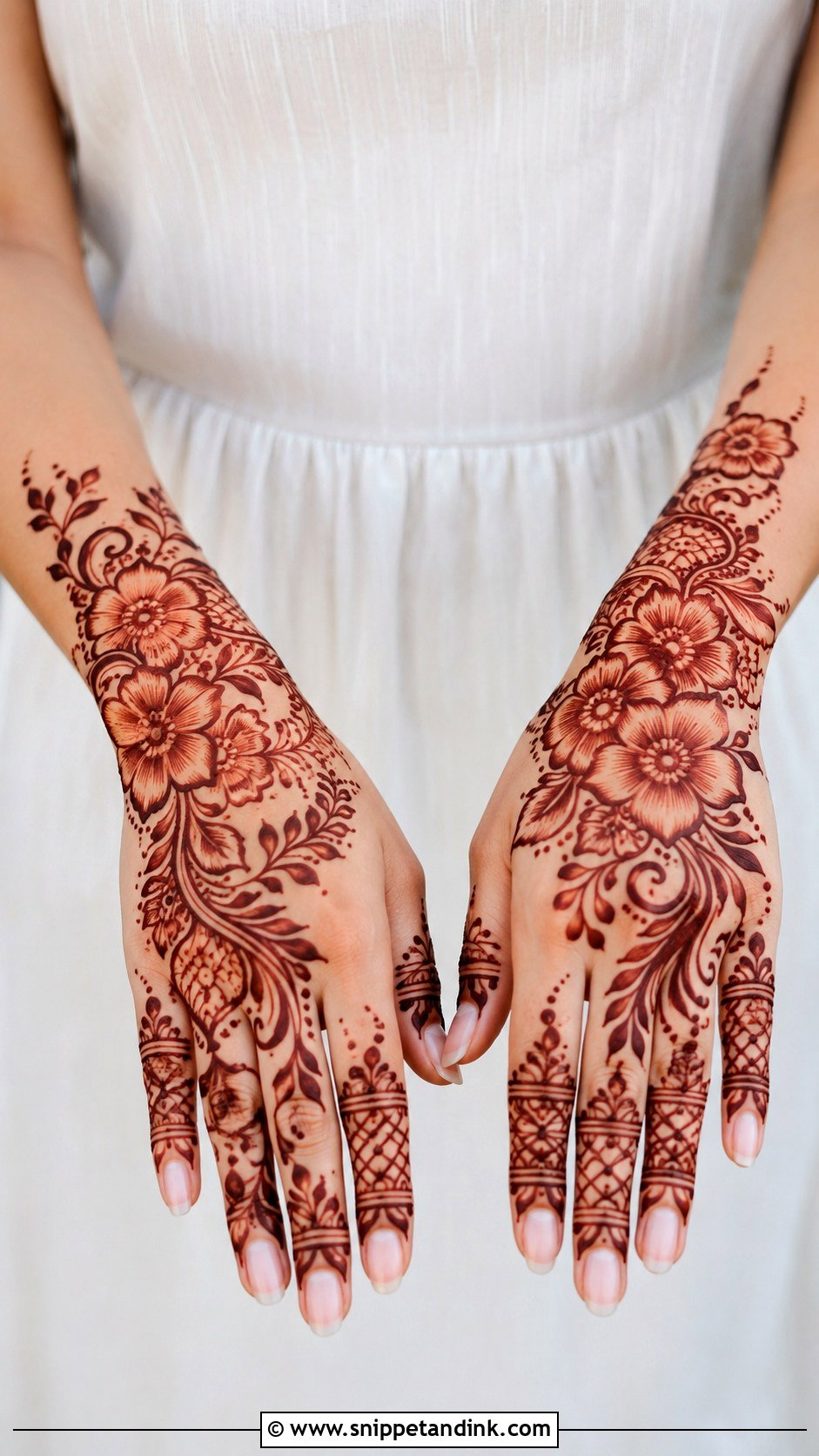
One or two large flowers with lightly shaded petals give depth without many motifs. Leaves, dots and a simple wrist line complete the design. Shading works best inside a bold outline, using fine strokes that leave skin showing between them; solid shading on the back of the hand often stains unevenly. Keep the fingers simple so the shaded flower stays the focus.
29. Back Hand Mehndi Design With Bracelet And Ring
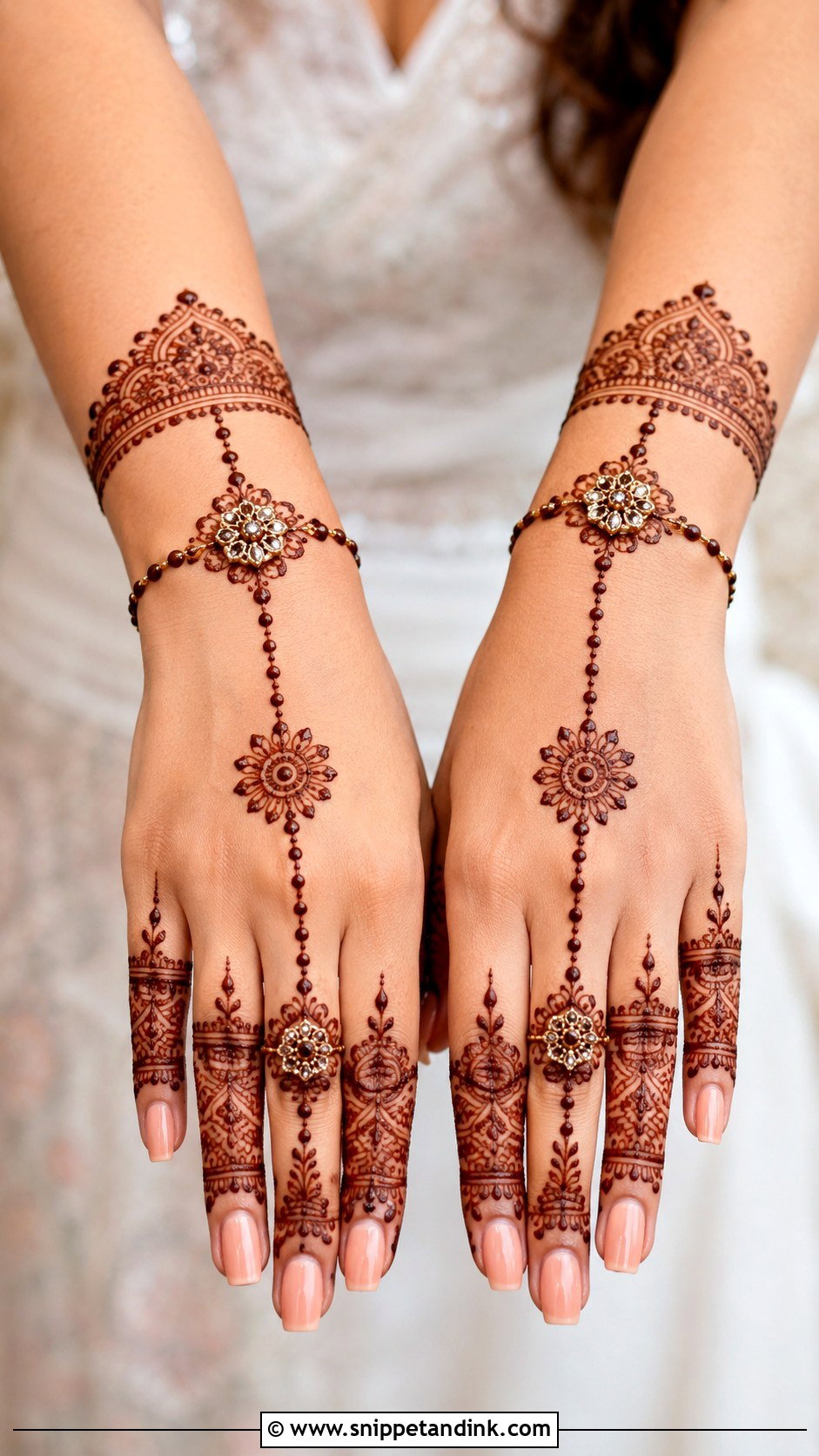
A bracelet around the wrist links to a ring on one finger through dotted chains or fine curved lines, with a small flower or mandala anchoring the center of the hand. It looks like henna jewelry and pairs well with real rings, since the skin around them stays clear. I mark the center point of the chain before piping so the drop hangs straight. Neat chain lines and a balanced bracelet are what make it look finished.
30. Back Hand Mehndi Design For Short Fingers
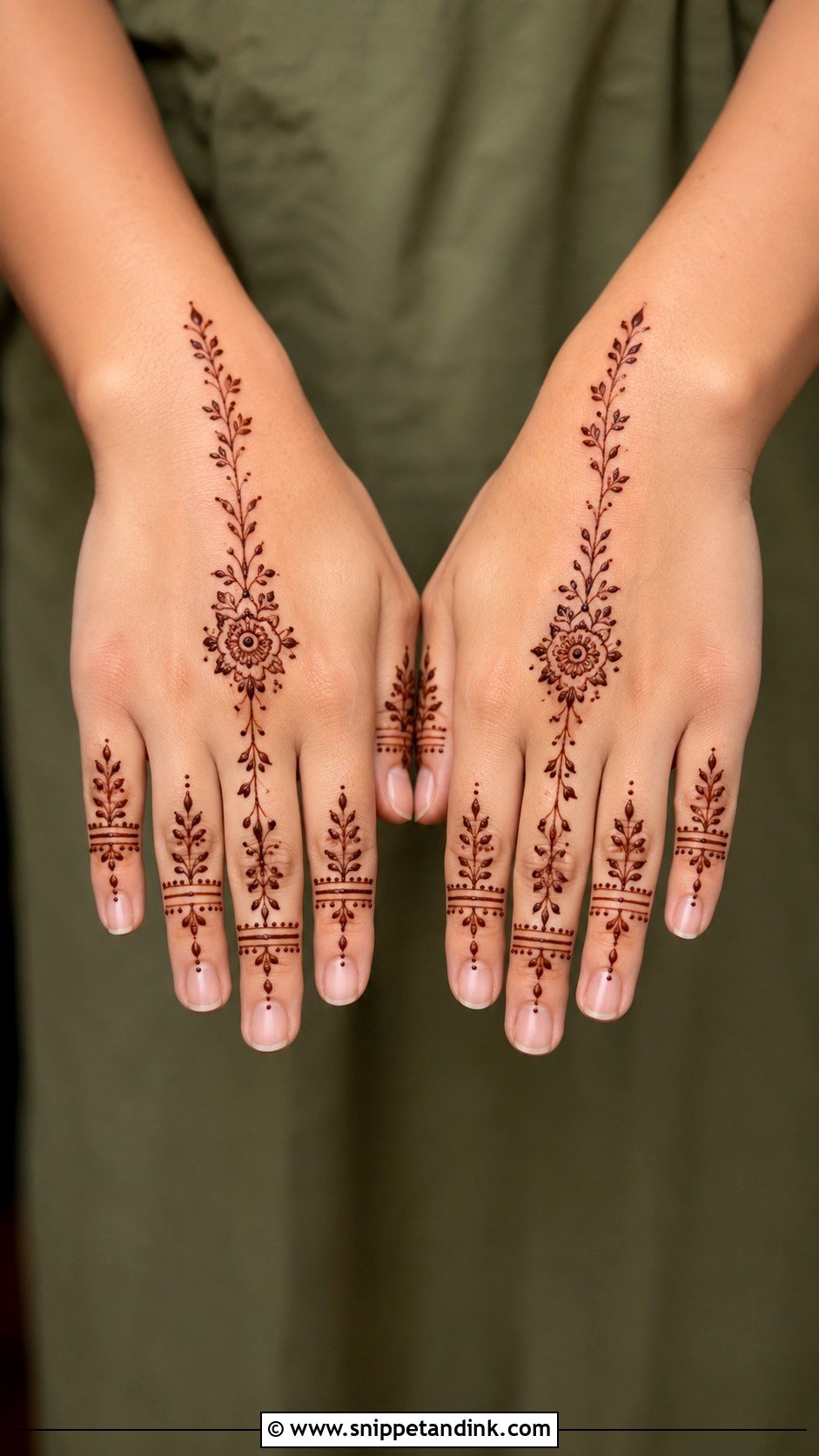
Short fingers look longer with vertical trails, slim vines and finger lines that run upward rather than wide, heavy bands. I place the main motif slightly below the knuckles or near the center of the hand and connect it to the middle finger with a thin design. Avoid filling the fingers solidly; wide bands cut the finger visually and make it look shorter. Small leaves, dots and a diagonal Arabic trail all help create length.
Doing the Back of Your Own Hand
Applying henna to your own non-dominant hand is very manageable; the dominant hand is where most people struggle. I’d suggest choosing a simpler design for the second hand, a vine or a few finger bands, rather than trying to mirror a complex first hand perfectly.
Rotate the hand, not the cone, so you’re always piping toward yourself in a comfortable direction. Rest the elbow on the table to steady the arm, and work from the fingertips toward the wrist so your hand doesn’t drag through wet paste.
How a Back-Hand Stain Fades
The back of the hand stains lighter and fades a little sooner than the palm, usually over one to two weeks depending on how often you wash. Fading isn’t even; the knuckles and the parts you scrub most lighten first, so the design can look patchy toward the end. Oil-based moisturizer before handwashing, and avoiding harsh scrubs or chlorine, helps it last. Natural henna can’t be easily topped up, so if you need it to look fresh for a second event a week later, it’s better to plan a light new design than to trace over the old one.
Your Hand Shape Should Make the Final Call
Back-hand mehndi comes down to balance, clean spacing and a design that runs from fingertip to wrist as one piece. Floral trails, Arabic curves, mandalas, bracelets, jaali and minimal layouts all fit, as long as the motifs have room. Beginners can start with vines, dots and round motifs; festive looks can add fuller fingers, wrist cuffs and shaded flowers. Let your hand shape and the occasion guide the choice, and the design will look as though it belongs on your hand.
You'll Like These Ideas:





Leave a Reply