
Simple Pakistani mehndi is mostly about spacing. The tikki circle, the floral trail, the paisley, the wrist band and the leafy vine all turn up again and again, and what separates a clean hand from a cluttered one is how much bare skin is left between them. I draw these for Eid, dholki nights and family weddings far more often than full bridal work, because most people want henna that looks festive in photos but still lets them cook, hold a baby or shake hands the next day. Below are twenty layouts I come back to, with notes on where each one goes wrong and who it suits best.
Why the Cone Matters More Than the Pattern on a Simple Hand
With dense bridal henna, small faults get swallowed by all the filling around them. Simple designs show everything, so the paste has to be right before I draw a single petal. Good paste is smooth like toothpaste, with no grit, and falls from the cone in a continuous thread. If it breaks every few millimetres, the lines will be dotted and uneven when they stain.
- Natural henna paste is made from dried leaf powder, lemon juice or water, sugar and an essential oil, and left to release dye for several hours. Fresh paste stains noticeably better than paste that has sat around warm for days.
- Ready-made cones vary a lot. A cone that is shelf-stable at room temperature for months usually contains something other than plain henna, so I check the label and keep my own cones in the freezer.
- Anything sold as black henna is a hard no. The dark colour comes from a chemical dye that can cause serious skin reactions, and real henna never stains black.
- Cut the cone tip small for finger bands and dots, slightly larger for tikki outlines. One tip size for the whole hand gives you either clumsy fingers or thin, weak circles.
Before Eid or a wedding function, I patch test anyone who has never worn henna or who reacted to a product before. A small dot on the inner arm the day before is enough to rule out a problem.
1. Pakistani Tikki Mehndi Design
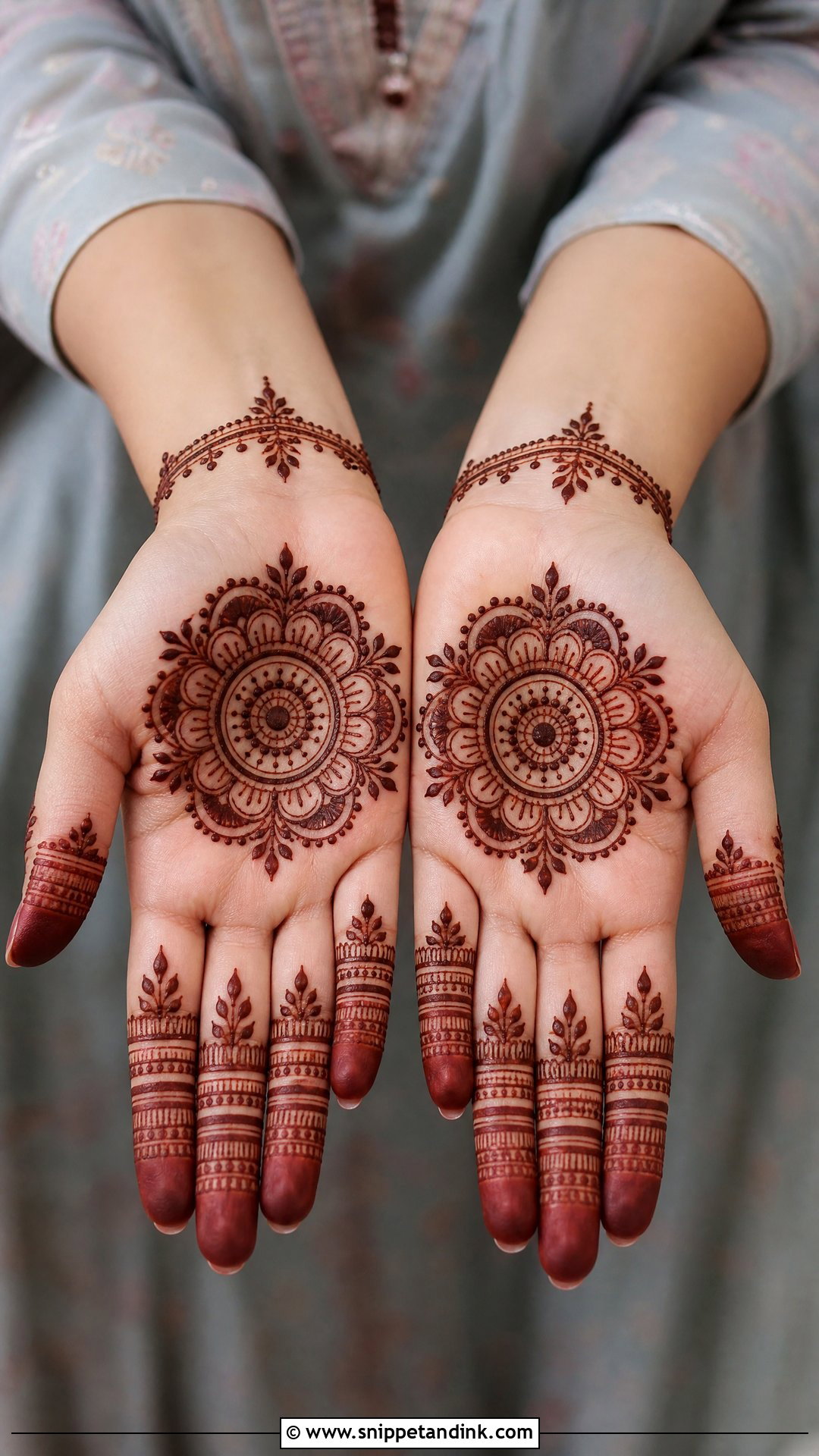
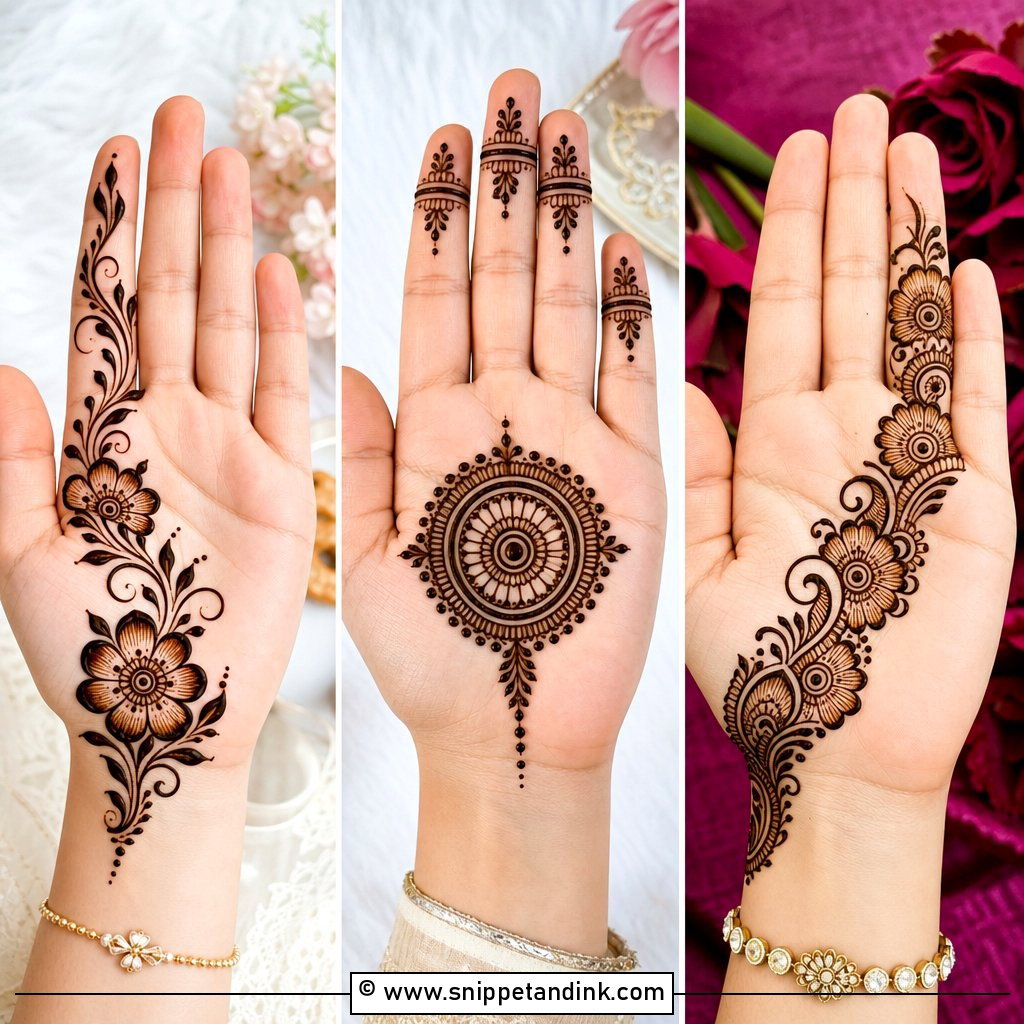
The tikki is the first design most Pakistani girls ever had on their palm, and it still earns its place. I build it from a round mandala in the dead centre of the palm, then grow it outward ring by ring with dots and petals. The circle has to be drawn with a steady, slightly thicker cone line, because the palm stains darkest in the middle and a wobble there shows more than anywhere else. Fingers get only a few lines and leaf chains. A thin wrist band finishes it, so the tikki doesn’t look like it is floating.
2. Pakistani Front Hand Mehndi Design
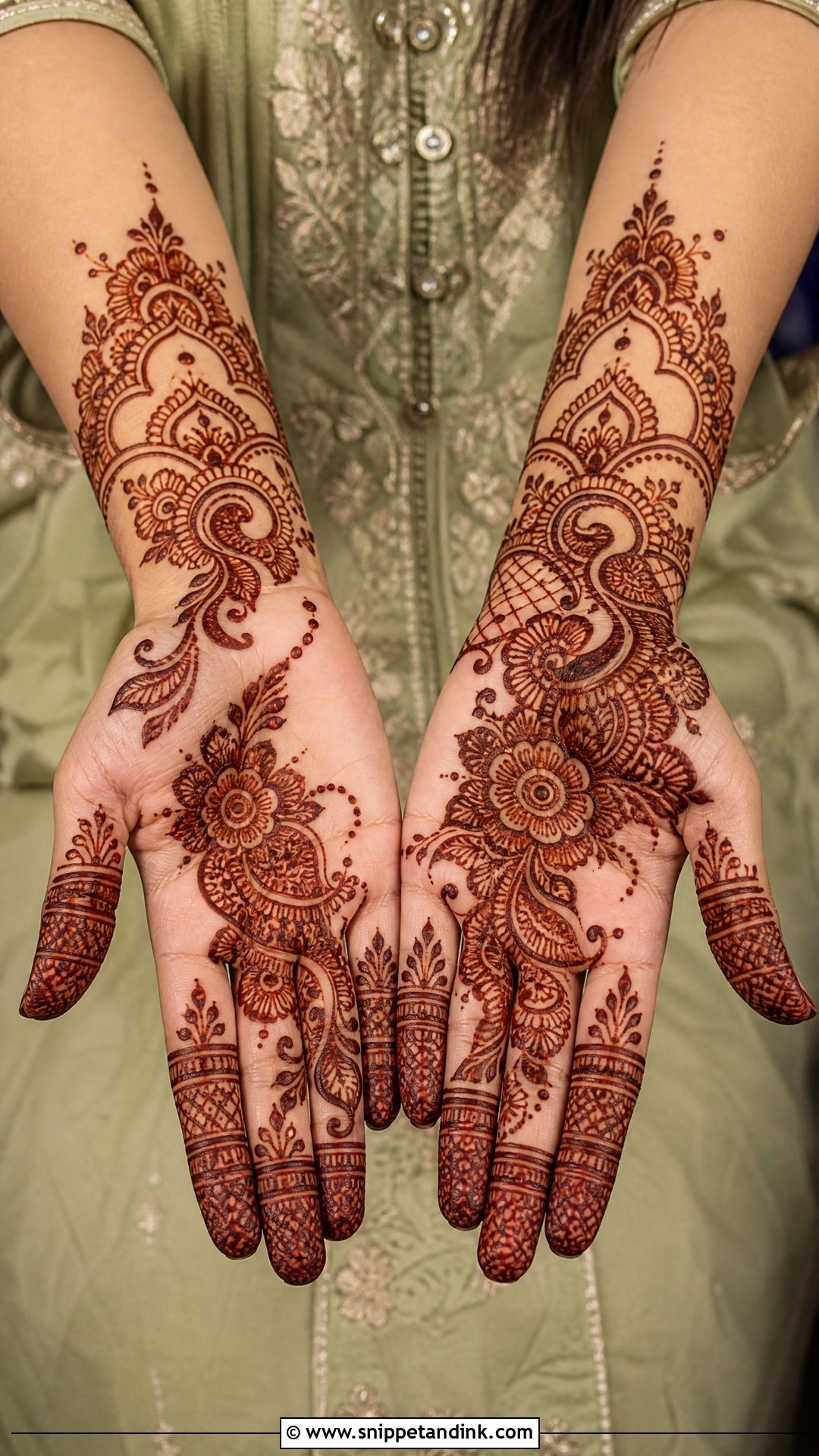
On the palm side, I always pick one focal point and let the fingers echo it. A small paisley cluster or a tikki ringed with vines both work. Many Pakistani front hand patterns run a curved trail from the wrist toward the index finger, and there is a practical reason: that diagonal makes a short or wide palm look longer. I leave small gaps inside the motifs on purpose. Once the paste comes off, those gaps are what make the orange-to-maroon stain read as a pattern instead of a blot.
3. Pakistani Back Hand Mehndi Design
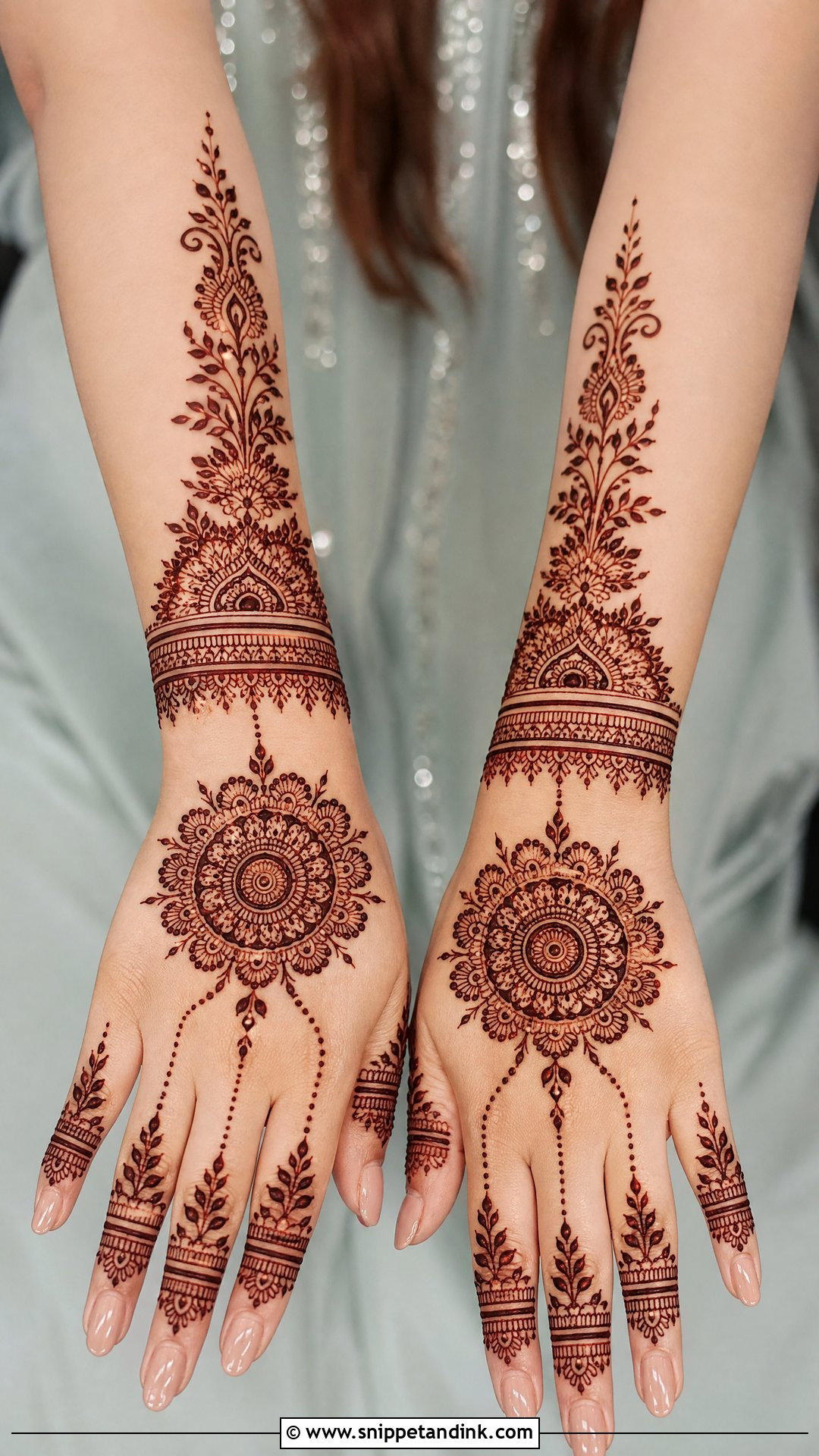
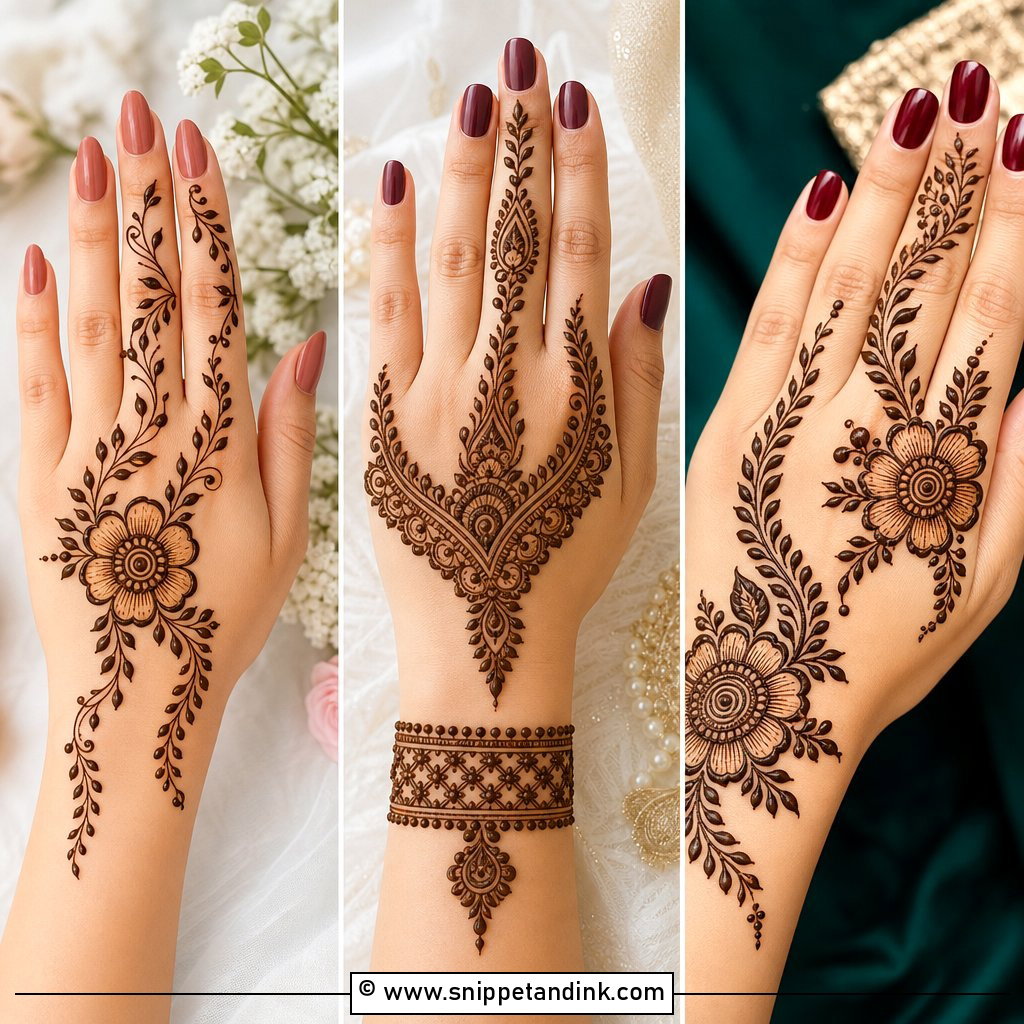
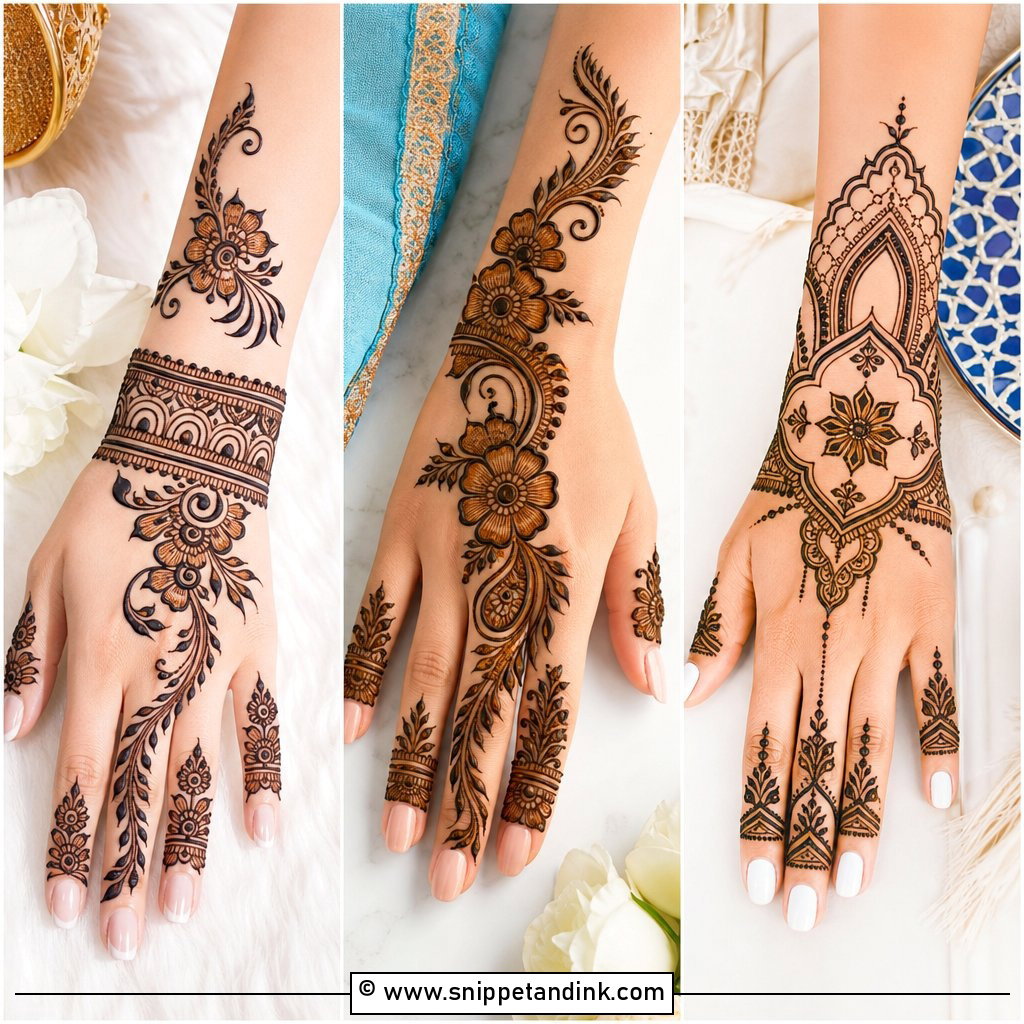
The back of the hand is where people actually see your mehndi, at the table, holding a cup, in every group photo. I keep the knuckles mostly clear. Skin there creases constantly, and dense filling over a knuckle cracks off the paste early and leaves a patchy stain. A central mandala, two leafy side trails and a fine chain from the wrist to the middle finger is plenty. It reads like jewellery, and it is the design I suggest for engagement guests who don’t want full bridal coverage.
4. Pakistani Arabic Mehndi Design
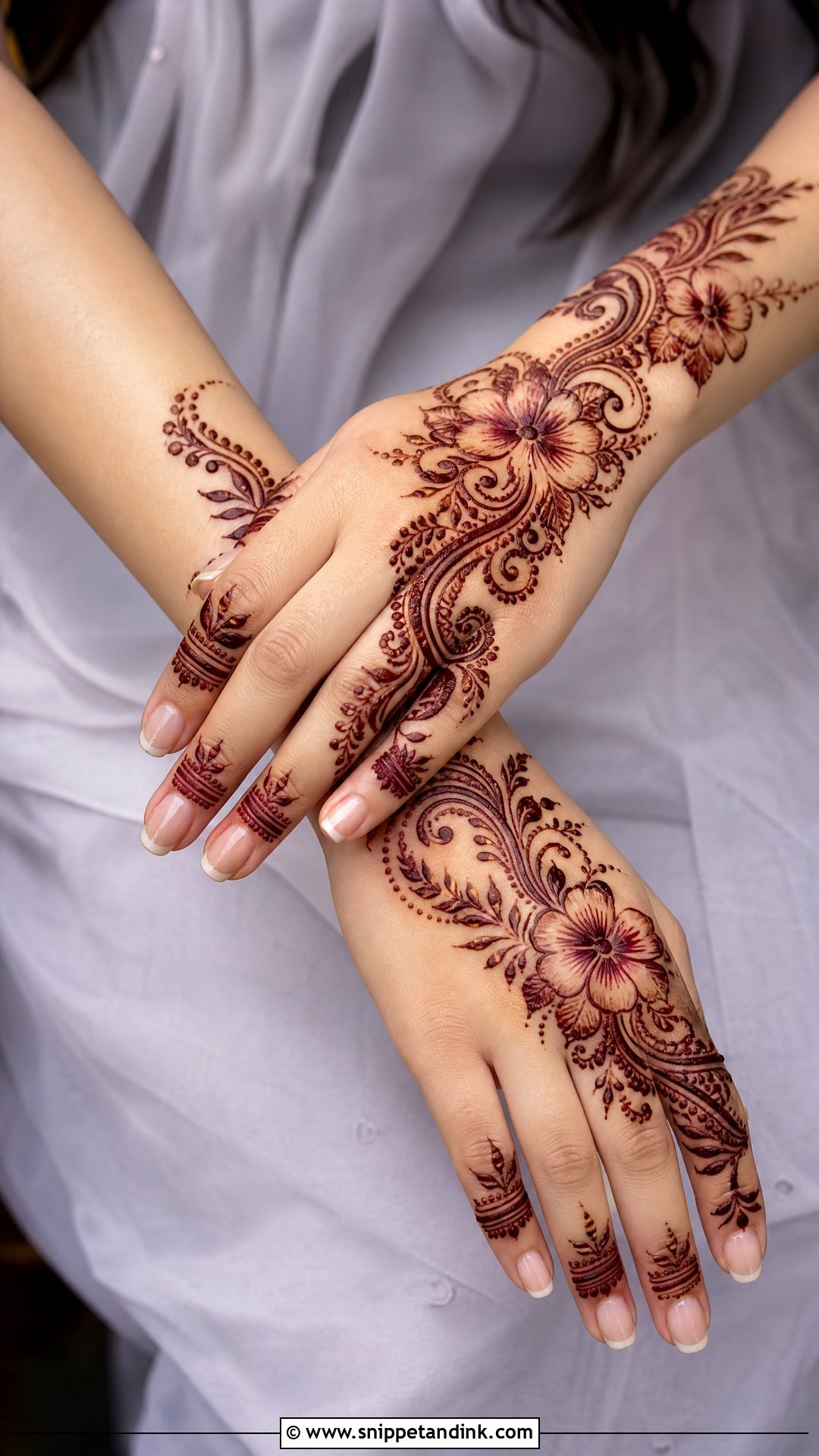
This is the hybrid I’m asked for most by younger clients. The broad Arabic diagonal carries the shape, and the Pakistani side shows up in the shading inside the petals and the fine dotted edges. The open skin between motifs is the whole point, so I resist the urge to fill it. On a back hand I run one floral trail from the wrist to the index finger and stop there. It dries faster than a dense pattern, which matters if you have twenty minutes before guests arrive.
5. Pakistani Eid Mehndi Design
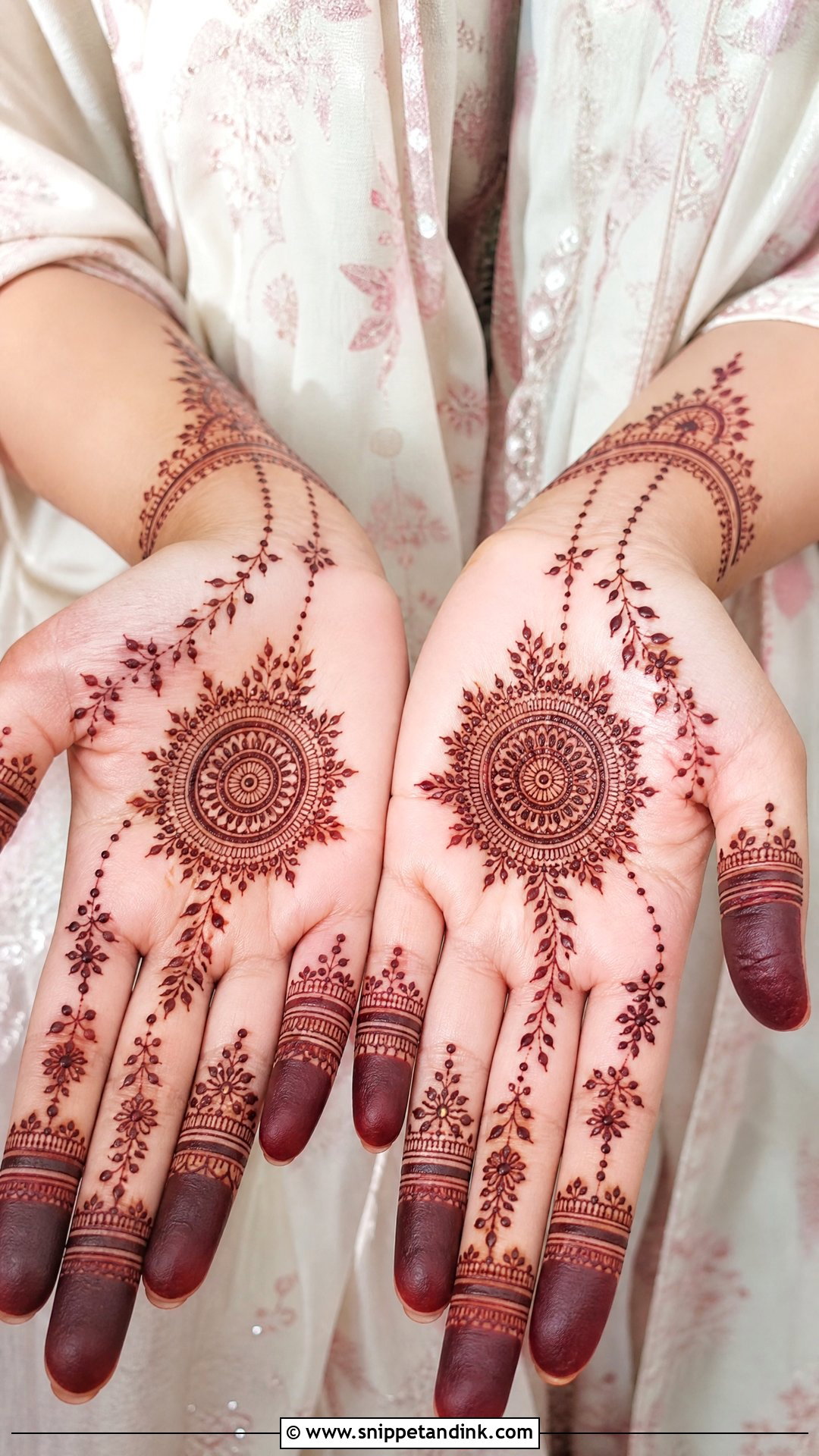
Chaand raat is my busiest night of the year, and that alone shapes what Eid henna should be: fast, readable, and still good the next morning. A simple Pakistani Eid mehndi design with a palm tikki, finger bands and a few small florals takes me roughly fifteen to twenty minutes a hand. Keep in mind that henna applied late at night will still be bright orange at breakfast and only reaches its proper colour by the evening, so Eid afternoon photos look better than Eid morning ones.
6. Pakistani Bridal Simple Mehndi Design
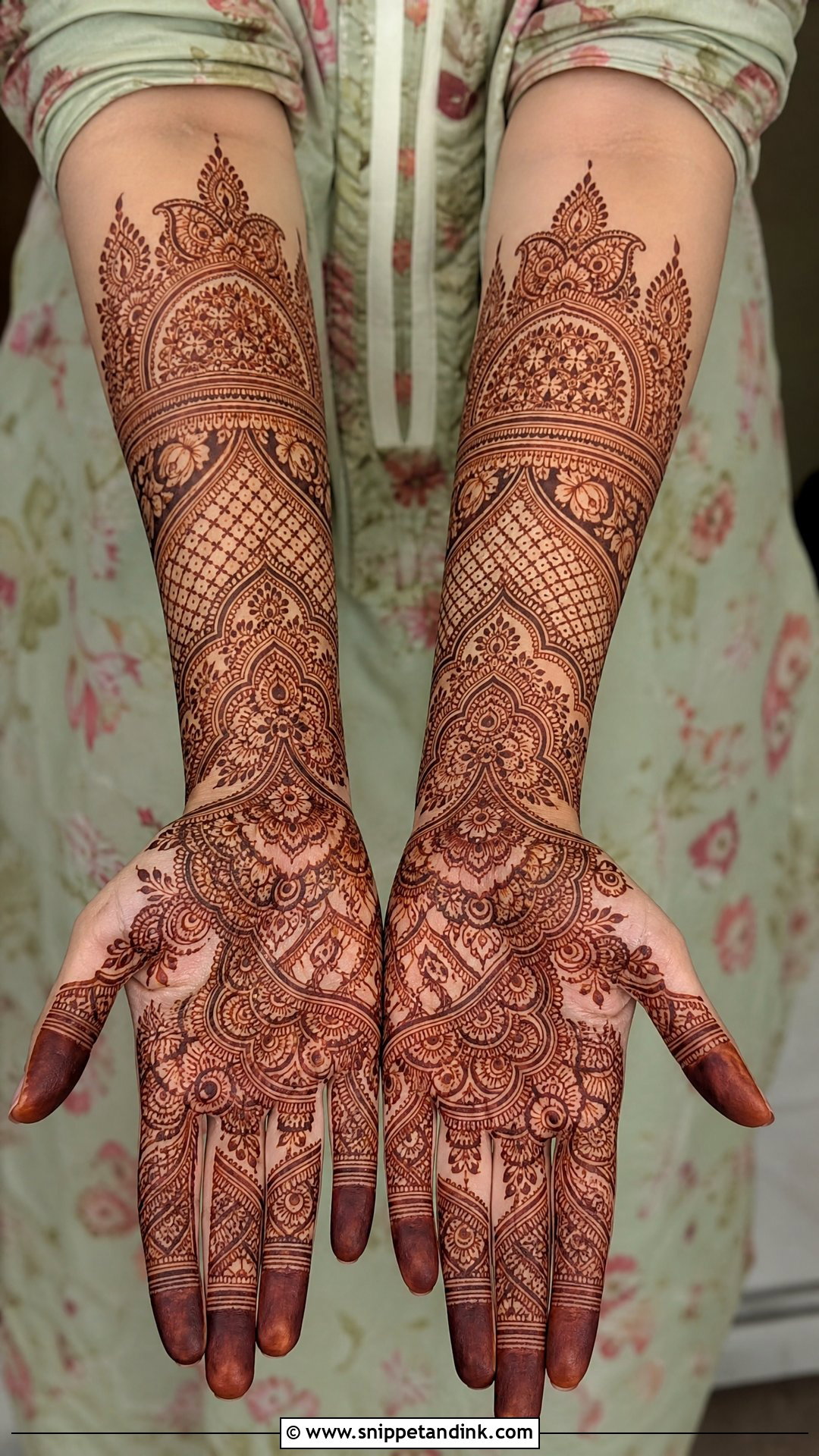
Not every bride wants elbow-length coverage, and nikkah brides especially often ask me for something lighter. A simple bridal layout covers the palm, fingers and wrist with florals, paisleys and a section or two of jaali, but leaves deliberate gaps so each motif is legible from across a room. Mirroring the hands, twin tikkis or matching trails, looks more considered than two unrelated designs. I’ll hide initials inside a petal if asked, small enough that the photographer has to hunt for them.
7. Pakistani Full Hand Mehndi Design
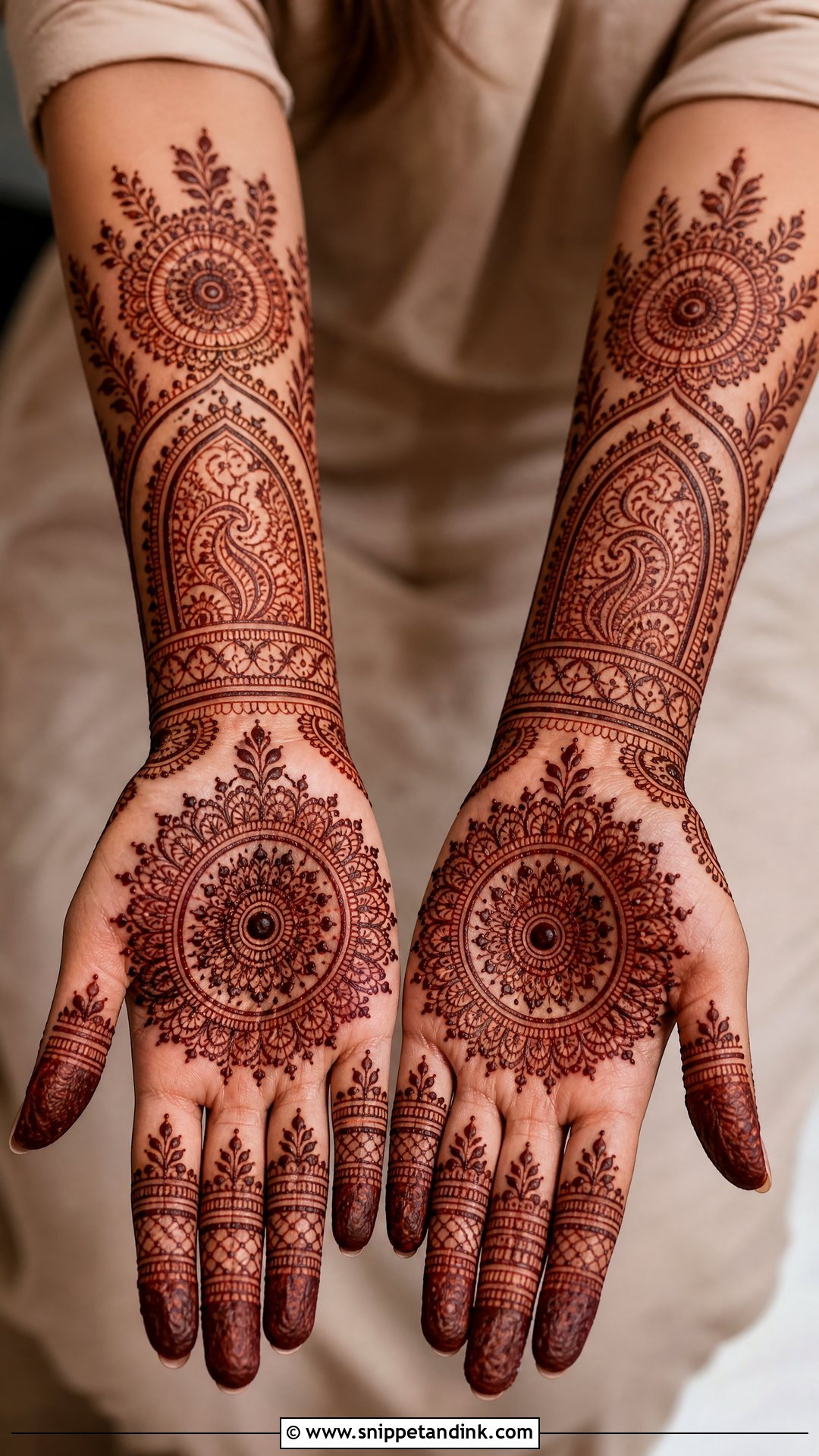
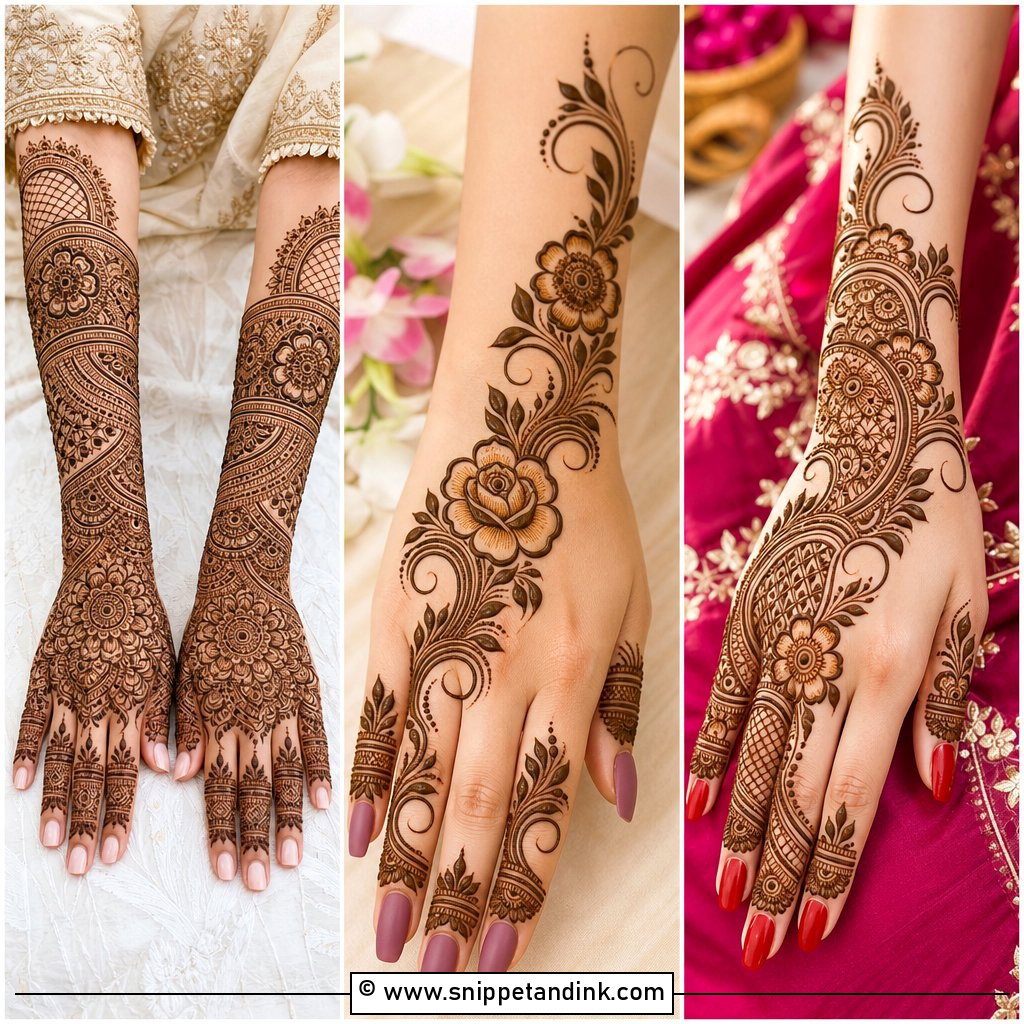
Full coverage and simple are not opposites if the motifs are big. I start with a floral or tikki palm, then move up to the wrist and forearm with larger paisleys and vines rather than tiny filler, and use repeated bands on the fingers. Bigger shapes mean fewer cone lifts, so a full hand drawn this way is quicker and the stain is more even. The test I use is whether you can trace one connected path from fingertip to wrist. If the eye jumps between islands, it needs a linking vine.
8. Pakistani Finger Mehndi Design
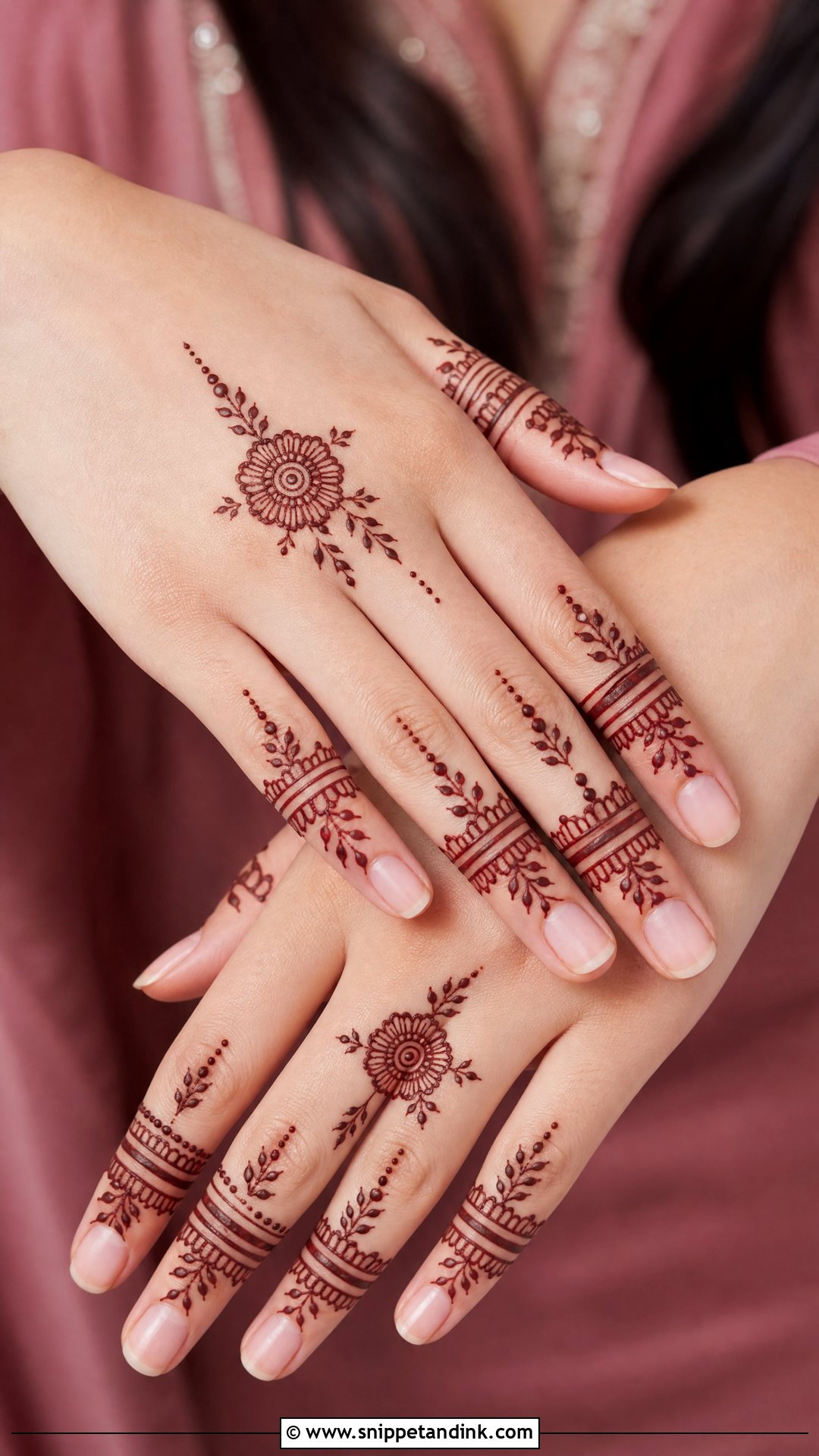
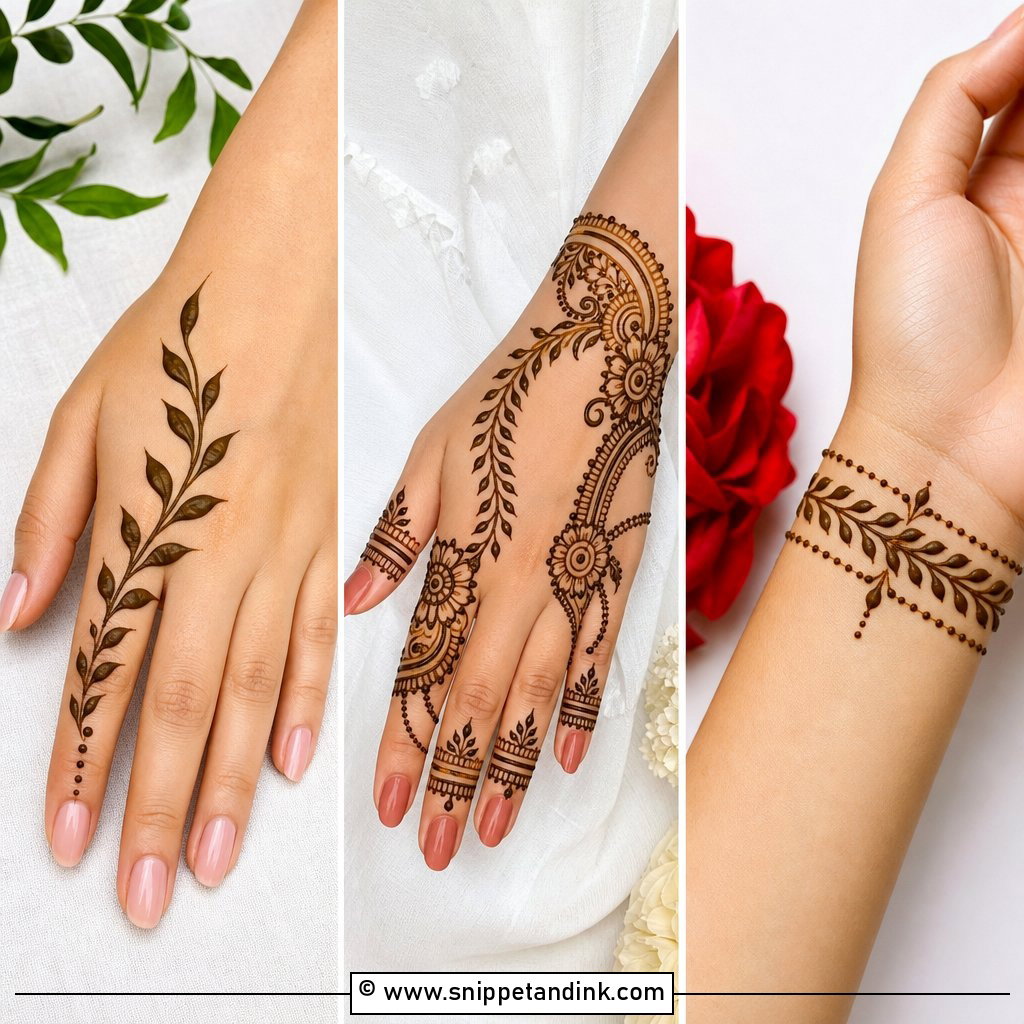
Finger-only work is my answer for anyone who needs to look professional on Monday. Bands, dots and tiny leaf lines on the fingers, with the palm left bare or holding one small tikki. Fingertips take henna very well because the skin is thick, so even a light design stains deep. To keep it recognisably Pakistani rather than generic, I add a narrow wrist bracelet or one chain linking a finger to the back of the hand.
9. Pakistani Bracelet Mehndi Design
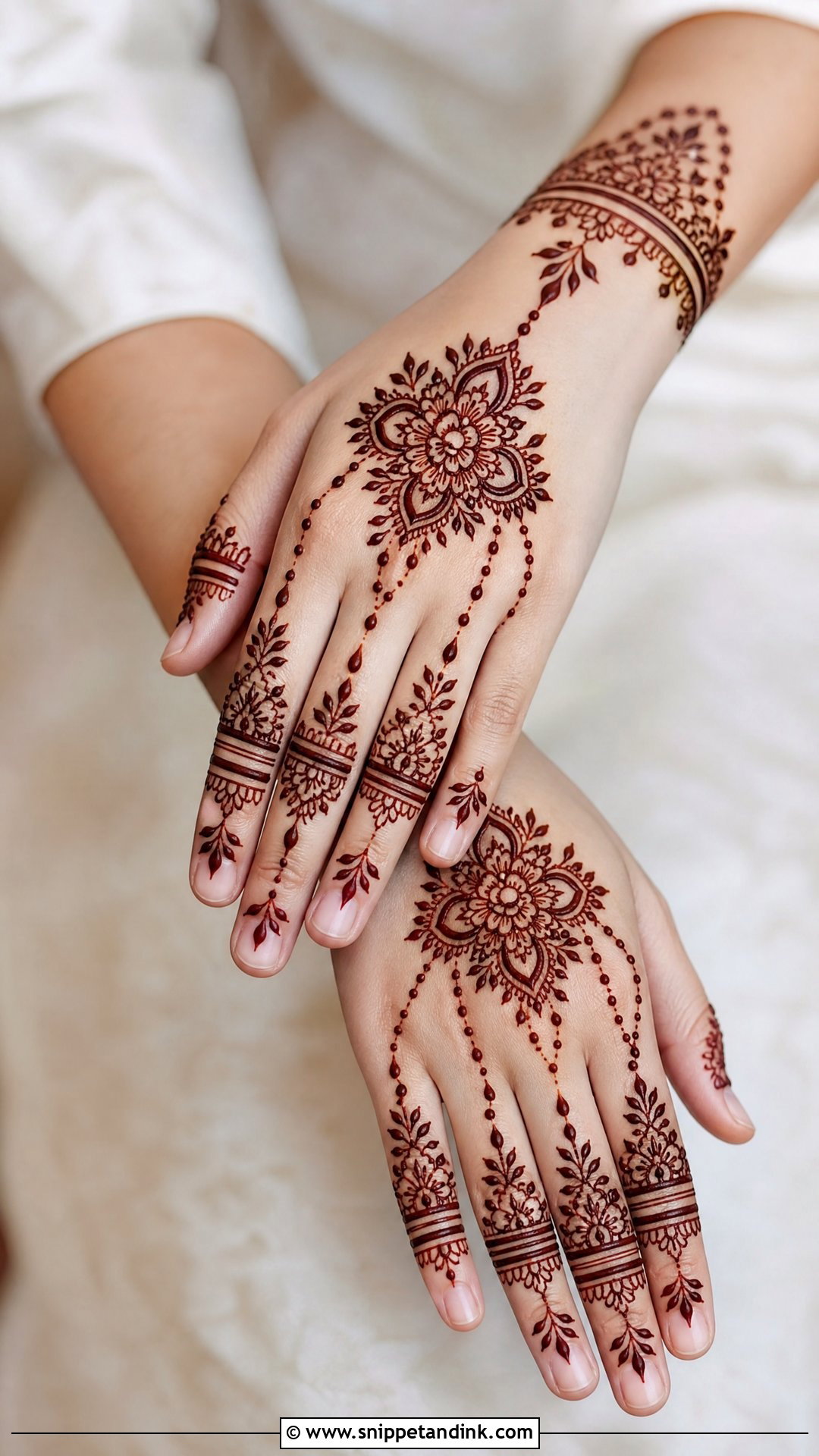
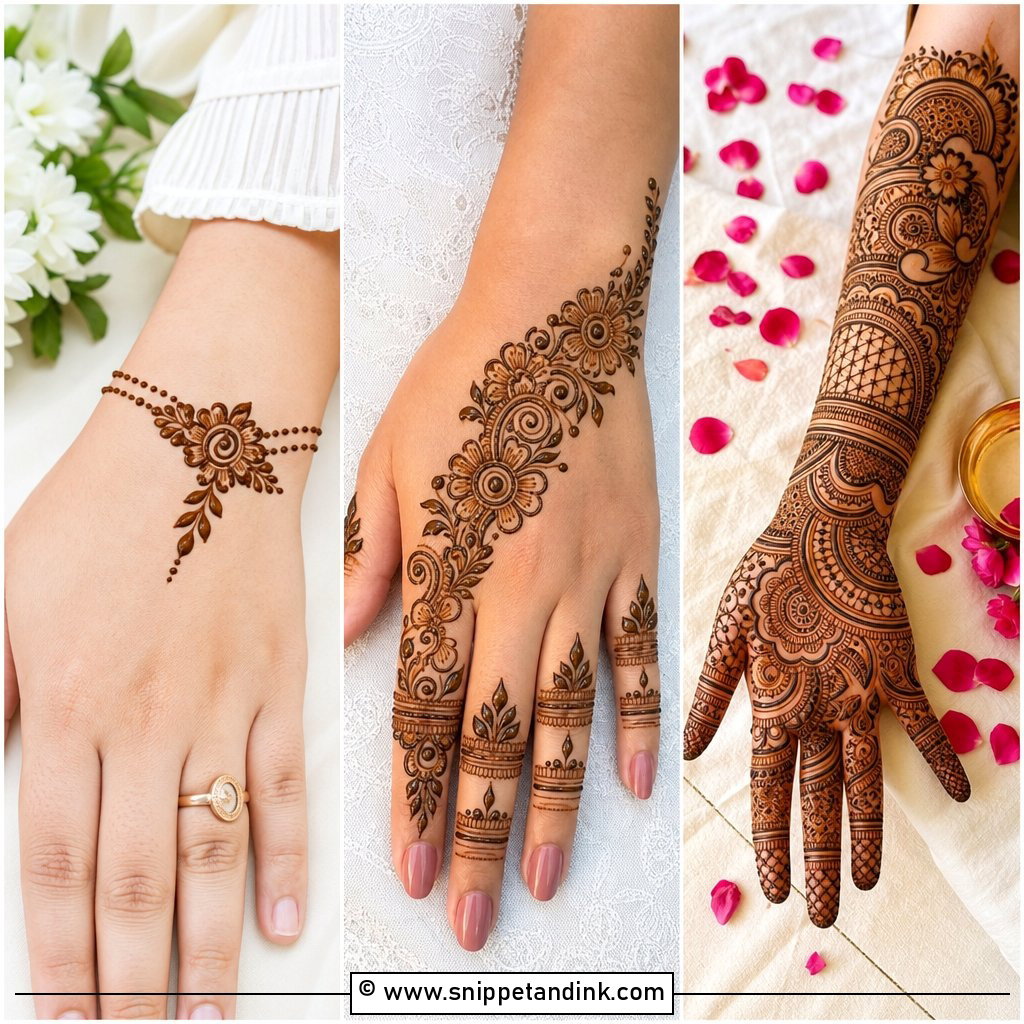
The bracelet design reads as an accessory, which is exactly why it suits people who rarely wear henna. I draw one clean band around the wrist like a bangle, place a single flower in the middle of the back hand, and connect the two with dotted chains running to one or two fingers. Watch the band’s position: sit it too high and your actual bangles hide it, so I place it just below where they rest. It looks finished with festive sleeves and covers very little skin.
10. Pakistani Floral Mehndi Design
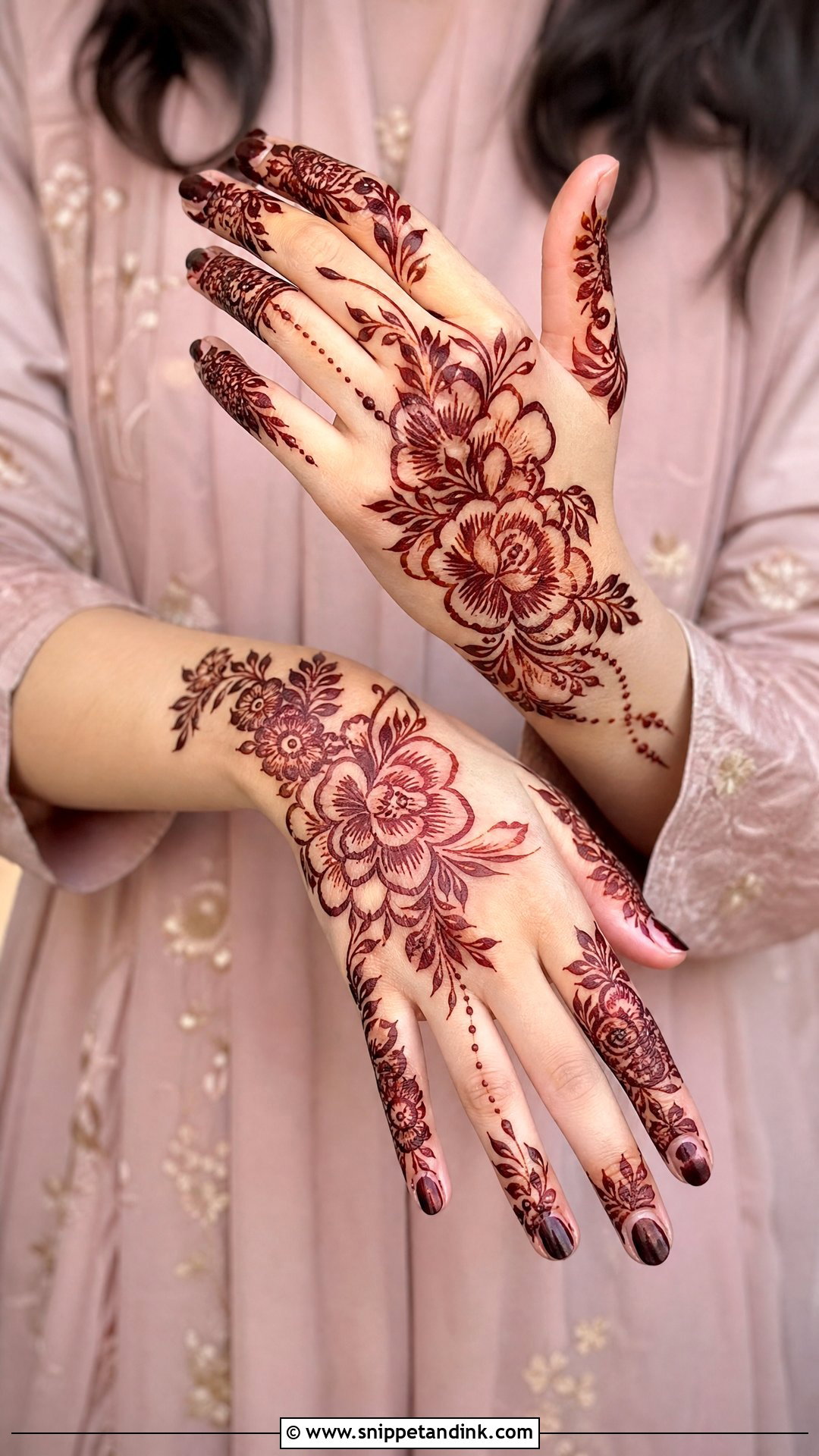
Florals carry most Pakistani simple work, and the trick is contrast between petal and leaf. I draw petals with a fuller line and leaves very fine, so after staining the flowers sit forward and the foliage recedes. On the palm, one large flower near the centre with smaller ones trailing to the fingers. On the back, a single diagonal vine with open space around it. Over-shading the petals is the common mistake; heavy shading muddies into one dark patch by day two.
11. Pakistani Paisley Mehndi Design
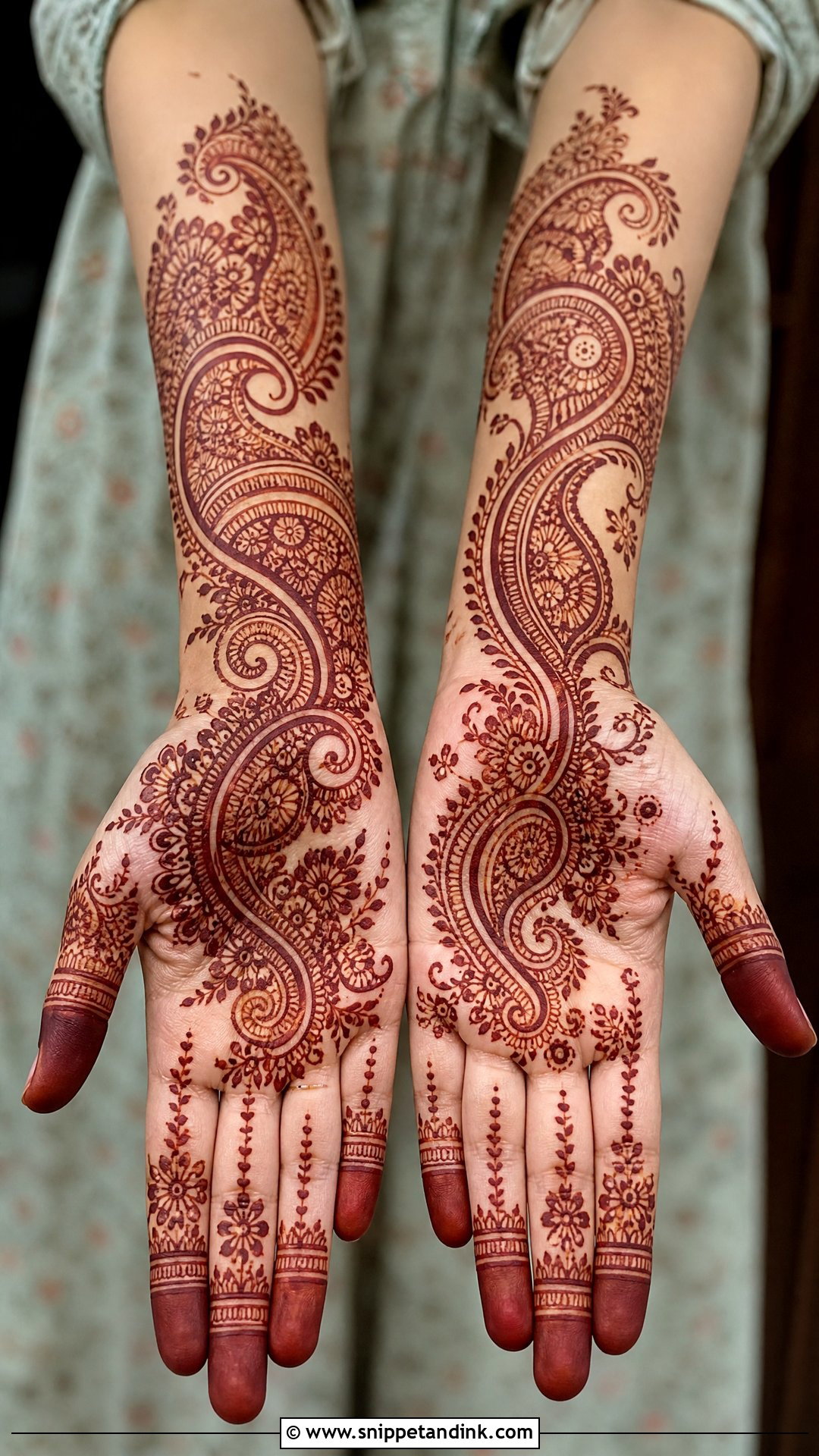
Paisley is the motif that makes a light design feel traditional straight away. A single large paisley curving from the wrist across the palm, filled with lines, dots and small petals, looks more detailed than three small ones and is easier for a beginner to get right. I keep everything around it sparse so the curve has room. Brides’ mothers and aunts tend to choose this one for formal dinners, because it feels proper without being heavy.
12. Pakistani Jaali Mehndi Design
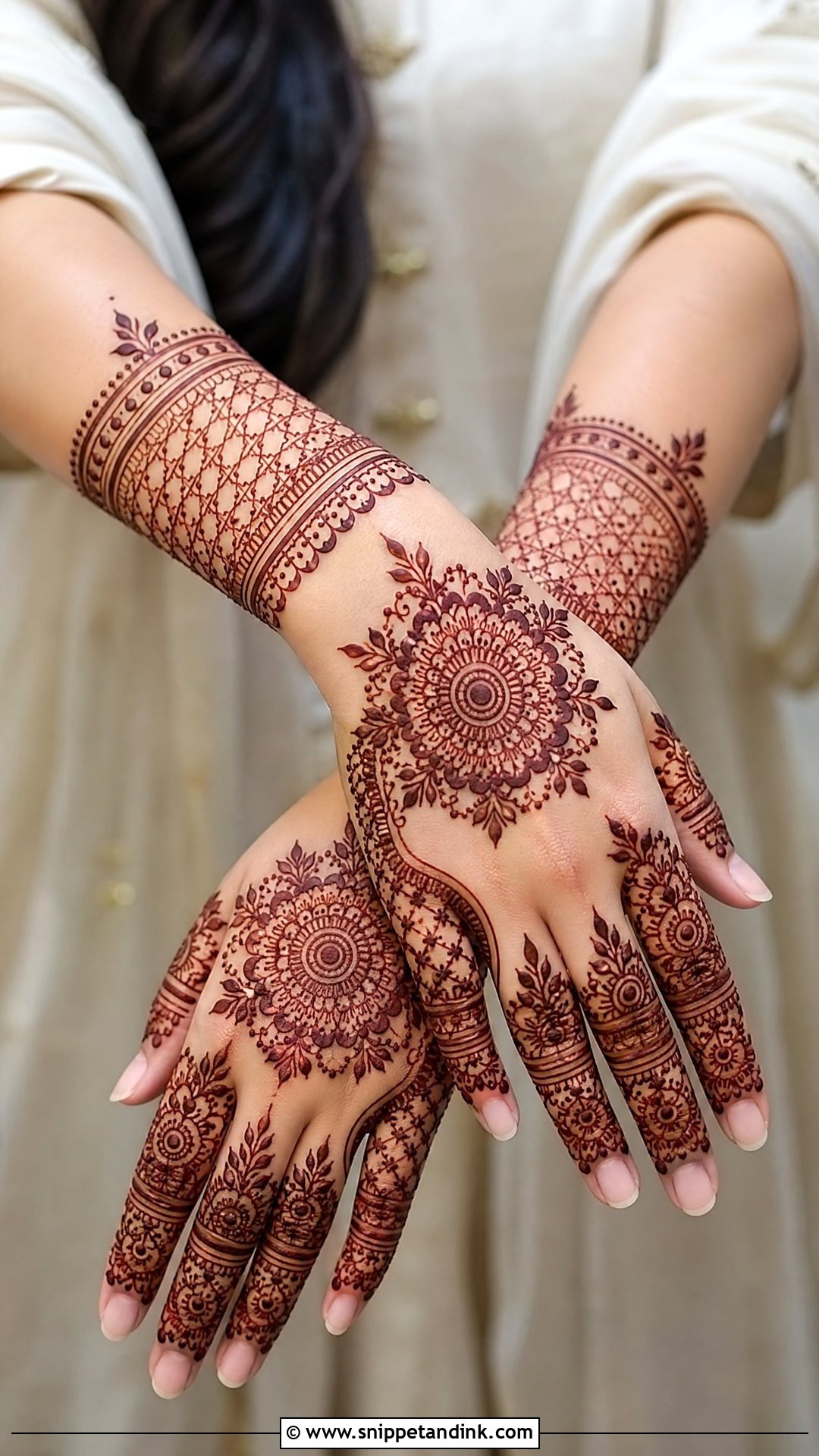
Jaali is net work, and it can tip into heavy very quickly, so in a simple layout I confine it to one zone: the wrist, the side of the palm or a strip on the back hand. Pair it with a small mandala or a vine so the mesh has something to frame. The lines need even spacing and should never touch. Draw them too close and the paste bleeds together as it settles, and the lace effect turns into a solid smudge in the stain.
13. Pakistani Rose Mehndi Design
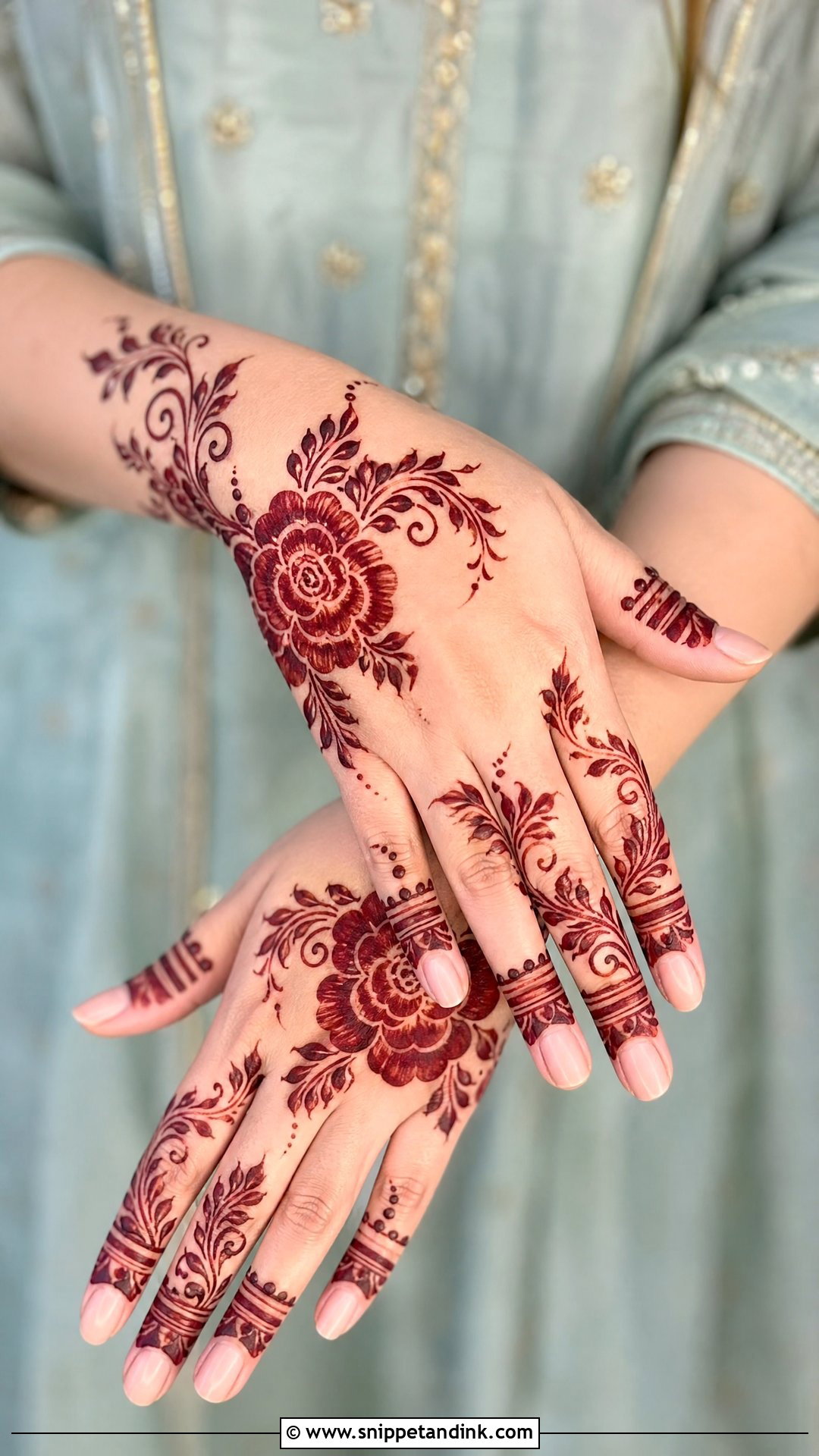
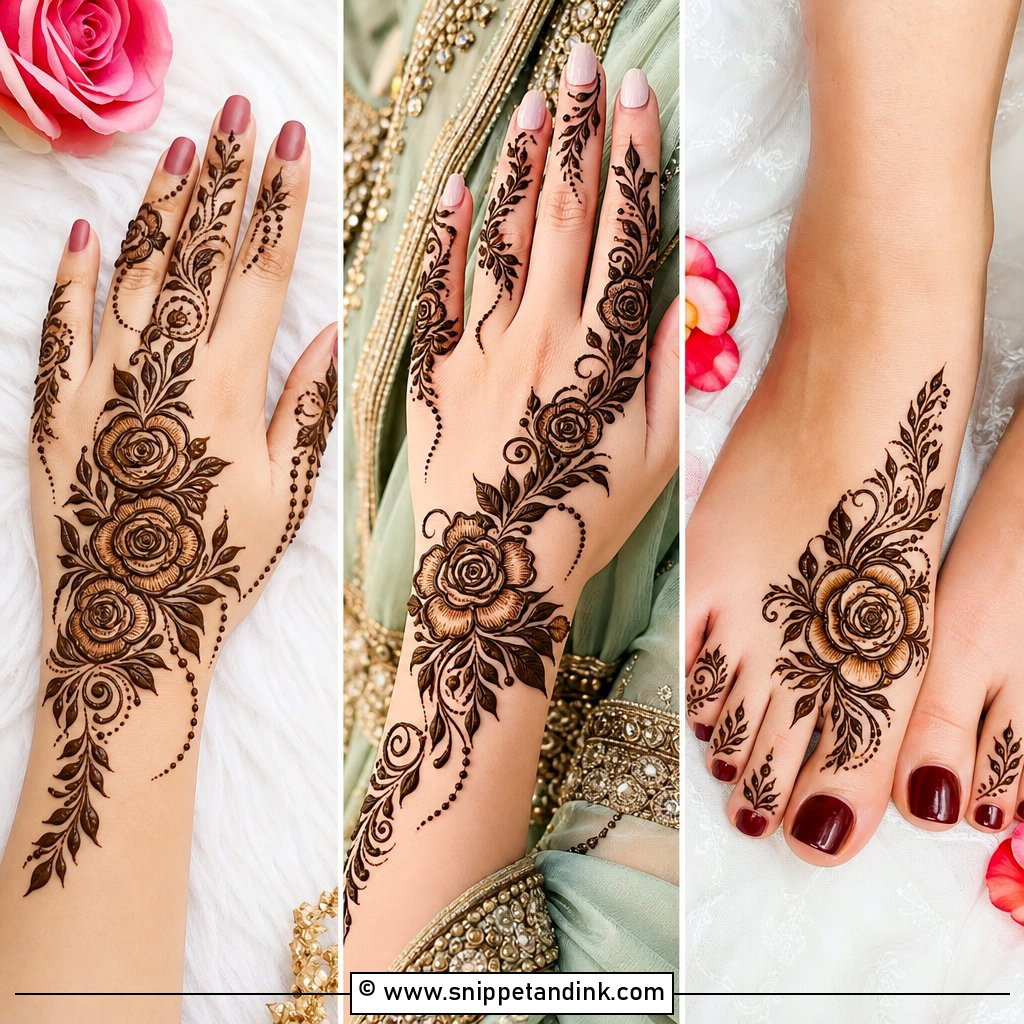
Roses are hard to keep simple because the instinct is to fill every petal. I don’t. A rose stays clearest with a bold outer outline and two or three soft inner curves, then curved leaves and a vine leading toward the fingers. On the palm it looks classic; on the back hand, more modern. Long flowing vines are kind to narrow hands, because they add length rather than width.
14. Pakistani Bail Mehndi Design
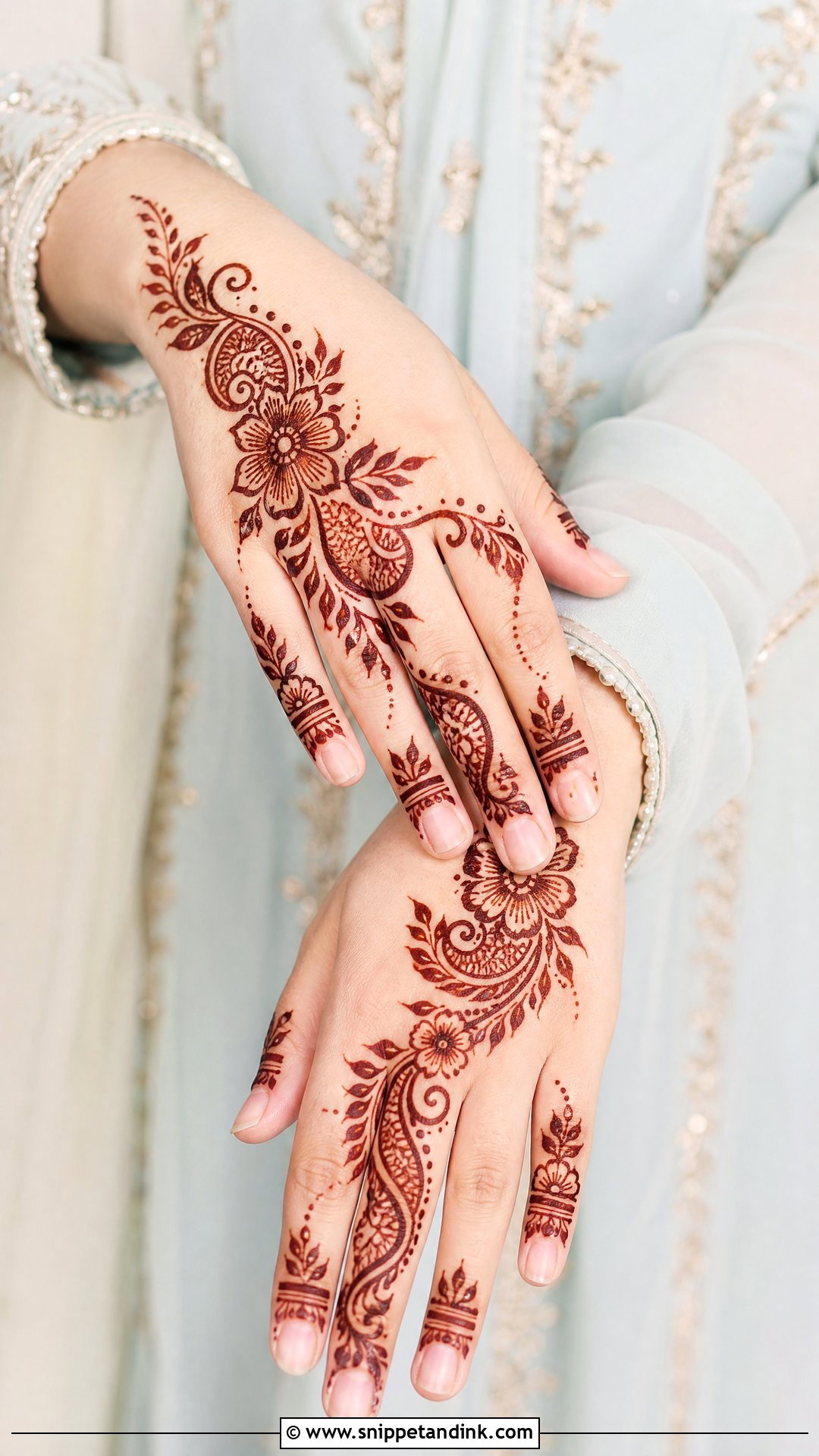
A Pakistani bail mehndi design is the one I reach for when someone walks in with ten minutes to spare. It is a single trail running diagonally from the wrist through the palm or back hand to the index finger, built from flowers, a paisley, leaves and dots. No full coverage, so it dries fast. I balance it with light bands on the other fingertips, otherwise the hand looks lopsided in photos.
15. Pakistani Mandala Mehndi Design
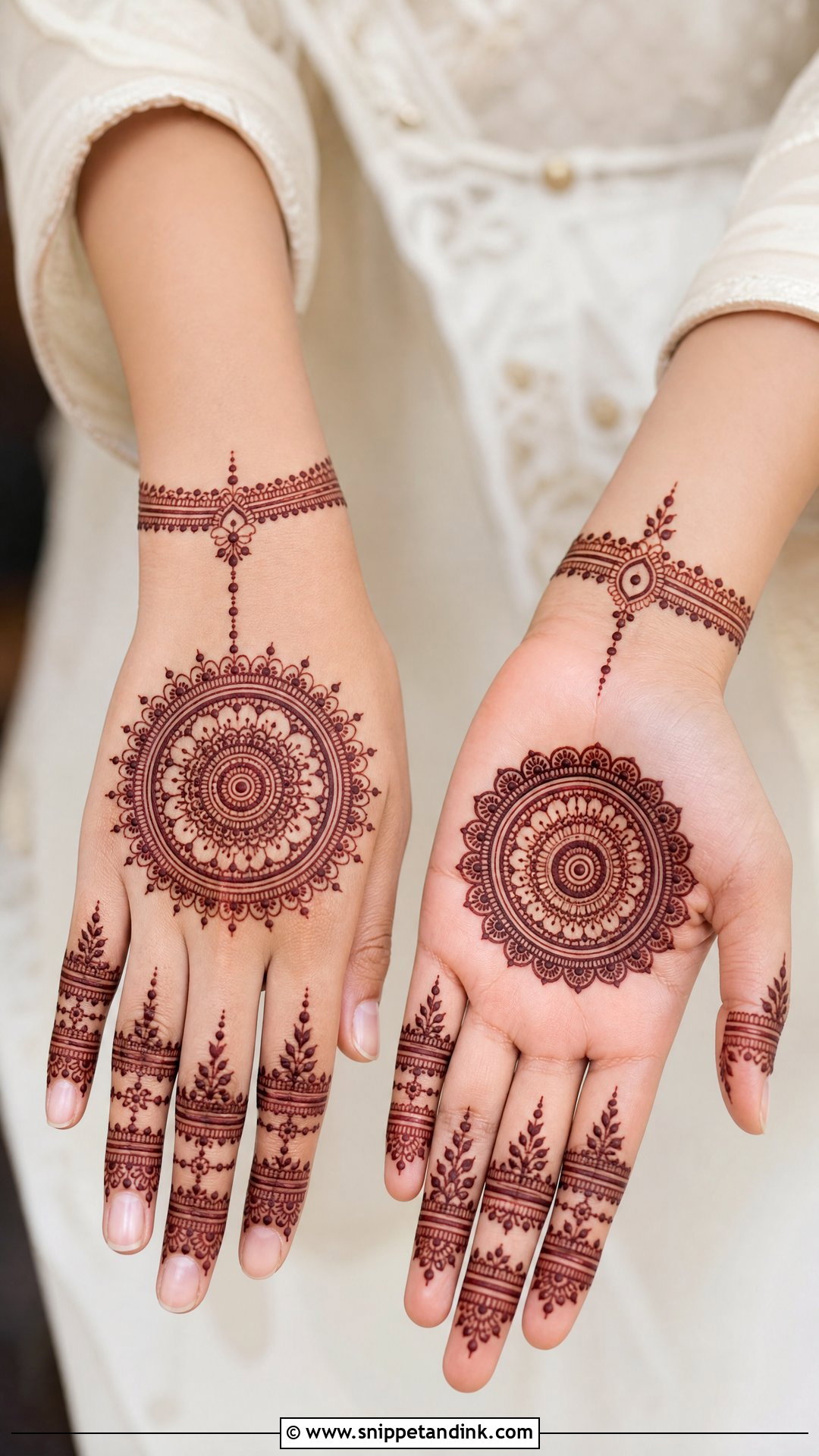
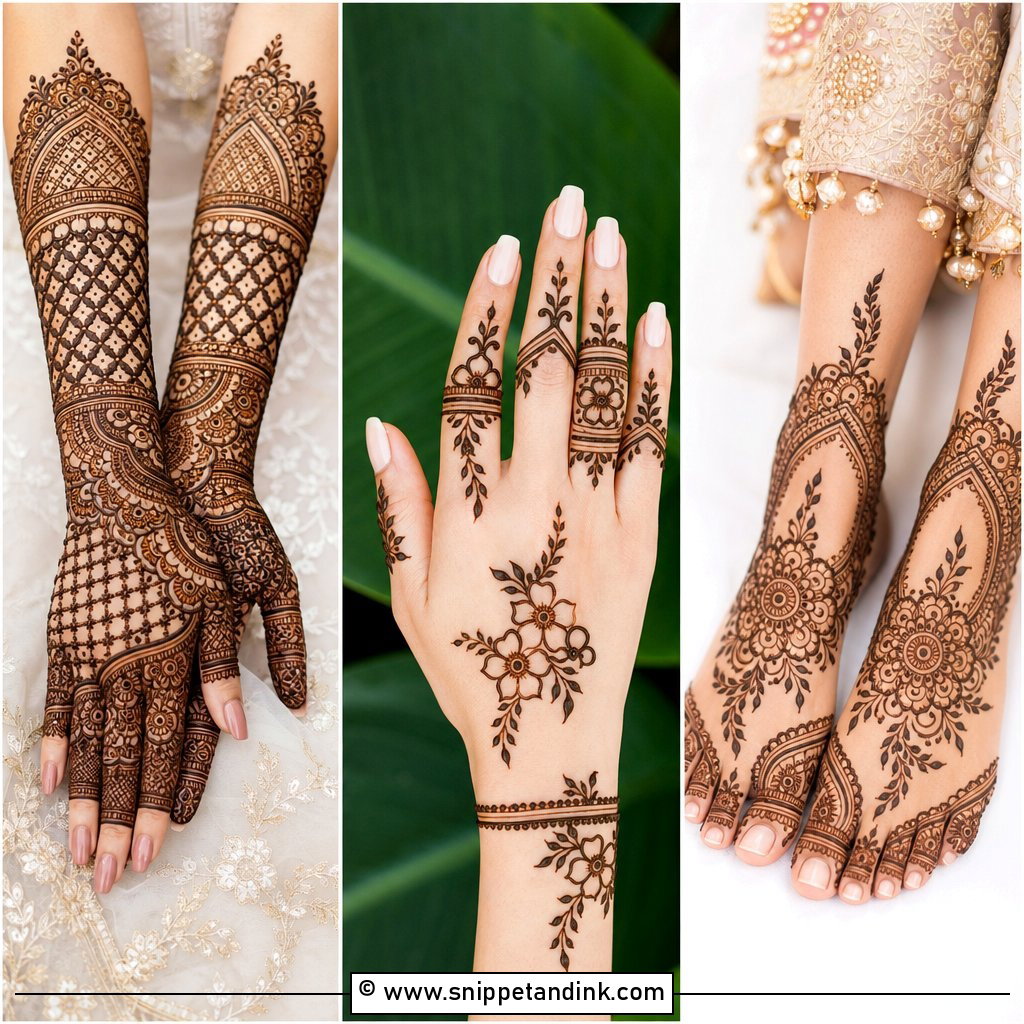
Mandala and tikki look alike, but I treat the mandala as the more geometric cousin: rings of petals, dots and scallops, strictly symmetrical, with open skin all around it. Symmetry is unforgiving, so I mark the centre with a dot first and build each ring before moving to the next. It is a good design for learning because it grows in steps. Add a wrist band or a few finger chains and it suits every age at the function.
16. Pakistani Peacock Mehndi Design
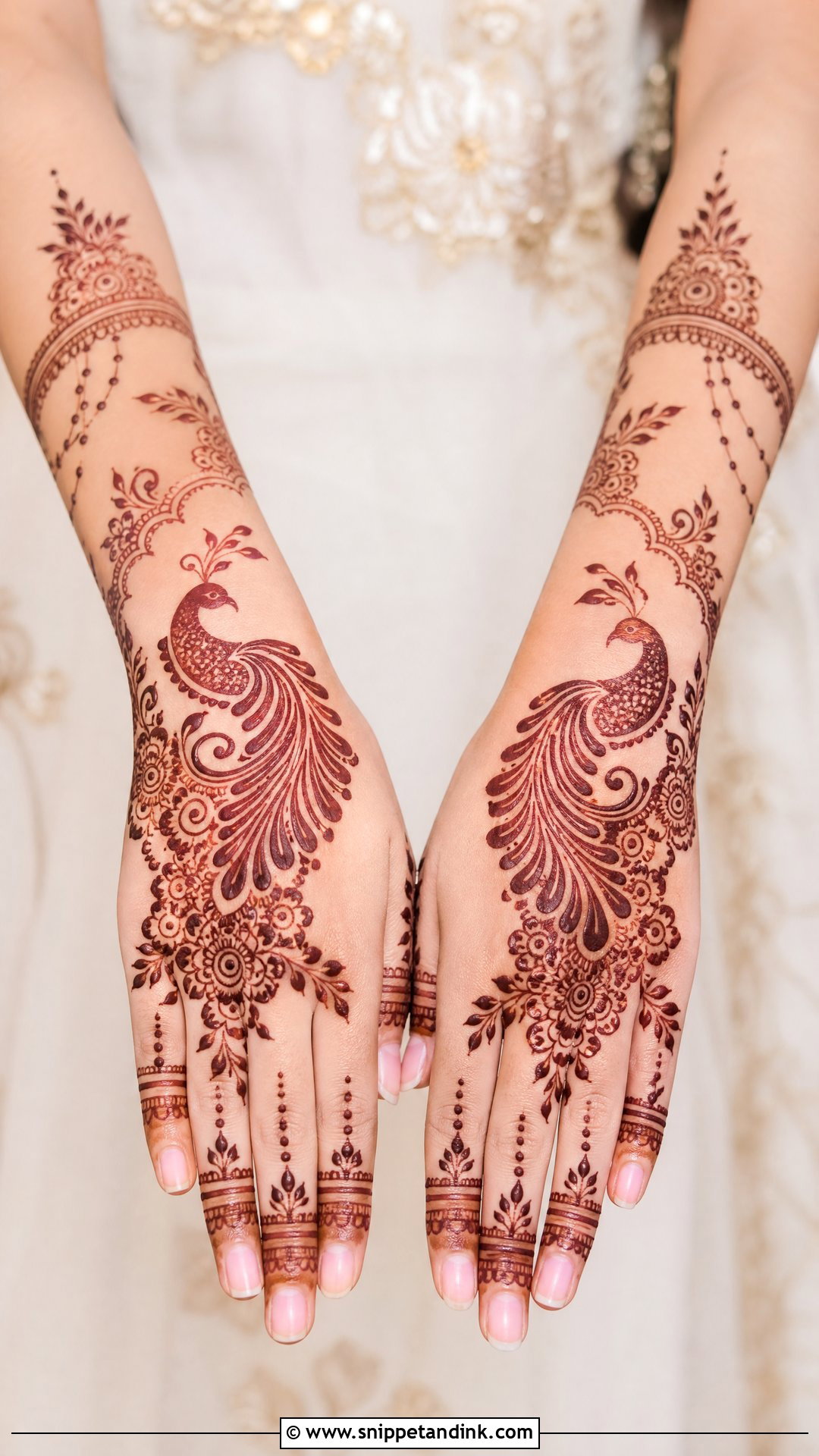
Peacocks look intricate, but a simple one is mostly a neck curve, a head, and three or four feather arcs with dots. I keep the feathers airy, curved lines rather than dense filling, because a crowded peacock becomes an unreadable dark shape once stained. One small bird on the palm or back hand with a few swirls and leaves is enough for a mayun or dholki. Fine finger bands and a slim wrist border hold the rest of the hand together.
17. Pakistani Kids Mehndi Design
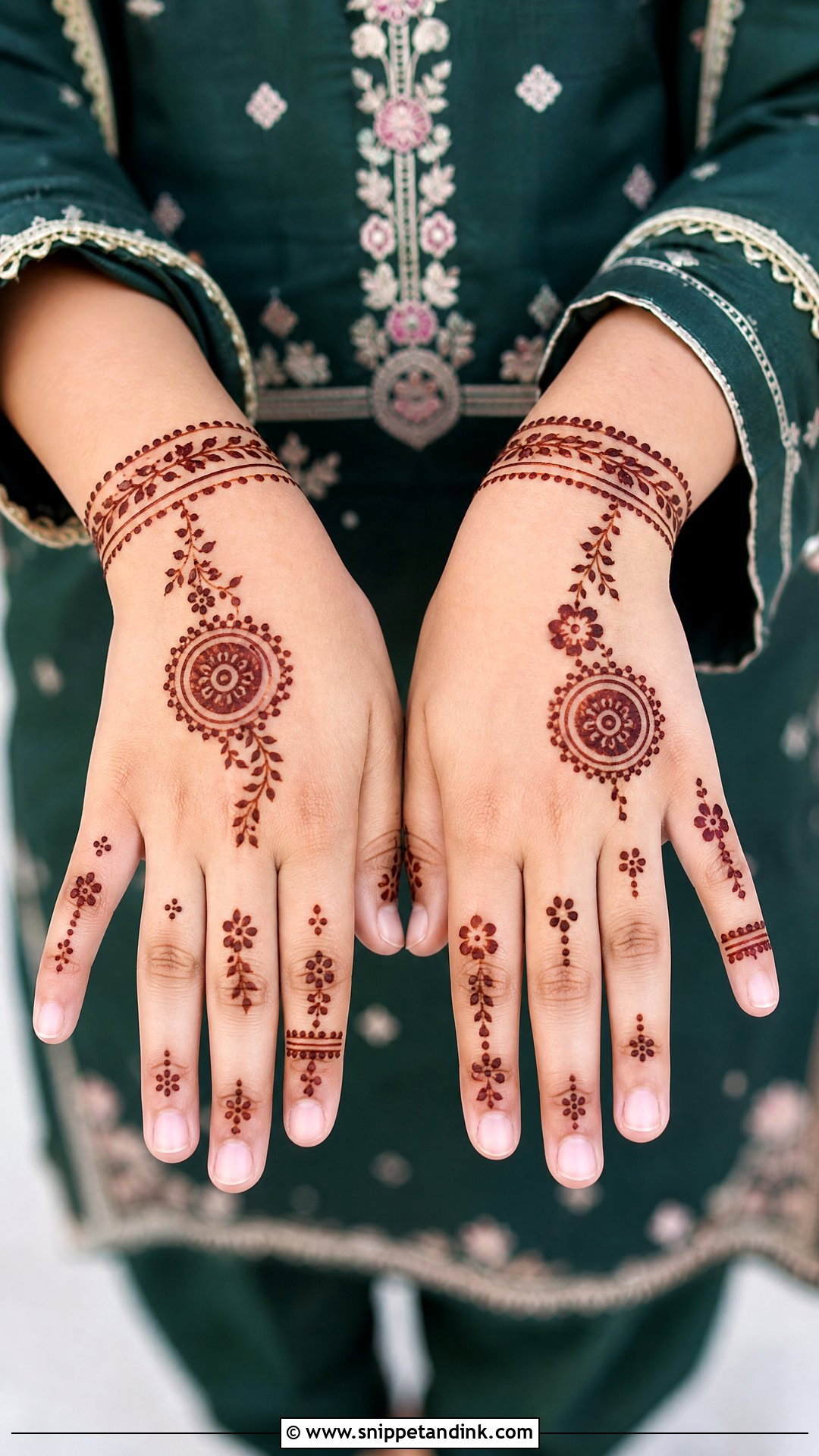
With children, the design is limited by how long they will sit still, which is not long. Pakistani kids mehndi design works best as a small palm tikki, a few dots, a heart or a star, and lightly decorated fingers, five minutes at most. On the back hand, one flower or a mini bracelet. I only use natural henna on children, never black henna or anything with glitter mixed in, and I warn parents that small hands will smudge it, so dab rather than wipe.
18. Pakistani Feet Mehndi Design
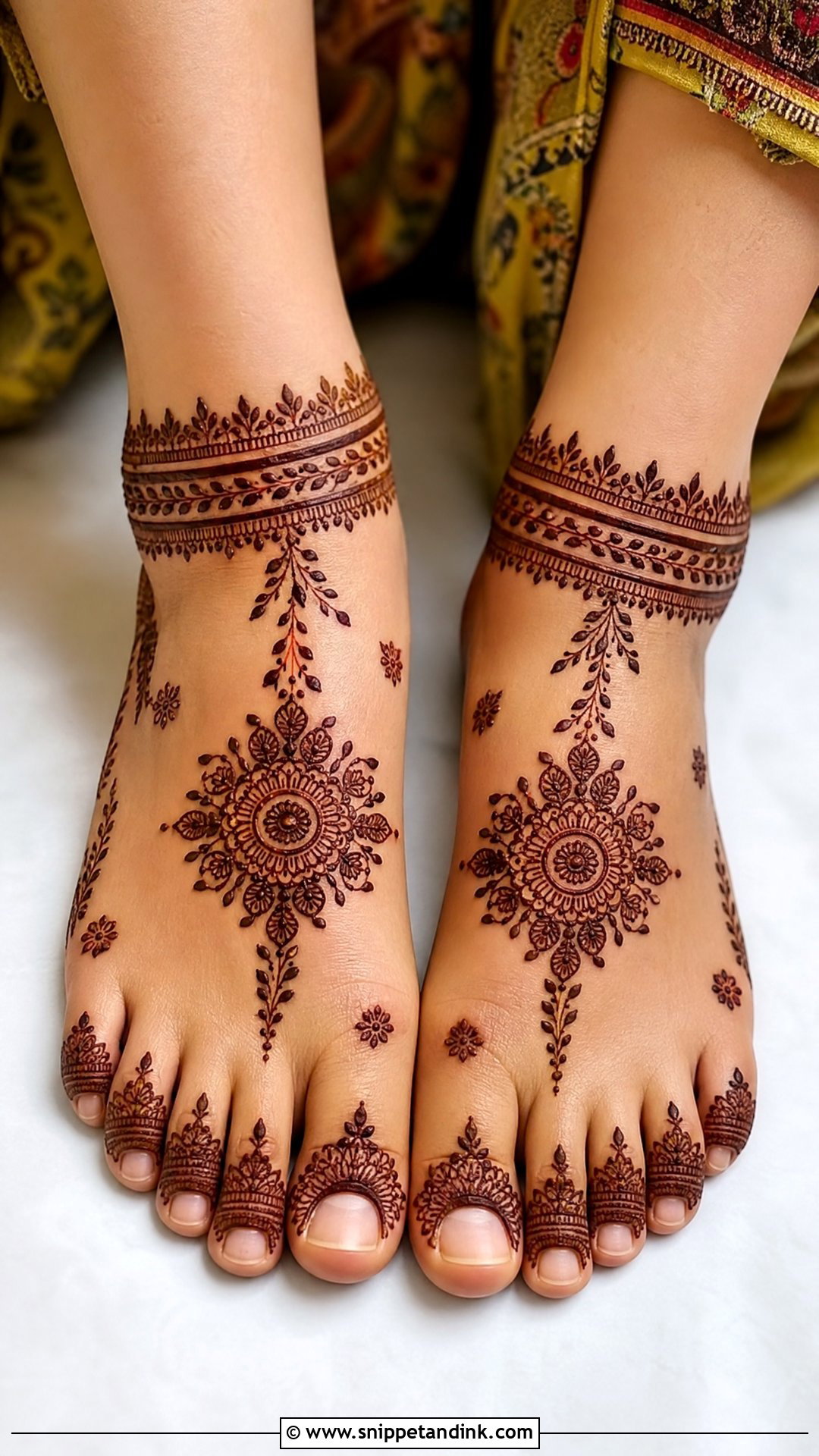
Feet stain beautifully because the skin on the soles and around the toes is thick and warm, often going darker than the hands. I keep the top of the foot mostly open and put the detail into an anklet border, a central flower and toe decoration, so it still looks neat with sandals or khussas. Feet take longer to dry and are harder to keep still, so I always do them first and tell clients to sit with them up while they wait.
19. Pakistani Engagement Mehndi Design
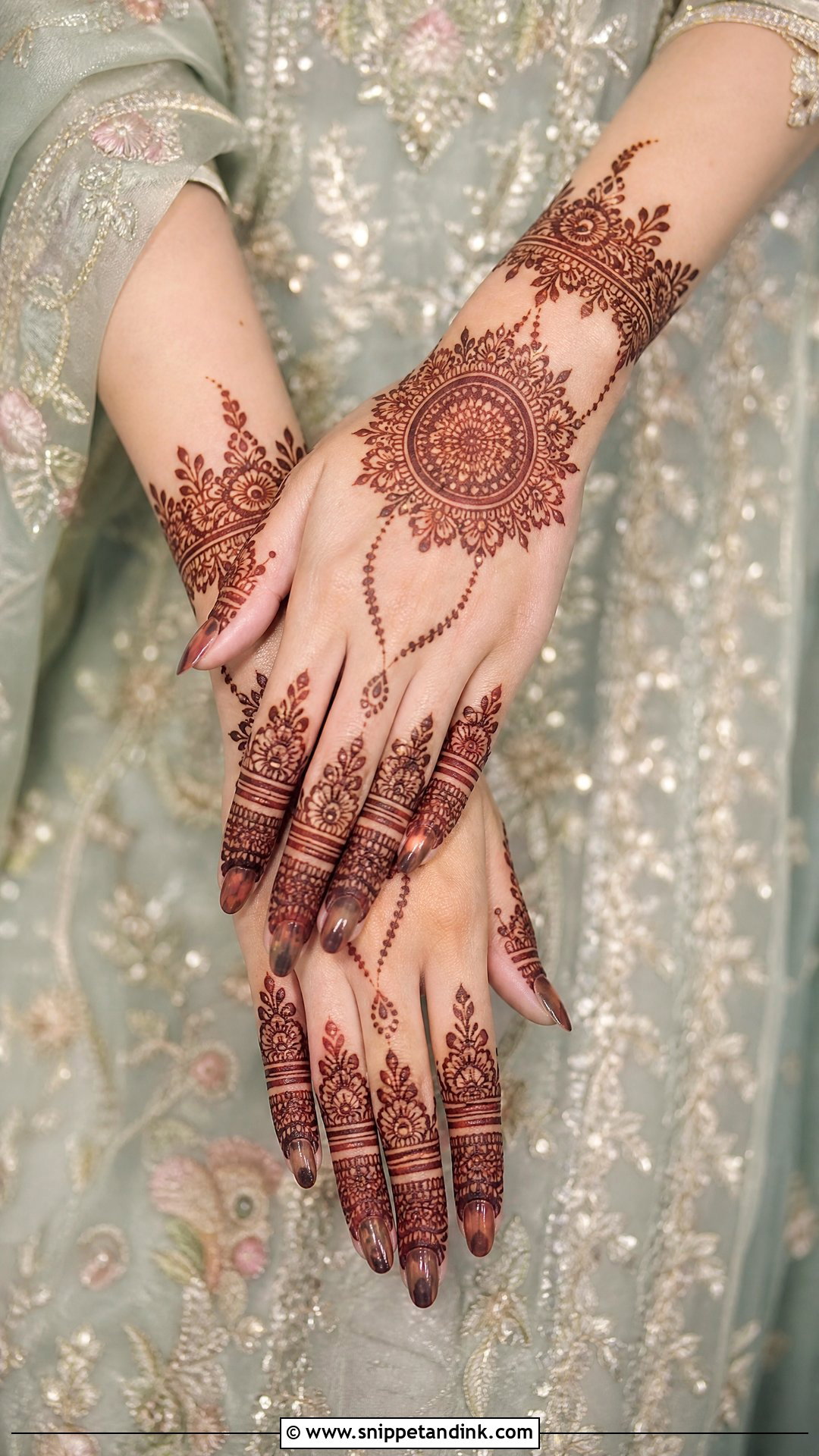
Engagement henna gets photographed close up, hands stacked with the ring on show. That changes my layout. A Pakistani engagement mehndi design for the back hand might be a mandala, a floral bracelet and decorated fingers, but I keep the ring finger itself lighter, a fine band rather than heavy filling, so the ring doesn’t disappear into the pattern. On the palm, a paisley and flower mix with space around the centre. Mirror both hands for the formal photos.



20. Pakistani Minimal Mehndi Design
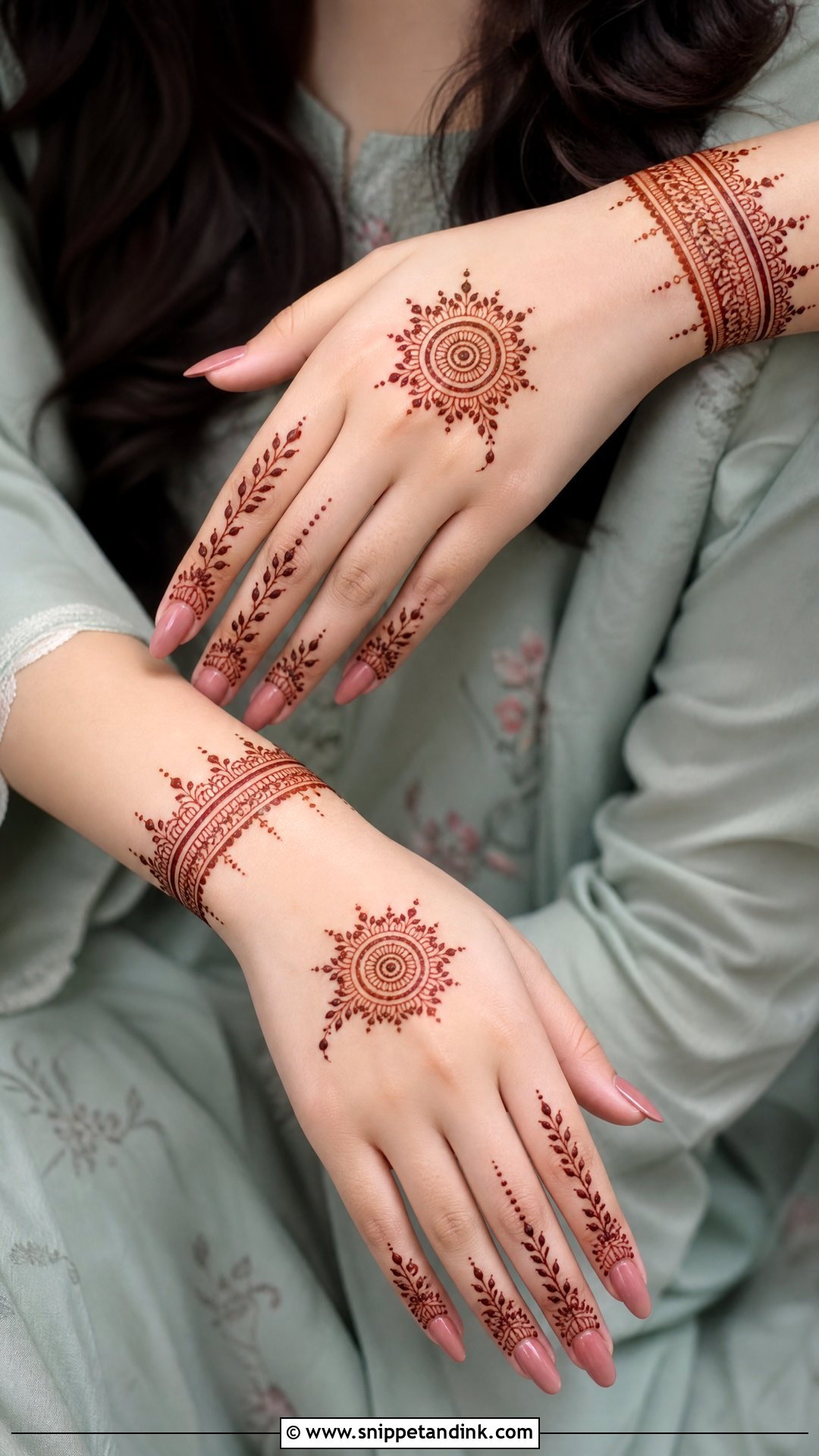
Minimal is harder to draw than it looks. With only a small back-hand mandala, thin leafy fingers or a slim wrist band, every line is on display, and a shaky one has nowhere to hide. I slow down for these. Adding a single tikki or paisley touch keeps it rooted in Pakistani style instead of drifting into a generic tattoo look. It is my usual suggestion for small gatherings and anyone who dislikes the feel of henna on the whole hand.
From Orange to Maroon: Caring for the Stain After the Paste Comes Off
Almost everyone panics when they scrape off their paste and see pale orange. That is normal. Henna keeps oxidising on the skin for one to two days, moving from orange through red-brown to its deepest shade, usually by the second evening. What you do in the first twelve hours decides how far it gets.
The first night
- Leave the paste on as long as you can bear, ideally six hours or overnight. Short wear is the main reason for a pale stain.
- Once it has dried, dab a little lemon and sugar mixture over it so it stays stuck to the skin instead of flaking off.
- Keep your hands warm. Cold hands stain lighter, which is why I wrap clients’ hands loosely in tissue at night.
- Scrape the dried paste off with a blunt edge or rub it away gently. Don’t wash it off.
The next two days
Avoid water for as long as is practical on day one, then rub in a little mustard or coconut oil before washing up or showering to act as a barrier. Skip hand sanitiser and harsh soap, which fade the stain fast. Expect the palm and fingertips to go darkest and the back of the hand and wrist to stay a shade lighter, since thinner skin takes less dye. Plan your photos for the second day, when the colour peaks.
Which Simple Design Fits Your Event and Your Hands
Every design here works because of restraint: one focal point, clear gaps, and lines that the stain can actually reproduce. Match the coverage to the occasion, a bail or finger design for a quick Eid, a mirrored bridal layout for a nikkah, and match the shape to your hand, diagonals for short palms, open florals for narrow ones. Use natural henna, leave it on long enough, and keep it dry for the first day. A modest design with a deep maroon stain will always look better than an ambitious one that came off pale.
You'll Like These Ideas:





Leave a Reply