
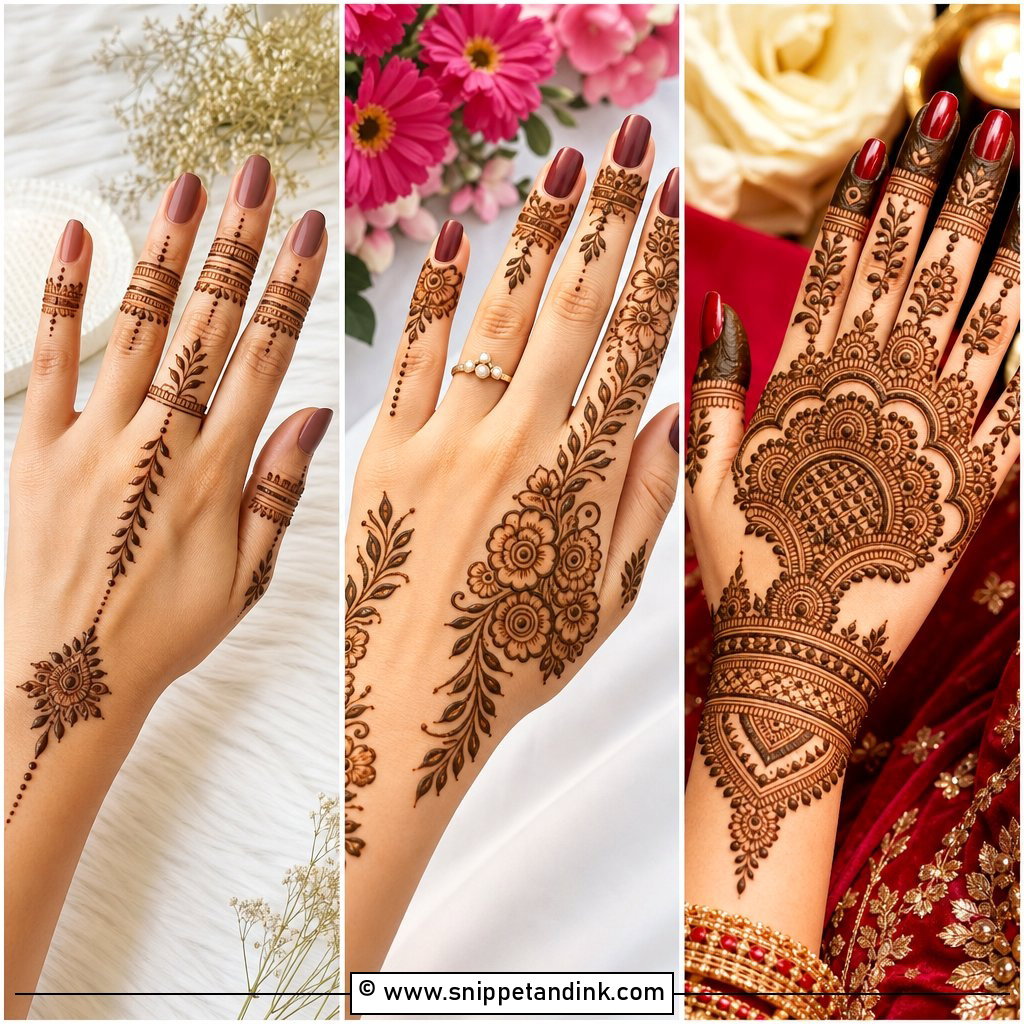
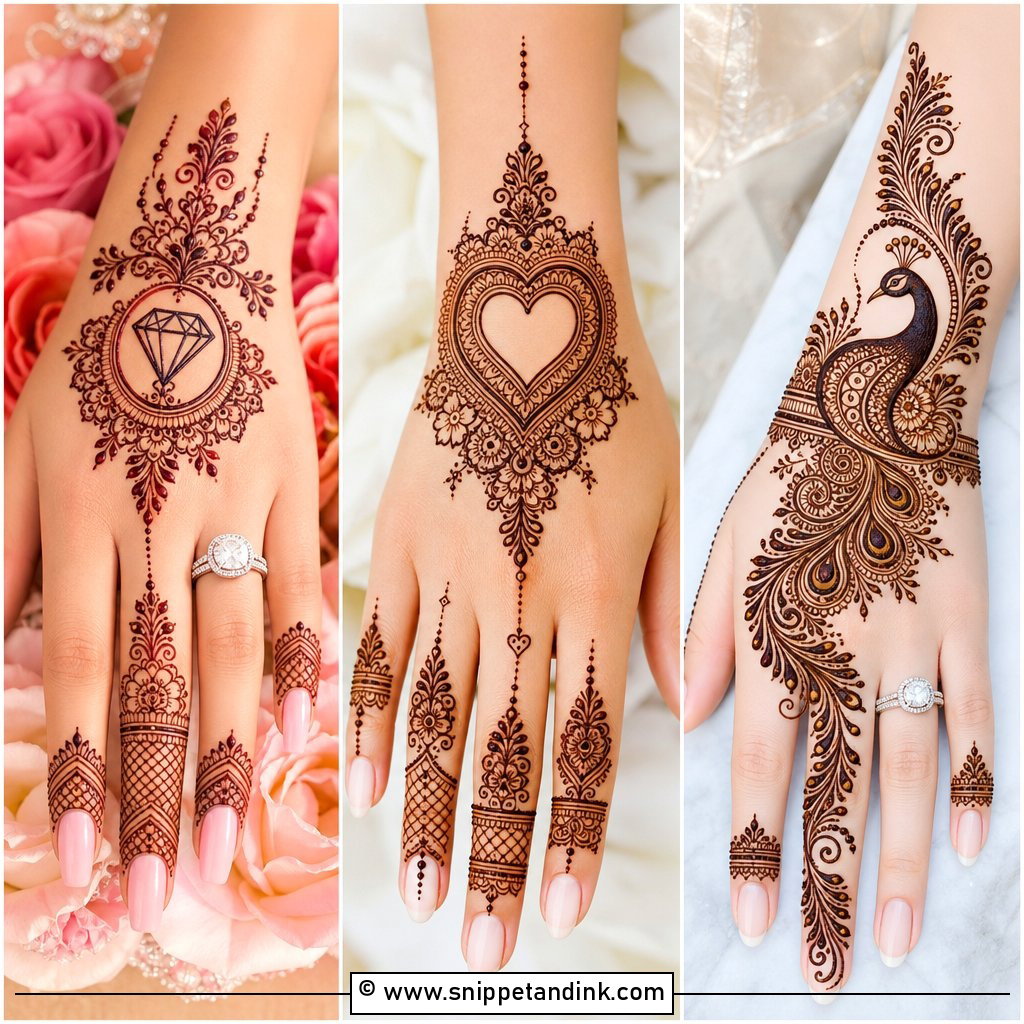
At an engagement, everyone wants to see the ring, so the hands get photographed more than at almost any other function. That changes how I design. I leave air around the ring finger, keep the fillers lighter and let a few clear motifs carry the hand: florals, a mandala, a vine, paisleys, a panel of jaali patterns or just the fingers. Indian, Arabic, Indo-Arabic and minimal styles all work here. A lighter design also means a shorter sitting, which matters when you have a full day of getting ready ahead. Here are twenty layouts I’d suggest, with what each one needs from the cone and from you.
Applying the Paste Two Days Before the Ring Ceremony
Natural henna doesn’t look its best the moment it comes off. When you scrape the dried paste away, the stain is bright orange. Over the next day or two it oxidizes into a deep reddish brown. That’s why I book engagement mehndi the evening before, or better, two days before, so the color peaks when the photographer arrives.
- Arrive with clean, dry hands and no lotion or oil, which block the dye.
- Let the paste stay on at least six hours; overnight gives the deepest result.
- A light dab of lemon and sugar keeps the paste stuck to the skin as it dries.
- Scrape it off with a blunt edge rather than washing it.
- Keep water away for as long as you can, ideally a full day, and warm your hands rather than cooling them.
Palms and fingertips will always come up darker than the back of the hand and the forearm. That’s skin, not the artist, so build it into your choice of design.
1. Simple Engagement Mehndi For Back Hand
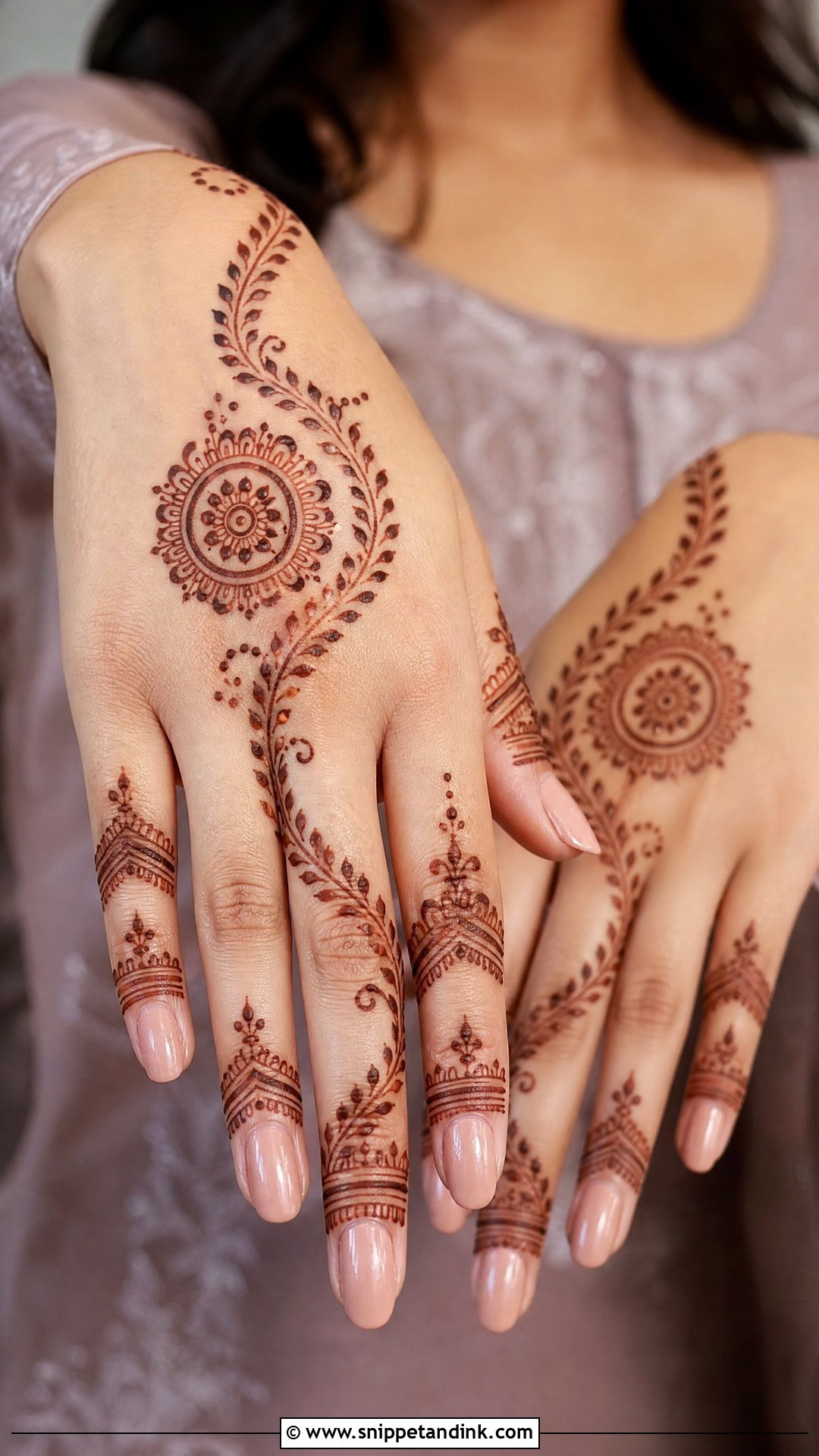
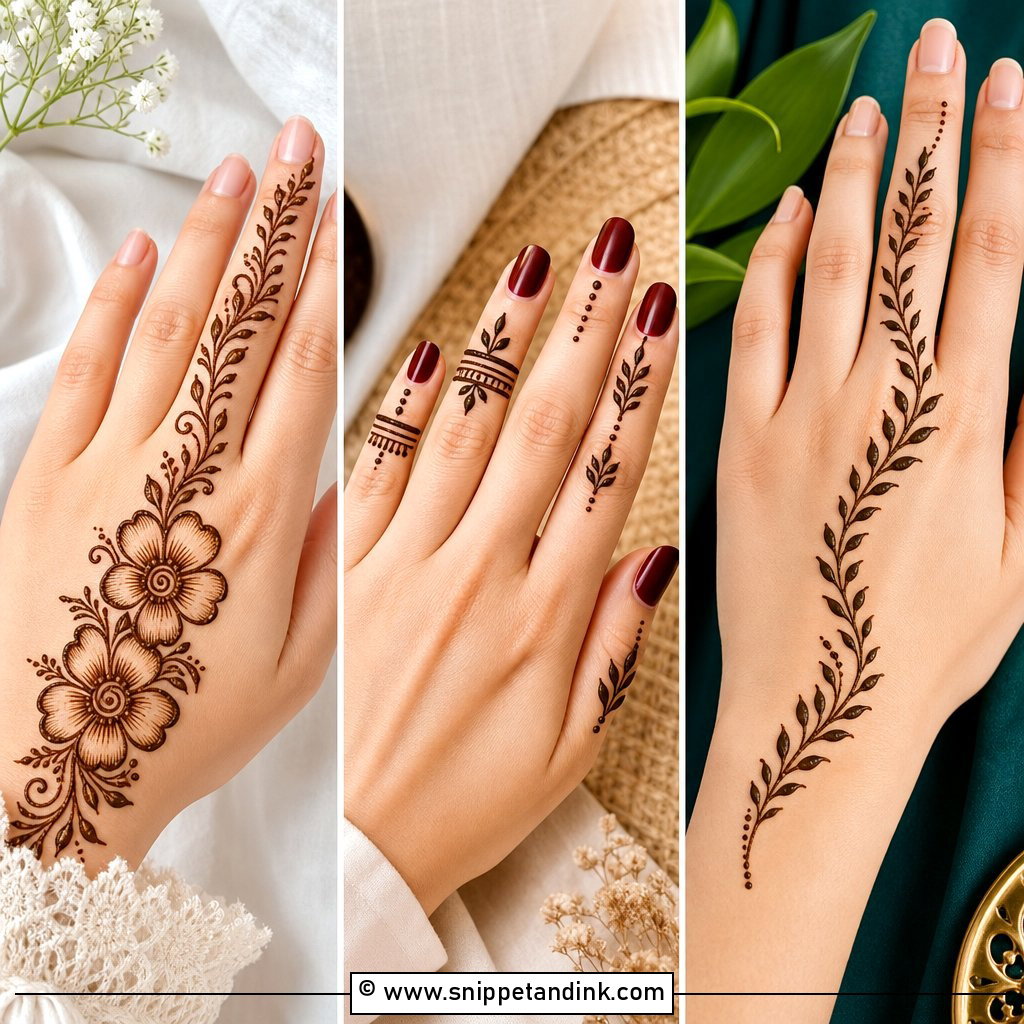
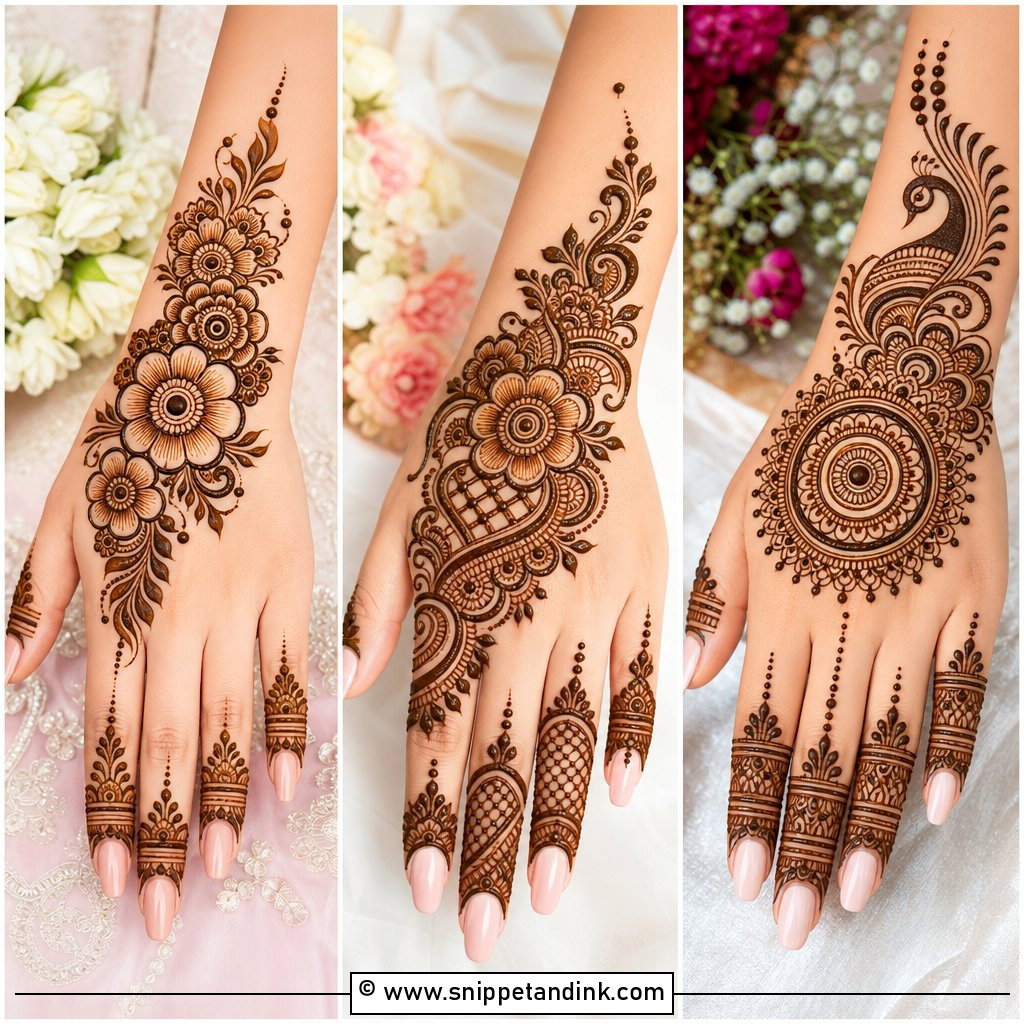
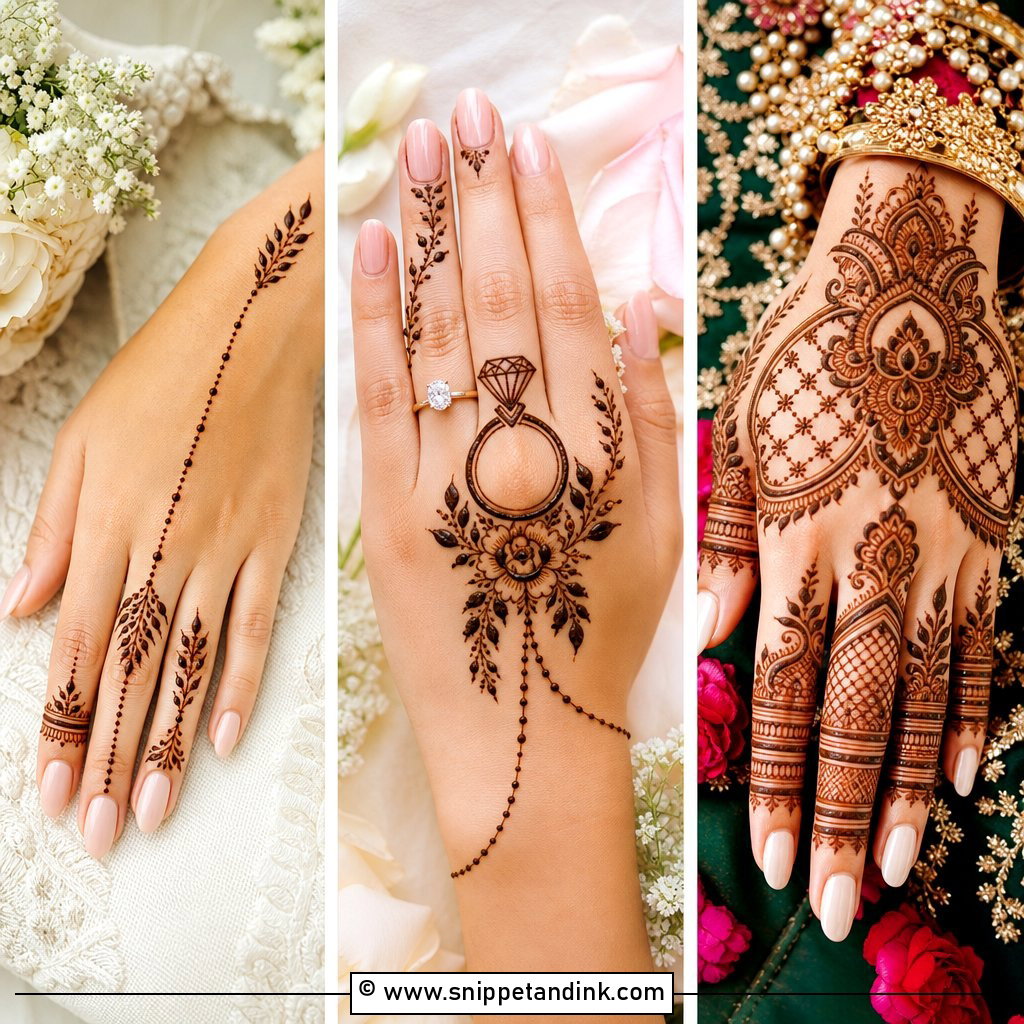
Back hand designs are what most brides choose for the ring photos, and I understand why. I keep the center of the hand open or give it one small floral circle or a fine mandala, then run slim lines, leaves and dots up the fingers to cuff-style tips. Around the ring finger I stop the pattern short of where the band will sit. One honest note: skin on the back of the hand is thinner and drier than the palm, so the stain will come up a shade or two lighter. Bold outlines make up for that better than fine shading.
2. Simple Engagement Mehndi For Front Hand
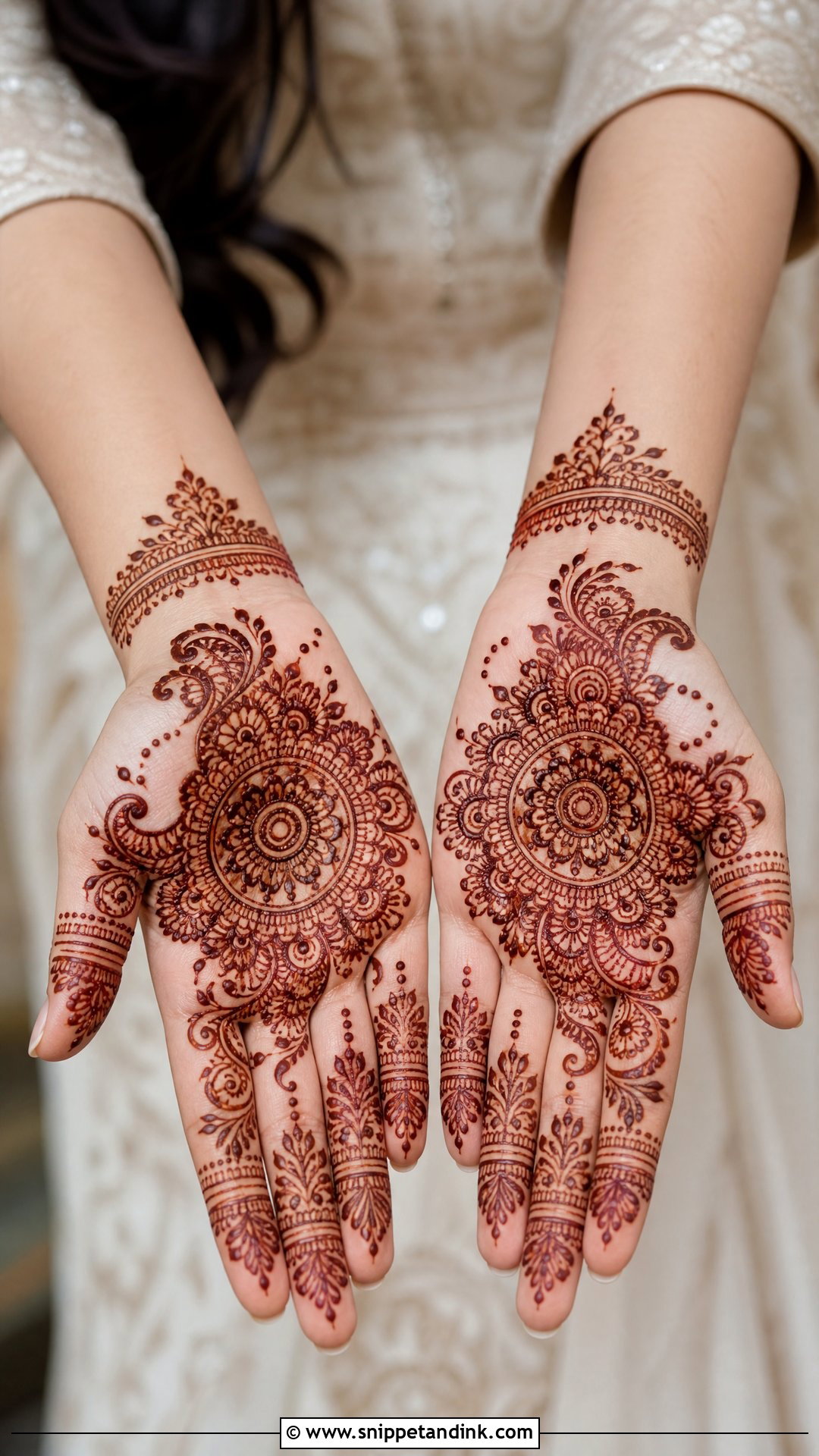
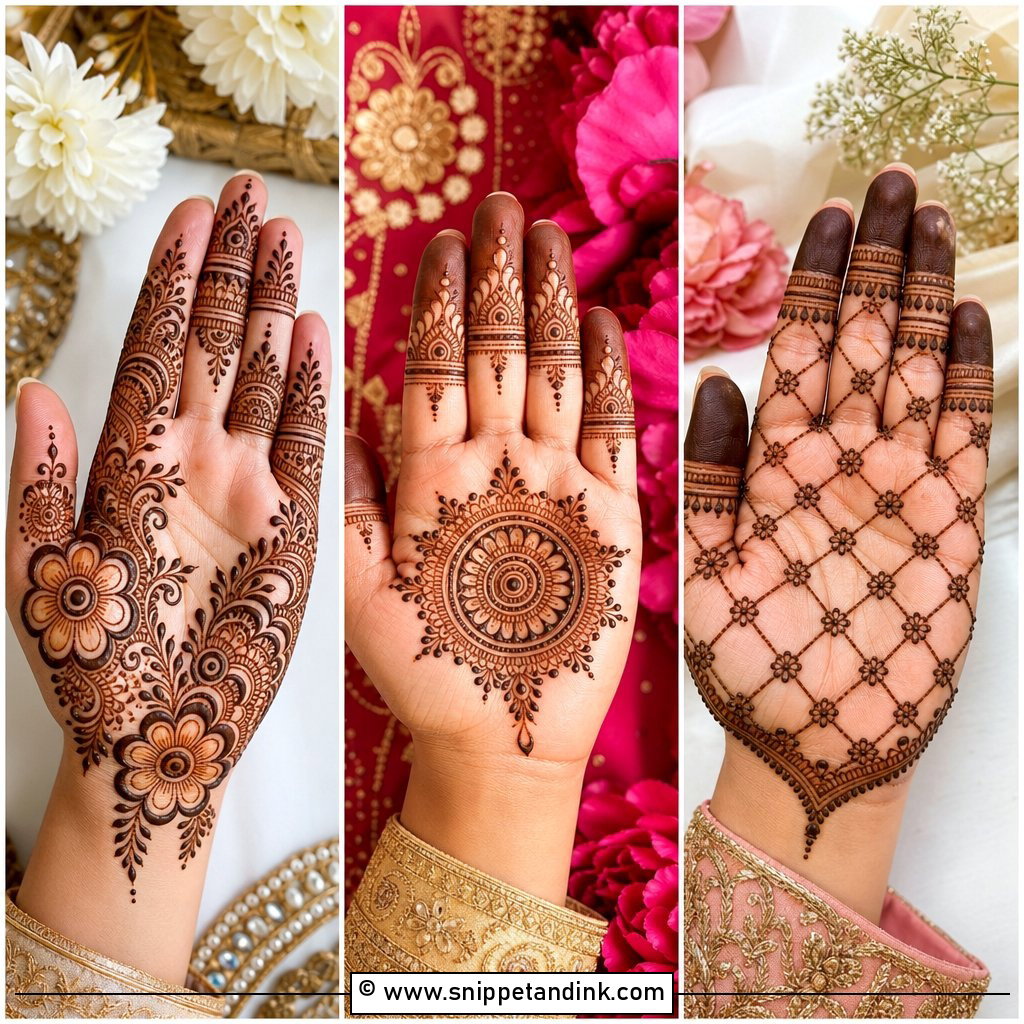
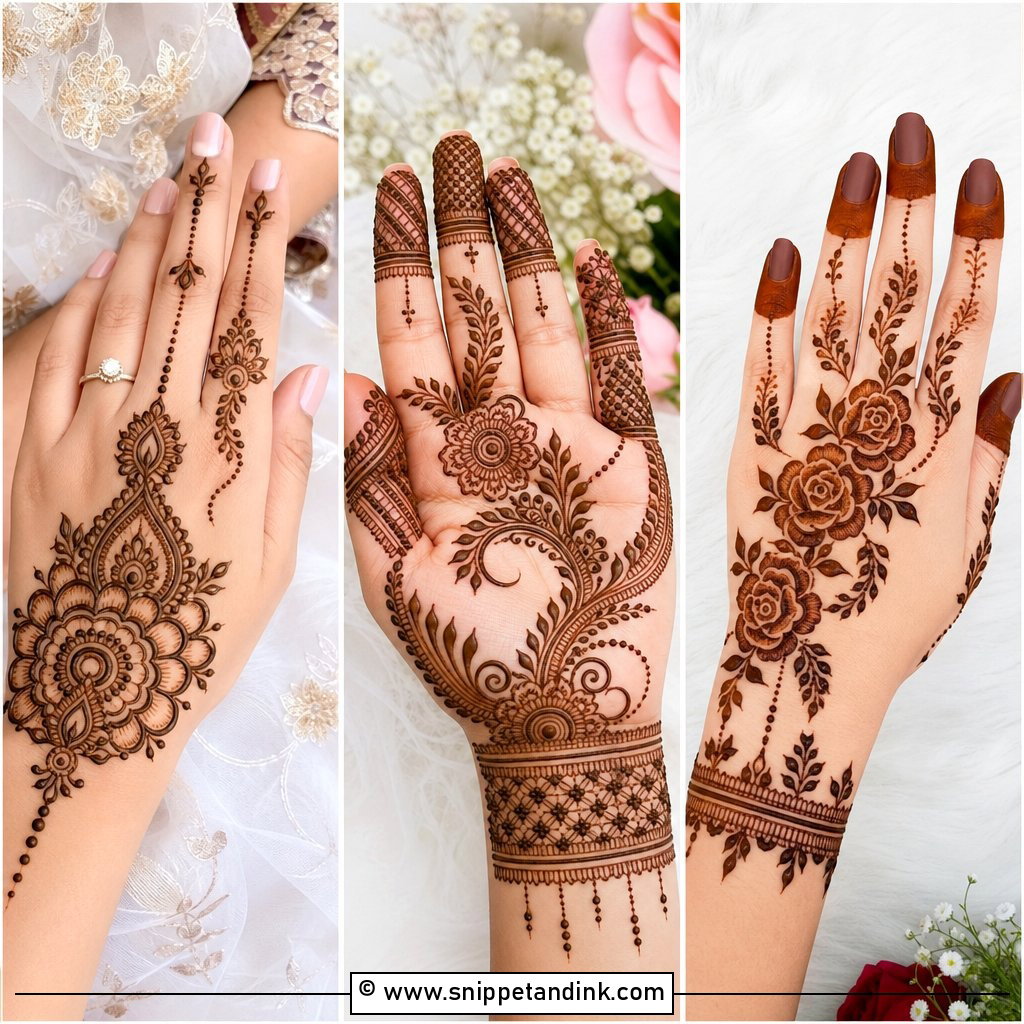
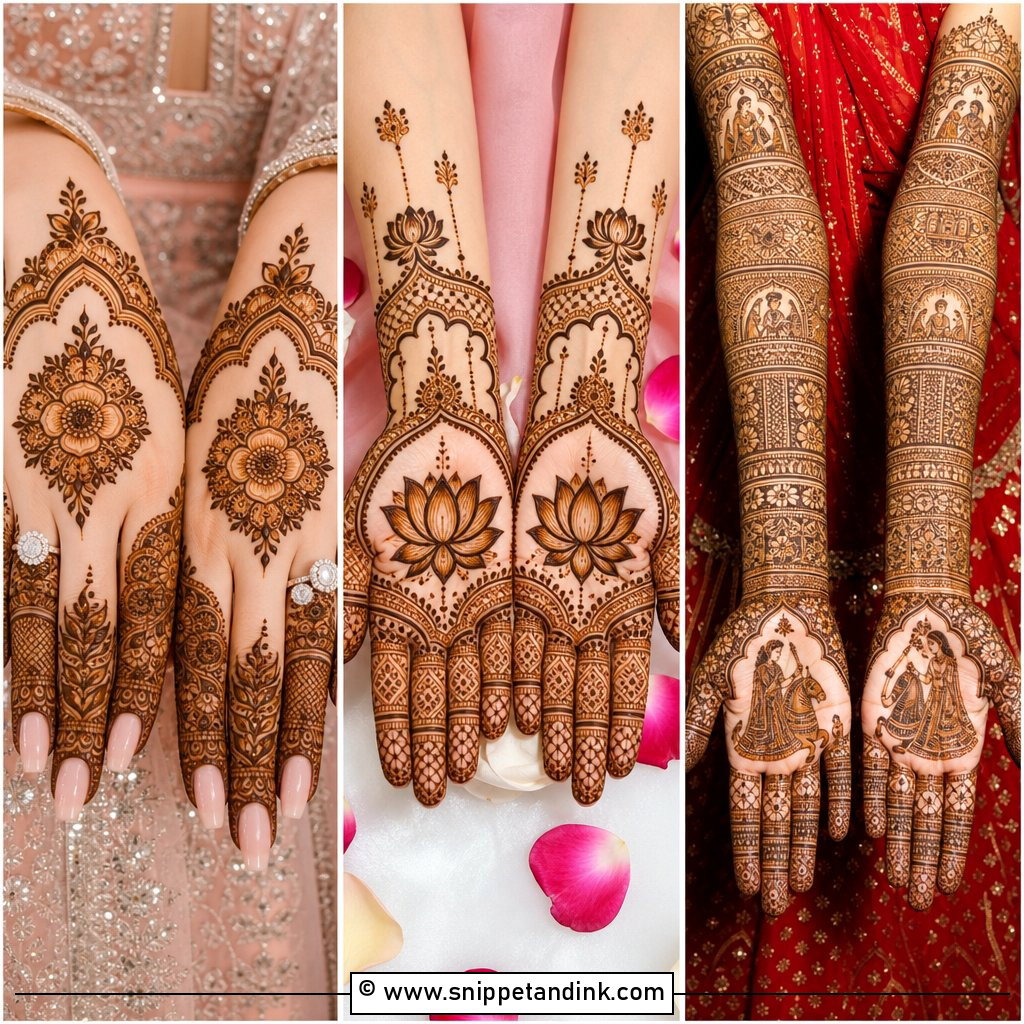
The palm is where henna stains darkest, and it gives me room to build a proper composition without full bridal coverage. I start with a central mandala and let small florals, paisleys and curved lines grow out toward the fingers. At the wrist I use a bracelet border or a half cuff instead of a solid band, which keeps it from feeling heavy. Shading the fingertips only partway, rather than filling them solid, lightens the whole hand. It reads traditional at the ceremony and still looks clean up close.
3. Arabic Engagement Mehndi Design
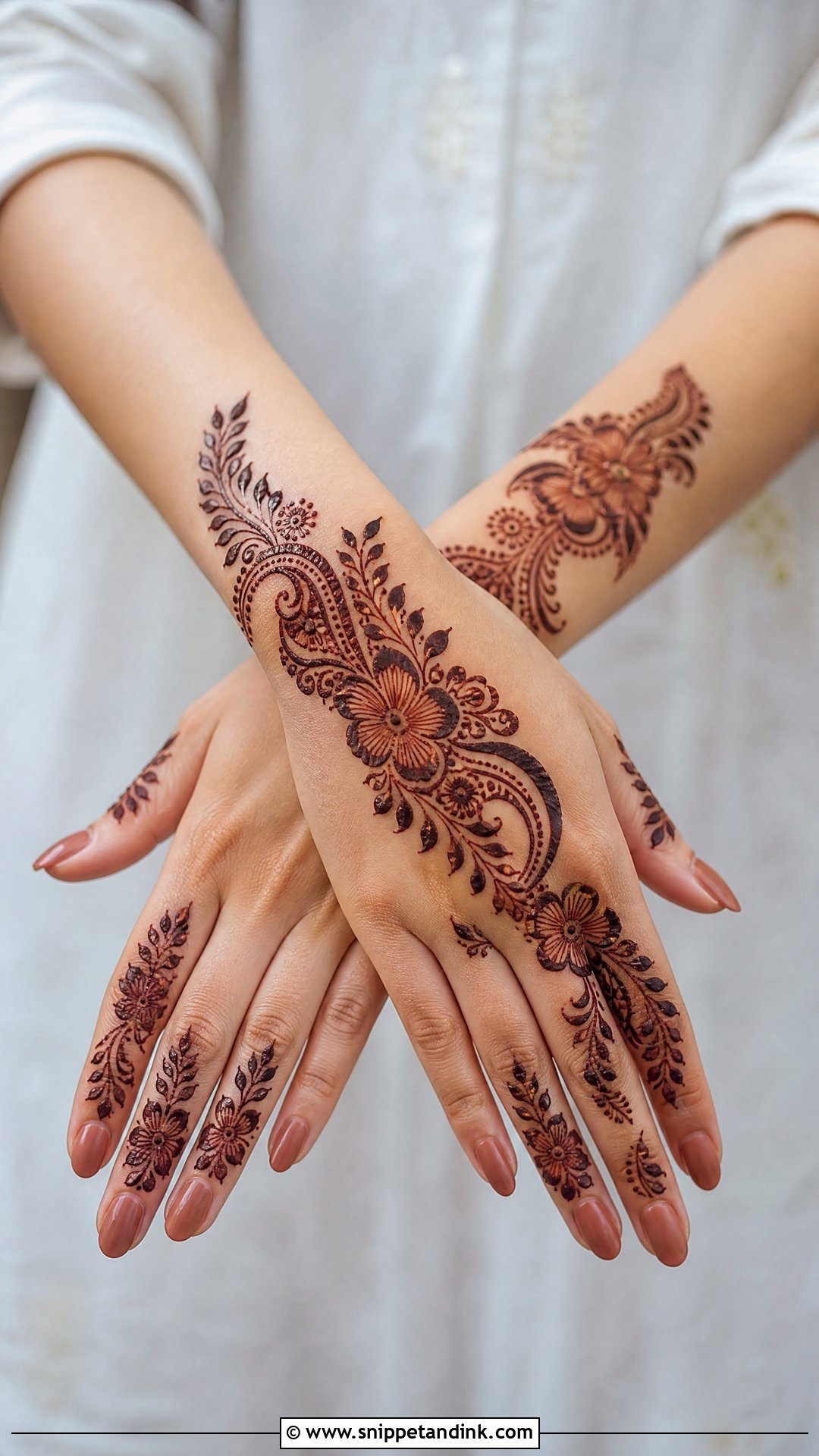
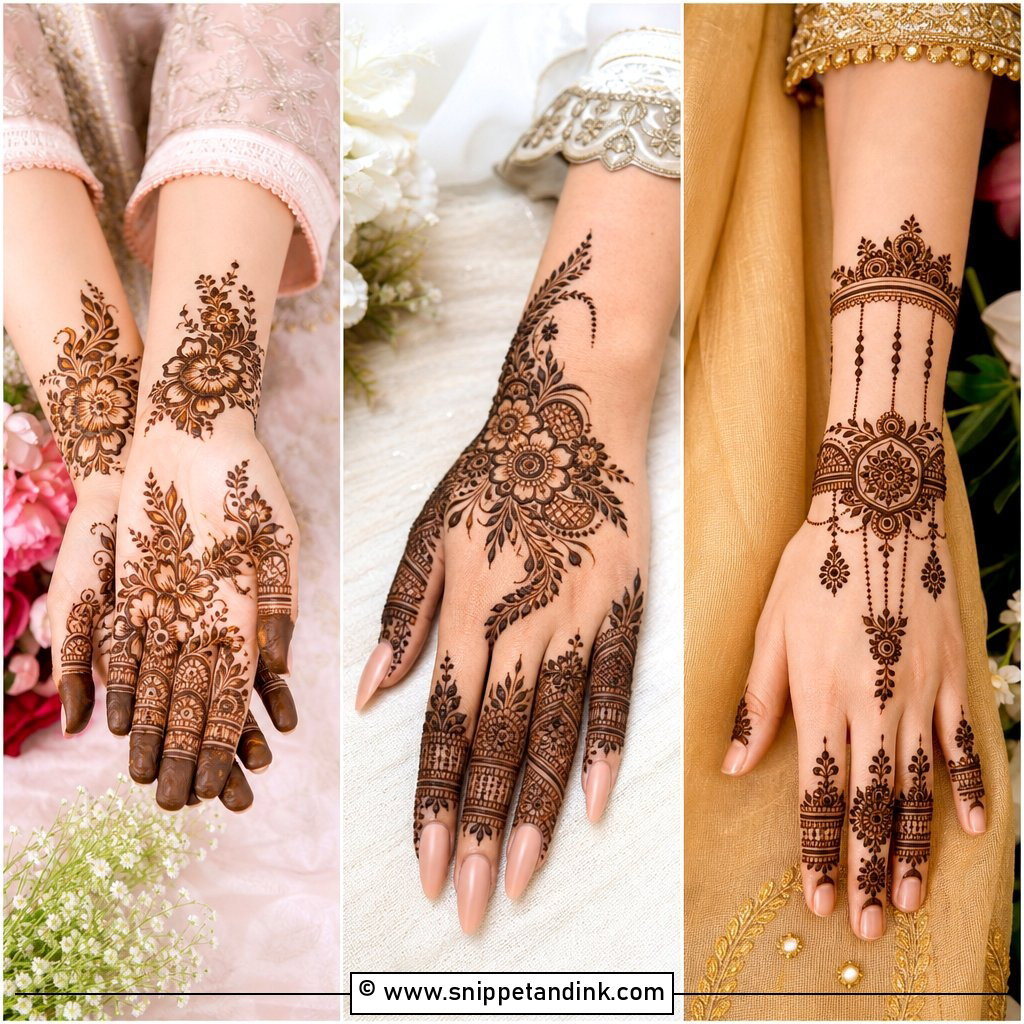
Arabic engagement mehndi moves on a diagonal, usually from the wrist toward the index or middle finger, with large flowers, leafy vines and shaded petals. The open skin between motifs is part of the design, not empty space. It also goes on faster than dense Indian work. If your outfit is heavy with embroidery, sequins or statement jewelry, this is the style I’d point you to, because it won’t fight them. I draw the outlines thicker than the inner detail, since bold lines hold a deeper stain.
4. Minimal Engagement Mehndi Design
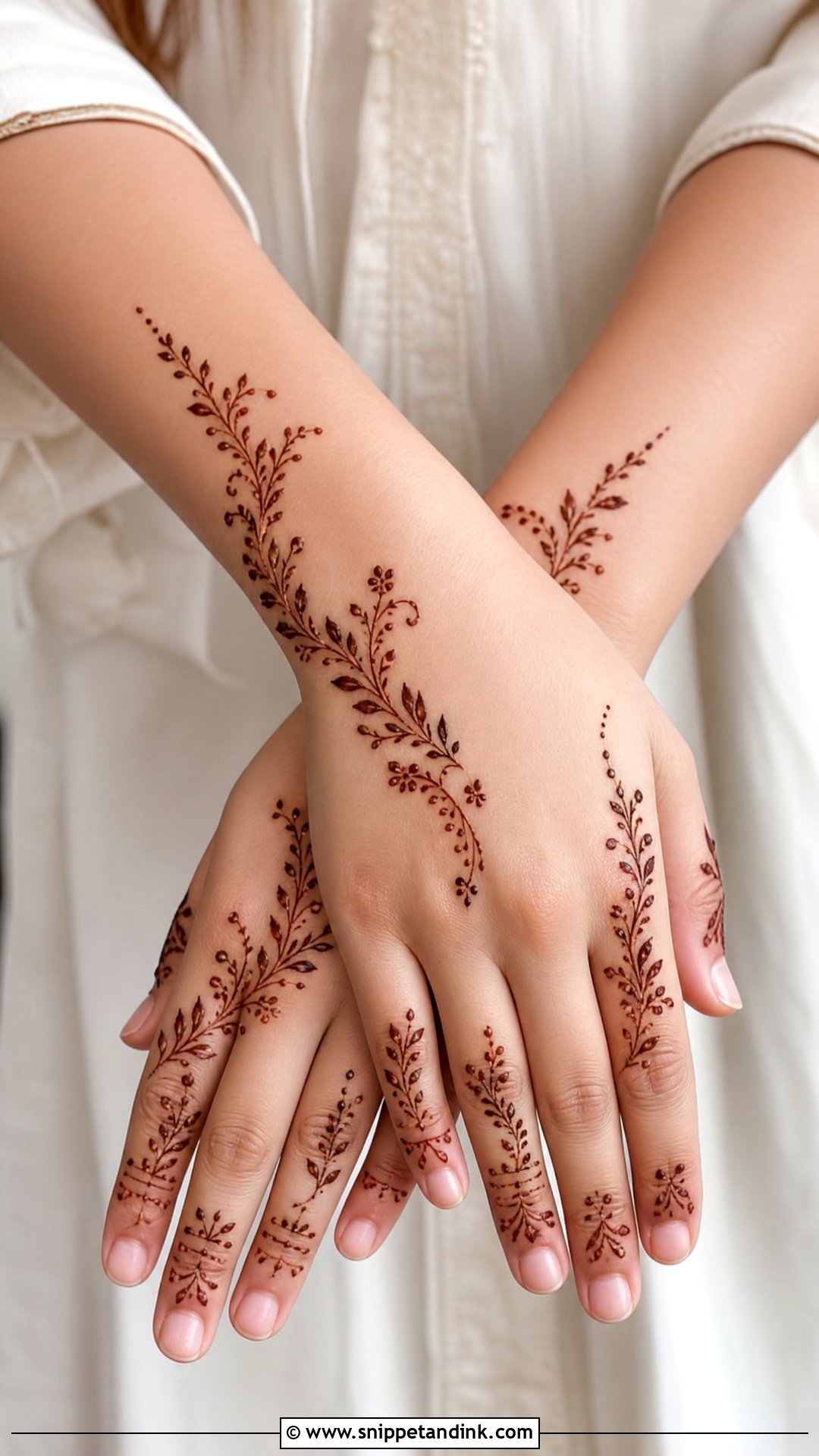
Minimal mehndi is harder to do well than it looks, because there is nothing to hide an uneven line. Slim vines, tiny florals, a ring finger accent, a few wrist dots: each one has to be placed with intention. It’s the design I suggest for brides who don’t normally wear mehndi and feel awkward with full hands. Put the main detail on the back hand, the palm or only the fingers, with a light wrist band to finish. Paired with a ring and a couple of bangles, it never looks unfinished.
5. Mandala Engagement Mehndi Design
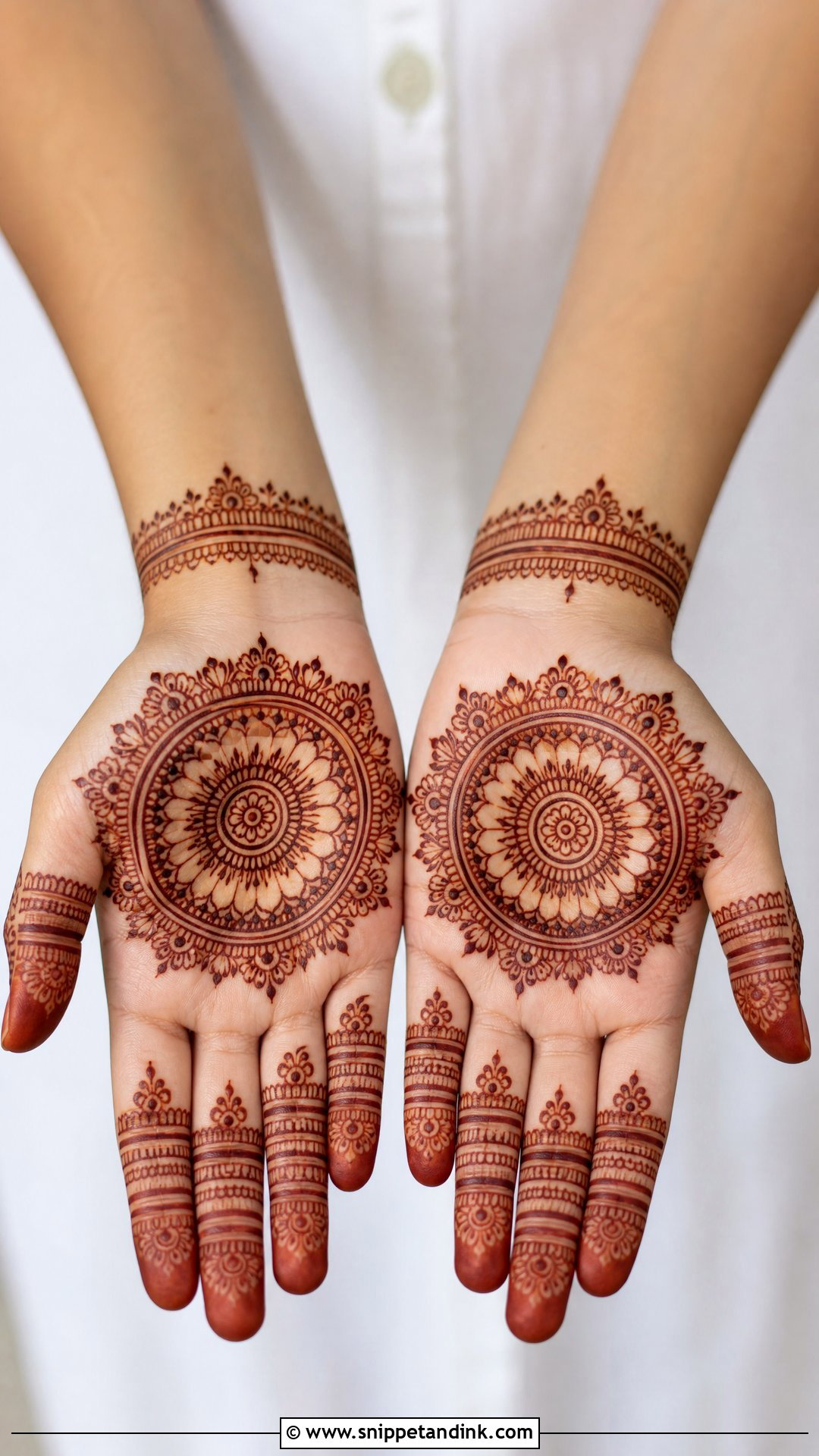
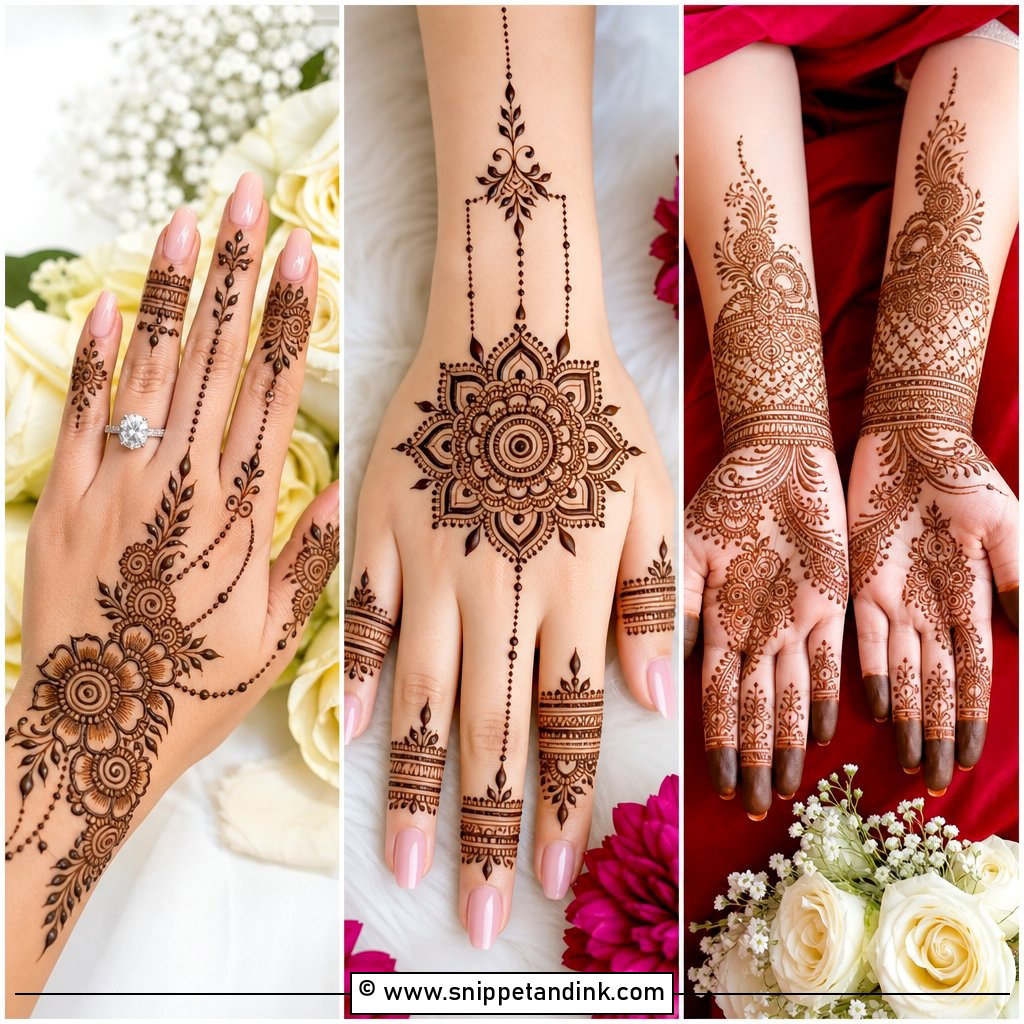
A mandala gives you symmetry with very little planning. I draw the center circle first on the palm or back hand, then build rings of dots, petals and leaves outward, keeping each ring the same width so the circle doesn’t drift into an oval. Fingers stay light with matching bands and fingertip shading. On the back hand, a mandala sits just below the ring area and frames it nicely. If you add a wrist border, keep it thin, or it pulls the eye away from the center.
6. Floral Engagement Mehndi Design
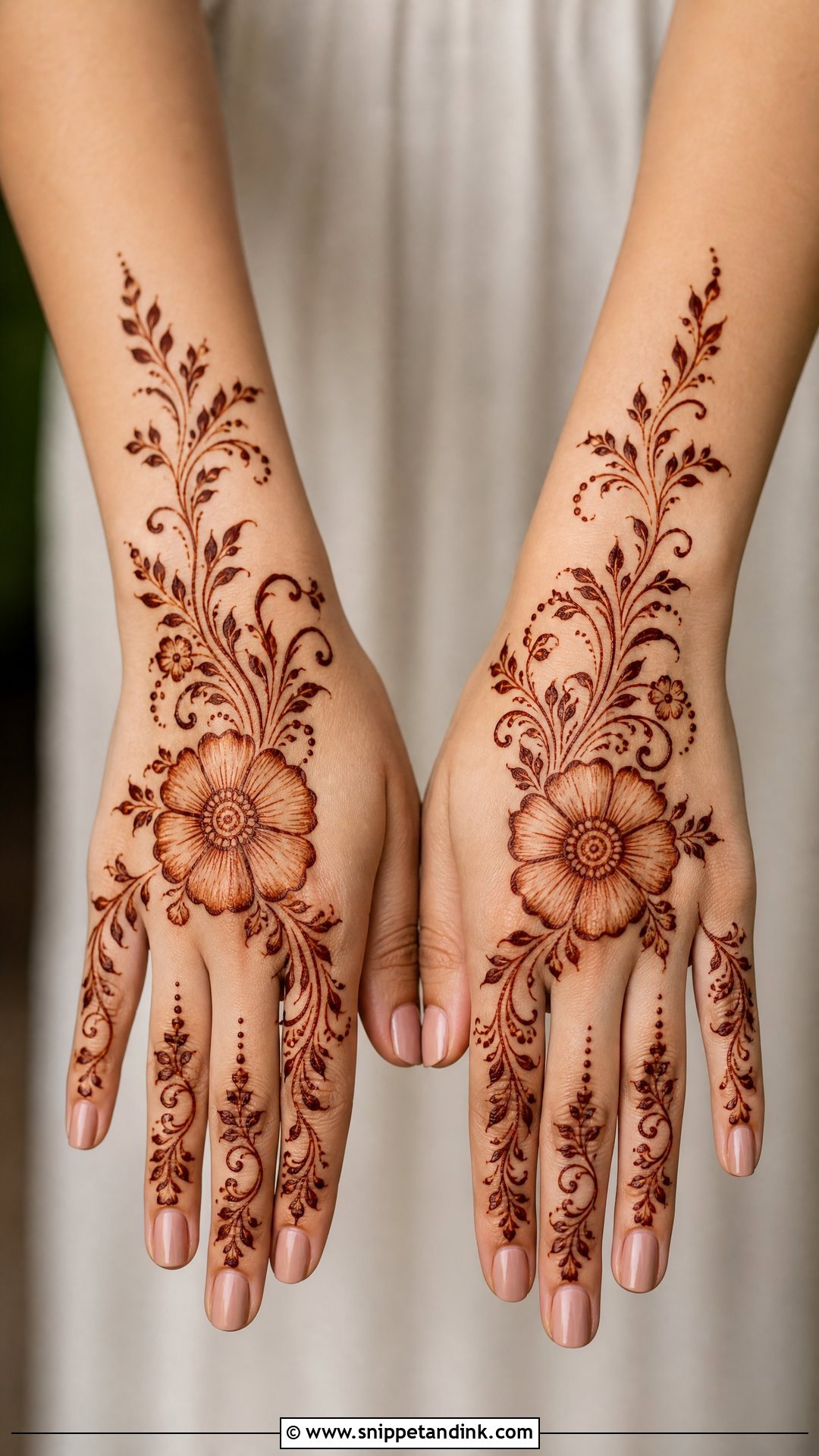
Florals scale up or down more easily than any other motif. One large bloom on the back hand, smaller ones on the fingers and a leafy trail to the wrist is the basic shape. On the palm, I set the flowers around a mandala or paisley base. Shaded petals give a fuller look; outlined petals with more bare skin between them give a lighter one. That one decision, shade or outline, changes the whole feel of the hand, so I always ask which you want before I start.
7. Finger Engagement Mehndi Design
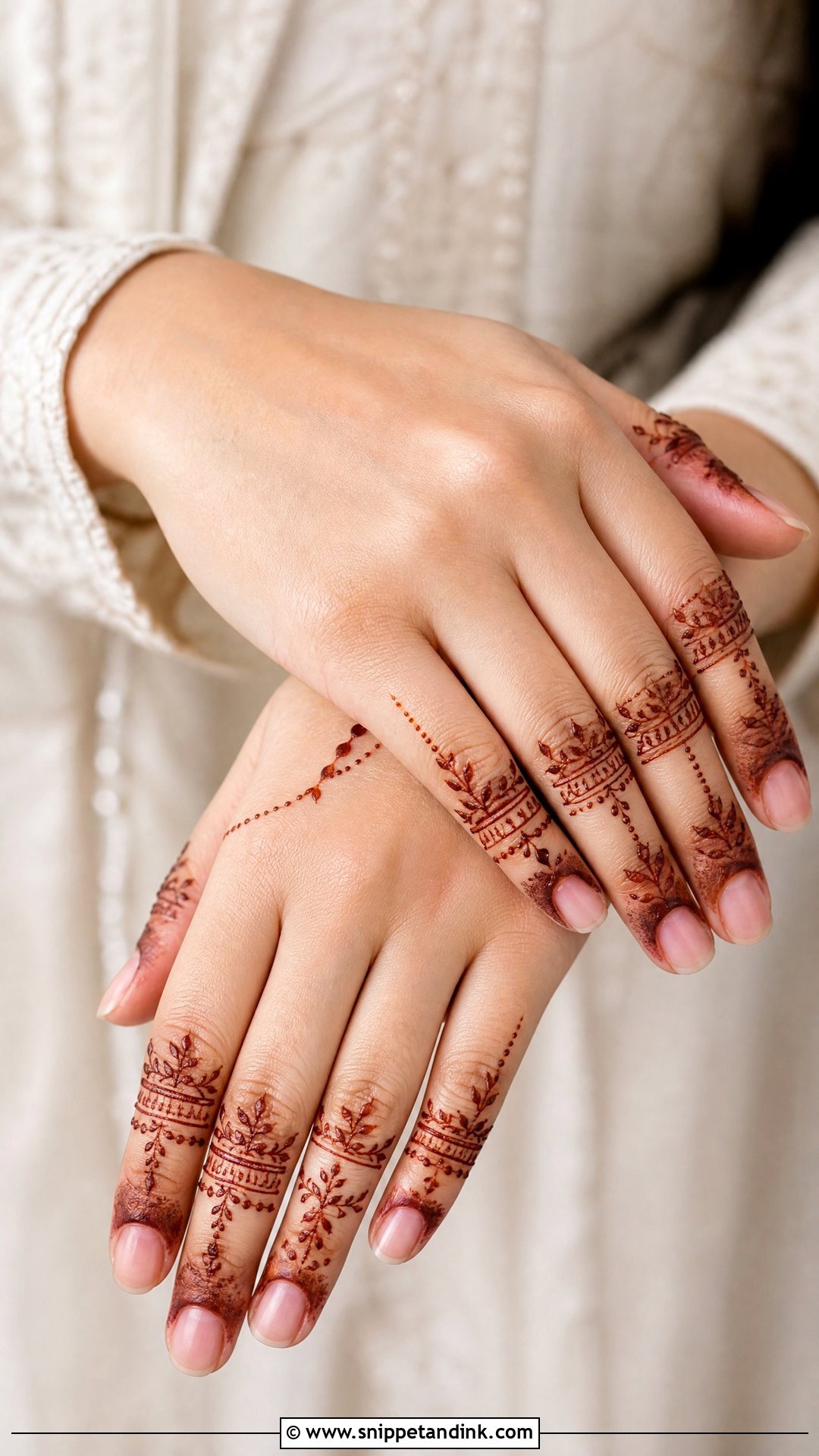
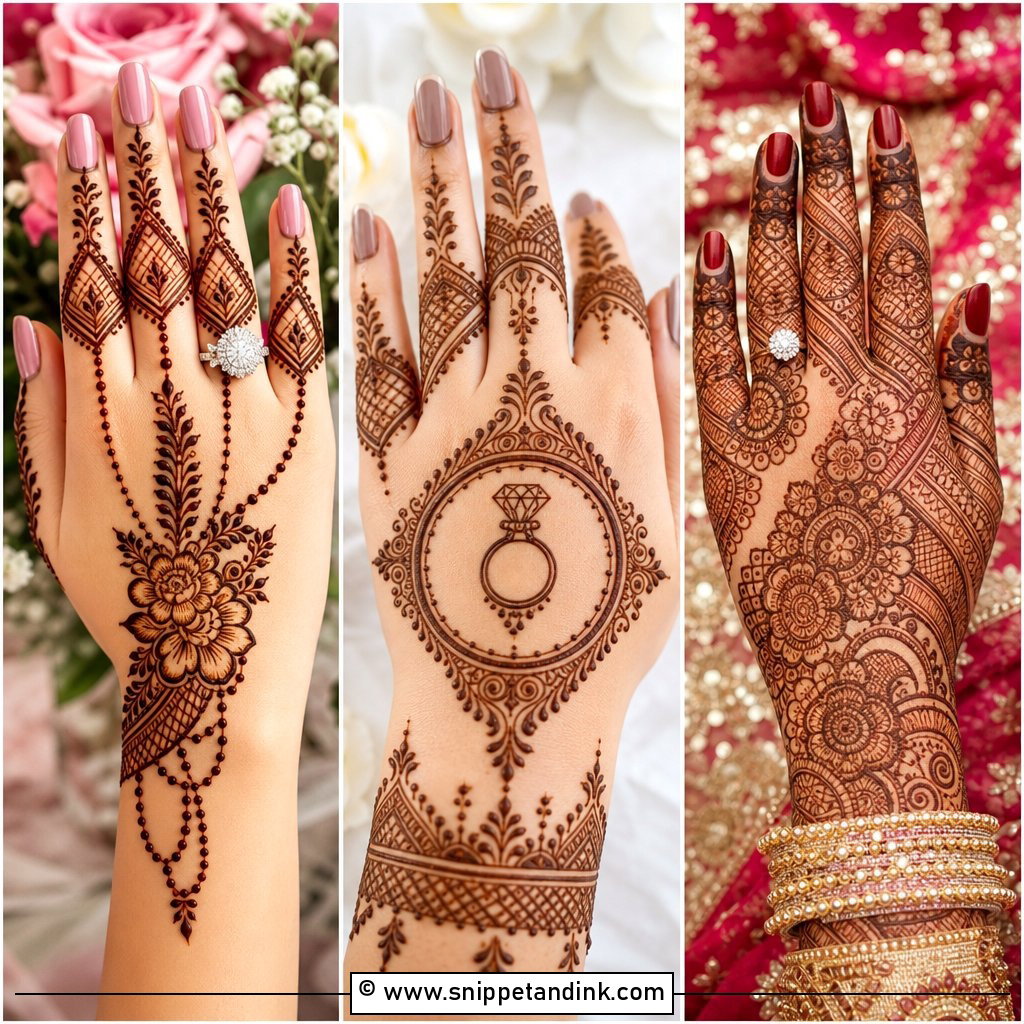
Finger-only designs leave the palm and back hand almost bare and put fine bands, tiny leaves, chains and small florals on each finger. I give the ring finger a slightly richer pattern so it stands out. It takes a fraction of the time of a full layout, which is why sisters and cousins often ask for it too. Fingers stain darker than the back of the hand, so even fine work shows clearly. A slim bracelet line or a single motif near the thumb ties it together.
8. Bracelet Engagement Mehndi Design
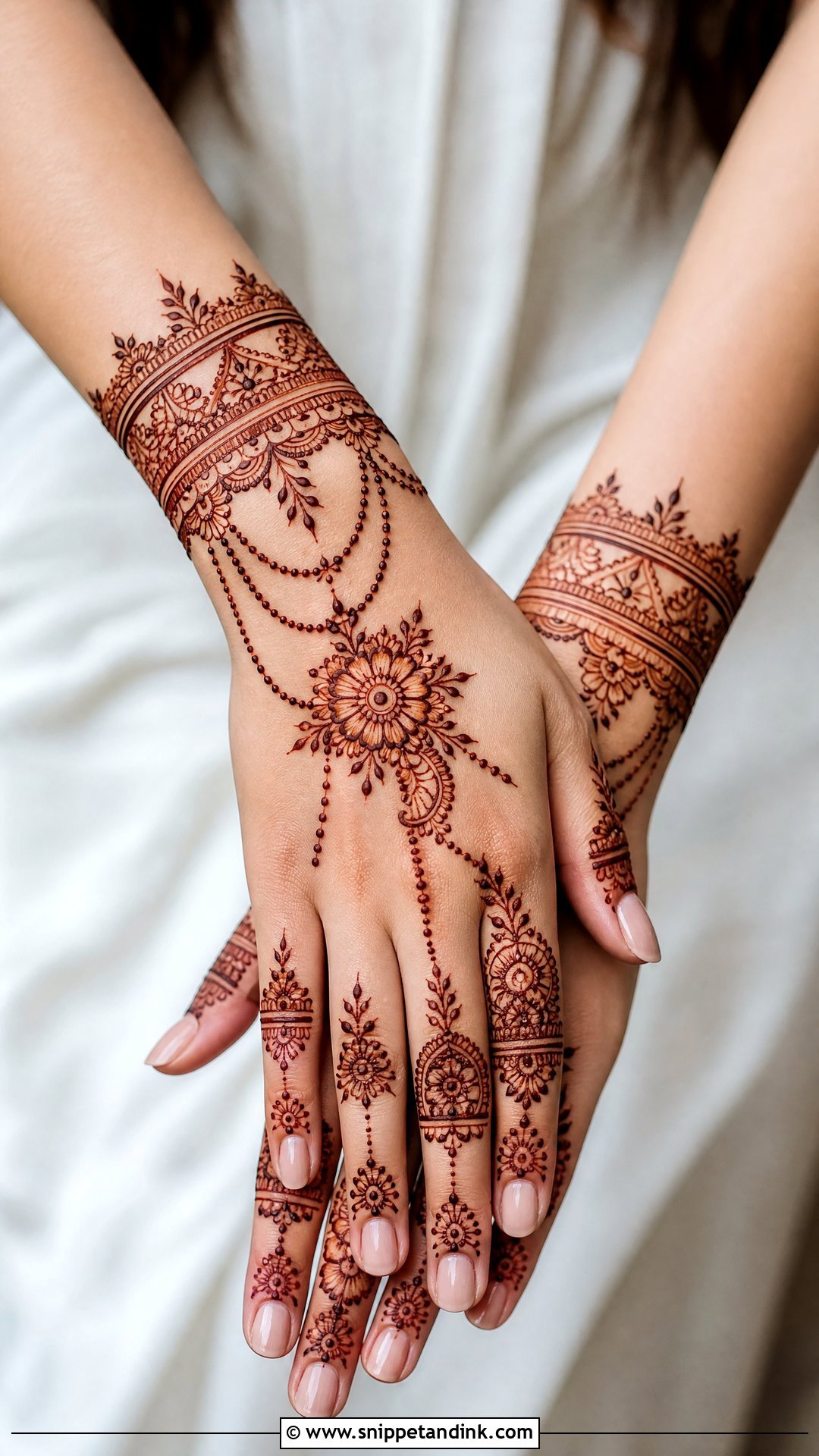
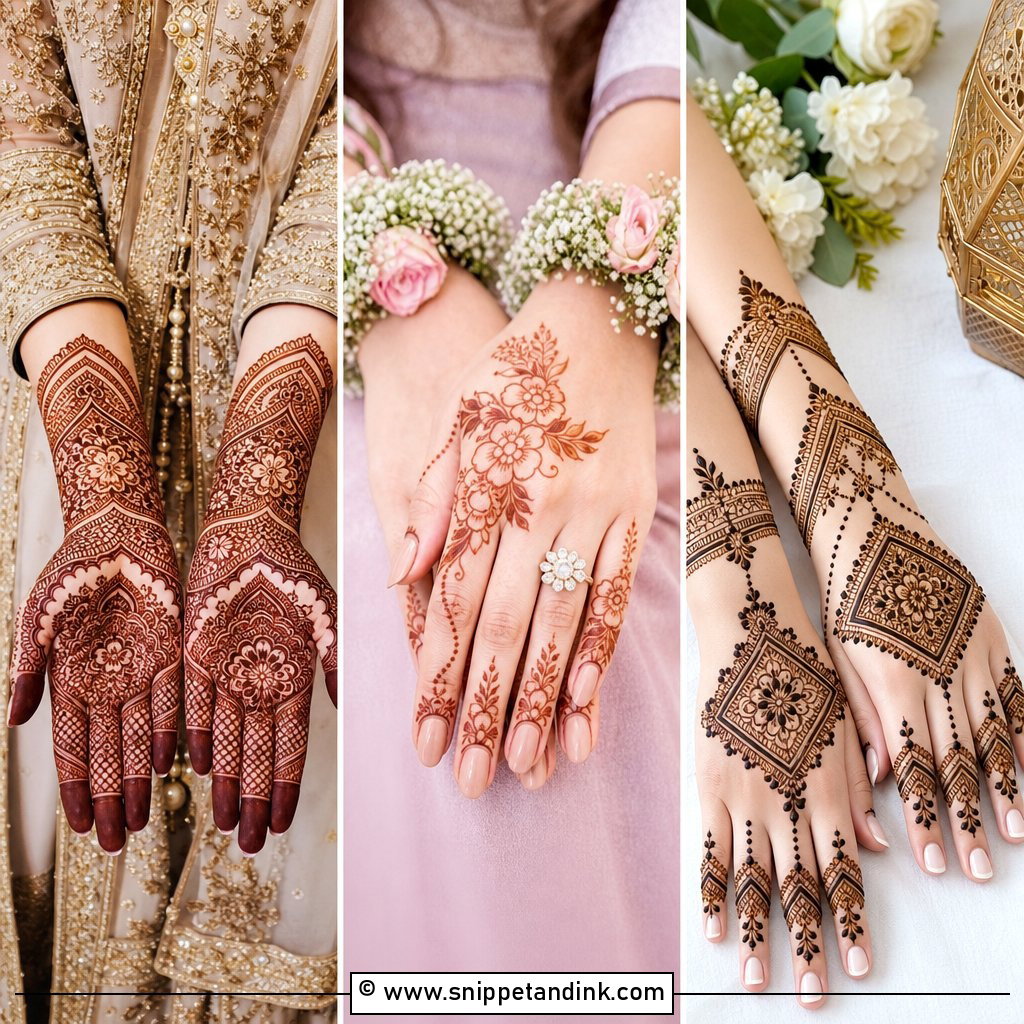
A bracelet design wraps the wrist like a fine bangle and links to the fingers with chains, dots or a small floral center, so the hand looks dressed even before the jewelry goes on. It suits the back hand because the ring and wrist get framed together. If your sleeves are heavy or you’re stacking bangles, keep the bracelet line thin; it sits right where the bangles rub, and a thick band will look patchy once they’ve worn against it all evening. Paisleys or a lace-like border make it more festive.
9. Half Hand Engagement Mehndi Design
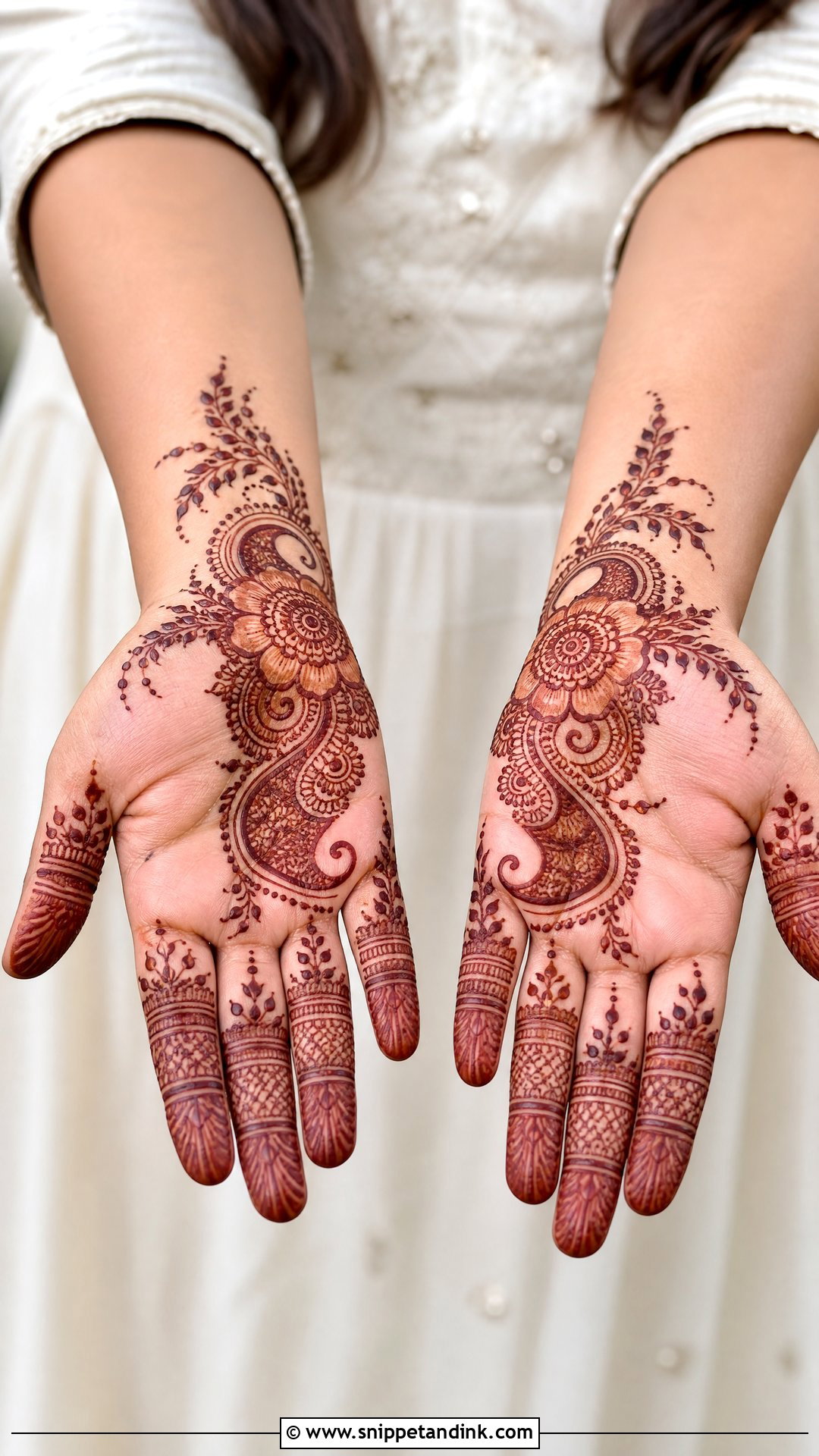
Half hand coverage is the middle ground. It can cover the fingers and the upper palm, or start at the wrist and stop before the knuckles. I fill it with florals, a mandala, paisleys or a soft jaali section, keeping the motifs medium-sized. You’ll sit for a fraction of a bridal session, and because the pattern has room to breathe, the stain reads clearly instead of blurring into one dark patch. Tiny packed fillers are what blur first.
10. Indo Arabic Engagement Mehndi Design
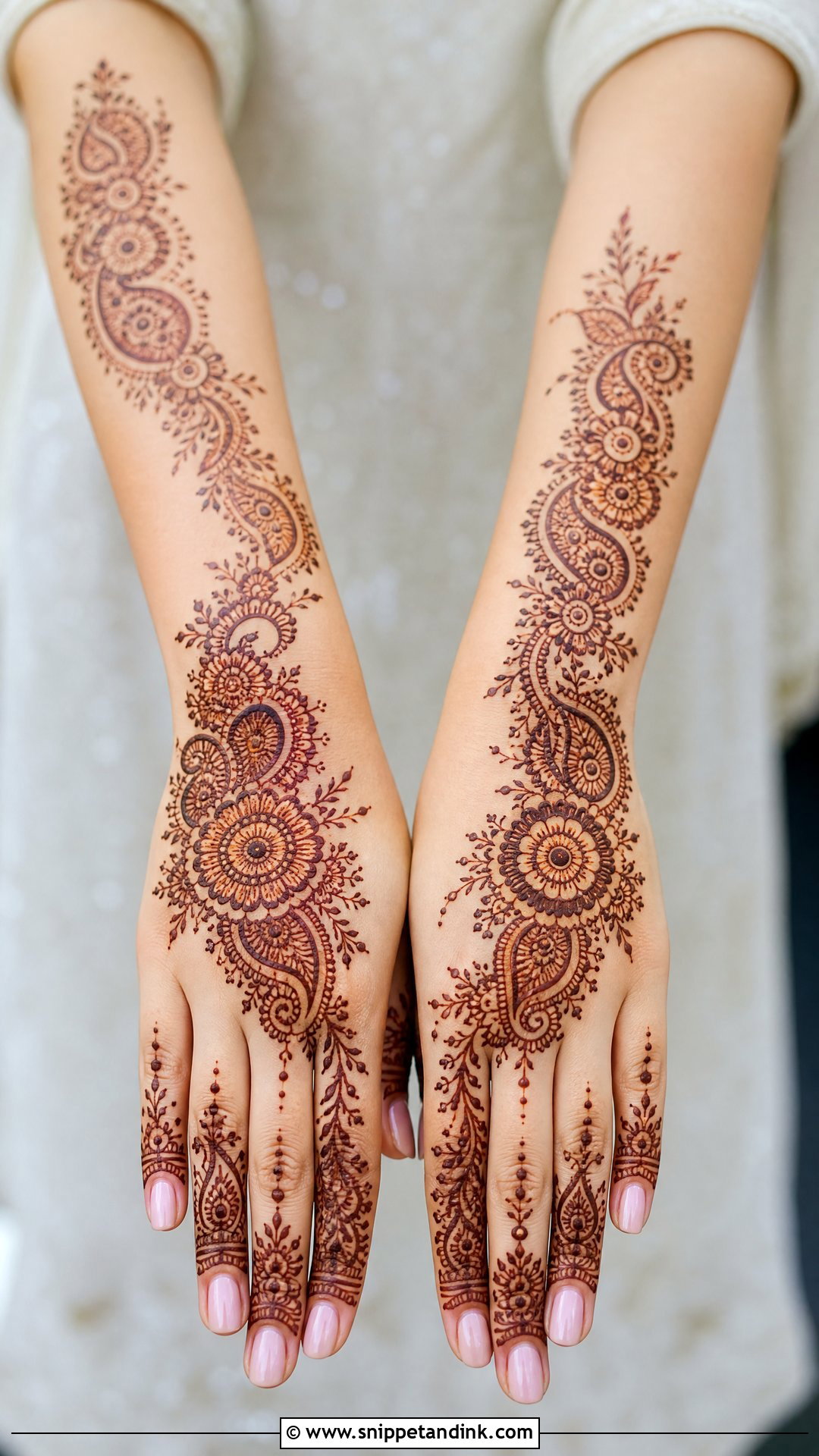
Indo-Arabic takes the diagonal flow of Arabic work and adds the finer detail of Indian mehndi. A floral trail, paisley clusters, small mandalas and dotted fillers, with open spaces left between them. I like it when a bride wants richness but can’t give up a whole afternoon to the chair. Worn on the palm, it feels more traditional; on the back hand, it leaves the ring clear for photos.
11. Rose Engagement Mehndi Design
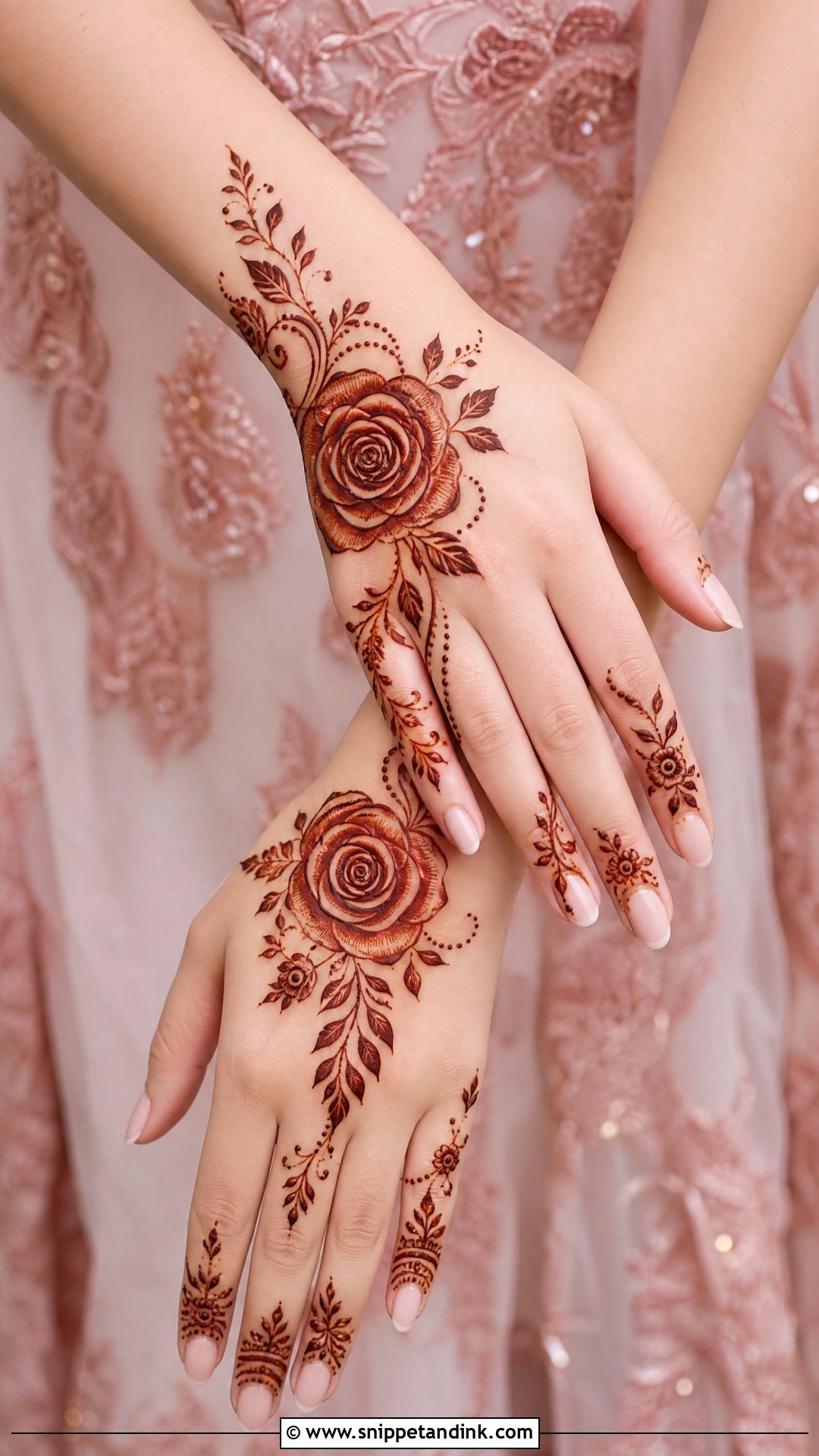
A single rose gives you romance without hearts or figures. I place it on the back hand, palm or wrist, then run leaves and curved stems toward the fingers. The petals get shading; the stems stay as thin outlines. I set the rose slightly off the ring finger so the band isn’t sitting on top of a dark flower. One large rose with a few small buds always looks cleaner than a cluster of same-sized flowers.
12. Paisley Engagement Mehndi Design
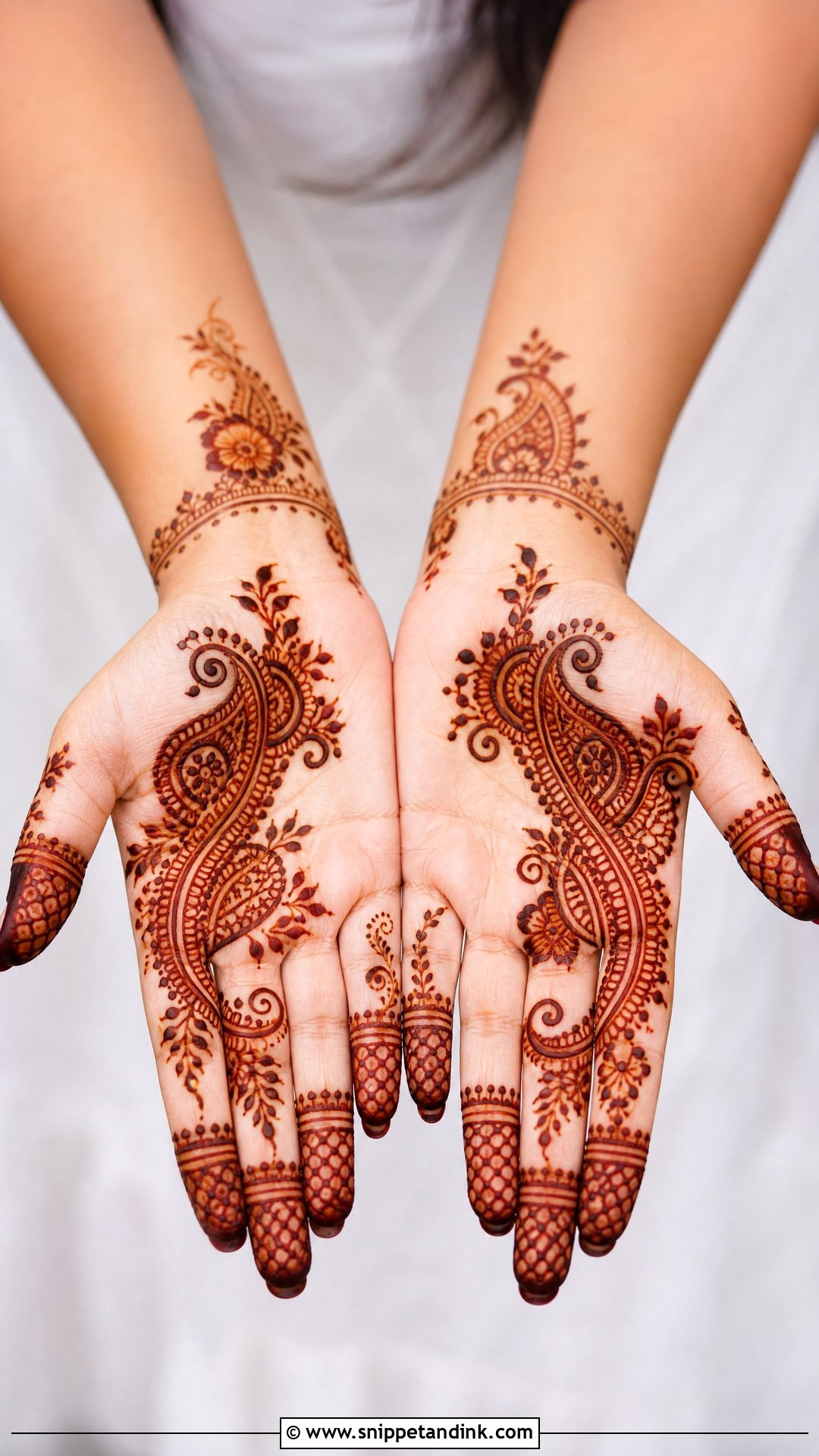
Paisleys are the most traditional motif here and they suit embroidered outfits, zari and mirror work. A simple paisley design can start at the wrist, curve across the palm and finish near the fingers, filled with smaller paisleys, dots and fine lines. On the back hand I arrange them in a diagonal trail with bare skin around them. I keep them medium-sized; very small paisleys stuffed with filler turn into dark blobs once the stain develops.
13. Jaali Engagement Mehndi Design
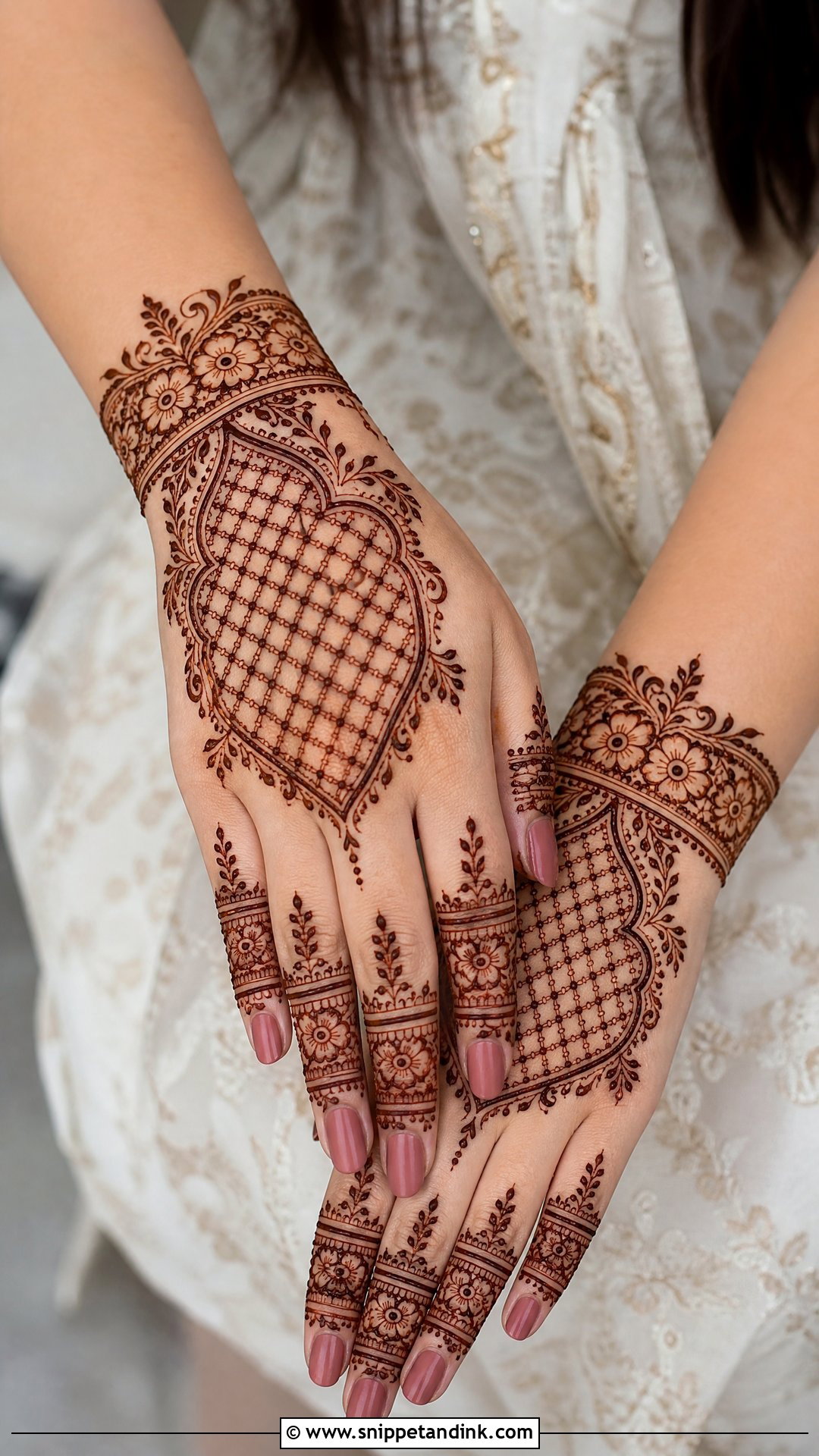
Jaali is a fine net pattern, and its weakness is that tiny gaps close up if the paste is too thick or the stain spreads. I use it in one panel rather than across the whole hand, a section on the back hand inside a floral border, or across the palm around a mandala. A thin cone tip and a well-strained paste matter most here. Fingers stay simple with dots, rings and slim leafy strokes.
14. Ring Finger Engagement Mehndi Design
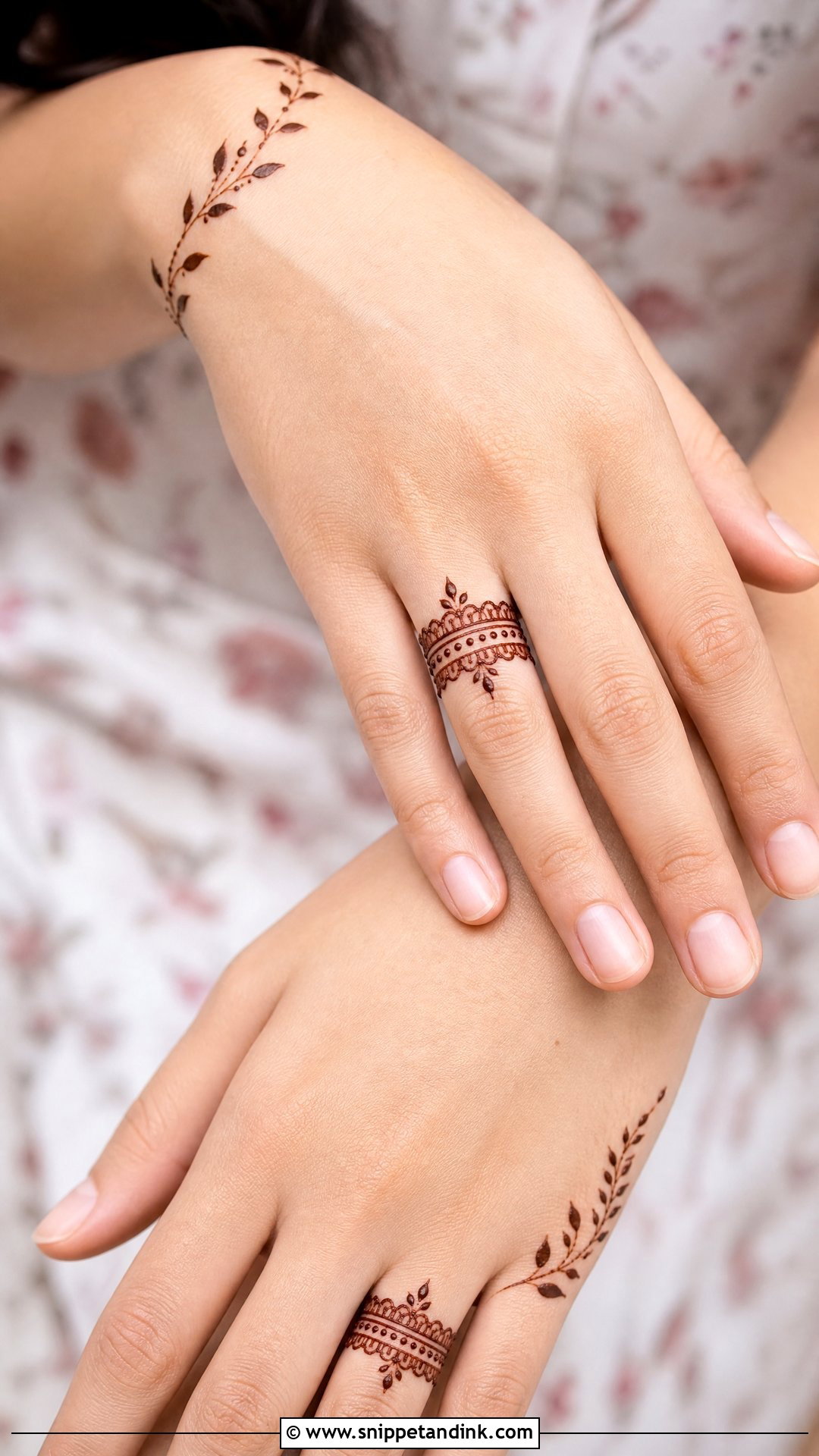
This design is built around the moment the ring goes on. The ring finger gets bands, dots, leaves, lace shapes and fingertip shading, while the rest of the hand stays almost bare, with a small vine, bracelet line or tiny flower. The part I’m most careful with is the base of that finger. I leave a clear gap where the ring sits, because henna under a band can smudge when the ring is pushed on, and dense filling there competes with the stone in close-ups.
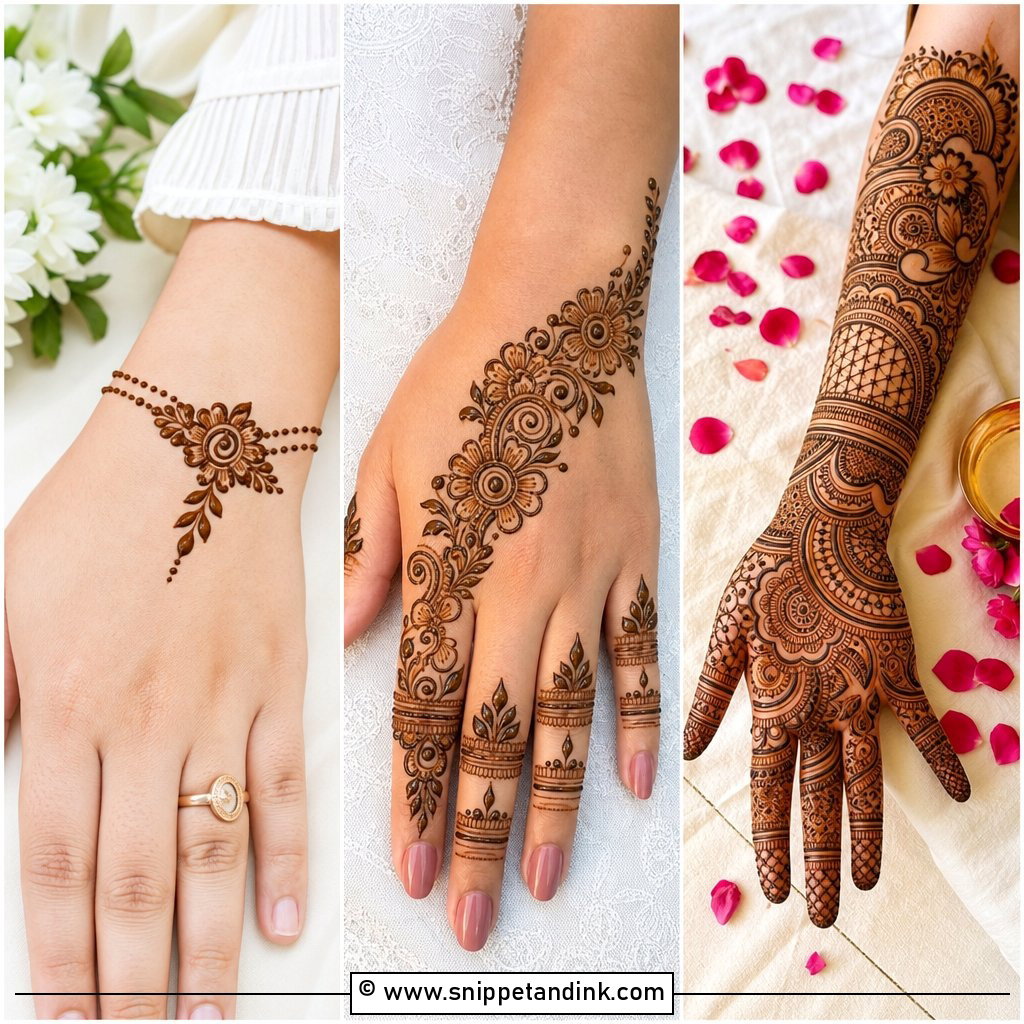

15. Full Hand Simple Engagement Mehndi
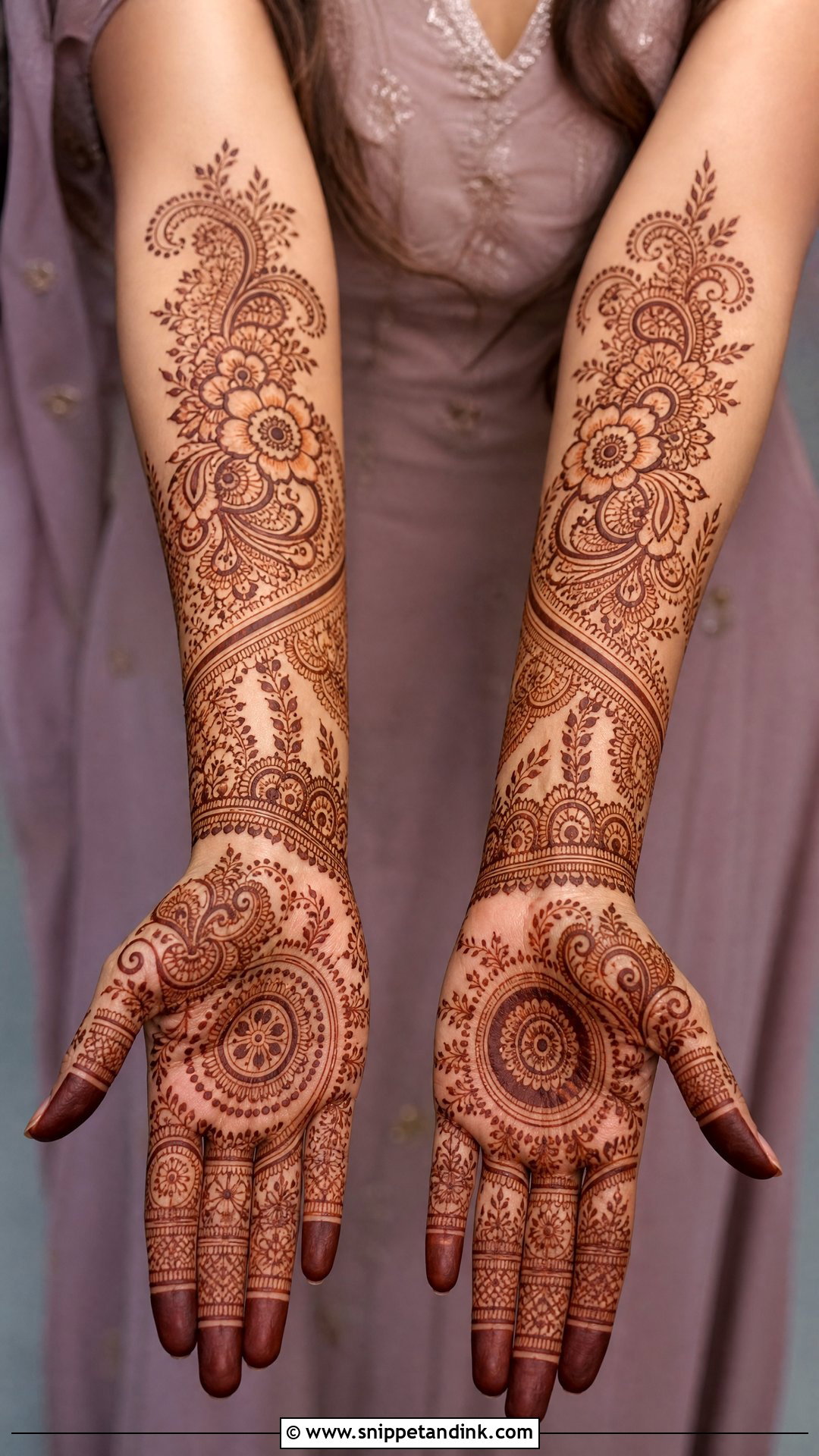
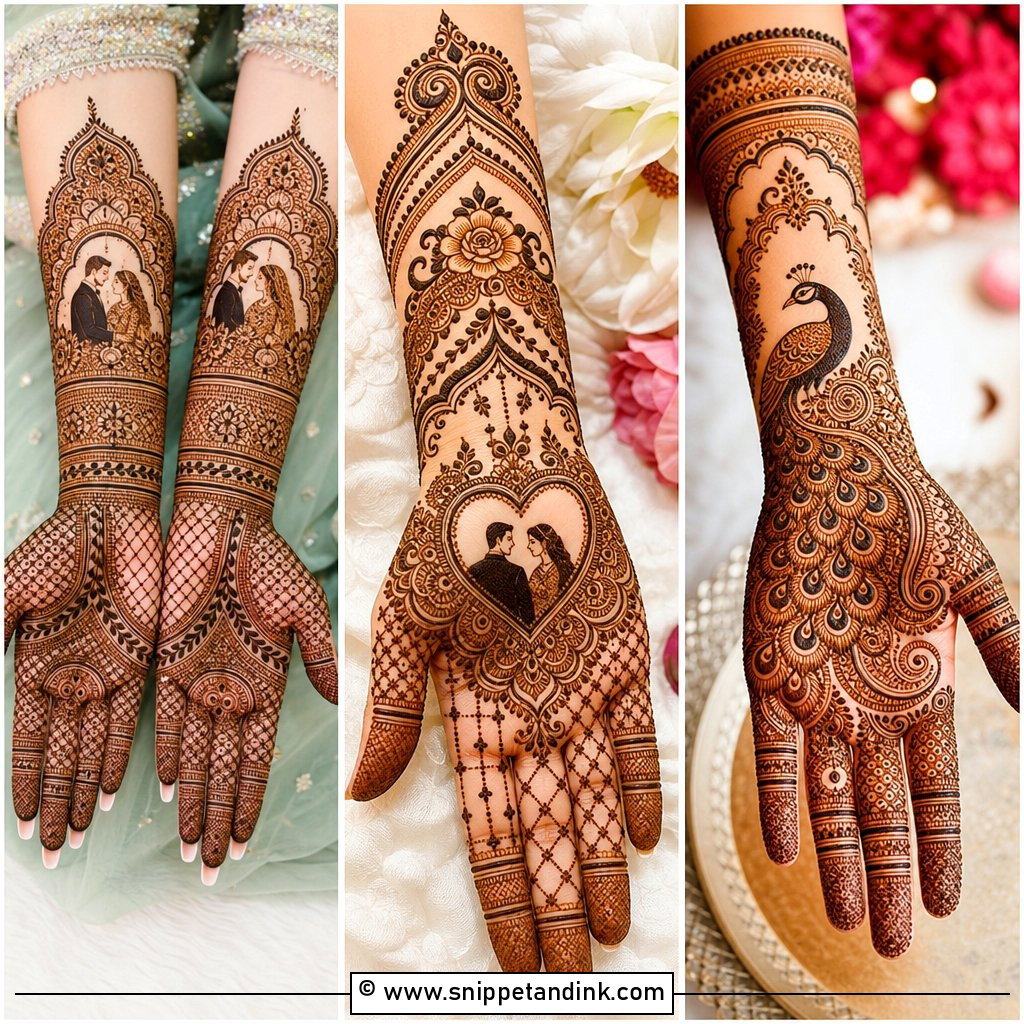
Full coverage can still feel light if the motifs are big. Medium flowers, paisleys, a mandala, leafy vines and soft wrist bands, from fingertips to wrist or slightly onto the forearm. I keep the palm and back hand speaking the same motif language so both sides match when you turn your hands. It takes longer than a half hand, so plan for a longer sitting and for the drying time after.
16. Simple Bridal Engagement Mehndi
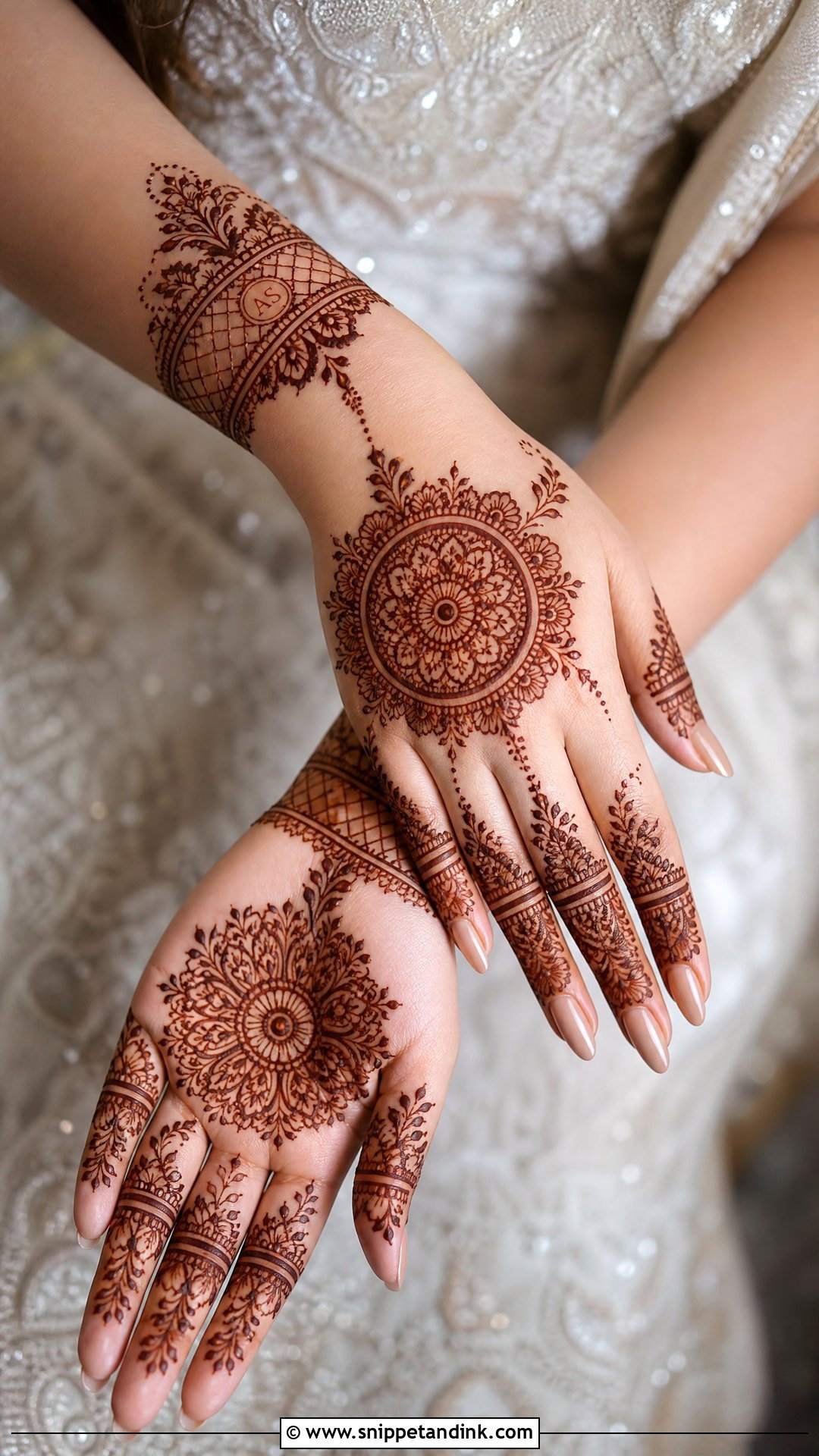
If you have a full bridal mehndi coming later, this is the design for the engagement: festive, but deliberately held back. A central mandala, floral borders, paisley trails, soft finger patterns and a neat wrist cuff. Some brides like to add tiny initials or a small symbol, which I hide inside a motif rather than writing out plainly. I keep fillers limited so the lines stay crisp after the paste dries, and save the heavy detail for the wedding.
17. Modern Engagement Mehndi Design
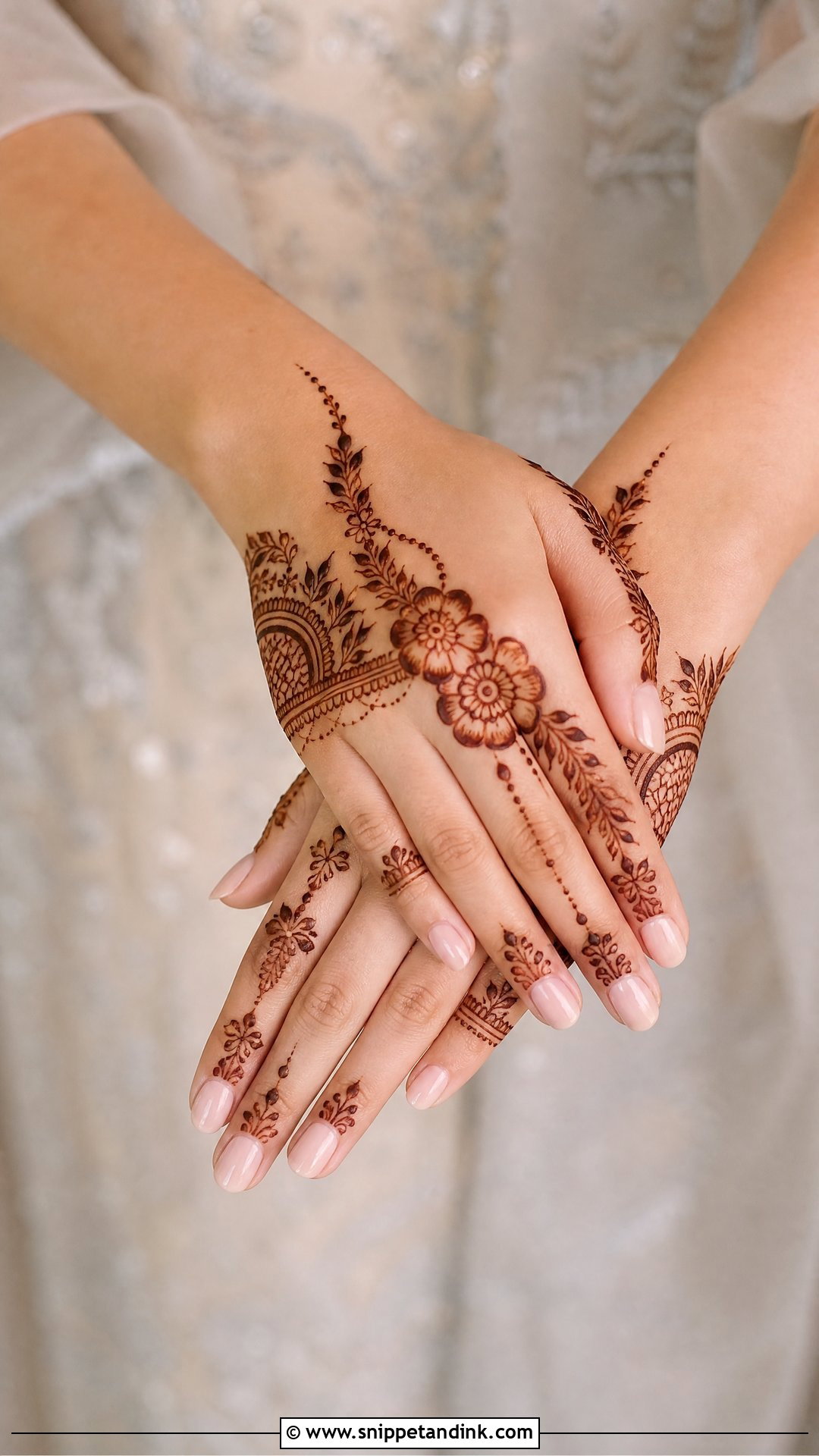
Modern layouts lean on asymmetry: one hand gets a floral trail, the other just finger bands and a small wrist motif. They coordinate without matching. I often use geometric dots, half mandalas, leafy chains or negative-space borders. The rule I follow is a few strong motifs over many small ones, because the eye needs something to land on. This goes well with fusion outfits, gowns and contemporary lehengas.
18. Peacock Engagement Mehndi Design
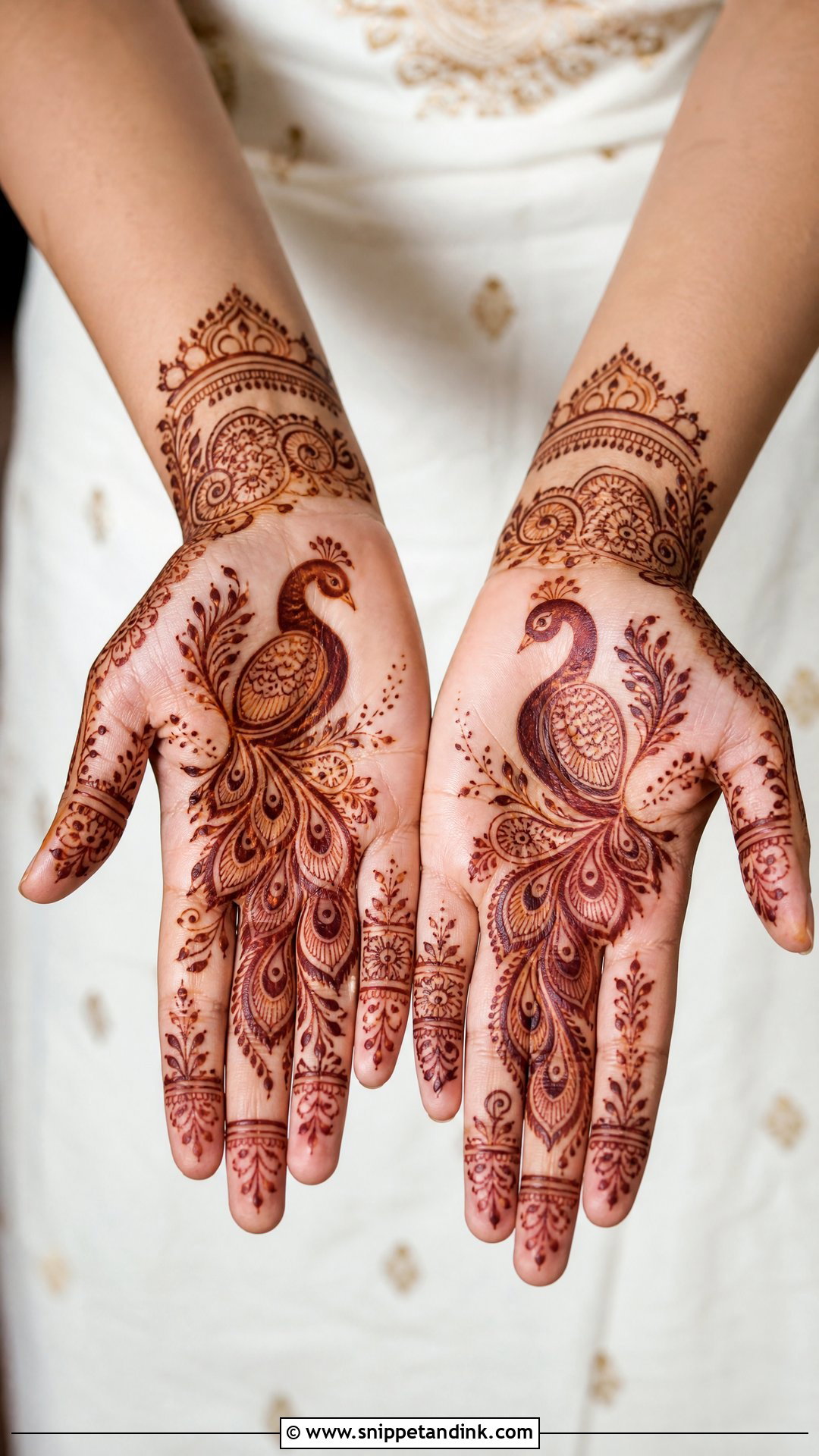
A peacock can stay simple if it’s one bird, not a scene. I place a single small peacock on the palm or back hand and surround it with feathers, paisleys, dots and leafy curves, then echo the feathers in strokes on the fingers. The outline of the bird has to stay clear; once fillers crowd the neck and tail, it stops reading as a peacock in photos. It sits naturally with sarees and lehengas.
19. Side Hand Engagement Mehndi Design
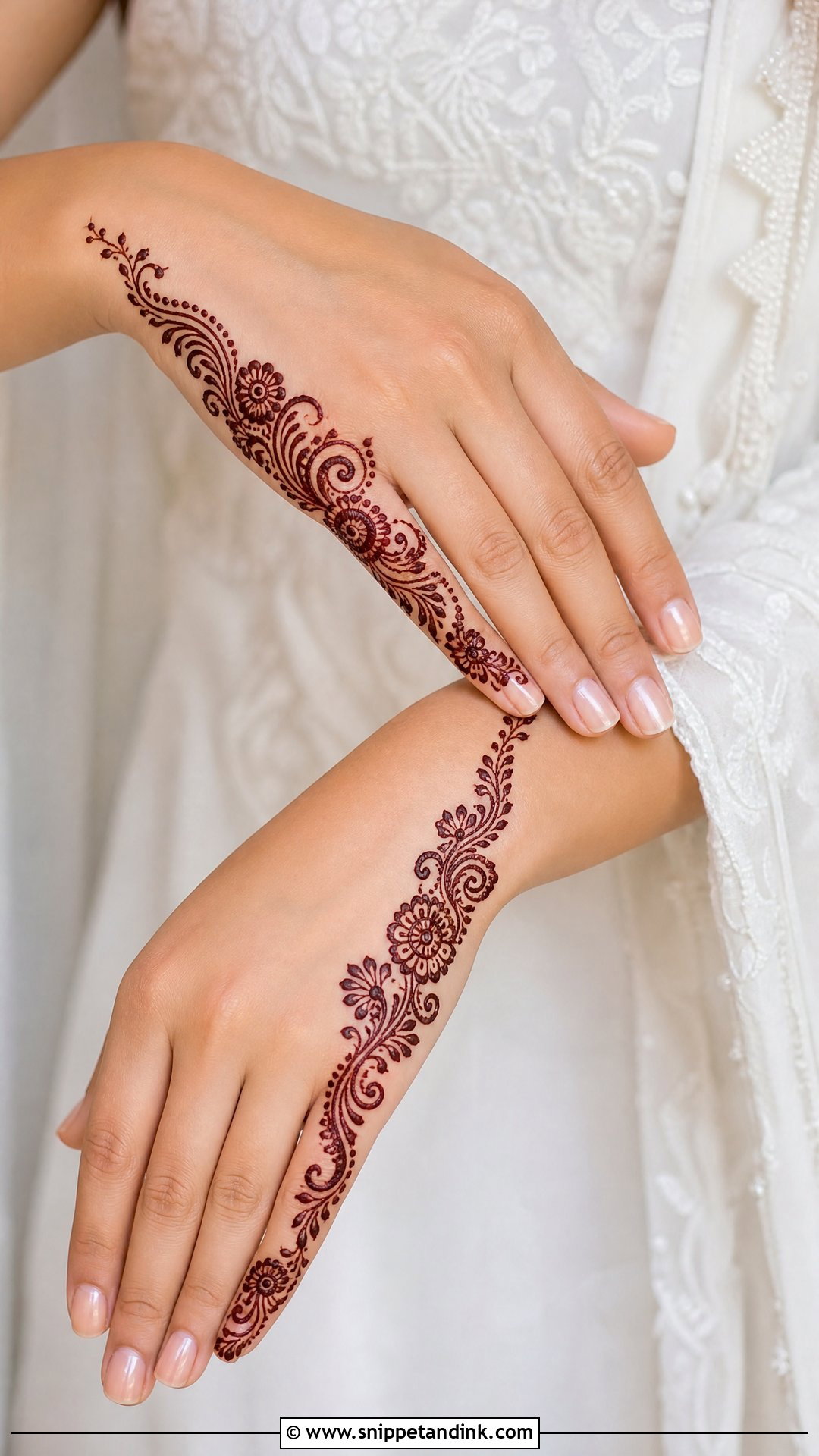
Side designs run along one edge of the hand, wrist to little finger or thumb side to index finger. I curve the trail to follow the hand’s natural line, which is what makes it look like it belongs there rather than stuck on. Floral vines, leafy trails, curved paisleys and dotted chains all suit it. Most of the hand stays open, and it shows nicely when you’re holding a clutch or lifting your hand to show the ring.

20. Wrist To Forearm Engagement Mehndi
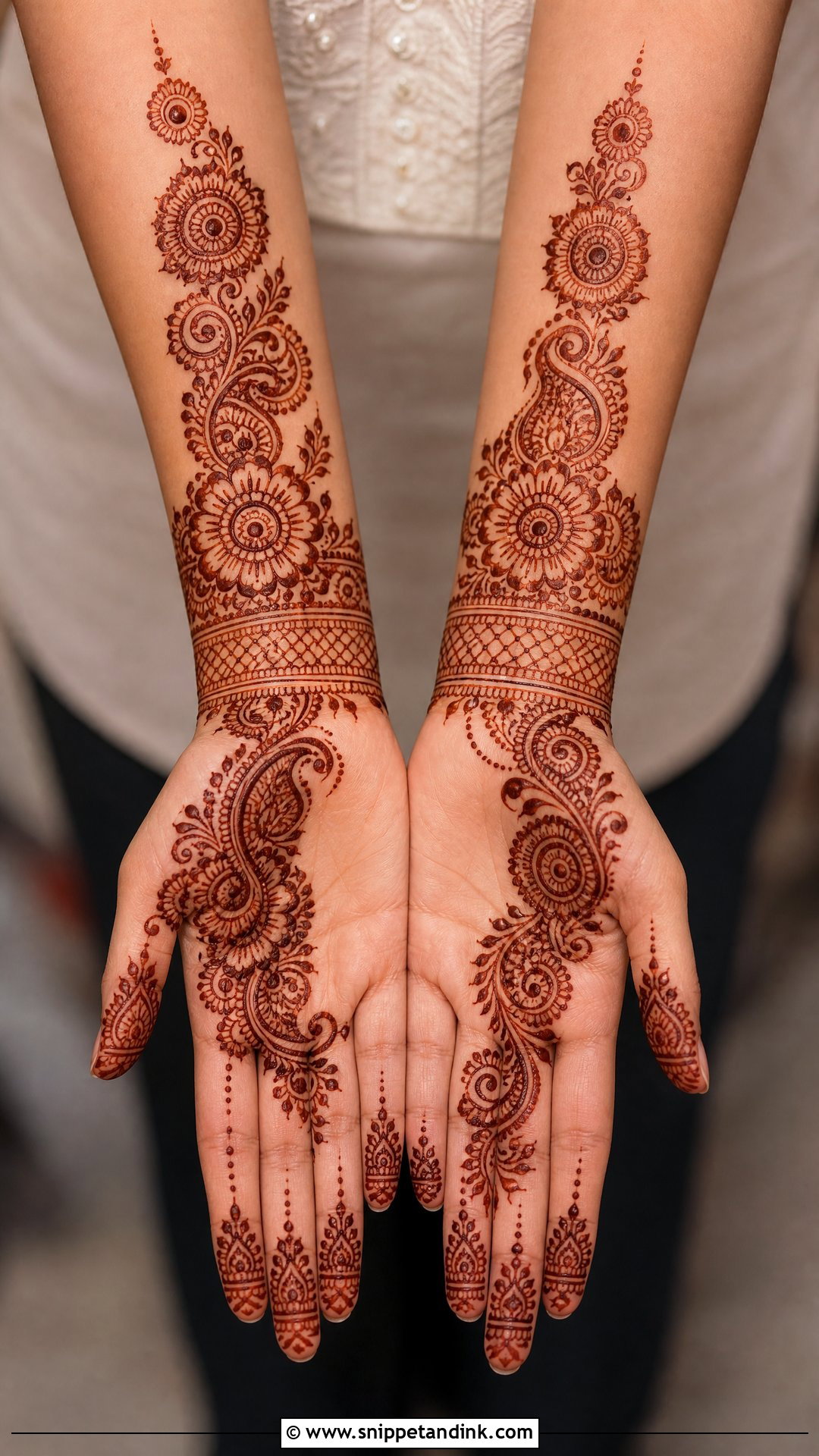
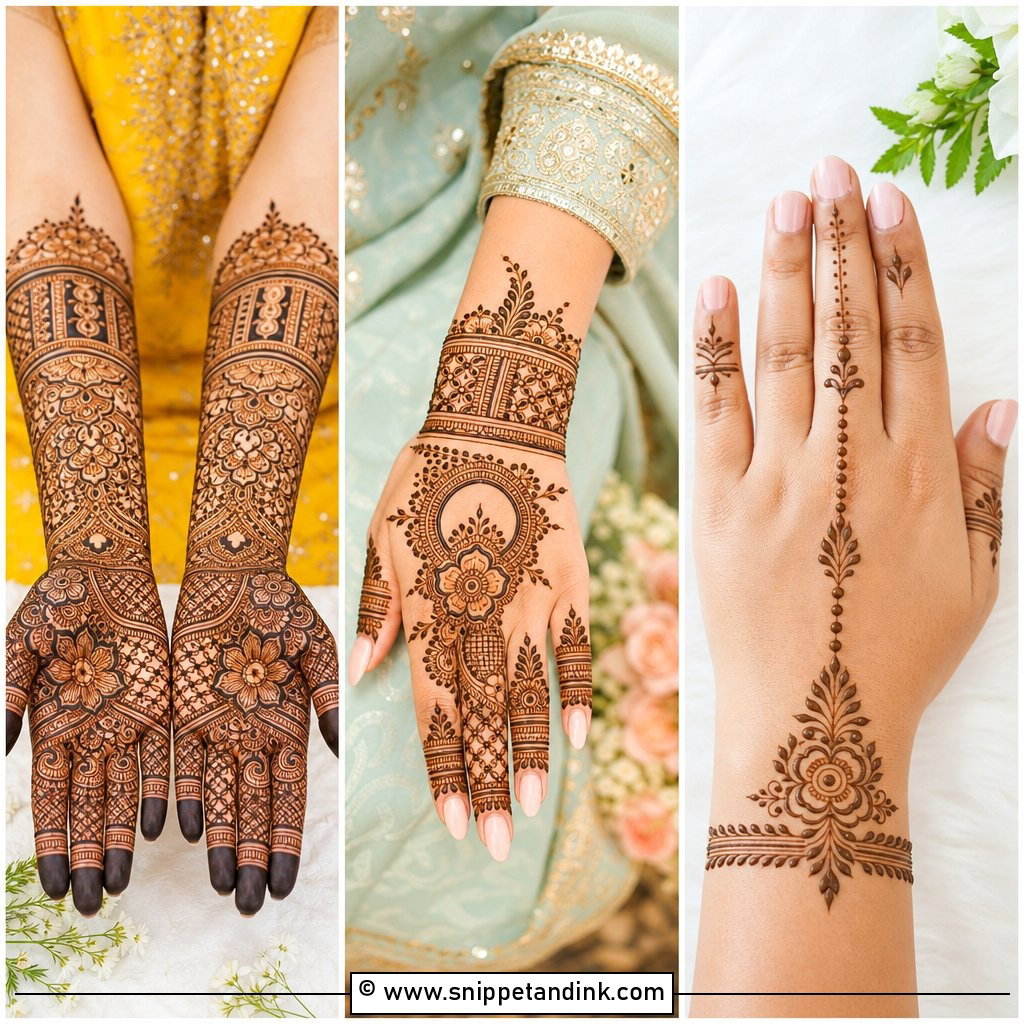
A wrist-to-forearm engagement mehndi makes sense if your sleeves are short or sheer. It starts as a bracelet and climbs up the arm as a vine, paisley trail or mandala chain, while the hand itself stays light. Expect the forearm to stain paler than your fingers and palm; that skin is thicker and holds less color. I keep the arm pattern open with fine lines so a lighter stain still looks intentional.
Is Your Cone Natural Henna?
This is the question I’d ask any artist before she touches your hand. Real henna paste is made from the dried leaf, a liquid and essential oils, and it stains orange first, then darkens. Some cones sold cheaply, and anything called black henna, contain added chemical dyes such as PPD that turn the skin dark within an hour. Those can cause blistering and allergic reactions that last far longer than an engagement.
If the paste smells like hair dye, promises a black stain or says it’s ready to wash off in minutes, I wouldn’t use it. If you have sensitive skin, ask for a small dot on the inner arm a day or two ahead of the full design.
When the Wedding Mehndi Follows a Few Months Later
A henna stain fades over one to three weeks, quicker on the palms because they get washed most. So an engagement design won’t interfere with wedding mehndi unless the two are very close together. If they are, I’d keep the engagement layout on the fingers or back hand and leave the palms clear. Gentle exfoliation a few days before the wedding application removes what’s left of the old stain and gives the new paste fresh skin to work on.
Leave Room for the Ring
Every design here comes back to the same balance: enough pattern to feel festive, enough space that the ring stays the focus. Fingers, mandalas, florals, Indo-Arabic trails or a forearm vine can all be right, depending on your outfit, how long you can sit and where the photos will be taken. Tell your artist which hand the ring goes on and show her your outfit sleeve. With good paste and a day or two for the stain to deepen, even the simplest layout will look rich on your engagement day.
You'll Like These Ideas:




Leave a Reply