
Engagement mehndi sits in an interesting place. It should look bridal in ring photos, yet most brides don’t want the full weight of wedding henna a few weeks or months before the real thing. When a bride sits down with me for an engagement design, I ask three questions first: what are you wearing, how will the ring be photographed, and how much time can you sit still? The answers decide everything else. Some brides want dense Indian work with portraits and filling, others want an Arabic trail, mandala palms, a bracelet wrist, or just fingers that leave space around the ring. Below are twenty designs I draw often, with notes on how each one stains, how long it takes, and who it suits.
Putting the Paste On Two Days Ahead, Not the Night Before
Fresh henna doesn’t come off the skin in its final colour. When the paste is removed, the stain is a bright orange, and it deepens over roughly the next 24 to 48 hours toward reddish brown or maroon. That’s why I prefer applying engagement mehndi a day or two before the ceremony. Applied the night before, you risk ring photos with orange hands.
There’s also some preparation on your side. Wax, scrub, and do any manicure before the mehndi session, never after, because exfoliating the skin removes the top layer that holds the colour. Skip lotion on the day of application; oily skin stops the paste from sticking.
- Ask your artist whether their cones are made fresh with natural henna. Natural henna only stains orange to deep brown; anything that turns black quickly contains added chemicals and can cause a serious skin reaction.
- If you have sensitive skin, ask for a small patch test a week before, since some pastes use strong essential oils.
- Wear a top with loose sleeves you can push up, and sit somewhere you won’t need to move for a couple of hours.
1. Full Hand Engagement Mehndi For Bride
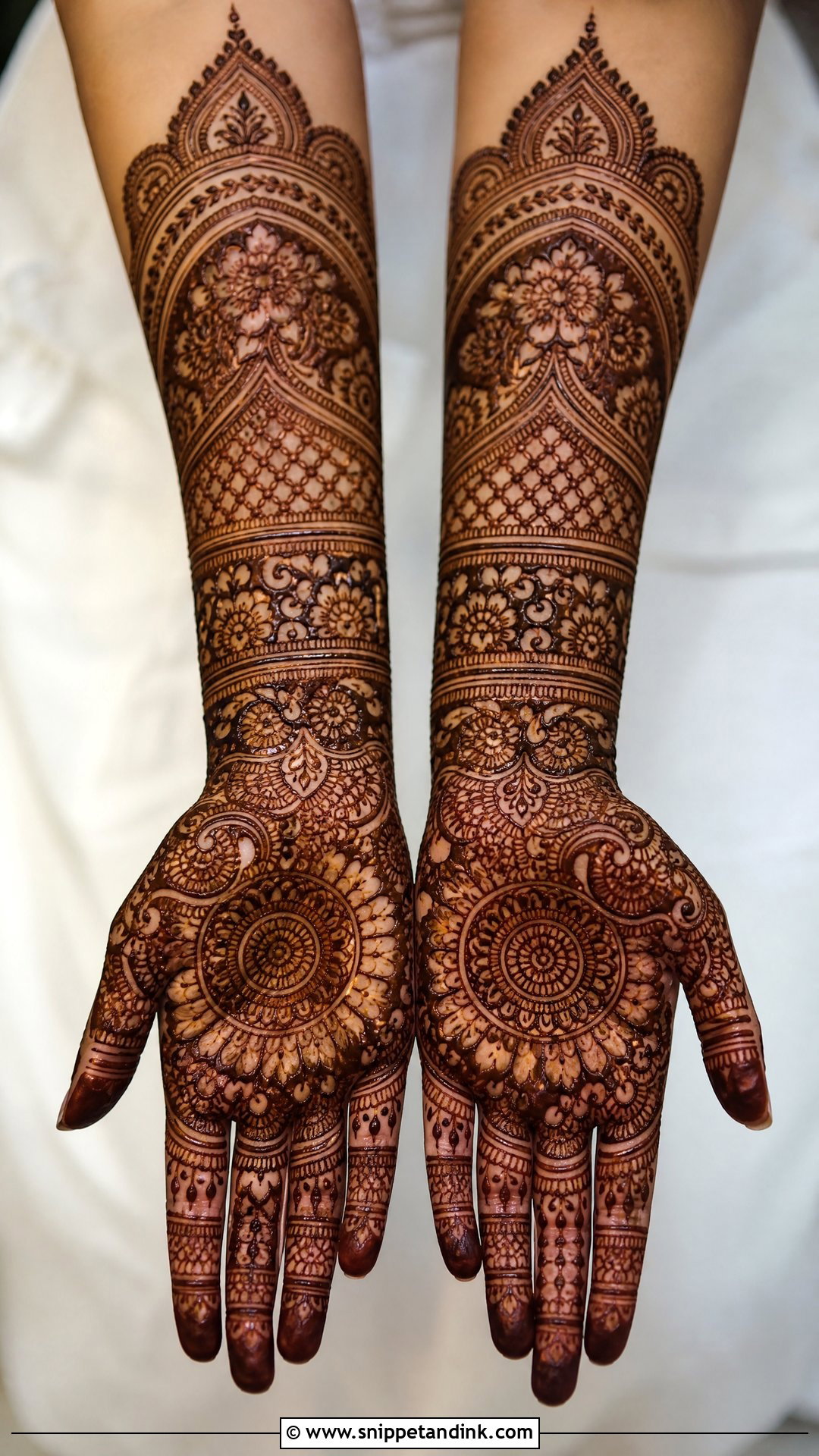
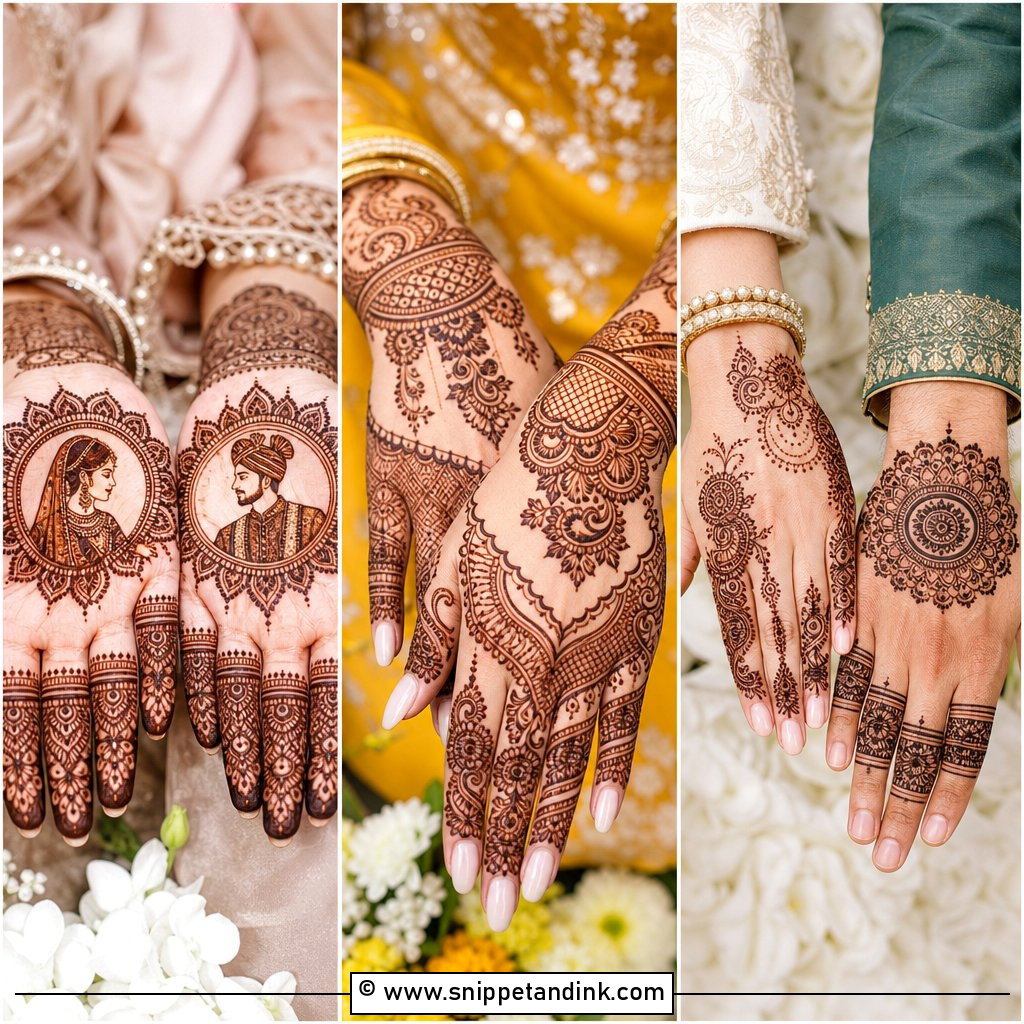
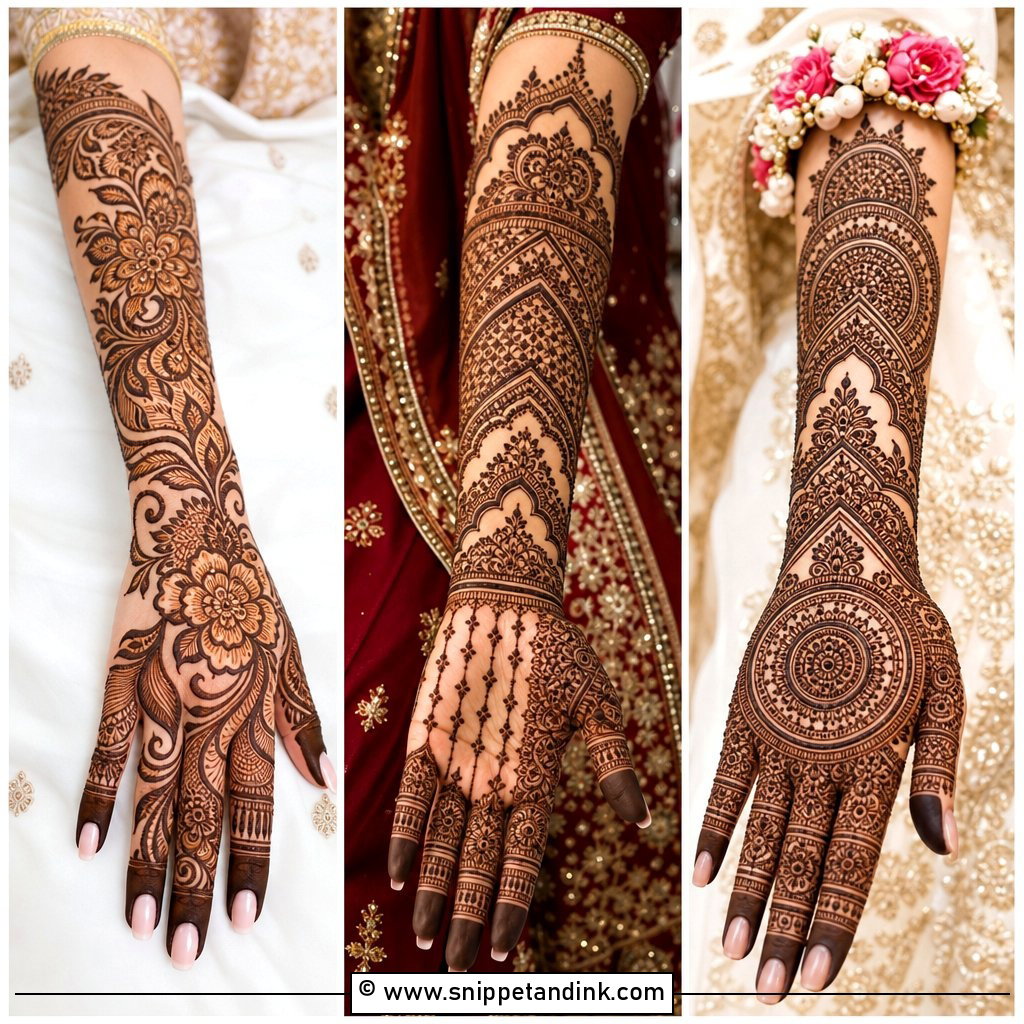
Full coverage takes the longest of anything here, often a few hours for both hands, so plan the day around it. A full hand engagement mehndi usually runs over palm, fingers, wrist and lower forearm with paisleys, florals, jaali grids and fine filler. For an engagement, I leave the centre of the palm a little more open than I would for a wedding, with a mandala, a ring motif or initials, so the design still has somewhere for the eye to rest. Kundan, bangles and heavy embroidery all sit comfortably against it. Expect the palm to stain darker than the forearm; skin there takes colour more readily, so the deepest maroon will always be in the centre.
2. Simple Engagement Mehndi For Bride
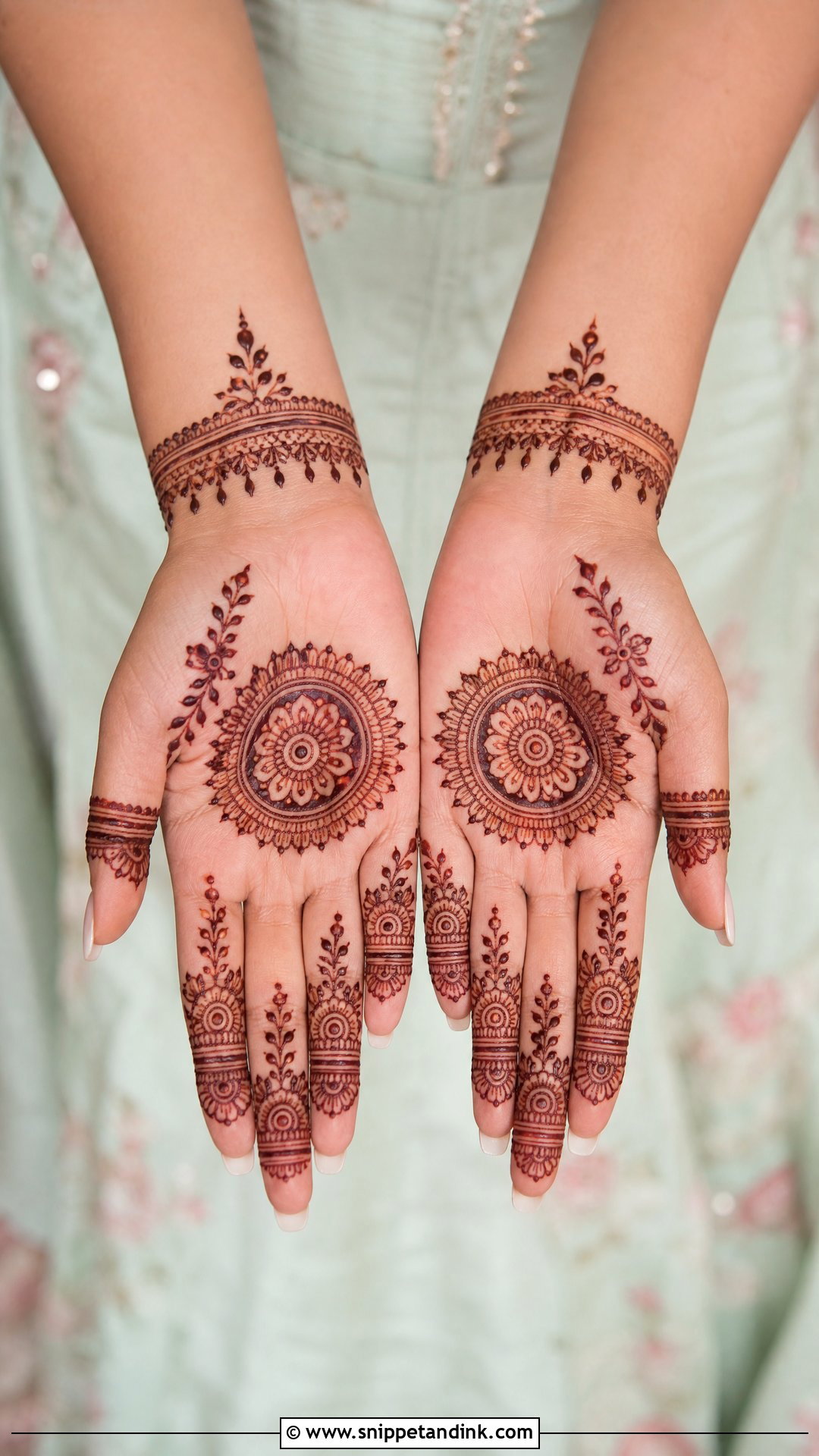
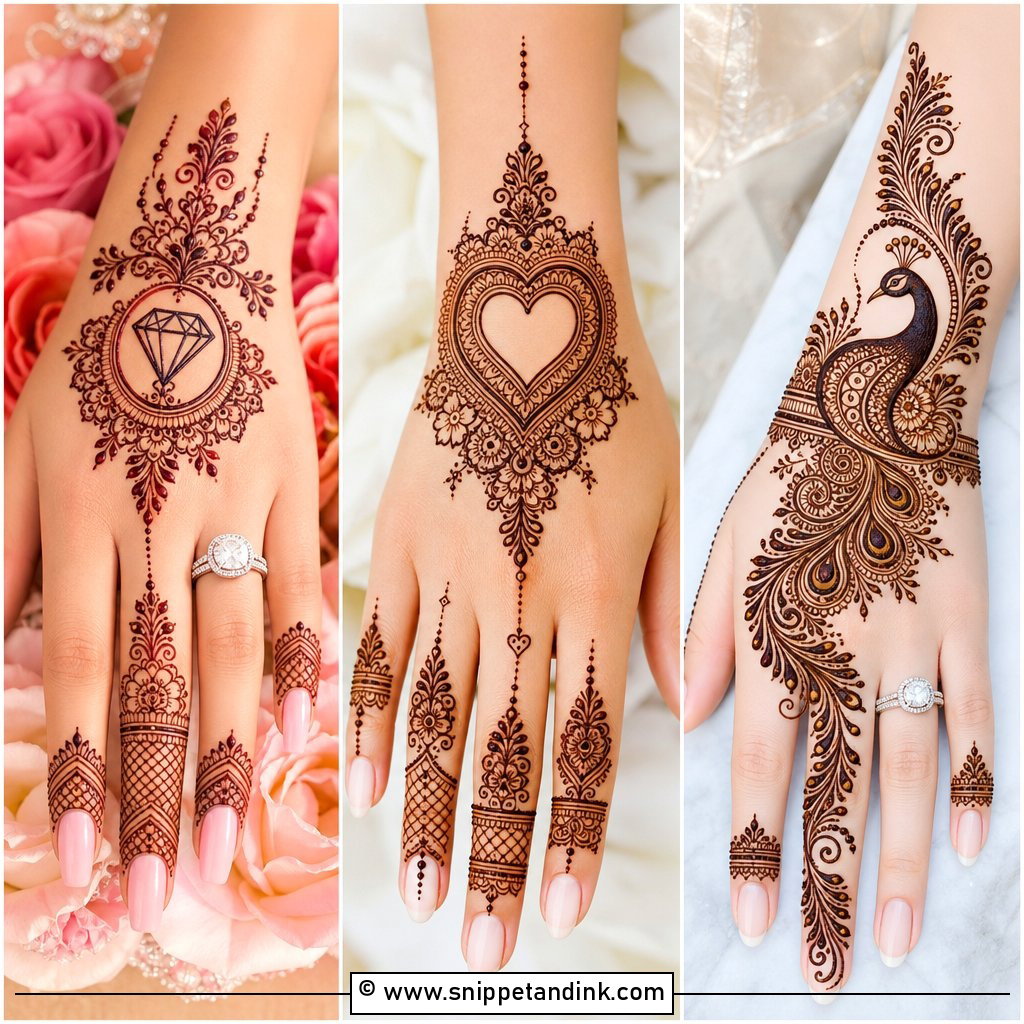
Simple doesn’t mean quick and careless. With so little on the hand, every line is visible, so I use a finer cone tip and slow down. A clean palm motif, light finger detail and a slim wrist band leave plenty of skin showing, which lets the ring do the talking. It’s a sensible pick with a pastel outfit or an engagement gown. A small heart or initials makes it personal. The thing I’d watch is a design that stops abruptly; if the lines don’t finish at a band or a border, the hand looks half done rather than delicate.
3. Arabic Engagement Mehndi For Bride
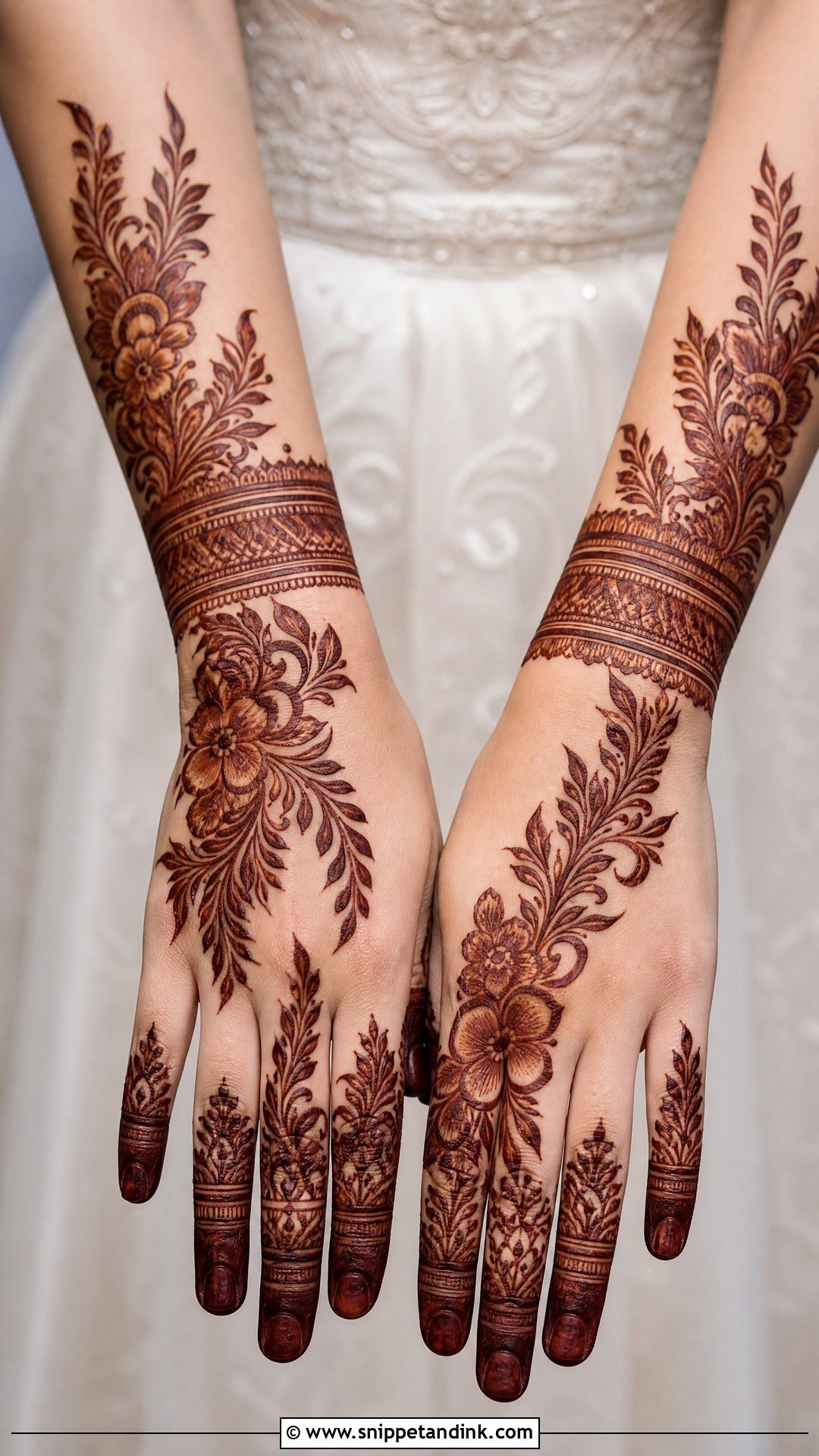
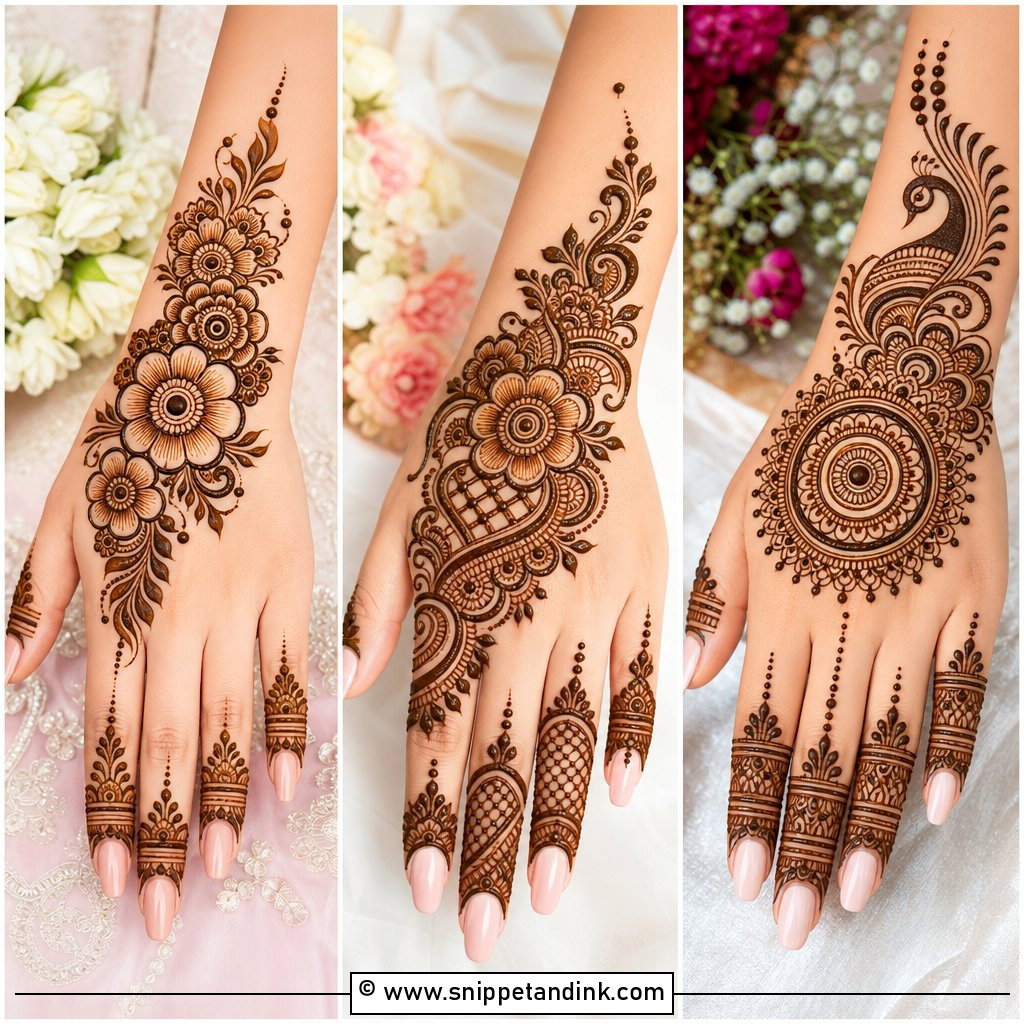
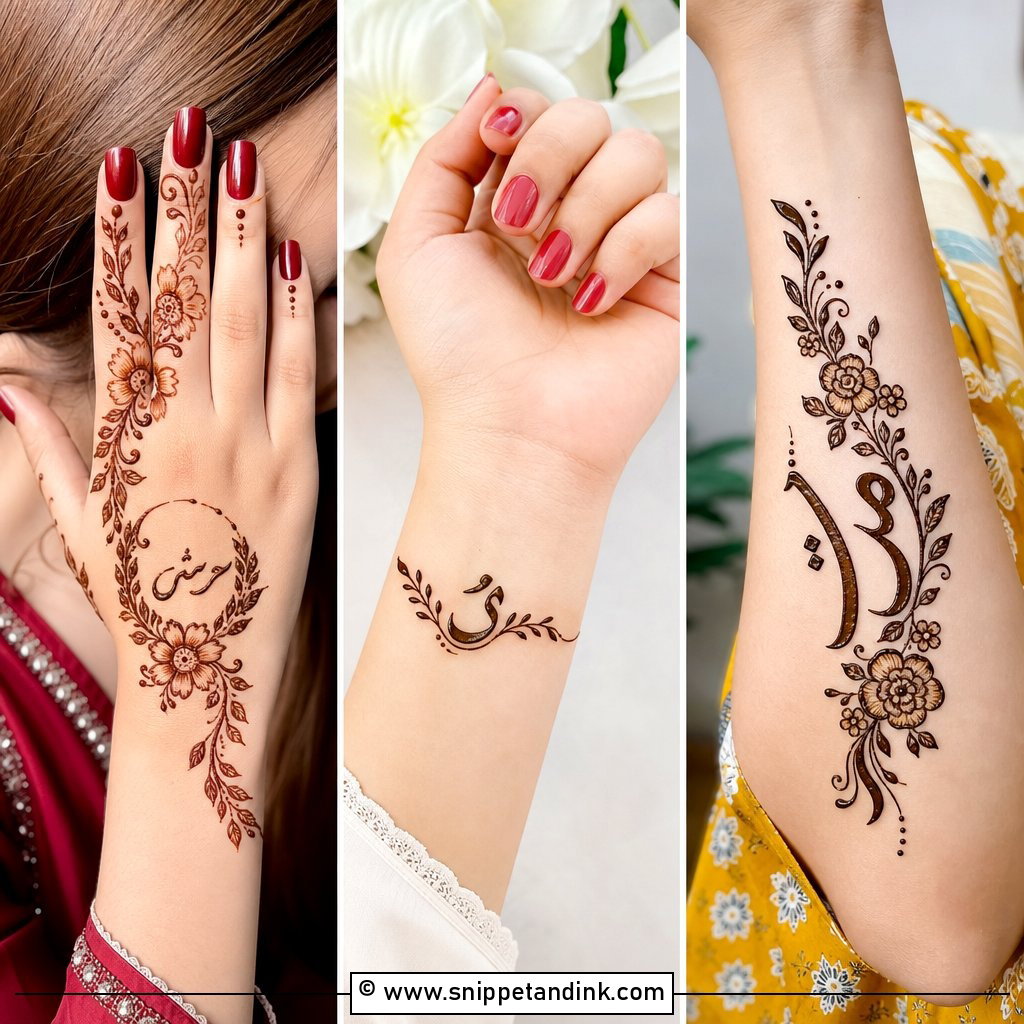
Arabic engagement mehndi is built on a diagonal: it starts near the wrist, flows across the hand with bold shaded flowers and leaves, and ends on the fingers. Because the motifs are larger with open skin between them, each petal reads clearly in a photo, even from across the room. The shading is done by pulling the cone with lighter pressure, and that lighter paste stains paler, which is what gives the flowers depth. A fuller wrist cuff and coloured-in fingertips make it feel bridal. It sits well with a heavily worked sharara or saree, since the outfit is already busy.
4. Back Hand Engagement Mehndi For Bride
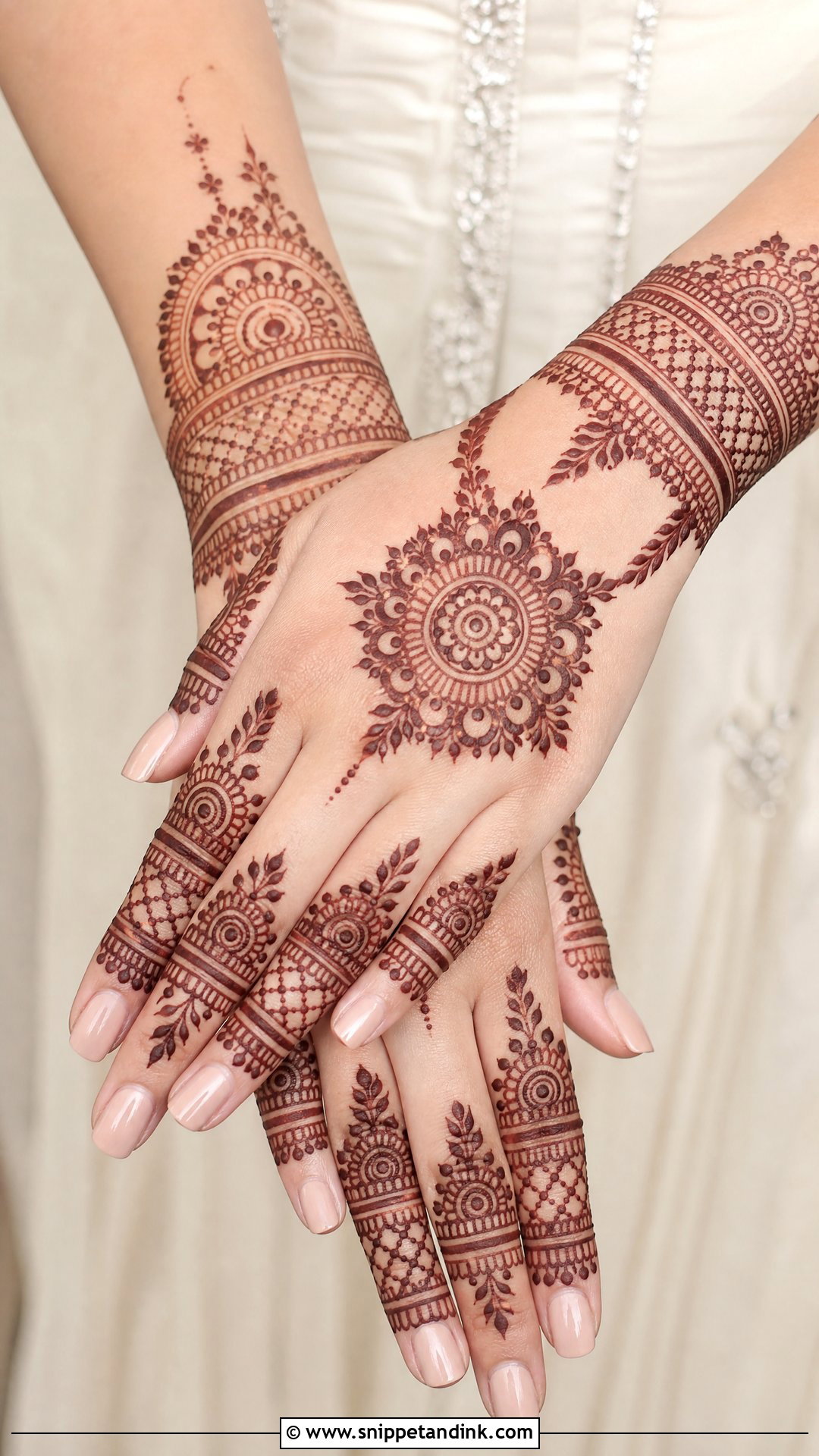
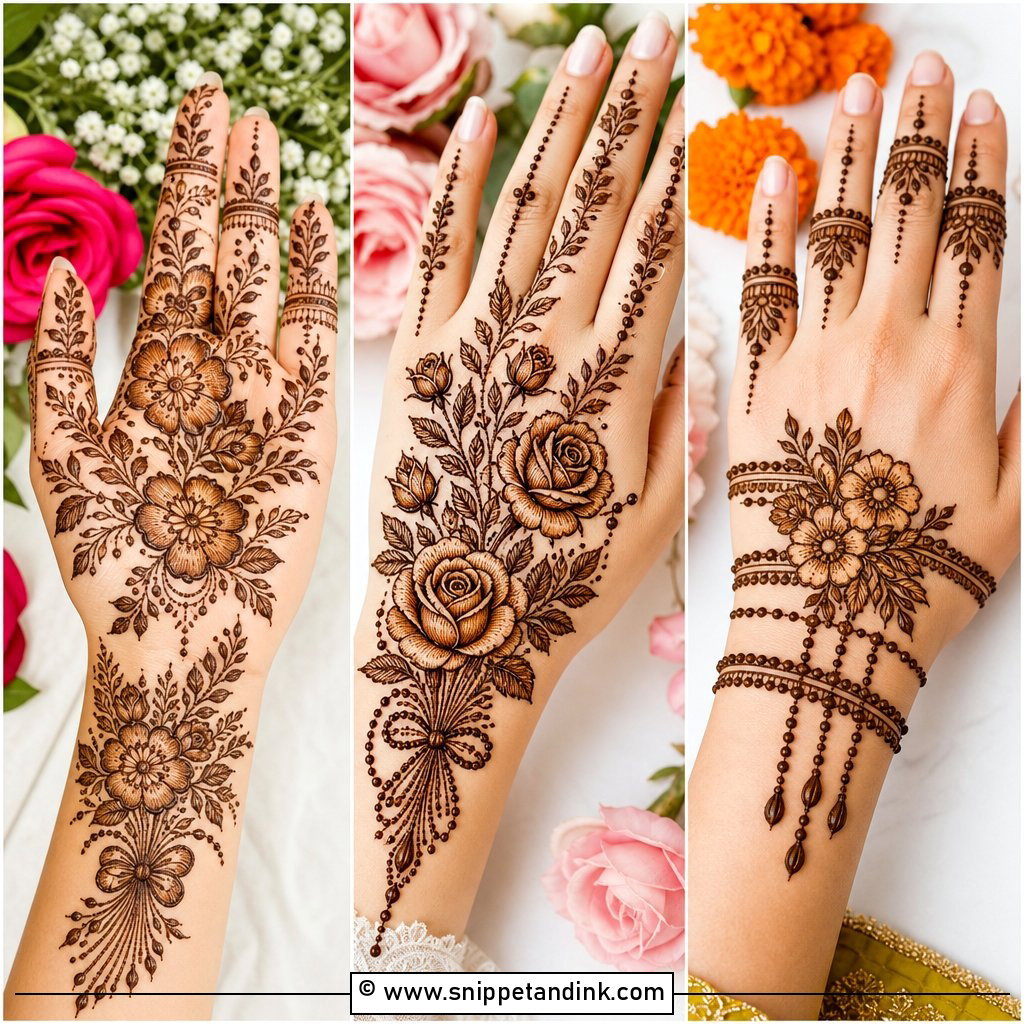
Here’s the honest catch with the back hand: it’s the most photographed part of an engagement, and it’s also where henna stains lightest. Skin on the back of the hand is thinner and moves more, so the colour usually ends up a shade or two below the palm. I plan for that by keeping the back hand engagement mehndi bold and clean rather than packed with tiny filler that will fade into a blur. Central mandalas, floral trails, bracelet cuffs and leafy chains all work. I leave a band of negative space on the ring finger so the ring has a clear frame. Match both hands for a classic look, or mirror them loosely for something more modern.
5. Front Hand Engagement Mehndi For Bride
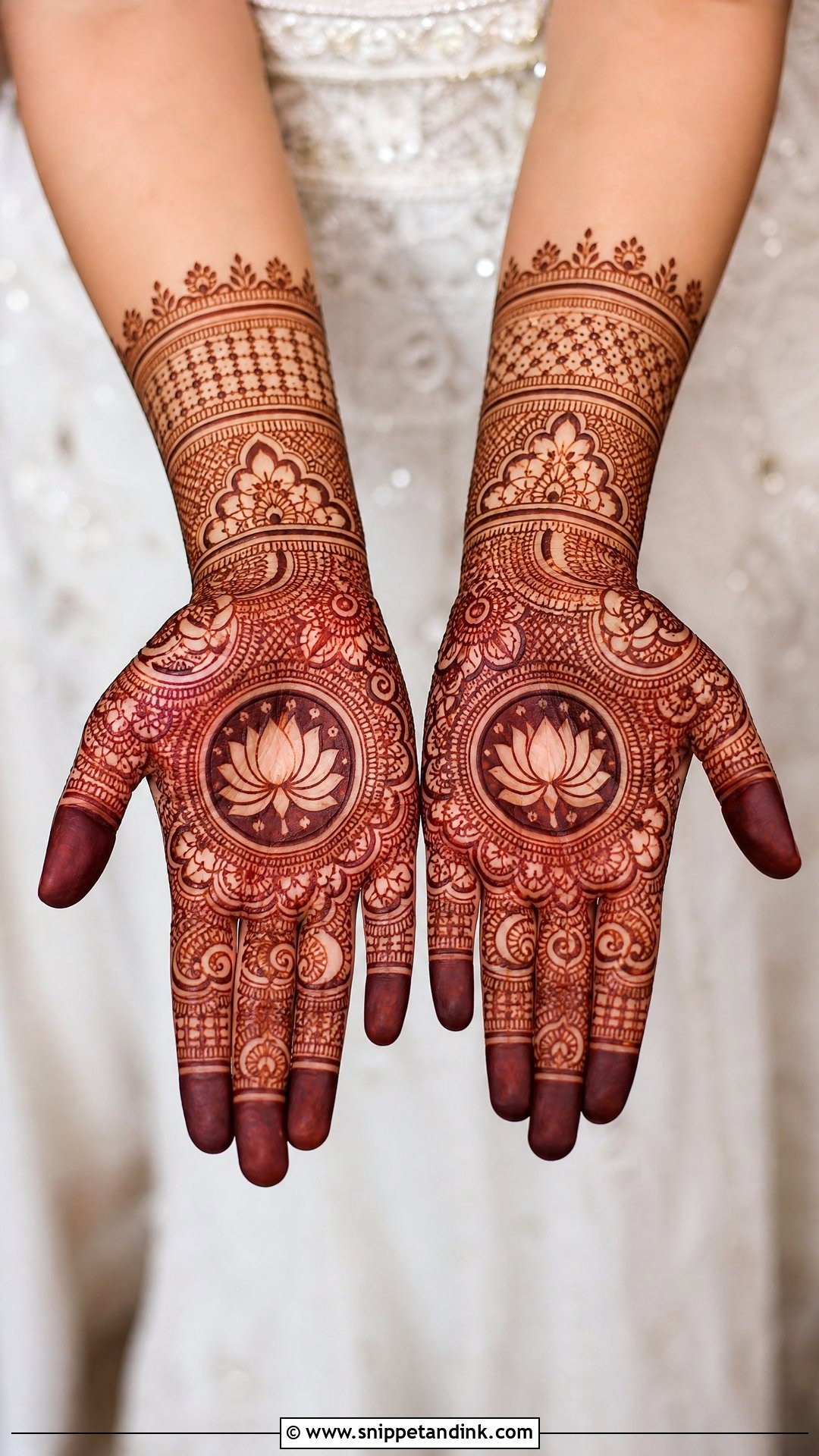
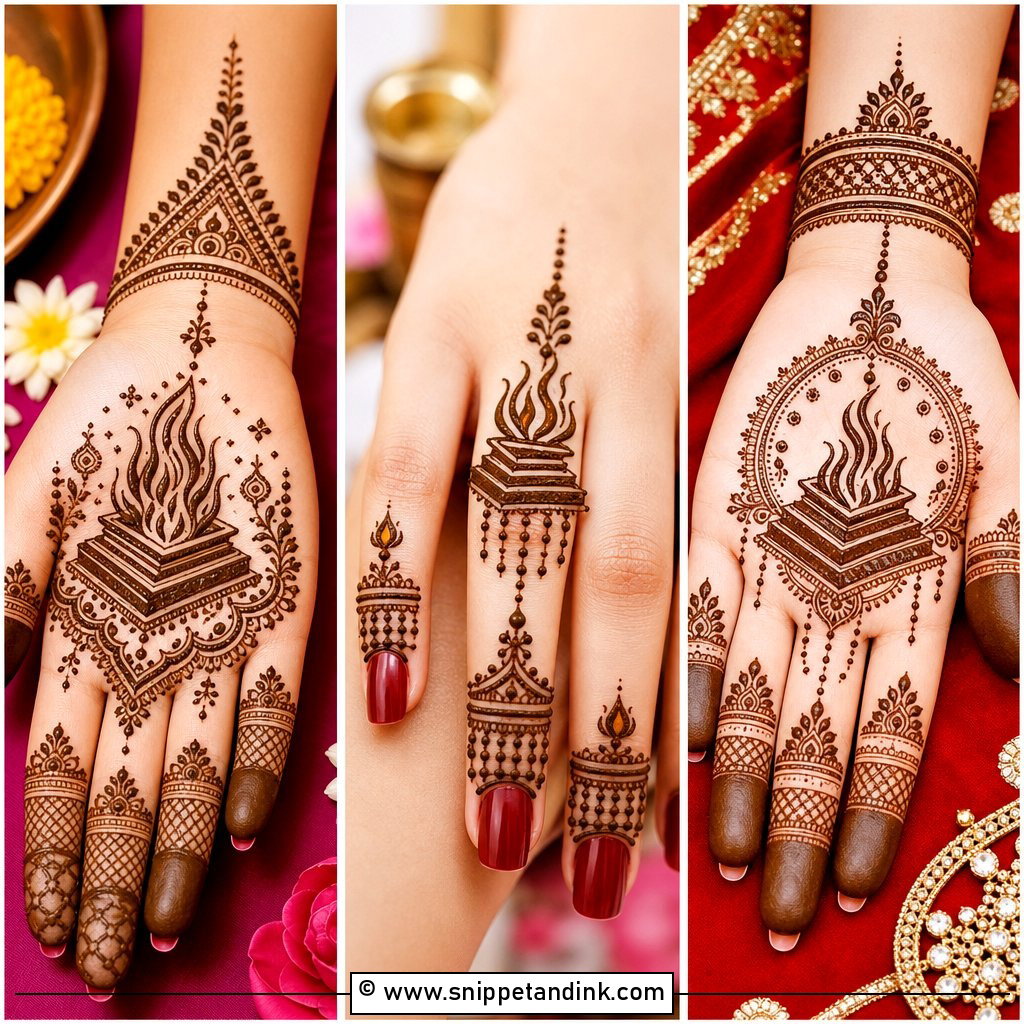
The palm is where henna performs best, so a front hand engagement mehndi is the place for your most detailed motif. A large mandala, lotus, paisley cluster or peacock in the centre, fine lines and dots down the fingers, and a bangle-style border joining palm to wrist. I’d hold back on filling every gap for an engagement; a crowded palm darkens into one solid patch and you lose the drawing. Remember that you can’t use your palms freely while the paste is on, so have someone around to help with food, phones and clothes.
6. Indo Arabic Engagement Mehndi For Bride
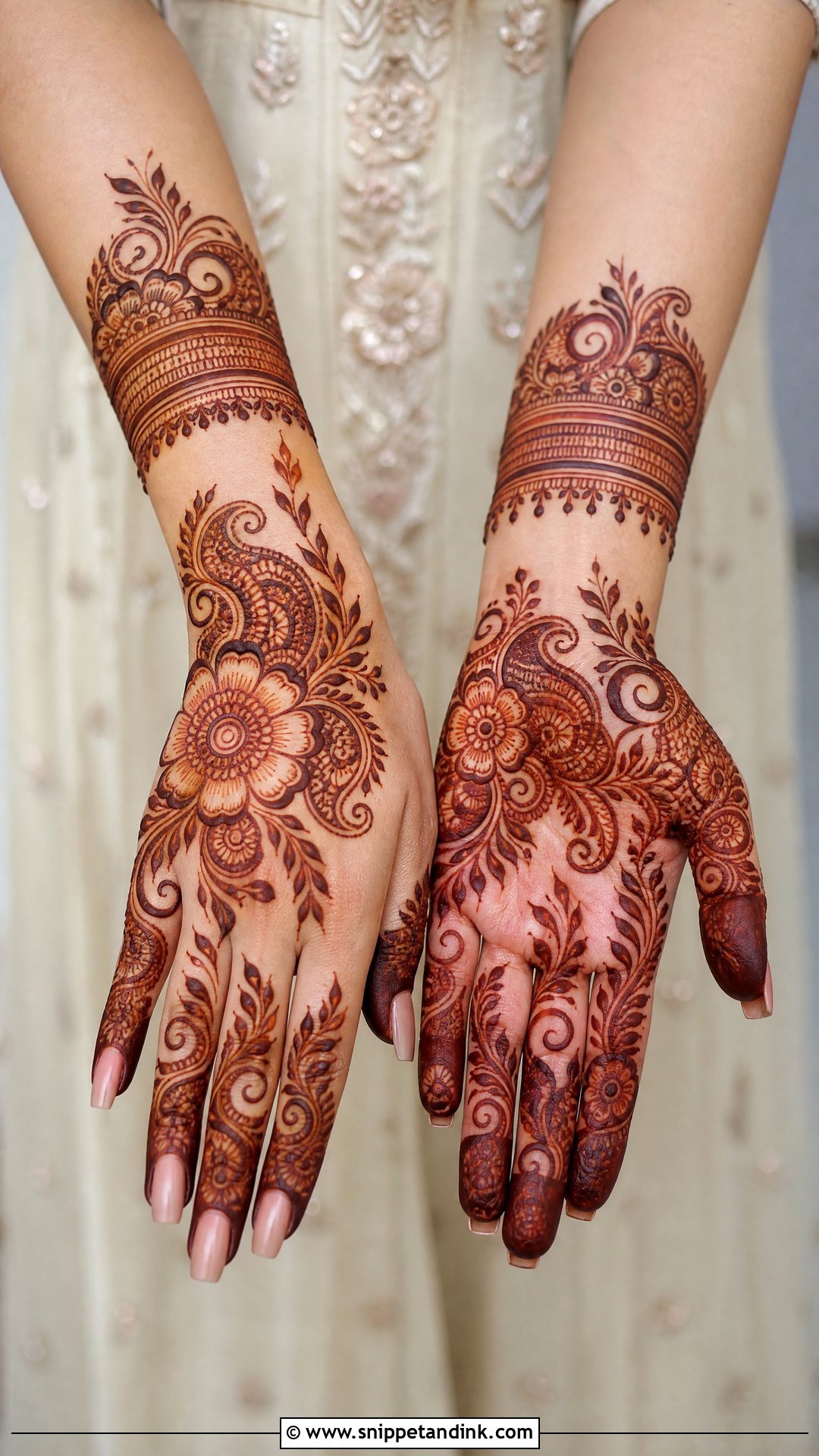
Indo Arabic is a middle path, and it’s the request I get most from brides who can’t decide. The open spacing of Arabic stays, but the motifs themselves get Indian detail: lined petals, small paisleys, filled leaves. It works on palm and back hand alike. I finish it with a decorated wrist cuff and coloured fingertips so it looks complete. It’s flexible with outfits too, sitting just as comfortably with a fusion lehenga as with a traditional suit.
7. Mandala Engagement Mehndi For Bride
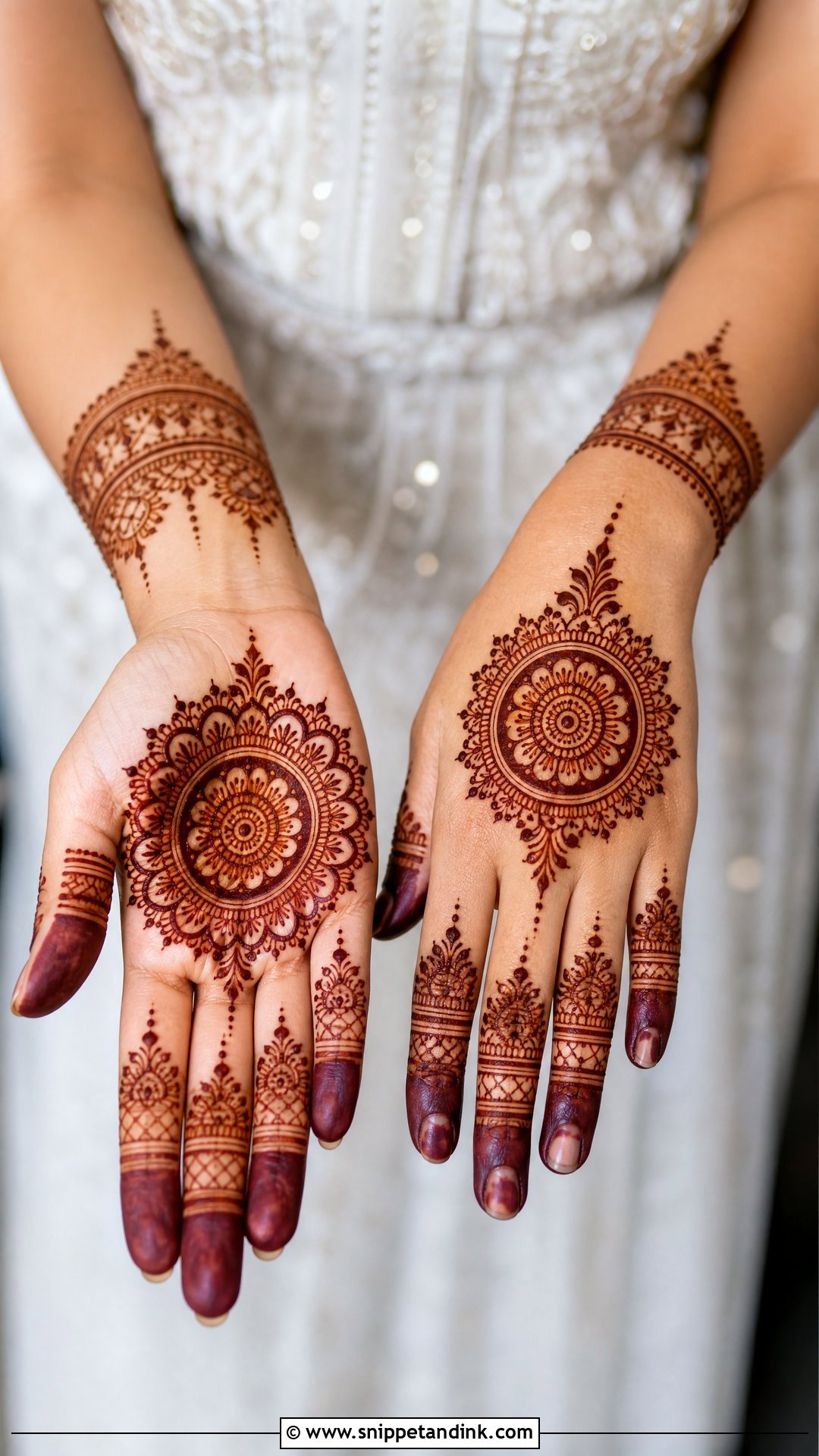
A mandala is the easiest design to make symmetrical across two hands, which matters more than people think, because mismatched hands show the moment you put them side by side for a ring shot. I start the circle from its centre dot and build outward in rings, checking the spacing with every layer. Small and minimal, or large with several layers of petals: both work. The round shape draws the eye to the middle of the hand, and open skin around it keeps things clean. Brides who want something traditional but light usually land here.
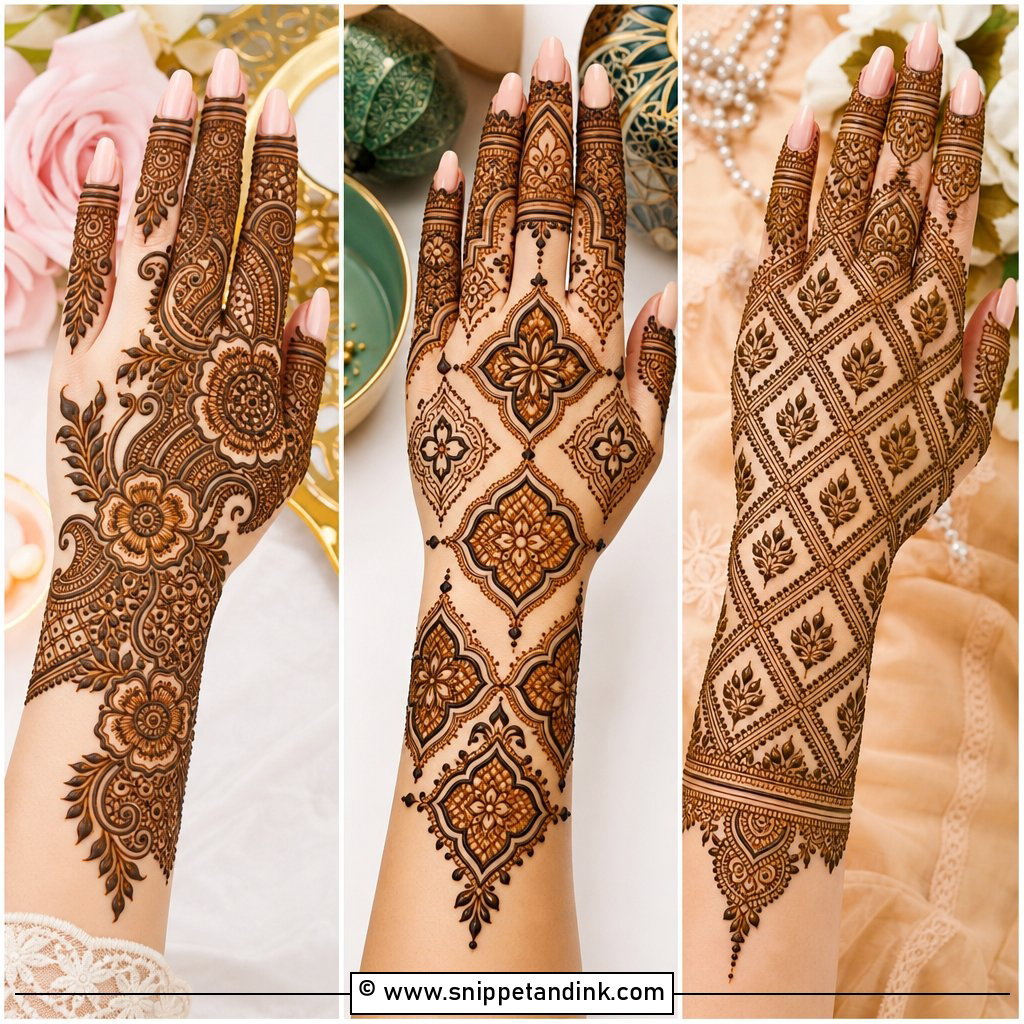
8. Floral Engagement Mehndi For Bride
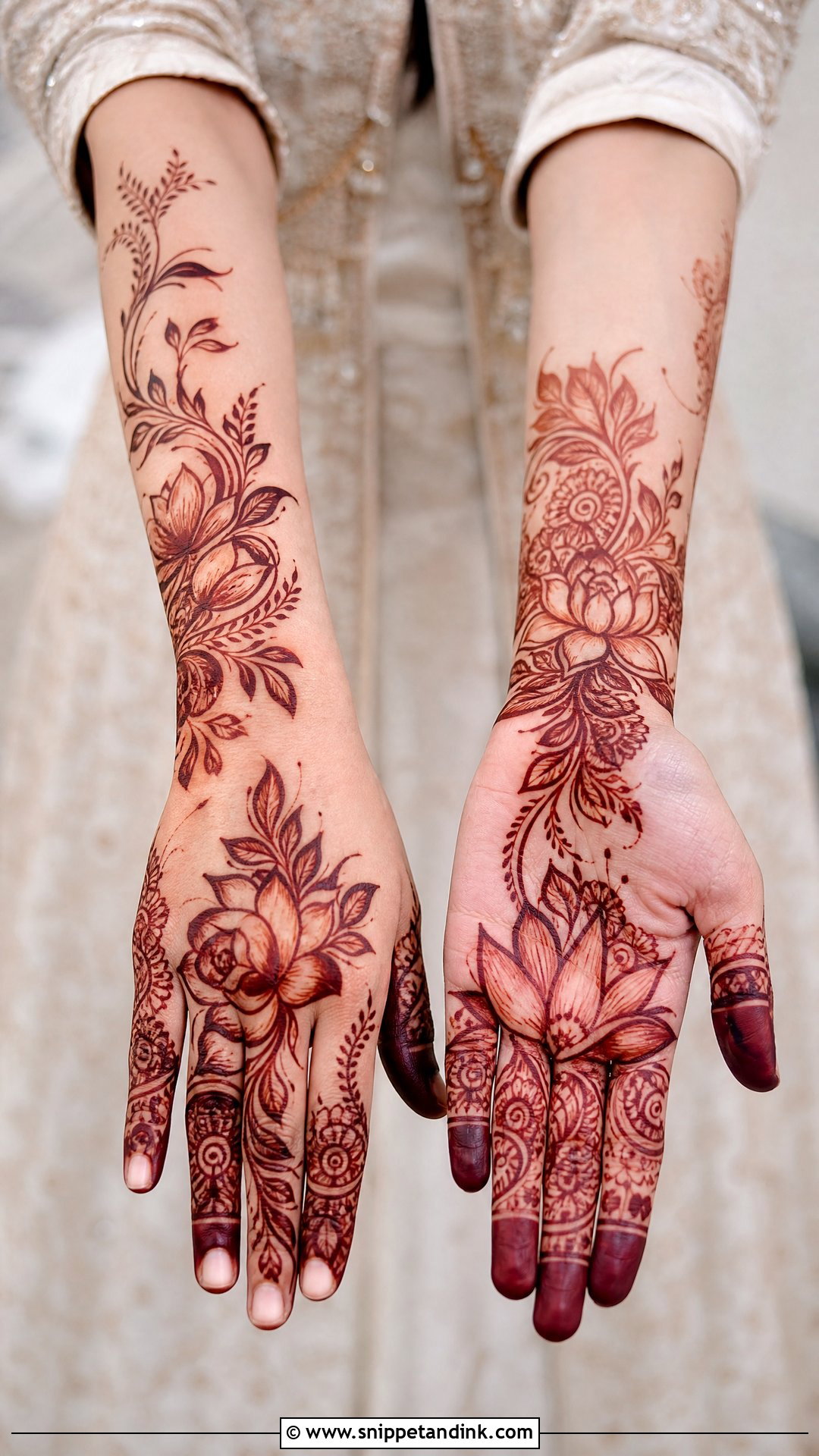
Flowers work best when they follow a route across the hand rather than being scattered. I plan a diagonal trail, a full mesh of flowers, or a vine running wrist to finger, and draw the biggest bloom first so everything else fits around it. Roses, lotuses, leafy vines and small buds can all be shaded lightly so the hand looks full while staying airy. Floral mehndi is very adaptable; it goes with pastel lehengas, pearls and soft embroidery especially well. Initials or a small heart hide easily inside the petals.
9. Peacock Engagement Mehndi For Bride
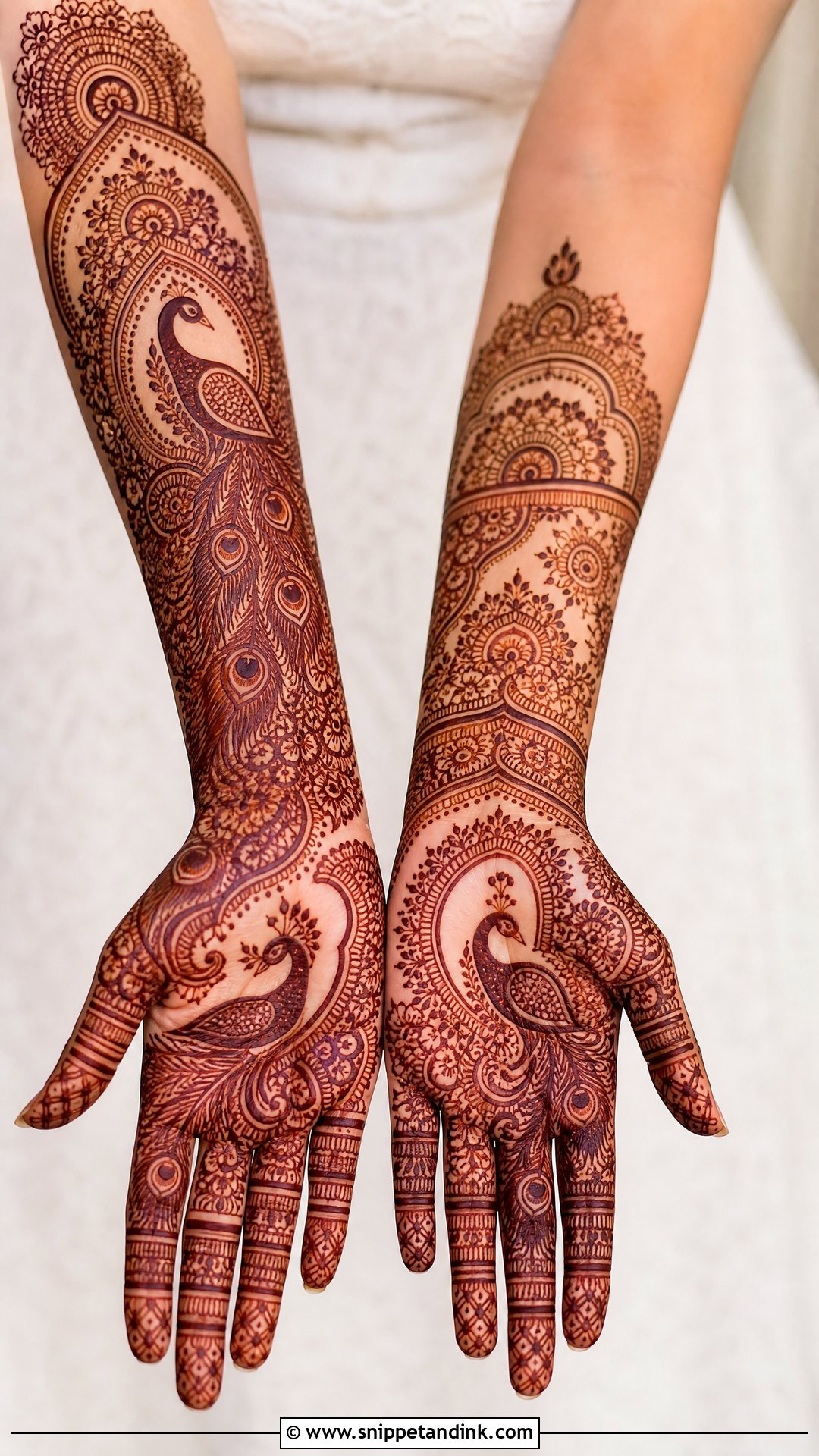
A peacock is the motif that asks the most of an artist, because the neck curve has to be drawn in one confident stroke or it looks stiff. It can sit in the centre of the palm, run along the back hand, or form part of a full design with paisleys and floral borders. For an engagement, one peacock per hand is plenty; two crammed together lose their shape. Leafy vines, mandalas and light filler around it keep the balance. The feathers need a rich stain to show their detail, so this is a design to protect carefully during aftercare.
10. Ring Ceremony Mehndi For Bride
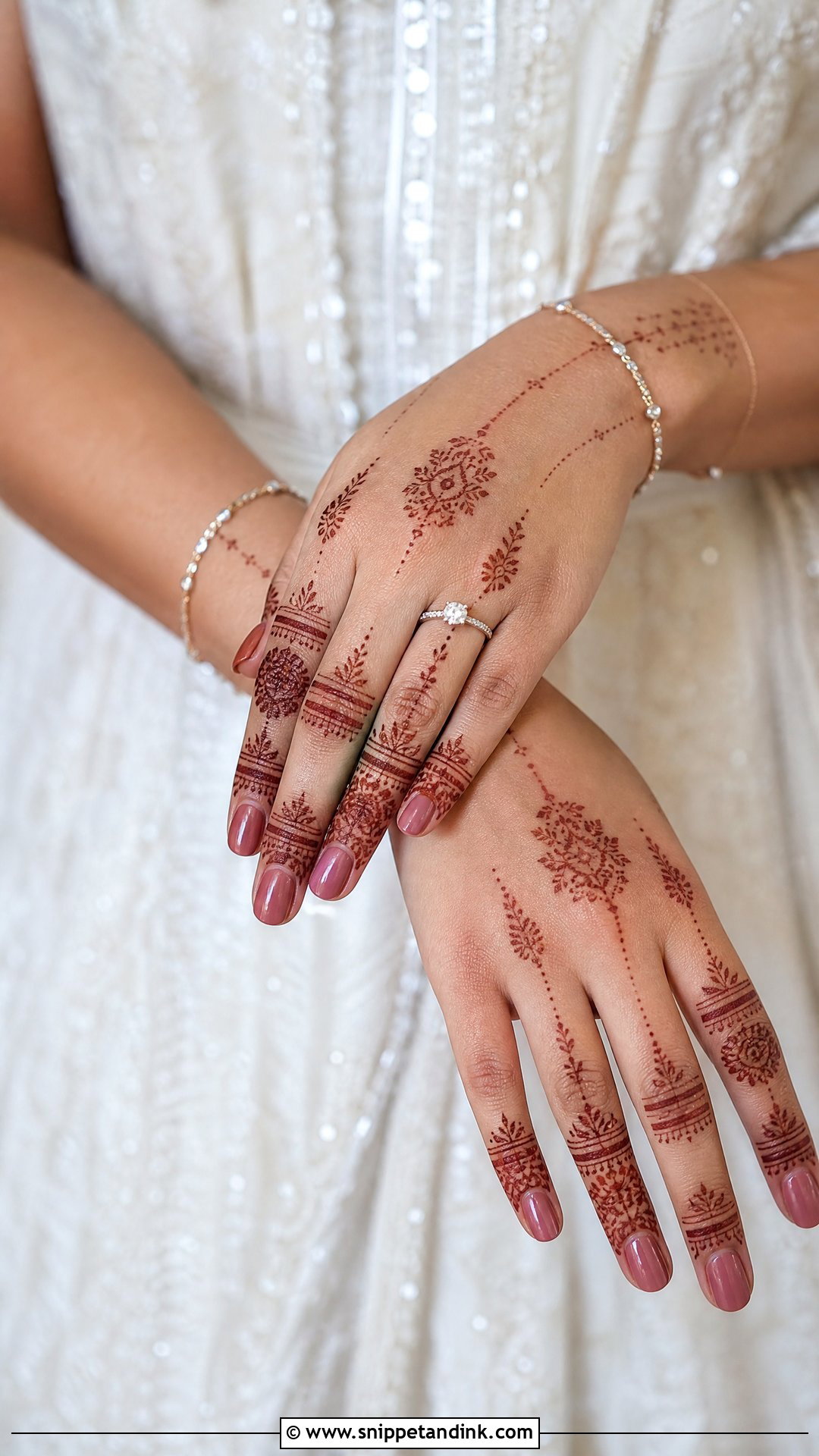
When I design for a ring ceremony, I ask to see the ring or a photo of it first. A wide band or a large solitaire covers more of the finger than you’d expect, and any fine detail underneath it simply disappears. So the ring finger gets slim bands or a neat negative-space ring, and the main design moves to the back hand and wrist, where the camera will be looking during the exchange. Bracelet bands, finger chains, floral frames and light mesh around the knuckles work well. The palm can stay simple.
11. Minimal Engagement Mehndi For Bride
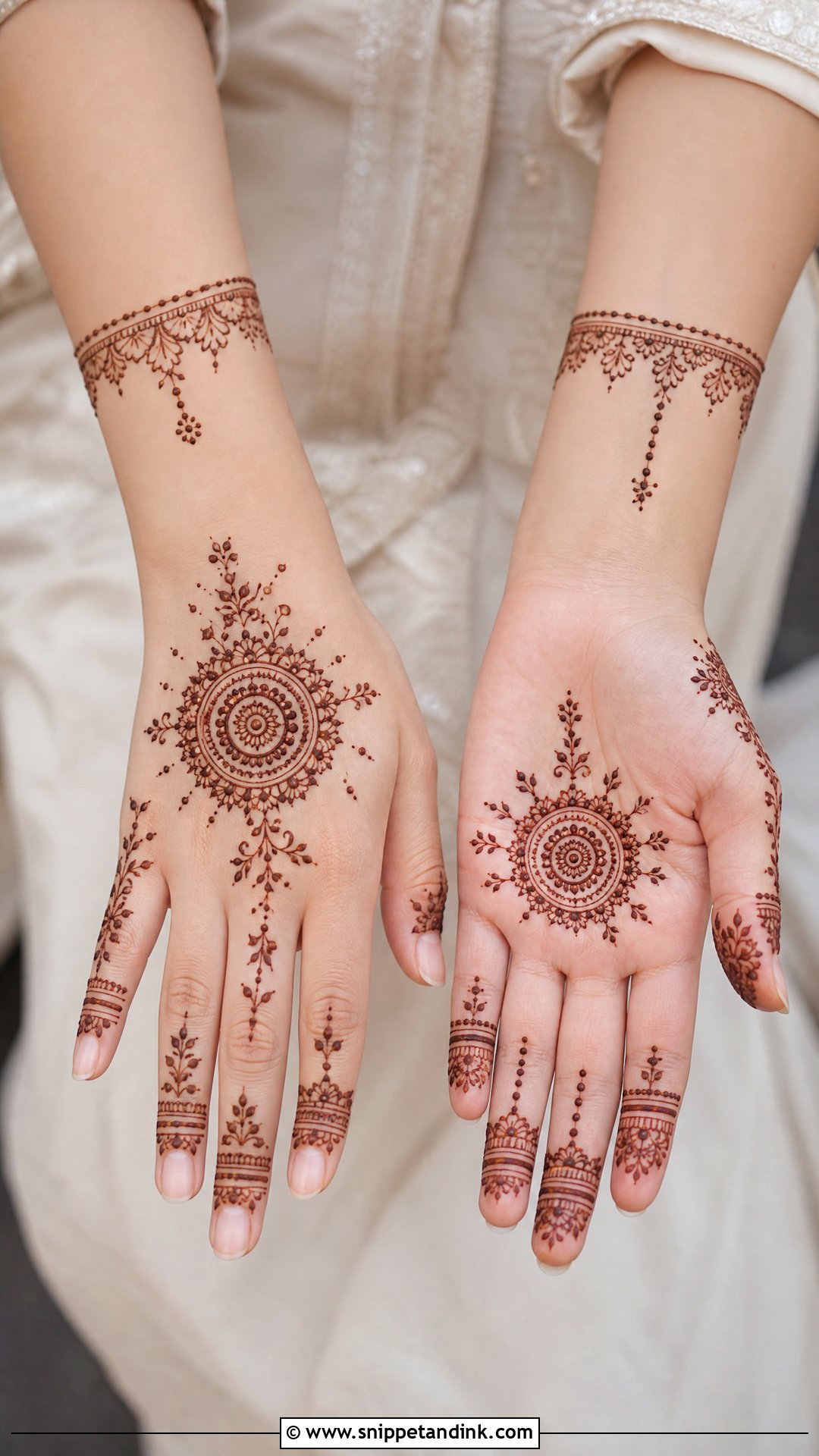
Minimal mehndi is the one I suggest when a bride has an office job, travel, or several functions close together. A slender vine, tiny florals, fine finger lines, a small mandala and a delicate wrist band can be done in well under an hour, and the stain won’t overwhelm the wedding henna later if the dates are close. Neat spacing matters more than detail here. To keep it bridal, match both hands and add one personal touch, such as initials or a ring motif. A clean, sparse design looks deliberate, never like a shortcut.
12. Modern Engagement Mehndi For Bride
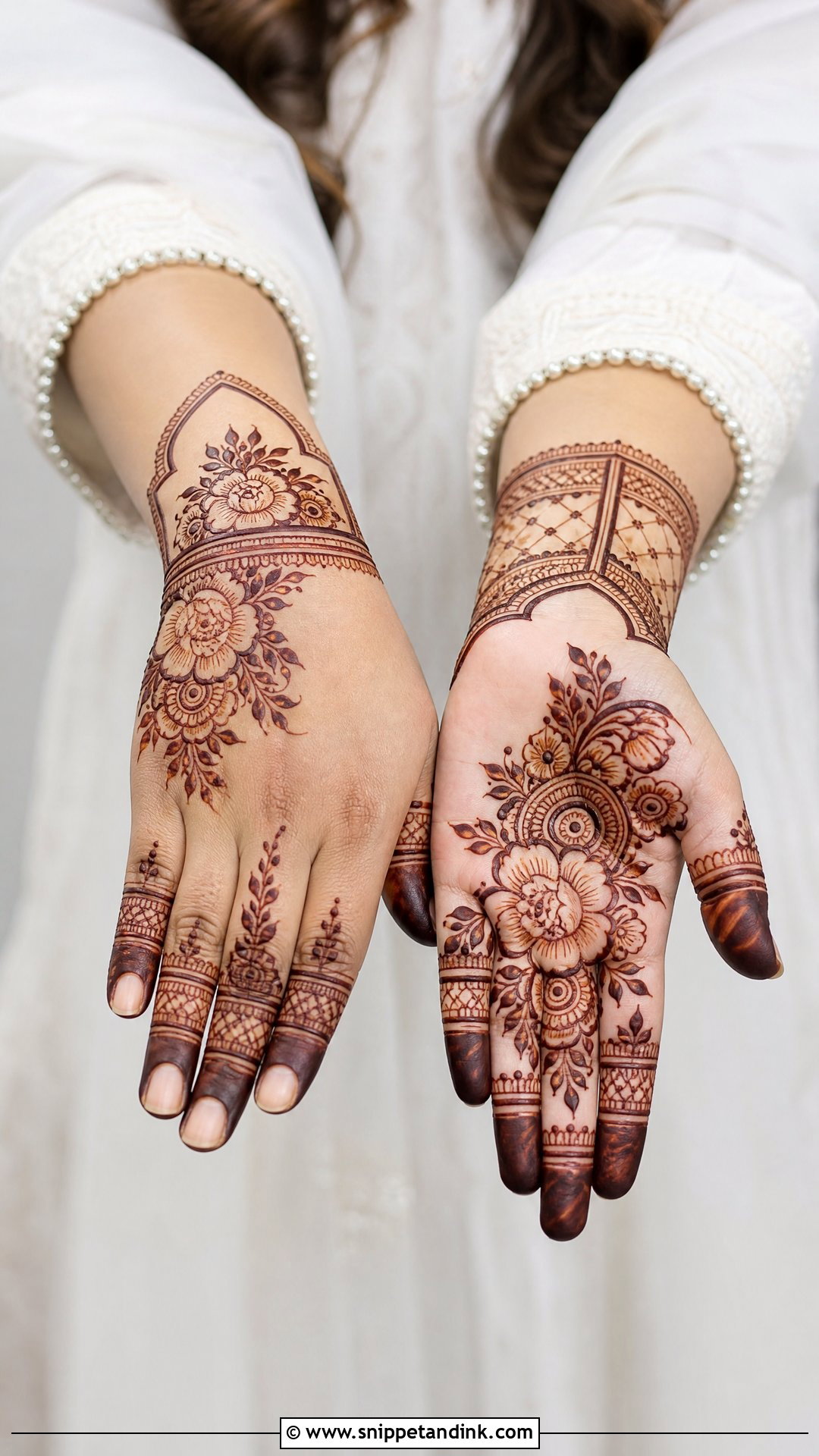
Modern engagement designs rely on negative space and structure: geometric lines, floral cuffs, sharp finger patterns, and gaps of bare skin that are as planned as the lines. The cone work has to be very even, because a wobbly straight line is far more obvious than a wobbly flower. This style suits contemporary lehengas, Indo-western outfits and gowns, and it photographs crisply. If you love clean styling but still want the hands to look festive, this balances the two.
13. Bridal Engagement Mehndi With Initials
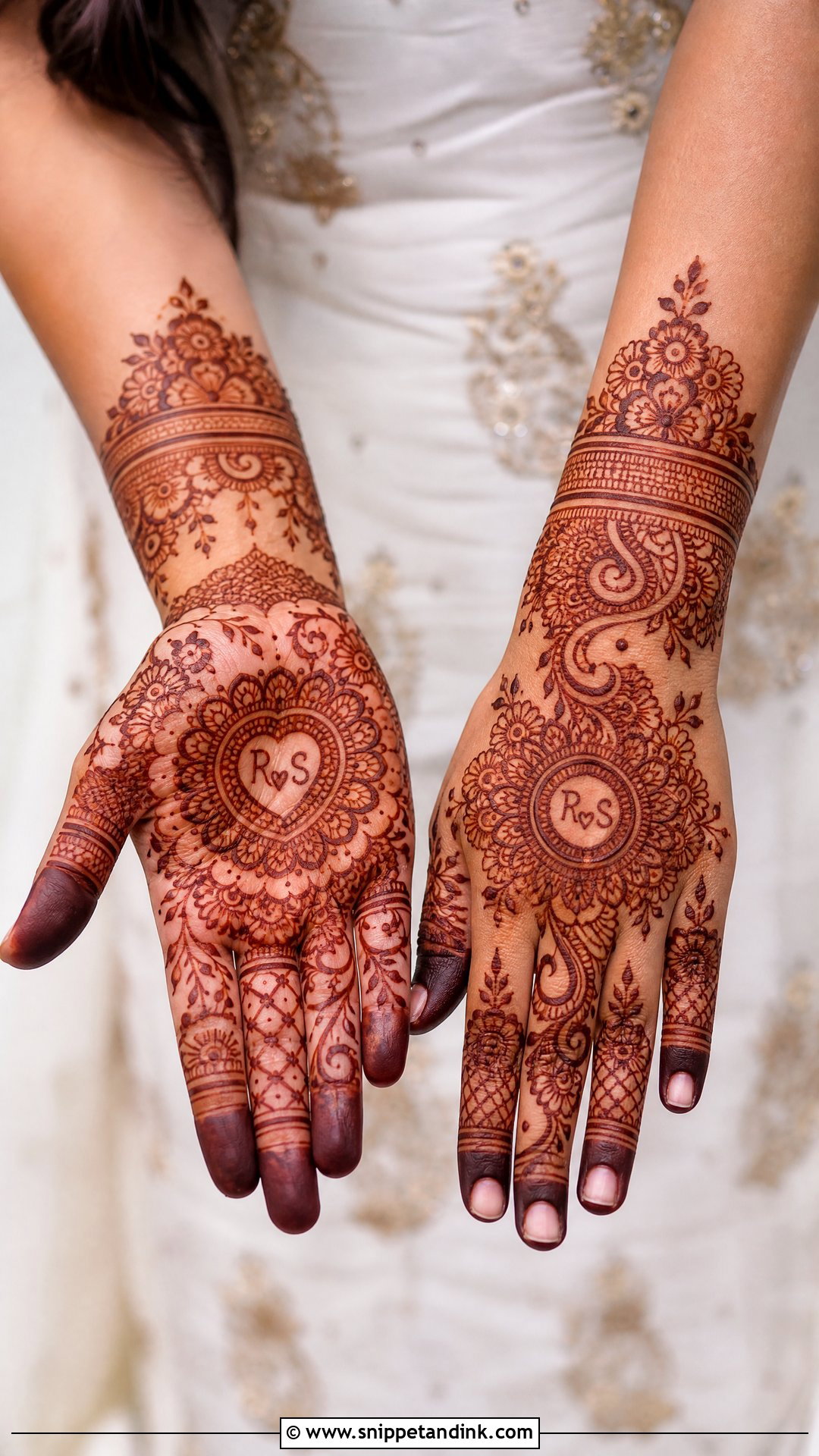
I hide initials so they become a small game for guests to find. Inside a mandala petal, in a heart, worked into a paisley, or near the wrist all work. The letters need to be small and drawn in the same line weight as the rest of the design, or they look stuck on. Some brides add both full names; I’d usually suggest only first letters, since long names become cramped and blurry once the stain develops. Surround them with florals, jaali and finger patterns so the hand feels complete.
14. Engagement Mehndi With Bride Groom Portrait
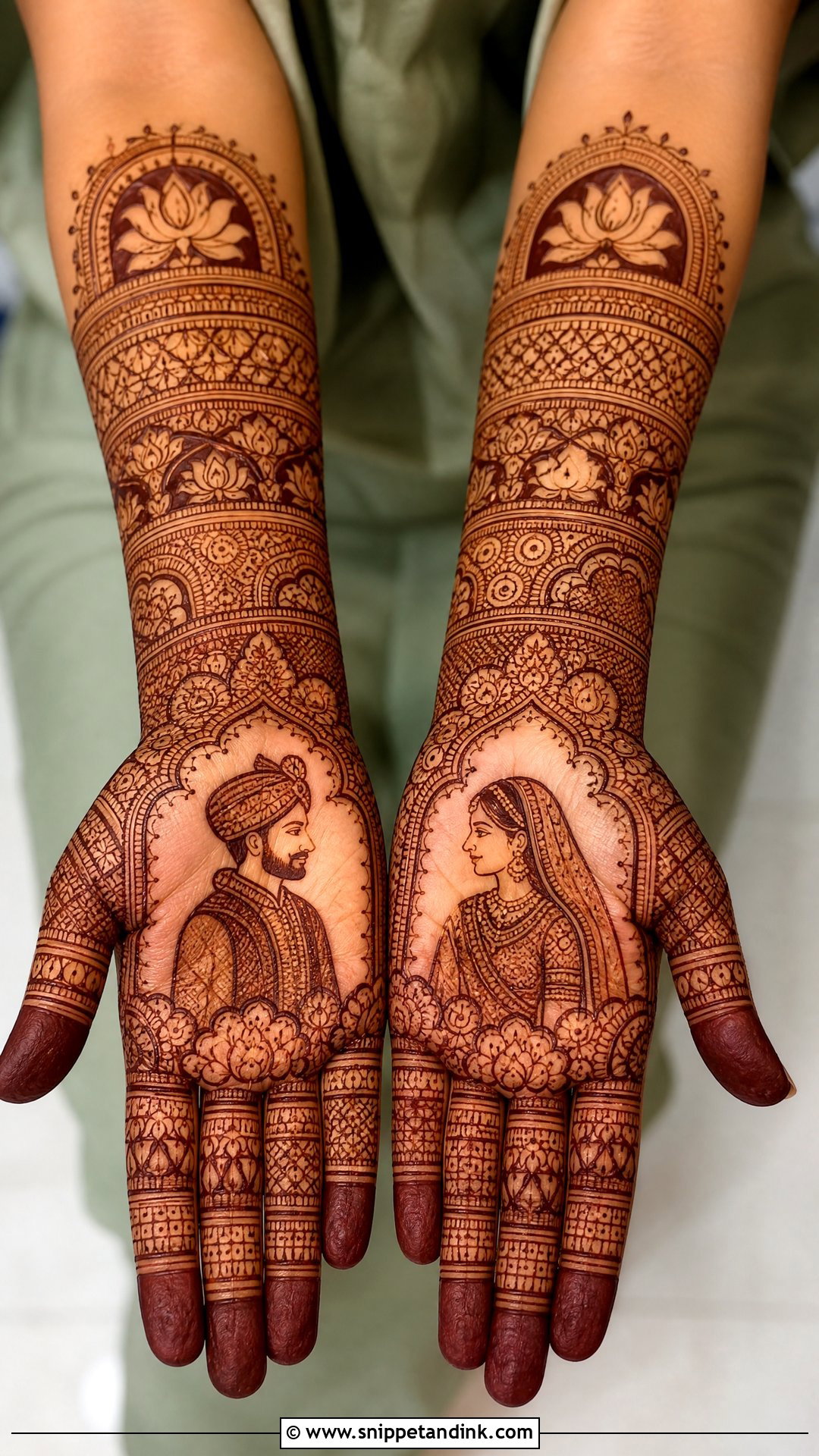
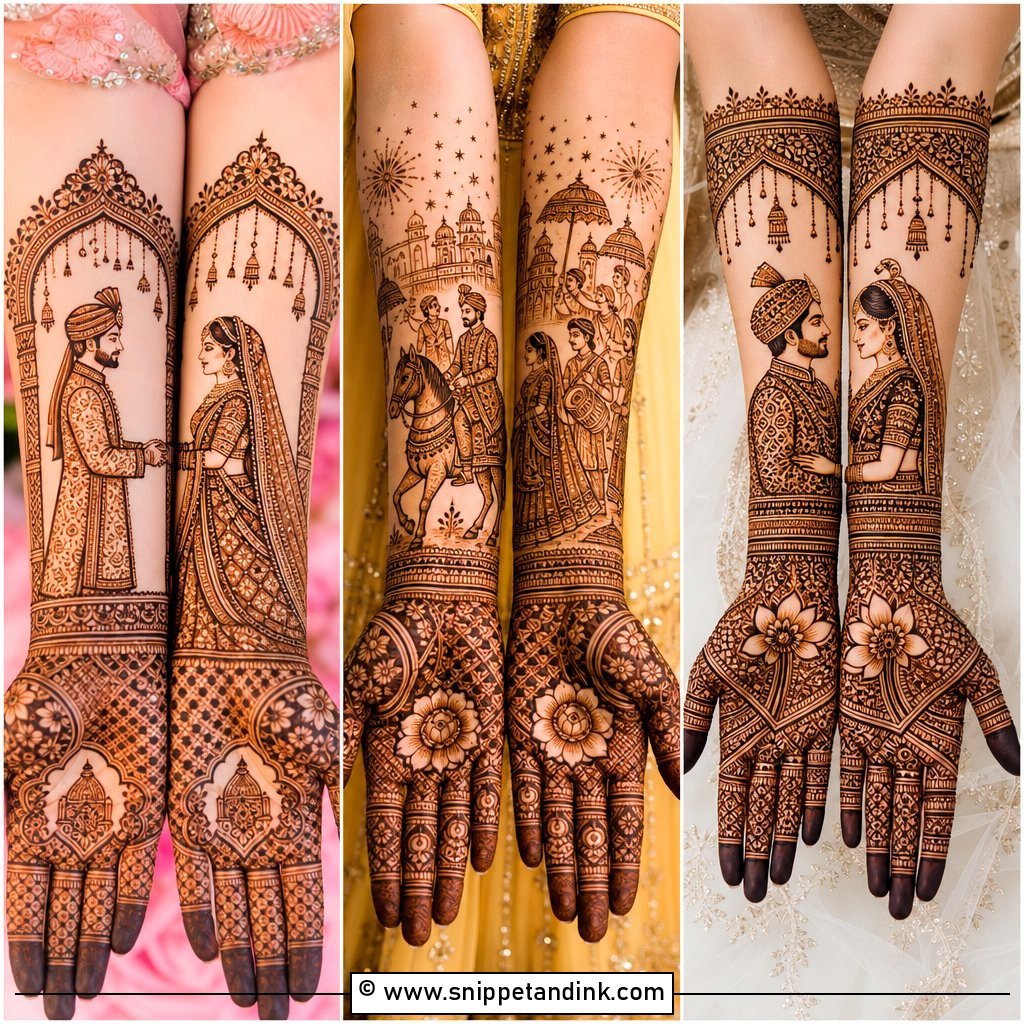
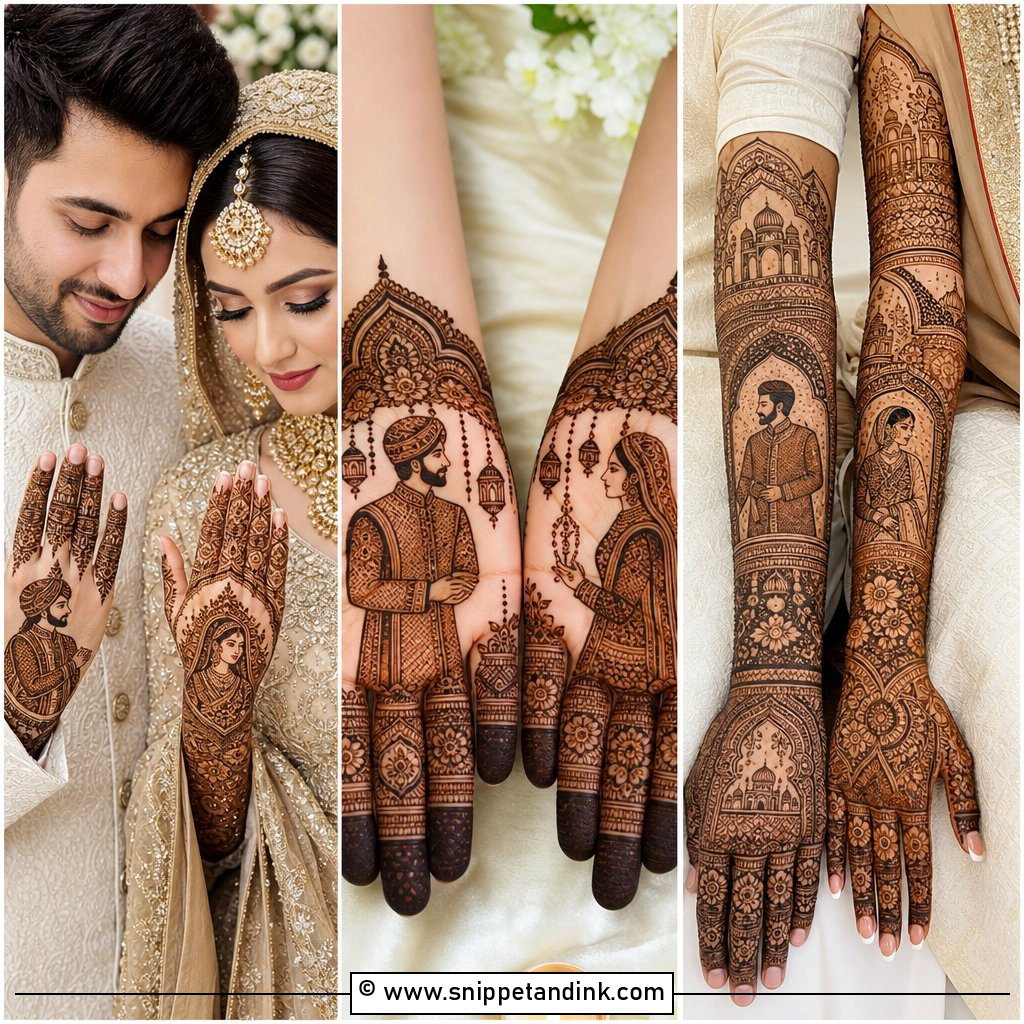
Portraits are the heaviest commitment here, both in time and in skill. The bride and groom are drawn on opposite palms, with paisleys, lotus motifs, jaali and borders around them. For an engagement, I keep the faces modest in size so the look stays lighter than wedding mehndi. Ask your artist to show you portrait work they’ve done on real hands, not just on paper, because faces that look fine as paste can lose their features once stained if the lines were too close together. Traditional outfits and statement jewelry suit it best.

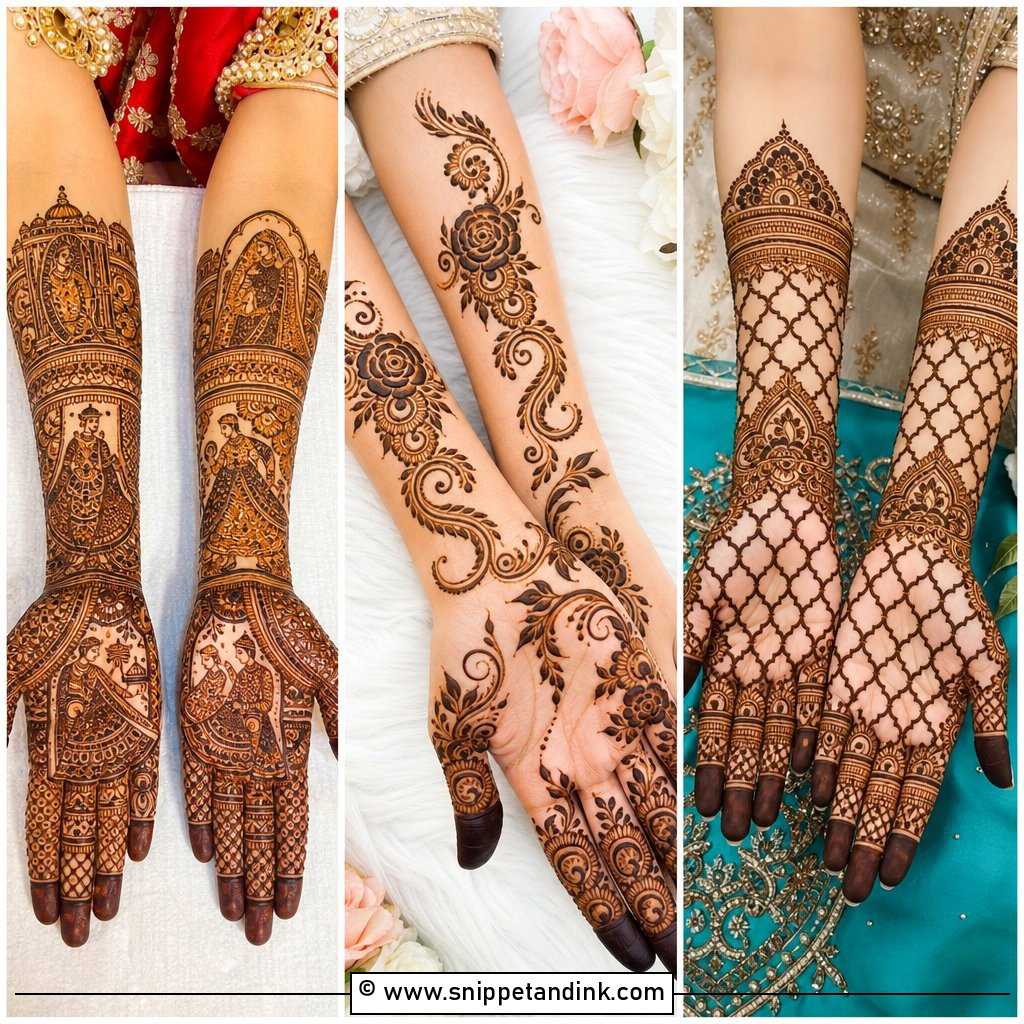
15. Half Hand Engagement Mehndi For Bride
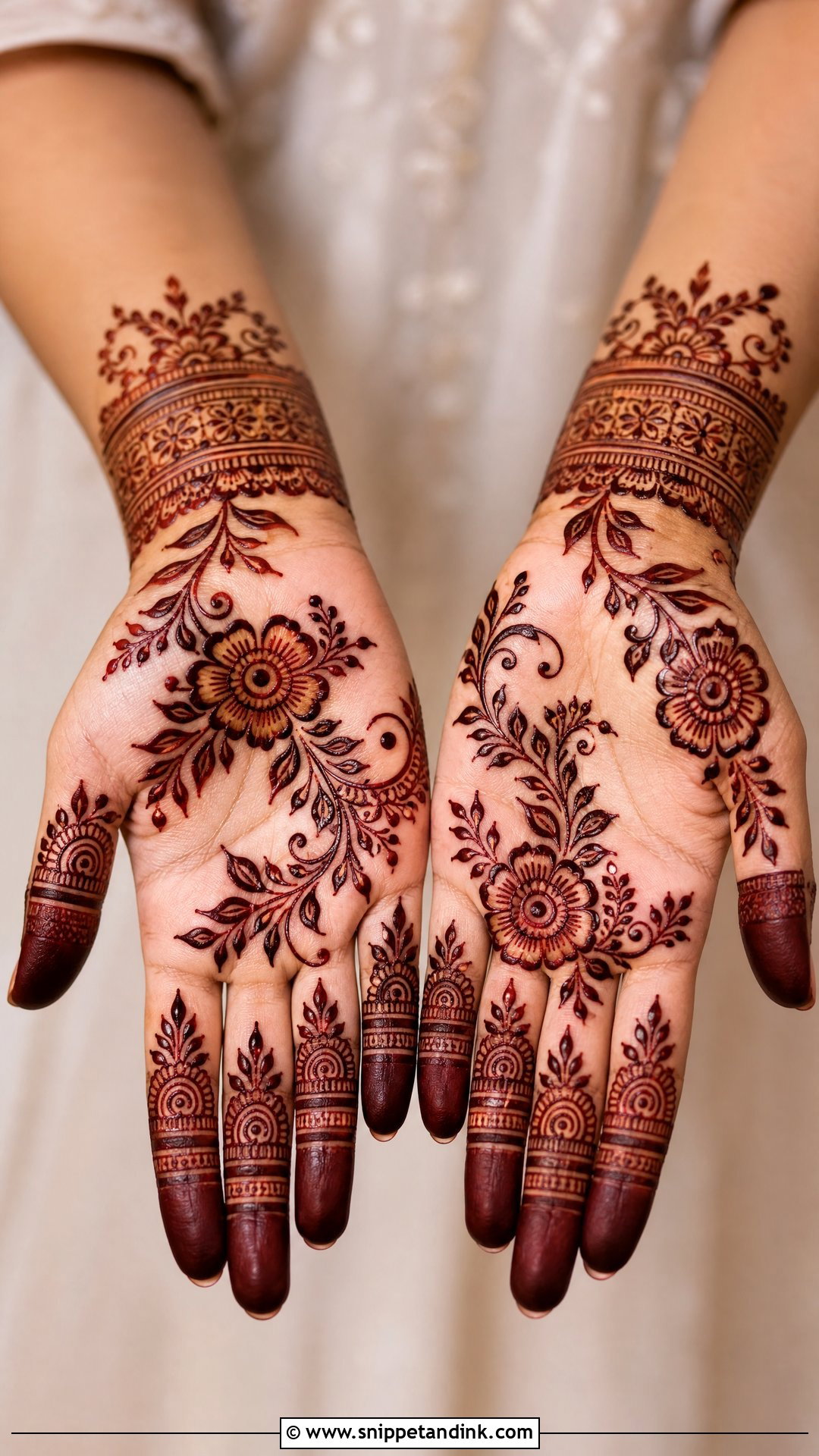
Half-hand designs run from fingers to mid-palm, or from wrist to the centre of the hand. They suit a busy engagement day because they take less sitting time and the hands stay light. The layout can be Arabic, floral, mandala-based or Indo Arabic. I put the detail into the fingers and finish the design with a defined edge, such as a bold border or a central motif, so it doesn’t fade off into nothing halfway down the hand. For a daytime ceremony or a small family gathering, this is often enough.
16. Bracelet Engagement Mehndi For Bride
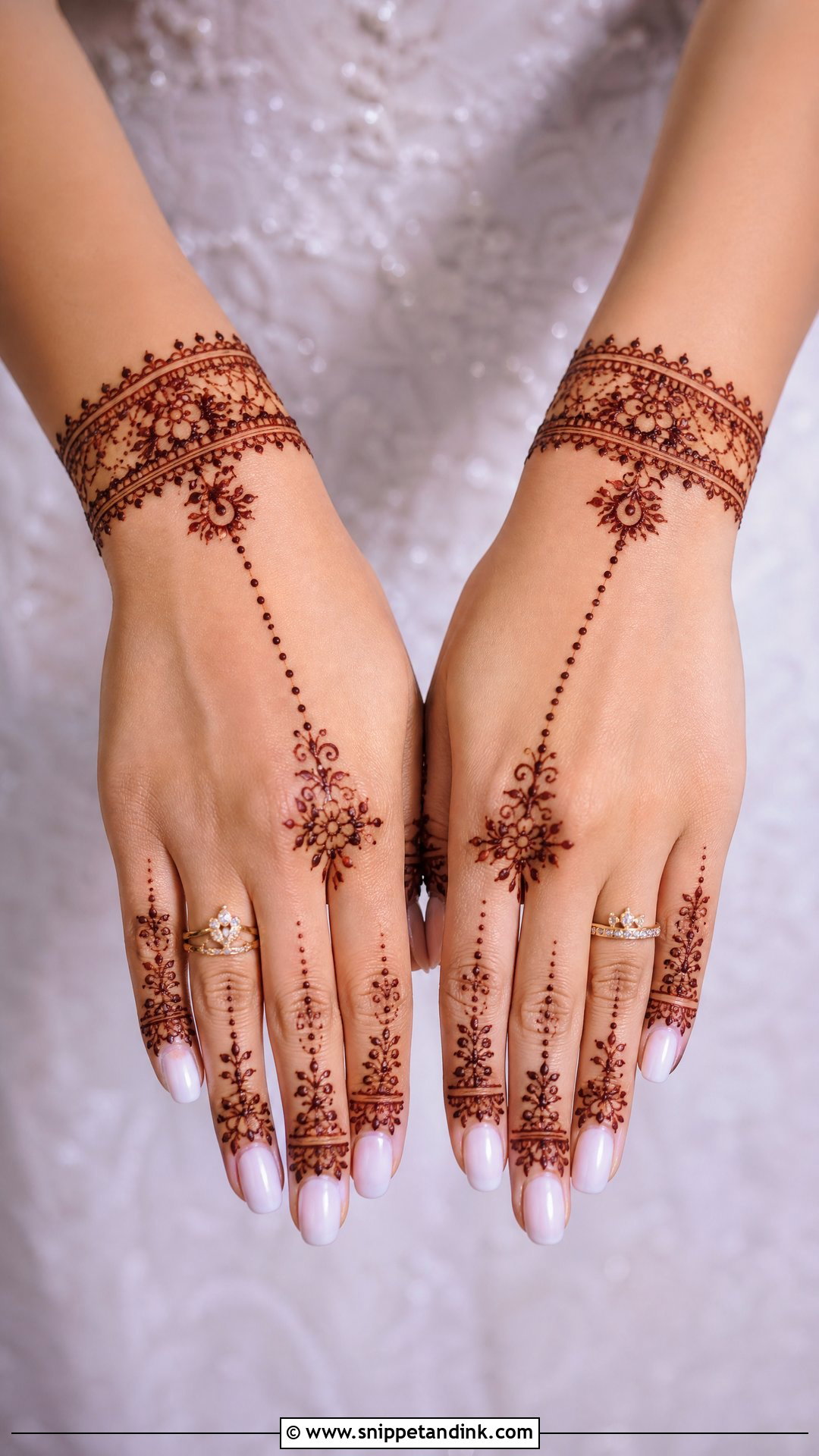
Bracelet engagement mehndi imitates a haathphool, the hand ornament that runs from wrist to finger, using chains of dots, flowers and rings. Because it frames the hand the way jewelry would, the engagement ring looks like part of the set. The palm can stay almost bare or carry a small mandala. It’s especially good with sleeveless or short-sleeved outfits, where the wrist is fully on show. I make the wrist band fairly detailed, otherwise the whole thing reads as casual rather than bridal.
17. Jaali Engagement Mehndi For Bride
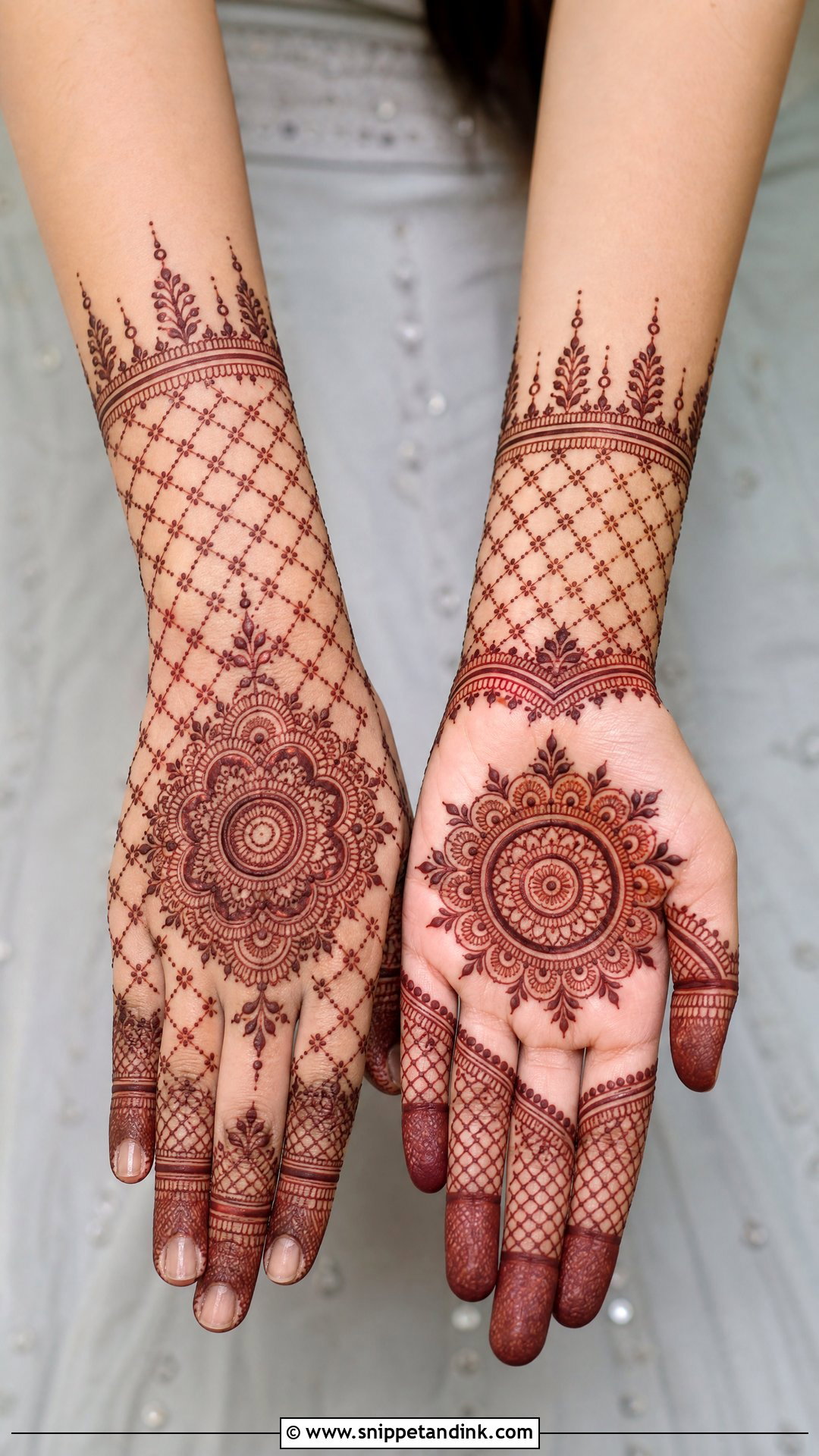
Jaali is a mesh pattern of diamonds, crossing lines and dots, and it lives or dies on even spacing. I mark a few guide lines first so the grid doesn’t drift as it travels across a curved hand. When it’s neat, it looks like lace; when the lines wander, the whole hand looks messy, and no amount of stain fixes that. Pairing the mesh with a floral wrist cuff or a mandala centre gives it a focal point. Since jaali has a jewelry-like feel, it sits nicely beside rings and bangles.
18. Paisley Engagement Mehndi For Bride
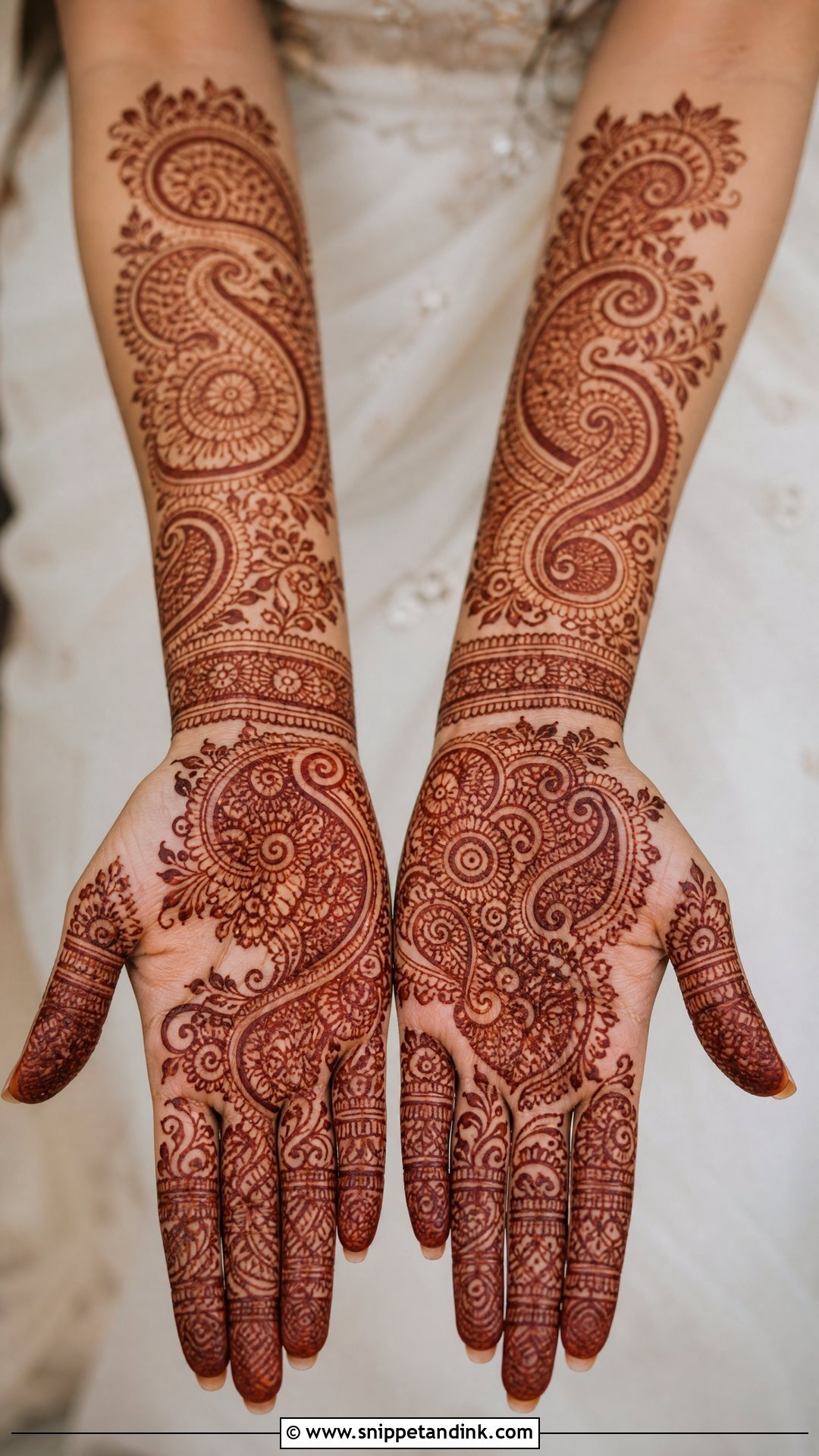
Paisleys bend to any hand shape, which is why I use them so much on long or narrow fingers. The curved forms can sit on the palm, back hand, wrist or forearm, filled with small florals, dots, leaves and swirls. They bring movement without needing portrait work. For a fuller bridal look, combine them with mandalas, a peacock or jaali borders. A deep reddish-brown stain makes the curves stand out, so this design rewards good aftercare. It goes with almost any outfit, from sarees to lehengas.
19. Moroccan Engagement Mehndi For Bride
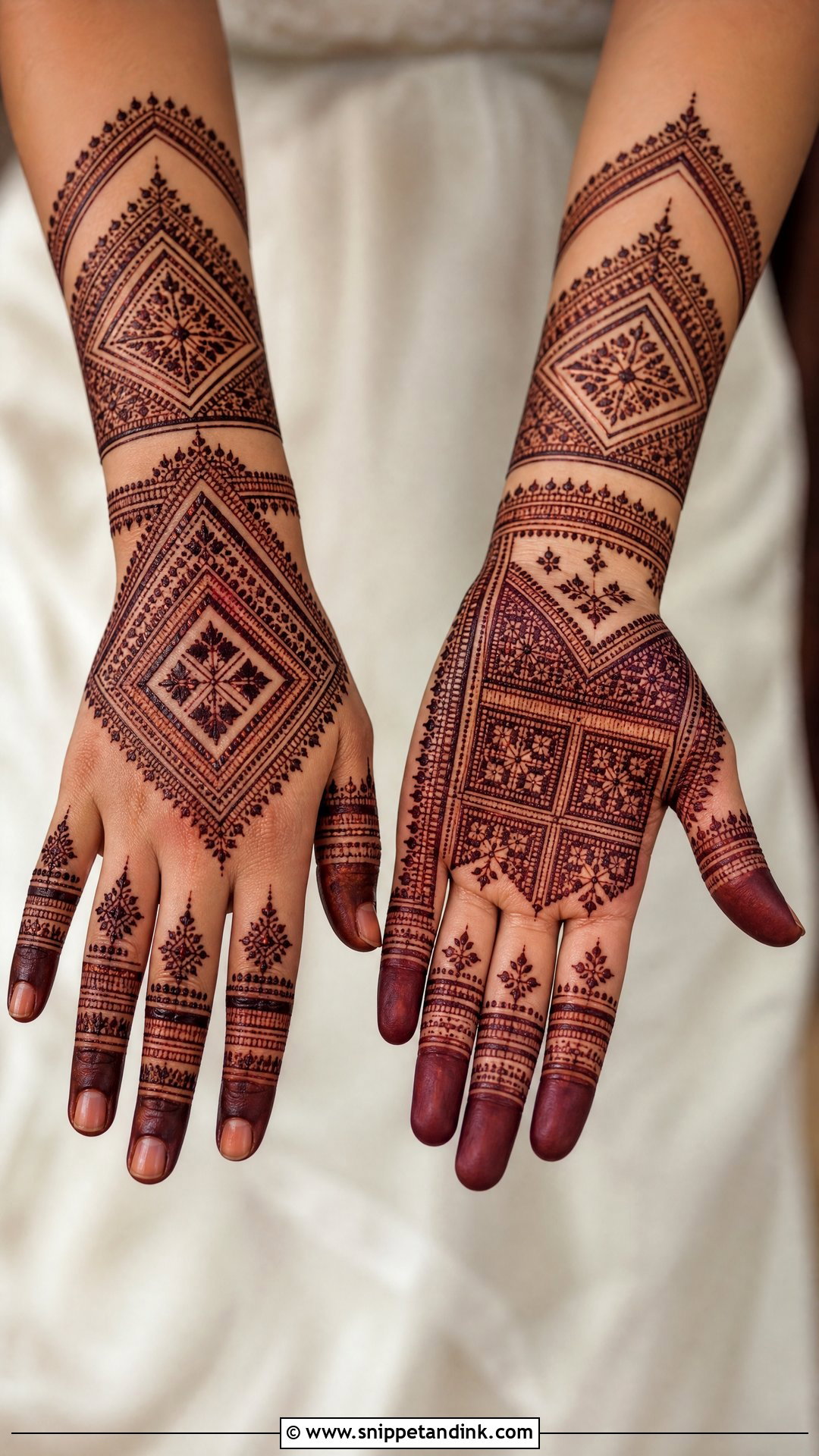
Moroccan designs use geometry instead of flowers: diamonds, triangles, grids and symmetrical blocks, often with filled sections. They’re very bold and look clear in photos because every shape is sharply defined. Filled blocks take longer to dry and are more prone to smudging, so I’d keep your hands still for longer with this one. If you want it to read as bridal, soften the edges with dots, leafy trims or a slim floral band. It’s a good fit with modern outfits and for a bride who wants something unexpected.
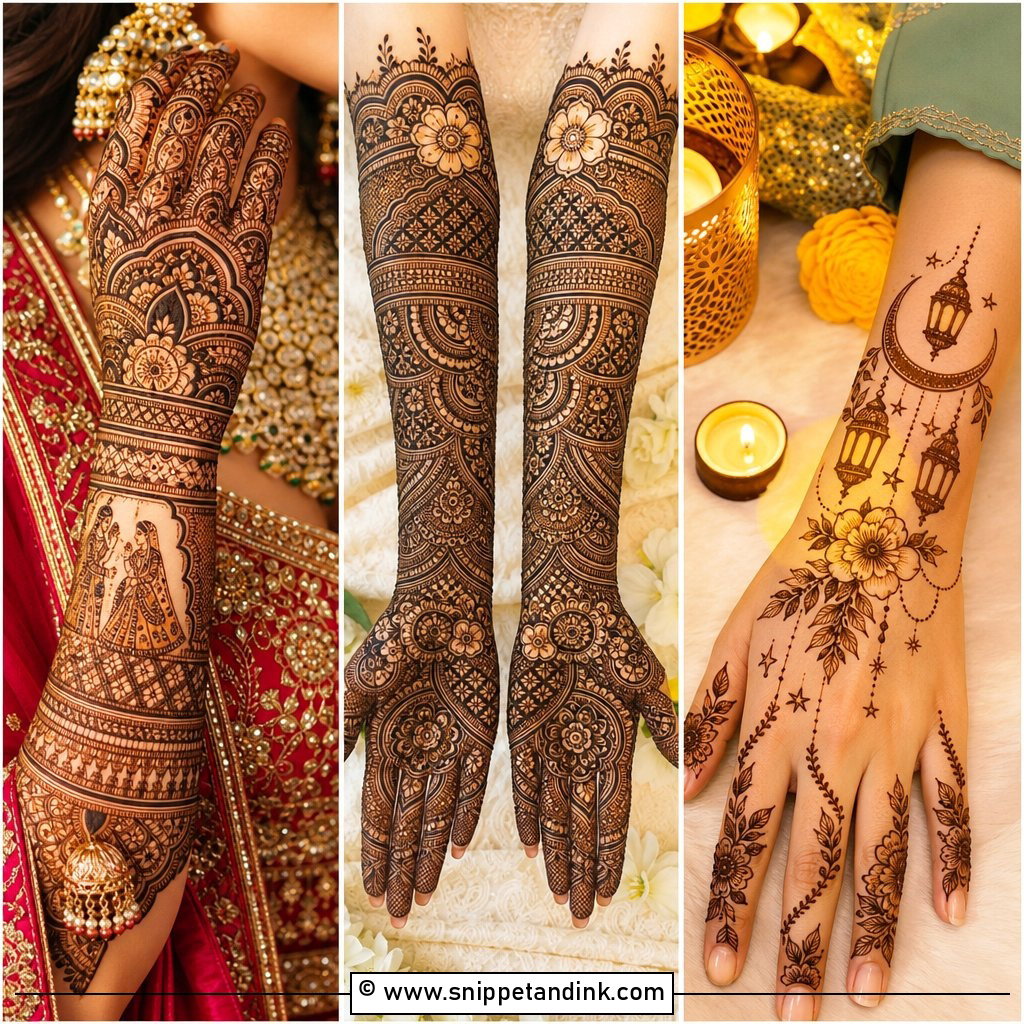

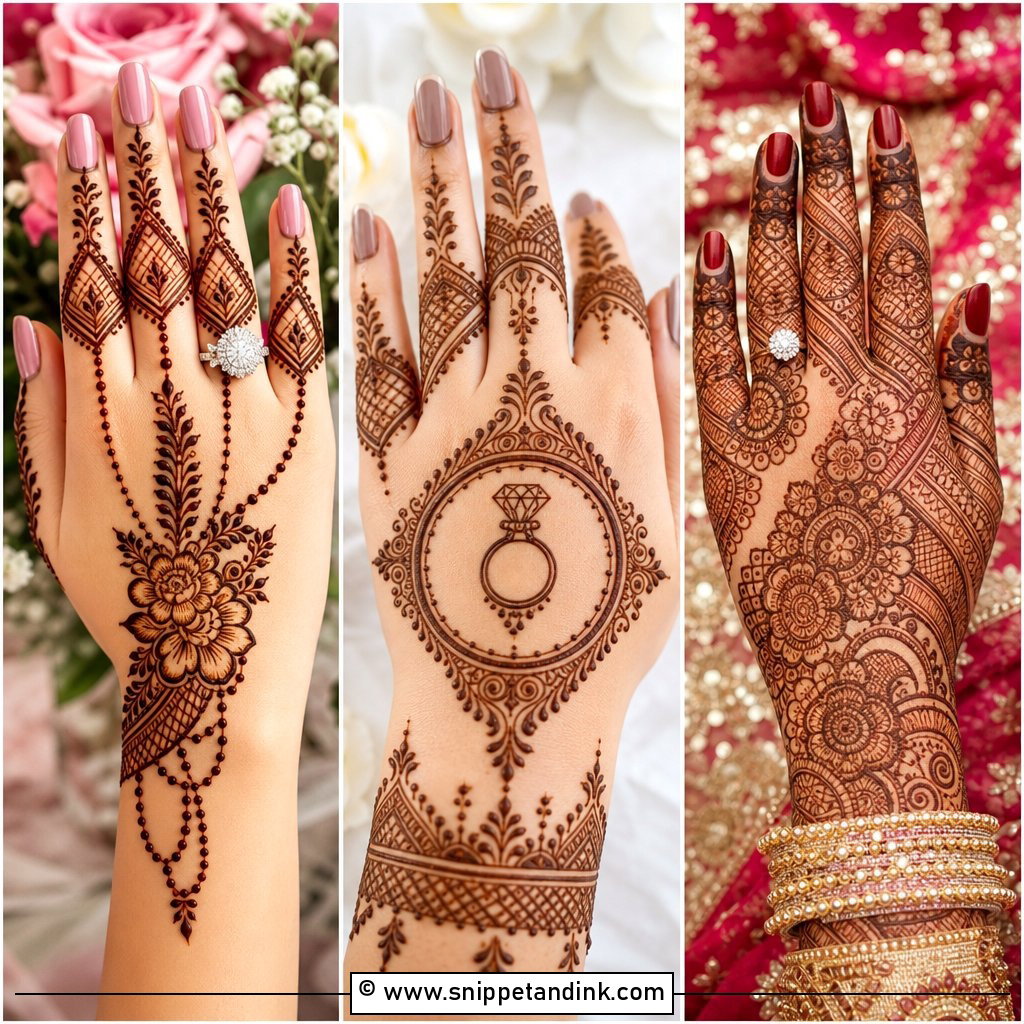
20. Royal Engagement Mehndi For Bride
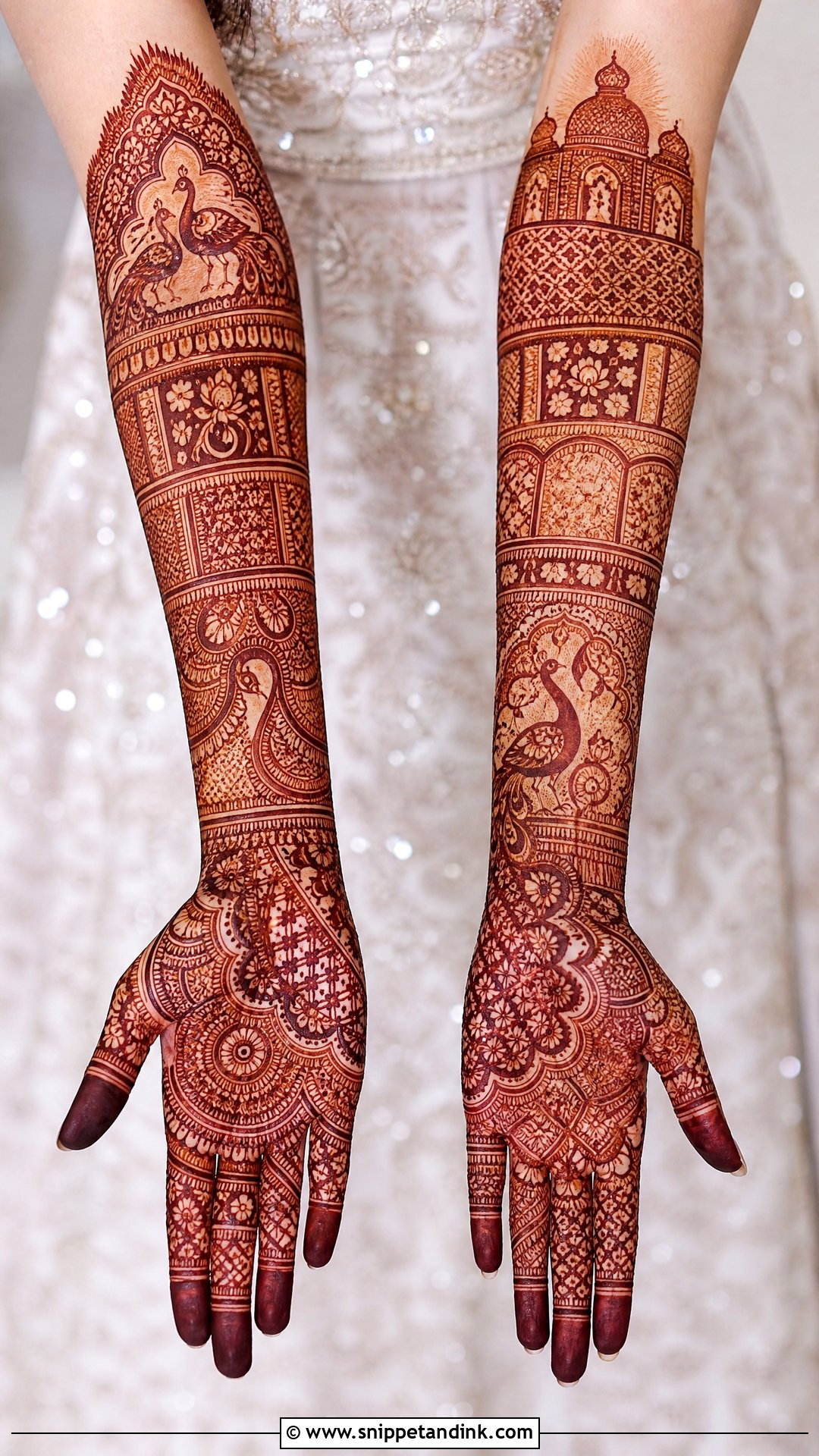
Royal designs are the grandest option: full hands of paisleys, peacocks, florals, jaali, mandalas and sometimes palace-arch borders. They suit heavy lehengas, traditional jewelry and a formal engagement. My concern with a royal design for an engagement is fatigue, both yours and the design’s. Leave open space around the ring finger and on the back of the hand so the jewelry remains visible and the pattern doesn’t turn into a dark mass after the stain develops. Fine outlines, organised motifs and clean shading are what make it look regal rather than crowded.
How Long to Leave It On, and What Water Does to the Stain
The longer the paste stays on, the darker the result. I ask brides to keep it on for at least six hours, and overnight if possible. Once the paste begins to dry, I dab on a little lemon and sugar mixture to keep it moist and stuck to the skin. If you’re going to sleep with it, wrap your hands loosely in cloth or medical tape, never plastic, which makes the skin sweat and the design smudge.
When it’s time to remove it, scrape the dried paste away with a blunt knife or your fingernail. Don’t wash it off. Then keep water away from your hands as long as you can, ideally for the rest of the day, since water this early stops the colour from oxidising and darkening.
If the colour is lighter than you hoped
Warmth helps, so keep your hands warm and give it the full two days before judging. Rubbing a little coconut or mustard oil over the design keeps the skin from drying and protects it from washing. Wear gloves for washing up and avoid hand sanitiser on the design. If one area stains lighter, it’s usually the back of the hand or the forearm, which is normal and nothing went wrong.
Where the Camera Will Look on Your Hands
Your outfit, jewelry and the mood of the ceremony will narrow the list for you. Traditional brides tend to love full hand, peacock, paisley or portrait work; modern brides often prefer minimal, bracelet, Arabic or Moroccan designs. If photos matter most, put your best detail on the back hand and around the ring finger, because that’s where the camera spends the evening. Then pick something you can comfortably sit for, and give the stain the time and care it needs to come through rich and dark.
You'll Like These Ideas:




Leave a Reply