
A bride’s hands end up in more photographs than almost anything else she wears: the ring shot, the outfit details, family portraits, every close-up from the mehndi night through the ceremony. So the design has to hold up at close range and still read from across a room. Some brides come to me wanting dense Indian bridal mehndi with portraits and peacocks; others want Arabic trails, a clean mandala, a jaali back hand or something minimal. Sisters, bridesmaids and guests usually want a lighter version of the same mood. The real deciding factors are your outfit, your jewelry, the shape of your hands and how many hours you can sit still, and I’ve noted below where each style lands on those.
Timing the Sitting So the Color Peaks on the Wedding Day
Natural henna comes off the skin bright orange and keeps darkening for a day or two afterward, settling into a reddish brown. That’s why I schedule bridal appointments one to two days before the wedding, never the morning of. Applied too late, the bride walks down the aisle with orange hands; applied too early, the stain is already fading at the fingertips by the reception.
How long you sit depends on the coverage:
- Full hands and arms with fine detail can take most of a day, and feet add more on top.
- Half hand or Indo Arabic work usually fits into an afternoon.
- Arabic, bel or finger designs for guests often take well under an hour per person.
Eat beforehand, use the bathroom right before I start, and wear a top with wide or short sleeves you won’t have to pull over wet paste. Someone else should hold your phone.
1. Full Hand Bridal Mehndi Design
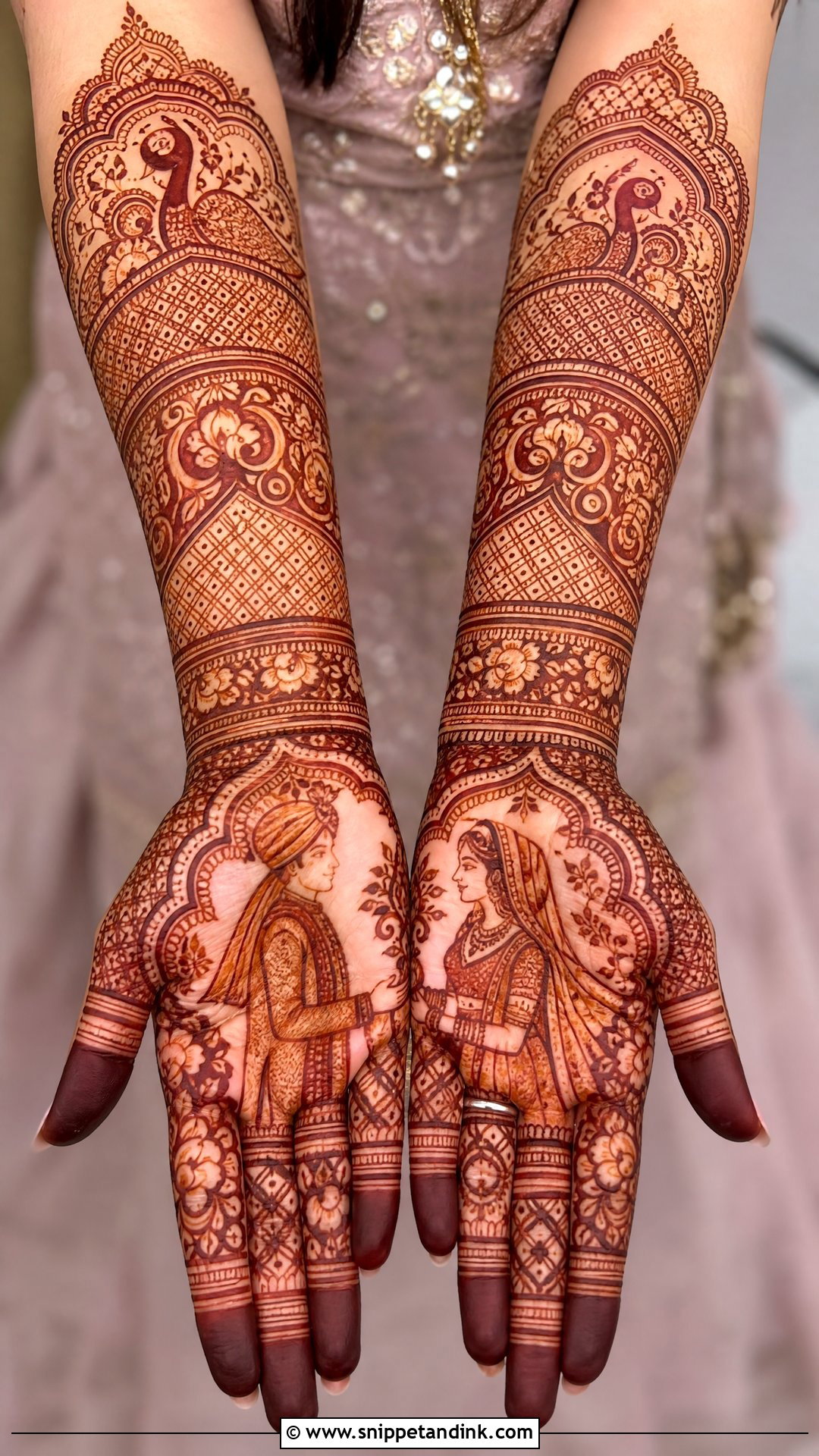
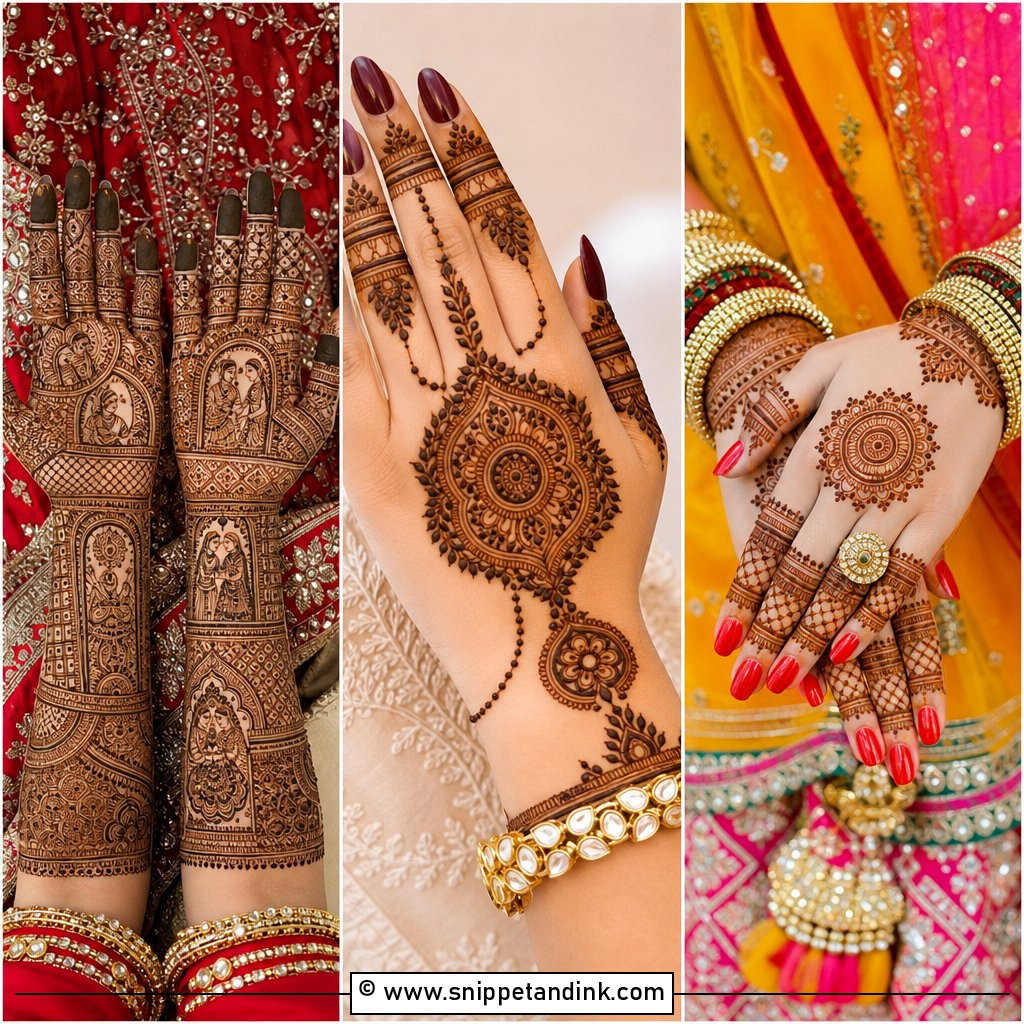
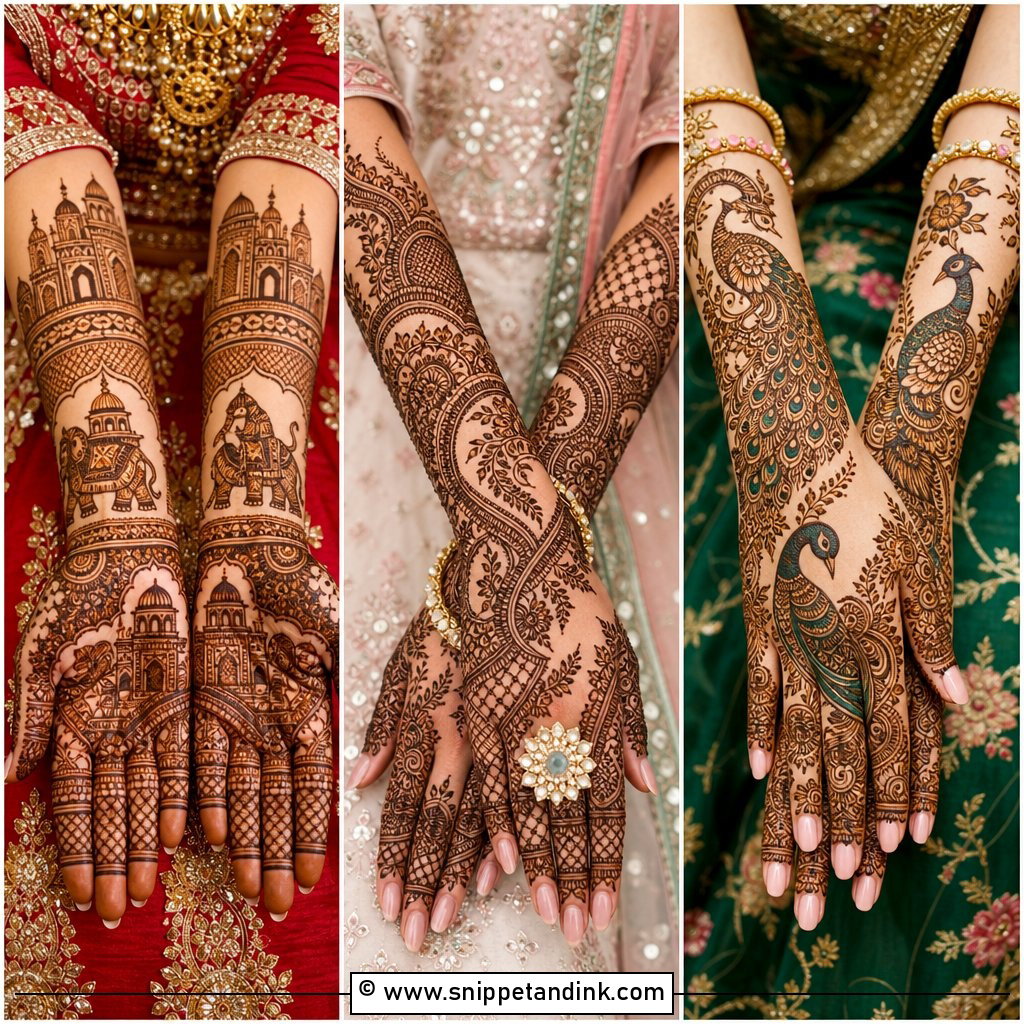
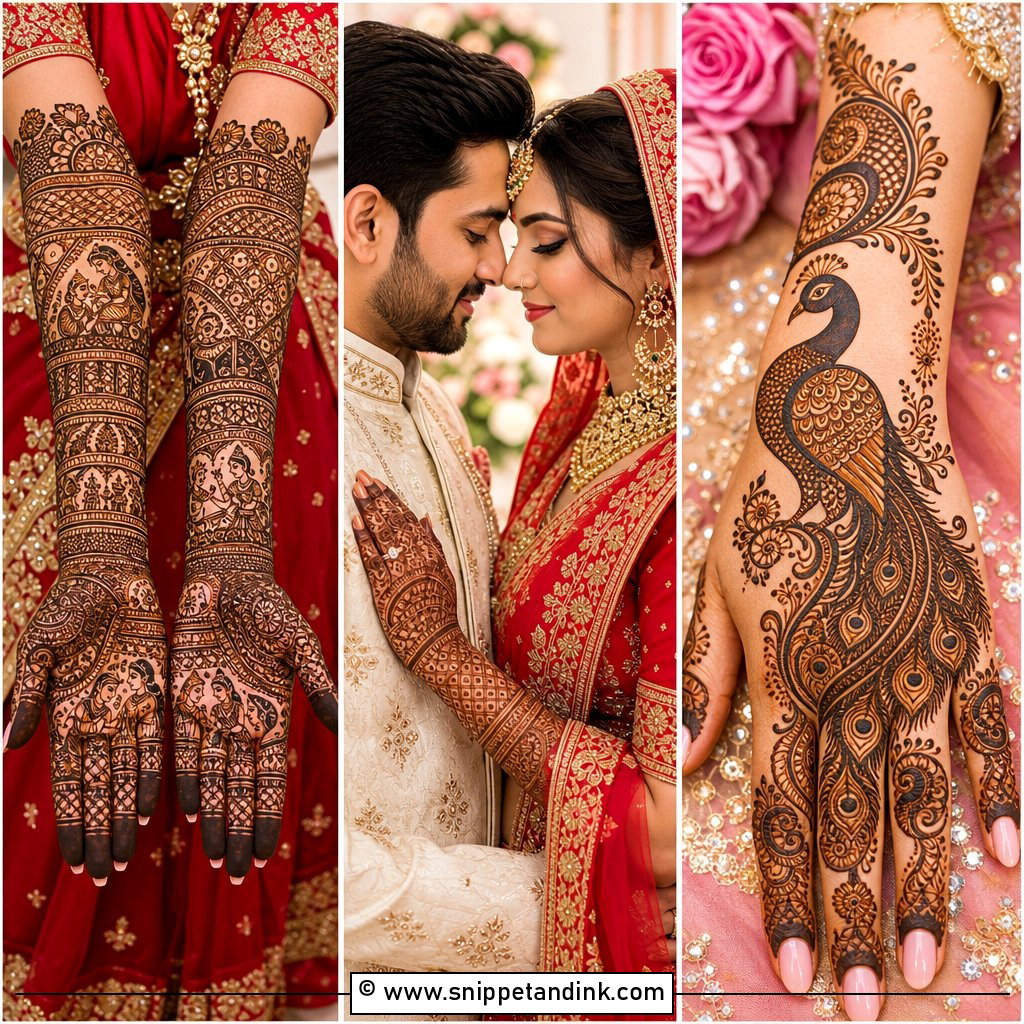
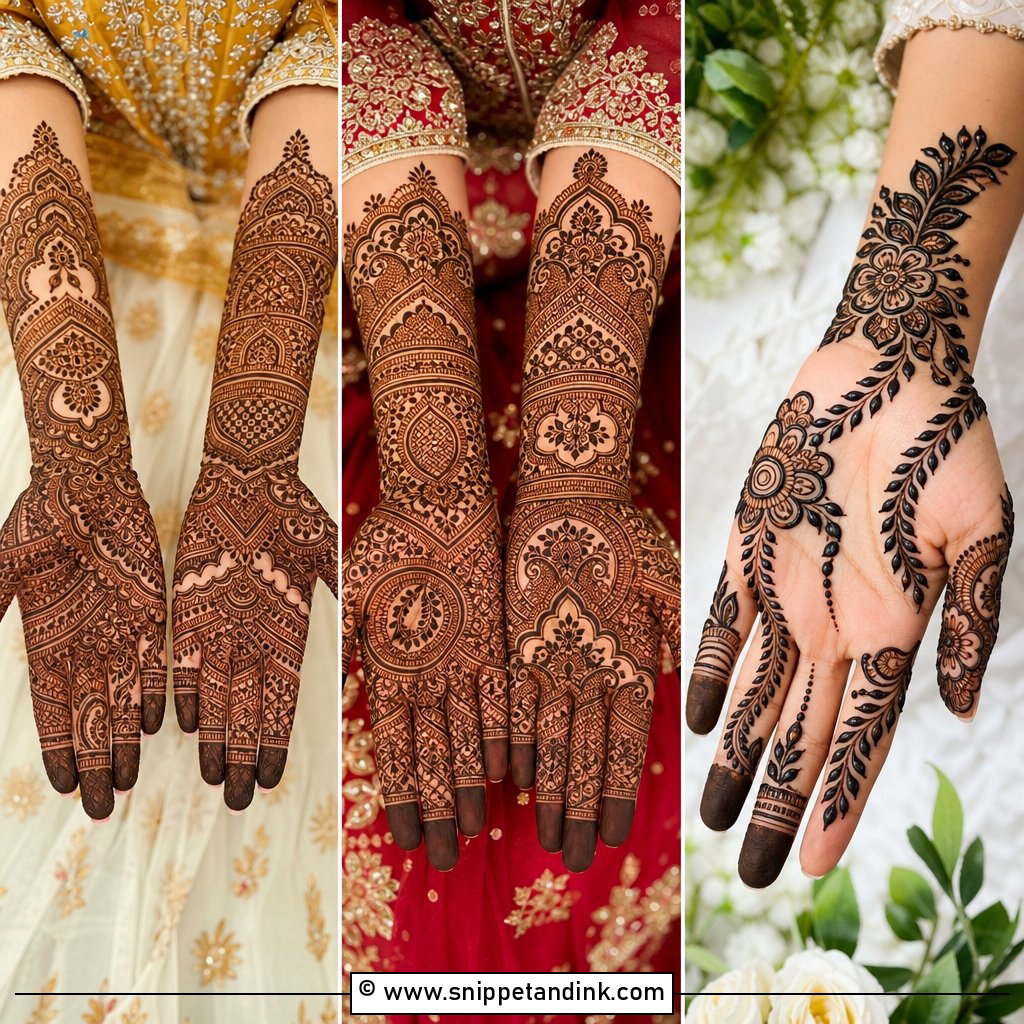
Full coverage from fingertips to forearms is the design I plan most carefully, because it can take most of a day and there’s no room to change course halfway. Palms, back hands, wrists and arms fill with paisleys, florals, mandalas, peacocks, bride and groom figures and fine filler. I keep the main motifs slightly larger near the palm, since tiny details there blur into one dark patch once the stain deepens. Fingertips get solid shading, which stains darkest of all. Heavily embroidered lehengas, sarees and shararas carry this much pattern well, and there’s plenty of room to hide initials or a wedding date for someone to hunt for later.
2. Arabic Mehndi Design For Wedding
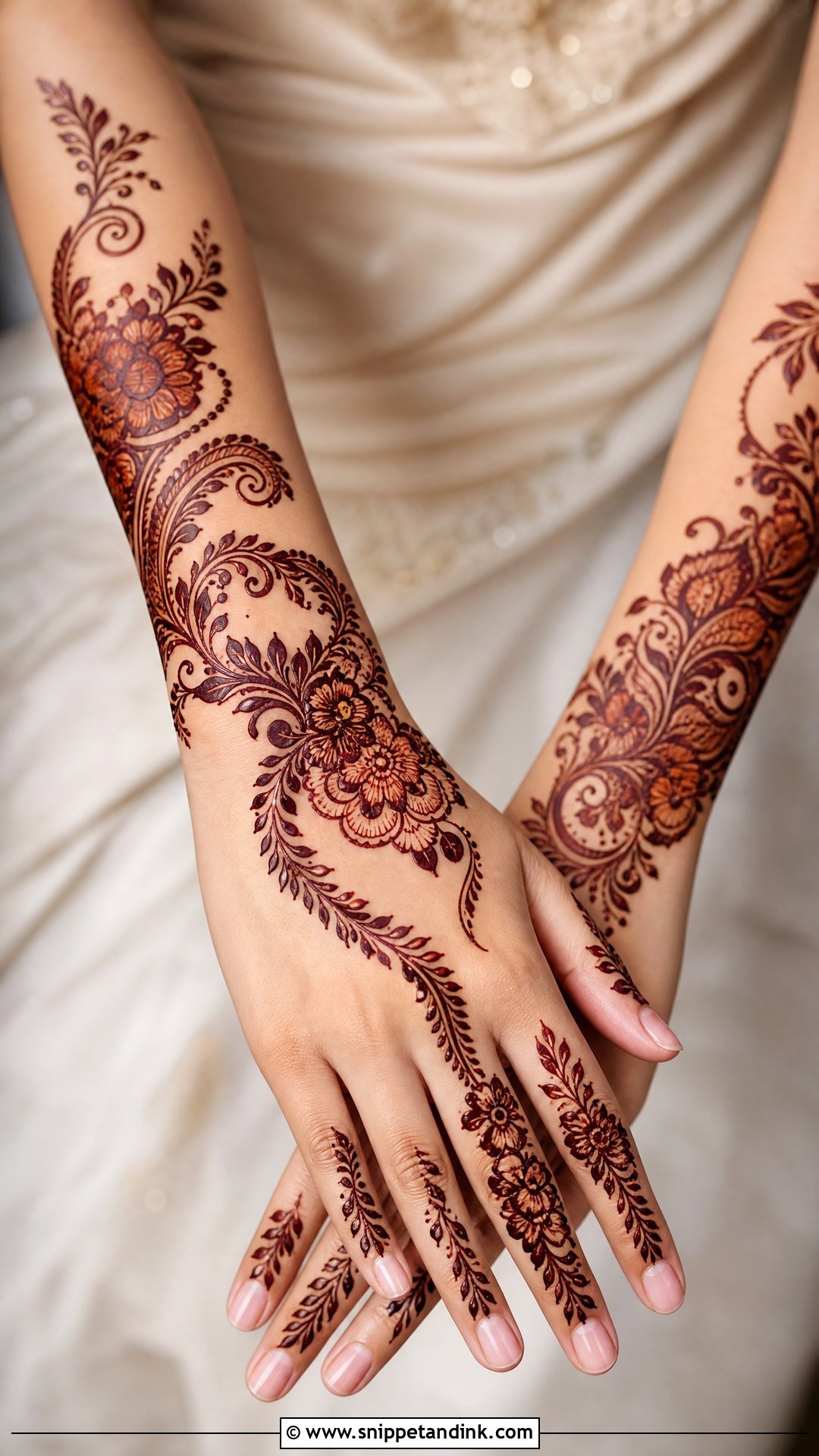
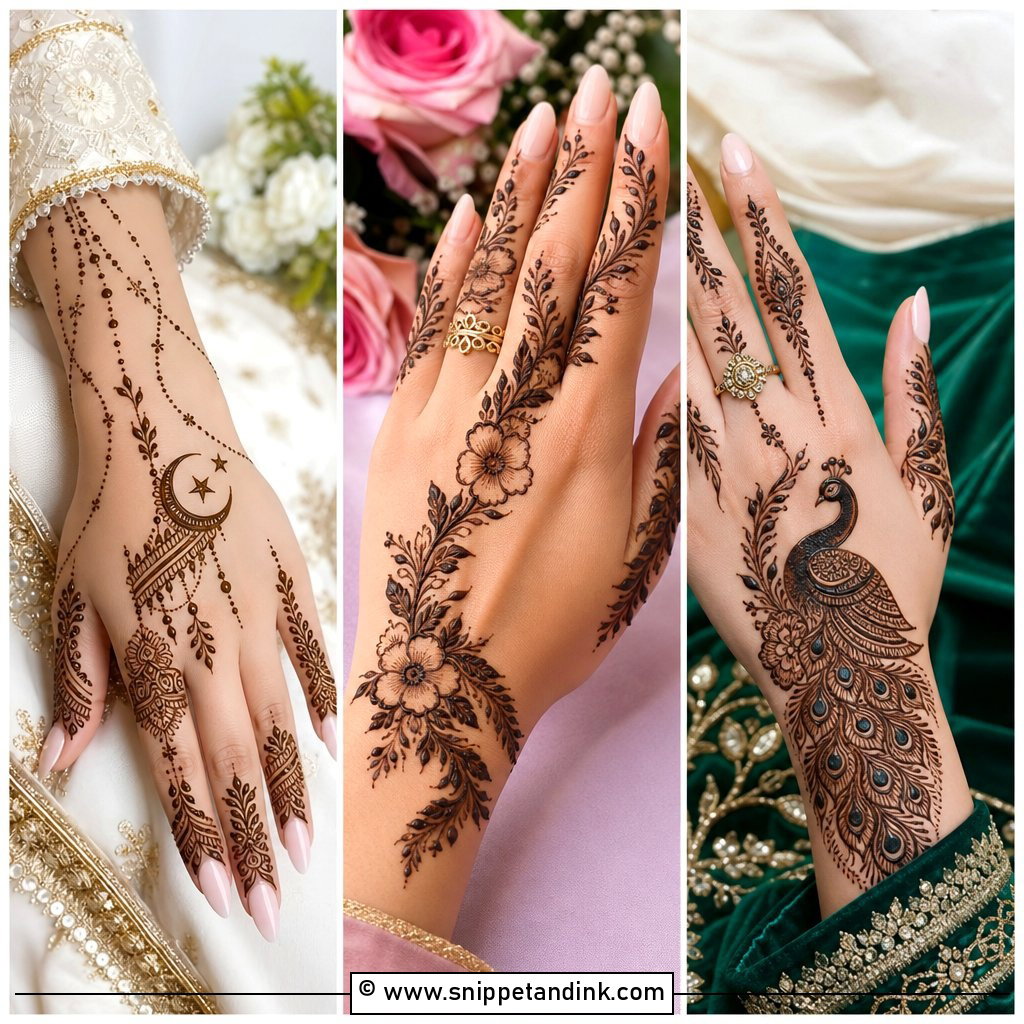
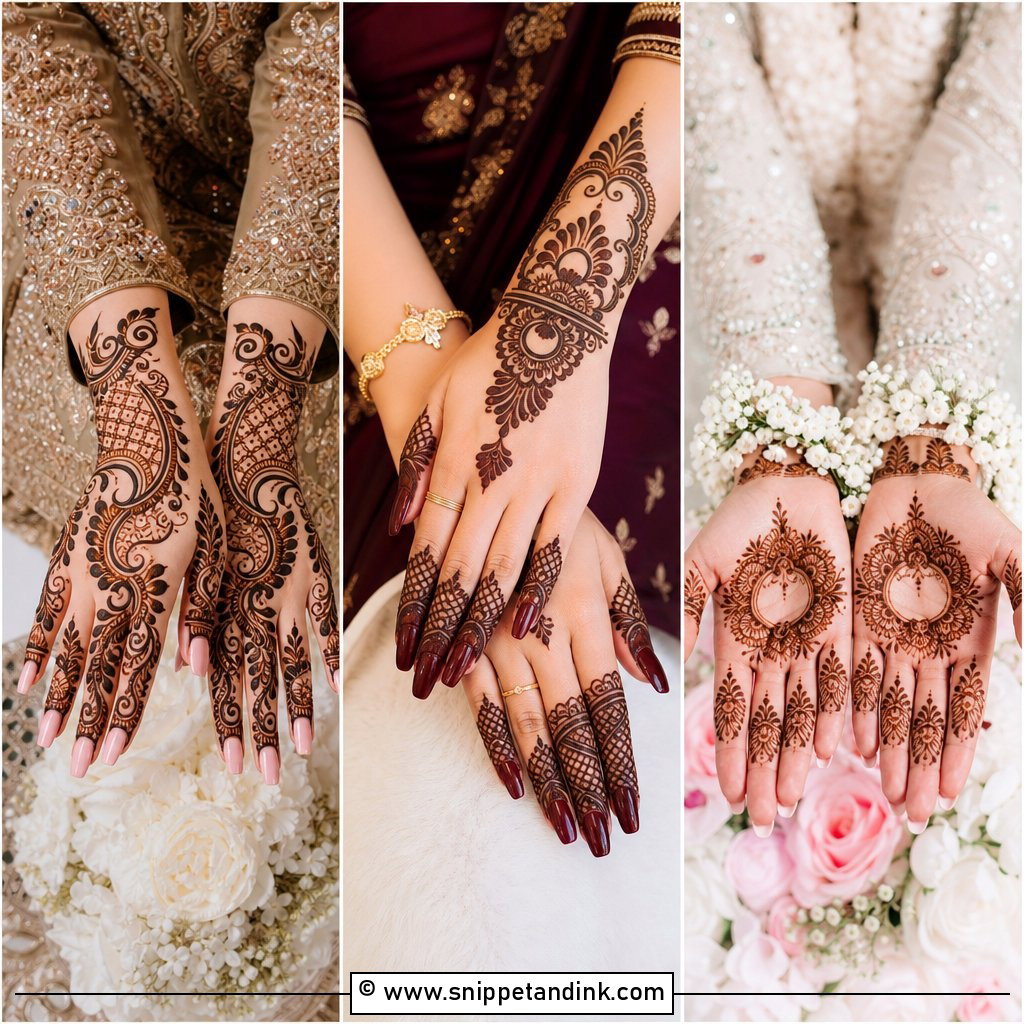
Arabic layouts run diagonally across the palm or back hand with bold flowers, leafy vines, paisley curves and plenty of open skin. That open skin is the point. The lines are thicker than in Indian work, so the paste sits heavier and usually stains strongly, and the whole hand can be done in a fraction of the time. Bridesmaids and sisters love it, and a bride can wear a richer version for her engagement or nikah. Bangles and rings show up well against it because the jewelry gets its own space.
3. Indo Arabic Bridal Mehndi Design
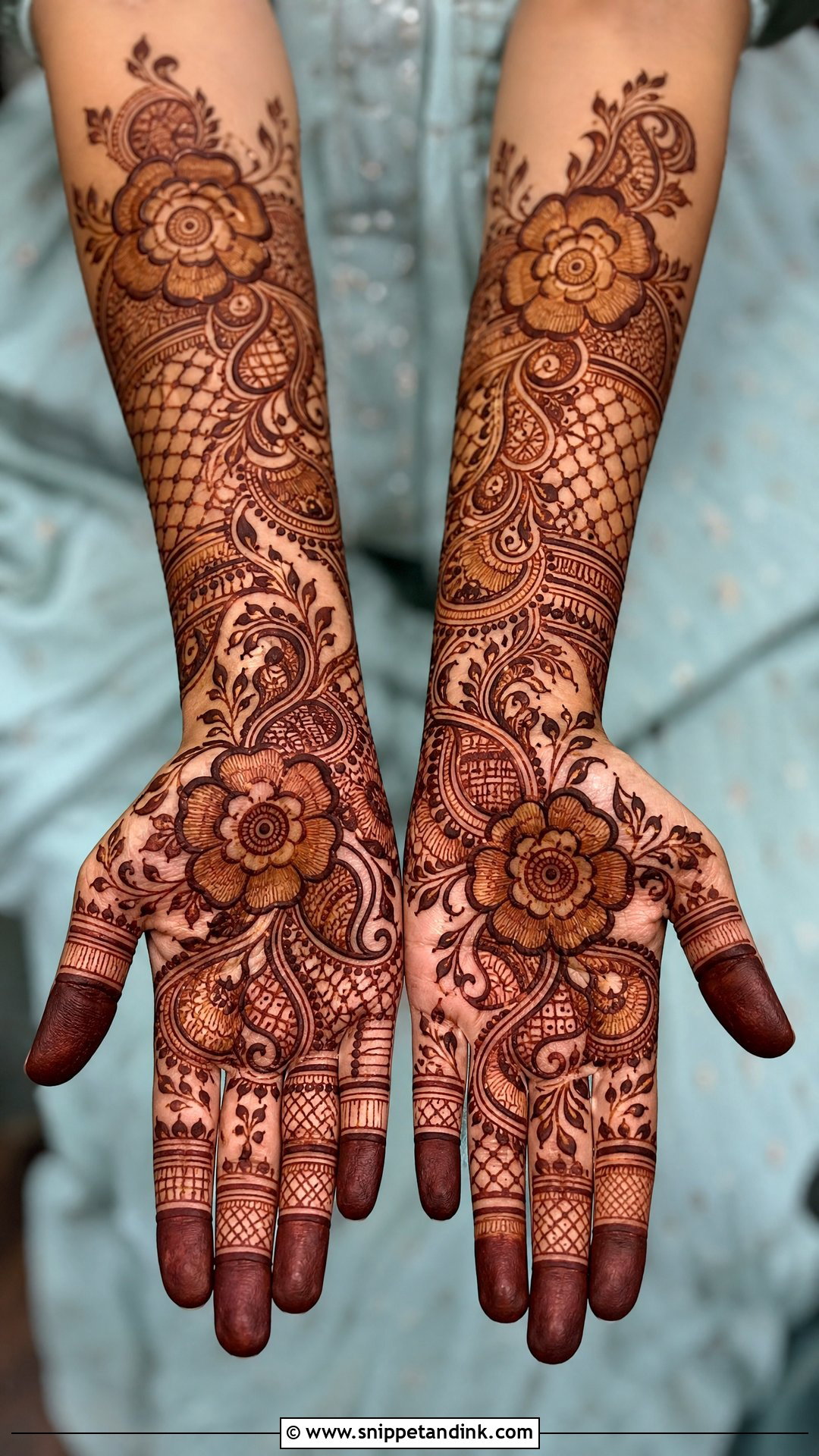
This fusion takes the bold flow of Arabic henna and fills it with Indian-style fine detail. In an Indo Arabic bridal mehndi design, I usually run large flowers and paisleys along one side of the hand, then fill around them with small jaali, dots, leaves and fine fillers. The contrast between big shapes and small texture is what keeps it from looking busy. It suits a bride who wants visible motifs without every inch packed. On the back hand it reads especially clearly, and it works for the sangeet, the mehndi night or the ceremony itself.
4. Rajasthani Bridal Mehndi Design
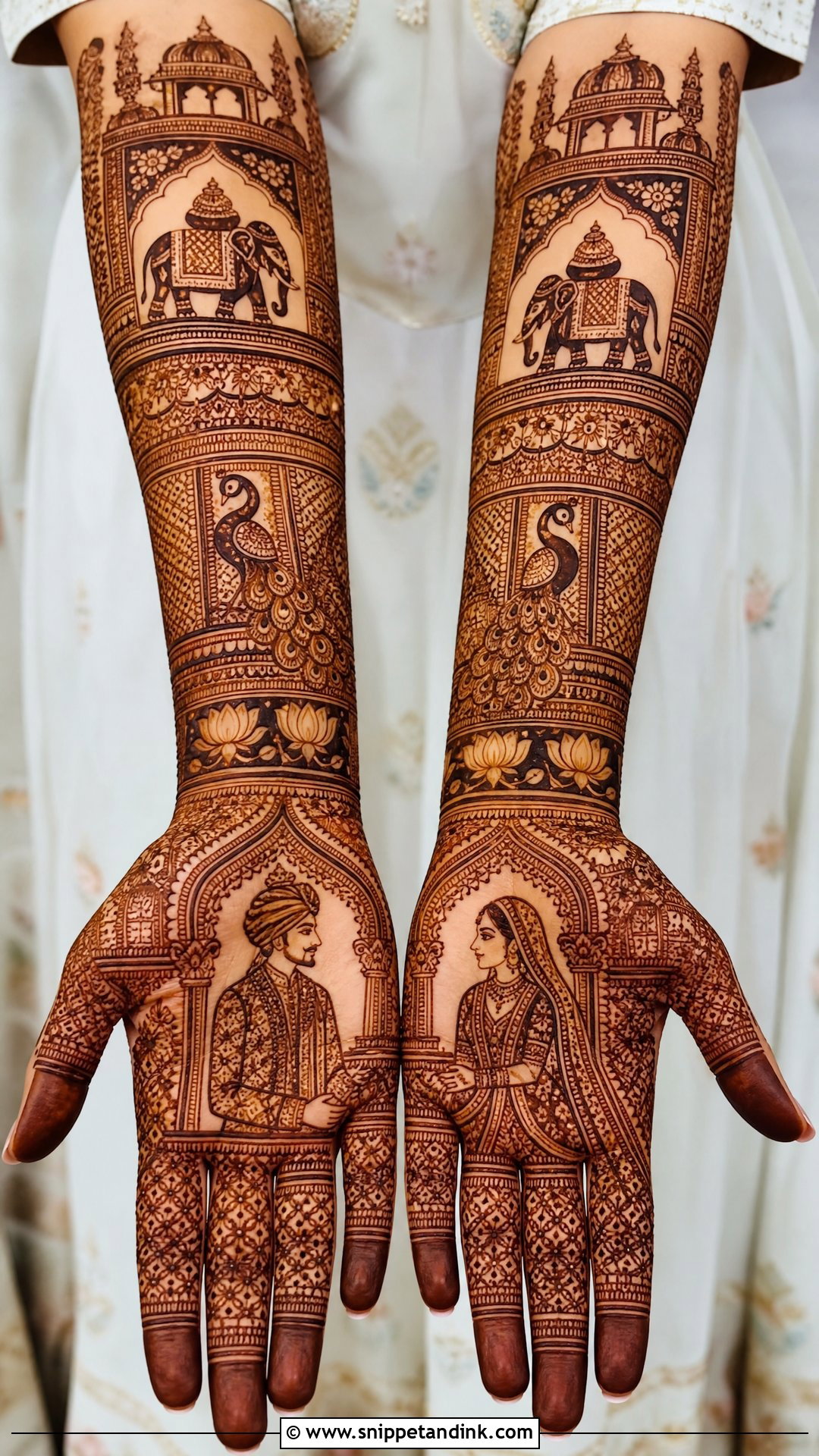
Rajasthani work tells a story. Bride and groom figures, royal elephants, peacocks, lotus motifs, palace arches, dhols and kalash patterns fill the hands with fine symmetrical detail until each one looks like a wedding scene. This style takes the longest of anything here, and it rewards an artist who draws figures confidently, so look at her past portrait work before you book. During drying, keep your arms still and resting flat; the fine lines are the first thing to smudge when a sleeve brushes past. Red, maroon, gold and orange outfits sit naturally with it.
5. Back Hand Bridal Mehndi Design
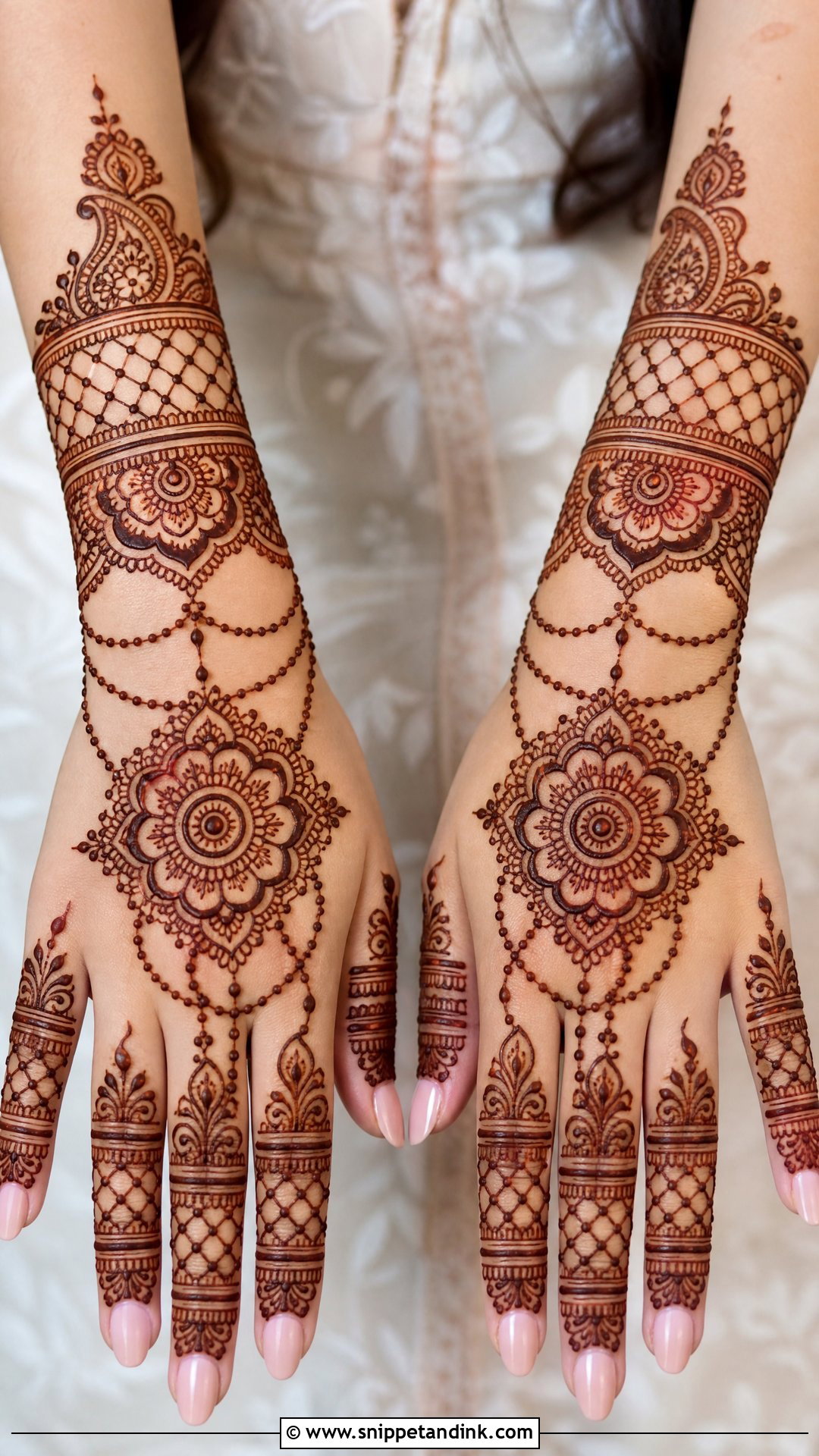
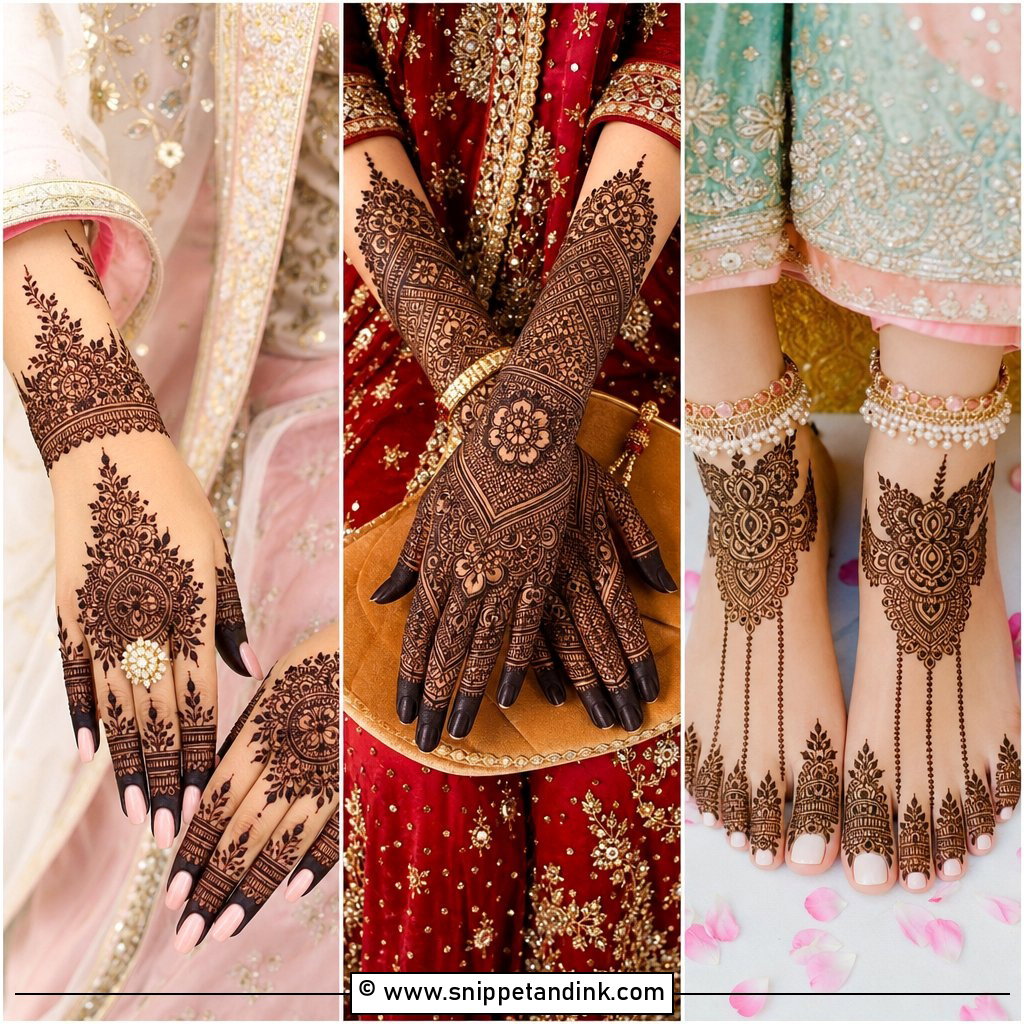
The back of the hand appears in ring shots, kalire photos and candids far more often than brides expect, so I never treat it as an afterthought. Most back hand designs start from a central mandala, floral bouquet, paisley cluster or jewelry-style motif, then extend toward the fingers and wrist with chains, leaves, jaali and bracelet bands. I keep the knuckle area neat because skin creases there and lines can look broken when the hand bends around a bouquet or dupatta. Heavier coverage suits the bride; a lighter version suits bridesmaids. Remember the stain on the back hand comes out a shade lighter than on the palm, so I go slightly bolder there.
6. Front Hand Wedding Mehndi Design
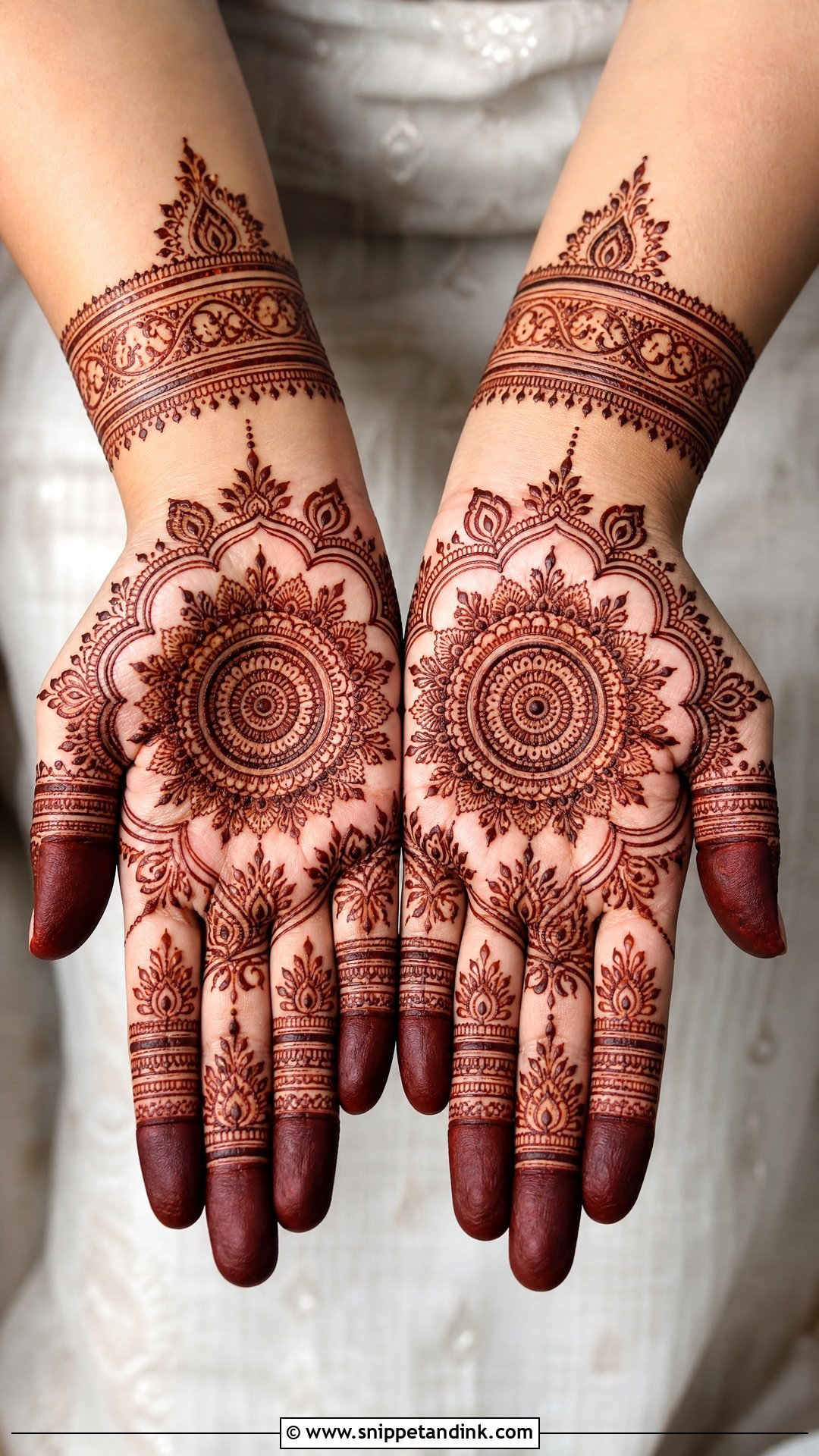
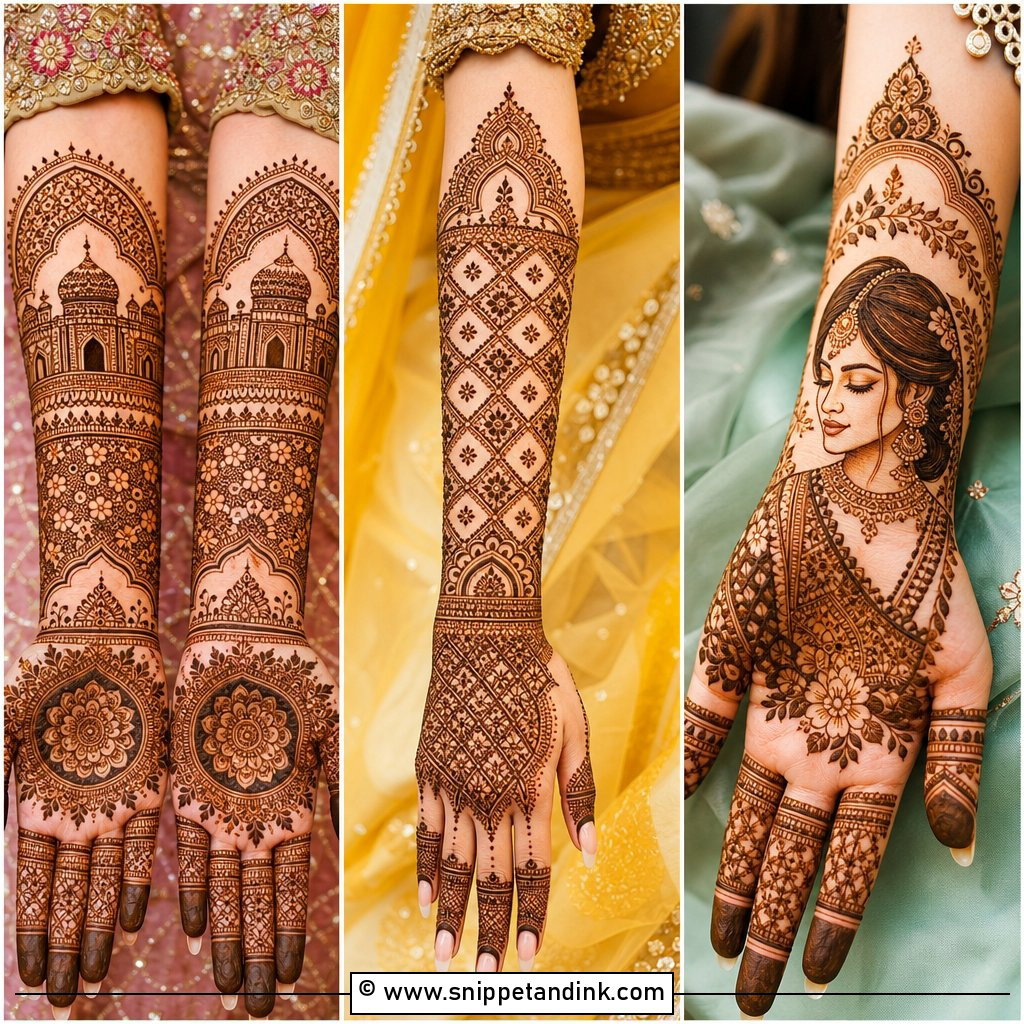
The palm stains deepest of any skin on the body, which is why so many traditional photos show hands opened toward the camera. Front hand wedding mehndi design work might center on a mandala, lotus, peacock, paisley garden or bride and groom portrait, with fine fillers around it. I balance the fingers against the palm so the hand doesn’t look top-heavy. Brides can carry the pattern up the forearm; for guests, palm to wrist is plenty. It’s the side everyone sees during rituals, blessings and dancing.
7. Simple Wedding Mehndi Design
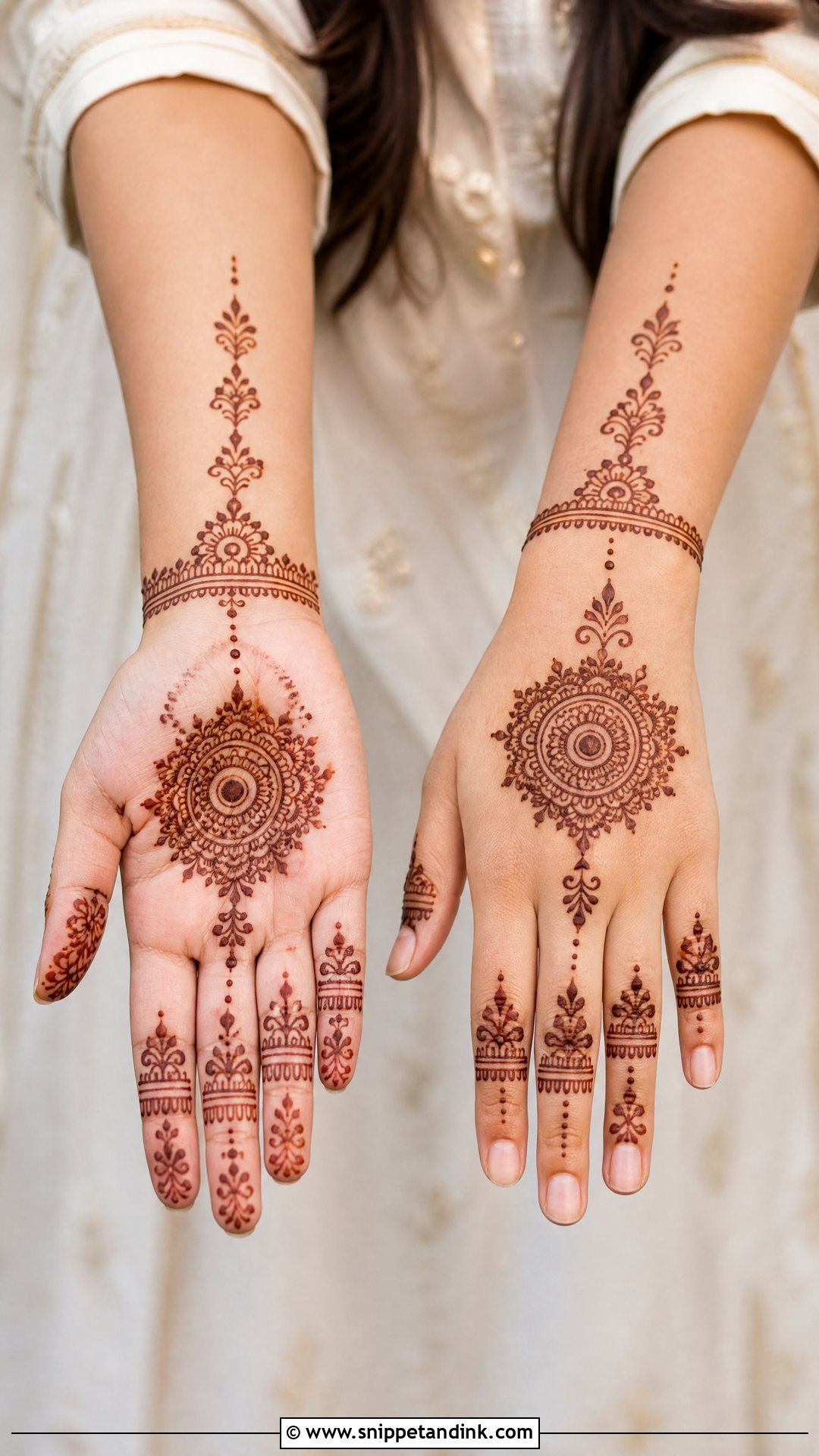
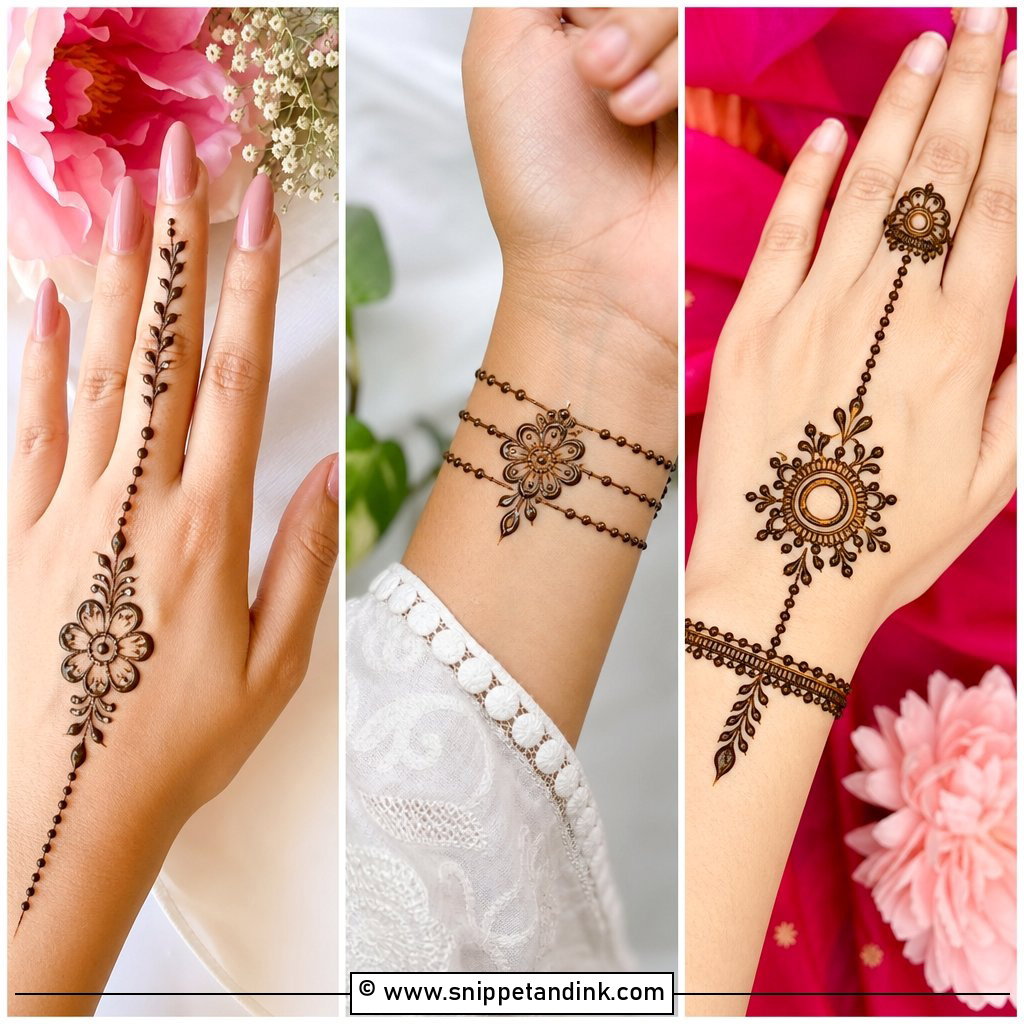
A lighter design is the right call for bridesmaids, guests, younger sisters and brides who just don’t want heavy work. Instead of dense coverage, it uses a neat mandala, a floral trail, a bracelet at the wrist and decorated fingers. It dries faster and is far less likely to smudge while you’re greeting relatives. What lifts simple henna is the spacing and the confidence of the outline, plus one strong focal point. Shaky lines are much more visible here than in dense work, so it’s still worth choosing an experienced hand.
8. Minimal Bridal Mehndi Design
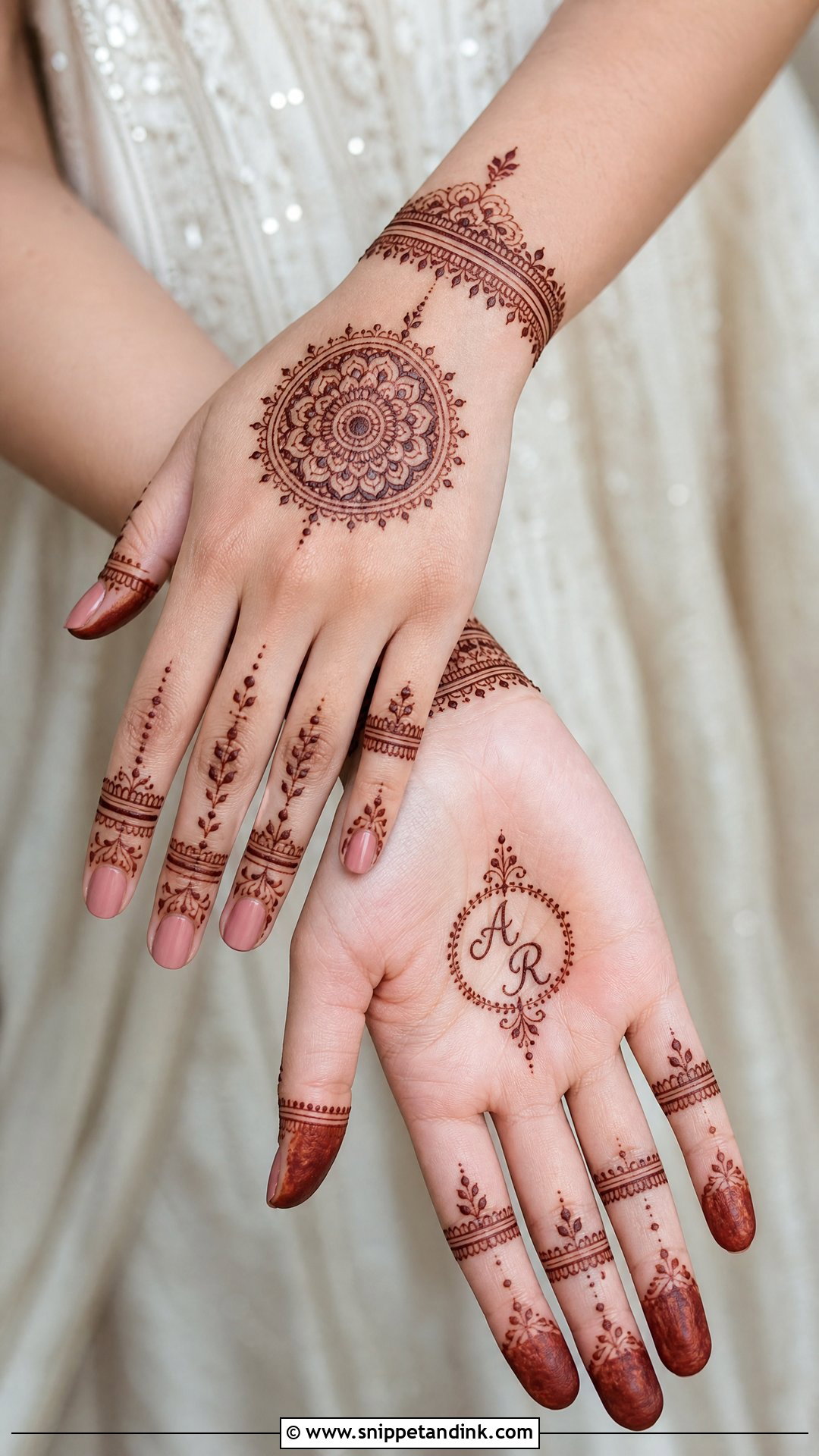
Minimal bridal work suits the bride who wants the tradition without hours of coverage. Fine finger detailing, a small palm mandala, a slim wrist band and open negative space are the usual pieces, sometimes with initials, a tiny heart or the date. Precision matters more than anywhere else, because there’s no filler to hide a wobble. I’d steer a bride away from this only if her family expects full traditional hands; that conversation is better had before the appointment. It pairs well with pastel lehengas, fusion outfits and destination weddings, and it leaves room for rings, nail art and statement bangles.
9. Mandala Mehndi Design For Wedding
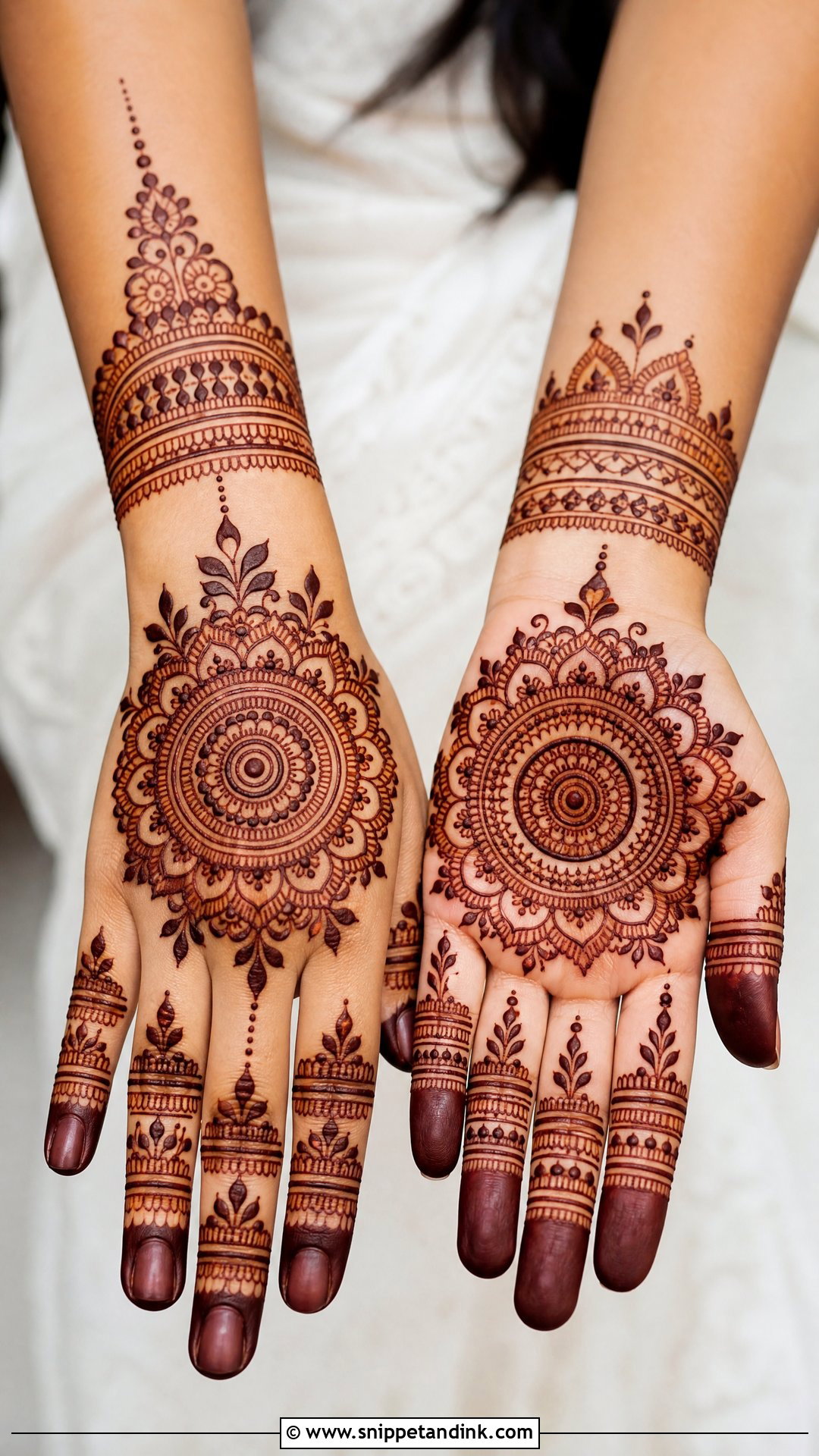
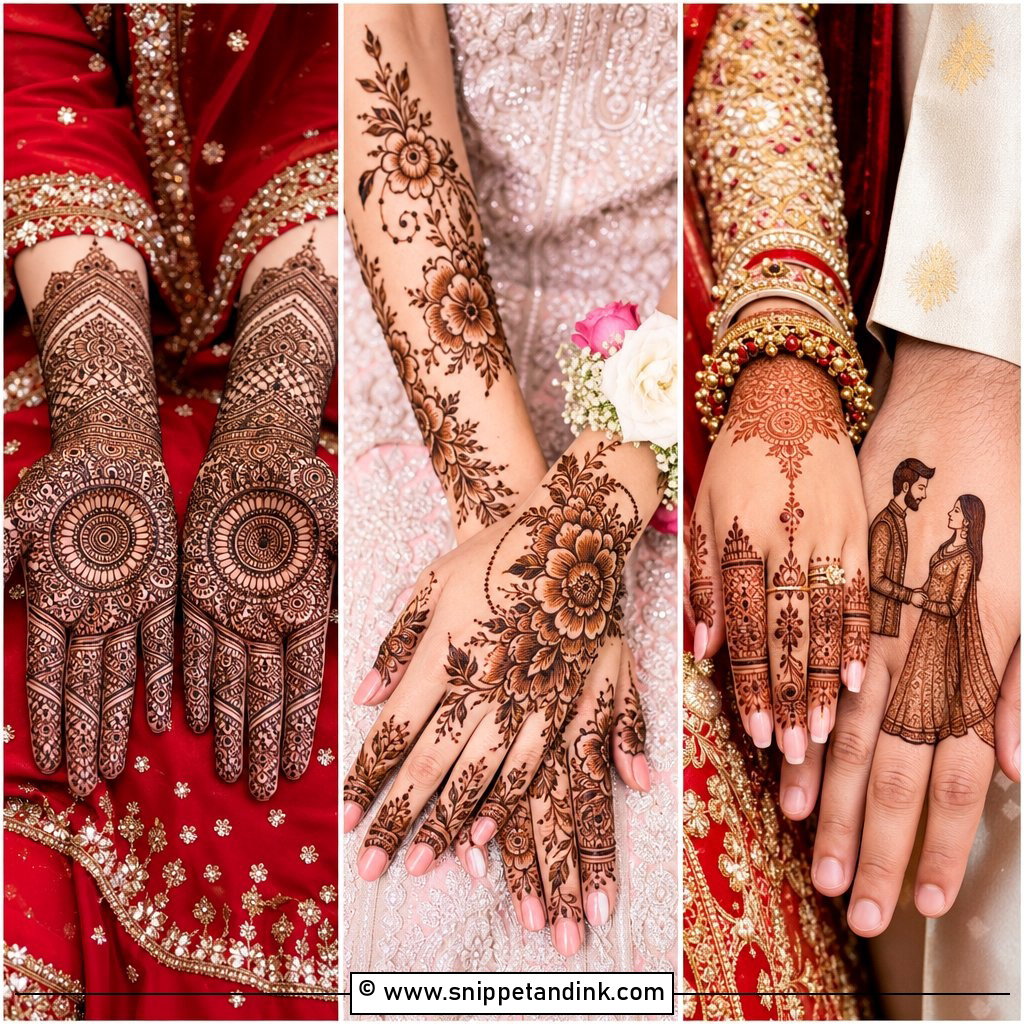
A centered mandala suits almost every hand shape because the eye goes straight to the middle and the rest of the hand balances around it. From that center I build outward with dots, leaves, finger bands, cuffs or half-floral borders. Brides can go dense with fine fillers; guests can keep it airy. The detail to watch is placement: on a long, narrow palm I move the mandala slightly higher, otherwise it sits too close to the wrist crease and distorts when the hand bends. Matching both hands or making them slightly different are both traditional.
10. Floral Bridal Mehndi Design
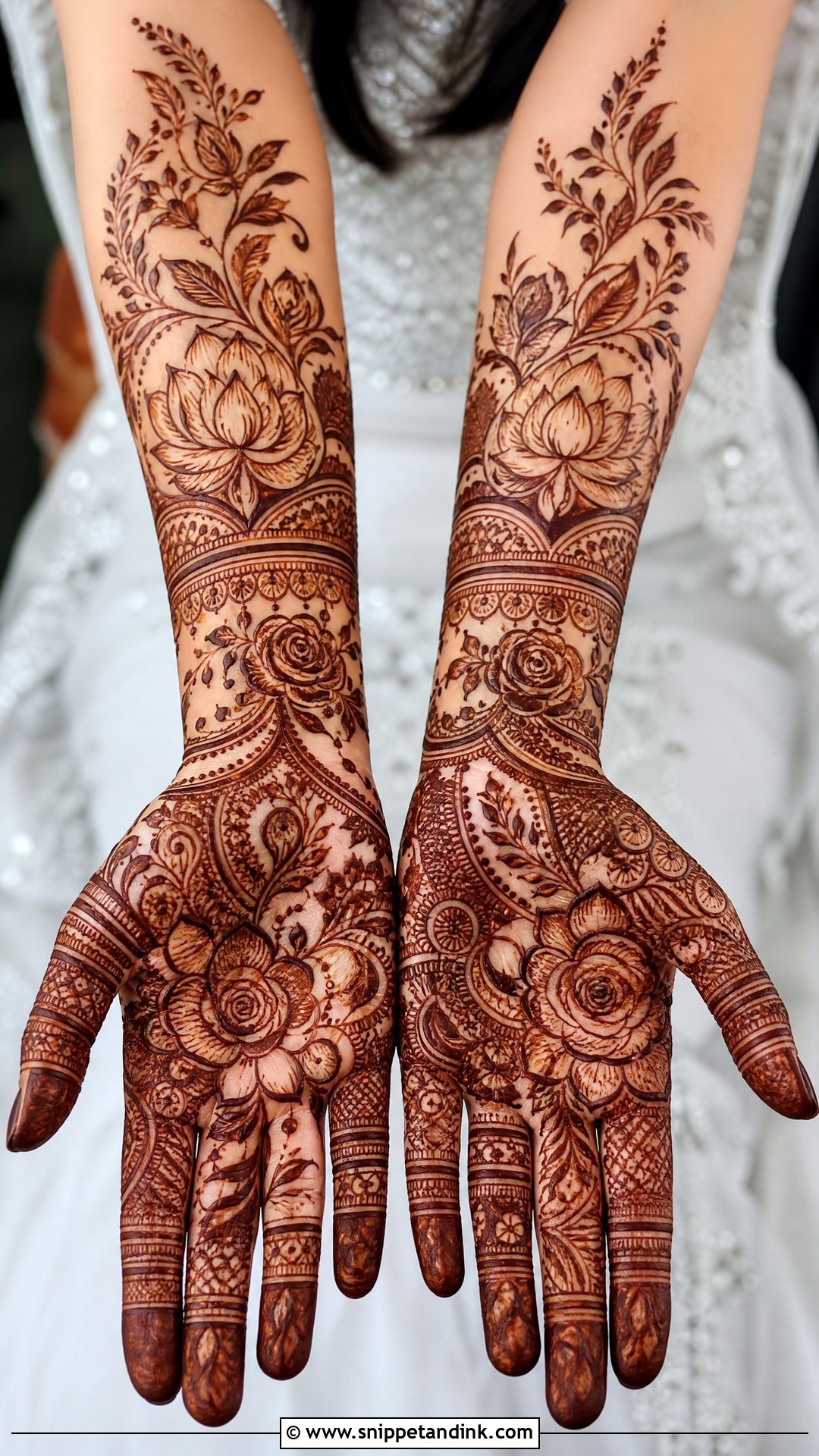
Roses, lotus blooms, leafy vines and petal clusters give a softer feel, and they can cover the full hand, the back hand or just the palm. Large flowers read modern; tiny flower fillers read traditional. On their own, though, open florals can look a bit thin for a bride, so I mix them with paisleys, jaali and shaded leaves to add weight. Florals scale down well for bridesmaids without losing the idea. Pastel outfits, floral jewelry and garden settings suit this style.
11. Peacock Mehndi Design For Wedding
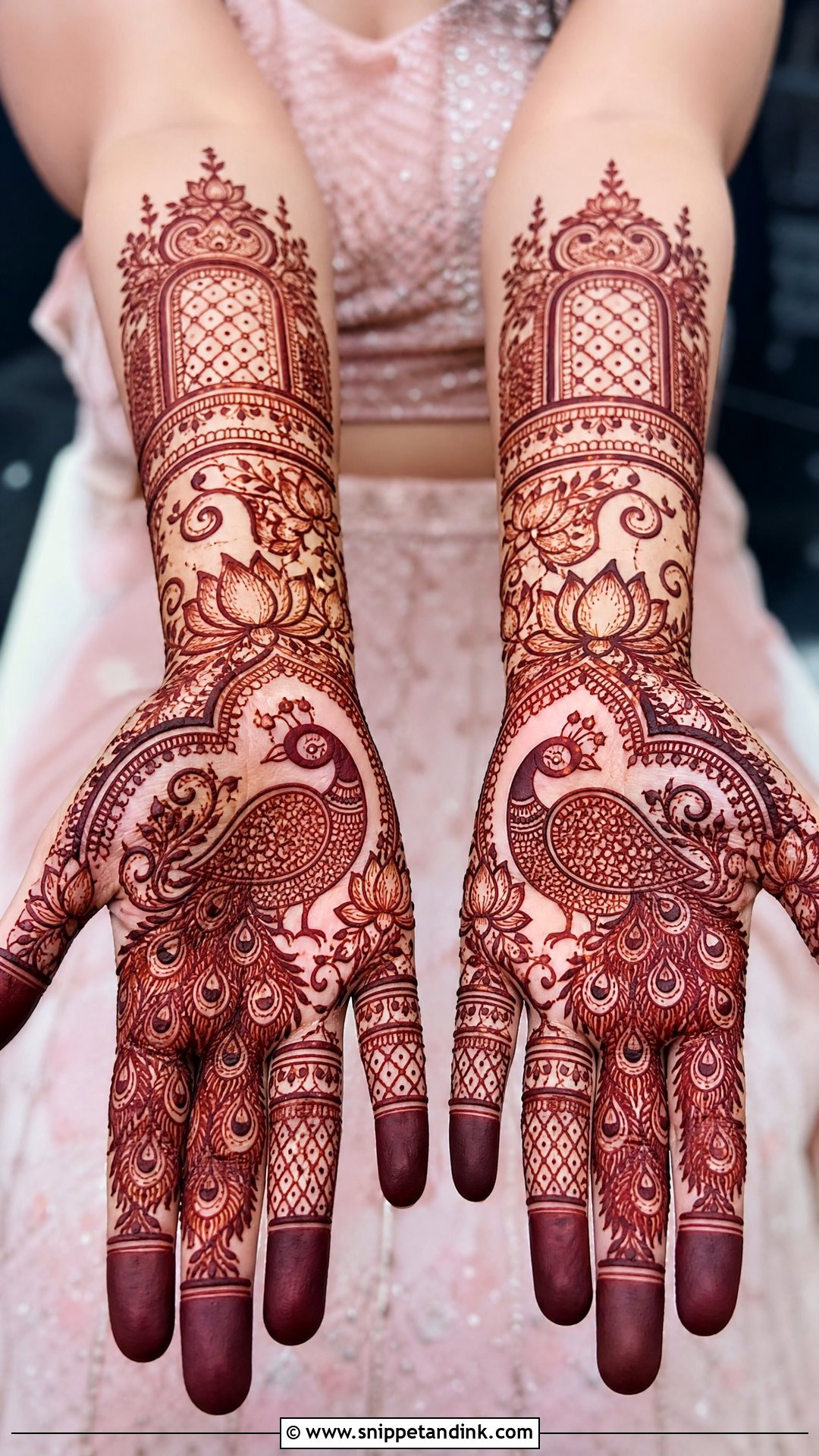
Peacocks give an artist lots to work with: feathers become fine lines, swirls, dots and shaded detail. The bird can sit on the palm, sweep along the forearm or appear as a pair across both hands. My main rule is scale. If the peacock is drawn too small, the neck and crest close up once the stain darkens and it reads as a smudge from a distance, so I keep the body large and clear. It sits well with paisleys, lotus flowers and curved vines in a full traditional layout, and with maroon, emerald, navy and deep pink outfits.
12. Paisley Bridal Mehndi Design
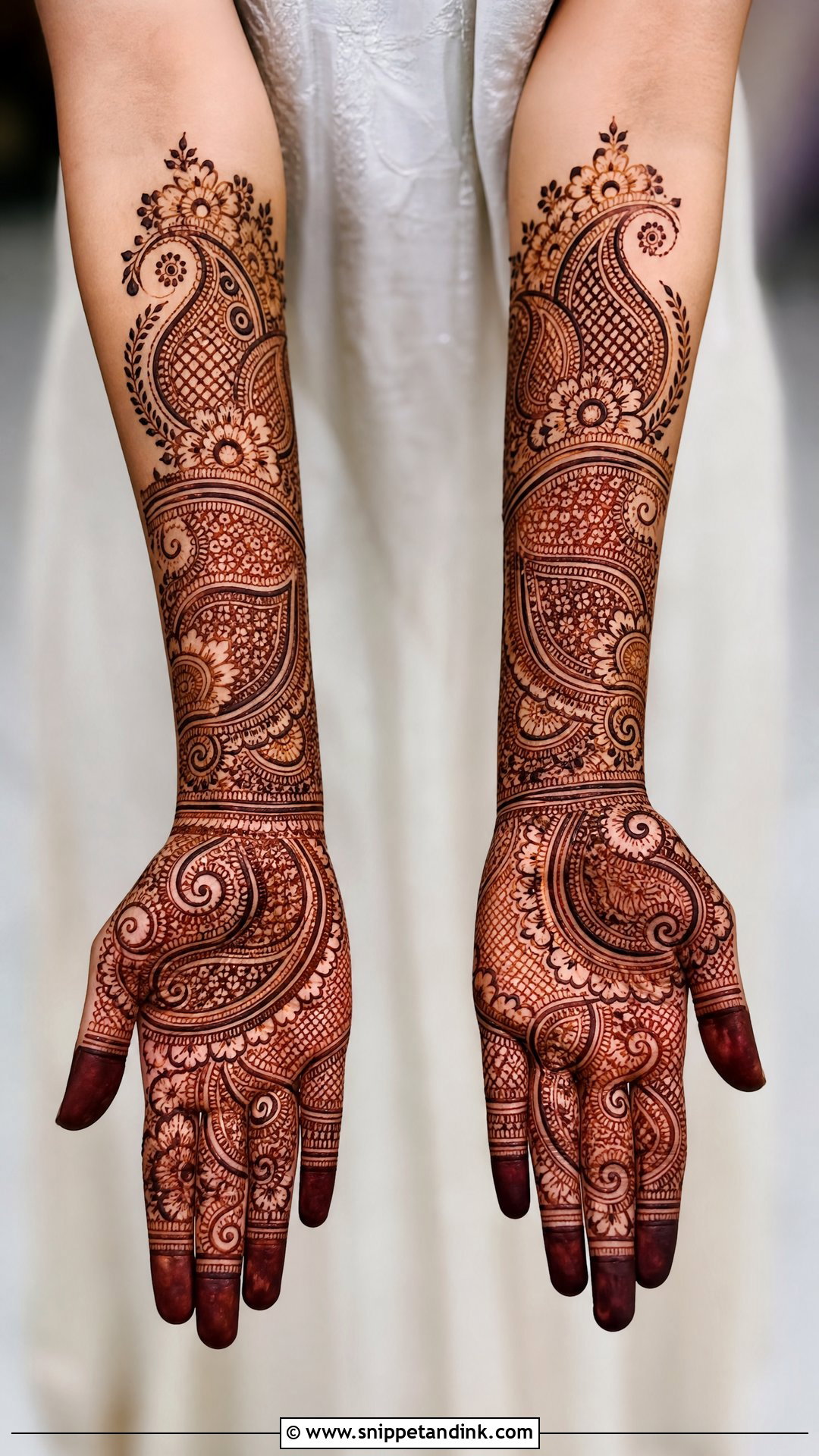
Paisleys are the most forgiving shape I draw. They stretch, stack and curve to fit any palm, wrist, finger or forearm, so they adapt to small hands and long fingers equally well. Large paisleys create movement, while tiny ones add texture, and combined with flowers, leaves, dots and mesh they give a full bridal finish without needing portraits. Dense and traditional or open and modern, both versions work. If you’re unsure where to start, a paisley-led design is the safest bet.
13. Jaali Mehndi Design For Wedding
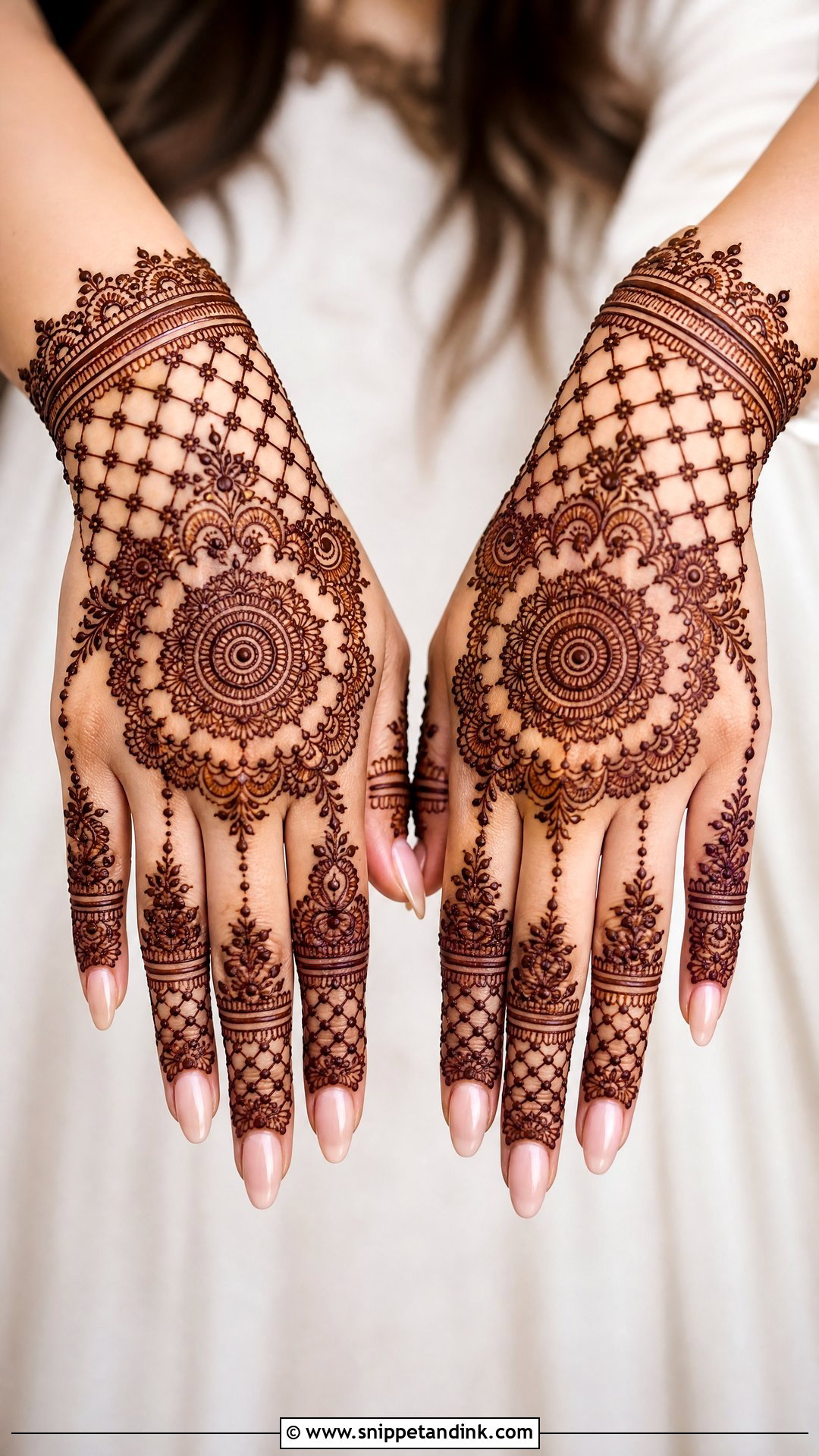
Jaali is mesh: grids, lattice lines, small flowers and dots that give a netted, jewelry-like effect, especially across the back of the hand where it can look like a lace glove. A full version covers the fingers, back hand and wrist; a lighter one frames a central mandala or floral motif. It lives or dies on even spacing. If the grid drifts, the eye catches it immediately, so I lay in guide lines first and fill afterward. Rings, haath phool and bangles sit well over it.
14. Jewelry Mehndi Design For Wedding
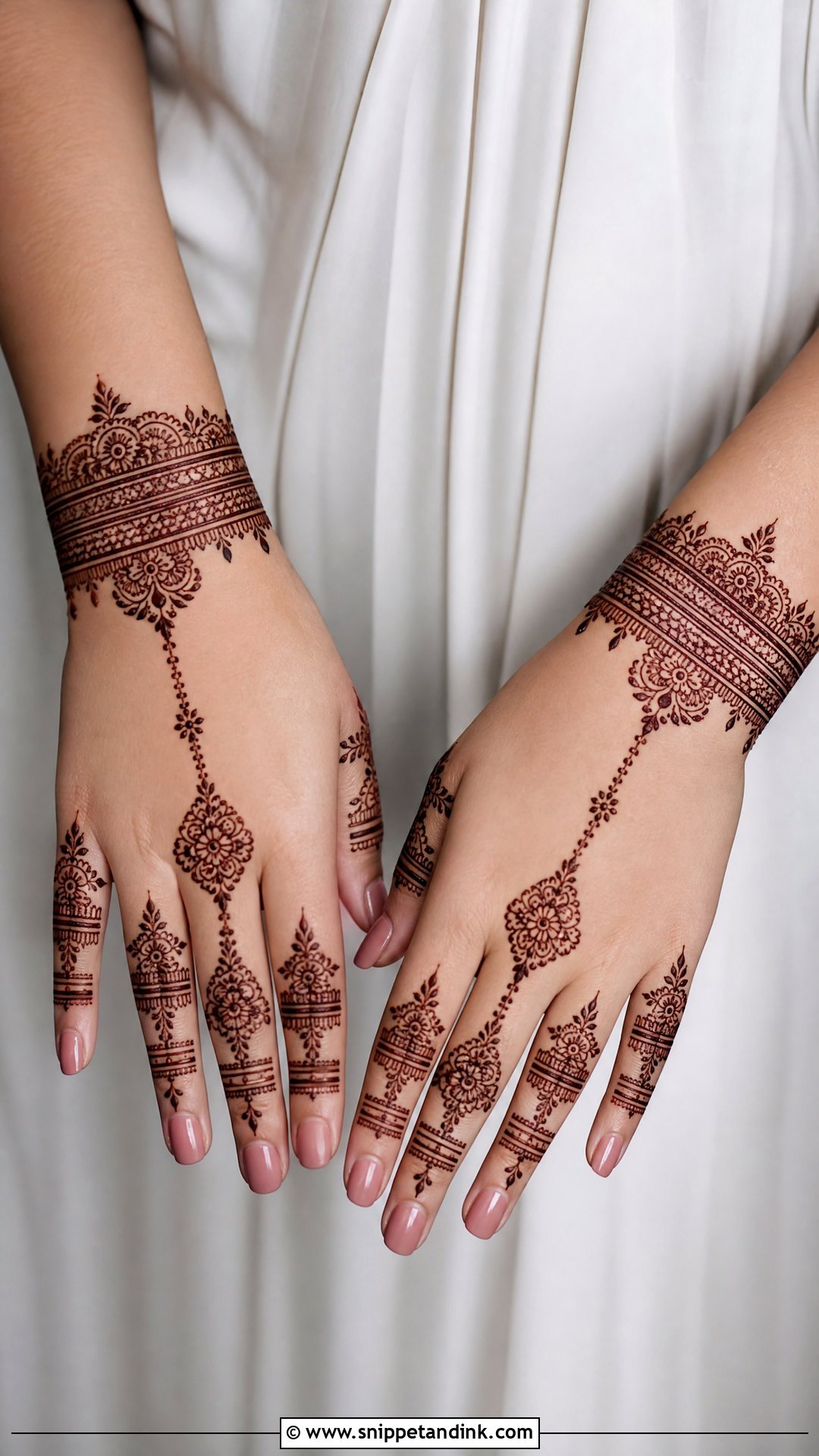
Henna jewelry draws accessories straight onto the skin: bracelet cuffs, ring chains, finger bands and haath phool lines running from ring to wrist. It shows best on the back of the hand. Brides can layer it with florals and jaali; guests can wear a simple bracelet-and-ring layout. I keep these lines slim and evenly spaced, because thick chains look clumsy once the stain darkens. It’s a clever choice if you’ll wear little real jewelry at an early event and still want your hands to look dressed.

15. Bride Groom Mehndi Design
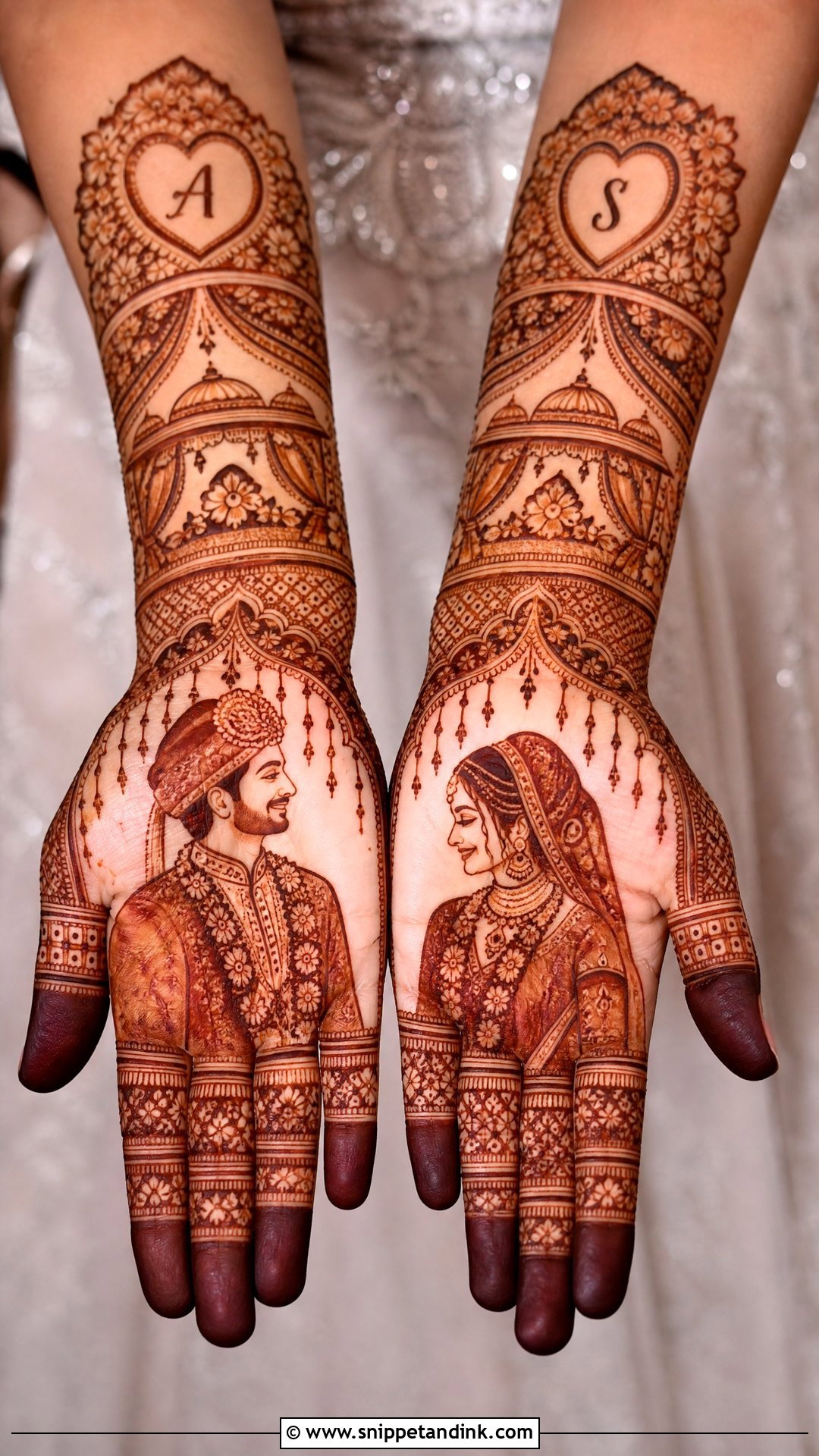
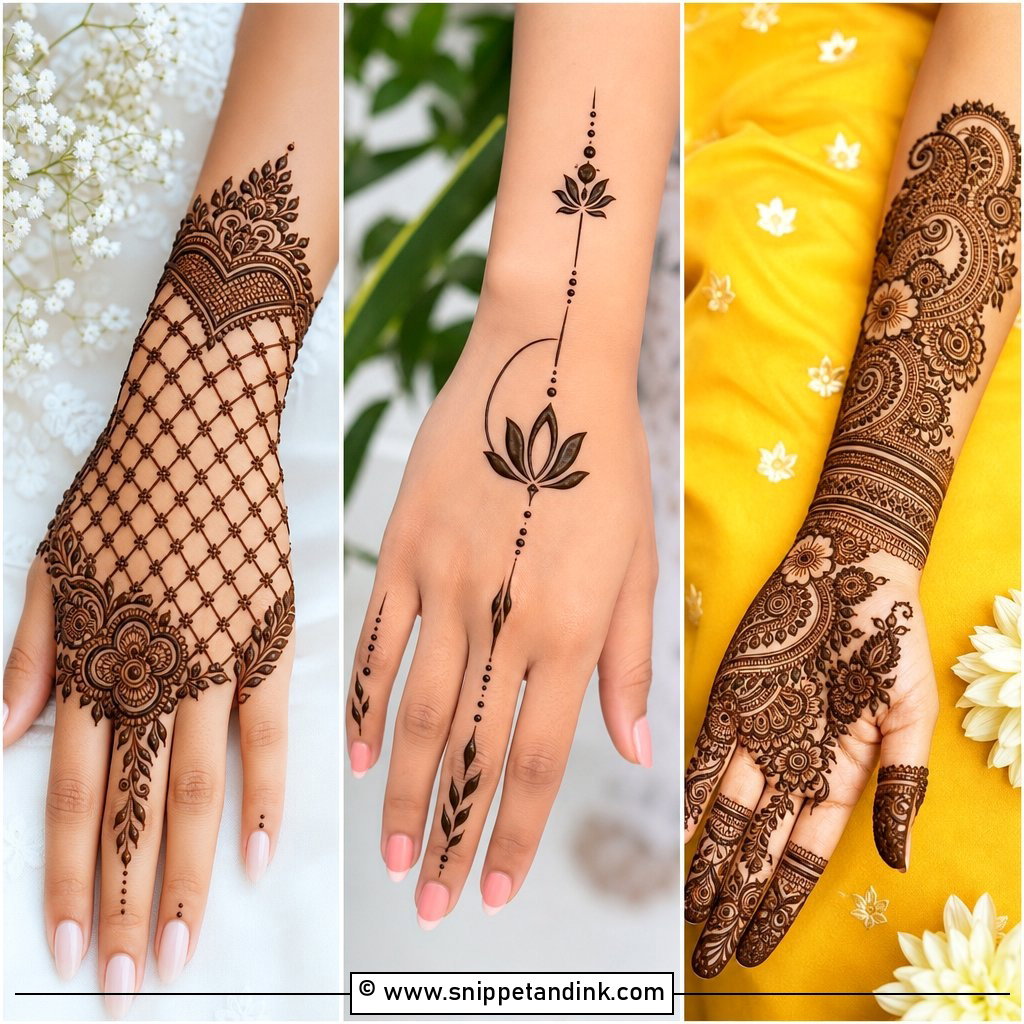
Portrait mehndi places the bride’s face on one palm and the groom’s on the other, framed by a varmala, mandap, flowers, dhol or initials. Faces are unforgiving. A single line out of place changes an expression, so only book this with an artist whose portrait work you’ve seen in person or in unedited photos. I draw the faces large enough to recognize and fill fine pattern around them. Families love searching for hidden names in it, which makes for good moments during the festivities.
16. Lotus Mehndi Design For Wedding
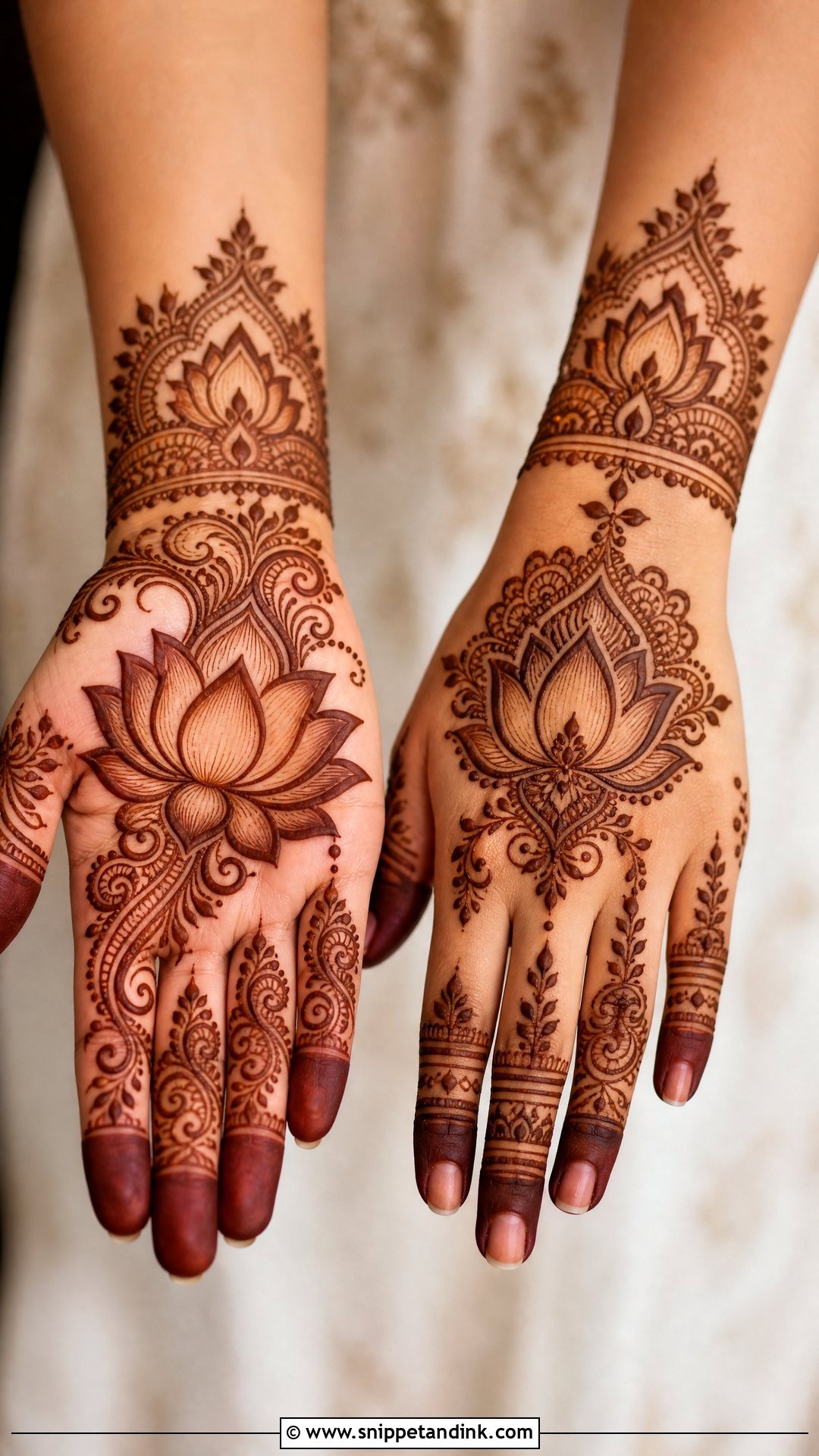
The lotus can be the main palm motif, a back-hand centerpiece or a repeated pattern along the wrist and forearm. One large lotus feels modern; small clusters feel more traditional. Mandalas, jaali, paisleys and leafy borders all pair with it. Ask for clear petal outlines with light shading inside, because heavy shading fills the petals in solid and the flower loses its shape after staining. Pink, ivory, gold and peach outfits suit it, and it gives a full feel without very heavy coverage.
17. Moroccan Mehndi Design For Wedding
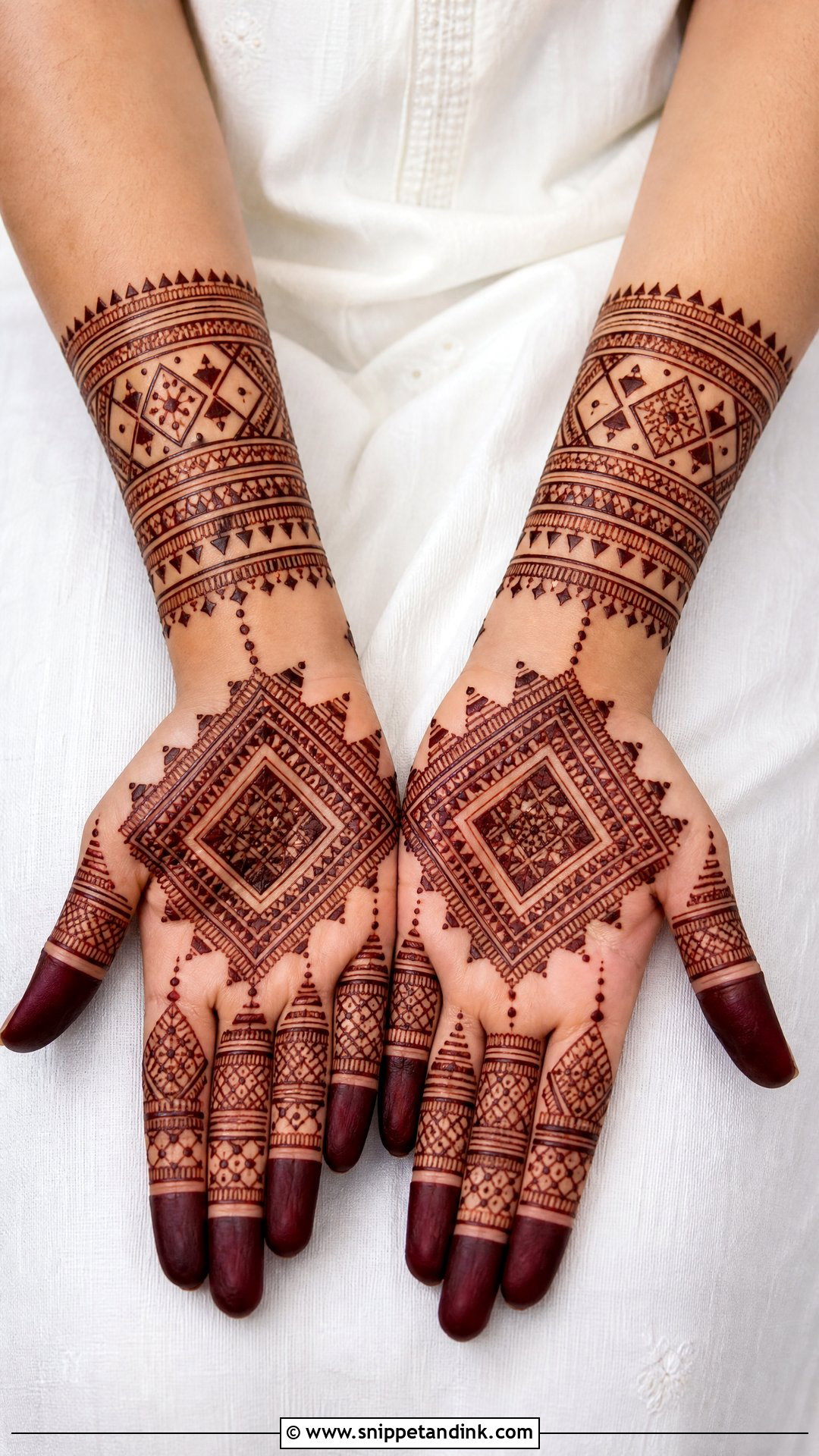
Moroccan henna swaps vines and paisleys for diamonds, lines, grids, triangles and bold symmetry. It can cover the palm, back hand, fingers and wrist with structured blocks, and it feels modern and a little edgy. Straight lines are harder to draw cleanly than curves, since every tremor shows, so this is a design where the artist’s steadiness matters most. Small dots, cuffs or fine borders around the blocks make it feel festive. Fashion-forward brides and guests in contemporary outfits tend to love it.
18. Gulf Mehndi Design For Wedding
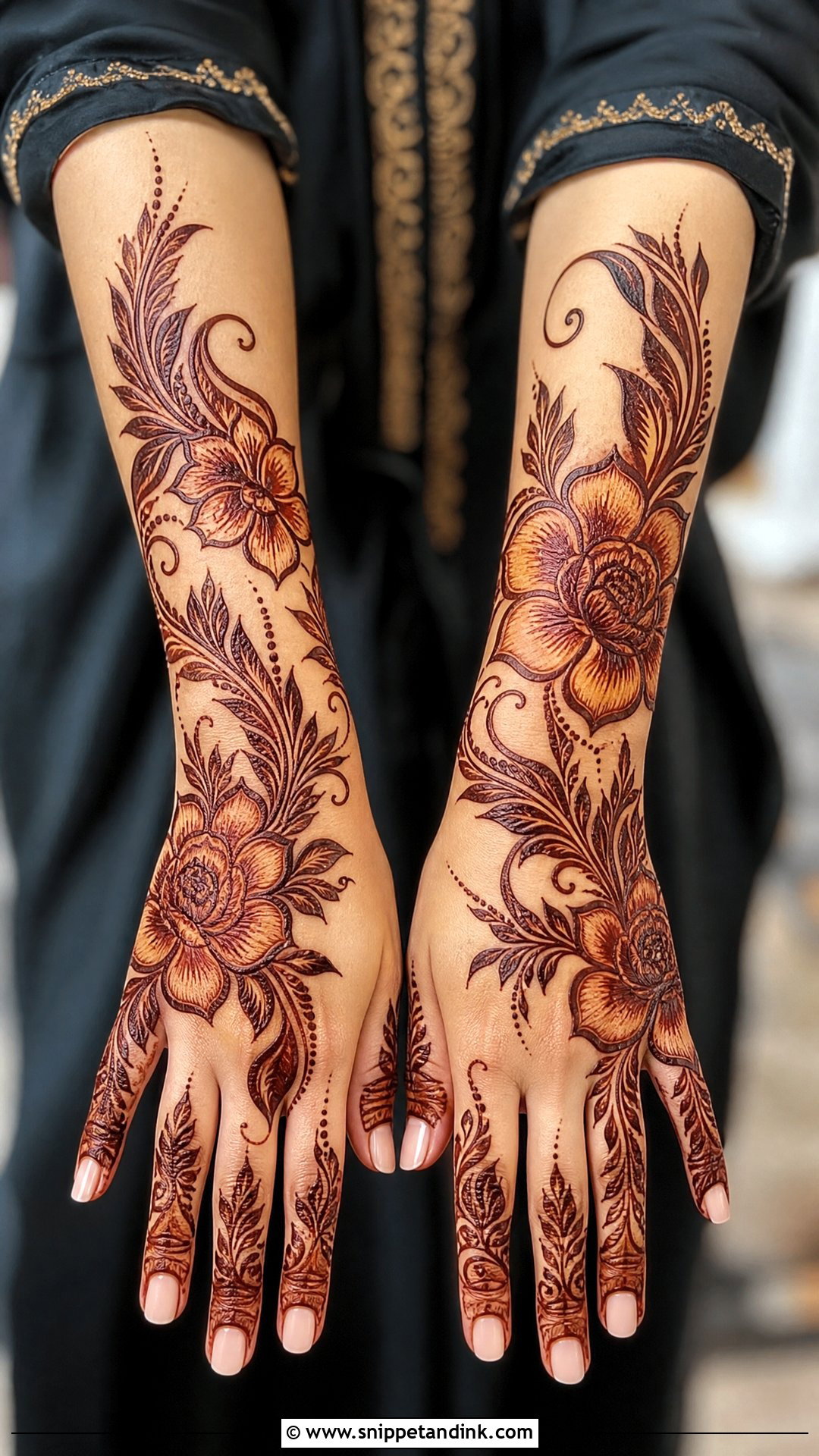
Gulf style is a heavier cousin of Arabic: bold flowers, flowing leaves, shaded petals, thick outlines and generous open space. It often runs from the fingers across the back hand to the wrist. The strong strokes hold a lot of paste, which usually means a deep, even stain. Engagement ceremonies, nikah, receptions and bridesmaids who want a statement without a long sitting all suit it. A bride can extend it up the forearm. Keep the negative space clean; once it fills up, the style loses its character.
19. Khafif Mehndi Design For Wedding
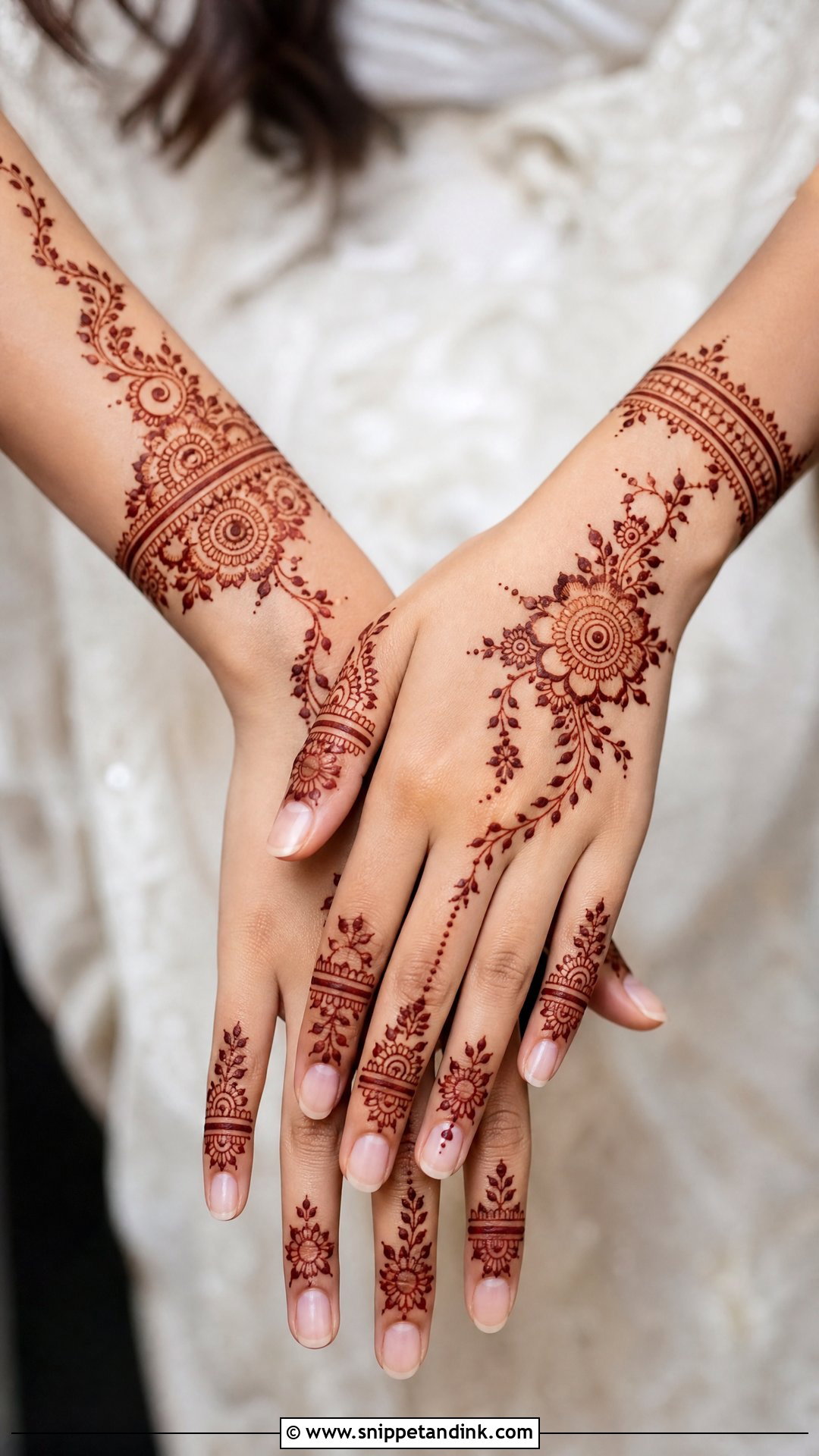
Khafif is the most delicate style here: fine florals, tiny leaves, light shading, dots and slim borders that read almost like lace. It frames rings and jewelry well on the back hand, and it suits engagement, reception and bridesmaid mehndi as much as a bride who prefers refined over heavy. The fine lines carry very little paste, so the cone has to be smooth and freshly made; a lumpy cone breaks the line and a thin line stains pale. Contrast between filled areas and open skin is what keeps the finished stain from looking faint.



20. Bel Mehndi Design For Wedding
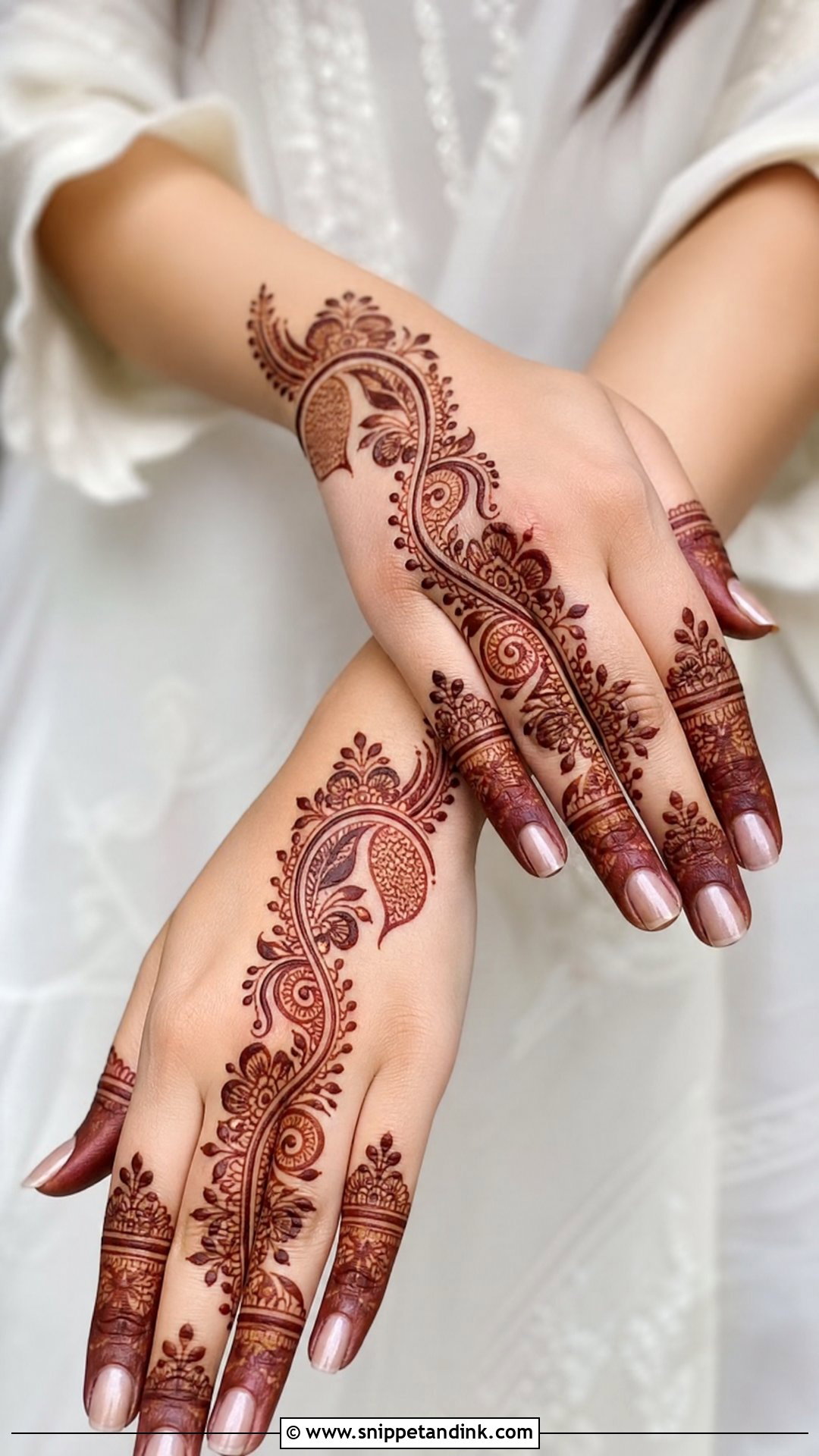
A bel is a vine. It might run diagonally from one finger to the wrist, curve along the side of the palm or wrap the back hand like a floral bracelet. It’s quick to apply and comfortable to wear, which is why guests and bridesmaids pick it for pre-wedding events. For a more bridal version I add bold flowers, paisley leaves, dotted chains and filled fingertips. The flowing line visually lengthens the hand, so it’s especially flattering on small hands and short fingers.
21. Half Hand Bridal Mehndi Design
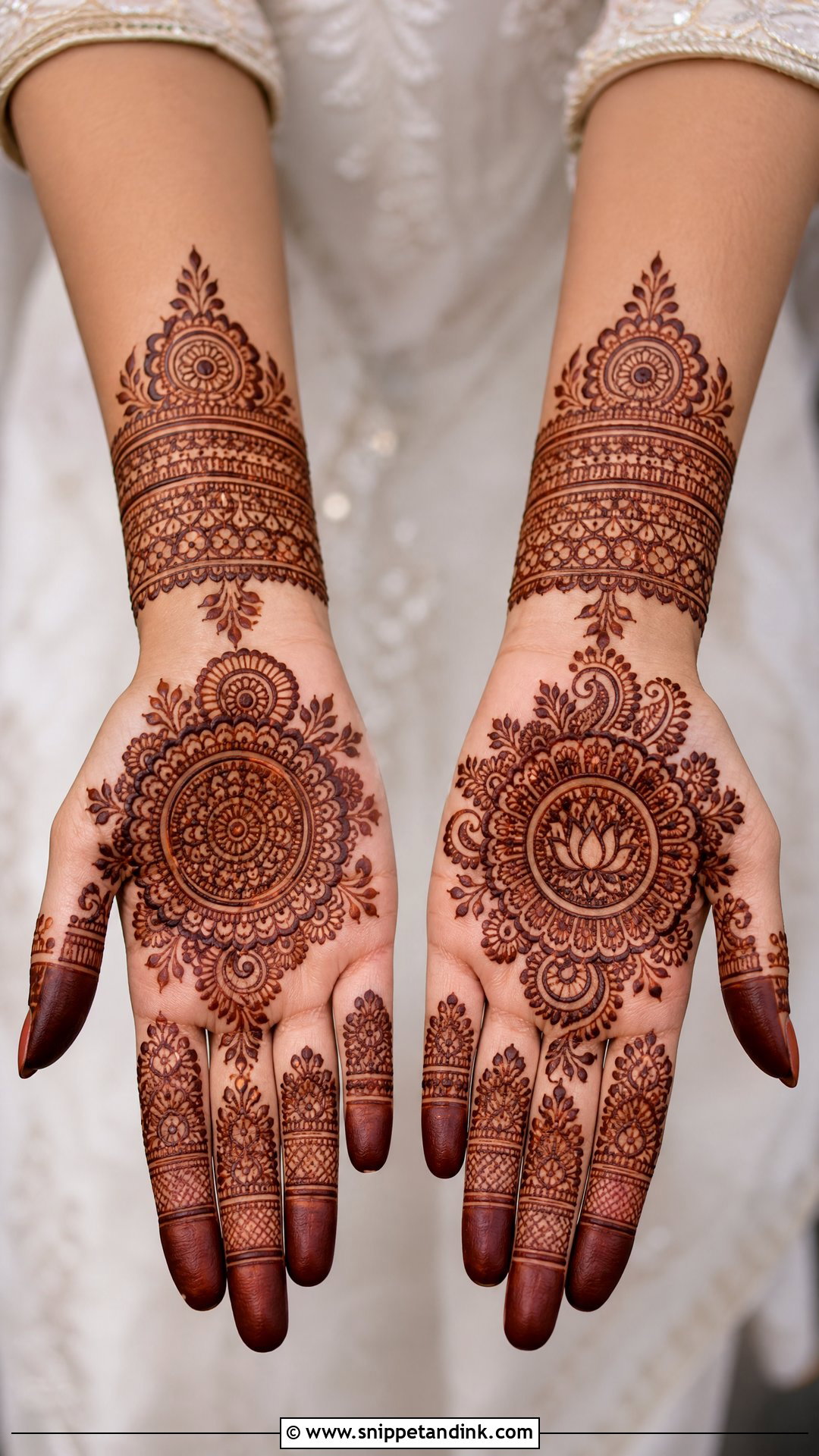
Stopping above the wrist saves hours while still giving a bridal finish. Half hand bridal mehndi design work runs from the fingertips to just above the wrist or partway down the forearm, with a mandala, lotus, paisley cluster or portrait in the palm and matching work on the fingers and wrist. I always finish the edge with a deliberate cuff or bracelet border, because a design that just stops looks unfinished. Courthouse weddings, intimate ceremonies and destination weddings suit it, as do brides with short sleeves.
22. Finger Mehndi Design For Wedding
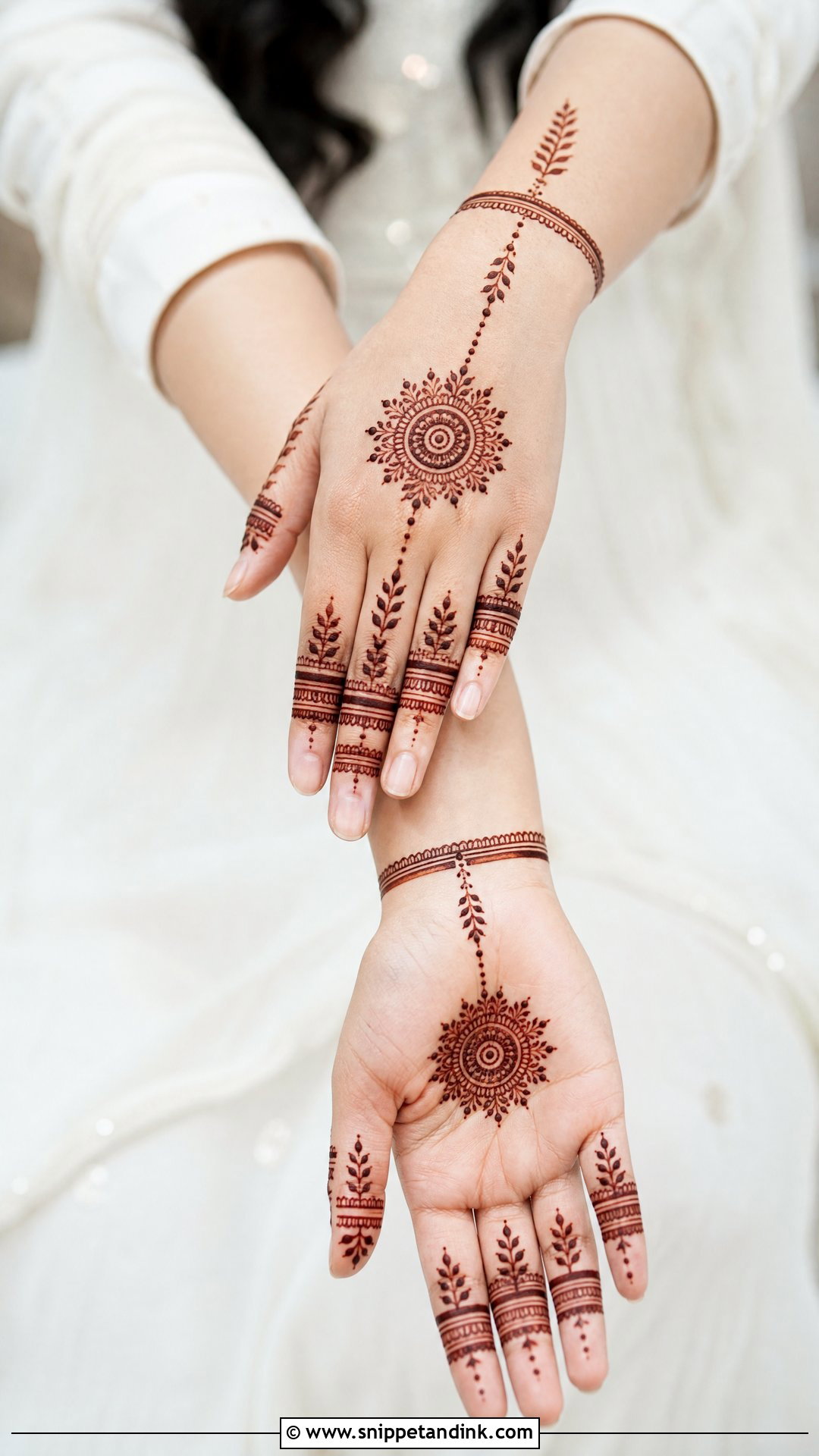
Finger work looks modern when it’s planned as one composition rather than separate marks on each finger. Rings, bands, leafy lines, dots and filled tips carry the design, while the palm or back hand stays light with a small mandala, side trail or wrist bracelet connecting it all. I keep each finger related to the next but not identical, which looks deliberate rather than stamped. Guests, bridesmaids and minimal brides choose it often, and it shows off nail color and rings.
23. Wrist Cuff Mehndi Design For Wedding
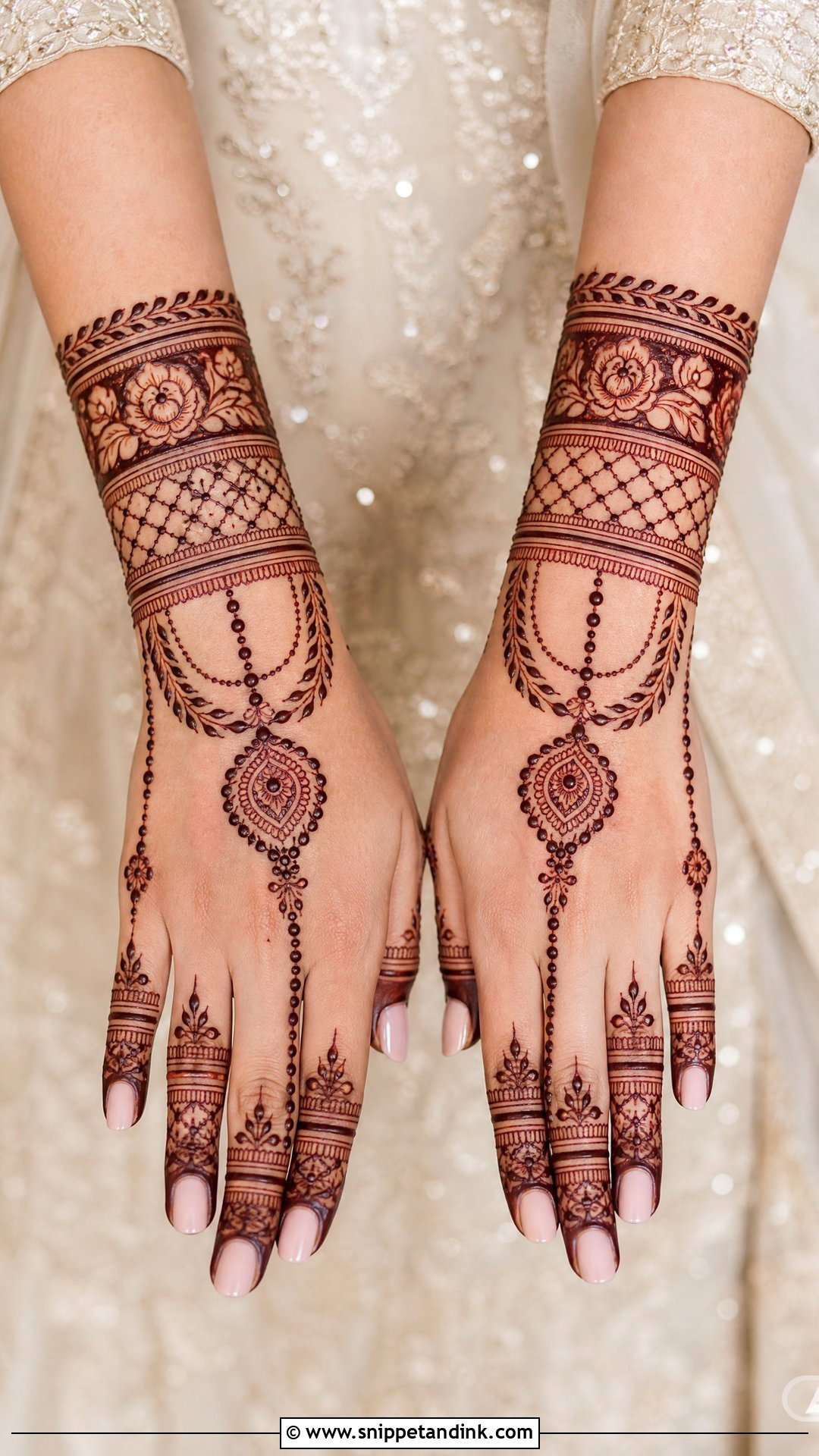
A henna bracelet wraps the wrist with floral bands, jaali strips, paisley borders, dots and chains reaching toward the fingers. Wrist cuff mehndi design work pairs with a simple palm mandala or a back-hand jewelry layout, and brides can use it to finish a fuller design. The wrist is round, so the hardest part is keeping the band even all the way around; I turn the client’s arm as I go rather than reaching underneath. Short sleeves and stacked bangles show it off.
24. Personalized Wedding Mehndi Design
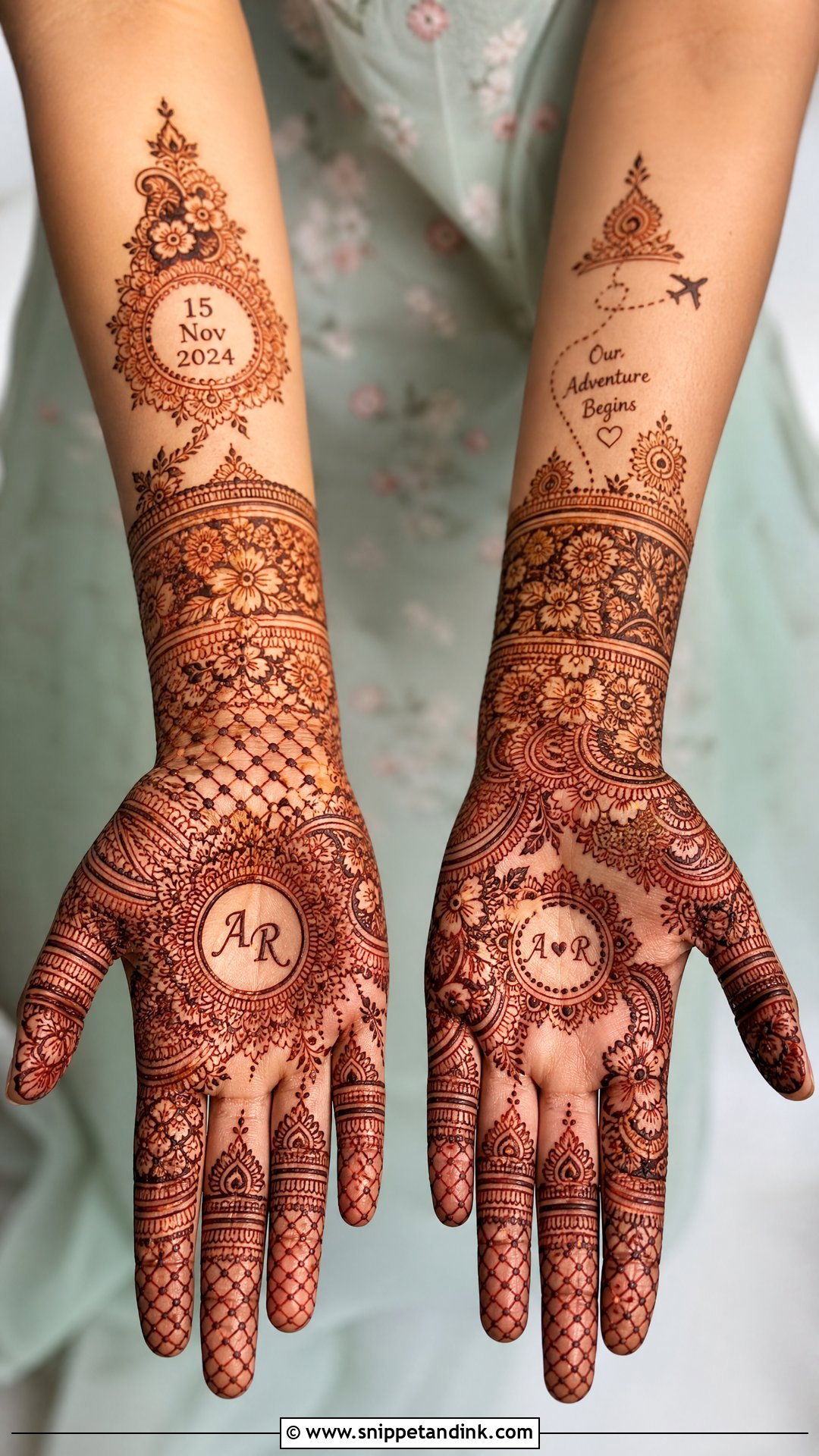
Custom details turn the henna into a keepsake: initials, the wedding date, a city skyline, a pet, favorite flowers, proposal details, travel symbols or something from the venue. The danger is clutter. Tiny symbols fill in and get lost once the stain develops, so I ask brides to pick two or three that matter most and I blend them into florals, paisleys, mandalas or jaali where they’re easy to find. Bring reference photos of each item; drawing a skyline from memory rarely goes well.


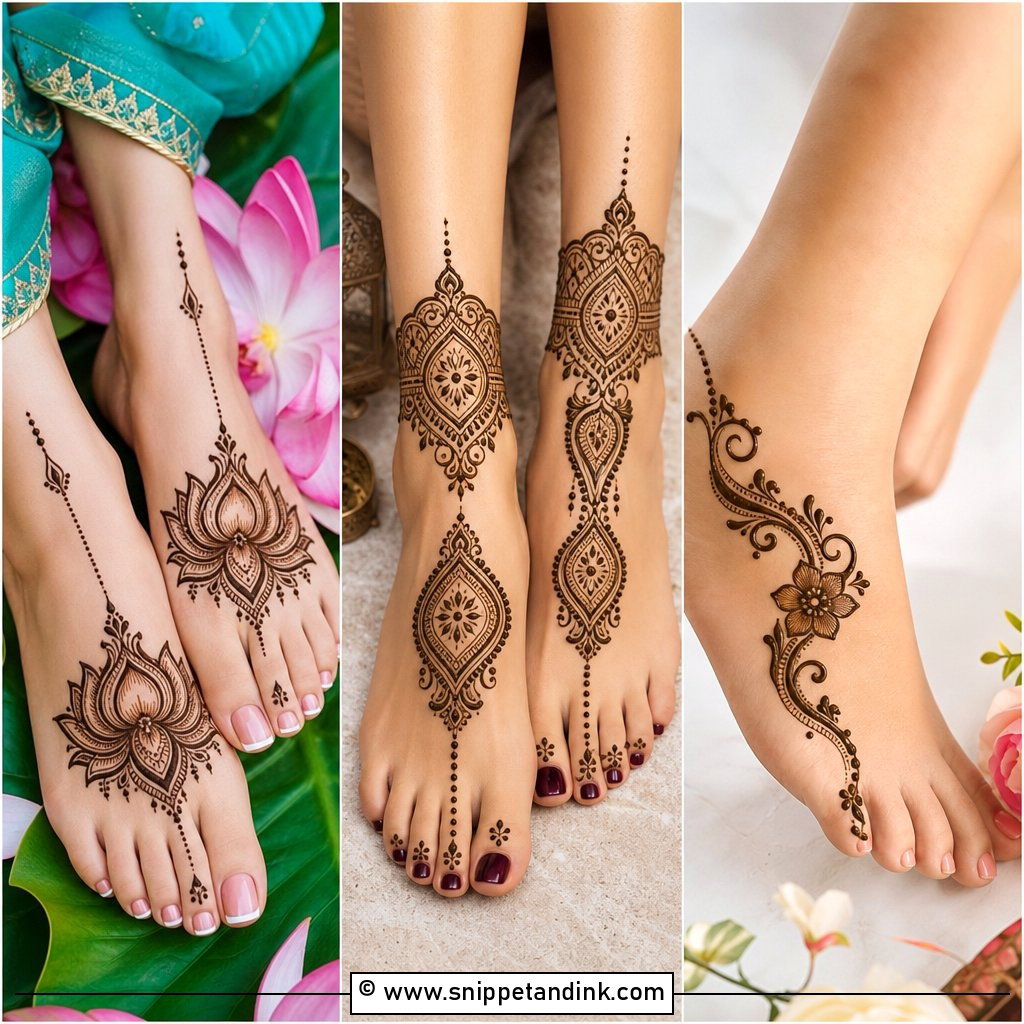
25. Feet Mehndi Design For Wedding
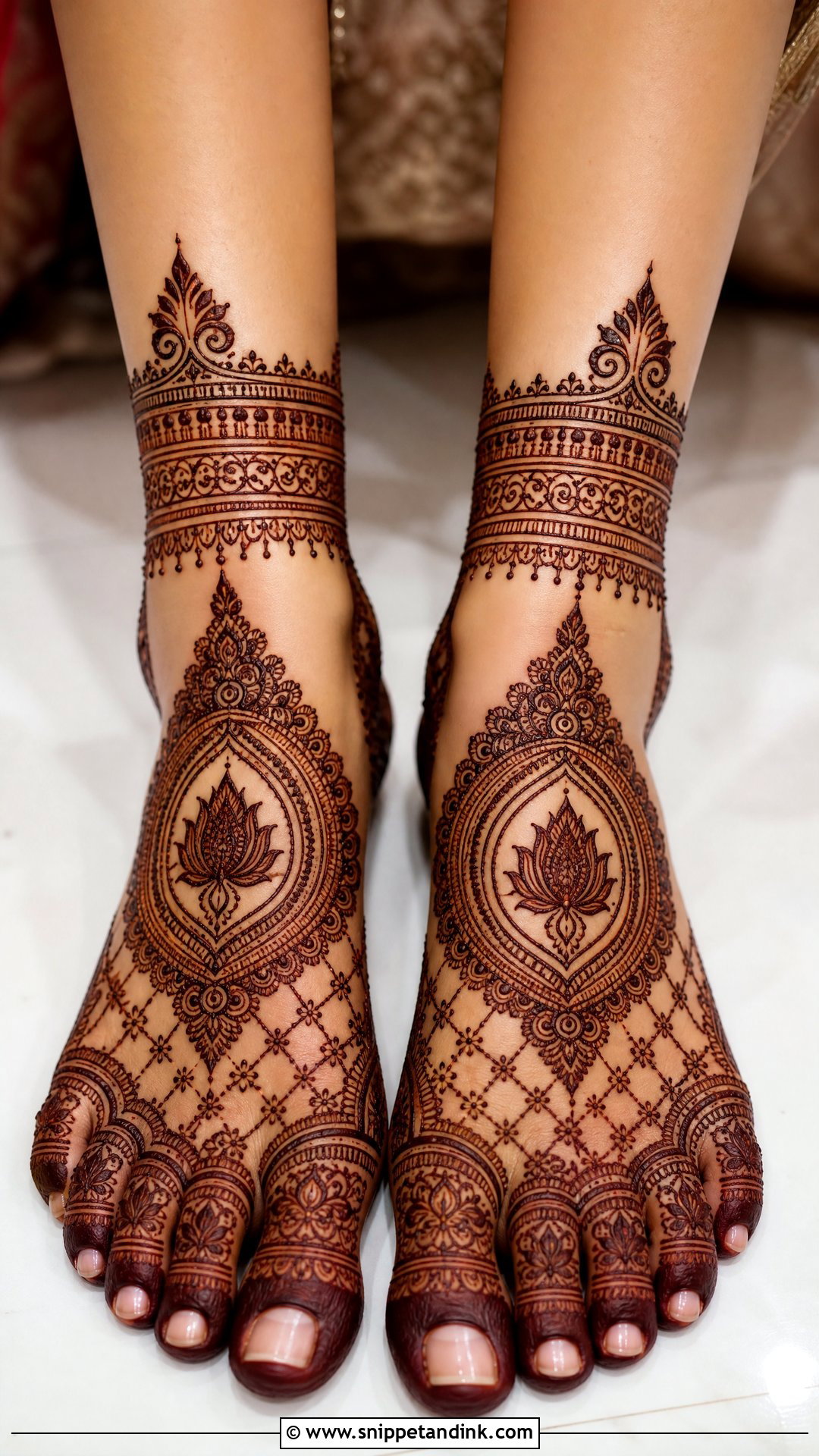
Foot mehndi completes the bridal look under a lehenga or saree, with anklets and open sandals. Feet mehndi design for wedding work at full bridal coverage takes in toes, the top of the feet, ankles and lower legs with mandalas, paisleys, lotus motifs, jaali and anklet-style borders. Toe detail with a central flower and a slim ankle cuff is the lighter option. I usually do feet after hands, while the bride can sit with her legs up, and she’ll need help walking until the paste dries. Avoid closed or tight shoes until the paste is off; skin on top of the foot stains lighter than the soles, so expect some difference in depth.
What’s Actually in the Cone?
Real henna paste is made from powdered henna leaves, a liquid such as lemon juice or water, sugar for stickiness, and an essential oil such as eucalyptus or tea tree that helps the dye release. It never stains black. Any cone promising a black stain within an hour very likely contains PPD, a hair-dye chemical that can cause blistering and lasting skin reactions. Ask your artist what she mixes into her paste, and if you have sensitive skin or allergies to any essential oils, ask for a small patch test a few days ahead.
Fresh paste loses its strength quickly at room temperature, so most natural henna artists freeze their cones and thaw them on the day. Store-bought cones that sit on a shelf for months generally can’t be natural, which is worth knowing before buying cones for guests to use at home.
The First Day After the Paste Comes Off
Most of the color is decided by what you do once I’ve finished. Leave the paste on as long as you comfortably can, ideally overnight; once it dries, I dab on a lemon and sugar mix to keep it stuck to the skin. Warmth helps, so keep your hands warm and covered rather than sitting under a fan.
- Scrape the dried paste off with a blunt edge or rub it away. Don’t wash it off.
- Keep water off the design for as long as you can, ideally the rest of that day.
- A little balm or coconut oil before showers protects the stain from soap and hot water.
- Avoid scrubs, chlorine and harsh cleaners until after the wedding.
If the stain looks light on the first evening, don’t panic. It deepens overnight, and a pale orange at removal is normal on the backs of hands and arms.
Your Hands, Your Hours and the Outfit
Coverage, comfort, outfit and photographs are what narrow the choice. Full hand, Rajasthani, portrait, peacock and paisley designs feel rich and traditional for brides. Arabic, Gulf, bel, finger and cuff designs suit guests and bridesmaids who want a shorter sitting. Minimal, Khafif, lotus, Moroccan and personalized henna fit cleaner, modern looks. The most detailed design isn’t automatically the right one; the right one stains well, sits comfortably on your hands and still looks like you. Take two or three references to your artist and talk through placement before she picks up a cone.
You'll Like These Ideas:




Leave a Reply