
No two brides sit down in my chair wanting the same hands anymore. Some still ask for dense Indian work from fingertip to elbow; others bring an Arabic trail, a bracelet layout or a palm that’s mostly open skin. What they share is a wish for something personal that also reads clearly in photos. The designs below range from full-hand detail to light modern work, using the motifs I draw most often for weddings: paisleys, lotus flowers, peacocks, jaali, mandalas and hidden initials. As you save references, notice which ones suit your outfit, your jewelry and how long you can realistically sit still, because those three things matter as much as the pattern.
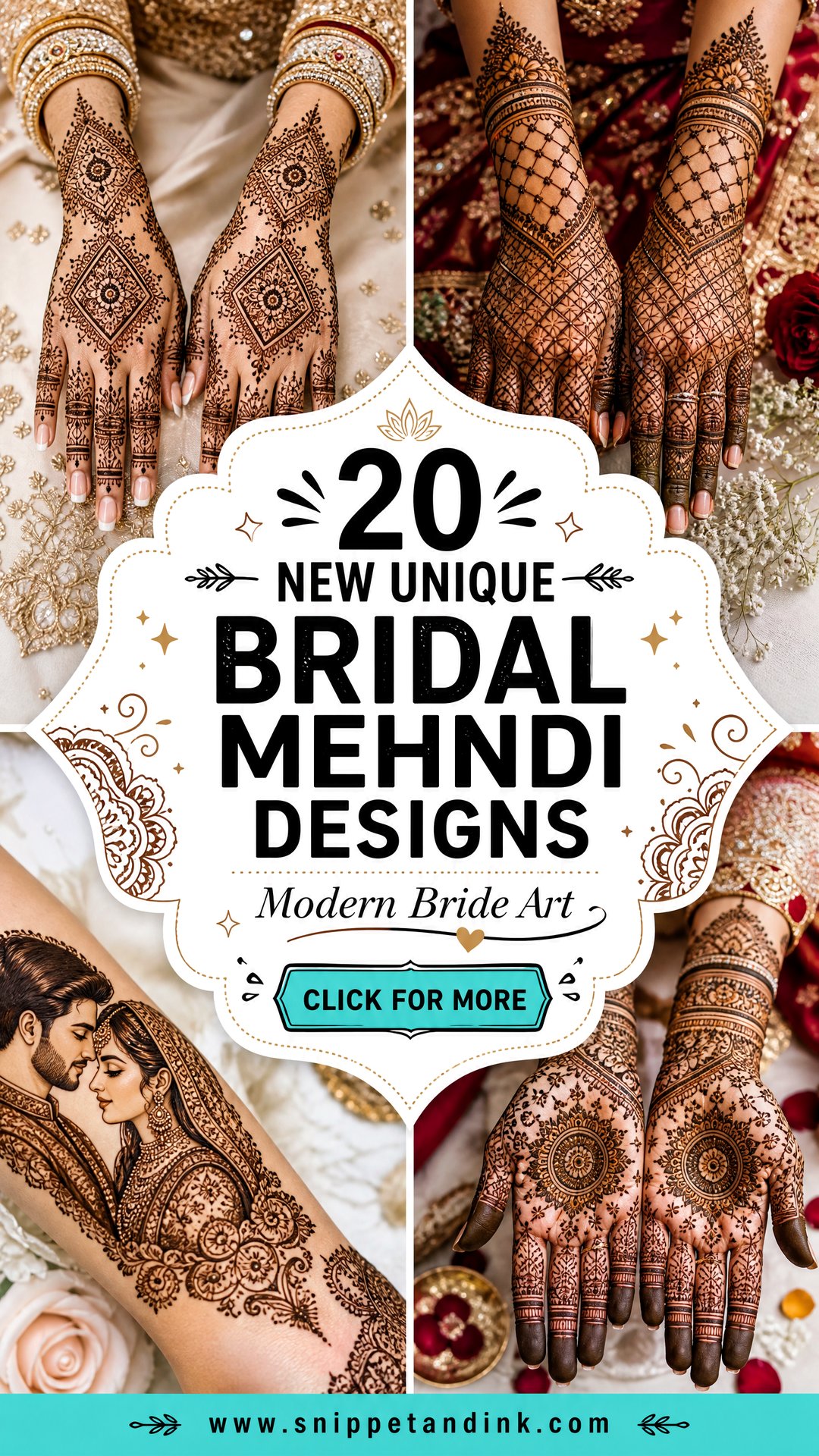
Briefing Your Artist on a Design Nobody Else Has
Unique mehndi rarely comes from one photo. It comes from a clear brief, and the brides who end up happiest arrive with a few decisions already made.
- Decide how far up the arm you want to go: wrist, mid-forearm or elbow. Coverage sets the hours, and the hours set the price.
- Choose one main motif per hand. A peacock and a portrait on the same palm will crowd each other.
- Bring two or three references, and say exactly what you like in each one. I’d rather hear ‘the fingers from this one, the wrist from that one’ than receive twenty screenshots.
- List your personal details in writing: names with their spelling, dates, symbols. I’ll fit them into the layout.
- Show me your outfit and jewelry, even as a photo. The colour, sleeve length and bangles all change where I place detail.
A short consultation call is worth it for any custom design. It’s where I can tell you honestly if a layout won’t fit the time you have.
1. Full Hand Indian Bridal Mehndi Design
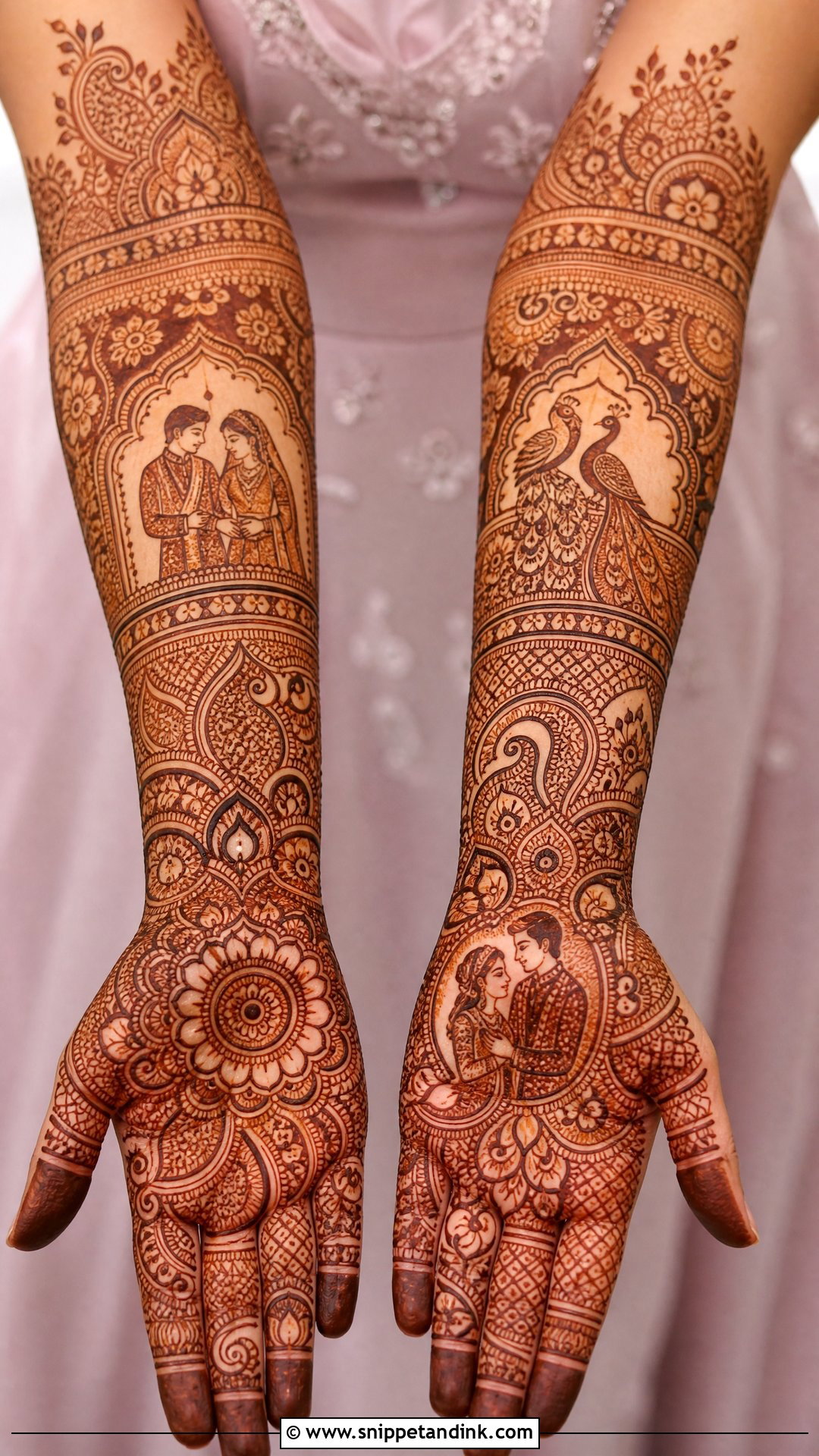
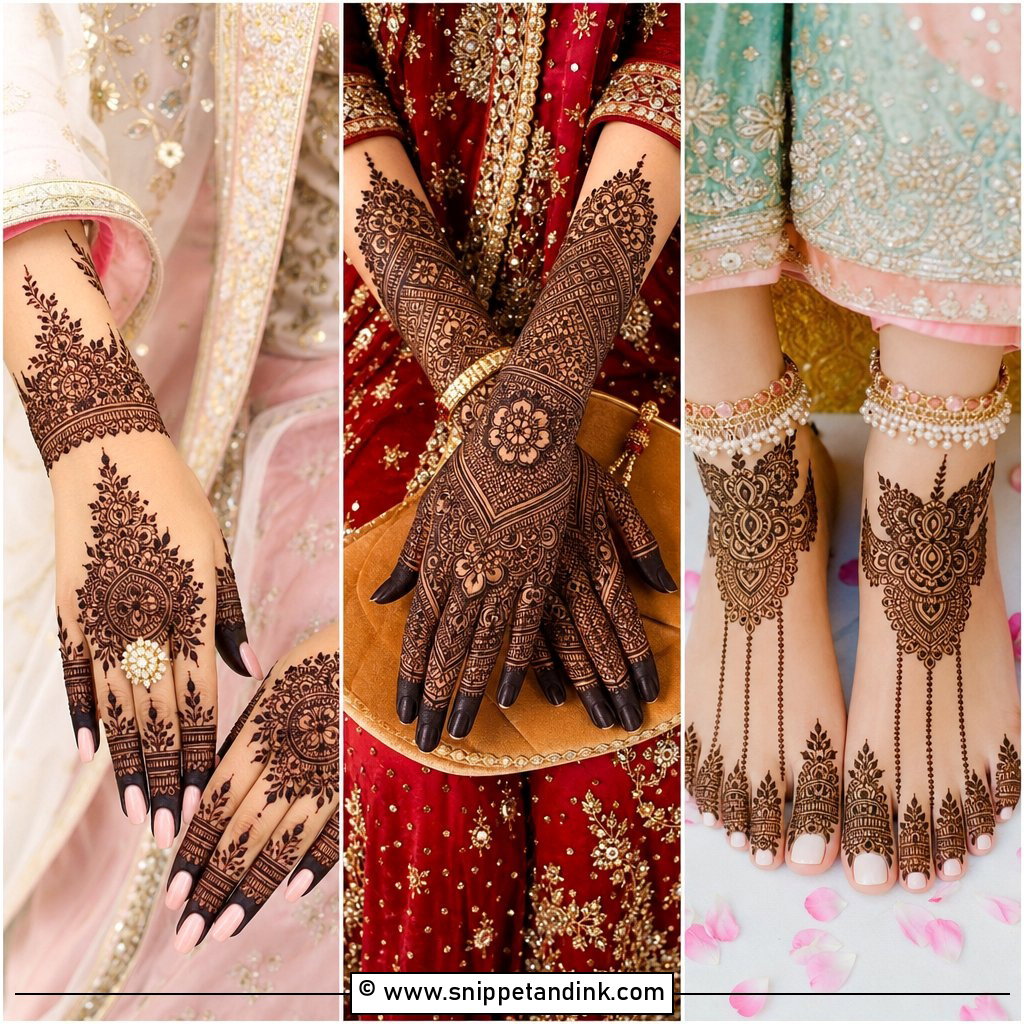
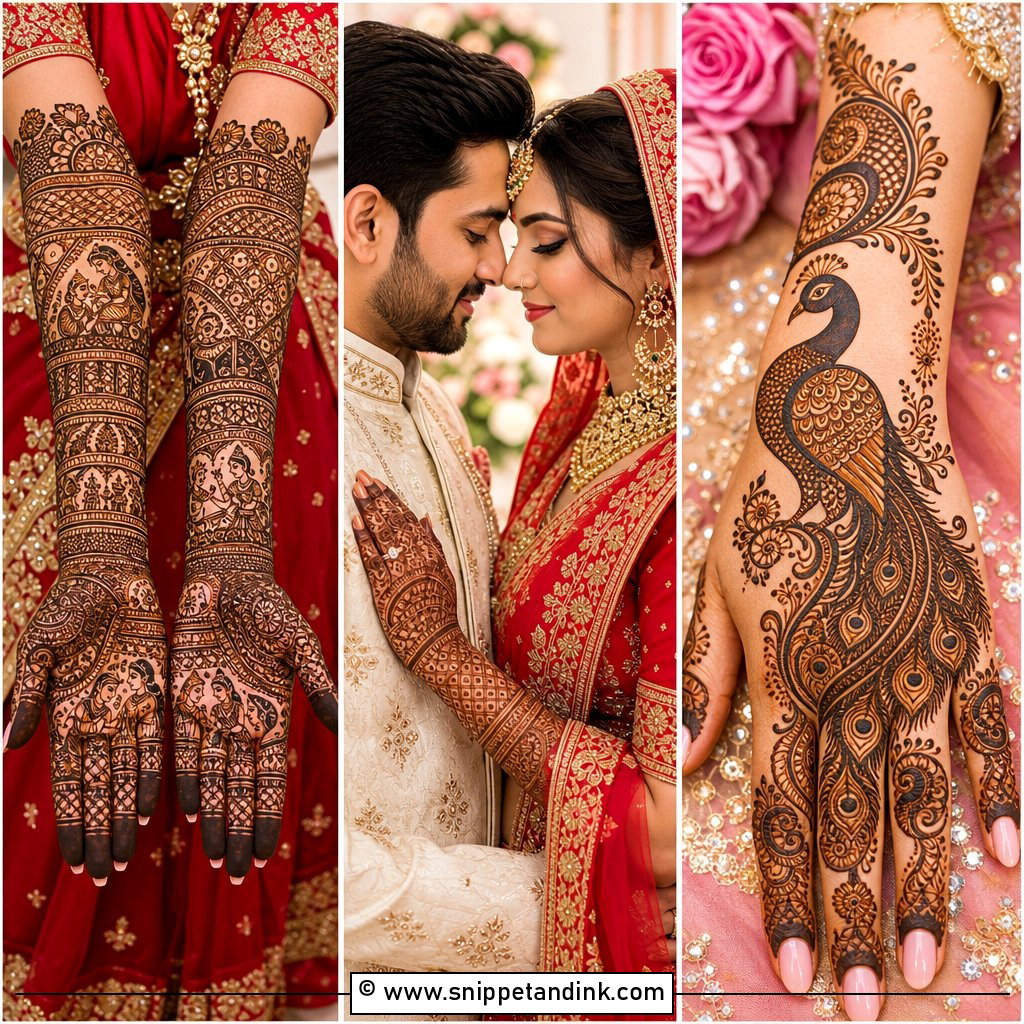
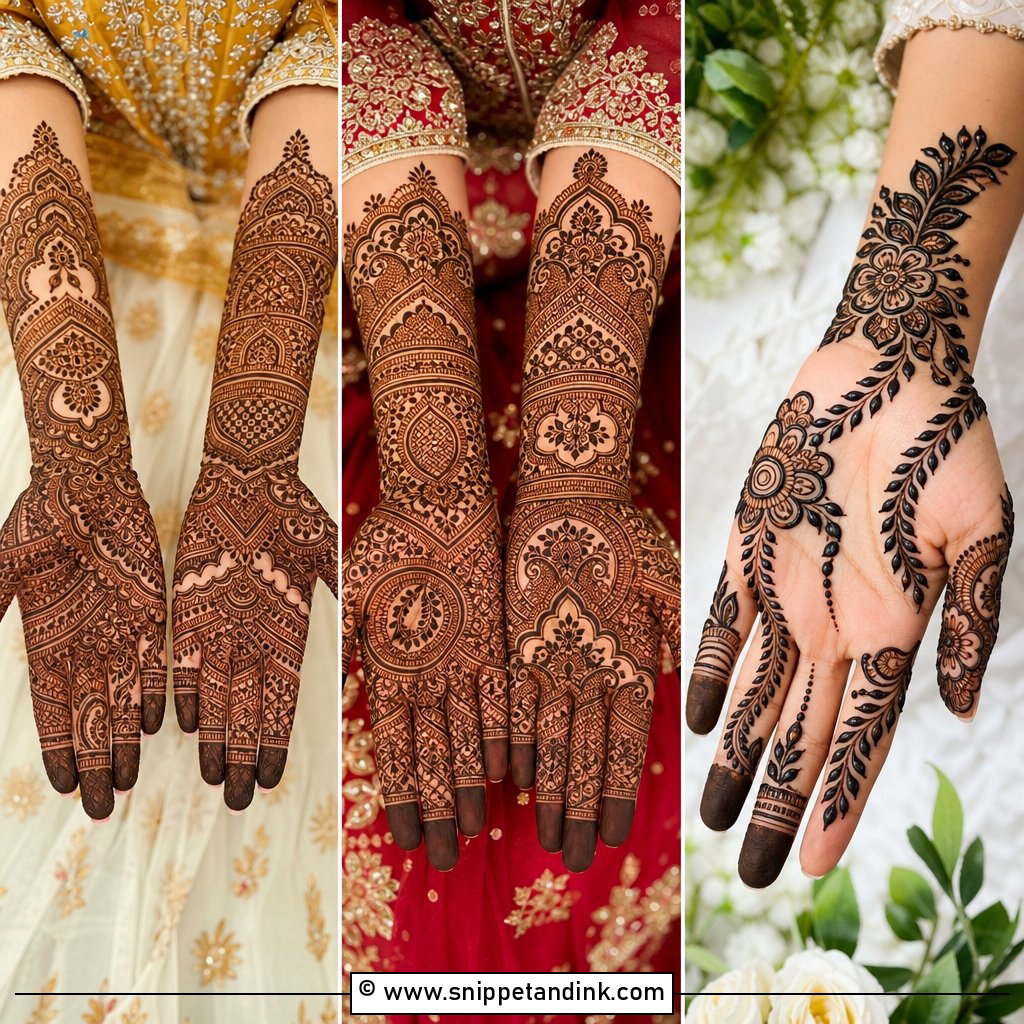
Full hand Indian mehndi is the most traditional choice and the longest to apply. I start at the fingertips, fill the palm with layered motifs and work down toward the wrist or forearm, so the story builds as it goes: lotus flowers, peacocks, paisleys, mandalas, doli scenes, a tiny bride and groom. My one request is to keep the central motifs a little larger than you’d think. On a dense hand, small motifs blur together once the stain deepens. It sits well with red, maroon, gold and ivory outfits, and a hidden initial fits neatly inside a paisley or vine.
2. Arabic Bridal Mehndi Design
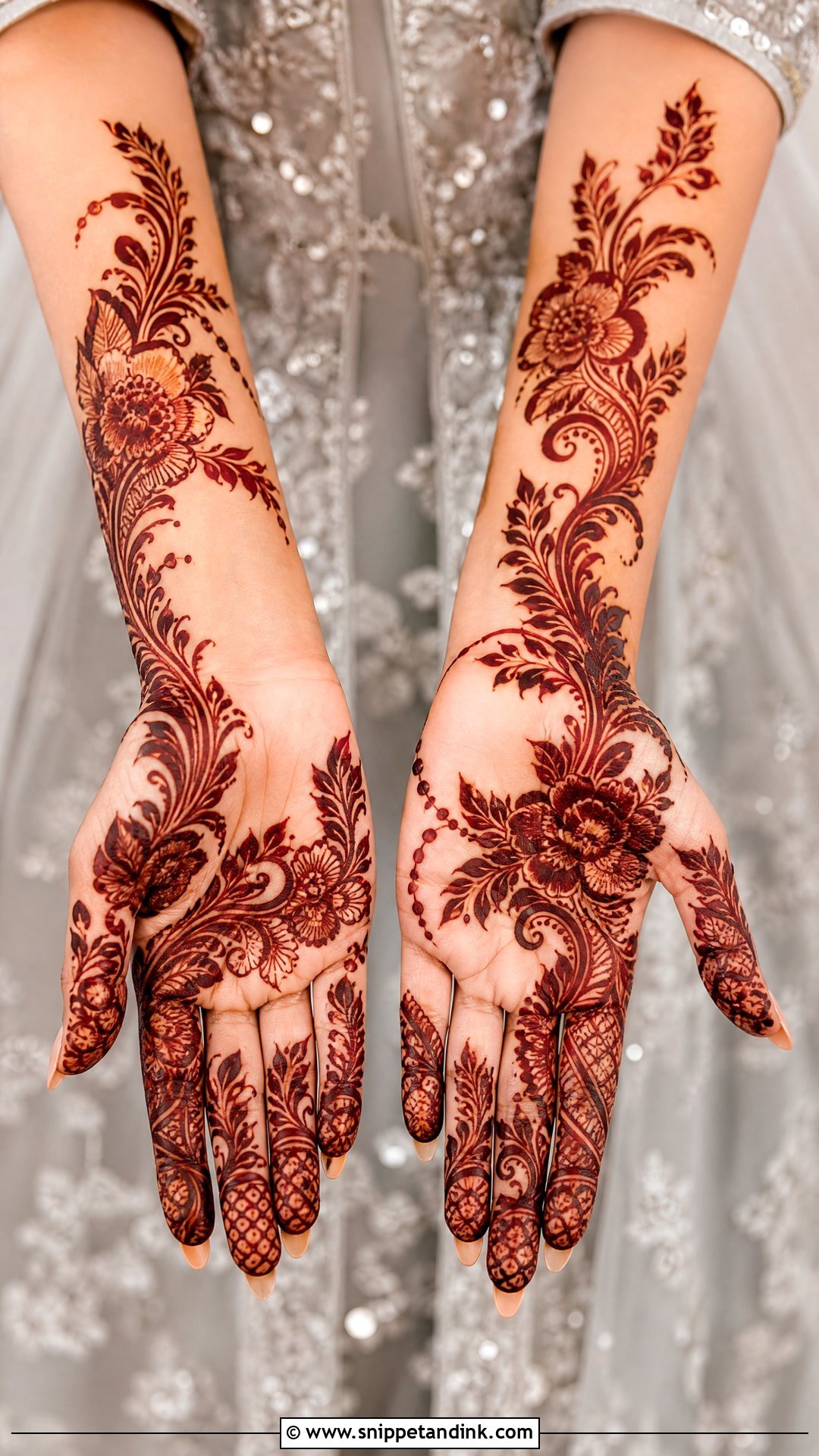
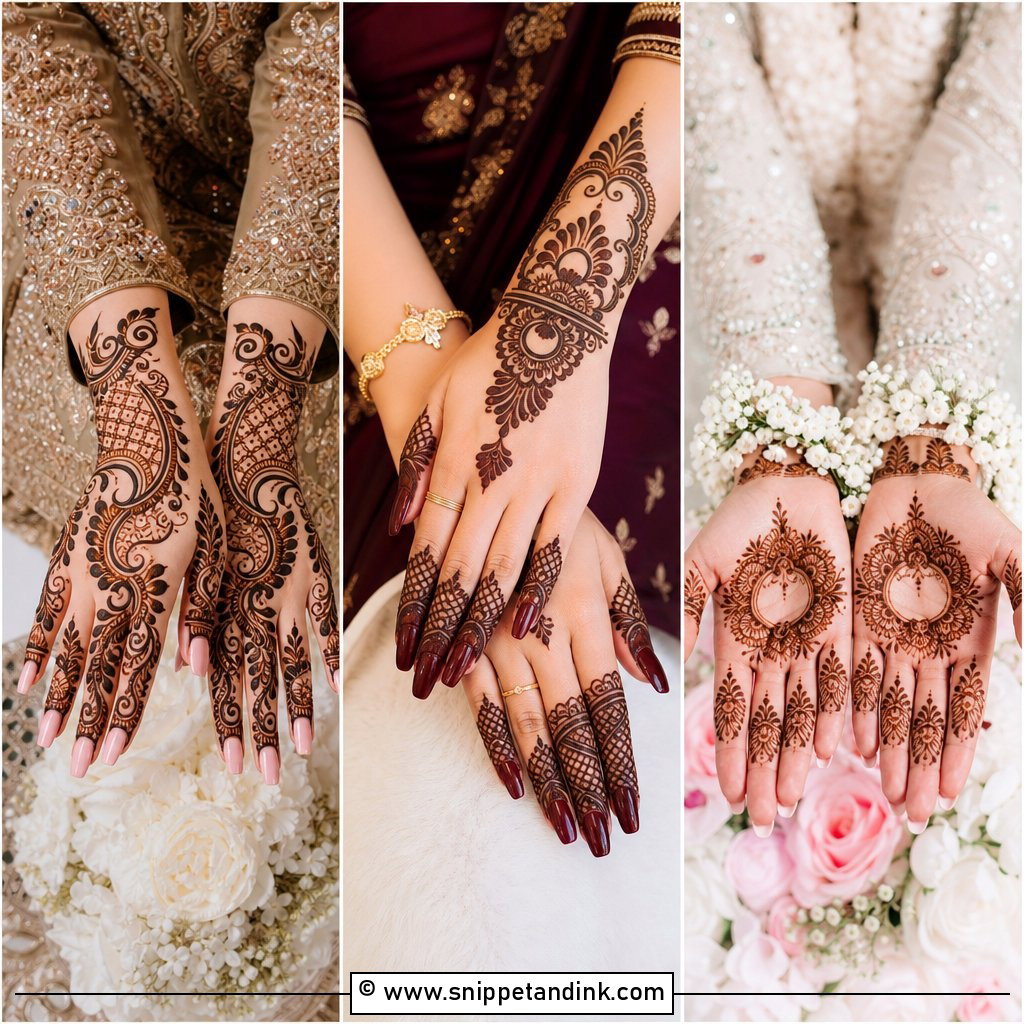
Arabic mehndi covers less and moves more. I draw it as a diagonal flow across the palm and back hand, with large florals, leafy vines and soft shading, leaving open skin as part of the design. The thick outlines read from across a room, which is why it suits brides who want their henna noticed at a distance. It’s also a practical option for a multi-day wedding, as it’s quicker to apply than heavy Indian coverage. To make it feel unusual, I sometimes run the trail from the index finger down to the wrist like a chain.
3. Indo-Arabic Bridal Mehndi Design
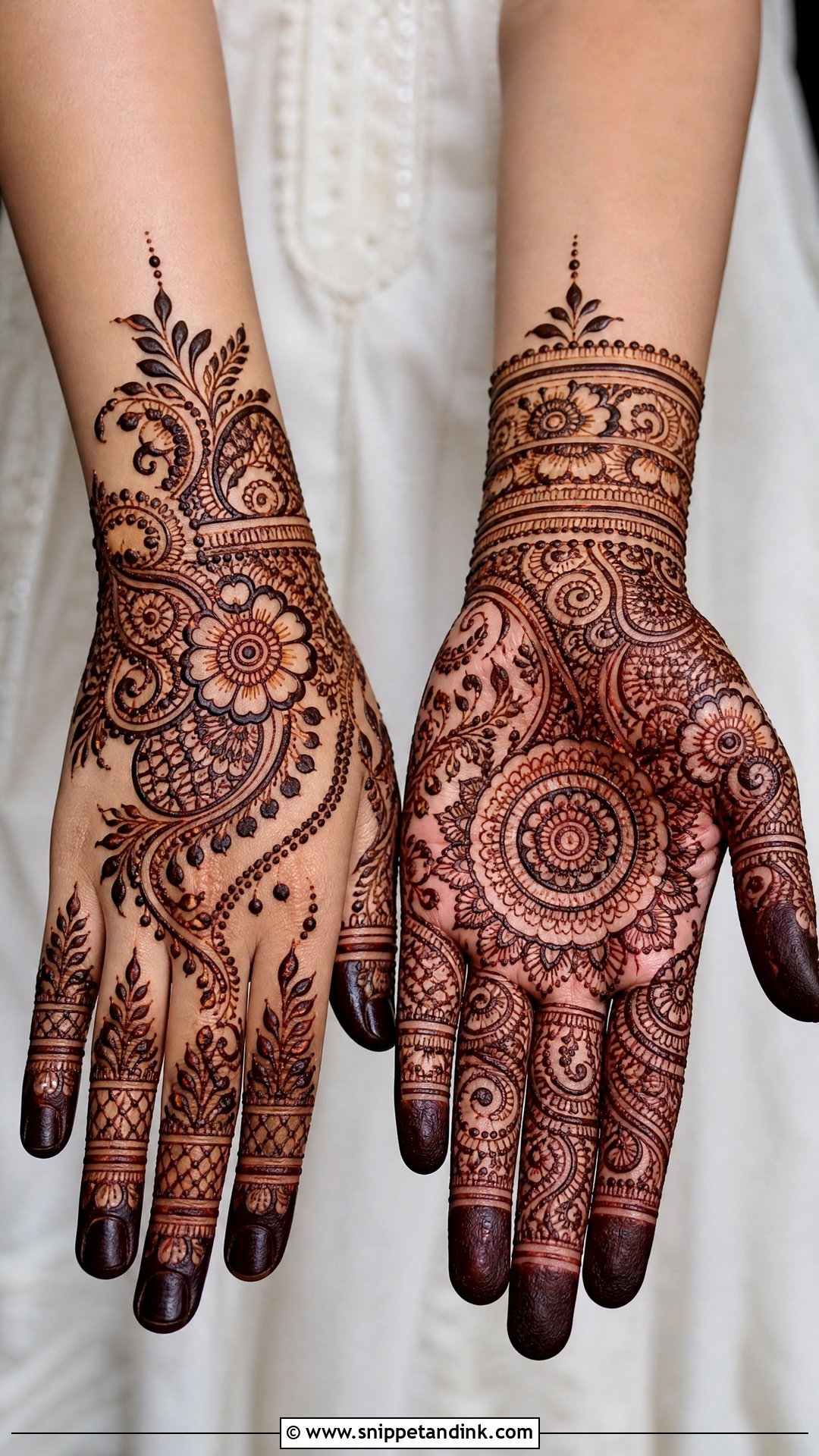
Indo-Arabic bridal mehndi lets me give the hands a full look without packing them. My usual split is Arabic floral trails on the back hand and Indian mandala or paisley work on the palm, joined by fine lines, small dots and shaded leaves. The open spaces stop it from feeling heavy. It works with a traditional lehenga as well as a more contemporary outfit. For a personal touch, I’ll tuck a couple’s initials, a wedding date or a small symbolic motif into the wrist band.
4. Rajasthani Bridal Mehndi Design
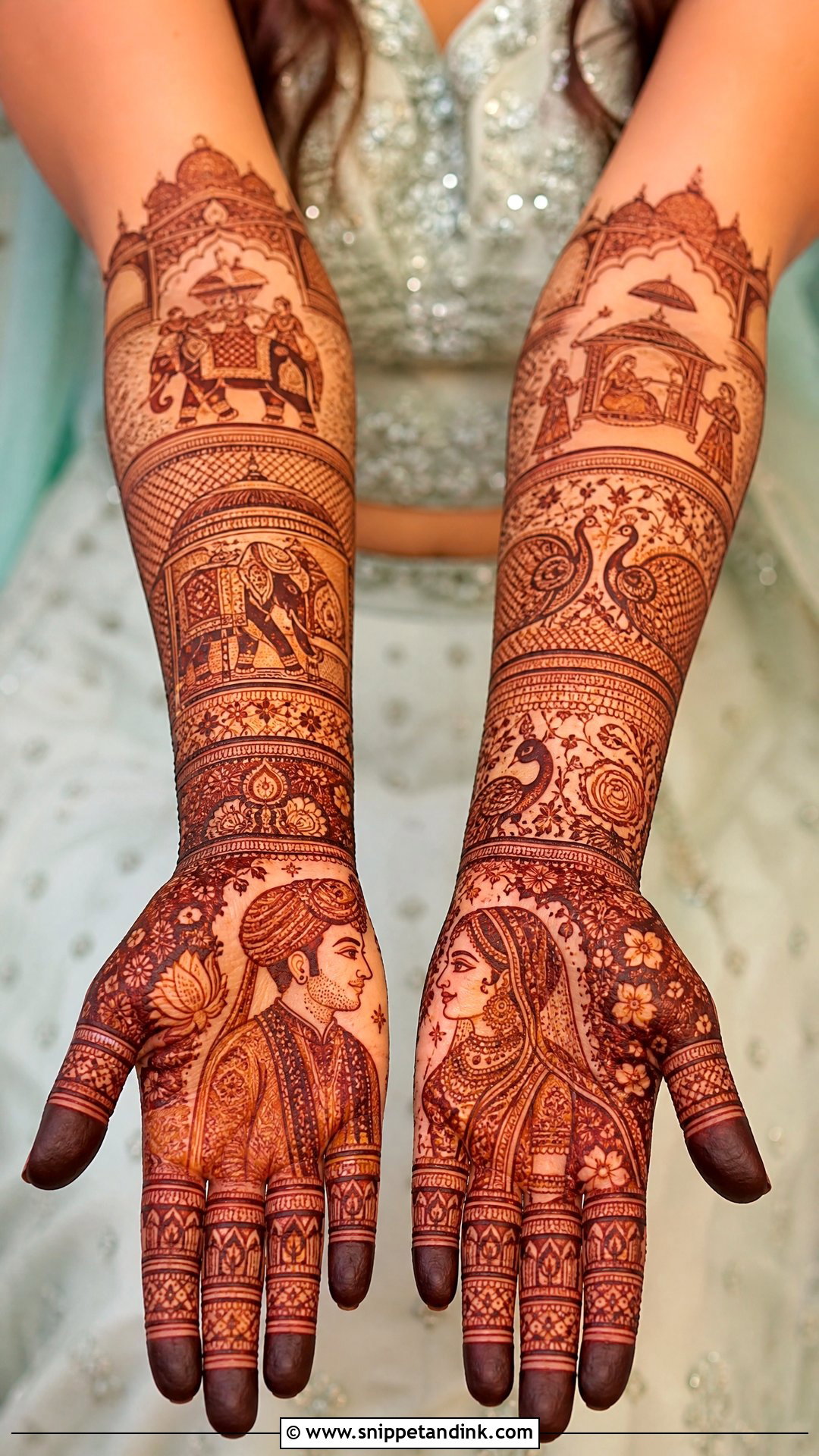
Rajasthani mehndi tells a story, and it takes an artist with a steady hand to tell it neatly. The design can include bride and groom portraits, elephants, palanquins, mirror-image patterns, palace arches and fine jaali filling. I usually put the couple on the palms and the procession, florals and geometric bands along the forearms. This is the style where artist experience shows most, so look at close-up photos of healed stains in a portfolio, not just fresh paste. It looks especially rich with traditional jewelry, heavy bangles and an embroidered bridal outfit.
5. Pakistani Bridal Mehndi Design
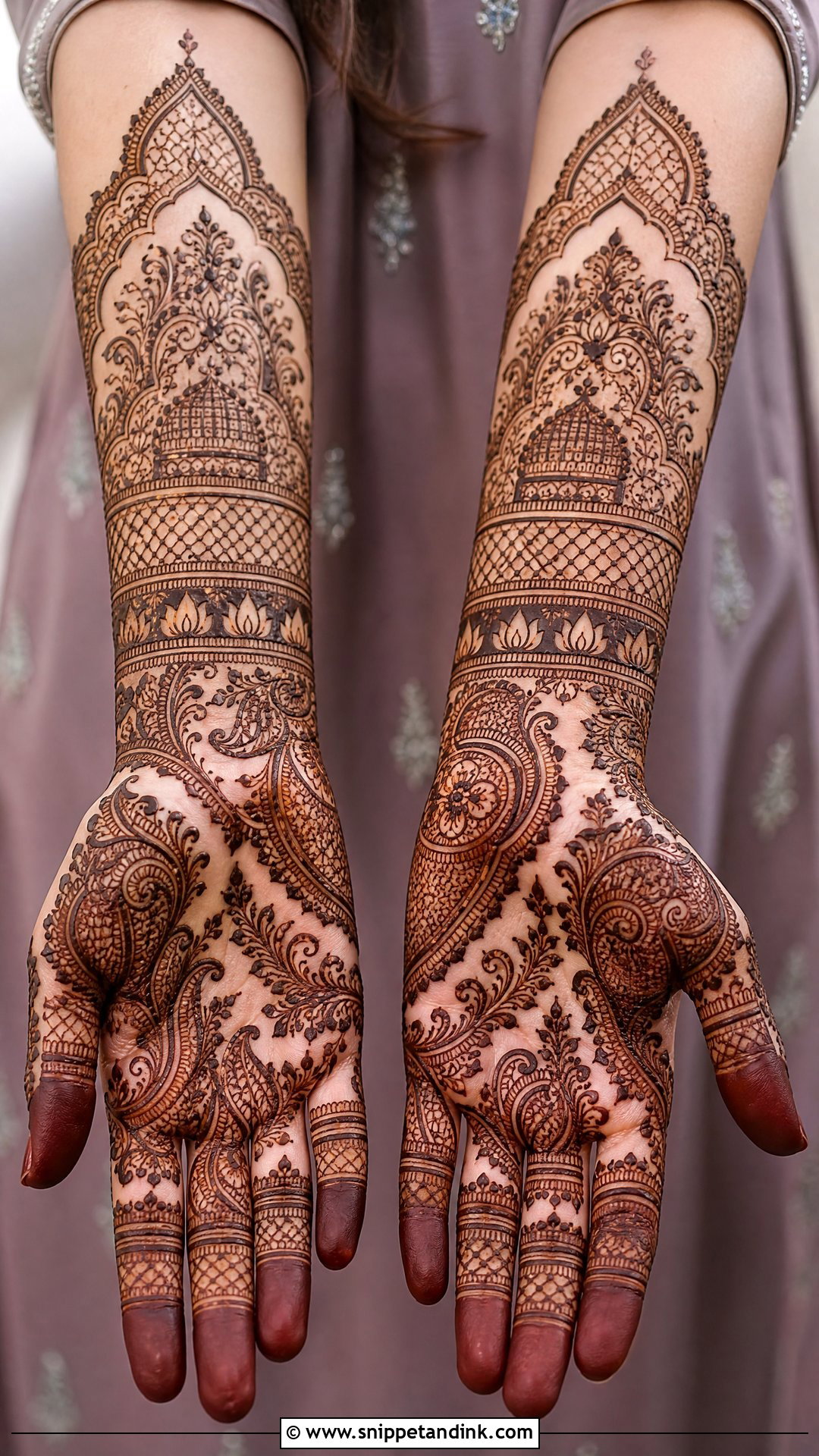
Pakistani bridal mehndi is detailed but flowing: floral vines, domes, paisley curves, netted sections and fine fingertip filling that cover the palms, backs of the hands, wrists and forearms. It’s the style I suggest when a bride wants full coverage but would rather skip portraits. To keep it current, I leave a little clean space around the central palm motif and draw bracelet-style bands at the wrist, which line up neatly under bangles. It suits shararas, ghararas, lehengas and embroidered dresses.
6. Moroccan Bridal Mehndi Design
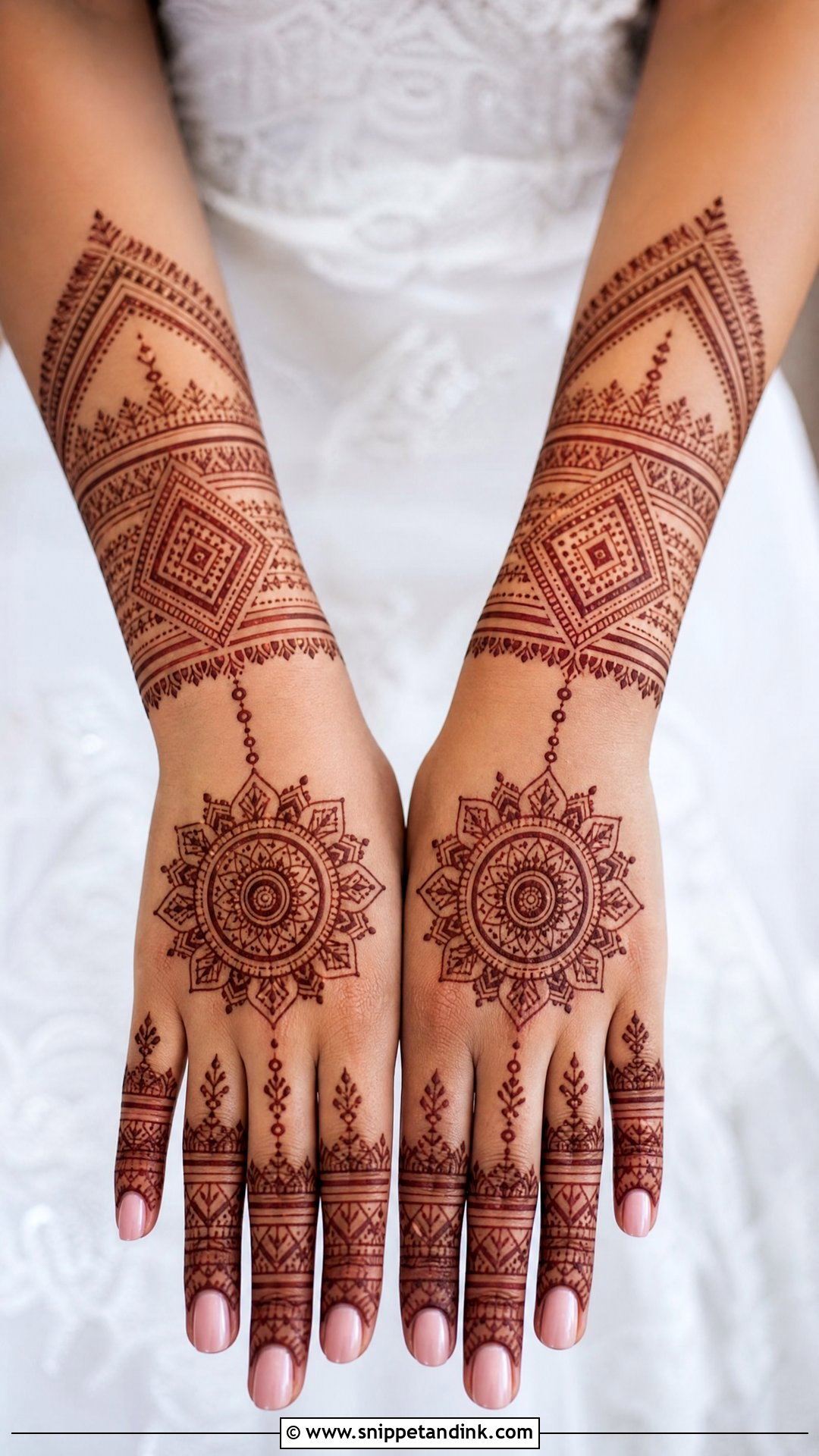
Moroccan bridal mehndi is geometric rather than floral: diamonds, triangles, grids, chevrons, dots and structured bands. On its own it can feel stark for a wedding, so I usually soften it with a few Indian or Arabic accents, like a small mandala in the centre. Straight lines leave nowhere to hide a shaky hand, which makes this one of the hardest styles to draw cleanly. It shows off rings and hand jewelry particularly well on the back hand, and a wrist-to-forearm cuff of repeating geometry makes it distinctly bridal.
7. Gulf Bridal Mehndi Design
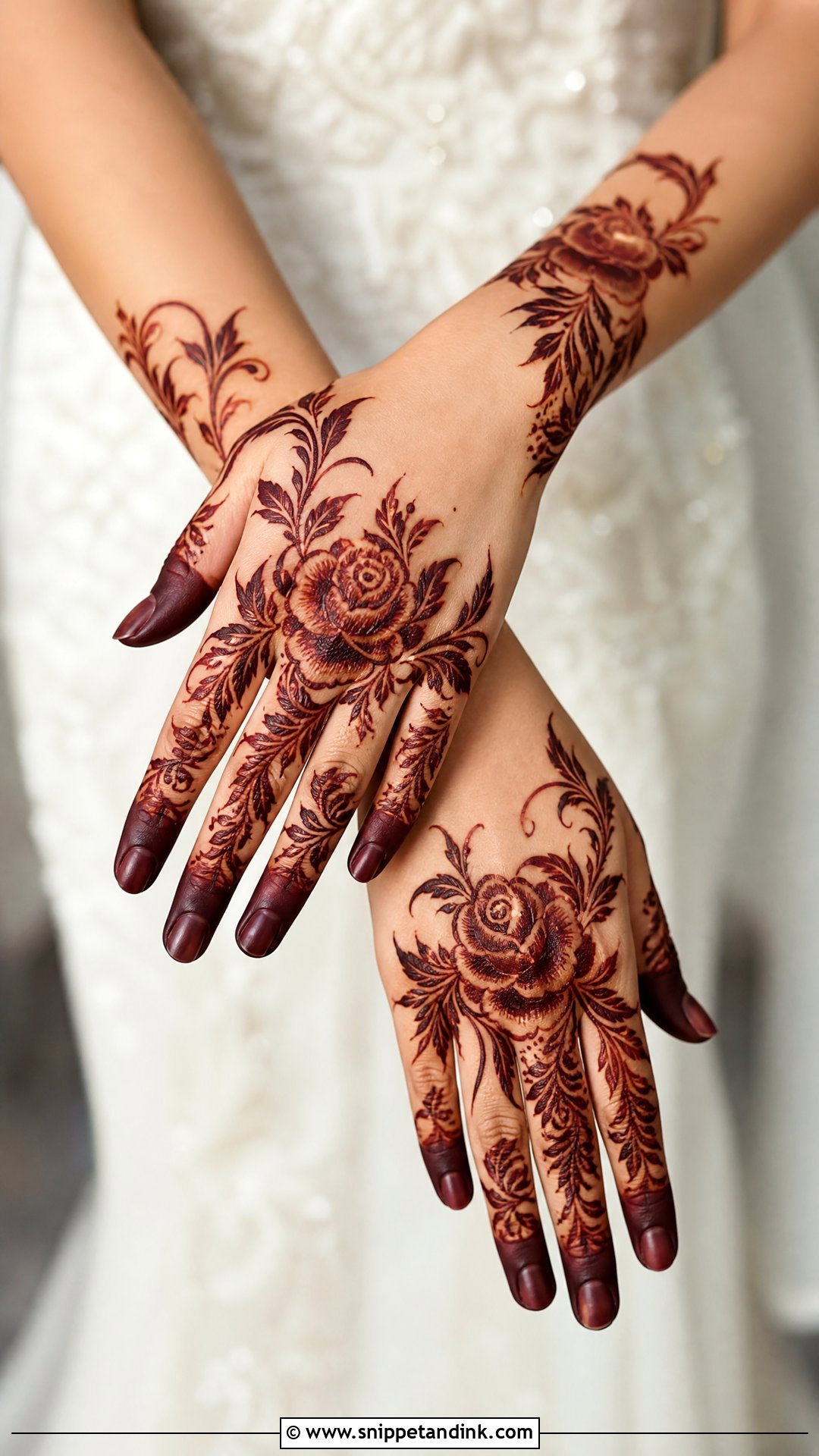
Gulf, or Khaleeji, mehndi is built from big roses, leafy vines, curved trails and heavily filled fingertips, with plenty of air between the shapes. It looks rich because the outlines are strong, not because the hand is crowded. I’d put the main design on the back of the hand, where it frames statement rings, and add a wrist cuff and a short forearm extension to finish it. A word of caution: those solid fingertips stain very dark, which looks dramatic but takes longer to fade than lighter line work.
8. Mandala Bridal Mehndi Design
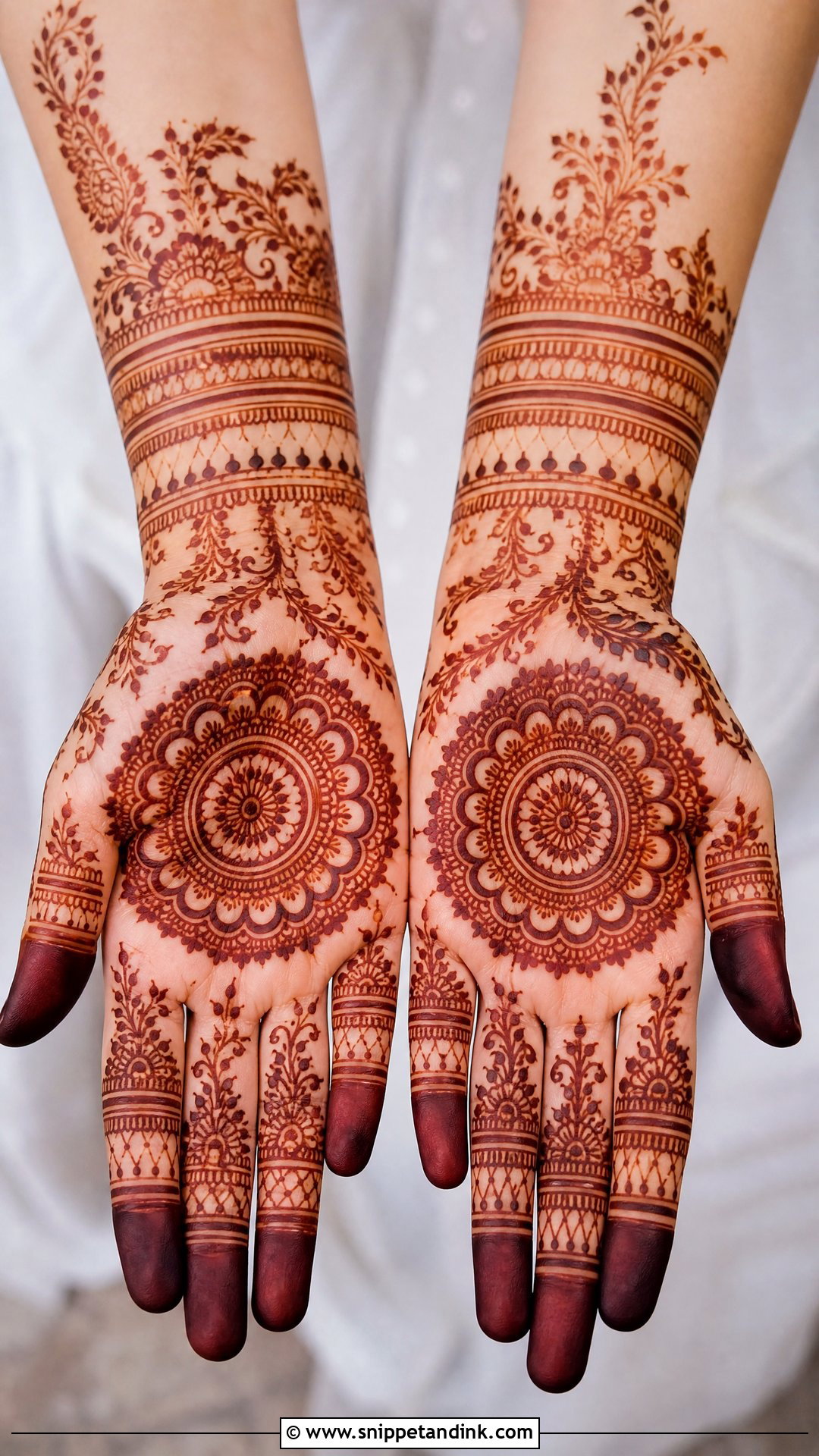
A mandala gives the palm a single focal point, and that restraint is what makes it work. I draw a large circle at the centre, then surround it with small florals, dots, leaves and fine borders; the fingers get matching lines, mini vines and shaded tips, and the wrist a bracelet band. Getting the circle truly centred is the whole job, so I mark it before I draw anything else. For a newer twist, I pair a bold palm mandala with delicate jaali at the wrist and soft floral extensions.
9. Jaali Bridal Mehndi Design
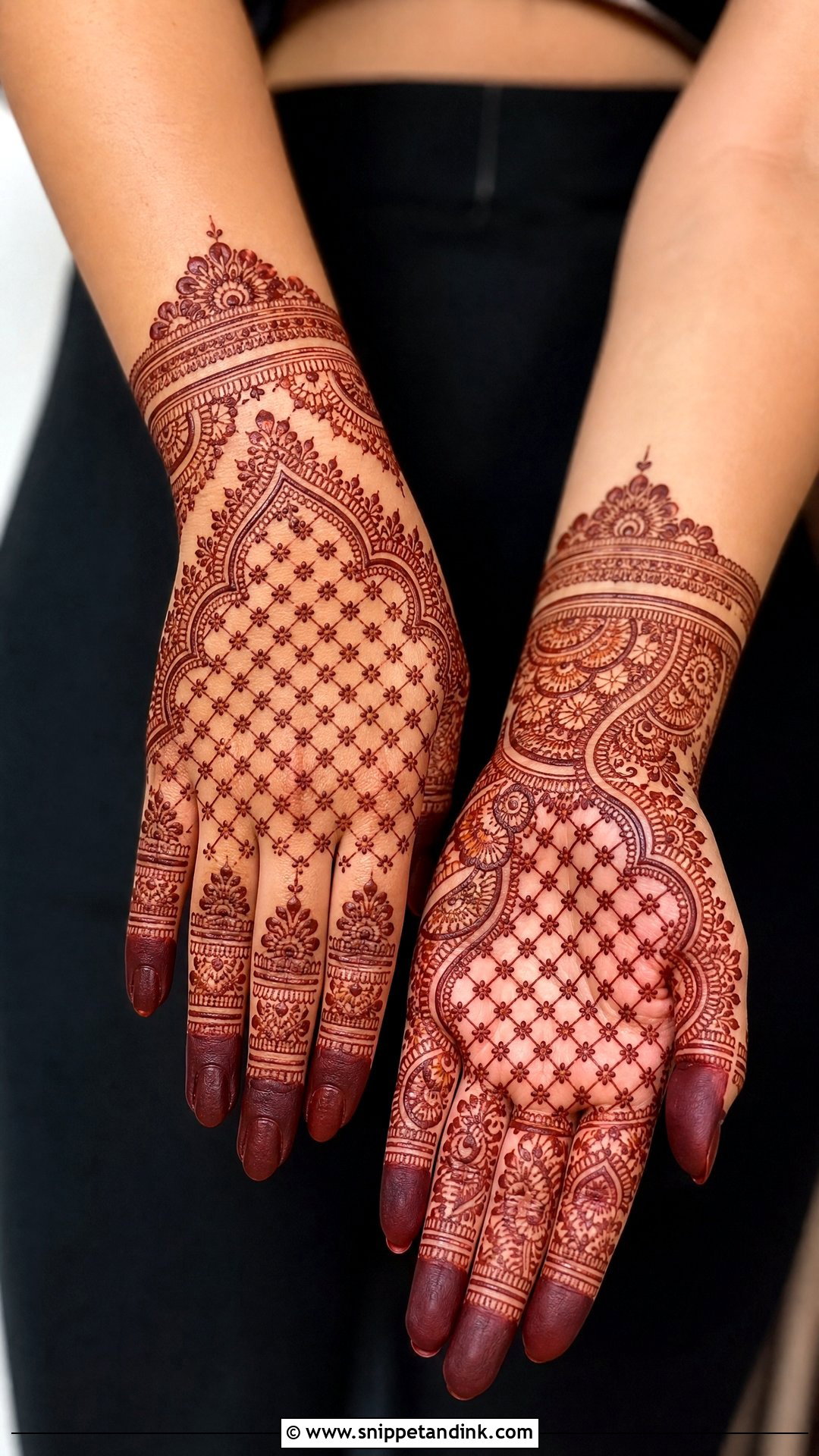
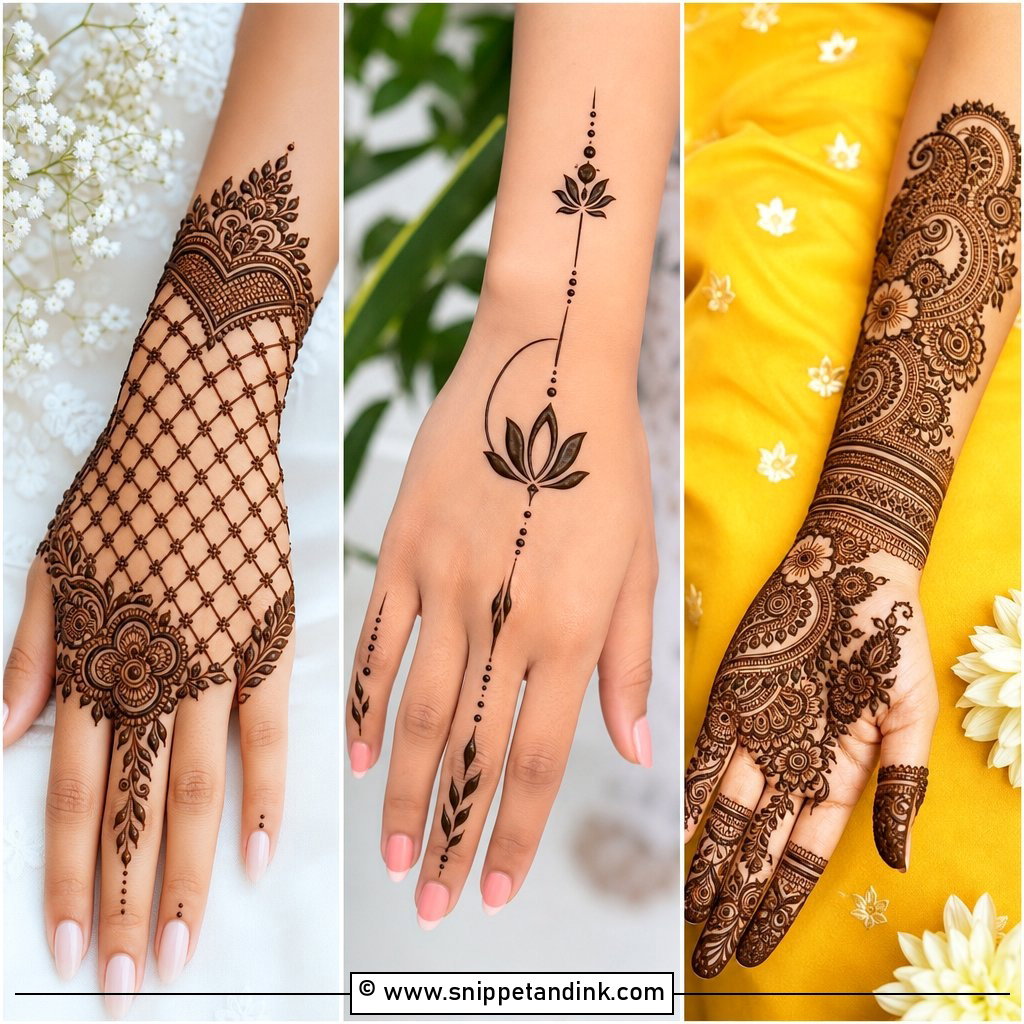
Jaali, the net pattern, gives the hands a lace-like texture that echoes fine fabric or embroidered sleeves. I use it across the palm, back hand, fingers and wrists, mixed with flowers, paisleys and scalloped borders. Even lines matter more here than anywhere: if the grid wanders, the lace effect is lost. I add tiny dots inside some squares for texture and break the mesh with a floral wrist band or a mandala, because unbroken jaali becomes repetitive. Spacing decides whether it reads traditional or modern.
10. Peacock Bridal Mehndi Design
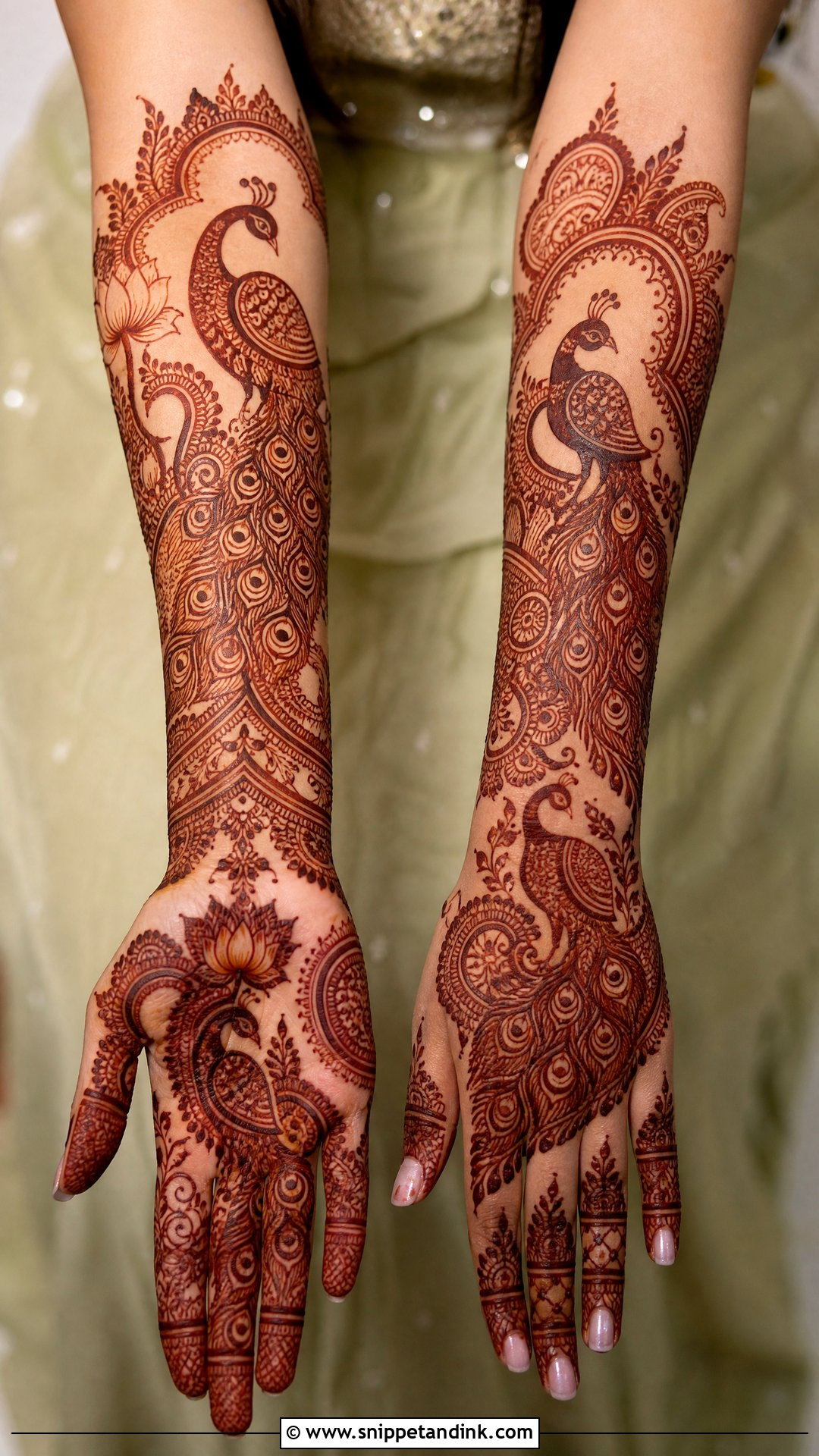
Peacock bridal mehndi has been a wedding favourite for generations, and it still earns its place. A complete design might have a large peacock on the palm with feathers flowing toward the wrist and floral vines around the fingers. Some brides want matching peacocks on both hands; I often suggest one peacock and one mandala, which gives the pair contrast. It suits silk sarees and lehengas with peacock or zari embroidery. Feather-shaped jaali, curved paisley tails and small lotus accents keep it fresh without relying on heavy filling.
11. Lotus Bridal Mehndi Design
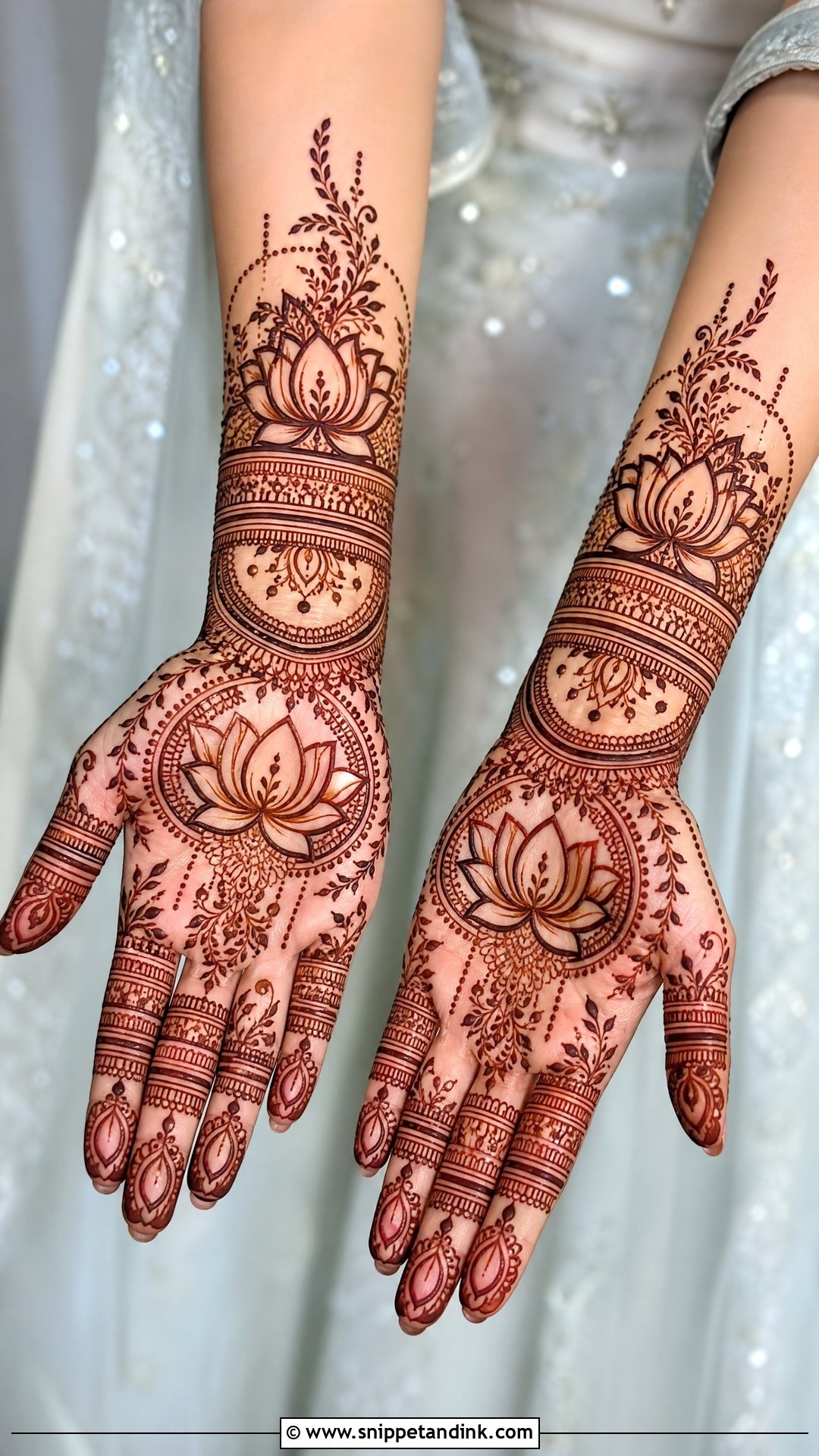
The lotus is a soft motif that adapts to almost any layout. I place it in the centre of the palm, near the wrist or as a repeating motif along the forearm, and combine it with mandalas, leafy vines, dotted borders and some open skin. It’s traditional without being heavy, and it suits pastel, ivory, peach and pink outfits. My favourite unique version is layered lotus petals on the palm with a matching lotus bracelet around the wrist.
12. Minimal Bridal Mehndi Design
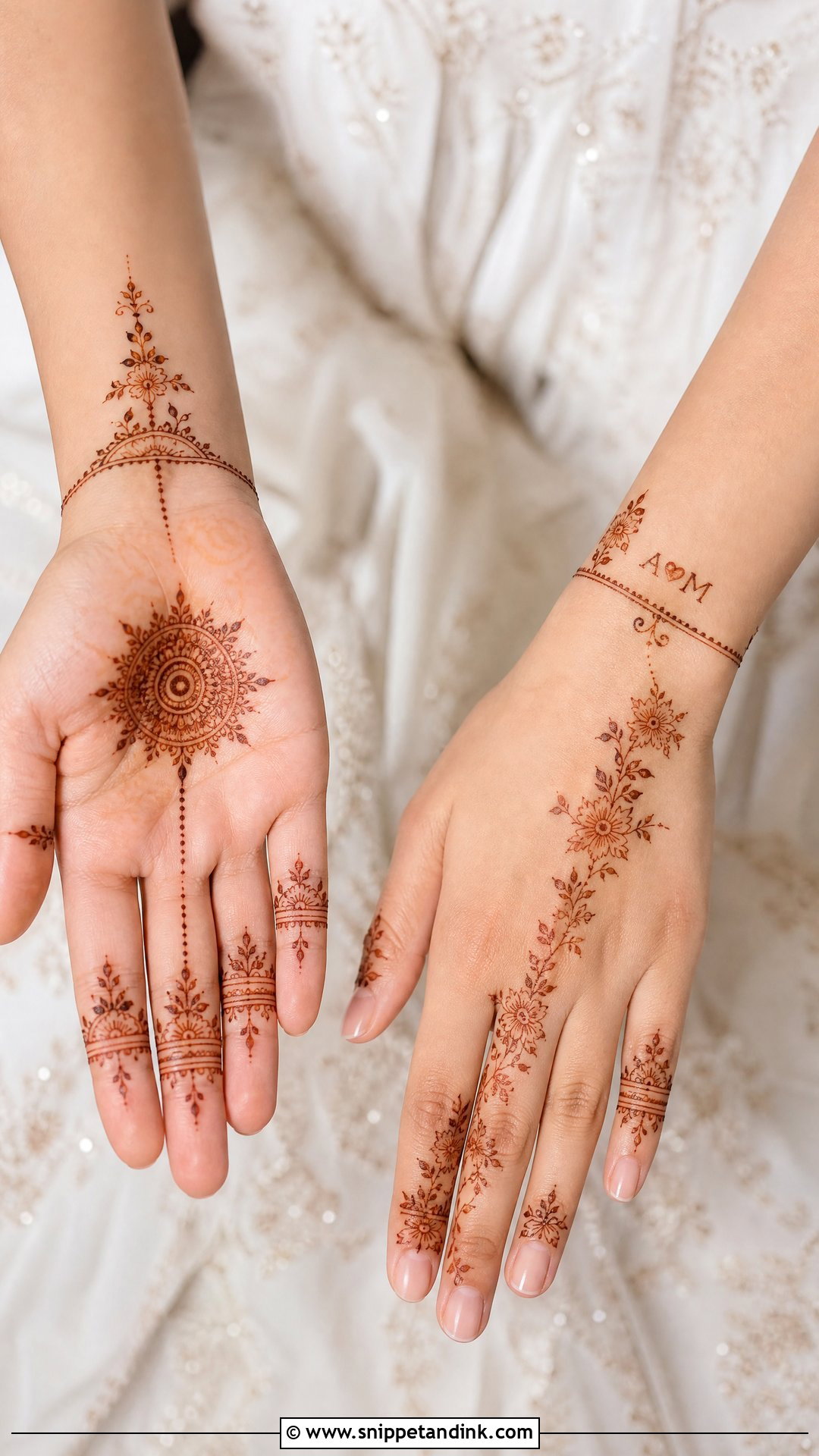
Minimal bridal mehndi is harder than it looks, because with so little on the hand, every line is on display. I keep it to a few elements: clean finger patterns, a small palm mandala, a bracelet band and a soft floral trail. One strong focal motif matters more than how much skin is covered. It’s a natural fit for an intimate wedding, a civil ceremony, a destination wedding or a reception. A hidden initial or a tiny date near the wrist keeps it personal.
13. Bracelet Bridal Mehndi Design
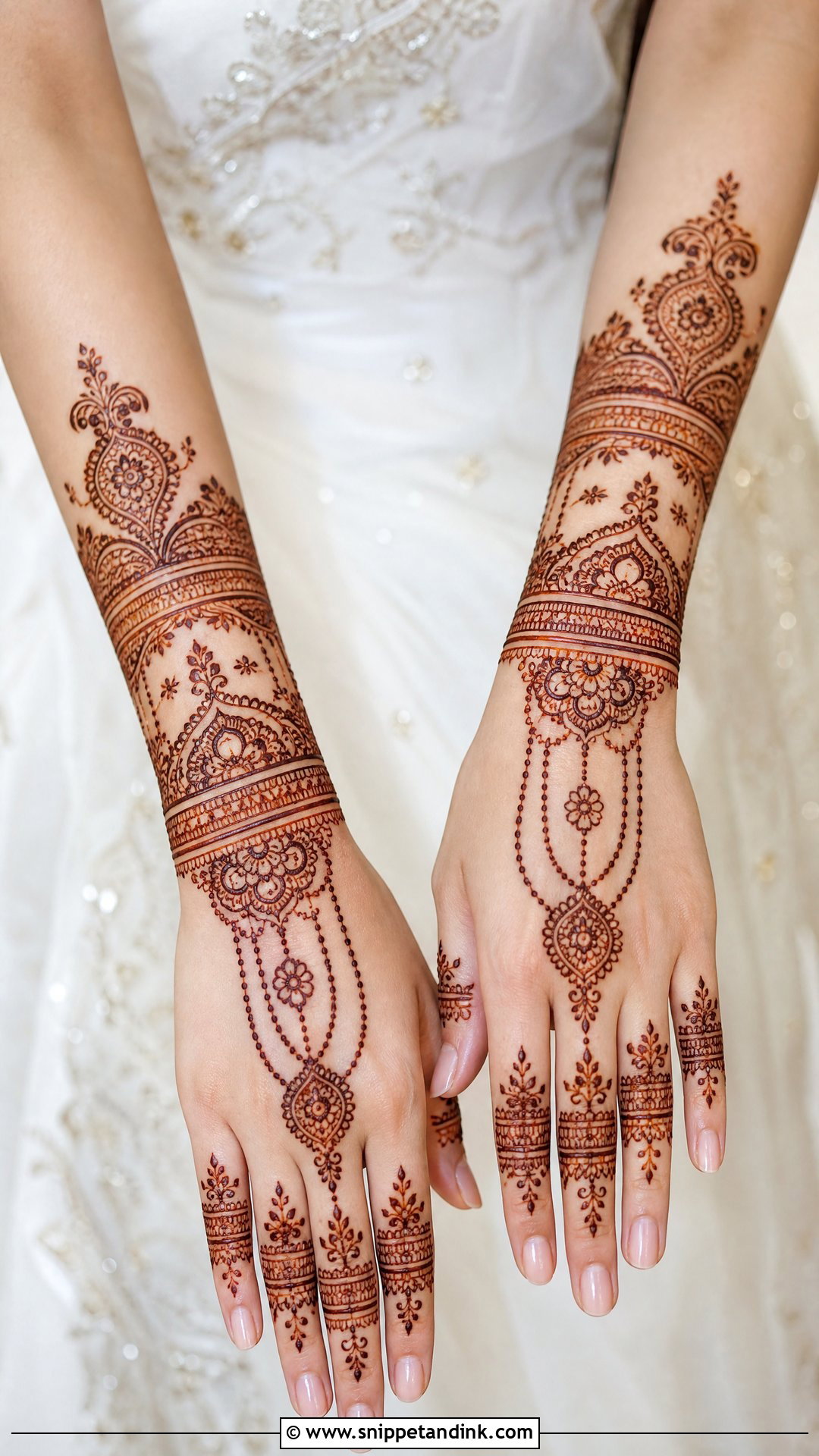
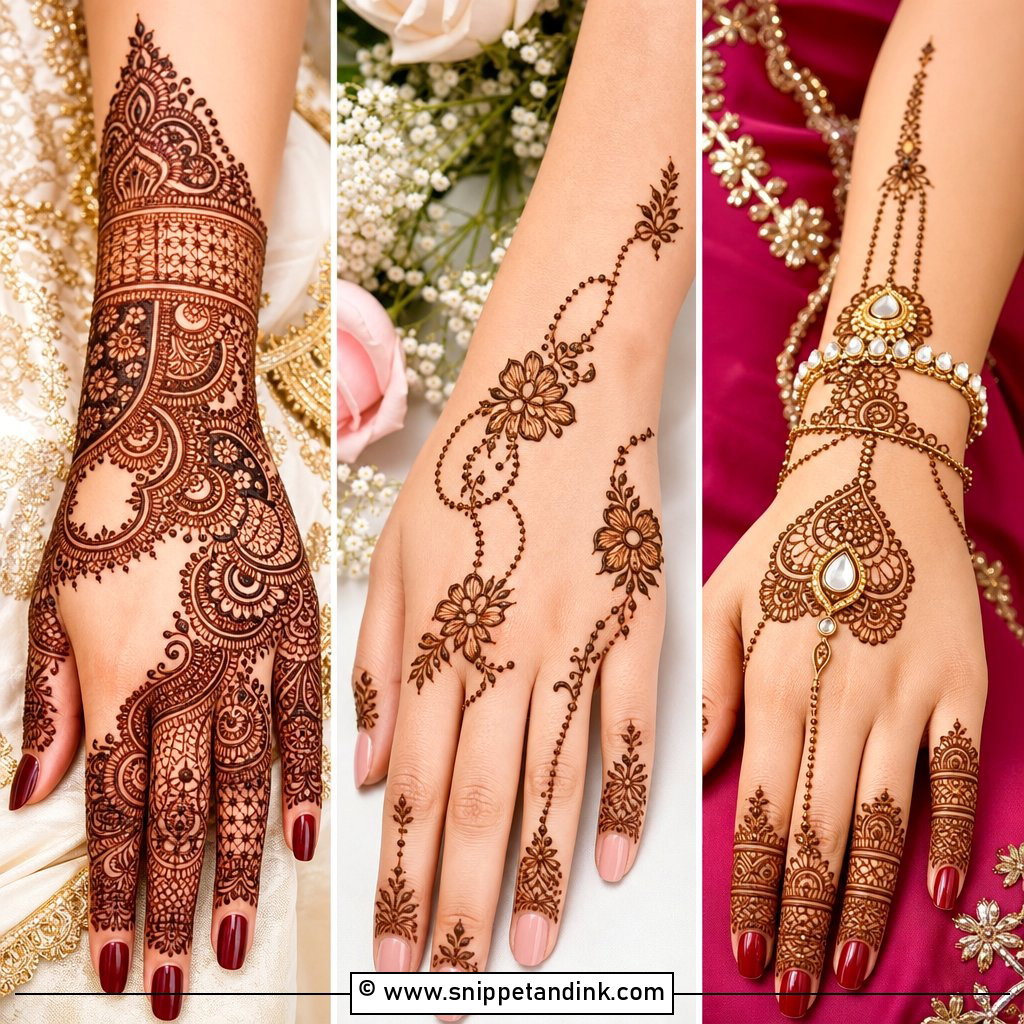
Bracelet mehndi imitates hand jewelry: wrist cuffs, chain-like trails, ring patterns and fine finger detail. On the back of the hand it can mirror a hathphool; from the palm to the forearm it can look like stacked bangles. I draw the wrist bands bold and the chains fine, since that contrast is what makes it read as jewelry. It stands out most when the rest of your jewelry is light. A few tiny florals, dots and paisleys make it festive.
14. Portrait Bridal Mehndi Design
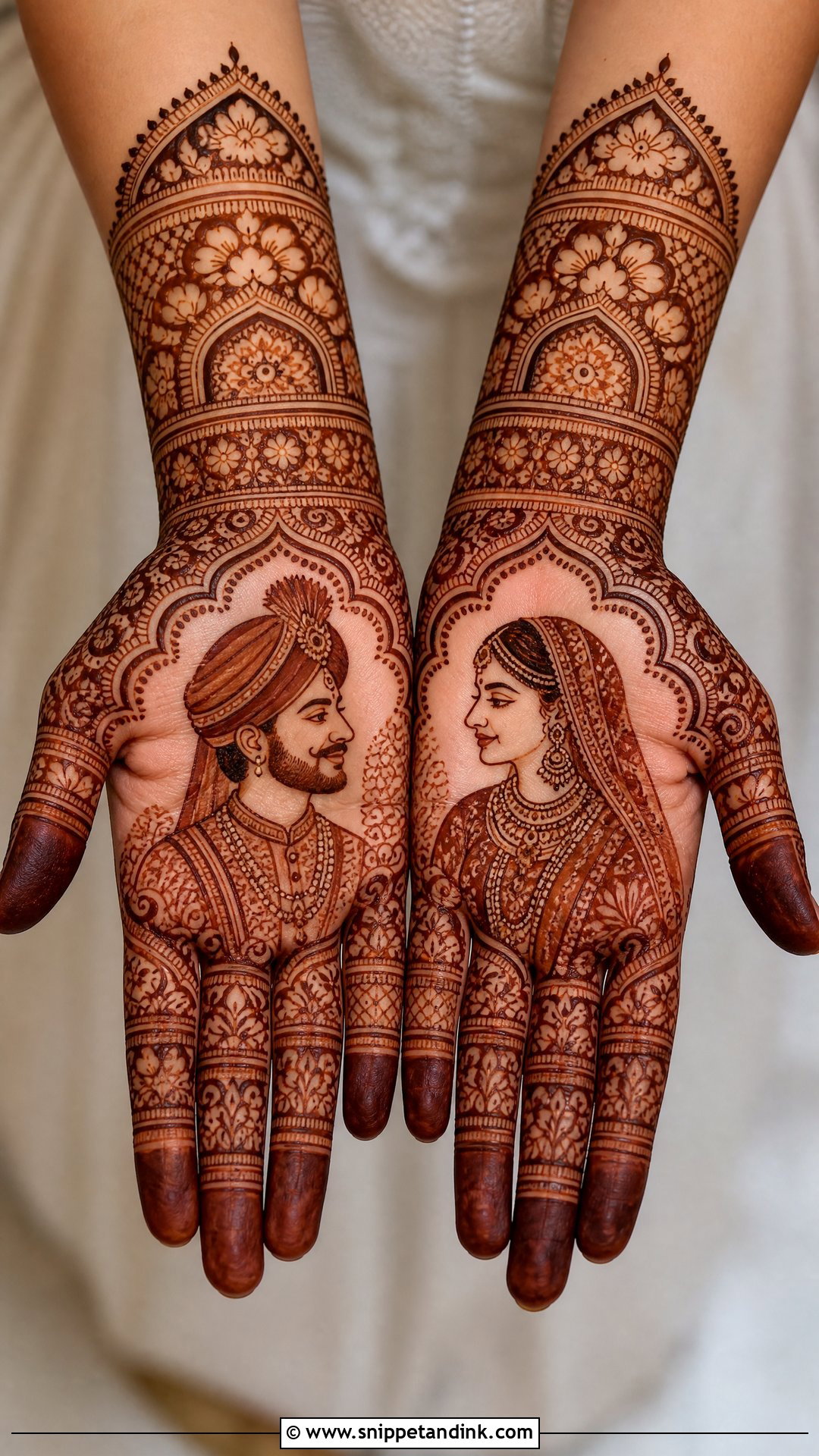
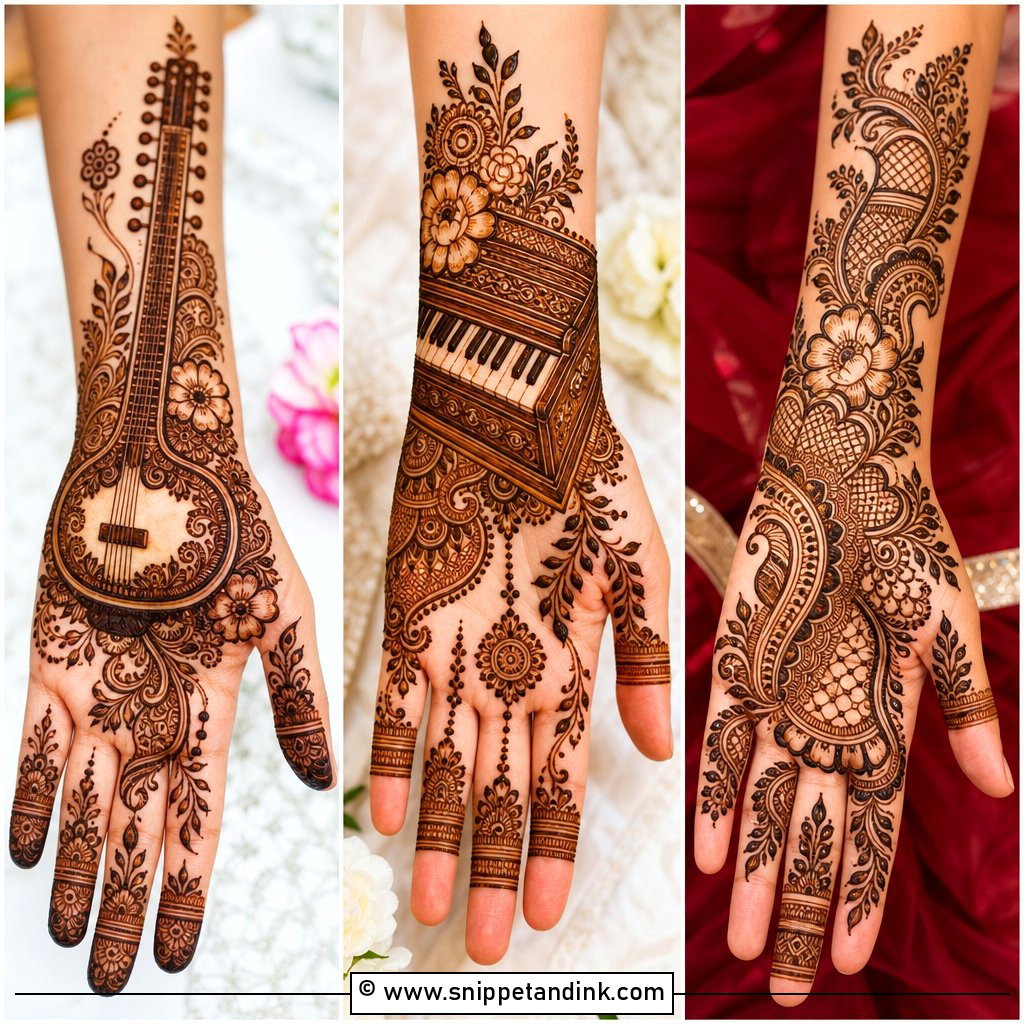
Portrait mehndi usually means a bride on one palm and a groom on the other, surrounded by florals, arches, paisleys and wedding symbols. Faces are the most demanding thing a henna artist draws; the proportions have to be right, and fine lines can blur slightly as the paste dries. That’s why I always ask to see an artist’s healed portrait stains before booking. The rest of the hand should support the faces without competing. Palace windows, a varmala scene or small musical motifs can tie it to your ceremony.
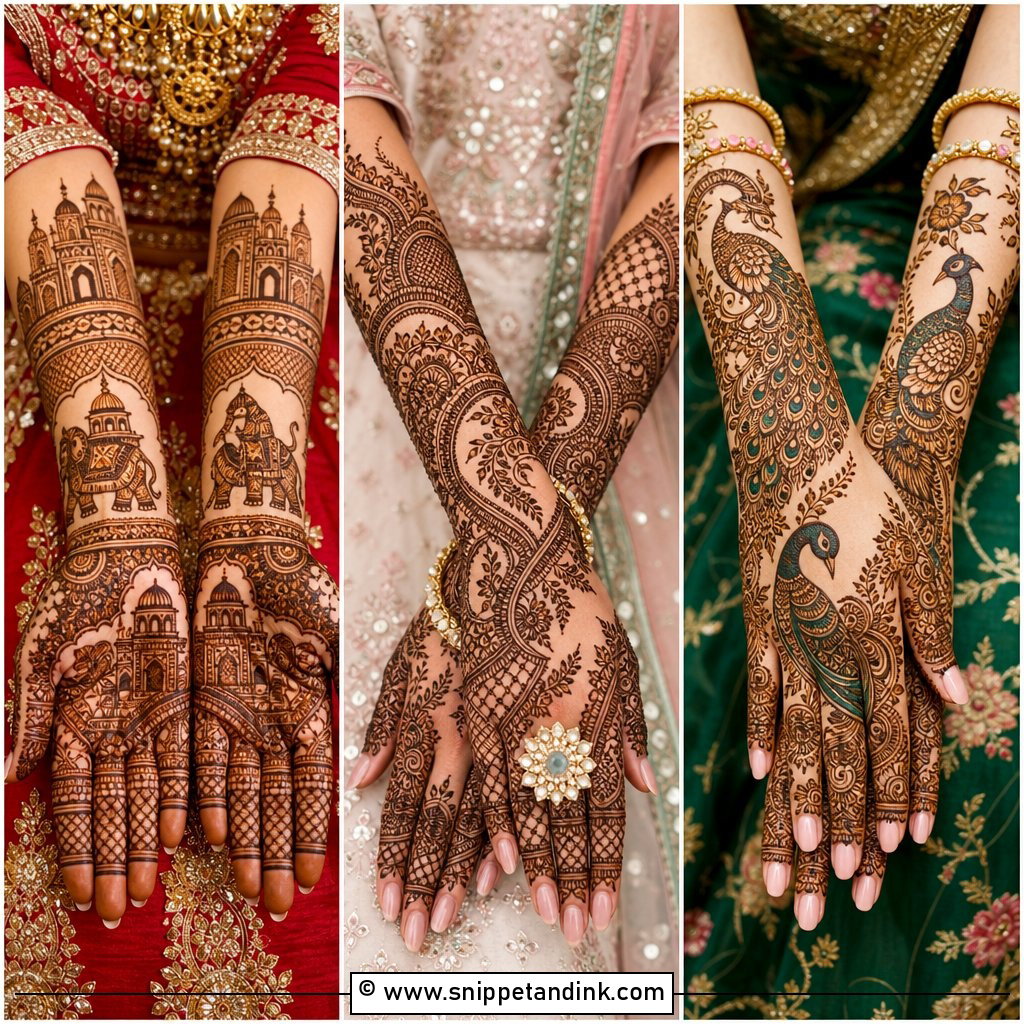
15. Personalized Bridal Mehndi Design
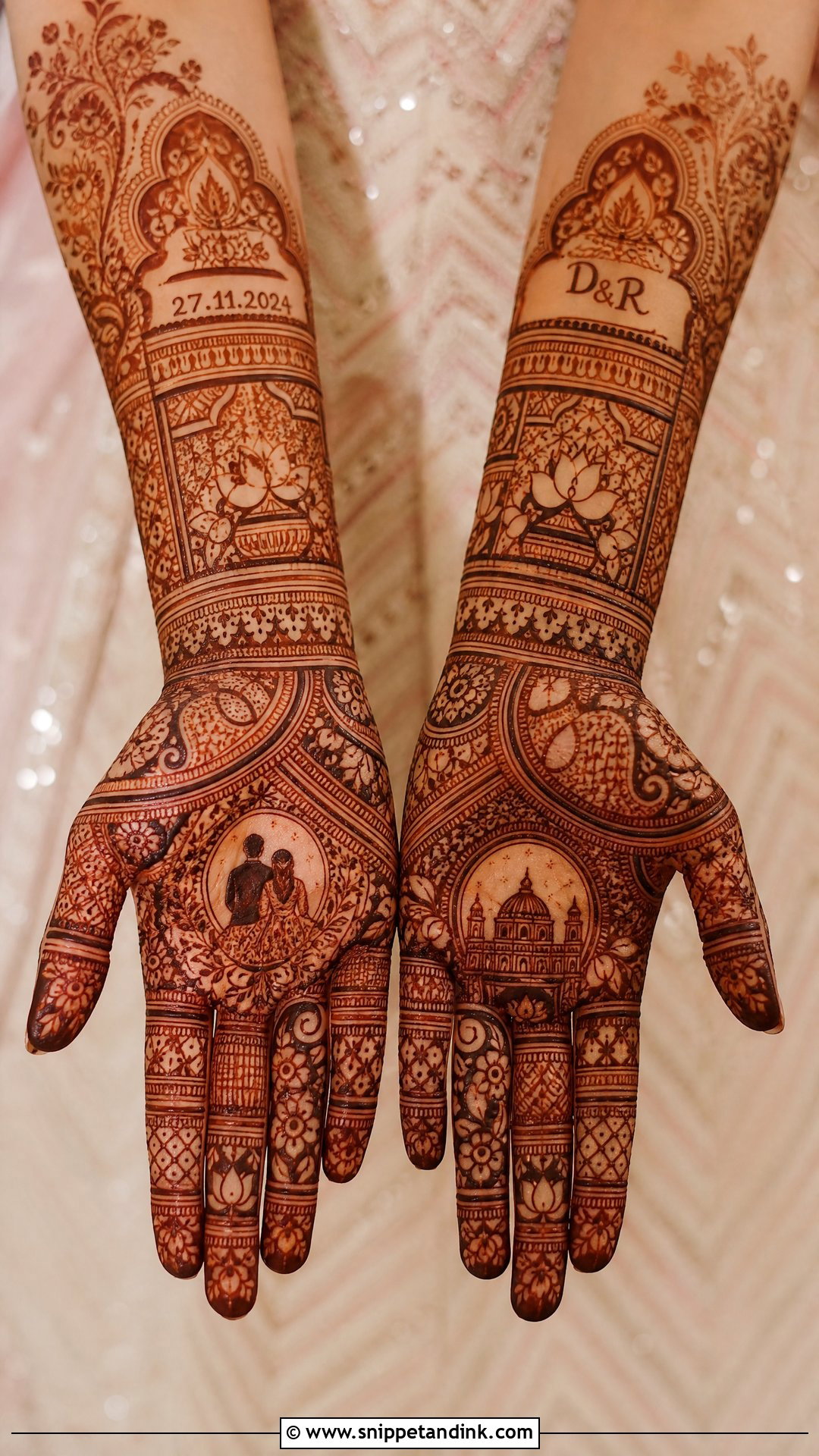
Personalized mehndi swaps some standard motifs for your own: initials, a wedding date, a favourite place, a small pet, a travel memory or a detail from the proposal. I hide these inside paisleys, mandalas, jaali or wrist bands so the hand still looks traditional rather than themed. Ask your artist to sketch the custom pieces on paper first, so you can check spellings and placement before any paste touches skin. It also makes a fun reveal during the games and photos afterward.
16. Back Hand Bridal Mehndi Design
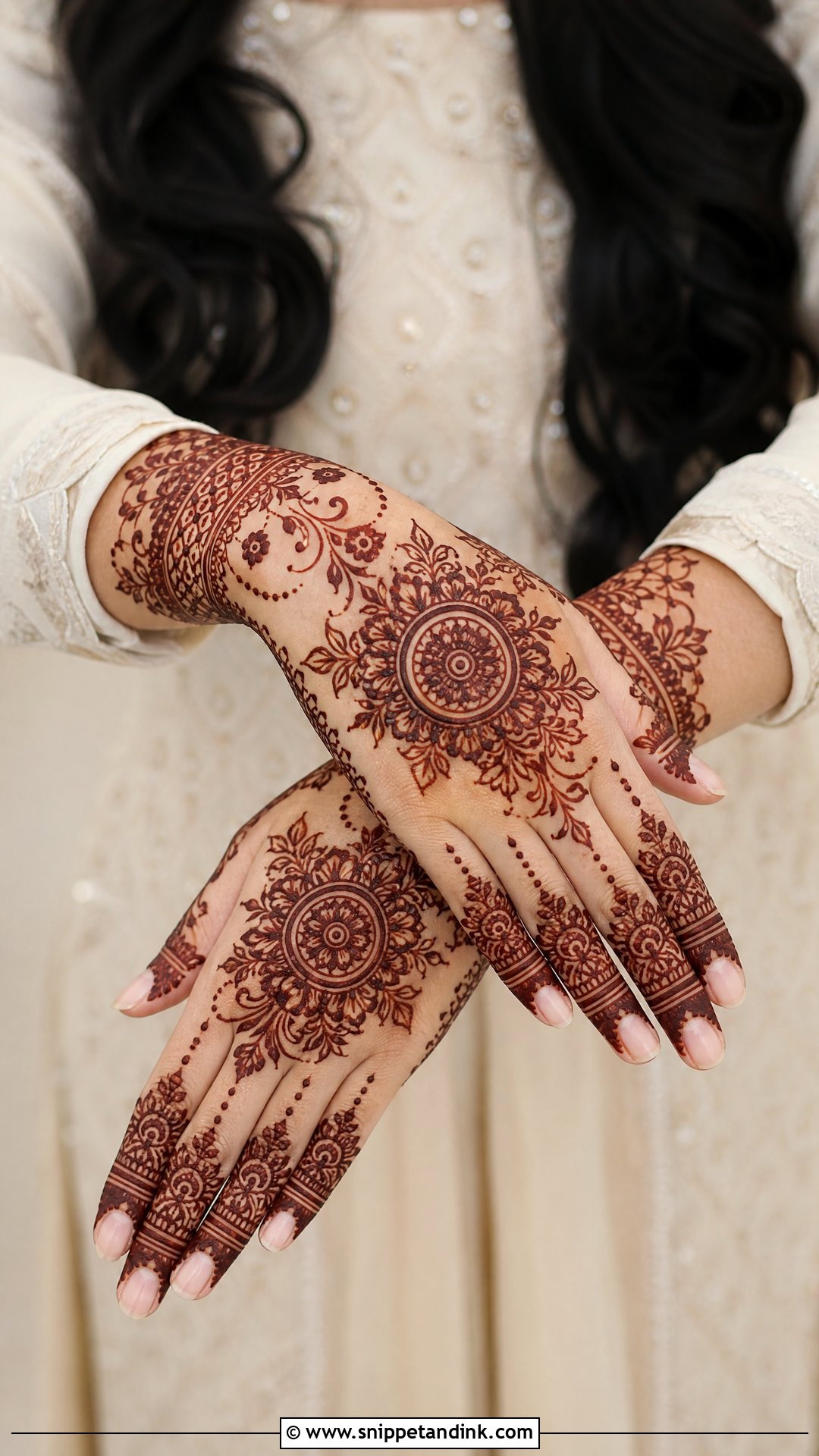
The back of the hand is what shows in ring, jewelry and ceremony photos, so I design it to read from fingertip to wrist as one piece, never as scattered motifs. A central mandala, floral vines, finger caps, jaali panels and a bracelet extension build it out. If you’ll wear statement rings or a hathphool, I leave a bit of open space so the jewelry and the henna don’t fight. A bold centre with lace-like fingers is my favourite combination here. It also suits reception and engagement bridal looks.
17. Palm Bridal Mehndi Design
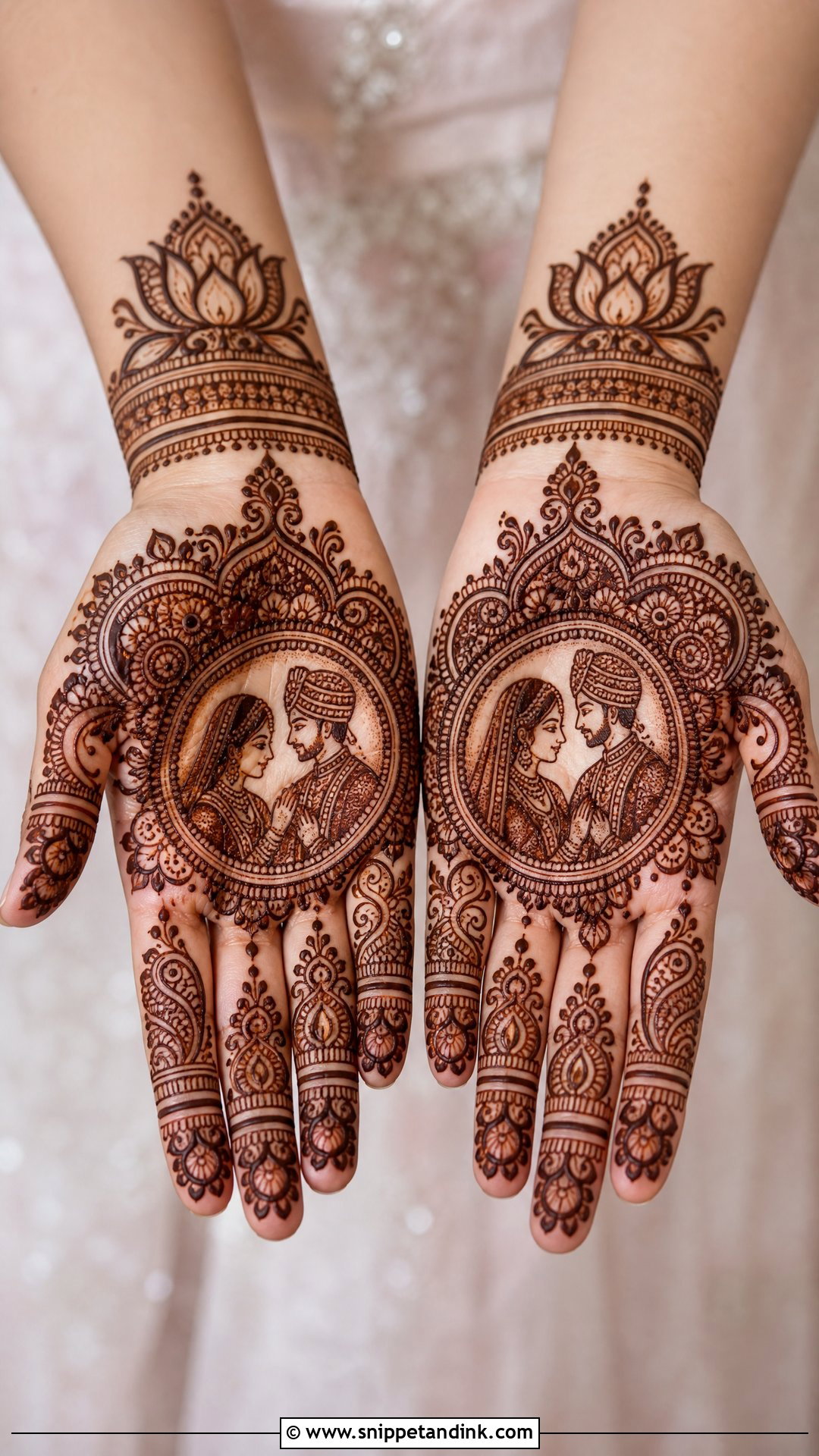
Palm bridal mehndi puts the most meaningful motifs where you’ll see them yourself: bride-groom art, a large mandala, lotus work, peacocks or mirrored paisleys. I connect the fingers to the palm with vines, dots or shaded bands so the hand looks whole. Palms also take the darkest stain of any part of the hand, so detail here stays readable. It suits brides who’d rather keep the backs of their hands lighter. Leaving small gaps around the main motif keeps it crisp in photos.
18. Wrist To Forearm Bridal Mehndi Design
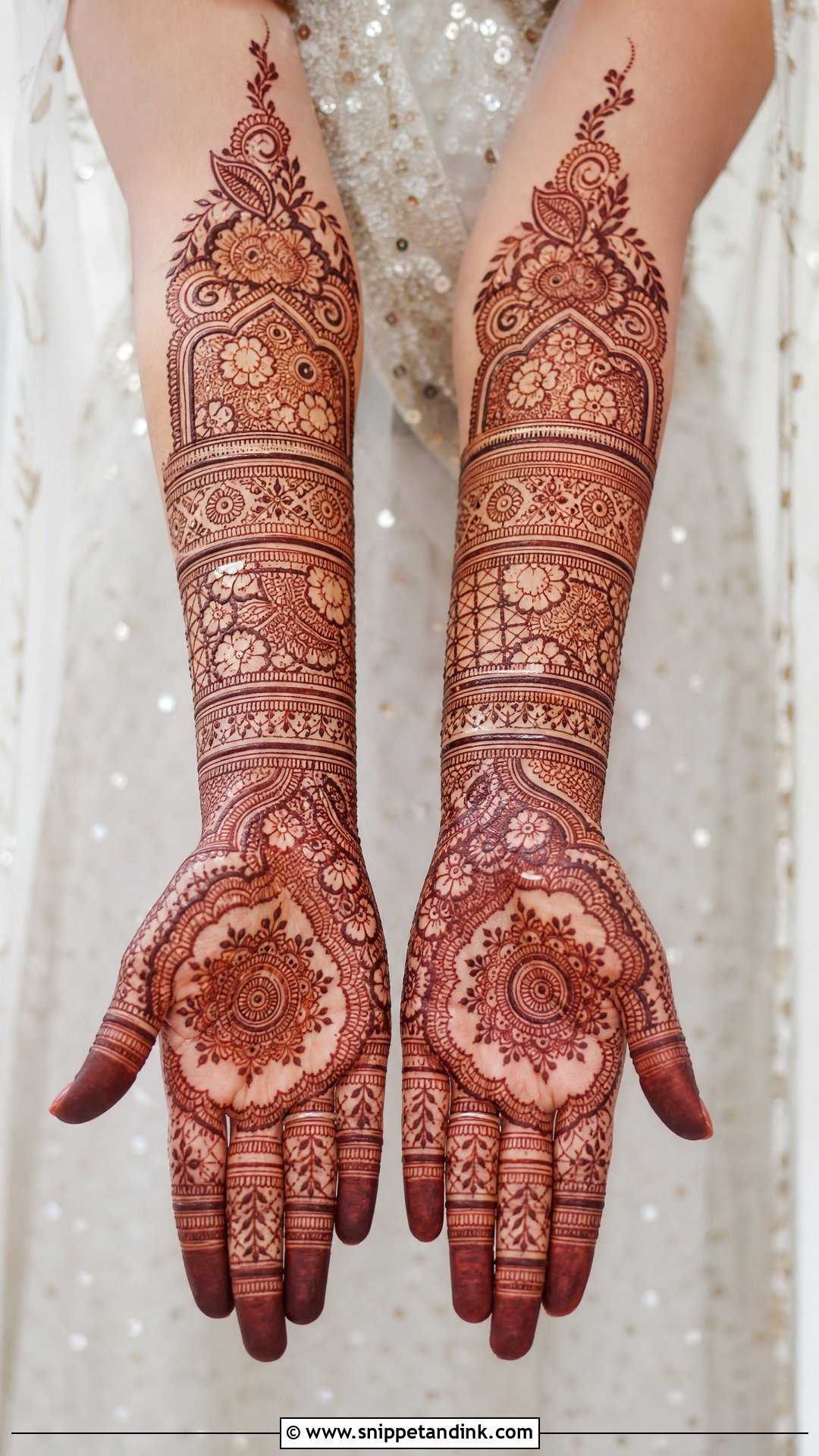
Wrist to forearm mehndi extends the design beyond the hand, which suits short, sheer or sleeveless outfits. I begin at the fingertips and palm, then carry bracelet bands, floral cuffs, paisley trails and jaali panels up the arm, stopping well short of the elbow. Varying the width of each band along the forearm keeps it from looking striped. Expect the forearm to stain a shade lighter than the palm; that’s normal and actually helps the hands stay the focus. With bangles, the henna looks layered beneath the jewelry.
19. White Bridal Mehndi Design
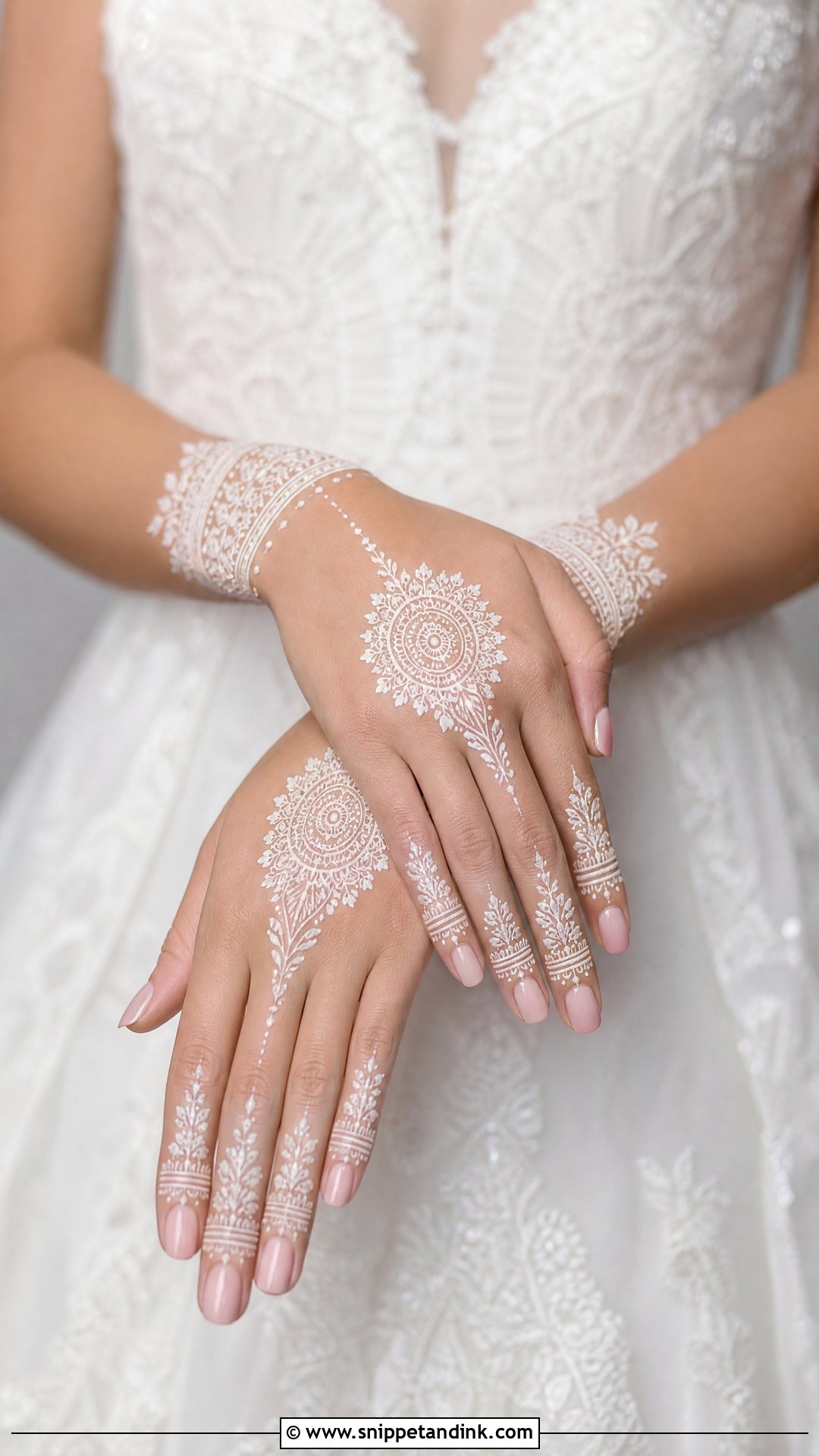
White mehndi isn’t henna at all. It’s a body paint, usually applied with a skin-safe adhesive base, and it sits on the skin rather than staining it, so it lasts a day or so rather than a week or two. That makes it a good fit for a reception, a photoshoot or a pre-wedding event, not for the ceremony if you want lasting colour. I draw it as lace, florals, mandalas or bracelet details on the back of the hand, with crisp lines and some pearl-like dots. Ask for a patch test of the paint a few days beforehand if your skin reacts easily.




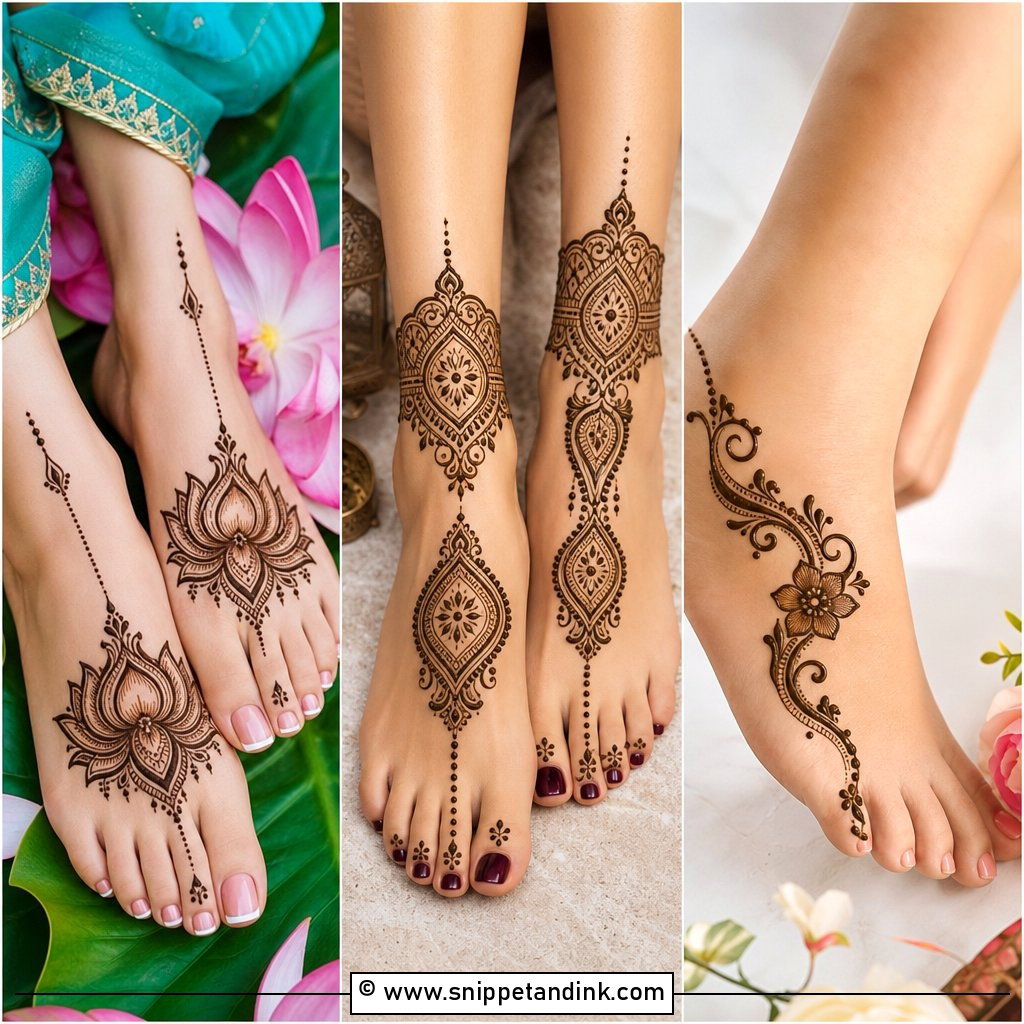
20. Feet Bridal Mehndi Design
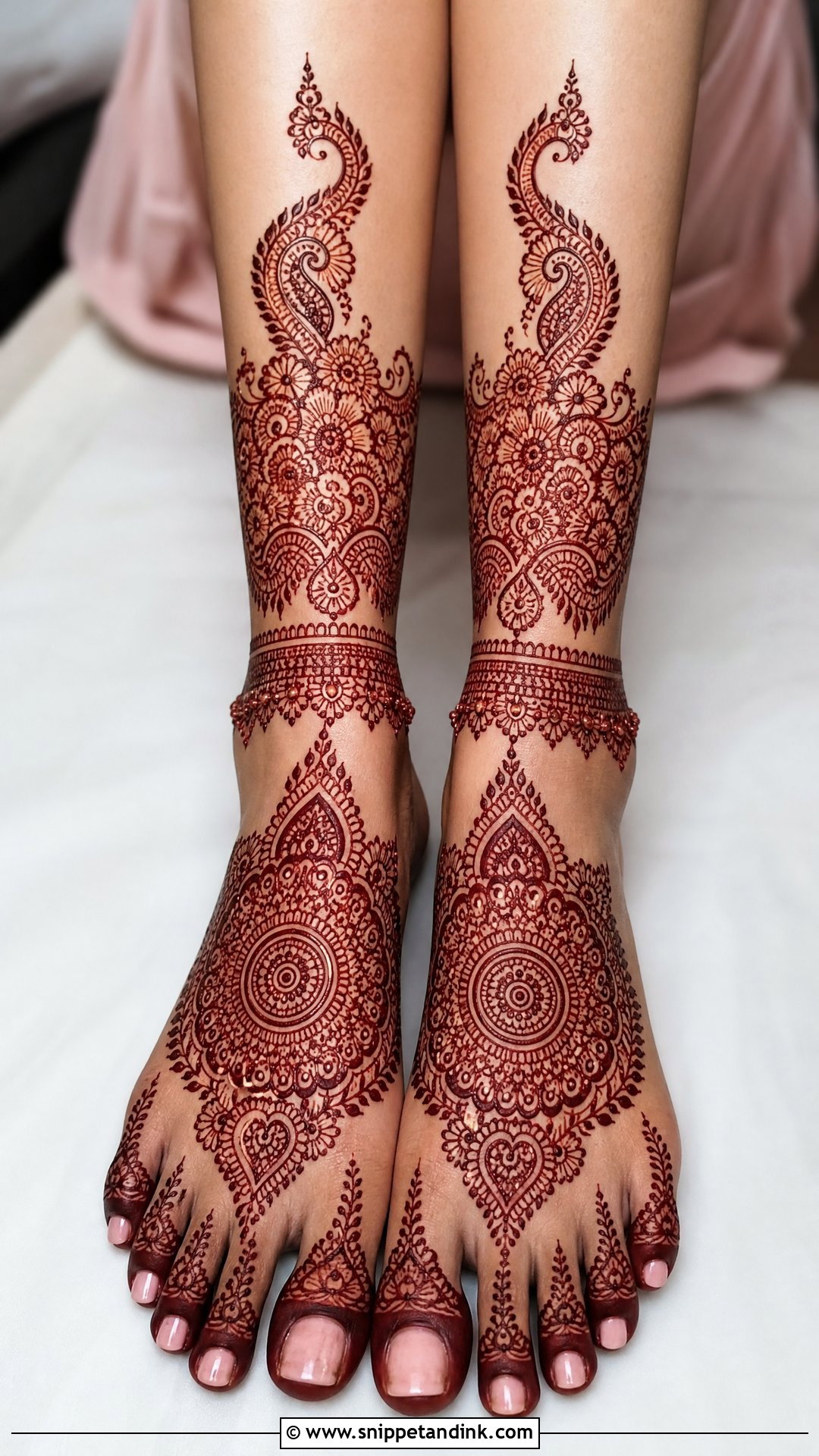
Feet complete the traditional bridal look: toe details, anklet bands, a mandala on the top of the foot, florals along the sides and paisley trails toward the ankle. I follow the shape of the foot rather than forcing a hand design onto it. Feet stain dark, especially the soles, so I balance them against the hands: heavy hands with lighter feet, or minimal hands with more detailed feet. The real challenge is drying time, because you can’t walk on wet paste. I’d plan the feet last, when you can sit with your legs up.
Surviving a Long Application Without Smudging Anything
Full-coverage bridal designs take most of an afternoon, sometimes longer with feet. The design itself is my job, but how you prepare decides whether it stays clean.
Before I start
Eat a proper meal, use the bathroom, and change into loose clothes with short or easily rolled sleeves. Remove rings and bangles. Don’t put lotion on your hands that morning; oil sits between the paste and the skin and keeps the stain pale.
While the paste dries
Rest your arms on a cushion, palms up, and ask someone to hold your phone and drinks. Once both hands are done, you’ll be relying on others for an hour or two, so plan who that is. I’ll seal the design with a light lemon and sugar mix once the surface is dry, which helps the paste stay on overnight without cracking off.
The night after
Keep the paste on as long as you can, wrap your hands loosely in tissue or cotton gloves for sleep, and scrape rather than wash it off in the morning. The orange you see then will darken over the next two days.
Which Mood Do You Want Your Hands to Carry on the Day?
Every design above falls somewhere on a line from rich to light. Full Indian, Rajasthani and portrait mehndi sit at the rich end; Arabic, Gulf and minimal designs at the light end; mandala, jaali, lotus, peacock and bracelet patterns land in the middle. Pick the mood first, then the motifs. After that, think about your hand shape, outfit, jewelry and the events you’ll be wearing it to. Bring your favourite references to your artist, talk through coverage, and ask her to sketch the layout before application day. A design planned around you will always look more personal than one copied exactly.
You'll Like These Ideas:






Leave a Reply