
Diwali week is the busiest stretch of my year, and the requests swing wildly. One person wants a full traditional hand for Lakshmi puja and the family photo; the next needs something she can finish in fifteen minutes before cooking for twenty. The motifs people ask for are fairly consistent: diyas, lotus flowers, paisleys, mandalas, rangoli circles, peacocks, jaali and clean Arabic trails. What changes is coverage, and that depends on your outfit, your jewellery, how long you can sit still and what your hands need to do over the next three days. Below I’ve gathered simple, modern, traditional, Arabic, Indo-Arabic and heavily detailed festival designs, with the practical notes I’d give you at the appointment.
When to Sit for Henna During Diwali Week
A henna stain is pale orange when the paste comes off and darkens over the following day or two. That means the night before Lakshmi puja is often too late if you want the deepest colour on the day. I’d plan backward from the evening that matters most to you.
- Two evenings before your main day: the best slot for full or bridal coverage, so the colour peaks during puja.
- The evening before: fine for simple, Arabic or finger designs, which look good even before they fully deepen.
- The morning of: only for tiny motifs, and accept that the stain will still be quite light by evening.
The real conflict in Diwali week is household work. Cleaning, making sweets, drawing rangoli and washing up all mean wet hands, and water in the first twelve hours or so is the main reason a stain stays orange. If you’re the one running the kitchen, finish the heavy cooking before your appointment, or choose a back-hand design and let your palms stay free.
1. Simple Diwali Mehndi Design
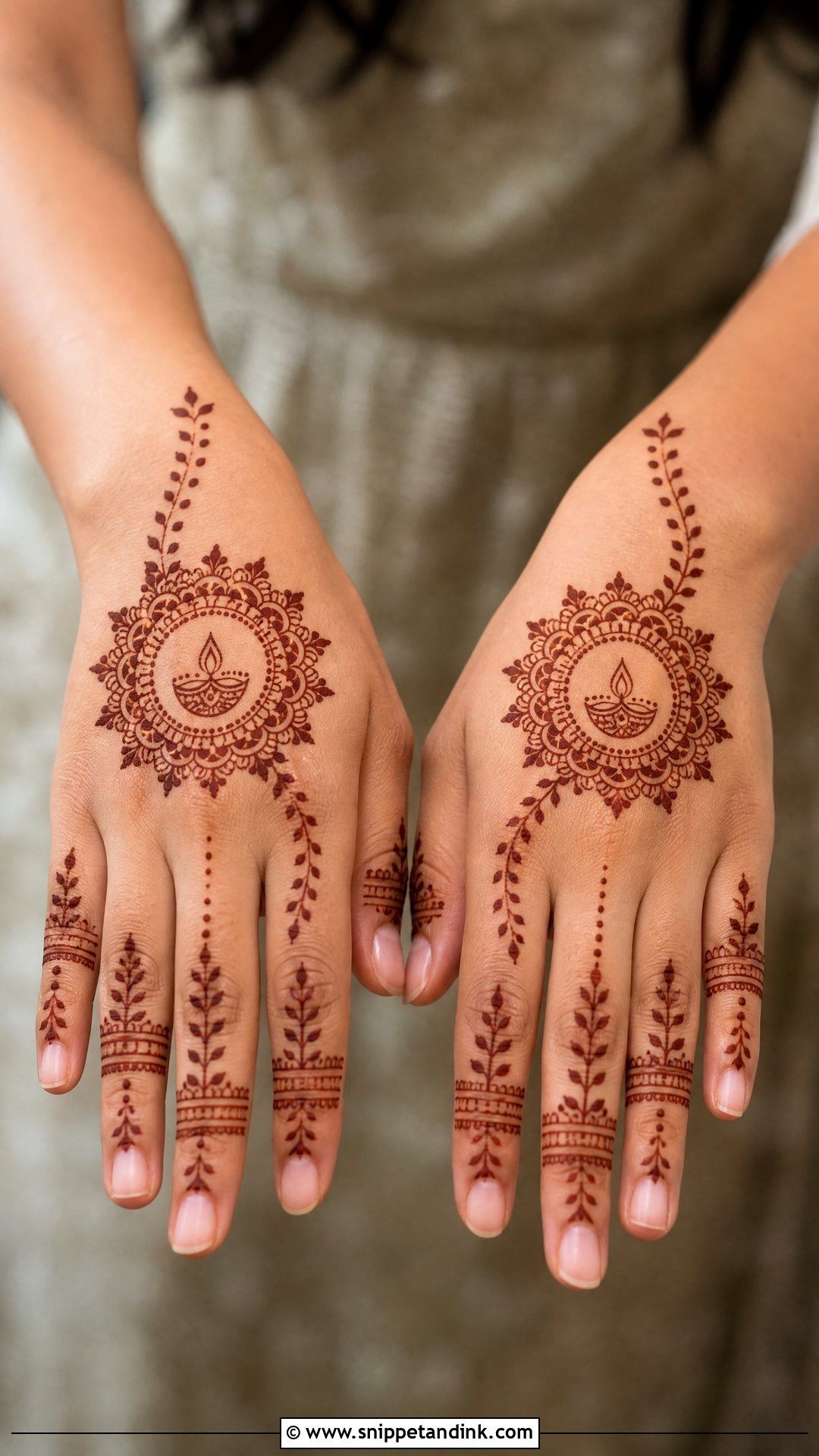
When someone has an hour of chores ahead and still wants festive hands, I steer them to a simple Diwali mehndi design. The palm stays mostly open with one neat mandala, a small diya or a floral centre, the fingers get leafy lines, dots and thin bands, and a light bracelet at the wrist closes it off. Clean spacing is what makes it look intentional rather than unfinished. If you want a little more Diwali in it, put a small lamp or lotus near the centre and join it to the fingers with curved vines. It suits school functions, office celebrations and anyone booking the evening before.
2. Front Hand Diwali Mehndi Design
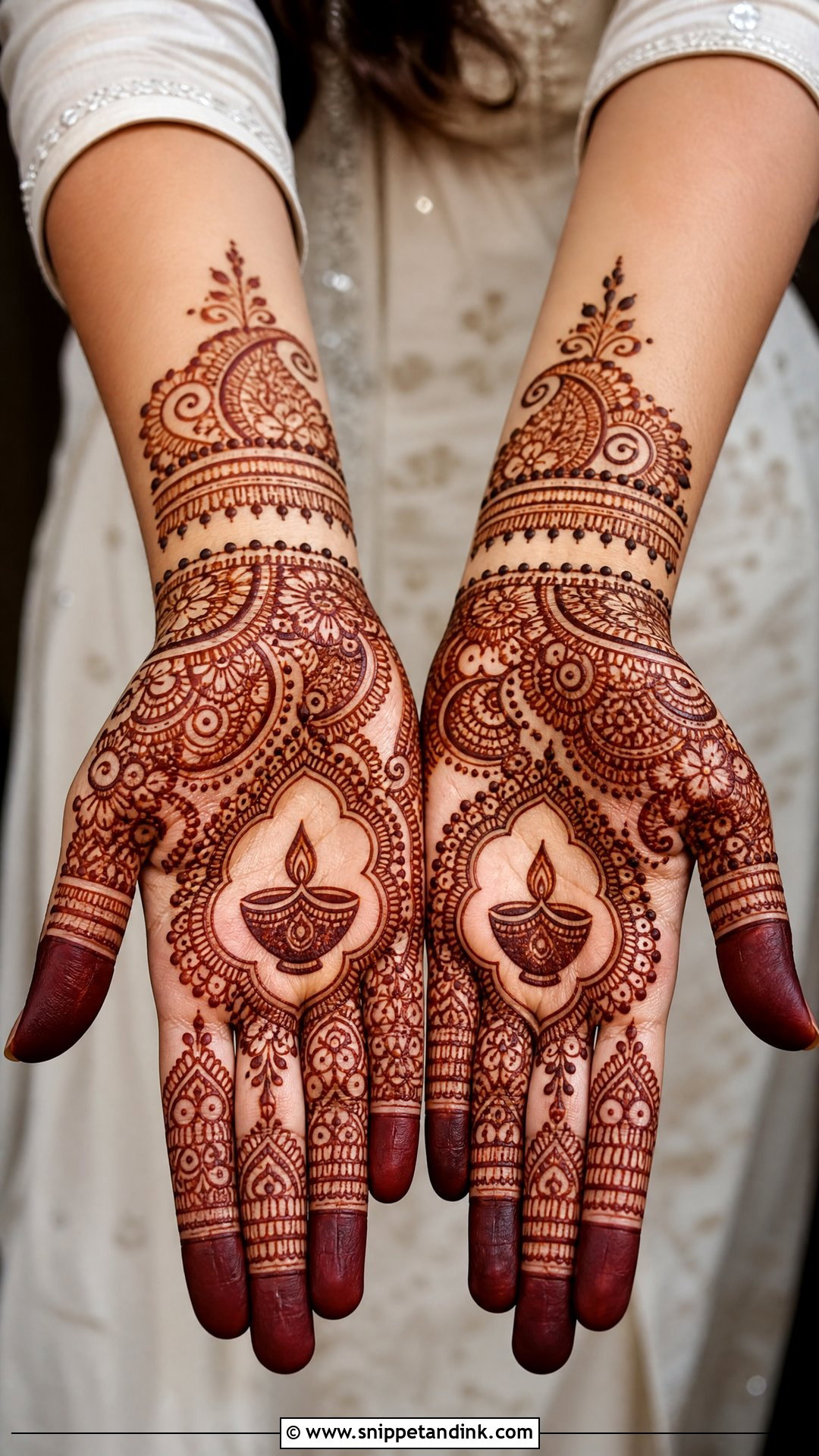
The palm is where henna stains darkest and where people see your hands during puja, so a front hand design gives the most return for your sitting time. I usually put a diya in the middle with paisleys, flowers, dots and fine circular borders around it, then carry the pattern into the fingers with leafy trails, checked bands and small floral tips so they don’t look like a separate drawing. For fuller coverage I’ll fill gaps with spirals and lace lines. For a softer hand I leave small breathing spaces around the main motif. Either way, keep your palm flat and open while it dries; a curled hand cracks the paste along the creases.
3. Back Hand Diwali Mehndi Design
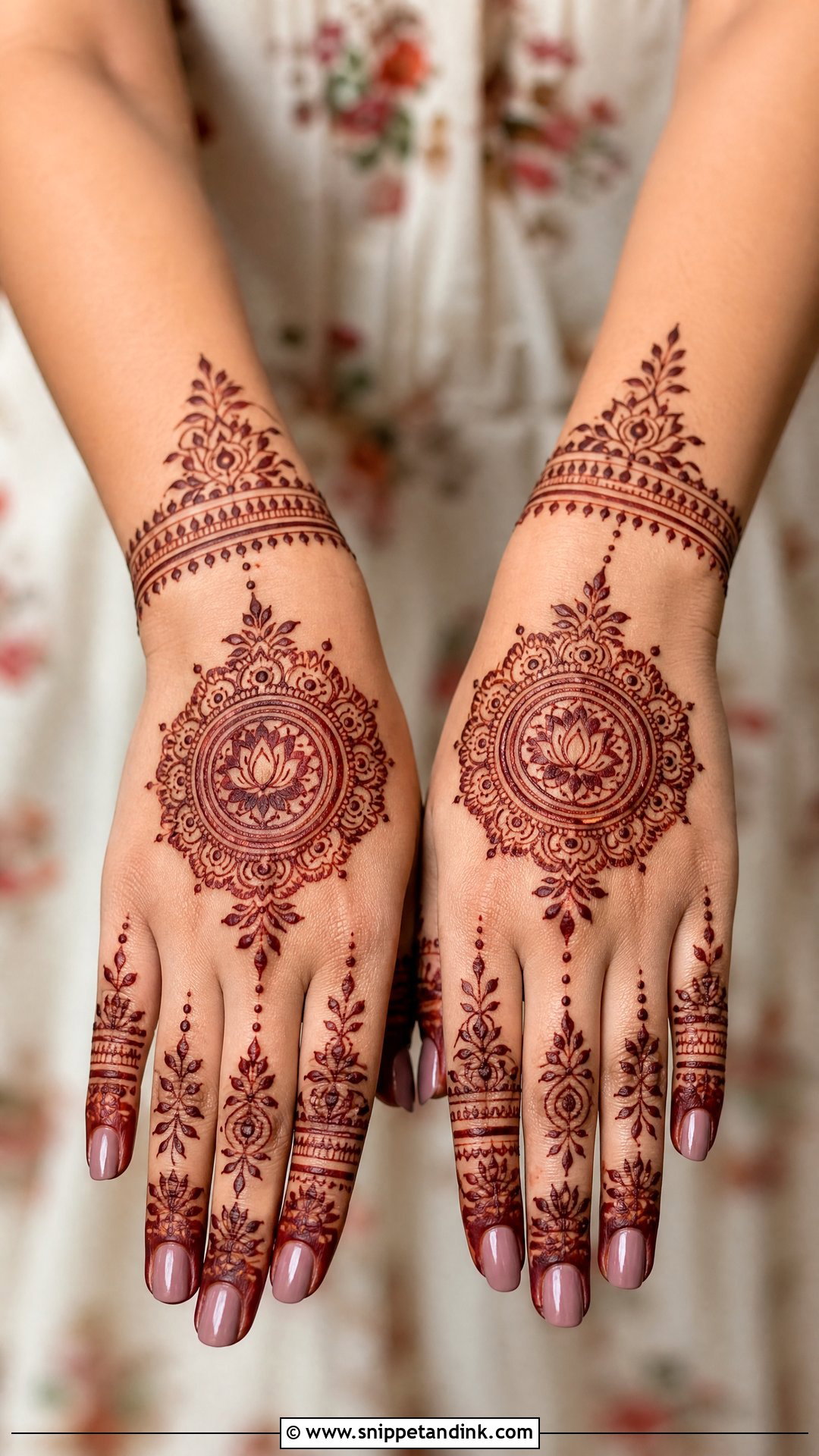
Back hand Diwali mehndi design is what I suggest when you’ll be wearing rings, bracelets or sheer festive sleeves, because the back of the hand is what shows when you pass a plate or hold a sparkler. A bold mandala near the centre gives the base, leafy vines run toward the fingers and a bracelet band runs toward the wrist. Tuck a diya, lotus or paisley into the mandala for the festival connection. Be aware that the back hand stains lighter than the palm, so keep the paste on longer and keep the finger designs slim for a modern finish.
4. Full Hand Diwali Mehndi Design
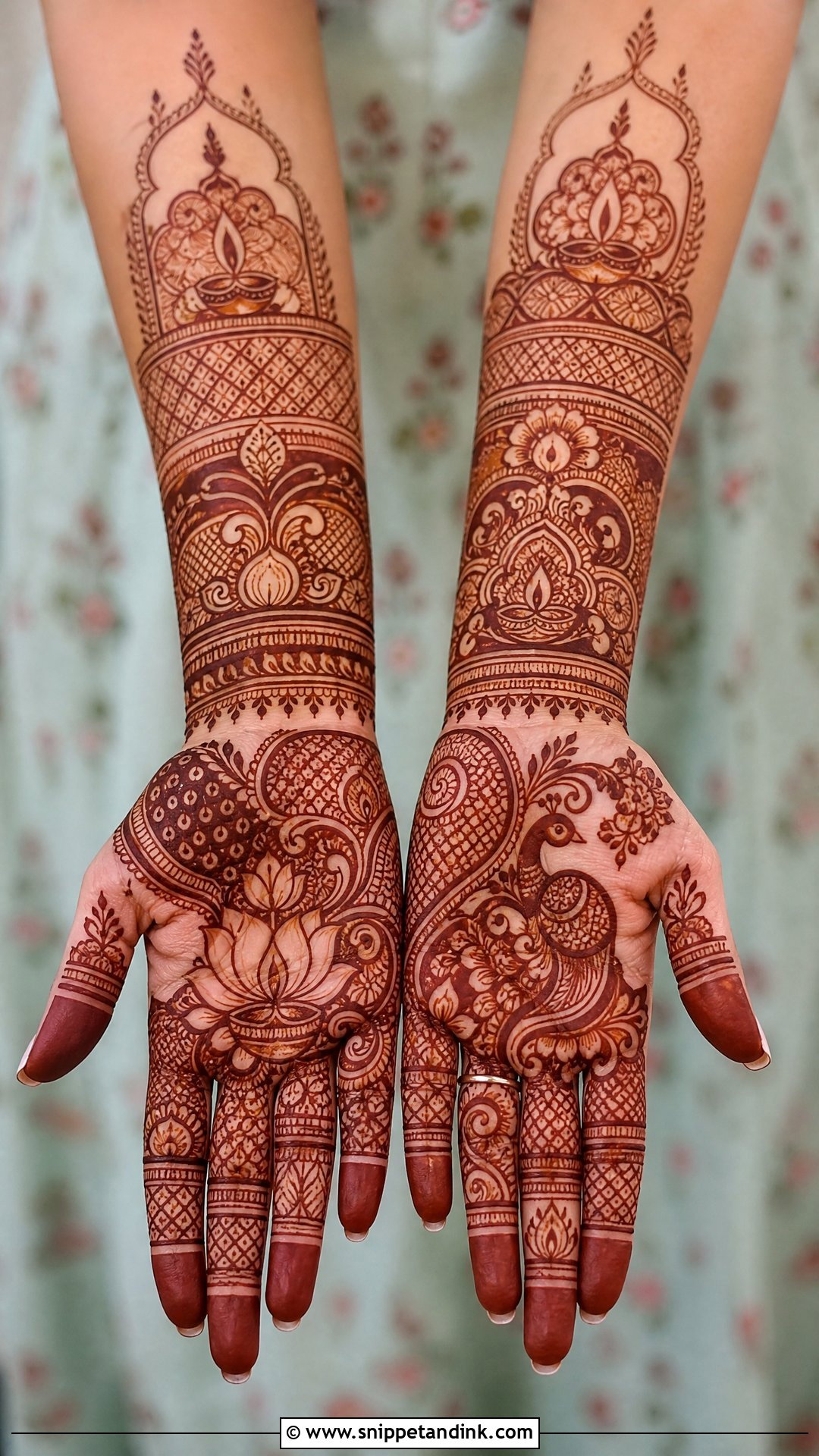
Full hand mehndi covers palm, fingers, wrist and often the forearm, with diyas, lotus flowers, paisleys, mandalas, peacock accents and fine filler. I never start a full hand without mapping it: big motifs go down first, then vines, dots, grids and small curves fill the spaces. Starting with filler and adding motifs later is how hands end up looking crowded and lopsided. It takes time, often two hours or more for both hands, so plan around meals and make sure someone else is doing the cooking. A deep maroon stain on this much coverage looks rich in the puja photos.
5. Arabic Diwali Mehndi Design
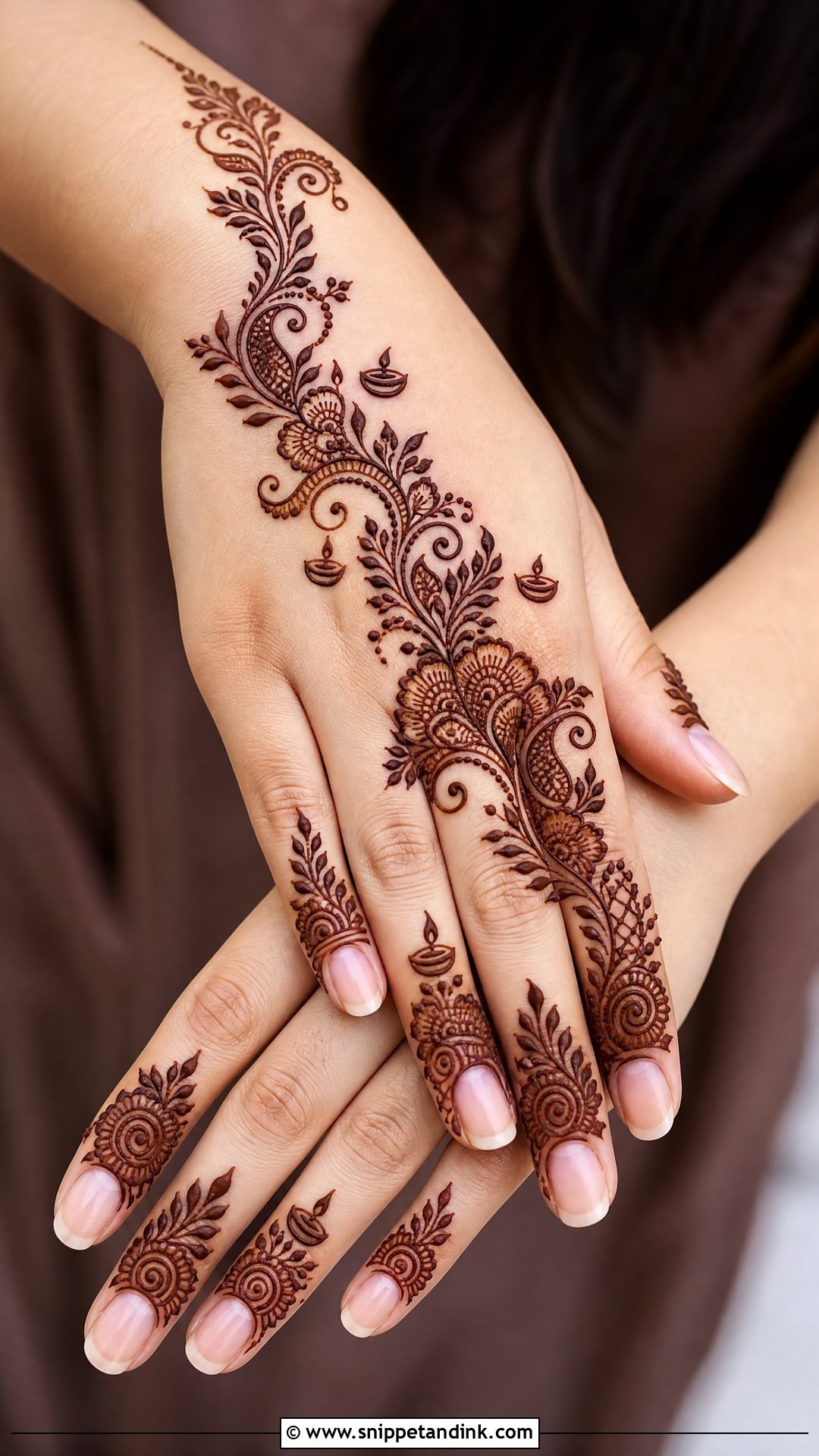
Arabic layouts move diagonally from one side of the wrist toward the opposite finger and leave generous gaps of bare skin. For Diwali, I put bold flowers, paisleys, leafy curves and a small diya or two along that trail. It’s quick to apply, which matters during a festival week, and the open spaces balance a heavily embroidered outfit rather than competing with it. Thick outlines with light shading inside give depth. It works on front and back hands equally well.
6. Indian Diwali Mehndi Design
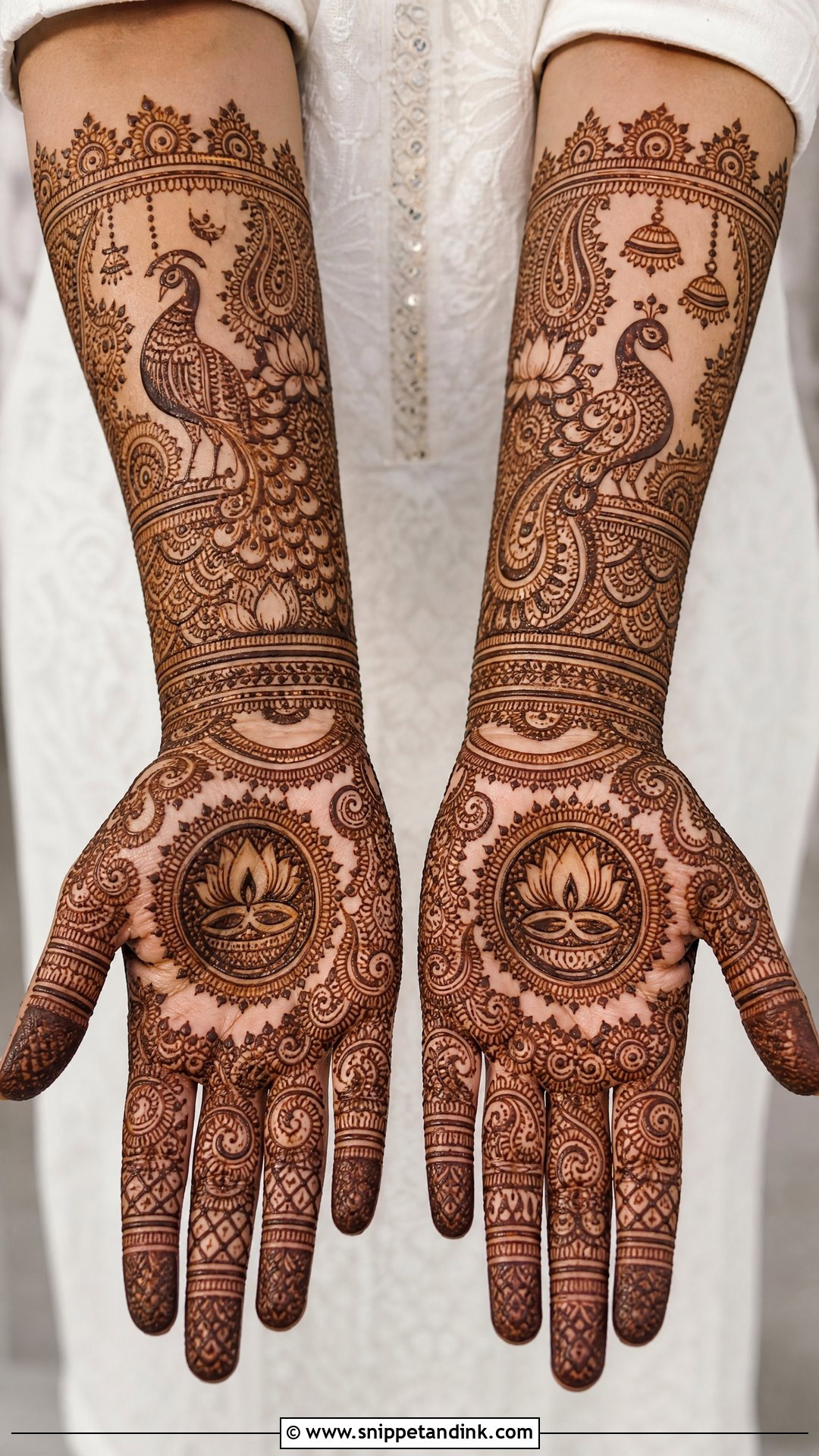
Indian festival mehndi is filled and detailed: paisleys, lotus flowers, peacocks, mesh work, circular mandalas and tiny decorative fillers, with a diya on the palm or wrist to tie it to the occasion. The first thing I do is divide the hand into sections with light guide lines, because without that structure dense Indian work drifts off centre. Larger motifs belong on the palm; smaller ones go on the fingers and wrist. It sits naturally with sarees, lehengas and salwar suits. Expect a longer sitting and plan a slow evening afterward.
7. Indo Arabic Diwali Mehndi Design
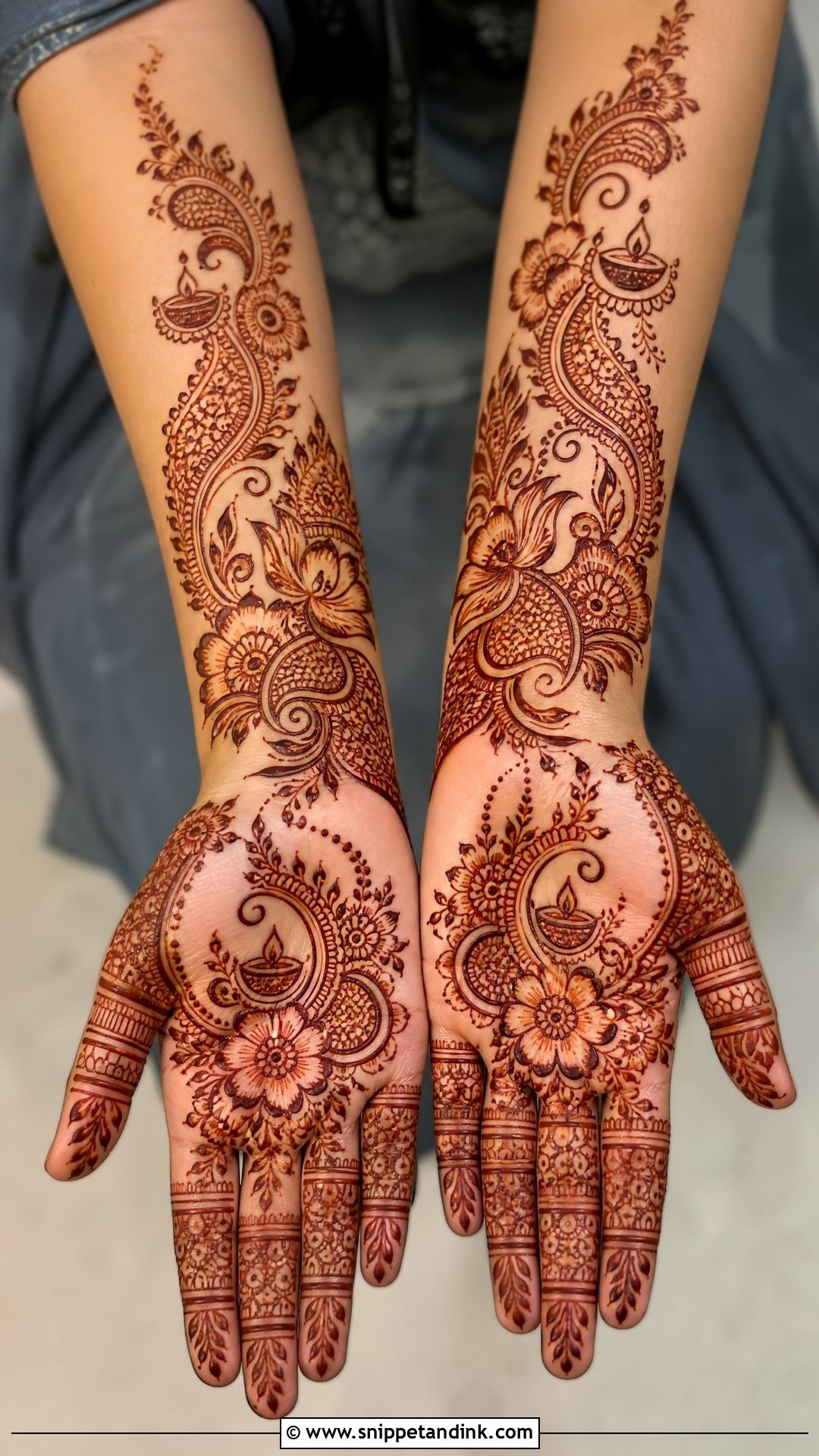
Indo-Arabic is the middle road: the bold flow of an Arabic trail with Indian detail tucked inside it. A common layout I use starts with a floral trail from the wrist and adds paisley or diya details near the palm, while the fingers get fine Indian lines, dots and small jaali sections. It’s fuller than Arabic work but lighter than a traditional full hand, which is why it’s my most requested festival style for front and back hands alike. Bold outlines with fine inner detail keep it balanced.
8. Diya Diwali Mehndi Design
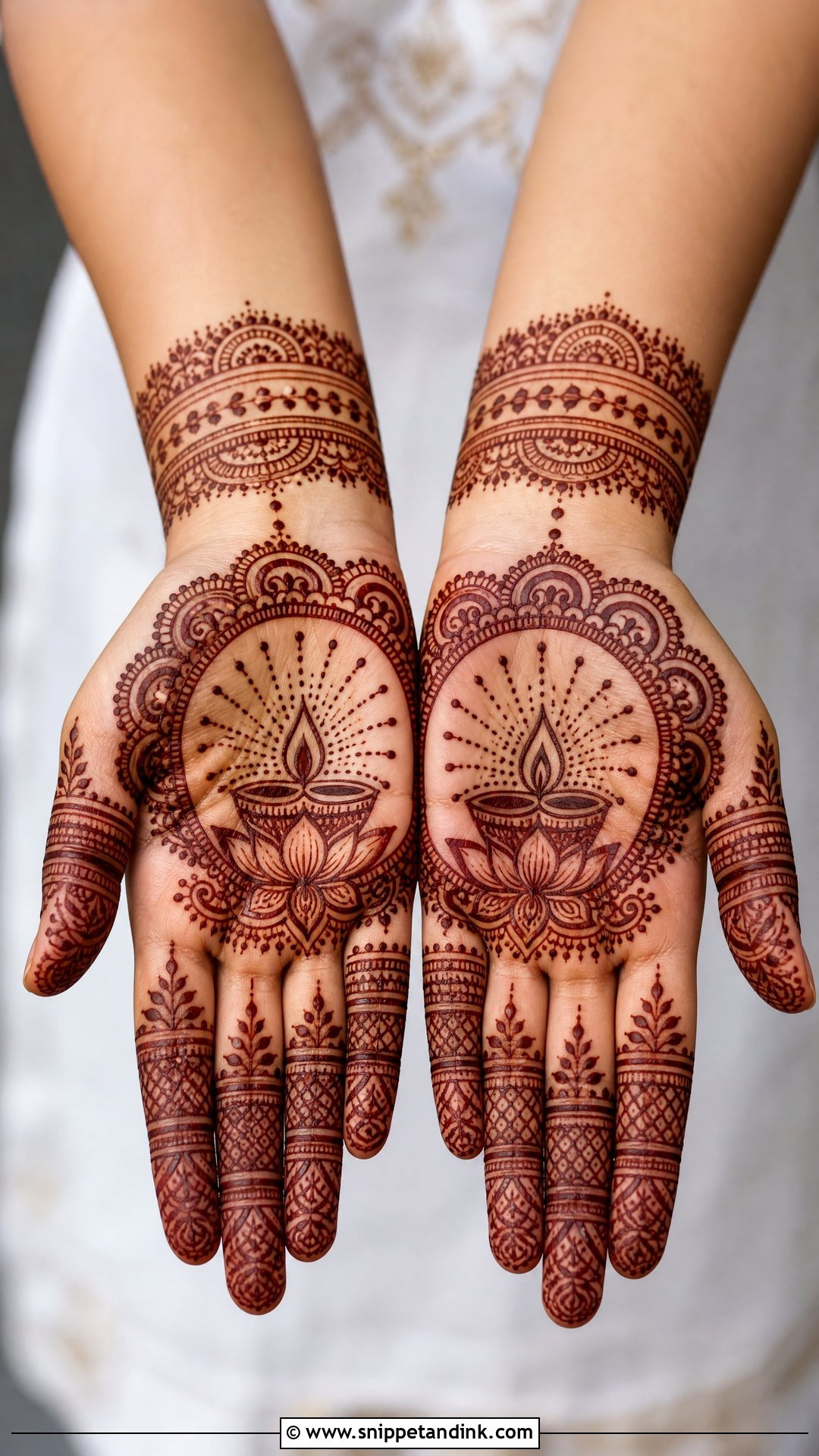
The oil lamp is the motif everyone recognises, so a diya design is often my first suggestion for the puja itself. A single large diya on the palm reads clearly; several small ones scattered across the hand feel more celebratory. I surround them with flames, dots, lotus petals, paisleys or rangoli circles. The flame is the detail that goes wrong most often, since a thin flame stains faintly and disappears, so I draw it with a slightly thicker line and add tiny dotted rays around it for a glow.
9. Rangoli Diwali Mehndi Design
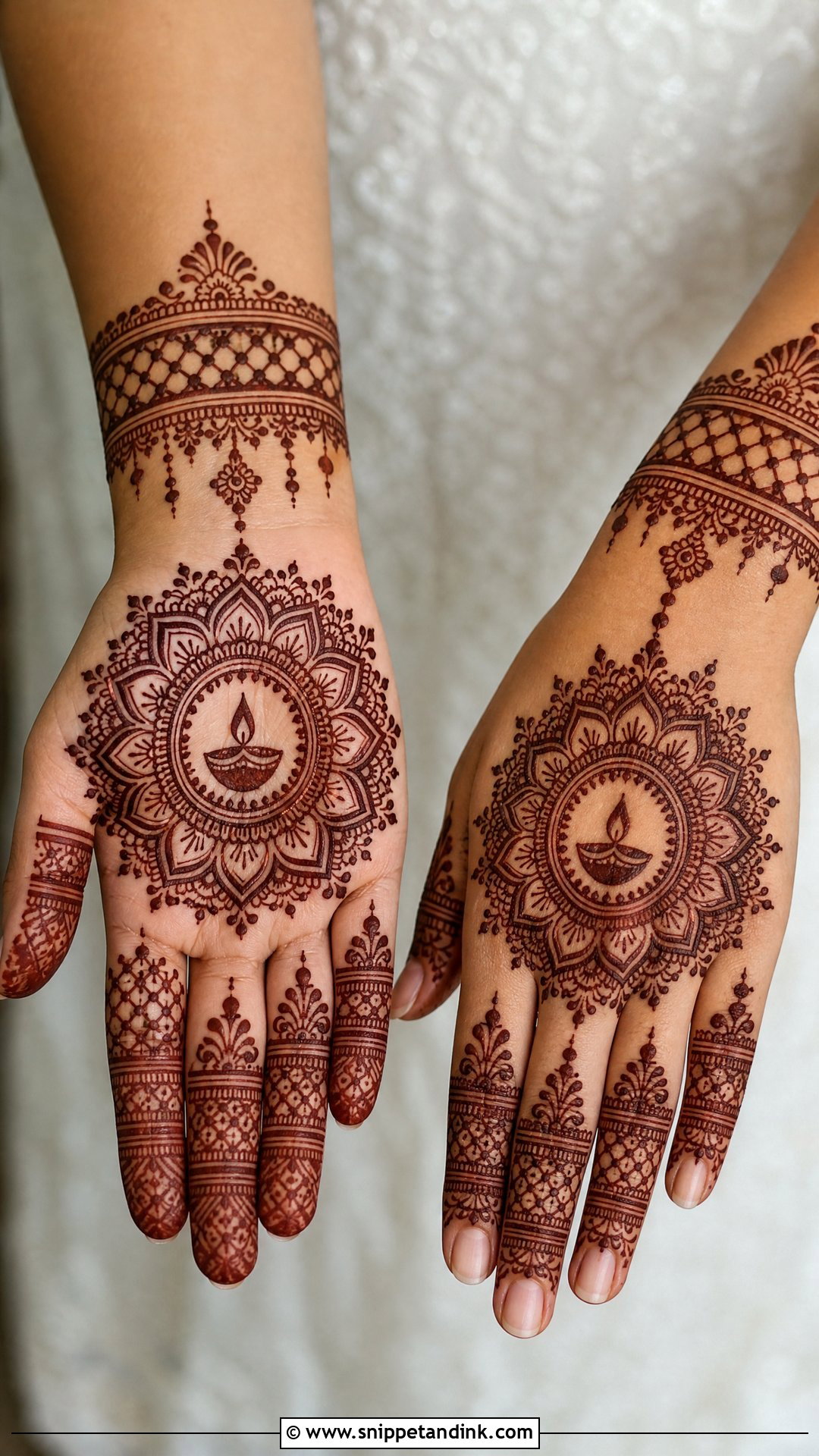
Rangoli mehndi borrows the patterns drawn at doorways during the festival: circles, petals, dots, grids and strict symmetry. On the palm a rangoli mandala becomes the centrepiece; on the back hand it sits in the middle with finger extensions. Symmetry is the whole trick, and it’s harder on a hand than on a floor because the palm isn’t flat. I build it outward ring by ring and check it from arm’s length after each ring. A small diya or lotus inside the circle links it to Diwali.
10. Lotus Diwali Mehndi Design
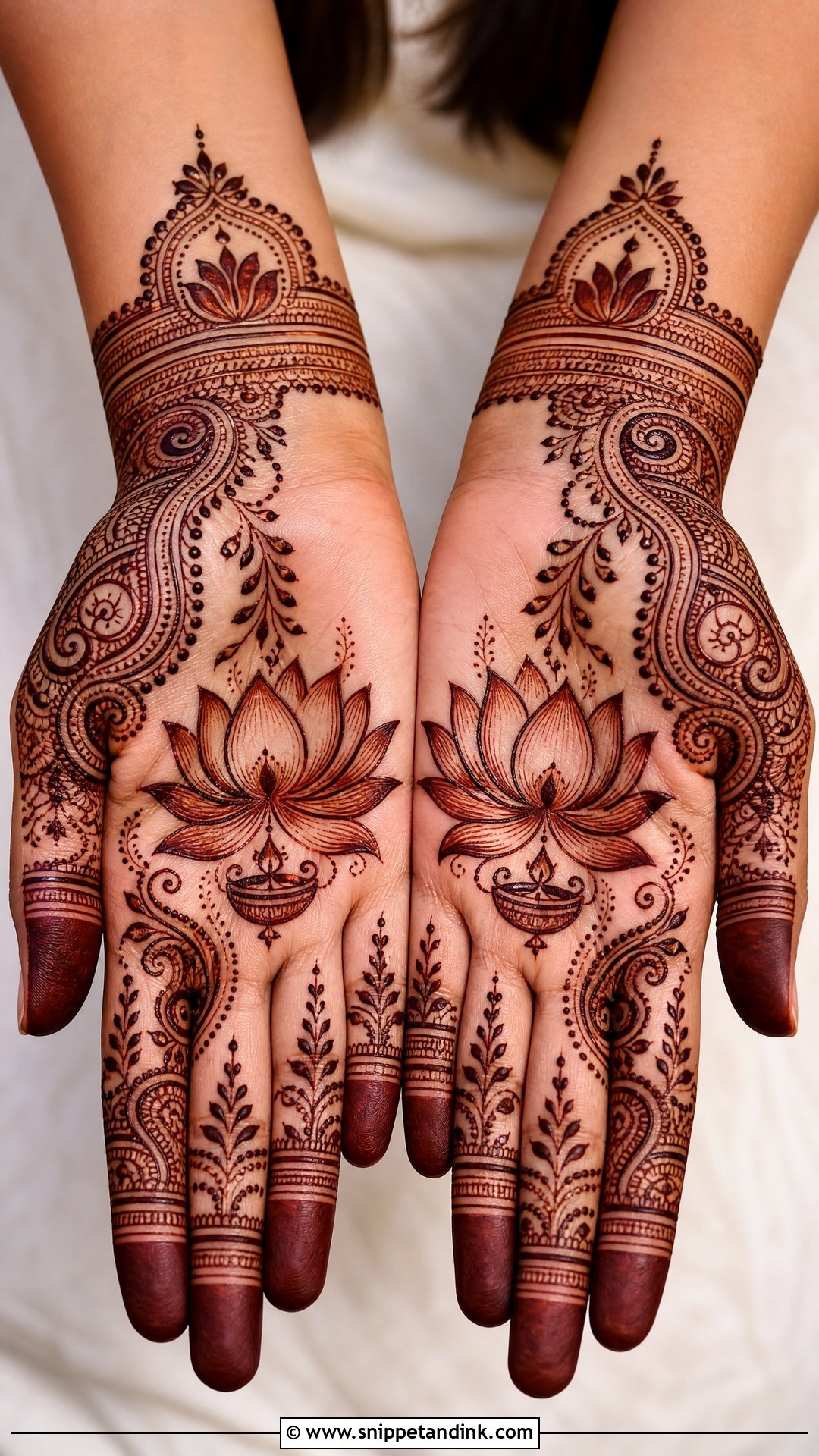
The lotus is tied to Lakshmi, which gives it real meaning at this time of year beyond being pretty. I place a large lotus on the palm and frame it with paisleys, dots and curved leaves, or use a lotus mandala on the back hand with the design extending toward the fingers. The petals need bold outlines, because pointed petal tips are the first thing a thin line loses. Fine shading inside the petals adds depth without weight. Small diyas or rangoli borders around it complete the festival feel.
11. Peacock Diwali Mehndi Design
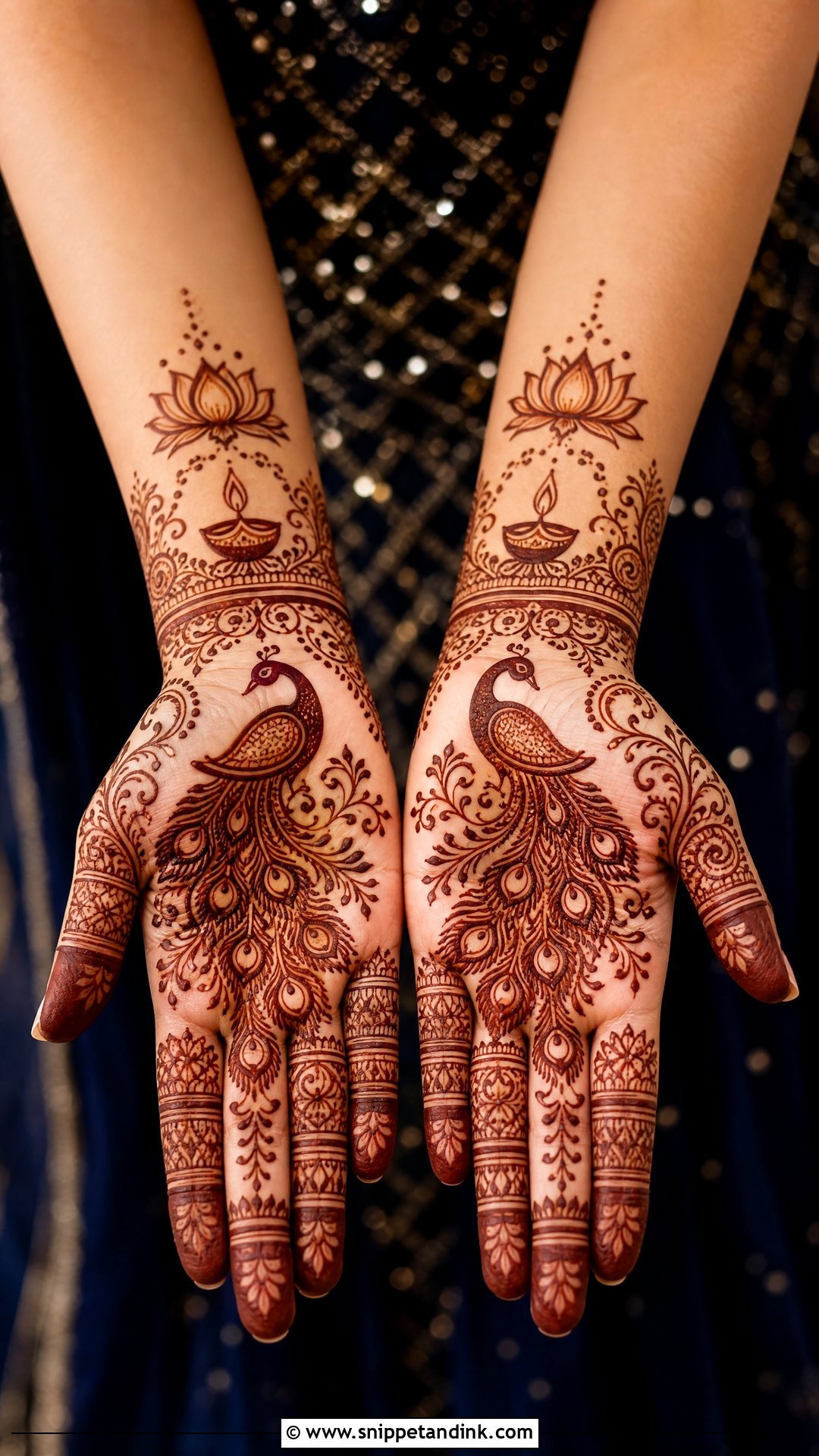
A peacock gives a hand a regal focus. I draw the body bold and the feathers fine, letting the feathers flow into paisleys and floral vines across the palm, wrist or back hand. For Diwali I add small lamps, dots or lotus elements around the bird. One peacock is enough. When people ask for two or three, the hand loses its centre and the birds start to look like decoration on decoration. It sits well with sarees and lehengas.
12. Mandala Diwali Mehndi Design
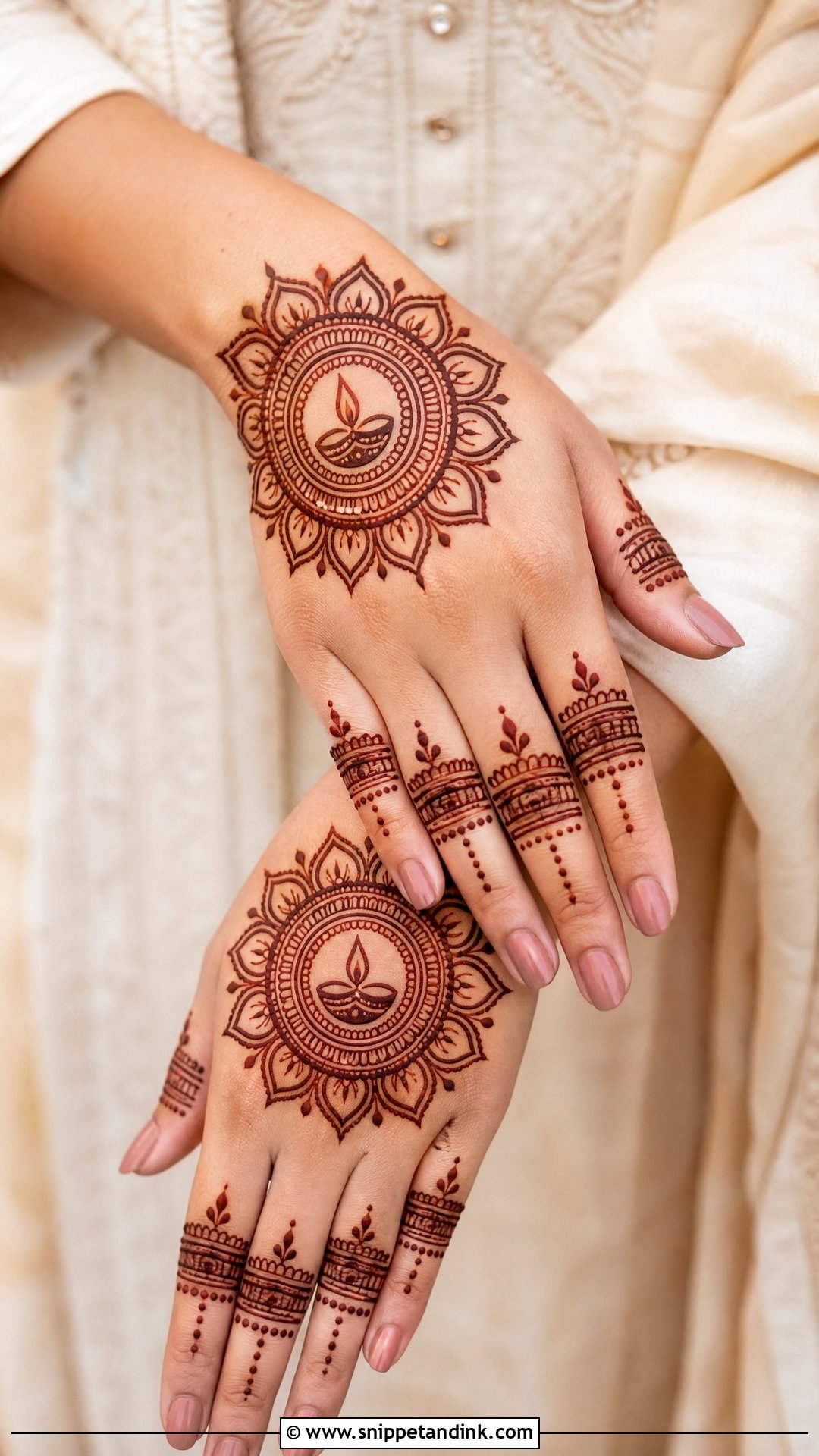
Mandalas scale better than almost any motif, which is why I use them for both five-minute and two-hour designs. A circle sits in the centre of the palm or back hand, and the fingers carry matching bands and lines. Diya flames, lotus petals or dotted rangoli rings in the outer layers make it festive. The thing that makes or breaks a mandala is even spacing between the rings; I’d rather draw fewer rings evenly than many rings that wobble. A bold outer border helps the centre read clearly.
13. Floral Diwali Mehndi Design
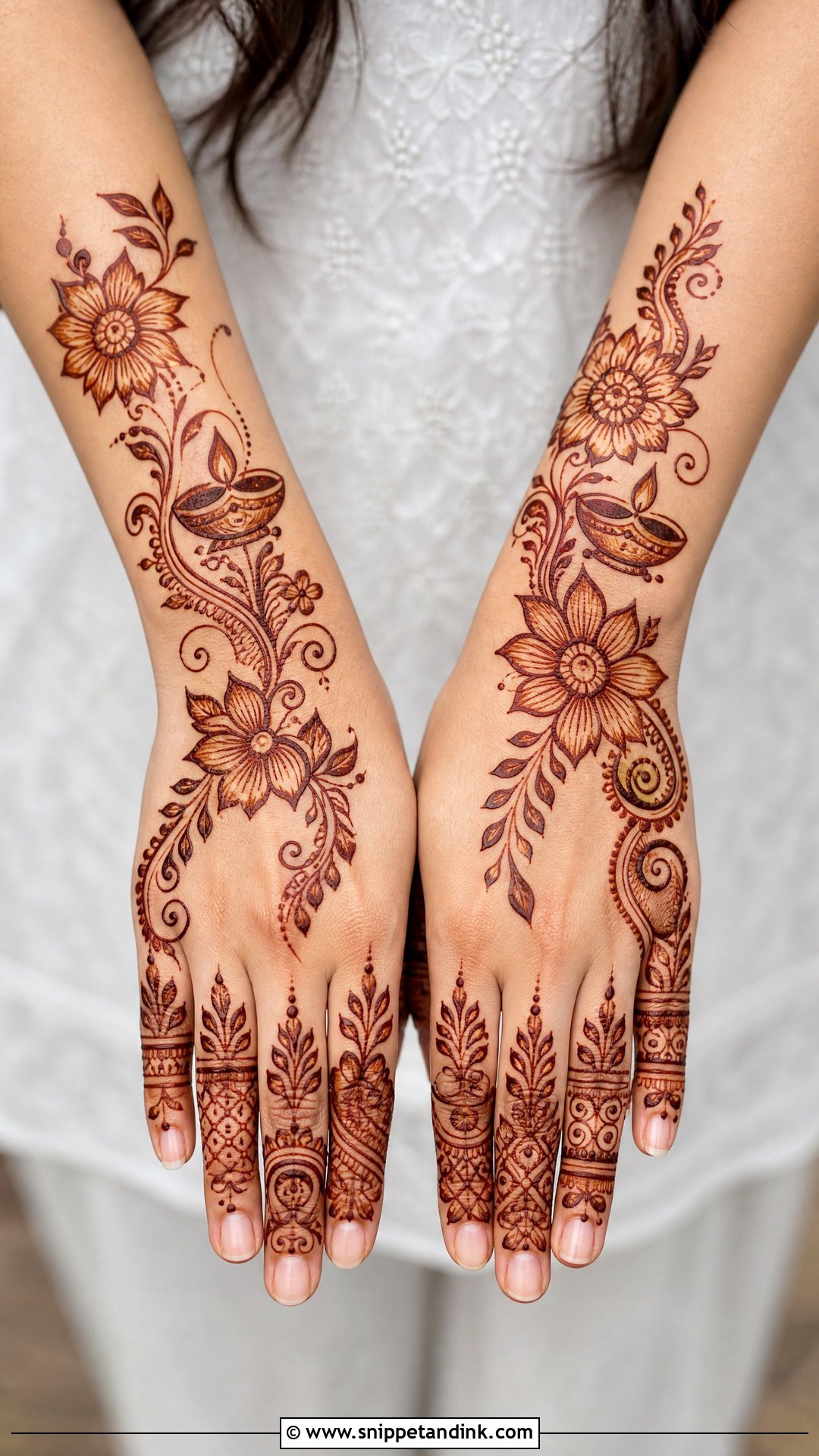
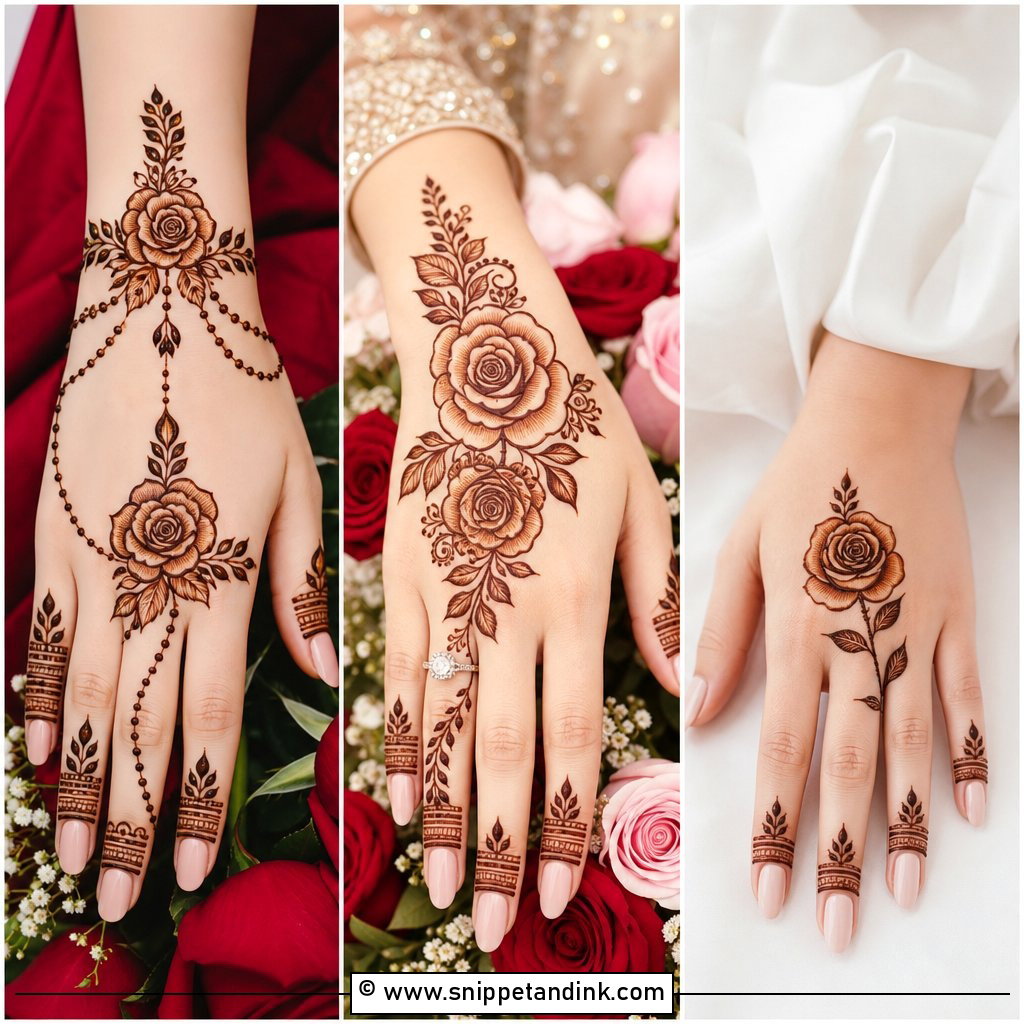
Florals suit grandmothers, teenagers and everyone between, which makes them handy when the whole family is getting henna on the same evening. A single large flower with leafy fingers is quick; vines across the palm and wrist take longer. Roses, lotus petals and simple five-petal blooms all translate well to henna, and small diyas, dots and paisley curls bring in the festival. I let the stems and leaves set the direction of the design. Light shading inside the petals adds detail without darkening them into blobs.
14. Paisley Diwali Mehndi Design
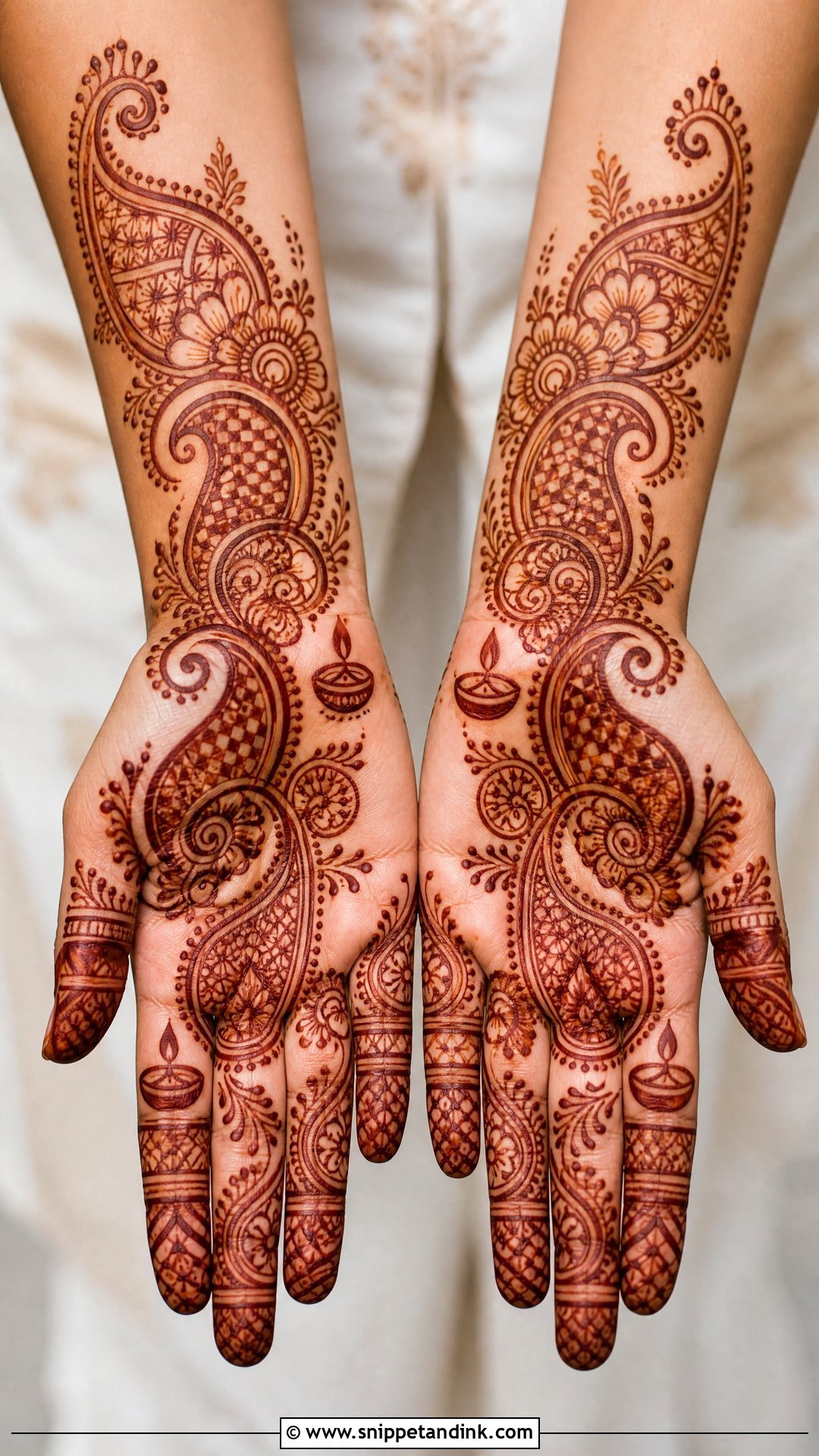
Paisleys are the most adaptable shape in henna. Big ones can carry a whole palm; small ones become accents across the back hand. For Diwali I fill them with tiny florals, dots, checks and curved lines, sometimes with a small diya sitting between two paisleys. A diagonal trail of paisleys reads as Arabic, while repeated paisleys in rows feel Indian. Smooth outlines matter here, because any kink in the curve shows clearly once the stain darkens.

15. Jaali Diwali Mehndi Design
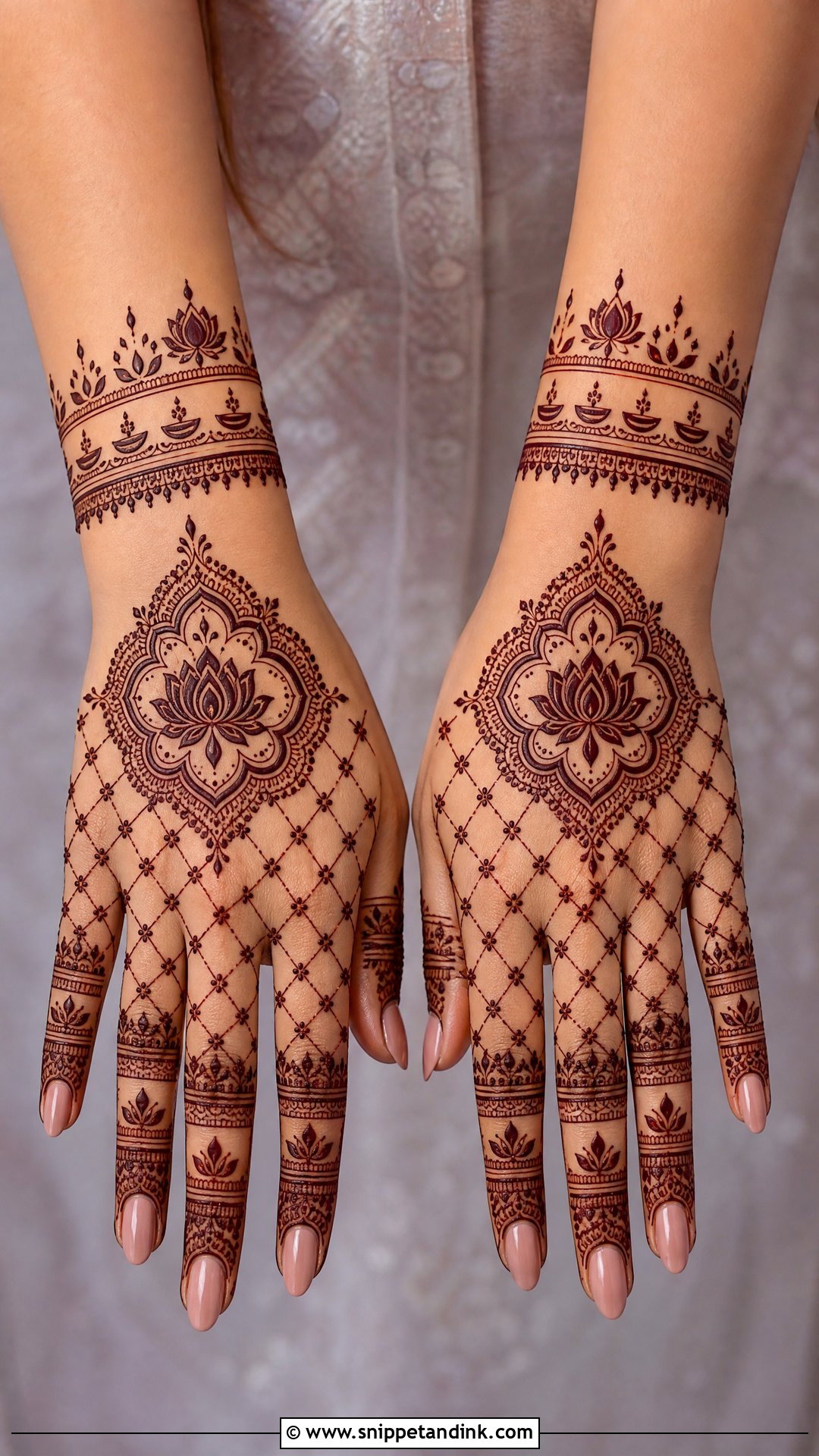
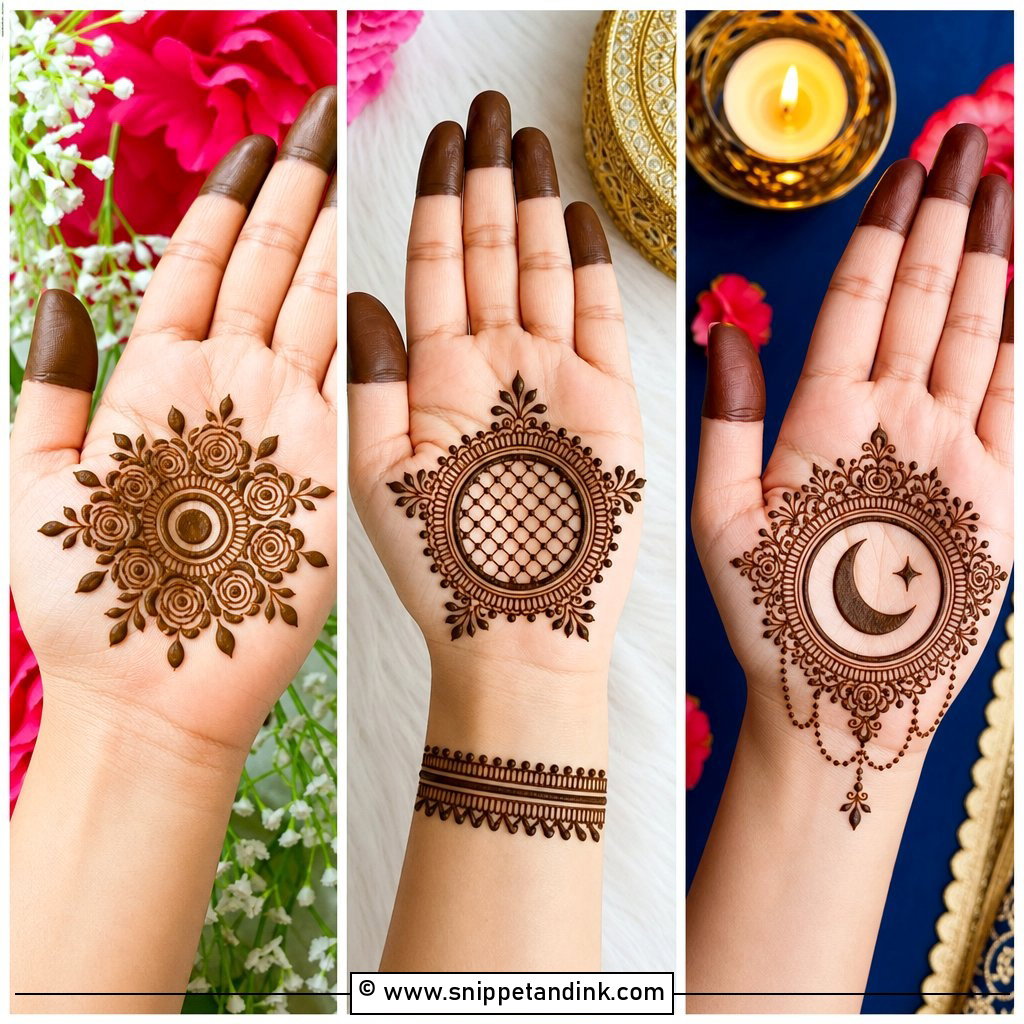
Jaali Diwali mehndi design gives the hand a fine lace effect with crisscross lines over part of the palm, fingers or back hand. On its own, jaali can look plain, so I pair it with mandalas, lotus flowers or diya borders. The risk is lines set too close together: paste spreads slightly and the stain bleeds a little, so a tight grid can fill in and turn into a dark patch. I keep the squares a touch larger than they look like they need to be and add dots at the crossings for richness.
16. Bracelet Diwali Mehndi Design
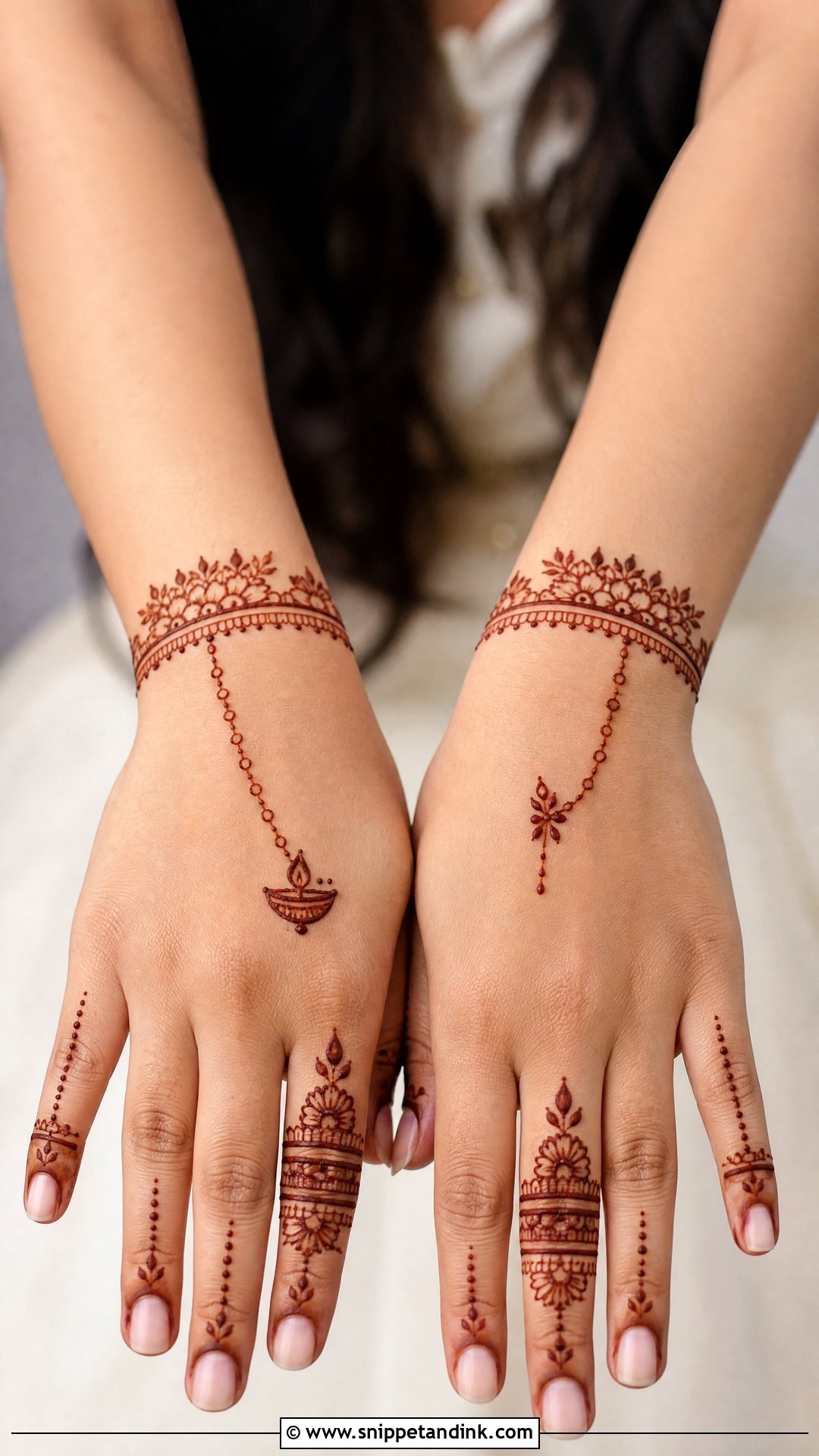
Bracelet designs dress the wrist and back hand like jewellery: a band at the wrist, chains, dots, florals and finger rings, sometimes with a small diya, lotus or paisley charm hanging from the band. It’s quick and comfortable for long festival days. The palm stays mostly clean, which matters if you’ll be making sweets or doing rangoli with your hands. If you’ll wear real bangles straight away, push them higher up the arm for the first few hours so they don’t rub the fresh stain.
17. Finger Diwali Mehndi Design
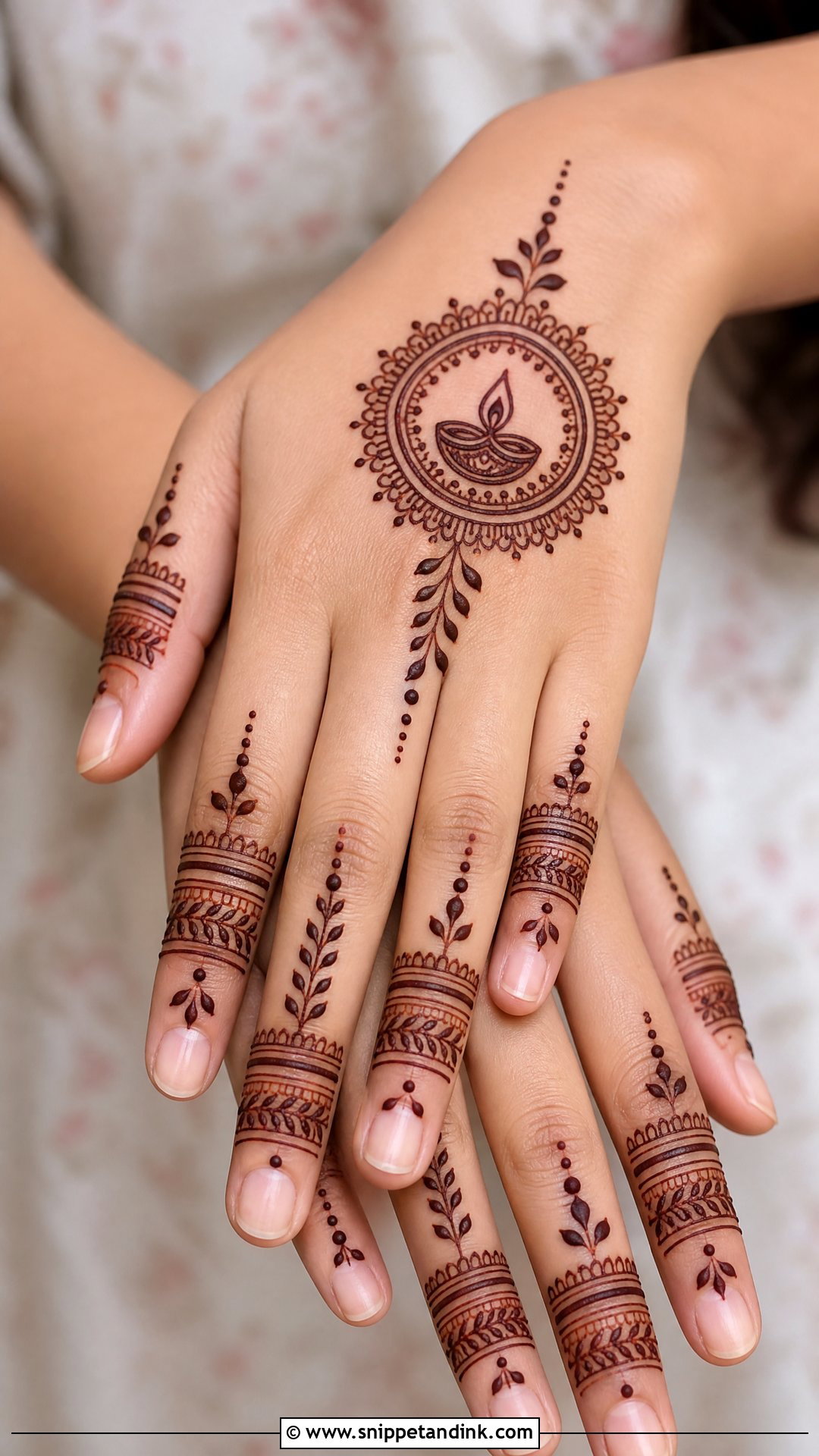
Finger-focused henna keeps the work on bands, leaves, dots, mini flowers and fine lines, with a small mandala, diya or lotus near the back of the hand to connect them. It dries fast and suits people heading to work the next morning. I’ll vary each finger slightly while keeping them coordinated. A warning about fingertips: they stain very dark, and solid-filled tips can look heavy against nail colour, so I keep them lighter than people expect.
18. Minimal Diwali Mehndi Design
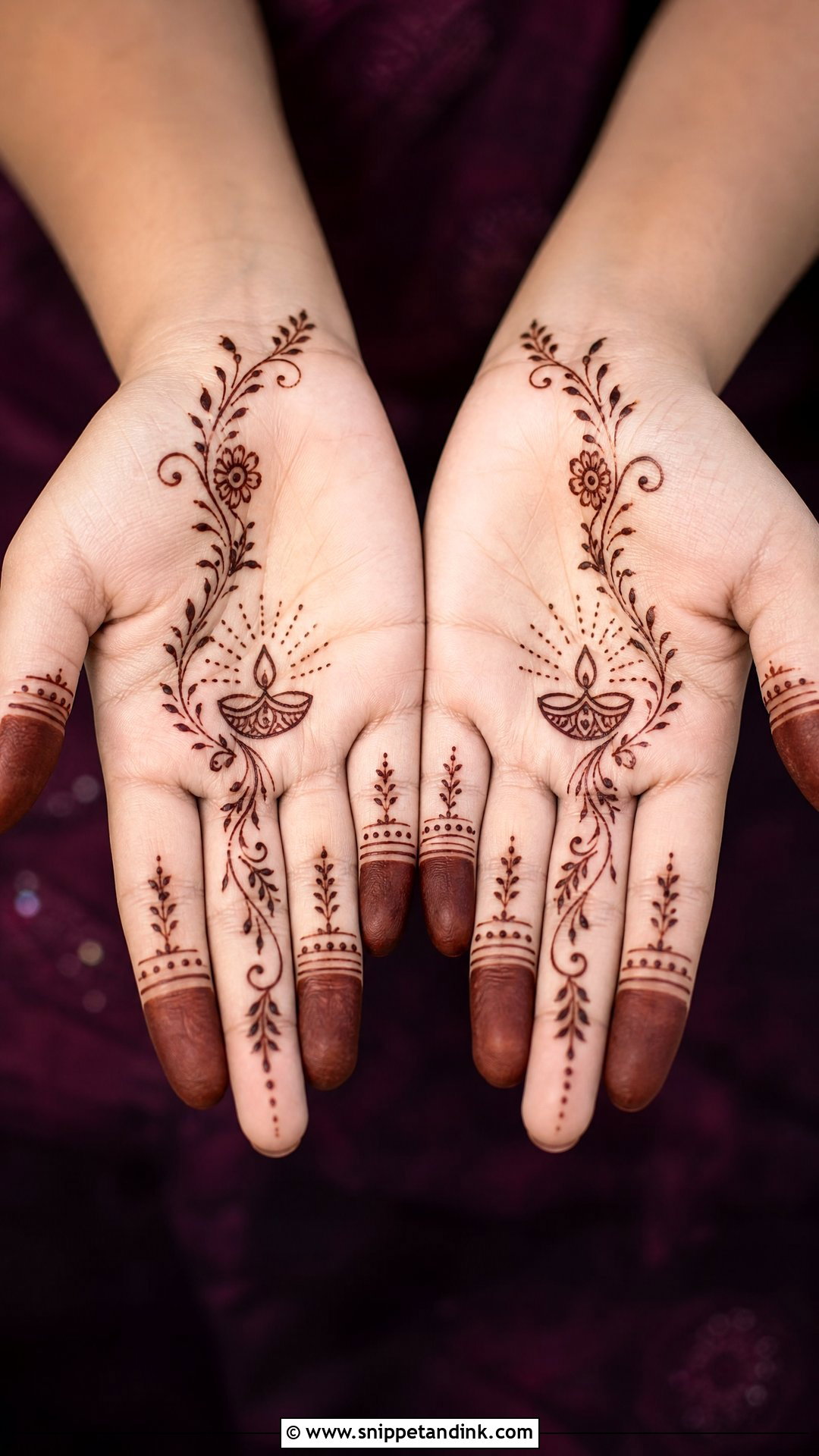
Minimal festival henna might be a tiny diya on the palm, a small mandala on the back hand or a slim floral vine along one side. With so much open skin, every line shows, so neatness counts far more than detail. Dotted rays, small lotus petals or a tiny rangoli border add a Diwali touch. I’d suggest this for first-timers and young girls too. One main motif, plenty of space, and you’re done.
19. Modern Diwali Mehndi Design
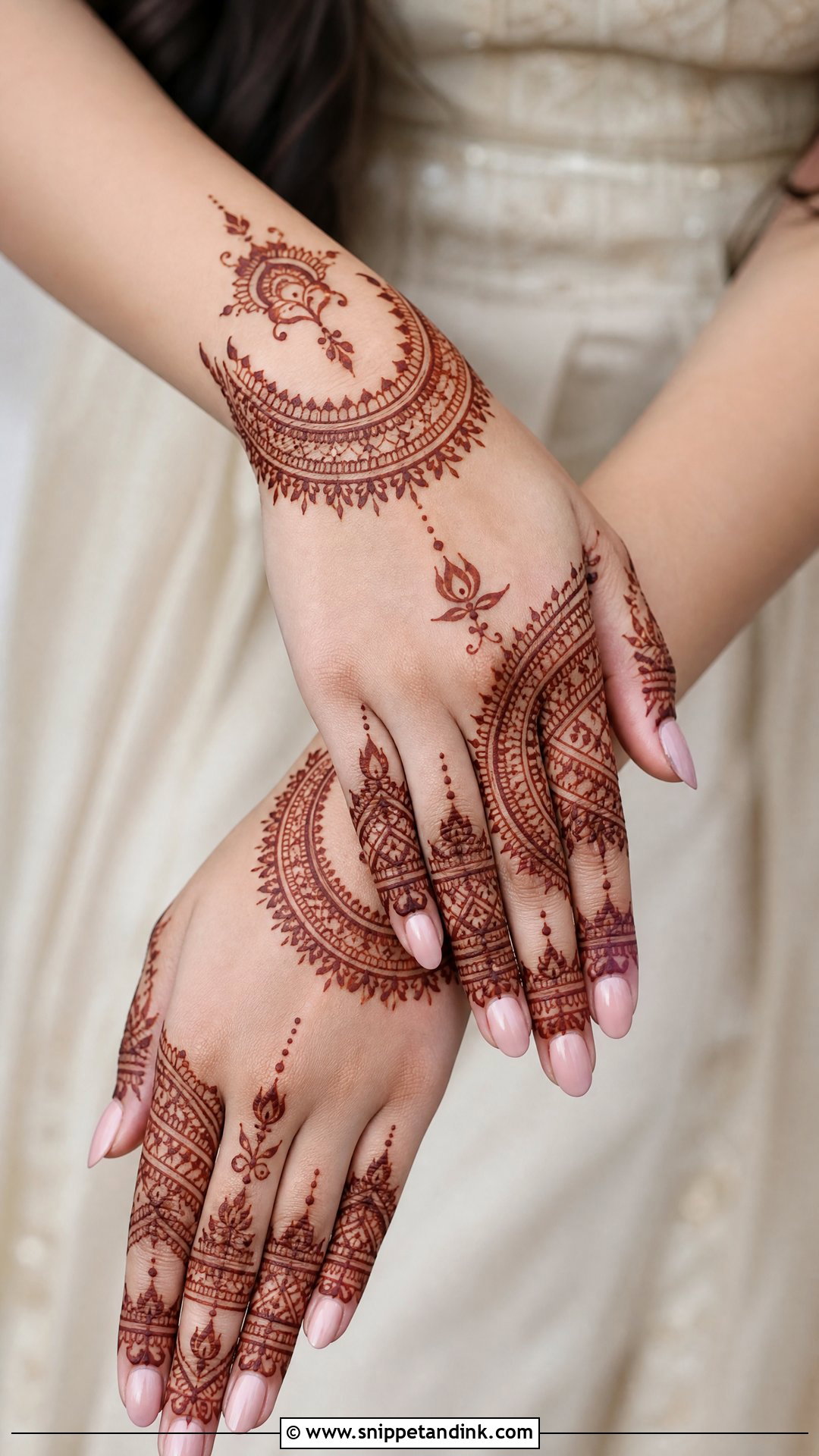
Modern designs use diagonal trails, negative space, geometric bands, half mandalas and fine finger work, with small diyas, lotus shapes or rangoli corners for the festival. Back-hand versions are the most requested because they look clean in phone photos. The rule I hold myself to is that blank areas must be planned. A modern design shouldn’t look empty by accident, so I sketch where the open spaces will sit before drawing any motif.
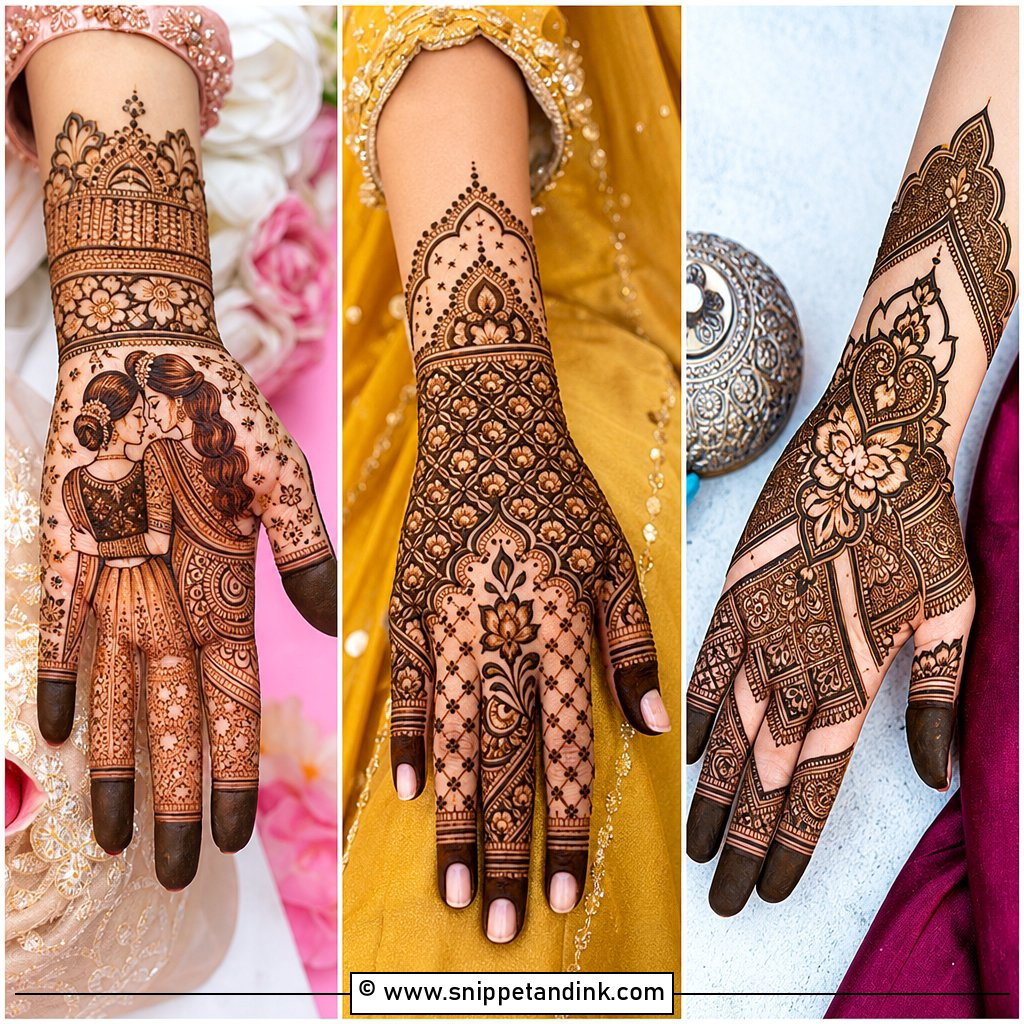



20. Easy Diwali Mehndi Design
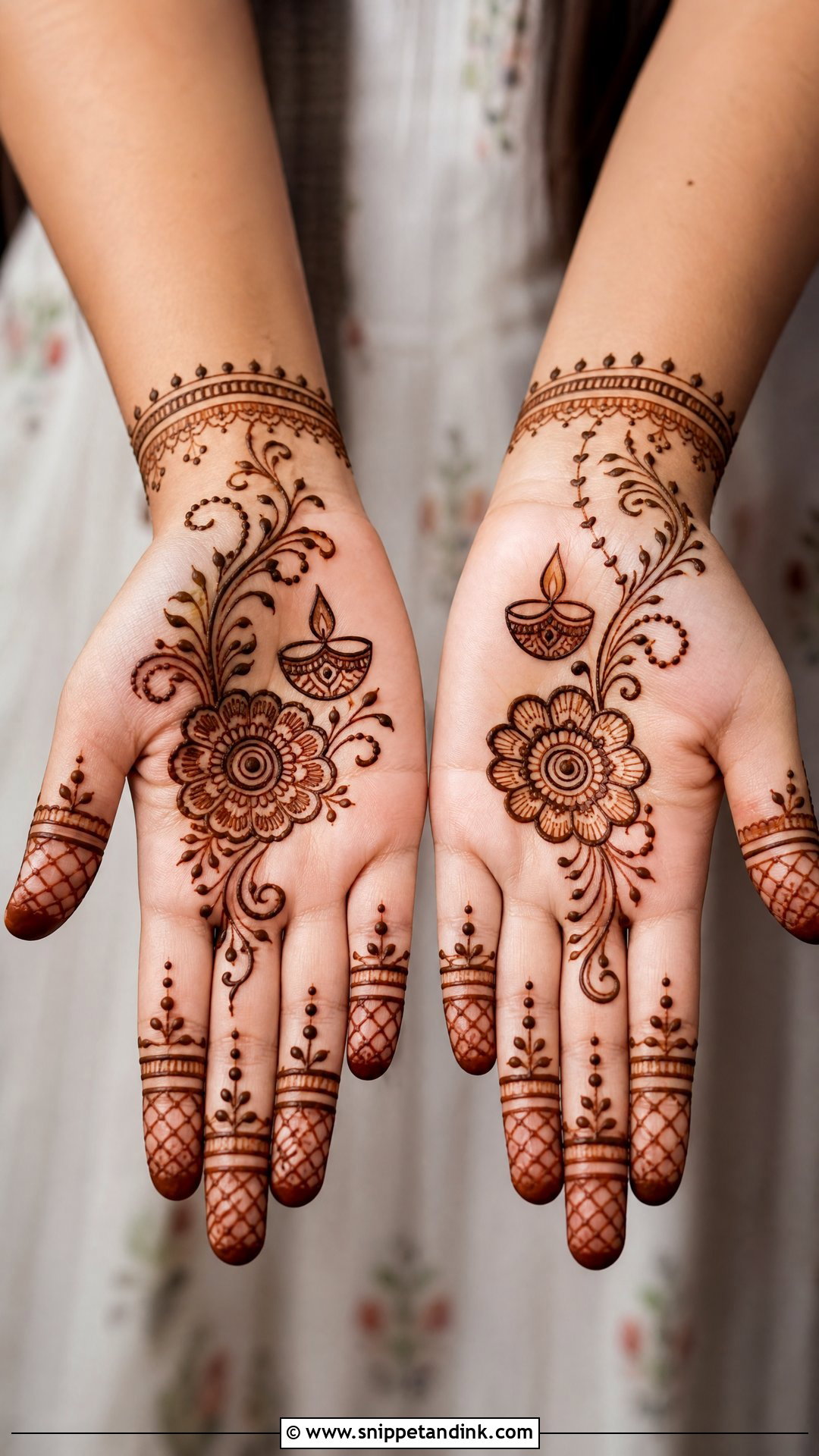
If you’re doing your own henna at home, start with a central flower, mandala or diya and build outward with dots, leaves and simple curved lines. Bands, small petals and lightly shaded fingertips finish the hand without complicated filling. Use the palm or back hand, whichever your other hand can reach comfortably. Keep one festival element visible, a lamp or a rangoli circle. Practise a few lines on paper first to feel how hard to squeeze the cone. Slow, steady lines beat a rushed heavy design every time.
21. Bridal Diwali Mehndi Design
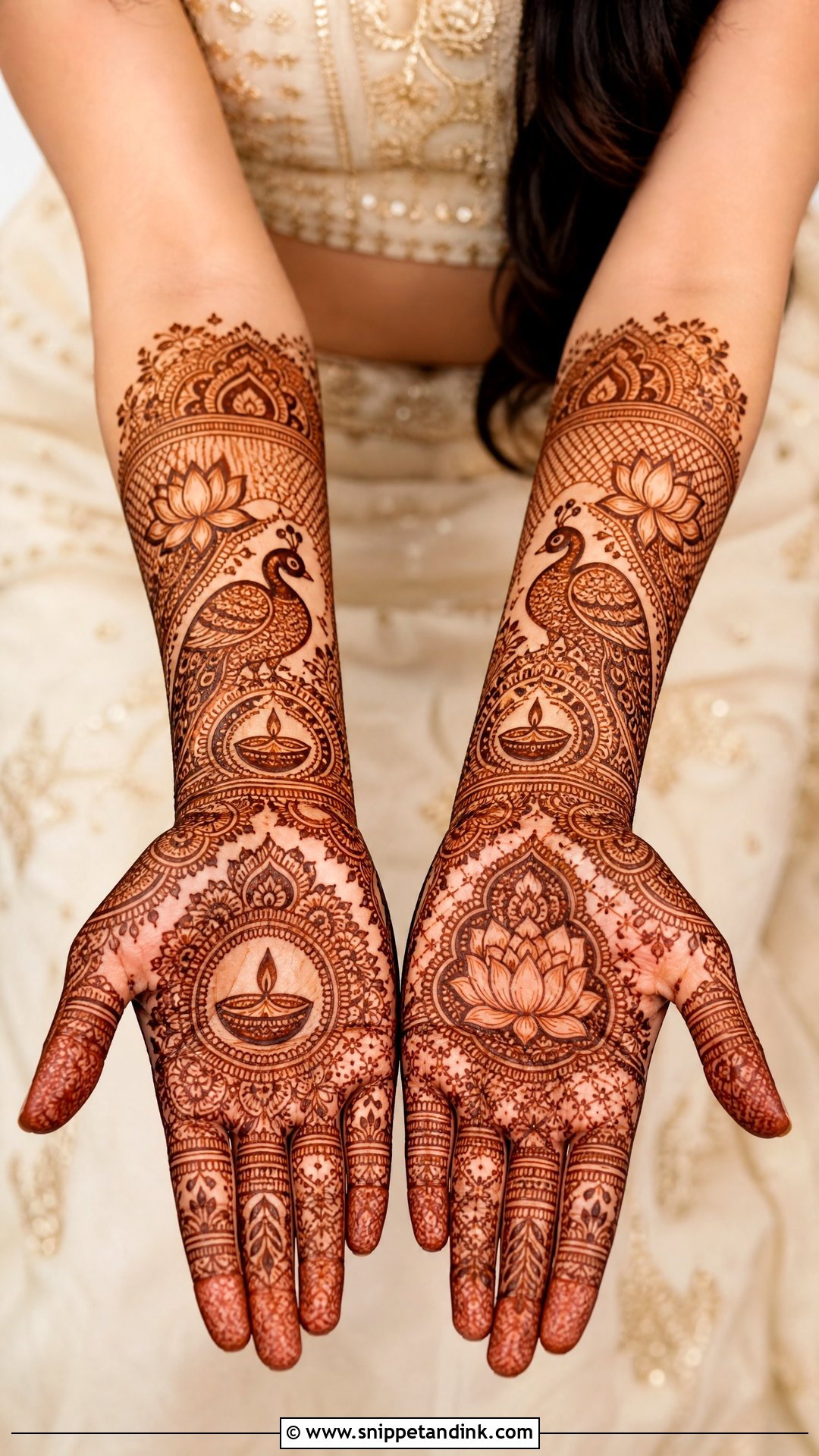
A first Diwali after the wedding is a big occasion in many families, and newlyweds often ask for something close to bridal coverage again. Full palm, back hand, wrist and forearm get paisleys, lotus flowers, peacocks, mandalas and fine filler, plus diyas, kalash details or rangoli borders for the festival. I keep larger motifs around the palm and wrist and the fine work between them. If the bridal stain is still fading, tell your artist, as I’ll design around the old pattern rather than layering over it.
22. Half Hand Diwali Mehndi Design
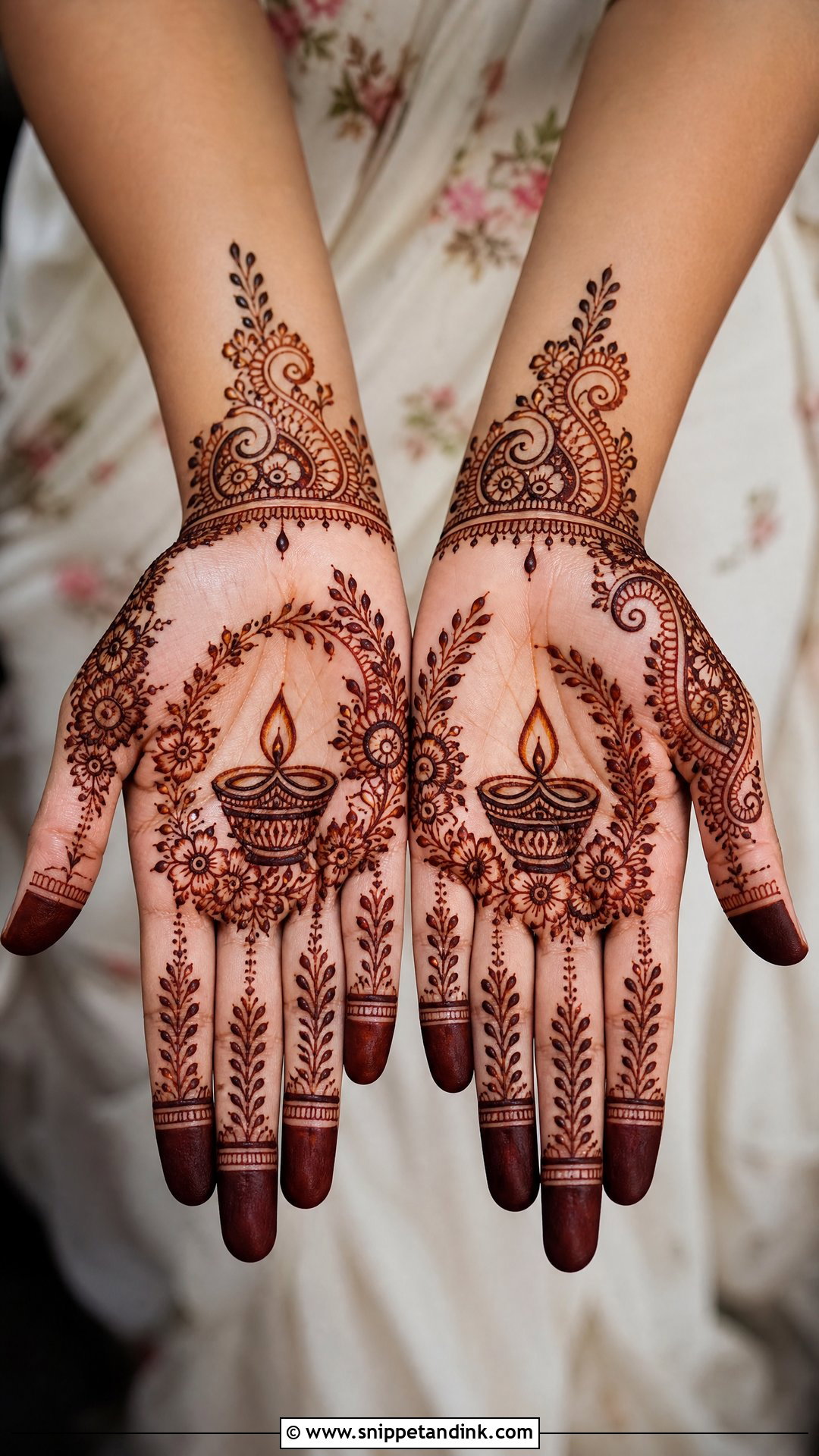
Half hand designs cover the palm and fingers, or the back hand and wrist, and leave the forearm clean. A diya centrepiece, a floral trail, a paisley curve or a mandala all fit. It’s what I suggest to hosts, because you can cook, decorate and greet guests without worrying about your arms. A bracelet band or curved border along the lower edge is important; without it the design just stops and looks cut off.
23. Palm Diwali Mehndi Design
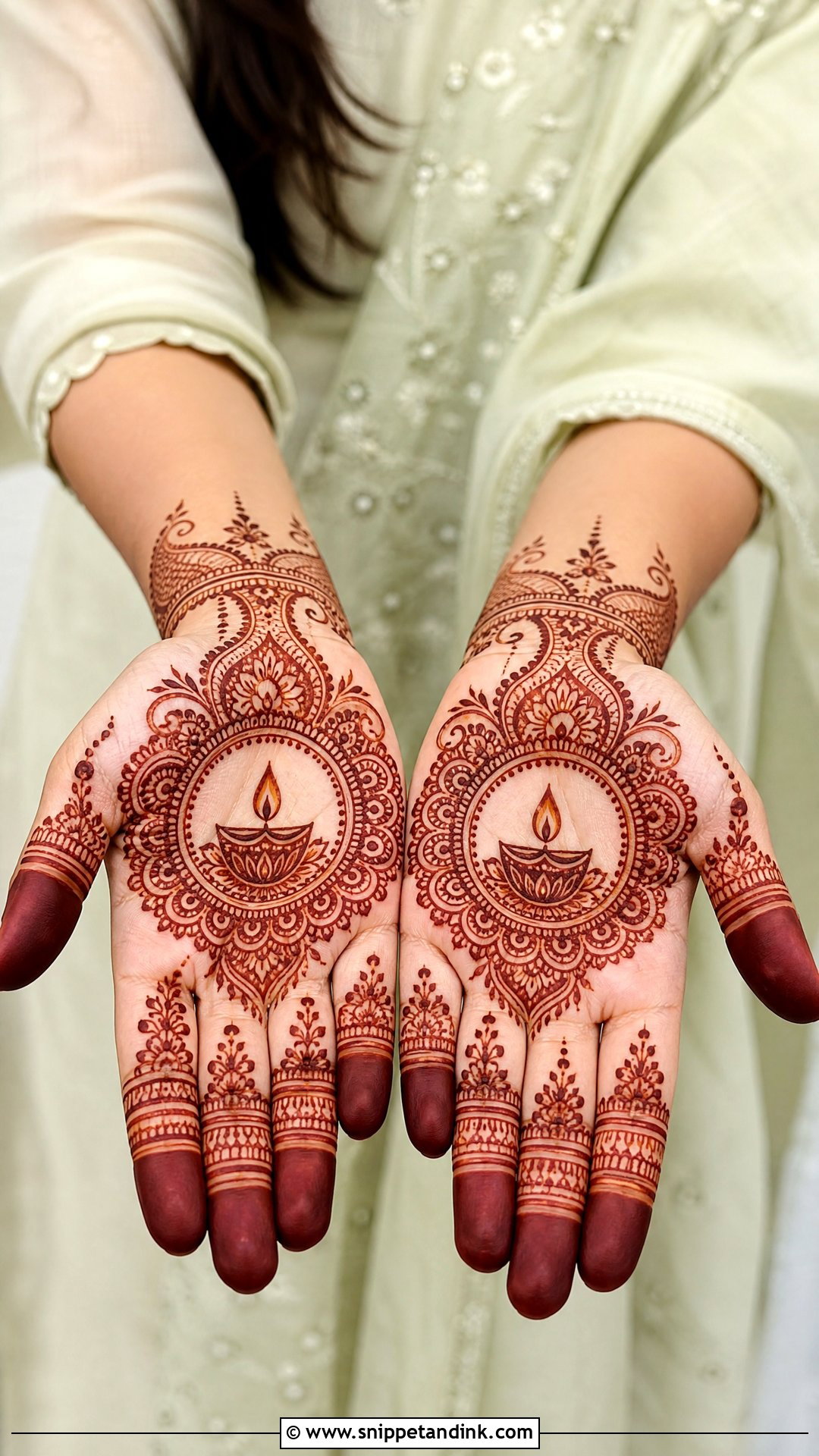
During aarti and puja your palms are on show, so a palm design carries meaning beyond decoration. A large diya, lotus, mandala or rangoli circle sits in the centre with smaller details around it, and the fingers get matching bands, leaves and dots. I make the central symbol bold enough to survive the stain developing, then add fine lines around it while keeping the centre clear and easy to recognise. Simple or detailed, it depends only on how much of the palm you fill.
24. Wrist Diwali Mehndi Design
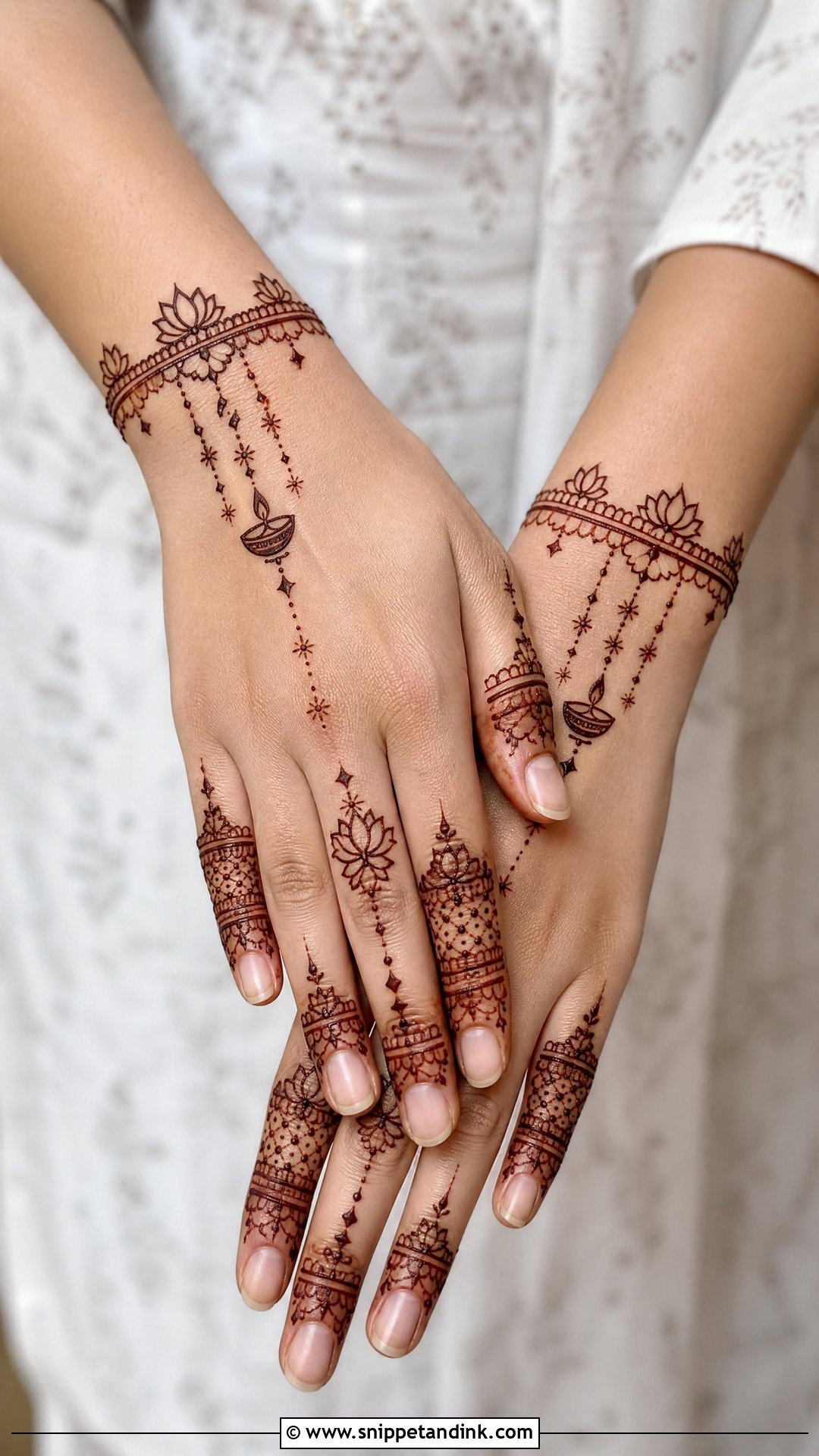
Wrist designs work like henna jewellery: bands, chains, lotus borders, paisley strips and small diya charms, sometimes spilling onto the back hand or forearm. They sit nicely with bangles and watches. The tricky part is keeping the band even all the way round, since the underside of the wrist is hard to see and to reach, so I turn the arm as I go rather than stretching across. Dotted lights, flame shapes or rangoli edges make it seasonal. A chain to one decorated finger gives a fuller look.




25. Forearm Diwali Mehndi Design
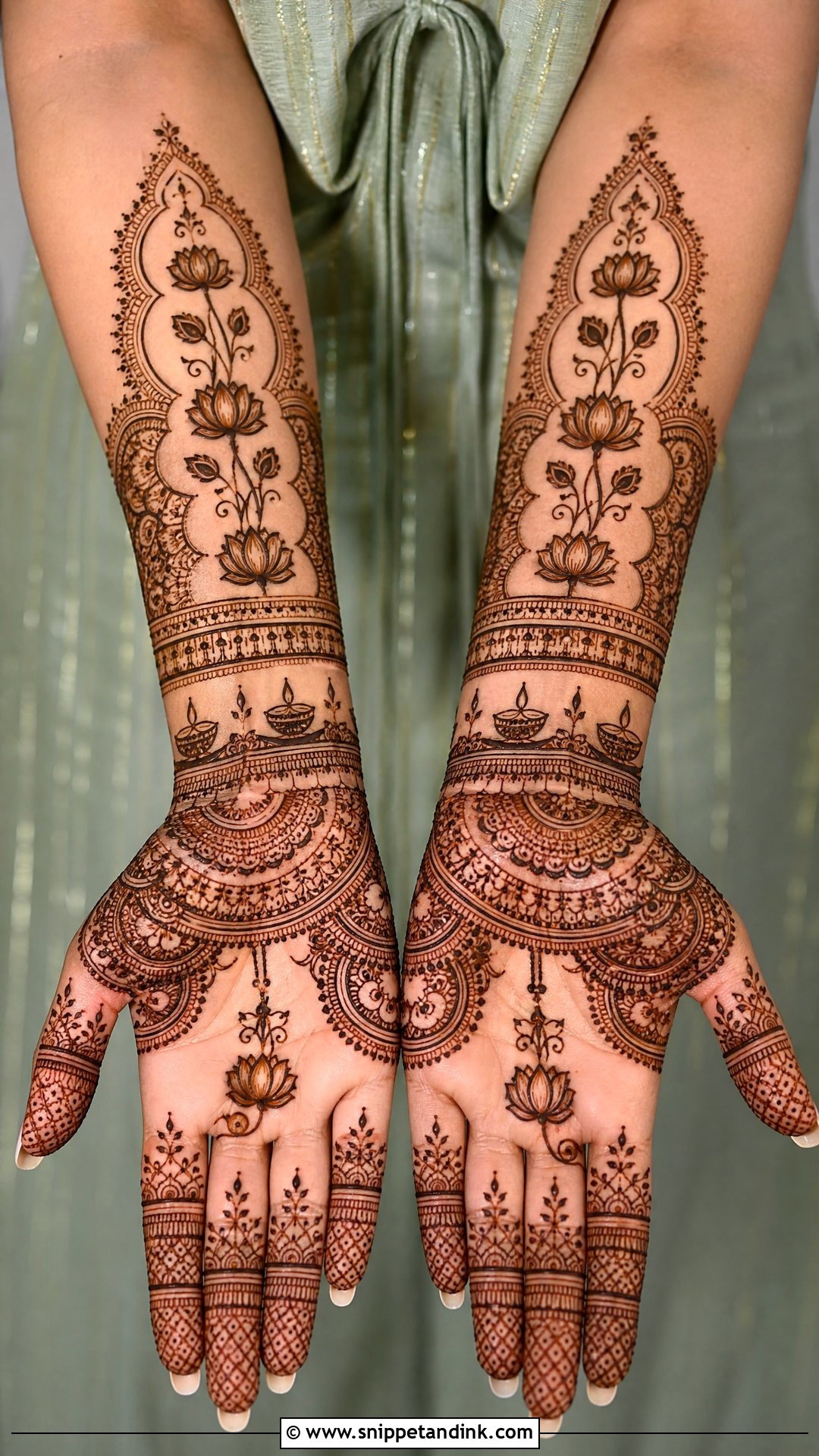
Forearm henna gives the grandest look without covering every bit of the hand. I begin at the wrist and move upward with lotus vines, paisleys, mandalas and diya borders in a vertical layout that lengthens the arm. Keep the hand lighter if the forearm is detailed so the whole thing balances. Do expect the forearm to stain lighter than the palm, more orange-brown than maroon, which surprises people. Short sleeves or festive outfits that show the arms make it worth the extra time.
26. Kids Diwali Mehndi Design
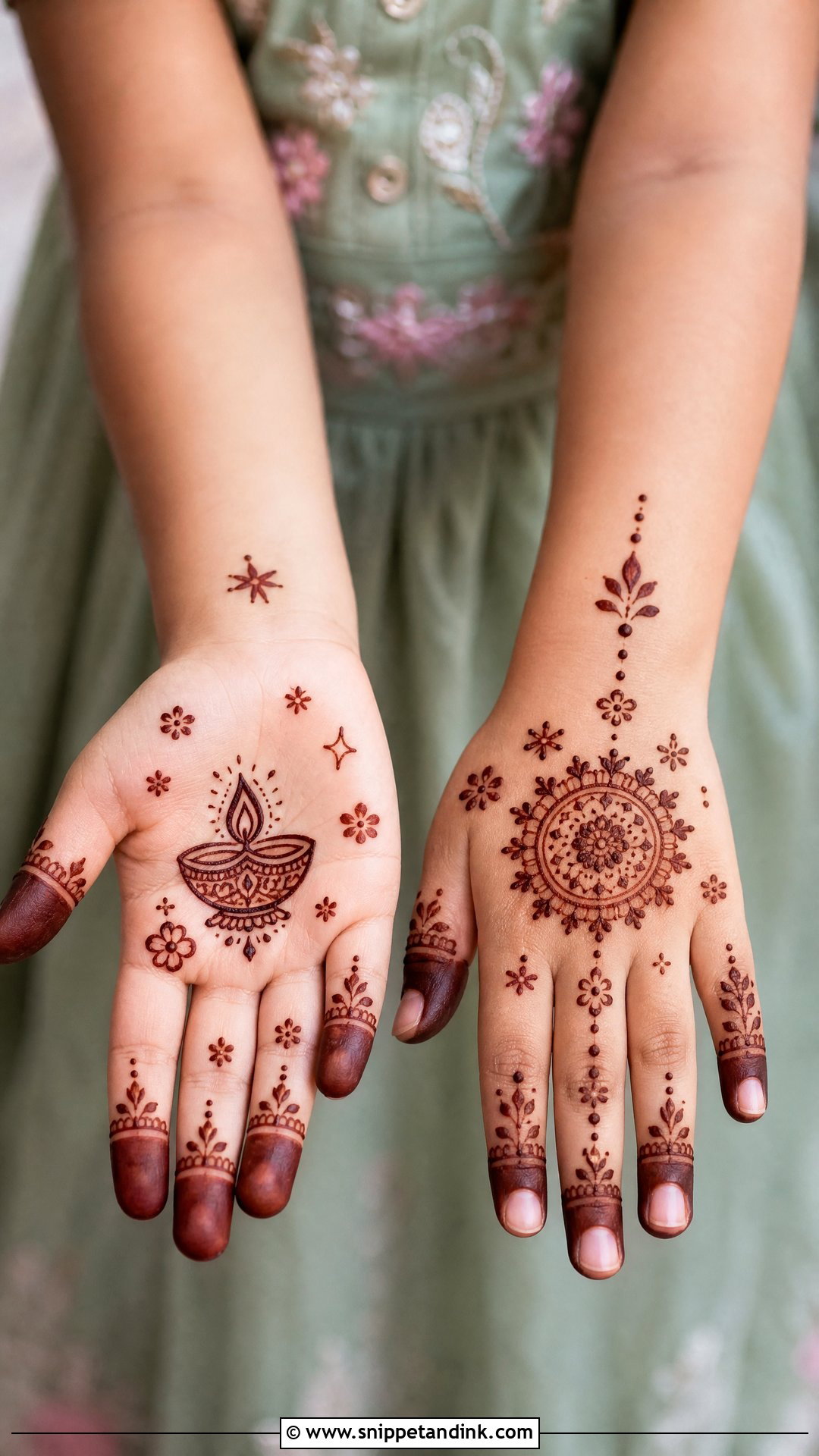
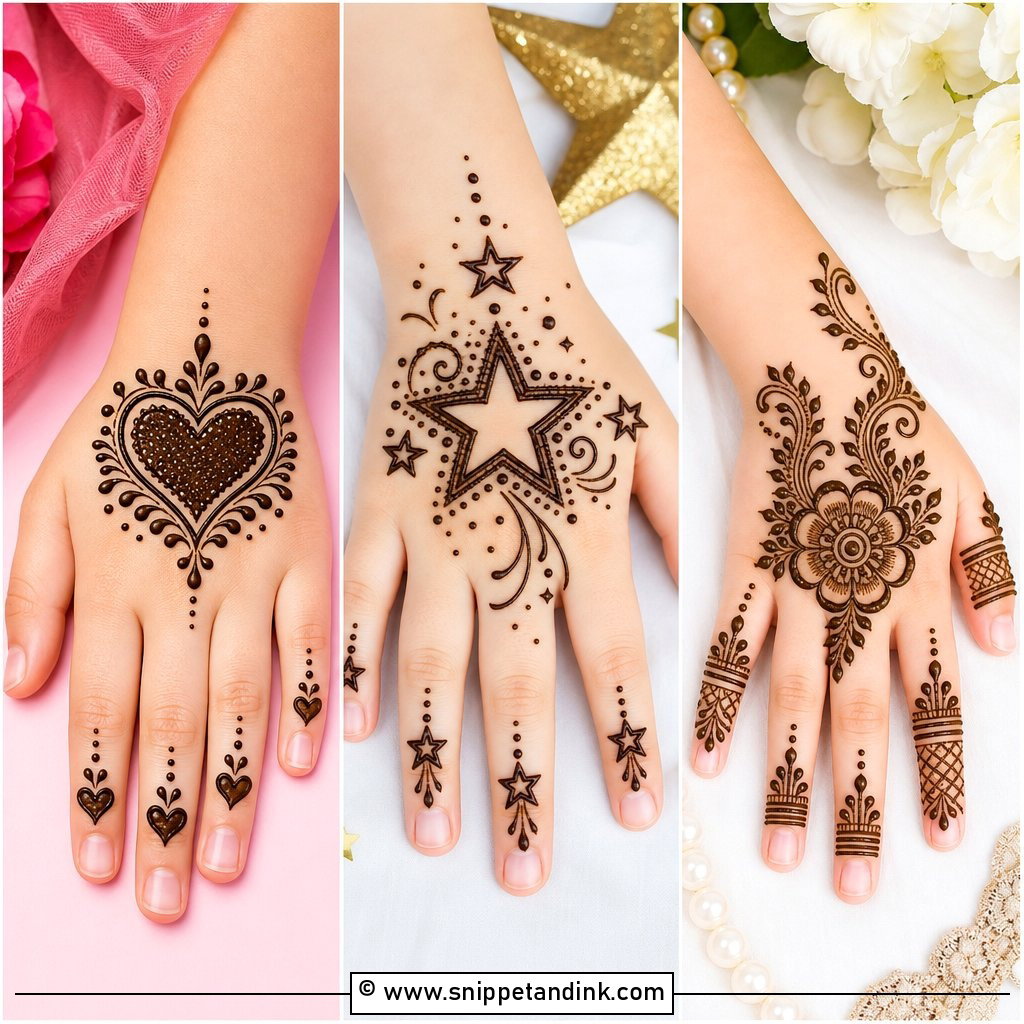
Children can’t sit still for long, so I keep their designs to small flowers, tiny diyas, stars, dots, hearts and simple mandalas on the palm or back of the hand, with light finger details. A small diya with dotted rays or a mini rangoli circle is usually all they want. Use only natural henna for children, and ask the person applying it what is in the cone. A tiny motif they can show off at the puja is enough to make them feel part of it.
27. Teen Diwali Mehndi Design
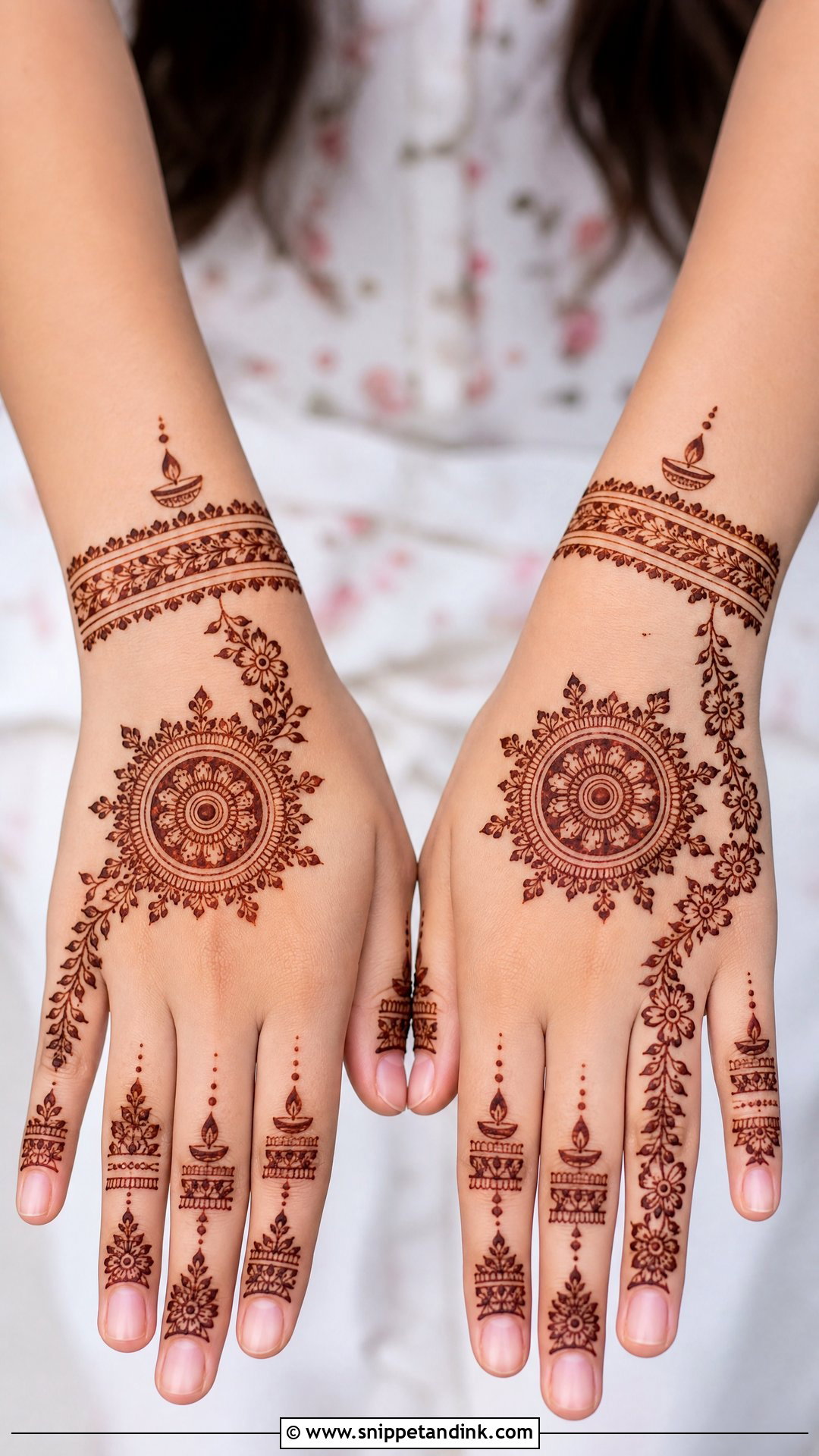
Teen Diwali mehndi design tends to be light and made for photos: back-hand mandalas, finger bands, floral trails and bracelet patterns, with small diyas, lotus petals or rangoli dots so it doesn’t feel too traditional. It sits well with Indo-western outfits, kurtis, lehengas and simple jewellery. Teens usually prefer negative space, and thin lines with a clean layout keep it current. A small central motif with decorated fingers looks finished quickly enough for school or a family evening.
28. Gulf Diwali Mehndi Design
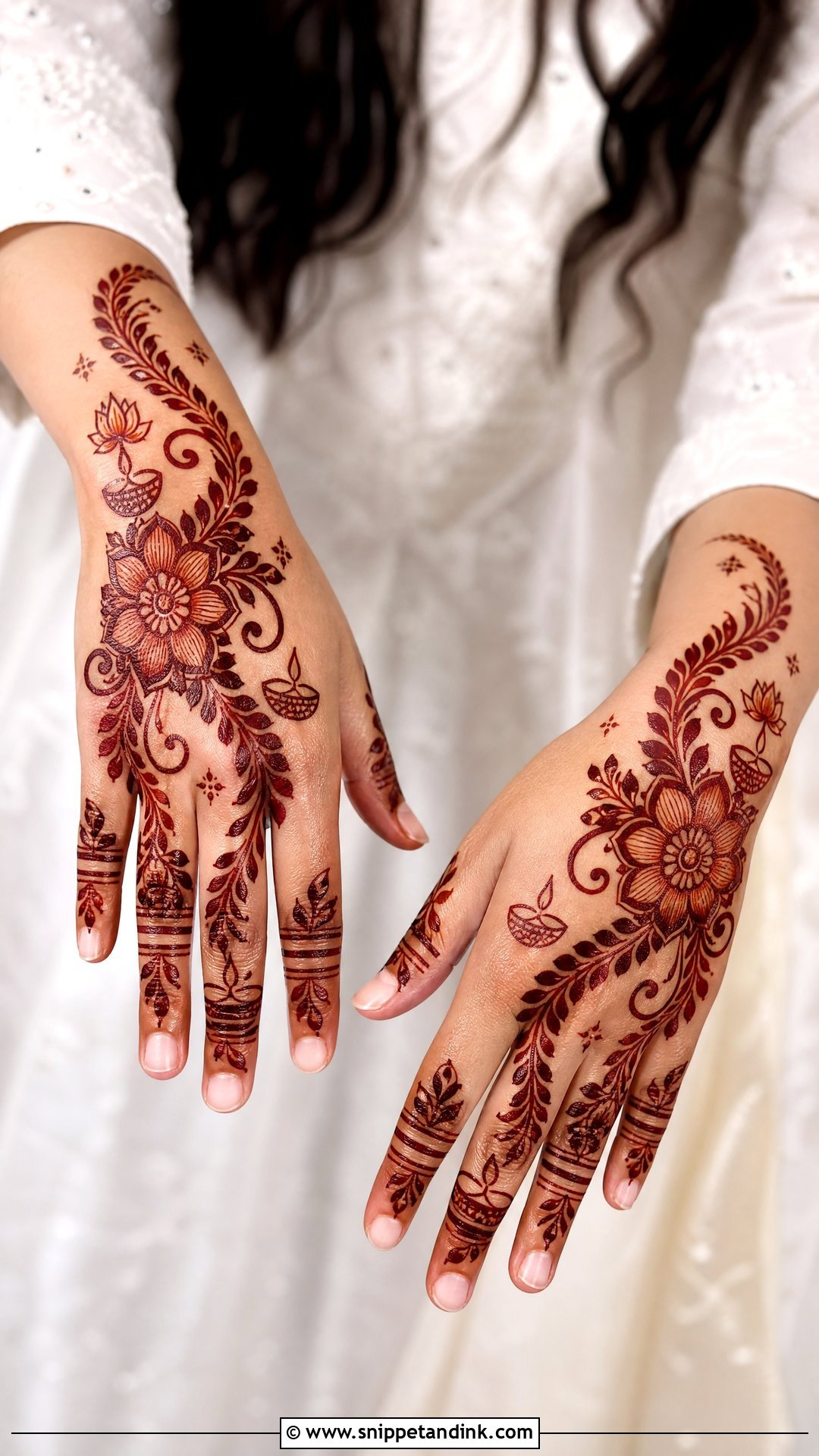
Gulf Diwali mehndi design uses big flowers, leafy trails, thick outlines and open spacing, flowing across the back hand from wrist to fingers. A diya or lotus can sit inside the trail without losing the Khaleeji feel. Bold shapes stain clearly, which is useful on the back hand where colour runs lighter. I place the larger florals near the wrist and taper to smaller leaves toward the fingers so the design has movement. Let skin show between motifs; contrast is the point of the style.
29. Moroccan Diwali Mehndi Design
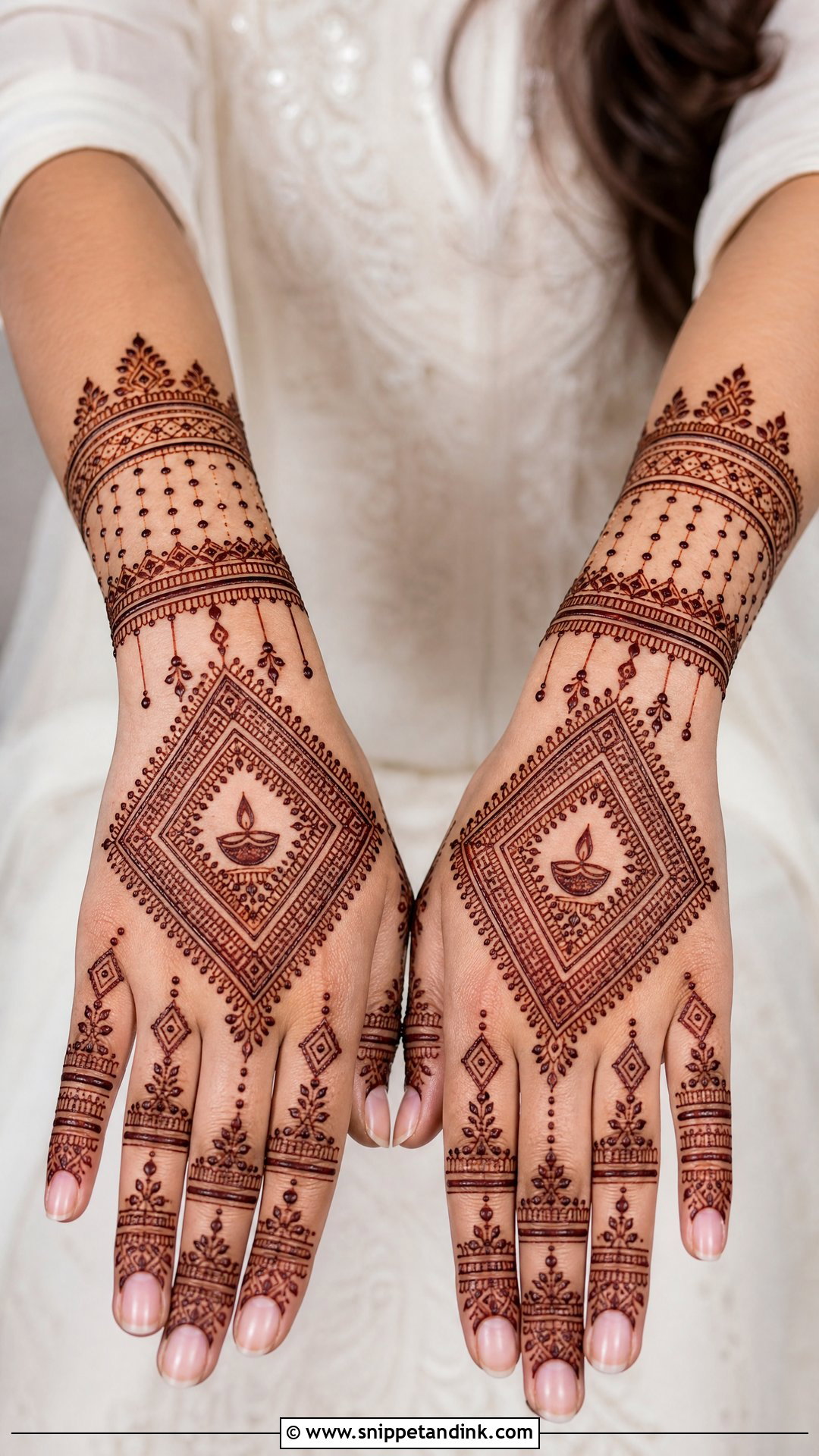
Moroccan work runs on diamonds, lines, triangles, squares, dots and structured borders. For Diwali I soften the geometry with a small diya, lotus or rangoli circle, which makes an unusual fusion. Straight lines look sharpest on the back hand, fingers and wrist. They’re unforgiving, so I rest my drawing hand on the table and work more slowly than with florals. Keep it symmetrical, and add tiny dots inside the shapes if you want it more decorative.
30. Shaded Diwali Mehndi Design
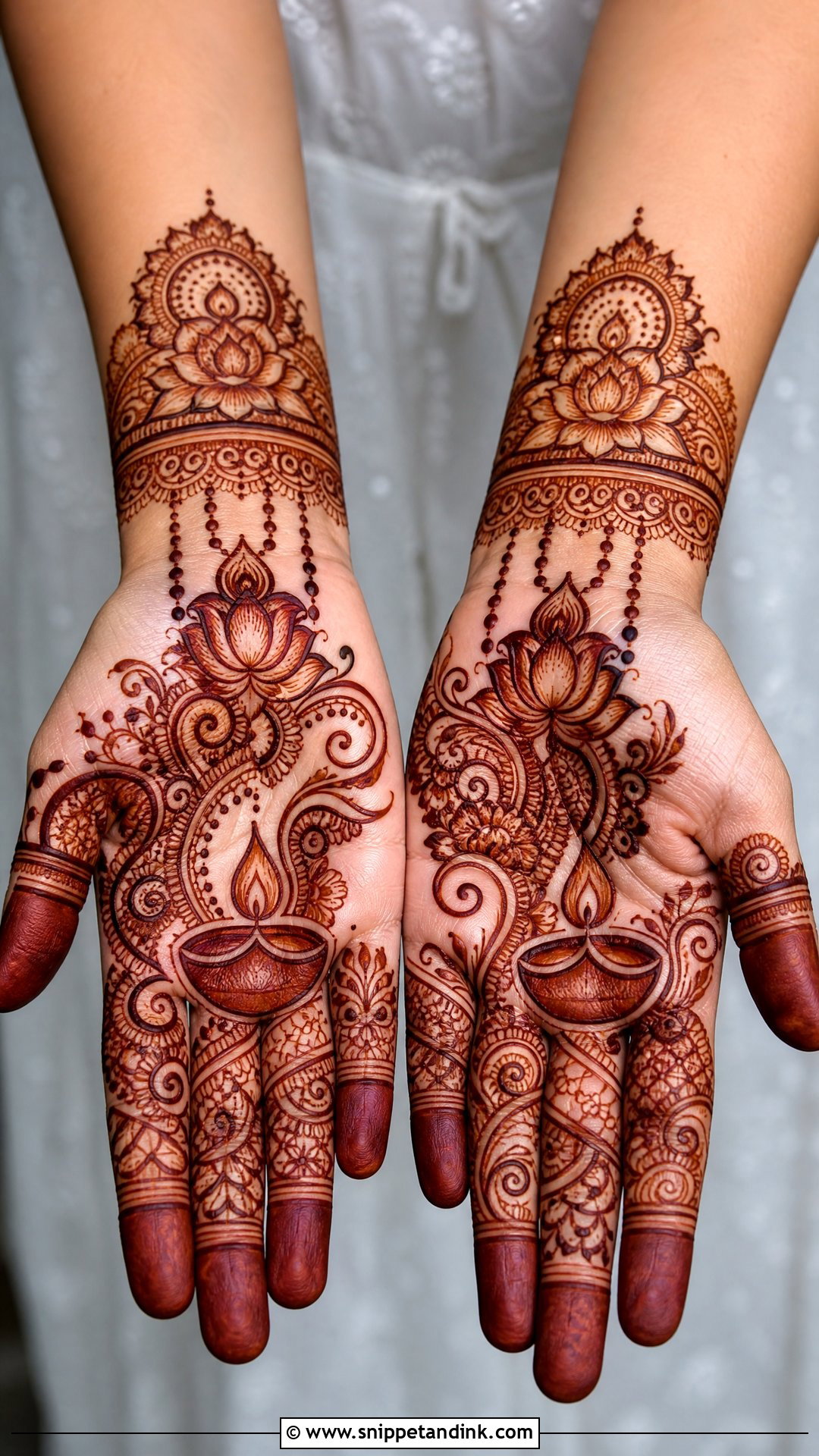
Shading is done by thinning the paste stroke so it stains as a soft gradient rather than a solid fill. It adds depth to flowers, lotus petals, paisleys and diya flames on front or back hands. For Diwali I use a central lamp or floral mandala and shade the petals and leaves around it. The shaded areas should stay light, because heavy shading darkens a lot over two days and can swallow the outlines. Bold outlines next to soft shading is the contrast that makes this style look rich.
What Should Be Inside a Festival Henna Cone
Around festivals, ready-made cones are sold everywhere, and not all of them are henna. Natural henna paste is made from dried henna leaf powder, a liquid such as lemon juice or water, sugar and an essential oil. It goes on dark green or brown and leaves an orange stain that slowly deepens. It does not stain black, and it does not stain dark within an hour.
Cones that promise an instant dark stain or a black result may contain added dyes such as PPD, the chemical used in hair dye. On skin it can cause blistering, scarring and a lasting allergy to hair dyes. I won’t use those cones, and I’d especially keep them away from children.
Quick checks before the cone touches skin
- Ask what’s in it. A good artist will tell you the ingredients without hesitating.
- Smell it. Fresh natural paste smells earthy, often with a hint of eucalyptus or lavender oil, not sharply chemical.
- Natural paste usually needs refrigeration or freezing until use; cones that sit at room temperature for months deserve a question.
- If you’ve reacted to hair dye before, tell your artist and do a small patch on the inner arm a day ahead.
Let Your Diwali Plans Decide the Coverage
Festival henna is part of how many families mark the season, not just a decoration. A simple diya on the palm, an Arabic trail, a full Indian hand or a modern back-hand mandala can all carry that feeling. Go lighter for quick visits and fuller for puja, parties and the family photo. Whatever you pick, clean lines, sensible spacing and one or two motifs that mean something to you will look better than the most complicated pattern on the list. Bring your outfit colour and your jewellery to the appointment, and tell your artist what your hands need to do that week.
You'll Like These Ideas:











Leave a Reply