
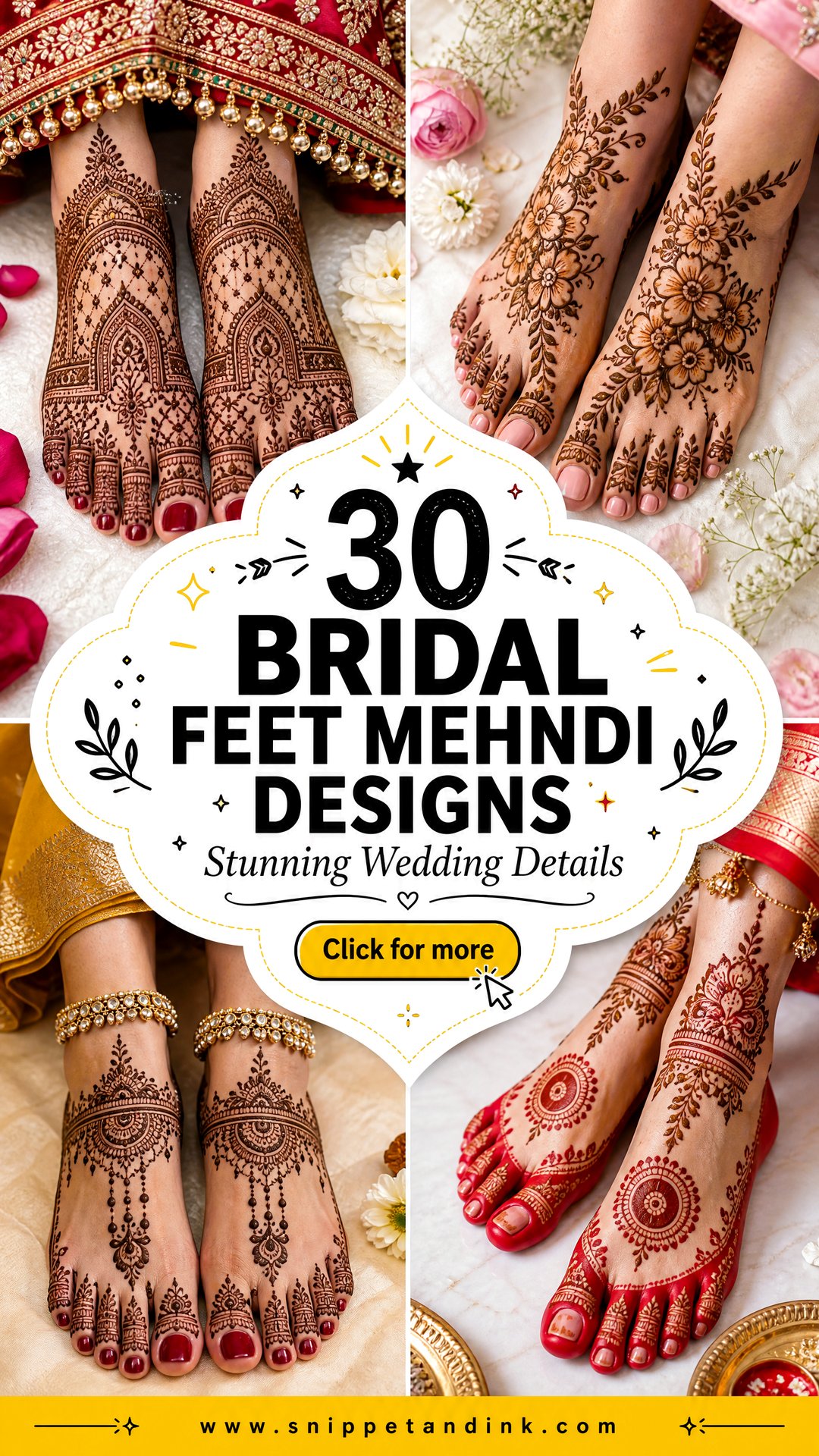
Feet get photographed more than most brides expect: during the pheras, on the stage steps, in the anklet close-ups and every time you sit cross-legged. Bridal foot henna now gets as much planning from my brides as the hands do, and the range is wide, from dense Indian work climbing to the knee to a single Arabic vine that ends at the ankle. Some of the designs below lean on paisleys, peacocks, mandalas and jaali; others rely on open skin, toe detailing and a clean ankle band. What matters most is that the pattern follows the shape of your foot instead of hiding it, and that you can actually sit still long enough for it.
Planning Foot Coverage Around Your Hem, Shoes and Rituals
Before I sketch anything on a foot, I ask three questions. How much of your feet will actually show? What will you wear on them? And which rituals have you barefoot? The answers decide coverage better than any photo you’ve saved.
- Hem length: a floor-length lehenga or saree hides most of the shin, so detail above the ankle may never be seen except in seated photos. A shorter or slit outfit is when a half or full leg makes sense.
- Shoes: straps across the ankle cover an anklet band, and closed khussas hide the toes. Bring your wedding shoes or a photo of them to the appointment.
- Jewelry: bring your payal and toe rings too, so the bands frame them rather than sit beneath them.
- Rituals: if you’ll be barefoot for the pheras or sitting on the floor, the heel and sole will show, and I’ll design for that.
Time is the other honest constraint. Feet are usually done after the hands or by a second artist working at the same moment, and you can’t stand, walk to the bathroom or change position much while both are drying. If the schedule is tight, a lighter foot design that dries properly beats a heavy one you smudge in the first hour.
1. Full Feet Bridal Mehndi Design
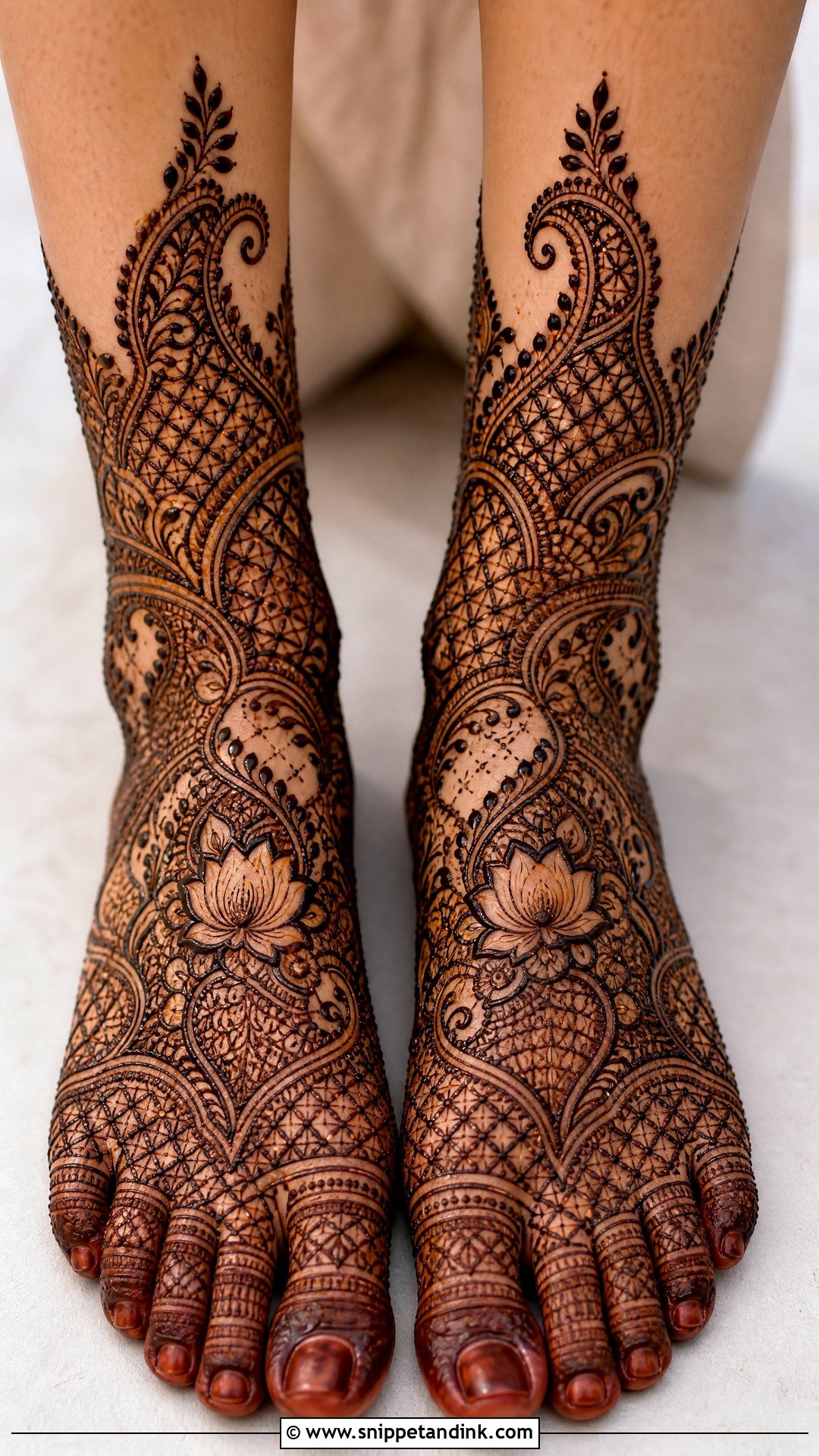
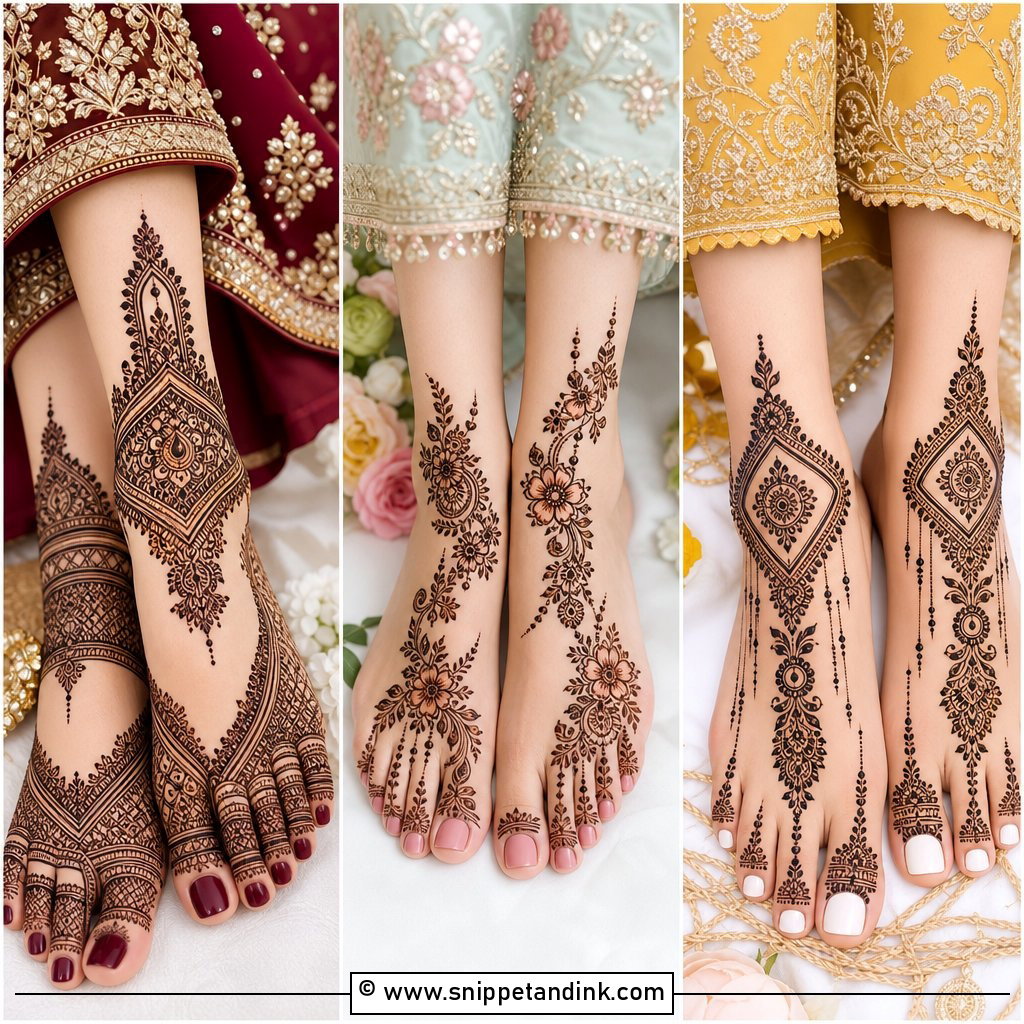
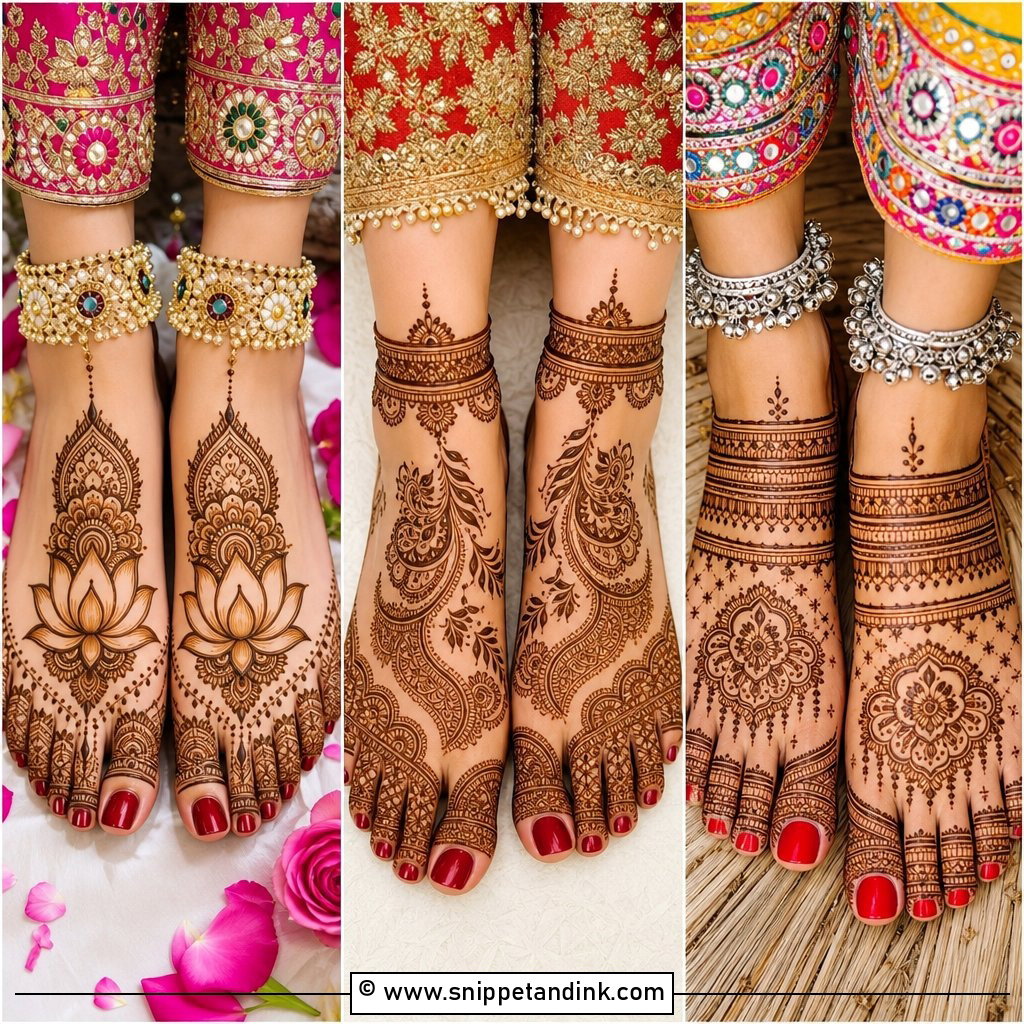
Toes to ankle, every surface filled: the top of the foot, both sides, the heel and the ankle bone. I build it with paisleys, lotus flowers, jaali grids and small fillers, and I always draw the two main motifs first, one on each foot, so the symmetry is set before any filling goes in. Feet are harder to mirror than hands because one is usually a little wider or flatter. Expect a longer sitting, often well over an hour for both feet on their own. The payoff is depth: layered coverage on thick foot skin gives one of the darkest stains of the whole bridal set.
2. Simple Bridal Feet Mehndi Design
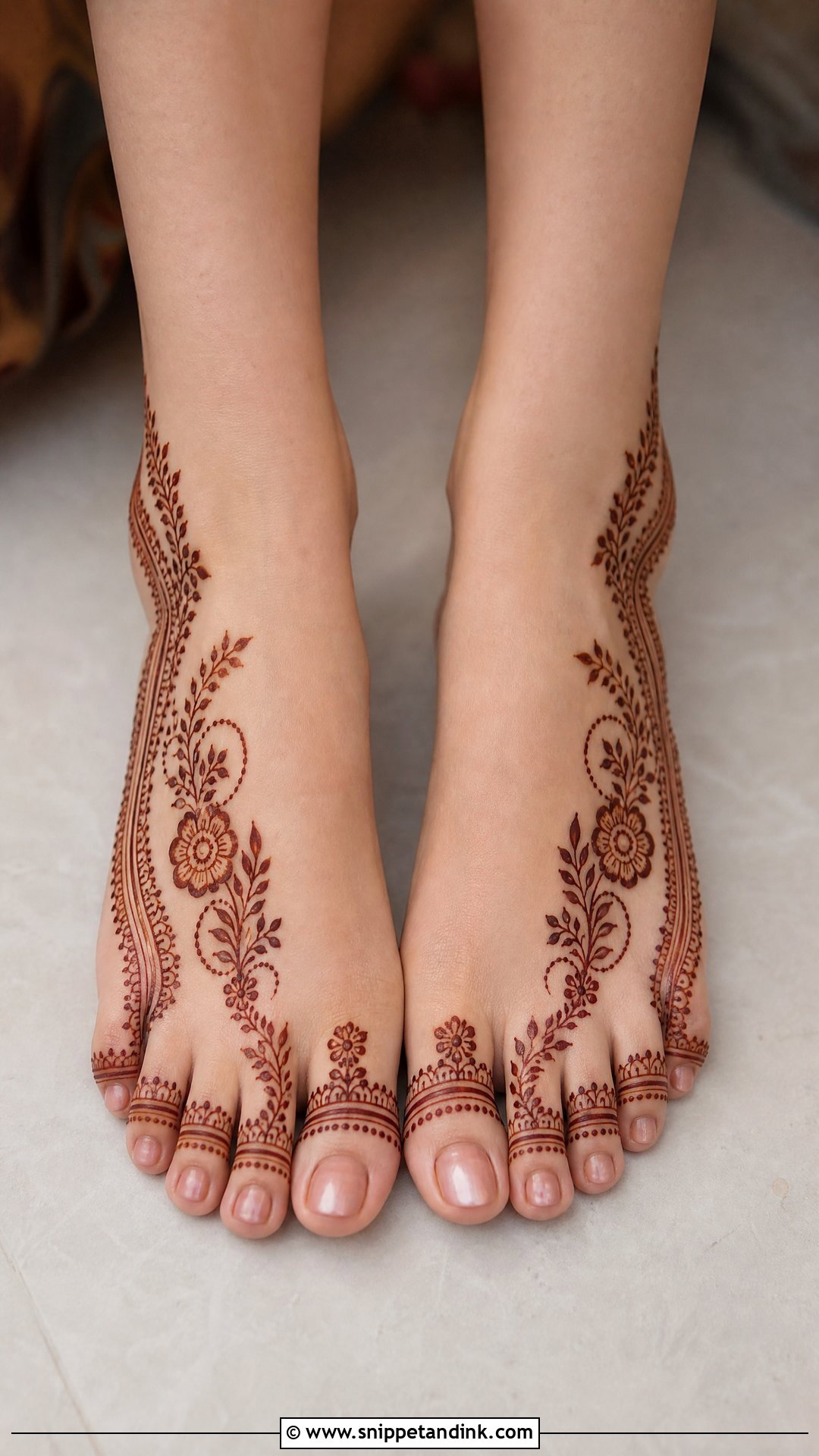
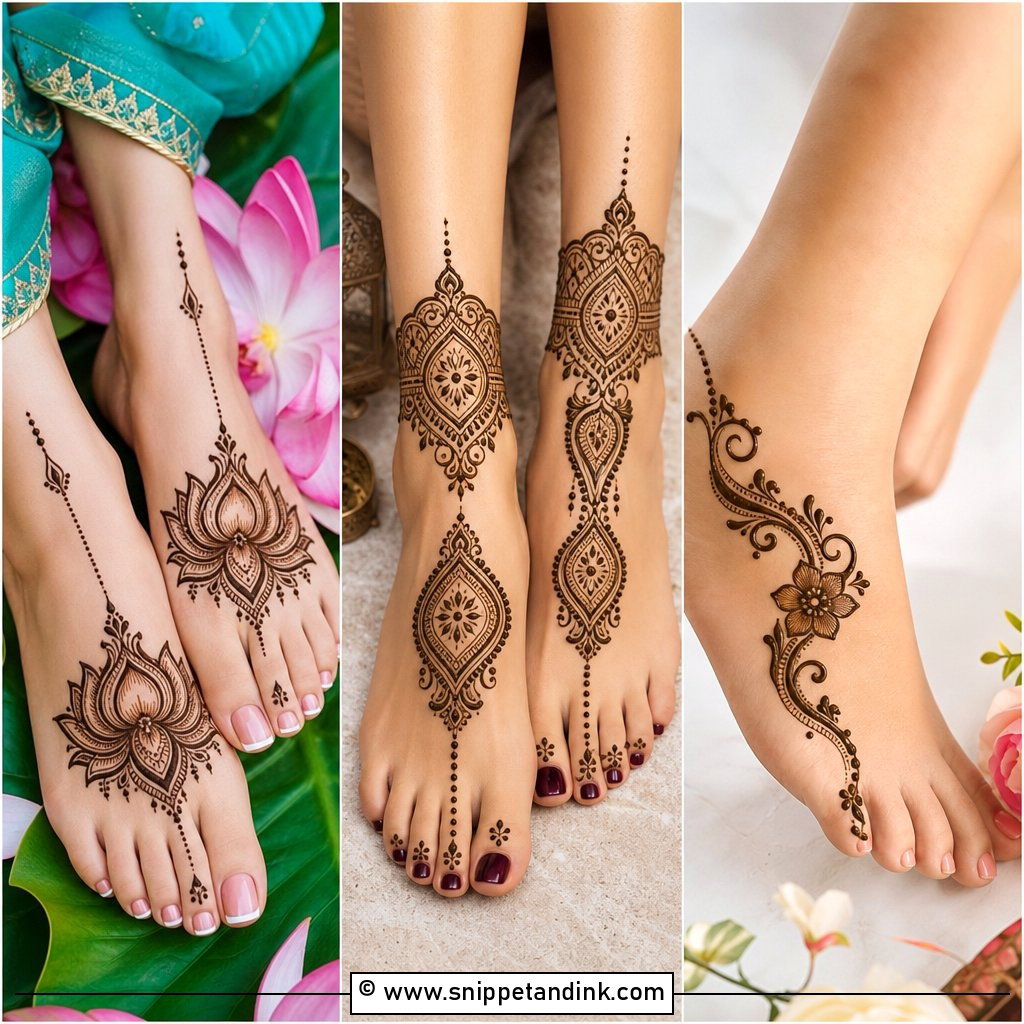
Here the center of the foot stays open or barely touched, and the toes, ankle and side borders do the work. Small flowers, fine leaves and dots keep it bridal without crowding. I suggest it most when the outfit already carries heavy embroidery at the hem, because two busy surfaces next to each other fight in photos. It’s also my usual recommendation for an engagement, a court ceremony or a bride who has to walk around greeting guests soon after application, since there’s simply less paste to protect.
3. Arabic Bridal Feet Mehndi Design
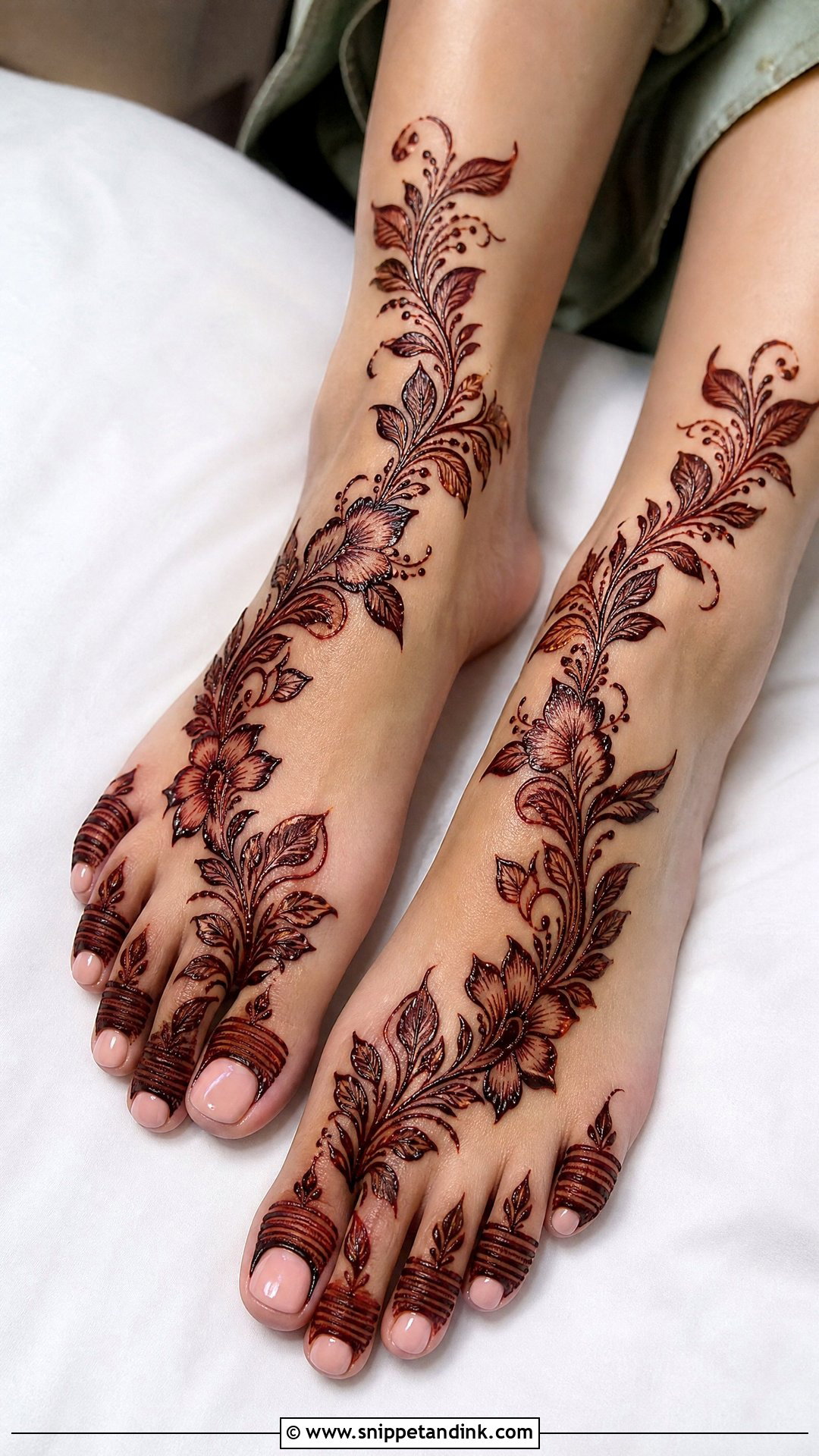
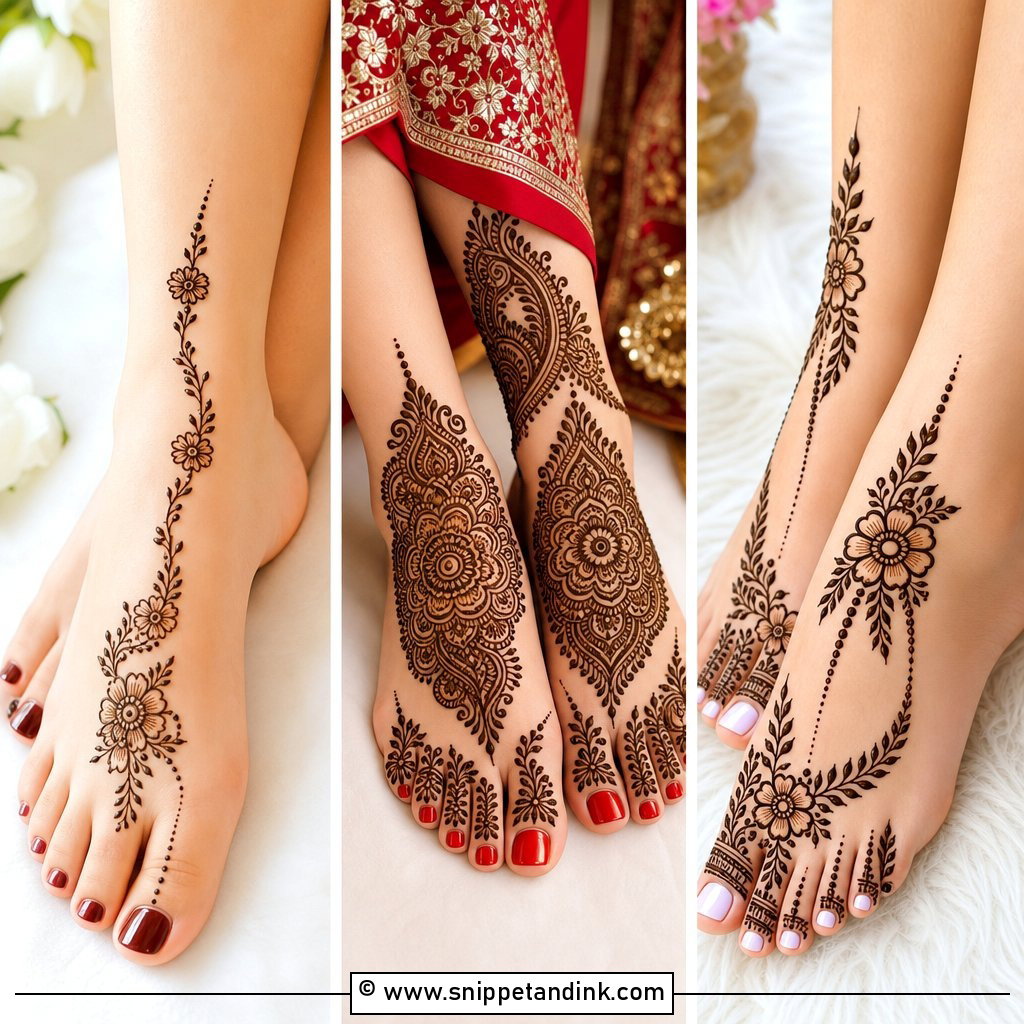
Arabic work moves diagonally, usually from the big toe toward the outer ankle, with bold flowers, shaded leaves and wide gaps of bare skin between them. On a foot, that diagonal does something useful: it makes the foot look longer and slimmer. It’s quicker to apply than Indian-style filling, which matters on a crowded mehndi night. I like it under pastel lehengas and at destination weddings. One honest note: the shaded leaves need a steady, thin cone, and a cone that’s too runny blurs that shading into flat blobs once it stains.
4. Indian Bridal Feet Mehndi Design
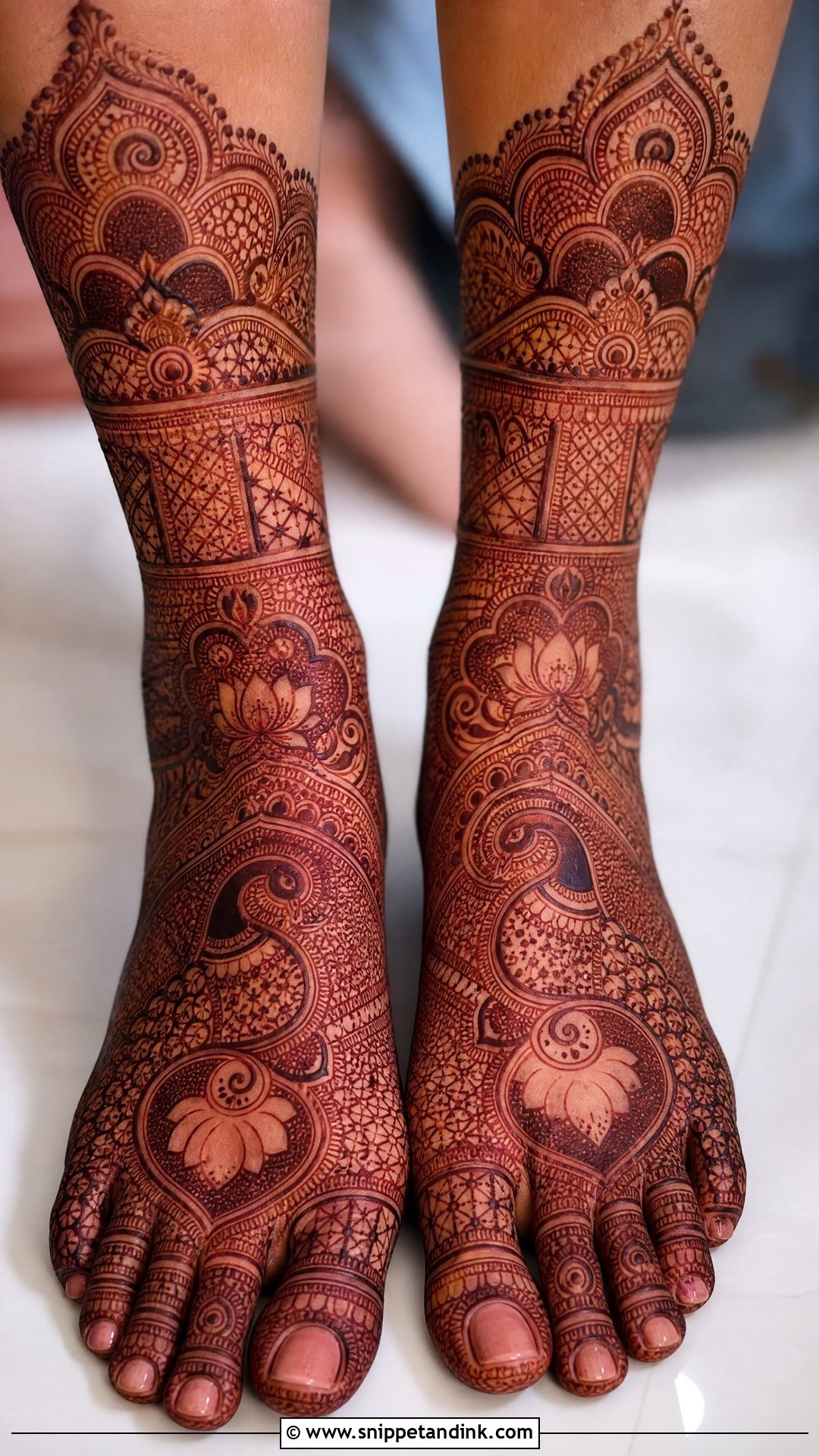
This is the most symbolic option on the list, built from paisleys, peacocks, lotus motifs, mandalas, sometimes bride-and-groom figures and a fine mesh filling, often rising from the toes onto the lower leg. Hindu, Sikh and many other South Asian brides choose it for the main ceremony, and it sits naturally under red, maroon and gold. The trap is filling so tight that the main motifs vanish. I leave a thin ring of bare skin around each focal piece, so the peacock still reads as a peacock once the stain darkens.
5. Indo Arabic Bridal Feet Mehndi Design
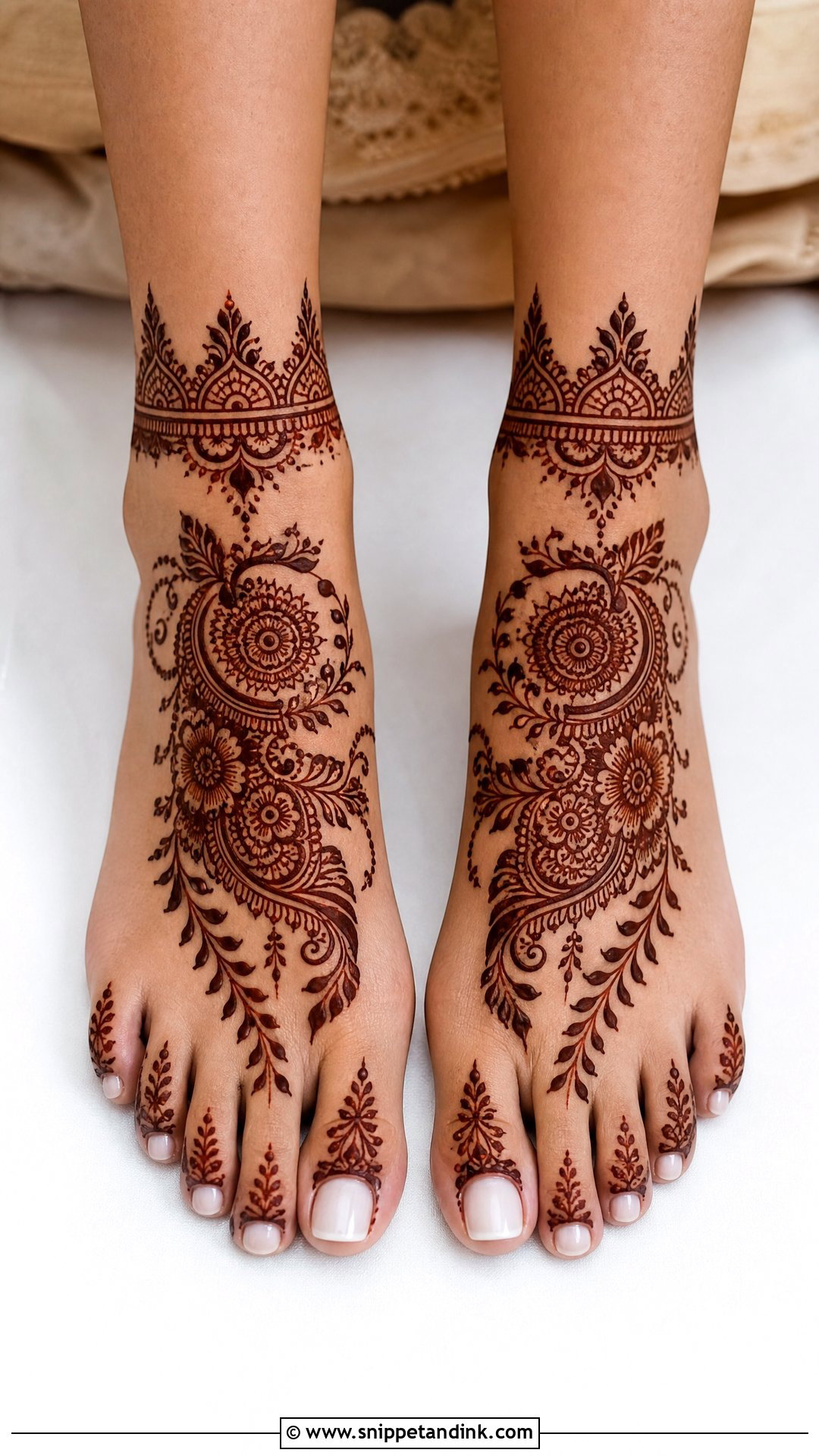
Indo-Arabic takes the flow of Arabic trails and drops Indian detail inside them: big flowers and leafy stems beside small paisleys, mandala accents and lace borders. When a bride can’t decide between heavy and open, this is the compromise I sketch first. It shapes the foot well and leaves room to breathe, and it looks right next to anklets and open-toe sandals. It also stops at the ankle, which saves real time compared with a full leg.
6. Full Leg Bridal Mehndi Design
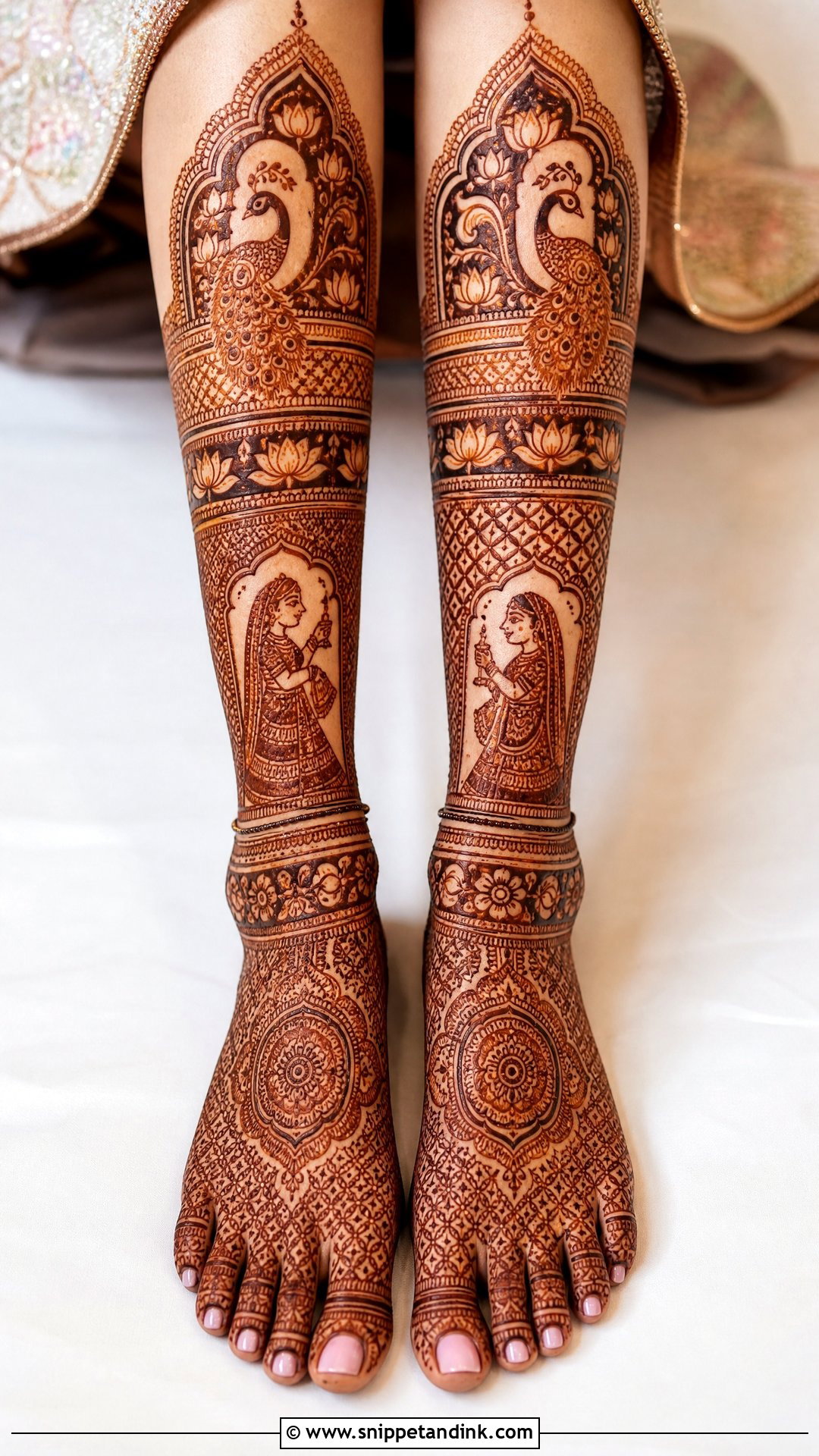
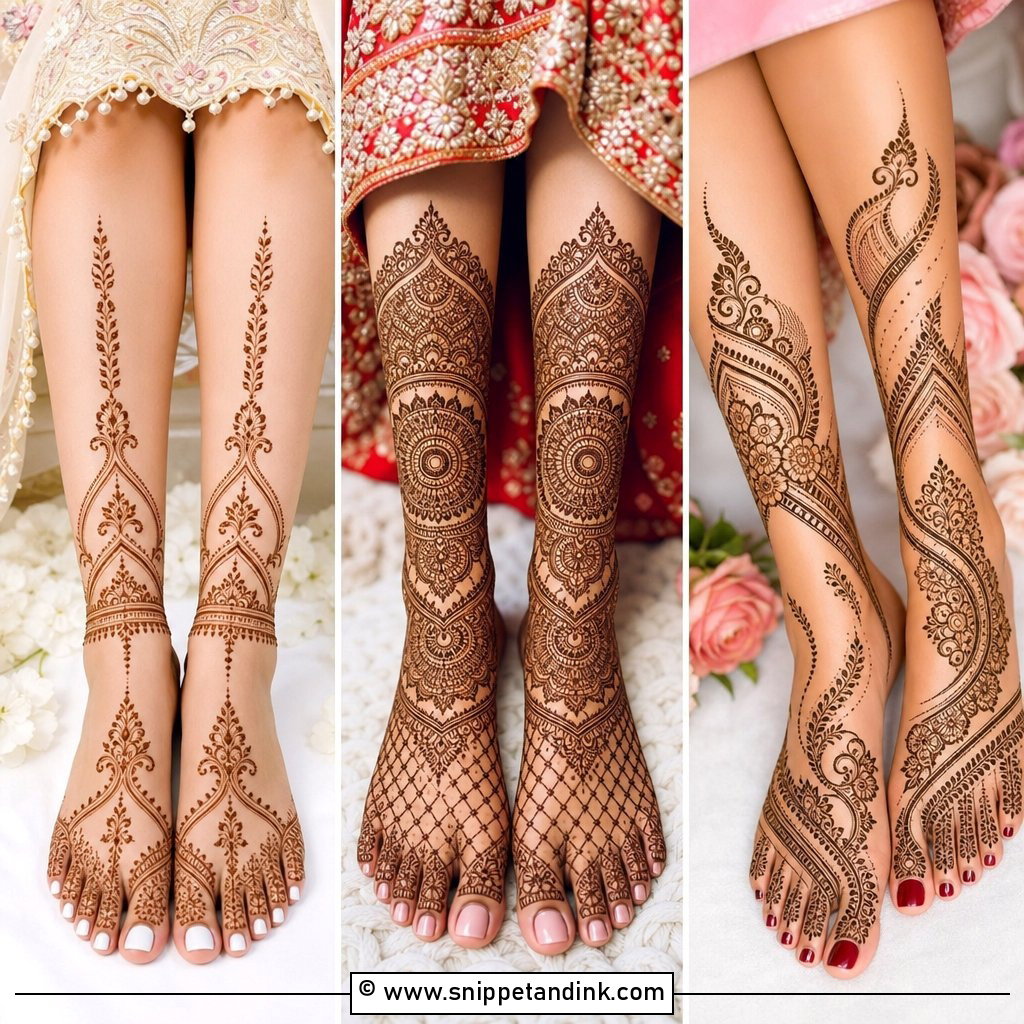
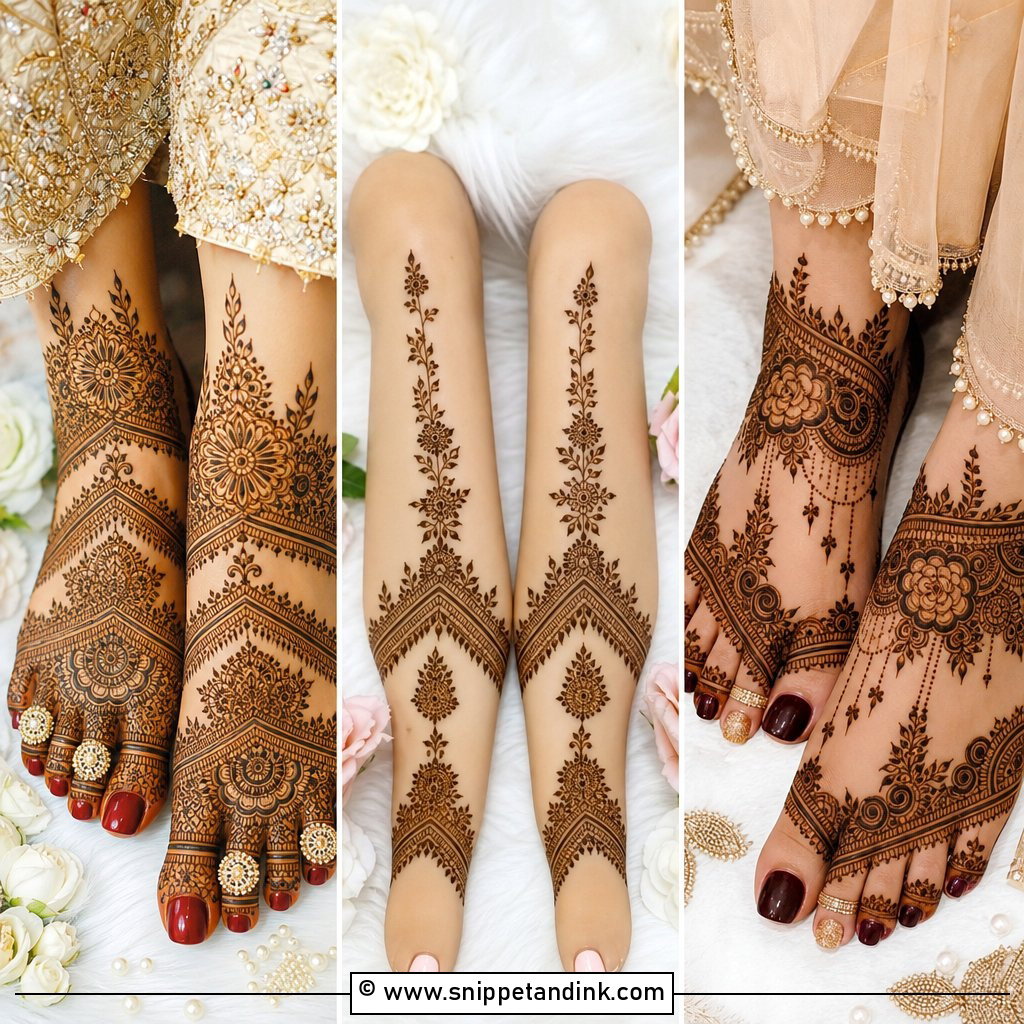
Going up to the calf or knee turns the leg into a canvas with zones: decorated toes, a full foot base, an ankle band, calf motifs, and vines or jaali panels linking them. Full leg bridal mehndi design work often carries peacocks, paisleys, lotus, elephants, dulha-dulhan figures and mandalas. Because it takes hours, I’d book an experienced bridal artist early and ask for a separate session or a second artist for the legs. I let the design follow the curve of the calf rather than running straight lines up the shin, which flatten the leg. It earns its time under high-slit lehengas or in barefoot portraits.
7. Half Leg Bridal Feet Mehndi Design
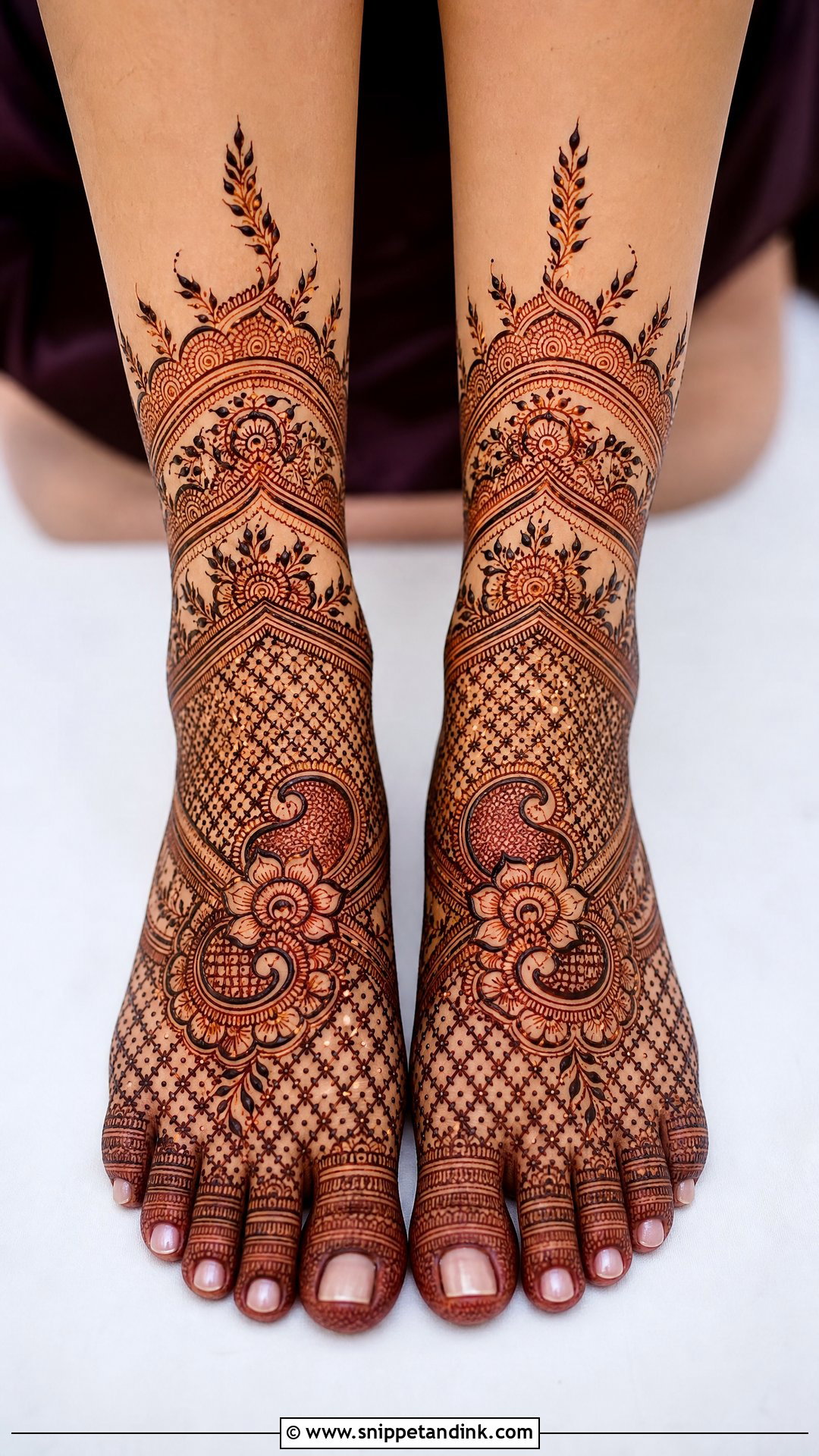
A half-leg design covers toes, the top of the foot, the ankle and a little of the lower shin. It’s the middle ground I suggest when simple foot work feels too light but sitting for a full leg isn’t realistic. My favorite layout is a detailed foot base, an anklet band, and one vertical motif rising just above the ankle bone. Florals, paisleys, fine leaves and net work keep it polished. Visually it stays light through a long day, and it frames payal and toe rings neatly.
8. Mandala Bridal Feet Mehndi Design
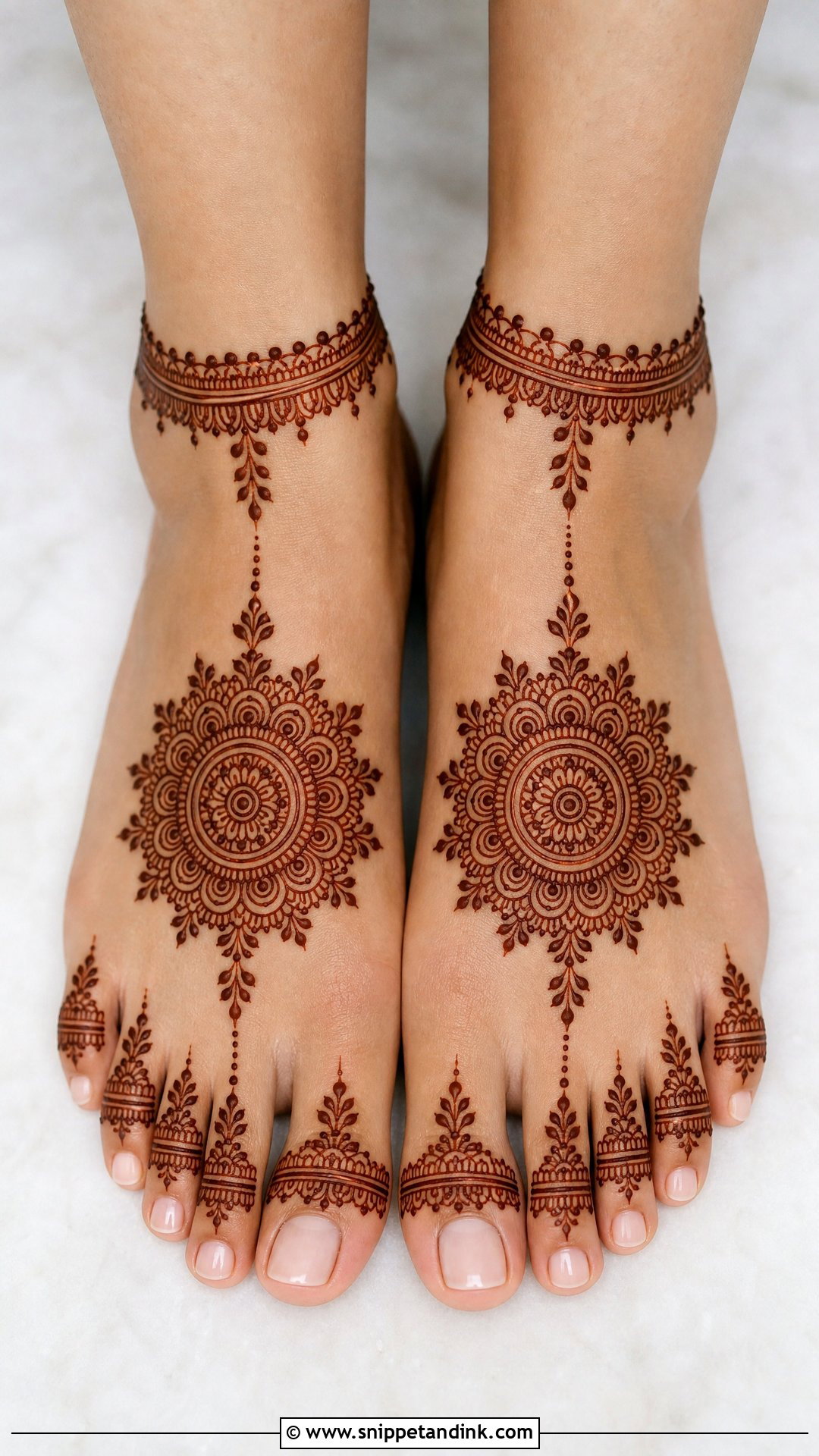
Symmetry is the whole appeal. A round mandala sits on top of each foot, with matching detail at the toes and ankle. I mark the center of the mandala over the highest point of the foot, not the geometric middle, because a circle placed too low looks like it’s slipping toward the toes once you stand. It can be simple, with petals and dots, or layered with fine lines and lace filling. Toe chains, side paisleys and an ankle border make it feel bridal, and the clean geometry holds up in close-ups.
9. Lotus Bridal Feet Mehndi Design
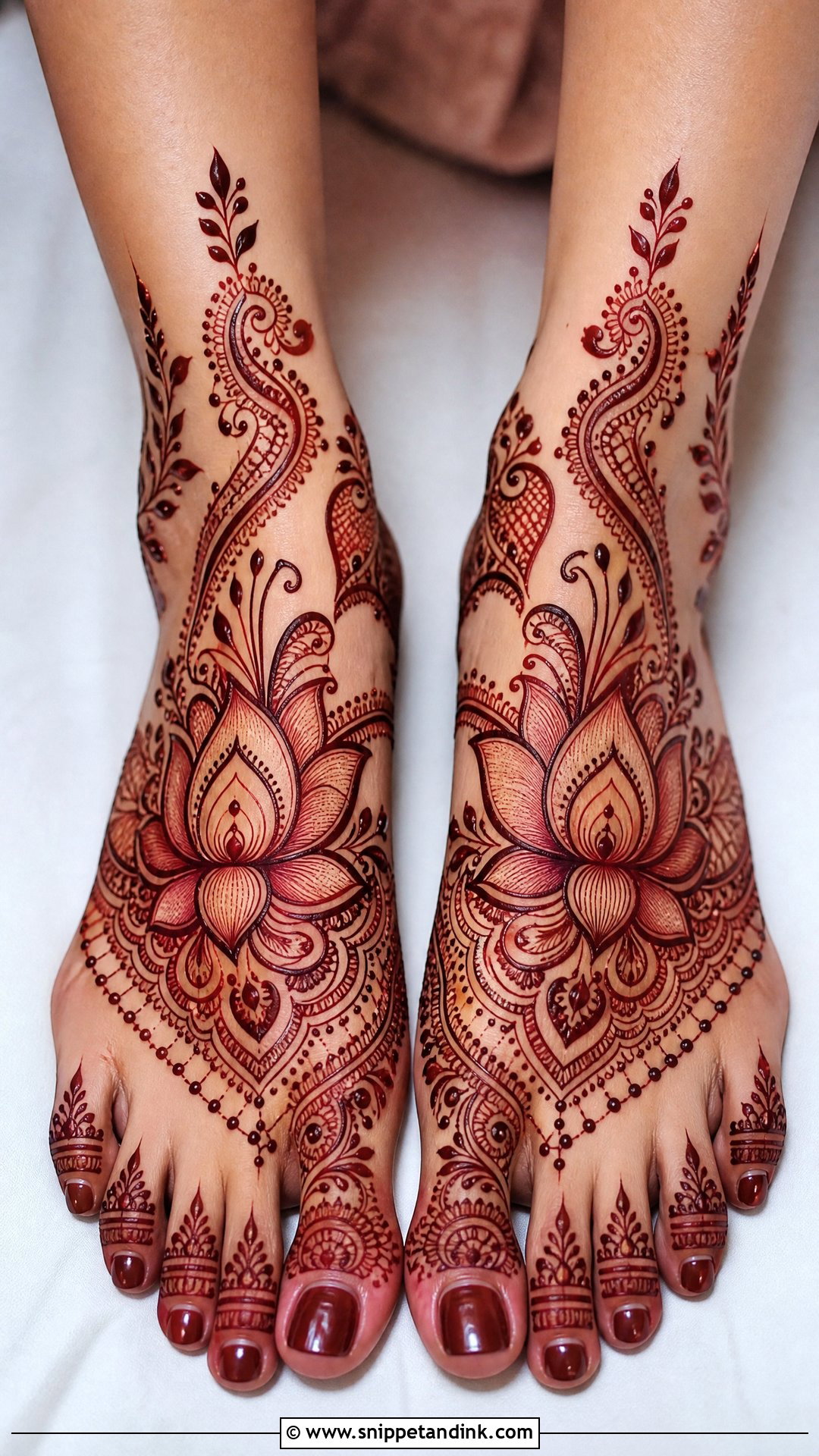
The lotus usually sits at the center of the foot, near the ankle, or as one large flower along each side, with paisleys, leaves and soft shading around it. It suits brides who want one strong, calm motif instead of crowded coverage, and it can be drawn in Indian, Arabic or Indo-Arabic style. For more richness I layer the petals in two or three rings and connect the flower to an ankle band. Red bridal nails and a gold payal set it off nicely.
10. Peacock Bridal Feet Mehndi Design
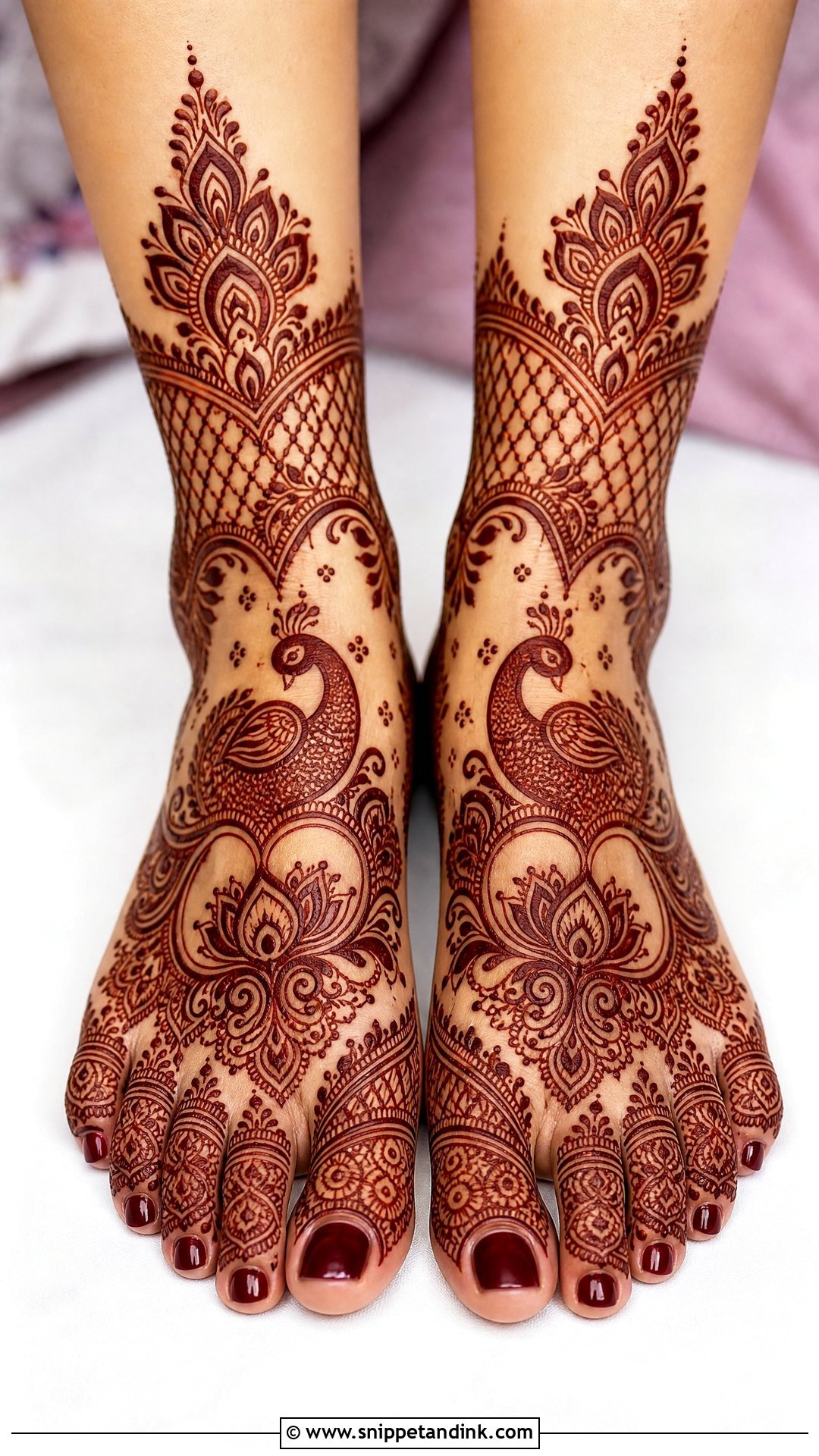
Peacocks give me room to work: the feathers take fine lines, dots, scallops and paisley curves. I place one near the ankle, along the outer side of the foot, or as a mirrored pair across both feet so the birds face each other when you stand together. Mandalas, lotus flowers and jaali backgrounds suit it. The common mistake is too many peacocks on one small foot. One main bird with lighter work around it keeps the shape clear once the stain matures.
11. Paisley Bridal Feet Mehndi Design
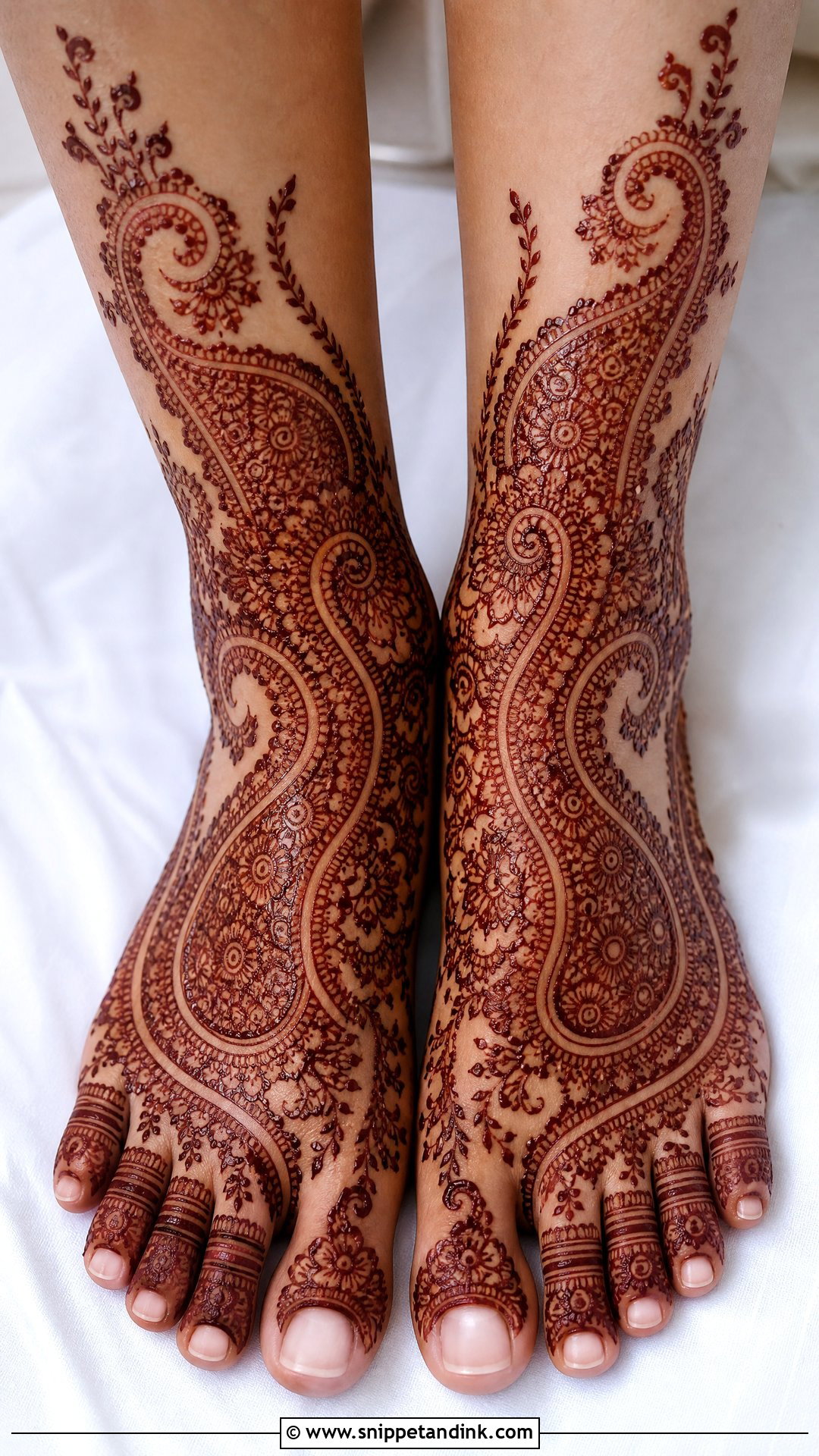
Paisleys curve the way a foot curves, so they flatter from almost any angle. I arrange them as a central trail, a border around the foot, or a few large statements near the ankle. They give a traditional feel without figurative art, which some families prefer. Combine them with flowers, small leaves, dots and net filling for full coverage, or draw one bold paisley trail with open space around it for something lighter. It sits comfortably with almost any outfit.
12. Jaali Bridal Feet Mehndi Design
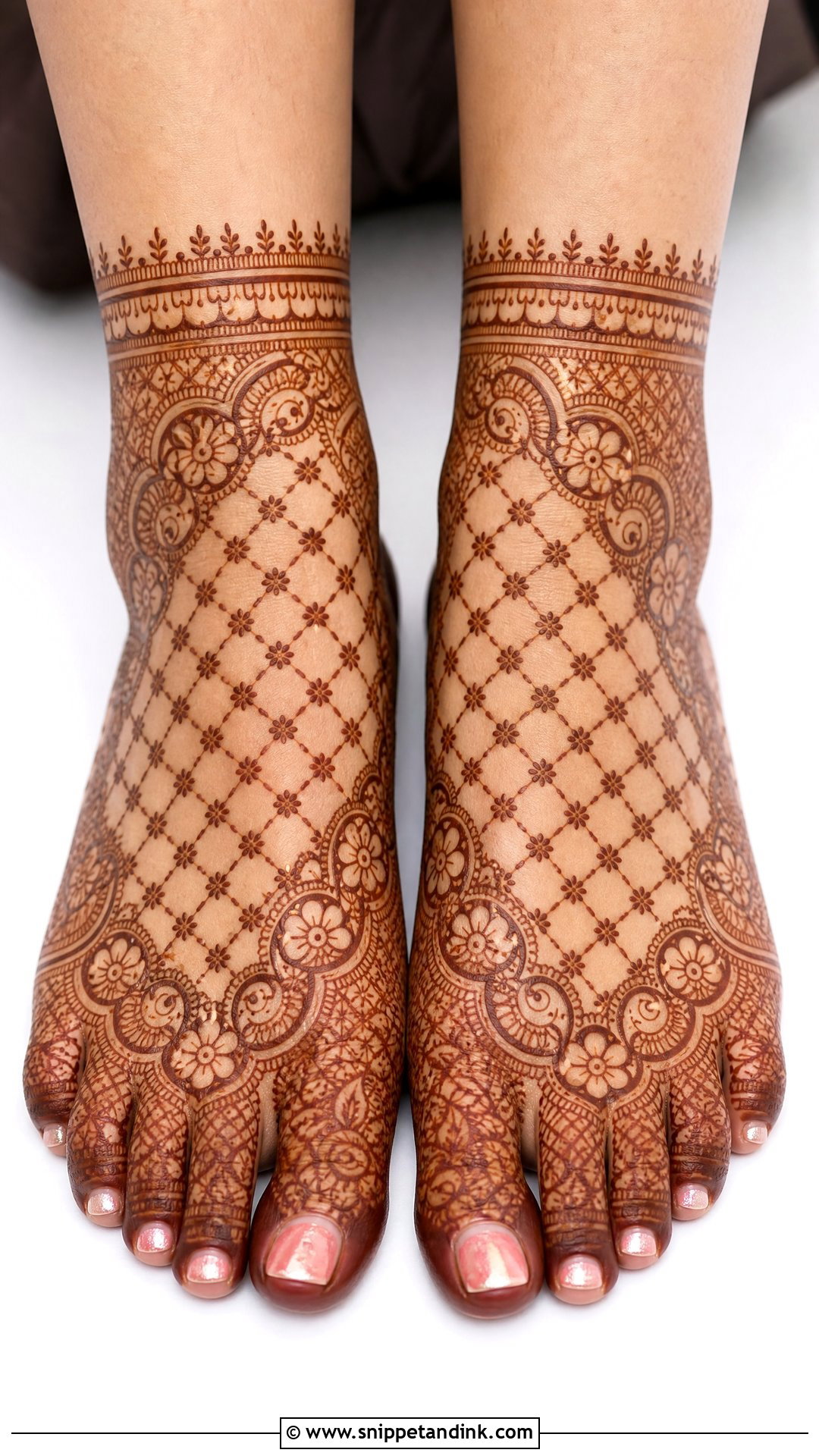
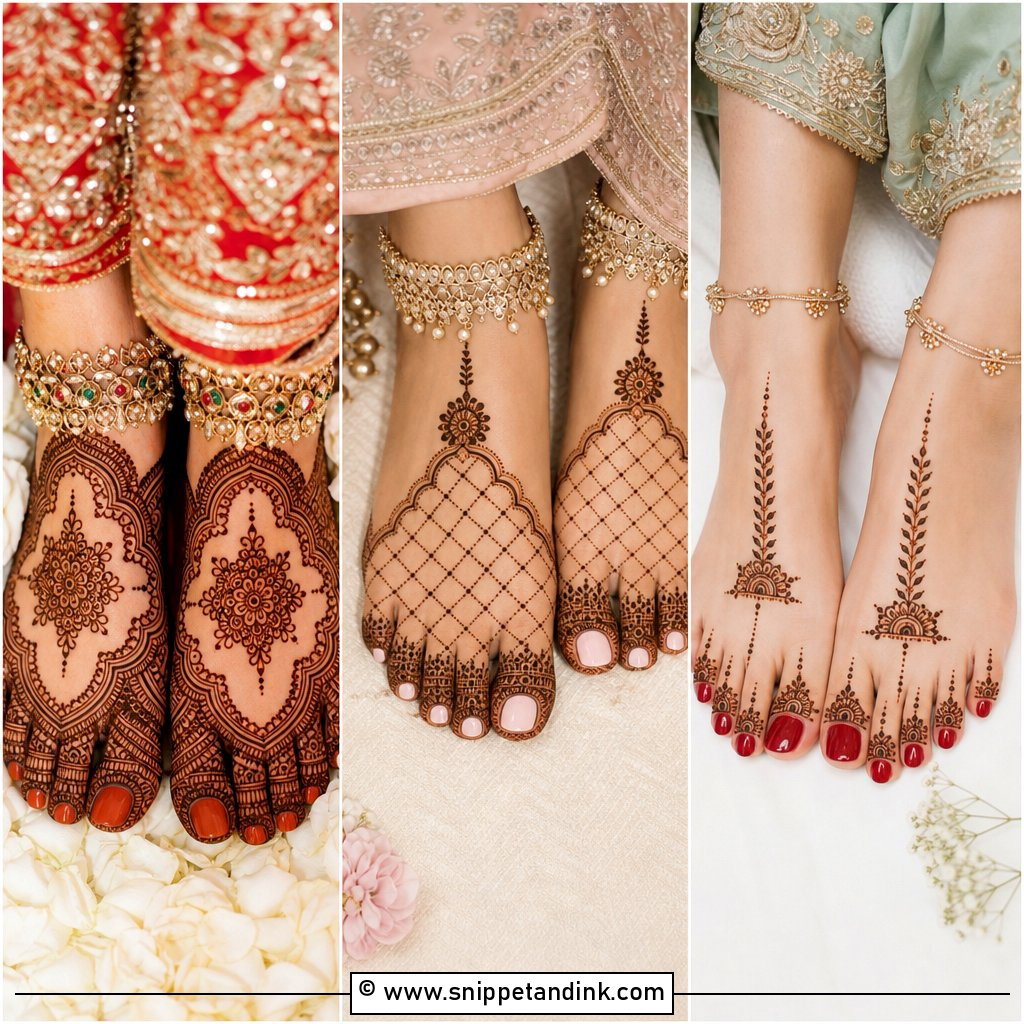
Jaali reads like lace on skin, and it can cover the top of the foot, wrap around the ankle or fill panels within a full-leg design. It pairs naturally with embroidered lehengas and traditional jewelry. Spacing decides everything here: a mesh that’s too small or uneven closes up as the paste spreads slightly, and the stain looks muddy. I draw a neat diamond or square grid first, check it from a standing view, then add a dot or tiny accent inside each cell. Floral borders and paisley corners finish the edges.
13. Floral Bridal Feet Mehndi Design
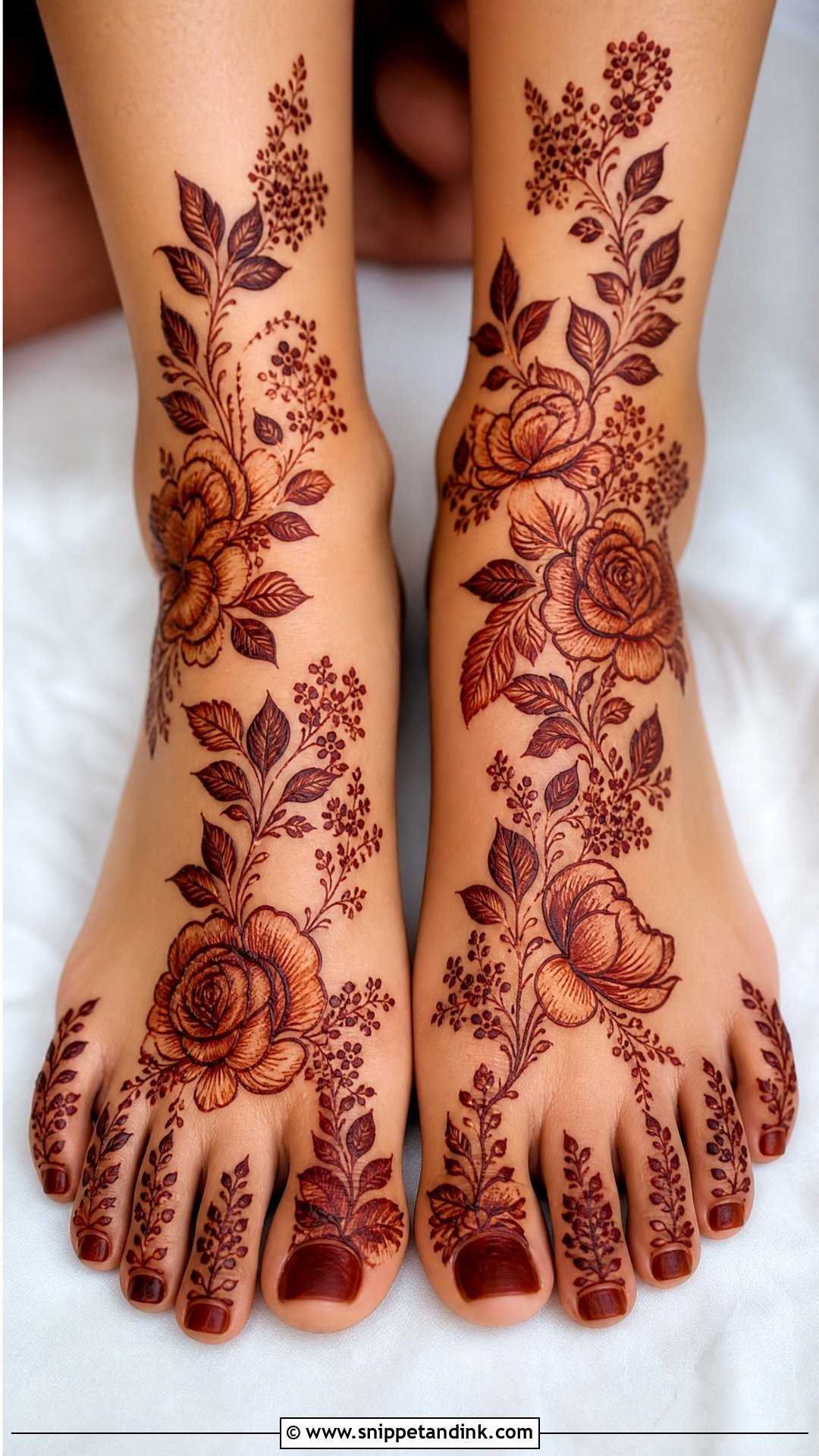
Roses, lotus petals, jasmine-like blooms or mixed clusters can cover the whole foot, run in a diagonal trail, or circle the ankle like a band. Floral bridal feet mehndi design is the request I get most for daytime ceremonies and pastel outfits, because flowers feel festive without weight. I add shaded leaves, dotted vines and toe detailing to make it bridal, and I keep the ankle border slim so a payal doesn’t sit on top of it and hide it. It goes with nearly any sandal.
14. Minimal Bridal Feet Mehndi Design
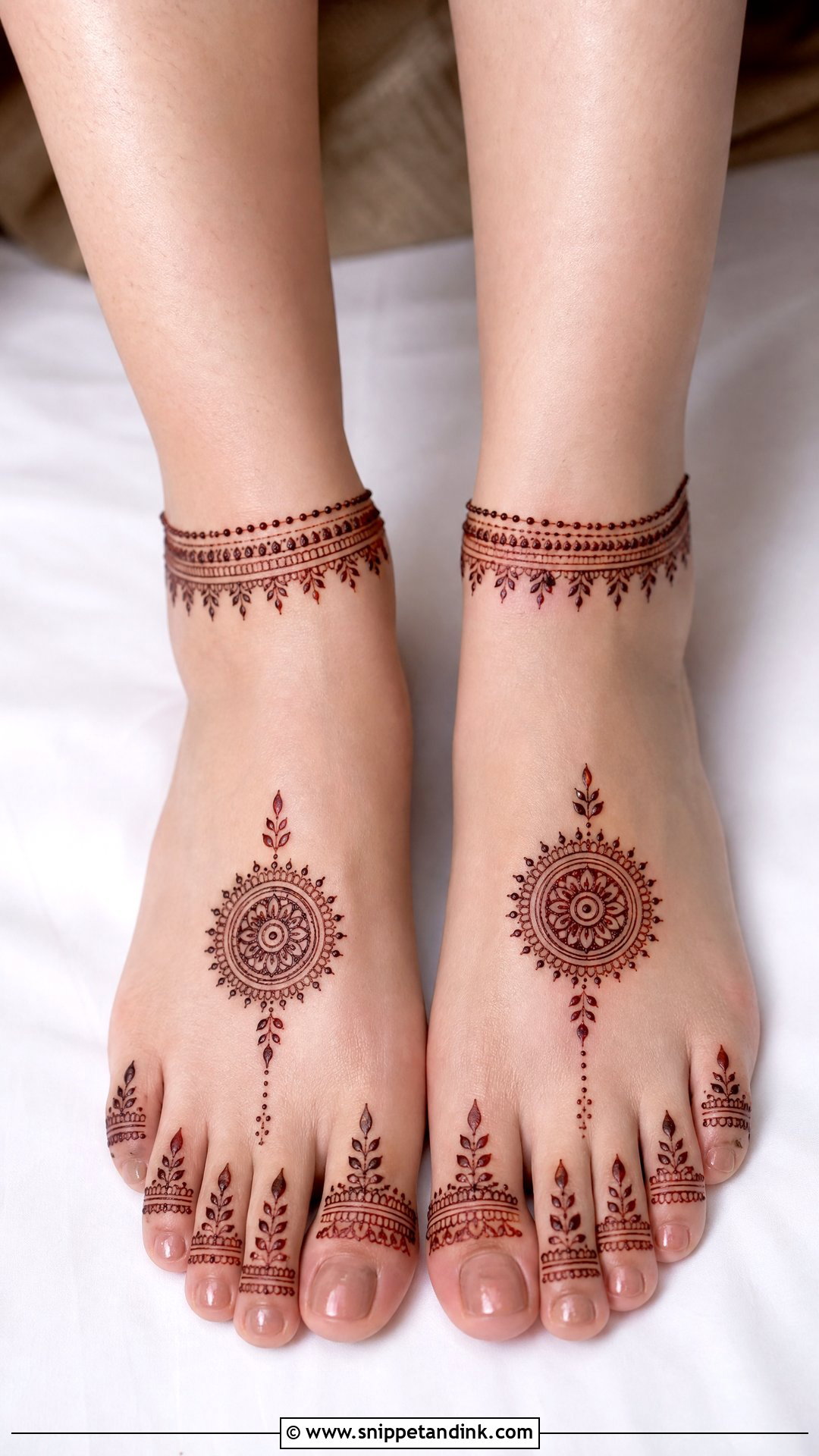
A few delicate toe patterns, a small central mandala, a thin ankle band and a handful of floral accents can look complete if the placement is right. I say this to every minimal bride: fewer lines means each one must sit exactly where it frames the foot, because there’s nowhere to hide a wobble. Fine curves, neat dots and deliberate empty skin. It suits beach weddings, civil ceremonies and small gatherings, and it leaves your nail color, jewelry and sandals visible.
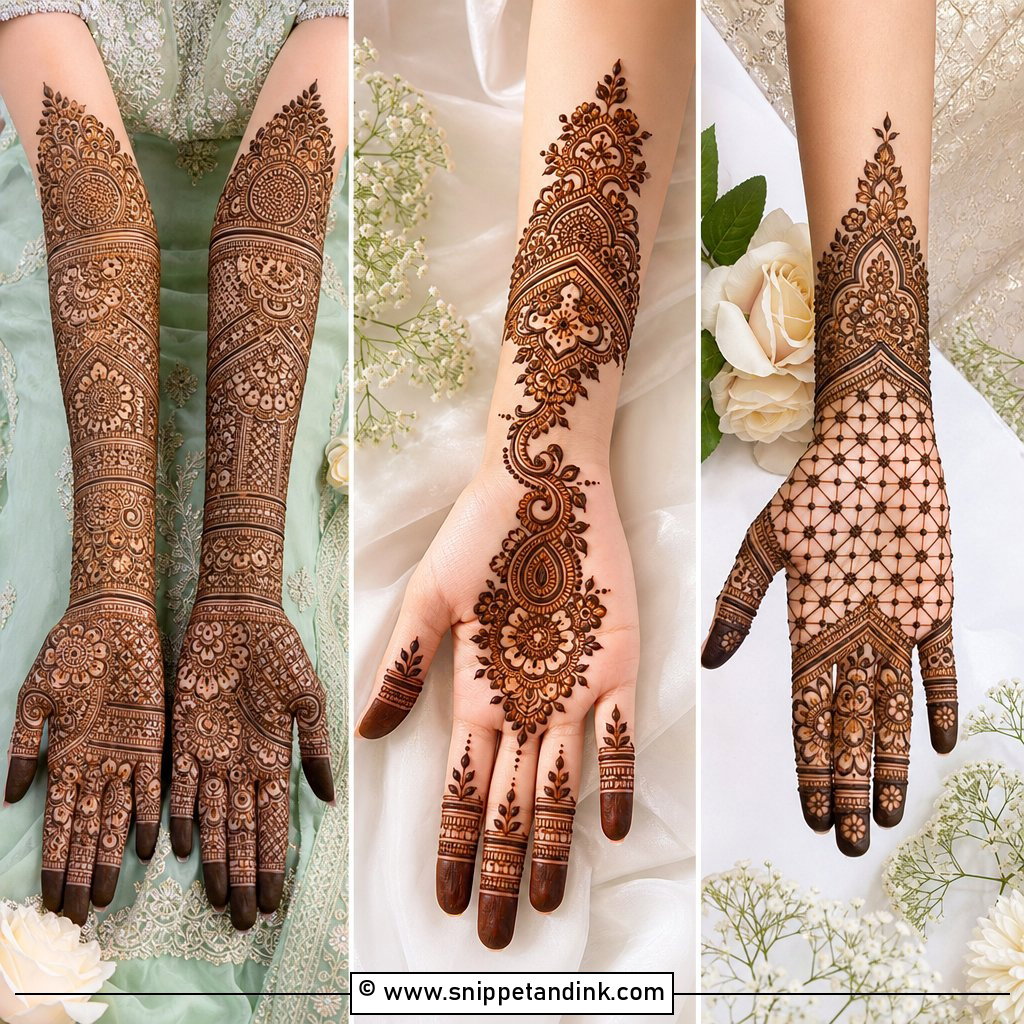
15. Heavy Bridal Feet Mehndi Design
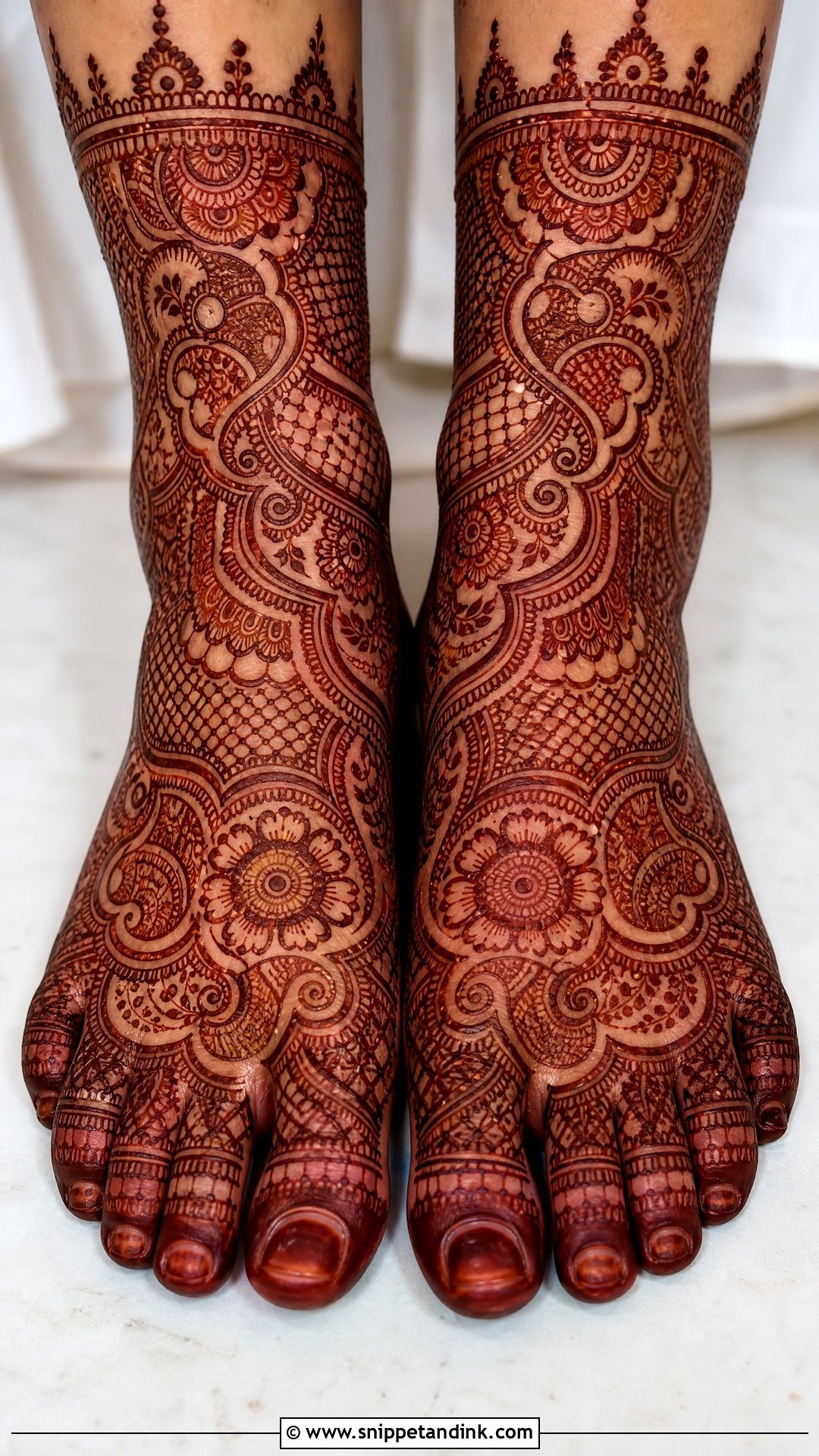
Heavy work covers most of the foot and often climbs past the ankle with dense fillers, paisleys, mandalas, flowers, jaali and sometimes personal motifs. Brides usually want it to match full-hand mehndi. The danger is flatness: when everything is equally dark, the eye sees one brown block. I draw the main motifs slightly larger with clear outlines, then deliberately leave fine gaps between filled areas so the stain stays crisp instead of turning into a single shade.
16. Back Feet Bridal Mehndi Design
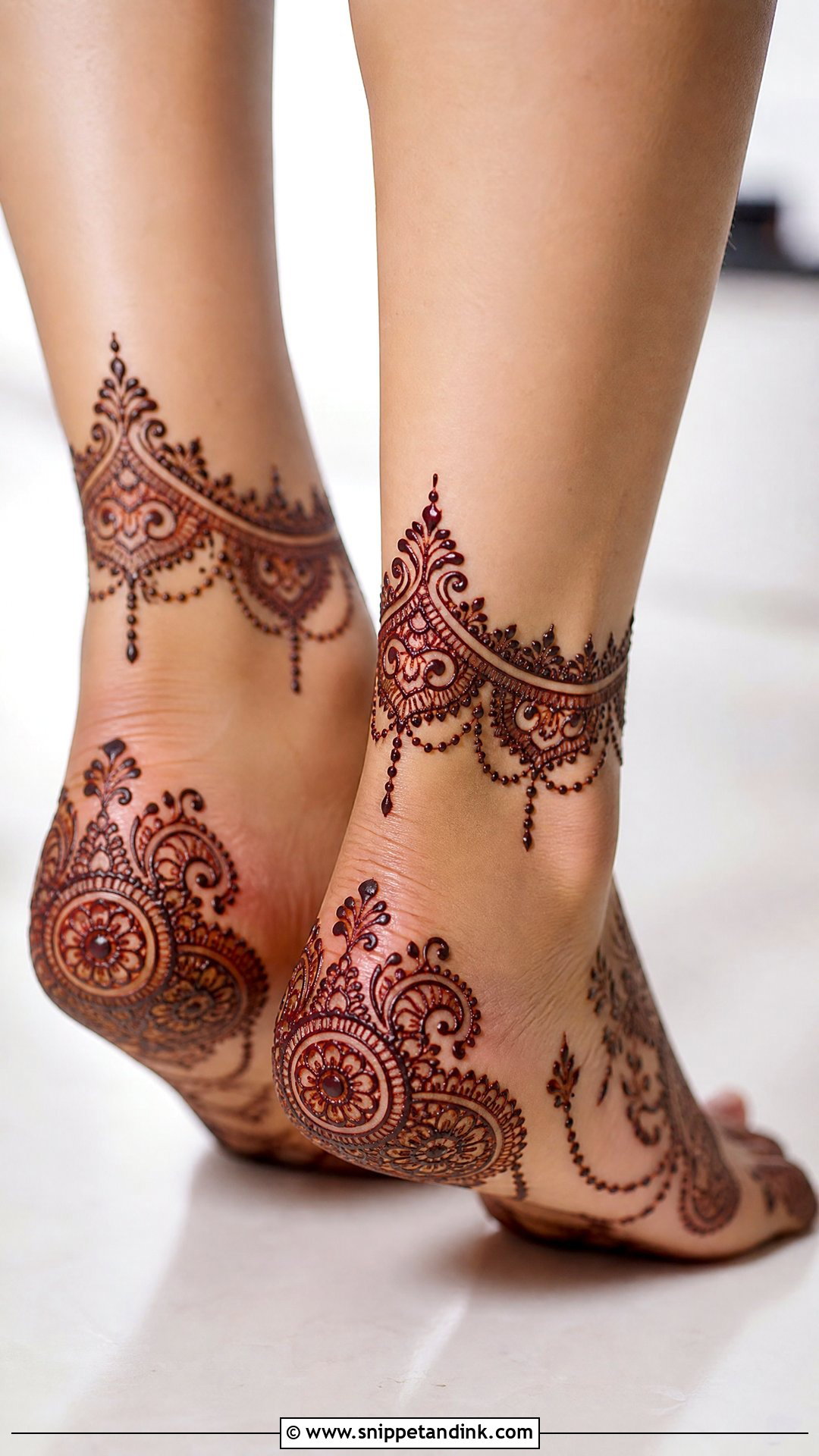
The heel, the back of the ankle and the sides around the Achilles tendon are easy to forget, yet they show in seated poses, ceremony shots and every ritual where you remove your shoes. I usually place a heel mandala, an ankle lace band and side vines. Keep it practical: thick paste on the heel, a pressure point, smudges the moment you put weight on it, so I use finer lines there and ask you to keep weight off your heels until it’s set. Floral arcs and curved ankle borders work best.
17. Ankle Bridal Feet Mehndi Design
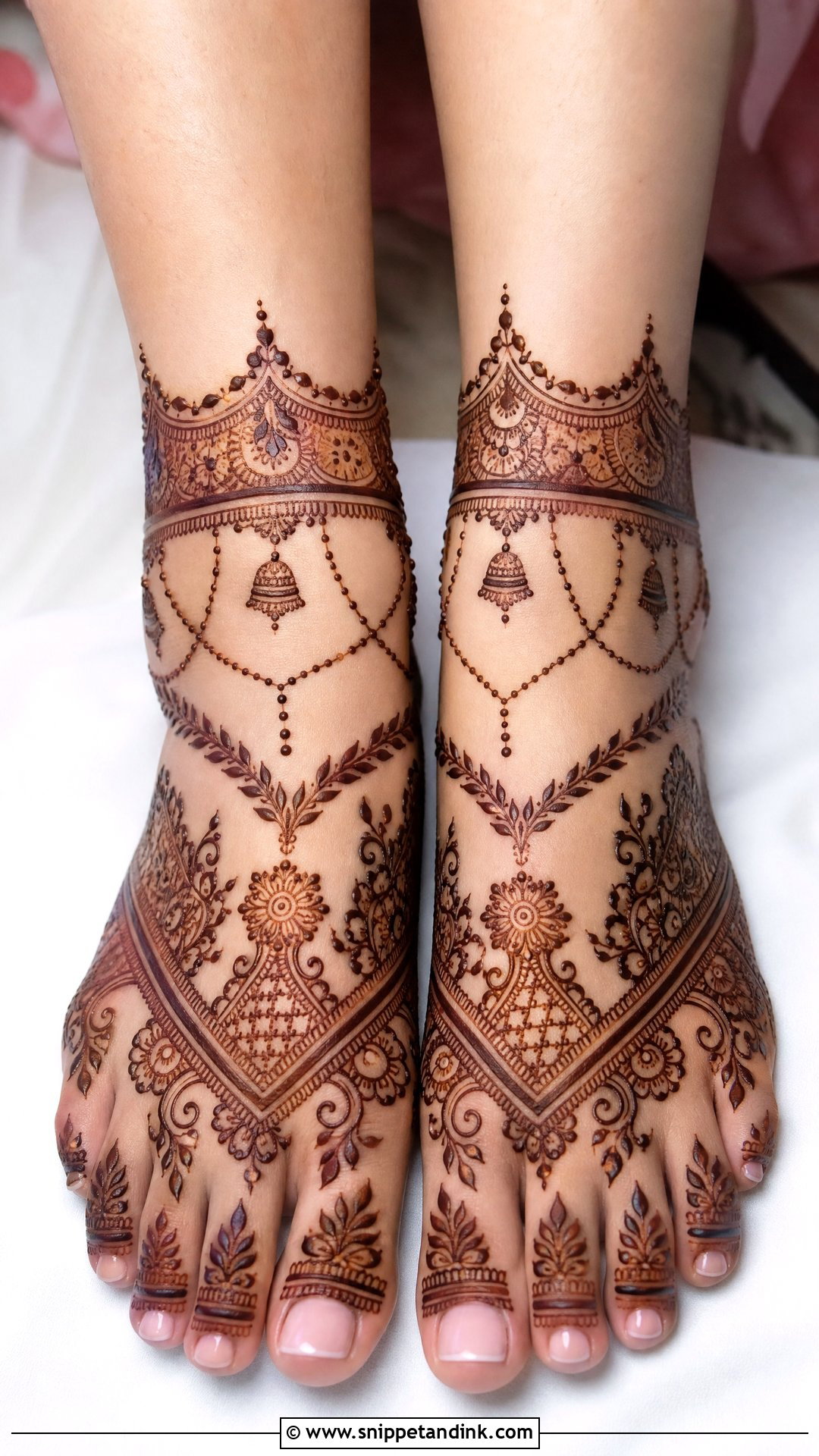
An ankle band drawn like a payal, with chains, vines or dotted lines linking it to the toes or foot motifs, gives the look of jewelry without any metal. Scalloped borders, tiny bells, lotus petals and lace bands are common details. It works alone for a lighter look, or alongside a real anklet. If you’ll wear one, bring it to your appointment so I can place the band just above or below where it sits, not underneath it. Open heels and sandals show it off well.
18. Toe Ring Bridal Feet Mehndi Design
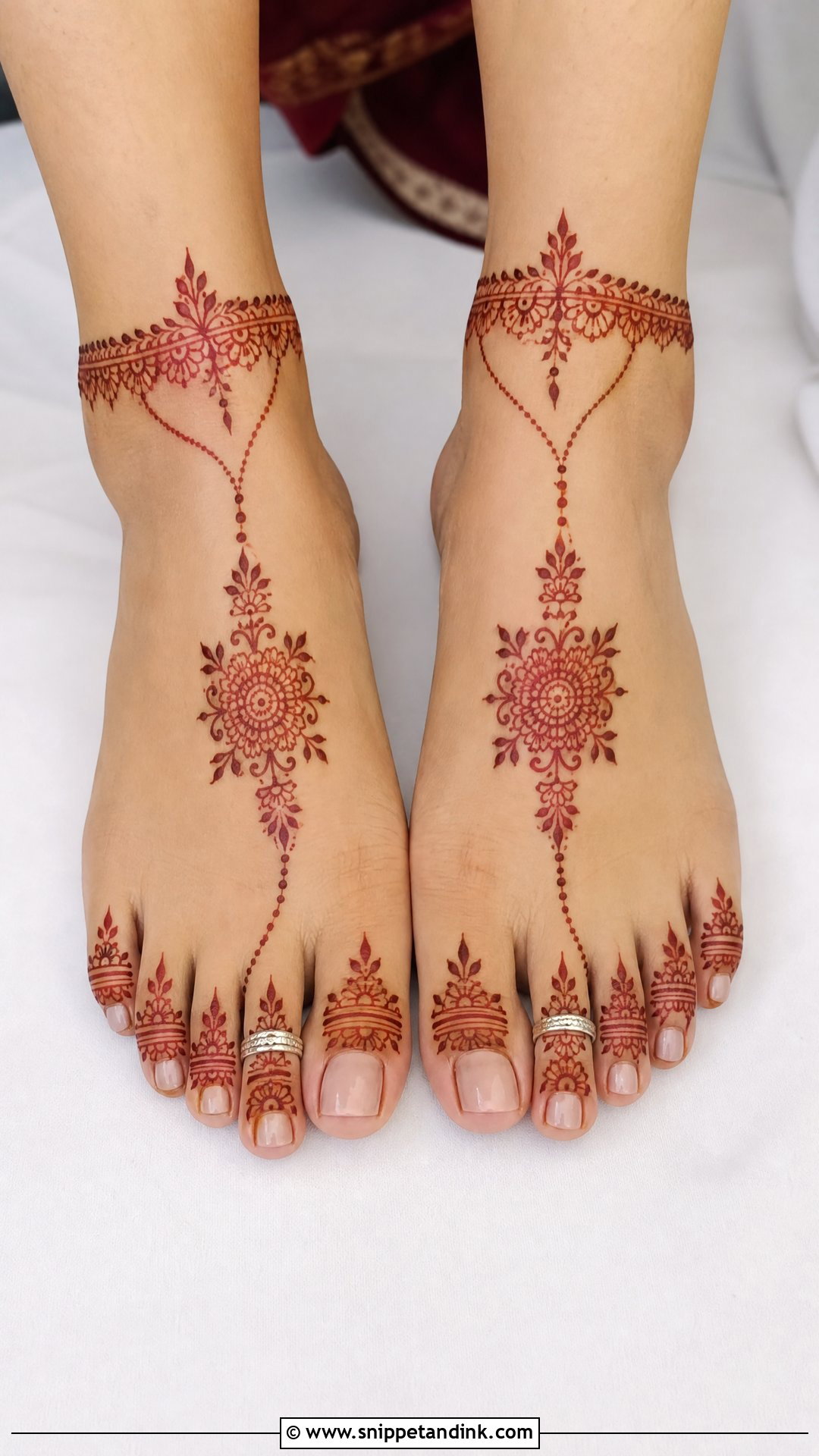
Ring-like bands, tiny chains and connecting lines on each toe make the feet look dressed before any real toe rings go on. Toe ring bridal feet mehndi design can match on every toe for neatness or vary slightly from toe to toe, and it usually links to a central motif or an ankle band. Toes are where I keep lines finest, since the skin there flexes constantly and thick lines blur as they stain. Keep in mind henna will also tint the nail and the skin around it orange, so plan your pedicure color with that in mind.
19. Rajasthani Bridal Feet Mehndi Design
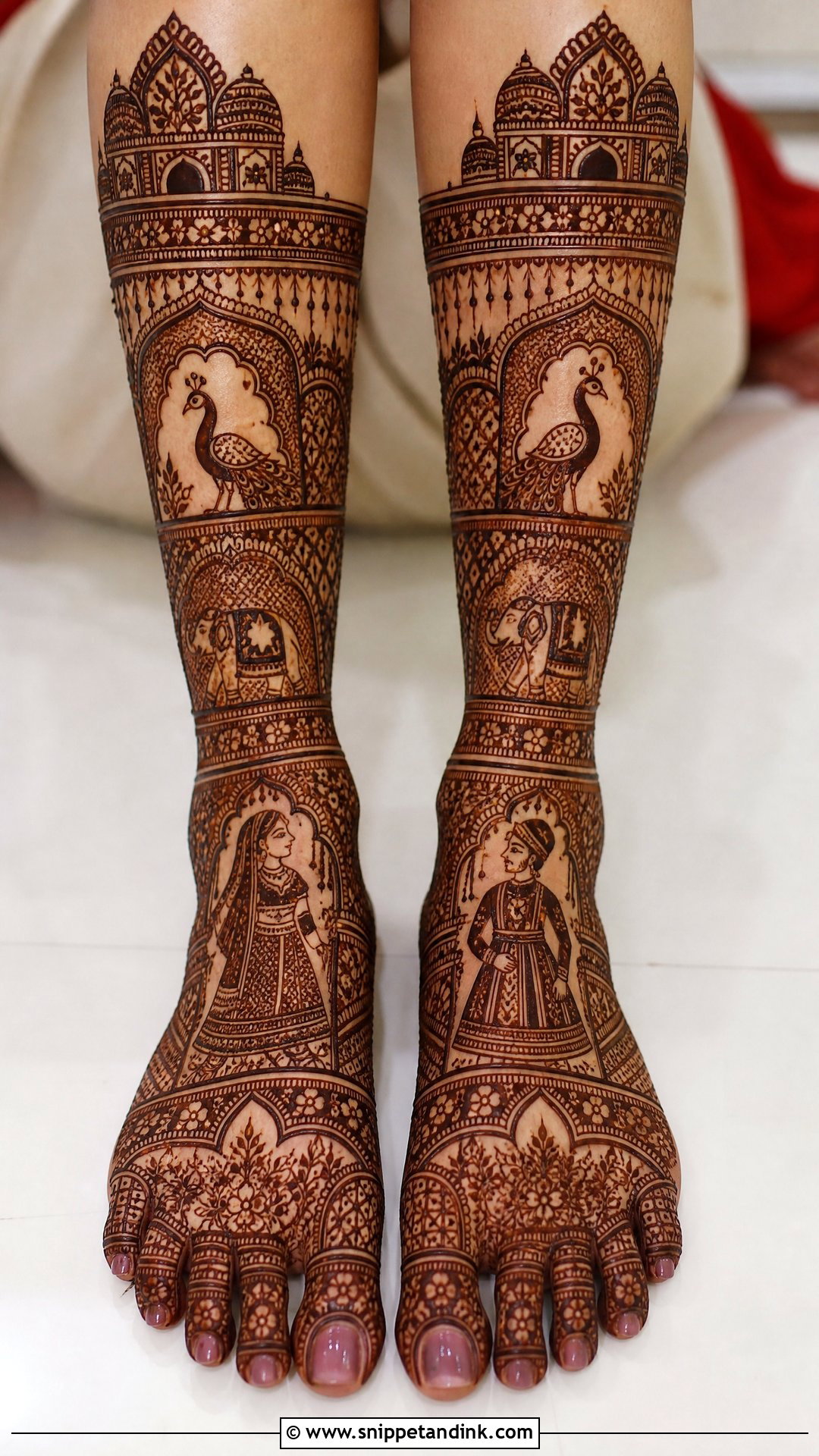
Rajasthani work tells stories: peacocks, elephants, paisleys, bride-and-groom figures, palace shapes and fine traditional fillers, often covering the whole foot with large narrative motifs on the ankle and lower leg. It is heavier than Arabic or minimal styles and needs an artist with very steady line work. I outline each main motif boldly so it doesn’t get swallowed when the stain deepens over the next two days. It looks rich with red, maroon, orange, green and gold outfits at traditional ceremonies.
20. Marwari Bridal Feet Mehndi Design
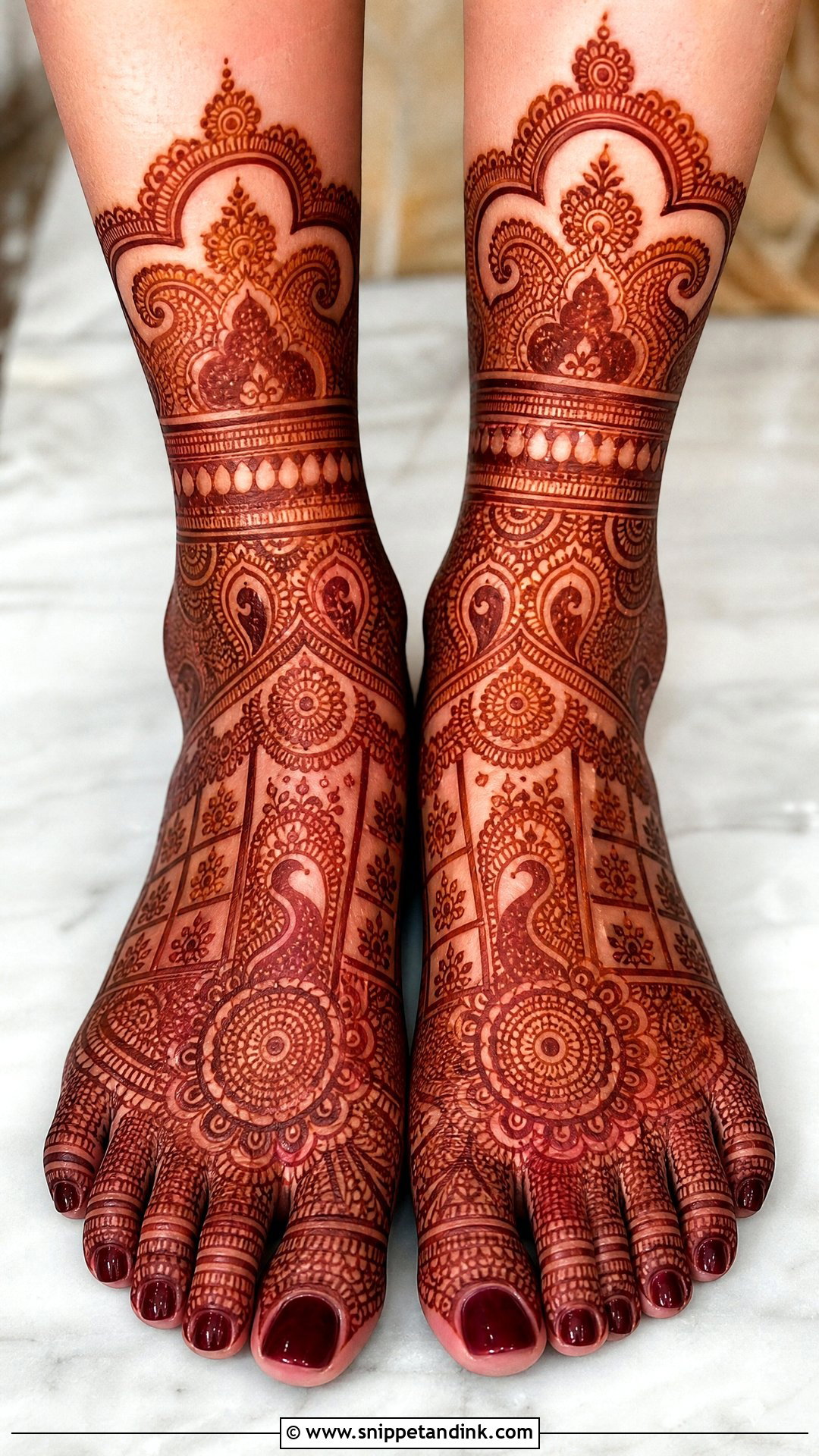
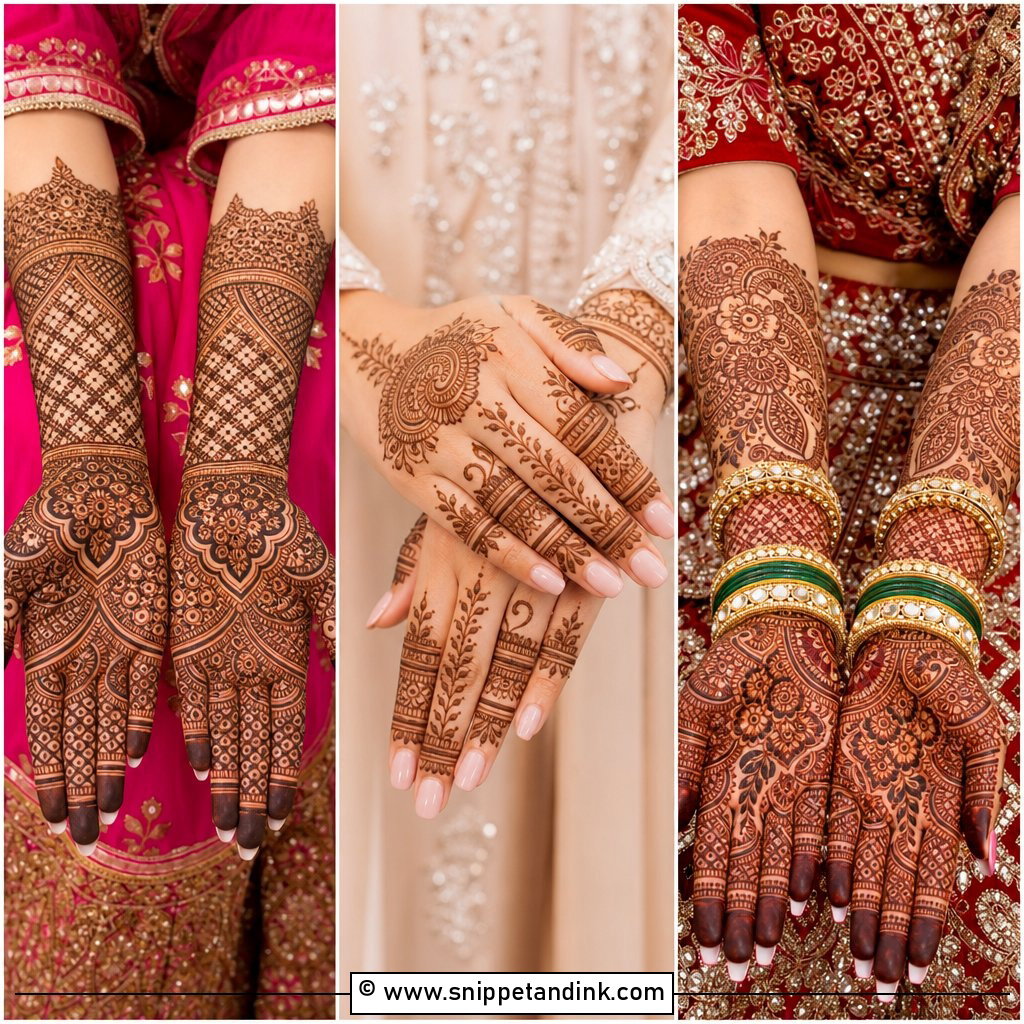
Marwari designs depend on fine filling and strict symmetry: paisleys, floral grids, peacock touches, small mandalas and ankle bands drawn like jewelry, with both feet mirroring each other. The structure gives it a ceremonial calm. You can extend it to the calf for a grander look or stop at the ankle for easier wear. If you want a personal touch, I can hide initials or a small wedding symbol inside the filling, where it becomes a game to find later.
21. Moroccan Bridal Feet Mehndi Design
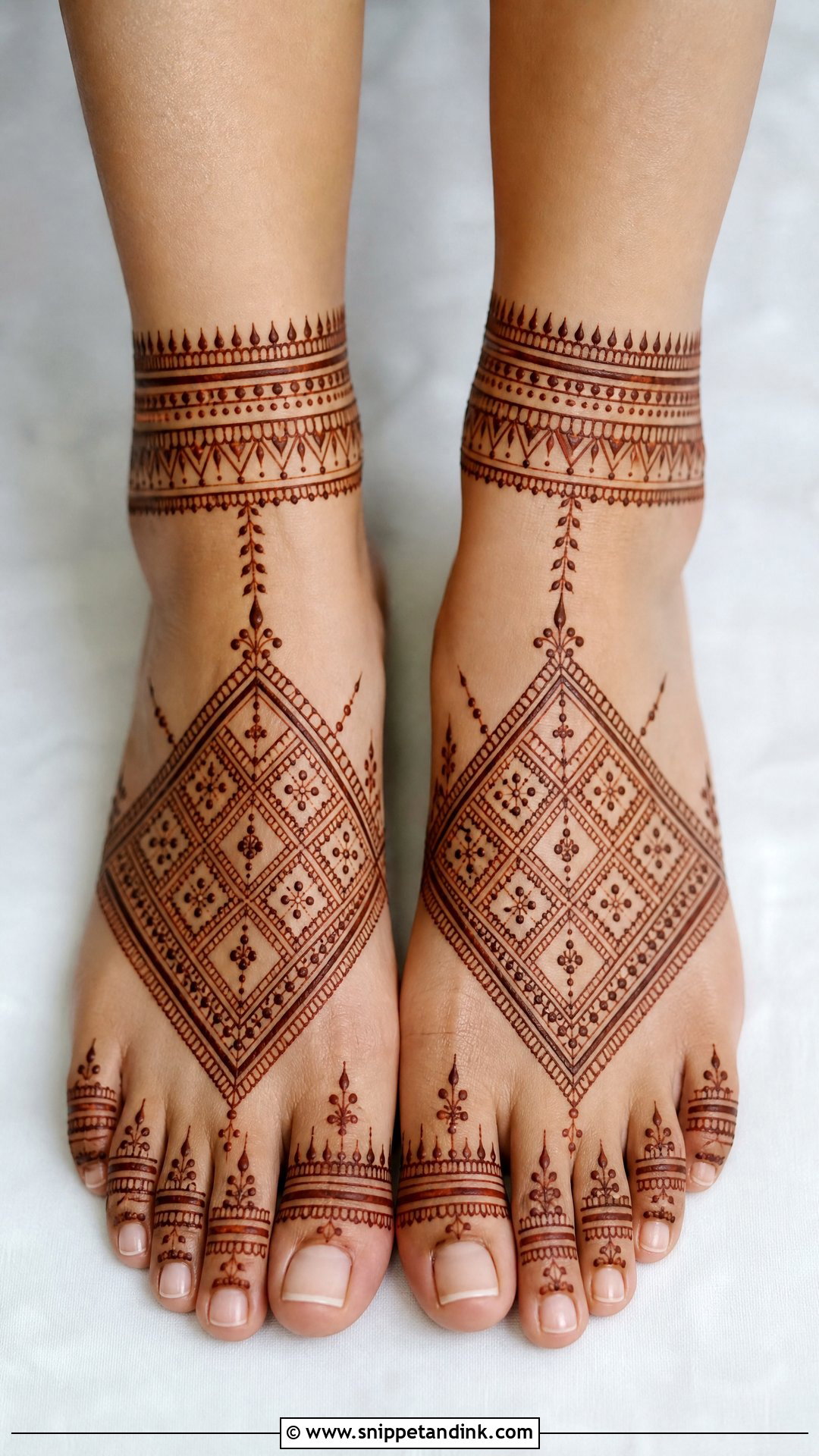
Diamonds, triangles, straight lines and grids replace the flowers here, and the result feels bold and modern while still being rooted in a much older tradition. Moroccan bridal feet mehndi design can cover the whole foot or sit as ankle bands and central geometric panels. Geometry is unforgiving: a line that drifts by a millimeter shows. I mark key points lightly before committing and keep spacing even. A few leaves or dots soften it if you like, and it suits minimal jewelry and contemporary outfits.
22. Gulf Bridal Feet Mehndi Design
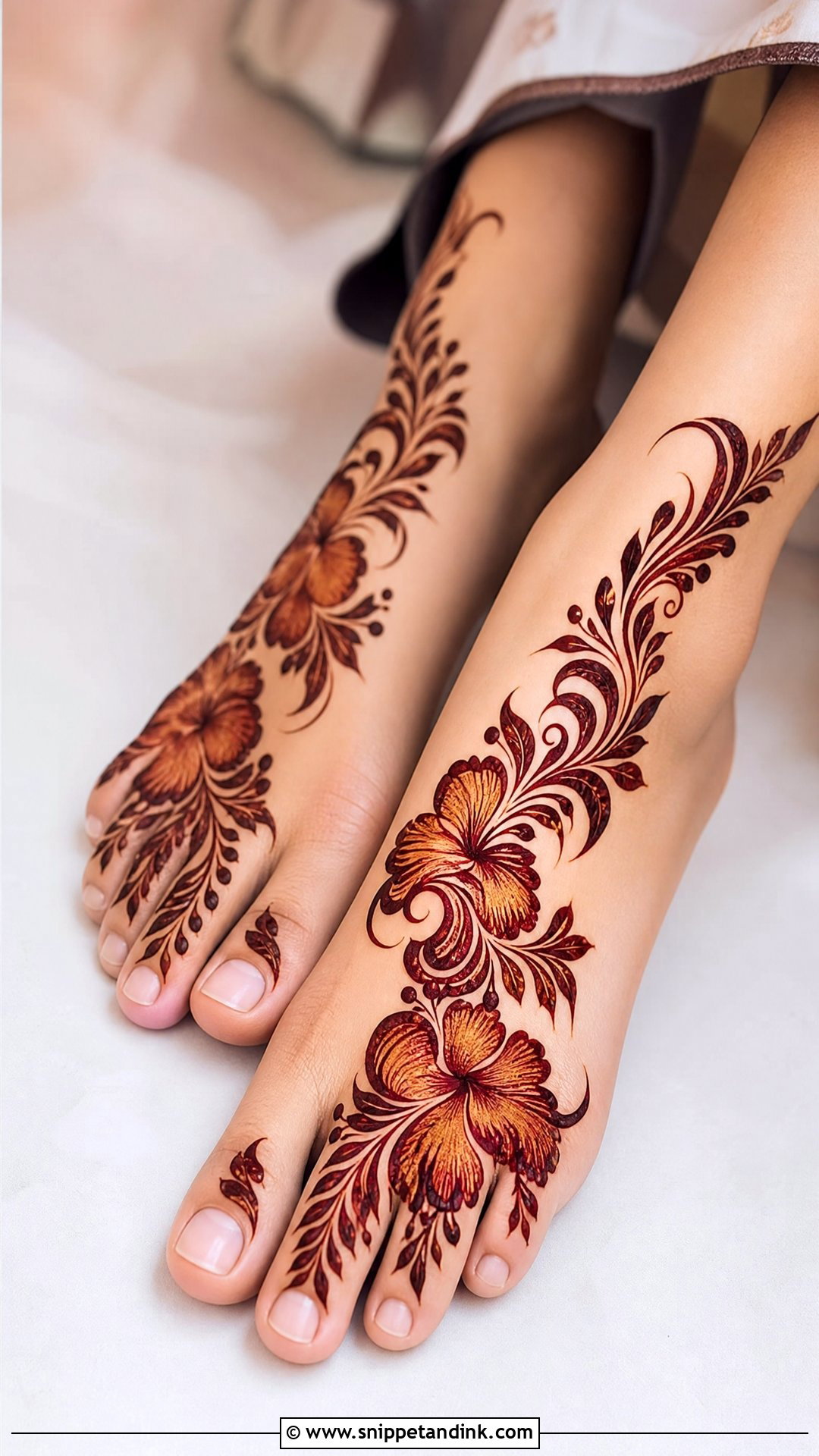
Khaleeji or Gulf-style work uses bold flowers, thick leafy curves and plenty of open skin, so it looks lavish without filling every inch. Large blooms may run from the toes toward the ankle, with shaded petals giving strong contrast. I draw it with confident, fuller strokes than Indian work, and that thicker paste line also tends to stain deeper. It can run diagonally, along the side of the foot or around the ankle, and it holds its own beside dark nail colors and gold anklets.
23. Pakistani Bridal Feet Mehndi Design
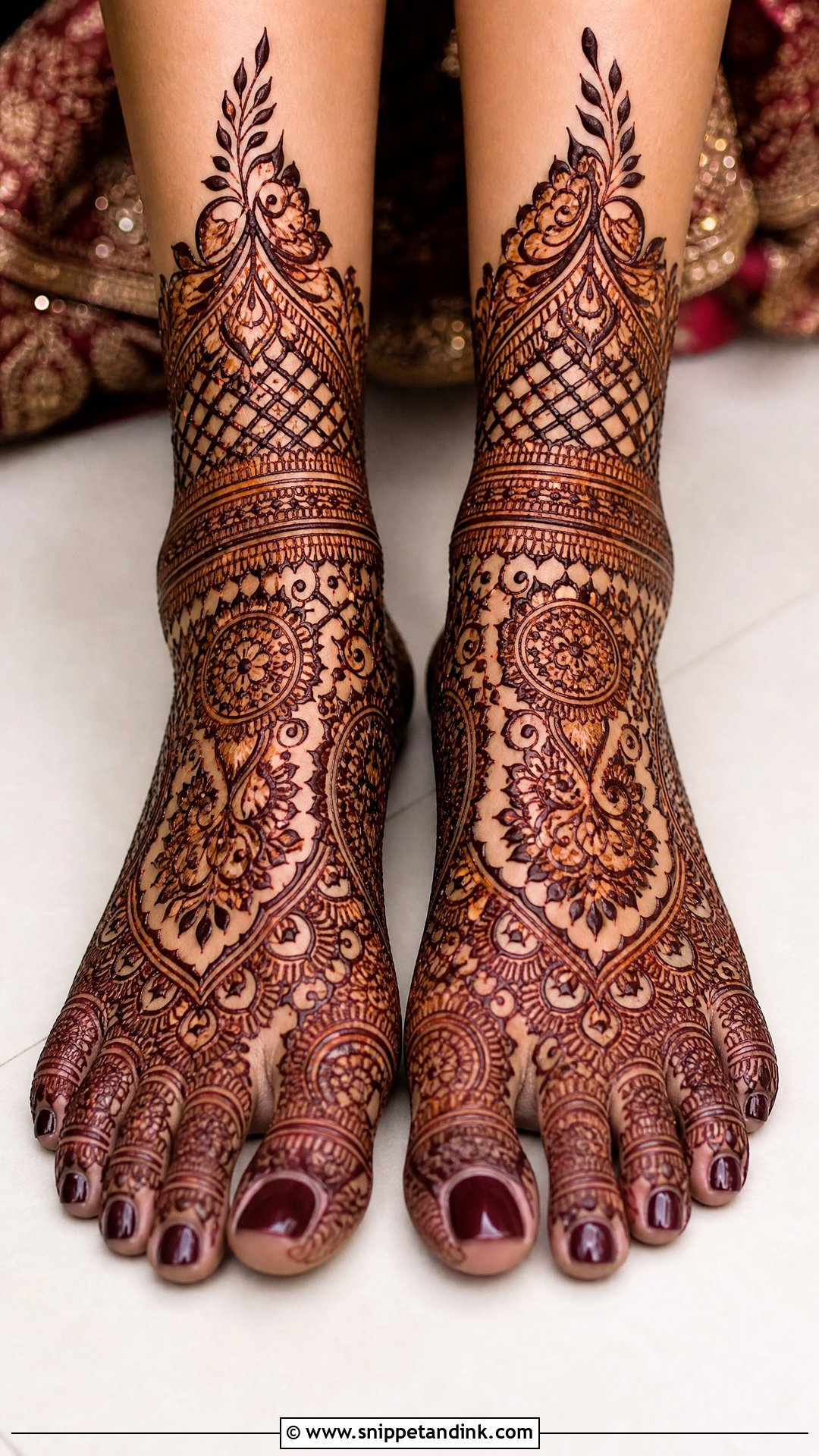
Pakistani bridal work often mixes Indian detail with Arabic flow: floral trails, paisleys, jaali sections, mandalas and detailed ankle bands, with negative space used generously so it never feels packed. Many brides plan a full foot design for the main day and something lighter, focused on the ankle, for other events such as the nikkah or walima. I look for strong outlines, soft filling and a clear path from toe to ankle. It sits well with ghararas, shararas, lehengas and embroidered khussas.
24. South Indian Bridal Feet Mehndi Design
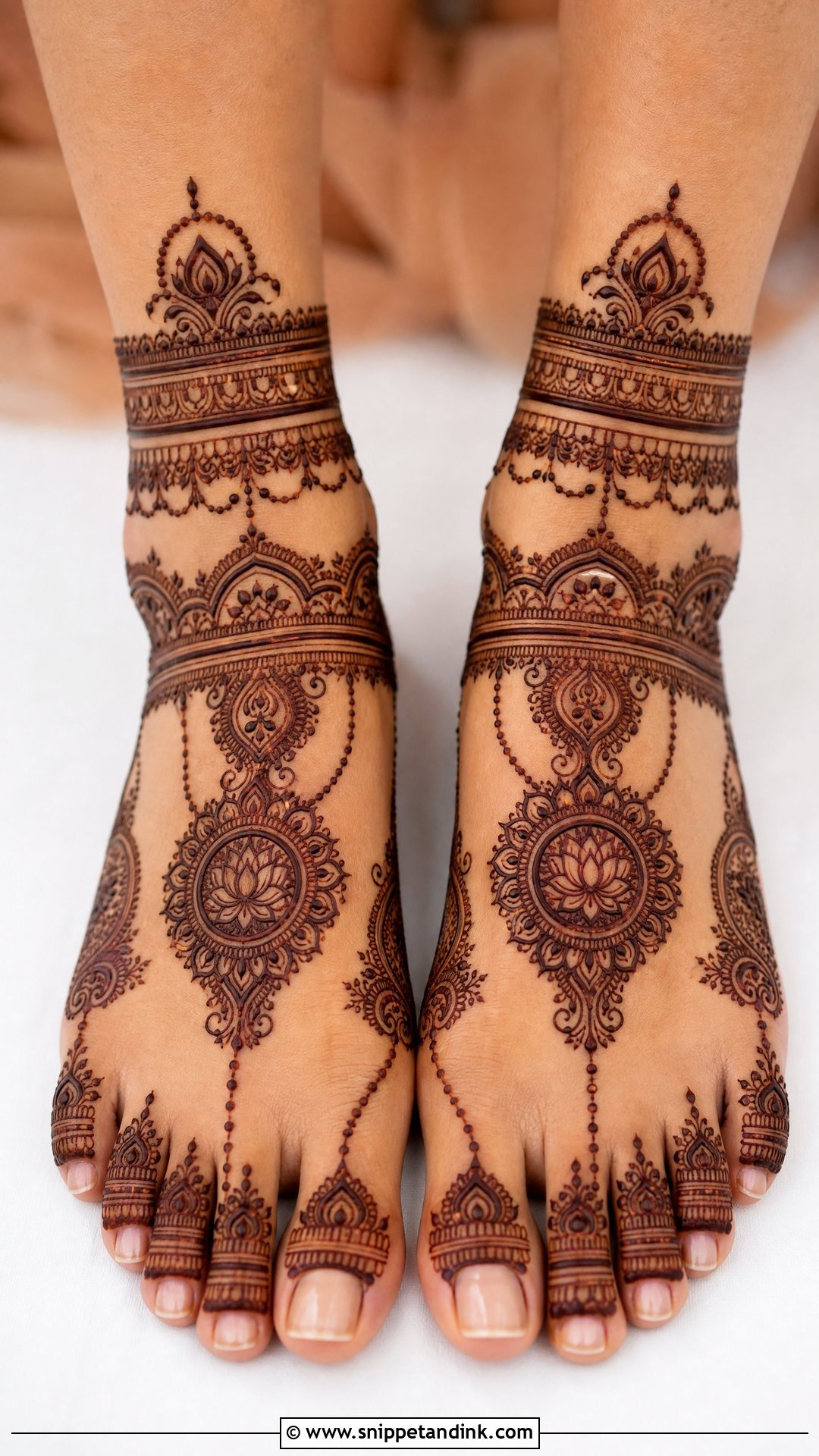
South Indian brides often want a neat, symmetrical full-foot layout rather than work that climbs high on the leg, since a saree hem covers most of the shin anyway. Lotus motifs, temple-style borders, mandalas, paisleys and jewelry-like toe and ankle patterns are typical. I frame a central mandala or lotus on each foot with detailed toes and an anklet band. Tiny mango motifs, dotted chains or a vine that echoes your blouse border make it personal, and it looks right with silk and gold.
25. Bengali Bridal Feet Mehndi Design
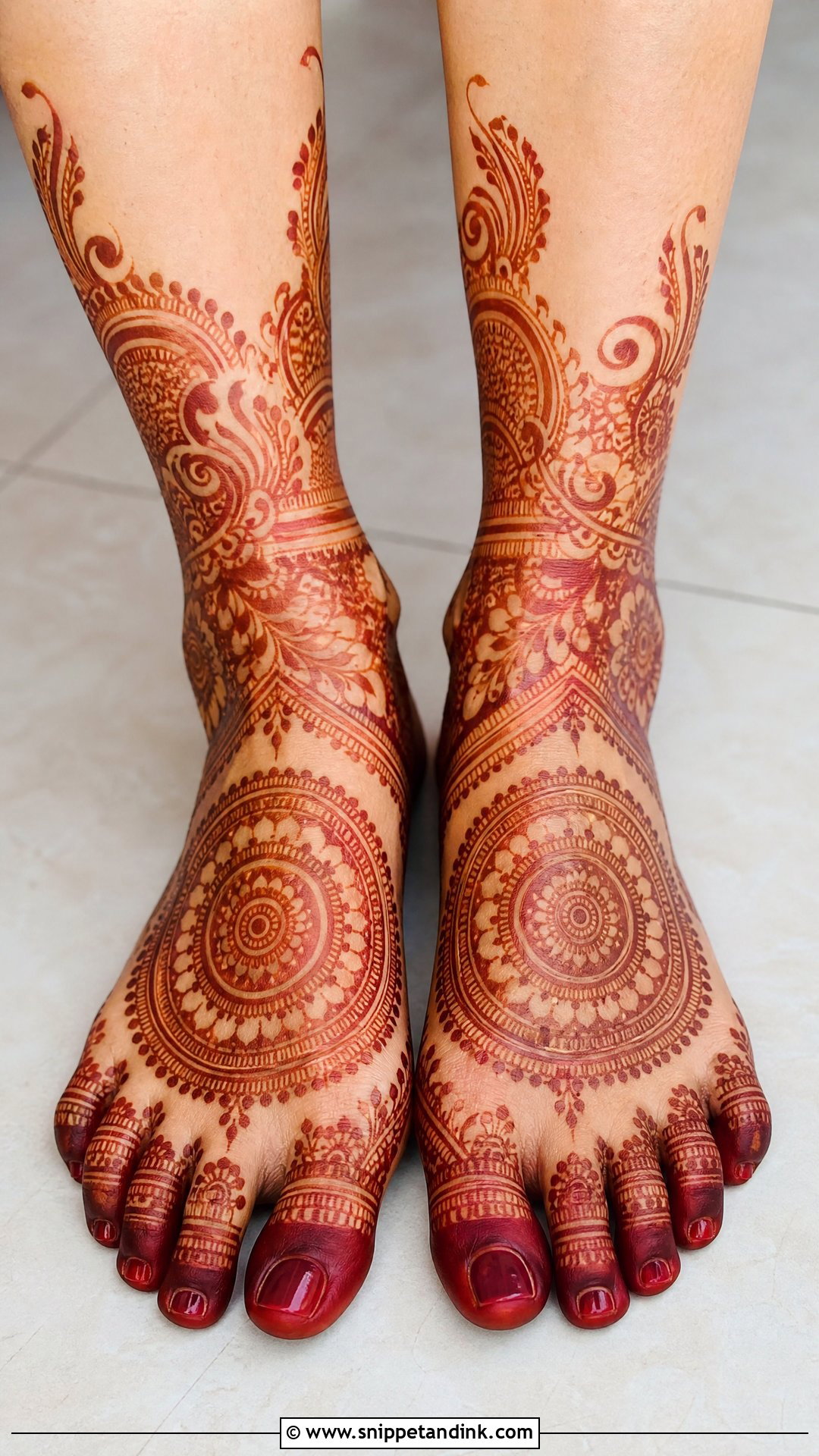
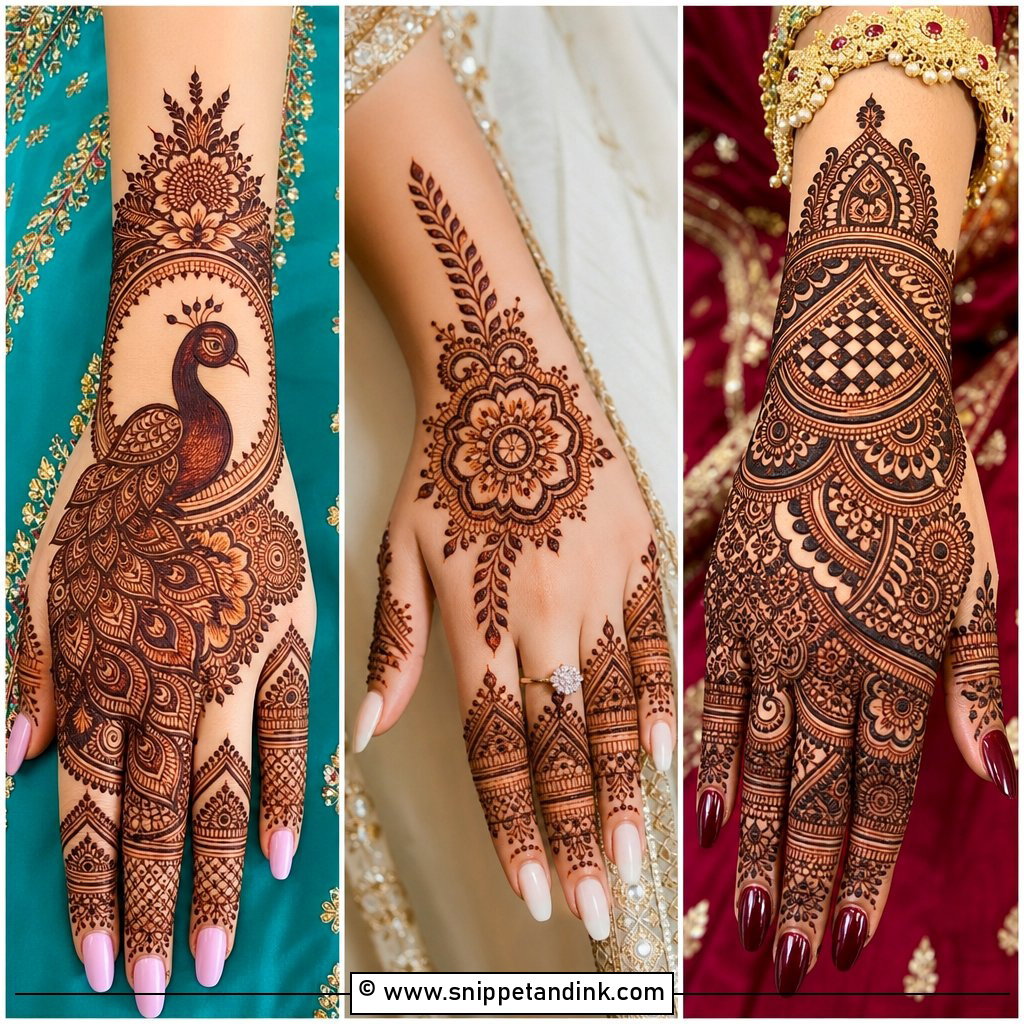
Traditional Bengali bridal feet are decorated with alta, the red dye painted around the edges of the feet and soles. Henna can echo that: I emphasize the toes, the outer edges of the foot, the heel and the ankle with bold curves, floral accents and round motifs, keeping the top of the foot cleaner. A central round motif on top looks right with a saree and gold. Keep the layout bold so it doesn’t lose impact from across a room. Some brides wear both, with alta painted on the morning over a henna stain from earlier in the week.
26. Mughlai Bridal Feet Mehndi Design
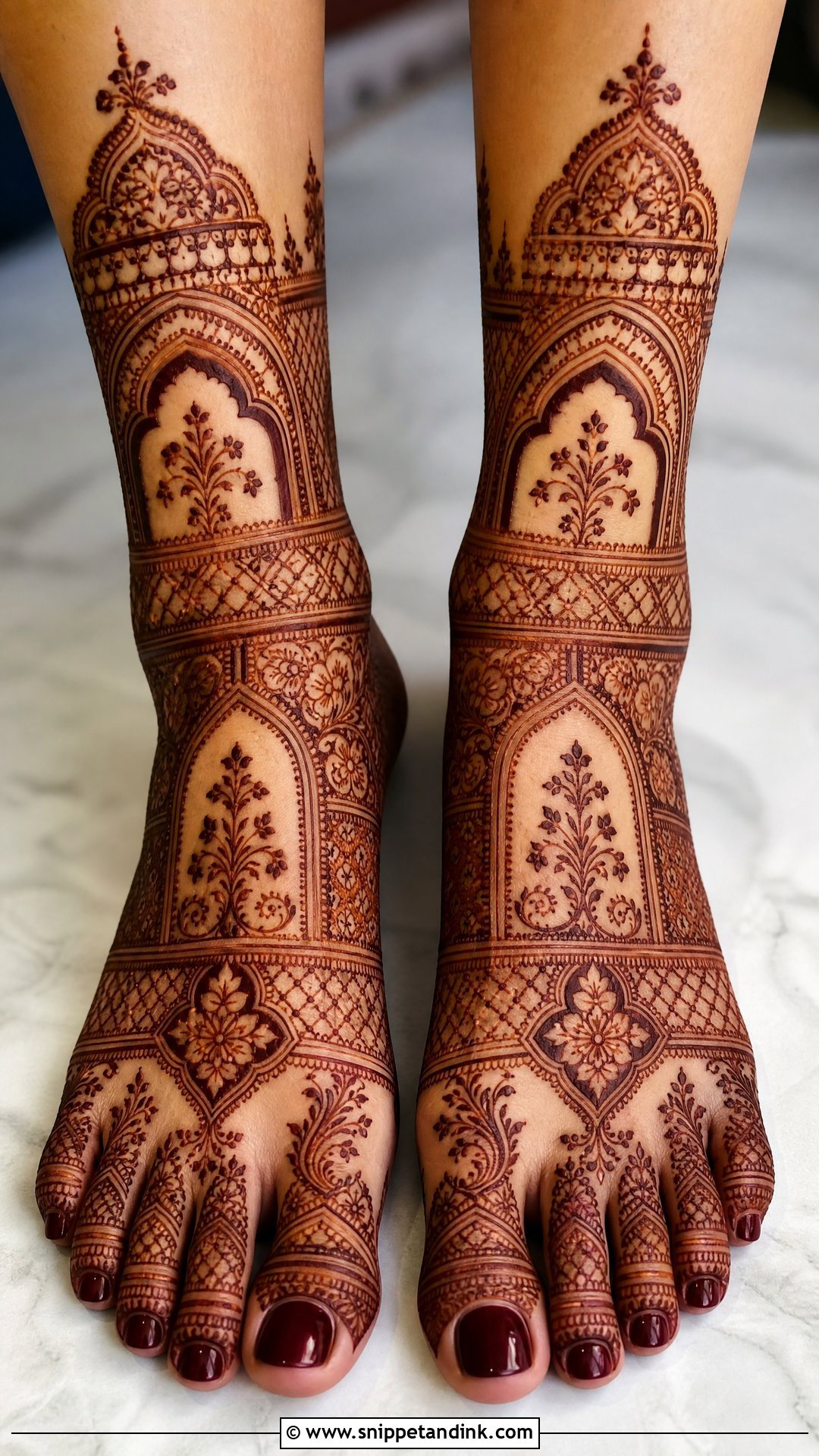
Arches, domes, floral vines, jaali windows and symmetrical borders give Mughlai work an architectural feel. It suits brides who like heritage patterns and want more structure than a free floral trail. I usually start with decorated toes, move to a central arch panel on the top of the foot and finish at a detailed ankle band. Fine dots, shaded petals and lattice fill the spaces. The arches have to stay clean and the borders crisp, or the whole thing loses its shape. It’s a match for embroidered lehengas and shararas.
27. Dulhan Bridal Feet Mehndi Design
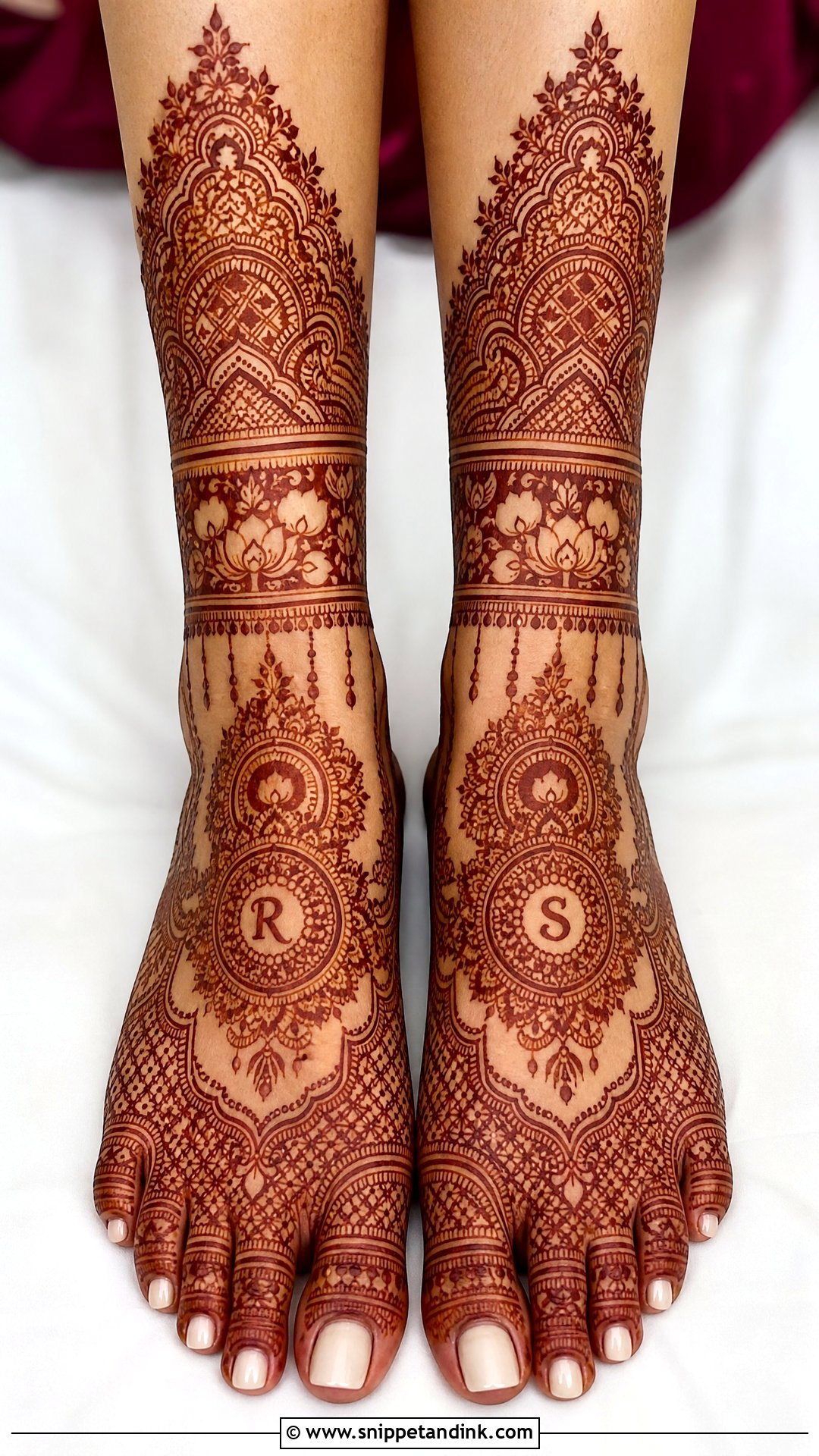
The dulhan foot is the full wedding statement: personal motifs, traditional symbols, the groom’s initials, paisleys, flowers, mandalas and full coverage, often designed to match the hands for coordinated photos. Some brides tuck in a date or a meaningful symbol. Because it’s detailed, plan the time honestly. I prefer applying it one to two days before the wedding; the stain needs that time to darken from orange to its deepest shade, and you get a calmer final day.
28. Portrait Bridal Feet Mehndi Design
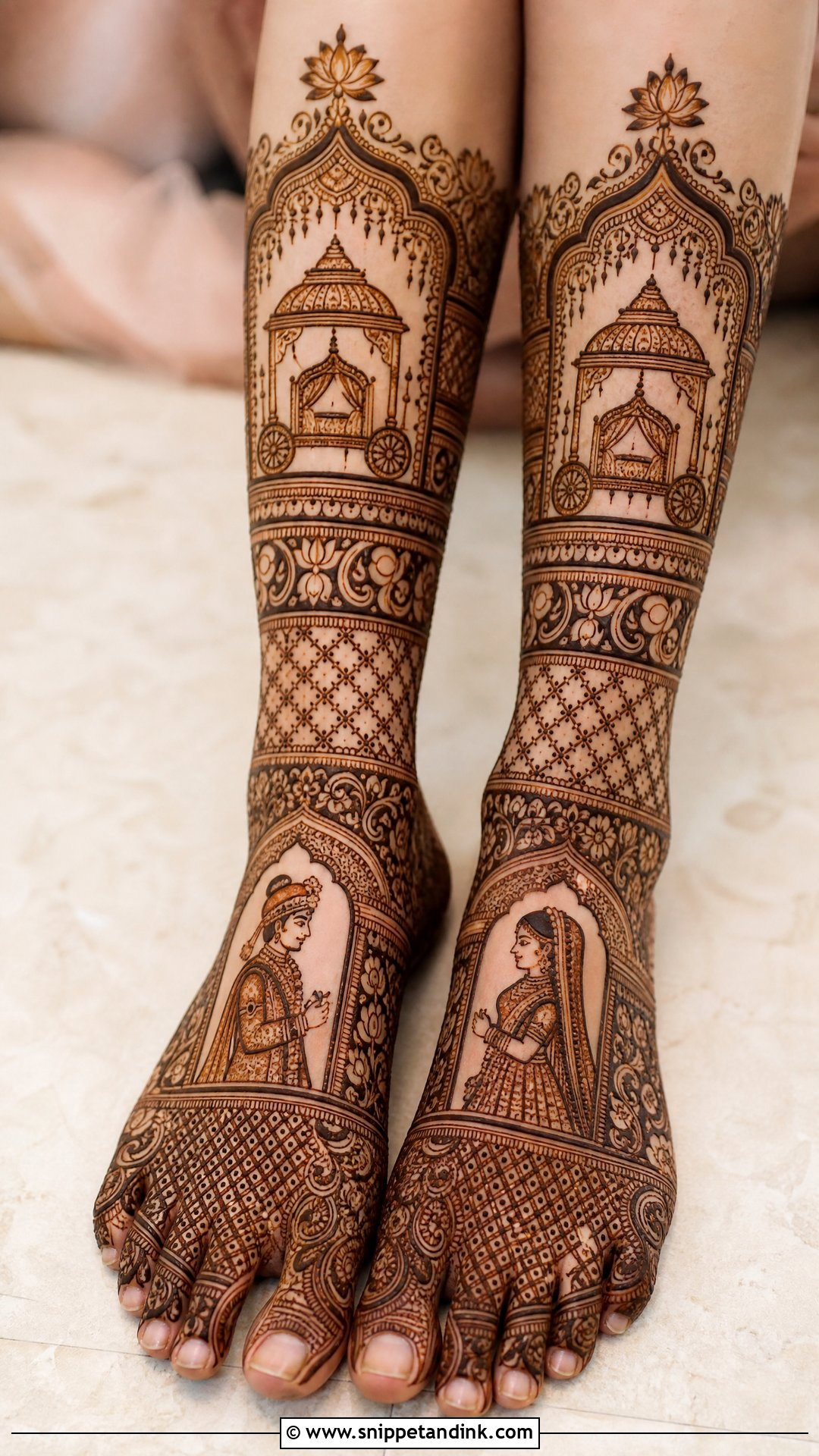
Faces, wedding scenes, a doli or symbolic figures can be drawn near the ankle or on the lower leg. Portrait bridal feet mehndi design needs room, so it works better in half-leg or full-leg layouts than on the top of the foot alone, with jaali, lotus, peacocks and paisley borders framing the art. Choose an artist who specializes in portraits and ask to see healed stains, not only fresh paste photos. Faces drawn too small turn into smudges as the stain spreads slightly, so I keep them bold.
29. Under Feet Bridal Mehndi Design
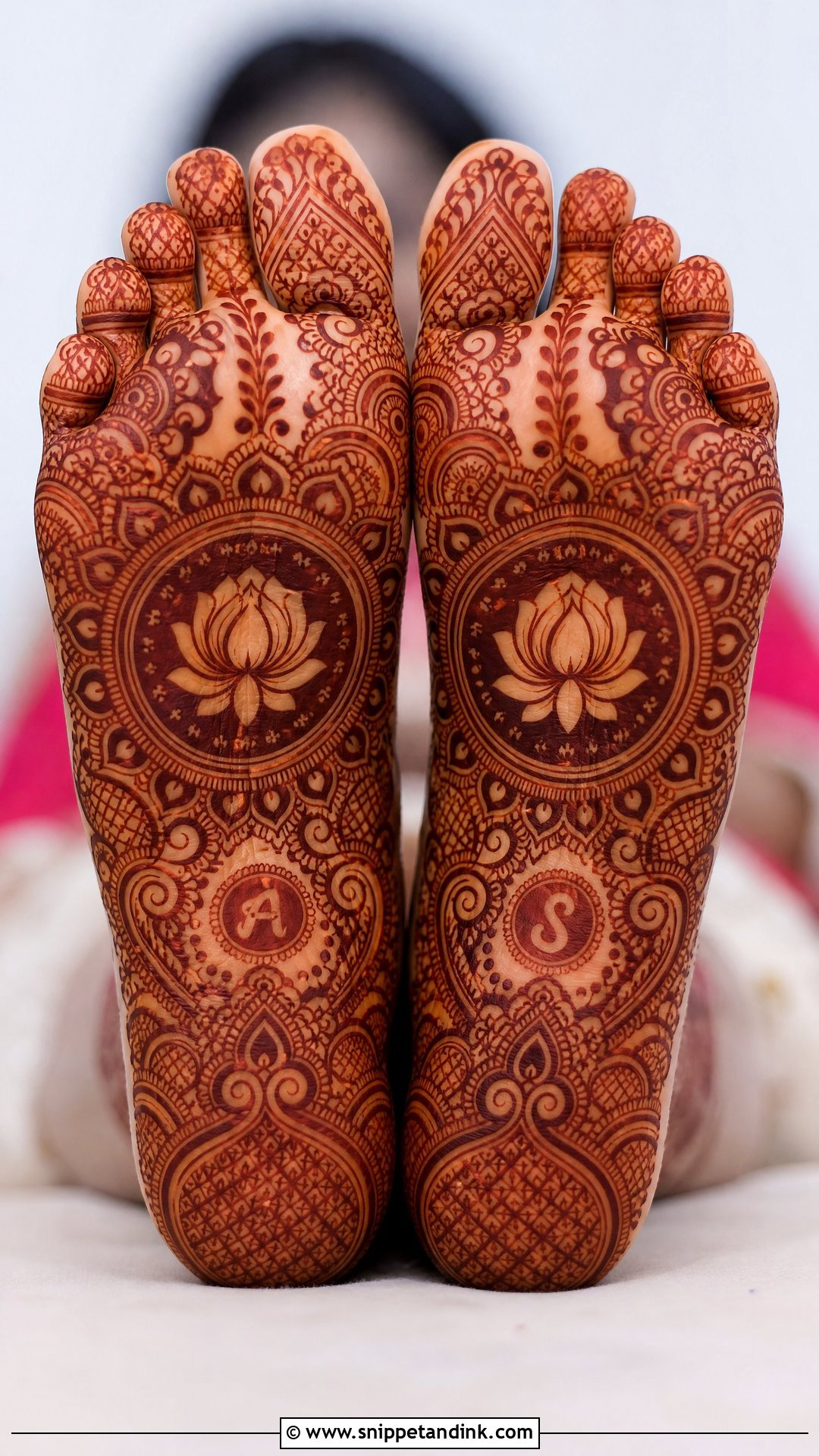
Soles take henna better than almost anywhere else on the body, because the skin there is thick and stains very dark. Designs on the underside appear in special photos and seated poses: mandalas, lotus circles, initials, small hearts, paisleys and symmetrical borders. Pressure and friction are the challenge, so tiny delicate work rarely survives; bold shapes stain better and stay visible longer. You must rest afterward, and I mean no walking at all until the paste has set firmly. Lovely as a surprise detail, but not for a bride with a busy evening ahead.
30. Modern Bridal Feet Mehndi Design
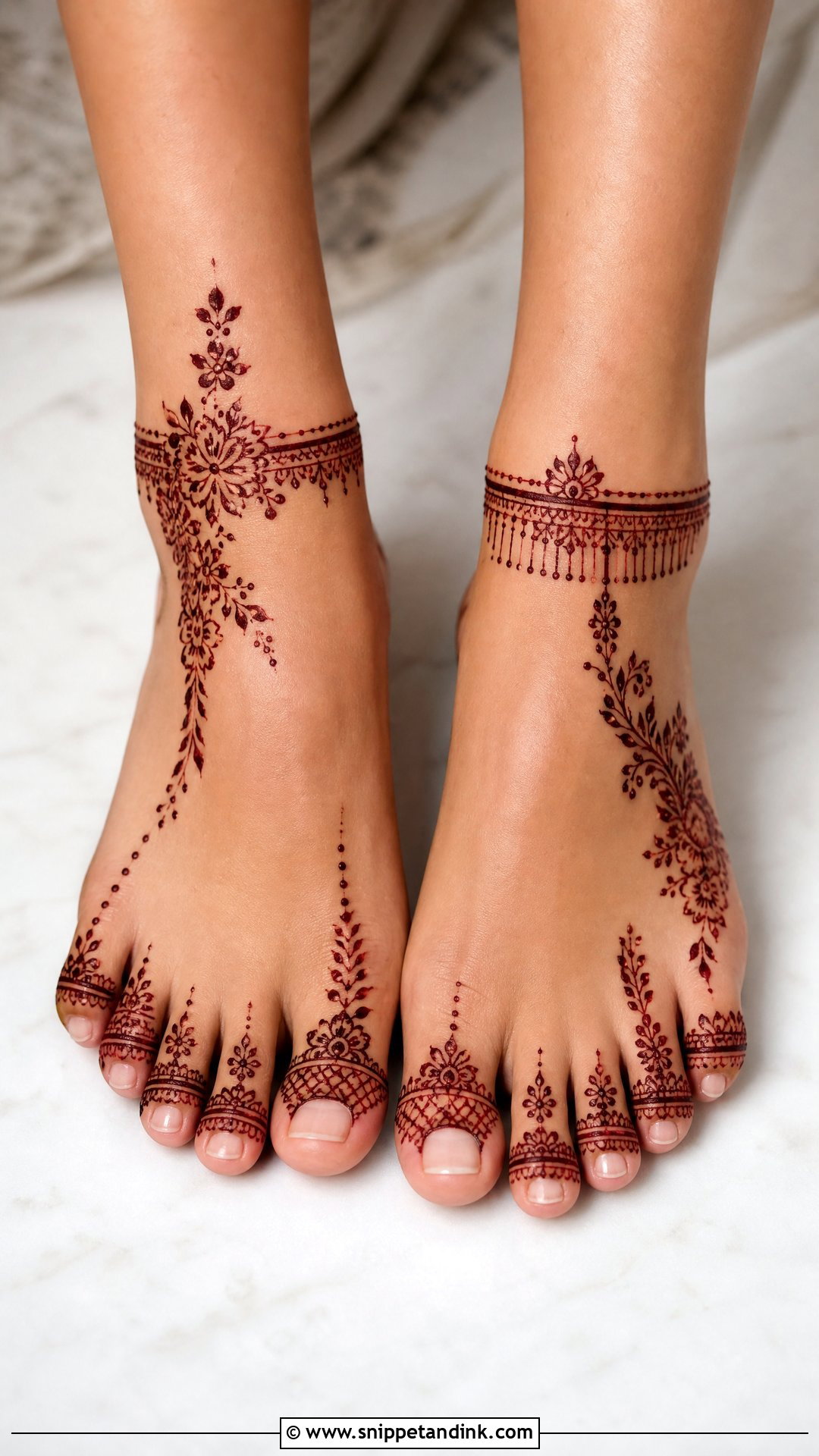
Modern foot work focuses on shape, spacing and balance rather than coverage: negative space, fine florals, geometric lines, slim ankle bands, scattered motifs and sometimes asymmetry between the two feet. A diagonal floral trail, a sleek mandala or a bold ankle band can carry the whole design. Brides often choose it for destination weddings, fusion ceremonies, pastel outfits and minimal jewelry. Less paste also means shorter drying and easier wear in heels and closed sandals later.
The Hours After the Paste Goes On
Feet are the easiest place to ruin a stain, because you need them to move. My aftercare for foot henna is stricter than for hands.
- Sit with your feet raised on a towel and let the paste dry fully before anyone dabs on lemon and sugar to hold it in place.
- Keep the paste on as long as you can, ideally overnight. Wrap loosely in tissue and slip on old cotton socks for sleep, and put an old sheet over the bed.
- In the morning, scrape the dry paste off with a blunt edge instead of washing it off, then keep water away for as long as you reasonably can.
- Skip tight closed shoes for the first day. Friction from straps and soles wears the fresh stain unevenly.
The color you see when the paste comes off will be bright orange. That’s normal. It deepens to reddish brown over the next one to two days, and soles and heels usually end up darker than the tops of the feet because the skin is thicker there.
Pedicure first, henna second
Book your pedicure before the mehndi, never after. Scrubs, soaking and exfoliation fade a stain quickly. Henna will tint the nails orange too, so if you want a specific polish color on the day, you can paint over that tint later without harming the design on the skin.
Matching the Foot to the Rest of the Wedding
Your outfit, ceremony, jewelry, shoes and patience for sitting still should all decide how much foot gets covered. Full Indian or Rajasthani work suits a traditional bride, while Arabic, Gulf and modern designs suit brides who love bold flow and open skin. Minimal, ankle, toe and sole designs give a quieter, more personal finish. Save the designs you love, show your artist your shoes and hem length, and protect the drying time. The stain you get is mostly decided in the hours after I put the cone down.
You'll Like These Ideas:


Leave a Reply