
At an engagement, the back of the hand is the side everyone photographs. The ring goes on, the camera comes close, and the palms are mostly hidden. So when a bride sits down with me for engagement henna, I plan the back hand first and treat it differently from wedding-day mehndi: a little lighter, more open around the ring finger, and drawn so it reads clearly in a close-up. Below are the back-hand designs I’m asked for most, from full Indian coverage to Arabic trails, Moroccan geometry and quiet minimal work, with notes on how each one behaves on the skin.
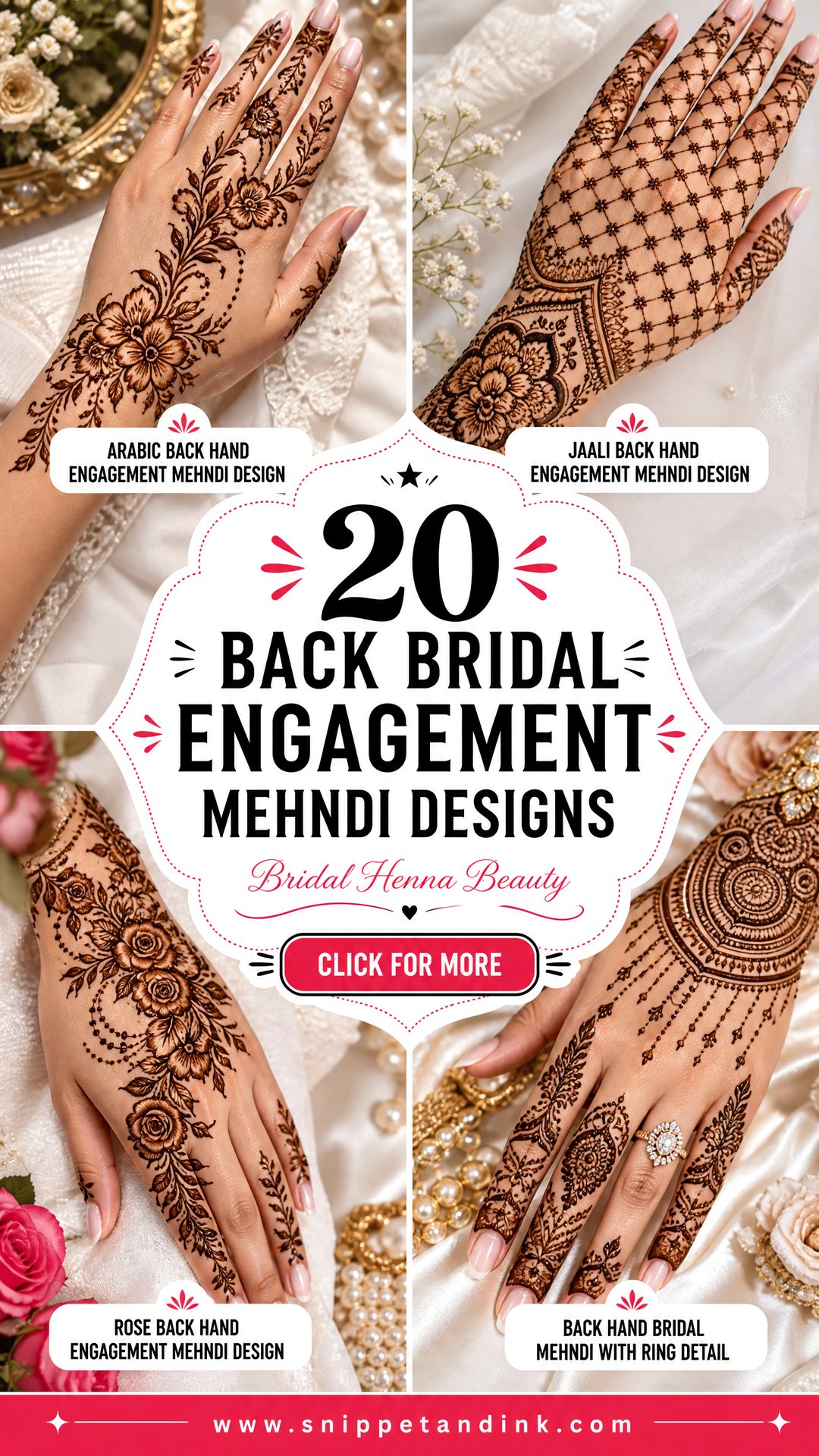
Getting the Darkest Back-Hand Stain by Engagement Morning
Fresh henna comes off bright orange. It darkens to its deepest brown over the next one to two days, so the timing of your appointment decides what the camera sees. I usually apply engagement mehndi the day before the event, or two days before for a morning function. Apply it the same morning and you’ll be photographed with orange hands.
The back of the hand also stains lighter than the palm, because the skin is thinner and drier. Here’s what I tell every bride to help it along:
- Leave the paste on as long as you can, ideally six to eight hours or overnight. A light lemon and sugar seal keeps it stuck to the skin.
- Scrape the dried paste off rather than washing it. Then keep water away for the first twelve to twenty-four hours.
- Keep your hands warm. Henna darkens better on warm skin, so a cold, air-conditioned room slows it down.
- A thin layer of balm or oil before showering protects the stain. Avoid scrubbing and hand sanitizer on the design for the first day.
One safety rule I won’t bend on: use natural henna only. So-called black henna often contains a dye that can cause a serious skin reaction. A real henna stain is never jet black. If a product promises black in an hour, skip it.
1. Full Back Hand Bridal Engagement Mehndi Design
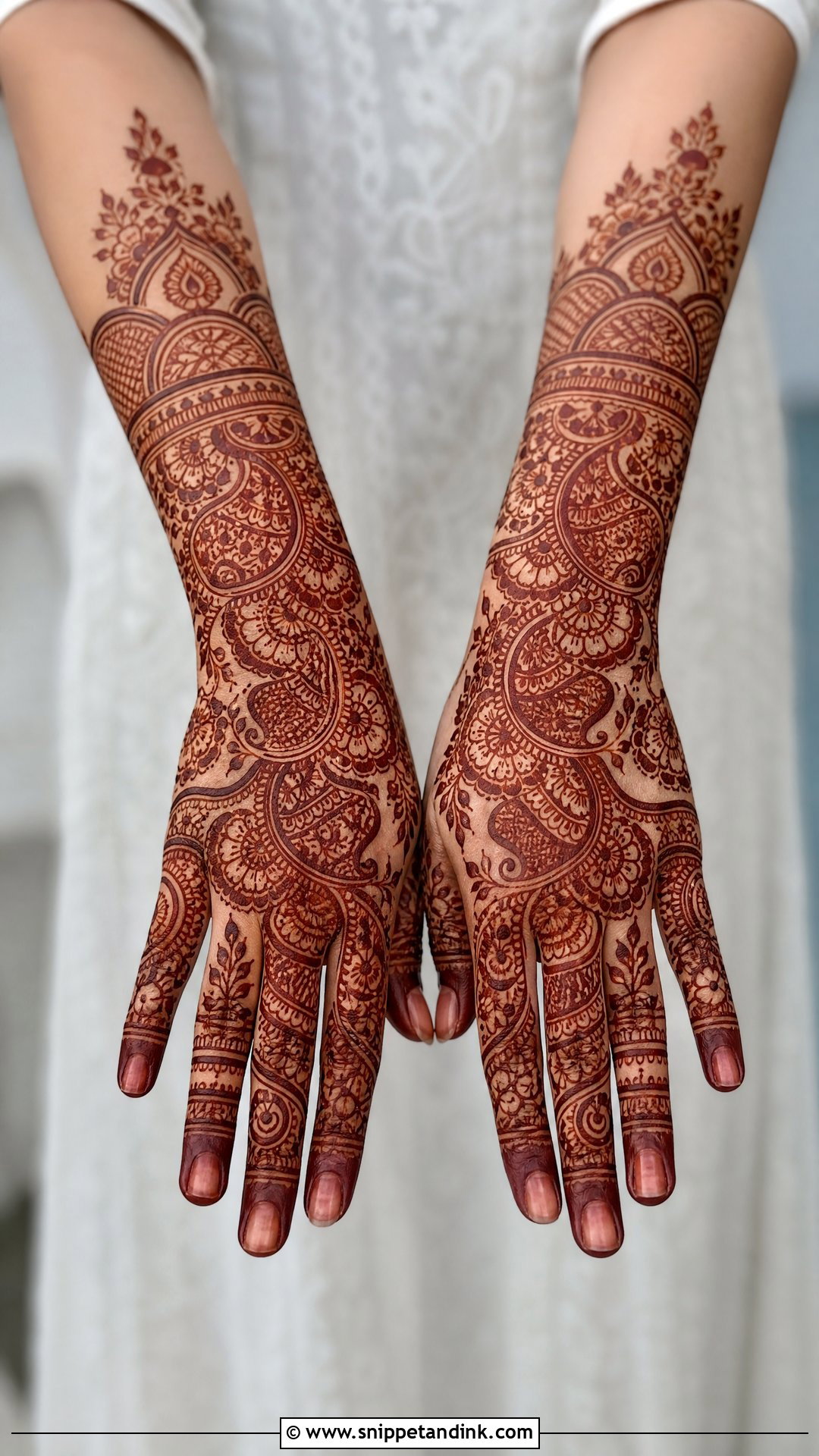
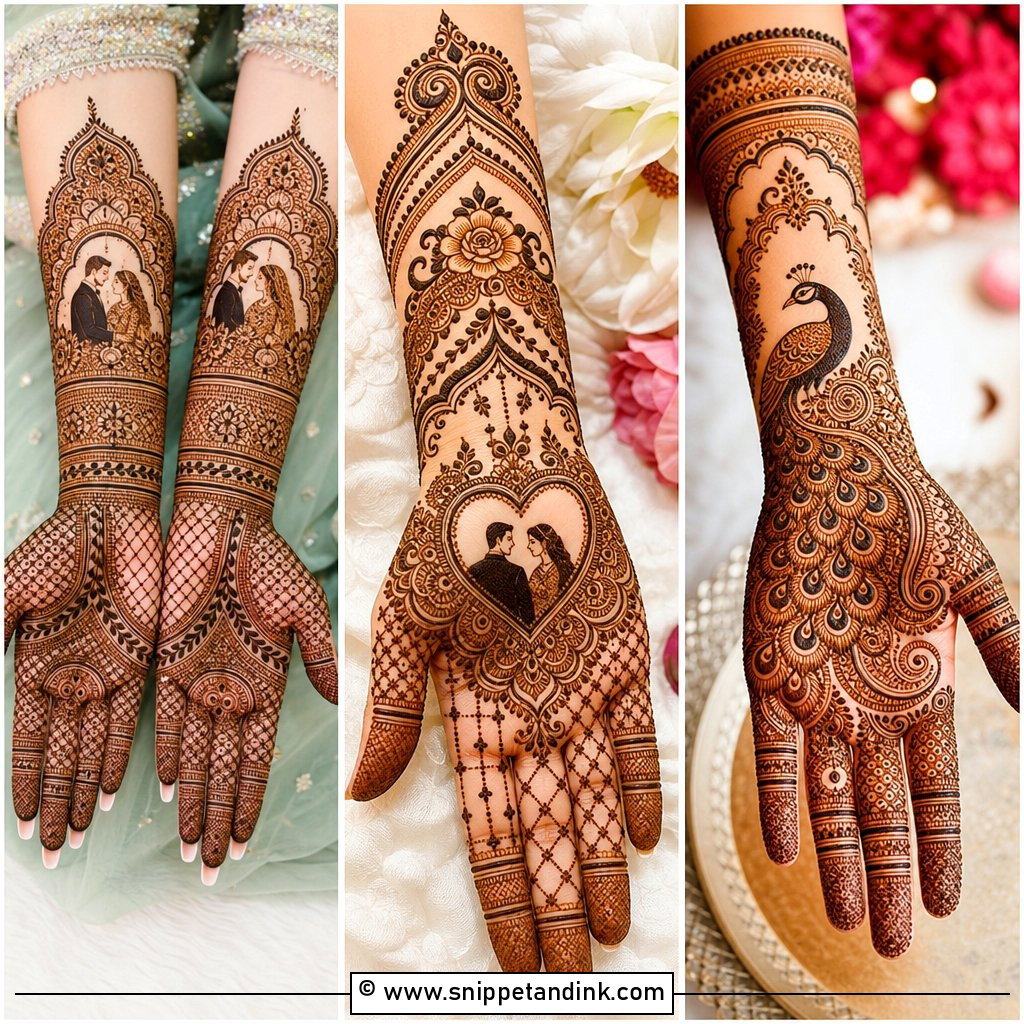
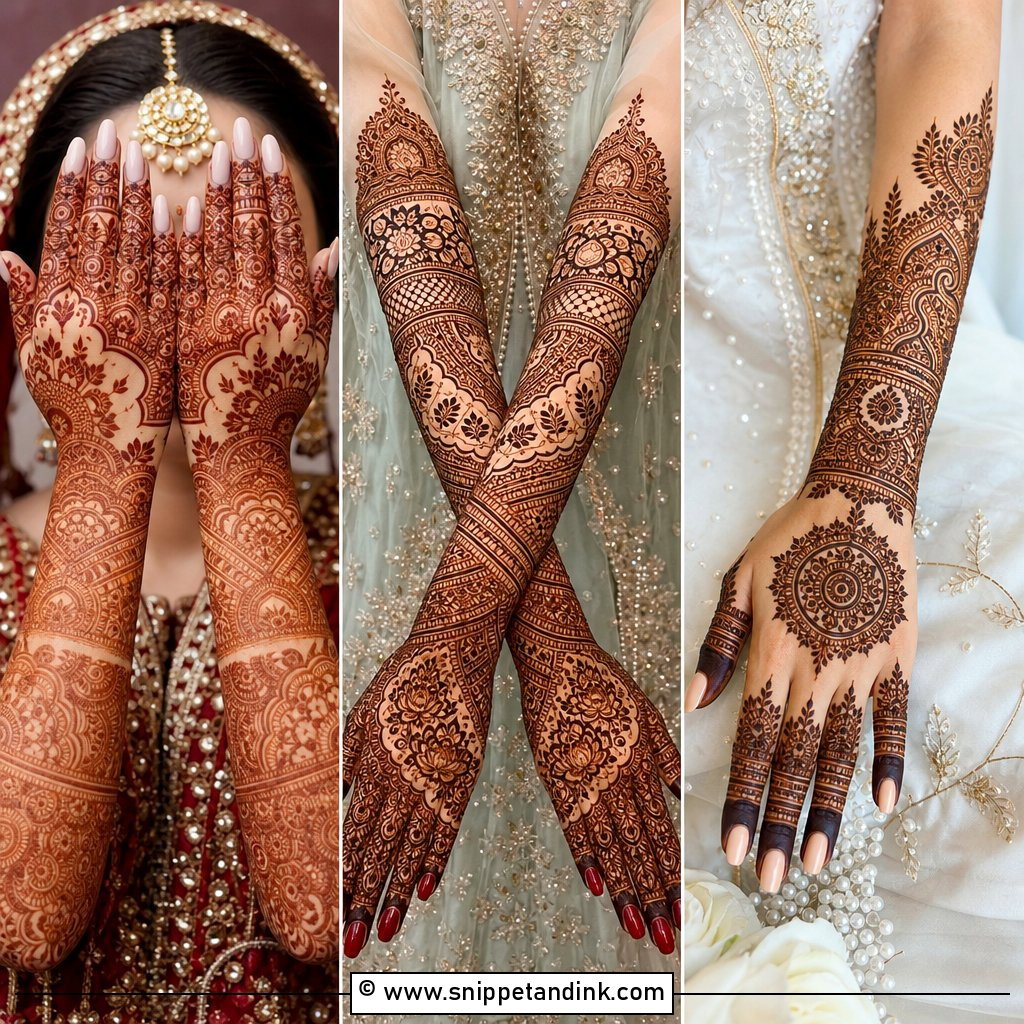
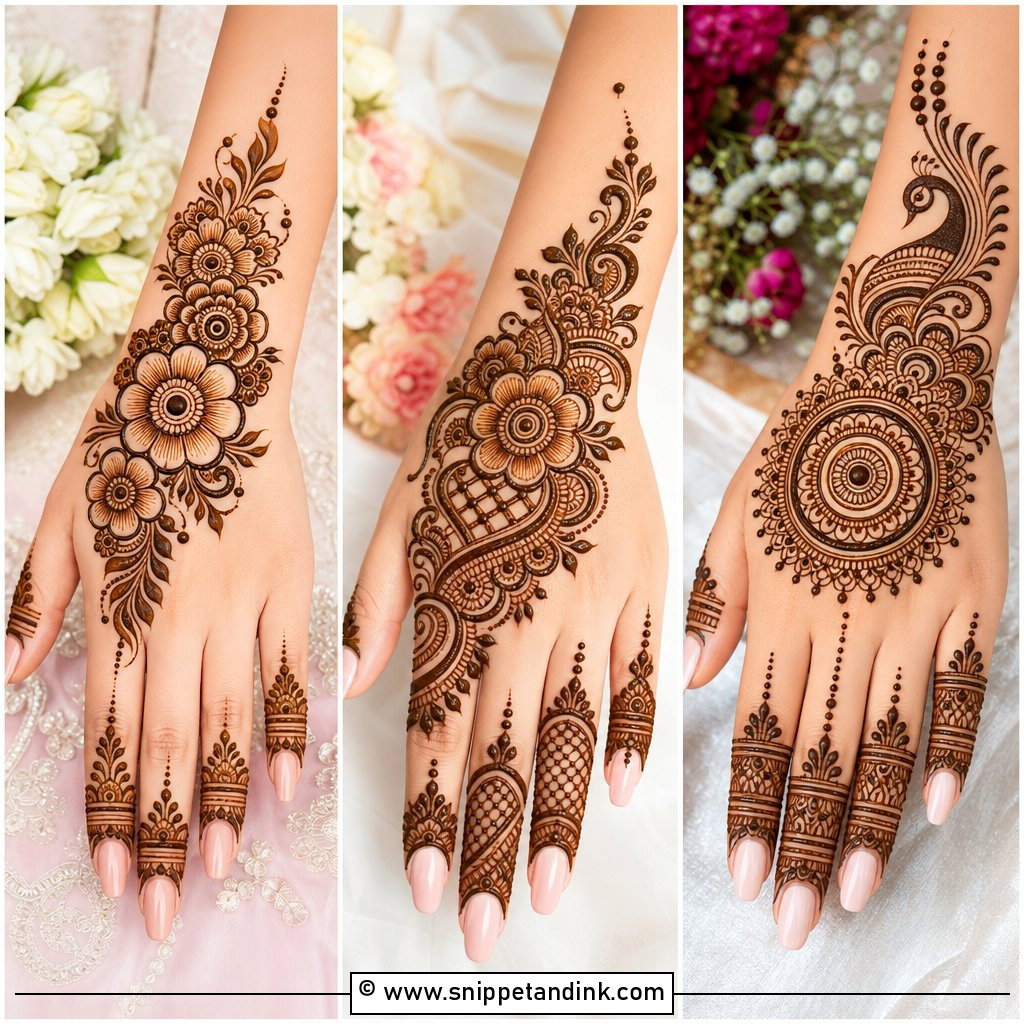
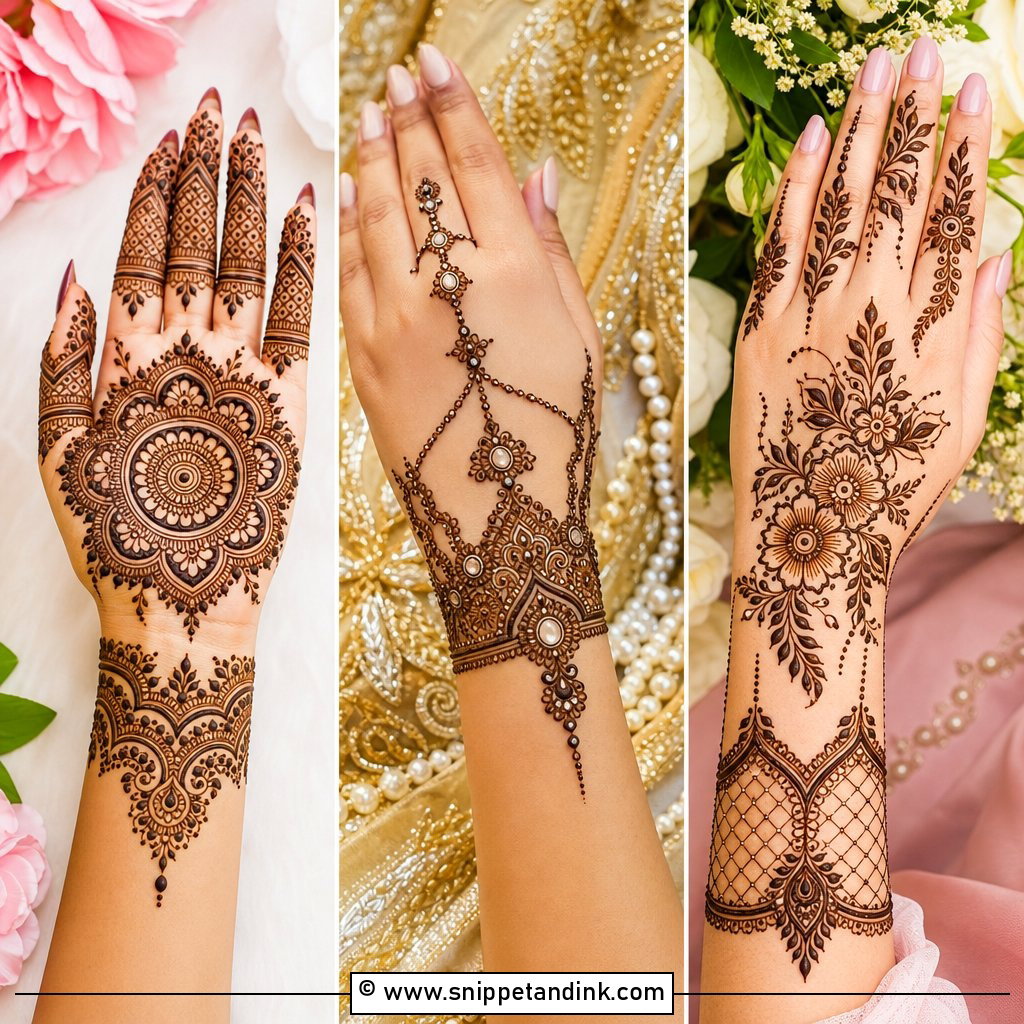
A full back hand bridal engagement design runs from the fingertips down to the wrist or lower forearm, built from paisleys, florals, fine lines, dots and some shaded sections. I keep a mandala or flower as the center point and leave a little breathing room around it, so it reads as bridal without the density of wedding-day work. The skin on the back of the hand is thinner and drier than the palm, so the stain comes up lighter there. Full coverage helps the design still look rich. The finger detailing is what makes the ring stand out.
2. Arabic Back Hand Engagement Mehndi Design
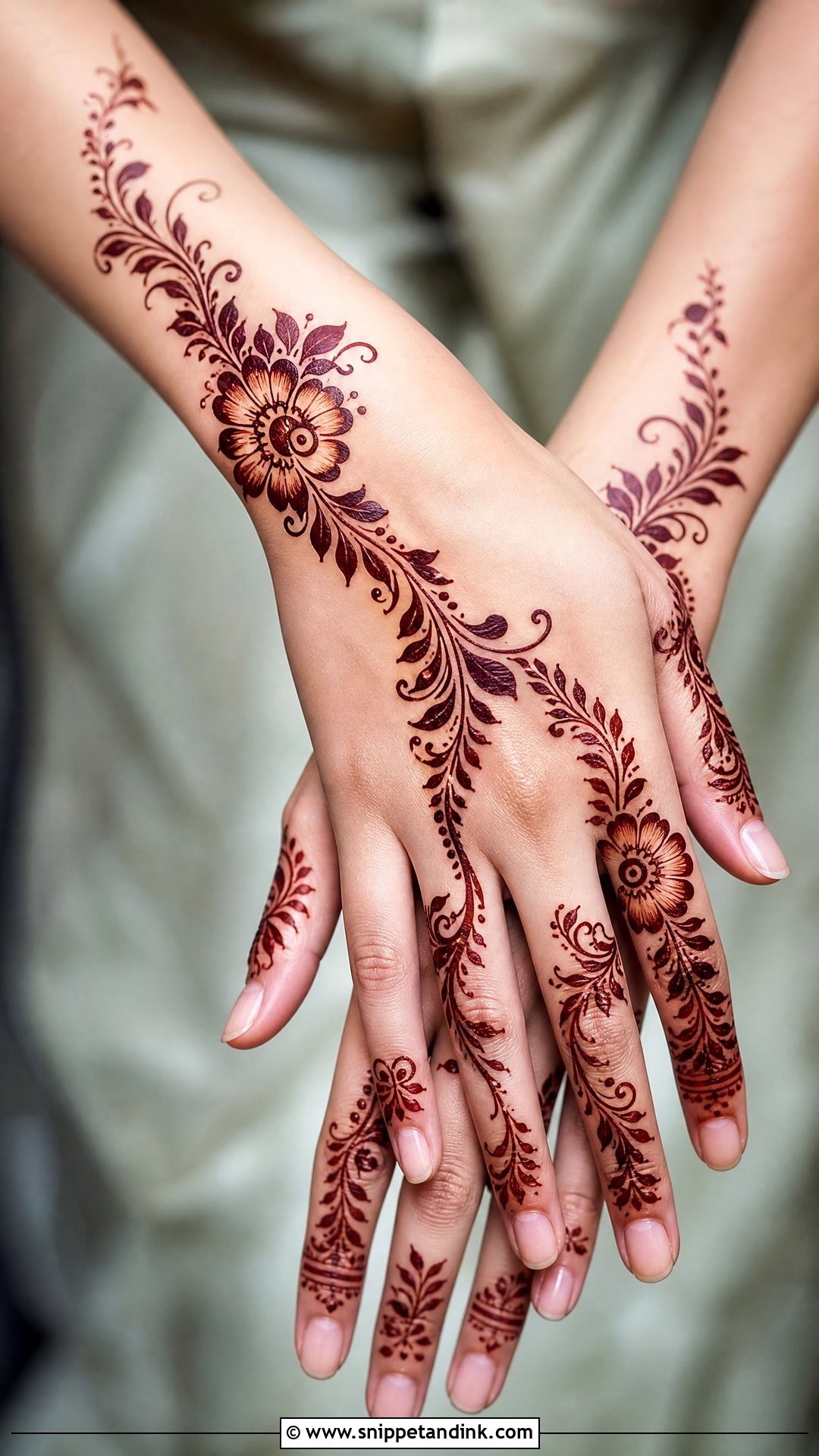
Arabic designs travel diagonally across the hand, usually from one side of the wrist toward the index or middle finger, and the open skin around them is what makes them look clean. Large flowers, leafy vines and bold outlines are typical. For an engagement I thicken the wrist slightly and add detail to the fingers so it feels festive rather than casual. The bold outline is forgiving, which helps if the bride needs to be done quickly. Thin fine-line work smudges more easily when she’s in a rush.
3. Indo Arabic Back Hand Bridal Mehndi Design
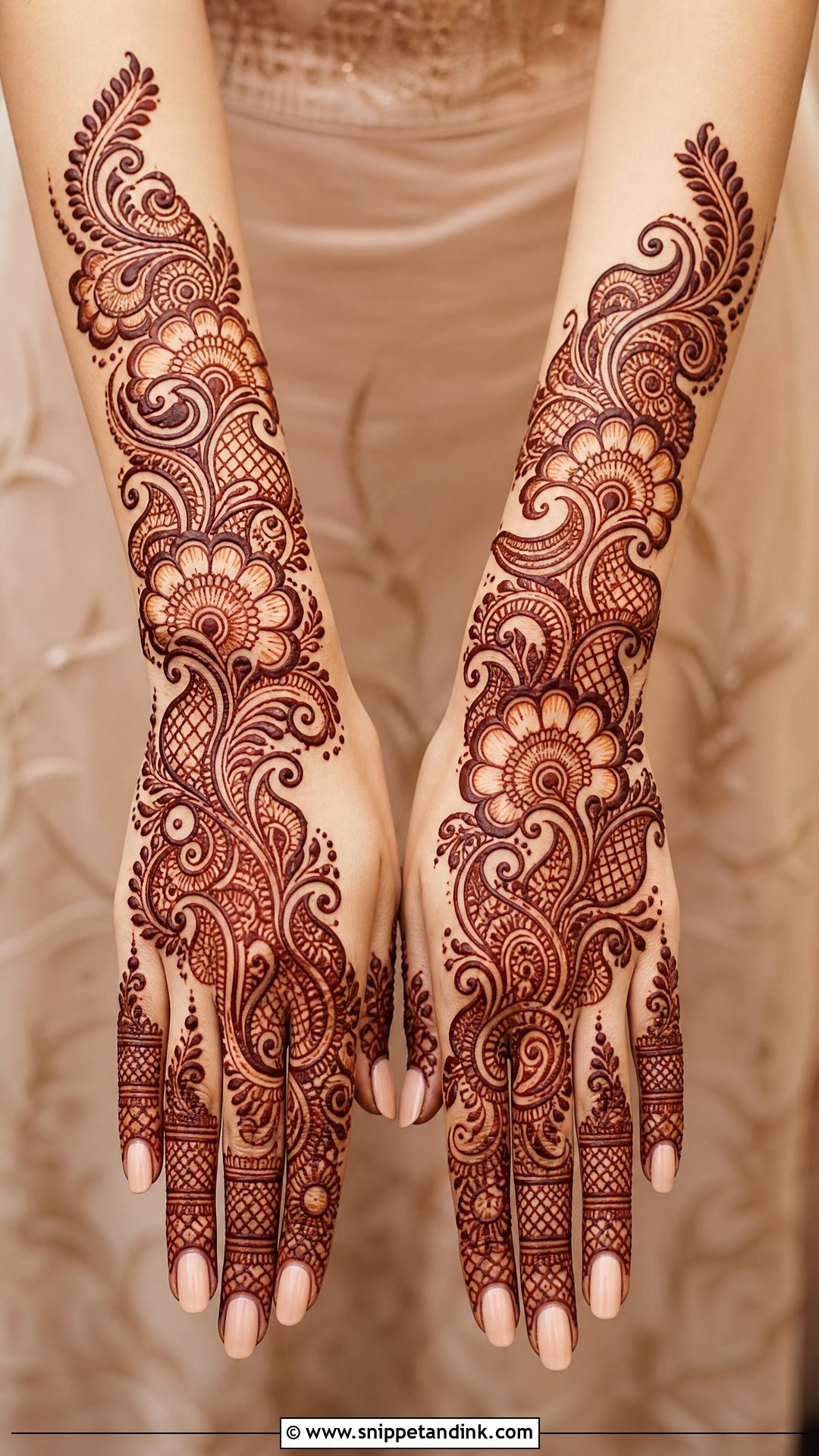
Fusion work sits between two traditions. Indo-Arabic back hand bridal mehndi takes the bold Arabic flow and fills it with Indian detail: a diagonal floral trail, paisley clusters, fine mesh and small mandalas. I leave small gaps between sections on purpose. Without them the fine fillers merge as the stain darkens and the hand looks muddy. The bold outlines carry in photos, and the inner detail rewards anyone who looks closer. It sits comfortably with a lehenga or a fusion outfit.
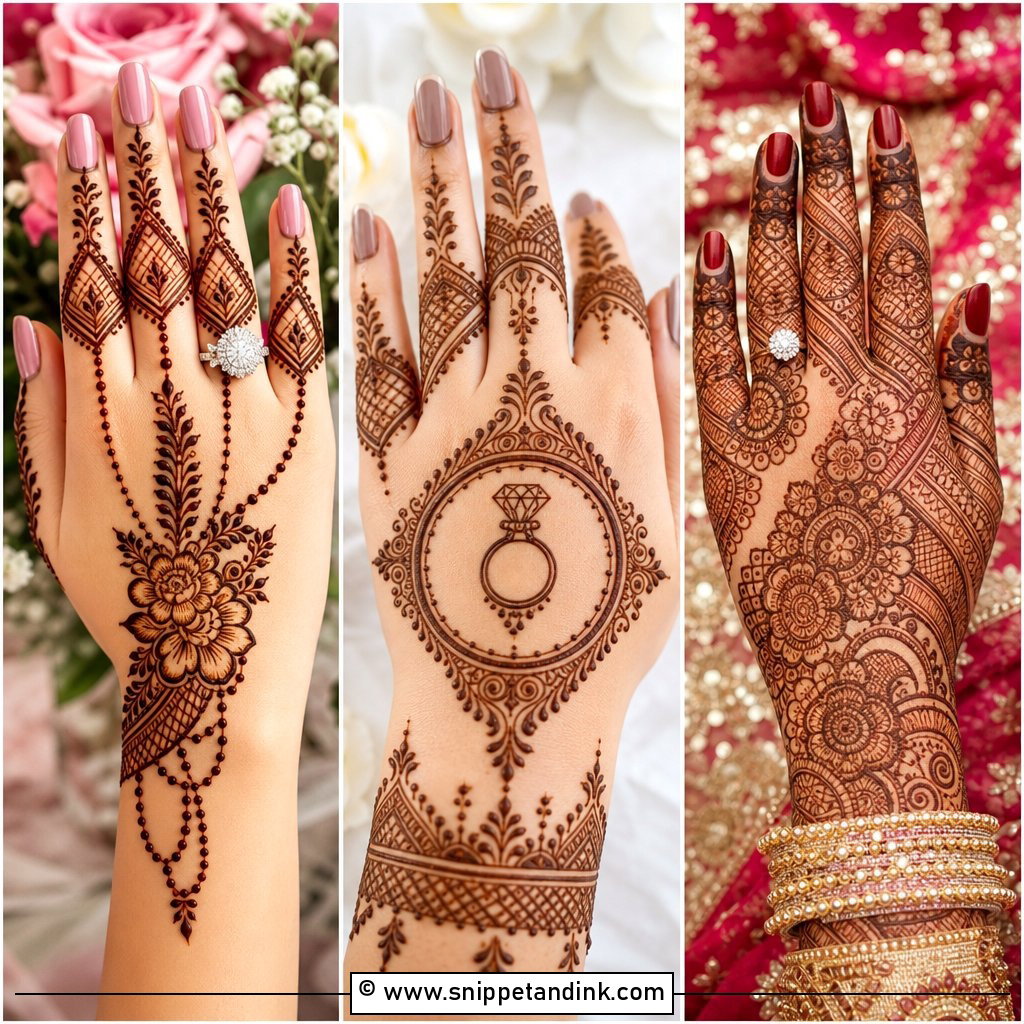
4. Mandala Back Hand Engagement Mehndi Design
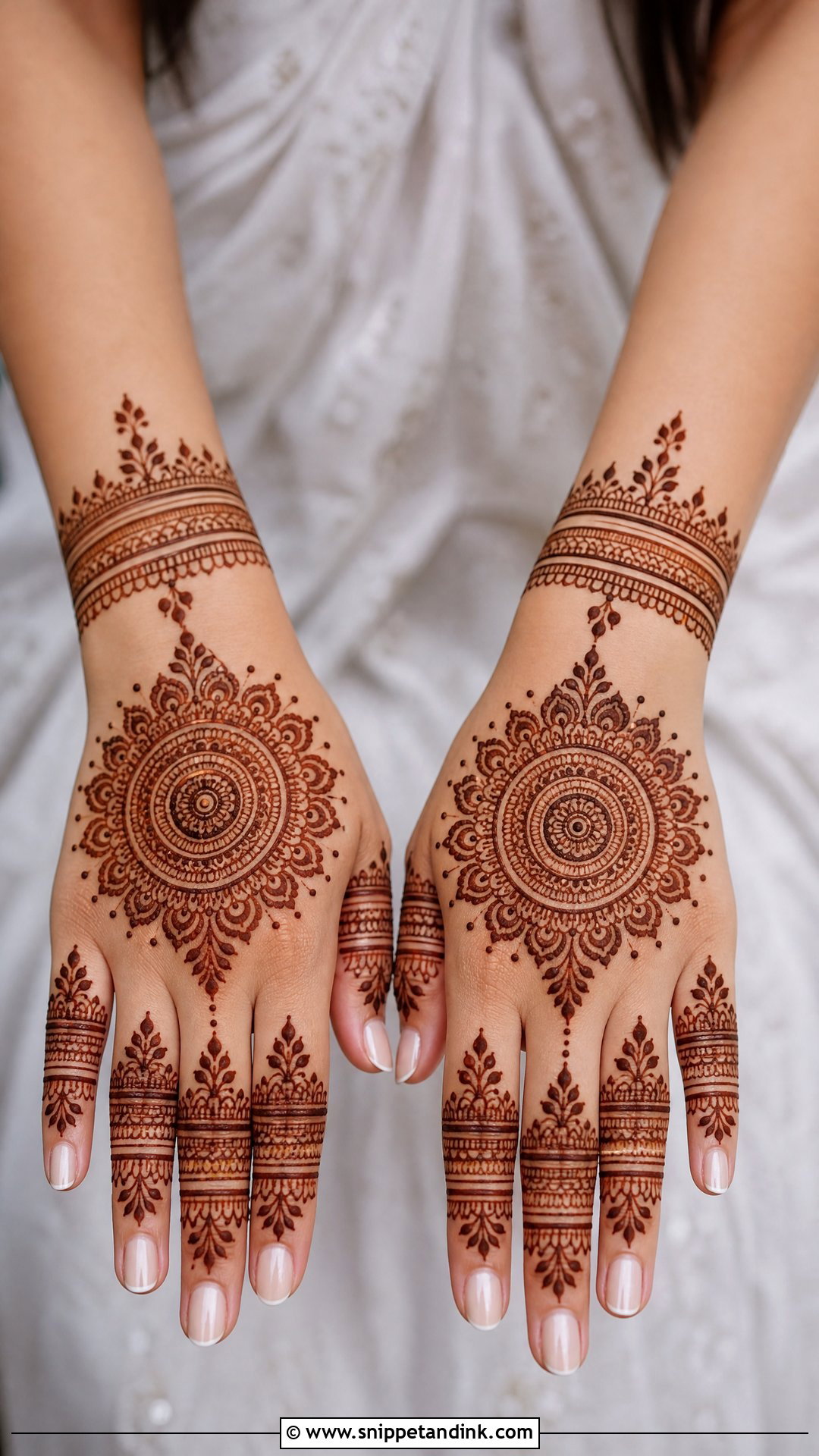
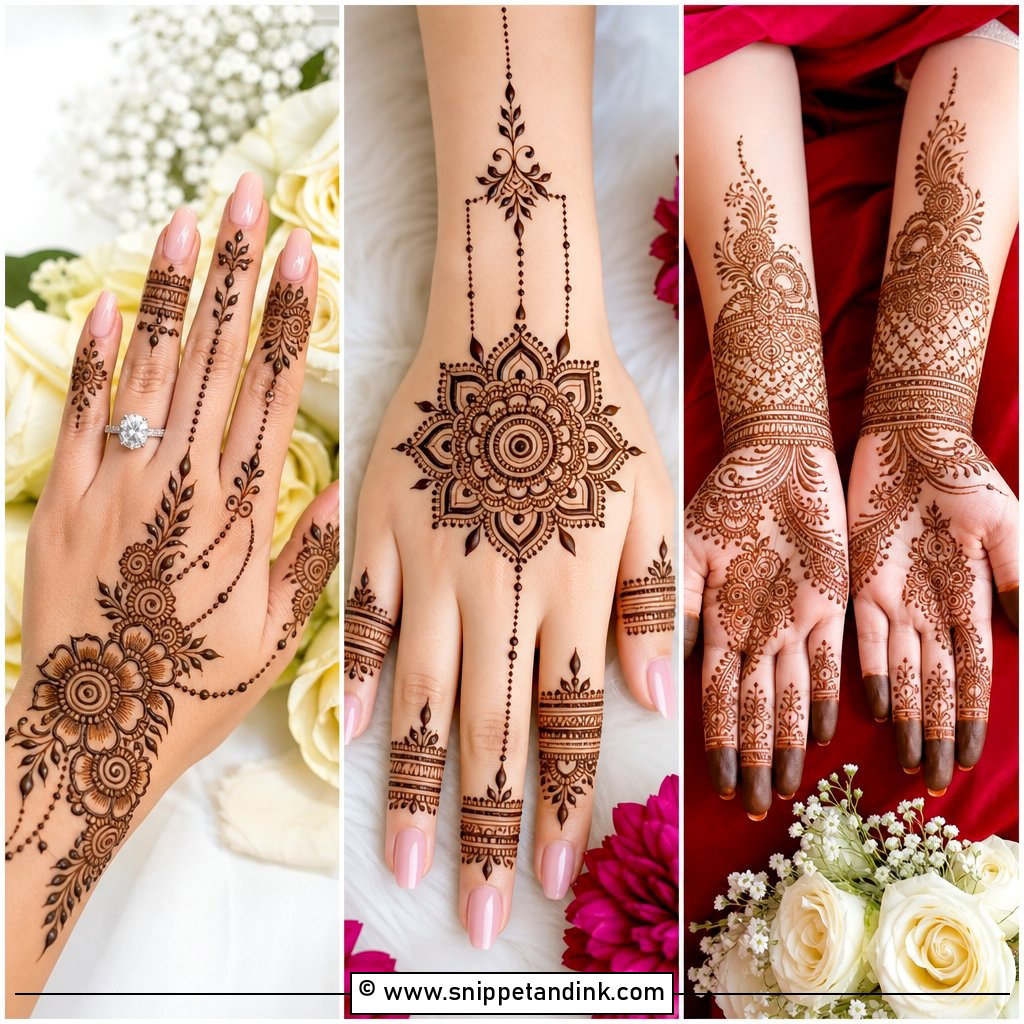
A single mandala in the center of the back hand is the design I’d suggest to a bride who isn’t sure what she wants. Around it go dots, petal rings and a bracelet band at the wrist, with lines or tiny florals on the fingers. Getting the circle truly round on a hand that curves is the skill here. I ask the bride to rest her hand flat on a cushion so the skin isn’t stretched while I draw, otherwise the mandala looks oval once she relaxes. It frames the ring area rather than crowding it, and it flatters almost every hand shape.
5. Floral Back Hand Bridal Engagement Mehndi Design
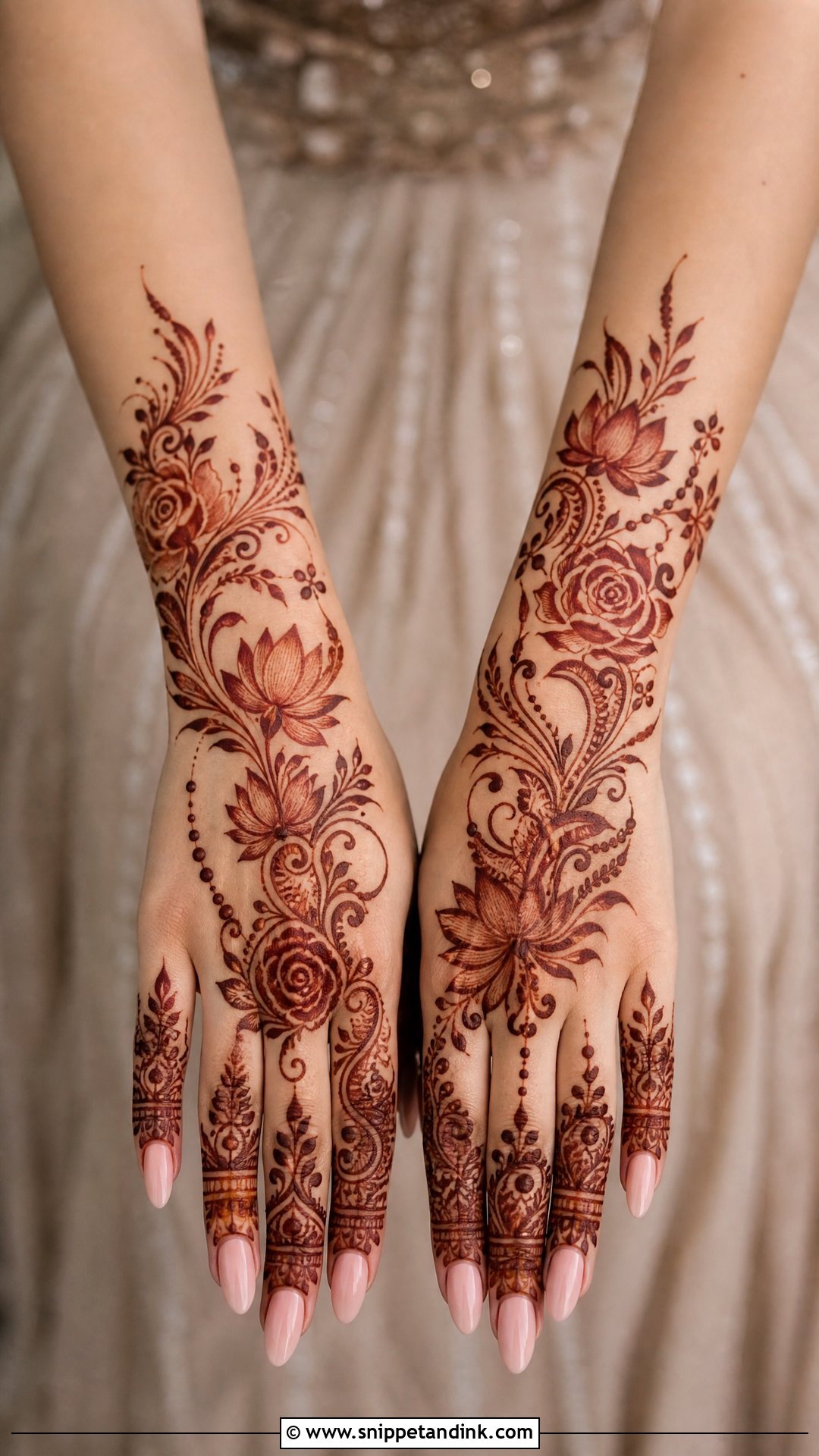
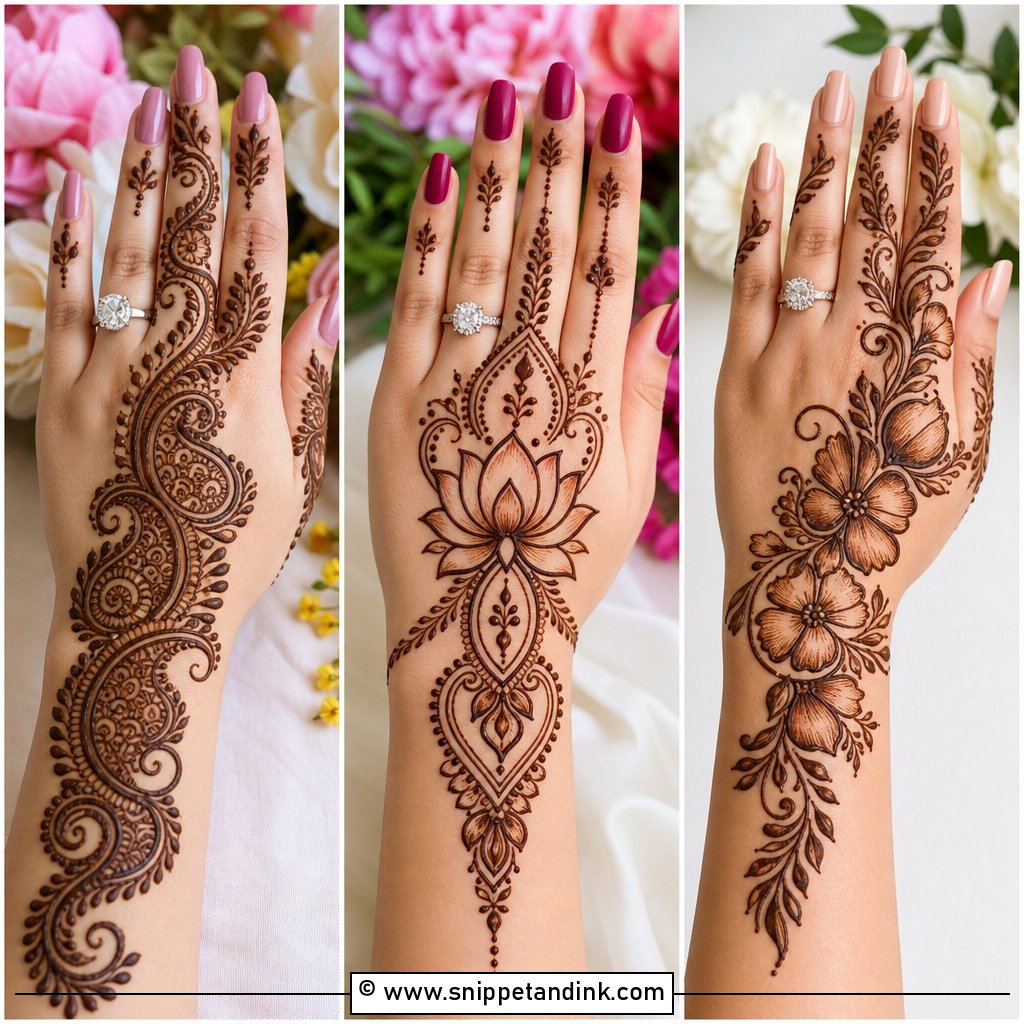
Florals soften the back hand: roses, lotus petals, small blossoms, vines and curved stems arranged as a trail or a fuller layout. For an engagement I size the flowers medium and space them clearly, because tiny petals packed together blur into one patch once the stain deepens. Light shading inside the petals gives depth. Fine dots and a thin border finish the edges. Floral work sits nicely with pastel outfits and daytime functions.
6. Jaali Back Hand Engagement Mehndi Design
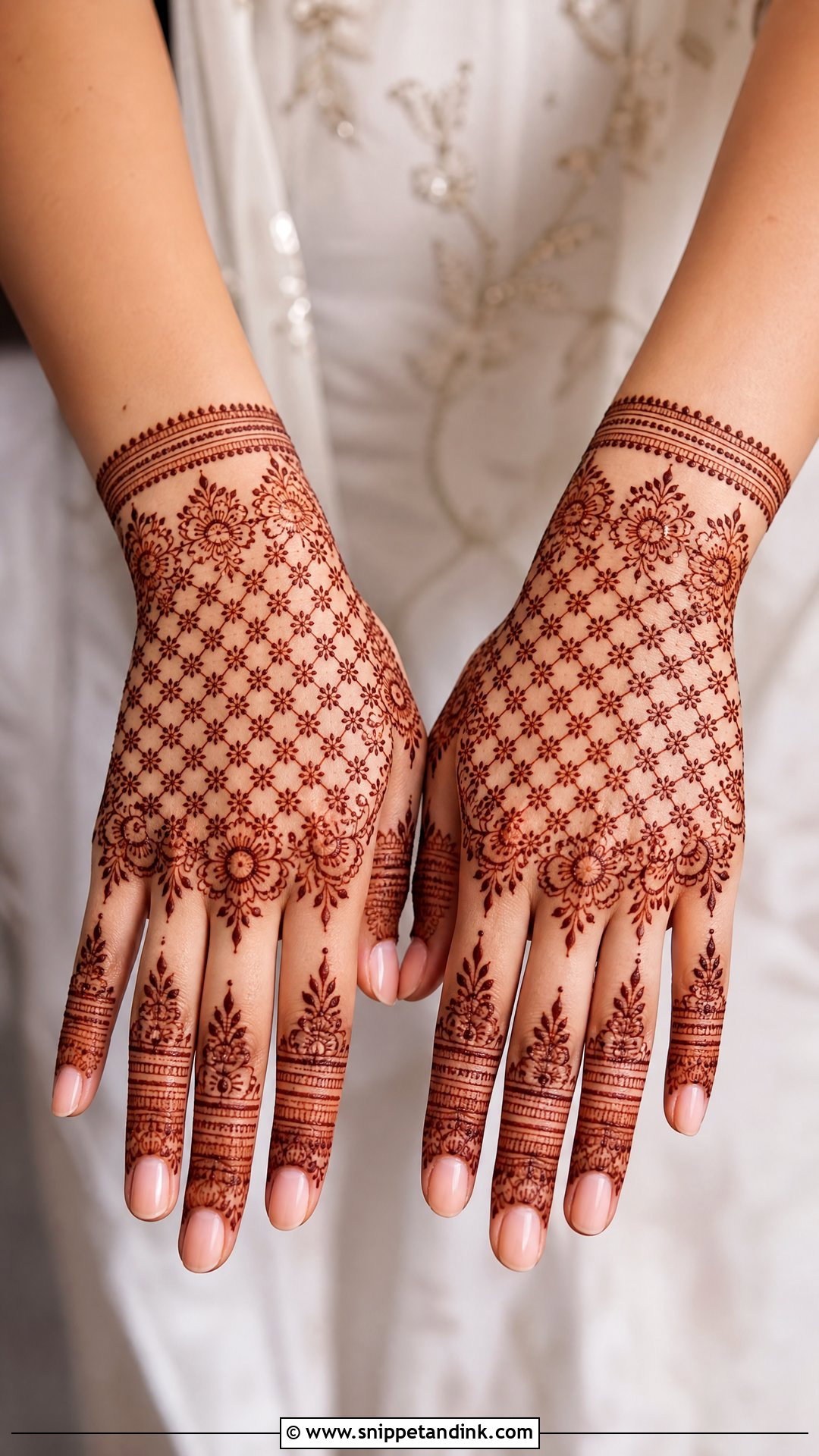
Jaali, the mesh pattern, gives a lace effect, often combined with flowers, paisleys or bracelet bands. It’s the easiest design to overdo. A dense grid on the back of the hand darkens into a near-solid block, so for an engagement I keep the mesh open, frame it with clean borders and break it with small flowers. I usually draw jaali with a fine cone tip and slightly thinner paste. Done that way, it looks ornamental next to rings and bangles.
7. Jewelry Back Hand Bridal Mehndi Design
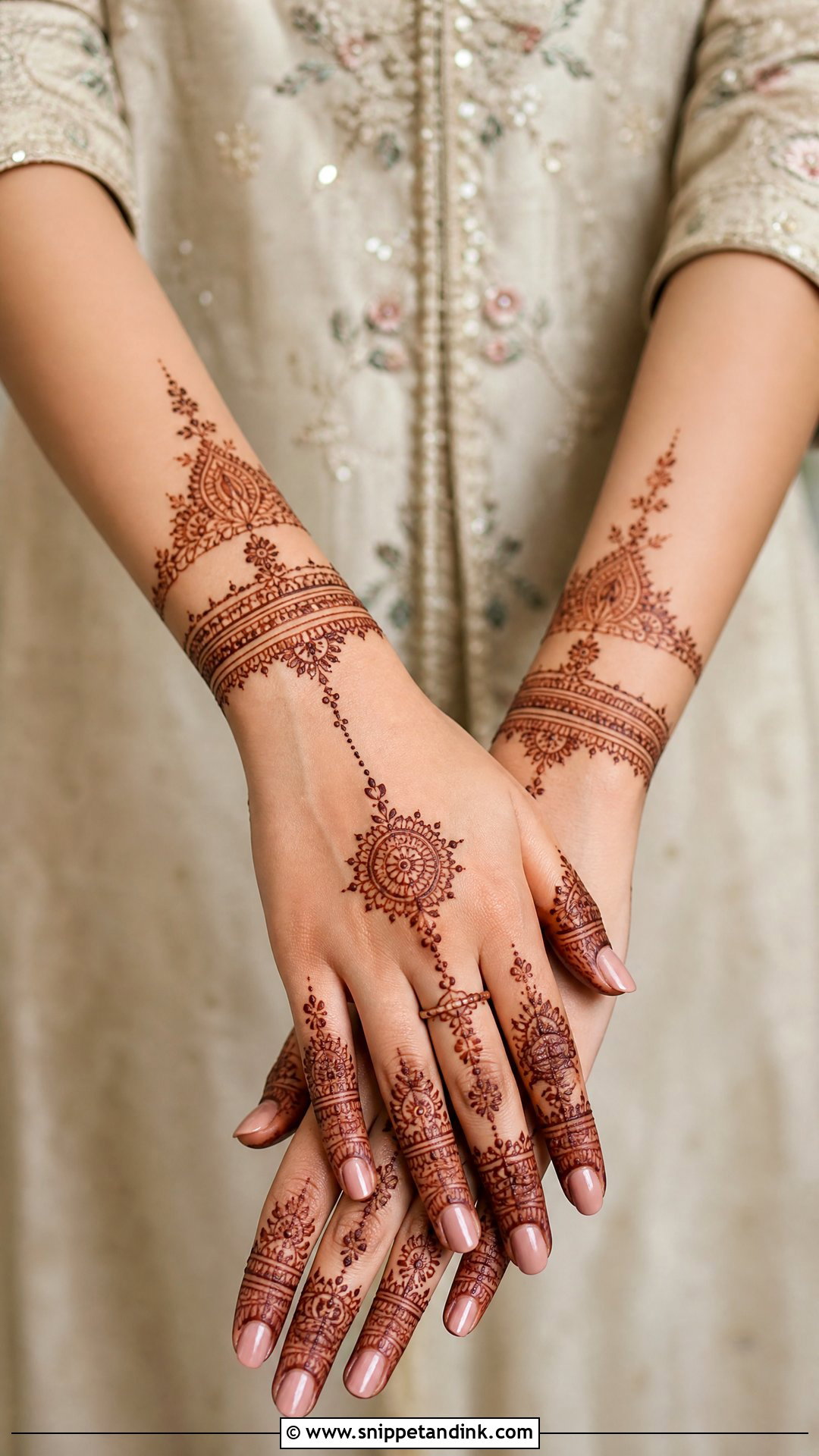
Jewelry mehndi draws hand ornaments in henna: ring chains, wrist cuffs and fine lines linking the fingers to the wrist. It naturally leads the eye to the ring finger, which is why engagement brides ask for it. A central motif acts like a handpiece and the wrist band acts like a bracelet. Before I start, I ask whether she’ll wear a real haathphool or bangles, because henna chains under real chains just look busy. If she’s skipping actual jewelry, this design does that job on its own.
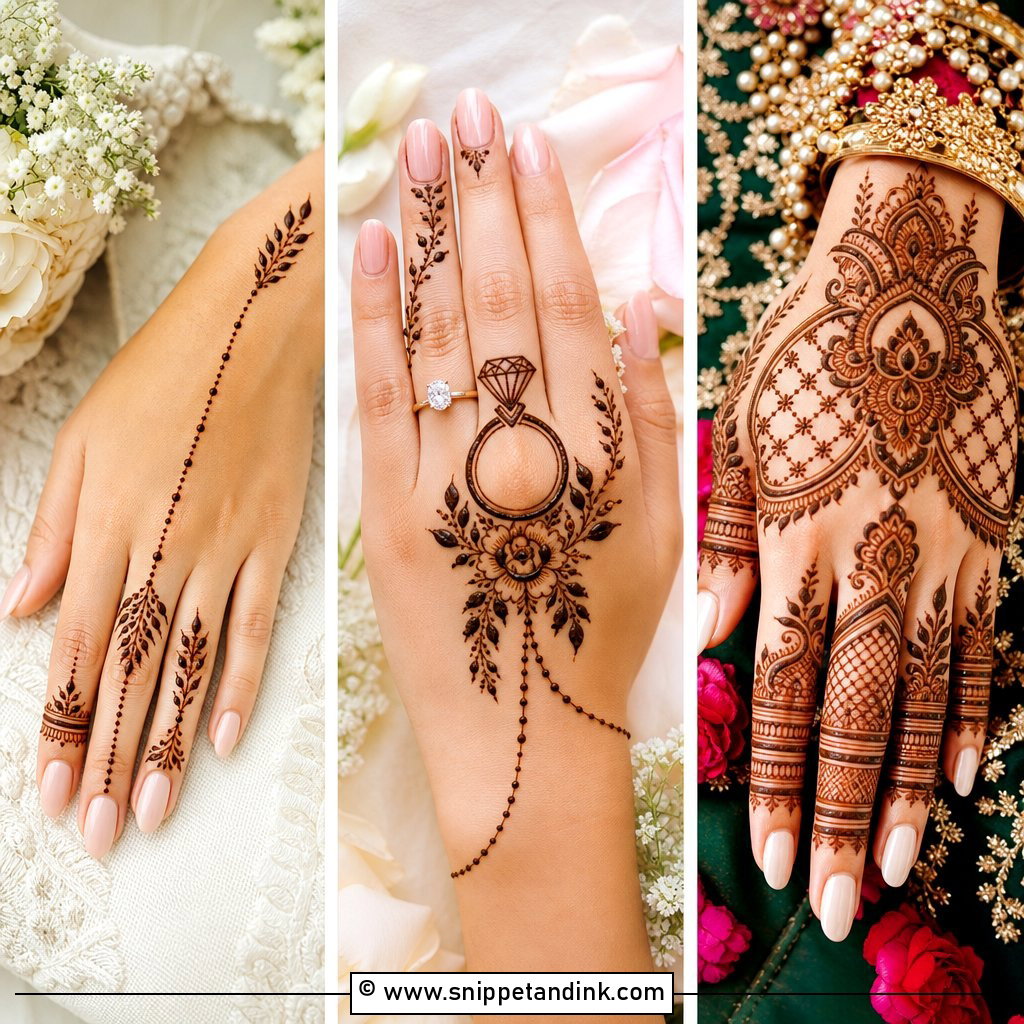
8. Minimal Back Hand Engagement Mehndi Design
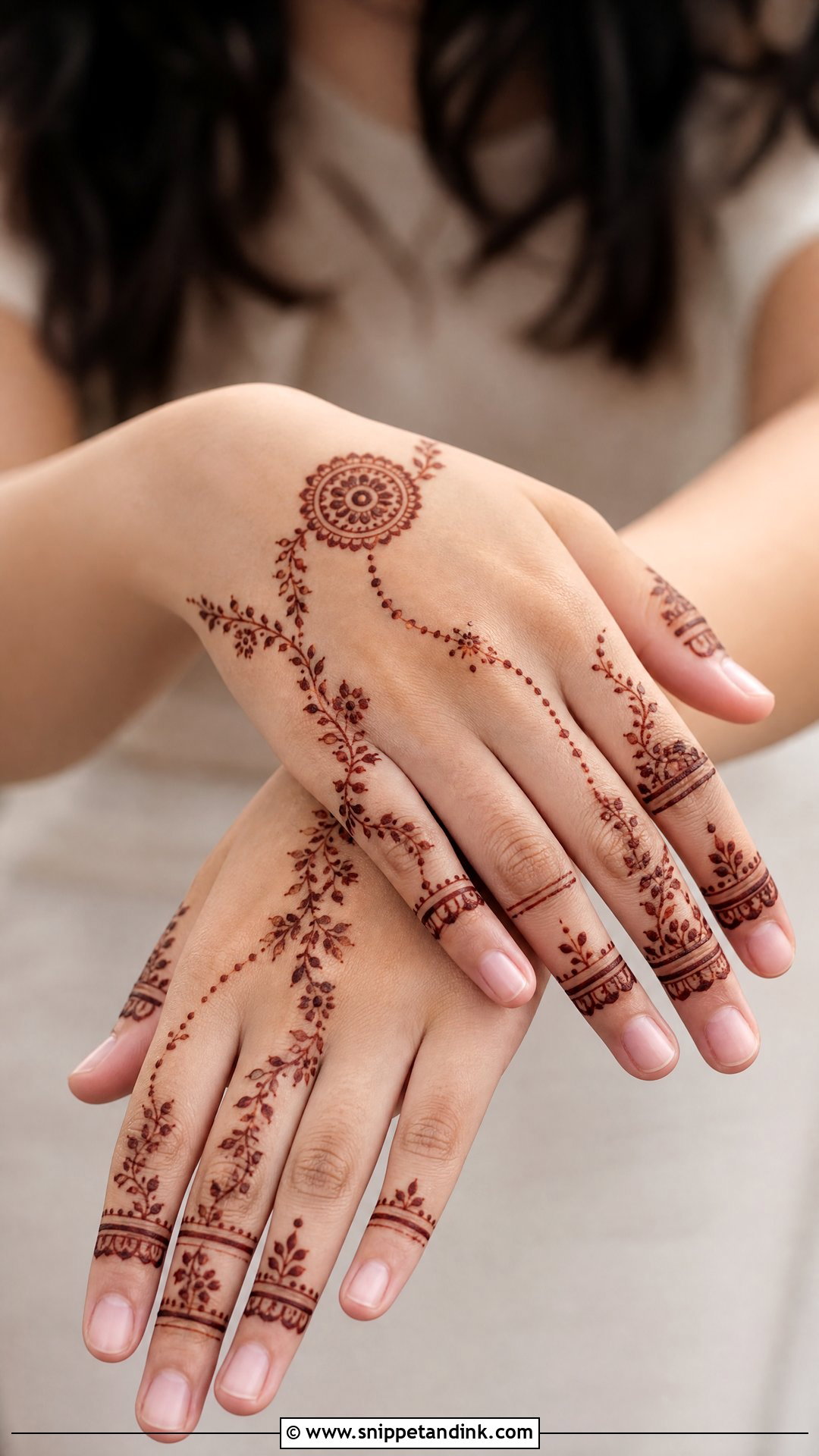
Minimal work suits a bride who wants her ring, nails and outfit to do the talking. One flower, a small mandala, a few fine finger lines or a leafy trail is usually enough. The empty skin matters as much as the drawing, so every line has to be crisp. There’s nowhere for a wobble to hide. I match small details on both hands so it still looks deliberate and bridal rather than like a guest design.
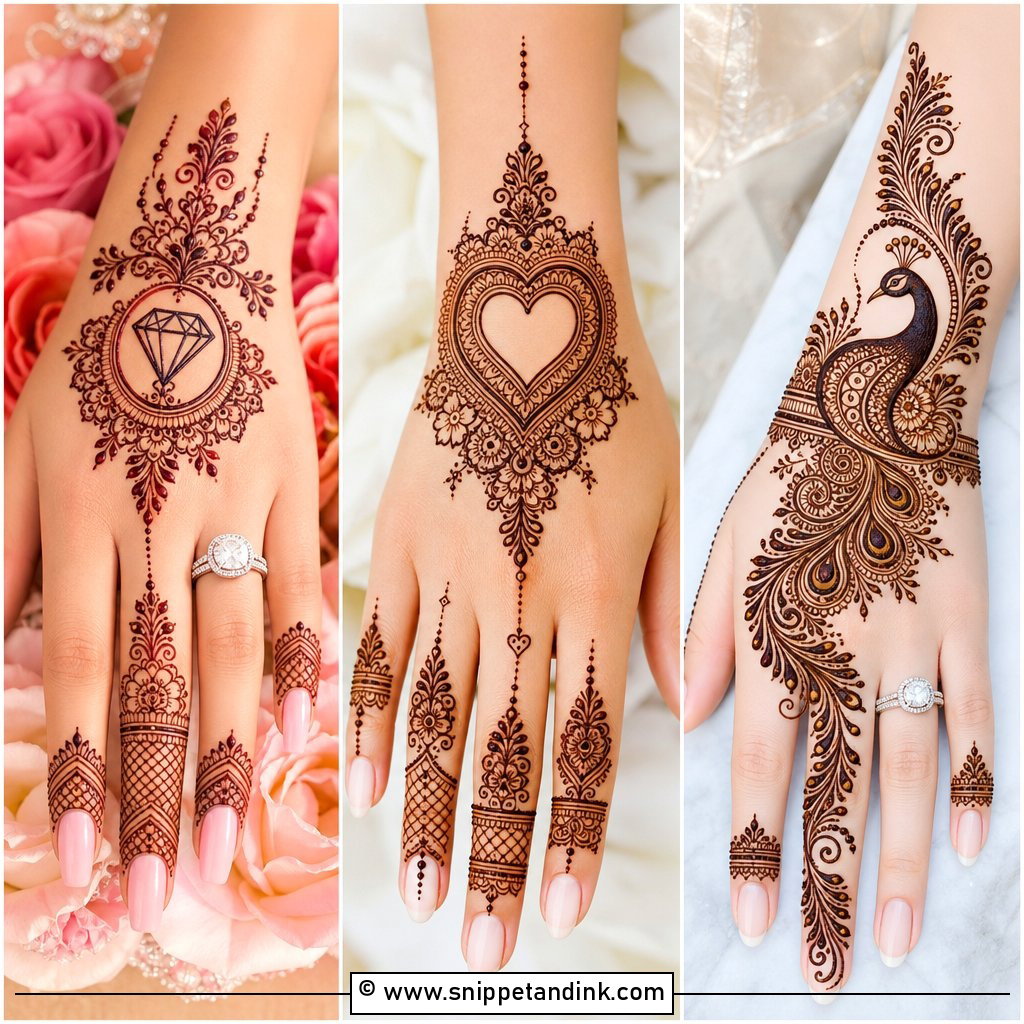
9. Peacock Back Hand Bridal Engagement Mehndi Design
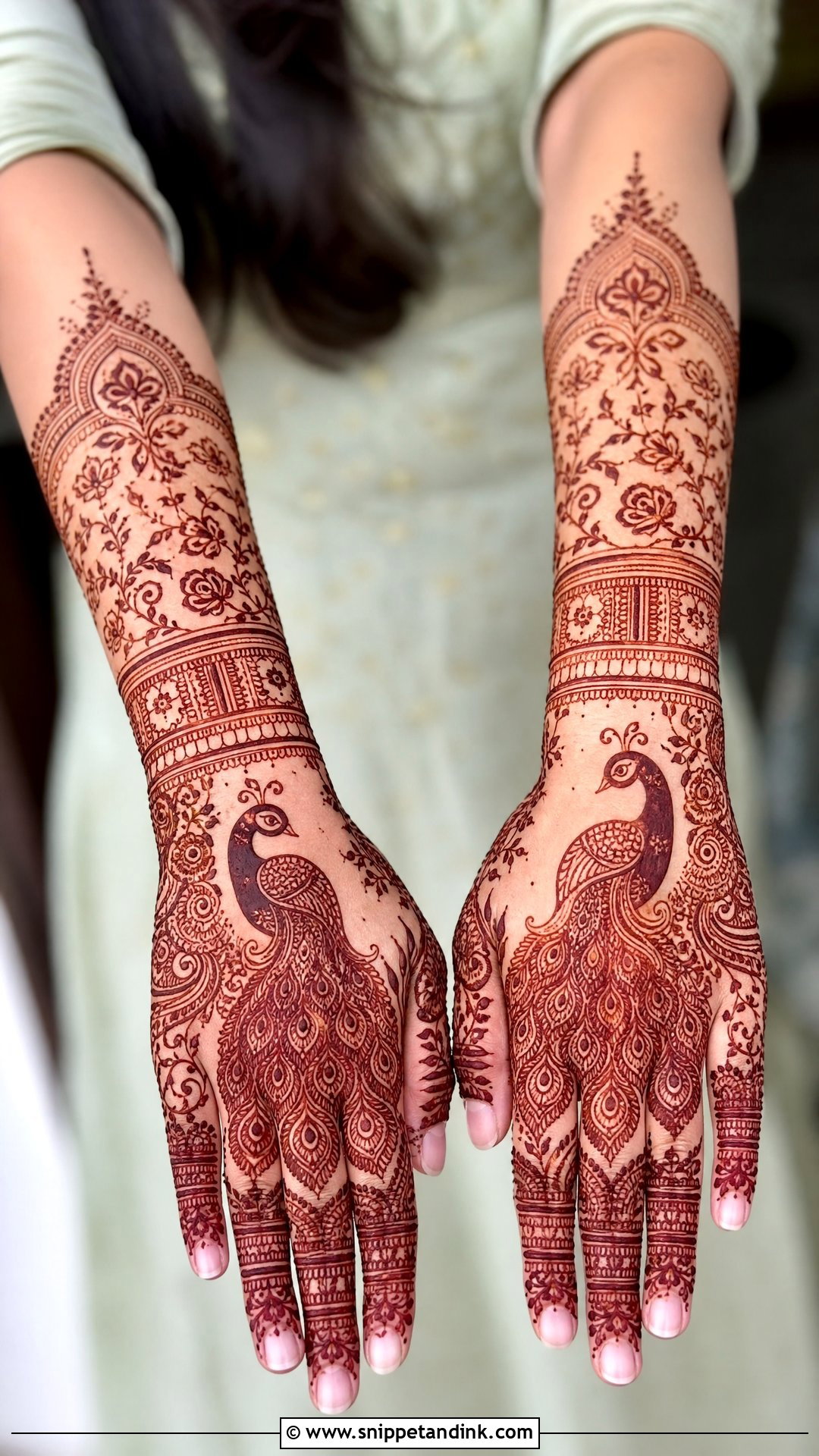
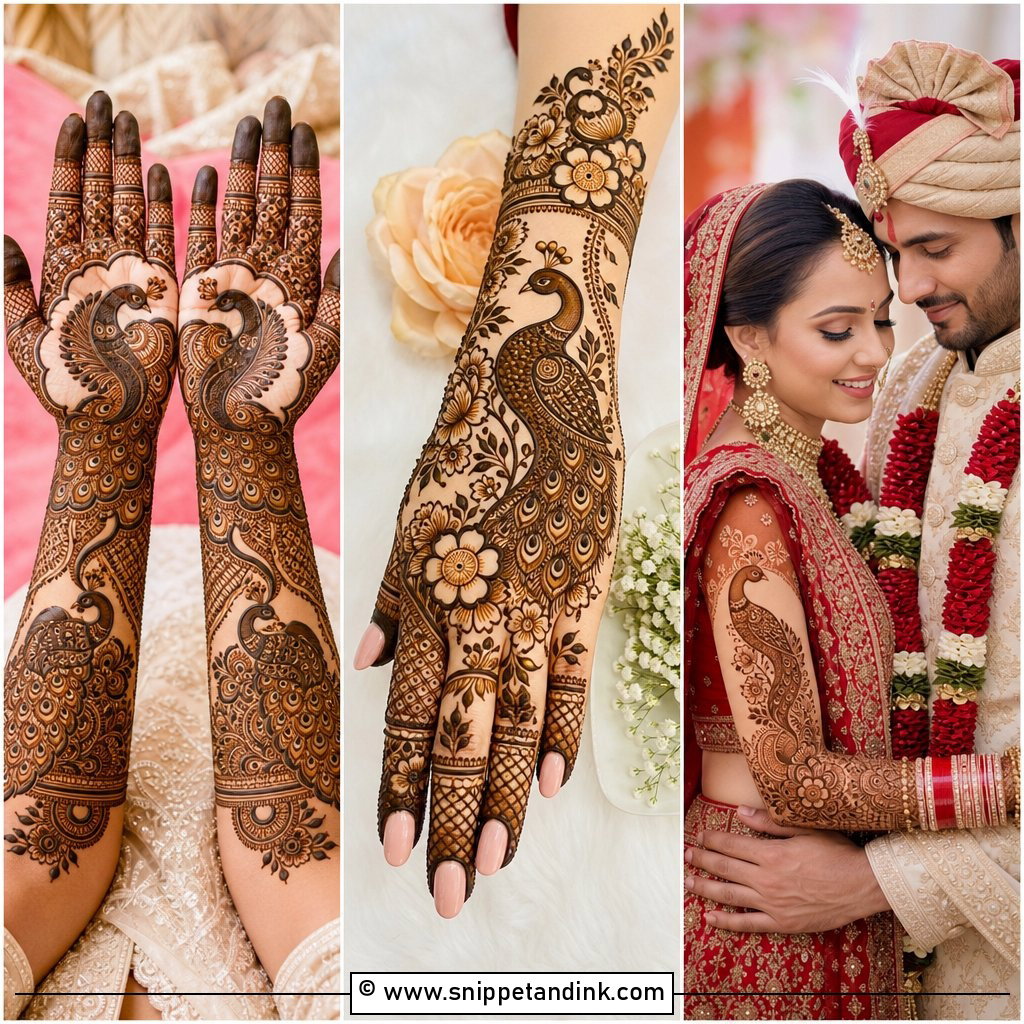
The peacock is one of the oldest bridal motifs in my kit, and it can sit near the wrist, in the center of the hand or along a diagonal trail. The feathers fill with fine lines, dots and small paisleys. For an engagement I keep the bird smaller than I would for a wedding, then balance it with florals and swirls. A large peacock on a small hand crowds out the ring. It sits naturally against red, emerald, maroon or gold outfits.
10. Paisley Back Hand Engagement Mehndi Design
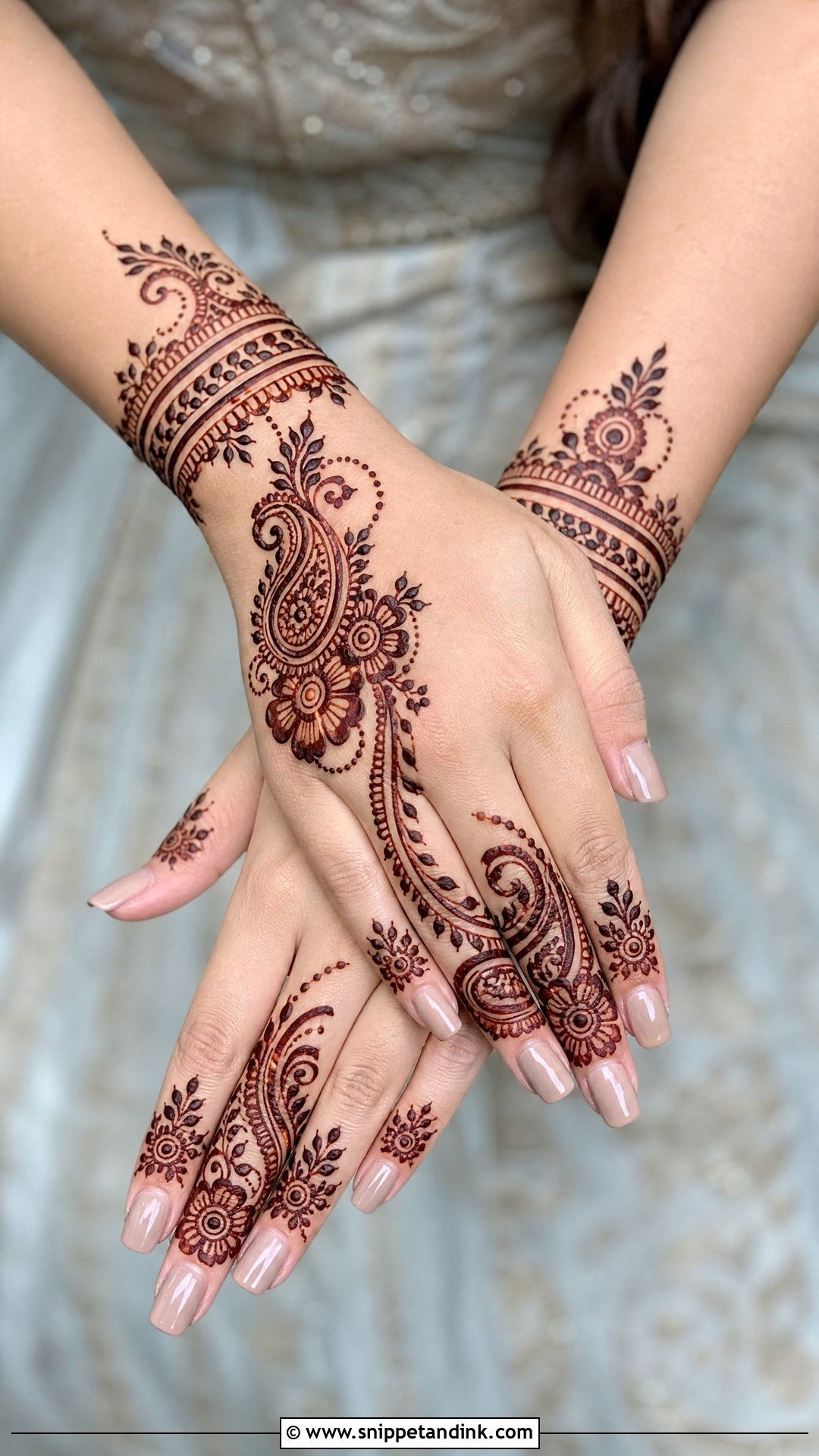
Paisleys add movement: their curved teardrop shape follows the line of the fingers and makes a hand look longer. They can flow as a trail, fill the whole hand, or run from wrist to fingers, filled with tiny flowers, dots and leaves. I leave open space near the ring finger so the band shows in photos. Paired with clean finger details, a paisley design looks current as well as traditional.
11. Bracelet Back Hand Bridal Mehndi Design
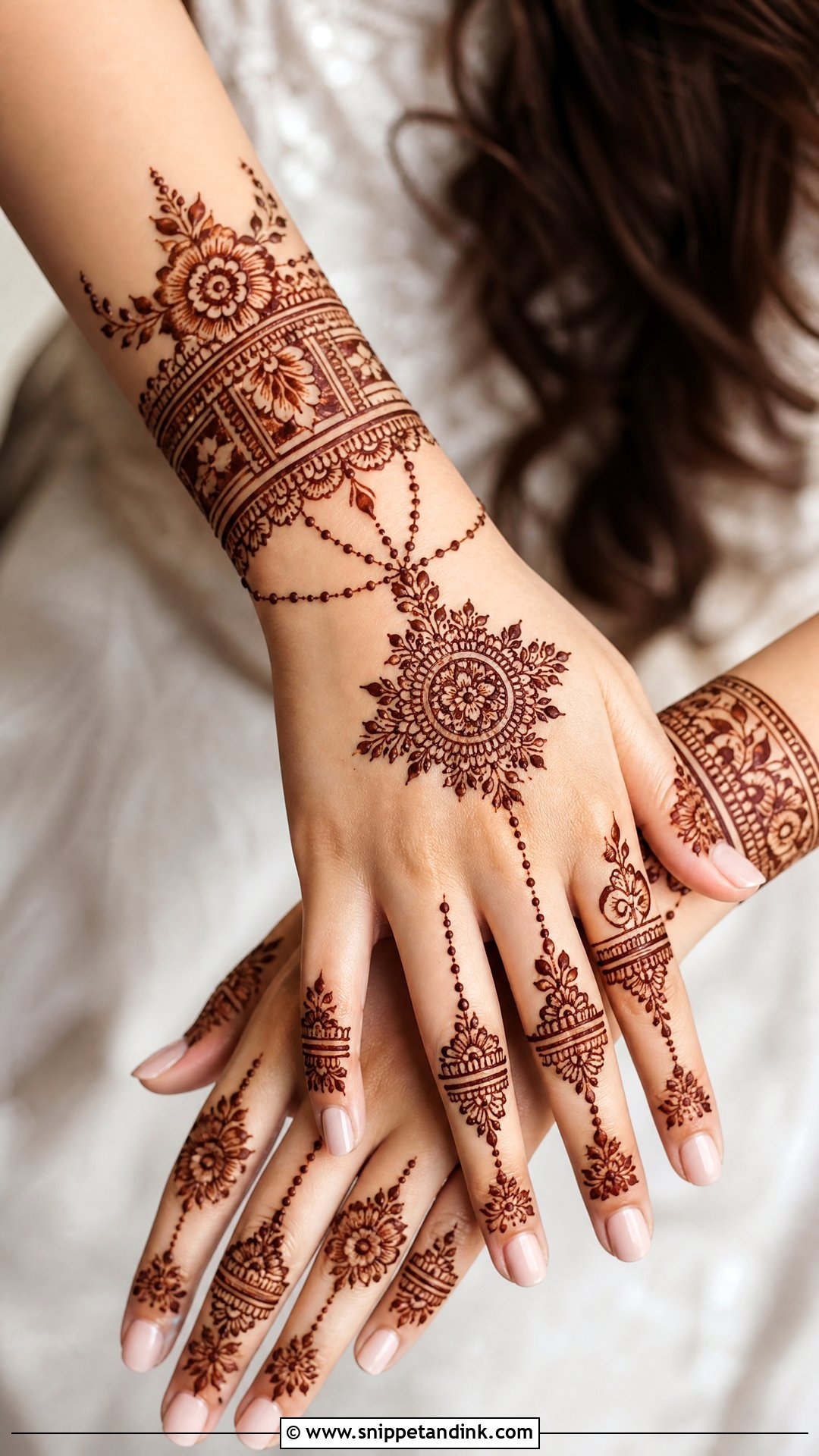
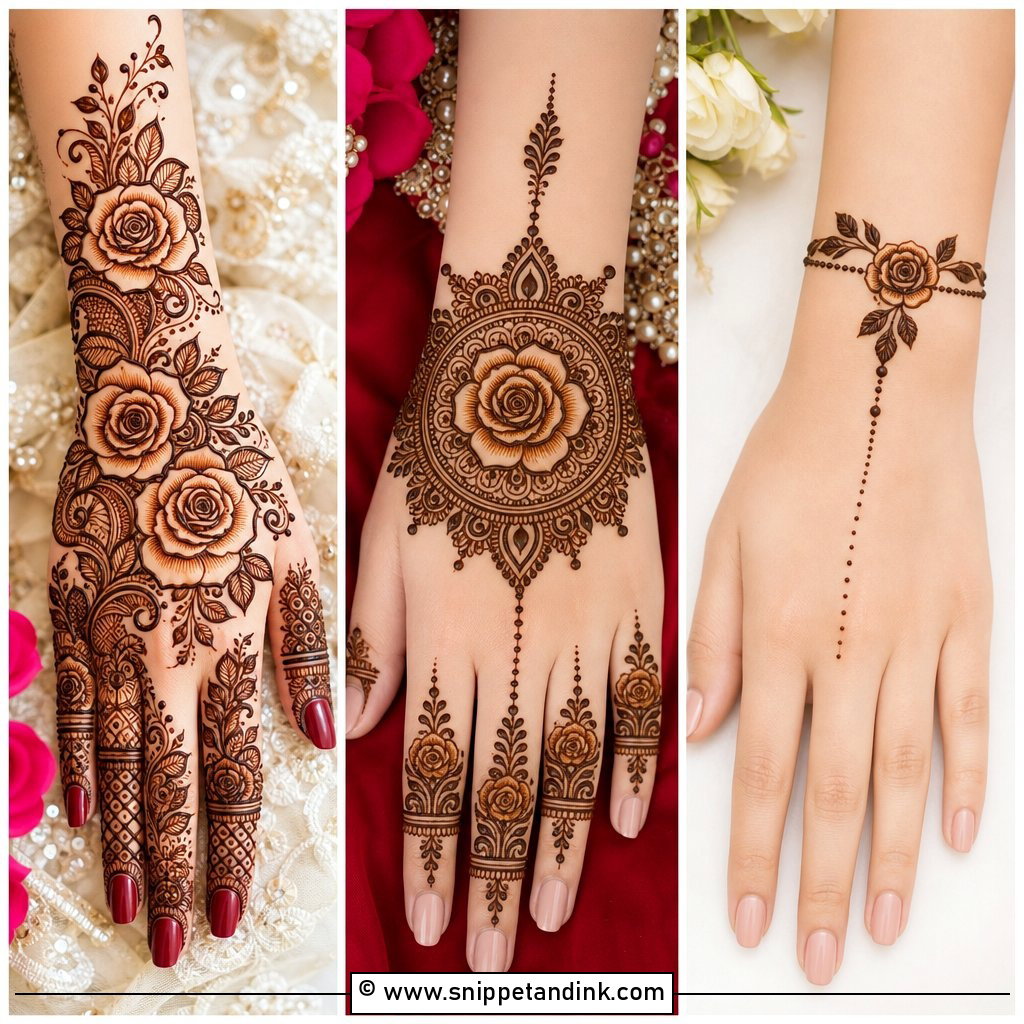
A bracelet back hand bridal mehndi design turns the wrist into a bangle or cuff, with the pattern running lightly toward the fingers. Chains, dots, small flowers and ring-style finger bands complete it. The wrist bends constantly, so paste there cracks and flakes early. I ask brides to keep that wrist as still as they can for the first hour. For an engagement, I make the band slightly fuller and connect it to a central floral or mandala. It suits a bride who wants a decorated wrist without stacking bangles.
12. Rose Back Hand Engagement Mehndi Design
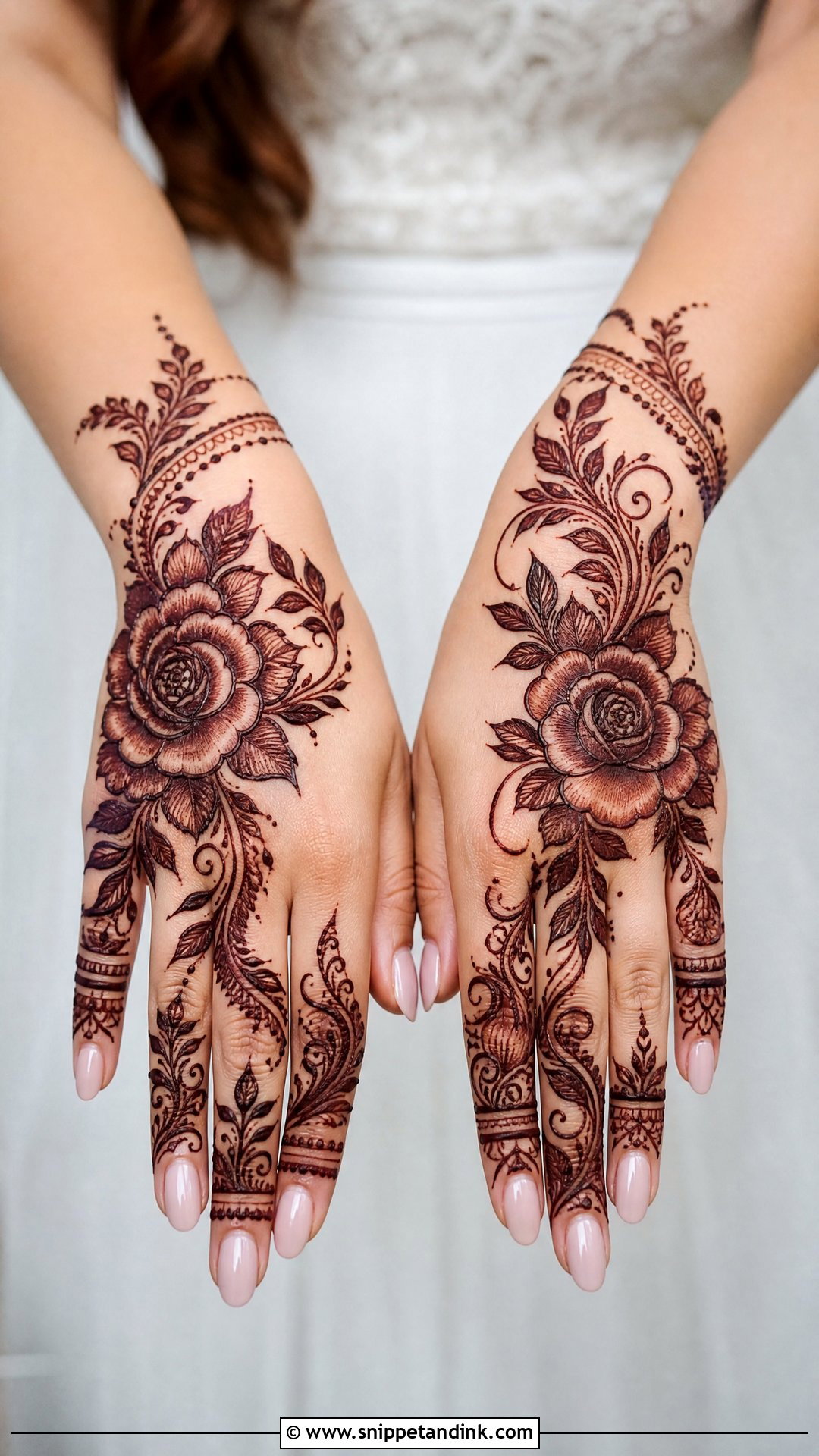
Roses are the motif engagement brides pick most for a romantic feel. Large roses can sit in the center, near the wrist or along a vine, with clean petal outlines and light shading, plus leaves, buds and thin stems. Rose petals need a confident outline. If the line is shaky, the shading inside gives it away. Detailed fingers and a neat wrist border keep it bridal. Blush, ivory, peach and mint outfits sit well with it.
13. Lotus Back Hand Bridal Engagement Mehndi Design
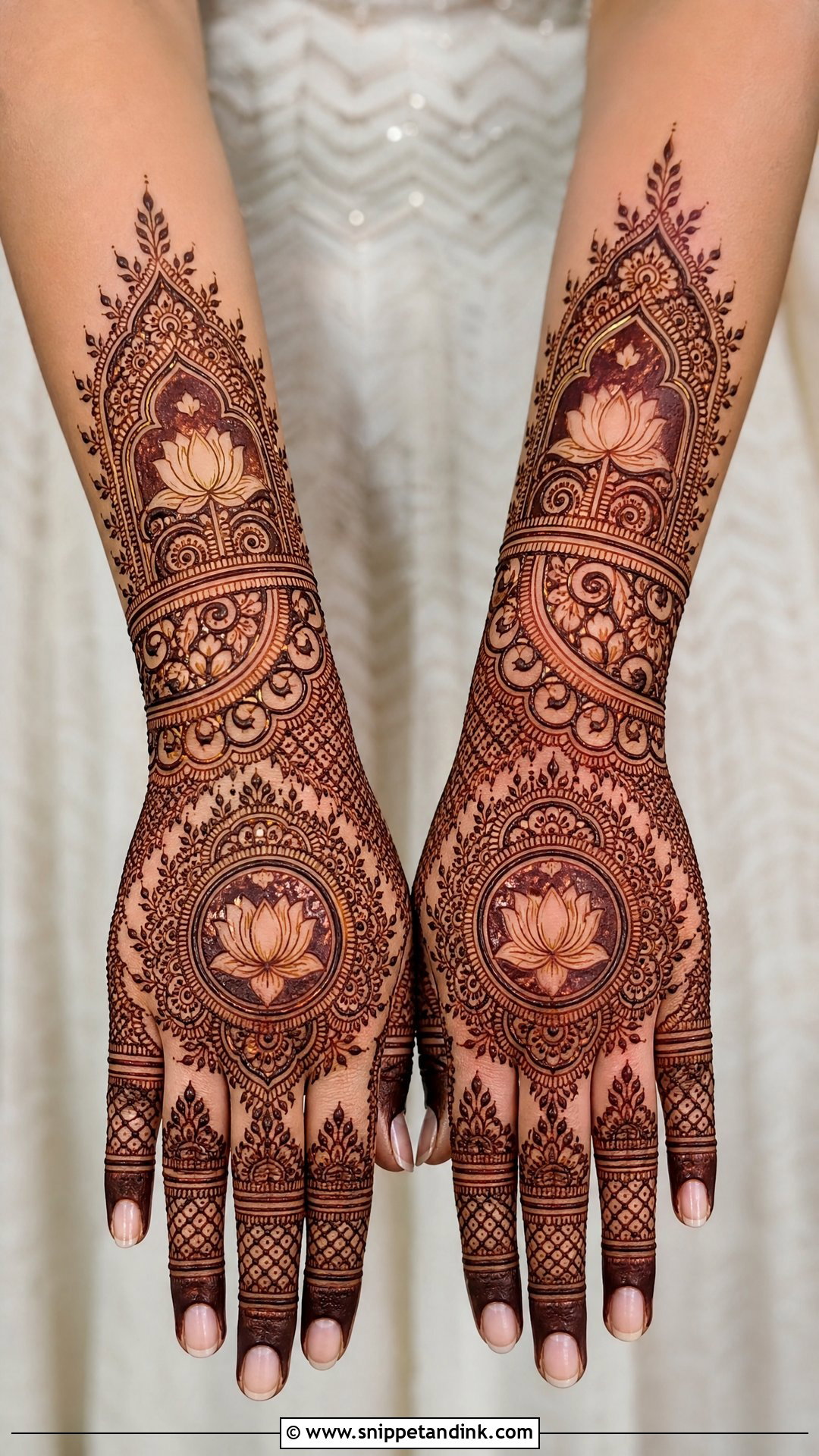
Lotus motifs have a calm, symmetrical structure. A lotus back hand design can sit centered like a mandala, near the wrist, or within a fuller Indian pattern, with fine lines, dots and soft shading in the petals. I draw the lotus symmetrical and slightly bolder than the fillers around it, so it stays sharp in a close-up. Jaali, paisley and leafy borders frame it well. It’s a little less common than roses, and it pairs with silk sarees and temple jewelry.
14. Finger Focus Back Hand Engagement Mehndi Design
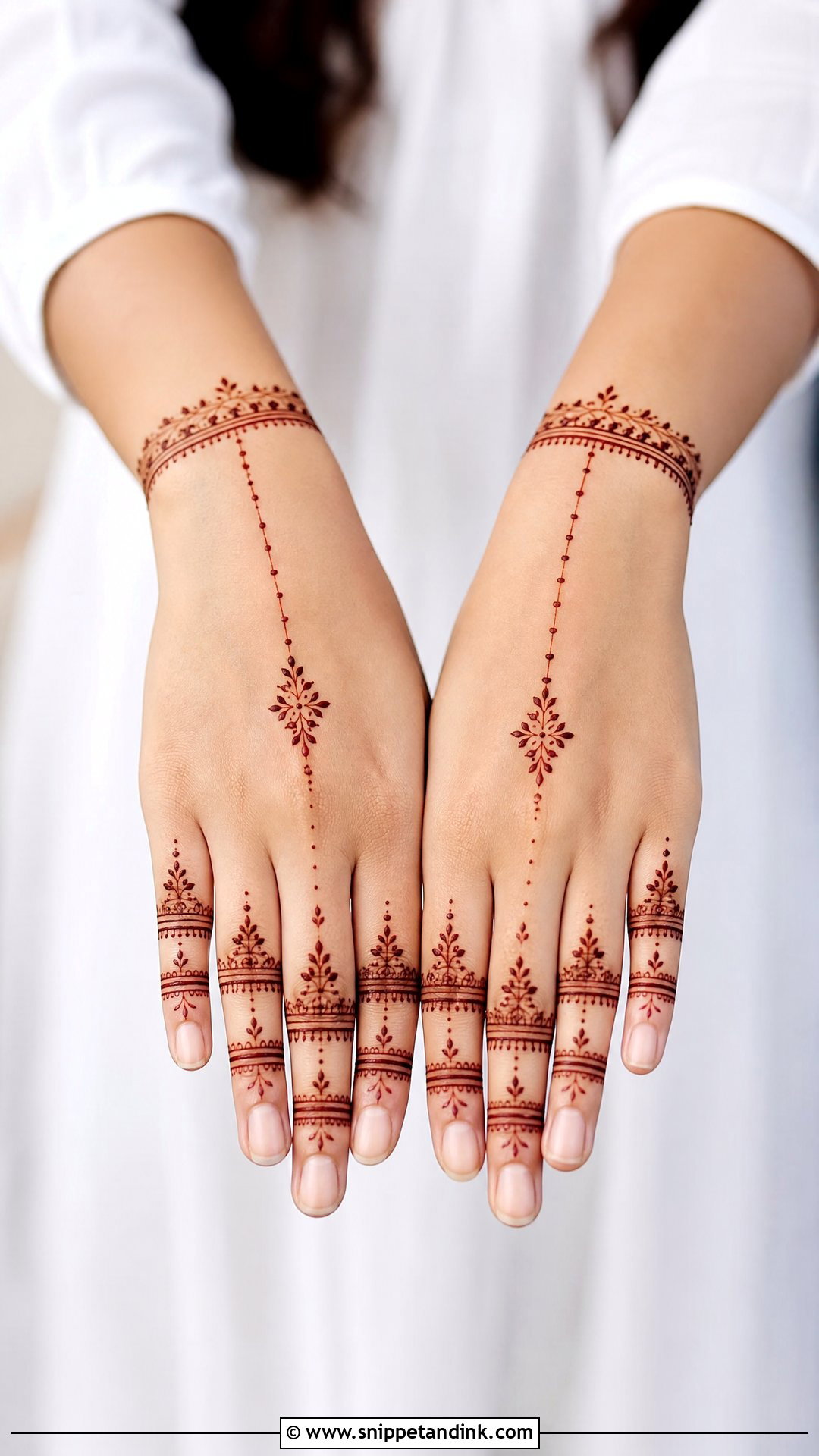
Finger-focused designs put most of the work on the fingers and keep the center of the hand light. That’s the layout I recommend when the ring is the star. The fingers get tiny florals, vertical lines, leafy bands and small geometric fillers, and the back hand takes just a small mandala, a corner flower or a wrist band. Fingers are also where henna stains darkest on the back of the hand, so the detail you want people to see sits where the color is strongest. Balance both hands and keep the nails manicured beforehand.

15. Moroccan Back Hand Bridal Mehndi Design
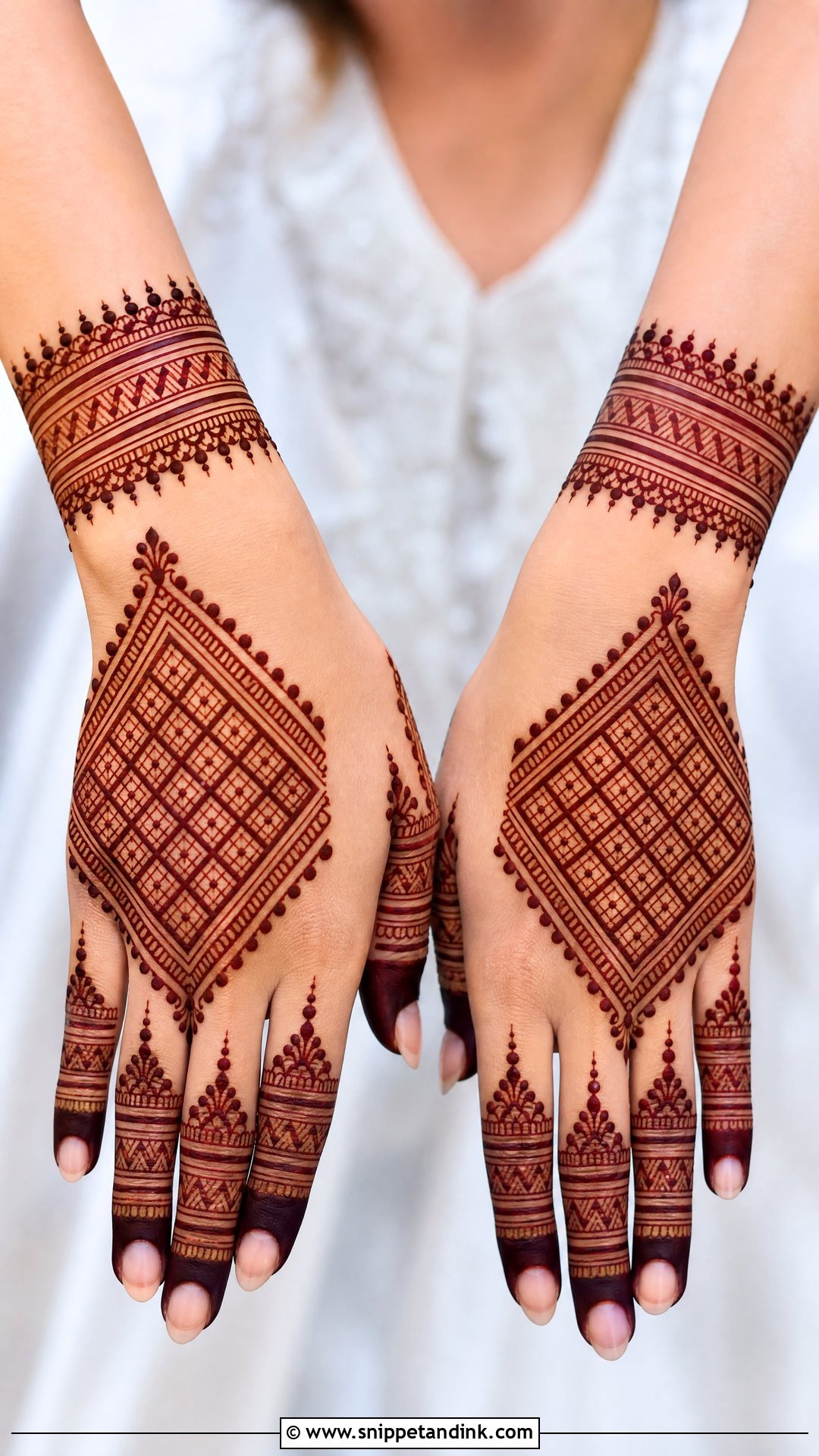
Moroccan work is built from geometry: diamonds, grids, triangular borders and strict symmetry. It suits a bride who prefers structure to heavy florals. I plan the main grid first with a few guide dots, because a geometric design that drifts even slightly off line is obvious. Small flowers or leaves can soften it for a bridal version, but the structure has to stay clean. It reads clearly in photos and goes with contemporary outfits, mirror work and metallic embroidery.
16. Gulf Back Hand Engagement Mehndi Design
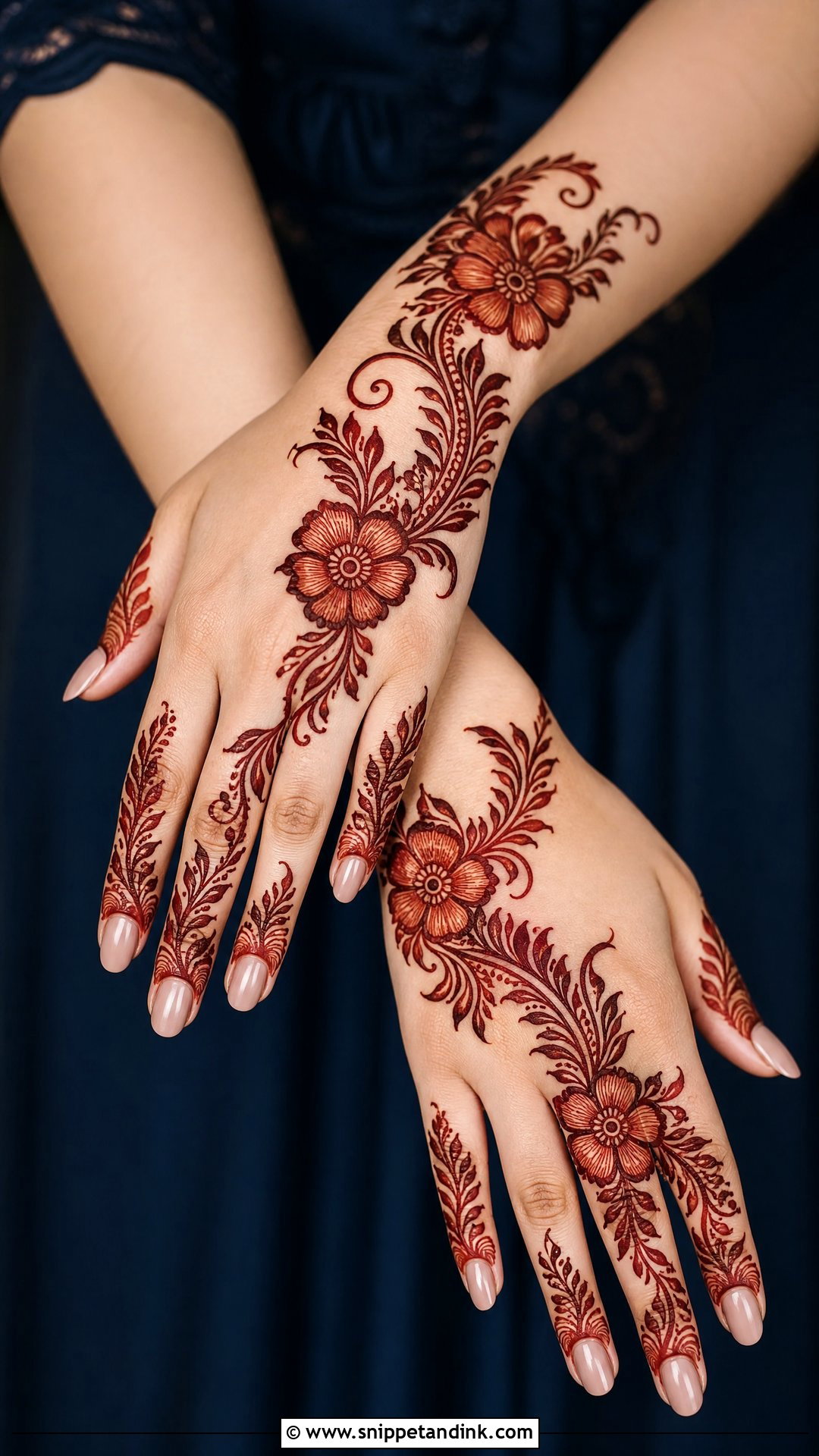
Gulf back hand engagement mehndi, also called Khaleeji mehndi, uses bold florals, leafy vines, open spaces and dramatic curves flowing from wrist to fingers. The shaded leaves are done by thinning the line and filling partially, which gives a soft gradient once it stains. The open skin is what lets the stain stand out. For an engagement, I frame the ring finger and add detail at the wrist. It holds its own with both traditional and modern outfits.
17. Personalized Back Hand Bridal Mehndi Design
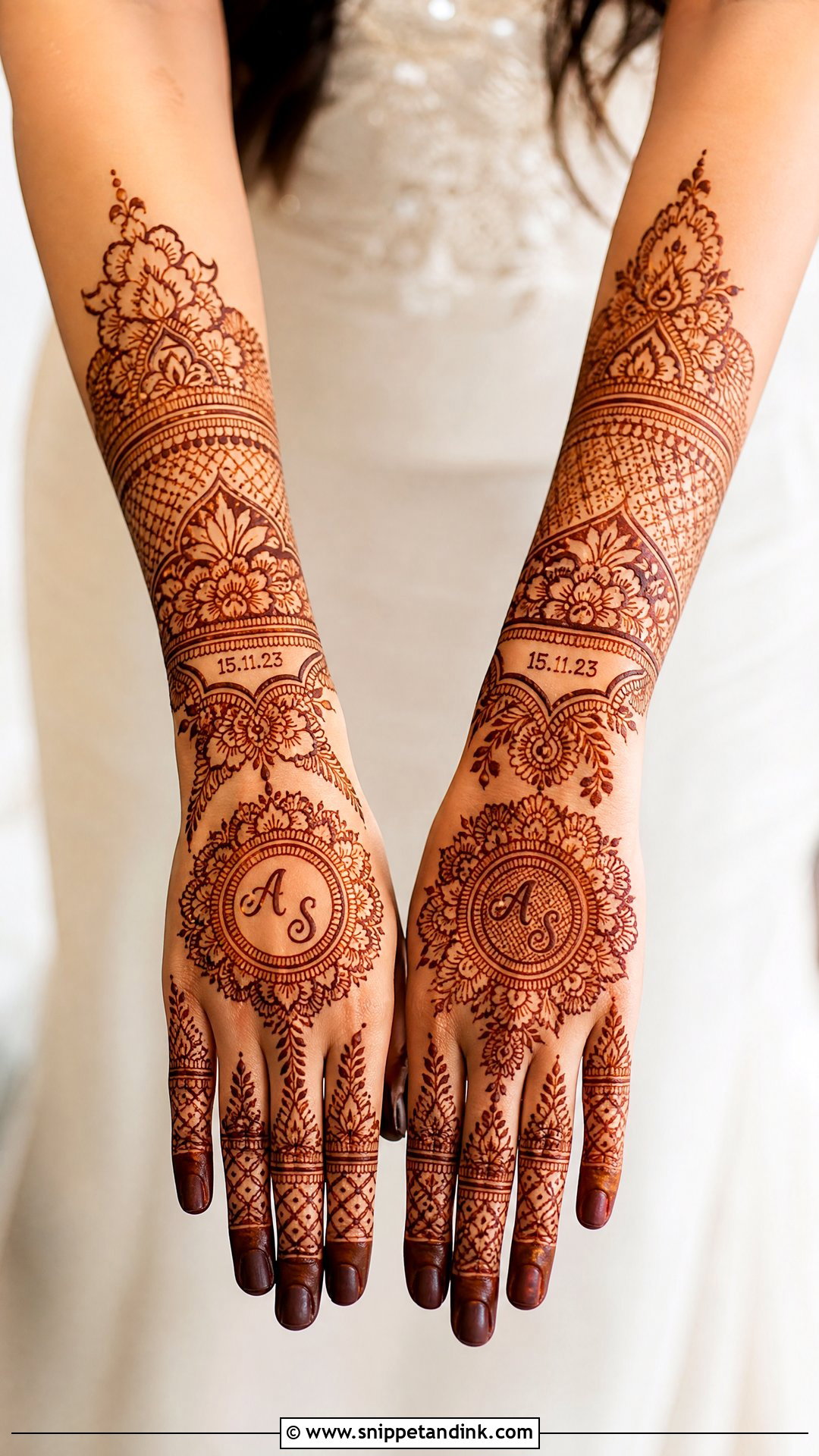
Personal touches turn a design into a keepsake: initials, the engagement date, a tiny symbol only the couple understands. A personalized back hand bridal mehndi design hides these inside a mandala, a bracelet band or a floral frame, with paisleys and leaves filling the rest. Letters smaller than a fingernail tend to blur as the stain darkens, so I write initials a little larger than people expect. Tell your photographer where the hidden detail is, or it’ll be missed in the ring portraits.
18. Negative Space Back Hand Engagement Mehndi Design
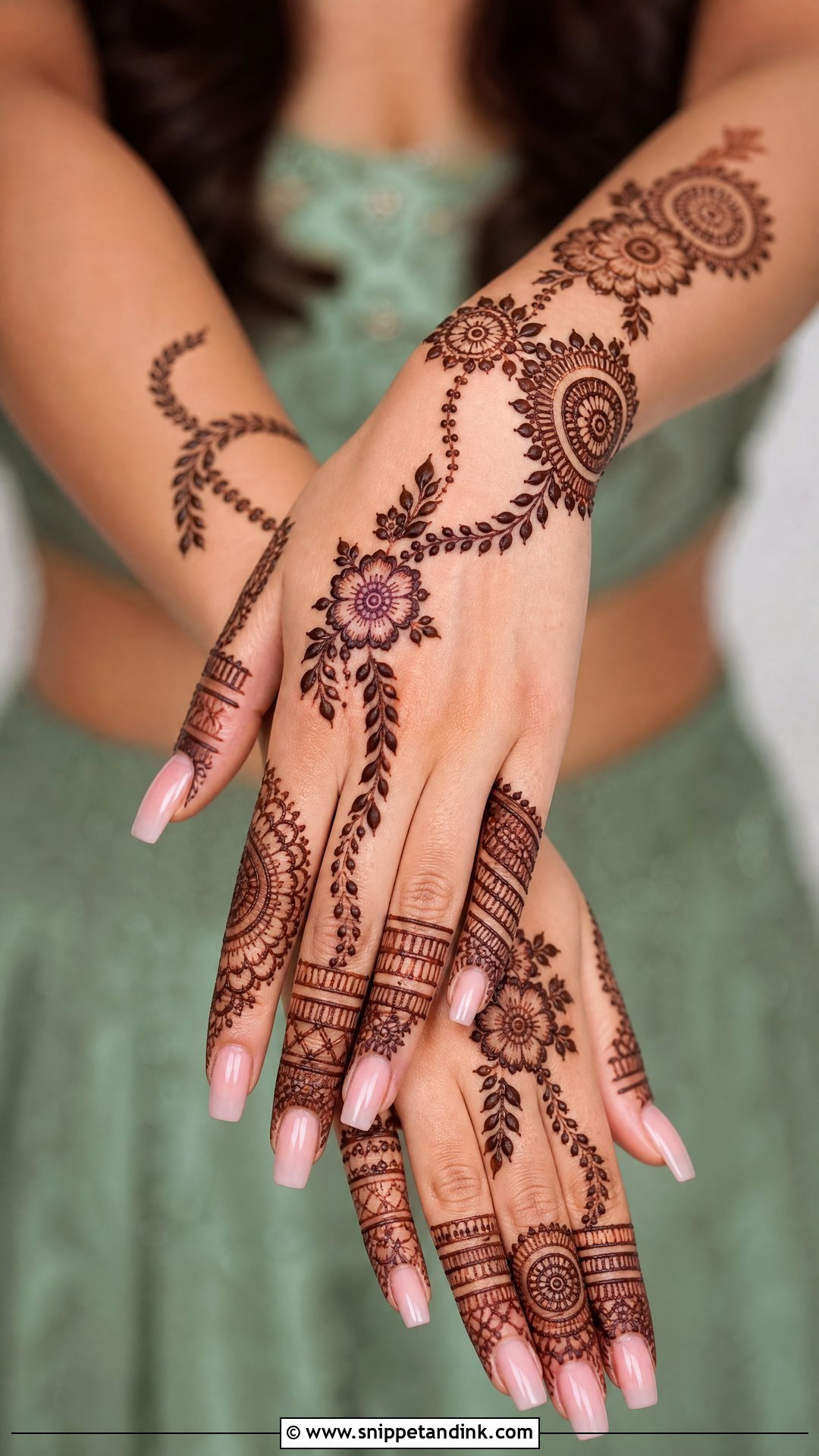
Negative space designs use bare skin as part of the pattern: a floral trail, a mandala, a wrist band or geometric sections with clear gaps between them. They look light and defined, and they let the ring, nails and jewelry show. Precise outlines matter more here than in any filled design, because the eye follows the edges. Detailed fingers keep it bridal. The contrast between drawn and empty areas is the whole effect.
19. Back Hand Bridal Mehndi With Ring Detail
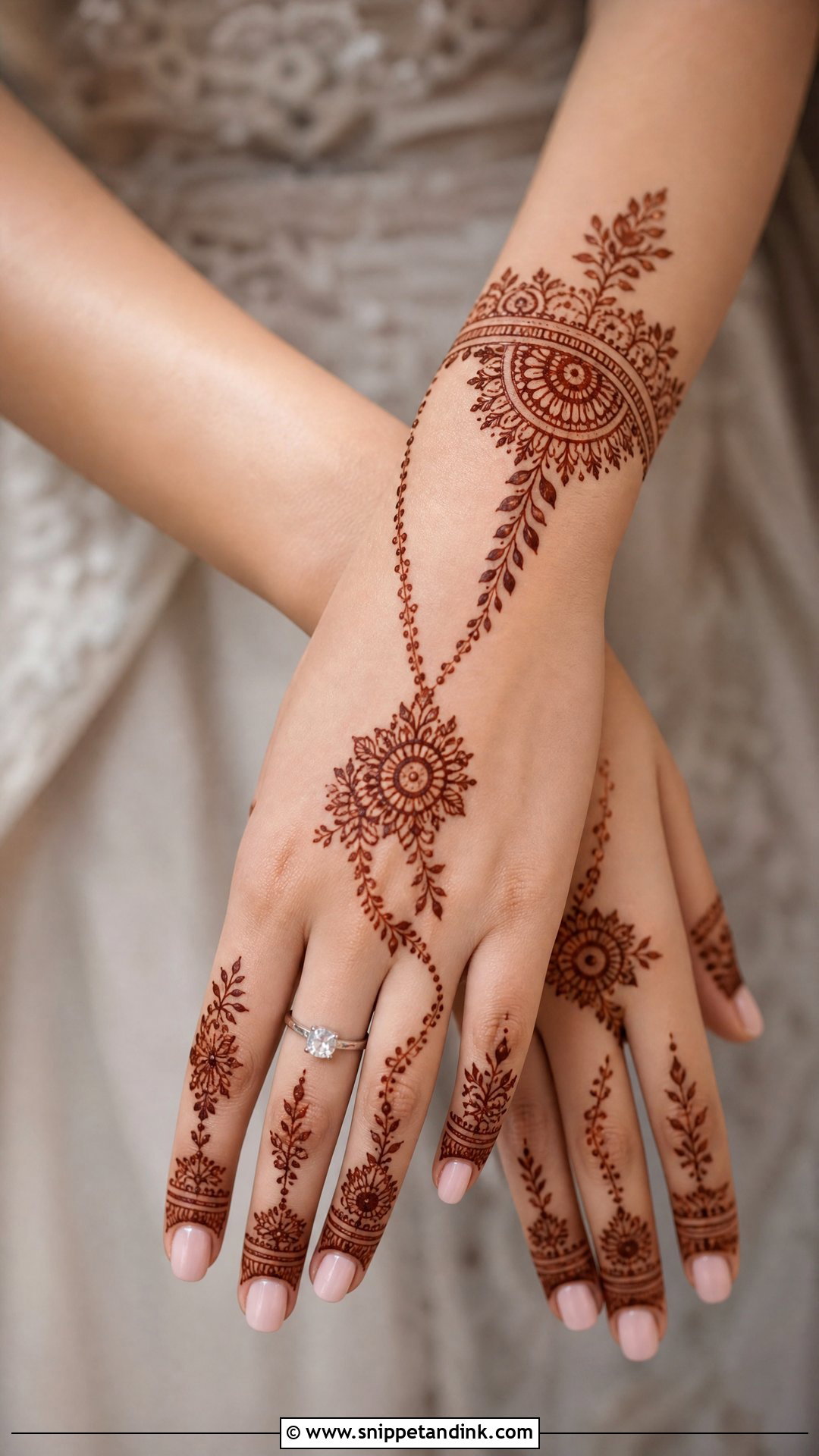
Ring-detail mehndi is designed around the ring exchange itself. A chain runs from the wrist to the ring finger, or a floral frame sits around the base of the finger, with dots and leaves guiding the eye toward the ring. One practical point I always raise: I leave a thin band of skin bare where the ring will sit. If the ring goes on while paste is still drying, it smudges the design and stains the metal edge orange. Keep the rest minimal, with a soft mandala or bracelet band.

20. Simple Back Hand Bridal Engagement Mehndi Design
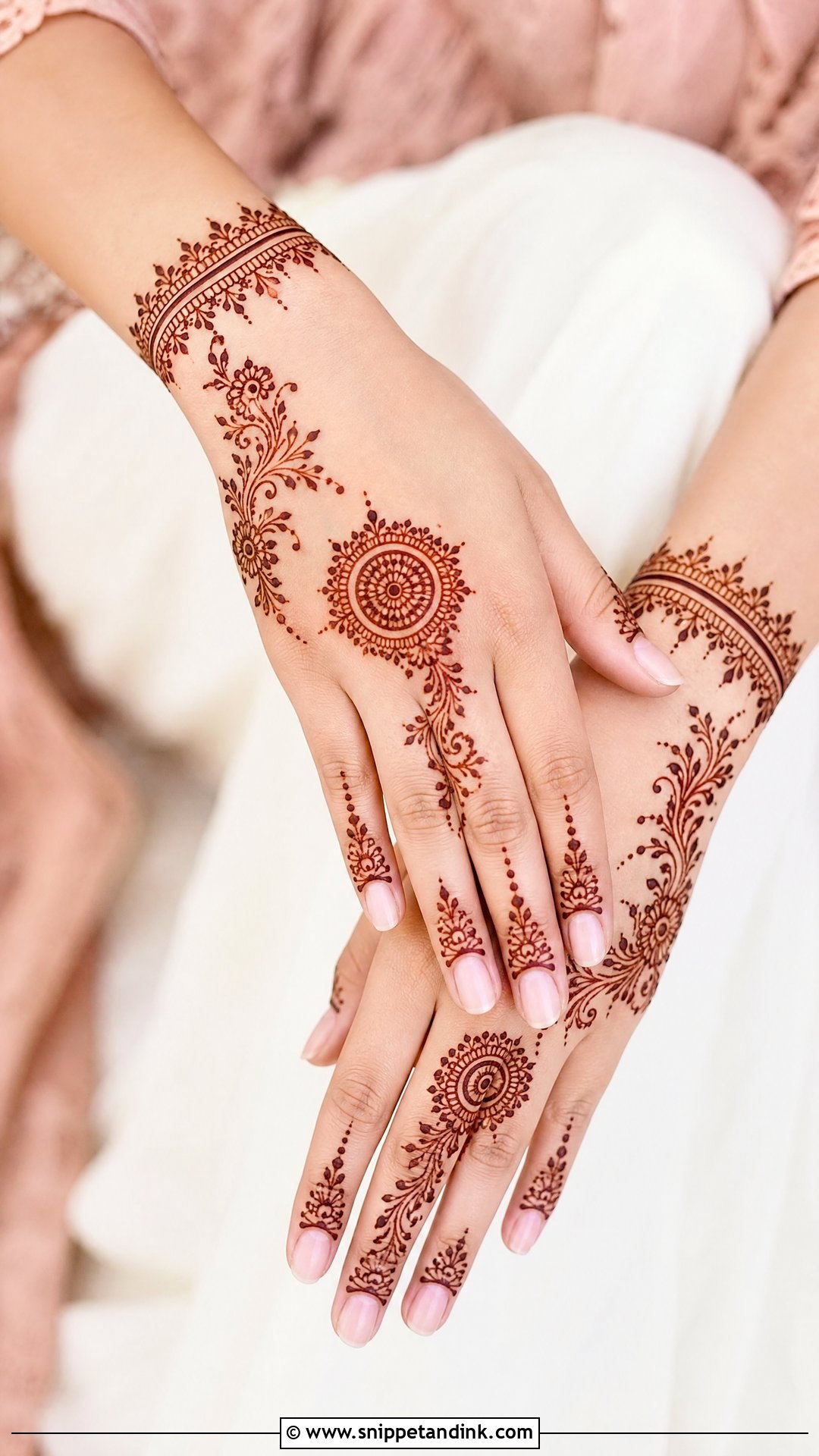
Simple designs are the quickest to apply, which matters on an engagement day already full of family, makeup and photos. A neat floral trail, a small mandala, light finger work and a slim wrist border are enough. I build it around one focal point and space everything else evenly. Simple doesn’t mean plain. With good placement, a light design still looks bridal. It suits intimate ceremonies, modern outfits and soft makeup.
Ring, Nails and Bangles: Plan These Before the Cone Comes Out
Henna is permanent for about one to three weeks, so anything that touches your hands in that time needs a little planning.
Nails first
Get your manicure done before your mehndi, not after. Henna stains the cuticles and the nail edge, and a salon soak a day later fades the fresh design on your fingers. If you’re wearing gel, have it done a day or two ahead.
The ring finger
Tell me which finger and which hand the ring goes on. I’ll keep the band area light or leave it bare, so the ring sits cleanly and the design frames it instead of disappearing under the metal.
Bangles and sleeves
If you’ll wear a stack of bangles or long sleeves, I end the design where they start. Detail drawn under a stack of bangles is simply lost, and fabric rubbing on wet paste smudges it. Bring a photo of your outfit and jewelry to the appointment and I’ll map the design around them.
Which Back-Hand Design Suits Your Ring Exchange?
The right engagement henna matches your outfit, your jewelry and how long you can sit still. Back-hand work matters most at this event because it’s what shows at the ring exchange. If you want rich bridal coverage, go for paisley, peacock or lotus. If you want something modern, choose minimal, Moroccan or ring-focused work. Whatever you pick, plan the timing so the stain is at its darkest when the ring goes on.
You'll Like These Ideas:





Leave a Reply