
For many brides, the mehndi night is when the wedding starts to feel real. The design you choose will sit on your hands through every ritual and every ring shot, so it’s worth planning beyond the picture. Classic motifs still lead: paisleys, peacocks, mandalas, jaali, kalash, lotus, elephants and bride-and-groom portraits. Alongside them, more brides now ask me for initials, wedding hashtags, bracelet bands and open Indo-Arabic spacing. Below are thirty bridal designs, each with what I consider when I draw it: how it fits the hand, how long it takes and how it stains.
Natural Henna, Black Henna and the Patch Test
Before choosing a design, check what’s in the cone. Natural henna stains orange at first, then darkens to a reddish brown or deep maroon over a day or two. It never stains black.
So-called black henna or instant dark cones often contain PPD, a hair-dye chemical that can cause blistering and lasting skin reactions. I won’t use it, and I’d ask any artist directly what their paste contains. A good artist will tell you it’s henna powder, lemon juice or water, sugar and essential oil.
- Do a small patch test a few weeks before, even with natural henna, since some essential oils irritate sensitive skin.
- Be wary of a stain that turns dark within an hour; natural henna doesn’t do that.
- If you have sensitive skin, ask for a paste mixed with milder oils such as lavender rather than strong ones like cajeput or tea tree.
Freshness matters as much as the recipe. I mix paste a day or so ahead so the dye releases, then freeze the cones until the session. A cone left at room temperature for days gives a pale stain however long you keep it on, so ask your artist when hers were made.
1. Full Hand Indian Bridal Mehndi Design
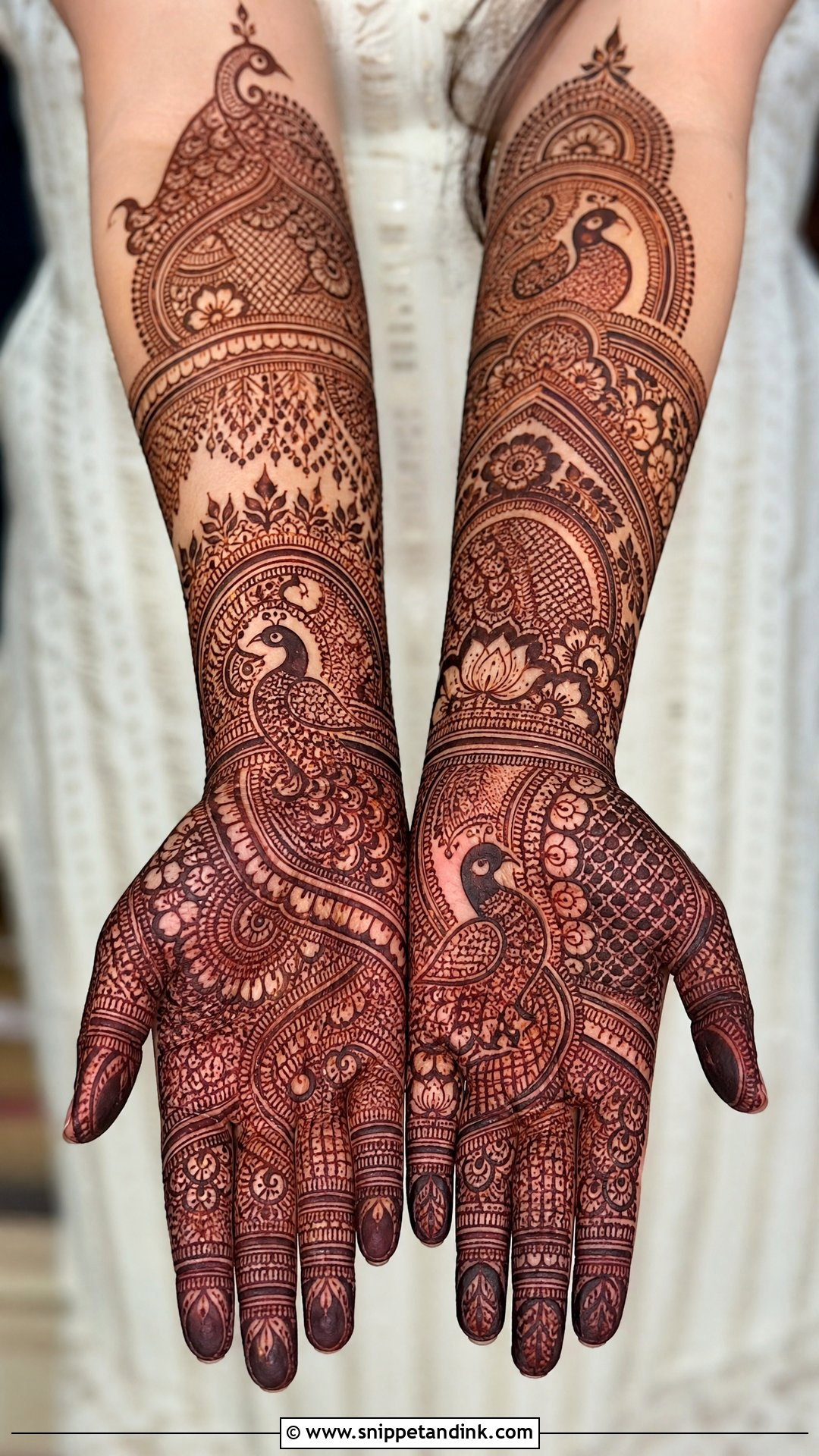
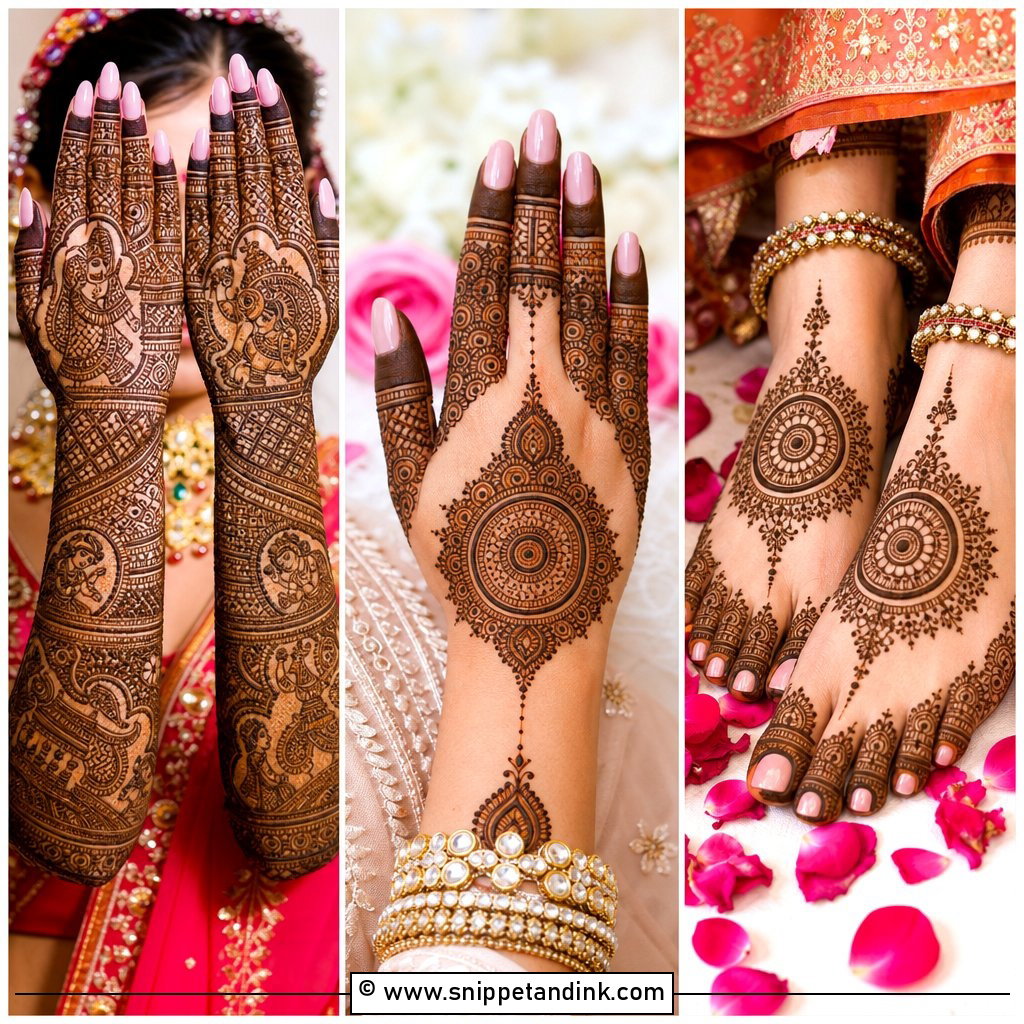
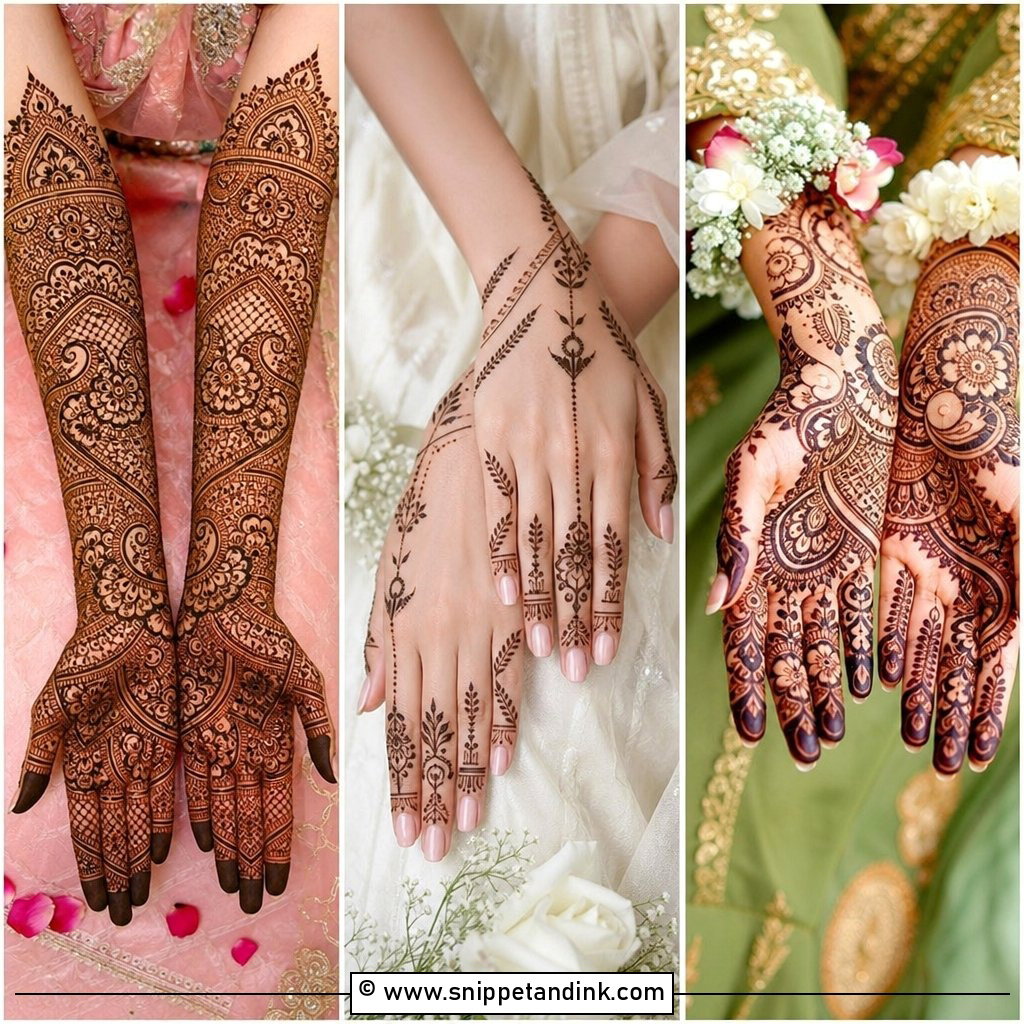
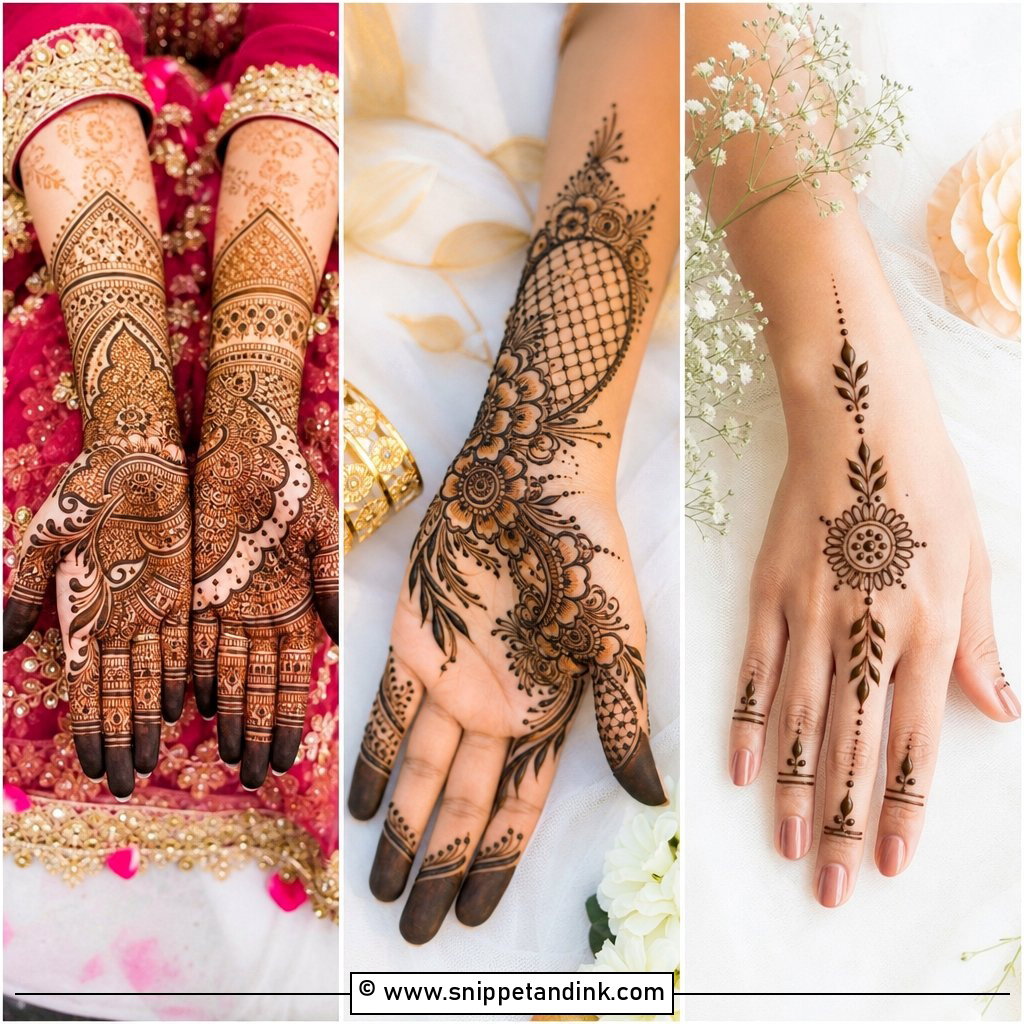
Full-hand coverage, from fingertips over the wrist and up the forearm, is the traditional bridal choice and the longest sitting. I map the main motifs first, a peacock or mandala on the palm and a paisley run up the arm, then fill around them with jaali and fine lines. The palms will stain darkest, since the skin there takes henna most deeply, so I keep the heaviest detail there. Both hands should carry a similar weight even if the motifs differ; one dense hand and one sparse one looks unfinished in photos with bangles and rings.
2. Rajasthani Bridal Mehndi Design
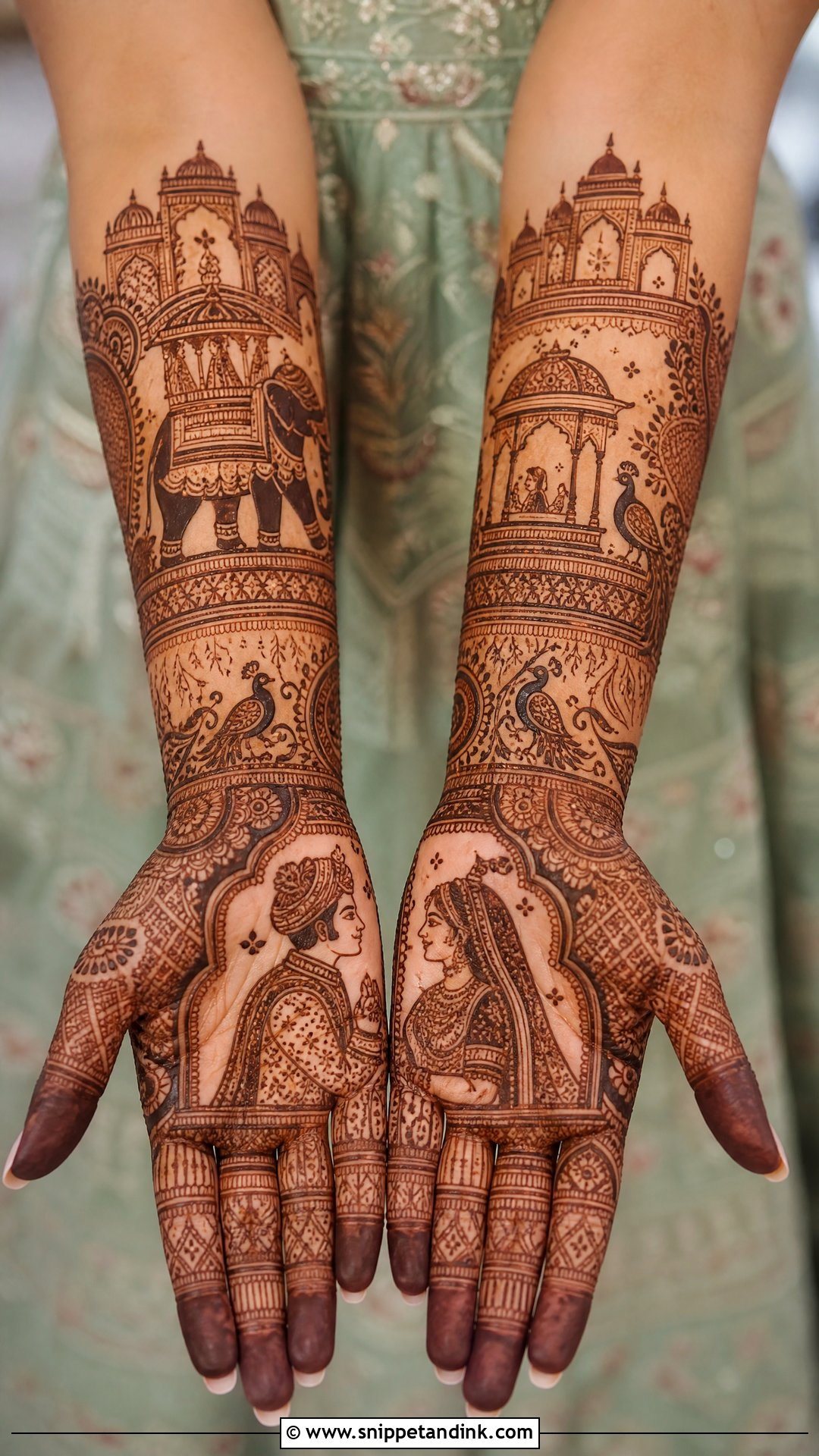
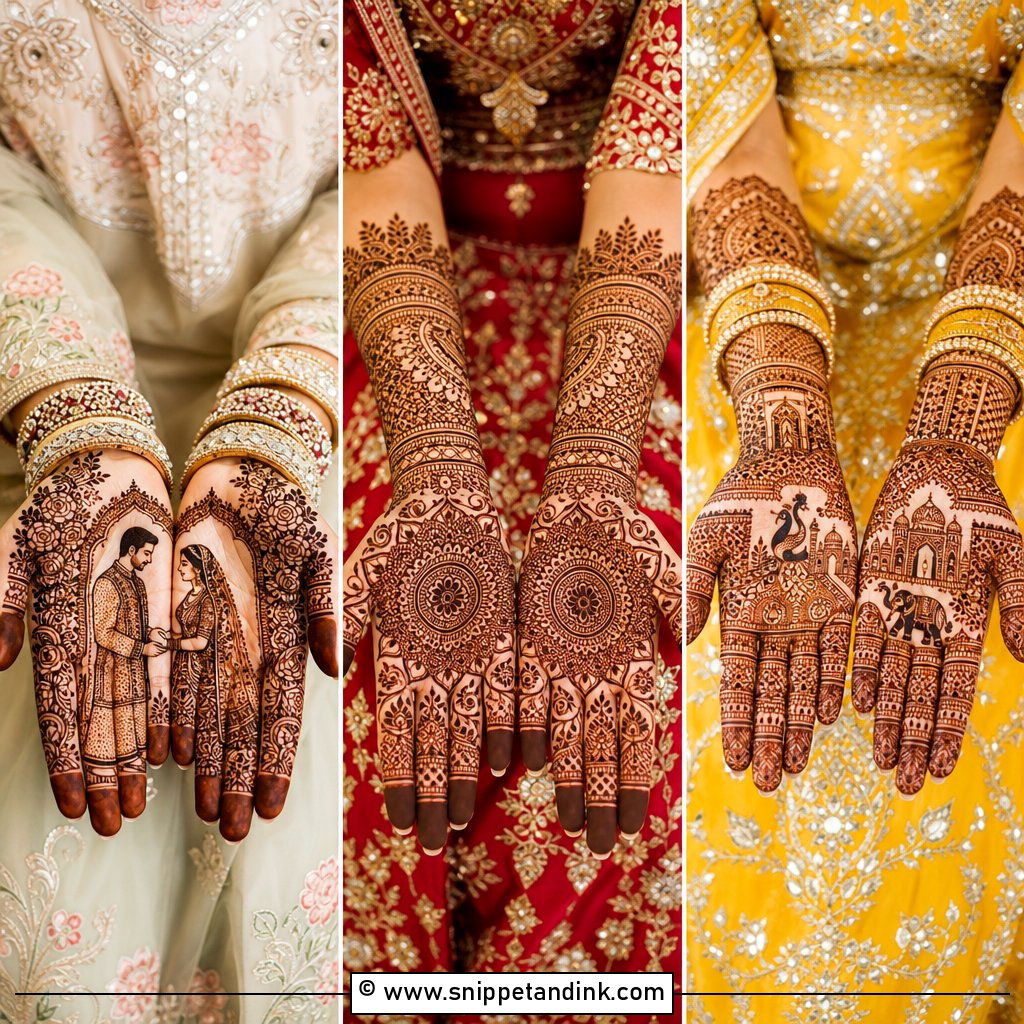
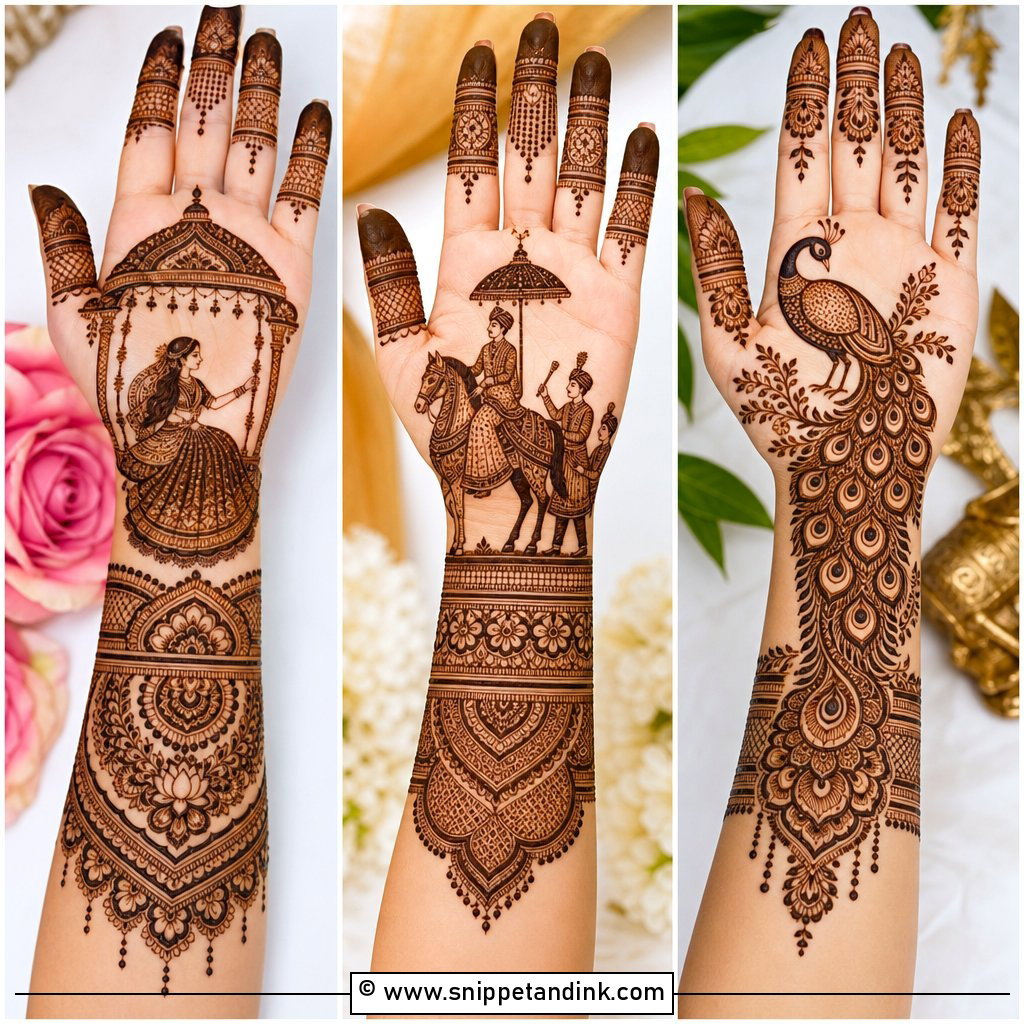
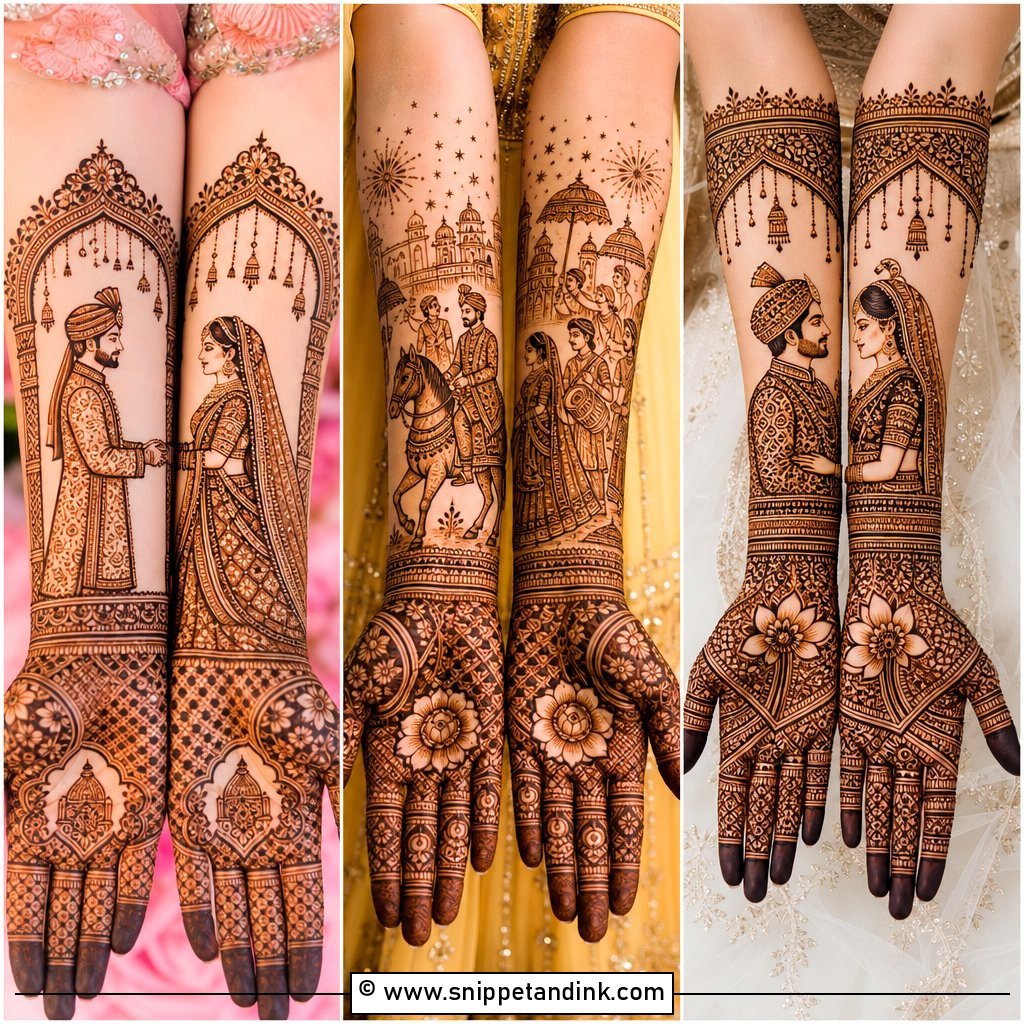
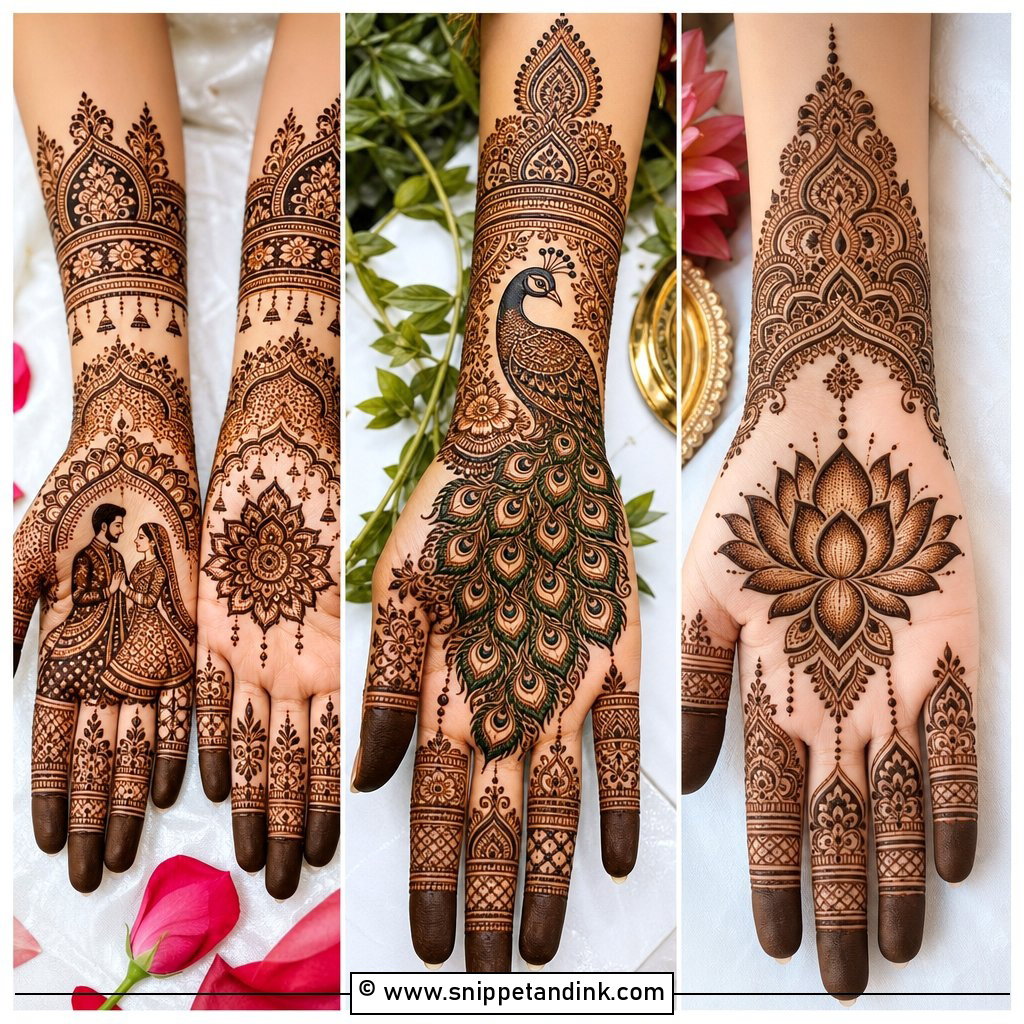
Rajasthani bridal henna tells a story: bride and groom figures, elephants, a palki, palace arches and peacocks set inside layered borders. It’s dense, ceremonial work from fingertips to forearm. Figures need clean, confident lines, so this isn’t a design for a rushed session. I suggest plain or classic red nails, because bright nail art fights with the detail in close-ups.
3. Marwari Bridal Mehndi Design
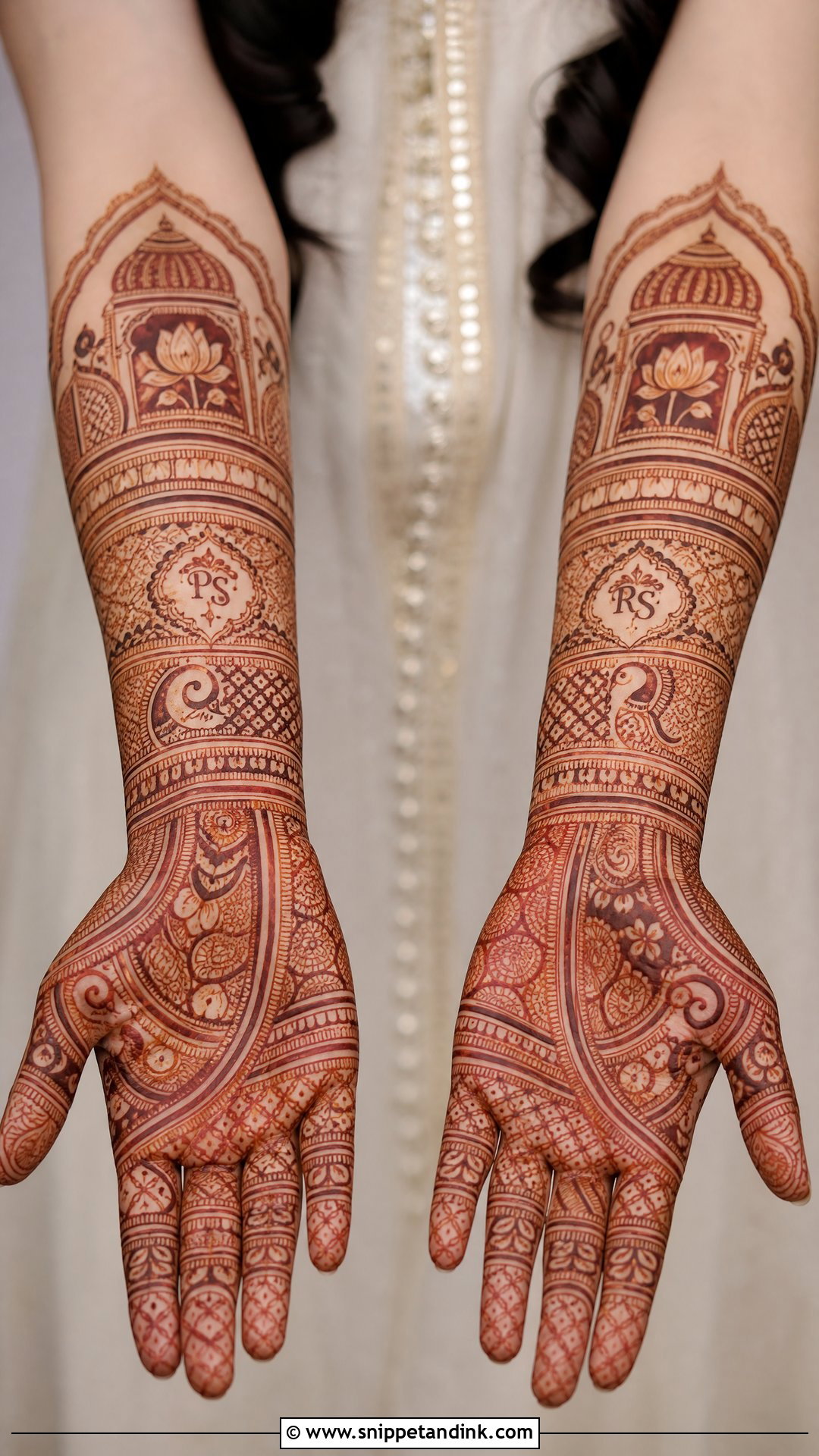
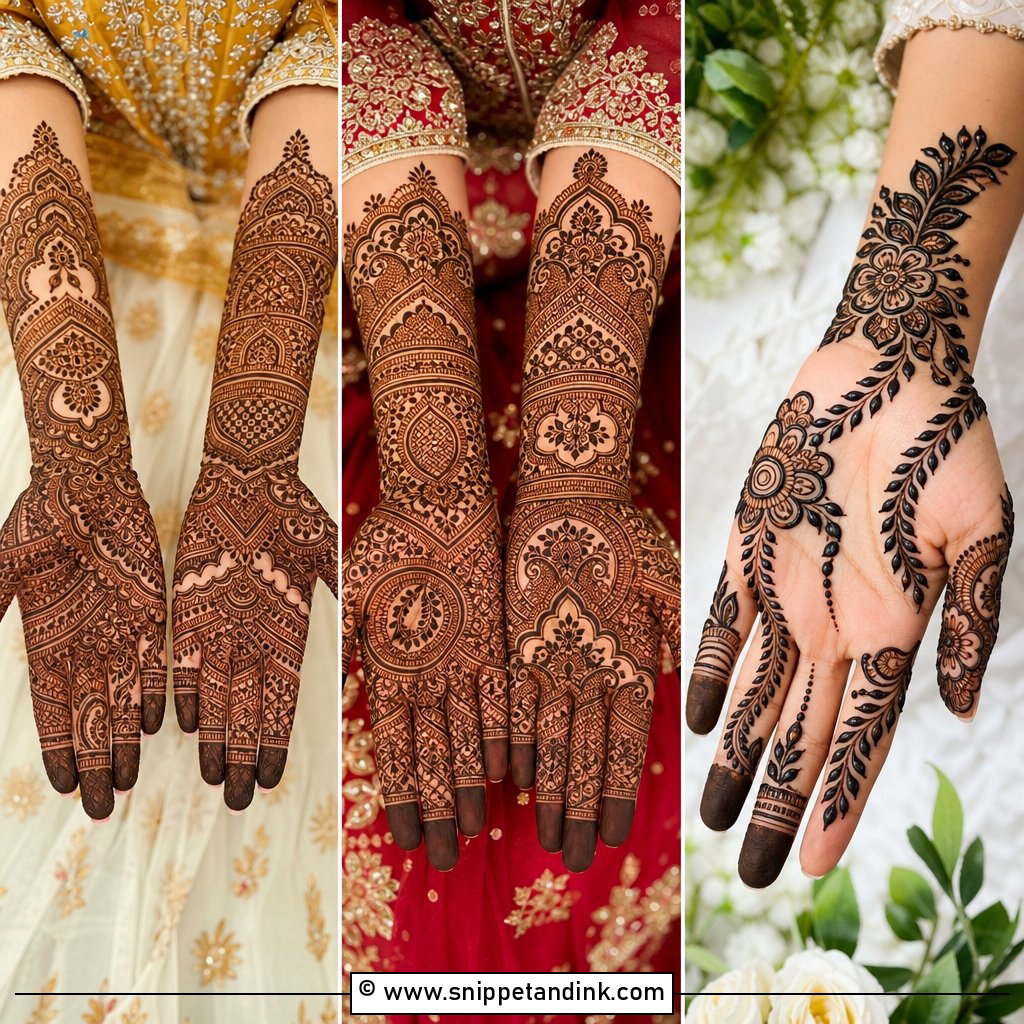
Marwari bridal mehndi design is ornate but ordered: lotus shapes, bold paisleys, jaali panels, domes and fine checks, usually covering both hands and arms. It sits well with bandhani, gota patti and kundan. I can hide the groom’s name inside a vine or mesh section. Because it’s so dense, it takes a long sitting, and you’ll need to keep your hands still and relaxed while it dries; tensing the fingers cracks the paste in the creases.
4. Dulhan Mehndi Design Full Hand
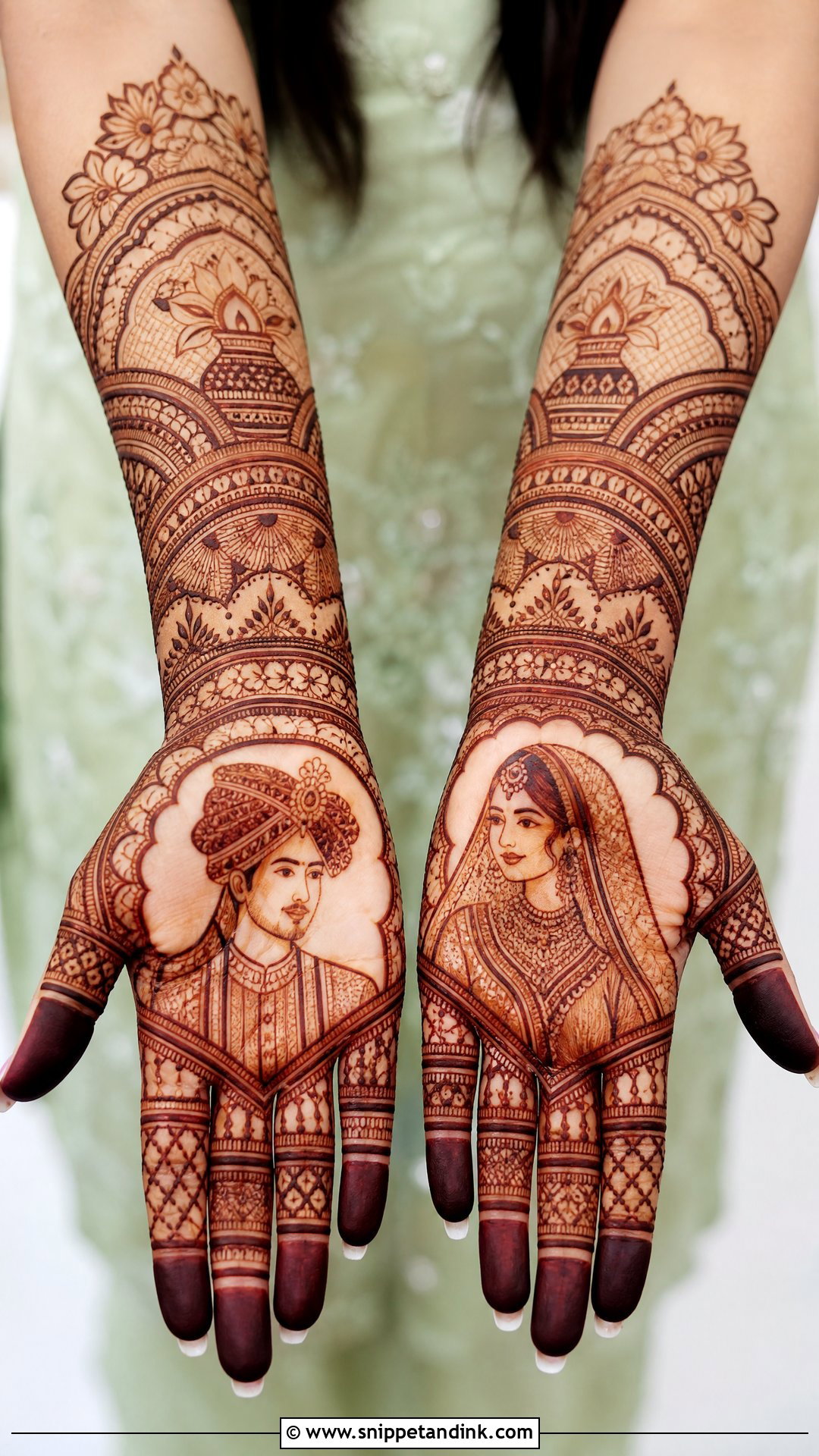
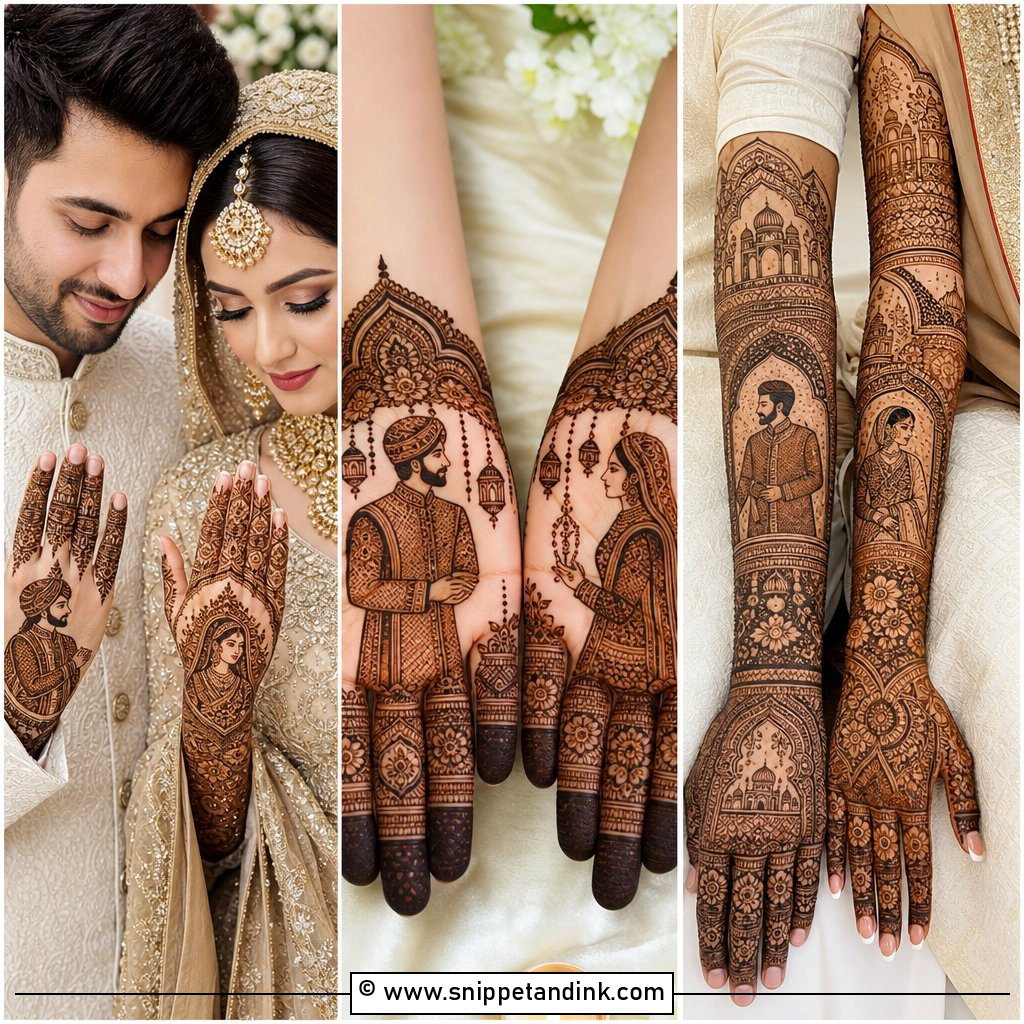
Portraits of the bride on one palm and the groom on the other turn the hands into a wedding story. I draw the faces first, while my hand is fresh and steady, then add floral borders, mandalas and kalash motifs around them. The palms show up in ring shots and during the chooda ceremony, so portrait placement matters. For a cleaner look, keep the portraits central with lighter fillers at the wrist; for a heavier one, take the pattern towards the elbow.
5. Peacock Bridal Mehndi Design
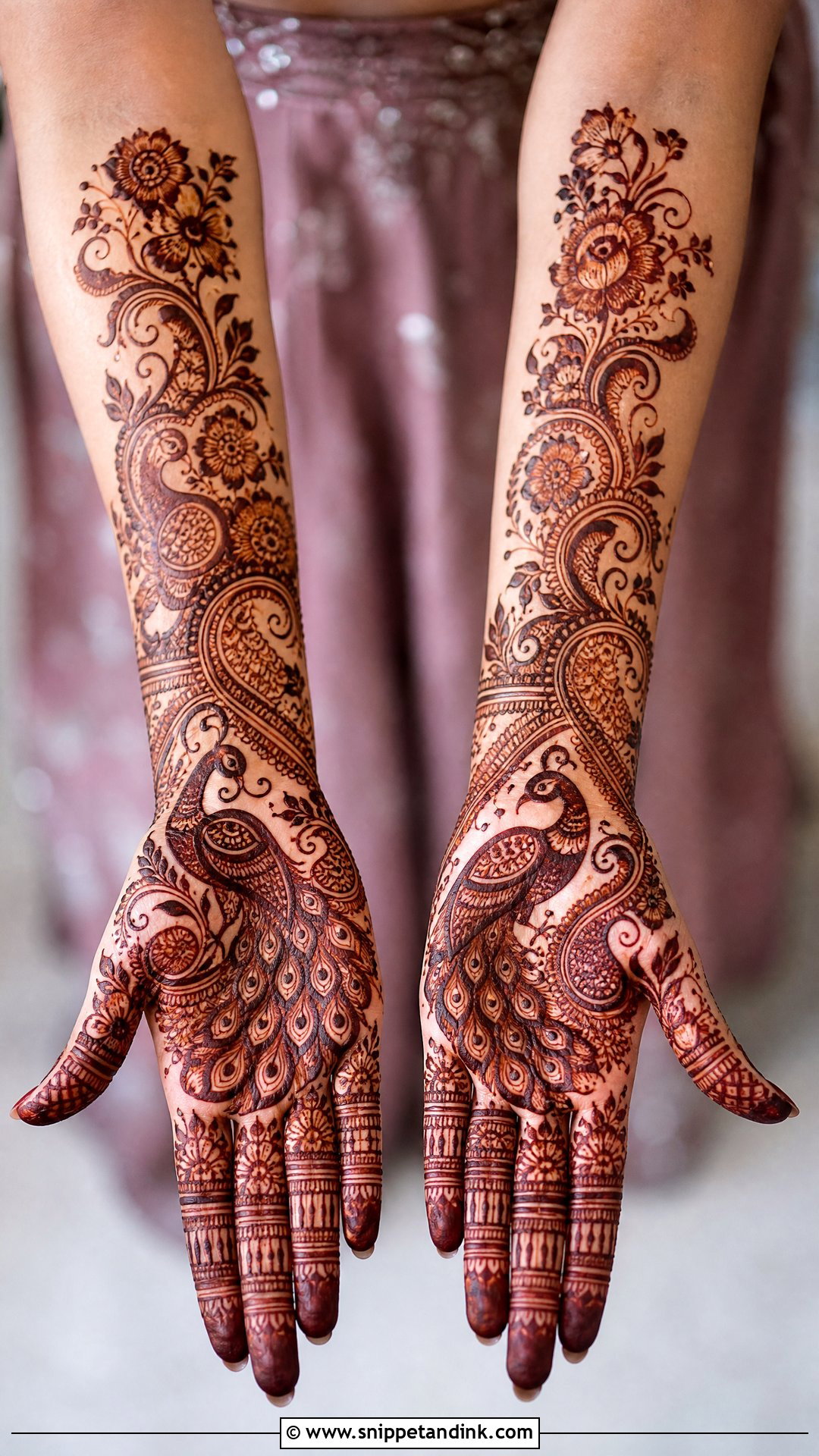
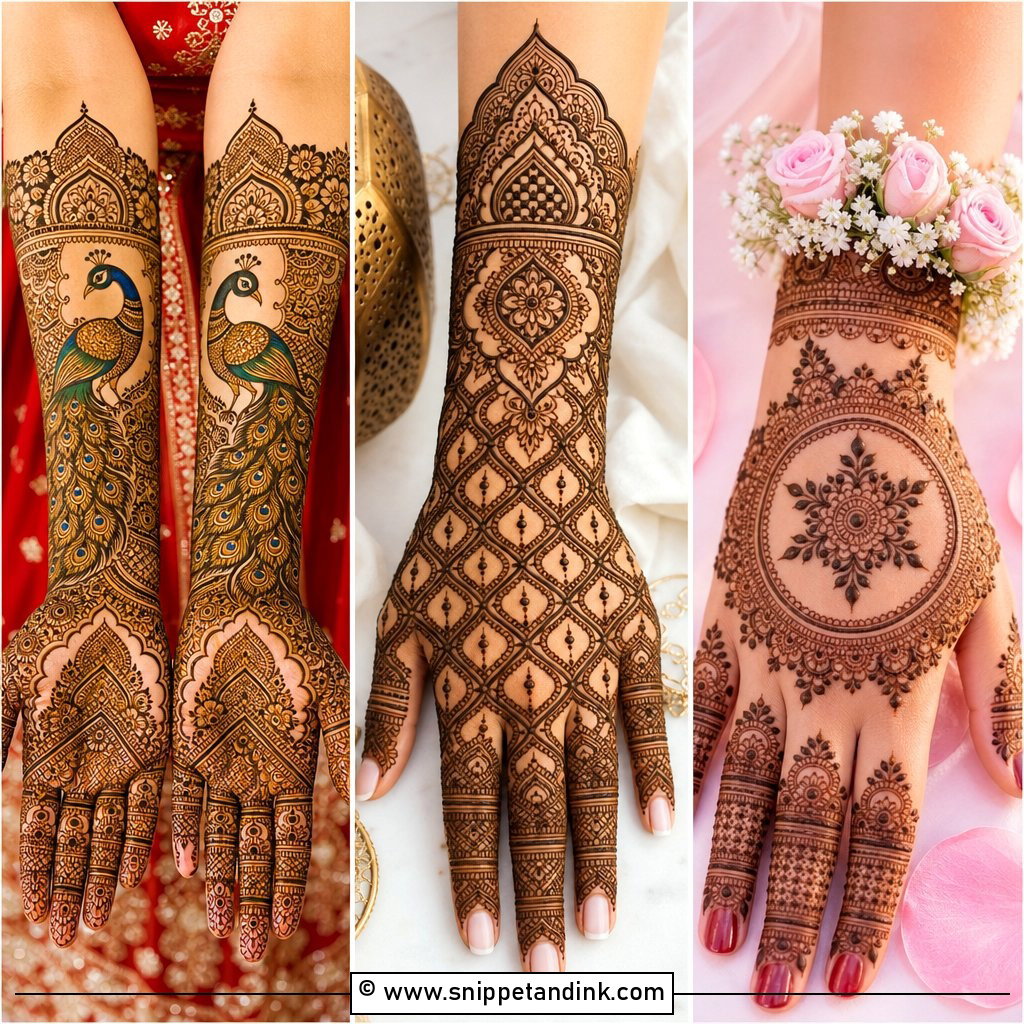
The peacock gives me room for fine work: dotted feathers, curved lines, layered petals. It can sit on the palm, curve along the forearm or appear as mirrored birds on both hands. I place the larger bird near the wrist where it has space, and echo smaller feathers on the fingers. It suits brides who want ornate henna without portraits, and it sits well with silk sarees and temple jewelry.
6. Lotus Bridal Mehndi Design
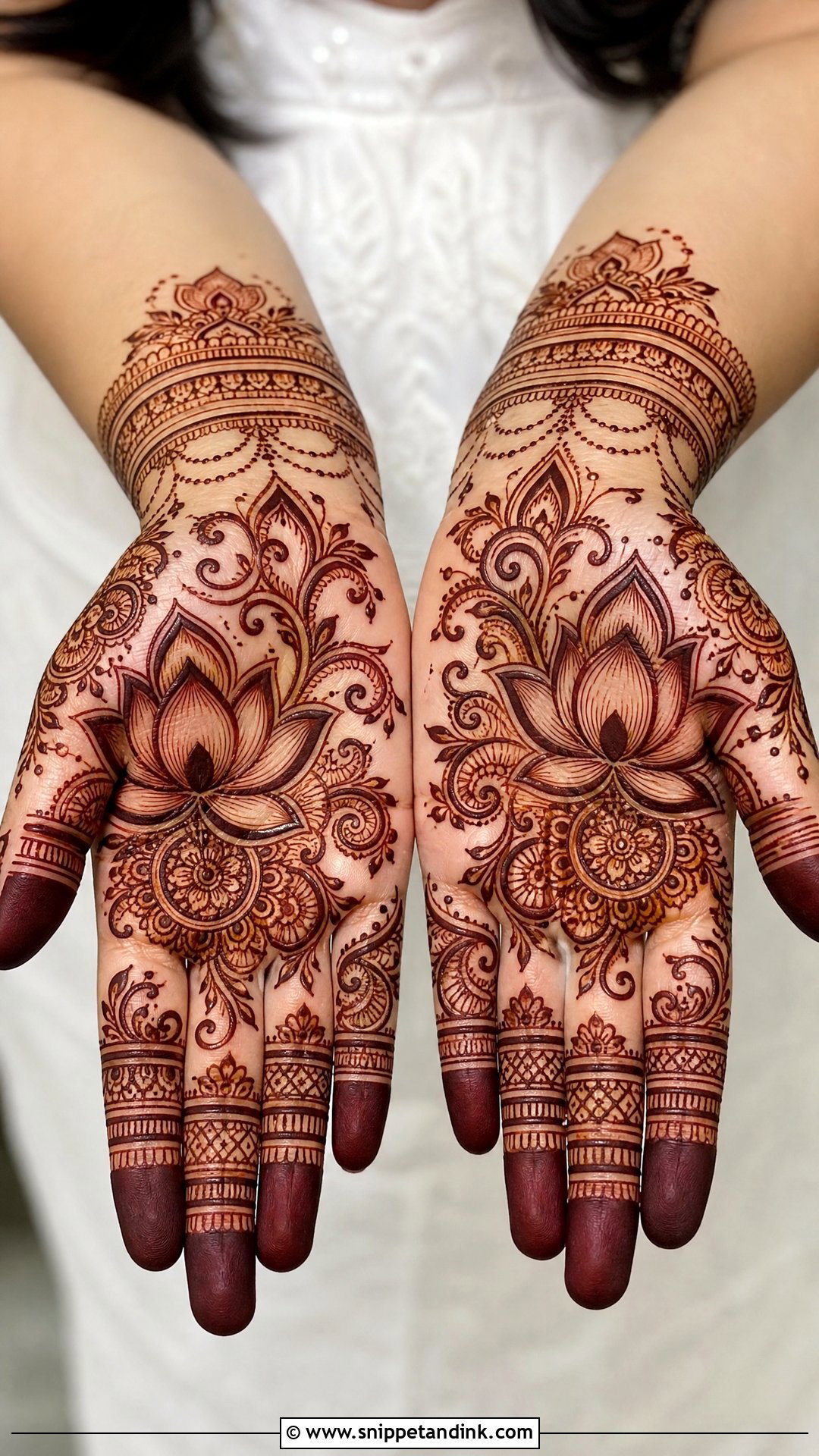
Lotus motifs are floral but still read as traditionally Indian. The petals give me natural spaces for shading, dots and vines. I usually centre one lotus on the palm and repeat smaller blooms along the wrist. To make it bridal, I combine the lotus with paisleys, mandalas and fine jaali. It suits pastel outfits and pearl details.
7. Mandala Bridal Mehndi Design
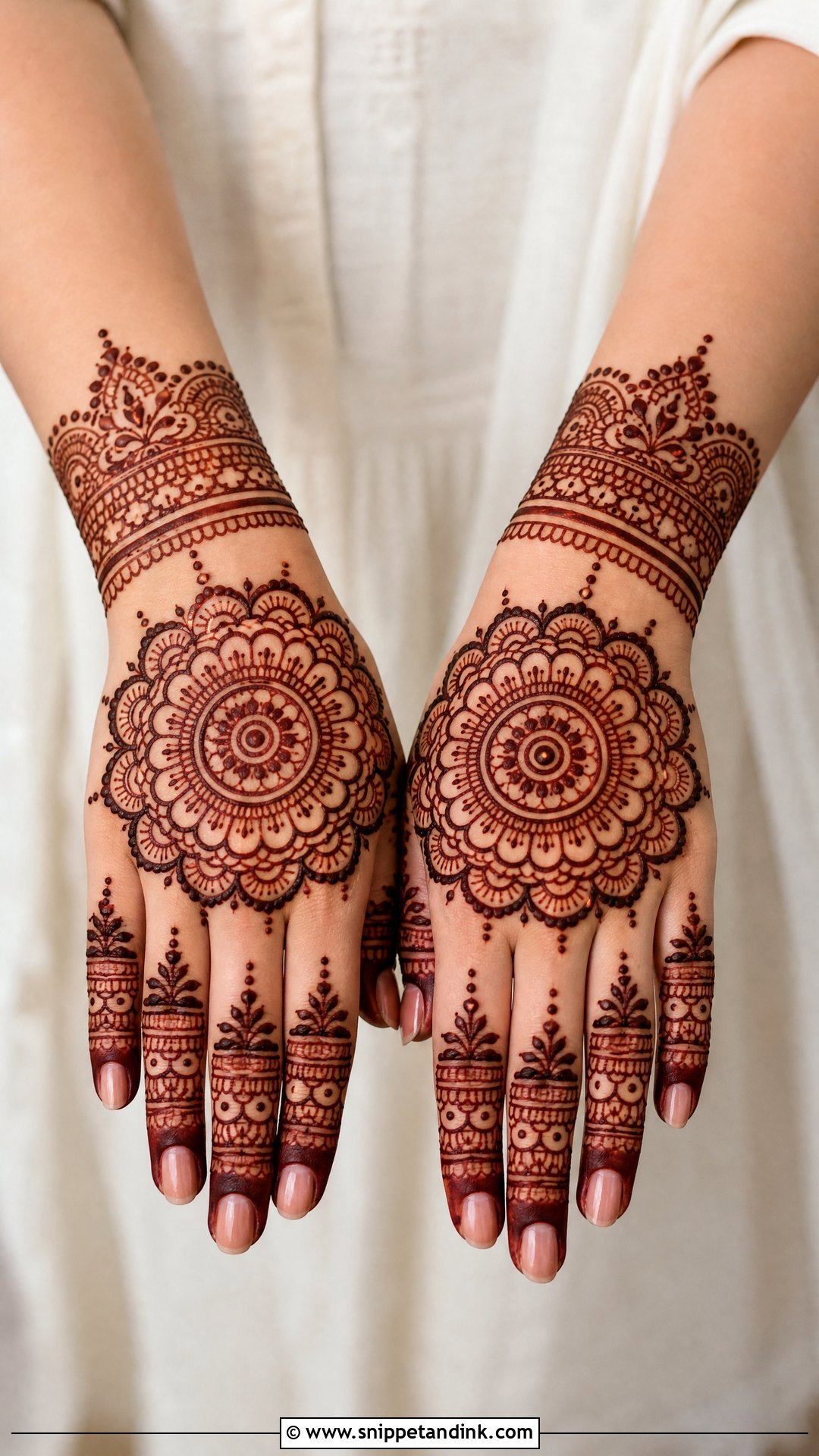
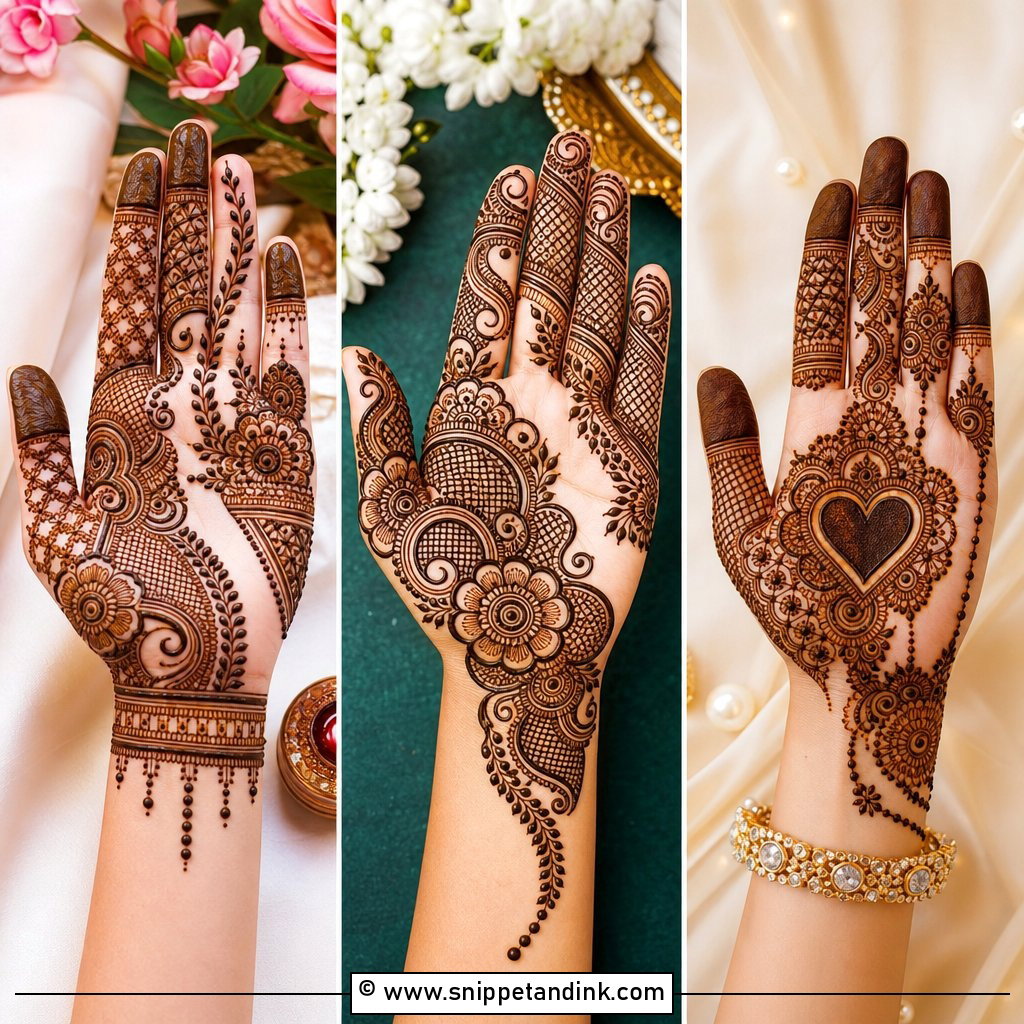
A mandala gives the hand a strong centre and clean symmetry. I start the circle in the middle of the palm and build rings outward, then connect them to wrist cuffs, finger patterns and forearm bands. It’s neat and balanced, good for engagement or wedding mehndi. On small hands, I draw one bold mandala with lighter surrounding work so it doesn’t shrink into a smudge.
8. Paisley Bridal Mehndi Design
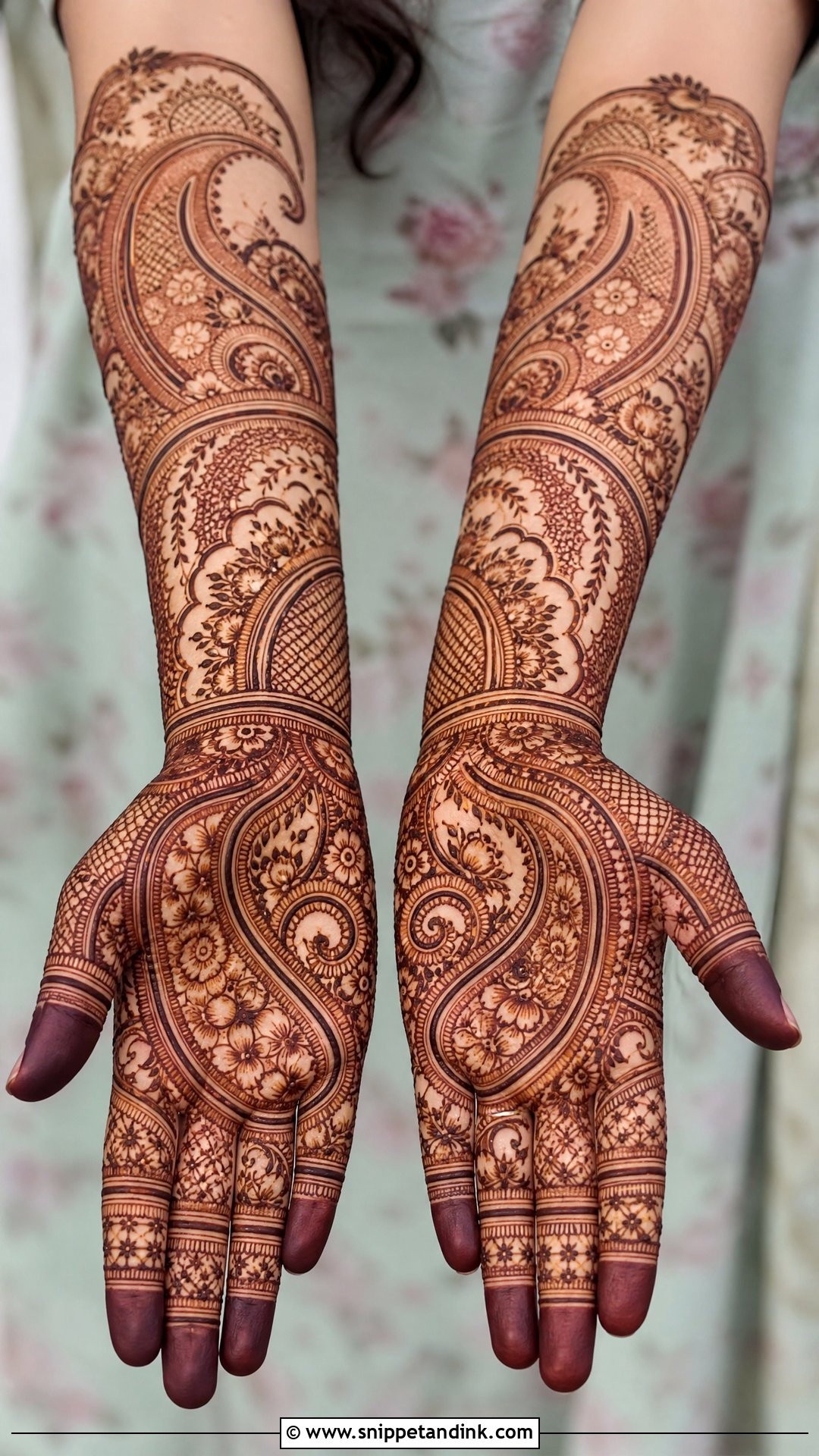
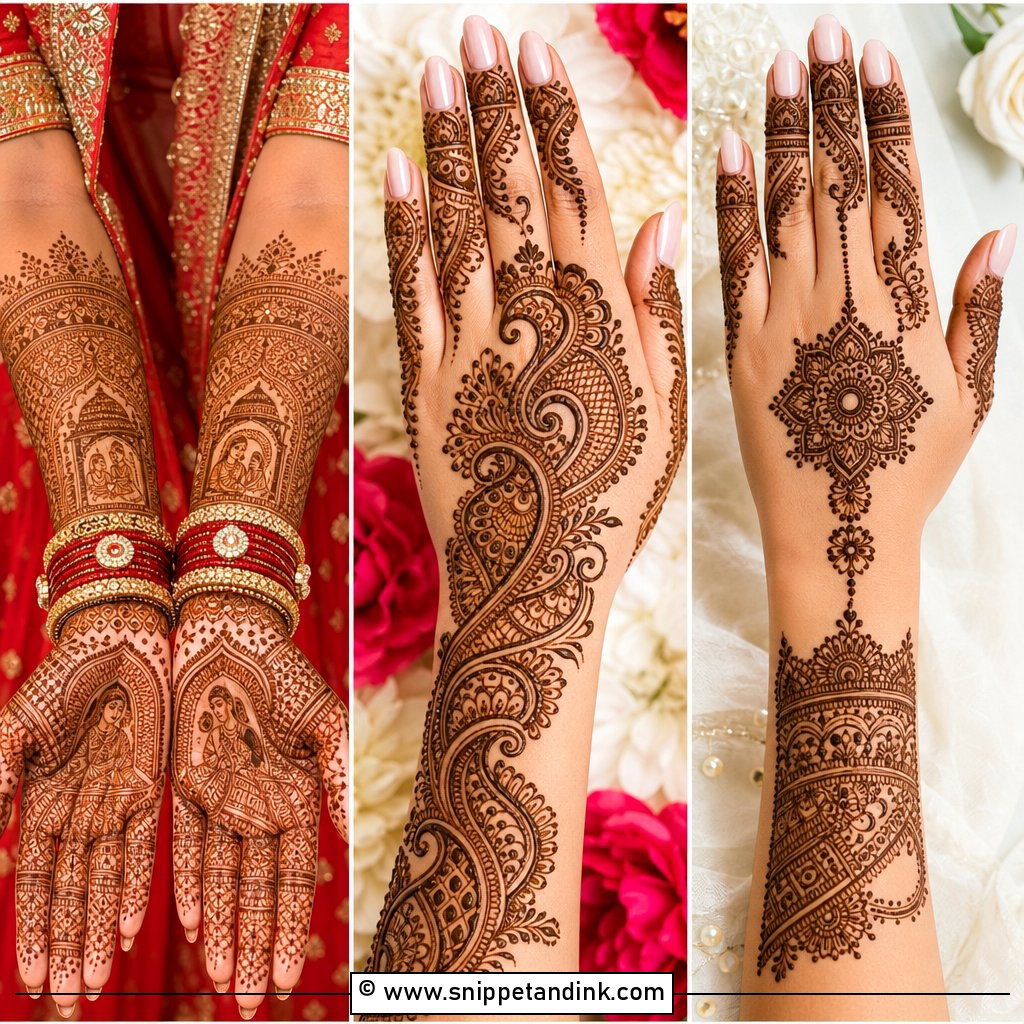
Paisleys follow the curve of the palm, which is why they make the hand look longer. I fill them with tiny flowers, dots, vines or checks. They’re my go-to for heavy coverage that still flows. Large bold paisleys look dramatic; small repeated ones look delicate. Both stain richly because the outlines are thick enough to hold paste.
9. Jaali Bridal Mehndi Design
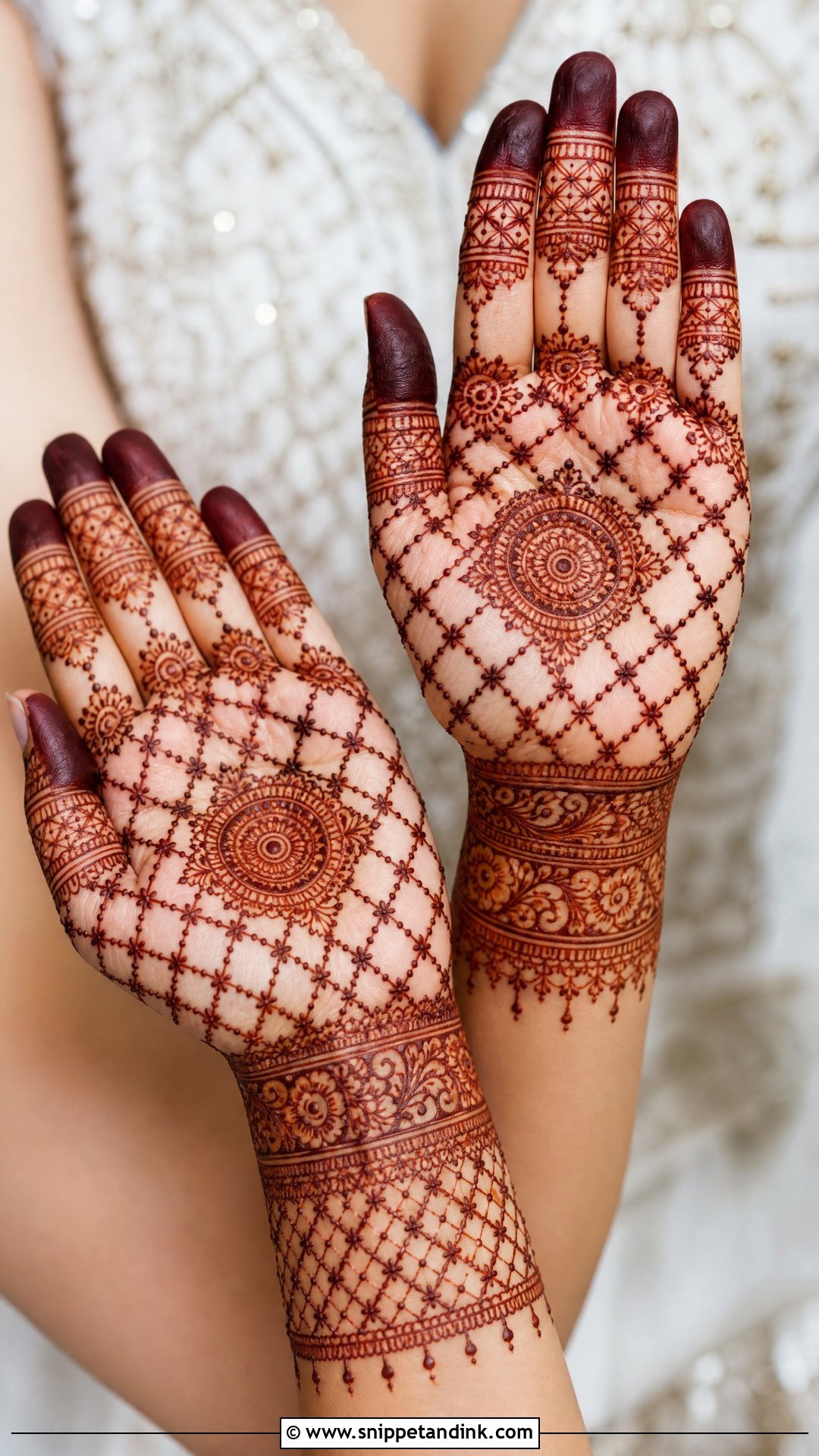
Jaali gives a lace effect: mesh lines, crisscrosses, dots and small florals. It looks detailed in close-up without going too dark. I keep the mesh lines very fine and evenly spaced, since thick jaali blurs as the stain spreads slightly. It works well under statement rings or haath phool, and mixes with mandalas, paisleys or bracelet bands.
10. Bride And Groom Mehndi Design
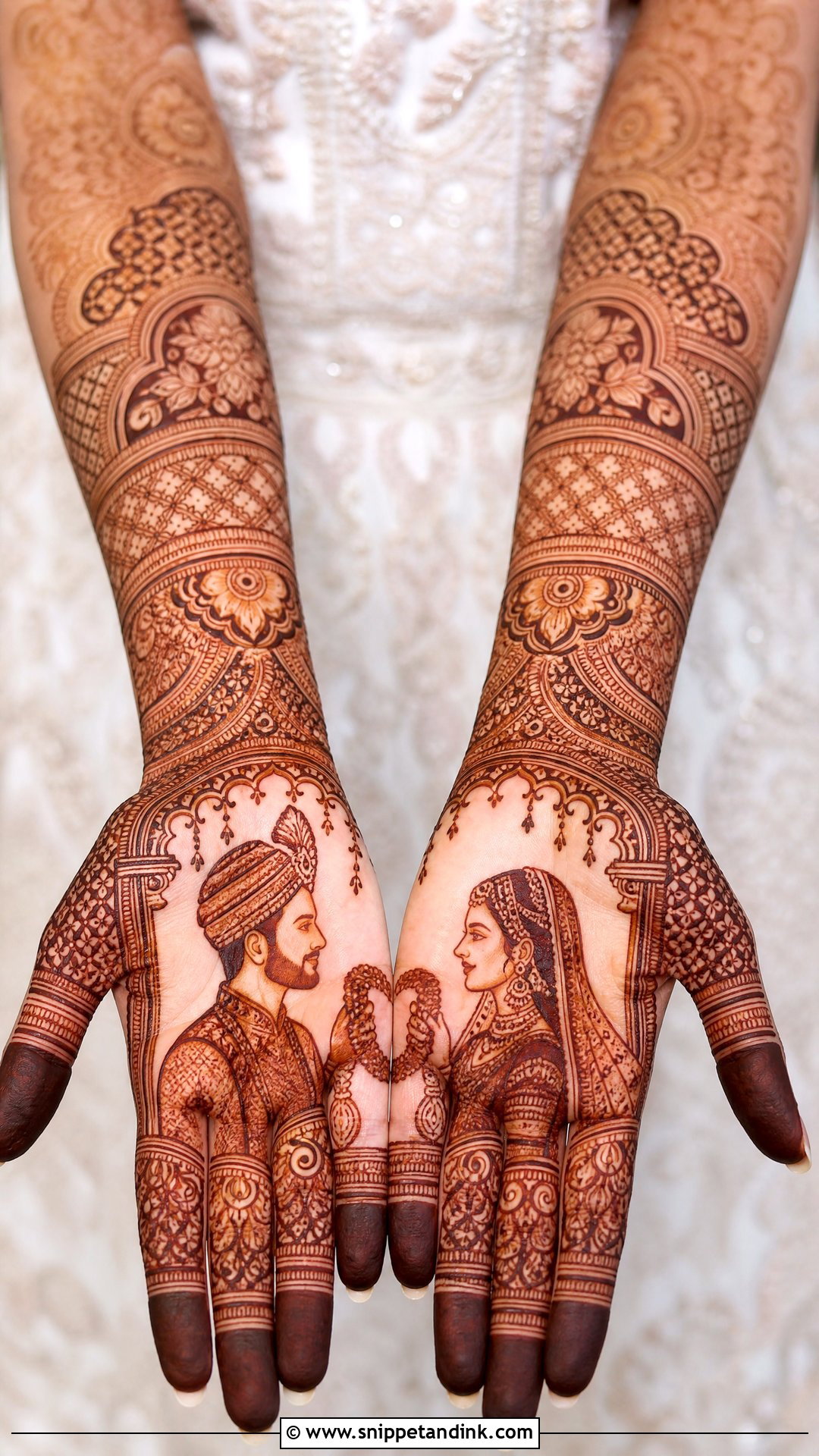
Bride-and-groom portraits on the palms need an experienced artist, because the faces and clothing details must be clean. I’d ask to see photos of an artist’s previous portraits, not just general work. Varmala scenes, doli details or mandap arches can surround the figures. Keep the fingers detailed but lighter, so the portraits stay the focus.
11. Radha Krishna Bridal Mehndi Design
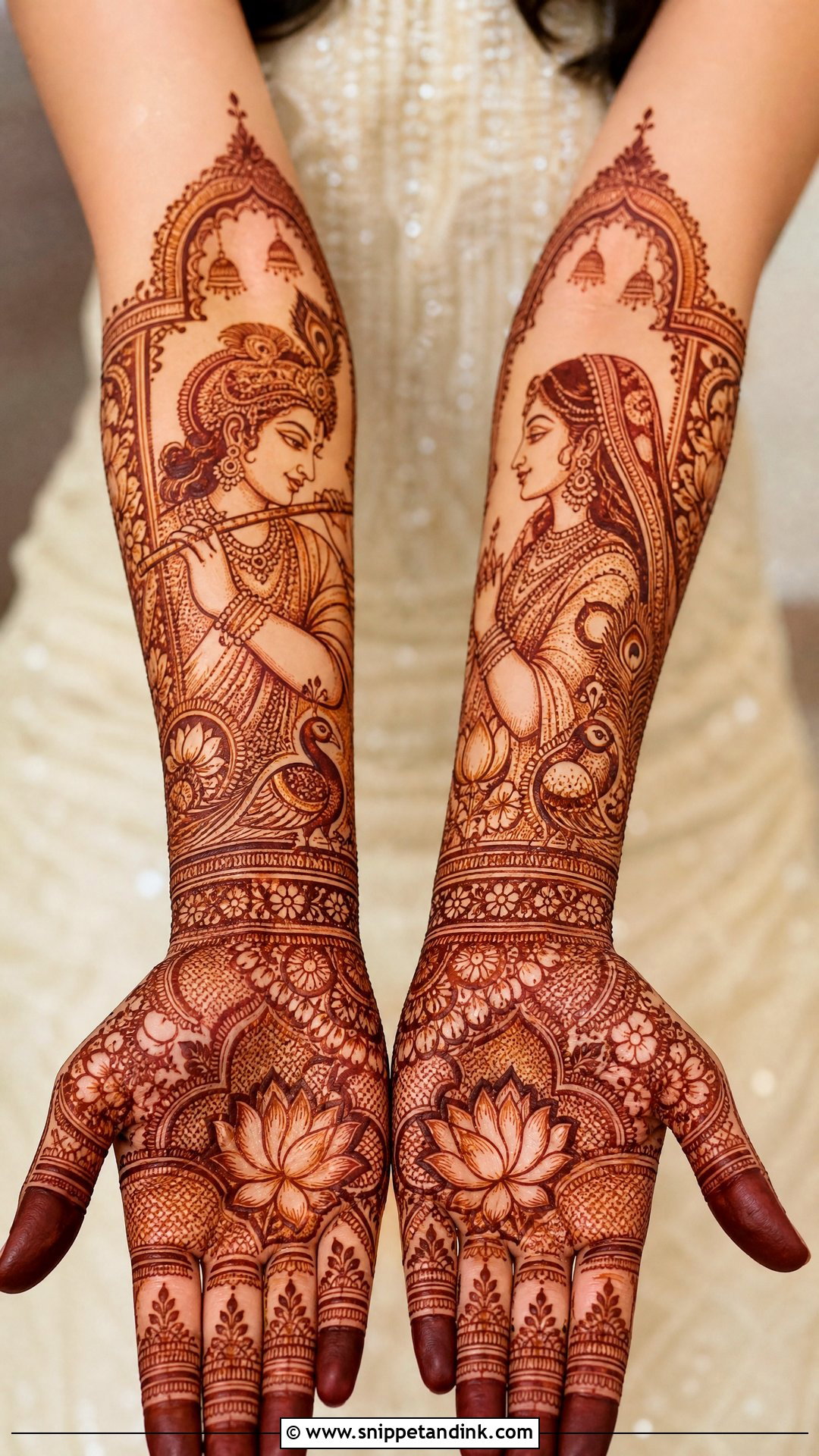
Radha Krishna bridal mehndi design brings a devotional, romantic note: Krishna’s flute, Radha’s profile, lotus flowers, peacocks and temple arches. It needs full palms and forearms to show properly. I place the figures where the hand naturally opens for photos, then surround them with jaali, paisleys and mandala work. Clear figures matter more than adding more detail.
12. Elephant Bridal Mehndi Design
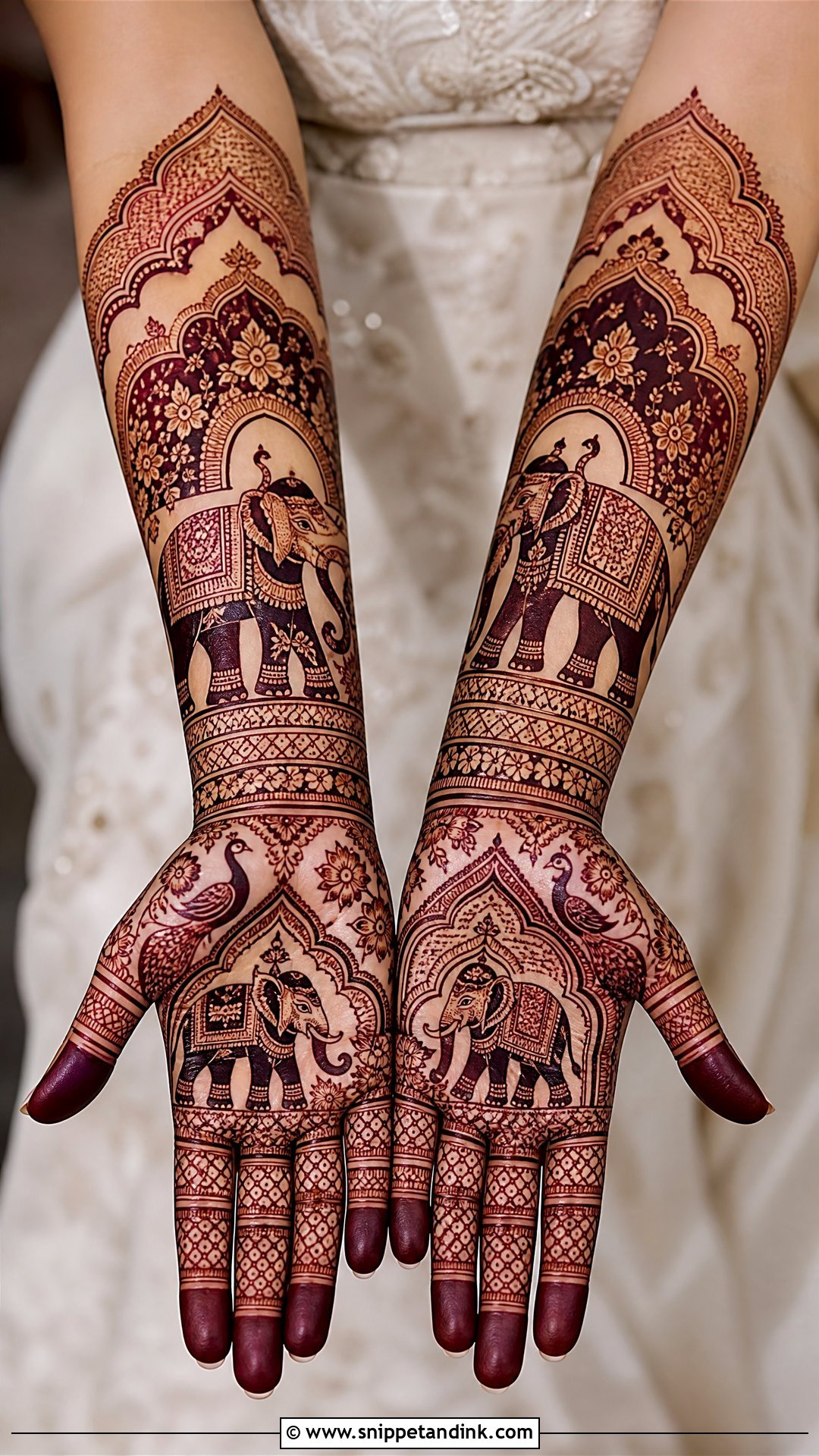
An elephant bridal mehndi design feels regal without portraits. I place the elephant near the wrist or forearm, where there’s room for its decorated blanket and bells. It needs space, so it suits longer hands or designs that extend up the arm. Peacocks, lotus flowers or mandap elements complete the story.
13. Simple Indian Bridal Mehndi Design
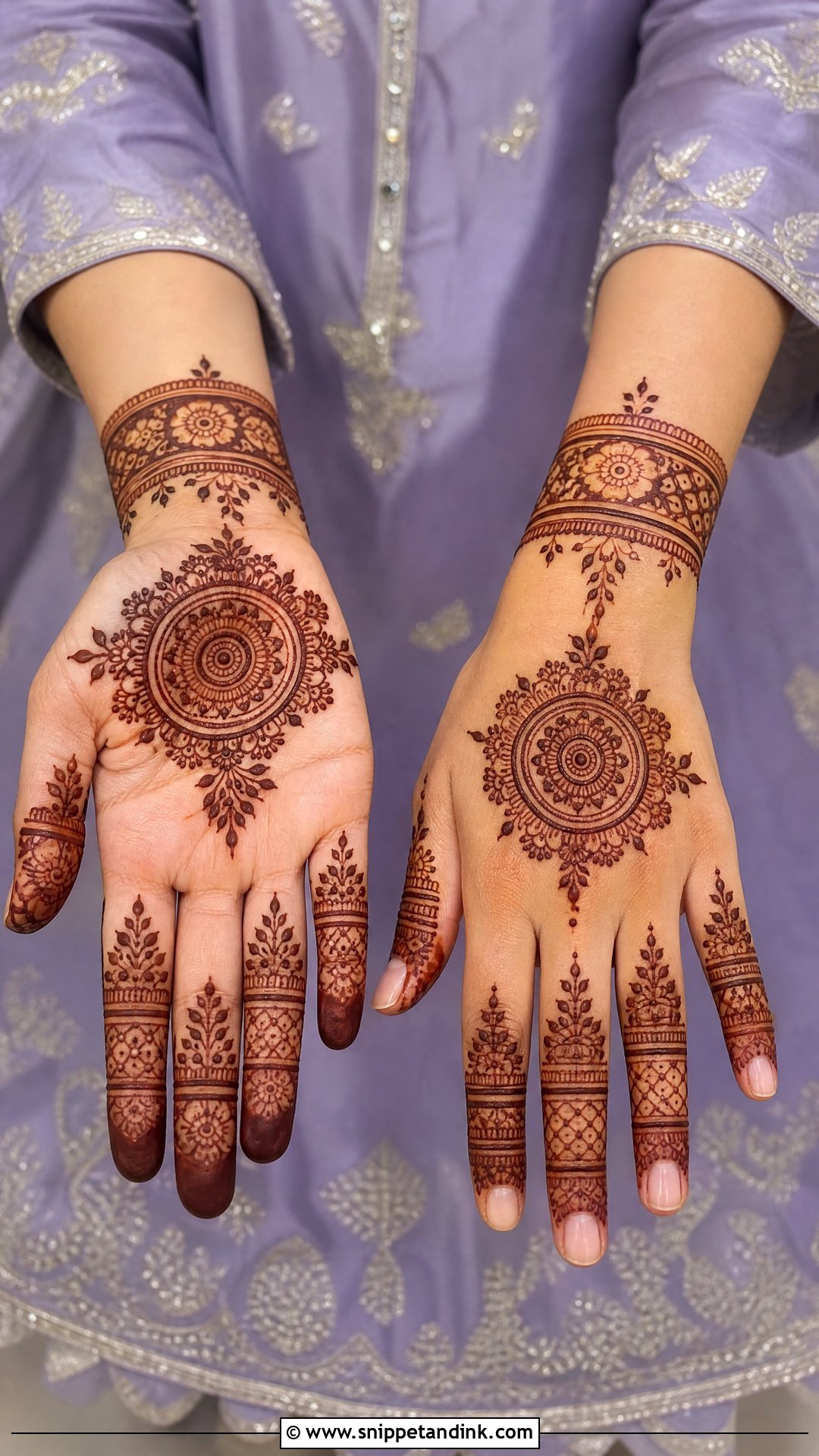
A simple bridal design keeps the traditional motifs with more breathing room: a central mandala, a floral wrist cuff, a paisley trail and detailed fingers. It’s quicker to apply and more comfortable for a small wedding or a bride with a packed schedule. The risk is that it looks plain, so I make sure the fingers and wrist carry enough bridal detail. A deep stain and neat lines make it look finished.
14. Heavy Bridal Mehndi Design
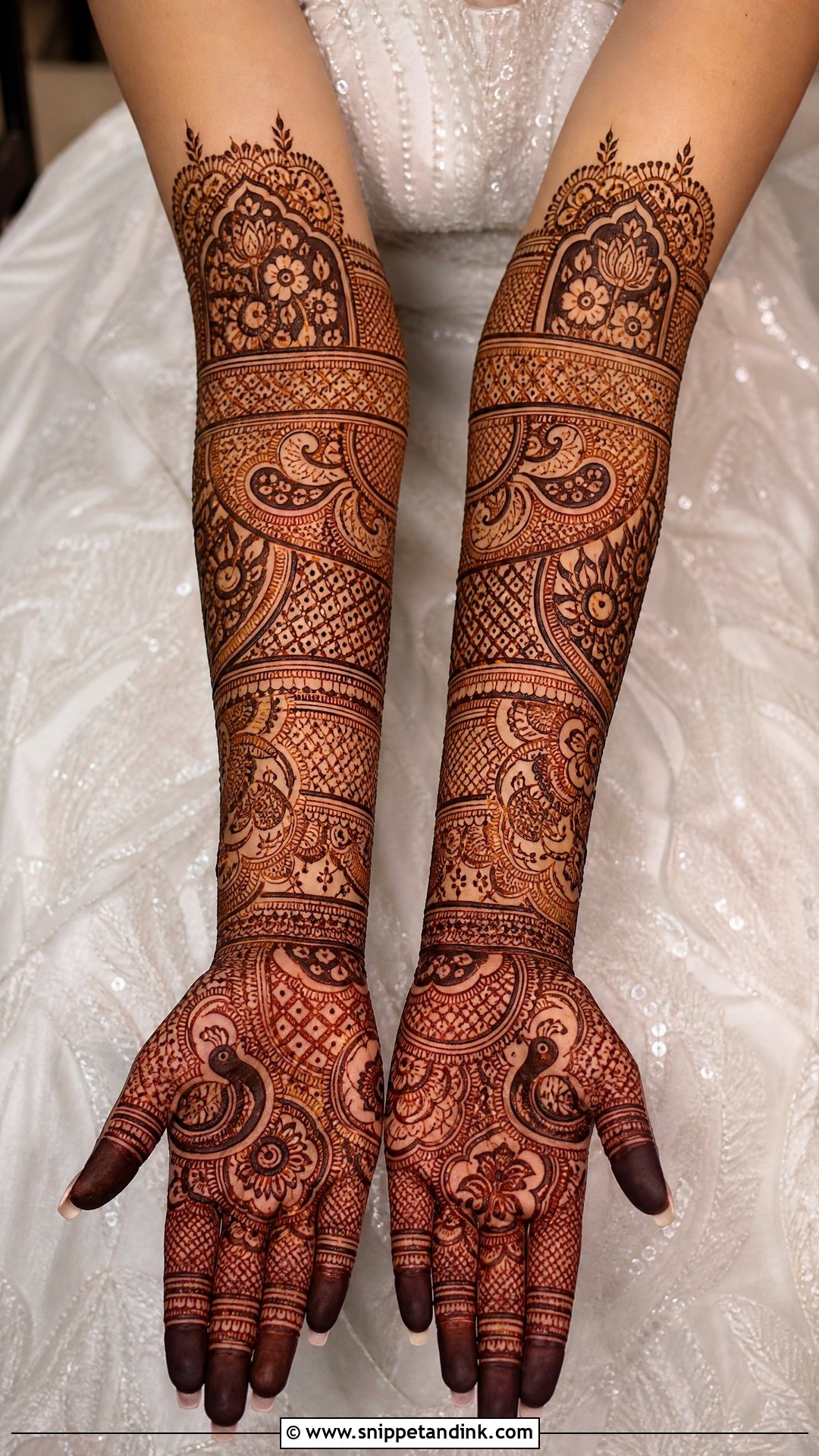
Heavy bridal henna fills the hands with florals, paisleys, jaali, peacocks and borders, often up to the elbow. It takes a long sitting, so plan to sit still for hours. Before I start, I agree the placement of the main motifs with the bride. Heavy shouldn’t mean crowded; I still leave small open spaces so the pattern stays readable once it stains.
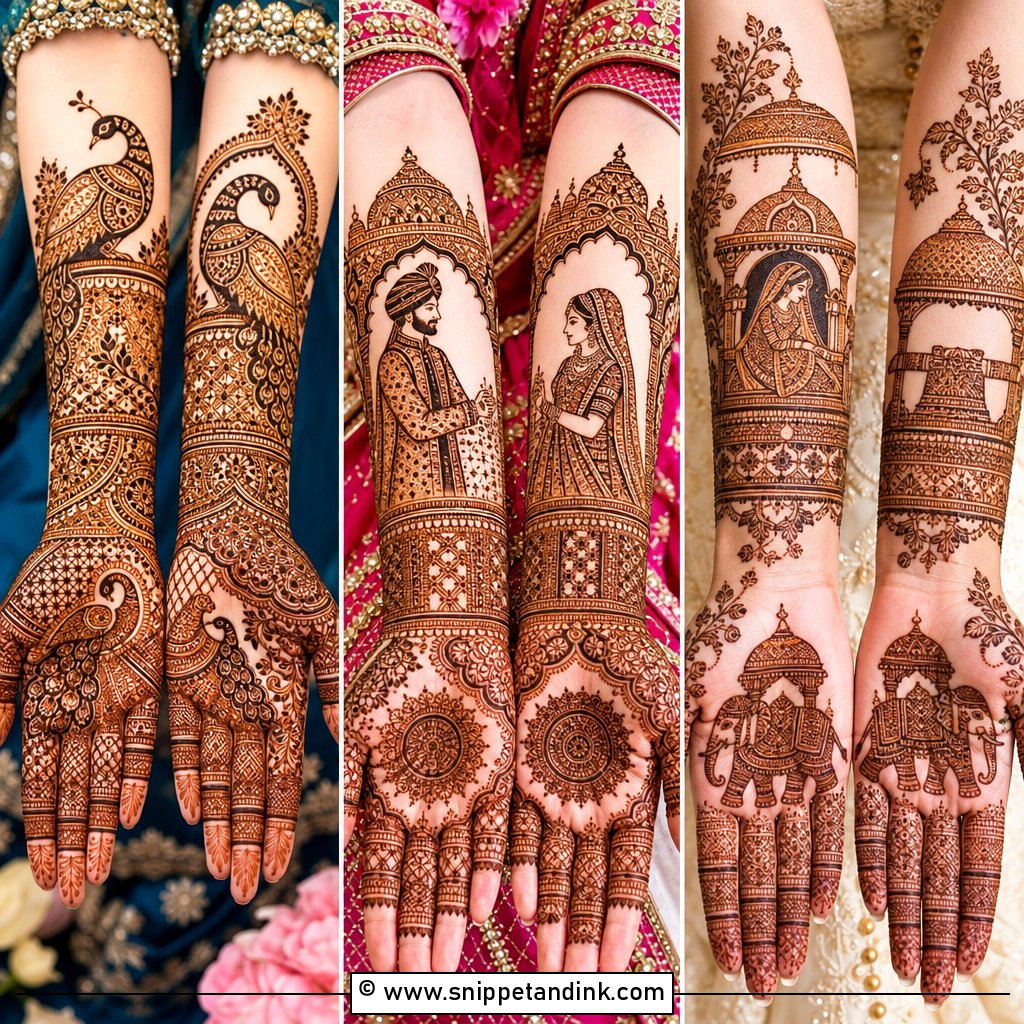
15. Front Hand Bridal Mehndi Design
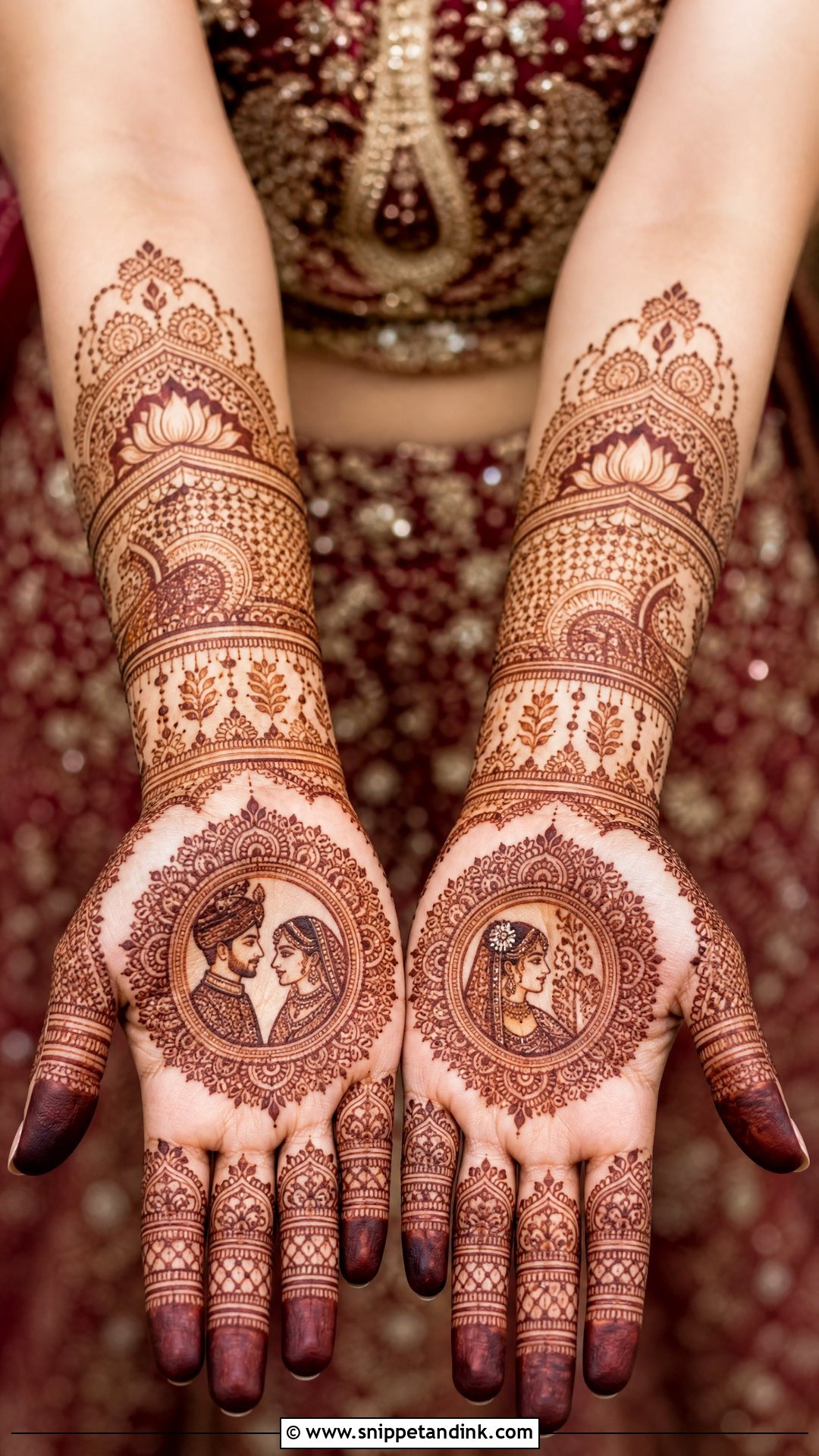
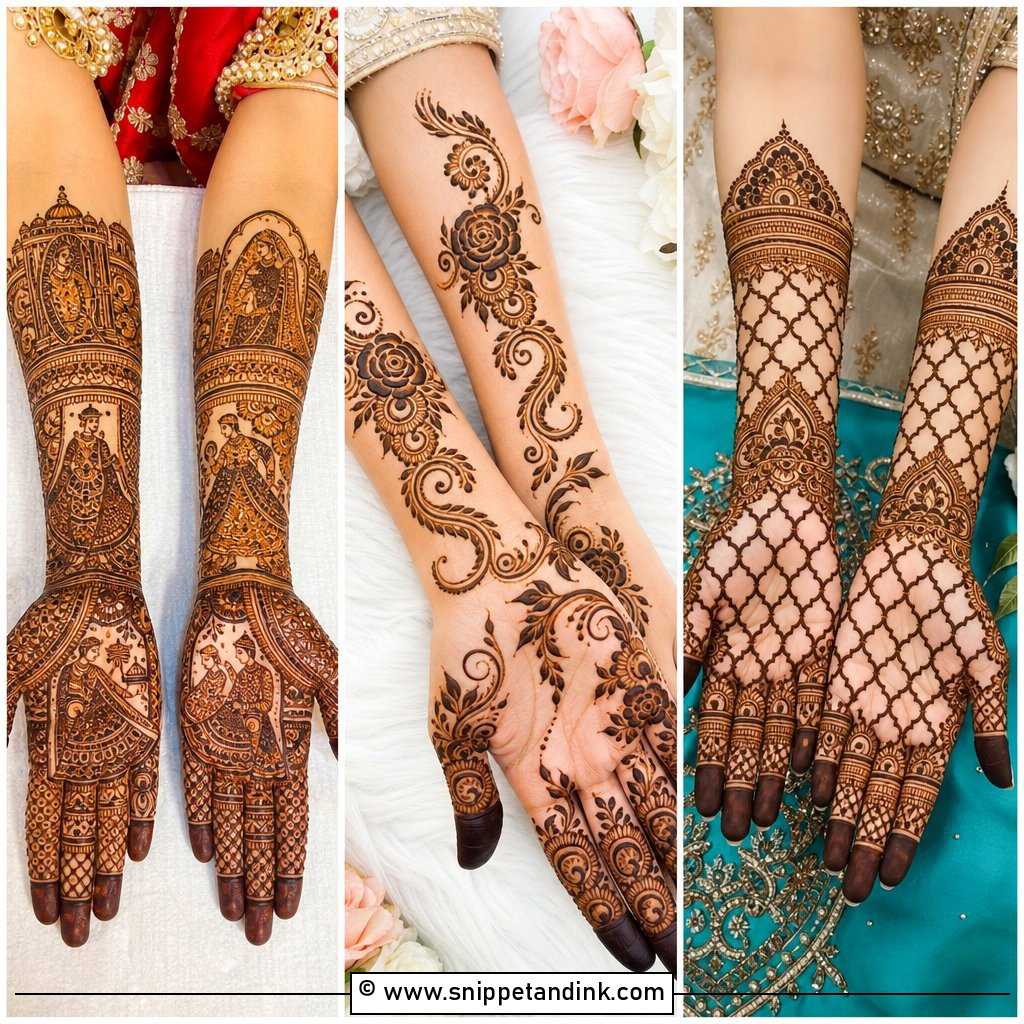
The palm is where most ritual photos are taken, so I build front-hand designs around one main motif. Mandalas, portraits, lotus patterns and paisley clusters all work. The palm is flat and stains darkest, which makes it ideal for storytelling. Too many tiny elements in the centre blur in photos; one strong motif reads better.
16. Back Hand Bridal Mehndi Design
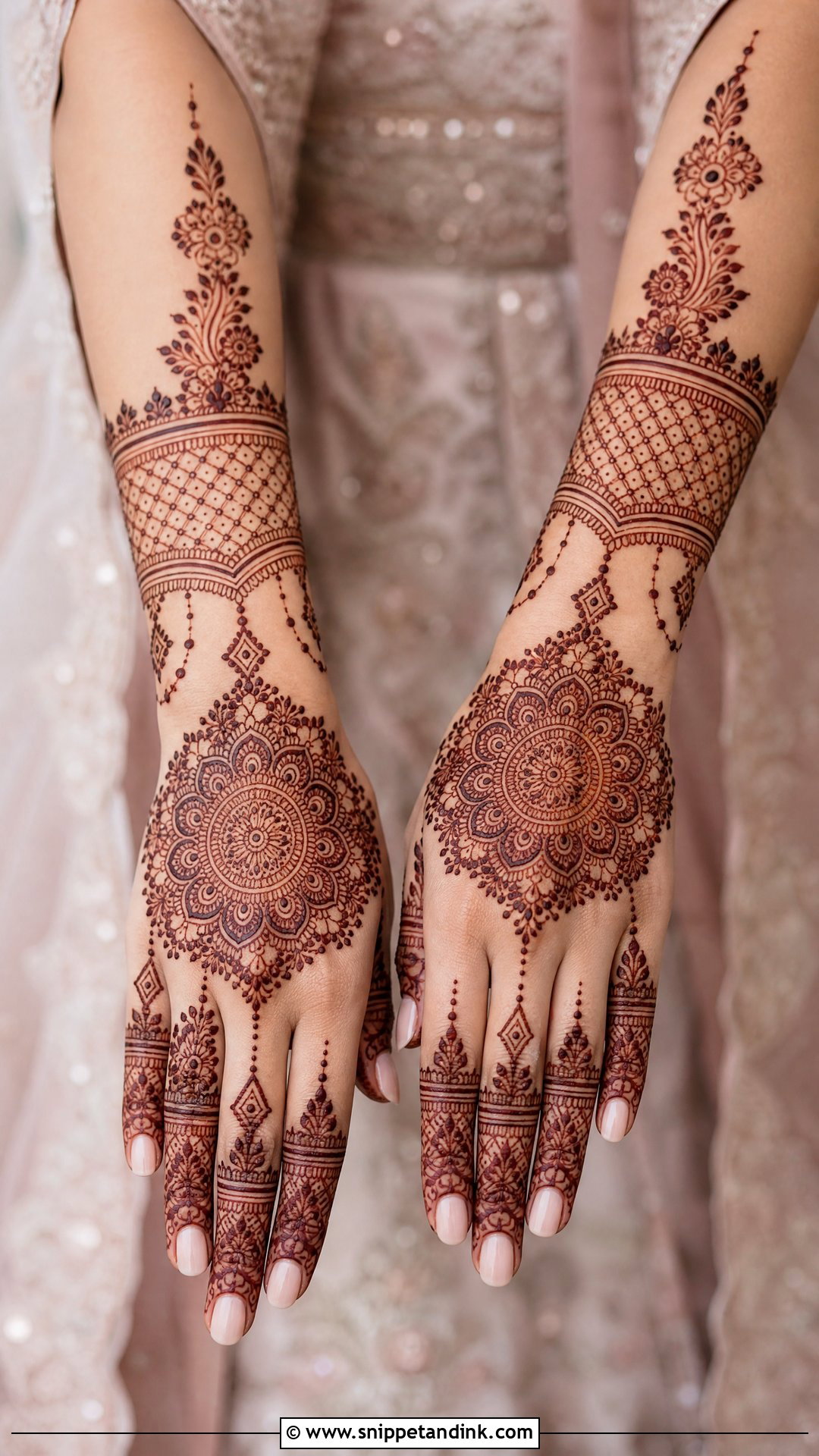
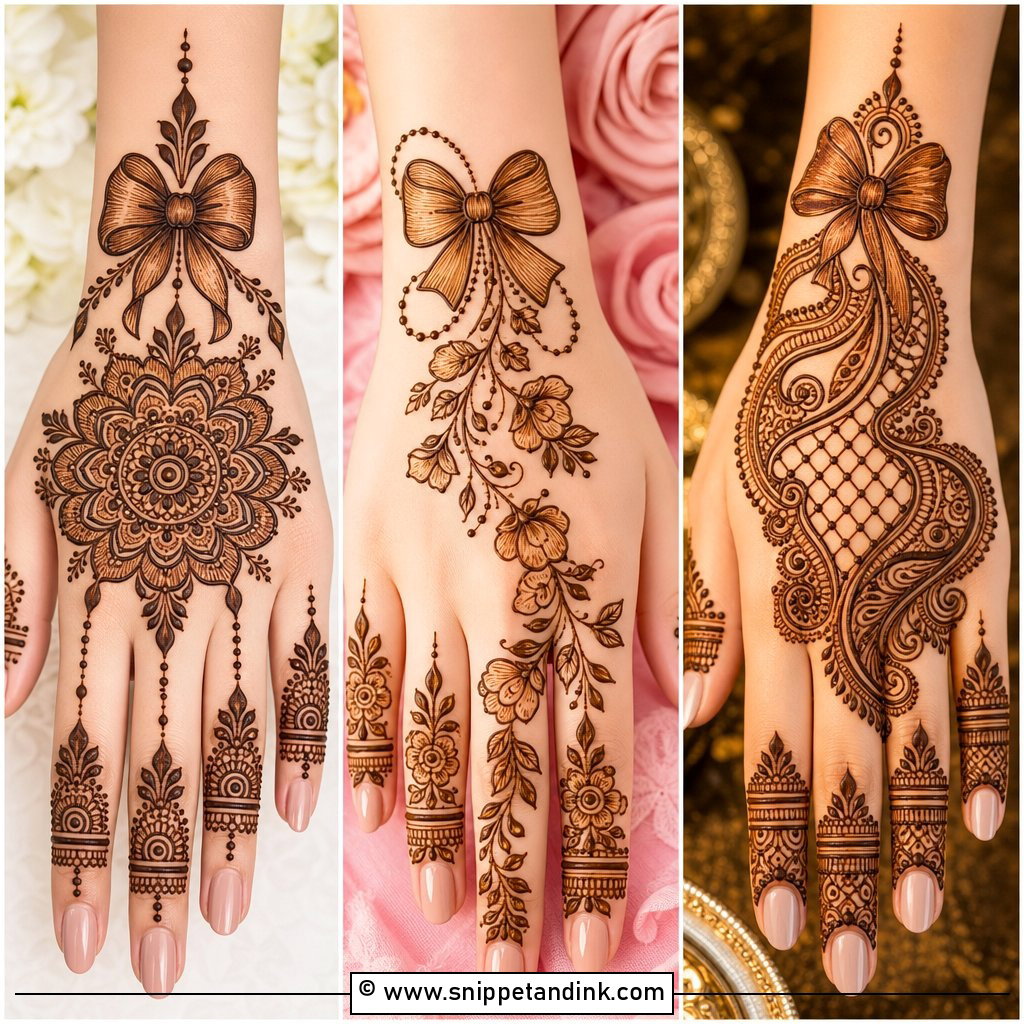
The back of the hand appears in candid photos and alongside rings, bangles, kaleere and haath phool. Central mandalas, jaali gloves, floral trails and finger chains are popular. Neat spacing matters here, because the back of the hand stains a little lighter than the palm, and crowded lines lose definition. Dense fingers with a filled wrist band look traditional; negative space around a central motif looks modern.
17. Finger Bridal Mehndi Design
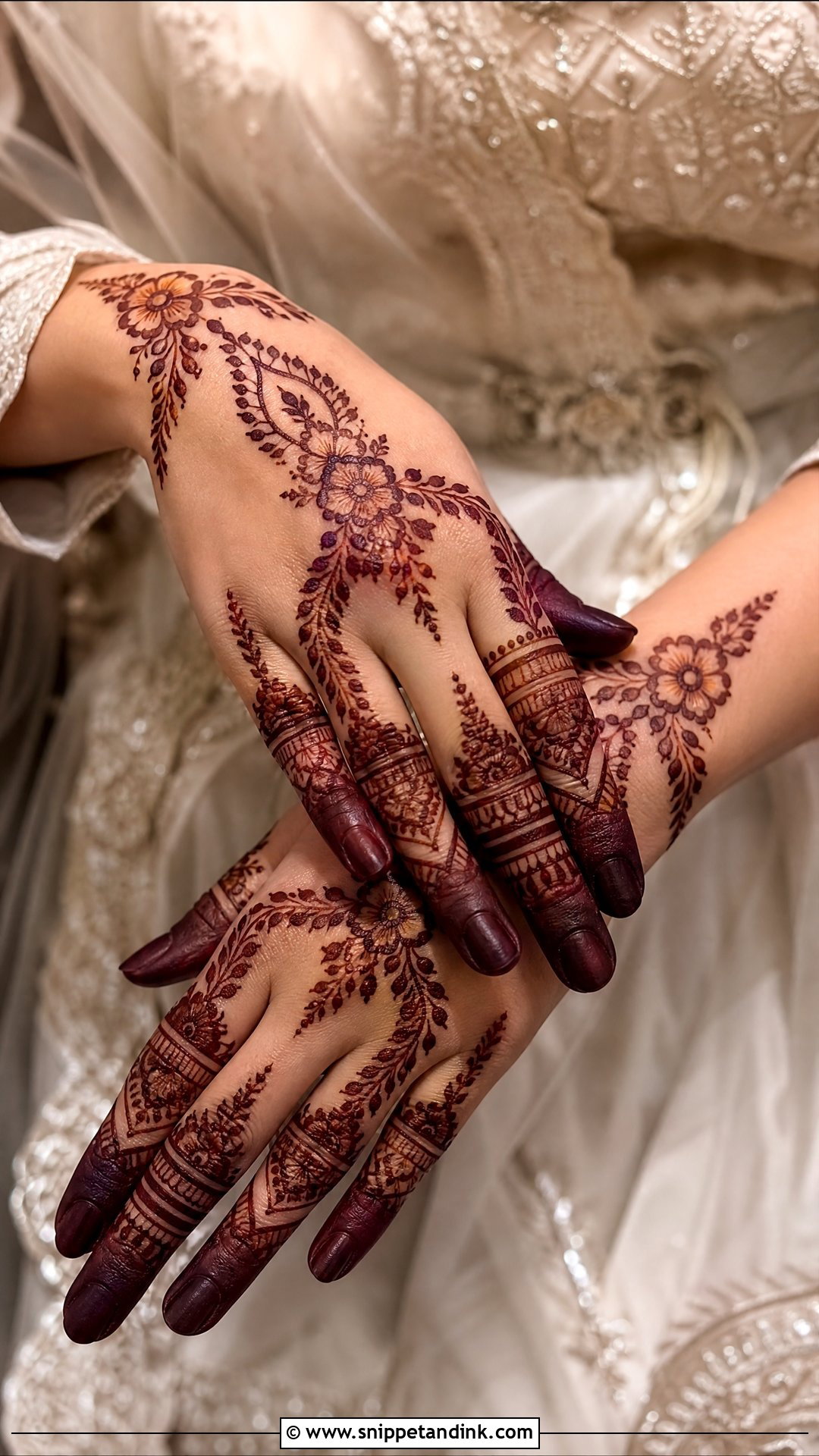
Finger designs frame the whole pattern, so they shouldn’t look disconnected. Leafy bands, tiny florals, chevrons, dots and fingertip filling all work. I keep the line thickness even on every finger, since uneven fingers are the first thing people notice in ring photos. Full finger coverage reads traditional; spaced lines feel modern. Fingertips stain very dark, so even a light finger design shows.
18. Wrist Bridal Mehndi Design
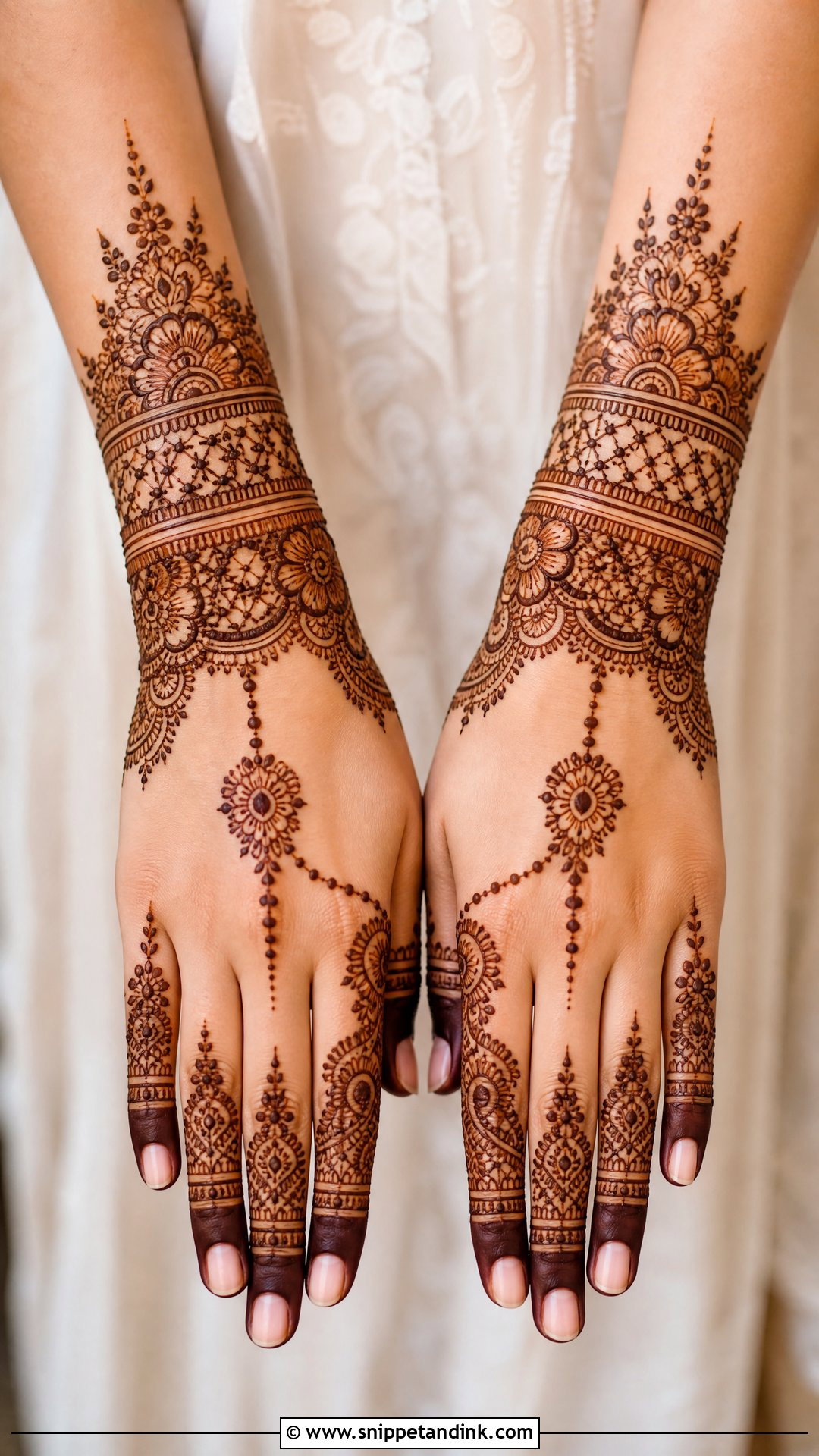
A wrist design works like a henna bracelet and connects the hand to the forearm. Bangles, cuffs, floral bands, paisley borders or jaali strips all work, and they look striking with chooda, glass bangles and gold kadas. Plan it around your sleeves. With heavy cuffs, keep the wrist pattern simpler; with short sleeves, I extend it with layered bands and vines.
19. Forearm Bridal Mehndi Design
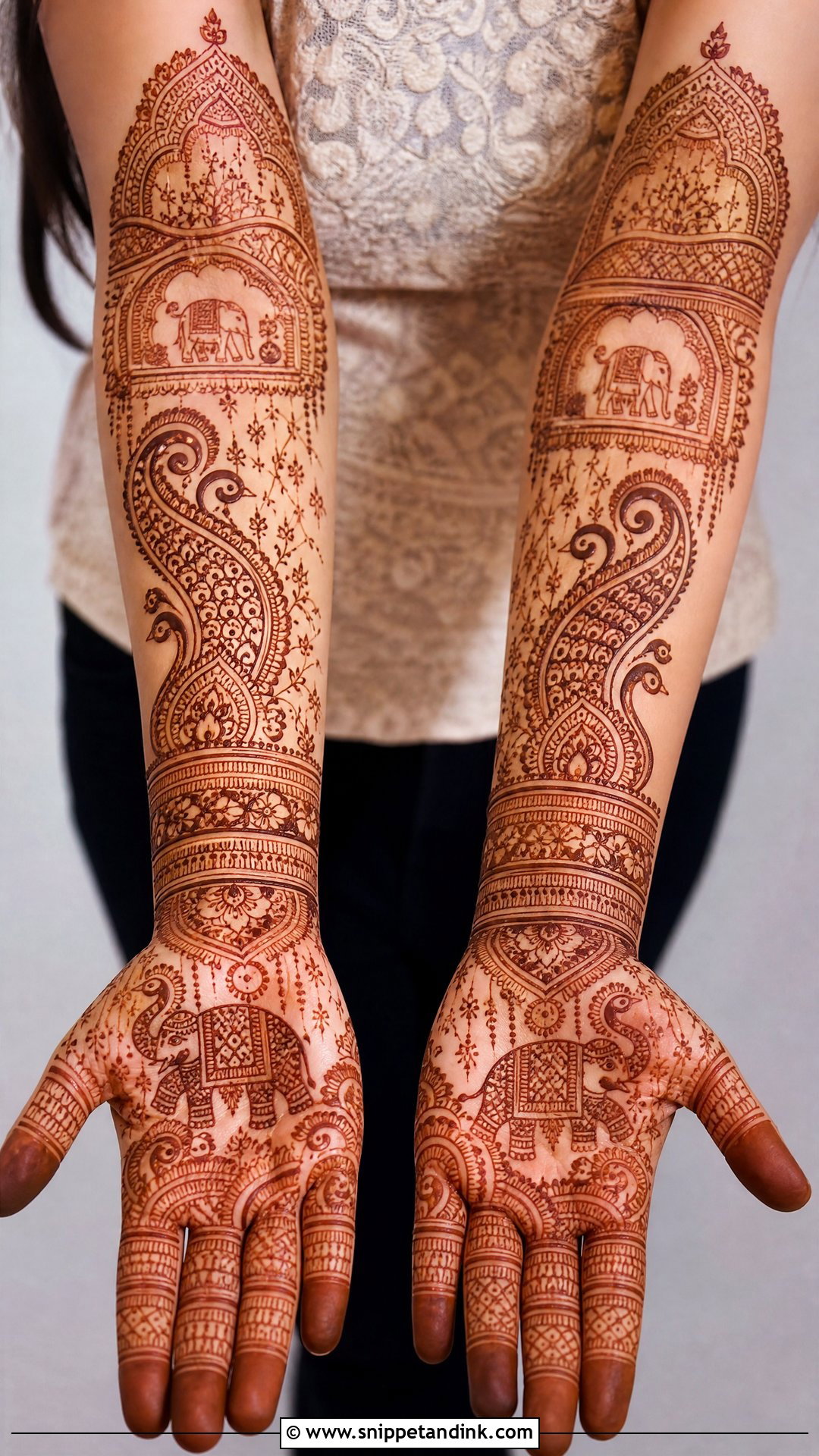
Forearm henna shows past bangles and sleeves and gives room for a full story: paisley columns, peacock trails, vines, elephants or wedding scenes. I follow the natural curve of the arm so it looks right from every side. Keep in mind that the forearm skin stains lighter than the palm, so the design will naturally fade a shade as it goes up the arm. Wrist bands or flowing vines connect the two areas smoothly.
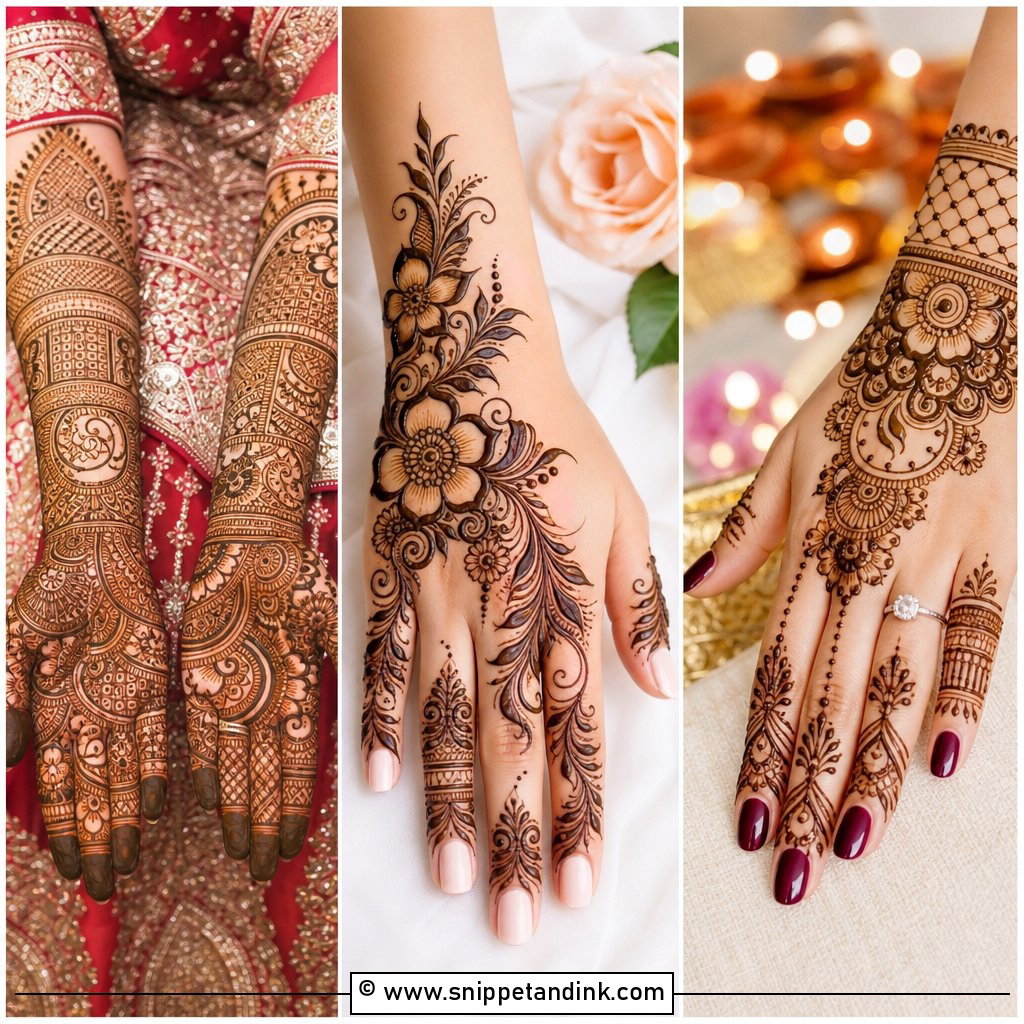

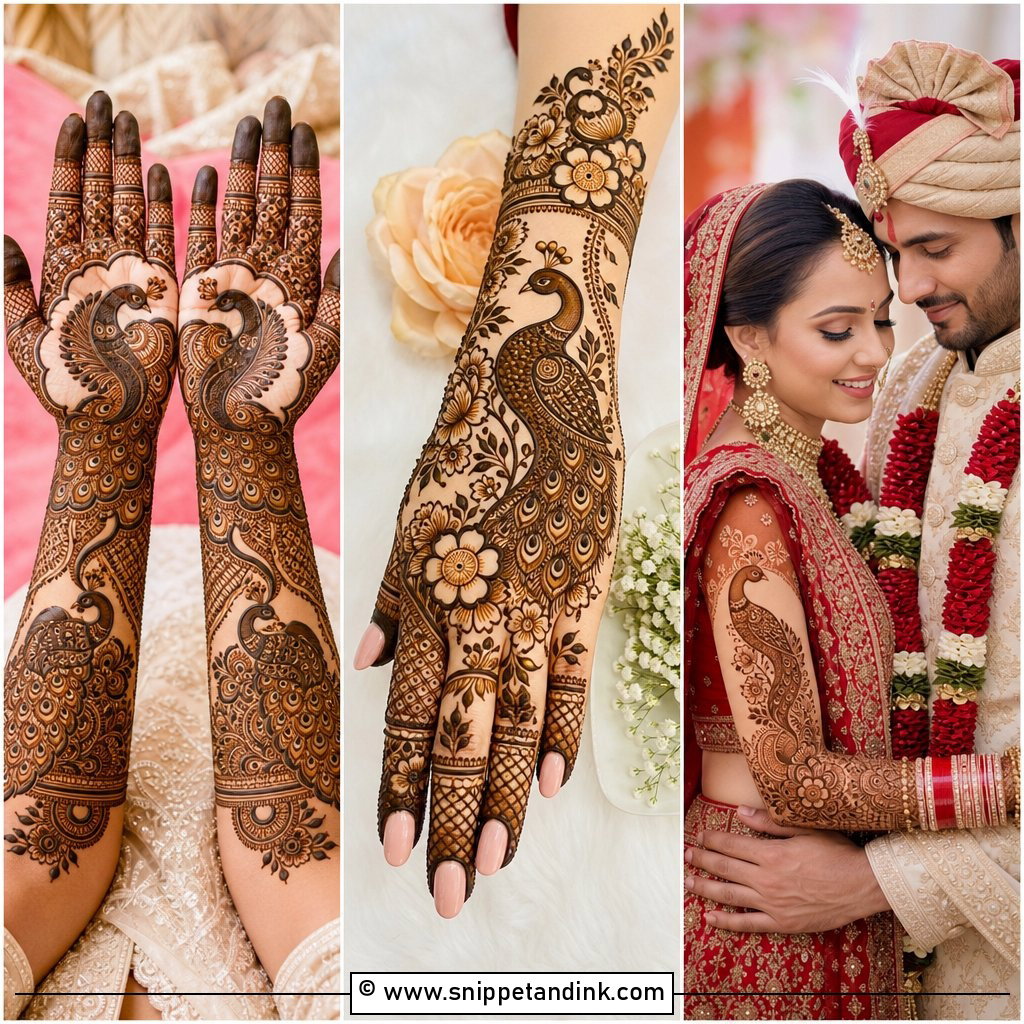
20. Elbow Length Bridal Mehndi Design
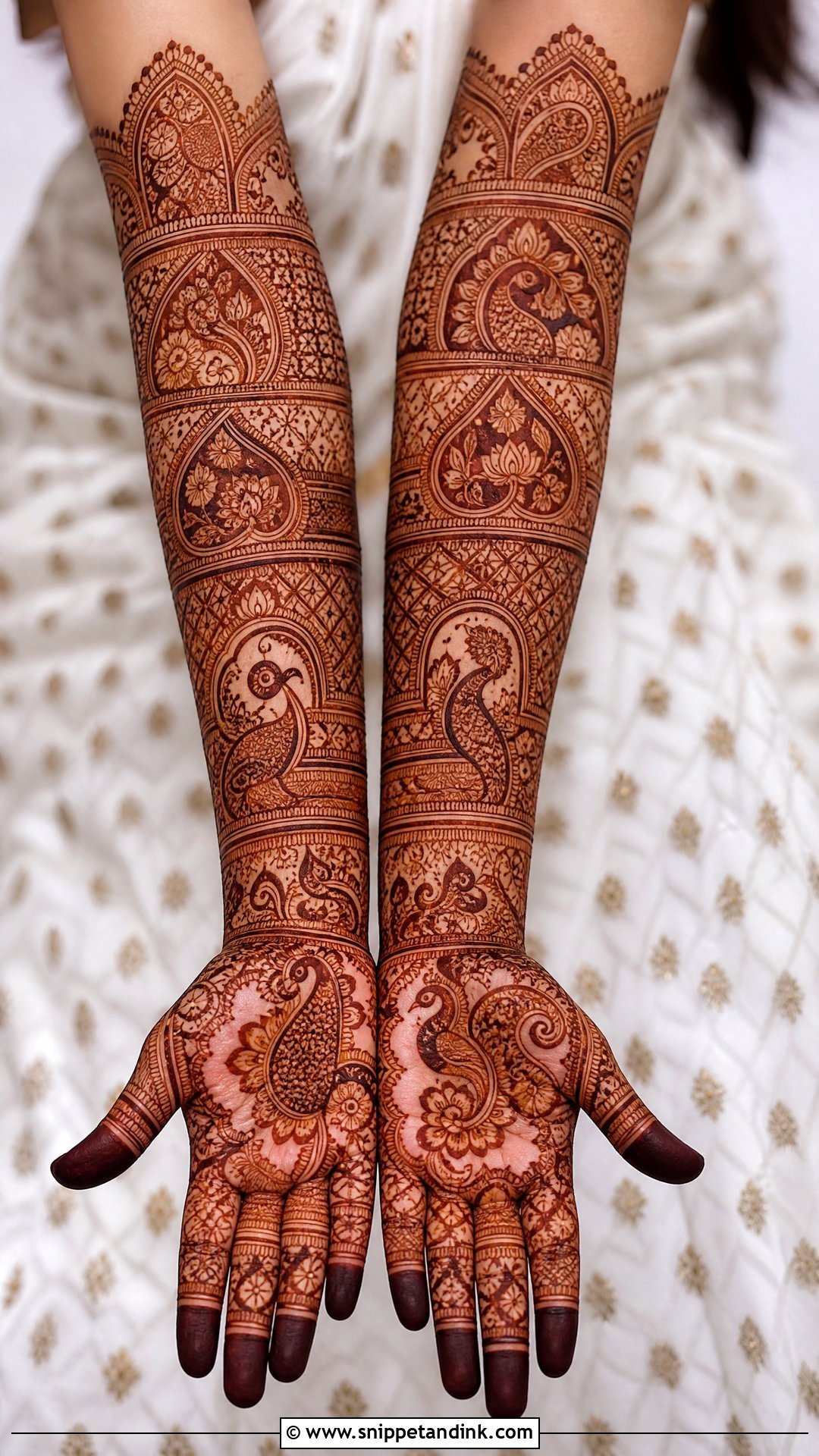
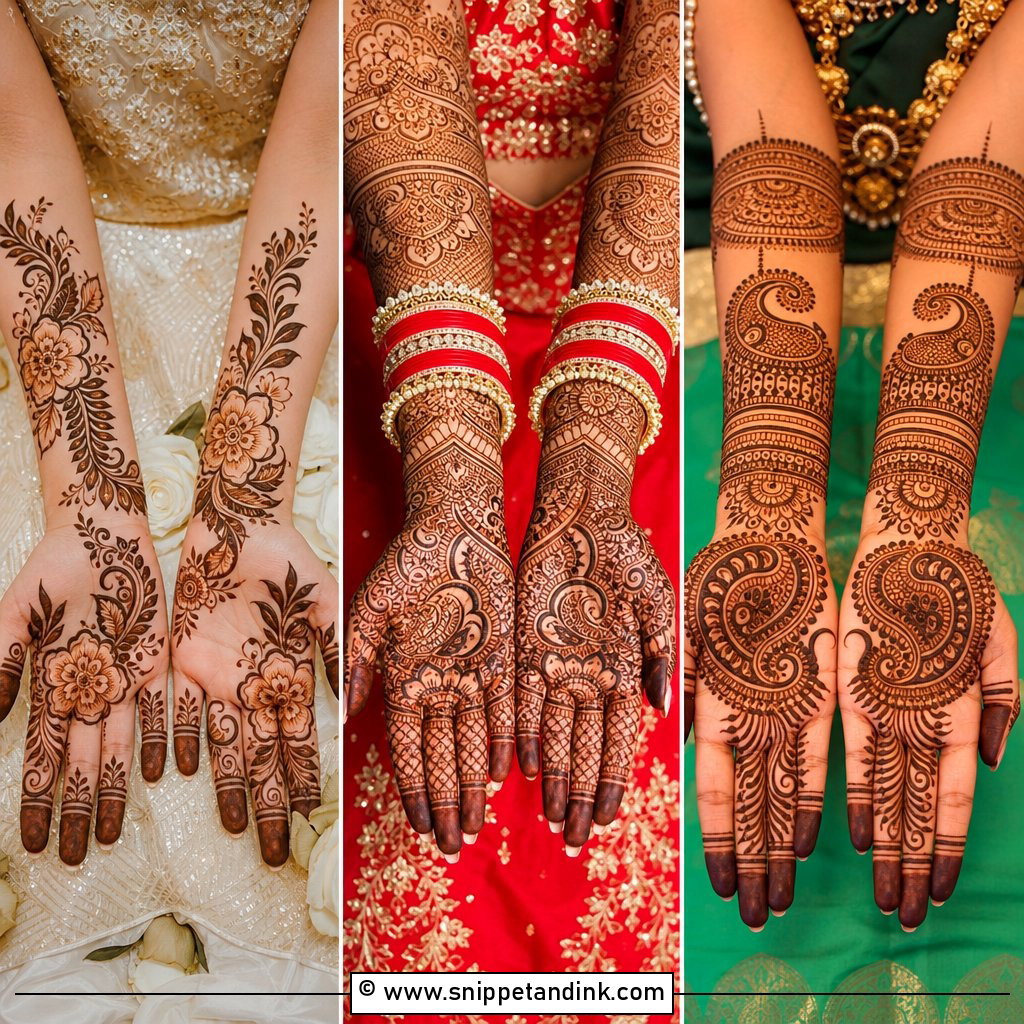
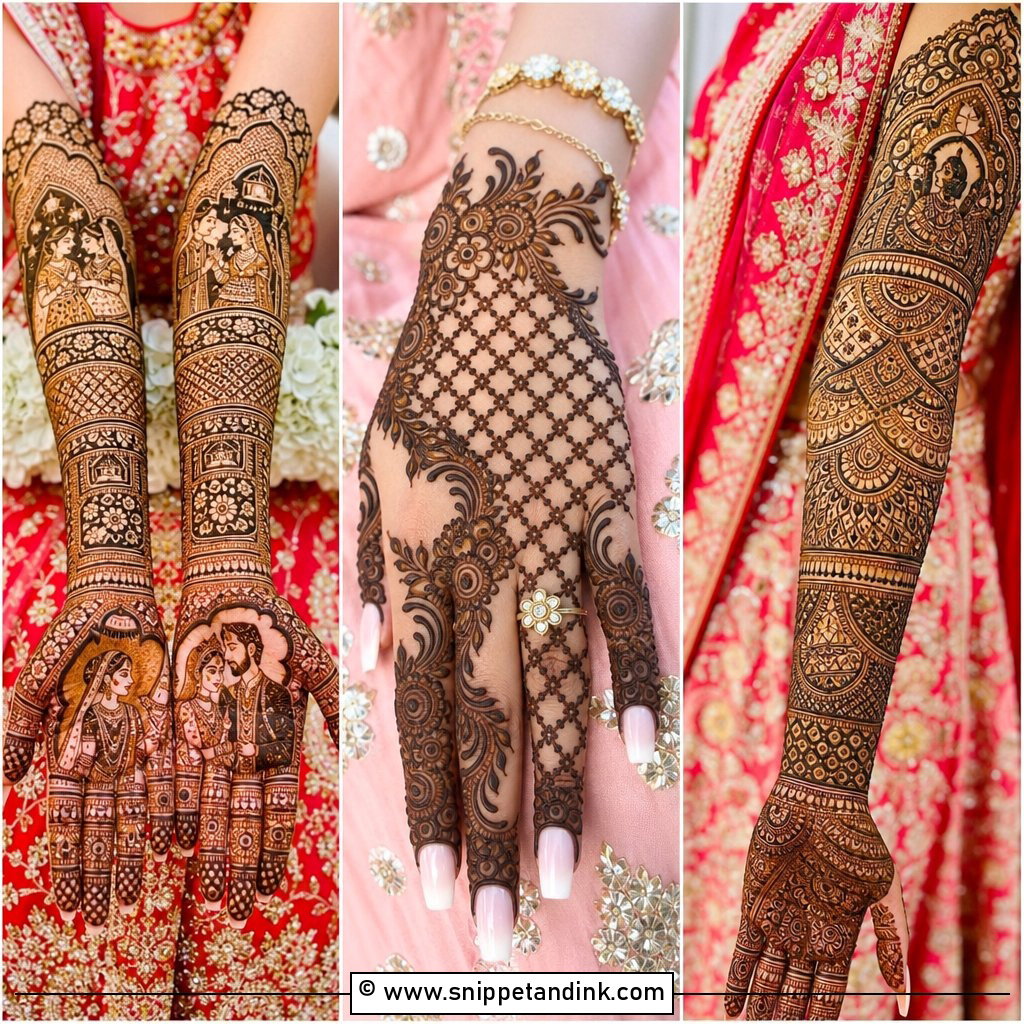
Elbow-length henna covers the hands, wrists and forearms almost to the elbow. It’s bold and traditional, and it needs a plan. I divide the arm into sections so the pattern doesn’t look flat, using larger motifs on the forearm and finer detail near the fingers. Block out the full time; this length takes several hours for both arms.
21. Indo Arabic Bridal Mehndi Design
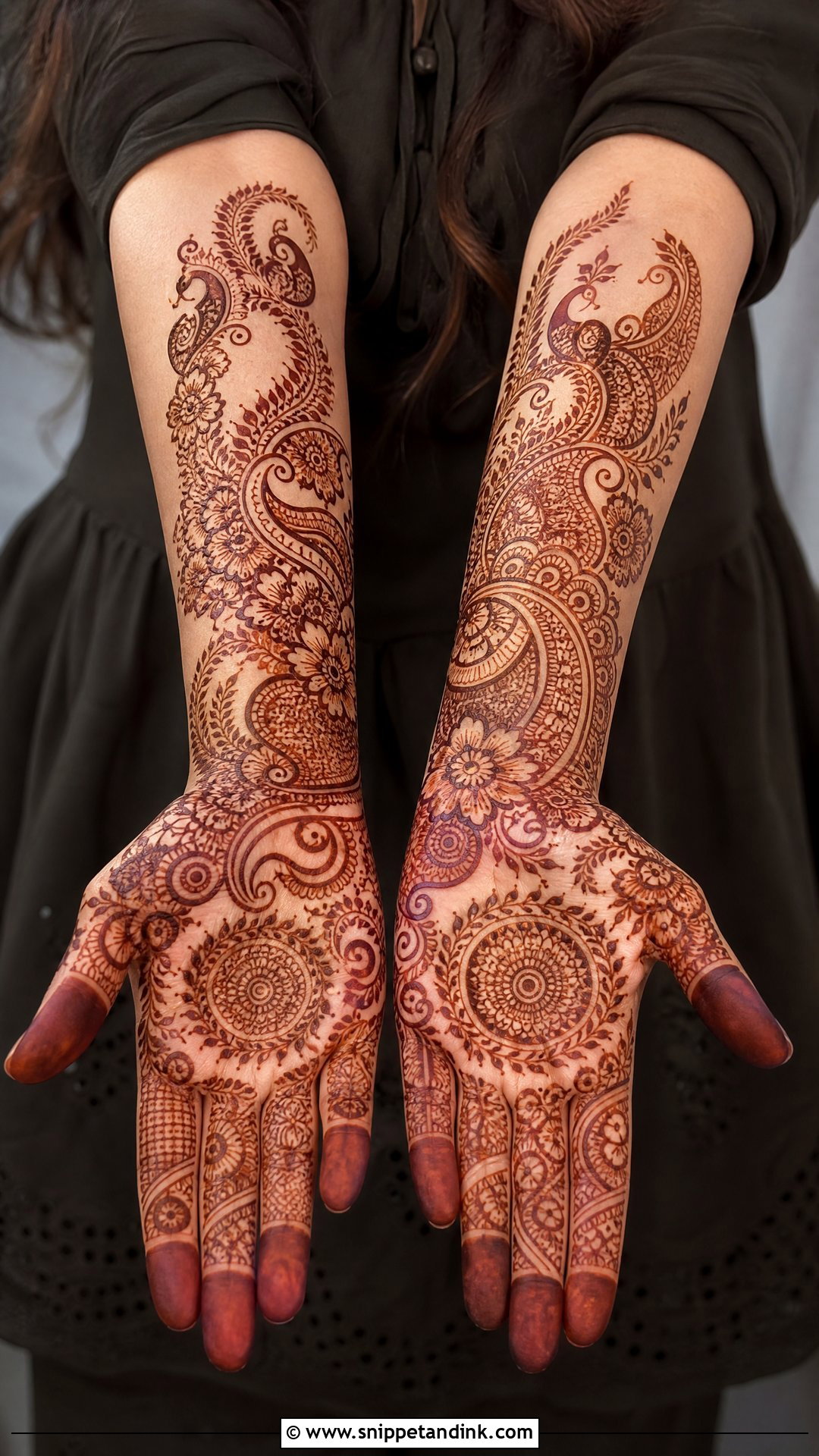
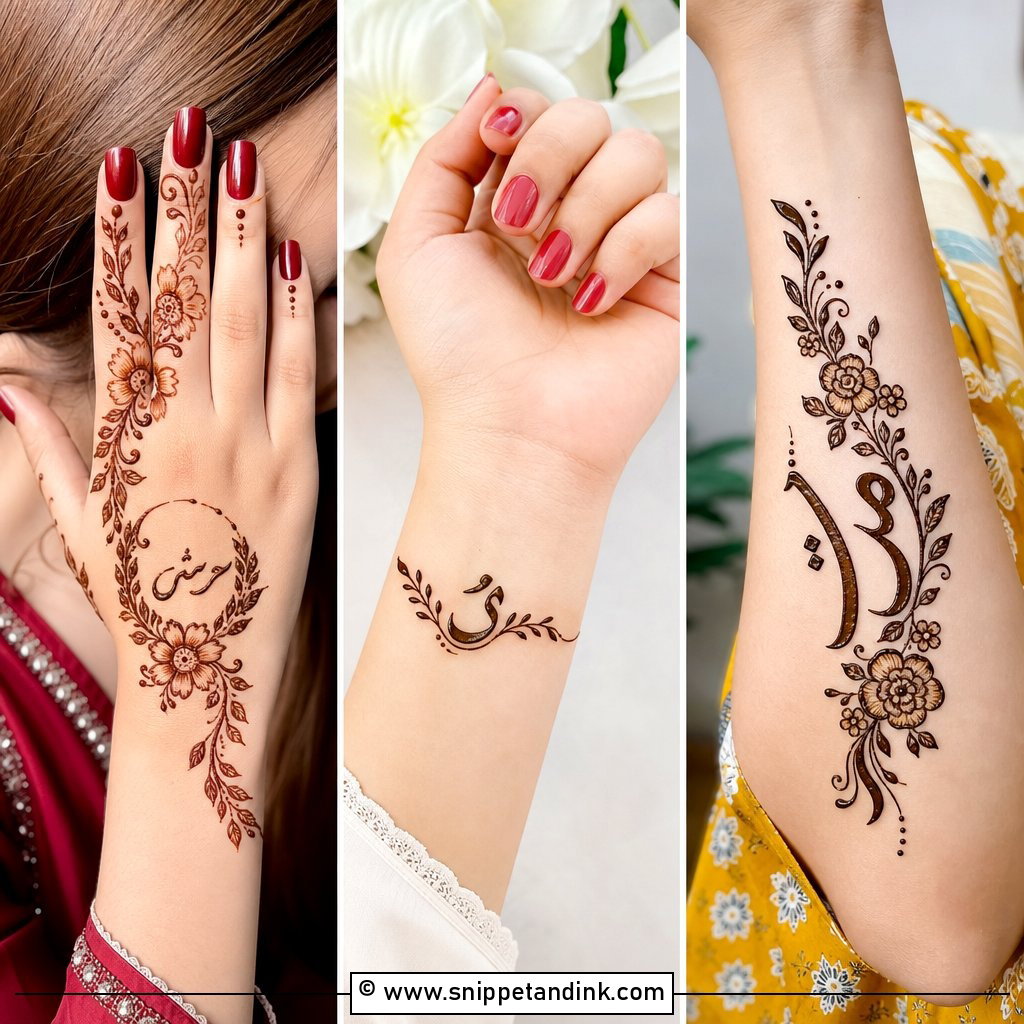
Indo-Arabic designs blend bold Arabic floral trails with fine Indian fillers. Open spaces make them lighter and quicker to apply. I add traditional elements like a mandala, peacock or wrist cuff to keep it bridal. It suits destination weddings, engagements and modern outfits. The negative space lets each motif stand out.
22. Arabic Indian Bridal Mehndi Design
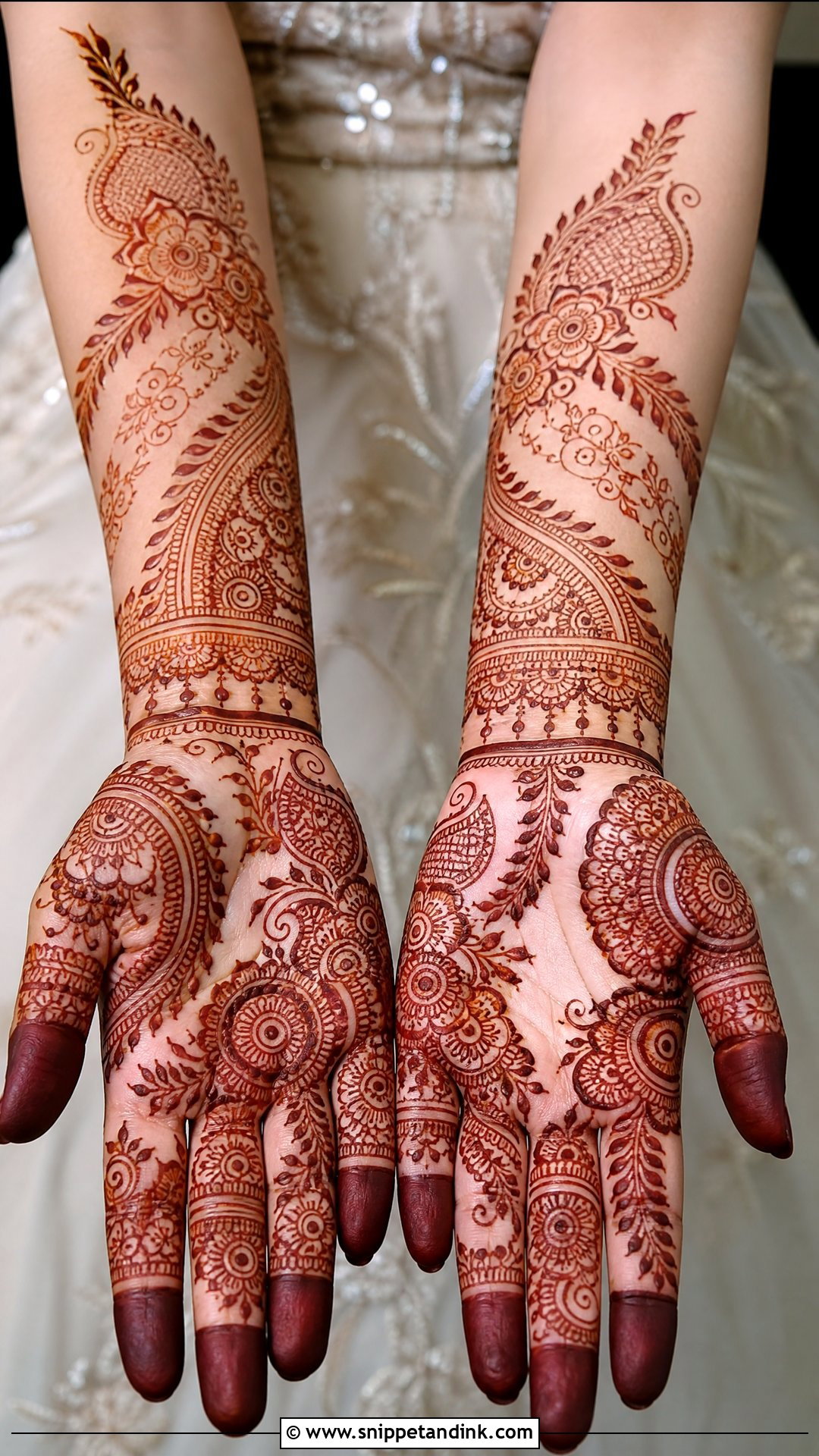
Arabic Indian bridal mehndi design usually runs diagonally across the hand in flowers, leaves, paisleys and vines, with Indian touches like dense fingertips and a mandala centre. It’s less crowded than classic Indian henna but still bridal when extended to the wrist. The open spaces make smaller hands look longer, and it dries faster. Matching wrist bands and detailed fingers give it more wedding feel.
23. Minimal Indian Bridal Mehndi Design
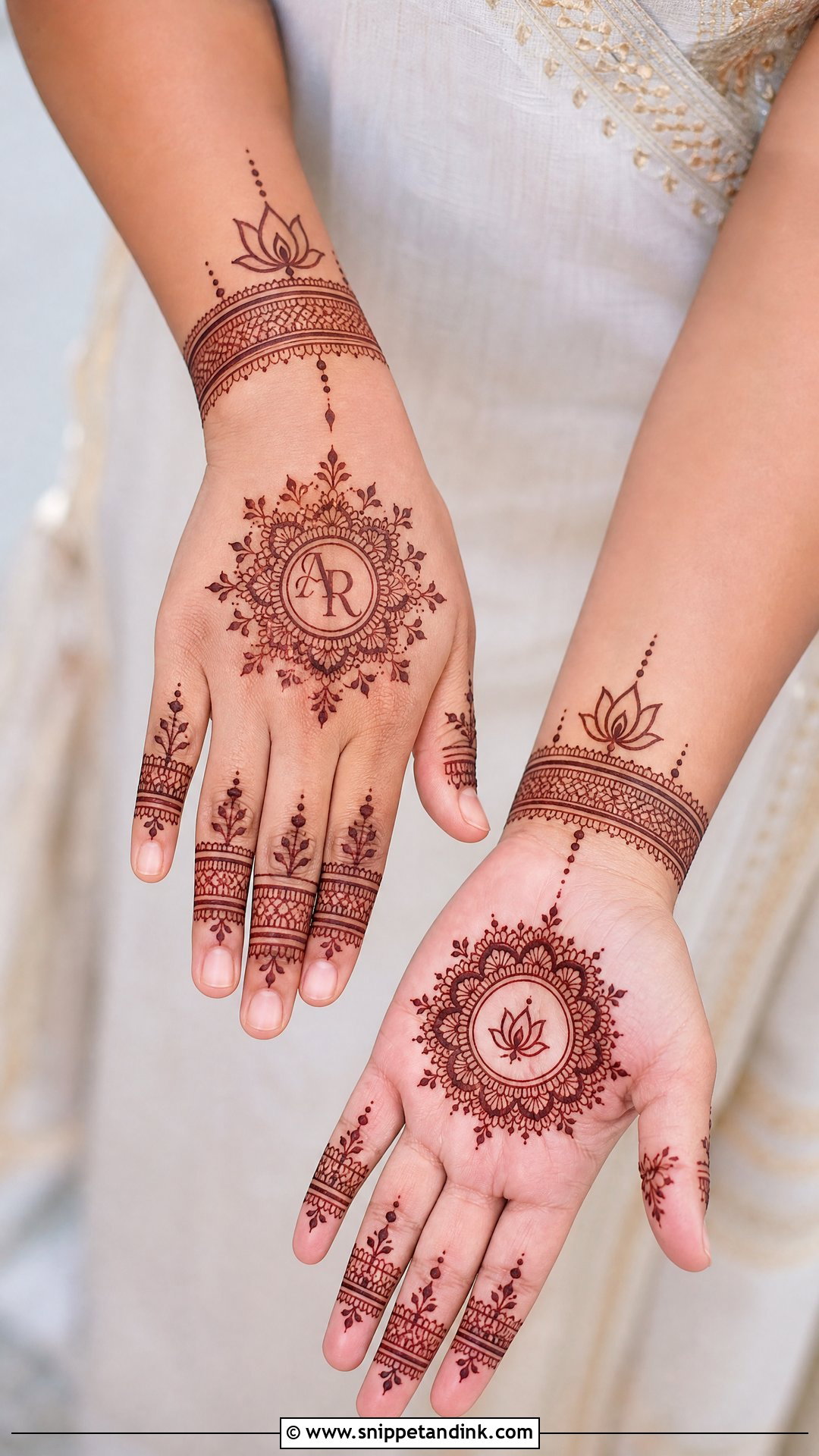
Minimal bridal henna features a neat palm mandala, delicate finger patterns, a thin bracelet and small floral vines. It suits intimate weddings, registry ceremonies and pre-wedding shoots. I make the motifs slightly larger than you’d expect, because very fine lines on bare skin can look faint once the paste comes off. Initials or a small lotus keep it bridal.
24. Modern Indian Bridal Mehndi Design
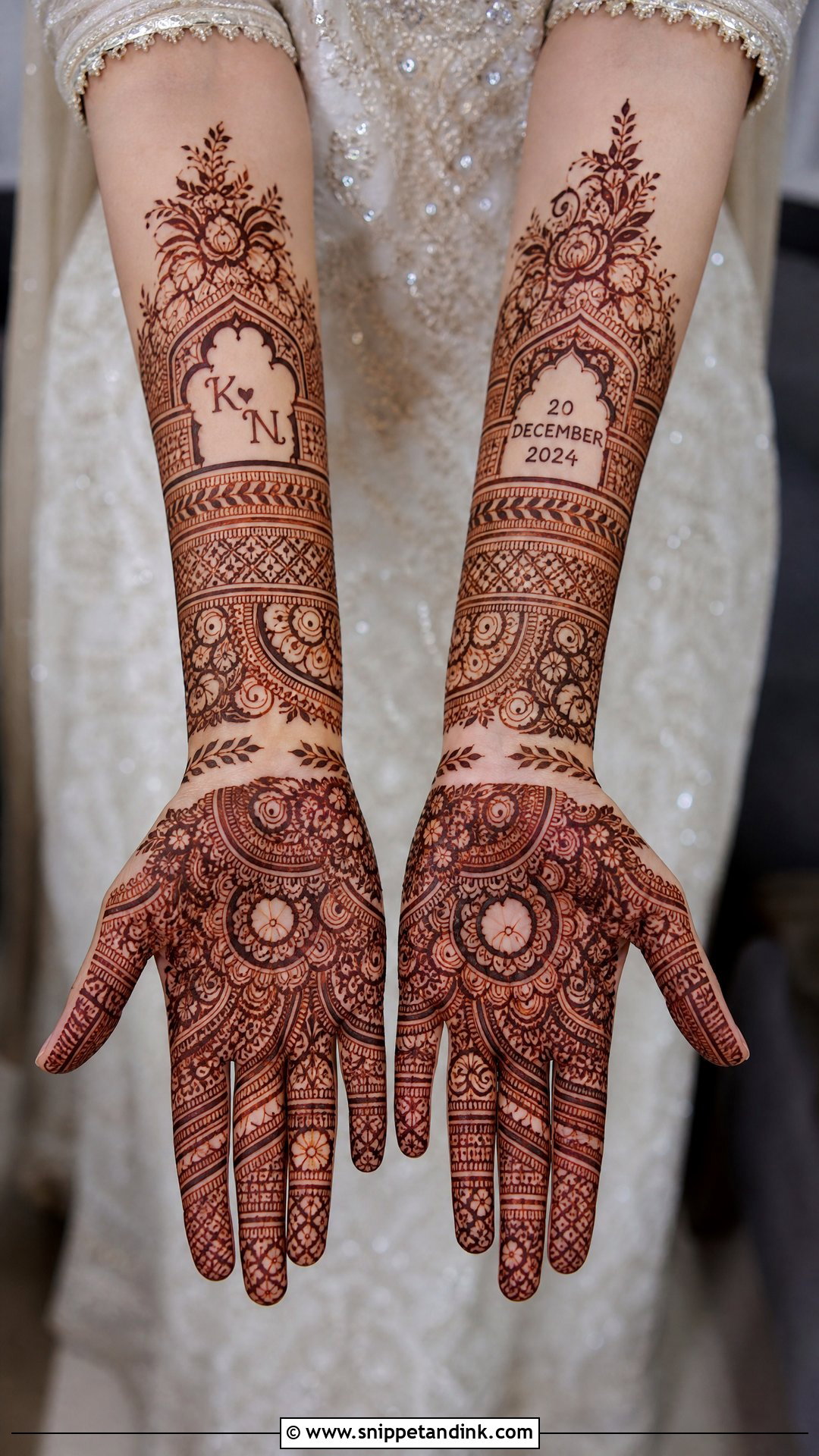
Modern bridal henna keeps traditional roots but adds clean negative space, bracelet bands, geometric panels, initials or dates. It suits contemporary lehengas, pastels and fusion sarees. The balance I aim for is one or two modern elements supported by classic motifs. Too many trendy details make the design look busy.


25. Personalized Bridal Mehndi Design
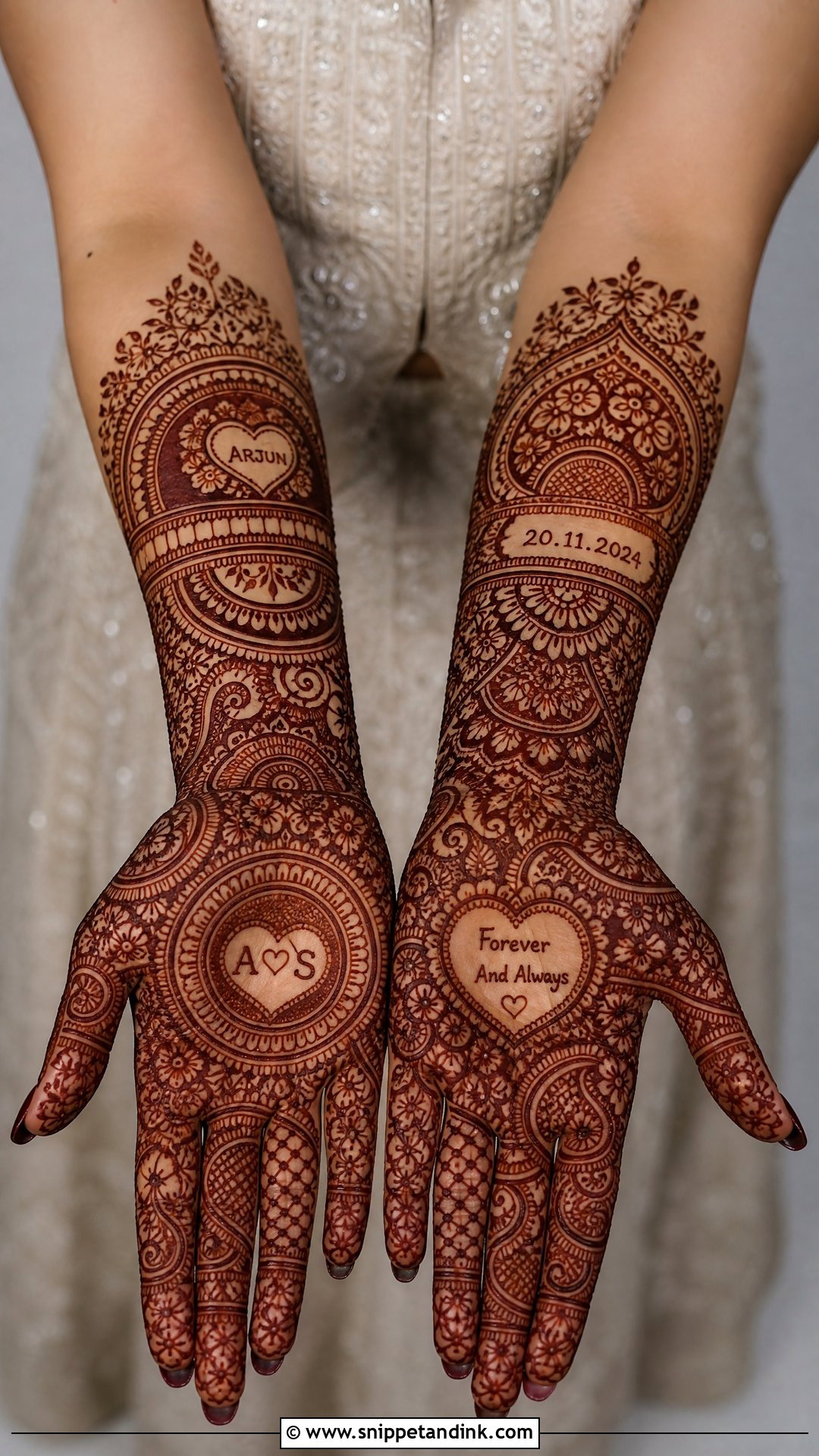
Personalised henna turns the design into a memory map: the groom’s name, initials, the wedding date, a proposal symbol or a pet. I hide these inside paisleys, vines or jaali so the main design still looks traditional. It’s also the basis of the post-wedding game where the groom looks for his name. Keep the hidden details small; the design should look complete even if no one finds them.
26. Wedding Hashtag Bridal Mehndi Design
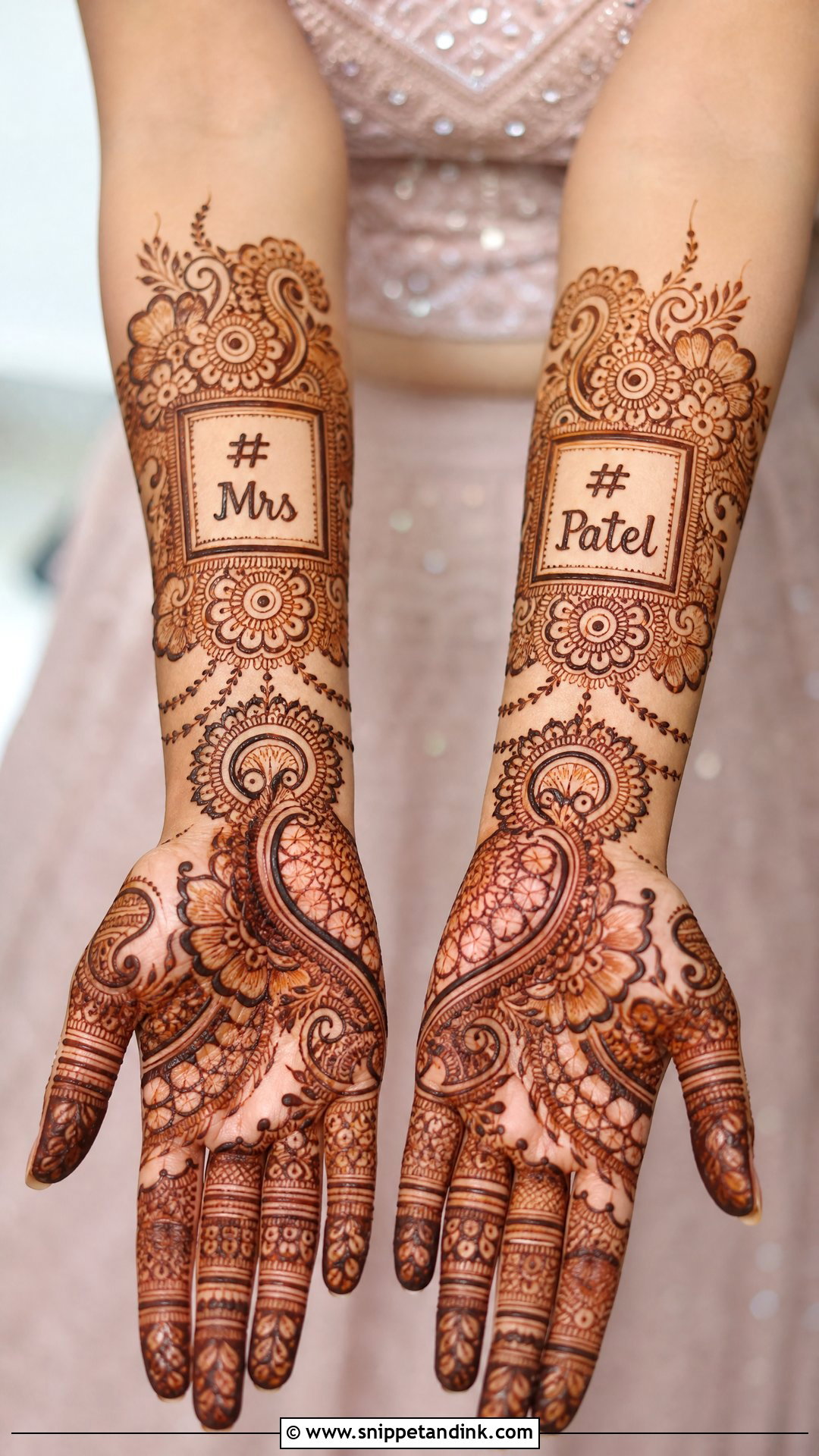
A wedding hashtag can sit near the wrist, inside a heart frame or within the palm. I keep the lettering simple and surround it with florals, paisleys and dots so it blends in. Short hashtags work best. Avoid long text across the fingers; the stain spreads slightly and small letters blur.
27. Jewelry Bridal Mehndi Design
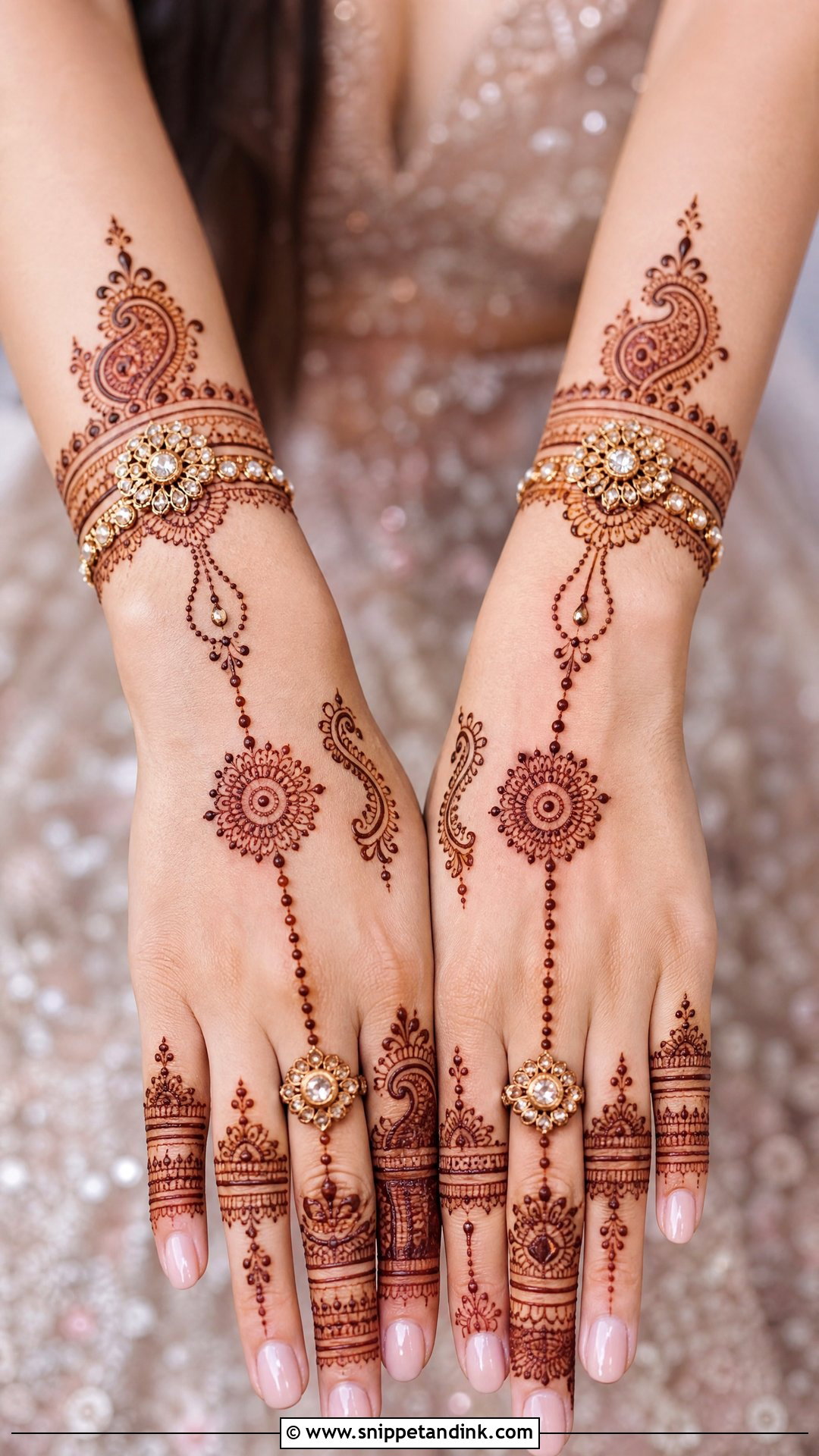
Henna jewelry imitates hand ornaments: bracelet cuffs, ring chains, finger bands and haathphool shapes in delicate dotted lines. It suits a refined back-hand design worn with real jewelry. I keep the chain lines evenly spaced, since that’s what makes them look like real metal links. Mandalas or paisley charms add an Indian bridal finish.
28. Floral Bridal Mehndi Design
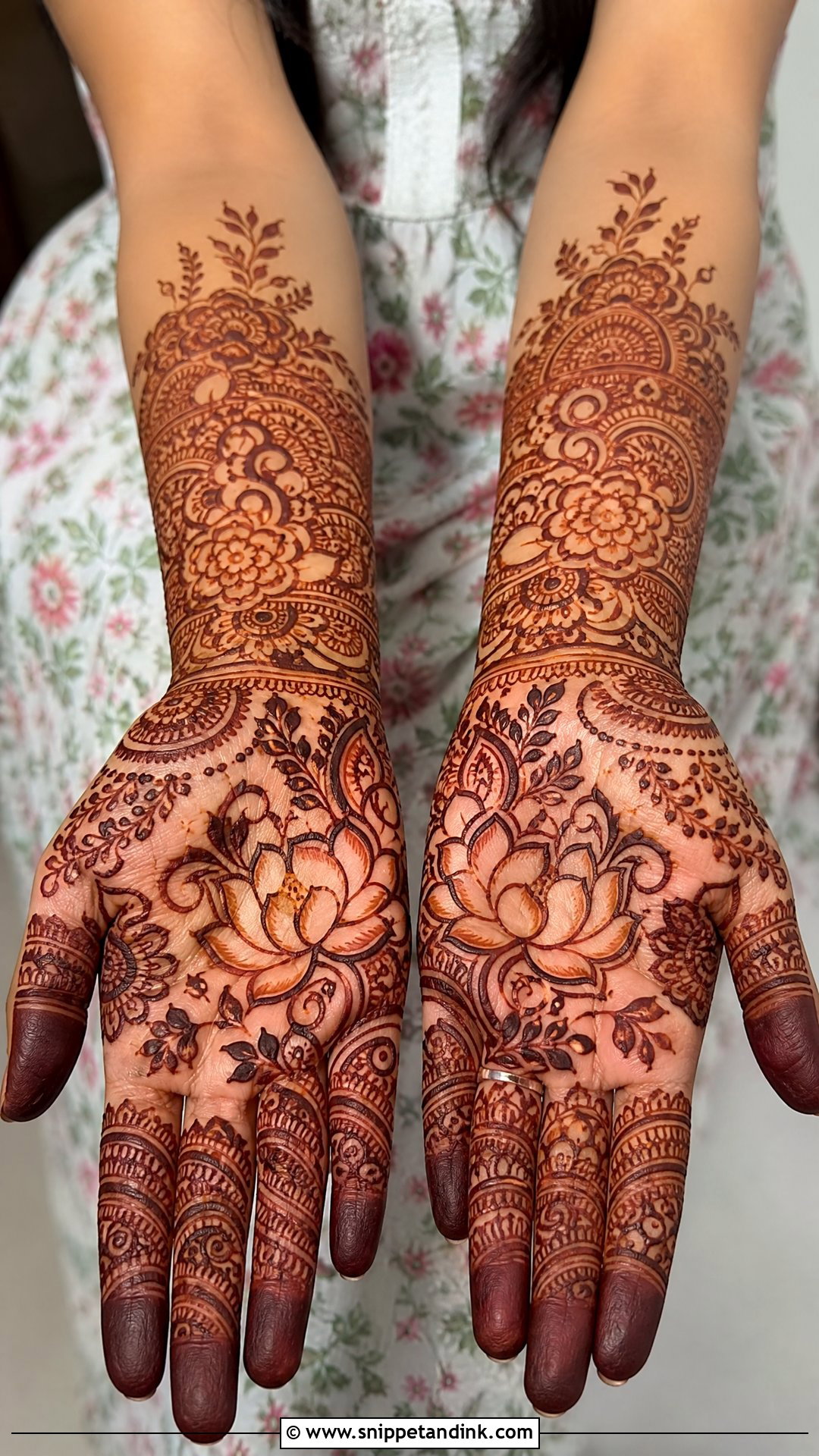
Floral bridal henna can be heavy or open. Lotus blooms, roses, marigold-inspired circles, vines and layered petals all work. I mix flowers with paisleys, mandalas and jaali for an Indian bridal feel. Large flowers look modern; tiny repeated ones feel traditional. The flowers should flow across the hand, not sit as scattered motifs.
29. Gujarati Bridal Mehndi Design
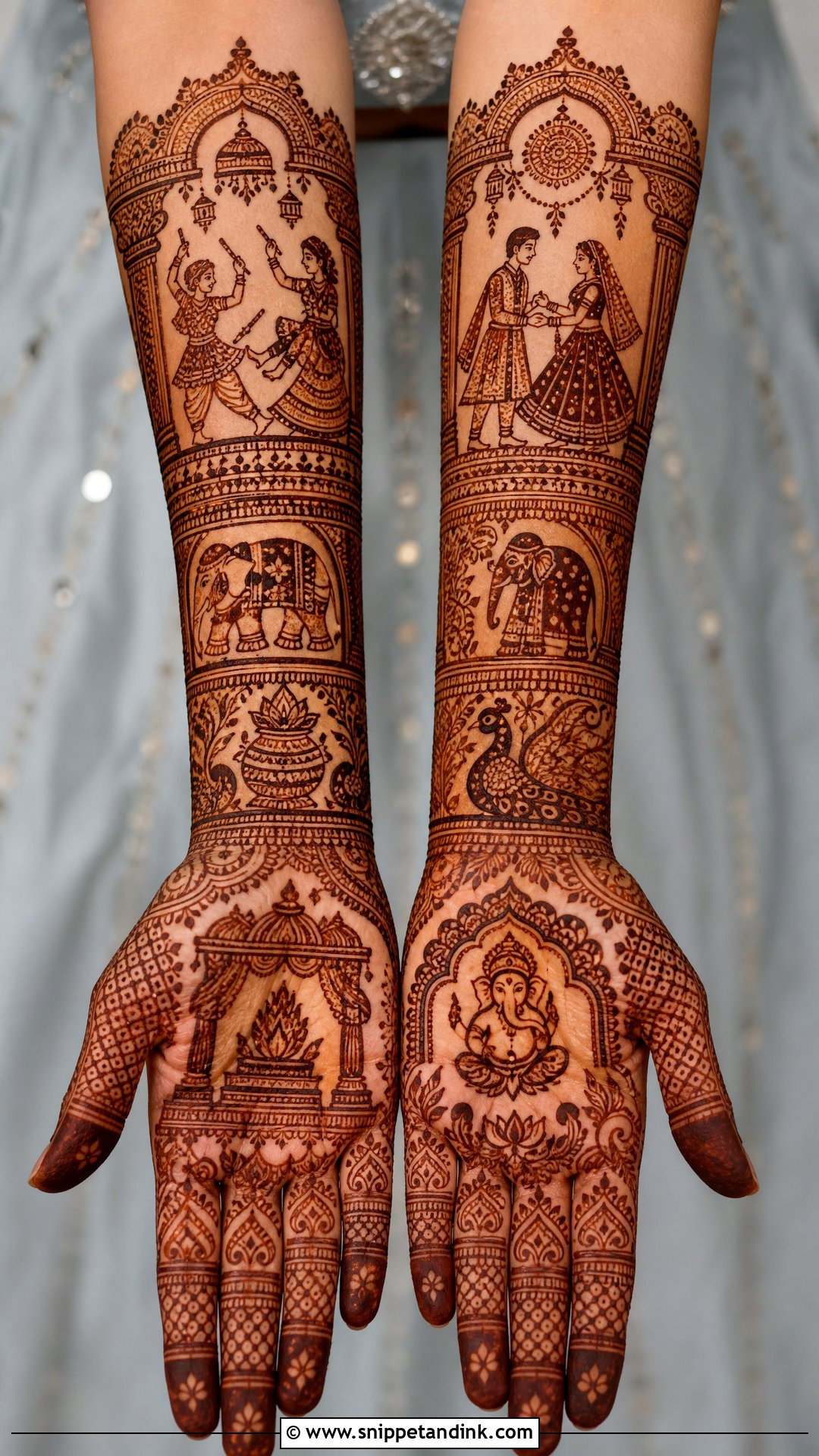
Gujarati bridal mehndi design often includes dandiya motifs, mandap elements, elephants, peacocks, kalash, lotus, paisleys and bride-groom figures. Full-hand coverage up the forearm is common, paired with panetar, gharchola or bandhani. I keep the main motifs bold enough to read after the stain develops. Initials or small wedding symbols fit inside the borders.
30. South Indian Bridal Mehndi Design
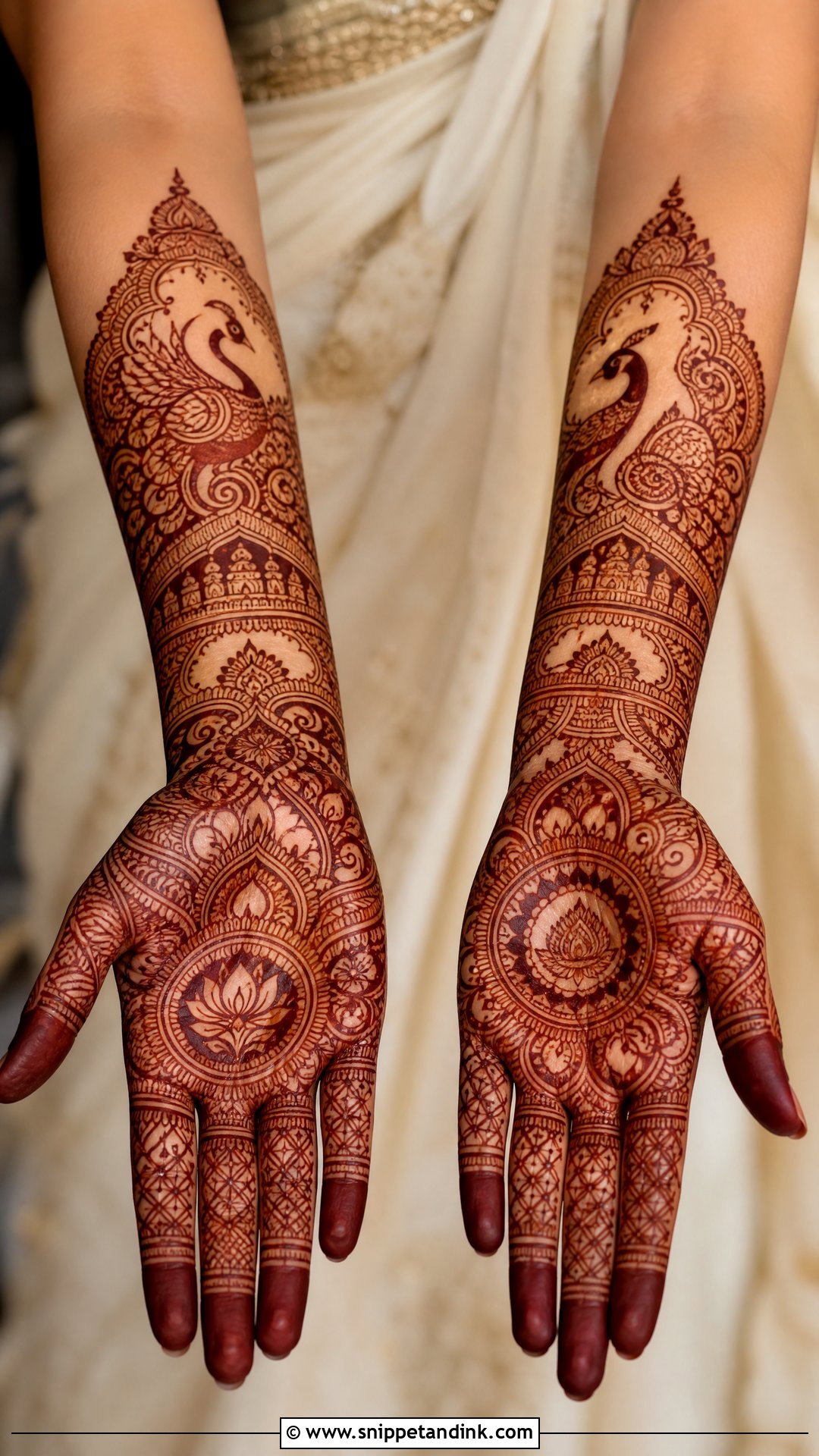
South Indian bridal henna often sits alongside silk sarees and temple jewelry. Lotus motifs, peacocks, mango paisleys, temple borders, mandalas and wrist cuffs are common. Some brides choose lighter palm designs so their jewelry stays prominent, others prefer full hands. A deep maroon stain contrasts well with gold. Temple-inspired arches or mango motifs near the wrist add a regional touch.
The Day Before, the Night After: Getting a Deep Stain
Most brides book their mehndi one or two days before the wedding. That timing matters, since the stain peaks around 48 hours after the paste comes off.
While the paste is on
- Keep it on as long as you can, ideally six to eight hours or overnight.
- I dab on a lemon and sugar mix once it’s dry, which helps the paste stick.
- Stay warm. Cold hands stain lighter.
After it comes off
- Scrape the dried paste off, don’t wash it off.
- Avoid water on the hands for as long as you can, ideally 12 to 24 hours.
- A little balm or coconut oil protects the stain when you do wash.
- Skip waxing, scrubs and chlorine in the days that follow.
Heavy designs take time. Full bridal hands and feet can take most of a day, so plan meals and breaks with your artist and family before the session starts.
Feet are usually done last and stain a little darker than you expect, since the skin there is thick. If you’re short on time, ask for a lighter foot design and keep the full hours for your hands.
Matching the Design to Your Sleeves, Jewelry and Sitting Time
Start with the mood you want. Rajasthani or Marwari full hands feel royal; a mandala, lotus or jaali layout feels clean; Indo-Arabic, jewelry or minimal designs suit a lighter look. Initials, dates and hashtags add meaning without losing the tradition. Before you book, think about your sleeves, your jewelry, your ceremony schedule, your hand size and how long you can sit. Then let your artist plan the layout around those, not just around a photo.
You'll Like These Ideas:



Leave a Reply