
Feet get forgotten in the planning and then show up everywhere: under a lifted lehenga, beside the saree border at the pheras, in barefoot ritual moments and in the detail shots with your anklets. Bridal foot mehndi designs have to work with the shape of the foot, echo the hands and still read clearly when the photographer shoots from above. Some brides want dense Indian coverage; others want Arabic trails, Indo-Arabic spacing, a mandala center, jaali or a minimal layout. Below are 25 options, and with each I’ve added what I’d think about as the artist holding the cone, from the toes up to the ankle.

Bring the Wedding Sandals to the Mehndi Night
The single most useful thing a bride can do for her foot mehndi is let me see her shoes. A strap across the top of the foot will cover whatever sits under it, and a block heel or closed toe hides even more. If I know where the straps fall, I put the focal motif between them and keep the hidden areas light, rather than spending an hour on detail no one will see.
- Bring the shoes, or at least a photo taken from above while you’re wearing them.
- Bring your payal or anklets so I can frame them rather than cover them.
- Tell me if any ritual has you barefoot, seated cross-legged or with the soles showing; that changes where the detail should go.
- If you’ll change shoes for the reception, show me both pairs.
Feet are usually done after the hands, and you can’t walk while the paste is wet. Wear loose clothing that won’t touch the ankles, and have someone nearby to fetch things for you.
1. Full Foot Bridal Mehndi Design
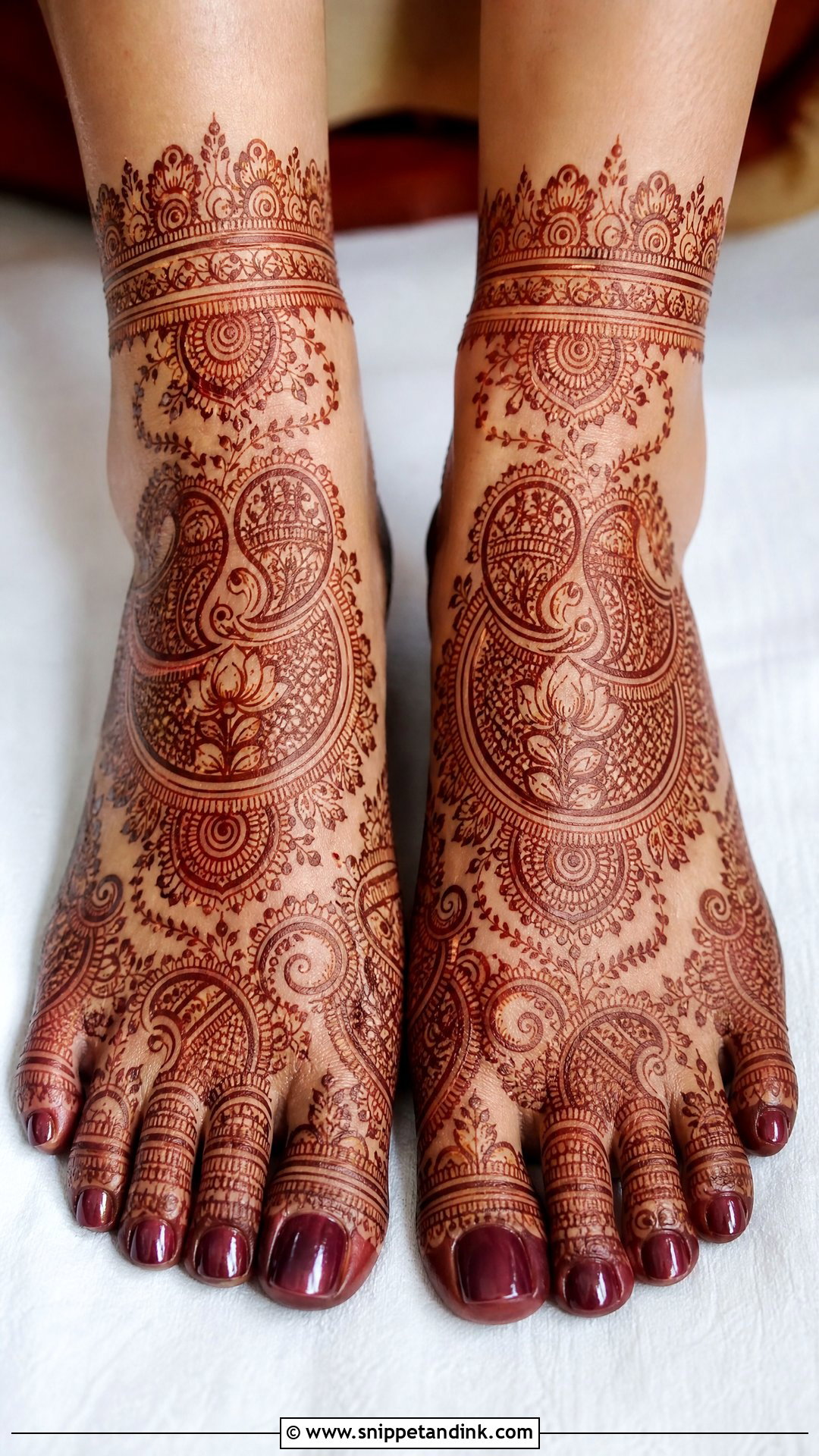
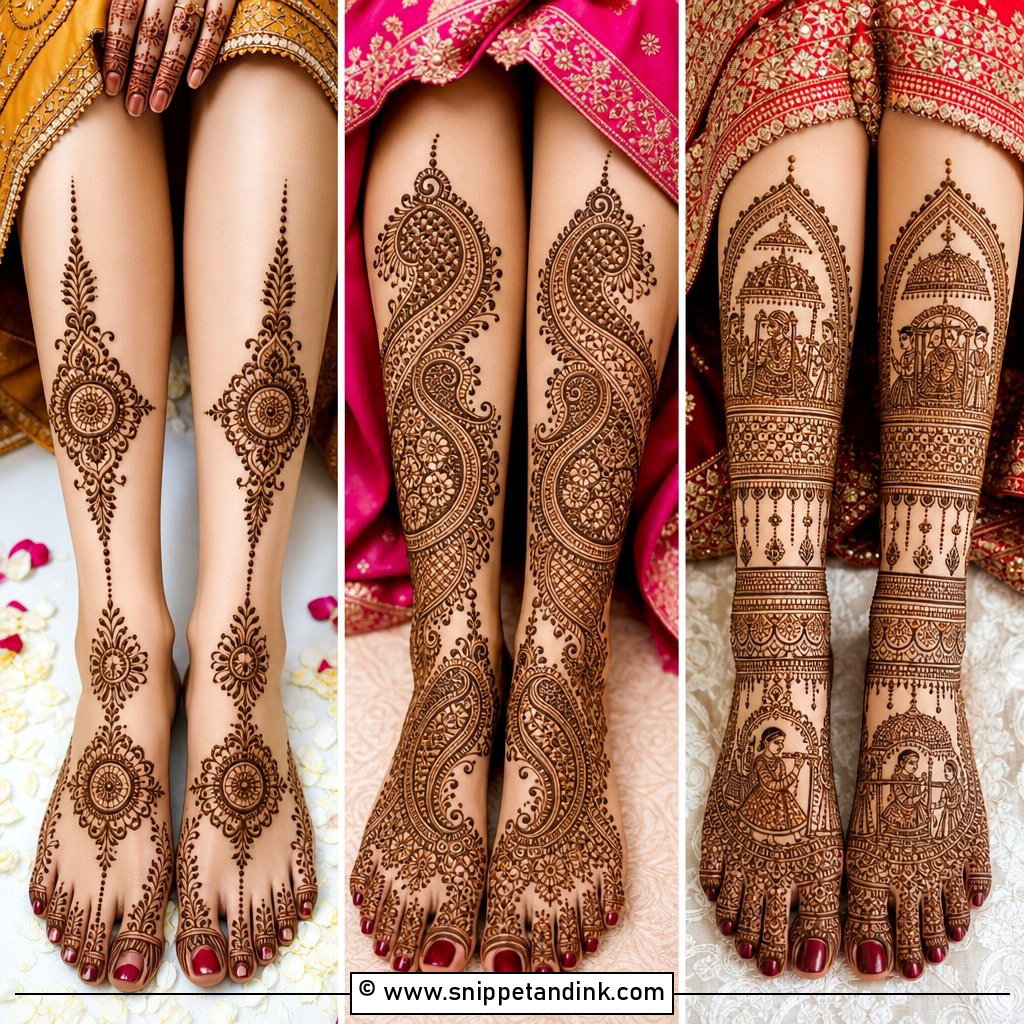
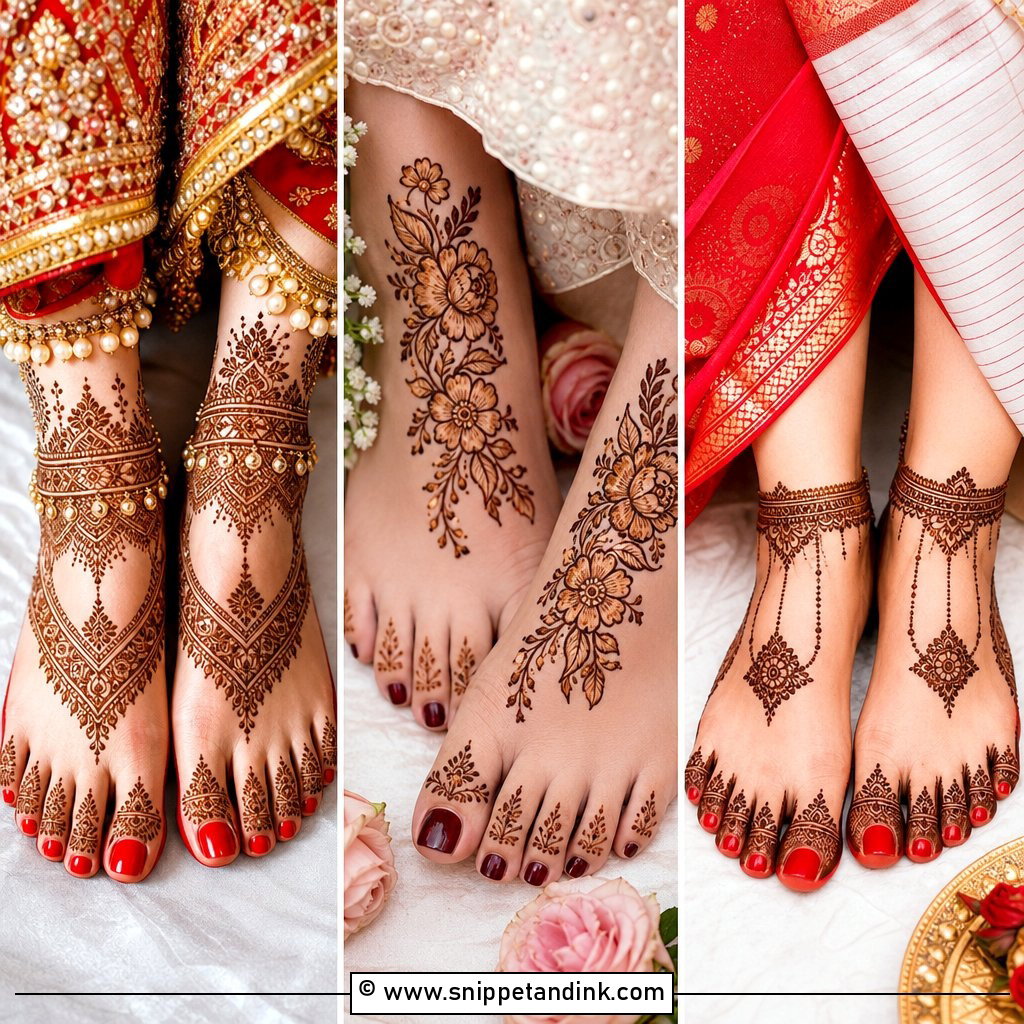
Full coverage fills the top of both feet with dense florals, paisleys, vines, dots and fine fillers, and I decorate each toe separately so the design looks finished in open-toe shoes. A strong ankle border reads like a henna anklet, and the center of the foot can carry a mandala, lotus or paisley cluster. The work I put most care into is symmetry; feet are photographed side by side, and a mismatch shows instantly. Indian bridal outfits, heavy anklets and classic portraits suit it.
2. Indian Bridal Foot Mehndi Design
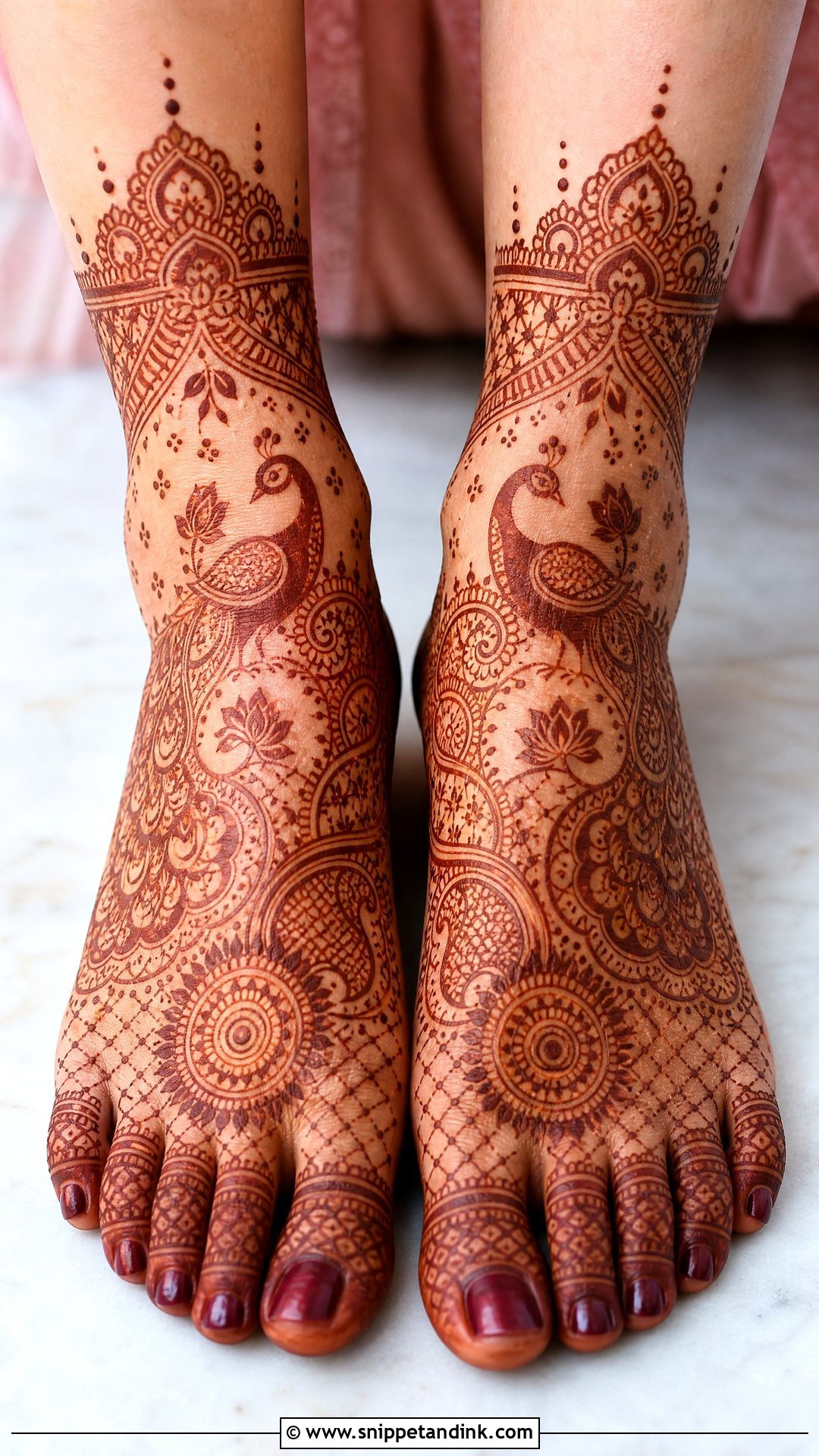
Traditional Indian foot mehndi is about layering many small patterns: peacocks, paisleys, lotus flowers, leafy vines, mandalas and tiny checks, built up until the foot looks adorned without any jewelry. If your hands are detailed and traditional, your feet should match that weight. I sometimes take the design a little above the ankle for a more royal finish. The two places I’m strict about are the toes and the ankle bands; if those edges are crisp, the dense middle looks rich rather than muddy.
3. Arabic Bridal Foot Mehndi Design
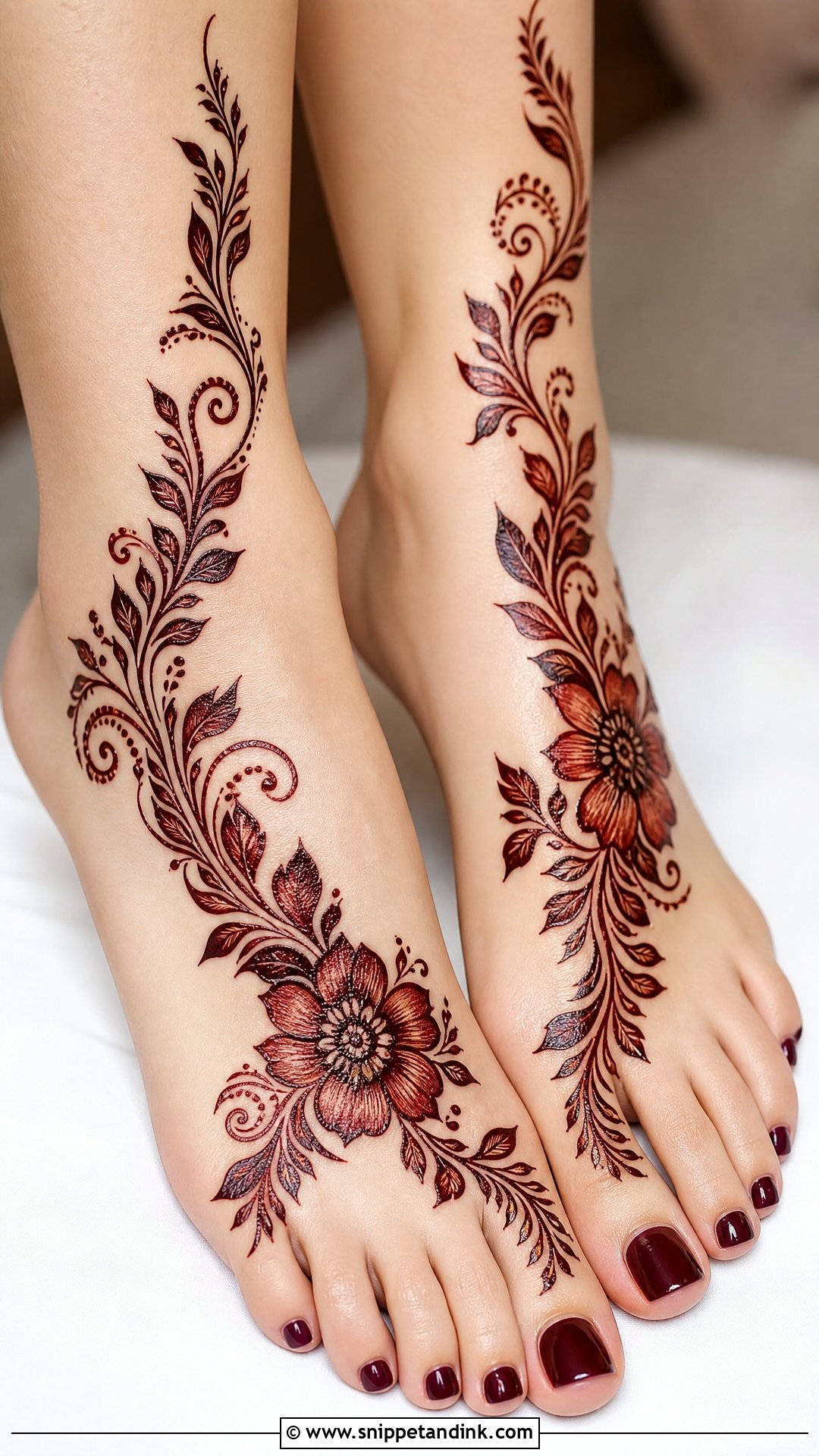
Arabic designs leave skin showing, and that open space is what makes the stain pop. The pattern usually flows diagonally from the toes toward the ankle with large flowers, leafy vines, curved lines and shaded petals. Bold outlines with soft inner shading keep it detailed but light, and the diagonal makes the foot look longer. It suits modern bridal sandals, since the straps don’t hide much.
4. Indo Arabic Bridal Foot Mehndi Design
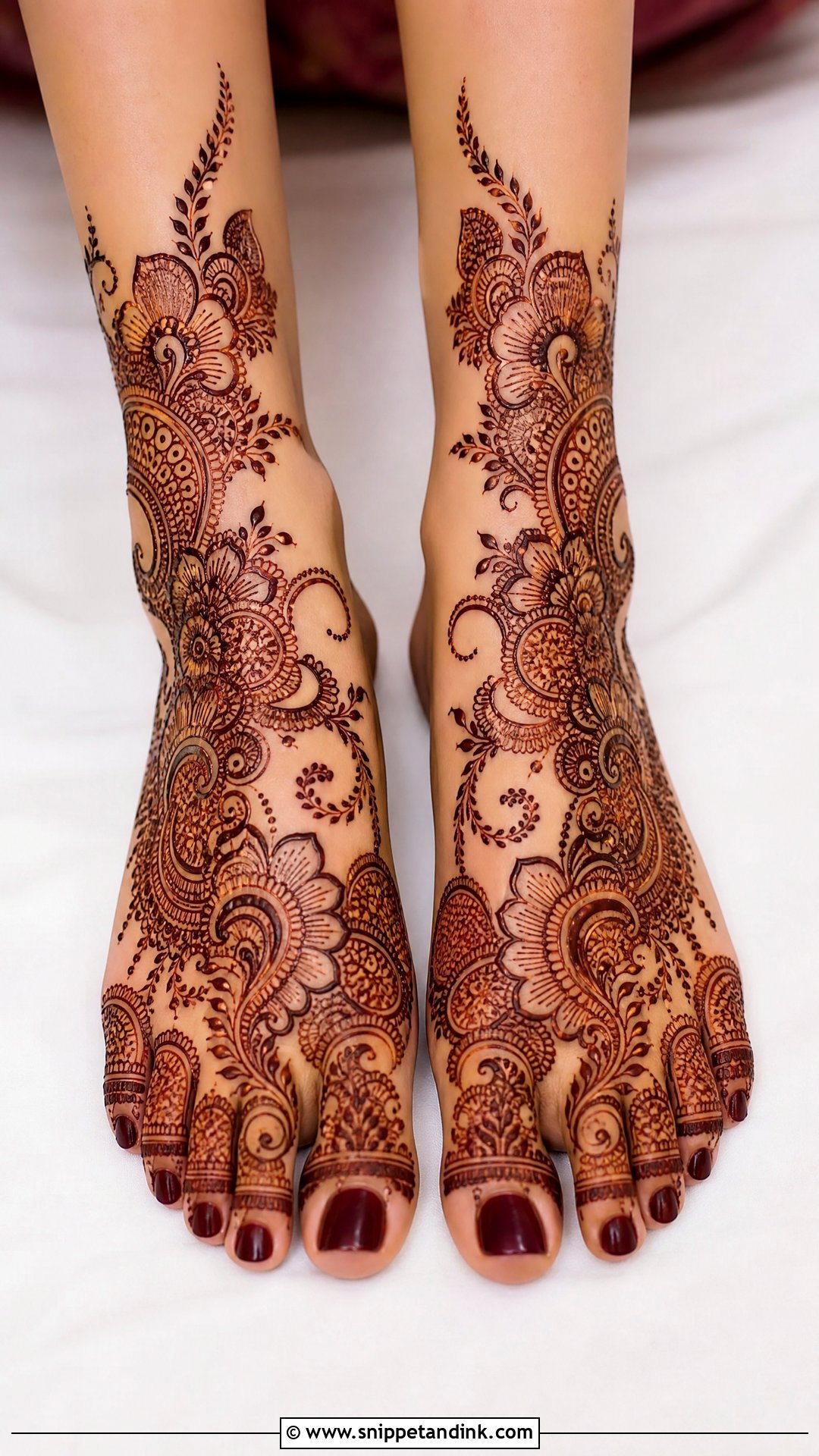
Indo-Arabic sits between the two: bold floral trails and open flow from the Arabic side, paisley clusters, mandala centers and fine filler work from the Indian side. I usually run it in a curve from toes to ankle and fill only selected pockets with detail, so the shape of the foot still shows. It looks most coherent when your hand mehndi mixes floral and traditional motifs in the same way.
5. Simple Bridal Foot Mehndi Design
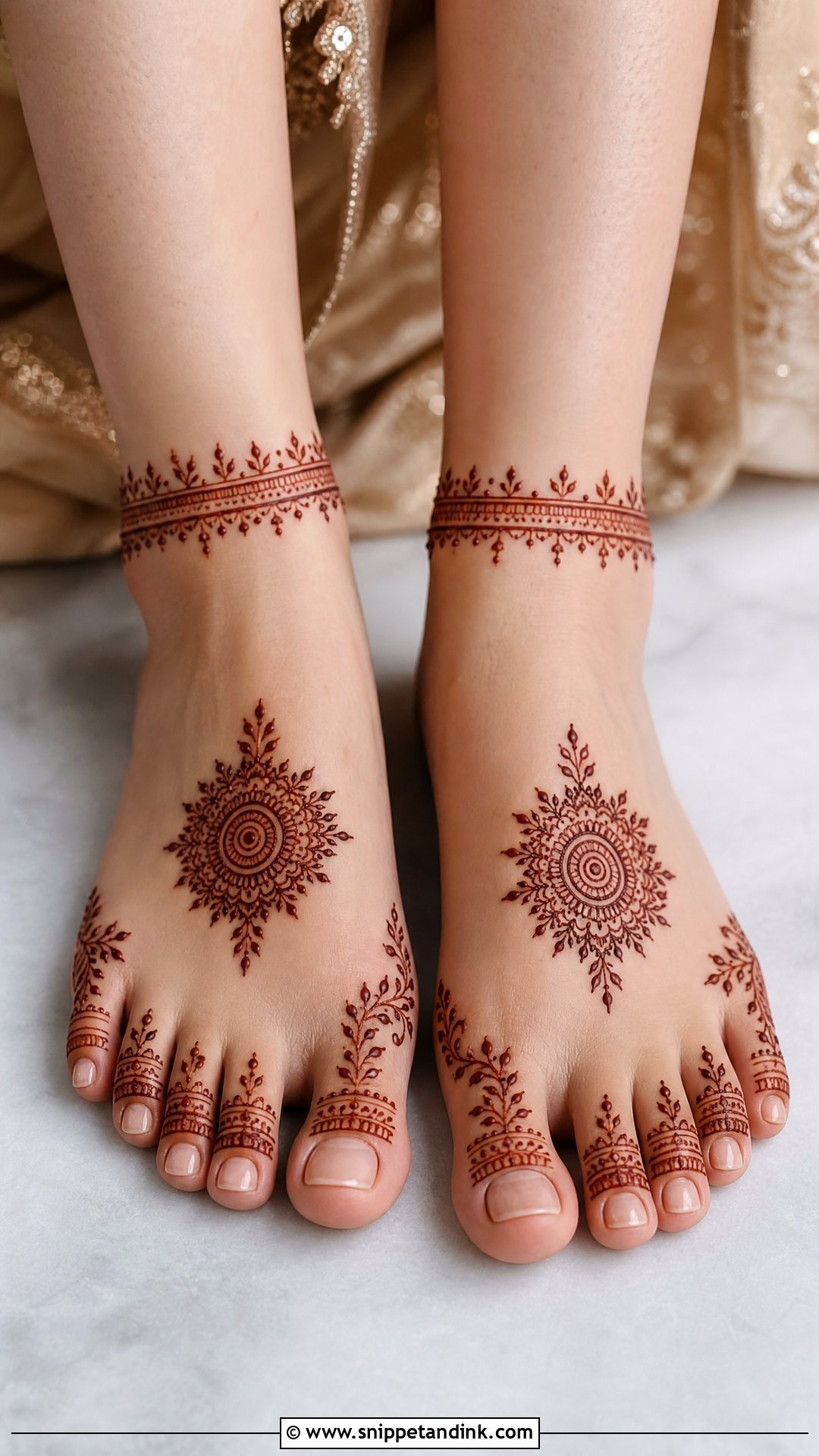
A small mandala at the center of each foot, fine toe detail, a delicate ankle band and a few vines to connect them. That’s all a simple bridal foot design needs. It’s the sensible choice when your footwear or anklets are heavy, since it won’t compete with them. To make it look bridal rather than casual, I size the motifs slightly larger and keep the spacing even. Simple only works with a deep stain, so aftercare matters even more here.
6. Heavy Bridal Foot Mehndi Design
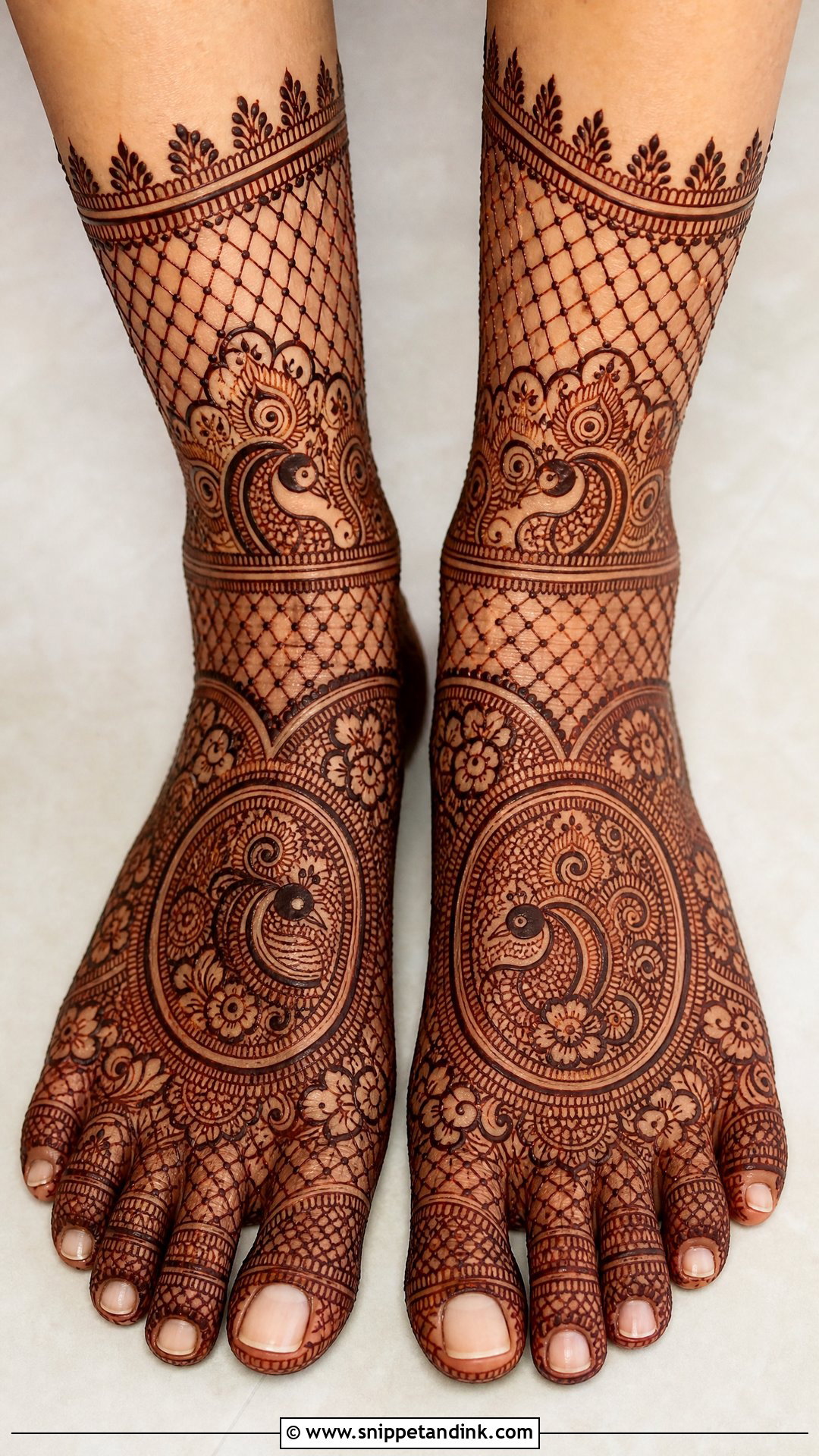
Heavy foot mehndi covers the toes, top of the feet, sides, ankles and lower legs with layered paisleys, peacock feathers, lotus flowers, jaali, lace borders and tiny fillers. Without structure it turns into a dark mess, so I map clear ankle bands and a centered foot motif before filling anything, and mirror both feet. It’s a lot of sitting time; this is the design most likely to run late. During rituals where the feet are visible, and with traditional anklets, nothing looks grander.
7. Minimal Bridal Foot Mehndi Design
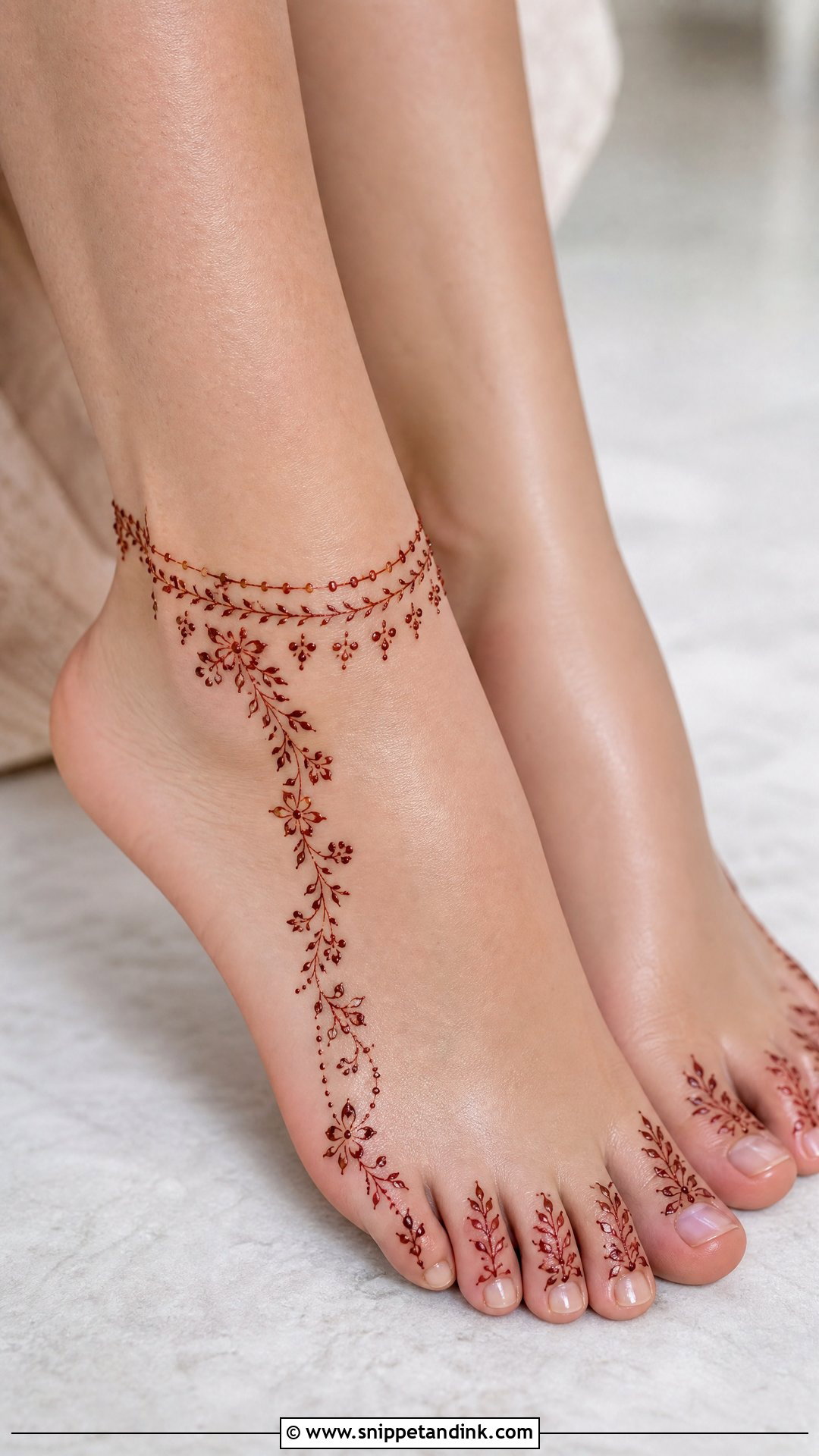
Minimal foot mehndi decorates only chosen areas: the toes, one side of the foot and a slim detail at the ankle, with fine florals, tiny leaves, dots or a small mandala. It’s comfortable to walk in and quick to apply, which suits intimate weddings, beach weddings and civil ceremonies. I add a matching pattern on both feet and a delicate anklet border so it still reads as bridal. Clean lines and a dark stain carry it.
8. Bridal Foot Mehndi With Mandala
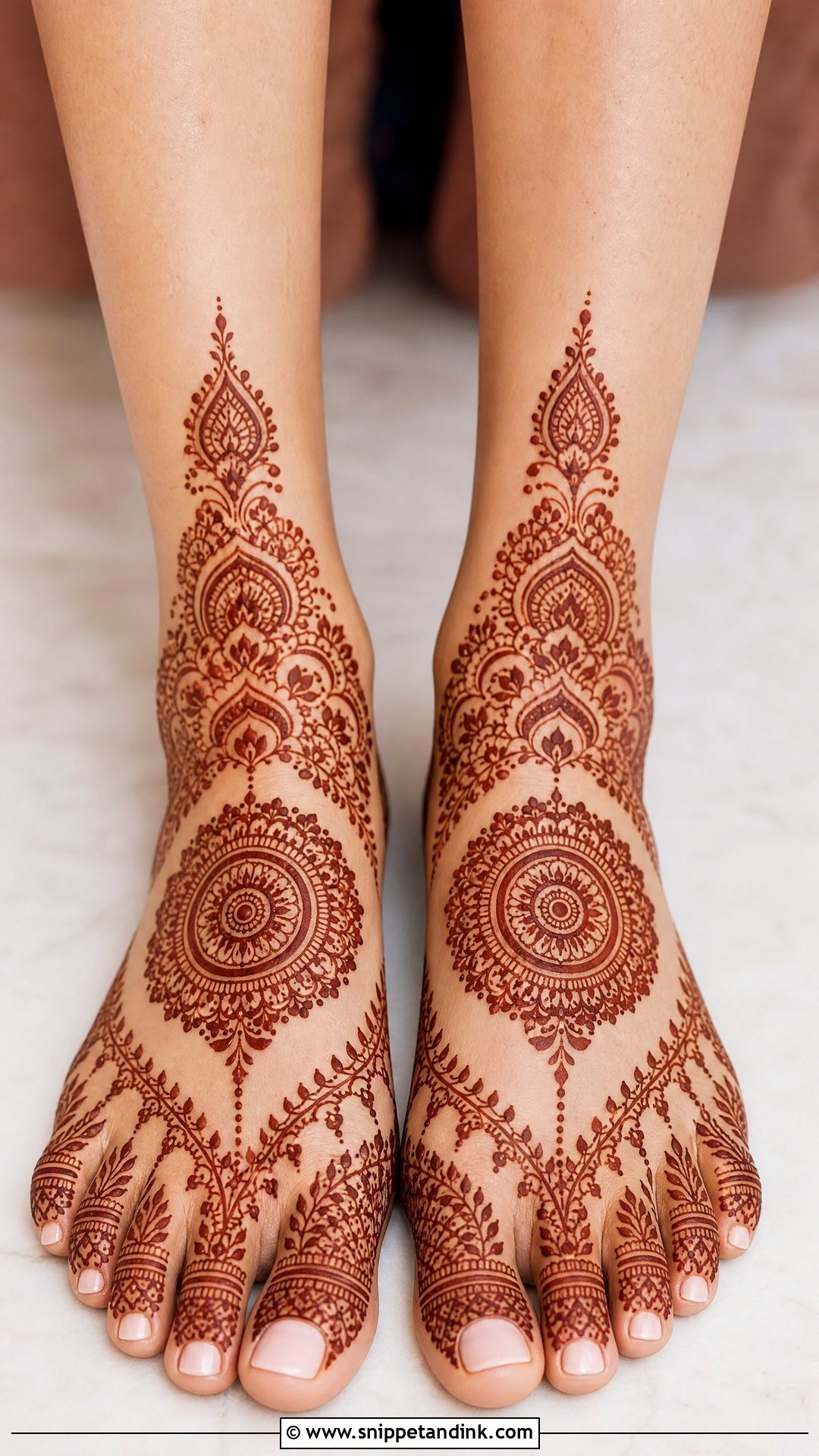
A mandala gives each foot a single focal point, which is why it photographs so well from above. Petals, dots, vines and curved bands then move outward toward the toes and ankle. The mistake I see is placing the mandala too close to the toes; on the top of the foot it should sit roughly where the foot is flattest, so it doesn’t stretch when you walk. Decorated toes and a slim ankle border give a fuller finish, or leave more open skin around the circle for a lighter one.
9. Bridal Foot Mehndi With Jaali
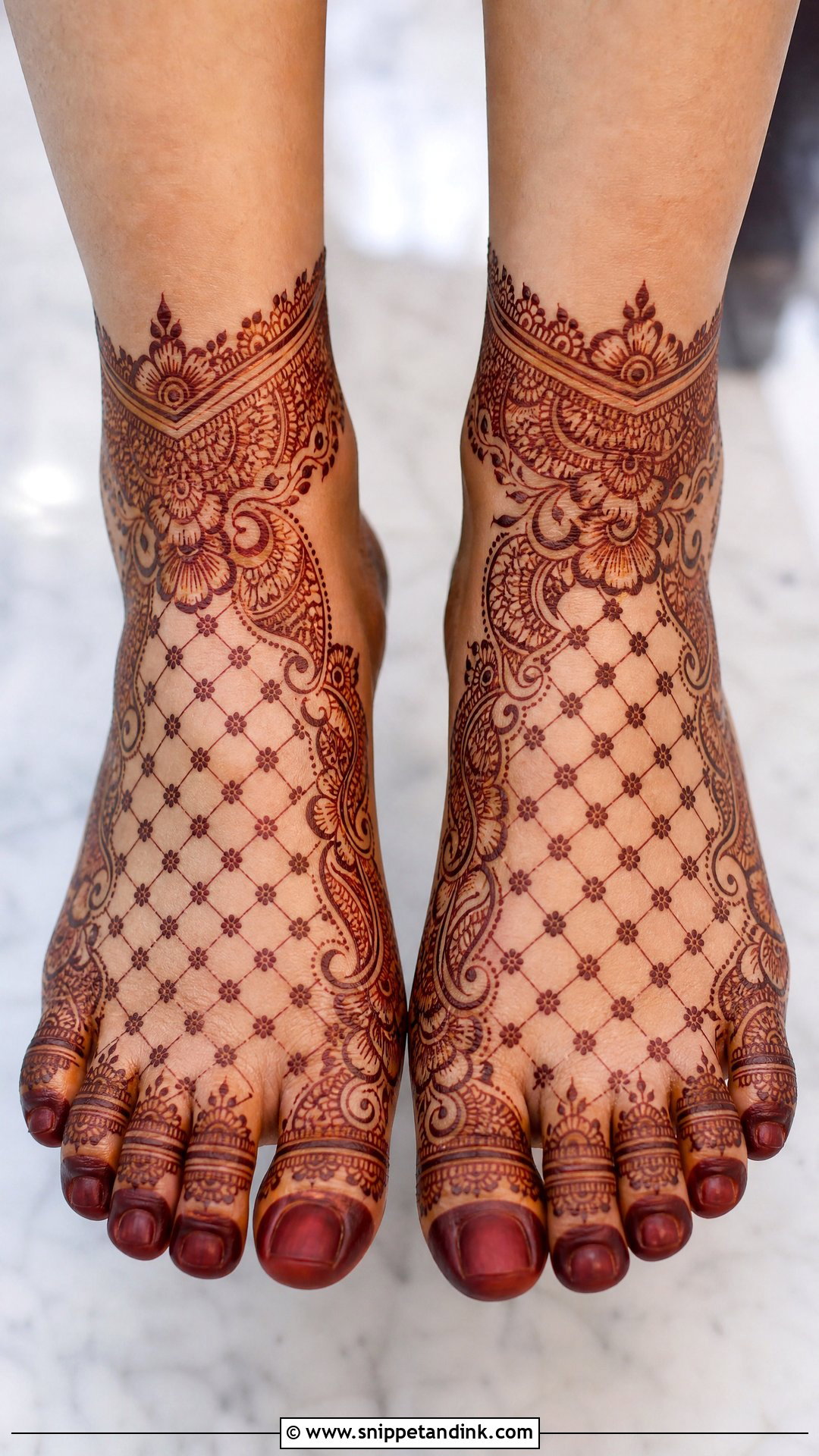
Jaali gives the foot a lace-like texture and follows its curve without looking heavy. A fine crisscross, small dots at the intersections, floral borders and paisley edges are the usual building blocks. I always break it with curved florals near the toes and ankle, because a full foot of straight-line mesh looks stiff. It’s an especially good echo for an outfit with lace, embroidery or net, and with anklets.
10. Bridal Foot Mehndi With Paisley
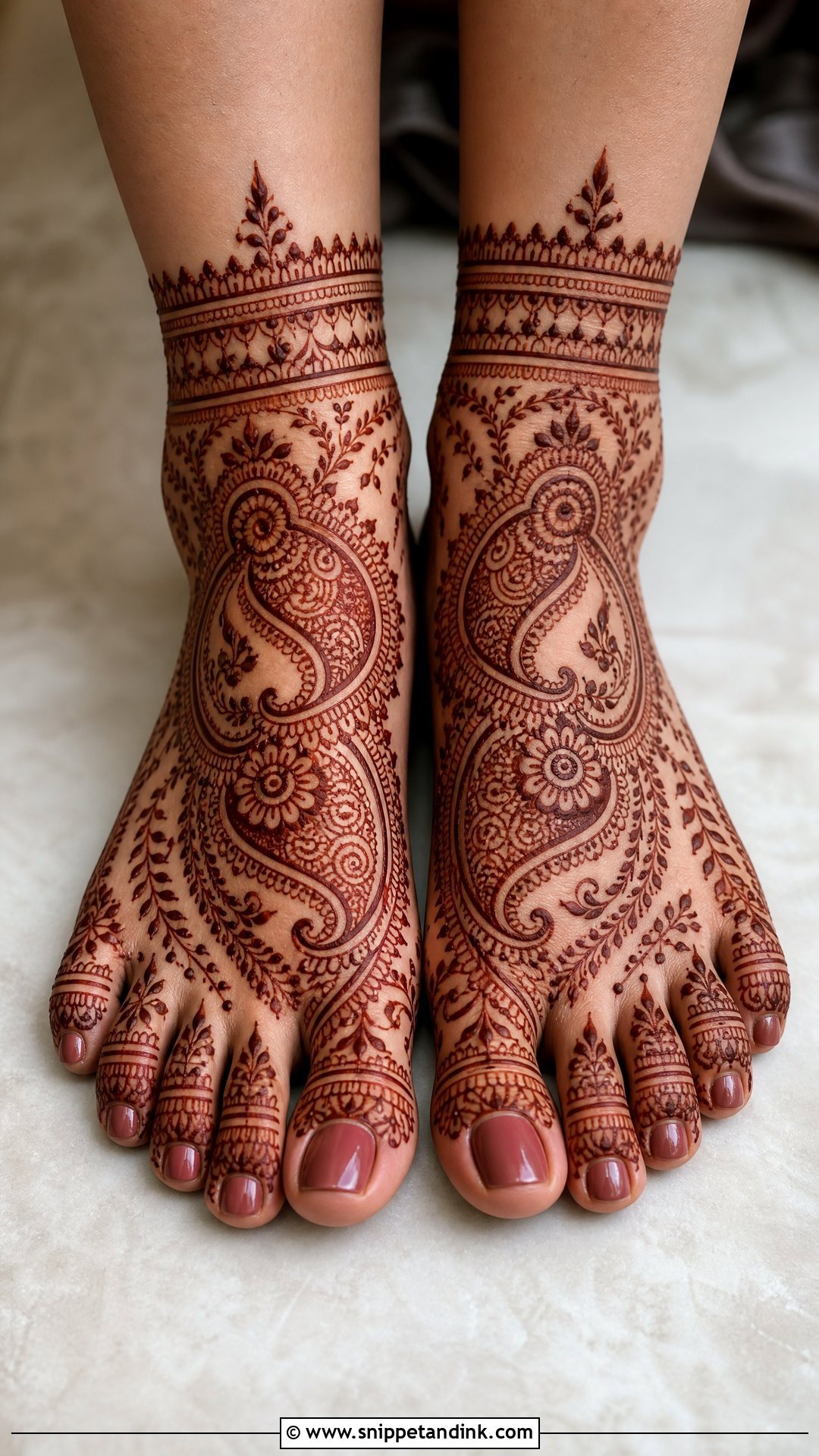
Paisleys suit the foot better than almost any other motif, because their curve follows the arch from the big toe toward the ankle. I fill them with leafy trails, small flowers, spirals and fine fillers, so the foot looks rich without blackout coverage. Larger paisleys go near the center, smaller ones toward the toes, and a neat ankle border finishes the shape. It’s a natural pick for a classic Indian or Pakistani-inspired foot design.
11. Bridal Foot Mehndi With Peacock
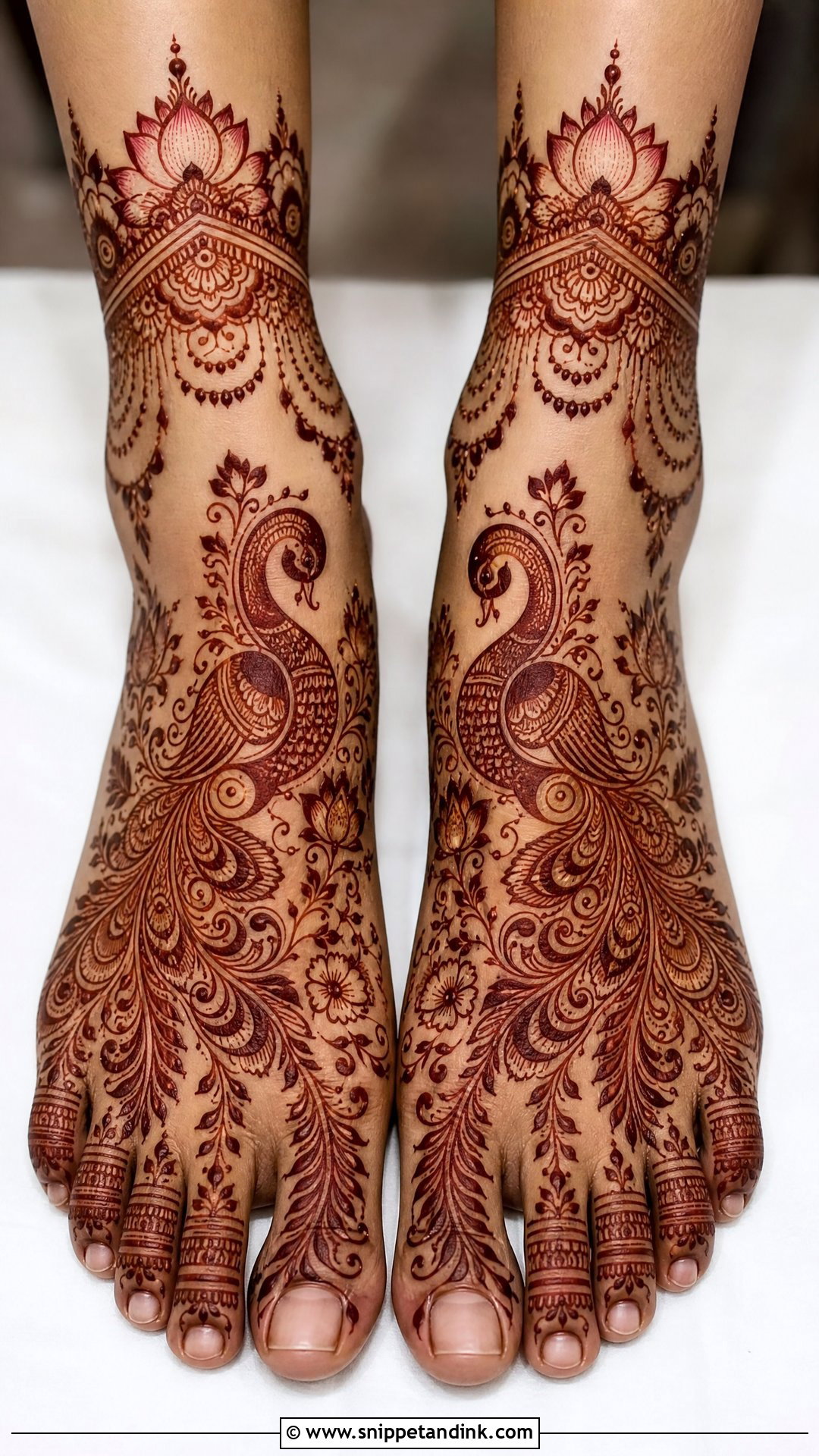
A peacock on the upper foot, near the ankle or mirrored across both feet adds a royal note. The feathers give me room for curves, dots, fine lines and shading. Size is the issue: a peacock squeezed small on a narrow foot loses its detail once the stain settles, so I’d rather draw one generous bird than two tiny ones. Flowers, vines and ankle bands complete it.
12. Bridal Foot Mehndi With Floral Trail
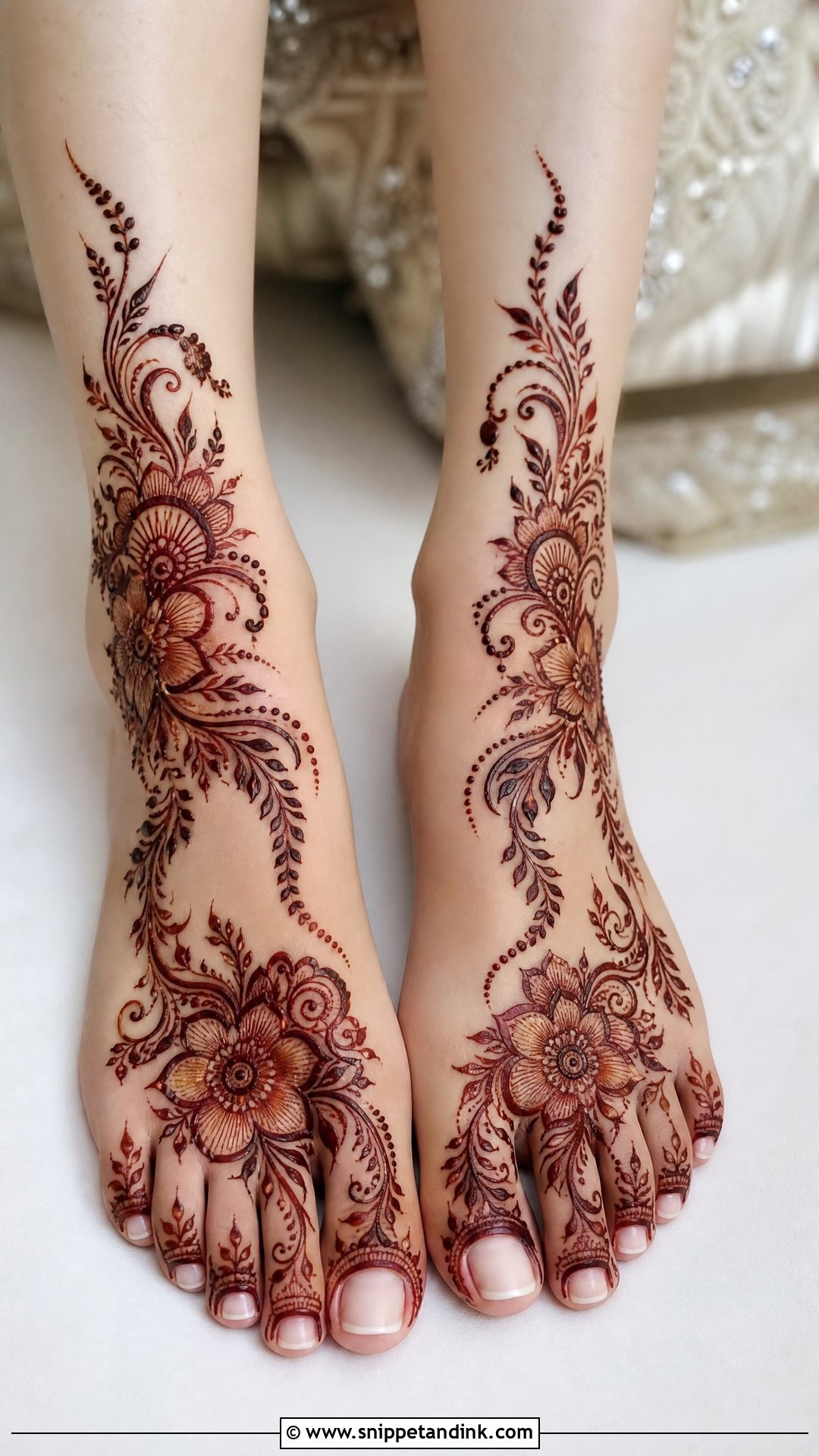
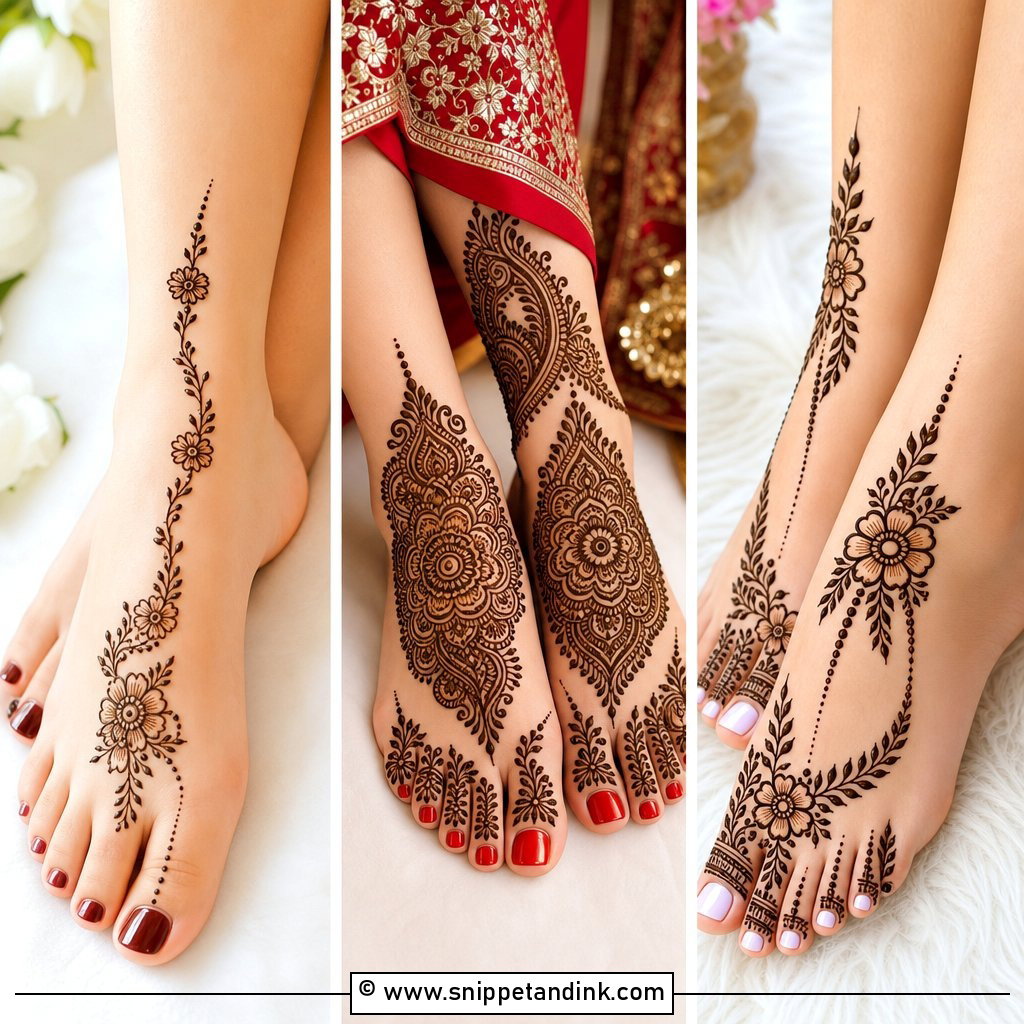
A floral trail starts at the toes and runs diagonally toward the ankle: large flowers set the shape, while leaves, dots and thin vines connect it. That diagonal line makes the foot look longer and slimmer, which is why so many brides end up choosing it. It can stay simple or take shading and fine fillers. With open sandals it’s especially pretty, and it carries an Arabic influence while still looking bridal.
13. Bridal Foot Mehndi With Anklet Pattern
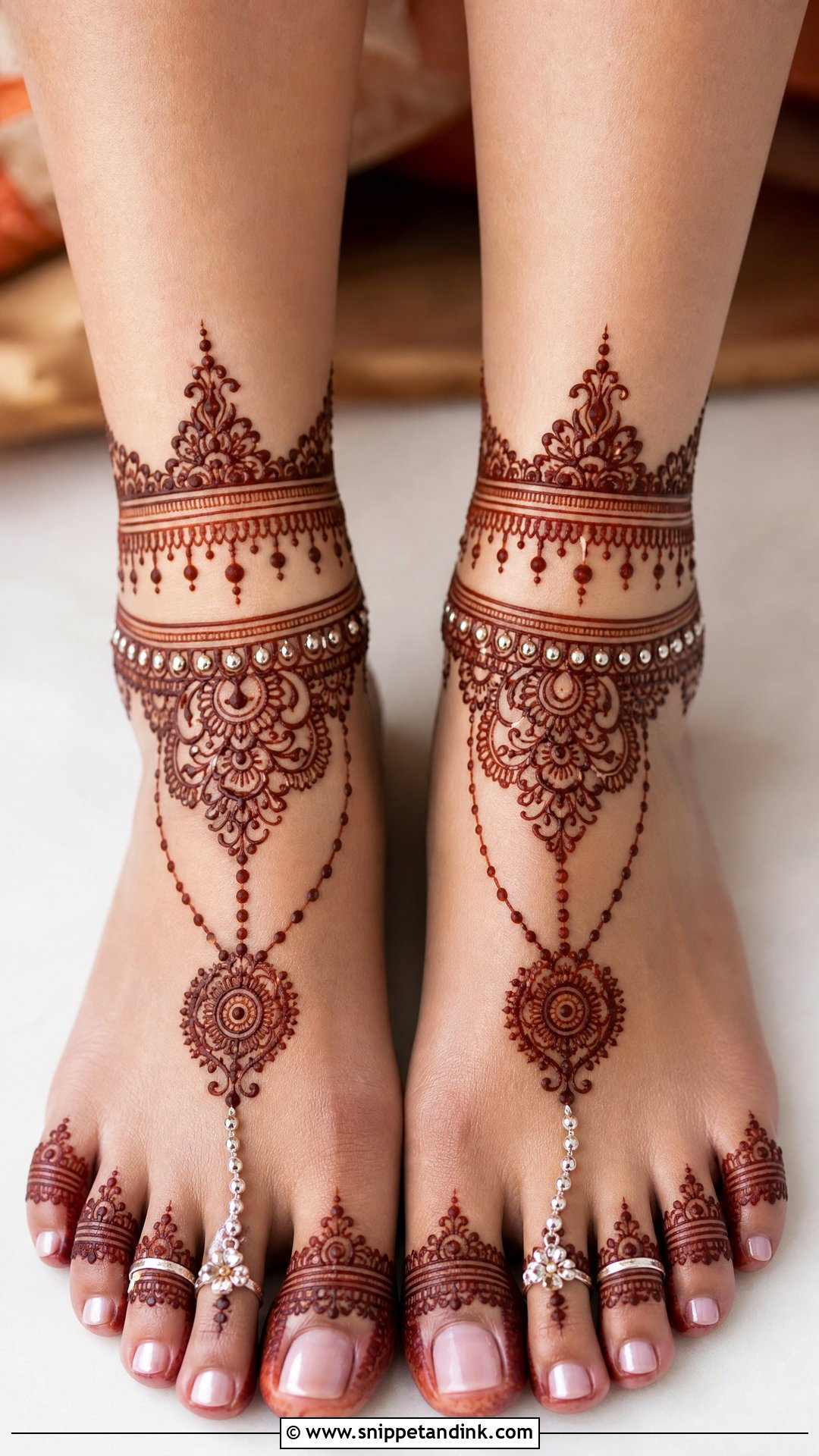
This design draws jewelry in henna: a decorative band around the ankle with hanging drops, chains, tiny flowers or bead-like dots falling toward the foot, and ring-like details on the toes. For payal-inspired designs to sit nicely with your real anklets, I ask you to bring them so I can place the henna band just above or below where the metal will rest. The top of the foot stays light with a mandala or floral. An even, symmetrical band is what makes it look like an ornament.
14. Bridal Foot Mehndi With Toe Details
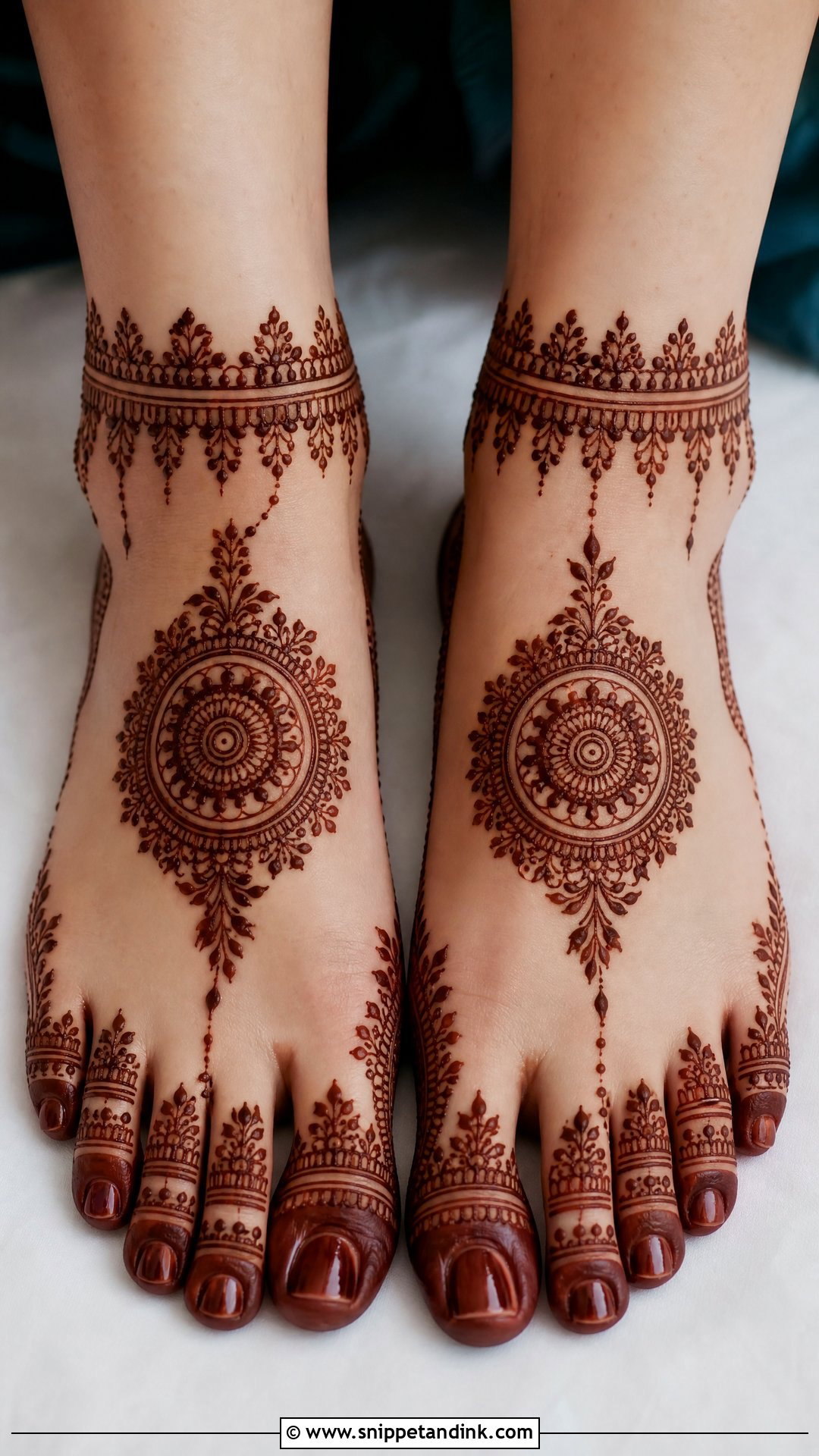
Toes are small and they bend, so they’re where smudges happen. I give each toe its own small band, leafy tip, dots or tiny flower, then connect them to the main foot pattern. Strong toe work can make even a light foot design look bridal, especially in open-toe shoes. The rest of the foot can take a mandala, a jaali patch or a floral trail. Spacing between toes matters; a little gap keeps patterns from transferring when toes touch while the paste is wet.

15. Bridal Foot Mehndi With Leg Extension
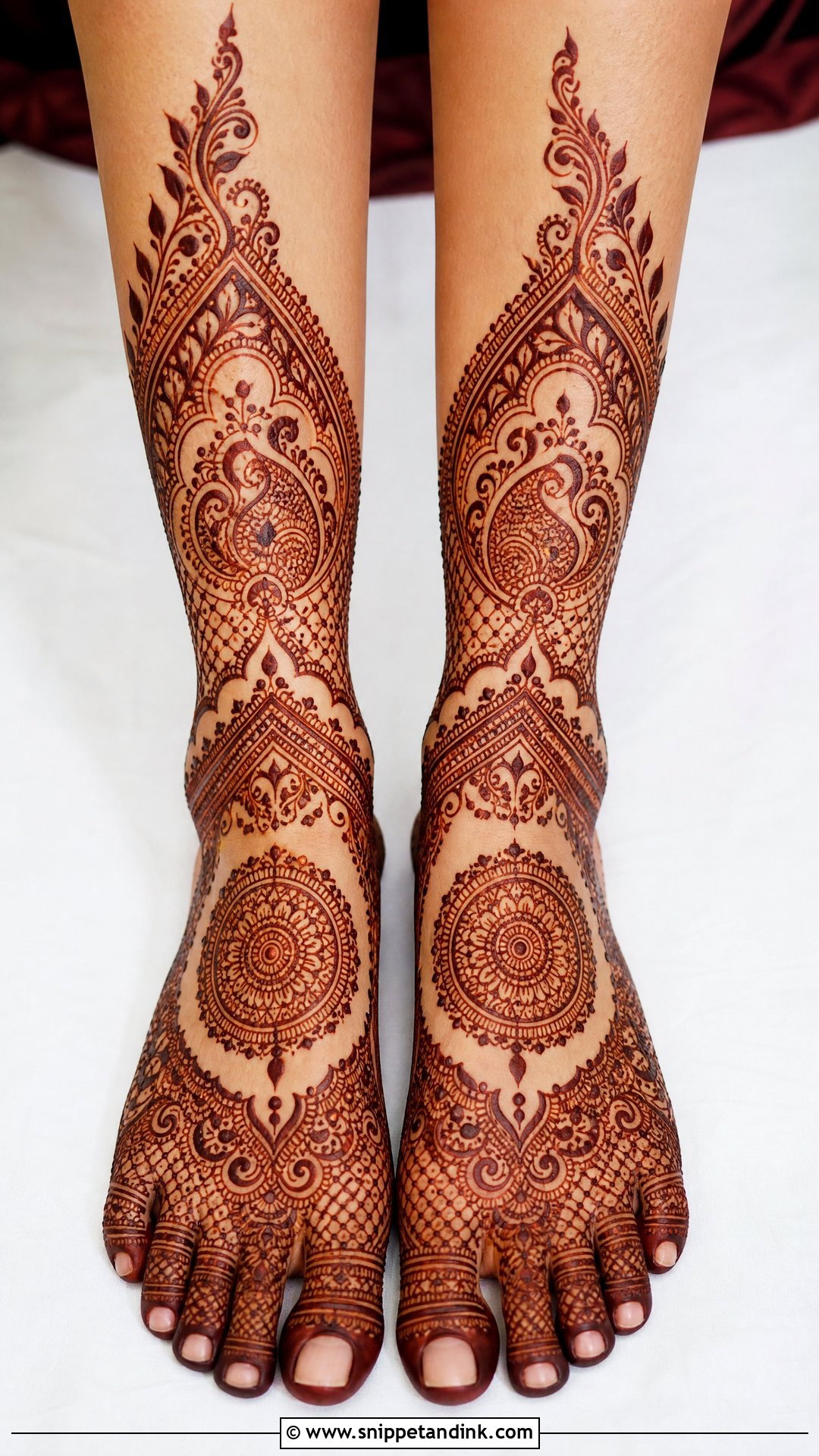
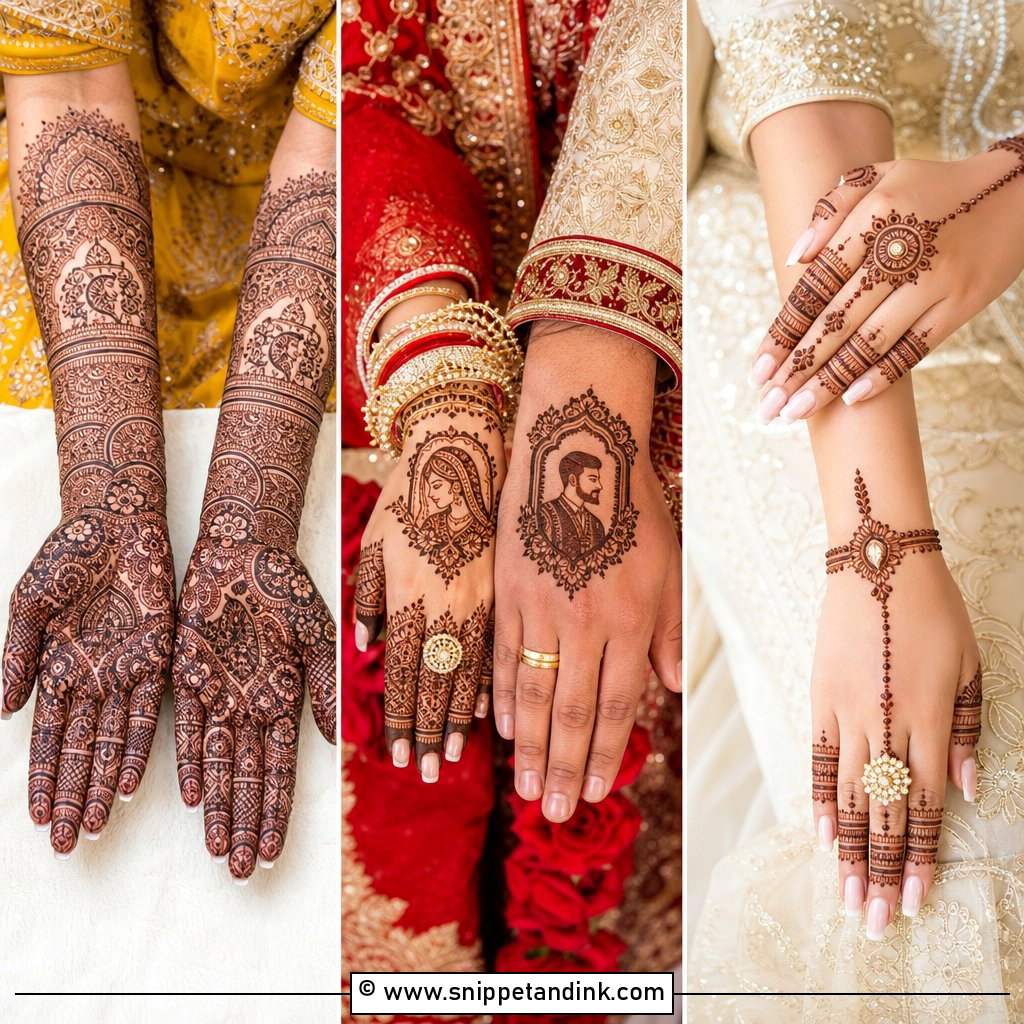
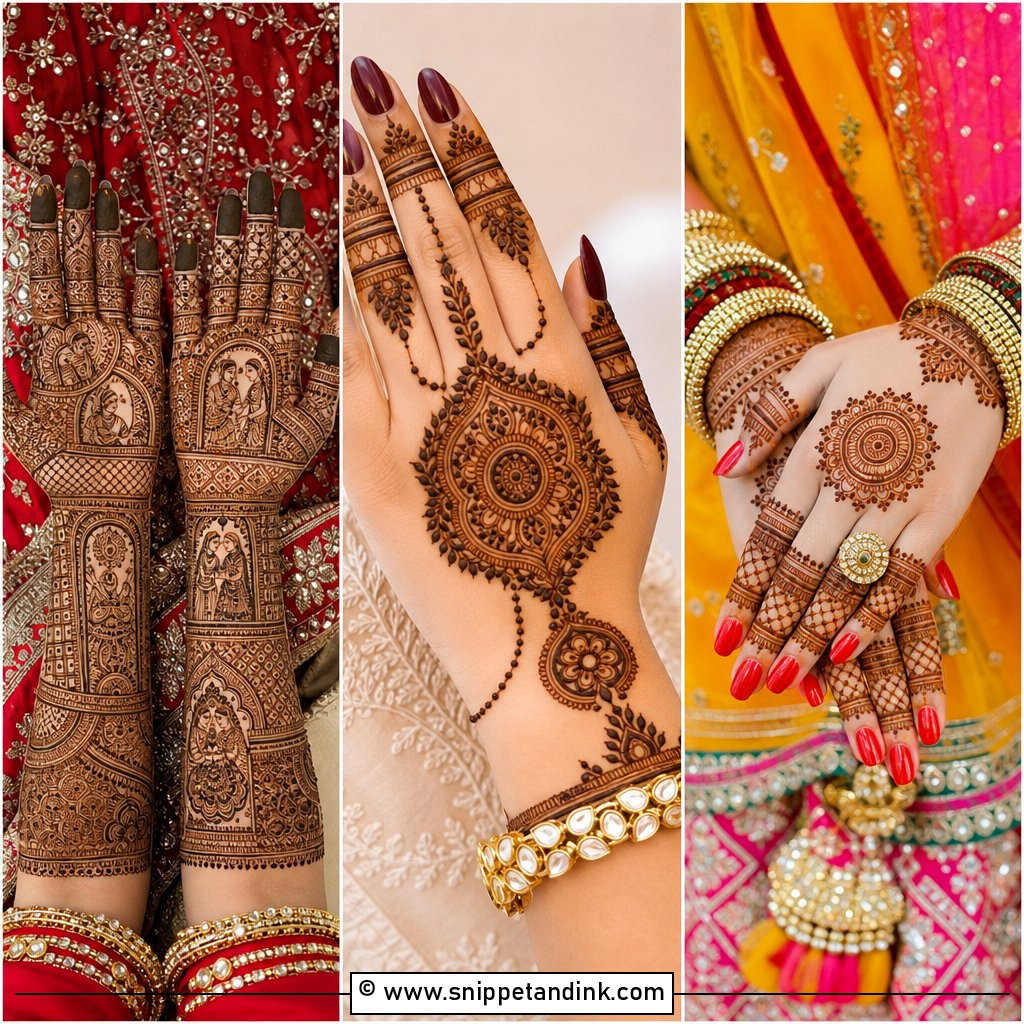
Extending up the leg turns foot mehndi into a statement. The pattern flows from the toes over the feet, wraps the ankles and climbs toward the lower legs, with large paisleys, florals, jaali, mandalas and ornamental borders. It shows best with lehengas, sarees and outfits that reveal the lower leg during seated rituals. The front of the ankle bends constantly, so I keep the paste lighter there. It should read as one piece, with the foot and leg design flowing together, not as patches.
16. Bridal Foot Mehndi For Round Feet
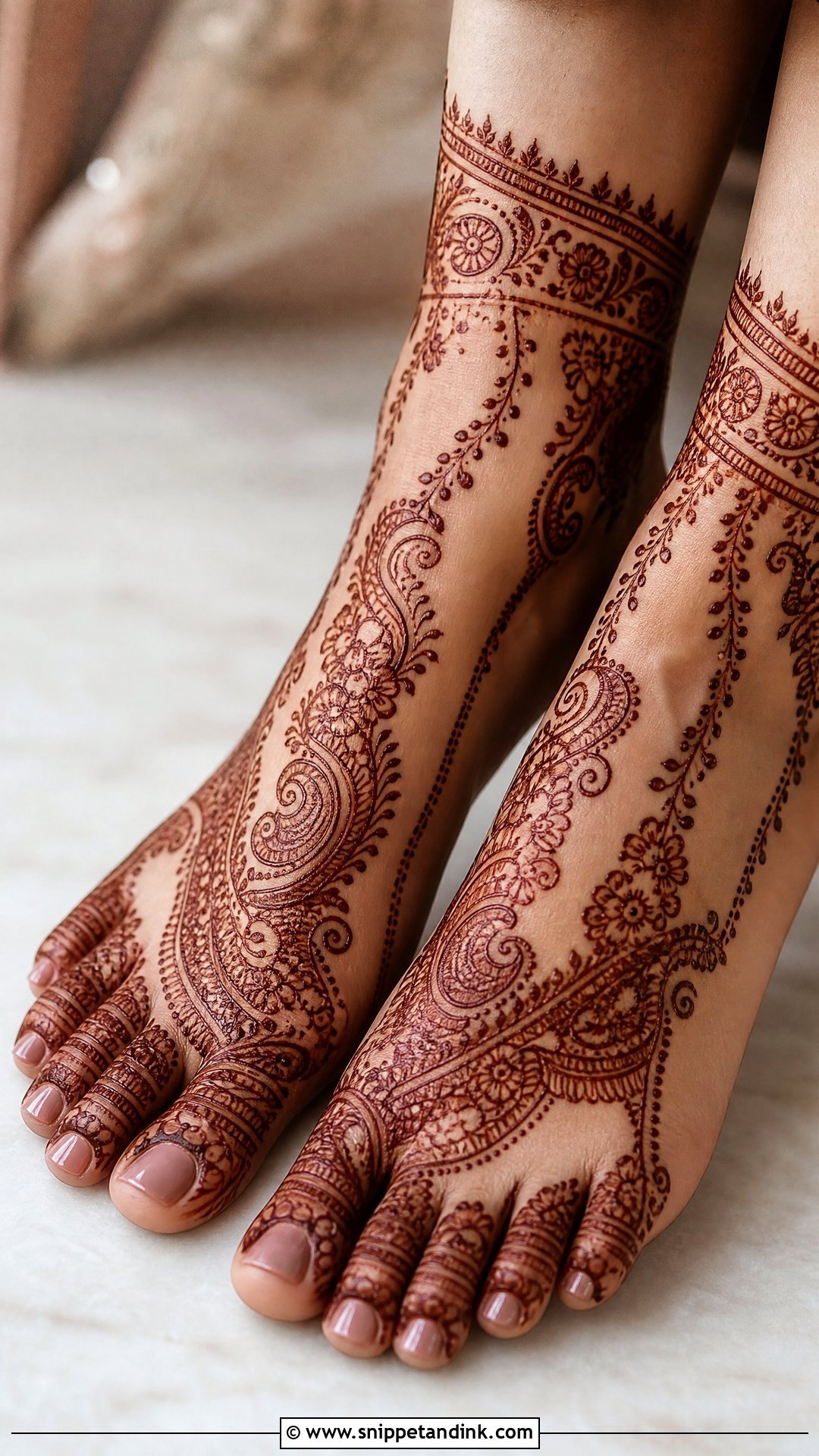
On a rounder, wider foot I design for length. Diagonal trails, long paisleys, slim vines and vertical mandala extensions all draw the eye from toes to ankle in a gentle curve. Thick horizontal bands across the widest part of the foot make it look broader, so I avoid them. A slim anklet border, detailed toes and an elongated floral trail give a flattering finish that’s also comfortable to walk in.
17. Bridal Foot Mehndi For Narrow Feet
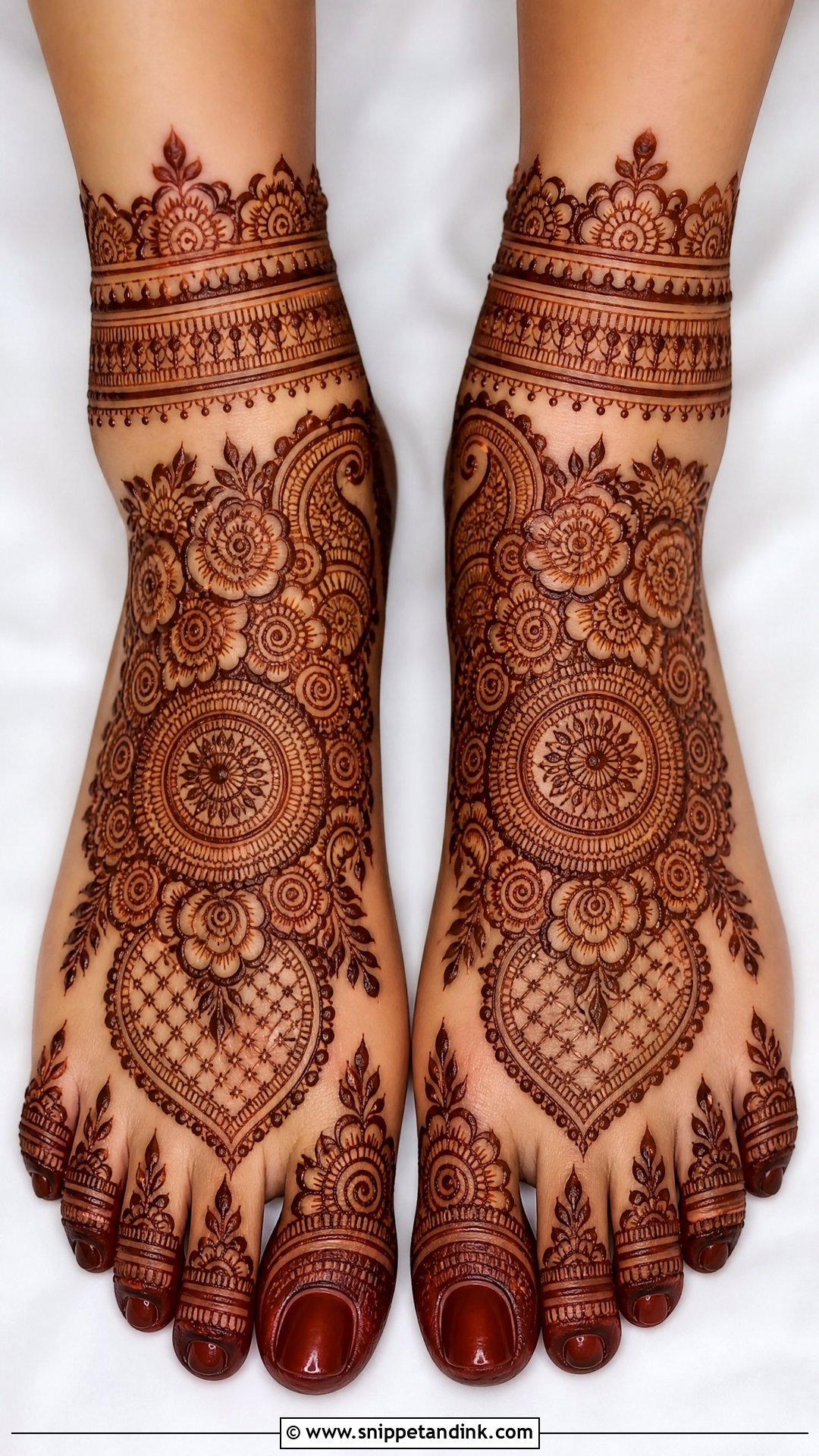
Narrow feet can take fuller motifs: rounded mandalas, wider floral clusters, paisley pairs and soft jaali sections add width without looking heavy. Symmetry looks especially neat on a slim foot. I place a central mandala on each and surround it with petals, leaves and curves, then make the toe details slightly bolder so they don’t vanish. A medium-width ankle band finishes it.
18. Bridal Foot Mehndi For Dark Skin
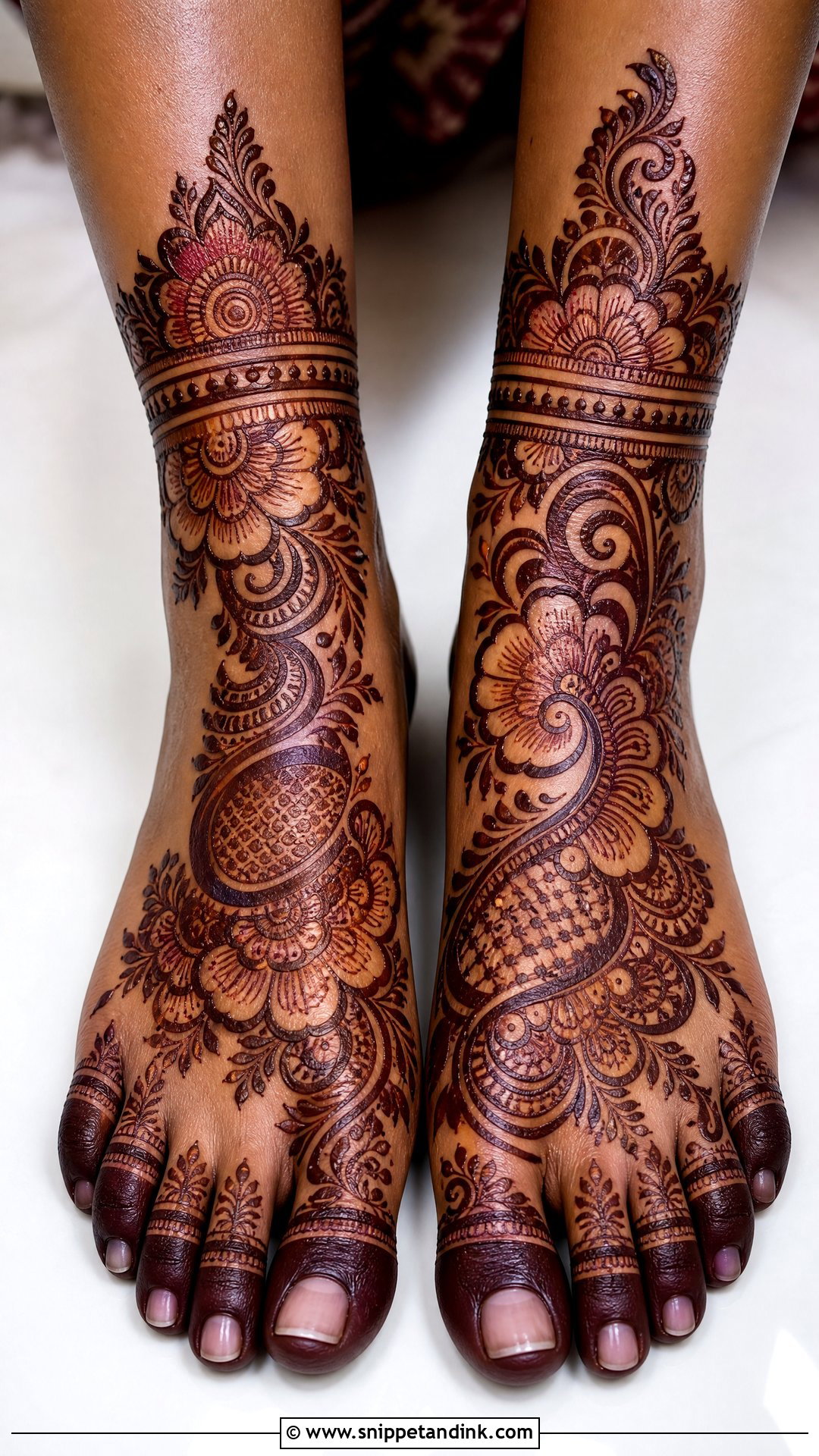
On deeper skin, contrast comes from line weight and spacing, not from fine detail. Natural henna stains rich brown to deep maroon, and feet usually take color well, but very thin lines can merge visually with the skin once the stain settles. I lean on larger flowers, paisleys, mandalas and defined jaali sections, with filled toe tips, clean outlines and open spaces. That’s what keeps the pattern visible in daylight and in photos.
19. Bridal Foot Mehndi For Fair Skin
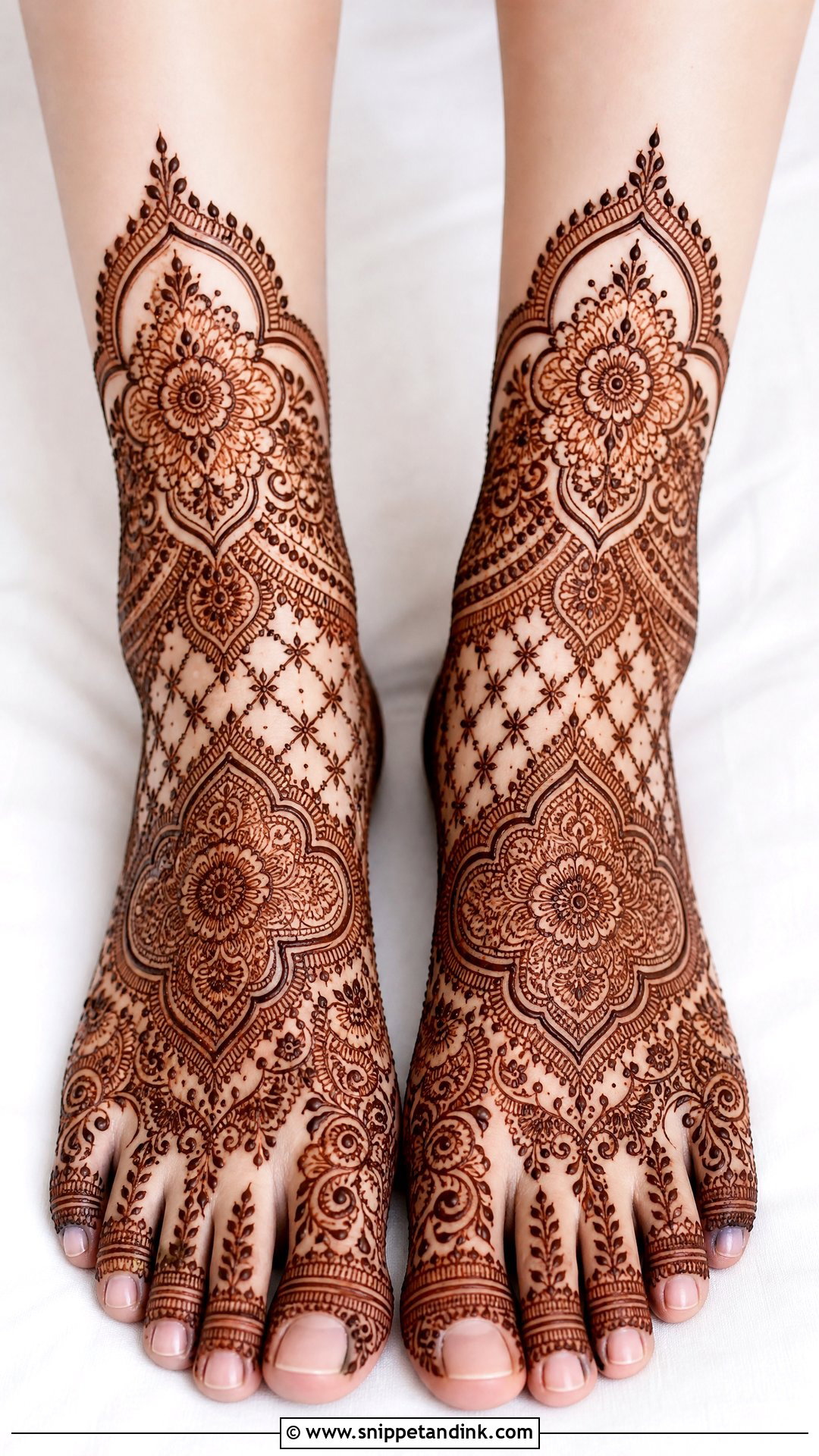
Fair skin shows fine detail clearly, so this is where delicate florals, lace-like jaali, tiny dots and fine paisley fillers really pay off once the stain deepens. Dense Indian coverage, Arabic trails or minimal mandalas all work. What I watch for is lightness: a design that’s too sparse can look like a festival henna rather than a bride’s. Decorated toes, a defined ankle band and one strong central motif fix that, and a deep reddish-brown stain gives soft contrast.



20. Bridal Foot Mehndi For South Indian Bride
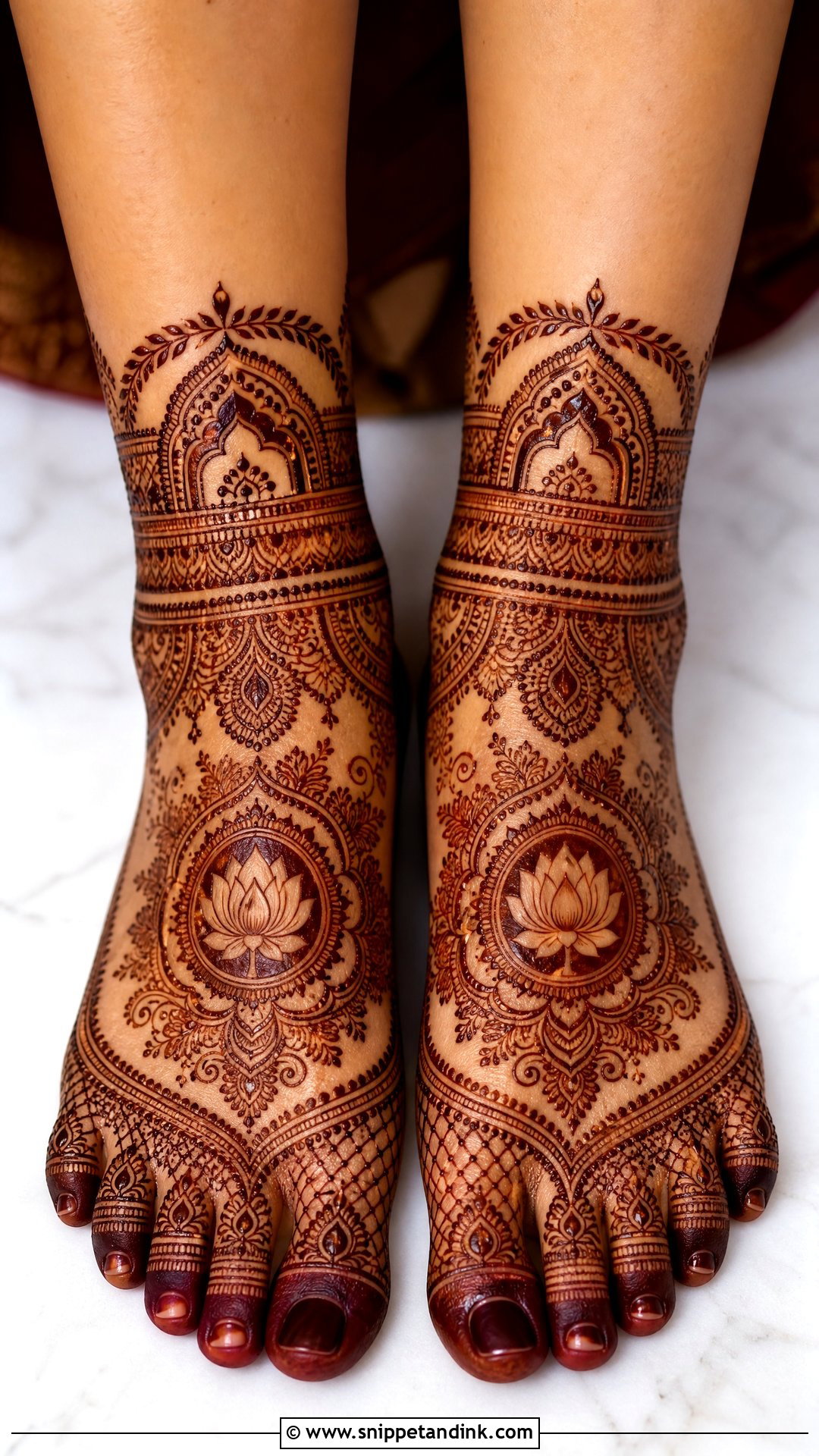
South Indian brides often pair foot mehndi with silk sarees, gold jewelry and traditional anklets, so I keep it structured and graceful: temple-inspired shapes, lotus motifs, anklet patterns and neat symmetry. A lotus mandala in the center, detailed toes and a jewelry-style ankle border work especially well, with small paisleys and leafy arches for richness. Alta-inspired spacing or bold outlines make it more visible. Clean layout matters most, so the henna sits well beside the saree border and jewelry.
21. Bridal Foot Mehndi For Muslim Bride
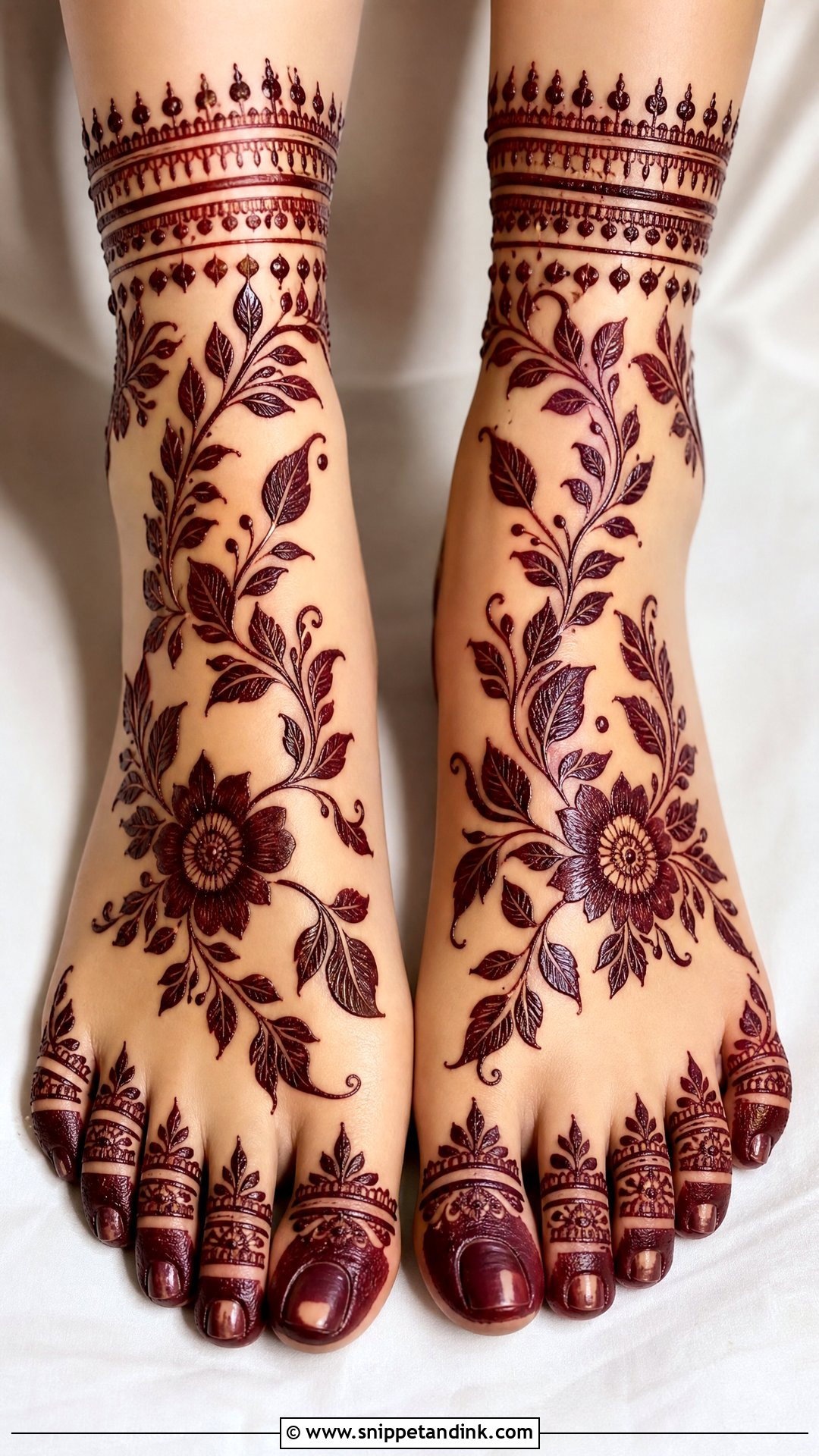
For a Muslim bride’s feet, I often lean on Arabic, Gulf or Indo-Arabic influences: elegant trails, bold leaves, shaded flowers and ornamental ankle bands in place of fully packed coverage. The design can start at the toes, sweep across the foot and finish near the ankle in a soft curve. For a more traditional finish, I mirror both feet and make the toe patterns a little heavier. Shararas, ghararas, lehengas and embroidered outfits with open, delicate footwear suit it.
22. Bridal Foot Mehndi For Beach Wedding
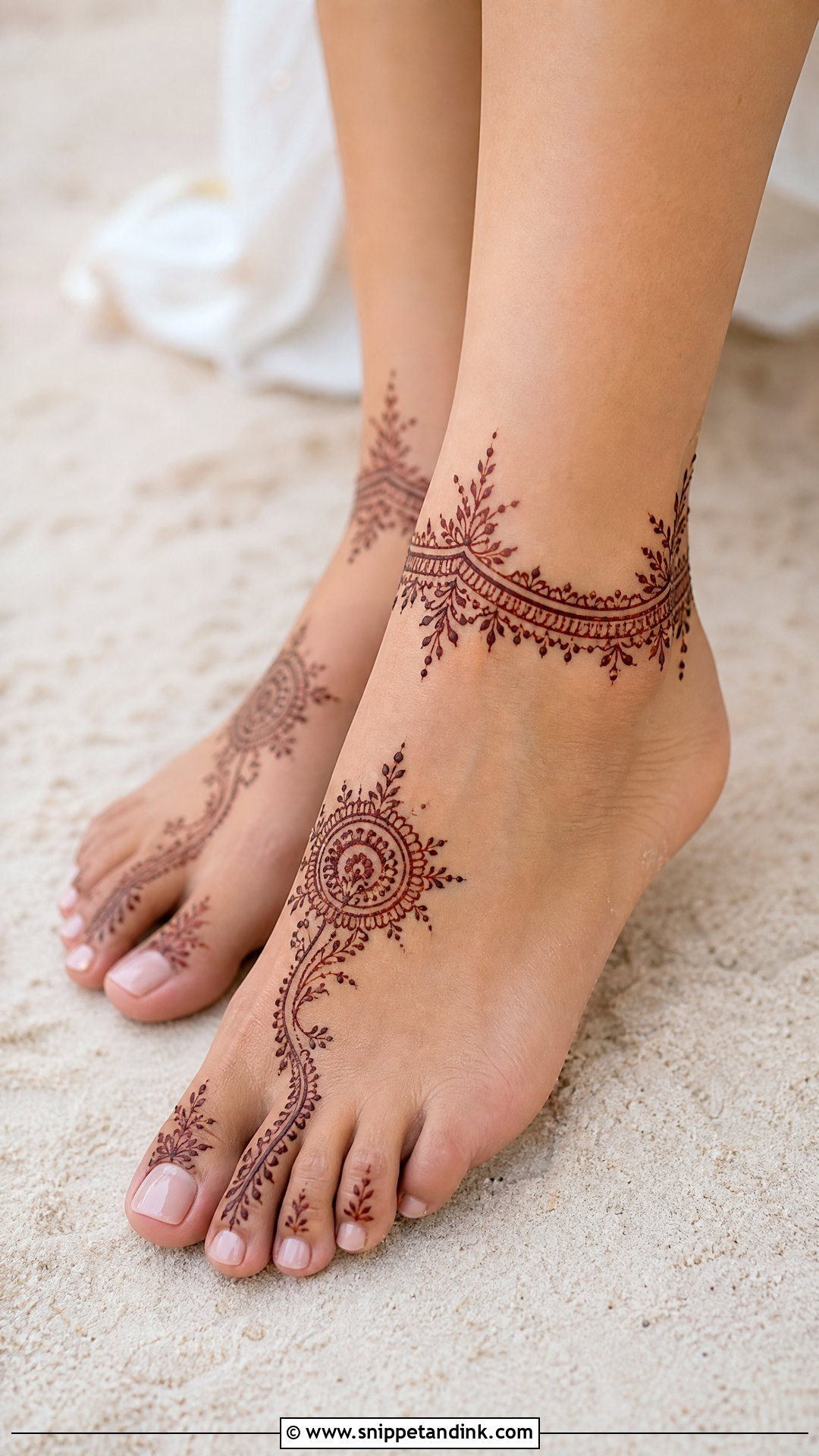
Sand is an exfoliant. Walking barefoot on a beach scrubs the soles and sides of the feet, and fresh stain there fades quickly, so I keep beach designs on the top of the foot and the ankle. Airy floral trails, mandala centers, leafy anklet bands and decorated toes are enough. Skip overly heavy leg extensions for a relaxed look and leave plenty of negative space. A natural reddish-brown stain looks fresh against a simple outfit in outdoor light.
23. Bridal Foot Mehndi For Reception
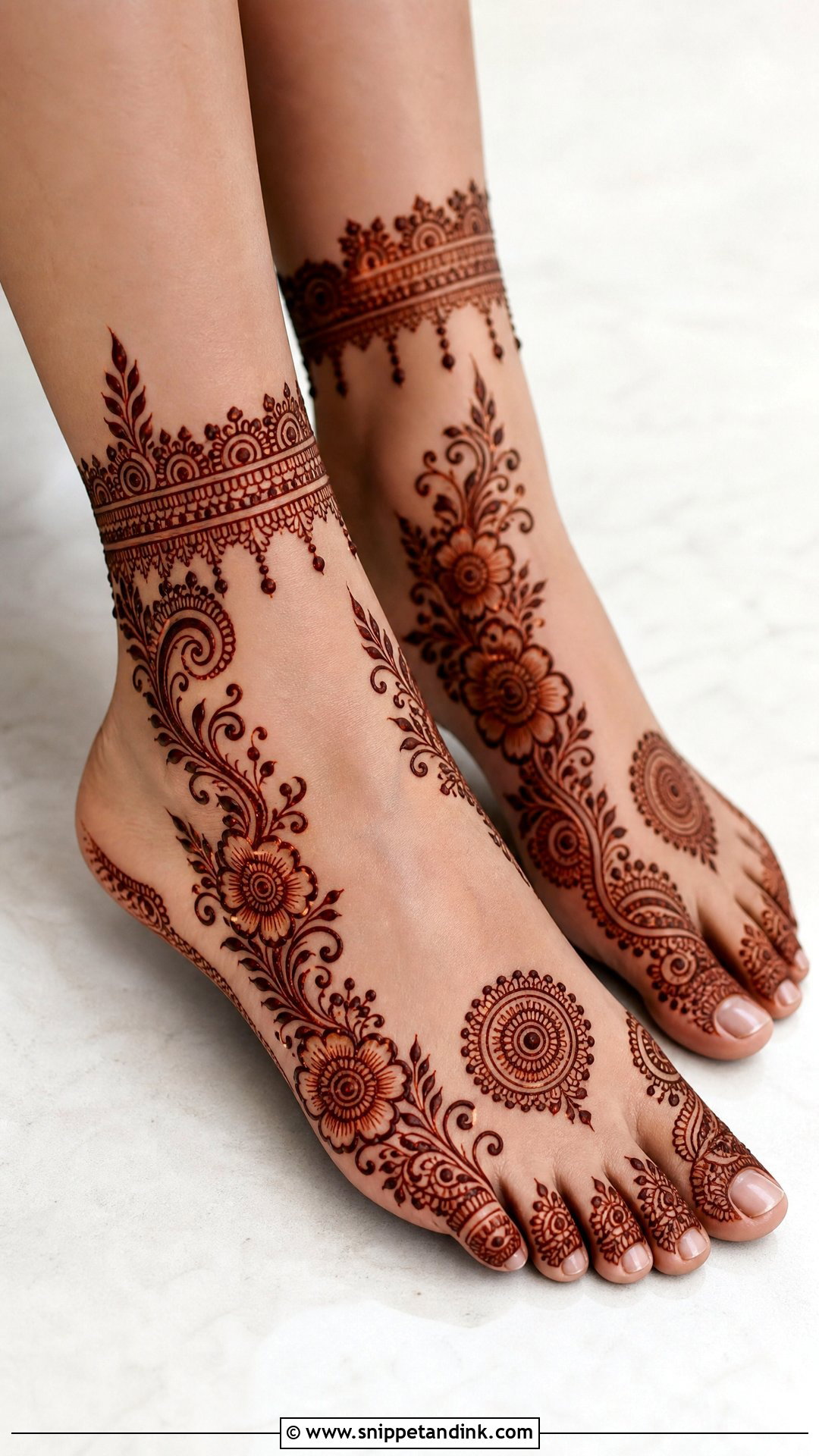
By the reception you may be in heels, a gown or a lighter lehenga, so the foot design needs to look neat with closed-in or strappy shoes. A side floral trail, an ankle bracelet pattern and detailed toes do that; a small mandala on top of each foot adds bridal weight. Reception photos catch you moving, so I keep outlines bold enough to read from a distance. It holds up through dancing, greetings and close-ups alike.
24. Bridal Foot Mehndi For Nikah
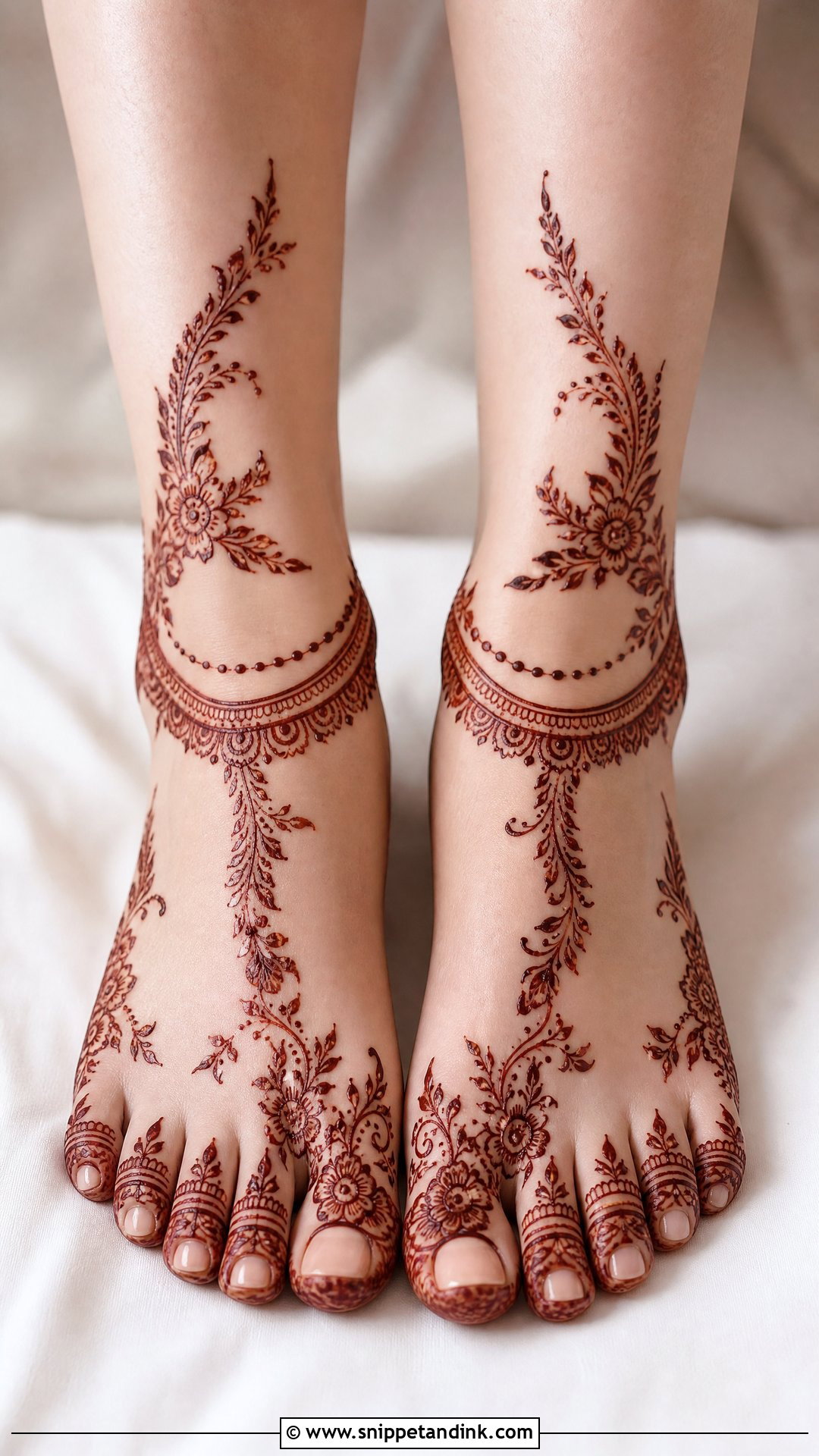
For a nikah, I usually suggest something refined and modestly detailed: a balanced Arabic or Indo-Arabic layout with floral vines, leafy trails and soft ankle borders, slightly open so skin shows through. With pastel, ivory or soft embroidered outfits, fine detailing flowing from toes to ankle looks right. Symmetry on both feet keeps it formal. Slightly darker filled toe tips make the stain read richer in photos.
25. Bridal Foot Mehndi For Wedding Photos
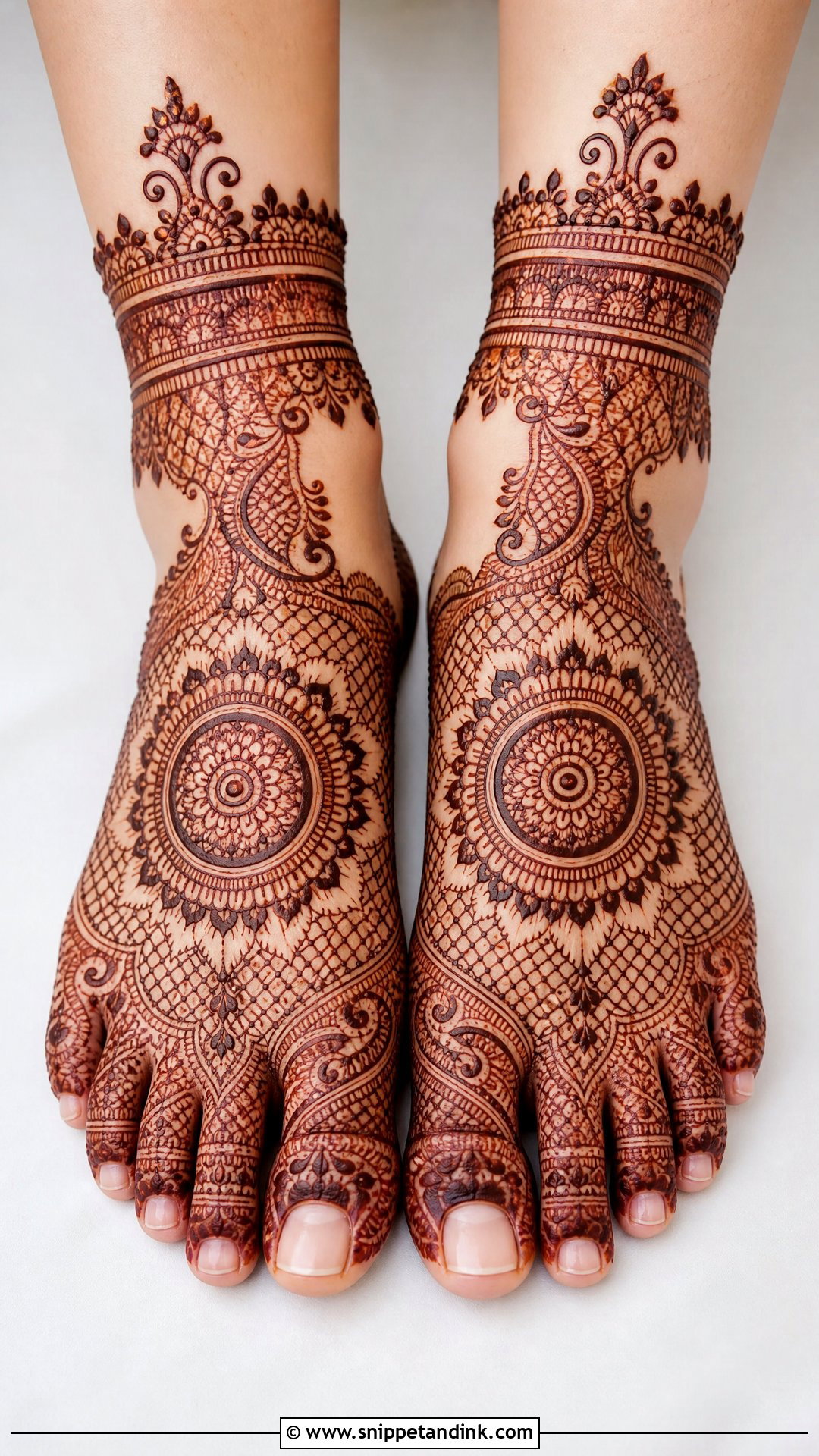
Most foot photos are taken from above, so I design for that angle. A clear focal point, clean toe details, visible ankle borders and matching patterns on both feet. Mandalas, paisleys, floral trails and jaali sections all work as long as they aren’t tiny. The main motif should sit in the center of the top of the foot, not close to the edge where it curves out of view. A deep stain, balanced spacing and crisp outlines do the rest.
Why Feet Stain Darker, and What Walking Does to It
Hands and feet generally take the deepest henna color on the body, and soles in particular can go very dark. The trade-off is friction. Every step rubs the soles and the sides of the feet, so the stain there fades faster than on the top of the foot. That’s why I keep important detail on the top of the foot and the ankle, and treat the sides as supporting pattern.
The night after application
Leave the paste on as long as you comfortably can, ideally overnight. Wrap the feet loosely in tissue and then in loose cotton socks or a cloth so the paste stays warm and doesn’t transfer to the sheets. In the morning, scrape it off rather than washing, and keep the feet out of water for as long as you reasonably can that day.
Up to the wedding
Don’t pumice or scrub your feet, skip pedicures between the mehndi and the wedding, and break in new shoes beforehand so a stiff strap doesn’t rub a pale stripe across the design. A little balm in the evenings keeps the stain looking fresh.
Your Footwear Decides More Than You Think
Foot mehndi can be traditional, modern, simple, heavy or entirely your own. What decides it is your foot shape, the ceremony, your footwear, your jewelry and how much coverage you’re comfortable with. Full Indian patterns feel grand, Arabic trails look graceful, mandalas give balance and anklet designs act like jewelry. Choose clear motifs, placement you can walk in, and a layout that reads from toes to ankles in photos. With a careful artist and proper aftercare, your feet will look as finished as your hands.
You'll Like These Ideas:




Leave a Reply