
Bridal mehndi ends up in more photos than almost any other detail: the ring shot, the hands over the bouquet, the palms held up during rituals. So when I plan a bride’s design, I’m thinking about how it will look at those moments, two days after I’ve applied it, once the stain has fully darkened. The designs below range from full Indian coverage to open Arabic vines, portraits and modern layouts. For each, I’ve noted how long it takes, what makes it stain well and where it tends to go wrong, so you can bring a clear brief to your own artist.
The Stain Peaks Two Days Later, So Count Back From the Wedding
Natural henna comes off the skin bright orange. Over the next 24 to 48 hours it oxidizes and deepens to brown or maroon, which is the color you want in photos. That’s why I schedule bridal mehndi one or two days before the wedding, not the morning of.
The deepest color appears on the palms and fingers, where the skin is thicker. Forearms and the backs of the hands usually stain lighter, so if you want the arms to match, use slightly heavier lines there rather than finer detail.
How Long You’ll Actually Be Sitting
A minimal or Arabic bridal design may take an hour or two for both hands. Full Indian, Rajasthani or portrait work with forearms and feet can run several hours, and the paste then needs to stay on for many more. Eat before the appointment, use the bathroom, and have someone ready to help with food and your phone afterward.
On the day, come with clean, dry skin and no lotion, oil or sunscreen on your hands. Do any waxing or exfoliating a day or two earlier, since freshly waxed skin can be irritated and sometimes stains unevenly.
1. Full Hand Indian Bridal Mehndi Design
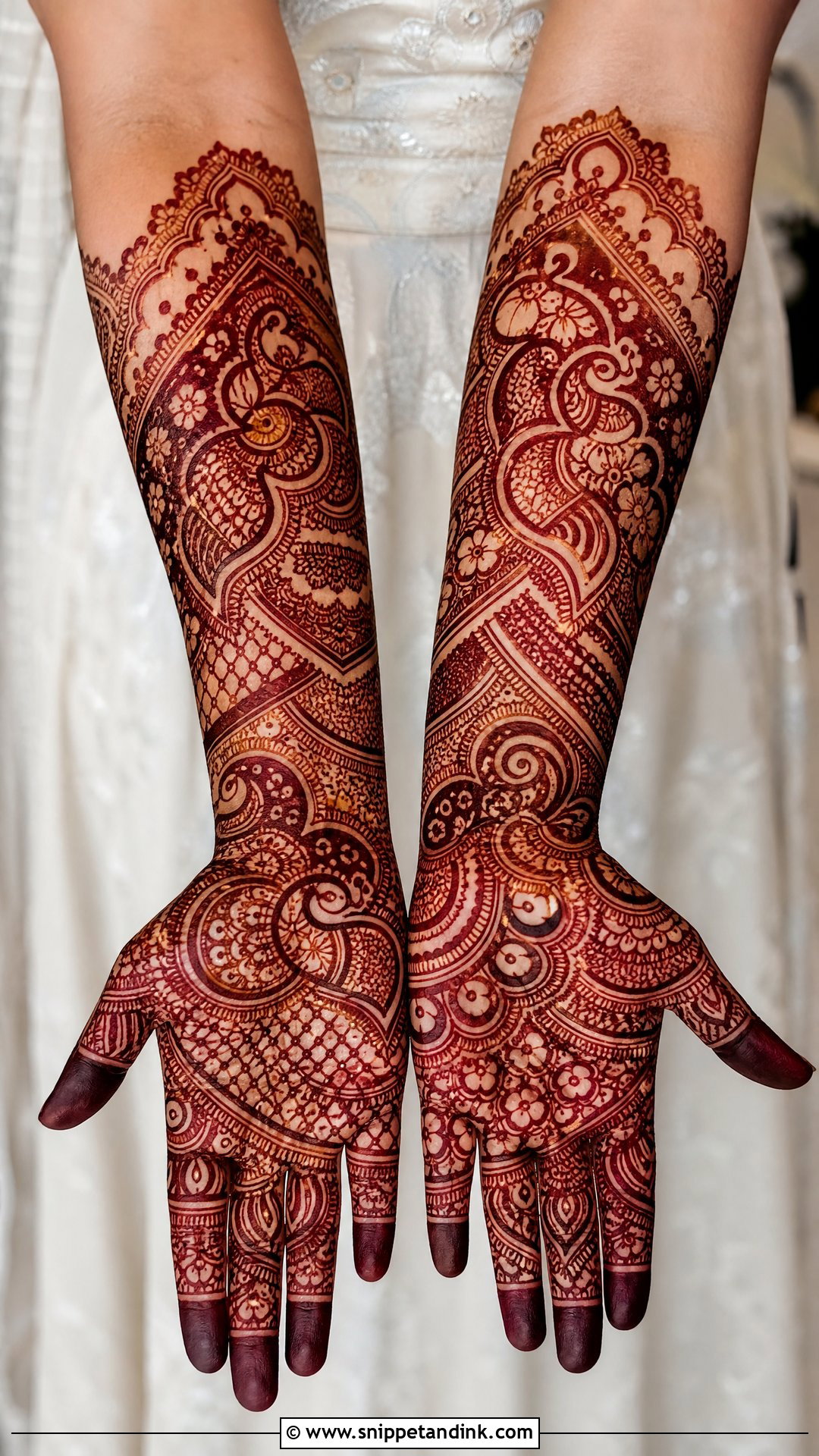
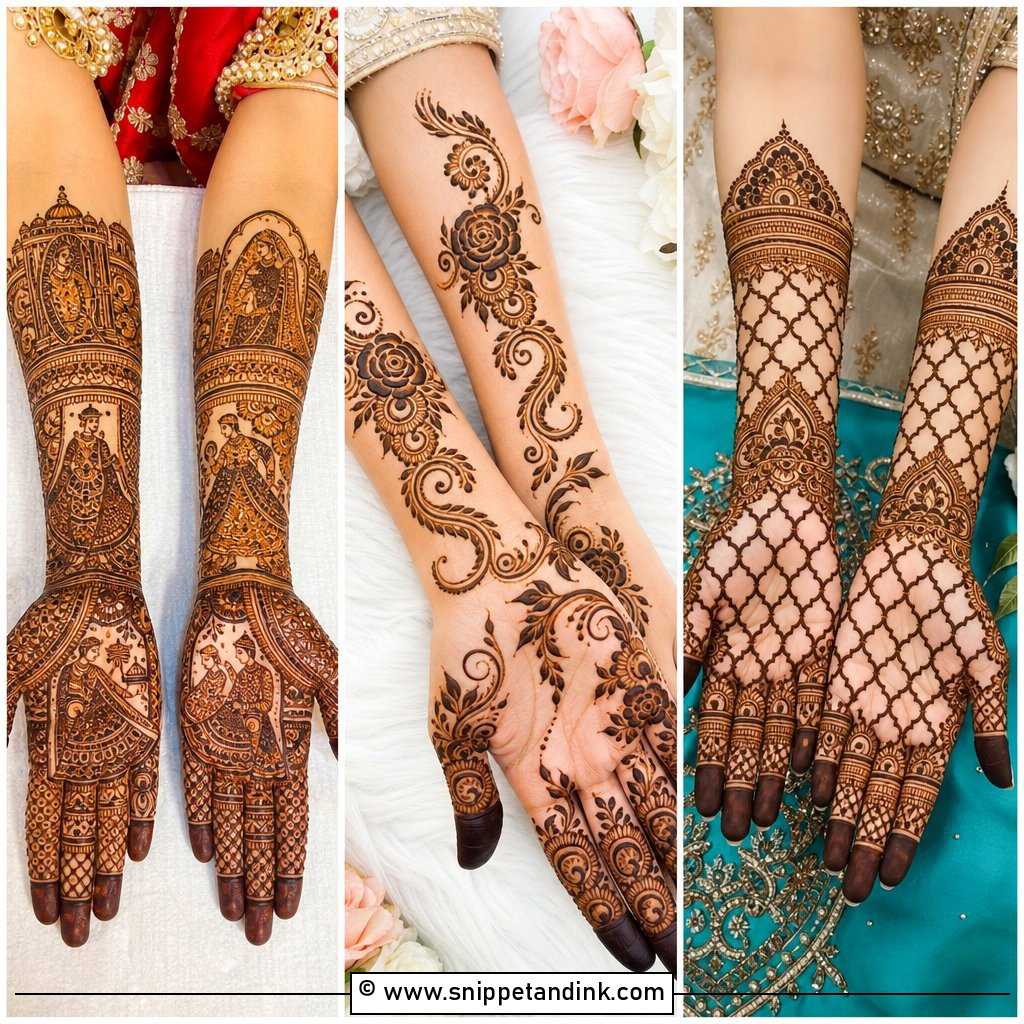
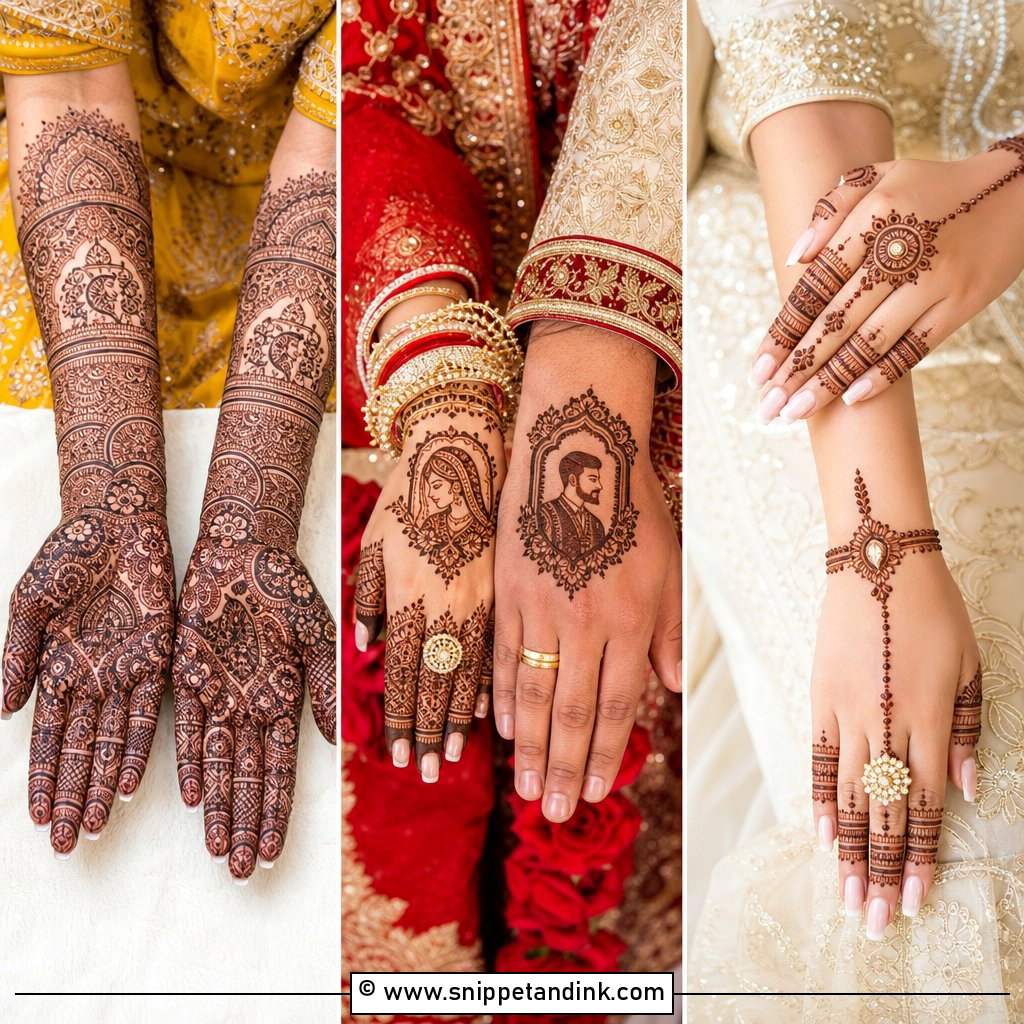
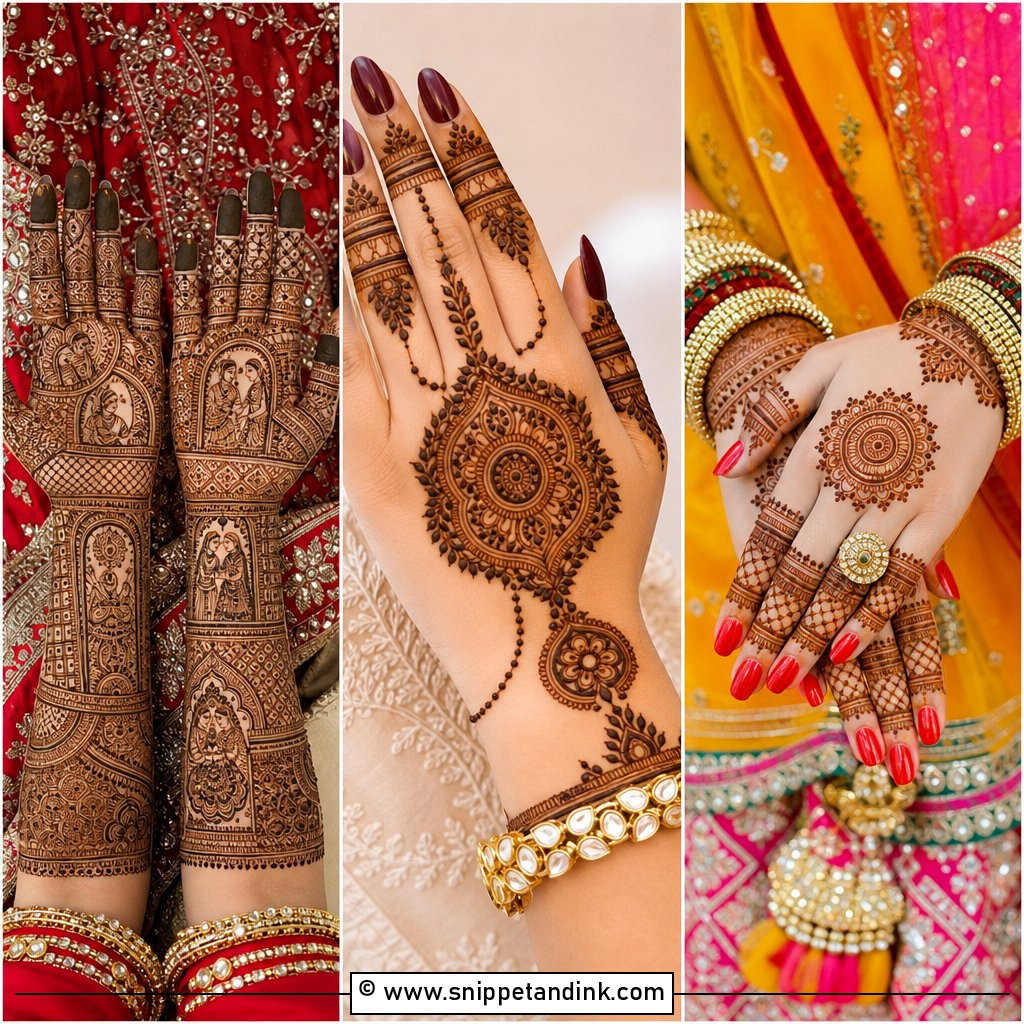
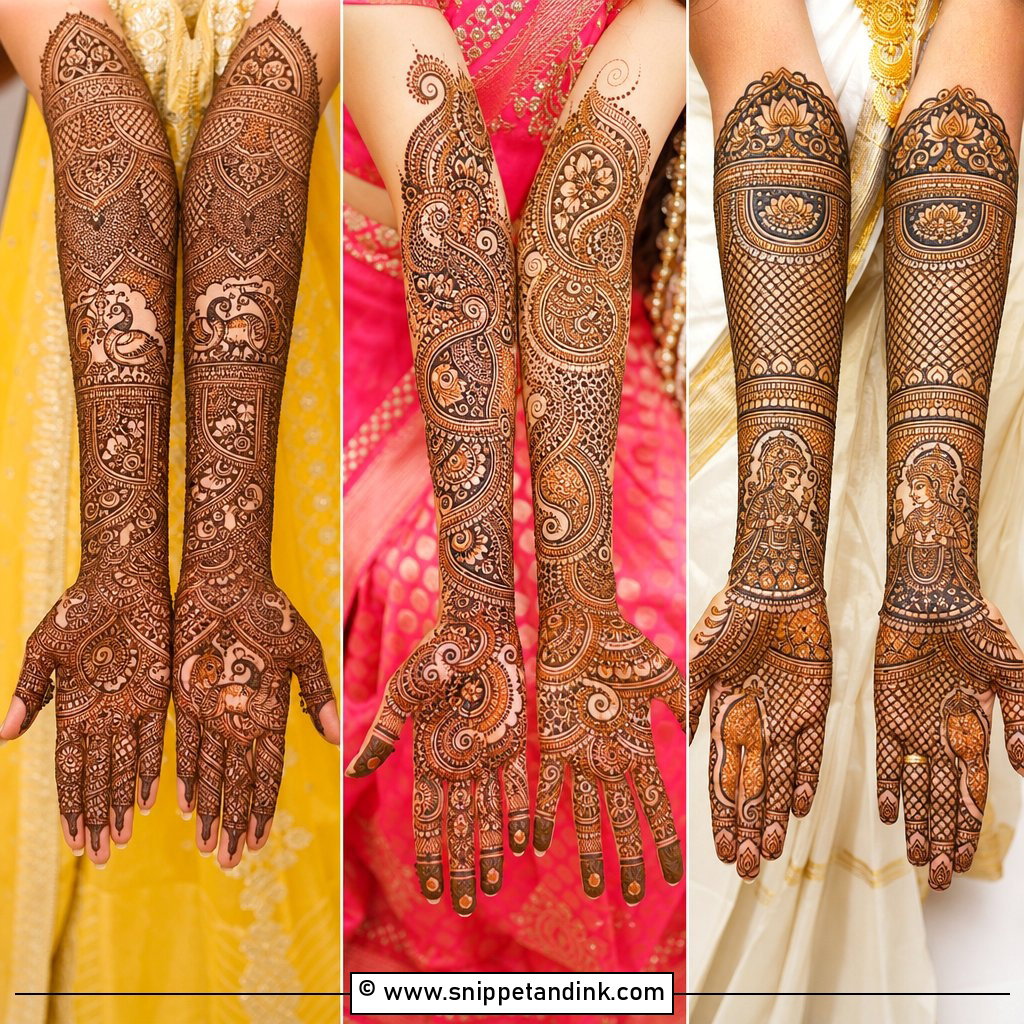
Full hand Indian mehndi is the traditional bridal choice: dense pattern from the fingertips to the forearms, front and back, built from paisleys, florals, peacocks, jaali and fine fillers. It is also the longest sitting, often several hours for both hands and arms. The palm center is where I’m most careful, because when every space is filled the main motif can disappear, so I leave it slightly more open than the rest. Initials or a small symbol can be hidden inside. It suits heavily embroidered red and maroon outfits, bangles and kalire, where lighter designs can look lost.
2. Arabic Bridal Mehndi Design Full Hand
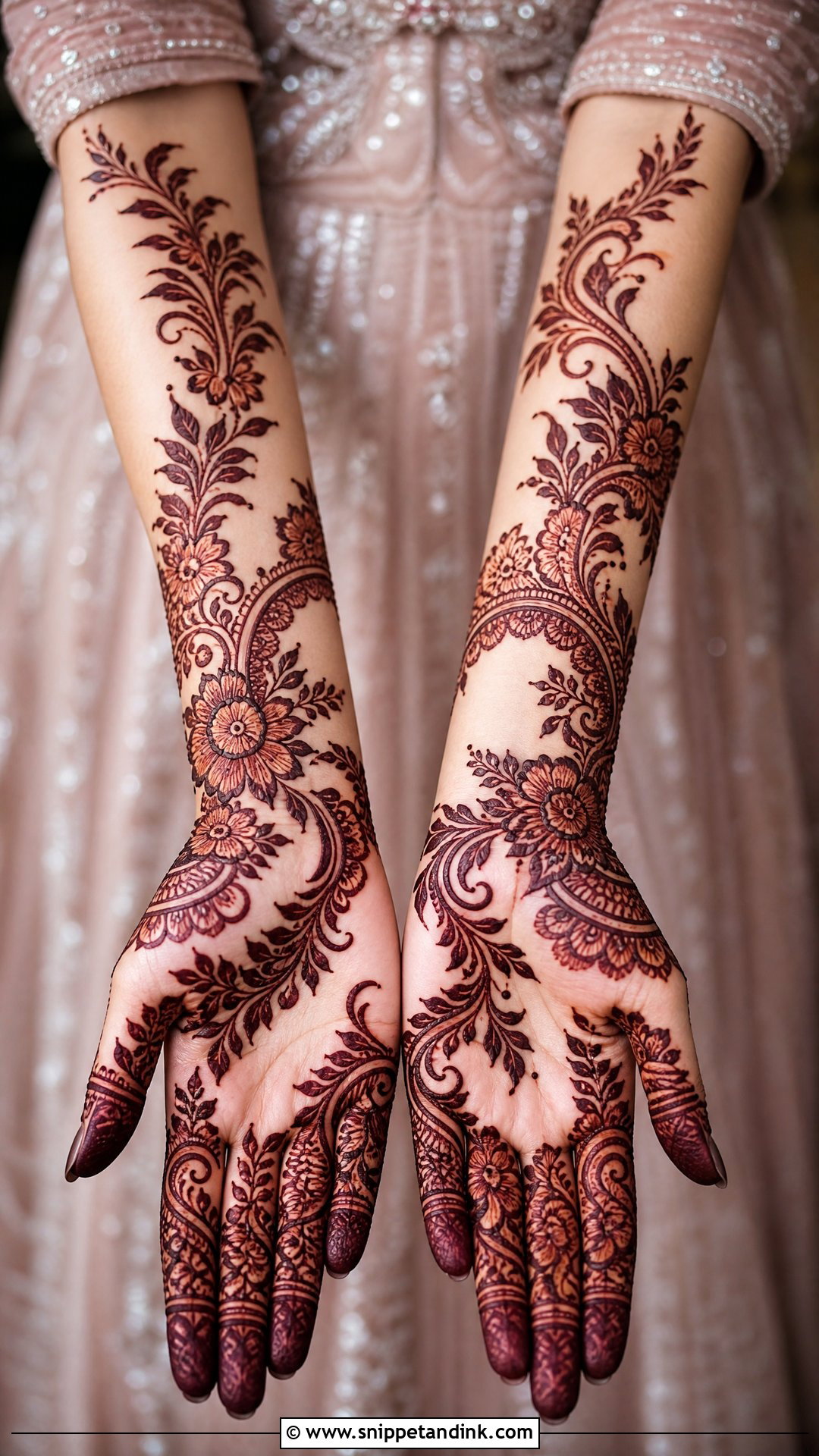
Arabic full hand mehndi gives you drama with far less filling. The pattern is built from bold floral trails, leafy vines and curved bands, usually running diagonally from the fingertips across the palm and up the forearm. The open skin between the lines is part of the design, and it’s what makes a dark stain stand out. I’d ask for detailed fingertips, a strong wrist cuff and layered flowers to make it read as bridal rather than party mehndi. It sits well with lighter lehengas and shararas, and it takes less time in the chair.
3. Indo Arabic Bridal Mehndi Design
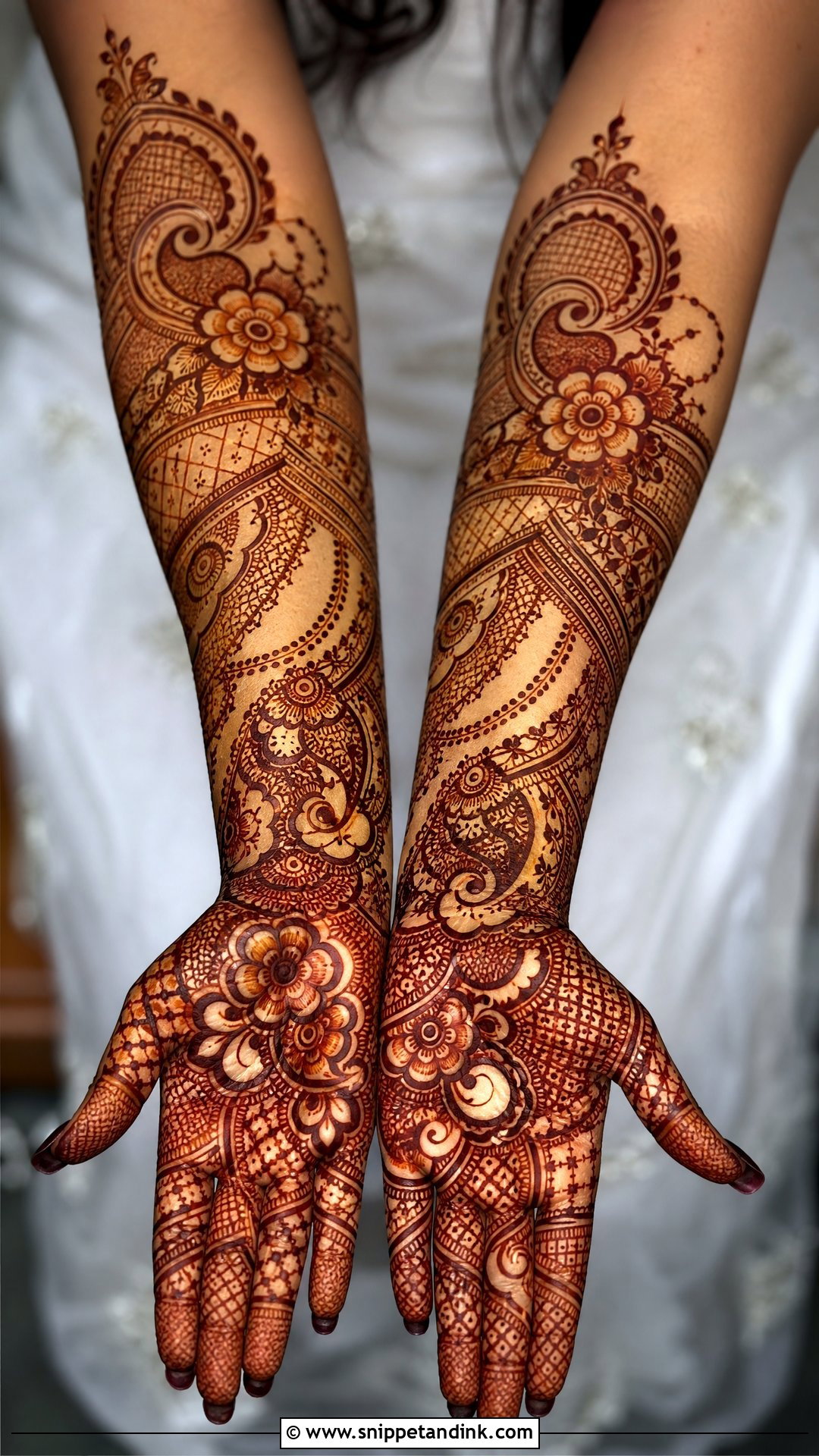
Indo-Arabic mixes Arabic spacing with Indian detail: large flowers, paisleys and vines placed across the hand, with the gaps filled in using dots, checks and lace lines. The mix lets you have full-hand impact without the hand looking solid. I’d use it for brides who have several functions (engagement, nikah, sangeet and the wedding) and want each one to feel related but not identical. Keep the palms and backs flowing in the same direction so the two sides look like one design.
4. Rajasthani Bridal Mehndi Design
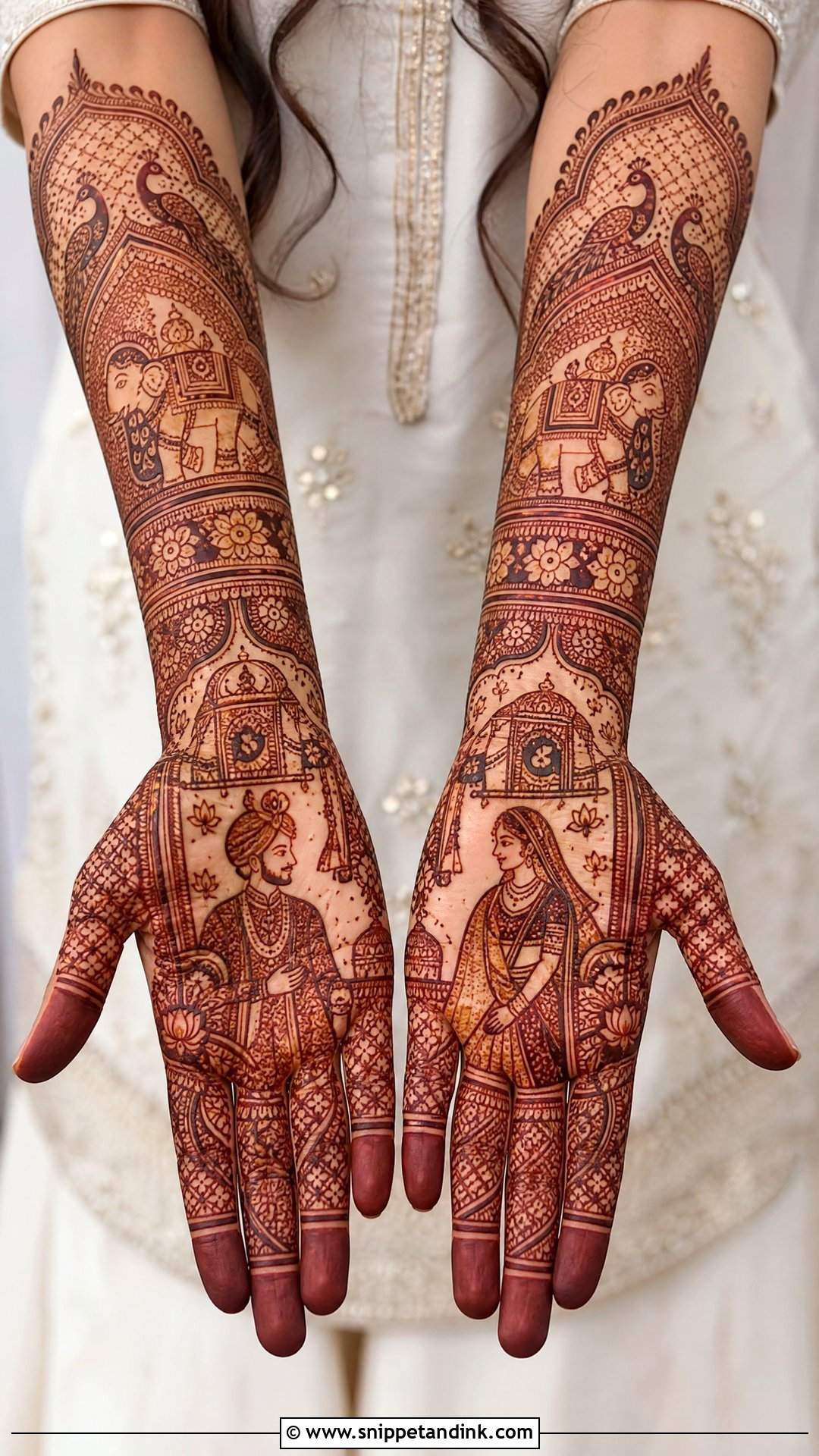
A Rajasthani bridal mehndi design tells a story. Traditional elements such as bride and groom figures, elephants, palanquins, peacocks and lotus patterns are placed in mirrored, layered borders, with almost no empty skin. It’s the most detailed style on this list and it takes the longest, so book an experienced artist and set aside most of a day. Because so much is packed in, I keep the figures larger than people expect; tiny faces and elephants turn into blurs once the stain darkens. Small symbols that matter to your family can be worked into the borders.
5. Bride And Groom Portrait Mehndi Design
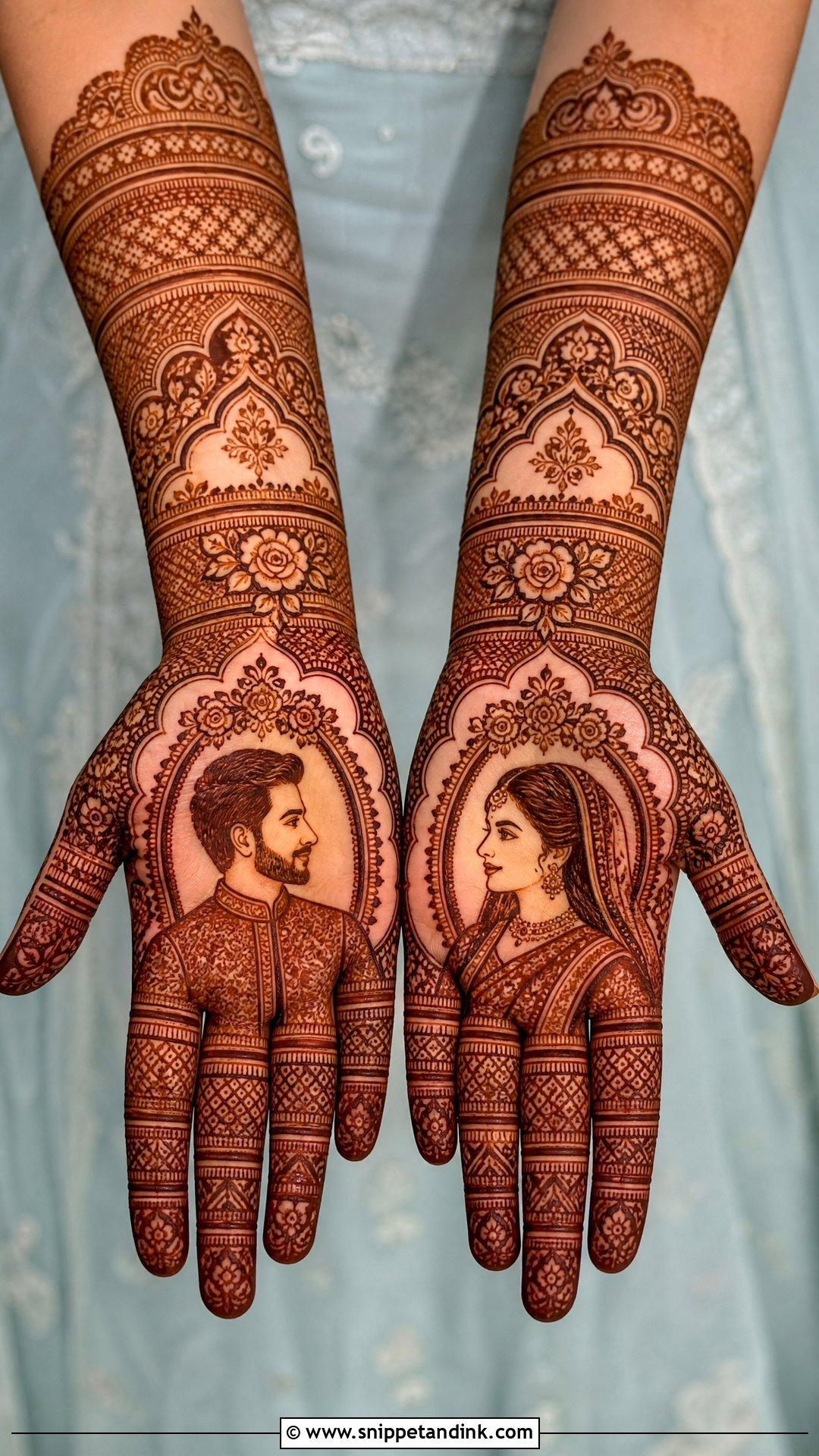
Portrait mehndi puts the bride and groom on the palms, usually one on each, so the pair meets when you hold your hands side by side. The fingers, wrists and forearms are filled with flowers, paisleys and jaali. Size is everything here. Henna lines spread slightly as the stain develops, so a face drawn too small loses its features. I’d keep each portrait at least the size of the palm center. A wedding date, initials or a tiny ceremony detail can sit around it.
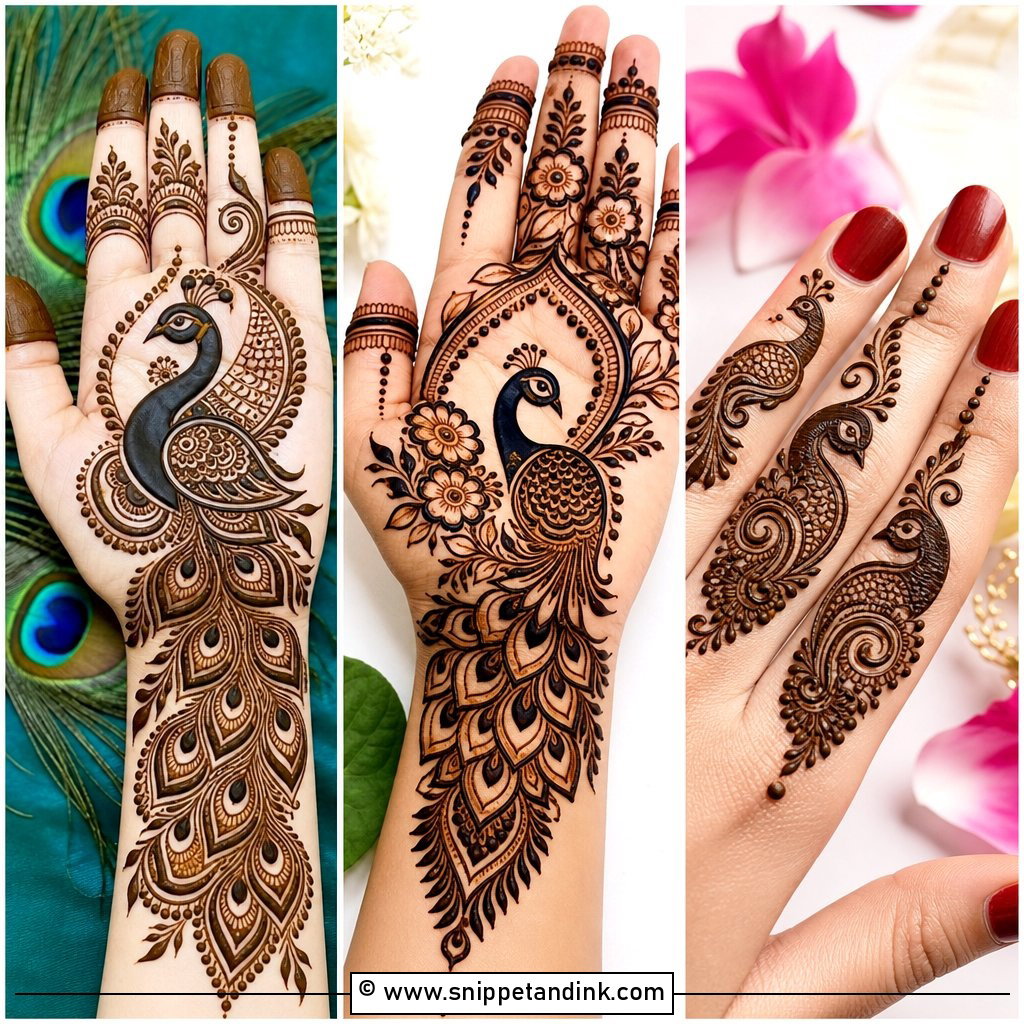
6. Peacock Bridal Mehndi Design Full Hand
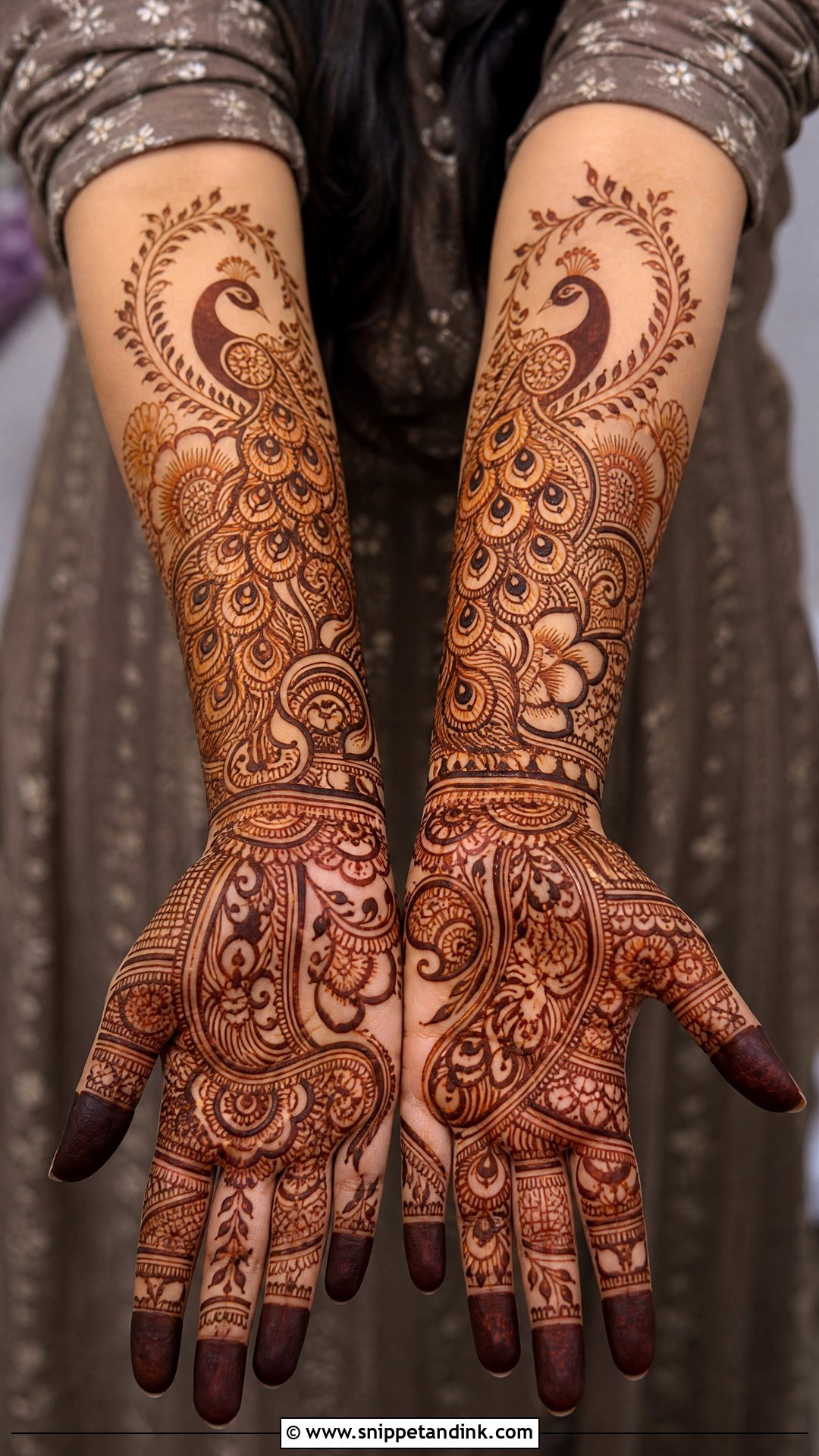
Peacocks are among the oldest motifs in bridal henna, and their curved necks and feathers follow the shape of the hand and arm naturally. One large peacock on each hand, or a pair that faces each other when the palms are placed together, gives the strongest effect. The feather tips are where the work shows: shaded petals, fine detailing and bold outlines. Watch the overall size, though. On a small hand, a large peacock can crowd out everything else, so I sometimes move it up onto the forearm.
7. Mandala Bridal Mehndi Design
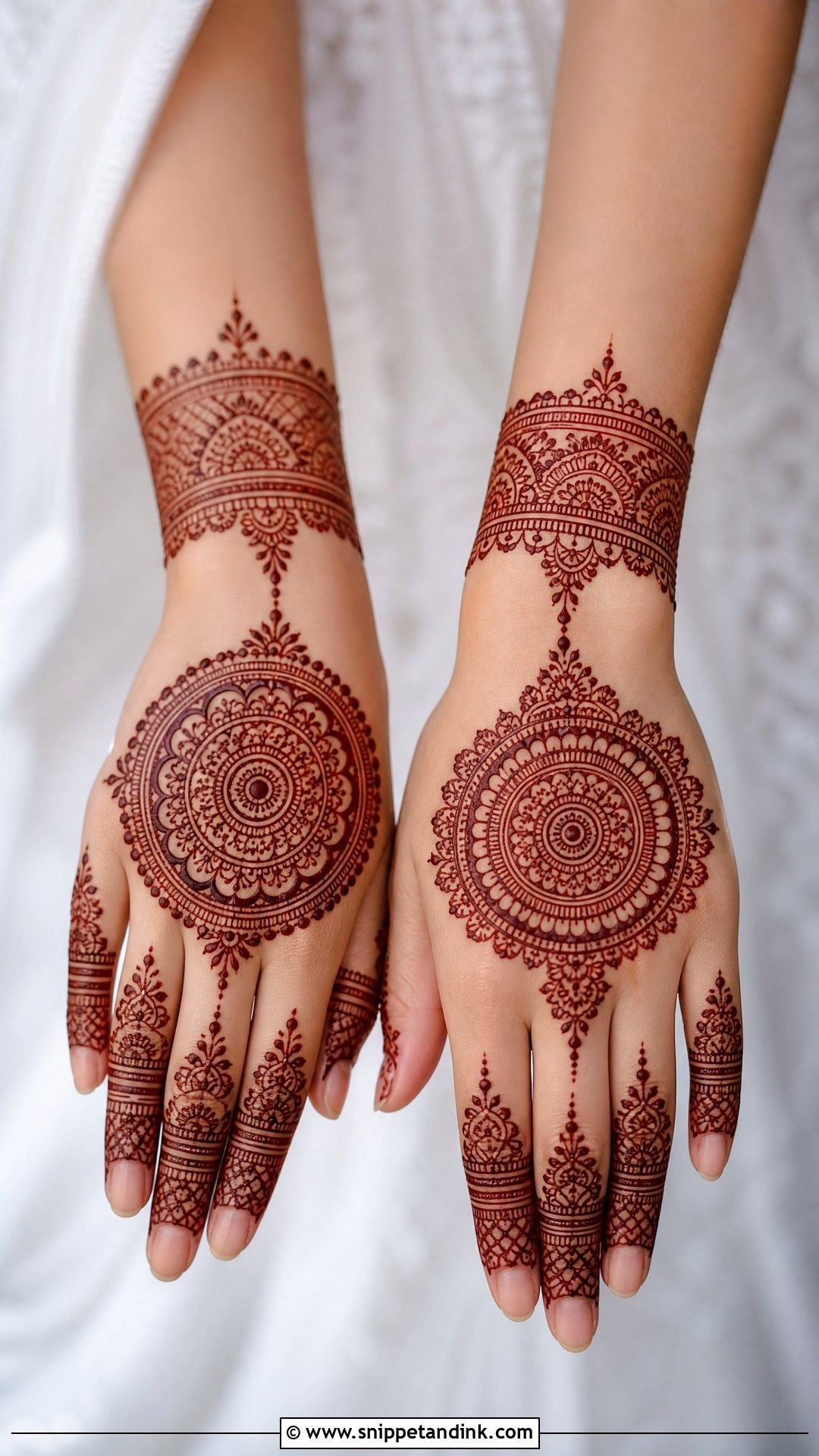
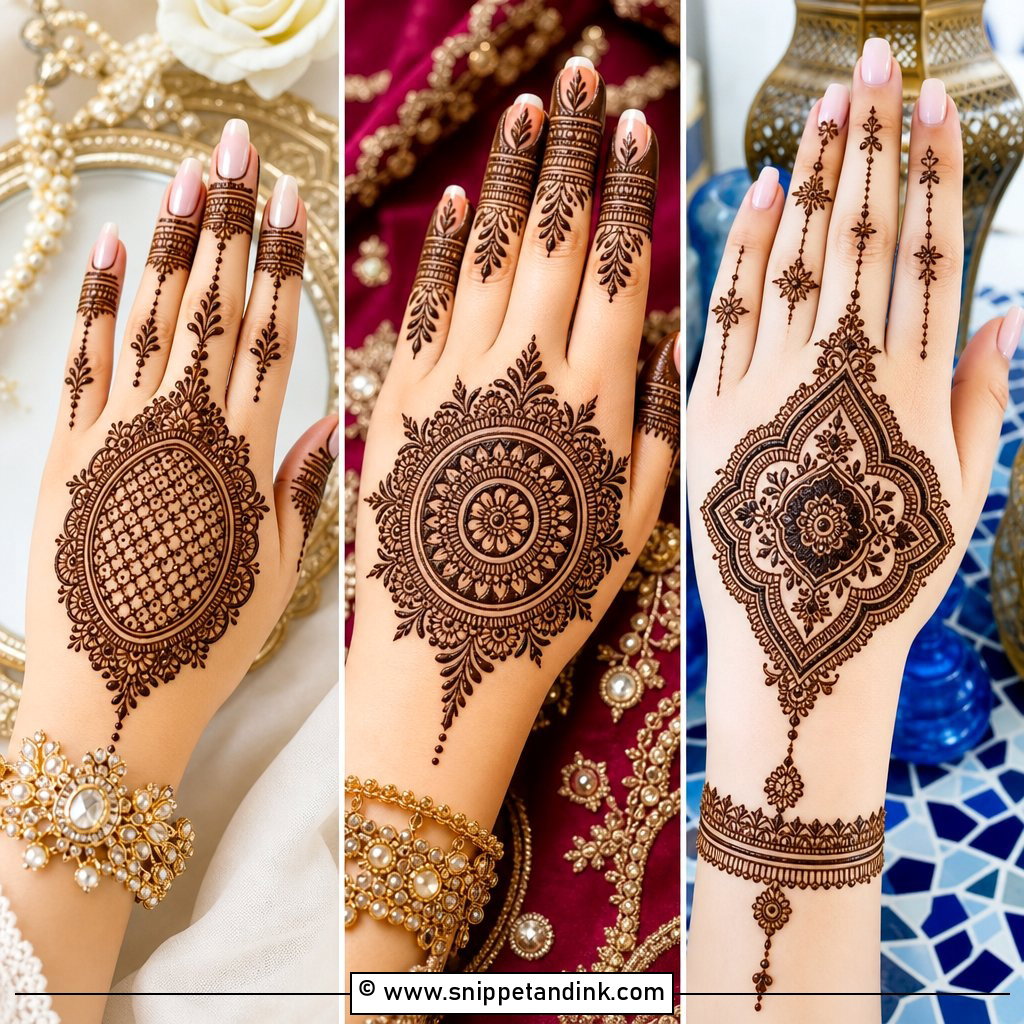
A mandala gives the palm one clear center, with the fingers, wrist cuffs and forearm extensions built around it. It’s the easiest layout for a bride who likes symmetry. For a bridal version I layer two or three rings with scalloped edges, tiny florals and dots, then match it on the back of the hand with a smaller mandala joined to the finger trails. The circles have to be truly round, which takes a steady hand, so it’s worth looking at an artist’s previous mandala work before booking.
8. Floral Bridal Mehndi Design Full Hand
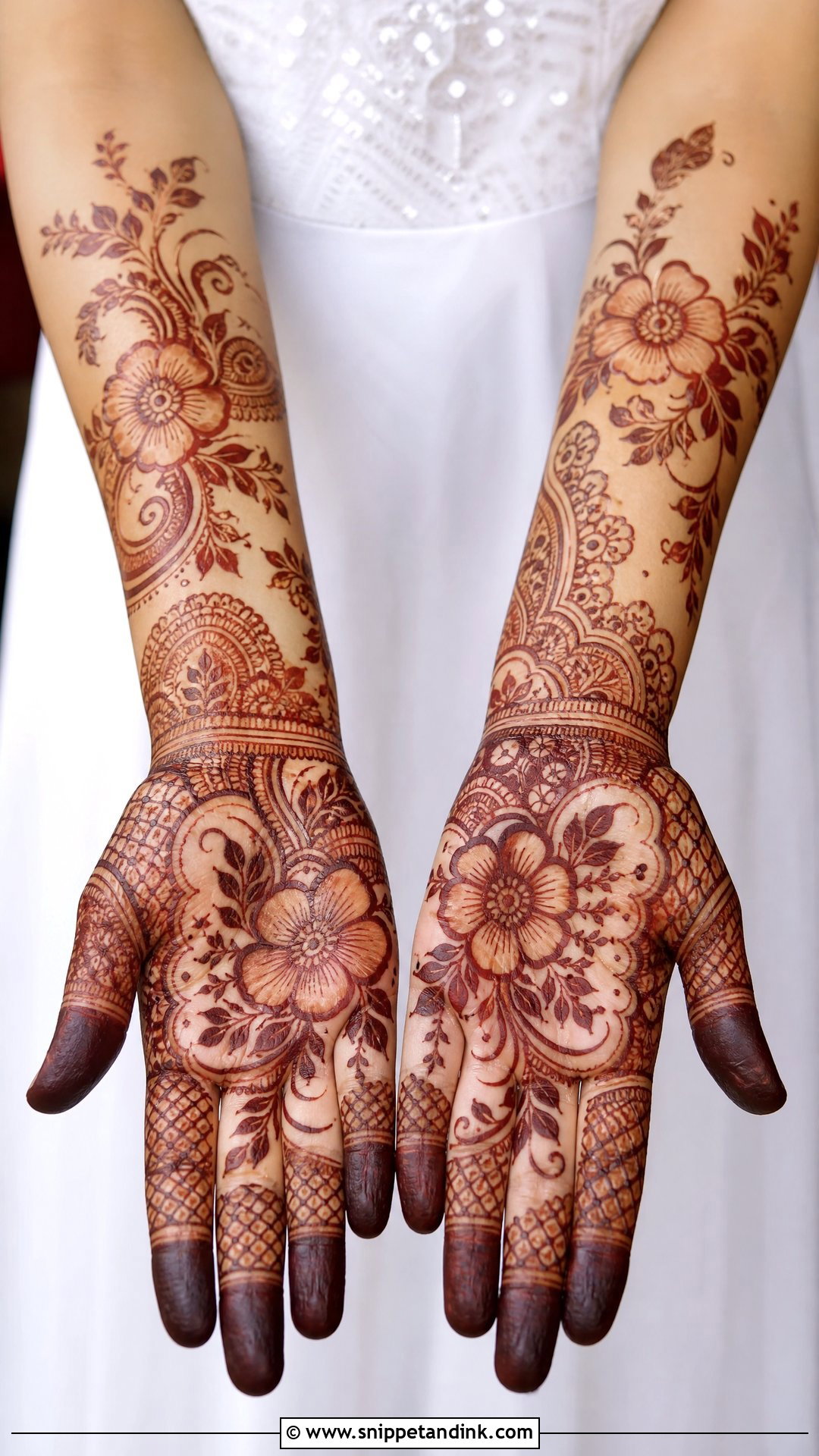
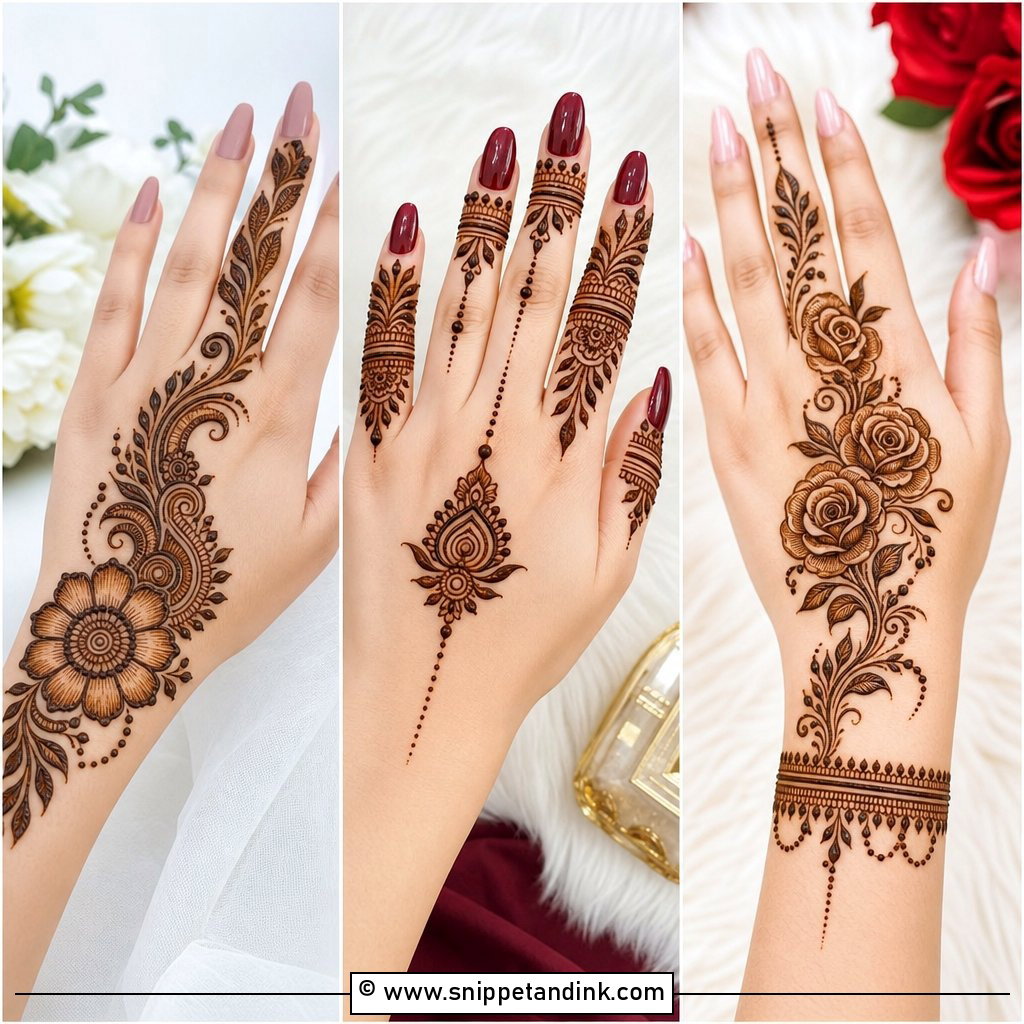
Floral mehndi can be as dense as Indian work or as open as Arabic, depending on what you want. Large flowers sit on the palm or back of the hand, with smaller blooms filling the fingers, wrist and forearm. Florals adapt to most outfits, from red lehengas to pastel gowns and ivory. What makes it bridal is the detail inside each petal: shading, fine vines and lace bands. Without that, the same design reads as a guest’s mehndi.
9. Lotus Bridal Mehndi Design
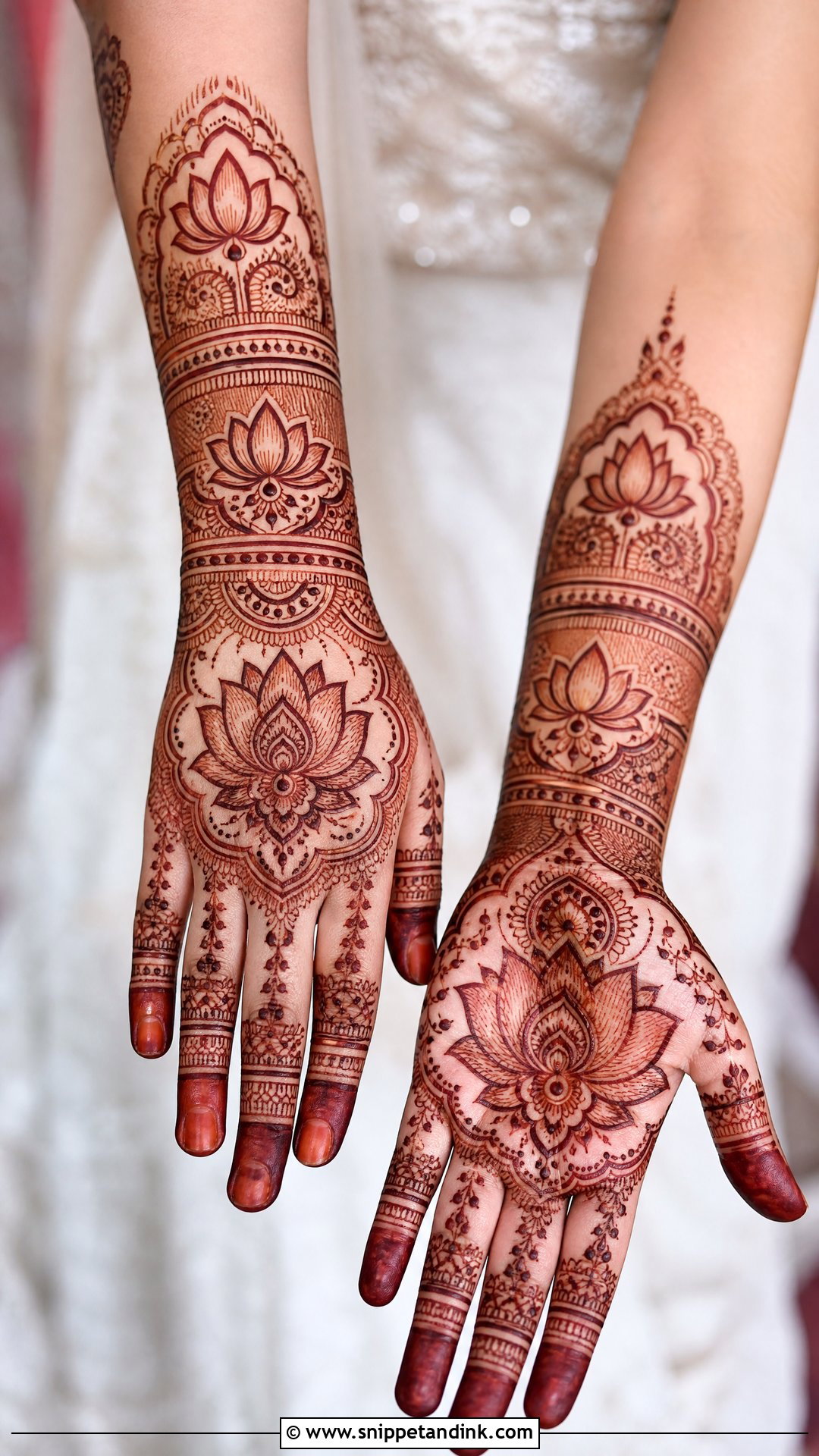
Lotus motifs have a natural symmetry that works on palms, backs of hands, wrists and forearms alike. They combine well with mandalas, paisleys and ornamental borders, and they suit temple jewelry and silk sarees. I draw the lotus outline bold and keep the inner lines delicate, so the flower is still clear after the stain darkens and the fine lines soften. Small petals or net detail on the fingertips complete the hand.
10. Minimal Bridal Mehndi Design
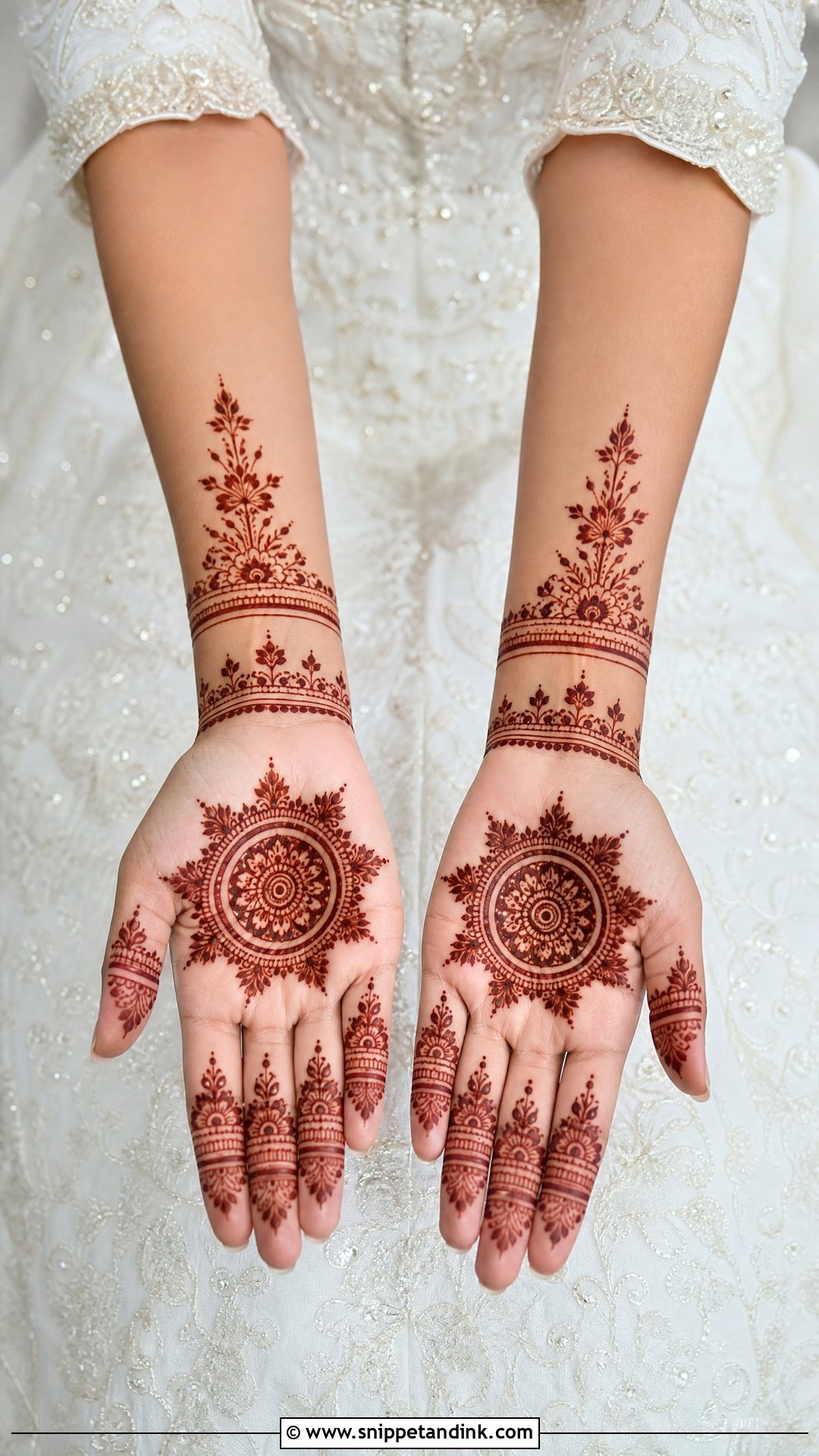
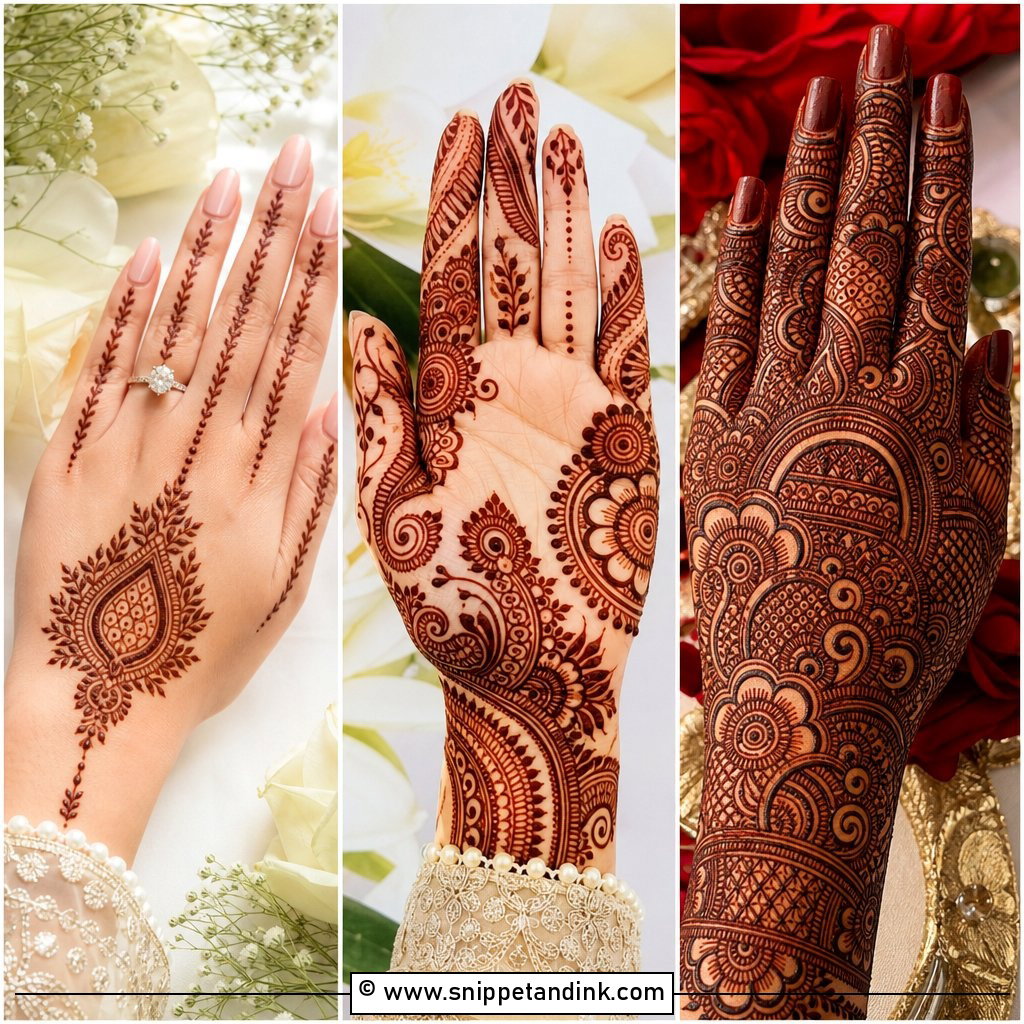
Minimal bridal mehndi doesn’t mean small or casual; it means fewer elements placed more carefully. A palm mandala, delicate finger patterns, slim wrist bands and a short floral trail is a typical layout. It’s a good fit for civil ceremonies, destination weddings and brides who would find hours of sitting difficult. Because there’s less to look at, symmetry and clean lines matter more. One wobbly band shows in a minimal design in a way it never would in a full one.
11. Back Hand Bridal Mehndi Design
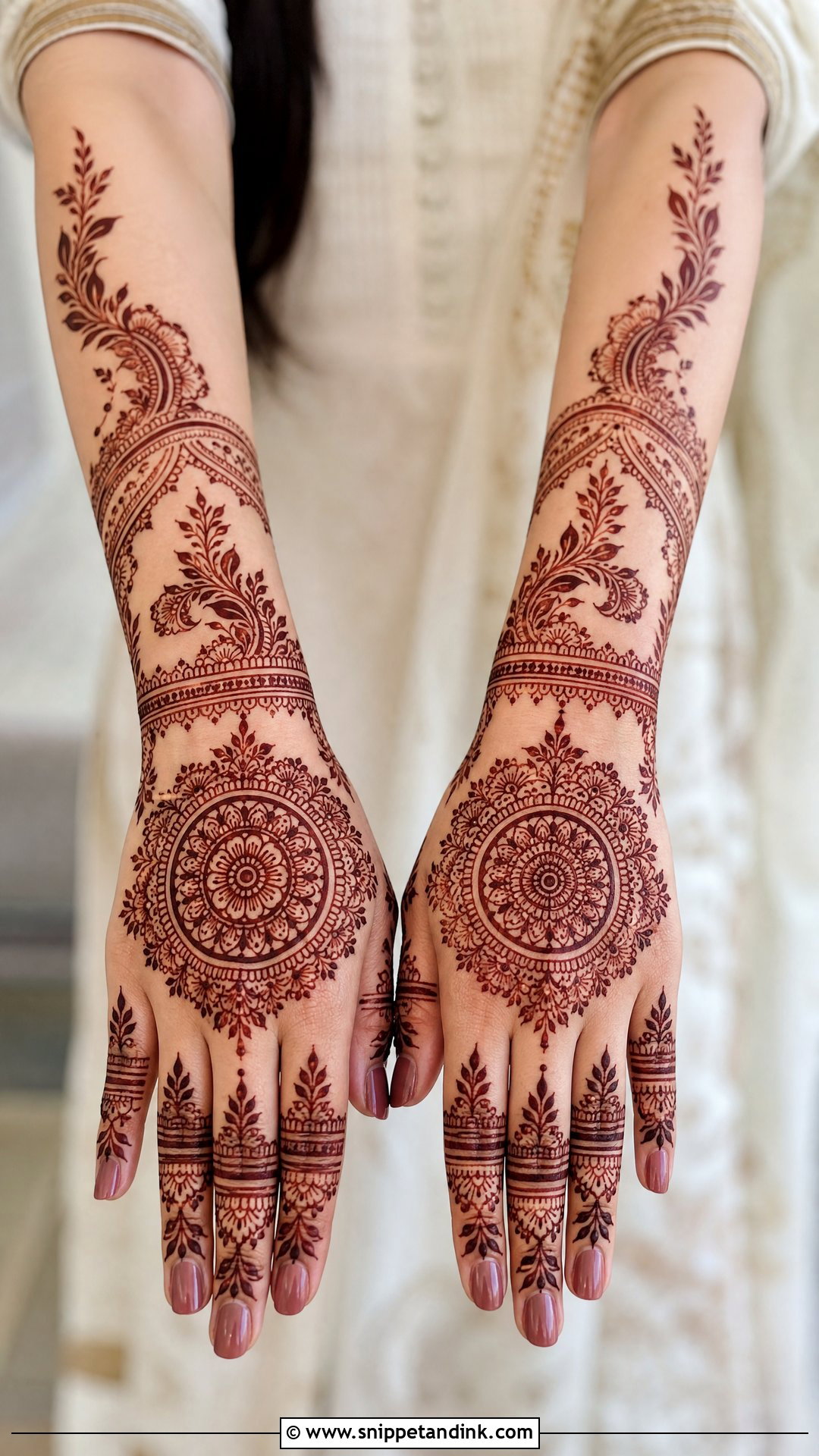
The back of the hand is in far more photos than brides expect: rings, bangles, holding the bouquet. A bridal back hand usually has decorated fingers, a central mandala or flower, bracelet-style bands at the wrist and trails up the forearm. Plan it around your jewelry. If you’re wearing a haath phool or statement ring, I leave space where the chain and ring sit so both can be seen. Matching the two hands with slight variations looks more natural than a mirror copy.
12. Front Hand Bridal Mehndi Design
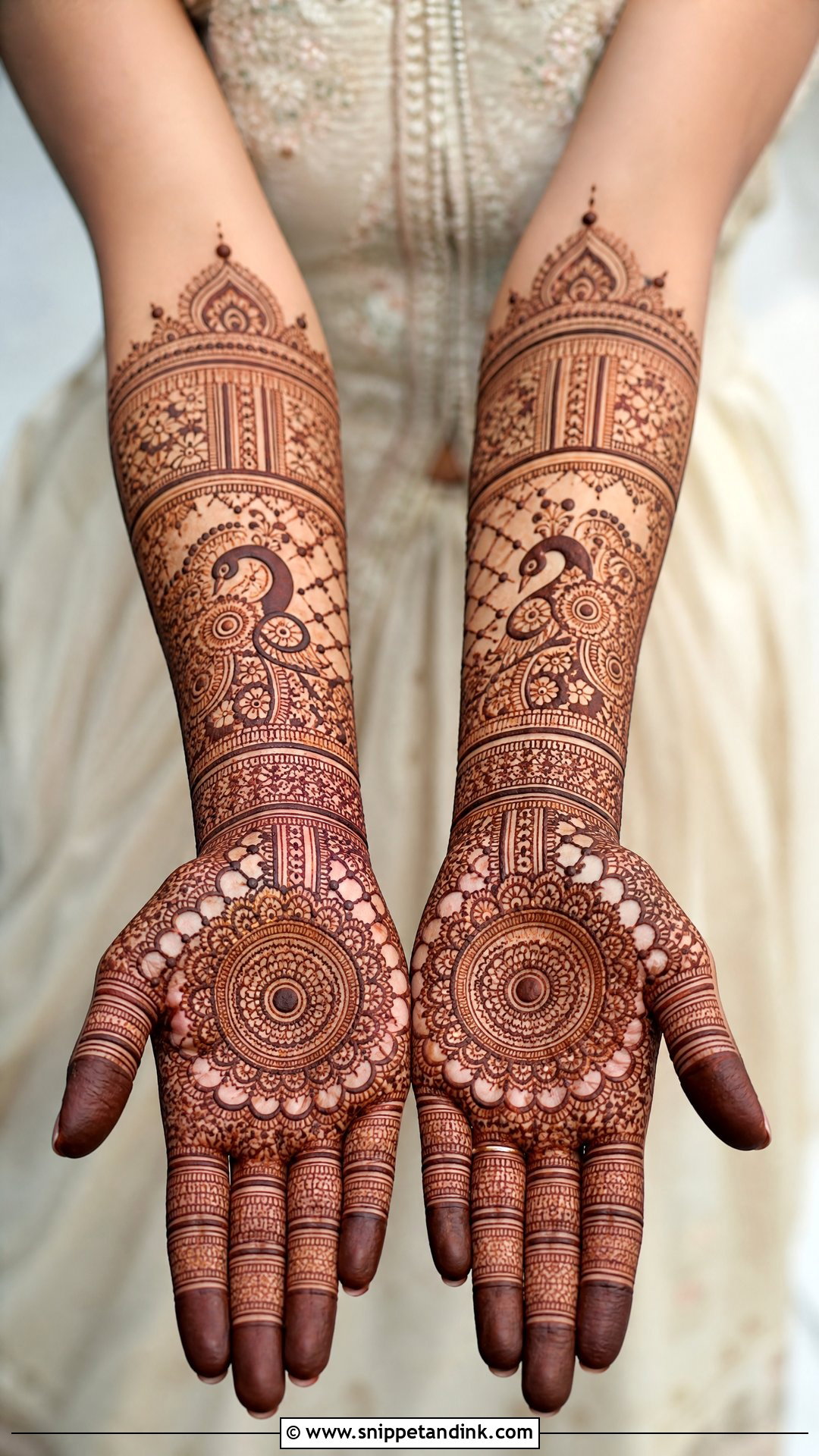
The palm is where henna stains darkest, since the skin there is thicker, so front hand designs give you the deepest color of any area. The palm needs one clear focal point, such as a mandala, portrait, peacock or paisley cluster, with the fingers filled with bands, leaves and dots. I always connect the palm to the wrist with a cuff or vine; without that link, the palm design can look like it’s floating. This is the side people see during rituals and in close-up photos.
13. Finger Heavy Bridal Mehndi Design
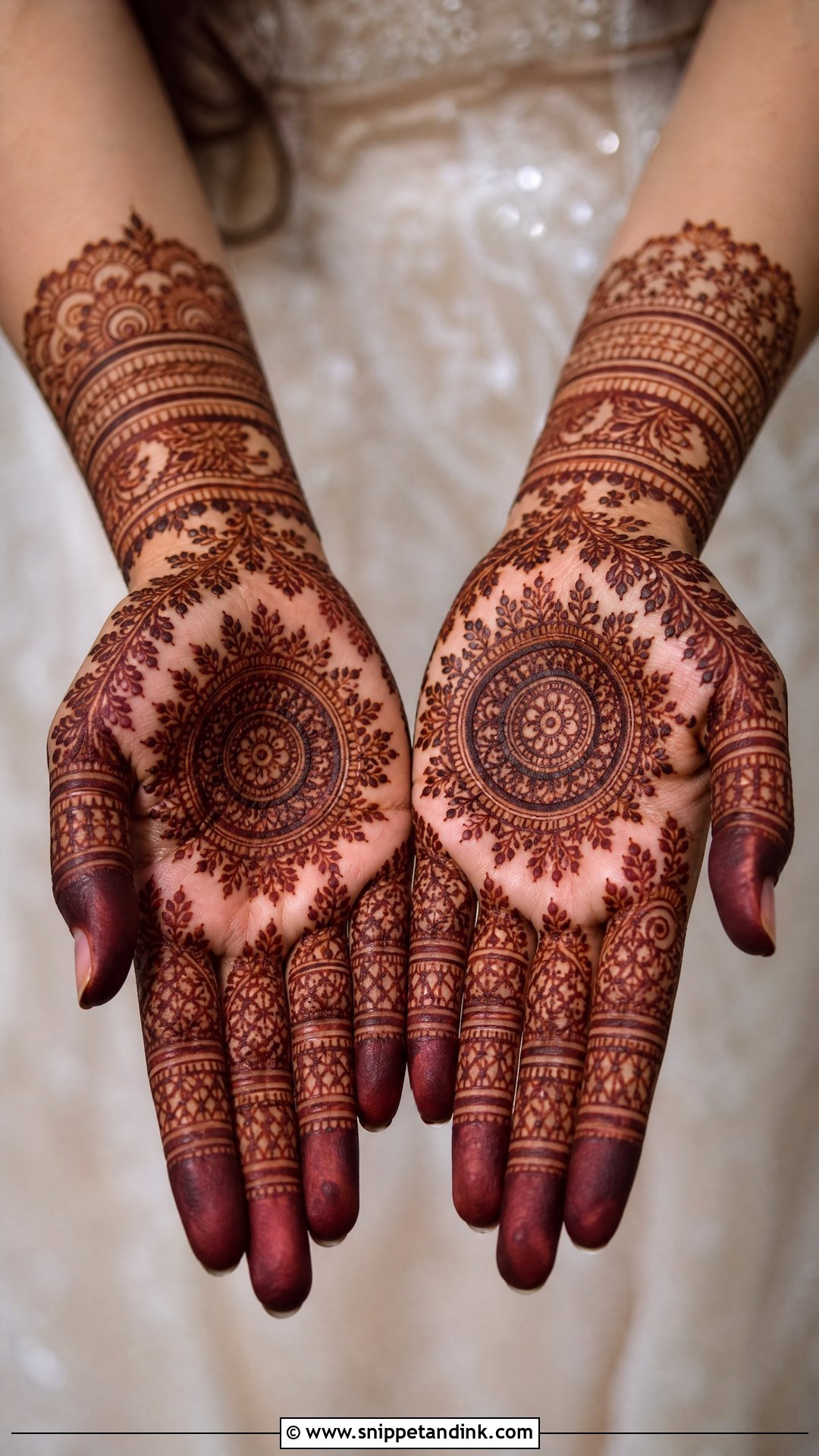
Heavy finger work makes the hands look longer and jewelry-like. The fingers carry dense bands, checks, vines and filled tips, while the palm stays lighter with a mandala or a floral center. It suits brides who want strong detail but don’t want to sit for full coverage, and it frames an engagement ring well. The risk is crowding: if the finger bands are too close, the stain fills the gaps and turns muddy. I leave a clear line of skin between each band.
14. Jaali Bridal Mehndi Design
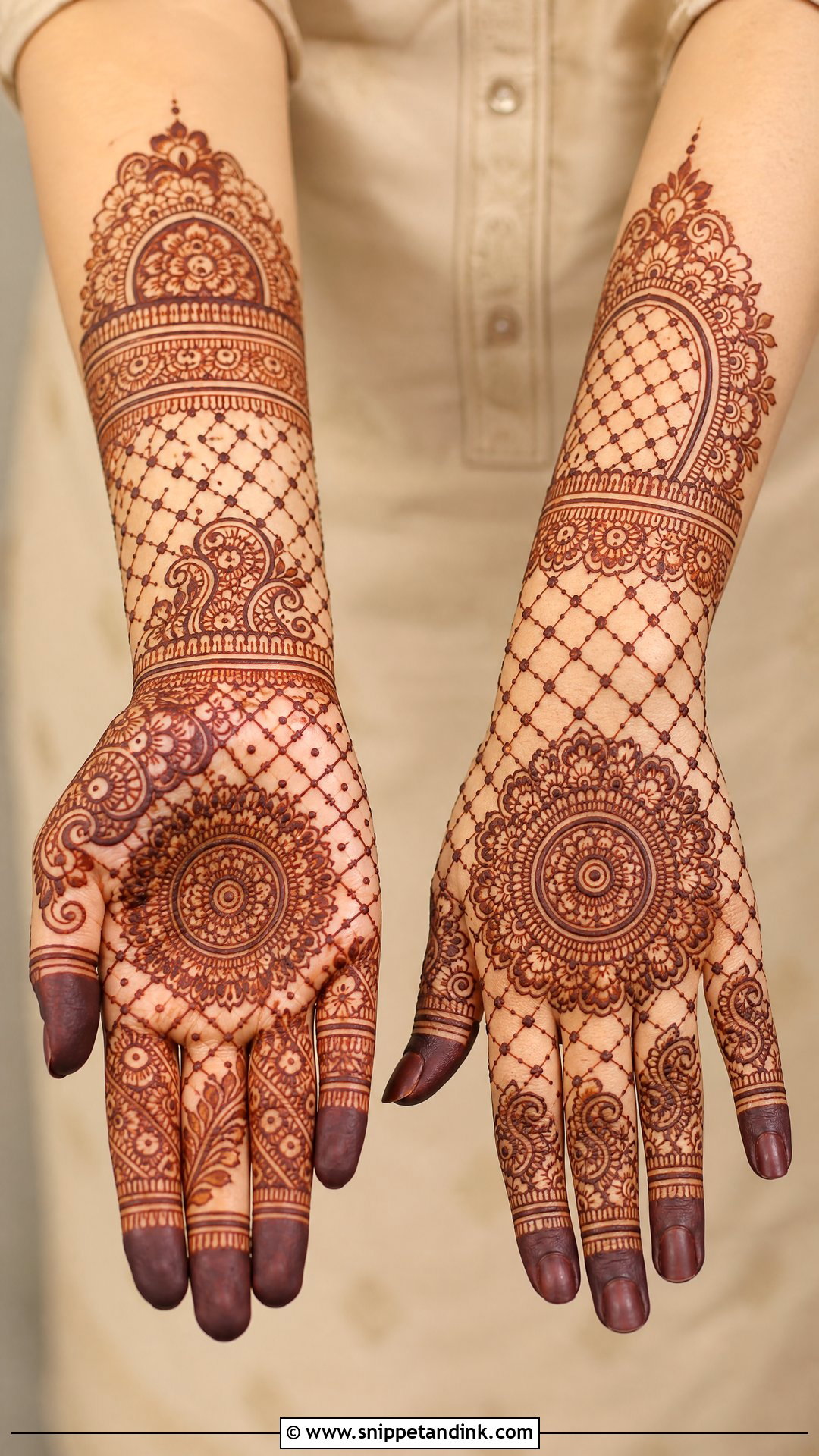
Jaali is a mesh pattern that gives a lace effect, and it pairs naturally with embroidered outfits because it echoes fine fabric work. It can cover the palm, back, wrist or forearm. I never use jaali everywhere, though. On its own across a whole hand it looks flat, so I mix it with bold flowers, paisleys and solid fingertips for contrast. The lines have to be fine and even, which takes very steady cone control; uneven jaali is easy to spot.

15. Moroccan Bridal Mehndi Design
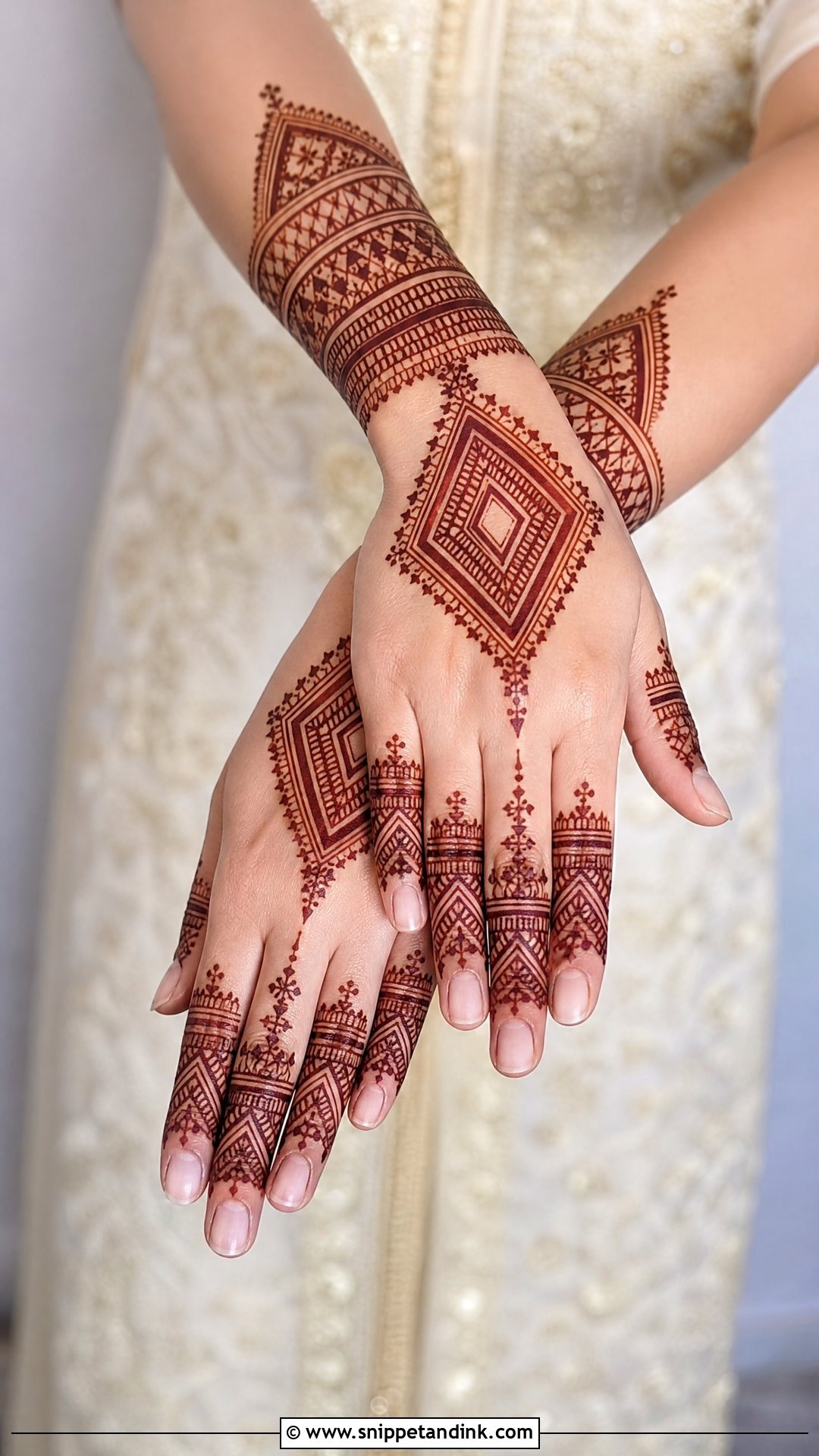
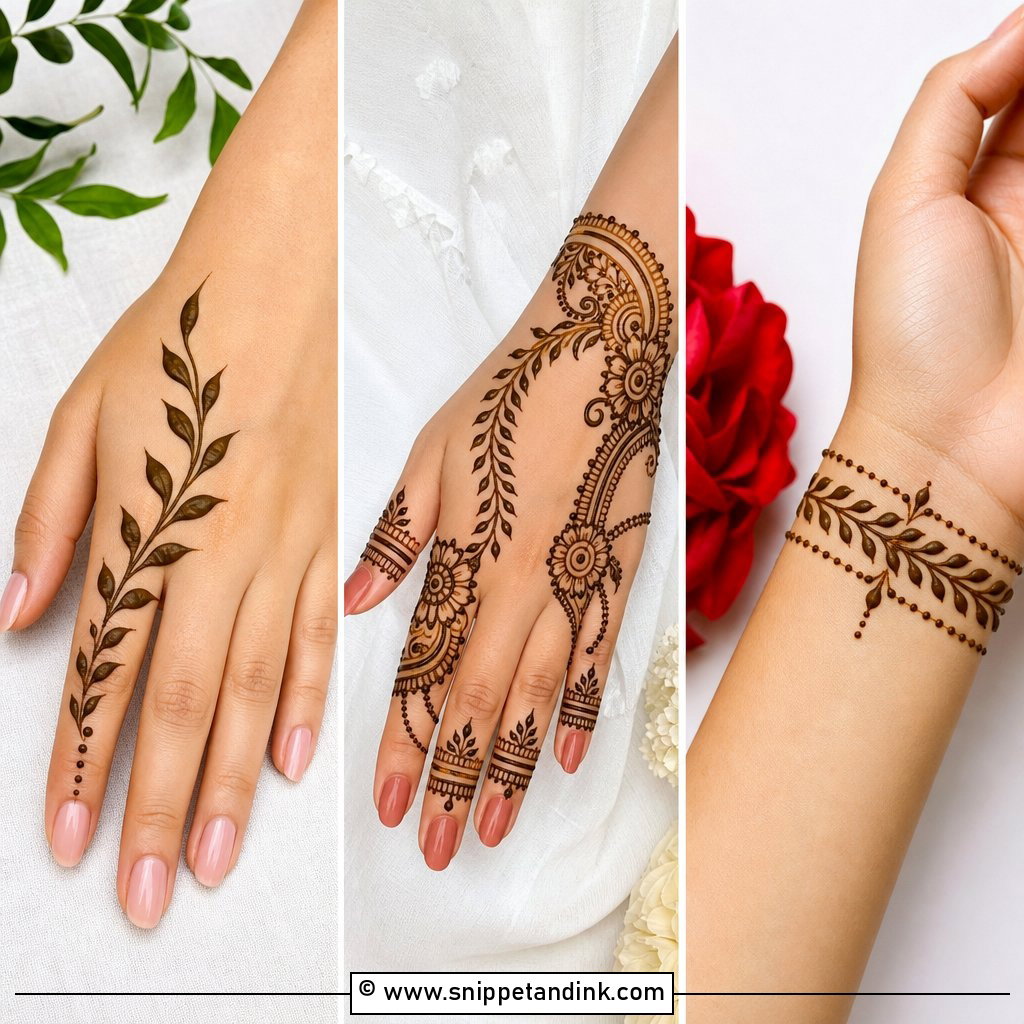
Moroccan mehndi is geometric: diamonds, triangles, grids, straight lines and structured cuffs repeating from fingers to forearms. It’s a strong choice for brides who don’t want florals at all. The geometry reads especially clearly on the back of the hand. For a wedding, I’d ask for a fuller version with wrist-to-forearm coverage and detailed fingertips, or mix in a few Indian details to soften it. Straight lines are harder to draw cleanly in henna than curves, so look at an artist’s geometric portfolio first.
16. Gulf Khaleeji Bridal Mehndi Design
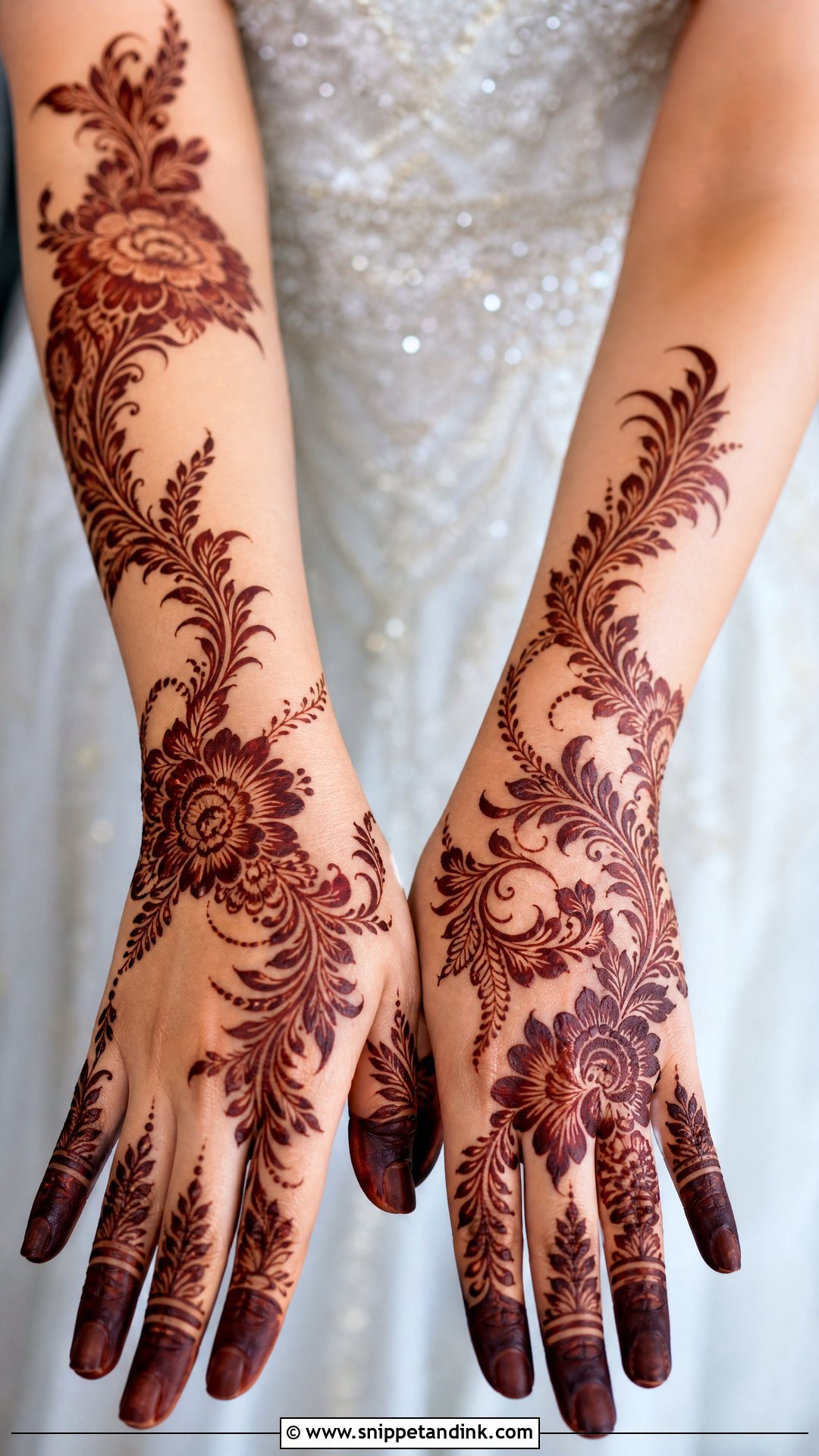
Khaleeji mehndi from the Gulf uses bold florals, flowing leaves and thick outlines with plenty of open space. It typically sweeps across one side of the hand and runs up toward the wrist and forearm in large curves. Because the shapes are big, it’s visible from across a room, and small fillers keep it bridal. It suits nikah, walima and engagement events. You can keep the palms light and make the backs dramatic, or match the two.
17. Jewelry Bridal Mehndi Design
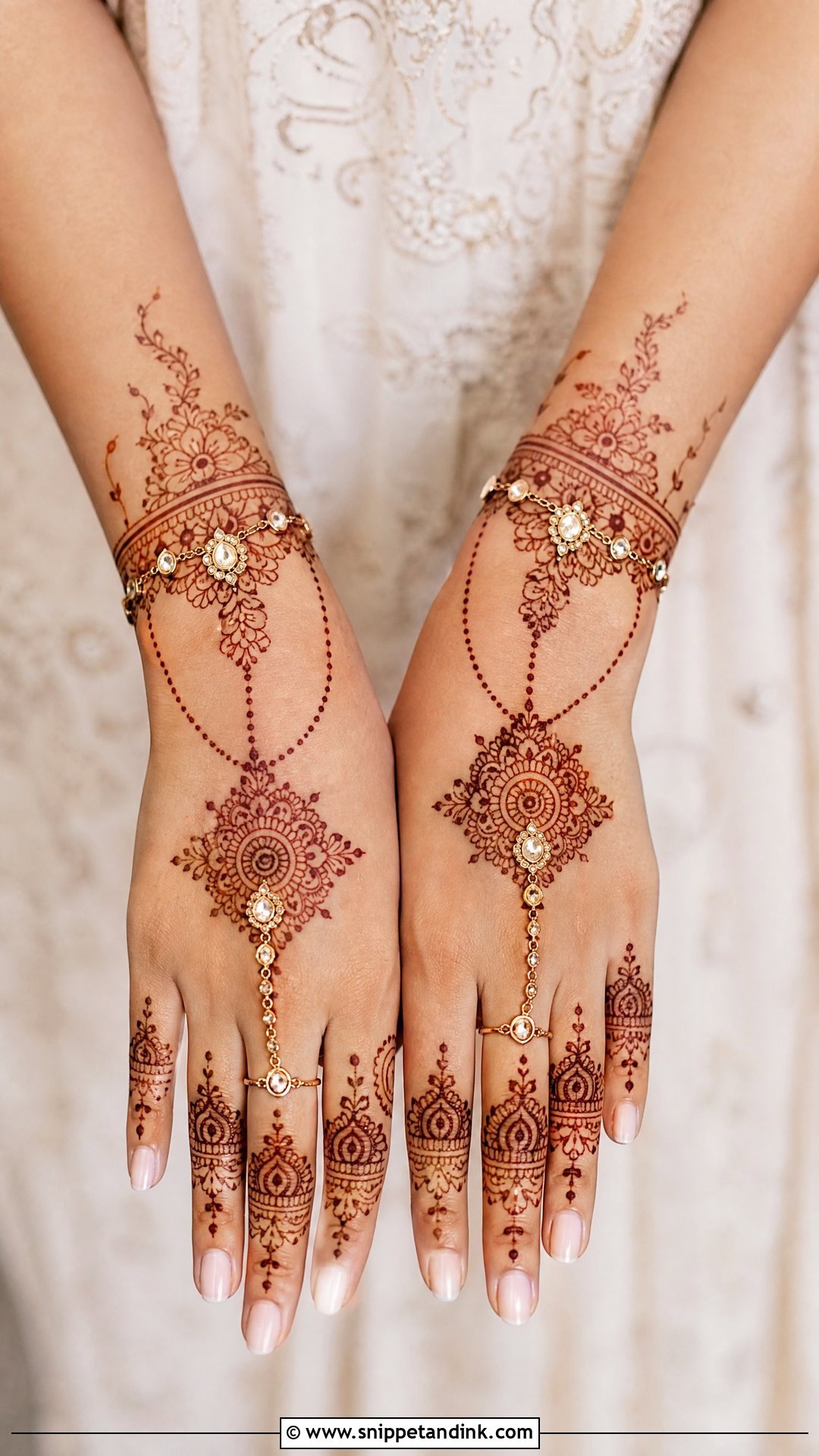
Jewelry mehndi draws the jewelry directly onto the skin: bracelet cuffs at the wrist, chains across the back of the hand, rings on the fingers and a small pendant motif in the center. It’s a good choice if you like haath phool inspired designs but don’t want to wear the real piece all day. For a bridal version I combine the chains with florals, dots and filled fingertips. The lines need to be clean and evenly spaced, or it looks scribbled rather than like metalwork.
18. Personalized Bridal Mehndi Design
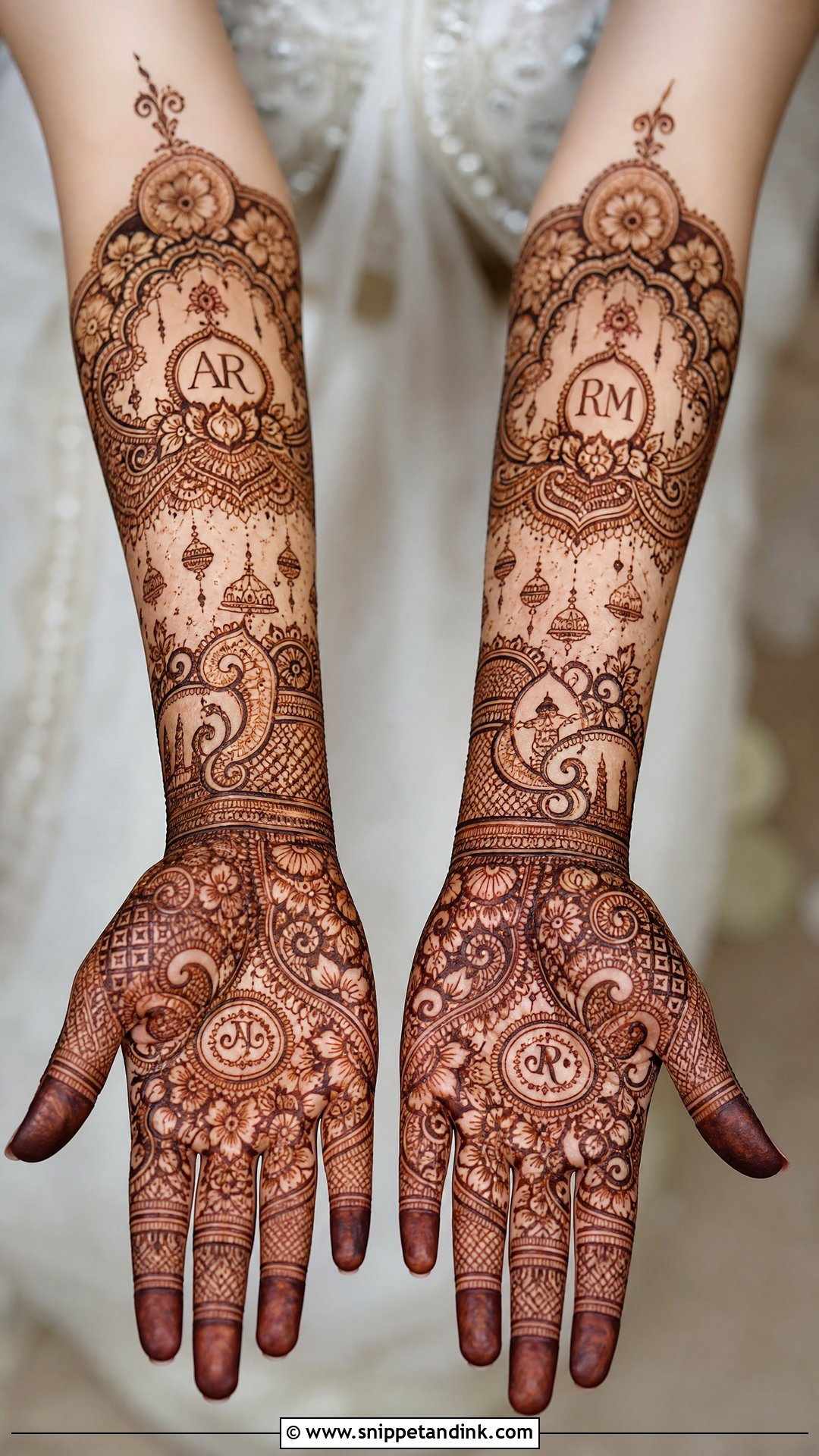
A personalized bridal mehndi design hides parts of your story in the pattern: initials, the wedding date, a symbol from the proposal, a pet, a place. The base can be Indian, Arabic, Indo-Arabic or Rajasthani. Many brides place initials near the palm or wrist so they’re easy to find during the traditional search for the groom’s name. My advice is to keep the personal elements few and simple. Too many tiny details become unreadable once the stain darkens.
19. Bridal Mehndi Design With Wedding Date
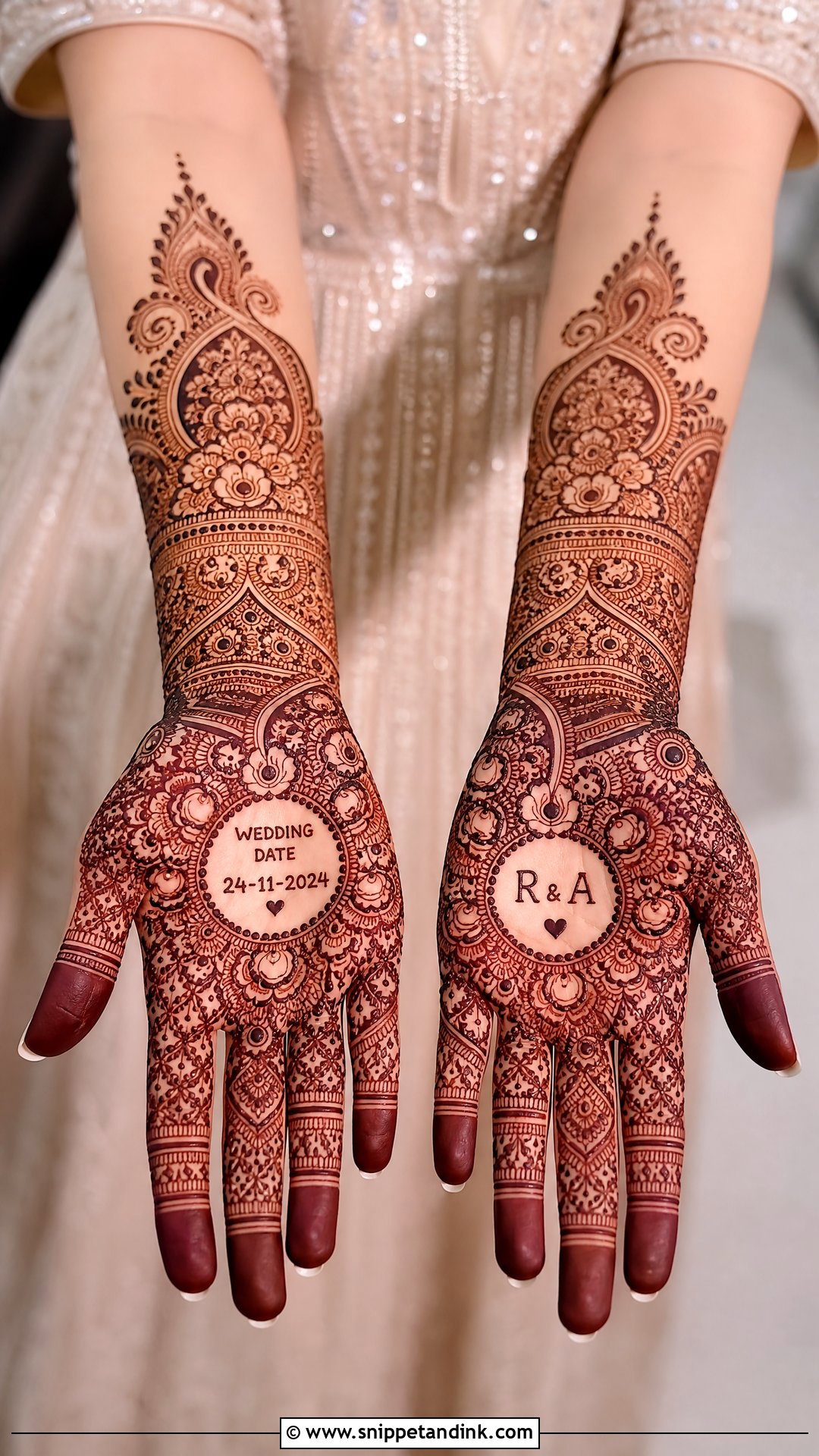
A wedding date is one of the simplest personal touches. It can sit inside a heart, a mandala, a wrist cuff or a floral frame. Digits need to be larger than you’d think, and clear of heavy filler, because henna lines spread slightly and close numbers like 6, 8 and 9 can merge. I’d add initials beside the date for a keepsake effect. It shows well in close-up photos and videos.
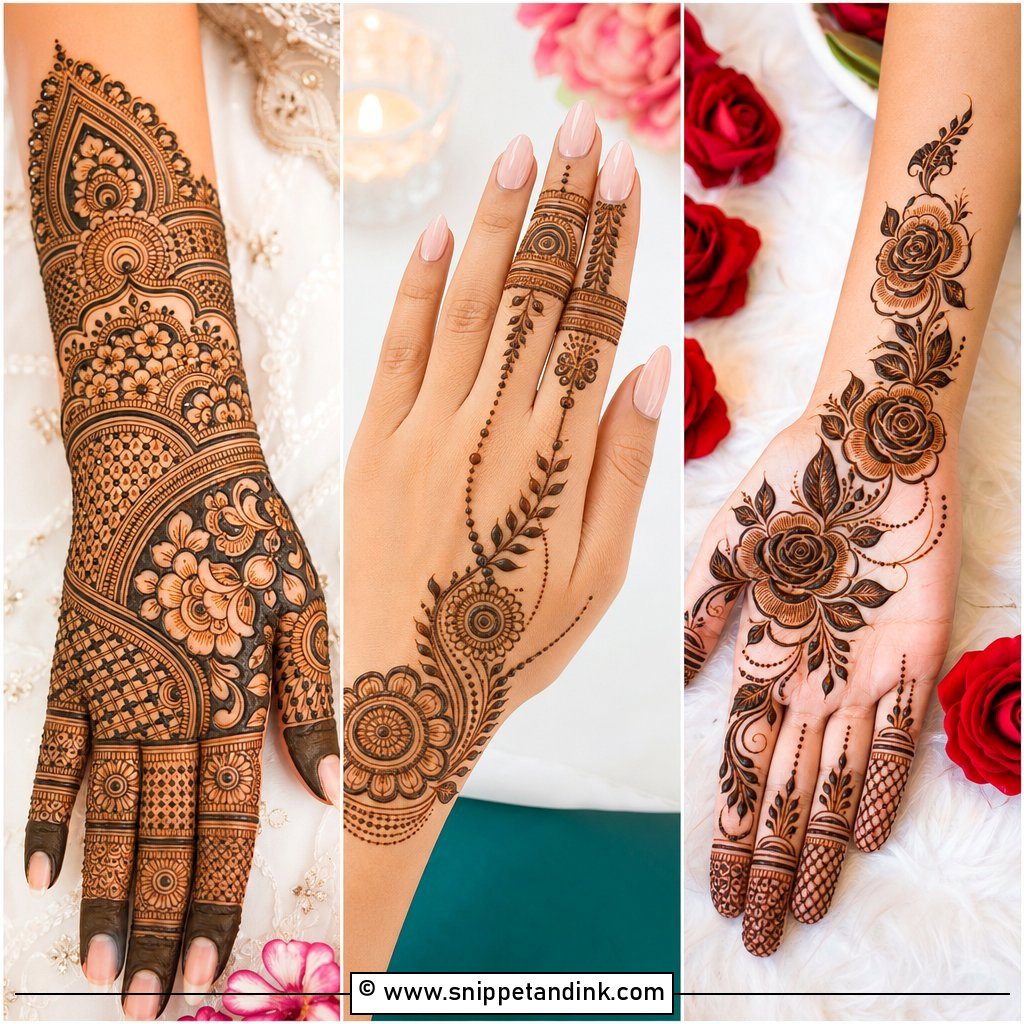


20. Modern Bridal Mehndi Design
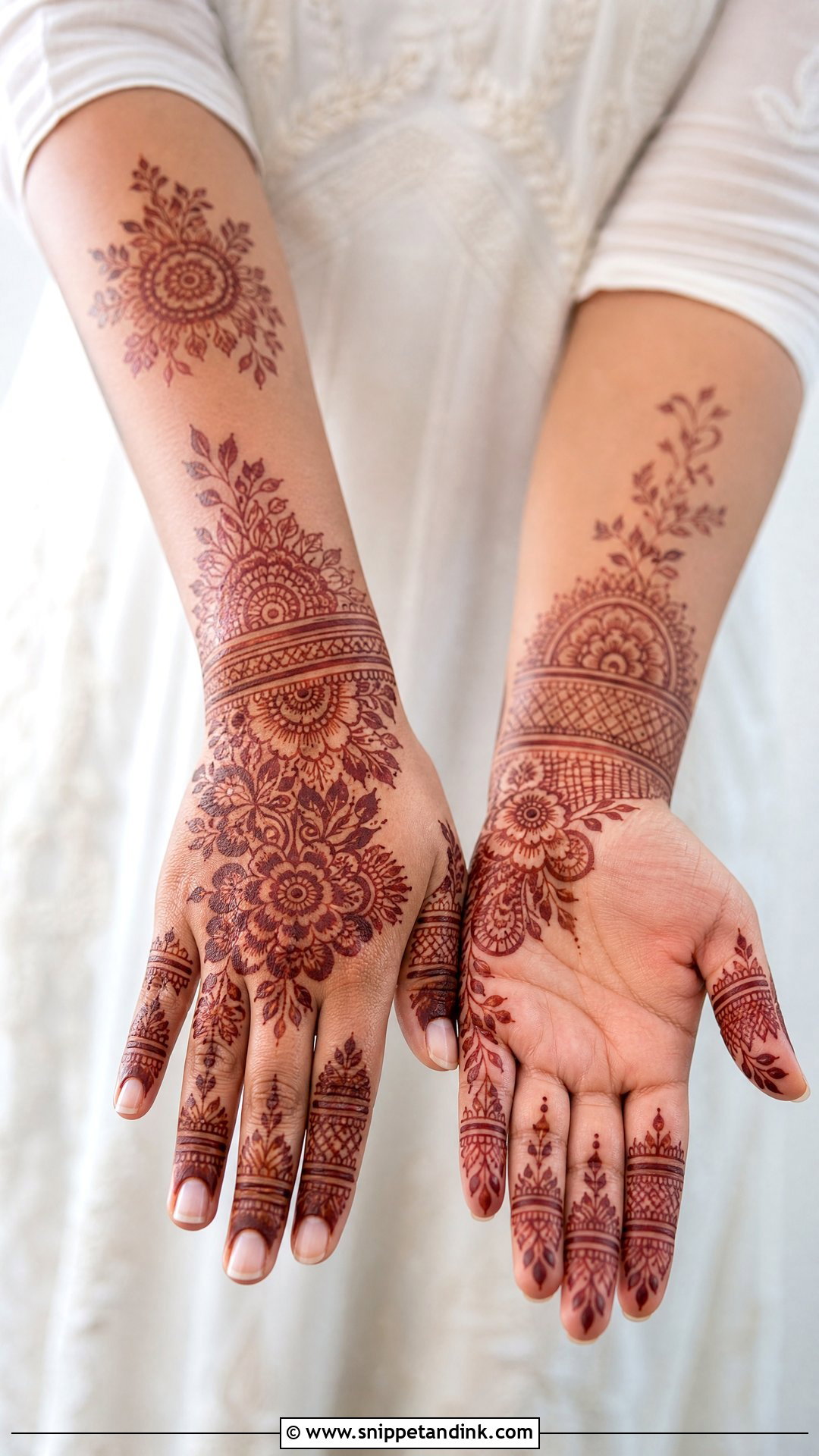
Modern bridal mehndi keeps the tradition but uses more open space: clean negative areas, sleek finger patterns, bold florals, geometric cuffs and selective wrist-to-forearm detail. It suits pastel outfits, fusion wear and shorter sleeves, where heavy forearm work might clash with the outfit. My rule is one strong focal point on each hand, with the rest supporting it. Clean outlines and a deep, even stain matter more here than in any dense design.
From Dried Paste to a Dark Stain: My Aftercare Routine
- Once the paste is dry to the touch, dab on a light lemon and sugar mix. It keeps the paste stuck to the skin longer.
- Leave the paste on as long as you can, ideally overnight. Wrapping hands loosely in tissue helps while you sleep.
- Scrape the paste off with a blunt edge or your fingernail. Don’t wash it off with water.
- Keep your hands away from water for as long as possible afterward, ideally most of a day.
- Keep warm. Henna darkens better on warm skin, so cold rooms and air conditioning slow it down.
- Avoid soap, sanitizer and chlorinated pools for the first day or so.
Natural Cones, Chemical Cones and Why It Matters
Real henna stains orange first and darkens slowly. Paste that stains black almost immediately is a warning sign. It may contain PPD, a hair-dye chemical that can cause serious skin reactions and lasting scarring. Ask your artist what is in her cones and whether she mixes her own. If you have sensitive skin, ask for a small patch test a week or two beforehand. A good artist will be glad to tell you.
Coverage, Sitting Time and the Story on Your Palms
Your choice comes down to coverage, comfort, tradition and what you want your hands to say. Full Indian and Rajasthani work feel grand and classic; Arabic, Khaleeji and minimal designs feel lighter. Indo-Arabic, floral, lotus, jaali and jewelry patterns sit in between. Portraits, initials and dates add meaning if they’re drawn large and clear. Save your references, talk timing through with your artist, and pick a layout that suits your hands, outfit and how long you can comfortably sit.
You'll Like These Ideas:





Leave a Reply