
Of all the beauty details at a wedding, henna is the one that gets photographed during every ritual, from the haldi to the vidaai. It can carry initials, the wedding date, peacocks, paisleys, florals, mandalas and jaali, and it has to sit comfortably with the outfit and jewelry. Brides now ask me for anything from heavy Indian full hands to Arabic trails, Indo-Arabic back hands, portrait palms and very pared-back designs. What suits you comes down to your outfit, your jewelry, how long the ceremonies run and how much bare skin you want to keep. Here are the designs I’d show a bride at her first consultation, with notes on what each one asks of you and your artist.
Vetting a Bridal Artist Before You Pay the Deposit
Henna can’t be undone, and the stain stays with you through every ritual, so I’d spend more time choosing the artist than choosing the design. Portfolios are full of fresh paste photos, which tell you very little. Here is what I’d want to know if I were the bride.
- Can I see stain photos taken a day or two after removal? Paste always looks neat; the stain shows whether the lines stayed crisp.
- Do you mix your own paste, and what goes into it? A good answer names henna powder, lemon juice or water, sugar and an essential oil, nothing else.
- Roughly how long will my design take for both hands, and for feet as well?
- Will you bring a second artist for guests, or is your time reserved only for me?
- Can I see your single-line work up close? Shaky outlines show more than any filler.
Walk away from anyone selling black henna or promising a dark stain within an hour. That color comes from chemical dyes that can burn skin, and no wedding photo is worth that risk.
1. Full Hand Bridal Mehndi Design
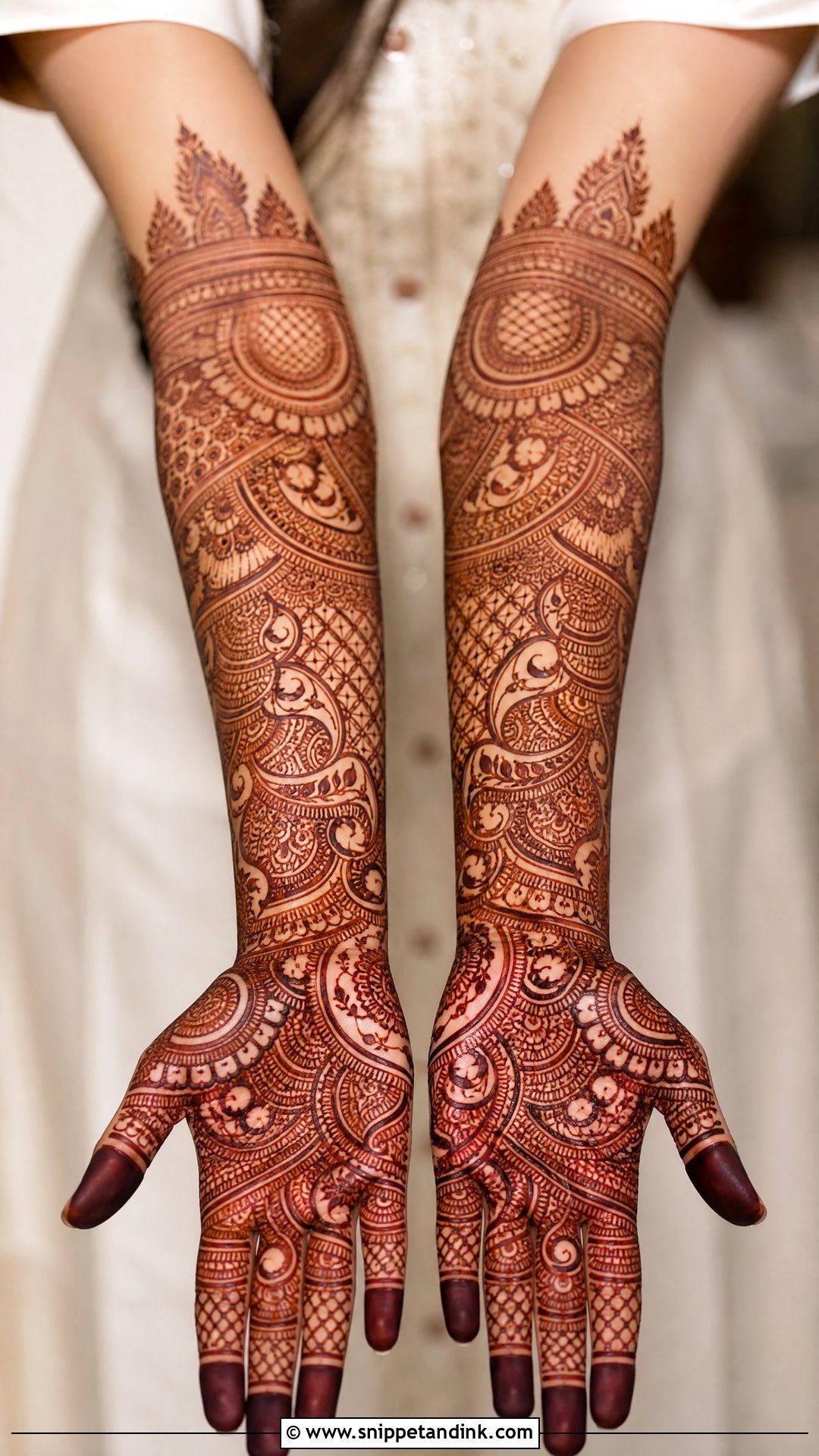
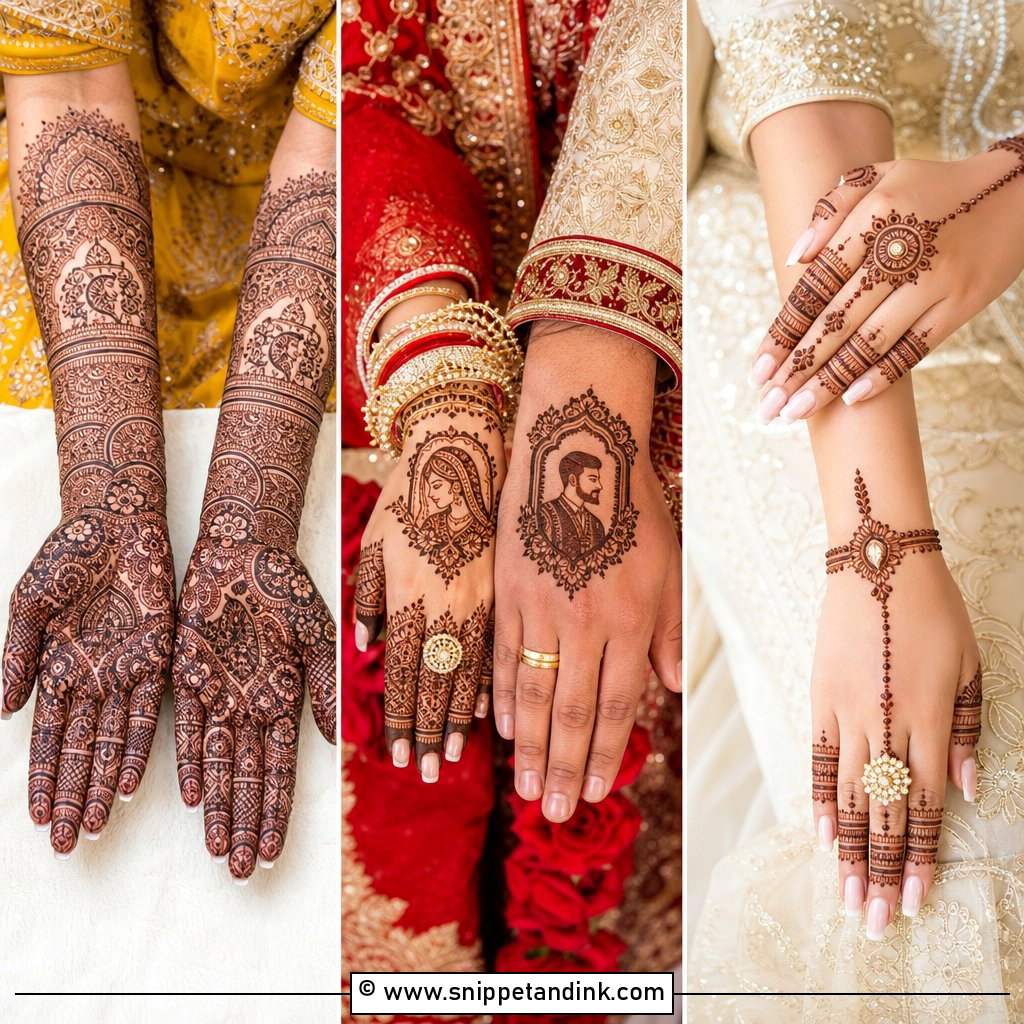
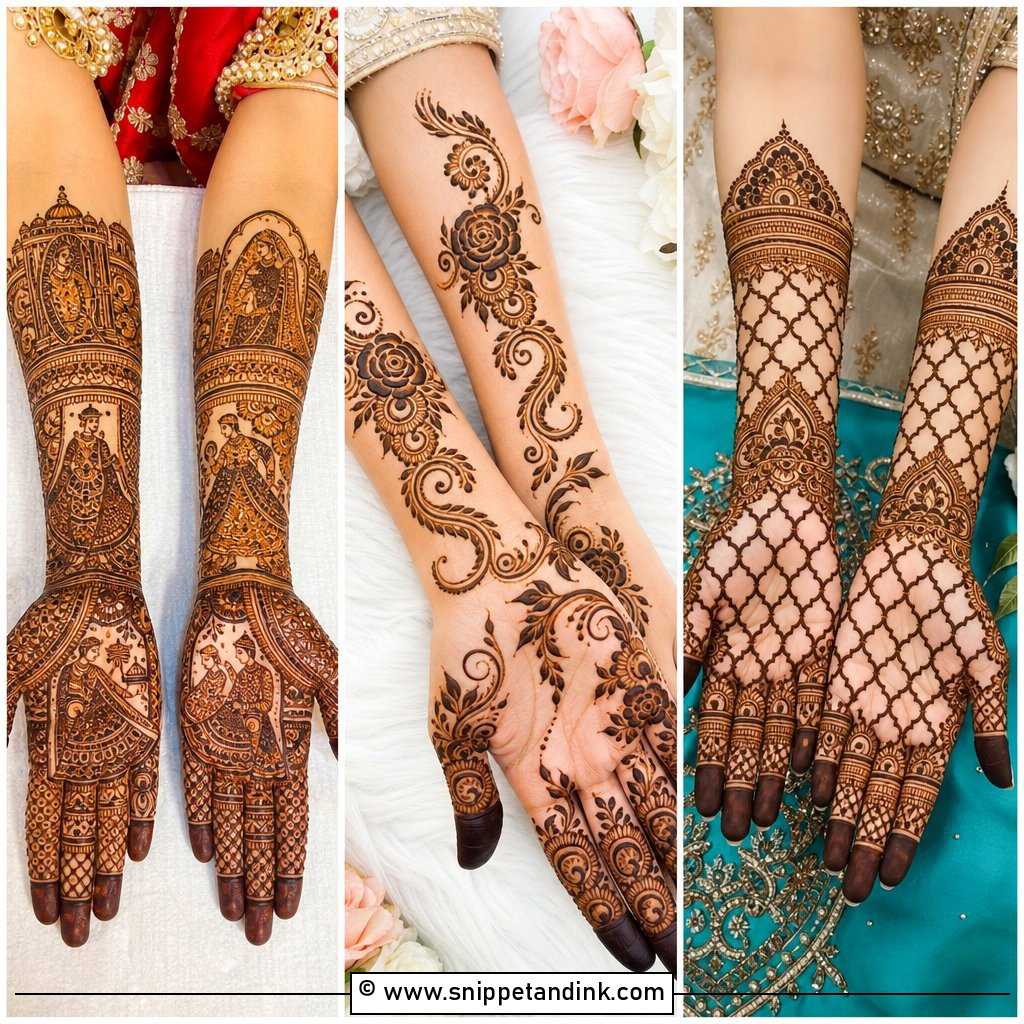
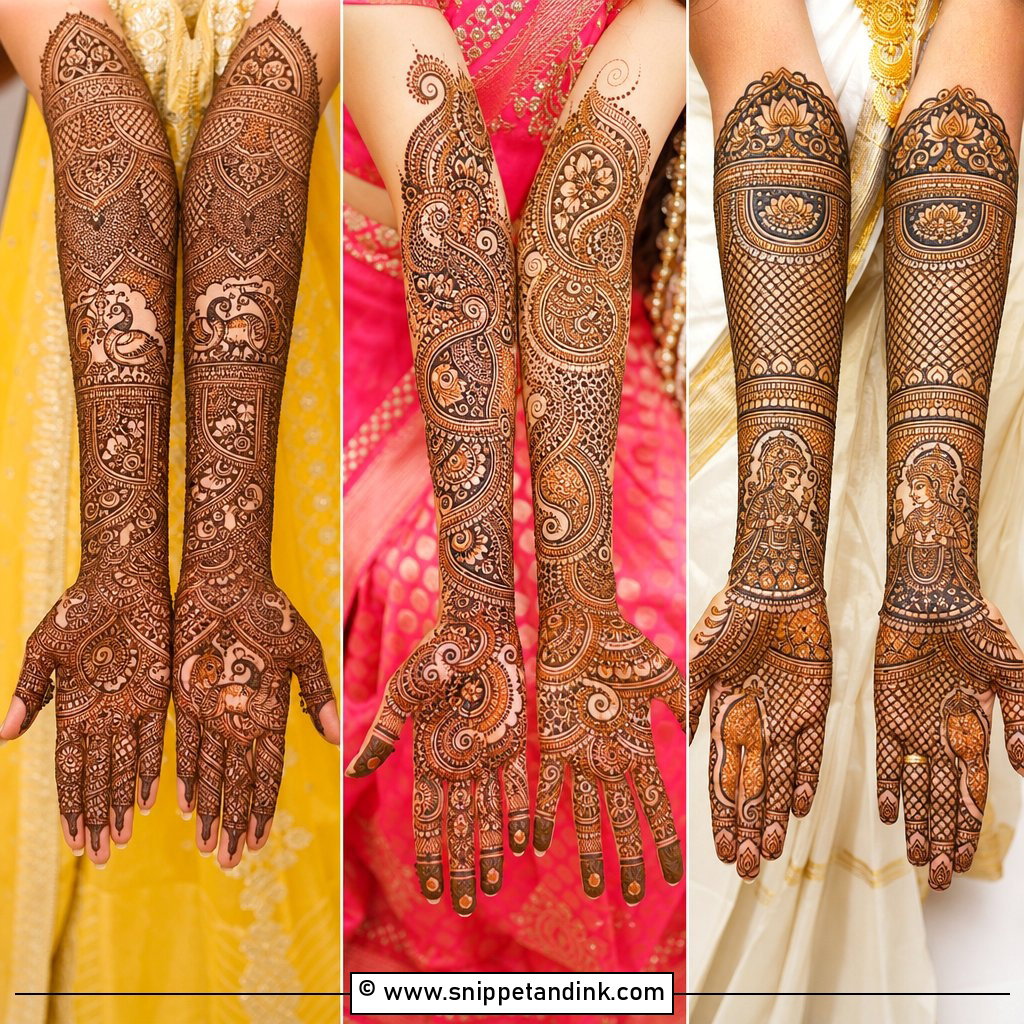
Fingertips, palms, wrists and forearms, all filled: full hand work is the most traditional option for the wedding itself. The hardest part isn’t density, it’s keeping both hands balanced. I match the borders, paisleys, florals and mandala centers between left and right before I start the fillers, because a mismatch becomes obvious the moment you hold your hands together. Fine filler, small leaves, dotted chains and shaded petals then polish it. Expect a long sitting. Heavy lehengas, sarees and ghararas in red, maroon, gold or green carry this weight best.
2. Arabic Mehndi Design For Marriage
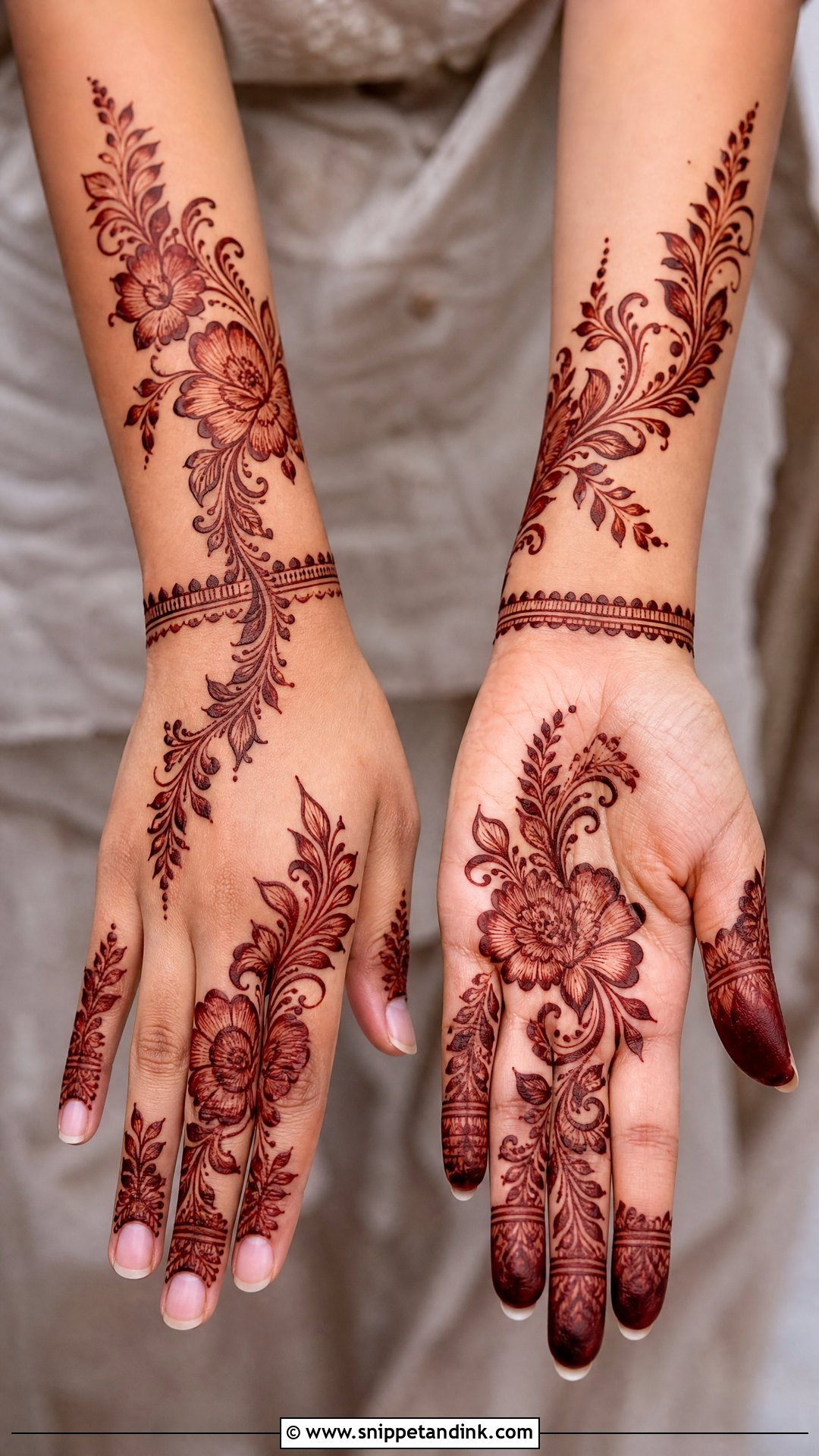
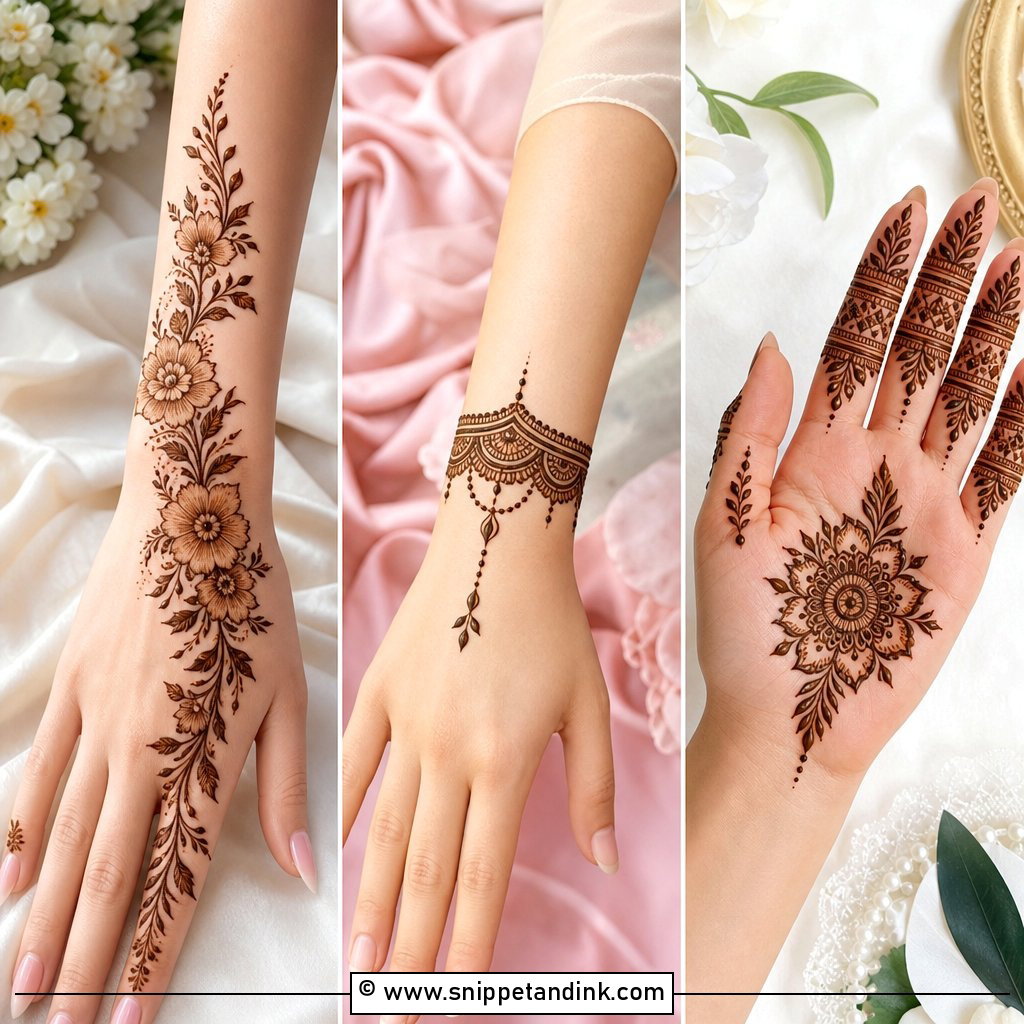
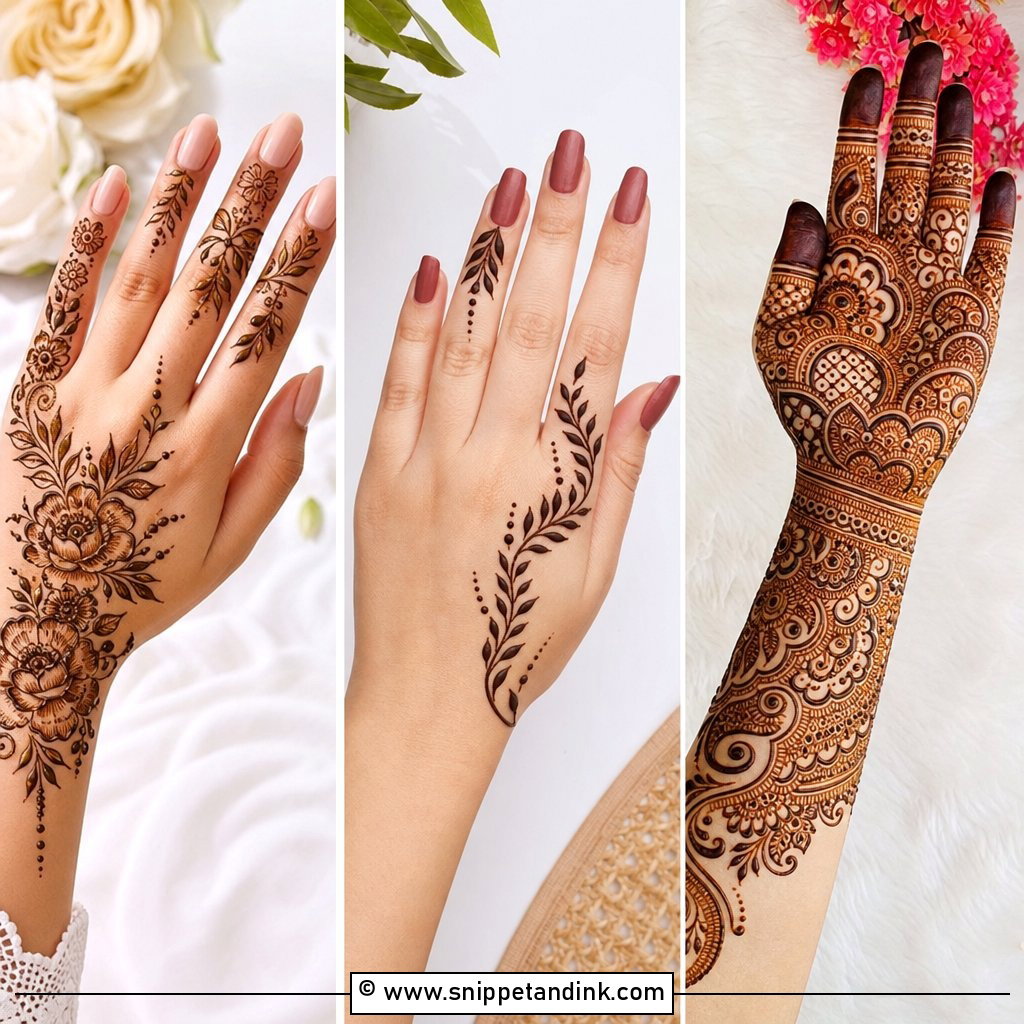
Arabic mehndi design for marriage gives you bold flowers without covering every inch. The trail usually starts at one side of the wrist and moves diagonally across the palm or back hand toward the fingers, with leafy vines and curved strokes and plenty of open skin. It dries faster than heavy bridal work, which is why I often draw it for sisters and guests as well. To make it bridal, I thicken the outlines, shade the flowers properly and add a bracelet band at the wrist so the trail has a clear beginning.
3. Indo Arabic Bridal Mehndi Design
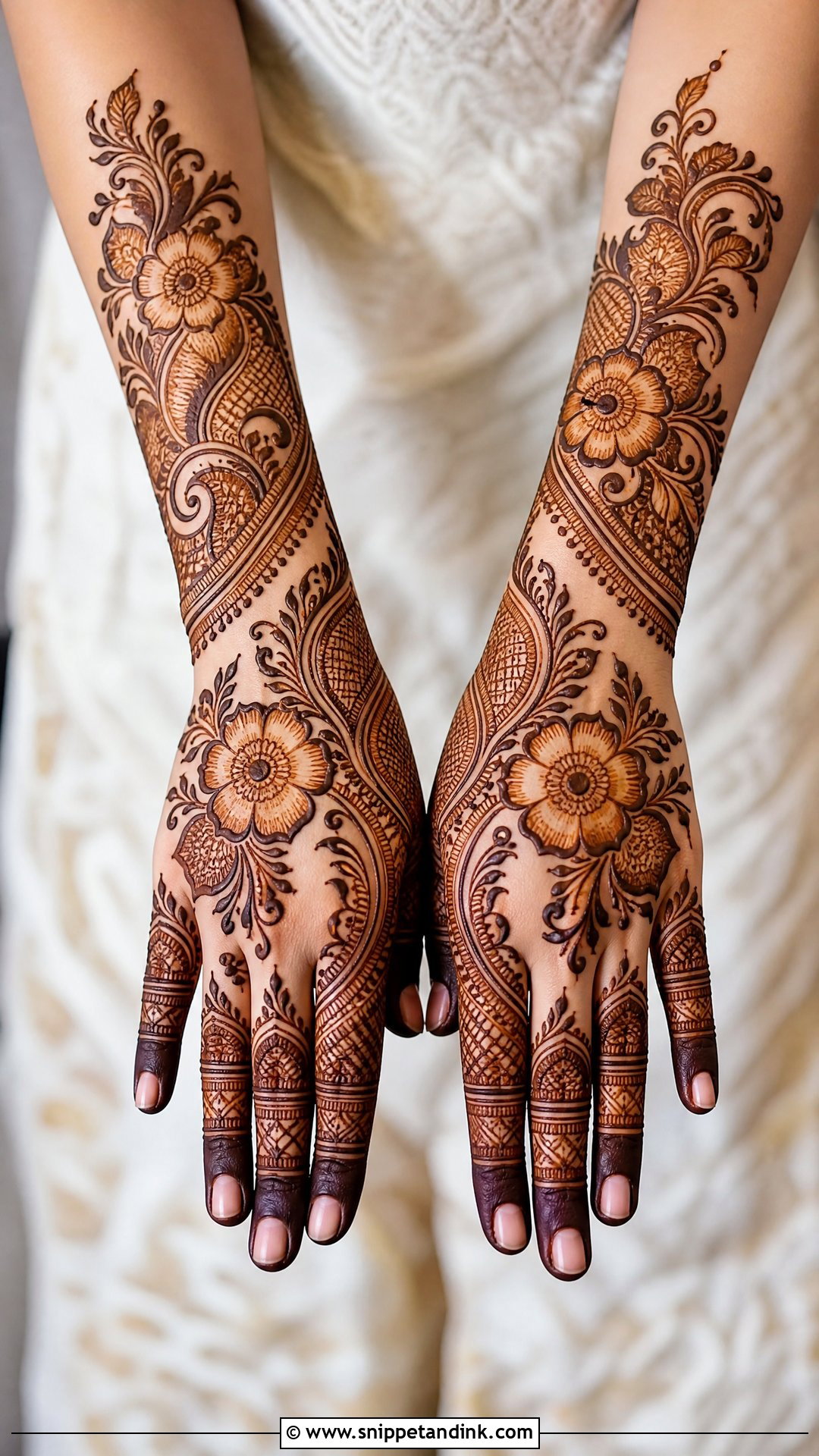
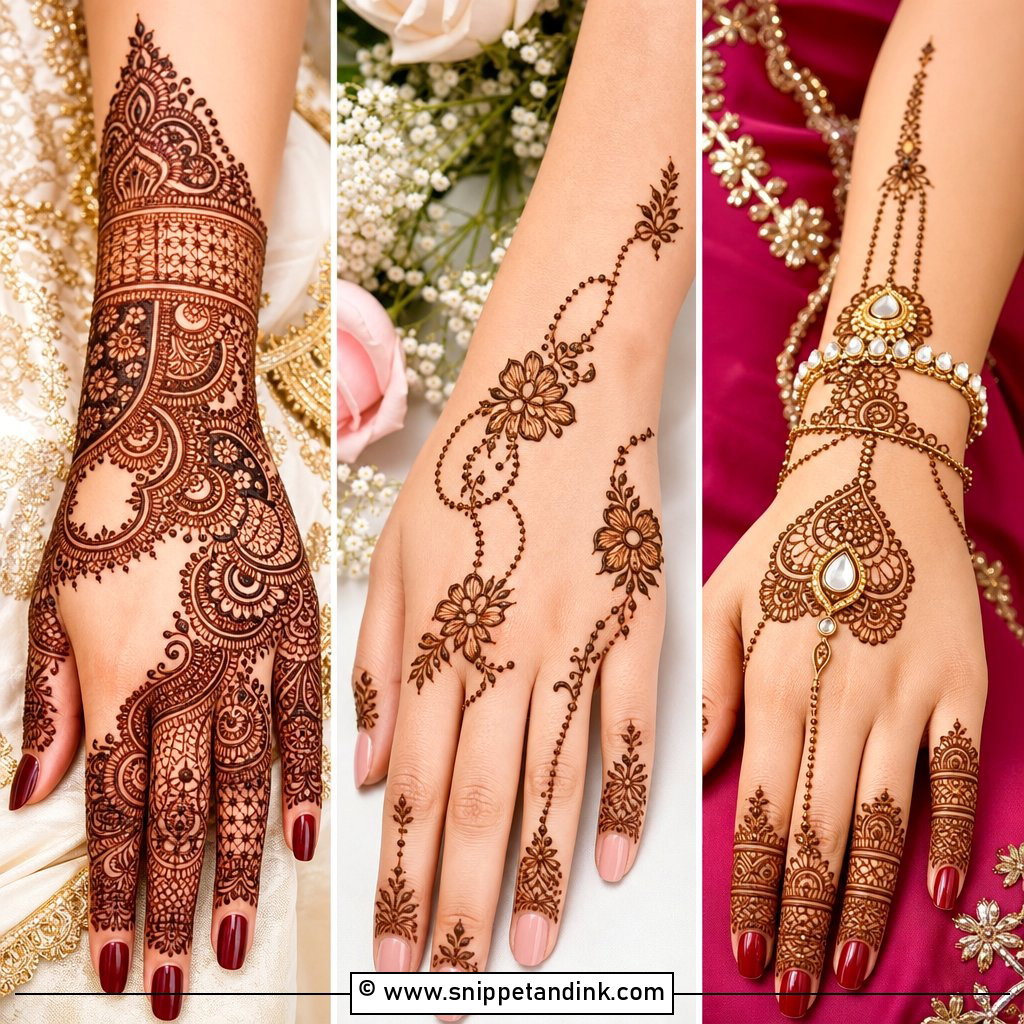
Indo Arabic work takes the floral flow of Arabic henna and adds the fine filling and symmetry of Indian designs. A typical layout I draw has a large floral trail on the back hand, paisley borders framing the palm, and detailed fingers with tiny jaali or leaves. It looks detailed but tidy, and it suits nearly any outfit because it reads both traditional and current. Matching wrist cuffs and a few deliberate gaps make it feel finished. Brides who can’t commit to either style usually end up here, happily.
4. Back Hand Bridal Mehndi Design
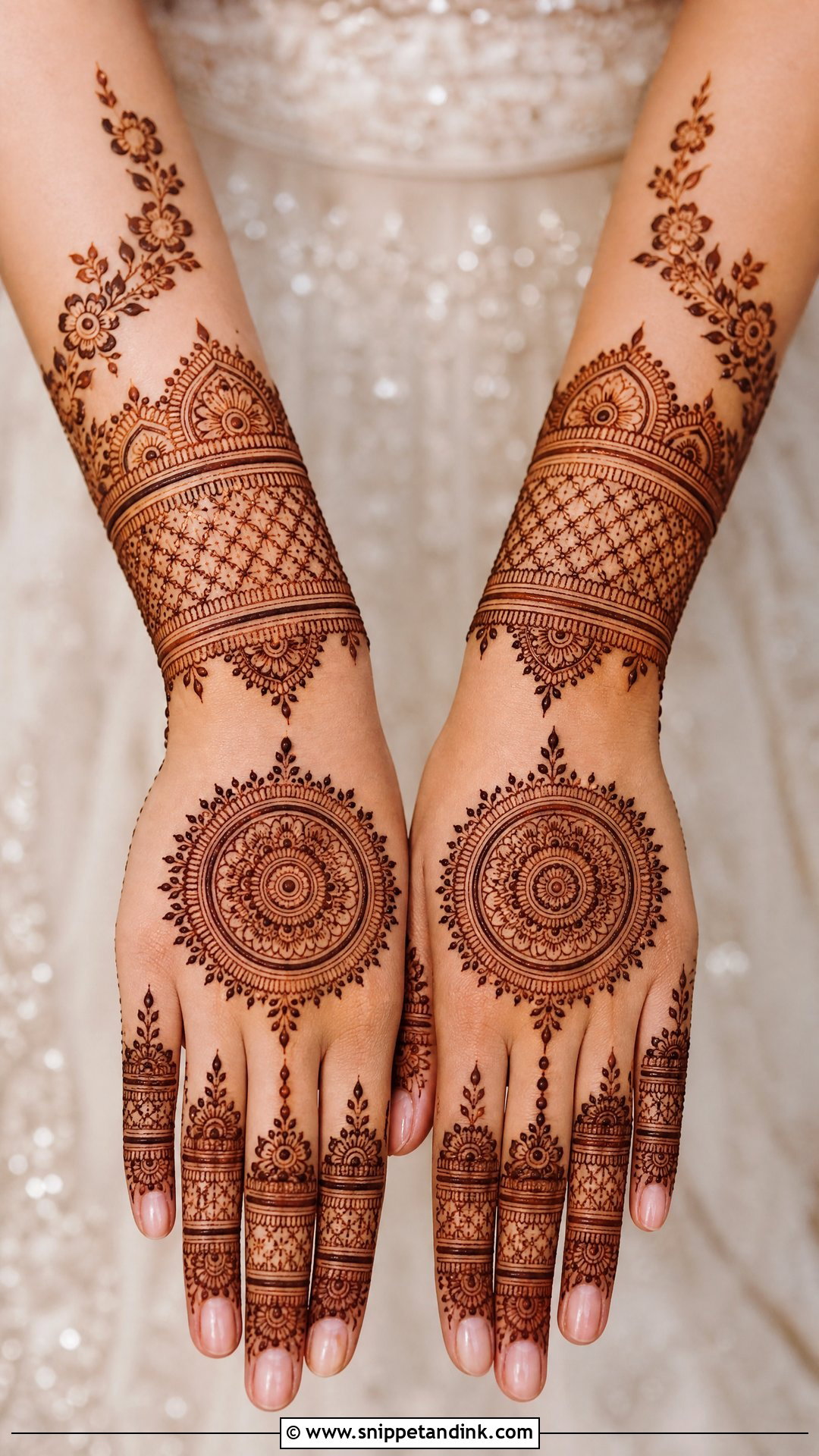
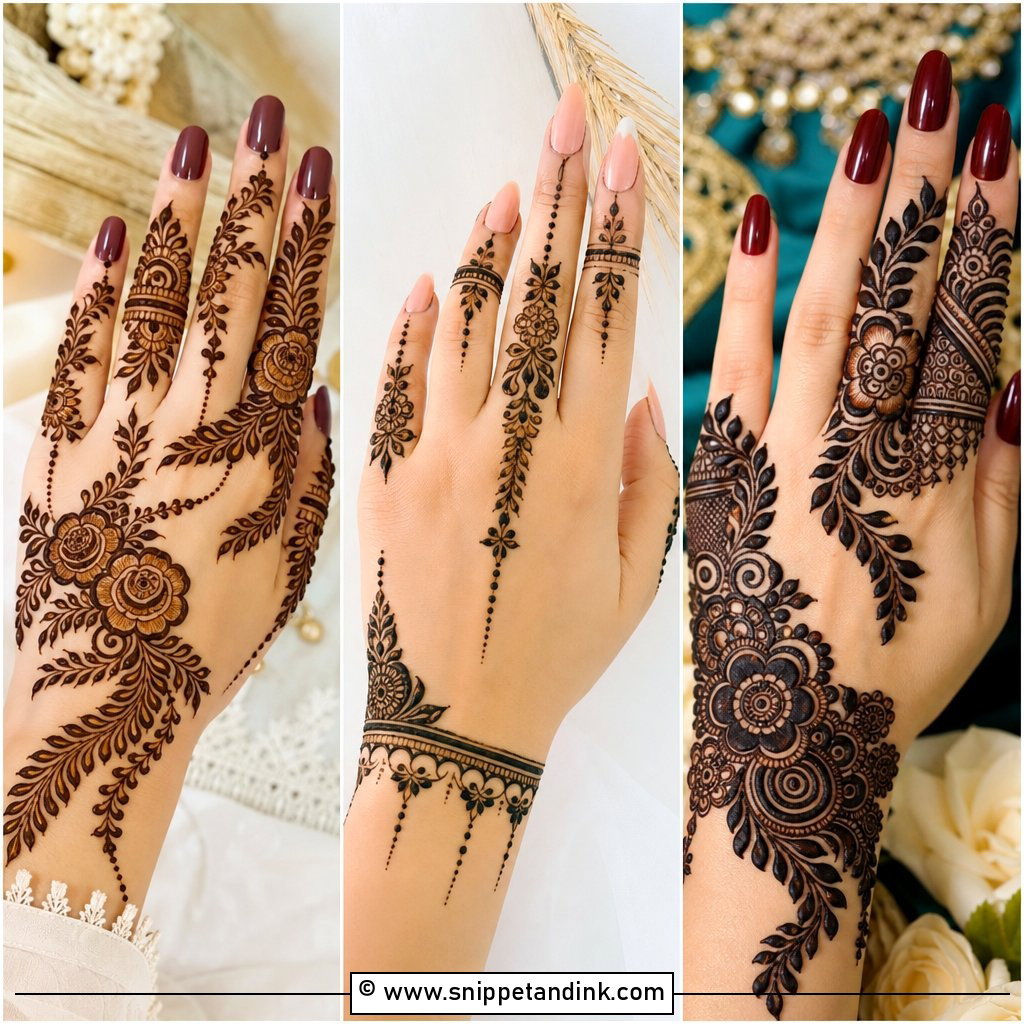
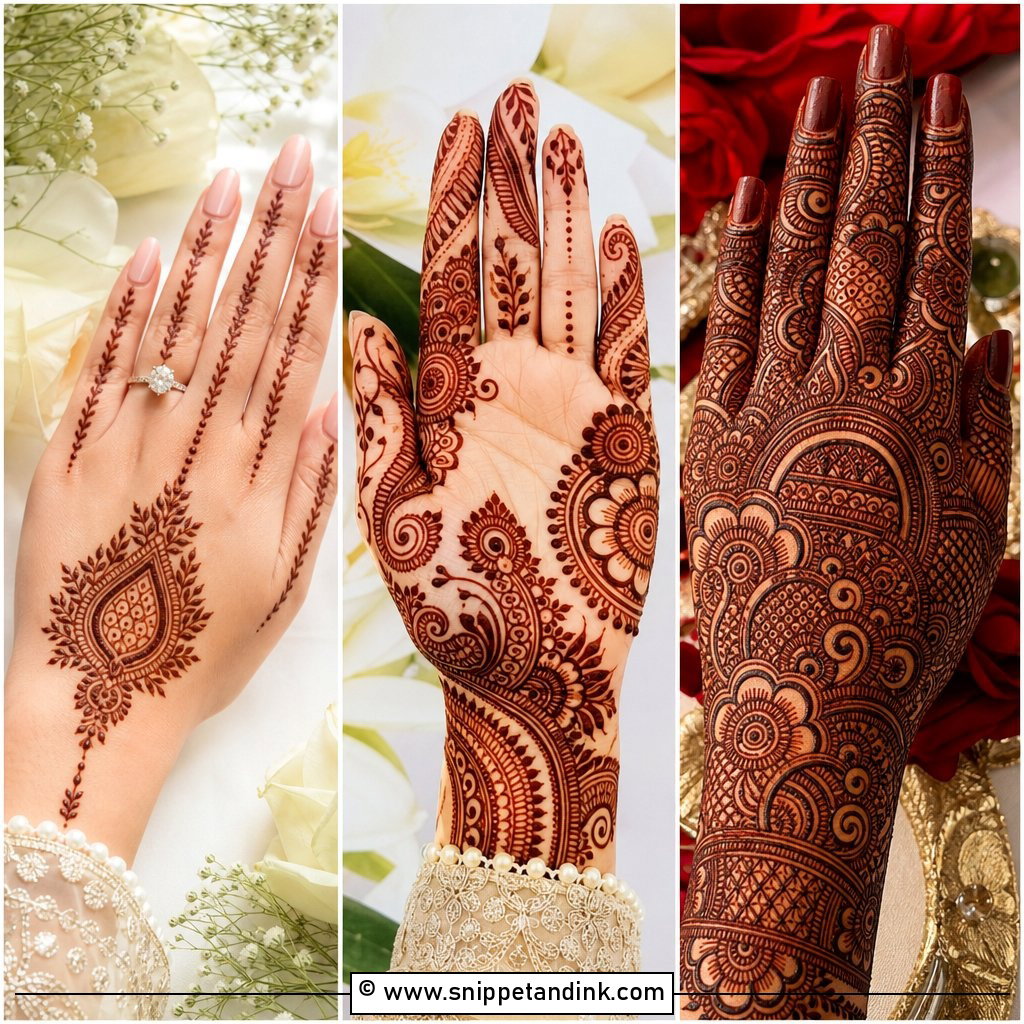
Ring shots, bouquet photos and candid portraits mostly show the back of your hand, and it stains lighter than the palm, so it needs more thought than brides expect. I build it around a central motif, decorated fingers, a wrist pattern and balanced side detail. Mandalas, lotus flowers, jaali mesh and chains all suit the back hand. If you’re wearing large rings or haath phool jewelry, keep the center clearer to avoid clutter. However full or light you go, connect it from fingers to wrist so the hand looks dressed from every angle.
5. Front Hand Bridal Mehndi Design
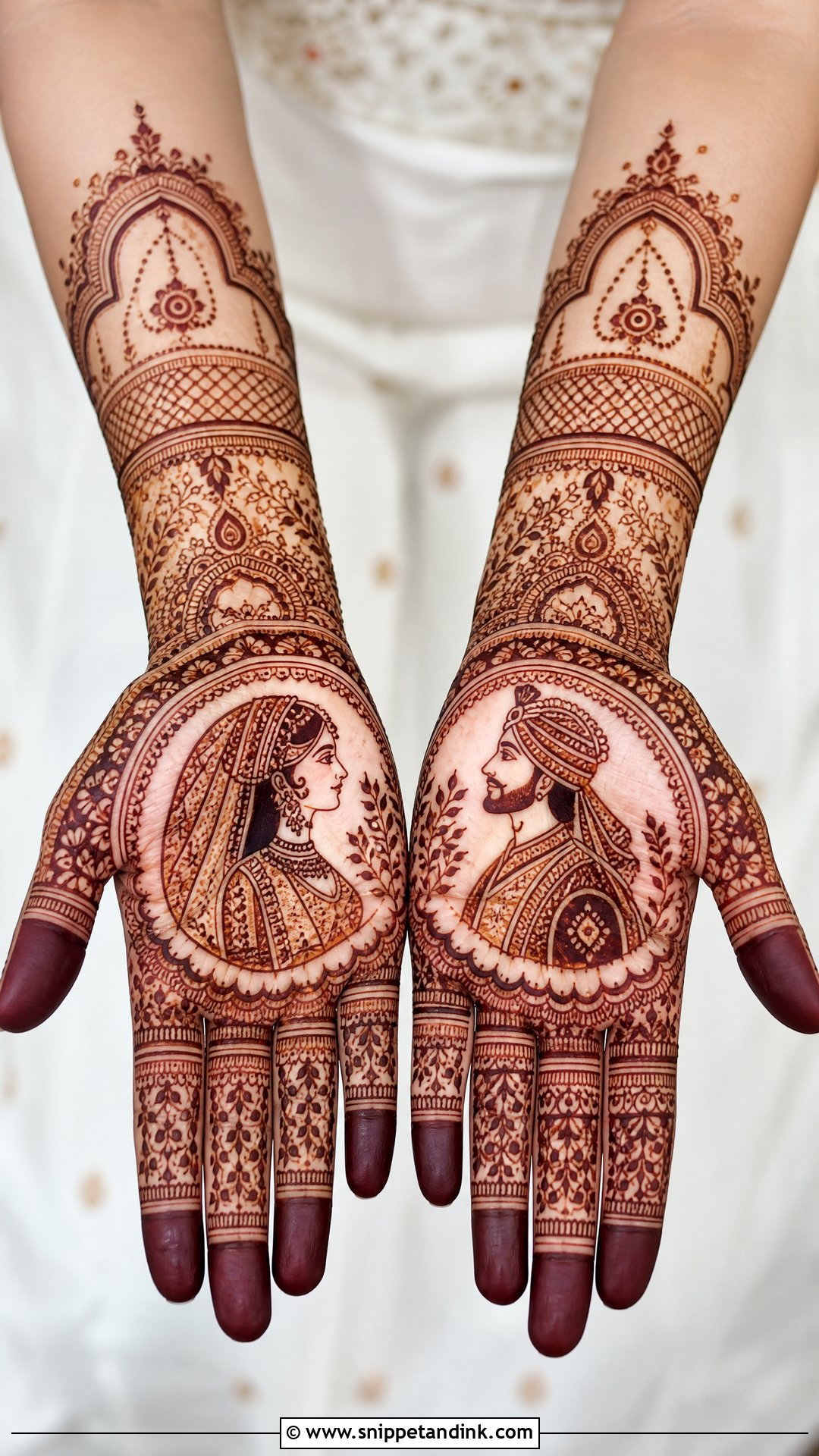
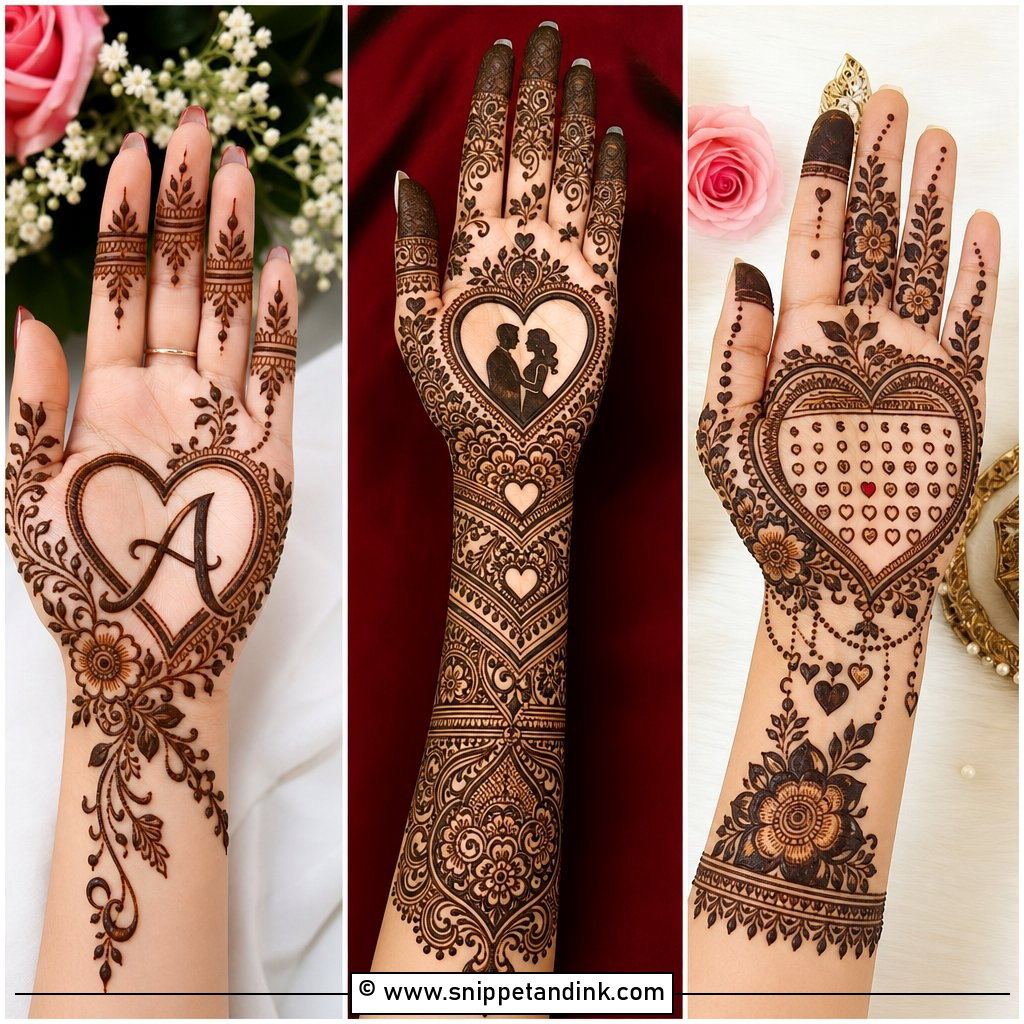
Front hand bridal mehndi design is where I put the most personal artwork, since the palm gives room for mandalas, bride and groom figures, names, dates and symbols. A strong palm needs one clear focal point rather than random filling. I often give one palm a dulha-dulhan scene and the other a mandala, peacock or lotus arrangement, so they talk to each other. Fingers get coordinated lines, florals and tiny checks. Palms hold color well, so this is where your darkest stain will be.
6. Simple Mehndi Design For Marriage
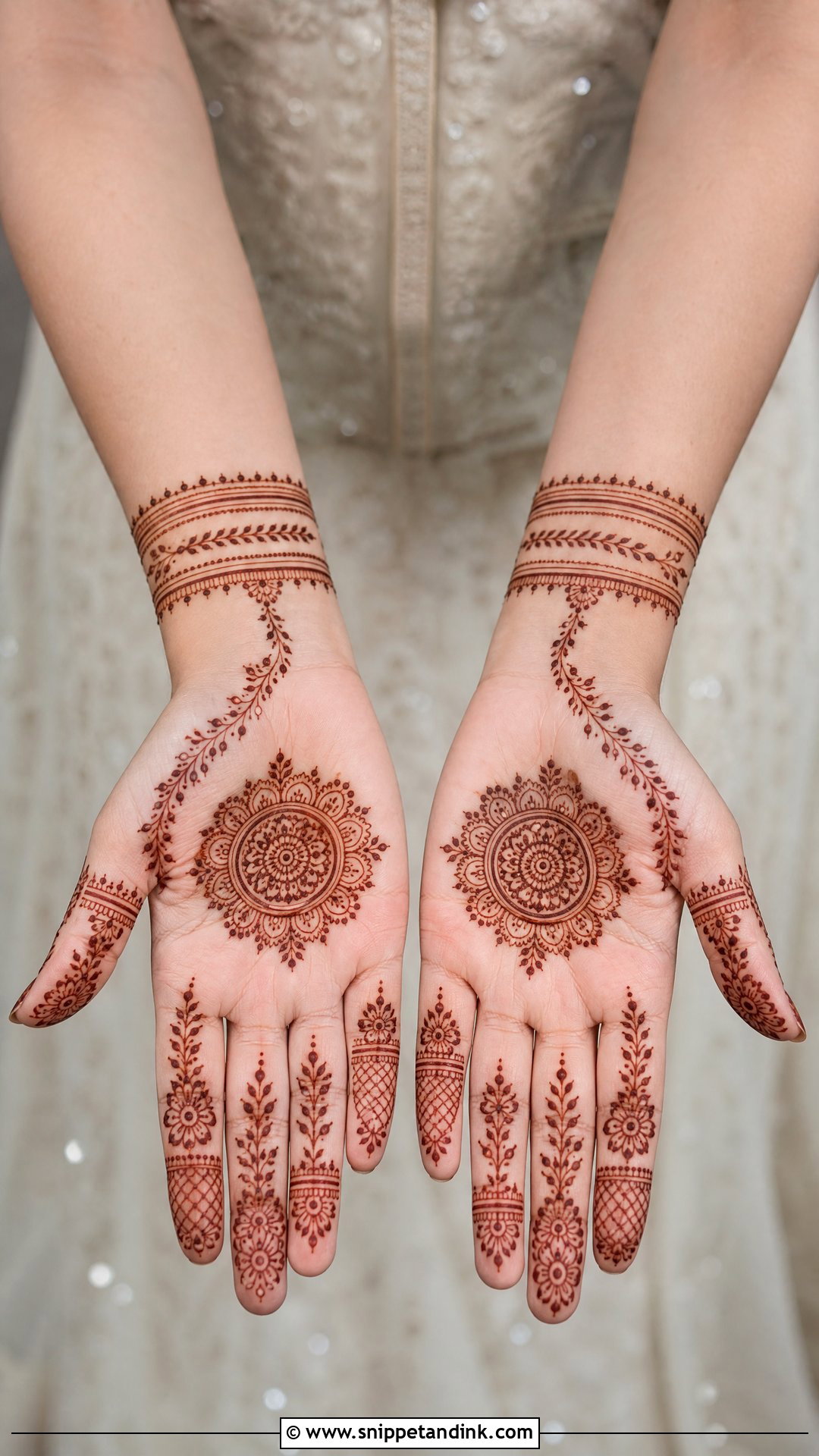
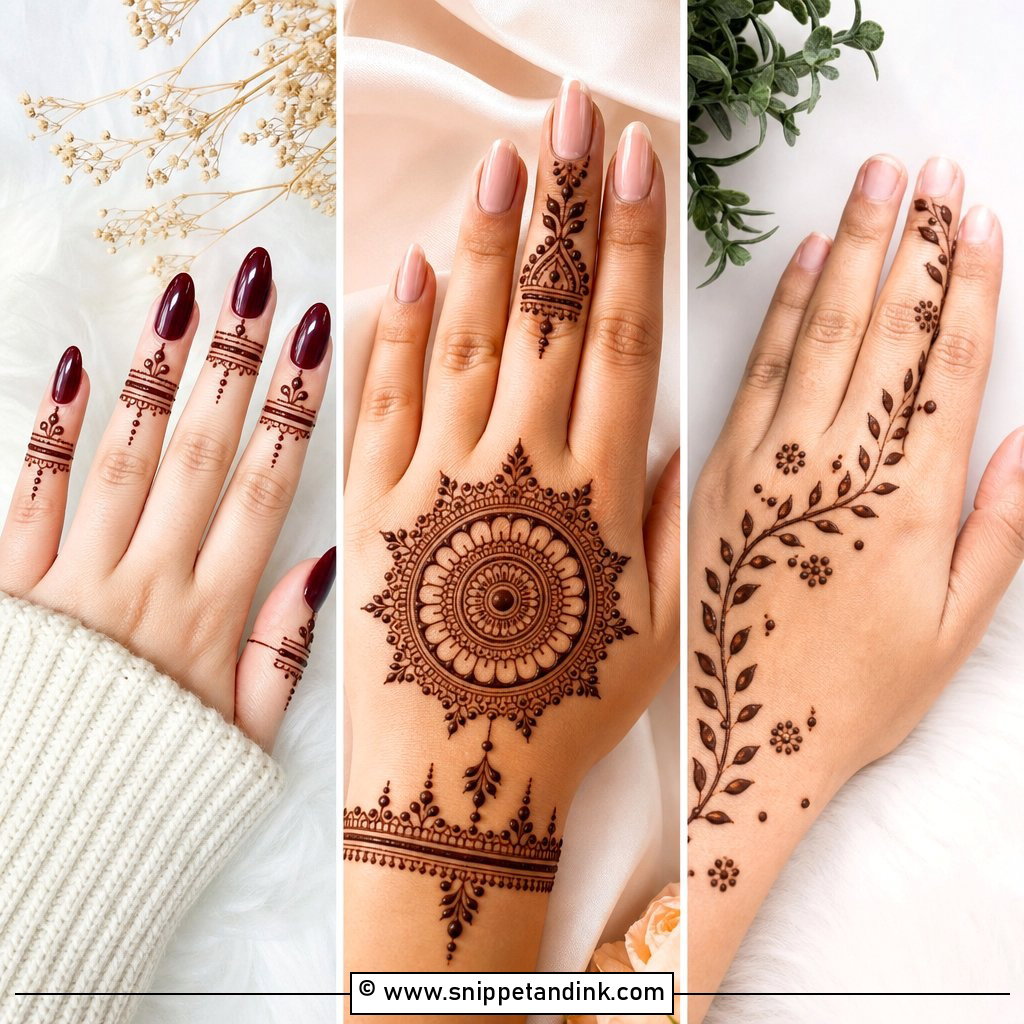
Simple doesn’t mean plain. A complete simple design can be a palm mandala, floral fingers, a slim wrist band and light leafy trails, with neat spacing doing the work instead of fillers. I recommend it for court weddings, receptions and small family functions, and for brides who only have an hour free before the ceremony. Because every motif is easy to see, the quality of the lines matters more than in dense work. Pastel outfits, minimal jewelry and modern styling sit well with it.
7. Modern Bridal Mehndi Design
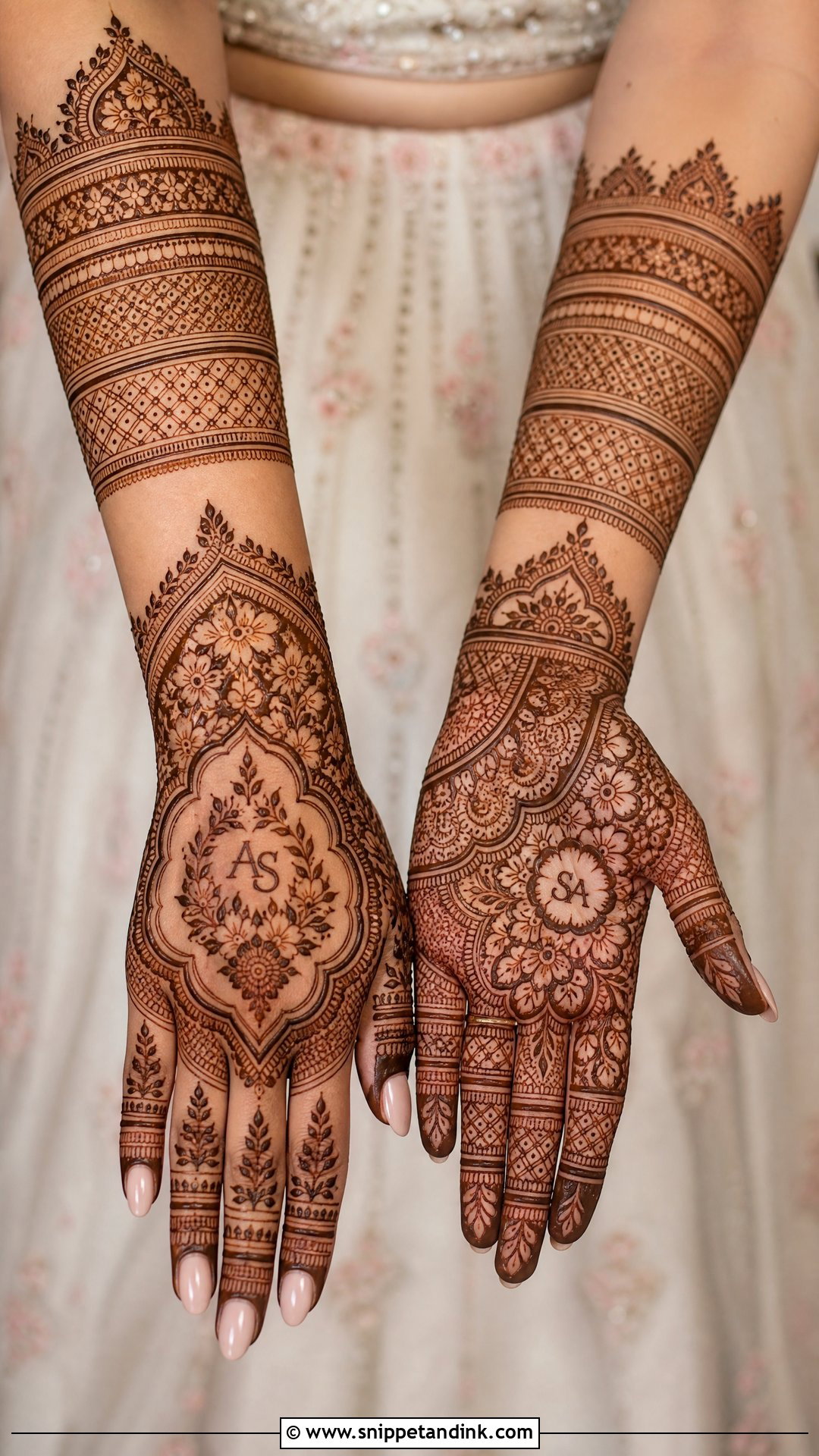
Modern bridal designs rely on structure and spacing: geometric bands, floral bracelets, fine-line fingers, half-and-half palms, initials hidden inside leaves or paisleys. One area can be heavy while another stays light, which creates contrast. The trap is scattering too many trendy ideas across two hands. I ask brides to pick one clear theme and carry it across both hands, so the whole thing looks planned. It sits naturally with contemporary lehengas, fusion outfits and soft glam makeup.
8. Indian Bridal Mehndi Design
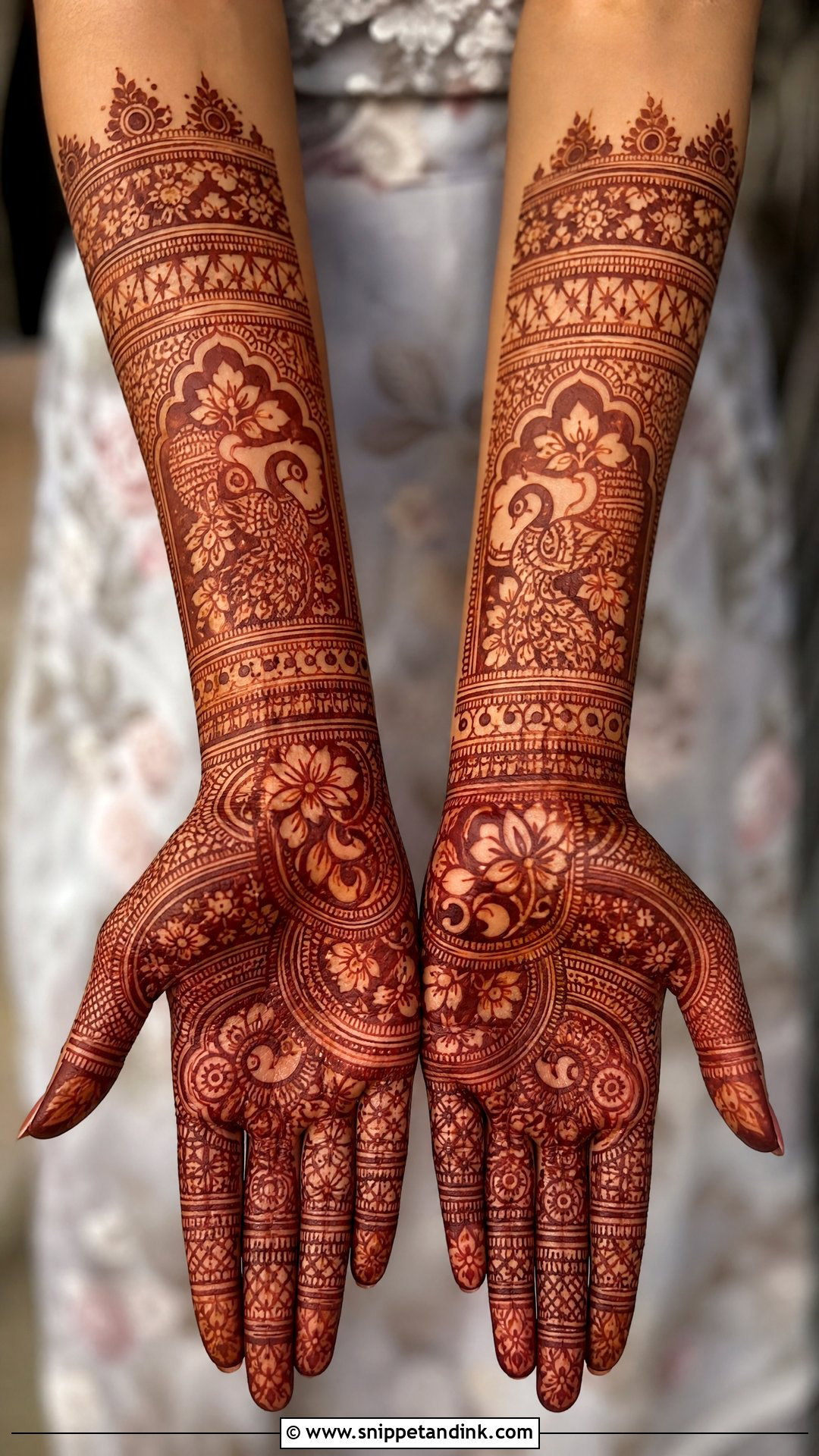
Indian bridal henna is storytelling work: peacocks, paisleys, lotus flowers, mandalas, bride-groom portraits and traditional borders, often across both sides of the hands and up the forearms. Density is expected, but messiness isn’t. I rely on bold motifs to catch the eye and small fillers to add richness, never fillers alone. Classic embroidery on the outfit is the clearest sign this is your style. It shows up well in ritual photos, jewelry shots and family portraits.
9. Rajasthani Bridal Mehndi Design
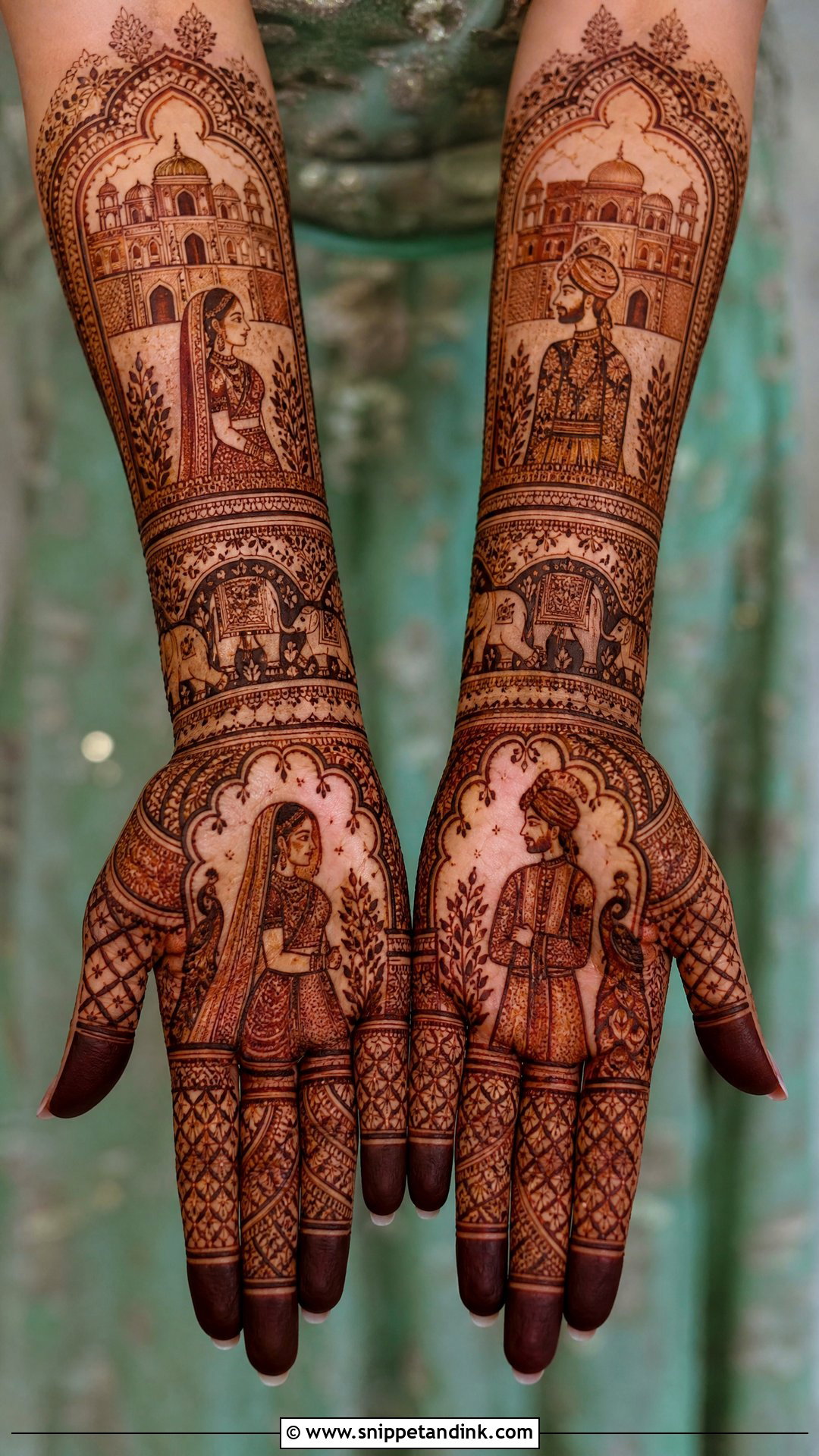
Bride and groom faces, elephants, palaces, peacocks, drums and ornamental borders are what make Rajasthani bridal henna feel royal. It usually covers the full hand and forearm, and the sitting is long, so it’s best for brides who don’t mind several hours with an artist. I tuck initials or the wedding date into one of the borders to personalise it. Silk, velvet, brocade and heavily embroidered lehengas, plus heavy bridal jewelry, are its natural partners.
10. Pakistani Bridal Mehndi Design
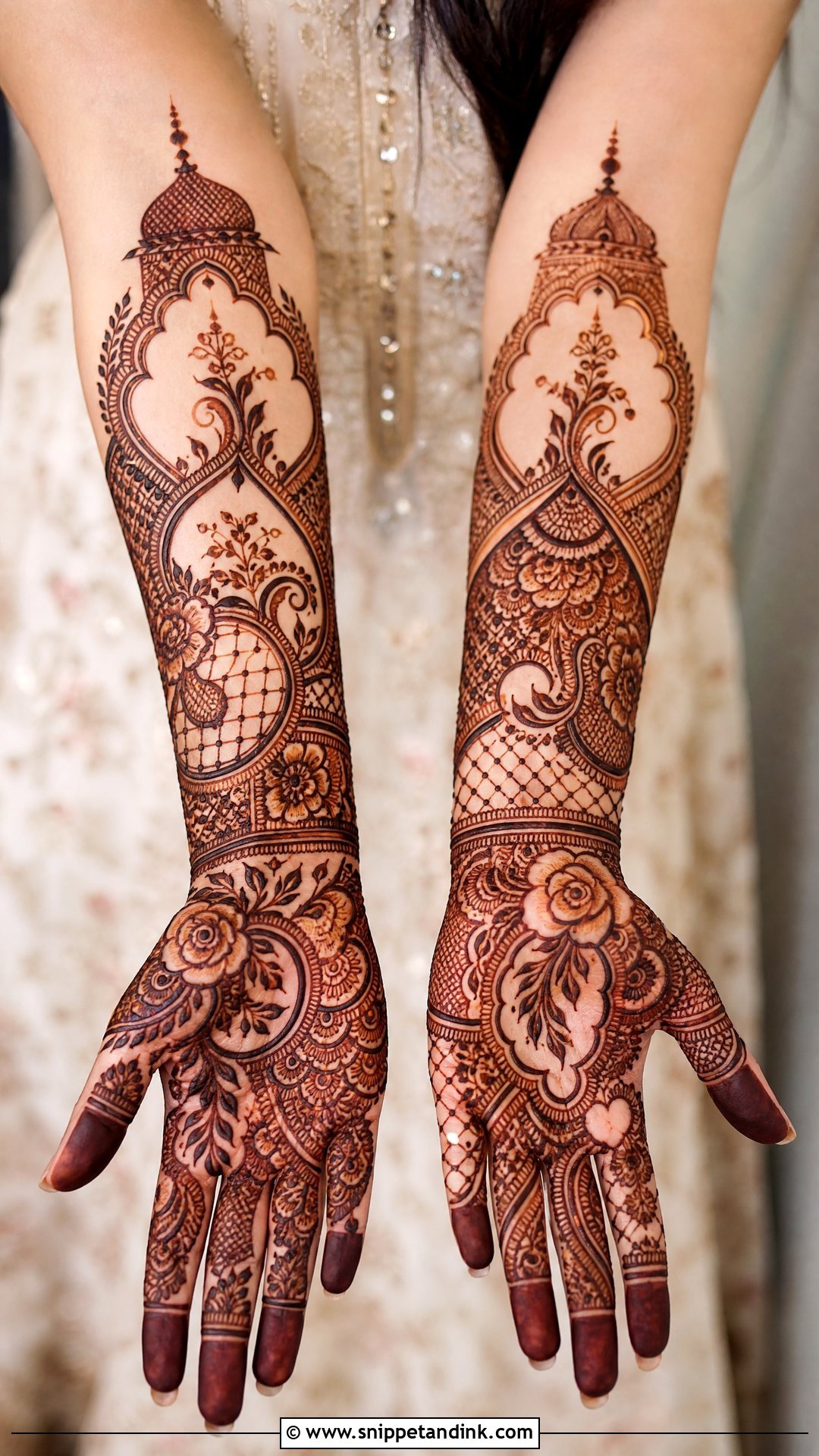
Pakistani bridal mehndi design tends to be detailed yet balanced, with floral vines, domes, paisleys, shaded petals and fine finger work. Full palms keep graceful negative spaces, so the hand feels rich without being packed. Back hands often carry bracelet wrists and ring-chain details that echo bridal jewelry. I draw florals and leafy curves for a softer version, and add jaali, domes and symmetrical borders when the bride wants it more formal. It suits nikah, walima and mehndi night equally, in bold or pastel outfits.
11. Marwari Bridal Mehndi Design
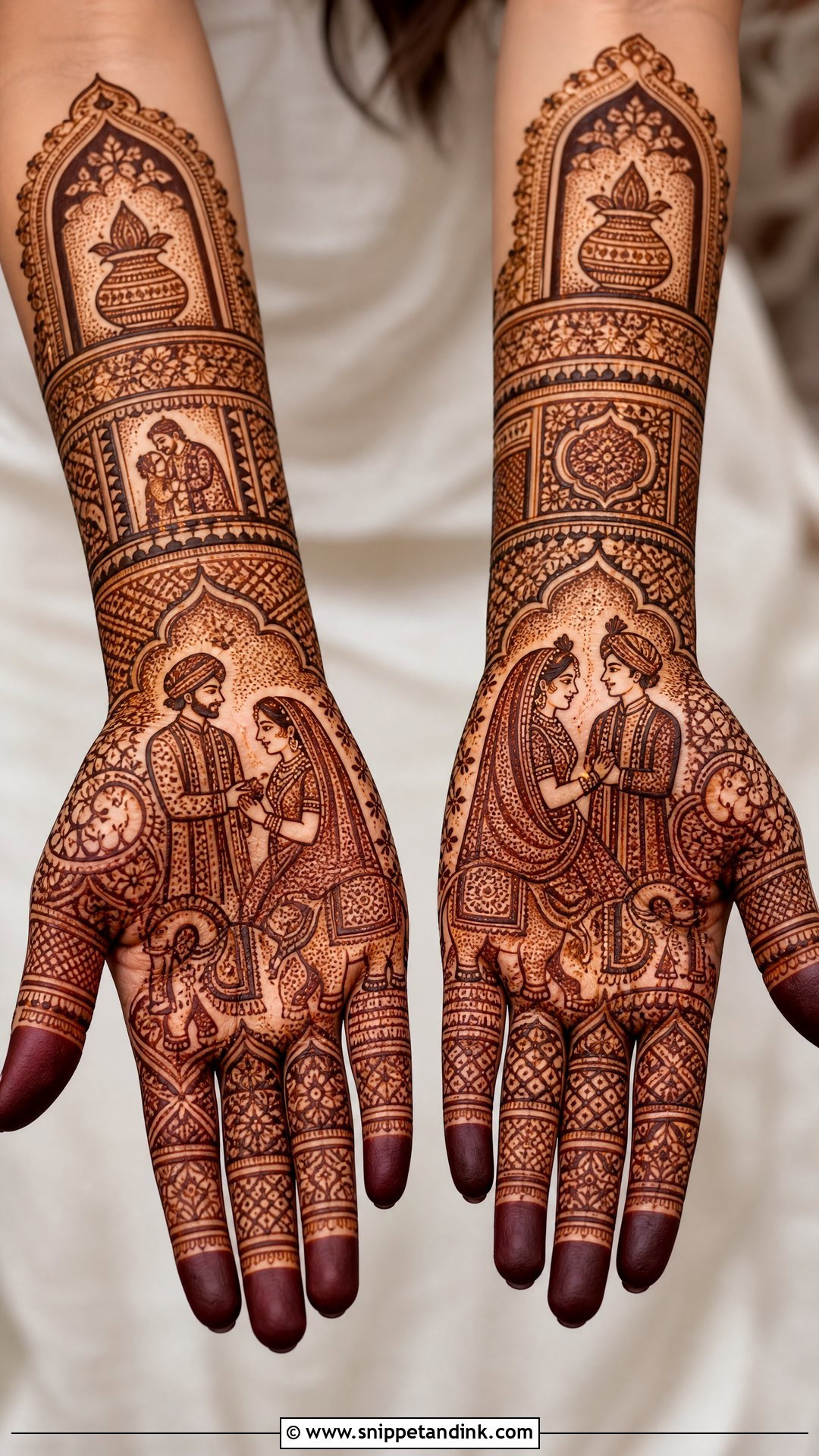
Marwari bridal henna is dense, decorative and full of meaning: bride-groom portraits, elephants, kalash, paisleys, mandalas and heavy wrist-to-forearm coverage, with both hands carrying coordinated scenes. Its charm lies in the fine filling, which is also why it takes so long. Book generous time and an artist with clean miniature work, because tired hands produce shaky filler late in the session. Traditional jewelry, bangles and richly embroidered outfits complete it, and the result has an heirloom feel.
12. Peacock Mehndi Design For Marriage
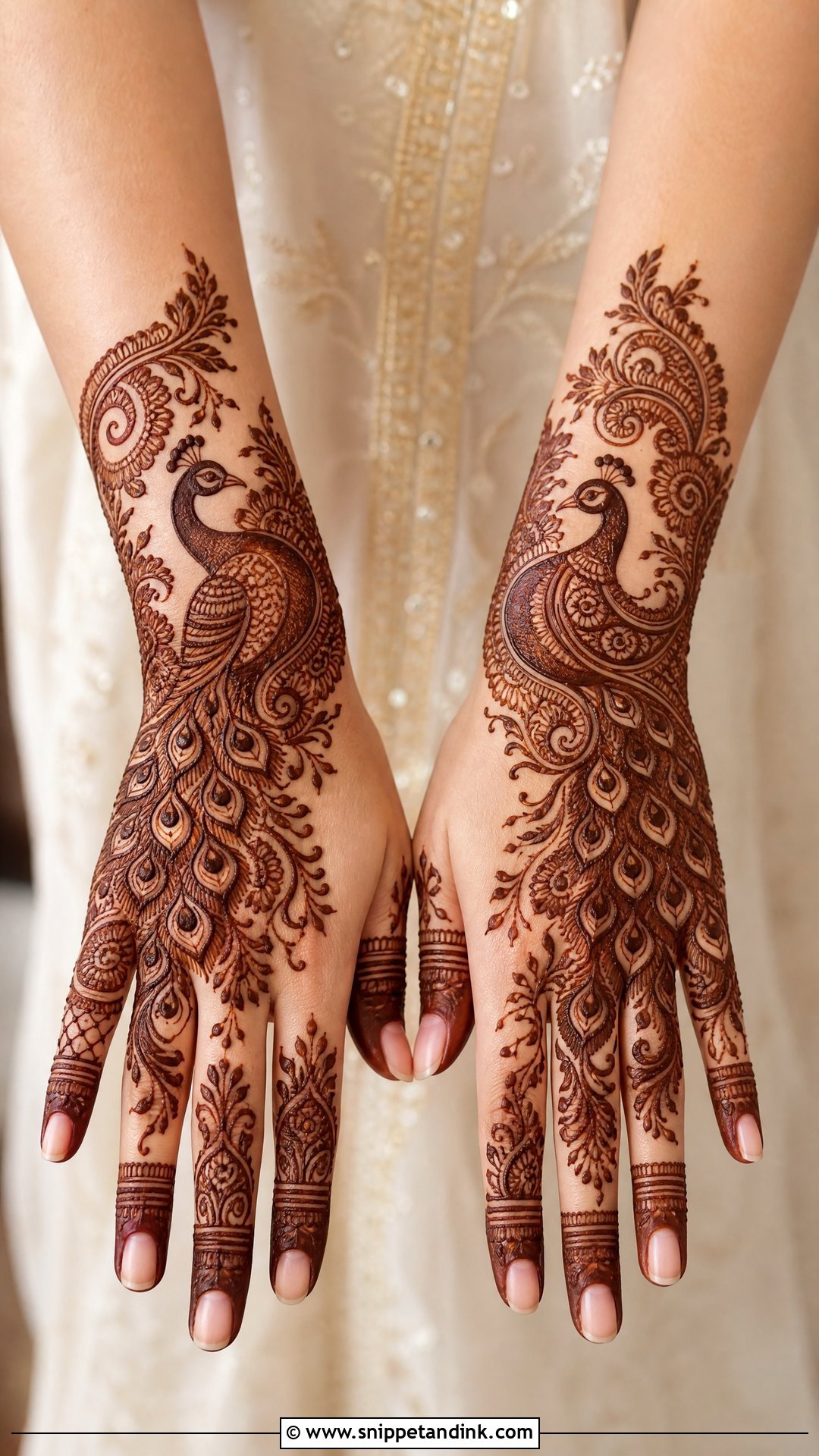
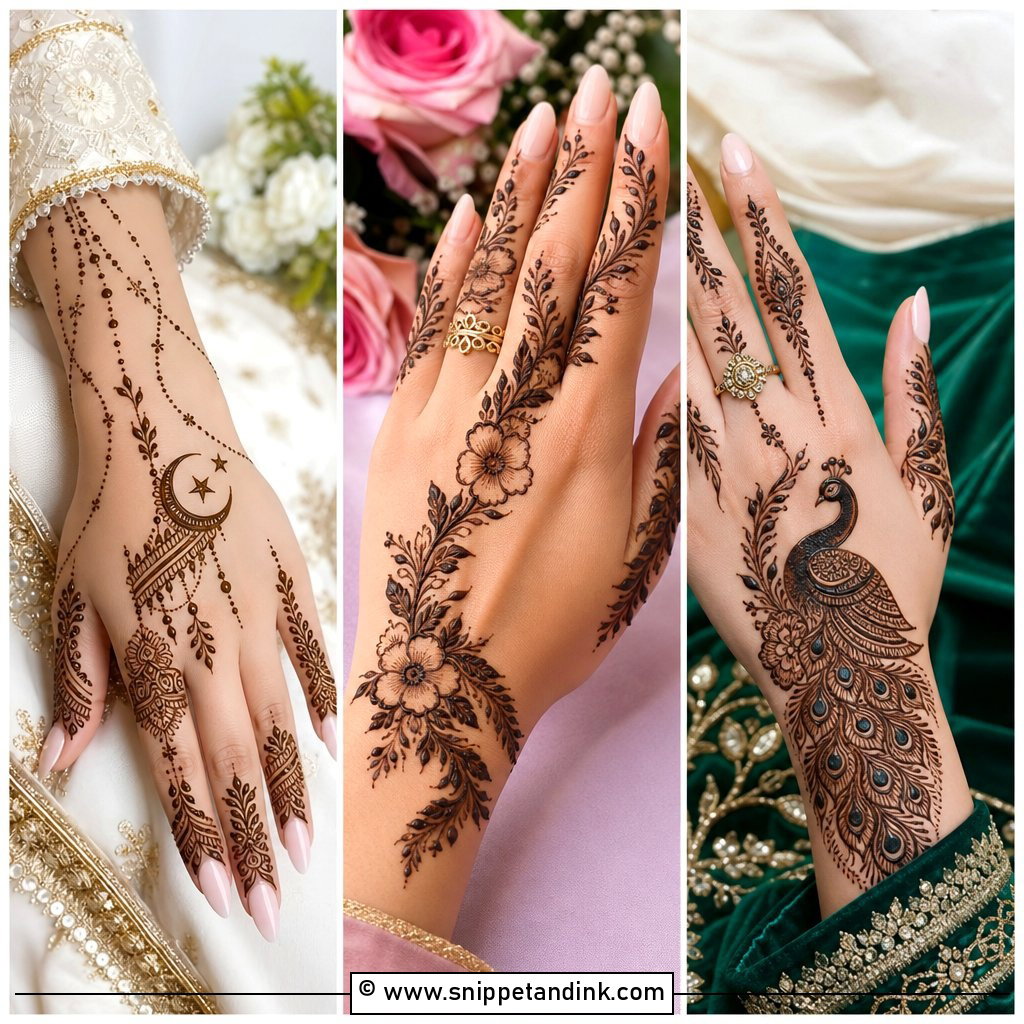
The peacock gives me curves to play with: the neck, the crest and especially the tail feathers can sweep across the hand and flow into paisleys, florals and finger patterns. One large bird on the palm or back hand is enough, with matching borders running to the wrist or forearm for a fuller look. Keep the outline bold so it stands out once the stain settles. Fine shading inside the feathers adds depth. Brides who want something traditional but would rather skip portraits often settle on this.
13. Mandala Mehndi Design For Marriage
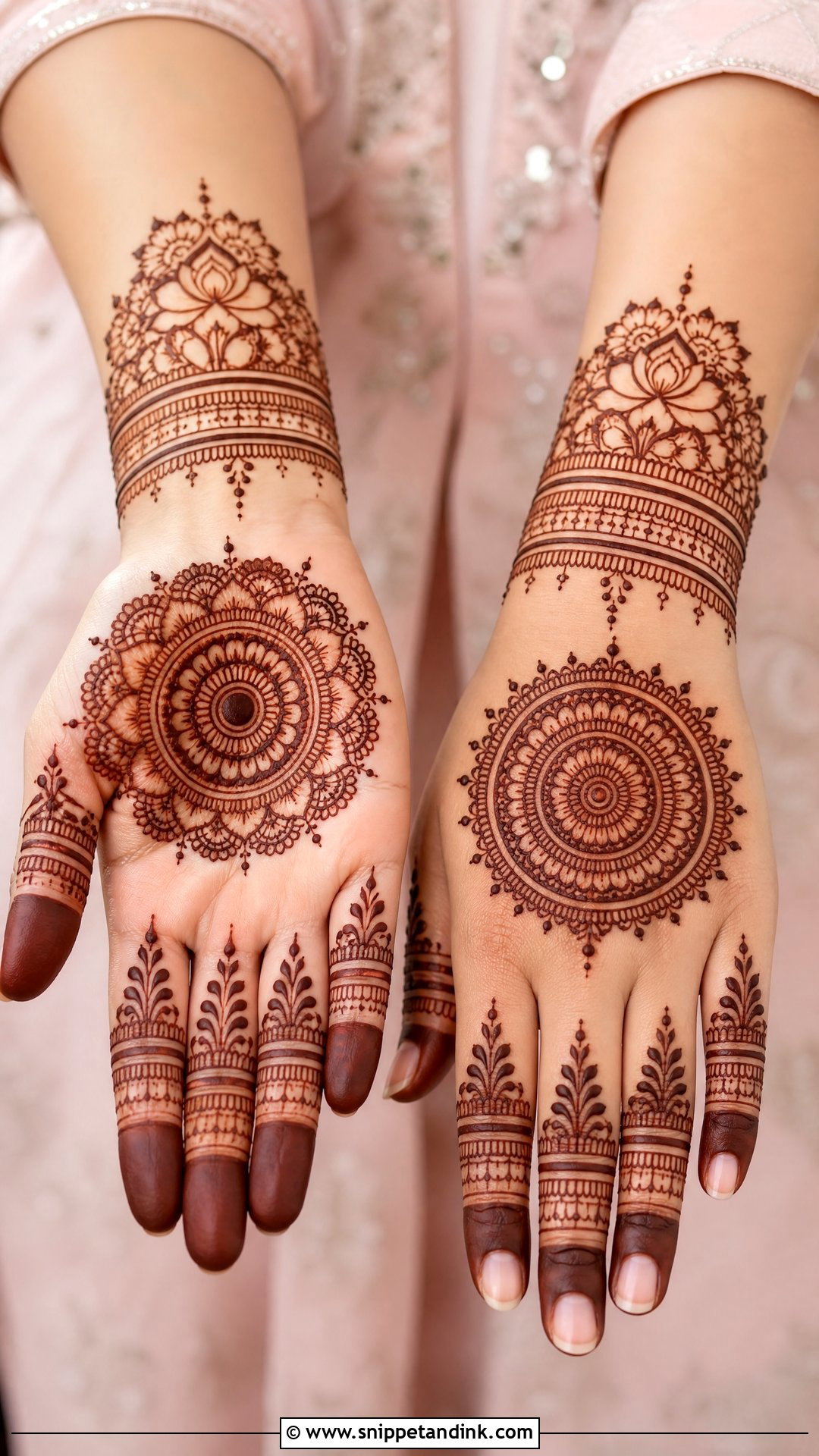
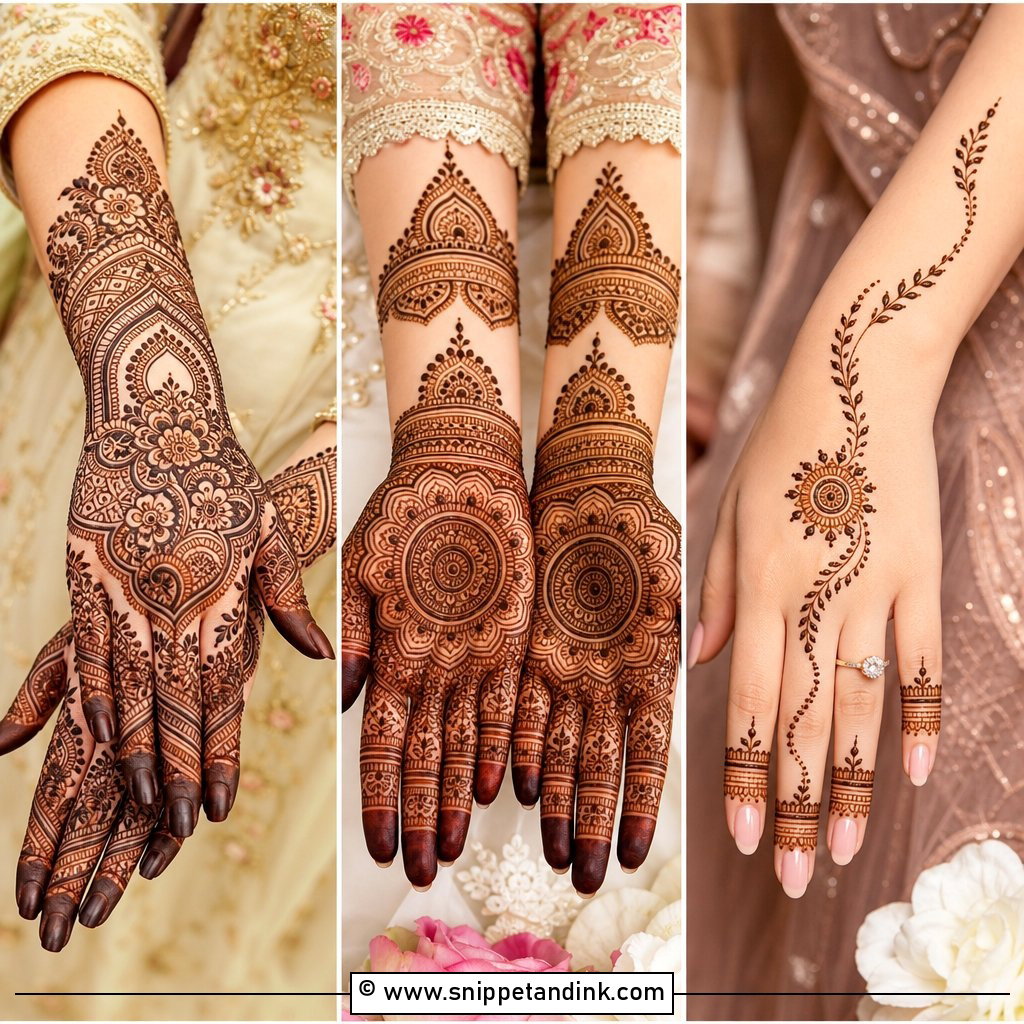
A mandala gives the palm or back hand a calm, circular focal point. To make it bridal, I decorate the fingers, add wrist cuffs and floral borders, and fill around the circle with tiny details. A large mandala on each palm looks right during rituals, while a back-hand mandala sits well with rings and bangles. It’s also easy to scale down for bridesmaids and close family, so everyone’s hands relate to the bride’s without copying them.
14. Floral Bridal Mehndi Design
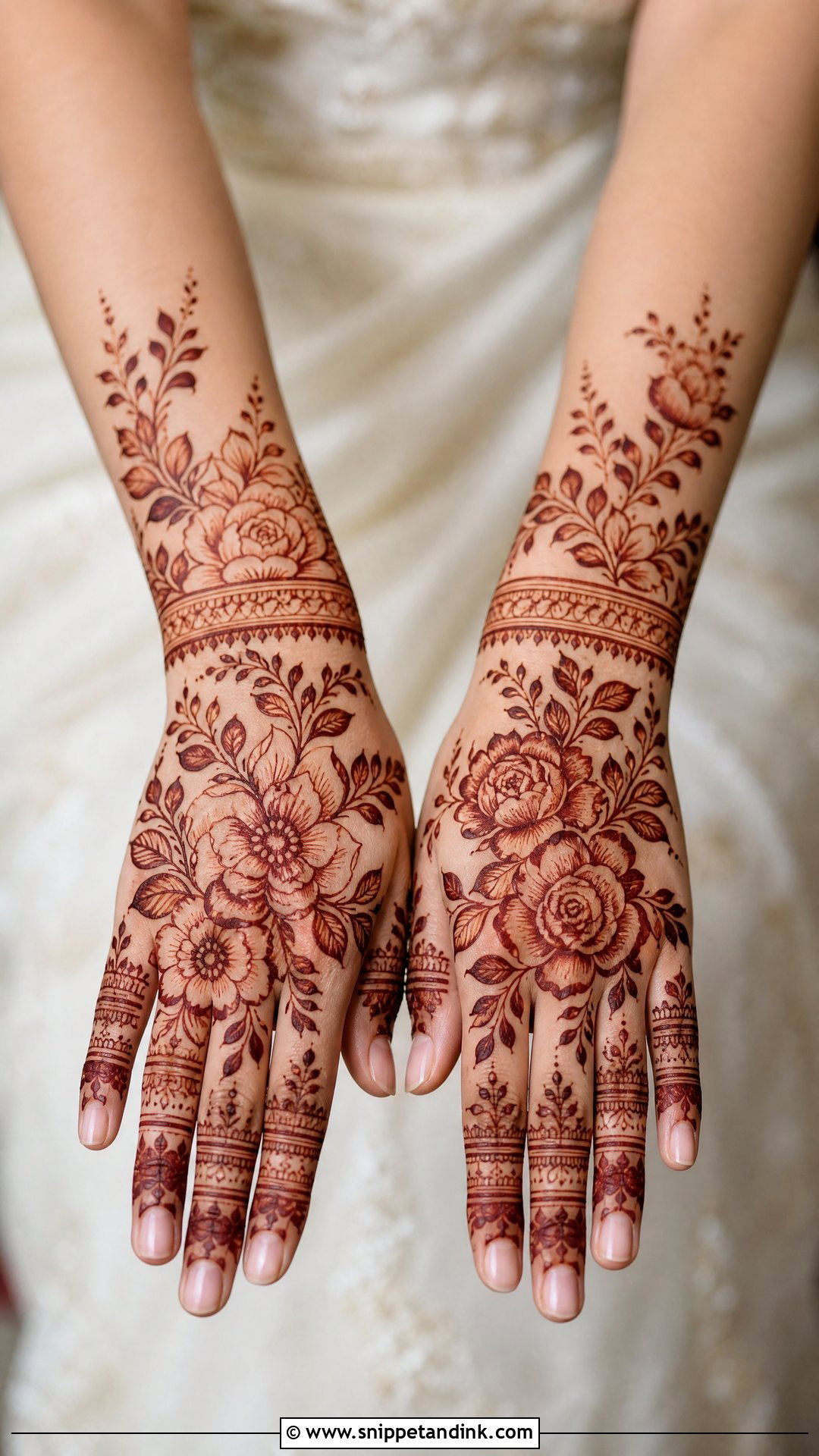
Flowers adapt to every hand because I can draw them large or small, shaded or fine. A full floral bridal look might carry rose-like blooms, lotus patterns, leafy trails, wrist bracelets and decorated fingers, in Indian, Arabic or Indo-Arabic style depending on coverage. Larger flowers with open spaces feel modern; dense fillers around the petals, connected up to the forearm, feel traditional. Pastel outfits, garden ceremonies and daytime weddings suit it especially.


15. Paisley Mehndi Design For Marriage
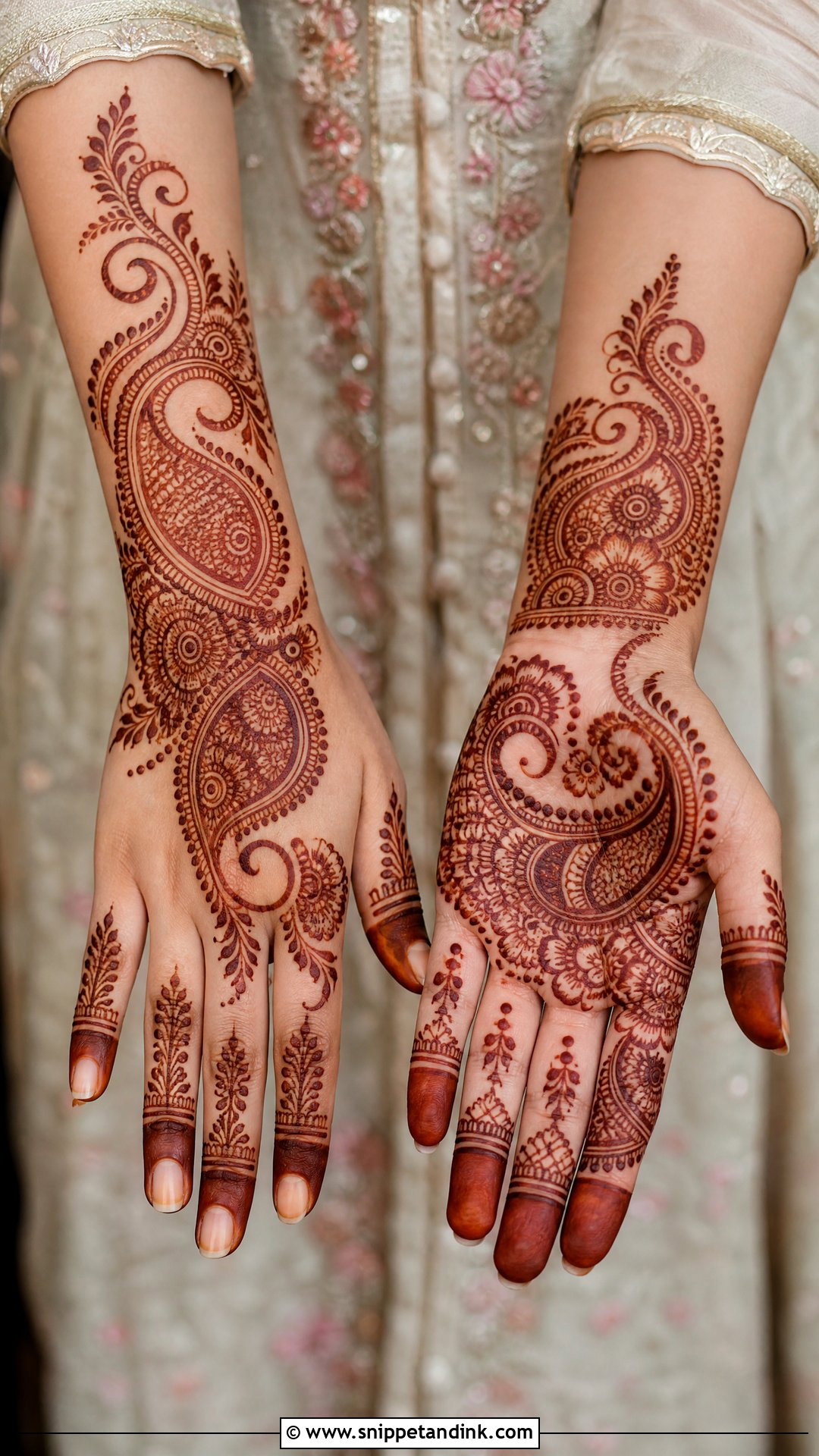
Paisleys almost never let a bride down. They fill the palm, curve along the wrist or form a back-hand trail, and their teardrop shape follows the curves of the hand. I combine large paisleys with small florals, leaf borders, dots and shading for a complete wedding design. Fill each one with tiny checks, petals and lines for a heavier look, or leave bold paisleys with open spacing for a cleaner one. It’s traditional without needing portraits or complex storytelling.
16. Jaali Mehndi Design For Marriage
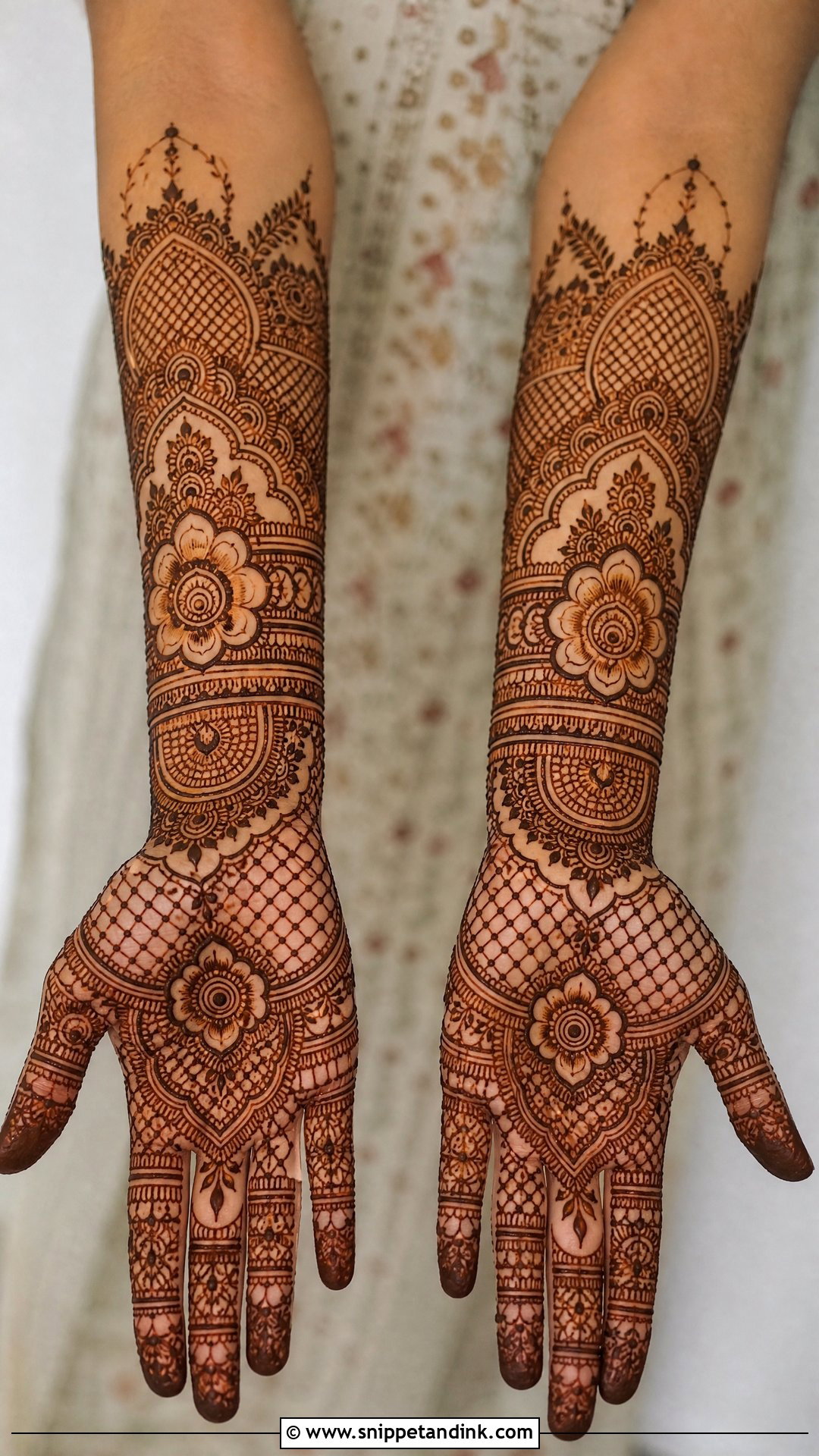
Jaali mehndi design for marriage brings a lace-like texture to the back hand, palm corners, fingers or wrist. A complete bridal version usually has a central floral or mandala motif surrounded by netted sections and fine borders. Mesh only looks refined when every square is even, so it’s a good test of an artist’s steadiness. I always break it up with florals, paisleys or bold outlines, otherwise it turns flat. It pairs well with bridal rings, haath phool and bangles.
17. Dulha Dulhan Mehndi Design
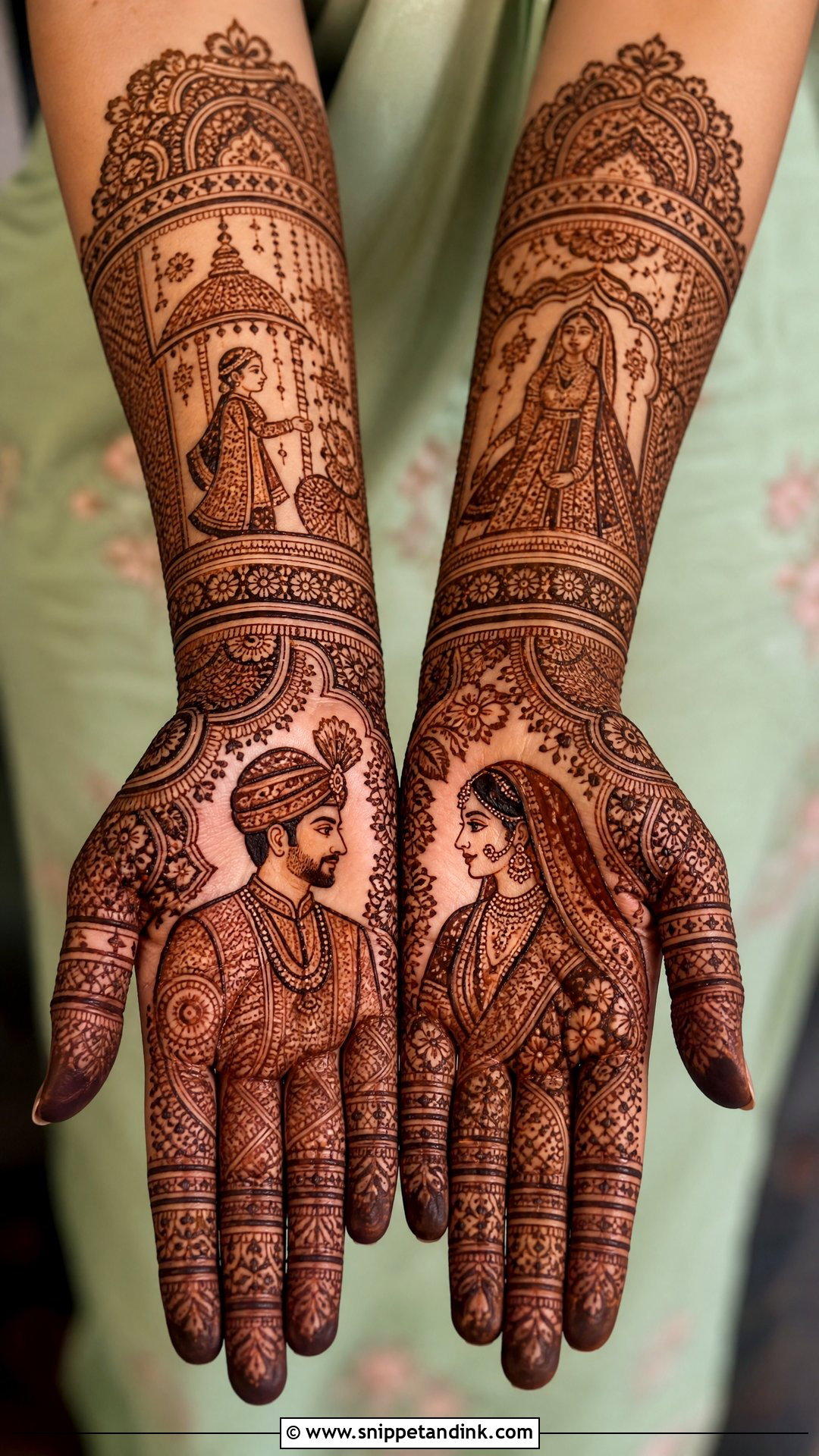
Dulha dulhan mehndi design puts the bride’s portrait on one palm and the groom’s on the other, surrounded by varmala, doli, mandap, music motifs, florals and ornamental borders. The rest of the hand fills with paisleys, jaali, leaves and finger detail. Faces need clean, confident lines, and they shrink and soften as the stain develops, so I keep features simple rather than overworked. Done well, it stops being decoration and becomes a record of the day.
18. Wedding Date Mehndi Design
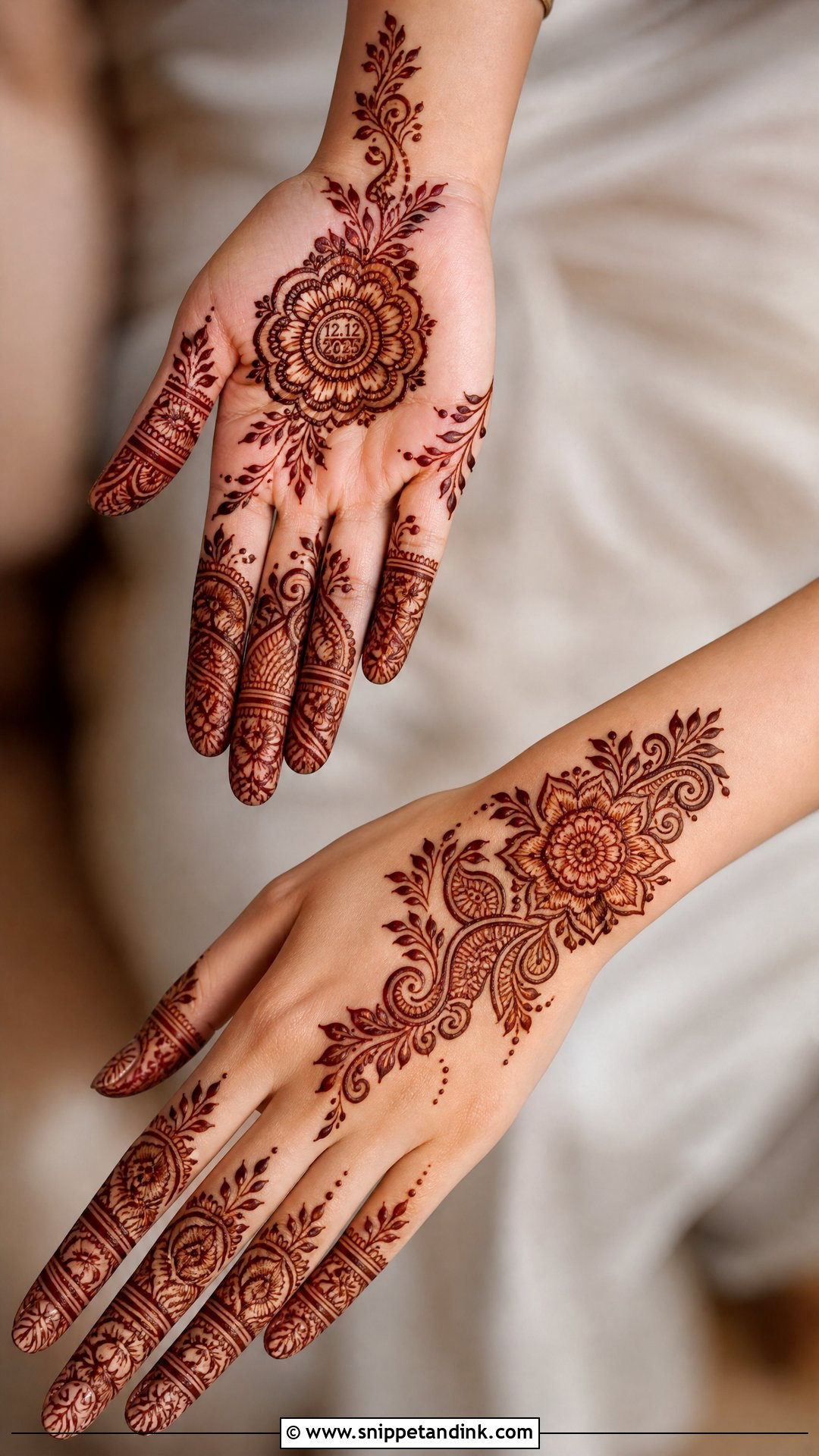
Hiding the wedding date in the design is a small detail that guests love finding. I place it on the wrist, inside a heart, under a mandala or within a floral border, while the rest of the hand stays traditional with paisleys, jaali and finger patterns. Numbers need to be larger than you’d think, since henna lines thicken slightly and small digits like 6, 8 and 9 can fill in. Pair it with initials for a romantic touch. It works for roka, nikah and anniversary events too.
19. Name Mehndi Design For Marriage
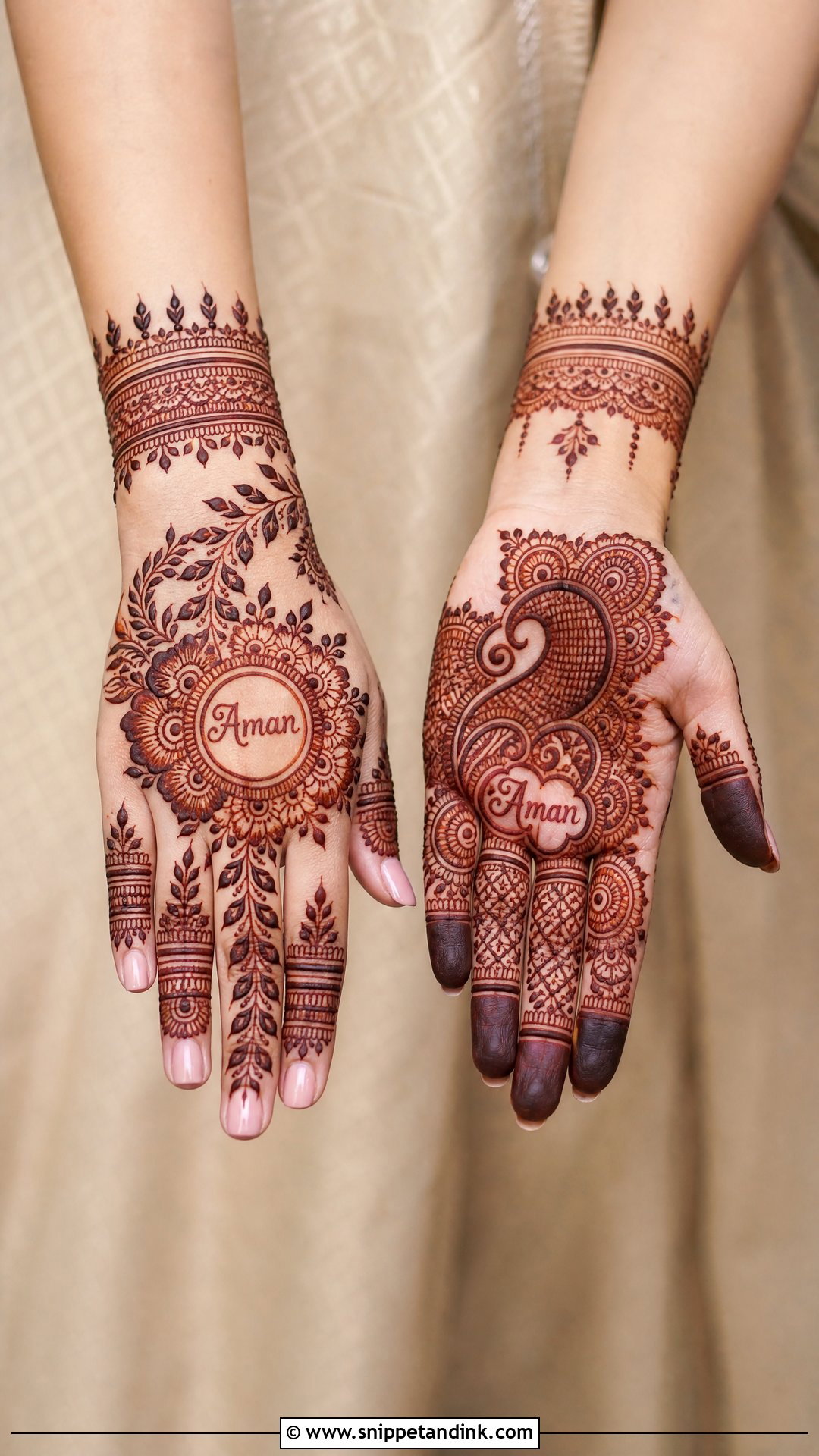
Hiding the groom’s name in the bride’s henna is an old game, and it still gets the whole family involved after the wedding when he has to find it. I tuck the name or initials inside paisleys, flowers, leaves or wrist patterns, within either a heavy full palm or a clean back-hand trail. The skill is making it readable once you know where to look, but not obvious at a glance. If the letters are too separate from the pattern, he’ll find it in seconds and the fun is gone.
20. Minimal Bridal Mehndi Design
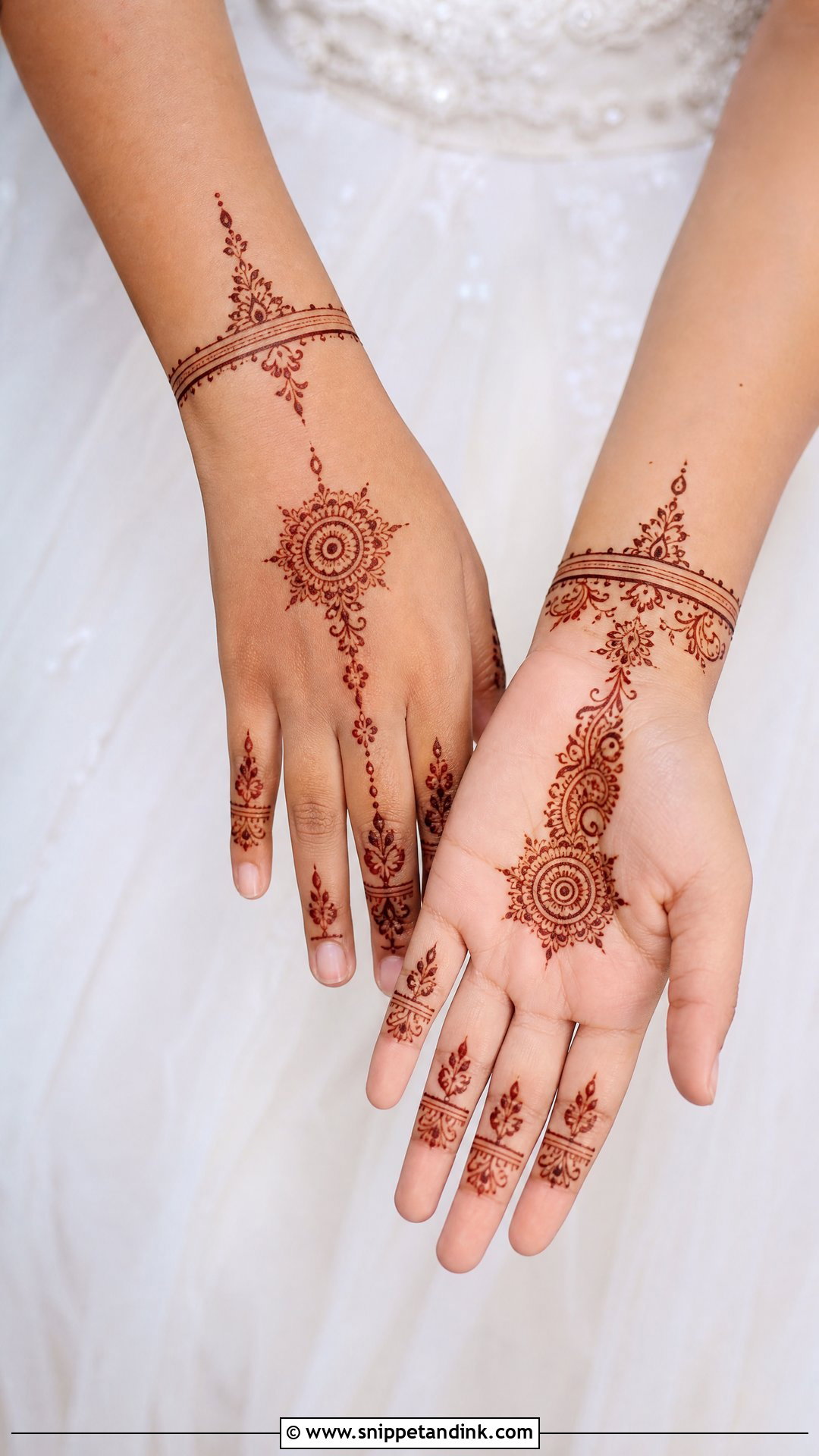
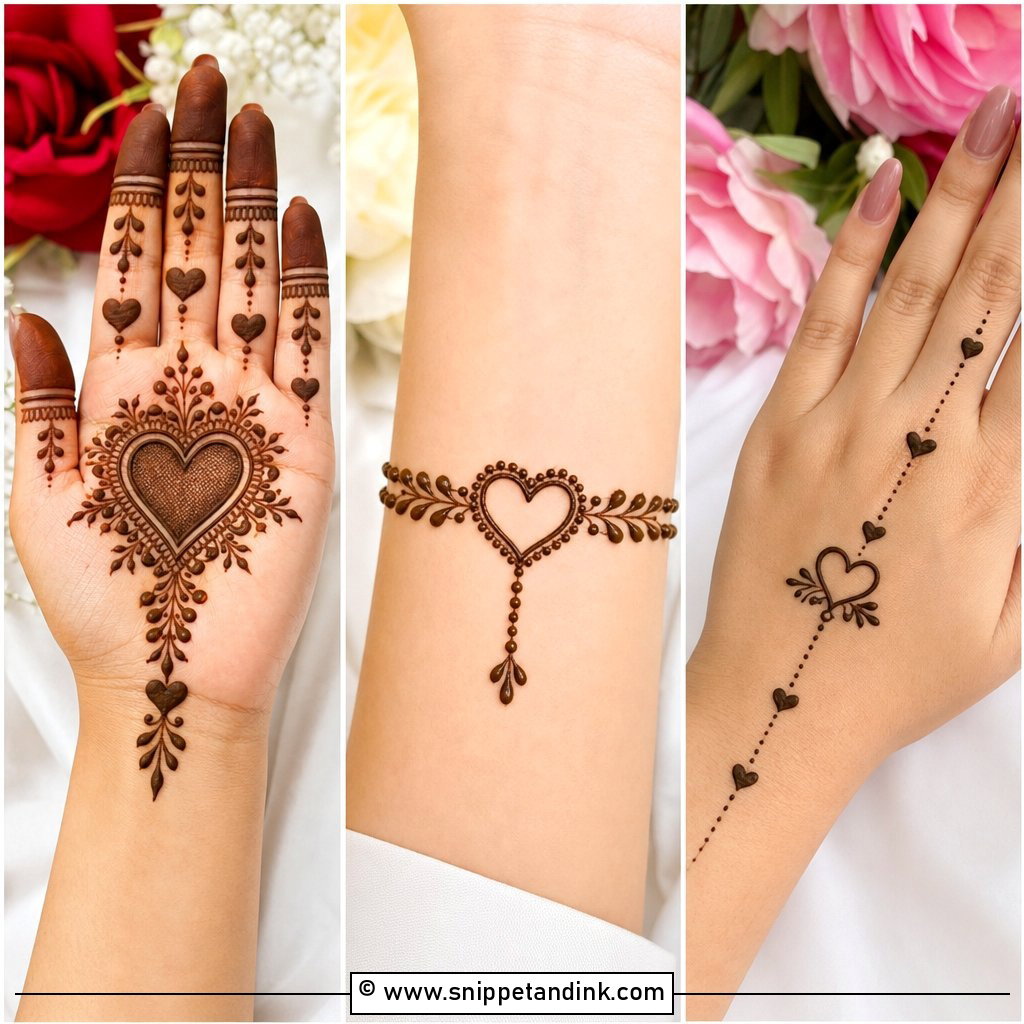
Minimal bridal henna is edited, not bare. Fine finger patterns, a small mandala, slim wrist bands and light floral trails make a complete design for a small ceremony or a modern outfit. It flatters ivory, blush, champagne and pastels, and it suits brides who can’t sit for hours. Crisp lines and balanced placement on both hands are what keep it bridal. Initials, tiny paisleys or a fine bracelet add something personal without adding weight.
21. Finger Mehndi Design For Marriage
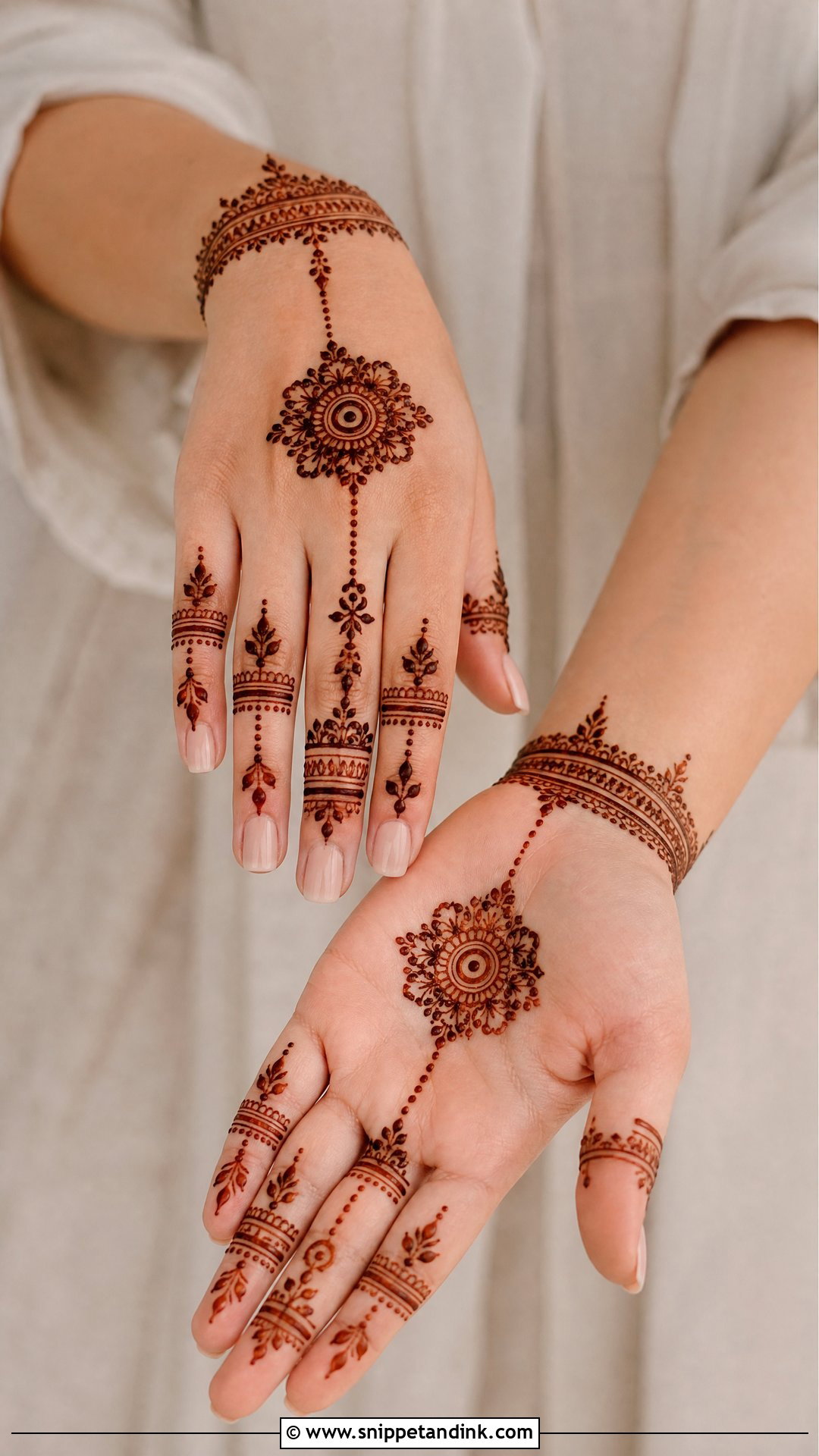
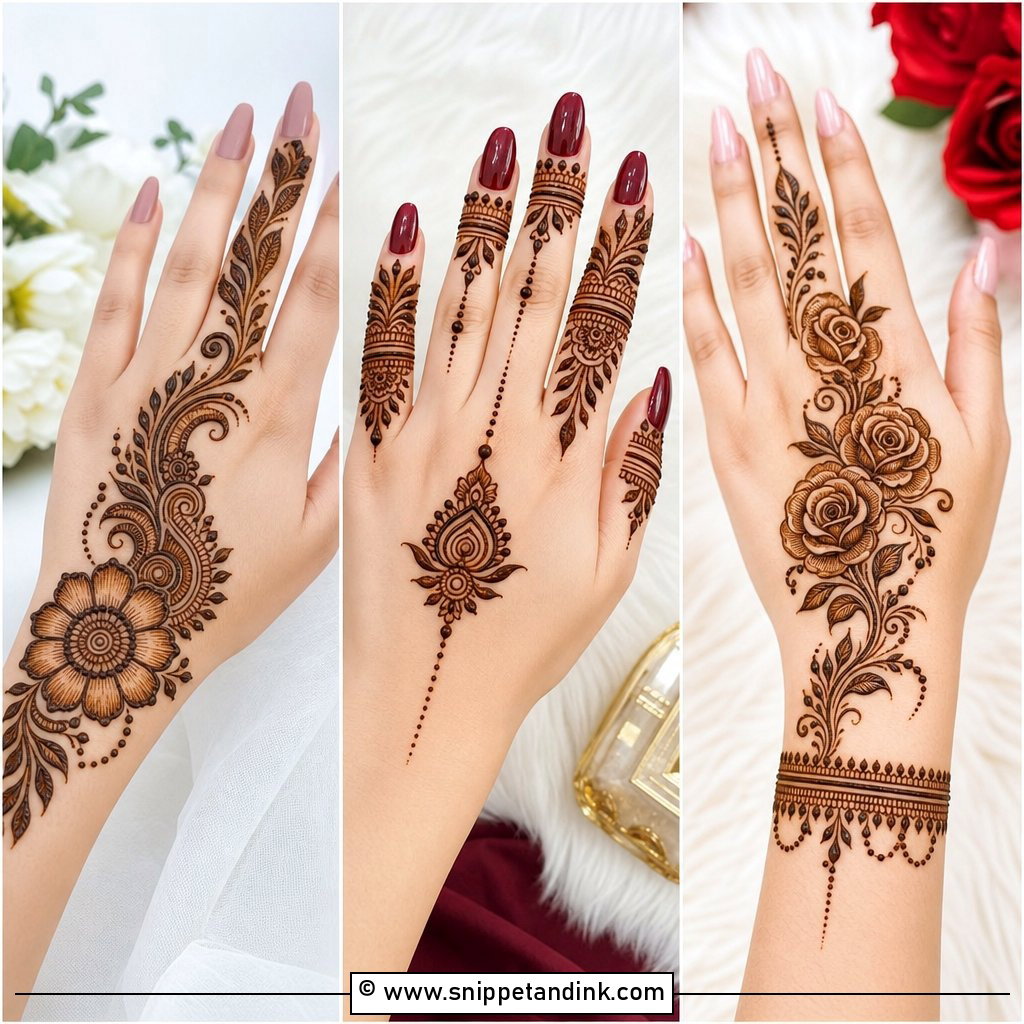
Finger designs only look bridal when they’re planned as part of a whole hand, not as separate marks. The fingers carry detailed lines, leaves, dots and mini florals, while a small mandala, bracelet band or diagonal vine connects them to a lighter palm or back hand. For the wedding itself, don’t leave the fingers sparse; they’re in every ring and jewelry photo. I also see this design a lot at receptions and on bridesmaids. Balanced finger work visually lengthens the hand and suits statement rings.
22. Bracelet Mehndi Design For Marriage
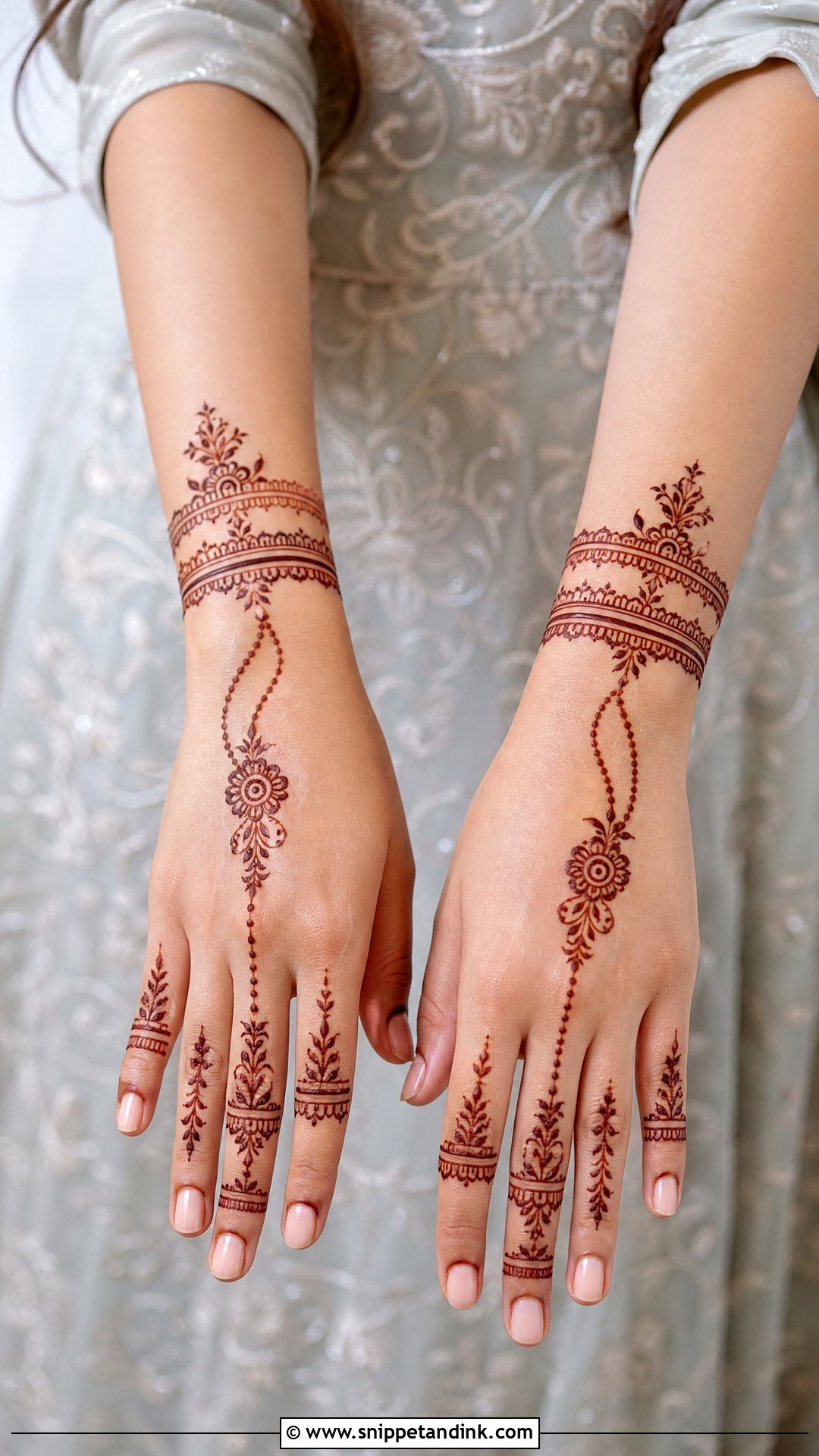
Bracelet designs wrap the wrist like a bangle, then link to the fingers with chains, florals or ring patterns, so the back hand looks framed by jewelry. I draw a simple version for pre-wedding events and a heavier one with mandalas, jaali and leafy vines for the wedding day. Before placing the band, I check where your real bangles will sit, since henna and metal should complement each other rather than overlap. It gives elegance without covering the entire hand.
23. Half Hand Mehndi Design For Marriage
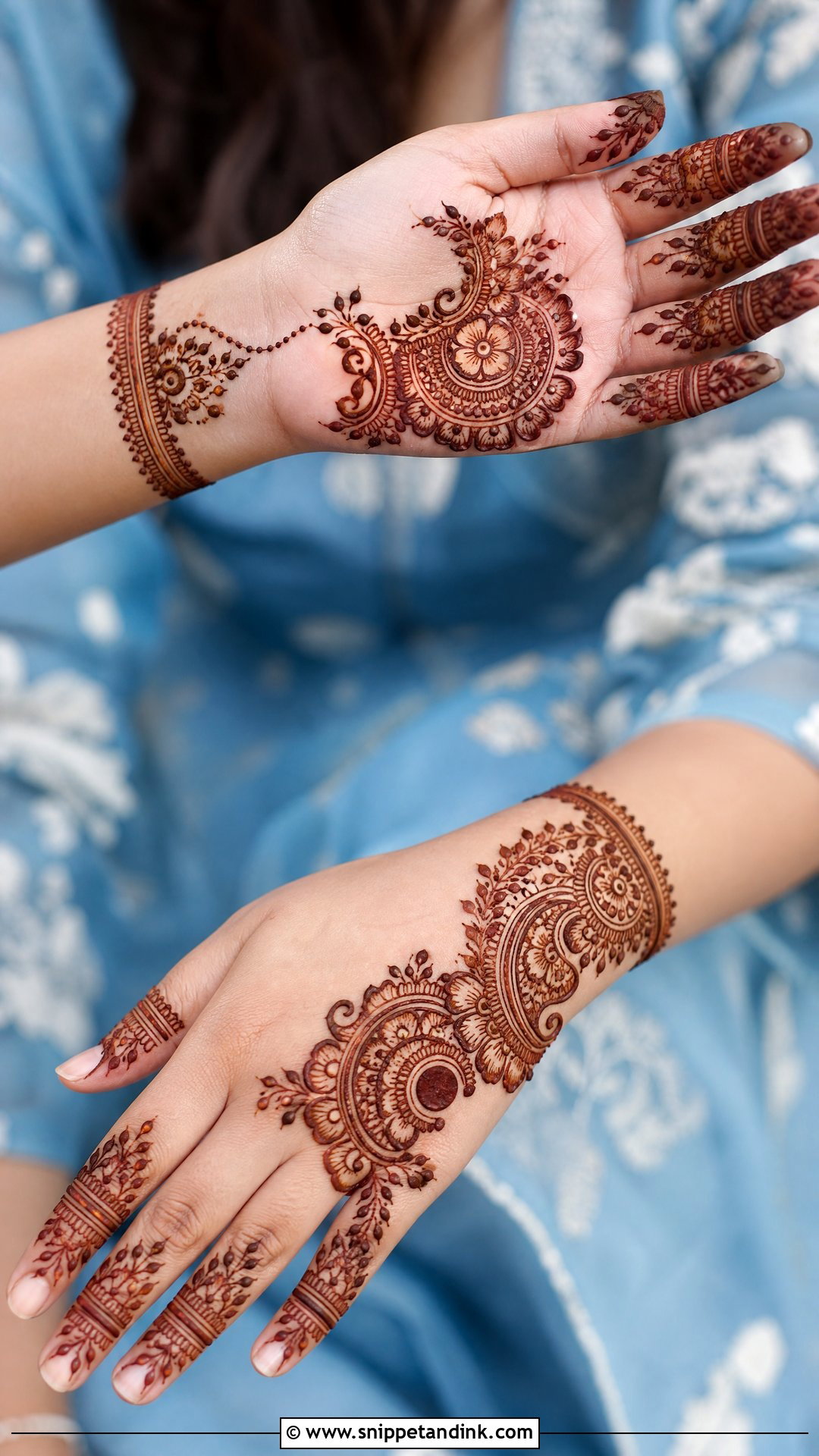
Half hand designs cover the palm and fingers and stop at the wrist, or decorate the back hand with a central motif and a bracelet ending. They’re quicker and easier to wear than forearm work, so brides who prefer lighter styling, bridesmaids, sisters and guests all ask for them. Strong motifs such as paisleys, florals, mandalas or Arabic trails keep it festive. The wrist border is what makes it look complete, not cut short.
24. Leg Mehndi Design For Marriage
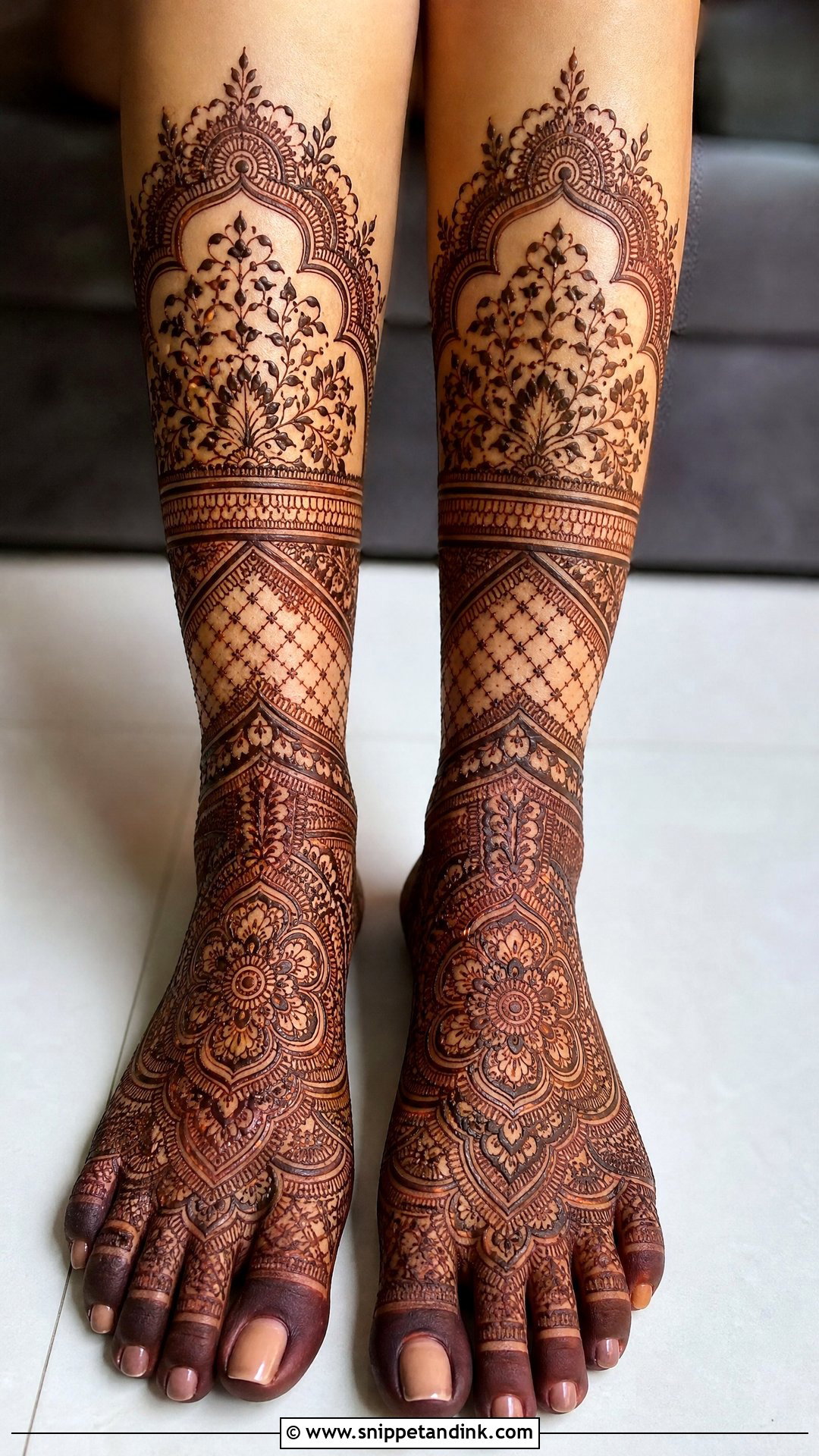
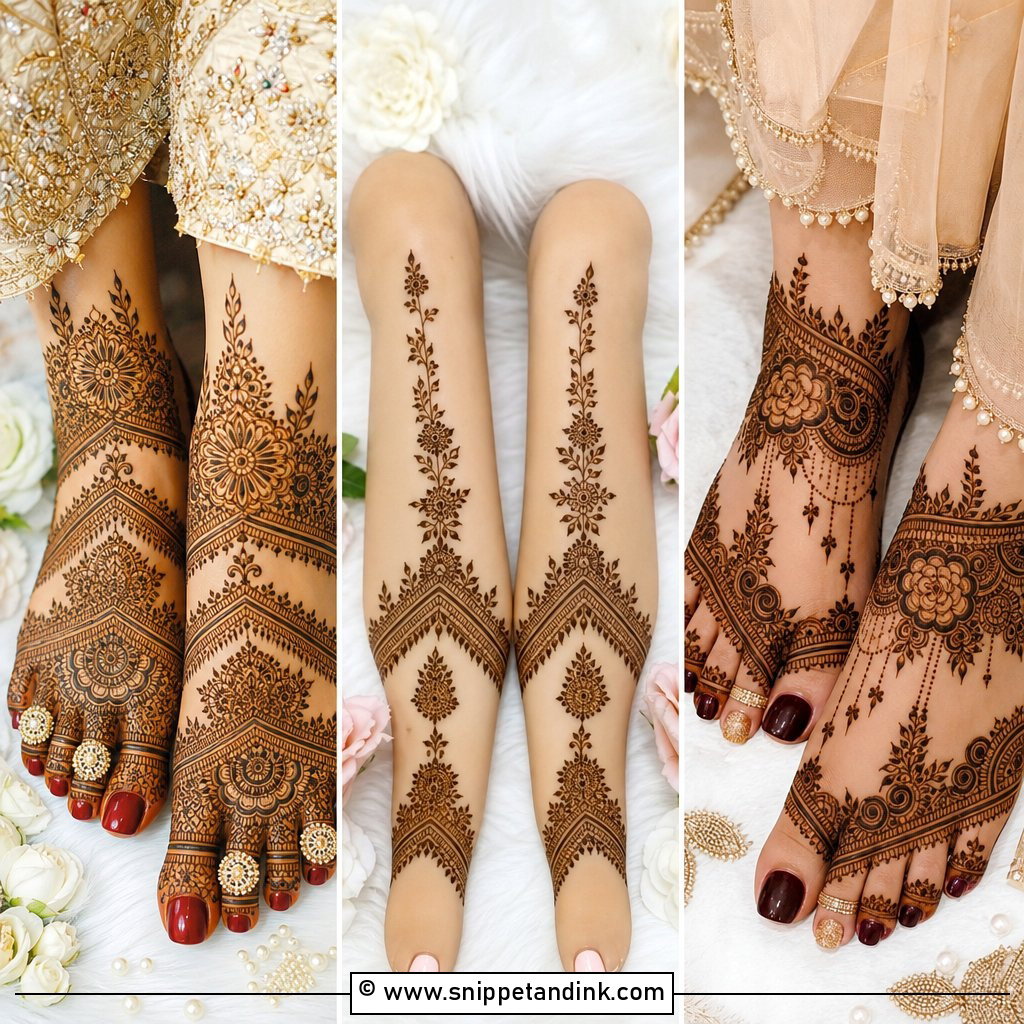
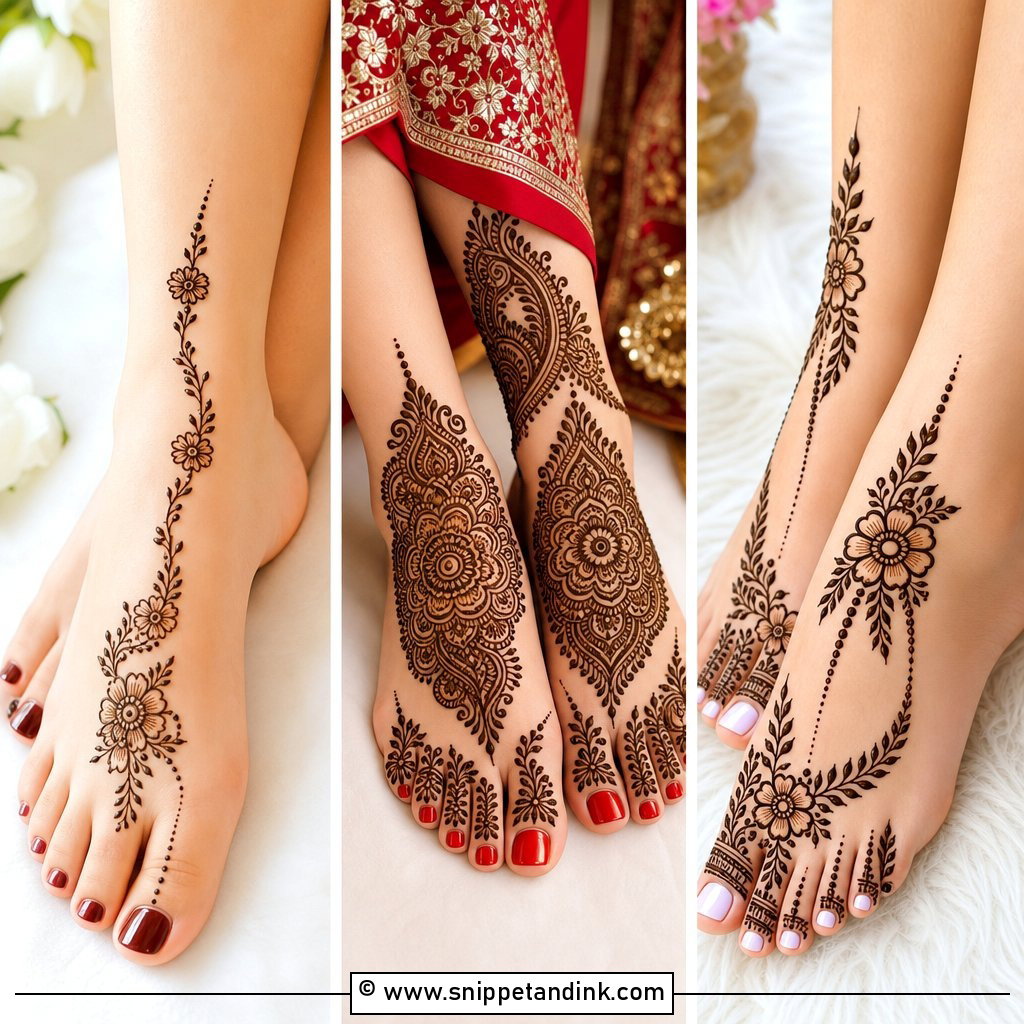
Leg and foot henna finishes the look whenever the outfit shows the feet, ankles or lower legs. Traditional bridal foot mehndi usually has anklet borders, toe detailing, mandalas, florals, paisleys and jaali, kept simple around the feet or extended upward for a grander effect. Feet stain unevenly: the soles and toes go very dark, the tops of the feet a little lighter, so I put bolder lines on top. Keep both feet symmetrical. With payal, toe rings and bridal footwear, it completes the close-ups.
25. Groom Mehndi Design For Marriage
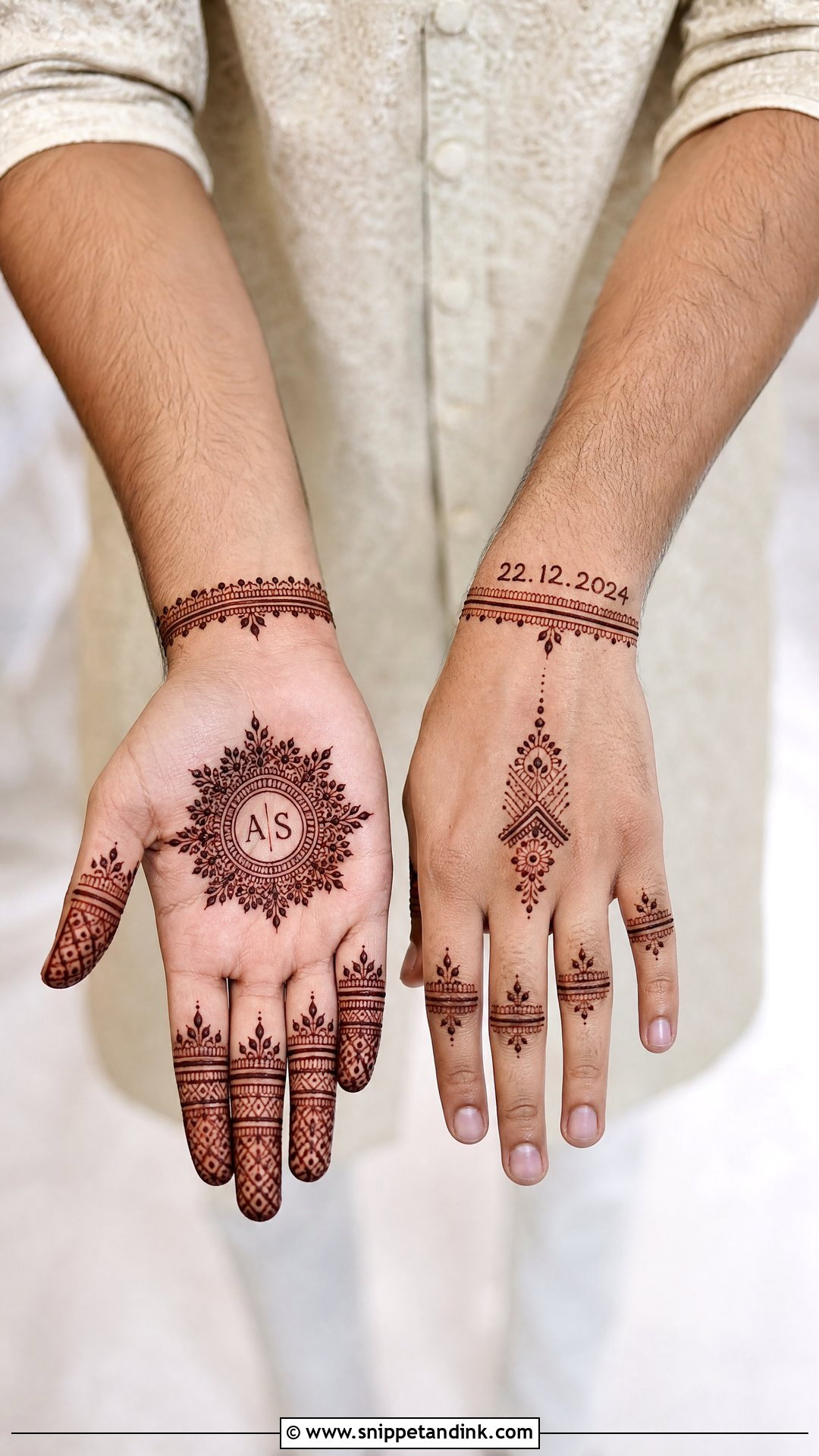
Groom henna is usually much simpler: a small palm motif, initials, the wedding date, a name, a mandala or a clean wrist pattern. Some grooms want the traditional small patch on the palm; others prefer a minimal design on the back hand. I keep it neat and quick, because most grooms won’t sit still for long. Linking it to the bride’s design through shared initials, a symbol or a similar border is a thoughtful touch. It fits mehndi night, nikah, sangeet or wedding morning rituals.
Running the Mehndi Night So the Bride Isn’t Stuck
The bride sits for hours while everyone else celebrates around her. A little planning makes that time comfortable instead of exhausting.
Set up her seat first
Give her a low, supportive chair or floor cushion with back support, good daylight or a bright lamp for the artist, and a side table. Once her hands are covered, she can’t adjust anything herself. Phone charged, hair tied back and a bathroom trip just before the artist starts will save a lot of awkward pauses.
Someone has to feed her
Assign a sister or friend to bring food and water with a straw. Wet paste smudges at the slightest brush, so she shouldn’t hold a plate or glass until it is completely dry, which can take an hour or more under the lamp.
Keep the guest queue separate
If guests want henna, book an extra artist for them. Simple guest designs are quick, but a queue forming around the bride’s artist pulls her attention and stretches the bridal session late into the night, when hands and eyes are tired.
What Your Artist Needs From You a Week Out
Comfort, outfit, ceremony style and the photos you want should steer your choice. Heavy Indian and Rajasthani designs feel grand, while Arabic, Indo-Arabic, bracelet and minimal patterns are cleaner. Names, dates, portraits and meaningful motifs make it yours. About a week before, send your artist reference photos, pictures of the outfit and jewelry, and the ceremony schedule, and agree on coverage, start time and aftercare. With that in hand, we can arrive with the right cones and the right plan, and you can simply sit back.
You'll Like These Ideas:






Leave a Reply