
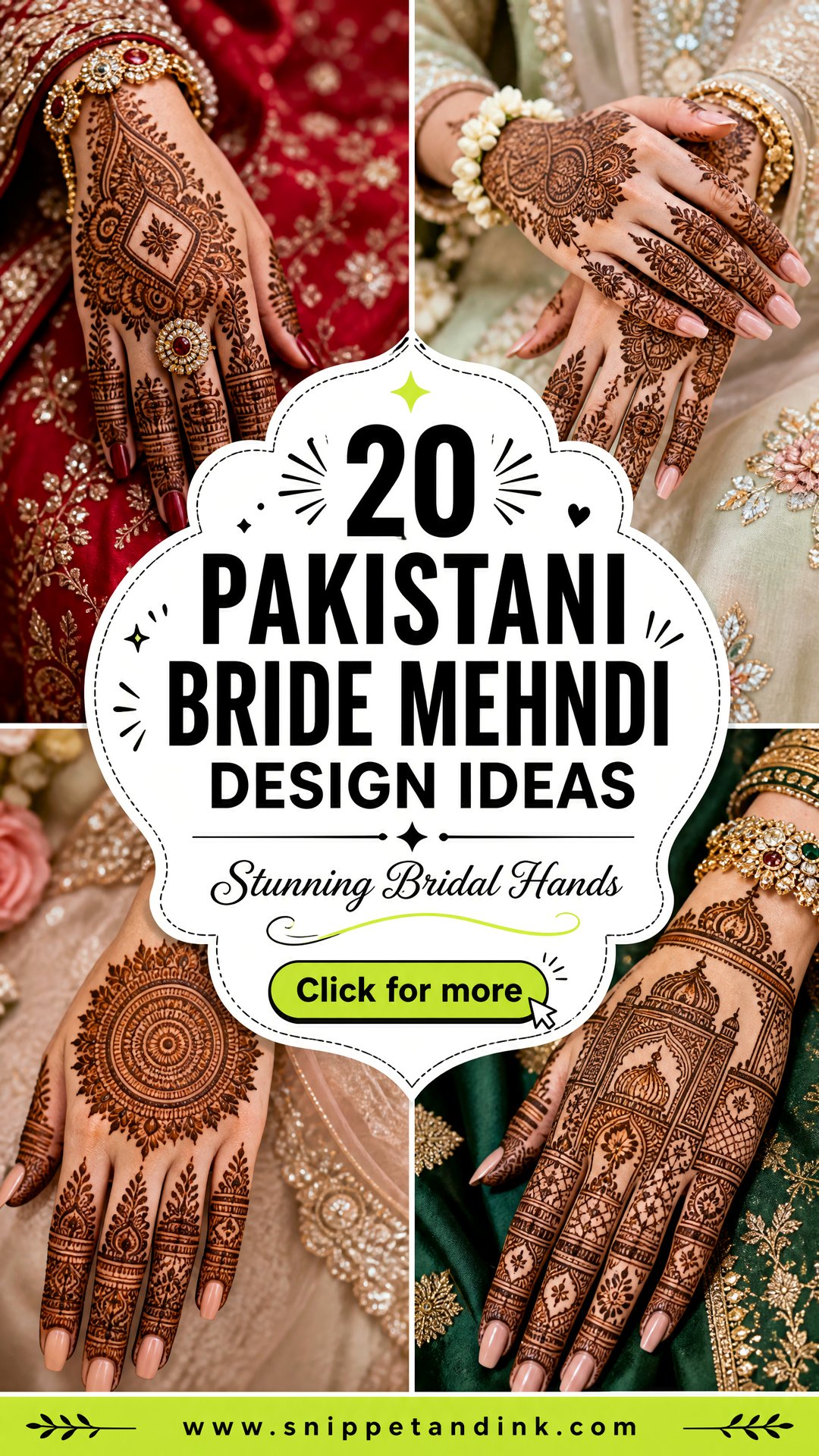
Pakistani bridal mehndi draws on Indian, Arabic and Mughal pattern work, and the bride’s hands end up in nearly every frame of the nikkah, the mehndi night, the baraat and the portraits. When I plan a bridal set, I’m thinking about coverage first: how far up the arm the design goes, how dense the fingers are, and where the eye should land. Some brides want traditional henna packed edge to edge, others want negative space and a modern back hand. The designs below range from classic dulhan coverage to minimal nikkah work, each with notes on how it behaves once the stain develops.
The Calendar Behind a Dark Bridal Stain
The color you see when the paste comes off is not the color you’ll have at the nikkah. Natural henna starts bright orange and darkens to reddish brown or maroon over the next day or two, so I schedule bridal application one to two days before the main event, never the same morning.
The stain also isn’t even across the body. Palms, fingertips and feet stain darkest because the skin there is thicker; the forearms and upper wrists usually come out a few shades lighter. That’s one reason I put the boldest motifs on the palms.
Questions worth asking your artist
- Do you mix your own paste, and what’s in it? Fresh natural henna is mixed from leaf powder with liquids and oils and has a short shelf life.
- How long will my full set take? Full hands, arms and feet can run most of a day.
- Can I see a stain photo, not just a fresh paste photo? Fresh paste always looks crisp.
- Do you do a patch test? If you have sensitive skin, ask for one a week or two before.
Turn down anything sold as black henna, or any paste that promises a black stain within an hour. Real henna never stains black, and those mixes often contain a hair-dye chemical that can cause severe skin reactions and blistering.
1. Pakistani Bridal Full Hand Mehndi Design
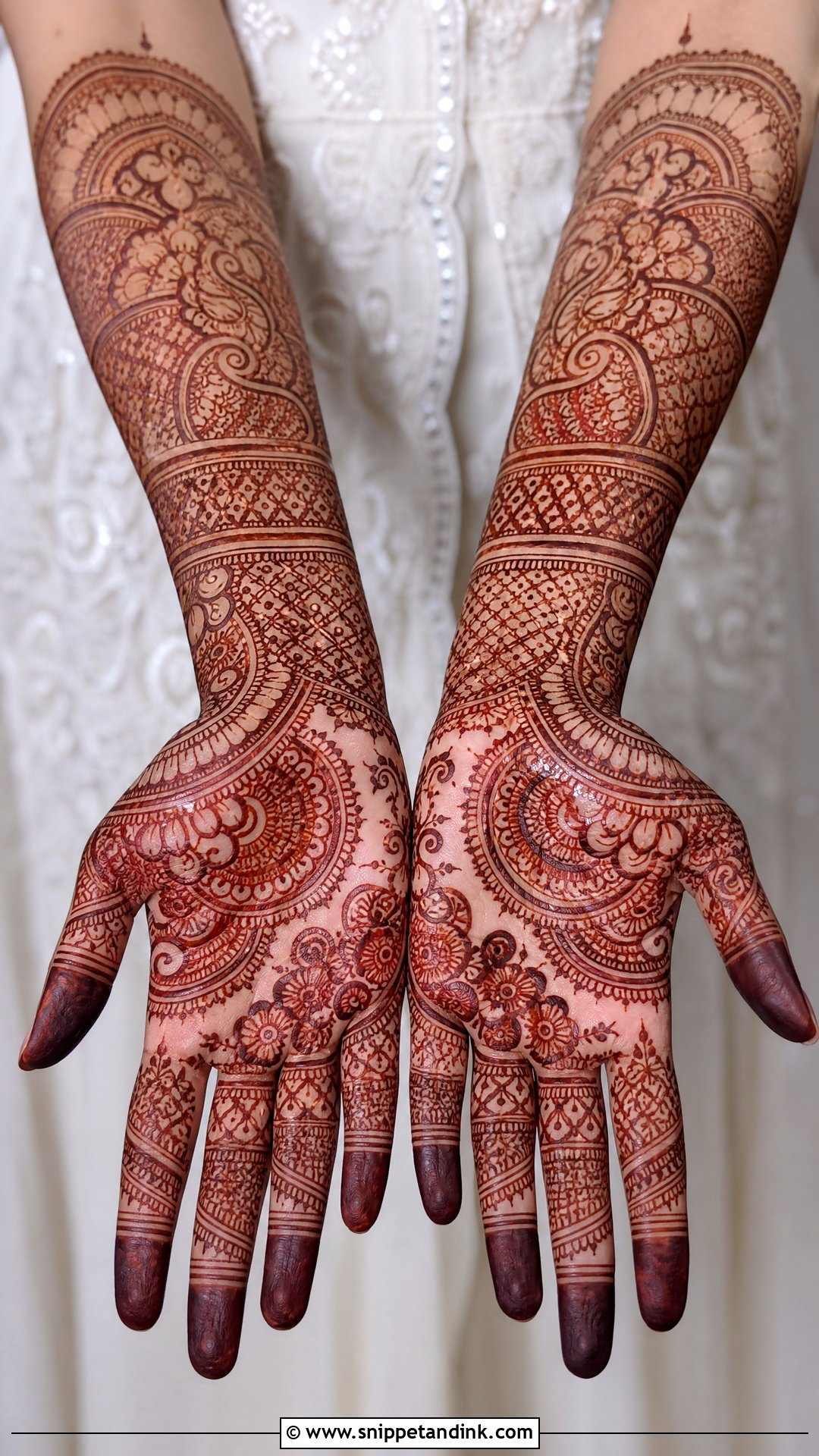
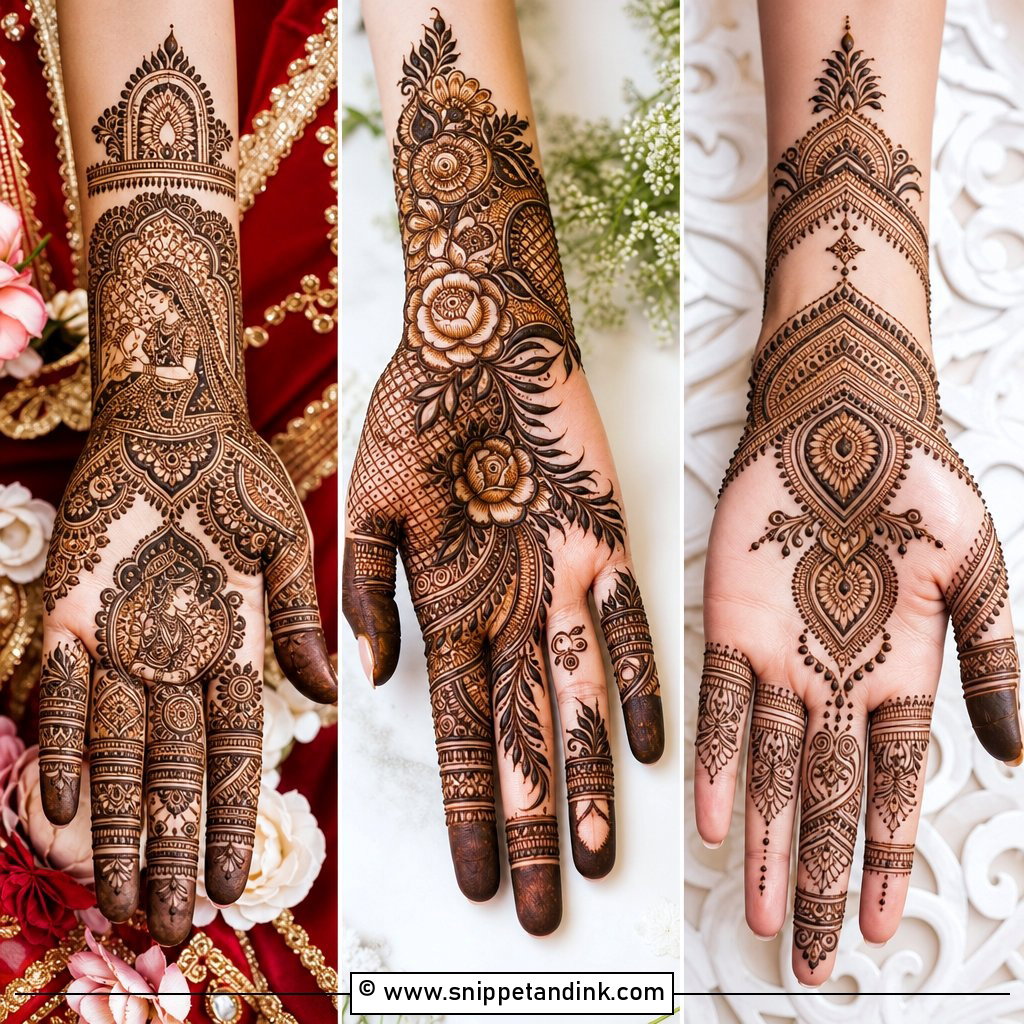
Full hand coverage is the traditional choice, running from fingertips over palms and wrists into the forearms. Paisleys, floral vines, mandalas, jaali panels and fine fillers all share one layout, so the planning matters more than any single motif. I usually put bold round motifs on the palm, where the stain comes out darkest, and save layered bands and vines for the forearm, which stains lighter. With heavy bangles and red bridal wear the hands read as one piece. If close-ups matter to you, ask for symmetry between both hands and give the paste time to reach a deep maroon.
2. Pakistani Bridal Front Hand Mehndi Design
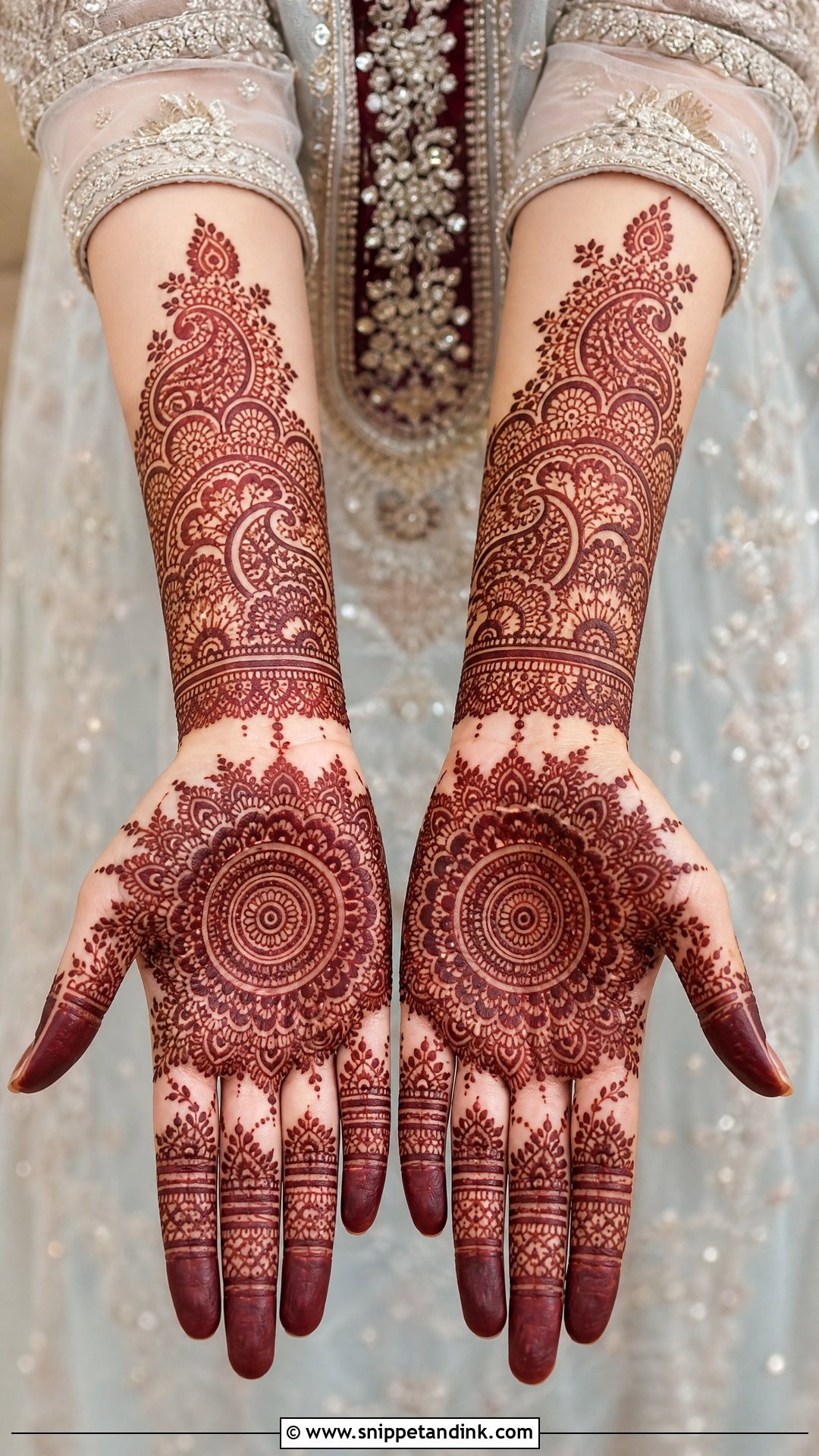
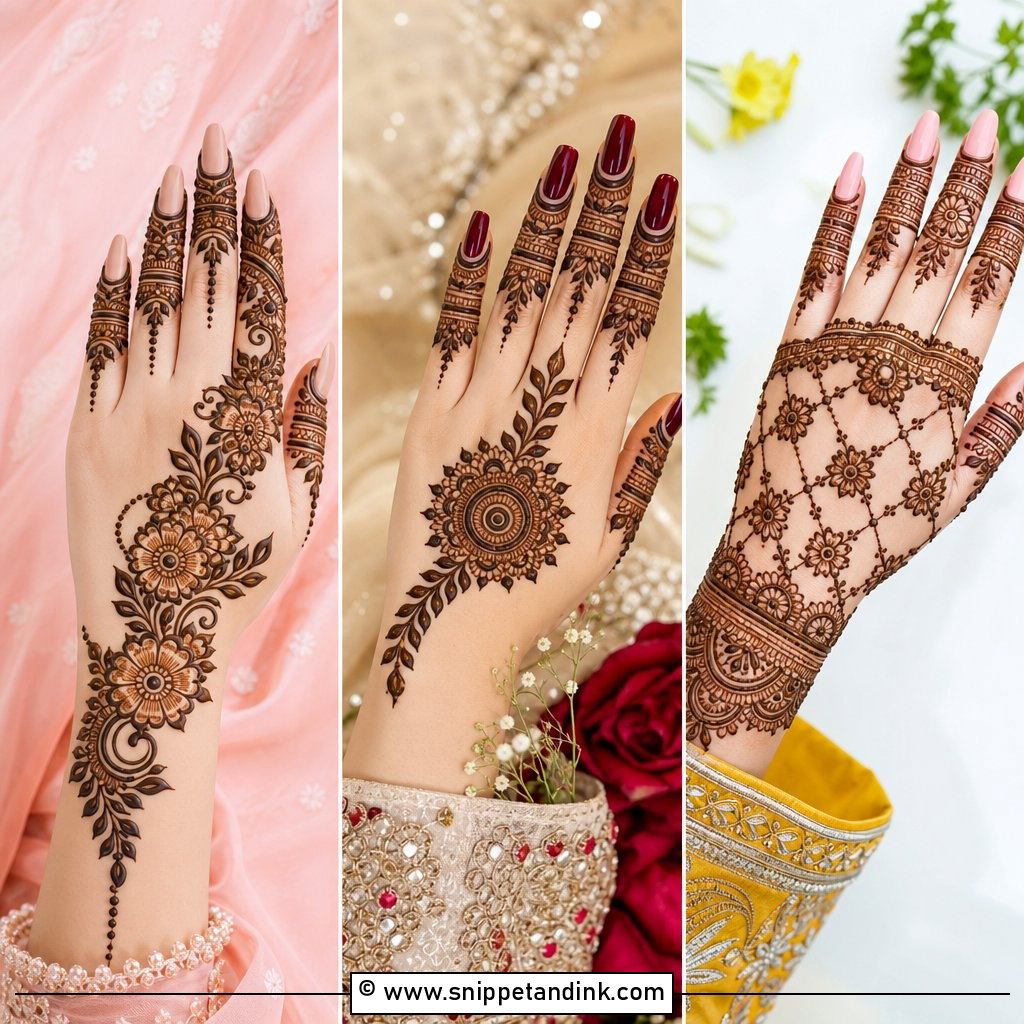
The palm side gets the attention during ring shots, dua photos and portraits. I start most front hand designs with a central mandala or paisley cluster, then grow florals, dotted trails and leaf work up the fingers, with a bracelet band at the wrist linking the palm to the forearm. Keep the main motif bold and the fillers fine. Fine lines thicken slightly as the stain darkens over the next two days, so a palm that looks airy at application can look crowded by the nikkah if the gaps are too tight.
3. Pakistani Bridal Back Hand Mehndi Design
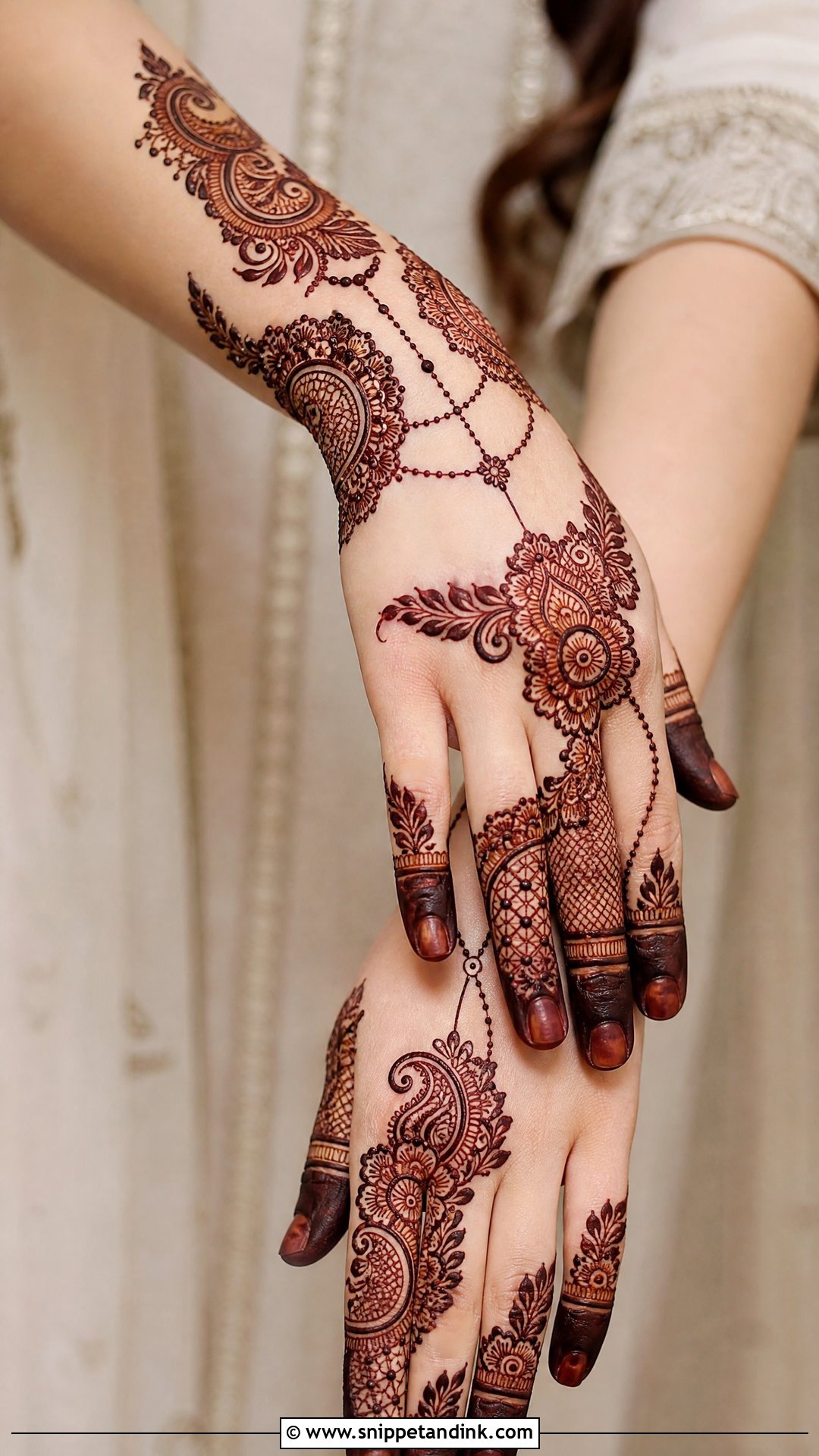
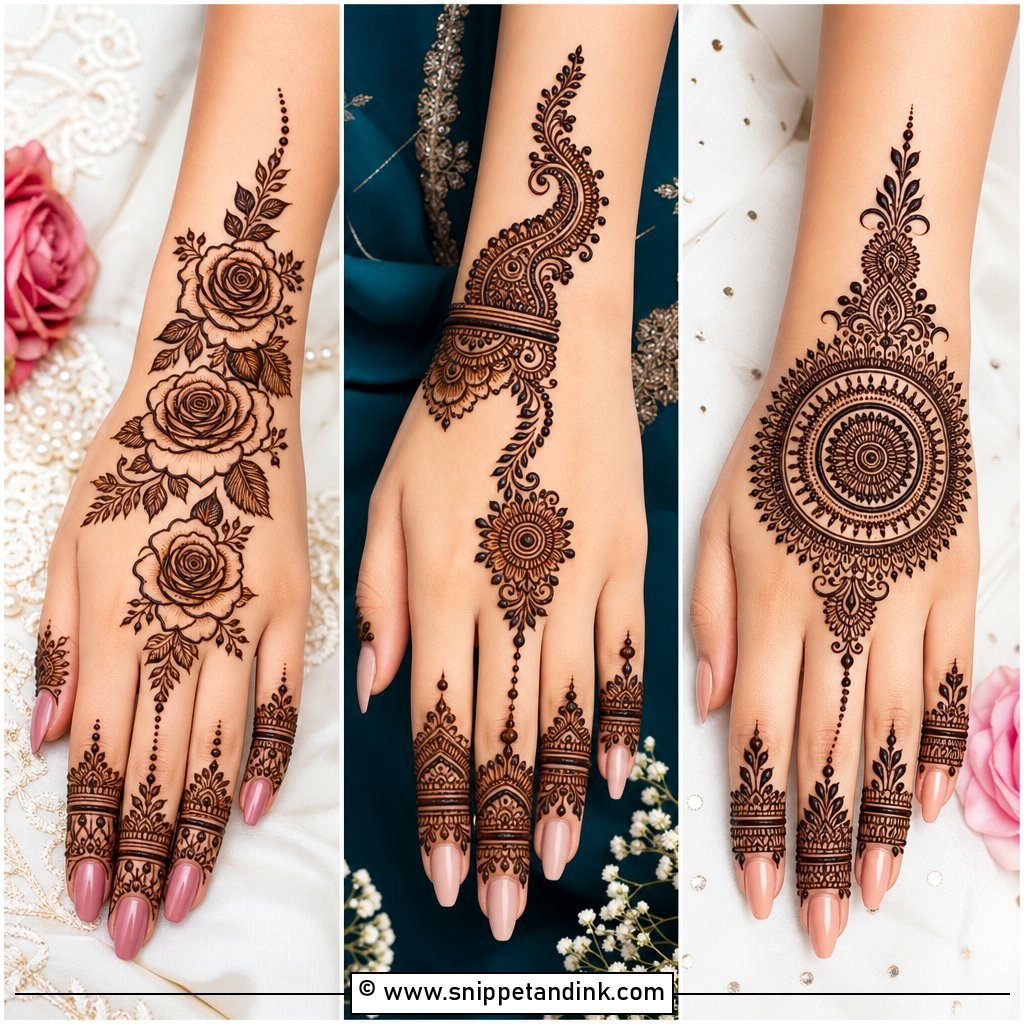
Back hand mehndi is the side that sits next to your jewelry, so I design it almost like jewelry itself: a cuff at the wrist, chains running across the hand, ring motifs on the fingers. Some brides want lace-like jaal over the whole back; others prefer a diagonal Arabic trail. If you’re wearing a hathphool, show it to your artist beforehand so the pattern frames it instead of disappearing under it. Leaving small gaps of bare skin between motifs keeps it modern.
4. Pakistani Bridal Arabic Mehndi Design
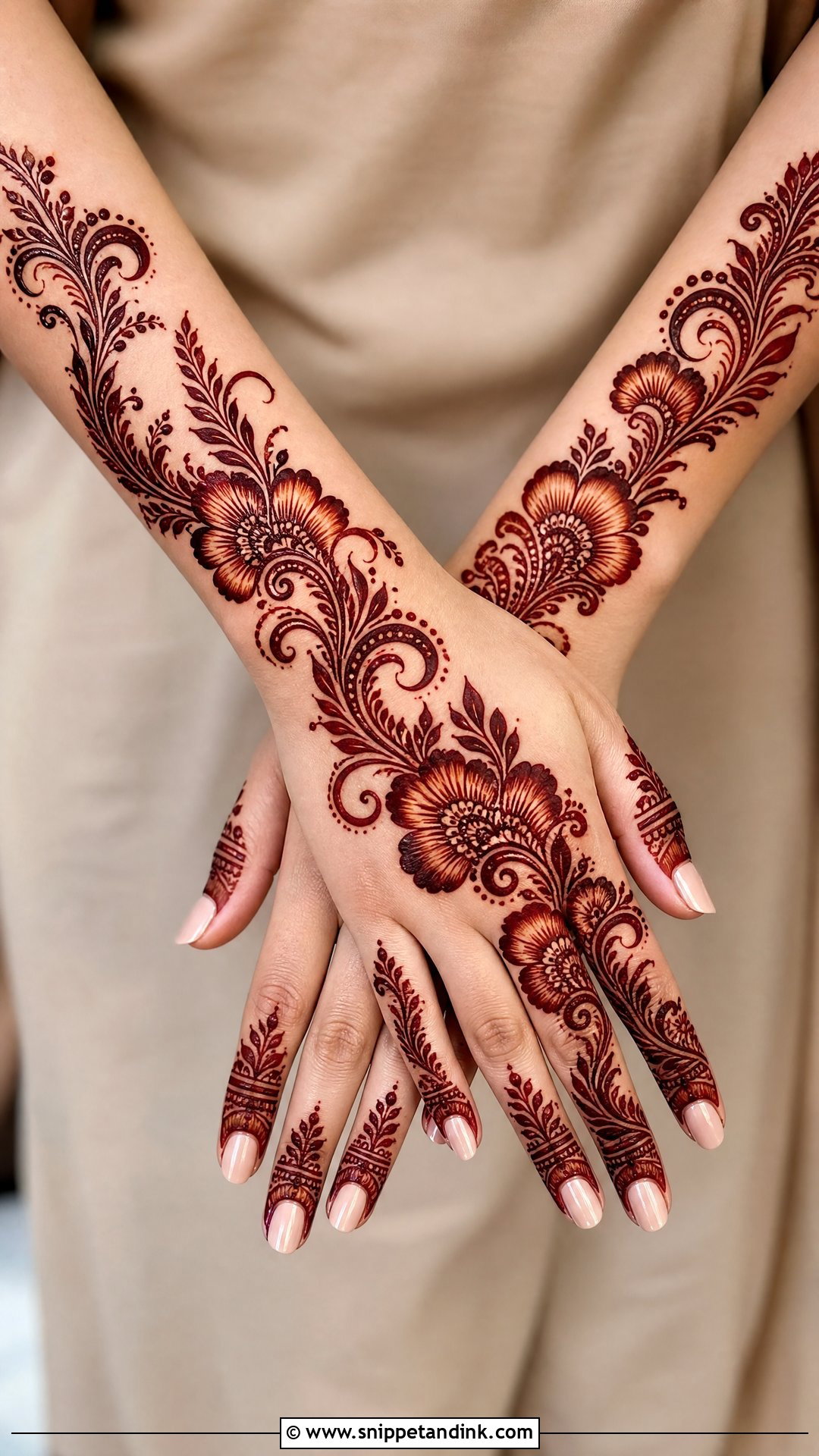
Arabic flow suits brides who want bold flowers and open space rather than packed coverage. The pattern usually travels diagonally from wrist to fingers, with large florals, leafy vines and shaded petals surrounded by clean skin. Bolder lines carry more paste, and more paste on the skin generally means a deeper, clearer stain, which is why Arabic designs read well from across a room. It’s a good route if you want impact without both hands fully filled.
5. Pakistani Bridal Indo Arabic Mehndi Design
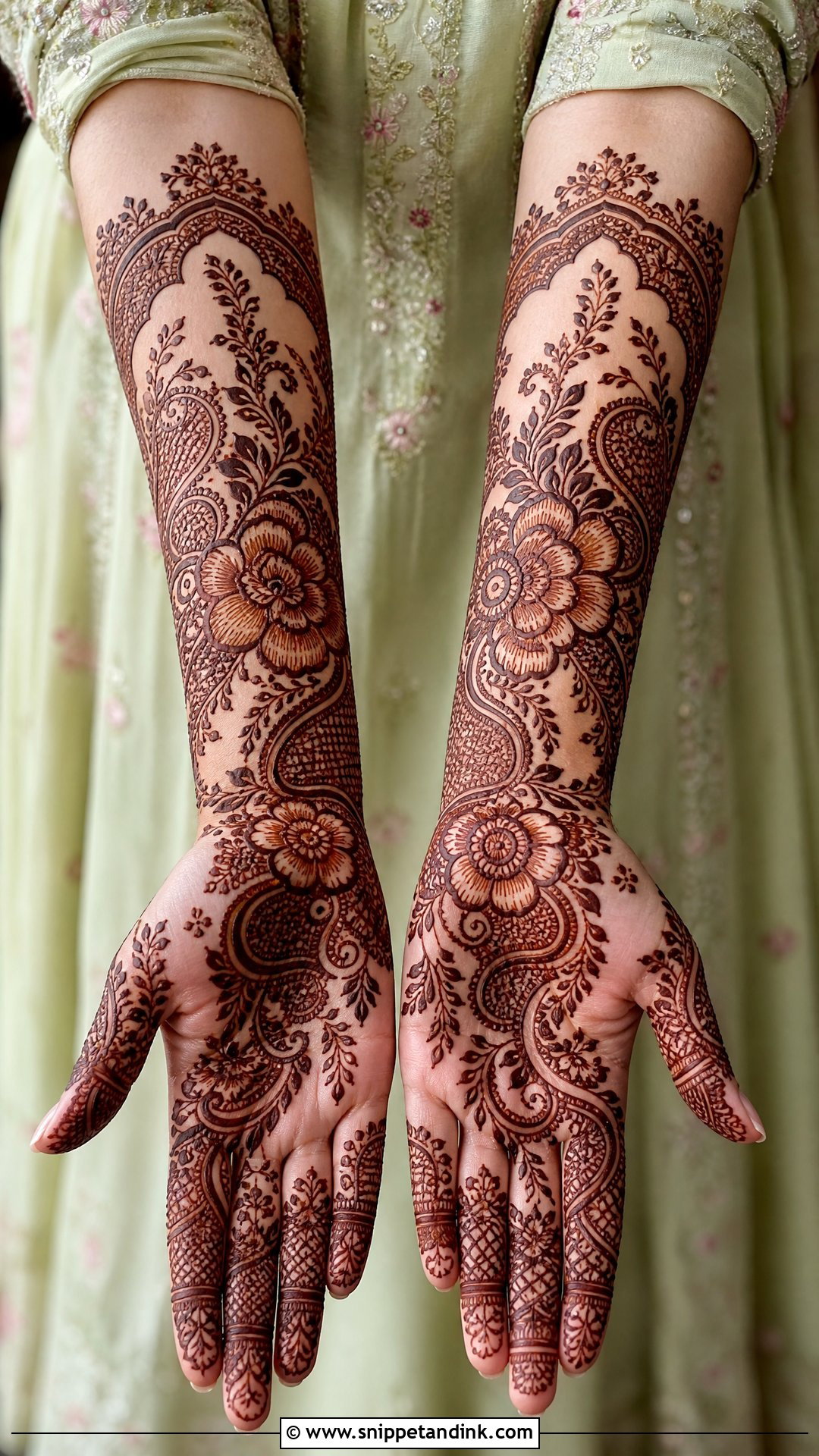
Indo-Arabic takes the flowing florals of Arabic henna and adds the detailed fillers of Indian and Pakistani bridal work. A full design might pair bold palm flowers with lace-like fingers, paisley borders and wrist-to-forearm bands, so it feels full without being dense. To pull it toward a Pakistani look, I add fine jaal, tikki details and small leafy borders around the main floral trail. It’s the style I suggest most often to brides who can’t decide between modern and traditional.
6. Pakistani Bridal Tikki Mehndi Design
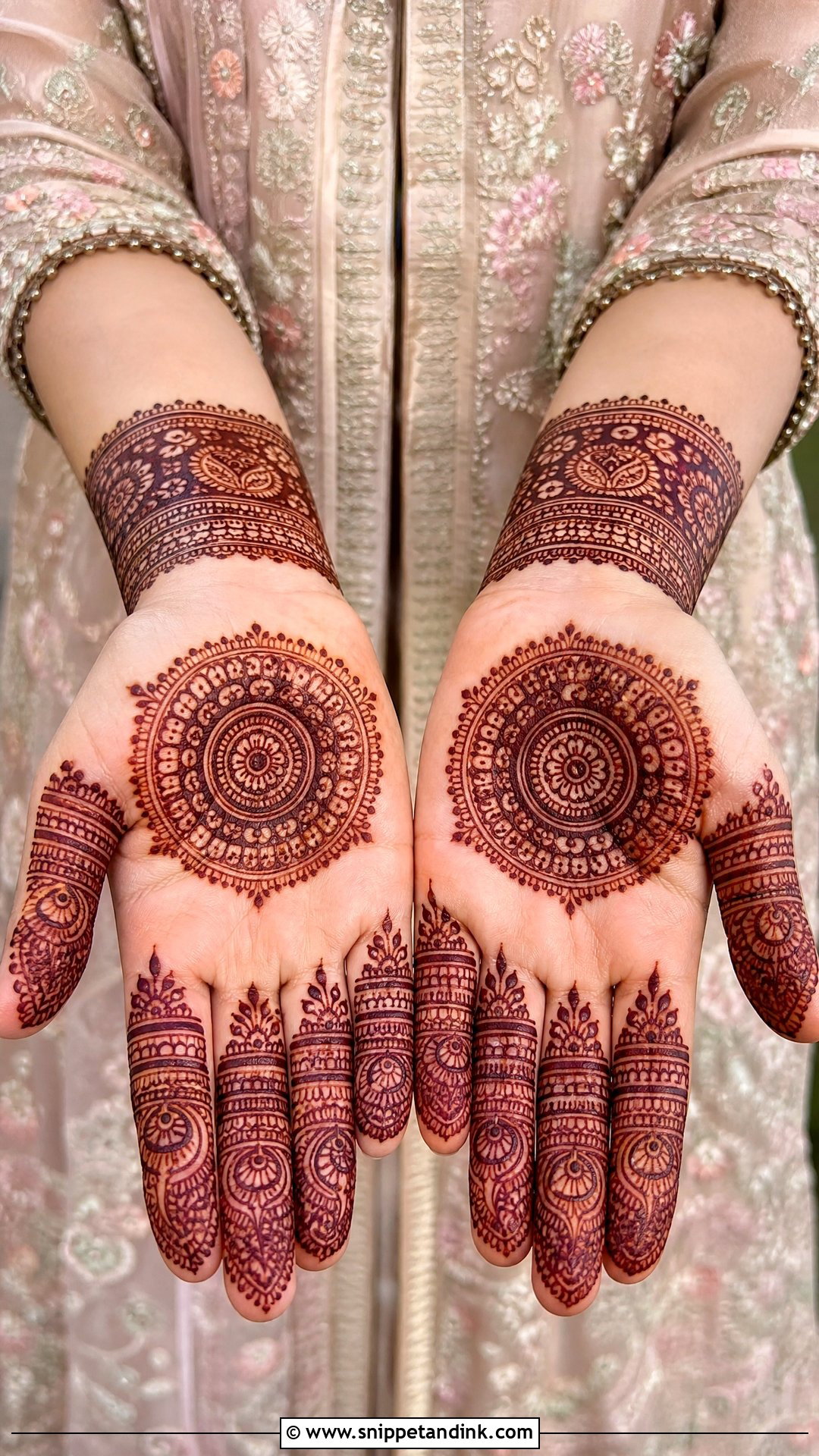
Tikki never really leaves Pakistani weddings. The round central motif on the palm draws the eye immediately, and for a bride I build it out with layered circles, floral rings and small paisleys, then fill the fingers with bands, dots, leaves and mesh. A wrist cuff closes the design. The one thing I won’t do is leave the fingers bare around a heavy tikki, because the palm then looks like a stamp rather than bridal work.
7. Pakistani Bridal Mandala Mehndi Design
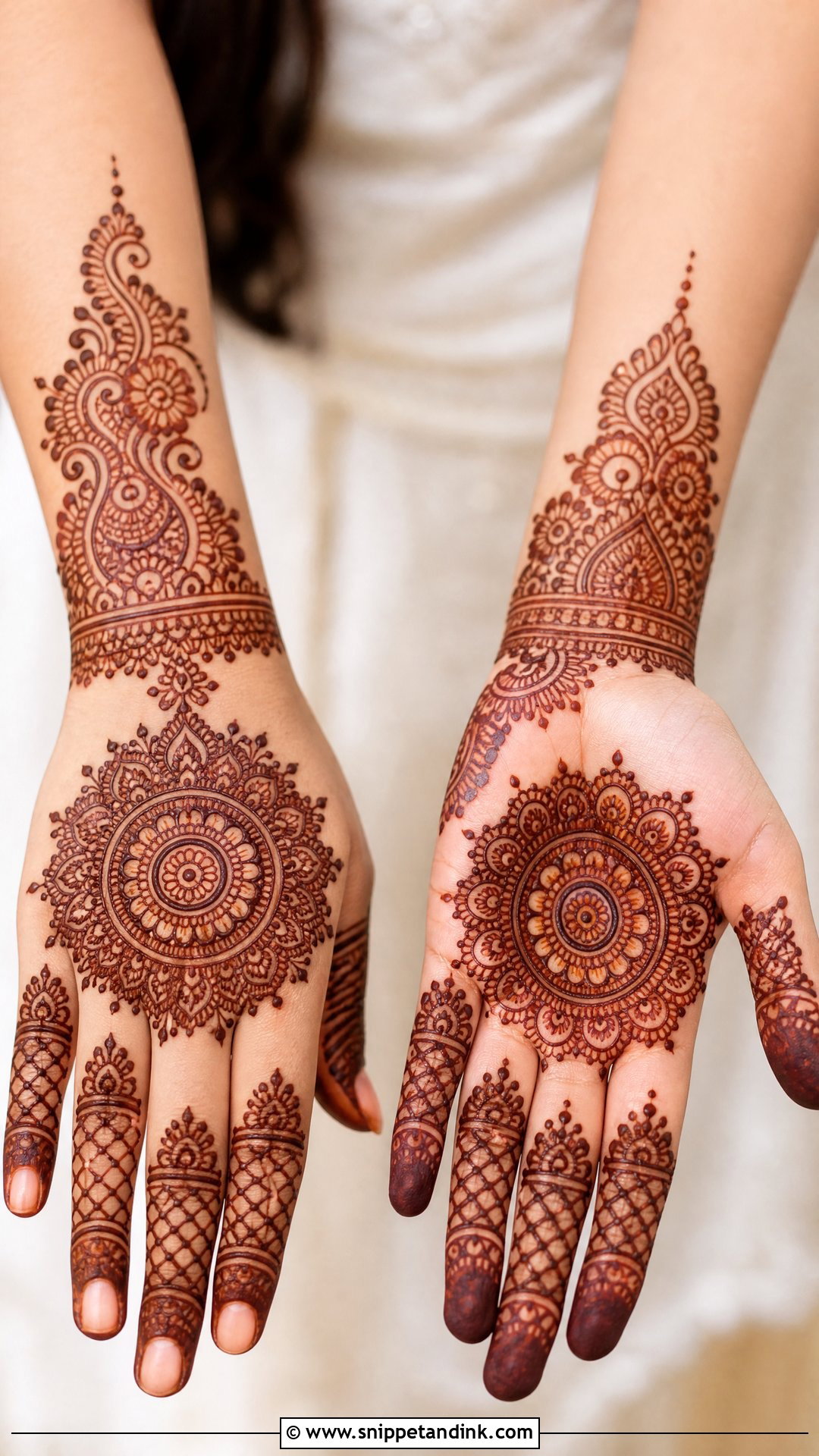
A mandala gives the hand a calm, centered structure. I place it in the middle of the palm or back hand with petals, dots and fine circular borders, but for a bride the circle can’t be where the design ends. It has to reach toward the fingers and wrist with matching patterns: jaal on the fingers, paisley bands at the wrist, a little floral work on the forearm. Drawing a true circle freehand is harder than it looks, so check your artist’s portfolio for mandalas that are actually round. It sits well with red dresses and pastels alike.
8. Pakistani Bridal Peacock Mehndi Design
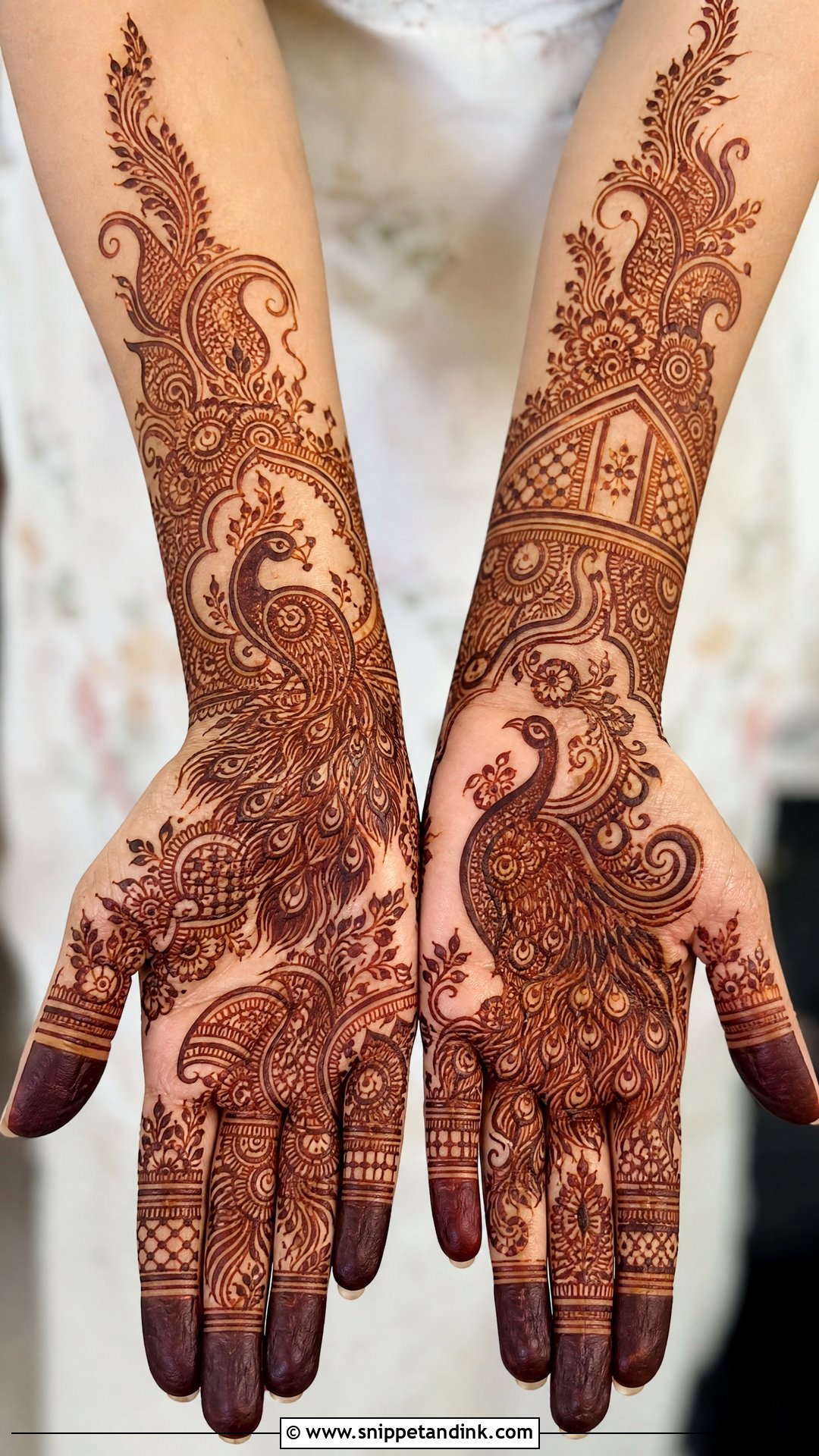
A peacock brings a royal note, with its feathers flowing into paisleys, flowers and curved vines on the palm, back hand or forearm. The body needs to be bold enough to stand out and the feather lines fine, otherwise it turns into a blur once stained. Many brides want mirrored peacocks on both hands, which takes extra time because the second has to be drawn in reverse. Keep the fillers around it clean. Too much detail nearby hides the bird completely.
9. Pakistani Bridal Paisley Mehndi Design
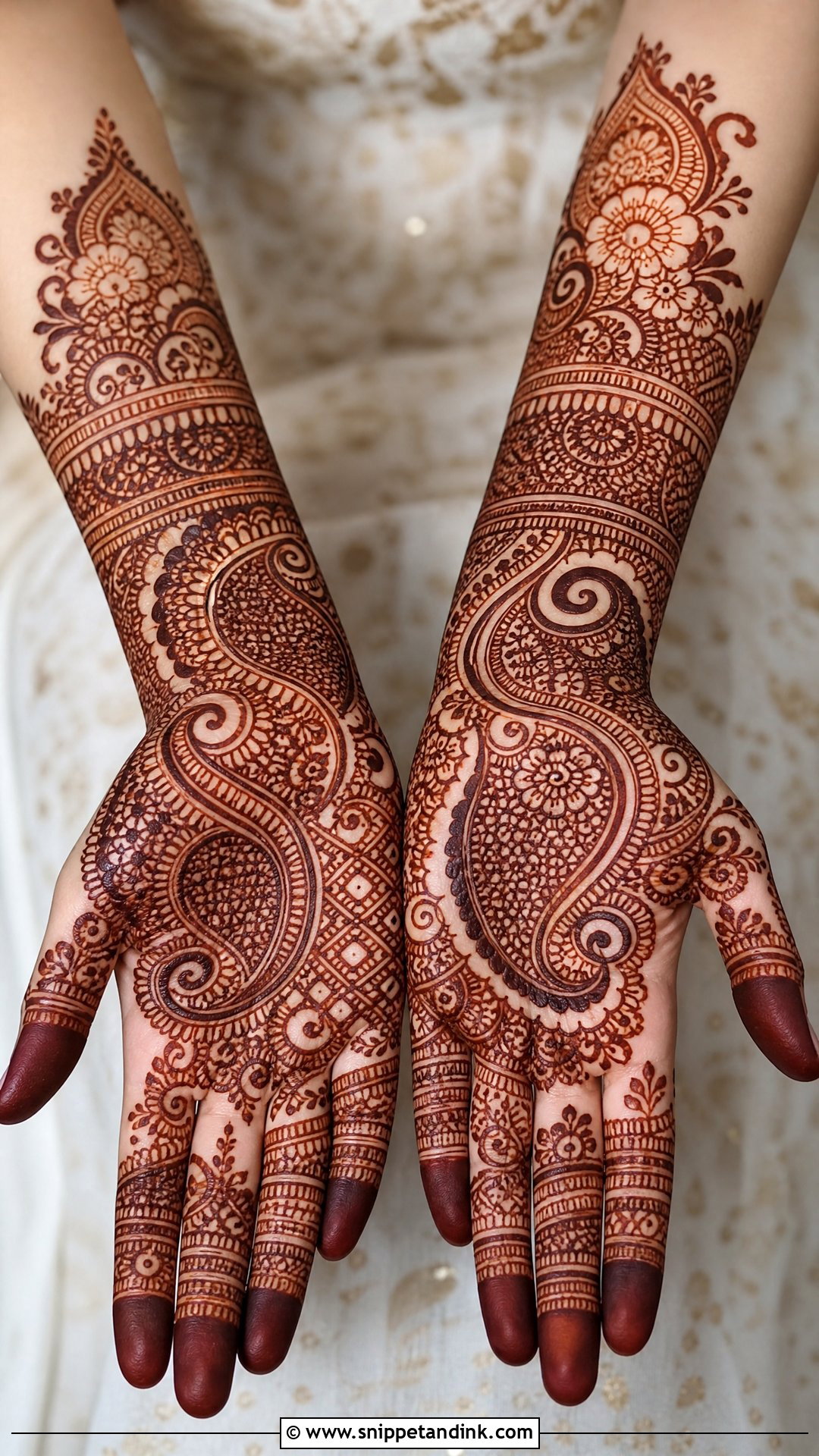
Paisley is probably the motif I draw most for Pakistani brides. Large paisleys sit on the palm, smaller paisley chains run up the fingers, and curved paisley vines wrap the wrist, with the insides filled with dots, petals, mesh or fine lines. It gives a rich, traditional look without portraits or names. With heavily embroidered lehengas the curves echo the embroidery itself, and that connection is part of why it never looks out of place.
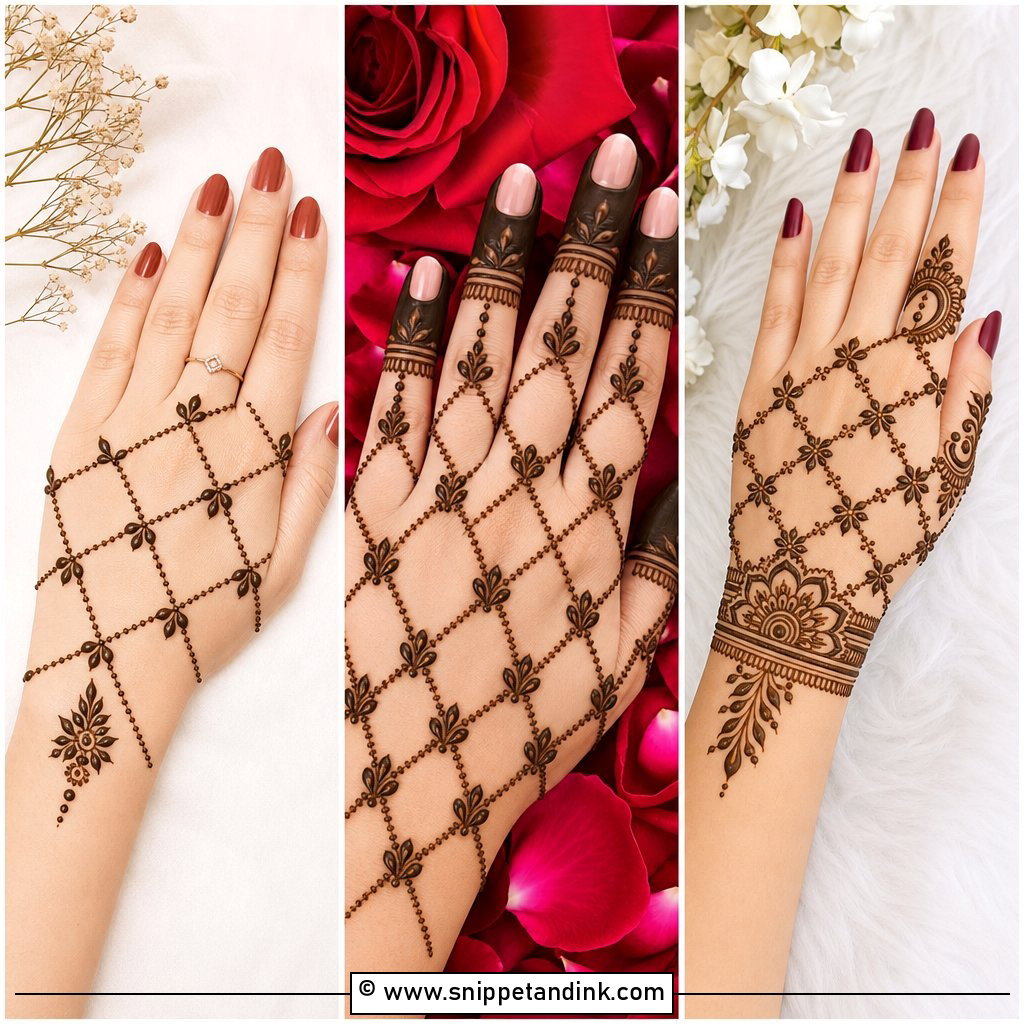
10. Pakistani Bridal Jaal Mehndi Design
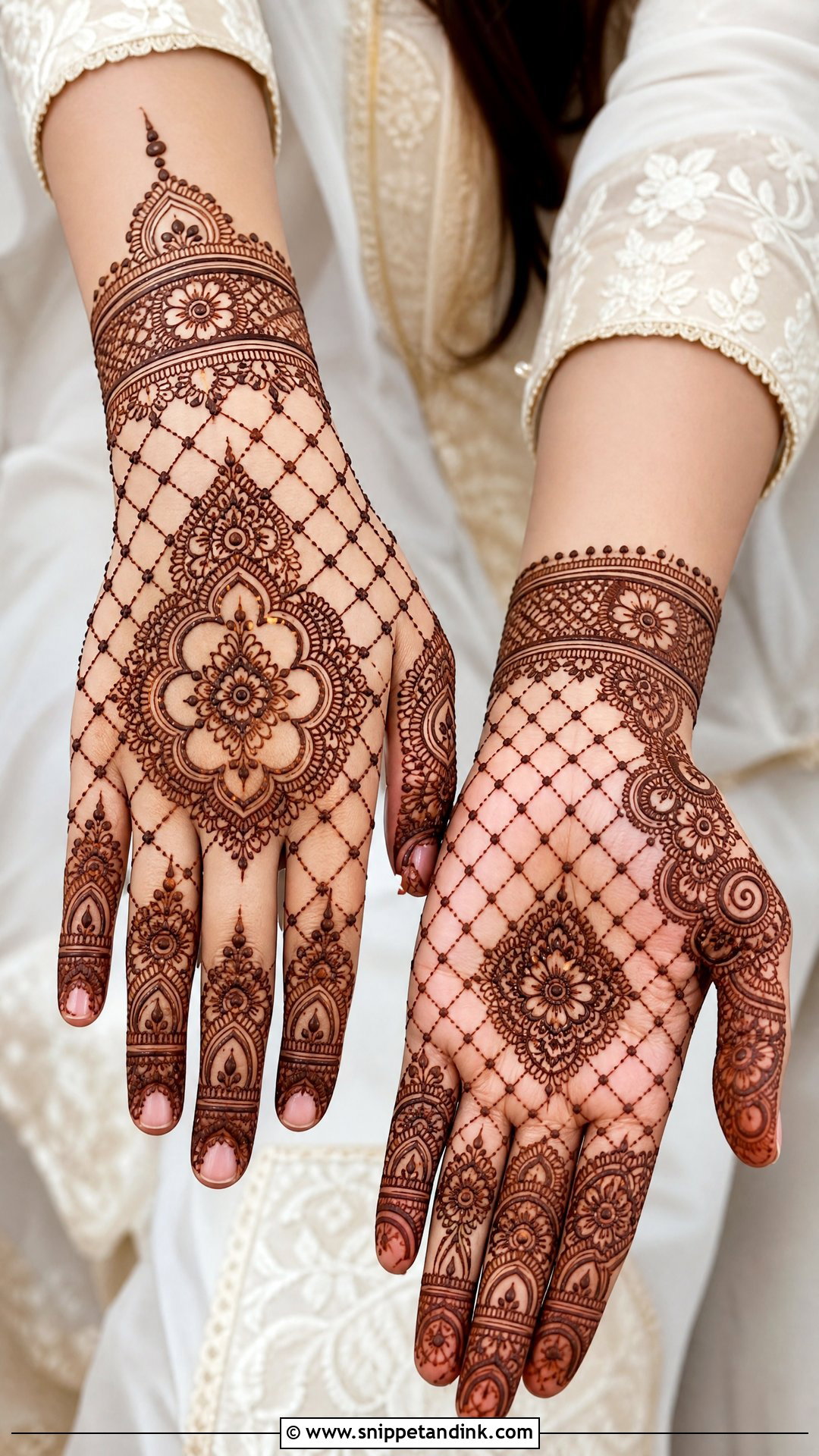
Jaal is a crisscross mesh with tiny dots and floral intersections, usually on the back hand or fingers. On the palm I pair it with a mandala, paisley, or floral center, and a wrist cuff finishes the hand. It gives detailed coverage that still feels airy, but it’s unforgiving. Uneven mesh looks messy straight away, so this is the design where I’d look hardest at an artist’s line control. Paste consistency matters too: too runny and the squares bleed into each other.
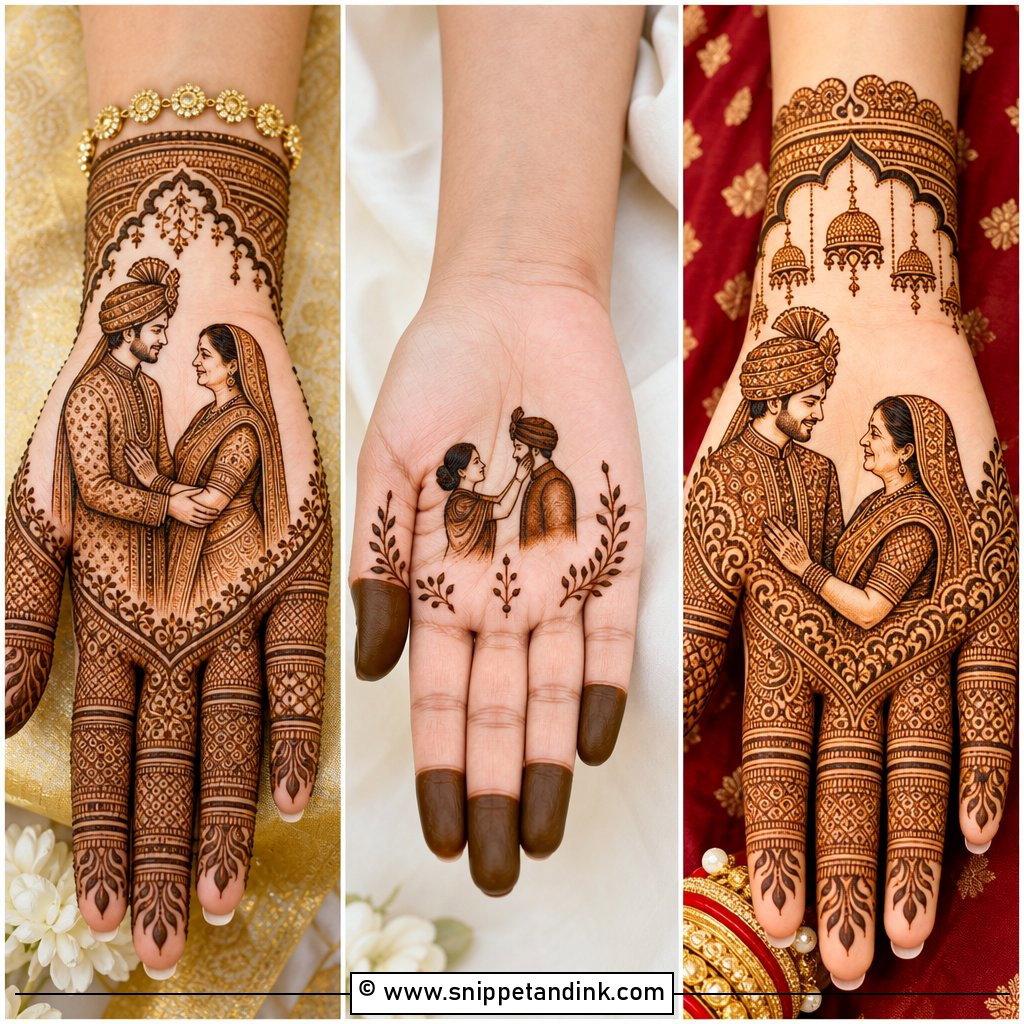
11. Pakistani Bridal Portrait Mehndi Design
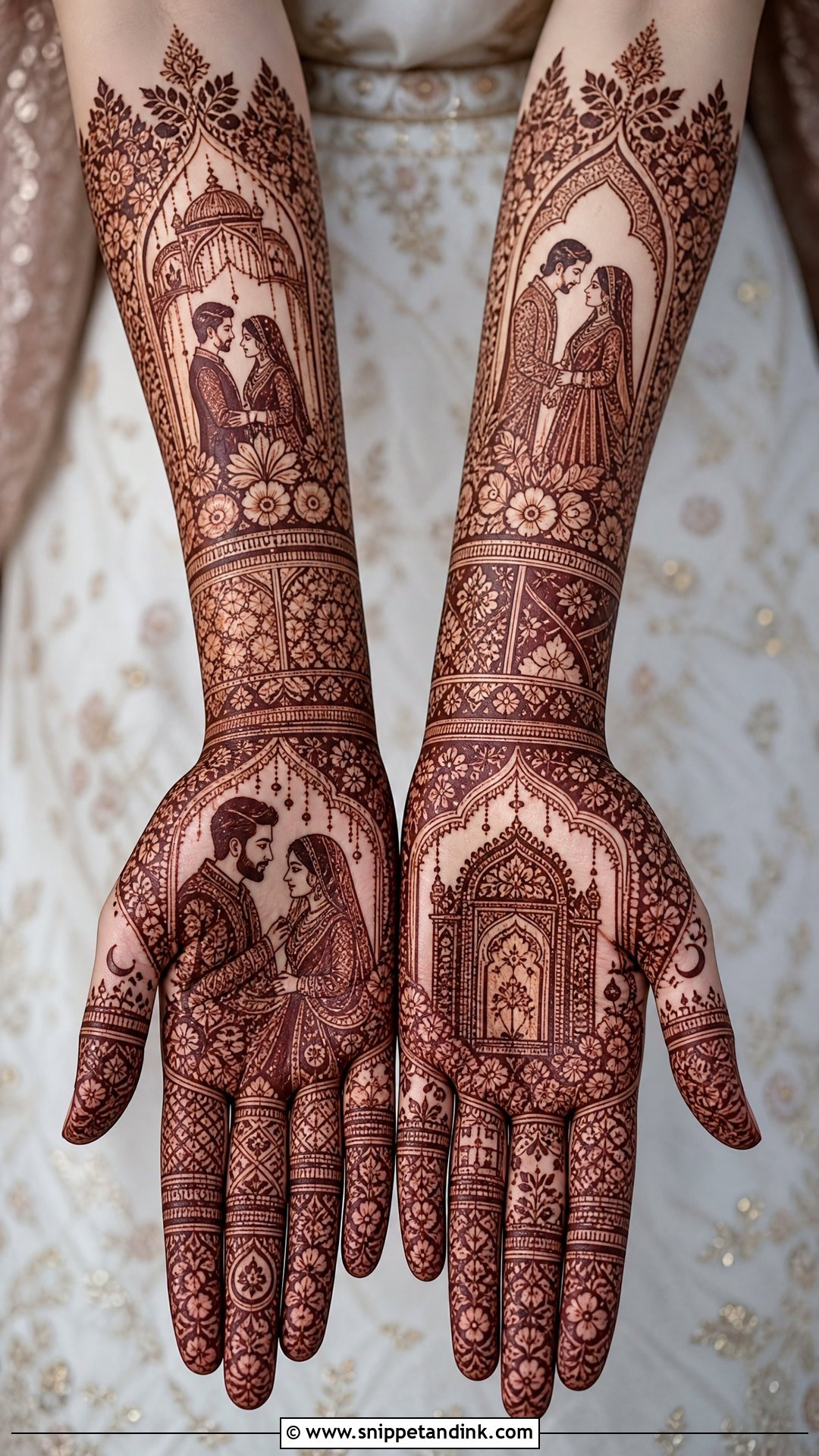
Portrait mehndi turns the hands into a keepsake: a bride and groom illustration, a nikkah scene, a doli, mosque-inspired arches or the wedding date, surrounded by florals, paisleys, jaal panels and wrist borders. Faces need room, so I place them on the forearms or the wide part of the palm, never squeezed onto fingers. They take noticeably longer than motif work, so plan extra hours. Keep the surrounding patterns lighter, or the faces get lost in the stain.
12. Pakistani Bridal Name Mehndi Design
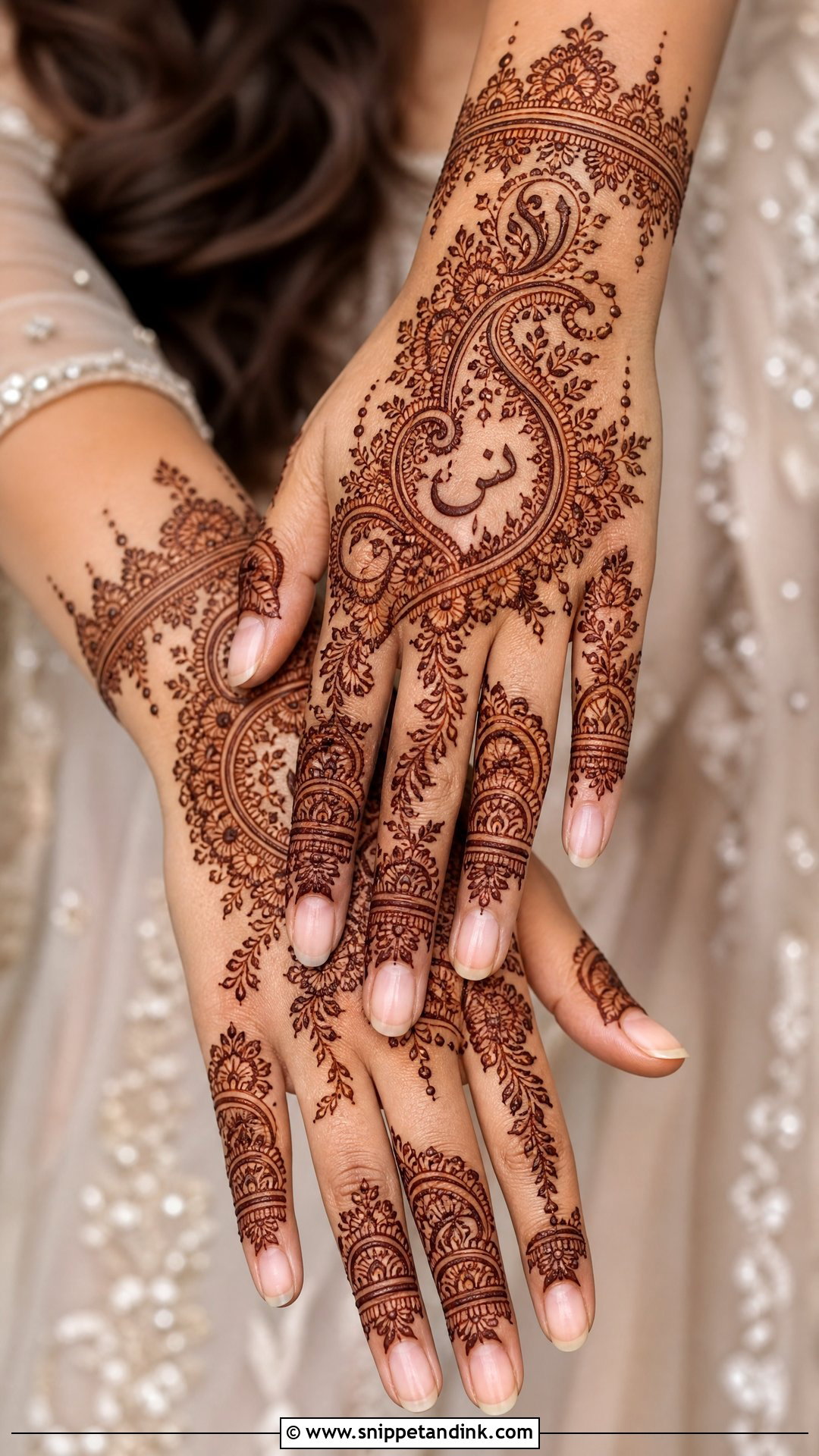
Hiding the groom’s name is one of the oldest games at a Pakistani mehndi, and it adds meaning without changing the overall design. Initials, a date or a small symbol tucked inside a paisley, flower or bracelet band can sit in a traditional, Arabic or Indo-Arabic layout. I write the name in as I go rather than squeezing it in at the end, which is how it ends up looking pasted on. Tell your artist how hard you want it to be found: some brides want it almost impossible, others want the groom to win.
13. Pakistani Bridal Mughal Mehndi Design
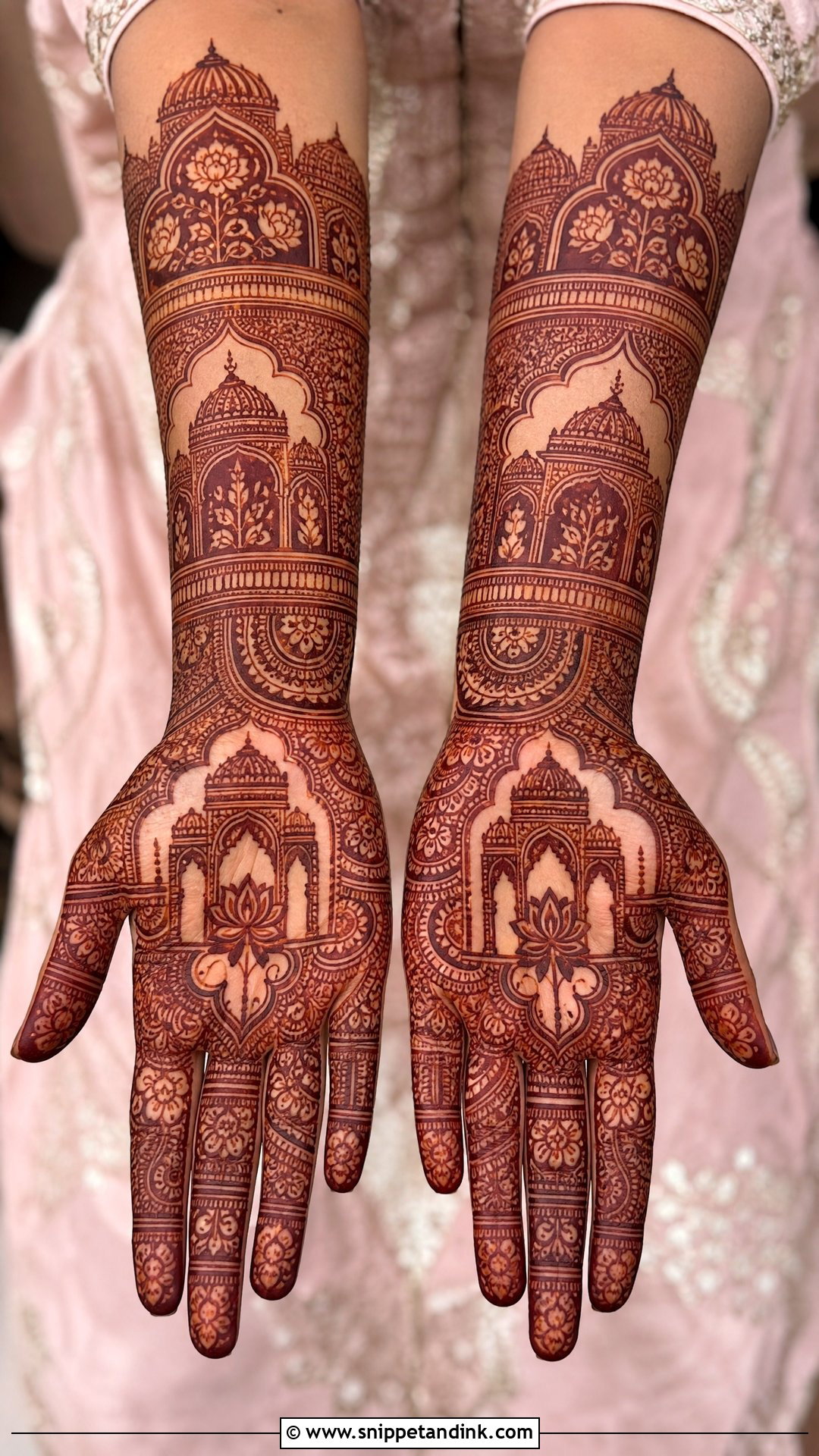
Mughal-inspired work uses arches, domes, lotus-like flowers, royal paisleys and symmetrical panels, with palace-style framing on the palm and architectural bands up the forearm. It sits naturally with a gharara, sharara or heavily embellished lehenga, and it suits the formality of a baraat or nikkah. Fine line work and clear sections are what keep it regal. If every panel is filled with the same pattern, the architecture disappears.
14. Pakistani Bridal Floral Mehndi Design
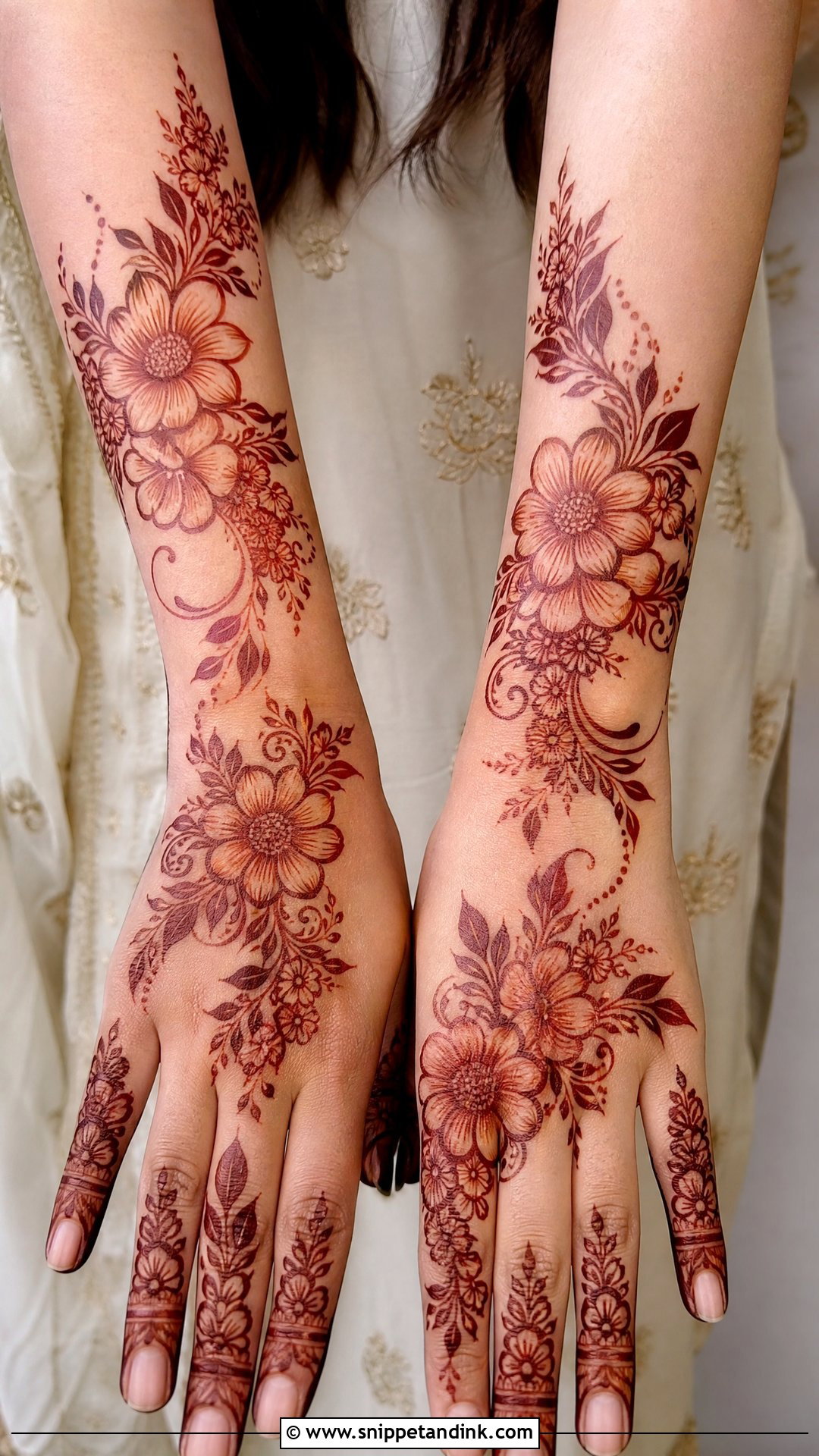
Floral mehndi can cover the hands fully and still feel light. I put large flowers on the palm or back hand, let smaller blooms travel across the fingers and wrist, and connect them with leaves, dots and curved lines. Vary the flower sizes, because a hand of identical roses looks flat in photos. It sits happily with yellow, green, orange or pastel mehndi night outfits and suits brides who want detail without heavy cultural motifs.
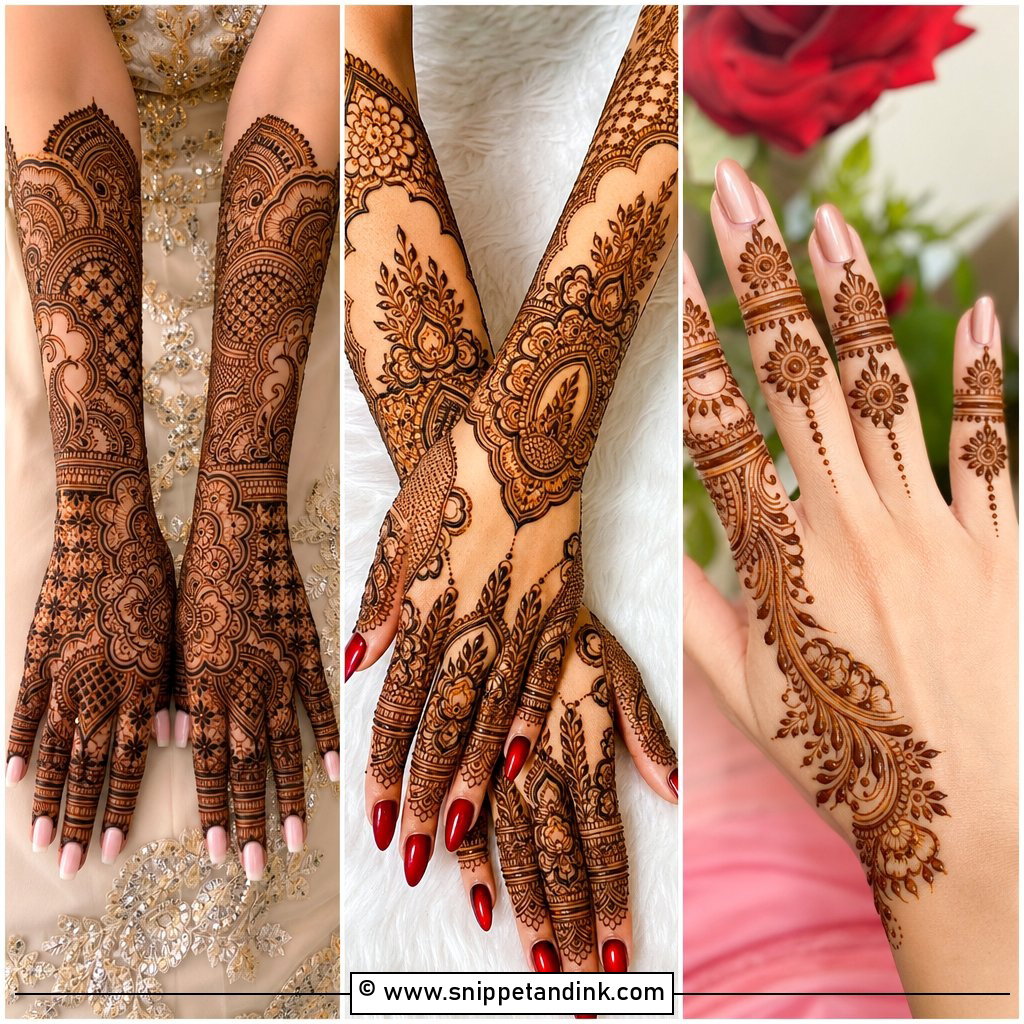

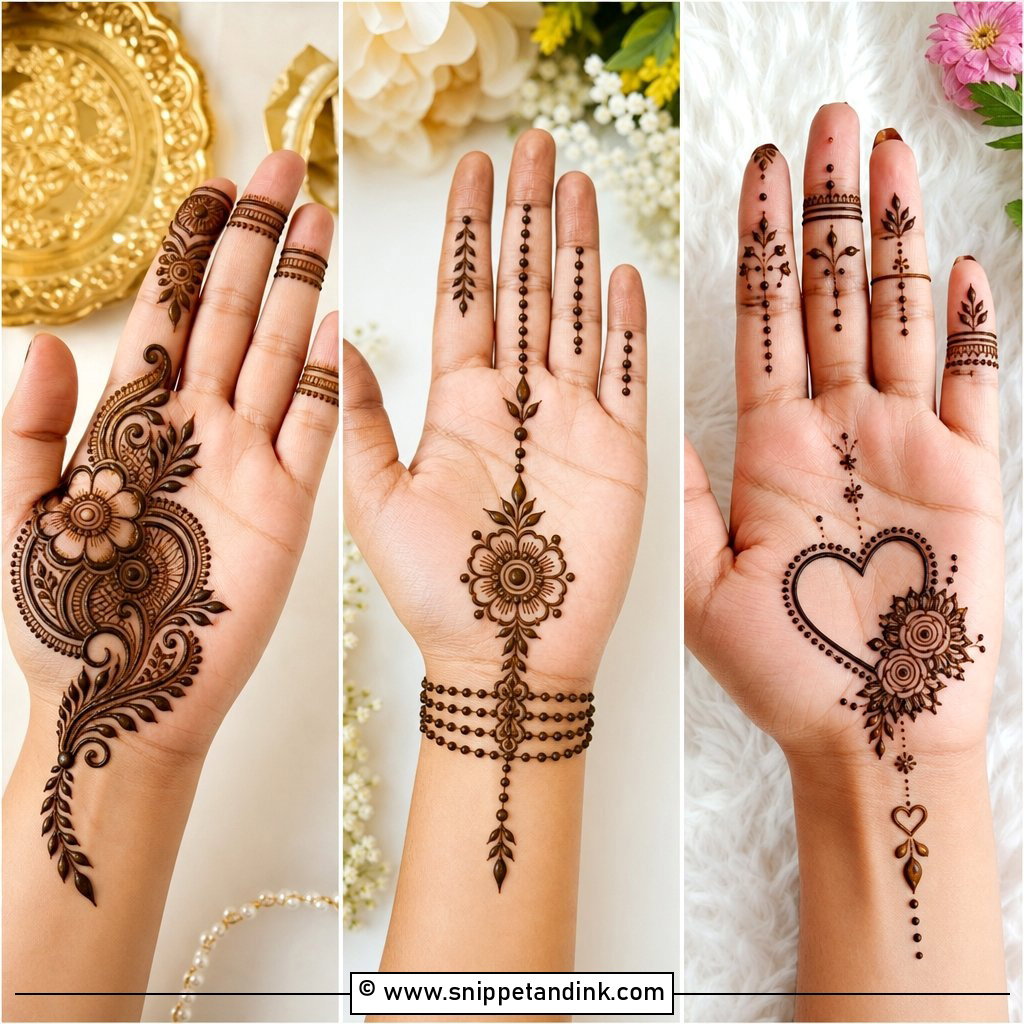
15. Pakistani Bridal Minimal Mehndi Design
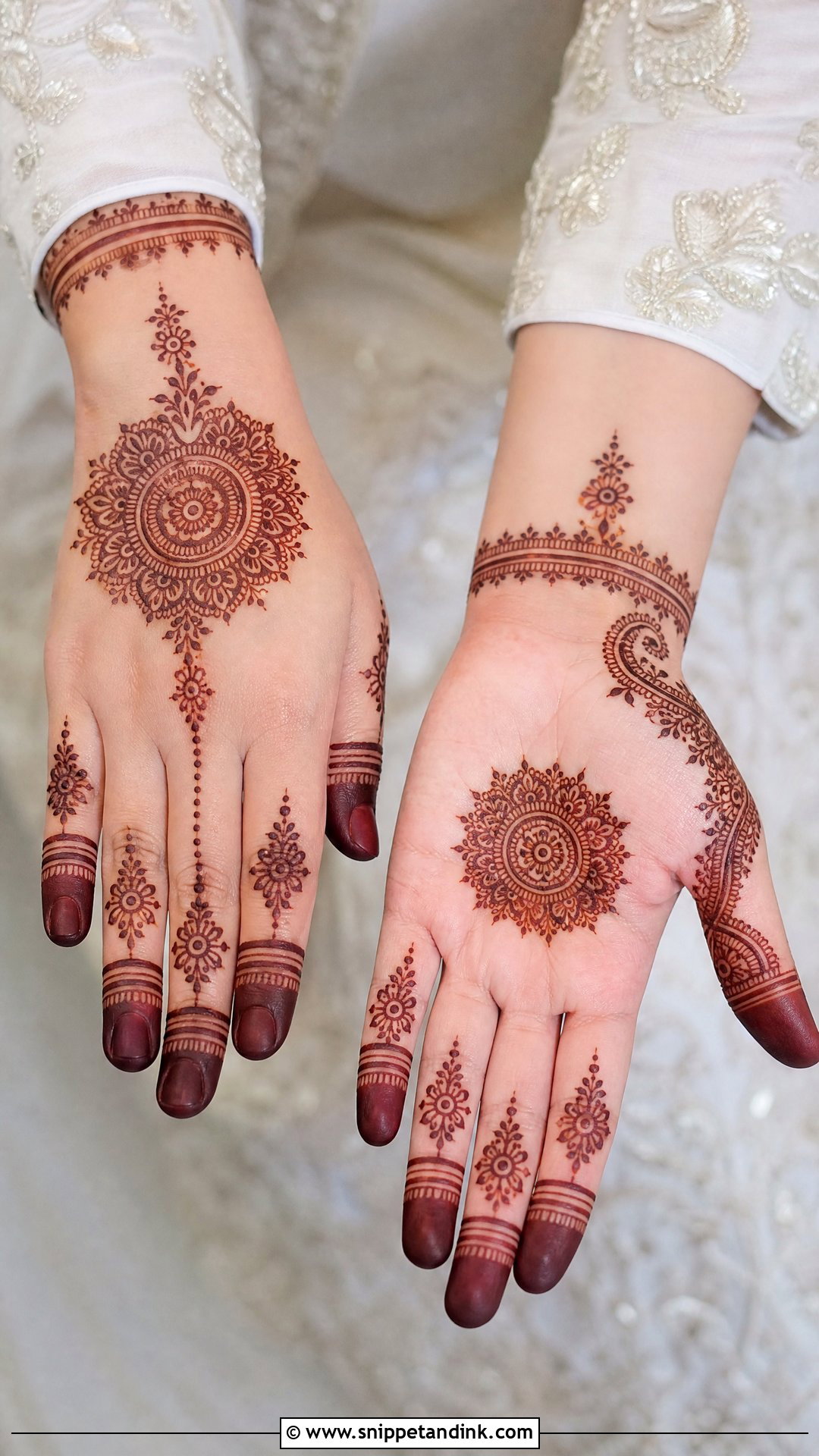
Plenty of Pakistani brides don’t want dense full-arm henna, and a minimal design can still look bridal if it’s planned. Clean mandalas, slim finger patterns, delicate wrist bands and small floral trails leave more skin visible. The risk is that it reads as an Eid design rather than a bridal one, so I make sure the fingers and wrists carry enough detail to anchor it. For a nikkah, walima or pastel outfit, the restraint can look very fresh.
16. Pakistani Bridal Dulhan Mehndi Design
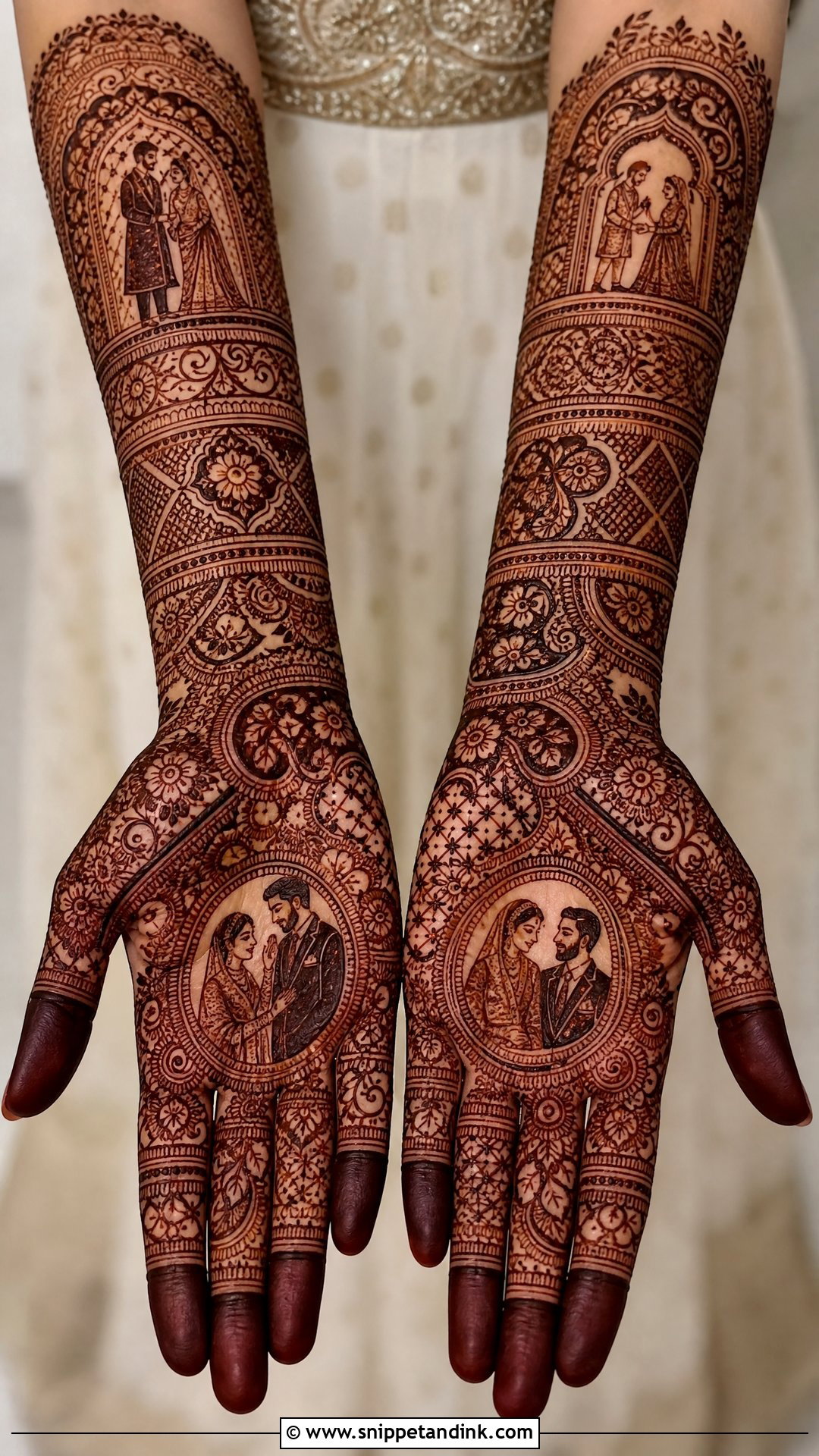
A dulhan design is the full celebration: both hands covered from fingertips to forearms with dense motifs, bridal symbols, paisleys, florals and deep finger fills. The palms might carry bride-groom elements, tikki work or mirrored motifs; the back hands, bracelet chains and jaal. Expect it to take several hours for both hands and arms, and longer if feet are included. You’ll be sitting still the whole time, so eat first, use the bathroom, and book an artist who has done full dulhan sets before.
17. Pakistani Bridal Simple Mehndi Design
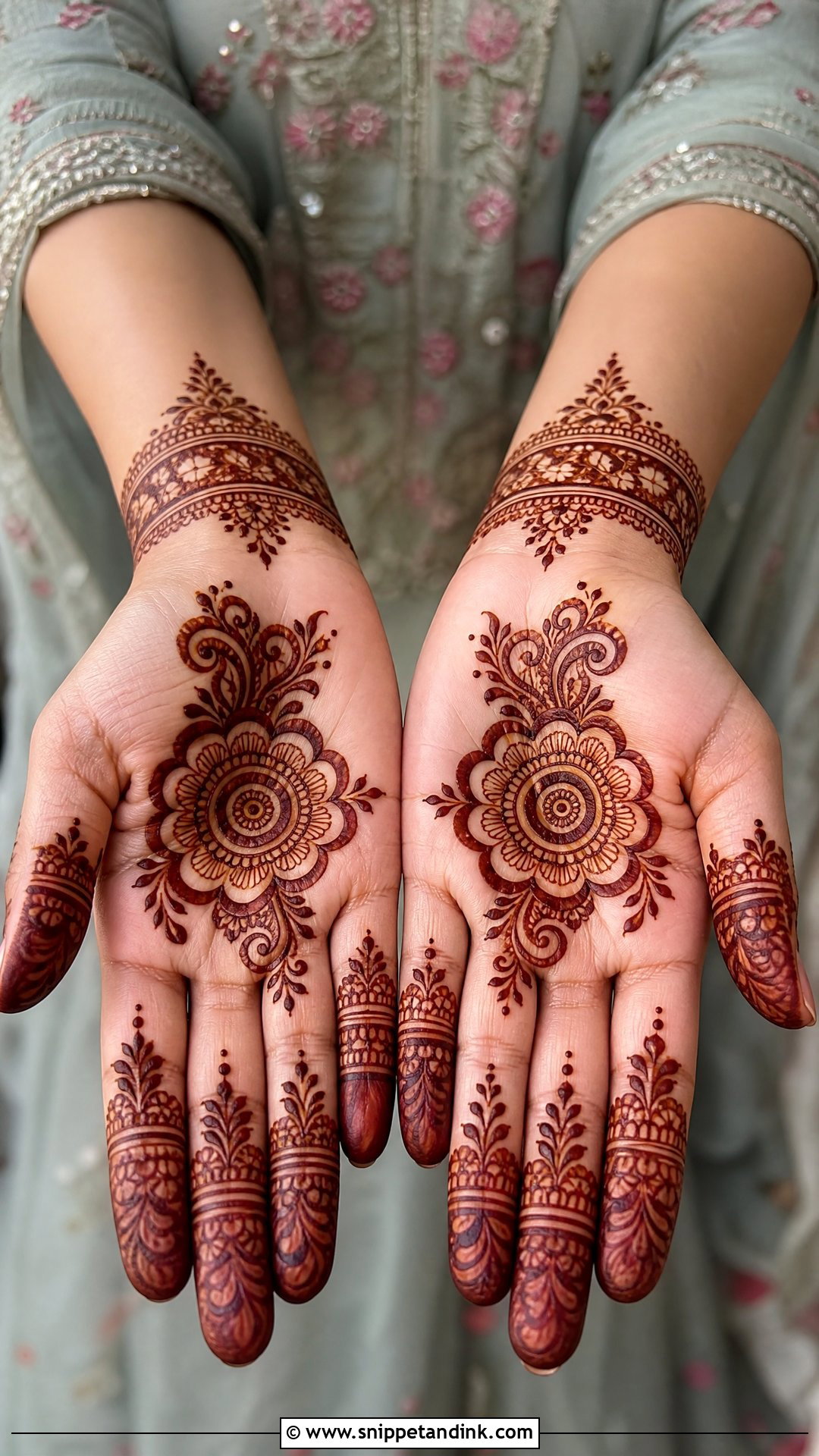
Simple doesn’t mean empty. A simple bridal set has fewer motifs, clearer spacing and less filler: a bold palm center, decorated fingers, a wrist cuff and a short forearm extension. Florals, paisleys and tikki details read best here because they’re easy to recognize at a glance. It fits intimate nikkah events and small functions, and it takes far less sitting time than dense work. Keep both hands balanced so neither looks like an afterthought.
18. Pakistani Bridal Heavy Mehndi Design
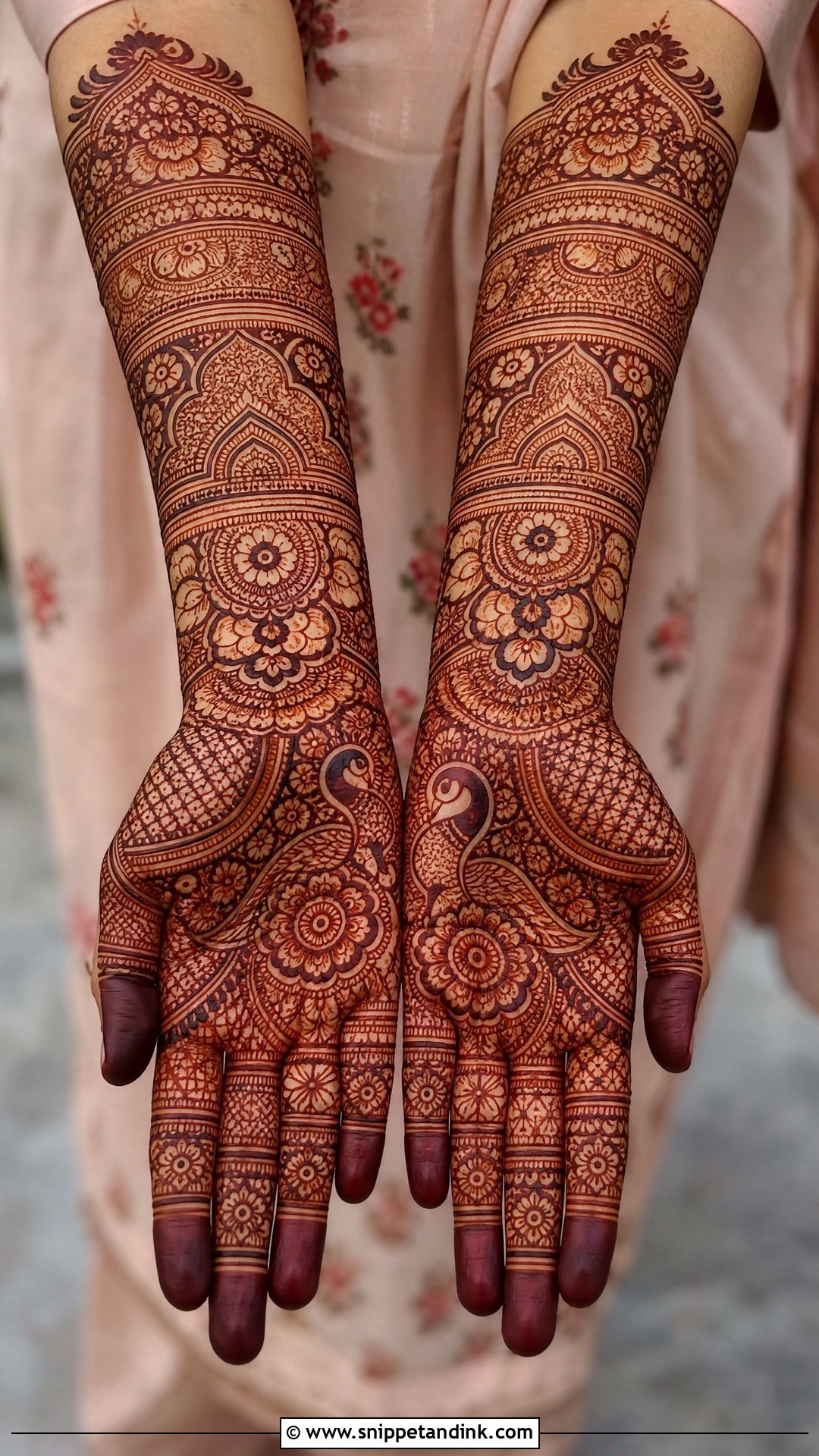
Heavy mehndi fills palms, back hands, wrists and forearms with almost no empty skin: paisleys, peacocks, mandalas, jaal, florals and layered borders. The danger is visual noise. I build in a few larger motifs as resting points for the eye, then fill around them. Dark fingertips and bold wrist bands frame the whole thing, and on heavy work the fingertip caps usually stain darkest of all because the skin there takes color so readily.
19. Pakistani Bridal Modern Mehndi Design
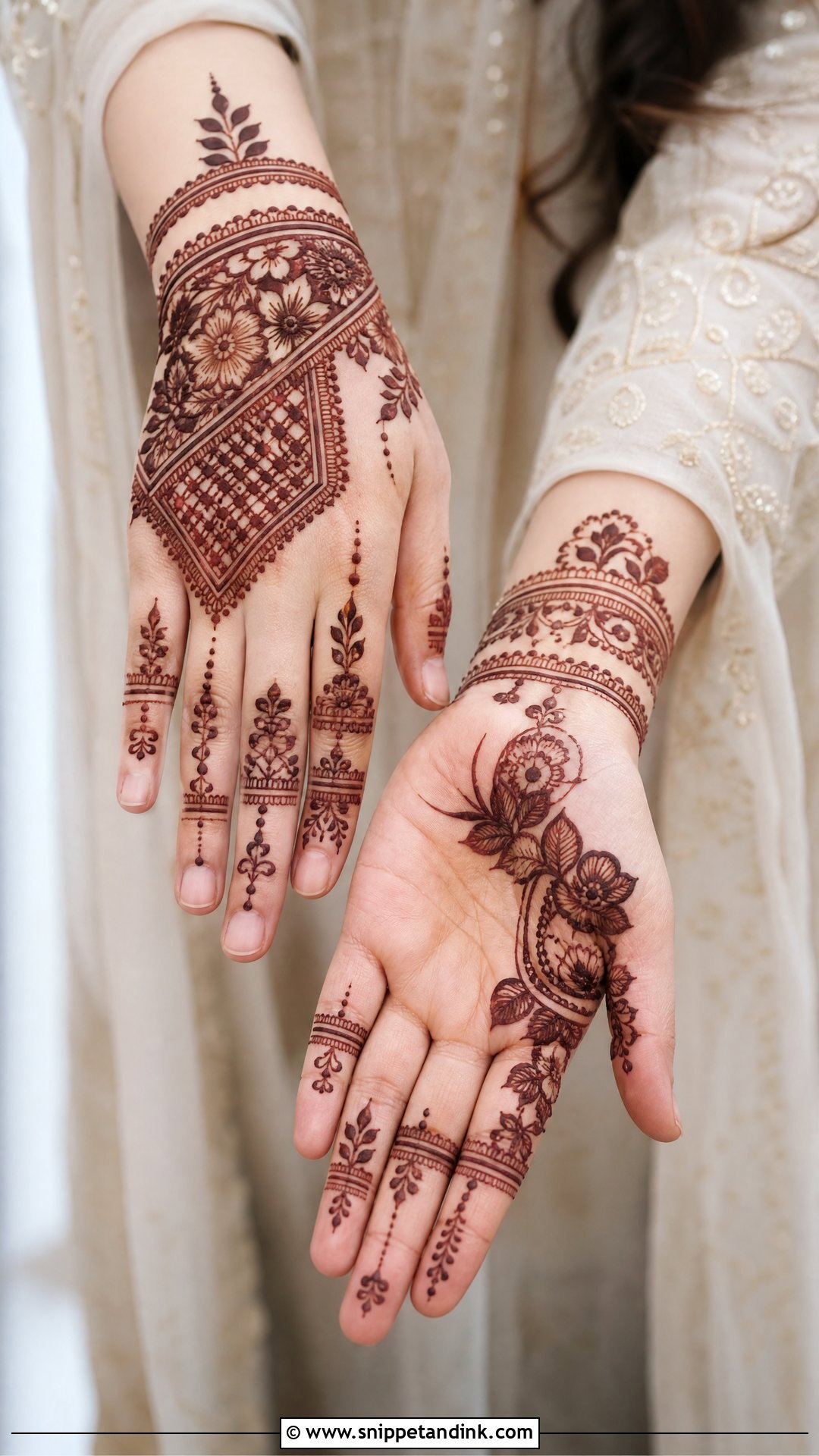
Modern mehndi trades tiny fillers for cleaner lines, bold florals, geometric panels, bracelet effects and open skin. Some brides do asymmetrical hands, one with a full palm and the other with a diagonal trail; others want a sleek back hand that reads like jewelry. It sits well with contemporary outfits, lighter jewelry and soft makeup. Because there’s less coverage, uneven stain shows more, so treat the aftercare seriously.

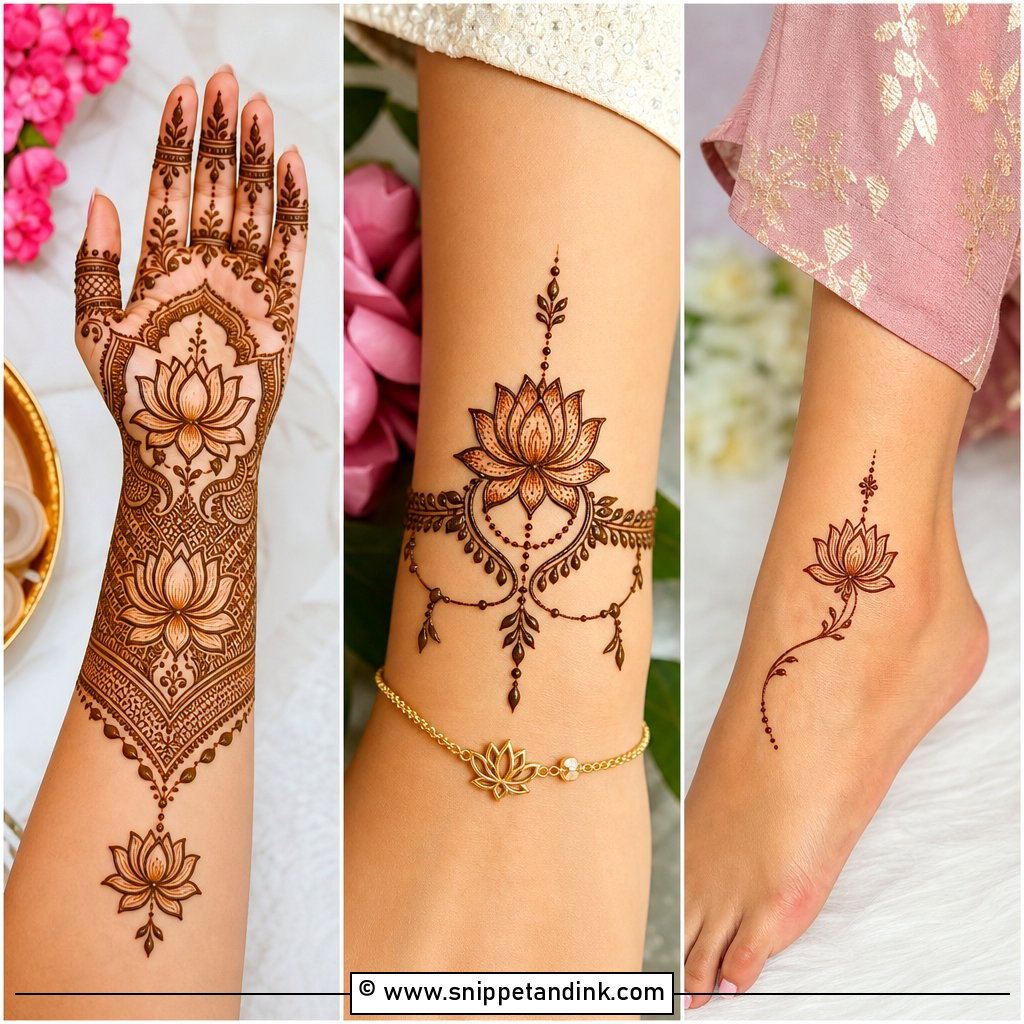
20. Pakistani Bridal Foot Mehndi Design
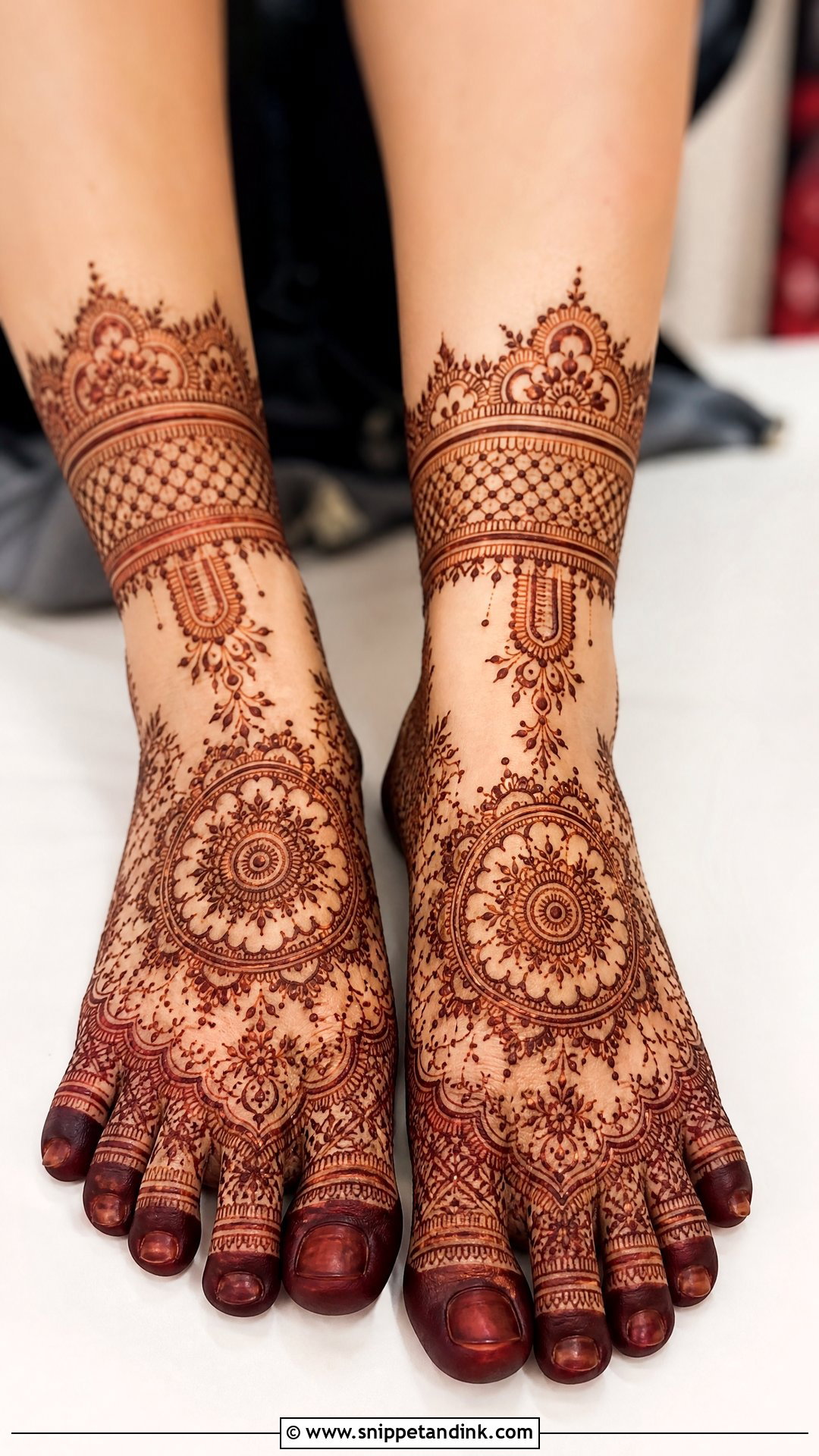
Feet show up in the close-ups of khussa, payal and lehenga borders. A full bridal foot design covers the toes, top of the foot and ankle, sometimes running up the lower leg, with mandalas, floral vines, paisleys, anklet bands or jaal. Match it to the hands so the set looks planned. Feet usually stain darker than hands, but they also smudge more easily, since you’ll want to walk long before the paste is dry, so keep toe details neat and bold and stay seated until it sets.
What Happens After the Last Line Is Drawn
Most of the depth comes from what you do in the next twelve hours. Once the paste is touch-dry, I dab on a little lemon and sugar so it stays stuck to the skin, then ask the bride to keep it on for six to eight hours, or overnight if she can sleep with her hands wrapped loosely in tissue or a cotton cloth.
- Scrape the dried paste off with a blunt edge or your fingers; don’t wash it off
- Keep water off the design for as long as you can after removal, ideally the rest of that day
- Stay warm, because warm skin stains deeper than cold skin
- Skip waxing, scrubs and hand sanitizer on the design, since all of them fade it faster
If It Comes Out Orange the Next Morning
Don’t panic and don’t try to scrub it darker. An orange stain on the first morning is normal and keeps deepening for the next day or so. A thin coat of a natural balm or oil before bathing protects it, and keeping your hands out of hot dishwater and chlorinated pools helps the color last through the walima.
Your Hands Are in Every Close-Up
Pick the full look before you fall for one motif. Pakistani bridal mehndi can be dense and traditional, minimal, Mughal, floral, Arabic or deeply personal with names and portraits, and the right one depends on your outfit, jewelry, which ceremony it’s for and how long you can sit still. A heavy outfit usually wants balanced full-hand work; a softer one often looks better with a modern or minimal design. Whatever you choose, clean line work and a well-timed application will matter more than the pattern itself. Save the designs you like and take them to your consultation.
You'll Like These Ideas:









Leave a Reply