
Arabic work is recognisable from across a room: bold outlines, open skin, flowers that travel from the wrist up the arm. Where traditional bridal patterns fill every space, Arabic bridal mehndi leaves gaps on purpose, so the design stays legible in photos and doesn’t fight with jewellery. More brides now ask me to mix Arabic vines with jaali, paisley, mandala, hidden initials or Indo-Arabic fillers, which gives a festive hand without crowding it. These twenty designs suit the wedding day, a nikah, the engagement, sangeet, the mehndi night itself or reception portraits, whether you want full hands, back-hand trails or something light.
Scaling Arabic Motifs to Small Hands and Long Fingers
A design from a photo was drawn on someone else’s hand. When I copy it straight across, it rarely fits, so I resize the motifs to the bride in front of me before I start.
- Small hands: fewer, larger motifs. Three medium flowers look better than six small ones, which crowd and blur together once stained.
- Long, slim fingers: carry a vine up the finger rather than a stack of bands, so the length shows.
- Short fingers: keep fingertips lighter and use vertical lines; heavy caps make fingers look shorter.
- Wide palms: a diagonal trail suits them better than a centred circle, which can look small in the middle.
Rings change the picture too. If you’ll wear a large engagement ring, I leave the base of that finger fairly open, so the ring has its own space in photos.
1. Full Hand Arabic Bridal Mehndi Design
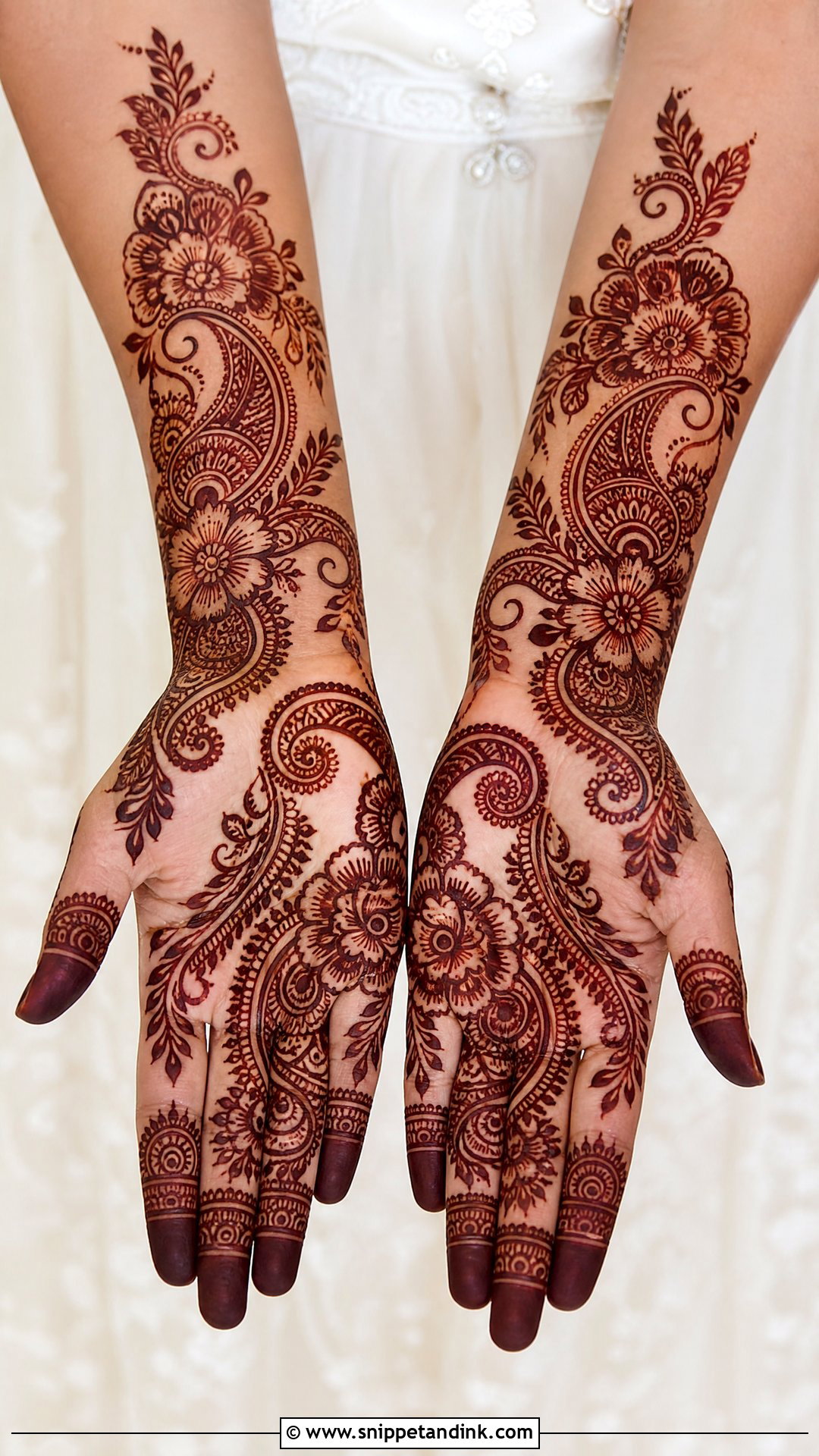
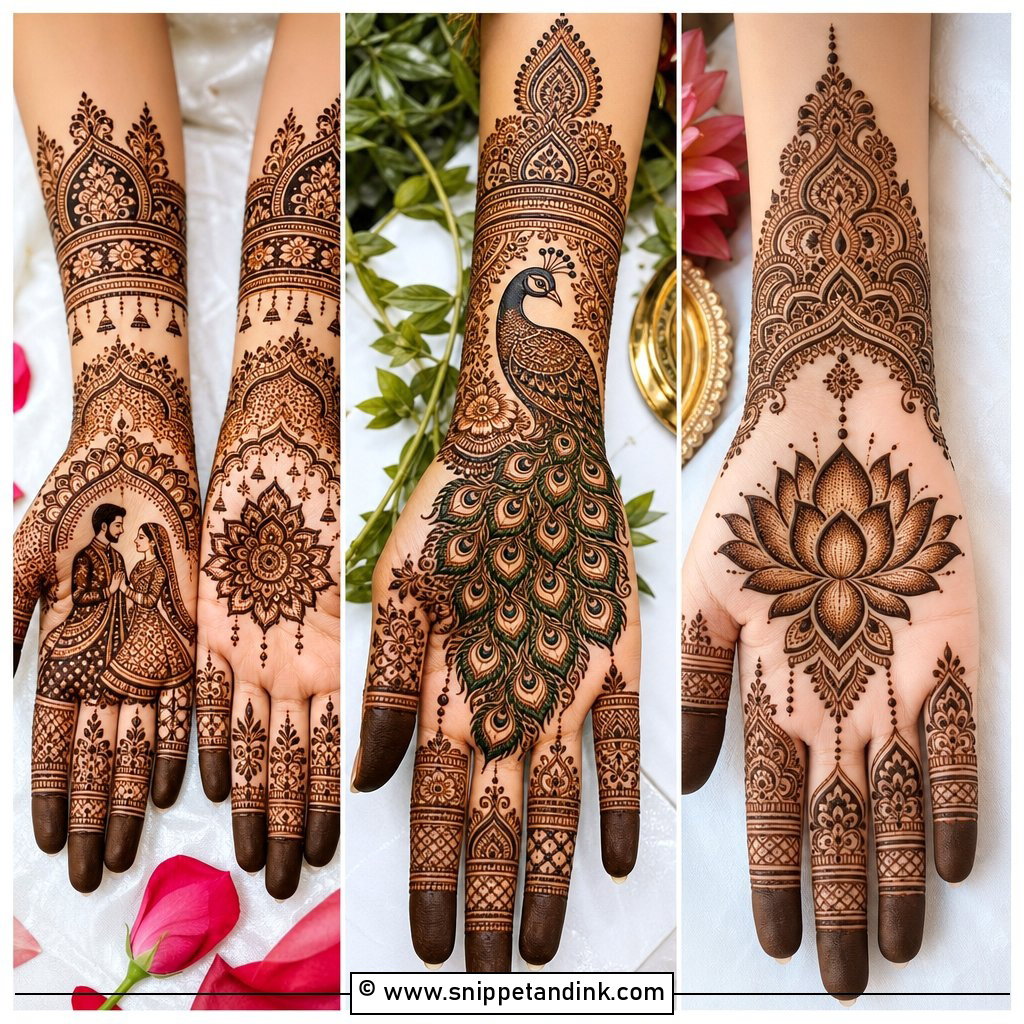
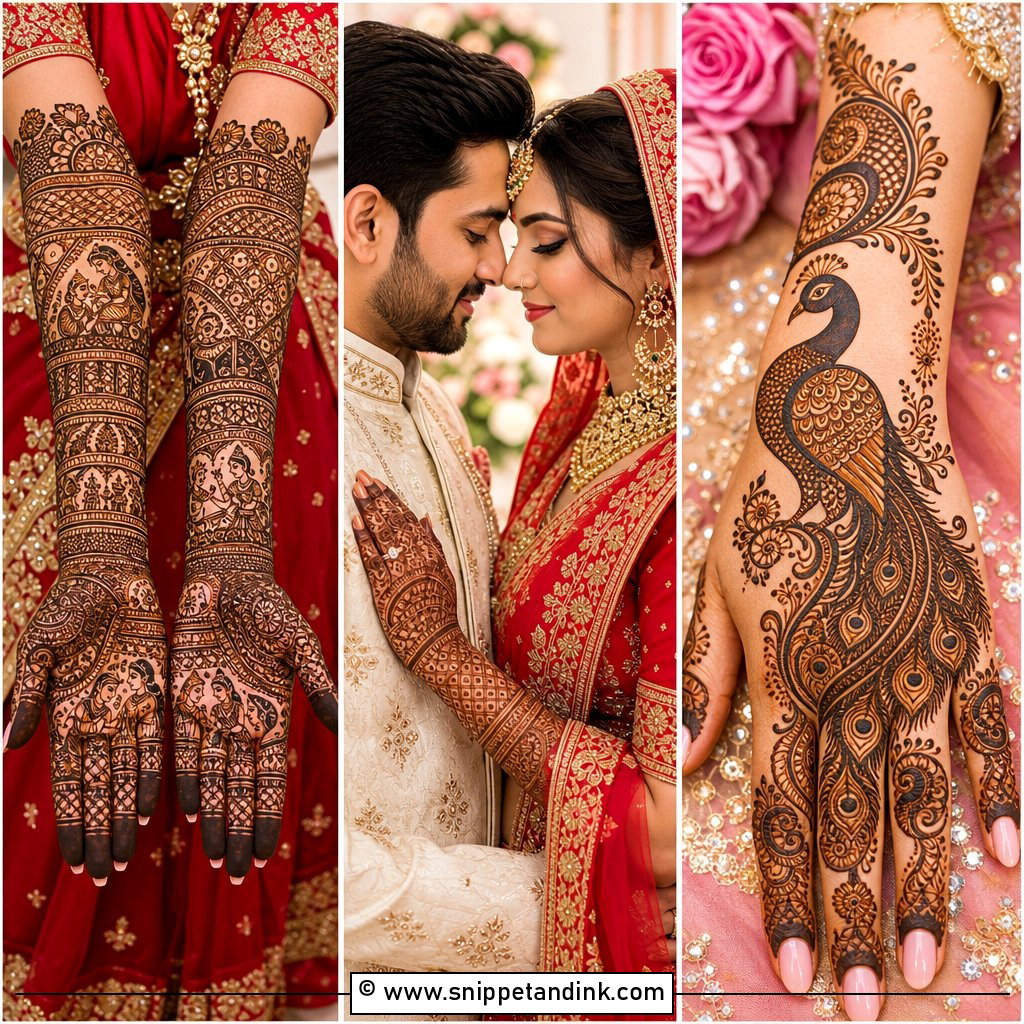
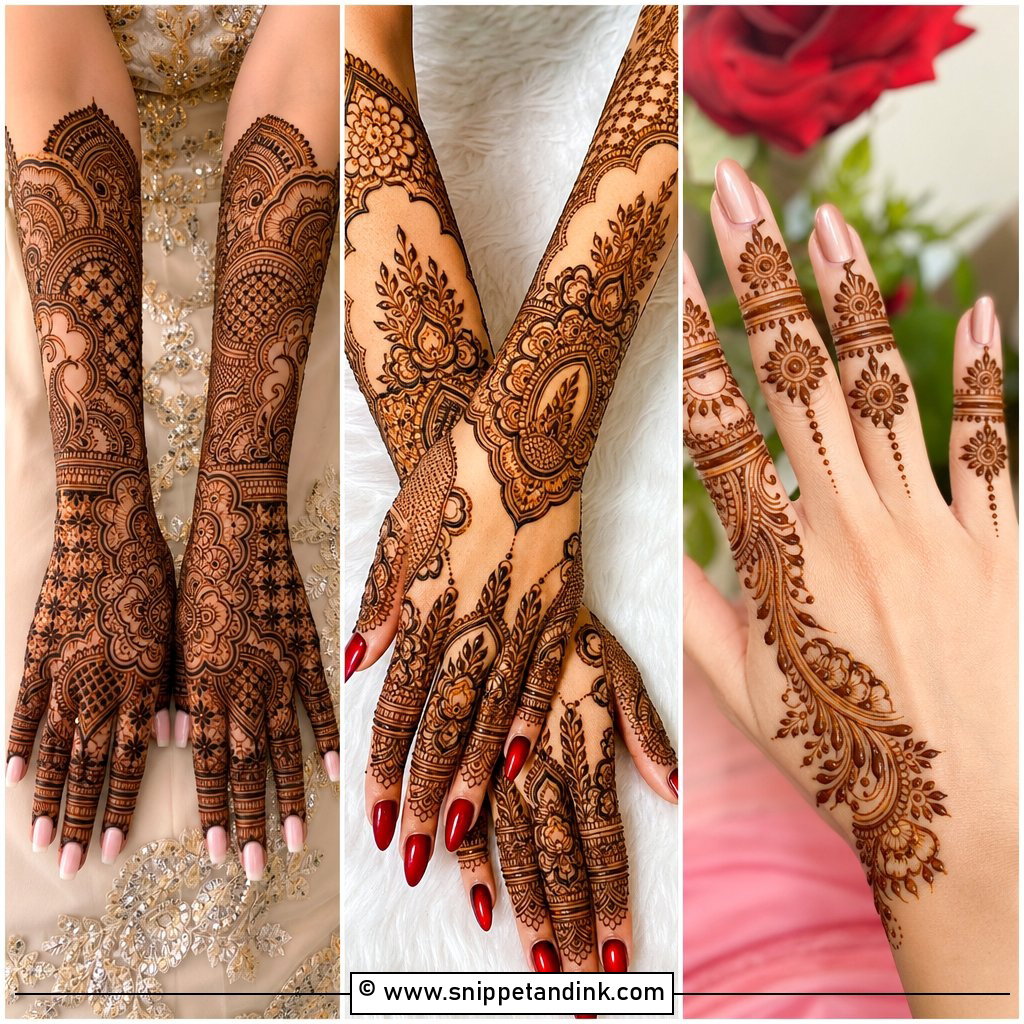
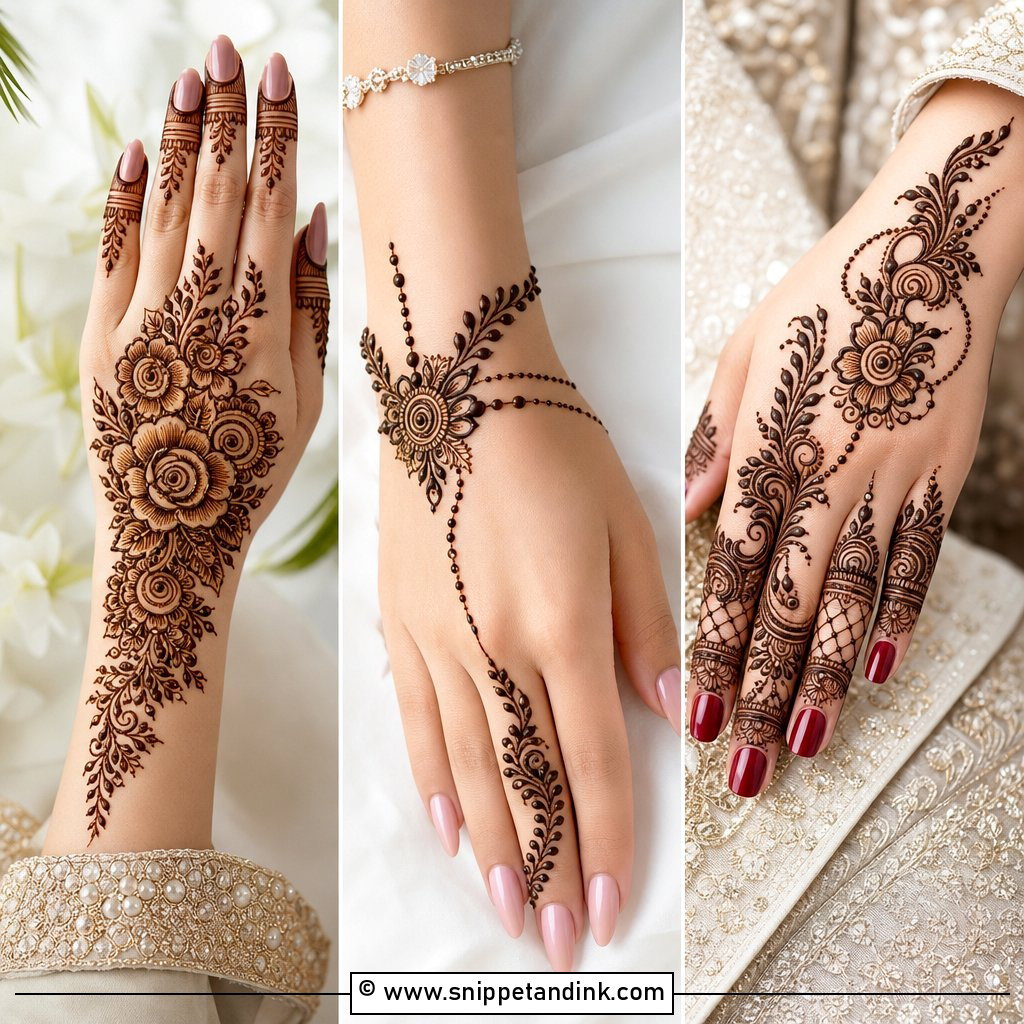
Full-hand Arabic gives generous coverage while keeping the open flow. Large floral clusters sit on the palm, then paisleys, leafy vines and curved bands sweep over the wrist and forearm. I draw the bold outlines first and add the fine filler lines afterwards, never the other way round, because the outline sets the rhythm of the whole hand. Fingers get light florals, a little net and slim bands so the hand balances from tip to forearm. It’s the right pick if you want a decorated hand but not every inch filled.
2. Arabic Bridal Mehndi Design Front Hand
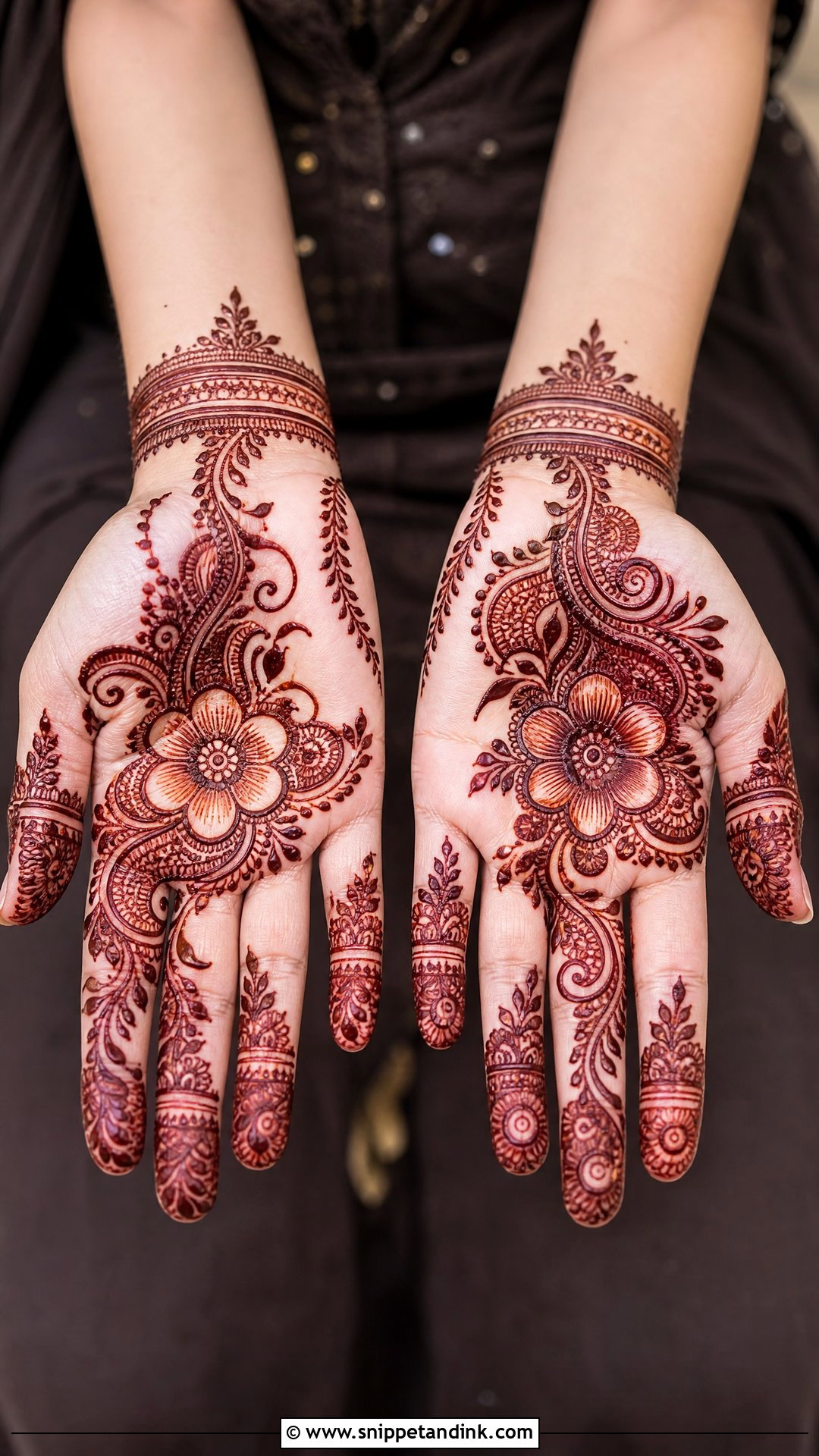
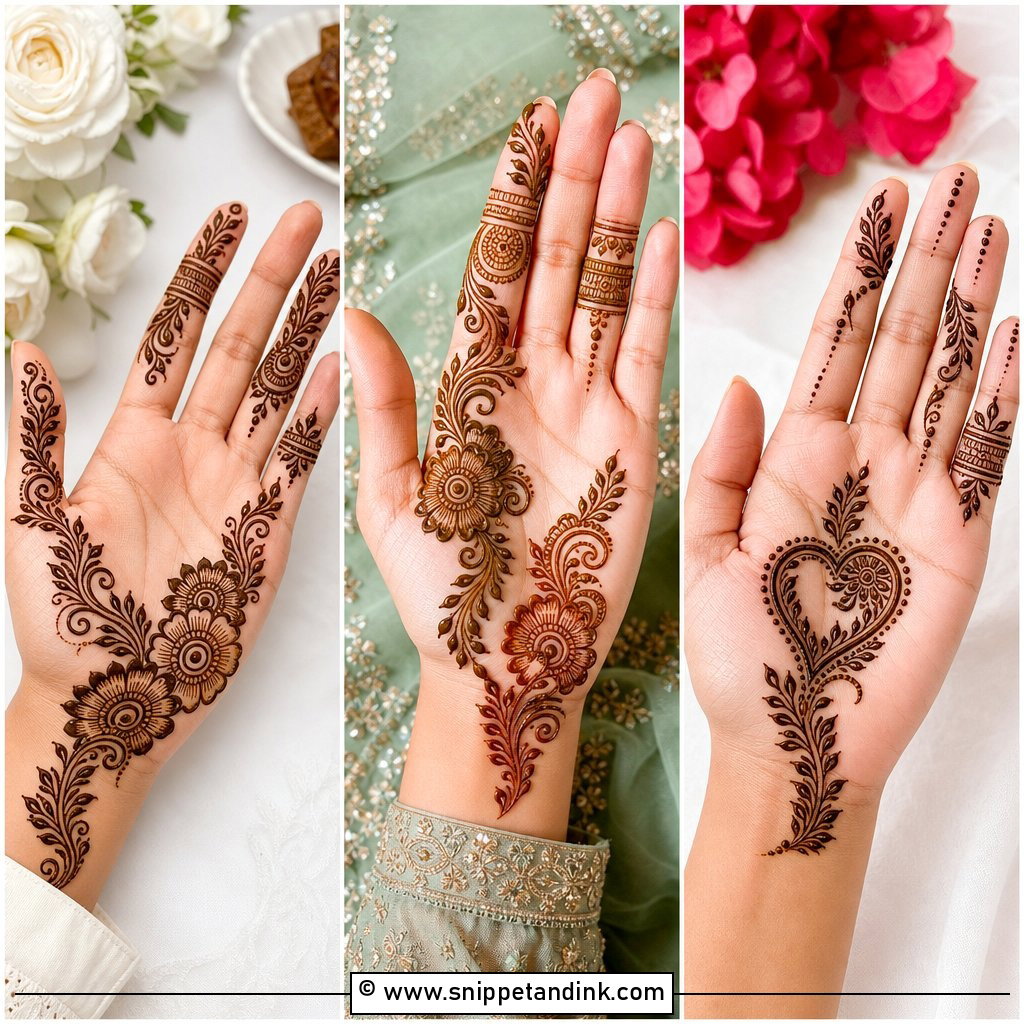
On the front of the hand the palm is the stage. Large flowers, curved paisleys and leafy trails run from one side of the palm toward the wrist, with small open spaces for contrast. Palm skin takes henna more deeply than almost anywhere else, so this is where a bride gets her darkest colour. Finger caps, dotted chains and slim bracelet bands finish it, and for a bridal version I carry bold florals and scalloped borders past the wrist to echo the palm.
3. Arabic Bridal Mehndi Design Back Hand
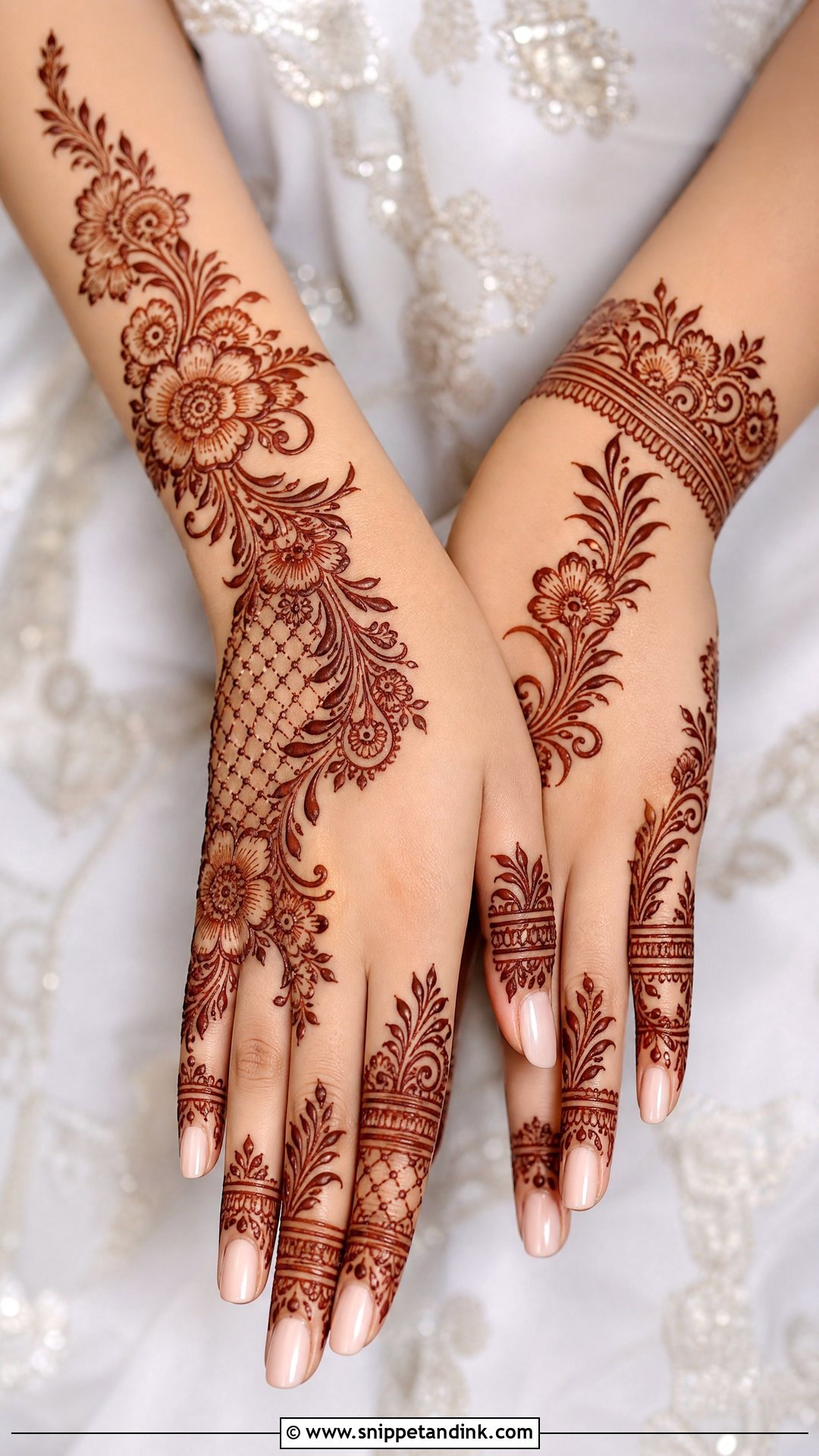
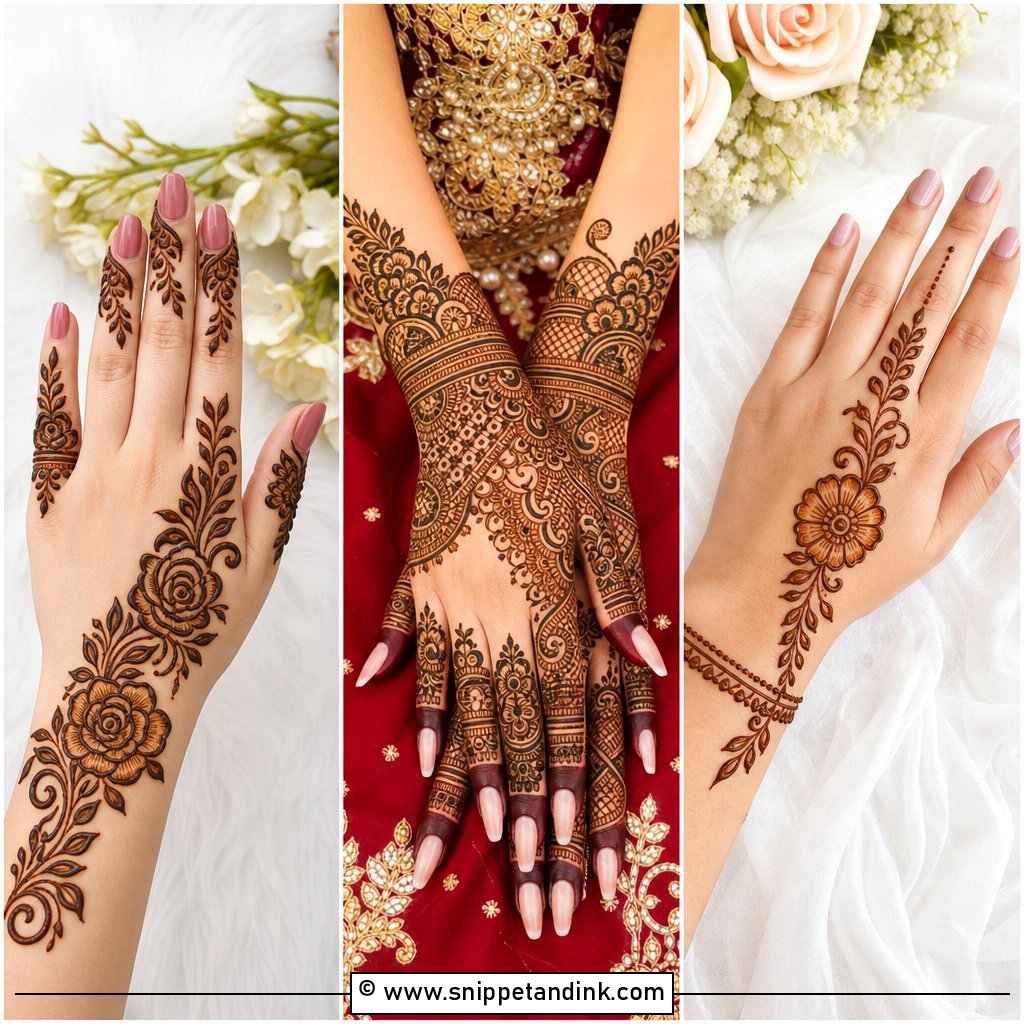
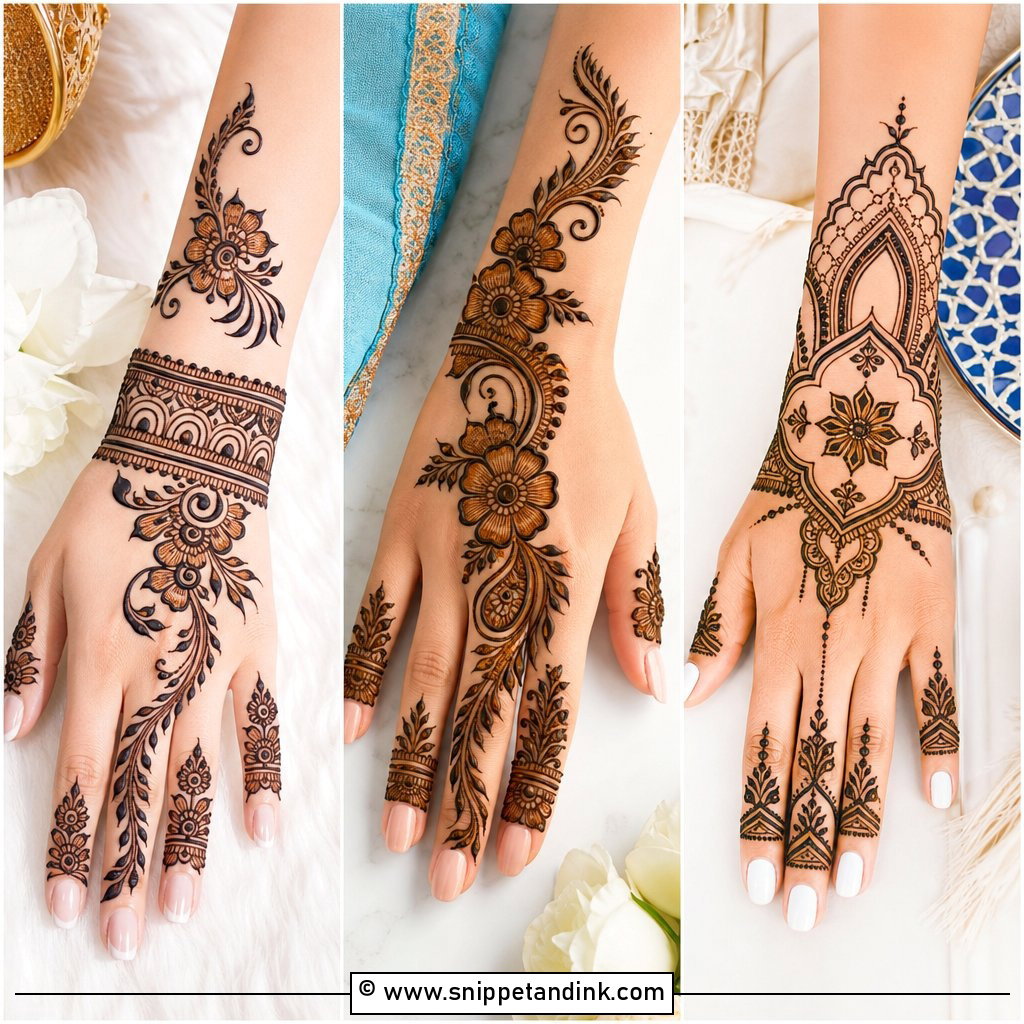
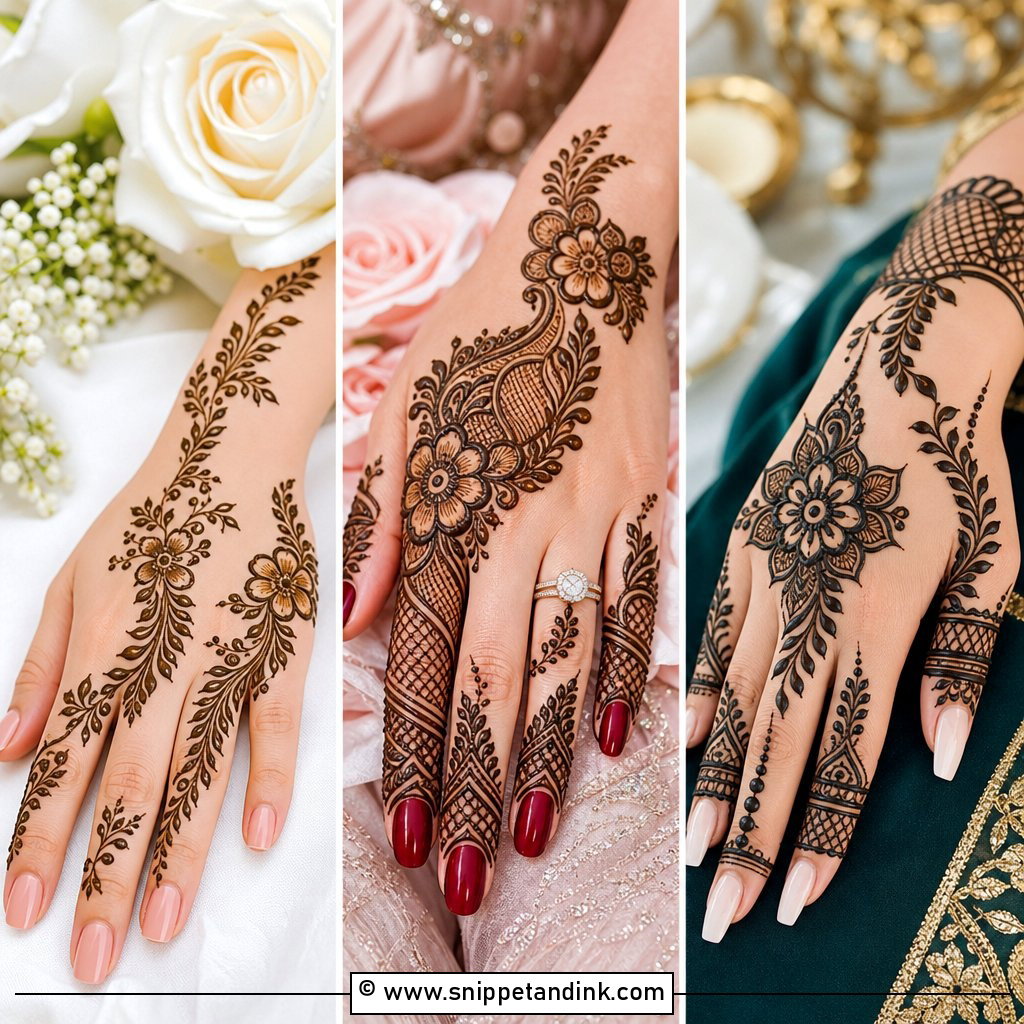
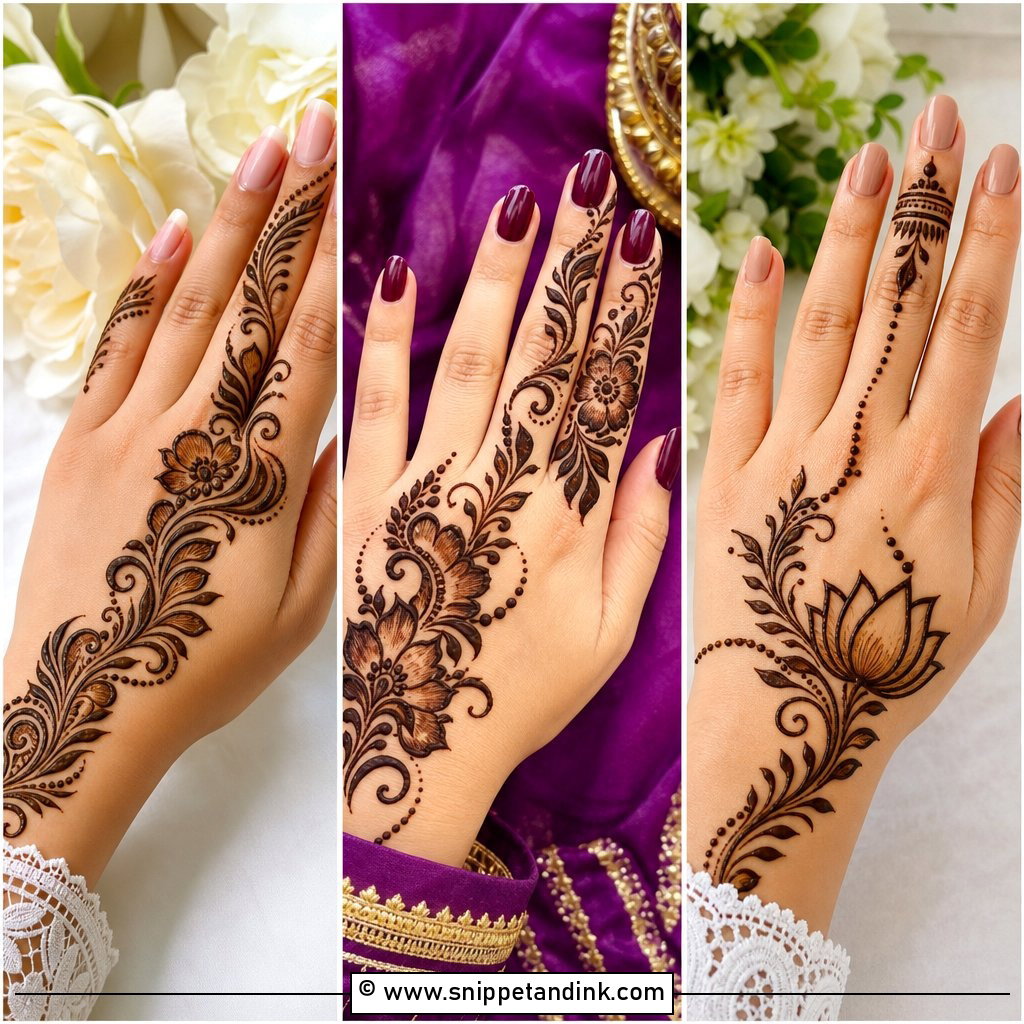
The back of the hand is what shows in ring shots and bangle photos, so an Arabic bridal mehndi design back hand has to be neat. A diagonal floral trail from the index finger to the wrist is the classic layout; it creates movement and leaves soft space around it. Jaali near the fingers, leafy vines around the knuckles and a cuff at the wrist can be added. Expect a slightly lighter stain here than on the palm, since the skin is thinner, which I compensate for with bolder lines. It sits comfortably with rings, a hathphool and stacked bangles.
4. Simple Arabic Bridal Mehndi Design
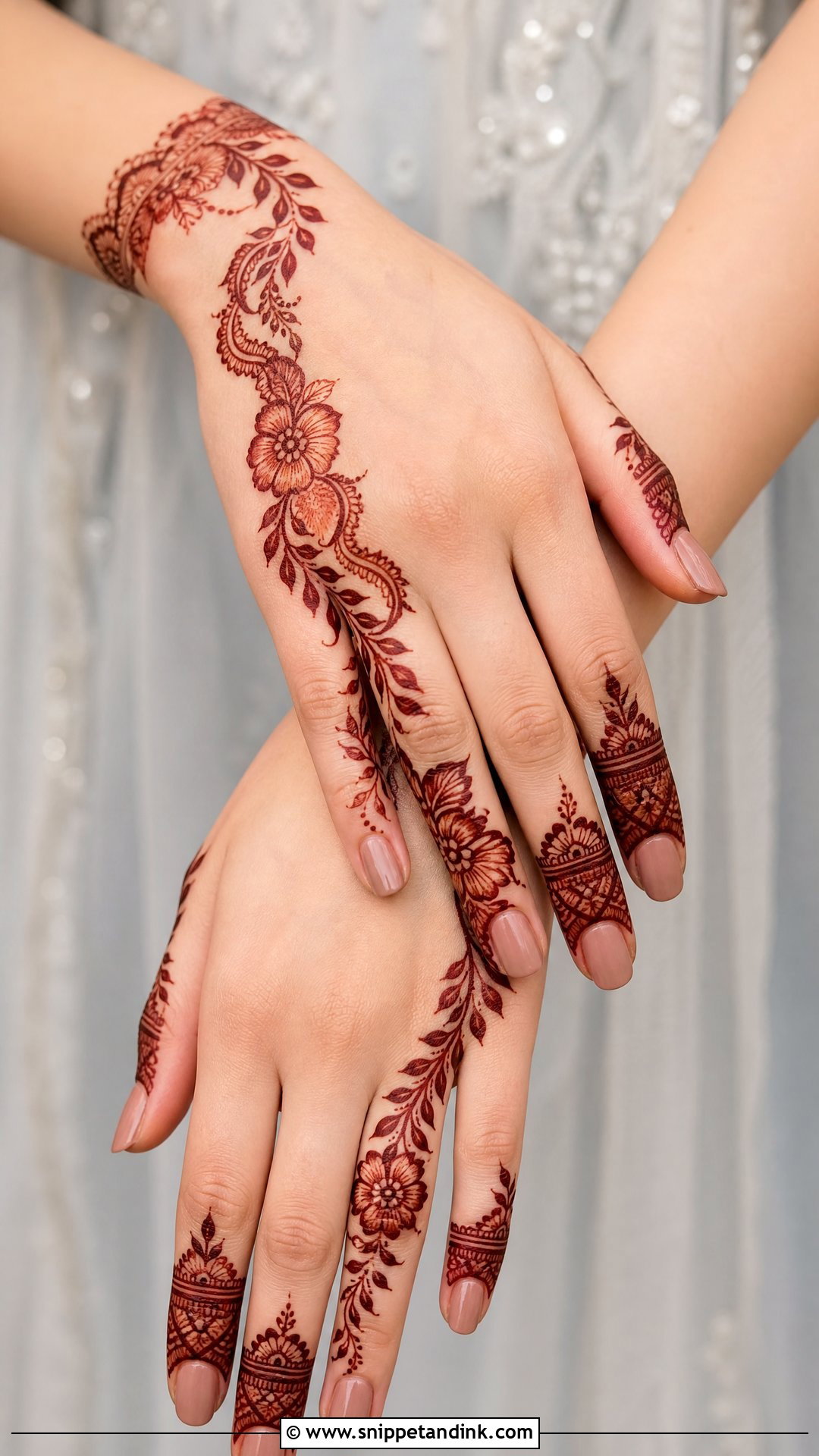
Simple doesn’t mean quick to get right. One main floral trail, a few paisleys, delicate leaves and clean finger detail carry this design, and with so little on the skin, spacing and confident outlines are everything. It suits intimate weddings, courthouse ceremonies and engagements, and brides who prefer a lighter look. I add a slightly fuller wrist cuff and a little fine detail inside the larger motifs so it reads as bridal, not as a party design. Done well, it looks planned rather than empty.
5. Heavy Arabic Bridal Mehndi Design
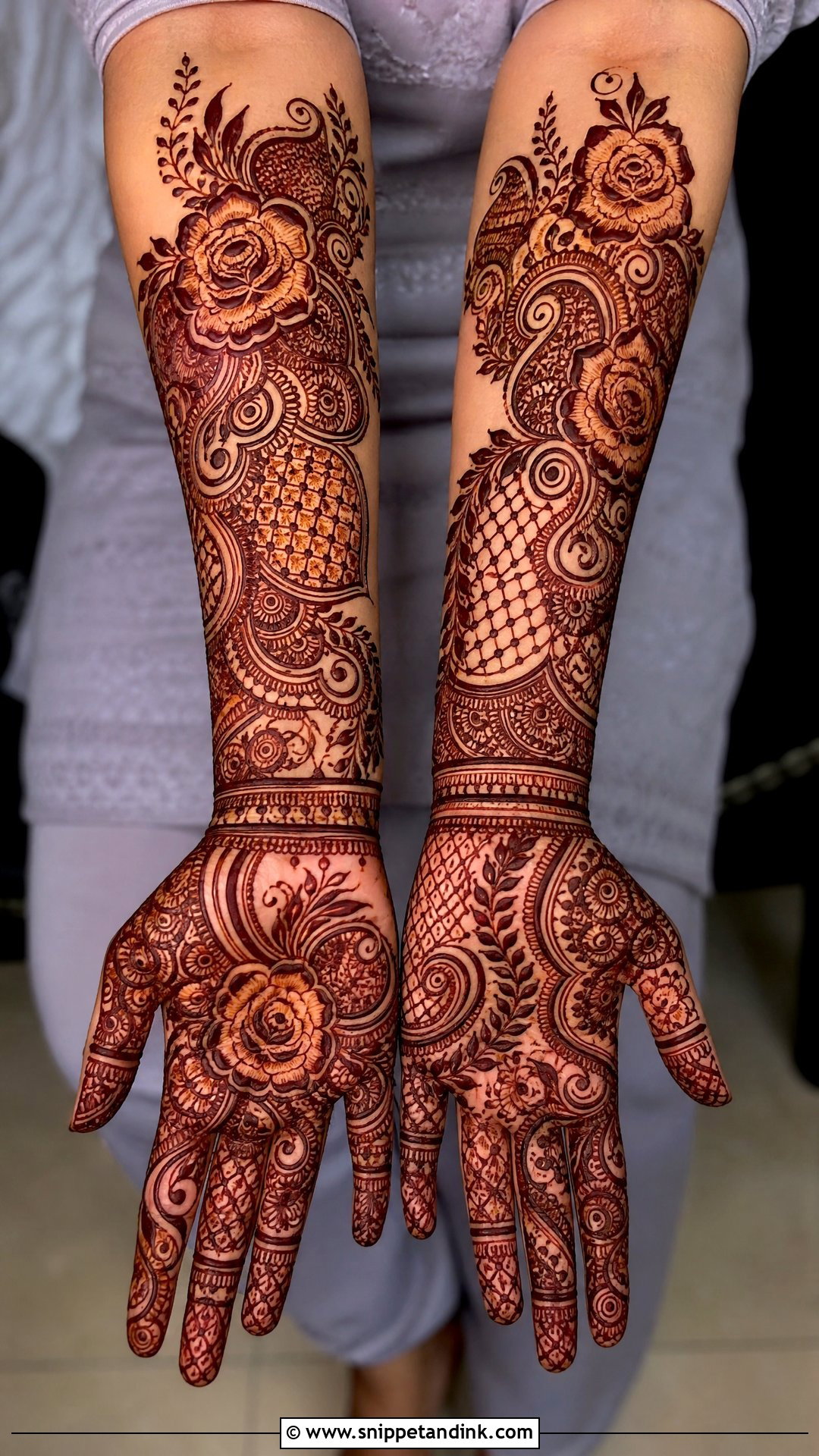
Heavy Arabic keeps the Arabic flow but scales everything up: larger motifs, thicker borders and much more forearm coverage. The palm may hold bold roses, paisleys, jaali and shaded leaves, while layered vines and ornamental bands climb the arm. Unlike dense Indian work, it still keeps small gaps so each motif is distinct. Embroidered outfits and statement jewellery suit it. I’d ask for symmetry between the hands for traditional poses. Plan for a long sitting; this is one of the slowest designs on the list.
6. Floral Arabic Bridal Mehndi Design
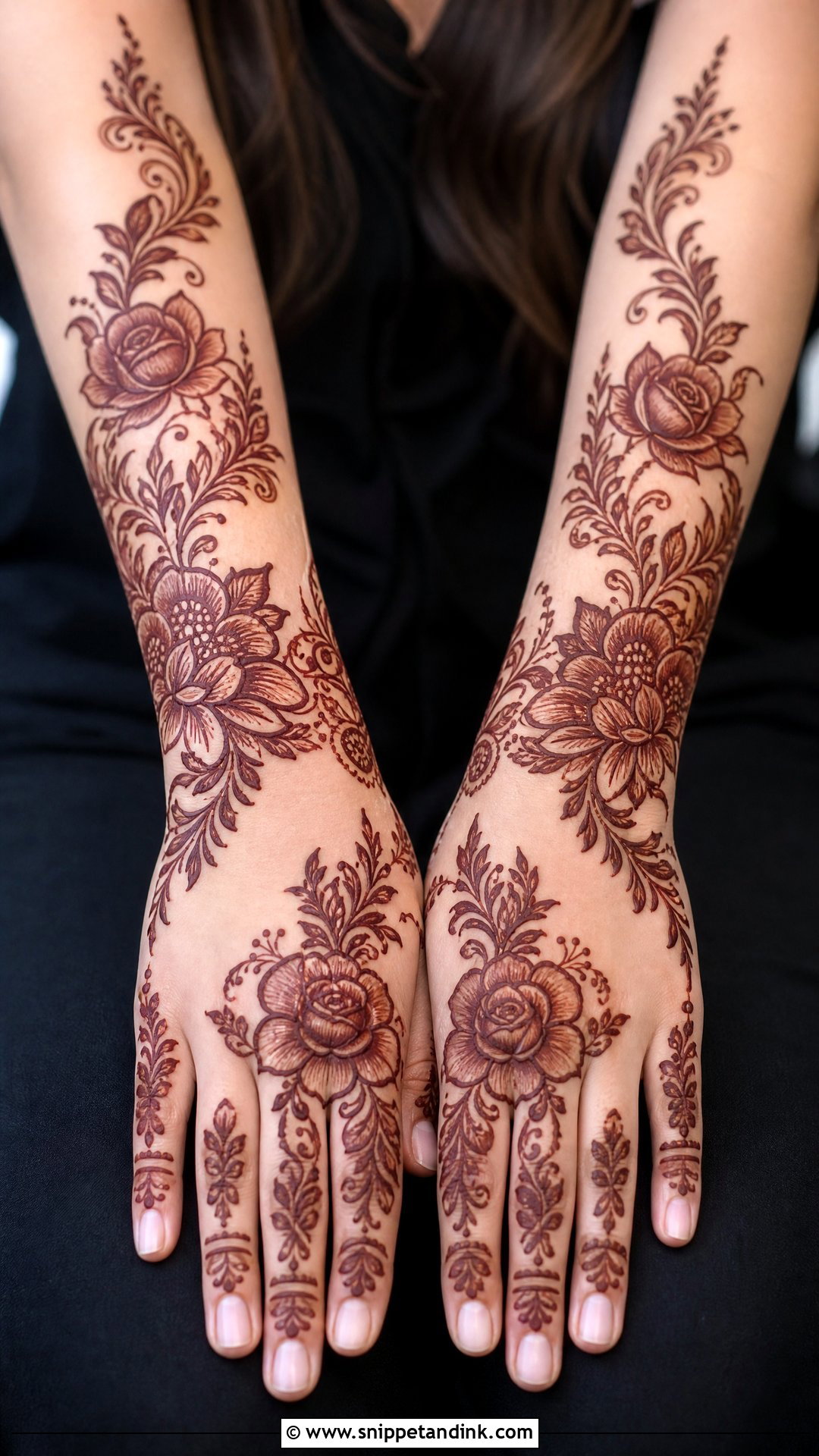
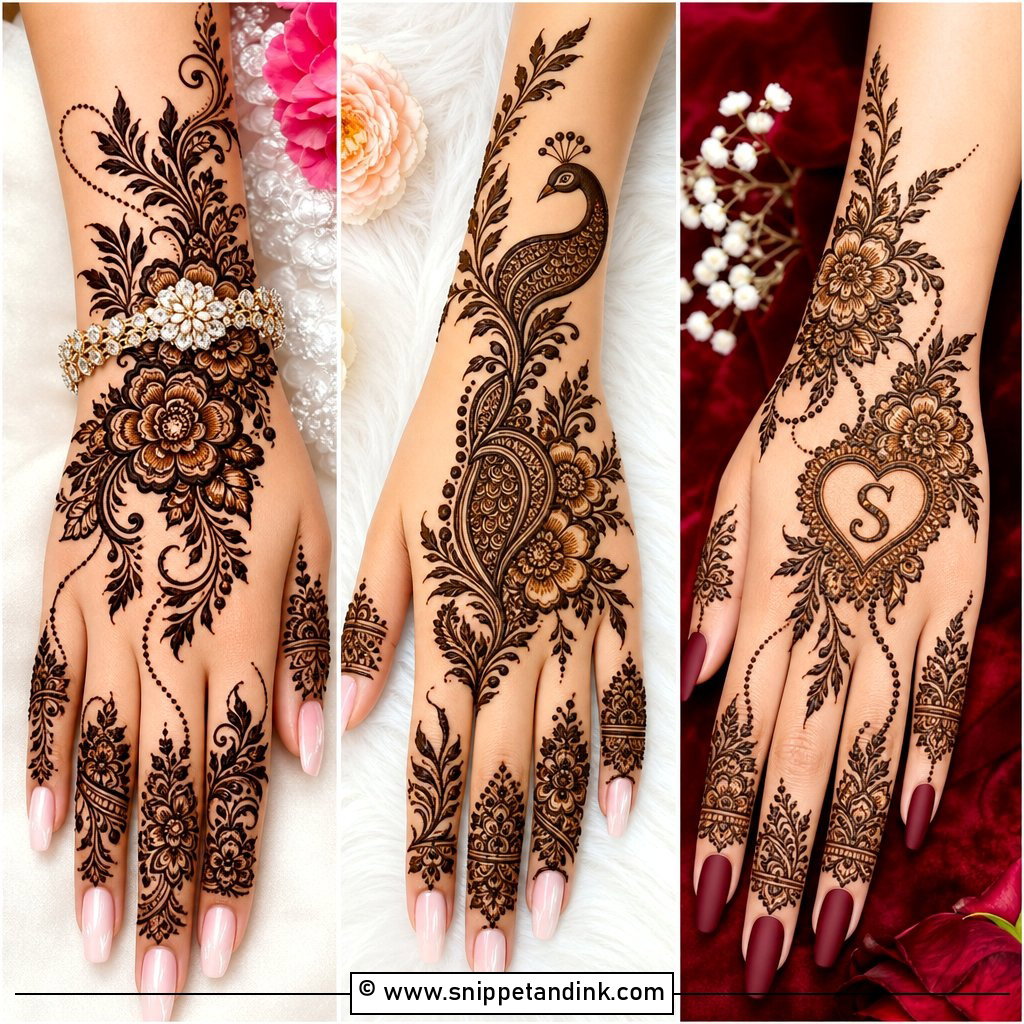
Florals are what most brides ask me for first. Roses, lotus-style flowers, daisy clusters and leafy vines run across the palm and wrist, and Arabic florals can be drawn large and loose in a way denser styles don’t allow. For depth I shade the petals, dot the centres and add fine spirals around the main blooms. It suits a red lehenga as easily as a pastel sharara and works on the front or back of the hand. The fingers should stay a little quieter so the floral trail leads.
7. Paisley Arabic Bridal Mehndi Design
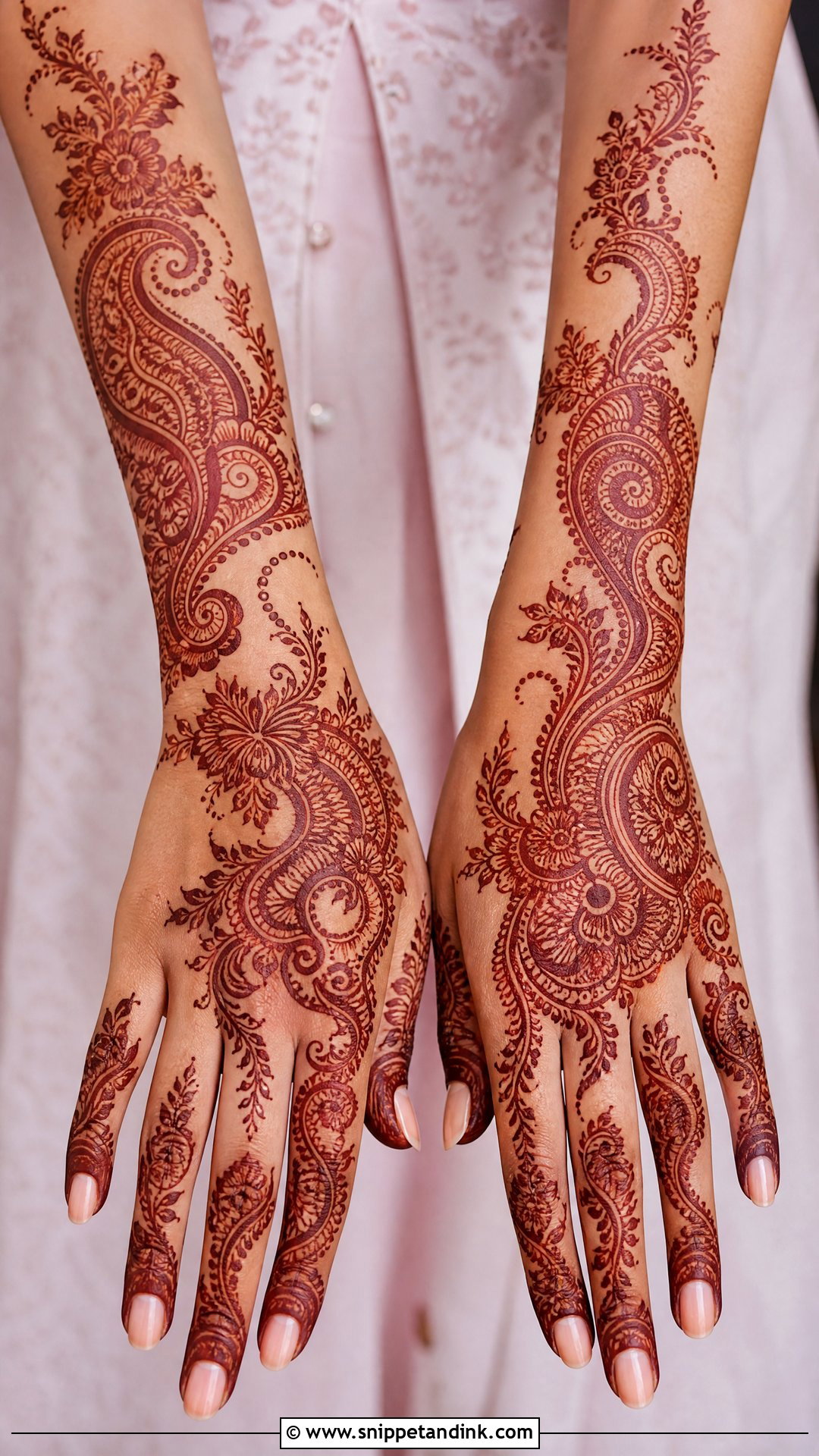
Paisleys give traditional richness without stiffness. I lay them along a diagonal across palm, wrist and forearm, each one filled with tiny leaves, dots, curves or small florals. That filling is texture, but too much of it makes the paisley unreadable, so I leave the outer band of each one quite clean. It blends easily with Arabic florals and Indian elements alike. Pair big paisleys with slim vines and some open skin, and it holds up in photos taken from any side.
8. Jaali Arabic Bridal Mehndi Design
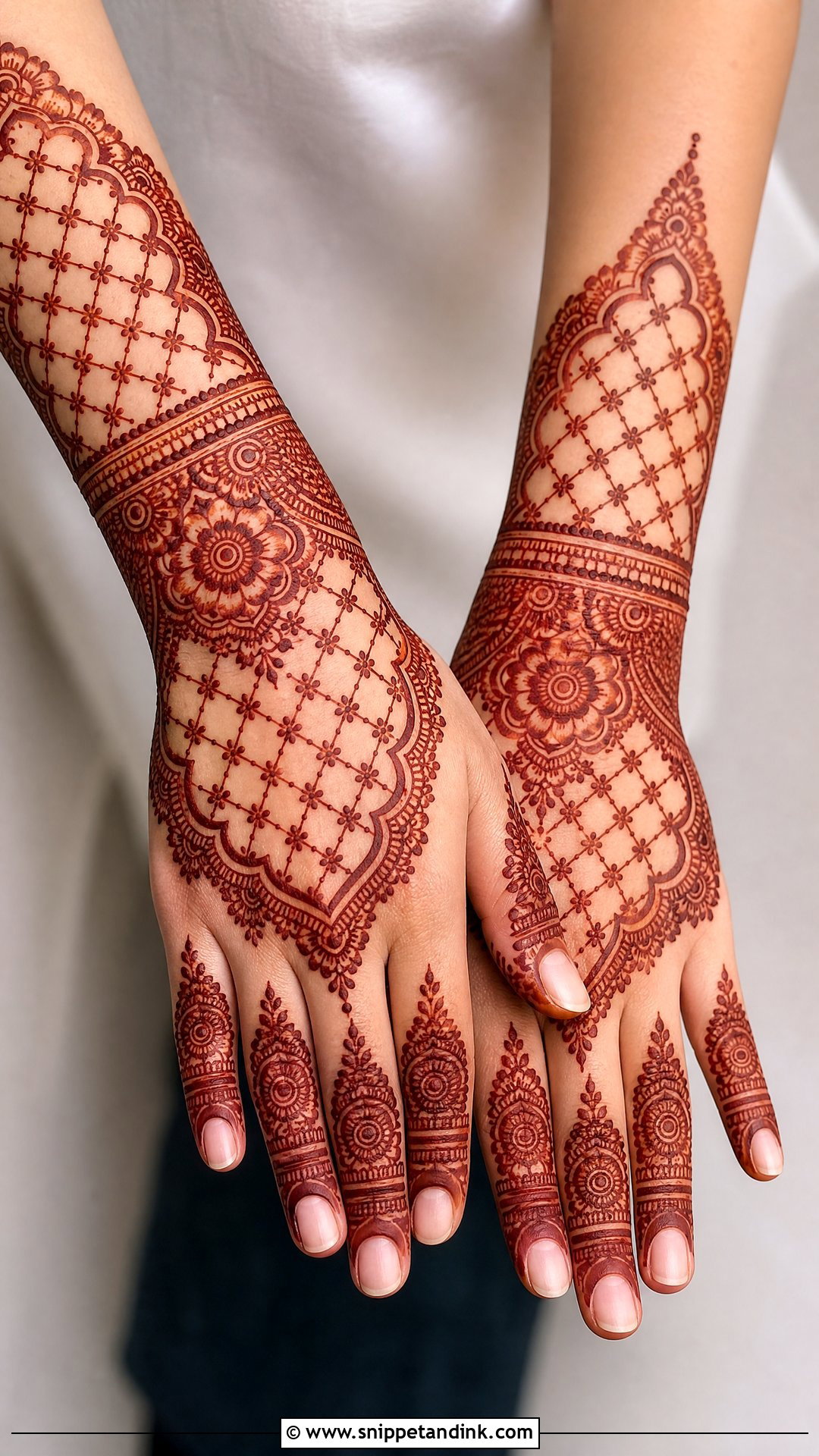
A jaali Arabic bridal mehndi design adds a net pattern that makes the hand look delicate and dressed. The jaali can go on the fingers, the back of the hand, the wrist or a few palm sections, framed with bold florals, paisleys or leafy borders so it doesn’t look plain. Diamond mesh, curved mesh or fine lattice are all options. The lines have to be evenly spaced, and that’s a matter of a steady, consistent cone pressure; when the cone starts running low, I swap it rather than squeeze harder.
9. Indo Arabic Bridal Mehndi Design
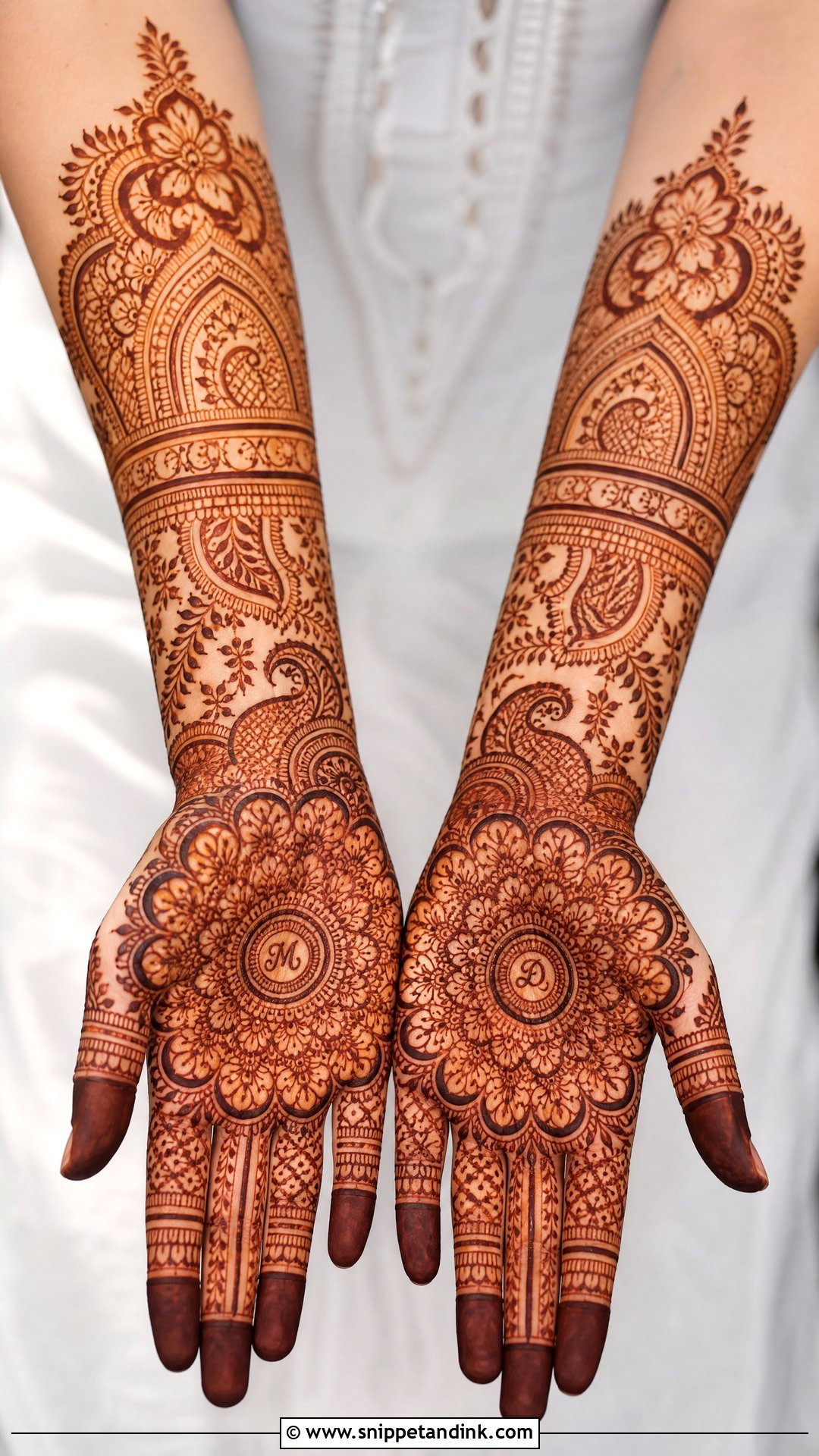
Indo-Arabic fusion pairs Arabic floral trails with Indian fillers, mandalas, paisleys and ornamental wrist bands. It gives fuller coverage while keeping some open space. A central mandala on the front of the hand with Arabic vines around it, and layered floral panels on the forearm, is a common layout. It suits South Asian weddings where the family expects traditional richness but the bride wants something lighter. It’s also easy to tuck initials, dates or small symbols into the fillers.
10. Gulf Arabic Bridal Mehndi Design
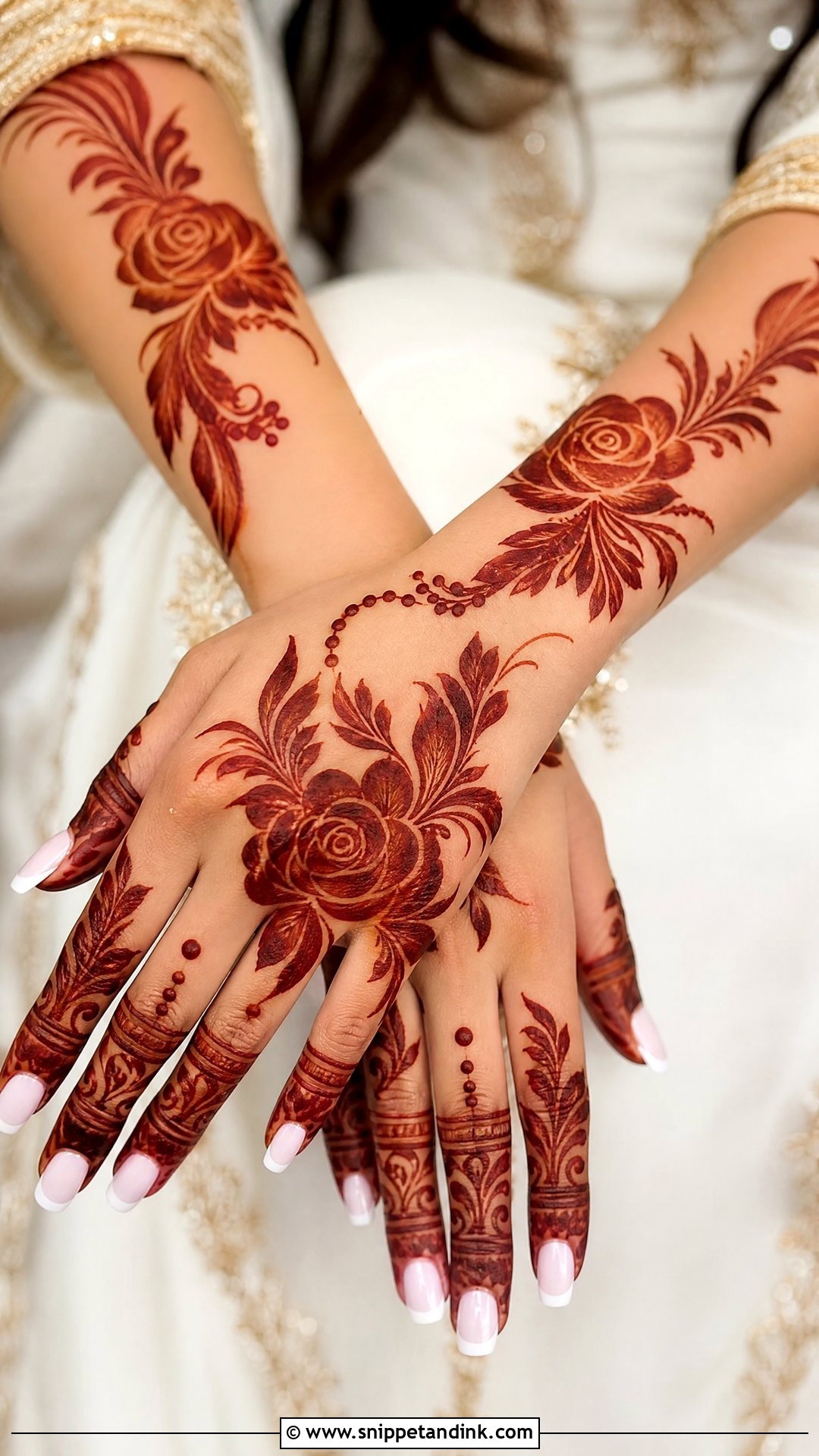
Gulf Arabic bridal mehndi, often called Khaleeji style, uses big flowers, thick leafy strokes and confident spacing. The motifs are larger and less crowded than in most bridal styles, so it reads from a distance. I usually place it on the back of the hand or from wrist to forearm. Large roses, shaded leaves and sweeping curves create the effect, with semi-open fingers finished in bands and dots. Thick strokes need thicker paste flow; I cut the cone tip a little wider for this style. Gold jewellery and silk outfits suit it.
11. Moroccan Arabic Bridal Mehndi Design
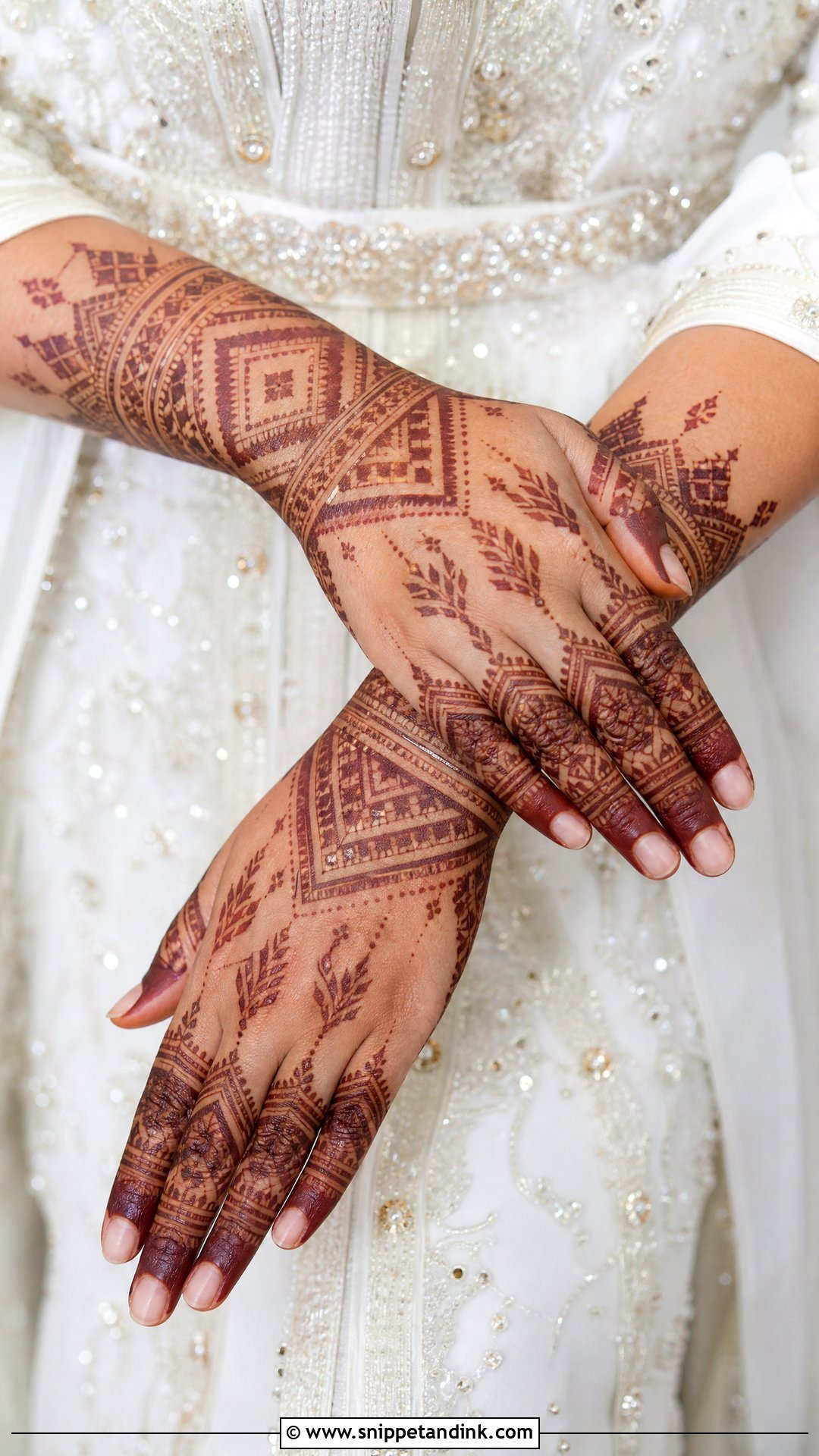
Moroccan-style work brings geometry: diamonds, triangles, chevrons, grids and strong borders instead of only flowers and paisleys. Small florals, dots and ornamental wrist cuffs soften it for a bride. The back of the hand and forearm are flatter than the palm, which keeps straight lines straight, so I place the geometric sections there. It’s a good change from floral trails if you want something sharper that still belongs to Arabic mehndi.
12. Mandala Arabic Bridal Mehndi Design
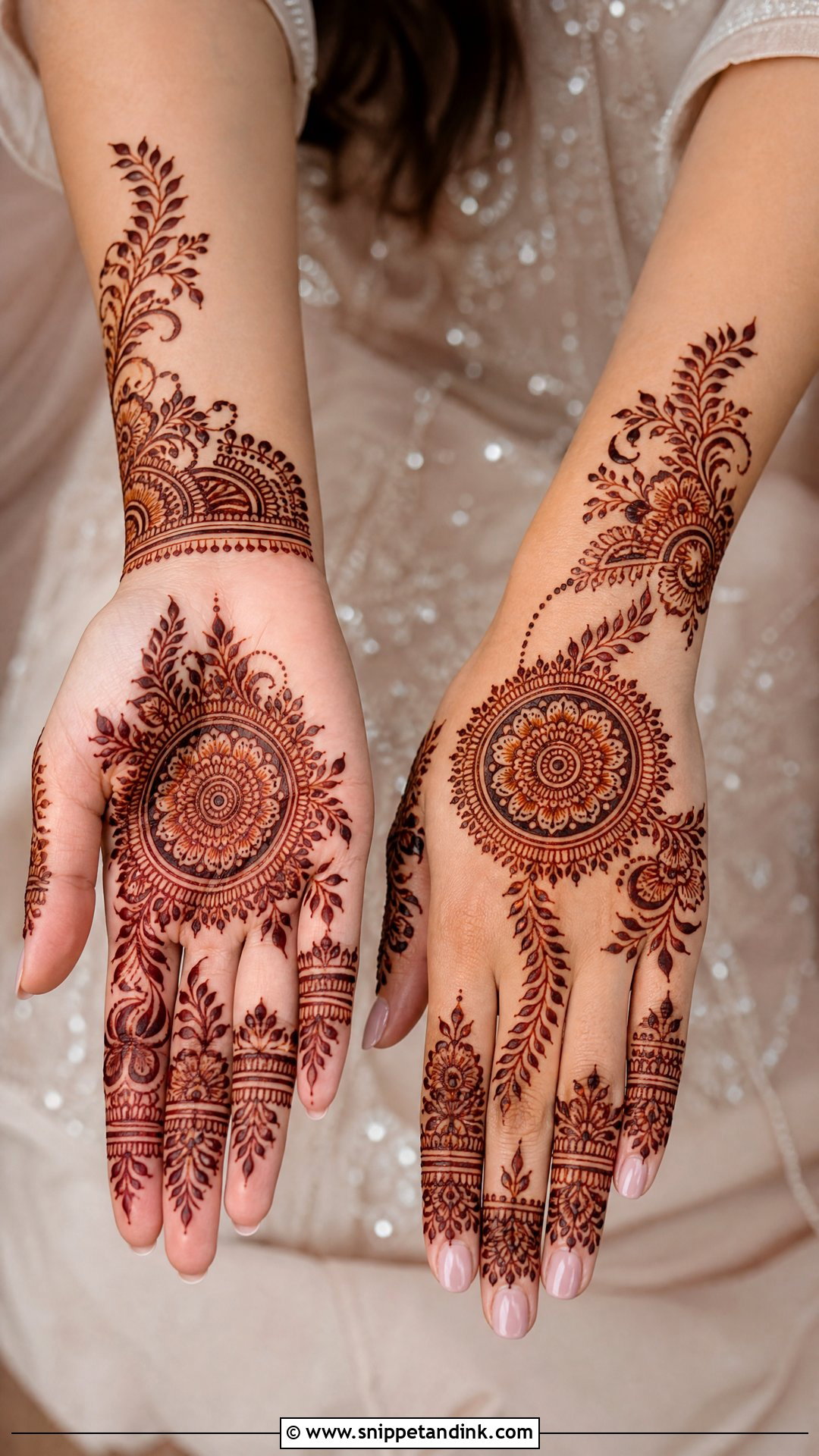
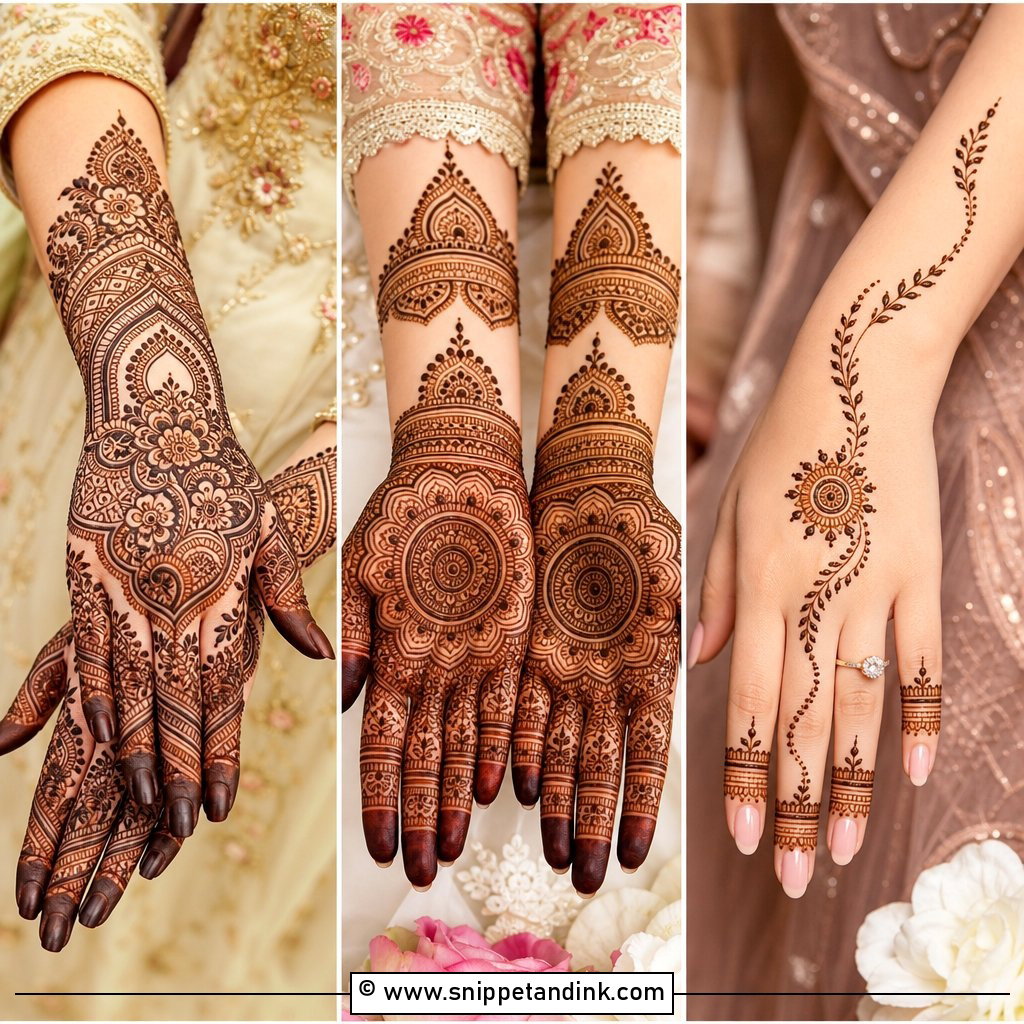
A mandala gives the hand a calm centre. It can sit on the palm or the back of the hand, with Arabic vines, leaves and florals growing out toward the fingers and wrist. Fine dots around the edge give a jewellery-like rim. Fingers carry small bands, leafy tips and fine line work. I draw the mandala’s centre circle first and build outward ring by ring, checking from arm’s length between rings, because a lopsided mandala is the one mistake everyone notices.
13. Rose Arabic Bridal Mehndi Design
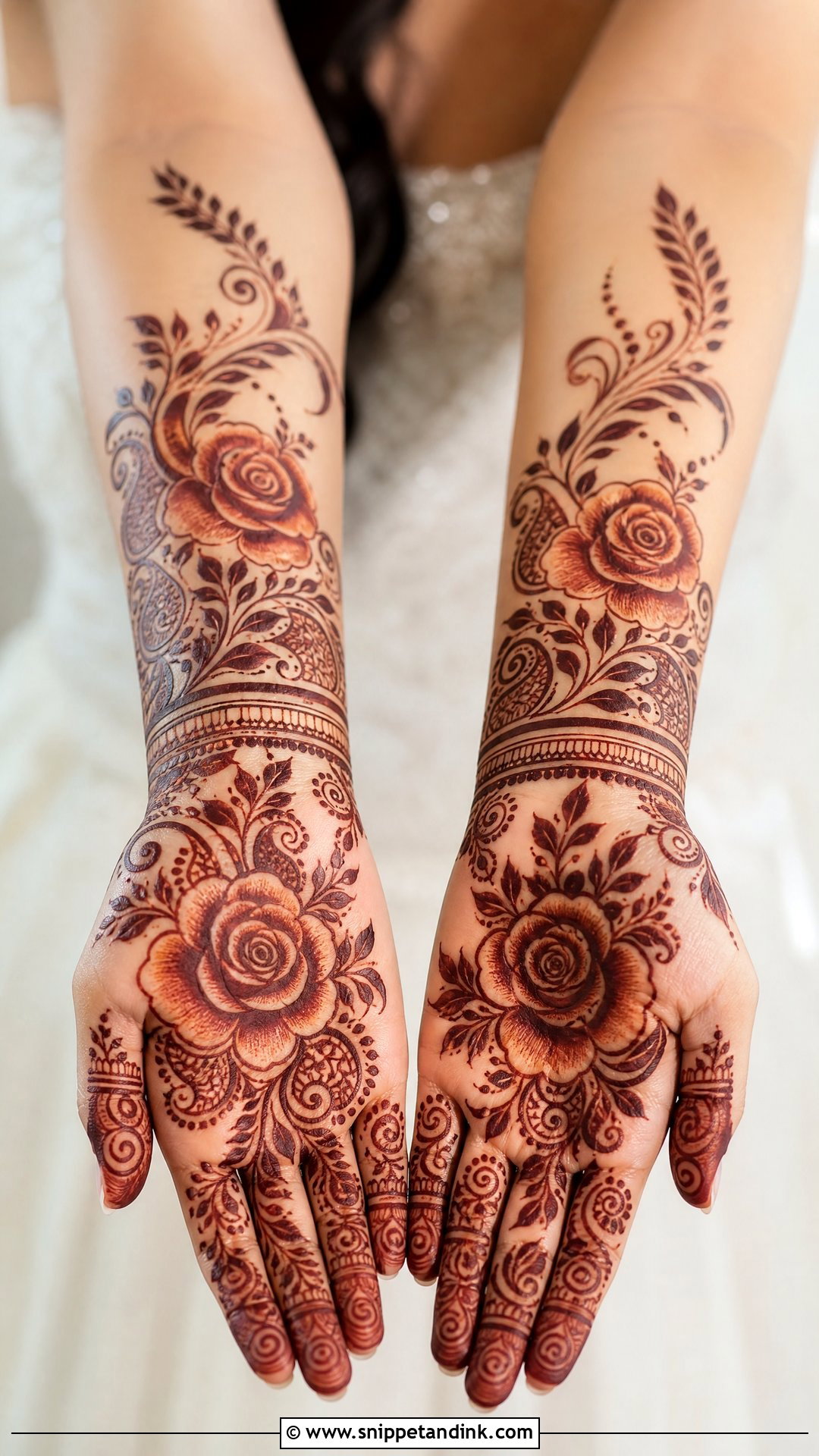
Roses can be soft or bold depending on how they’re shaded. Large rose motifs sit on the palm, the back of the hand or the forearm, linked by leafy trails. Shaded petals give depth, and bold outlines keep the roses distinct after the stain darkens. Floral embroidery, pastel outfits and classic red all suit it. Bracelet bands, finger detail and a few paisleys around the roses make it bridal. Aim for a vine that wraps the hand rather than scattered flowers, which look like stickers once stained.
14. Peacock Arabic Bridal Mehndi Design
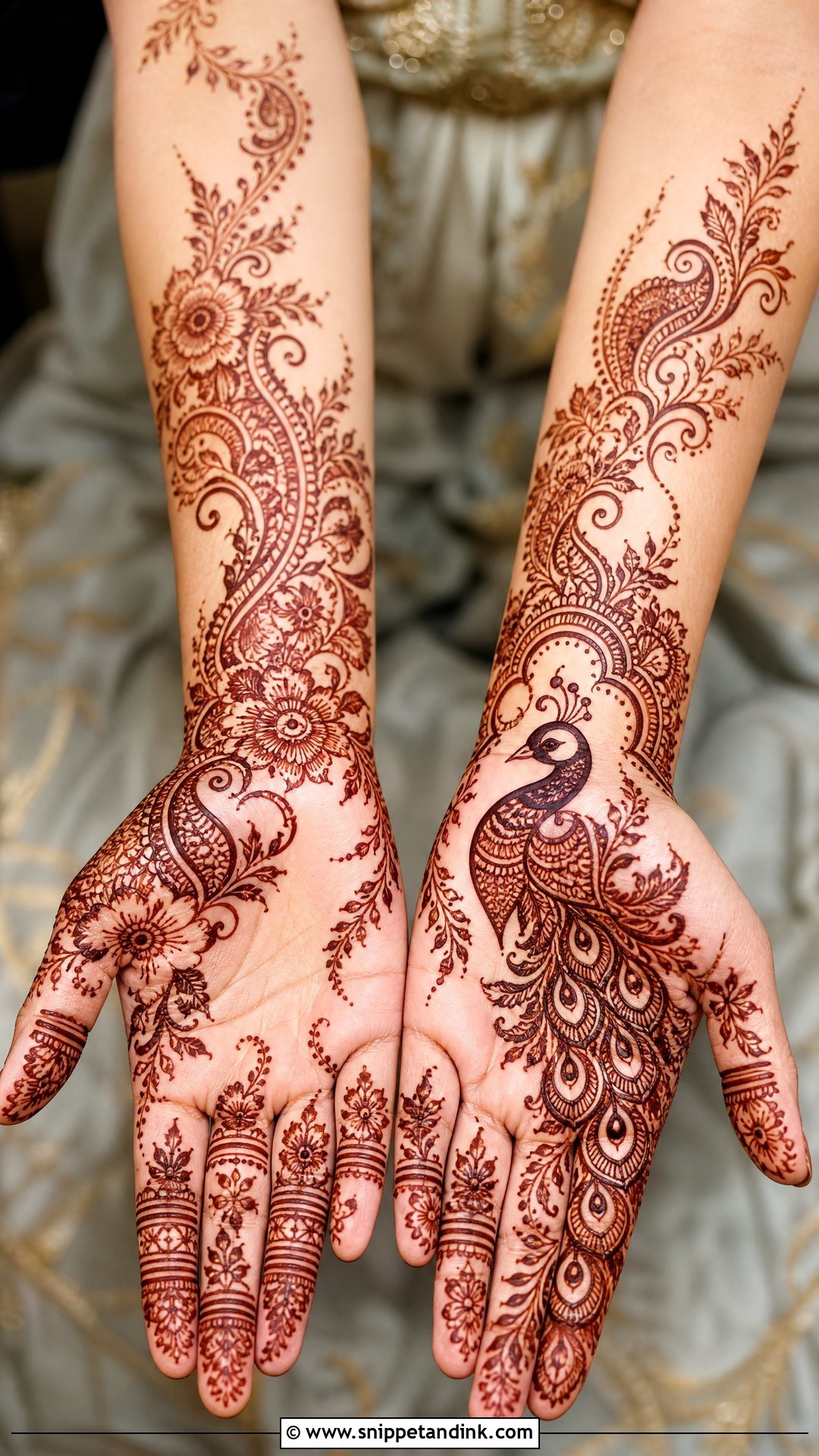
Peacocks bring a traditional wedding feel. In an Arabic layout I place one clear peacock on the palm or forearm, not a dense flock, and surround it with floral vines, paisleys, curved feathers and dotted borders. Its feathers can stretch into trails toward the wrist or fingers. It suits a bride who wants a familiar wedding motif but prefers a lighter, more open design. Keep the eye and beak a bit bolder than you’d think; tiny details blur if the paste spreads in a warm room.

15. Bracelet Arabic Bridal Mehndi Design
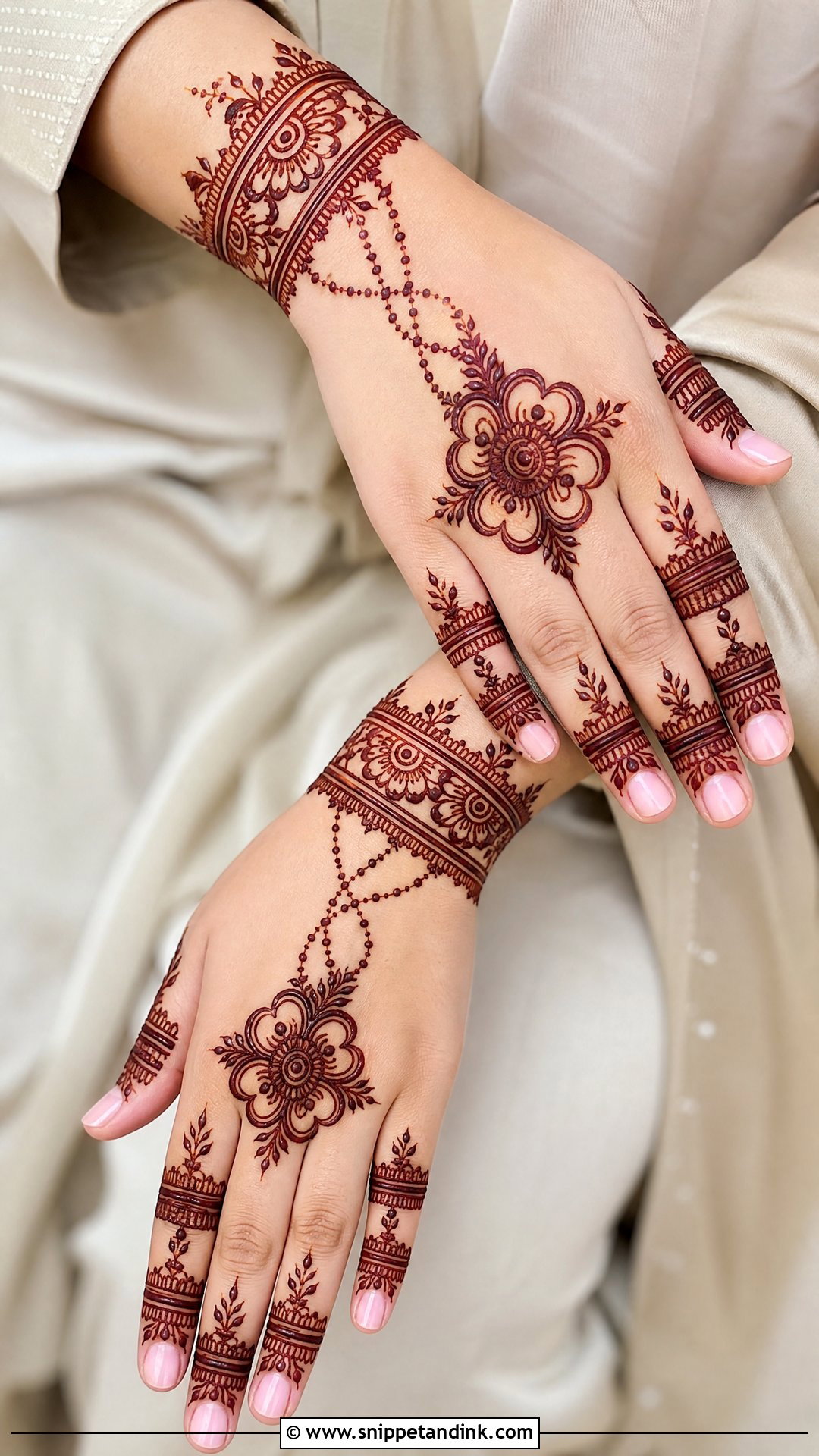
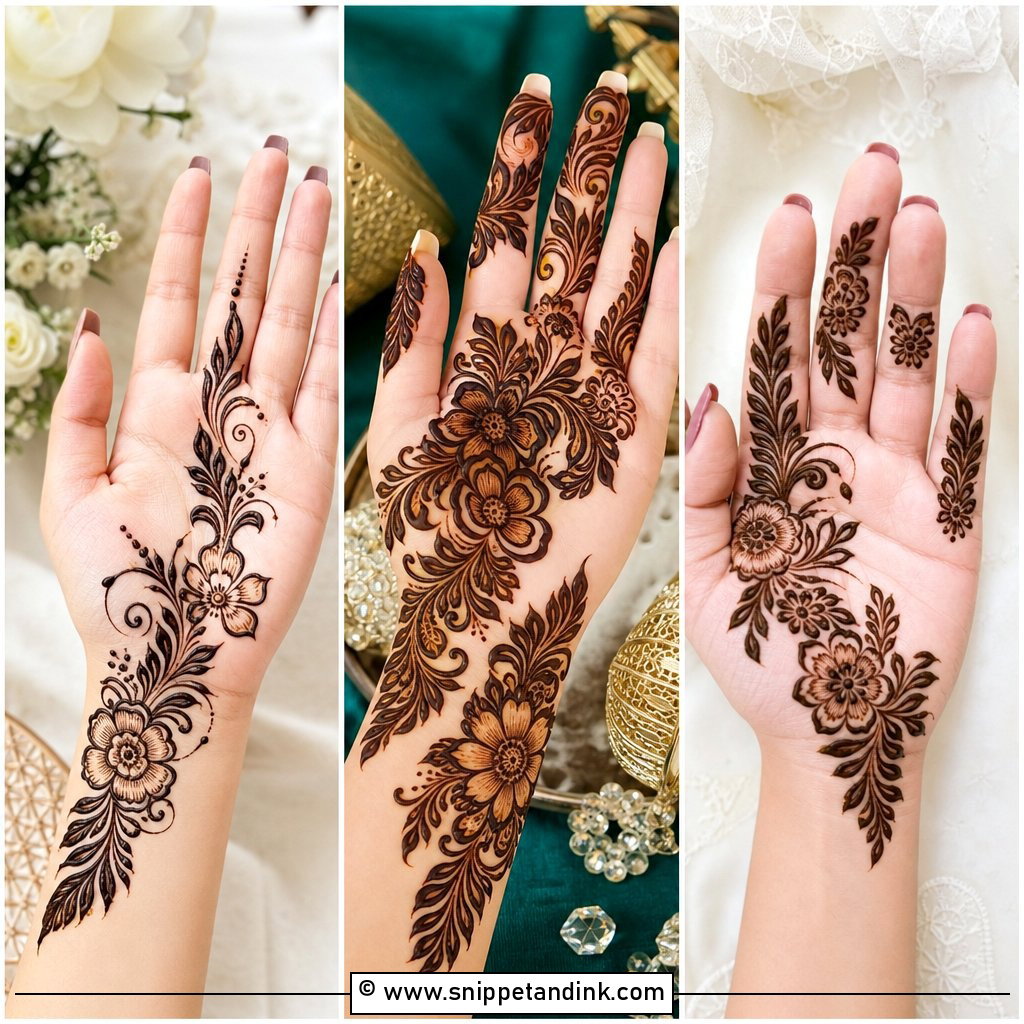
Bracelet-style mehndi turns henna into hand jewellery: a detailed wrist cuff, chain lines, finger rings and a centre motif on the back of the hand. Floral trails can link the cuff to the fingers, so the hand looks dressed even without heavy jewellery. I see it a lot for engagements, nikah brides and anyone who wants clean back-hand photos. Florals, dots, scallops and fine shading in the cuff keep it bridal. I line the cuff up with where your bangles will actually sit, so the henna peeks out above them rather than hiding under them.
16. Hathphool Arabic Bridal Mehndi Design
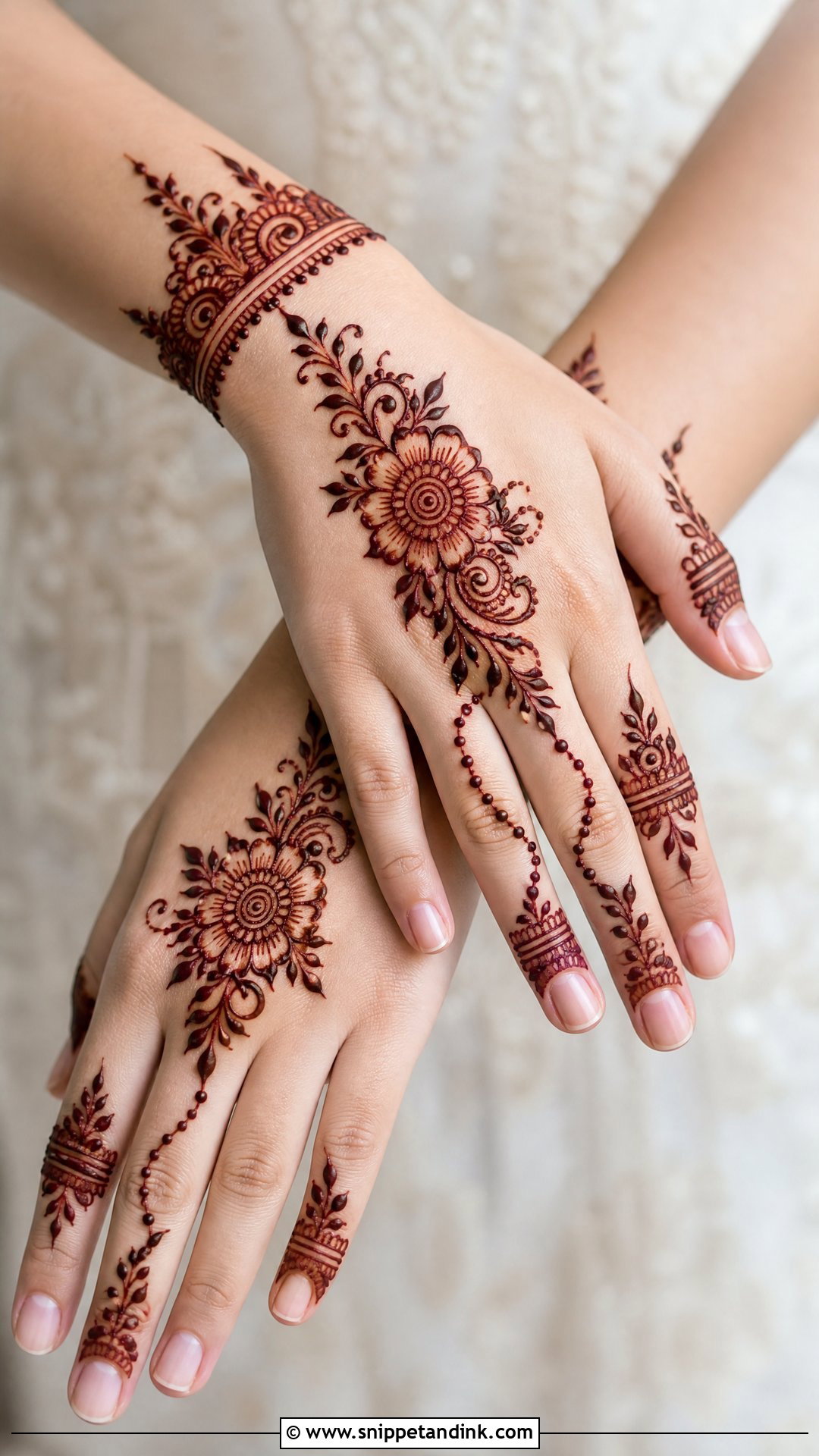
Hathphool mehndi copies the traditional ring-and-chain hand ornament. A central floral or mandala sits on the back of the hand, linked by chain lines to finger details and a wrist cuff. The Arabic version stays airy, with space around the chains and bold floral accents. It’s a good choice if you’ll wear delicate rings rather than an actual hathphool. The chain lines must be straight and line up with the knuckles; I mark the finger centres with a dot before drawing them.
17. Minimal Arabic Bridal Mehndi Design
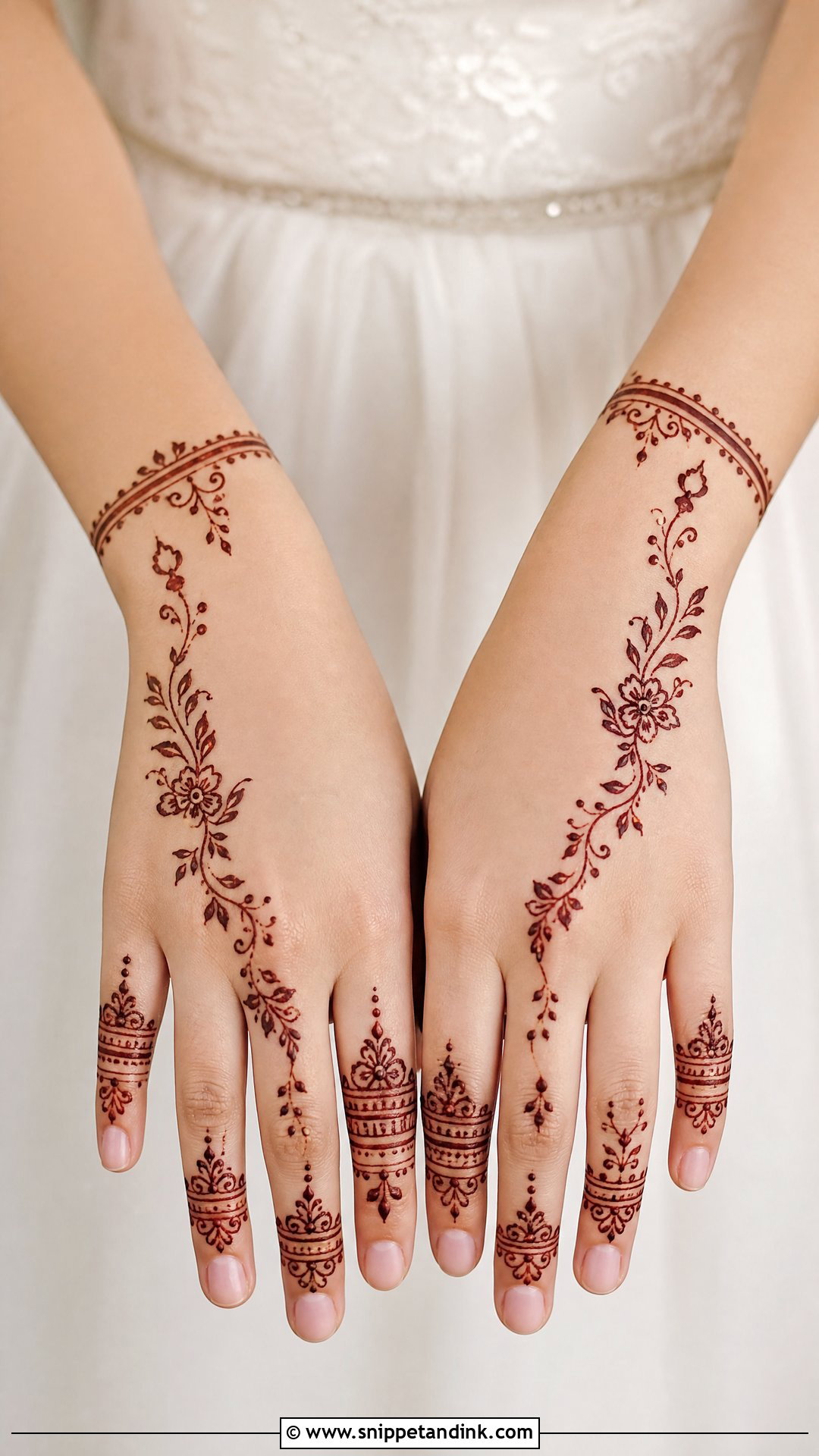
Minimal work gives a bridal touch without full coverage. A slim floral trail, clean finger bands, small paisleys and a light wrist detail are enough, and negative space keeps it modern. Small weddings, destination ceremonies and brides who want the outfit and jewellery to lead often go this way. To keep it from looking casual, I give it one strong focal motif and keep every line very clean. It can look as refined as a full hand.
18. Personalized Arabic Bridal Mehndi Design
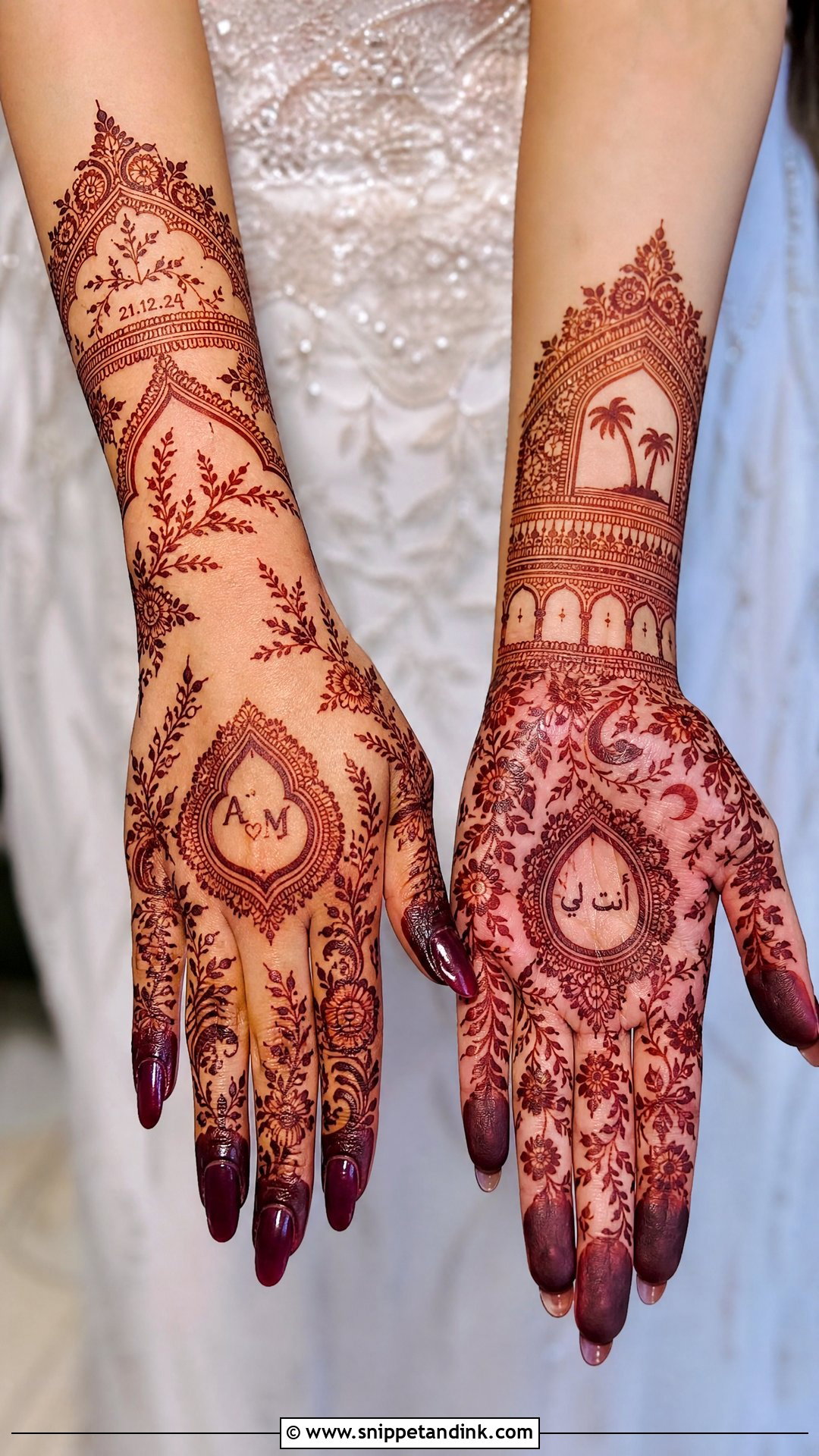
Personalised mehndi tucks something meaningful into the design: initials, the date, small hearts, cultural symbols or a motif from the couple’s story. The craft is in hiding it so the pattern still looks like a pattern. I build the letters out of the same strokes as the surrounding florals, so they read as decoration until someone looks closely. The main structure stays flowing with bold vines and bridal borders. It’s a nice detail for close-up photos and for guests who like to search.
19. Arabic Bridal Mehndi Design For Both Hands
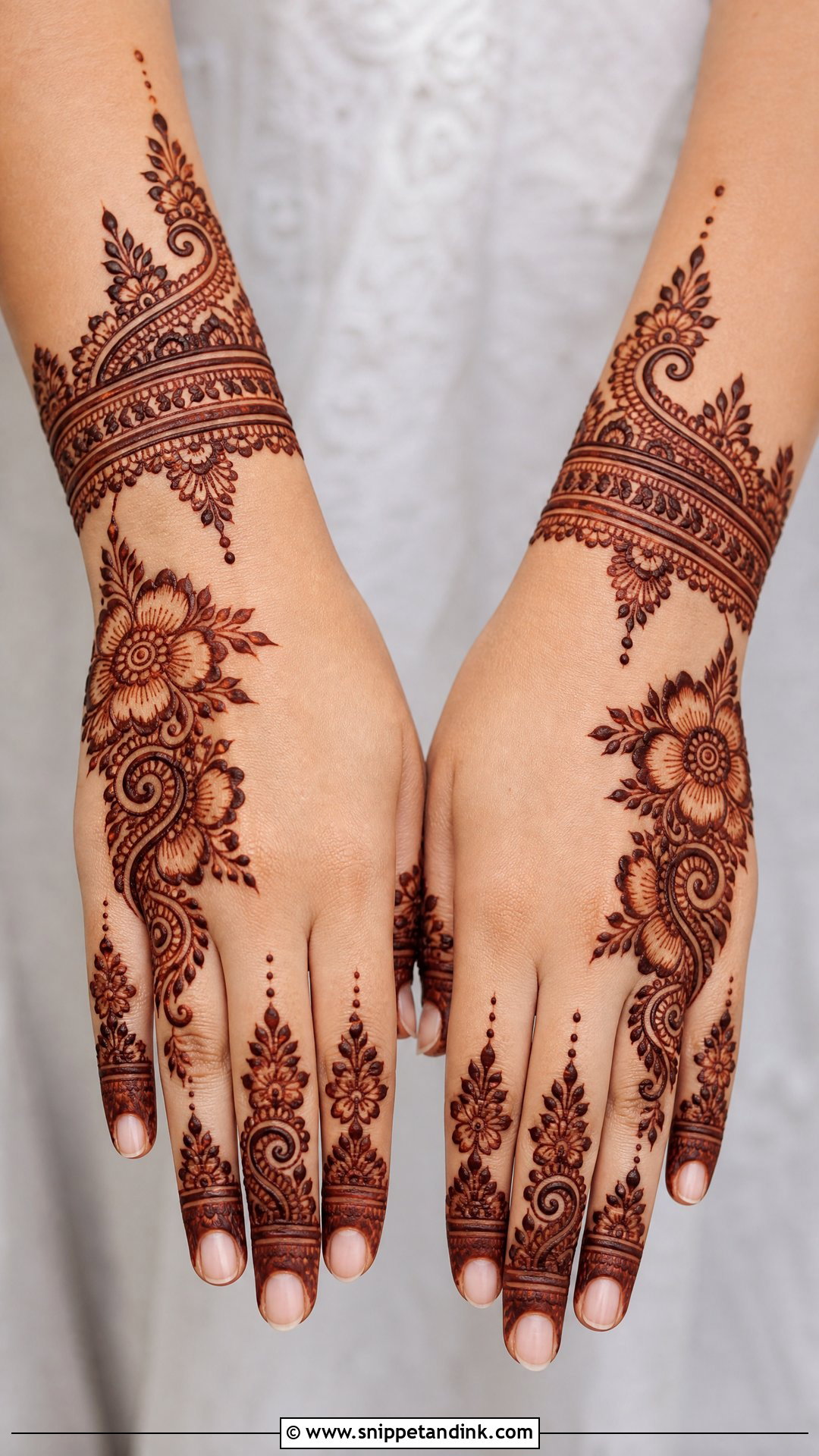
Two hands should look related even if they aren’t identical. One can carry a floral palm trail and the other paisleys or a mandala, provided the wrist bands, finger details and spacing match. Mirror-image hands look polished; complementary hands sharing the same motifs feel more modern. Both read well in photos where both palms or both backs are shown together. Balance is the test I use: hold them side by side, and neither should look heavier.
20. Arabic Bridal Mehndi Design With Forearm
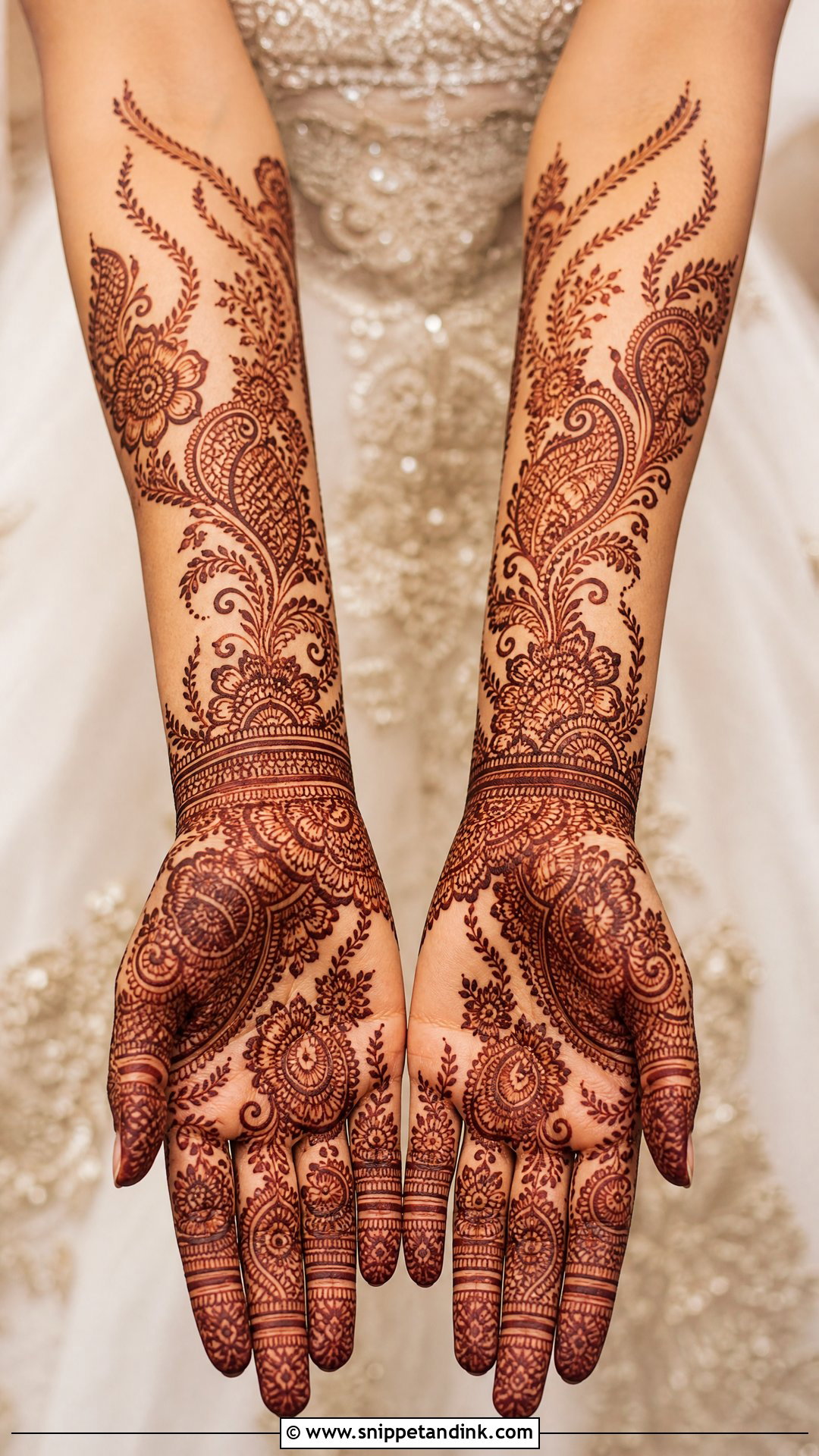
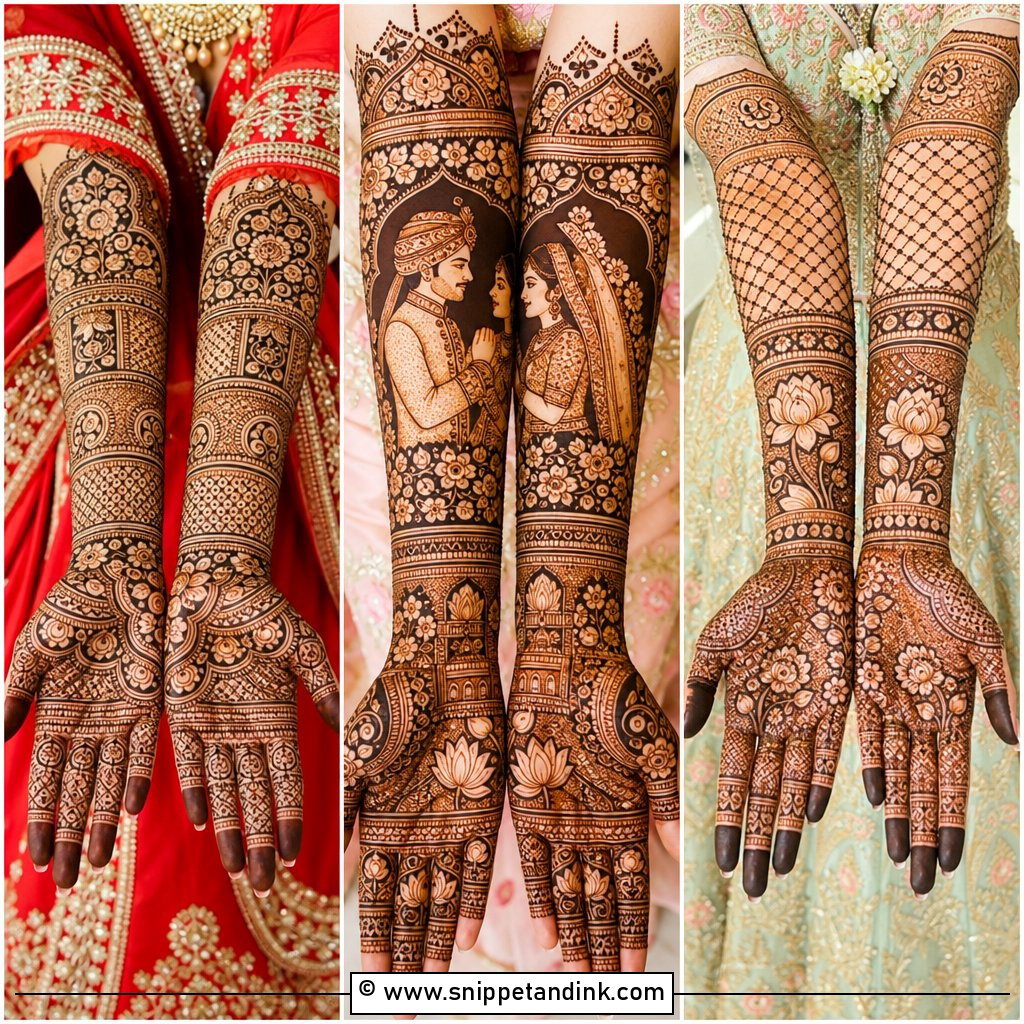
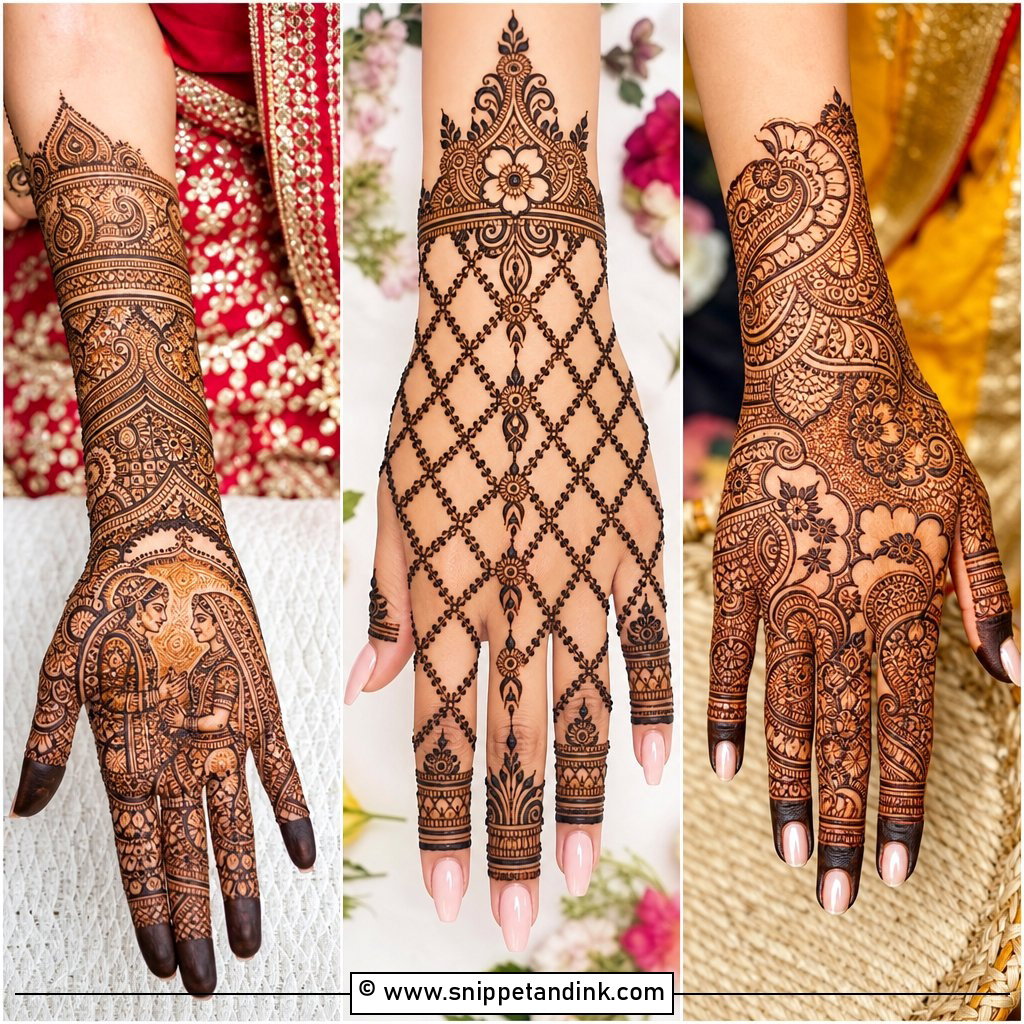
Forearm coverage makes the look complete, running from fingertips through the palm and past the wrist with floral vines, paisley panels and ornamental cuffs. It shows best with sleeveless, short or sheer sleeves. I make the arm section larger in scale and more open than the palm, otherwise the forearm looks heavy and the hand gets lost. Bold borders near the wrist with soft trails moving upward give a long, elegant line in portraits.
Sitting Through a Bridal Application
A full bridal Arabic set on both hands and forearms takes a few hours, longer with feet included, and the drying time runs on after that. Brides rarely plan for it properly. Eat before we start, use the bathroom, and have someone ready to feed you drinks through a straw.
- Wear a loose, short-sleeved top you don’t mind staining, and take off rings and bangles beforehand.
- Sit somewhere warm but not hot. A slightly warm room helps the stain; a heater blowing on wet paste makes it crack and flake early.
- Keep your hands open and still for the first half hour. Most smudges happen when a bride reaches for her phone.
- Plan to sleep with the paste on, hands wrapped loosely in a cotton cloth or medical tape, not plastic gloves, which make the paste slide.
Hiding Initials So Someone Has to Hunt
The fun of hidden initials is the search, so I avoid the obvious places like the centre of the palm. I’ll tuck a letter into the curl of a paisley, along the side of a finger, or inside the shading of a leaf near the wrist. Tell your artist the exact letters and script you want before the day; some initials, like M or W, hide easily in florals, while others need a little more creativity.
Does Your Design Still Read From Across the Room?
Arabic bridal mehndi gives you detail and open space in one design. Full hands, minimal trails and everything between can be tuned to your outfit, jewellery, ceremony and taste. Florals, paisleys, jaali, mandalas, bracelet patterns and personalized details all fit within the style because it allows bold motifs and breathing room. Think about your photo poses, sleeve length and how much coverage feels comfortable, and talk it through with your artist early. Then step back from your hands and check that the pattern is still clear from a few feet away.
You'll Like These Ideas:



Leave a Reply