
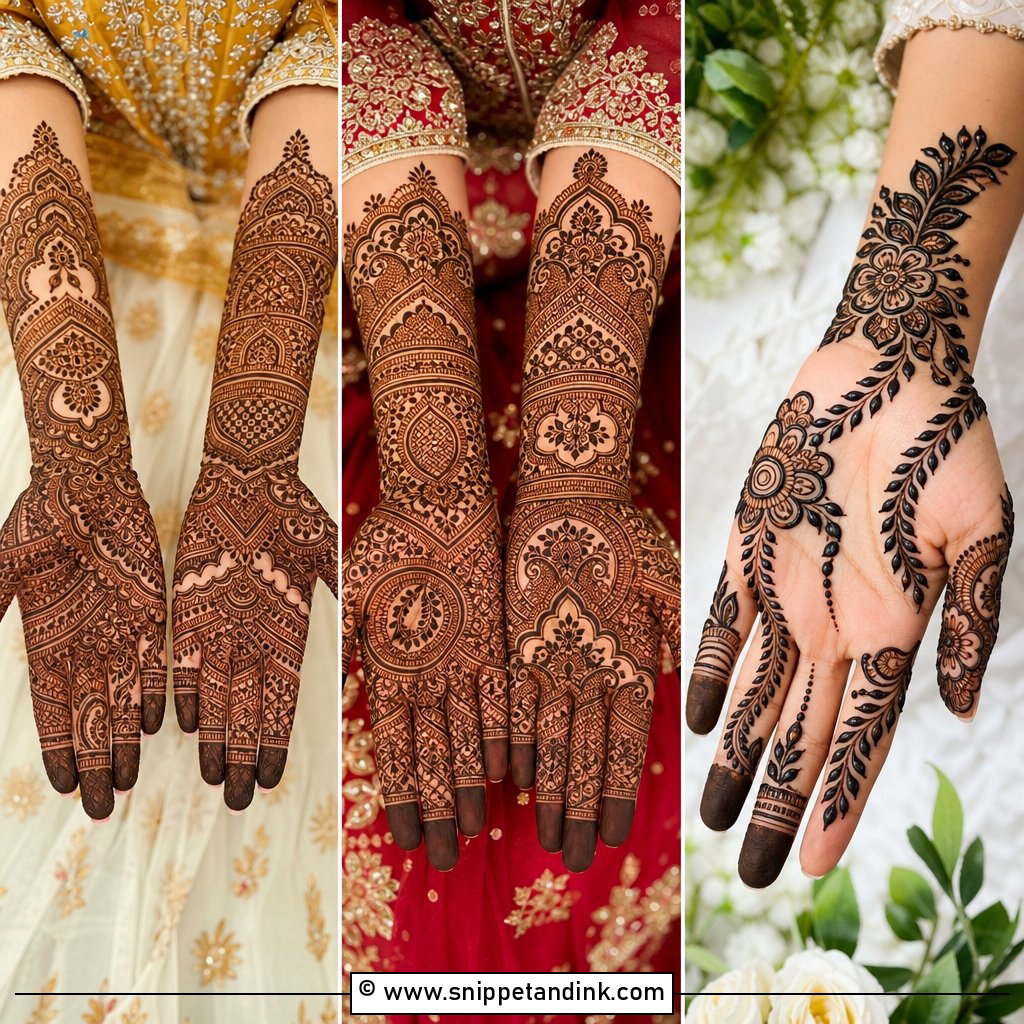
Henna work from 2018 covered a lot of ground: bold Arabic trails, dense Indian bridal coverage, clean mandalas, shaded florals and back-hand patterns drawn to look like jewelry. What changed that year, from where I sat with a cone in hand, was how many clients asked for open skin. Brides still wanted full storytelling hands, but sisters, cousins and Eid guests started asking for neat fingers, a wrist cuff and room to breathe in between. Below are 35 designs from that period, covering full-hand, palm, back-hand, bridal and festive looks, with notes on how each one actually behaves once the paste comes off and the stain develops.
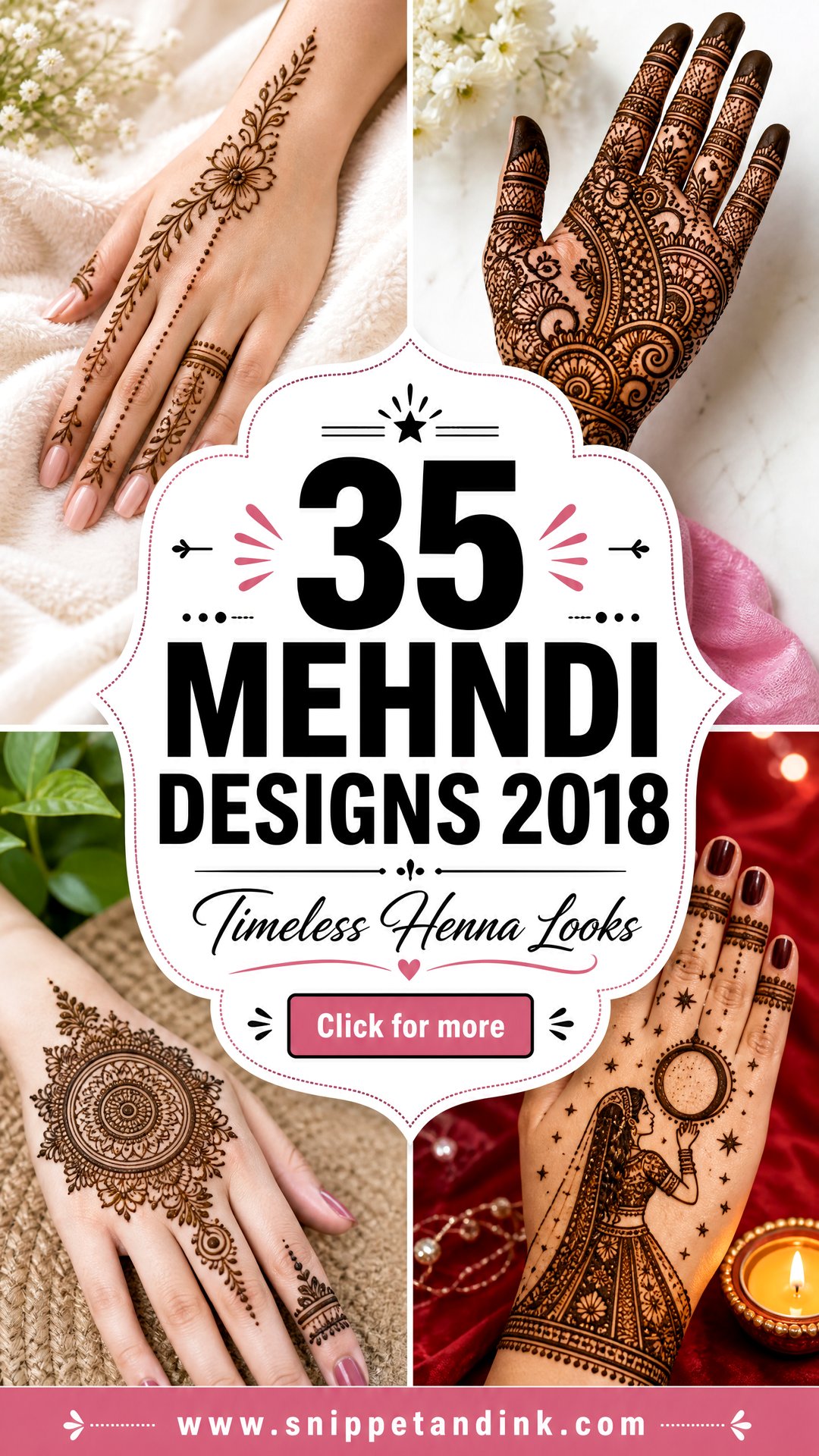
Copying a 2018 Photo Onto a Hand That Isn’t the One in It
Most of the pictures people bring me from that era show fresh paste or a stain at its peak, usually on a hand of a different size. Before I copy anything, I look at three things.
- Finger length and palm width. A layout drawn for long fingers gets squashed on a short hand, so I drop a band per finger or shrink the central motif rather than cram everything in.
- Paste or stain. Dark, raised lines in a photo are wet paste. The stain underneath starts orange, takes a day or two to deepen, and never looks quite as crisp as the paste did.
- Where the dark parts land. Palms and fingertips stain deepest, the back of the hand and forearm lighter. A design photographed on someone’s palm will look paler if you move it to your back hand.
How long you’ll be sitting
Chair time depends on the artist, the paste and the detail, but a simple Arabic back hand can be finished in well under half an hour, while full bridal hands and feet often run four hours or more. Show your artist the exact photo when you book so they can block out enough time instead of rushing the fill at the end.
1. Arabic Mehndi Design 2018
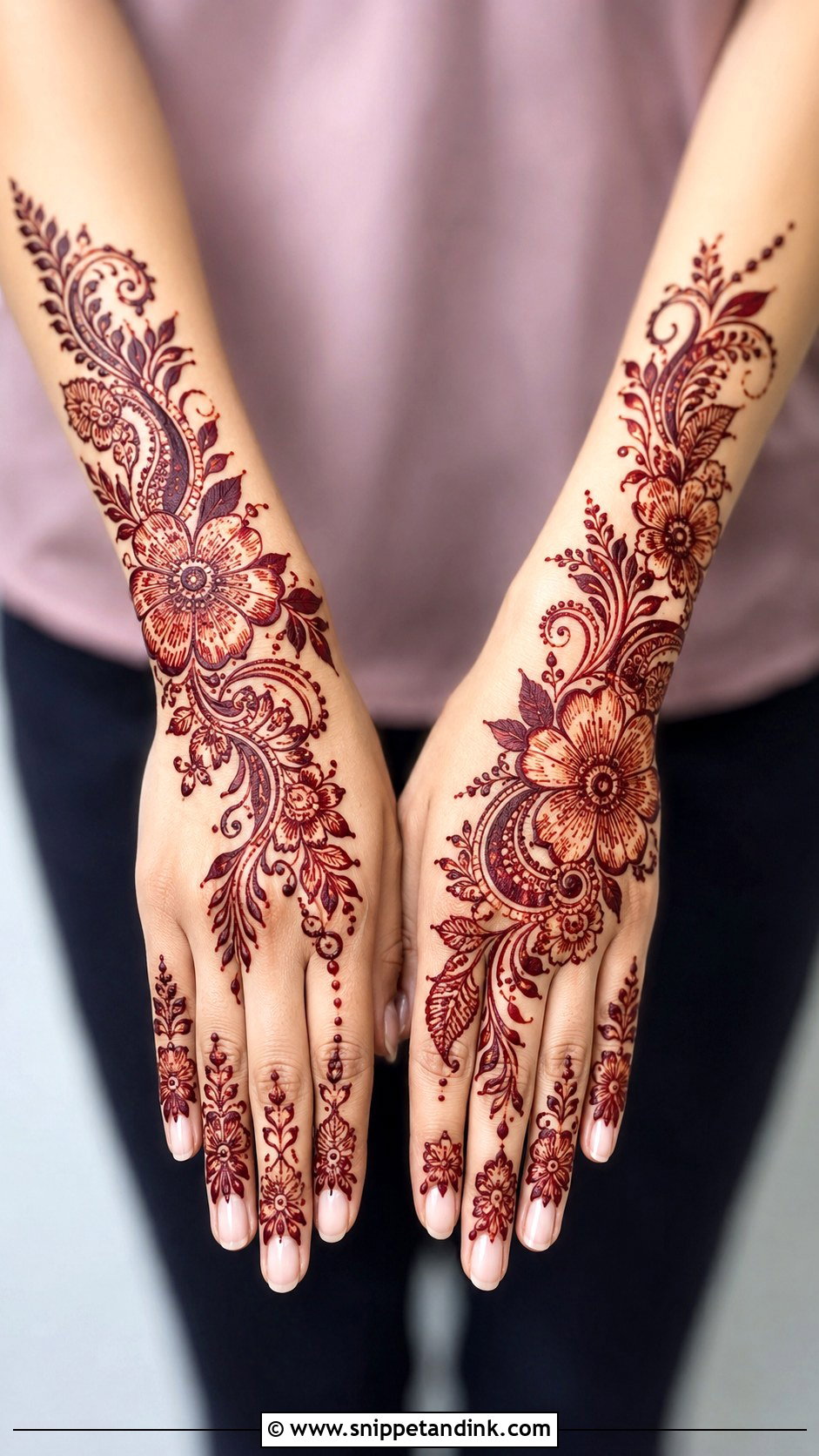
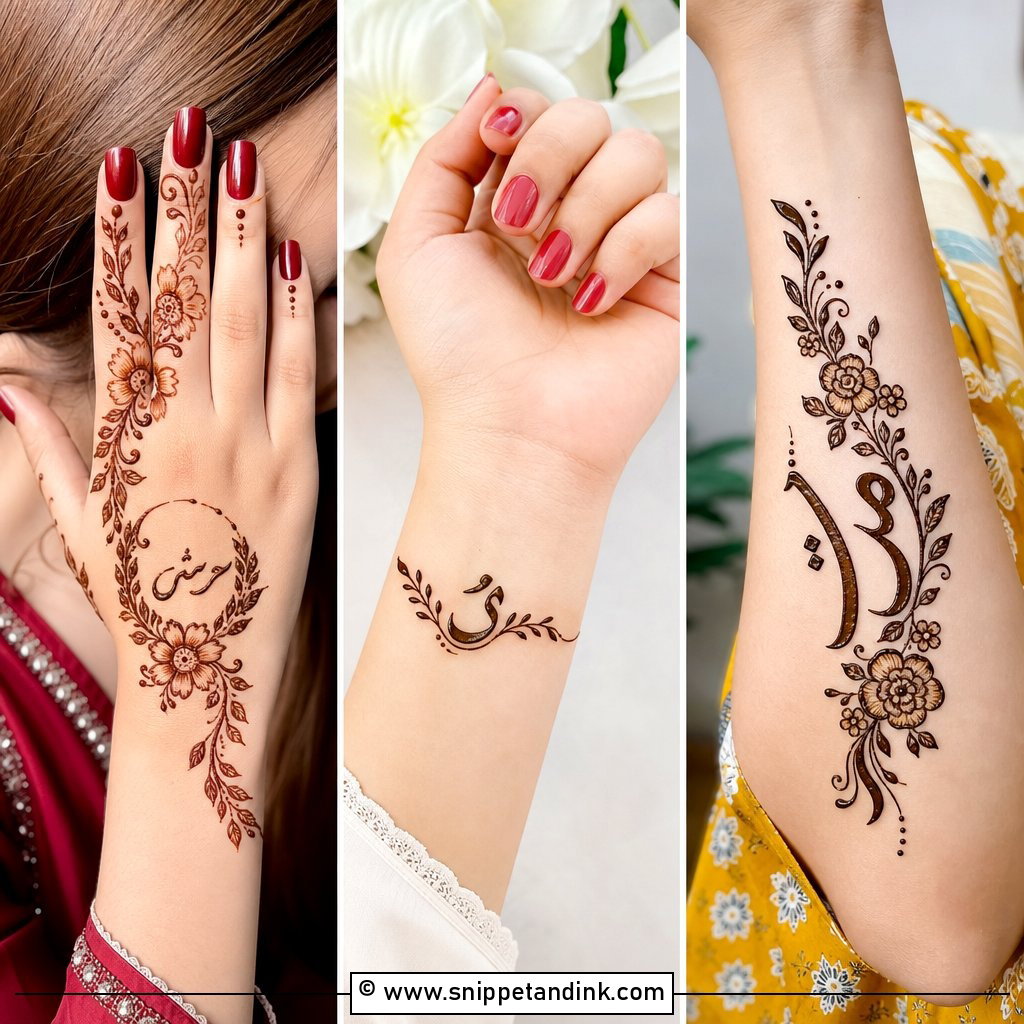
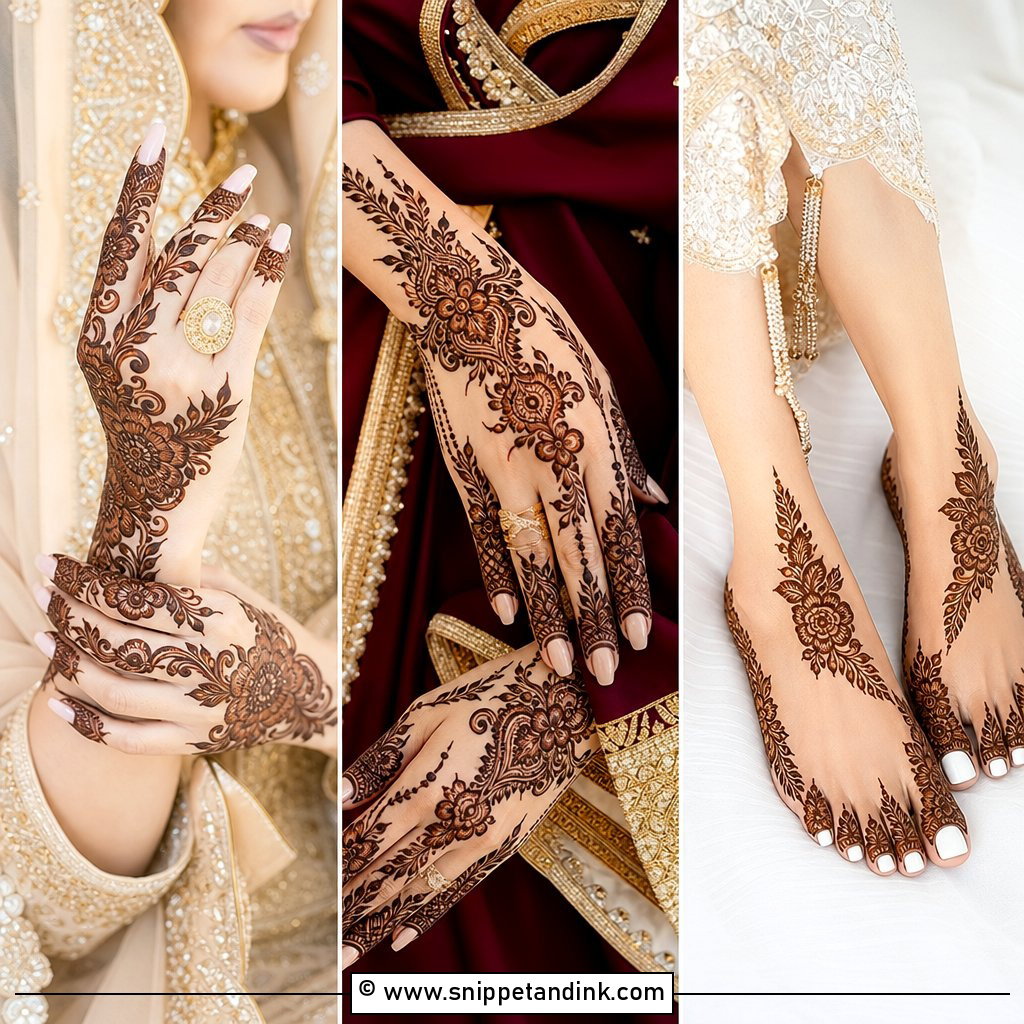
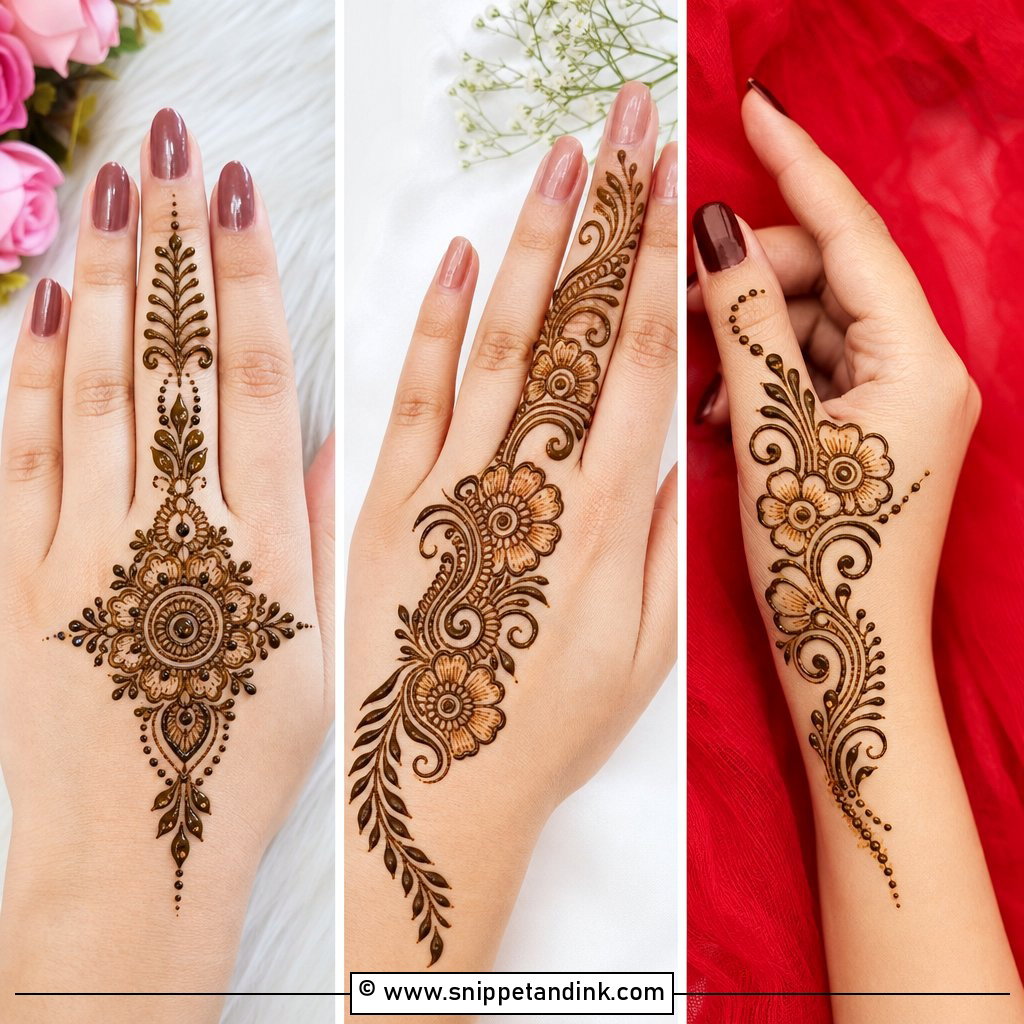
Arabic layouts were the style I was asked for most that year, because a single diagonal trail from the wrist across the palm or back hand looks finished without covering everything. Large flowers, leafy vines and shaded paisleys carry the weight, and the bare skin between them does the rest. I draw the main trail first in one confident line and add leaves afterwards, since stopping to fill as you go makes the curve wobble. It’s the design I suggest for bridesmaids and for quick festive plans, because a practised hand can finish it fast. On medium and deeper skin tones, the thick strokes of an Arabic design show the stain more clearly than fine mesh does.
2. Simple Mehndi Design 2018
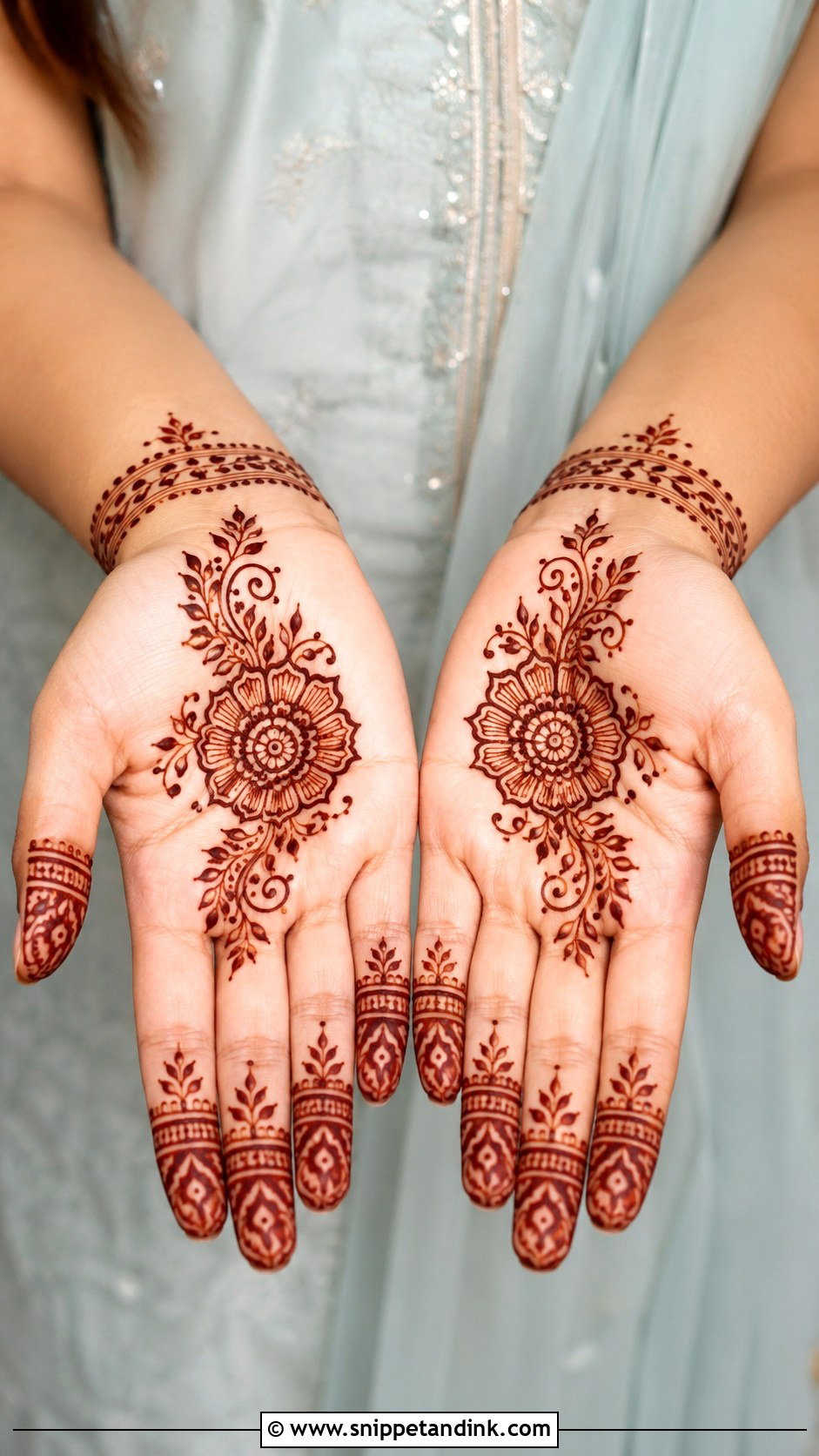
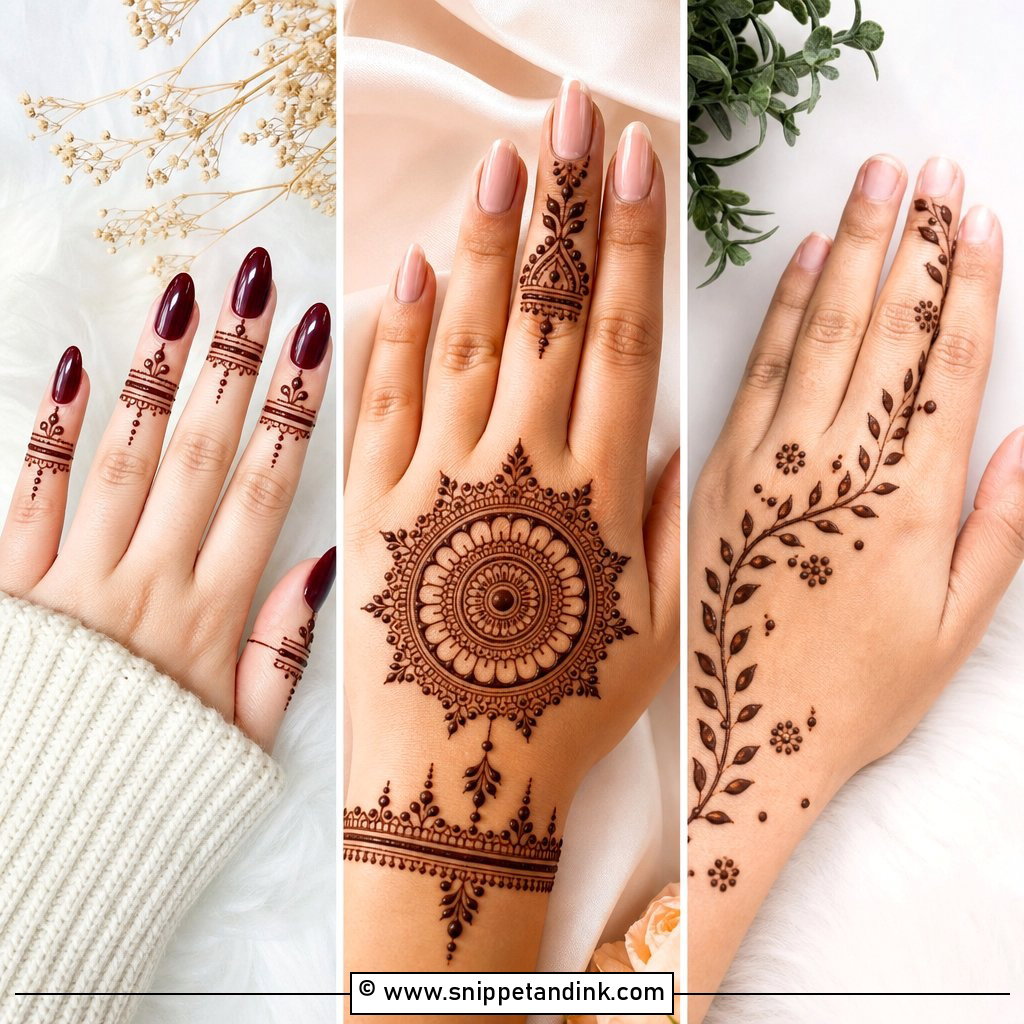
Spacing is the whole skill in a simple design. A centered palm motif, a few curved florals, clean finger bands and a light wrist border only look intentional if the blank skin around each element is even. I’d point anyone who dislikes dense patterns, or who has to look office-ready on Monday, toward this one. My habit is to set the main flower slightly toward the thumb side, because the creases near the little finger break up lines when the hand closes. On the back of the hand, the same idea becomes a bracelet wrist with matching fingertips.
3. Bridal Mehndi Design 2018
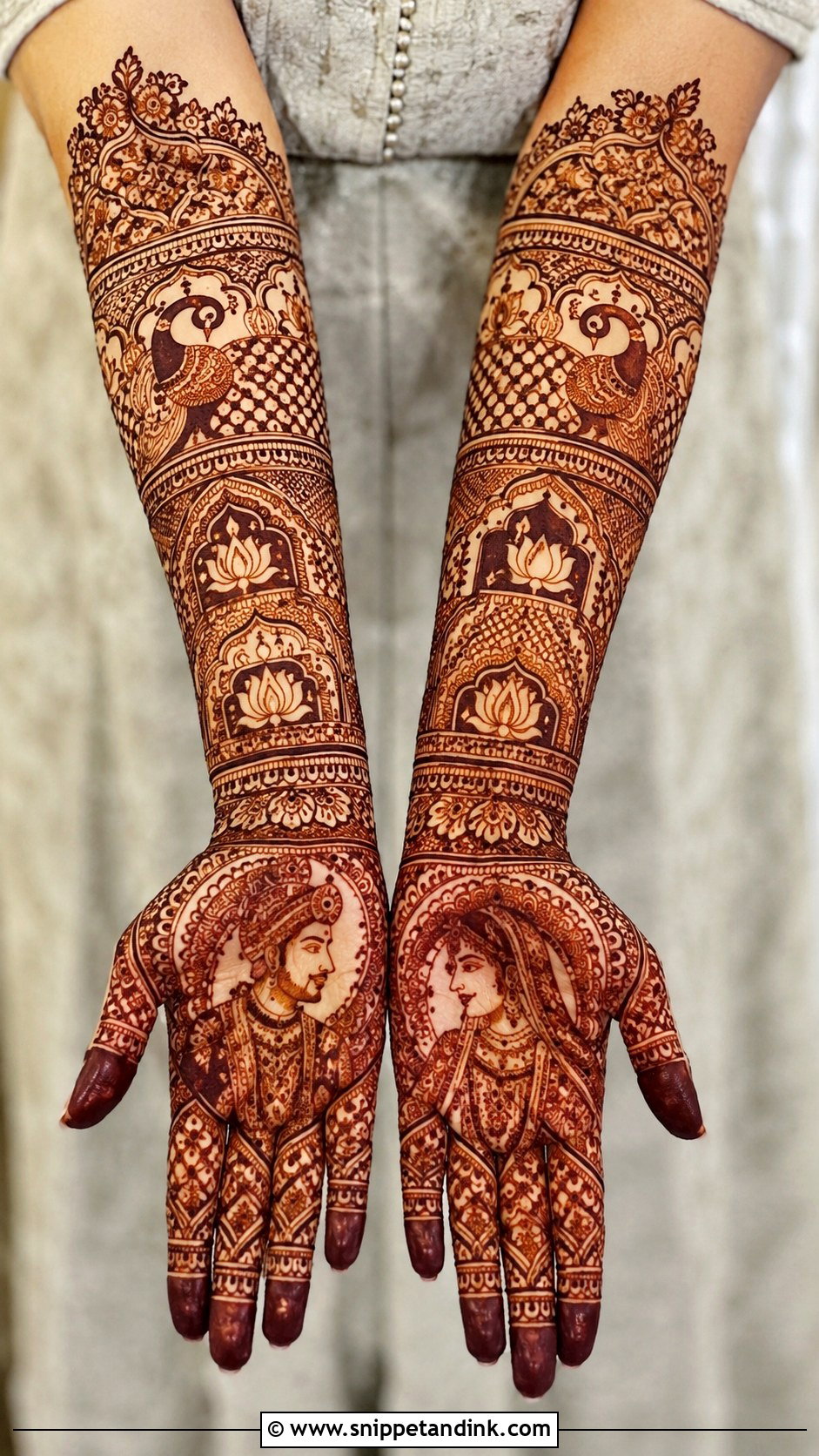
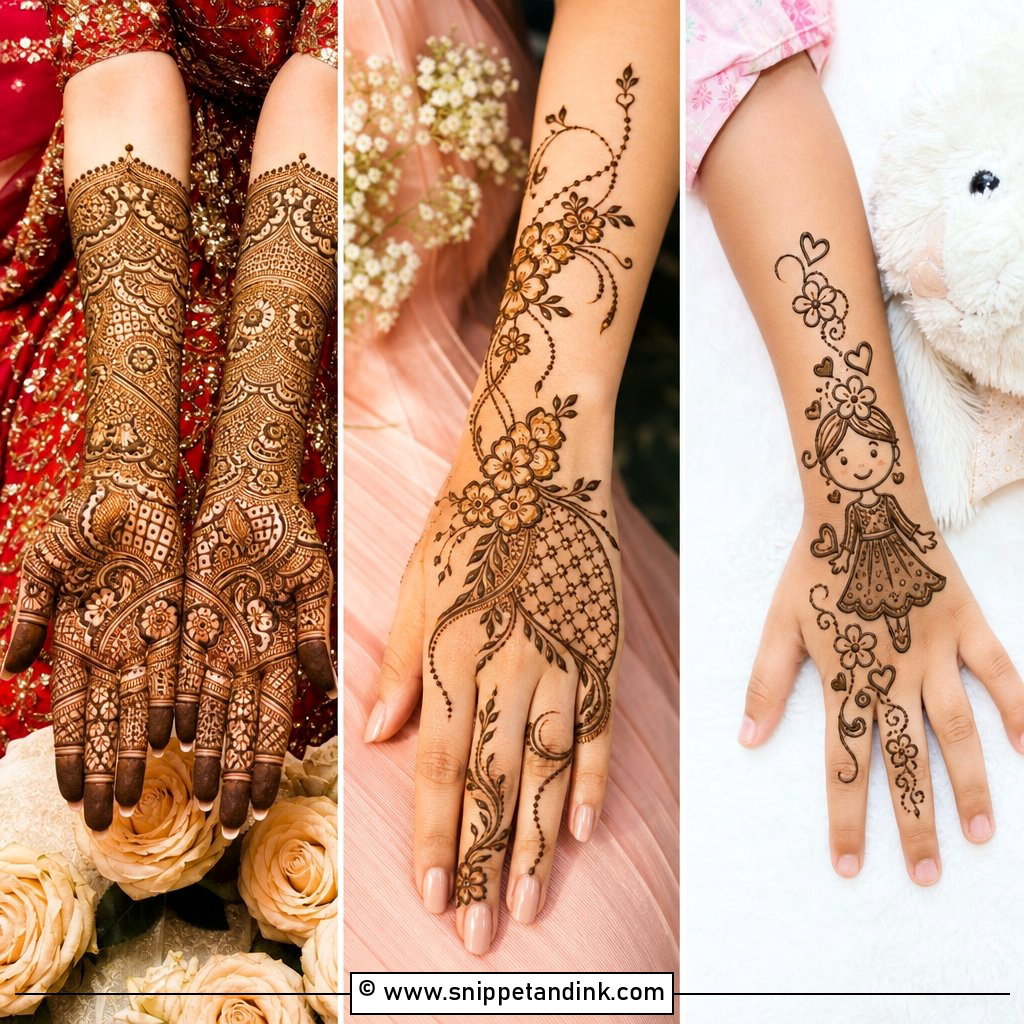
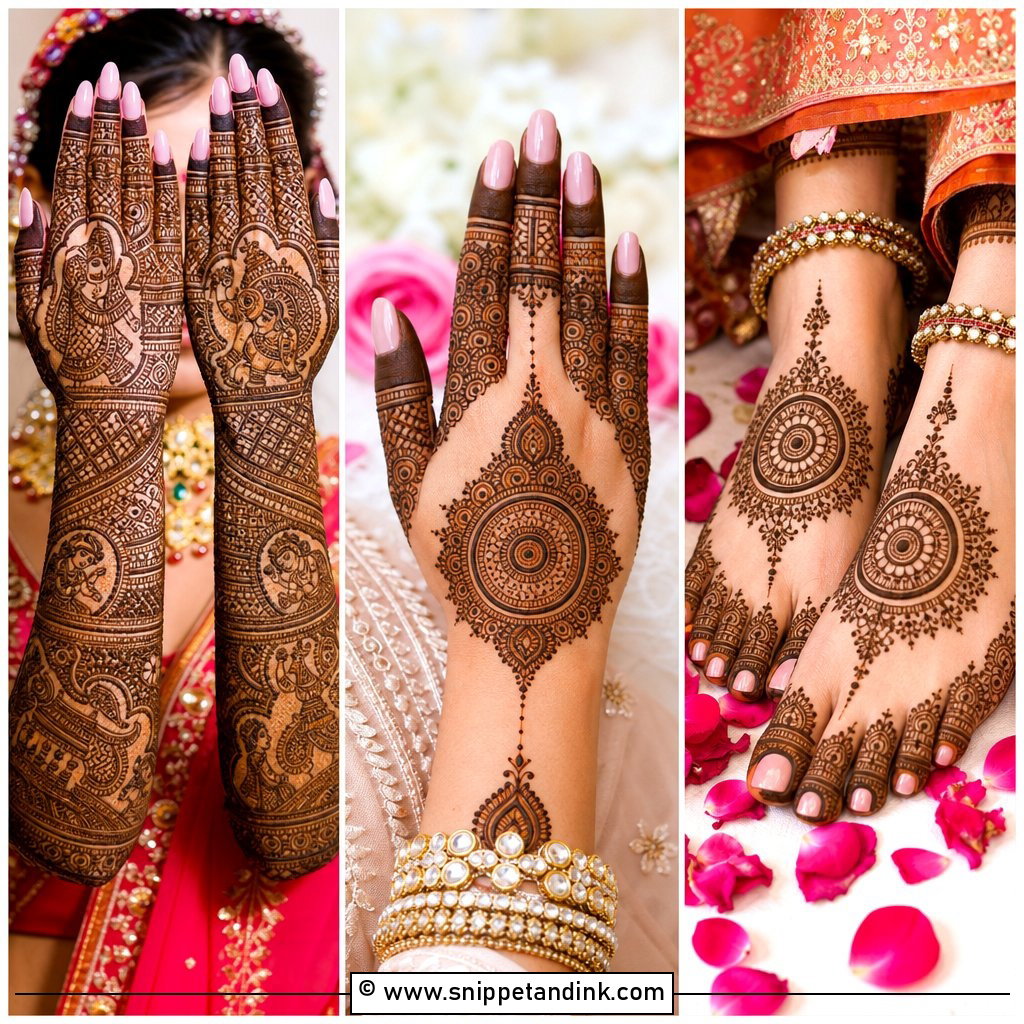
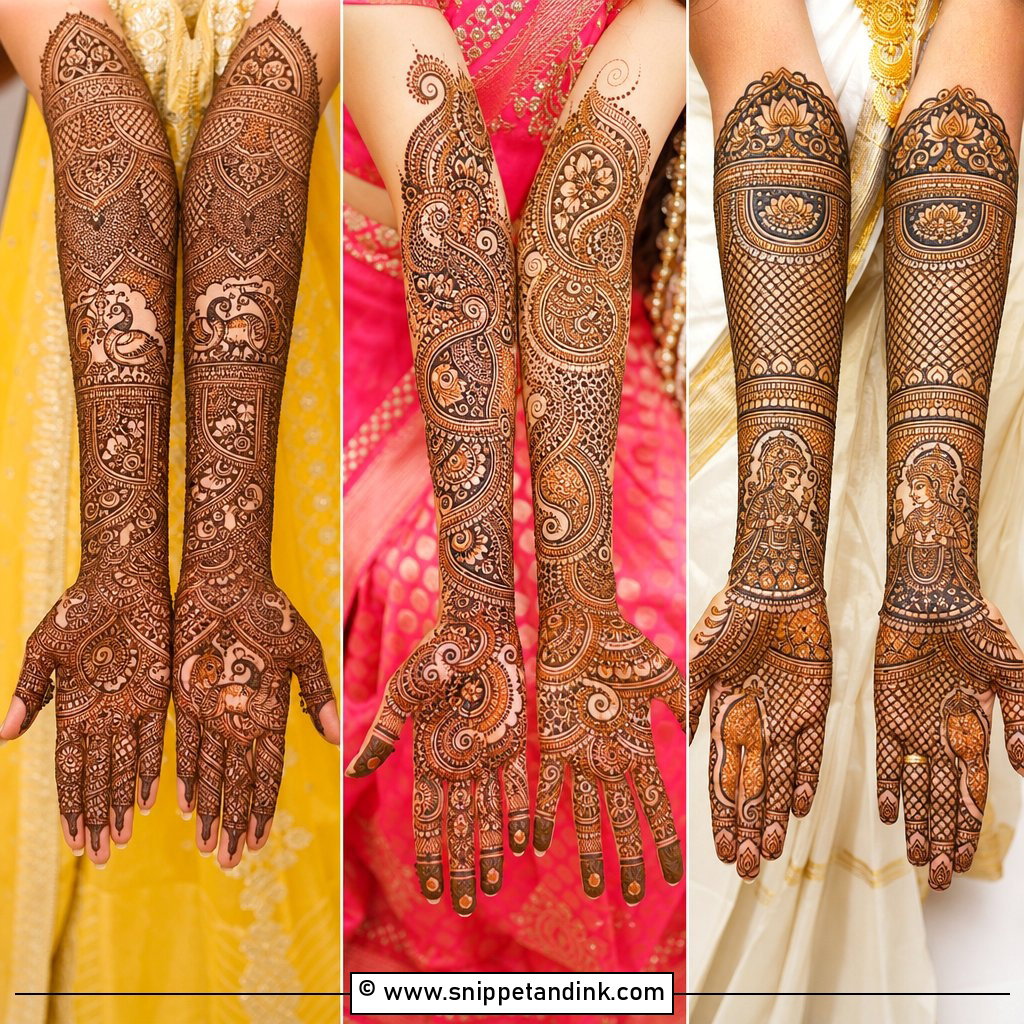
Bridal work in 2018 mixed old motifs with personal ones. Paisleys, lotus flowers, peacocks, jaali mesh and bride-and-groom figures filled palms, wrists and forearms, and many brides asked me to hide initials, the wedding date or a tiny portrait somewhere in the pattern. A full bridal set takes hours, so I map the hand into zones before the first line: palms carry the main figures, forearms take domes, borders and layered floral bands. The darkest result comes from natural paste applied in fine, raised lines and left on as long as the bride can bear, ideally overnight. It comes off orange and keeps deepening toward maroon over the next day or two.
4. Front Hand Mehndi Design 2018
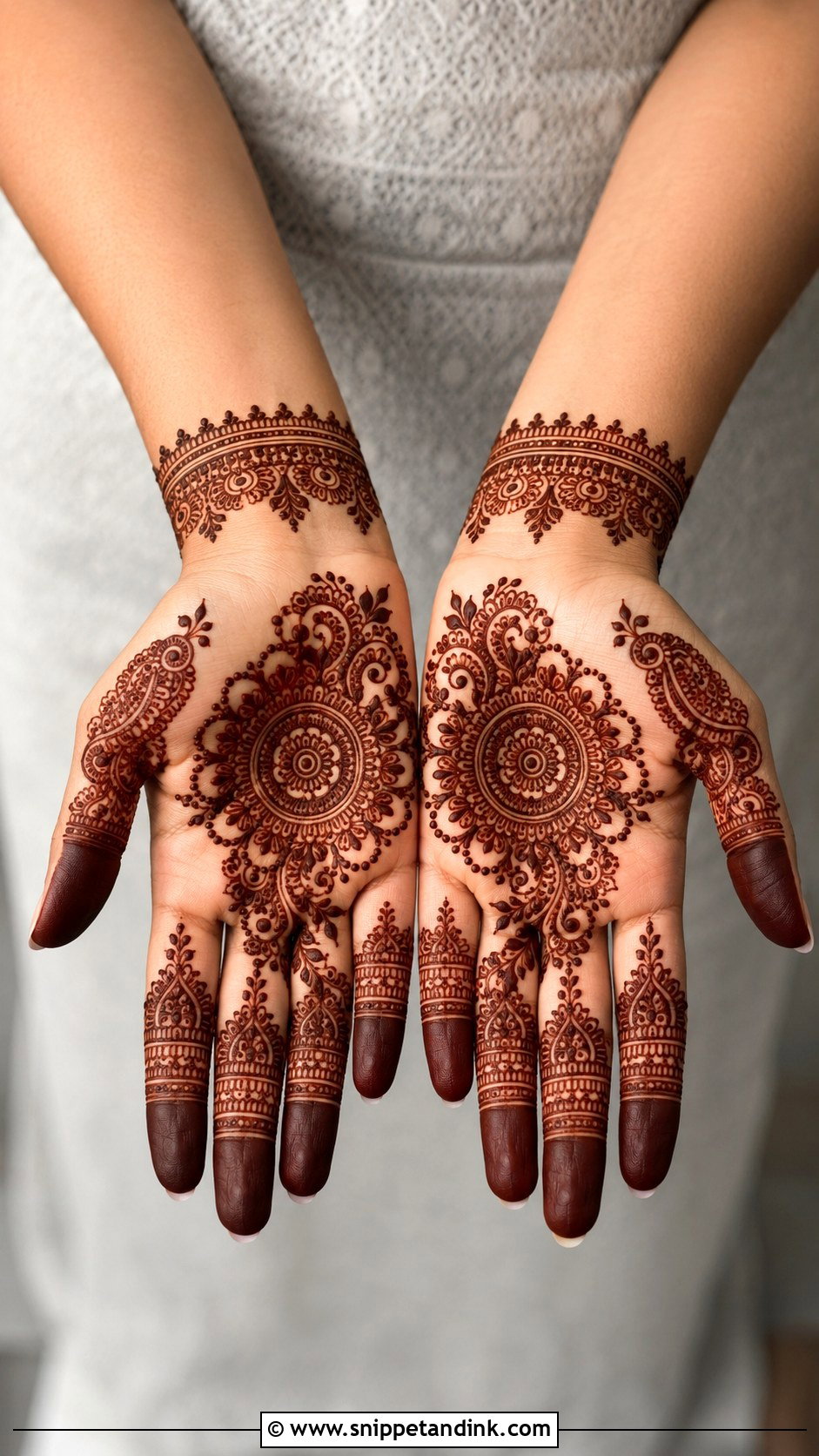
An open palm is how most people see a front-hand design, so I always check the layout with the client’s hand flat on the table, never curled. The 2018 version usually had a round mandala in the center, paisley clusters around the thumb and detailed panels on each finger. Heavy fill with fine lines suits a traditional outfit; leaving space around the main motifs reads more modern. A soft wrist cuff closes it off. Palms take henna better than any other part of the hand, so even a light front-hand design stains darker than people expect.
5. Back Hand Mehndi Design 2018
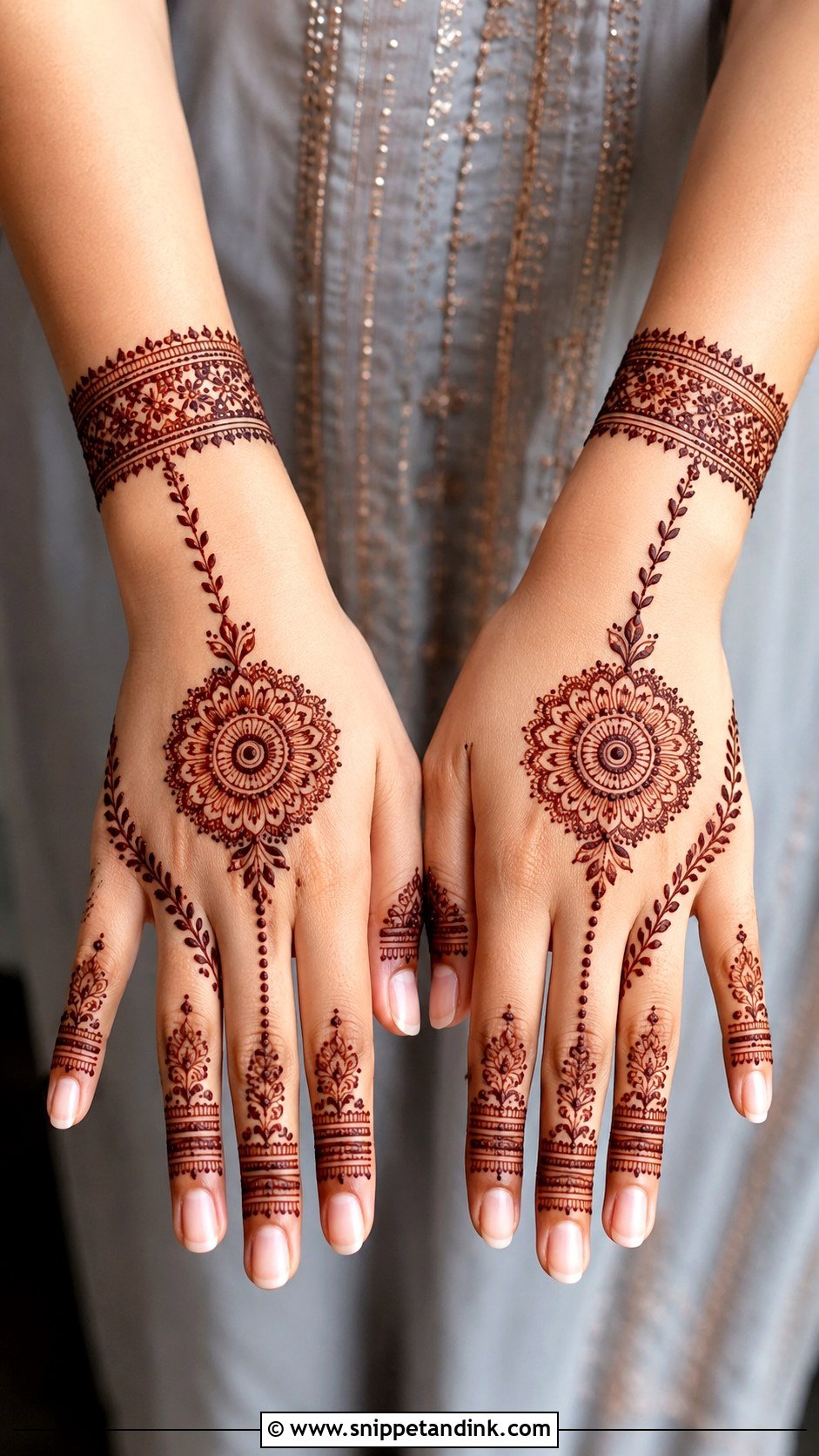
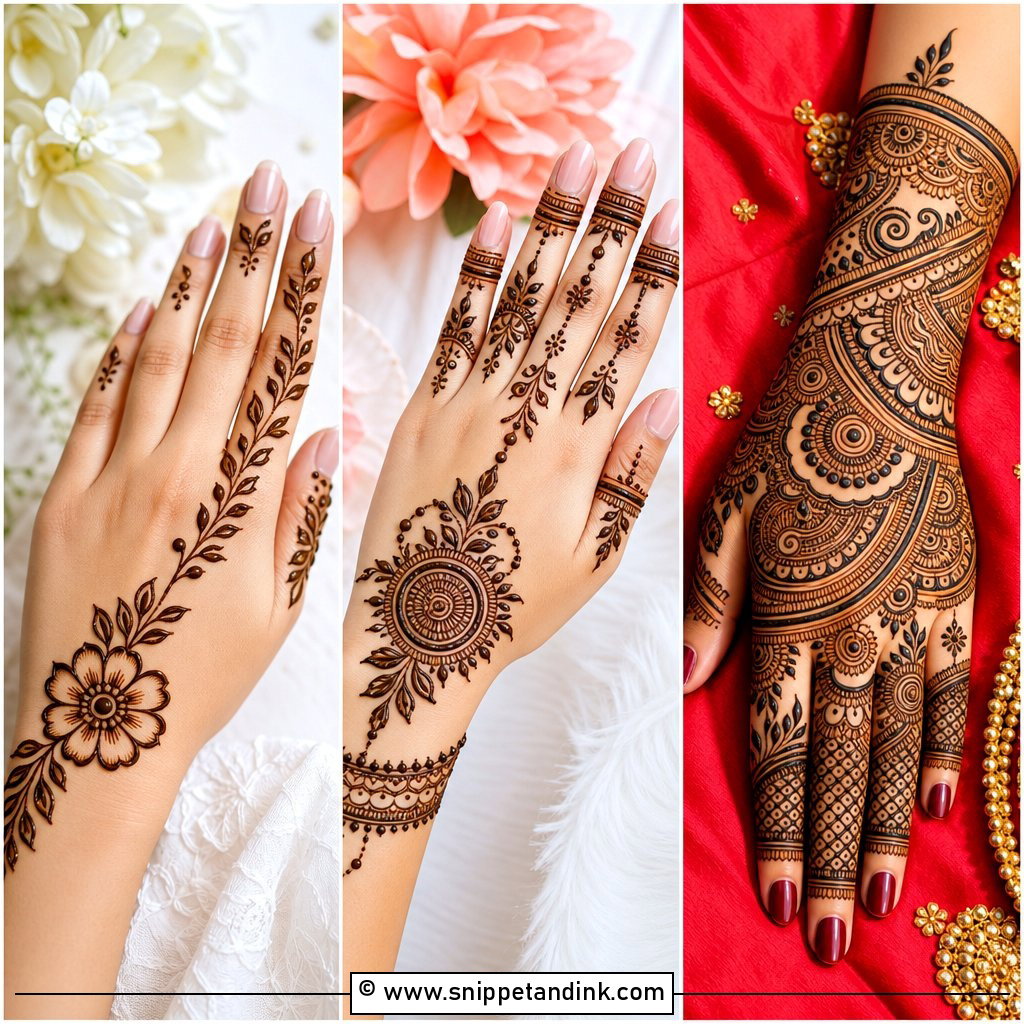
Back-hand designs earned their popularity in 2018 because they sit right where rings, bangles and festive sleeves draw the eye. The usual build is a wrist bracelet, a central flower or mandala and thin chains running up toward the fingers, though an Arabic vine also has room to travel here. One honest warning: the back of the hand stains lighter than the palm because the skin there is thinner, so I go a little bolder with outlines. Keep the finger work consistent across all five fingers, with matching bands, leaves, dots or narrow mesh panels.
6. Indian Mehndi Design 2018
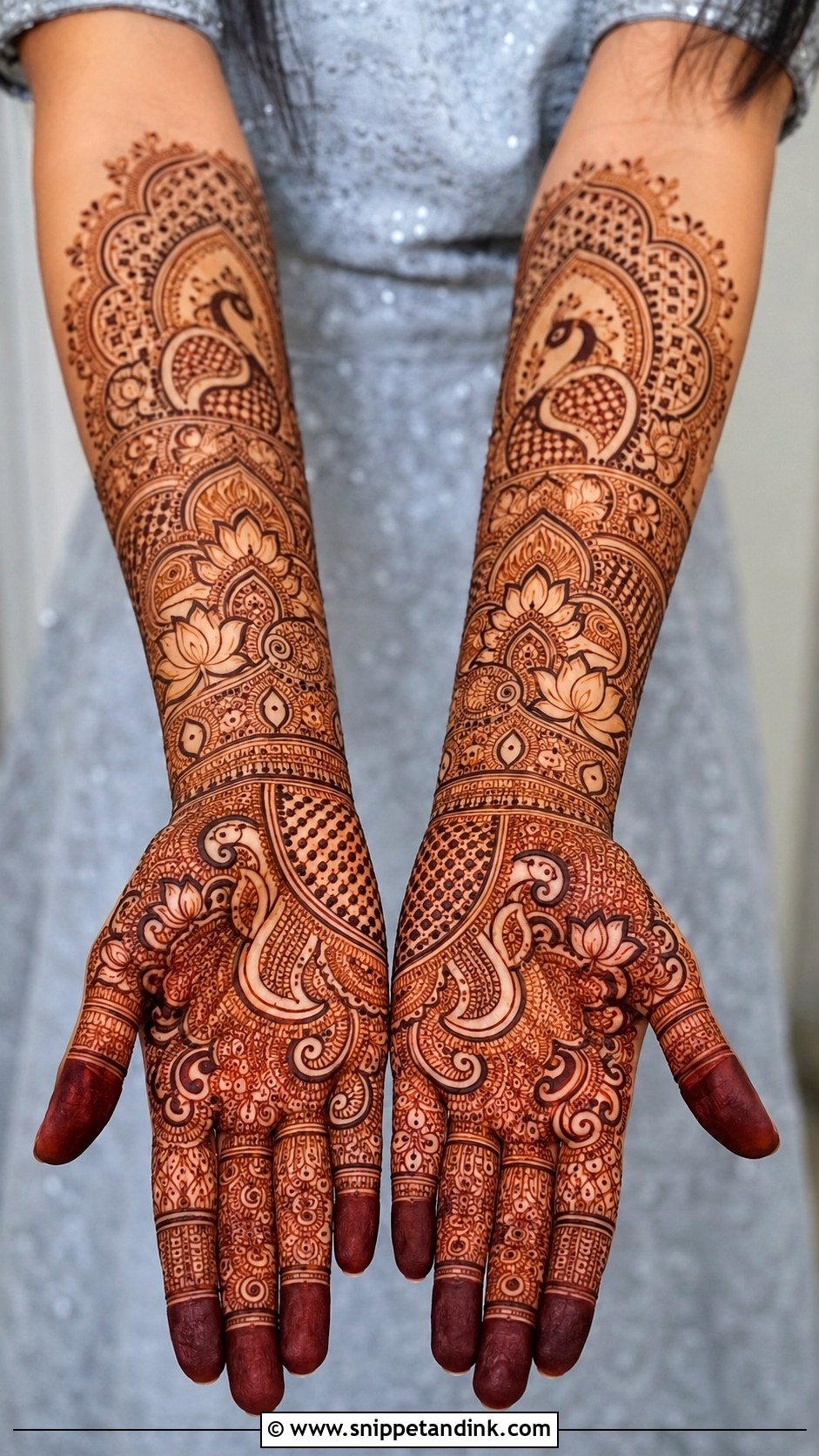
Indian layouts stayed dense and symbolic through 2018, covering palm, fingers, wrist and often the forearm. Paisleys, lotus petals, peacocks, mango shapes, checks and fine filler lines all share space, which is exactly where an inexperienced hand goes muddy. The fix I use is sectioning: one main motif on the palm, another near the wrist, and a firm border between them so each area reads on its own. This is the coverage most families expect for a wedding or puja. It also takes the longest to dry, so plan to sit still for a good while.
7. Indo Arabic Mehndi Design 2018
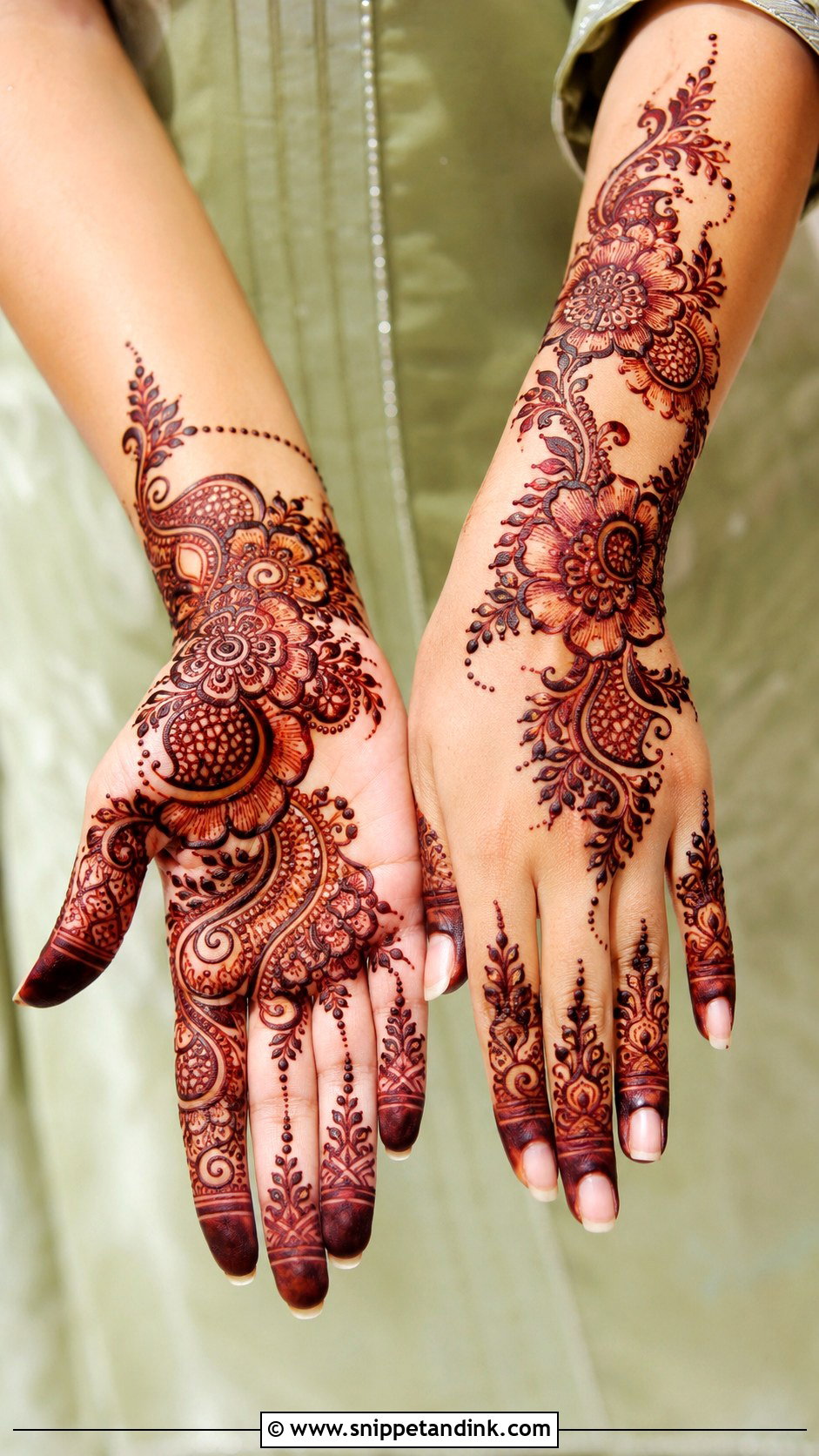
Fusion work takes the bold movement of an Arabic trail and fills each shape with Indian detail: lines, dots, mesh and petals tucked inside a large flower or paisley. It became a 2018 favorite because it looks dressed-up from across a room without the hours of full Indian coverage. I keep the background skin open and send the main trail diagonally, so the contrast between filled shapes and bare skin does the work. Bridesmaids ask for it more than anyone. It suits palms and back hands, though the diagonal reads best on the back.
8. Full Hand Mehndi Design 2018
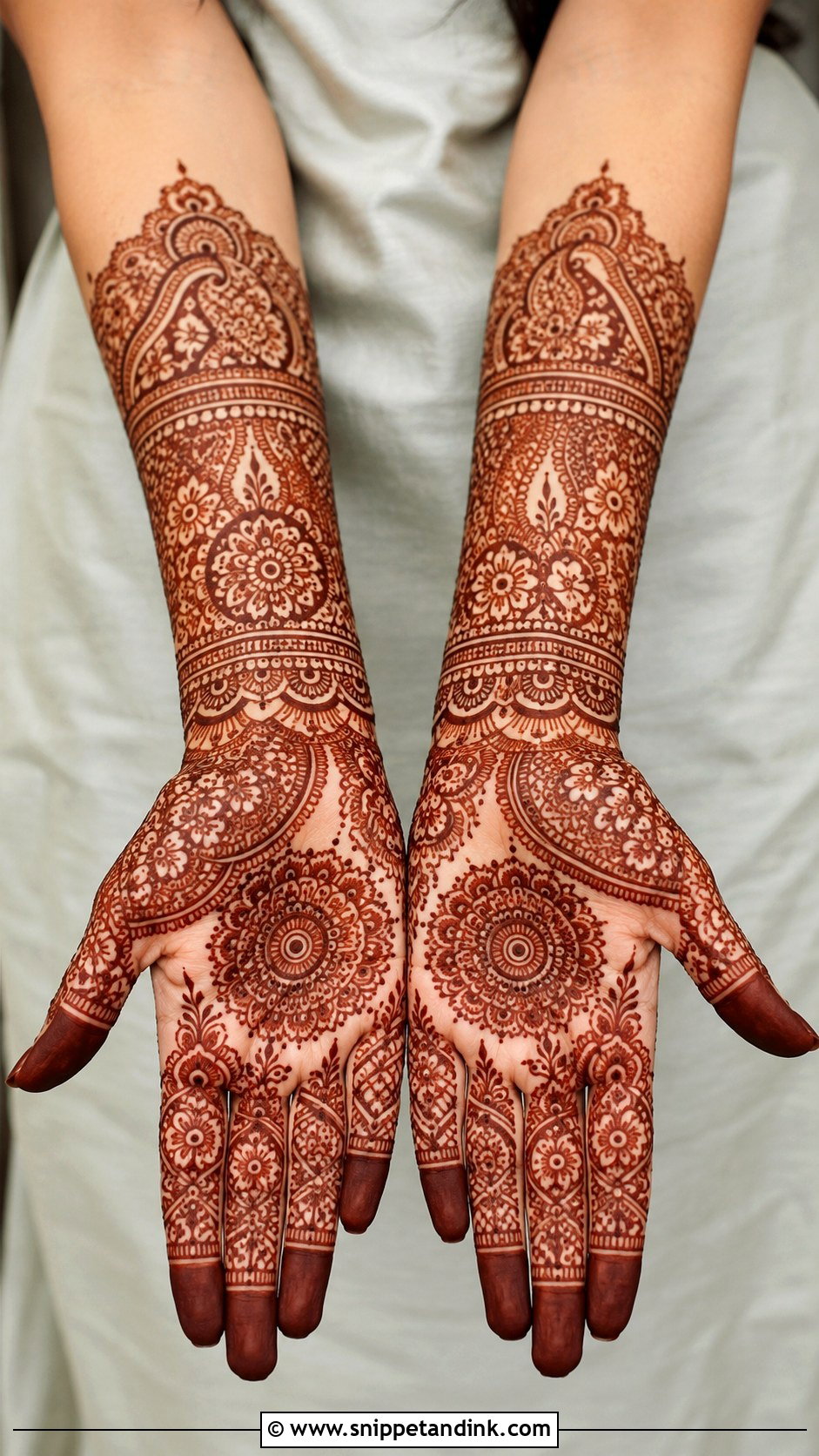
Full coverage stopped being only for brides around 2018, and plenty of women wore it for Eid, Karwa Chauth, Diwali and close family weddings. The common mistake is treating the hand as separate blocks. A good full-hand pattern flows, so I start at the fingertips with detailed panels, build a strong palm motif, then finish with layered bands at the wrist or forearm. Florals, paisleys, mandalas and jaali sit well together if they share a rhythm. On very detailed work I thicken the outline around each major motif so it doesn’t flatten into plain texture once the stain settles.
9. Half Hand Mehndi Design 2018
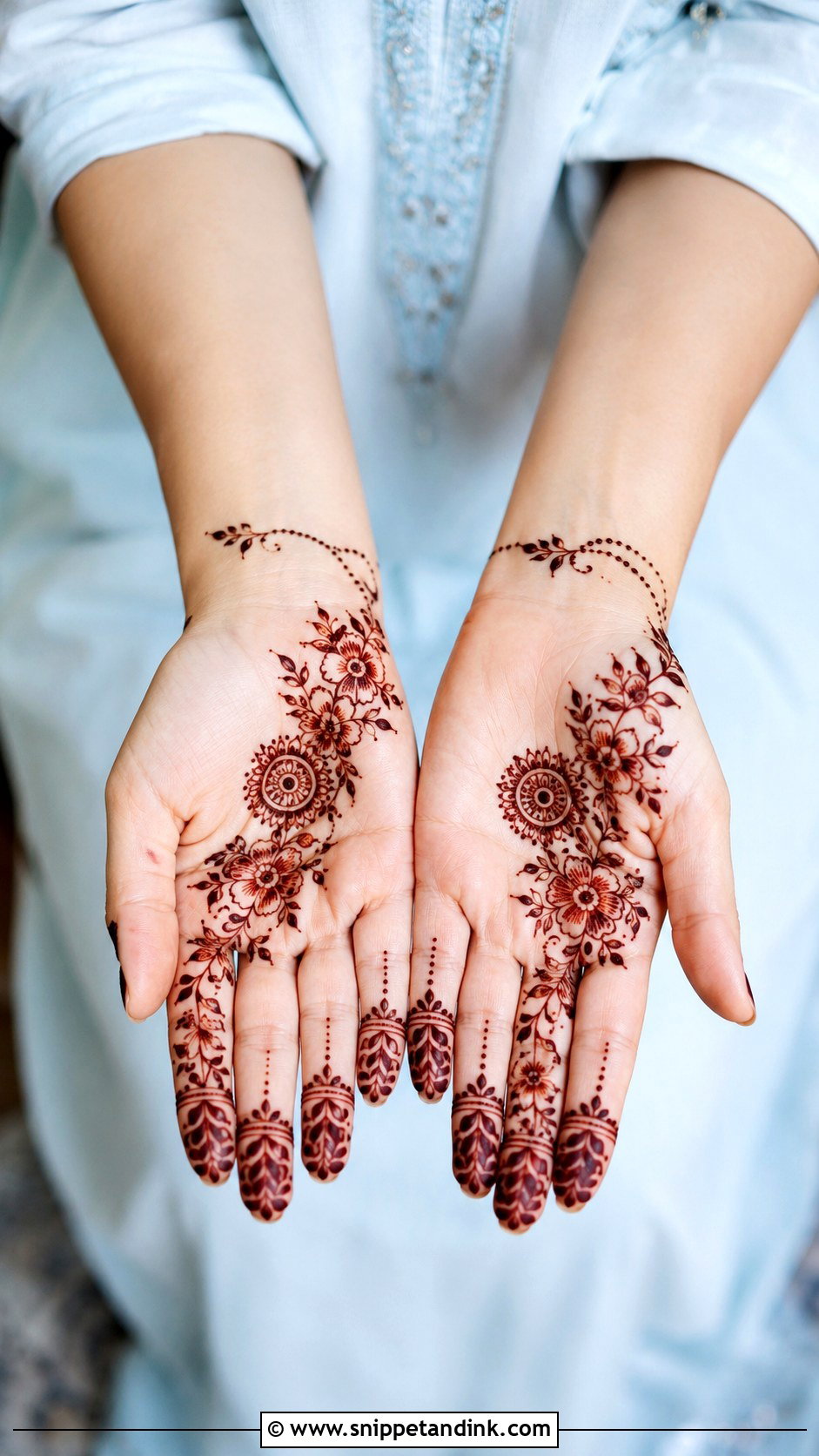
This is the layout I suggest for a sangeet or a casual pre-wedding function when time is short. It covers the fingers, the palm center and the wrist, and leaves part of the hand deliberately bare. A mandala palm with floral fingers is the classic version; an Arabic trail from wrist to index finger is the other one I draw most. The edges make or break it. A ragged stopping line looks unfinished, so I close each edge with a small border or a row of dots.
10. Finger Mehndi Design 2018
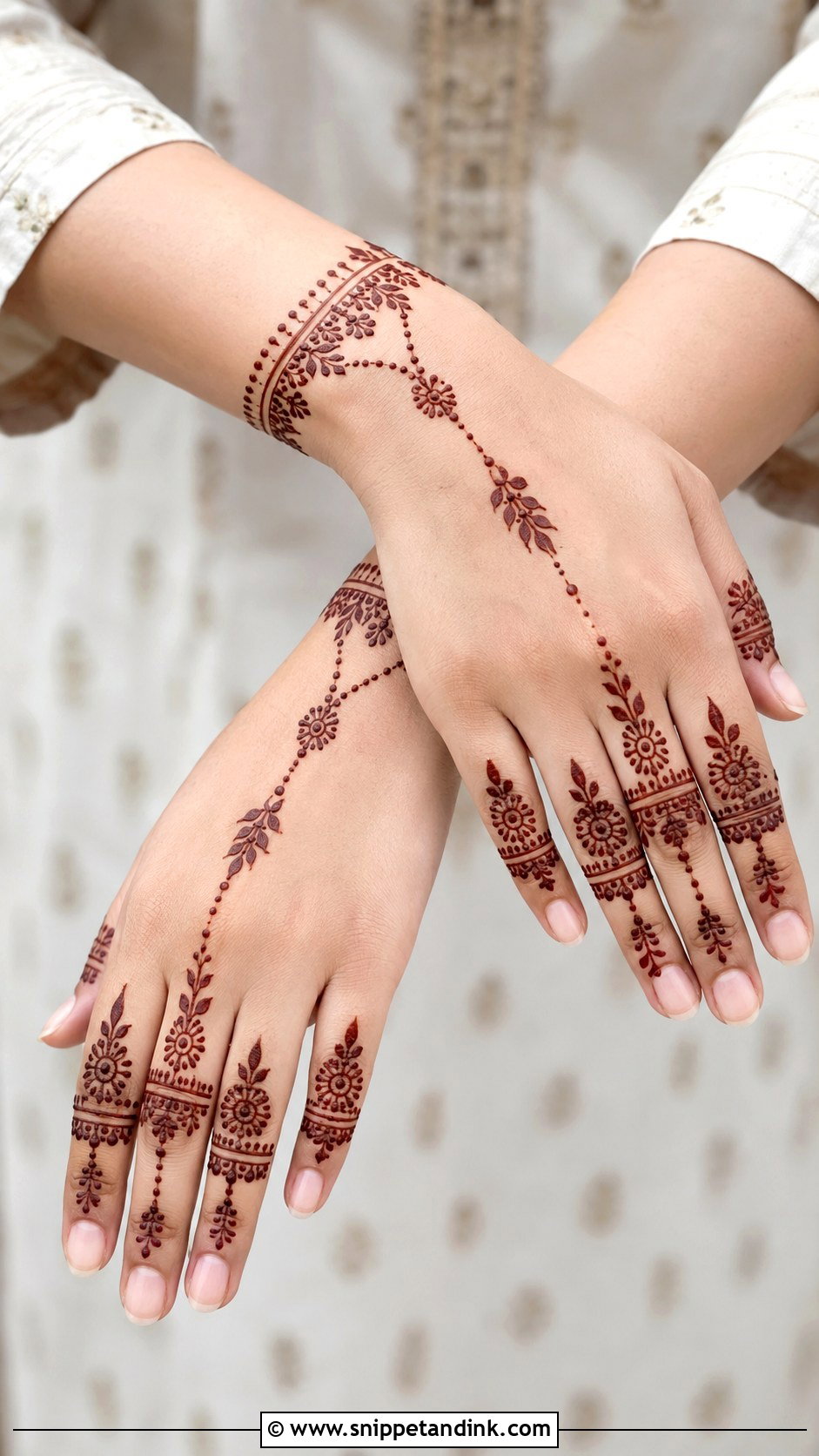
Covering every finger while leaving the palm mostly open was a real look in 2018, not an afterthought. Bands, leaves, dots and small florals run up each finger, and a slim wrist bracelet or a small connector on the back hand ties it together. Fingertips stain darker than almost anywhere else, so the tips will look bold even when everything else is delicate. I relate the patterns finger to finger, from the same family without being identical, so the hand reads as one design. It sits comfortably with western clothes too.
11. Mandala Mehndi Design 2018
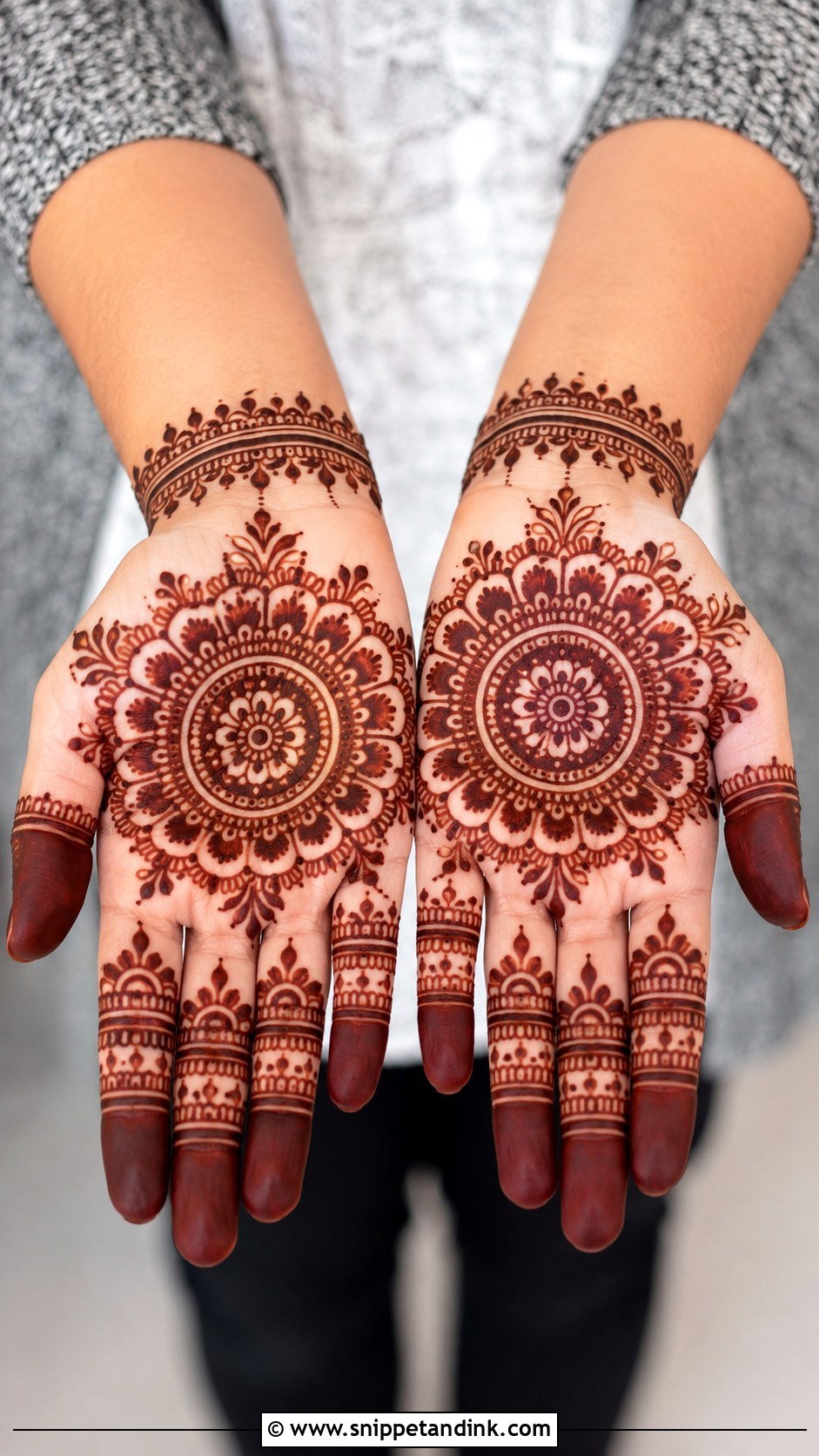
Everything in a mandala depends on the center circle. If that first ring is round and evenly sized, even a simple hand layout holds together; if it drifts oval, every ring you add exaggerates the error. That’s why I draw the center slowly and build petals, dots and fine circular lines outward from it. The 2018 version usually placed one mandala in the palm or back-hand center with matching fingertips and a simple wrist border. A small one reads minimal and a large layered one reads festive, and both are friendly to beginners who practise circles on paper first.
12. Floral Mehndi Design 2018
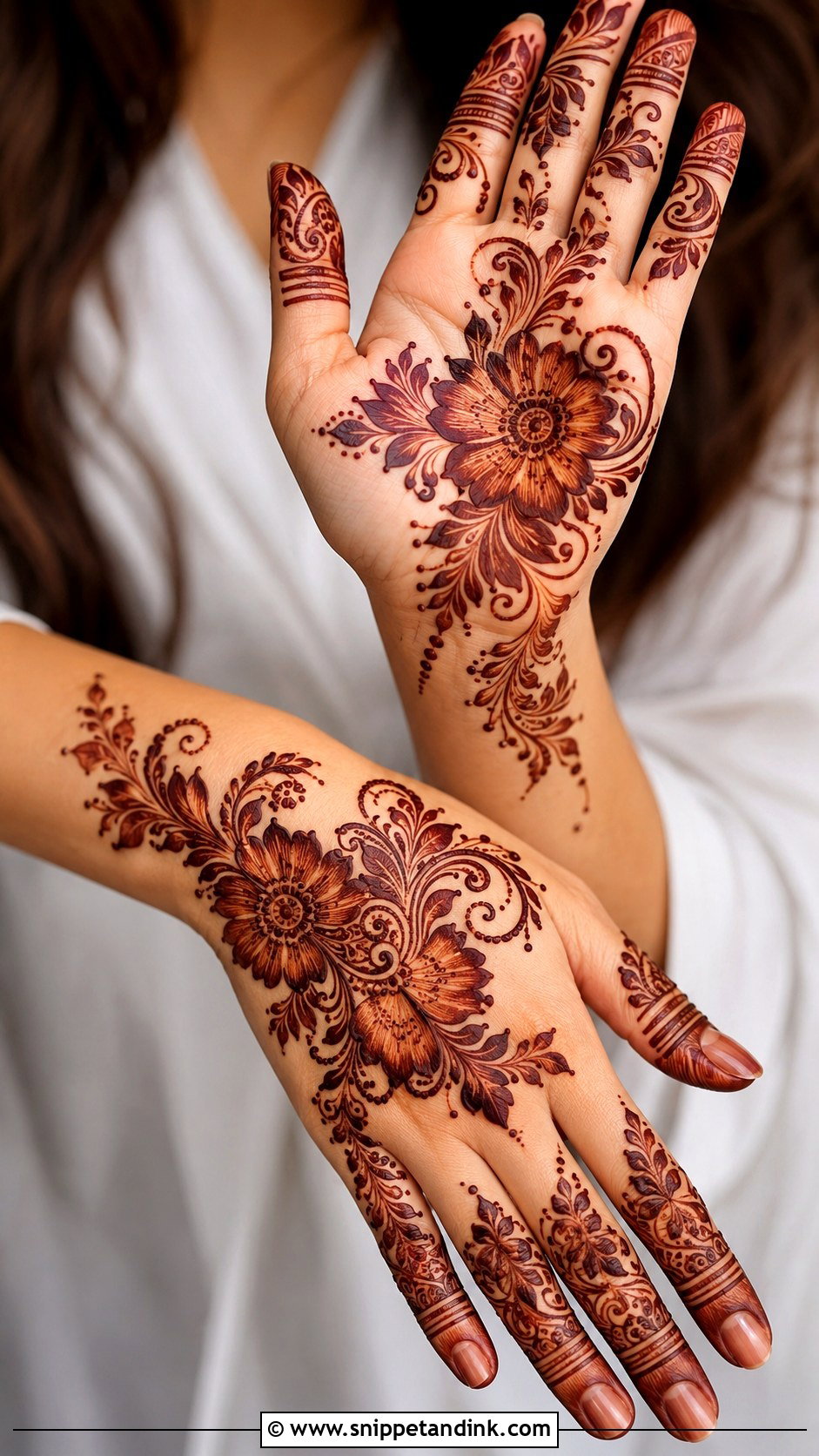
Floral mehndi was everywhere in 2018: large shaded blooms across the palm, leafy vines up the fingers, a curved border at the wrist. Arabic floral trails keep the spacing open, while Indian floral layouts fill the hand. What separates a good floral hand from a flat one is size variation, so I anchor it with one large bloom and tuck smaller buds into the corners. Shading inside the petals, done with a thinner line of paste, gives depth that becomes more visible as the stain darkens over the following day.
13. Peacock Mehndi Design 2018
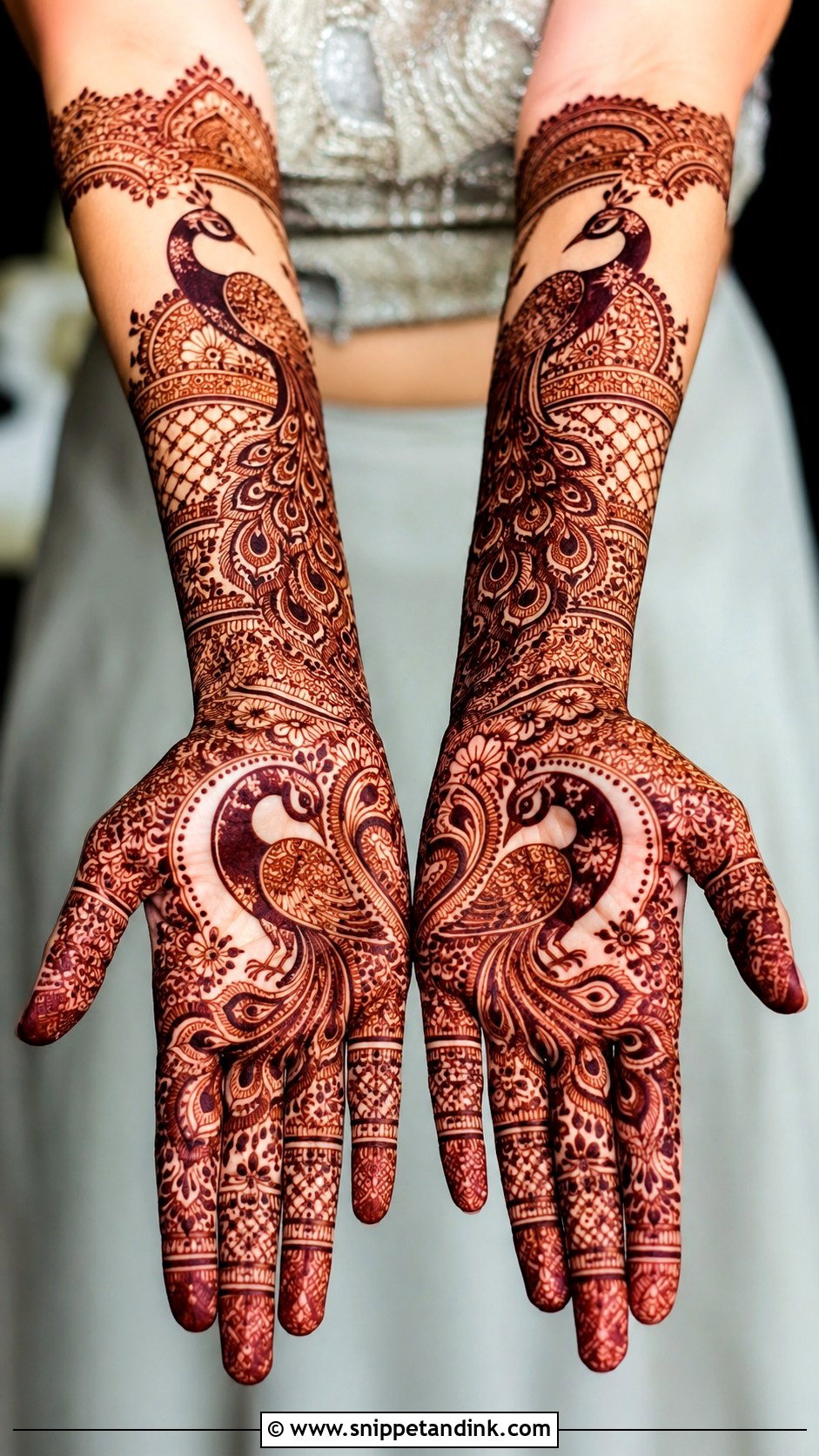
Peacocks stayed a bridal staple in 2018 because the body and tail give an artist natural curves to fill. I place the bird near the palm center on a front hand, or along the forearm, and let the feathers spill into paisleys, mesh and florals toward the wrist. Brides often want a peacock on each hand, facing each other. The parts I slow down for are the eye, the neck and the spine of each feather; if those lines blur, the whole bird loses its shape. I’d skip it on a very small hand when time is tight, since a cramped peacock reads as a blob.
14. Paisley Mehndi Design 2018
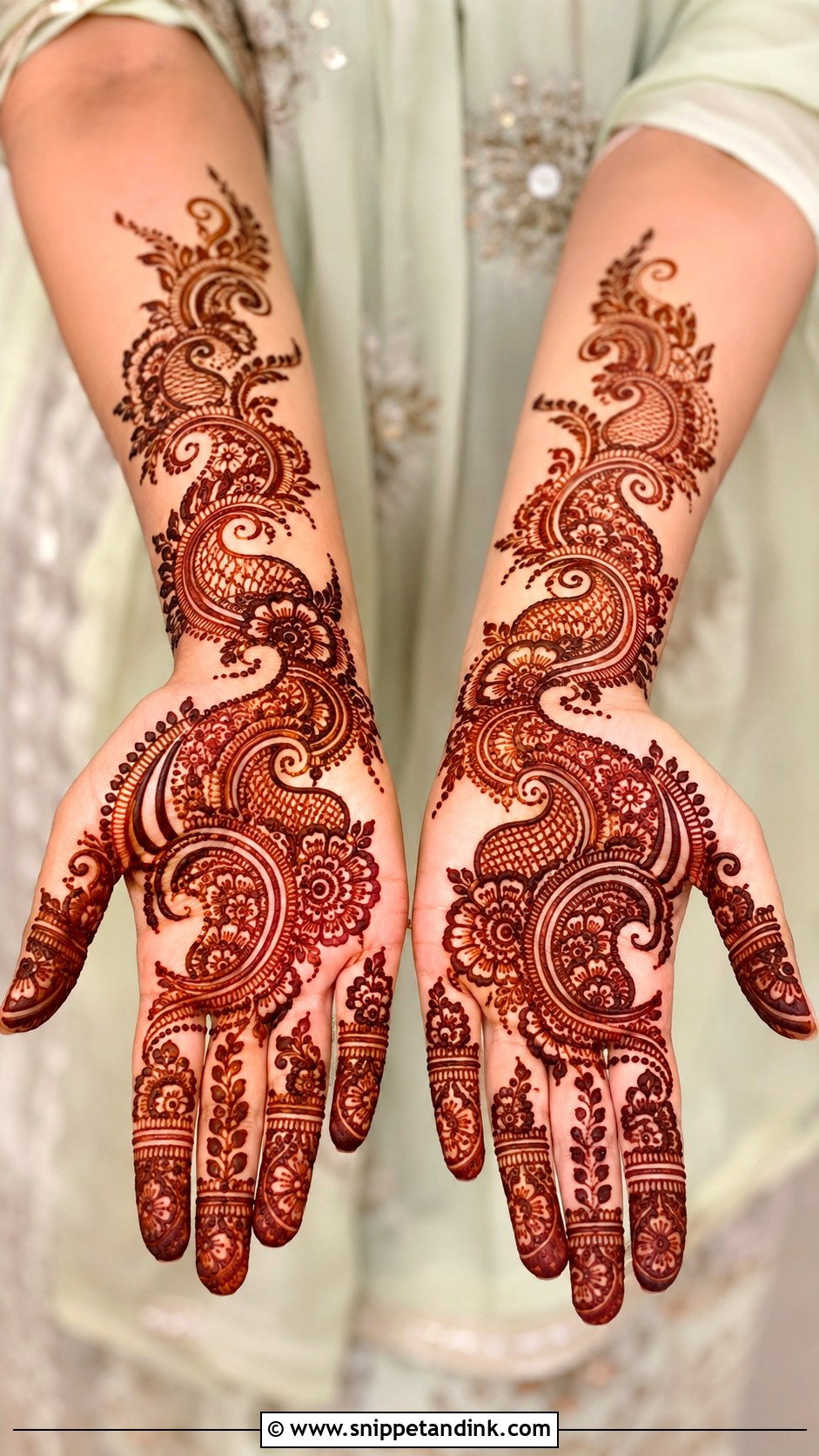
Paisley is the motif I trust most for building a complete hand. Its curved mango shape fits naturally around the thumb, the palm edge, the wrist and the fingers, and in 2018 it turned up everywhere from sparse Arabic trails to dense Indian palms. For fuller coverage I overlap paisleys of different sizes with small flowers, dot chains and leafy fillers. For a lighter hand, one large paisley near the wrist with a vine climbing toward the fingers is enough for a wedding guest or a family gathering.
15. Tikki Mehndi Design 2018
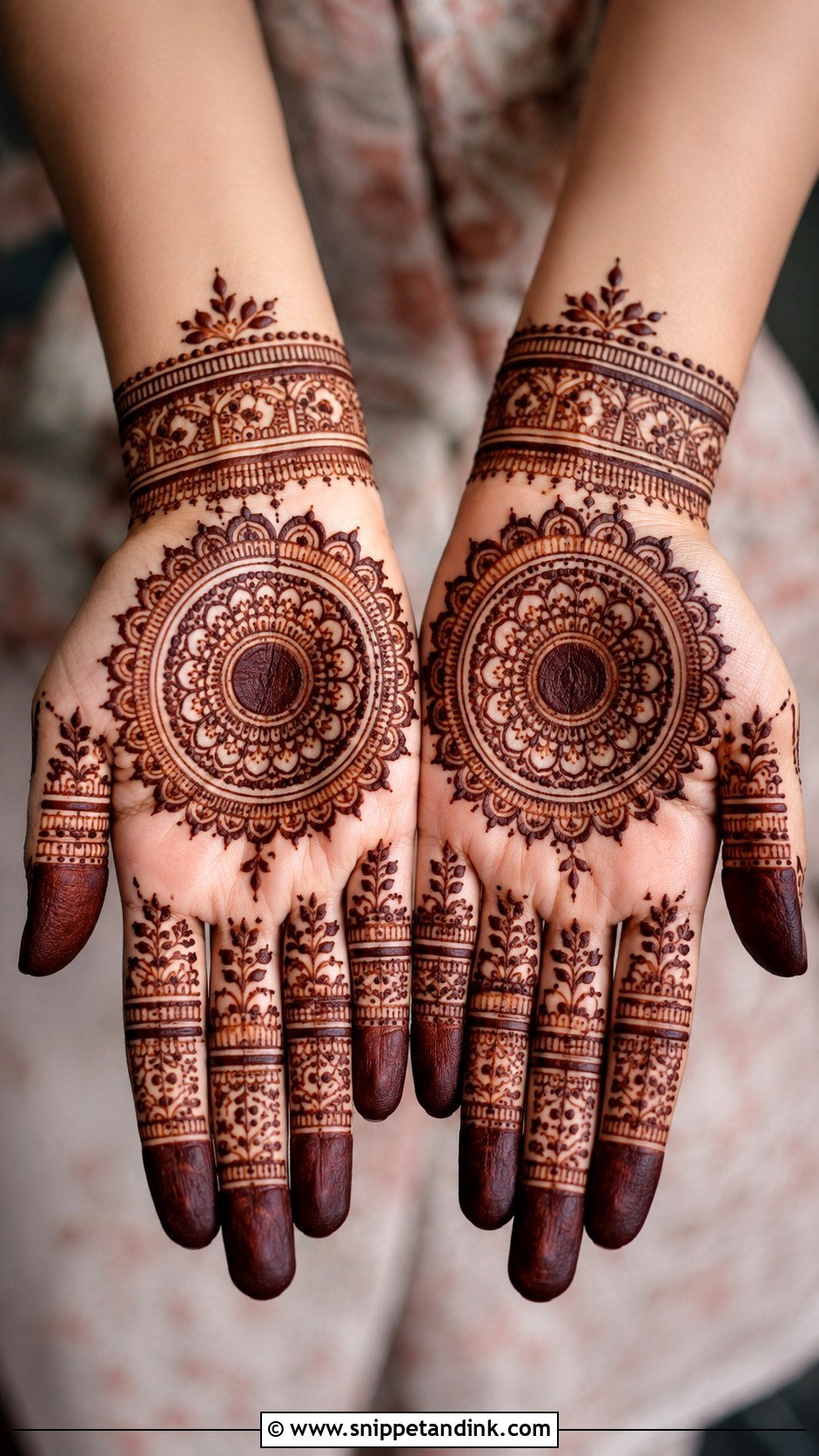
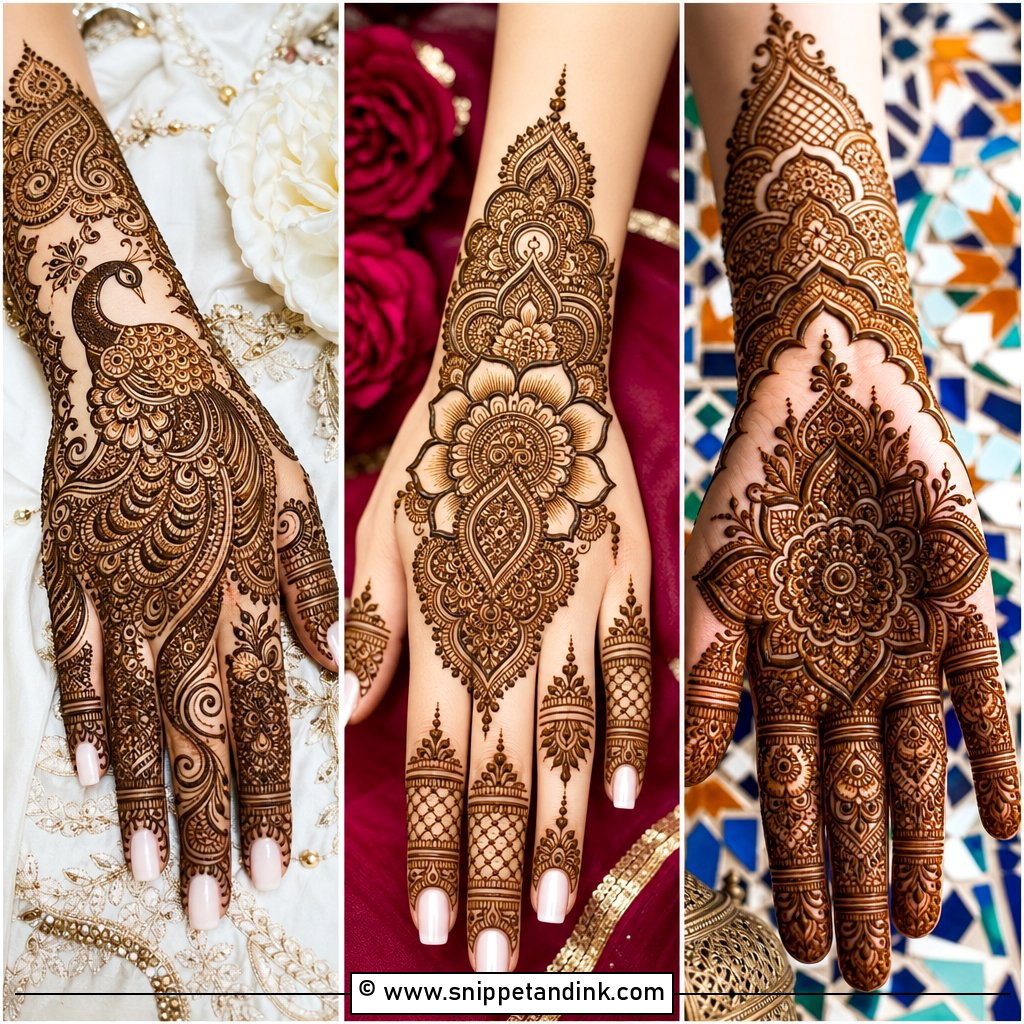
A tikki is a bold circle in the palm, ringed with detail, with filled fingertips and a neat wrist border. It came back strongly in 2018, especially for Eid and engagement functions. Kept simple, it’s dots and petals; pushed further, it gains fine mesh and floral rings. I fill the center solidly with paste so it stains as one deep disc, which is what gives the design its punch. Clean space around the tikki makes it look current, and a matching tikki on the back hand pairs well with it.
16. Eid Mehndi Design 2018
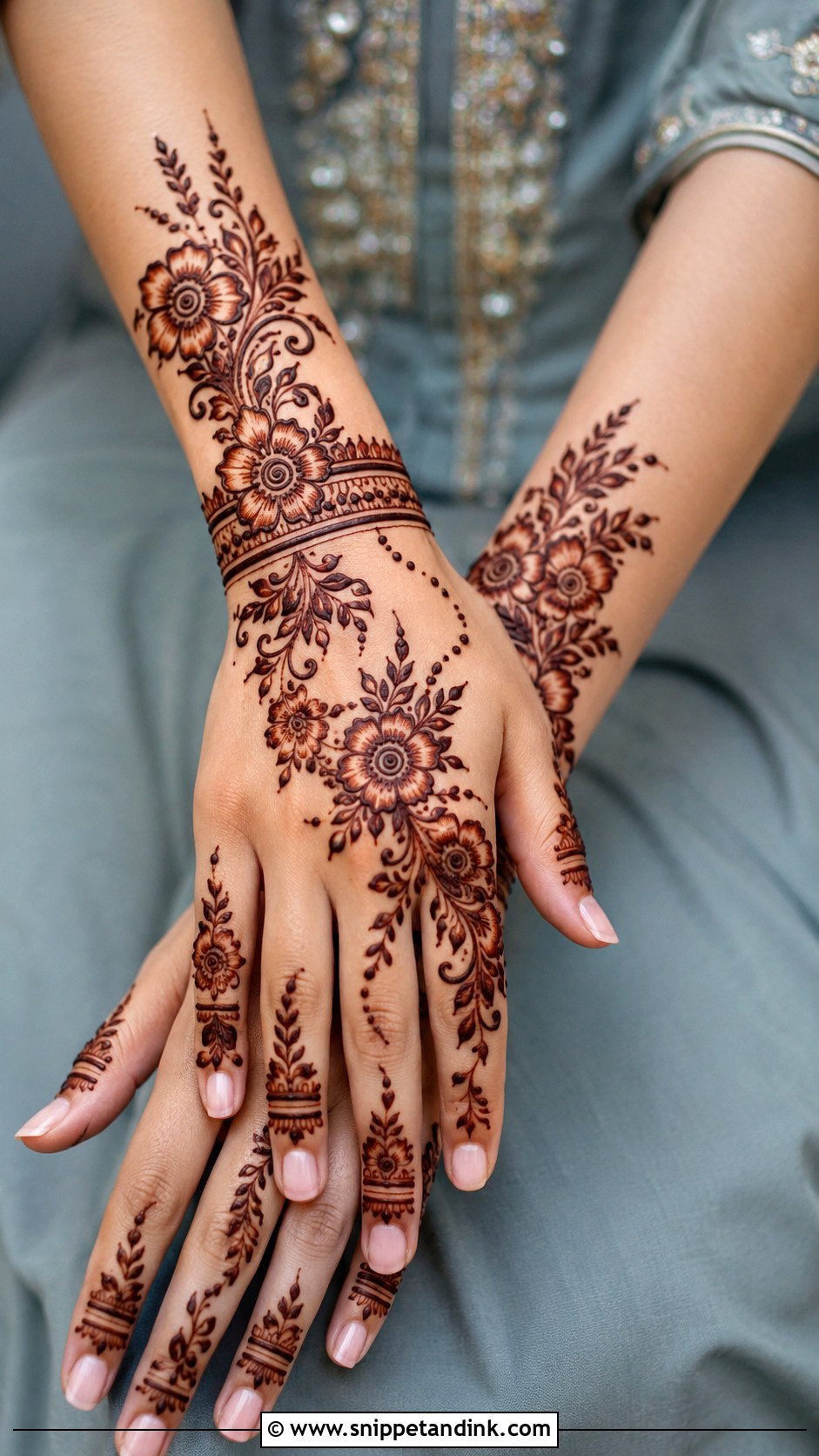
Eid designs in 2018 leaned Arabic, Indo-Arabic and back-hand heavy: floral trails, bracelet wrists, filled fingers and open palms. They’re festive but much quicker than bridal work, which matters when the whole family wants mehndi on chaand raat. I recommend back-hand layouts here because that’s the side people see while you’re greeting relatives and serving food. Bold flowers, leafy vines and small shaded areas dry fast and smudge less in a busy house. Natural henna applied the evening before gives a warm reddish-brown that keeps deepening through Eid morning.
17. Karwa Chauth Mehndi Design 2018
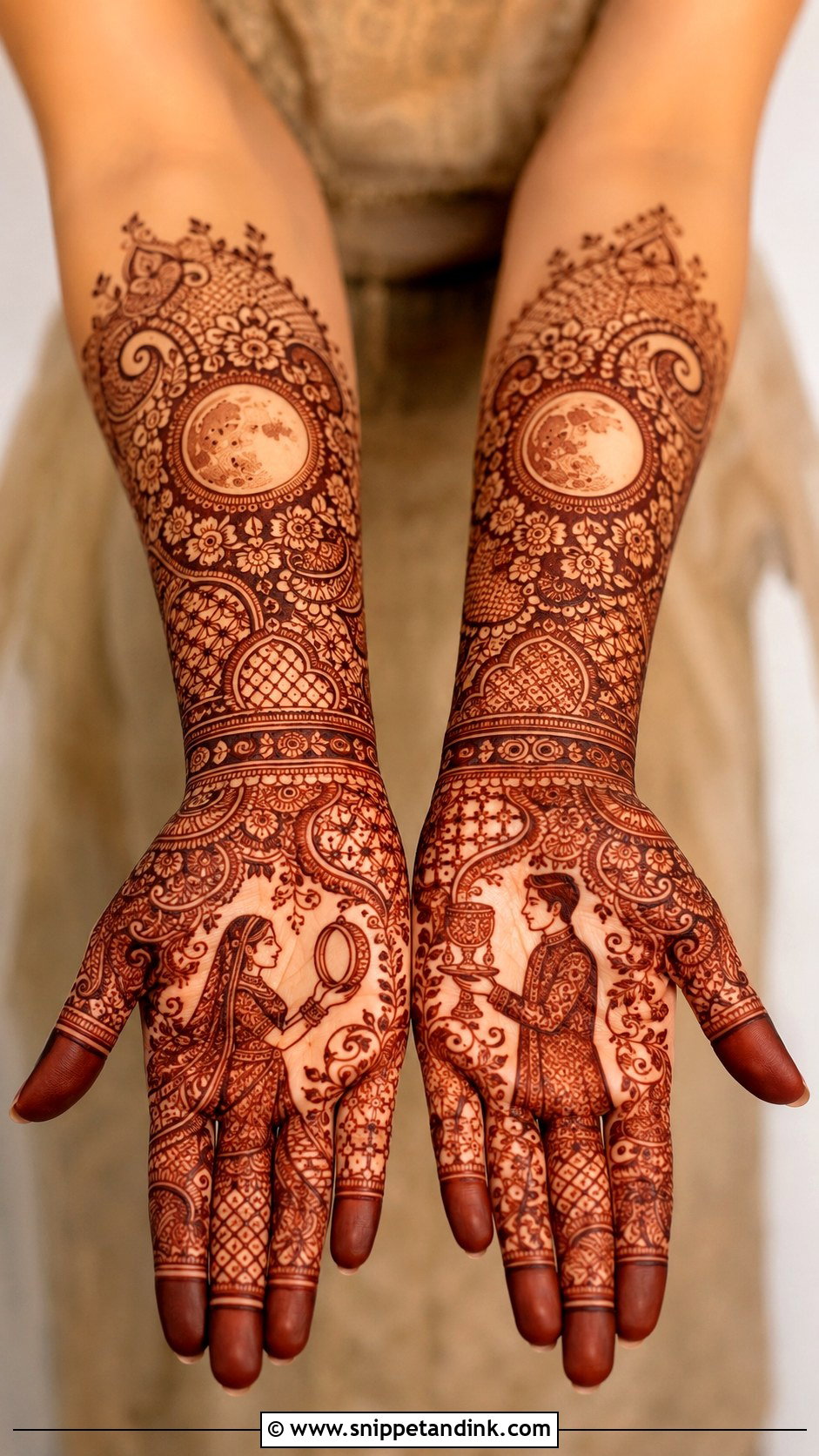
Karwa Chauth mehndi design in 2018 tended toward full palms, decorative wrists, moon motifs, sieve-like circles and floral borders, sometimes with a tiny couple figure. Most women asked me for medium to heavy coverage, since dressing up is part of the day. A front-hand mandala with detailed fingers is what I’d suggest if you want something graceful without sitting for hours; extending to the forearm with paisley and jaali bands adds festive weight. Have it applied a day or two before the fast, because the stain needs that time to reach its darkest color.
18. Diwali Mehndi Design 2018
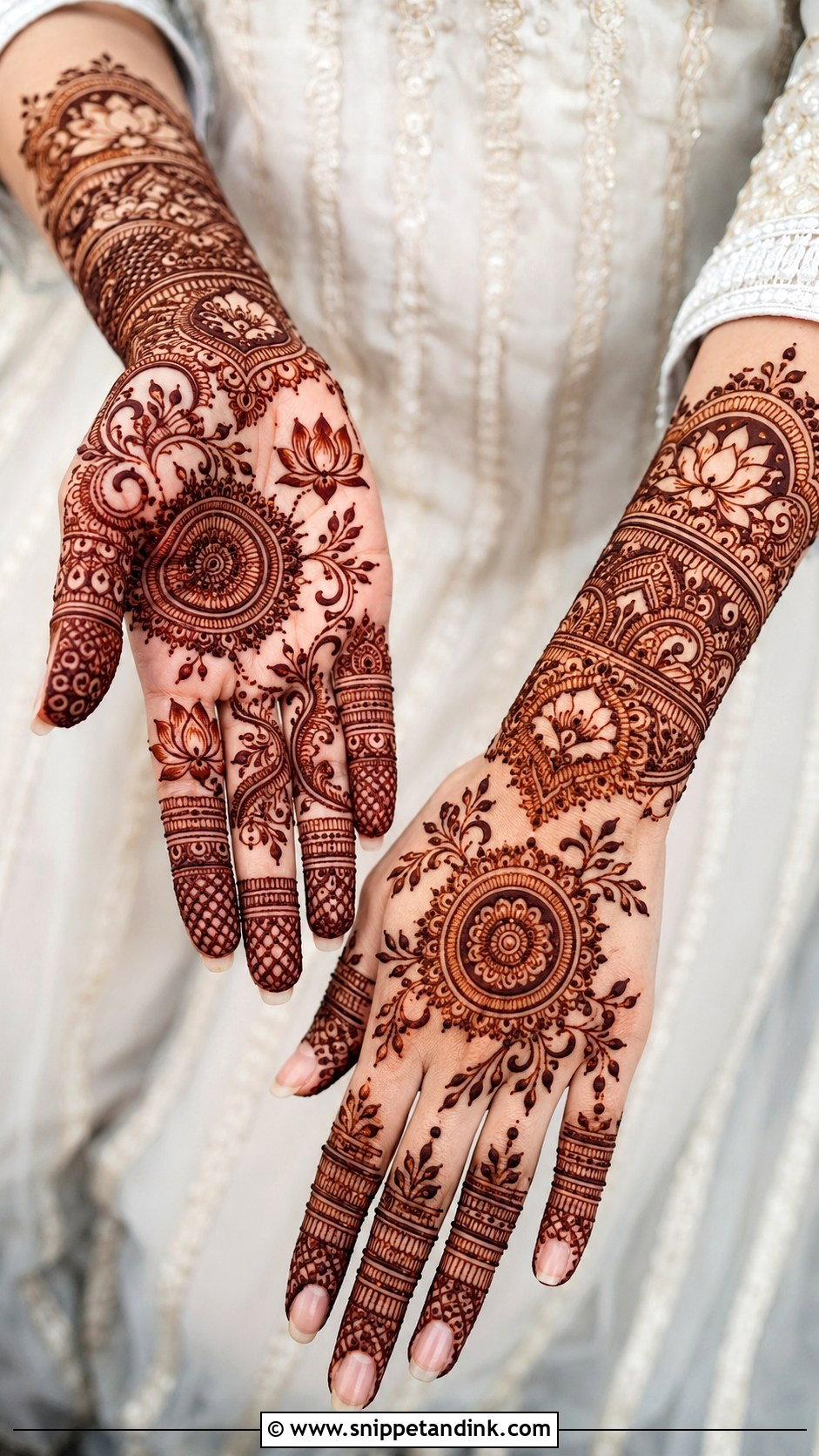
Diwali means greeting guests, lighting diyas and handing round sweets, so most women asked me for practical coverage that year: neat front-hand or back-hand designs with lotus flowers, mandalas, leafy vines, paisley borders and finger bands. Keep the palm open around one central motif, or go fuller with Indian detail if you’ll have time to let it dry undisturbed. I’d book it a day or two early so you aren’t lighting lamps with wet paste on your hands. Matching wrist cuffs on both hands keep it tidy against bright outfits.
19. Engagement Mehndi Design 2018
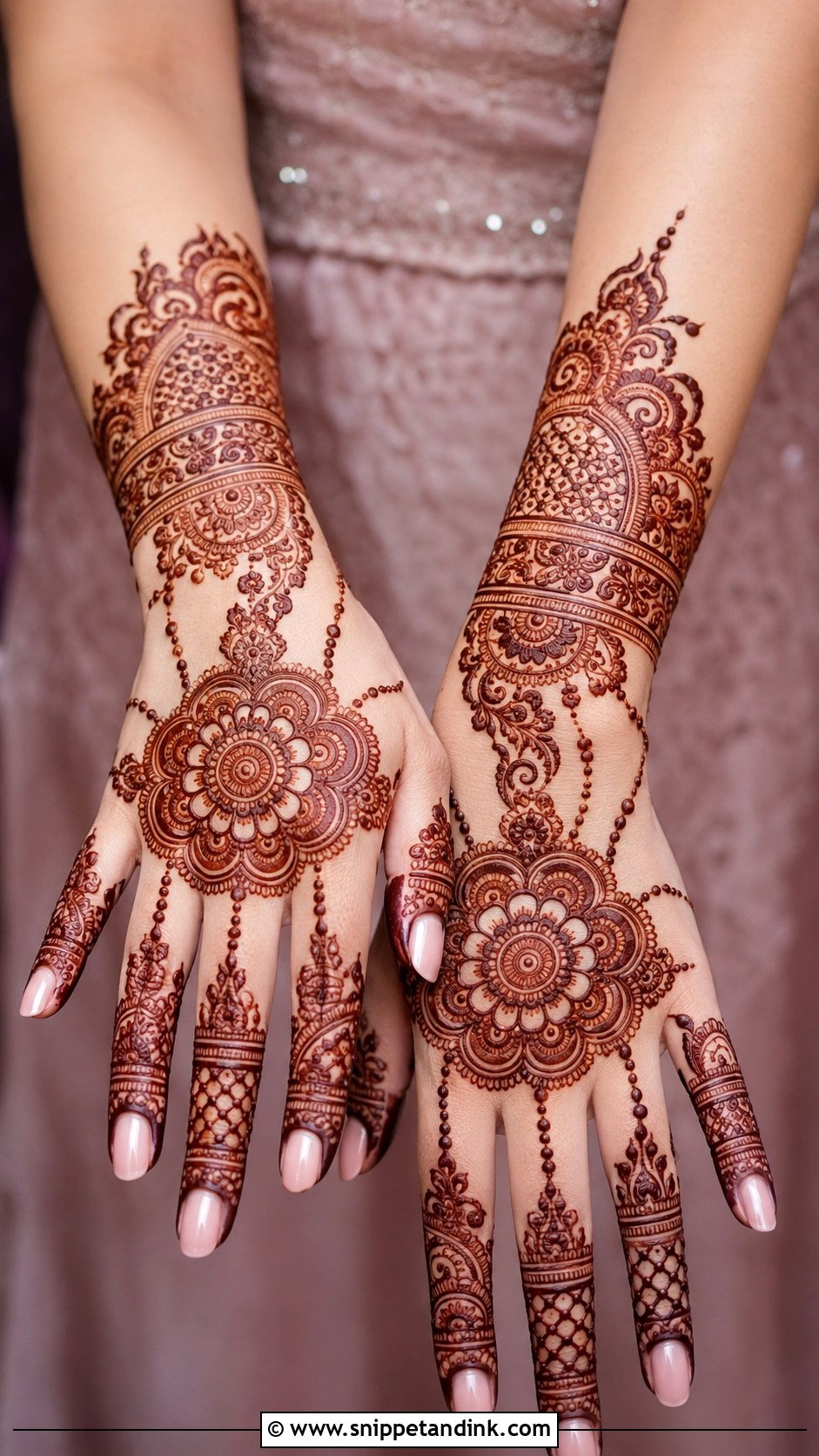
Engagement mehndi sits between bridal and everyday: palms and wrists covered, forearms lighter. Ring-style back-hand patterns, floral trails, initials and delicate jaali were all popular in 2018. Since the ring photo is the shot everyone wants, I plan the back of the ring hand around it, with a bracelet cuff, finger bands and a central flower that frames the ring finger rather than crowding it. I leave the base of that finger fairly open so the band and stone aren’t lost against dark lines. A softer paisley or floral layout on the palm keeps the set balanced.
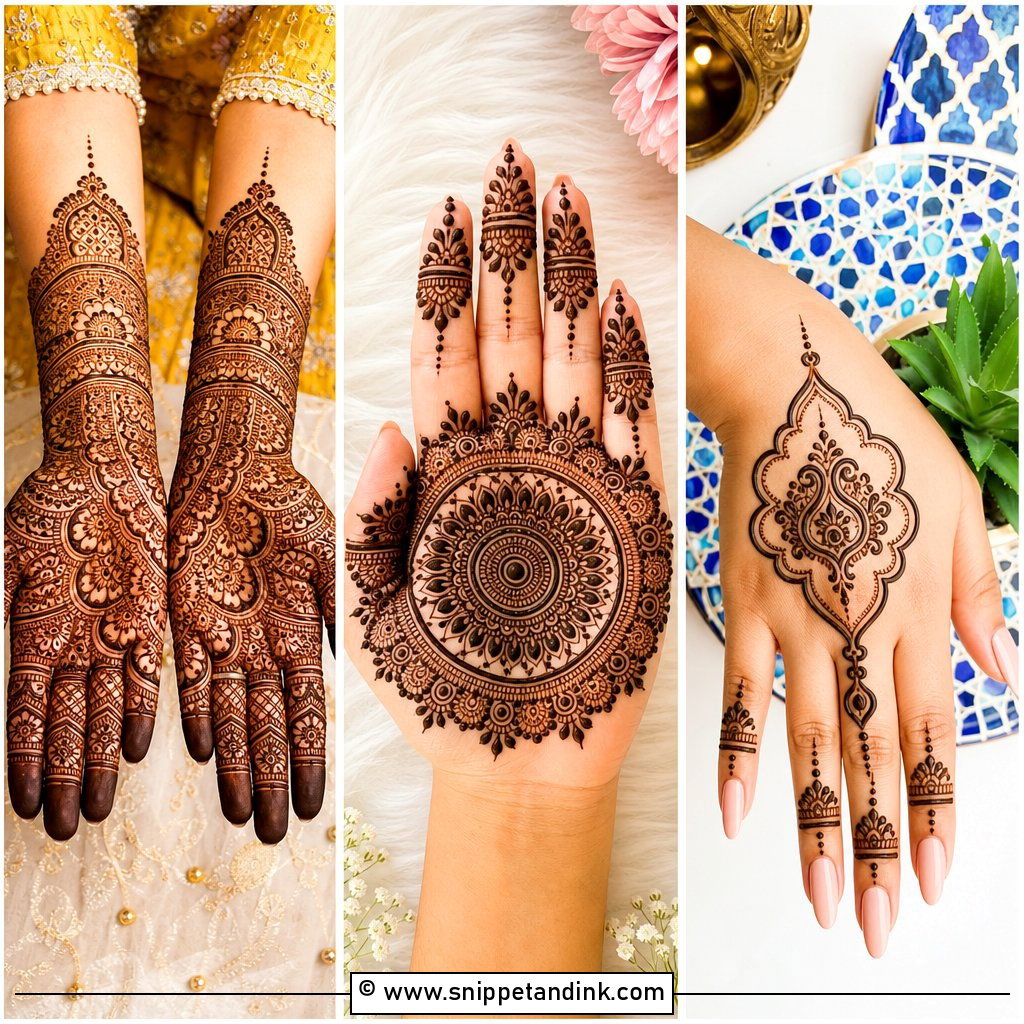

20. Bridesmaid Mehndi Design 2018
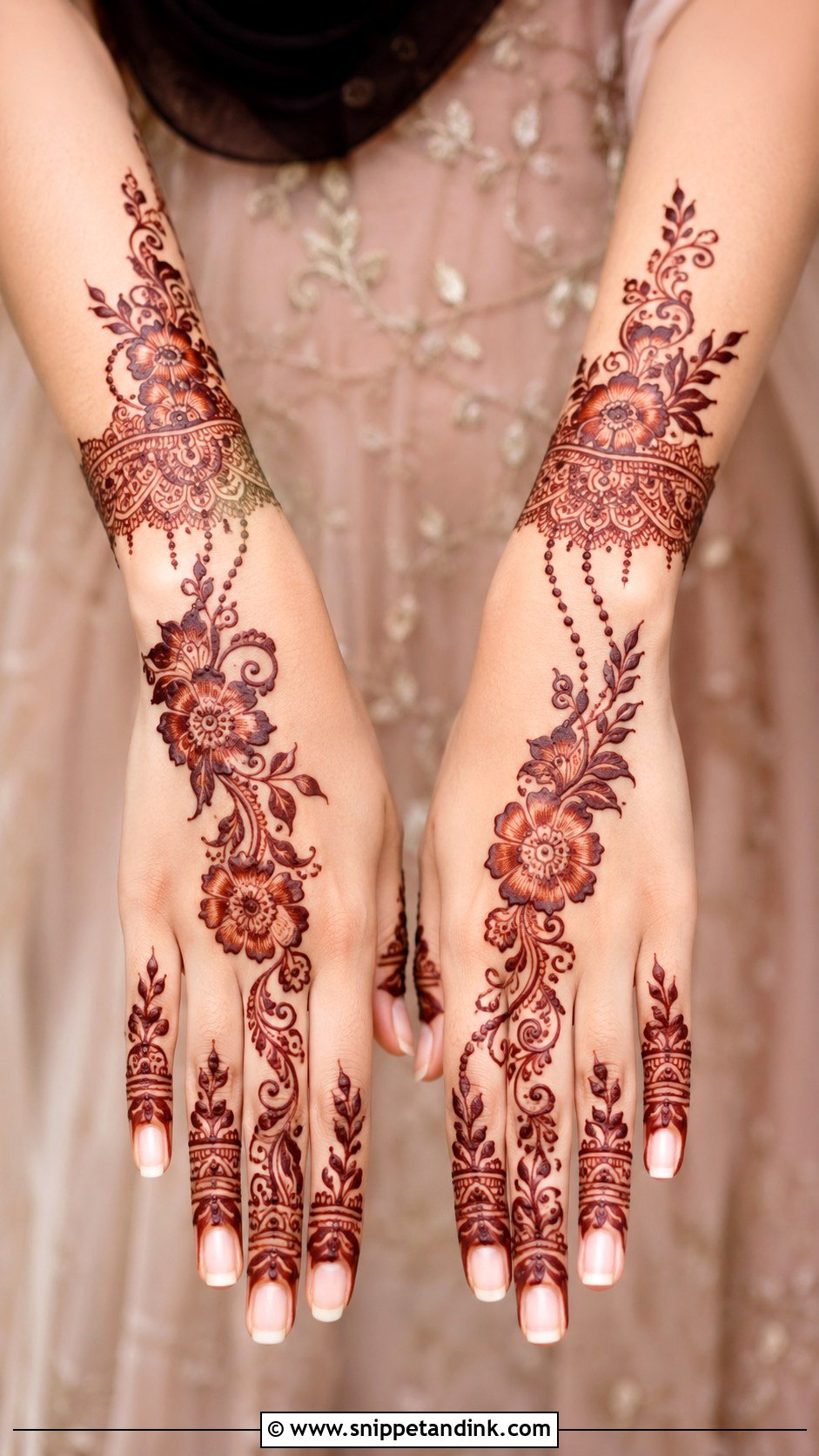
Bridesmaid designs should look festive beside the bride’s hands without competing with them. In 2018 that meant back-hand florals, Arabic trails, bracelet patterns and decorated fingers. A diagonal vine from wrist to index finger with shaded petals and dots is the one I draw most, followed by a mandala back hand with ring chains. I keep the palms simple so the girls can still hold drinks, phones and dupattas through the event. For group photos, give everyone the same motif family but let each hand differ a little, because identical hands look stamped.
21. Minimal Mehndi Design 2018
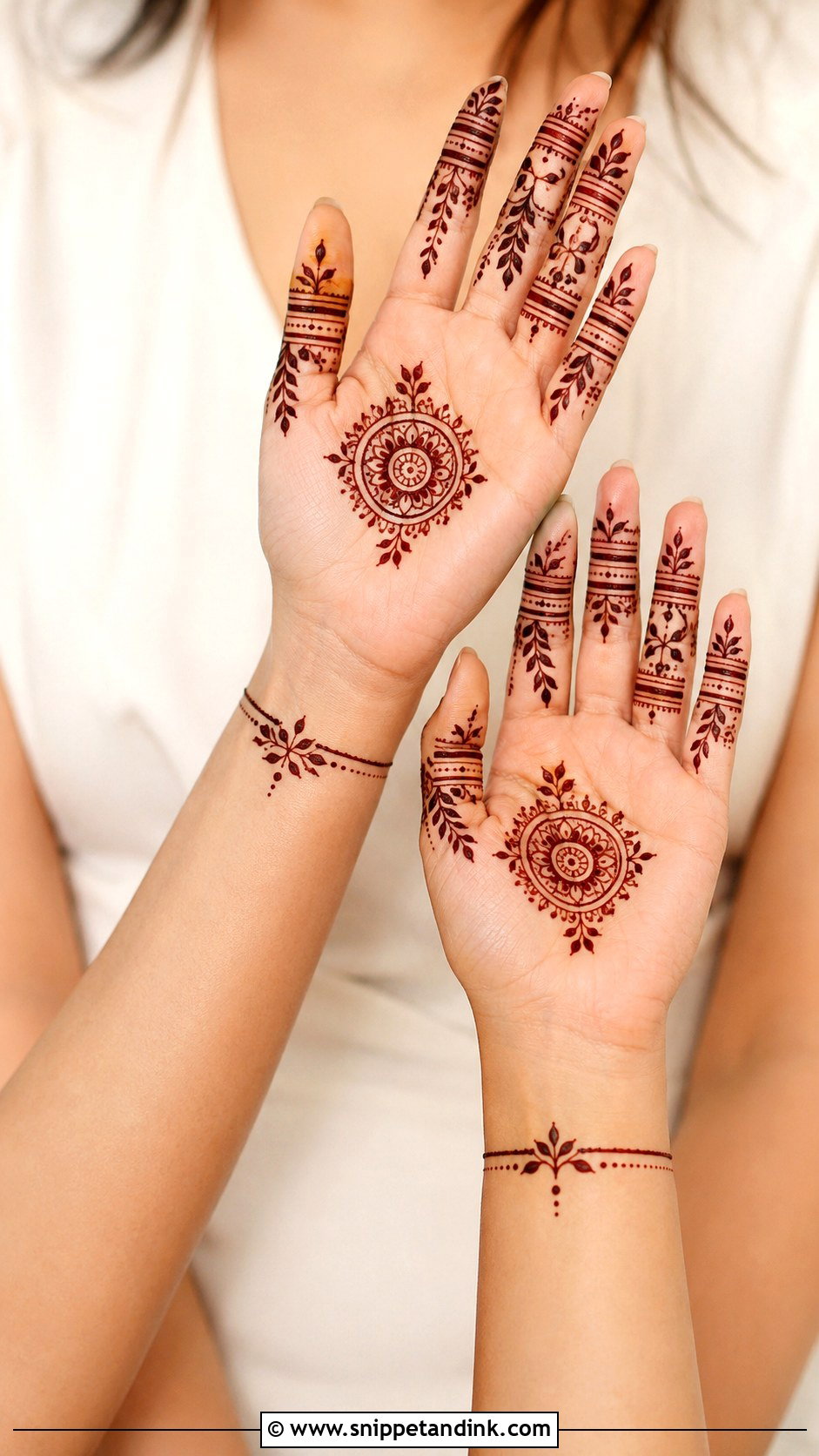
Minimal work is about decorating the hand on purpose rather than filling it: fine finger bands, a small palm mandala, a slim wrist line, a few leafy accents. It took off in 2018 with brides who wore western outfits for some events, and with students and working women who needed something low-key for college or the office. The trap is adding one more filler, then another, until the negative space disappears. Thin lines also fade sooner than thick ones as the skin renews, so a minimal design looks its best in its first week.
22. Modern Mehndi Design 2018
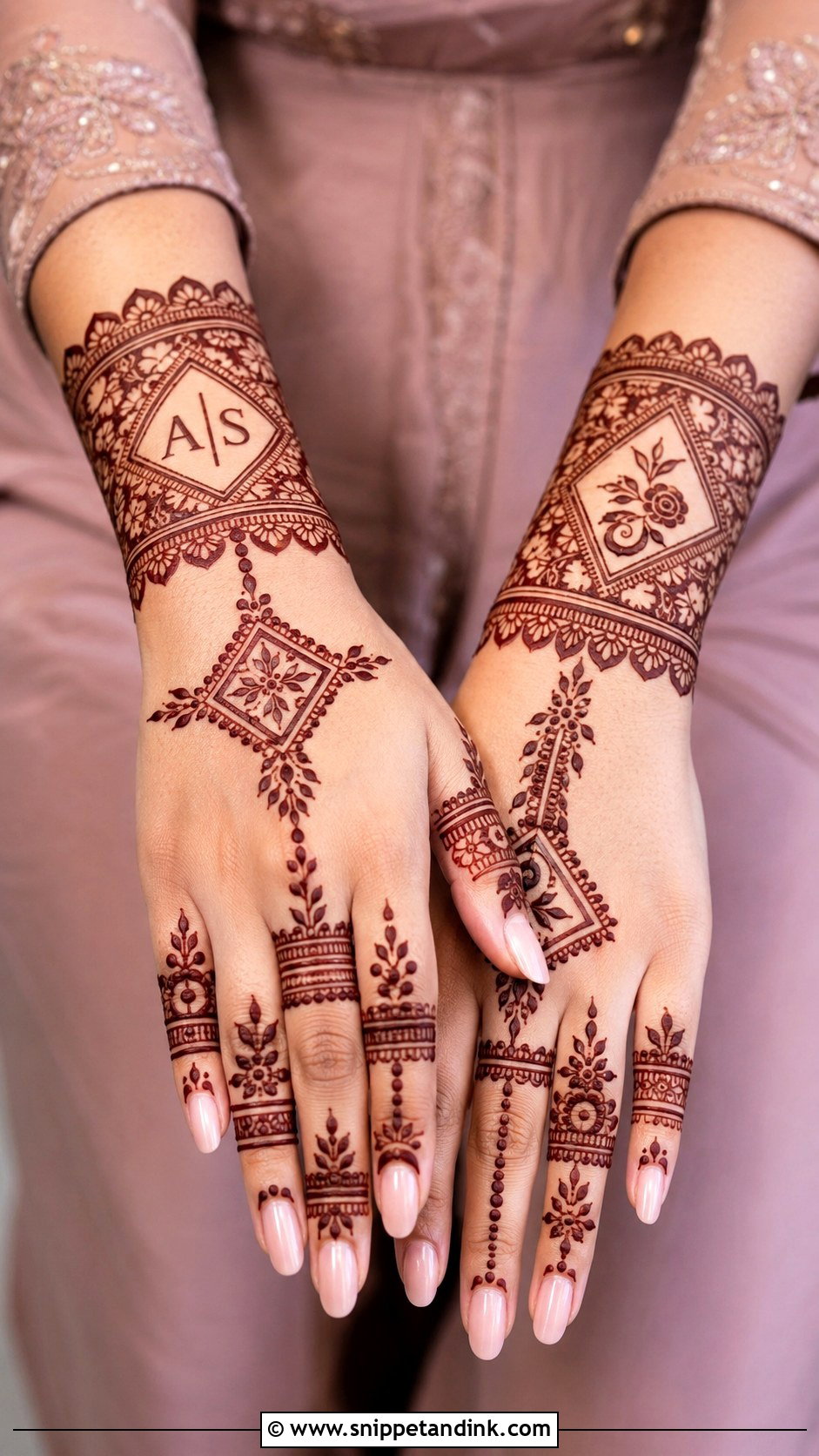
Modern designs from that year played with spacing and personal content: geometric panels, floral trails, finger jewelry patterns, initials, and in some bridal sets a hashtag or a short line of vows. Text is harder than it looks. Letters smaller than a fingernail blur as the stain softens into the skin, so I write anything personal large and on the palm, where the color is darkest. Non-bridal modern looks relied on symmetry and bare skin. The test I give any modern design is distance: it should read sharp from across a room and still reward a close look.
23. Pakistani Mehndi Design 2018
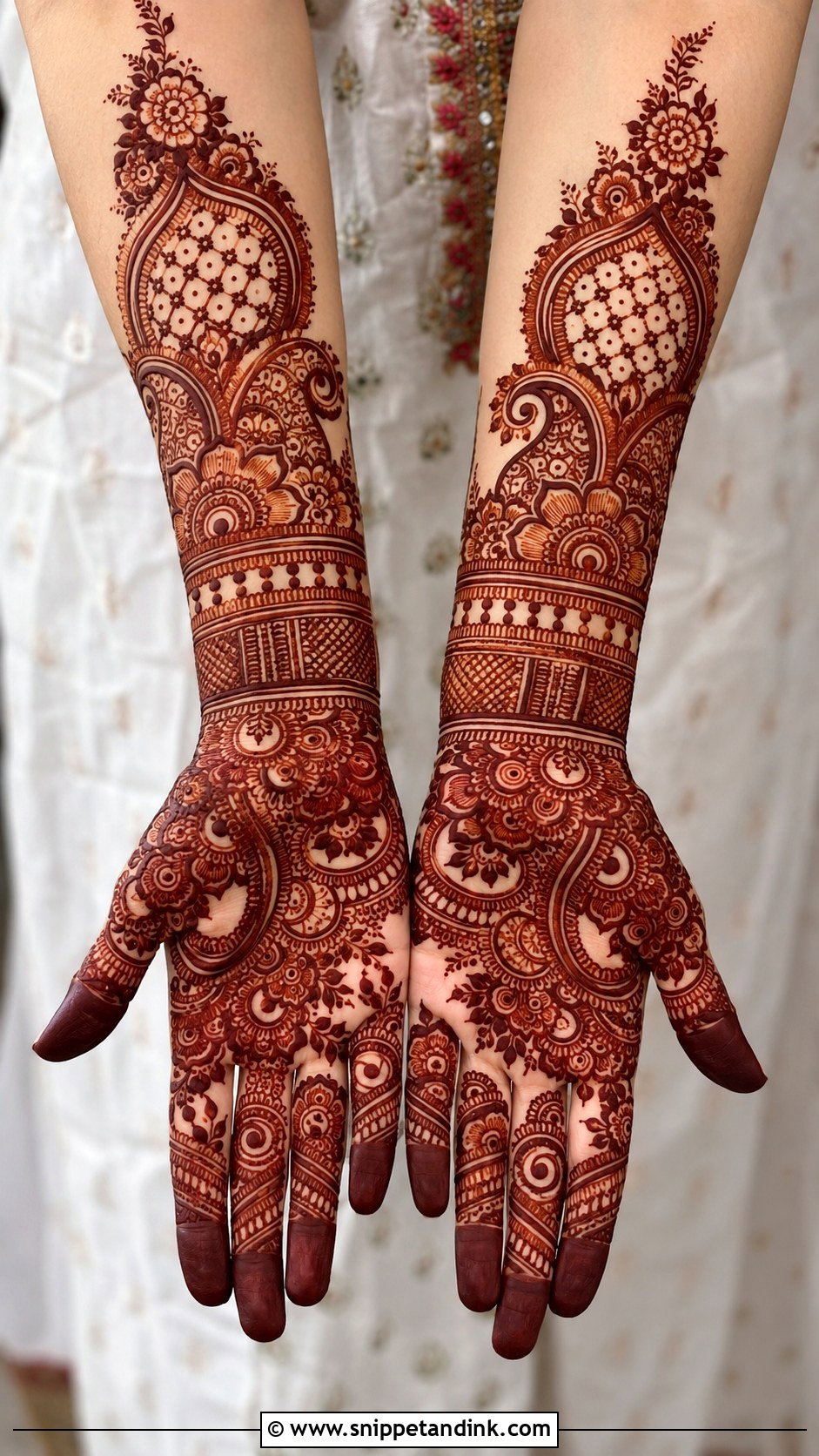
Pakistani bridal mehndi sits between Indian density and Arabic flow: full palms, wrist-to-forearm coverage, paisleys, domes, florals, jaali and layered borders, all moving in soft curves. In 2018 it was the usual request for brides, Eid and formal family events. My classic build is a central palm motif framed by curved florals, then bracelet bands climbing the wrist. The risk is losing the outline of each motif under so much filler, so I keep the main shapes slightly thicker and the fill lines finer. Finger panels stay detailed but clean.
24. Moroccan Mehndi Design 2018
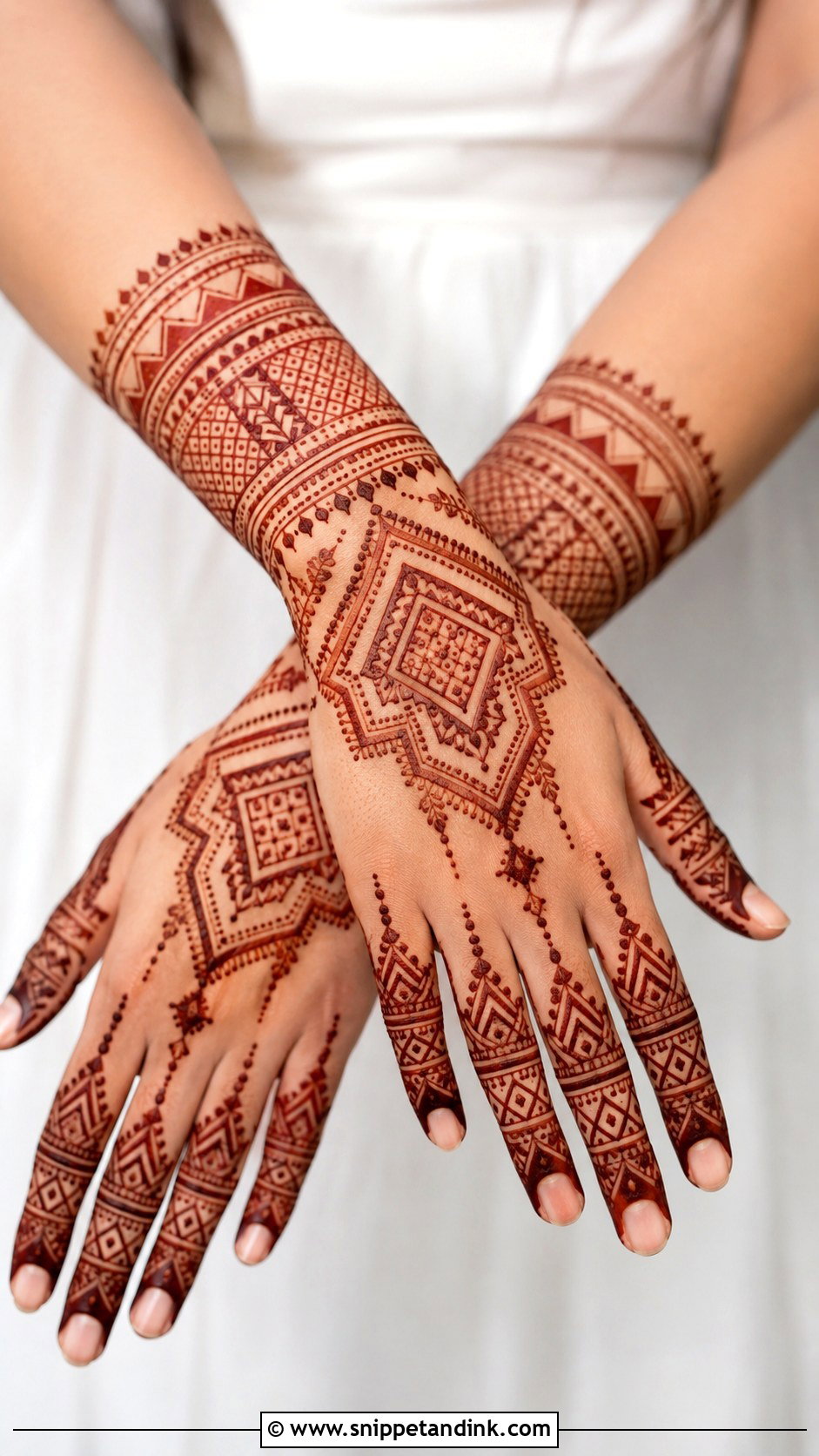
Moroccan-inspired henna swaps florals for geometry: diamonds, triangles, grids, zigzags and bold wrist bands. It drew women in 2018 who wanted something unlike Indian or Arabic work. Straight lines are far less forgiving than curves, so this is not a design for a shaky hand or a rushed session; one off-angle line shows immediately. I build it from a center line on the back of the hand and mirror outward. A few dots or tiny leaves can soften it, but the geometry should stay in charge, and it looks sharp with plain outfits.
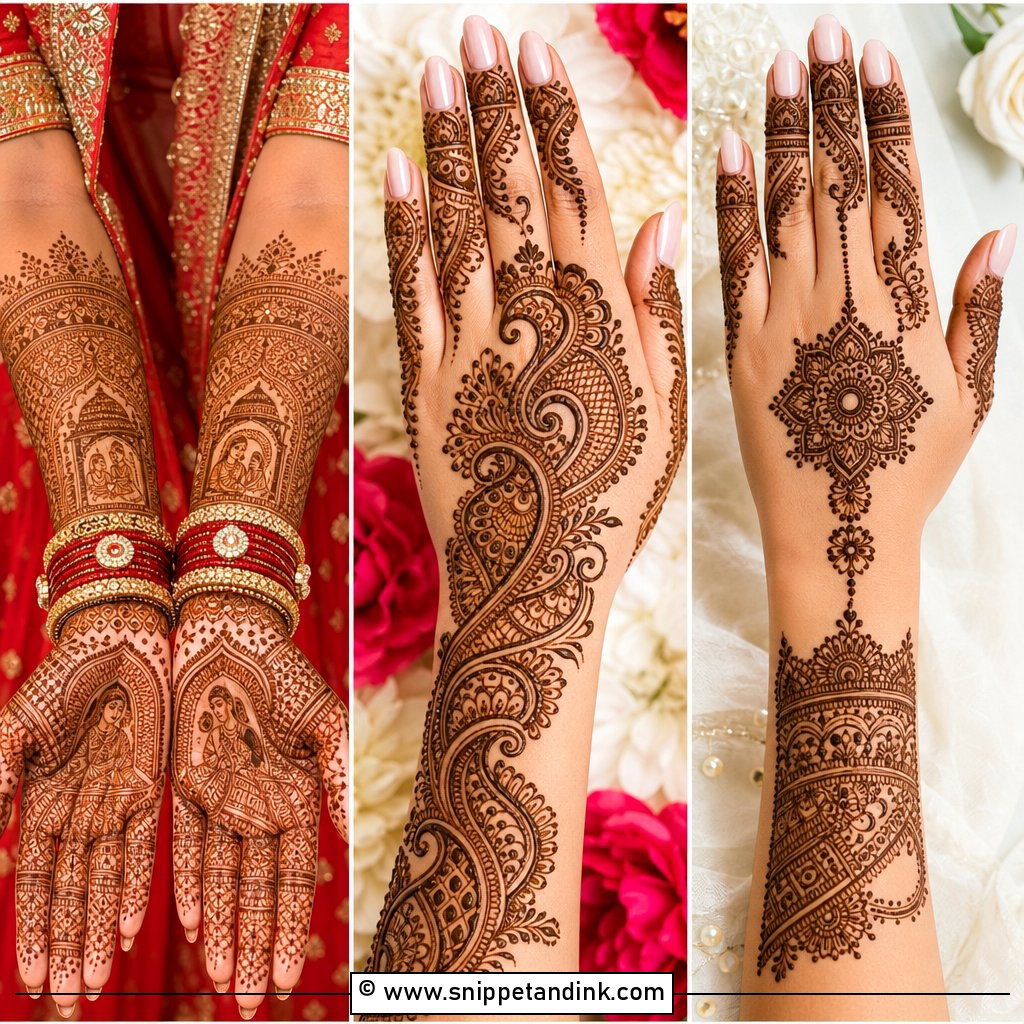


25. Gulf Mehndi Design 2018
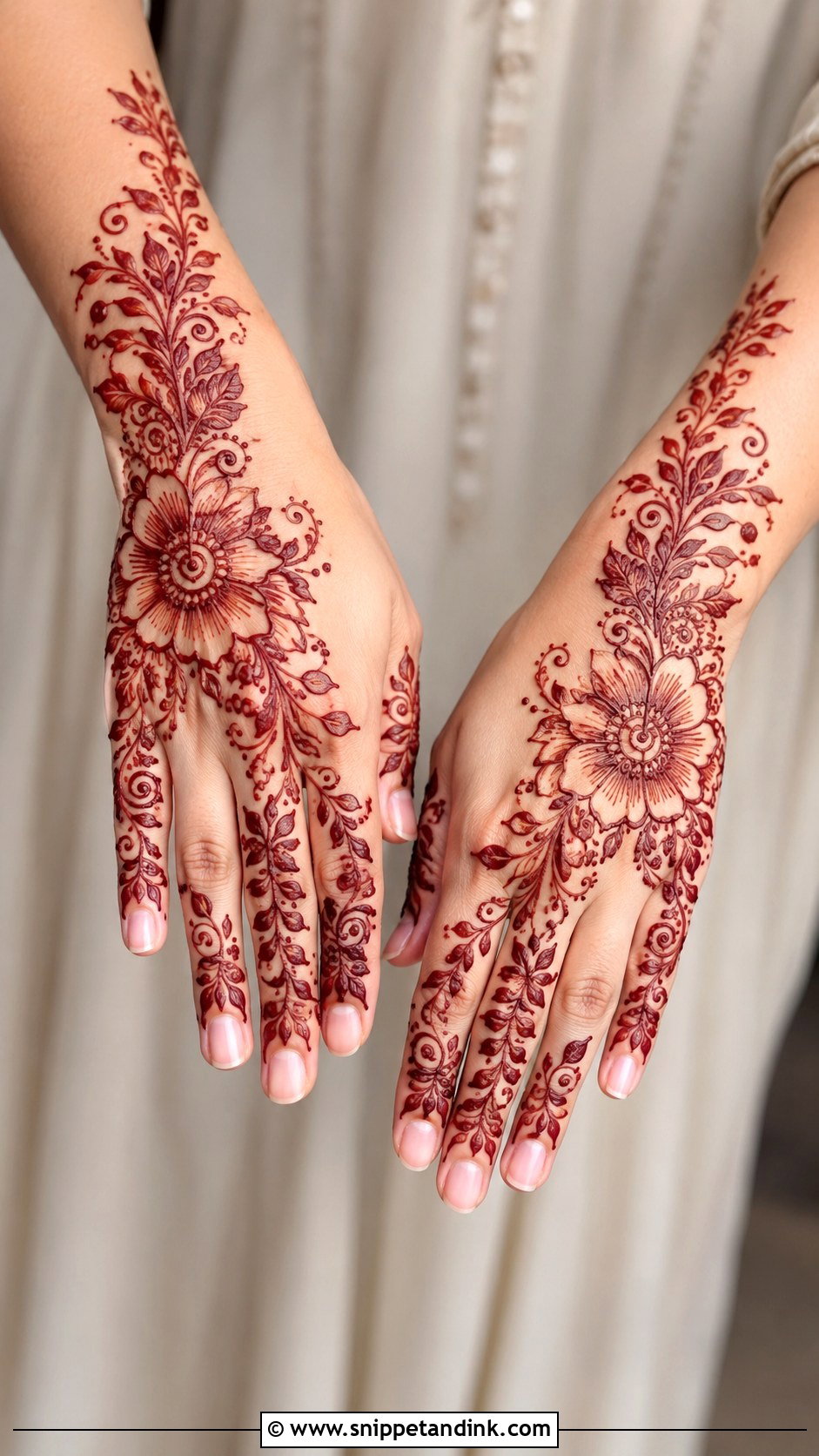
Gulf-style mehndi, often called Khaleeji, is built from large flowers, leafy branches and swirling lines with plenty of open skin. It rarely covers the full hand, which is why it feels airy. I place the big blooms along the back of the hand or the palm edge and let smaller leaves trail toward the fingers, then finish with a soft floral wrist cuff. The style depends on confident, thick outlines and shaded petals, so I cut a slightly wider cone tip than I would for Indian fill. Eid, weddings and evening functions all suit it.
26. Rose Mehndi Design 2018
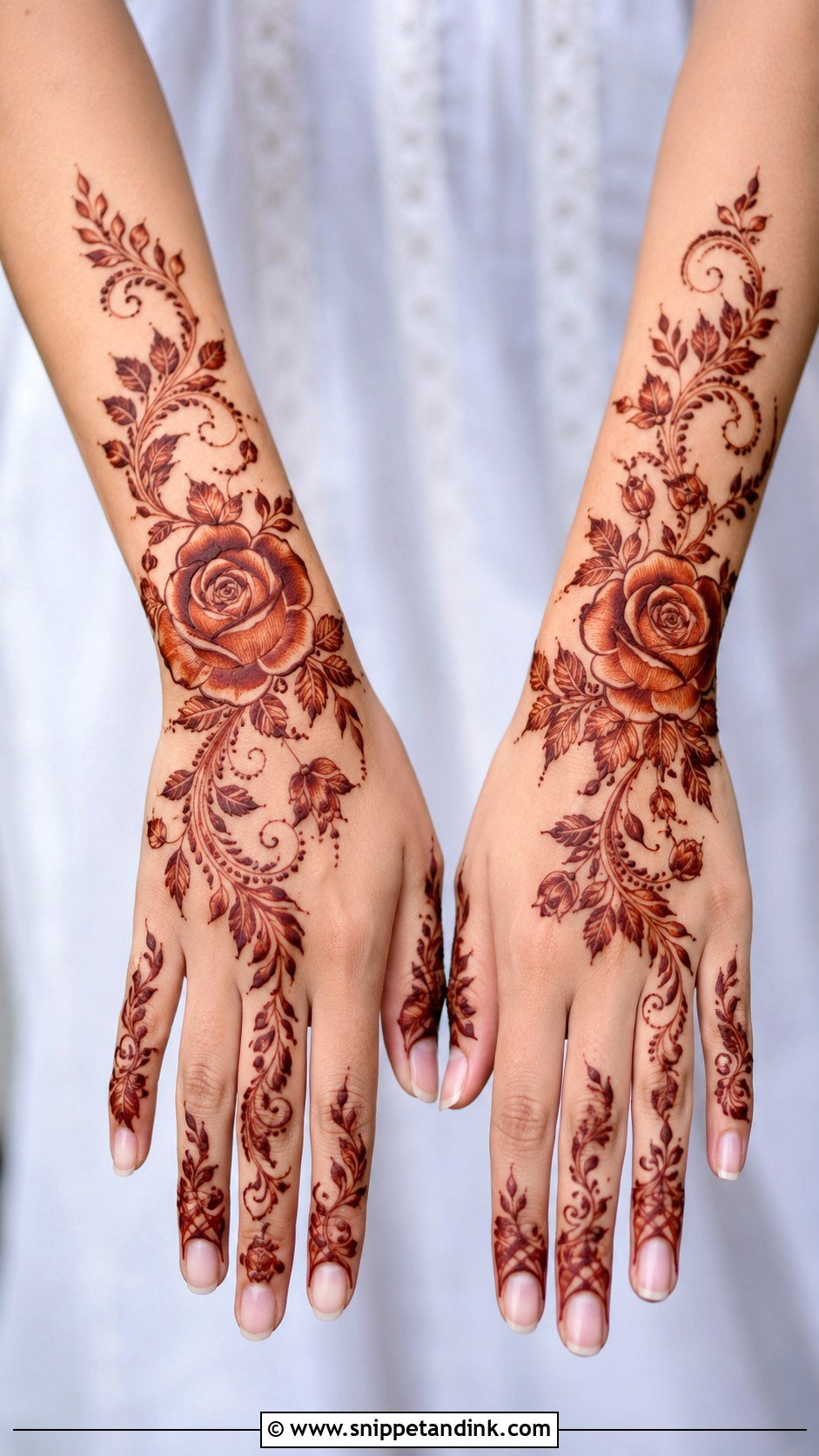
Roses are harder to draw in henna than they look, because the petals need depth or they read as cabbages. I outline each petal clearly, then shade with fine strokes or a thin wash of paste. A rose layout might be large blooms on the back hand, a vine across the palm and leafy fingers to match. For a more current version, one large rose near the wrist with a diagonal vine is enough. Engagements, bridesmaids, Eid and family weddings all welcome it.
27. Lotus Mehndi Design 2018
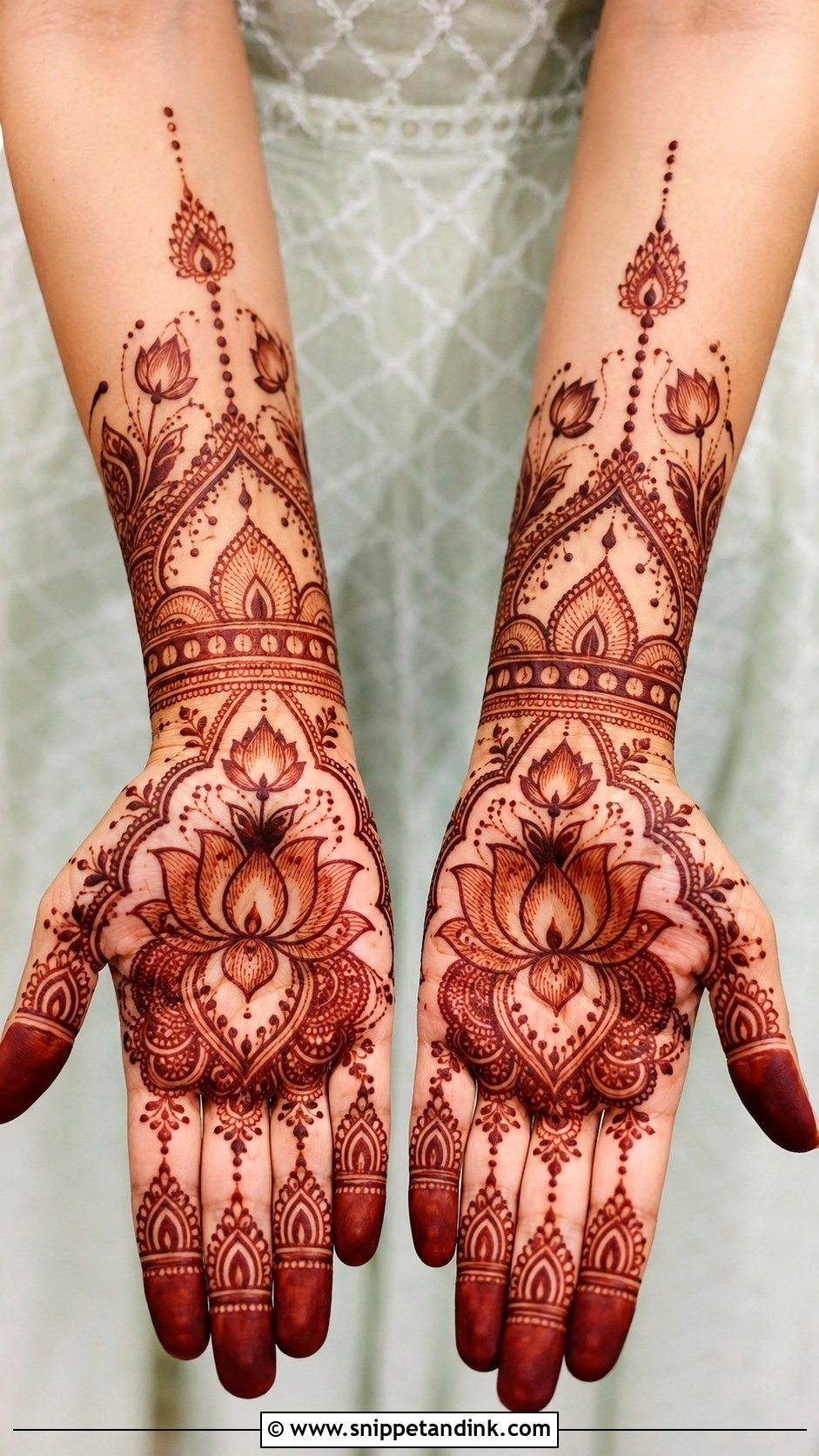
Lotus motifs carry a quiet, devotional feel, which is why they showed up so often in 2018 bridal and Diwali work. A typical layout puts a large lotus on the palm, smaller buds near the wrist and petal details on the fingers, and the shape pairs naturally with mandalas, paisleys and jaali. Even petals with thin gaps between the layers are what make it look refined; I count petals as I go so both sides of the flower match. Dot chains and curved leaves finish it, and it belongs at pujas as much as at weddings.
28. Jaali Mehndi Design 2018
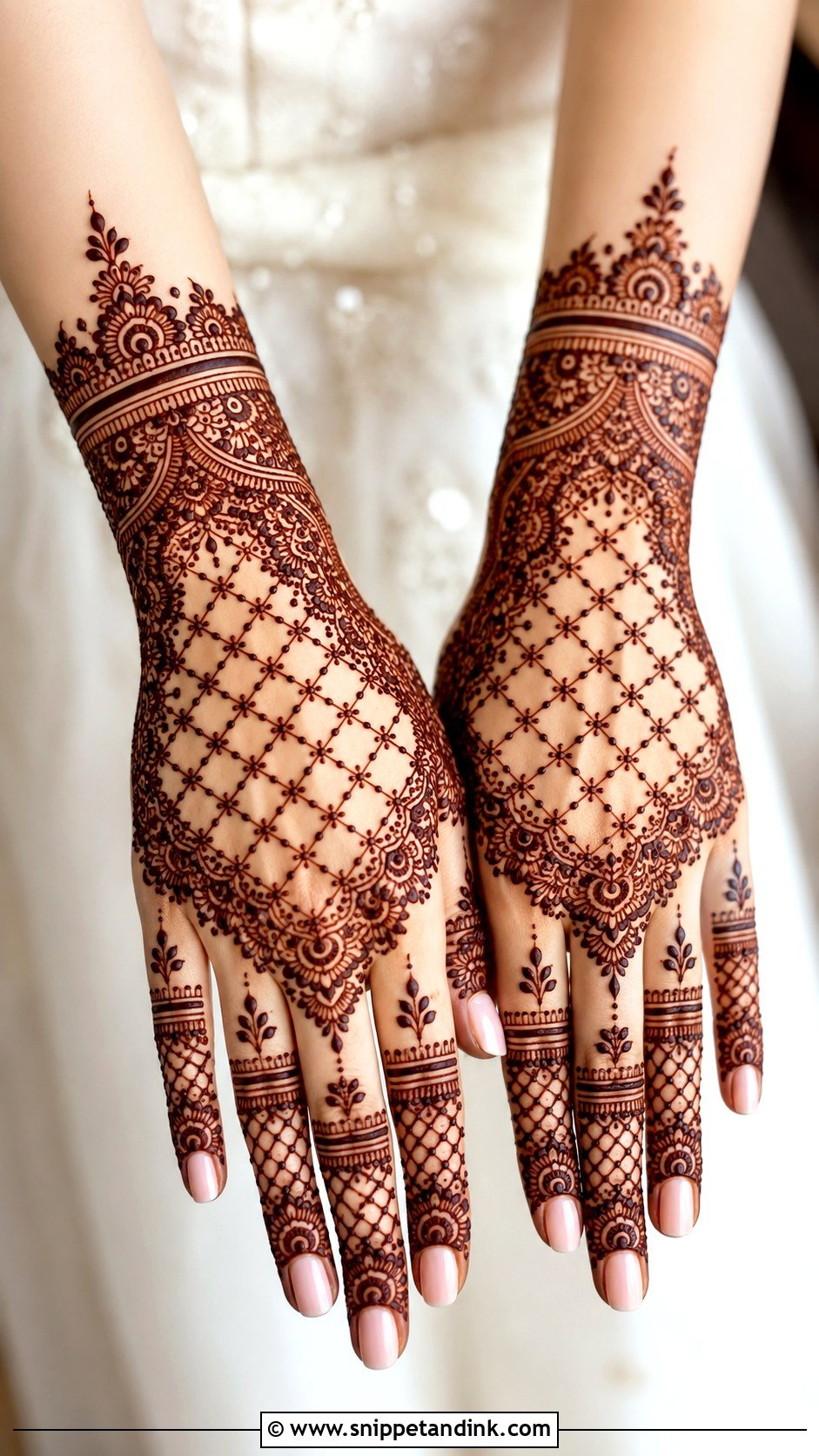
Jaali is mesh: diamonds, squares or fine crisscross lines that can cover a back hand like a glove or fill palm sections between flowers and paisleys. It adds texture without needing more motifs. It is also the most tiring element to draw well, because uneven spacing is obvious and lines drawn too close merge into a dark patch as the paste settles. I let each set of parallel lines firm up for a moment before crossing them. Frame the mesh with bold borders and floral corners so it has edges to sit inside.
29. Jewelry Mehndi Design 2018
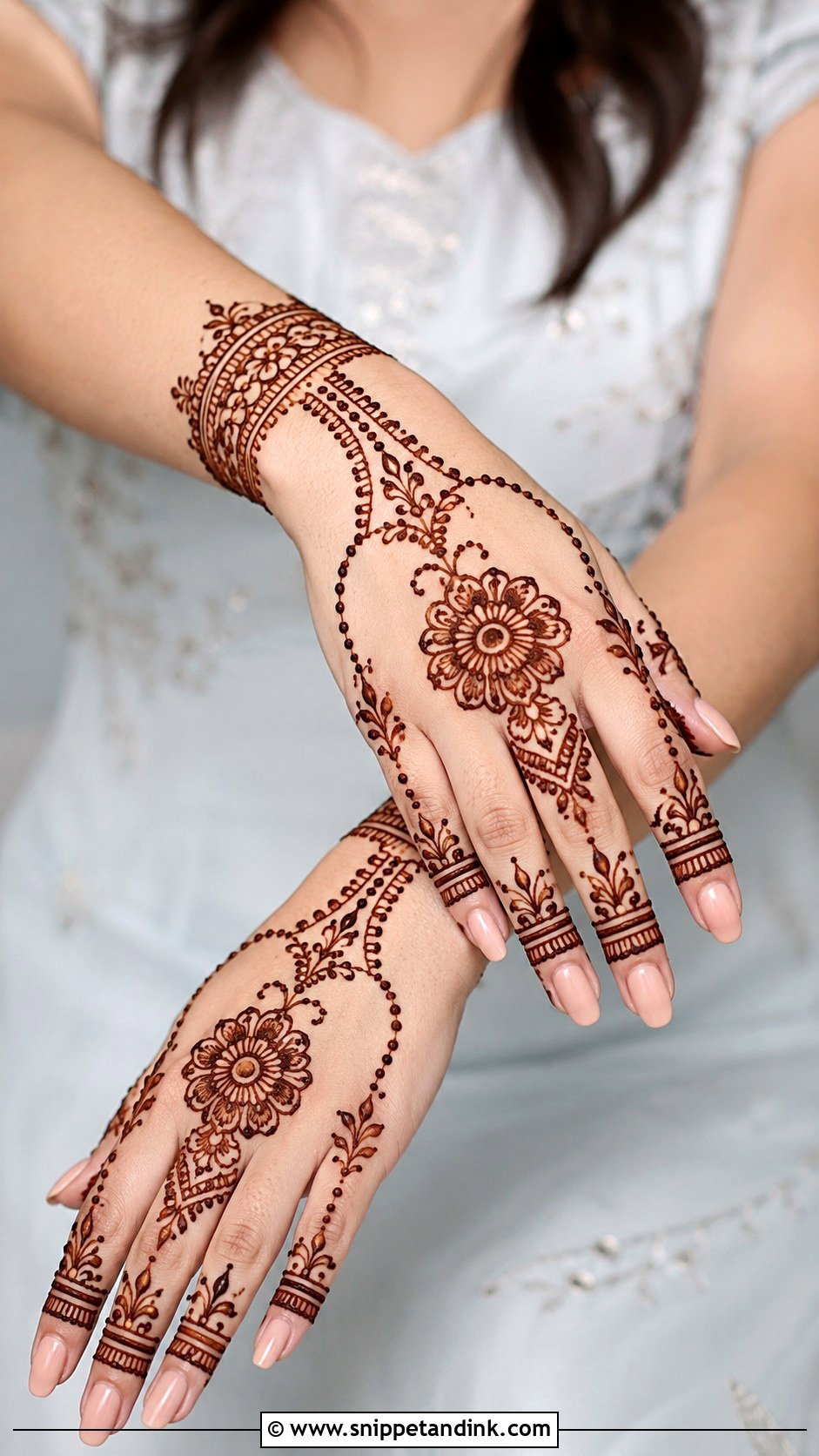
Jewelry-style mehndi decorates the hand as if you were wearing a haathphool: a bracelet cuff at the wrist, ring chains running to one or more fingers, finger bands and a central back-hand motif. It was everywhere at 2018 engagements. I start at the wrist like a bangle and connect to the fingers with dotted chains or fine lines, then place a flower or mandala at the center for balance. The chain effect needs room, so resist filling between the strands. If you plan to wear a real haathphool, tell your artist so the drawn chain doesn’t fight the metal one.
30. Wrist Mehndi Design 2018
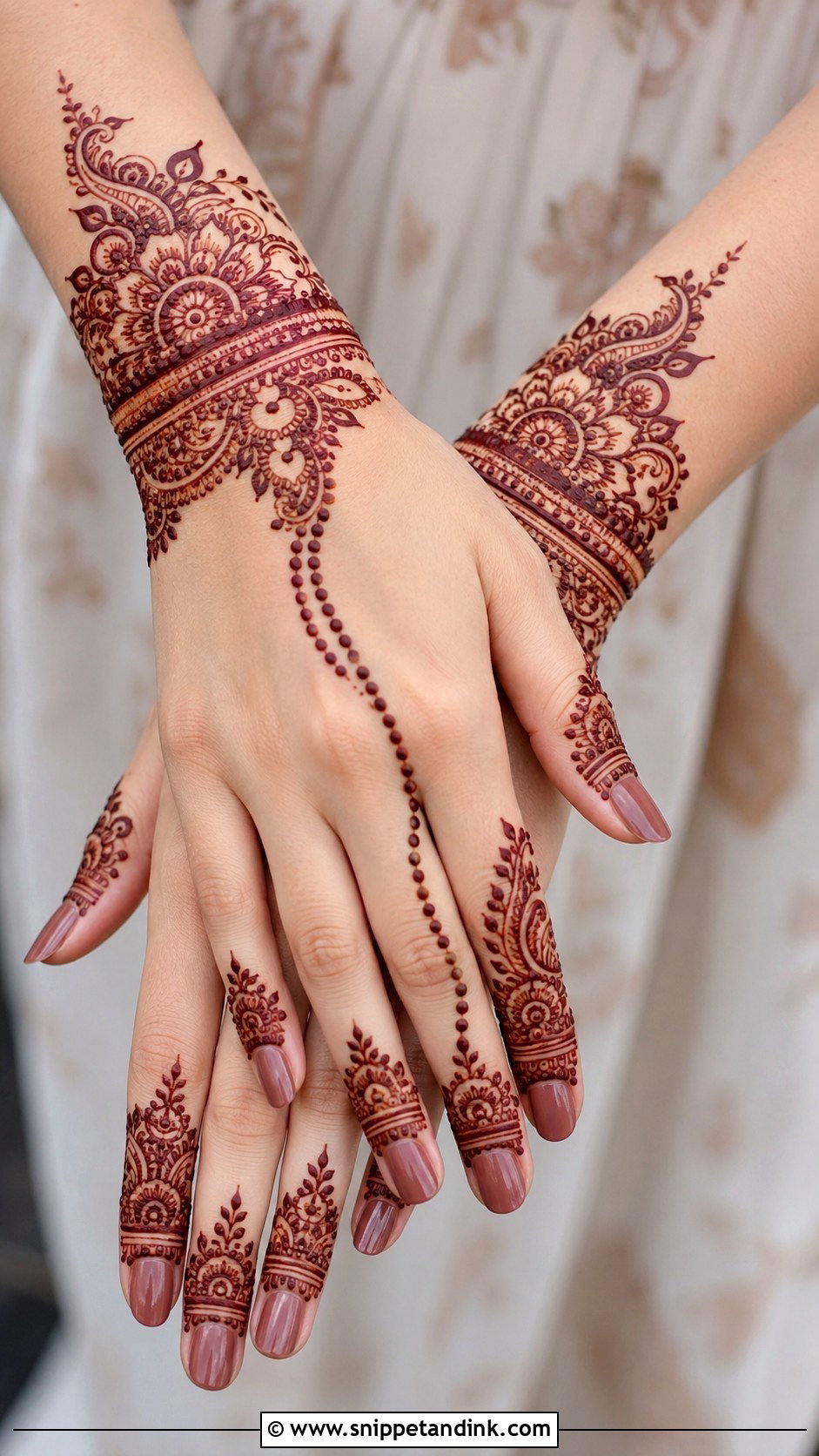
A wrist-focused design works like a henna bracelet: layered cuffs, floral bands, paisley borders and thin chains heading toward the hand. I suggest it to people who want something small that still feels complete, often with a simple mandala on the back hand. The wrist bends constantly, so I keep the bands a little above the crease, since paste sitting right in the fold cracks off early and leaves a patchy stain. Repeated bands, dots, leaves and small petals give the bracelet effect without bulk.
31. Palm Mehndi Design 2018
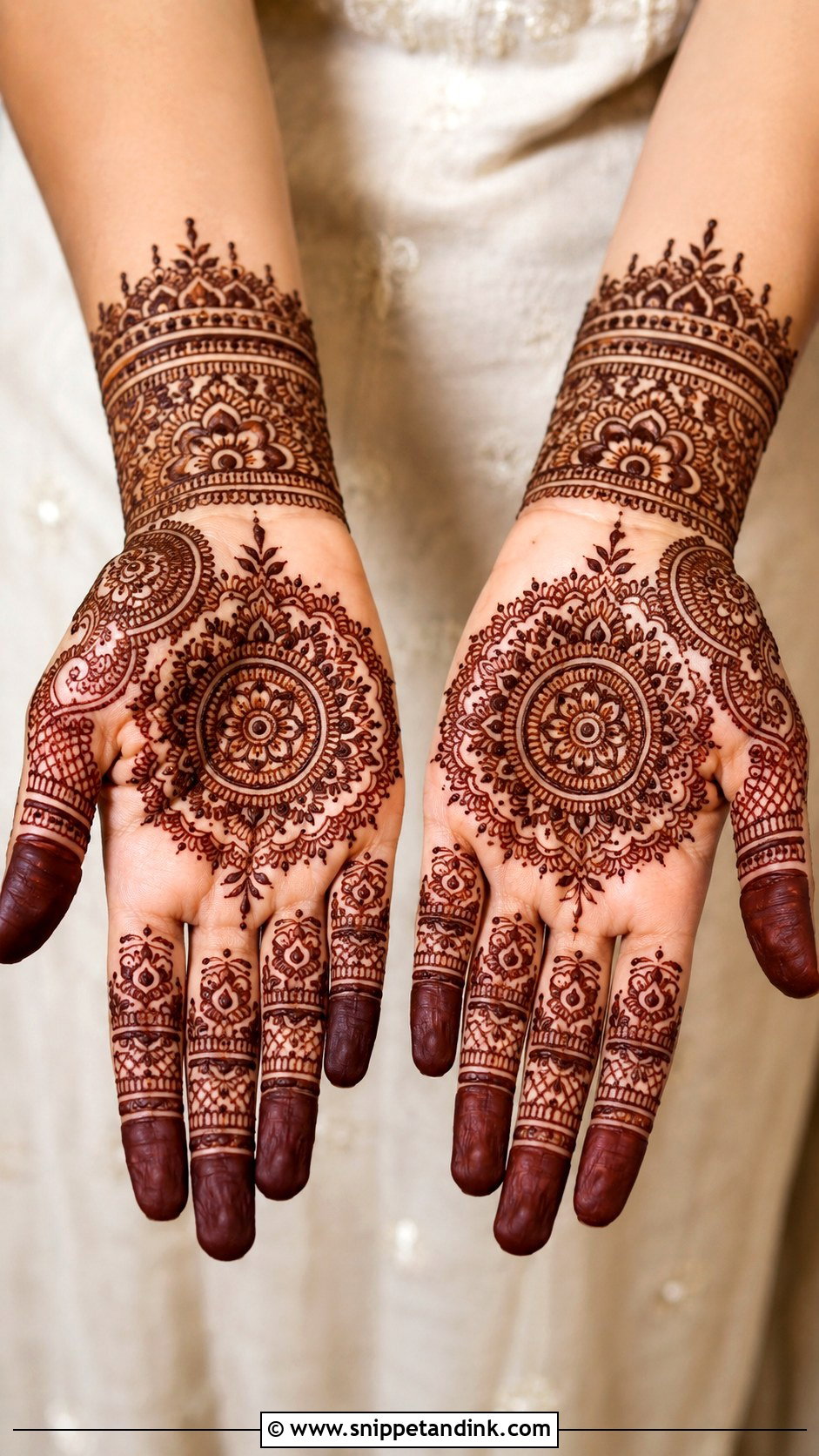
The palm is where henna stains darkest, which is part of why palm designs feel the most traditional. In 2018 they ranged from simple tikki circles to heavy bridal layouts with a central mandala, paisley corners, a floral thumb, decorated fingers and a wrist border. For festivals I keep the palm medium-filled with clean space; for bridal hands, dense fillers and matching motifs on both palms. Check the balance with the hand open. Heavy detail bunched on one side only makes sense for an Arabic diagonal.
32. Foot Mehndi Design 2018
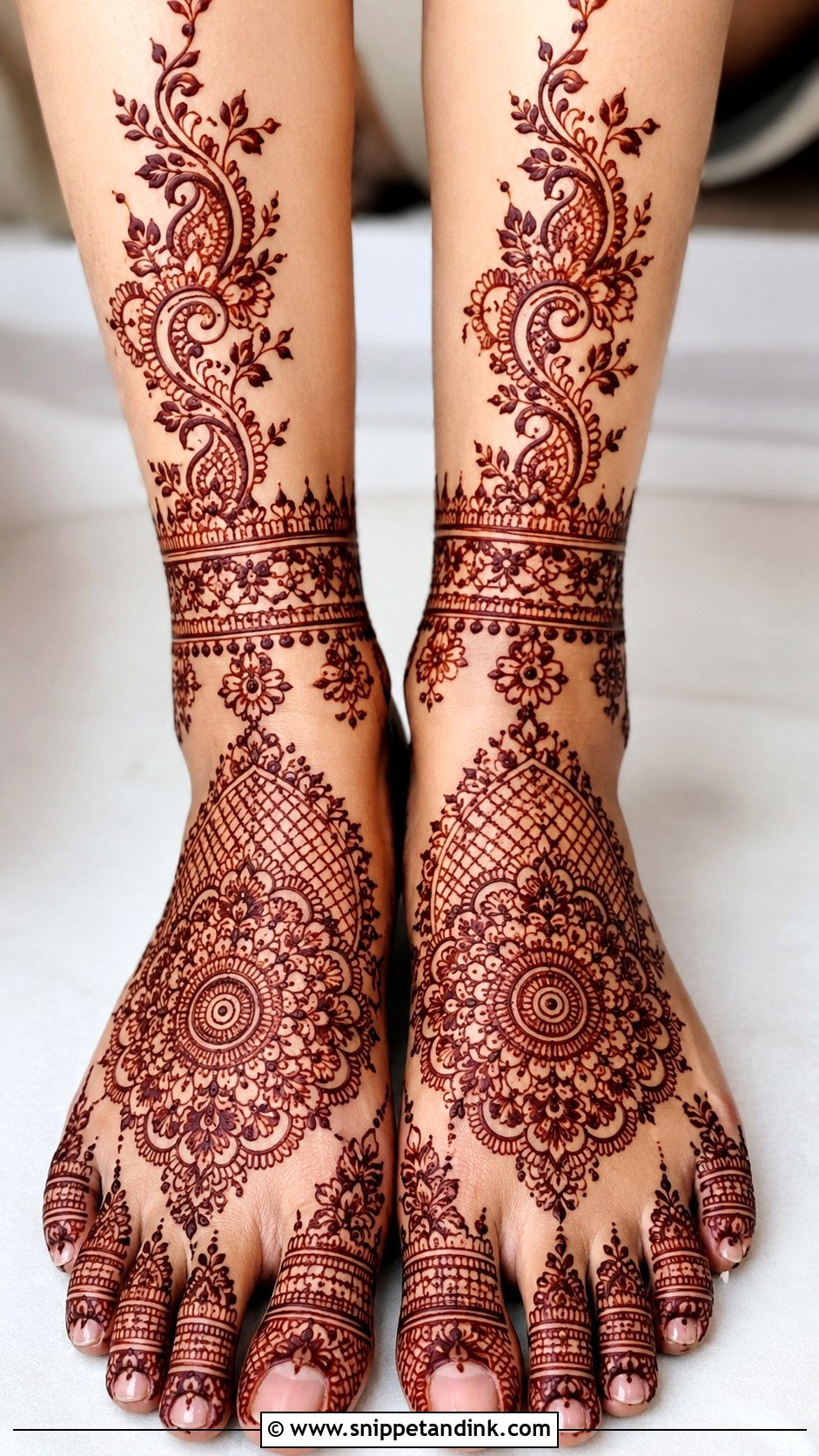
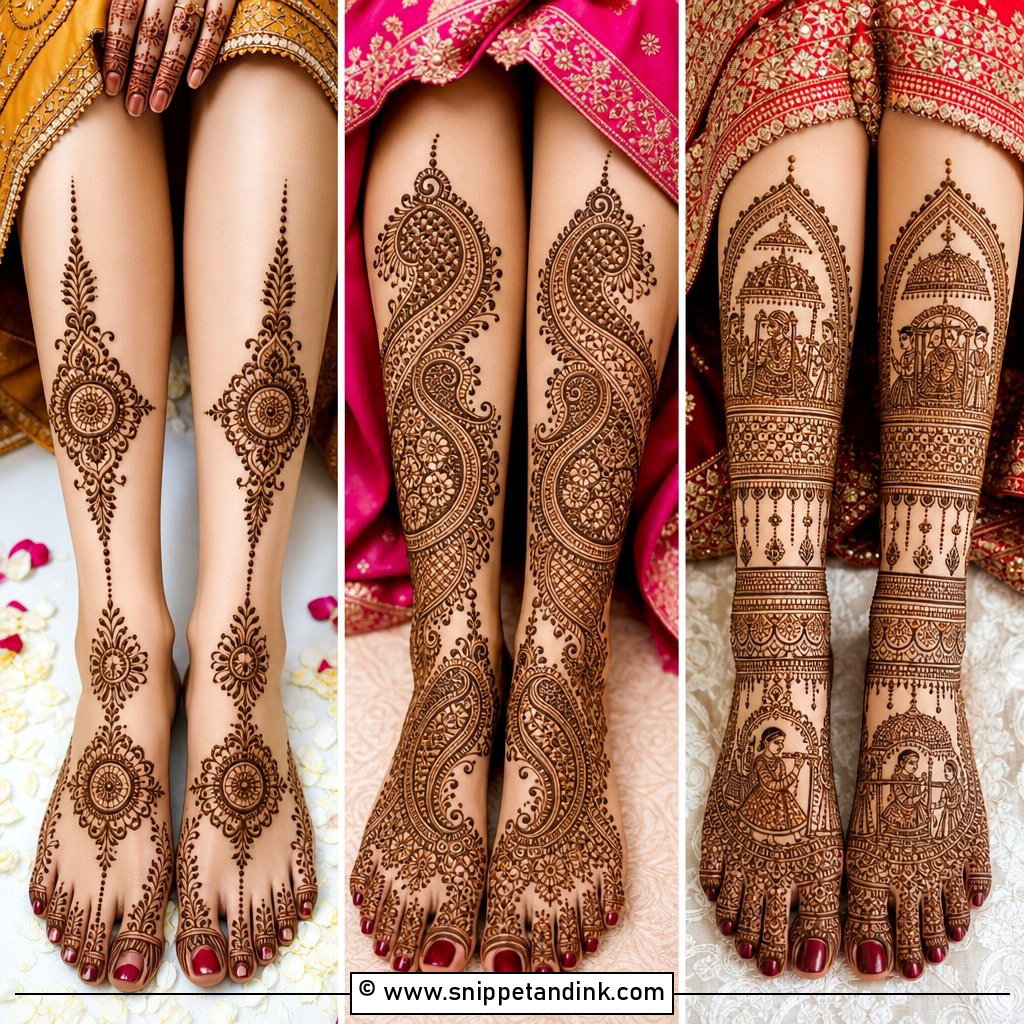
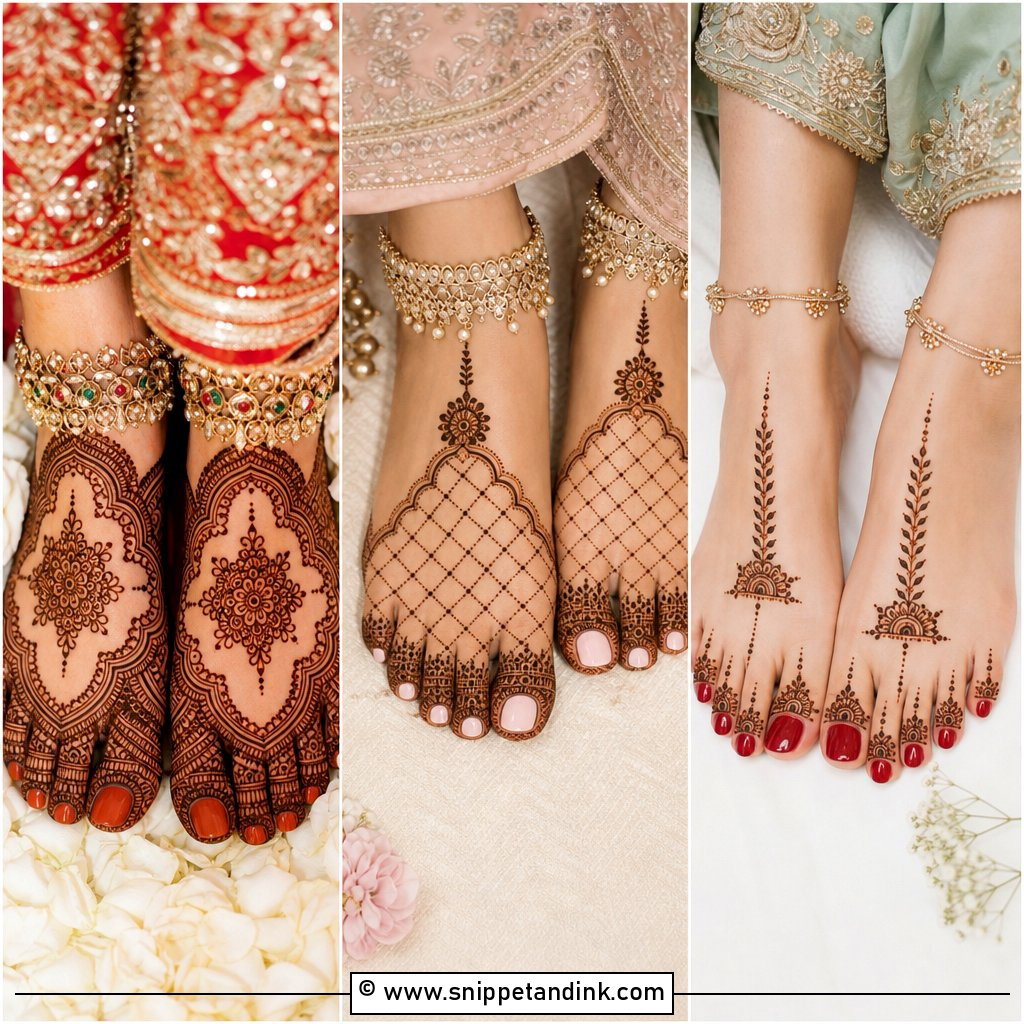
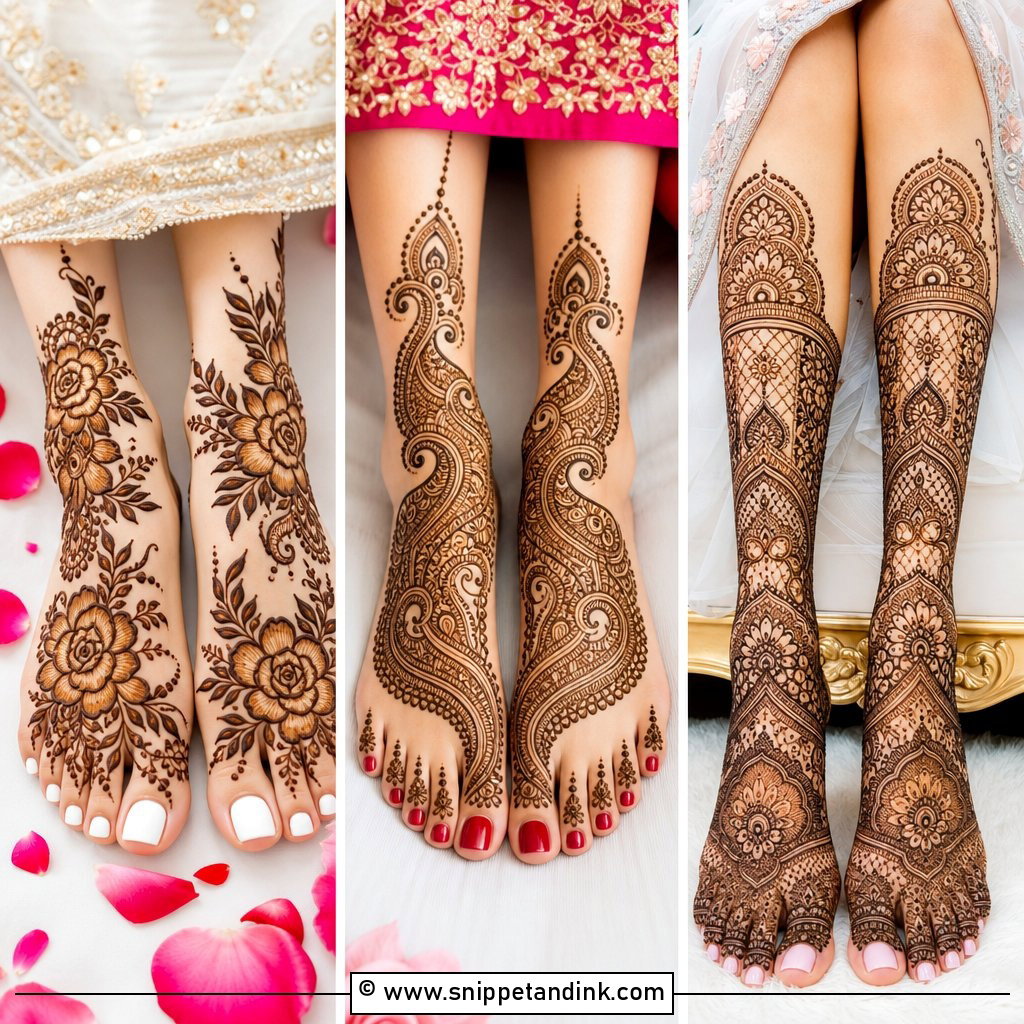
Foot mehndi design mattered in 2018 for brides and for anyone wearing sandals and anklets with a lehenga or saree. A full foot design covers the toes, the top of the foot, the ankle and sometimes the lower leg, with mandalas, floral vines, anklet-style borders, paisleys and jaali panels. Soles stain as deeply as palms, while the top of the foot stays lighter. I follow the natural curve from big toe to ankle and keep the toes uncrowded. The practical part: you can’t walk while it dries, so do feet last and line up someone to fetch things for you.
33. Kids Mehndi Design 2018
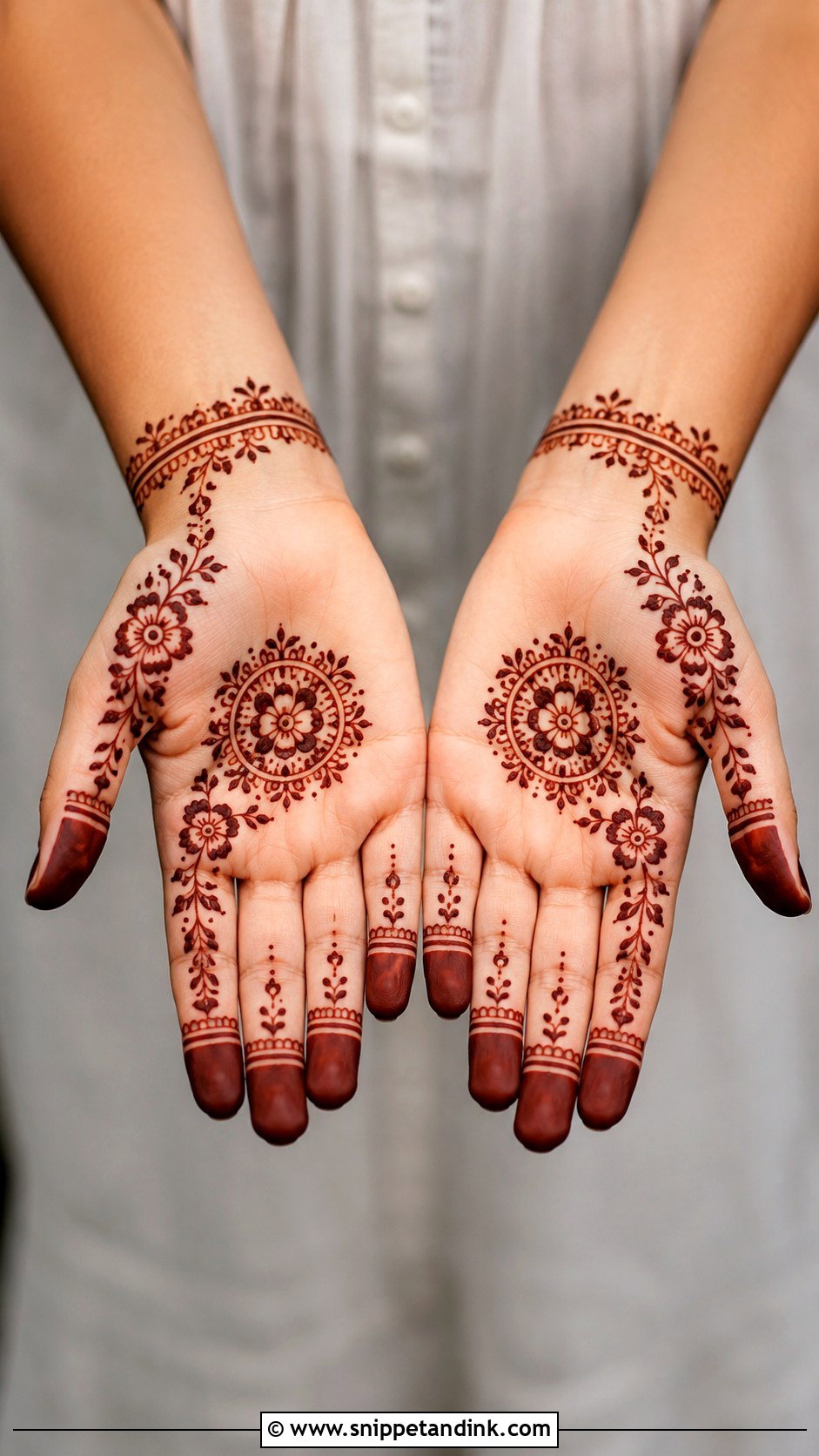
Children need small, bold designs: a flower, a butterfly shape, a tiny mandala, a heart-shaped floral curve or a leafy bracelet. Keep it to a palm motif and decorated fingertips, because a child won’t sit still for long and dense filler smudges on small hands. Rounded, thick lines survive wriggling better than fine ones. Use only natural henna on children, never the so-called black henna sold in some markets, which can contain a dye that causes serious skin reactions. A tiny cuff on both hands is plenty for a wedding or festival.
34. Easy Mehndi Design 2018
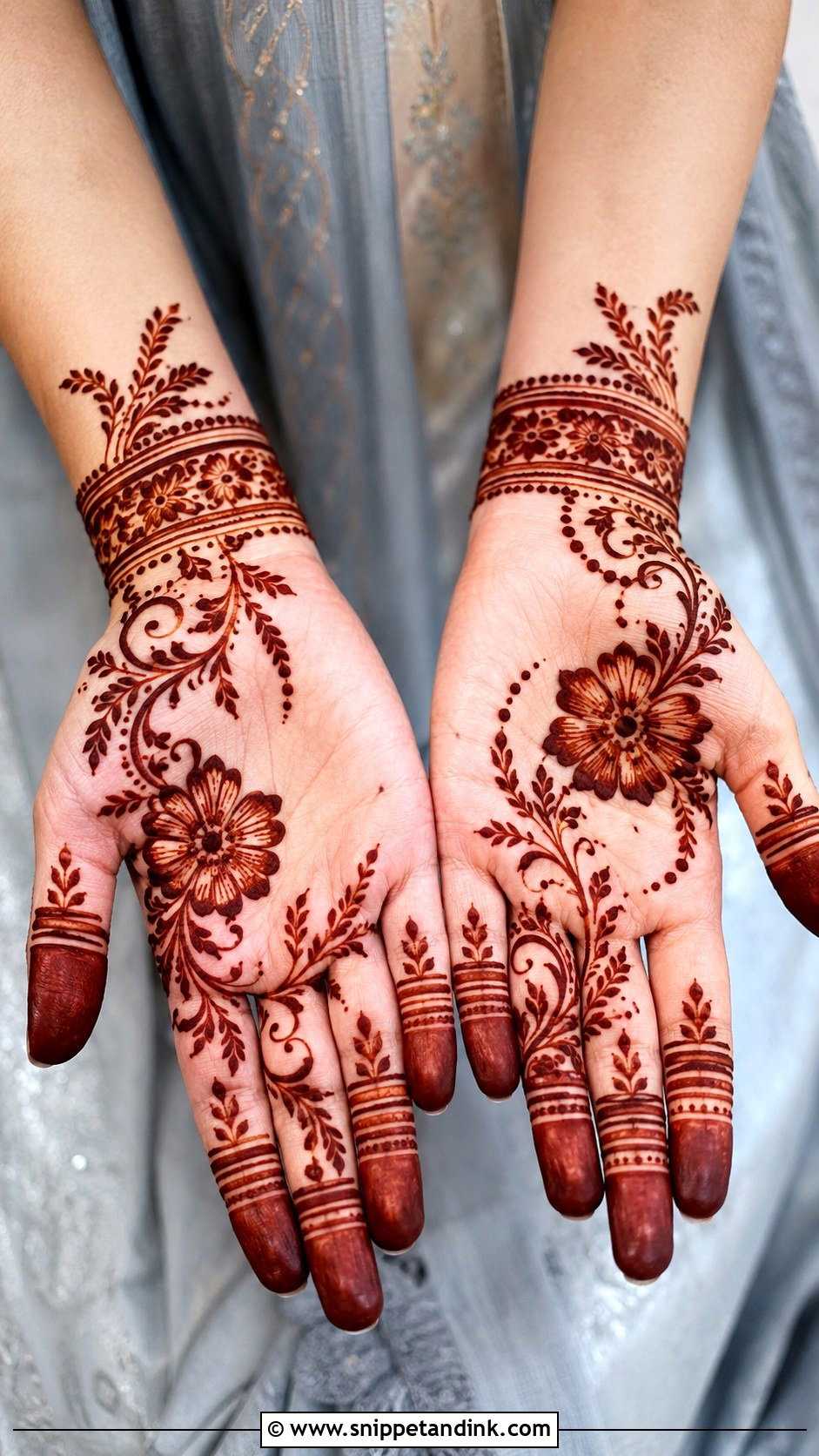
These are the designs you can realistically draw yourself: a flower on the palm, a curved vine toward the fingers, a simple wrist border, then dots, leaves and short lines to fill the gaps. They’re built for beginners and last-minute family functions. Keep the shapes large enough to draw comfortably and skip tiny mesh and portraits until your hand is steadier. If you’re new to it, practise on paper with the same cone first, because the pressure that keeps a line even takes a few tries to learn.
35. Latest Mehndi Design 2018
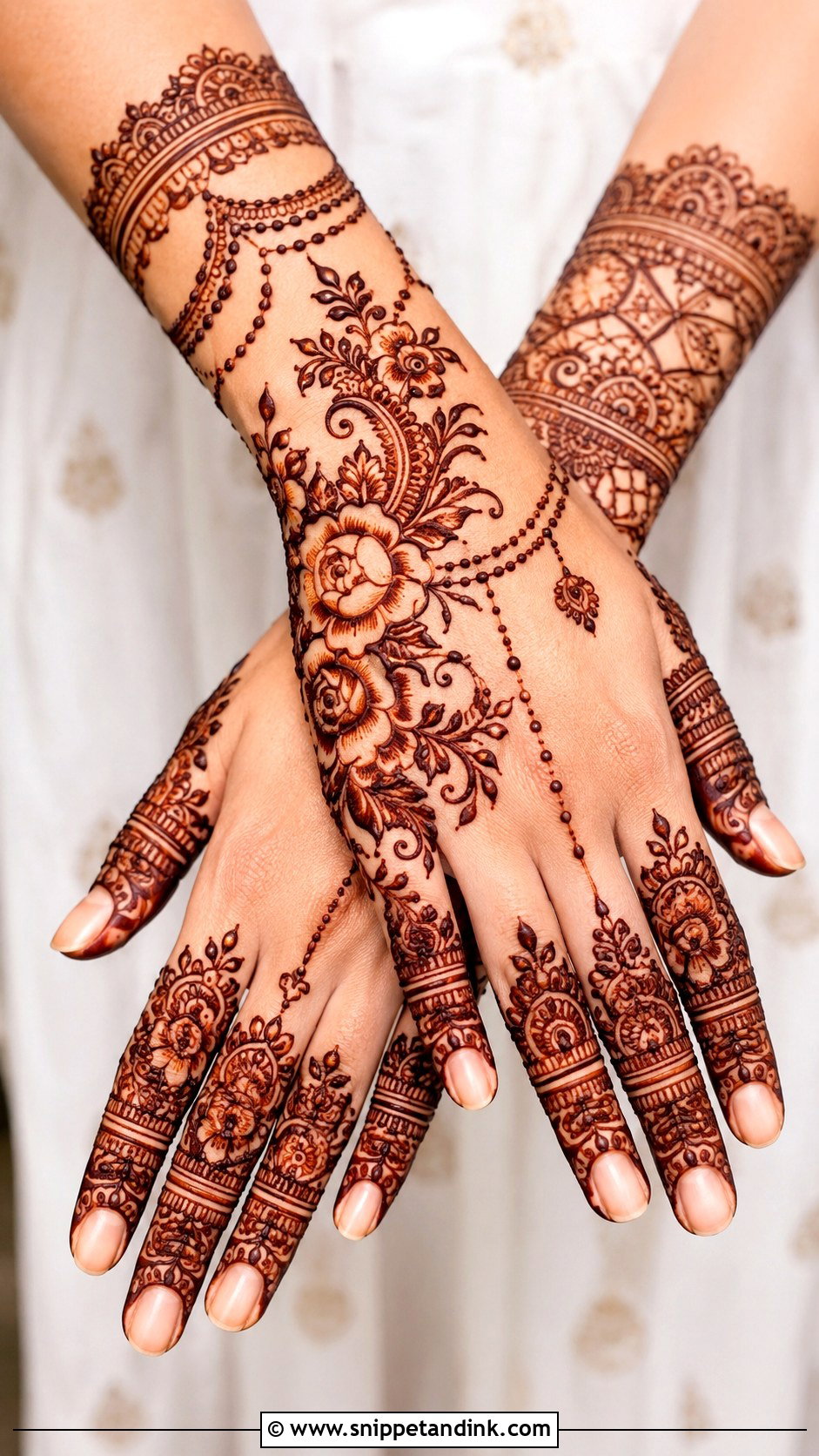
Latest mehndi design in 2018 meant mixing: Arabic florals, Indian fillers, modern spacing, jewelry chains and neat fingers on one hand. The way I keep that from turning chaotic is to pick one focal point first, a flower, mandala or paisley, and build around it with open space and fine accents. Bridal versions picked up personal elements while festive ones stayed lighter and quicker. These mixed layouts hold up today for the same reason they worked then: one clear focal point and enough bare skin around it.
Why the Same Design Stains Dark on One Hand and Pale on Another
When a stain disappoints, the design is rarely the reason. It’s what happens in the hours after the cone is put down.
- Leave the paste on as long as you can: six to eight hours at the least, overnight for a bride. Paste scraped off after an hour leaves a pale orange outline.
- Once it’s touch-dry, dab on a little lemon juice mixed with sugar. It keeps the paste stuck to the skin instead of flaking off. Dab, don’t soak, or the fine lines will bleed.
- Stay warm. Henna stains better on warm skin, so avoid sitting under air conditioning in the first hours and wrap your hands loosely if the room is cold.
- Scrape the dried paste off with a fingernail or the back of a butter knife rather than washing it off, then keep water away until the next morning if you can.
- Judge the color on day two. It is bright orange when the paste comes off and darkens toward reddish-brown or maroon over the following 24 to 48 hours.
Making it last through the wedding week
A good natural stain usually lasts one to three weeks, fading as the top layer of skin renews. Scrubs, chlorinated pools, harsh cleaners and constant hand sanitiser all speed that up, so wear gloves for washing up and use a plain balm instead of an exfoliating lotion. For brides, I book the application two days before the wedding so the color peaks on the day itself rather than the day after.
Old Patterns, Fresh Paste
Looking back at that year, the traditional pieces still hold up beside the lighter ones. Indian bridal, tikki, peacock, paisley and full-hand work sit comfortably next to minimal, jewelry, wrist and Arabic back-hand patterns. Which one you wear comes down to the occasion and how long you can sit. A wedding earns fuller detail. For Eid, Diwali or a family dinner, an Arabic, floral, mandala or Indo-Arabic layout will be dry before the food is served, and the simple designs are there for a short window. Whatever you pick, clean spacing and good natural paste matter far more than the year a design first appeared.
You'll Like These Ideas:






Leave a Reply