
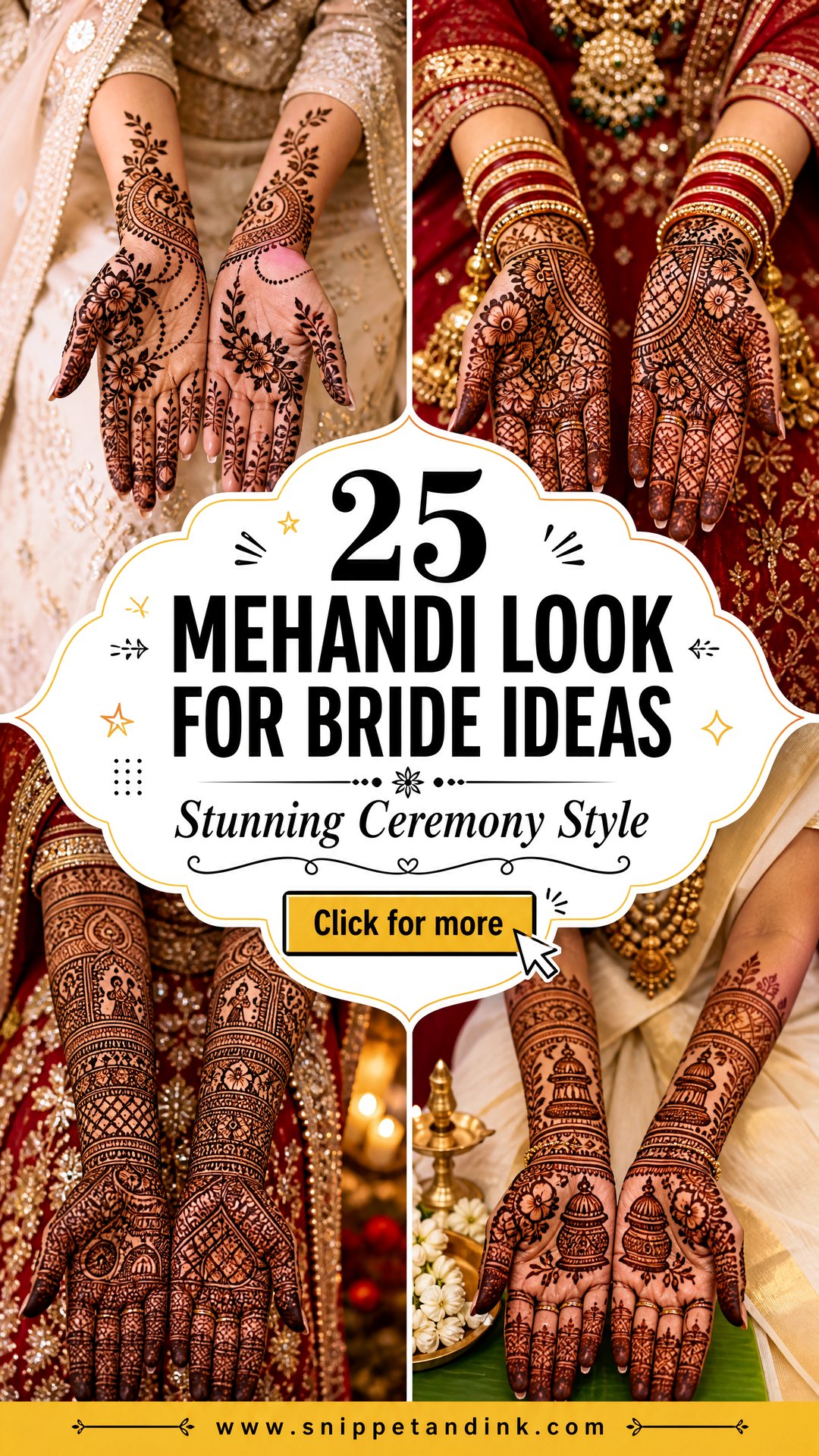
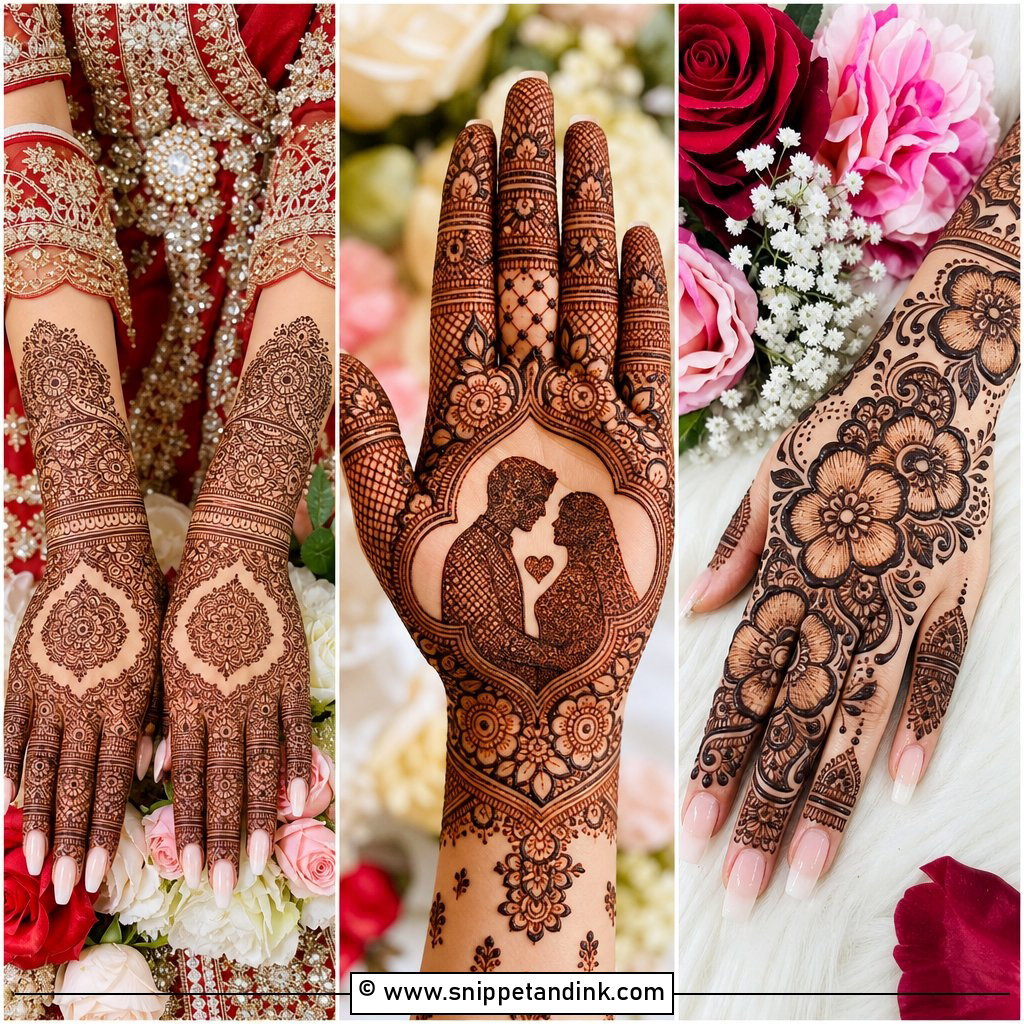
Bridal henna is seen from two distances: up close in ring shots, and from across the room in group photos. A design that reads well at both is the real skill. Some brides want dense Indian dulhan mehndi with peacocks, lotus motifs and hidden initials. Others lean toward Arabic floral trails, mandalas, bracelet patterns or finger-focused minimal work. When a bride sits down for a consultation, I ask about her outfit, her jewelry, her sleeve length and how much time she can sit still, because those decide the design as much as taste does. Here are 25 bridal looks I apply regularly, classic, regional and modern, with notes on what each one asks of you.
Timing the Application So the Stain Peaks on the Wedding Day
Natural henna doesn’t show its final color when the paste comes off. It starts bright orange and darkens to reddish brown over the next 24 to 48 hours. That’s why I schedule bridal application one or two days before the wedding, not the morning of.
- Book your artist months ahead in wedding season, and ask how long your chosen coverage takes for both hands and feet.
- Exfoliate gently and skip lotions, oils and waxing on the day of application. Henna needs clean, dry skin to bind.
- Eat, use the bathroom and set up your phone before the artist starts. Once the paste is on, you can’t do any of it.
- Sit somewhere warm. Body heat helps the dye release, while a cold room or a fan blowing on your hands can weaken the stain.
- Leave the paste on as long as you can, ideally overnight, wrapped loosely if you need to sleep.
Dense designs need more time on the skin, not less. Rushing paste removal is the most common reason a heavy bridal design turns out pale.
1. Full Hand Bridal Mehndi
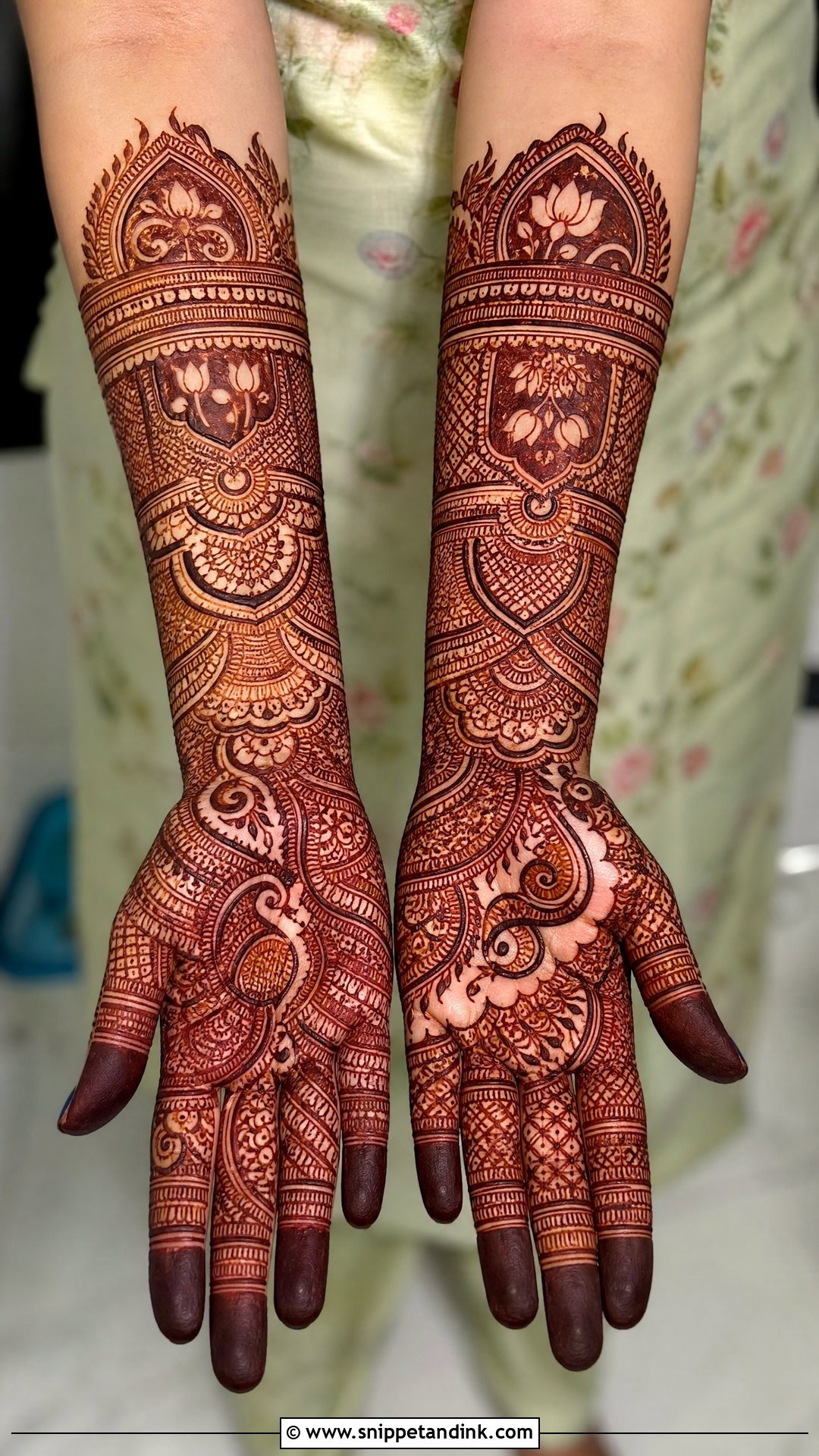
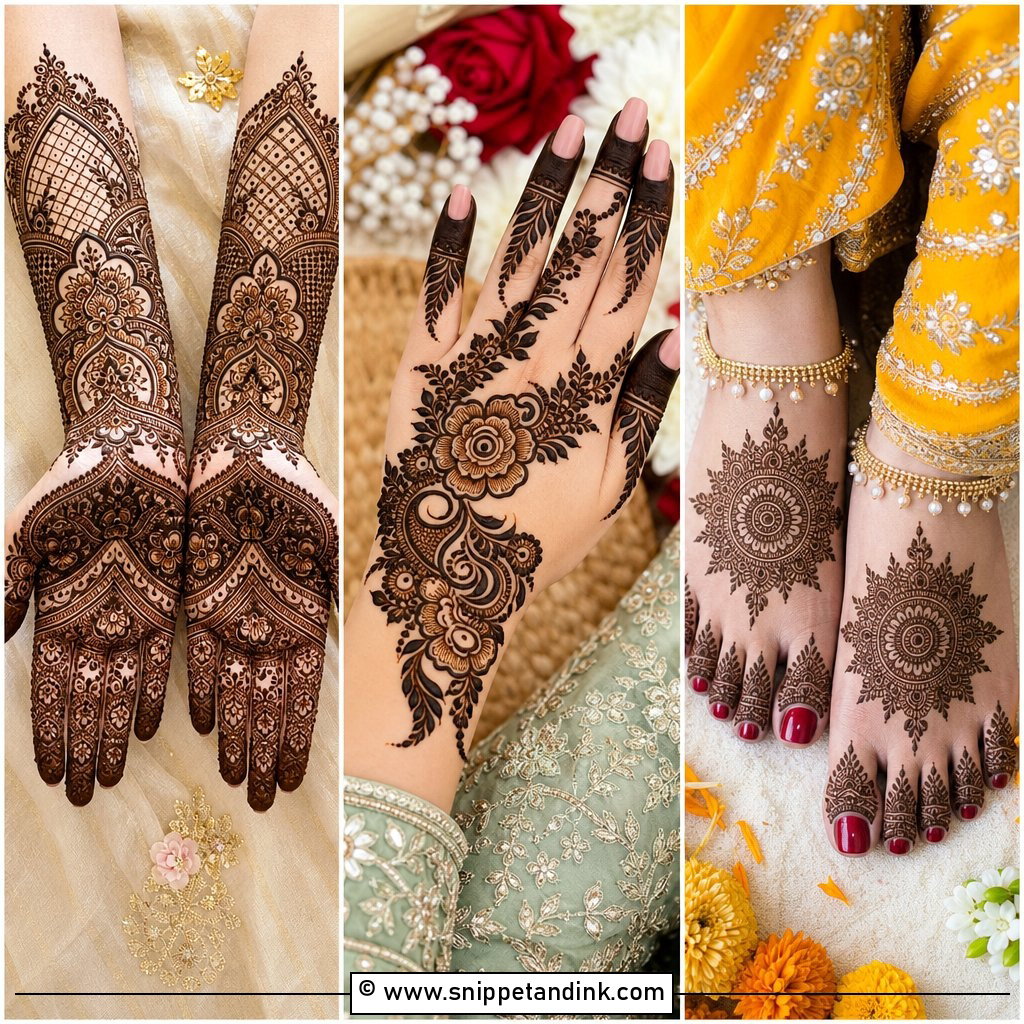
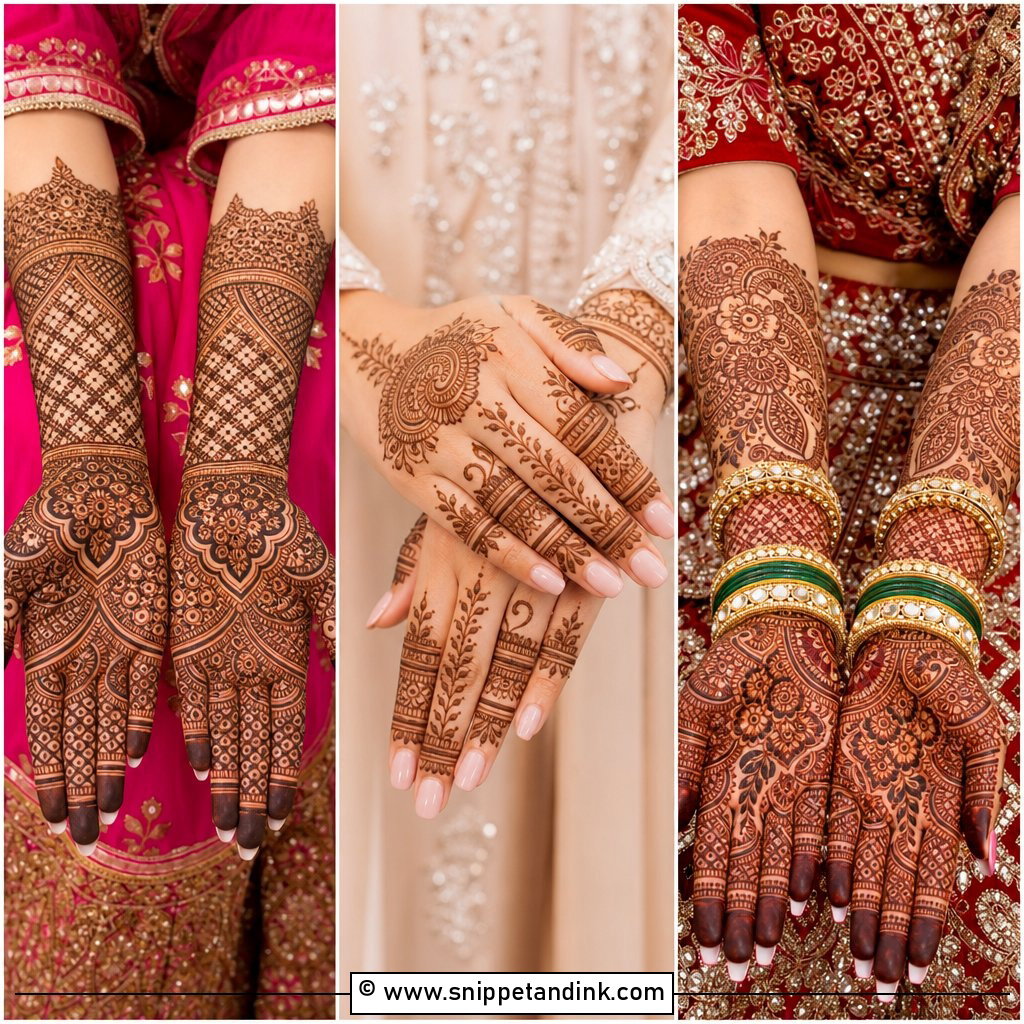
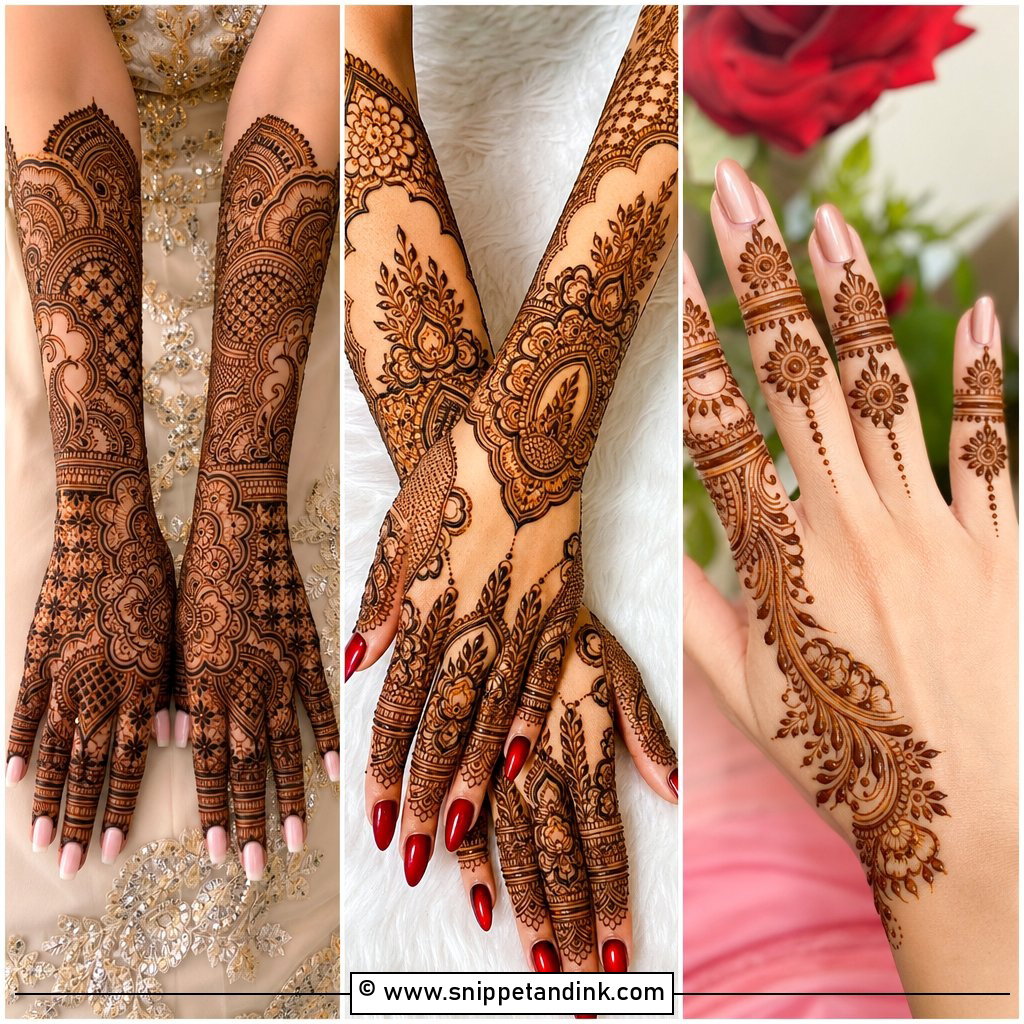
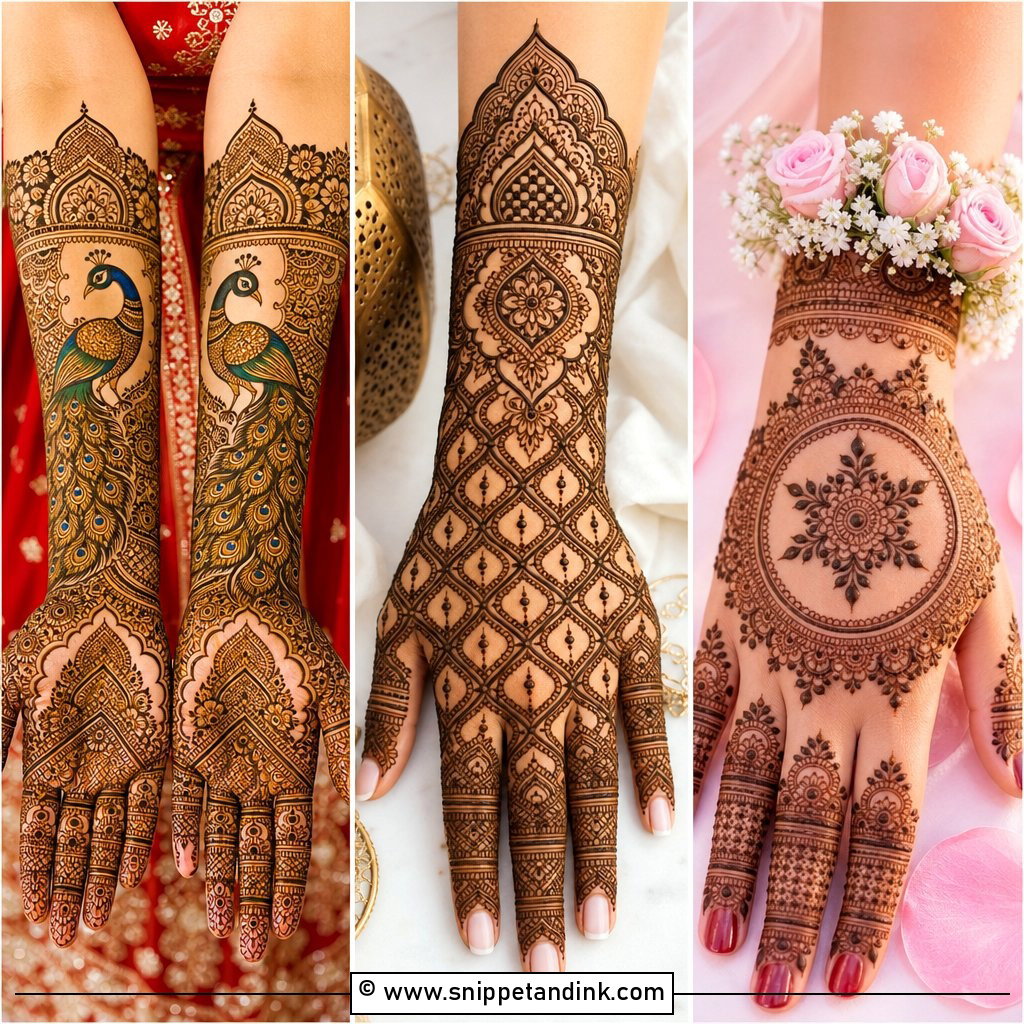
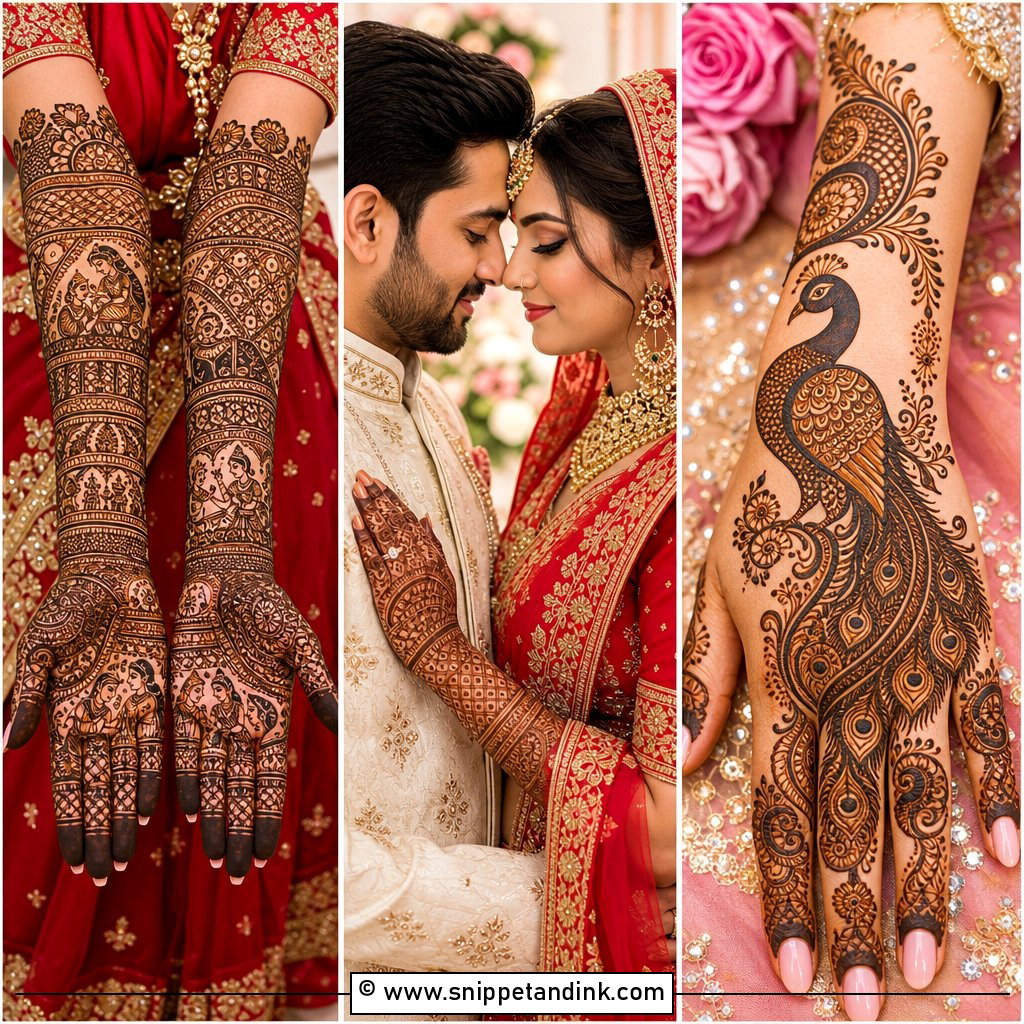
Full-hand coverage is the traditional dulhan finish: fingertips, palms, wrists and forearms all worked in dense pattern. Paisleys, florals, jaali mesh, lotus, peacocks and layered borders usually share the space. The secret is in the layout. I put symbolic motifs on the palm and use the forearm for larger decorative panels, so the eye has places to rest. It stays visible even under heavy bangles and longer sleeves. Expect a long sitting, often several hours for both hands, so plan your day around it.
2. Indian Bridal Mehndi
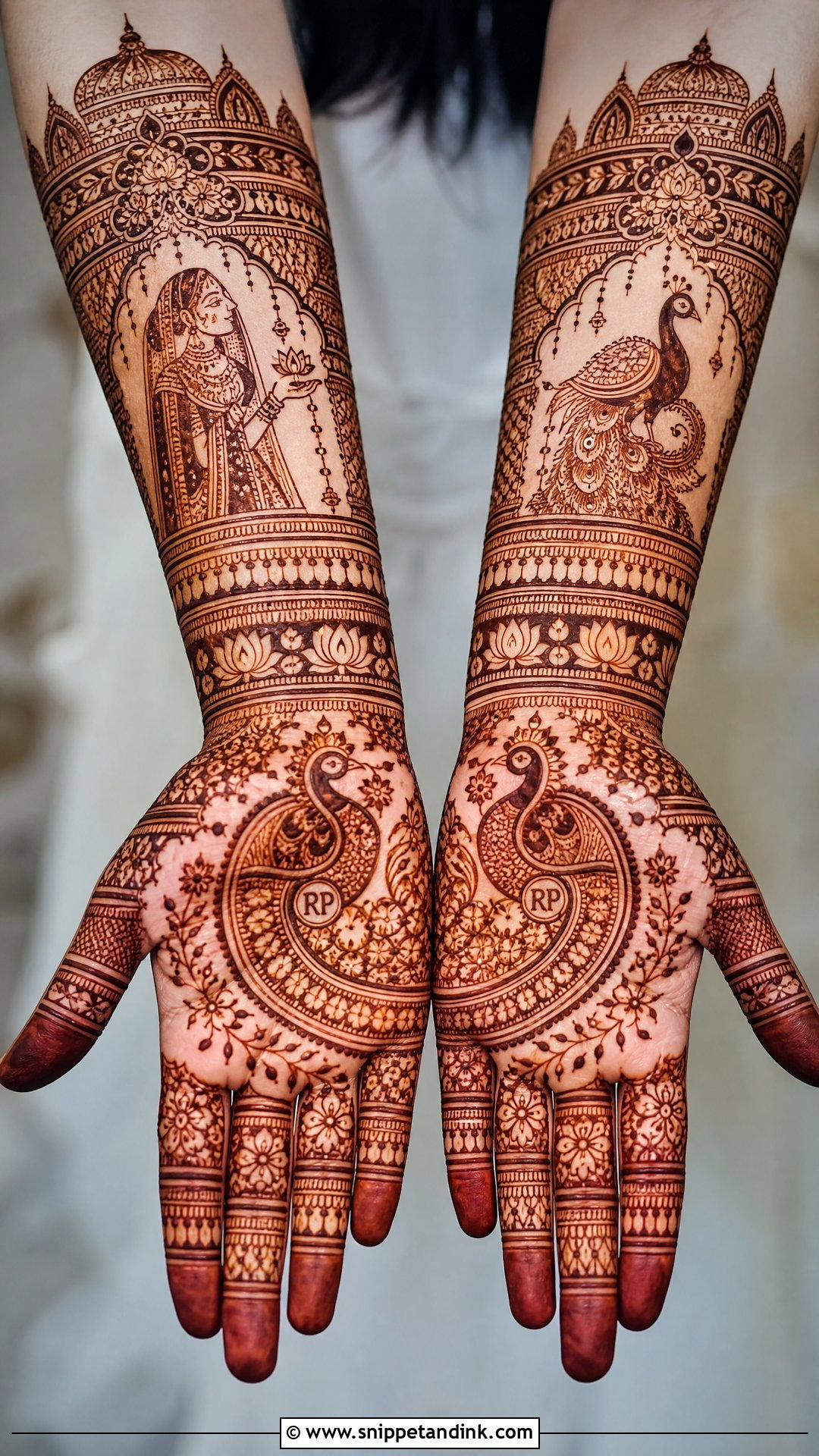
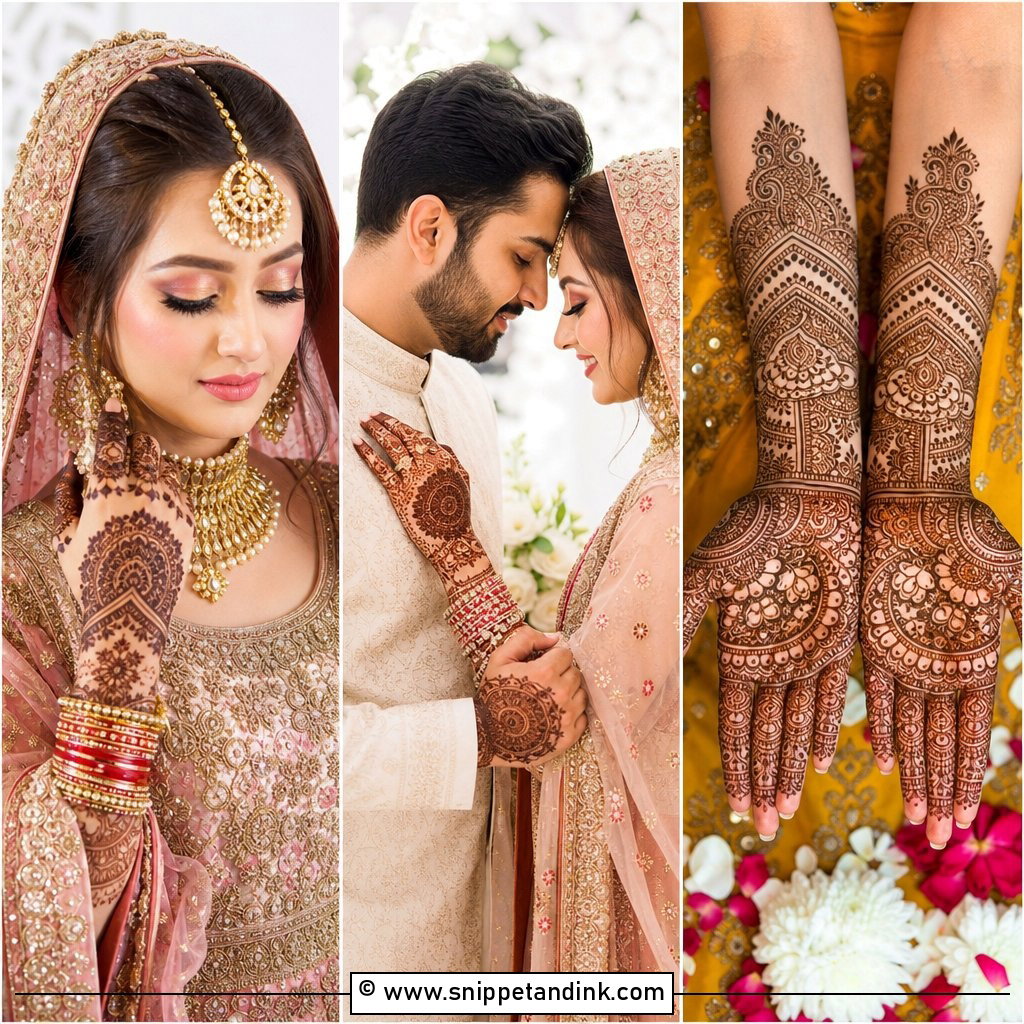
Indian bridal designs tell a story with very little empty space: filled fingertips, packed palms and symmetrical coverage from wrist to forearm. Paisleys, lotus, peacocks, bells, mandap shapes and tiny wedding symbols are the usual vocabulary, and many brides hide the groom’s initials inside. What keeps a dense design from turning into a brown smudge is the line weight. I outline main motifs in a thicker line and fill with fine work, so the structure still reads once the stain darkens. It sits naturally with lehengas, sarees and heavily embroidered suits.
3. Arabic Bridal Mehndi
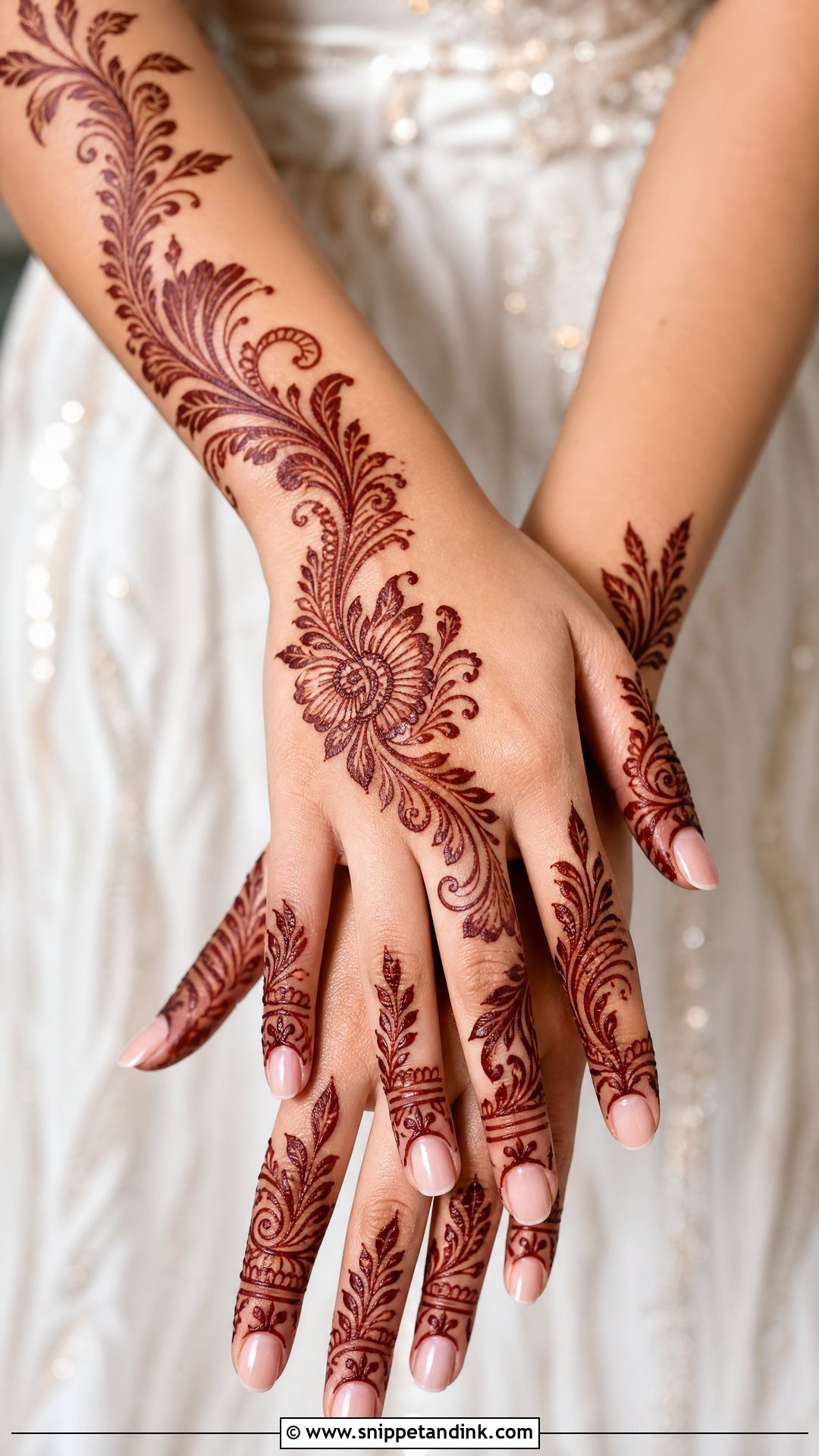
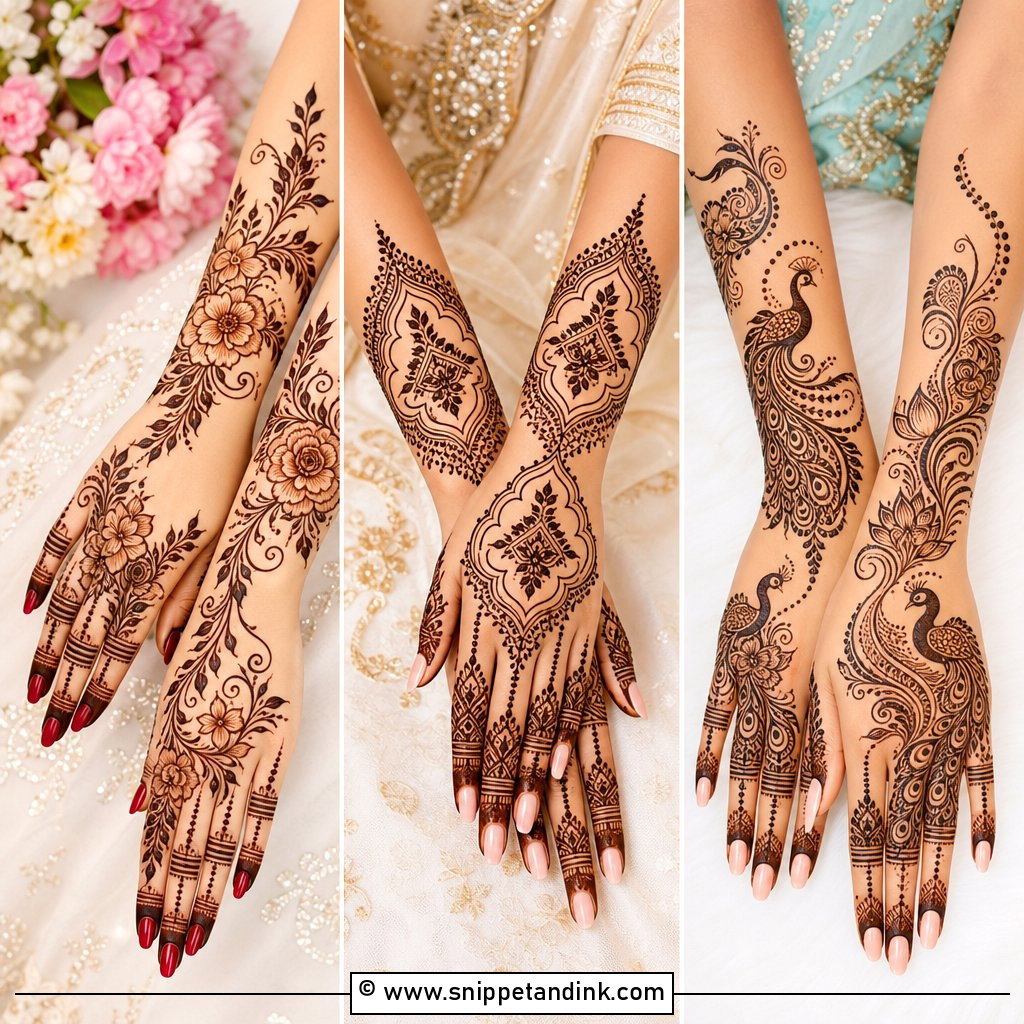
Arabic designs run in a diagonal trail from the fingers toward the wrist or forearm, with large flowers and generous skin showing between. Because the motifs are big, the design reads clearly from far away. That open space also helps the stain look sharp, since thick lines of paste darken more evenly than very fine ones. It leaves room for rings, nail color and jewelry to stand out. I’d recommend it for destination ceremonies and modern outfits, or for a bride who can’t sit for a full dulhan application.
4. Indo Arabic Bridal Mehndi
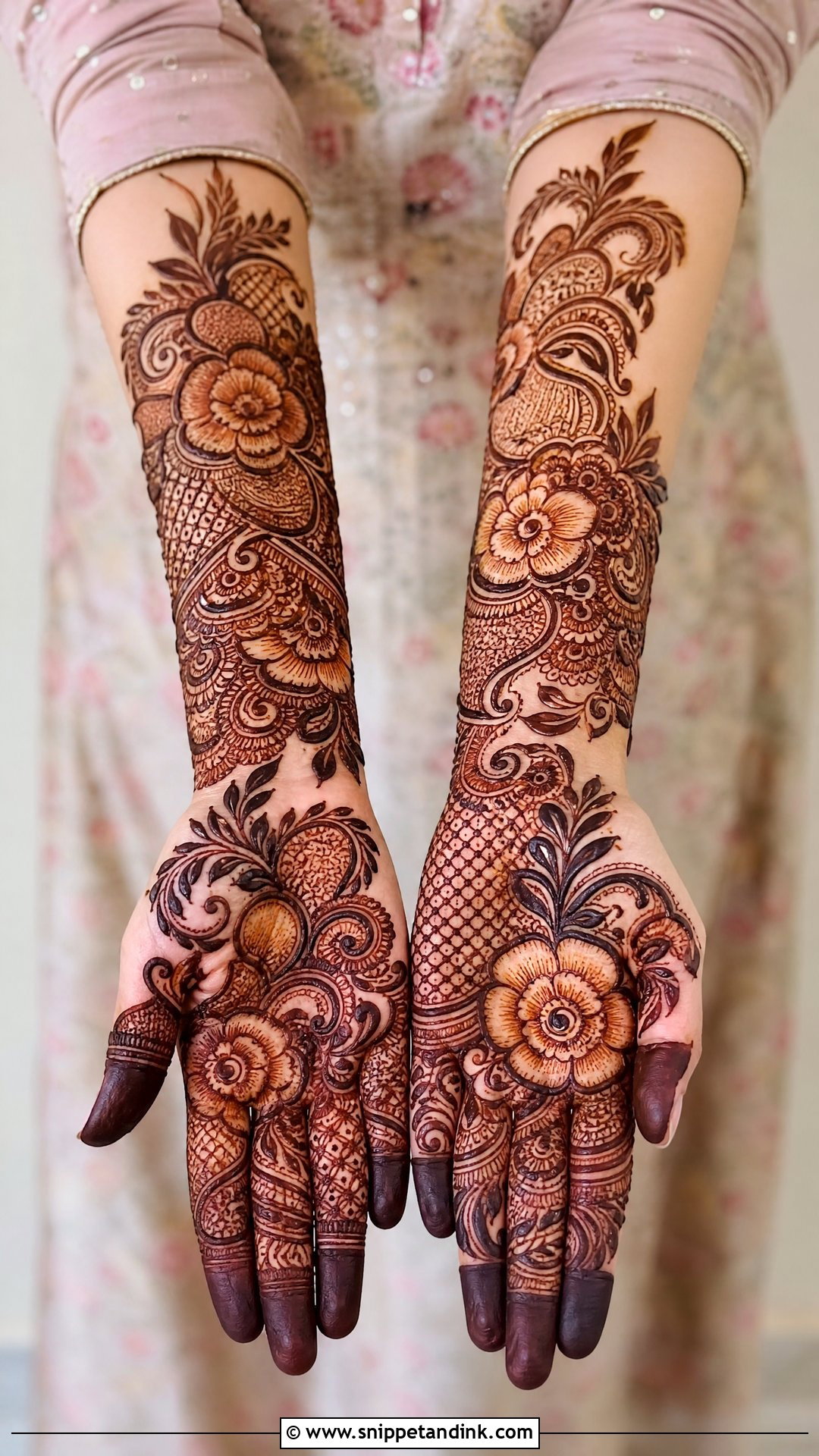
Indo Arabic bridal mehndi borrows the bold floral movement of Arabic work and adds Indian detailing inside it. A typical layout might put large flowers along the back of the hand, paisley fills on the palm, mesh near the wrist and shaded leaves around the fingers. It’s a mix I suggest often because it fills the hand without crowding it. The shading on the leaves is done by thinning the paste line, which gives depth once the stain develops. It holds up well in close-up photos.
5. Rajasthani Bridal Mehndi
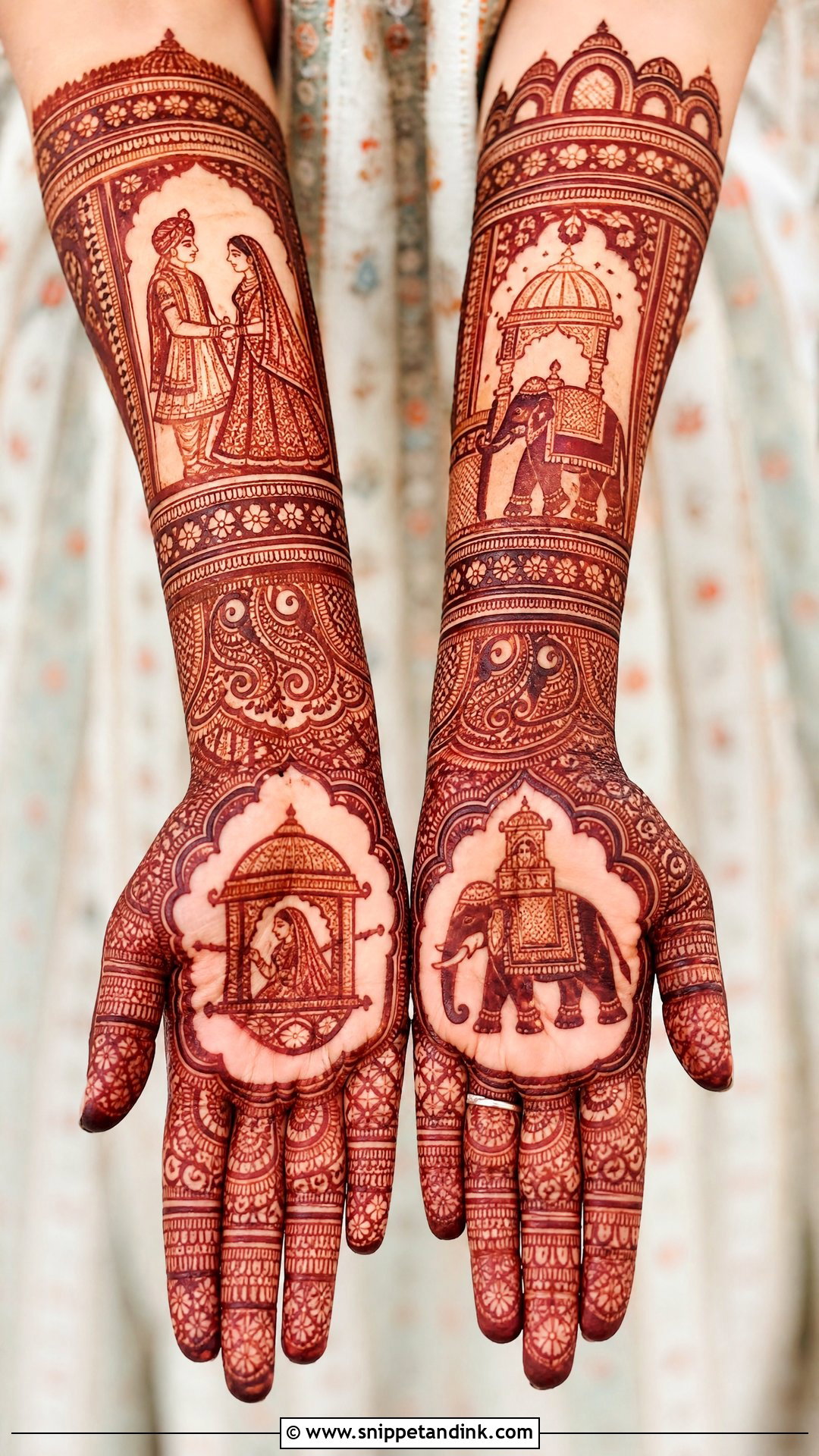
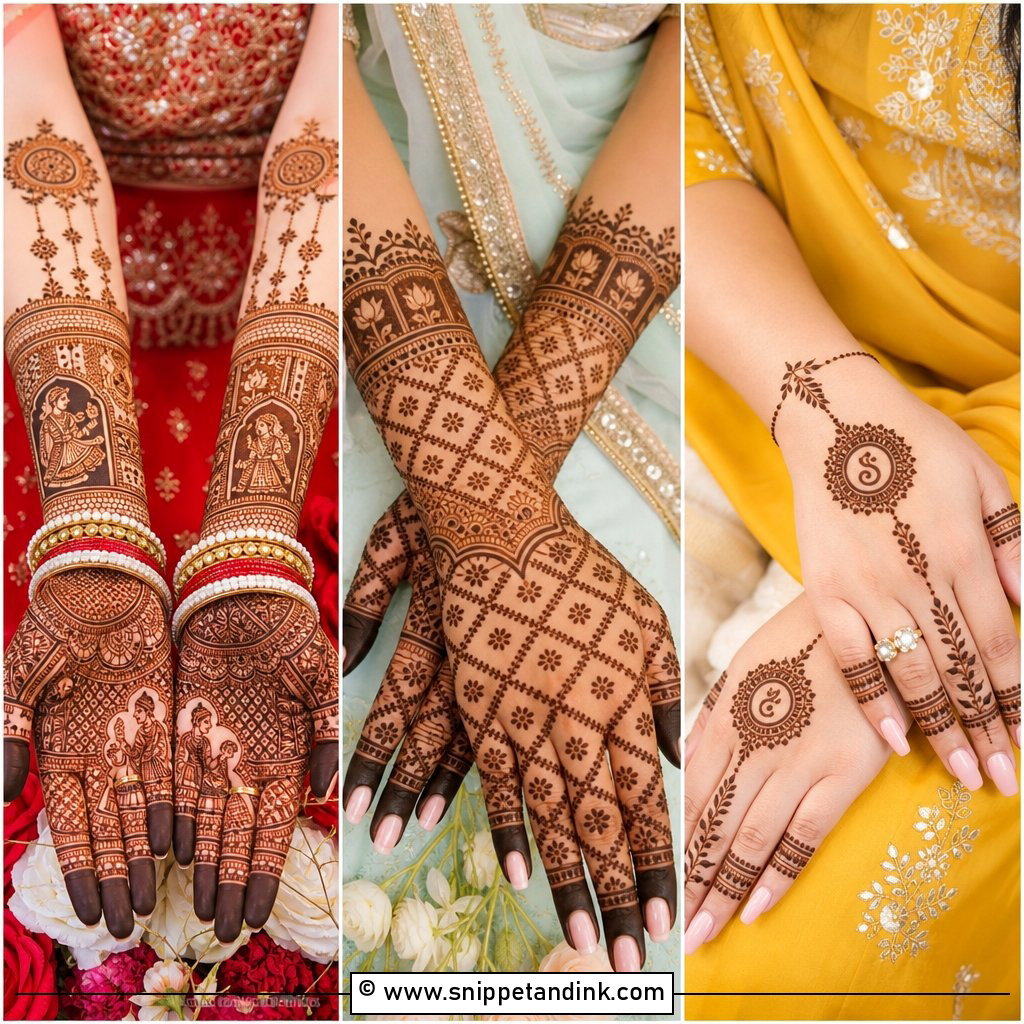
Rajasthani bridal mehndi is the most detailed work I do. Bride and groom figures, elephants, palaces, doli motifs, musicians and royal borders fill dense, symmetrical panels, so the hands read like a wedding scene. The palms usually carry the main story, with palace arches or elephants up the forearm. It takes considerably longer to apply than a floral design, and the figures need a steady, unhurried artist. Book this one early and ask to see figure work in your artist’s portfolio before you commit.
6. Portrait Bridal Mehndi
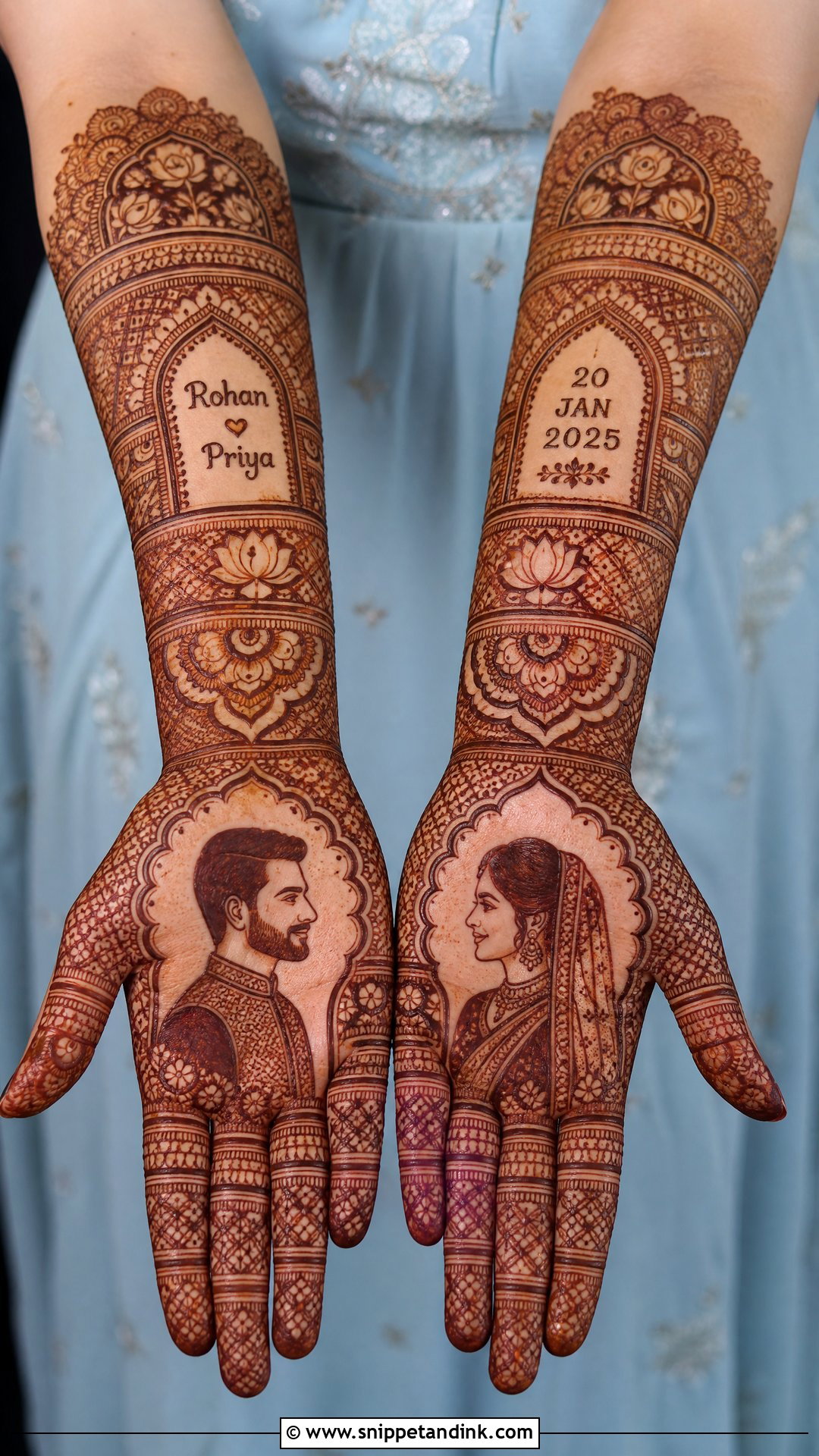
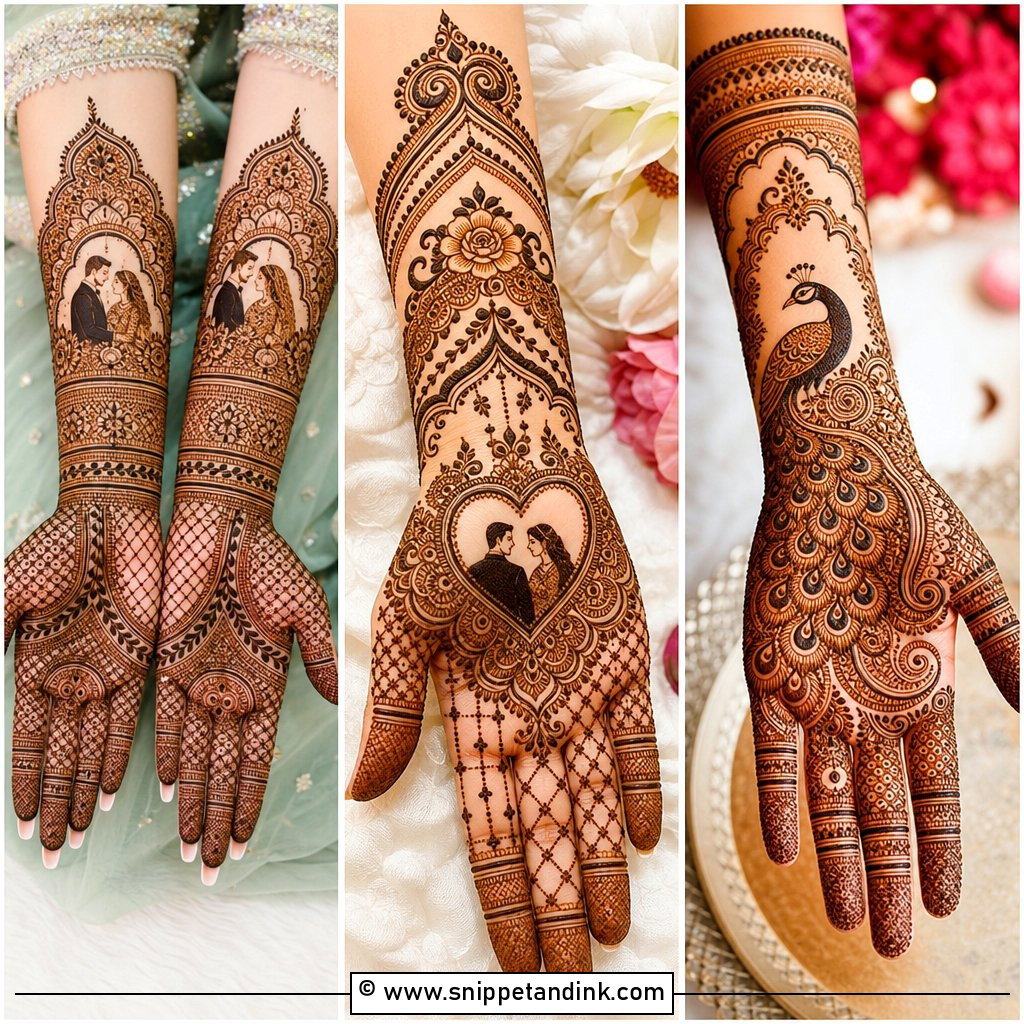
Portraits of the bride and groom sit on the palms or forearms, framed by florals, jaali and mandap motifs. Faces need space around them; when I draw a portrait, I keep the surrounding fill lighter, because henna spreads slightly as it dries and darkens, and crowded faces blur. Names, initials, dates or tiny symbols of the relationship can be added nearby. This style needs precision, so only book it with an artist who shows real portrait work. Done well, it becomes the design guests ask to see.
7. Mandala Bridal Mehndi
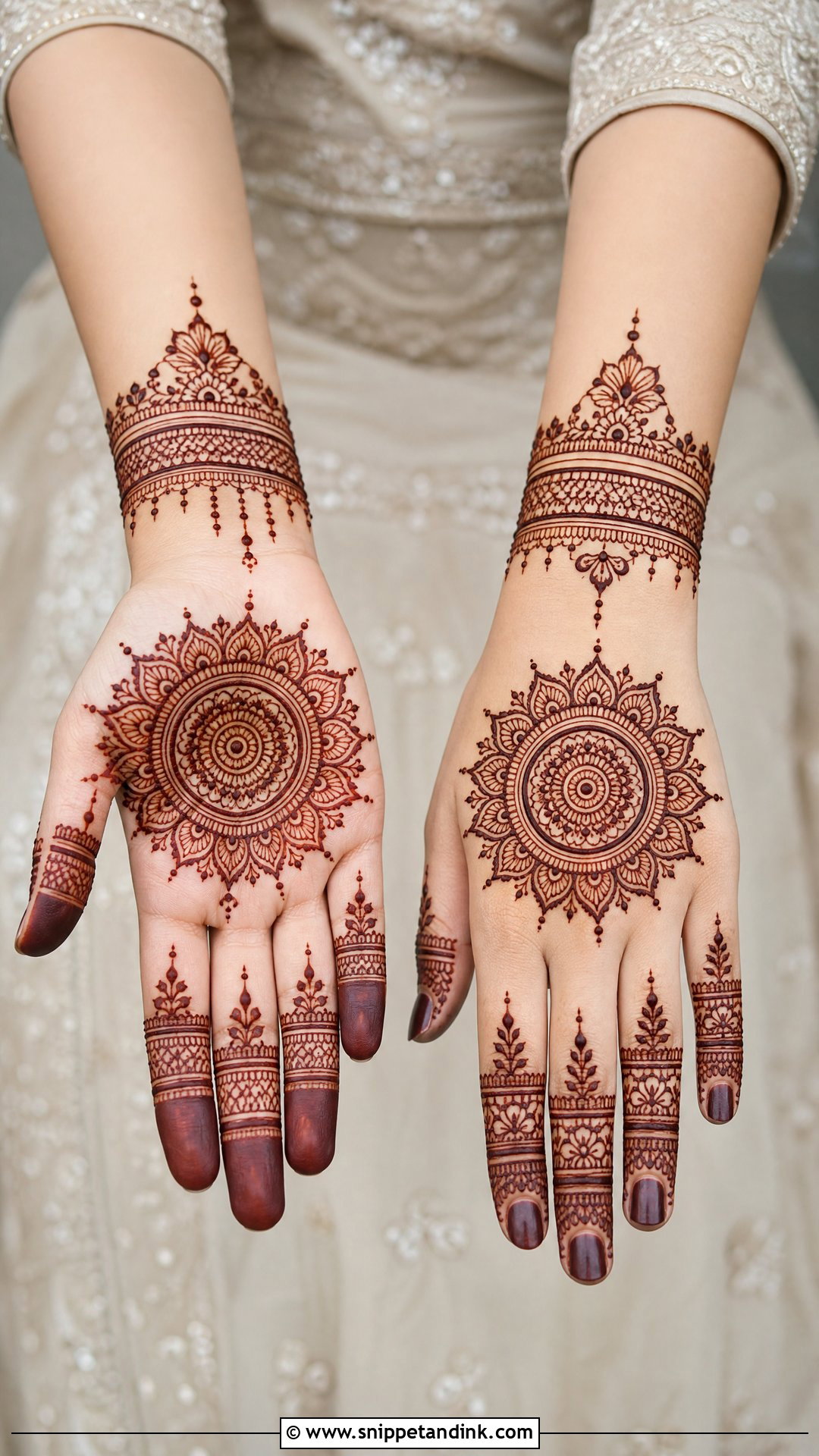
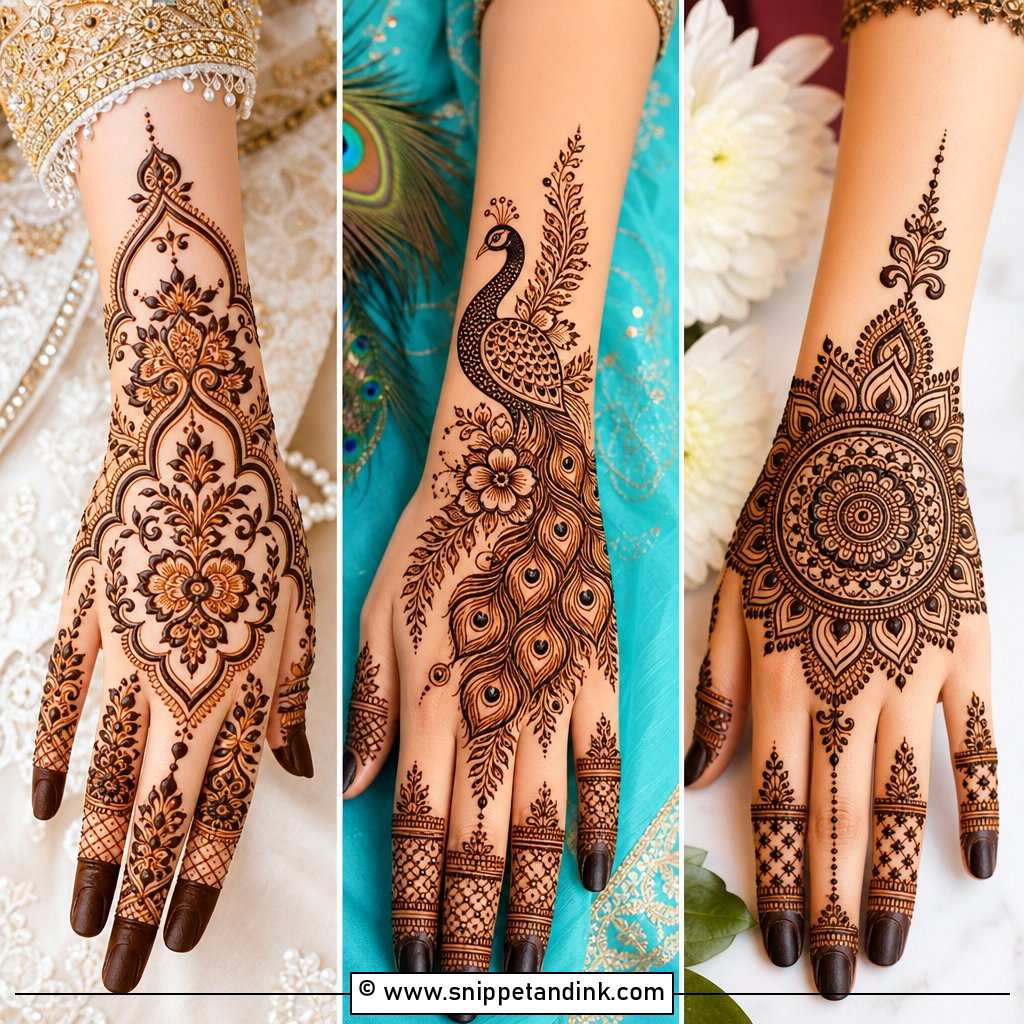
Mandala designs start from a central circle on the palm or back of the hand, with matching detail on the fingers and wrist. For a bride I expand the circle with lotus petals, fine dots, paisley edges and bracelet bands. It’s lighter than full Indian coverage but still festive. Symmetry is everything here, so I sketch guide dots before drawing the rings. It suits engagements, intimate weddings and brides who don’t want forearm coverage. Hands with long palms take a mandala especially well.
8. Back Hand Bridal Mehndi
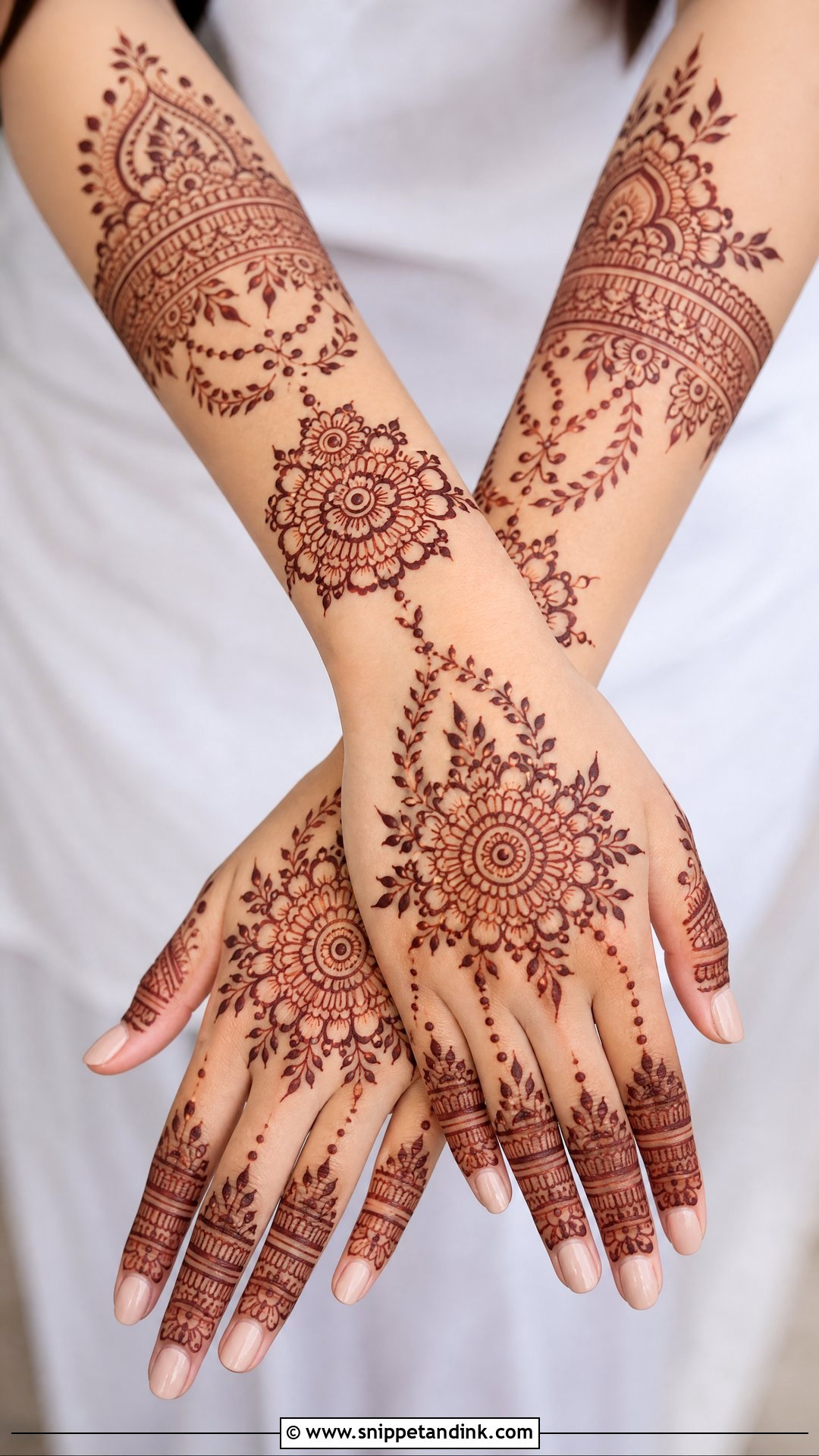
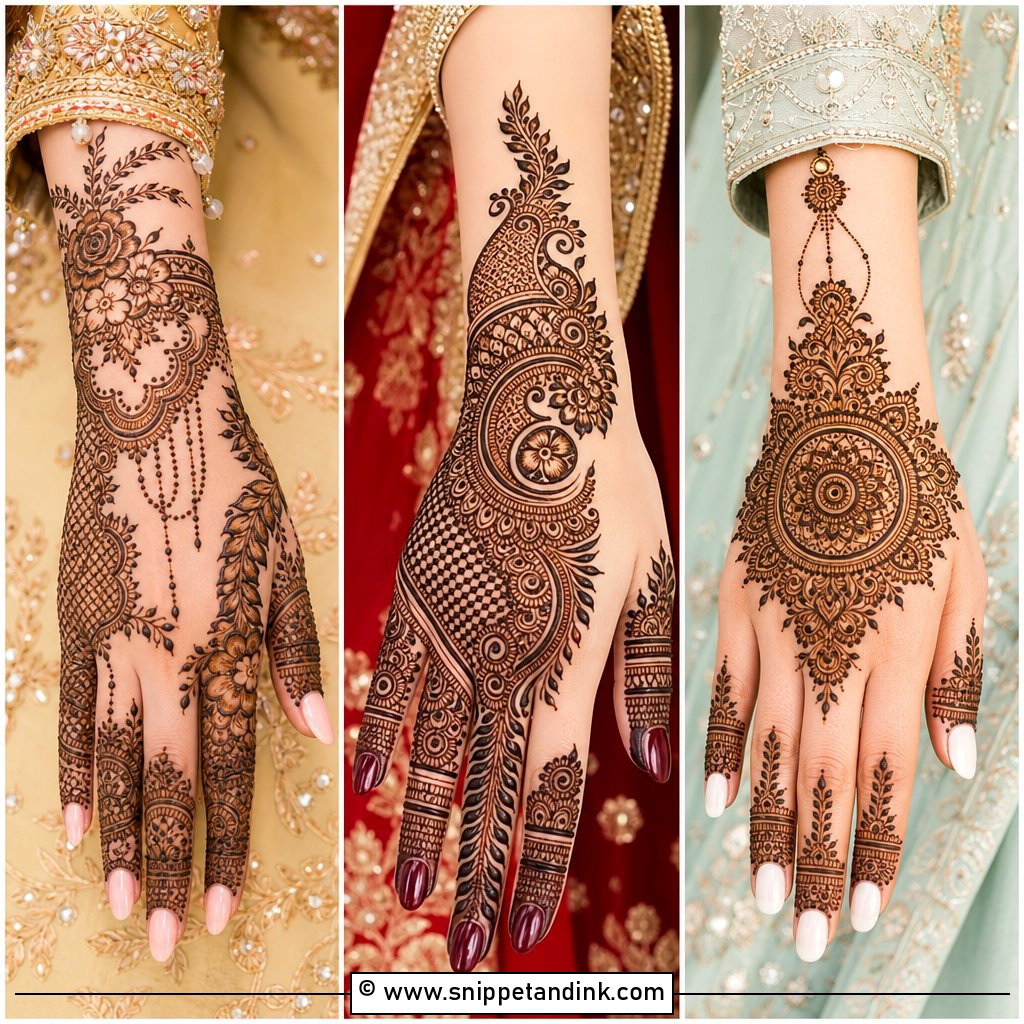
The back of the hand shows up in more photos than the palm: ring shots, bouquet poses and jewelry close-ups all feature it. A full back-hand design covers the fingers, the back of the hand, the wrist and sometimes the forearm, using mandalas, floral trails, haath phool layouts, vines or bracelet bands. I plan it as one connected composition that frames each finger and flows into the wrist, never as separate pieces dotted around. Stacked bangles, statement rings and soft nail colors sit well with it.
9. Front Hand Bridal Mehndi
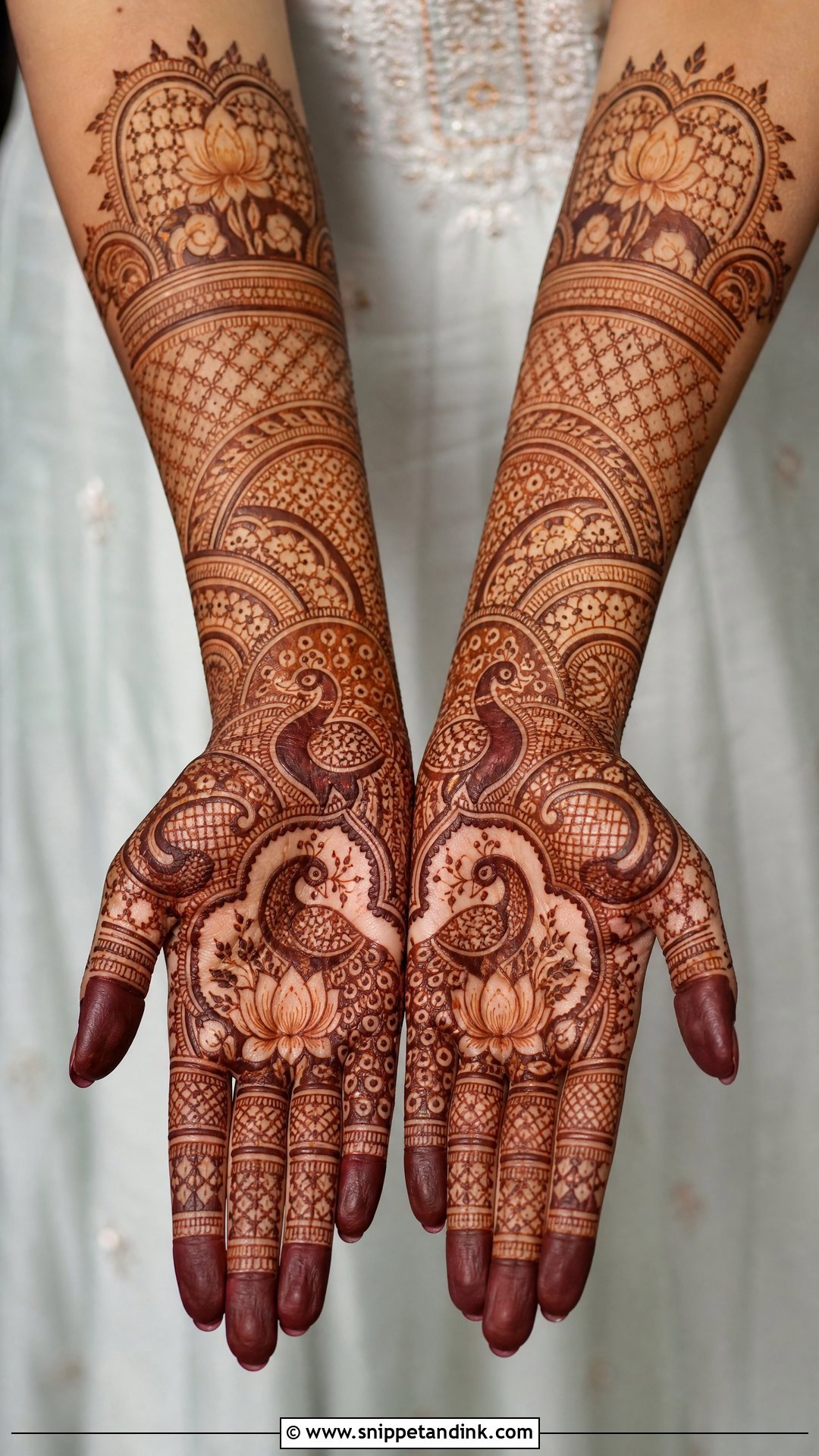
The palm side is where most rituals are photographed, so many brides put their most meaningful work here. It can be dense, minimal or story-based. A classic front-hand design has filled fingertips, a central motif, detailed palms and extension up the wrist toward the forearm. Florals, paisleys, peacocks, jaali and lotus are the usual choices. For a more modern feel, I leave a little open skin around the center so the main motif stands clear. Palms also take the deepest stain on the body, which is why this side photographs so rich.
10. Minimal Bridal Mehndi
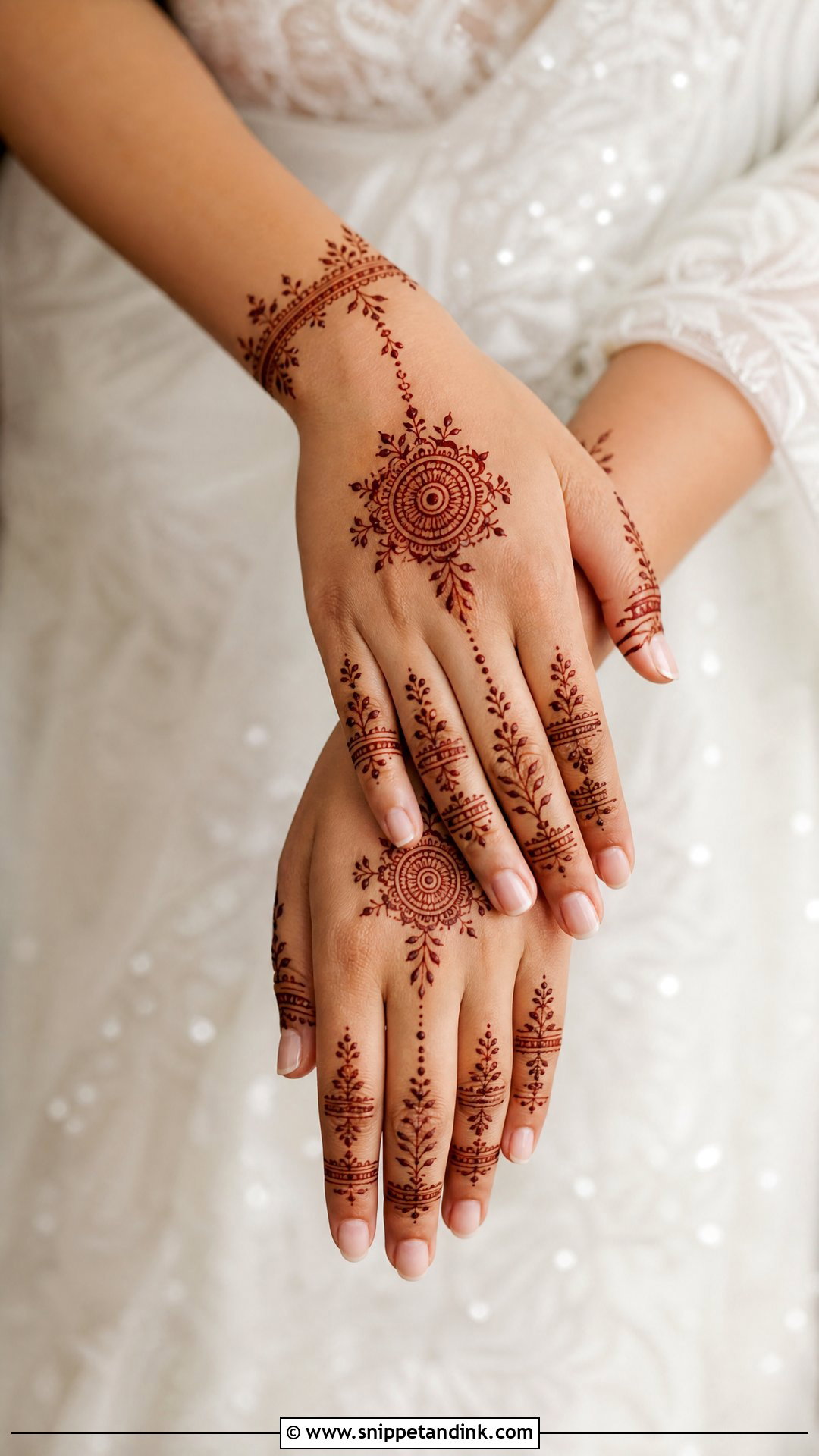
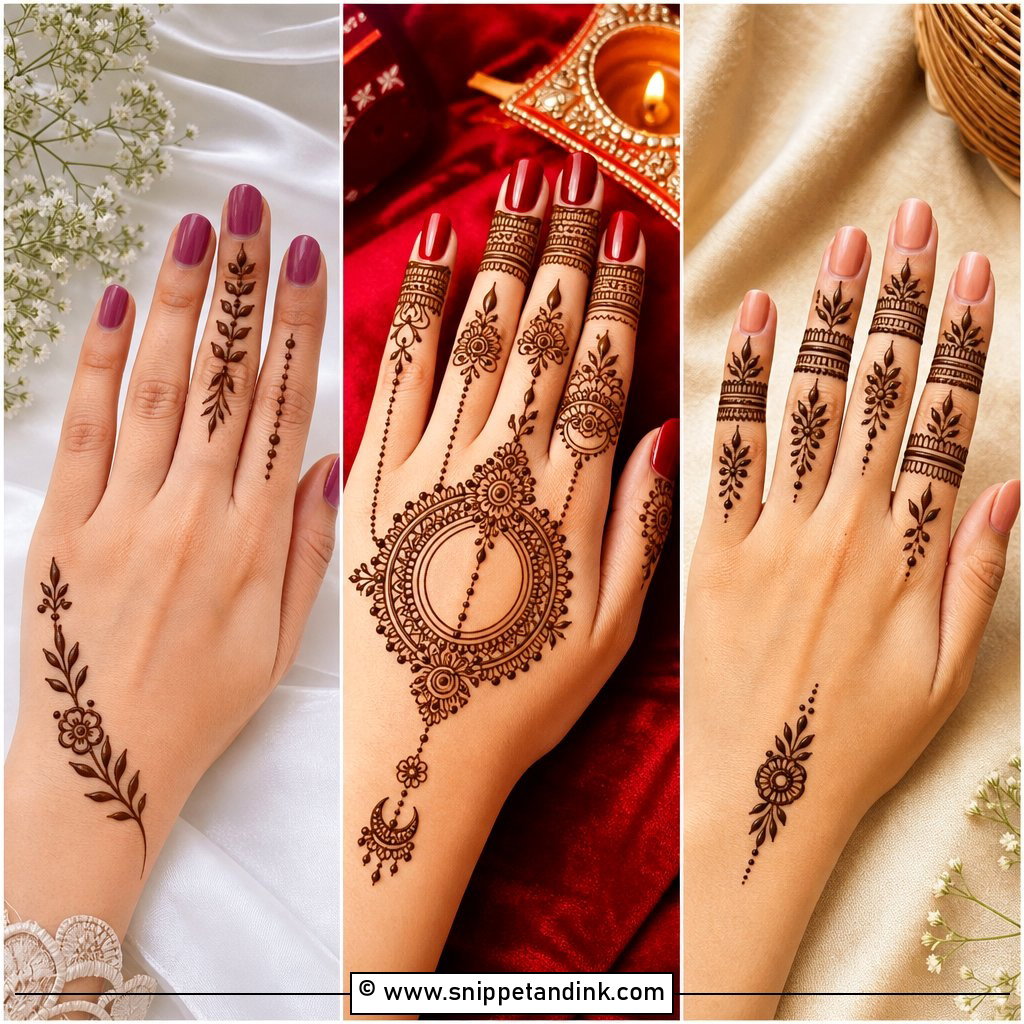
Minimal bridal designs keep to the fingers, wrists and a small part of the palm or back of the hand, with plenty of bare skin. Fine florals, dots, slim vines, small mandalas and bracelet bands do the work. It feels modern while still ceremonial, and it suits brides who don’t want henna to the elbow. To make it read as bridal rather than casual, I keep both hands symmetrical, finish every finger neatly and make the wrist slightly fuller. It pairs nicely with pastel outfits and light jewelry.
11. Simple Bridal Mehndi
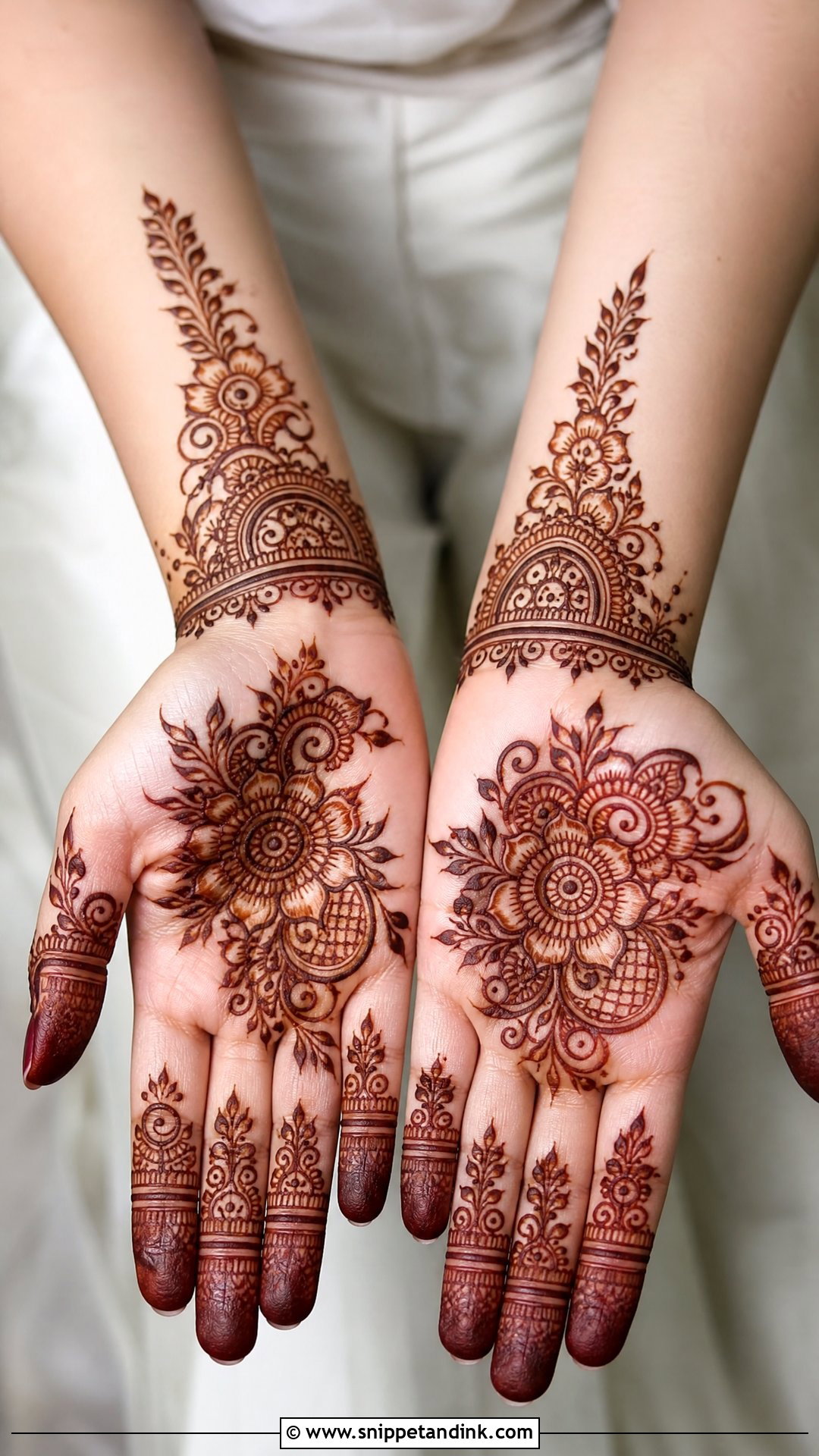
Simple bridal henna sits between minimal and full traditional coverage: a floral palm pattern, decorated fingers, a wrist bracelet and a short forearm extension. The motifs are a readable size, so the design still looks neat once the stain develops. It’s practical for small weddings, court ceremonies, pre-wedding shoots or a bride who wants comfort. It also cuts the sitting time a lot. I’d choose it if your mehndi function is busy and you don’t want to miss it while sitting with your hands out.
12. Heavy Bridal Mehndi
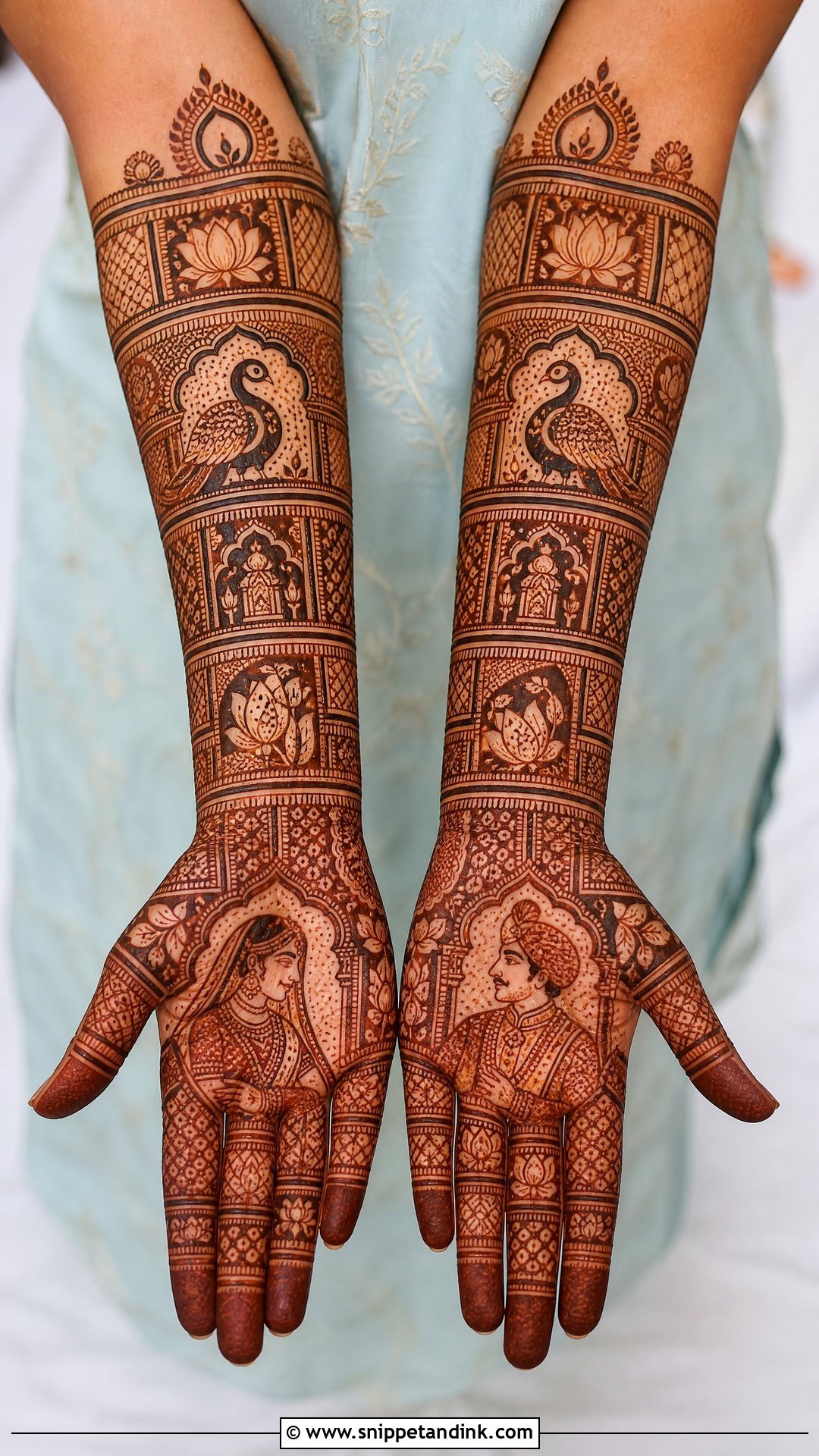
Heavy bridal mehndi runs from fingertips to elbows with dense fill across palms and back of the hand. Peacocks, lotus, paisleys, bride-groom figures, elephants, jaali and layered bands can all appear. It looks striking beside red, maroon, gold and jewel-toned outfits. The danger is mud: if panels touch without clean separation, the design reads as one dark mass. I keep a thin line of bare skin between each panel and mix thick outlines with fine fill for depth. Plan for the longest sitting of any style here.
13. Bridal Mehndi With Name
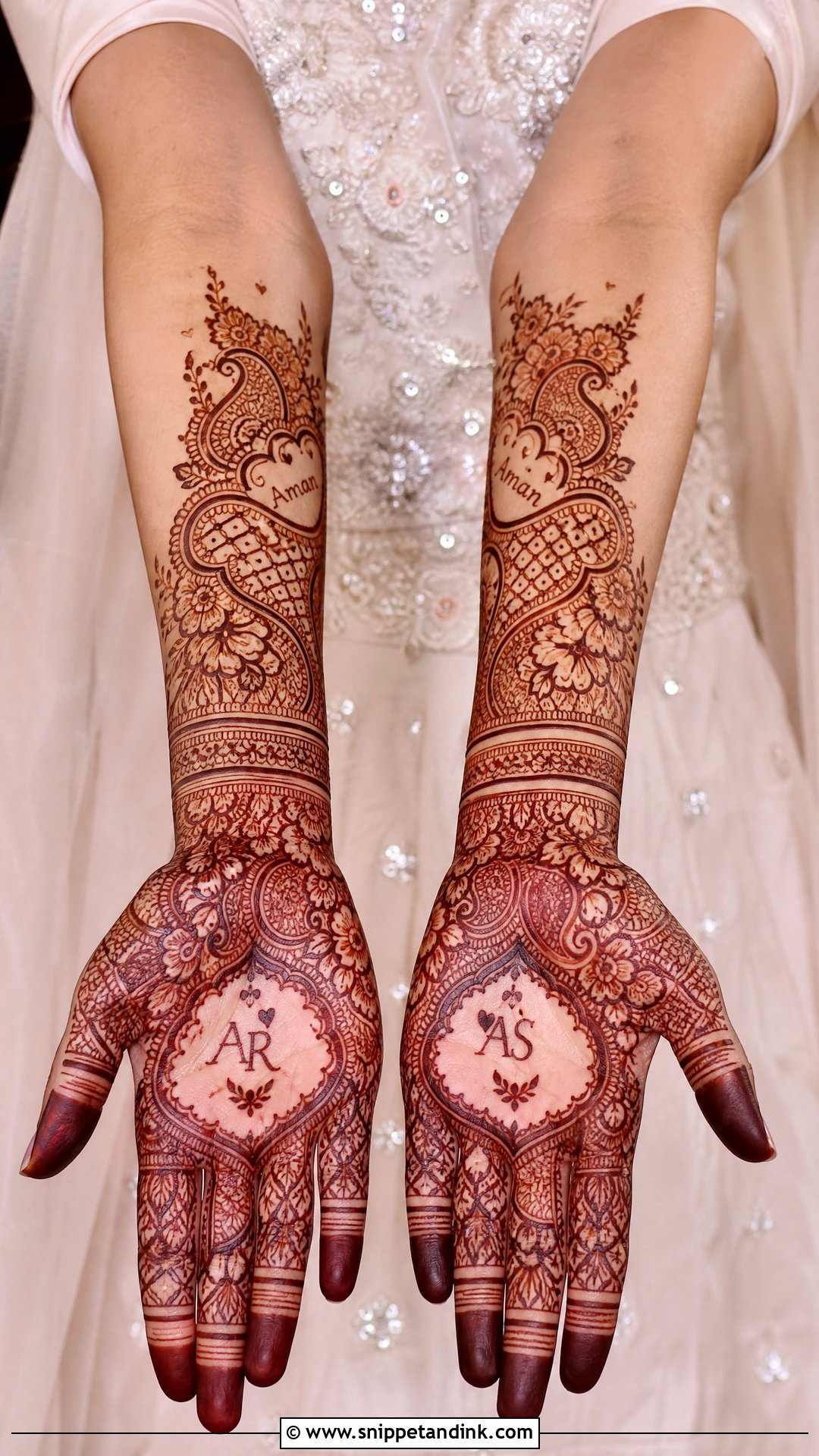
Hiding a name in the design is one of the oldest games at a wedding. The groom’s name, initials, a date or a short word can sit inside paisleys, petals, jaali or wrist bands, and the rest of the design can be any style. Decide how visible you want it before the artist starts. Some brides want it well hidden for the search during the rituals; others prefer a clear monogram at the wrist. Keep the lettering simple. Ornate script tends to fill in as the paste spreads, especially inside dense work.
14. Peacock Bridal Mehndi
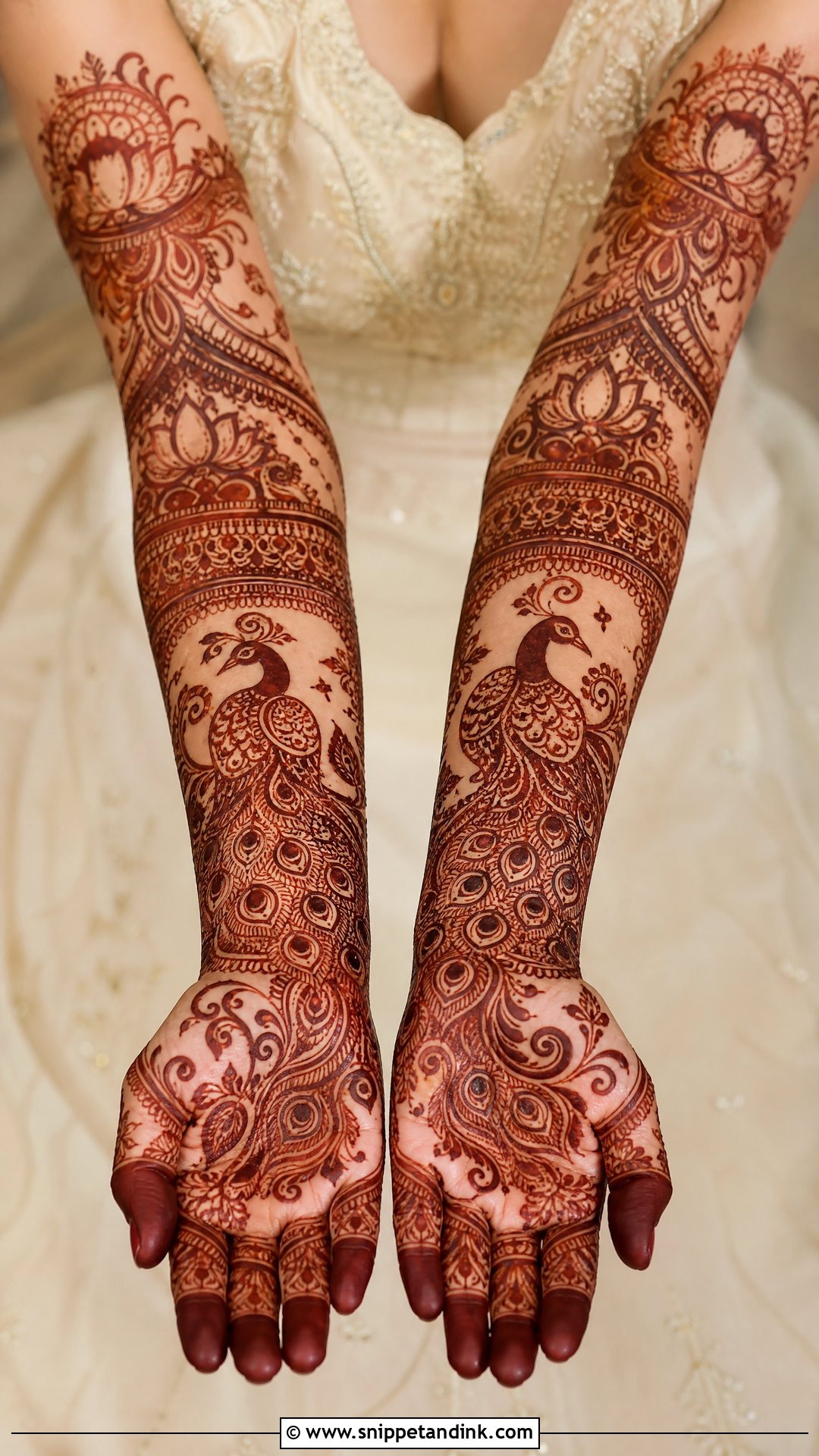
The peacock is a classic for good reason: its curved neck and fanned feathers give movement to a design. It can sit on the palm, wrist or forearm, with feathers flowing into paisleys, florals and fine lines. Large and bold reads royal; small and detailed reads softer. I add filled fingers and bracelet bands so it doesn’t float alone on the hand. It suits traditional outfits with zari, mirror work or heavy embroidery. The feather eyes are where the stain shows best, so I fill them solid.

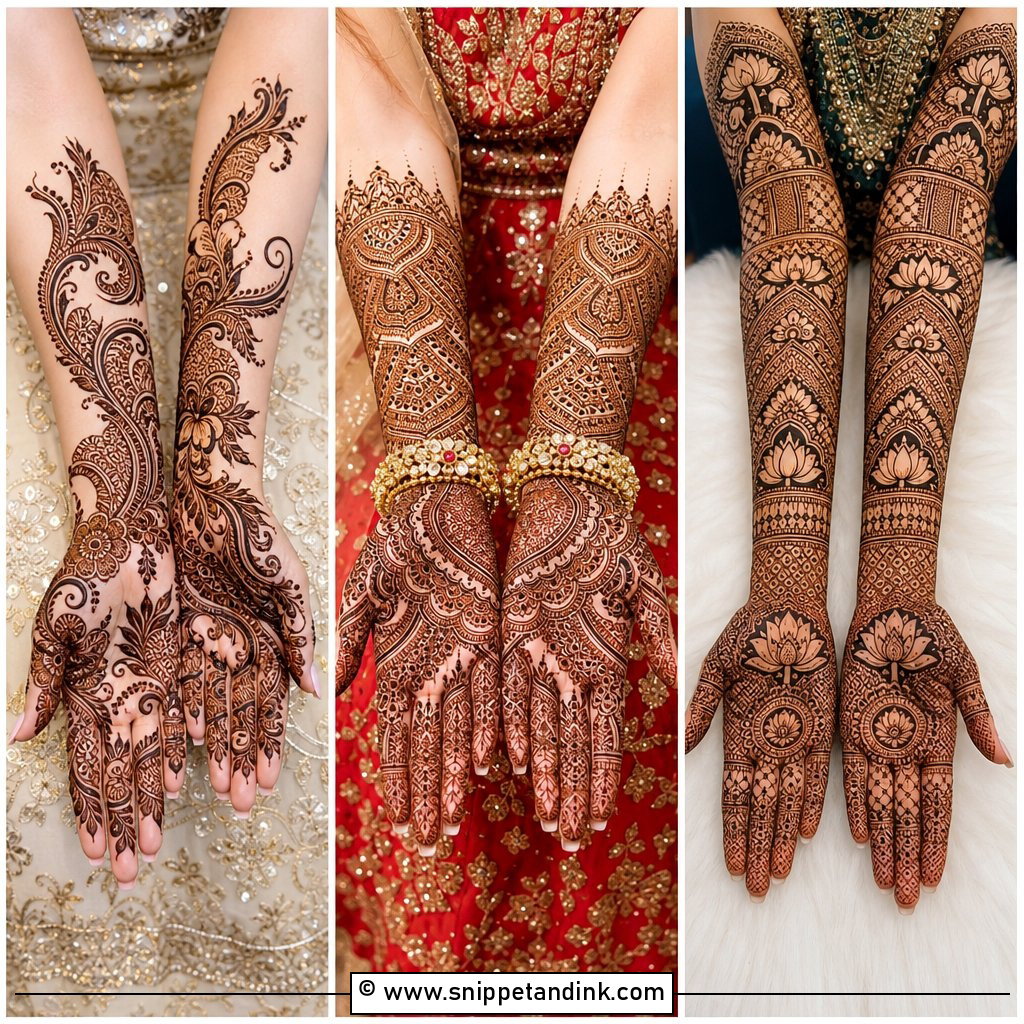
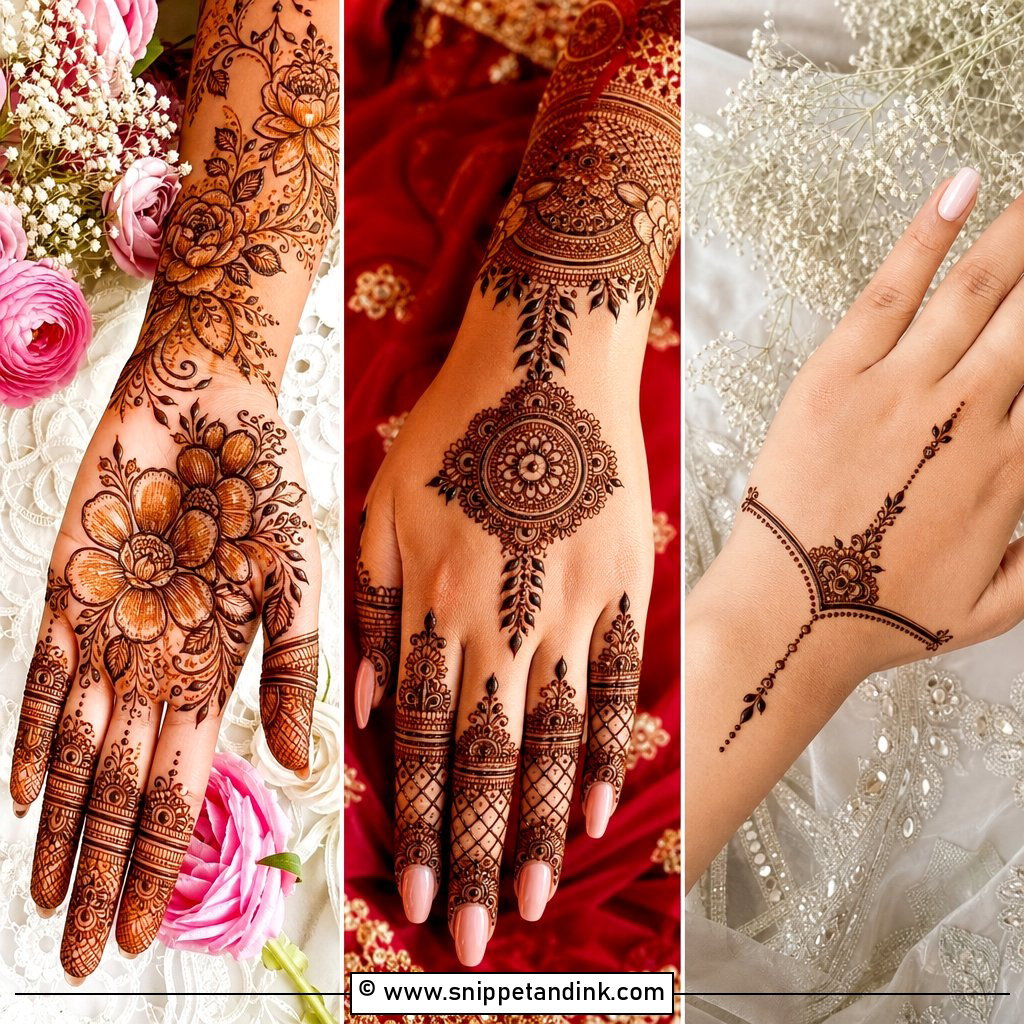
15. Lotus Bridal Mehndi
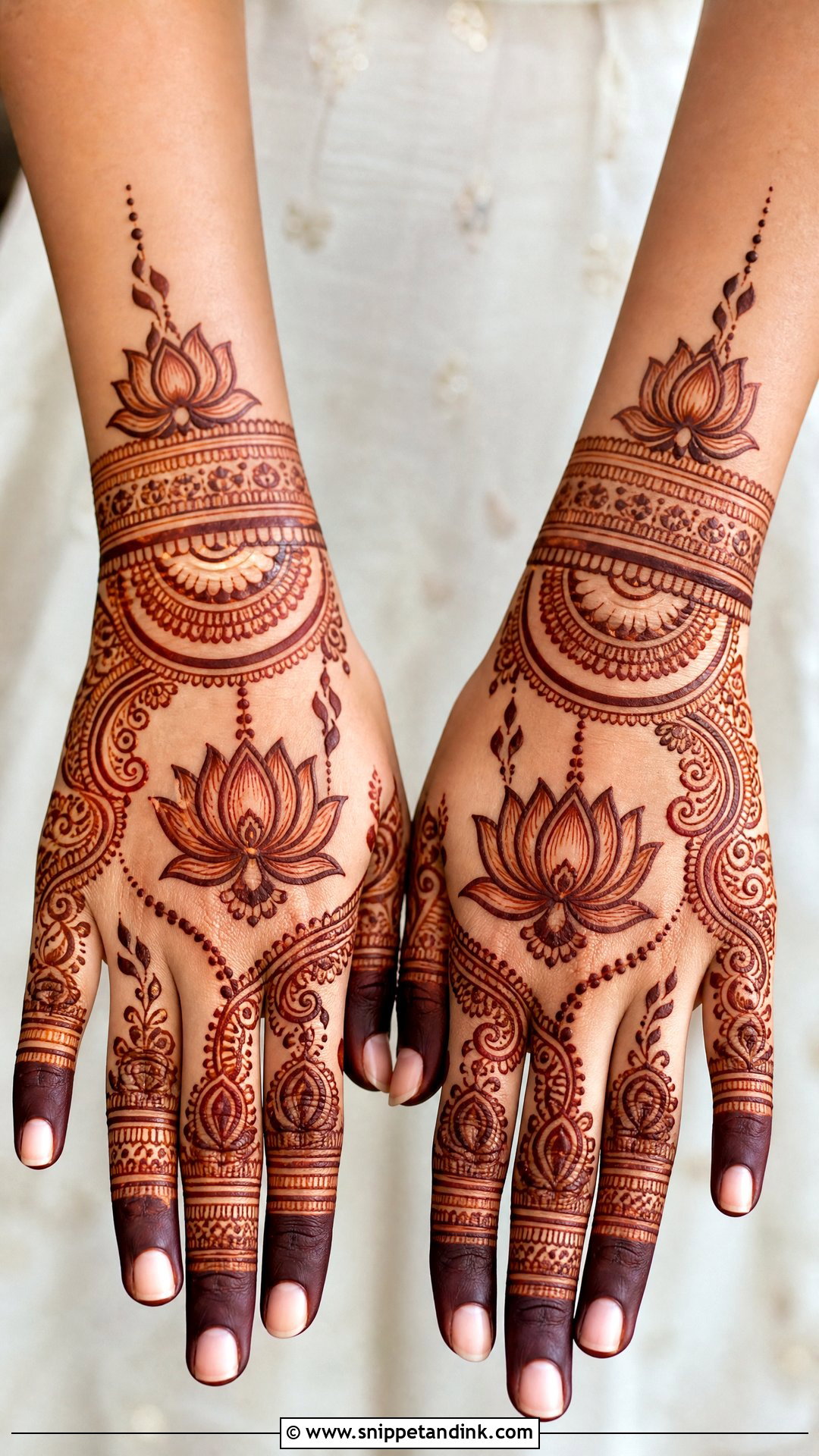
The lotus works as a central palm motif, a wrist band detail or a repeat along the forearm. It looks graceful without being heavy and pairs naturally with mandalas, paisleys, dots and fine mesh. A full bridal lotus design can carry open blooms on both hands, decorated fingertips and layered cuffs at the wrist. I draw the petals with slightly thicker outlines than the fill, which keeps them crisp as the stain darkens. It looks especially good with pastel lehengas and temple jewelry.
16. Floral Bridal Mehndi
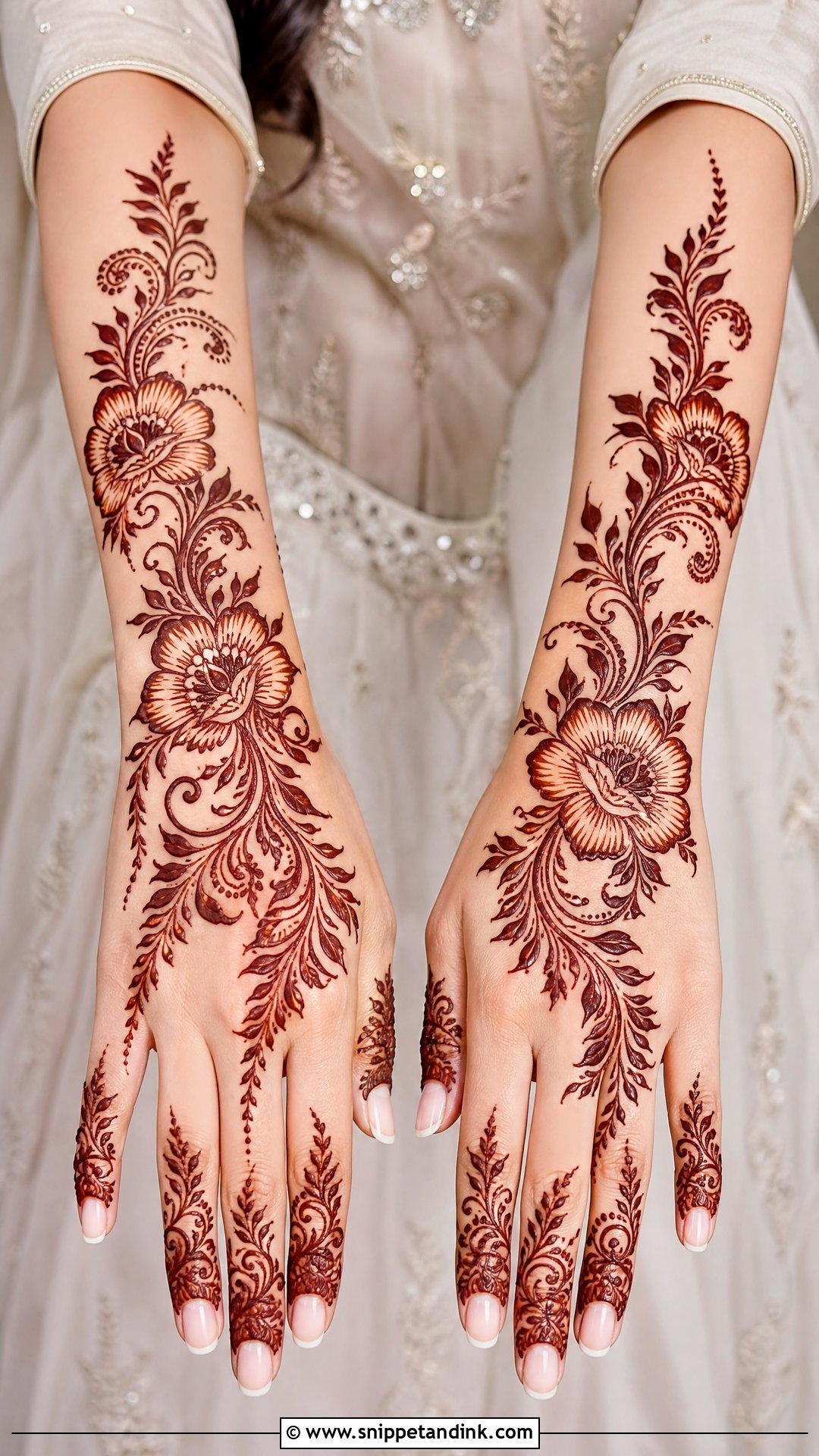
Florals adapt to any wedding style. They can be bold like Arabic work or detailed like Indian, with large flowers across the back of the hand and smaller petals on the palms and fingers. Shaded leaves, dotted vines and curved stems carry the eye along. Floral shapes hold their outline after the stain darkens, so they photograph clearly. It’s a flexible choice that suits both heavy lehengas and lighter outfits, and it’s the style I suggest when a bride can’t decide between traditional and modern.
17. Jaali Bridal Mehndi
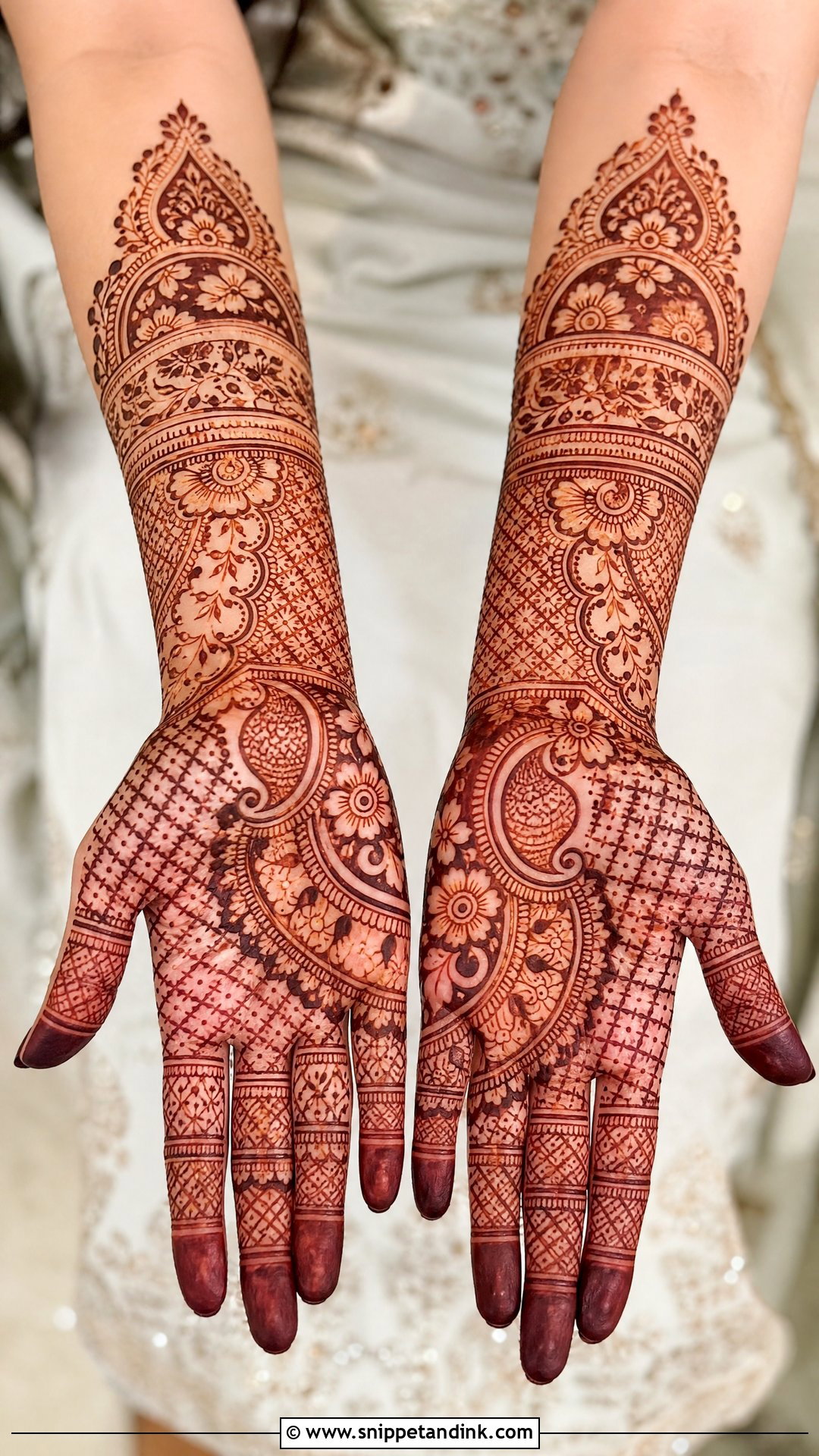
Jaali is net-like mesh, and it gives a structured, refined finish without needing many large motifs. It can fill the palms, fingers, wrist or forearm, often alongside florals, paisleys and mandalas. On the back of the hand it can look like lace gloves. Rings and hand jewelry sit well against the grid. Even spacing is the whole skill: one wobbly row shows immediately. I work jaali with a very fine cone tip and turn the hand often, so every line runs at the same angle.
18. Jewelry Bridal Mehndi
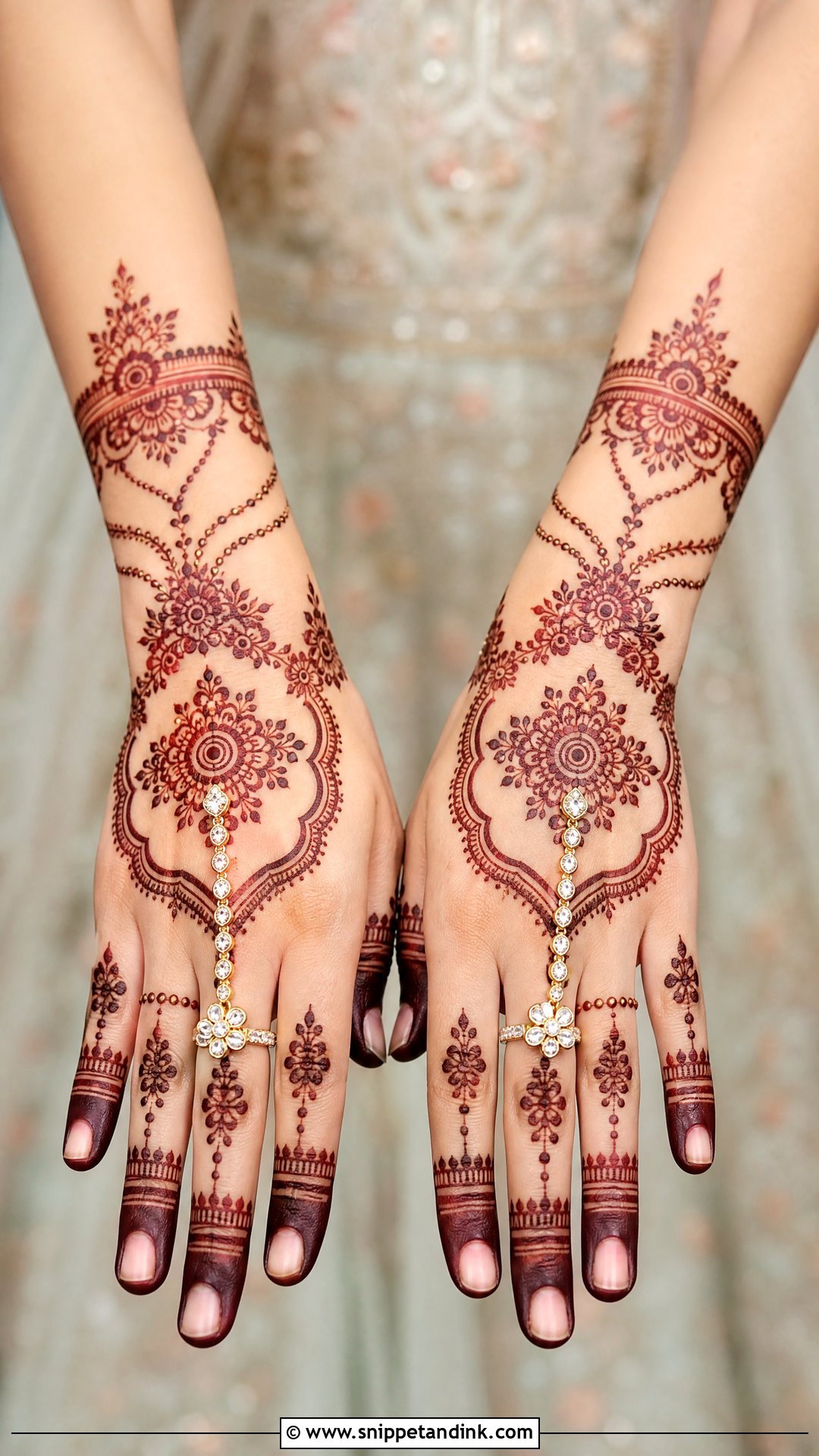
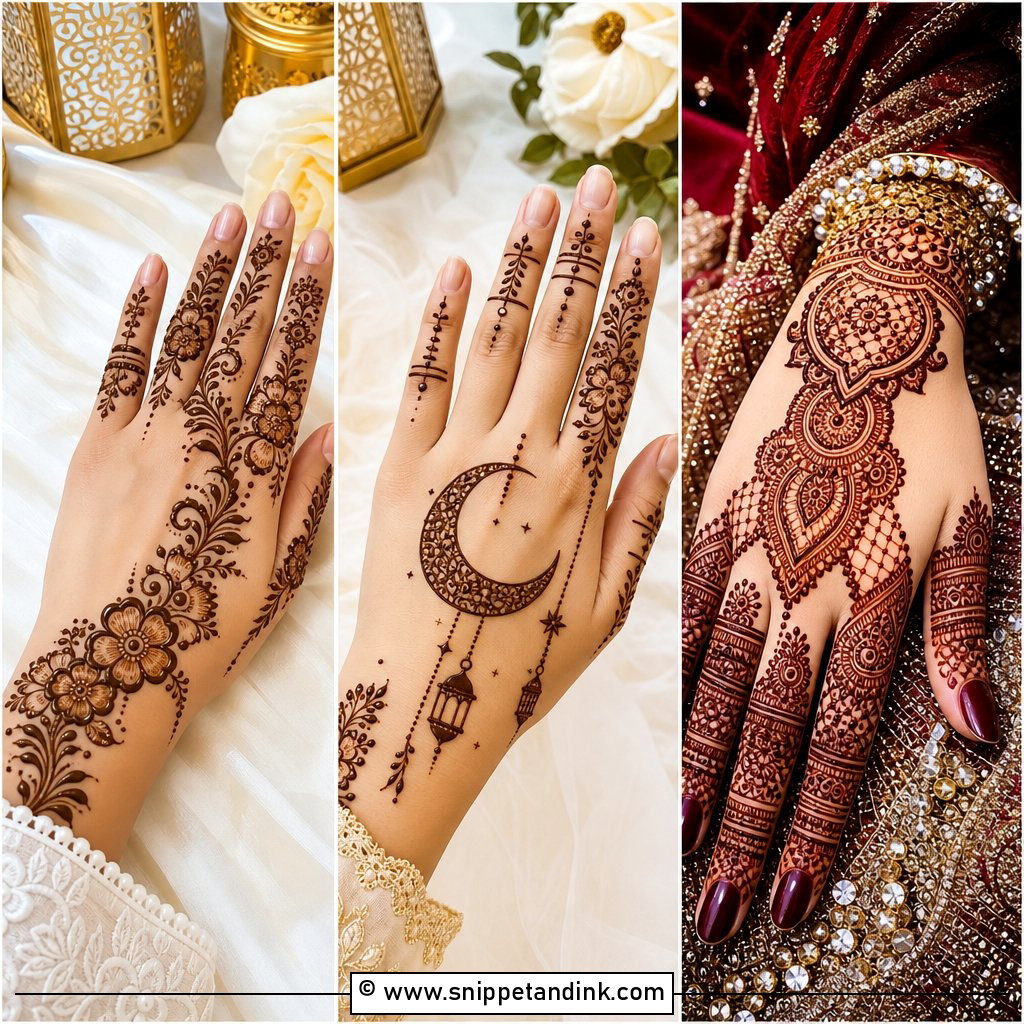
Jewelry designs imitate ornaments in henna: ring patterns, chain links, bracelet bands, haathphool layouts and wrist cuffs. They sit best on the back of the hand but can continue onto the palm and forearm for fuller coverage. Fine dots and thin lines read as beads and chain once stained. Since the design mimics real jewelry, I check what the bride is actually wearing so the henna rings don’t clash with her real ones. It pairs neatly with statement rings, bangles and minimal nail art.
19. Bracelet Bridal Mehndi
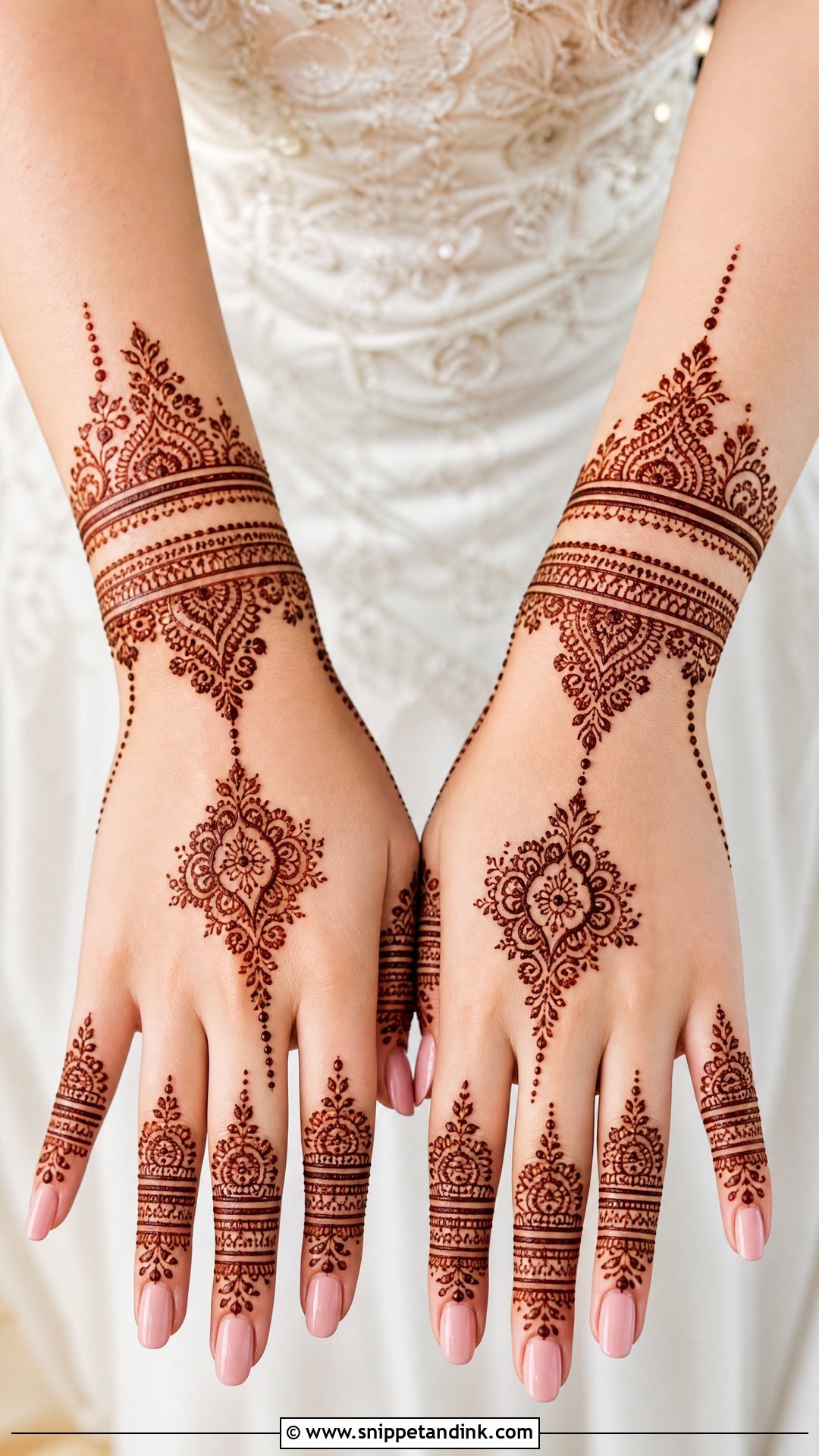
Bracelet bridal mehndi builds layered wrist bands that look like stacked bangles or cuffs, then connects them into the fingers with florals, vines, mandalas or jaali. For a bride, I never stop at the wrist alone; the hand and fingers need connected detail or it looks unfinished. It’s practical under real bangles, and the forearm coverage can stay lighter than a dulhan design, which shortens your sitting. Layered bands with dots, leaves, paisleys and small floral borders work best, and the result looks crisp in close-ups.
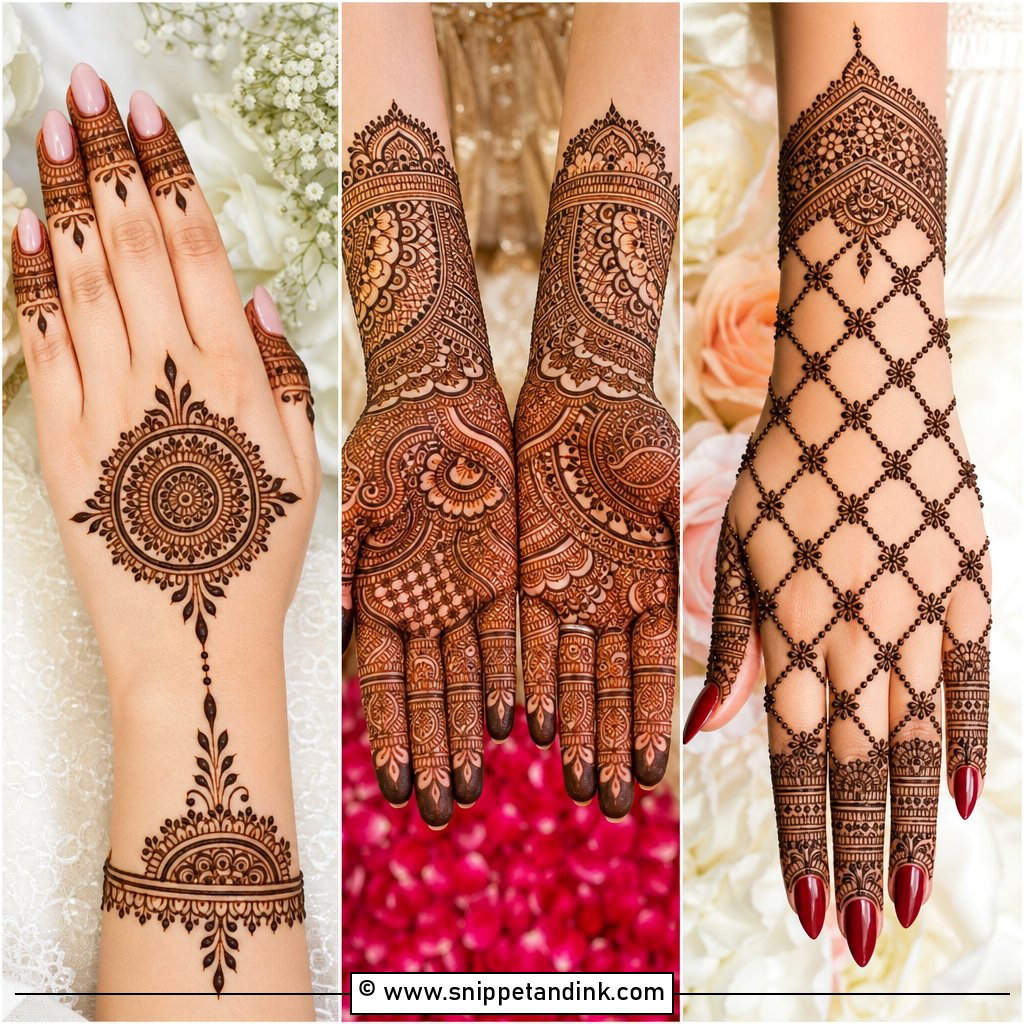

20. Moroccan Bridal Mehndi
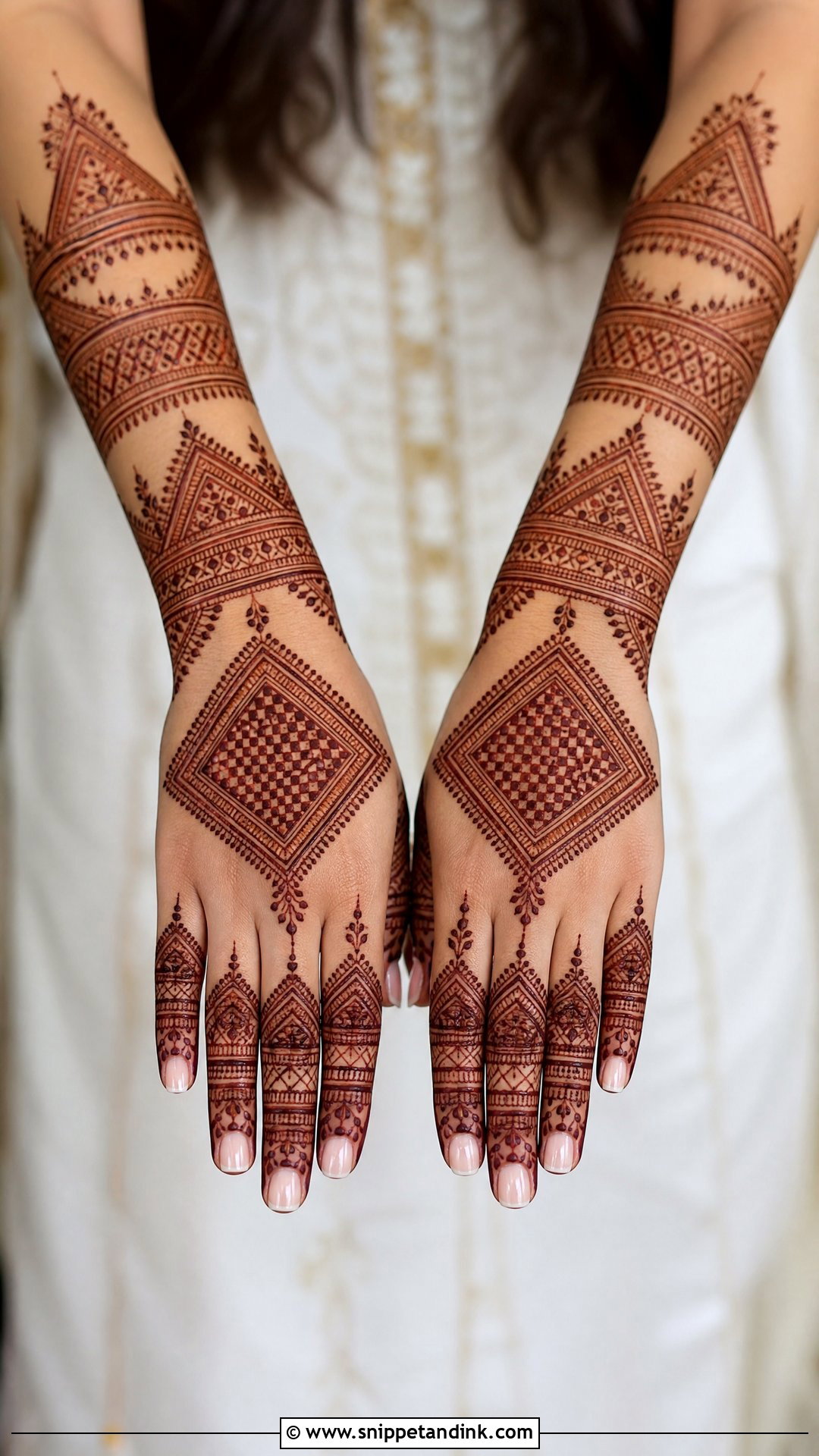
Moroccan-inspired designs swap florals and paisleys for diamonds, lines, grids, triangles and structured bands. It’s bold and very neat. A bridal version covers the fingers, palms, wrists and forearms in balanced panels. You can soften it with small dots or leaf accents, but the geometry should lead. Straight lines are less forgiving than curves, so I’d only book this with an artist whose geometric work you’ve seen. It suits sleek jewelry, modern outfits and minimal styling.
21. Gulf Bridal Mehndi
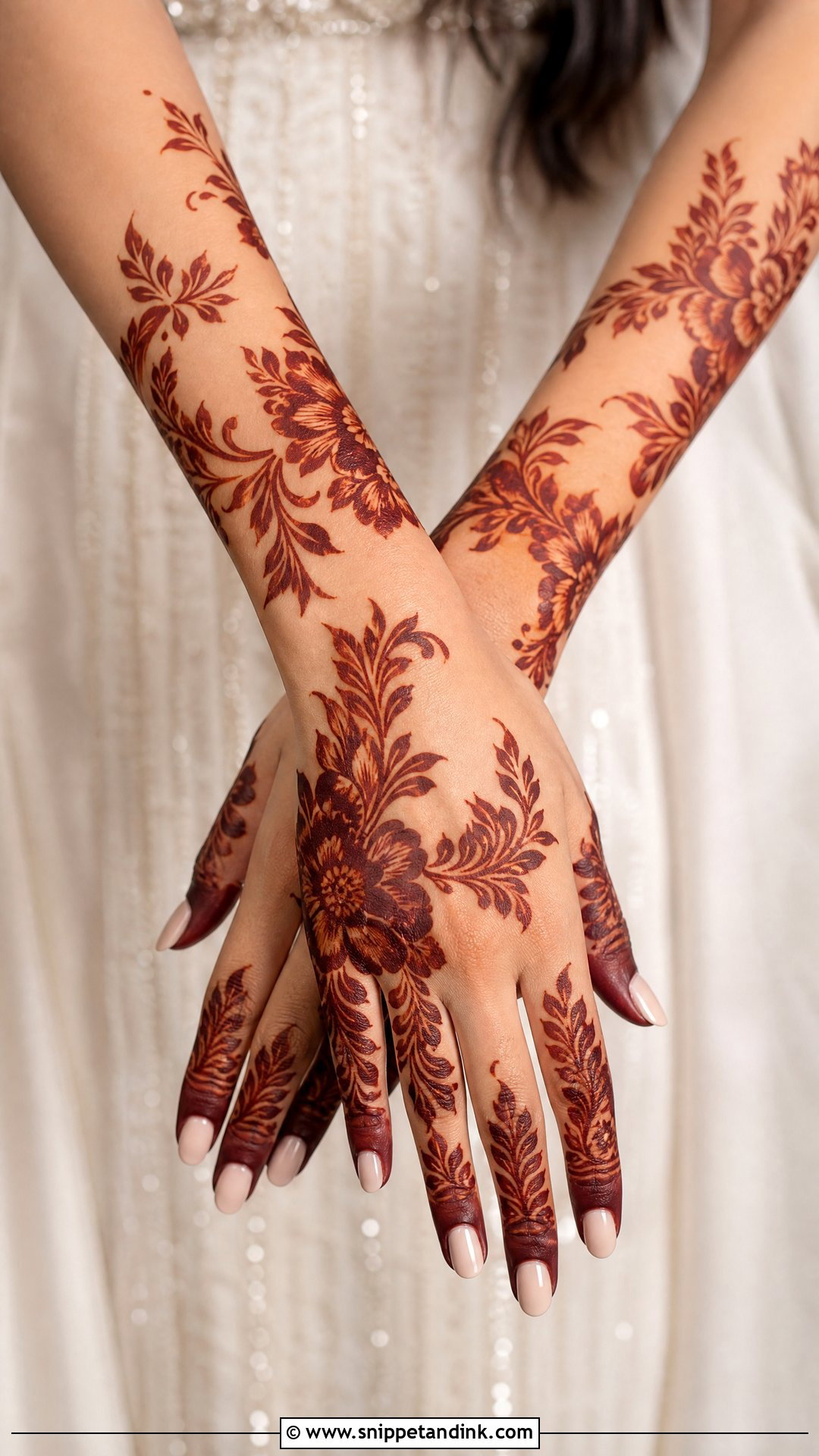
Gulf, or Khaleeji-inspired, henna is known for bold florals, leafy vines and wide bands of open skin. The design sweeps across the hand in a broad trail, fuller than minimal work but much less packed than Indian bridal henna. The flowers are large, with shaded petals and thick outlines, and those thick lines stain very evenly. A bridal version can cover the back of the hand, fingers, wrist and forearm. It suits gowns, shararas, lehengas and reception outfits alike.
22. Modern Bridal Mehndi
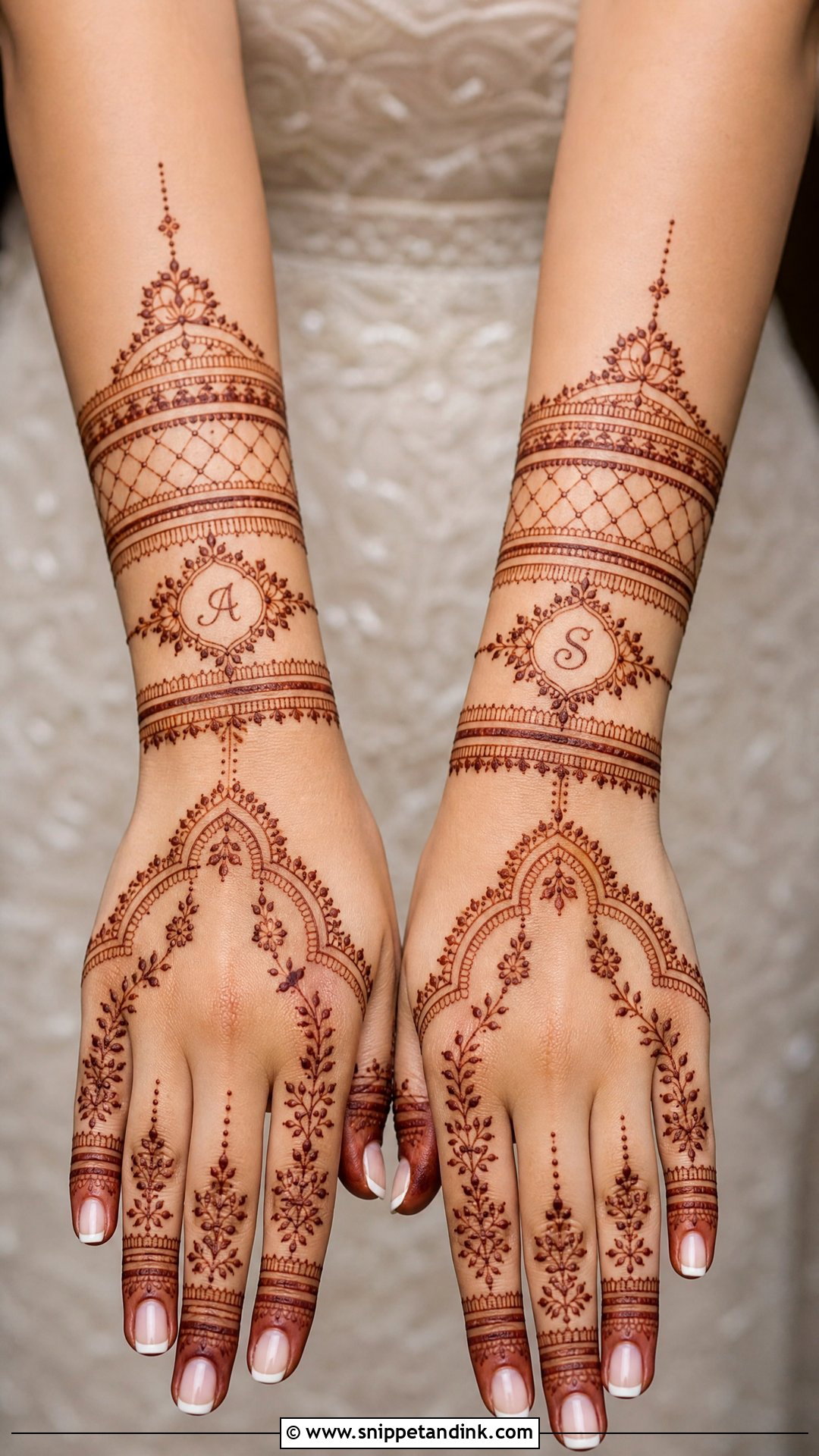
Modern bridal mehndi is about spacing and personal detail rather than filling every inch: geometric borders, fine florals, initials, small portraits, bracelet bands and areas of open skin. Brides often match it to their outfit embroidery, wedding theme or a favorite symbol. It can still be full-hand, just lighter and more deliberate. When I plan one, I decide where the empty spaces go first, then draw around them. That’s what keeps it from looking like a traditional design with pieces missing.
23. Pakistani Bridal Mehndi
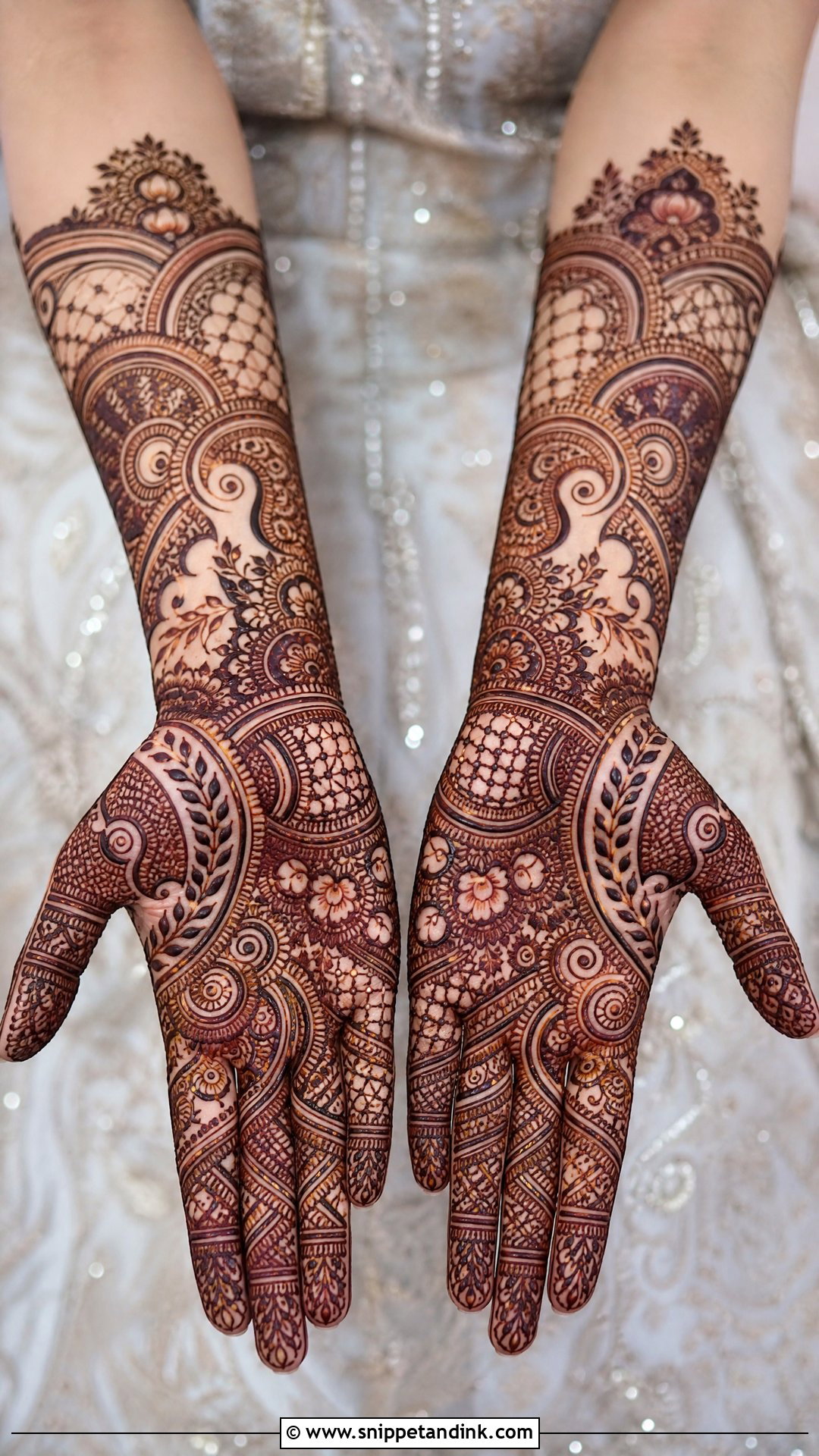
Pakistani bridal mehndi blends Indian detail with Arabic flow. Florals, paisleys, mandalas, mesh, leafy trails and wrist-to-forearm panels are typical, often dense on the palms and more open on the back of the hand. That balance suits brides who love traditional work but want a softer layout. It sits well with ghararas, shararas, lehengas and heavily embroidered bridal wear, and there’s room for initials or small wedding symbols. It doesn’t always need elbow-length coverage to feel complete.
24. South Indian Bridal Mehndi
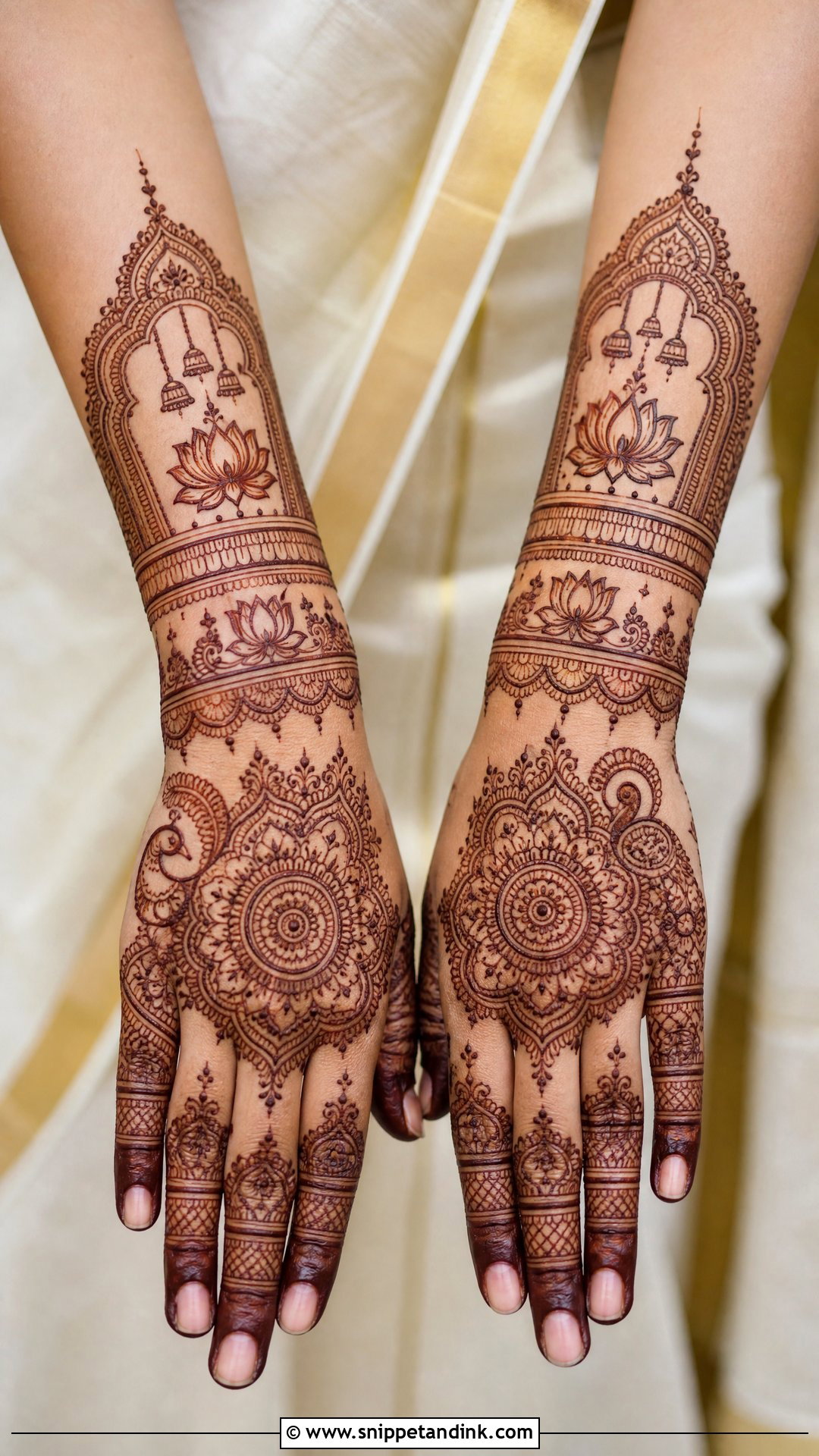
South Indian bridal mehndi suits temple jewelry, silk sarees and jasmine. Lotus motifs, mandalas, paisleys, peacocks, bells and fine wrist bands are the usual choices. Some brides want fuller palms with a simpler back so their jewelry stays visible; others choose detailed forearm work for a grander ceremony. Symmetry matters most here, because the hands are held out clearly in ritual photos. Silk sleeves are often fitted, so I check the blouse before deciding how far up the arm to go.
25. Bridal Foot Mehndi
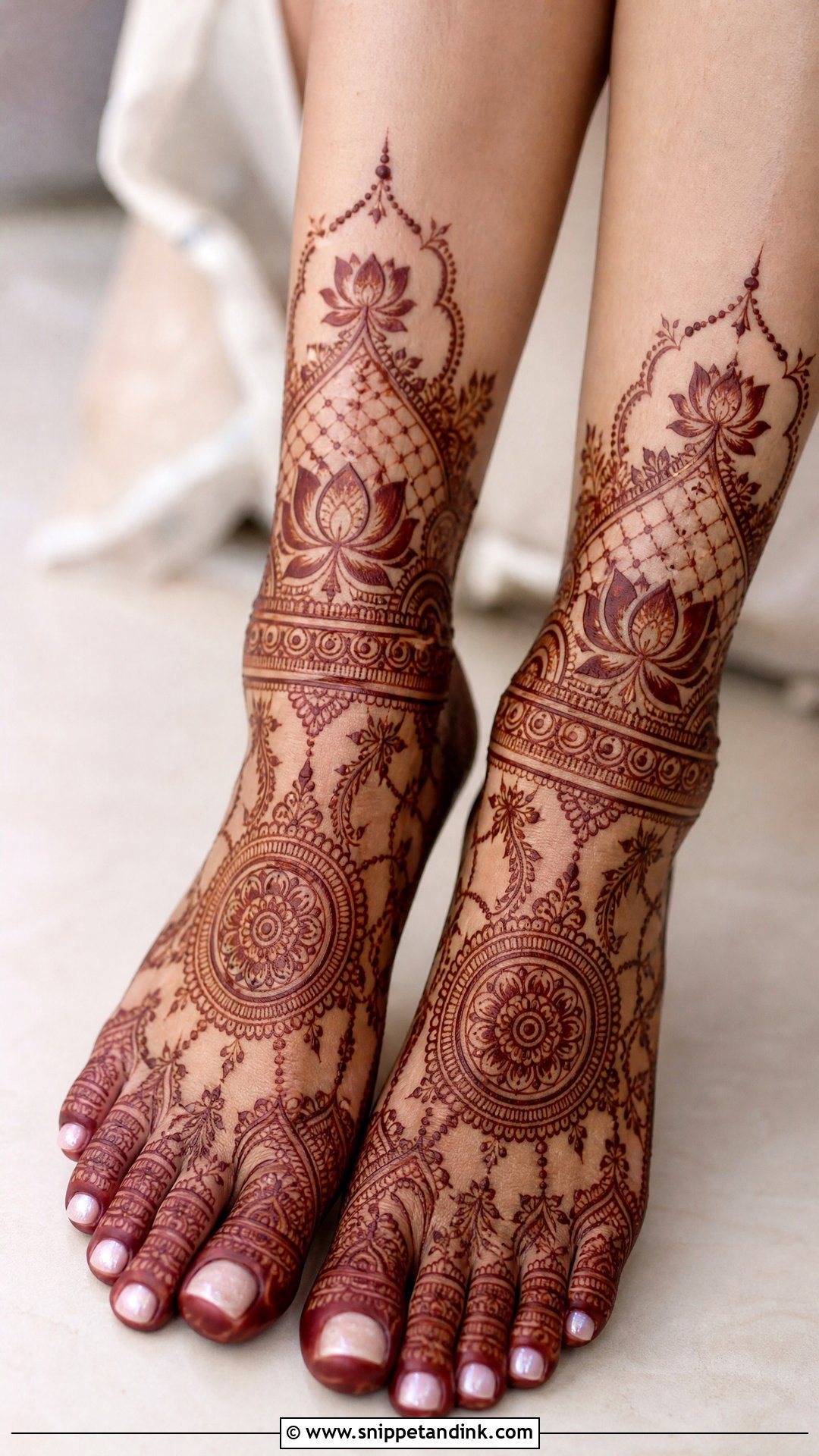
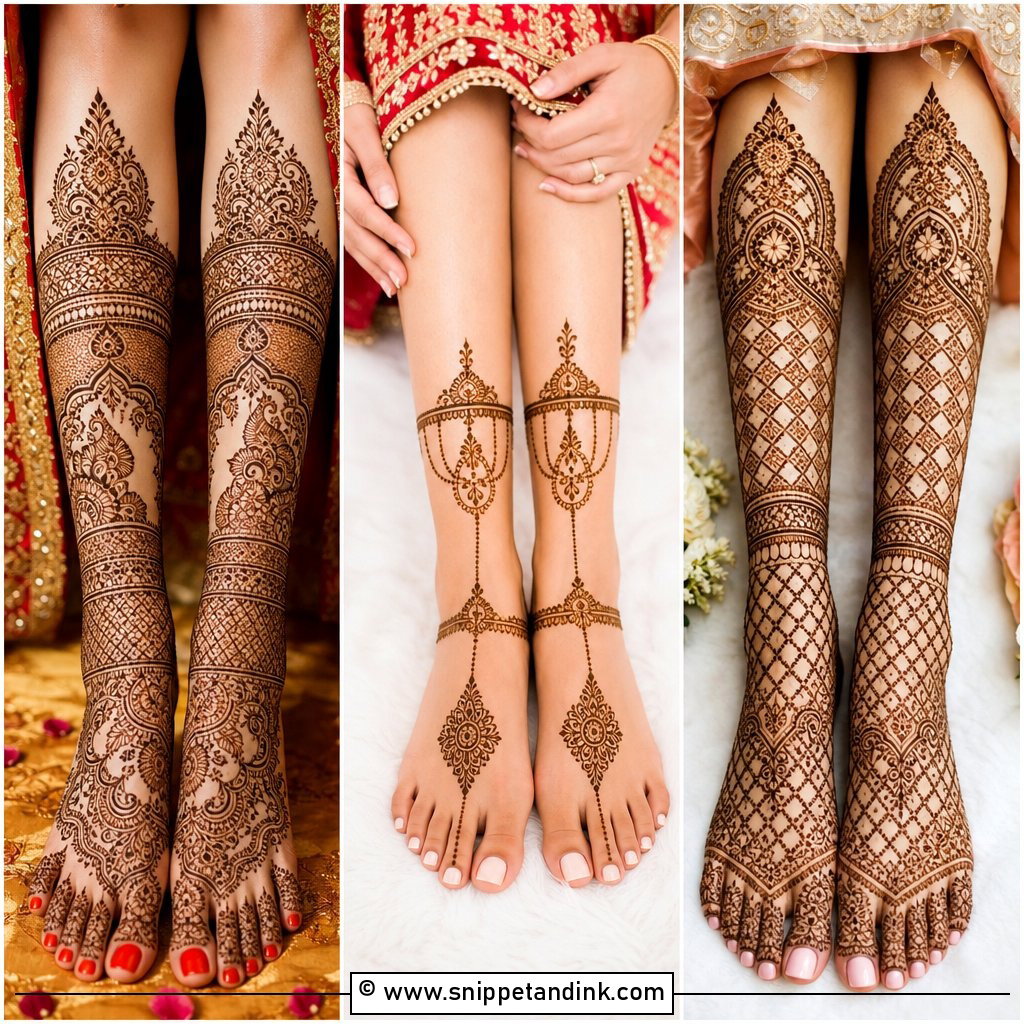
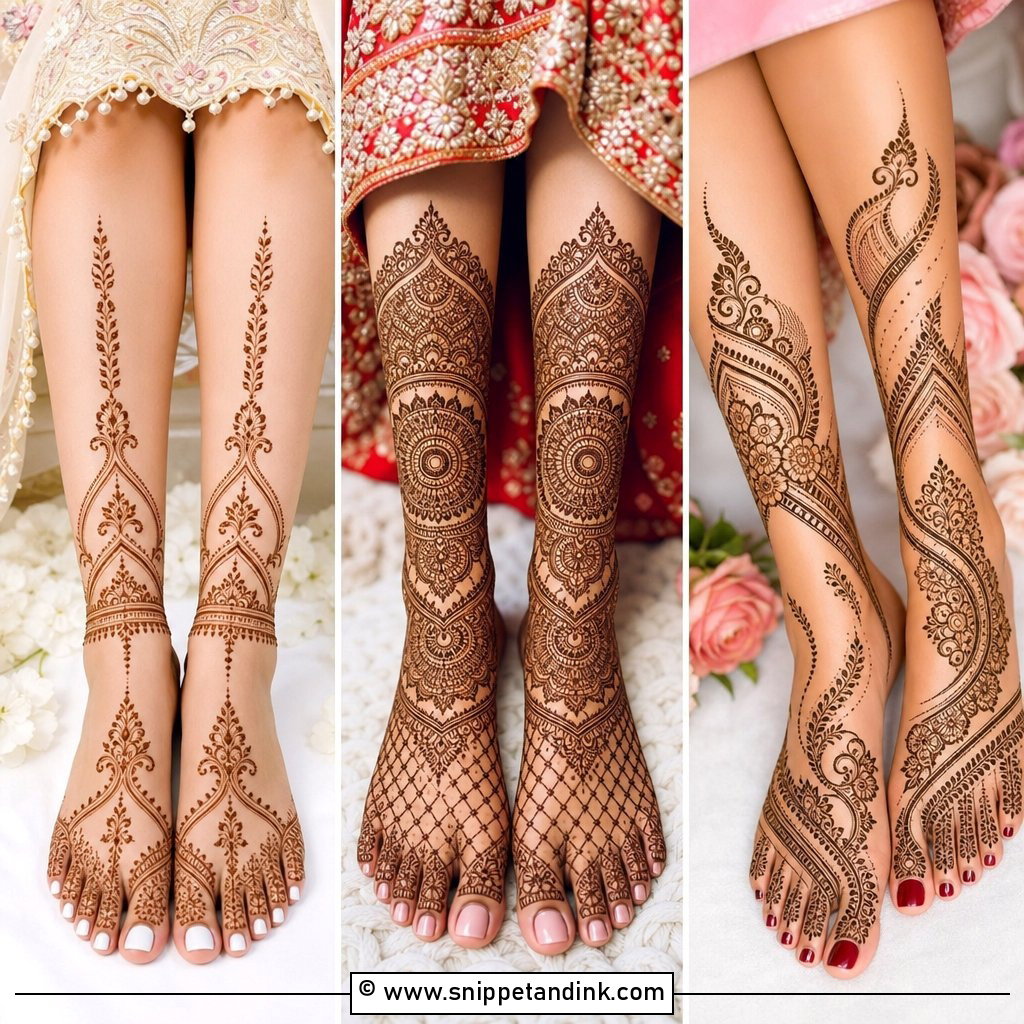
Bridal foot mehndi finishes the look, especially when anklets, toe rings and traditional footwear are part of it. It covers the toes, the top of the feet, the ankles and sometimes the lower legs, with mandalas, lotus, paisleys, anklet bands, jaali or vines. The pattern should follow the curve of the foot so it looks right from the front and side. I always do feet last, once the hands are drying, and the bride needs to keep them still and off the floor for a while after.
What Goes in the Cone Matters as Much as the Pattern
Natural bridal paste is made from henna powder, lemon juice, sugar and an essential oil such as eucalyptus or lavender. It should smell earthy, not chemical, and never stain black. So-called black henna often contains PPD, a hair-dye chemical that can cause serious skin reactions and lasting scars. Ask your artist directly what’s in her paste, and if you have sensitive skin, have a small patch test a few days before.
After the paste comes off
- Scrape the dry paste off with a blunt edge. Don’t wash it off.
- Keep water off your hands for as long as you can, ideally most of the first day.
- A light rub of mustard oil or balm protects the stain when you do need to wash.
- Avoid chlorine, harsh soap and hand sanitizer before the wedding, since they fade the color early.
- Remember that palms and fingertips stain darkest, while the forearm stays lighter. That’s normal skin, not a weak paste.
A Design You’ll Hold Out in Every Ring Shot
The right bridal design suits your outfit, your ceremony and how long you can comfortably sit. Full-hand Indian work reads royal; Arabic and Gulf styles feel open; mandala, jewelry and minimal designs feel modern; portrait, name and Rajasthani work tell a story; foot mehndi completes it. Before your appointment, save a few clear reference photos and talk through coverage, timing and aftercare with your artist. Then trust her to adapt the design to the shape of your hands, which is where the real work happens.
You'll Like These Ideas:



Leave a Reply