
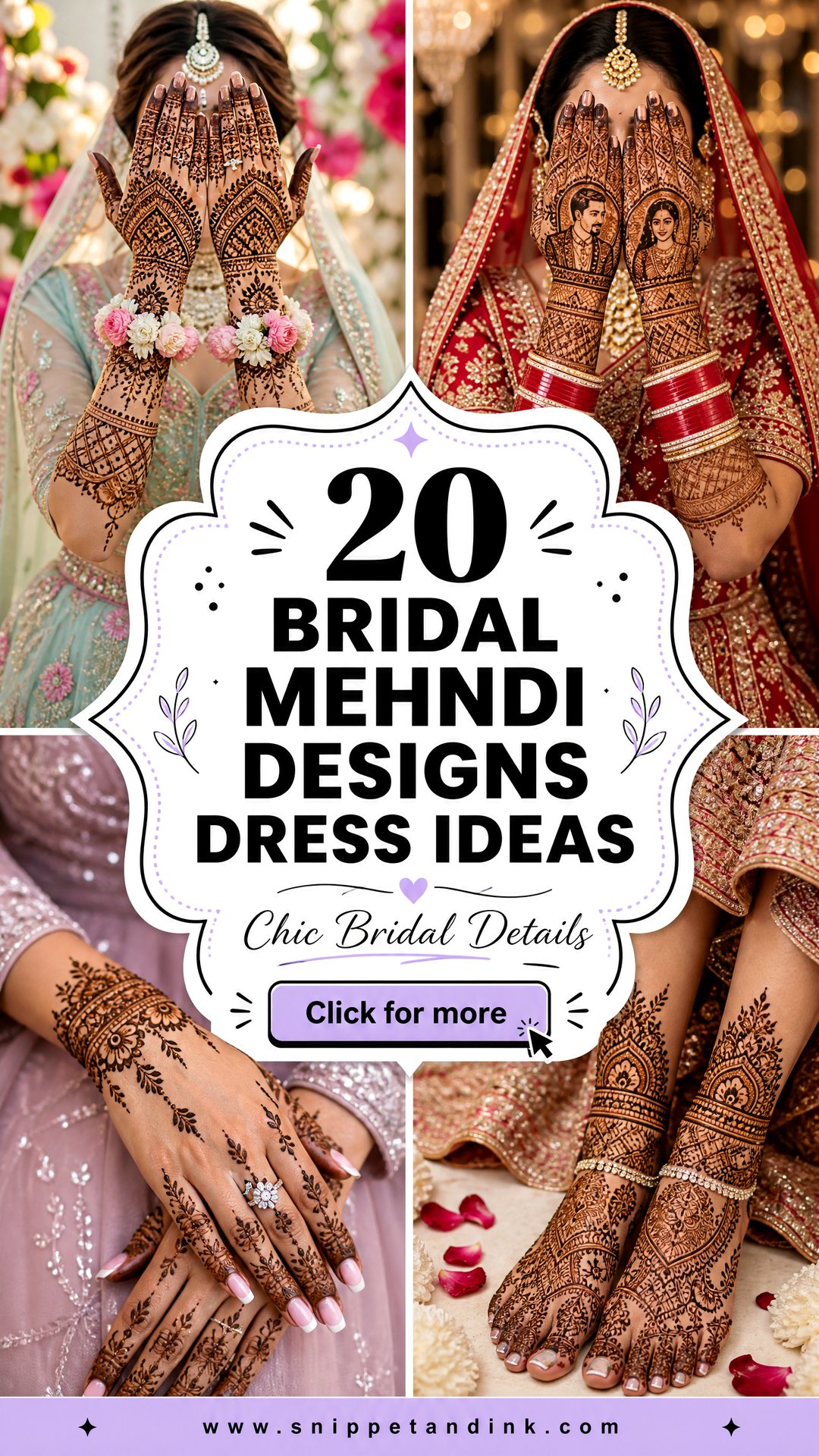
The first question I ask a bride is never which pattern she likes. It’s what she’s wearing, and where the sleeve ends. Henna that fights the outfit looks busy in every photo, while henna planned around the dress reads as part of the bridal look. Dense Indian filling sits well against a rich lehenga, open Arabic trails suit lighter gowns and shararas, and a single mandala can calm an embroidered sleeve. Below are twenty designs matched to the outfit they work hardest with, plus what I’d watch for when drawing each one.
Bring the Outfit to Your Henna Consultation
A photo of the lehenga on a hanger tells me far less than a photo of you wearing it. What I need to see is where the sleeve or blouse ends on your arm, how far the dupatta falls over your hands, and how much of your feet the hem shows when you sit. Those three lines set the edges of the design, and everything else is decoration inside them.
- Sleeve or blouse edge: I end the pattern just under it, or carry it well above, never right at the seam where a half motif peeks out.
- Embroidery density: the busier the fabric, the more open skin I leave on the hands.
- Jewelry: a heavy hathphool or wide kada covers part of the back hand, so I keep that area simpler instead of hiding hours of fine work under metal.
- Which events you’re wearing it to: a design that suits the ceremony outfit may look too heavy beside a reception gown.
Come with two or three designs you like rather than twenty. If they all share one trait, say open spacing or lots of peacocks, that tells me more about your taste than any single photo.
1. Full Hand Bridal Mehndi For Red Lehenga
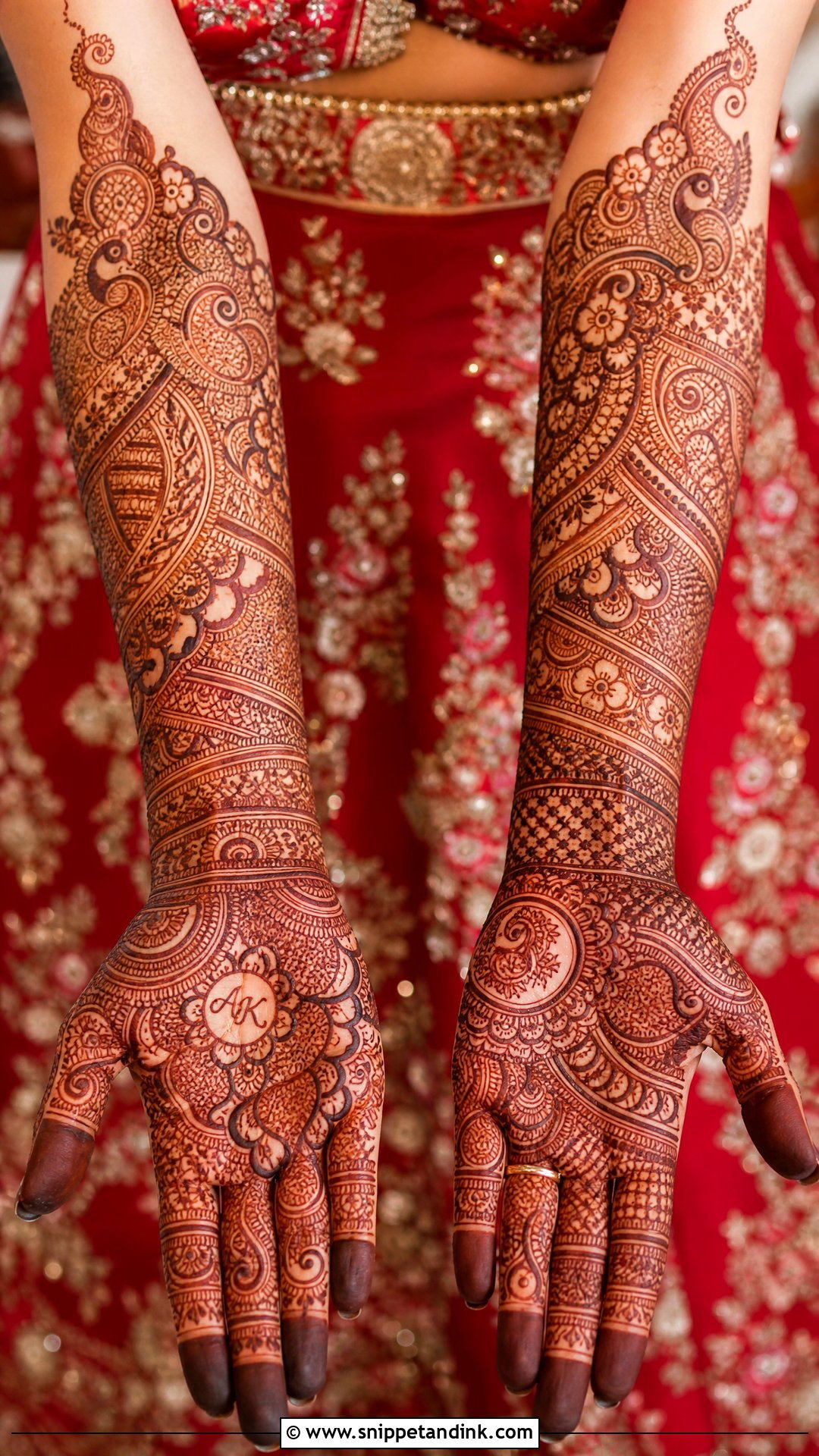
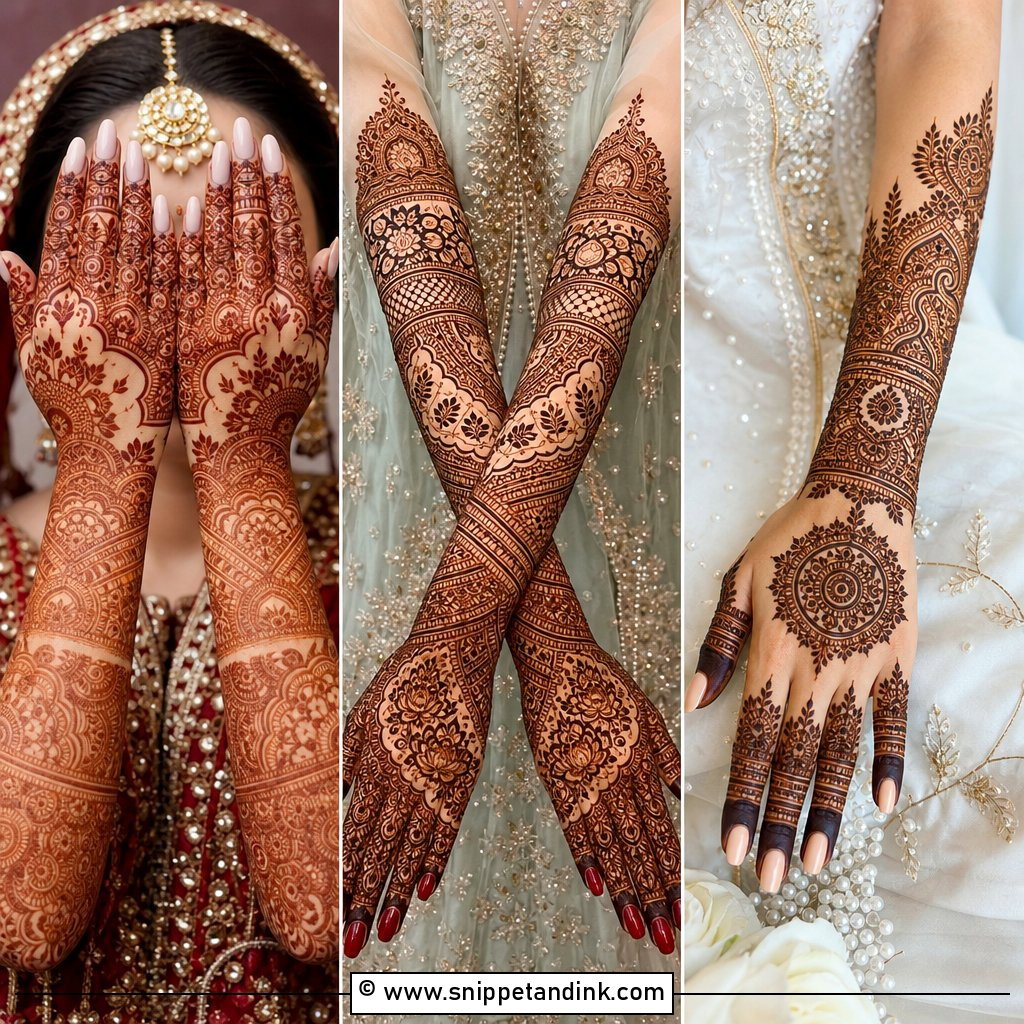
Against a red lehenga, anything less than full coverage can make the hands look unfinished next to all that colour. I fill the palms, fingers, wrists and forearms with paisleys, peacocks, mandalas and fine filler, and I keep a sliver of skin between motifs so the pattern doesn’t turn into a solid brown smudge on camera. Red fabric pulls the eye toward warm tones, so a deep maroon stain matters more here than in almost any other pairing. Hidden initials or a wedding date tuck neatly into the filler if you want a game for the groom to play.
2. Arabic Bridal Mehndi For Ivory Wedding Dress
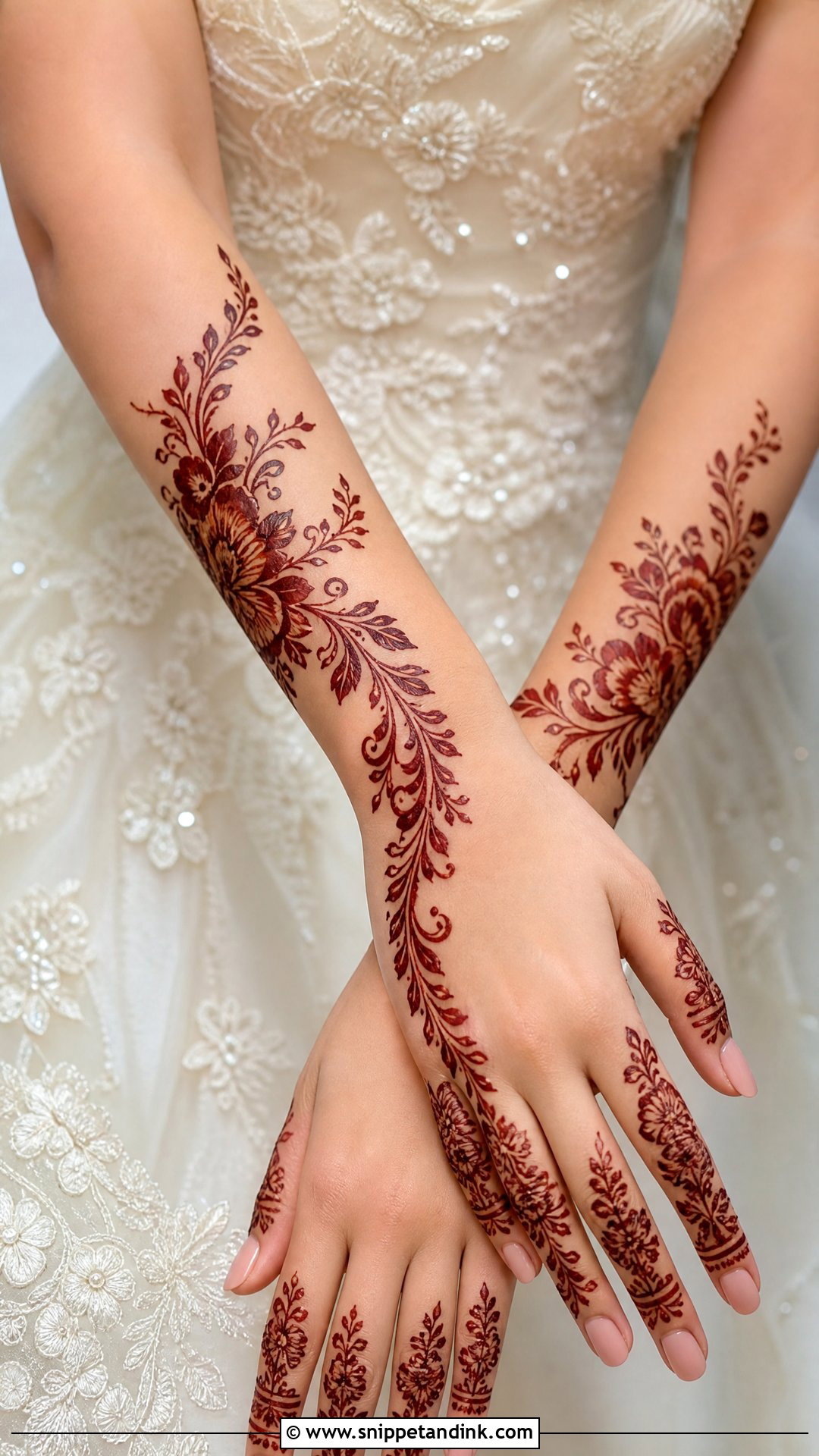
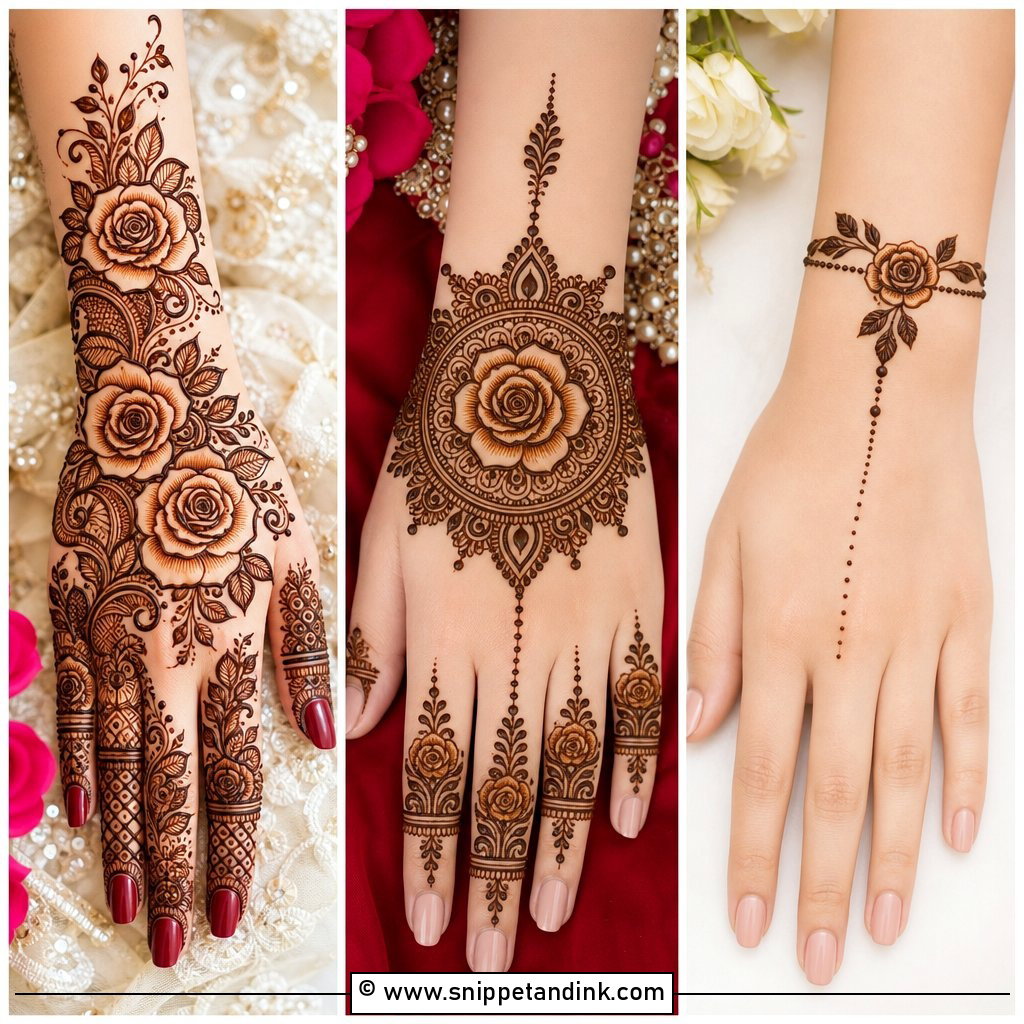
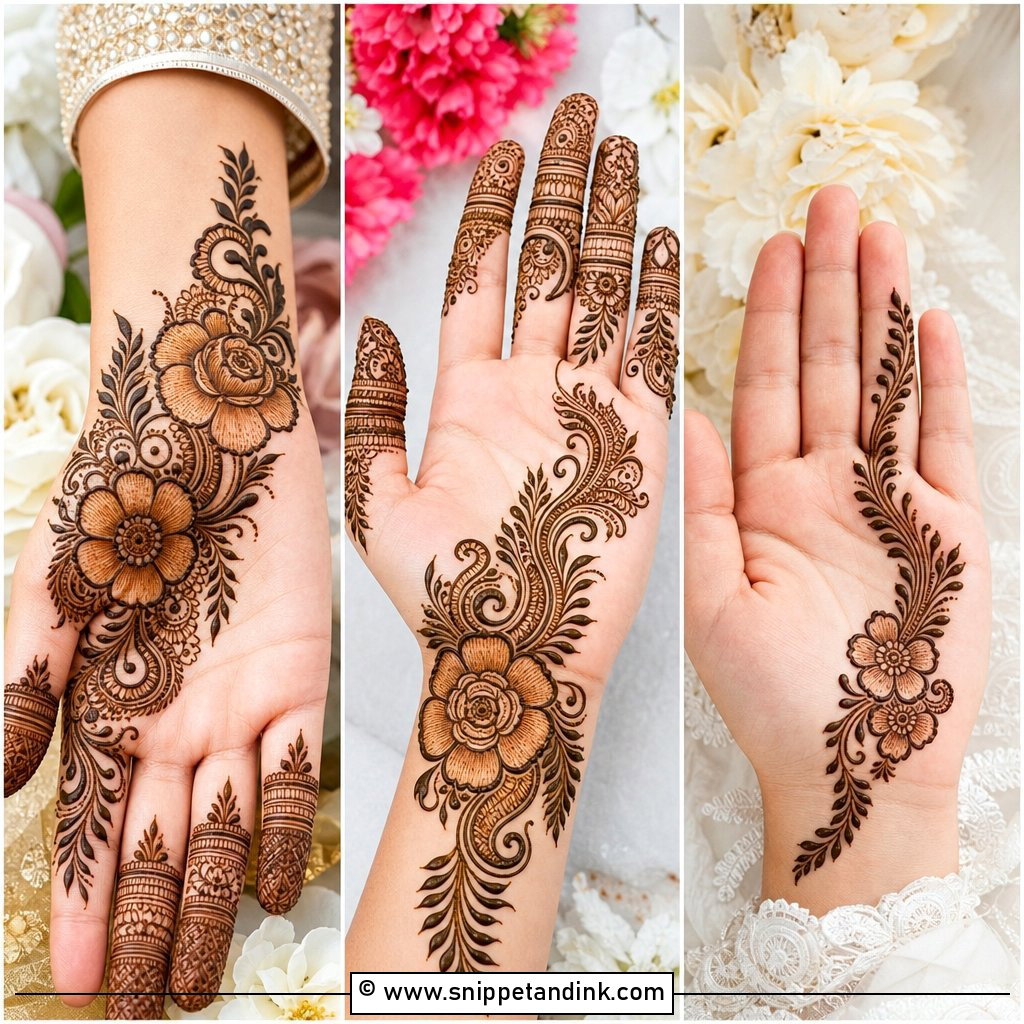
Arabic work leaves deliberate gaps, and that open skin is exactly why it sits so well next to ivory. I draw the vines diagonally from the index finger toward the outer wrist, because that line follows how the hand naturally rests on a gown skirt or bouquet. Bold flowers, leafy trails and a light extension toward the forearm are enough. Ivory can make a pale orange stain look washed out, so this is a design where I push aftercare hardest to get a reddish-brown finish.
3. Indo-Arabic Bridal Mehndi For Pastel Lehenga
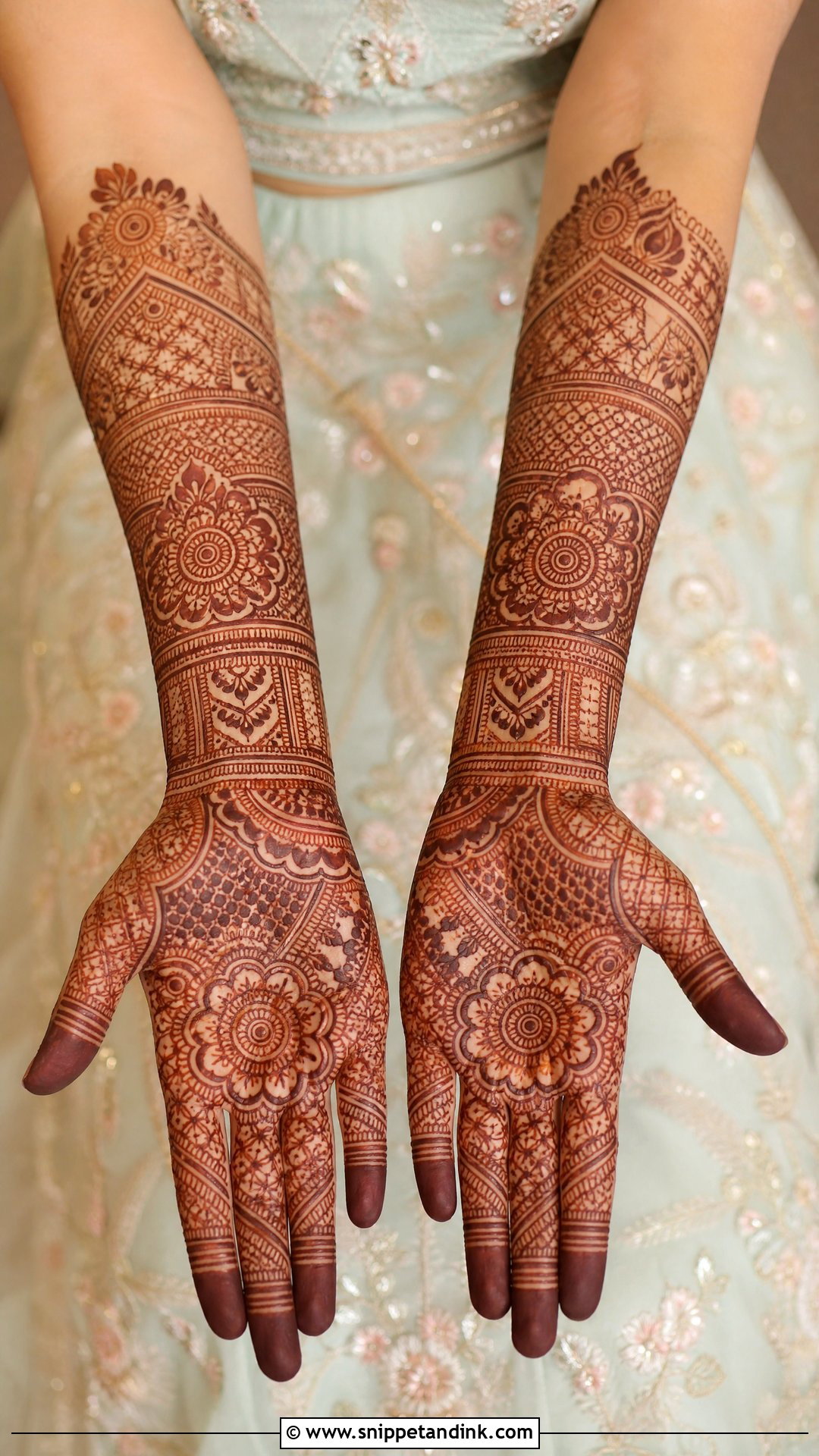
Pastel outfits are where heavy filling goes wrong; a mint or powder blue lehenga can’t hold up against hands that read almost black from a distance. Indo-Arabic bridal mehndi solves it by keeping Indian detail in the palm mandala and paisleys while the back hands get Arabic flow, jaali panels and bracelet bands. I usually stop at mid forearm for these brides. Kundan, pearl or diamond pieces all sit comfortably beside it.
4. Rajasthani Bridal Mehndi For Heavy Bridal Dress
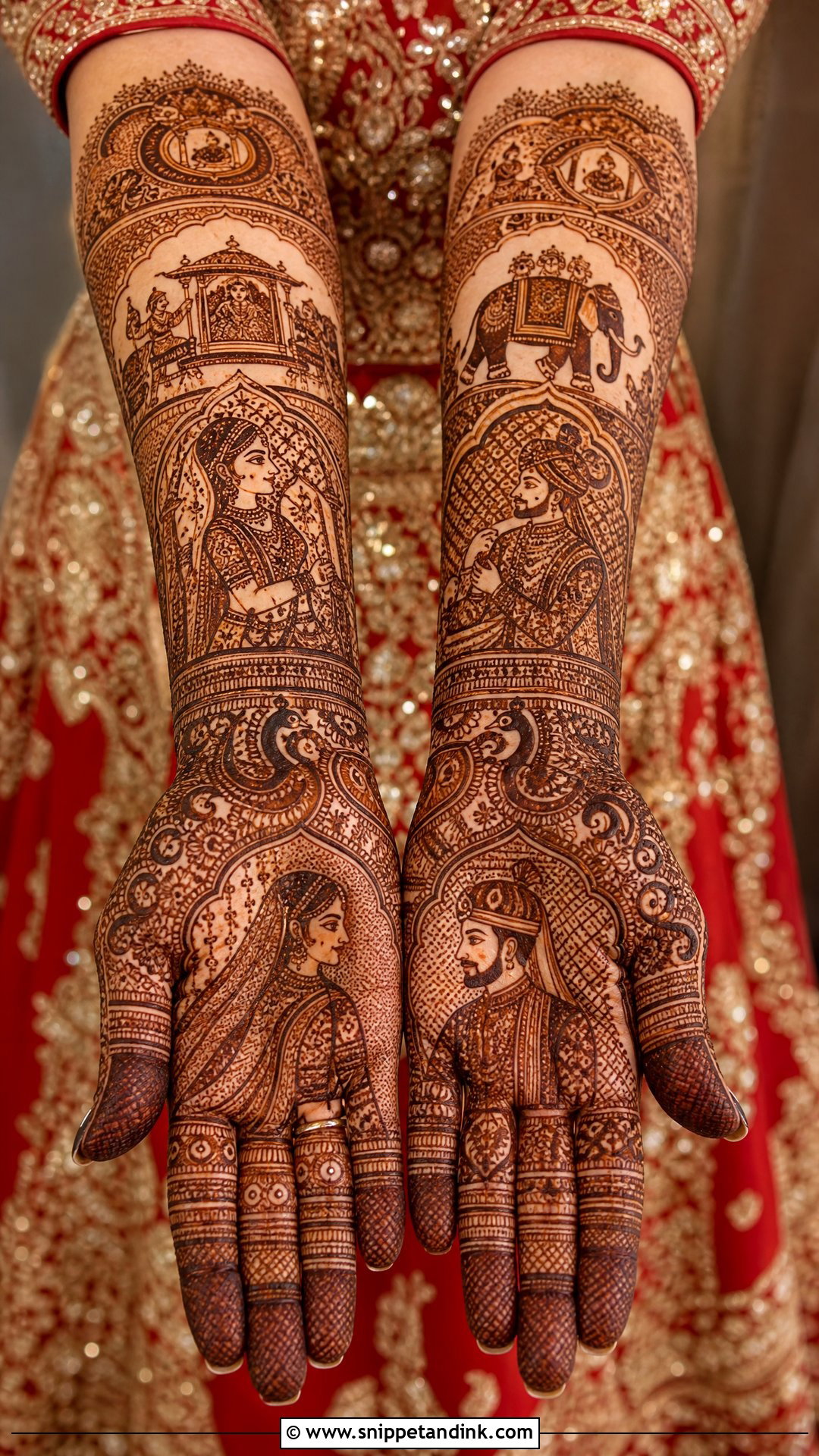
Rajasthani work is storytelling: royal motifs, bride and groom figures, elephants, doli scenes, peacocks and heavy ornamental borders, mirrored from hand to hand. It earns its density next to a worked lehenga, a banarasi saree or velvet, because the outfit carries the same weight. The risk is fine figures filling in and blurring, so I pipe these with a thinner cone tip and ask brides to protect the paste longer than usual. Expect it to run from fingertips to above the forearm, and budget several hours of sitting still.
5. Minimal Bridal Mehndi For Simple Wedding Dress
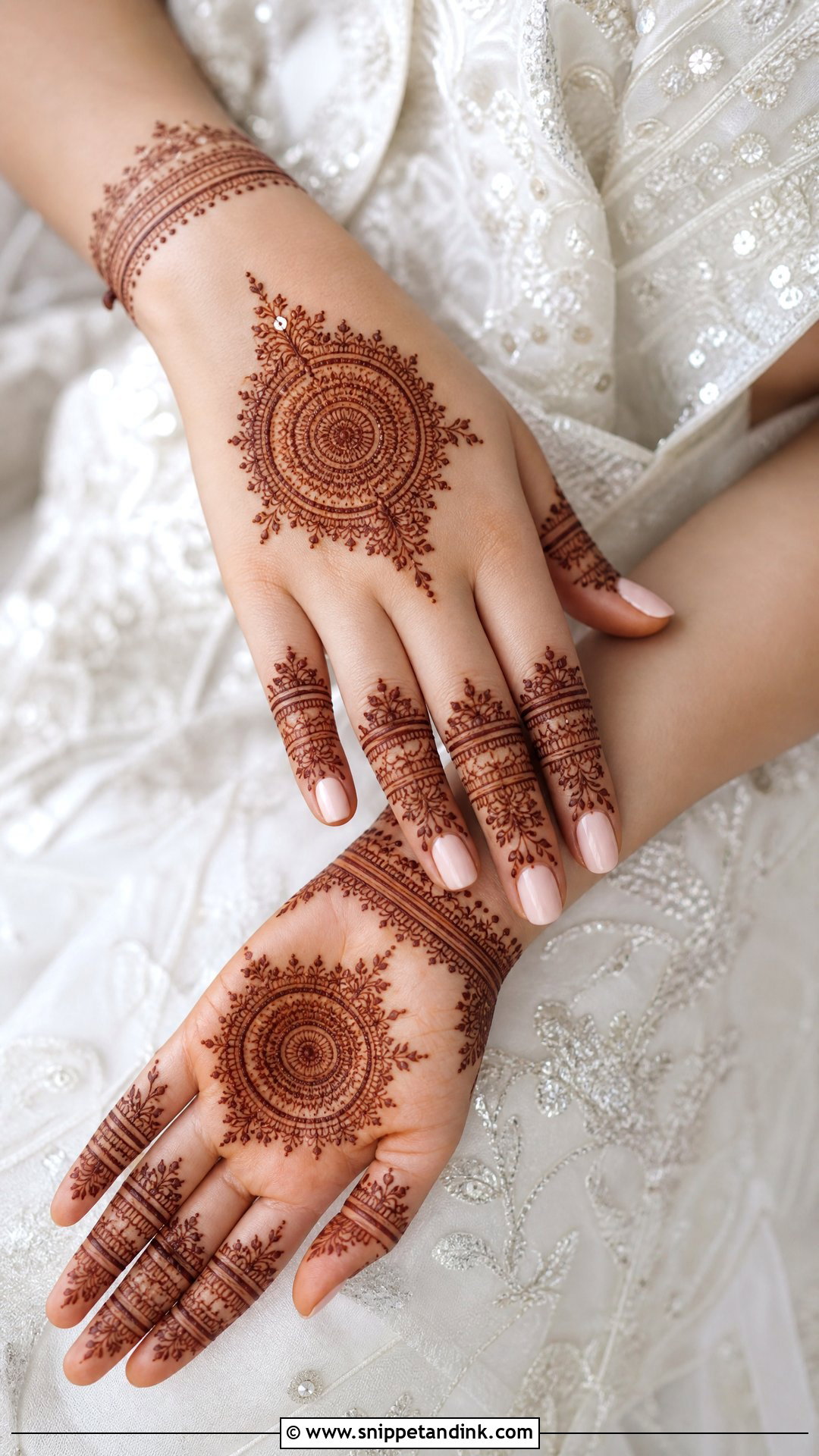
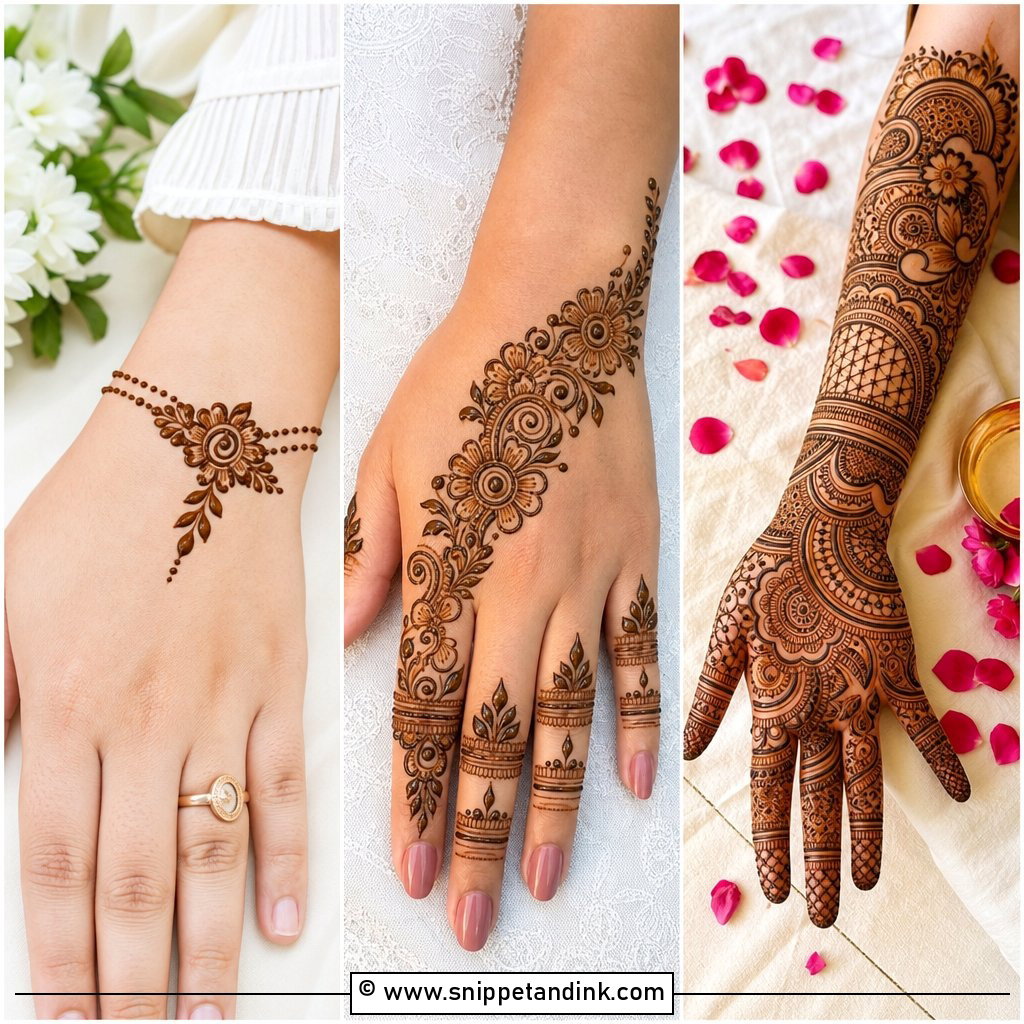
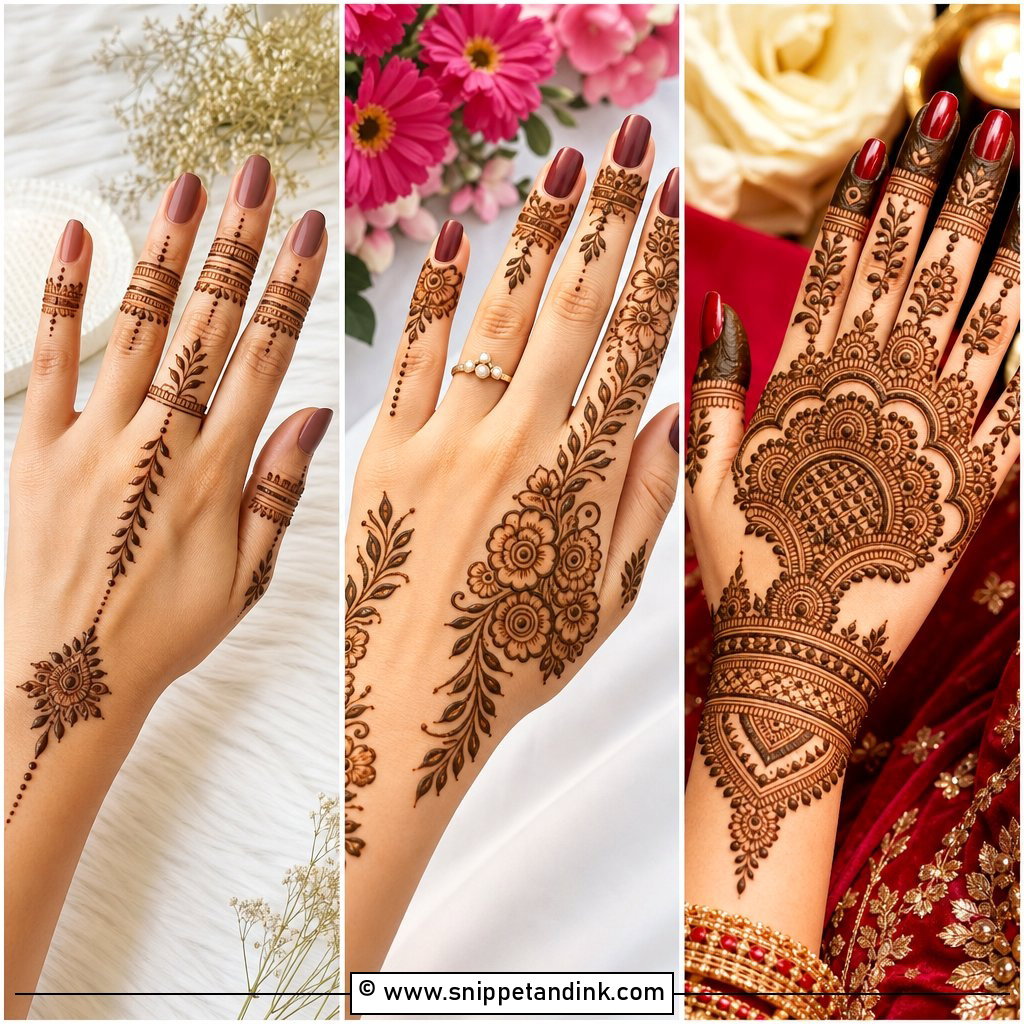
Some brides don’t want hours of paste, and minimal bridal mehndi sits very well with a simple dress. Clean mandalas, slim finger work, a delicate wrist band and a few floral accents are all it needs. The whole effect lives in the spacing, so I resist the urge to keep adding. A centred back-hand mandala with decorated fingers holds up in ring close-ups, and it suits plain silk sarees, courthouse outfits and clean modern gowns.
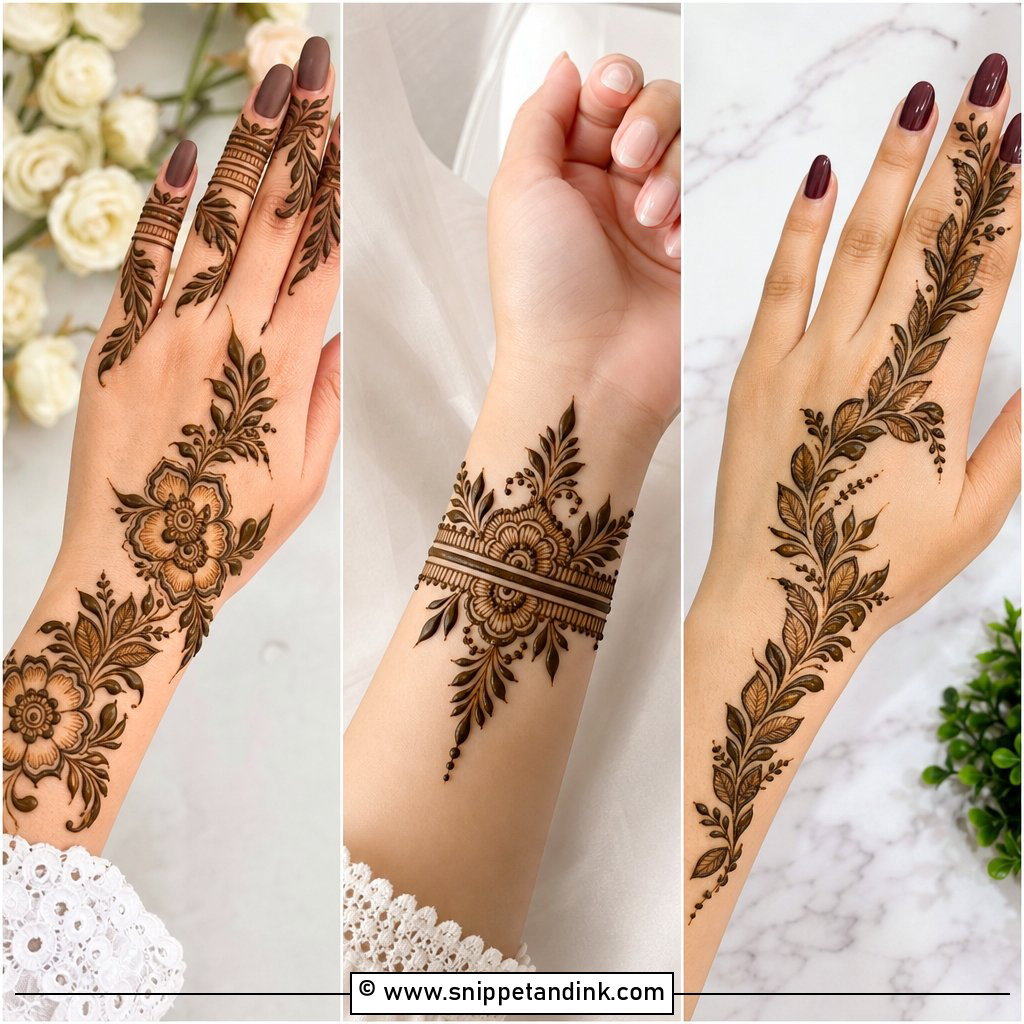
6. Back Hand Bridal Mehndi For Long Sleeve Dress
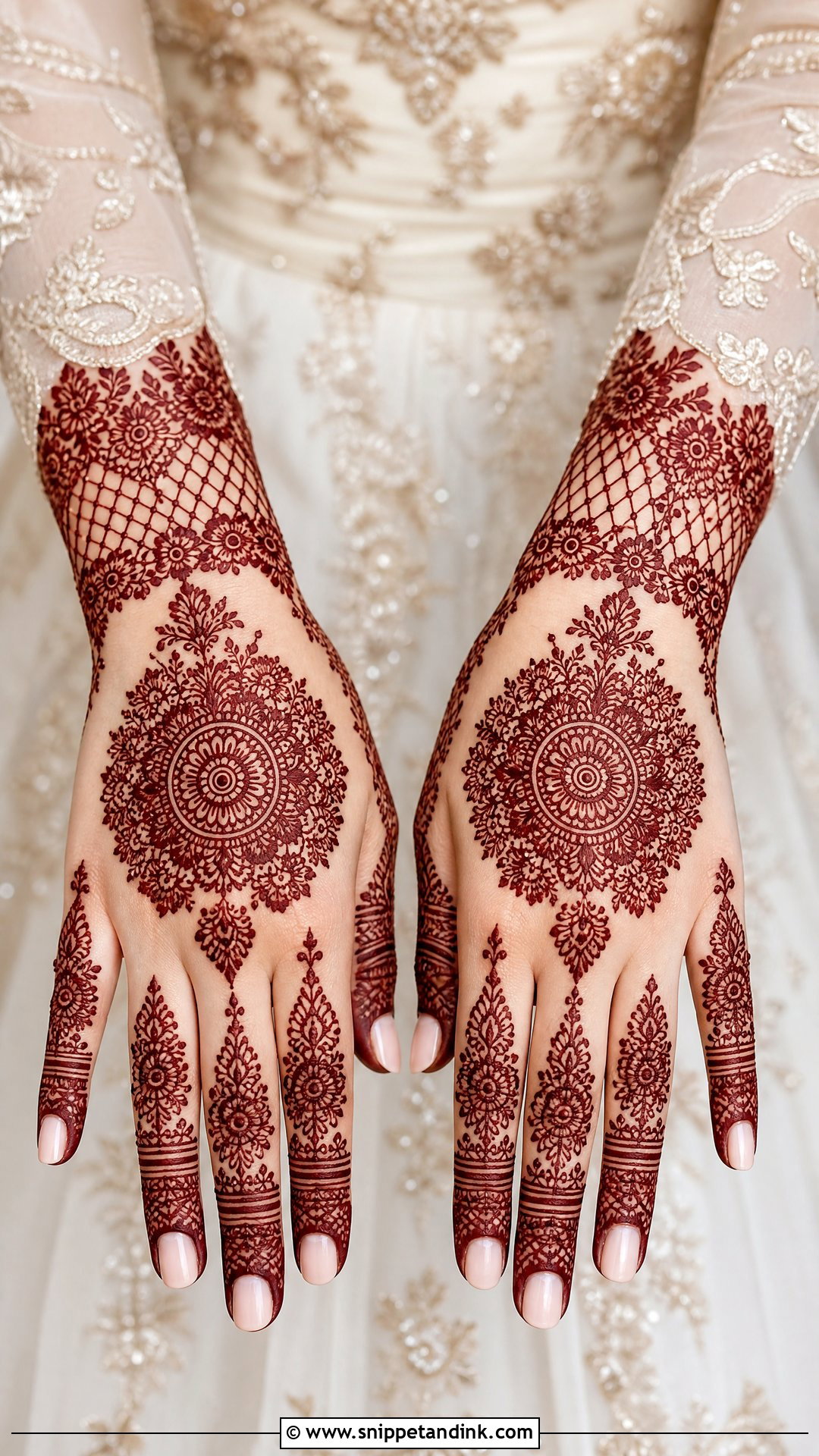
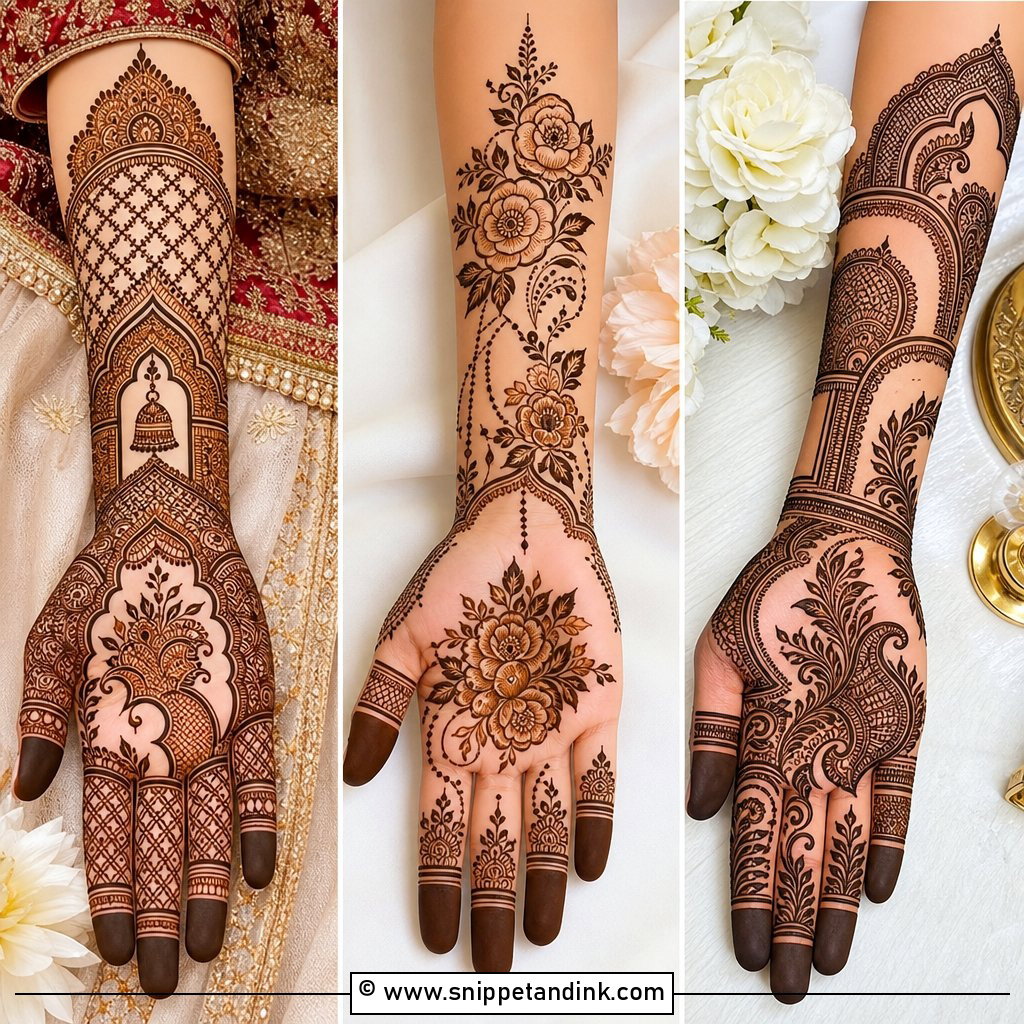
When a sleeve covers the forearm, everything below the cuff has to look complete on its own, so back hand bridal mehndi carries the look: a bold mandala, a floral bracelet or a jaali panel that ends cleanly at the wrist. I ask brides to bring the actual dress or a photo of the cuff, because a design that stops a centimetre too high leaves a strange half motif peeking out. Keep the fingertips detailed; they’re in every bouquet and ring shot.
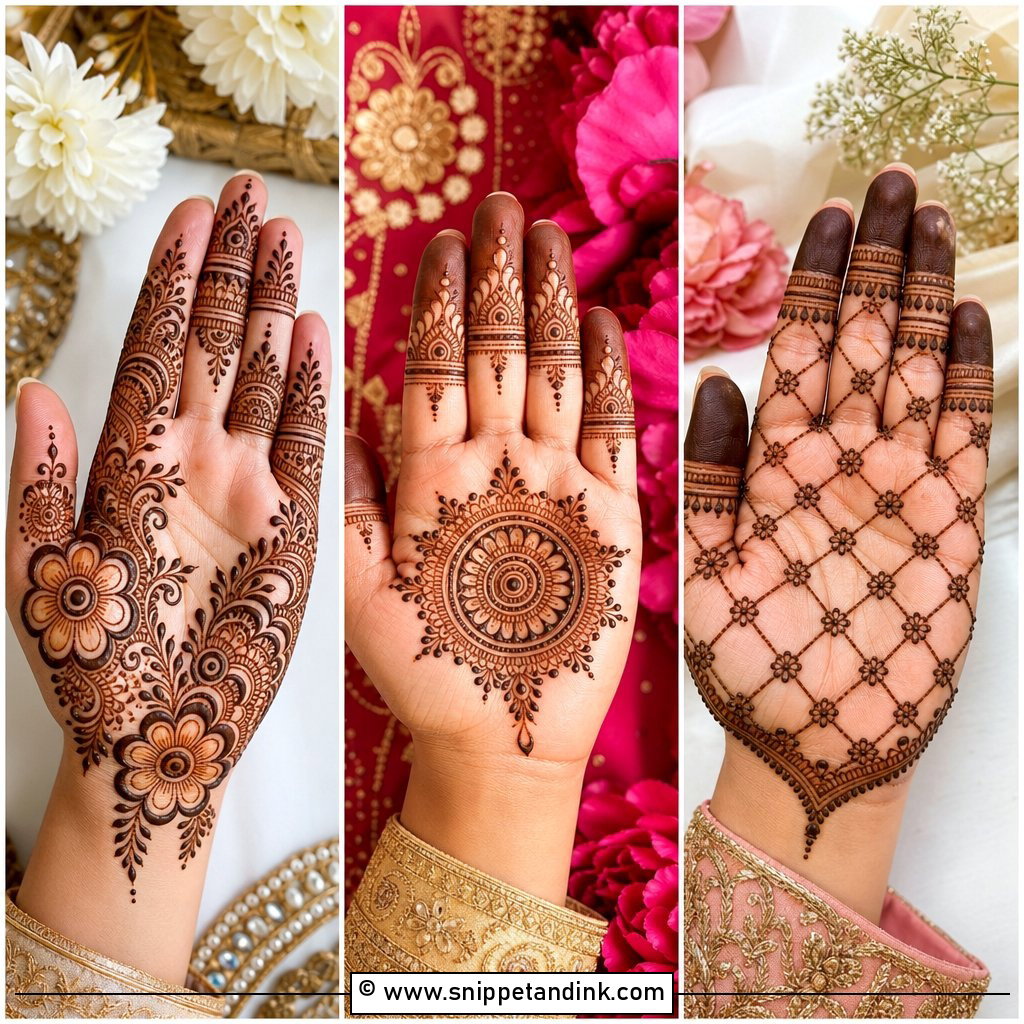
7. Front Hand Bridal Mehndi For Saree Look
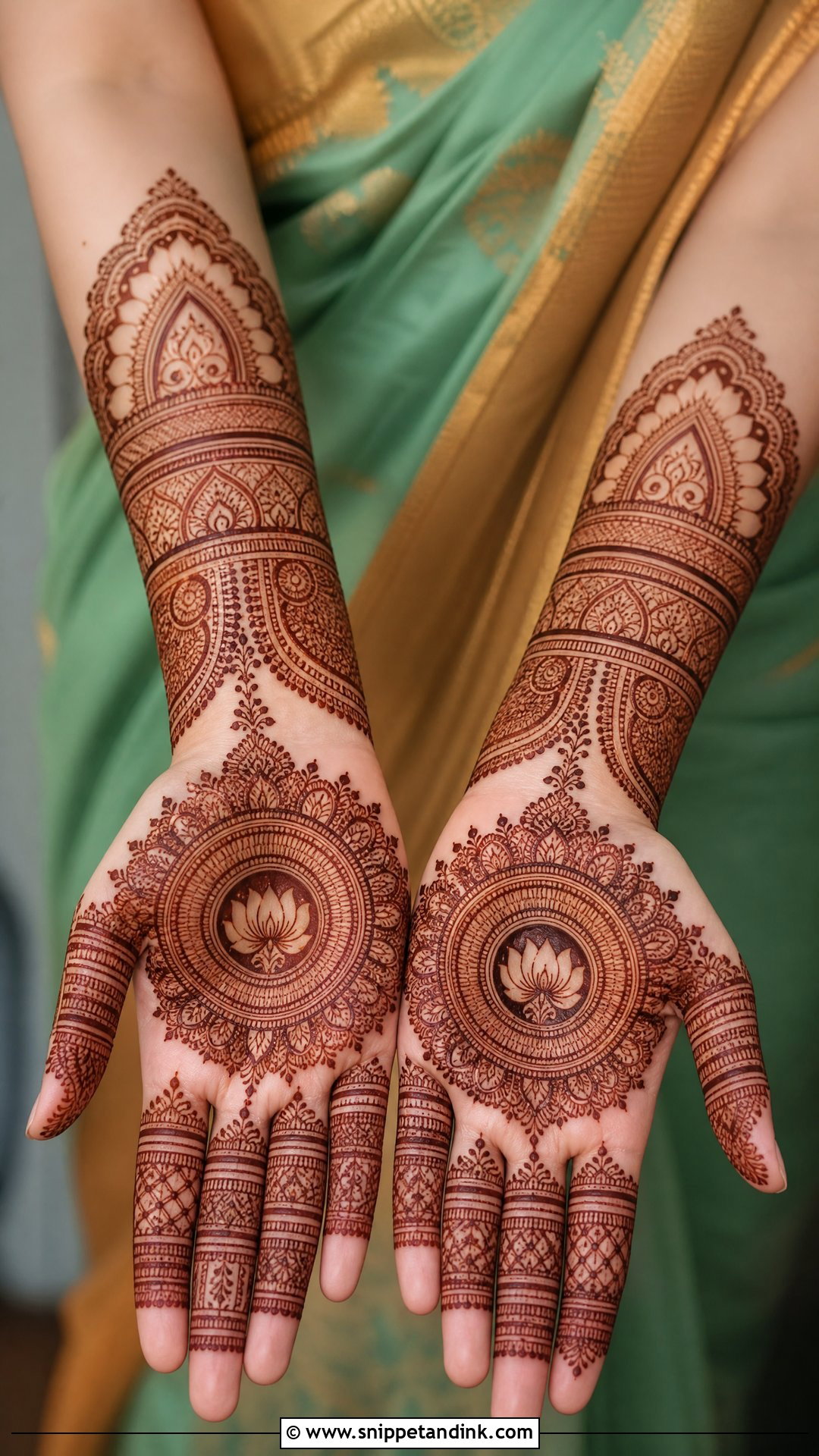
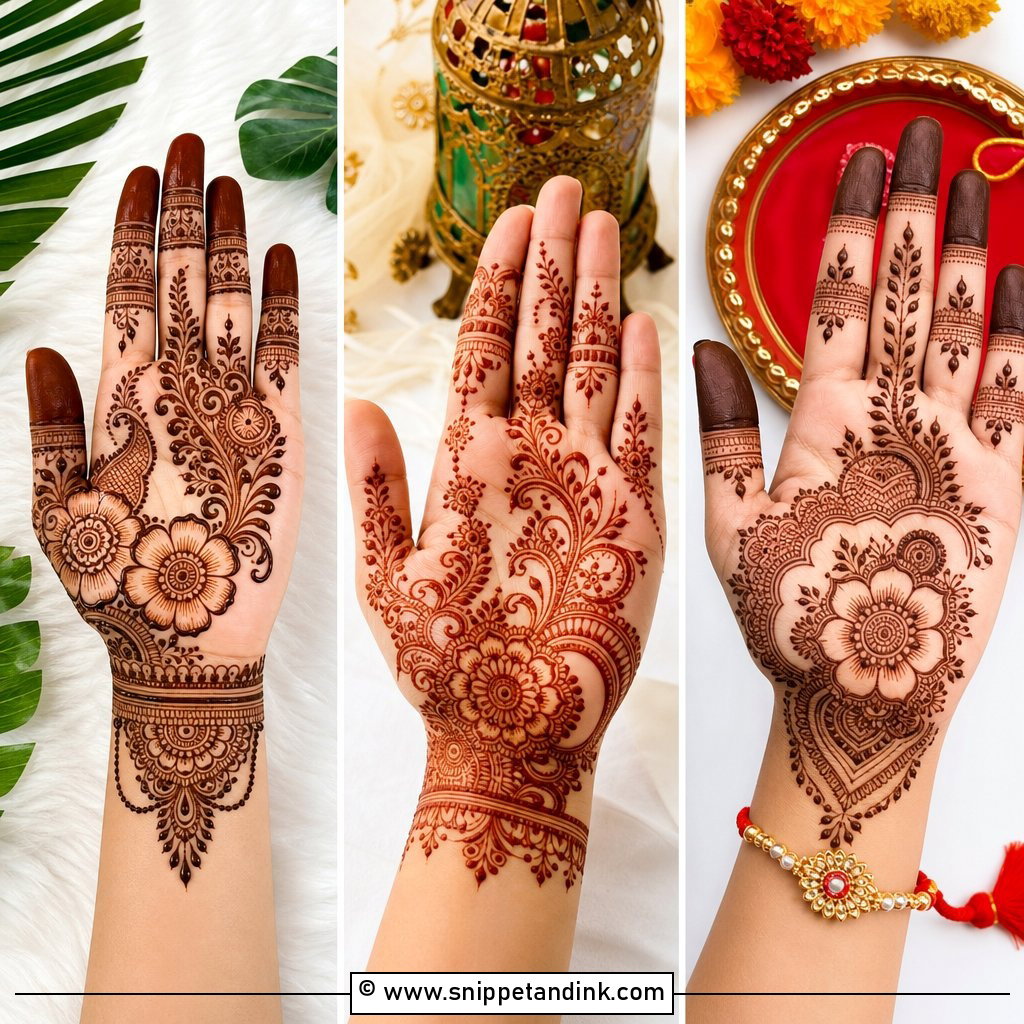
With a saree, the palms do a lot of public work, holding the pallu, kalire and ceremonial items, so front hand bridal mehndi needs a finished palm. Mandalas, lotus motifs and symmetrical finger work read clearly when the hand is open. For heavy silk I use dense Indian filling. For chiffon or georgette, a lighter Indo-Arabic layout feels better balanced against the floaty fabric. Blouse sleeve length decides whether we stop at the wrist or carry on up the forearm.
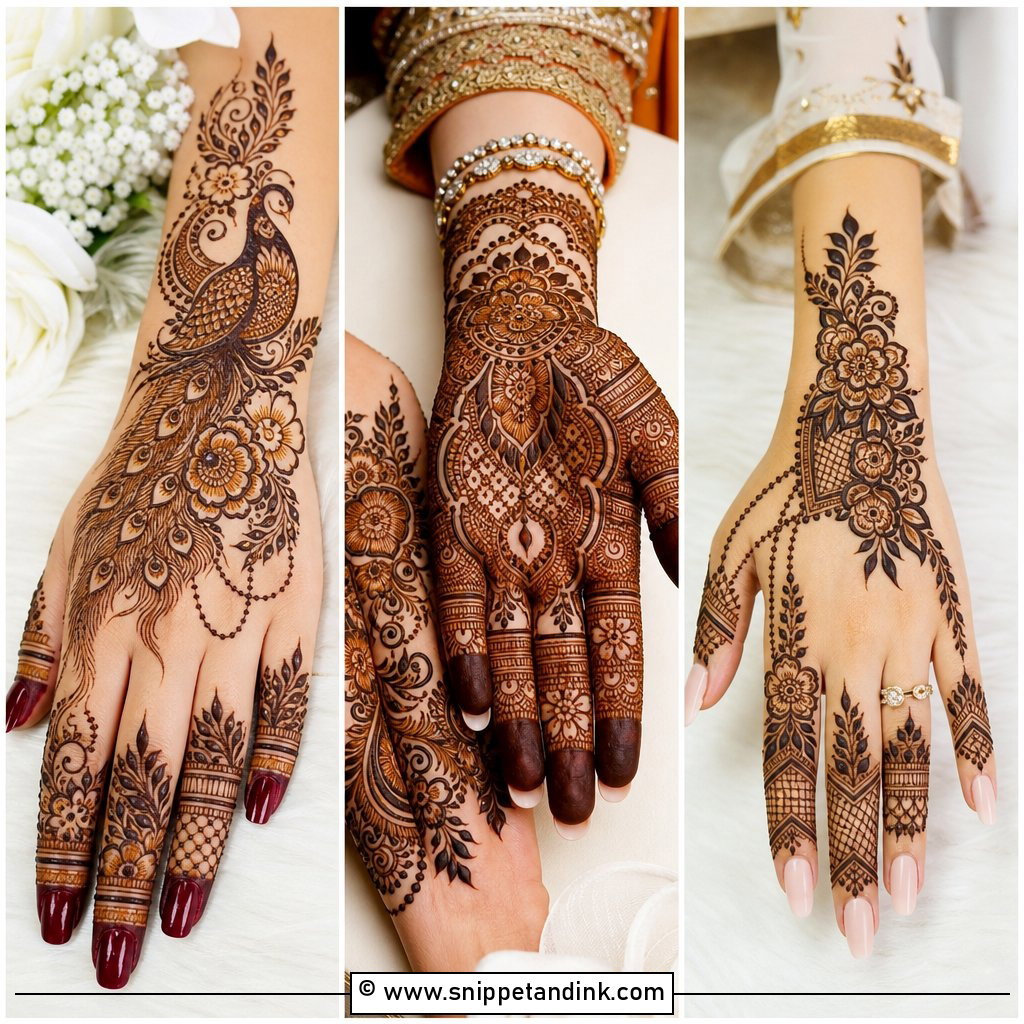
8. Peacock Bridal Mehndi For Green Bridal Dress
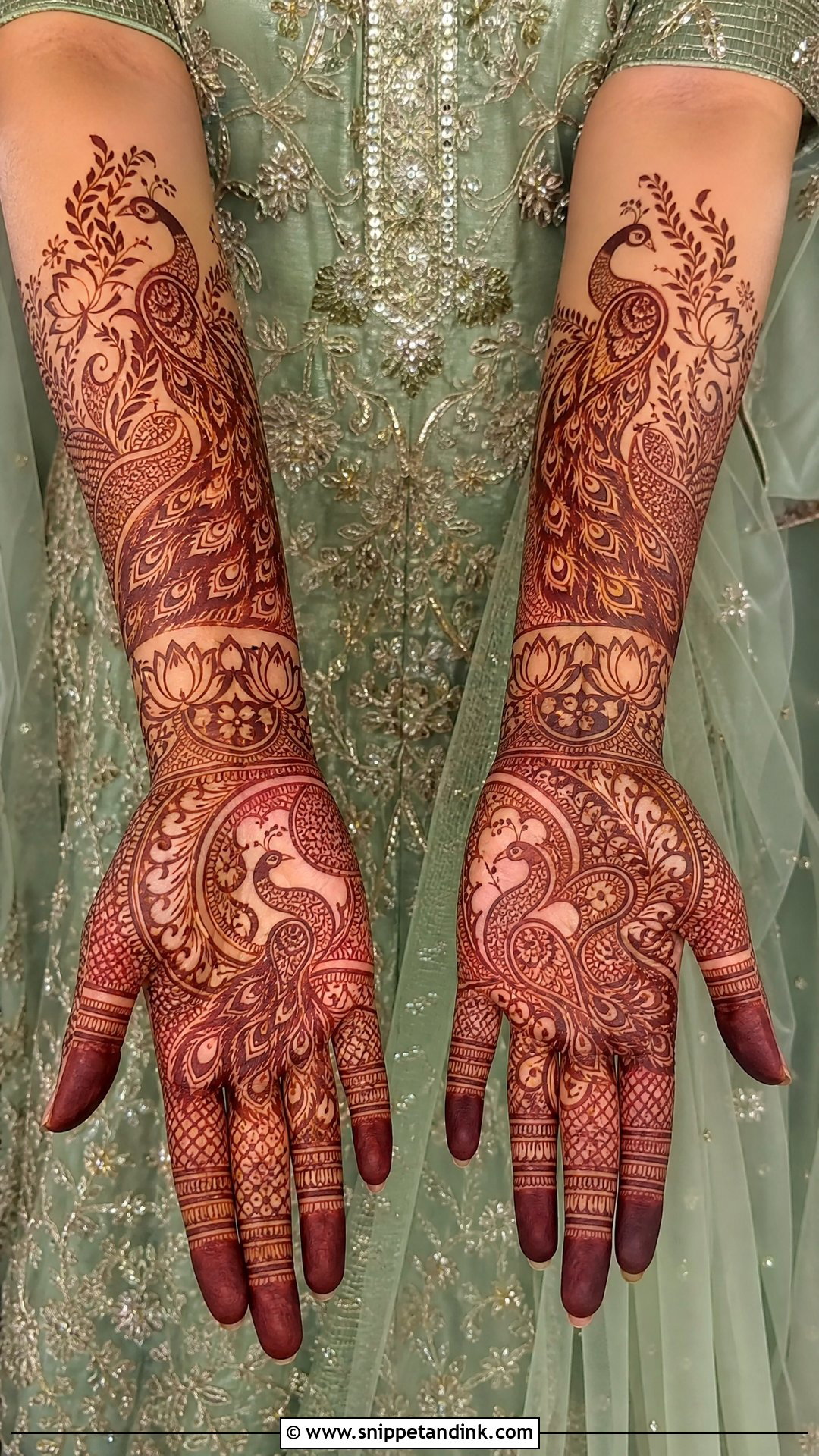
Peacocks and green fabric belong together, and the motif gives a bride movement through the curved necks and long paisley tails. I place the bodies on the palms and let the feathers sweep toward the forearm so the design has direction rather than sitting in one block. If the emerald lehenga is heavily embroidered, jaali sections or lotus borders give the eye a rest between feathers. A deep maroon stain shows clearly against green and gold, though an orange stain can look muddy, so plan the timing carefully.
9. Mandala Bridal Mehndi For Modern Bridal Dress
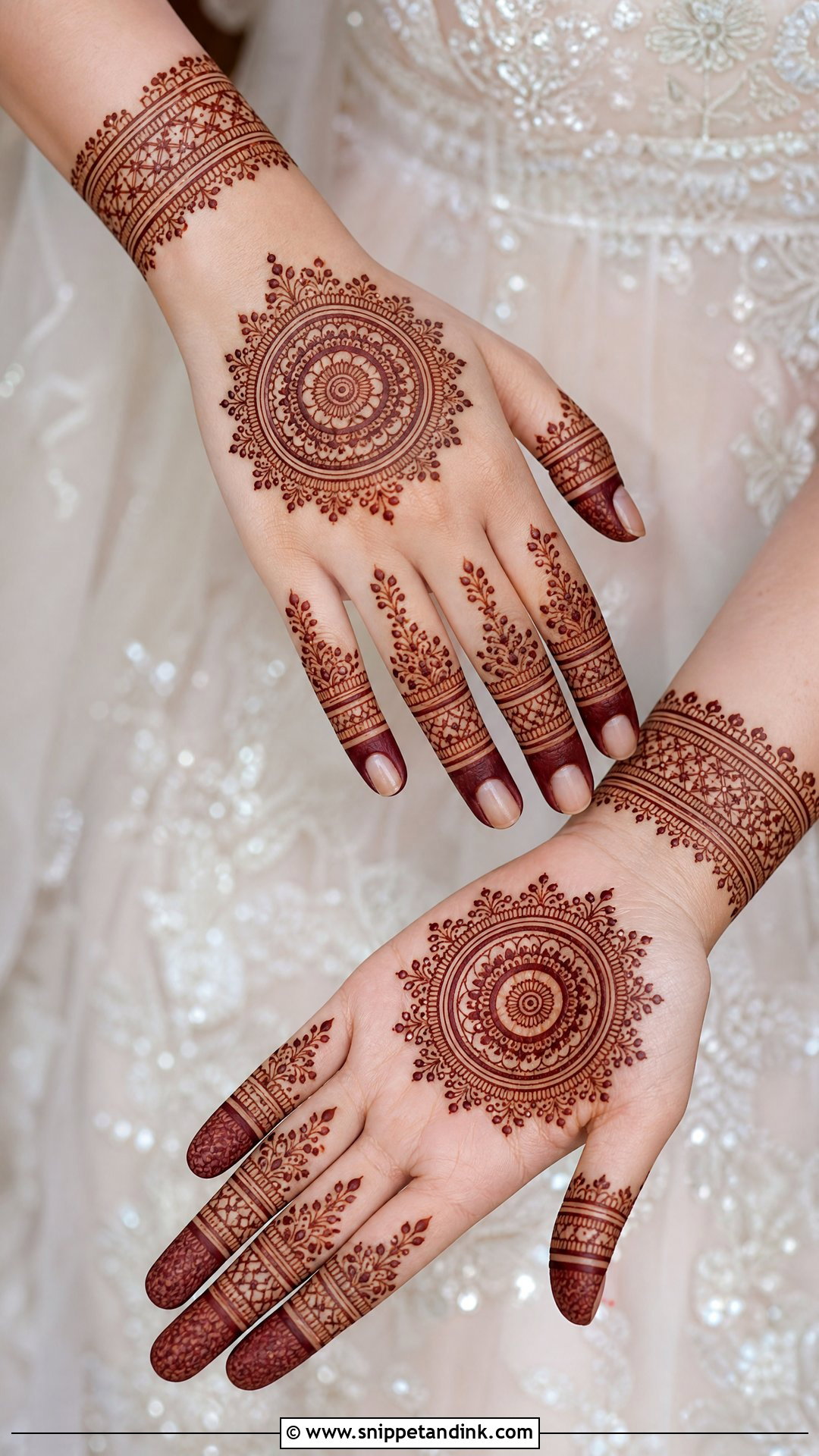
Mandala bridal mehndi suits structured gowns and contemporary lehengas because a single centred circle looks deliberate in close-ups. I always draw the mandala first and build finger details, wrist cuffs and small motifs around it, since an off-centre circle is the one mistake no amount of filler hides. With heavy sleeves, keep the mandala bold and the wrist simple. With a plain outfit, extend outward in fine florals and geometric bands. It’s also a kind option for brides who dislike sitting for full forearm coverage.
10. Jaali Bridal Mehndi For Net Bridal Dress
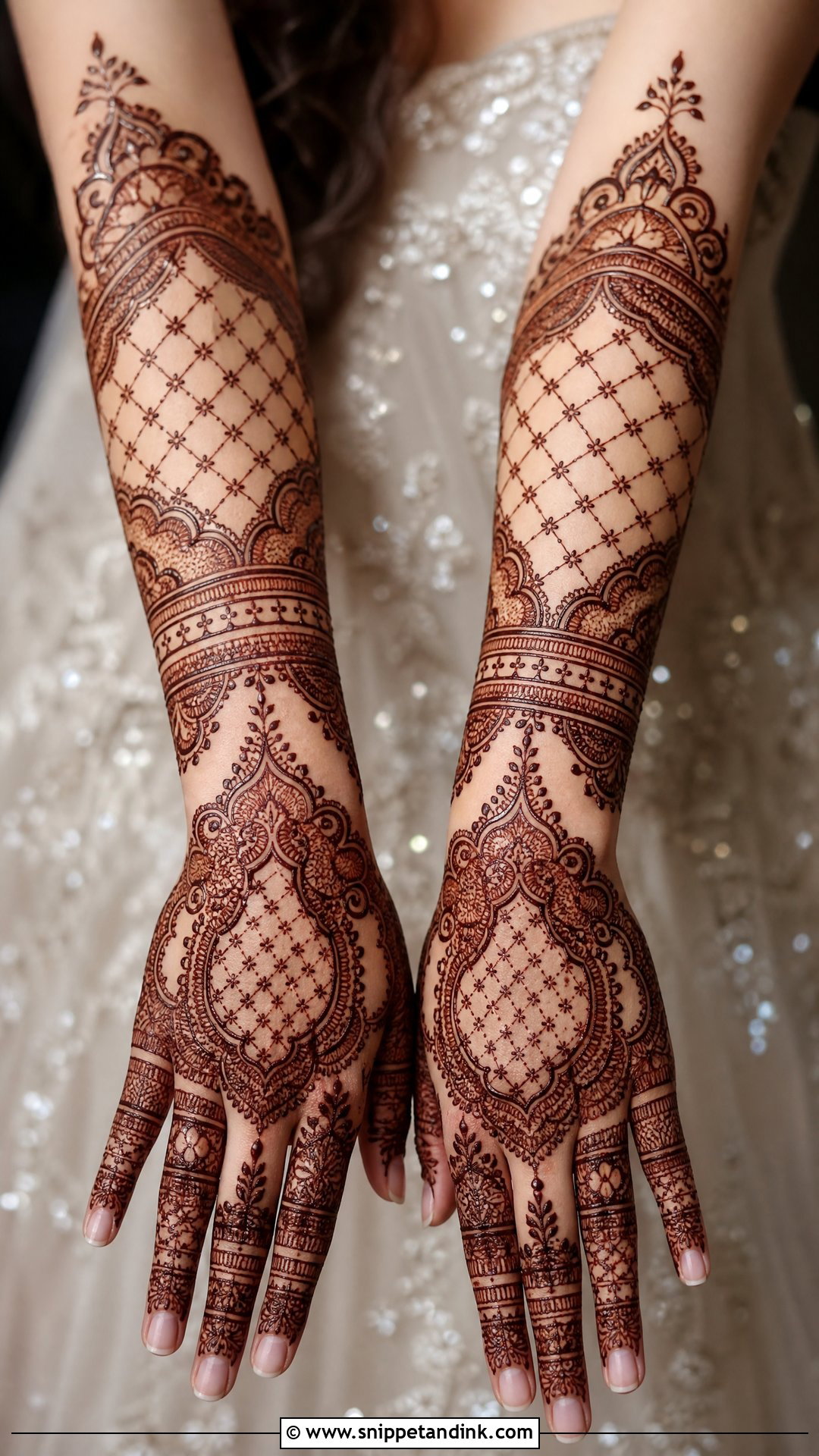
Jaali imitates lace, so it’s the natural partner for a net lehenga, a lace gown or a dupatta with scalloped borders. The mesh is the hardest part of bridal work to keep even. If my cone pressure wavers, the grid squares change size and the whole panel looks wobbly. I keep jaali to the back hand, fingers or defined forearm panels and frame it with flowers and paisleys so it doesn’t take over. Done neatly, it echoes the fabric texture rather than copying it.
11. Lotus Bridal Mehndi For Pink Bridal Dress
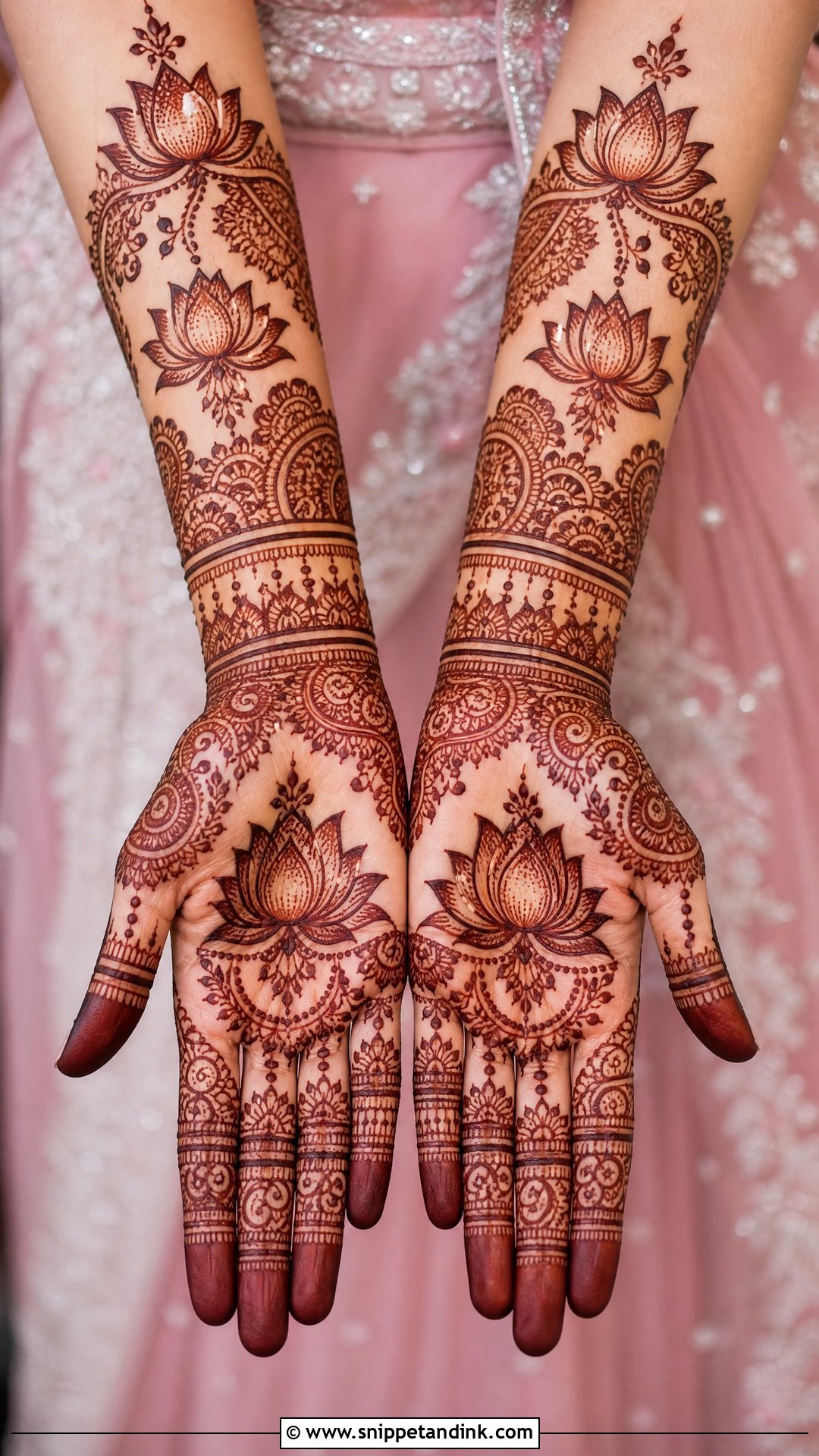
Lotus suits pink, and how I draw it depends on the shade. A blush or pastel lehenga gets open spacing and fine petals in the palm centre or along the wrist. Rani pink or hot pink can carry heavier paisleys, dots and leafy borders, because the bright colour would otherwise make thin linework disappear. Pearl, polki and rose gold all sit well beside it, and a reddish-brown stain warms pink without clashing.
12. Gulf Bridal Mehndi For White Bridal Dress
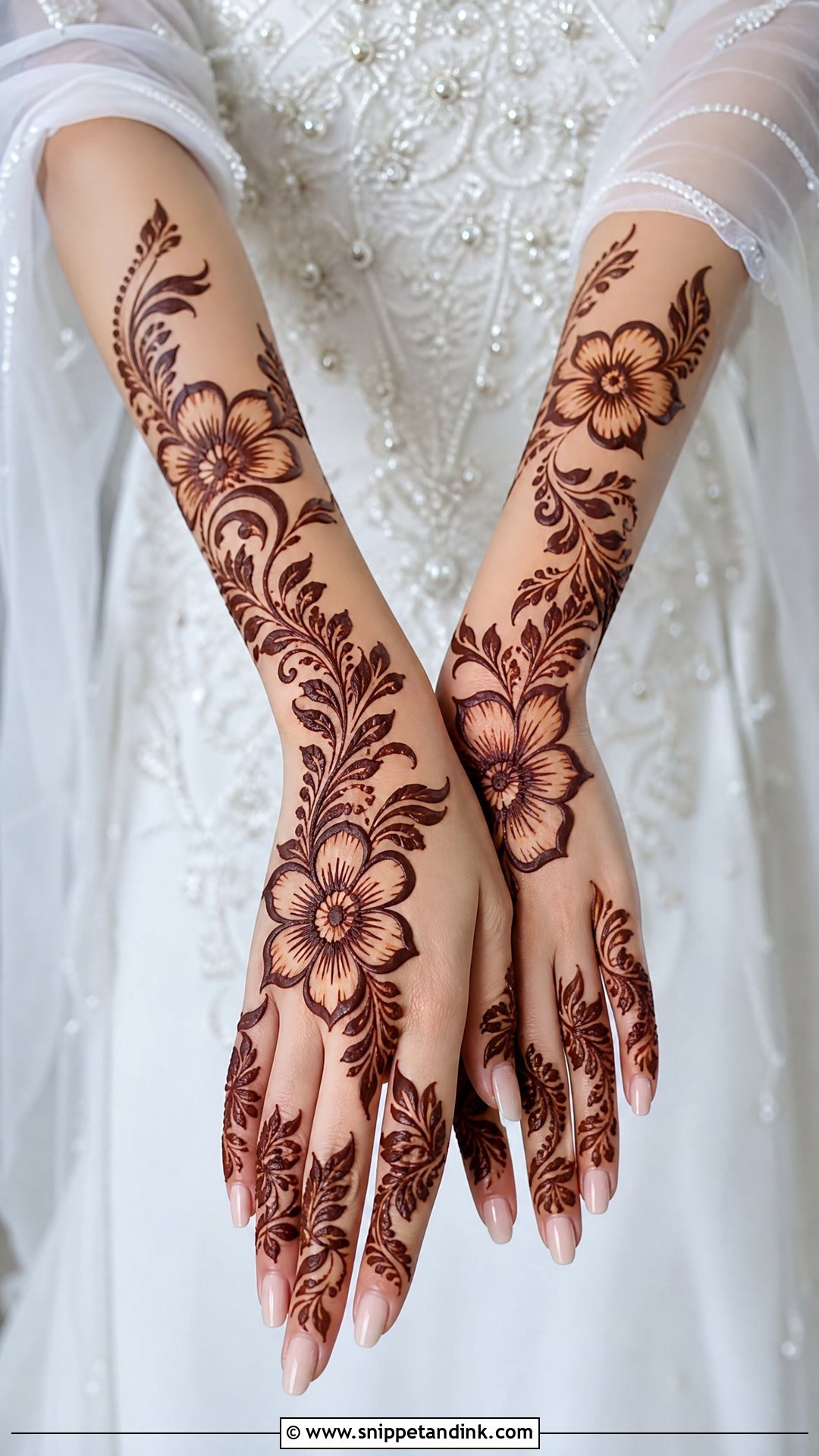
Gulf or Khaleeji styles use big flowers, thick outlines and wide open skin, which is why they hold up against white without looking crowded. Those thick lines are drawn with a larger cone opening, and they need a slightly longer paste time to stain evenly all the way through. Coverage usually runs over the back hands, fingers, wrists and part of the forearm. It’s a natural fit for white gowns, abayas, kaftans and nikah outfits, and for brides who’d rather skip dense filling but still want something bold.
13. Moroccan Bridal Mehndi For Gold Bridal Dress
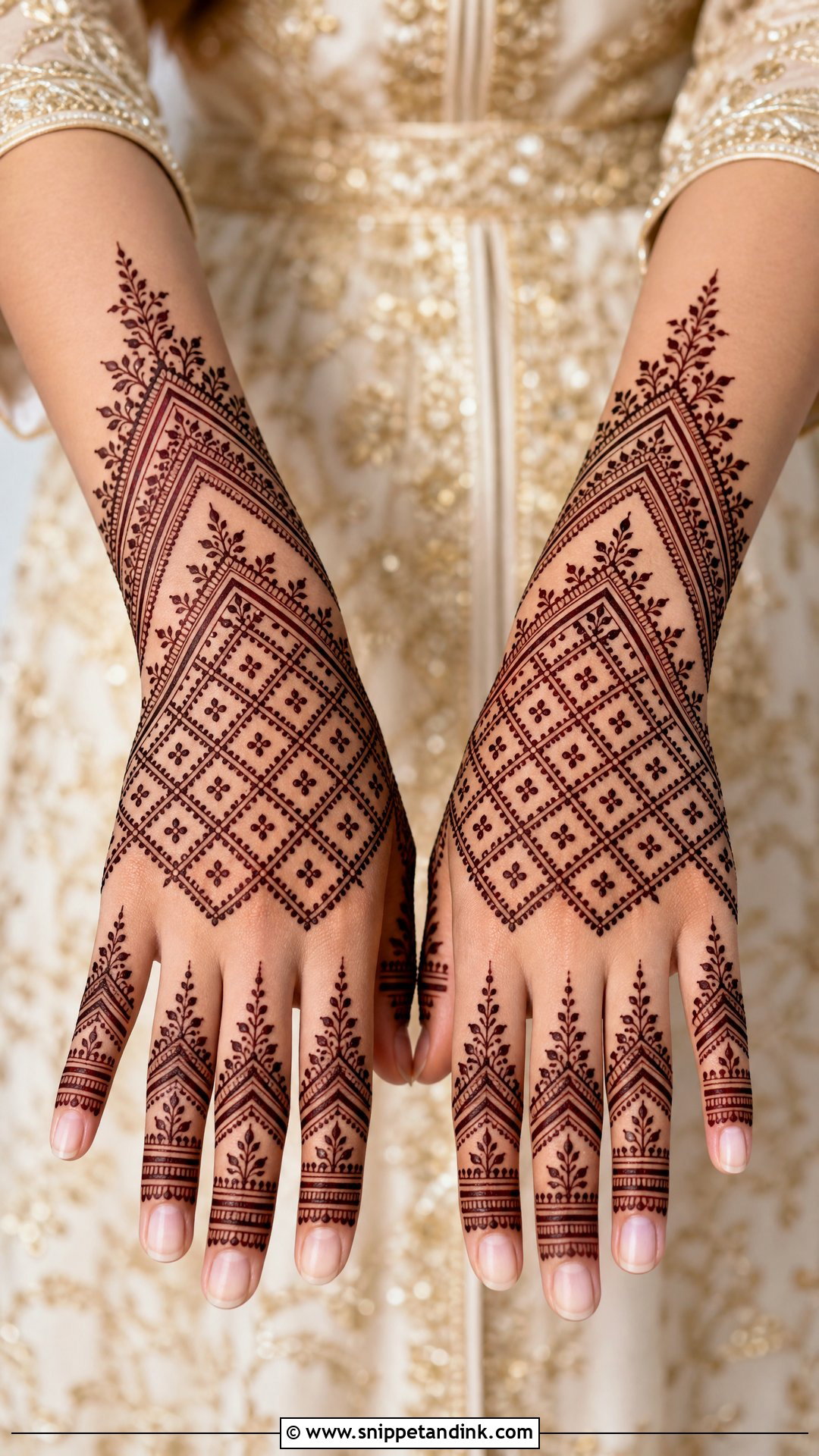
Moroccan work swaps soft florals for diamonds, triangles, grids and straight-edged wrist cuffs. Gold fabric is already rich, so this is a place to keep lines sharp and resist filling every gap. Straight geometric lines are less forgiving than curves; one wobble in a grid shows, which is why I mark the main guide lines first before committing to detail. A dark stain gives enough contrast against gold jewelry and metallic sarees. Few brides ask for it, which is part of its appeal.
14. Jewelry Bridal Mehndi For Sleeveless Dress
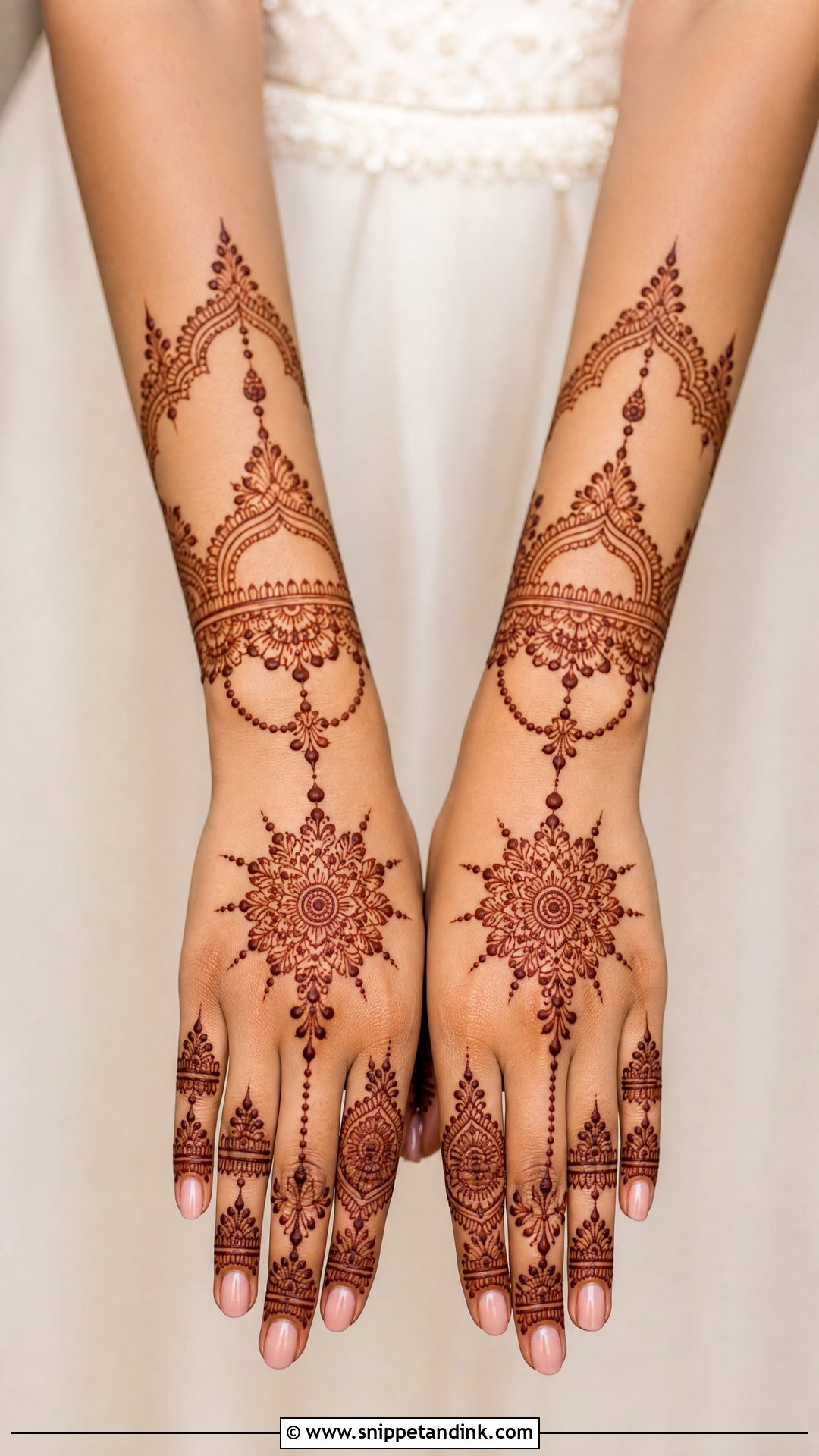
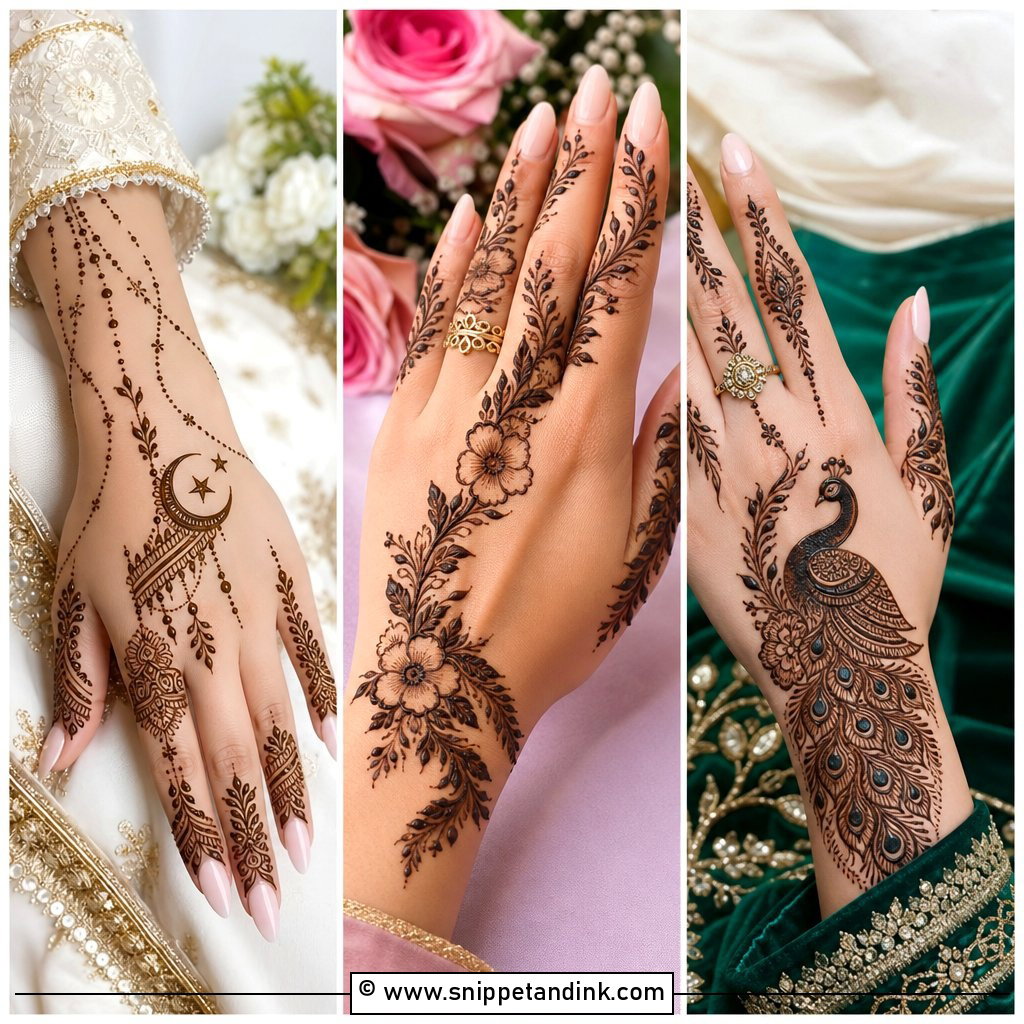
Bare arms give jewelry-style mehndi room to work: bracelet bands, ring chains, hathphool shapes and dangling dots connecting the fingers to the wrist. It suits sleeveless lehengas, gowns and fusion dresses. Because the henna does the decorating, real jewelry can stay minimal. I usually add a floral cuff, some shaded paisleys and a central back-hand motif so it still reads as bridal rather than party henna. Brides who hate a fully packed look are usually happiest with this one.
15. Portrait Bridal Mehndi For Traditional Bridal Dress
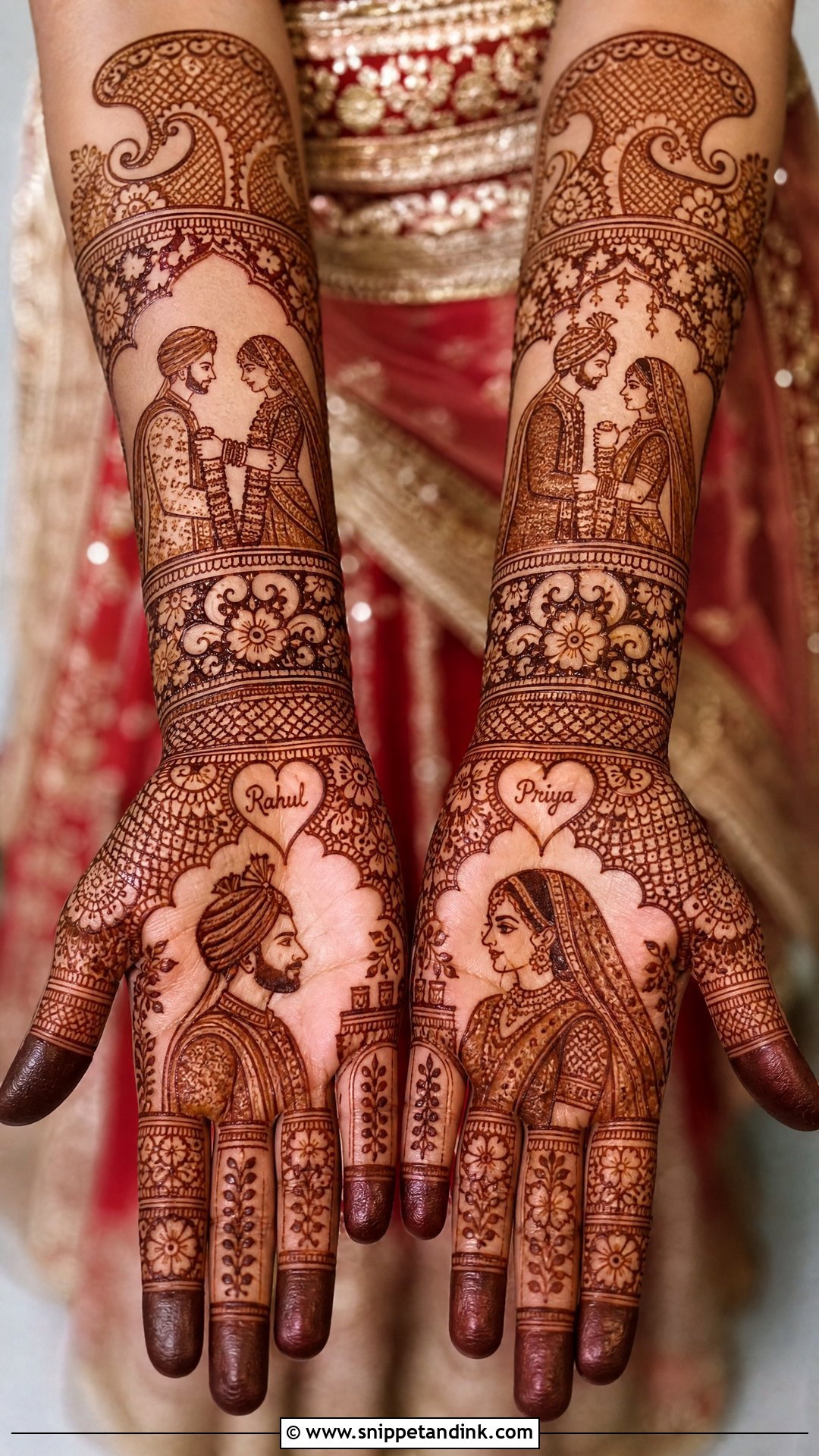
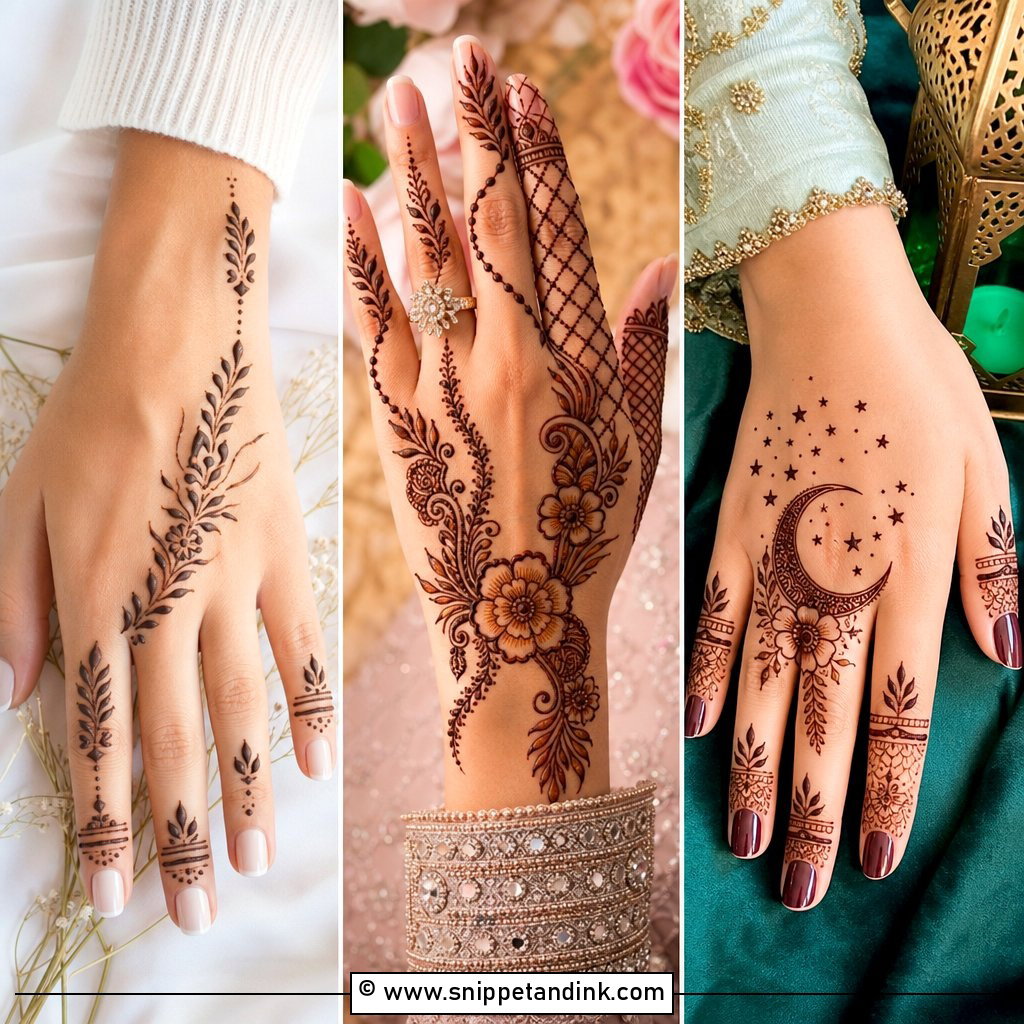
Portrait mehndi turns the hands into a wedding story, with bride and groom faces, varmala scenes, doli elements and initials. Faces are the hardest thing a henna artist draws, and expression comes down to a few millimetres of line, so look at an artist’s past portrait work before booking, not just her floral photos. I keep portraits on the palms, where the surface is flattest, and balance the rest with florals, paisleys and borders. It sits most naturally beside classic lehengas, sarees and ghararas.
16. Floral Bridal Mehndi For Floral Bridal Dress
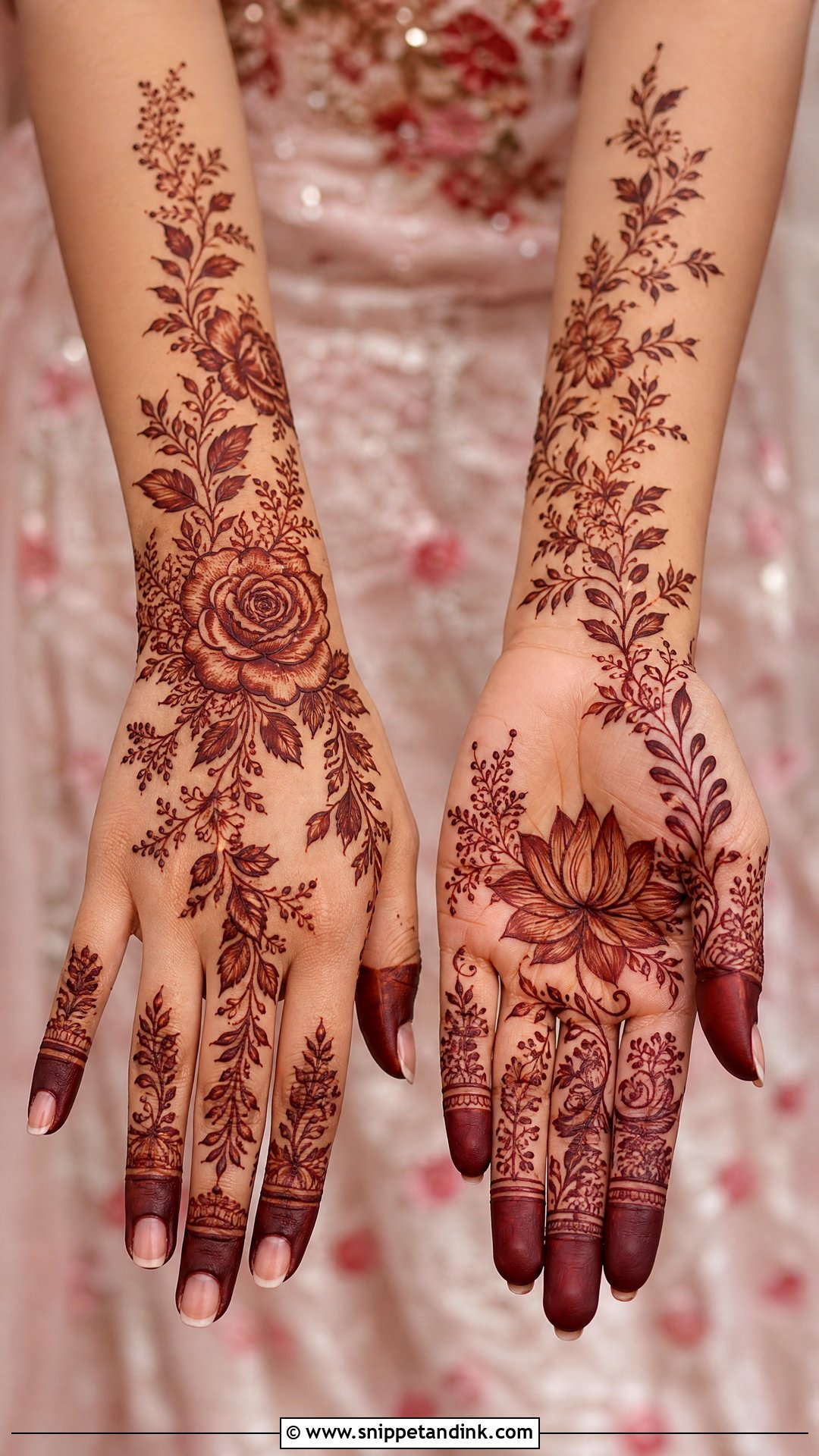
If the dress has floral embroidery, I’ll often borrow a flower straight from the fabric and repeat it across the hands. Roses, lotus petals, leafy vines and small blossoms all translate well. A softly embroidered lehenga wants an open, graceful layout. A heavily worked one needs fuller blooms and shaded leaves, or the hands look plain beside it. The style can lean Arabic, Indo-Arabic or Indian depending on coverage, and a deep natural stain keeps petal detail visible in photos.
17. Bracelet Bridal Mehndi For Reception Dress
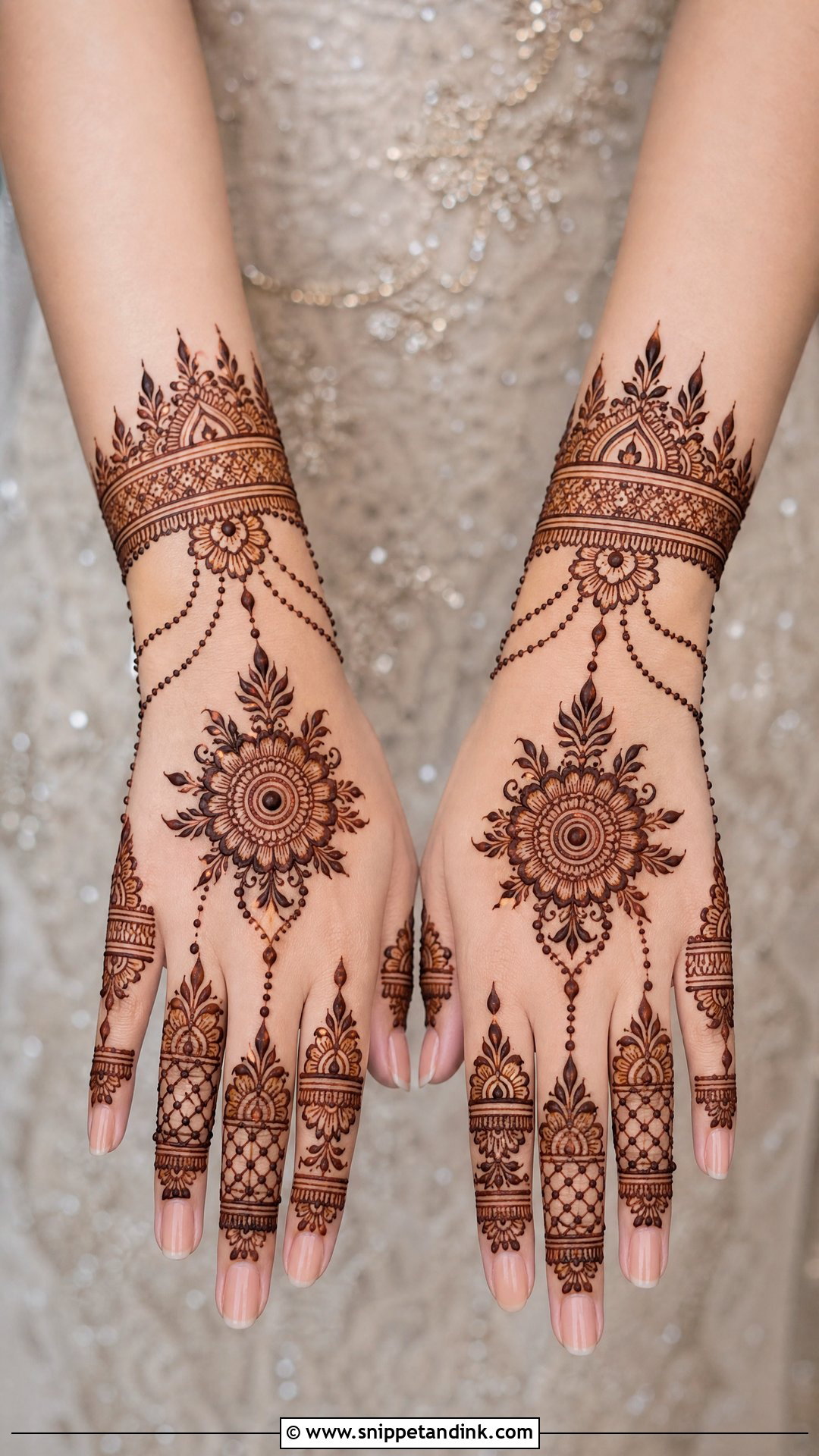
Reception outfits usually call for something lighter than the ceremony henna. Bracelet bridal mehndi does that with bands around the wrist, connected finger patterns and a neat back-hand centrepiece, using chains, dots, florals or jaali. Receptions mean a lot of posed hand shots, so I keep the back hand crisp and symmetrical. It leaves the wrist clear enough for bangles or a watch without covering half the design, and it sits easily with gowns, sarees and Indo-western outfits.
18. Finger Bridal Mehndi For Embroidered Dress
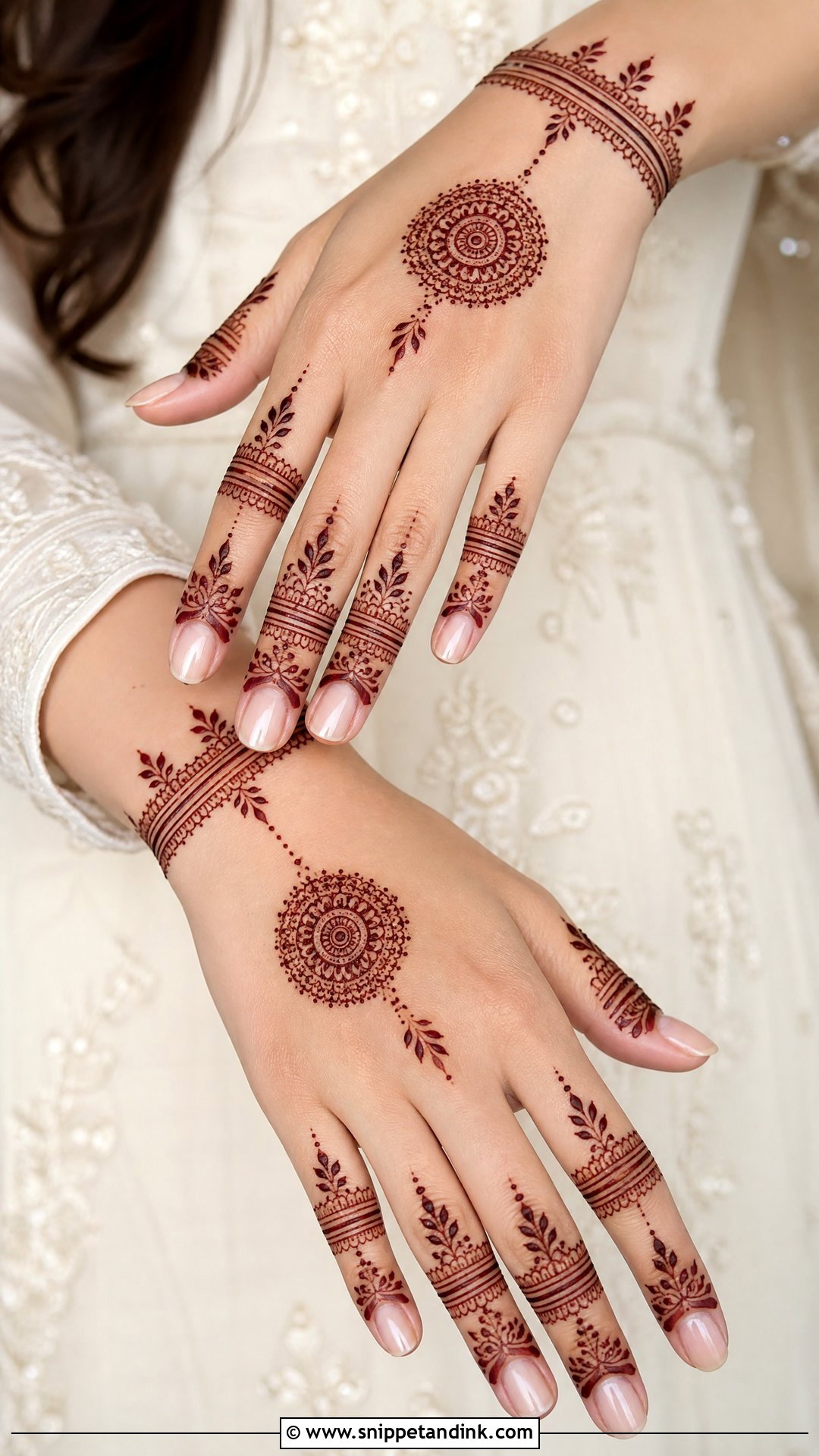
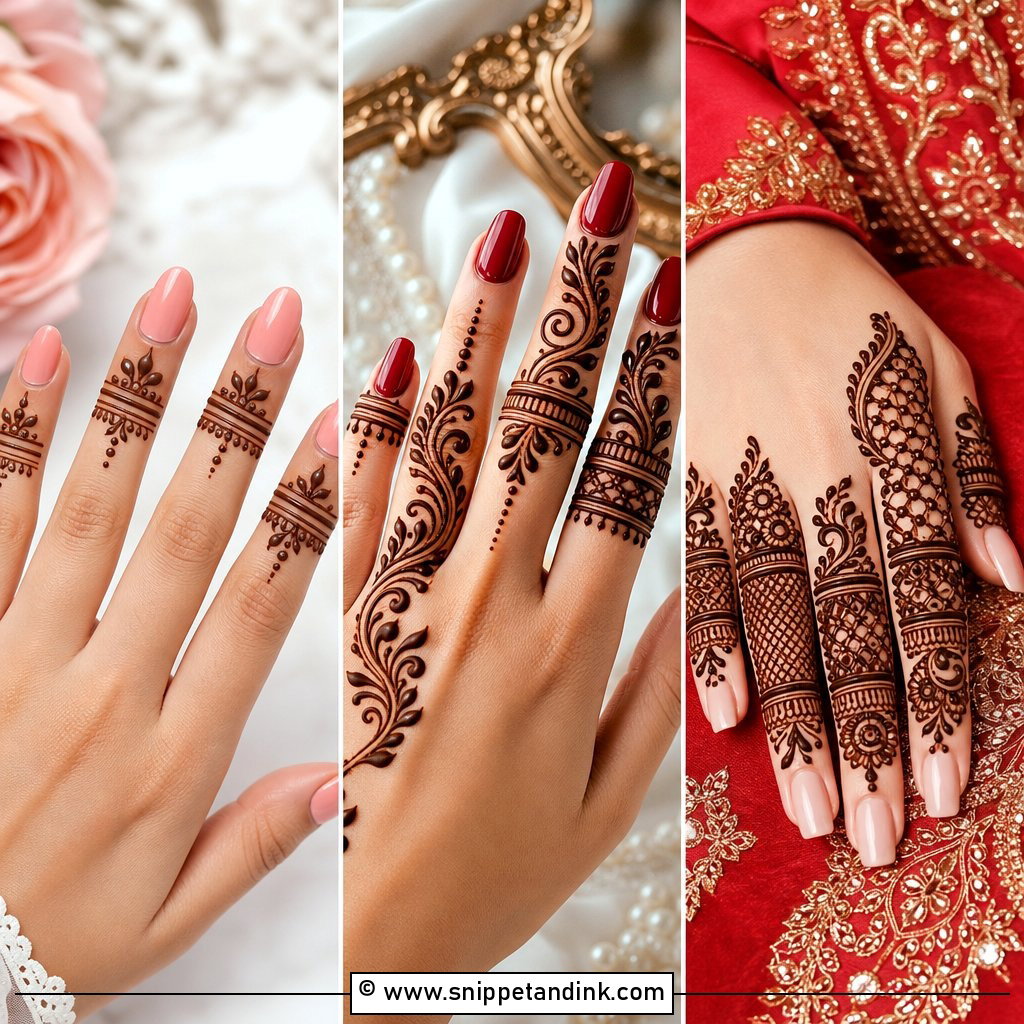
Mirror work, zardozi, sequins and dense threadwork already give the eye plenty to do. Against an outfit like that, I keep henna mostly to the fingers: leafy lines, dotted chains, mini florals and shaded tips, with a slim wrist band and a small mandala or paisley on the back hand. Open skin is the point here. It’s also the lightest option to sit for, and it dries quickly, which helps on a packed pre-wedding schedule.
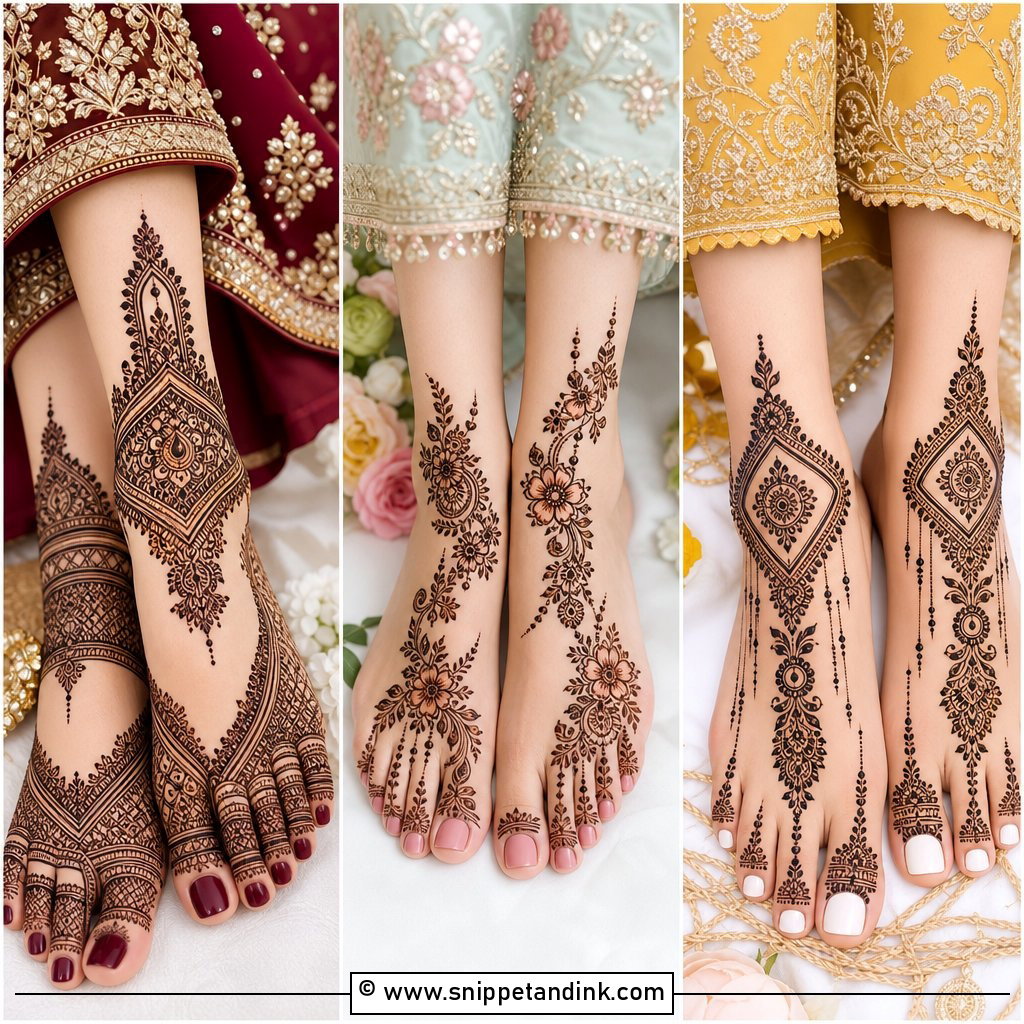
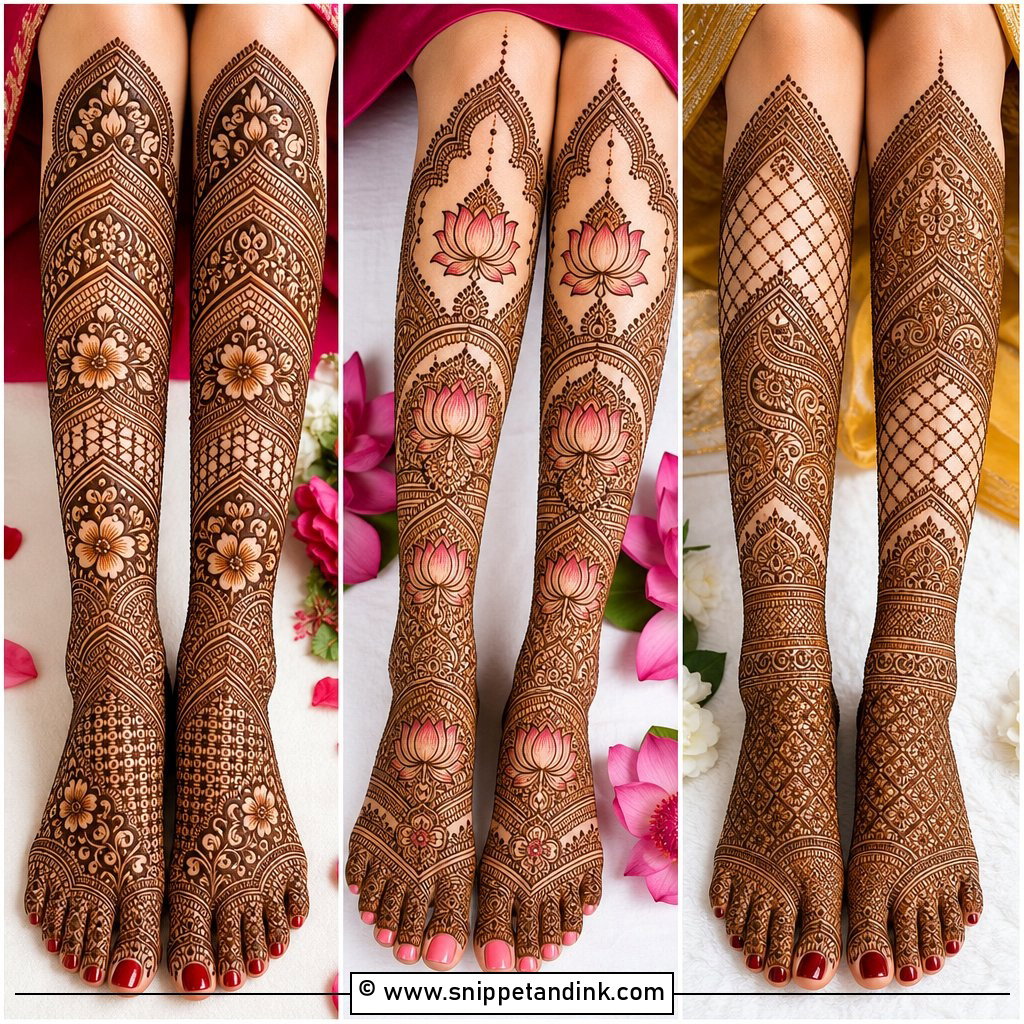
19. Feet Bridal Mehndi For Bridal Lehenga
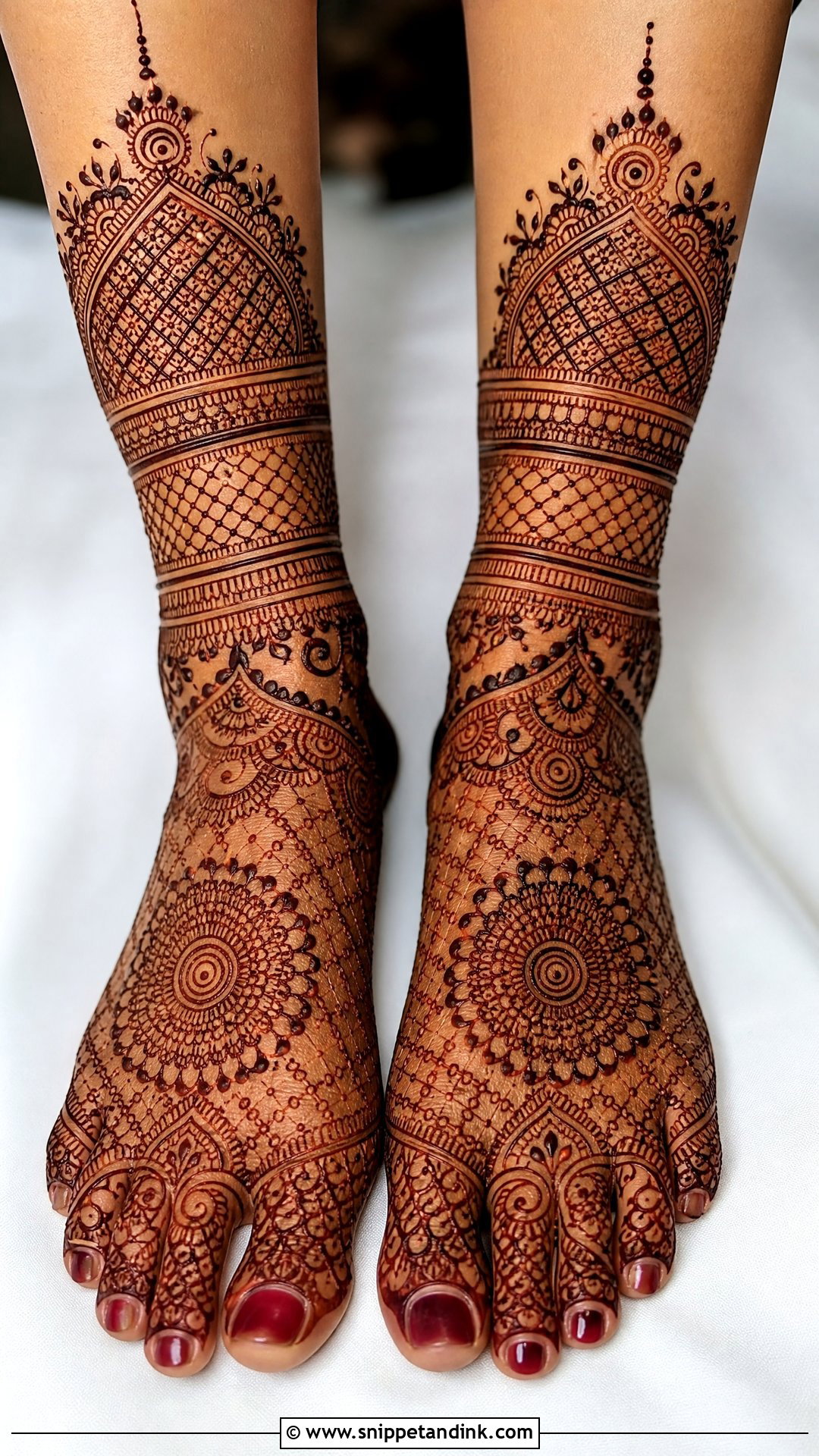
Feet bridal mehndi matters whenever a lehenga or saree shows the ankles during rituals and seated photos. It covers the toes, the top of the feet and the ankles, sometimes the lower legs, with florals, paisleys, anklet bands, mandalas or jaali. Feet stain darker than you’d expect because the skin is thicker and warmer, but they’re also where paste gets knocked off first, so I apply them last and ask brides to stay seated. A heavy lehenga border pairs well with a decorative ankle cuff, and a dark stain looks rich beside payal and traditional footwear.
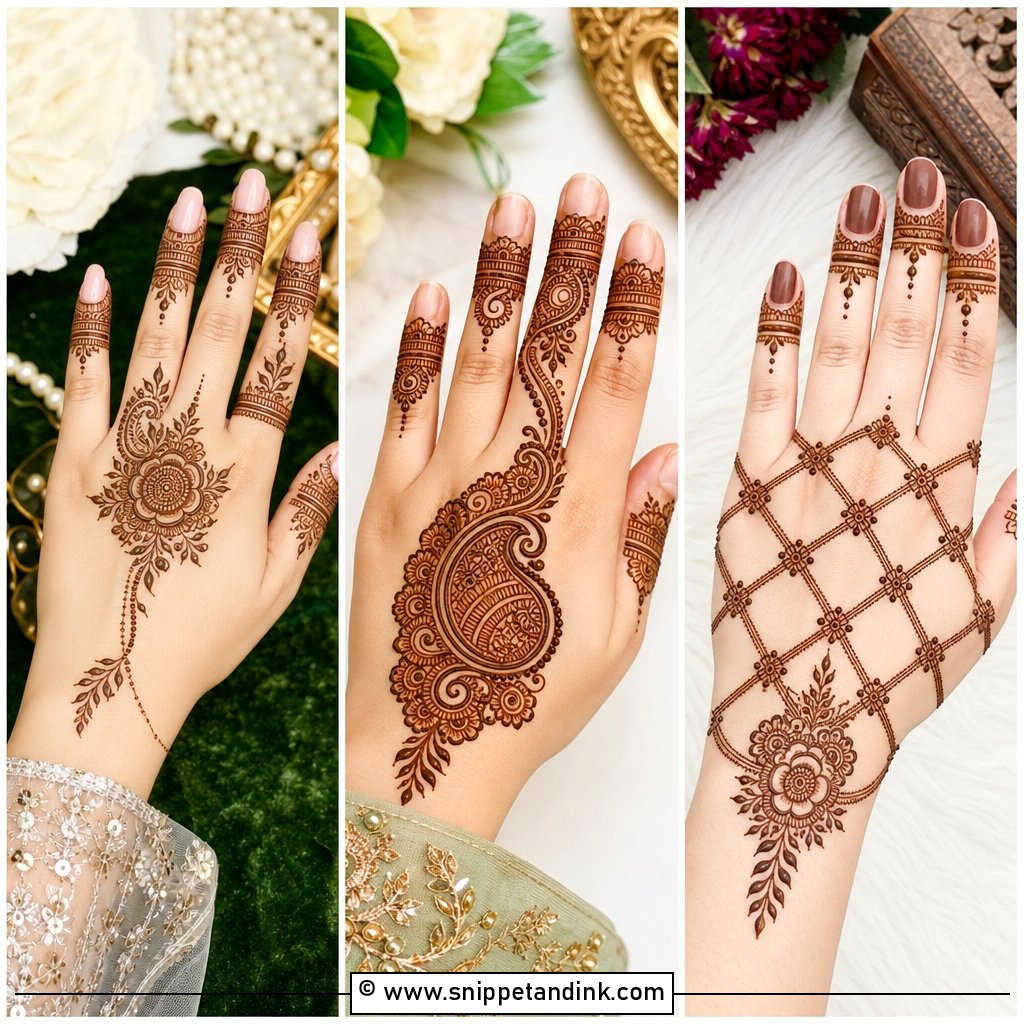
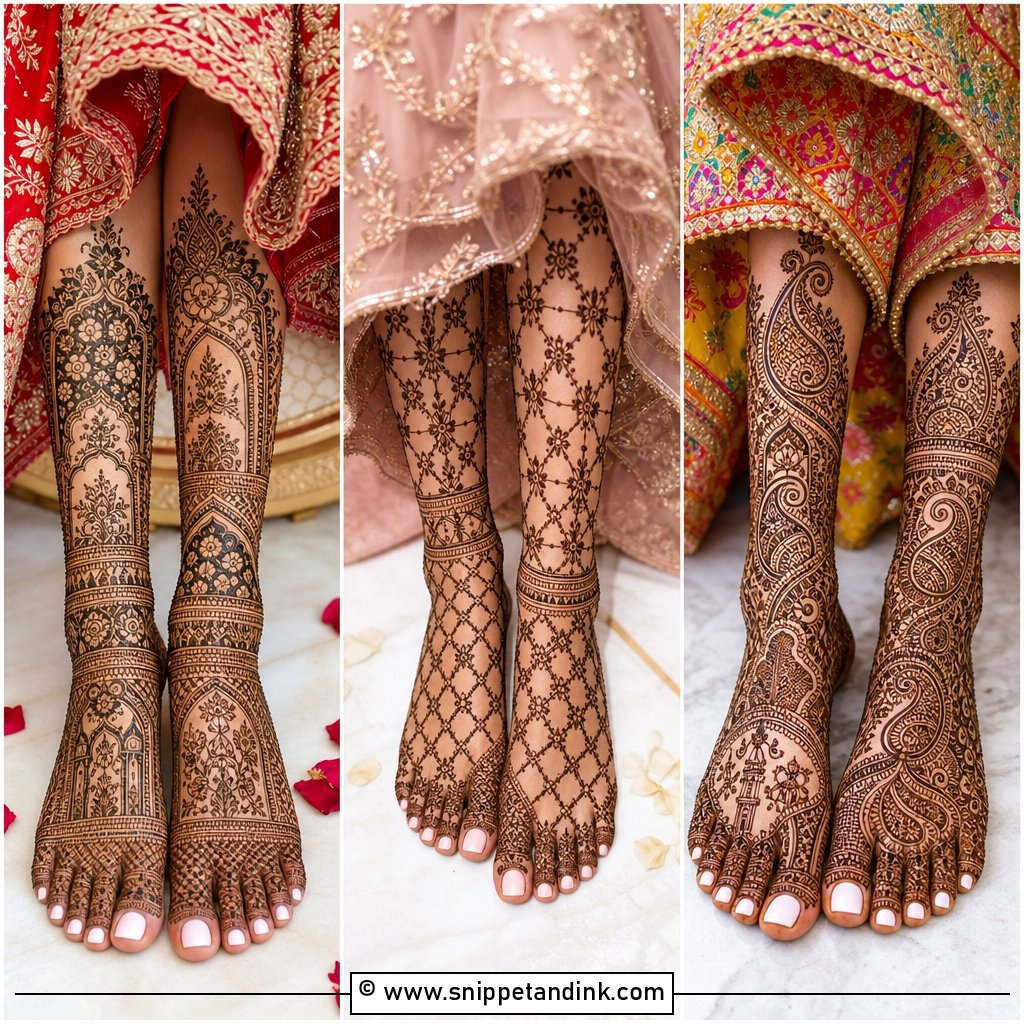
20. Matching Hand And Foot Bridal Mehndi For Wedding Dress
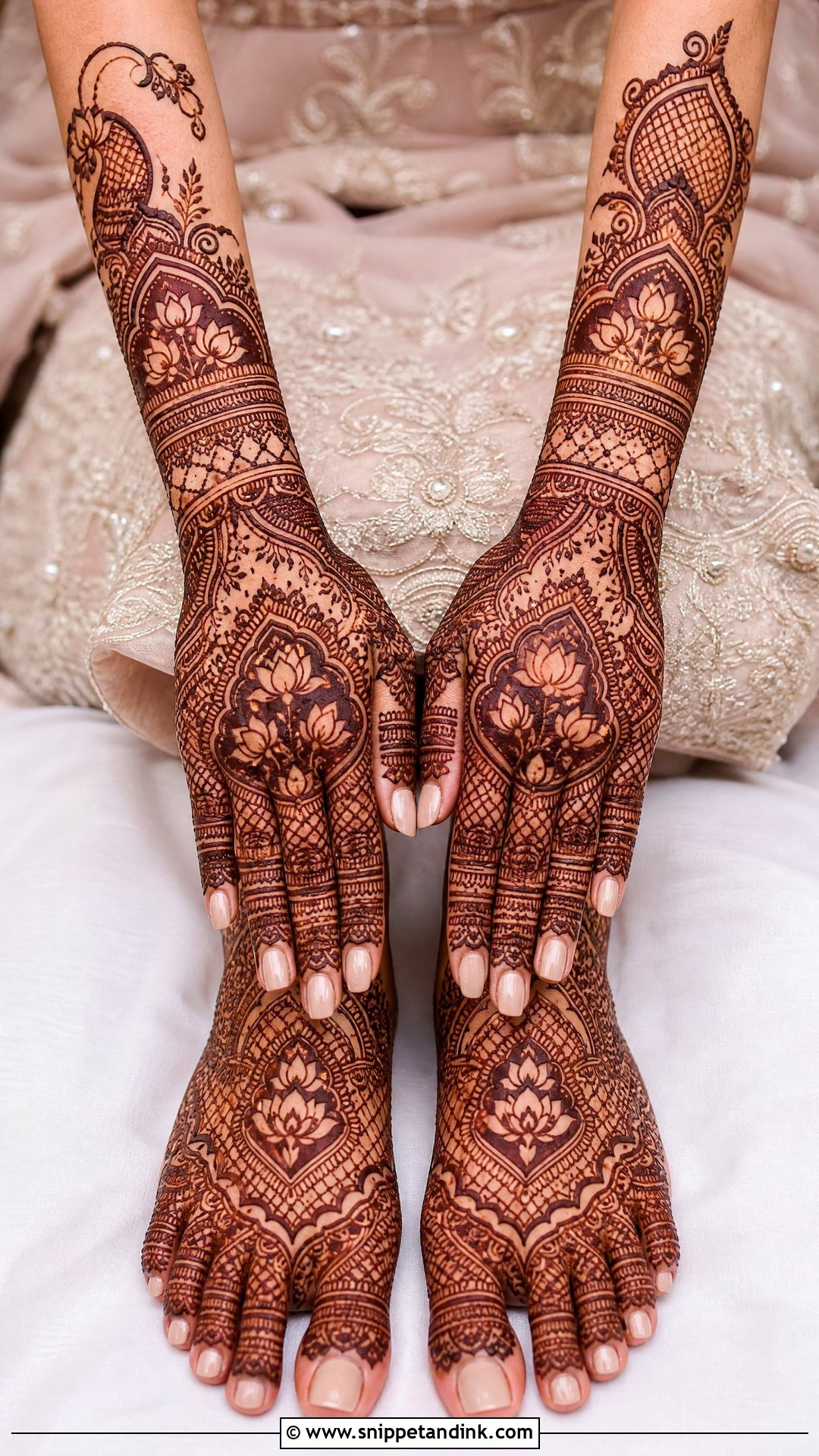
Matching hands and feet doesn’t mean copying every detail. I repeat the same design language instead. Lotus and jaali on the hands become lotus anklets and mesh panels on the feet; Arabic florals on the hands become matching trails along the feet. That repetition is what makes full-length portraits and seated ceremony shots look planned. It works with lehengas, sarees, ghararas, gowns and regional bridal outfits alike.
Getting the Stain to Peak on the Wedding Day
Fresh henna comes off the skin bright orange and darkens over the next day or two as it oxidises. That’s why I book bridal application one or two days before the wedding rather than the morning of. If you’re photographed a few hours after removing paste, you’ll be wearing the palest version of your design.
Aftercare that makes the difference
- Leave the paste on as long as you comfortably can, ideally six to eight hours or overnight. A light dab of lemon and sugar keeps it stuck to the skin while it dries.
- Scrape it off with a blunt edge or rub it away dry. Don’t wash it off.
- Keep the hands away from water for the next twelve hours or so, and stay warm; warmth helps the stain deepen.
- Skip hand sanitiser, harsh soap, waxing and scrubs until after the wedding. A thin layer of balm before washing slows fading.
Ask what is in the cone
Natural henna paste is made from henna powder, liquid, sugar and essential oil, and it always stains reddish brown. Any cone promising jet black results within an hour may contain chemical dye, which can cause blistering and lasting skin reactions. I’d rather a bride have a slightly lighter stain than a burn on her wedding photos, so ask your artist how she mixes her paste. If you have sensitive skin, a small patch test a week ahead is sensible.
Let the Dress Decide How Much Henna You Wear
Start with the dress and the rest follows. A red lehenga can carry dense Indian work, ivory and white often look better with Arabic or Gulf patterns, pastels want Indo-Arabic spacing, and a heavily embroidered outfit usually needs cleaner finger or back-hand designs. Bring your sleeve length, your jewelry and your patience for sitting still into the conversation with your artist, and the design will come together around them.
You'll Like These Ideas:


Leave a Reply