
Saving pictures is how almost everyone starts, whether it’s for a wedding, Eid, Diwali, Karwa Chauth or just a weekend. A useful mehndi picture shows where the design sits, how much skin is left open and how dark the stain actually came out, not just the pattern itself. With that in mind you can weigh Indian full-hand work against Arabic trails, Indo-Arabic florals, Moroccan geometry, bold Gulf spacing or a few finger patterns. Hand shape, outfit, jewelry and how long you can sit matter just as much as the motif. Here are thirty-five complete looks, with notes from my side of the cone on how each one wears.
Scaling a Design to Short Fingers, Wide Palms and Small Hands
A picture is drawn on someone else’s hand. Before I copy anything, I look at the hand in front of me and adjust the scale, because the same pattern can flatter one hand and swamp another.
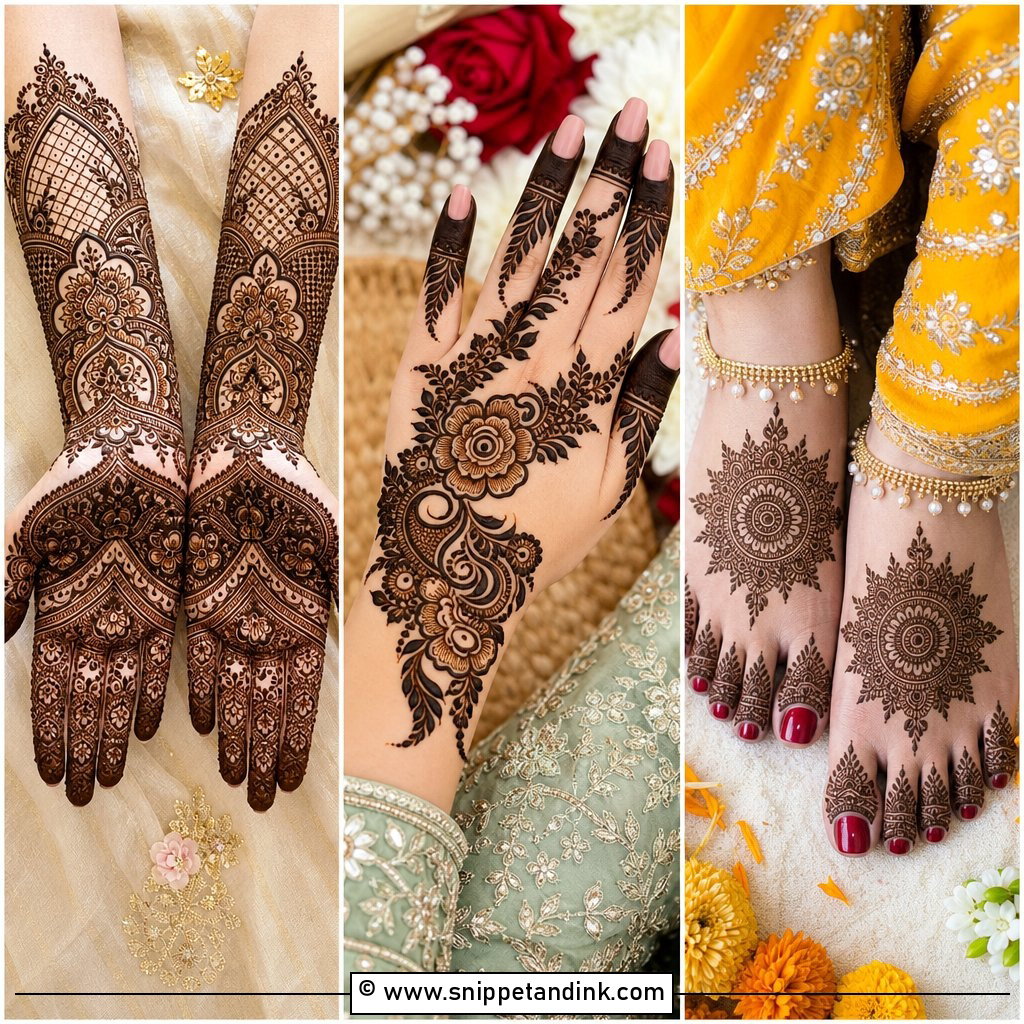
- Short fingers: a diagonal layout and slim vines draw the eye lengthwise. I avoid wide horizontal bands across every finger, which chop them into short sections.
- Wide palms: a single large mandala or lotus fills the space with confidence. Lots of tiny motifs on a broad palm tend to look scattered.
- Small or narrow hands: fewer, smaller motifs with more open skin. A full bridal layout designed for a long hand gets cramped when shrunk, and the filler closes up when it stains.
- Long, slim hands: these carry large Arabic and Gulf florals and long forearm trails very well.
Tell your artist which hand you write with, too. That hand is usually done second, once the other one is drying, so you’re not resting a wet design on the table.
1. Simple Front Hand Mehndi Design
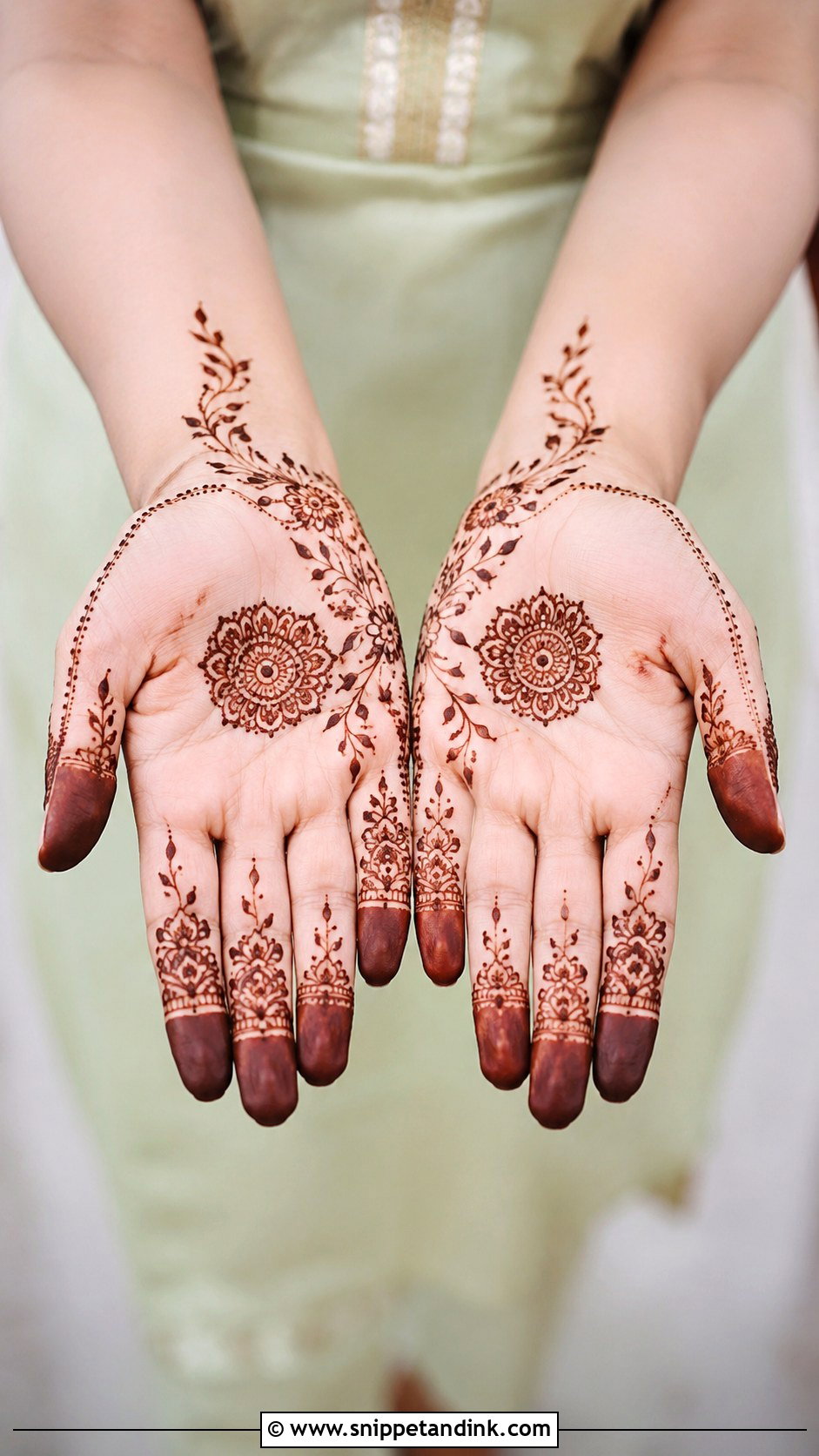
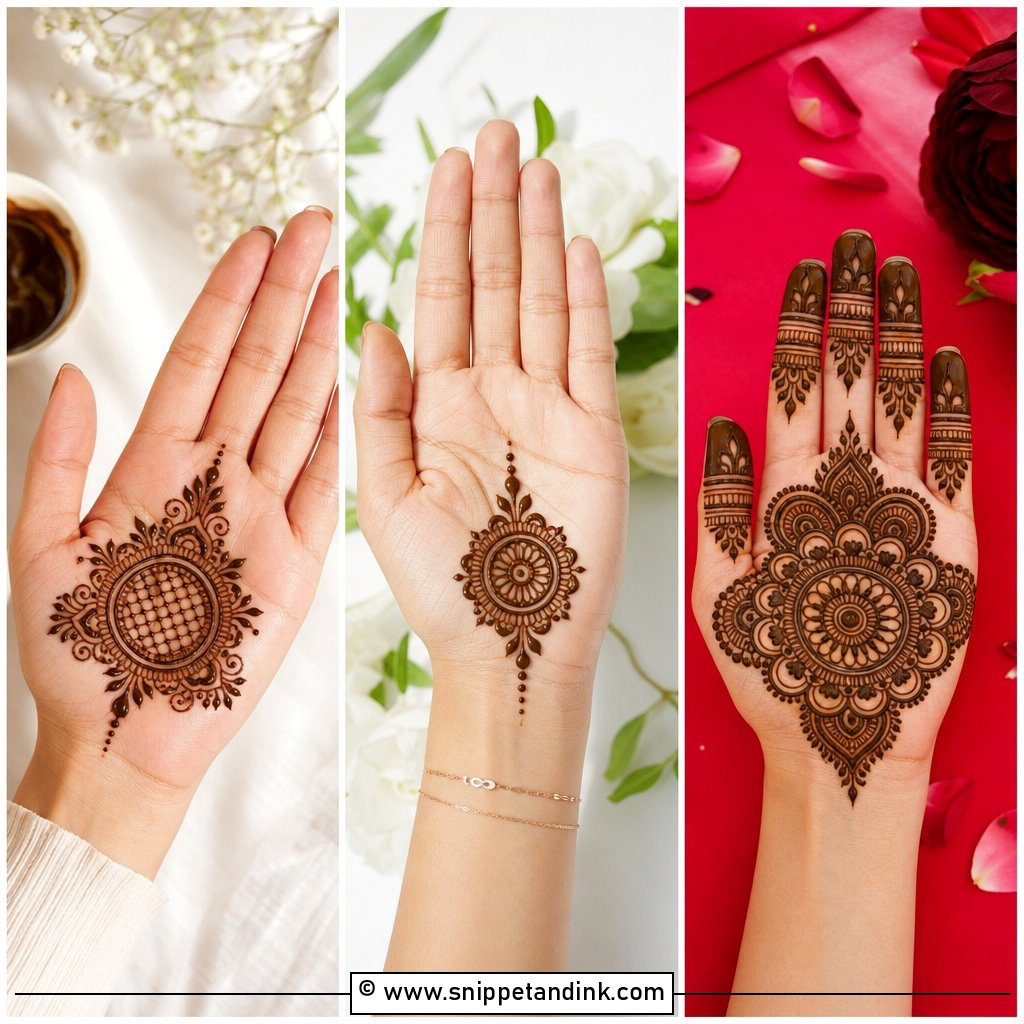
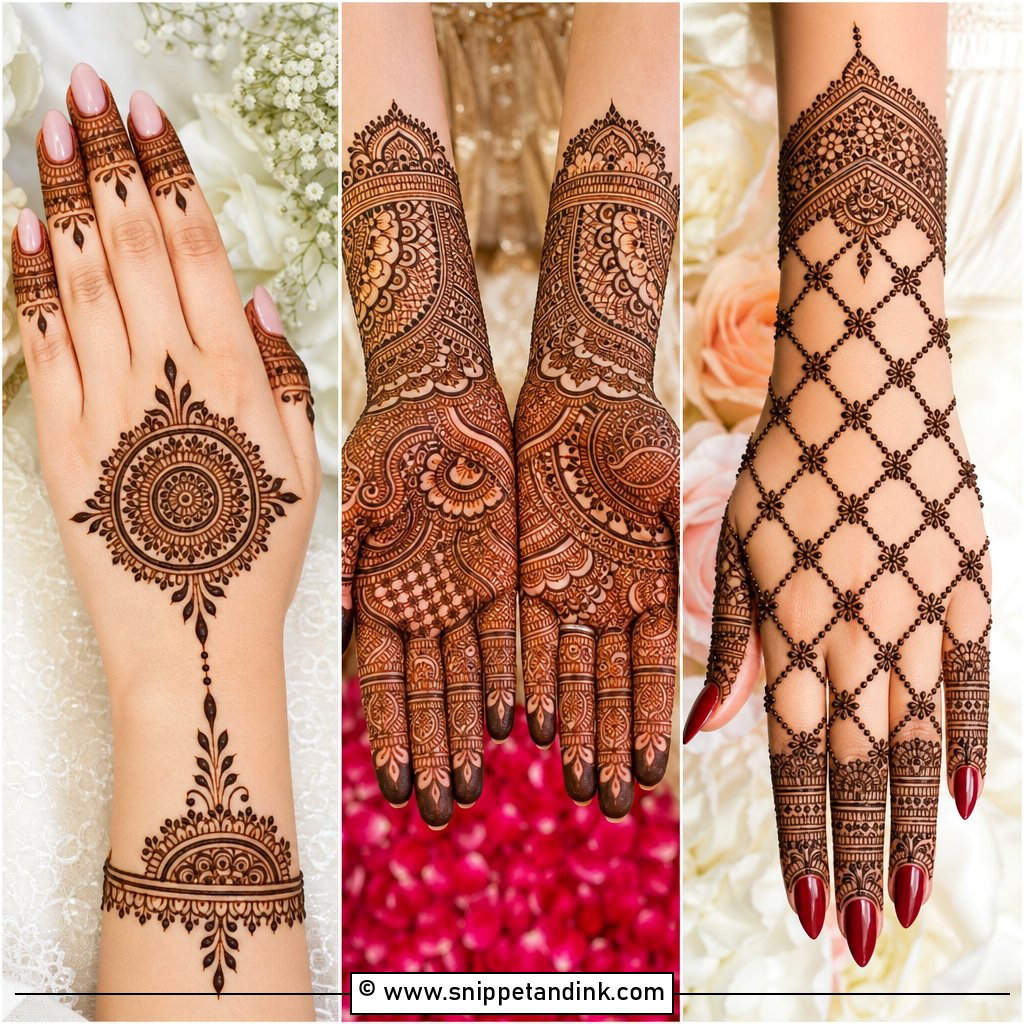
A small mandala or floral center on the palm, soft vines, dots and curved leaves running toward the fingers. The open space does most of the work, so I place the center slightly toward the base of the palm, where the skin is flattest, rather than in the crease-heavy middle. Cap the fingertips neatly or fill them partway. Natural henna gives a warm reddish brown on the palm that suits every skin tone, and it’s quick enough for younger girls and bridesmaids.
2. Simple Back Hand Mehndi Design
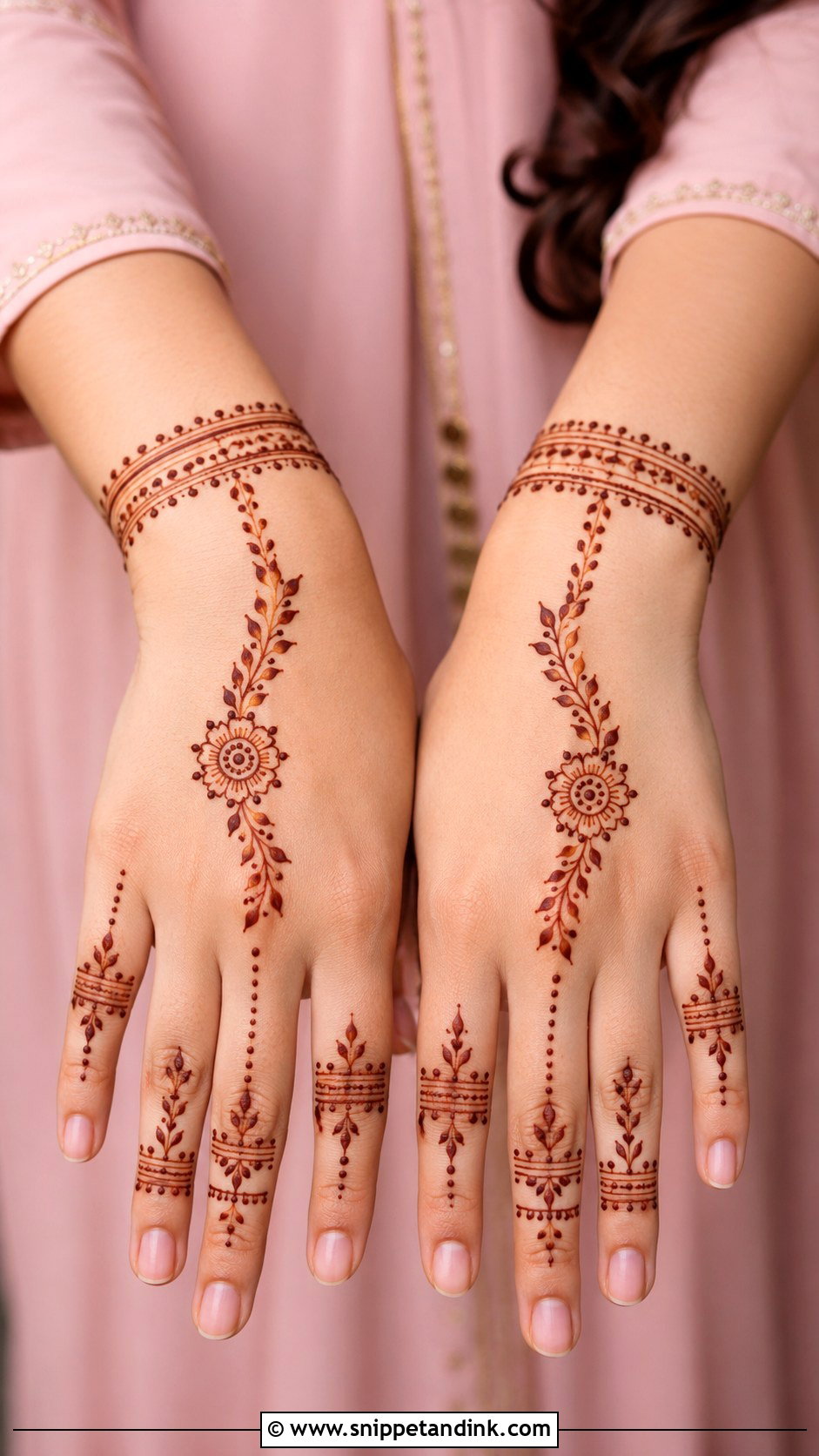
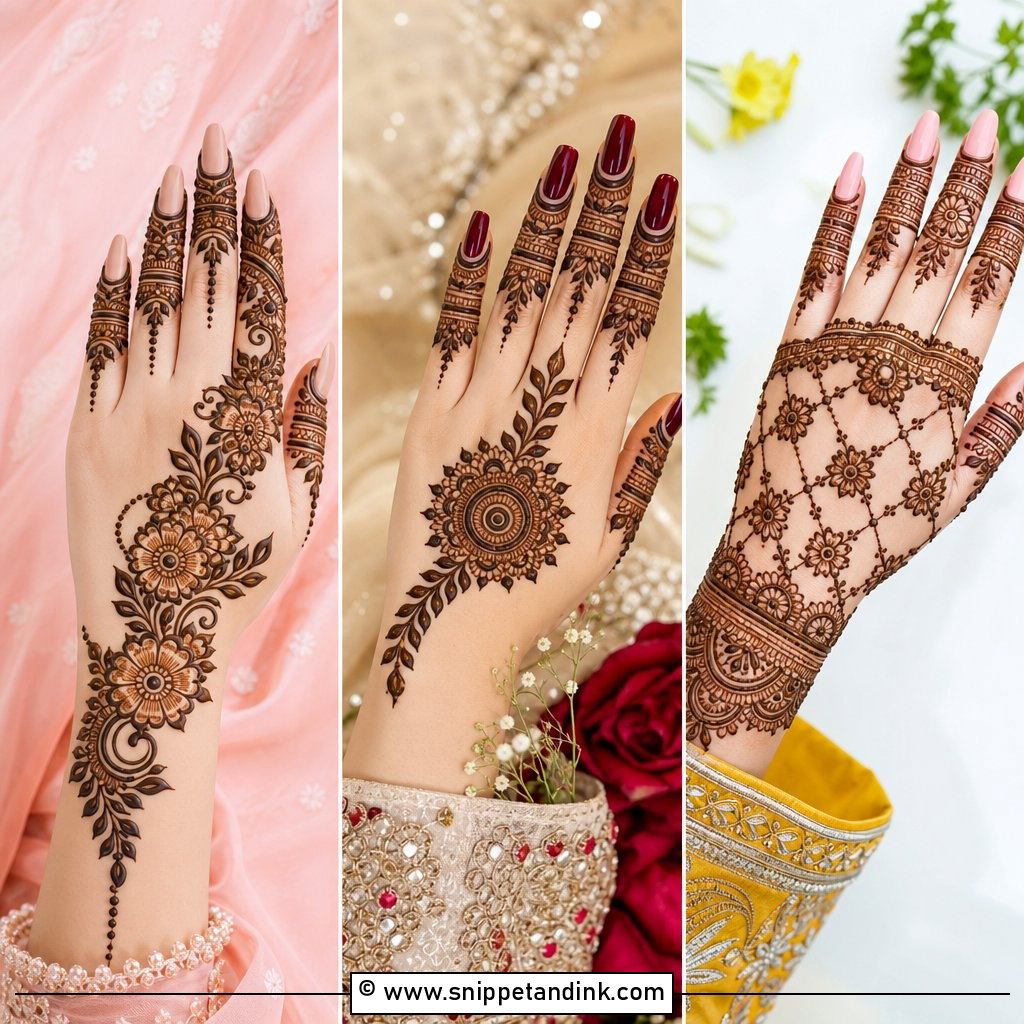
A simple back hand mehndi design stays in view while you hold flowers, a clutch or bangles, which is why it shows up in so many photos. The usual layout is a bracelet band at the wrist, a ring-style connection on one finger and a floral trail across the hand. It leaves the palm clear. Ask for thin outlines with slightly bolder petals; the back of the hand stains lighter than the palm, and those bolder petals keep the pattern readable.
3. Arabic Mehndi Design For Hands
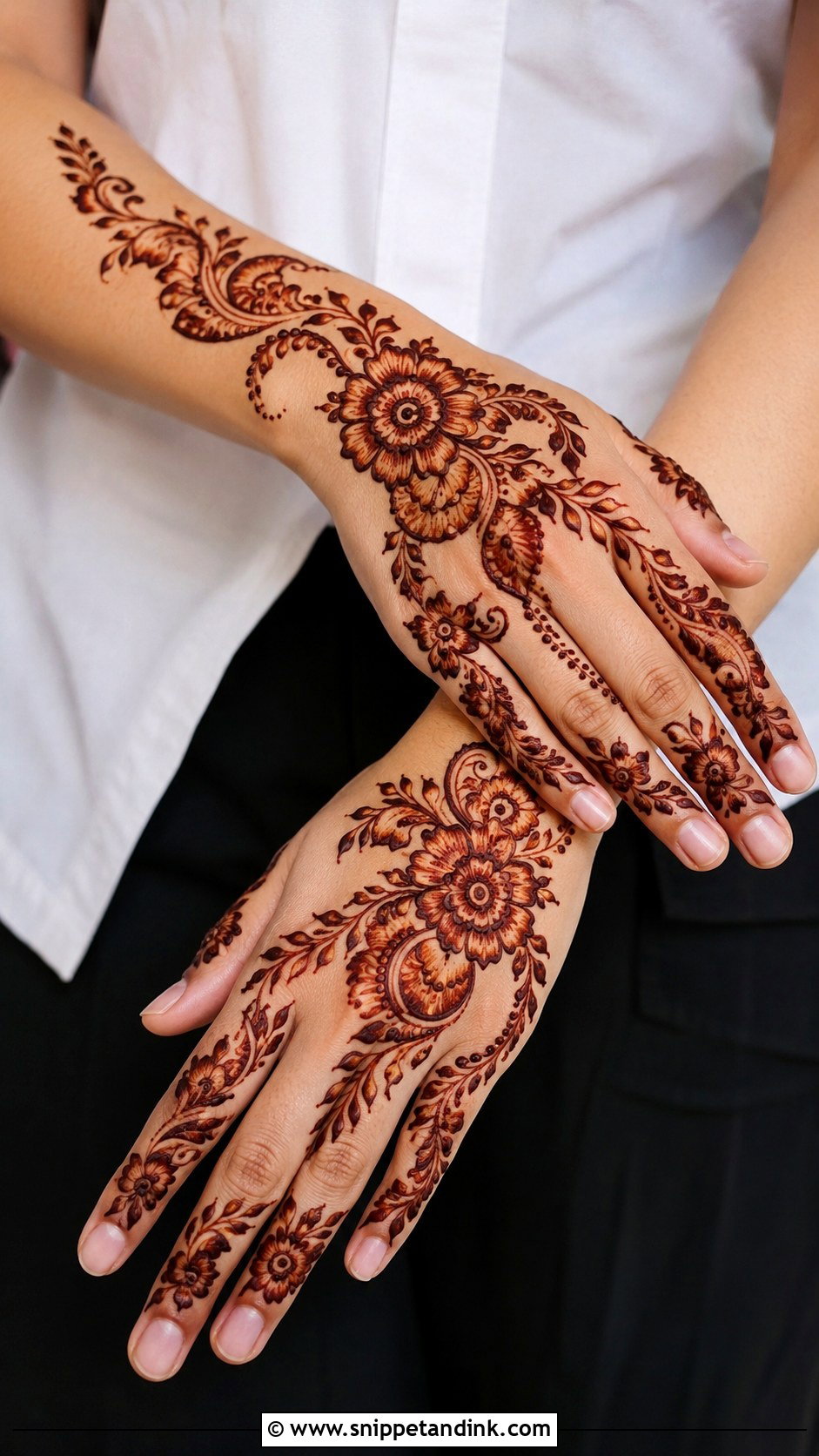
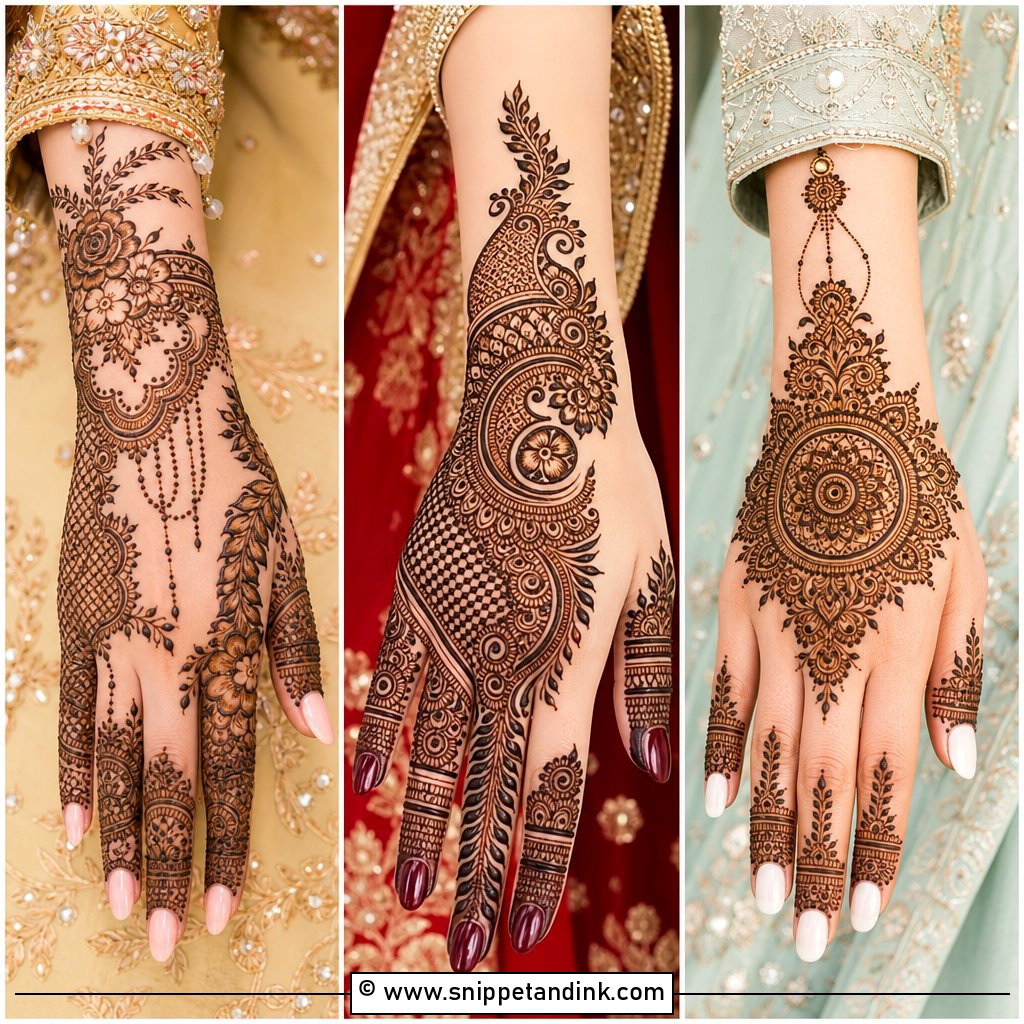
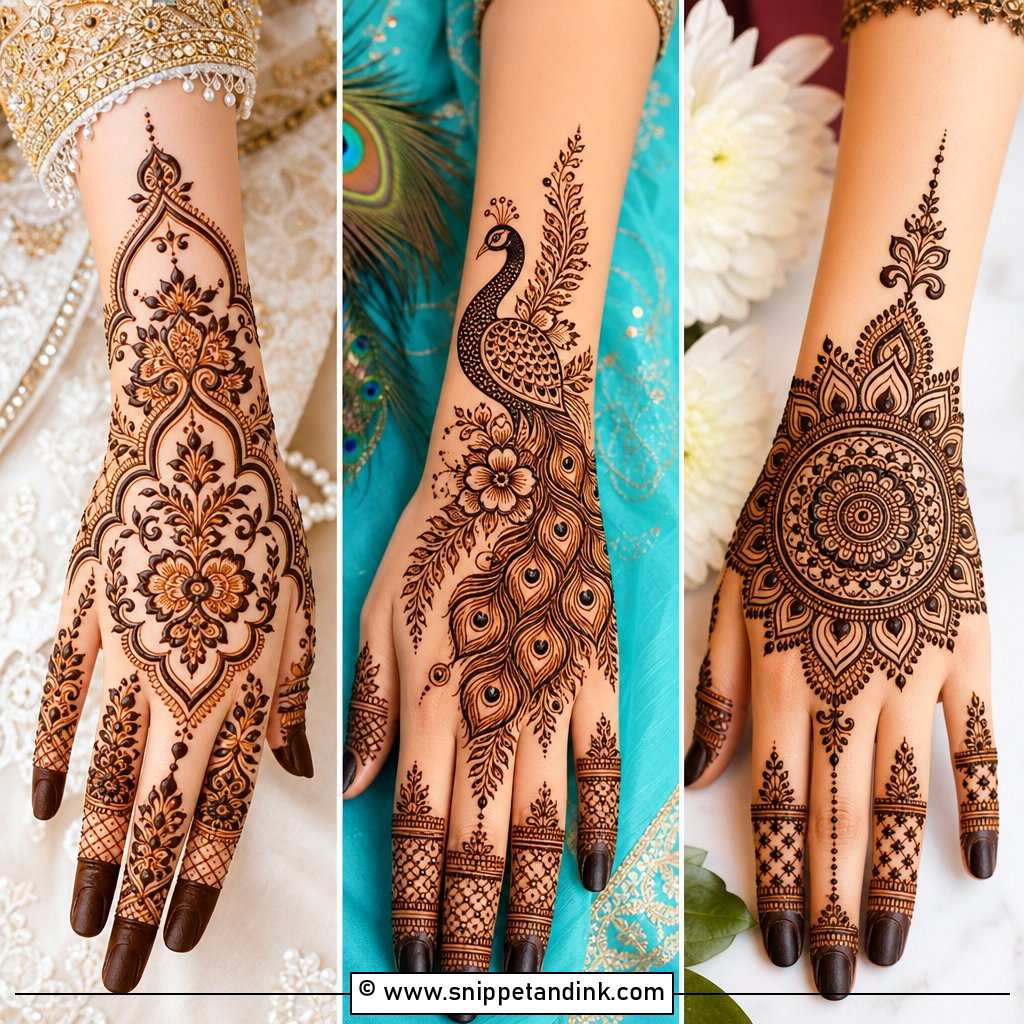
Arabic designs move in a diagonal trail from one side of the wrist to the fingers with large petals, paisleys, leafy curves and light shading. That diagonal makes the hand look longer, which is something I use deliberately on shorter hands. It works on front and back, goes on far faster than dense bridal work and still looks generous once it stains.
4. Indian Full Hand Mehndi Design
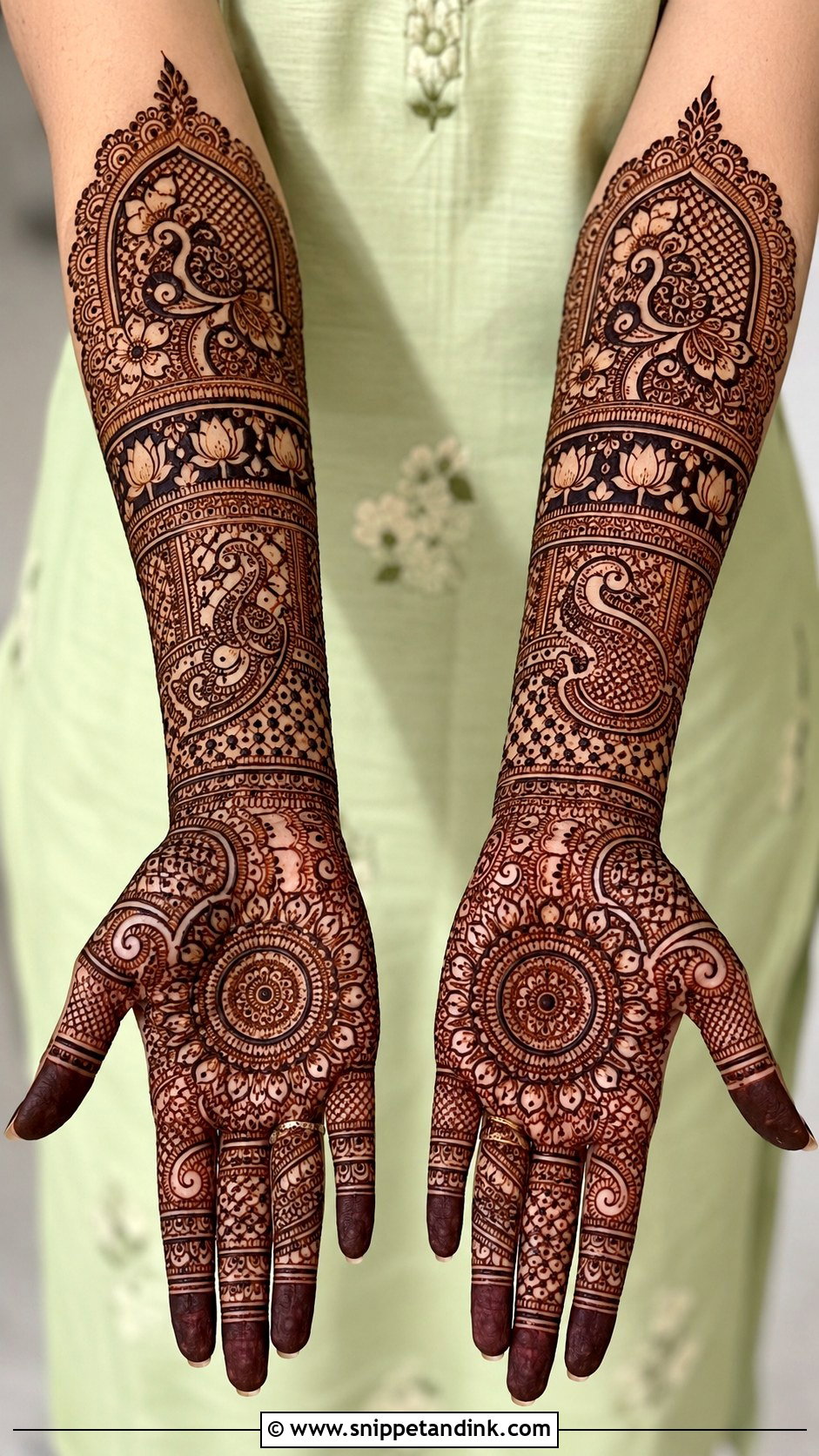
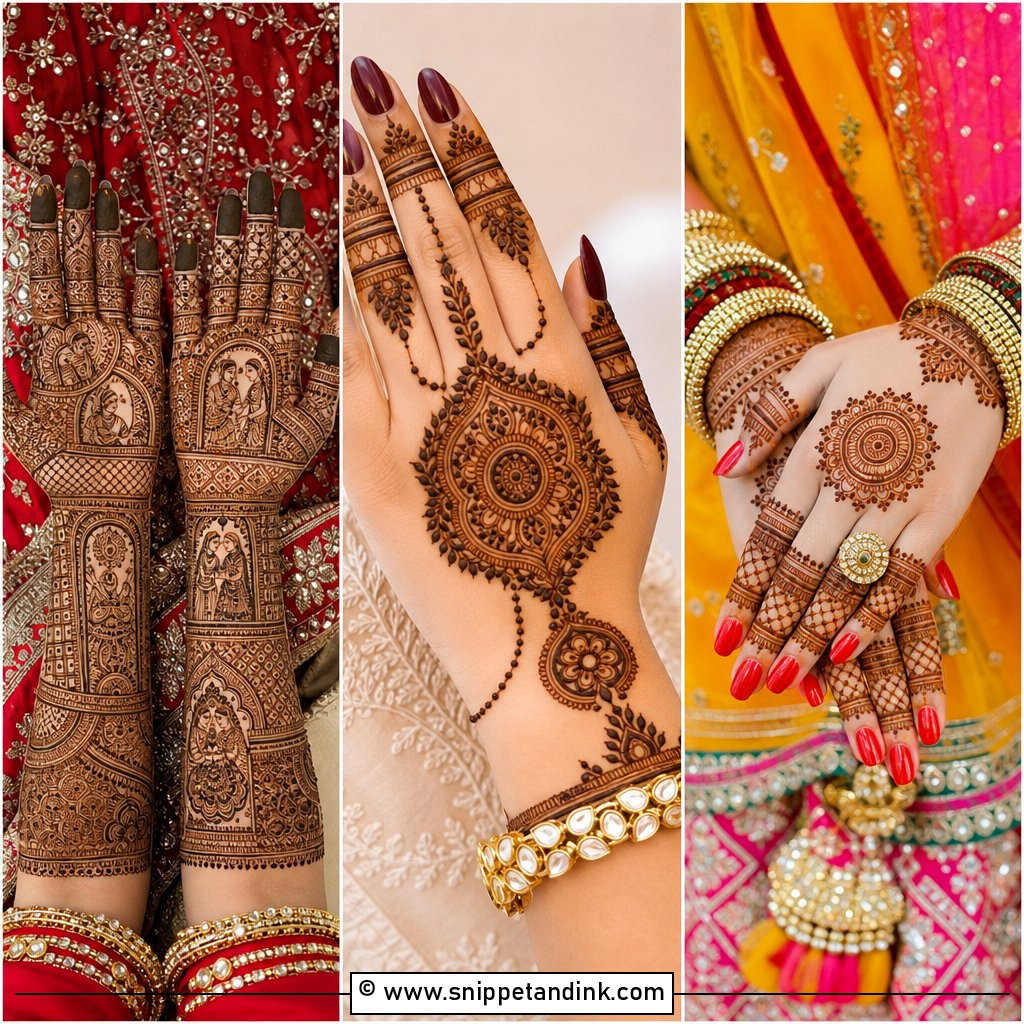
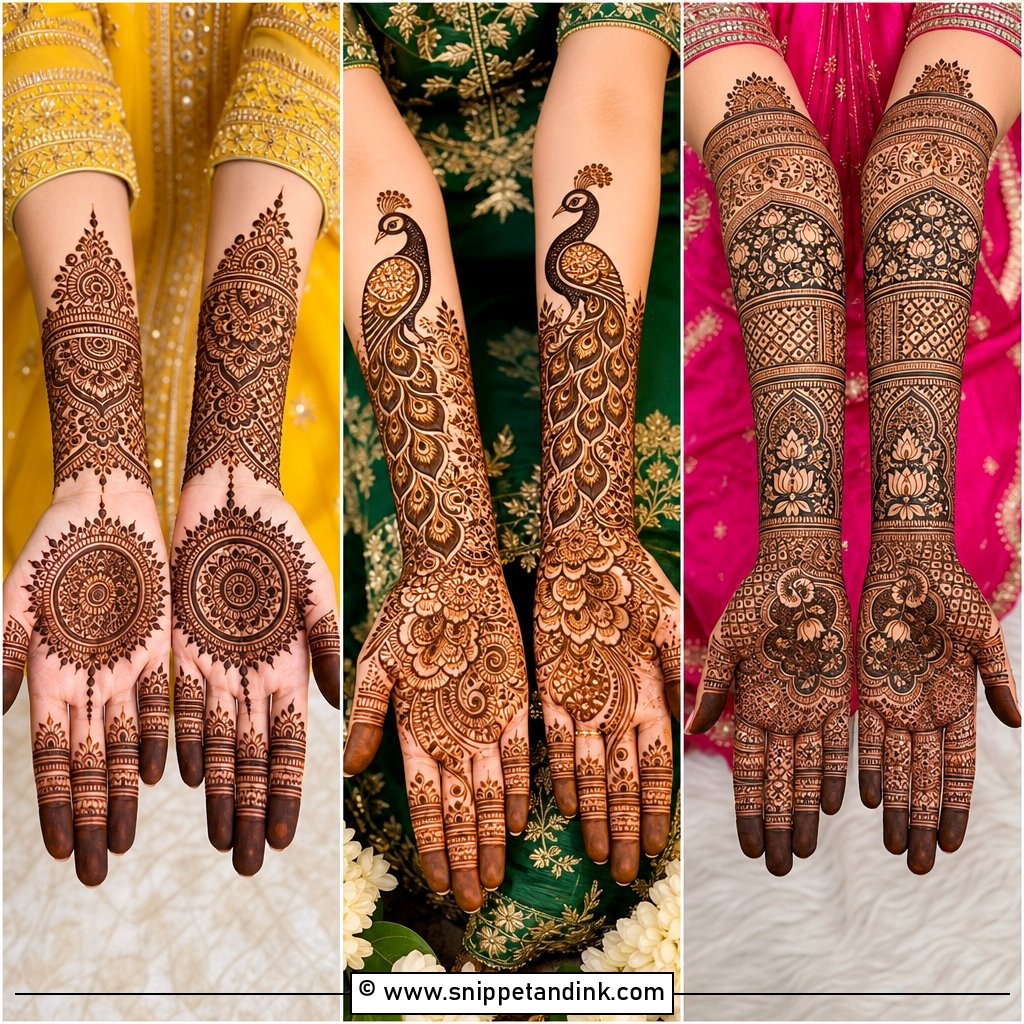
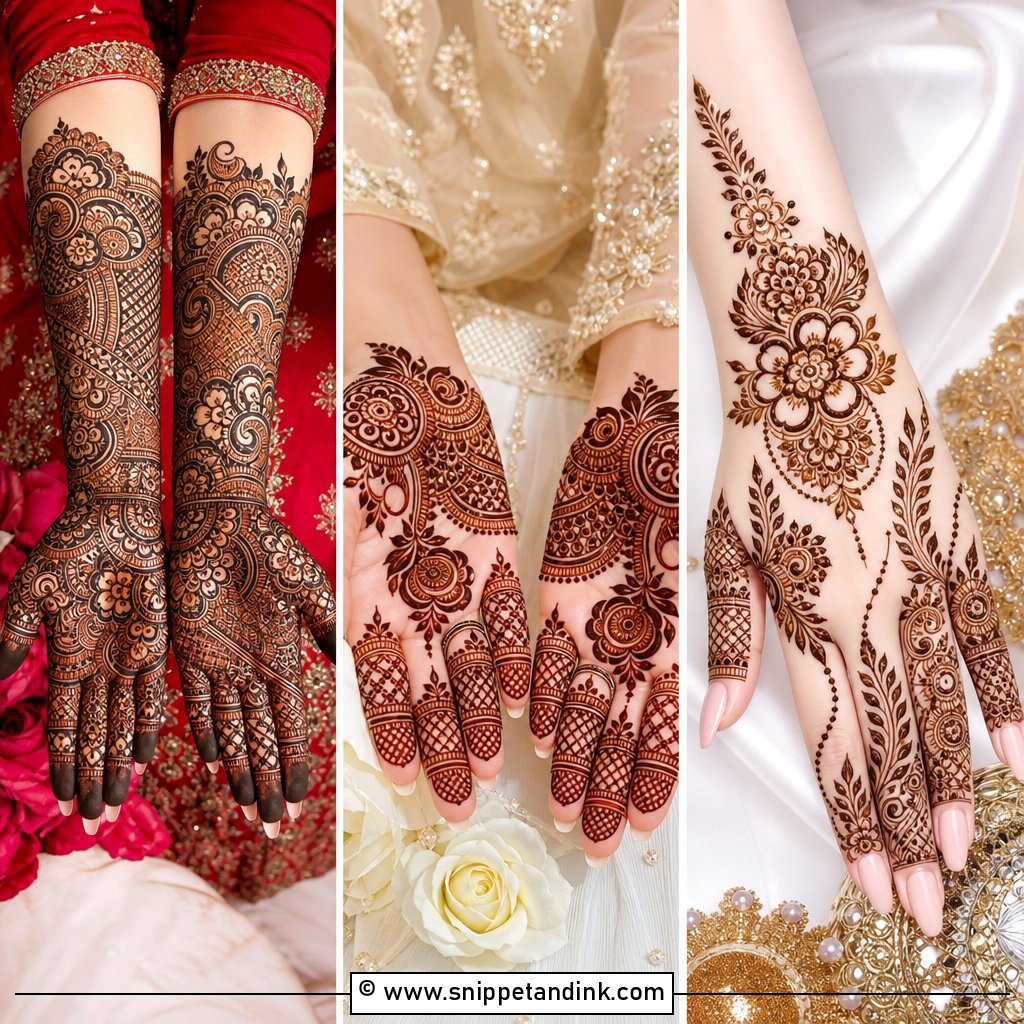
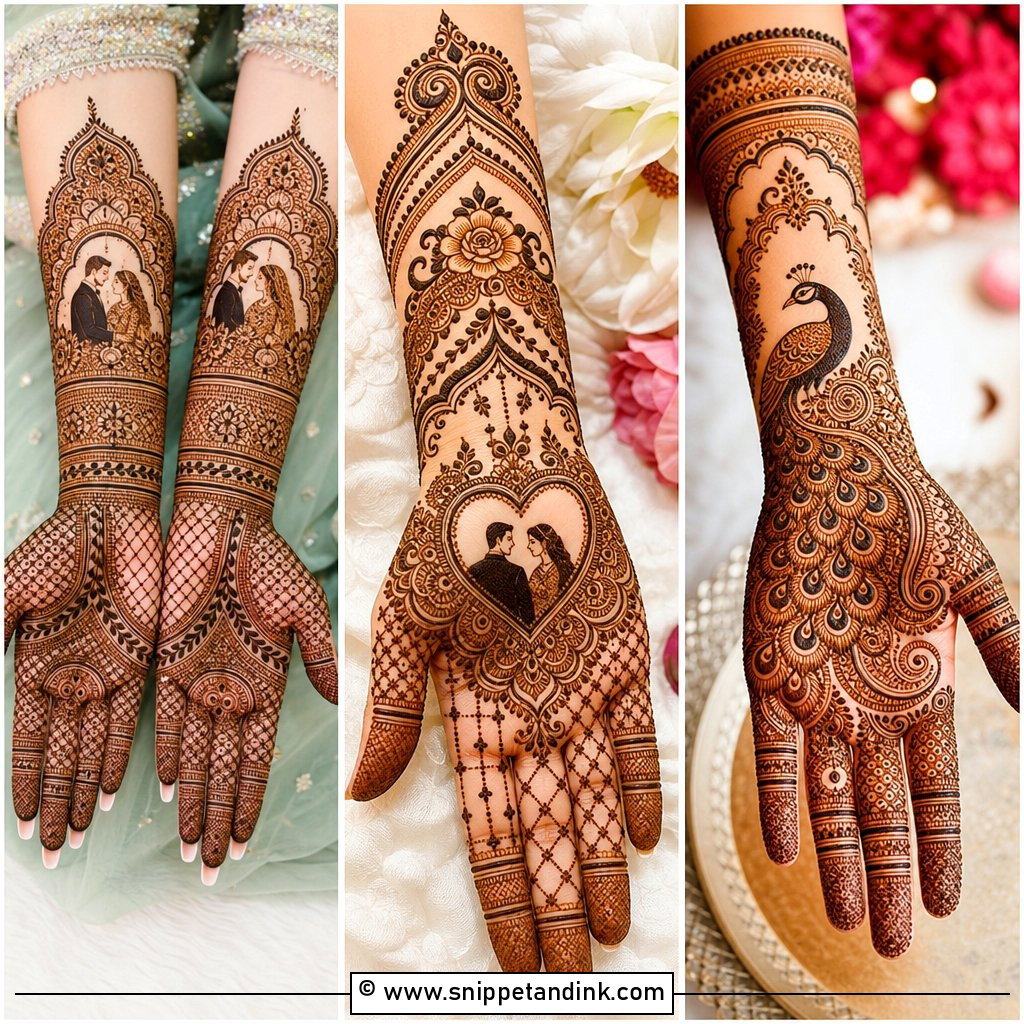
Indian full-hand work covers palm, fingers, wrist and forearm with fine lines, paisleys, flowers, jaali and filler. It’s made for close-ups, and the danger is always crowding. I divide the hand into sections before drawing, so peacocks, lotus, mandalas or small bride and groom elements each get a defined space. Fine detail needs a good stain to show, so fresh paste and a long time on the skin matter more here than with any lighter style.
5. Bridal Mehndi Design Full Hand
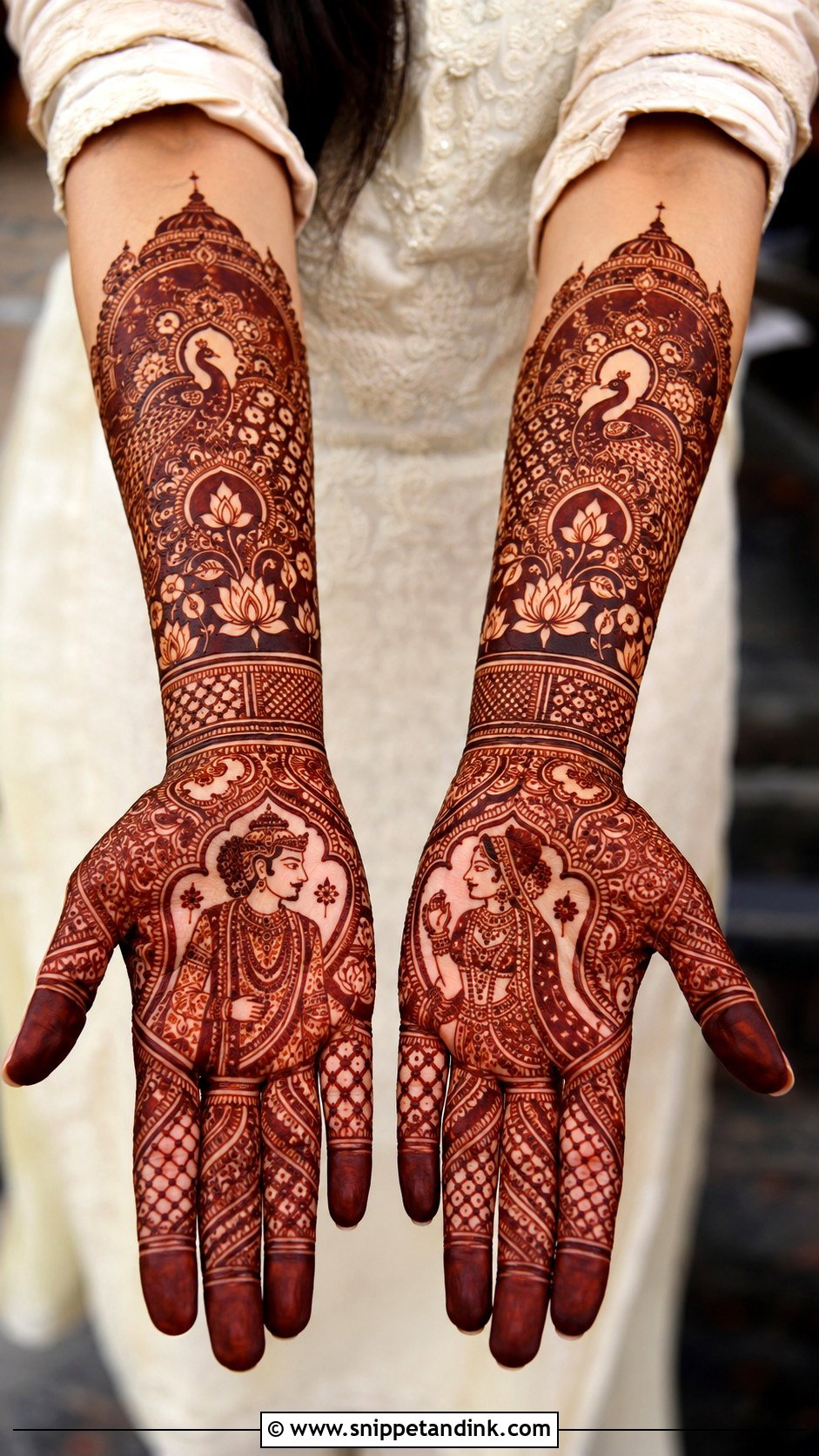
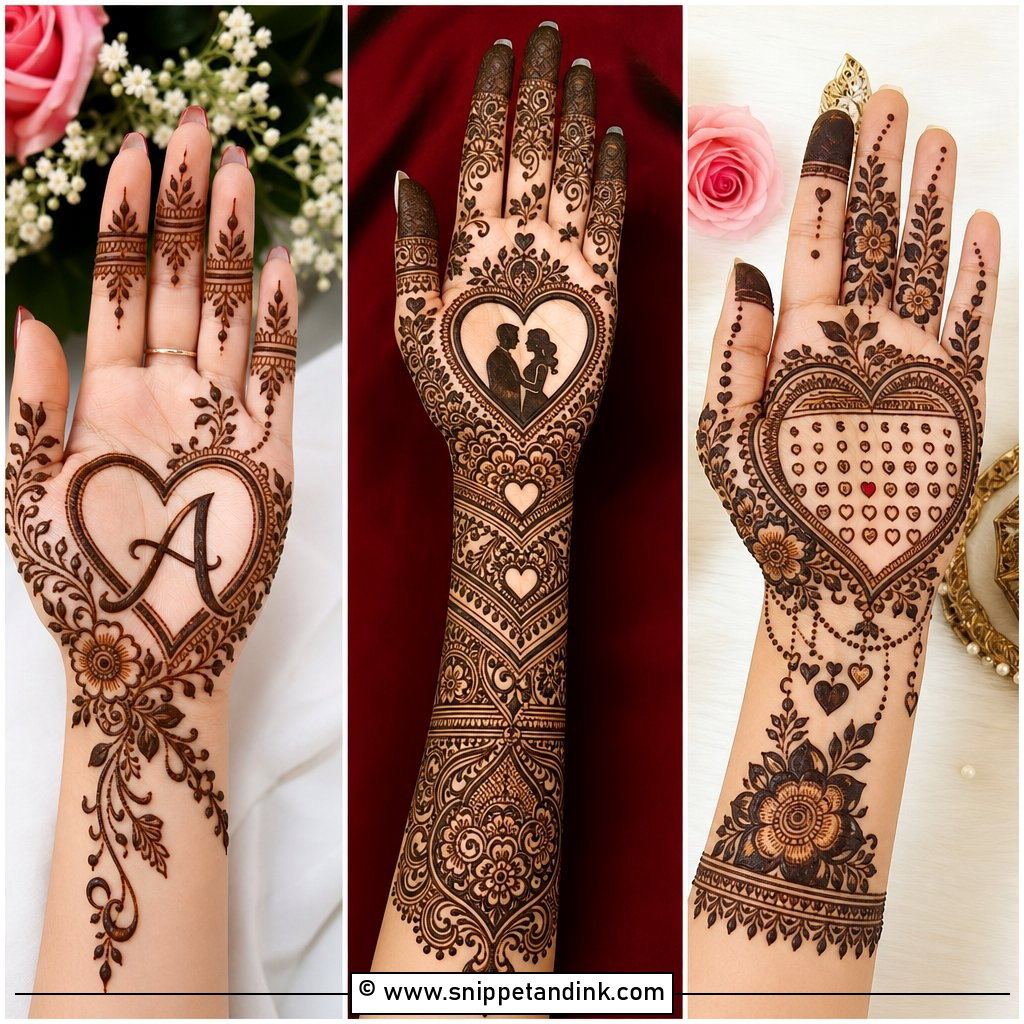
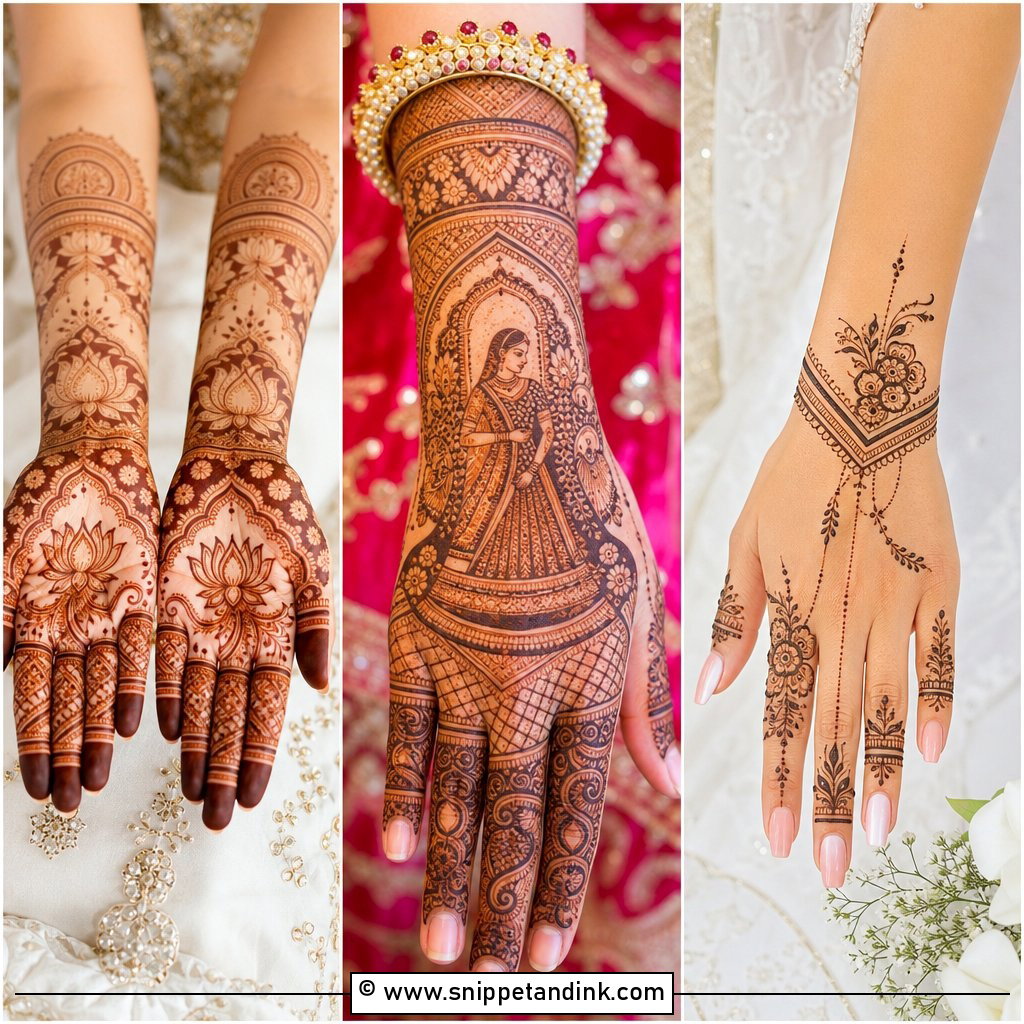
Bridal full-hand designs run from fingertips to forearm on both palms and the backs of both hands, with dulha-dulhan figures, peacocks, lotus, wedding symbols, initials and fine mesh. Every angle gets photographed during the ceremony, so balance between the four surfaces matters. Heavy-mehndi brides can have dense filler throughout; modern brides can ask for breathing space between panels. Either way, the stain should peak on the wedding day, so plan the application one to two days ahead.
6. Modern Bridal Mehndi Design
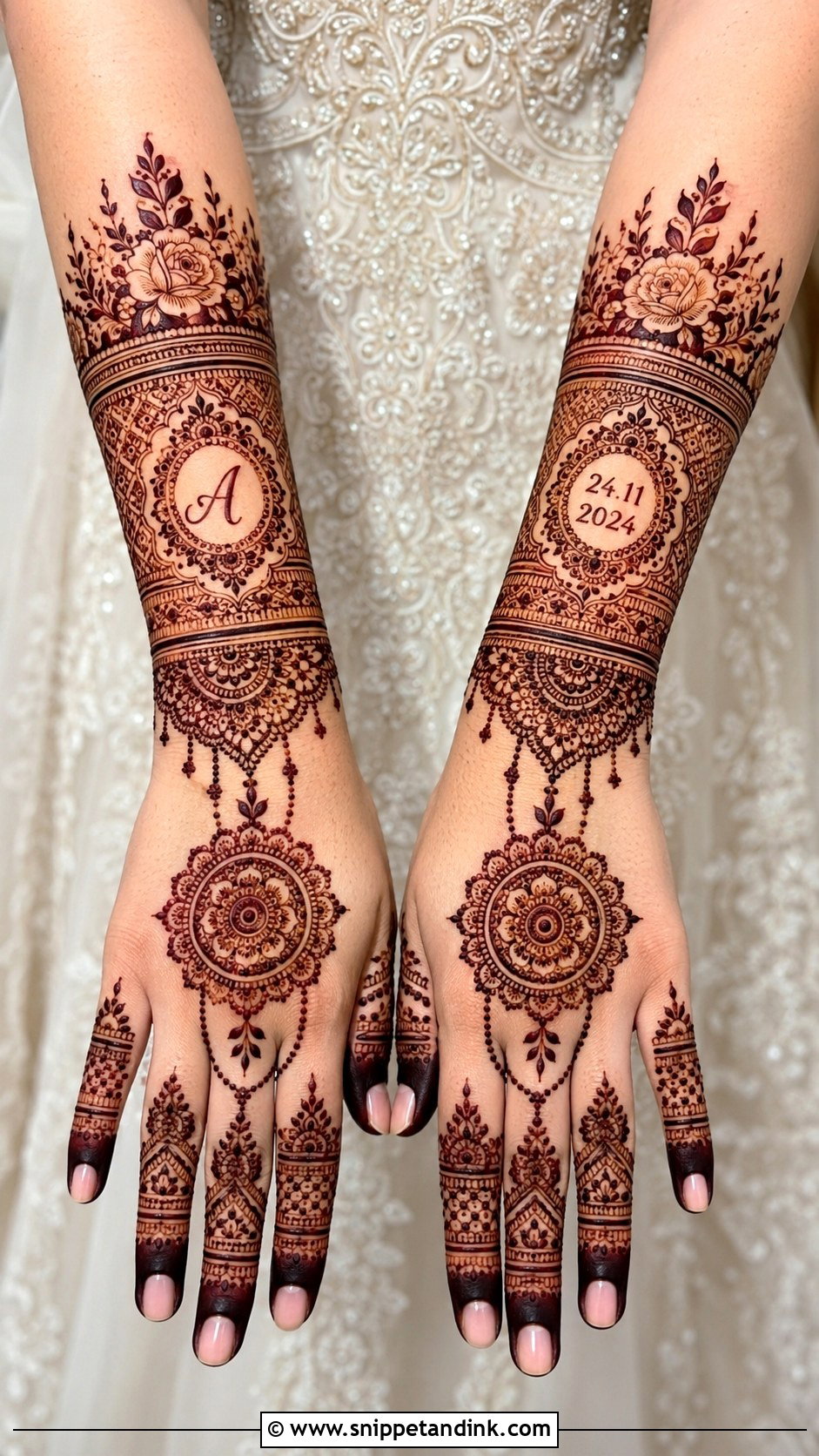
Modern bridal work swaps all-over filler for bold central motifs, clear borders, floral panels and negative space. It sits comfortably with contemporary outfits as well as traditional ones. I usually put the personal content on the palm, initials, a date or a small portrait detail, and keep the back hand to jewelry-inspired chains and wrist cuffs. High-resolution photography shows every line, so in modern work the open space has to be clean, with no stray marks.
7. Minimal Mehndi Design For Hands
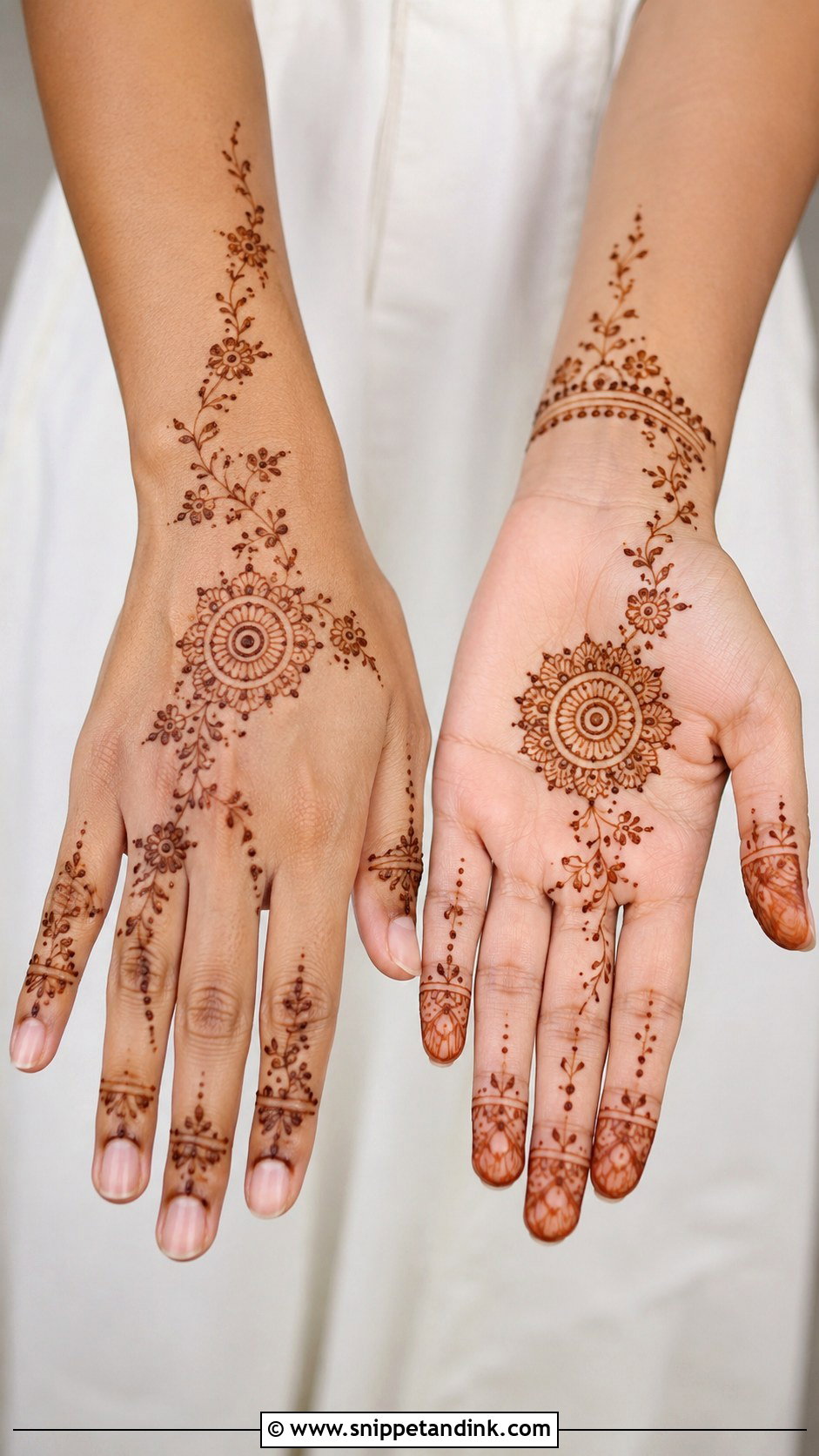
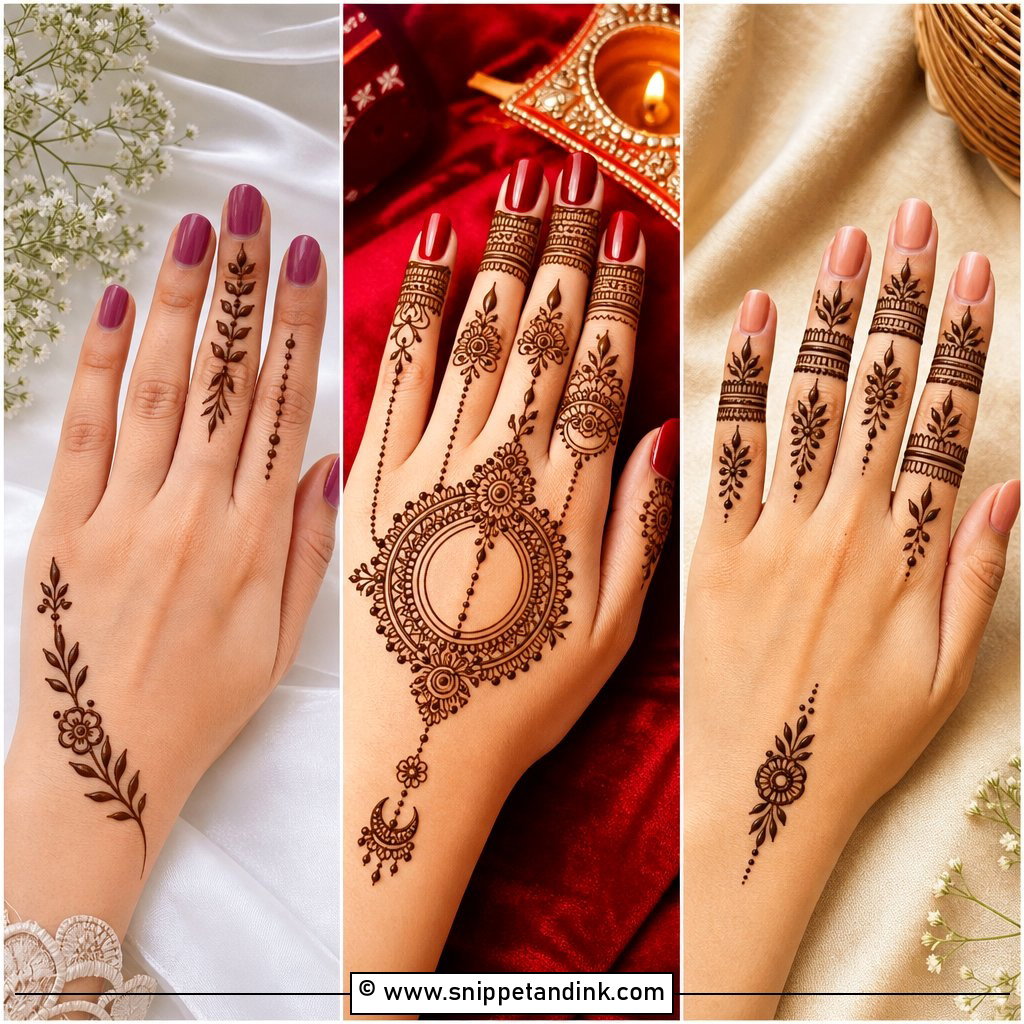
Minimal work picks one place, the fingertips, a small palm motif, a fine wrist detail or a trail over the back hand, and does it neatly. Thin vines, tiny flowers, dots and small mandalas are the vocabulary. The difference between minimal and unfinished is spacing. I decide where the design ends before I start so the last line looks deliberate. It’s easy to wear to the office the next day.
8. Finger Mehndi Design
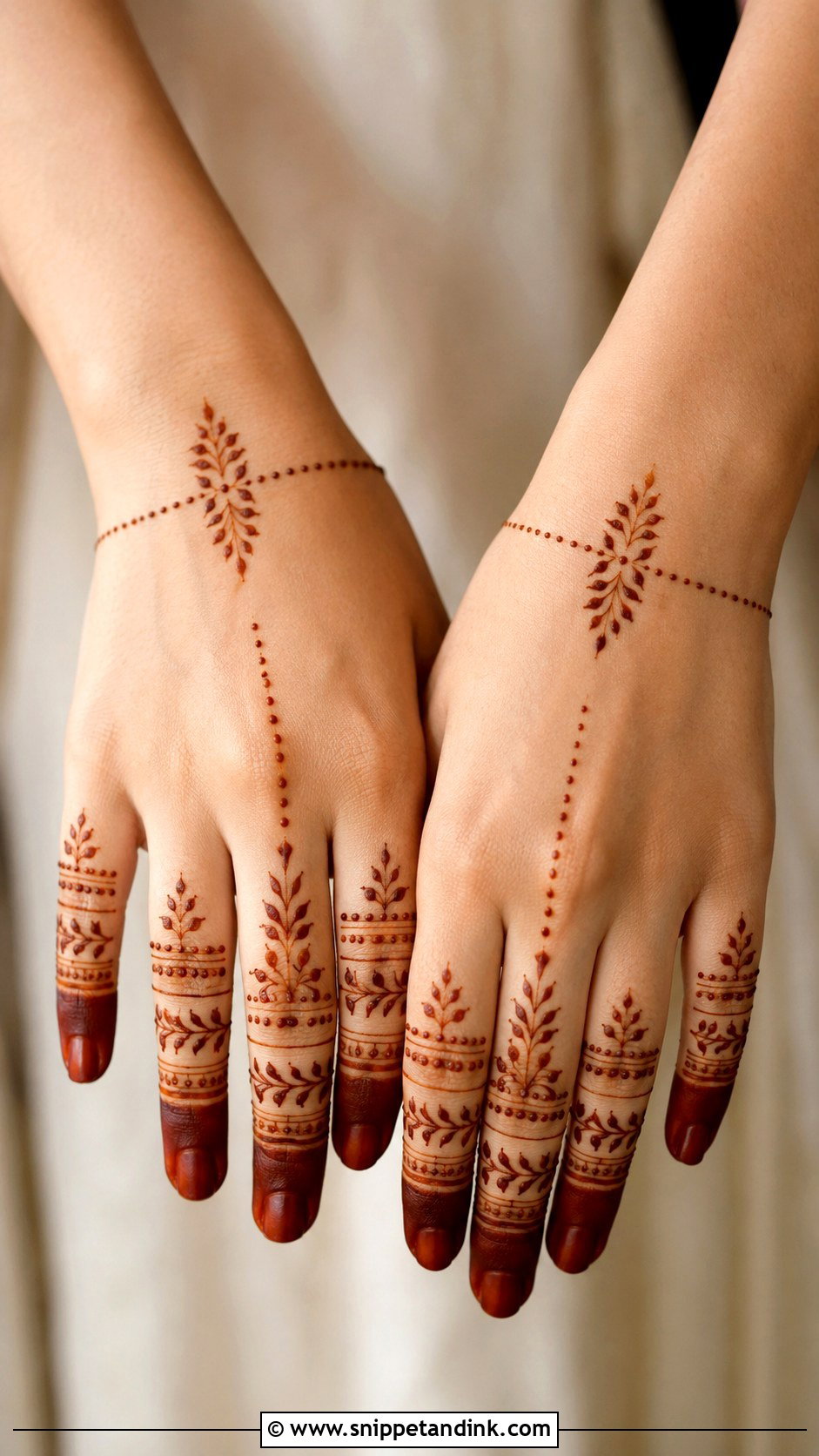
Finger designs decorate the fingers, with filled tips, leafy bands and ring patterns, and add a small matching motif near the wrist. Some decorate only the index and middle finger for a sleek look; others do every finger. Consistent spacing across the fingers matters most, because uneven bands are obvious when the hand is held flat for a photo. Fingers take color well, so even this small design stains richly.
9. Mandala Mehndi Design
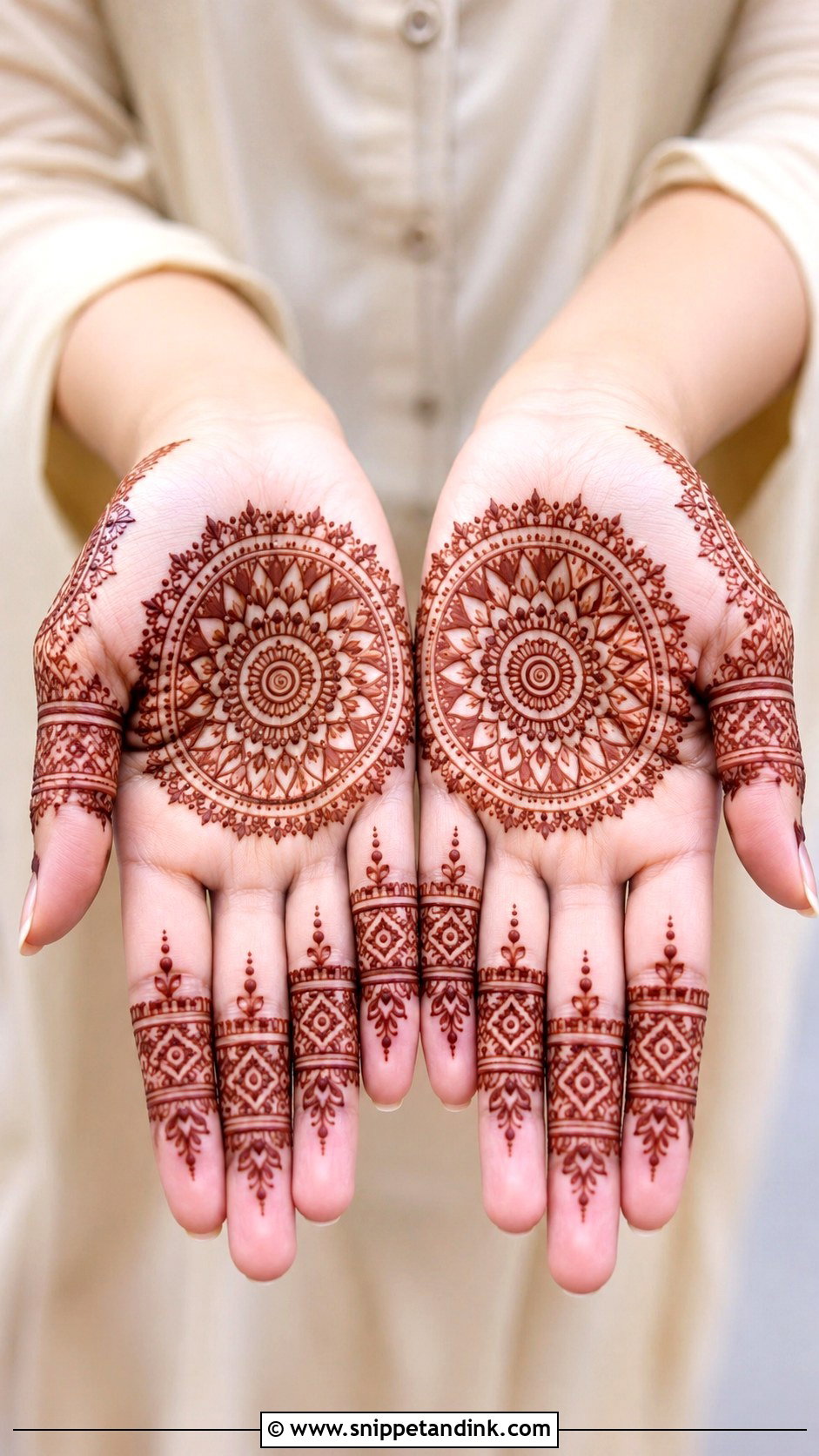
A round motif in the palm or on the back of the hand, with dots, petals, leaves and fine circular borders around it. The fingers can stay plain or take matching bands and tips. Each ring around the center has to be even, so I mark the middle with a dot and build outward, checking spacing ring by ring. It’s a good choice for pujas, festivals and bridesmaids who want symmetry without heavy coverage.
10. Floral Mehndi Design
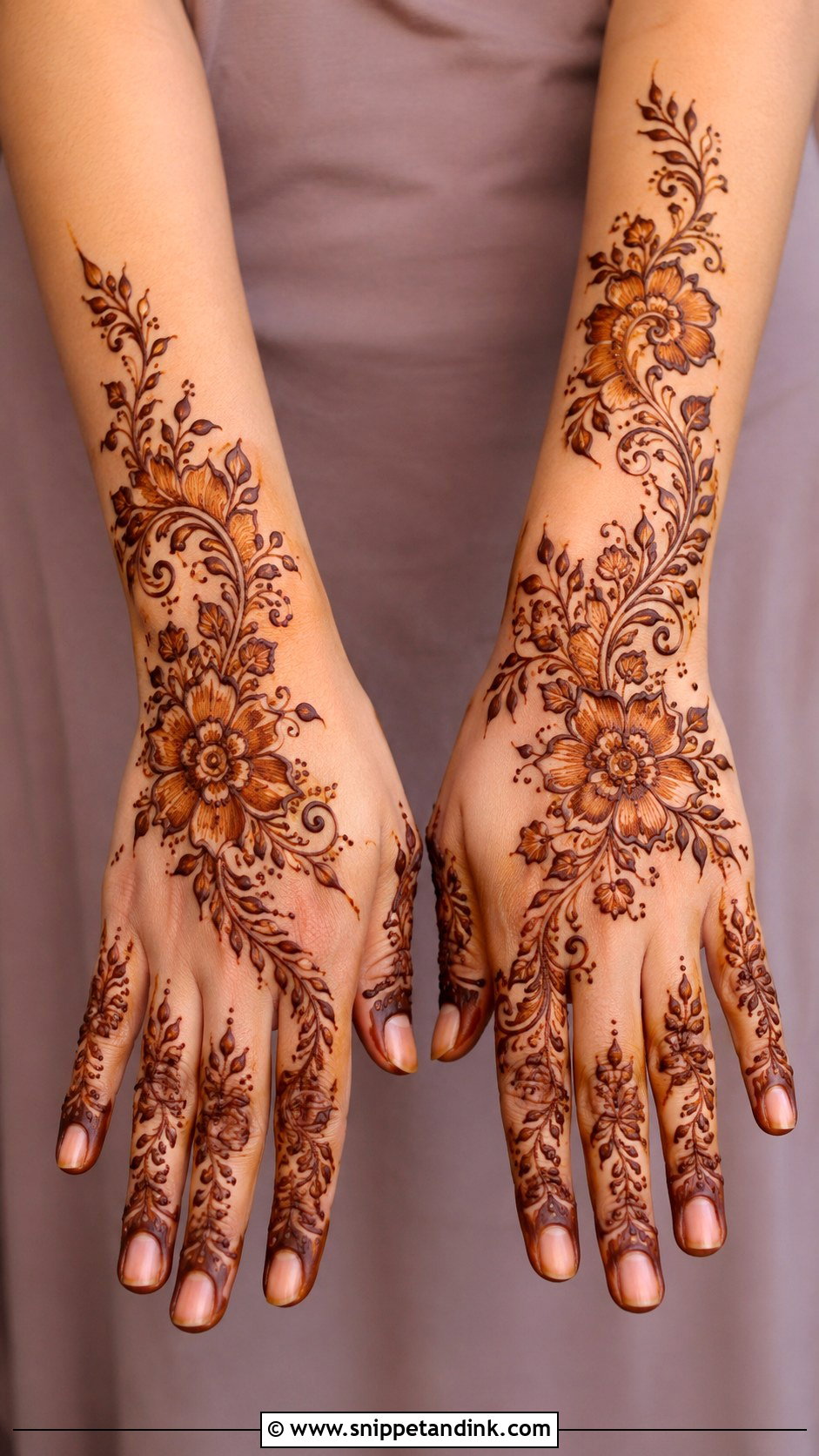
Floral designs can be simple, bold, shaded or very detailed. On the palm, roses, lotus petals, stems and vines can continue to the wrist and fingers; on the back hand, flowers form a diagonal trail or a bracelet layout. Large flowers make a picture bold, while small filler flowers soften it. I mix a few open petals with fine detail rather than shading everything, since fully shaded flowers lose their outline as the stain darkens.
11. Rose Mehndi Design
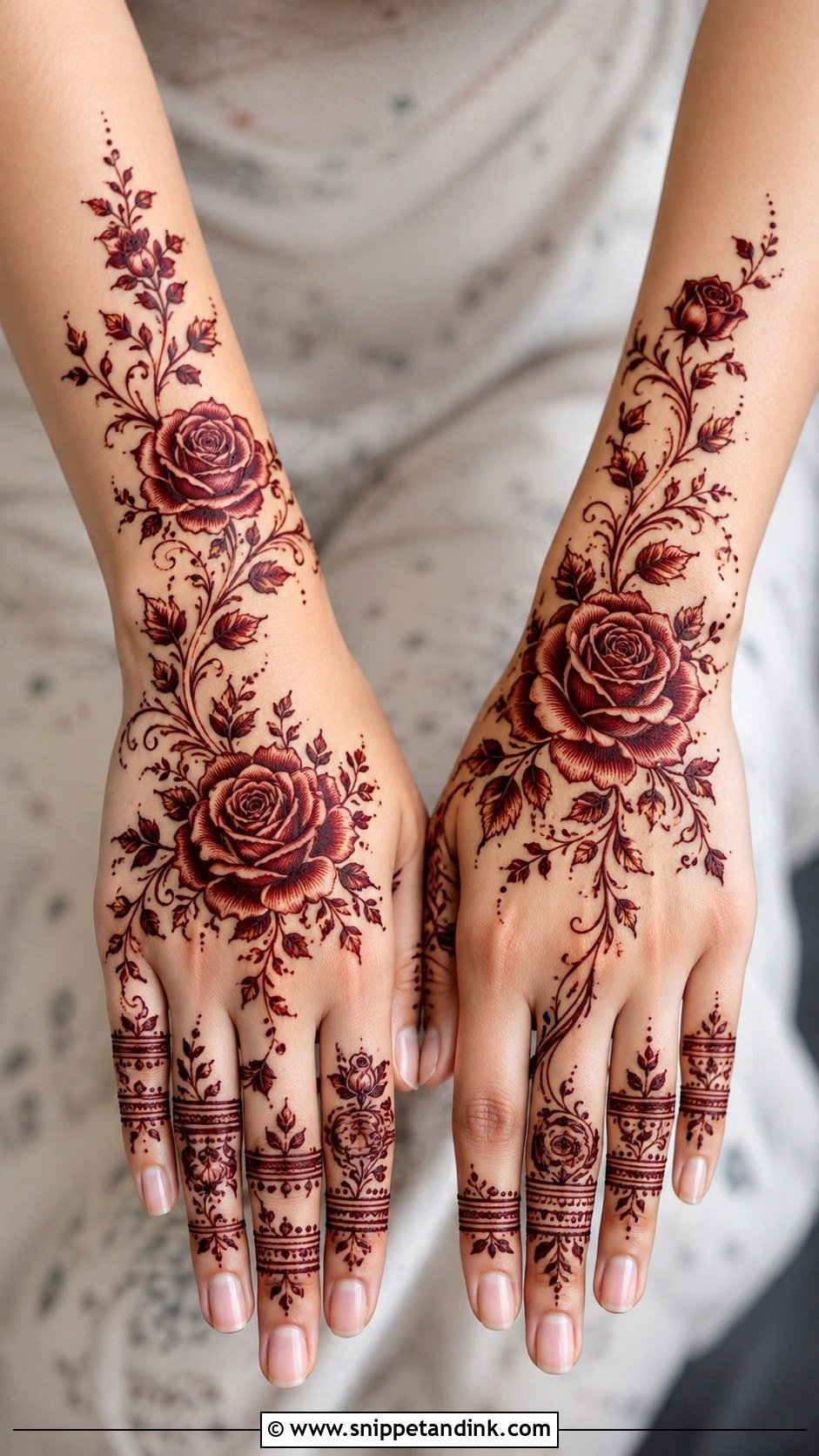
One large rose on the palm or back hand with smaller roses moving toward the wrist and fingers, joined by leaves, curls, dots and thin vines. Shading the petals gives depth, but I shade with fine lines, not solid fill. Solid petals stain unevenly and the rose turns into a blob. Keep the outline bold enough to hold the shape after staining. It suits engagements, bridesmaids and lighter bridal looks.
12. Lotus Mehndi Design
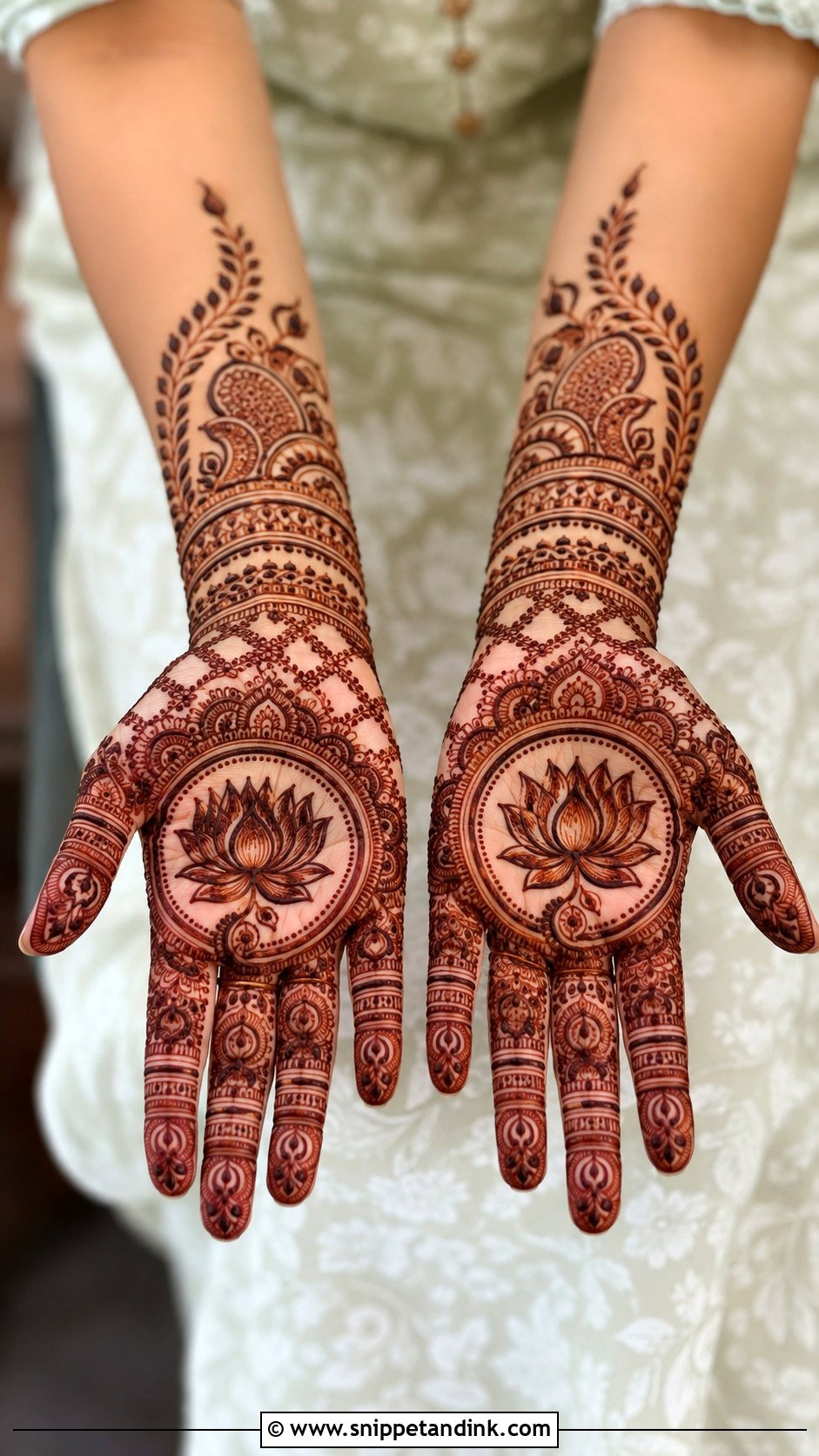
A lotus on the palm, wrist or back hand, surrounded by leafy borders, dots, mandala rings and fine filler. One large central lotus makes a bold picture; several smaller ones make a detailed layout. It pairs well with Indian full-hand patterns and Indo-Arabic trails. Give each petal room. The lotus is defined by its separate, pointed petals, and if they touch, it stops reading as a lotus.
13. Paisley Mehndi Design
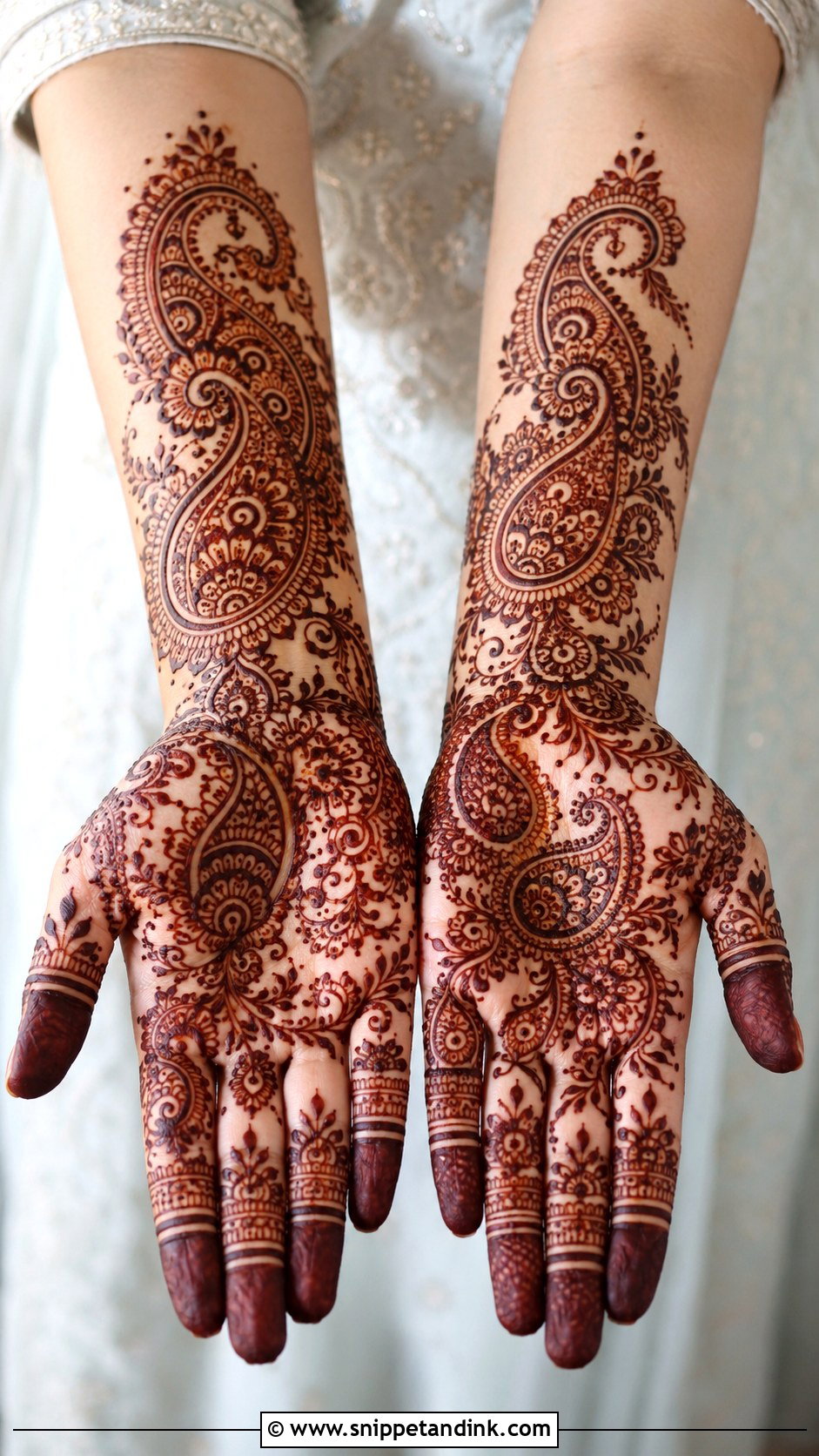
Paisleys cover the palm, flow across the back hand or form a forearm trail, with tiny flowers, dots, lines and leaves inside each one. They give traditional richness without portraits or heavy symbols, and they suit embroidered festive outfits. Mix large paisleys with smaller ones for depth. Most importantly, let them follow the curve of the hand. Paisleys lined up in stiff rows look like wallpaper, not henna.
14. Peacock Mehndi Design
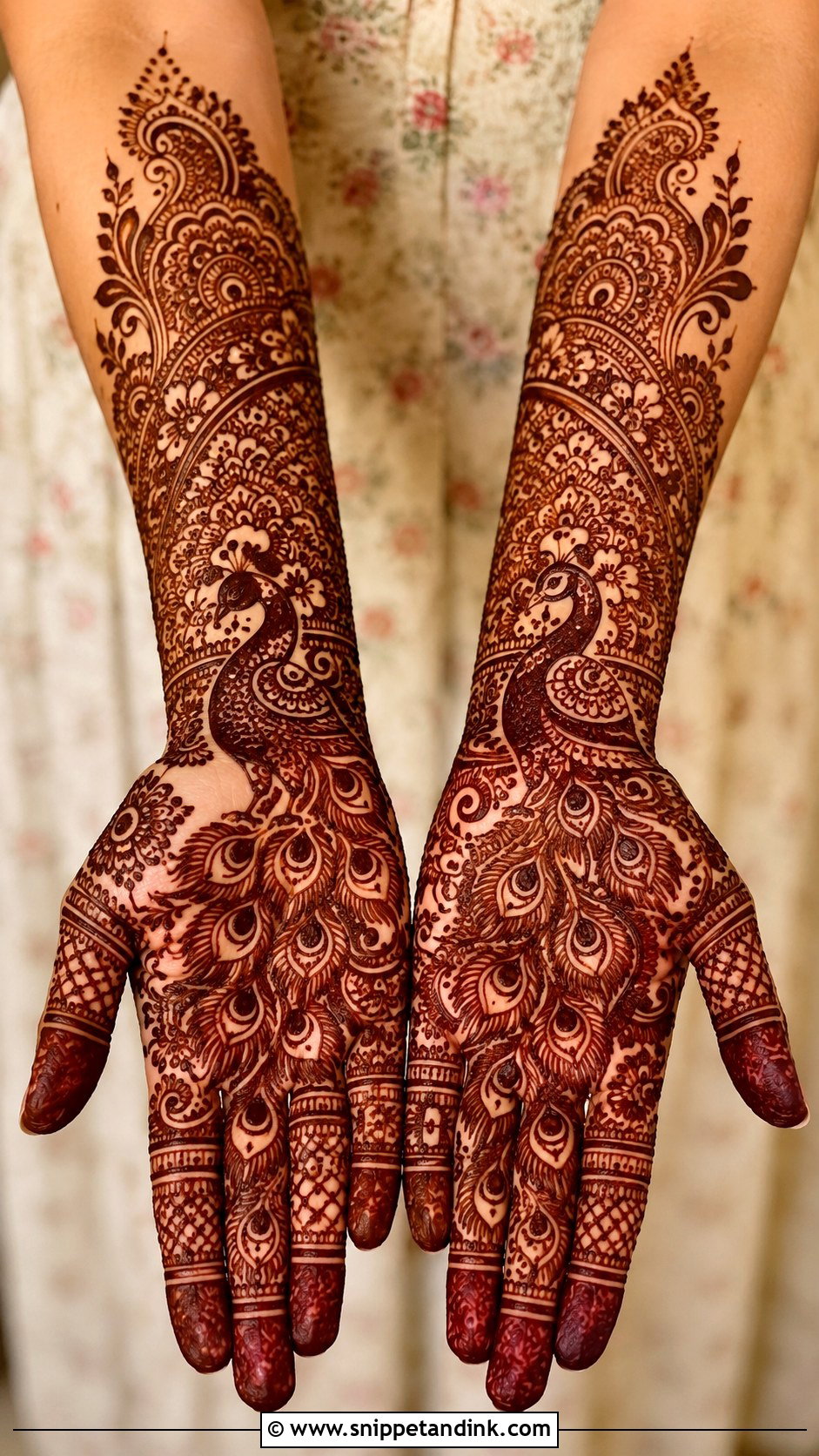
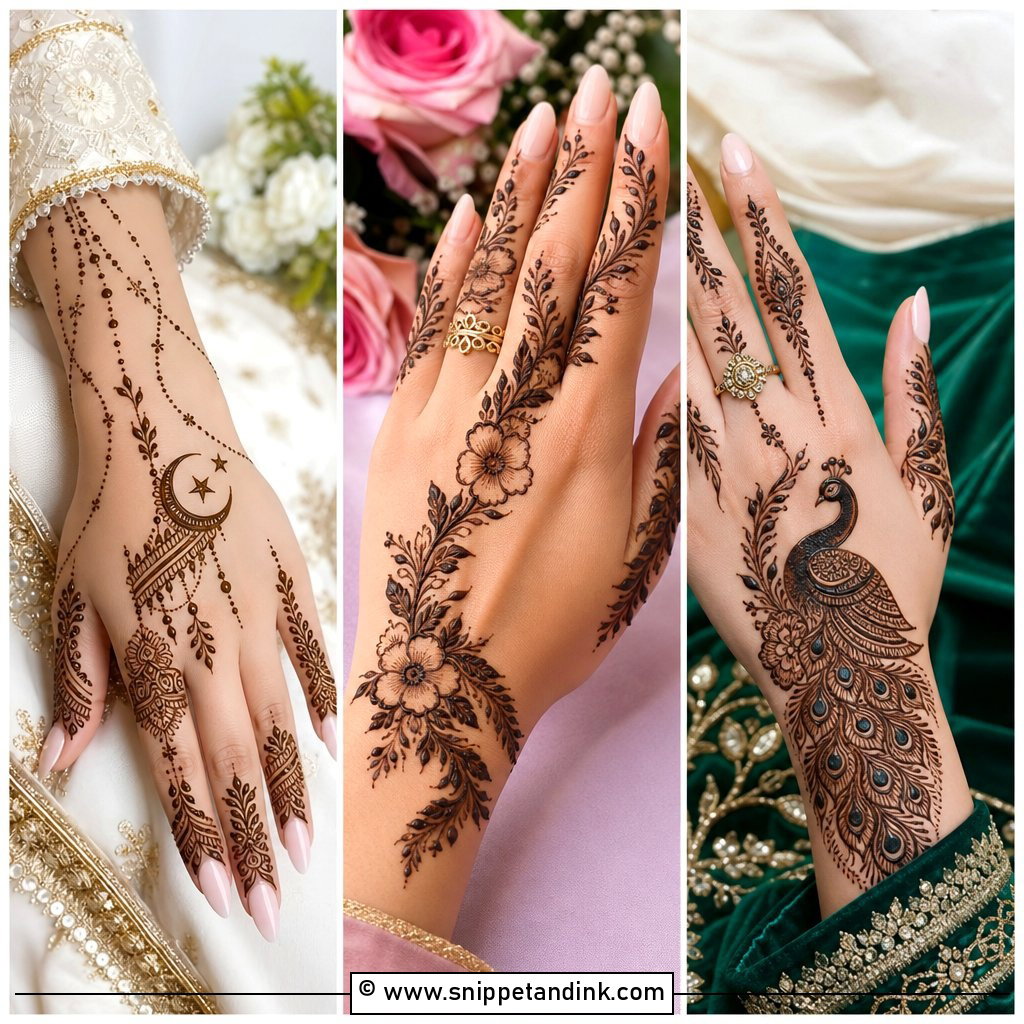
A peacock on the palm, back hand or forearm with feathers spreading into paisleys, florals and fine lines. It’s a bridal favorite and a close-up favorite. The neck, eye and feather curves have to stay clear, so I leave a little more open skin around the bird than around anything else on the hand. One large peacock can be the main feature, or mirrored peacocks can face each other across the two hands.
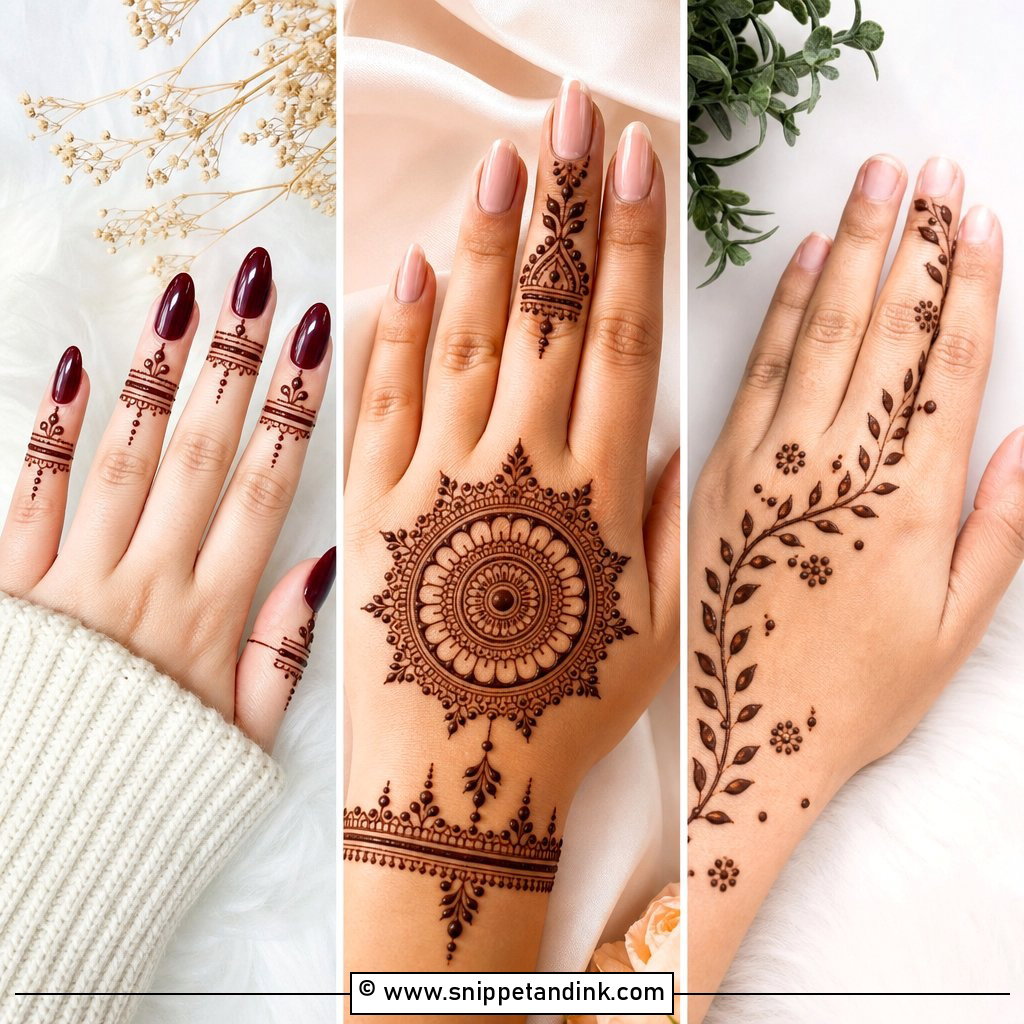
15. Jaali Mehndi Design
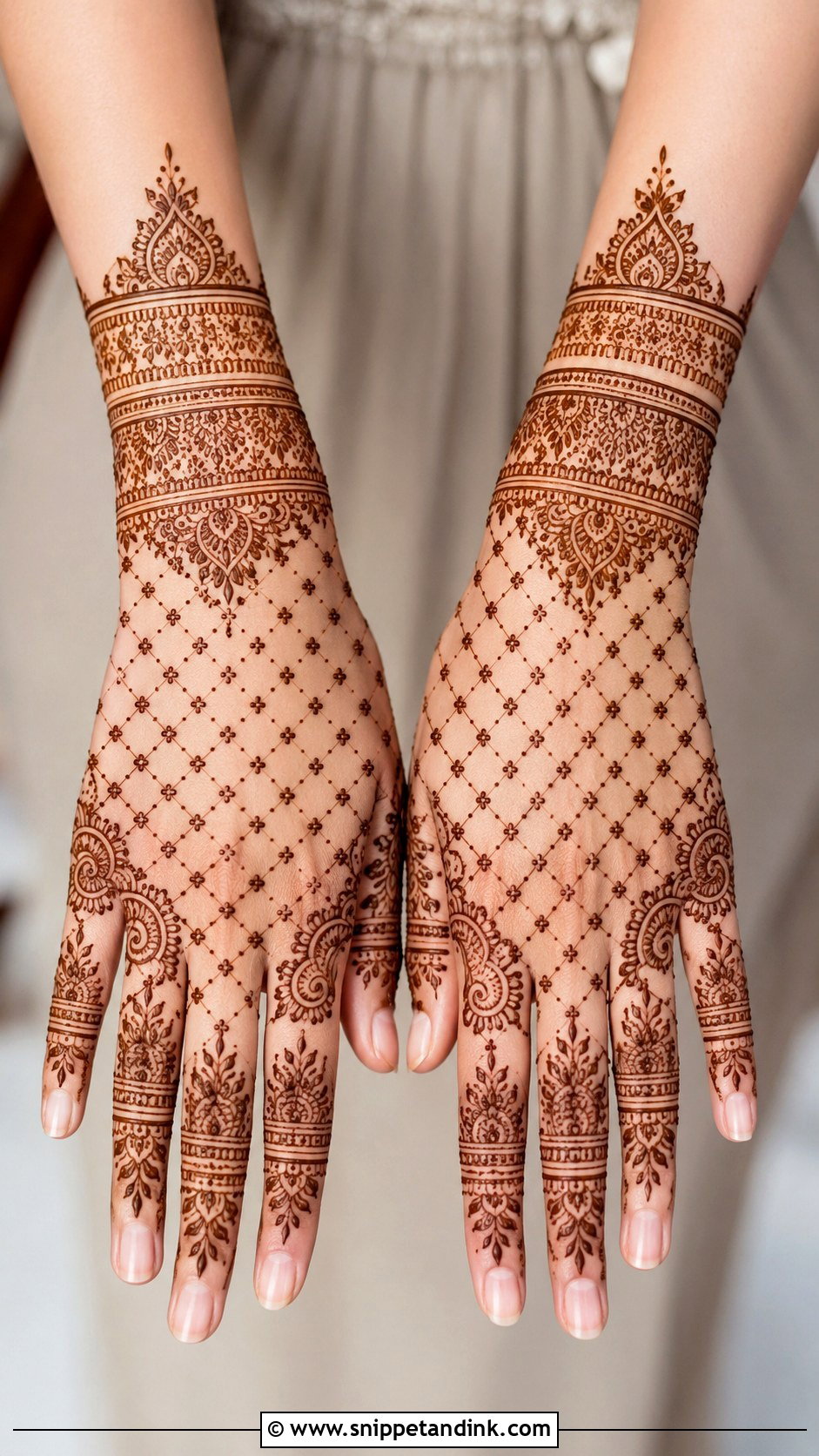
Jaali builds a net of diamonds, squares or curved grids over the back hand, fingers, palm corners or wrist, with dots or tiny flowers at the crossings. It gives texture without weight and combines easily with Arabic florals, Indian paisleys or bridal cuffs. Even lines and open squares are non-negotiable. I draw one direction first, then cross it, so the grid stays regular instead of drifting.
16. Bracelet Mehndi Design
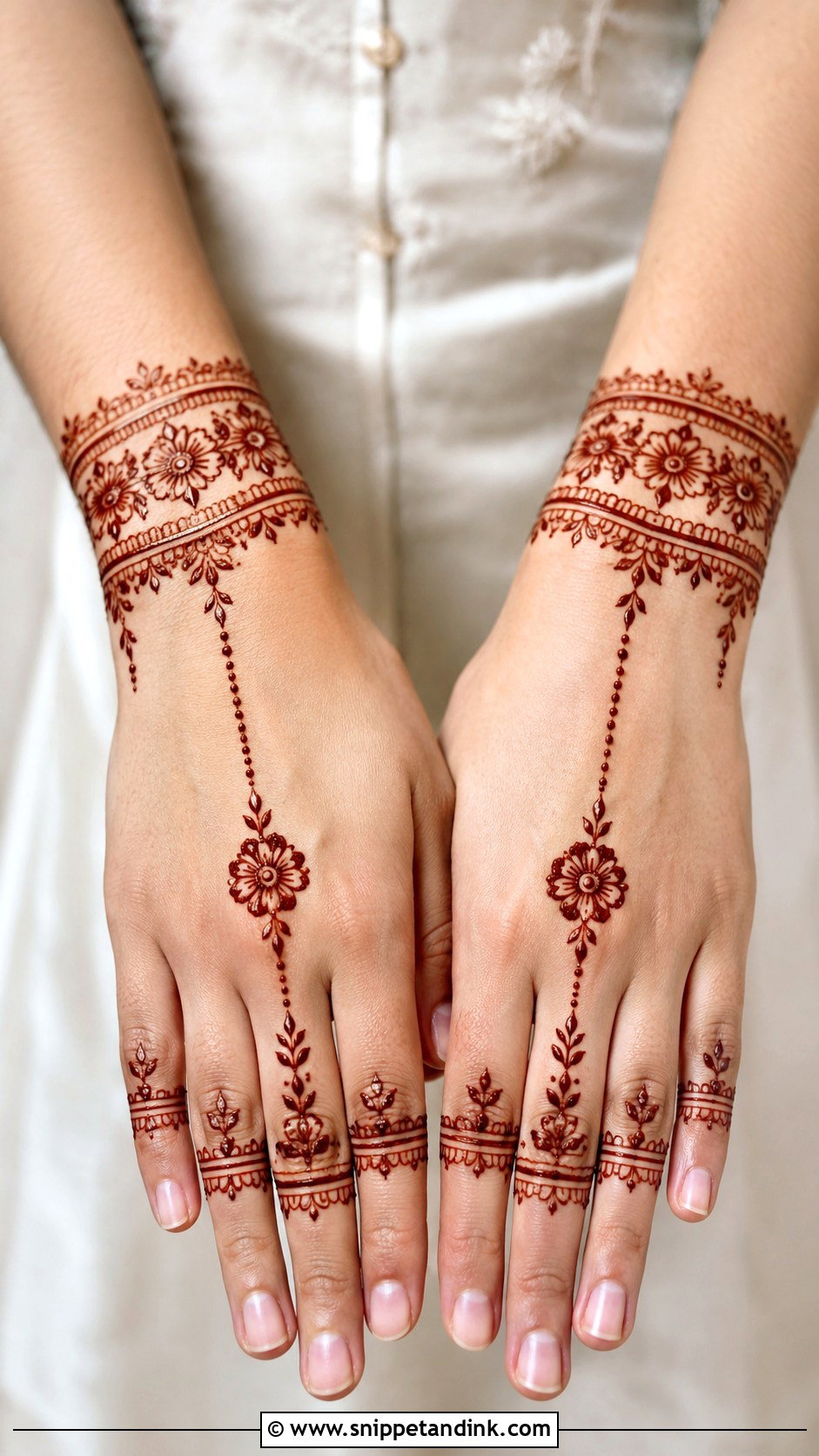
A wrist cuff, chain-like lines, ring connections and decorated fingers, usually on the back hand where the bracelet effect shows best. Florals, dots, small mandalas and leafy chains fill it out. I draw the wrist band slightly bold and the chains thinner, which makes the cuff read as the main piece. It looks good with real bangles or on its own, at parties, Eid and engagements.
17. Jewelry Mehndi Design
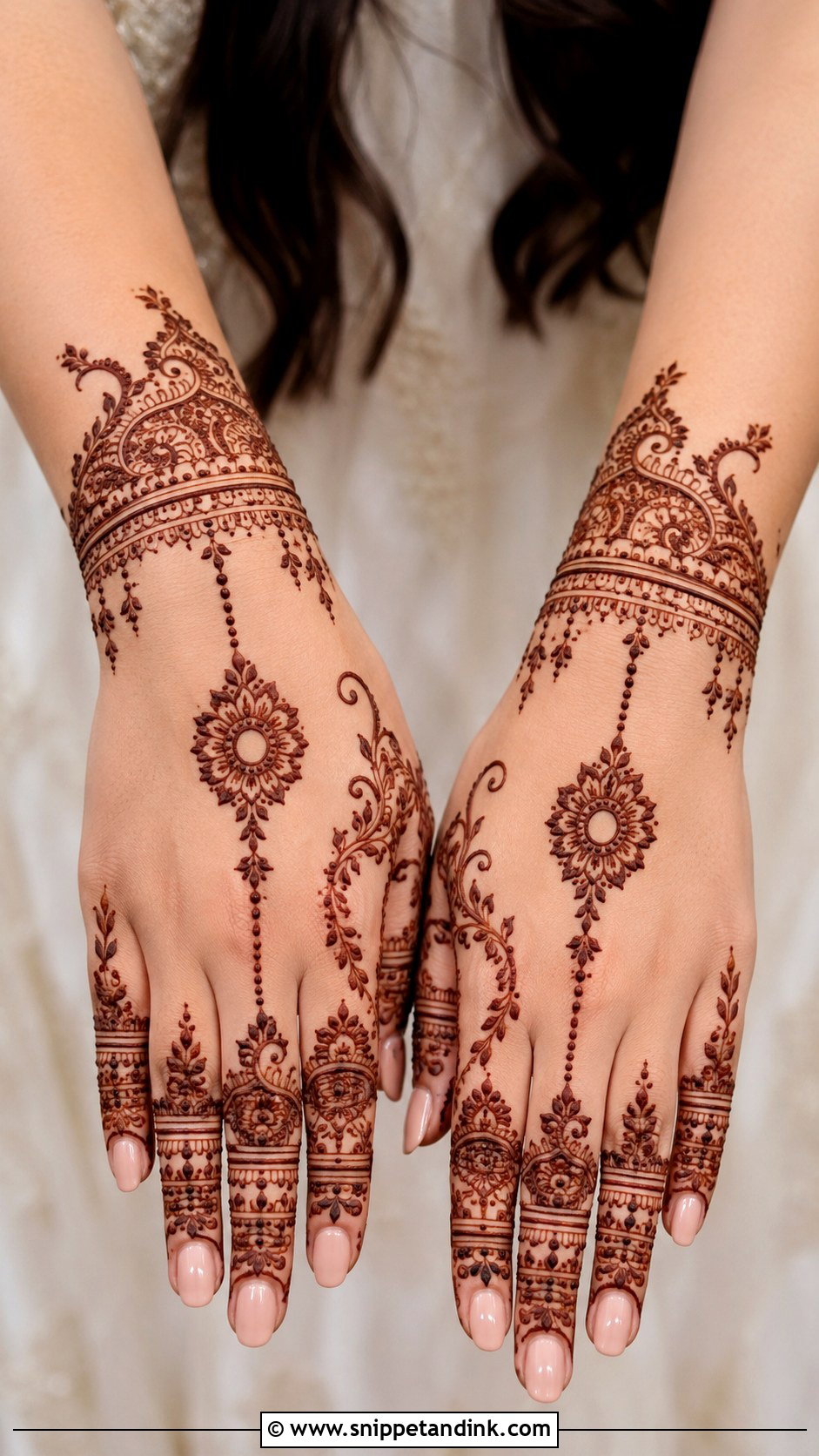
Jewelry mehndi borrows from hathphool pieces: ring bands, hand chains, wrist cuffs, bracelet borders and dangling dot details, with small flowers, teardrops and curves connecting them. Plenty of skin stays visible, so it feels light. I trace the chains along the tendons on the back of the hand, the way a real hand chain would sit, which is why it looks natural rather than drawn on. Sisters and engagement guests choose it often.
18. Indo Arabic Mehndi Design
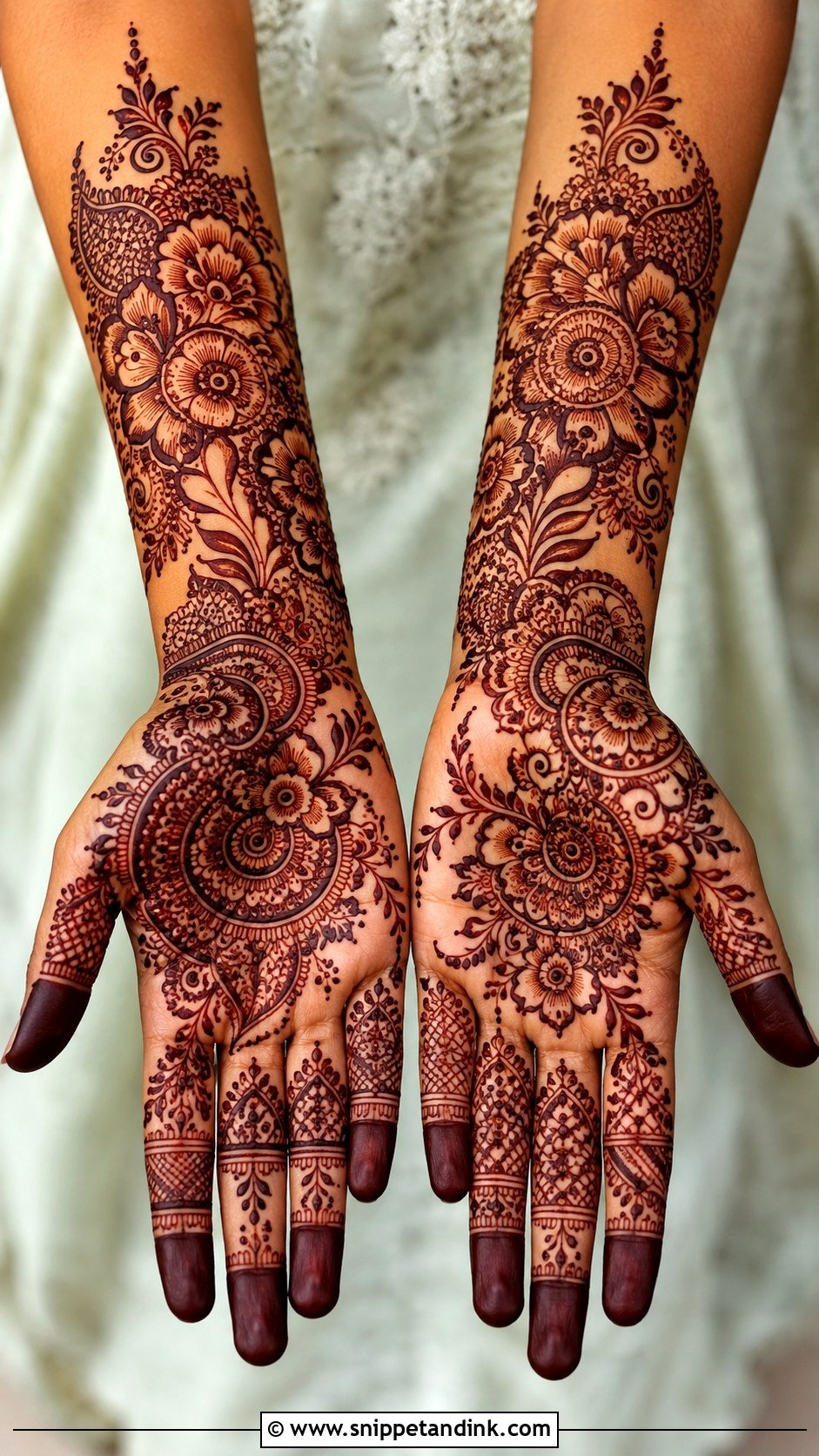
Indo-Arabic combines large flowers, paisleys and leafy trails with Indian finger work, mandalas and fine dots, keeping some open space and filling key areas with detail. It’s fuller than Arabic and lighter than traditional Indian bridal coverage. For photos, I outline the main motifs boldly and keep the shading inside them fine. That contrast keeps the design clear from both near and far.
19. Moroccan Mehndi Design
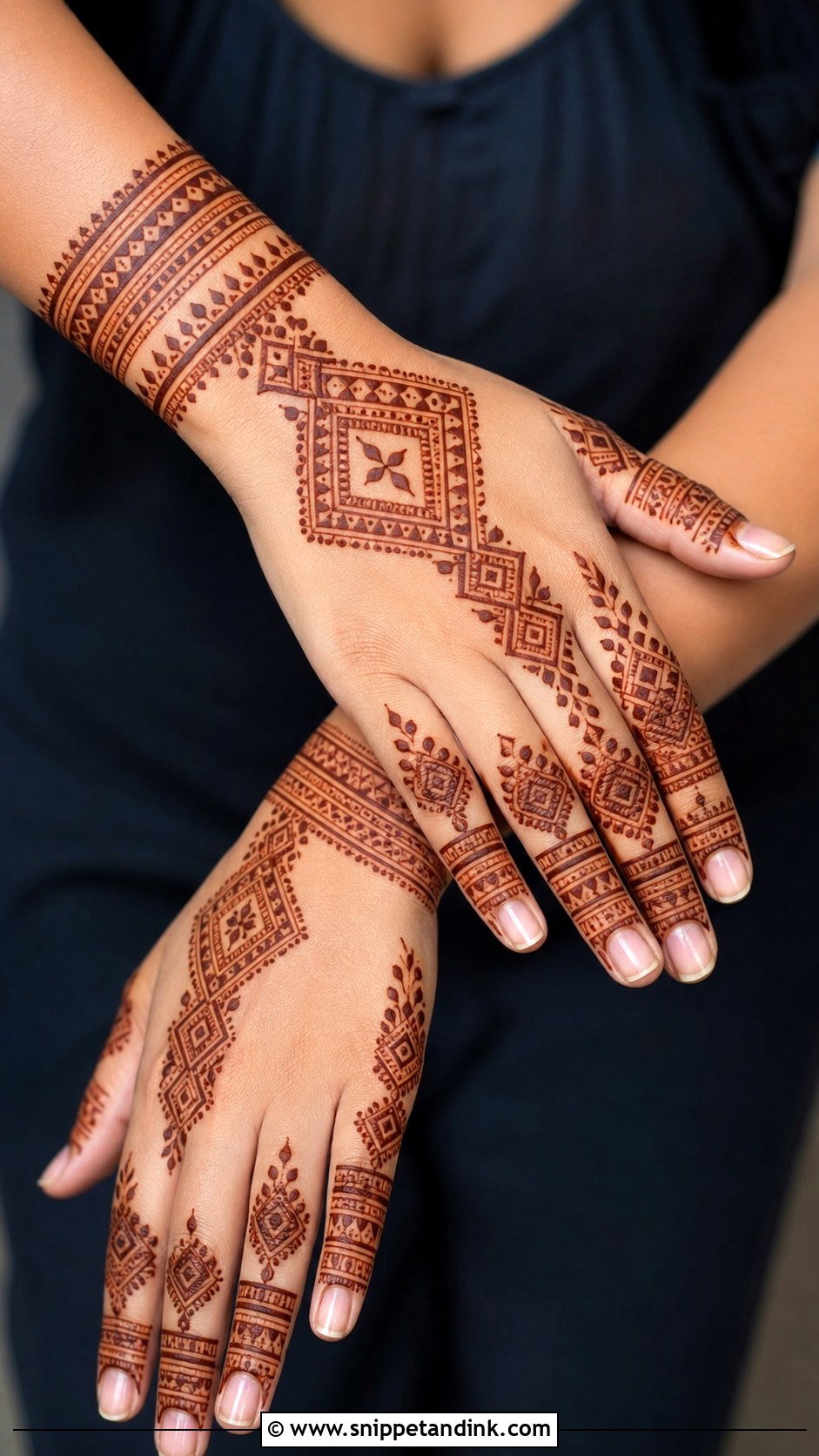
Moroccan mehndi design is geometric: diamonds, triangles, chevrons, grids and structured wrist bands instead of flowers. It looks especially sharp on the back hand and fingers, where straight lines can follow the bones and joints. Geometry depends on even spacing, so I work in short sections and rest my hand to keep lines straight. A good reddish-brown stain makes the lines look crisp and graphic.

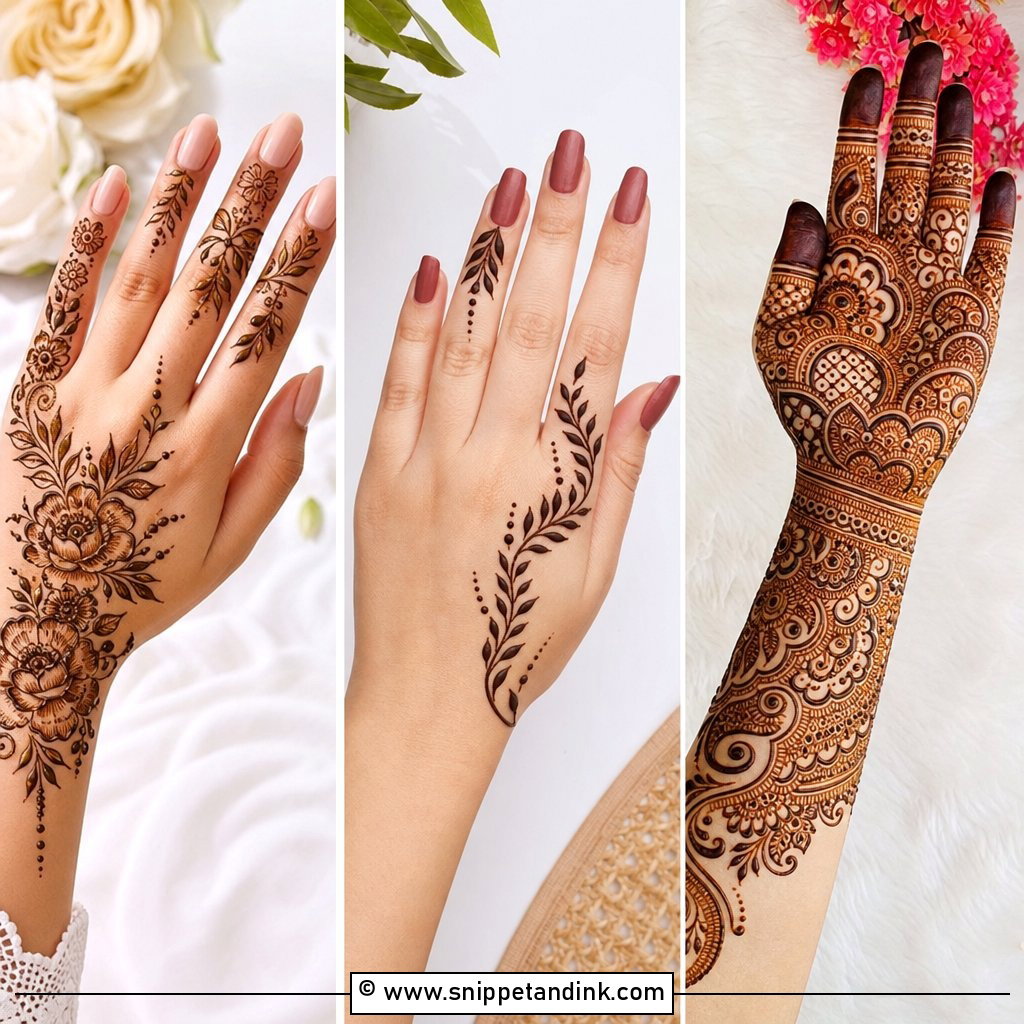
20. Gulf Mehndi Design
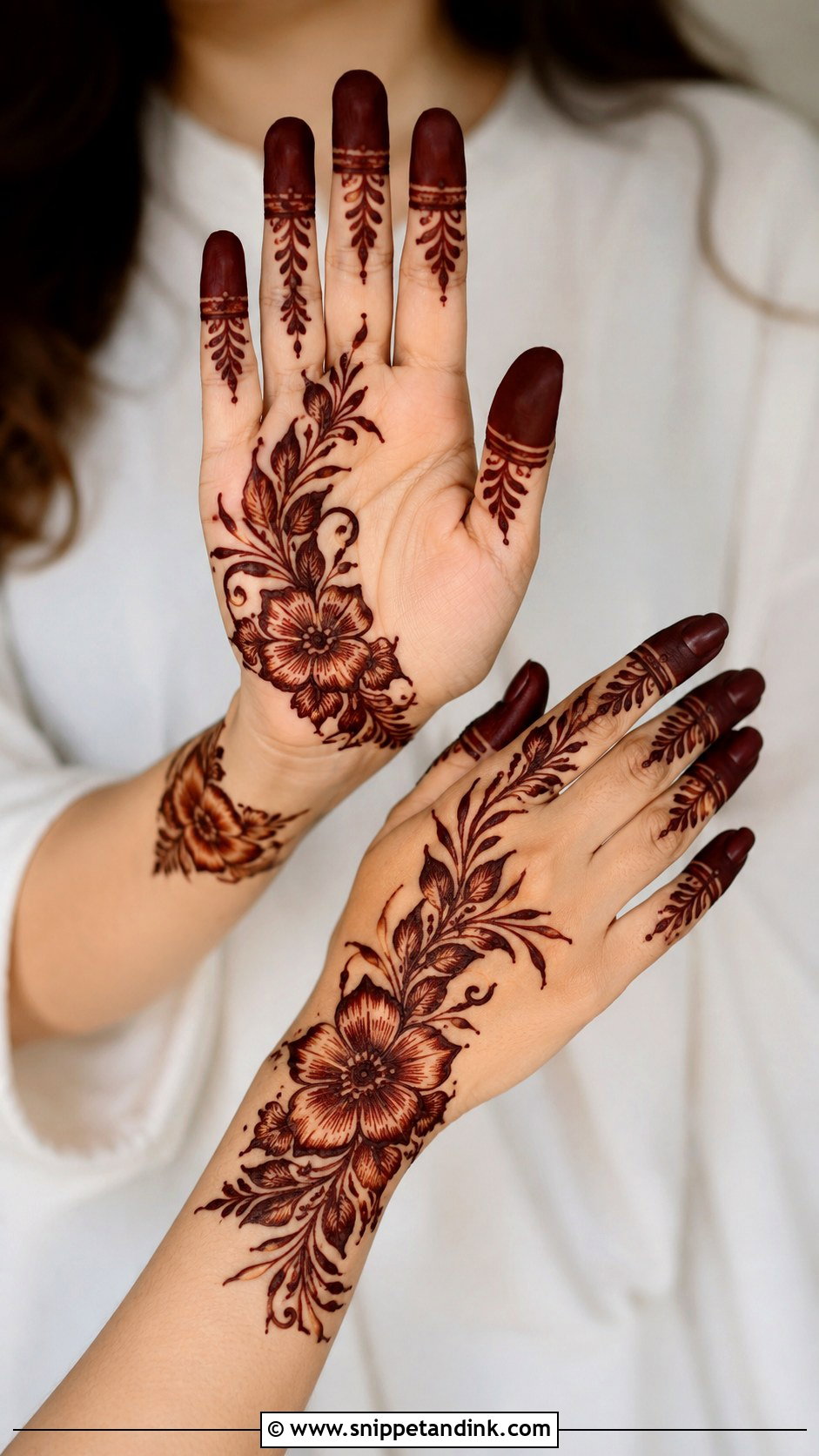
Gulf or Khaleeji mehndi uses bold flowers, leafy sprays, open spacing and dramatic finger details, often covering one side of the palm or back hand while leaving the rest bare. Large floral shapes, shaded petals and thick outlines are typical, and it’s a favorite for Eid and weddings because it goes on quickly. For the best picture, the layout should flow in one direction from wrist to fingertips, without changing course halfway.
21. Pakistani Mehndi Design
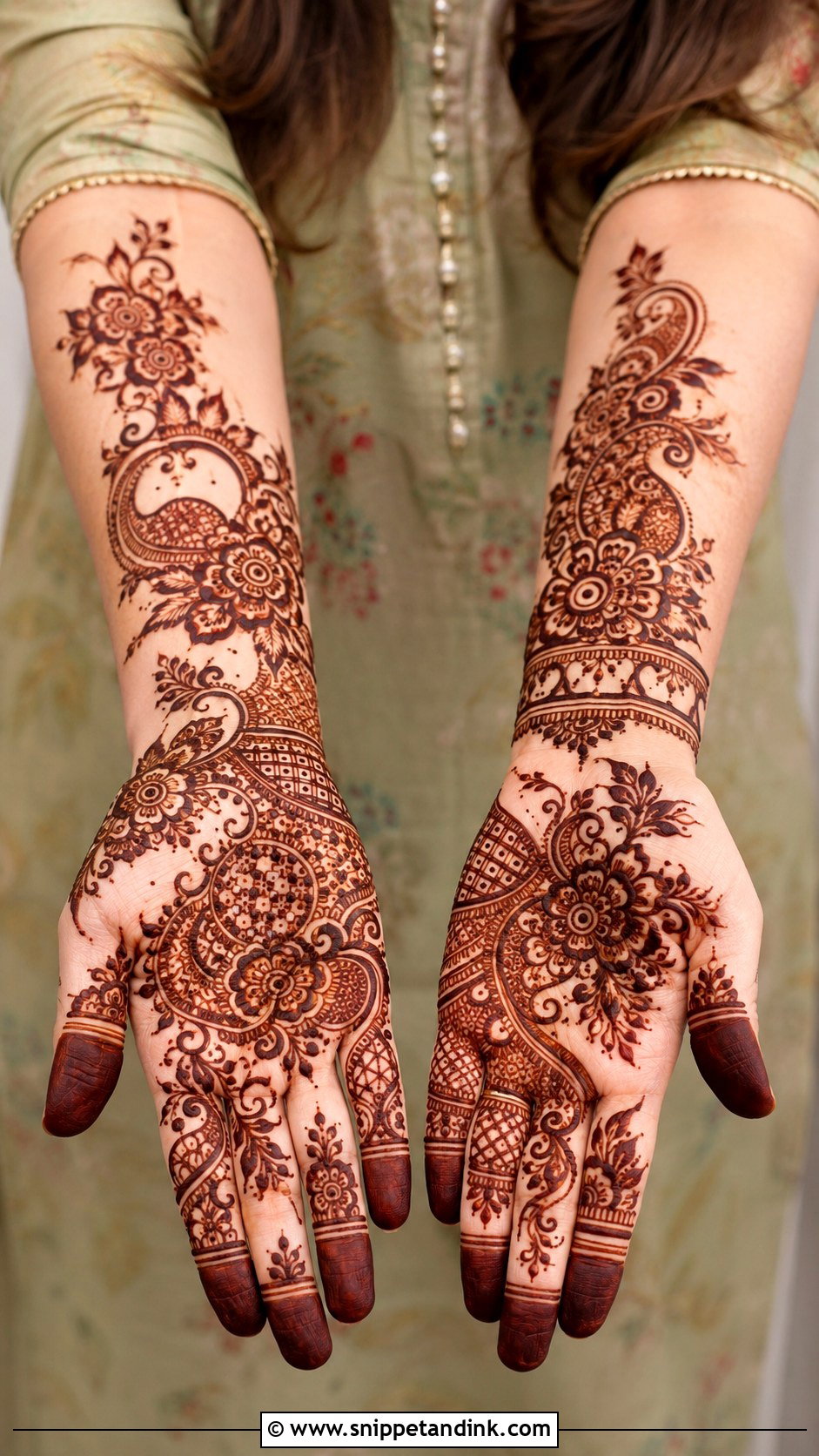
Pakistani mehndi mixes Indian detail with Arabic flow: dense palm work, bold floral trails, paisley panels, jaali and decorated fingertips. Bridal versions extend to the forearm; party versions stay around the hand and wrist. It’s traditional without being rigid. The key is contrast between detailed and open areas. When every area is equally dense, the pattern stops reading in photographs.
22. Eid Mehndi Design
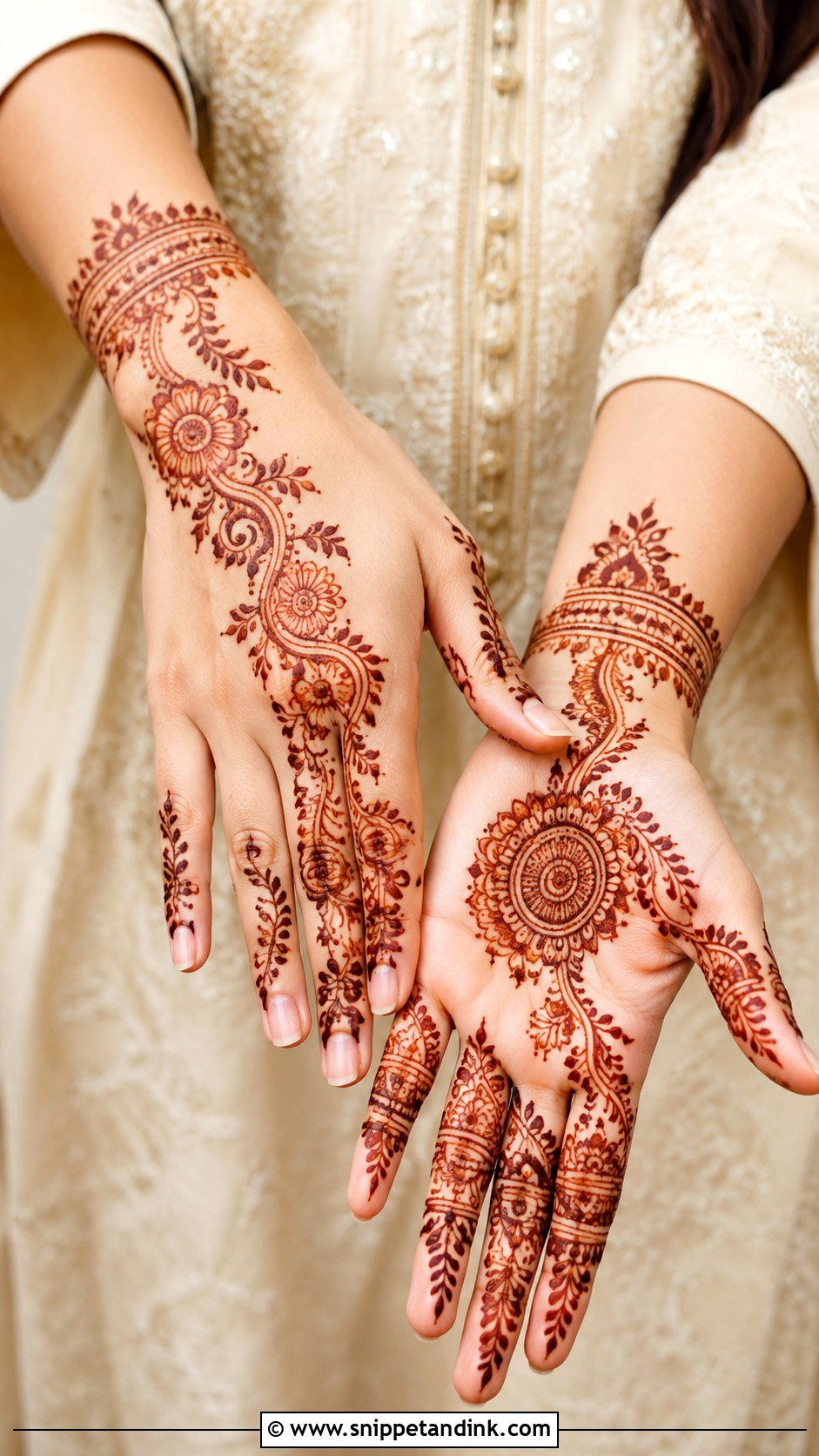
Eid mehndi design has to last through a long day of visits. Arabic floral trails, bracelet-style back hands, simple palm mandalas and finger-focused designs are all medium coverage, which suits bangles, rings and traditional outfits without a long sitting. Keep the finger area clean. Hands are photographed constantly at Eid, greeting family and passing sweets, and crowded fingers look messy in those quick snaps.
23. Diwali Mehndi Design
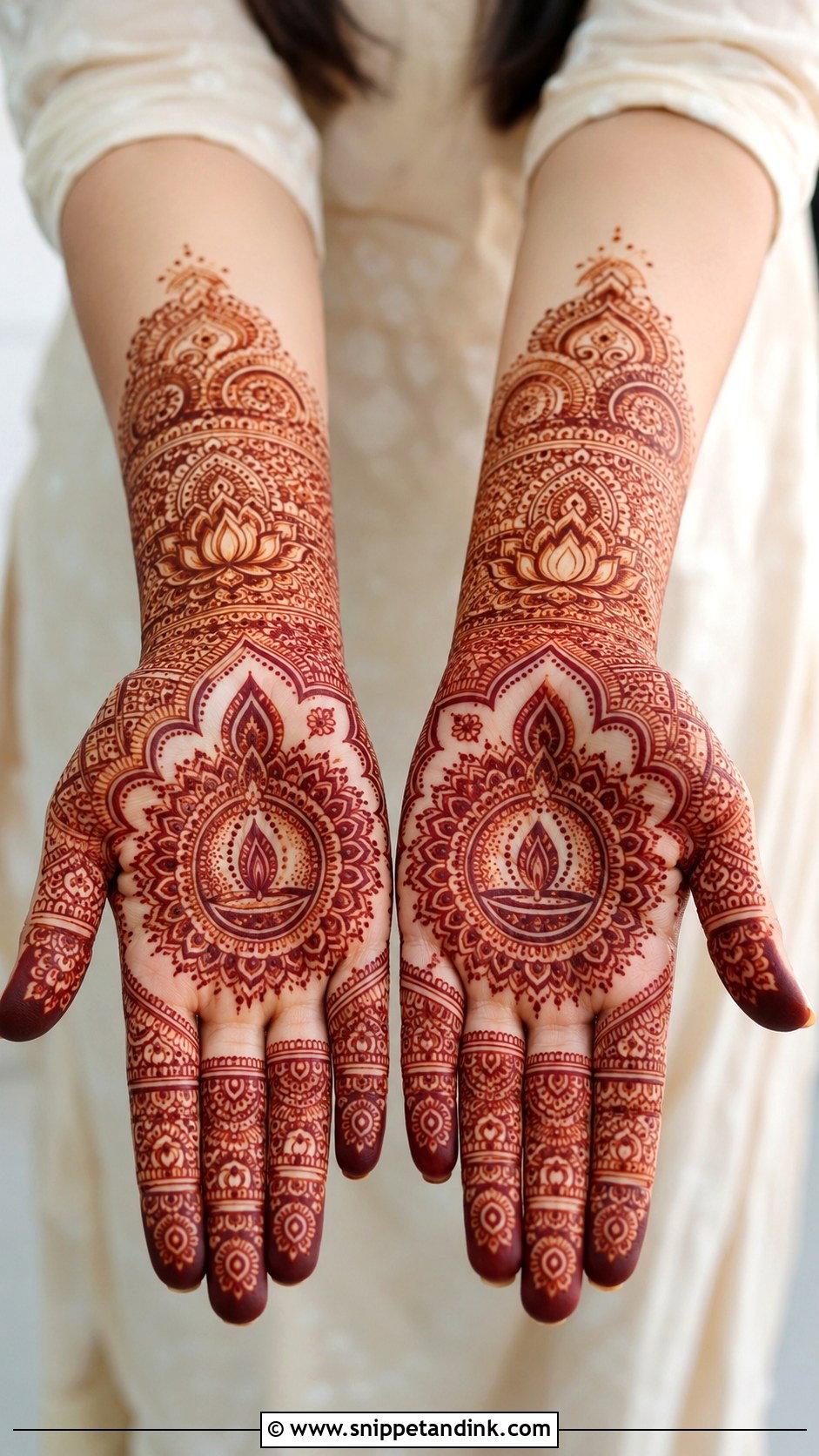
Diwali mehndi design leans on mandalas, lotus flowers, diya-inspired shapes, paisley borders and fine dots. A circular mandala sits well on the palm with a decorative cuff at the wrist; back hands take floral trails and bracelet patterns. Keep it light for home celebrations or fuller for parties and pujas. Avoid piling on small symbols. Five diyas and three lotuses on one palm look busy, while one or two read clearly.
24. Karwa Chauth Mehndi Design
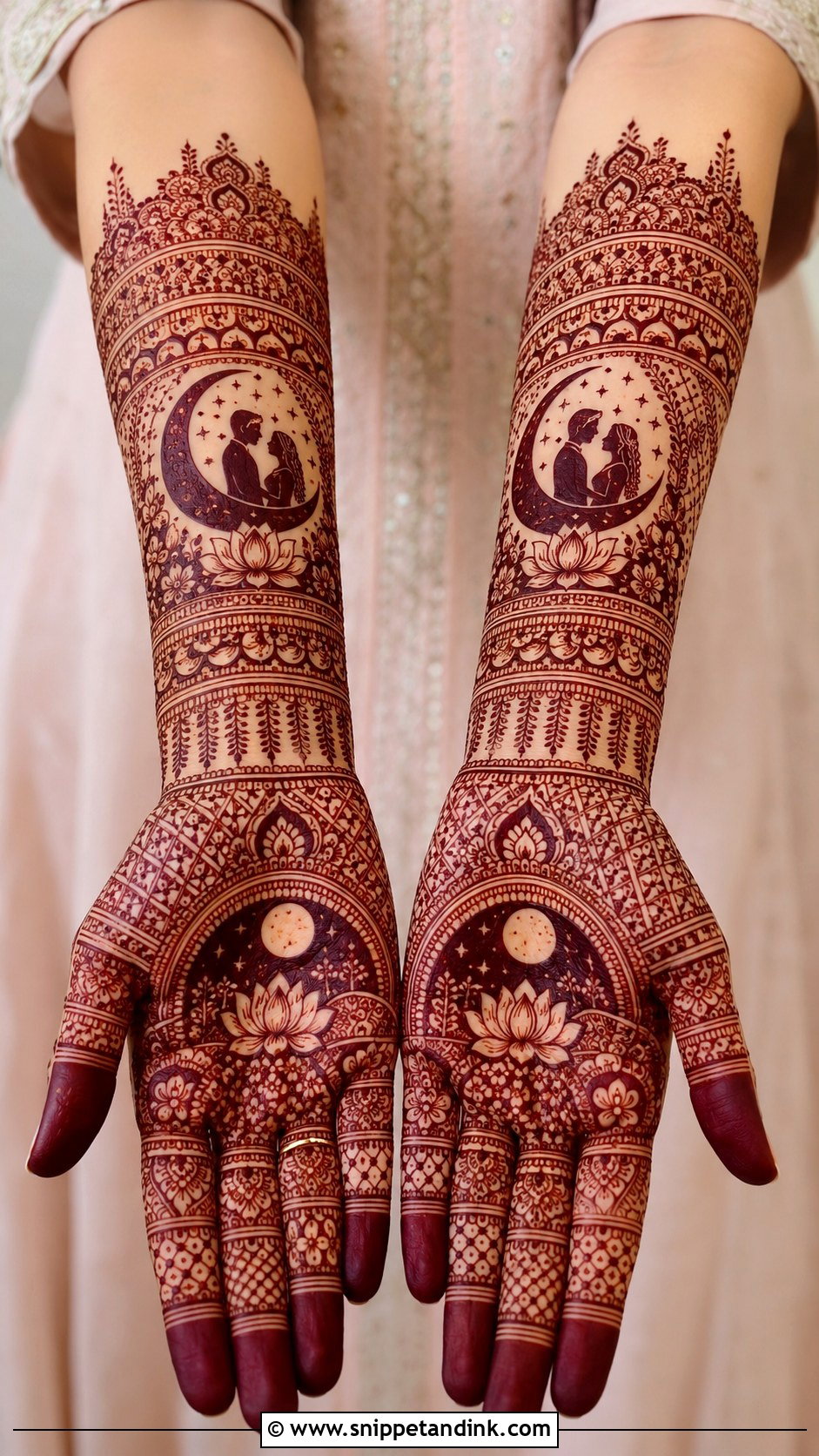
Karwa Chauth mehndi design is usually full: palms, decorated fingers, wrist panels, moon shapes, lotus, paisleys or couple motifs. The palms and fingertips are what show during the rituals, so those are where I put the most care. Indian-style filling gives a heavy look and Indo-Arabic a softer one. Small jaali sections and shaded flowers add detail without mess. Apply it the day before so the stain darkens toward maroon in time.
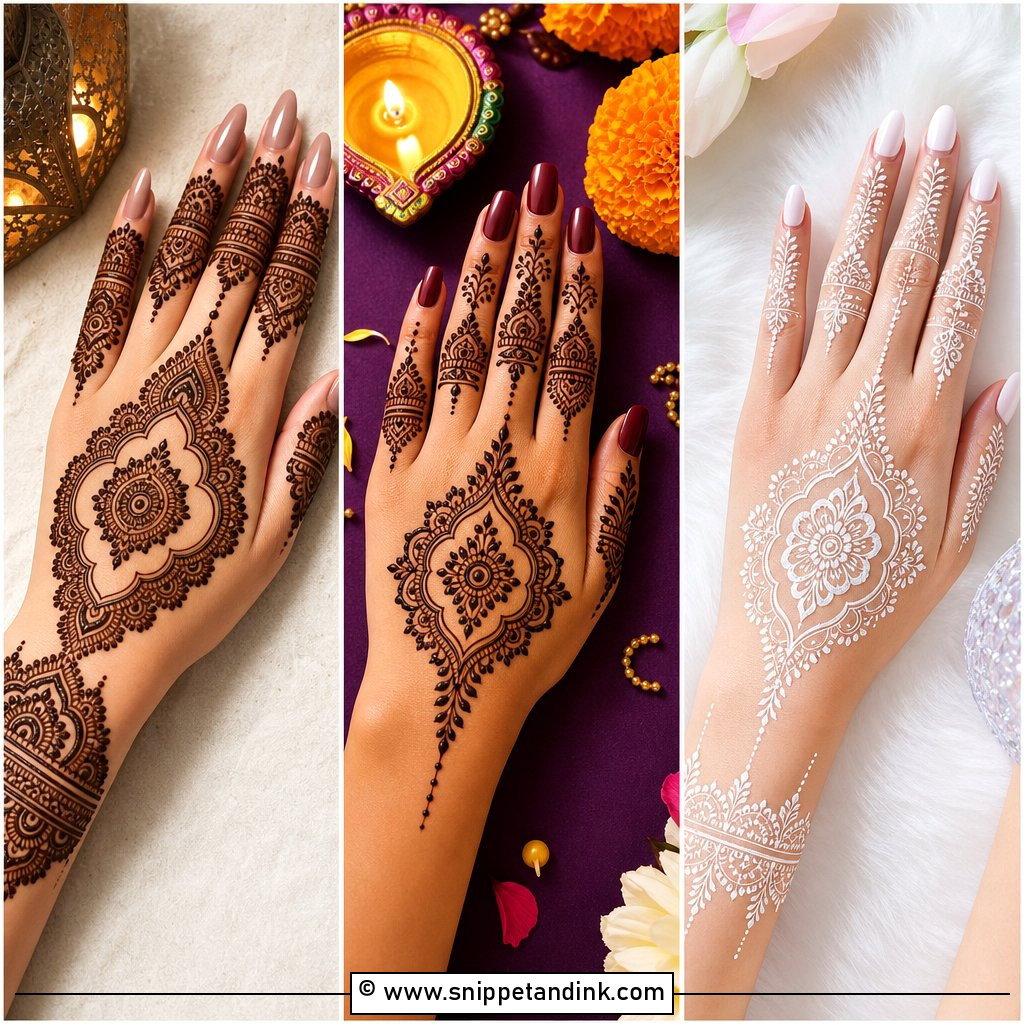
25. Engagement Mehndi Design
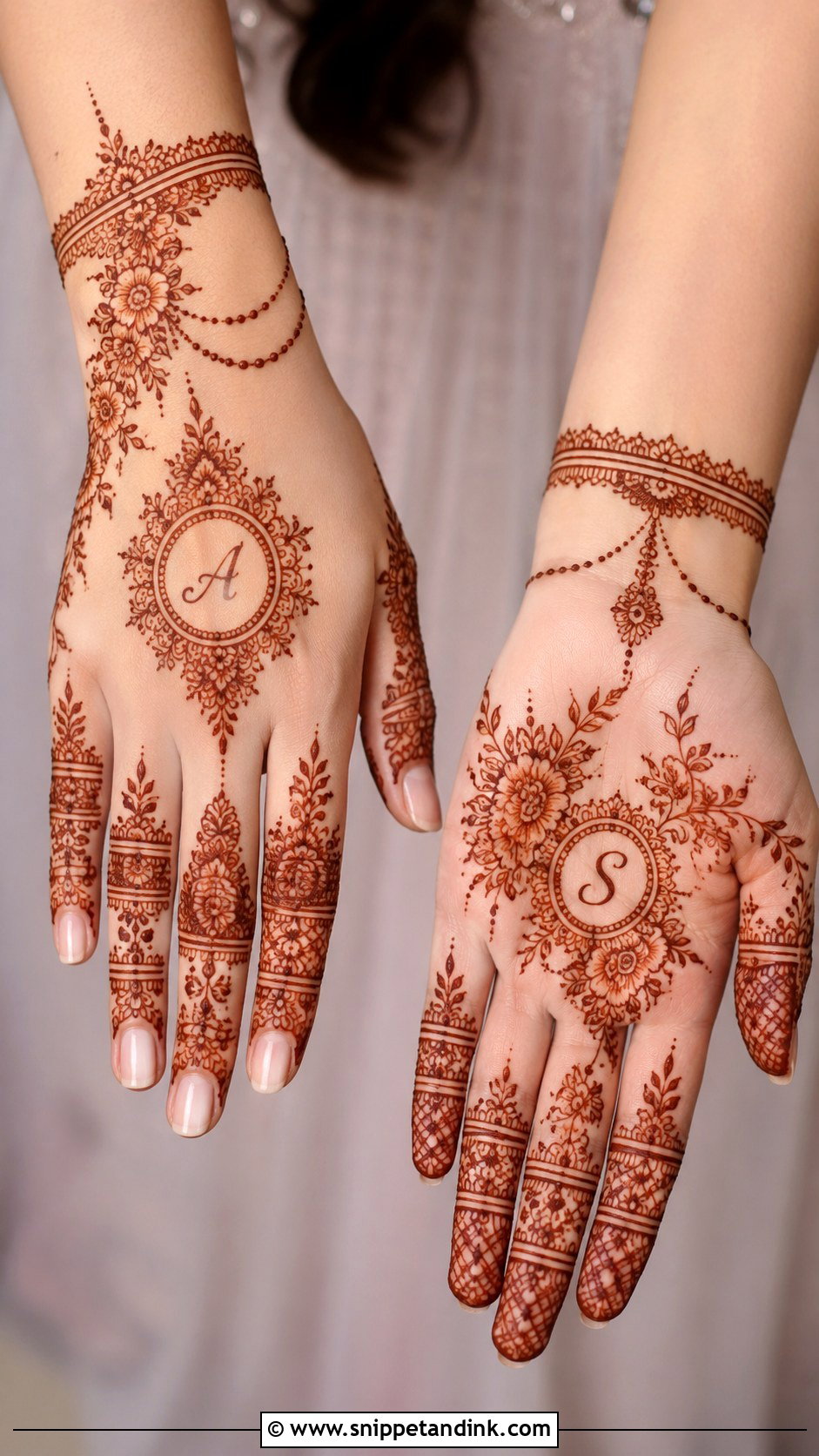
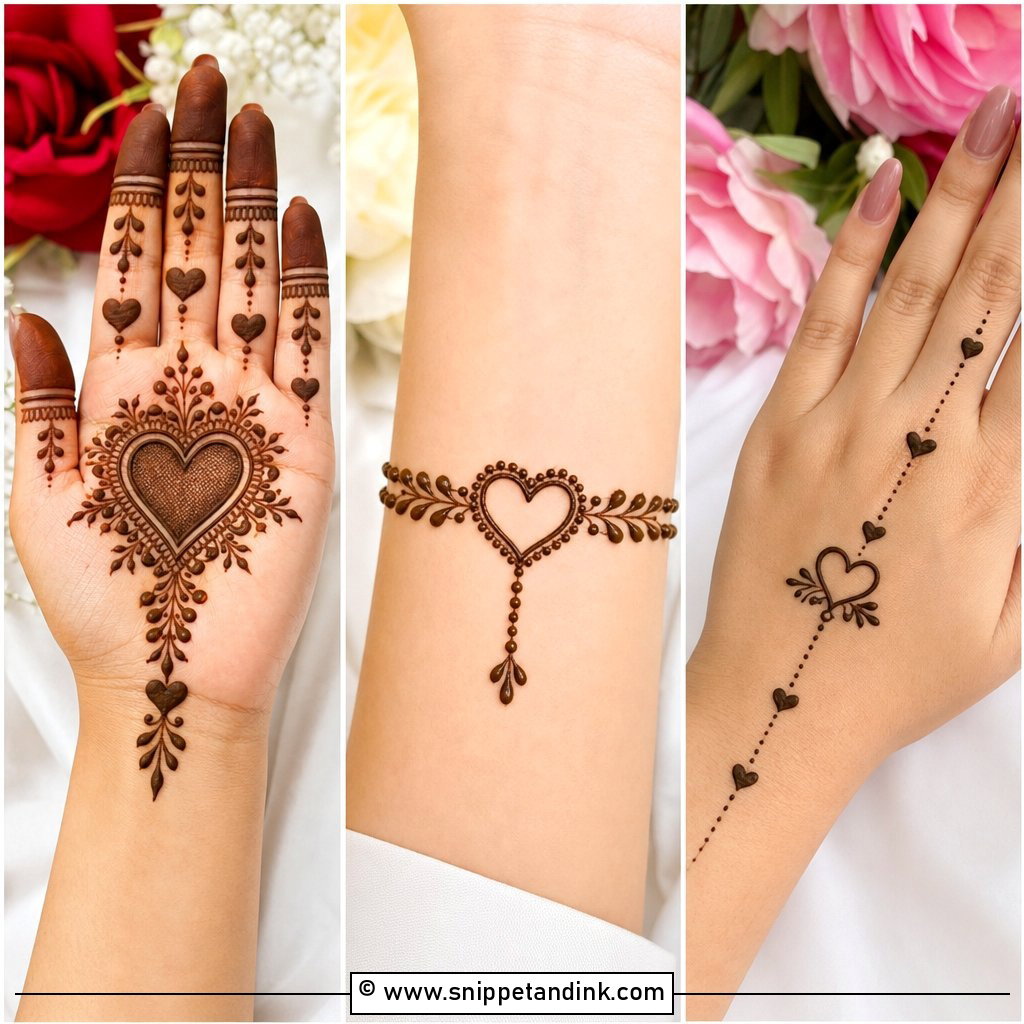
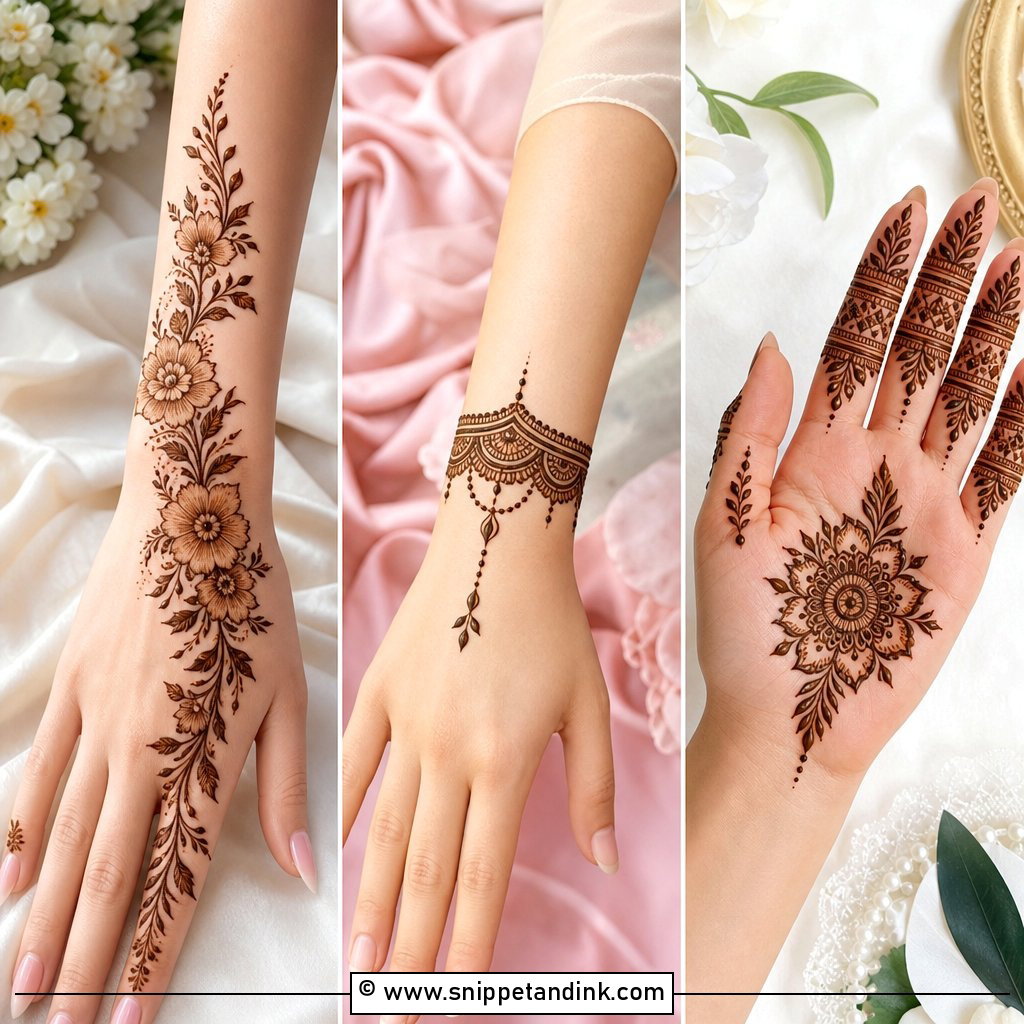
Engagement designs usually stay lighter so the ring and outfit lead: initials, ring motifs, floral trails, bracelet details and a delicate palm pattern. Back-hand jewelry mehndi is especially popular for ring ceremony photos. Small hearts, a date or a hidden initial make it personal. Keep the fingers tidy and lightly detailed, and leave the ring finger’s base clear so the ring sits on clean skin.
26. Wedding Guest Mehndi Design
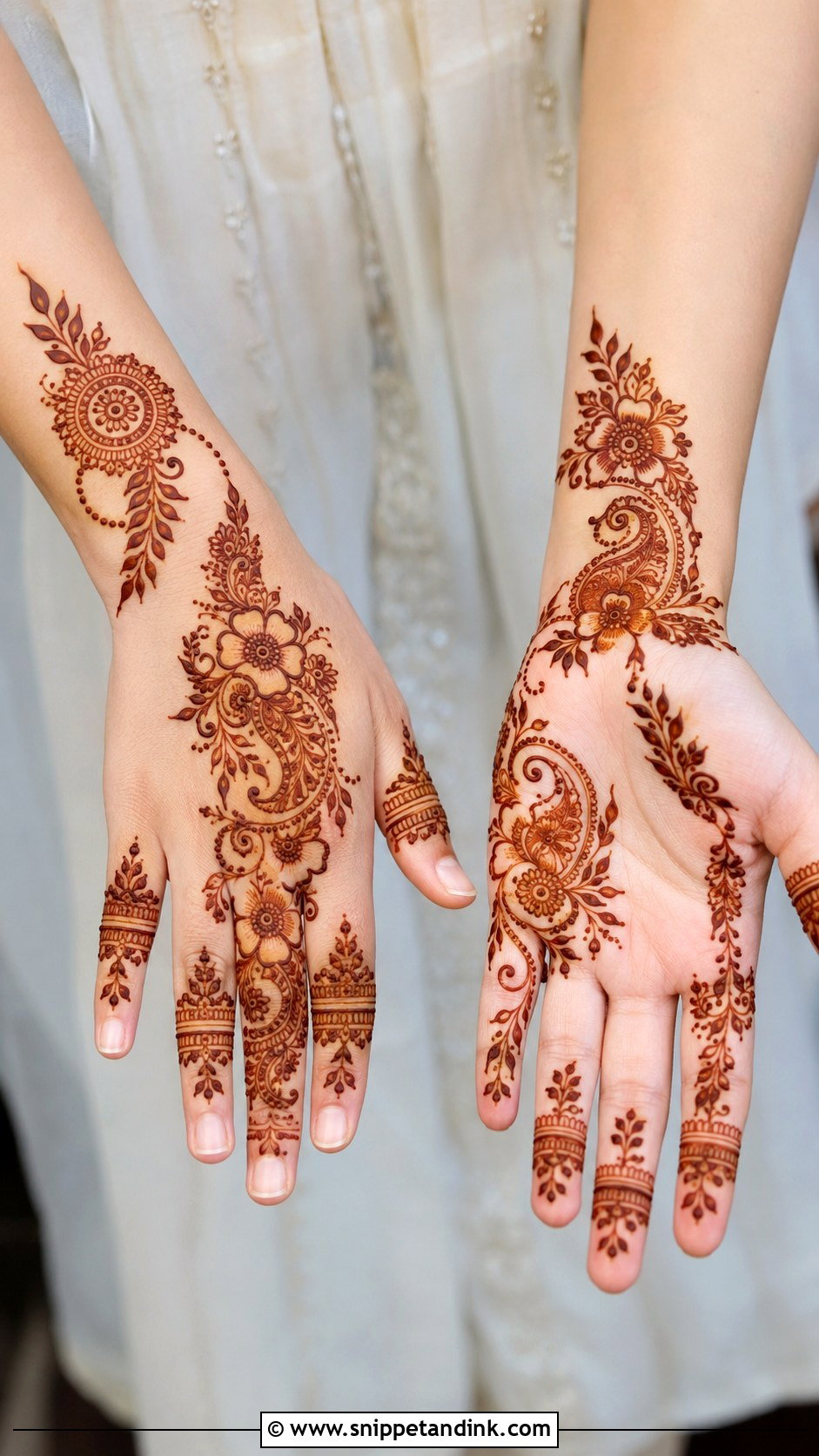
Guests should feel festive without matching the bride. Arabic flowers on the back hand, a small palm mandala or bracelet details around the wrist give a medium-coverage design that shows in photos without hours of sitting. Floral trails, paisleys, vines and finger bands go with almost any outfit. Many guests choose just one hand so they can still eat and greet comfortably.
27. Kids Mehndi Design
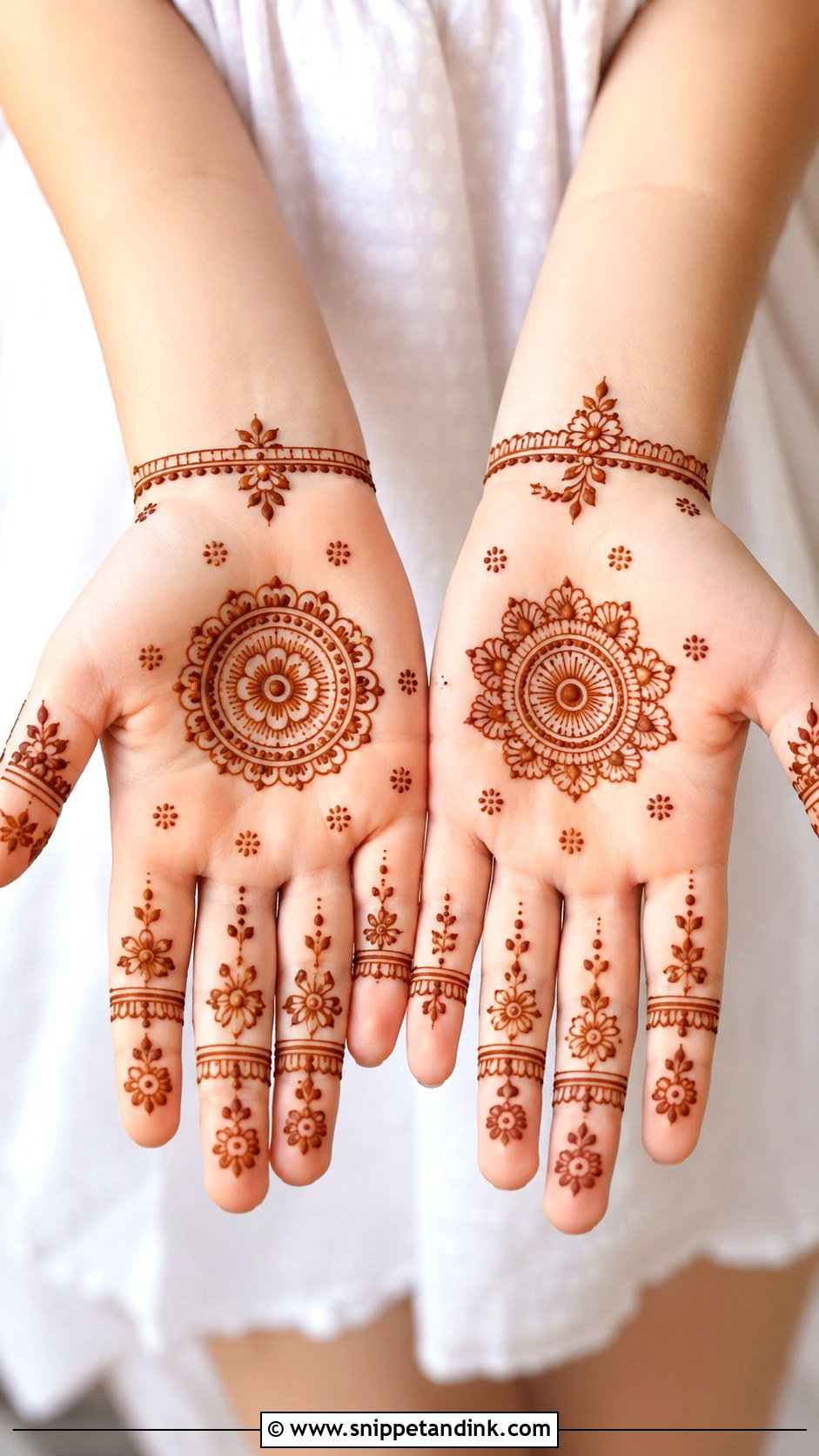
For kids: a small palm flower, a cute mandala, light finger dots, a tiny wrist bracelet. Nothing on the forearm, nothing dense. Rounded shapes and clear outlines dry faster and survive restless hands. Use only natural henna, which fades away naturally over a week or two. I won’t put anything labeled black henna on a child’s skin.
28. Back Hand Bridal Mehndi Design
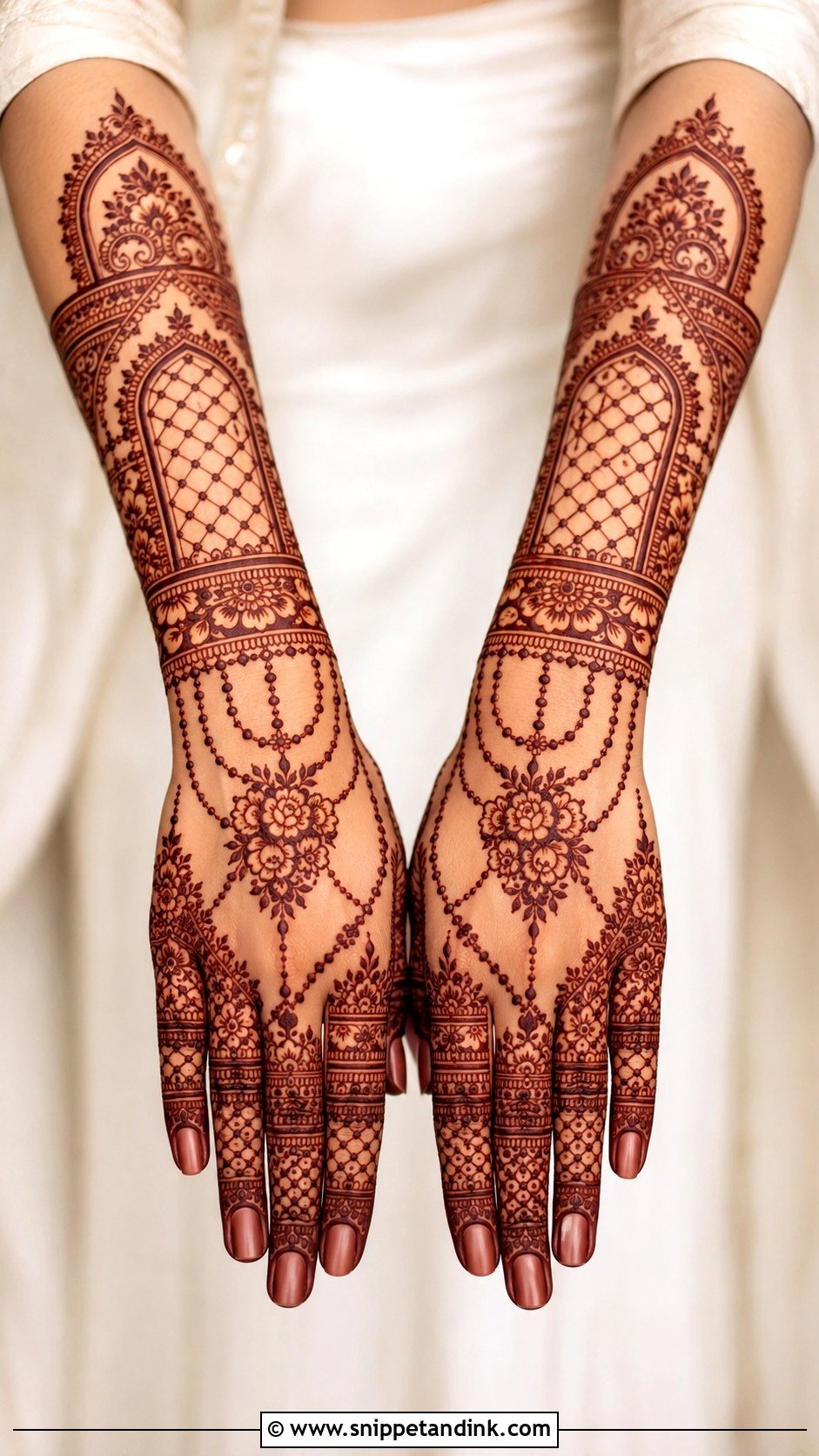
The back hand appears in a huge share of wedding photos, so I plan it as carefully as the palm. Jewelry chains, floral panels, jaali, finger detail and wrist-to-forearm extensions are common, usually a little more open than the palm so rings and bangles stand out. Some brides mirror both hands; others want different motifs on each. Strong outlines and fine inner detail make it readable at a distance and still rich in close-ups.
29. Front Hand Bridal Mehndi Design
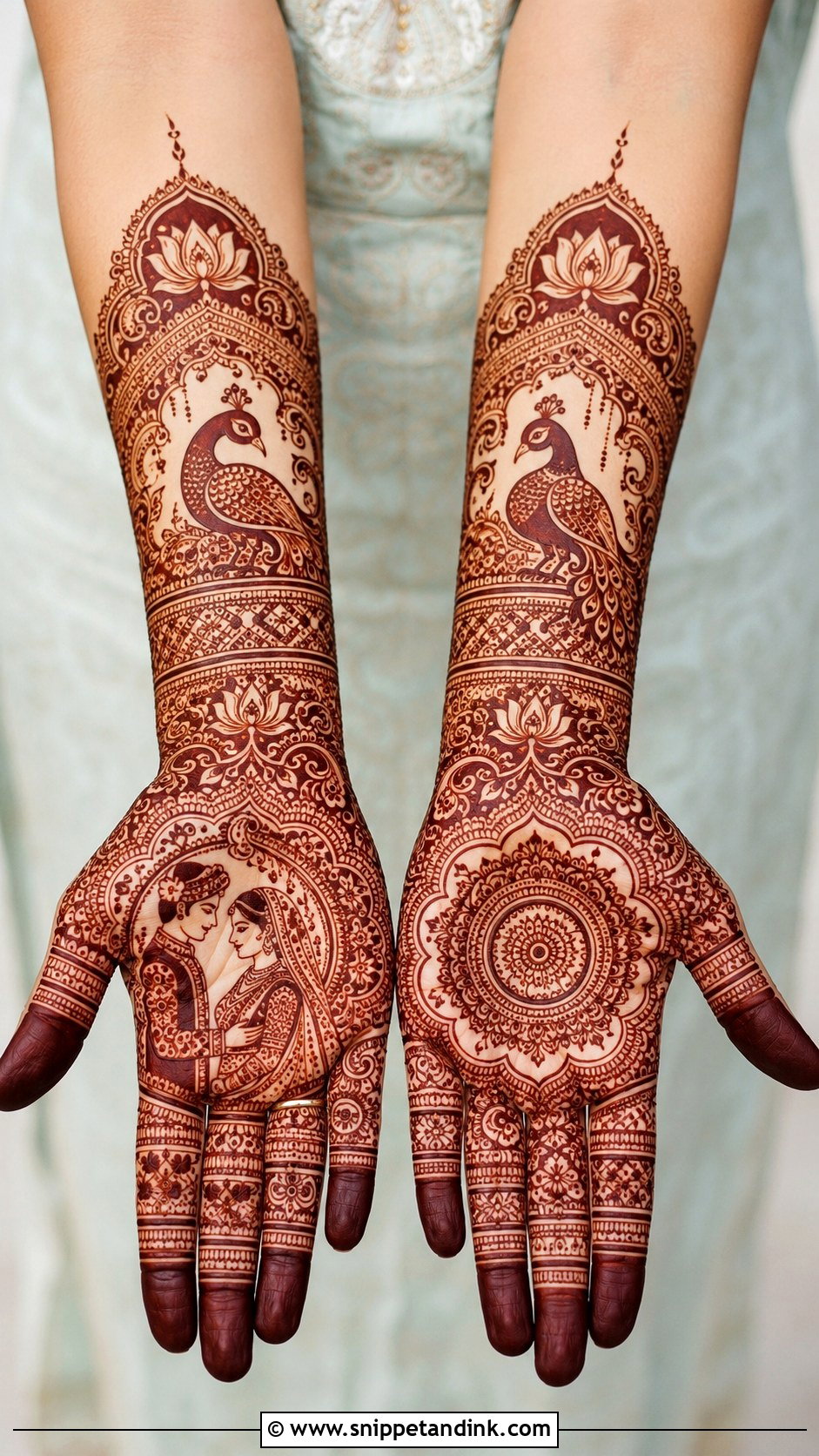
The palm is usually the most detailed part of a bridal look: mandalas, peacocks, paisleys, bride and groom art, lotus and fine filler, with fully decorated fingers. It’s shown during many rituals, so balance matters. Placing several large motifs side by side is a common mistake; as the stain develops, they can merge. I build the palm in clear sections with borders between them, and the palm’s naturally deep stain does the rest.
30. Full Arm Mehndi Design
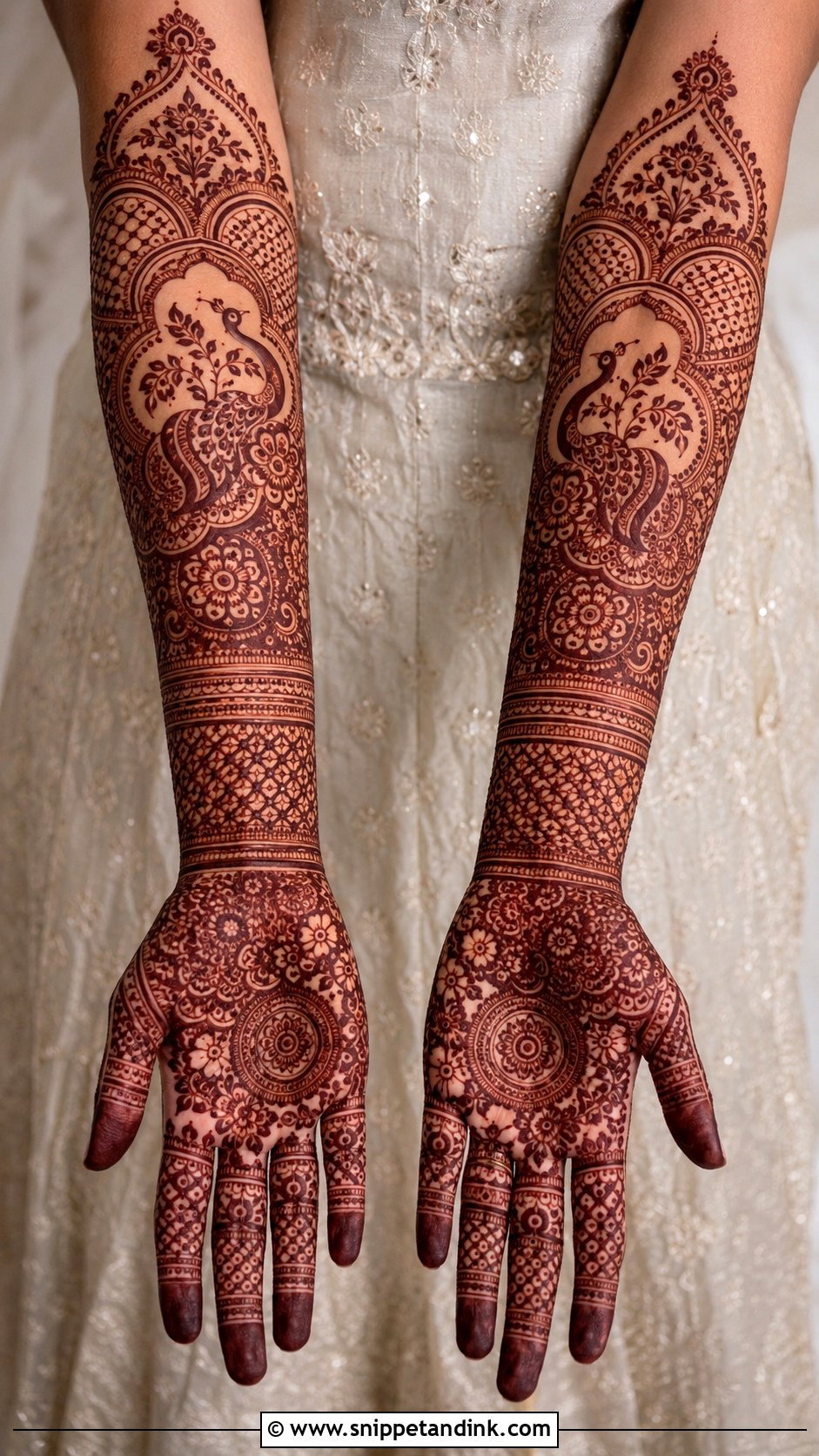
Full arm mehndi design runs from fingertips to forearm or near the elbow, with floral panels, paisley borders, peacocks, mandalas, jaali and bracelet cuffs. Brides use it for the main ceremonies; lighter versions suit engagements and sangeets. In photos the best versions change density gradually from hand to arm. That also suits how henna stains: the forearm takes a lighter color than the hand, so slightly bolder elements up the arm keep it from fading out visually.
31. Half Hand Mehndi Design
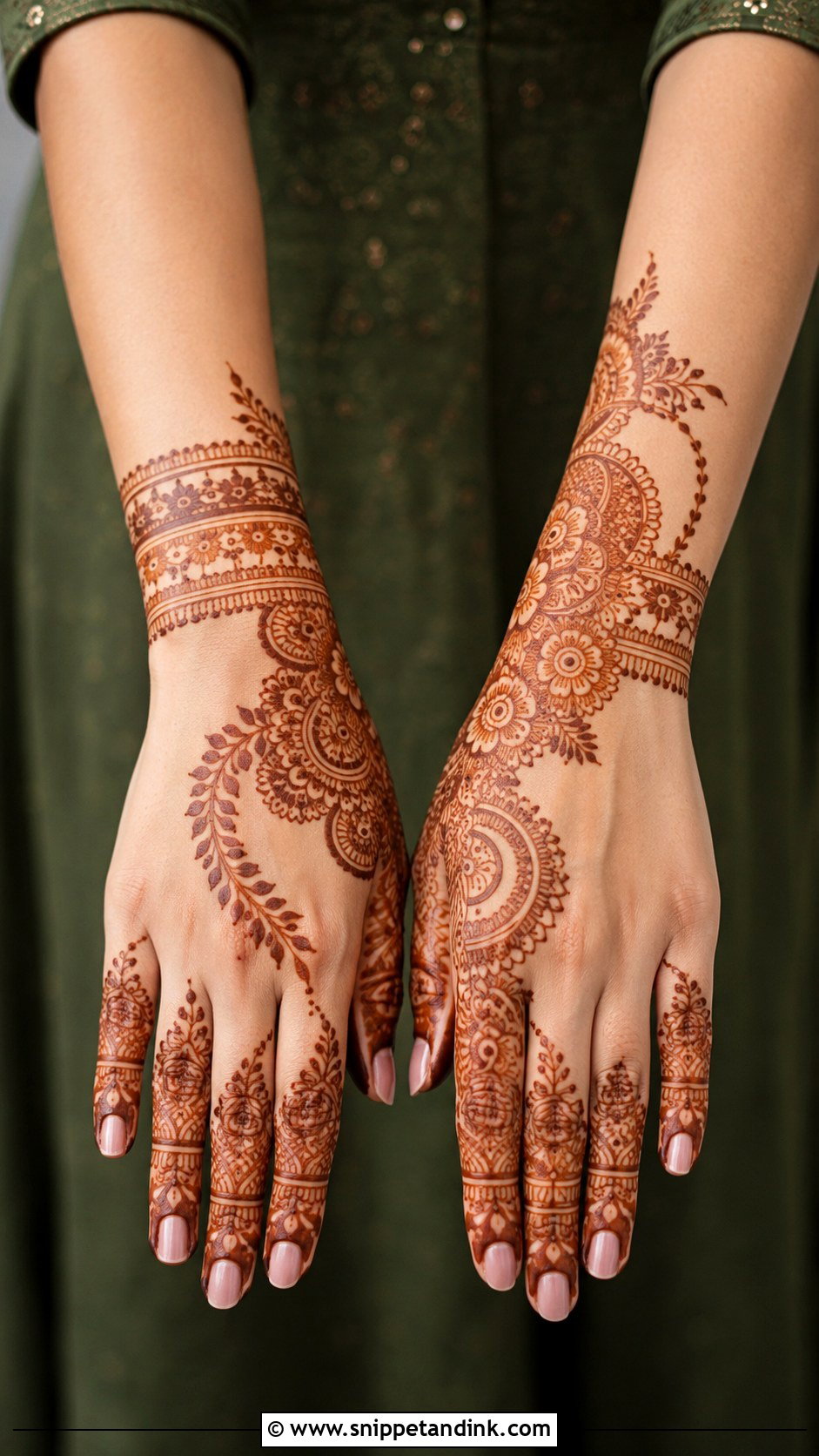
Half hand designs cover the fingers, palm center and wrist, leaving parts of the hand open, or focus on the back hand with a diagonal trail and a simple wrist band. They’re easier to sit through and still look complete. Florals, paisleys or mandalas can be chosen to match the outfit. The design needs a clear beginning and end. I finish with a defined border so it never looks like the session ran out of time.
32. Palm Mehndi Design
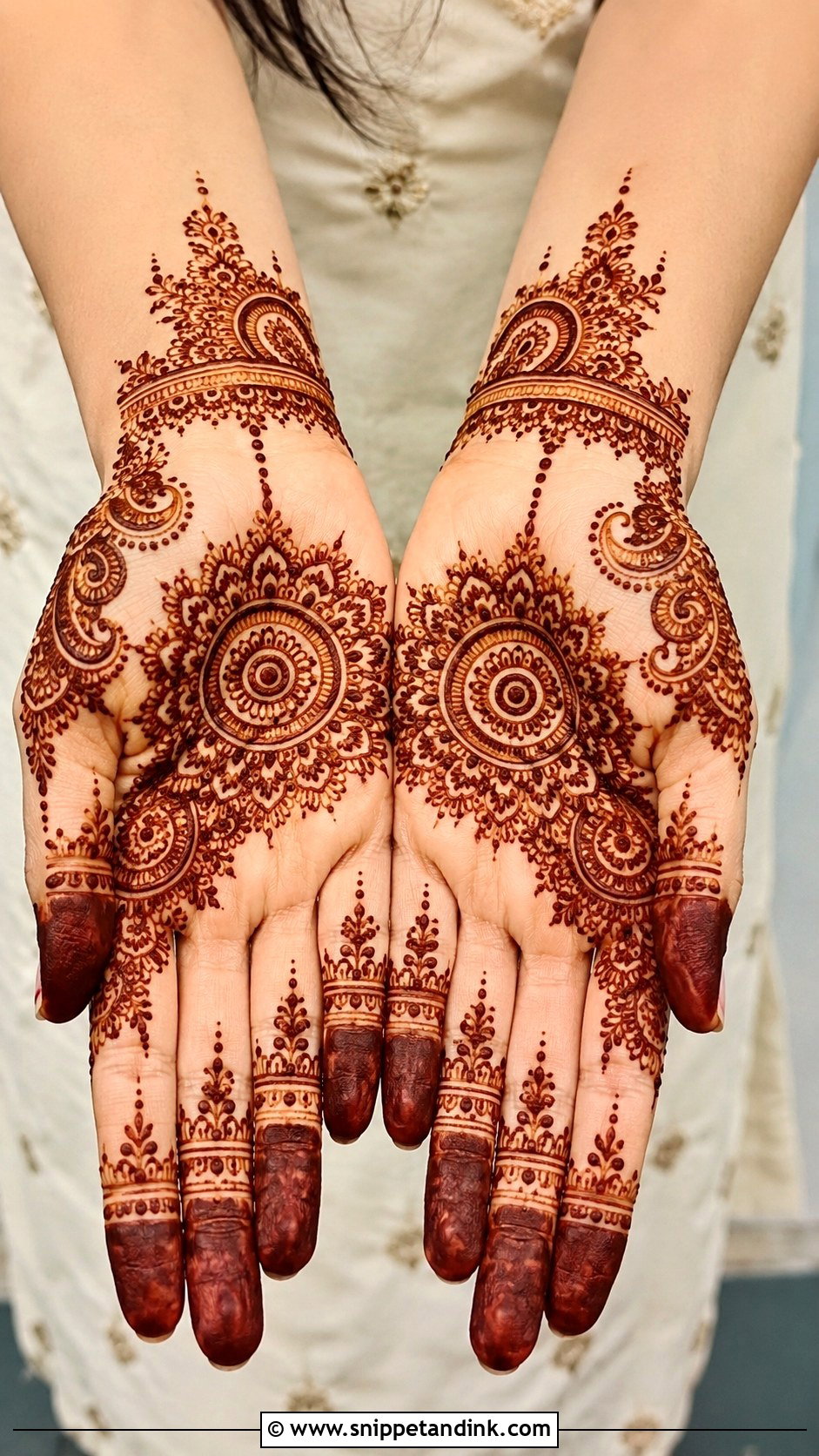
Palm designs put a central mandala, surrounding flowers, paisley corners and decorated fingers on the inside of the hand, where color comes out darkest. The palm shows during greetings, prayers and family photos, which is why it’s the classic placement for festivals. The creases are my main concern. I avoid running fine detail across the deep folds, since they bend and blur the lines, and I use bold outlines around the main shapes.
33. Wrist Mehndi Design
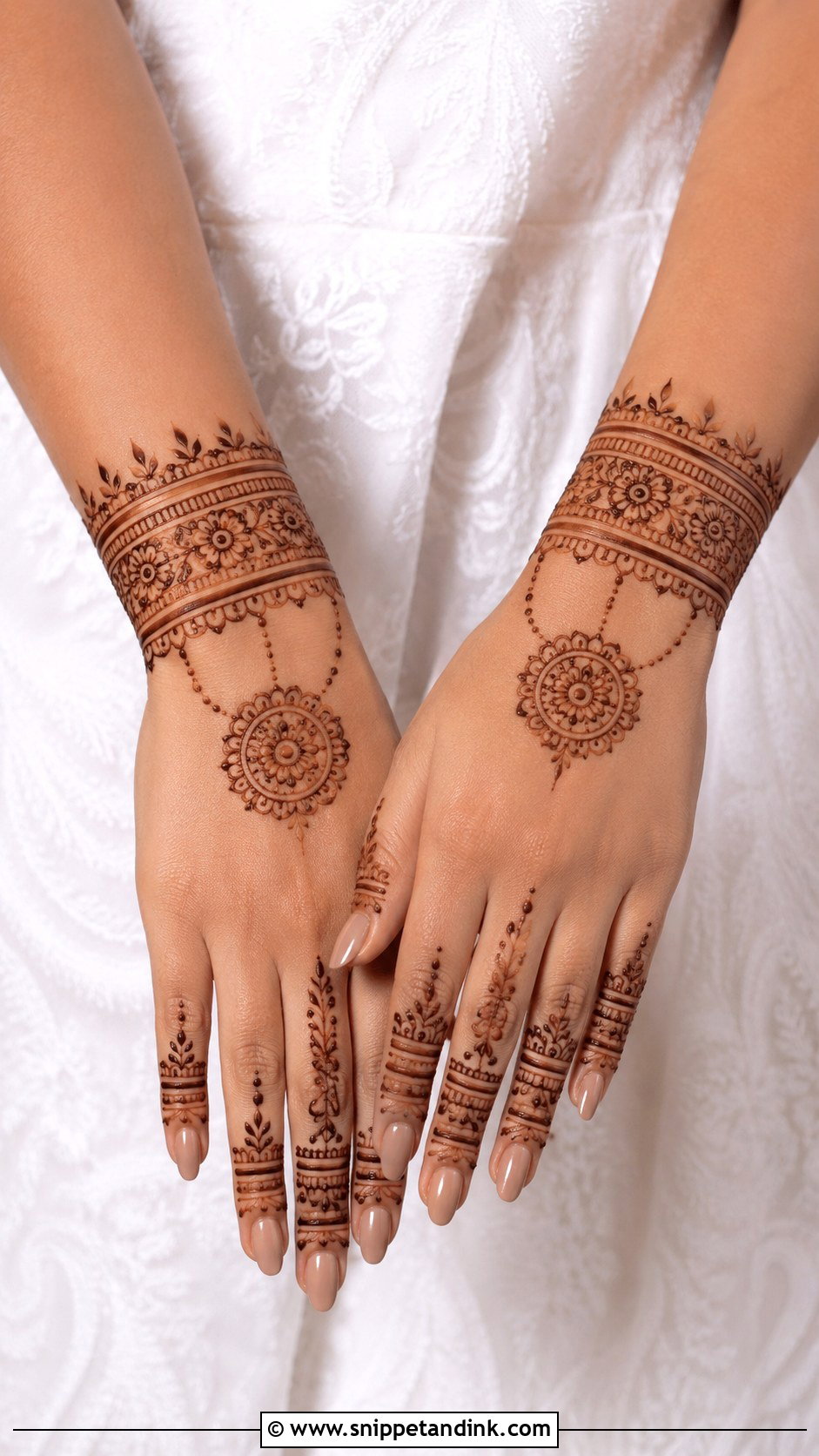
A wrist design works like a bracelet or cuff: floral bands, leafy borders, small mandalas, chains and finger connections. It looks good alongside bangles, a watch or rings, but it should also look finished on its own. Pair it with light finger work or a small back-hand motif. Watches are worth mentioning: a strap rubbing over fresh henna can wear the stain down faster, so if you wear one daily, I move the band a little higher.
34. White Mehndi Design
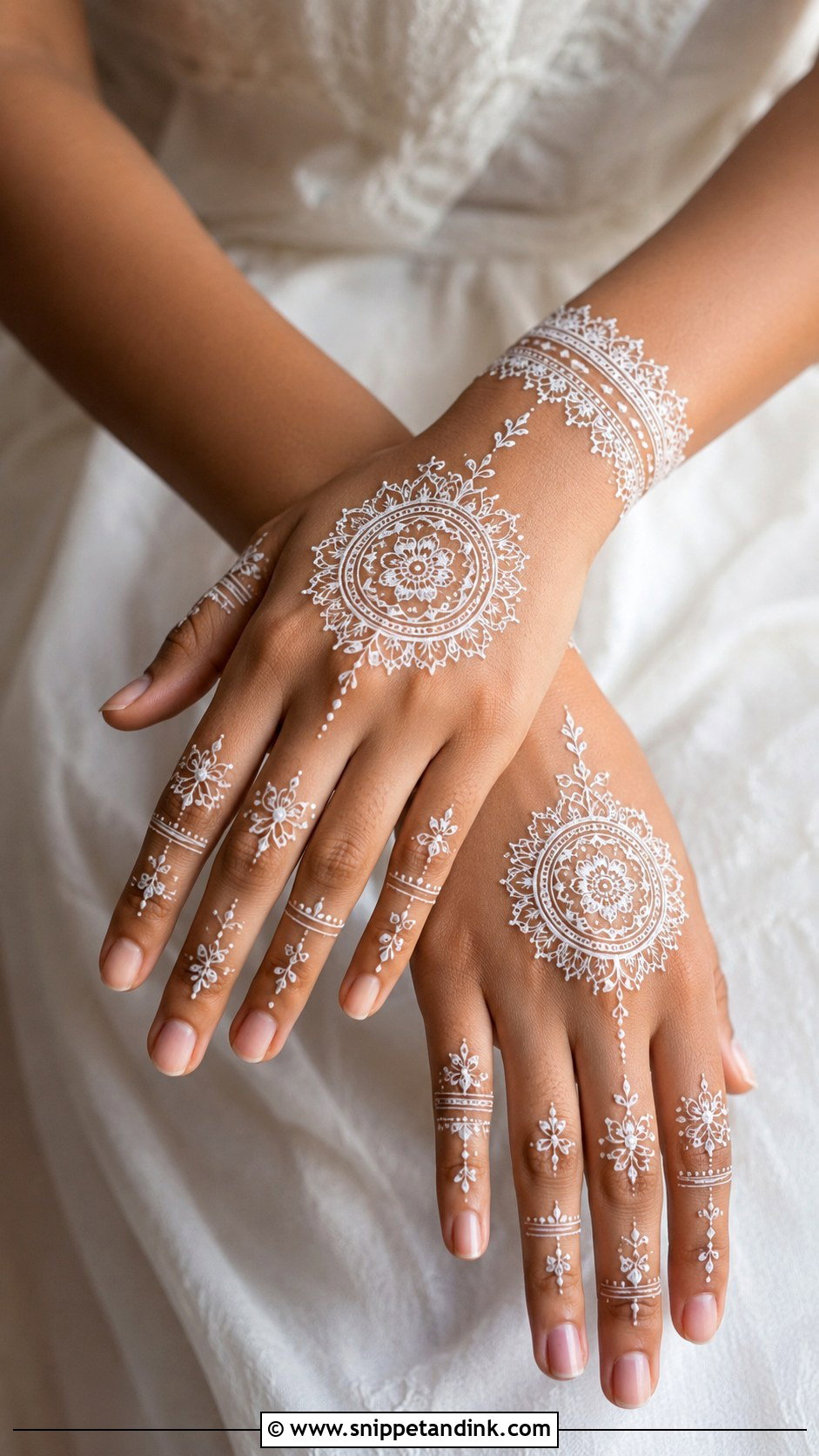
White mehndi is a decorative paint or adhesive that sits on top of the skin, so it leaves no stain and lasts only a day or two. Lace-like florals, mandalas, finger lines and bracelet details look best on the back hand, where the contrast shows. White lines look heavier than henna lines of the same width, so I draw it finer and lighter than I would henna. It suits photoshoots and engagements with simple outfits.
35. Glitter Mehndi Design
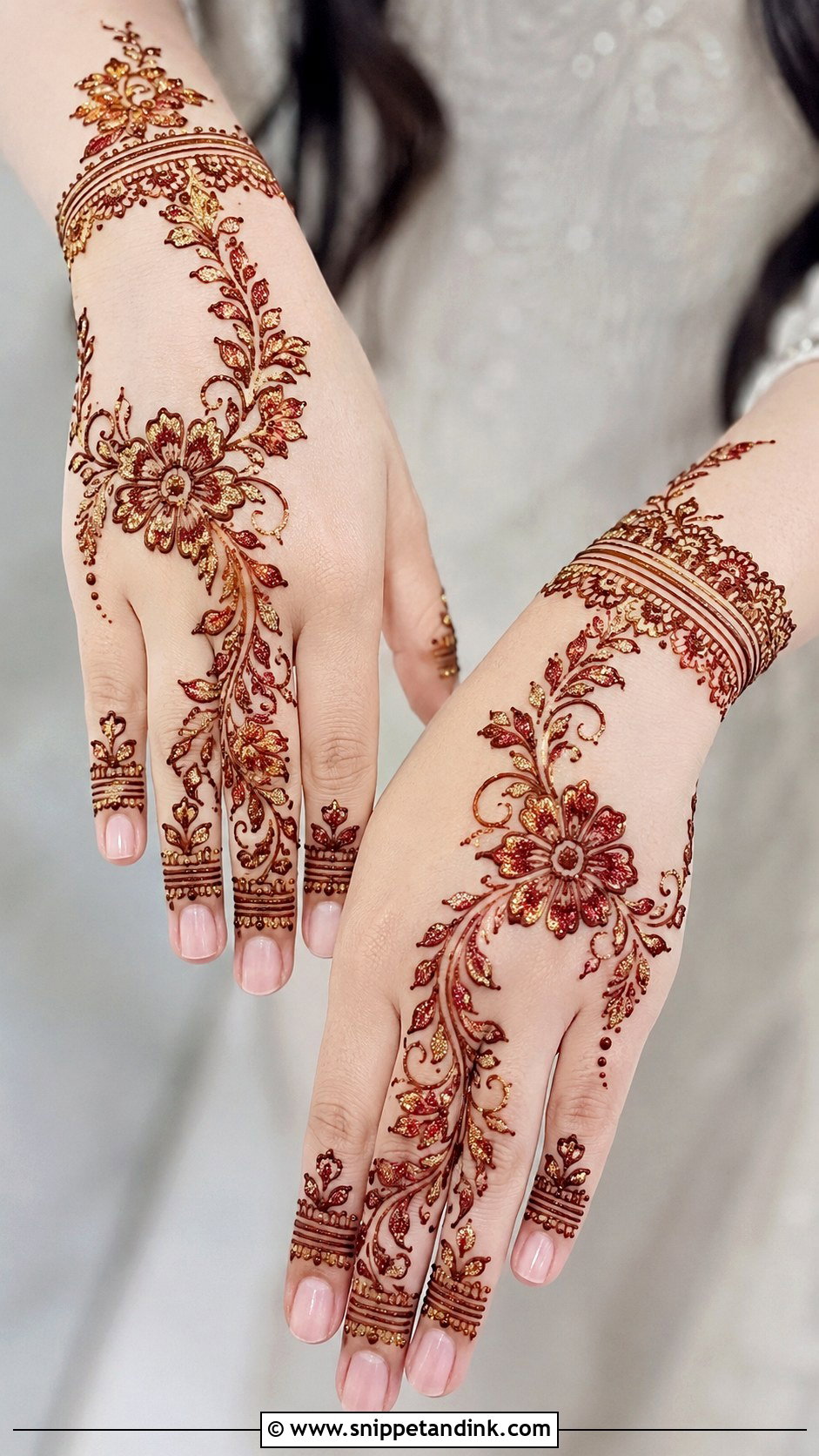
Glitter mehndi starts with a normal floral or Arabic henna base, then adds glitter inside petals, borders or wrist details. It catches the light on stage and at sangeet nights. Use it on selected areas only; covering everything hides the drawing. Gold, bronze or maroon glitter sits best with natural henna tones, and the back hand or wrist is where it shows. It’s decorative and temporary, and it brushes off long before the henna fades.
Rough Chair Times, From Finger Work to Full Bridal
Every artist works at a different speed and every design varies, so treat these as rough ranges for planning your day, not promises.
- Finger or wrist designs, one hand: often fifteen minutes or less.
- Arabic, bracelet or half-hand designs on both hands: roughly half an hour to an hour.
- Indo-Arabic or Pakistani designs with full fingers on both hands: one to two hours.
- Full bridal hands and forearms, front and back: several hours, and feet add more time on top.
Then add drying time. The paste needs to set before you move freely, and it should stay on for hours afterward to give a good color. Bring a phone stand, a straw for drinks and someone to help with your hair.
How the Stain Reads on Deeper and Fairer Skin
Henna stains every skin tone, but the contrast changes. On fair skin a fresh orange stain looks bright and the final reddish brown stands out strongly, so even fine lines read clearly. On deeper skin tones, the stain is still there, but it can sit closer to the skin’s own color, especially on the back of the hand. For those hands I use bolder outlines, larger motifs and more open space, which keeps the design readable in photos. That’s also where white or glitter accents can work well for a single event, laid alongside a natural henna design rather than replacing it.
Placement Decides More Than the Motif
Simple, bridal, Arabic, Indian, Indo-Arabic, Moroccan, Gulf, festival and modern designs all appear above. When you’re deciding, think about placement first, then coverage, then motifs, and finally how the stain will look in photos. Simple designs need clean spacing, and bridal designs need balance and structure. Arabic and Gulf patterns rely on open space; Indian mehndi relies on fullness. Keep the pictures that match your outfit, your event and the time you have, and give your artist room to fit them to your hands.
You'll Like These Ideas:



Leave a Reply