
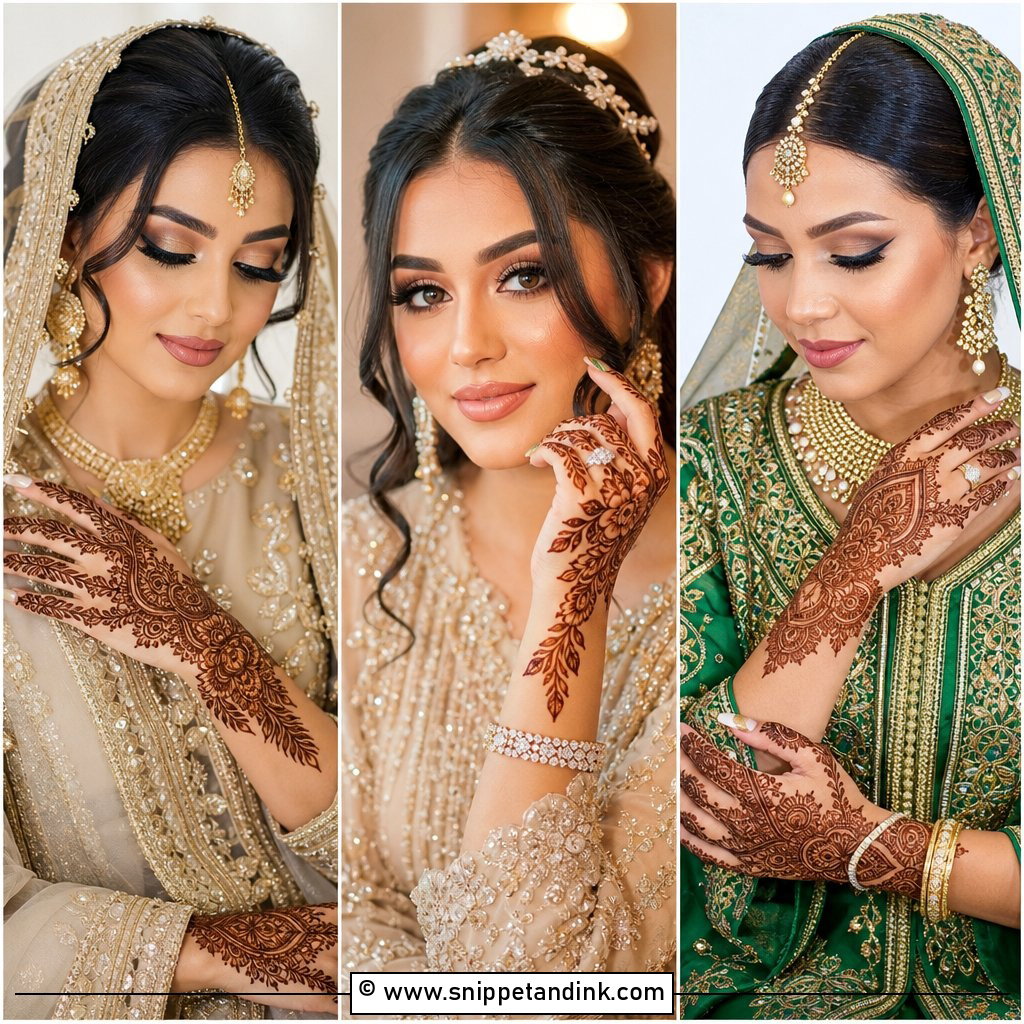
Bridesmaid henna sits in an awkward middle ground. It has to look good in close-up photos, but it can’t compete with the bride, and it usually has to be applied quickly while the party is already underway. When I’m booked for a bridal party, I plan the bridesmaids’ designs after the bride’s, so theirs frame hers instead of echoing it. Arabic trails, Indo-Arabic fusion, mandala back hands, bracelet patterns, jaali details, floral palms and finger-led layouts all work. The right one depends on your sleeves, your jewelry and how long you can actually sit. Here are 25 designs I’d offer a bridesmaid, and when each makes sense.
Getting Six Pairs of Hands Done Before the Music Starts
The bride’s henna is planned to the hour. The bridesmaids’ usually isn’t, and that’s how a party ends up with half its hands still wet when the dancing begins. When I’m booked for a group, I plan the queue as carefully as the designs.
- Tell the artist how many people need henna and what coverage each wants, so she can bring enough paste and, if needed, a second artist.
- Put the fullest designs first. Forearm and full-hand work needs the most drying time before anyone dances.
- Leave finger-only and minimal designs for last; they’re quick and dry fast.
- Have everyone arrive with clean, lotion-free hands and with rings, bangles and watches already off.
- Assign one person to help the seated bridesmaids with drinks, phones and dupattas while their hands are wet.
If the bridesmaids get their henna at the same function as the bride, theirs will reach its darkest color on the wedding day too, since natural henna deepens over the following 24 to 48 hours.
1. Arabic Bridesmaid Mehndi Design
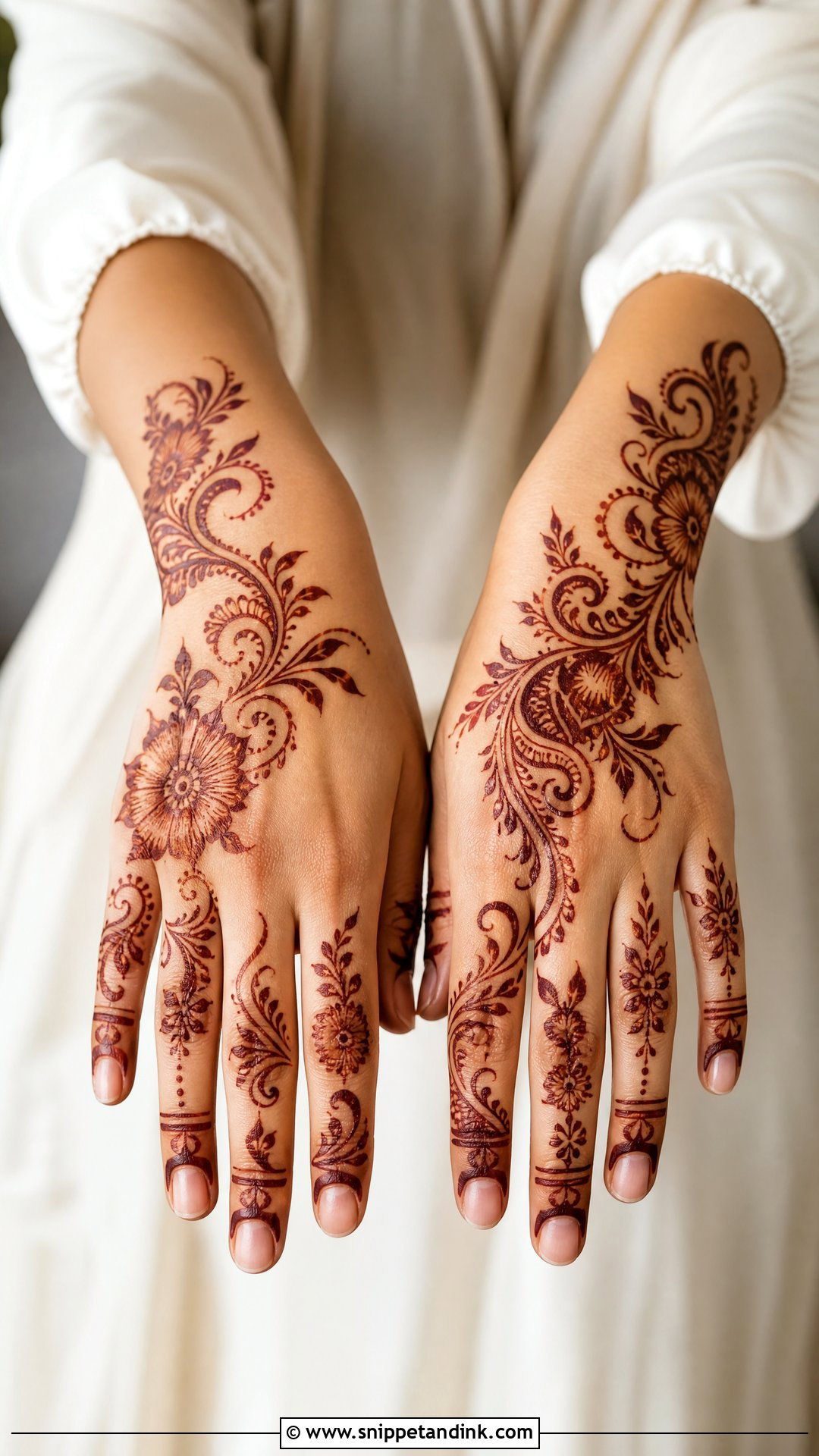
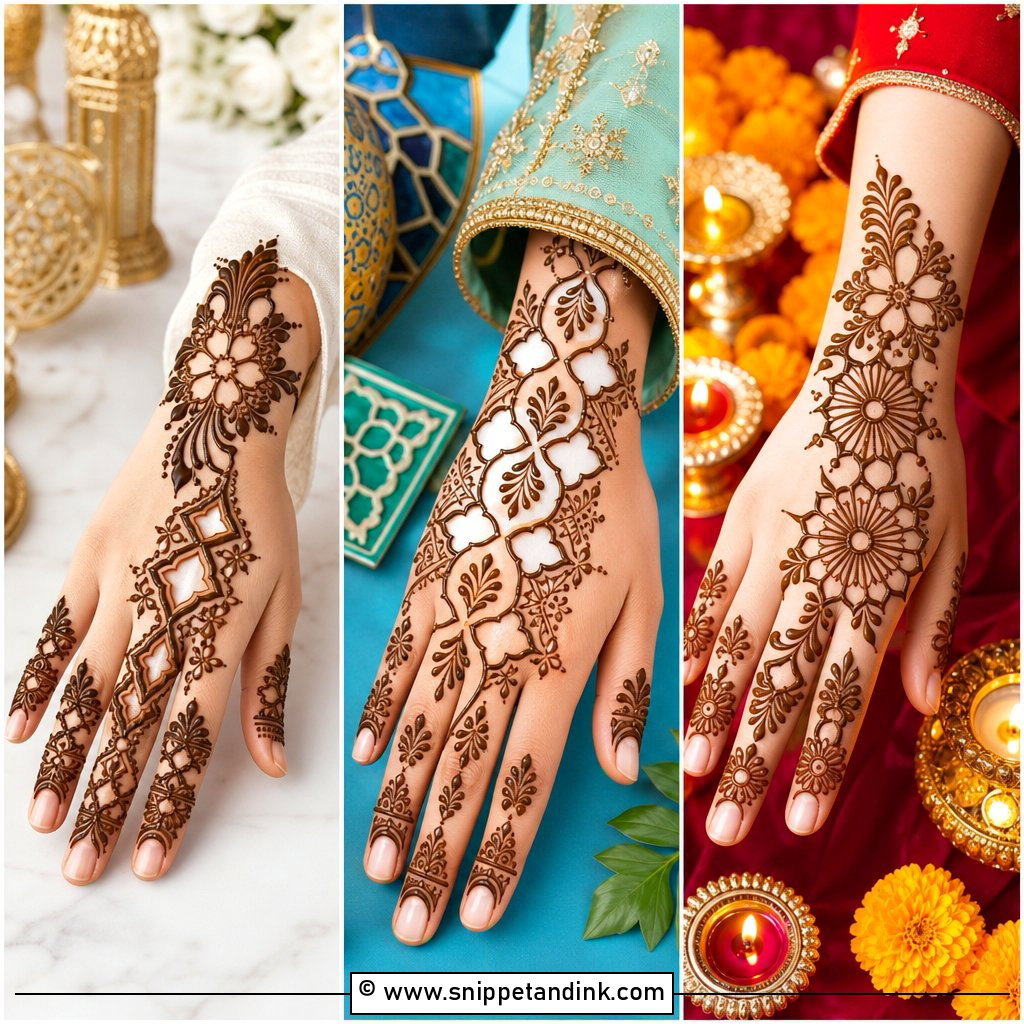
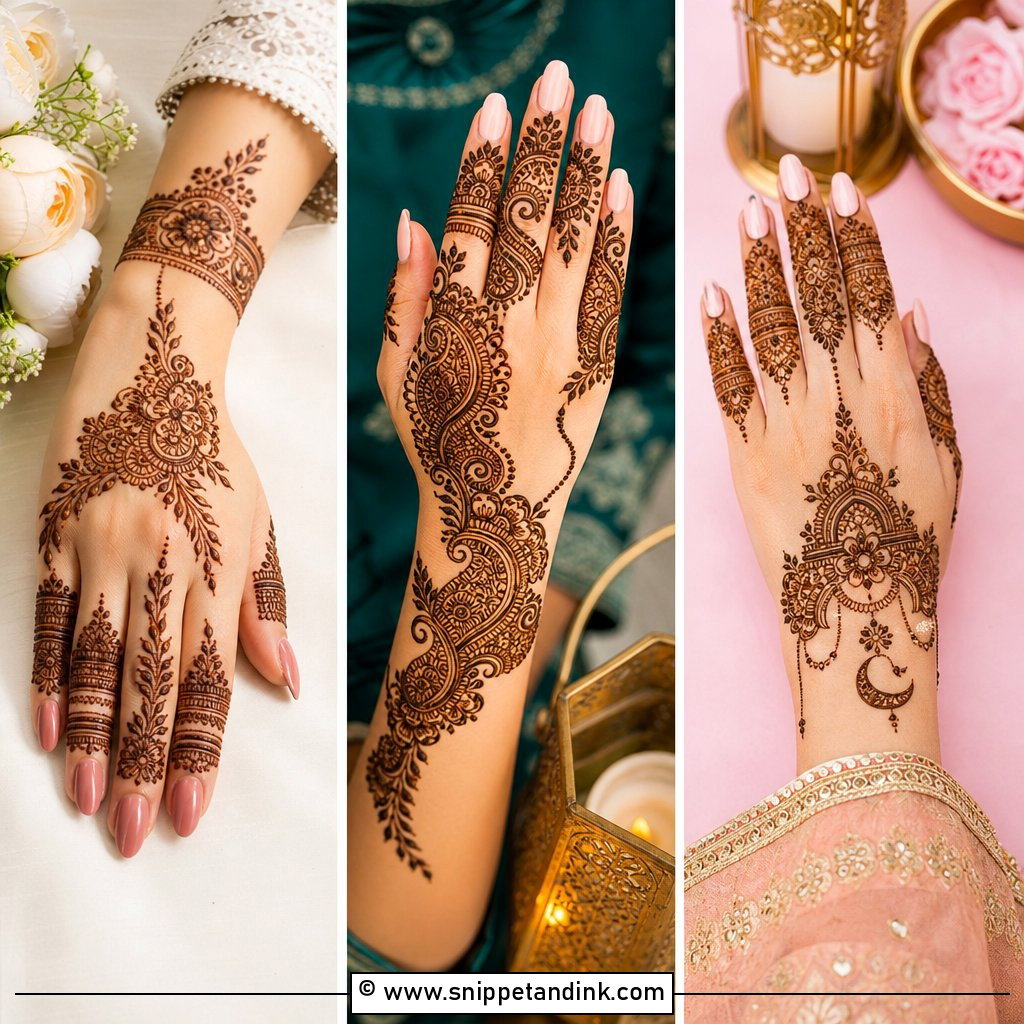
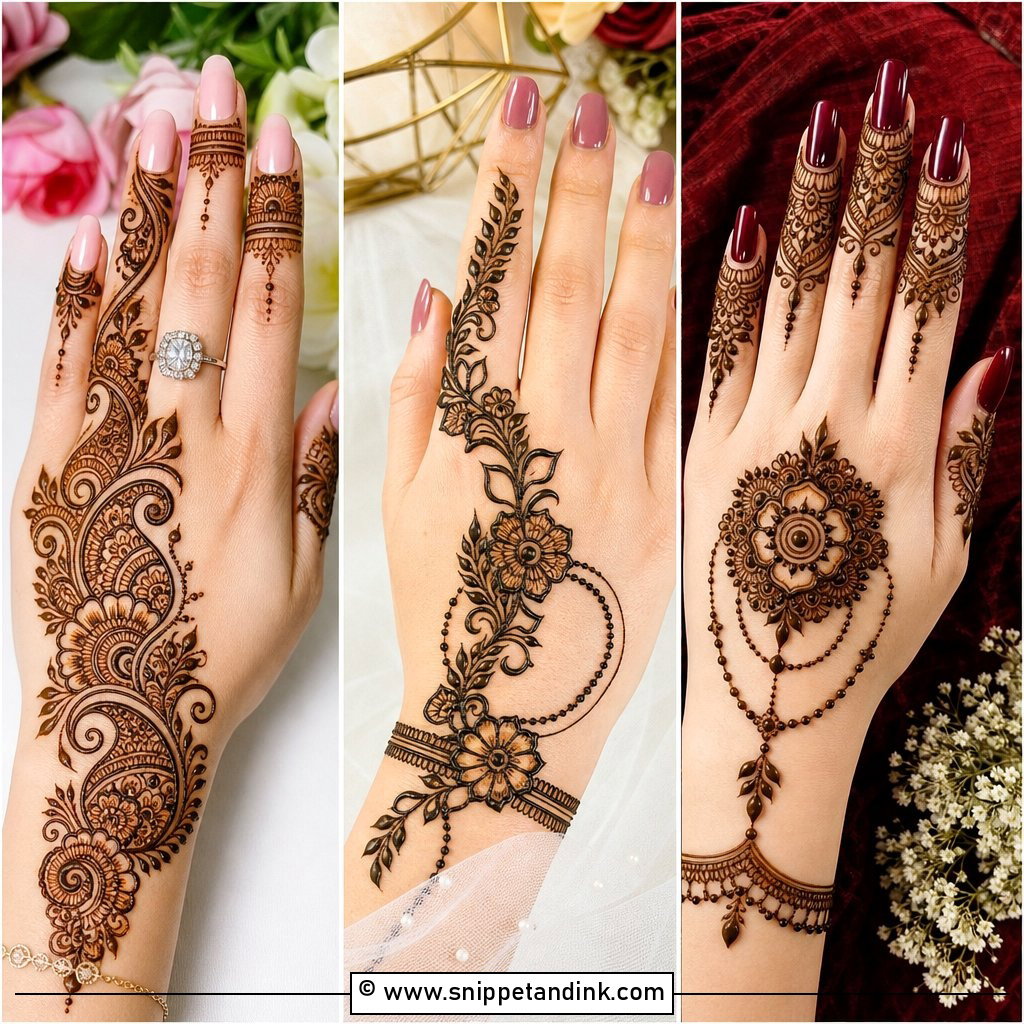
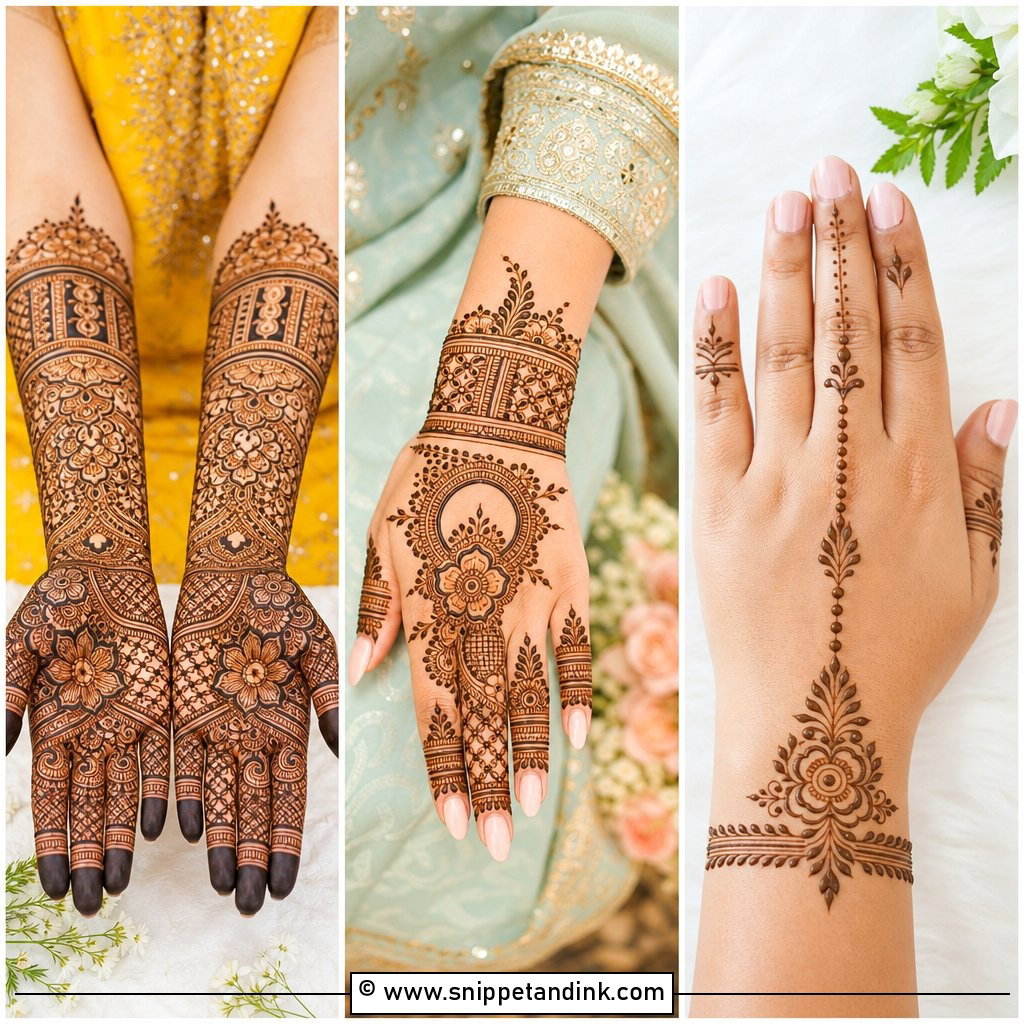
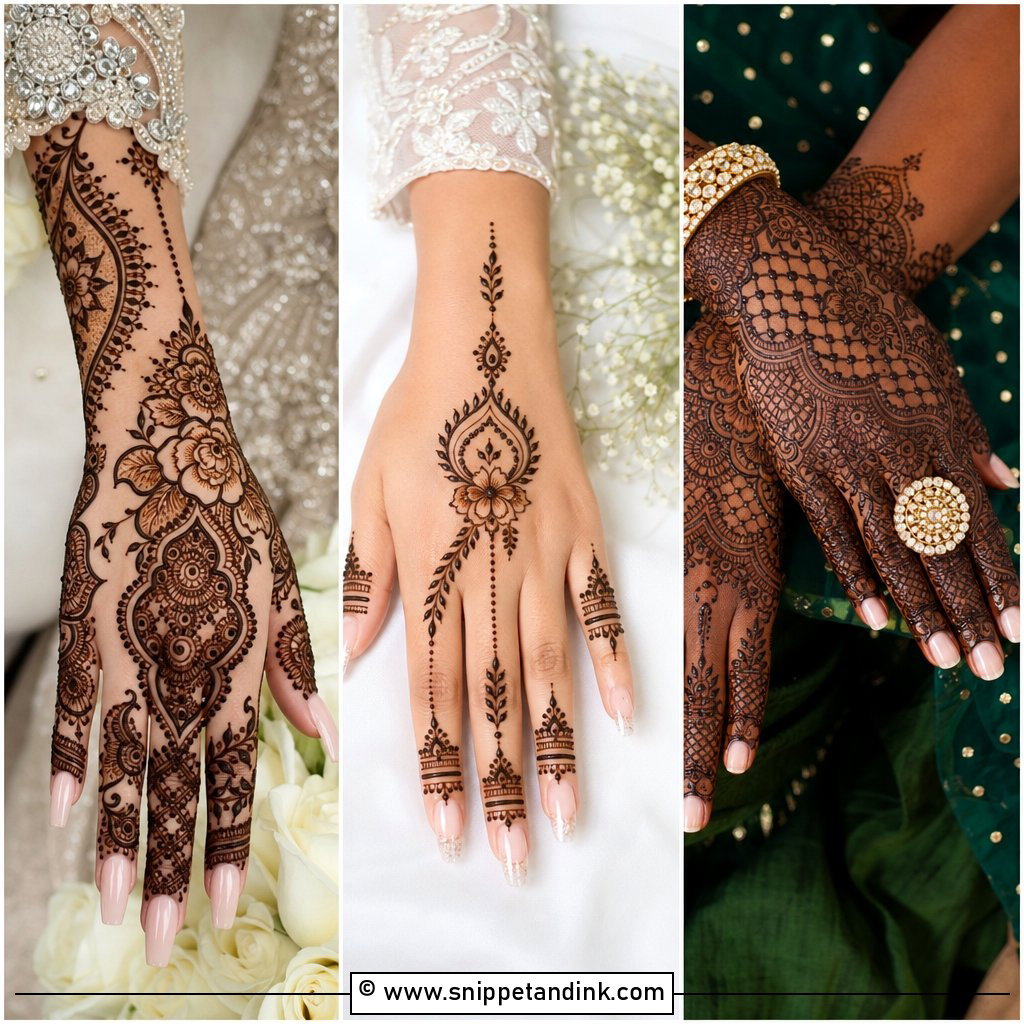
Arabic designs flow diagonally across the palm or back of the hand: bold flowers, leafy vines and paisley curves with shaded gaps of open skin. They’re my first suggestion when a bridesmaid has limited time, because the large motifs go on fast. Bangles, rings and embroidered sleeves don’t crowd them. Thick outlines are the strength of Arabic mehndi: thick paste lines stain darker and more evenly than fine ones, so the design reads clearly in photos. It carries from mehndi night through to the reception.
2. Full Hand Bridesmaid Mehndi Design
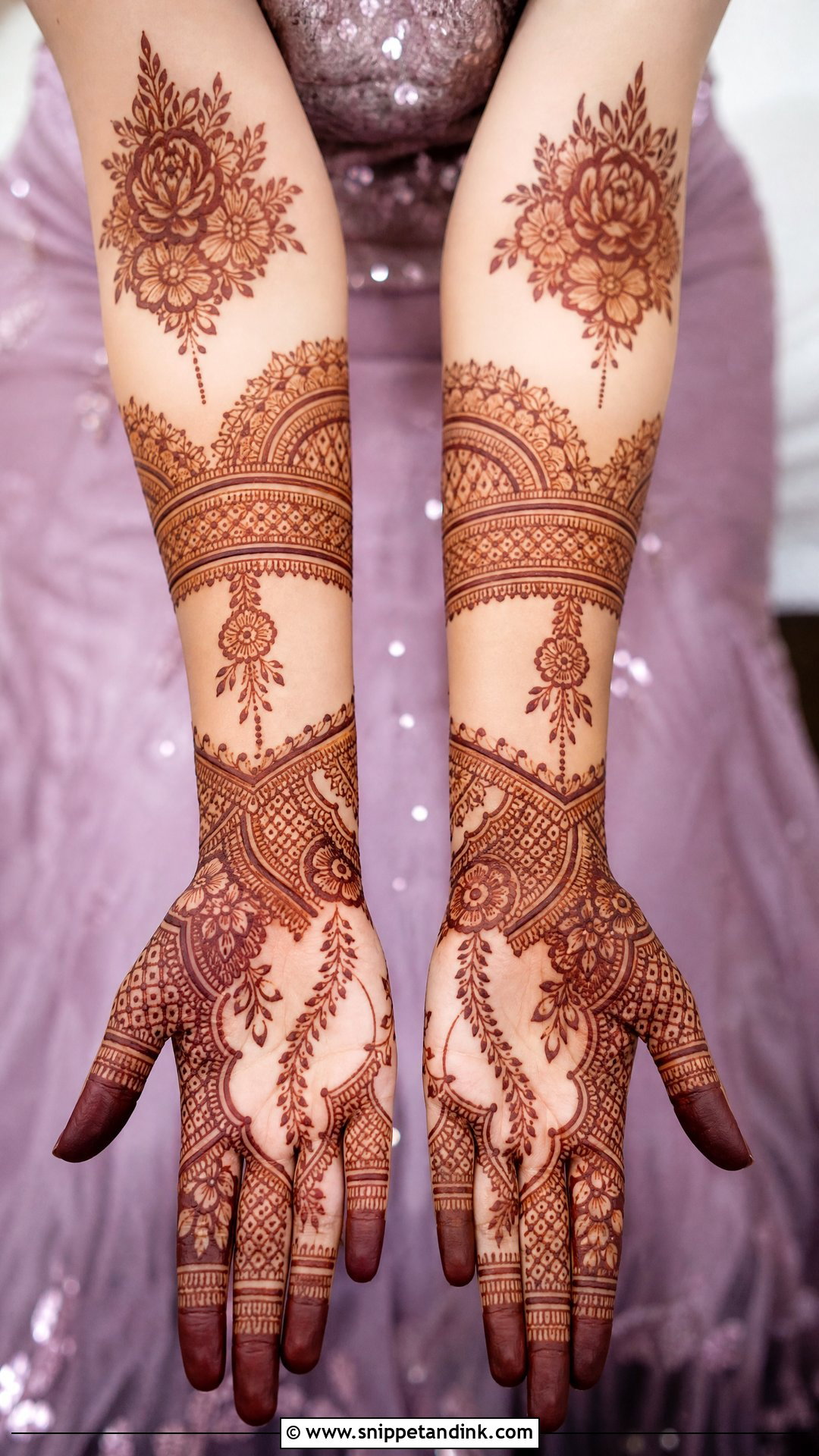
Full-hand coverage is usually reserved for sisters and the closest friends. It starts at the fingertips, covers the palm and reaches the wrist or lower forearm, filled with floral bands, paisley chains, small leaves, dots and neat filler. What keeps it from looking bridal is what I leave out: no portraits, no dense storytelling panels, no groom’s initials. It suits matching lehengas, sarees or Anarkalis and gives group photos a finished feel. Expect it to take a good while longer than a half-hand design.
3. Back Hand Bridesmaid Mehndi Design
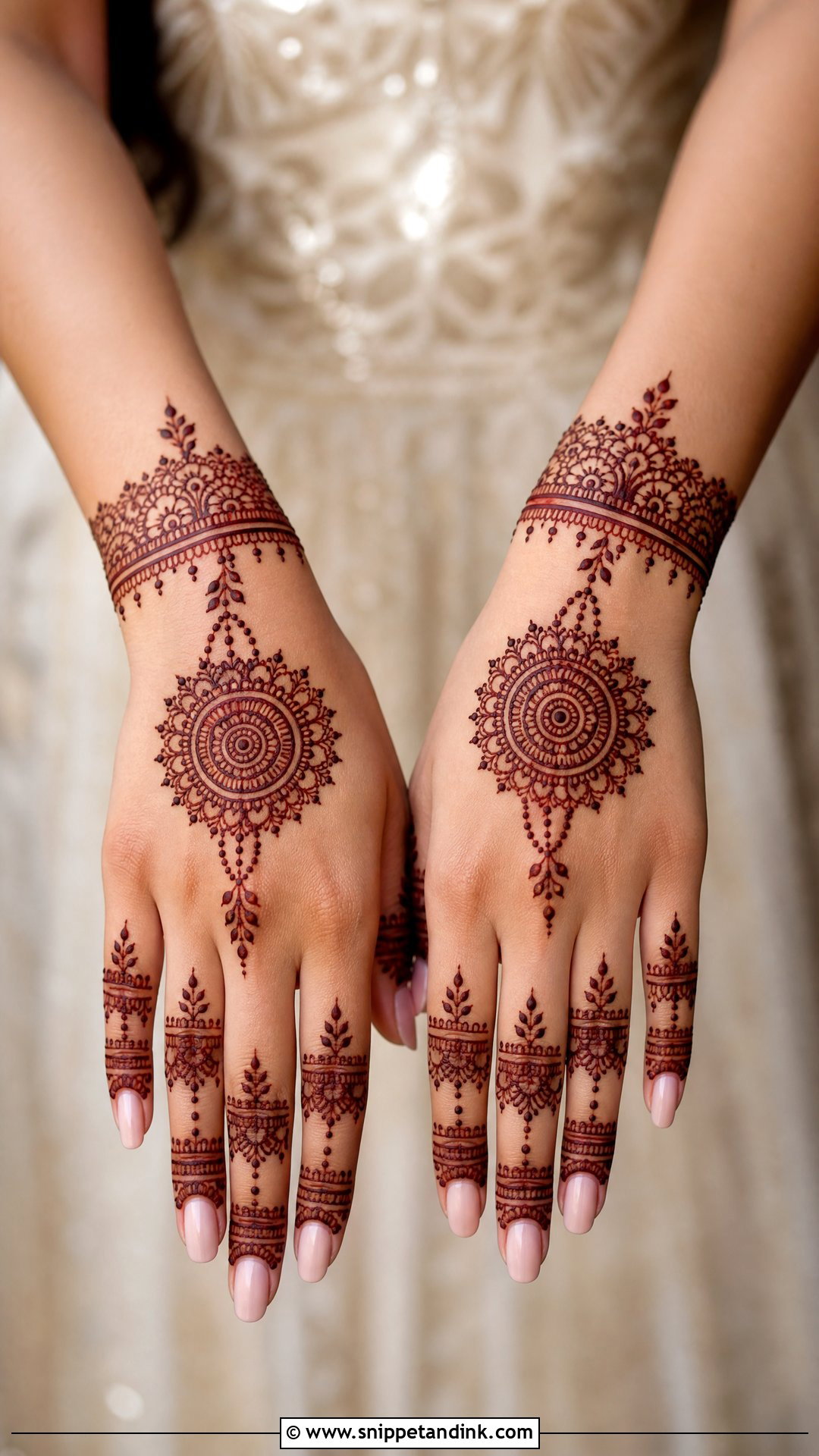
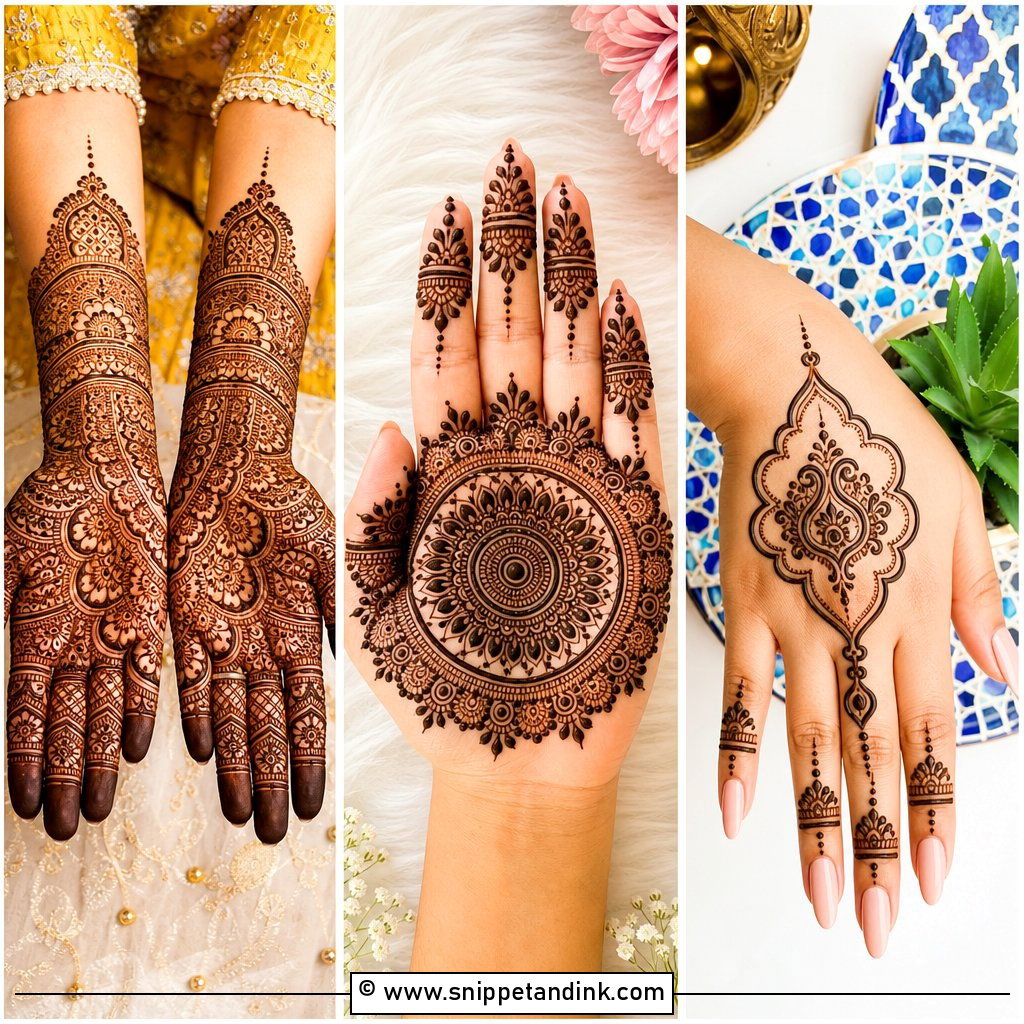
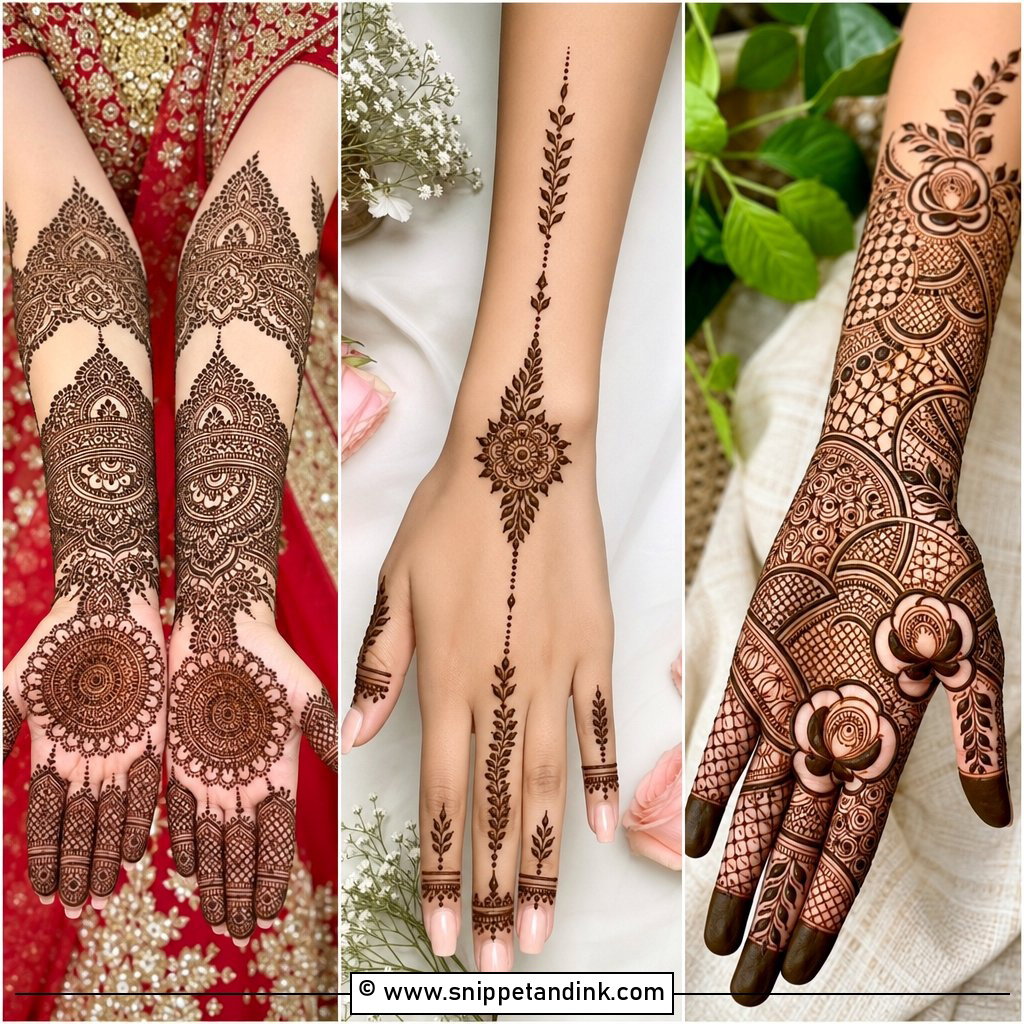
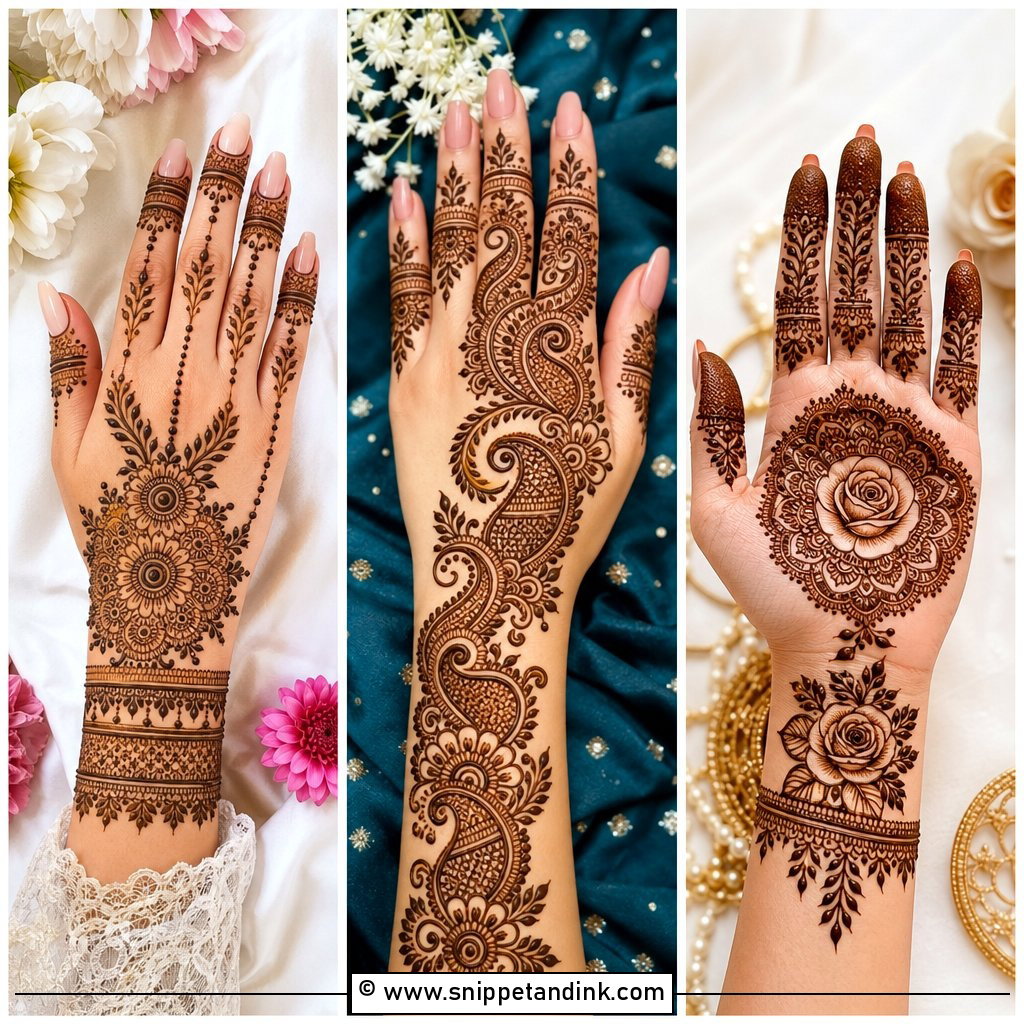
The back of the hand is what shows when you’re holding a bouquet, a dupatta, a clutch or the bride’s hand, so this placement gets photographed more than any other. A central mandala, a bracelet cuff, finger trails or floral vines all suit it. I keep the fingers detailed and leave the center open for a clean, modern look. Rings and haath phool jewelry layer on easily. With long sleeves, this is the most visible henna for the least time in the chair.
4. Front Hand Bridesmaid Mehndi Design
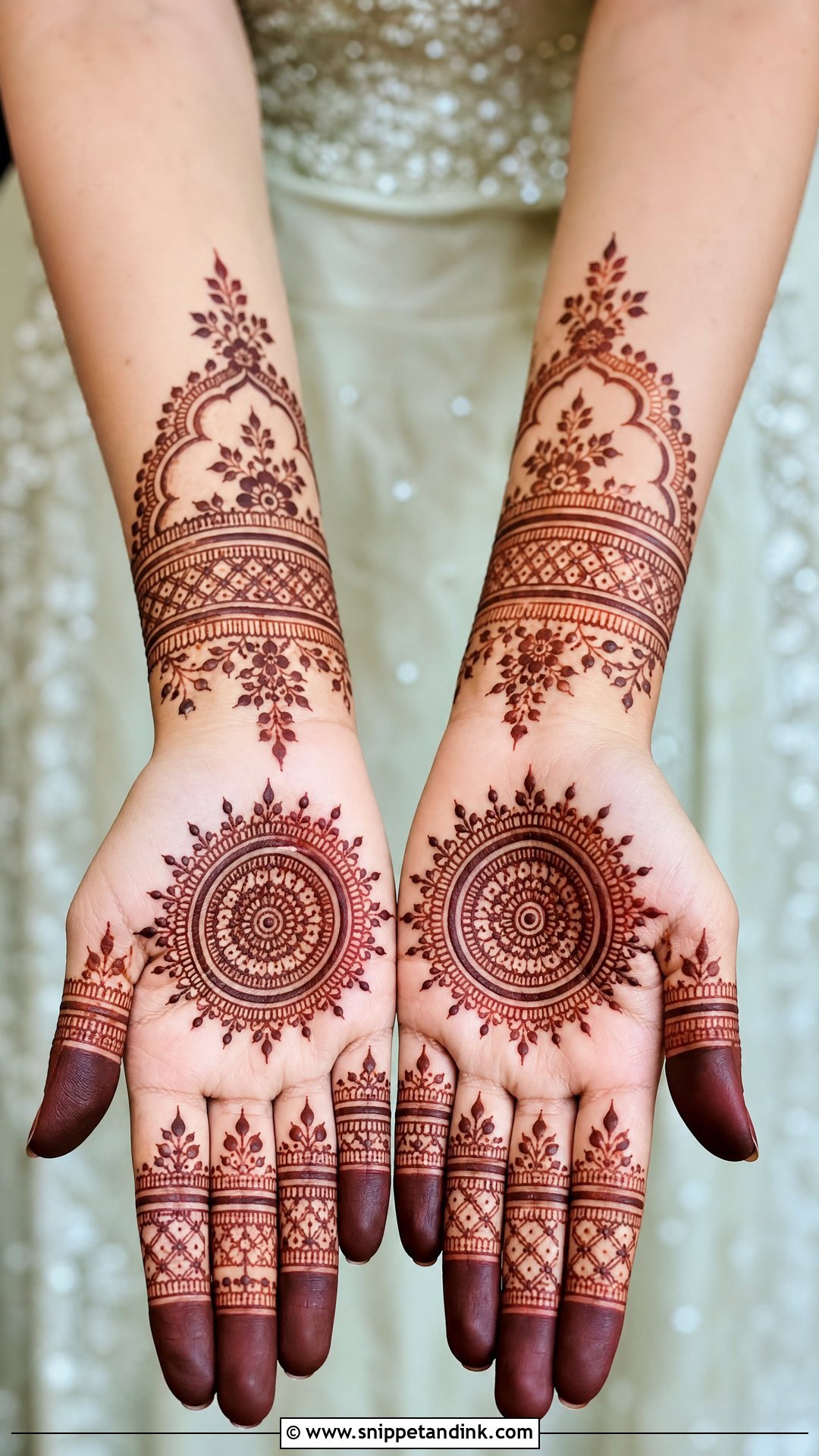
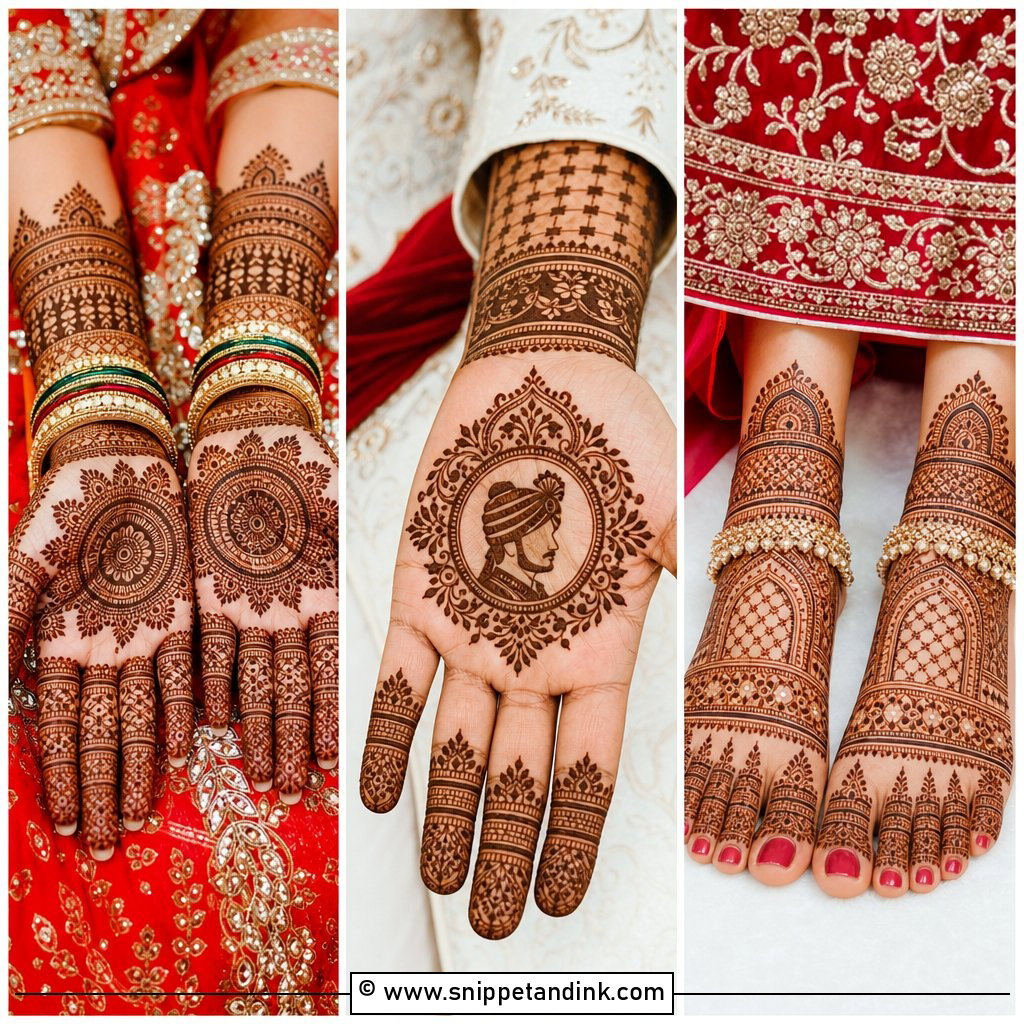
Palms come forward during rituals and dancing, and they take the darkest stain on the body because the skin there is thicker. A balanced front-hand design might have a round mandala in the center, floral corners, paisley borders and filled fingertips. For a bridesmaid I keep it tidy rather than packed, with small gaps around each motif. That keeps it youthful next to the bride’s dense work. It suits Indian wedding outfits, festive bangles and the classic palms-up photo.
5. Simple Bridesmaid Mehndi Design
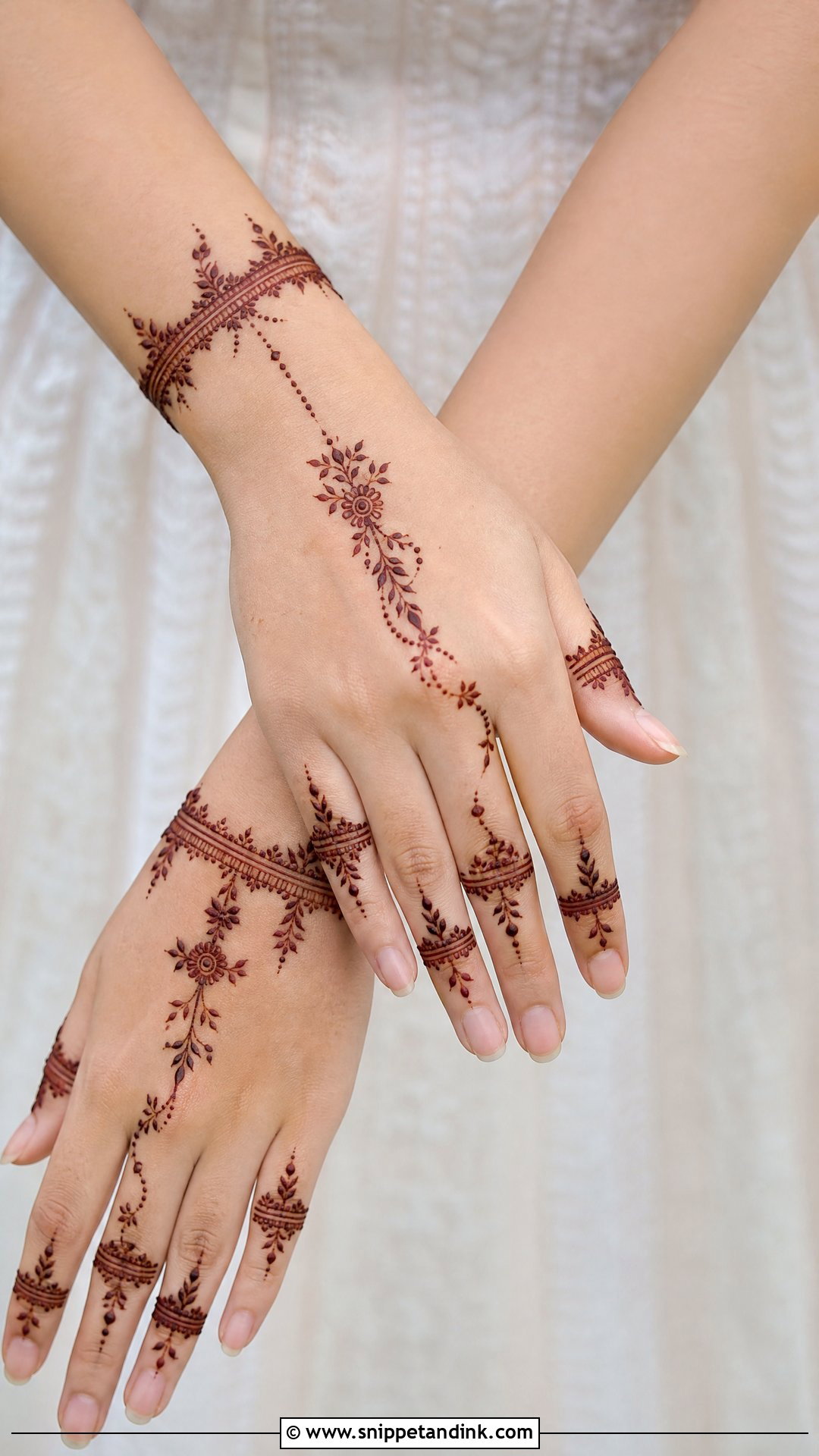
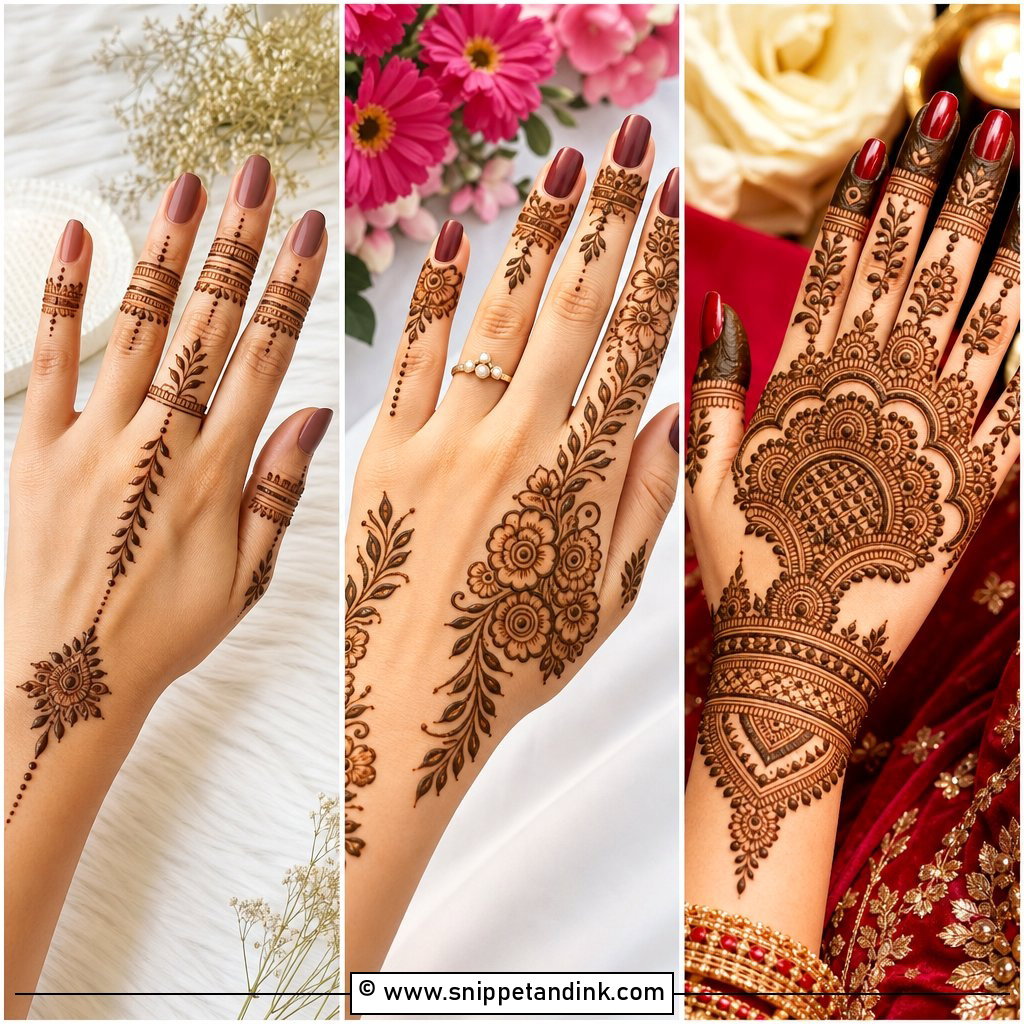
If you have multiple functions in one week, simple designs are the sensible choice. A floral trail across the back of the hand, a small palm mandala, decorated fingertips and a slim wrist band take far less time than full coverage. It suits younger bridesmaids, guests and anyone who’d rather be dancing than sitting. Simple designs show every wobble, so I keep line weight even and spacing regular. Well placed, a few motifs feel more considered than a crowded hand.
6. Modern Bridesmaid Mehndi Design
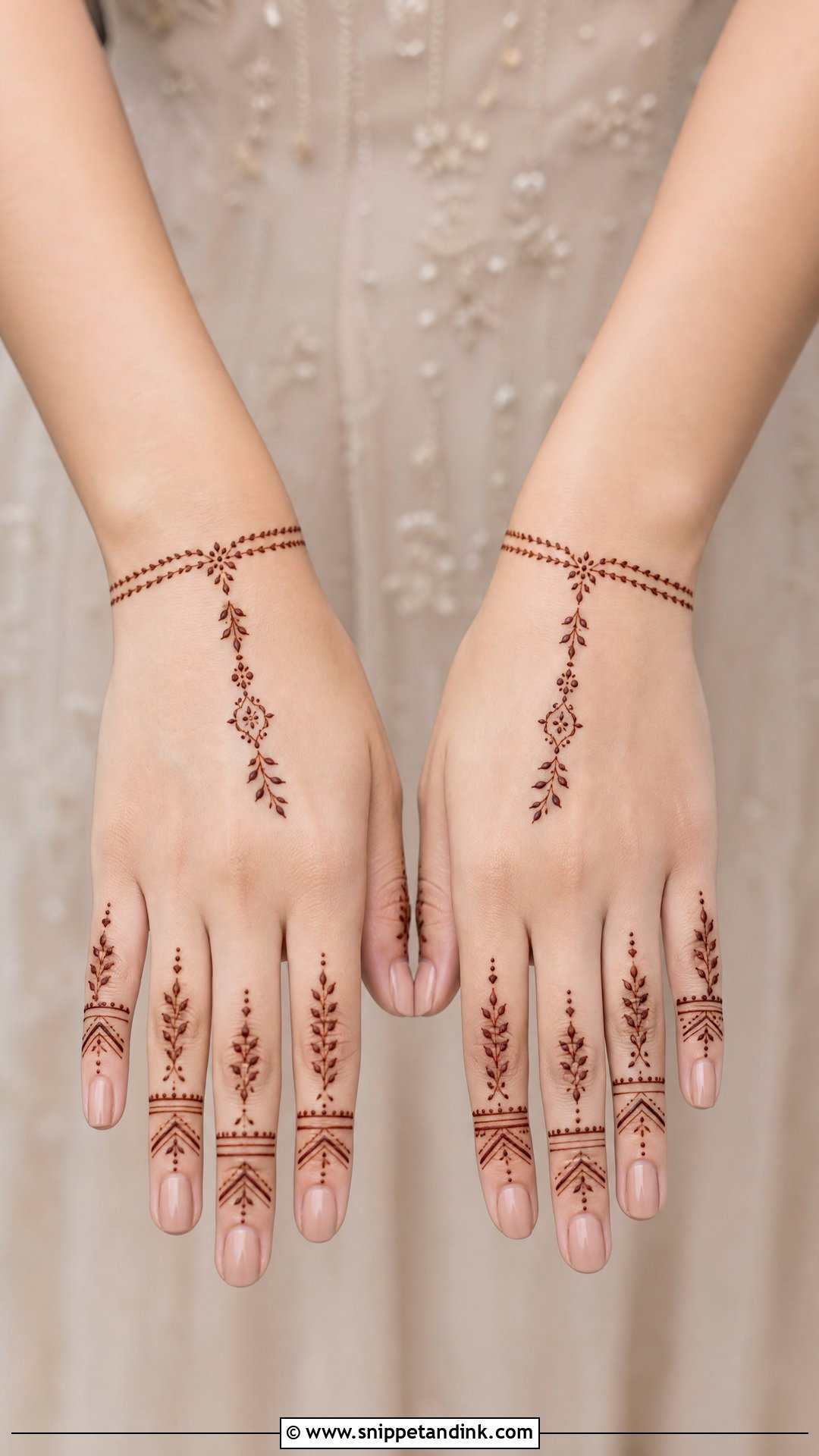
Modern designs use negative space, fine lines, leafy branches, geometric details and finger patterns instead of filling every corner. A half-hand layout, a single bold mandala or a bracelet-inspired wrist design can each carry the look. They sit well beside pastel outfits, minimal accessories and contemporary lehengas. I map where the bare skin will go before drawing a single line, because in modern work the open space is part of the design. It suits sangeet, cocktail-style events and daytime ceremonies.
7. Indo Arabic Bridesmaid Mehndi Design
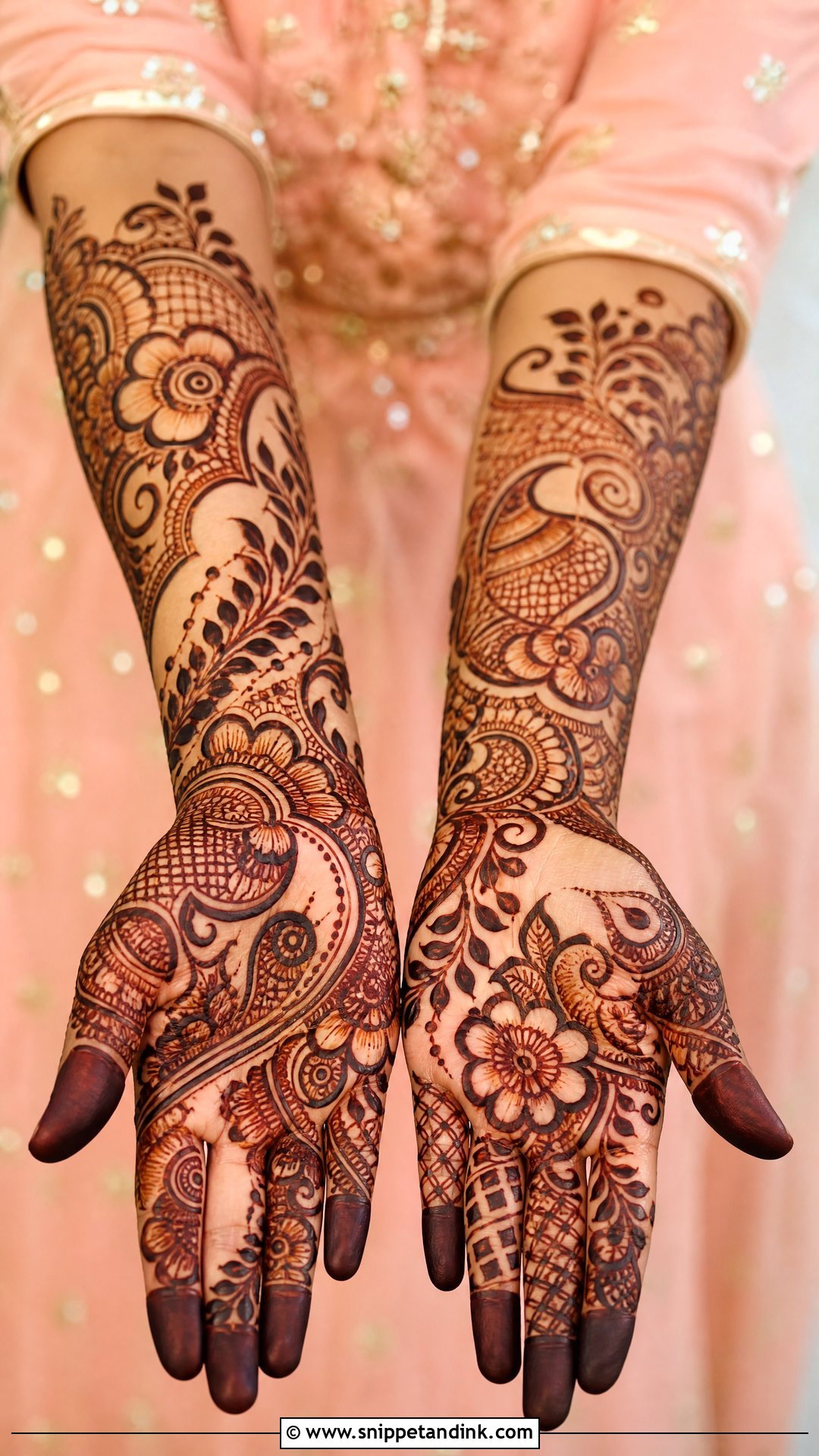
Indo-Arabic work outlines large flowers and paisleys boldly, then fills them with tiny dots, mesh, leaves and fine curves. It’s more detailed than a plain Arabic trail and much lighter than bridal coverage, which is exactly where a bridesmaid wants to sit. It works on both sides of the hand, from fingers to wrist or forearm. The contrast between bold outline and fine fill is what makes it photograph so well.
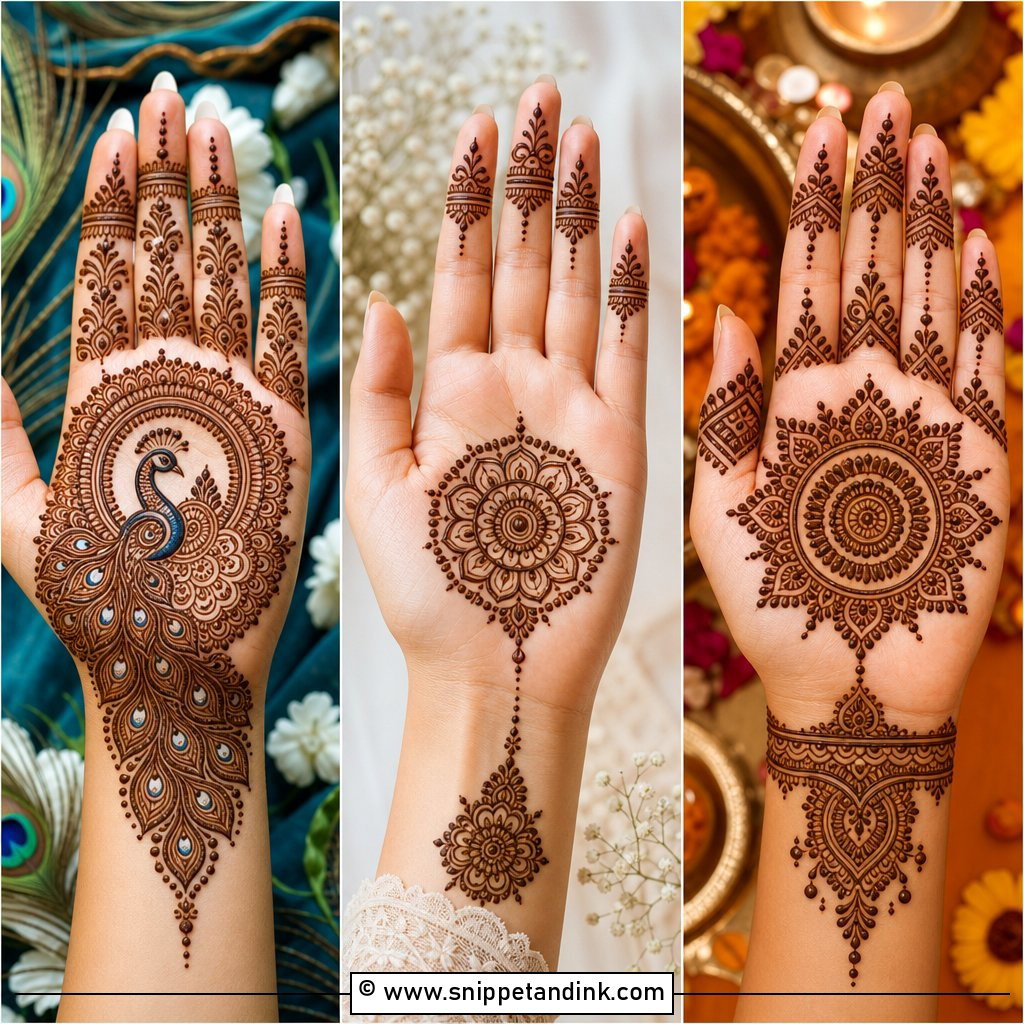
8. Mandala Bridesmaid Mehndi Design
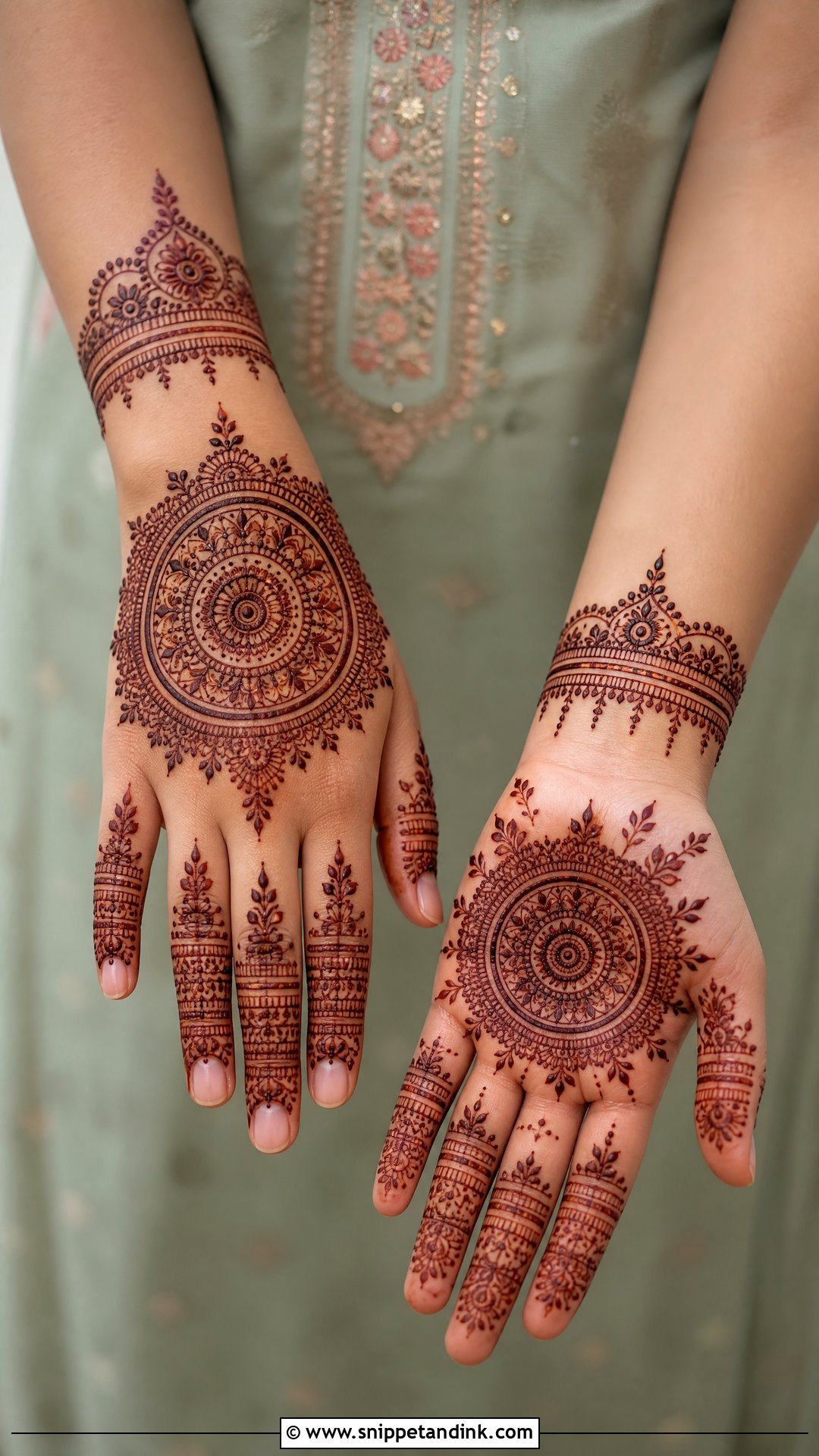
With a mandala, the main circle sits in the palm or on the back of the hand, with fine fingers and a bracelet-style wrist pattern. Leaving clean space around it makes it modern; adding jaali fill and floral borders makes it heavier. Bridesmaids pick mandalas because they’re quick and symmetrical. The quickness depends on the artist’s hand. I place a few guide dots first so the rings stay round, since an oval mandala is obvious from across a room.
9. Floral Bridesmaid Mehndi Design
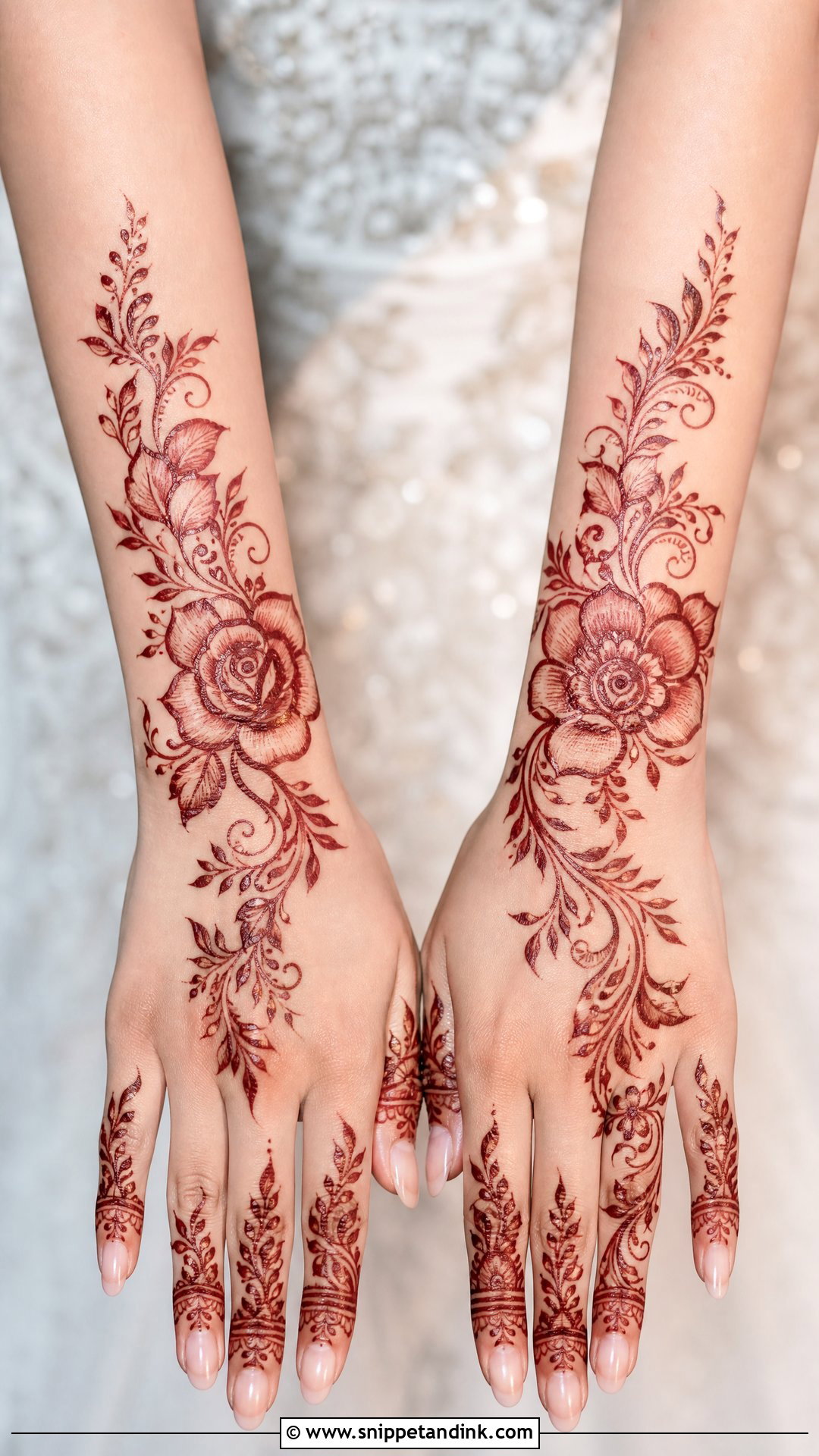
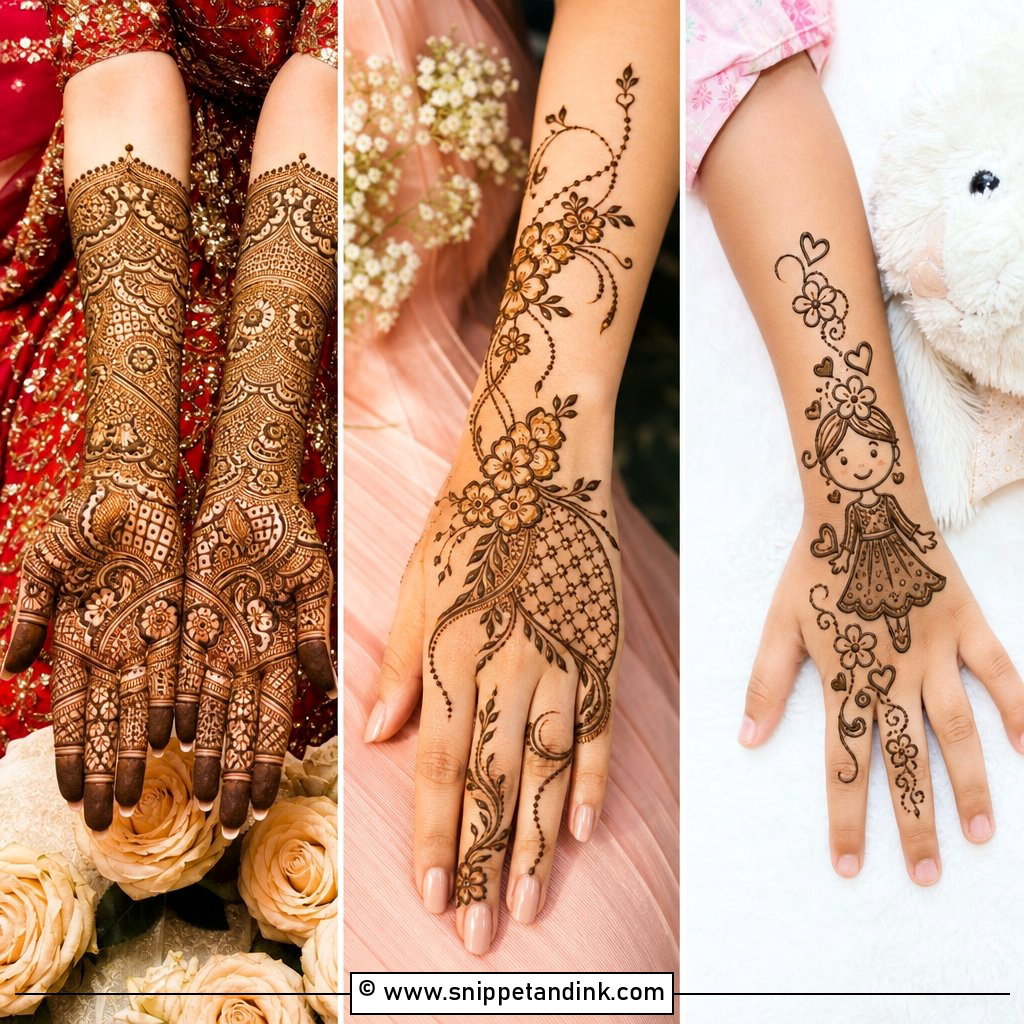
Soft flowers across the hands give a romantic look without tipping into bridal. Florals can cover the palm, trail across the back of the hand or wrap the wrist like a cuff, using roses, lotus shapes, daisy-style petals and vines. They adapt to any hand shape: I size flowers up on broad hands and use small clusters on slim fingers. Shaded petals add depth, and leaves link the motifs together. Daytime weddings, garden venues and pastel outfits suit this design well.
10. Minimal Bridesmaid Mehndi Design
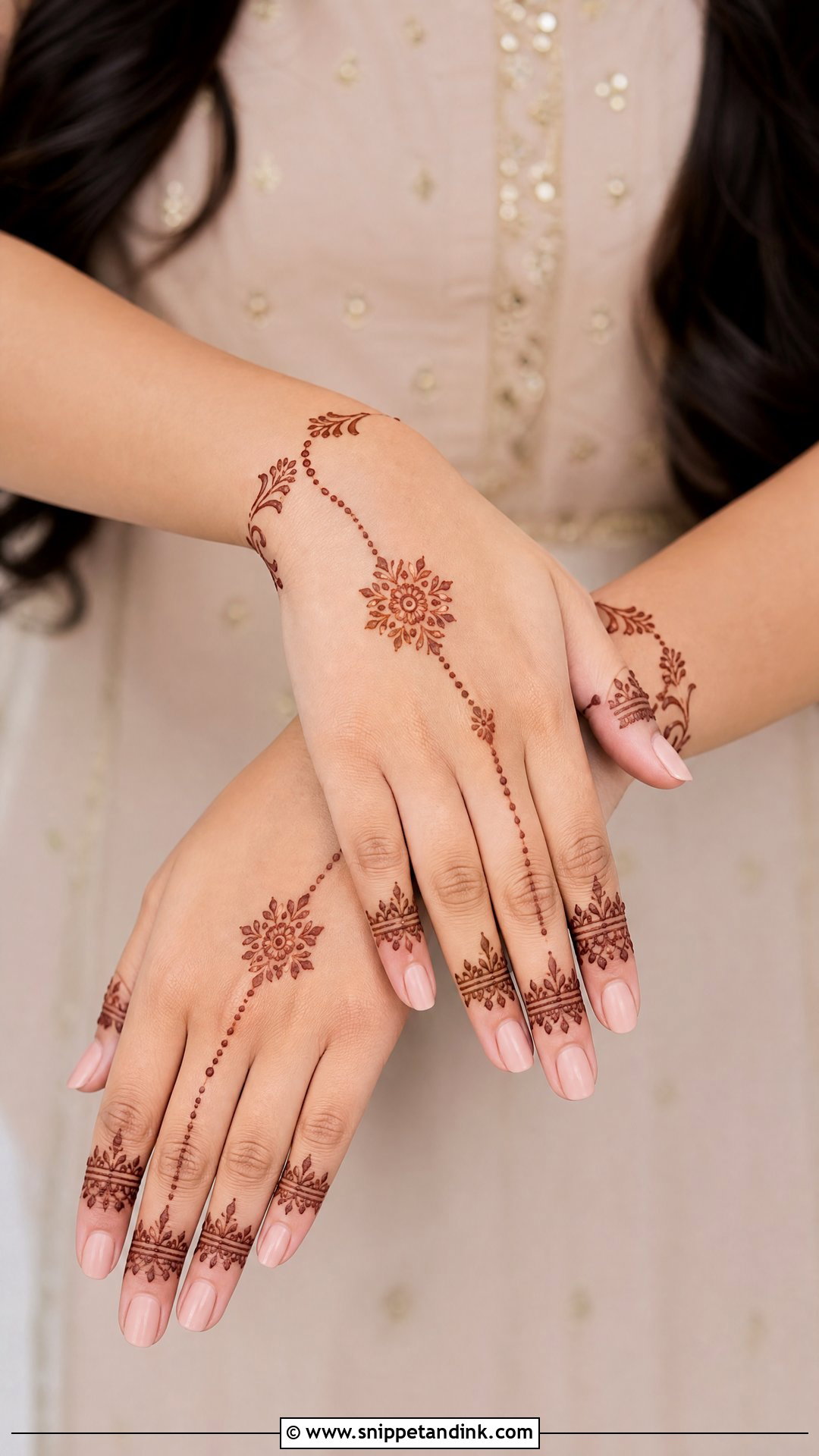
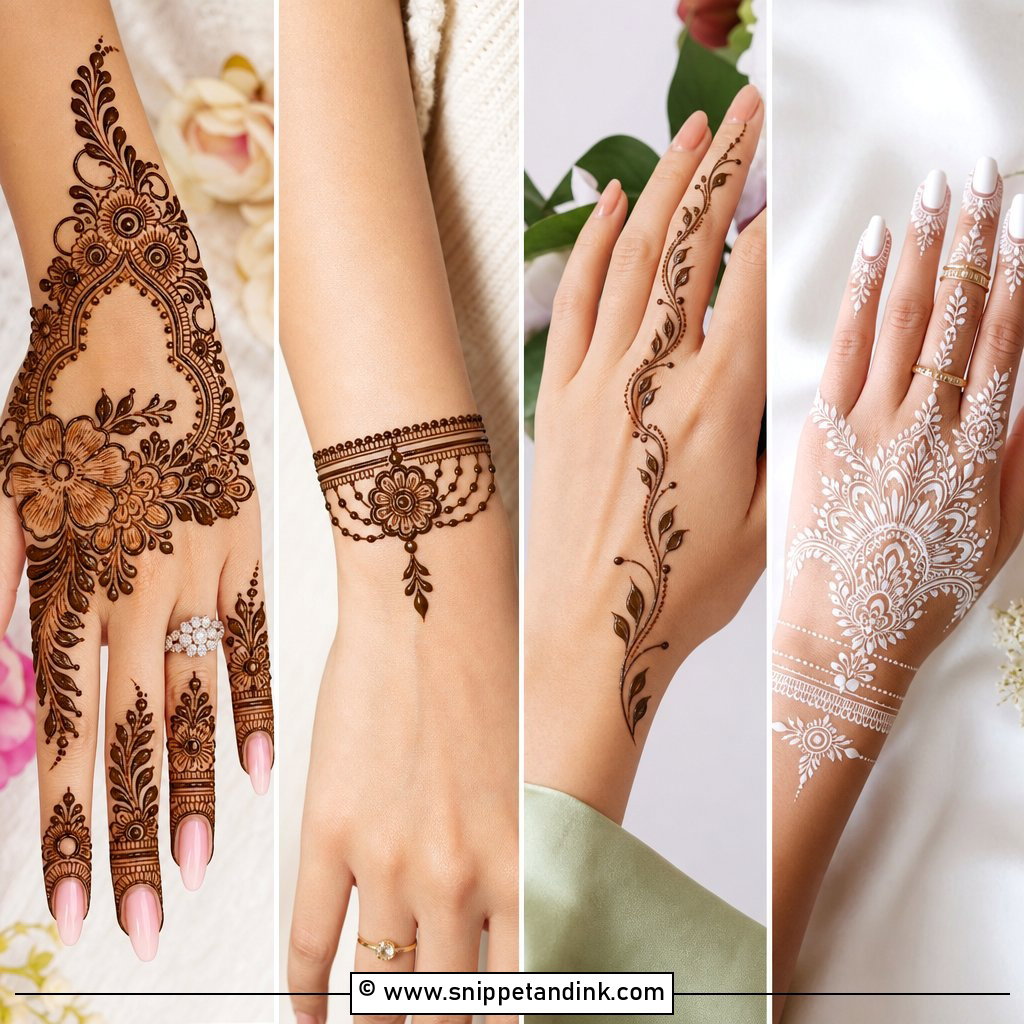
Minimal doesn’t mean unfinished. A complete minimal design has decorated fingers, a small wrist detail and one clean motif on the back of the hand or palm, with thin vines, tiny florals, dotted chains and open spacing. It works with statement rings, nail art and long sleeves without fighting them. It’s the design I’d suggest to a bridesmaid who works with her hands or has a job where heavy henna would draw questions the following week.
11. Finger Bridesmaid Mehndi Design
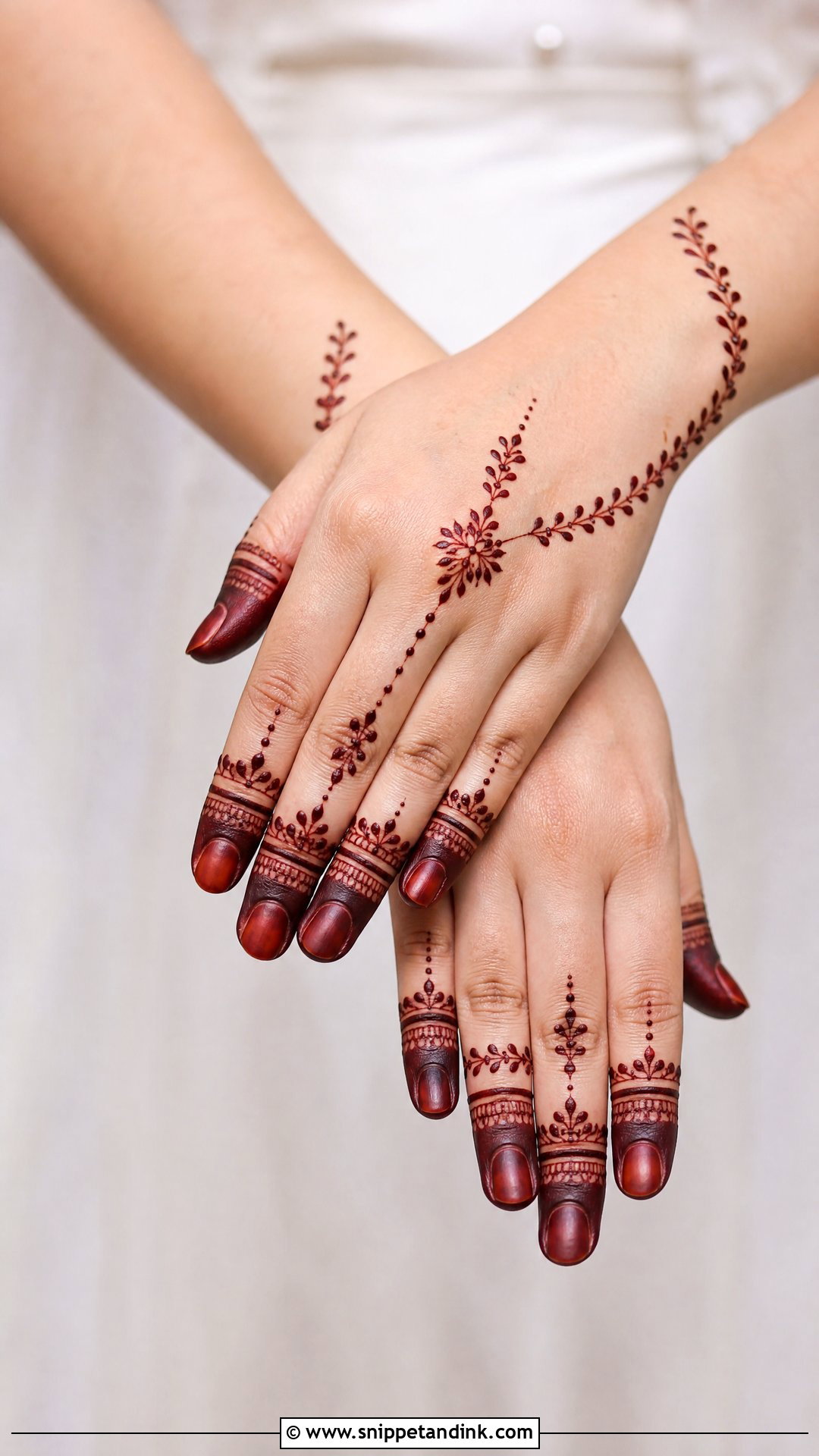
Finger designs give a jewelry-like look while the rest of the hand stays light: detailed fingertips, ring-style bands, small leafy trails and a simple wrist or back-hand accent. Fingers can be filled with tiny checks, dots, petals and line work while the center stays open. It goes on quickly, which helps when several bridesmaids are waiting their turn. Fingertips stain the darkest of anywhere on the hand, so even a small design shows up well with rings and nail polish.
12. Bracelet Bridesmaid Mehndi Design
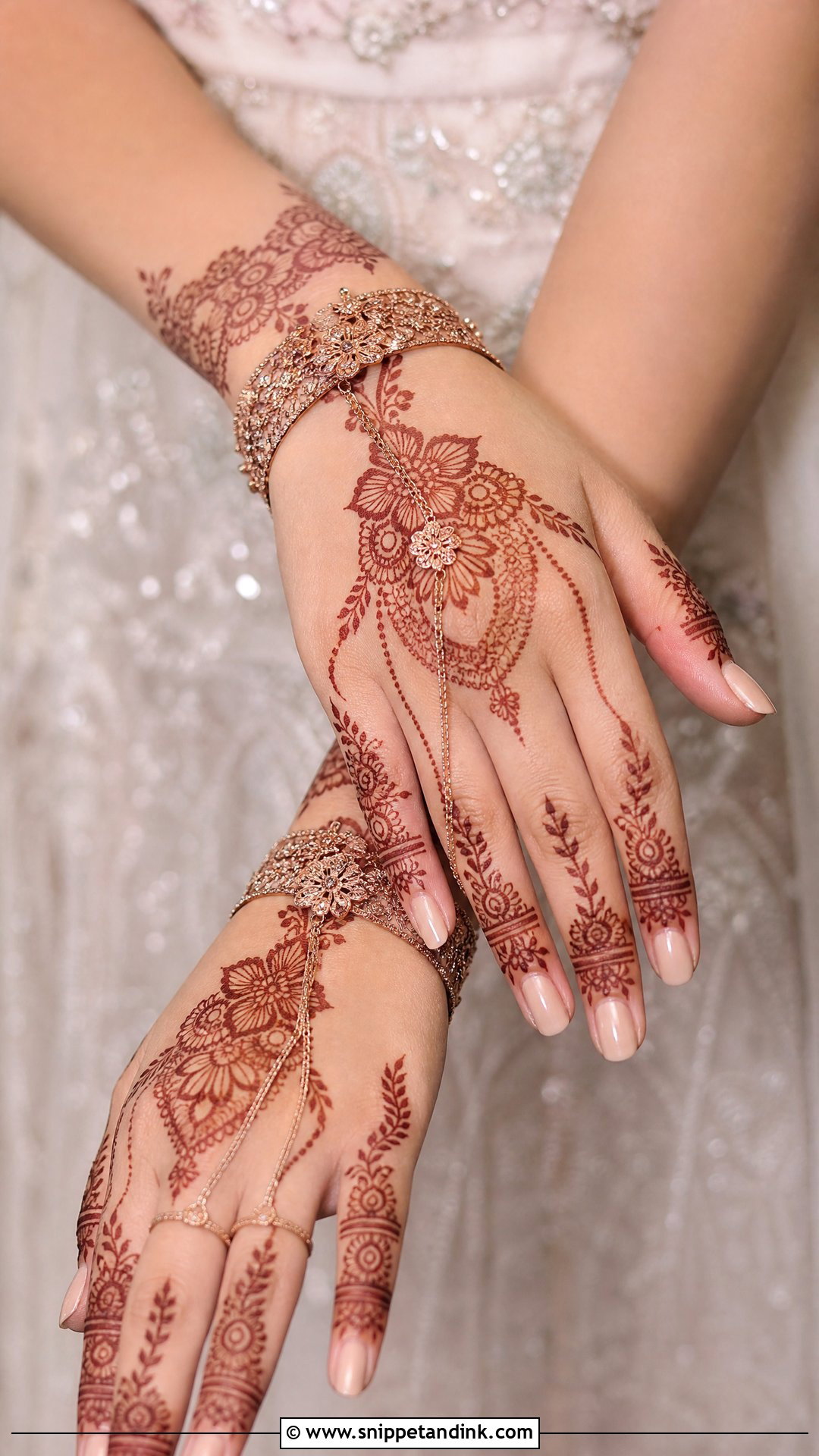
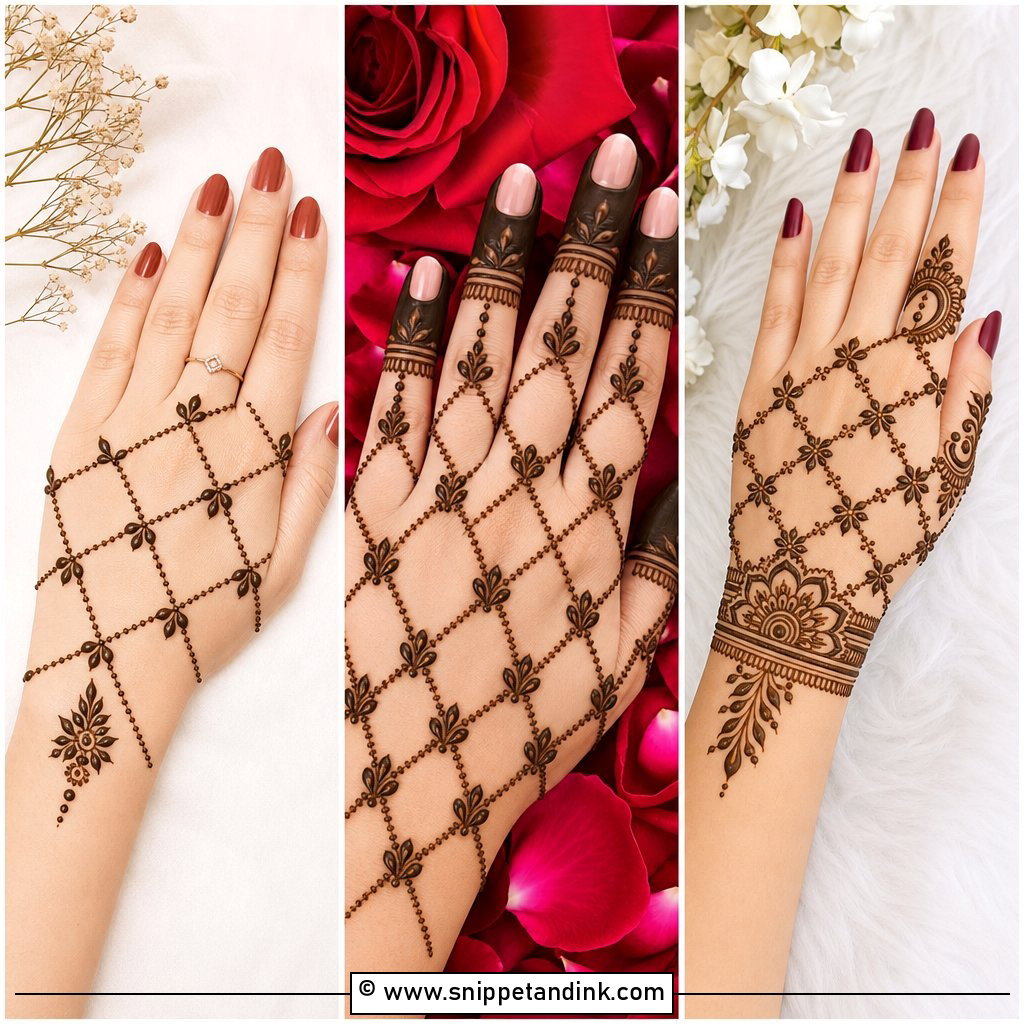
Bracelet designs wrap the wrist and connect to the fingers with chains, florals or dotted strings, sometimes forming a haath phool on the back of the hand. The wrist detail stays visible with sleeveless, short or three-quarter sleeves. Keep the band thin for a minimal feel or widen it with jaali, paisley and floral fill. One thing I check is where real bangles will sit; a henna band hidden under a stack of glass bangles is wasted effort, so I place it just above or below. It suits engagements, sangeet nights and ceremonies alike.
13. Jaali Bridesmaid Mehndi Design
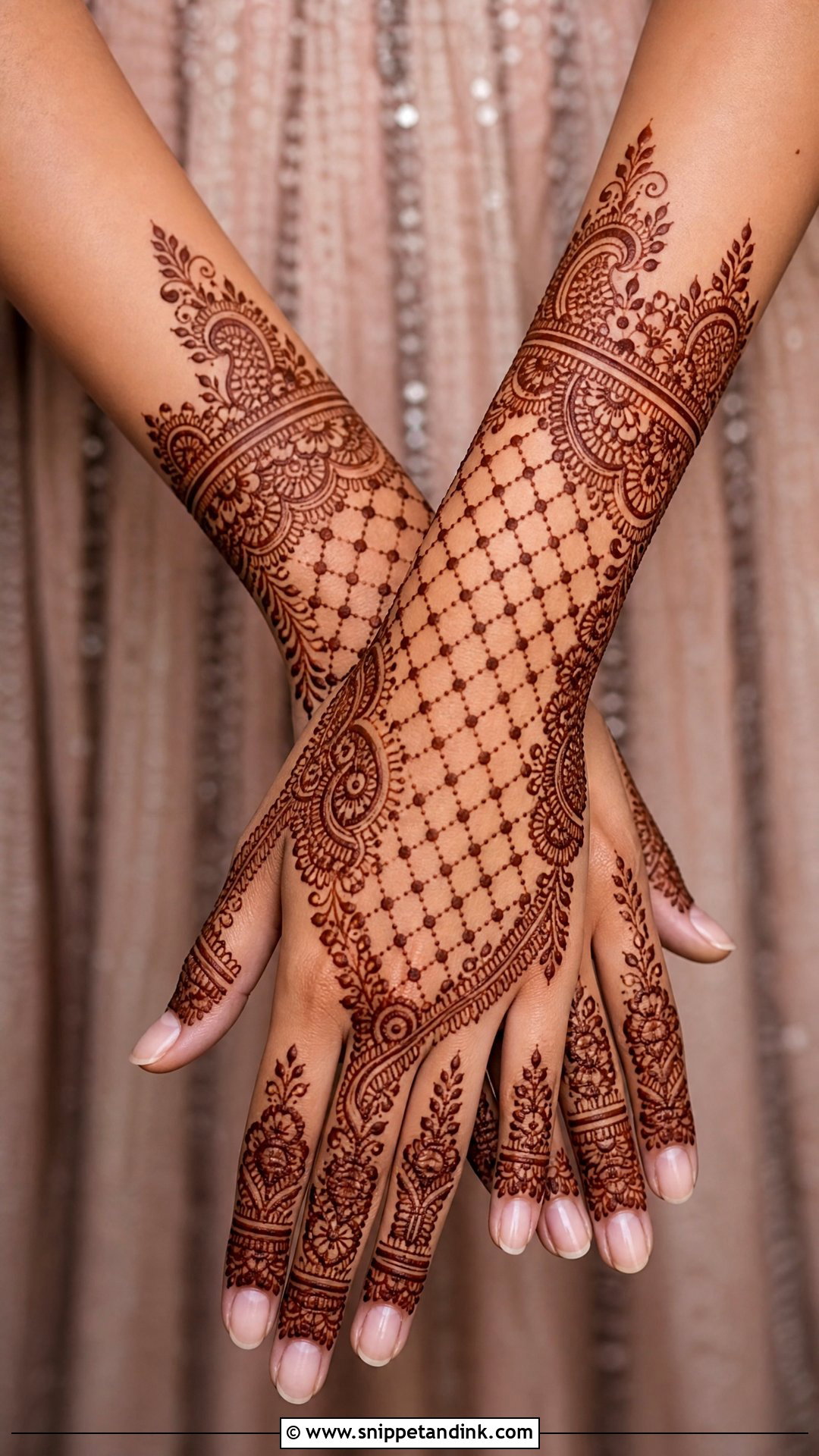
Jaali uses net-like mesh for a lace finish that looks detailed without heavy motifs. A bridesmaid design can use it on the back of the hand, the palm corners or the wrist, alongside flowers, paisleys or finger borders. My advice is to use jaali as one feature rather than covering the whole hand, which keeps it wearable and quicker. The repeated lines read as texture in photos, and floral accents soften the grid. It sits naturally with traditional and embroidered outfits.
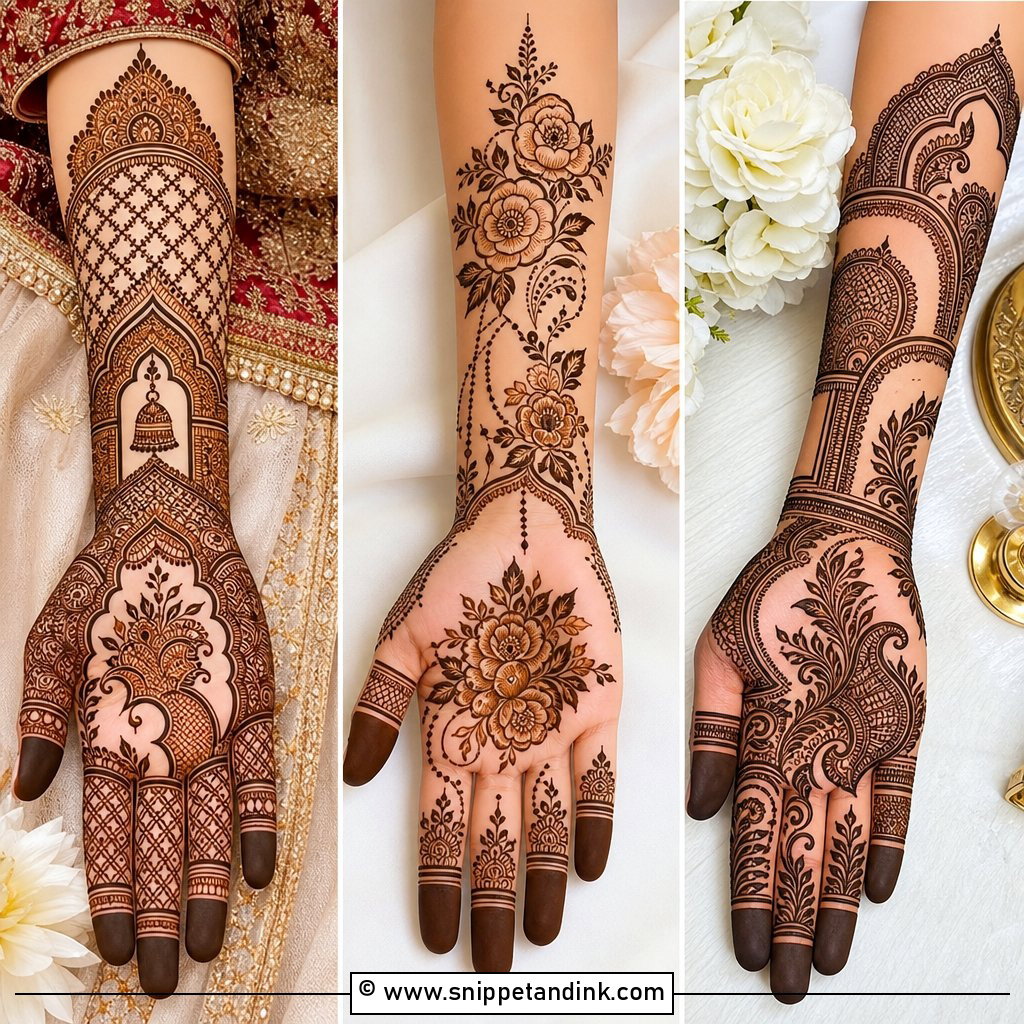
14. Paisley Bridesmaid Mehndi Design
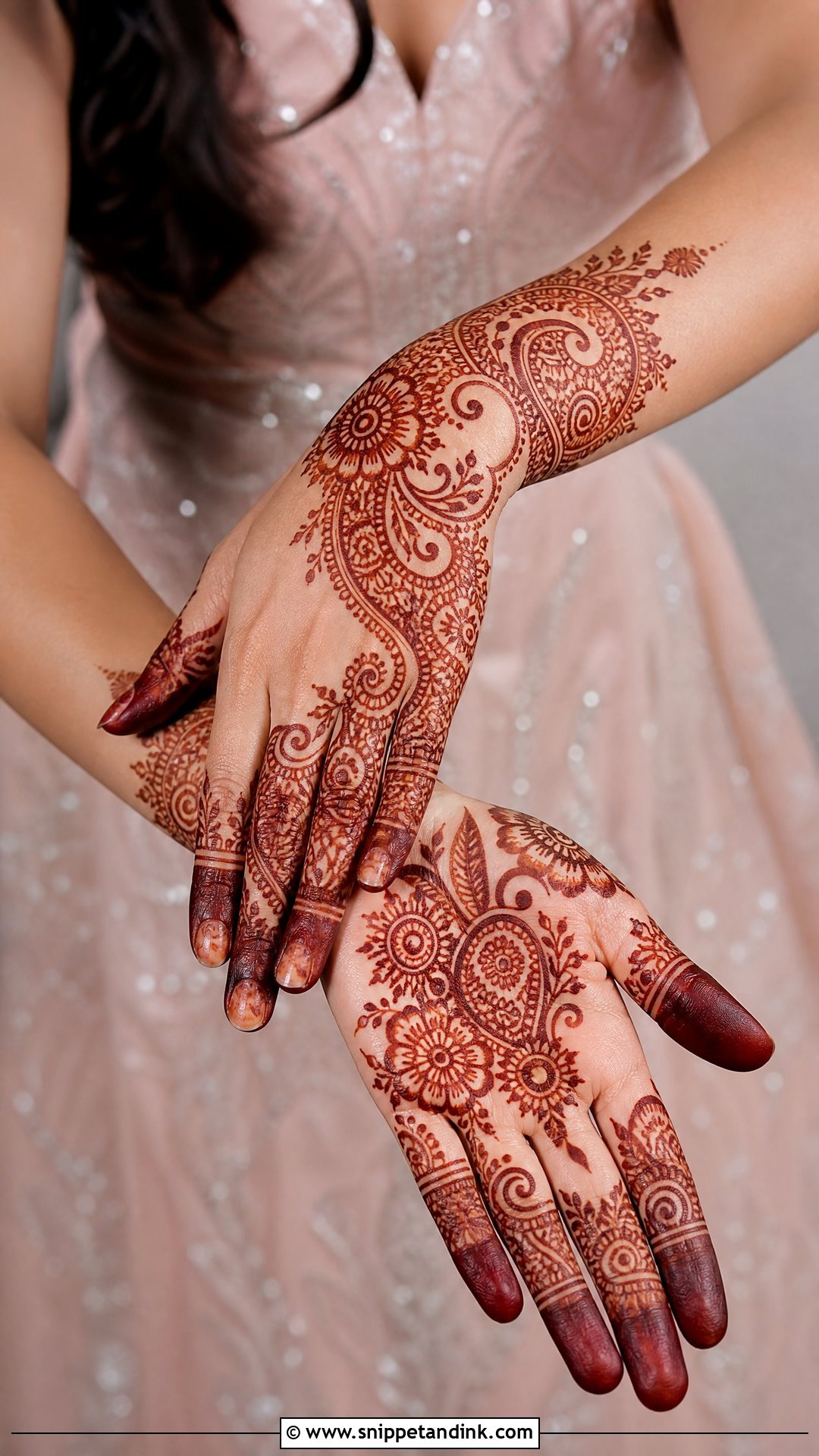
Paisley is the traditional shape most families recognize, and it works as a palm design, a diagonal trail or a full-hand layout. Small paisleys fill the fingers and wrist while larger ones anchor the center. To keep it bridesmaid-friendly, I break up the paisleys with flowers, leaves, dots and open spaces instead of dense bridal fill. It suits sarees and lehengas with classic embroidery. A safe, reliable pick if you want something traditional.
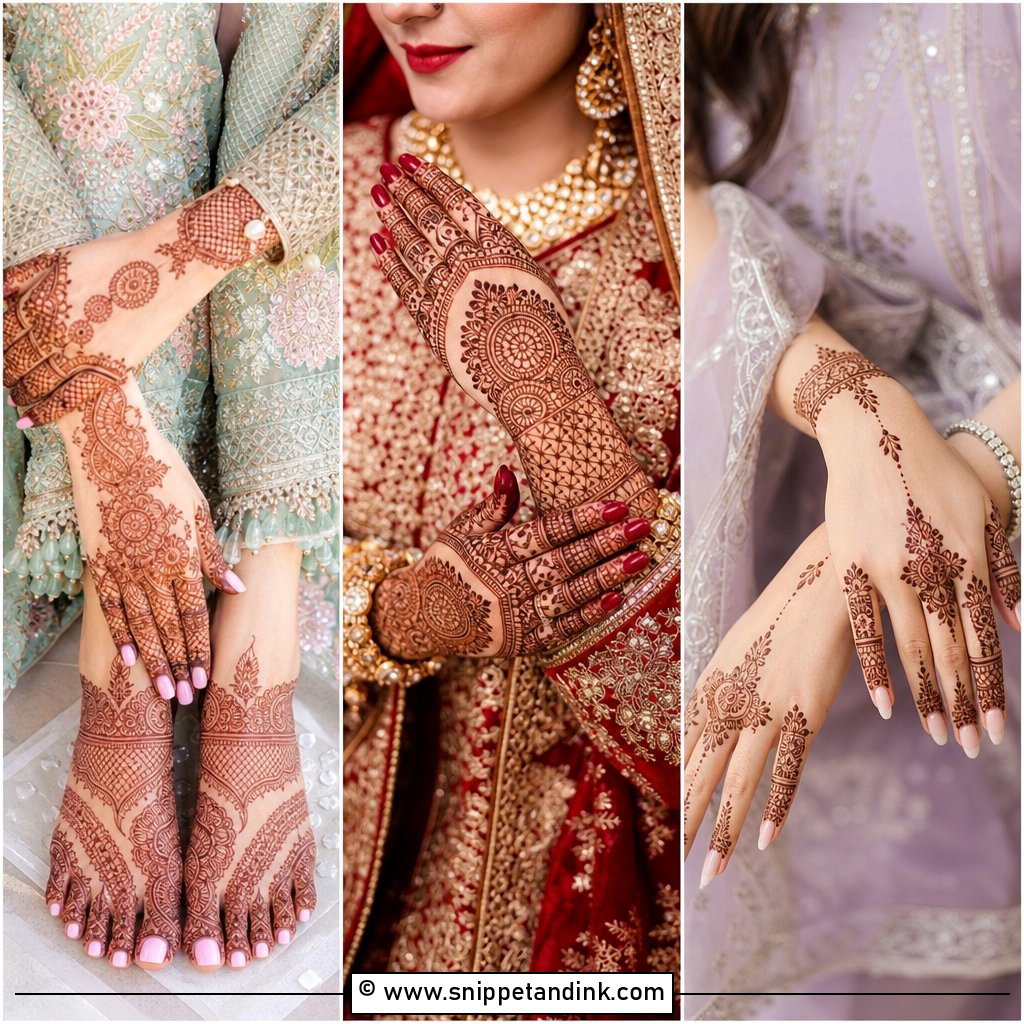
15. Peacock Bridesmaid Mehndi Design
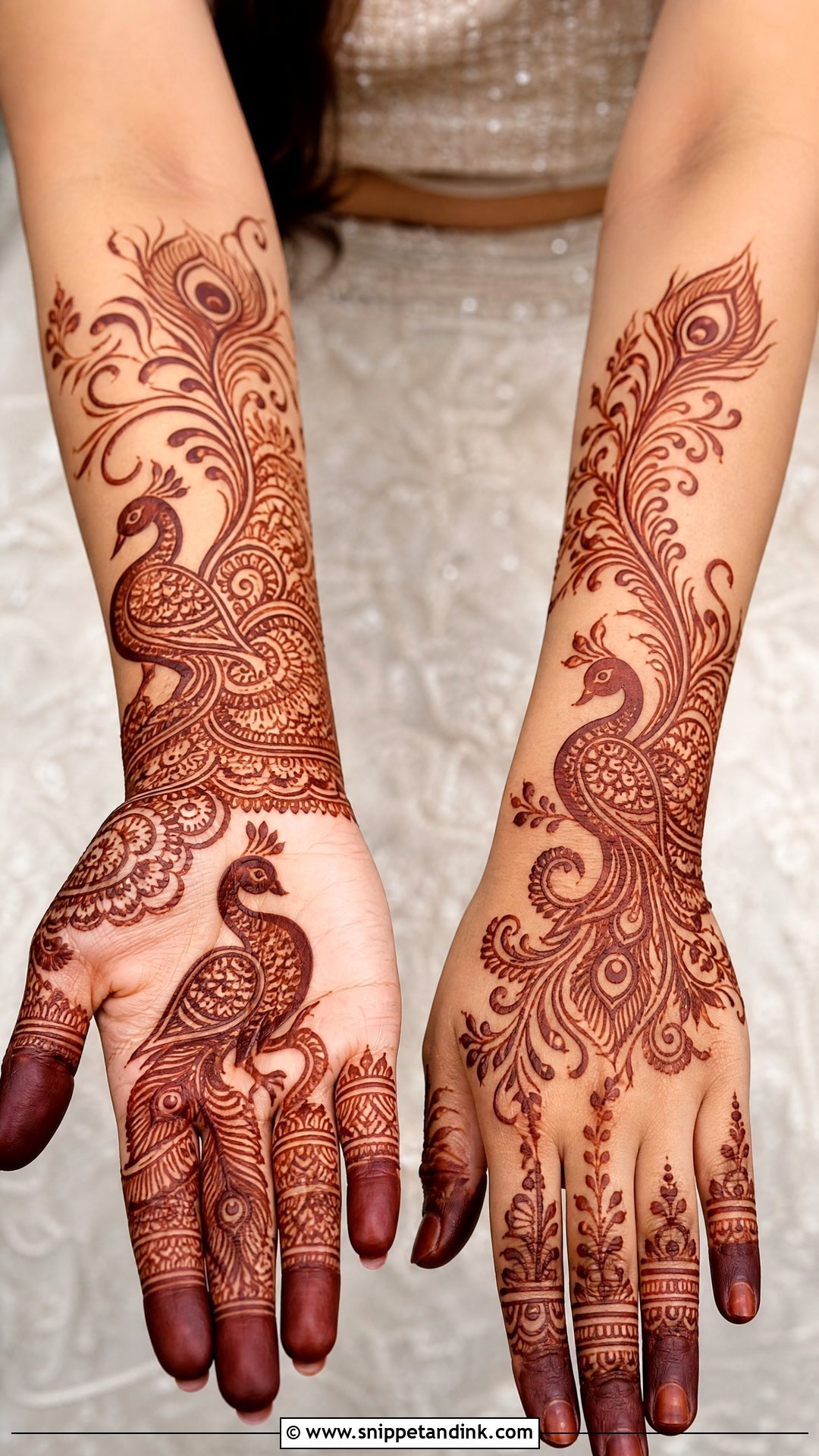
One peacock is enough on a bridesmaid’s hand. It can sit on the palm, the back of the hand or the lower forearm, surrounded by paisleys, feathers, flowers and curved vines. Keep the surrounding detail lighter so the bird’s outline stays readable once stained. It suits traditional Indian weddings, bright outfits and classic jewelry. Before choosing it, check with the bride: peacocks are a common bridal motif, and some brides would rather keep theirs as the only one.
16. Rose Bridesmaid Mehndi Design
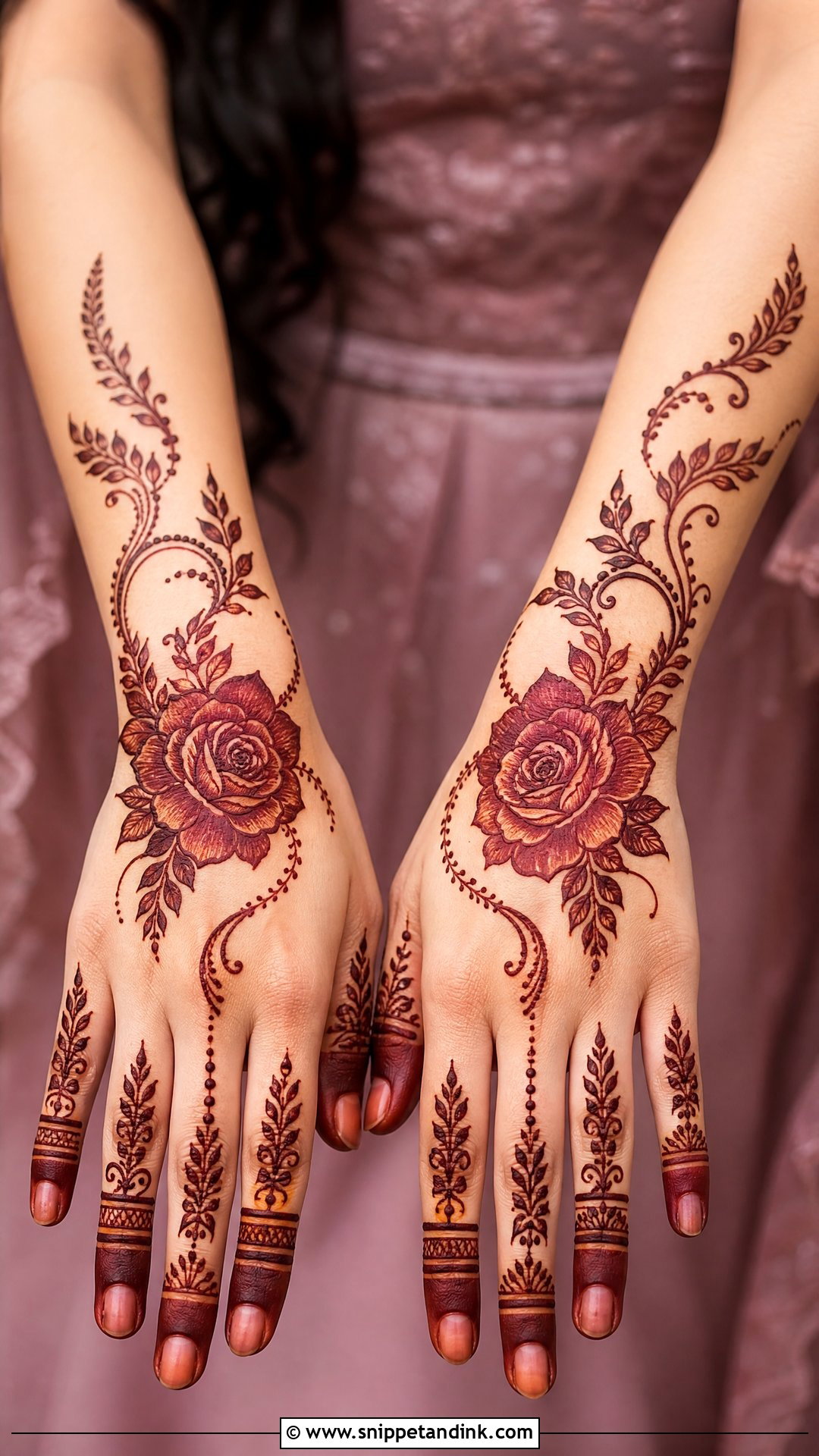
Large rose blooms on the back of the hand, smaller clusters on the palm and vines toward the wrist make a refined floral design. Shading inside the petals gives the roses their fullness; I do it by thinning the paste line rather than filling solid. It sits well with pastel, red, maroon, gold and ivory outfits. Keep the fingers detailed with slim leaves or dotted lines so the hand doesn’t look half done.
17. Lotus Bridesmaid Mehndi Design
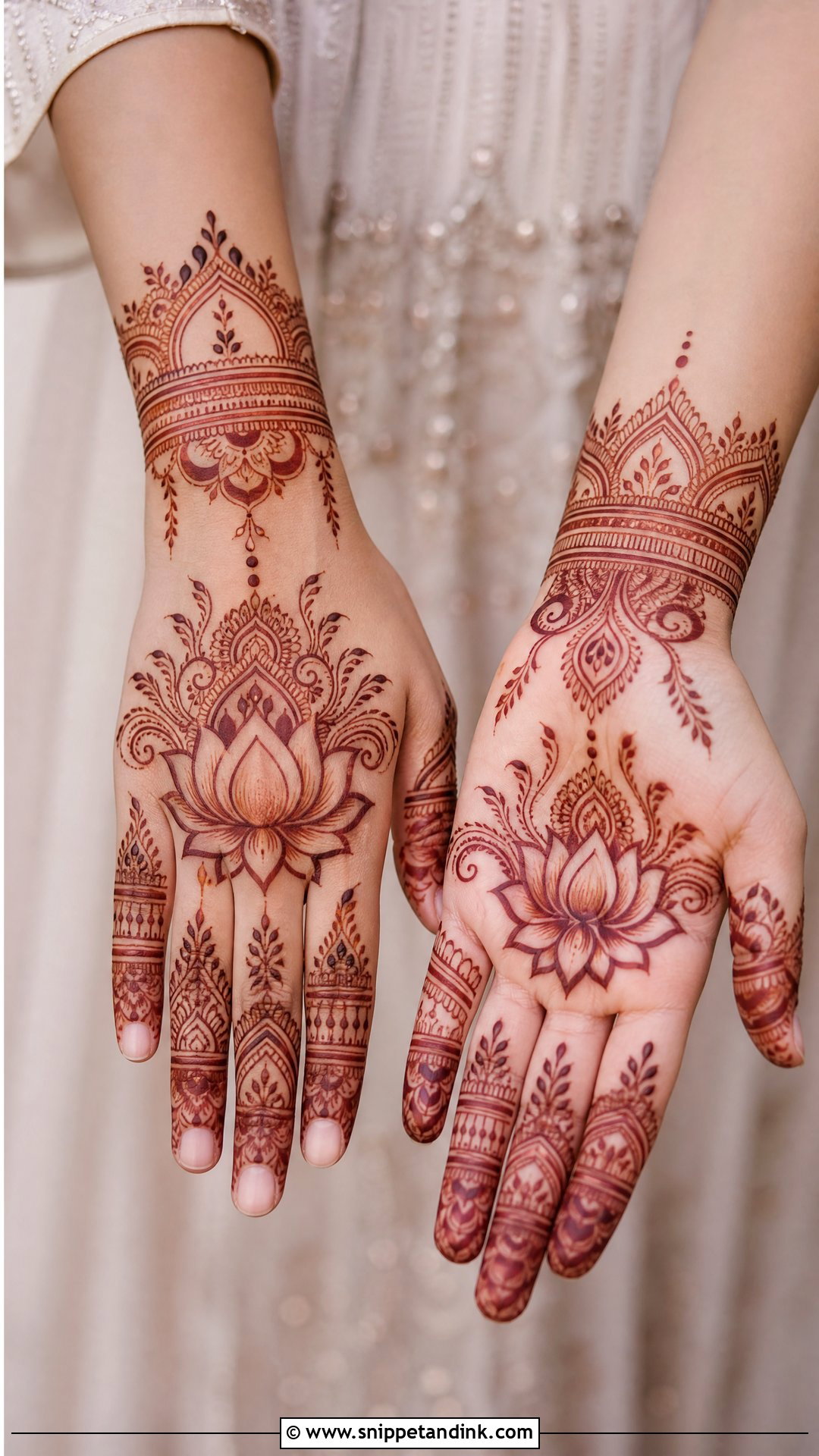
The lotus suits a bridesmaid who wants something traditional without repeating the paisley everyone else chose. It works as a palm centerpiece, a back-hand feature or a trail from wrist to forearm, paired with mandalas, beads, dots, leafy curves and fine arches. The petals hold a clean outline from a distance, which helps on stage and in group photos. Bold petals with light surrounding detail look modern. Silk outfits, temple jewelry and classic wedding colors suit it well.
18. Gulf Bridesmaid Mehndi Design
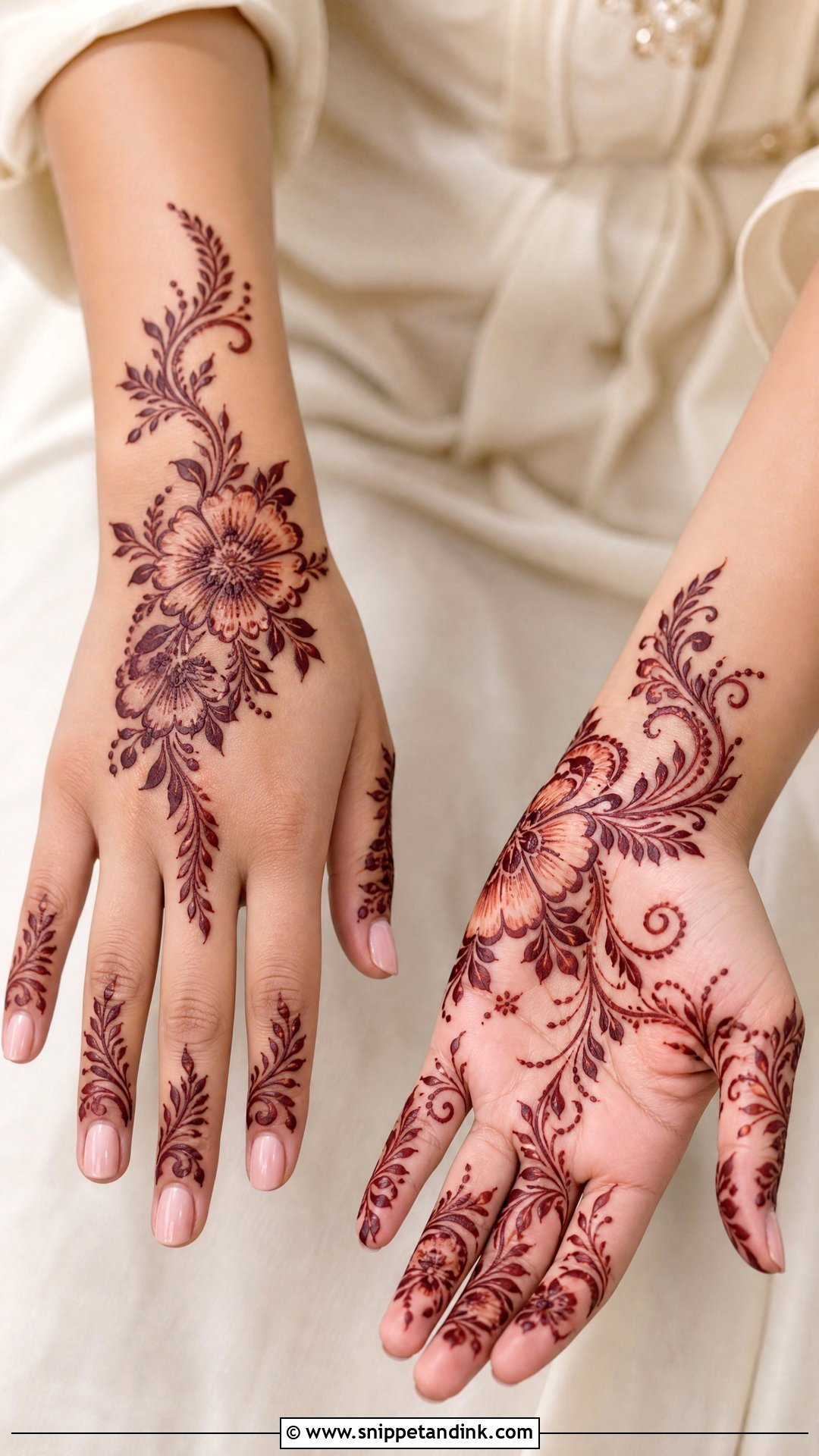
Gulf, or Khaleeji-inspired, designs use bold flowers, leafy strokes and generous skin between motifs, flowing across the back of the hand or the palm. They look dramatic without crowding the hand. If you want strong, visible henna but can’t sit long, this is the style I’d suggest, since the large shapes go on quickly. The thick outlines stain deeply. Shaded petals, curved leaves and slim finger detail finish it.
19. Moroccan Bridesmaid Mehndi Design
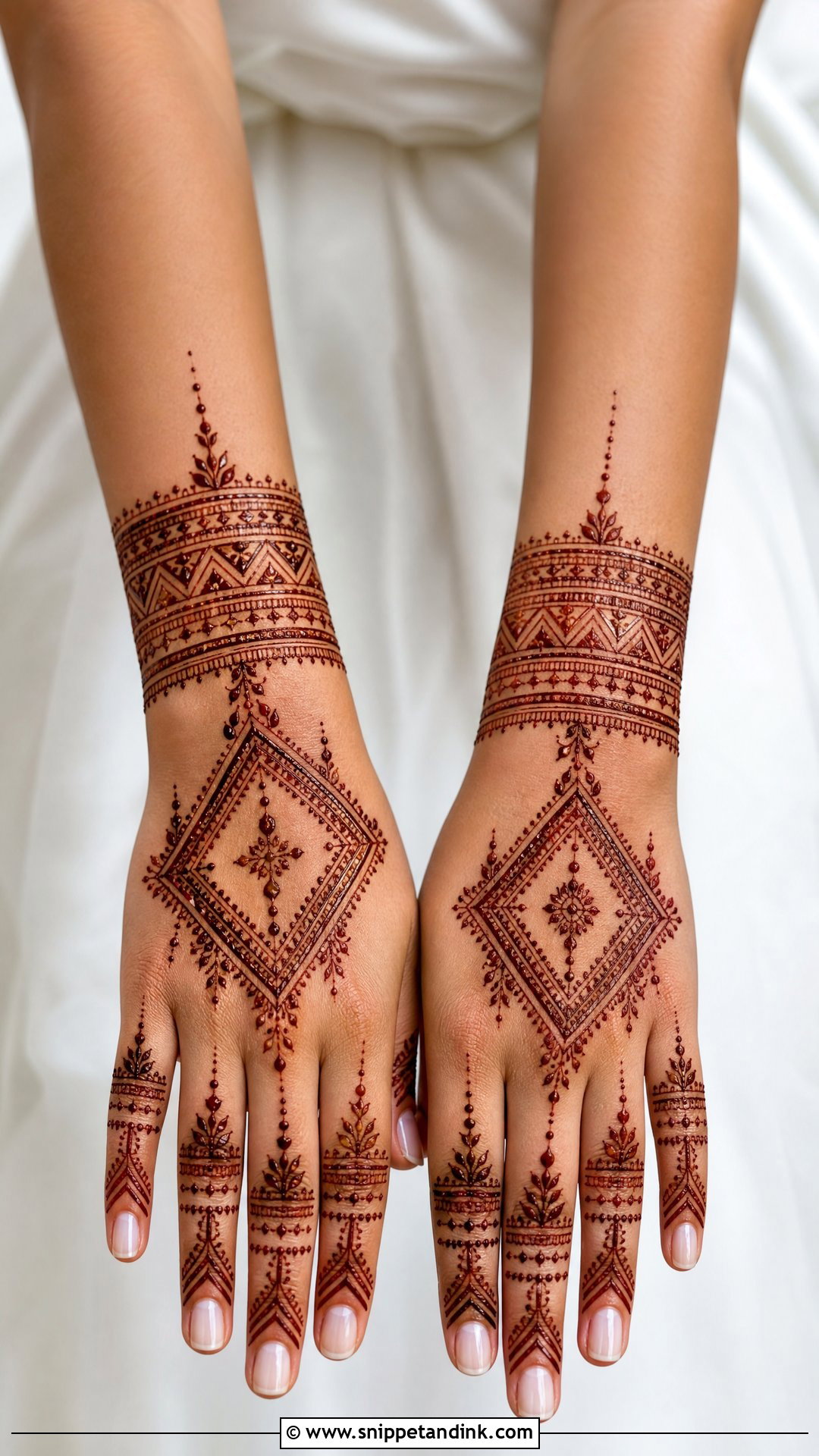
Geometric work swaps florals for diamonds, lines, triangles, grids and structured bands. A full Moroccan layout covers the back of the hand, fingers and wrist like patterned jewelry. Small dots, slim leaves or a little mandala can soften it. It looks striking with solid-color outfits, metallic jewelry and minimal nails. Straight lines are unforgiving, so only book this with an artist whose geometric work you’ve seen in person or in close-up photos.
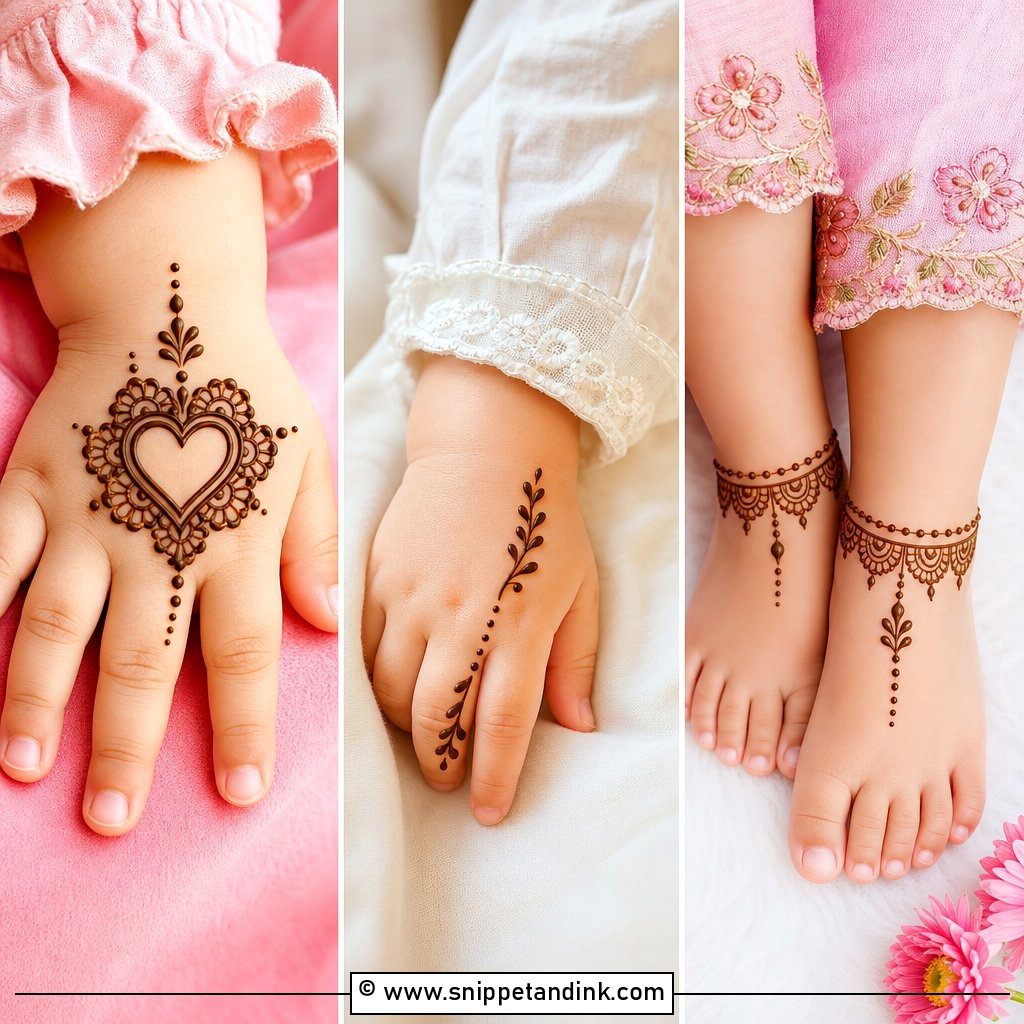
20. Half Hand Bridesmaid Mehndi Design
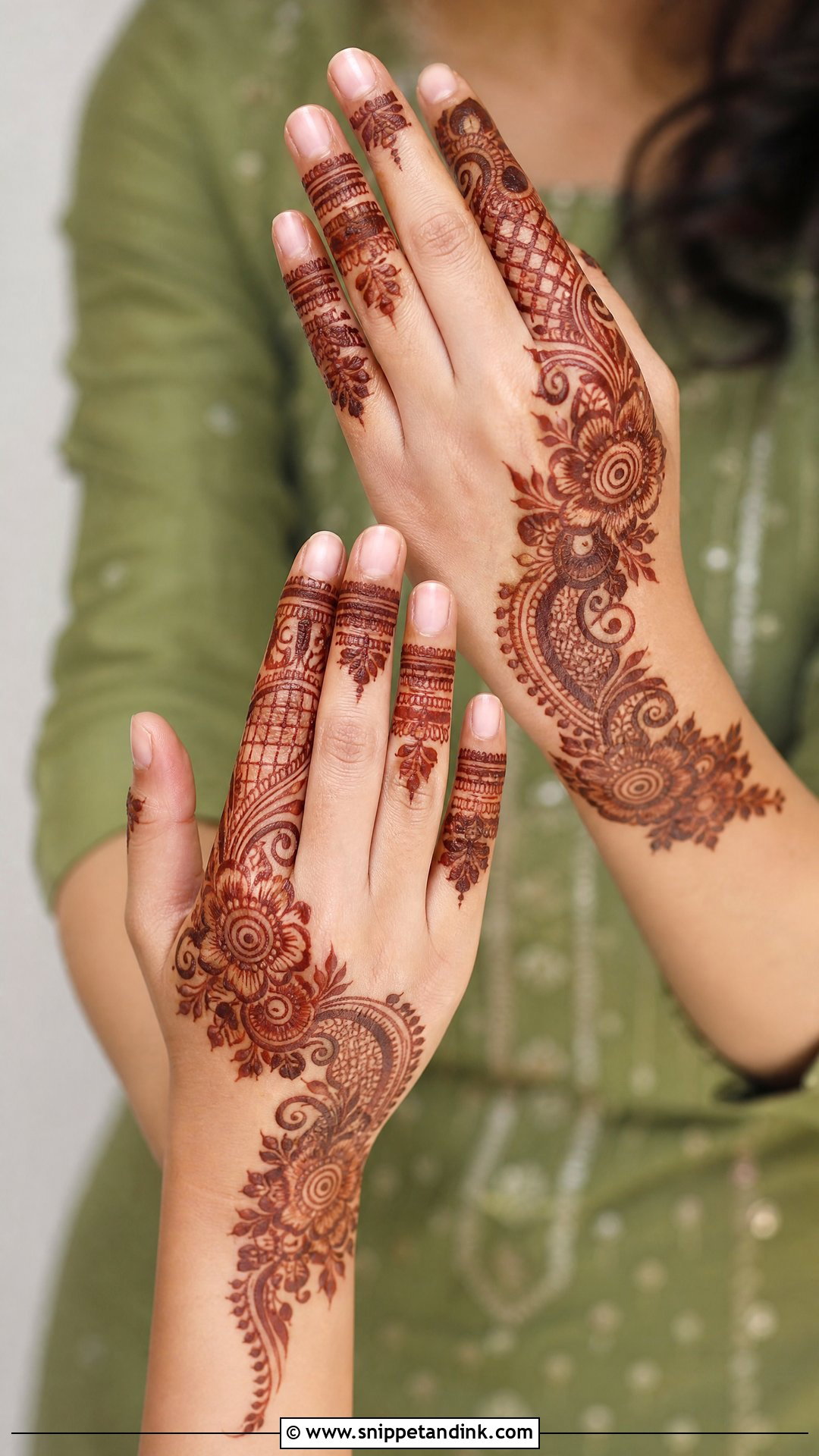
Half-hand coverage gives a wedding-level look without the time. It usually covers the palm to wrist, the back of the hand to fingers, or one diagonal side of the hand, with florals, paisleys, mandalas and bracelet details. It’s comfortable and quick, and a good fit if you’re getting henna for several events. The edge is where it succeeds or fails. I finish with a clean border or a trailing vine so it looks deliberate rather than abandoned halfway.
21. Wrist To Forearm Bridesmaid Mehndi Design
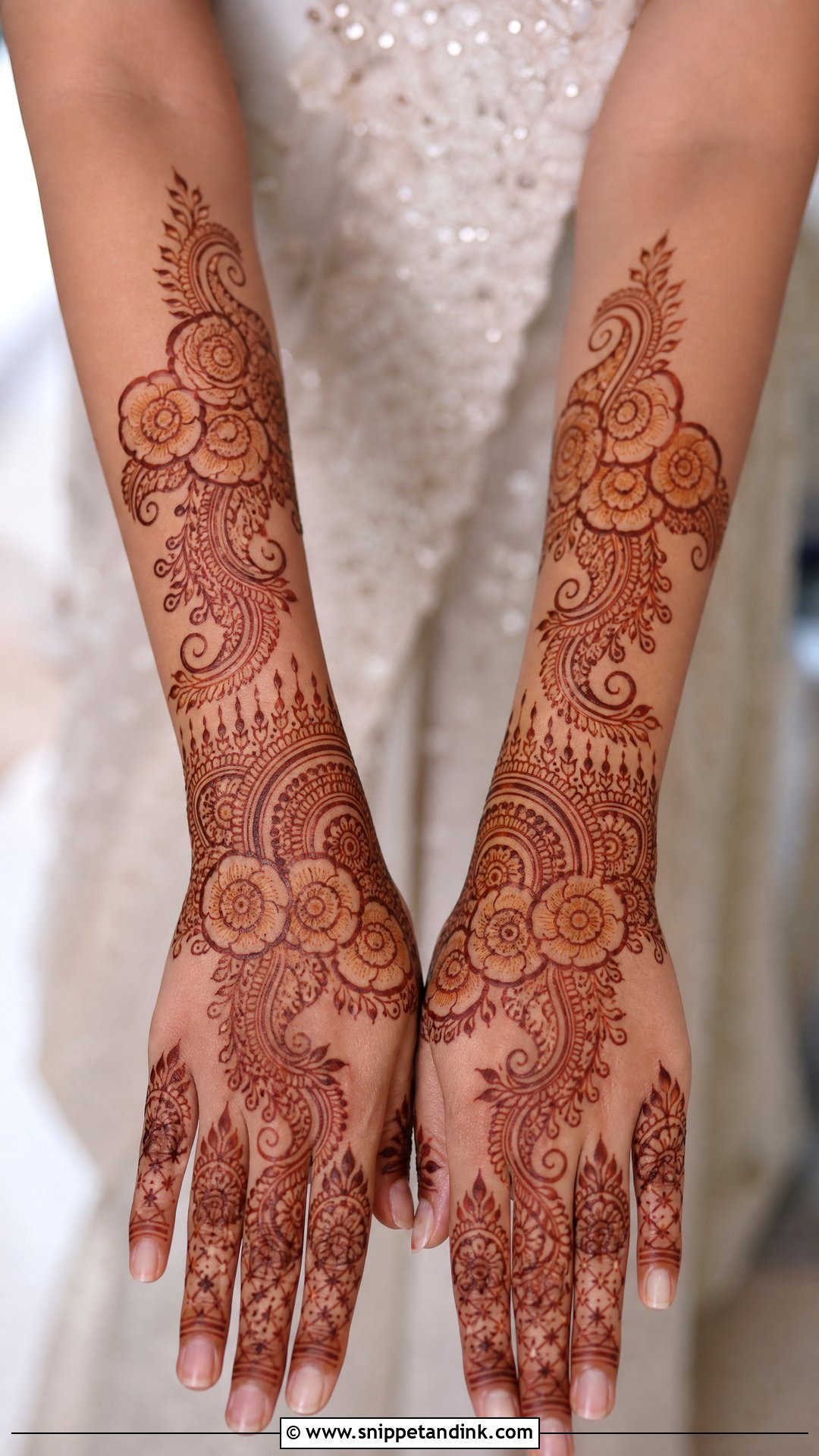
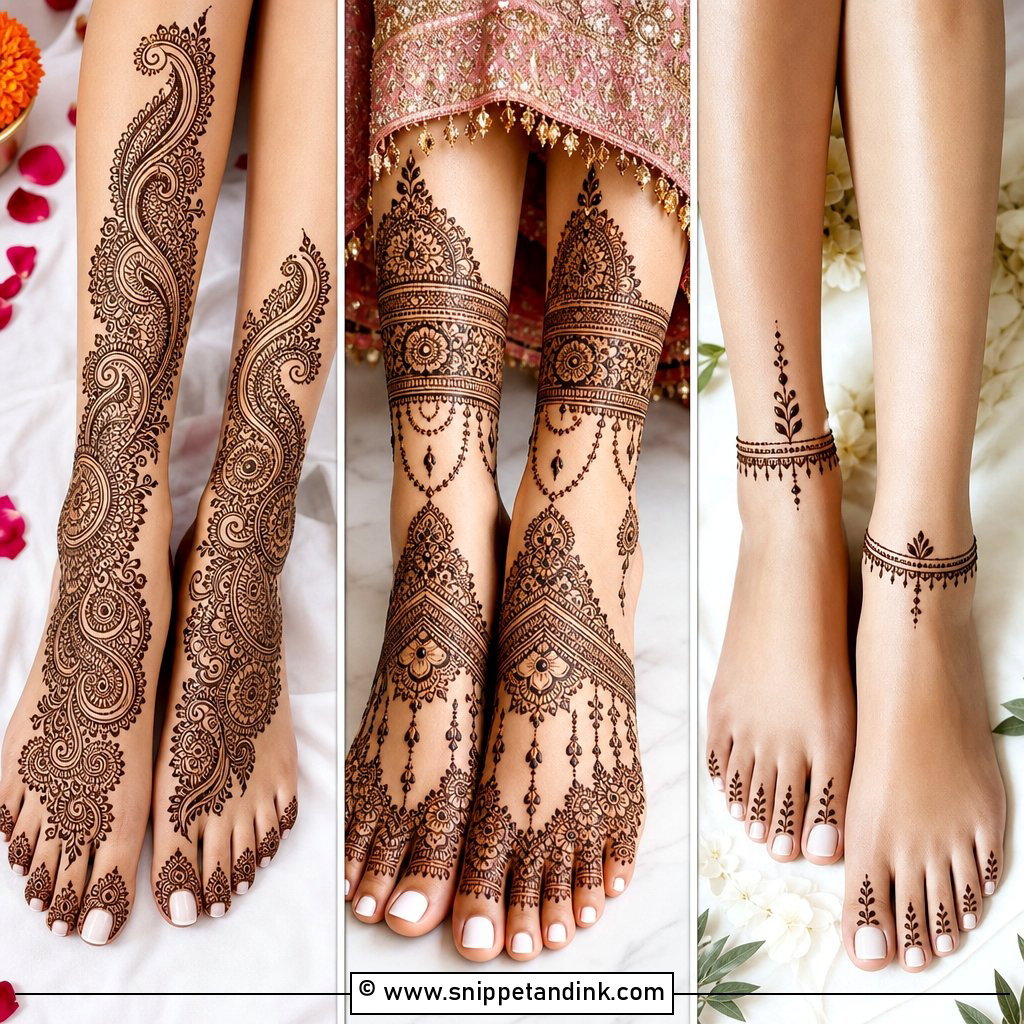
Forearm work suits close family and best friends who want a fuller look. The design starts at the wrist and climbs with floral bands, paisley trails, mandalas or bracelet cuffs, balanced by lighter fingers and back-hand detail. It shows best with sleeveless or short-sleeve outfits, where the forearm becomes part of the styling. Pare it back if your jewelry is heavy; go further if your outfit is simple. Stain is naturally lighter on the forearm than on the palm, so I use bolder lines up there.
22. Palm Bridesmaid Mehndi Design
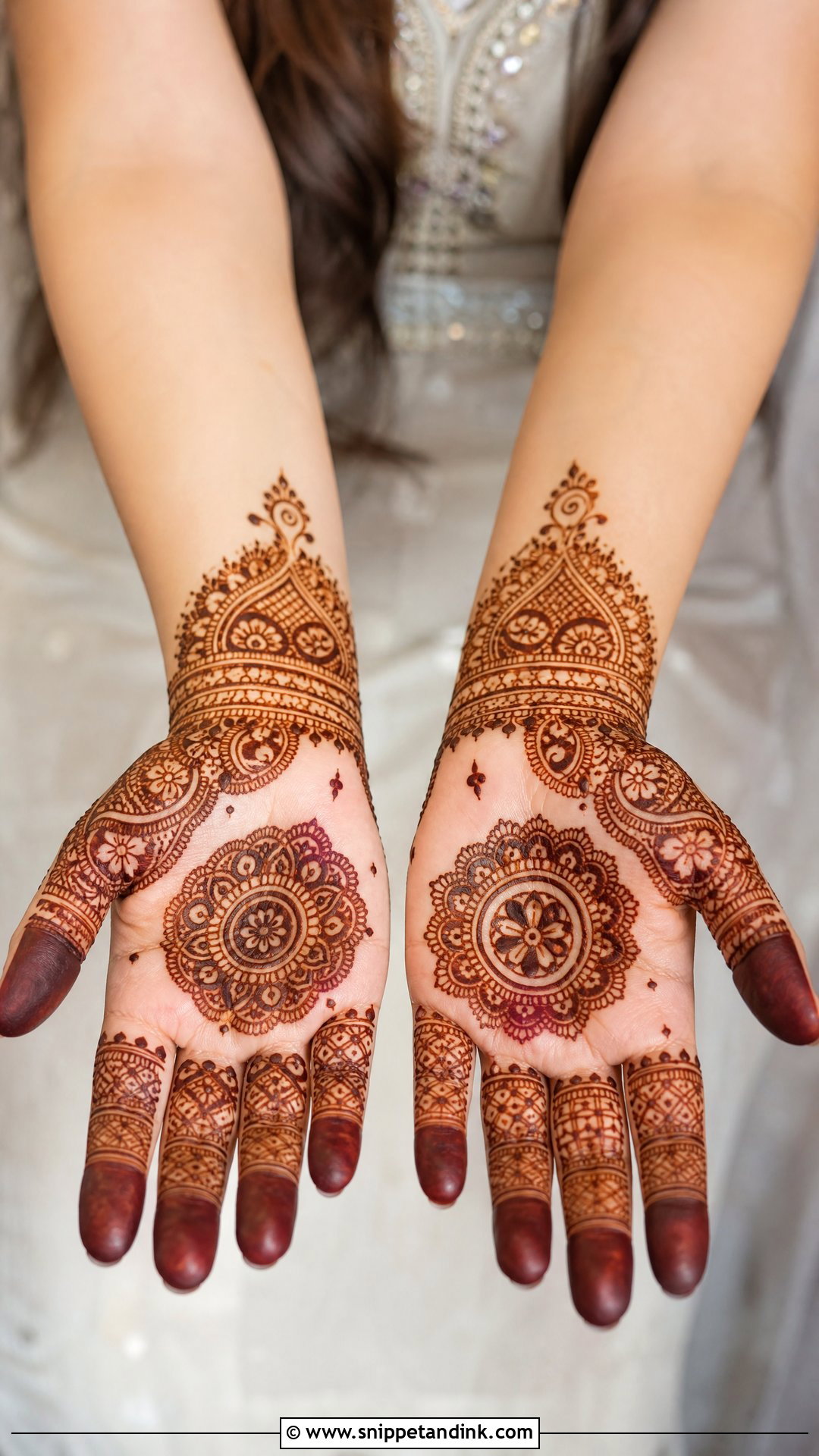
A complete palm design might have a central mandala, floral corners, paisley borders, filled fingertips and a wrist finish. Because palms stain deepest, this placement looks rich once the color matures over the following day or two. Small gaps around the main motifs keep it readable without making it dense. It leaves the back of the hand free for jewelry. Religious ceremonies, family rituals and traditional portraits all suit it.
23. Matching Bridesmaid Mehndi Design
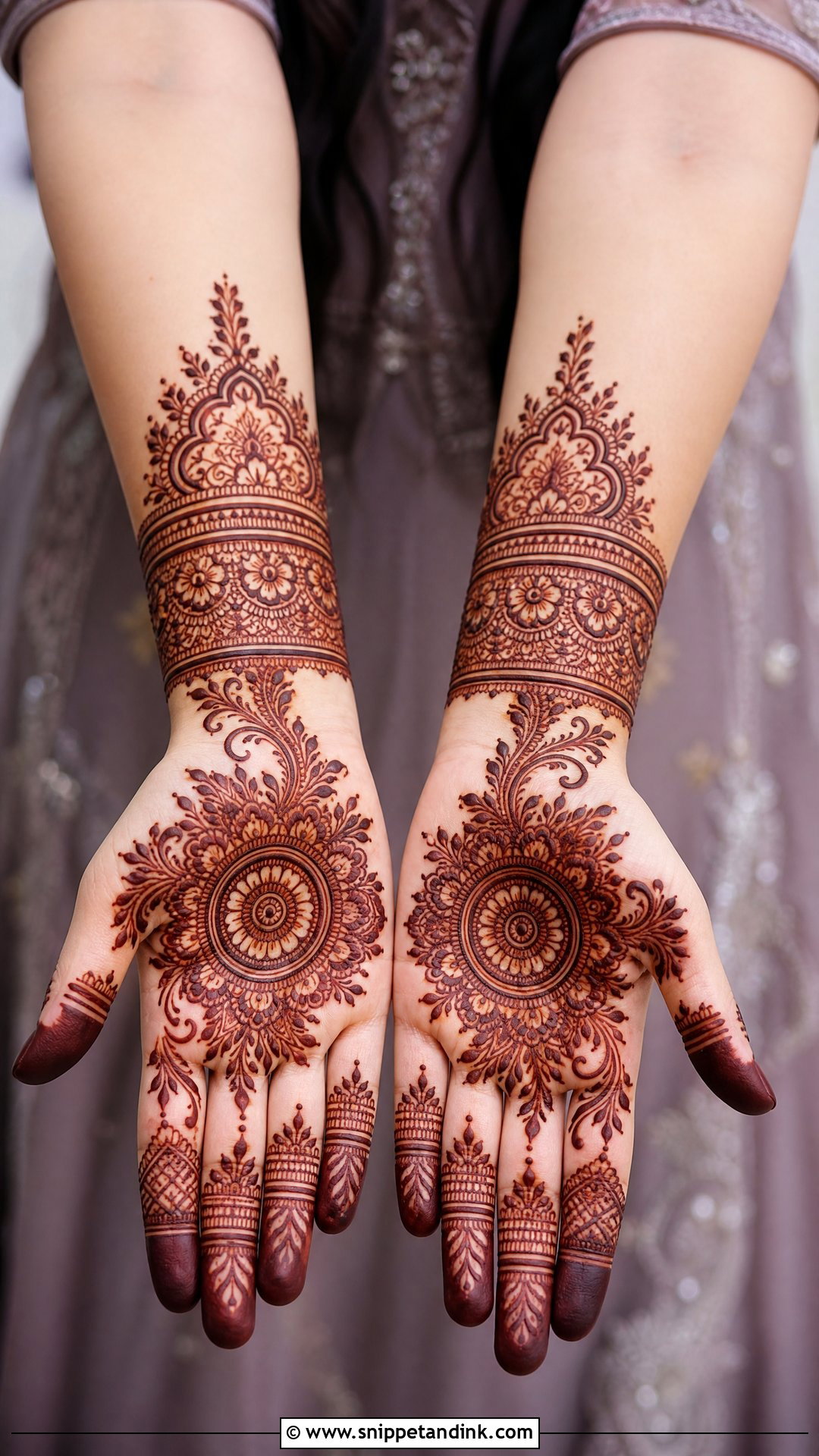
Coordinated designs don’t have to be identical. I give a bridal party one shared theme, such as mandalas, Arabic trails, floral cuffs or finger patterns, and let each person choose her coverage. One bridesmaid can go full-hand and another half-hand, and the group still looks connected in photos. It’s especially effective when the bridesmaids wear similar outfits. Keep the shared design simple enough to repeat quickly when many hands need finishing before the event starts.
24. Engagement Bridesmaid Mehndi Design
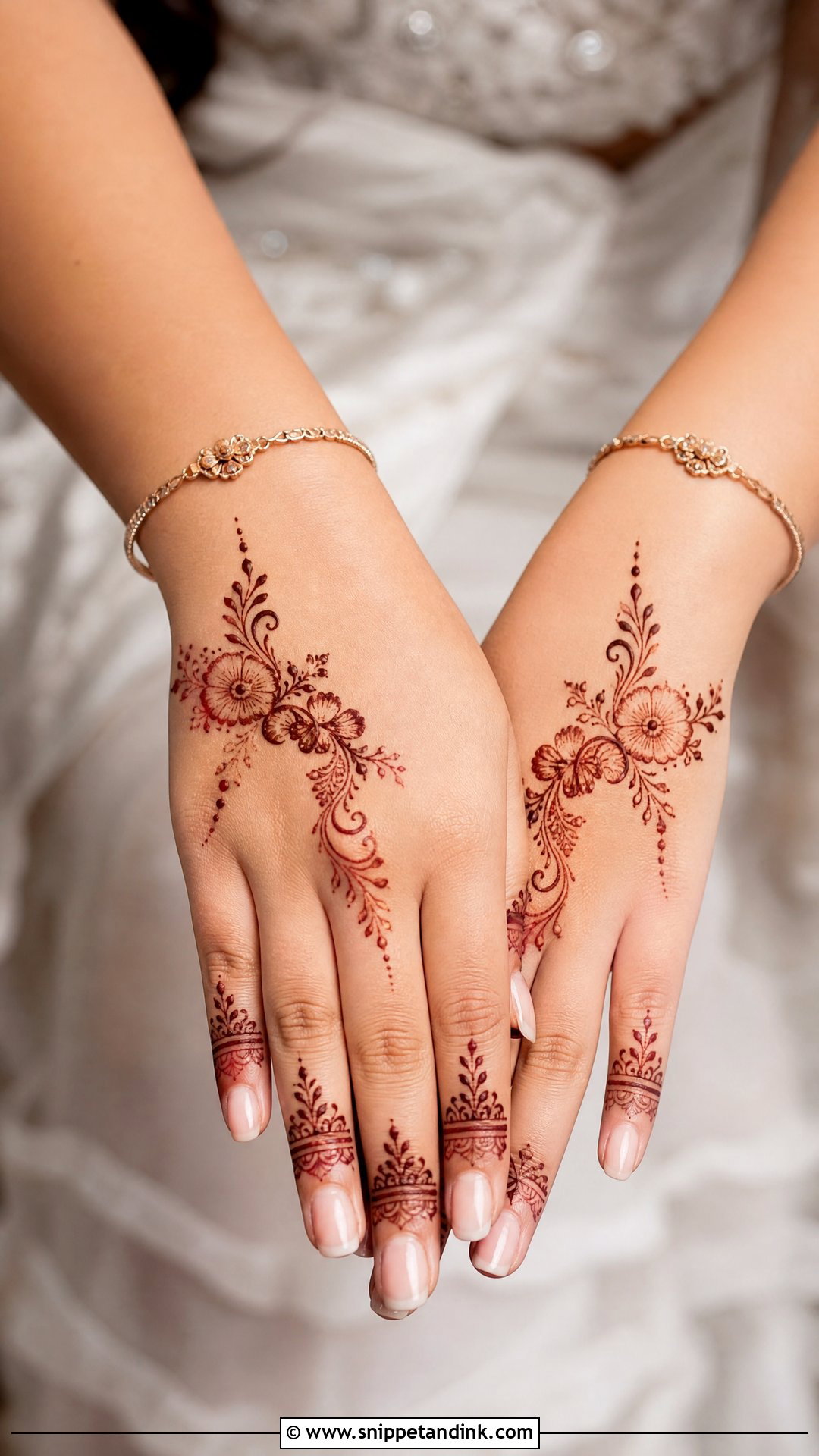
Engagement bridesmaid mehndi should look polished but not heavy. A back-hand floral, a slim bracelet cuff, a mandala palm or an Indo-Arabic half-hand all suit the event. Ring photos are a big part of engagements, so I keep the fingers clean but detailed enough to frame jewelry. Fine lines, small flowers and neat spacing give it a refined finish. Pastel lehengas, sarees and fusion wear suit it, as do family portraits.
25. Sangeet Bridesmaid Mehndi Design
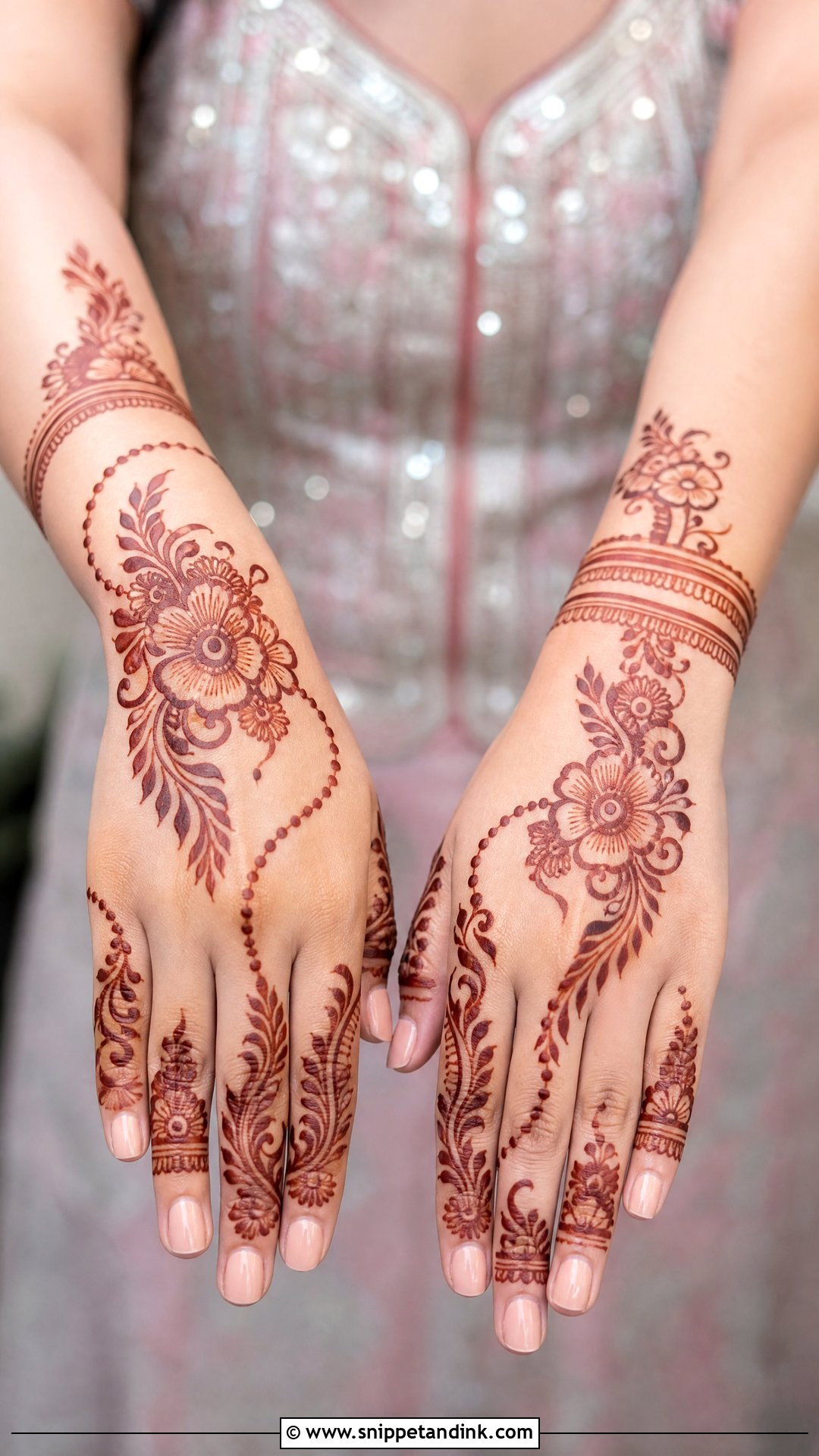
For sangeet, think about distance and movement. Most photos are taken across a dance floor under stage lights, so a back-hand trail, bold Arabic florals, a bracelet design or a finger-led layout reads better than tiny crowded detail. Bold outlines and open spacing hold up. Matching wrist bands across the bridesmaid group look great in performance shots. It pairs with colorful lehengas, shararas and Indo-western outfits, and it doesn’t keep you in the chair long. Ask for henna a day or two before the sangeet if you can, so the stain has darkened by the time you dance.
Staying a Step Lighter Than the Bride
There’s no written rule, but in most families the bride’s henna is expected to be the fullest and most detailed in the room. Bridesmaids can still look festive without overstepping.
- Stop shorter on the arm than she does. If her design reaches the elbow, keep yours at the wrist or lower forearm.
- Leave her signature motifs to her. Portraits, the groom’s name, dulhan figures and her central motif belong on her hands.
- Ask before matching. Some brides love a coordinated bridal party; others want their hands to be the only detailed ones.
- Settle who pays early. In some families the bride’s side covers the bridesmaids’ henna; in others each person pays the artist. Asking beforehand avoids an awkward moment at the end of the night.
Aftercare is the same as for the bride: scrape the dried paste off rather than washing it, keep water away for as long as you can, and expect the stain to start orange and darken over the next day or two.
Hands That Frame Hers in the Group Photo
Good bridesmaid henna balances festivity against comfort through long ceremonies, dancing, photos and outfit changes. Arabic trails, mandalas, florals, jaali, bracelet designs and Indo-Arabic layouts all work; your role, outfit, jewelry and taste decide which. Close bridesmaids can go fuller, while others may prefer back-hand or finger designs. Keep it clean and well spaced. Above all, ask the bride what she’s having, and choose something that sits beside her design without copying it.
You'll Like These Ideas:


Leave a Reply